
Satin is the fabric I reach for when a bride tells me she wants to look polished without sparkle. It reflects light in long, unbroken planes, so the cut does all the talking: a structured duchess satin holds a ball gown skirt out on its own, while a liquid charmeuse falls close to the body in a bias-cut slip. That same honesty is the catch. Satin shows every seam, every pucker and every line underneath it, so fit matters more here than with lace or tulle. The thirty gowns below run from strict and architectural to soft and fluid, and I’ve added what I’d check on each one before you commit.
Duchess, Mikado or Charmeuse? Read the Label Before the Silhouette
Satin is a weave, not a fiber, so two gowns both called satin can behave in completely different ways. Before I look at necklines with a bride, I look at the swatch, because the satin decides which of the shapes below will actually work.
- Duchess satin is heavy and stiff with a soft sheen. It holds ball gowns, bows and structured bodices without much help, and it’s the warmest to wear.
- Mikado is thicker still, with a slightly textured, less glossy face. It suits architectural shapes and hides small wrinkles better than shinier satins.
- Crepe-back satin has a matte side and a shiny side. It drapes but still hangs straight, which makes it my usual pick for columns and sheaths.
- Charmeuse is light and liquid. It is the fabric for bias-cut slips and cowl necks, and the least forgiving of underwear lines and uneven seams.
Silk satin breathes better and has a deeper glow; polyester satin is cheaper, tougher and often shinier. Neither is wrong, but polyester can feel warm in summer, so I’d ask for a lining in cotton or a breathable blend if your wedding is outdoors in heat. Ask to rub the swatch between your fingers and crush it in your fist for a few seconds. How quickly the creases drop out tells you how the gown will look after the car ride and the ceremony.
1. Strapless Satin Wedding Gown
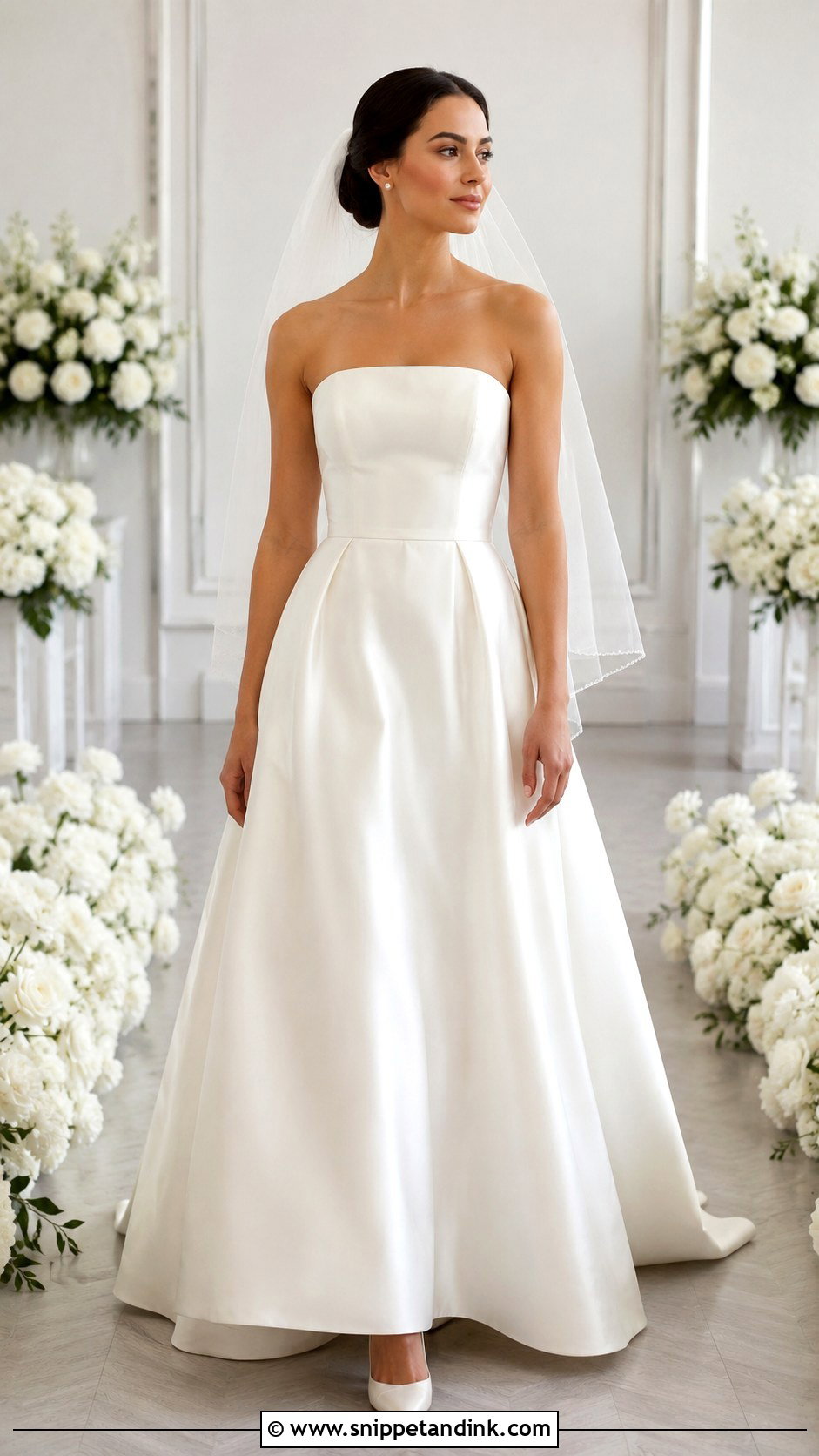
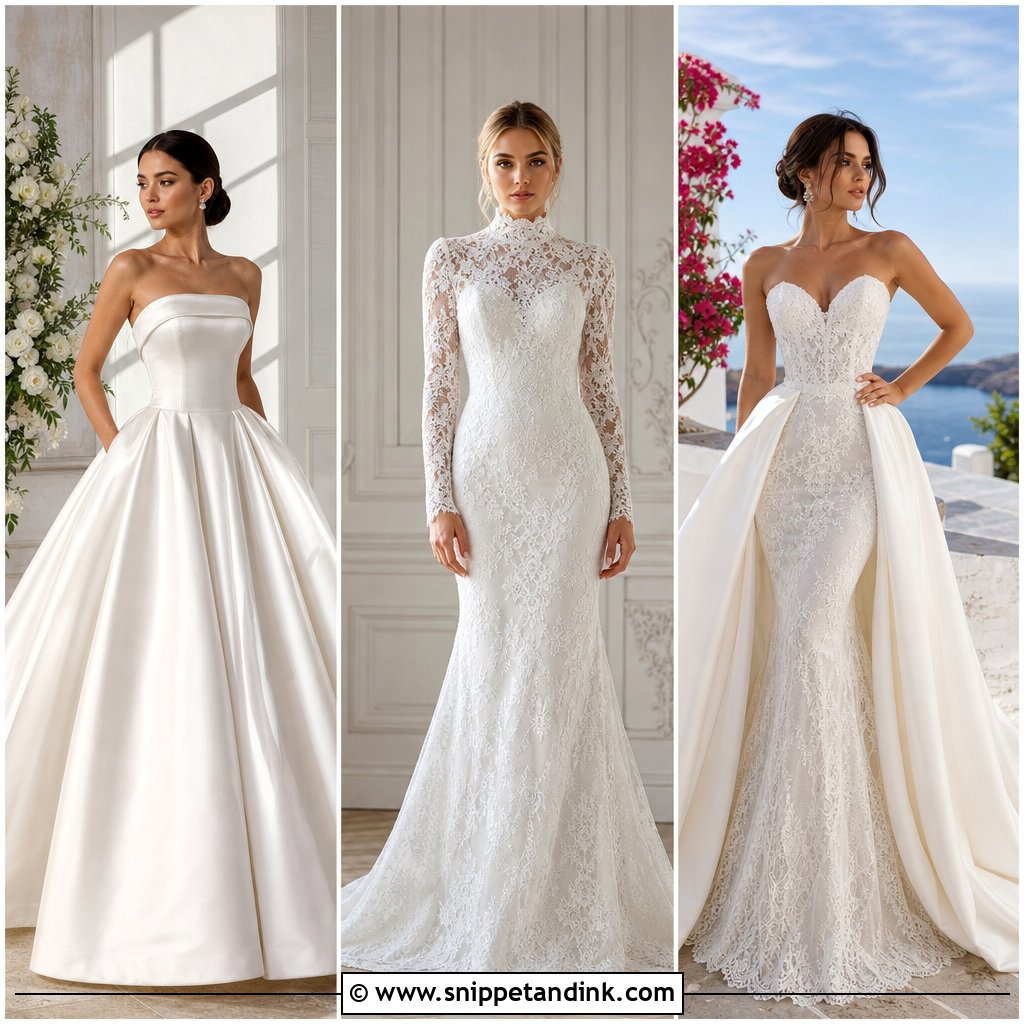
The strapless bodice is the one I fit most often, and with satin the internal boning is everything. If the bodice relies on tightness rather than structure, the fabric wrinkles just under the bust the moment you sit or reach for a glass. I ask brides to raise both arms and hug someone in the fitting room; a well-built bodice stays put. A structured top over an A-line or fit-and-flare skirt is the classic pairing, and a softly draped neckline with a chapel veil takes it somewhere gentler. Pearl studs and a small bouquet are all it needs.
2. Satin Ball Gown Wedding Dress
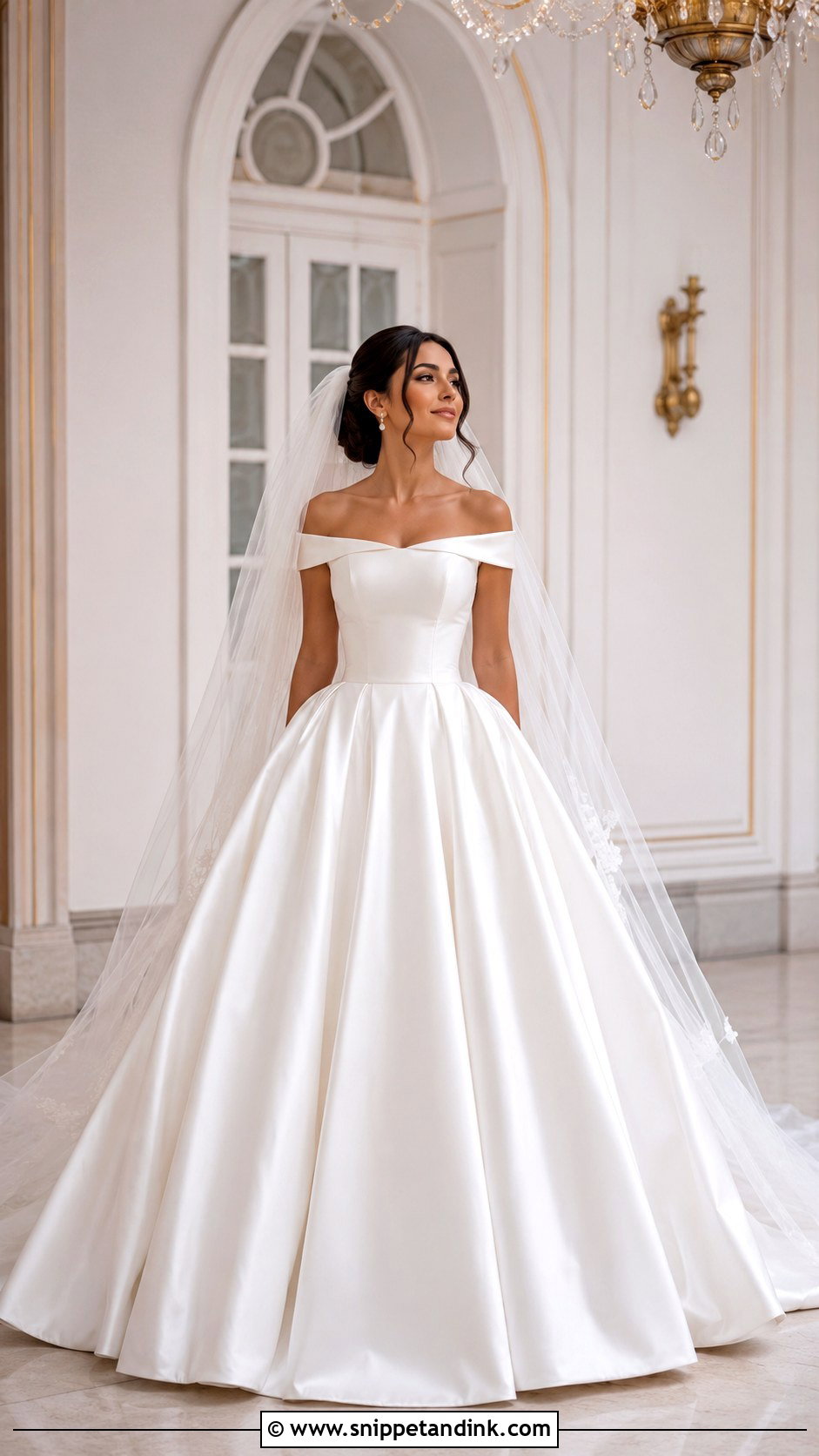
A satin ball gown gets its drama from the fabric itself, not from beading. Heavy duchess or mikado satin holds the skirt’s volume with fewer petticoat layers than tulle would need, which also makes it surprisingly quiet when you walk. The fitted bodice sets the waist, and that smooth sculpted skirt reads clearly from the back of a church. Add a cathedral veil for a grand entrance, or keep to a plain tulle veil and pearl drops. One thing I always warn about: the skirt’s weight. Wear your actual shoes to fittings, ideally a hidden platform, because a full satin skirt hemmed at the wrong height drags at every step.
3. Satin Mermaid Wedding Gown
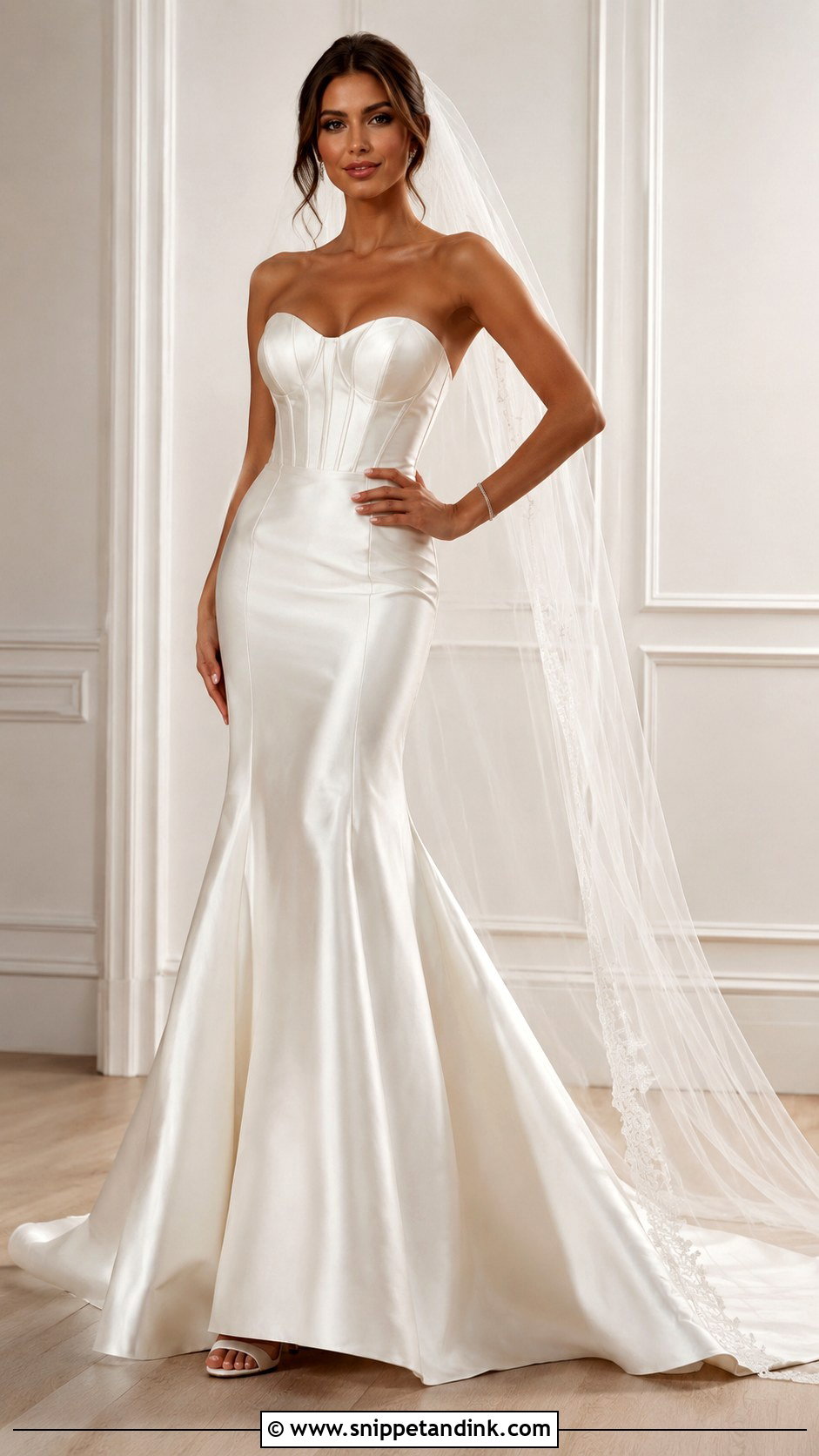
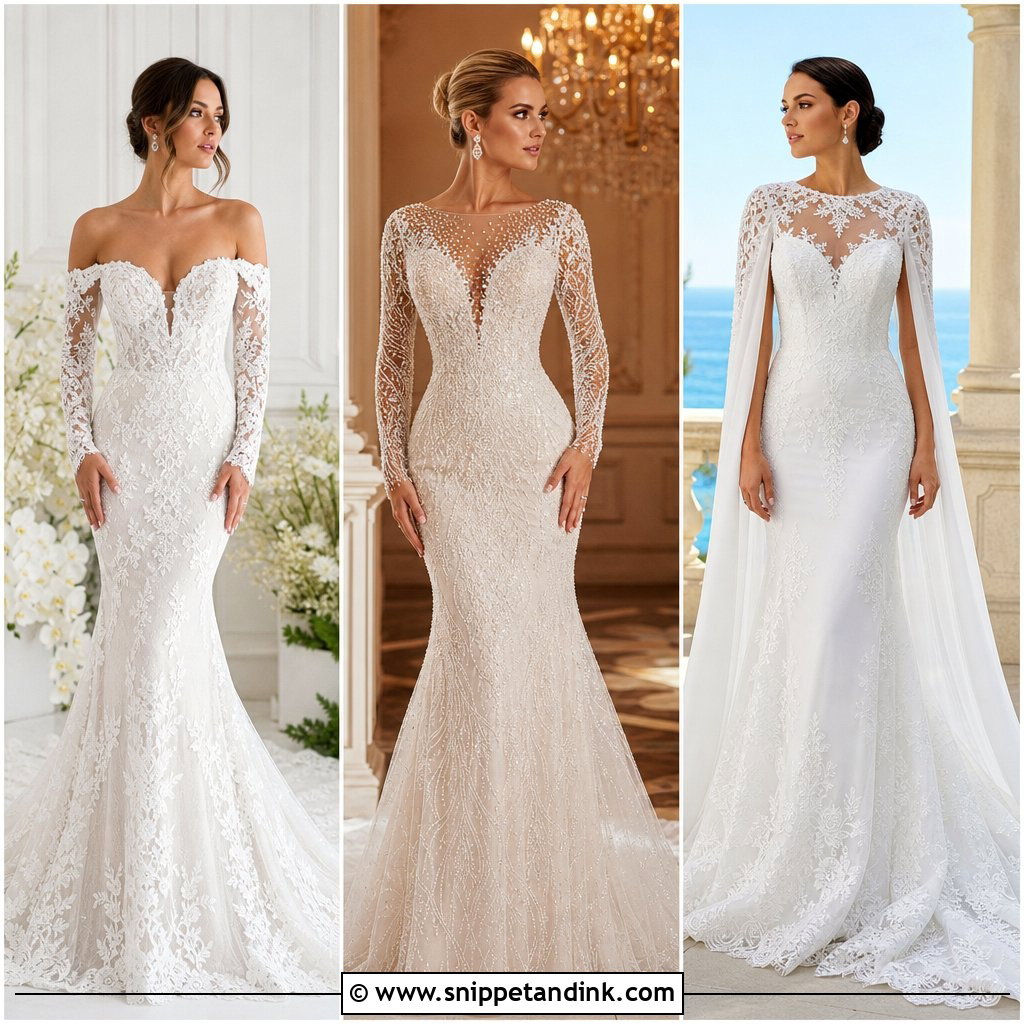
Mermaid gowns are where satin gets unforgiving. The fabric hugs the hips and thighs and then flares at the knee, so any fold in the lining or ripple in the seam shows straight through. I check two things at the fitting: can you take a full stride, and can you sit on a chair without the side seams straining? A good version has internal structure and a flare set low enough to walk in. Balance the close fit with a long veil and keep the shine to crystal earrings or one sleek bracelet. Formal hotel receptions suit this shape best.
4. Satin A Line Wedding Gown
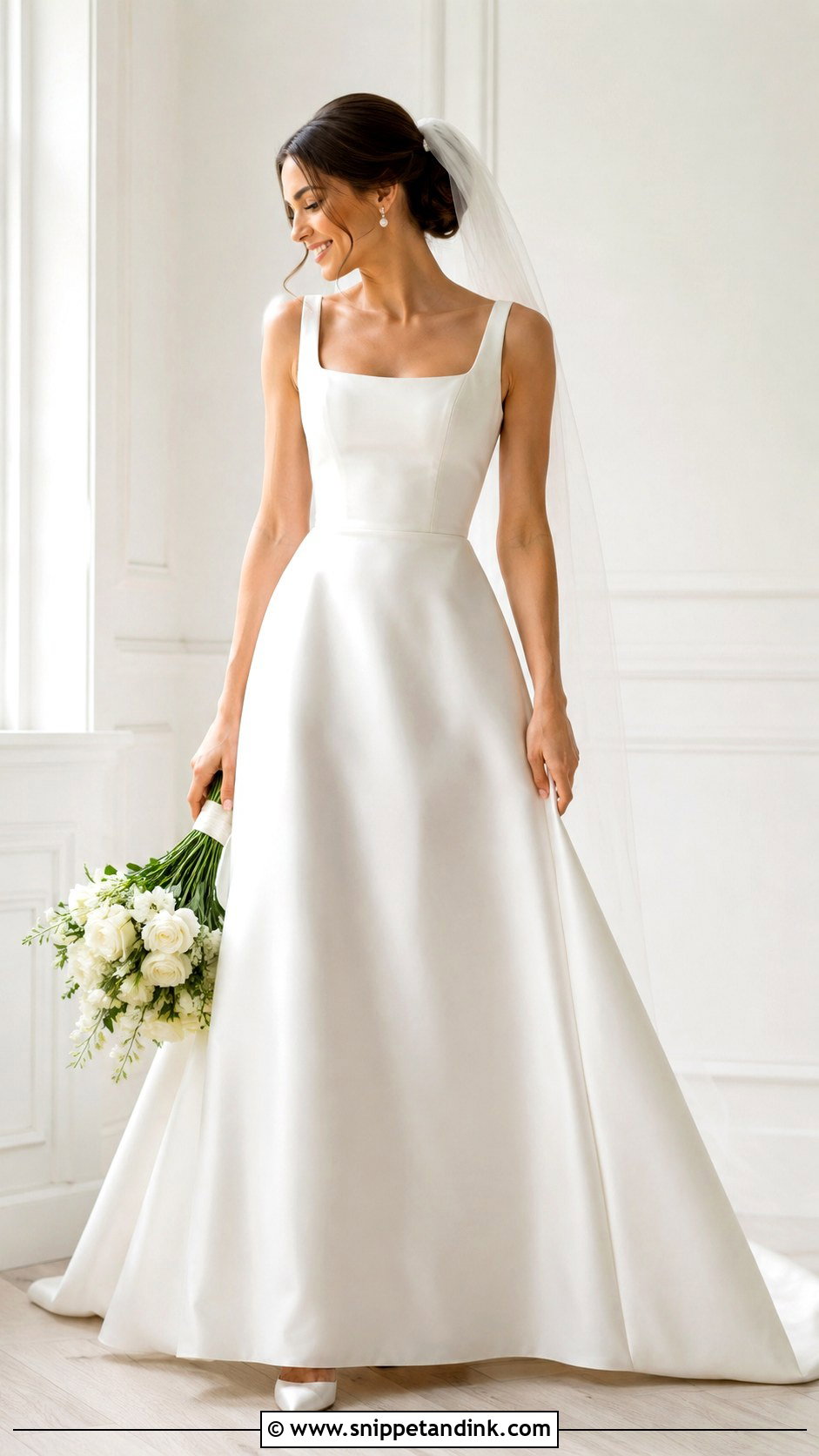
The A-line is my safe recommendation for a bride who isn’t sure, and I don’t mean that as faint praise. It fits through the waist and opens gradually, so satin sits smooth over the hips instead of clinging. Ivory and pearl tones look warmer in satin than stark white, which can read blue in daylight. A square neckline keeps it modern; a sweetheart softens it. I’d finish with simple earrings, a mid-length veil and closed-toe heels, and spend any extra budget on tailoring the bodice rather than on embellishment.
5. Satin Slip Wedding Dress
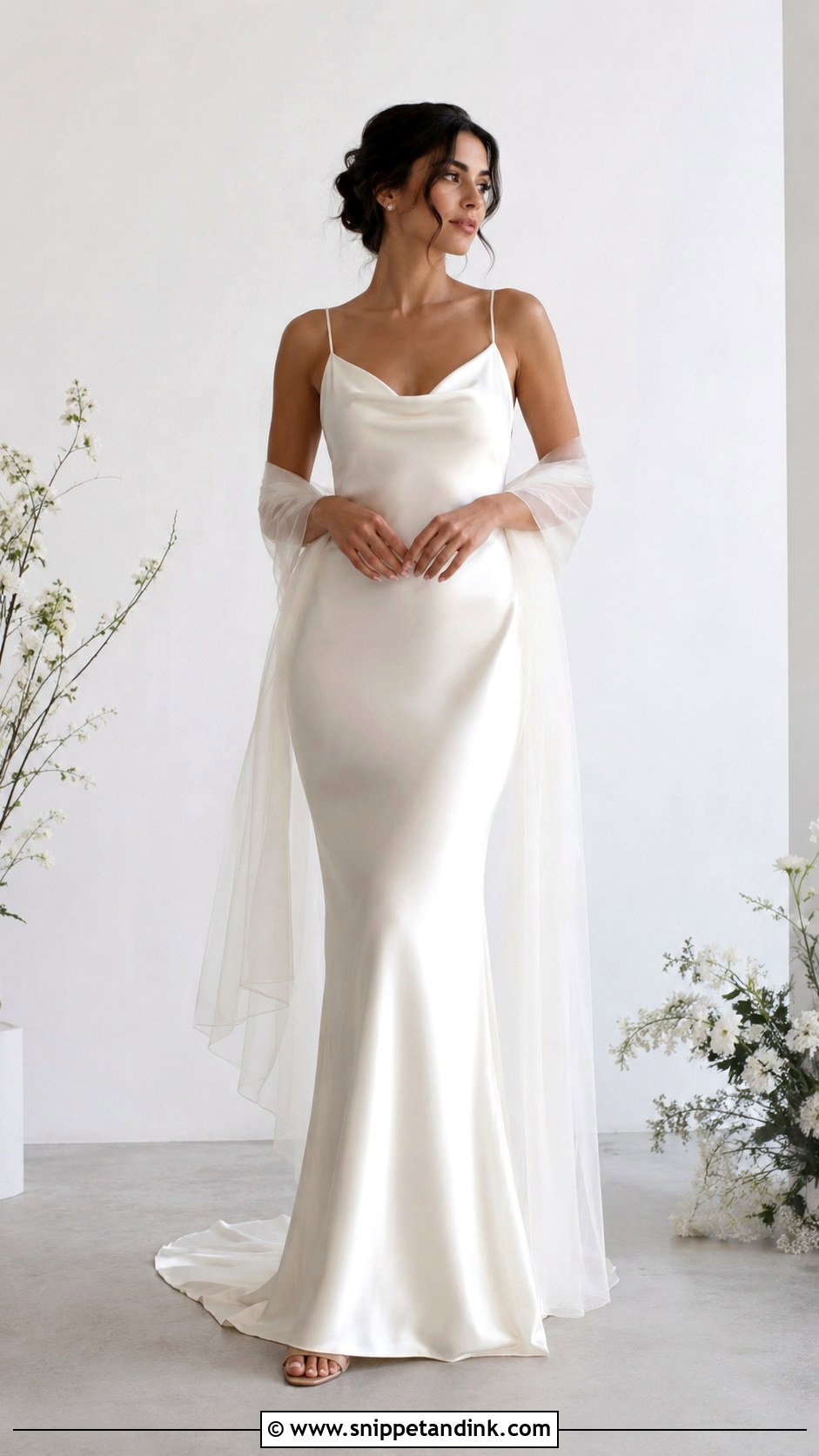
A satin slip wedding dress looks simple and is the hardest gown on this list to fit. Cut on the bias, the fabric stretches and skims, which is why it moves so well in a warm destination ceremony and also why it reveals underwear lines, bra edges and any seam that pulls. Smooth, edge-free shapewear in your skin tone is not optional here. Thin straps, a cowl or a clean scoop neck each shift the mood. Barely-there sandals, a fine veil and small studs finish it, and a sheer wrap or tailored blazer covers the shoulders for an evening that turns cool.
6. Long Sleeve Satin Wedding Gown
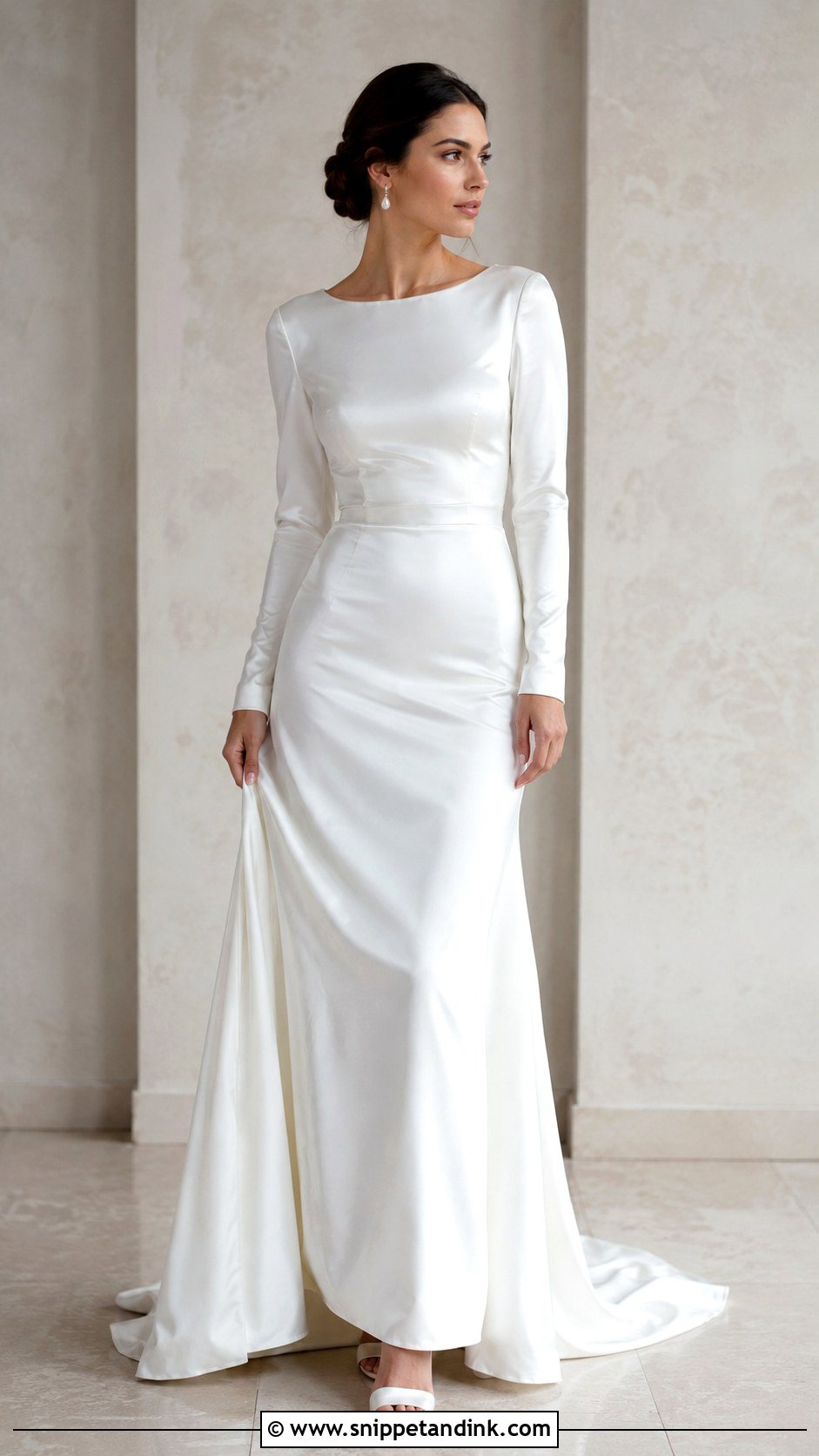
Sleeves change how satin behaves. A fitted sleeve in a stiff satin can restrict how high you lift your arms, so I always have brides mime throwing a bouquet and hugging their parents before we finalize the armhole. Softly puffed sleeves bring romance, and buttoned cuffs at the wrist lean vintage. Long sleeves are the obvious fall and winter choice, though a lighter crepe-back satin is comfortable enough in spring. A low bun, pearl earrings and a fingertip veil keep the neckline uncluttered. It’s the gown I suggest most often to brides who want coverage without losing shape.
7. Off Shoulder Satin Wedding Gown
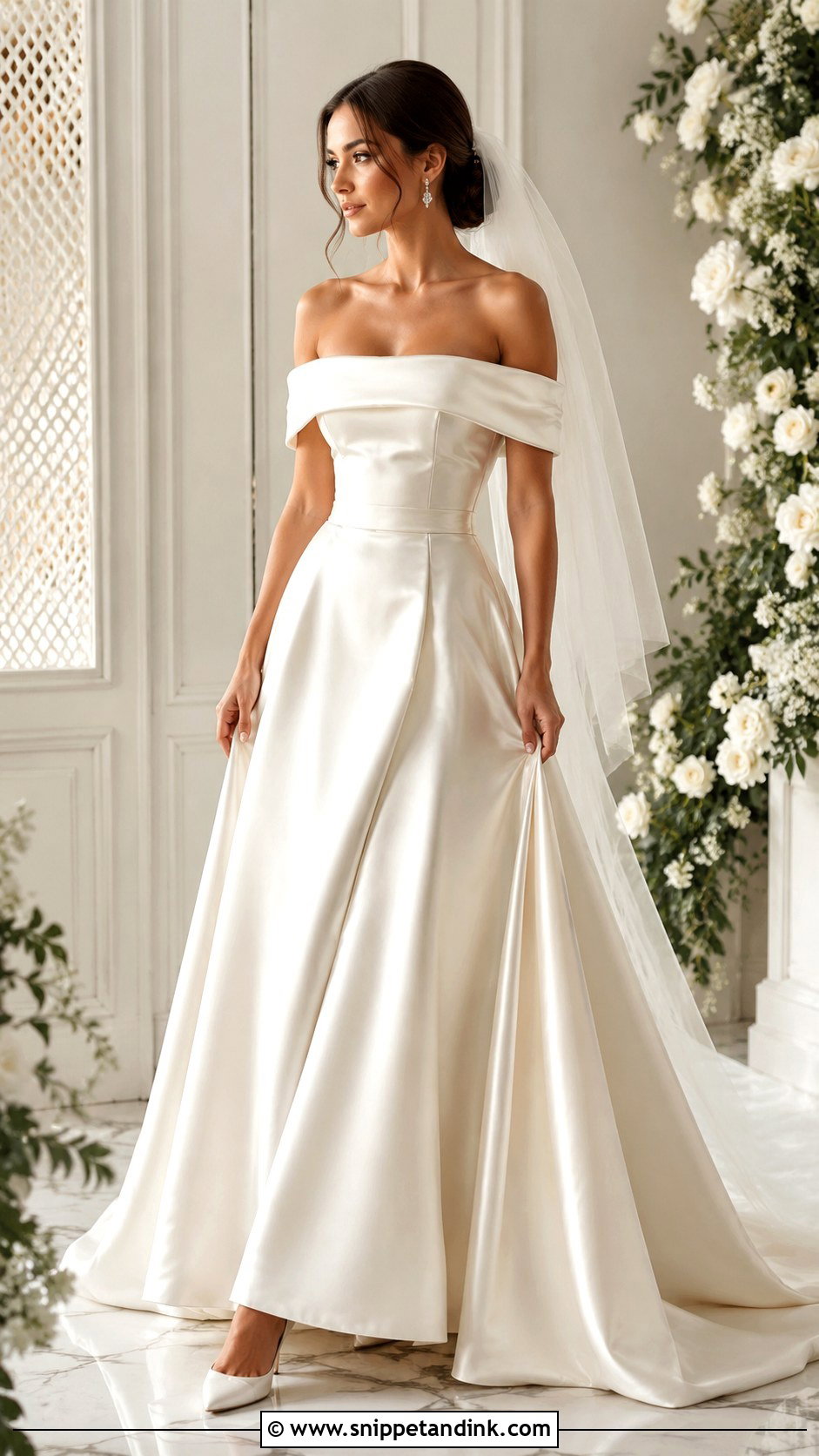
The off-shoulder neckline shows the collarbones and shoulders, and the satin keeps it smooth rather than fussy. My one concern is the sleeve band: if it sits too tight it digs in and pushes the bodice up whenever you lift your arms, so we test it at every fitting. A folded cuff neckline is crisp and structured; soft draping is more relaxed. It sits happily on a fitted, A-line or ball gown skirt. Choose a short necklace or statement earrings, not both, and place the veil low in the hair so the shoulder line stays clear.
8. Square Neck Satin Wedding Gown
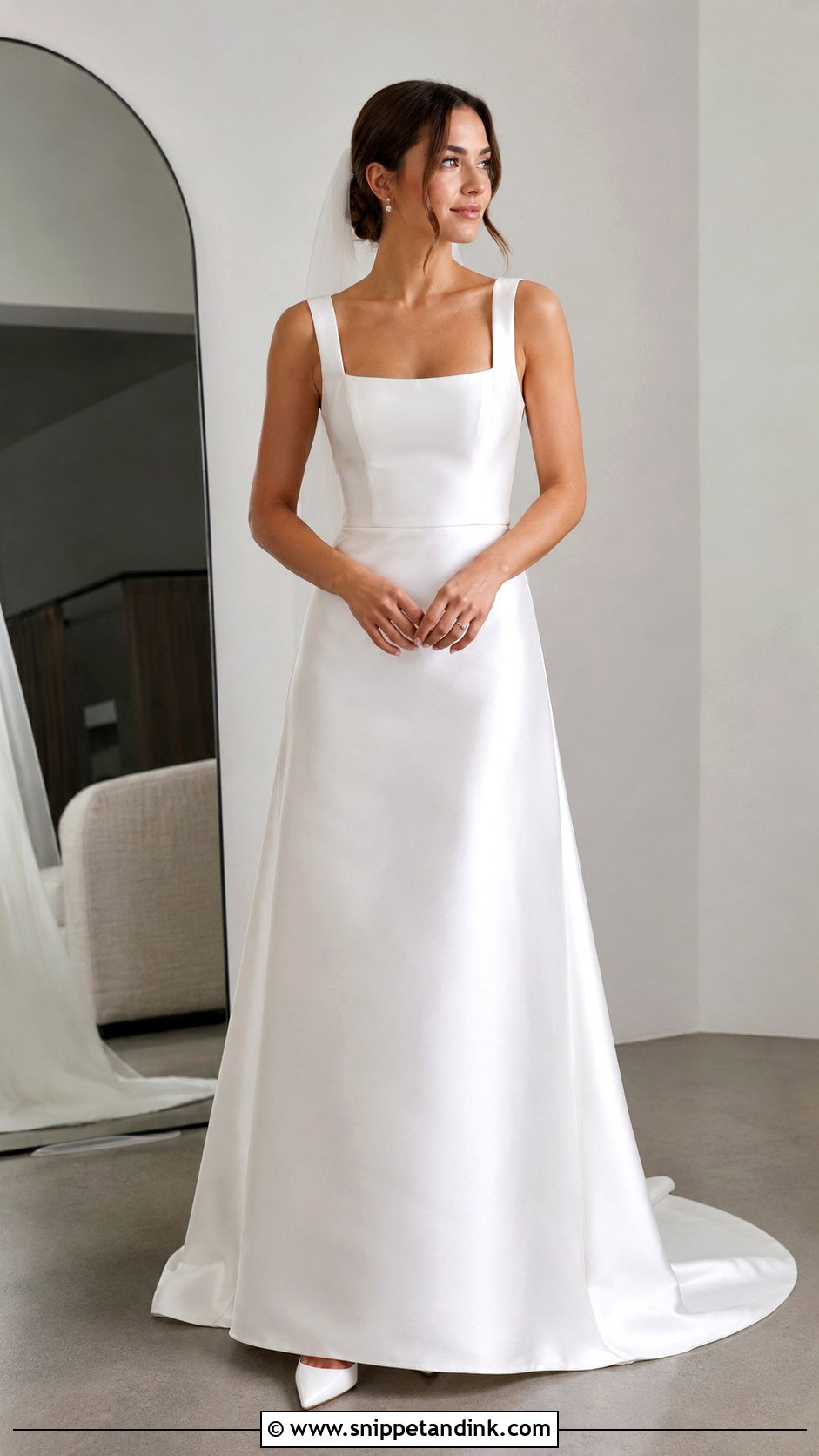
Square necklines frame the face and collarbone with one straight line, and satin keeps that line crisp. Wide straps give the most support, cap sleeves soften the edge, and long sleeves turn it formal. The detail I watch for is gaping: when you lean forward, a square neck that isn’t cut close to the chest stands away from the body, which shows in every candid photo. A smooth A-line or column skirt keeps the whole gown clean. Pearl earrings, a sleek bun and pointed satin heels are the styling I’d choose.
9. Cowl Neck Satin Wedding Dress
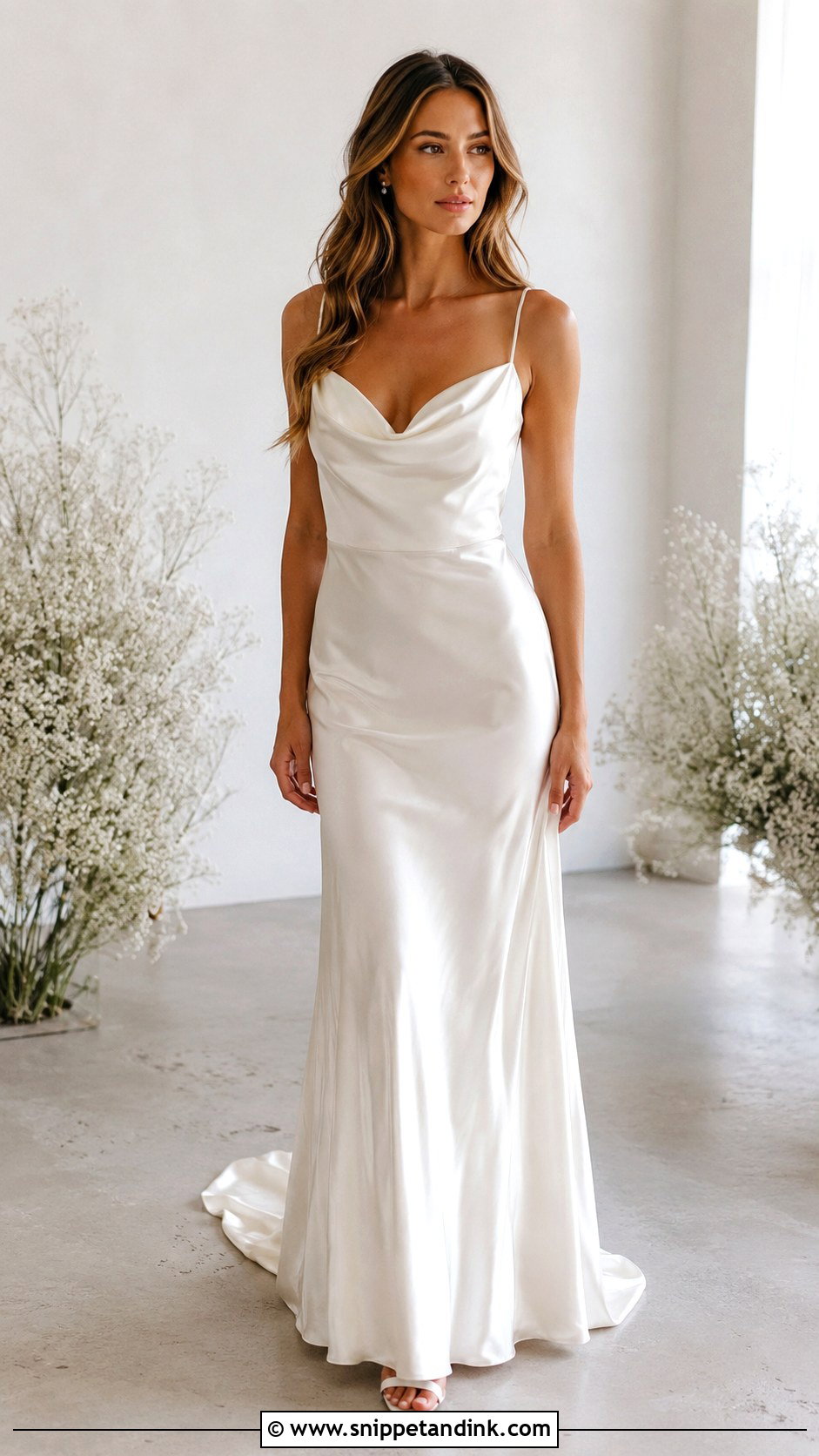
A cowl neck relies entirely on how the fabric falls, so I only recommend it in a fluid charmeuse or silk satin; stiffer satins fold into stiff points instead of soft ripples. The draped neckline adds detail without beading, and it sits best on slip, sheath and column shapes. Delicate straps keep it minimal, while a low back adds drama. Keep the jewelry tiny, small earrings and a fine bracelet, because the neckline already moves. A soft wave or smooth low bun works with it.
10. High Neck Satin Wedding Gown
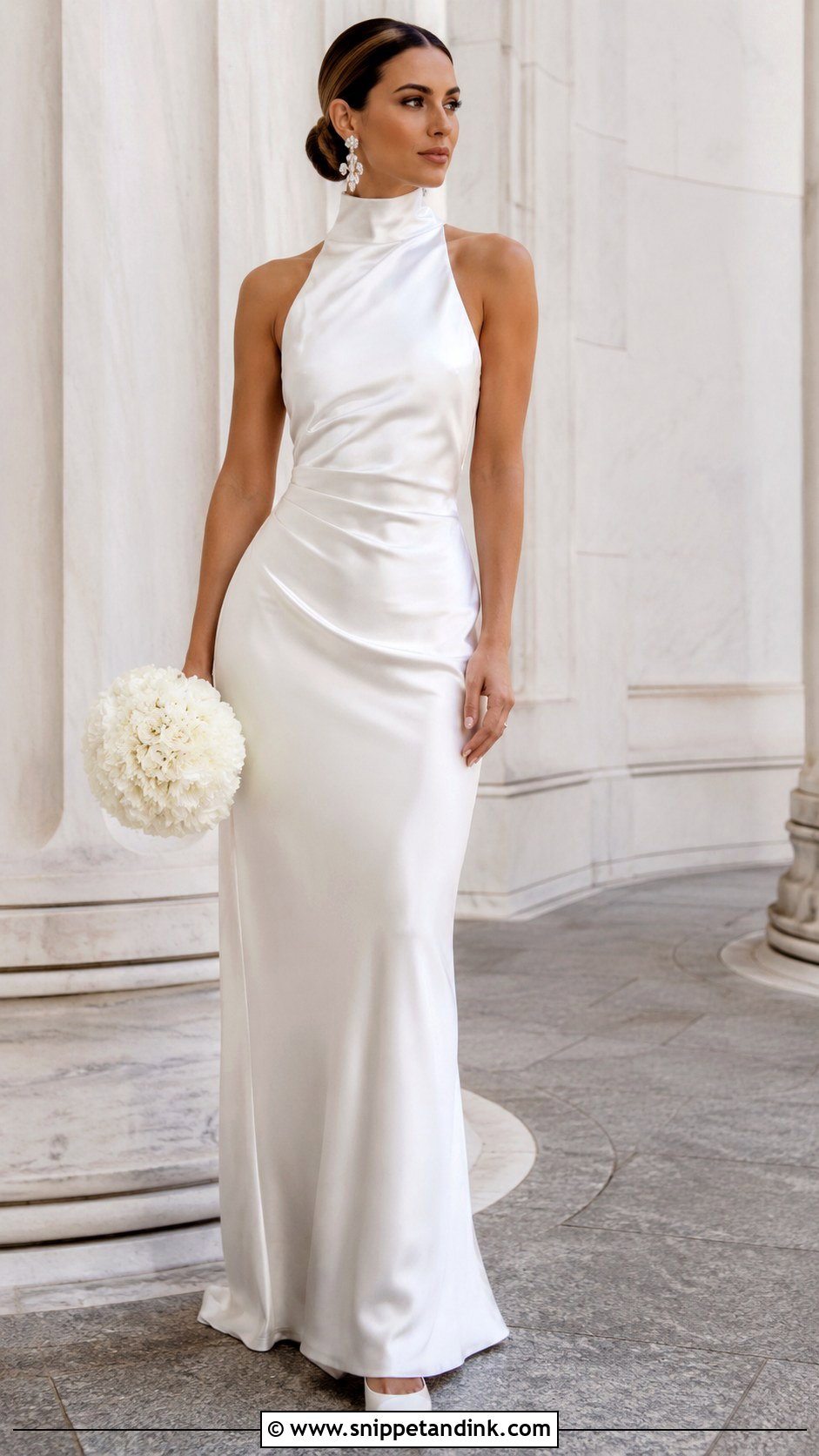
High necks make a long, sleek line from chin to hem, especially over a column, sheath or fit-and-flare skirt. Satin keeps the effect sharp rather than heavy. Sleeveless versions feel suited to a city ceremony, and long sleeves make it formal. I’d always wear the hair up so the neckline reads clearly, and swap a necklace for statement earrings. A word of caution: a high satin collar traps heat, so for a summer daytime wedding I’d push you towards a sleeveless cut with an open back.
11. Satin Wedding Gown With Bow
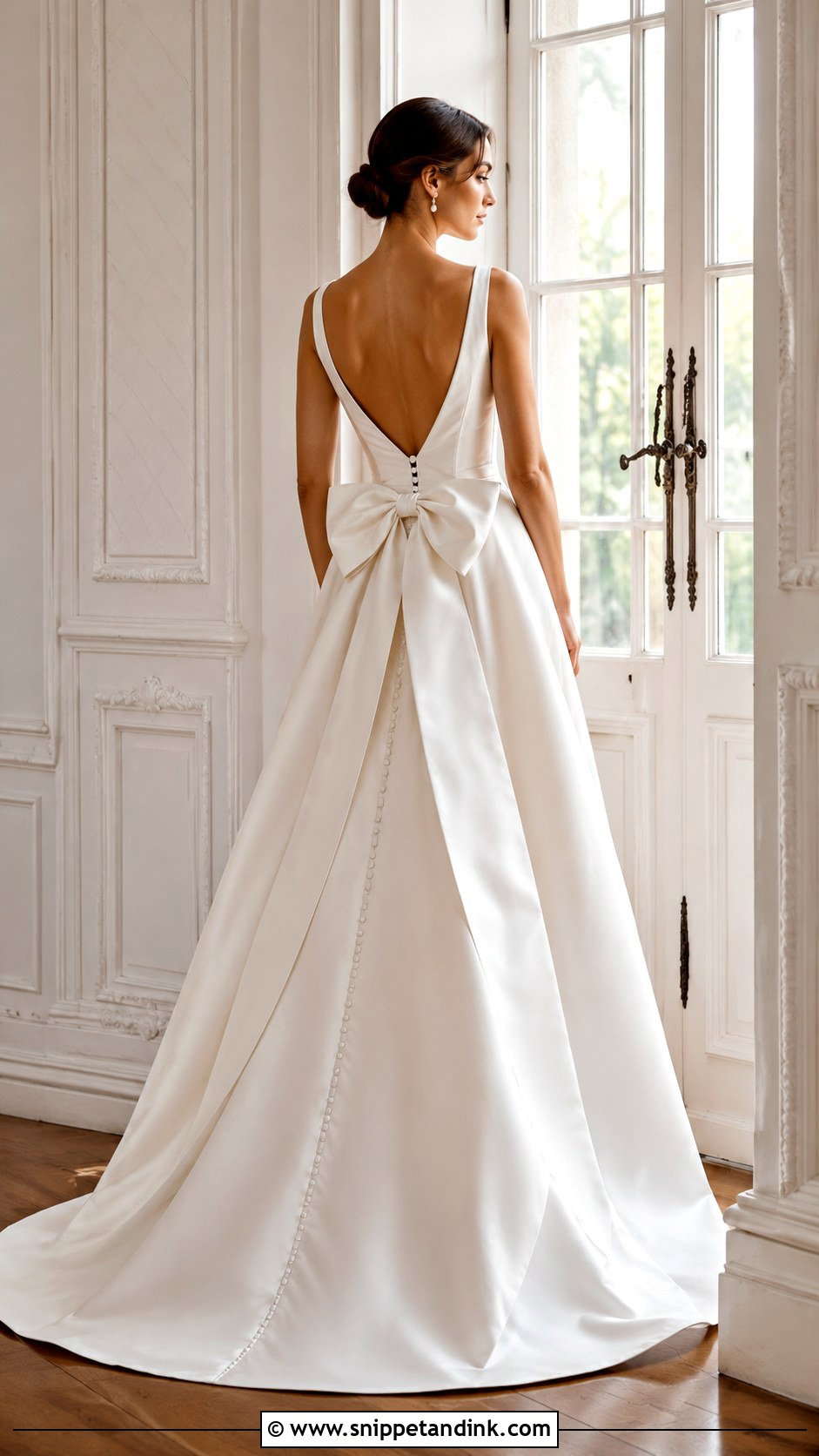
Satin holds a bow better than almost any other bridal fabric because it keeps its folds without wilting. A large bow at the back waist turns a plain ball gown or A-line into the whole statement; a small bow on the shoulder or neckline suits a slip or column. Before buying, ask how the bow is attached. A big back bow that is only stitched at the center flops after a few hours of hugs, so I like it tacked at several points or built over a light interfacing. Keep everything else quiet: pearl earrings, a smooth veil, classic heels.
12. Satin Wedding Gown With Pockets
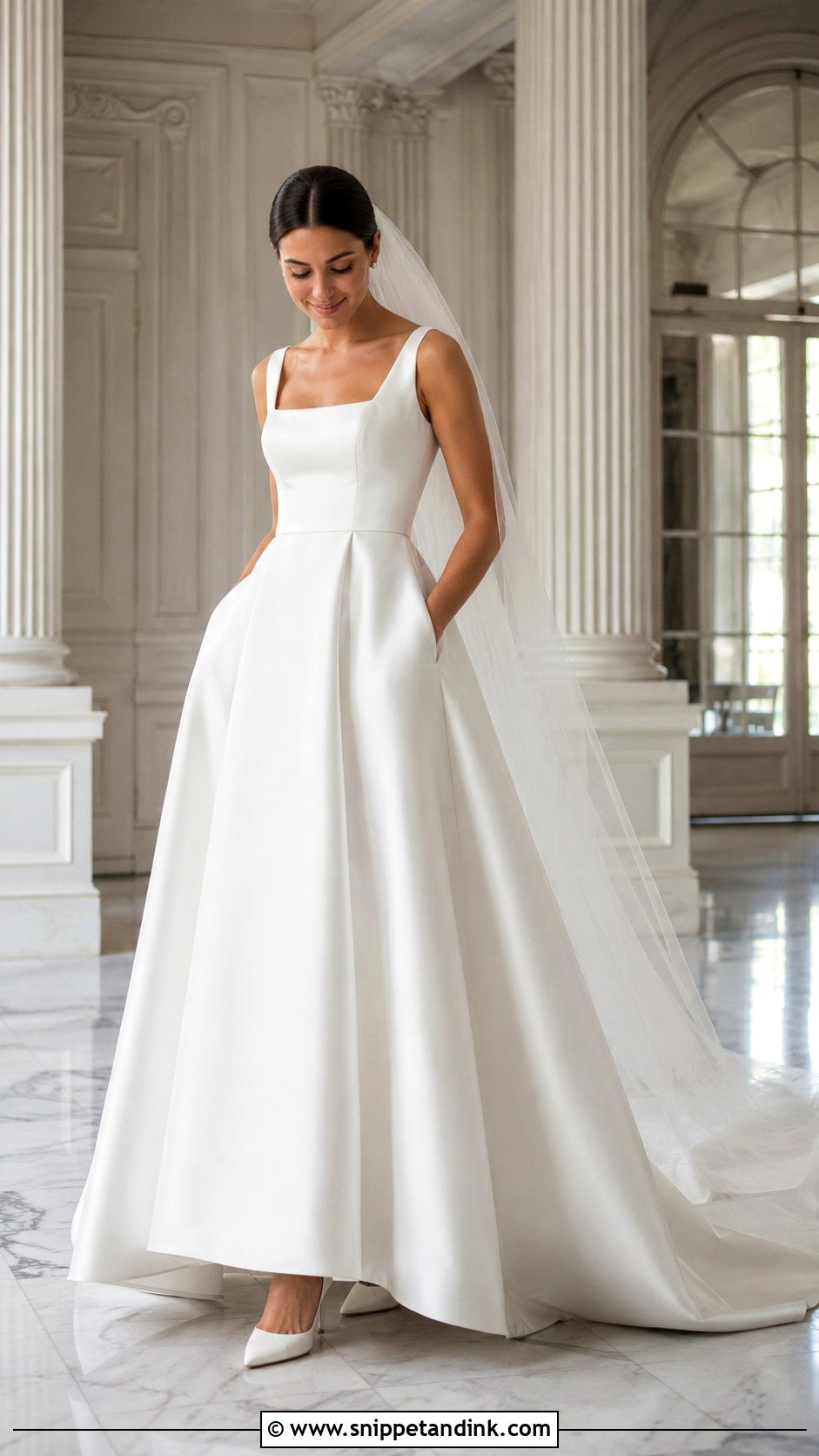
Pockets are one of my favorite requests, as long as they’re set properly. In a full ball gown or A-line skirt, the side-seam pockets disappear into the volume. In a fitted satin skirt, they can flare at the hips the moment you put anything in them, so I’d only add pockets where the skirt has room. They give you somewhere to rest your hands in photos and to keep vows, lip balm or tissues. Pair them with a clean bodice, simple earrings and a soft veil.
13. Satin Corset Wedding Gown
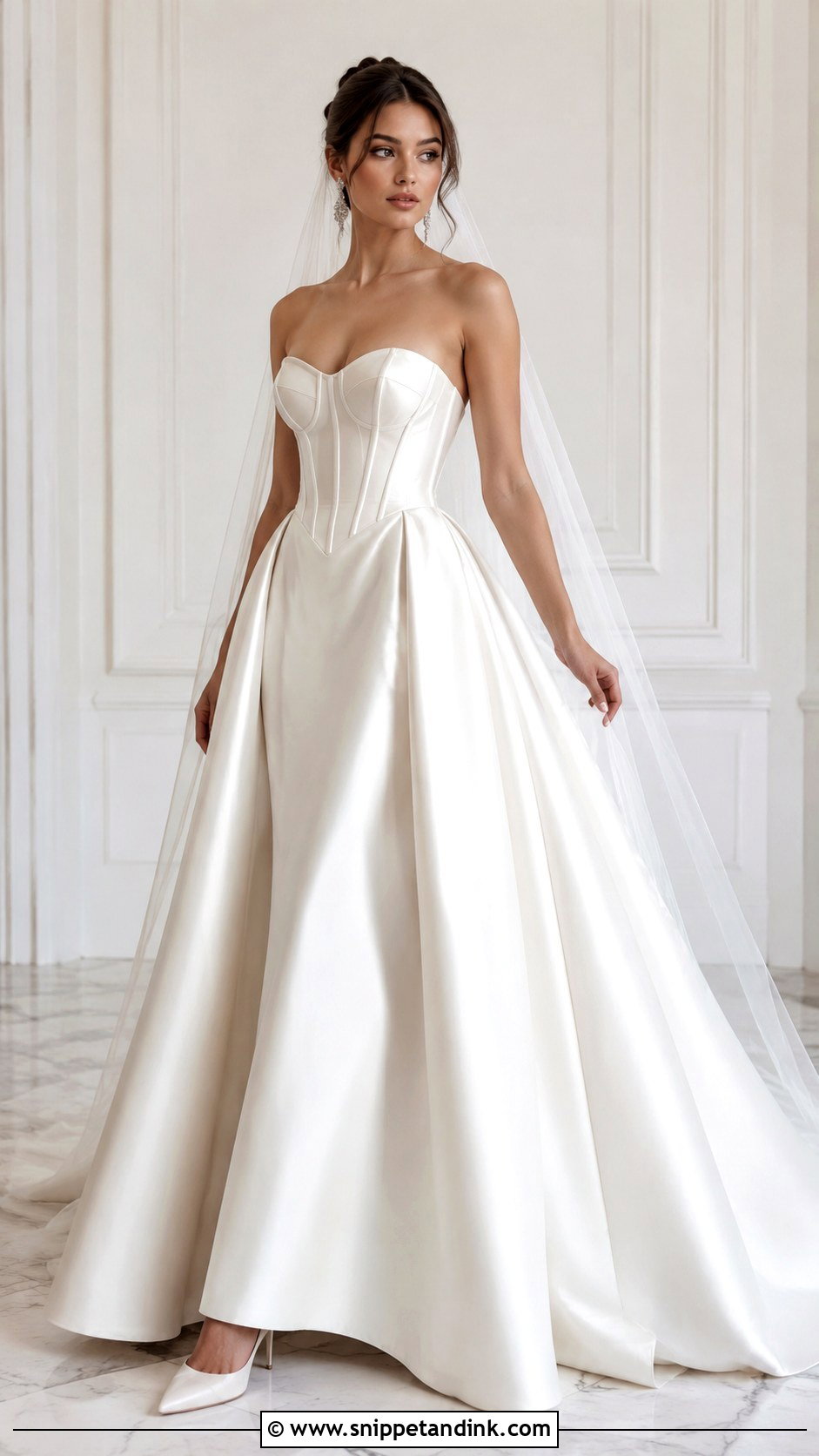
A satin corset wedding gown gives real support, which is why I recommend it to brides with a fuller bust who want to skip a separate bra. The boning can be visible, laced at the back, or hidden inside a smooth bodice. In satin, visible boning channels show as faint lines, so decide whether you like that look before ordering. Lace-up backs are forgiving: they allow a little adjustment if your measurements shift before the wedding. Drop earrings, a neat veil and heels matched to the gown’s ivory tone keep the focus on the tailoring.
14. Satin Column Wedding Gown
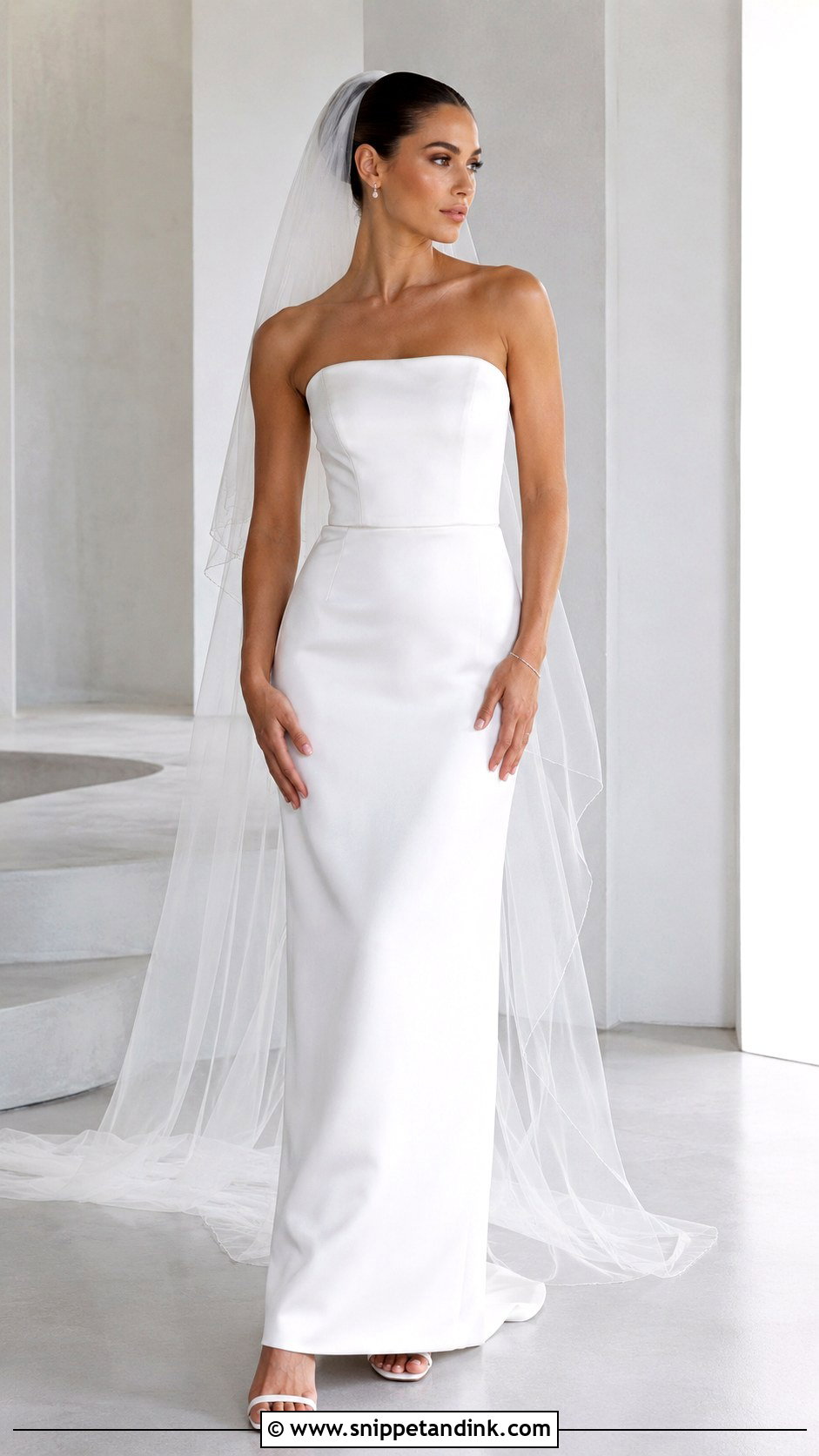
The column falls straight from the neckline or waist, with no volume to hide anything, so the quality of the satin is what you’re paying for. A heavier crepe-back satin hangs straighter and wrinkles less than a thin polyester one. Strapless, halter, square or one-shoulder necklines all suit it. A long veil softens the line, and a bridal cape makes it editorial. Check that you can sit down and climb steps: many columns need a back slit or a kick pleat to walk freely.
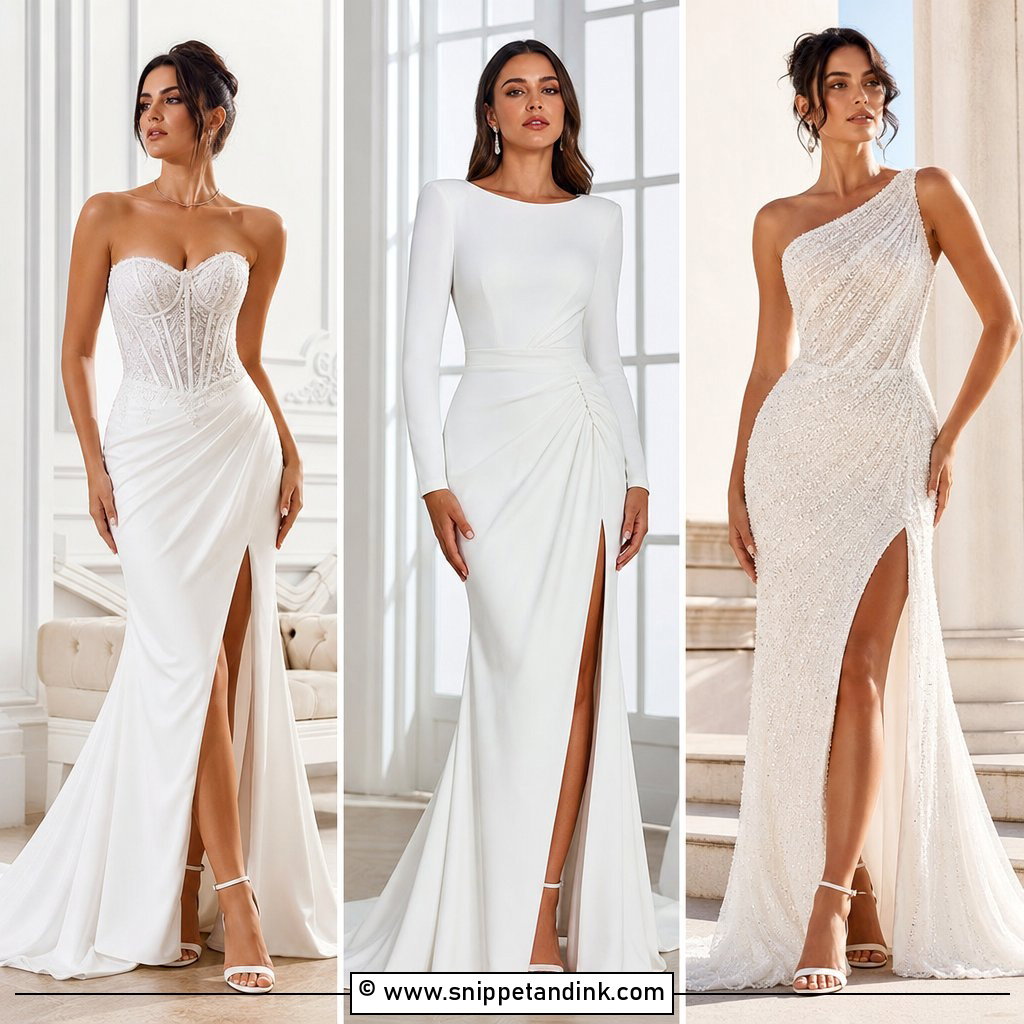
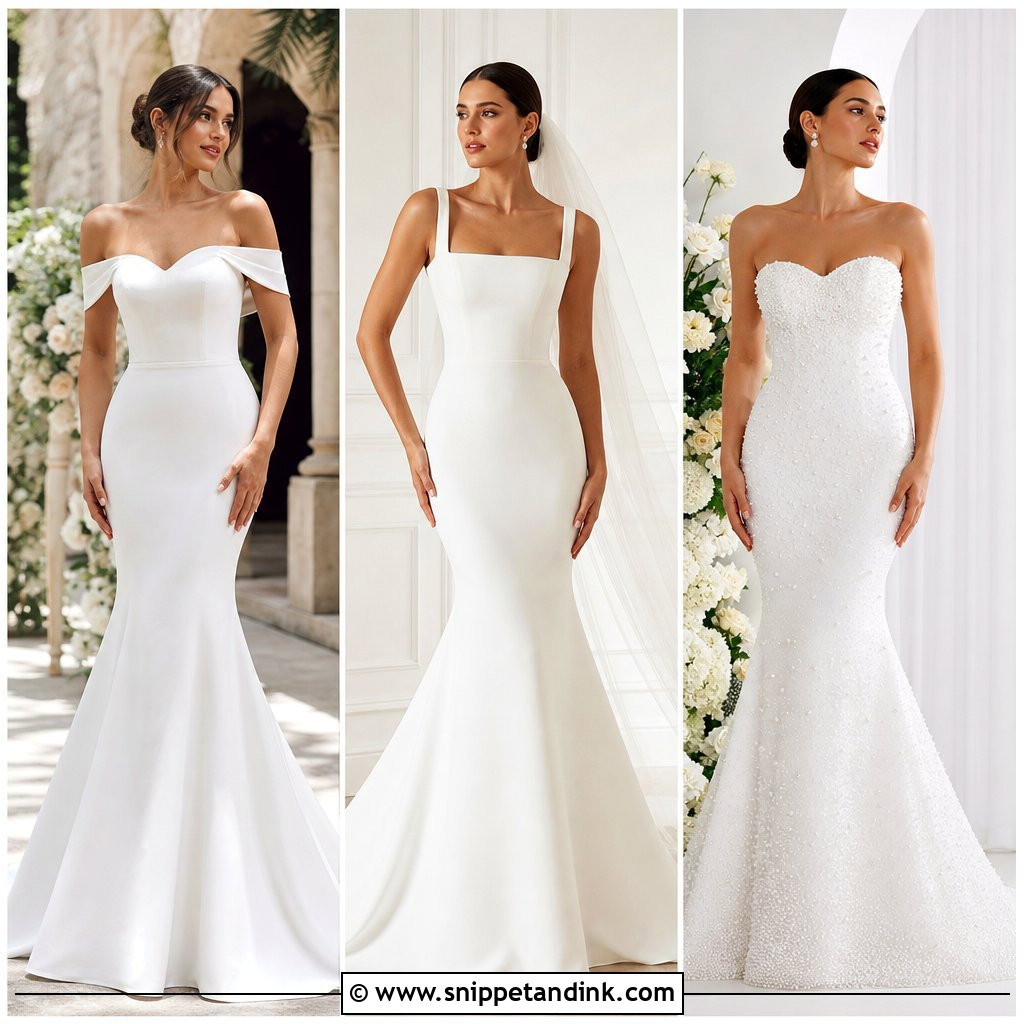
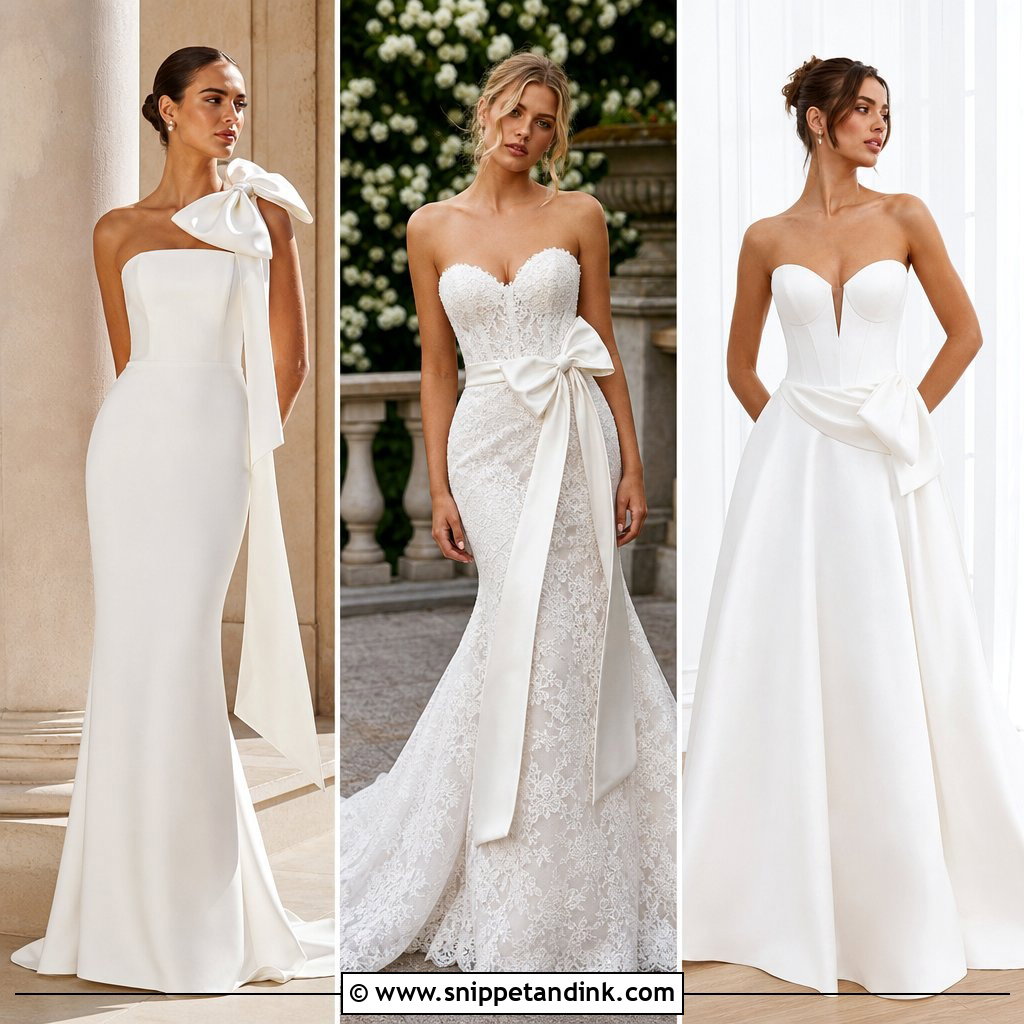
15. Satin Fit And Flare Wedding Gown
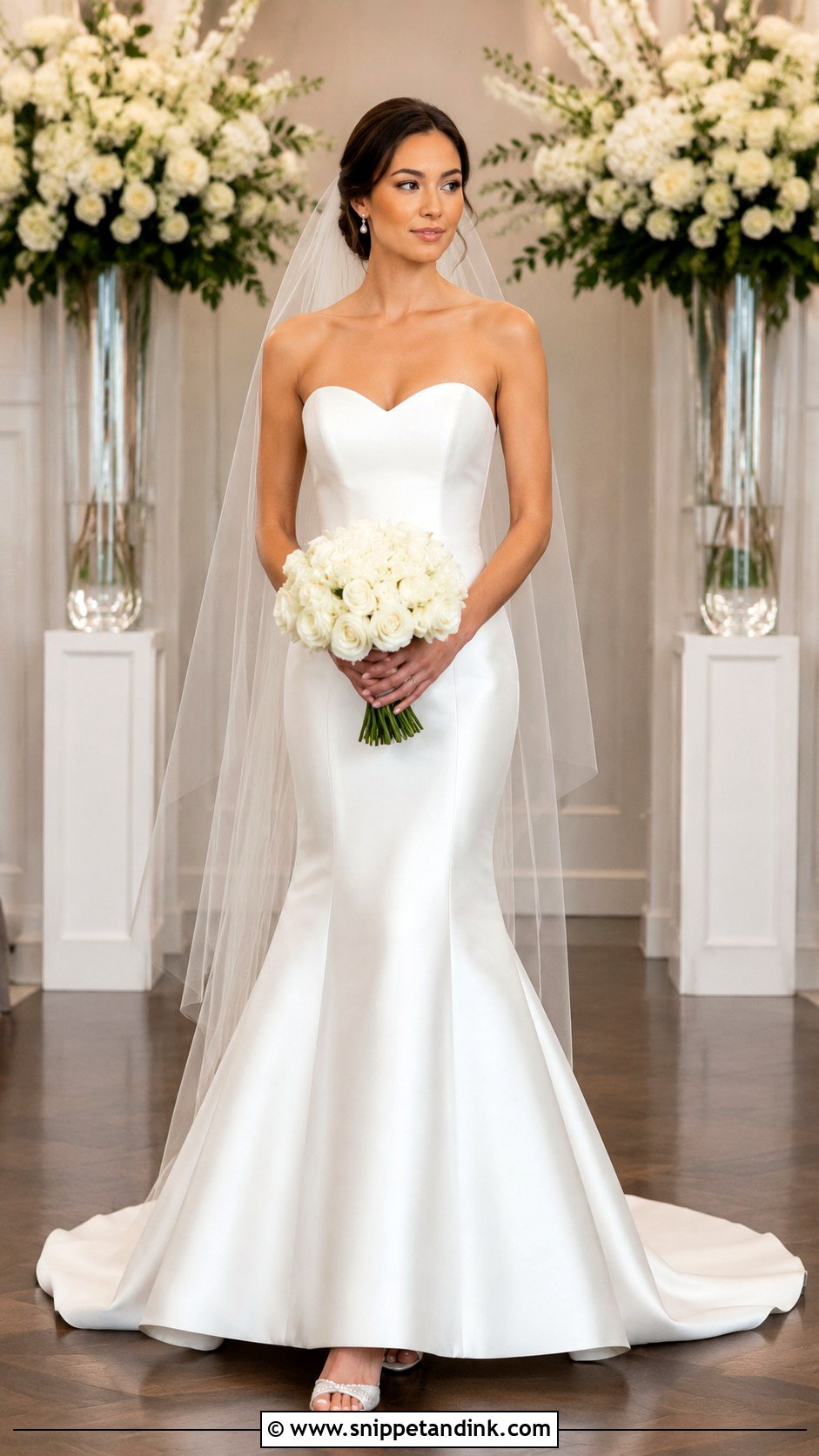
Fit-and-flare is my answer when a bride loves the mermaid shape but dread a long evening in it. The skirt releases at the upper thigh instead of the knee, so walking, dancing and sitting all get easier while the figure still shows. Satin makes that curve and flare very clear, which also means the release point needs to sit at the right height for your body; an inch too high and the gown looks shapeless. Sweetheart or off-shoulder necklines are romantic, square is more modern. A medium veil and simple heels are enough.
16. Satin Drop Waist Wedding Gown
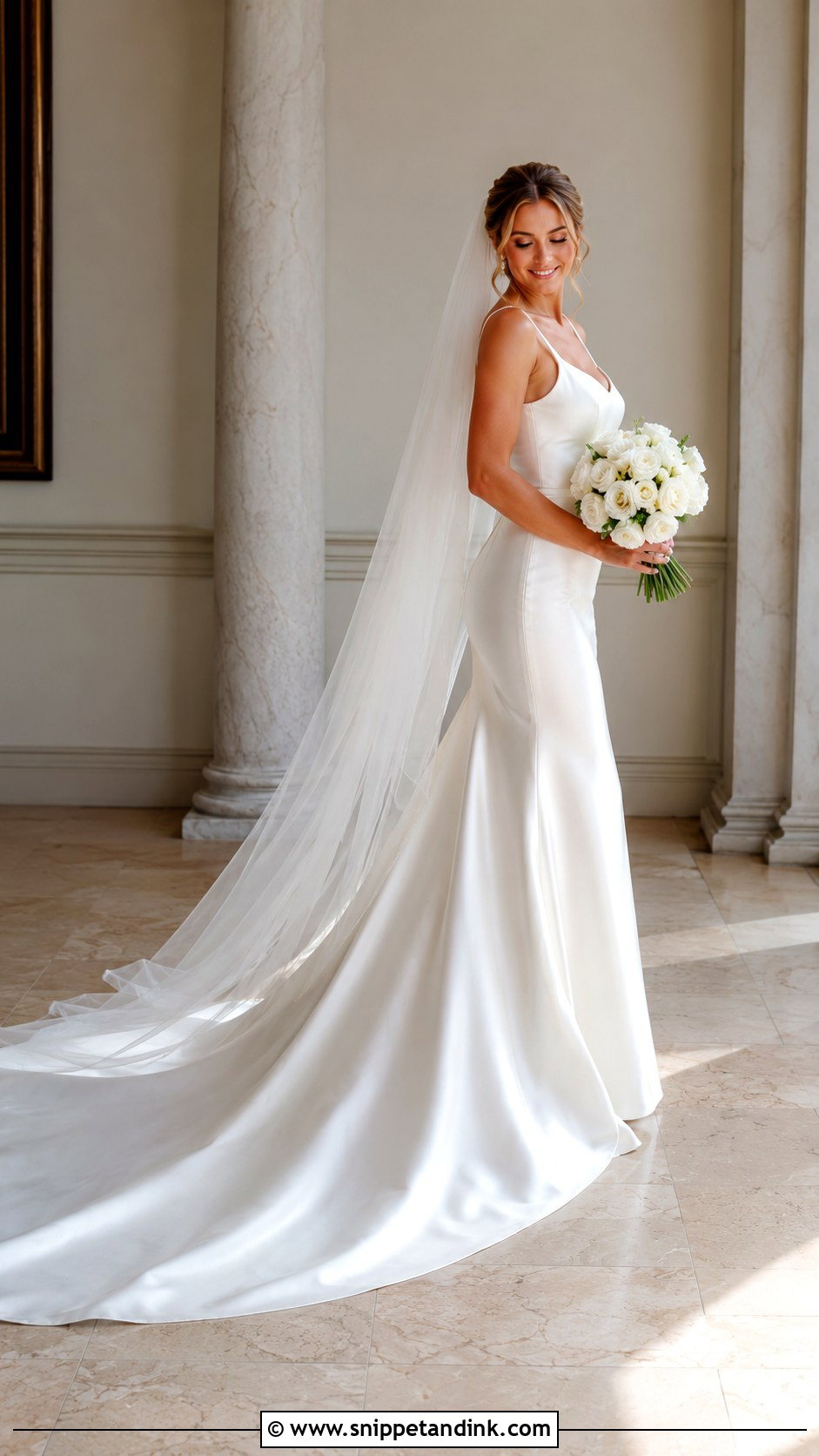
Dropping the waistline below the natural waist lengthens the torso and turns the skirt into a separate sculpted shape. In satin, especially with soft pleating at the seam, it looks fashion-led but still bridal. I’m honest with petite brides about this one: a dropped waist can shorten the legs visually, so I’d keep the skirt full and the shoes slightly higher. Keep the bodice close-fitted and the accessories minimal so the waist seam stays the focus. A sleek updo, pearl studs and pointed heels finish it.
17. Satin Basque Waist Wedding Gown
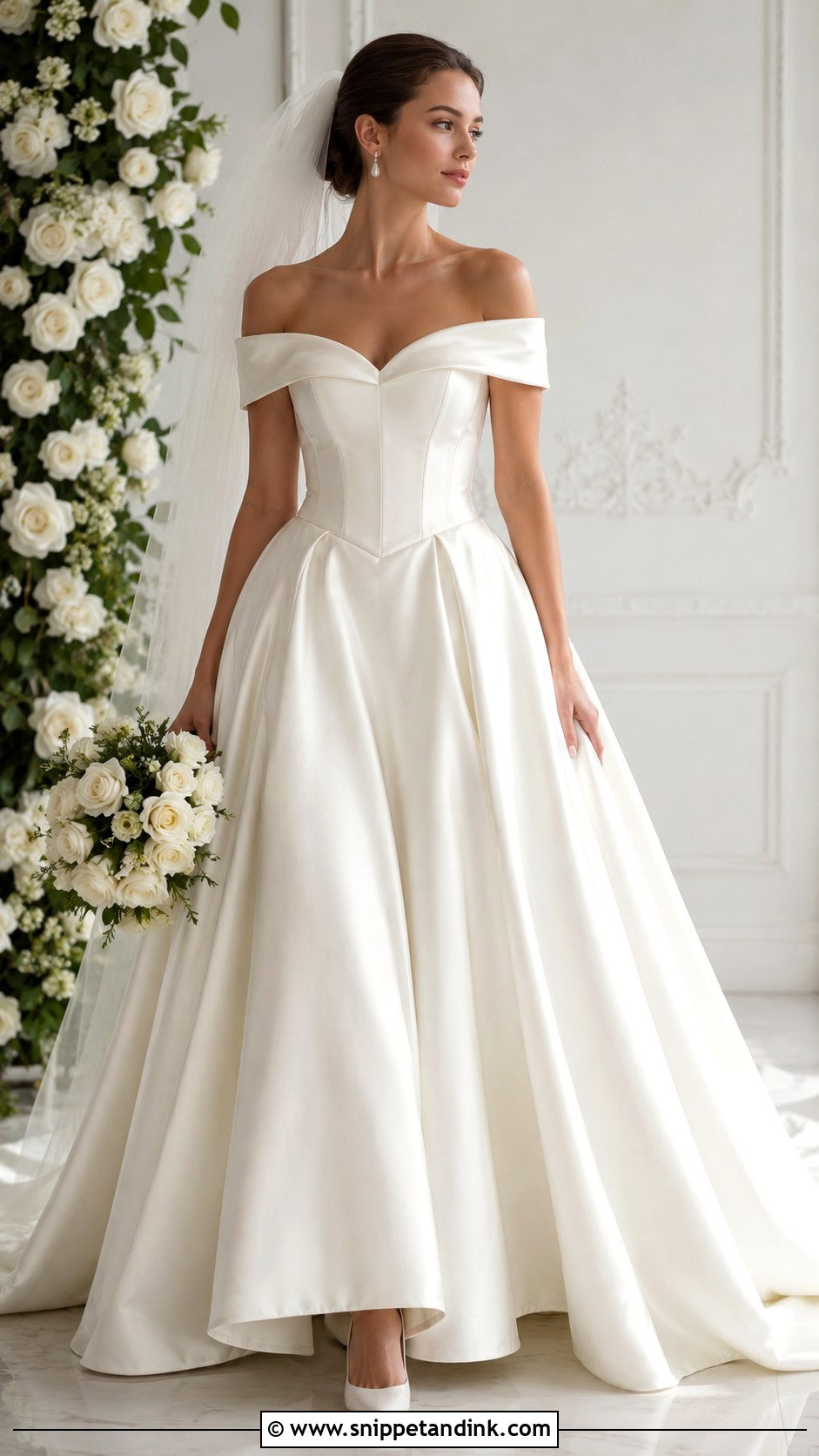
The basque waist dips into a V or U below the natural waist, which pulls the eye downward and makes the torso look longer. Over a full satin skirt it has a storybook feel, but the smooth fabric keeps it from looking costume-like. Strapless and off-shoulder necklines let the waist point stand out best. Soft curls, a plain veil and delicate earrings are all it asks for. It’s especially kind to brides with a shorter torso, since the point adds length where they need it.
18. Satin Wedding Gown With Train
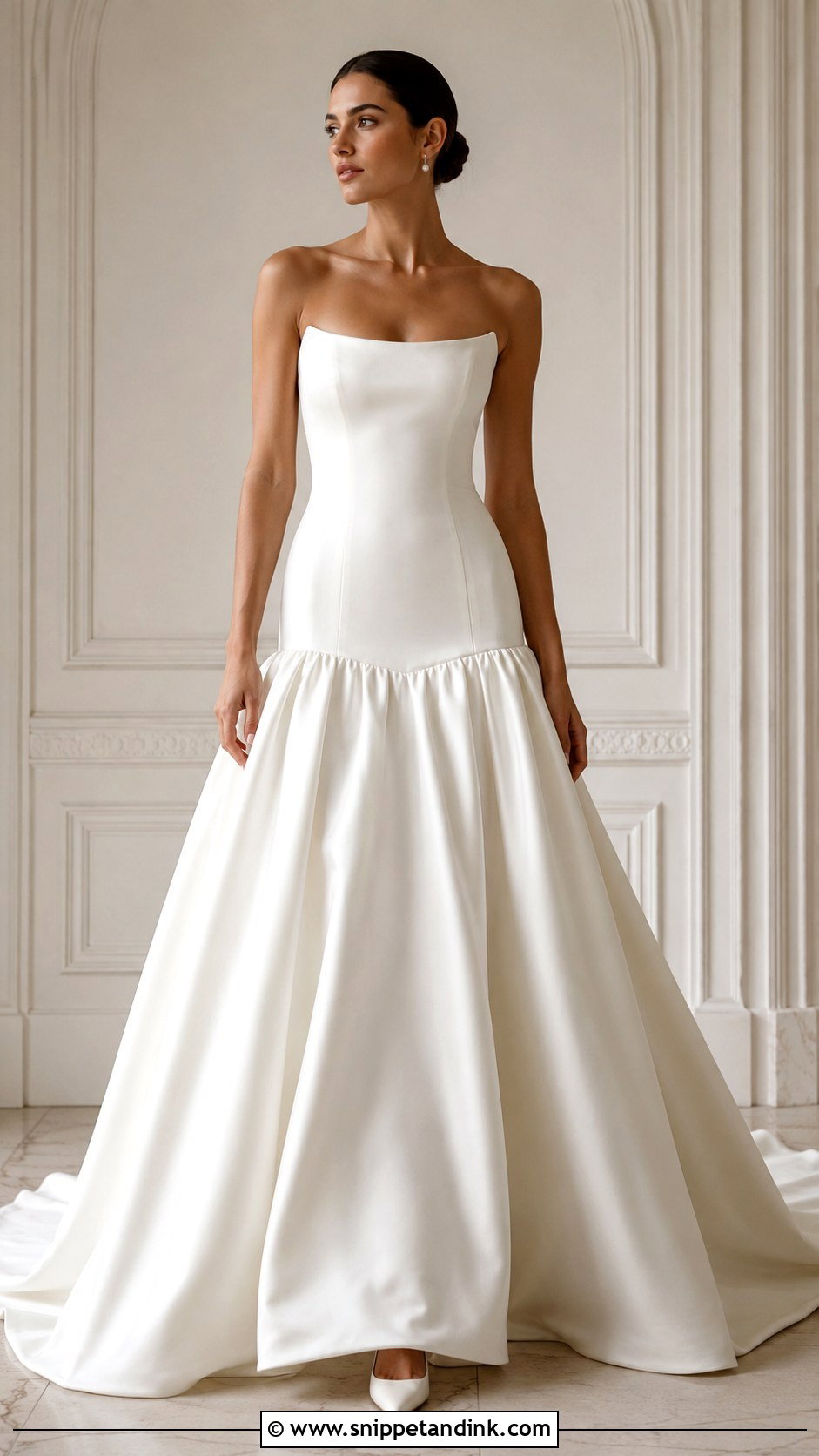
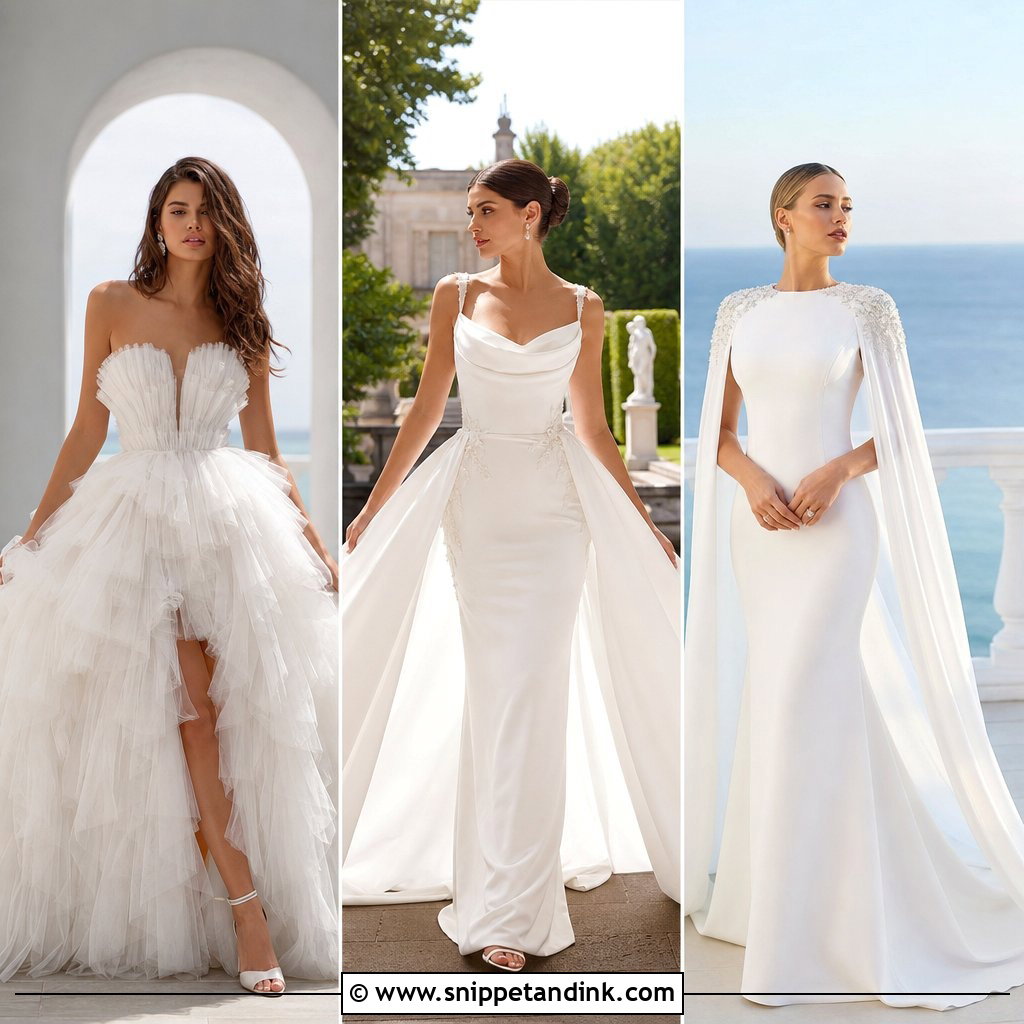
A satin train catches the light as it follows you down the aisle, which is why it reads so well on camera. Sweep trains are subtle, chapel trains are classic, and cathedral trains are a full entrance. The thing I insist on is the bustle. Satin is heavy, so a long train needs several bustle points, and a seamstress should show your maid of honor how to fasten them during the final fitting. Keep the front of the dress clean when the train is dramatic, and a veil cut to the same length makes the back look intentional.
19. Satin Wedding Gown With Buttons
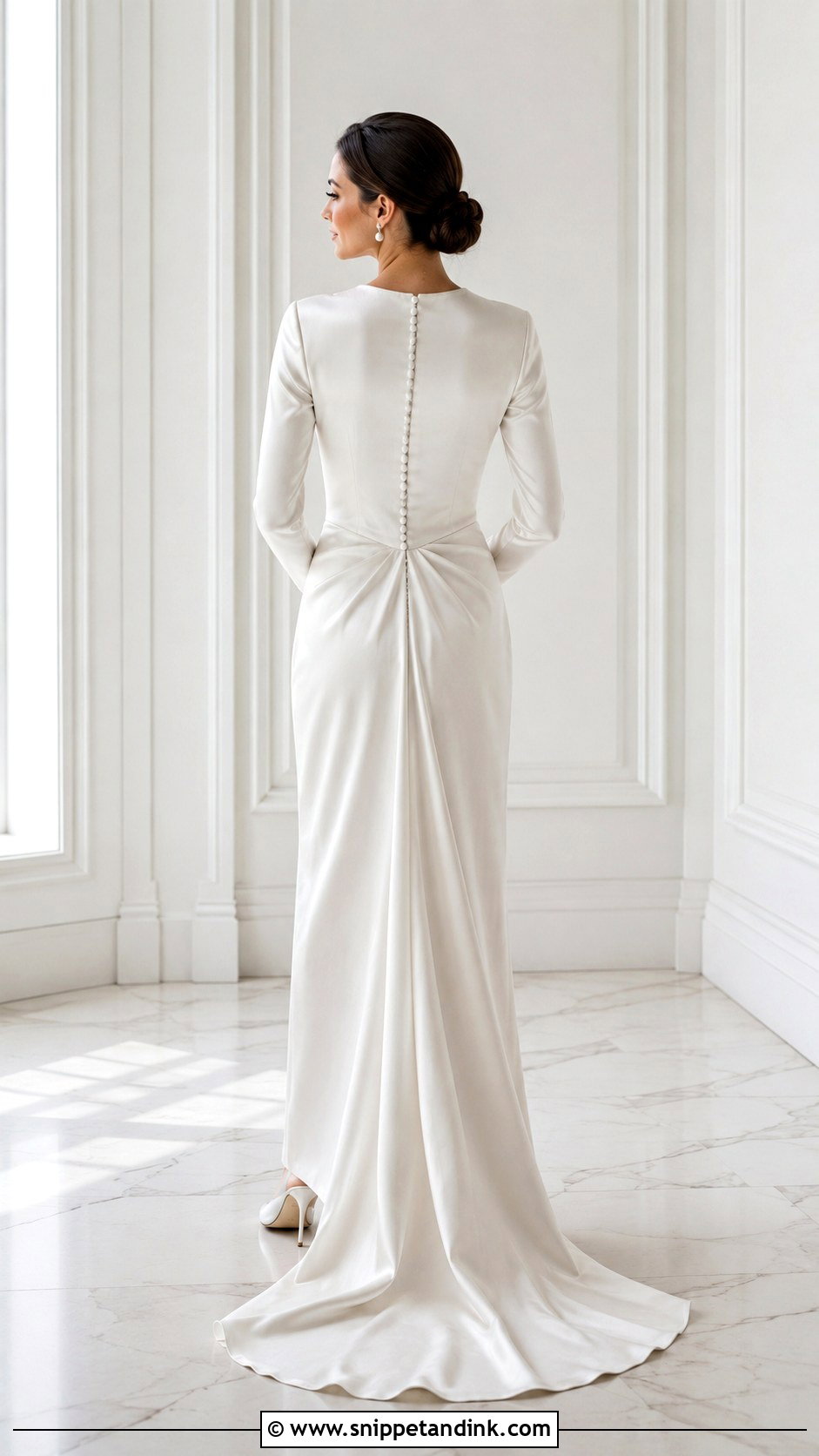
Covered buttons down the back are one of the oldest bridal details, and on smooth satin they look tidy rather than ornate. Pearl-style buttons read softer. They suit long sleeve, strapless and square neck gowns, and a low bun or half-up style lets them show from behind. Practically, real buttons take time to fasten, so many dressmakers place a hidden zip underneath with the buttons sewn over it. I’d ask for that, and leave ten extra minutes for dressing regardless.
20. Satin One Shoulder Wedding Gown
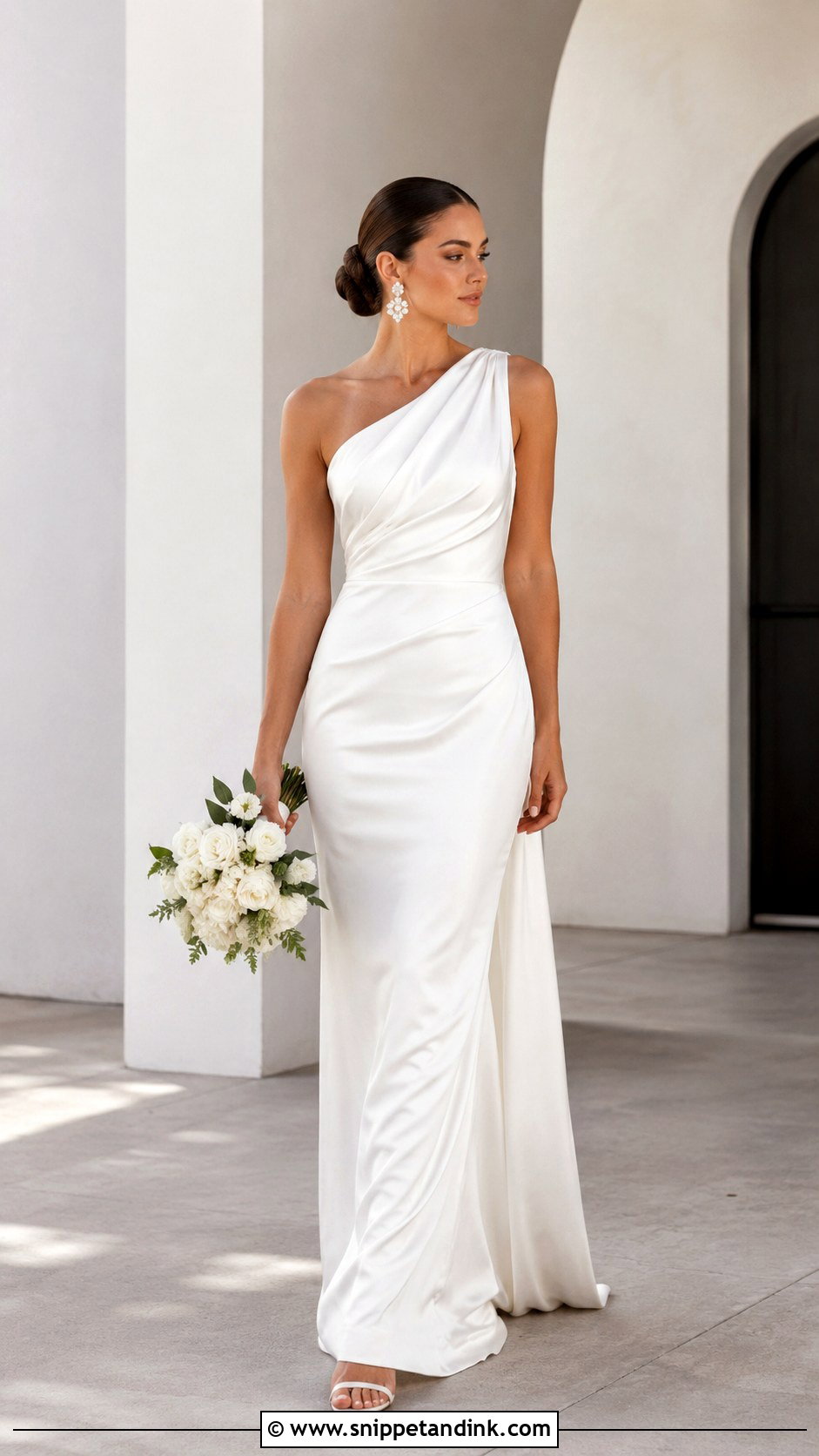
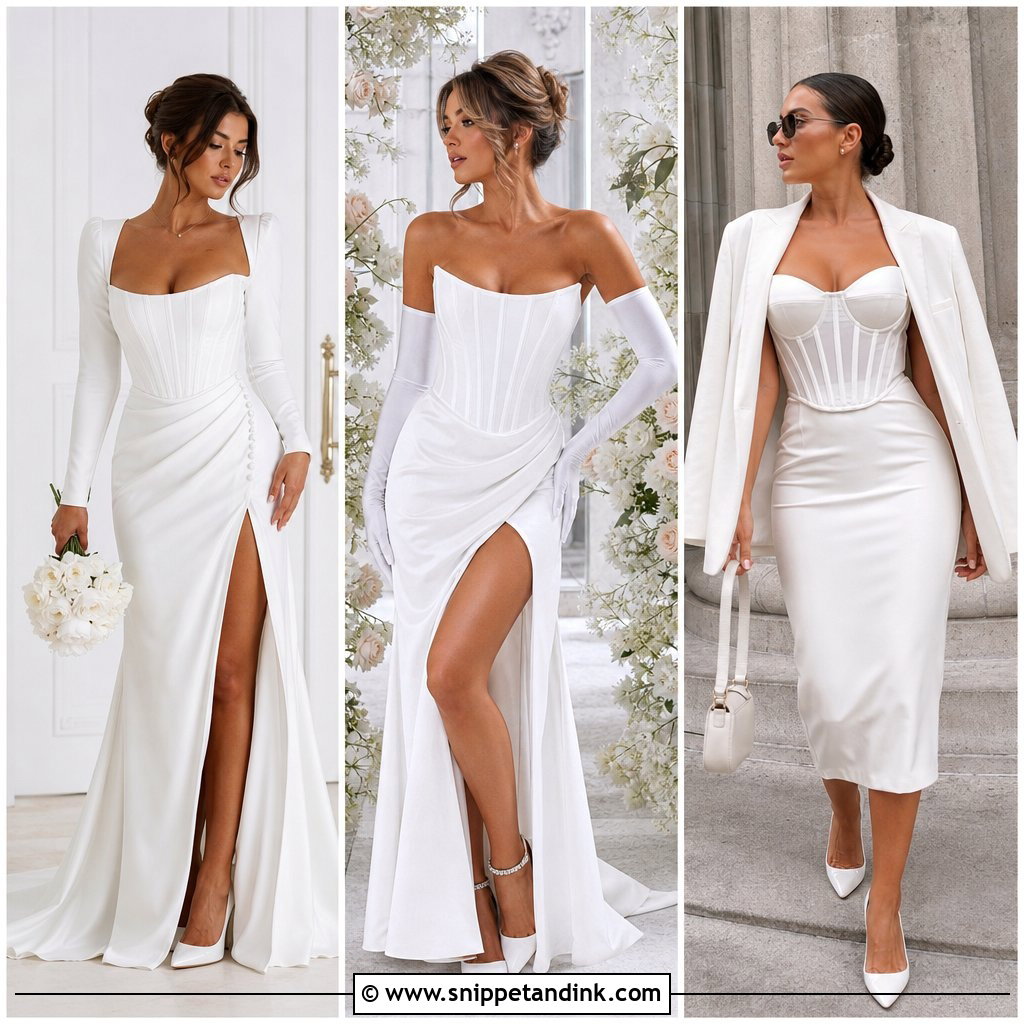
One shoulder pulls the eye upward on a diagonal, which gives even a plain satin gown a strong fashion shape. Column, fit-and-flare and A-line skirts all work under it. Skip the necklace; statement earrings on the bare side balance the neckline better. A sleek bun or deep side part helps too. At fittings I check that the single strap carries the weight without the bodice sliding toward the open side, which usually means internal grip tape or a hidden elastic along the top edge.
21. Satin Halter Wedding Gown
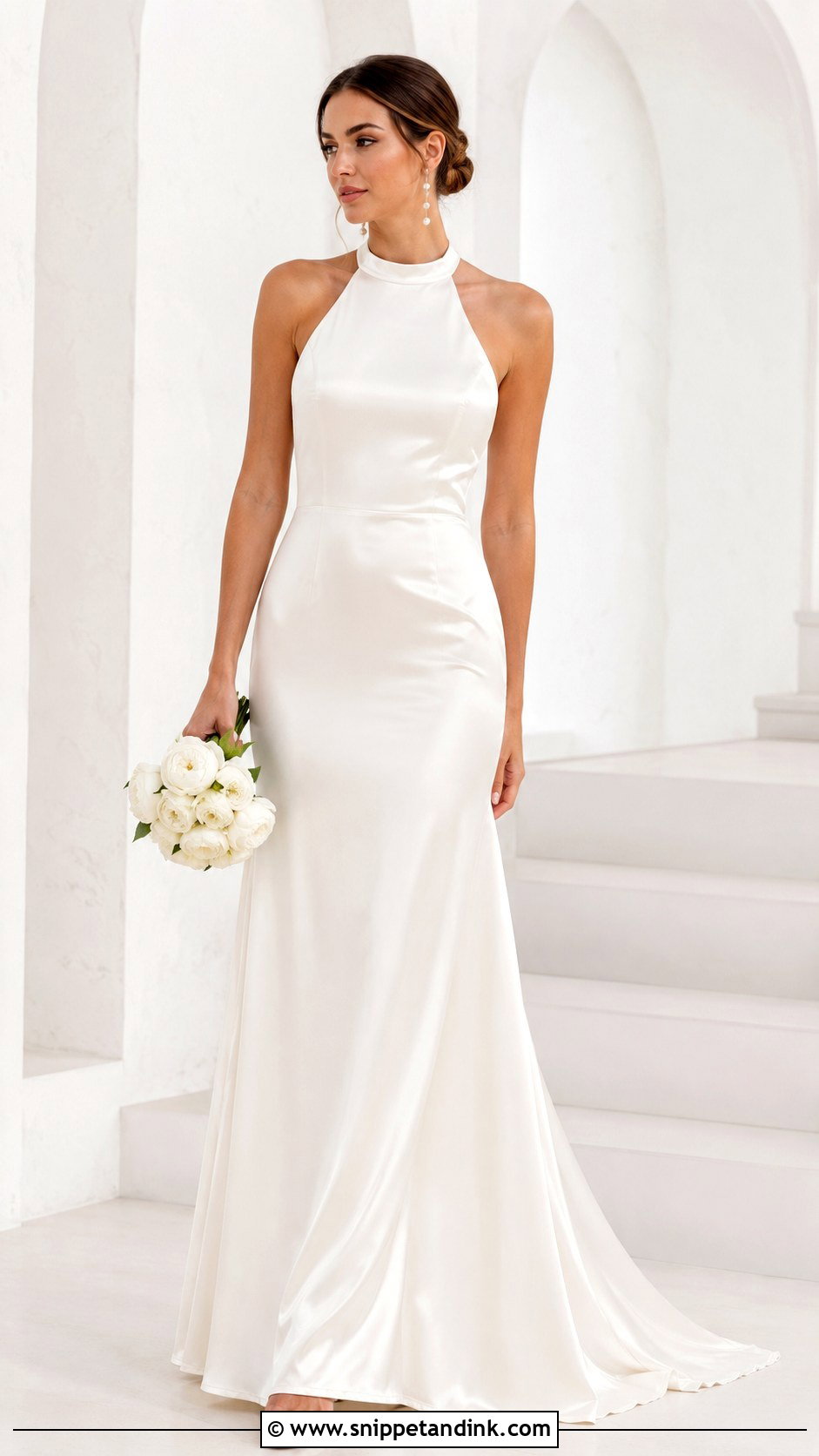
A halter neck lengthens the neck and shows the shoulders, and it feels sleek over a column skirt or dramatic over a fit-and-flare. The comfort points are the neck strap and the armholes: a halter that carries too much weight from the neck gives a headache by the speeches. I prefer one where the bodice is supported from the waist and the halter mostly shapes. Earrings work better than a necklace here. A low bun, soft veil and a fine bracelet finish it.
22. Satin Wrap Wedding Gown
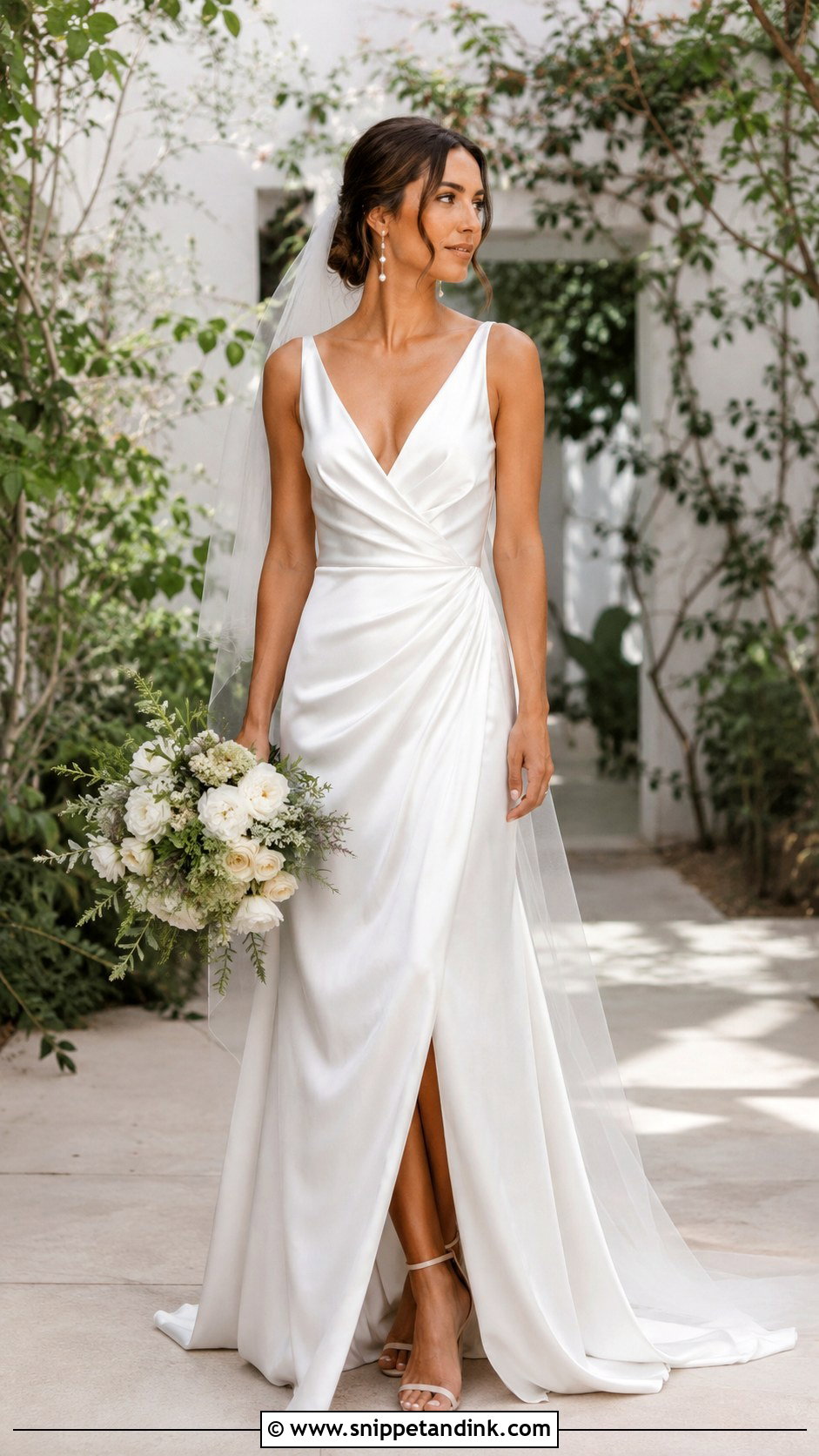
Wrap gowns feel the most relaxed of any satin cut: the overlap defines the waist, forms a V neckline and lets the skirt move. They suit garden weddings and small ceremonies, and they’re kind to brides whose weight fluctuates in the months before the wedding. Satin wraps can slip open, though, so I’d look for a hidden snap at the cross point and an inner tie rather than a single outer knot. Delicate earrings, strappy heels and a simple veil are enough.
23. Satin Empire Waist Wedding Gown
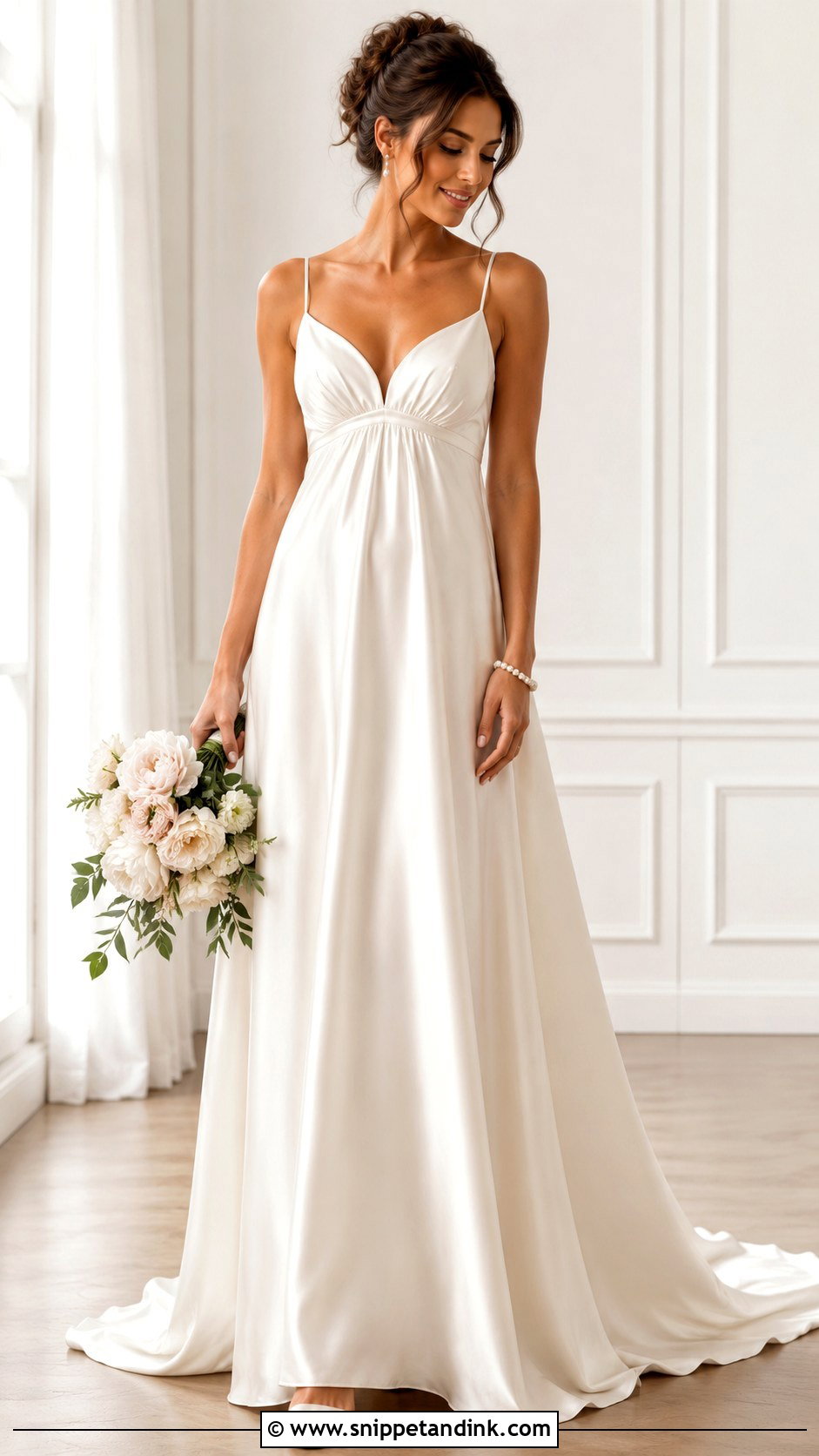
An empire waist sits just under the bust and lets the skirt fall from there, so nothing is fitted around the middle. Brides who find a tight waist uncomfortable for ten hours love it, and it works well for a pregnant bride too. In satin, the skirt hangs smooth and the high seam creates length. Square, sweetheart and thin-strap necklines all suit it. I’d keep the accessories soft: pearl earrings, a fine bracelet and a plain veil, so the line stays light.
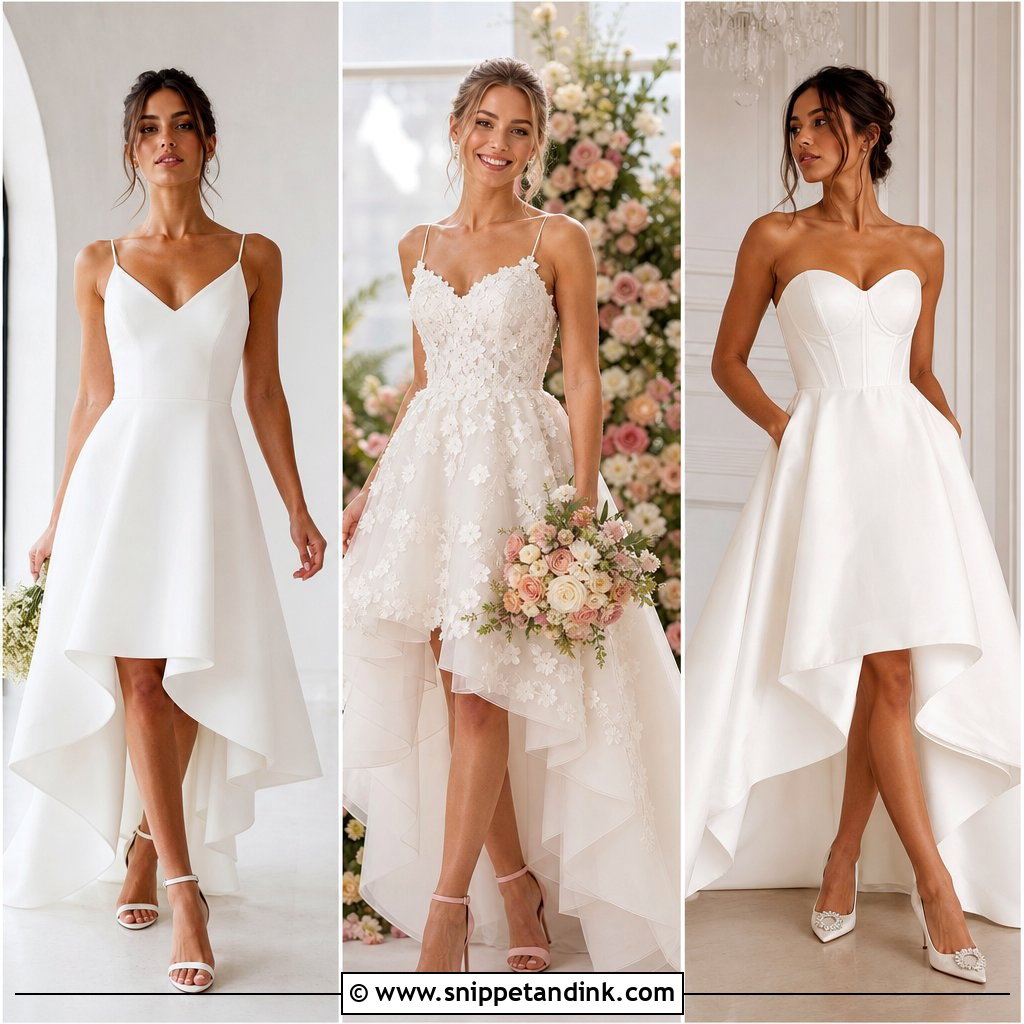
24. Satin Tea Length Wedding Dress
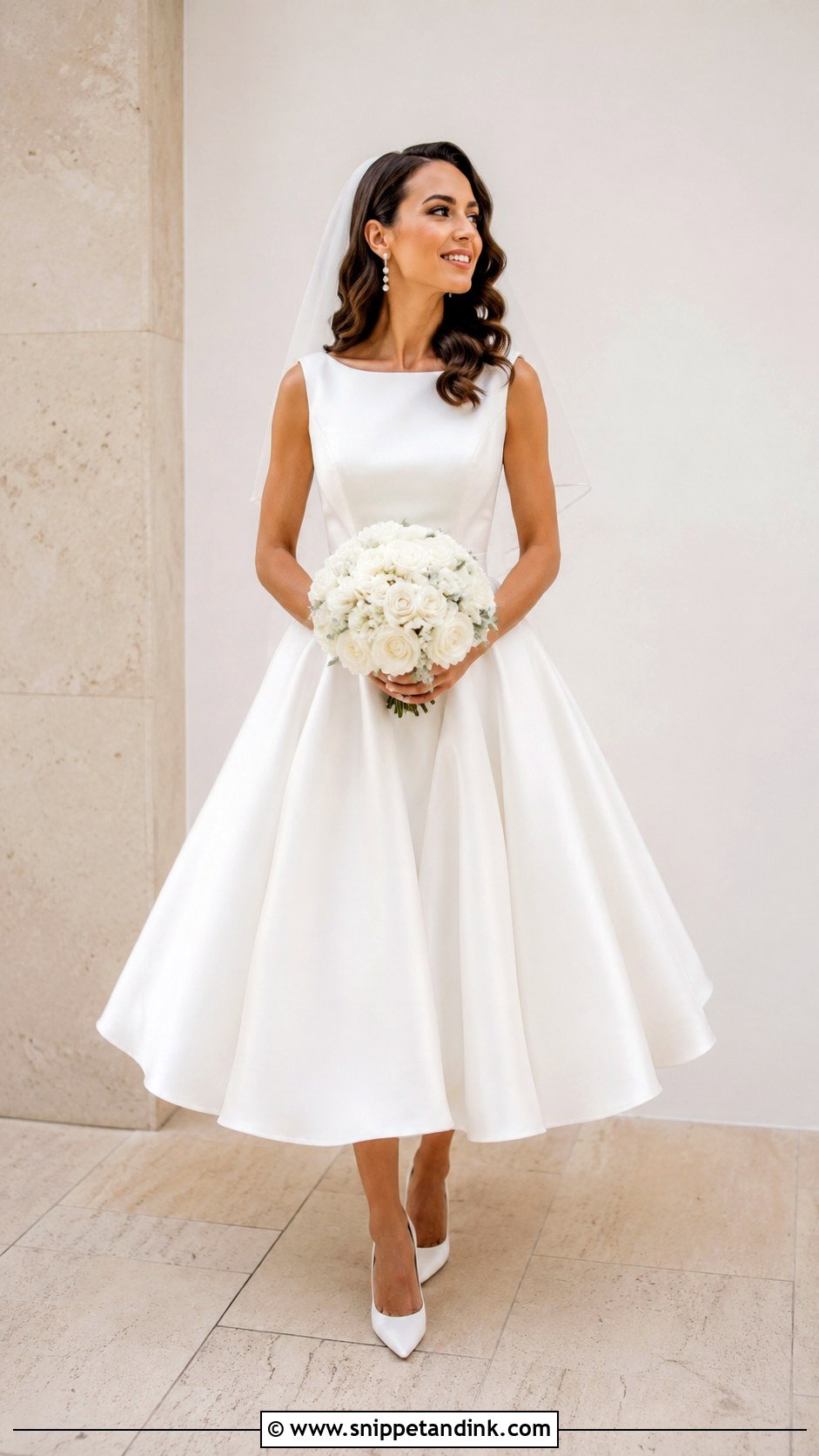
Tea length falls between the knee and the ankle, which shows off your shoes and makes moving around a courthouse, a restaurant or a daytime party far easier. The satin keeps it bridal. A fitted bodice over a full skirt gives the classic fifties shape, and a slim version reads more modern. Because the shoes are on show, I tell brides to buy them before the hem is set and wear them in around the house. Pointed pumps, block heels or embellished flats all work, with a short veil or a hair bow on top.
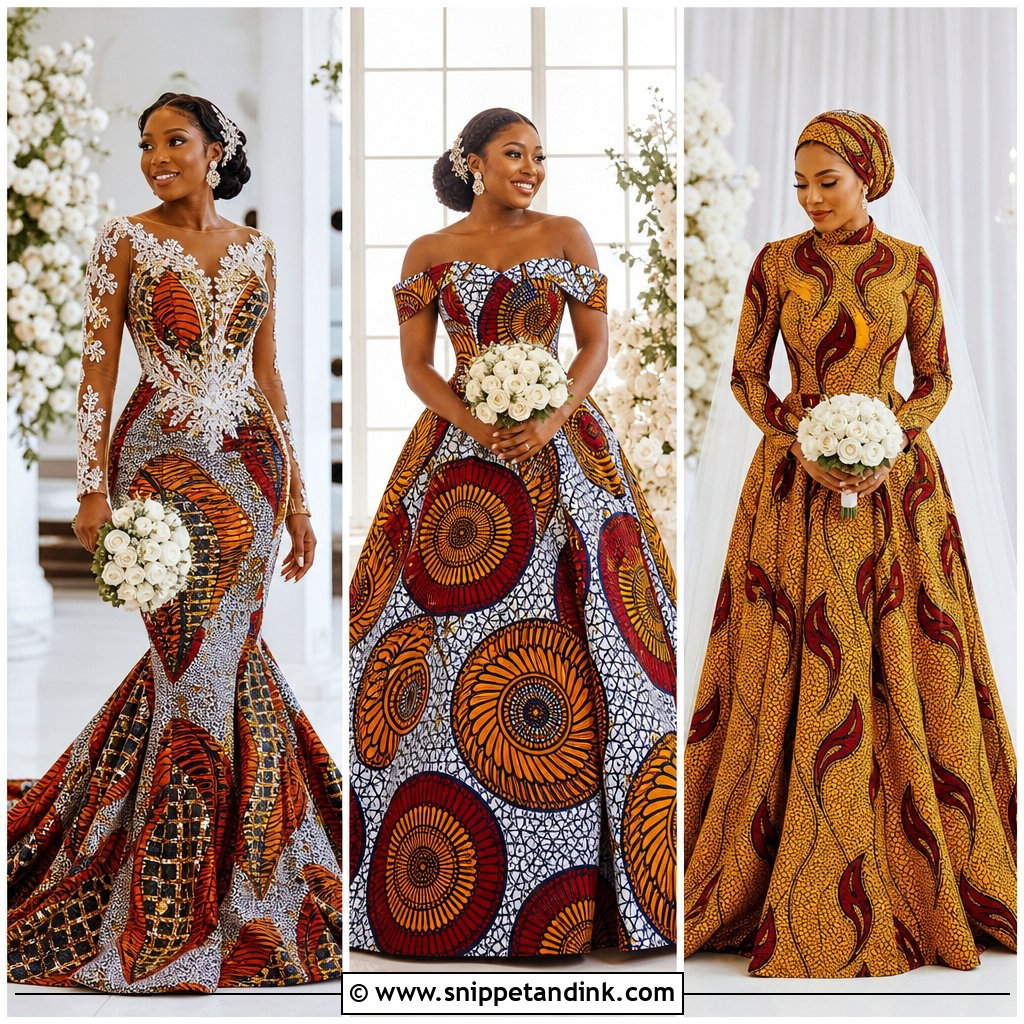
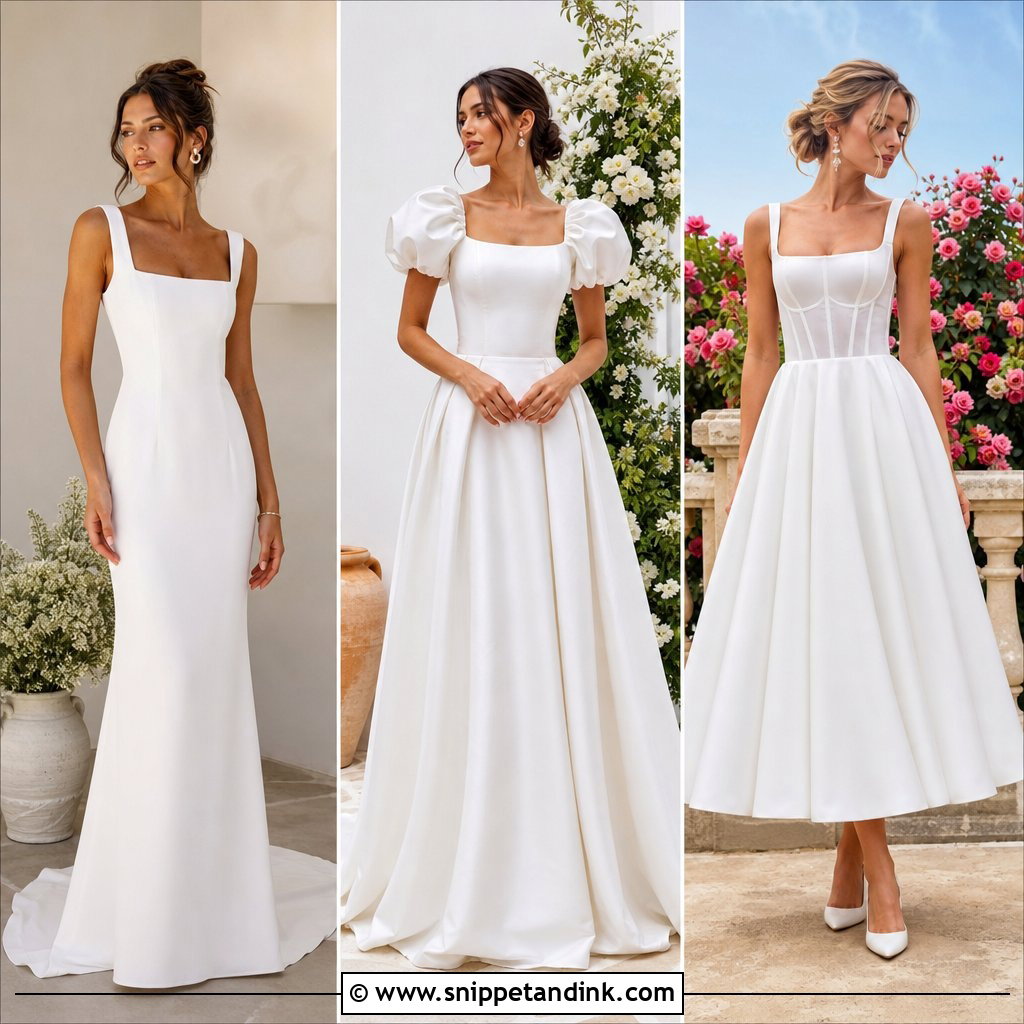
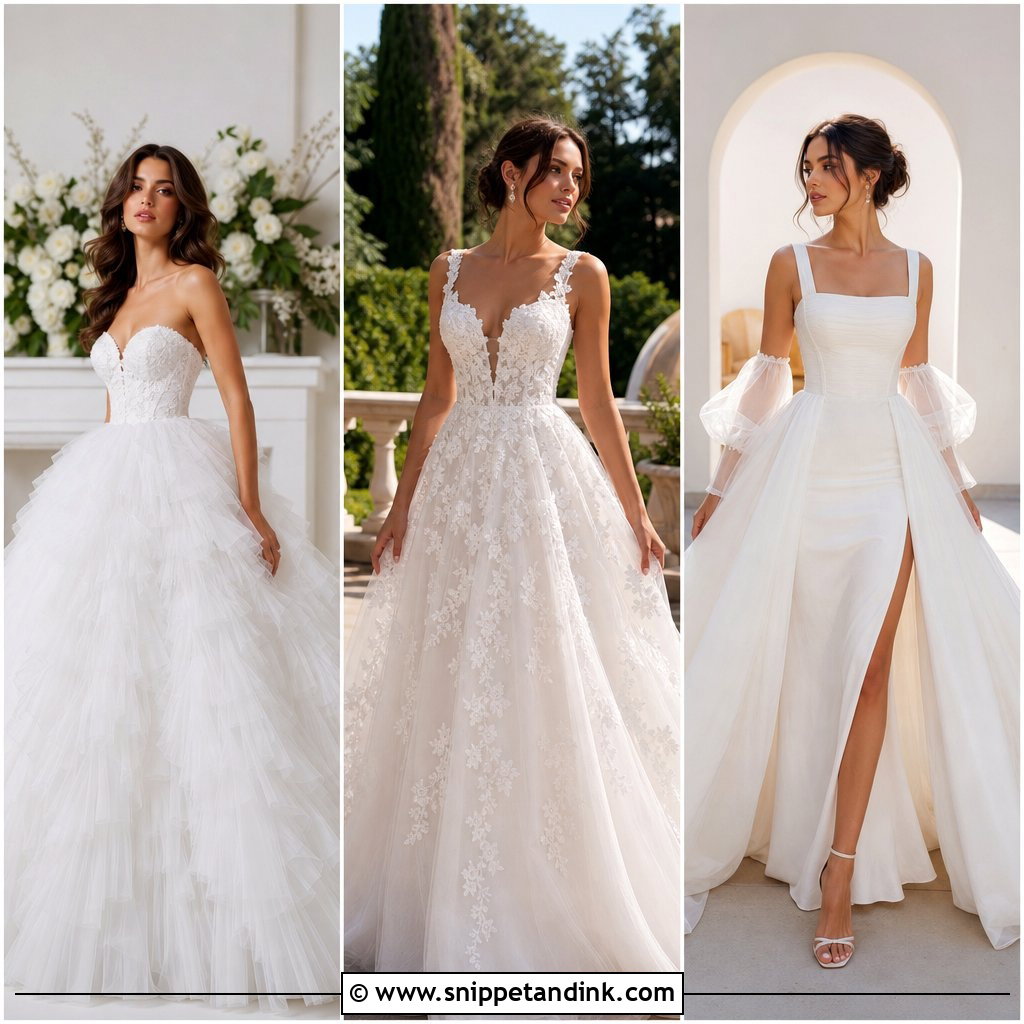
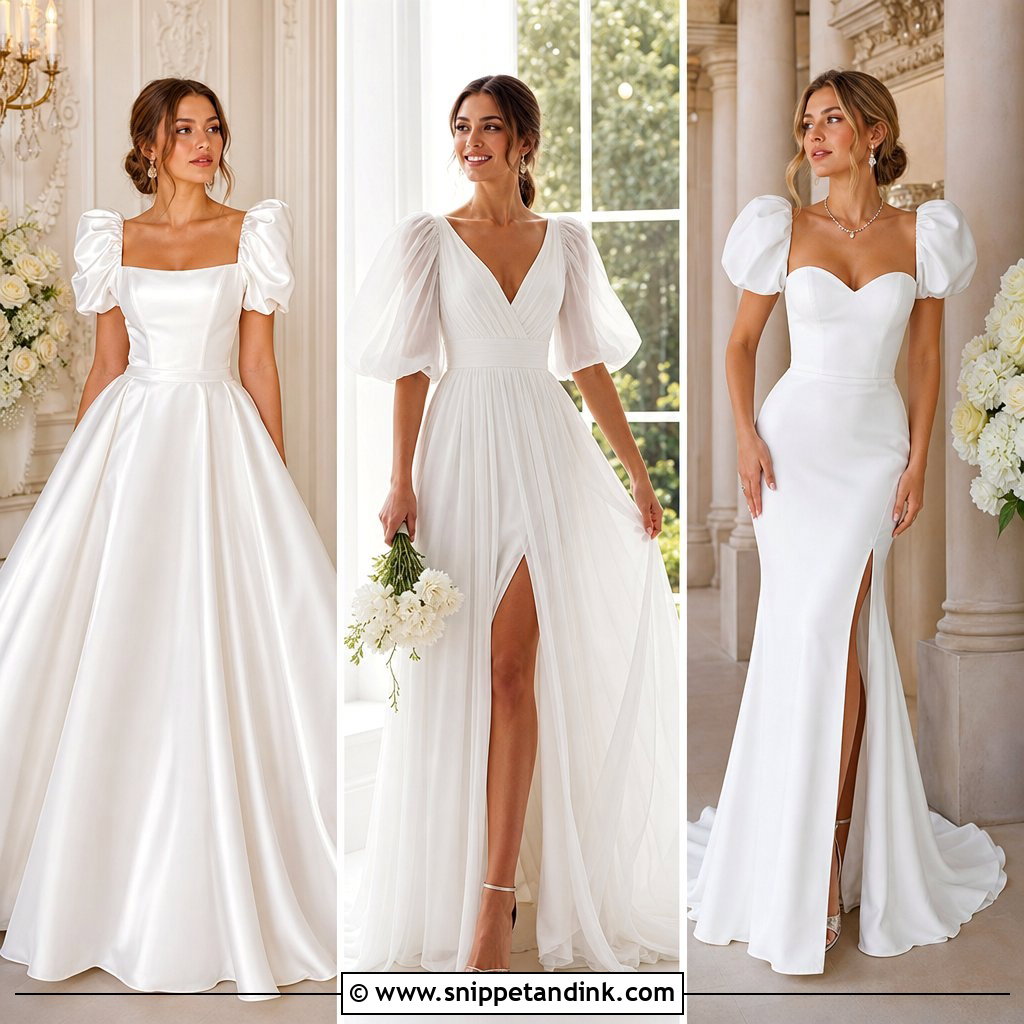
25. Satin Midi Wedding Dress
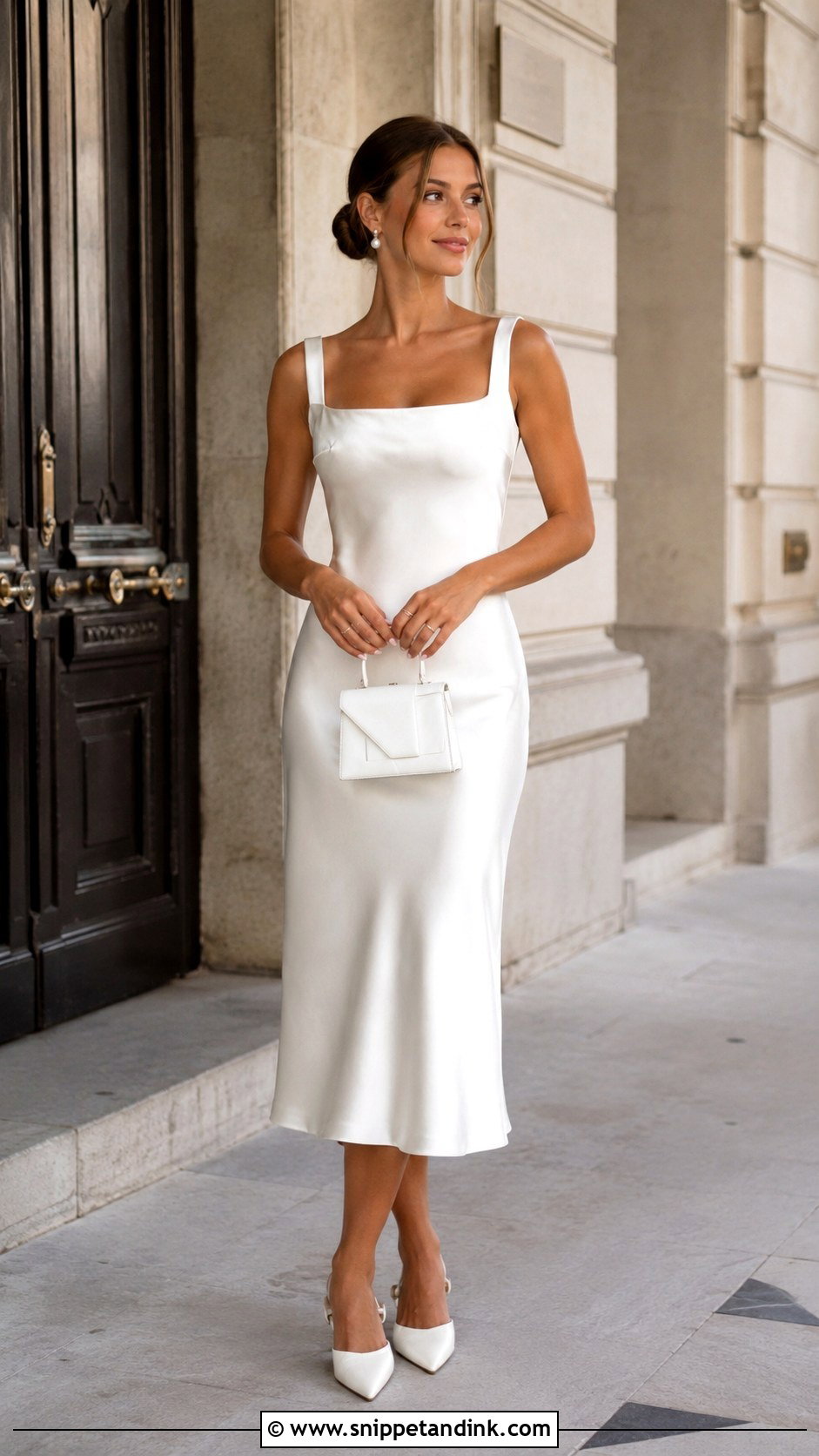
A satin midi wedding dress lands below the knee or at mid-calf, and it’s the dress I see worn again most often after the wedding. The satin lifts the shorter length so it doesn’t slip into cocktail territory. It suits a civil ceremony, a rehearsal dinner or a small lunch reception. Square necks, strapless bodices and slim long sleeves all look sharp at midi length. Slingbacks, pearl earrings and a small structured bag make it complete. Have the hem pressed after any alteration: a midi hem that flips shows clearly.
26. Satin Bridal Mini Dress
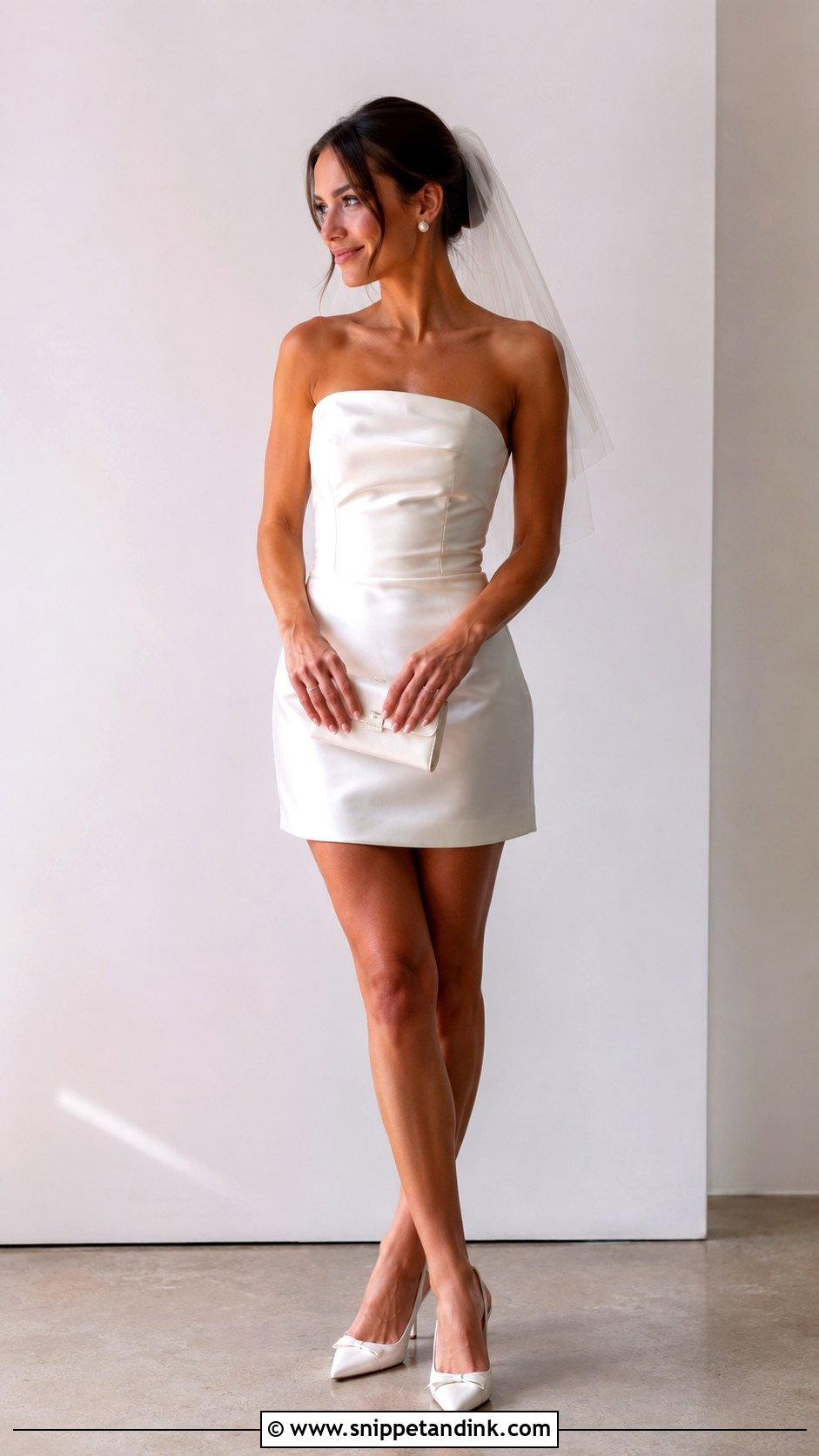
A satin bridal mini dress is the change I suggest for the reception, after the long gown comes off and the dancing starts. A structured strapless mini looks clean, a long sleeve version balances the bare legs, and a bow at the back adds charm. With so much leg on show, the shoes become half the outfit, so satin pumps, slingbacks or embellished flats should be chosen with it, not after. Add pearl studs and a short veil or headband. Satin minis crease across the lap, so pack a handheld steamer for the switch.
27. Satin Wedding Gown With Cape
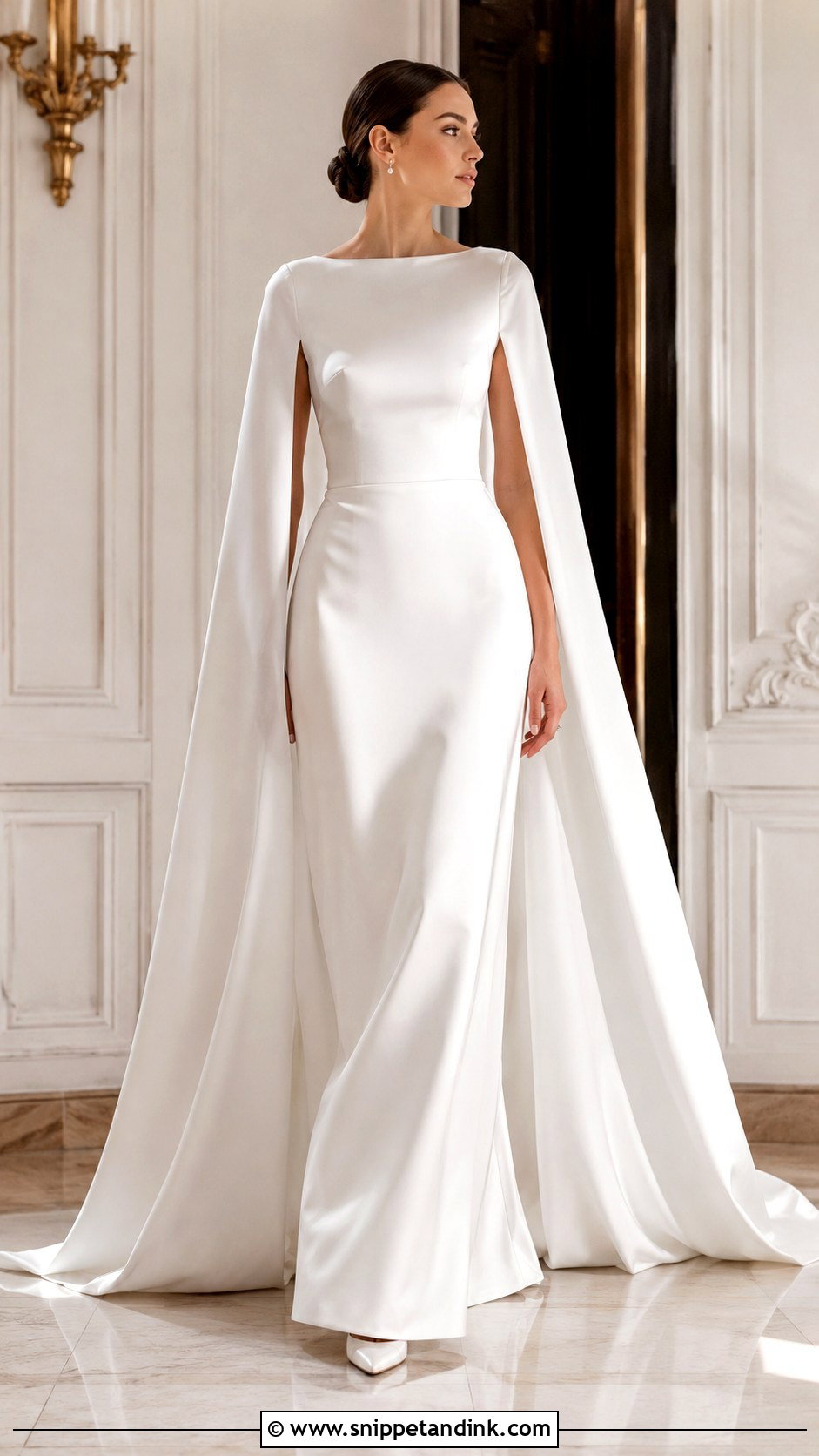
A cape can replace the veil entirely or add coverage over a strapless or sleeveless gown for the ceremony. Sheer capes float; a satin cape is heavier and more regal. Column, sheath and simple A-line gowns let the cape be the main detail. Two practical points from fittings: the cape should be attached at the shoulders or under the arms with hidden snaps, not draped loose, and your hair needs to sit high or sleek so the neckline isn’t hidden. Keep the jewelry minimal.
28. Satin Wedding Gown With Pearl Details
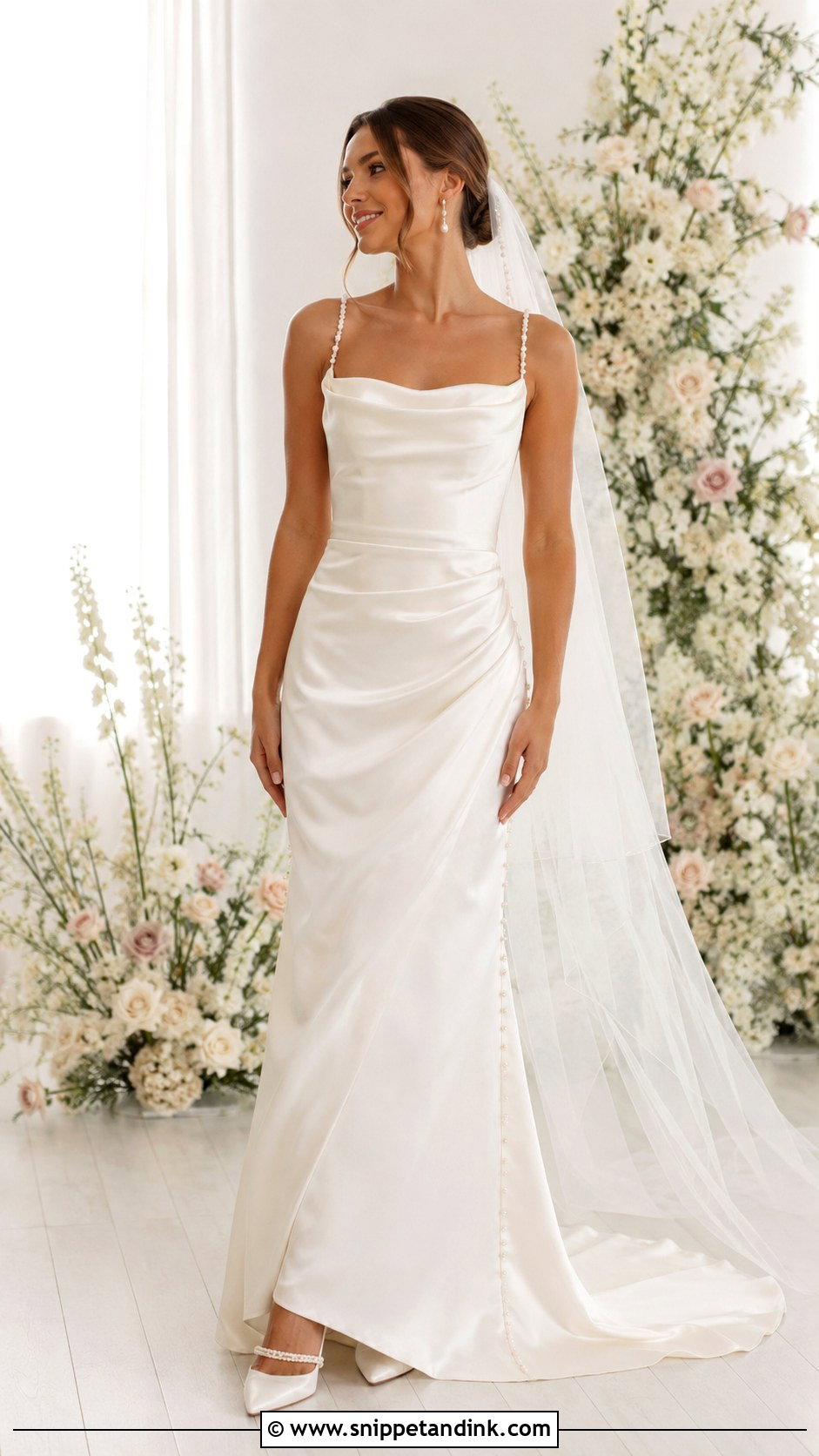
Pearls on satin read soft rather than sparkly, which is why the pairing feels classic. They can sit on straps, buttons, bodices, sleeves or the veil, and the trick is choosing one place. Pearl straps call for a clean bodice; a pearl-scattered bodice calls for plain earrings and a simple veil. Ask whether the pearls are glass or plastic: plastic ones can peel when steamed, and heavy glass pearls can drag a light satin bodice. The pairing suits almost any silhouette, from a slip dress to a ball gown.
29. Satin Wedding Gown With Slit
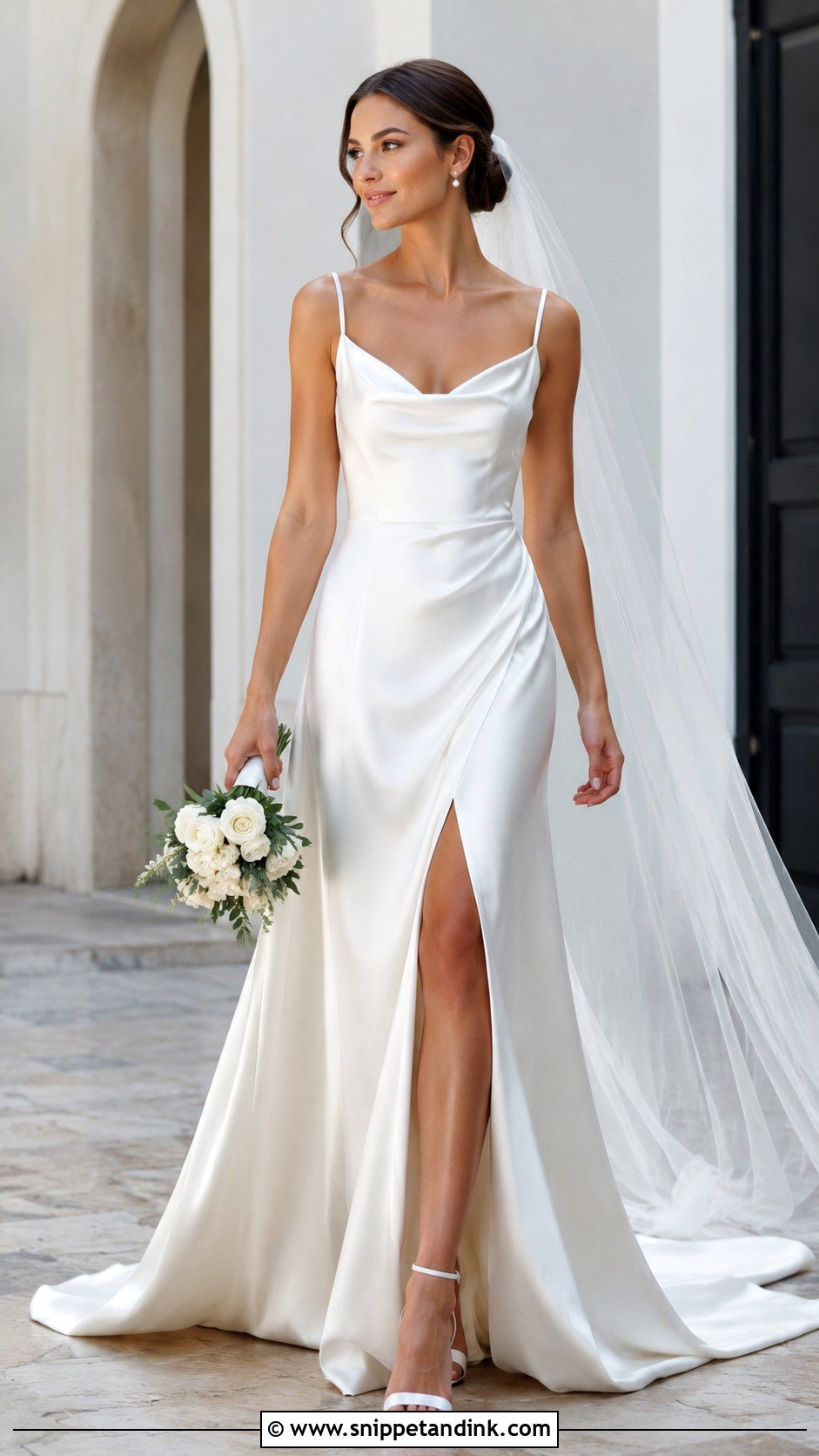
A slit adds movement to a satin skirt, and the fabric’s sheen makes the leg line look intentional. A-line, column and wrap gowns take it best. I always test the height by having the bride sit, climb a step and walk quickly in the fitting room; a slit that looks right standing can open far higher when you sit. Pick shoes that match the gown’s formality, keep the neckline simple when the slit is high, and add a clean veil and delicate jewelry.
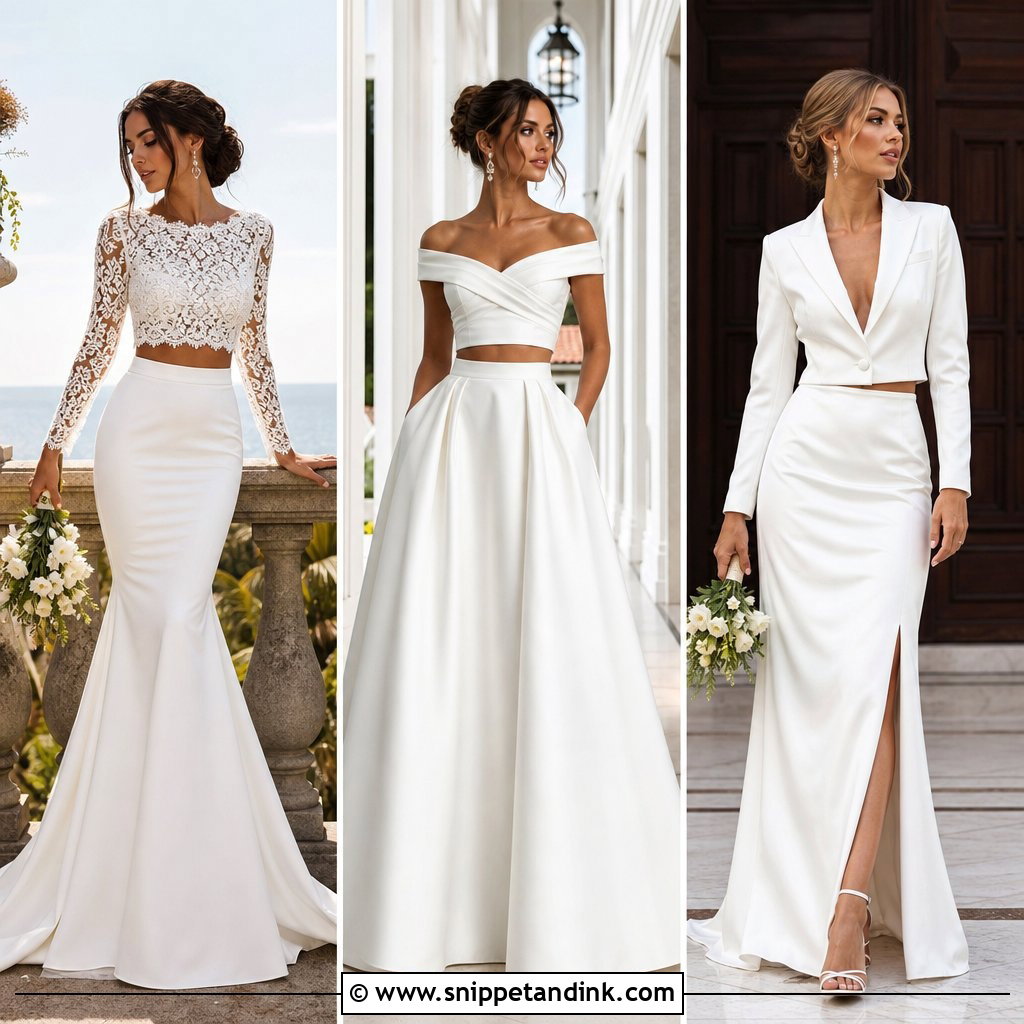
30. Minimalist Satin Wedding Gown
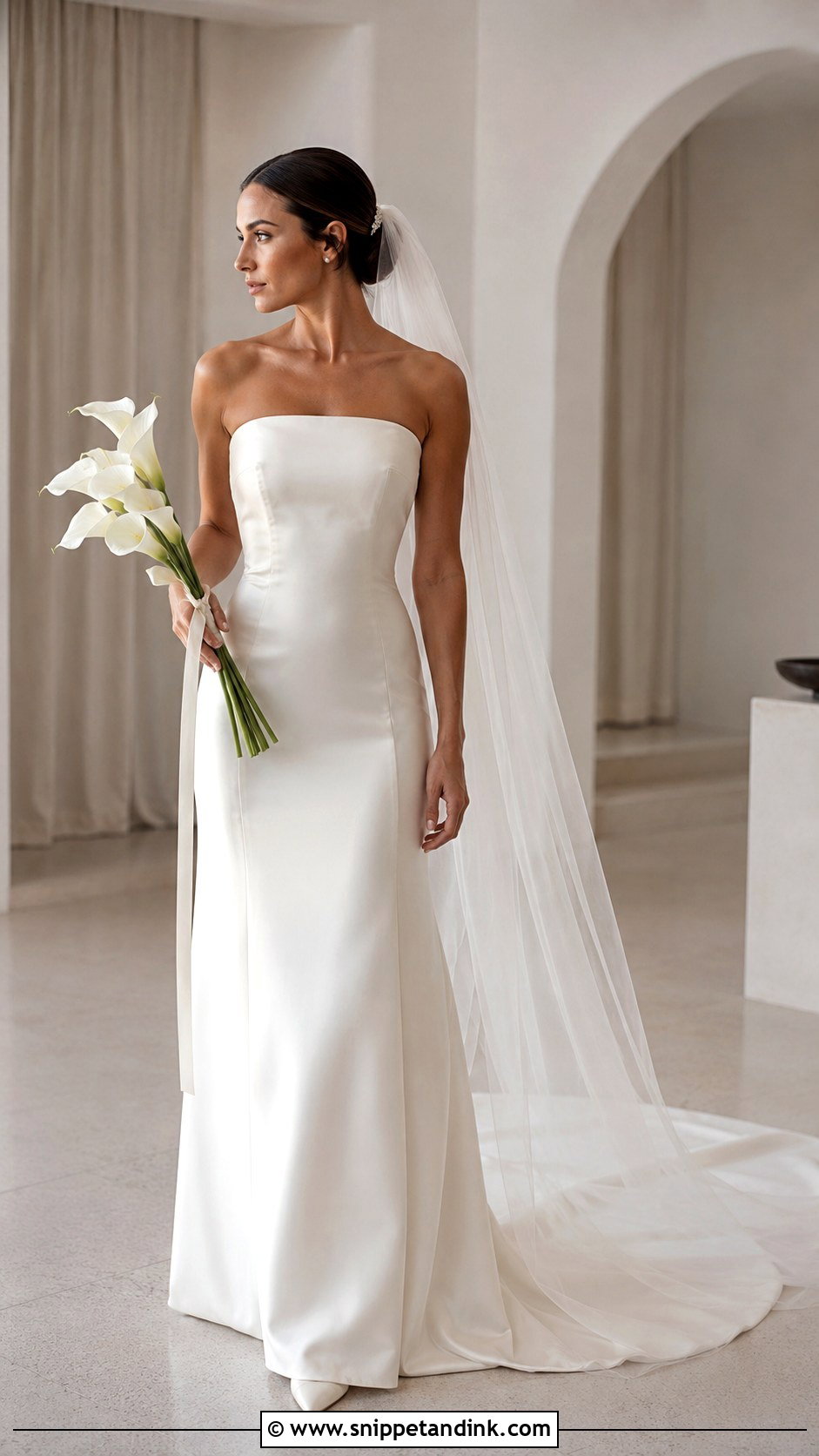
A minimalist gown has nowhere to hide, so the fabric weight and the tailoring are the whole design. Clean seams, a strong silhouette and well-chosen satin will look expensive; a thin, shiny satin with puckered seams will look cheap at any price. Column, slip, A-line and strapless shapes all work. I’d add one refined accessory, perhaps a sculptural comb or satin heels, and leave the rest out. This is the gown that rewards spending on alterations.
What Satin Does Between the Fitting Room and the Last Dance
Every satin gown creases across the lap the first time you sit. That’s normal, and it isn’t a sign of a poor dress. I plan around it rather than fight it.
- Stand for the car ride if the trip is short, or sit on the back of the skirt with the front lifted and smoothed over your knees.
- Pack a small handheld steamer for the getting-ready room and test it on an inside seam first. Steam satin from the inside, never press it straight with a hot iron, and keep the head moving so water doesn’t spot.
- Water marks show on silk satin. Keep drinks with ice away from the skirt and blot spills with a clean white cloth, never rub.
- Wear your exact undergarments to the last two fittings. Satin reflects light along every edge, so a bra line that’s invisible in a mirror can show in flash photos.
Satin also changes color slightly in different light. Ivory that looks warm in the bridal shop can look cream under tungsten reception lights, and bright white can turn faintly blue in shade. I’d look at the gown near a window and under a warm bulb before deciding on the tone.
After the Wedding, Before the Box
Have the gown cleaned within a few weeks, even if it looks spotless. Sugar from champagne and cake dries invisibly on satin and then oxidizes into yellow-brown marks months later, and by then it’s much harder to lift. Use a cleaner who handles bridal fabrics and ask how they treat beads and pearls.
For storage, I recommend a breathable cotton garment bag or an acid-free box with acid-free tissue in the folds, kept somewhere cool, dark and dry. Avoid plastic bags, which trap moisture, and don’t hang a heavy satin gown by its straps for months; use the inner hanging loops so the weight sits at the waist. Refold it along different lines once a year so permanent creases don’t set into the fabric.
Satin Moves Differently Than It Hangs
Satin shifts from classic to modern with a single change of silhouette or neckline. A ball gown feels grand and a slip feels pared back; a corset adds structure, a cape adds drama and pearls bring something gentle. What I’d ask you to do is try at least three shapes, and walk, sit and lift your arms in each, because satin looks very different in motion than it does on the hanger. The gown that keeps its line when you move is the one worth booking a second fitting for.
You'll Like These Ideas:


Leave a Reply