
Frills put movement into a dress in a way nothing else does; the skirt keeps moving a beat after you stop. That’s also why they are tricky. Placed well, a few narrow trims add dimension and a cascade of tiers makes an entrance. Placed badly, they add width exactly where you didn’t want it. Neckline, waist position and fabric weight decide which way it goes, and the accessories have to step back. There’s a ruffled design for a garden, a ballroom, the coast or a small civil ceremony. Below are twenty complete looks, each with the shoes, veil and hair I’d pair with it, and notes on who each shape suits.
Ruffle, Flounce or Tier: Reading the Label Before an Appointment
Bridal descriptions use these words loosely, but they behave differently on the body, and knowing which one you like saves a lot of try-ons.
- A ruffle is a strip of fabric gathered along one edge. It adds fullness right at the seam, so a ruffle at the hip adds width there.
- A flounce is cut in a curve and attached flat. It ripples at the edge without bulk at the seam, which makes it the better choice if you want movement without extra width.
- Tiers are whole skirt sections stacked in layers, each a little fuller than the one above. They build volume gradually from the waist down.
Fabric changes the result just as much. Organza holds a ruffle upright all day. Tulle gives soft, airy volume and can crush if you sit on it for a long dinner. Chiffon drops and swings. If a dress looks right in photos but wrong in person, the fabric is usually the reason.
1. Frilly Tulle Ball Gown Wedding Dress
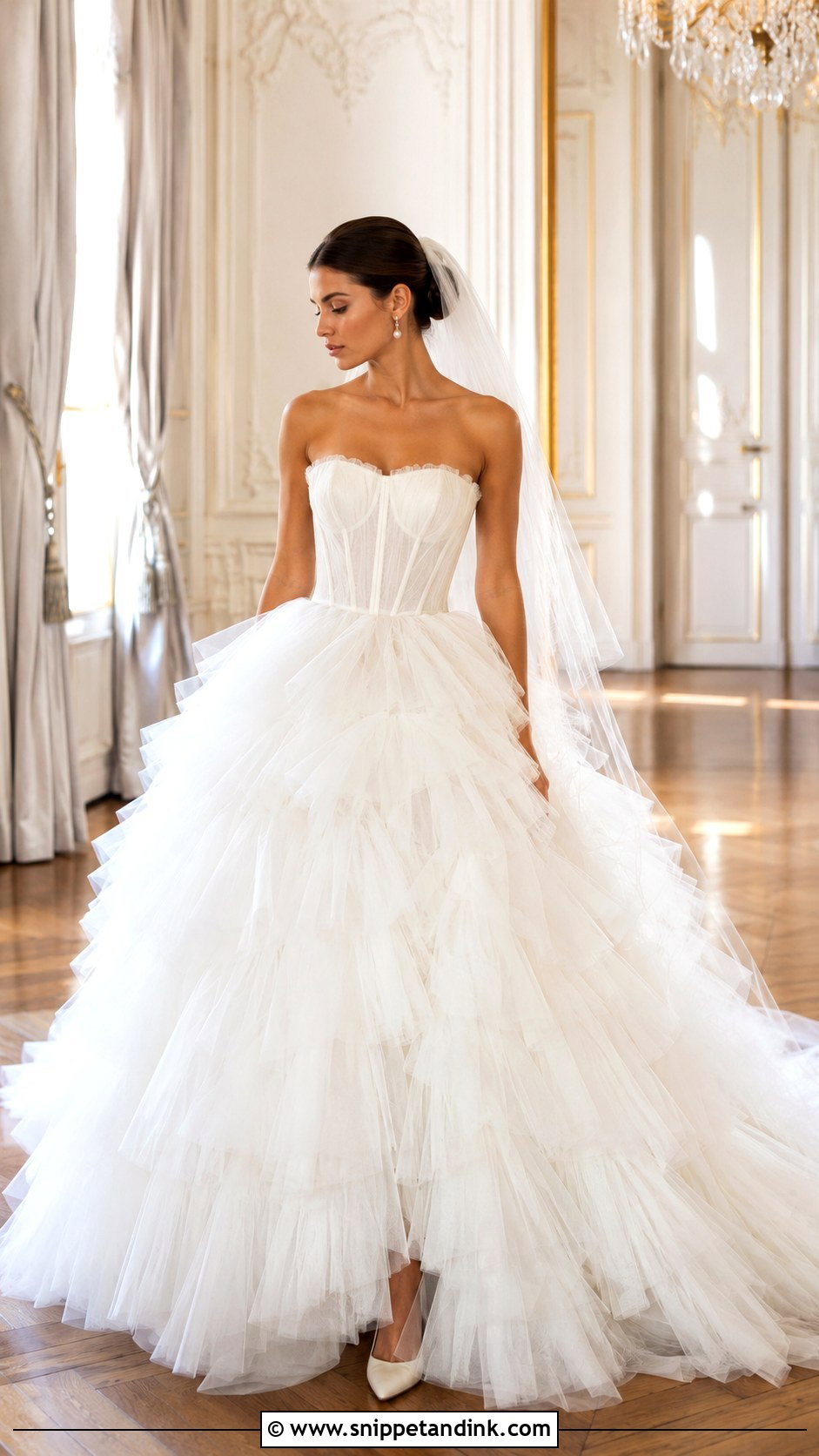
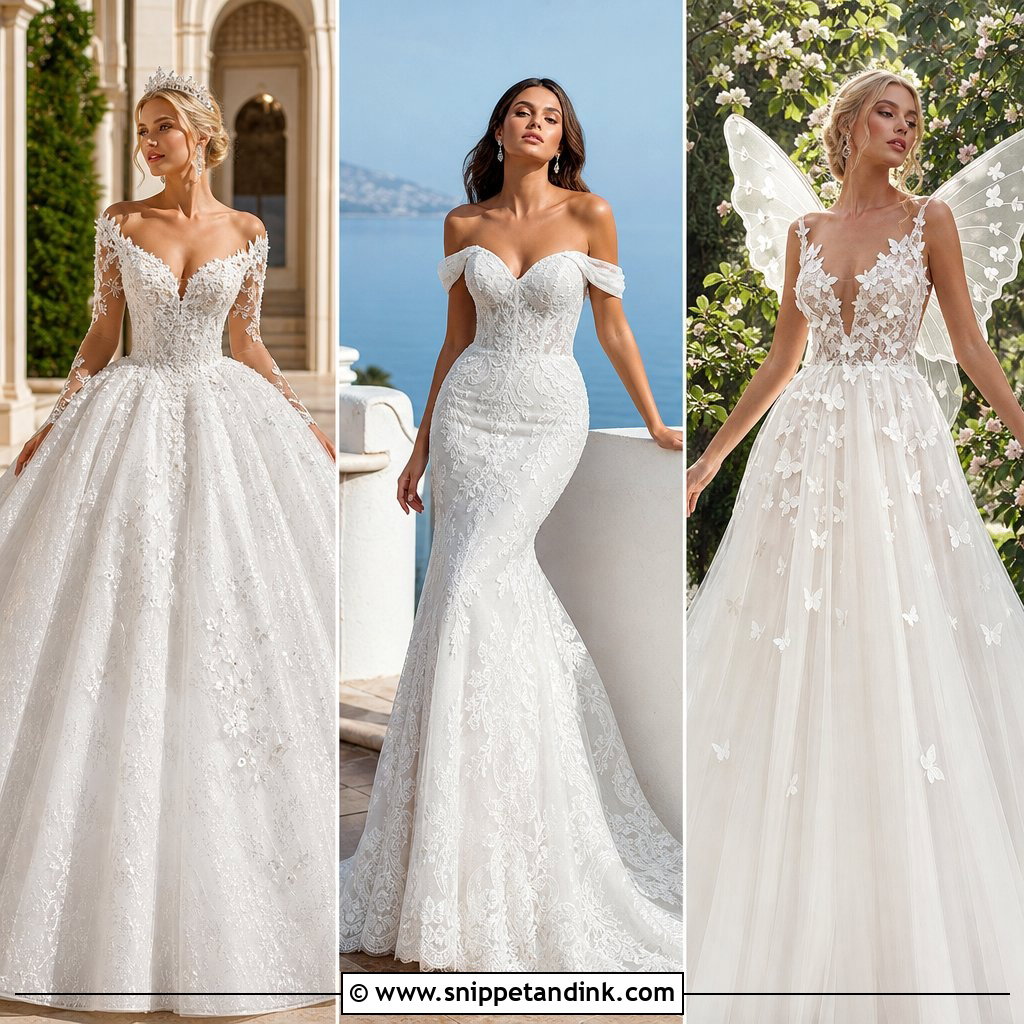
A tulle ball gown with tiered frills gives you the most classic bridal entrance there is. The trick is keeping it light. Several layers of soft tulle hold volume without the stiffness of a hoop, and a fitted corset bodice gives the skirt a waist to spring from. Strapless or a soft scoop keeps the top quiet. These skirts are wide, so measure doorways and the aisle at your venue; full tiers can brush every chair along a narrow aisle. Pointed ivory pumps, pearl drops, a fingertip veil and a chignon or polished waves are enough, with a structured, modest bouquet. Ballrooms, historic estates and grand hotels give it room.
2. Frilly Lace A-Line Wedding Dress
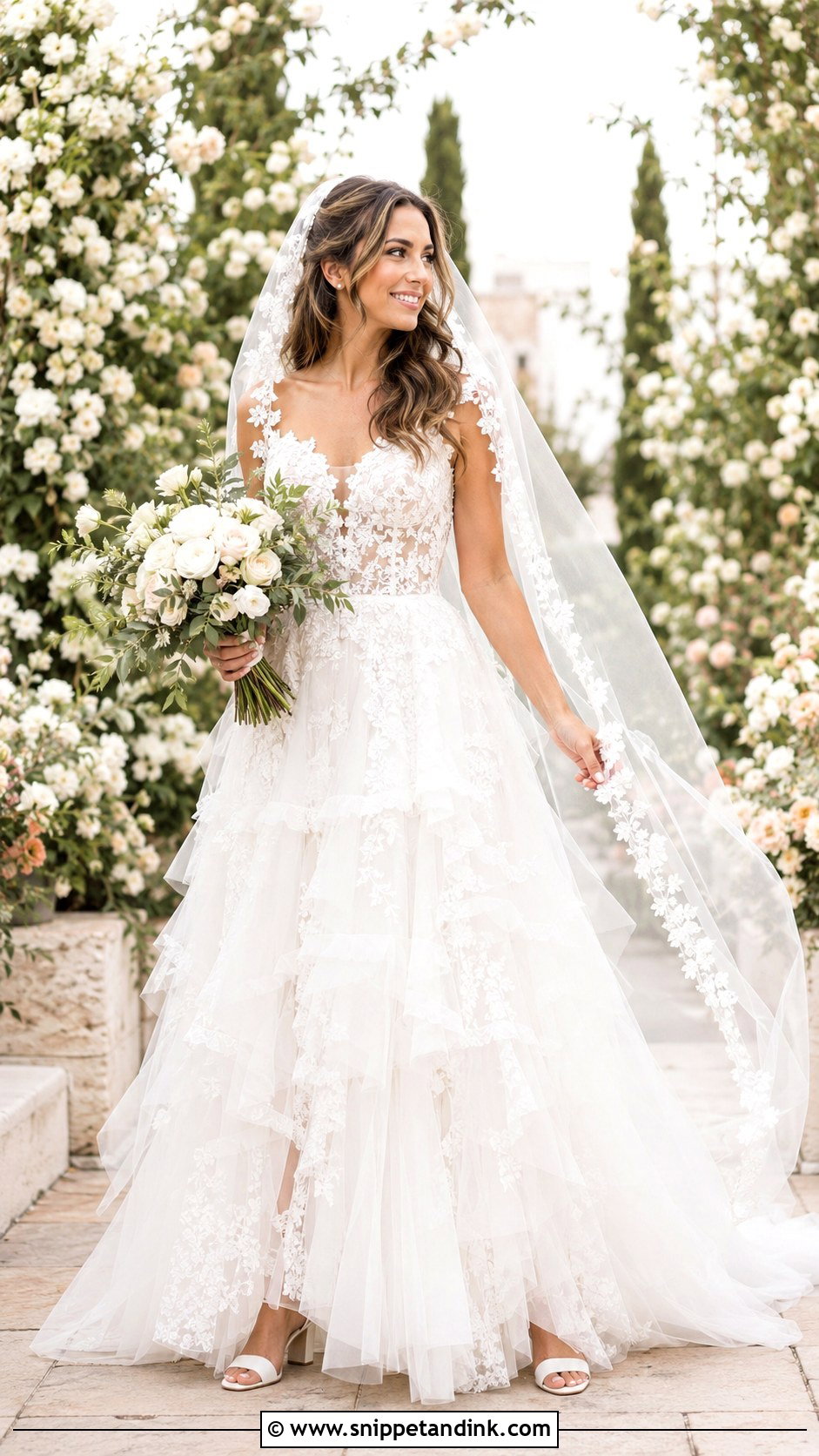
Lace on the bodice and narrow frills on the skirt is the gentlest way into this style. The lace gives detail close to the face; tulle or organza frills below give movement without the bulk of a full ball gown. A defined natural waist keeps the A-line shape. I scale the frills to height: petite brides look best in smaller ruffles, while taller brides can carry wider tiers and a longer train. Comfortable block-heel sandals, a lace-edged veil and small pearl studs suit it, with soft curls or a low braided bun. Gardens, vineyards and spring ceremonies are its natural home.
3. Frilly Off-the-Shoulder Wedding Dress
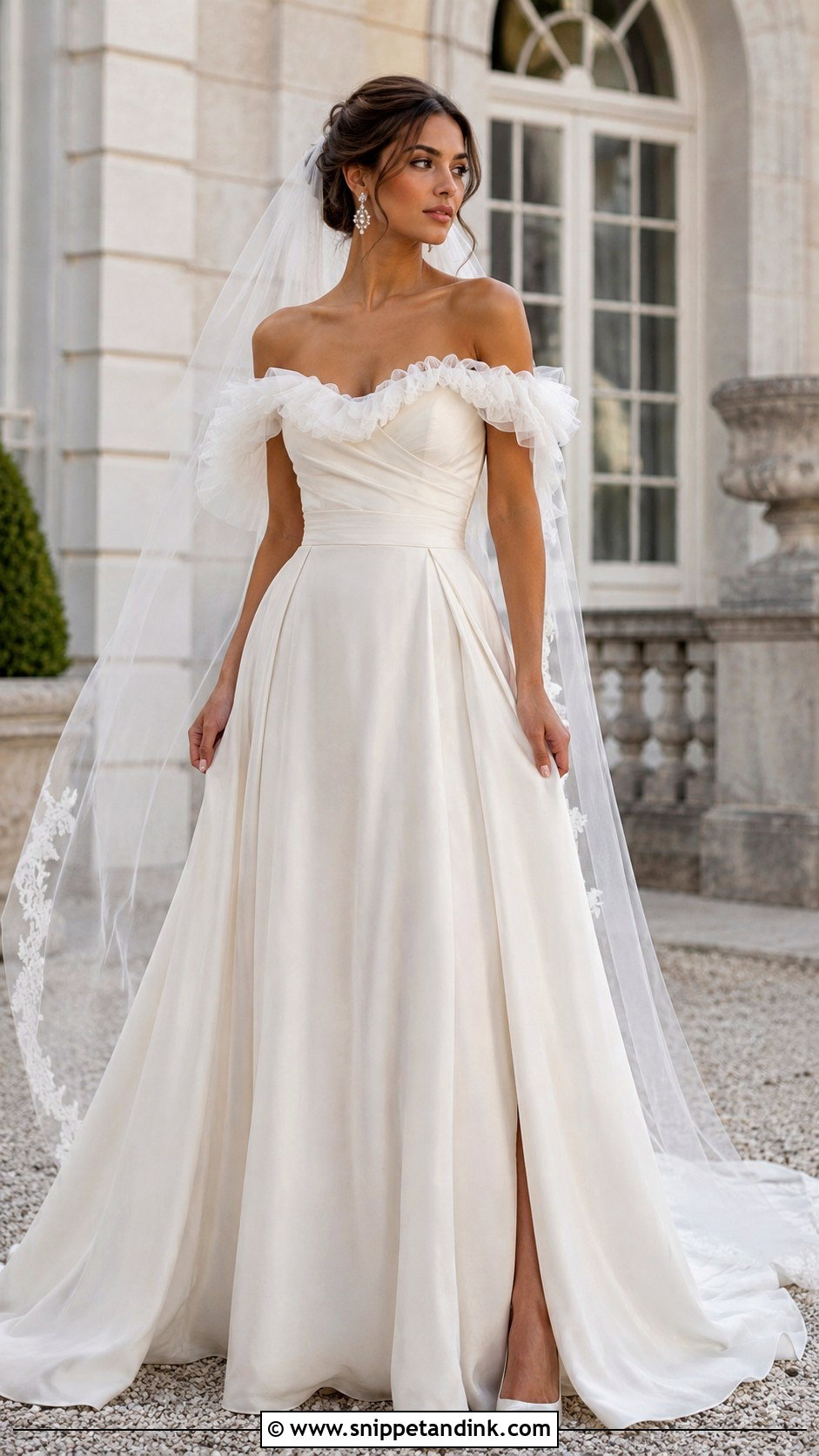
A ruffled off-the-shoulder neckline frames the collarbones, but it adds visible width across the top, so I look at it carefully on broad-shouldered brides, where a smaller frill usually works better. Inside, a supportive corset should hold the bodice so you aren’t hitching it up all day. A flowing A-line or gentle fit-and-flare continues the line below. With large frills at the neck, skip the necklace entirely. Pearl or crystal earrings, satin pumps and a sheer cathedral veil with minimal edging finish it, and a low bun keeps the neckline visible. It works indoors or out.
4. Frilly Mermaid Wedding Dress
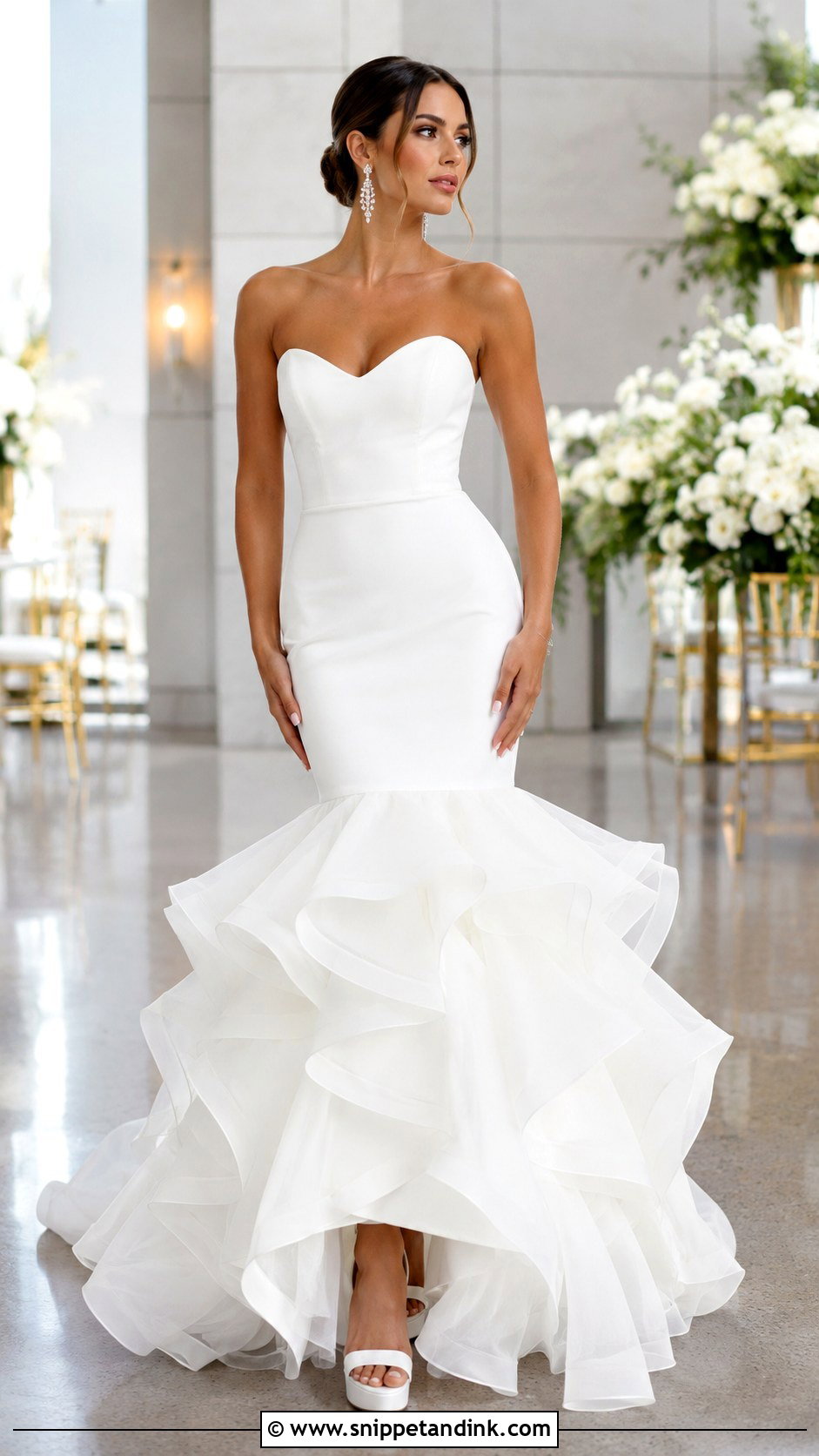
The mermaid shape fits close through the bodice and hips, then bursts into ruffles at or just below the knee. Where that flare starts is the whole fitting conversation. Too high and you can’t sit; too low and you shuffle. Organza makes sculptural waves, while tulle gives a softer flare. Sit, walk and step up onto a block in it before you commit to a narrow fit. High pointed pumps or supportive platforms work under the skirt. Long crystal earrings, a sleek updo and a plain veil keep it glamorous, since the lower skirt is already the focal point. Evening weddings and modern venues suit it best.
5. Frilly Long Sleeve Wedding Dress
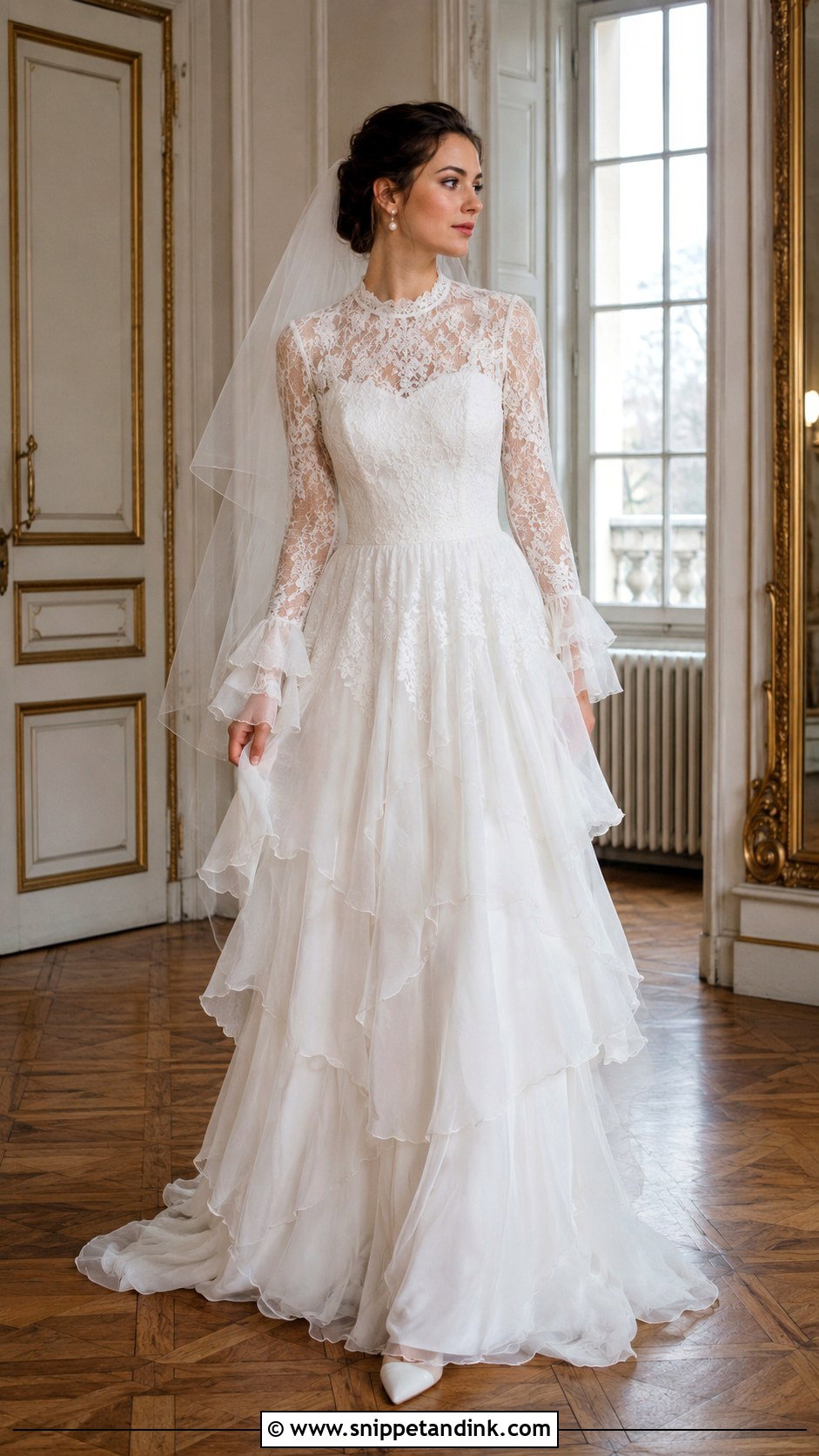
Sheer lace sleeves finished with narrow ruffled cuffs add detail at the wrist without weighing down the upper body. The cuffs need to stretch or open, because you’ll exchange rings, eat and shake a lot of hands in them. A fitted bodice gives definition before a tiered chiffon or tulle skirt carries the texture down. For more coverage, choose lined sleeves or an illusion neckline. Closed-toe ivory heels, pearl earrings, a smooth low bun and a light chapel veil complete it. Autumn, winter and historic venues suit it.
6. Frilly Strapless Wedding Dress
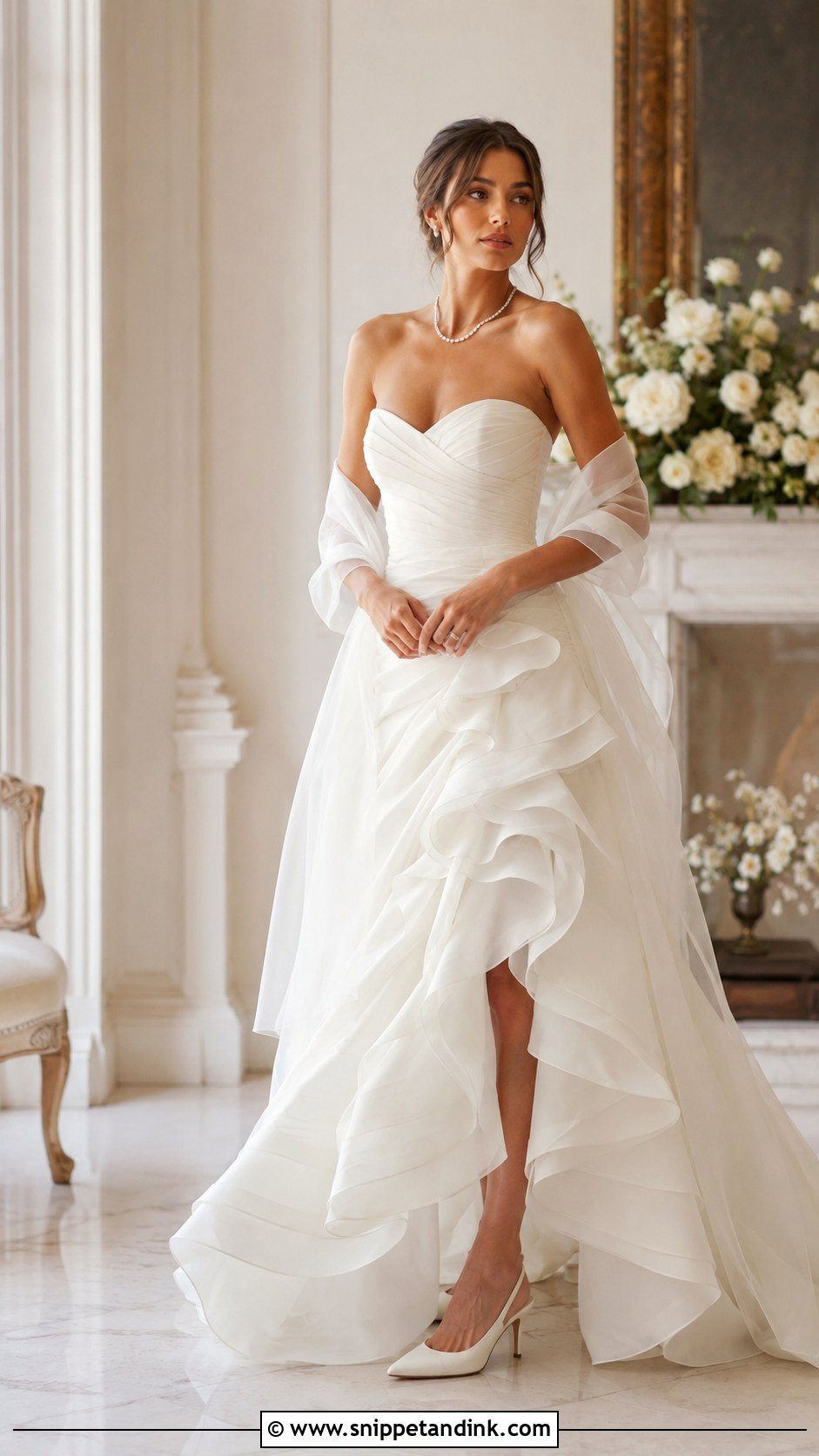
Strapless bodices carry the full weight of a ruffled skirt from the waist up, so construction matters more than anything else here. Look for internal boning, a grip tape or silicone strip at the top edge and a waist seam that sits flat. Walk and raise your arms at alterations; the bodice should not move. Diagonal organza ruffles look modern, and horizontal tulle tiers look traditional. A fine tennis necklace, small drop earrings, ivory slingbacks and a textured updo suit it, with a detachable sheer wrap for coverage at the ceremony.
7. Frilly High Neck Wedding Dress
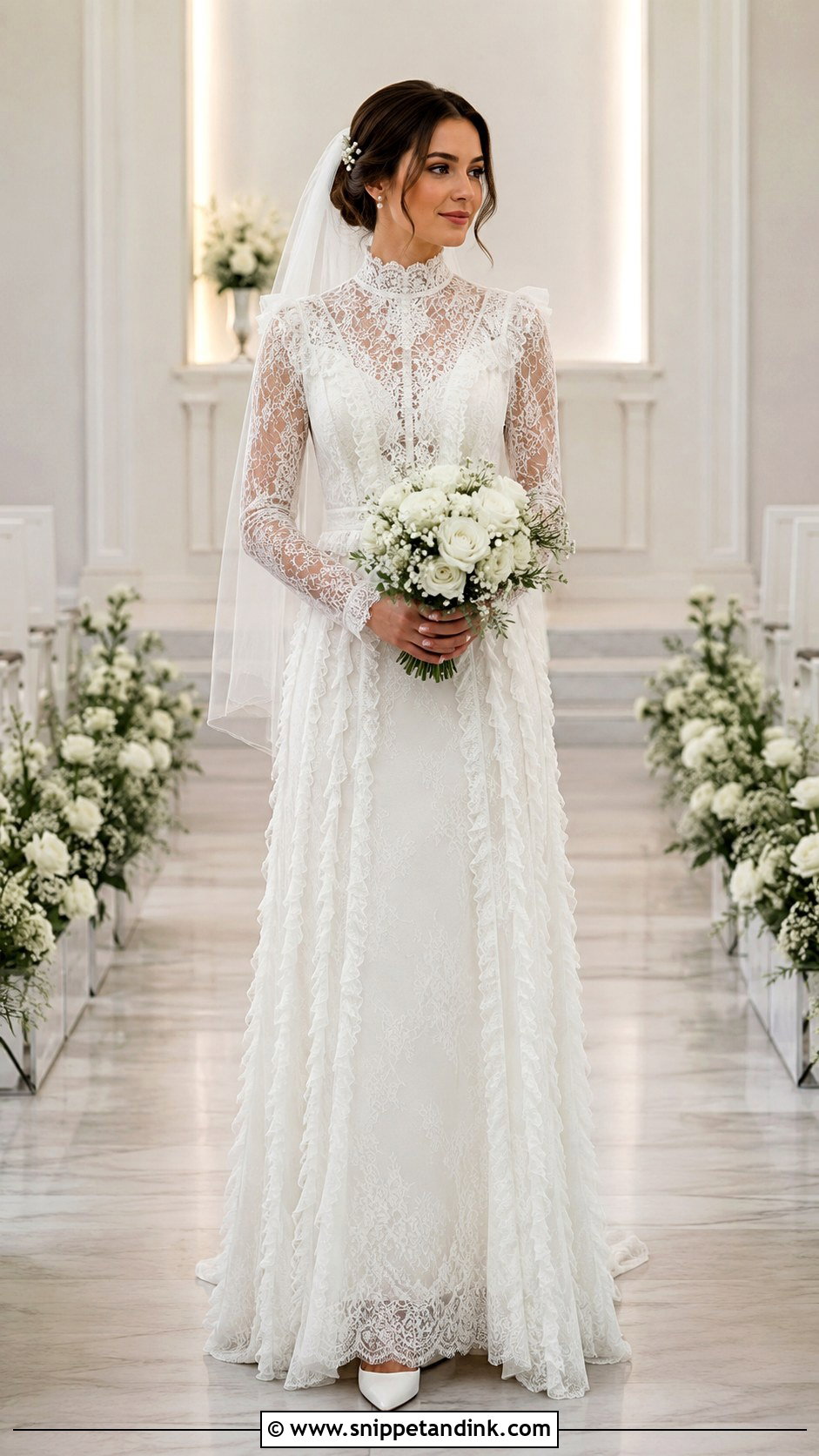
Here’s a styling trick worth knowing: vertical ruffles lengthen, horizontal ones widen. On a high-neck dress, small frills running down through the torso or sleeves give movement without adding bulk. A sheer lace neckline, fitted bodice and gently flared skirt keep the shape graceful. The neckline frames the face, so earrings should be small. Instead of a standard veil, try a sheer tulle bow or a narrow chapel veil set under the hair. Pearl hairpins, a neat bun, pointed closed-toe shoes and a compact bouquet suit indoor ceremonies in cooler months.
8. Frilly Square Neck Wedding Dress
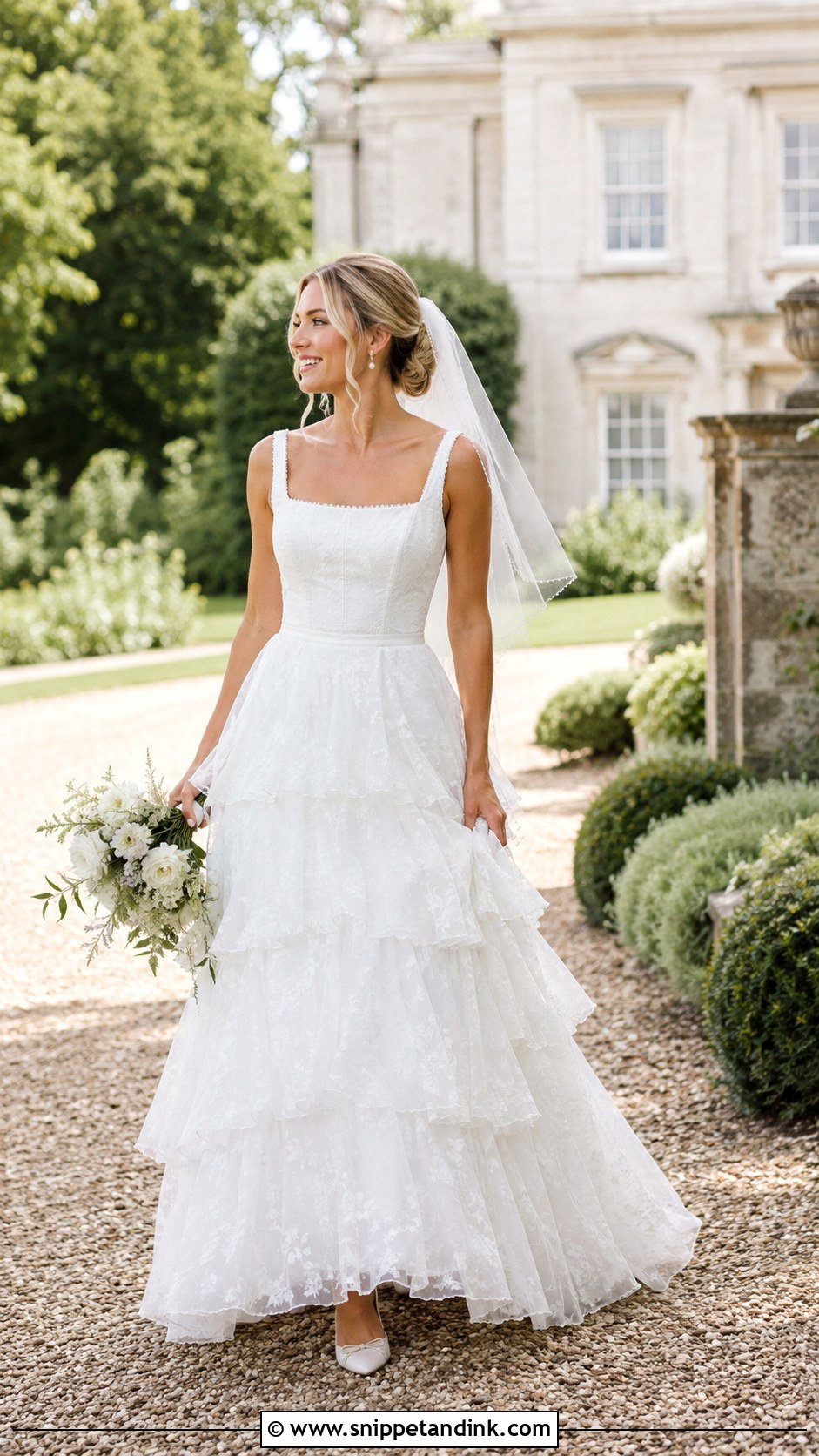
Square necklines give the frills a clean edge to play against. The angle defines the collarbone, and a tiered skirt softens everything below the waist. Wide straps give dependable support; narrow ones look lighter but suit smaller busts. If you have a fuller bust, a square neck needs strong internal structure, or the top edge bows outward. A fitted bodice and natural waist keep the proportions right. Pearl drop earrings, low satin heels, a shoulder-length veil and a loose low bun or half-up style suit garden and country estate ceremonies in daylight.
9. Frilly V-Neck Wedding Dress
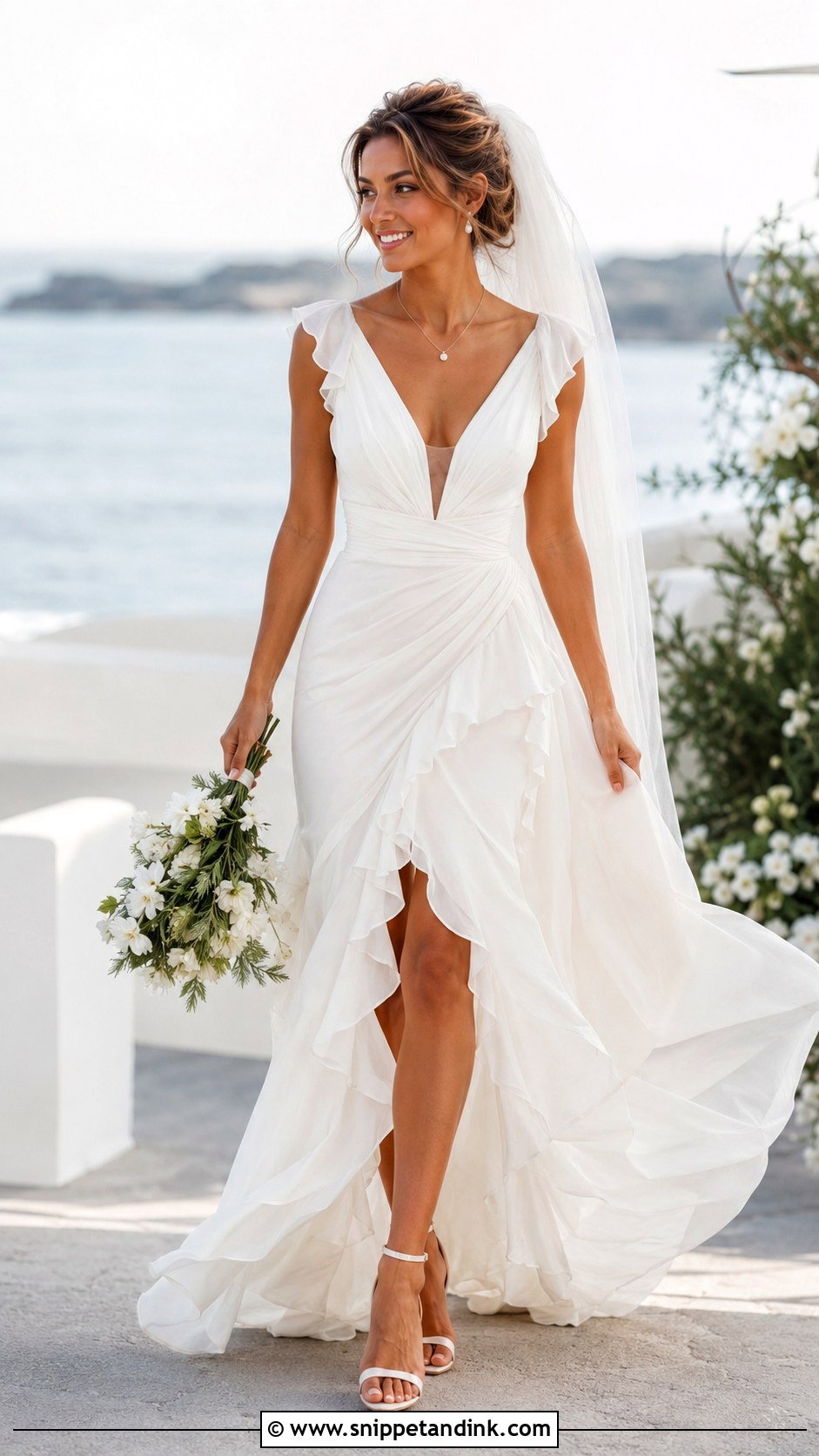
A V-neck lengthens the upper body, and soft ruffles laid diagonally across the bodice and skirt pull the eye down in a single sweep. Choose a depth you’re happy with when you bend forward to sign the register; a sheer inset adds coverage without changing the shape. Tailoring around the bust is what keeps the V lying flat. A fine pendant, simple studs, slim ankle-strap heels and a narrow veil without lace edging keep it uncluttered, with a textured ponytail or low chignon. It works from beaches to formal halls.
10. Frilly One-Shoulder Wedding Dress
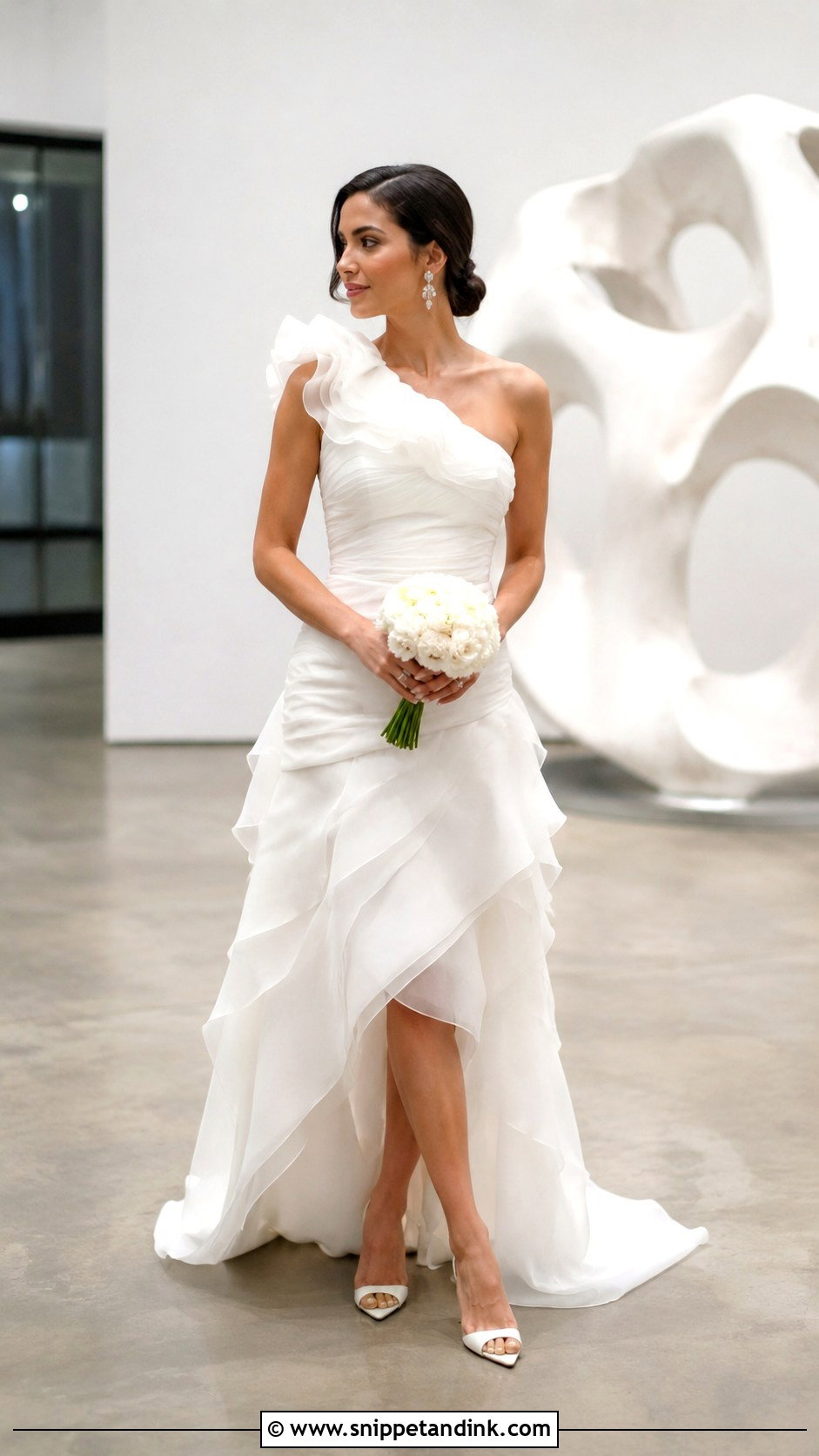
One sculptural frill traveling from the shoulder across the bodice is the most modern ruffle here, and it does a lot with very little. A slimmer top with soft tiers below the hips is the alternative. The asymmetric neckline needs strong internal support so it lies smooth when you hug people and raise a glass. Keep jewelry asymmetric too: one statement earring with a small stud on the other side. Sleek ivory heels and a compact bouquet held on the side opposite the shoulder detail balance it, with a low ponytail or side-parted bun. Rooftops, galleries and modern hotels suit it.
11. Frilly Floral Appliqué Wedding Dress
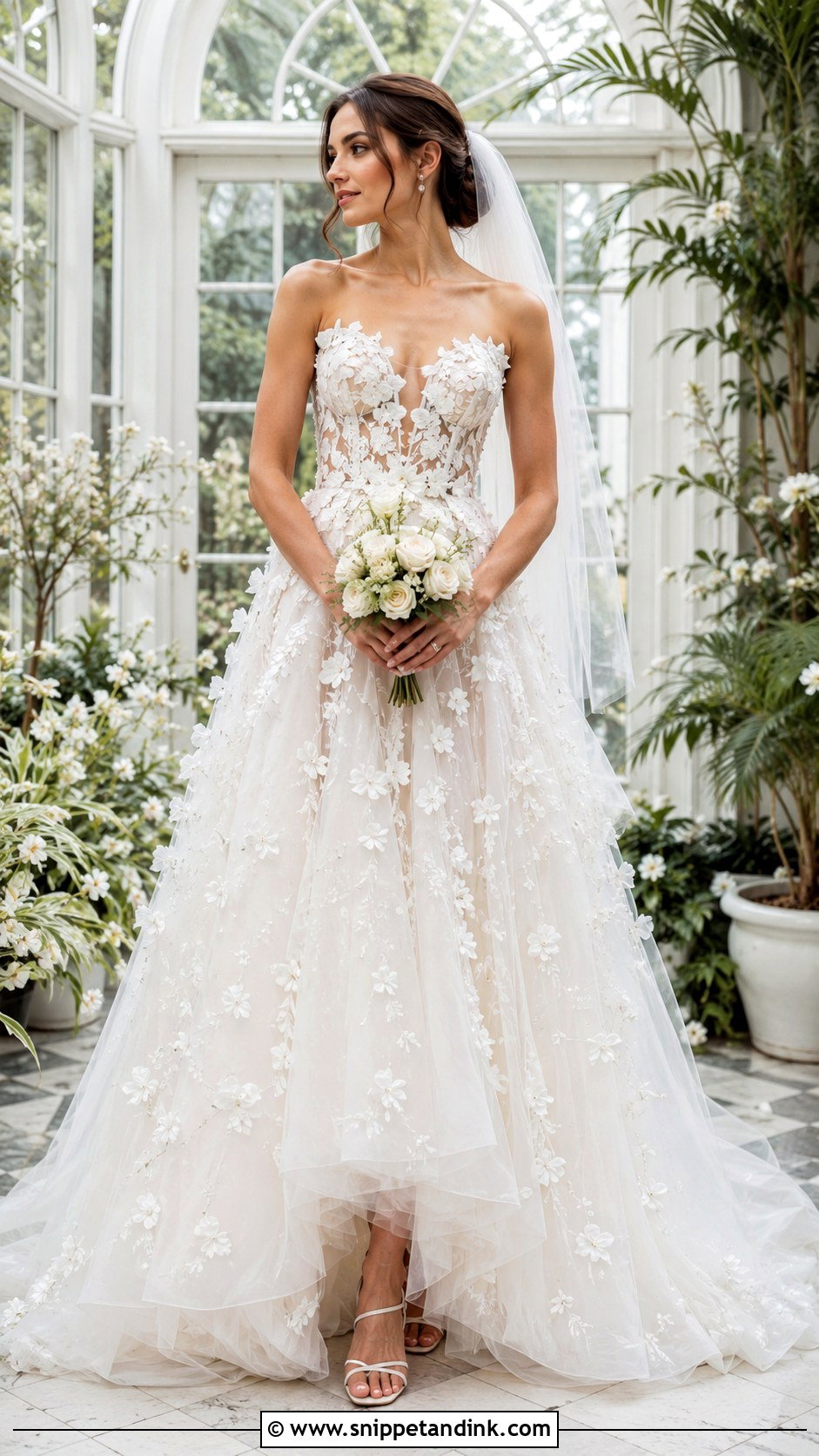
Three-dimensional flowers on a ruffled skirt add a lot of texture, so placement matters. Concentrate them on the bodice and let them scatter more thinly down the tulle. Ask about the inside, too: stiff appliqués near the underarm and waist can scratch, and delicate flowers can be stitched more securely during alterations so they don’t come loose on the dance floor. Pearl studs, slim ivory sandals, a plain sheer veil and softly pinned hair keep the rest calm. A bouquet with one or two flower types balances better than a big mixed one. Spring gardens and conservatories suit it.
12. Frilly Chiffon Wedding Dress
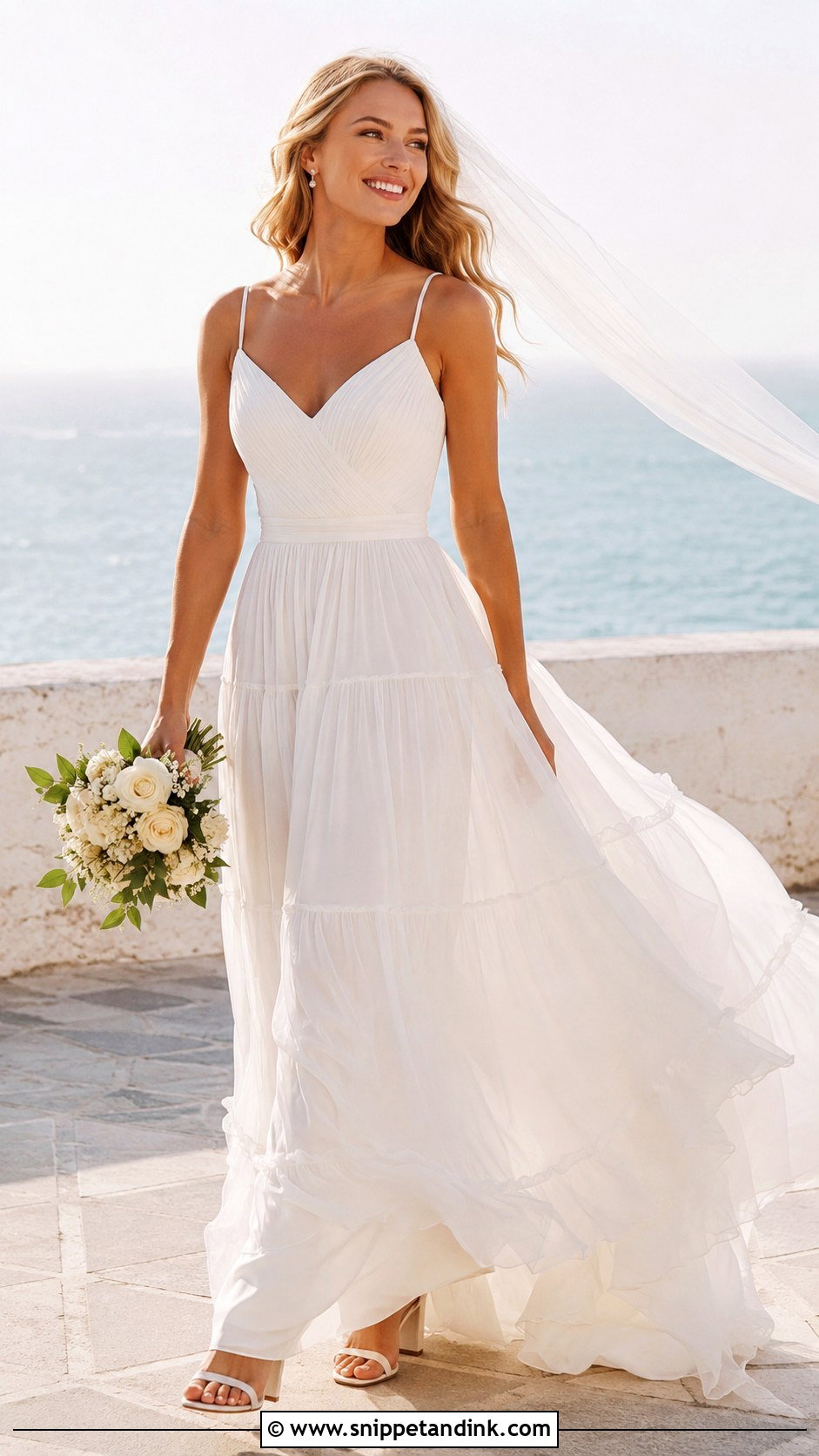
Chiffon ruffles are the softest of all; they move with every step and collapse rather than stand. That makes them comfortable on a warm day and less dramatic in photos than organza. An A-line or empire waist with flowing tiers, a softly gathered bodice and narrow straps keep it light. Check the lining in natural light: chiffon is slightly sheer, and the lining also needs to be cut so the outer layers float instead of wrapping around your legs. Low block-heel sandals, small earrings, a fingertip veil and loose waves suit coastal and destination weddings.
13. Frilly Organza Wedding Dress
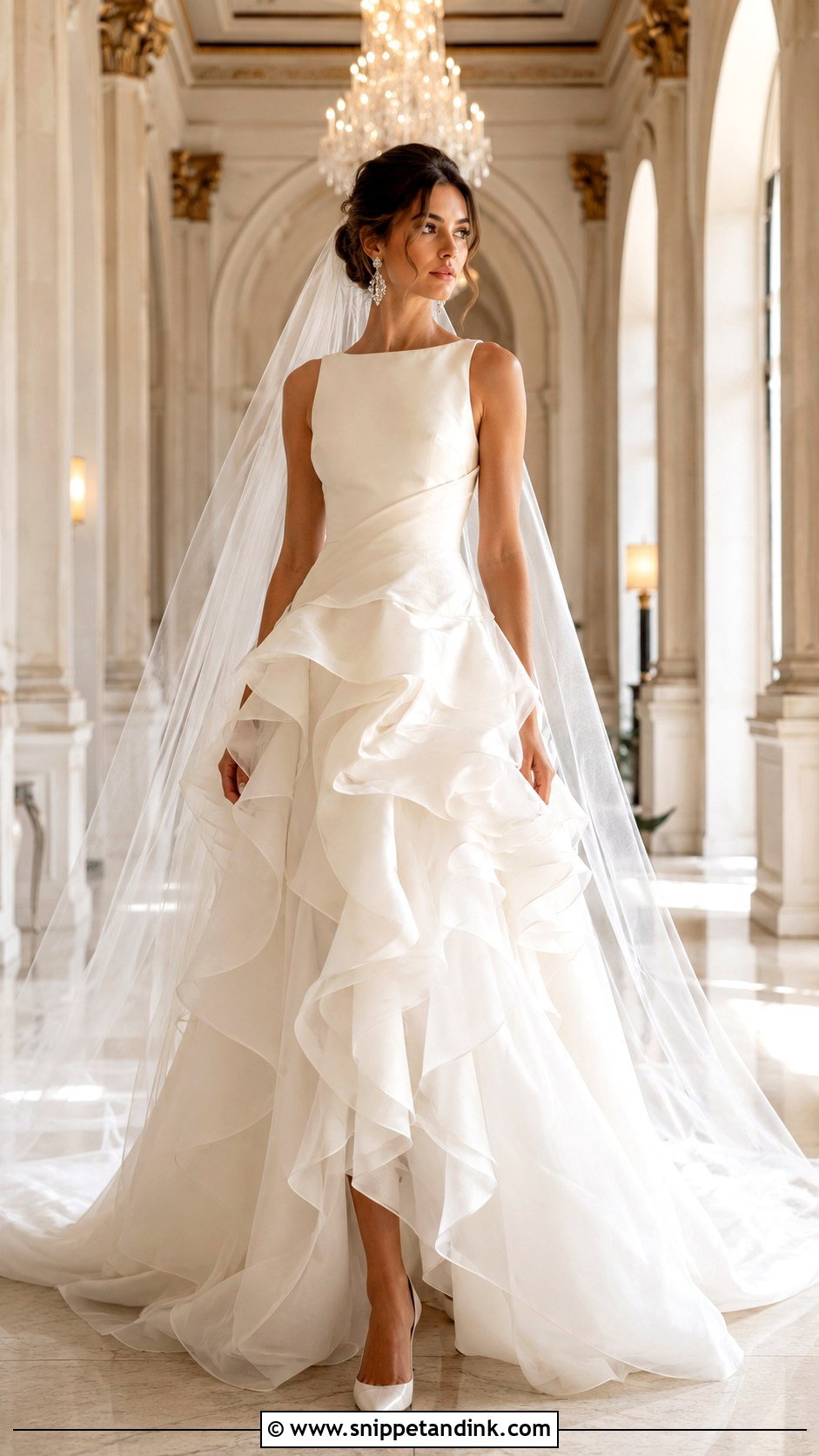
Organza is crisp, so its ruffles hold their shape all day, which is exactly why I reach for it for a formal entrance. It gives volume without the weight of satin. Curved or diagonal frills feel more current than straight tiers. The trade-off is texture against skin: organza edges can scratch, so check the finished seams and ask for soft binding where the dress touches your arms. Satin pointed shoes, crystal drops, a plain cathedral veil and a smooth bun suit it, and a narrow satin belt adds definition. Grand indoor venues show it off.
14. Frilly Boho Wedding Dress
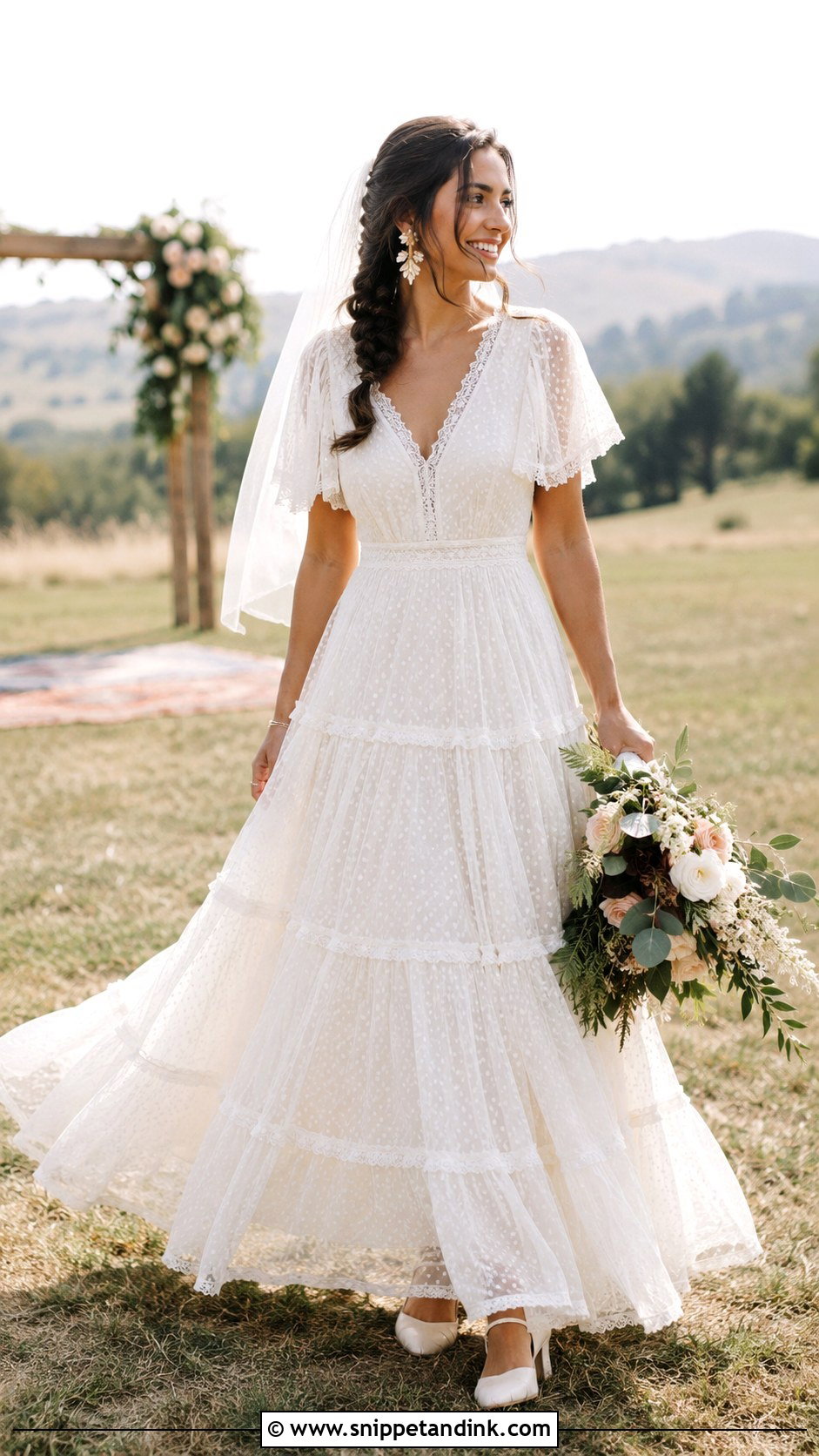
Boho frills belong outdoors, in light fabrics like chiffon, dotted tulle or fine lace arranged in relaxed tiers. Choose flutter sleeves, a softly defined waist and an easy A-line rather than a rigid corset. The ground matters most. Long ruffled hems pick up grass, leaves and dust quickly, so keep the hem practical and ask for a discreet wrist loop to lift the train while you walk. Low suede or leather-look shoes, small floral earrings, a loose braid and a simple tulle veil or floral comb suit meadows, rustic estates and woodland settings.

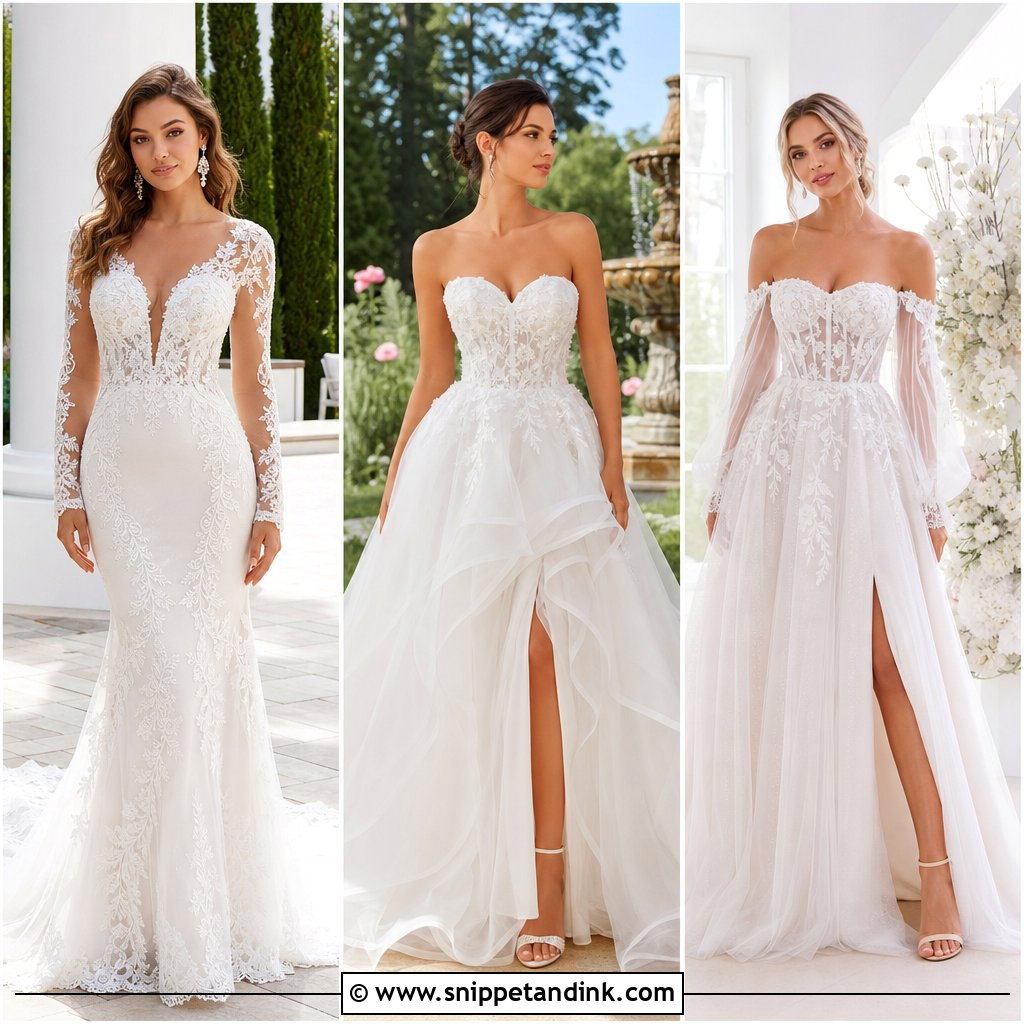

15. Frilly Vintage Wedding Dress
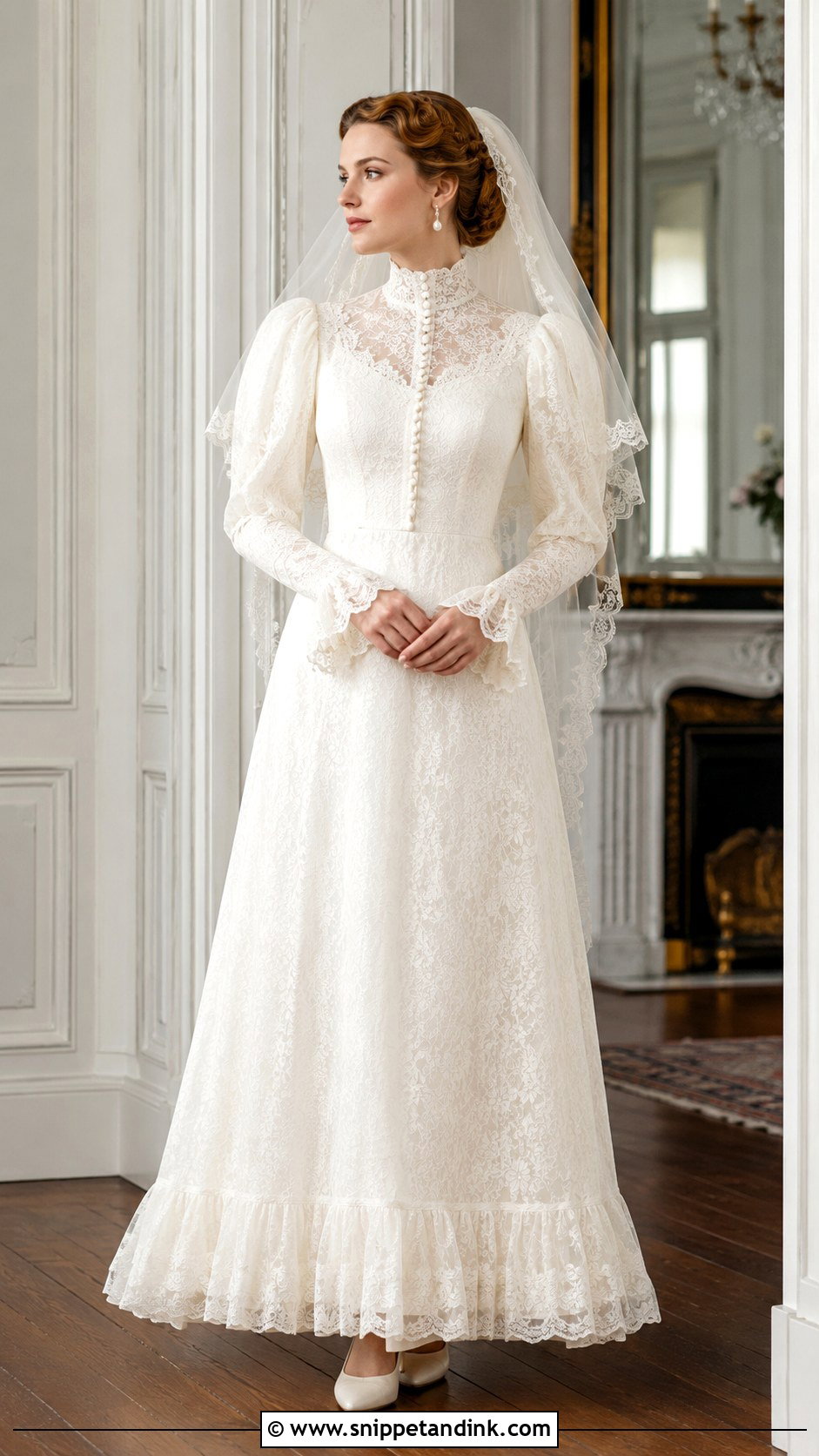
Vintage frills tip into costume when every period detail arrives at once. I’d choose two or three: a high lace neck, covered buttons, softly puffed sleeves or narrow ruffled cuffs. An A-line shape keeps them wearable. A lightweight lining and simple accessories also help it look current rather than borrowed. Low ivory pumps, pearl earrings, a lace-edged veil and a waved updo or neat chignon suit it, with a small bouquet tied with a trailing ribbon. Old hotels, historic houses and garden venues are its natural settings.
16. Frilly Tea-Length Wedding Dress
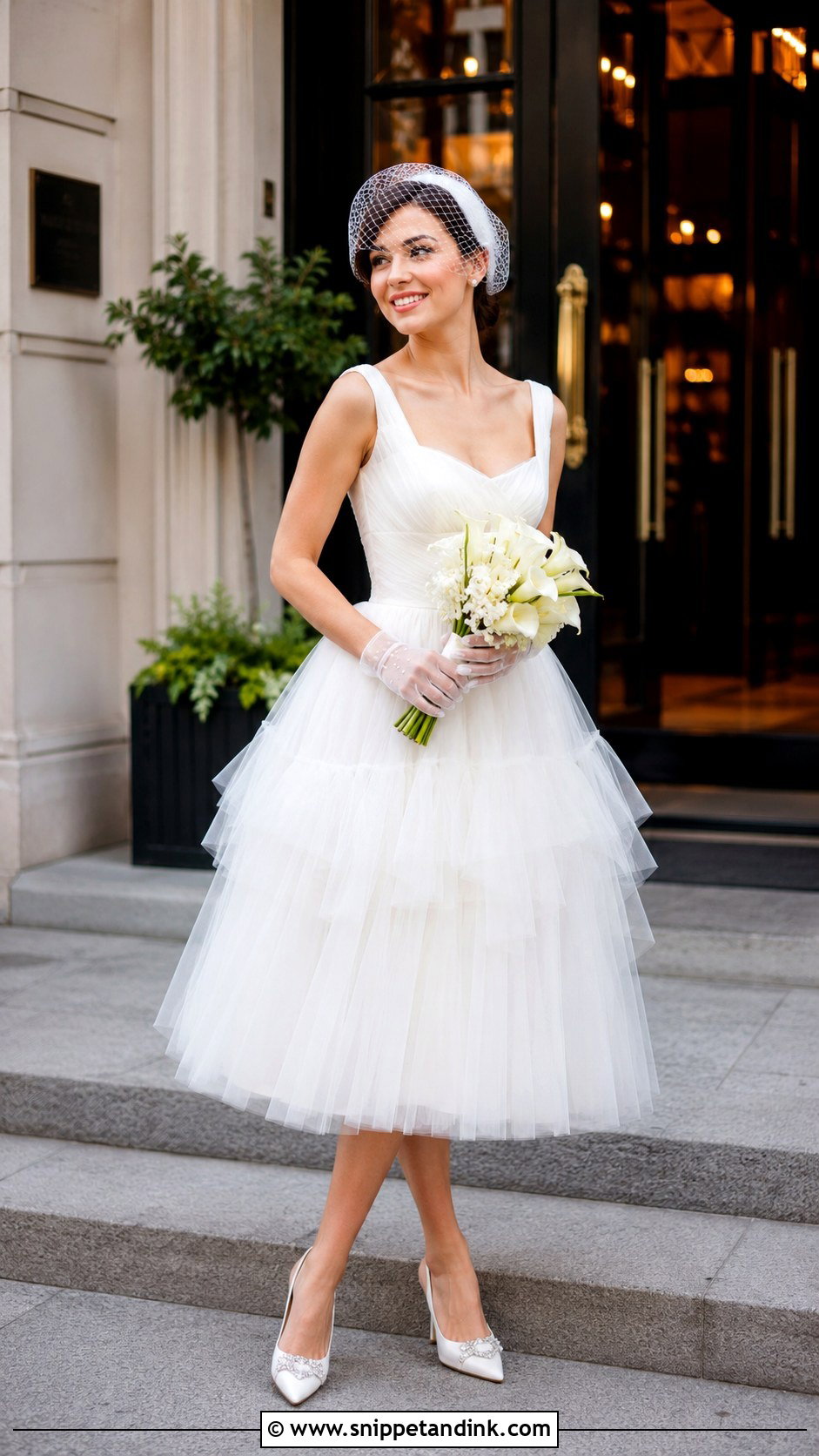
Tea length shows your shoes, so this is the frilly dress that lets you choose a special pair: pointed slingbacks, embellished pumps or satin block heels. A fitted bodice with a skirt landing between knee and ankle, finished in tulle or organza layers, keeps it cheerful. The hem has to be set with the final shoes on, since a small heel change moves where the widest tier meets the leg. Short gloves, pearl studs and a birdcage veil lean vintage; drop the gloves for a cleaner look. Walking and dancing are easy in it. Civil ceremonies and daytime receptions suit it.
17. Frilly Mini Wedding Dress
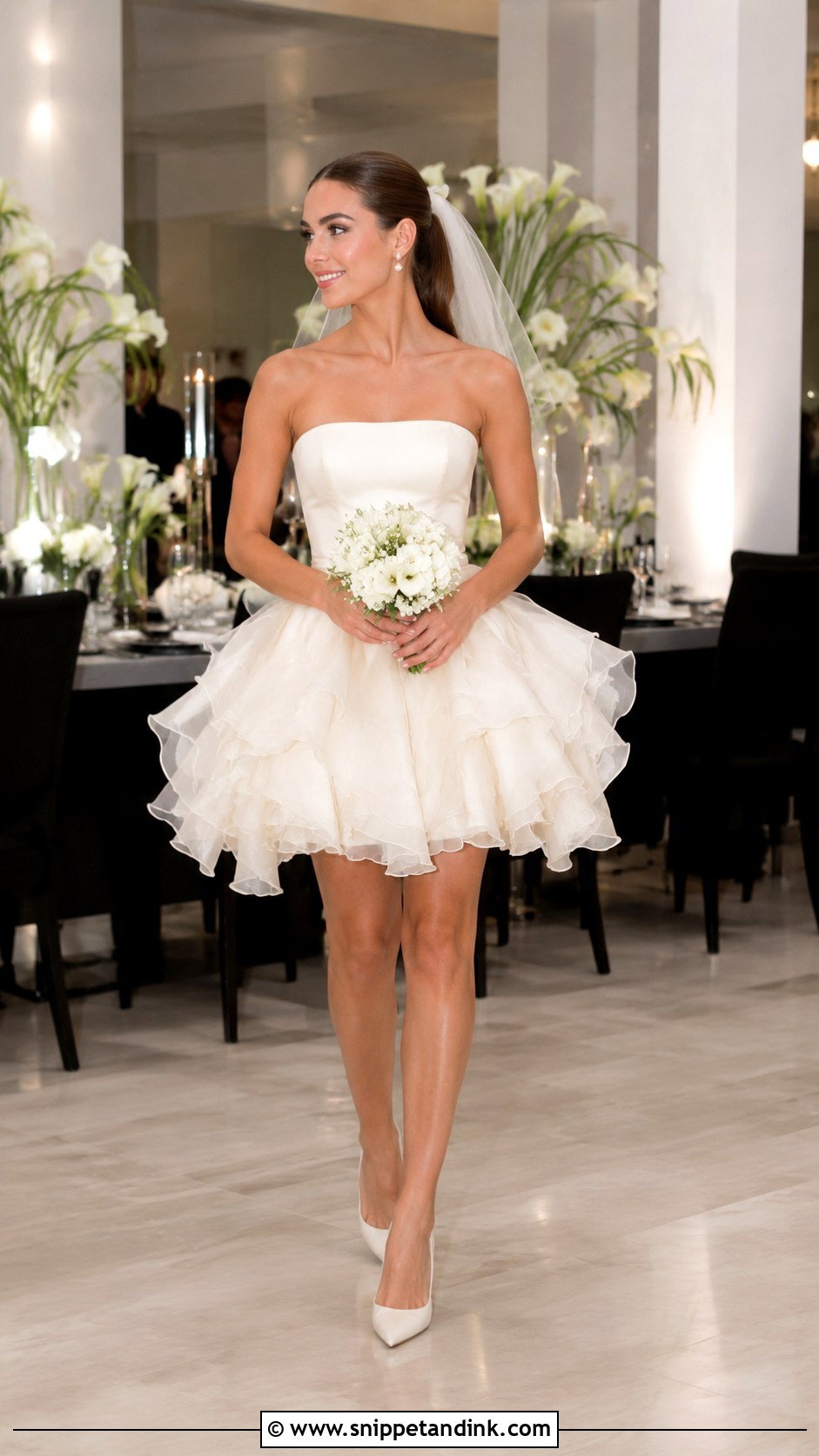
A ruffled mini is fun for a courthouse ceremony, a reception change or a relaxed party. Structure on top balances the short hem: a boned bodice, secure straps or long sleeves. Tulle layers, featherlight organza or a ruffled overskirt add volume without bulk. Coverage is what I check first. Ruffles lift when you sit and when you twirl, so sit and walk in it before buying and check the back view in a mirror. Pointed pumps, ankle-strap heels or polished flats all work, depending on the venue. Pearl earrings and a short veil keep it bridal, with a sleek ponytail or bouncy waves and a small bouquet.
18. Frilly Blush Wedding Dress
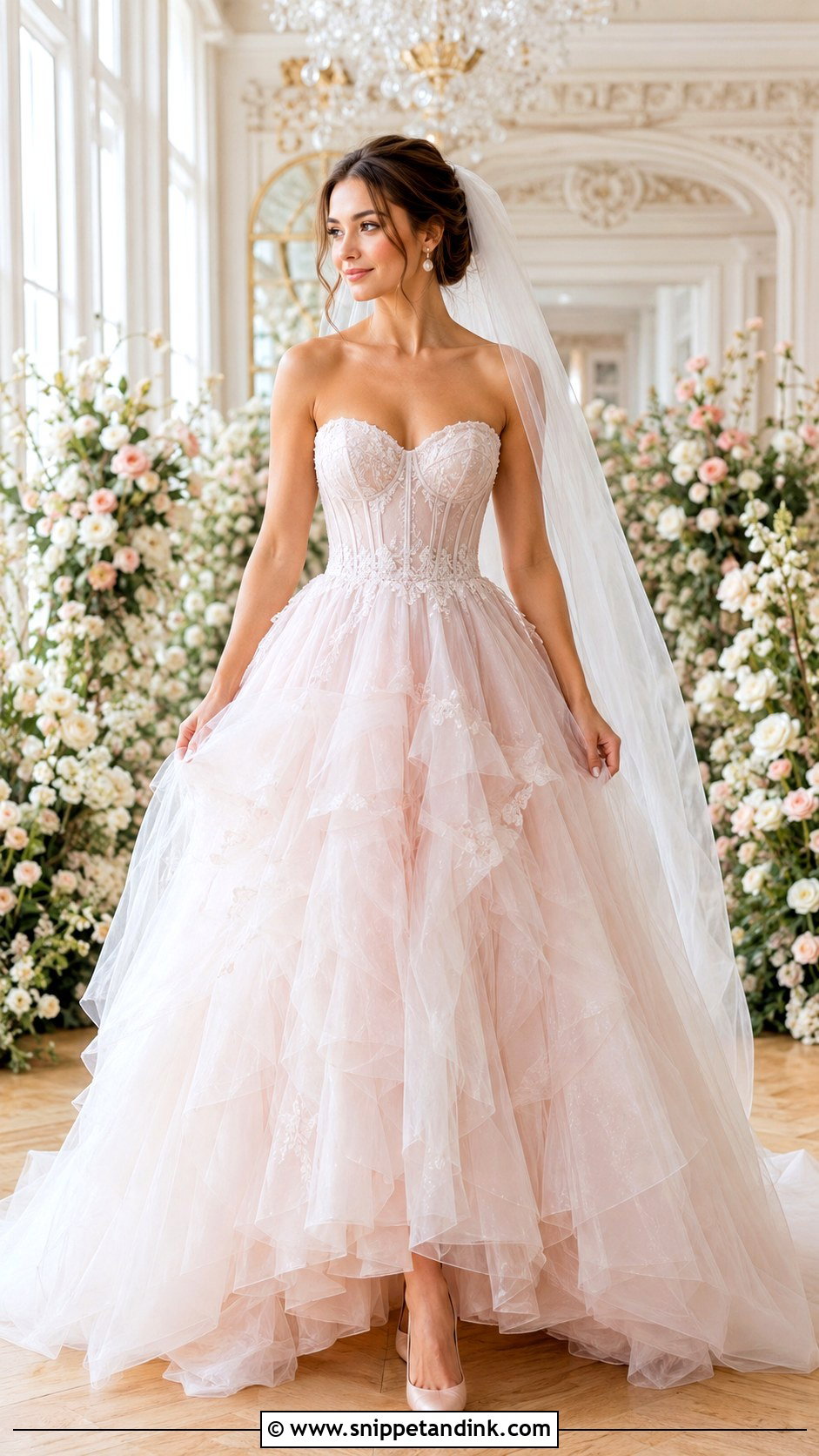
A blush lining under ivory tulle or lace gives frills more depth than all-white fabric, because the shadows inside the ruffles pick up the pink. It still reads as bridal. A corseted bodice and layered A-line skirt give it shape. I always look at the color in daylight and indoor light before a bride commits; blush can turn peach under warm bulbs or almost white in bright sun. Every skin tone can wear it, but the best shade differs, so hold swatches up to your face. Neutral satin heels, rose-toned pearls, a plain ivory veil and muted pink makeup that doesn’t match the dress exactly round it out.
19. Frilly Drop Waist Wedding Dress
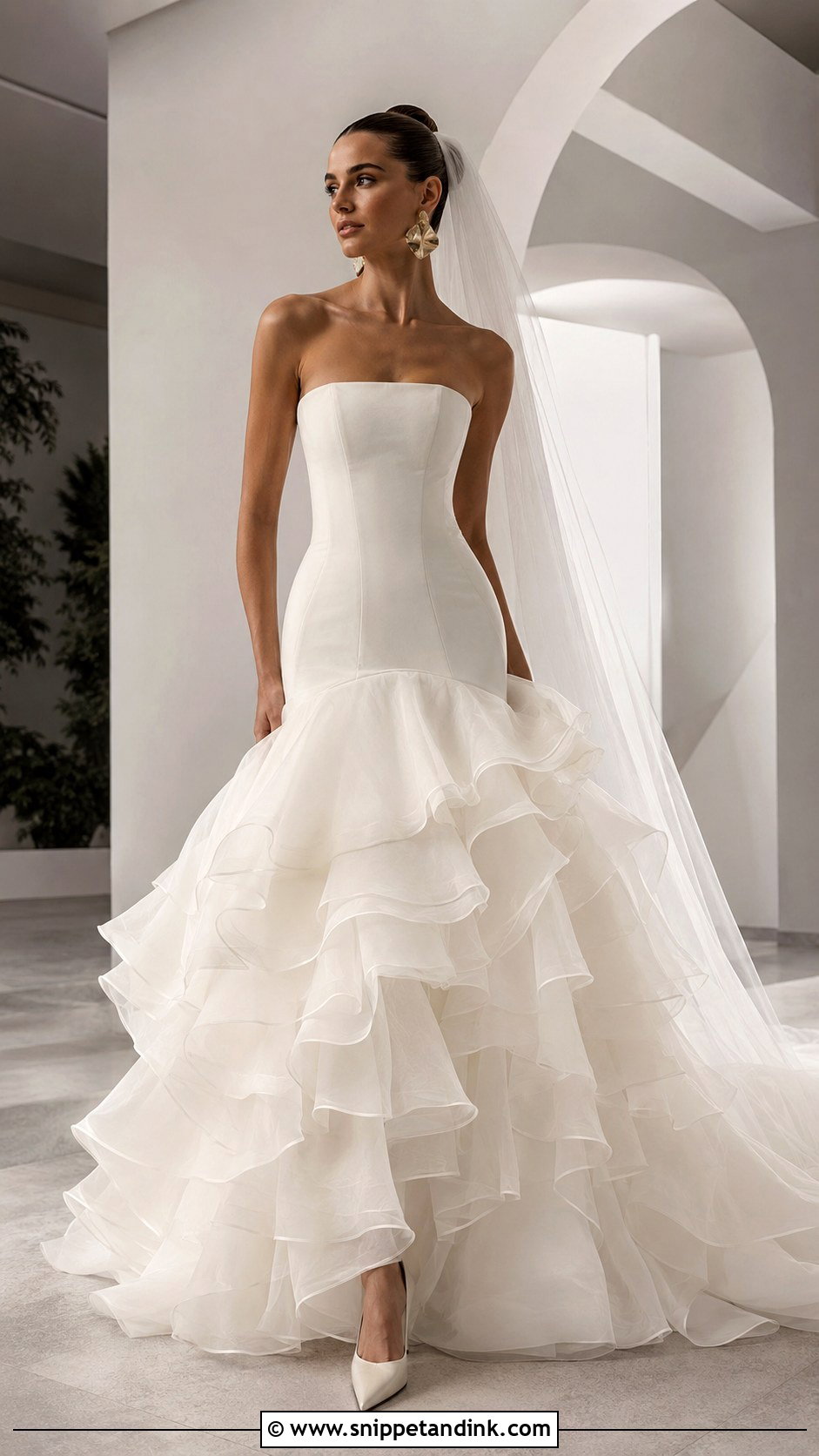
A drop waist runs the fitted bodice below the natural waistline before the tiered skirt opens. A curved or V-shaped waist seam makes the transition into the frills look deliberate rather than accidental. The seam has to be placed for your torso length, so at fittings I have brides sit, bend and walk to check that the structured section doesn’t press into the hips. Skip a belt; it would cut the line. Simple pointed heels, sculptural earrings and a smooth veil under a polished bun suit modern estates and architectural venues.


20. Frilly Detachable Overskirt Wedding Dress
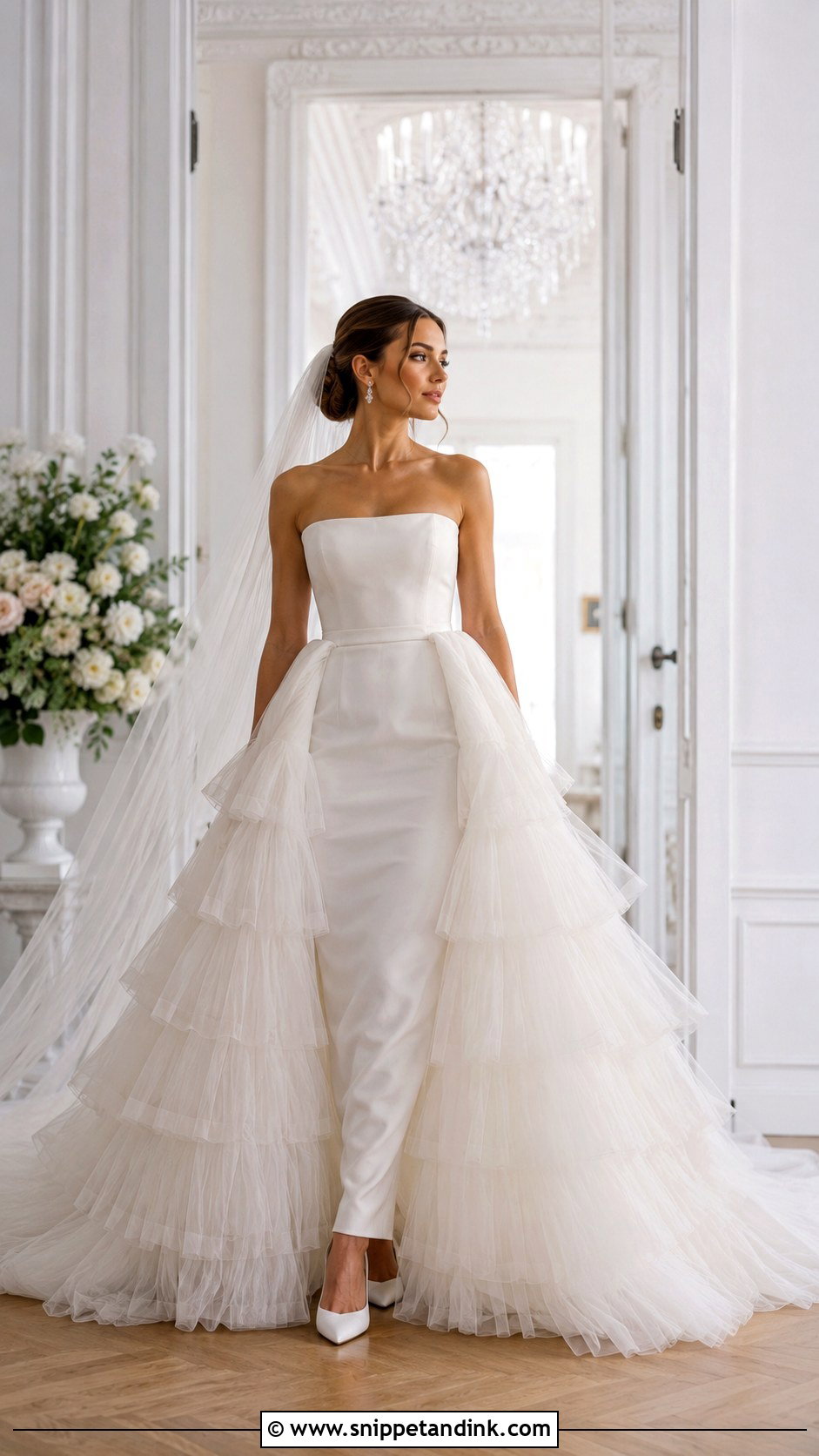
A detachable ruffled overskirt gives you a dramatic ceremony look and a lighter one for dinner and dancing, without a full change. Start with a fitted column, sheath or simple A-line, then add a voluminous ruffled overskirt for the ceremony. The fastening must lie flat under the ruffles and come off quickly with one person helping, and I like brides to practice it twice before the day. Keep the base dress clean with satin pumps, small earrings and a simple neckline. A cathedral veil goes with the overskirt; swap to a hair accessory once both come off.
Living in a Ruffled Skirt From the Car to the Last Song
Volume is easy to love in a fitting room and harder to manage for twelve hours. A few things are worth planning before the day.
Bustling a tiered train
Ruffled skirts are actually easy to bustle, because the tiers hide the hooks or ribbons. Ask your seamstress which kind she recommends for your train. An under-bustle tucks fabric up beneath the skirt; an over-bustle lifts it to the outside. Have whoever will do it on the day attend the last fitting and practice it twice.
Getting in and out of the car
Sit first, then gather the skirt in with both arms and lift it onto your lap. A full tulle gown may need a larger car or the back seat to yourself. On the way out, swing your legs out together and let someone shake the tiers back into place before photos.
The bathroom question
Practice it in the dress at your final fitting. Many brides find it easiest to face the toilet and gather the skirt forward, with a bridesmaid holding the back. It sounds silly; it saves a lot of panic on the day.
How Many Ruffles Is Too Many?
A frilled gown should feel expressive and still let you sit, eat and dance in comfort. Think about where the ruffles add width, how heavy the tiers are, how the train will be bustled and what accessories you’ll have to give up. Organza gives crisp volume; chiffon, lace and soft tulle give a gentler finish. I always ask brides to try at least one shape they’d normally rule out, because ruffles change how a silhouette reads. Good alterations can transform how a textured dress sits on you. From a full ball gown to a short party dress, there’s a version of this look for most bodies, seasons and venues.
You'll Like These Ideas:



Leave a Reply