
Quiet money looks well kept rather than decorated, and bridal hair in this style follows the same rule. You’ll see polished updos, glossy waves and the odd pearl, but rarely more than one idea on a head at once. From the chair, I’d say the style is decided less by the shape you pick than by how well it fits your dress, your venue and your hair’s natural behavior. Below are 20 old money wedding hairstyles, each with a note on how it’s built and where it struggles, so you can narrow the list before your trial.
High Necks, Strapless and Off-Shoulder: Which Styles Fit Each
The fastest way to narrow 20 options is to look at the top of your dress. Hair and neckline share the same few inches in every photo, and some combinations fight each other.
- High necks and lace collars: an updo or sleek bun keeps the neckline visible. Hair worn down hides the detail you paid for.
- Strapless and sweetheart: nearly everything works. Waves and half-up styles soften bare shoulders, while a sleek bun looks more formal.
- Off-shoulder: side-swept curls or a low chignon. Loose hair on both sides can tangle with the sleeves when you move your arms.
- Open backs: a bun, chignon or French twist, so the back of the dress stays on show during the ceremony.
Fabric matters too. Lace and beading can snag loose hair, which is one more reason I steer brides with detailed bodices toward updos.
1. Old Money Low Chignon Bun
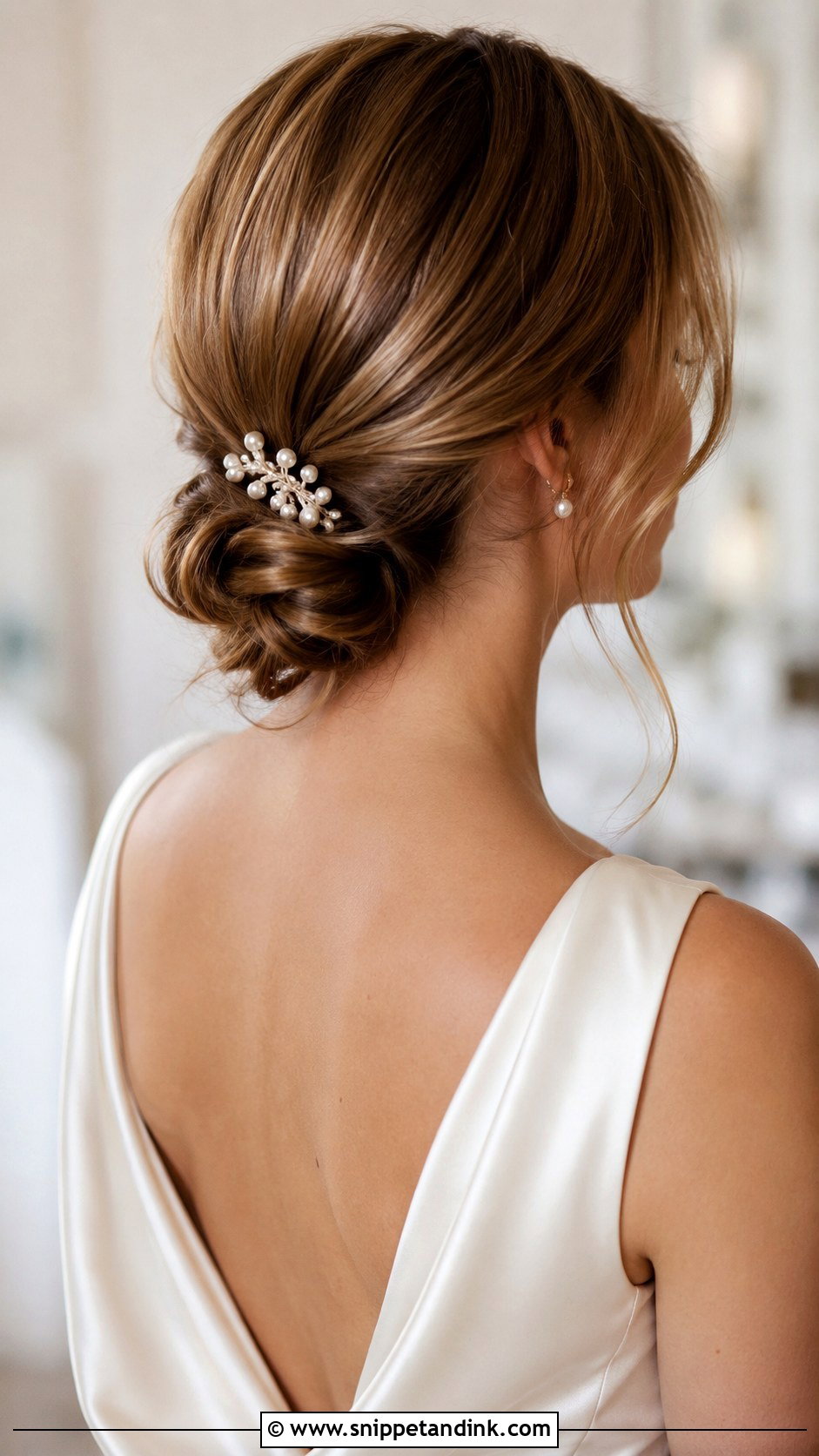
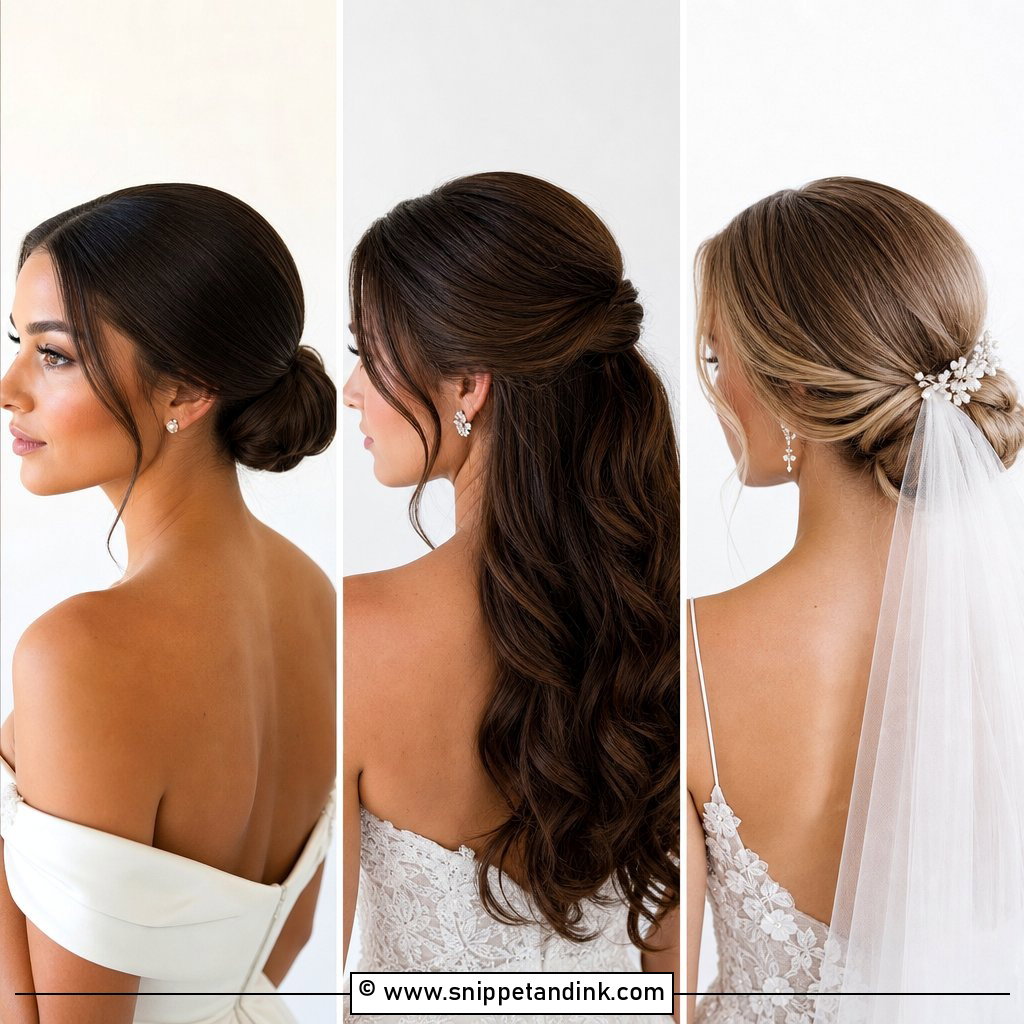
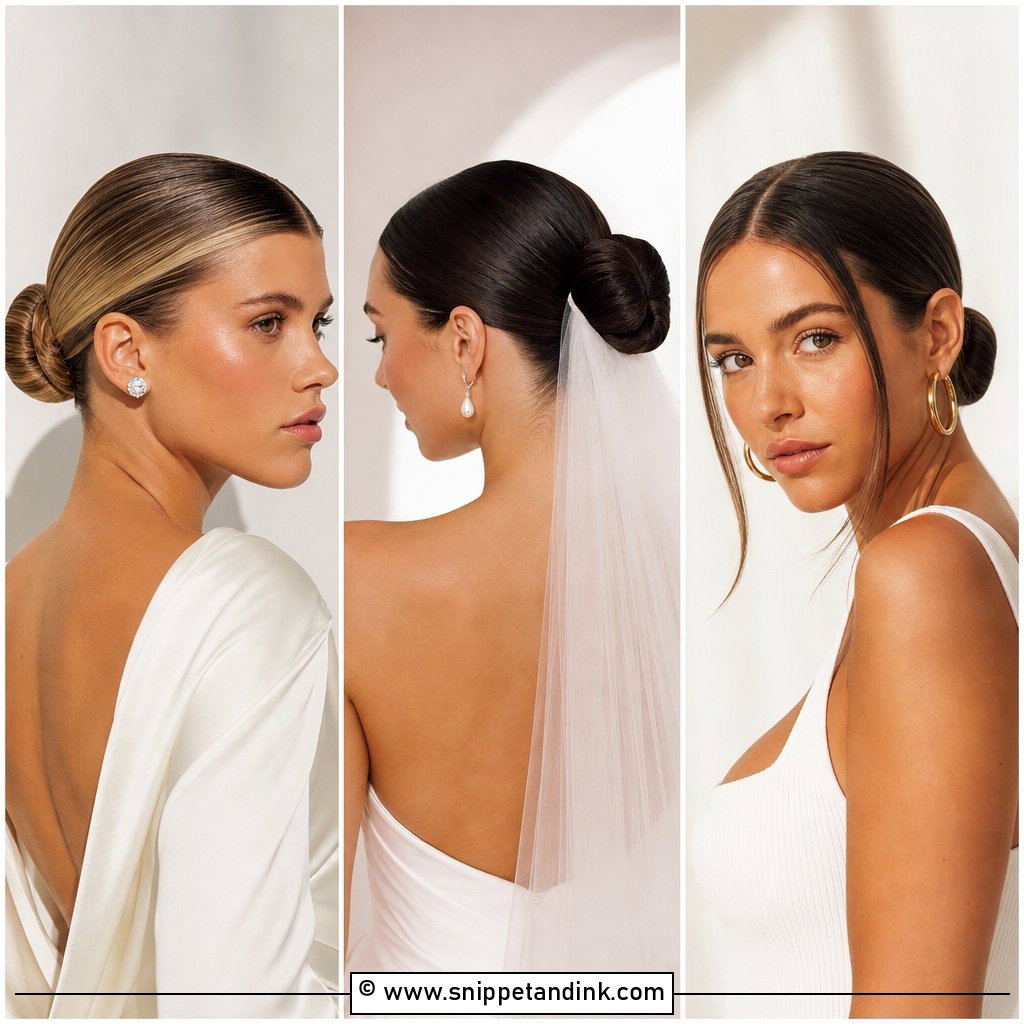
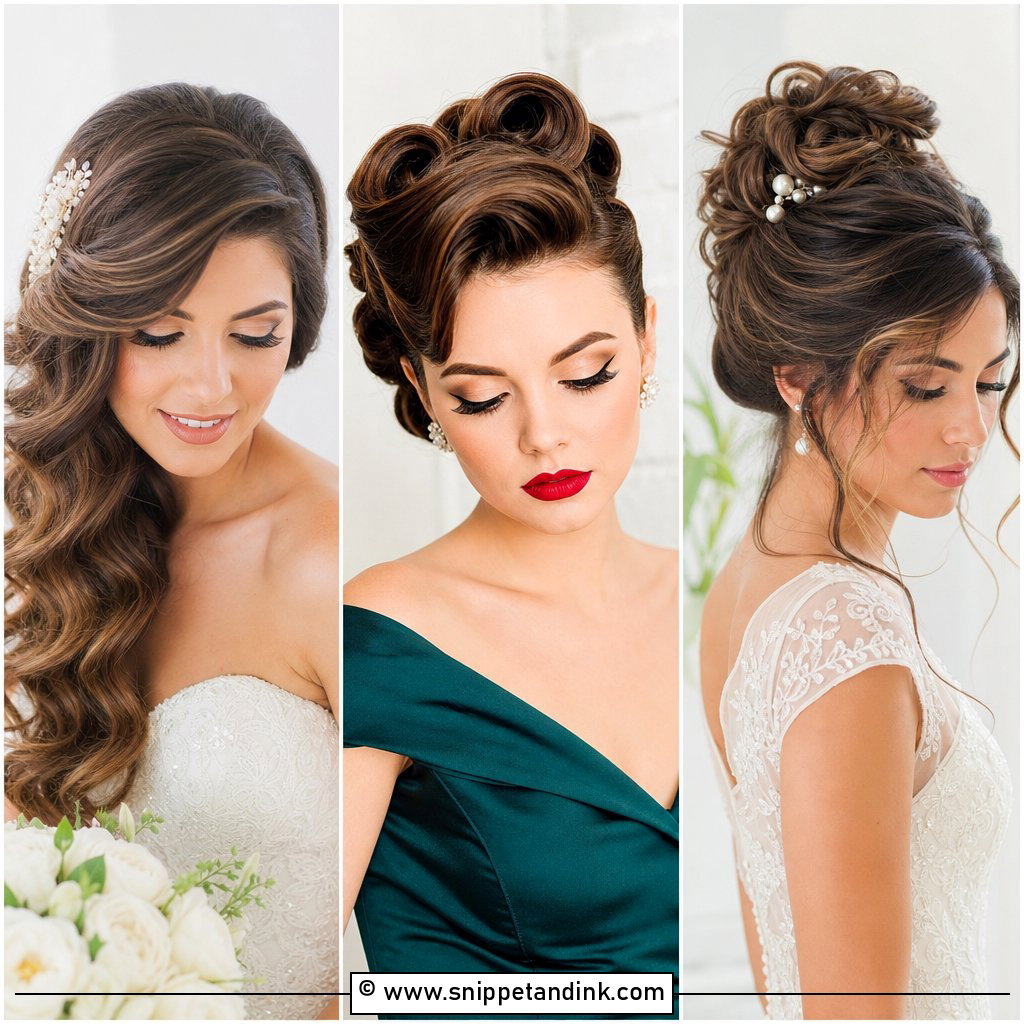
A low chignon is my default suggestion when a bride can’t decide, because it suits almost every neckline. The hair is gathered at the nape and twisted into a smooth knot, with the crown left a touch soft and a couple of strands loose at the temples. I keep that crown softness deliberately: pulled flat, a chignon can look severe in profile. It takes a cathedral veil or a simple pearl comb equally well, and the knot gives the comb a firm place to grip.
2. Classic French Twist Updo
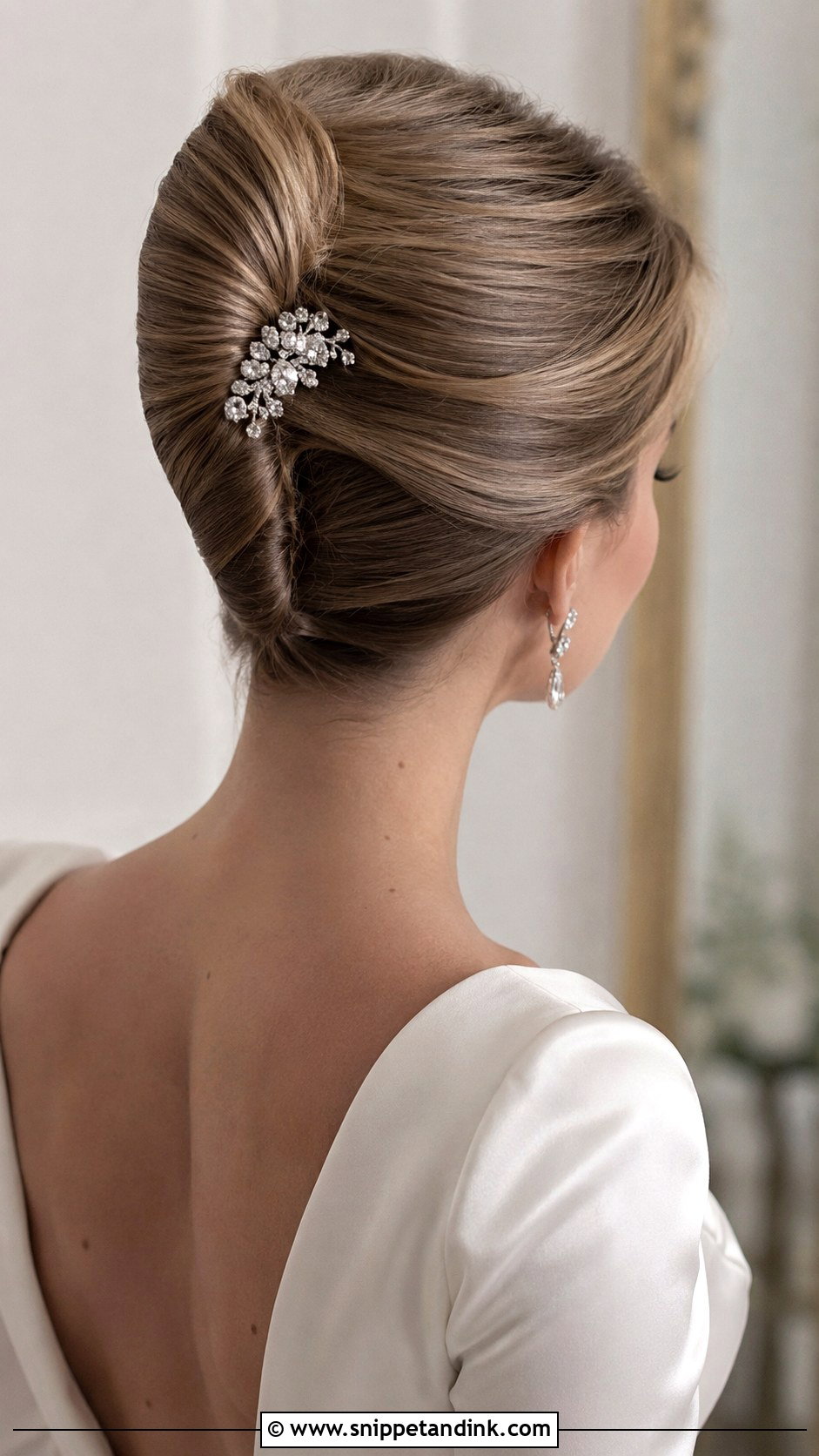
Few styles feel as tailored as a French twist. Hair is swept back and rolled vertically up the back of the head into a neat column, the shape Audrey Hepburn made famous and still a red-carpet favorite. The roll is held by a line of pins along its seam, so the hair needs grip; very silky, freshly washed hair slips out. Kept sleek, it suits a ballroom; softened at the edges, it relaxes for a garden. It flatters a long neck most, since the whole back of the neck is on show.
3. Old Hollywood Waves for Long Hair
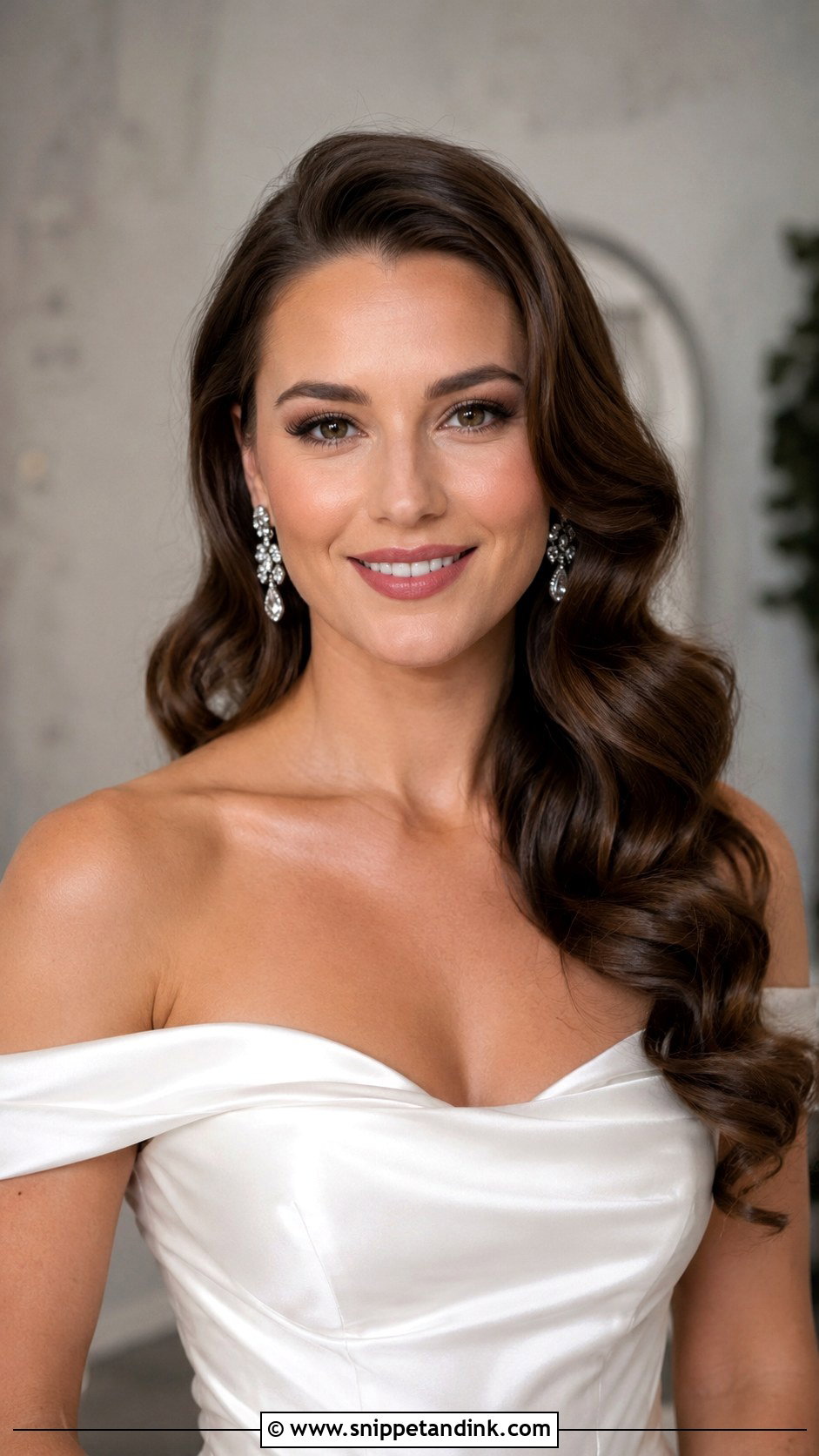
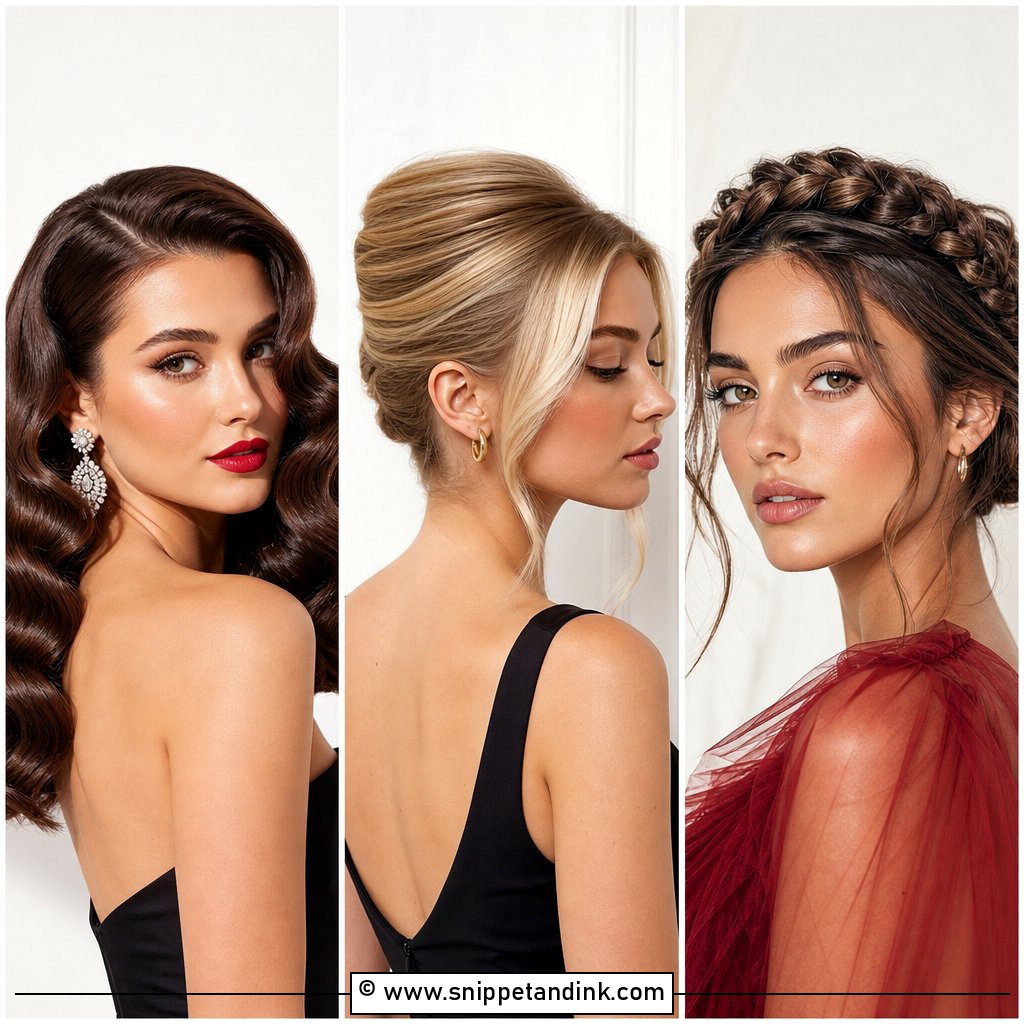
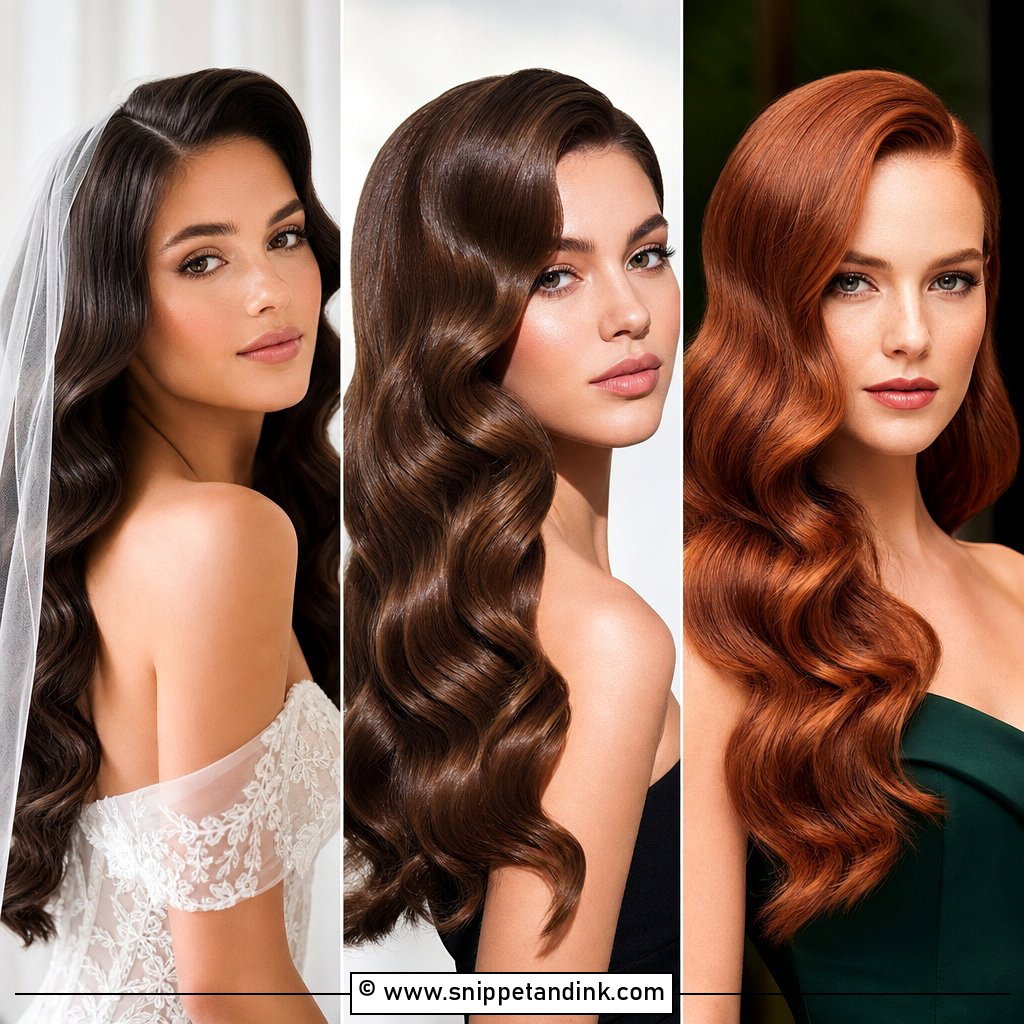
Long hair carries Old Hollywood waves well because the weight stretches each wave into a longer, smoother S. That same weight is the risk: by evening, long waves relax more than shorter ones. I set them with a firm mousse, curl in one direction and brush them out only once they’re fully cool. A smoothing serum on the lengths keeps the mirror finish. Sweetheart and off-shoulder necklines leave room for the waves to fall without fighting the dress.
4. Sleek Slicked Back Bridal Bun
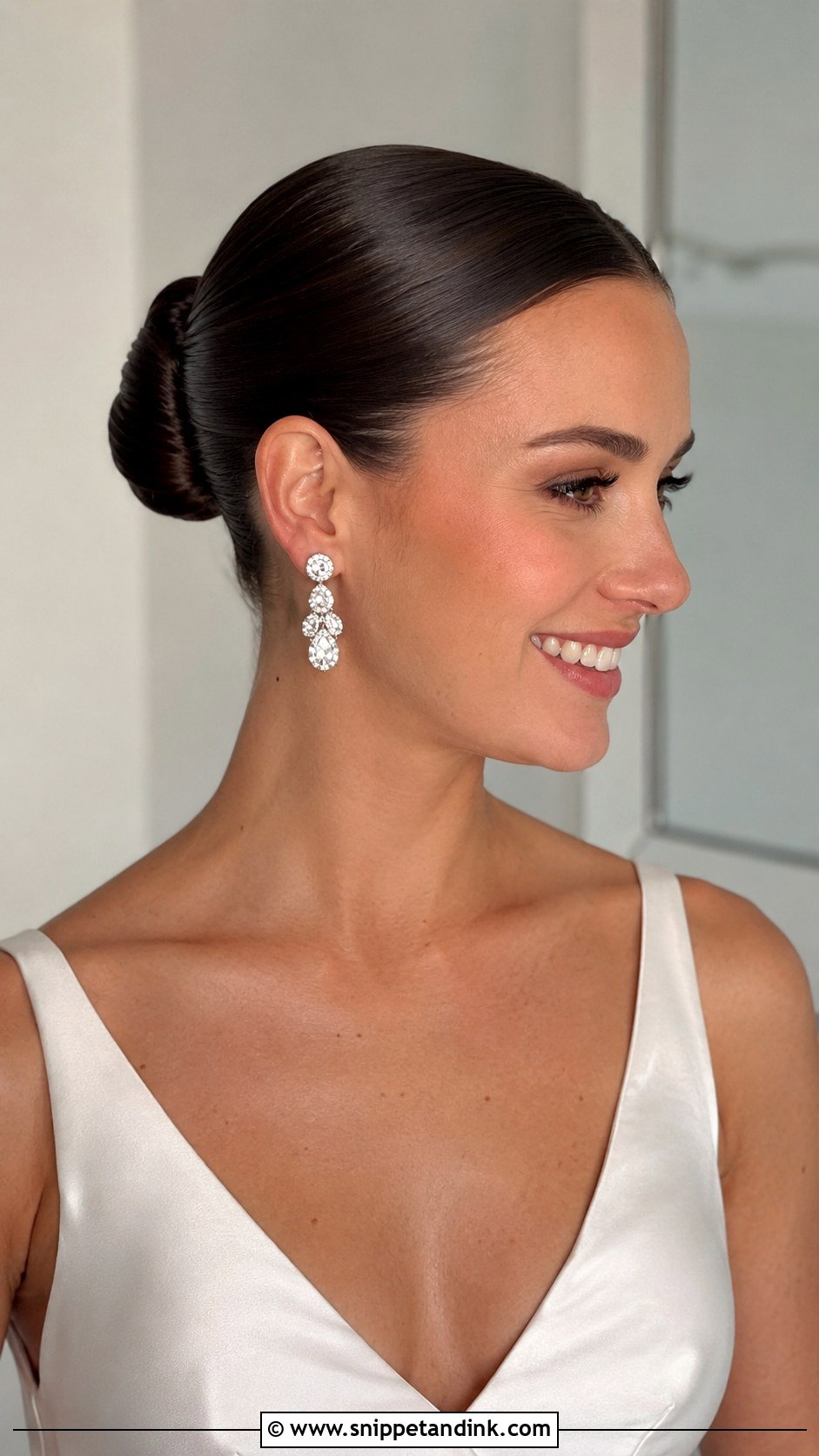
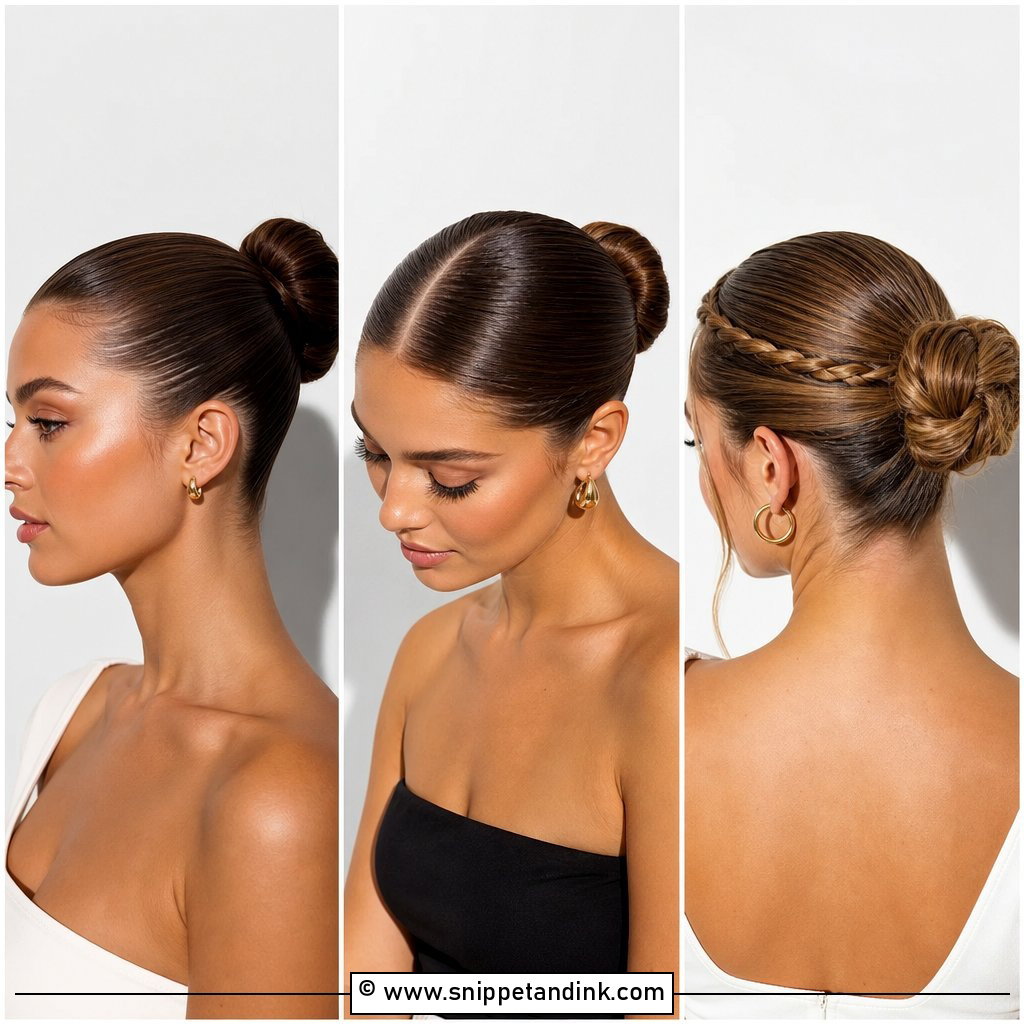
When Sofia Richie wore a slicked-back bun at her wedding, it became the reference for a whole season of brides. The hair is pulled tight and smooth into a clean, glossy bun. It looks minimal, but it’s demanding: the hairline has to be tidy, because nothing covers it, and tight styles can give some brides a headache over a long day. I’d test it for a few hours at the trial. Sleek satin dresses and statement earrings suit it.
5. Soft Romantic Updo with Pearls
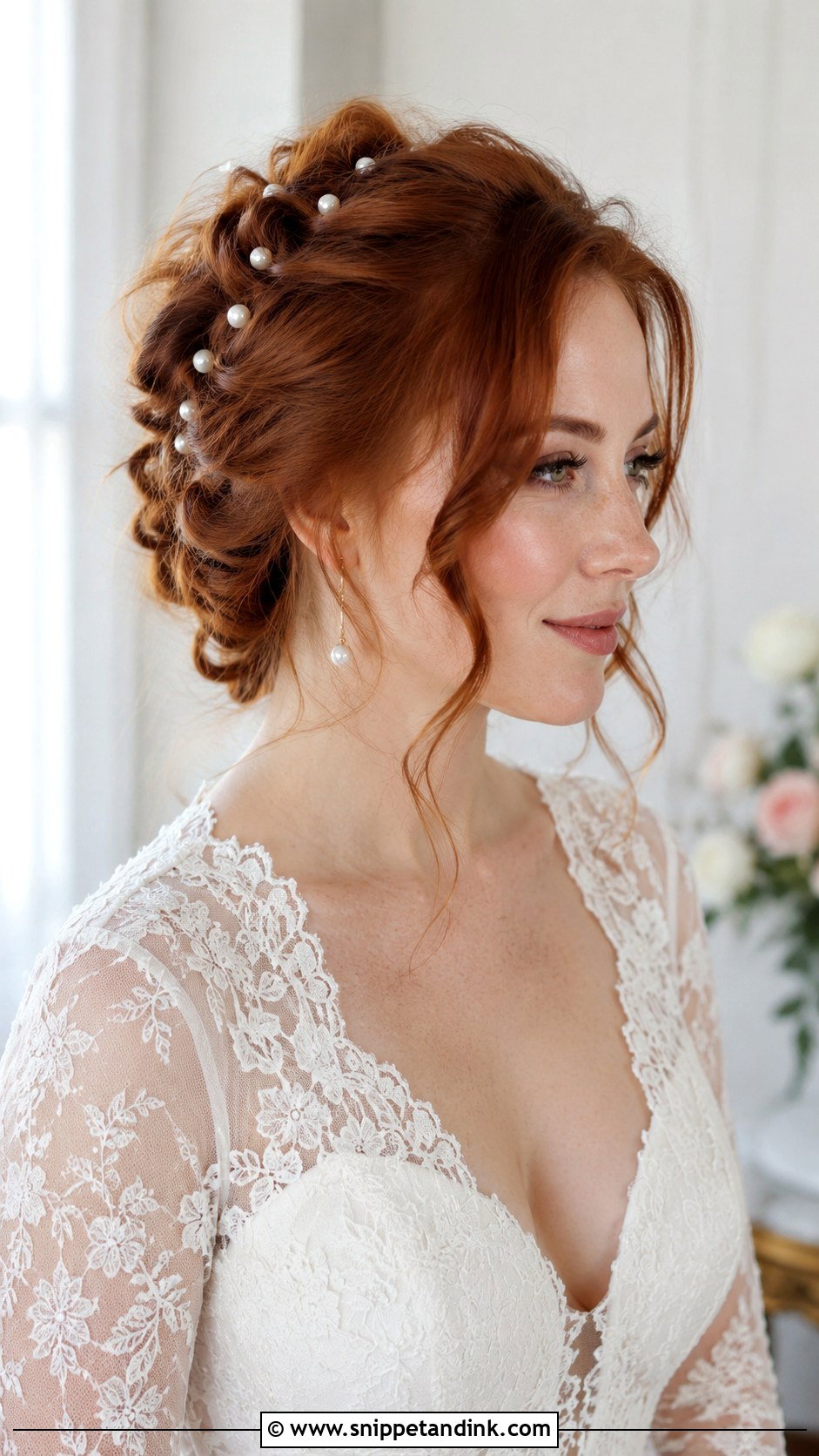
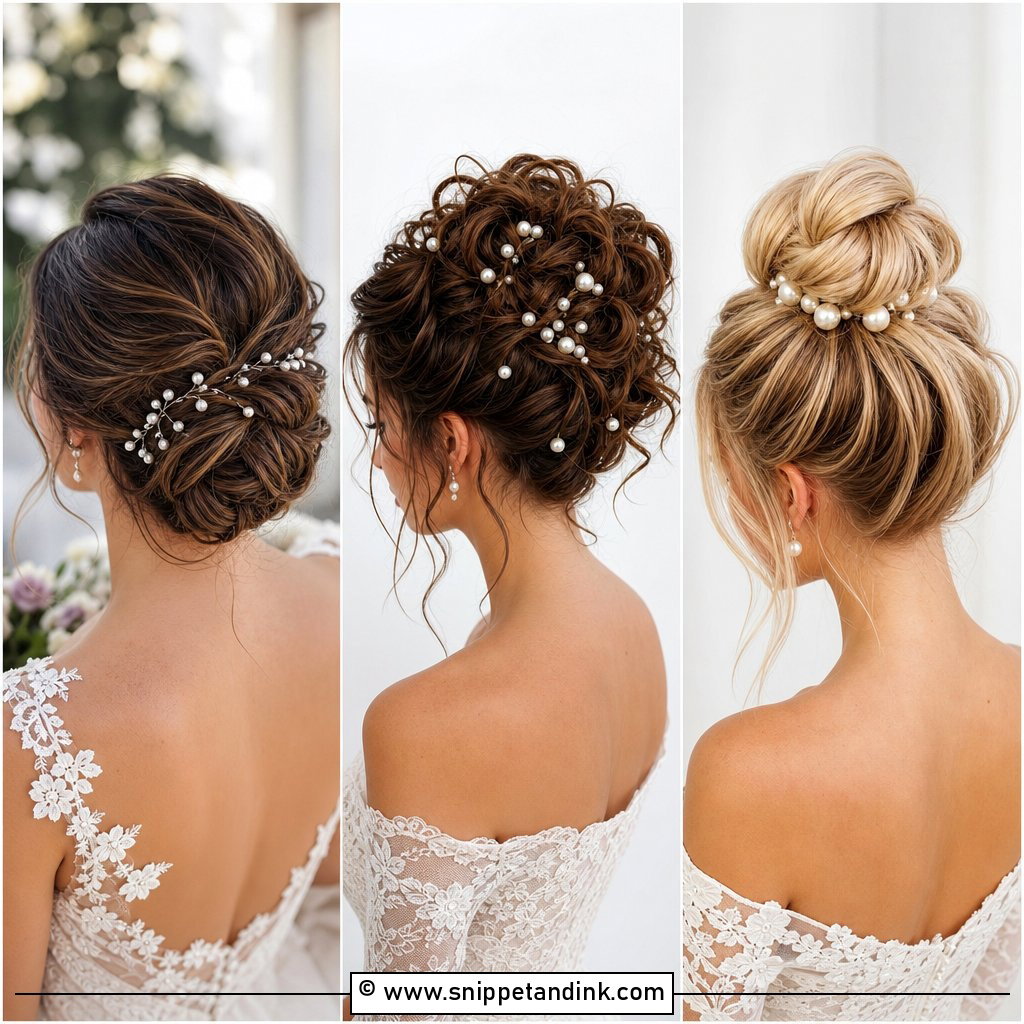
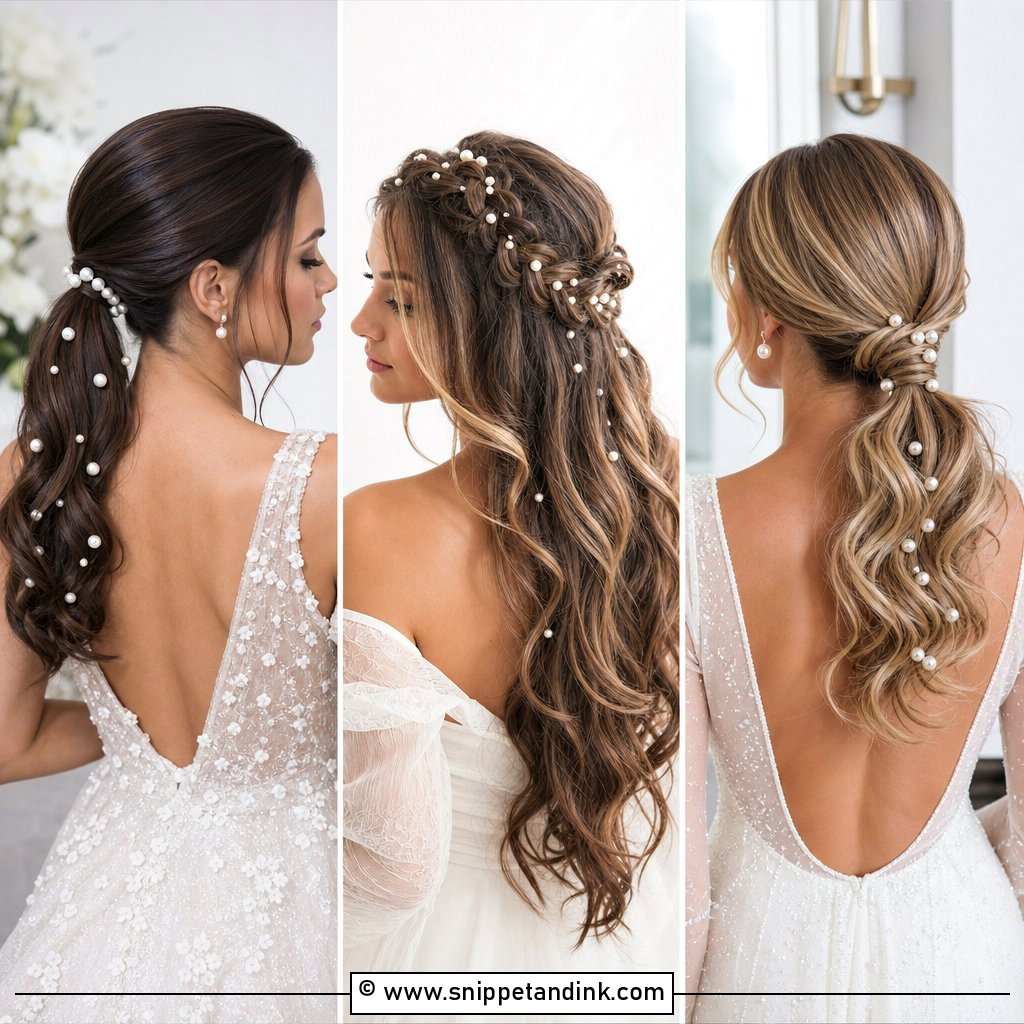
This one balances structure and softness. The hair is loosely gathered and pinned with gentle waves and a few escaped strands, then pearl pins are scattered through it. Loose updos need a secure core underneath, so I build a small hidden anchor first and pin the softer sections around it. The relaxed finish suits garden ceremonies and smaller weddings, and it photographs warmly in natural light. Keep the pearls small so they read as a detail, not a pattern.
6. Gibson Tuck Rolled Updo
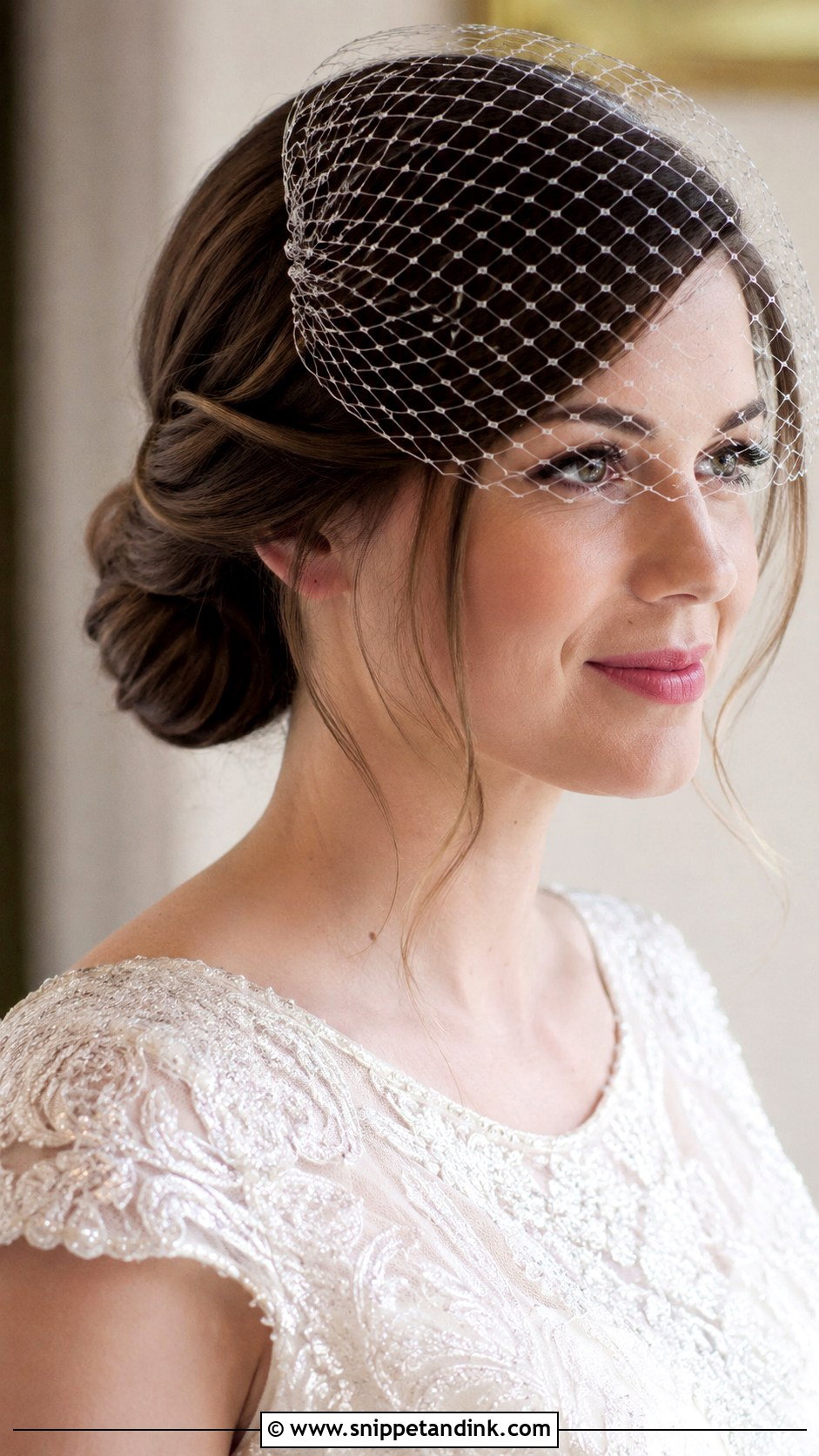
The Gibson tuck rolls the hair under itself into a soft, rounded shape at the back of the head, traditionally by tucking it around a band or a hidden elastic. It’s forgiving: shorter layers disappear into the roll easily, which makes it one of the best old money options for grown-out or layered cuts. A few loosened pieces at the front stop it looking prim. A birdcage veil or a simple pearl band suits its vintage line.
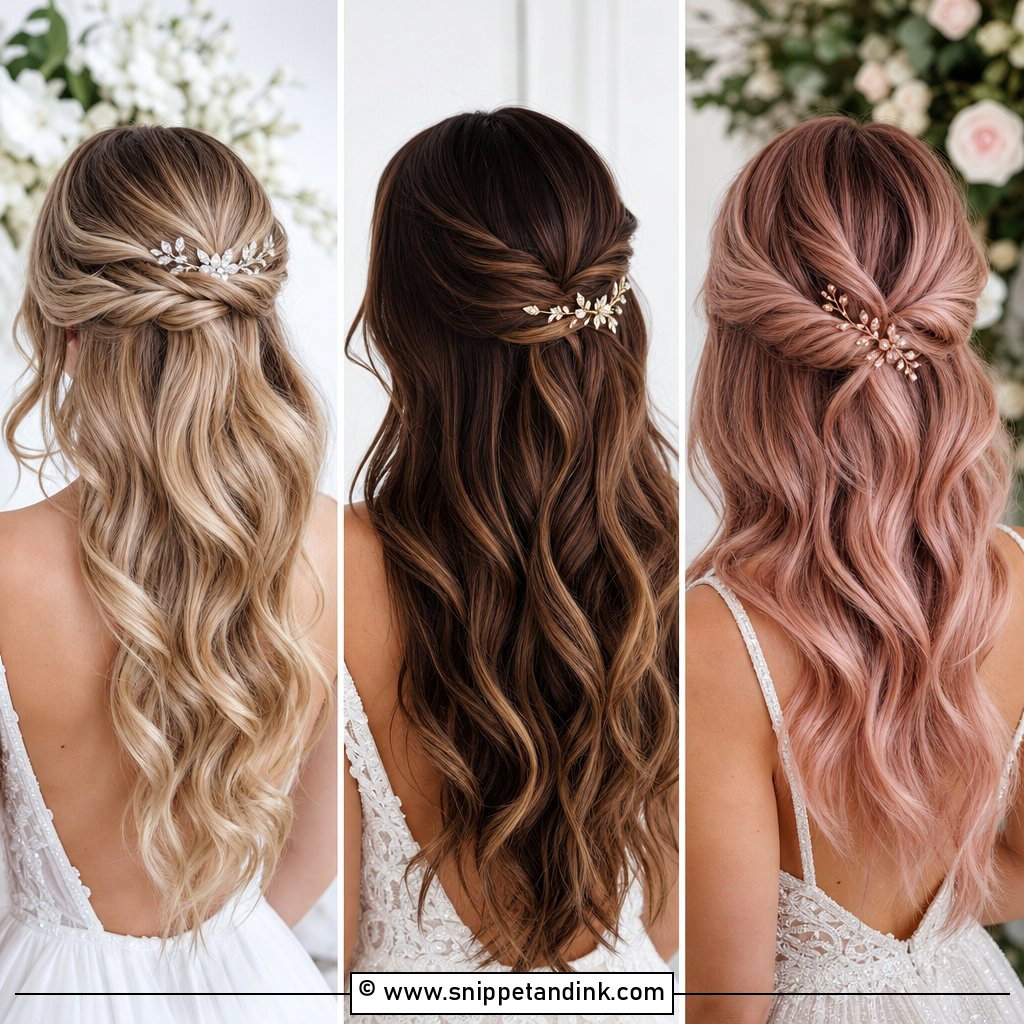
7. Half Up Half Down with Veil
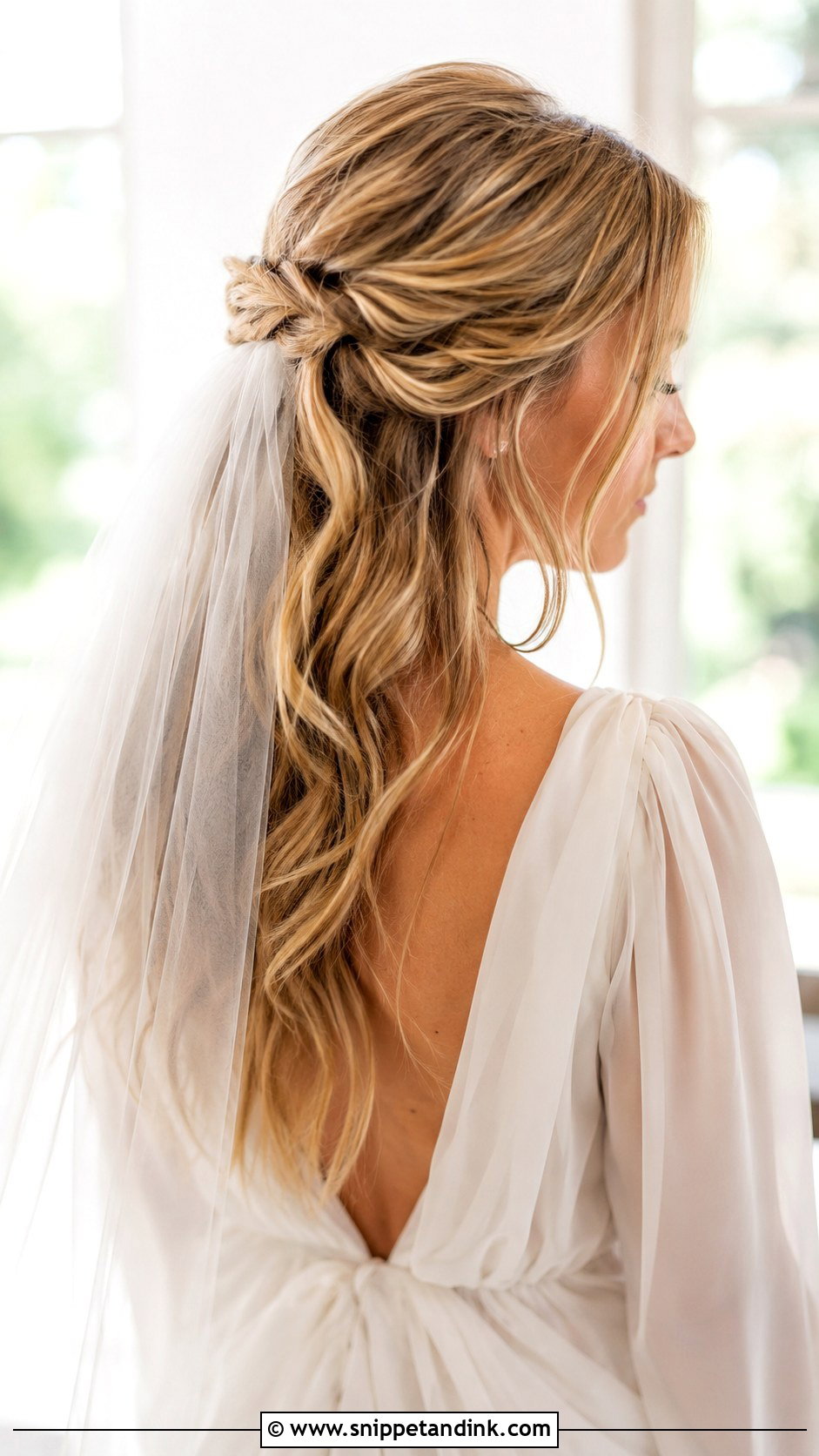
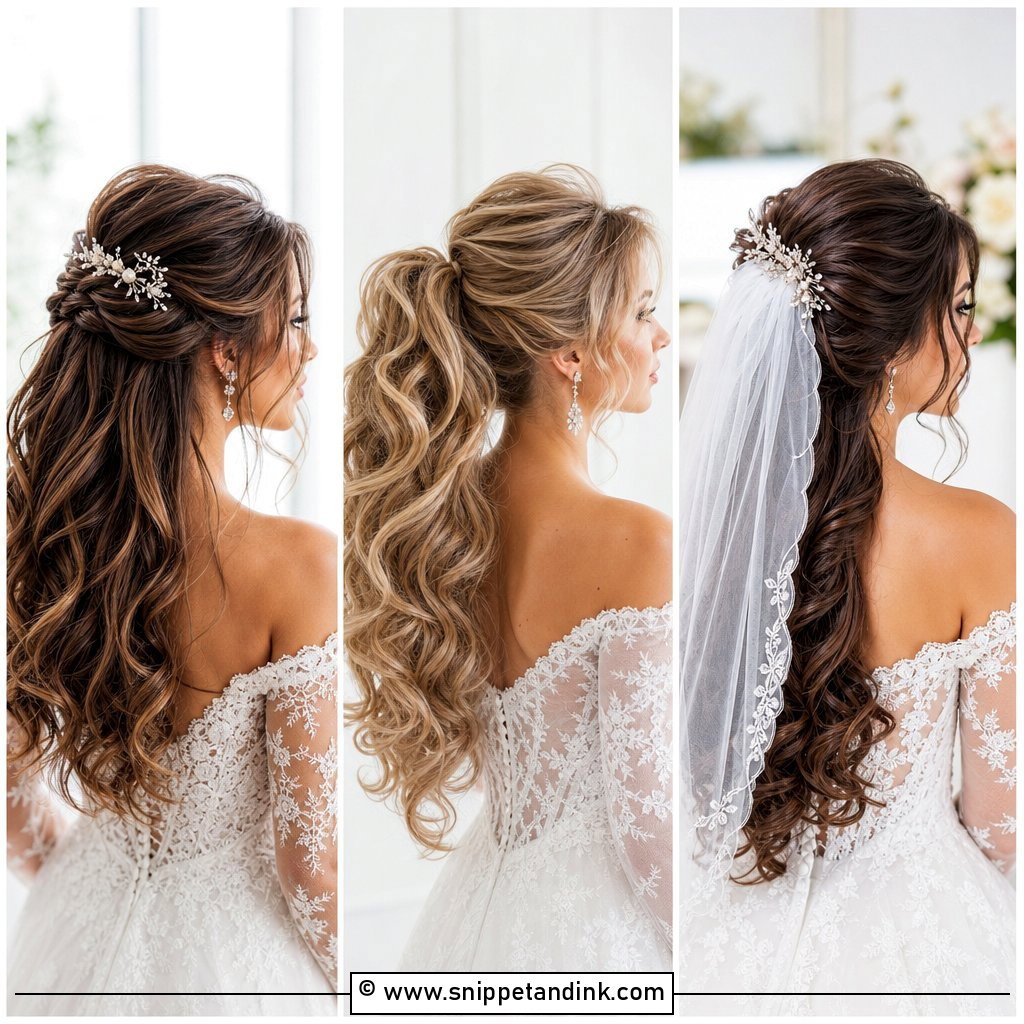
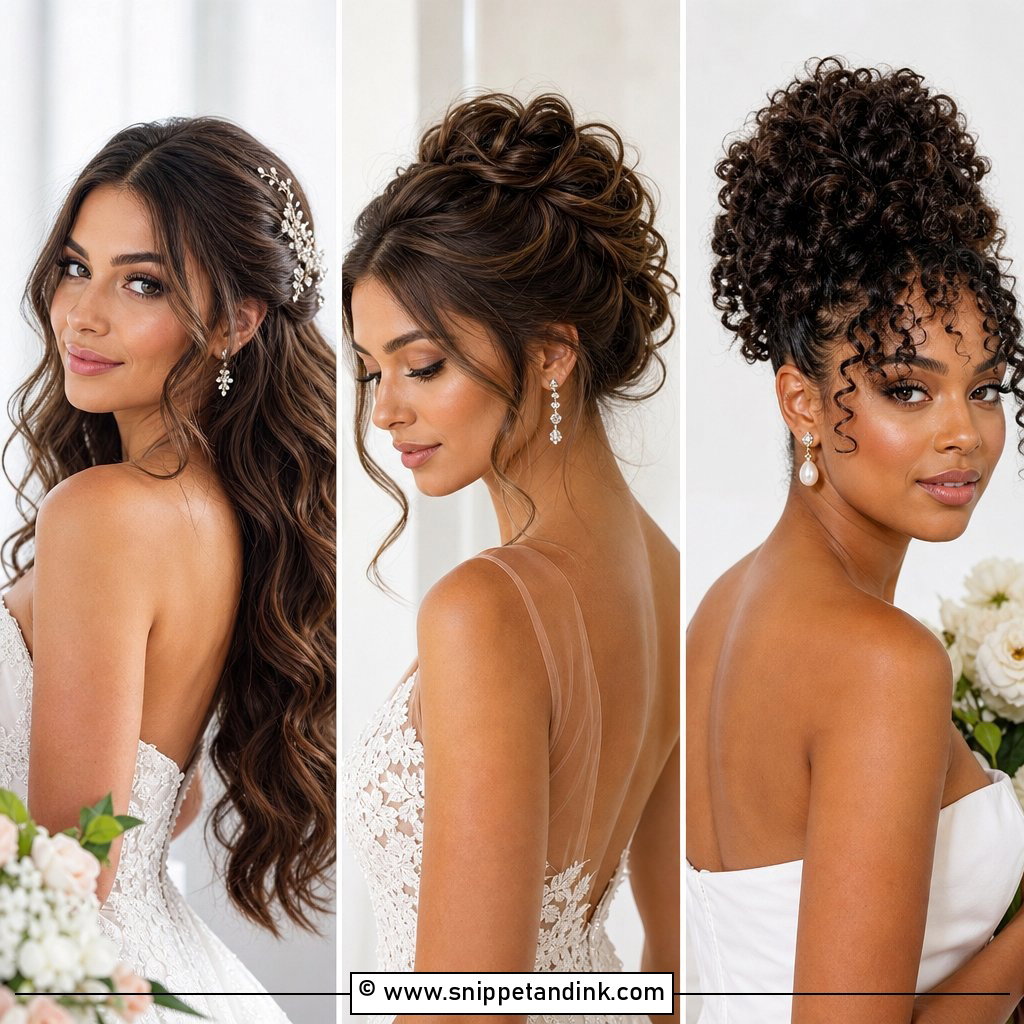
Want length and a veil together? A half-up style keeps the hair flowing while the top section, often twisted or braided, gives the veil comb something to hold. That comb placement matters: I slide it in just below the gathered section so the weight sits on secured hair, not on loose waves. The waves will move in a breeze, which looks good in photos but means they’ll loosen too. Outdoors, I set them with extra hold and let them cool fully before the veil goes on.
8. Twisted Low Bun Updo
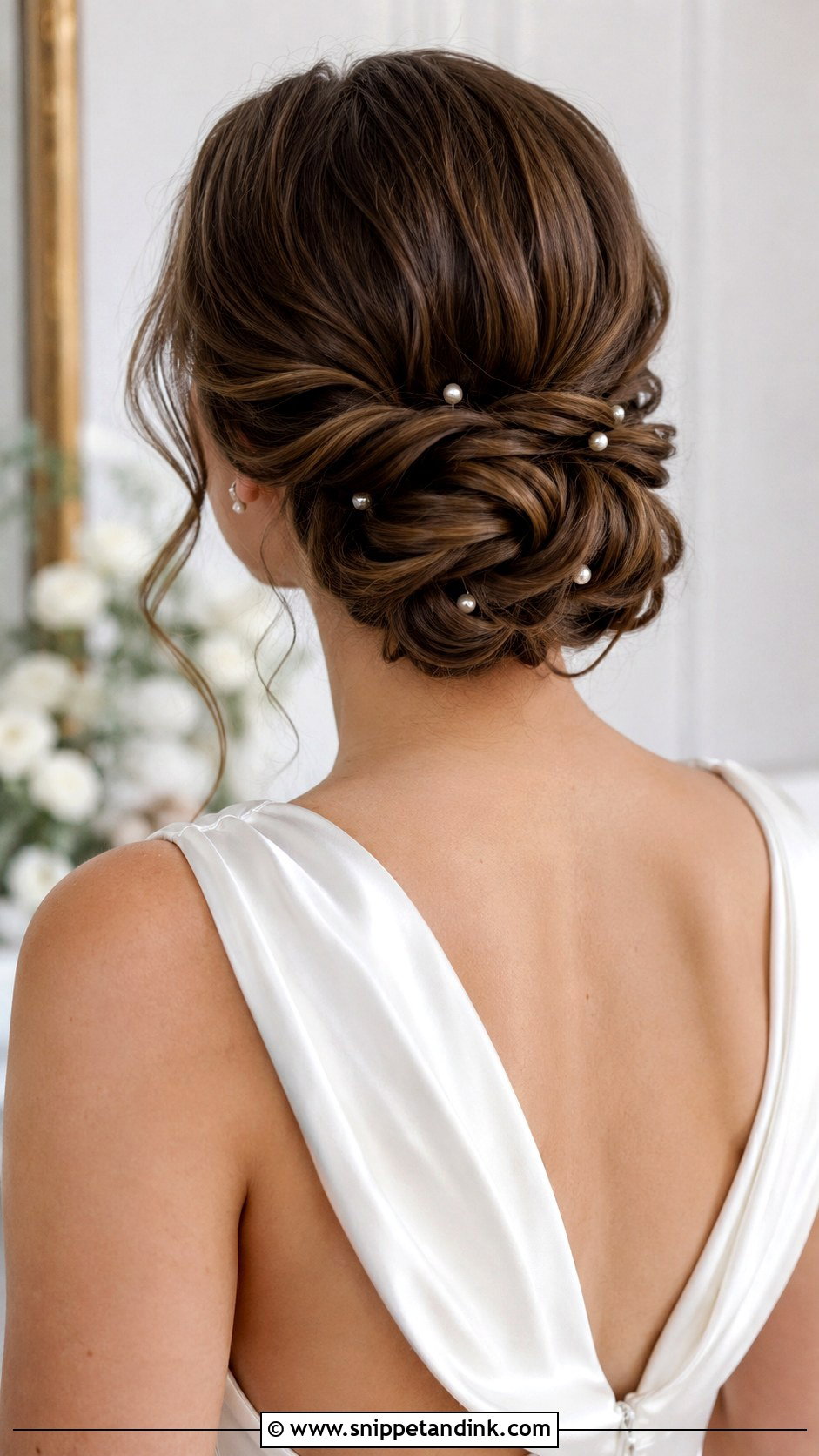
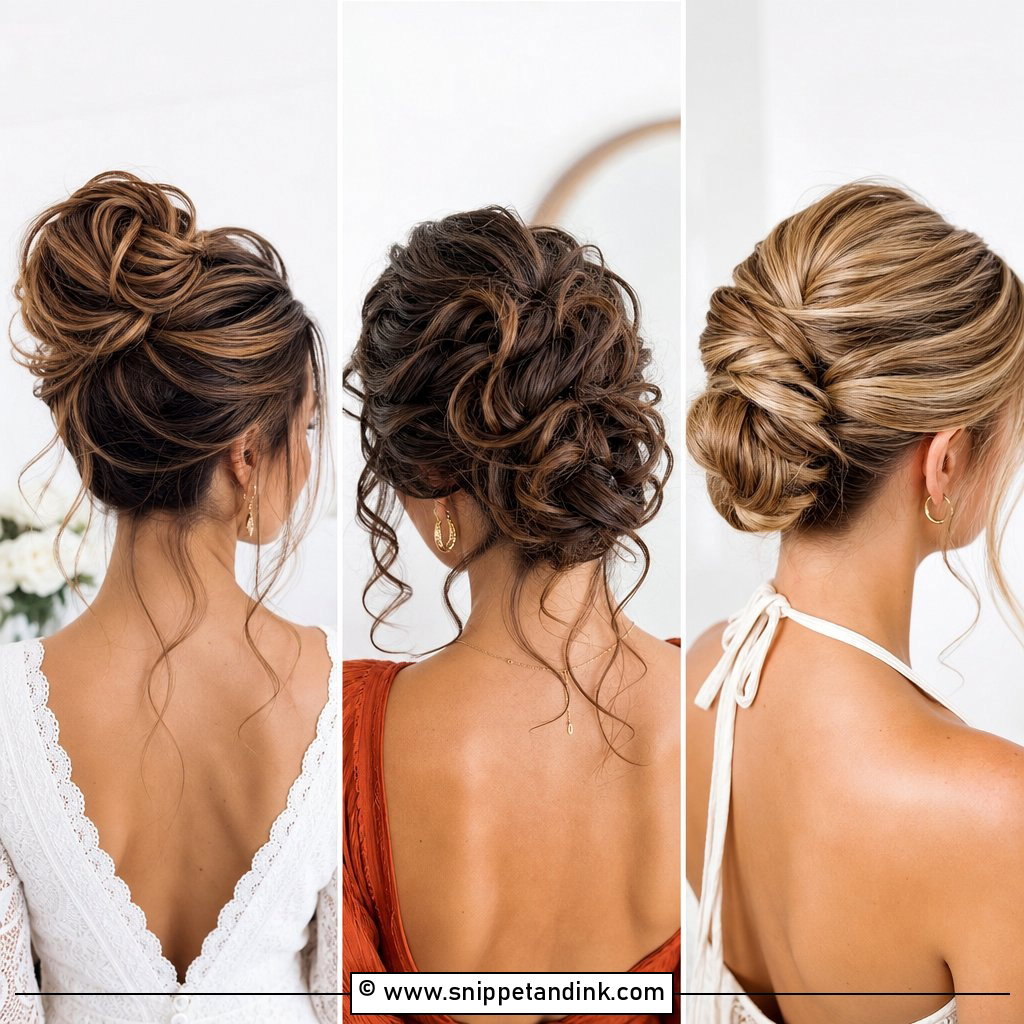
Here the hair is split into sections that cross over each other into a woven knot at the nape. It looks intricate from behind, and the crossing sections lock each other in place, so it’s sturdier than it appears. Medium to thick hair fills the weave best. A few face-framing strands soften it, and pearl pins or a simple veil can slip between the woven sections. It works with modern and vintage gowns alike.
9. Soft Vintage Roll Updo
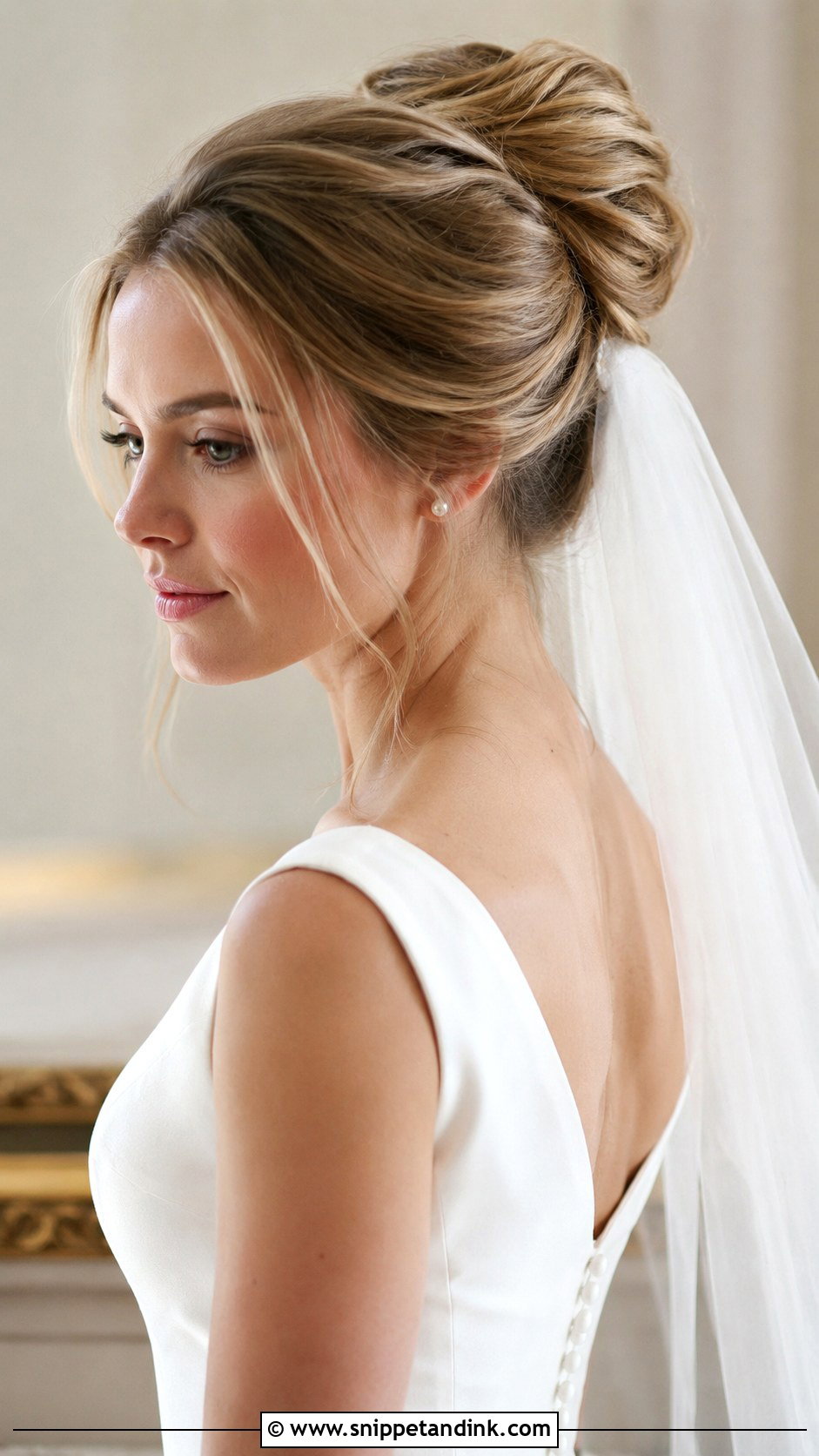
A vintage roll gathers the hair upward into a smooth roll at the back, but softer than the lacquered versions of earlier decades. I build the roll over light backcombing so it holds its shape without much spray. It’s comfortable for a full day because the weight sits close to the head. A fitted gown and a classic veil suit its retro outline. If your hair is very fine, a small padded insert inside the roll gives it the fullness you see in vintage photos.
10. Braided Crown Updo
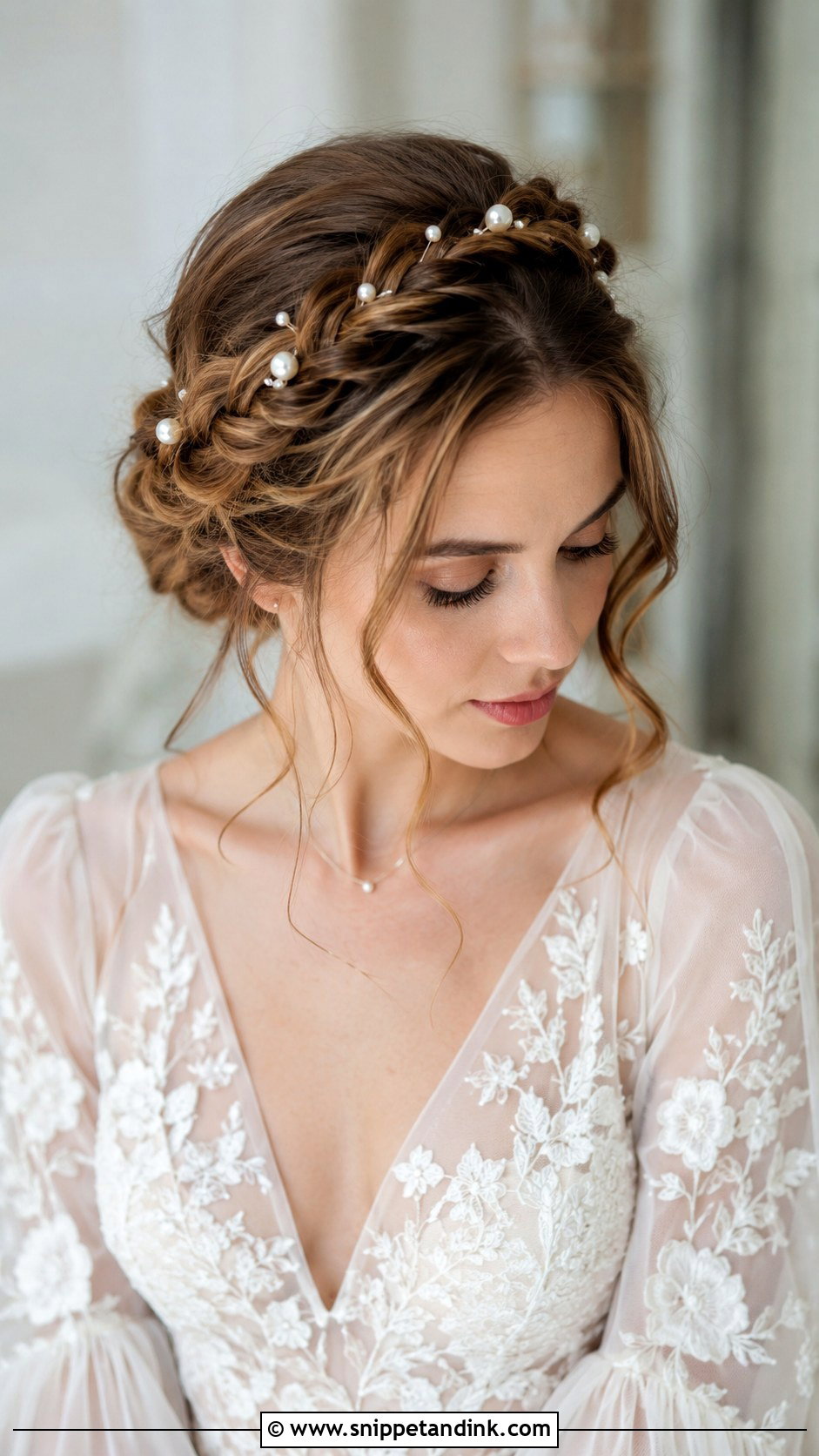
A braided crown wraps braids around the head like a soft halo, and it’s among the most secure styles I do for an outdoor wedding. Each braid holds the hair underneath it, so wind does very little. Gently pulling the edges of the plait wider keeps it from looking tight. Small flowers or pearl pins tuck into the braid easily. It pairs naturally with flowing gowns at garden estates. Hair needs enough length to reach around the head; if yours doesn’t, a clip-in braid finishes the circle.
11. Pinned Back Soft Waves
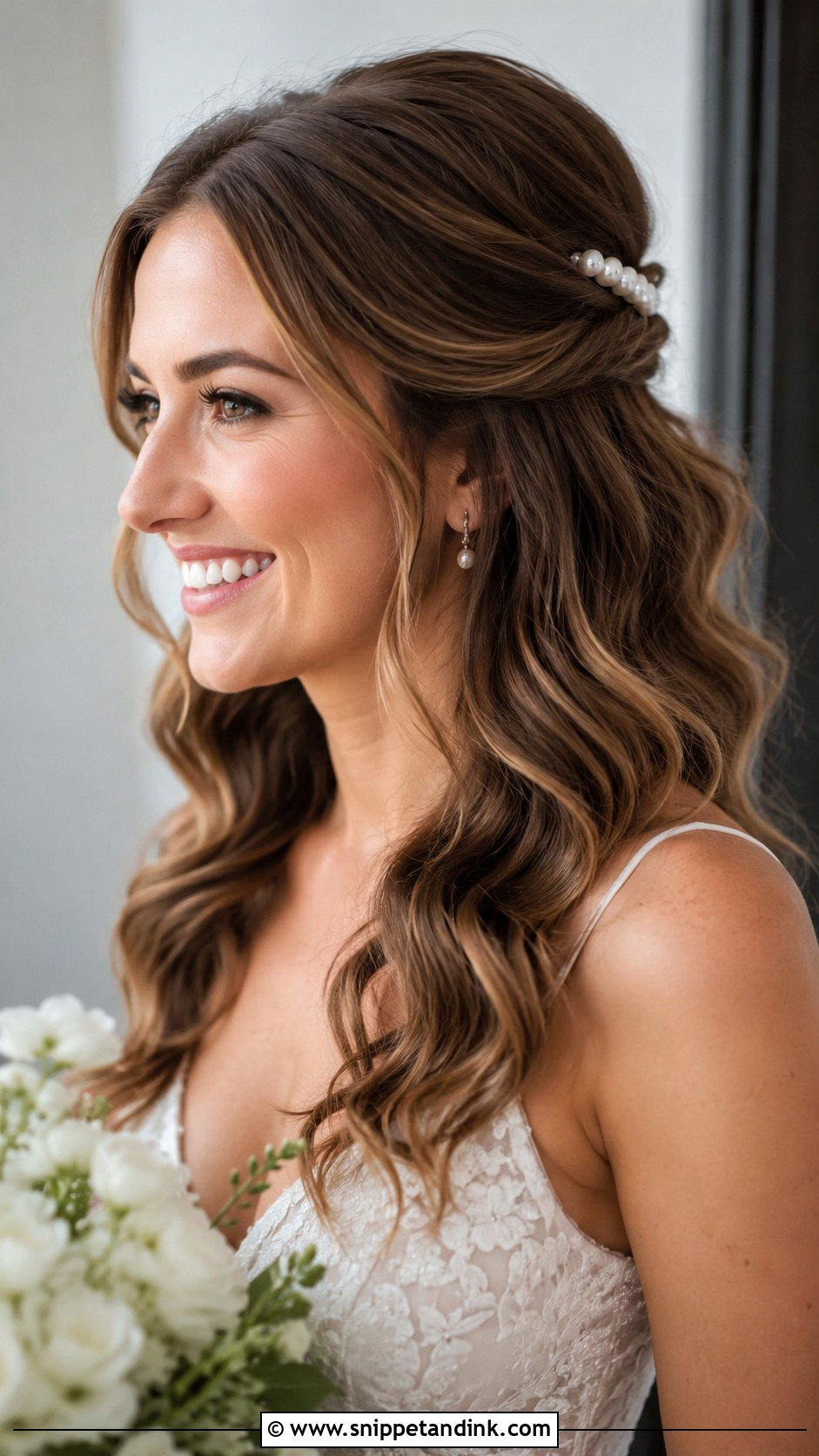
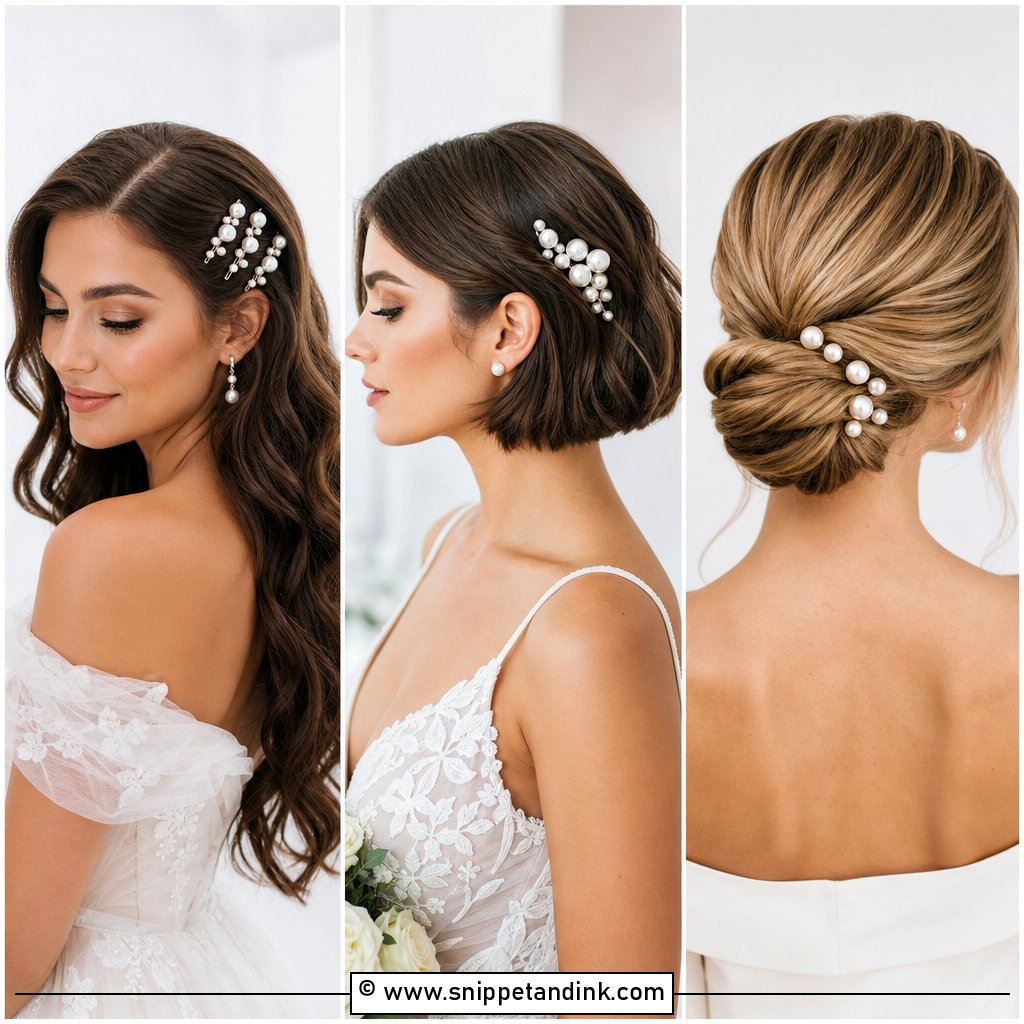
Sometimes the simplest look reads as the most expensive. Soft waves are worn down with only the sides pinned back, which keeps hair off your face during the vows and signing. I pin those sides with crossed pins hidden behind the ear, then add a pearl clip on top if you want one. The lengths stay loose and glossy. Daytime and smaller weddings suit it best, because loose waves have a shorter life in a long, warm evening.
12. Side Swept Hollywood Curls
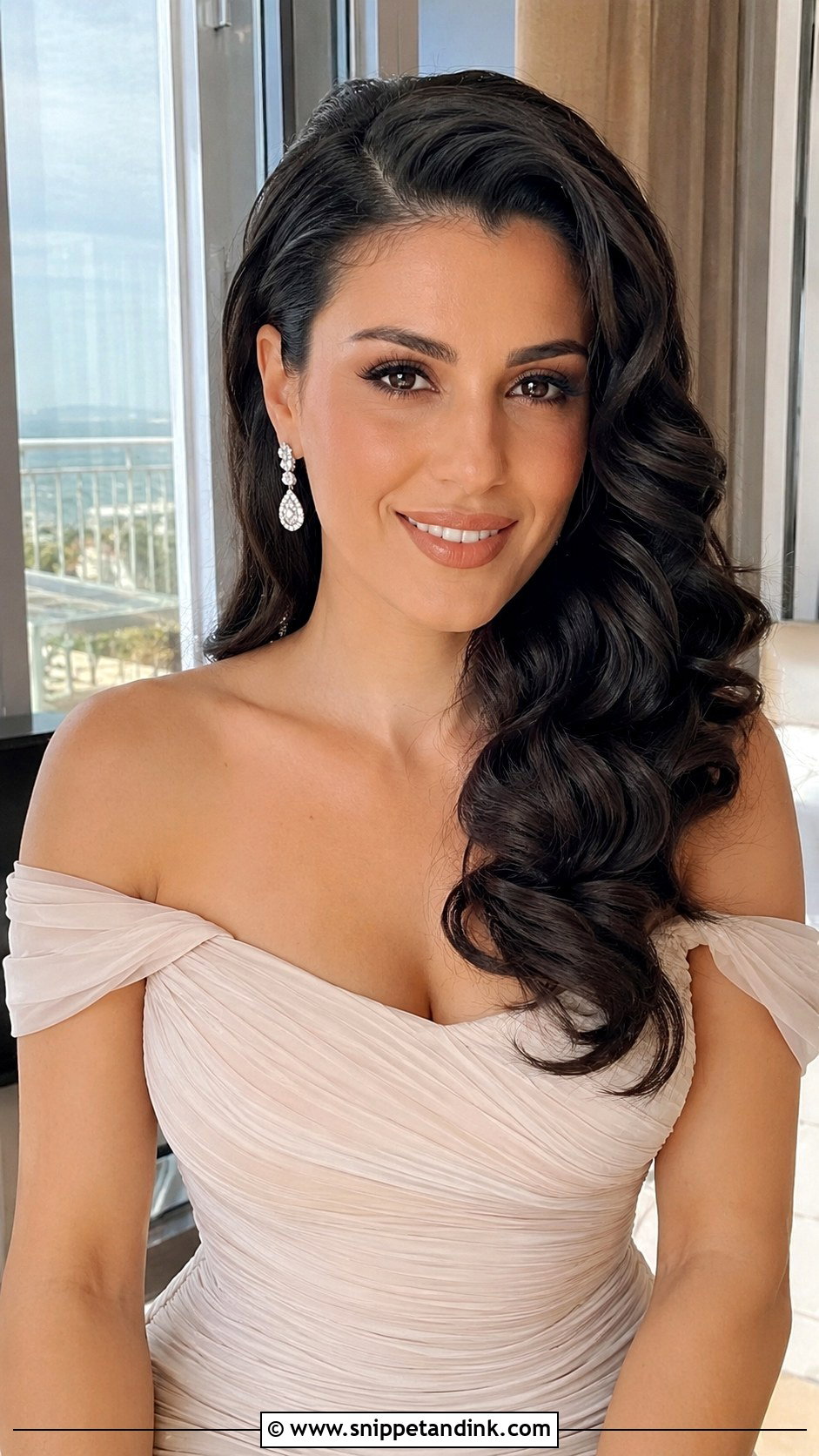
Side-swept curls gather all the hair over one shoulder in smooth, full curls from a deep side part. The visible side looks effortless, but the opposite side is pinned firmly behind the ear so the weight doesn’t drag the style back. It draws attention to your face and the bare shoulder, so it suits an off-shoulder gown and a statement earring. Evening receptions and grand rooms match its drama. Expect the curls to soften after a few hours; that’s normal, not a failure.
13. Low Ponytail with Ribbon Bow
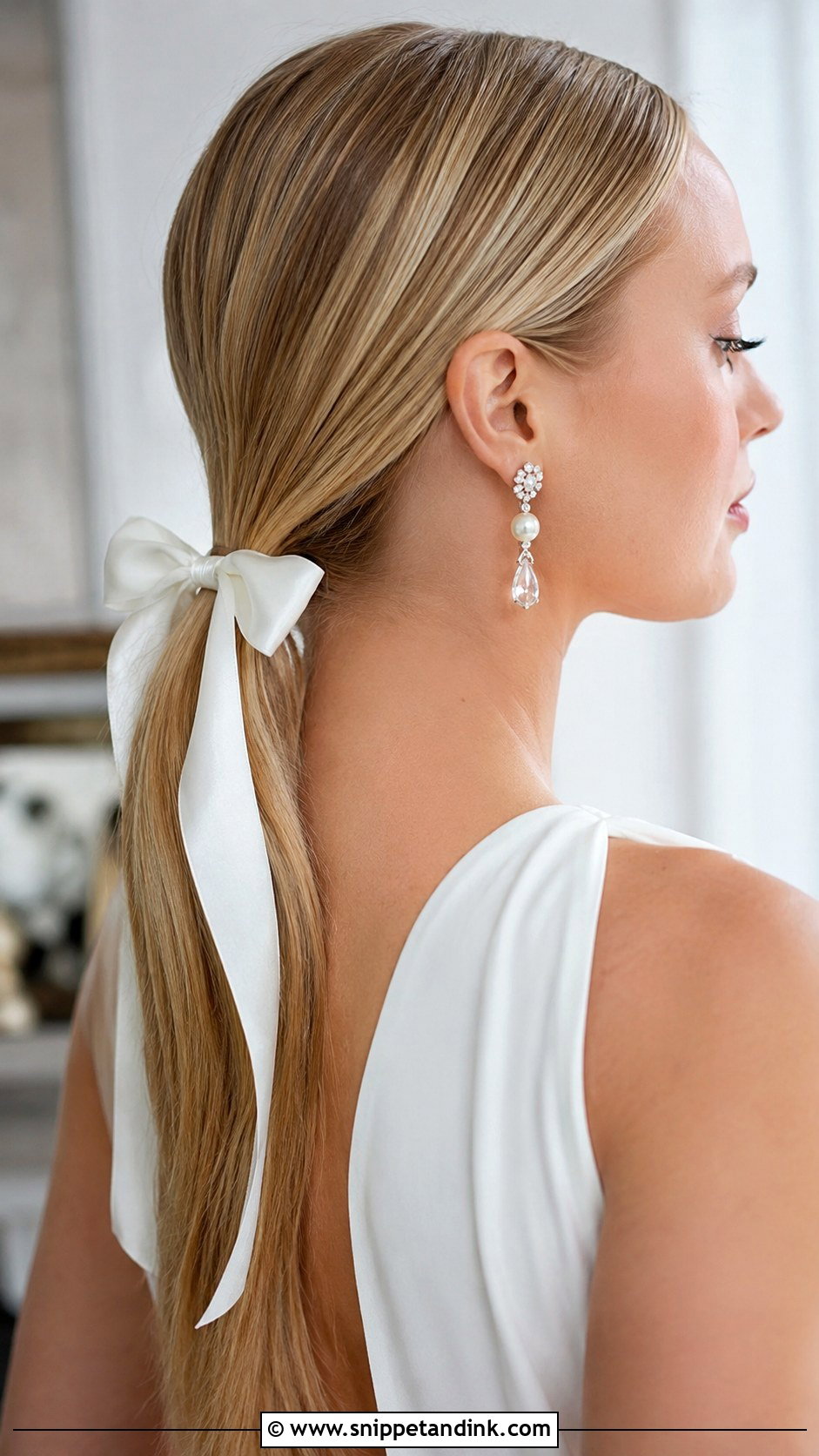
A low ponytail tied with a ribbon or bow has become a quieter alternative to the classic bun. The hair is pulled back sleek and secured low, then the elastic is hidden under a satin or velvet bow. I tie the ribbon over the elastic, never instead of it; a ribbon alone loosens within the hour. Velvet holds a knot better than satin. Keep the ponytail sleek or add soft waves, and pair it with a minimalist gown so the bow stays the only decoration.
14. Bouffant Bardot Inspired Updo
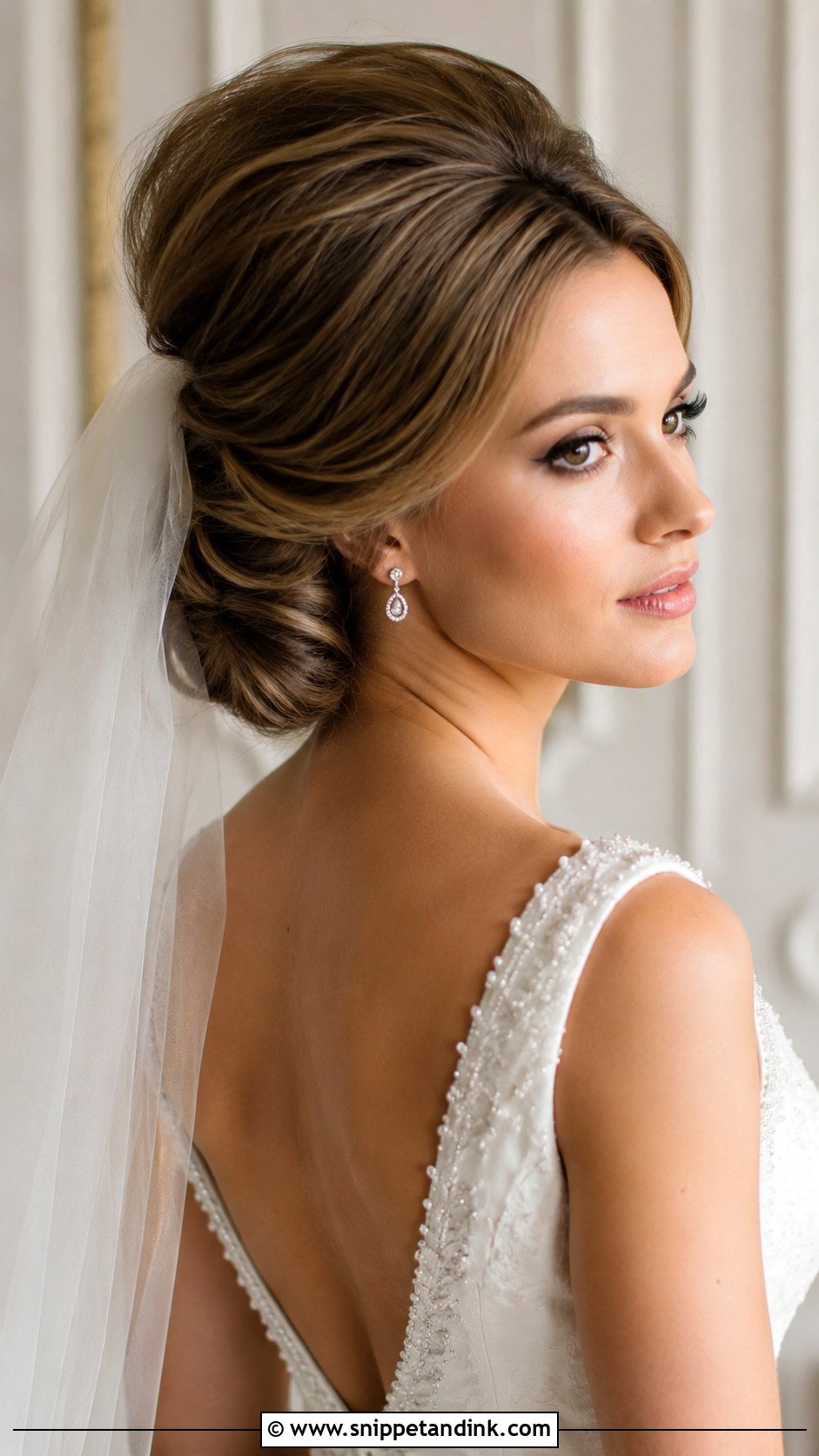
A Bardot-inspired bouffant lifts the crown with soft volume, and the rest is swept into a chignon or left in loose waves. The lift comes from backcombing the underneath sections only, then smoothing the top layer over it. Height at the crown lengthens a round face and balances a strong jaw. I’d keep it softer than a true sixties bouffant for this aesthetic, and add a classic veil or pearl band behind the lift.
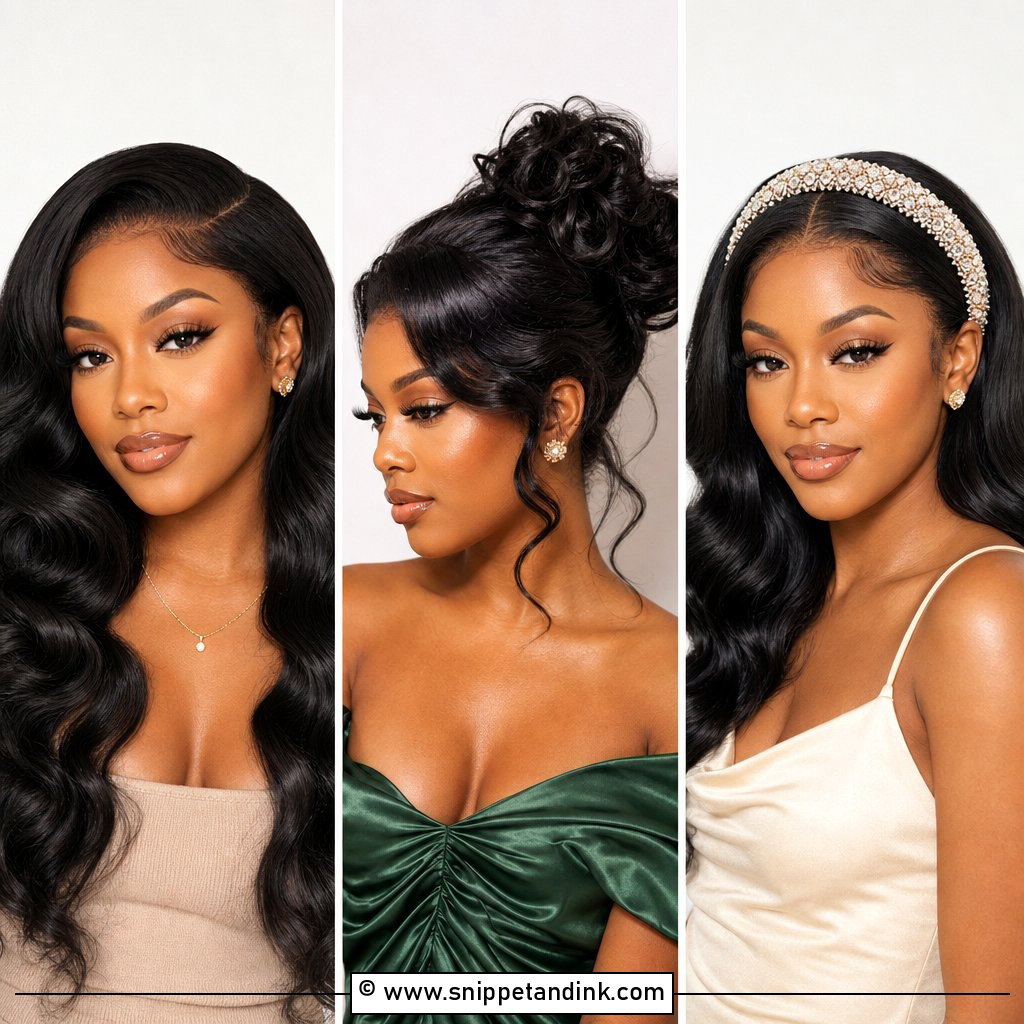
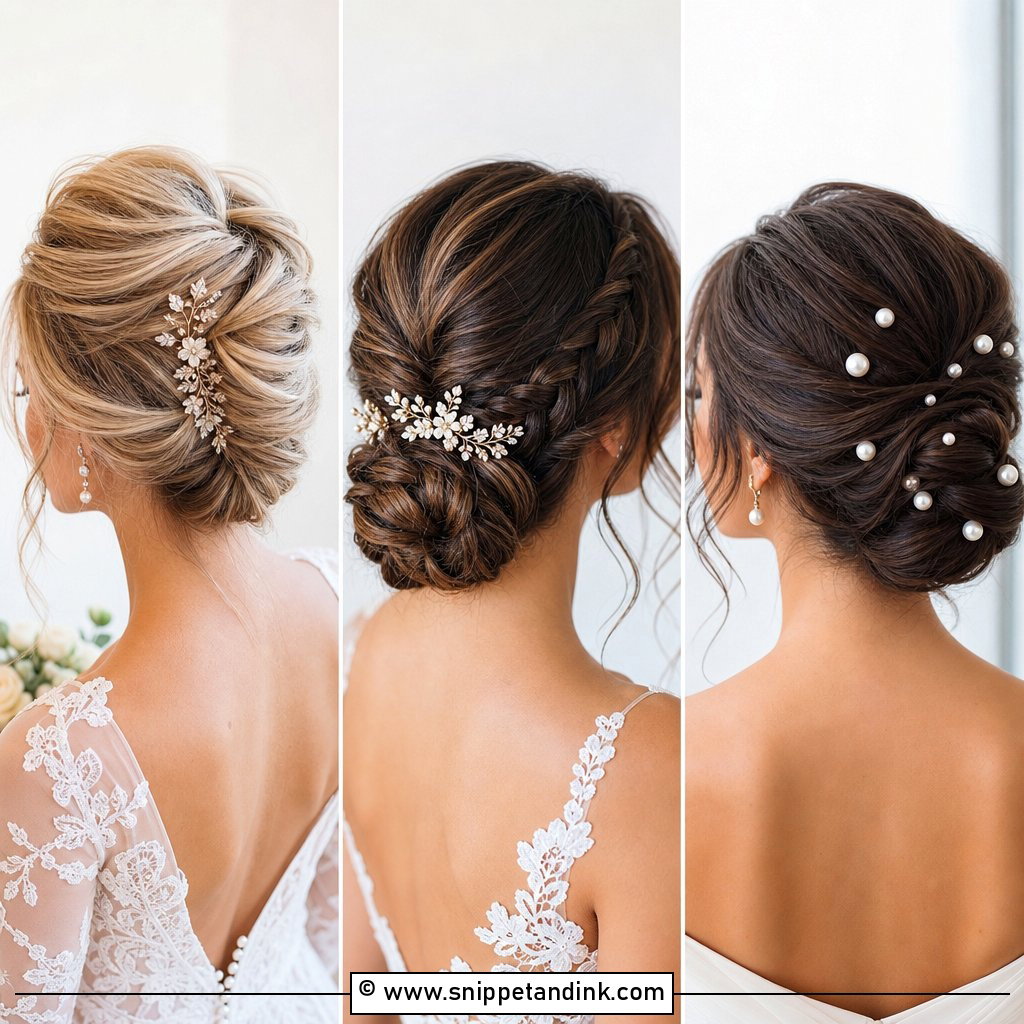
15. Pearl Studded Chignon
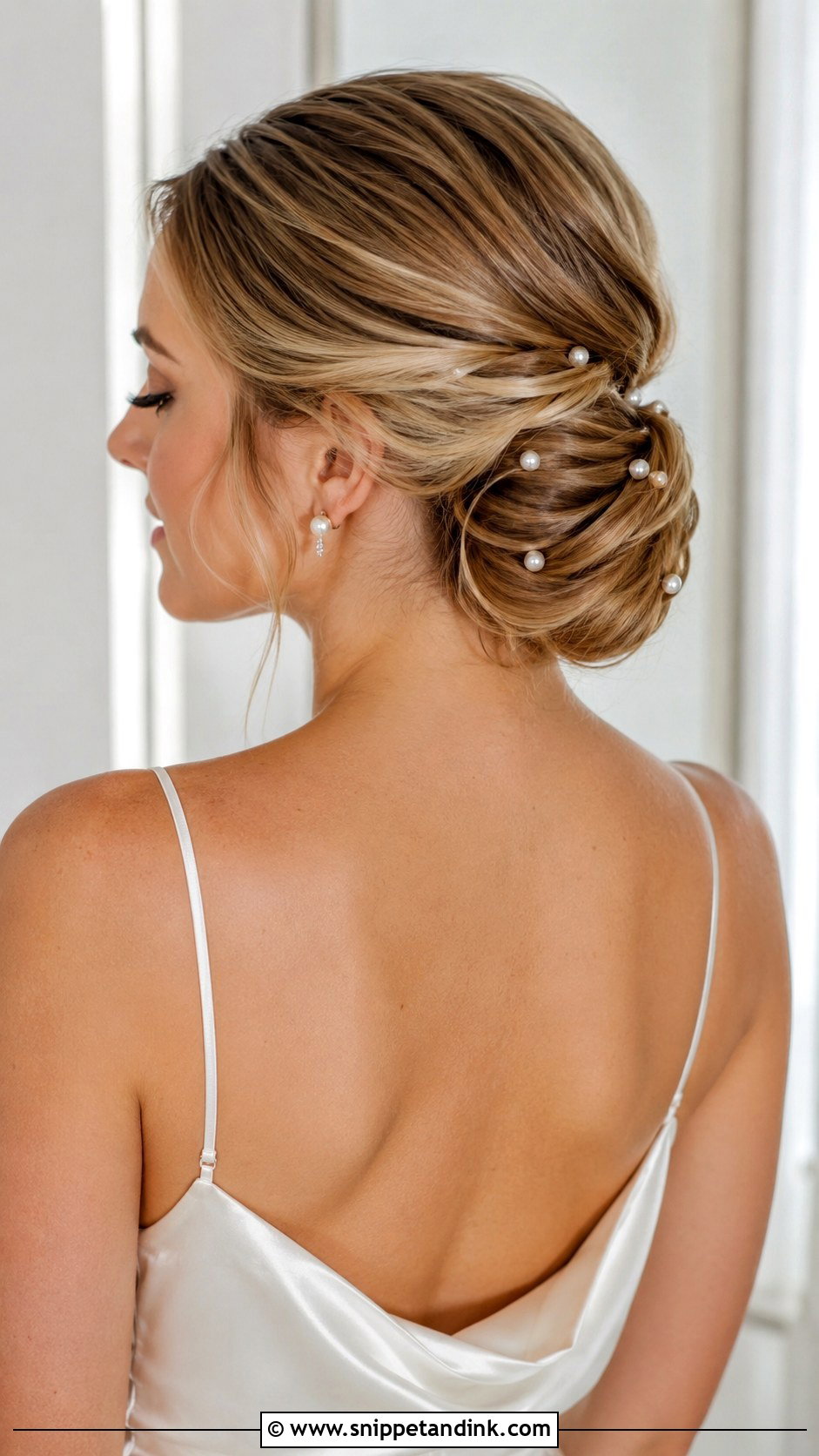
Pearls set into a smooth low knot are the most recognizable detail in this whole aesthetic. I twist the chignon first and secure it fully, then add scattered pearl pins at an angle so each one hooks under the structure. Too many pearls and the look becomes costume-like, so I usually stop at five or seven. A simple gown lets them show. If you want classic polish with a little shine, the pearl studded chignon is the most reliable version of it.
16. Tousled Low Bun with Face Framing
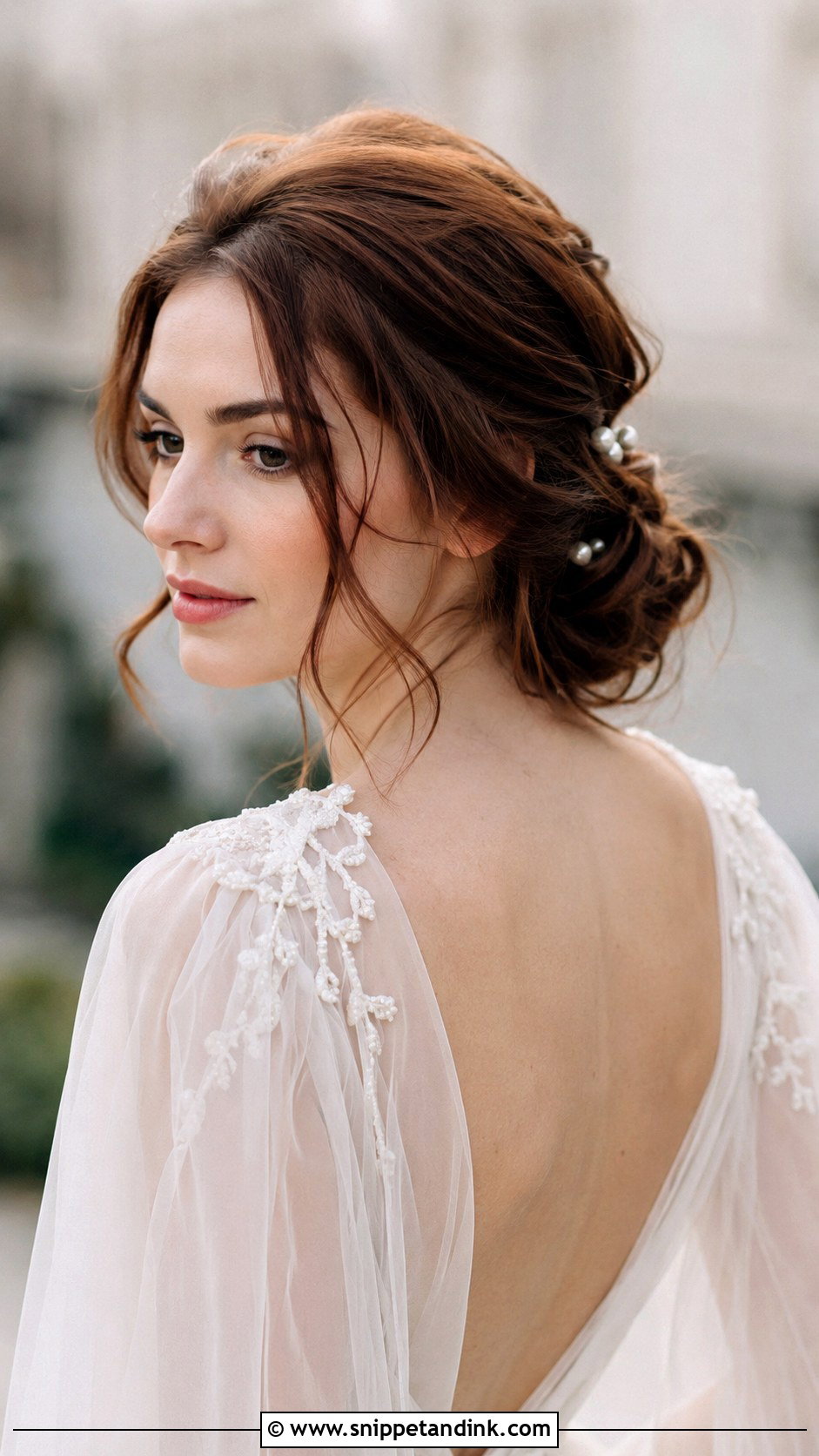
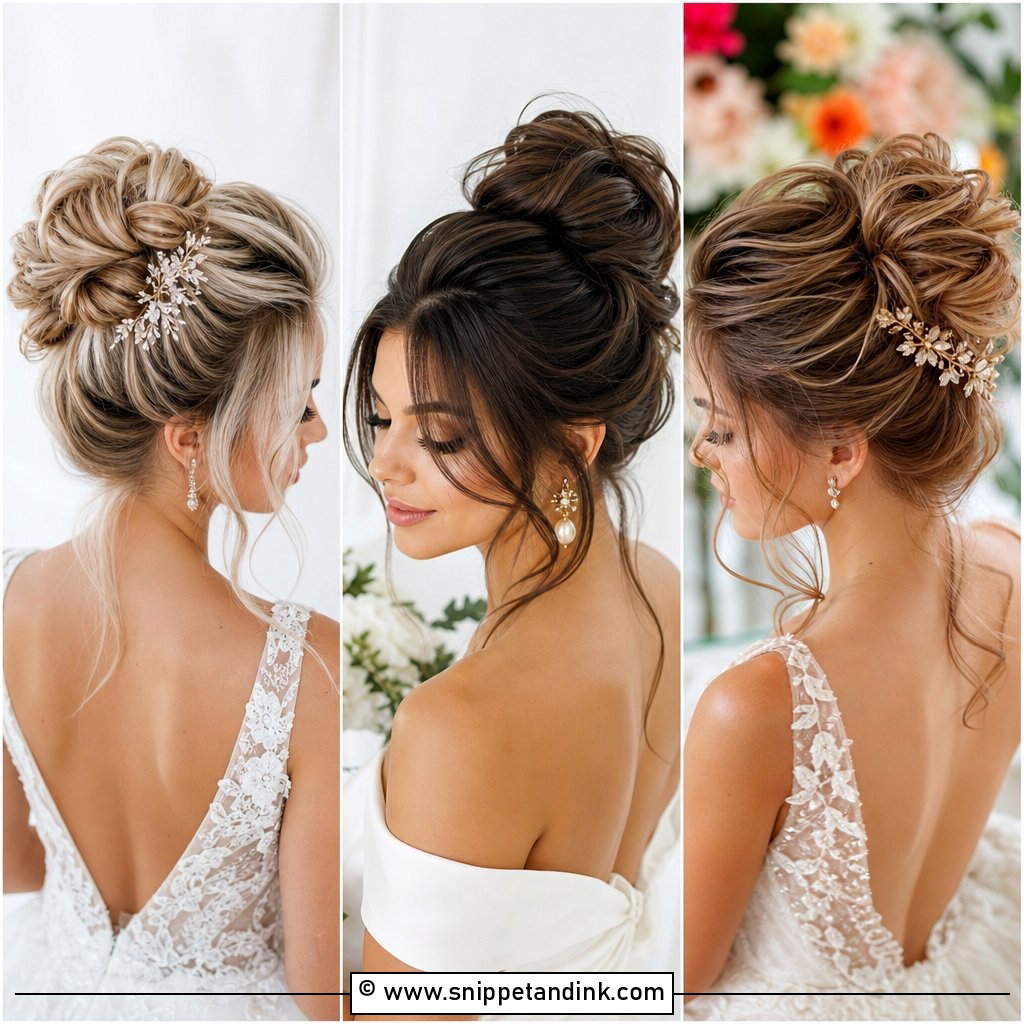
Messy and elegant can sit together if the mess is controlled. This low bun is loosely gathered with a lived-in texture, and face-framing pieces fall around the cheeks. I curl the hair roughly first, which gives the bun grip and makes it hold through the day despite looking casual. Outdoor and smaller weddings suit it well. Add a few pearl pins or leave it bare.
17. Sleek Center Part Low Bun
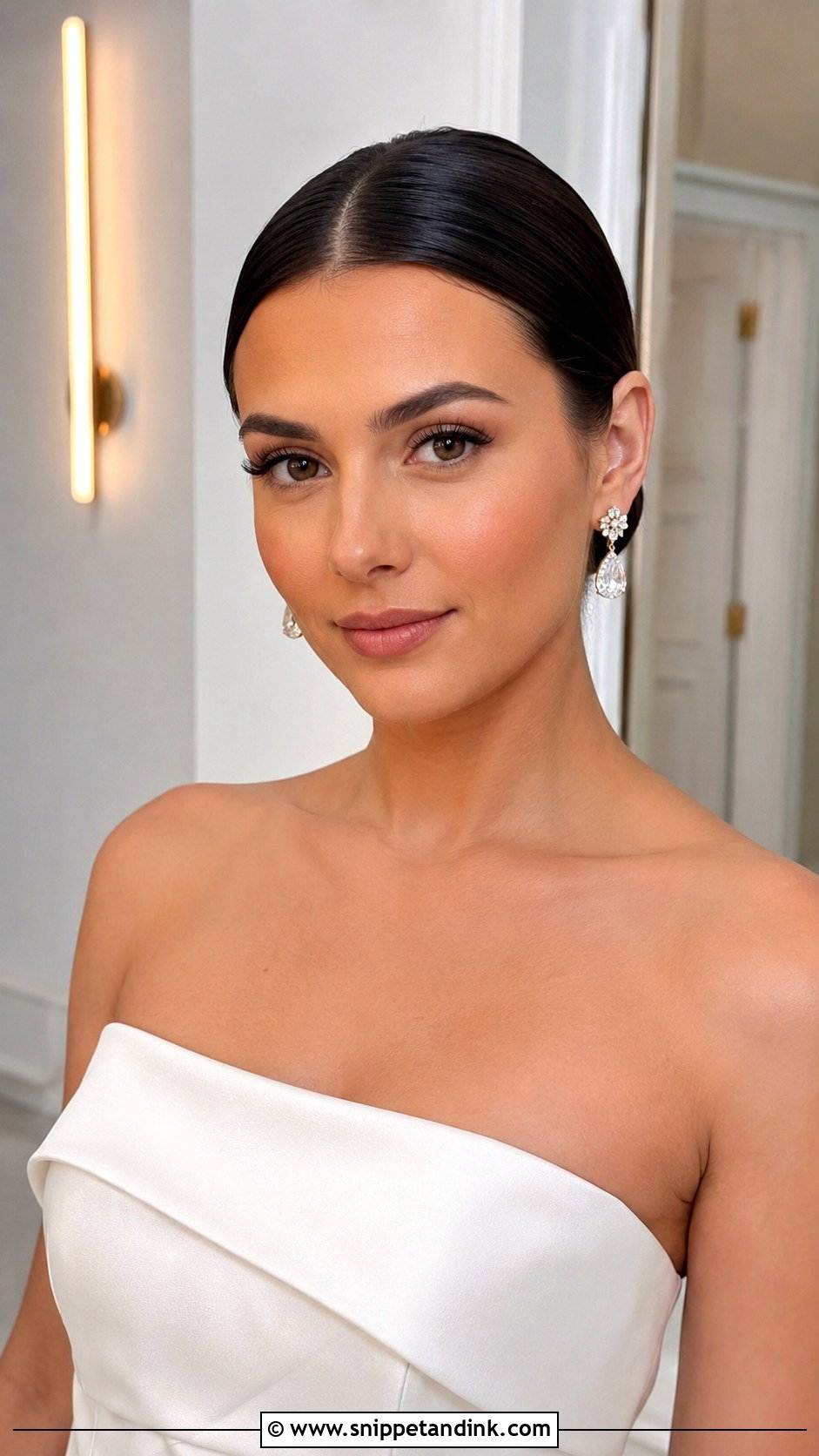
A center part shows symmetry, or the lack of it, more than any other style. The hair is parted straight down the middle and pulled into a low, glossy bun, so if your hair grows with a strong side part, the middle section may lift at the crown during the day. A firm gel at the root helps. With nothing else on the head, your jewelry and features carry the look, which is why structured gowns and statement earrings suit it so well.
18. Braided Low Bun Updo
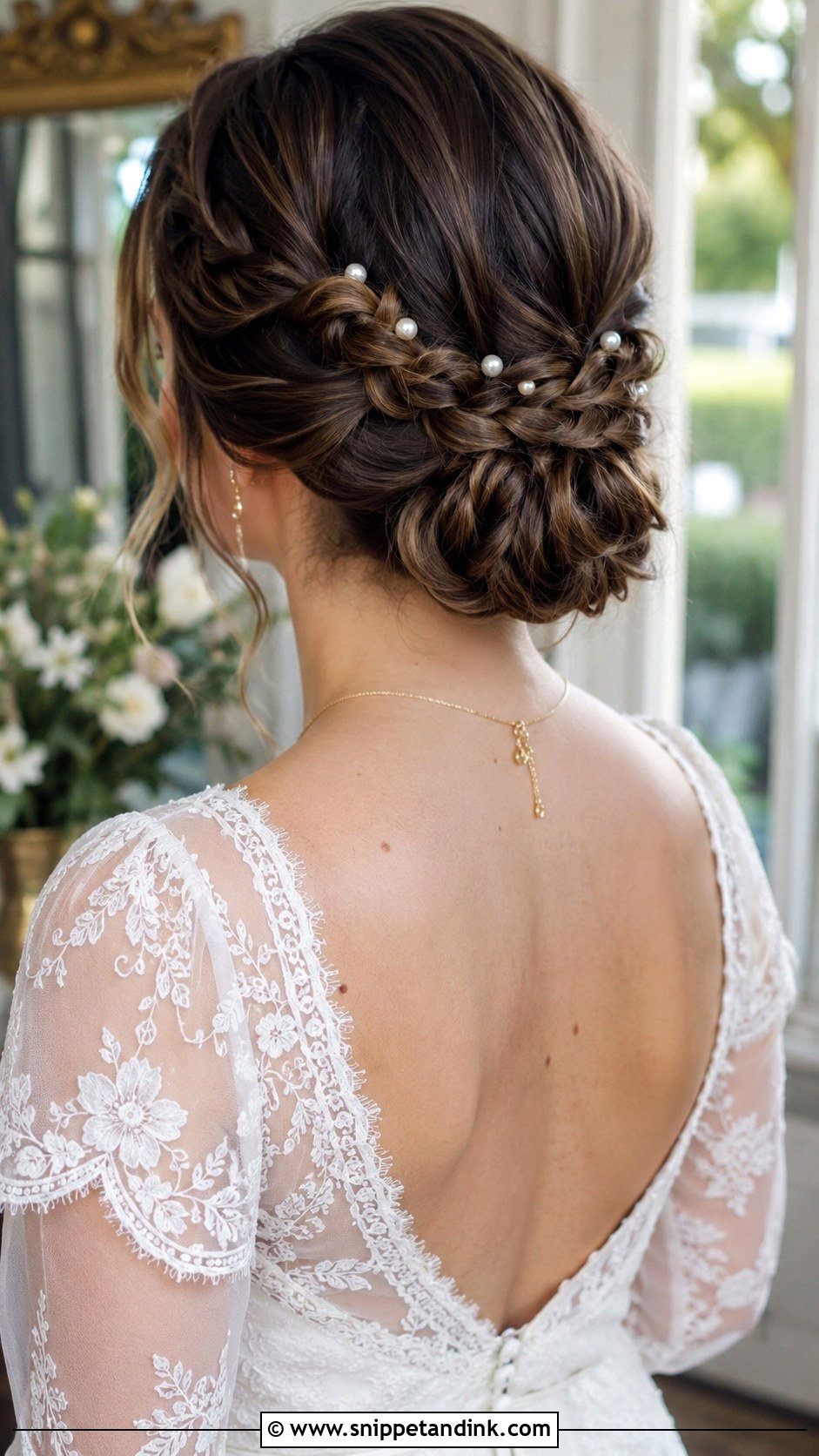
A braid wrapped into or around a low bun adds texture and a lot of hold. It’s the style I suggest for long ceremonies, energetic receptions or brides who plan to dance for hours, because the braid keeps everything locked in place. Pearl pins or small blooms tuck between the plaits. It sits comfortably in a formal room or a garden.
19. Tiara Updo with Soft Curls
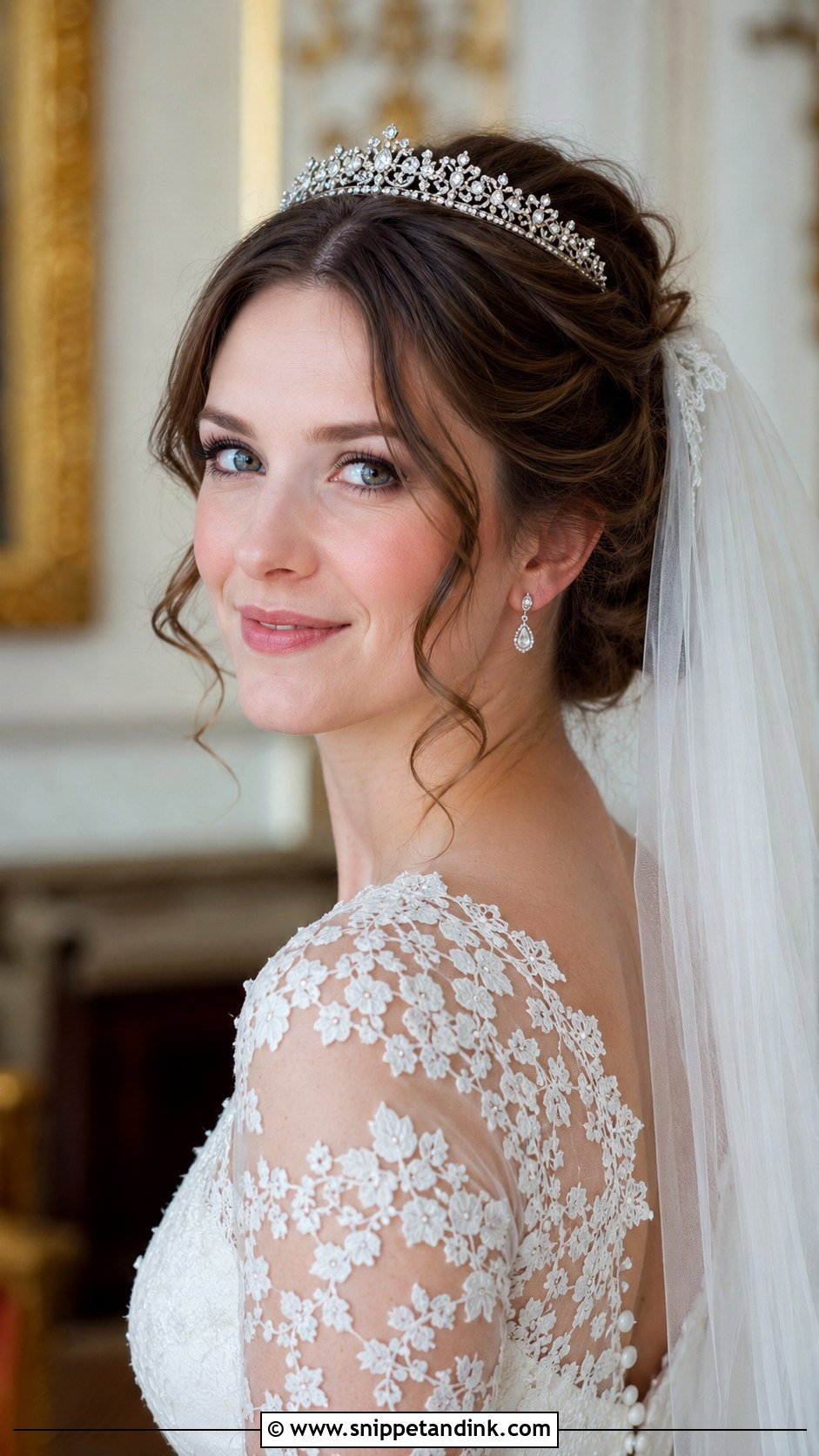
A tiara needs a firm base, and that’s what most brides underestimate. I anchor it with crossed pins through its side loops and backcomb lightly underneath so it sits on hair rather than scalp. The updo behind it is soft, with gentle curls. Slim, delicate tiaras keep this old money; oversized ones tip it into pageant territory. It works well with a long veil in a grand venue. If the tiara is heavy or an heirloom with a narrow comb, bring it to the trial so it can be fitted.
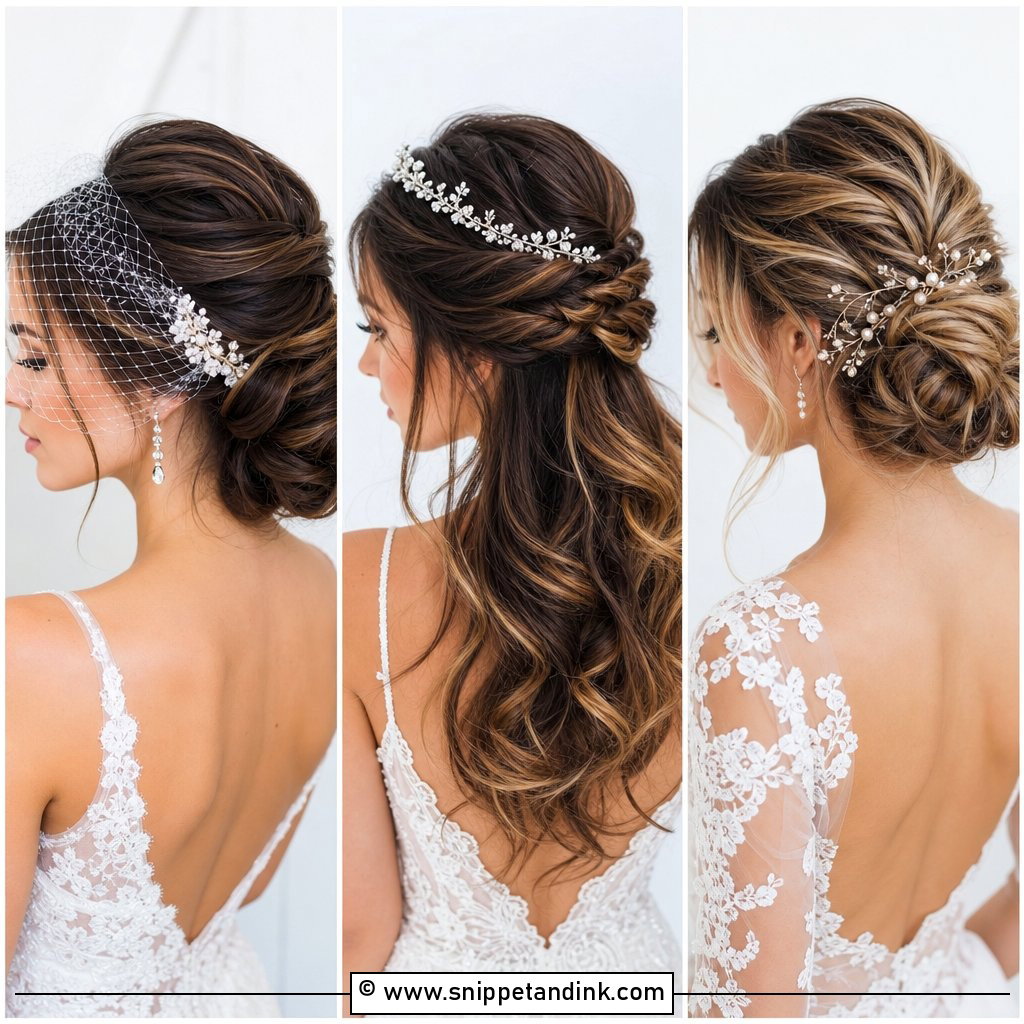
20. Polished Half Updo with Curls
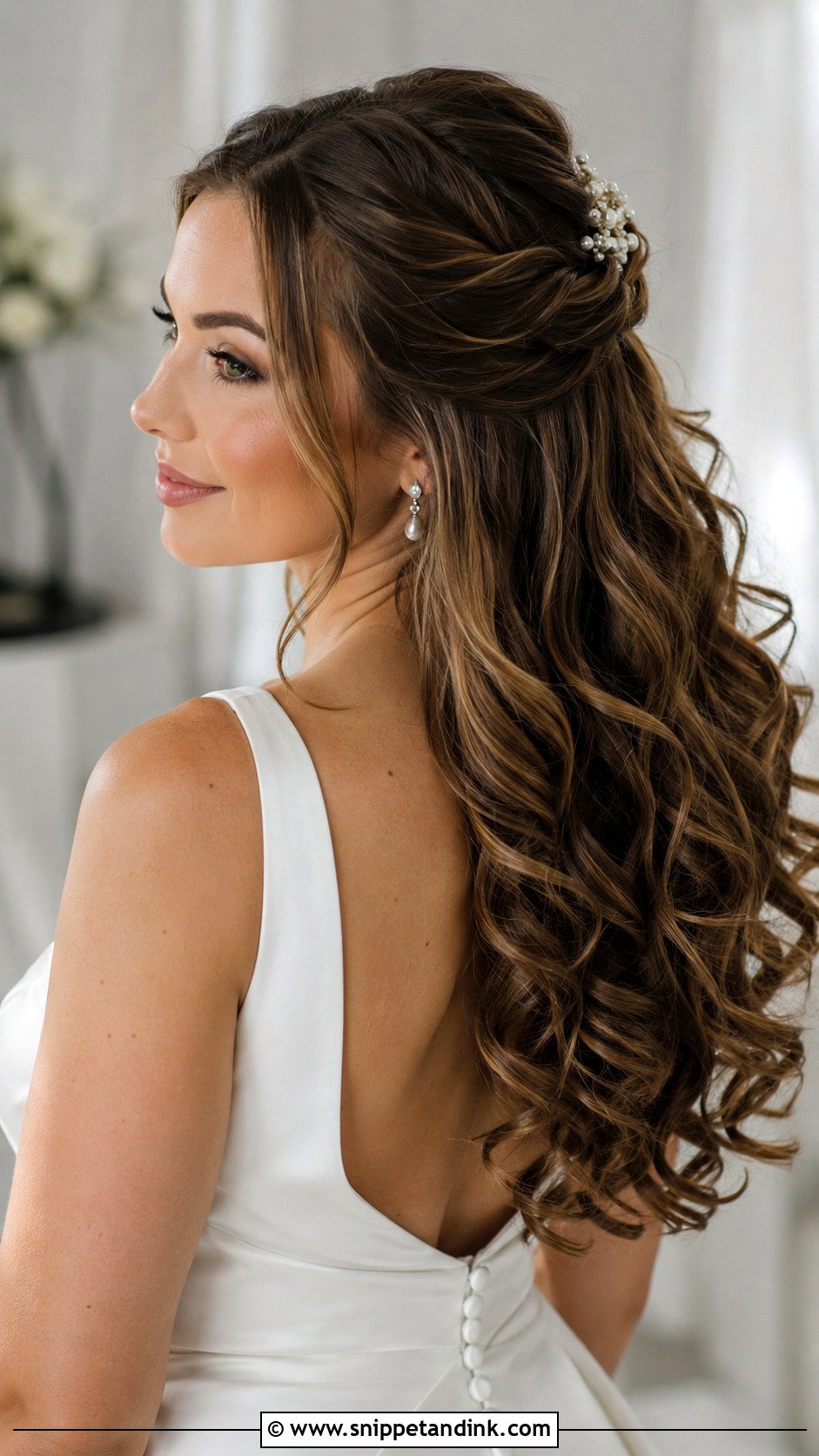
Here the top and sides are pulled back and secured, while the rest falls in polished curls. It keeps hair off your face and lets the curls move on the dance floor. I’d add a pearl clip or simple veil at the gathered section. Because the lower curls are loose, they’ll relax through the evening, more so in humidity. A curl-friendly setting spray and a quick re-pin of the back section before the reception keep it neat.
Tiaras, Bows and Pearl Pins Need Different Anchors
Accessories in this style look small, but each one hangs on the hair in its own way, and the wrong anchor is why they slip by the speeches.
- Tiaras pin through their side loops into backcombed hair, never straight onto a smooth surface.
- Ribbons and bows tie over an elastic, not in place of one.
- Pearl pins hook under the working pins that already hold the style.
- Headbands sit on a thin layer of hair at the ears so they don’t press on the skin behind them.
Switching to a Reception Style Without Your Stylist
Many brides want a change after dinner, and most stylists leave before then. Plan any switch at your trial and practice it once.
The easiest changes remove something rather than add it: taking out a veil, lifting off a tiara, or twisting loose waves into a low bun with a few pins you’ve kept in your bag. Ask your stylist to show your maid of honor where the veil pins are hidden, because pulling a comb out without finding them first can drag the whole style loose.
Changing into a second dress? Do the hair after the dress, not before, or the neckline will drag across the style. A slip-on outfit or one with a side zip is kinder to an updo than anything pulled over the head, and that’s worth checking when you shop for it.
Pearls Optional, Polish Not
Every style here shares the same habits: healthy, glossy hair, a calm finish and one accessory at most. A sleek chignon, Hollywood waves or a pearl-touched updo will all suit the look if they suit your dress and your venue first. Bring two or three favorites to your stylist, test them at the trial with your veil or headpiece in, and check the photos from behind before you decide.
You'll Like These Ideas:


Leave a Reply