
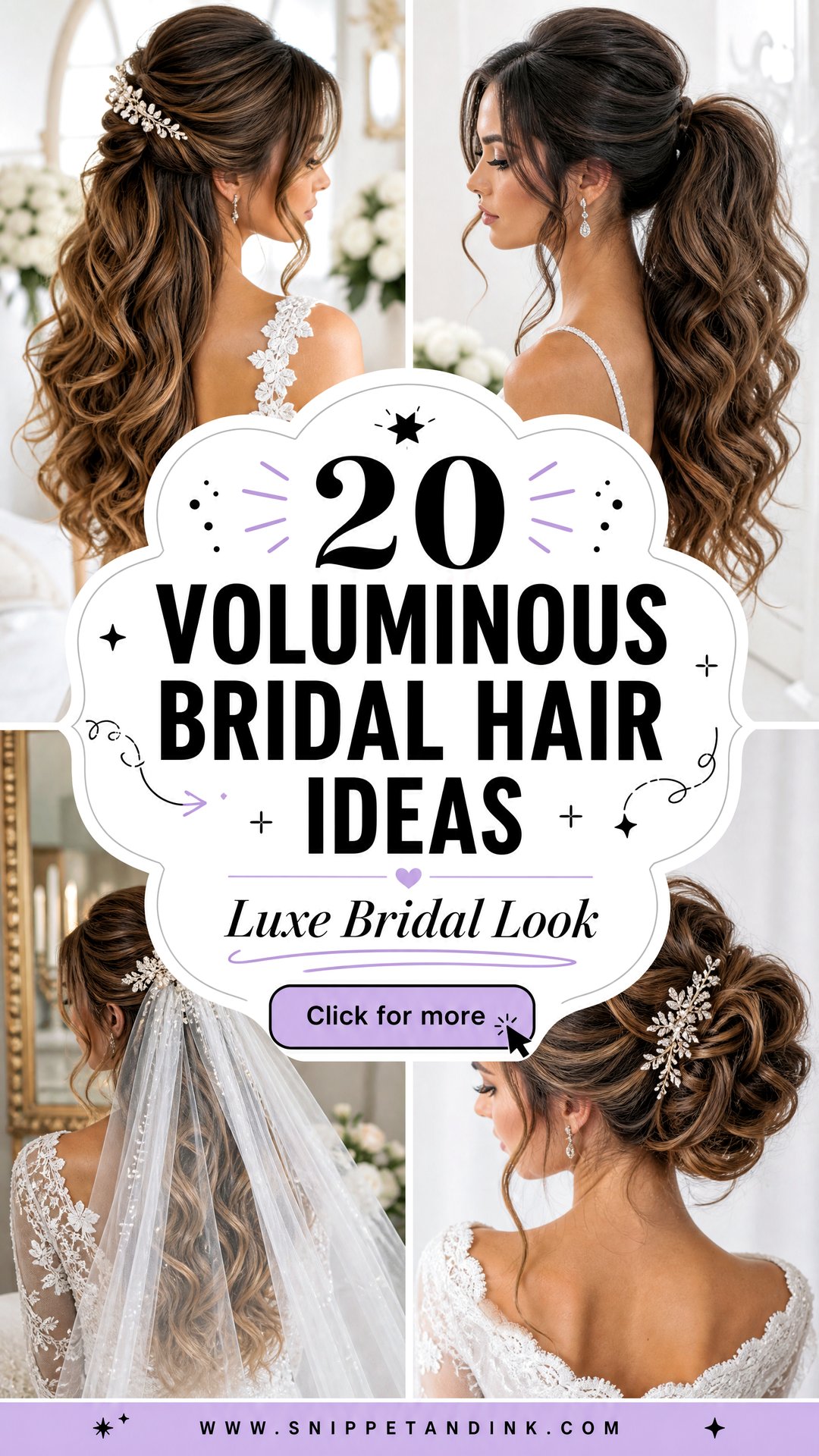
Big bridal hair looks easy in a photo and is anything but in practice. Volume has to survive a veil going on and coming off, a lot of hugging, a warm room and hours of dancing, so what matters to me is how it’s built underneath, not just how it looks at 10 a.m. It can come from a proper heat set, root lift, full buns, padding, extensions or careful pinning. Below are twenty full shapes I’d put on a bride, with notes on which hair types, necklines and venues each one genuinely suits, so you can walk into your trial knowing what to ask for.
Where Bridal Volume Really Comes From
When a bride shows me a photo of big hair, I’m looking at how the lift was built, because that tells me whether her own hair can do it. There are four main sources, and most of the styles below use two or three together.
A proper set
Curls are made with heat but held by cooling. I curl a section, pin it in a coil against the head and leave it until it’s completely cold. Skipping that step is the most common reason curls fall out before the ceremony is over.
Teasing at the root
Backcombing a few sections underneath the surface hair gives height that a smooth top layer then hides. Done lightly, it brushes out the next day without damage.
Padding and forms
A small mesh pad or bun form gives size to a bun or crown without needing more hair. I match it to your hair colour so it can’t peek through.
Extensions
Clip-in wefts add density, especially to fine hair and full ponytails. They need to be colour-matched and ideally worn at the trial, so I can check the blend from every angle and cut them in if needed.
1. Voluminous Hollywood Waves Bridal Hair
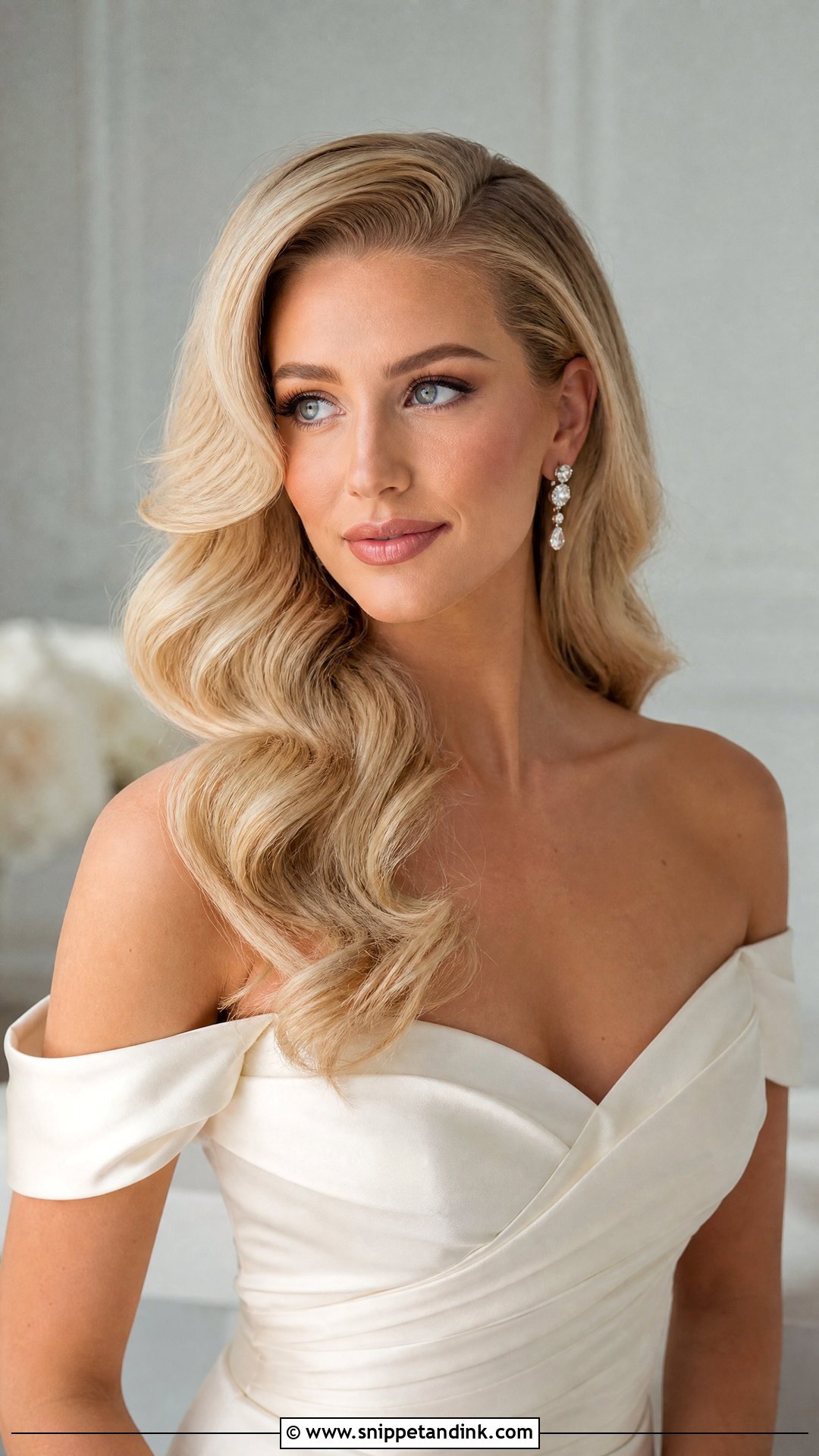
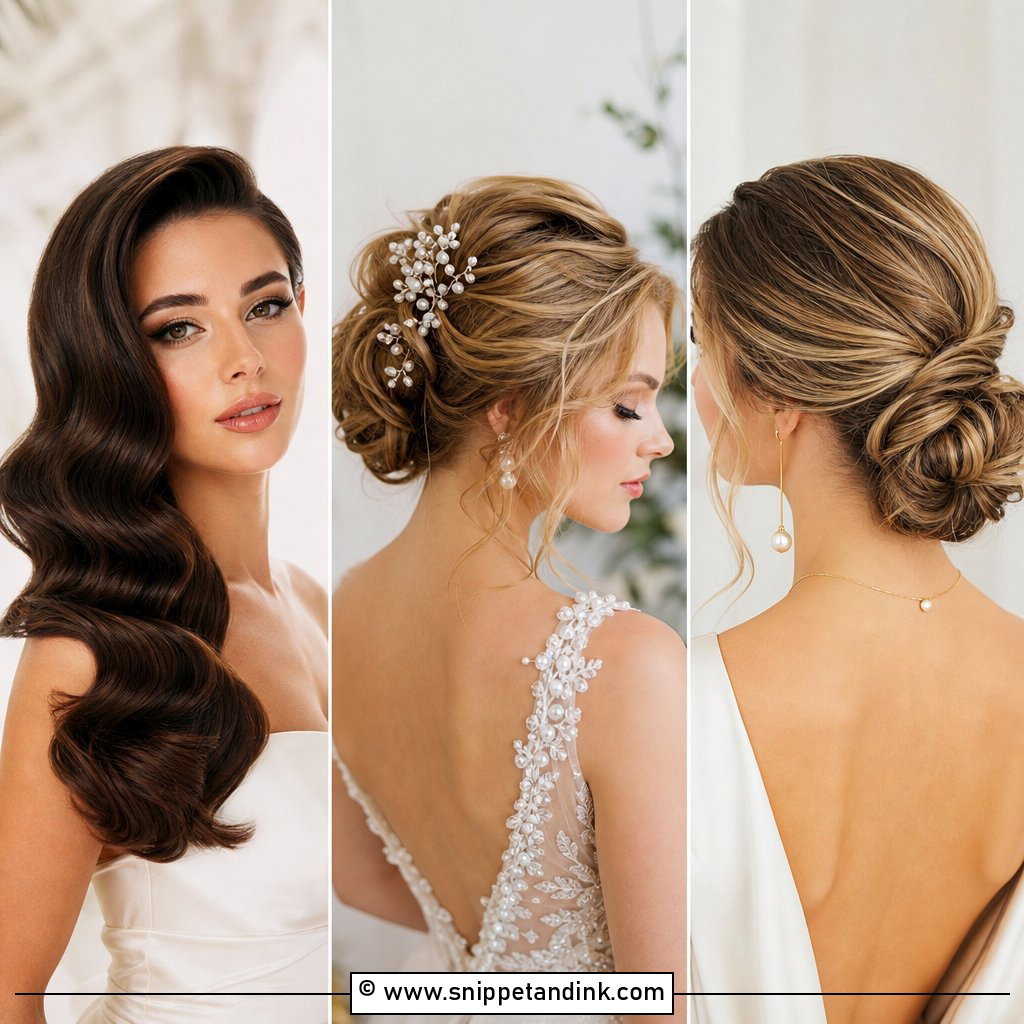
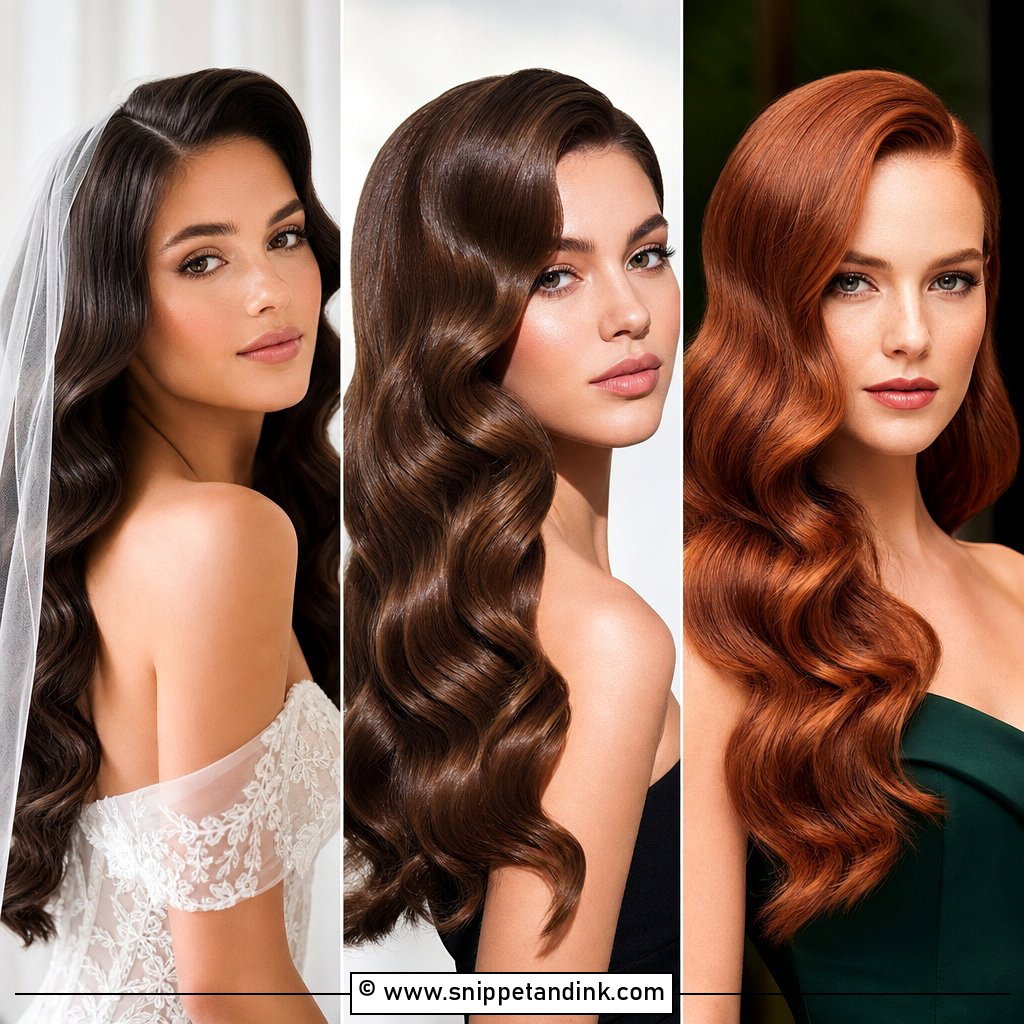
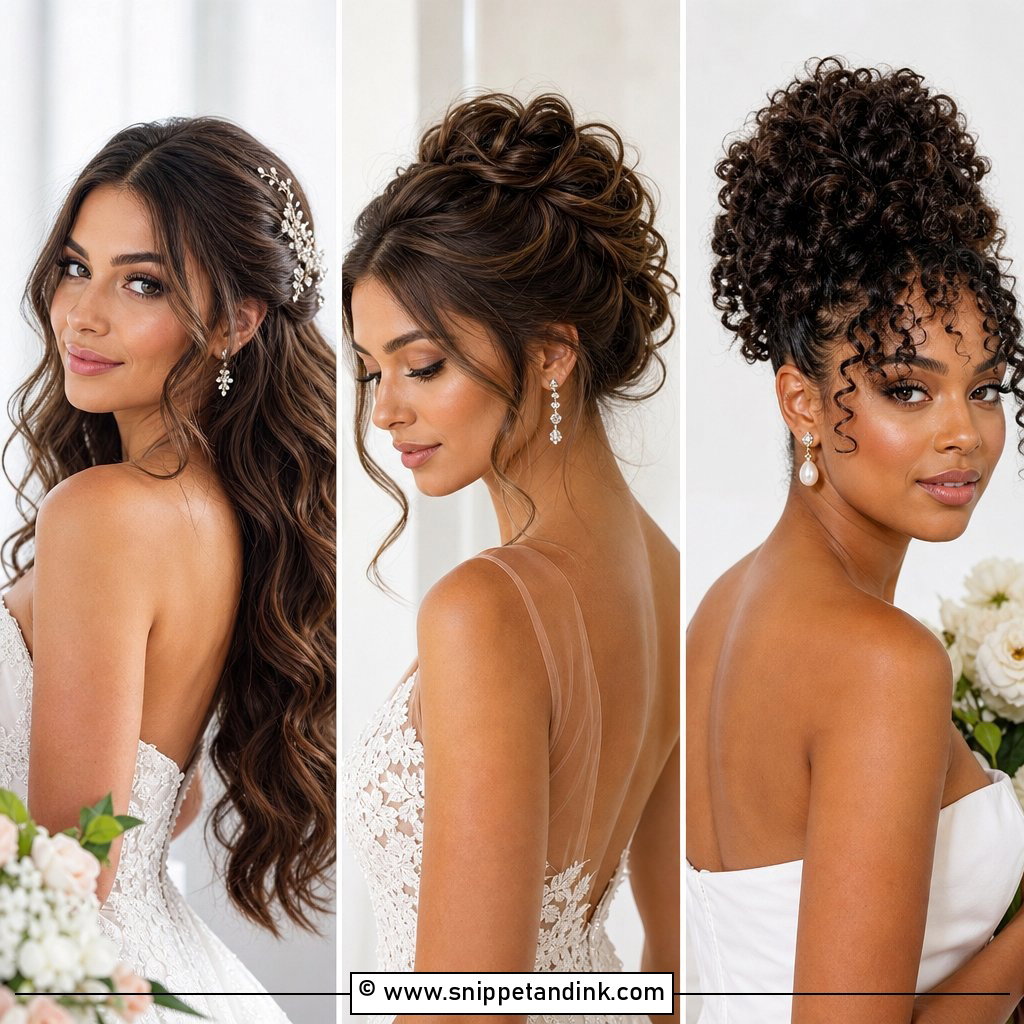
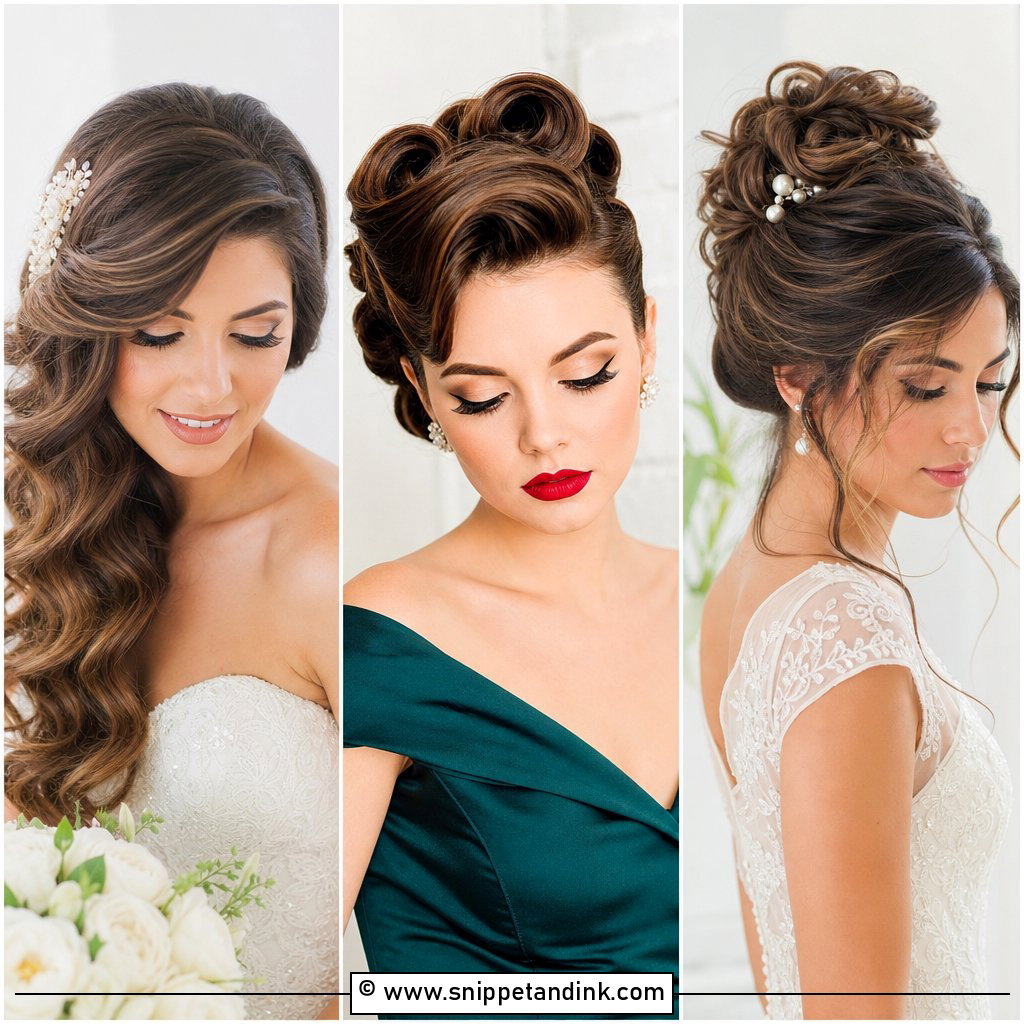
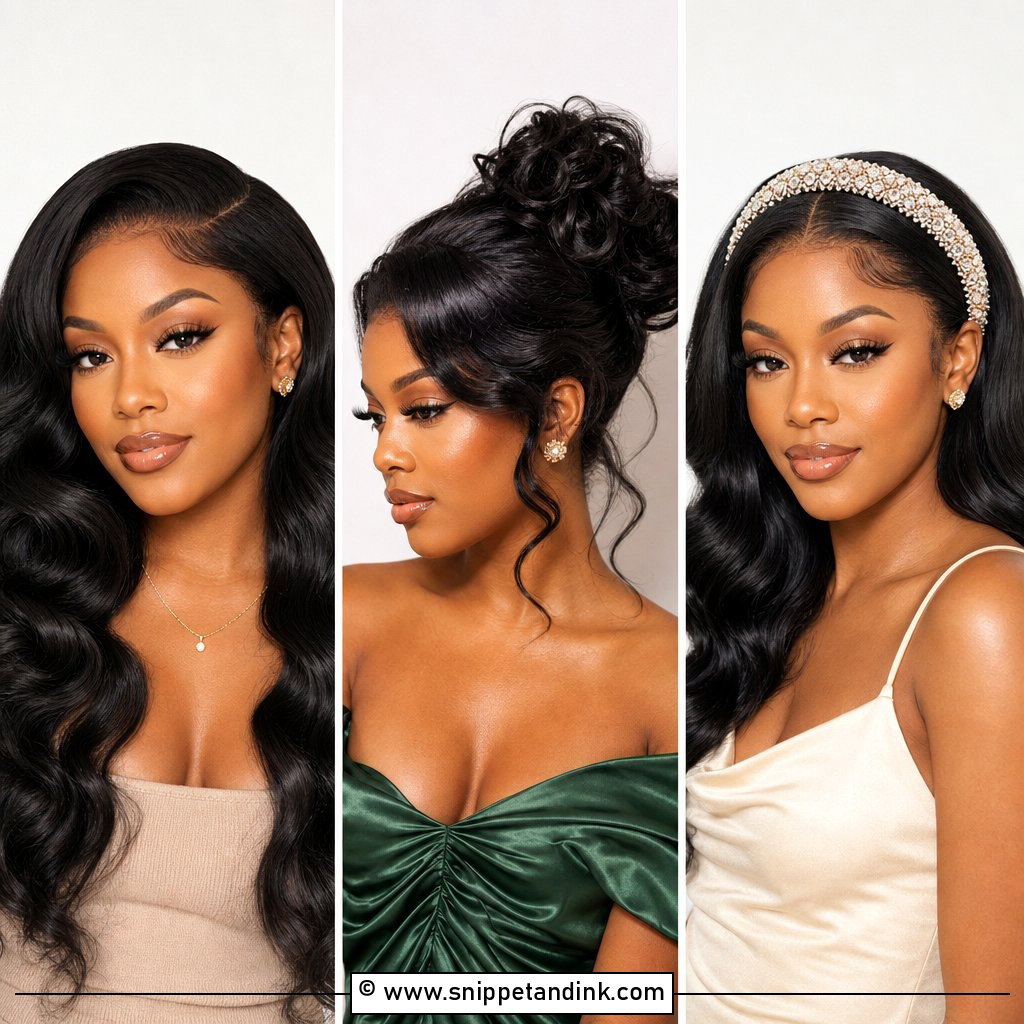
Hollywood waves need one thing above all: every curl set in the same direction, then brushed out together so they join into a single ribbon. I set them with a large iron, pin each curl to cool, and only brush once the whole head is cold. A deep side part and lifted roots give the drama. They frame strapless and off-the-shoulder necklines well. On fine or medium hair, a few clip-in wefts help the wave keep its depth past the speeches. Ask for soft hold; a crunchy finish breaks the shine that makes this style work.
2. Voluminous Half Up Bridal Hair
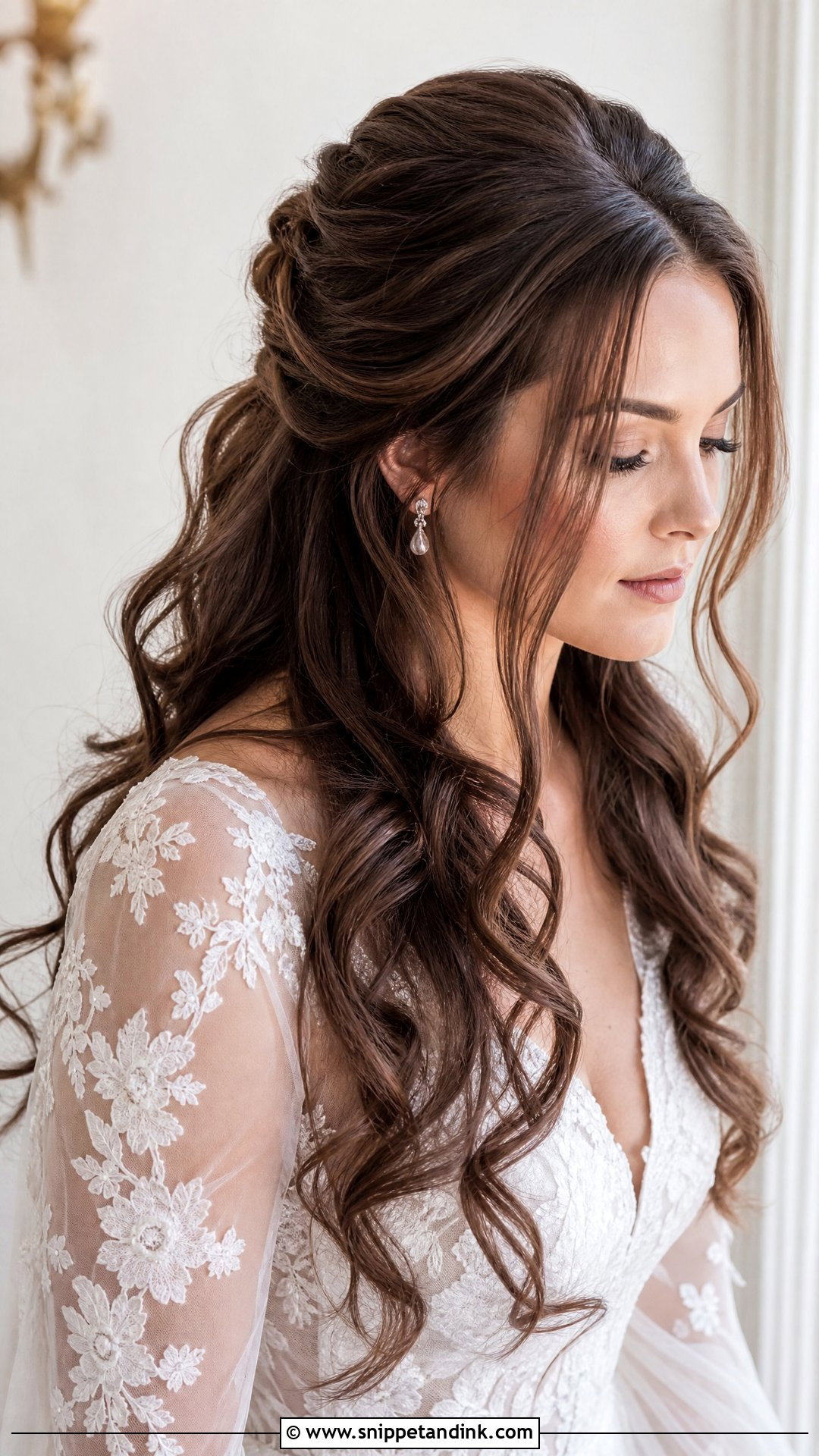
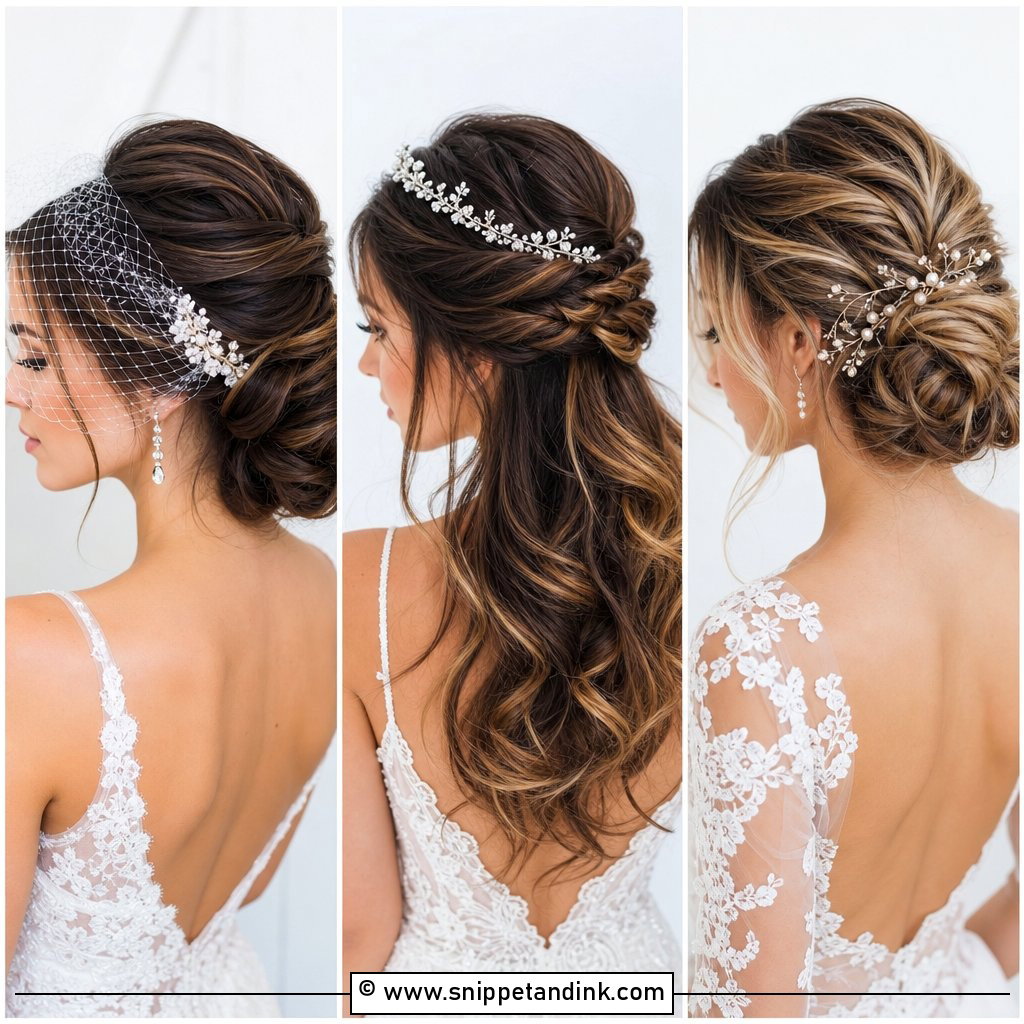
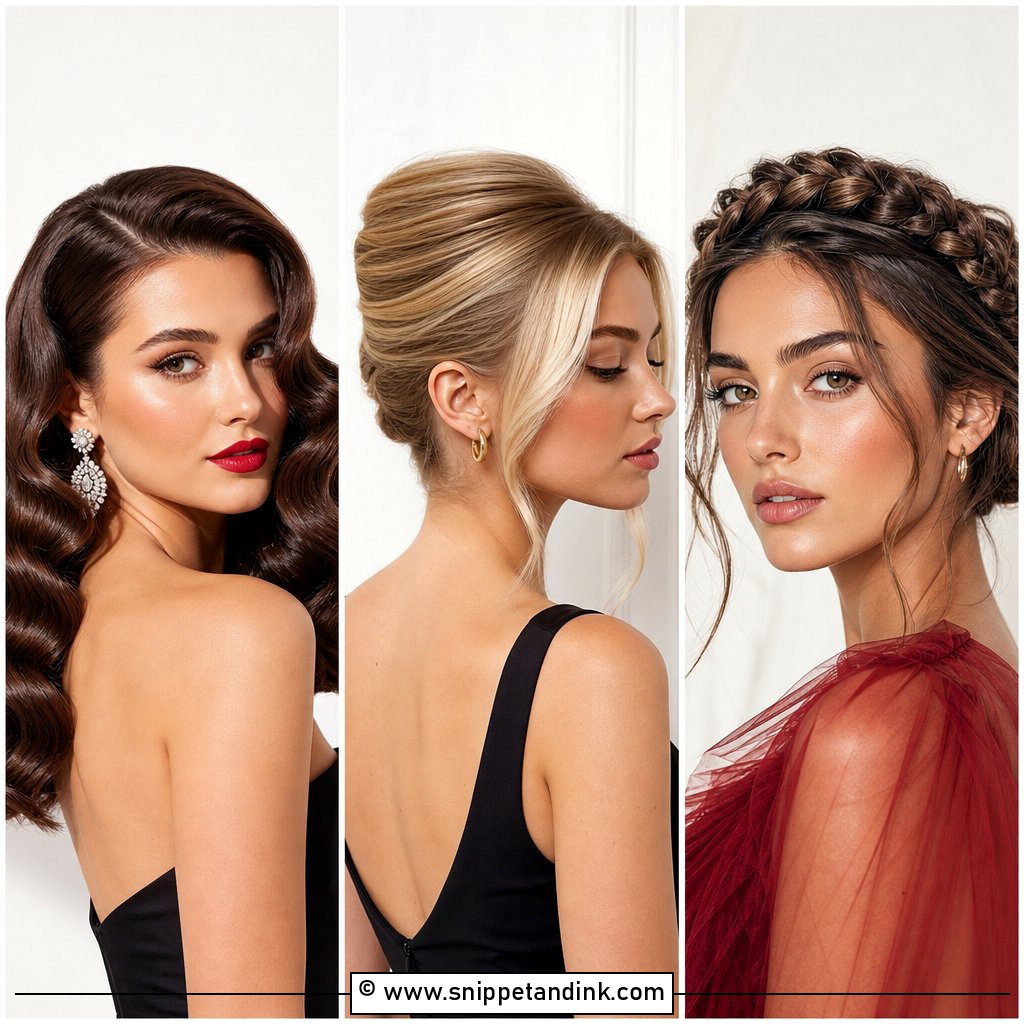
Half up is the compromise most brides who love their hair down end up happiest with. I tease or pad the crown lightly for height, secure the front sections back, and leave the length curled or brushed into soft waves. That secured section also gives a veil comb or a few pearl pins something solid to grip. Keep the top smooth but not scraped. A couple of face-framing pieces stop it looking severe in close-ups.
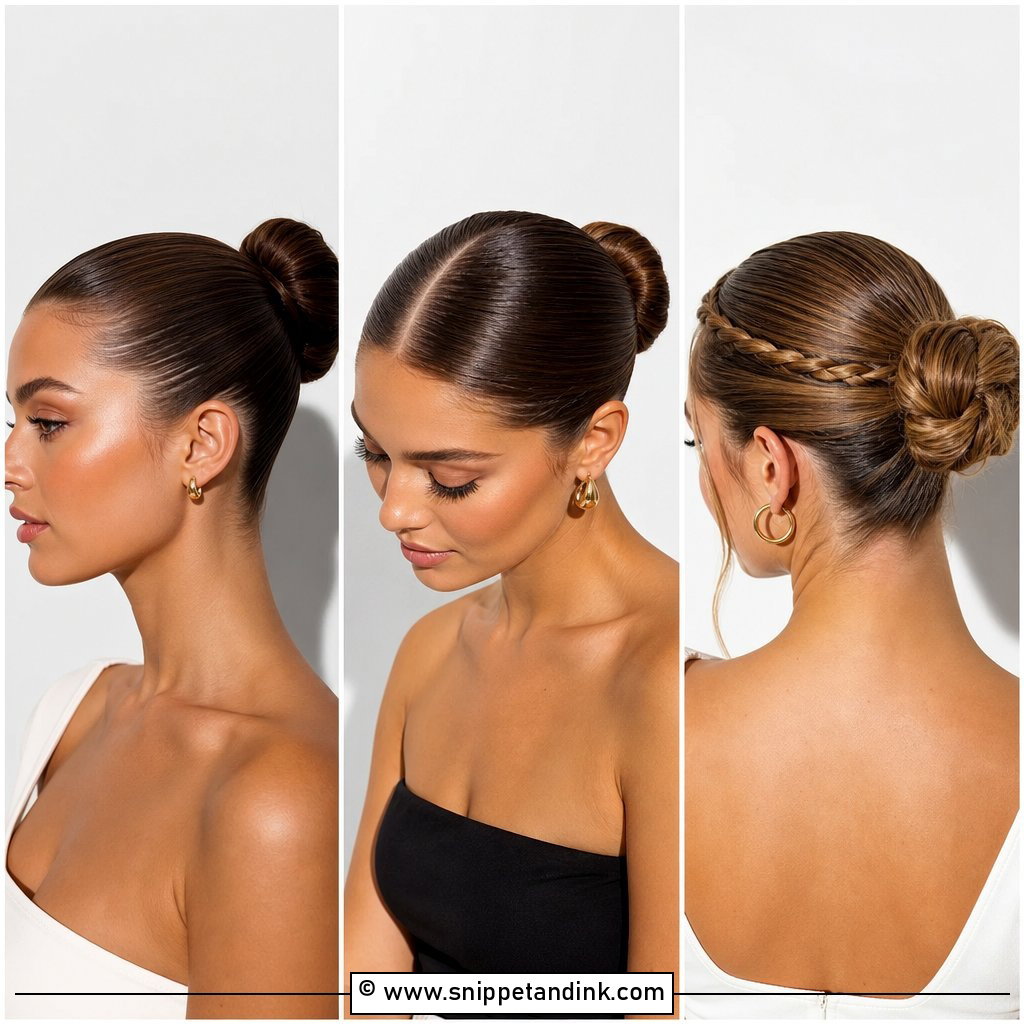
3. Voluminous Low Bun Bridal Hair
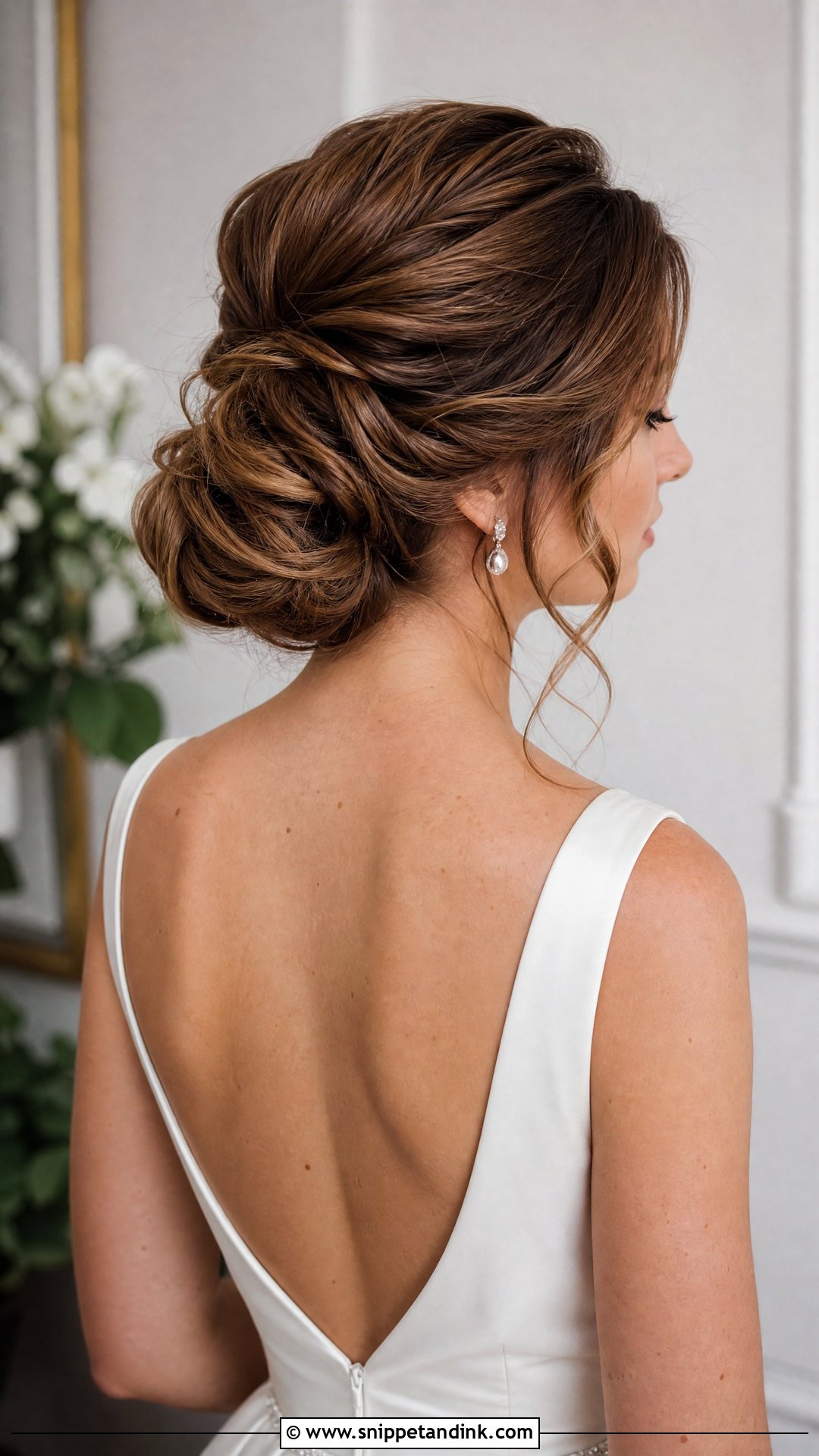
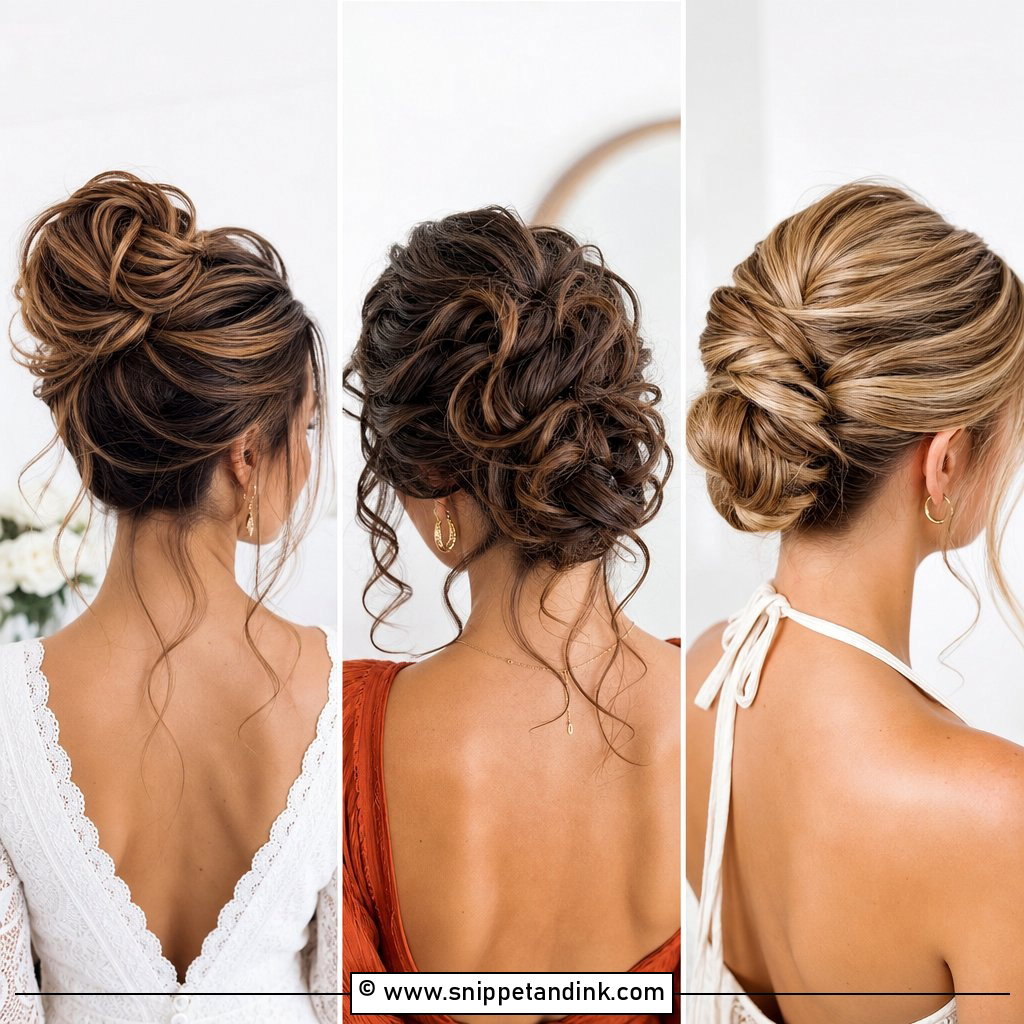
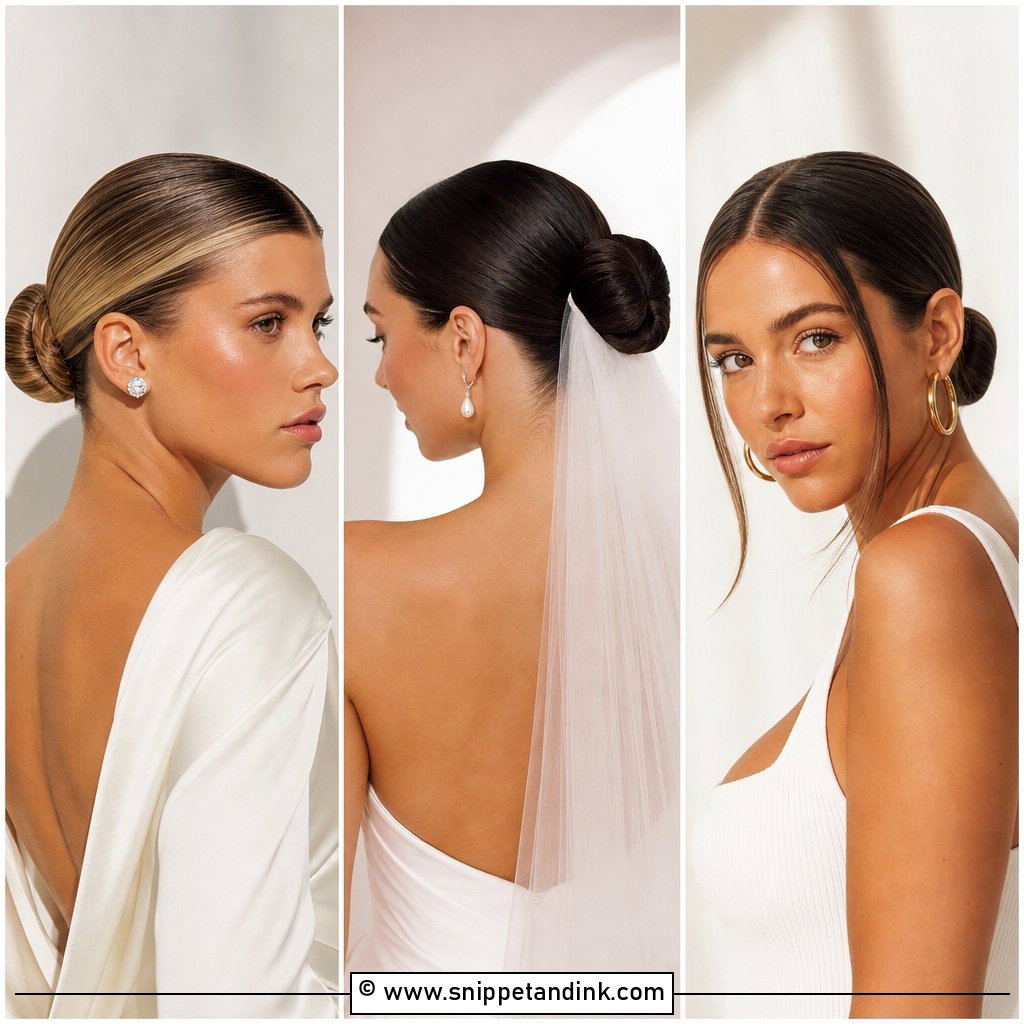
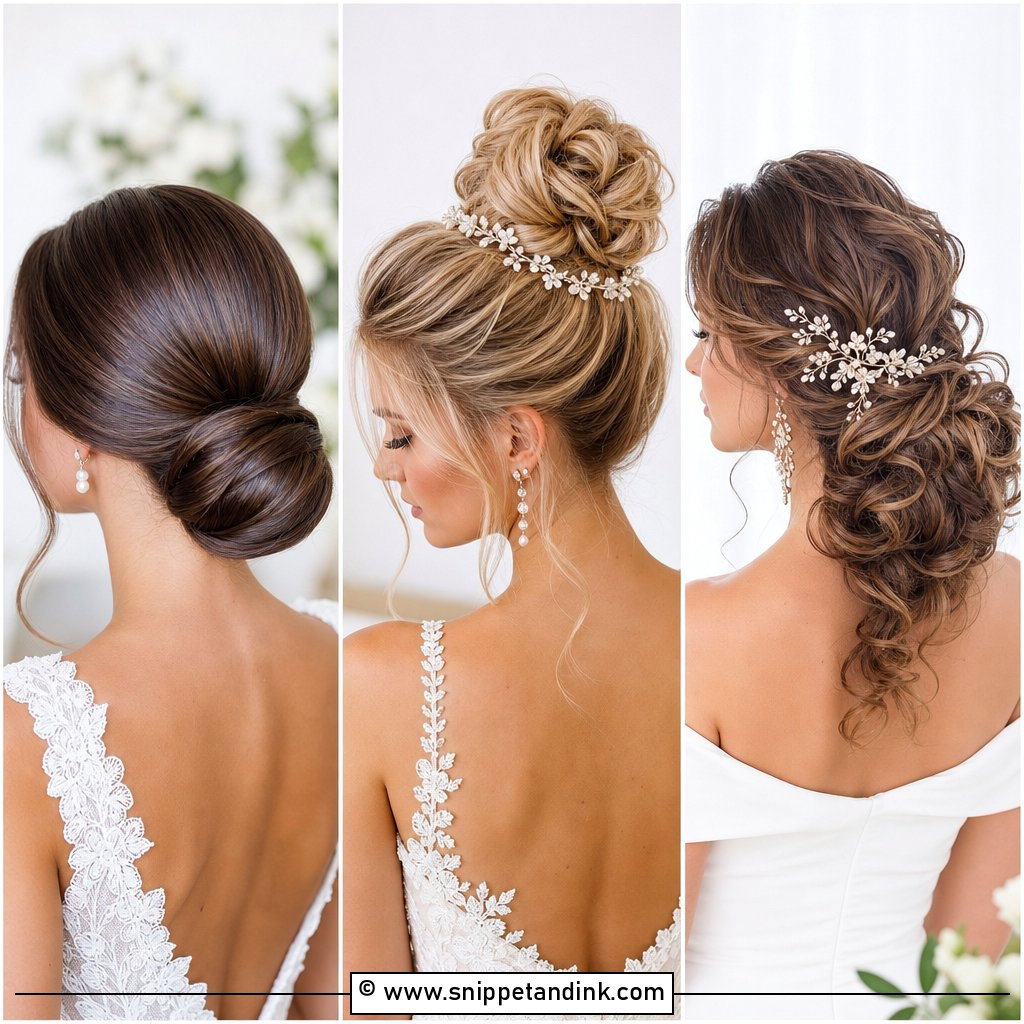
A voluminous low bun is the style I trust most for a long day. It sits at the nape, close to your centre of gravity, so it doesn’t tug as the hours go by. I build fullness with loose twists or pinned curls, and add a little lift at the crown so the profile doesn’t look flat beside the bun. It suits veils, open backs and statement earrings, and it adapts to straight, wavy or curly textures. The pins should cross into the base, not just into the outer layer of the bun, or it will droop by evening.
4. Voluminous High Bun Bridal Hair
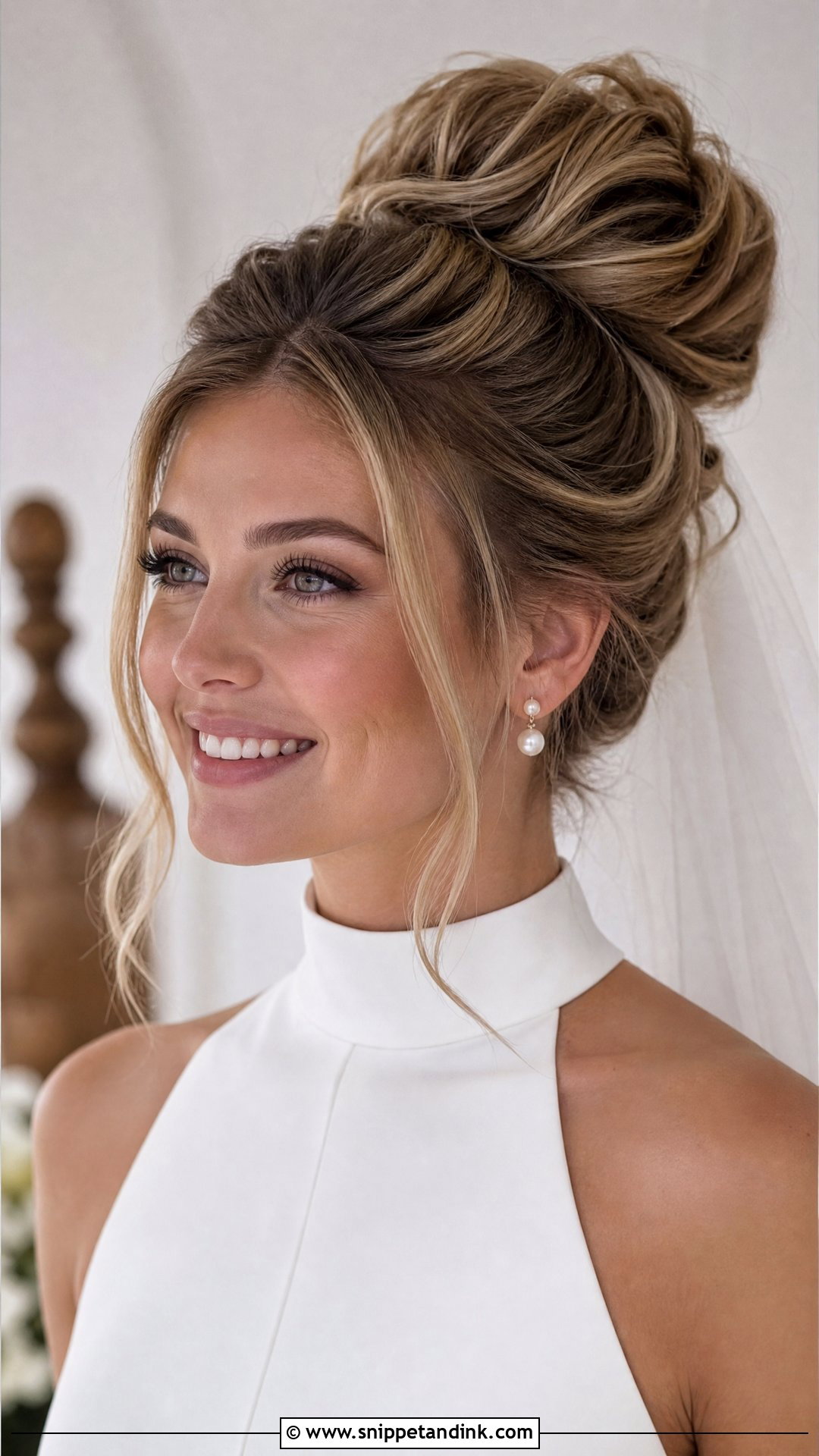
A high bun lengthens the neck and clears the shoulders, which is why I suggest it for hot weddings and for gowns with detail at the neckline or back. It can be smooth and round, softly textured or built from curled sections. The risk with a high bun is weight: everything is pulling against gravity, so the base ponytail must be tight and anchored with crossed pins. On fine hair, a bun form underneath gives the size without overloading the base. Leave a few soft pieces at the face so it doesn’t look like a ballet bun.
5. Voluminous Curly Bridal Updo
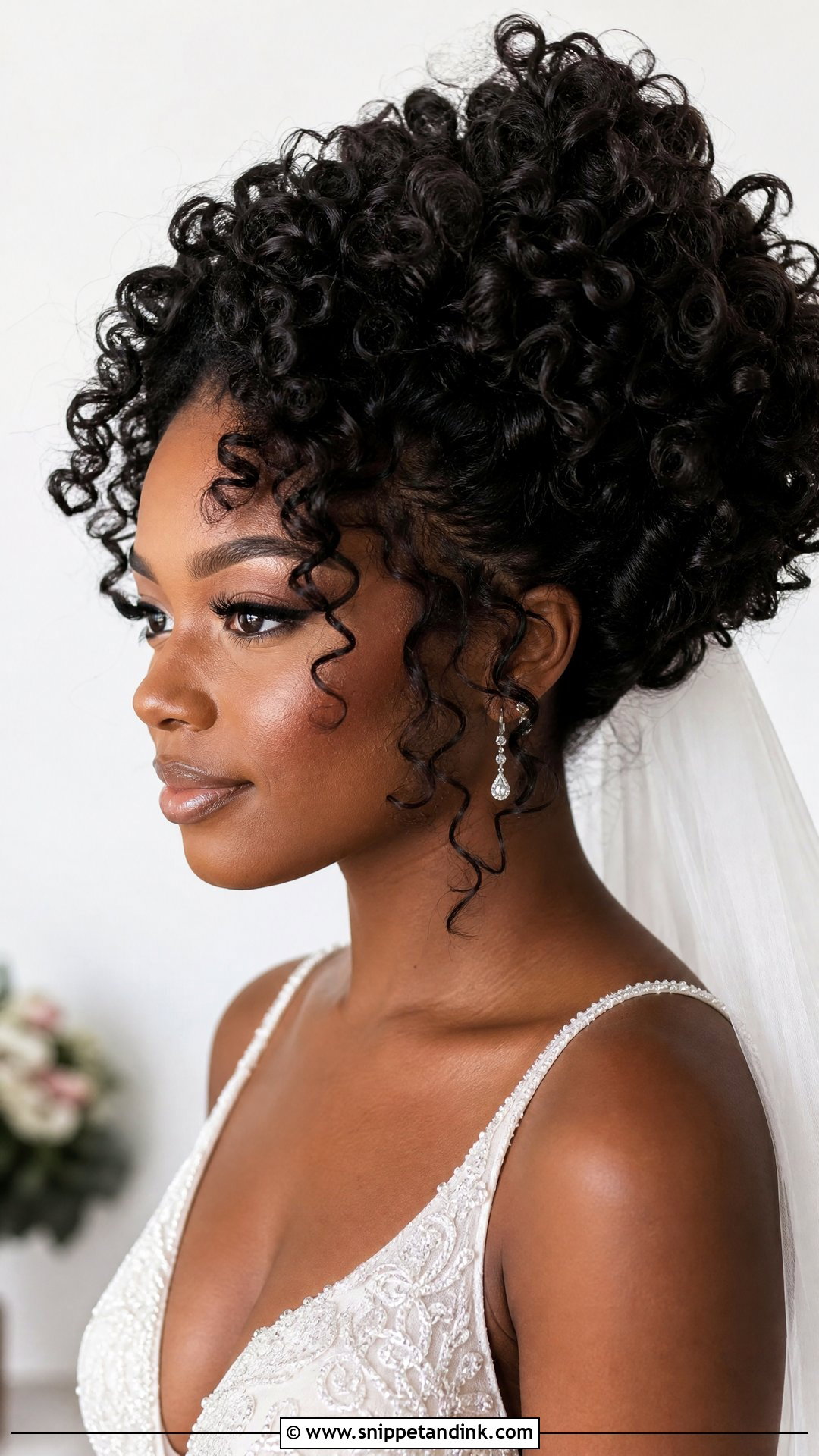
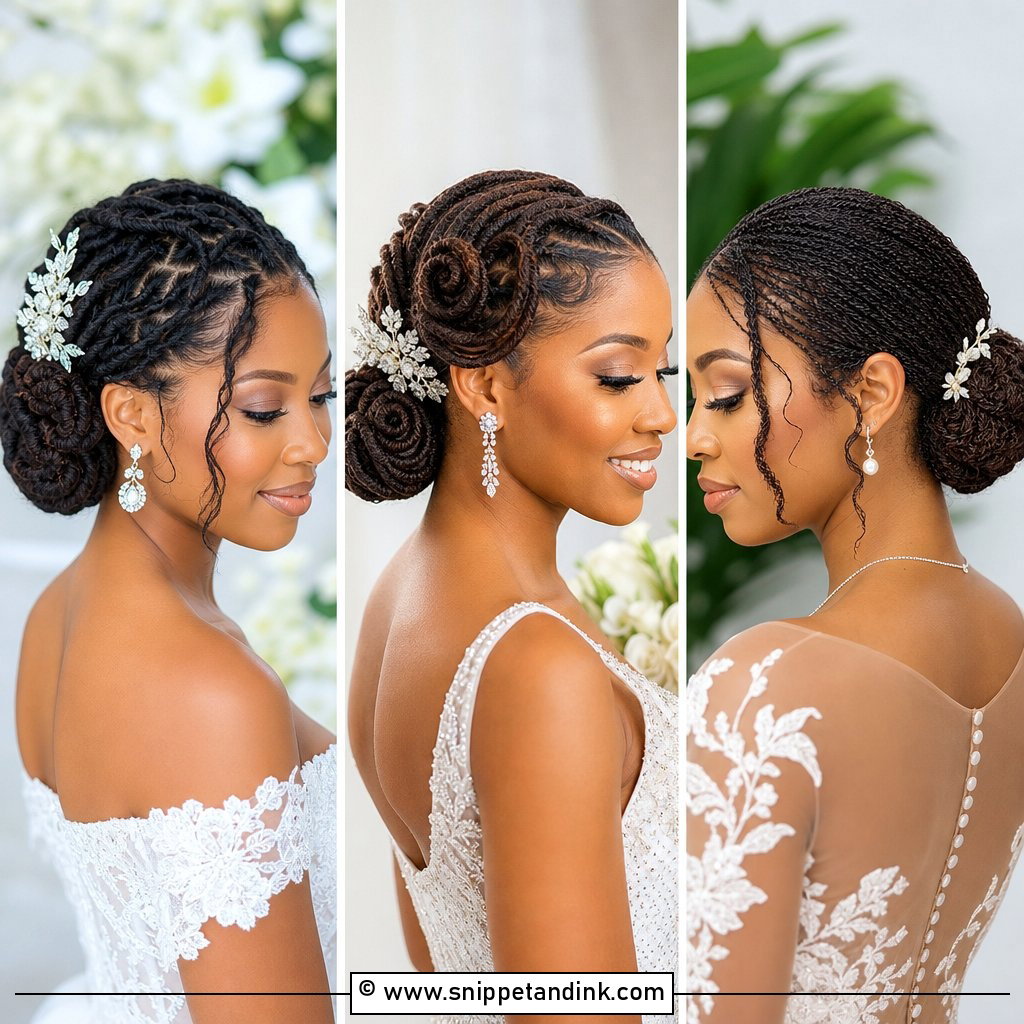
With curly hair, I build the updo around your curls rather than straightening them into submission. That means prepping with a moisturising leave-in and a light gel or cream for definition, then pinning curl clusters into shape instead of brushing through them. Brushing dry curls turns them into frizz, so I work with fingers and pins. It sits well with hair vines, crystal pins and detailed bodices, and I always ask you to come with your hair styled the way you usually wear it, so I can see your natural pattern.
6. Voluminous Bridal Ponytail
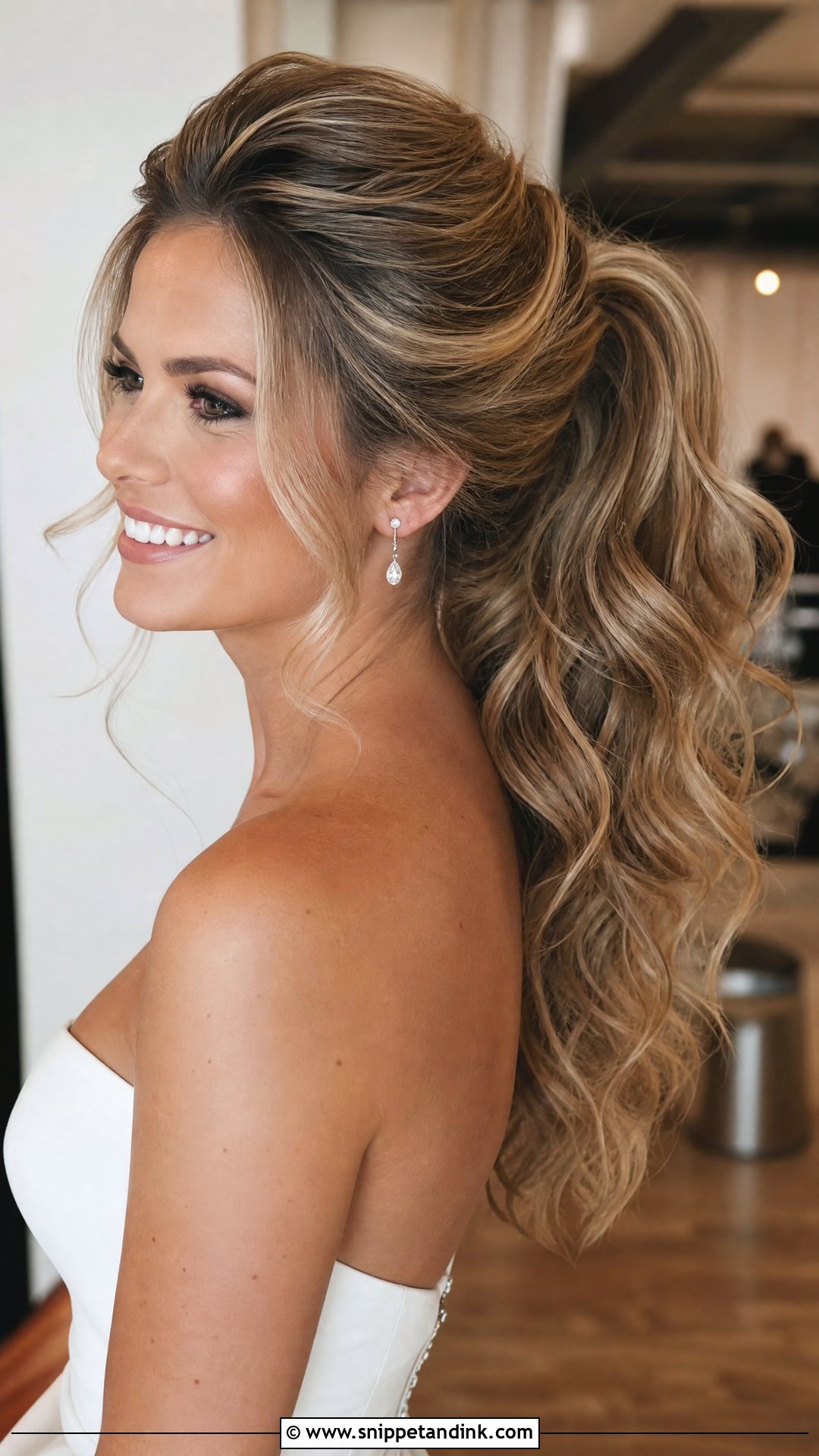
A voluminous bridal ponytail keeps hair off your face all day, which is why active brides and outdoor ceremonies suit it. The height can be high, middle or low, but the fullness comes from teasing at the crown and a wave or bend through the tail. I wrap a section around the base to hide the elastic and pin it from underneath. Most full bridal ponytails have blended extensions in them; it’s the easiest way to get that swing. If you’re wearing a dramatic veil, I’ll set it just above or below the base so it can come off cleanly after the ceremony.
7. Voluminous Side Swept Bridal Hair
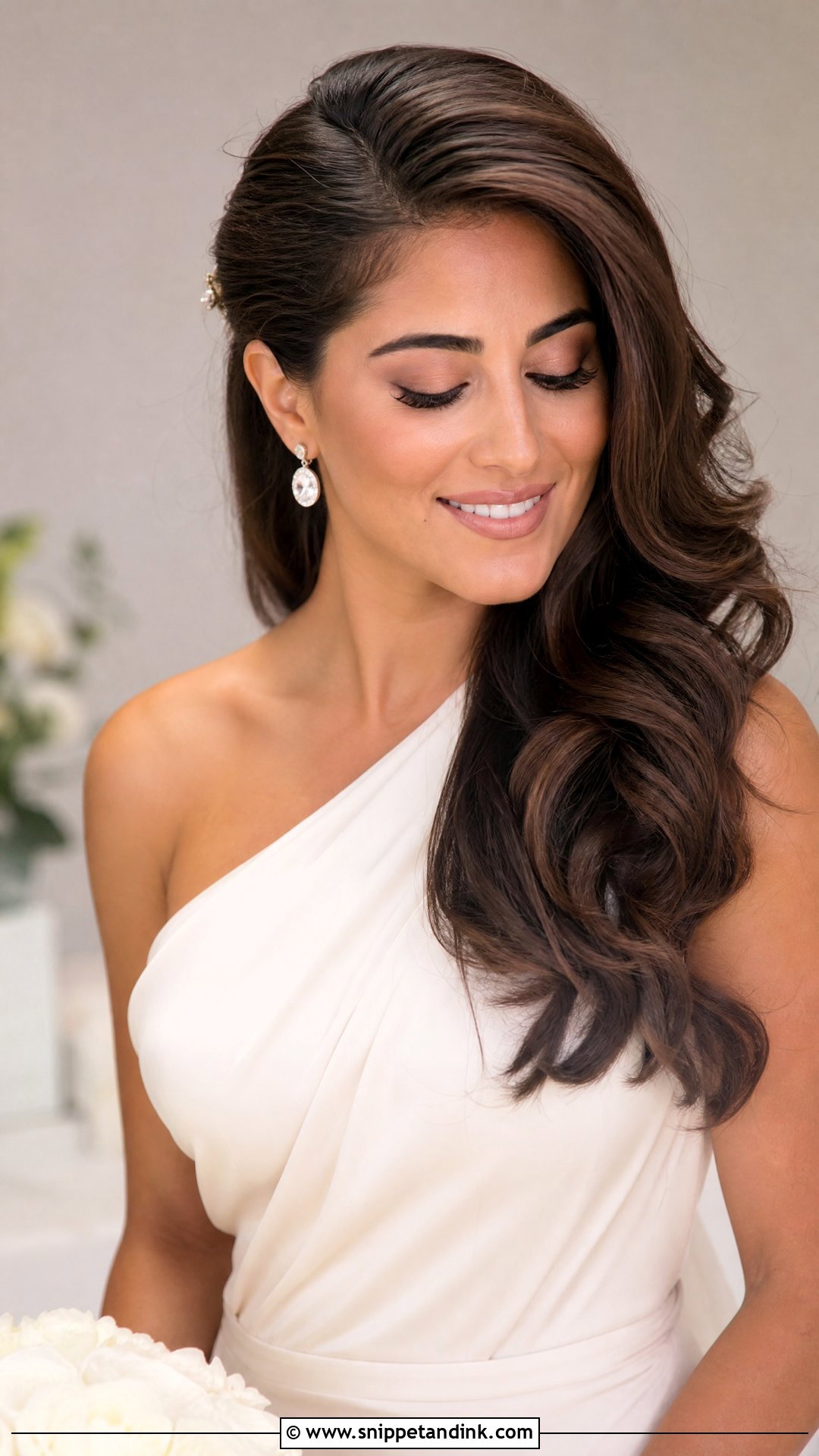
Side-swept styles get their fullness from moving all the hair to one shoulder, which concentrates the volume. I pin or twist the lighter side flat behind the ear, then build curls over the opposite shoulder. Pin it from underneath with criss-crossed bobby pins or the whole thing slides back by the reception. It pairs naturally with one-shoulder gowns and sweetheart necklines, and it shows off balayage well because all the colour sits together. Choose which side by your best photo angle and where the officiant will stand.
8. Voluminous Bridal Chignon
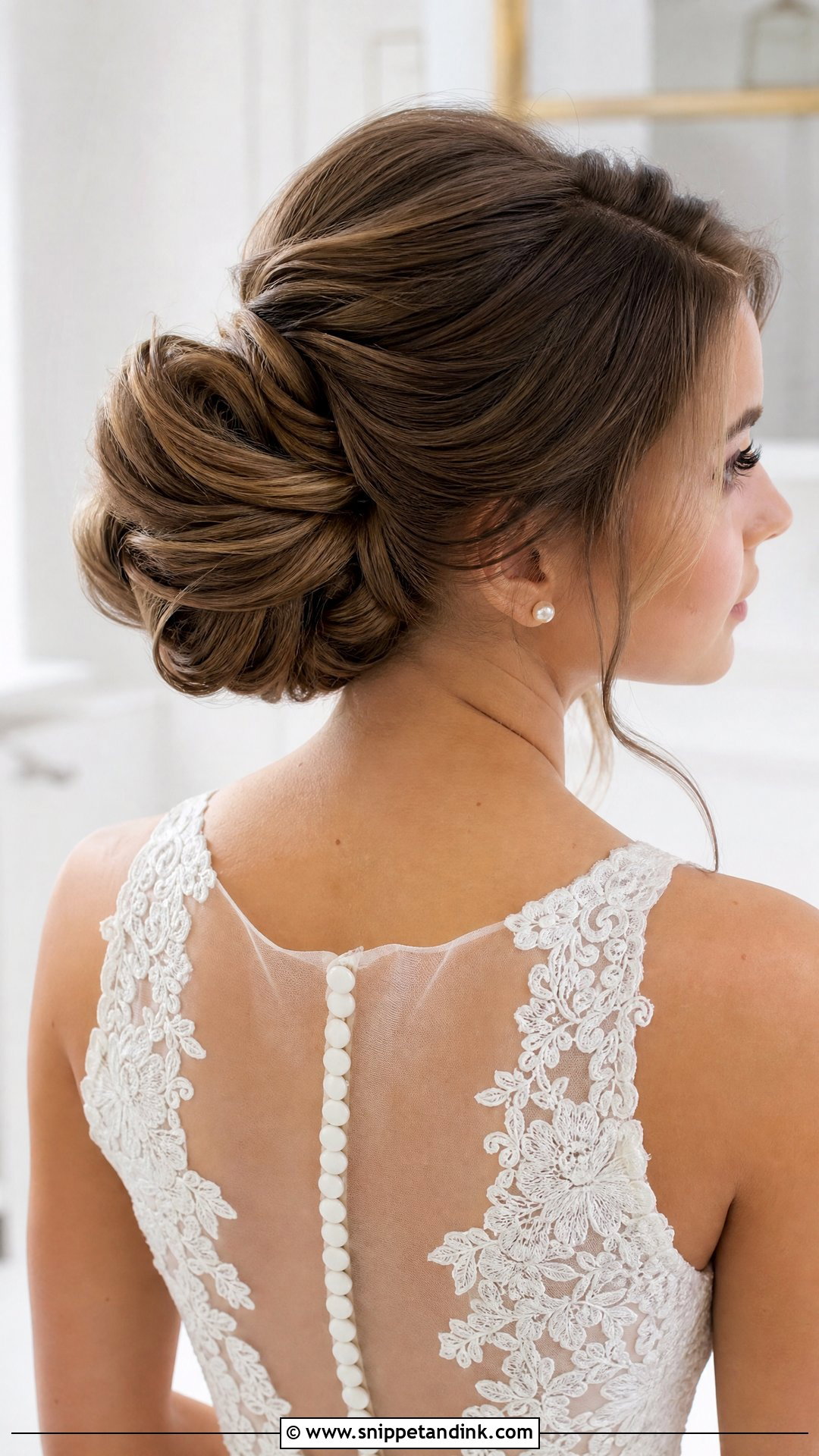
The difference between a voluminous bridal chignon and a tight knot is the size and softness of the bun and the lift at the crown. I’ll keep it smooth for a formal church ceremony or pull it into texture for a garden setting. Because it sits low, a veil comb slots in above it easily, and an open back stays visible. The front can be centre-parted, swept to the side or softened with tendrils, which is why it suits so many face shapes.
9. Voluminous Braided Bridal Updo
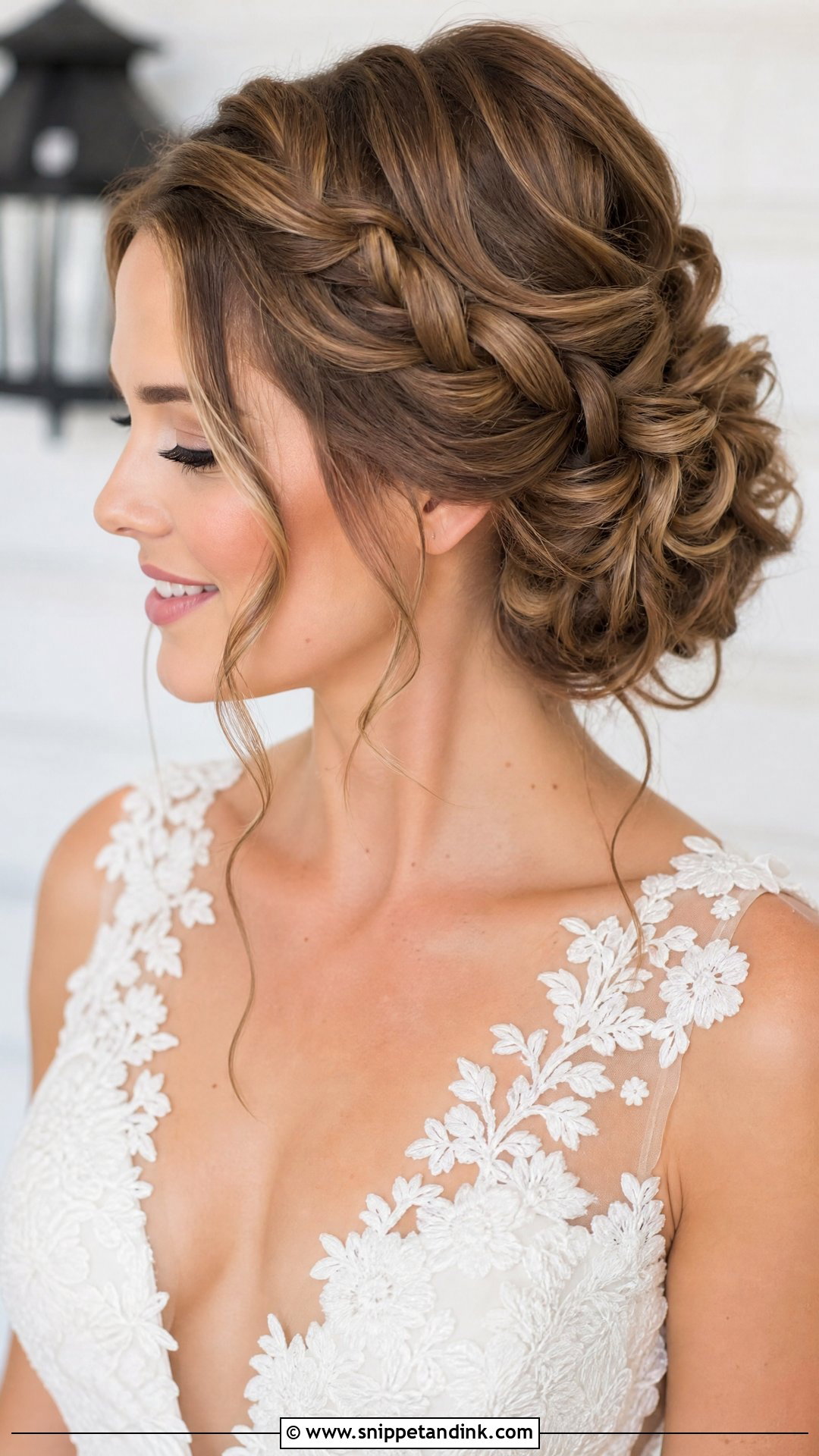
Braids add grip as well as pattern, which is a practical bonus: they lock in layered hair that would otherwise slip out of a plain updo. I braid fairly firmly, then gently pull the edges out (we call it pancaking) so the braid looks wider and softer than it is. It can wrap into a bun, frame the crown or run through the back of the style. Outdoor and rustic venues suit it well. A few curled strands at the front keep it from feeling too structured.
10. Voluminous Bridal Hair With Curtain Bangs
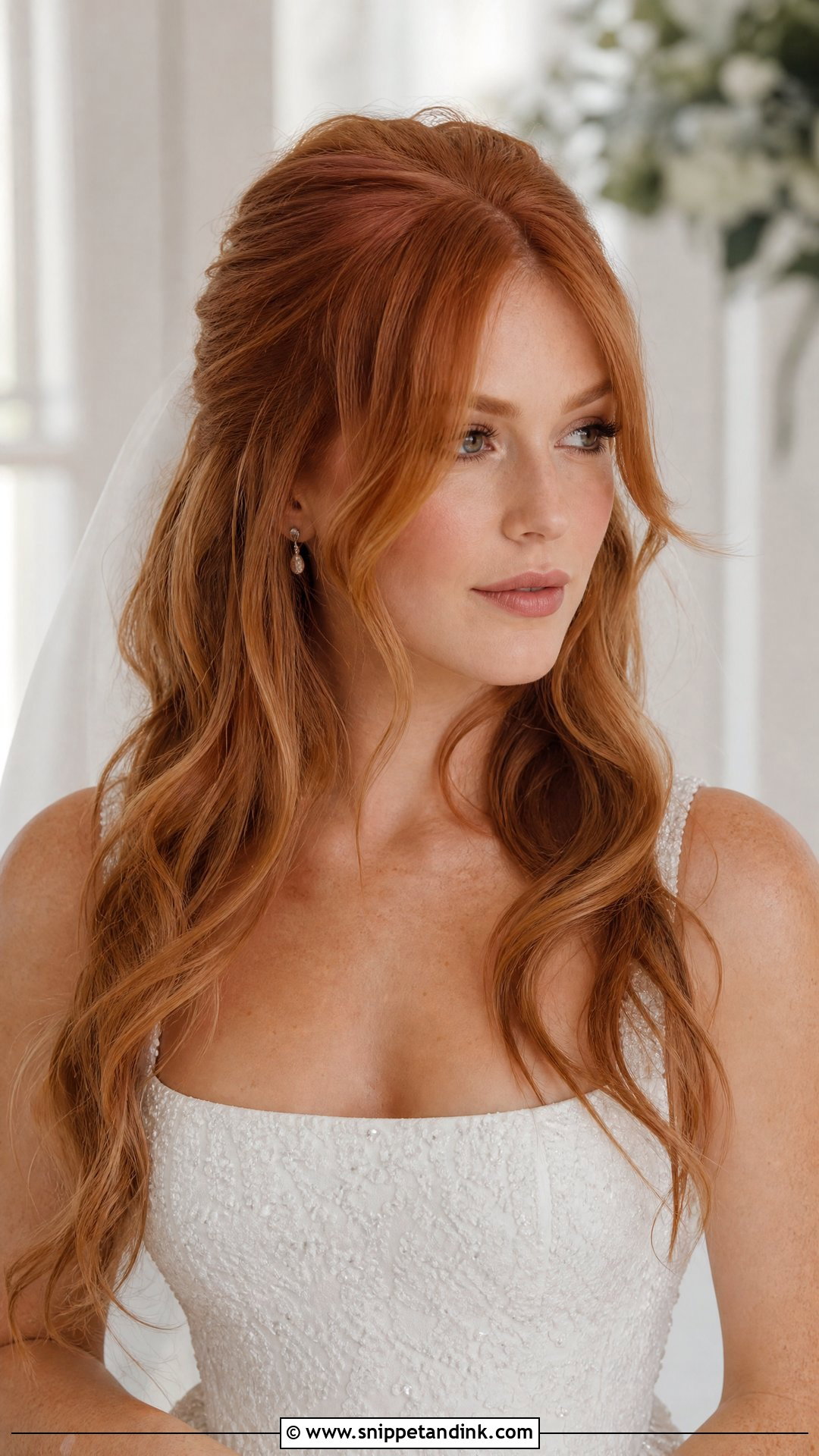
Curtain bangs are worth keeping if you already wear them, because you’ll feel like yourself. The challenge is that they separate and flatten with heat and a bit of skin oil. I set them with a round brush or a small velcro roller while your makeup is done, so they cool in shape, then blend them into whatever the rest of the hair is doing: waves, half up, a low bun or a ponytail. Avoid a fresh trim within a week of the wedding; newly cut bangs always sit too short and too straight.
11. Voluminous Bridal Hair With Veil
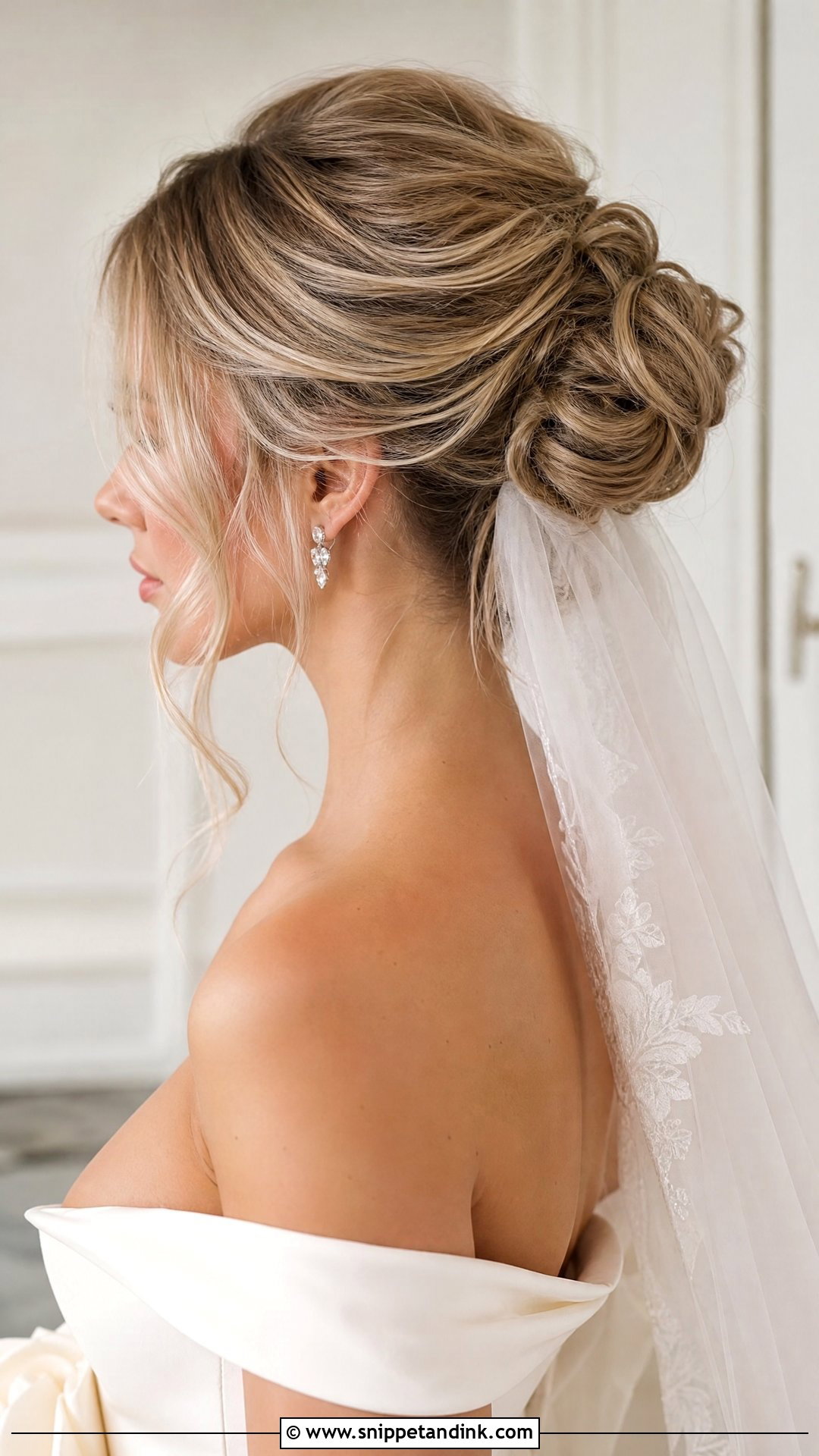
A veil changes everything about how volume should be placed. A comb needs a firm, slightly textured spot to grip, so I tuck it into a teased section or the top of a bun, never into slick hair. Under the bun, the updo needs enough fullness to show shape behind the fabric; above the bun, a lifted crown keeps the veil from flattening your head. Bring your actual veil to the trial if at all possible. We’ll test placement, check that it doesn’t tug, and practise taking it out without pulling the style apart.
12. Voluminous Bridal Hair With Tiara
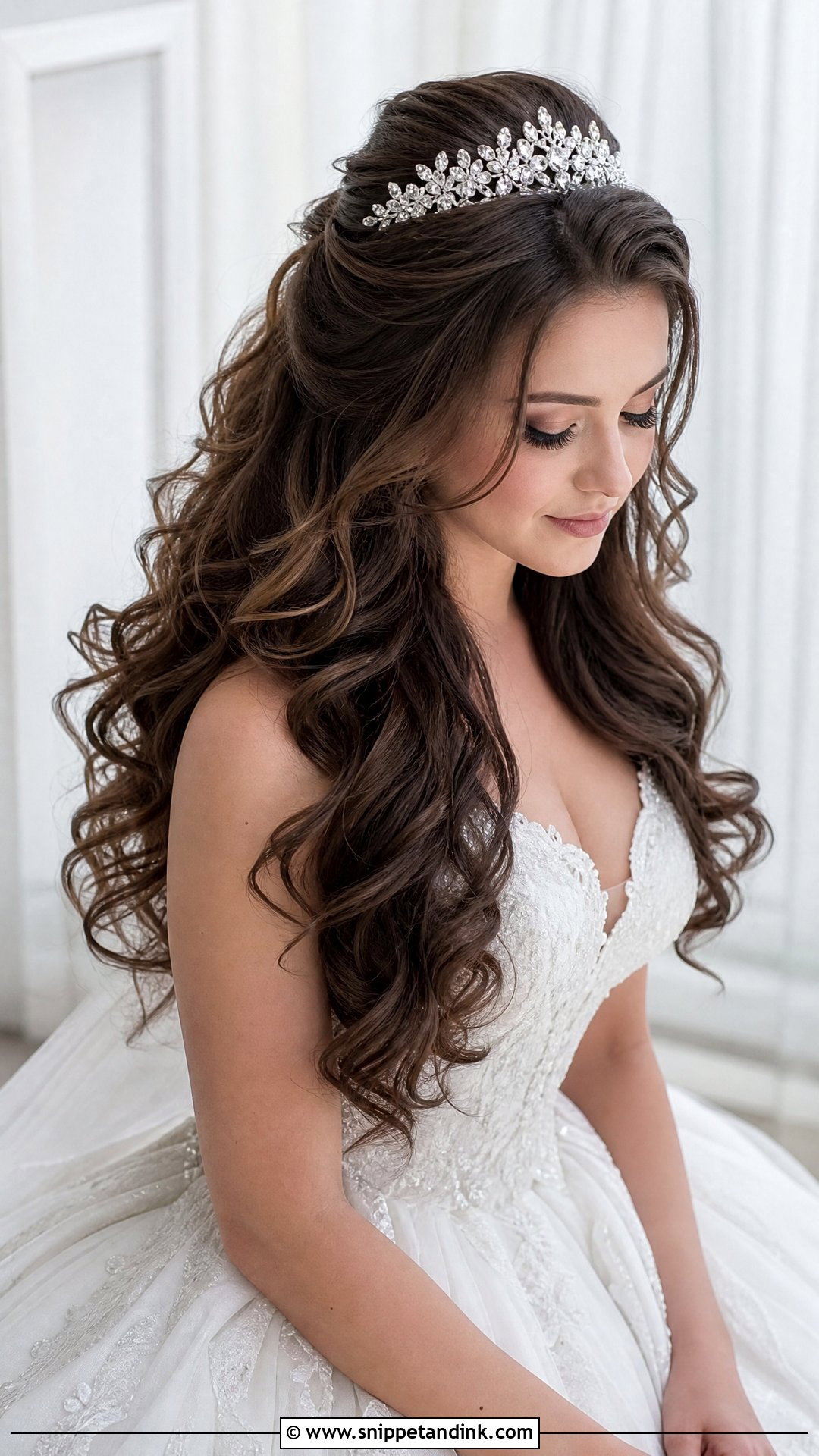
A tiara needs a hairstyle to sit into, or it looks like it’s resting on top of you. I give it a lifted crown or a soft half up base so the band can be pinned through its loops into teased hair behind it. Too flat and it pinches; too much volume and it floats. Keep the front smooth so the tiara frames your face rather than competing with it. It’s naturally at home with ball gowns, cathedral veils and formal venues. Wear it for an hour at your trial to see whether it presses behind the ears.
13. Voluminous Textured Bridal Bun
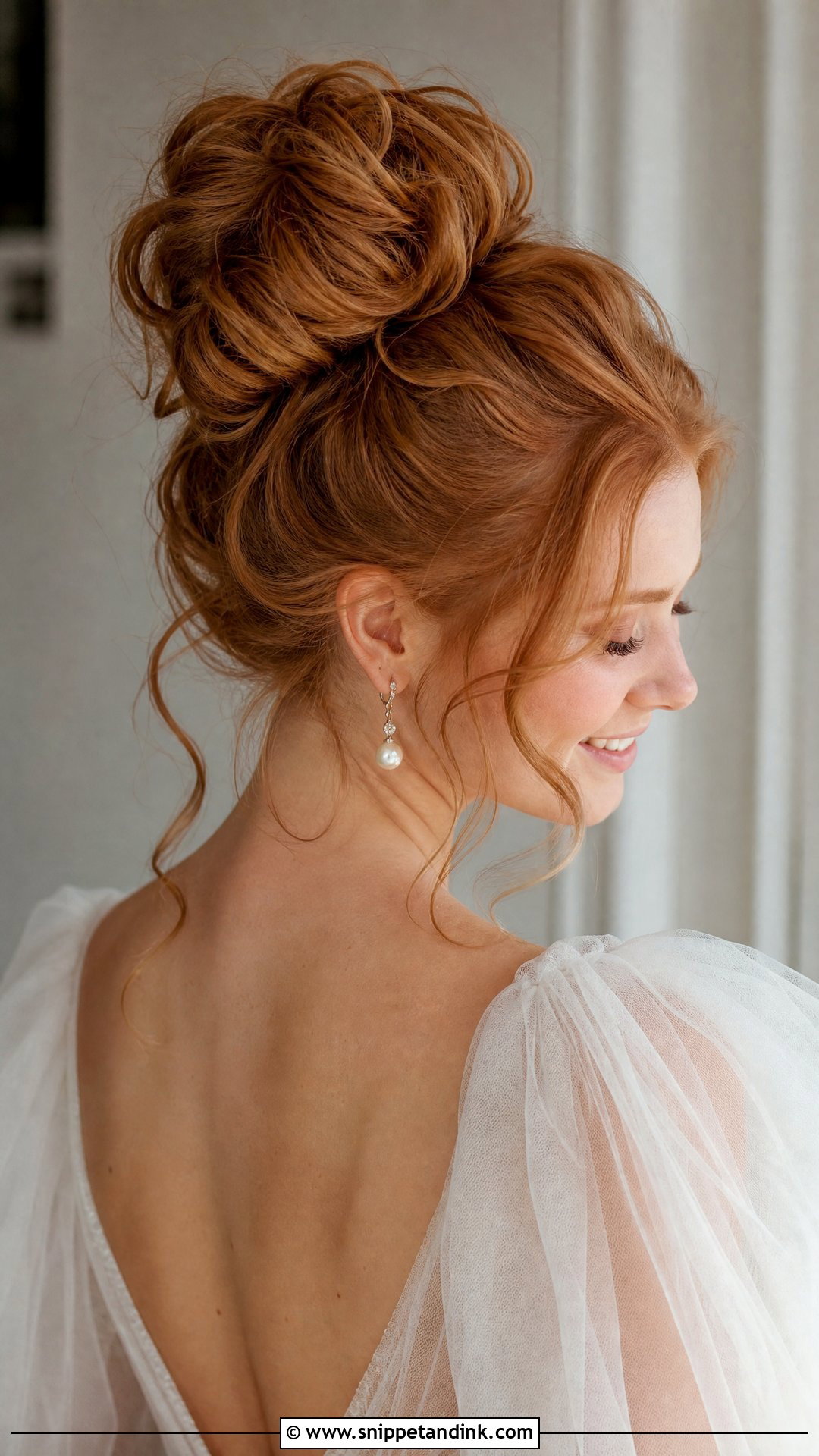
A textured bun looks relaxed but is built carefully: curled and twisted sections, pinned loosely, with enough structure underneath that it still looks the same at midnight. Texture is the friendliest finish for fine hair because it hides the scalp and suggests density, and it lightens the look of very thick hair. It suits floral pins, pearls and soft fabrics like tulle and chiffon. I size the bun to your head and shoulders; too wide on a petite frame and it looks like a hat.
14. Voluminous Bridal Hair For Long Hair
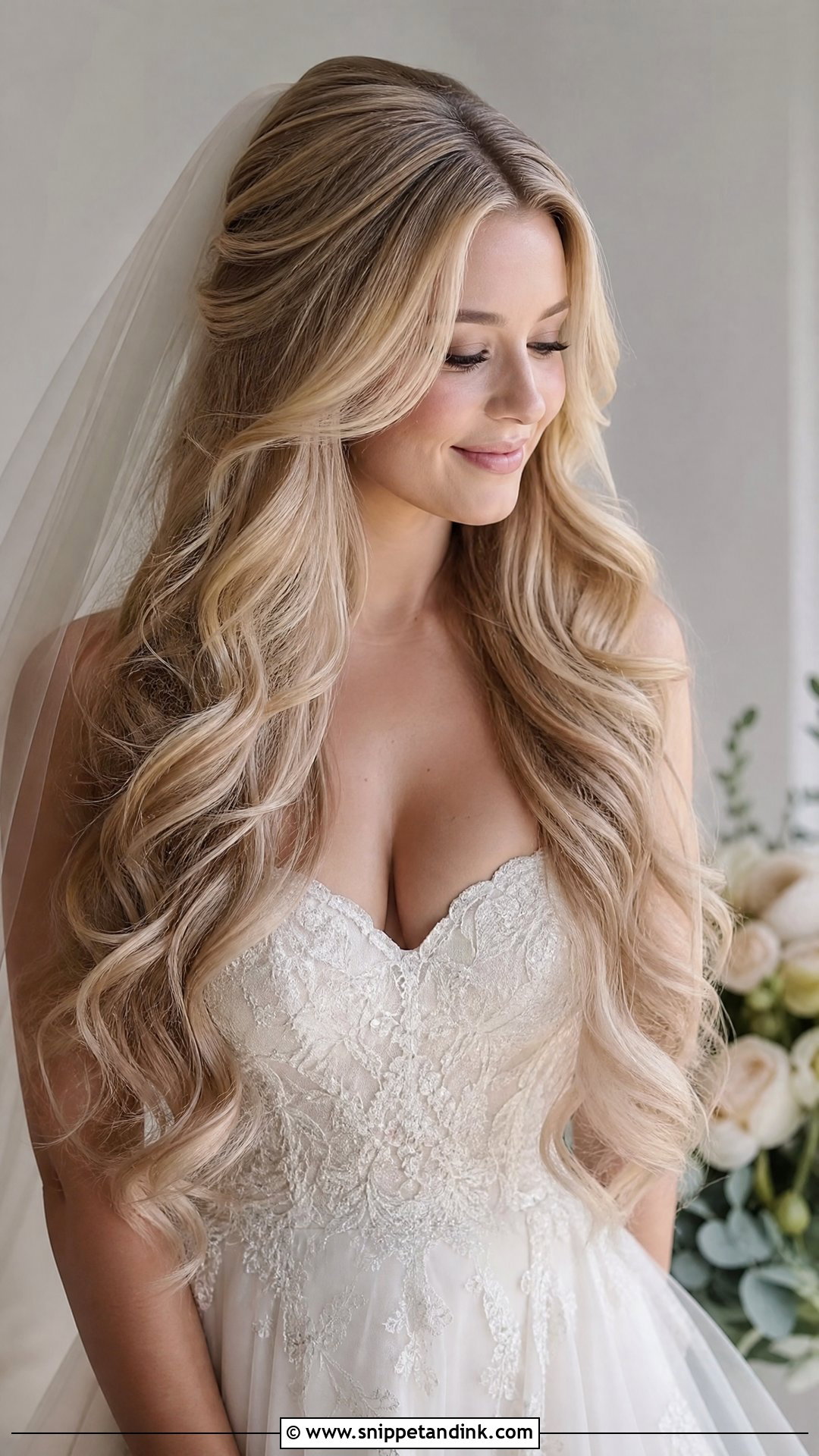
Long hair gives me plenty of options and one real enemy: its own weight. Curls in waist-length hair can drop within a couple of hours if they’re not set and cooled properly, and a heavy bun drags on the pins. Strong prep, a good set, root lift and anchored pinning are what make the difference. Some long-haired brides still wear a few wefts for density at the ends. Hollywood waves, full half up styles, braided ponytails and loose curls all show the length well.
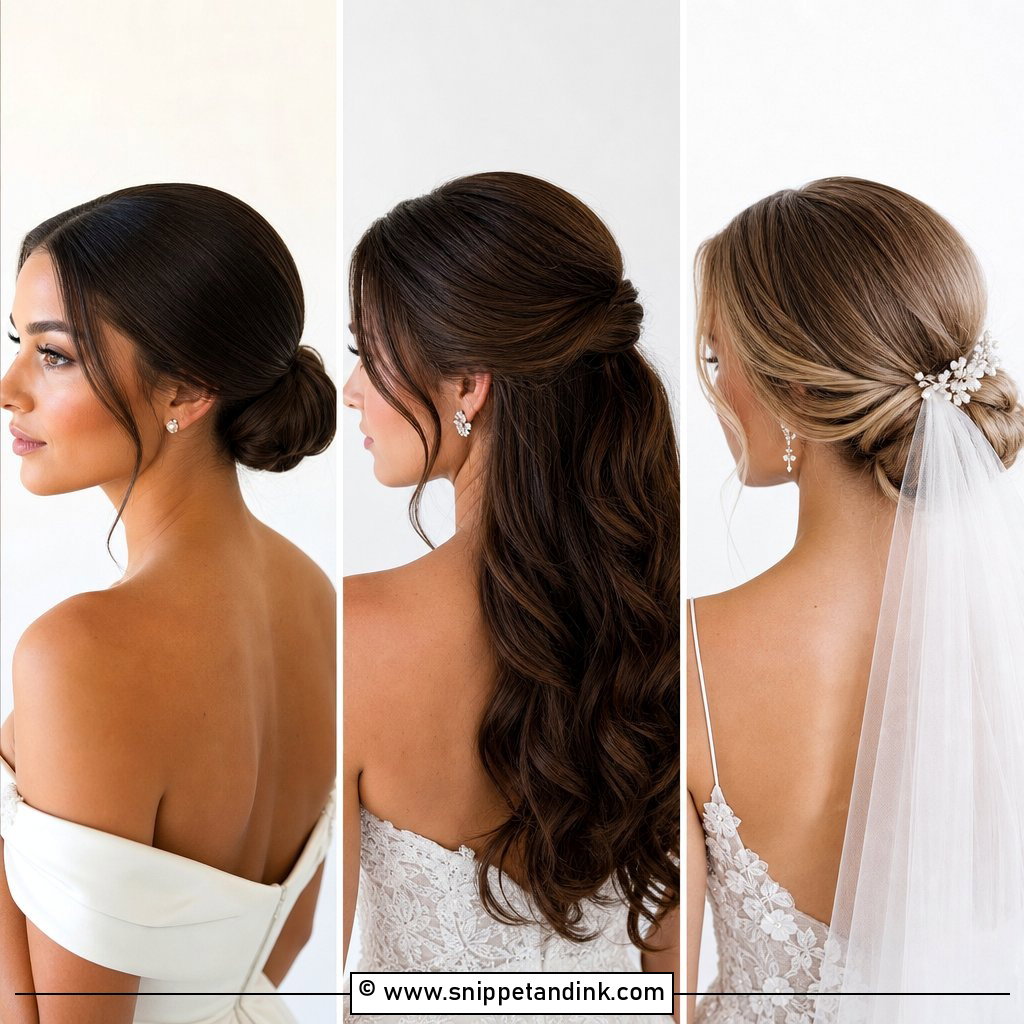
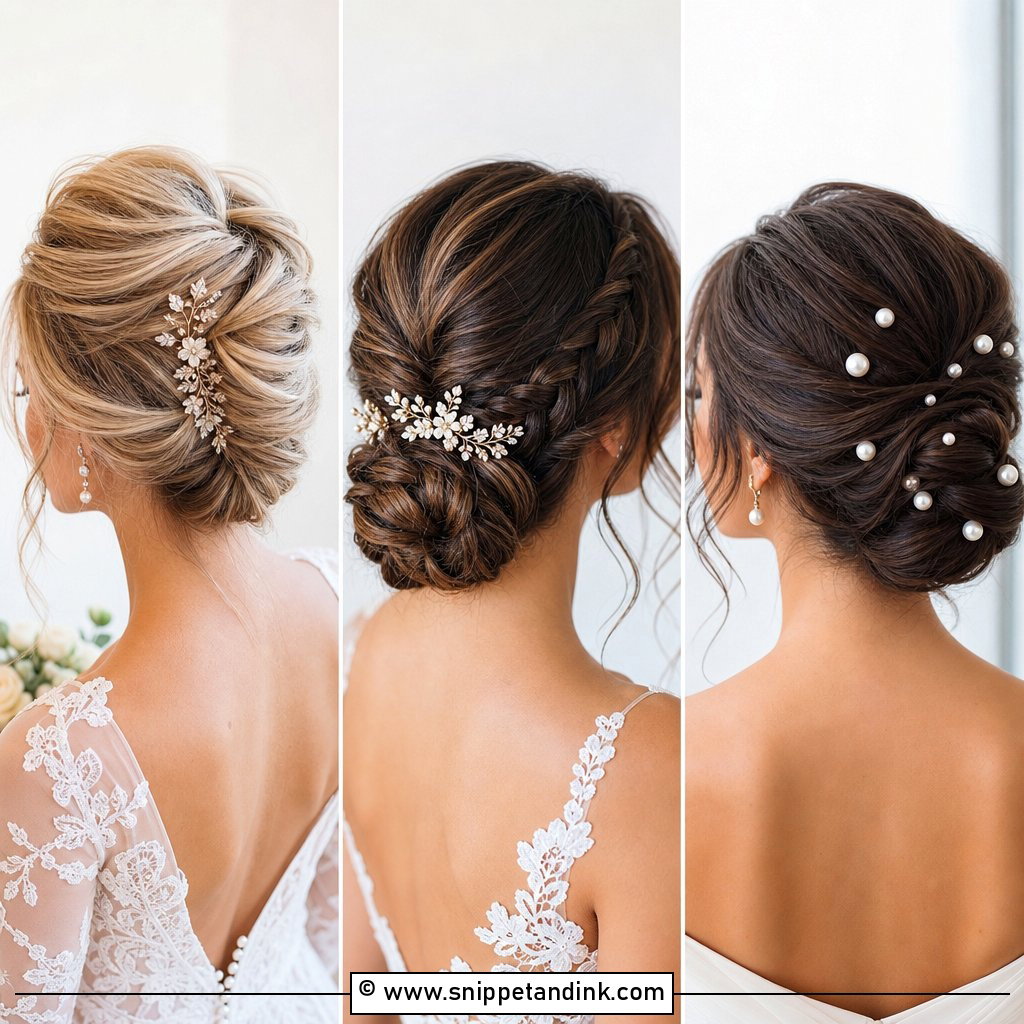
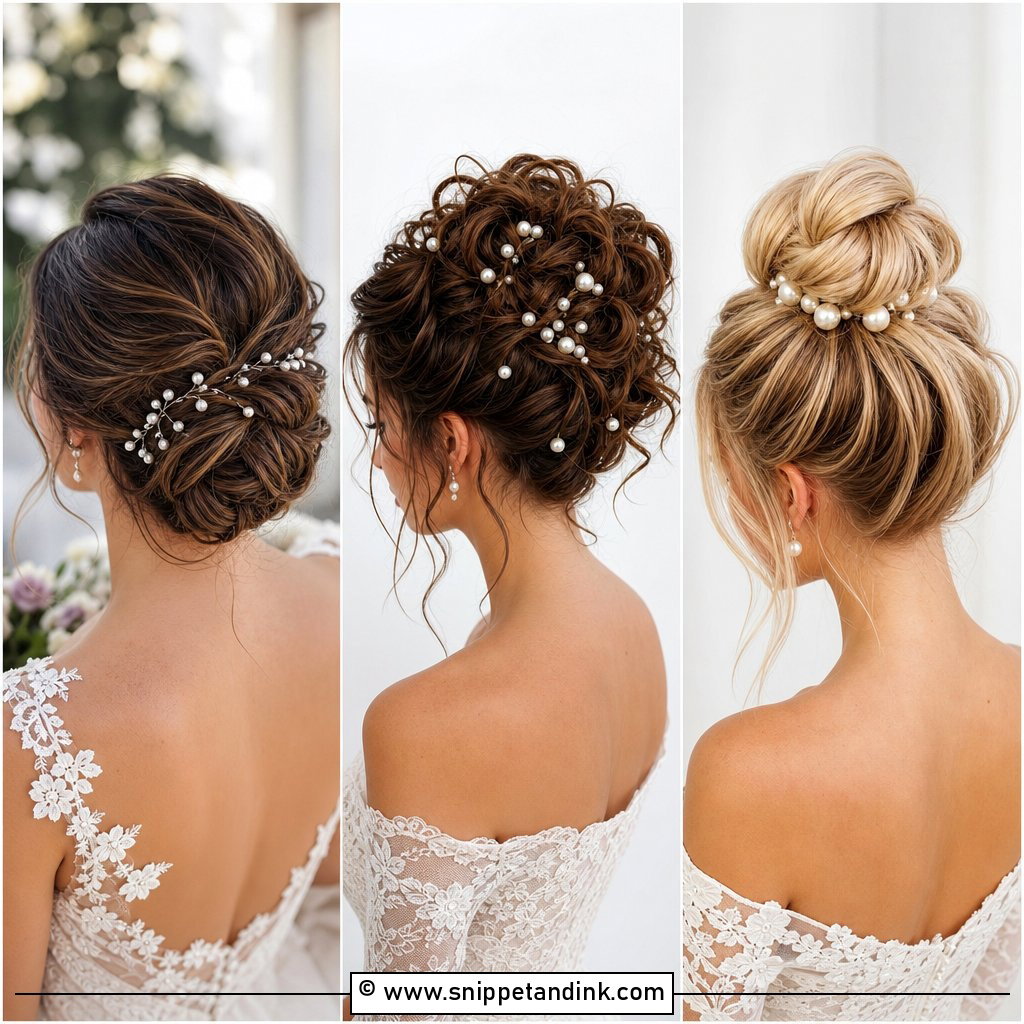
15. Voluminous Bridal Hair For Medium Hair
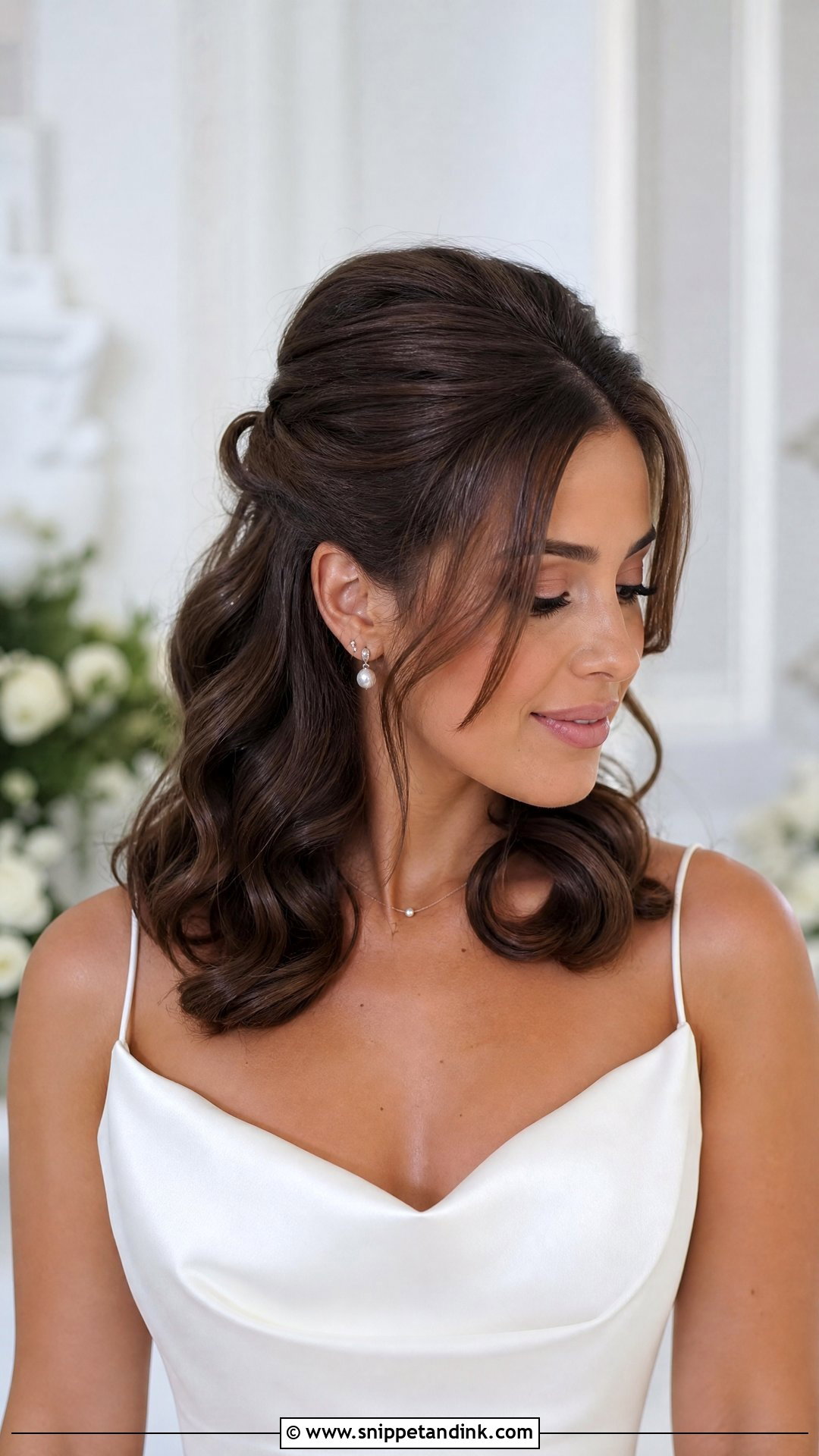
Medium hair, around the shoulders or collarbone, is often the easiest to give volume to, because it’s light enough to hold lift without collapsing. Low buns, textured chignons, half up waves and modern ponytails all work. If you want a bigger bun or longer waves, extensions add fullness rather than obvious length. Face-framing layers blend nicely into most styles at this length. I focus on crown height and curled ends to give the overall shape a fuller outline.
16. Voluminous Bridal Hair For Short Hair
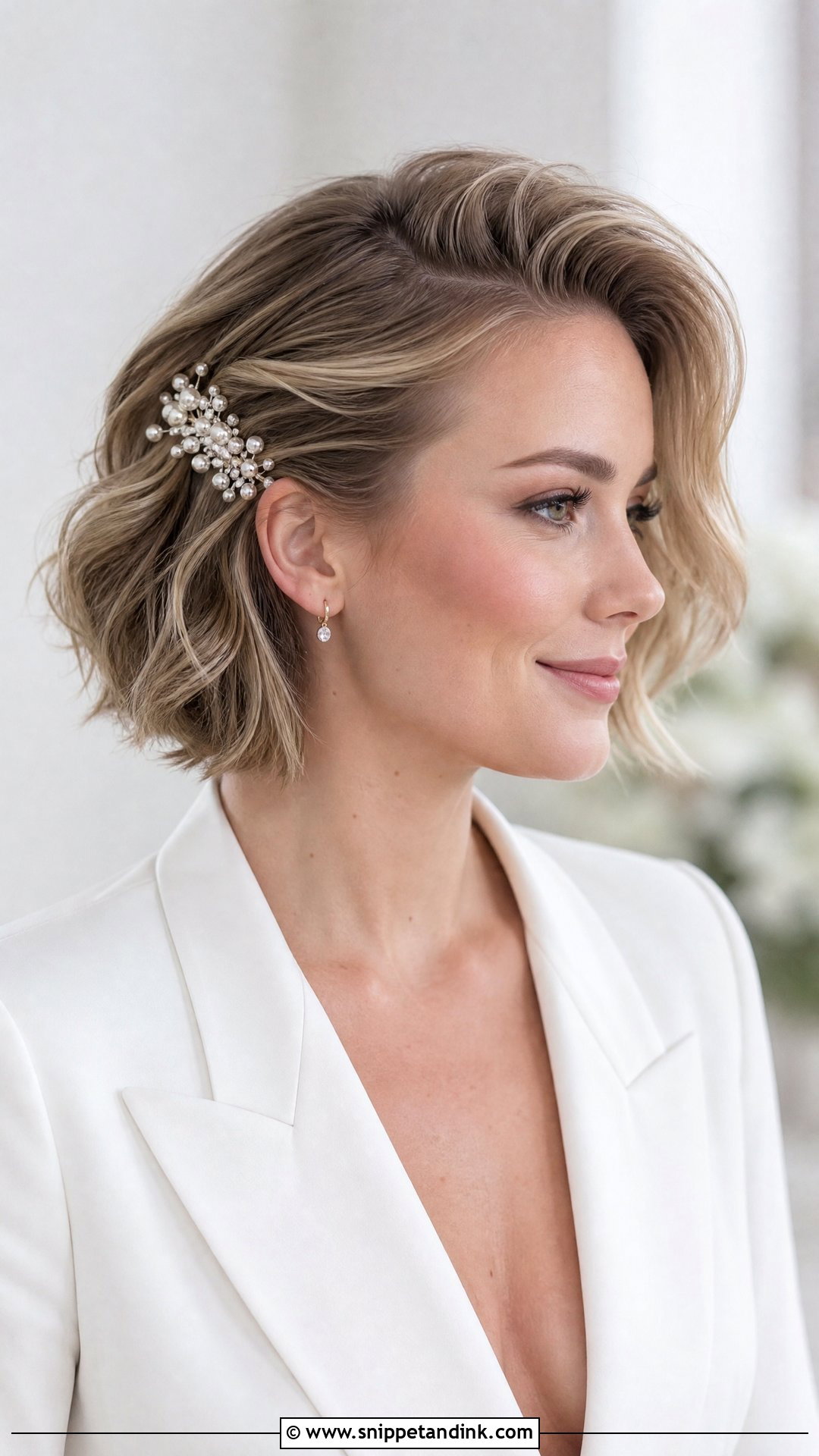
With short hair, I work with the cut rather than forcing it into an updo it can’t hold. A bob, lob, pixie or short layered cut can take root lift, soft waves, pinned-back sides or a sculpted finger wave. Accessories do a lot of work here: a pearl headband, a small veil or an embellished comb add the bridal note. If there’s length at the front, gentle bends there soften the face. Avoid a big haircut in the last month, since short cuts look best about two weeks after they’re done.
17. Voluminous Bridal Hair For Thin Hair
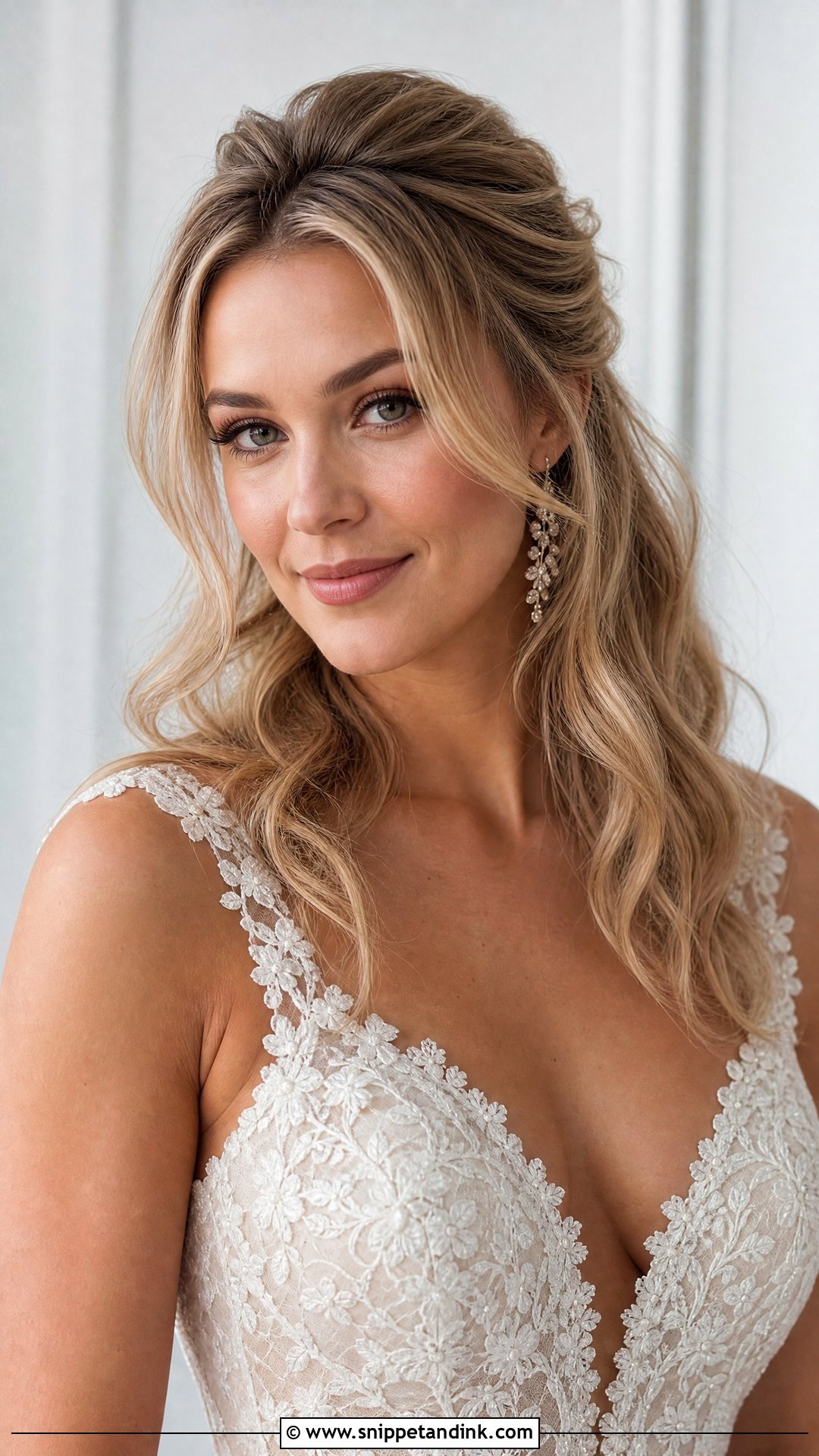
For thin hair, I build fullness in layers: root powder or texture spray for grip, a light tease underneath the top sections, then extensions or a small pad where the shape needs bulk. Sleek finishes work against you, because smooth hair shows the scalp through the parting. A slightly undone texture reads as denser. At the trial, ask exactly which support pieces I’d use and wear the style for several hours to see how the lift holds.
18. Voluminous Bridal Hair For Thick Hair
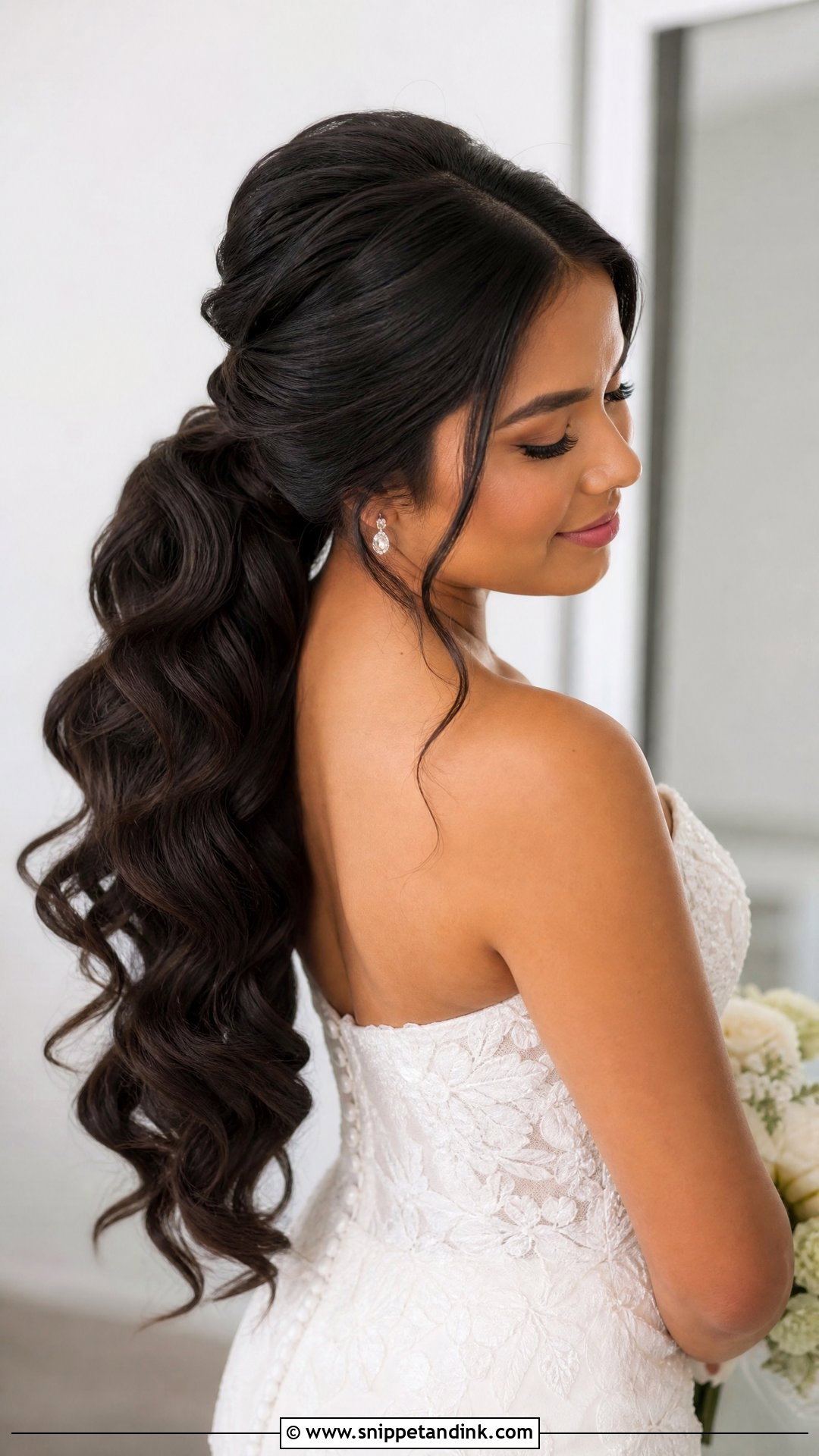
Thick hair doesn’t need more volume; it needs controlling. Low buns, full ponytails, side-swept curls and half up styles all show off its natural richness. The issue is weight and heat: a lot of hair pinned up gets heavy and warm by evening. I section thoroughly, pin smaller pieces rather than large handfuls, and sometimes hide bulk under the bun to keep it comfortable. Soft layers around the face stop it from looking like one solid shape in photos.
19. Voluminous Bridal Hair With Flowers
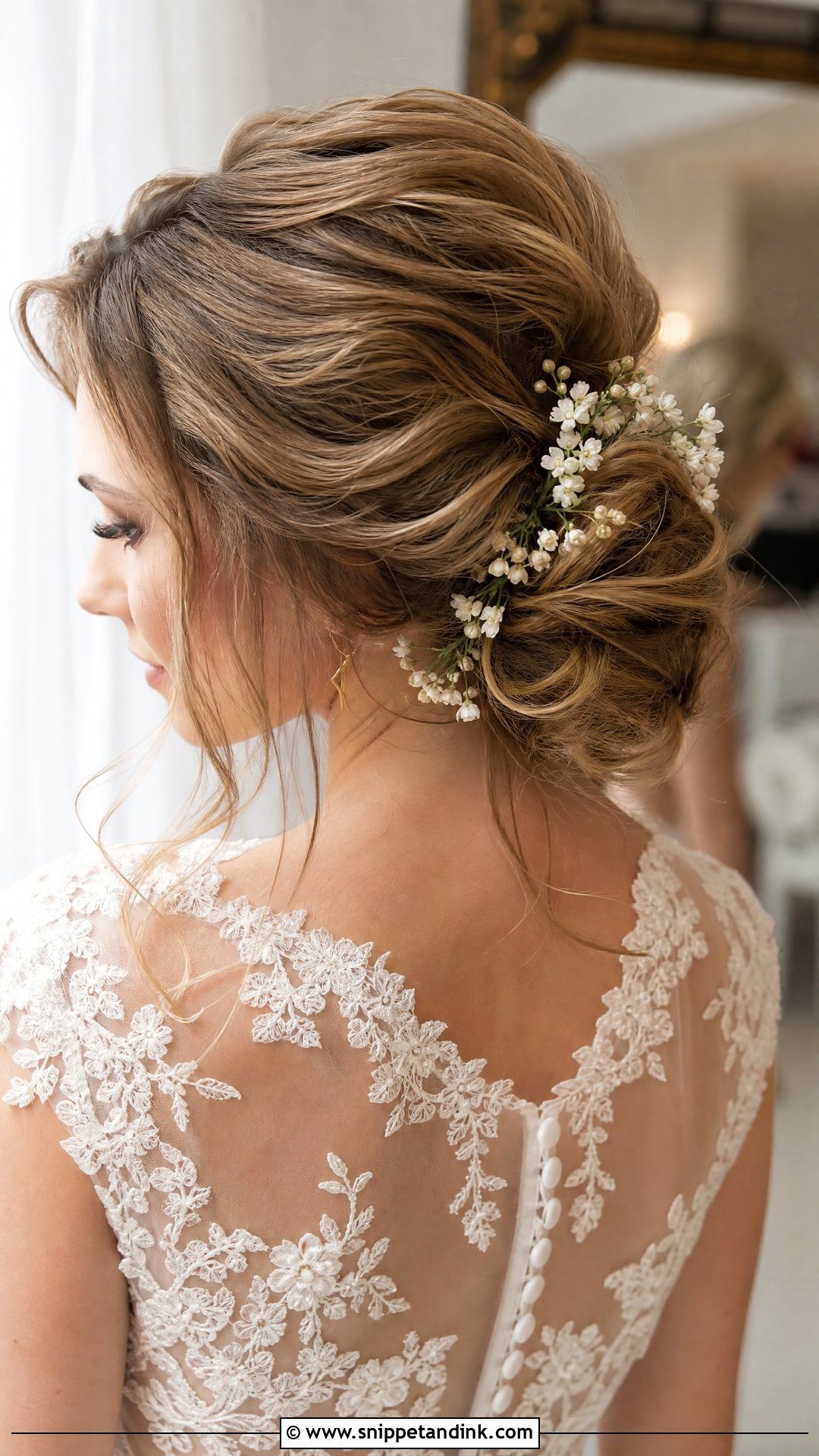
Fresh flowers sit best in full hair because there’s something to tuck stems into. They can go in a low bun, through waves, along a braid or into a half up section. Choose hardy blooms that can last out of water for a day; delicate petals bruise and brown by the reception, especially in heat. Smaller flowers are easier to secure and look more refined. I ask the florist to wire and tape stems, and to deliver them in time for me to place them while the hair is done.
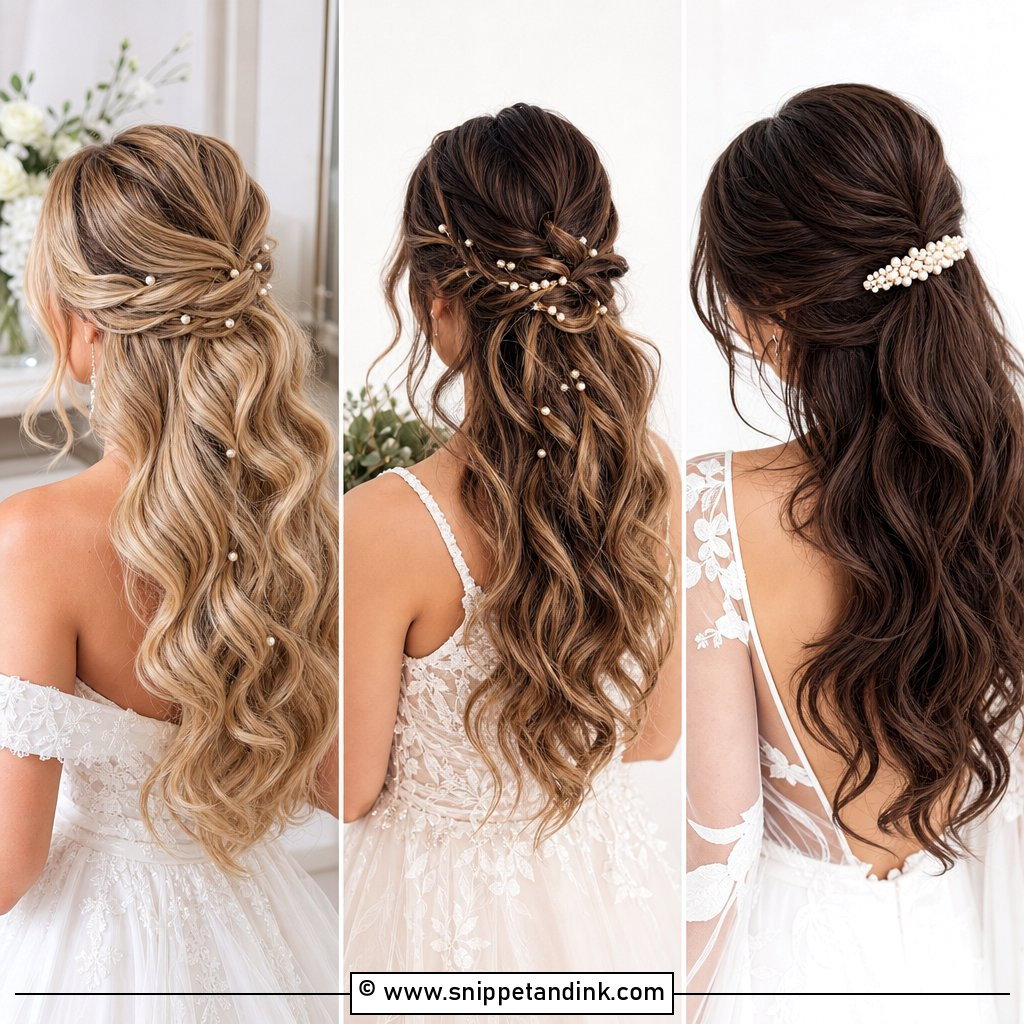
20. Voluminous Bridal Hair With Pearl Pins
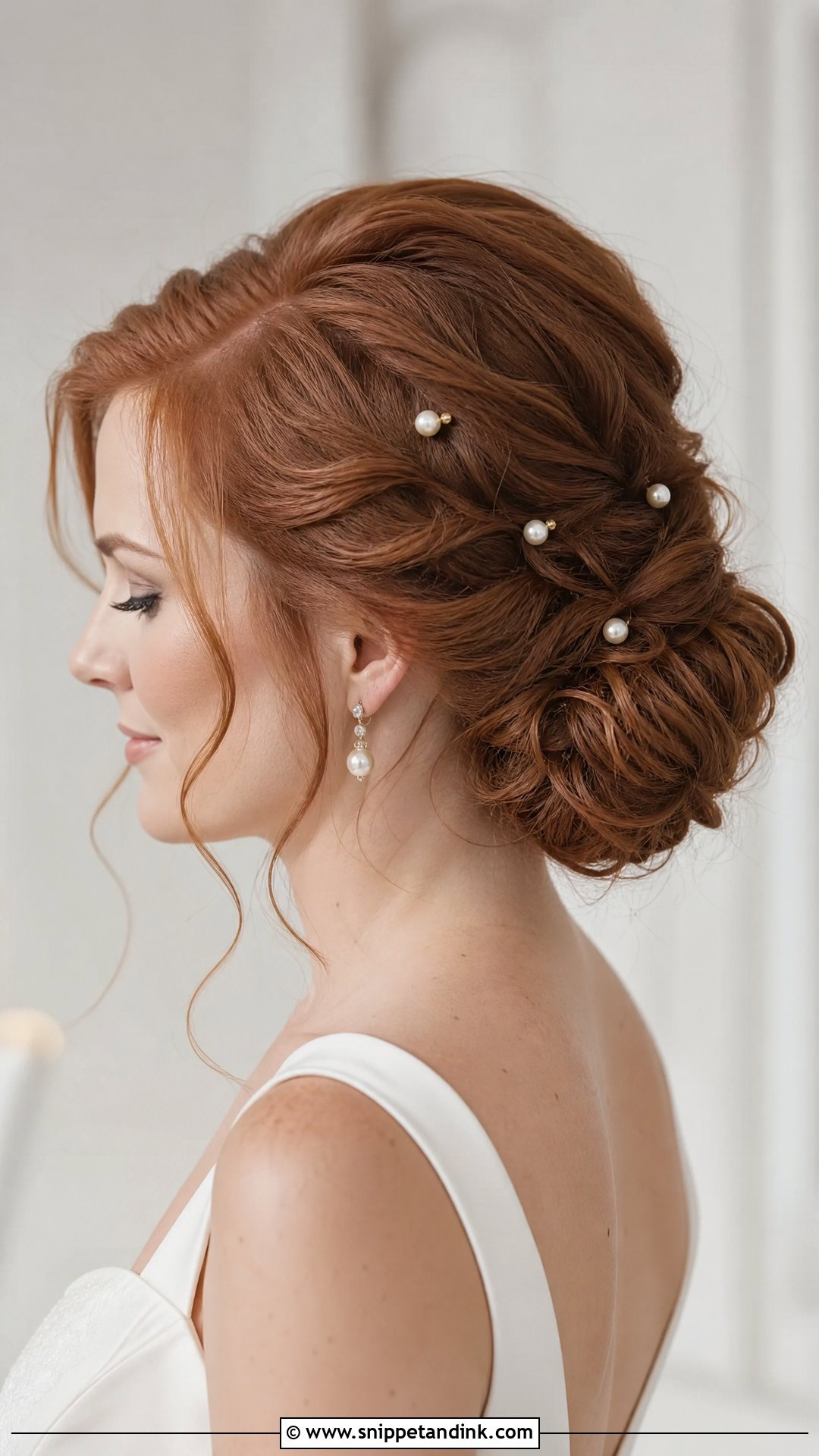
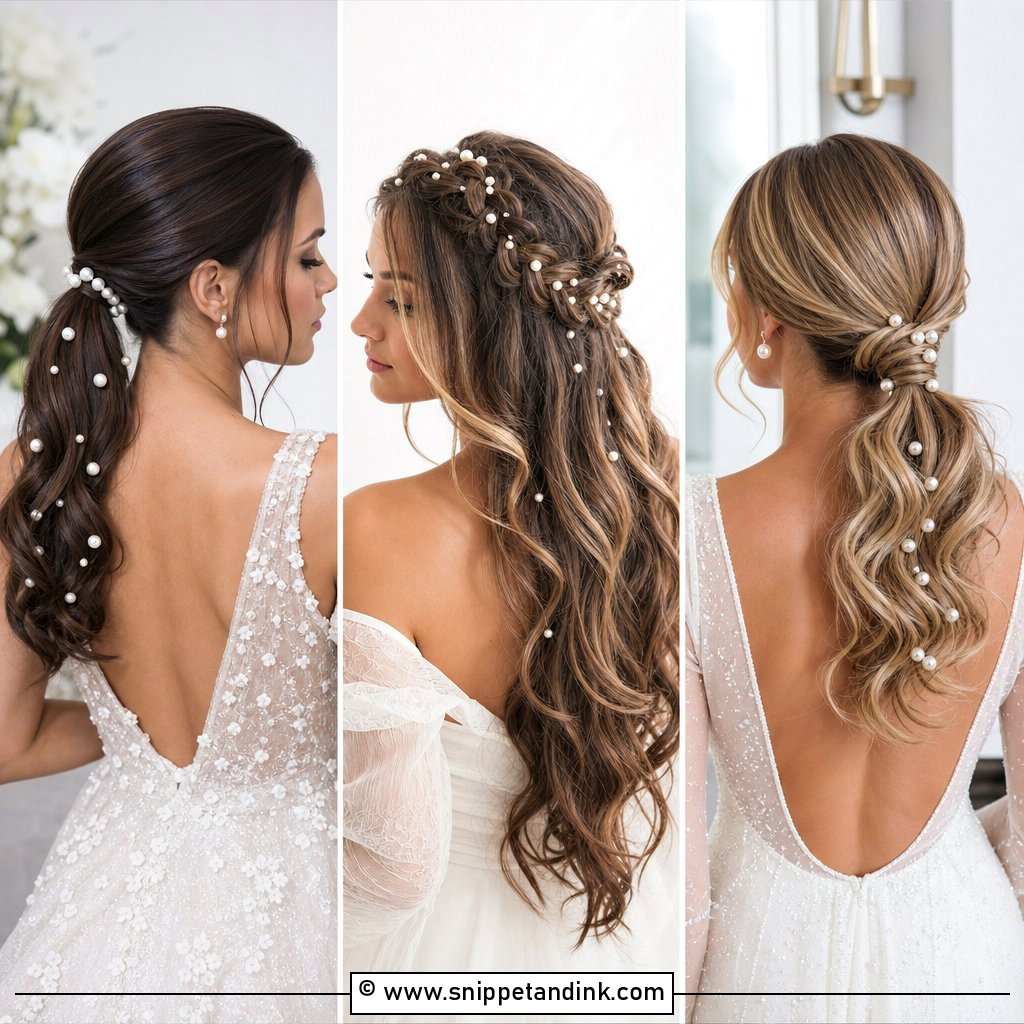
Pearl pins give detail without committing to a large accessory. They sit well in textured buns, soft chignons, half up waves and curled updos, and the volume gives them space to look scattered rather than in a row. I place them in odd numbers and slightly irregular spacing, and push each one into a section with grip so it doesn’t slide. A few near the bun or along a twist is enough. They suit classic, modern and lace gowns equally.
Humidity, Rain and a Long Reception
Moisture in the air is what really flattens big hair. Hair absorbs water vapour and relaxes back to its natural pattern, so a heat-set curl on straight hair loosens and a smoothed curly texture swells. I plan for the weather of the venue, not the weather on the morning.
- For a humid or beach venue, I lean toward updos, braids and ponytails over loose waves, since pinned hair has less room to move.
- A humidity-resistant spray applied before heat styling does more than hairspray added at the end.
- If rain is forecast, have an umbrella ready for the walk between the car and the venue; even a short dash in drizzle can drop a set curl.
- Ask your stylist to leave you a few matching bobby pins and a small travel spray for a quick fix after dinner.
The hair you arrive with matters too. Washed the day before, dried smooth and left without heavy conditioner at the roots usually takes curl and pins better than freshly washed, slippery hair. If your hair is very fine or gets oily quickly, I may ask you to wash that morning instead; we’ll decide at the trial.
Volume Is Only as Good as What Holds It Up
Pick your shape based on your neckline, veil, weather, hair type and the way you normally like your hair, then test it properly. A trial is where you find out whether the volume lasts, whether the accessories pinch and whether extensions match. Bring photos of the back and side of the styles you like, not just the front, because that’s where most of the shape lives. Hollywood waves, a textured bun, a lifted ponytail or a soft half up: any of them will last the night if the foundation is solid.
You'll Like These Ideas:


Leave a Reply