
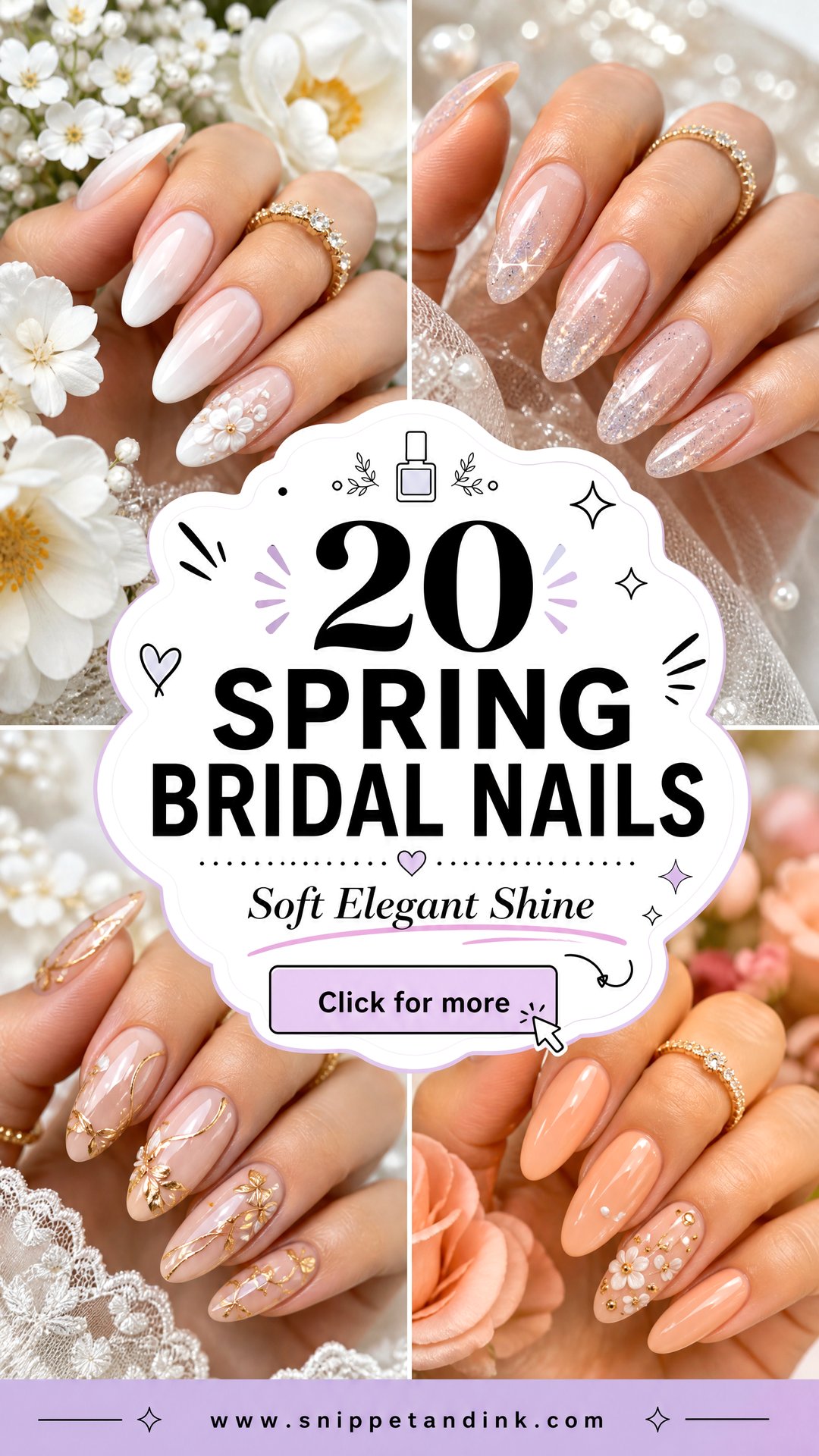
Spring manicures have a different job from winter ones. Hands are often dry after months of cold, the light at outdoor ceremonies is bright and cool, and bouquets bring their own pastels, so the nails need to sit quietly beside all of that. I’ve ordered the ideas below from the cleanest finishes, like milky white and sheer pink, through French variations and chrome, to floral, pressed-flower and pastel sets. What suits you comes down to your dress fabric, the metal of your ring, how long your nails are right now and how much detail you can live with for a week or two afterwards. A minimal bride may stop at glazed nails; a romantic one might want pressed petals or lace.
Getting Winter-Dry Hands Ready for Spring Photos
After months of heating and cold air, most hands arrive in spring with dry cuticles, peeling tips and sometimes a thinned plate from gel that was pulled off too fast. A spring wedding gives you just enough time to fix that if you start early.
- Six to eight weeks out: stop picking and peeling, and if you have old gel on, have it removed properly. Start cuticle oil every night, massaged into the skin at the base of each nail.
- Four to six weeks out: book a trial set. It shows how the color reads on your skin and whether your nails can hold the length you want.
- Two weeks out: wear gloves for washing up and cleaning, and use hand cream after every wash. Garden prep and packing boxes do more damage than people expect.
- One to two days before: the final set, close enough that nothing grows out, with time left to fix a chip.
Dry knuckles and flaky cuticles show clearly in ring close-ups, so the hand cream matters as much as the polish.
1. Milky White Spring Bridal Nails
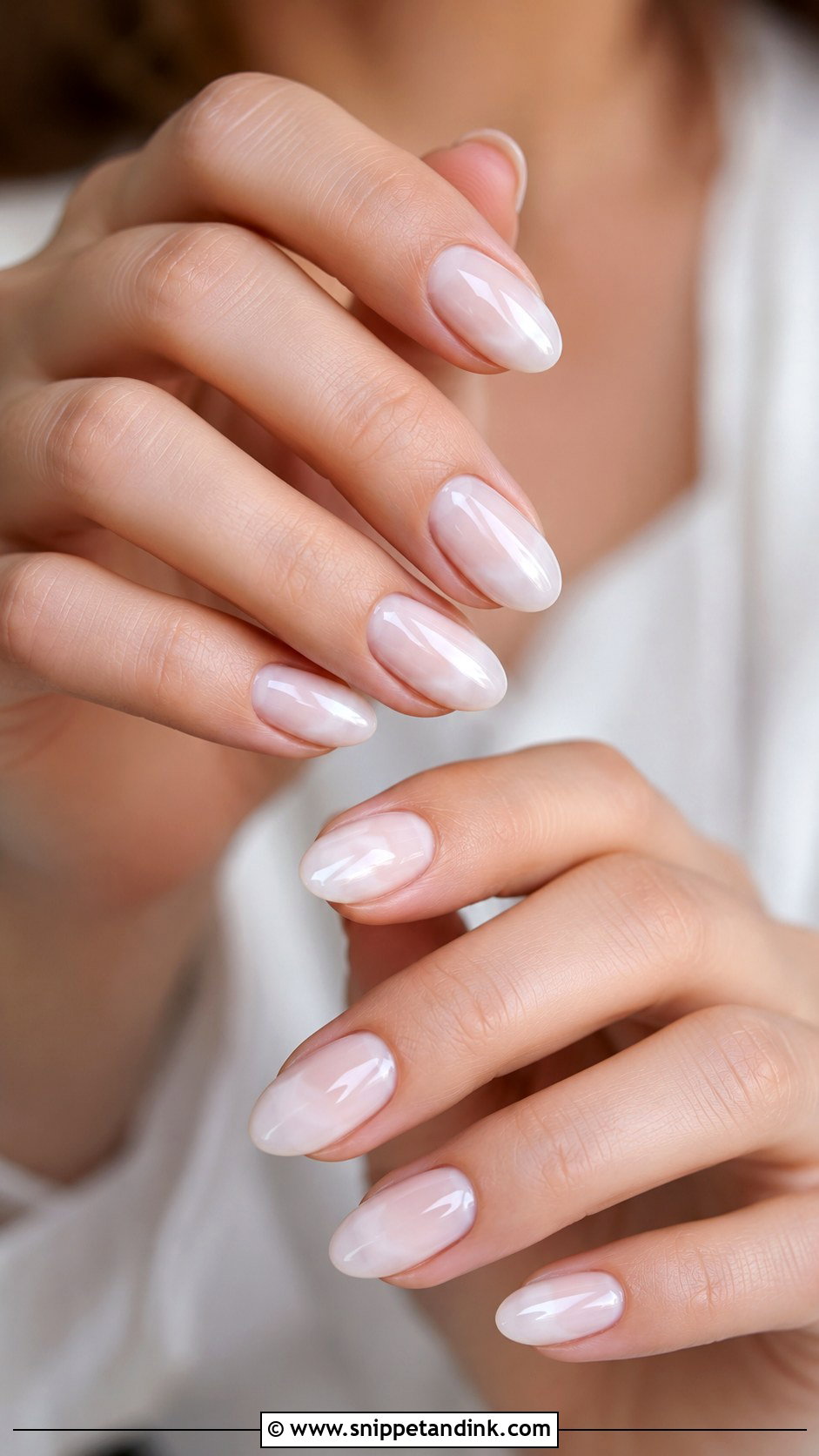
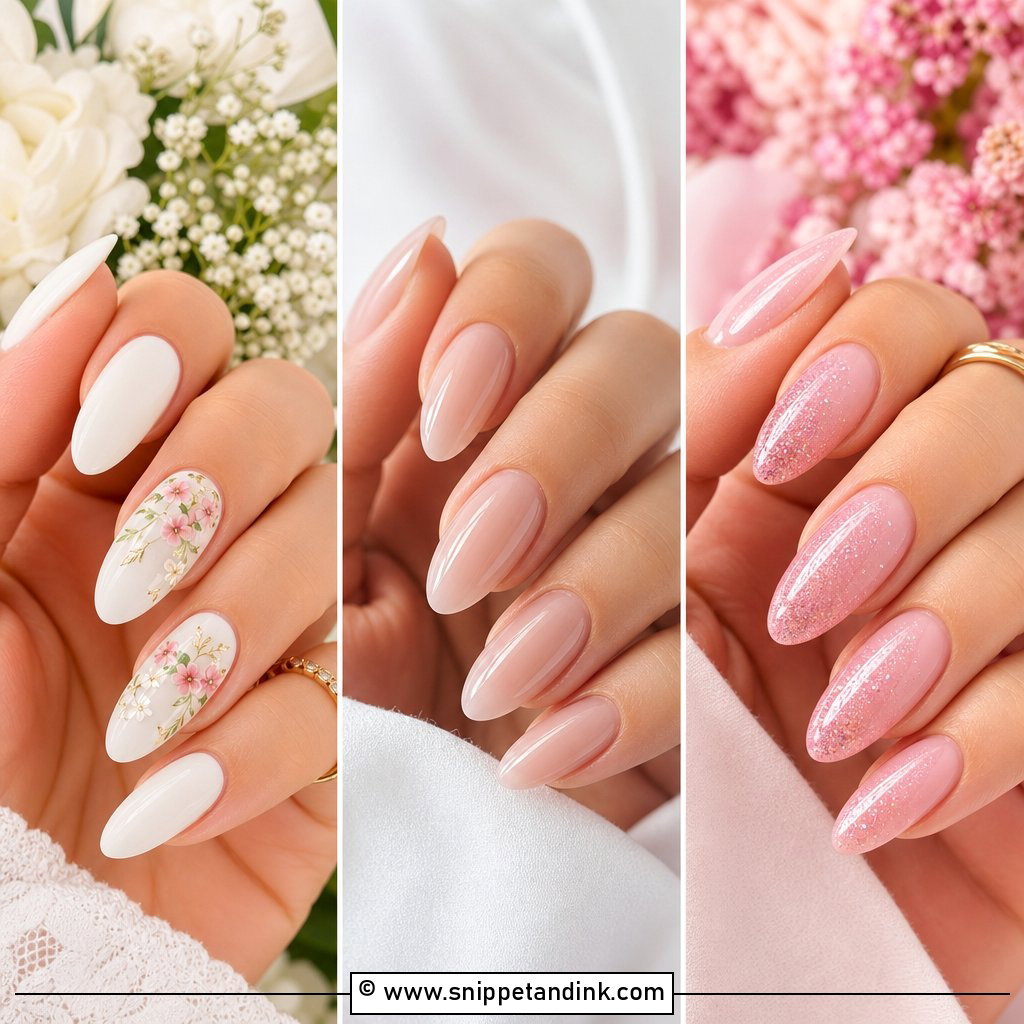
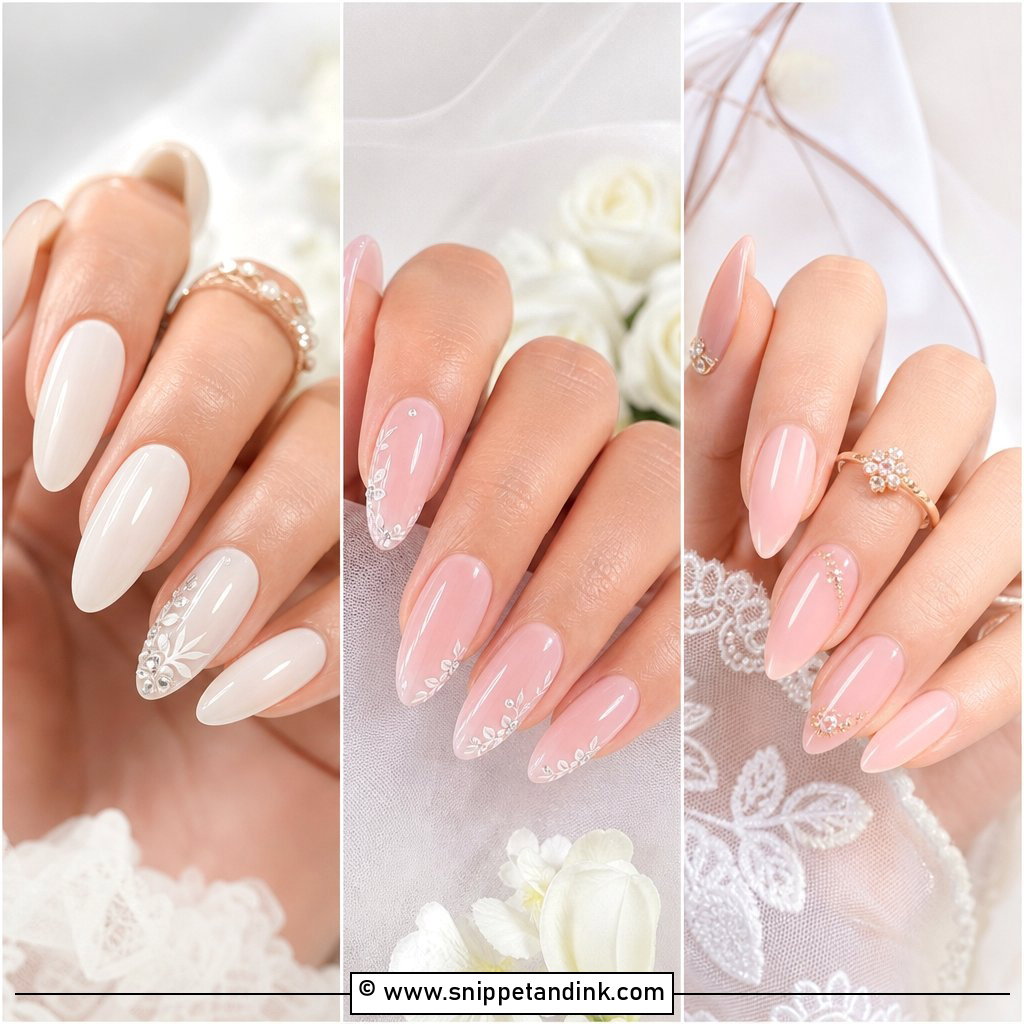
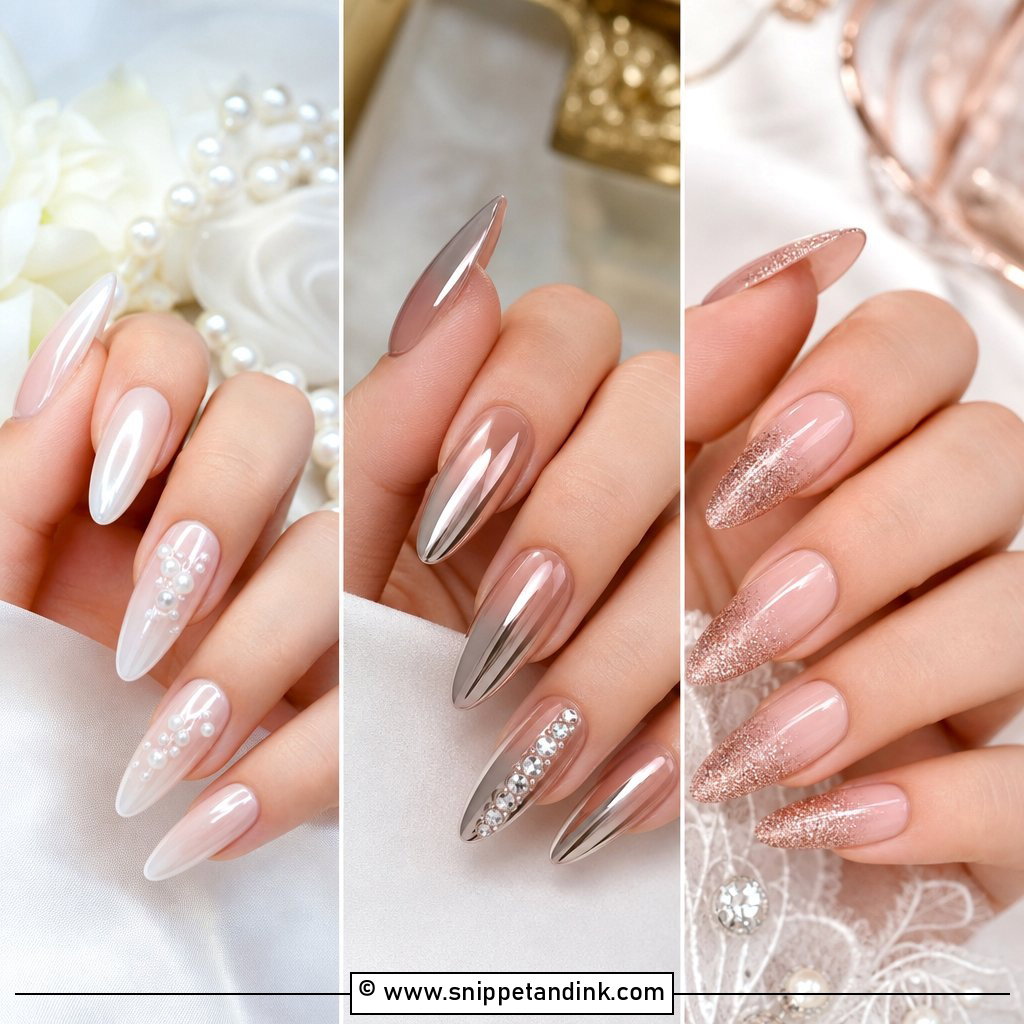
A flat opaque white can look like correction fluid on a nail, which is why I use milky white instead: a sheer, cloudy white that lets a little of the nail bed show through. I build it in two thin coats of milky gel and finish with a high-gloss top coat for a porcelain look. Thick coats streak and pool at the sides, so patience matters more than the product. Oval, almond and short squoval shapes keep it natural, and next to lace, satin, pearls or heavy beading it gives the hands a finished look without competing.
2. Soft Pink Spring Bridal Nails
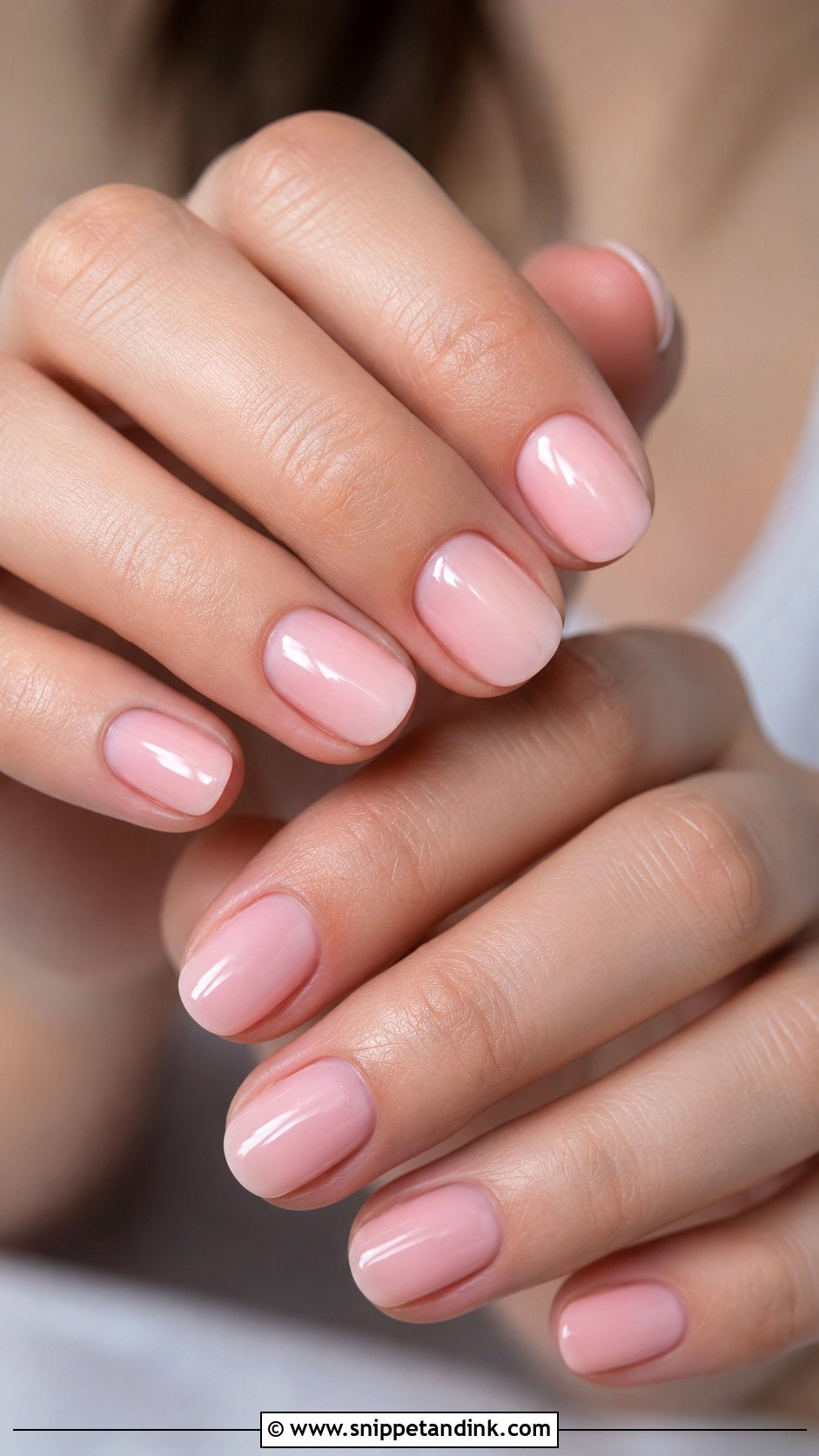
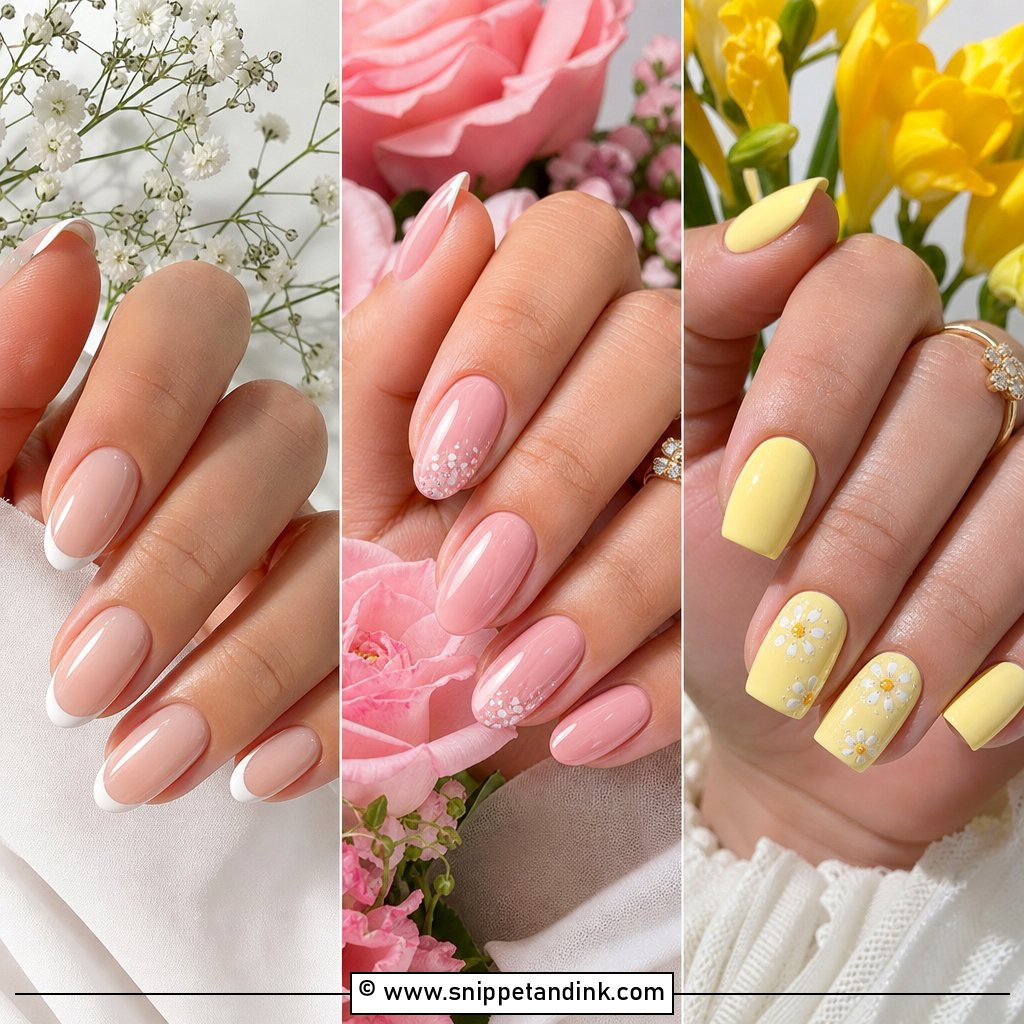
Brides ask me for “my nails, but better” more than anything else, and this is usually the answer. The shade should sit close to your natural nail bed with just enough pink to brighten the hands: a sheer baby pink, a blush or a rose milk. Because the color is so sheer, the cuticle work does most of the visual work. Ragged skin or an uneven sidewall shows straight through. High gloss on top, plain or with a barely visible shimmer layer. It flatters bridesmaids too, and carries over well to engagement photos and wedding weekend events.
3. French Tip Spring Bridal Nails
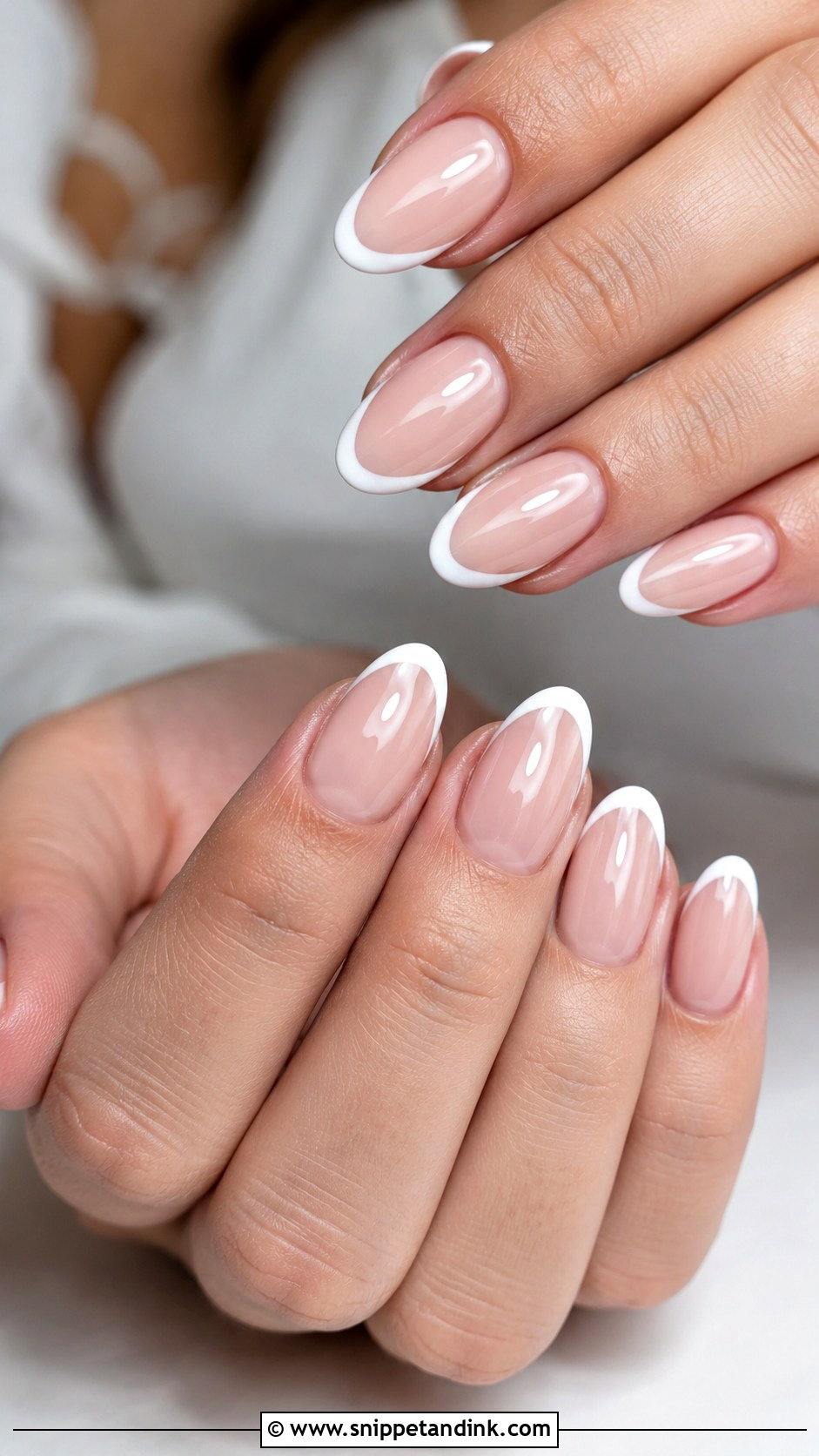
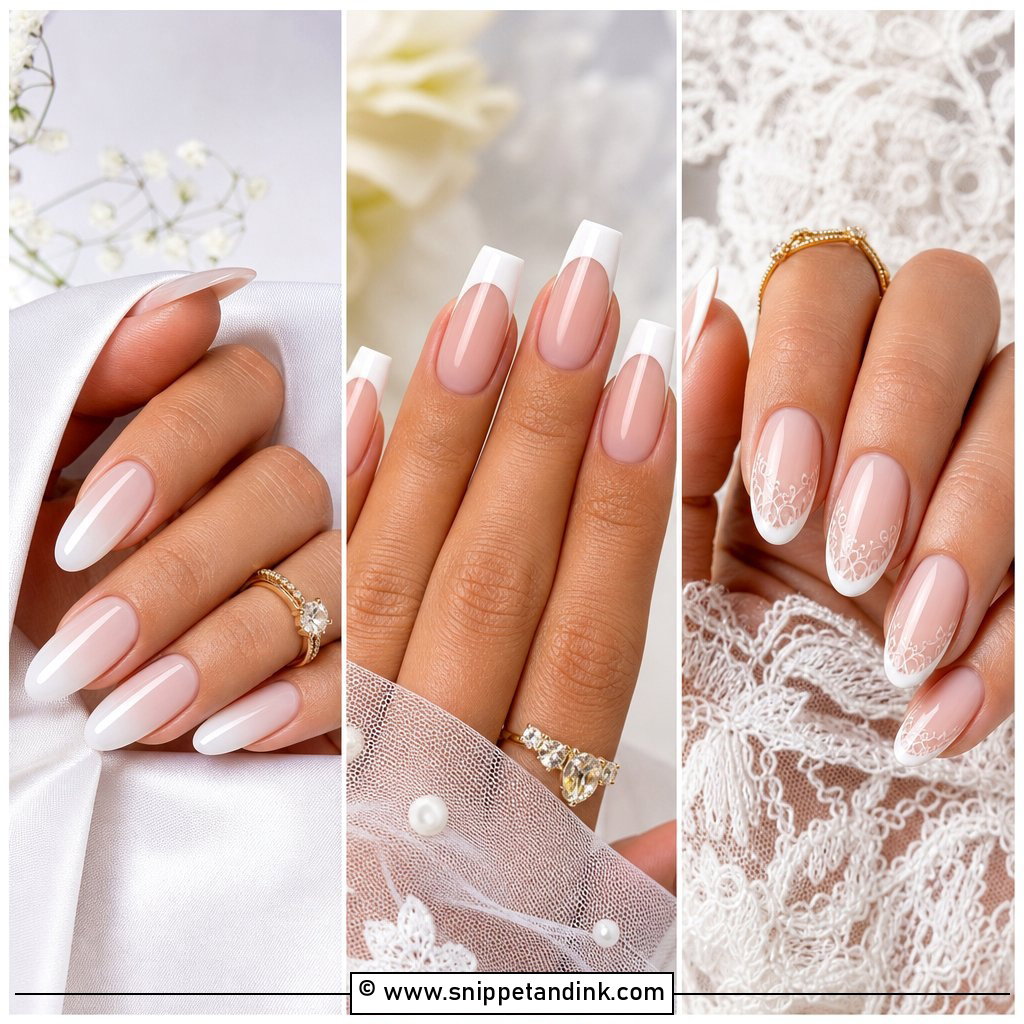
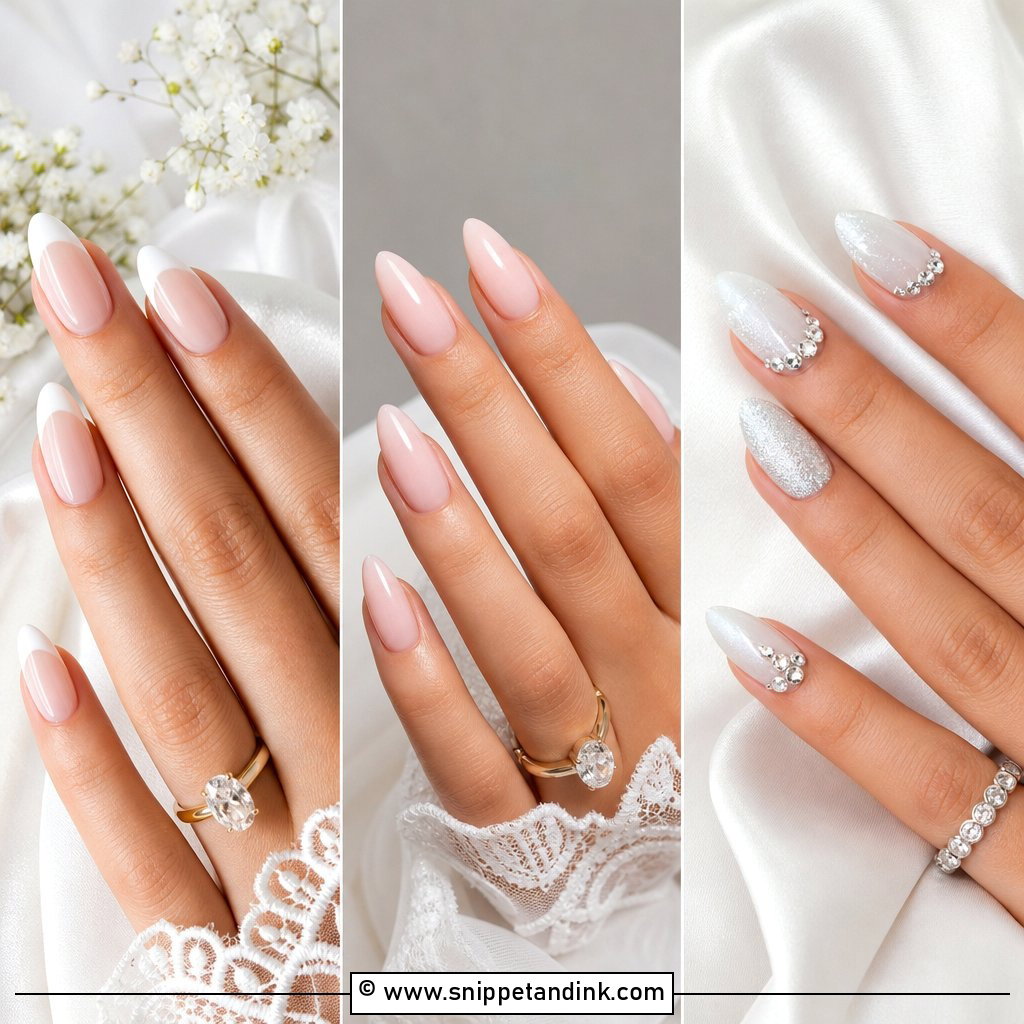
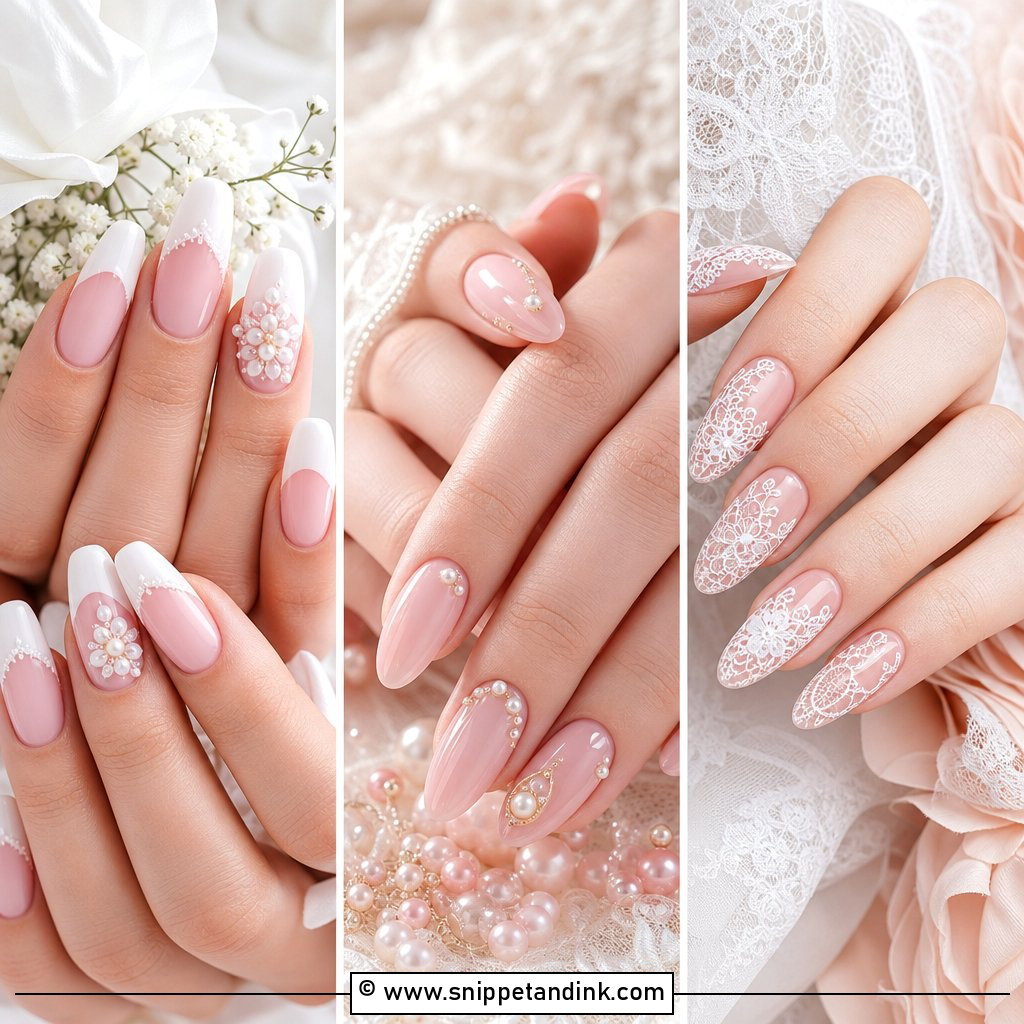
The modern French is softer than the bright-white tip of years past. I use a sheer pink or nude base and slim white tips painted to follow your own smile line rather than a stencil, because a line that ignores the natural curve makes the nail bed look shorter. Thinner tips sit lighter on the hand. Almond nails look graceful with it; short square nails look neat and traditional. It goes with nearly every dress, and as it grows out in the weeks after, the gap at the cuticle barely registers against a sheer base.
4. Micro French Spring Bridal Nails
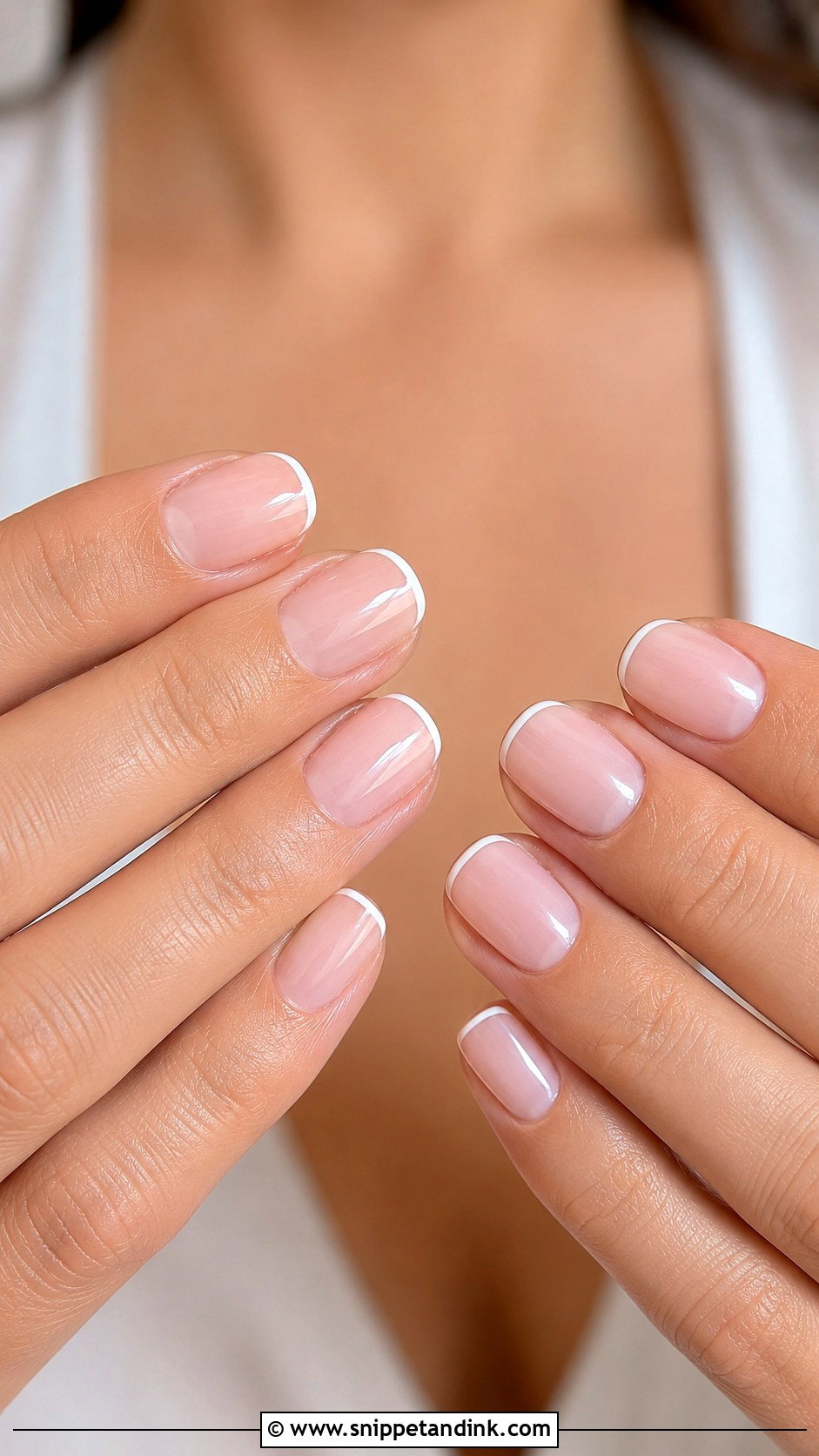
An ultra-thin white line at the very tip gives the nail a finished edge without taking over. Over sheer nude, pink or milky, it’s the French I’d suggest for short nails, because a standard tip eats up half of a short nail and makes it look stubby. I paint it with a long, fine striping brush and rotate the finger rather than the brush, which is how the line stays even. Keep the base glossy and light rather than beige. Simple rings, pearl earrings and minimalist gowns all suit it.
5. Pearl Chrome Spring Bridal Nails
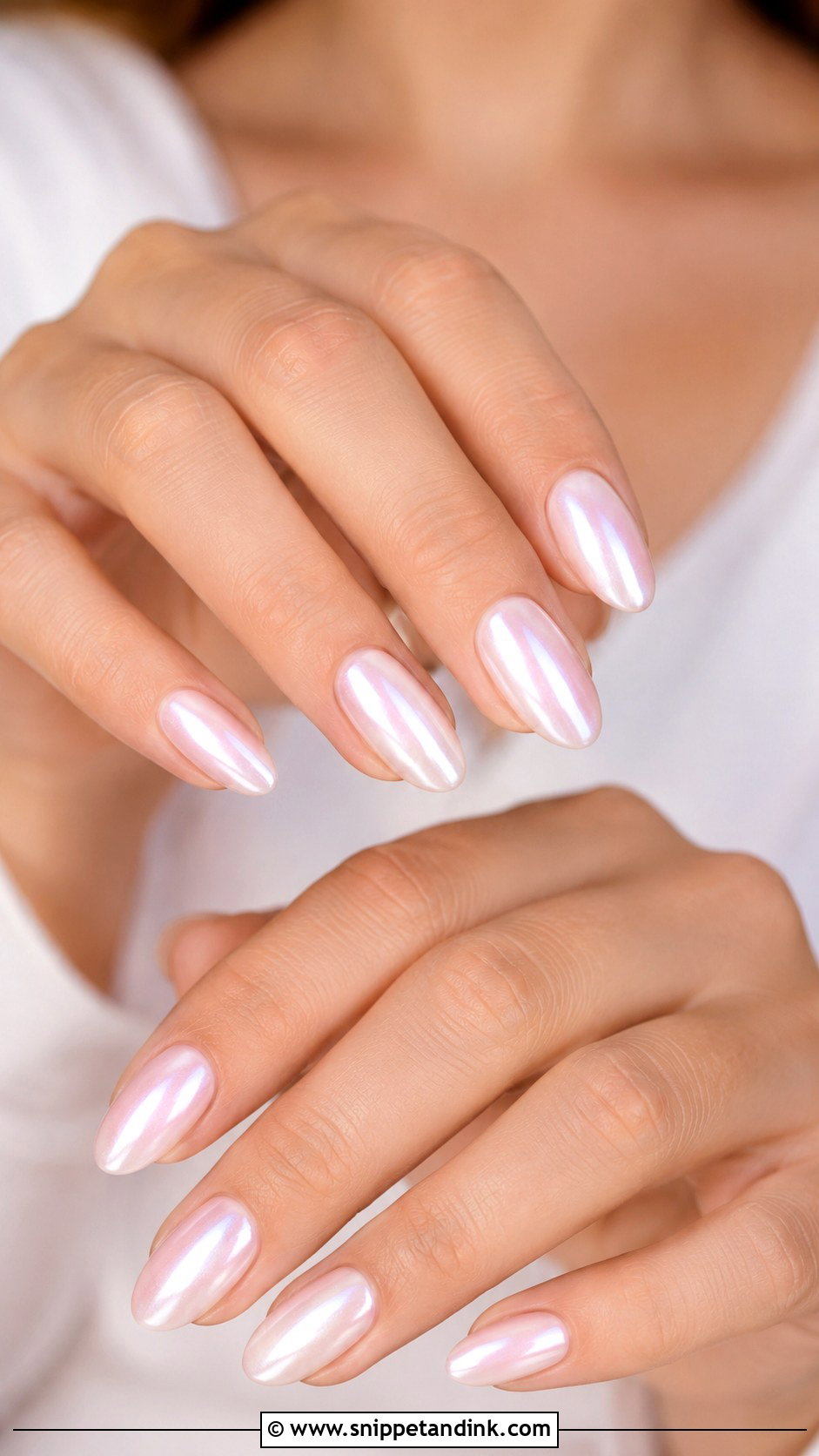
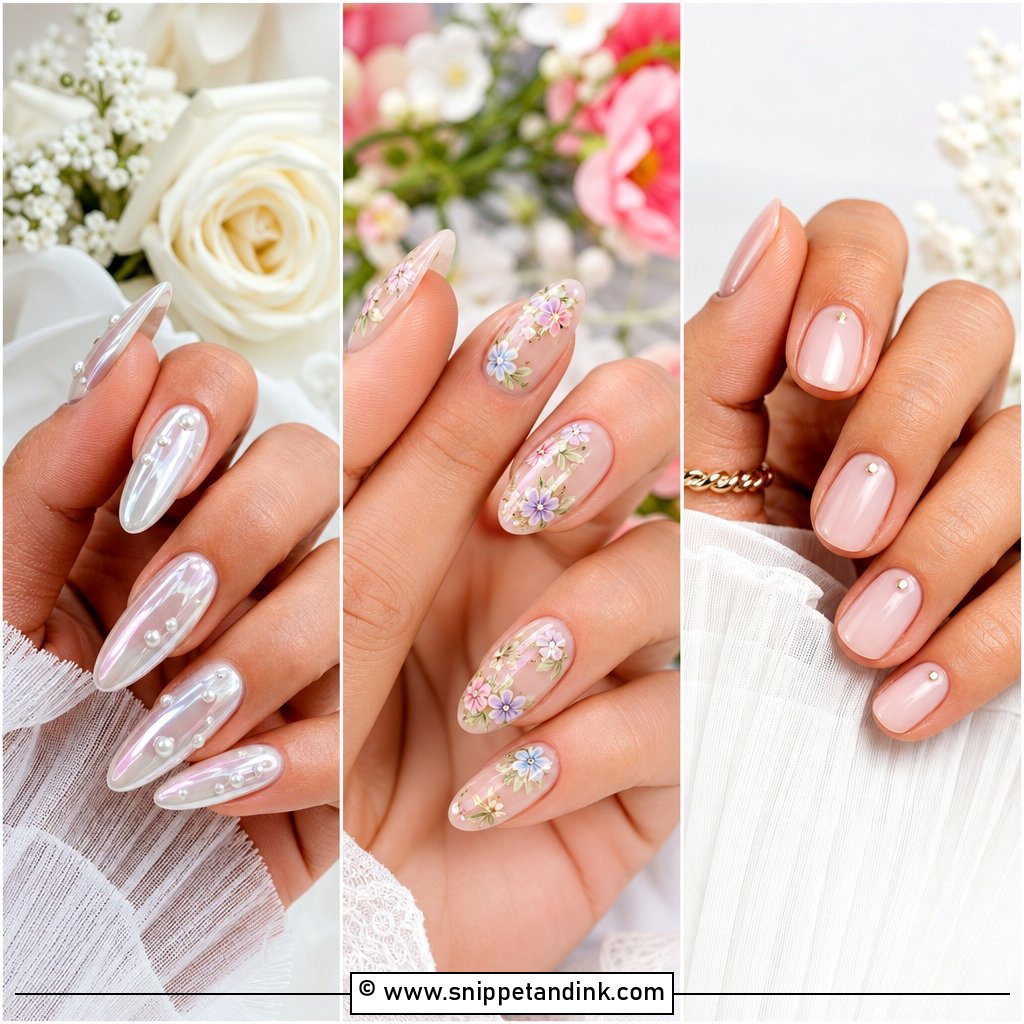
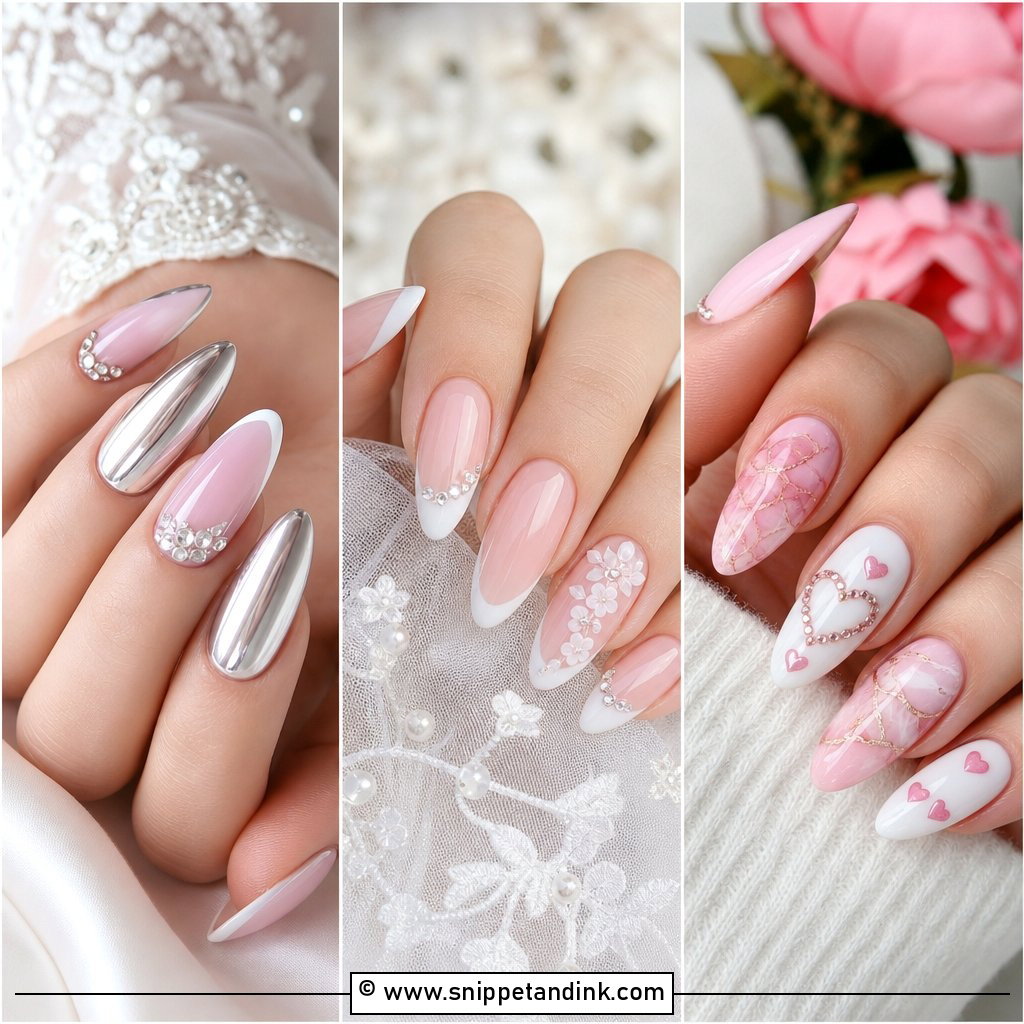
Mirror chrome can look metallic and cold in spring daylight. Pearl chrome spring bridal nails use a sheer pearl powder over milky white, blush pink or nude instead, so you get a smooth glow rather than a reflective shine. It’s especially good beside pearl buttons, satin or a dress with subtle shimmer. Almond and oval shapes lengthen the glow, while short square nails keep it modern. Ask for a fine, light pearl layer, not heavy silver chrome. Built up too thick, the powder looks grey in shade.
6. Floral Spring Bridal Nails
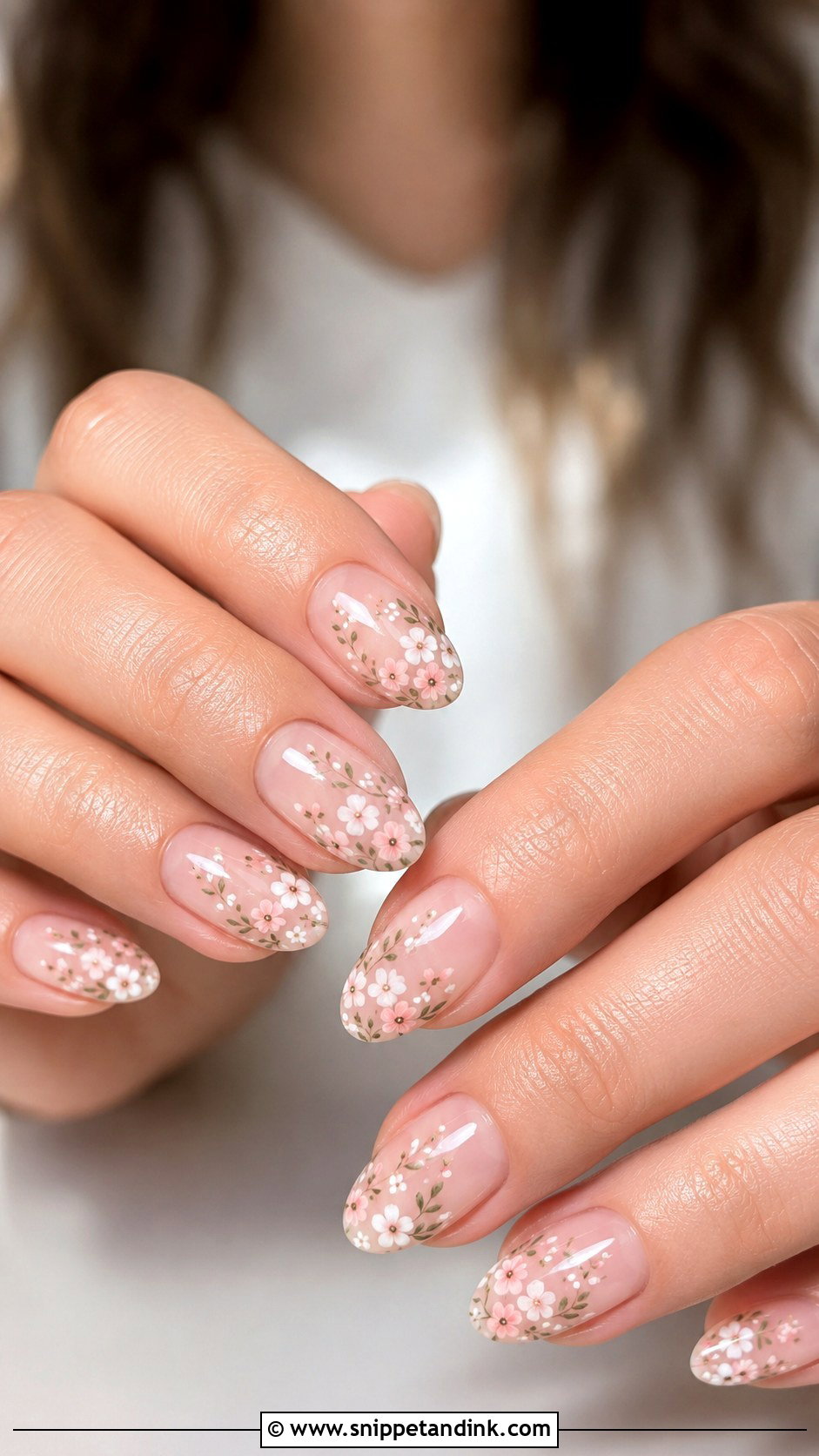
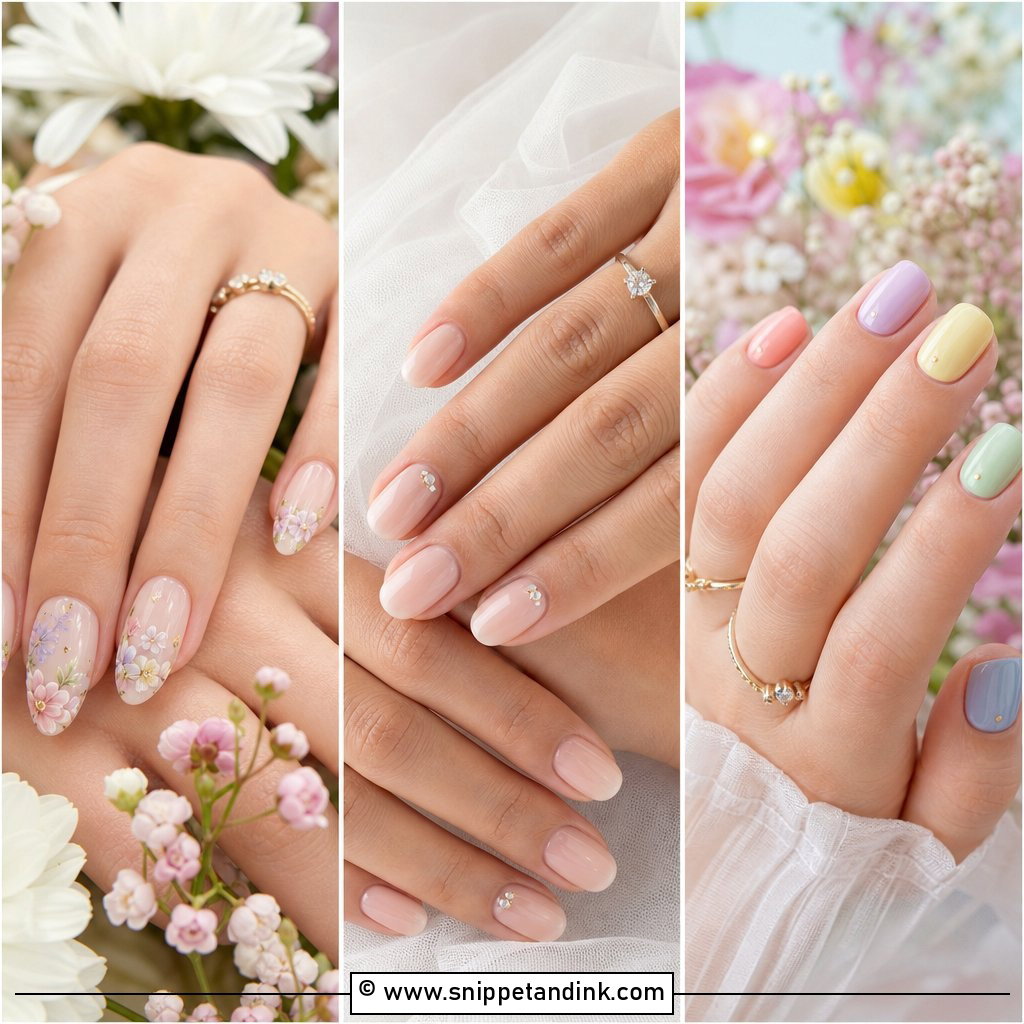
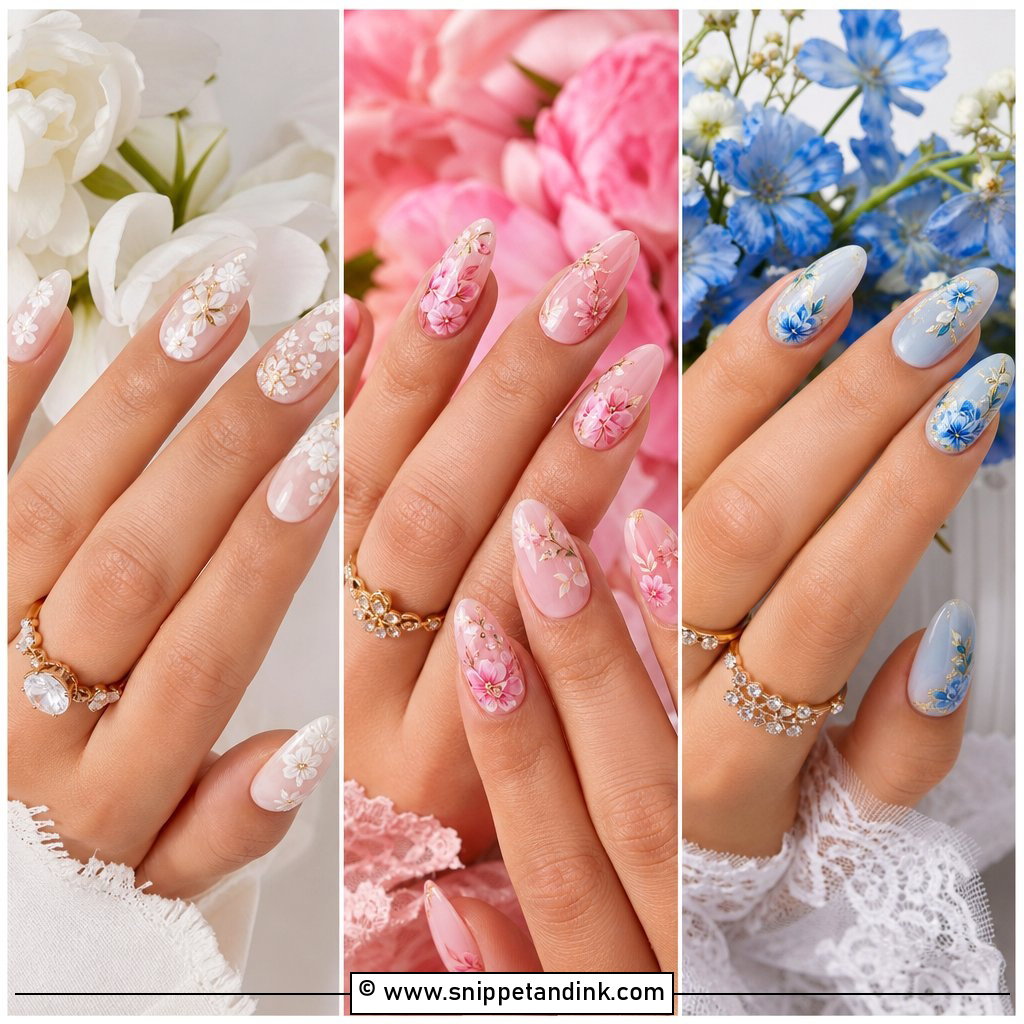
Small is everything with florals. A sheer nude or milky pink base with white, blush or pale blue flowers gives a garden feel, but once a flower is bigger than about a third of the nail it starts to look like a sticker. Tiny florals can run across every nail or be scattered lightly so the set stays airy, and almond gives them the most canvas. For a bride I prefer hand-painted petals to decals. Decals can lift at the edges and leave a faint outline under top coat, while painted petals sit flush once sealed.
7. Pressed Flower Spring Bridal Nails
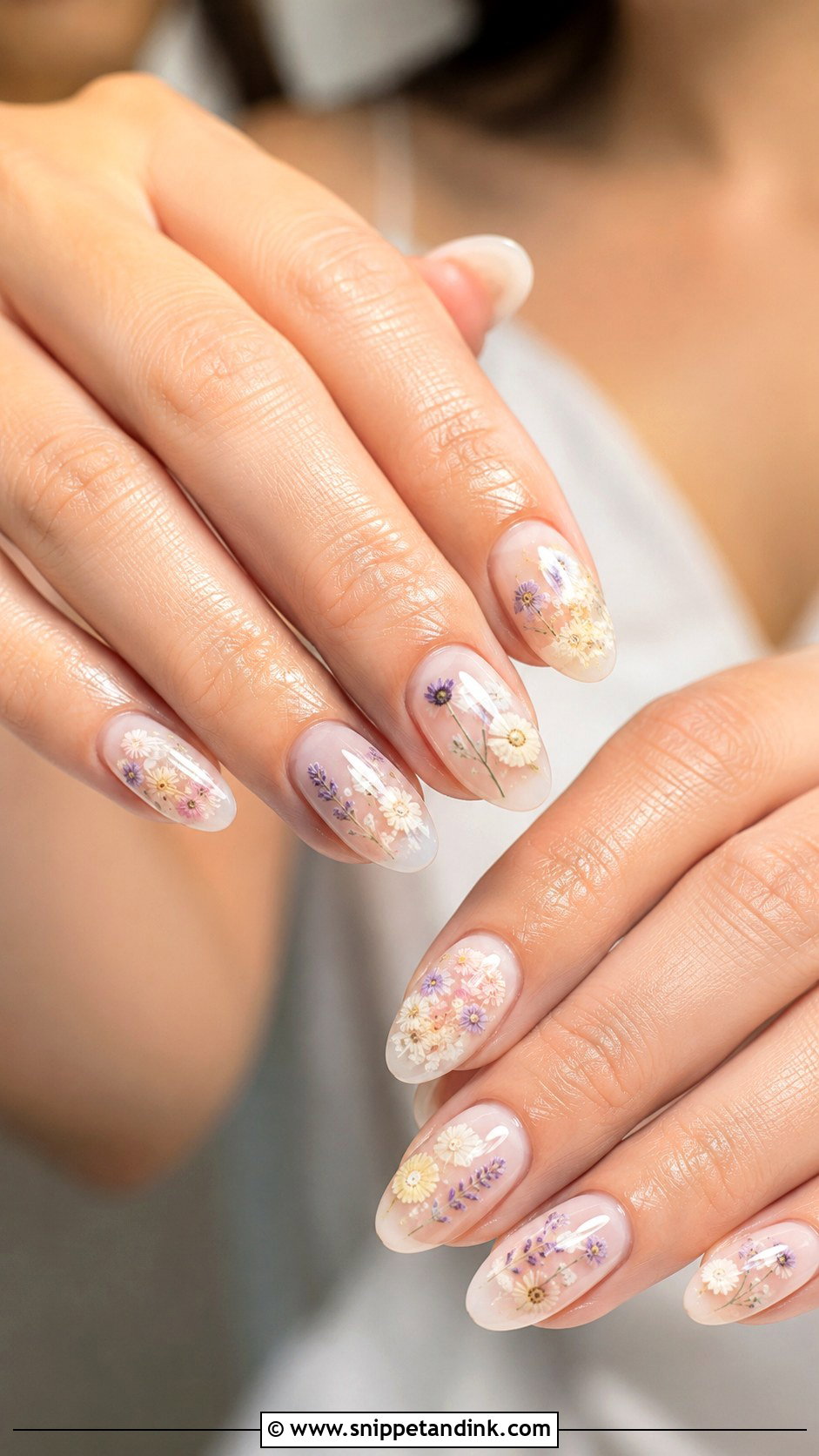
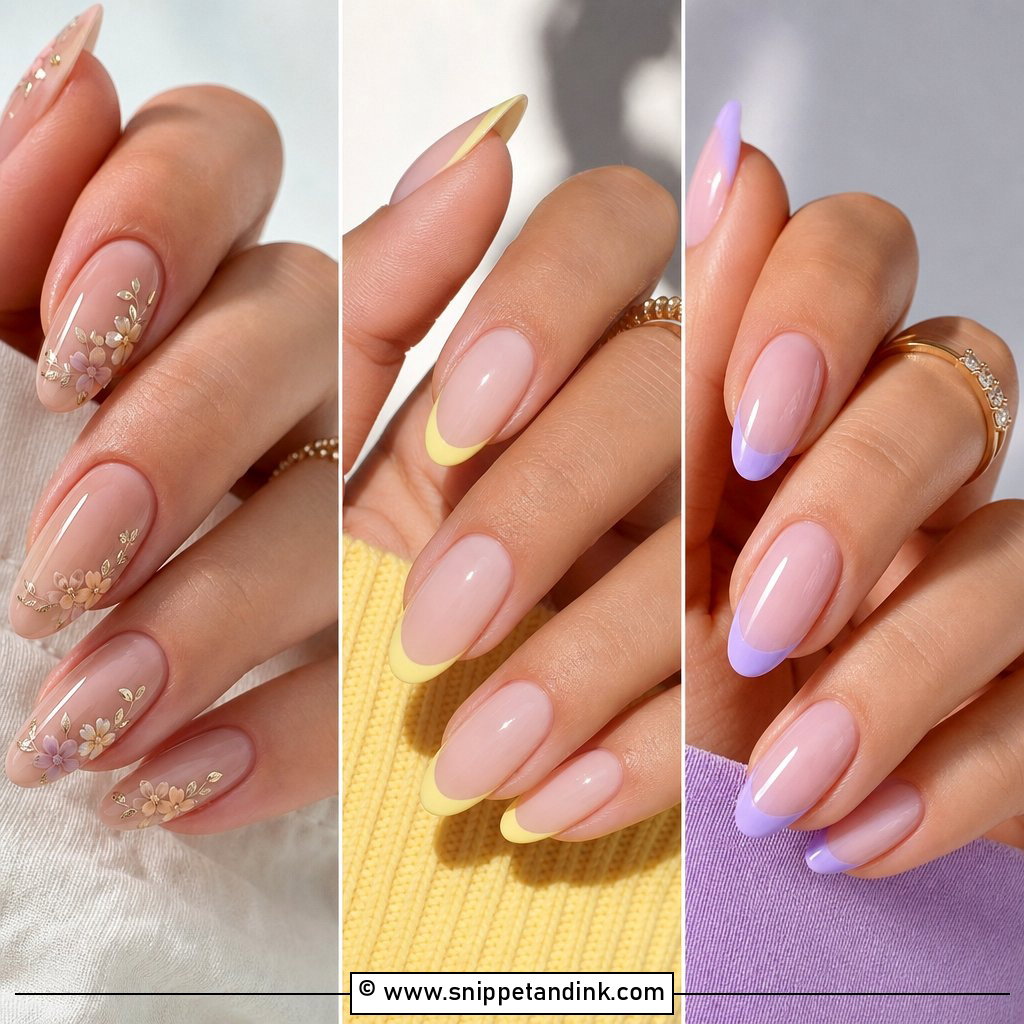
Real dried petals sealed under gel feel personal, and some brides ask for petals from the same flowers as their bouquet. Pressed flower spring bridal nails set those tiny pieces under clear or sheer gel over a nude, pink or milky base, in white, pale yellow, lavender or blush to echo the flowers. The petals must be pressed completely flat and fully encased. Any edge left uncovered lifts and catches on hair and fabric, so these nails take extra layers of top gel and end up a little thicker than a plain set. Oval and almond shapes suit the curve of the petals, and the look ties naturally into garden or meadow decor.
8. Lace Spring Bridal Nails
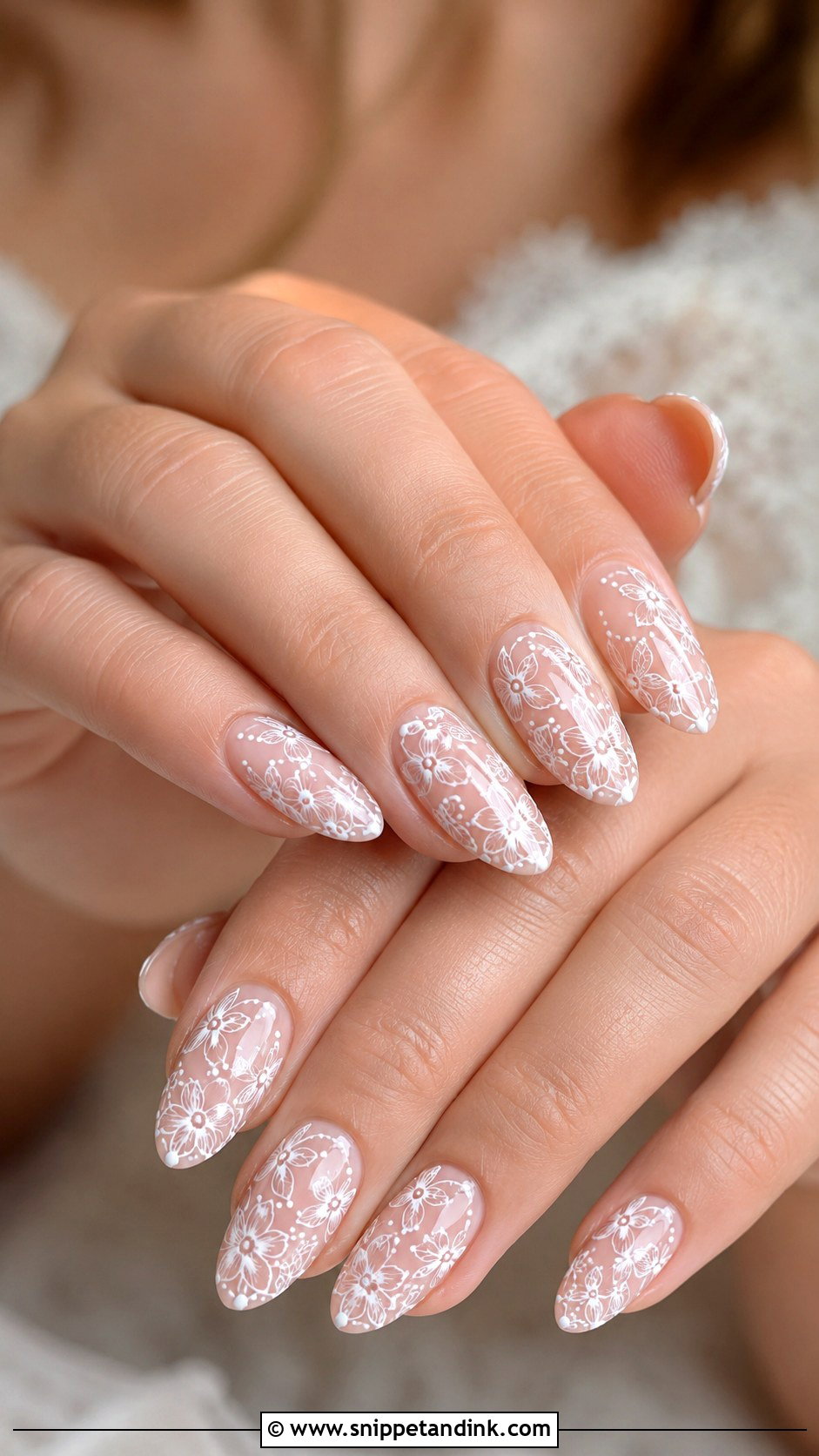
Here the manicure echoes the gown. A sheer nude or soft pink base carries white lace-style lines, tiny dots and floral patterns, either lightly across every nail or on a few accents with the rest left glossy. Thin lines and soft contrast are what keep it bridal; bright white lace over a darker base turns heavy fast. If your dress has lace sleeves, an embroidered veil or appliqué, bring a close-up photo of the actual lace so the pattern repeats a real motif from your dress.
9. Ombre Spring Bridal Nails
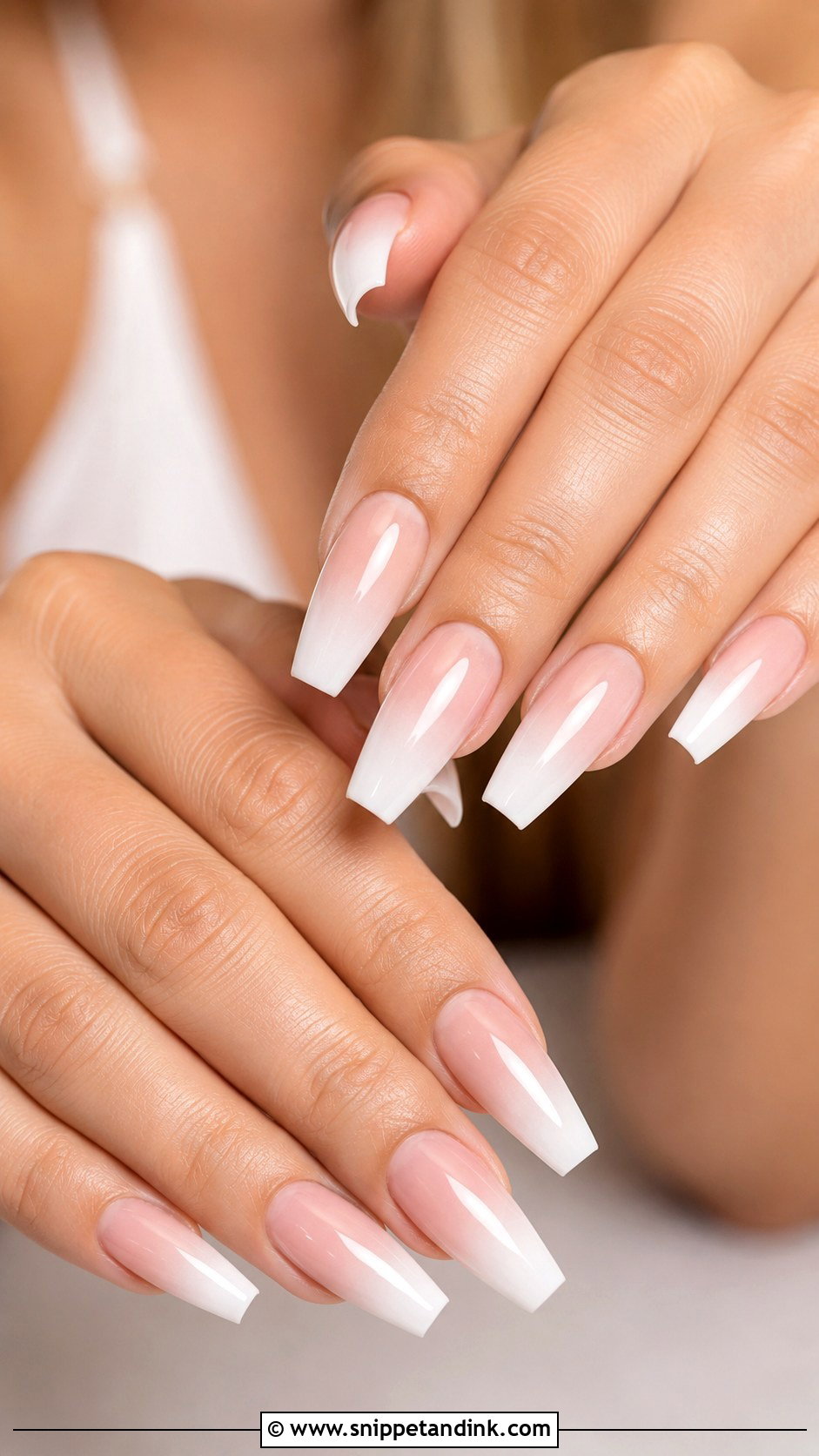
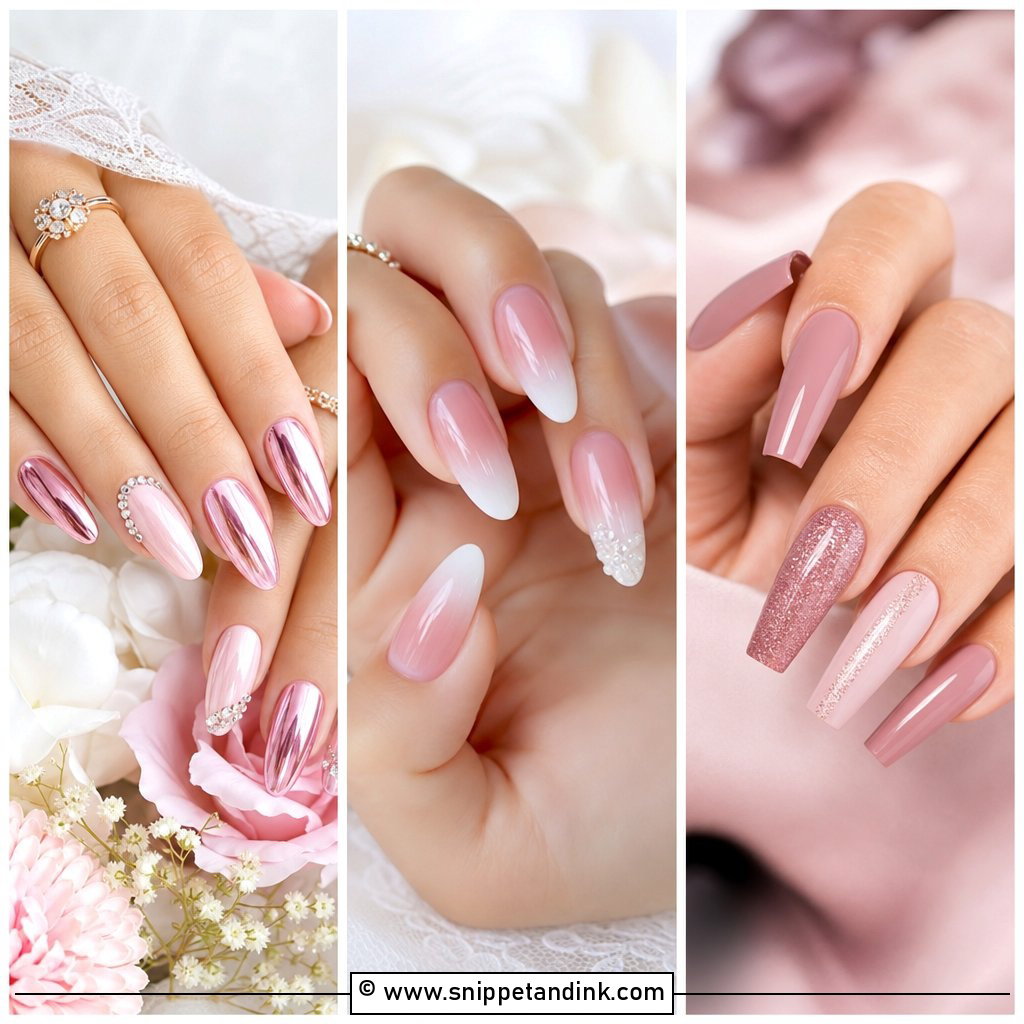
A nude or blush base melting into a creamy white tip is softer than a sharp French. Ombre spring bridal nails, also called baby boomer nails, depend entirely on the blend. Done with a sponge or a dabbing brush in thin layers, the fade has no visible line; rushed, it leaves a band halfway up the nail. For spring, keep the white light and airy rather than solid at the tip. Long almond, coffin and oval shapes give the gradient room. On very short nails the fade compresses into something that looks like a smudged French.
10. Nude Spring Bridal Nails
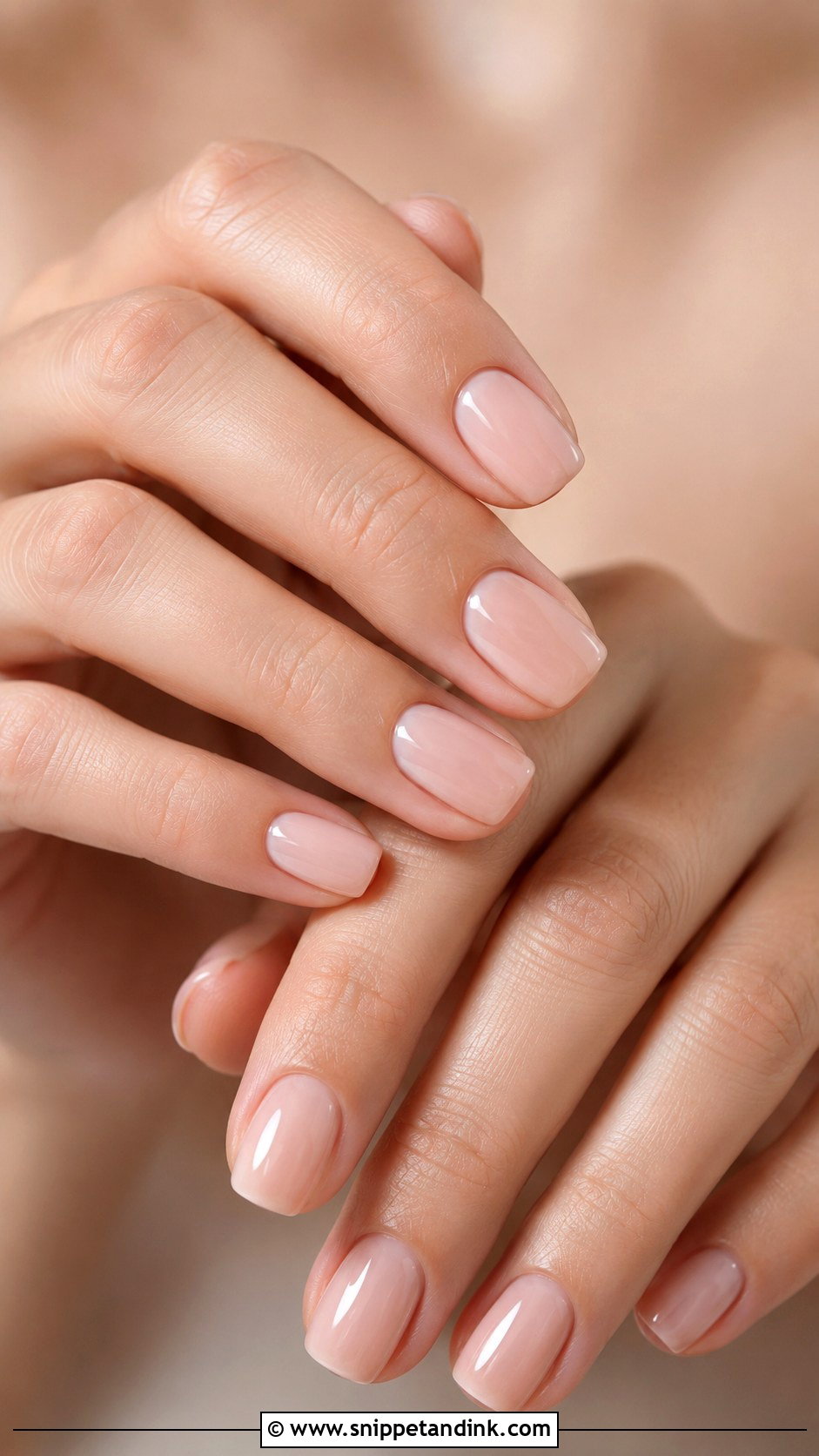
The right nude disappears into your hand and makes it look longer. The wrong one makes fingers look grey. Match the undertone: peachy nude for warm skin, rosy nude for cool, beige-pink for neutral. I swatch two or three on the actual nail before deciding, because the bottle tells you almost nothing about how a sheer nude reads over your own nail bed. Jelly or sheer finishes look softer than thick opaque nudes, and your ring, dress and bouquet stay center stage. Short squoval is clean and practical, almond more graceful.
11. Blush Chrome Spring Bridal Nails
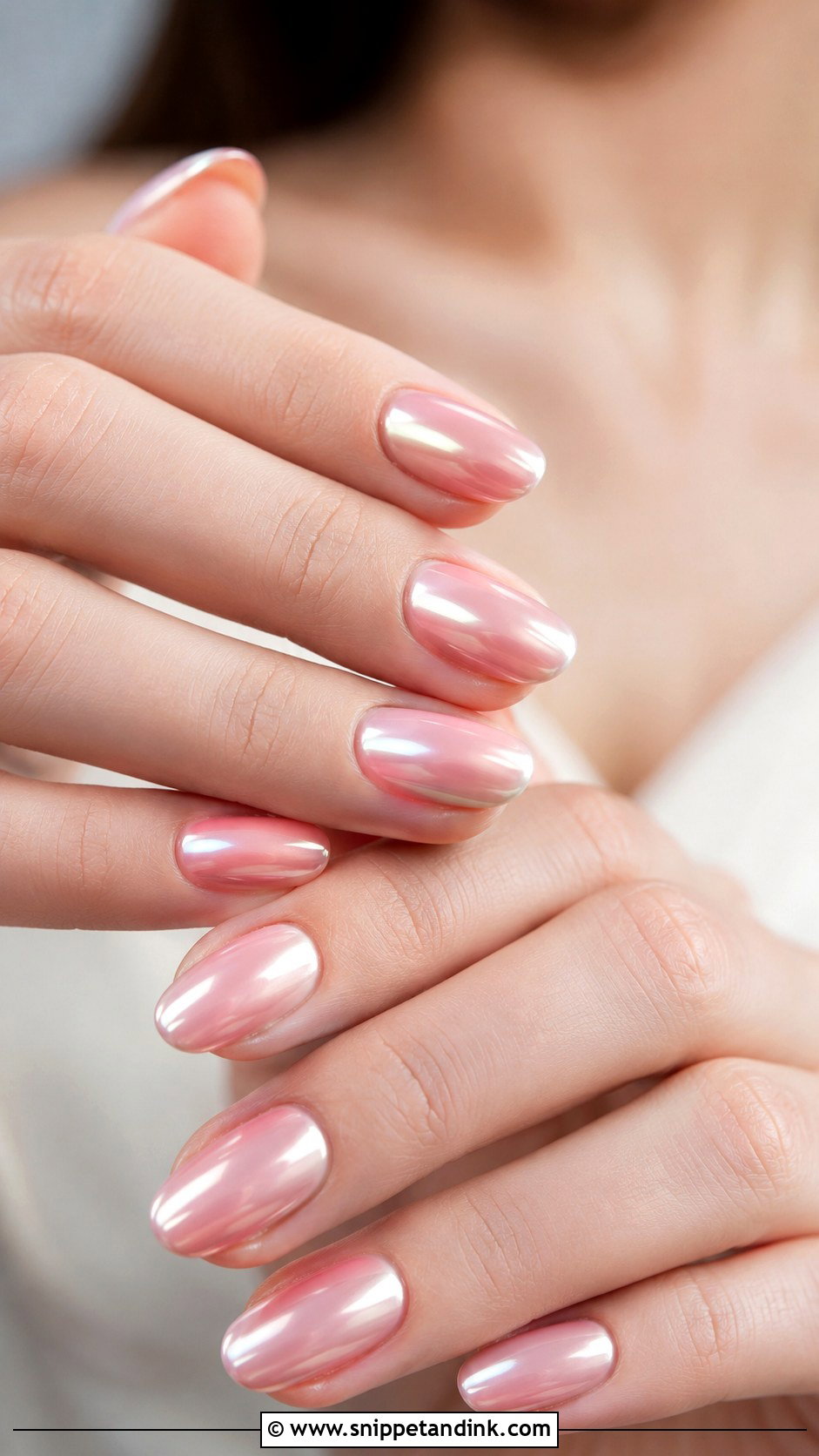
When plain pink feels too simple and glitter too bold, blush chrome sits in between. A sheer blush, rose pink or pink-nude base gets a fine chrome powder buffed over it that catches light softly, adding dimension without sparkle. It sits well with rose gold jewelry, pink bouquets and soft makeup, and almond or oval shapes help the chrome look smooth. Keep the powder light. Chrome also shows every ridge in the nail underneath, so on ridged nails I add a thin leveling layer first.
12. Pastel French Spring Bridal Nails
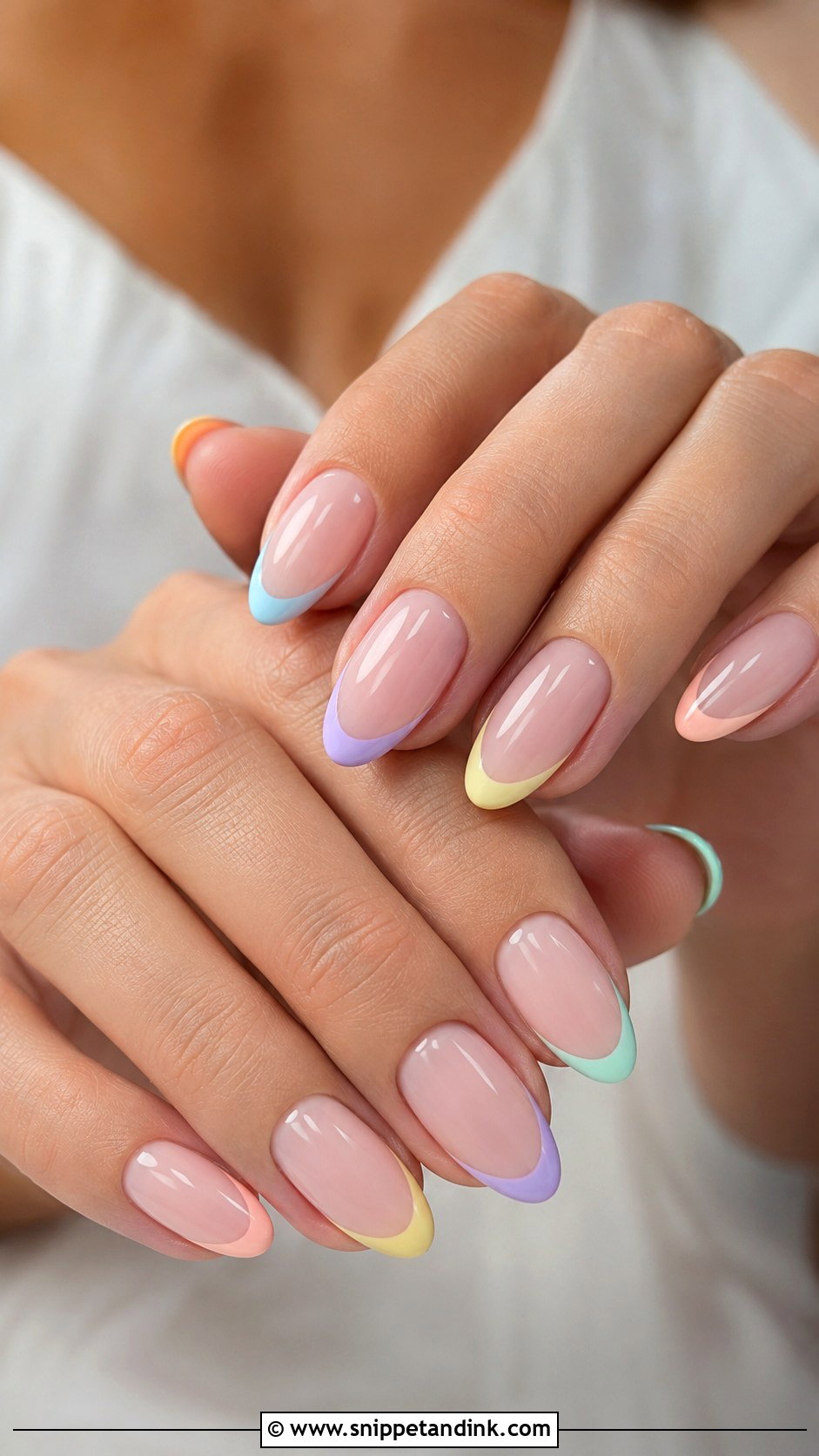
Colored tips are the easiest way to bring the season in without coloring the whole nail. Baby blue, pale lavender, butter yellow, mint or blush peach go over a sheer nude base, either one shade across the set or a very soft mix. Clean, thin tips matter even more with color, since a wobbly pastel line shows more than a wobbly white one. Five different pastels can look like Easter eggs, so for a mixed set I’d pick two or three neighboring shades. It’s a natural match for colorful bouquets and spring garden venues.
13. White Flower French Spring Bridal Nails
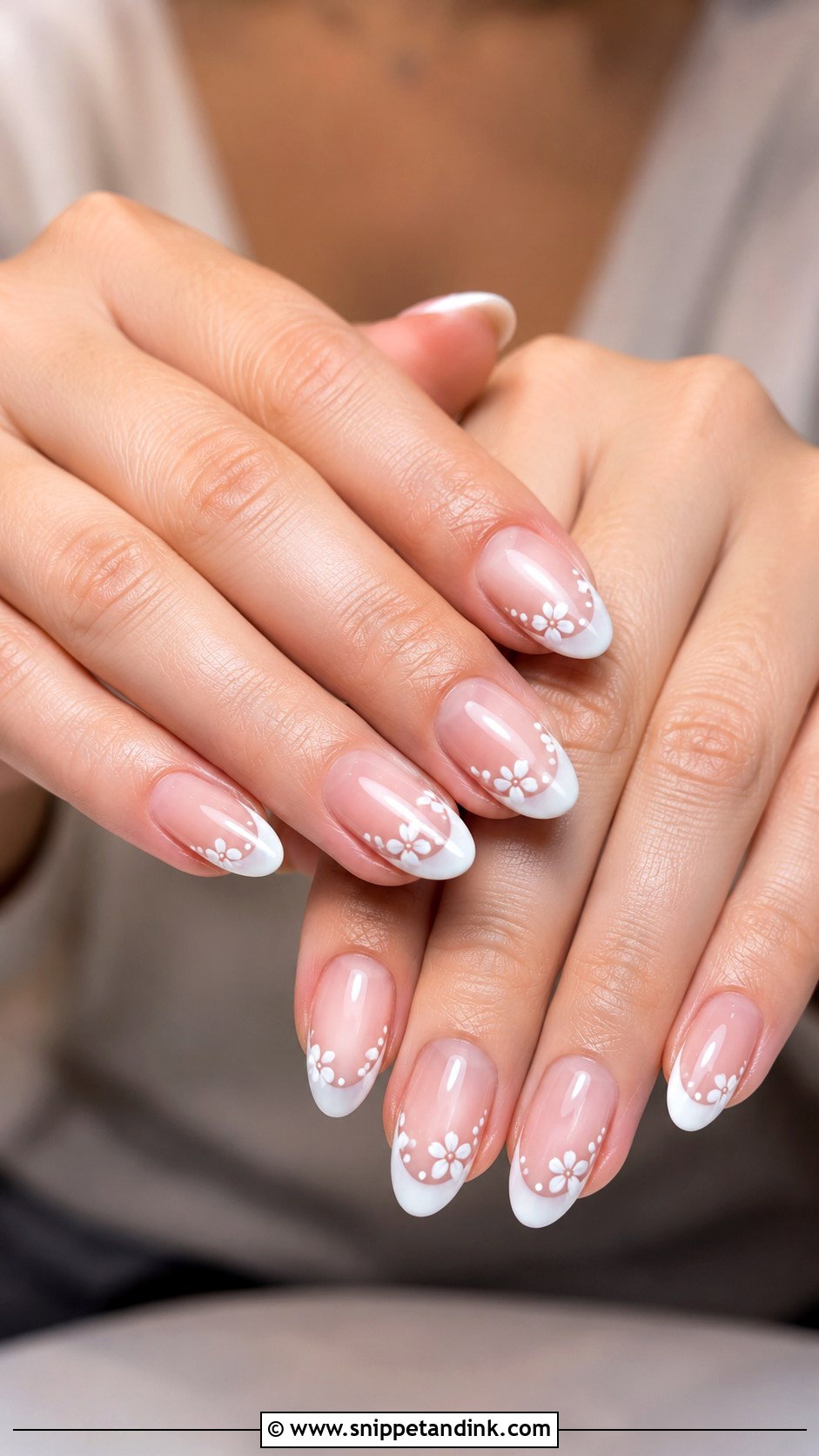
This one layers two classics. On a sheer pink or nude base with soft white French tips, I add tiny white flowers along the tip line or near the cuticle, usually on two or three nails rather than all ten. Spacing keeps it clean; crowded flowers turn the French into a busy pattern. White on white reads fresh beside lace gowns, floral veils and white bouquets. Almond gives the design a graceful finish, and short oval nails stay practical through a long day of hugging and hand-holding.
14. Sheer Glitter Spring Bridal Nails
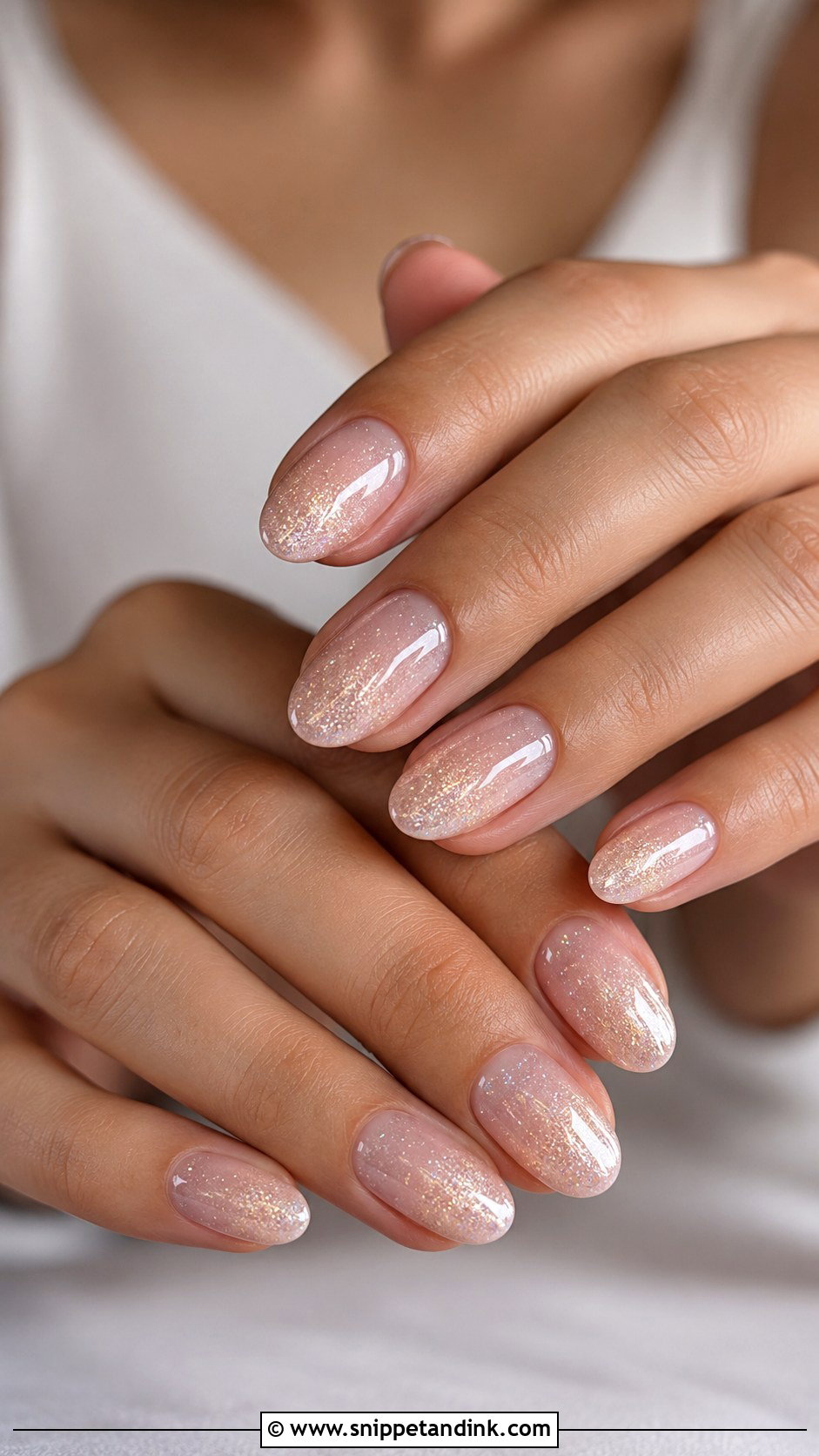
Fine shimmer over a sheer nude, pink or milky base reads as a glow across the nail rather than as glitter, and that’s the version I use in spring, because chunky flakes look out of season against pastels. It suits every length, from short natural nails to long almond extensions. Silver, pearl, champagne or pale pink shimmer all work. I mix the shimmer into the sheer color rather than layering it on top, which gives even coverage without bald patches, then smooth it all with a glossy top coat.
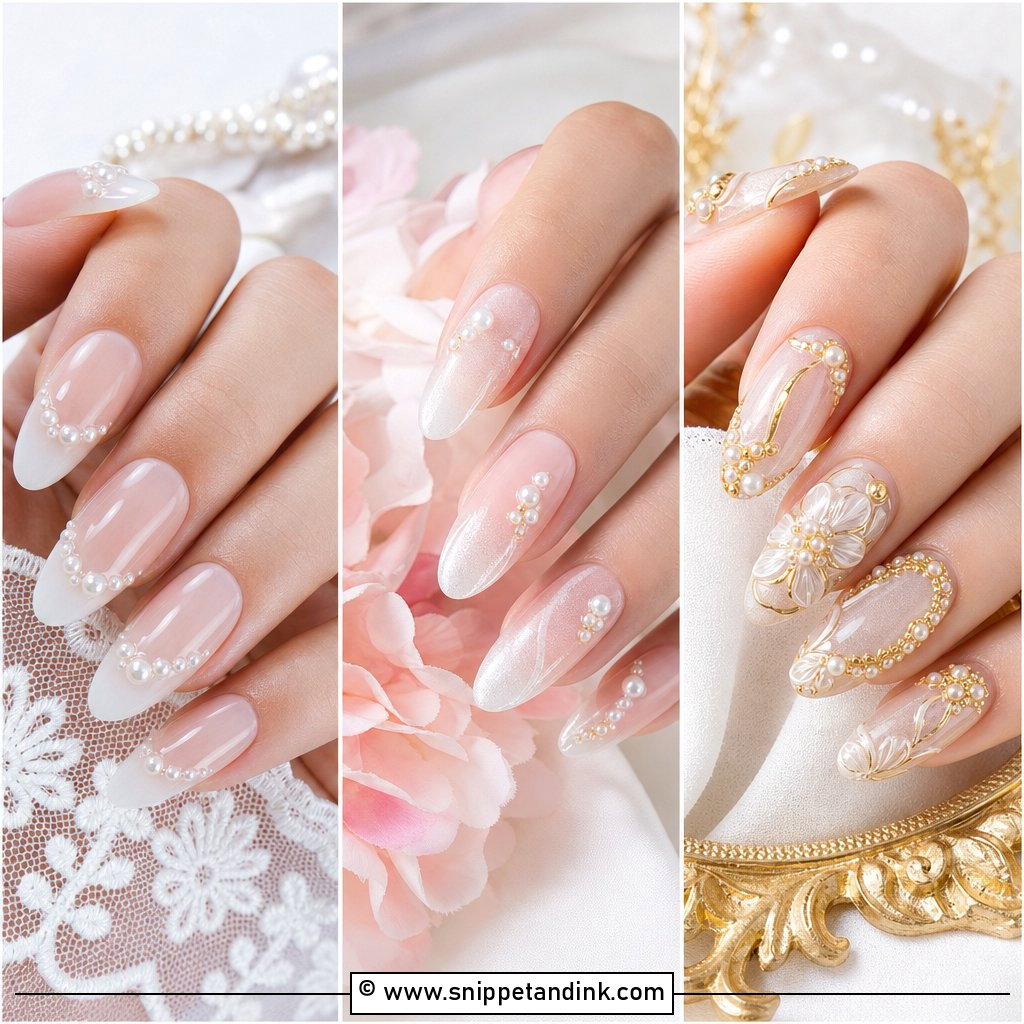
15. Pearl Accent Spring Bridal Nails
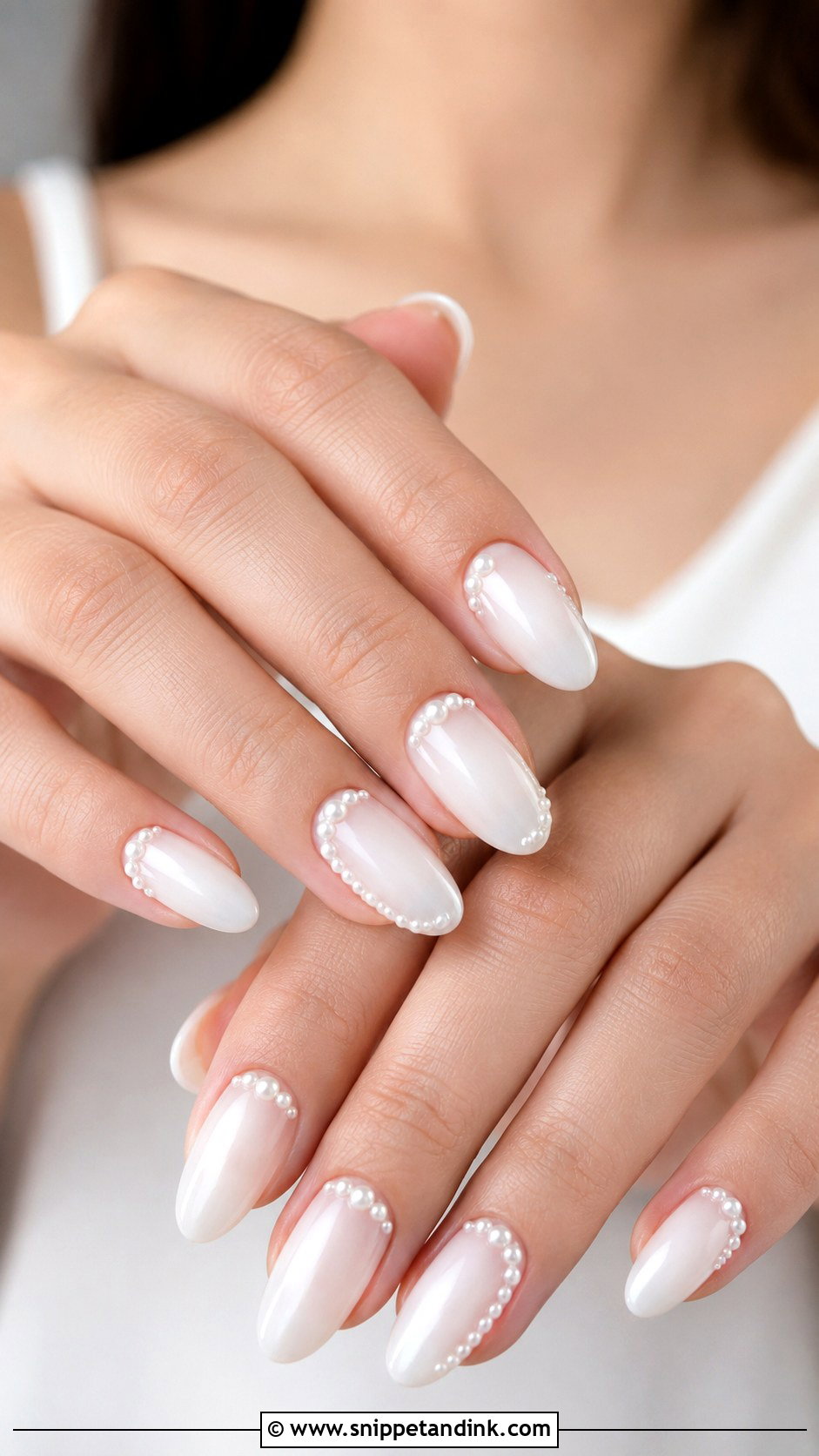
Tiny pearls near the cuticle or along one side of each nail, over milky white, nude or blush, look like jewelry when they’re small and spaced, and bulky when they’re not. They suit brides wearing pearl earrings, a pearl-edged veil or a gown with pearl buttons. Short oval and medium almond are the most wearable shapes. I set each pearl deep in gel and cap around its base. If you have a shower or rehearsal dinner before the wedding, those pearls need to survive several days of handbags and hugs, not just one.
16. Gold Detail Spring Bridal Nails
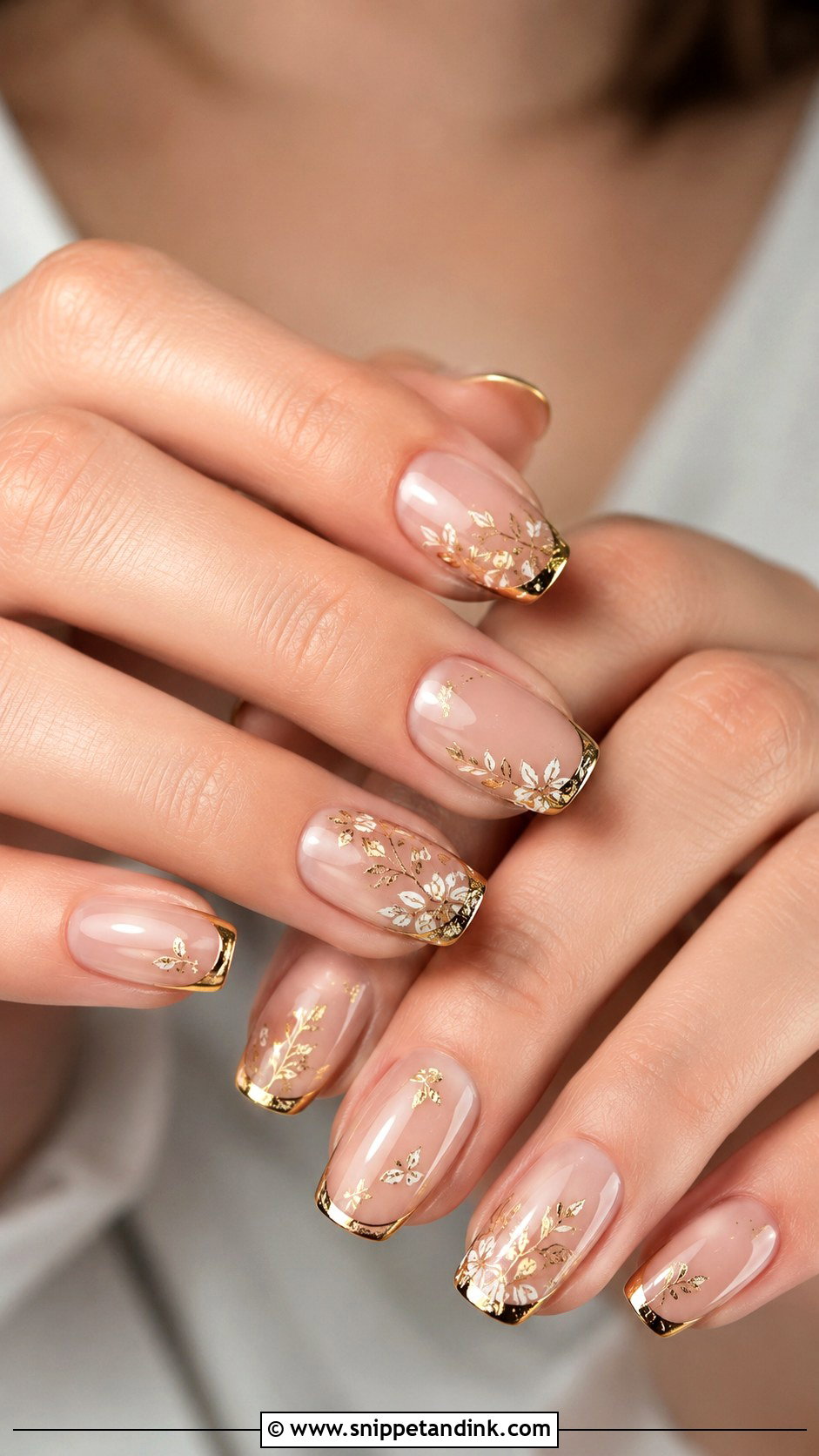
Gold detailing makes sense if your jewelry is yellow gold or your accessories run warm. Thin gold French tips over a sheer nude, tiny gold foil pieces, or fine gold lines on a milky background all work, as long as the gold is controlled and never metallic all over. Foil is fragile. It creases if pressed too hard and needs a full top-coat seal or the edges flake. It warms a spring set and sits easily with ivory or champagne gowns, peach flowers and neutral makeup. Almond or squoval both work, and less gold always looks more expensive next to a wedding band.
17. Blue Spring Bridal Nails
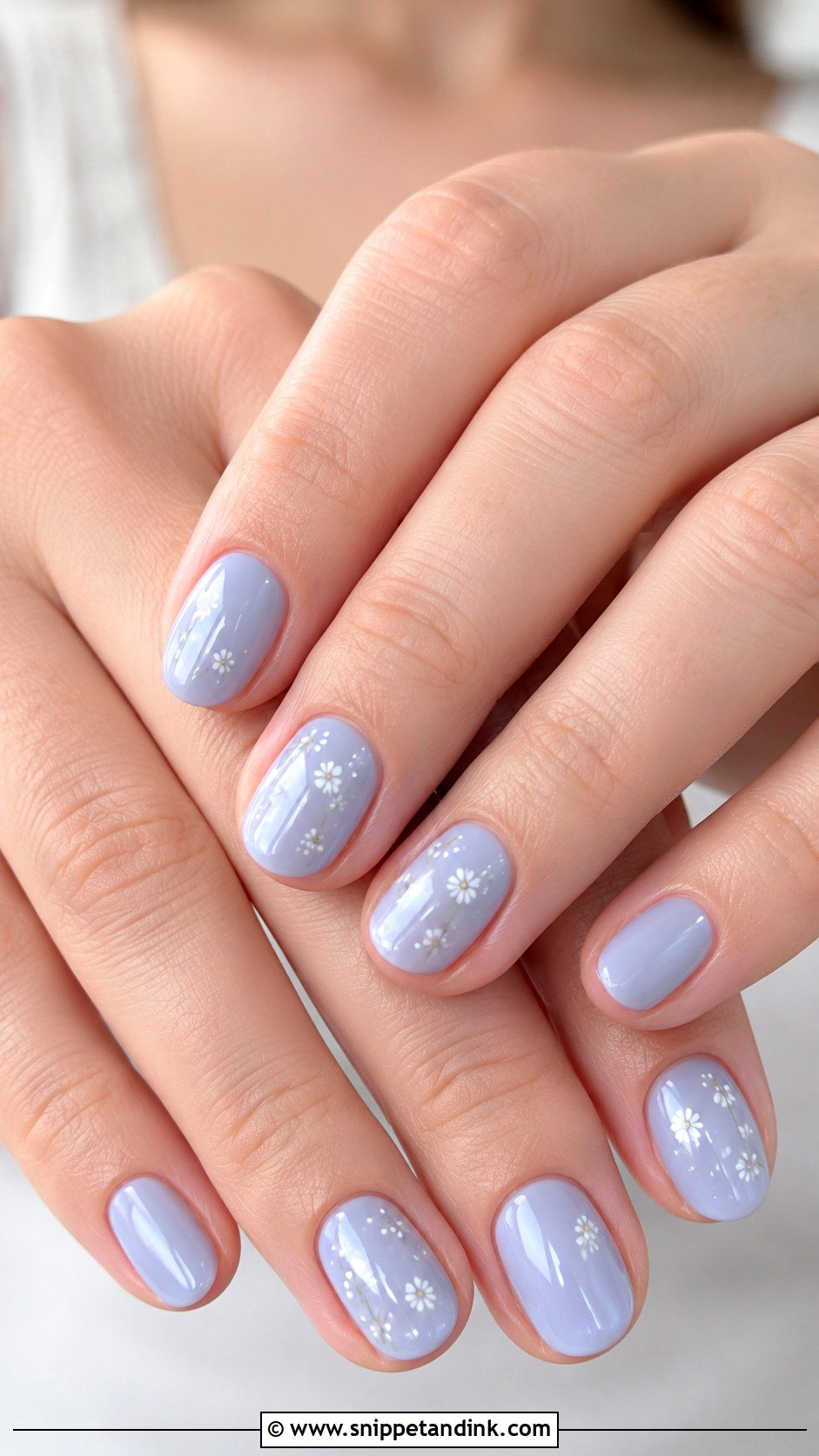
Pale blue is the easiest way to wear a soft “something blue” where you can actually see it. I’d choose pale blue, powder blue or blueberry milk over bright blue, as a sheer wash, blue French tips or a milky blue base with tiny white flowers. Blue pigment can tint a bare nail plate, so a proper base coat matters with this one. It’s fresh with silver jewelry, white flowers and blue accents. Short oval keeps it subtle, almond more elegant, and a glossy or pearl finish softens the color.
18. Peach Spring Bridal Nails
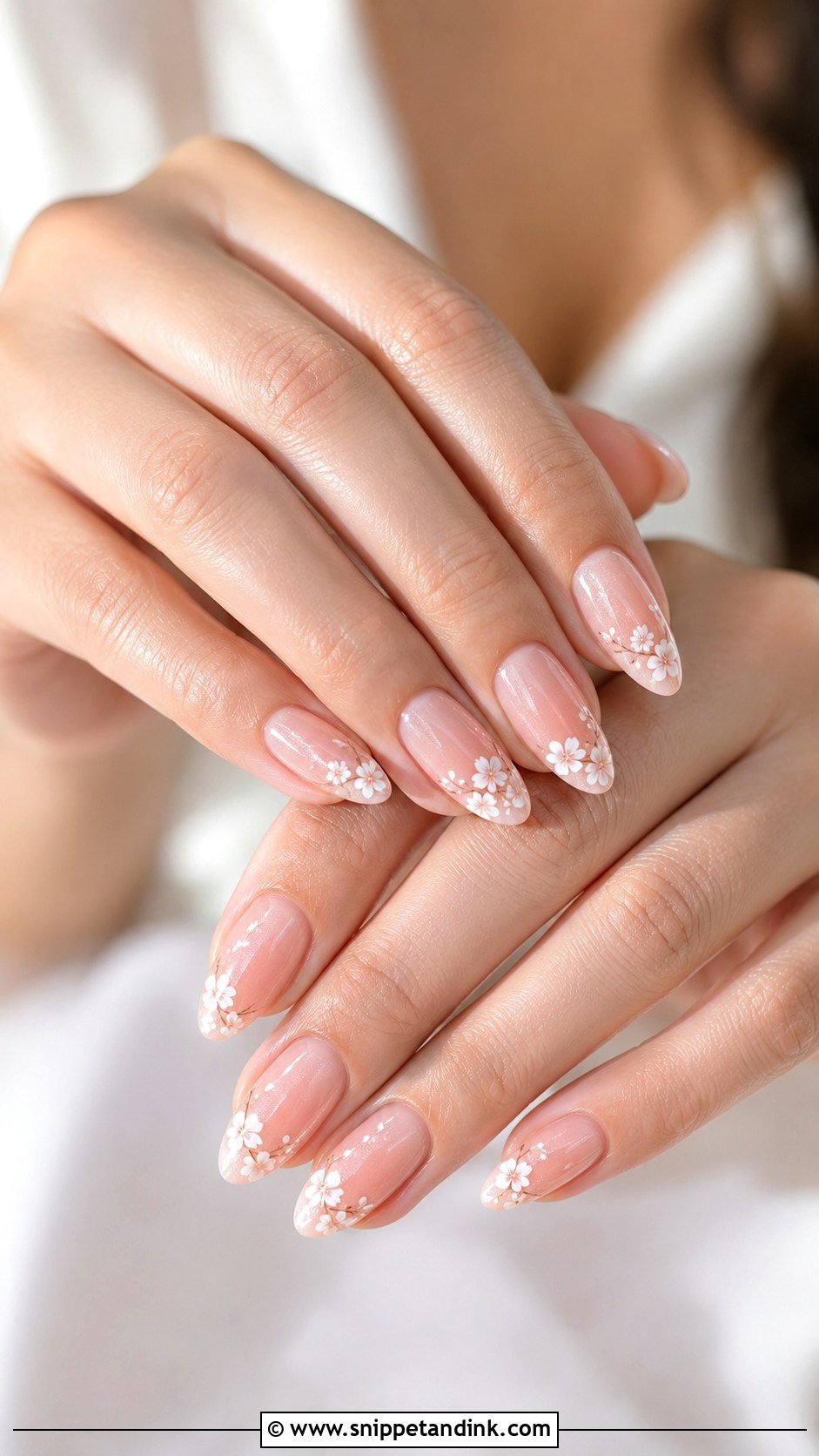
A sheer peachy pink glows on warm skin in outdoor daylight. Avoid anything leaning toward neon orange, because sun makes it louder, not softer. Keep it simple and glossy, or add delicate white flowers, pearl shimmer or thin French tips. Peach suits warm skin tones, ivory gowns, gold jewelry and bouquets with coral, cream or blush blooms, and it looks clean on short nails. On cool, pink-toned hands, I’d lean toward a pink with only a hint of peach so the fingers don’t look ruddy.
19. Lavender Spring Bridal Nails
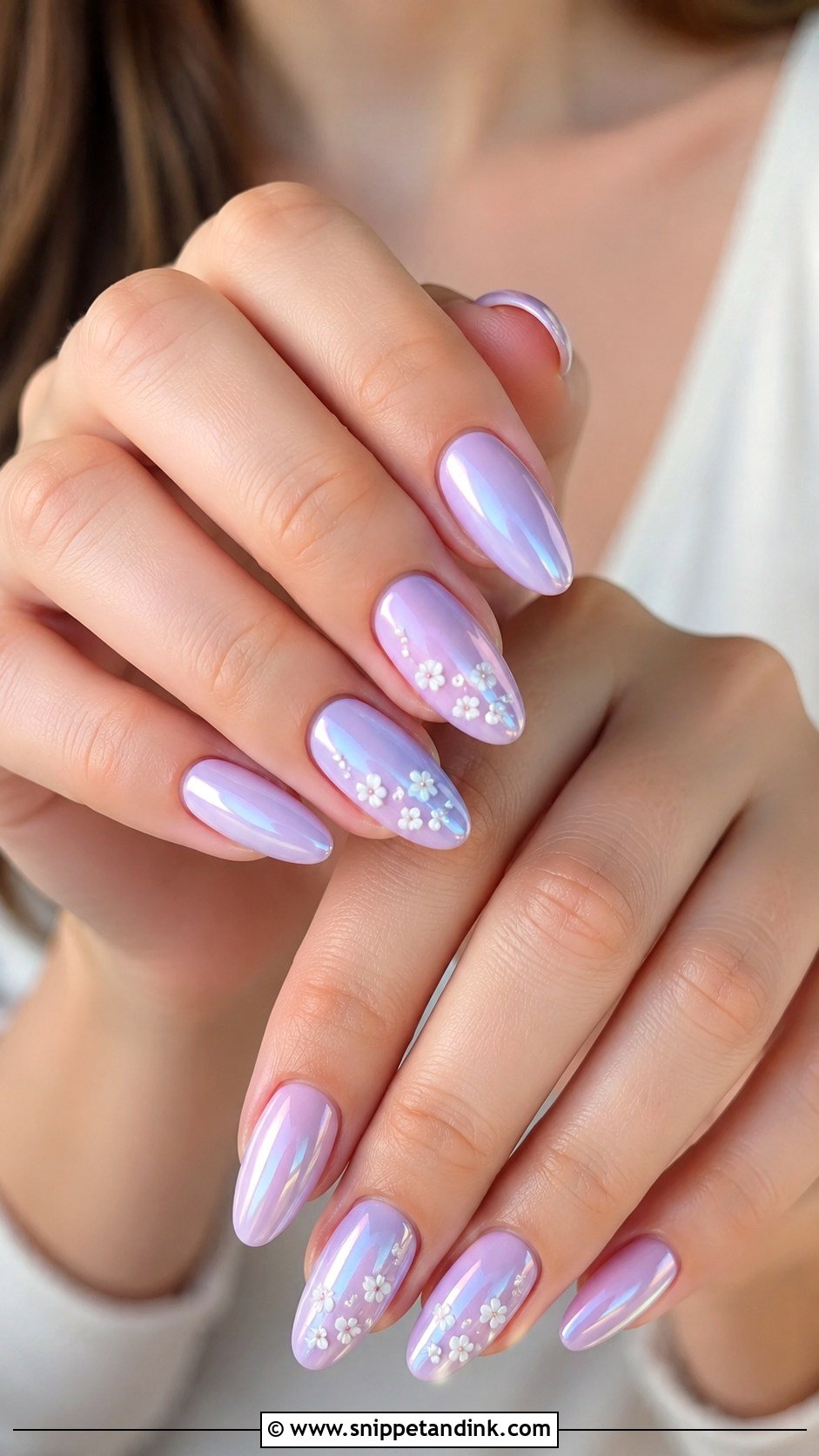
Lavender is the unexpected one, and the one I swatch most carefully. Pale lavender or lavender milk with a sheer gloss looks fresh in sun but can turn greyish in shade, and on hands with a lot of redness it can look cold. Tiny white flowers, pearl chrome or micro French tips keep it bridal. It pairs naturally with silver jewelry, cool-toned makeup and lilac, white roses or pale hydrangeas. Almond makes it elegant; short squoval keeps it understated.
20. Short Spring Bridal Nails
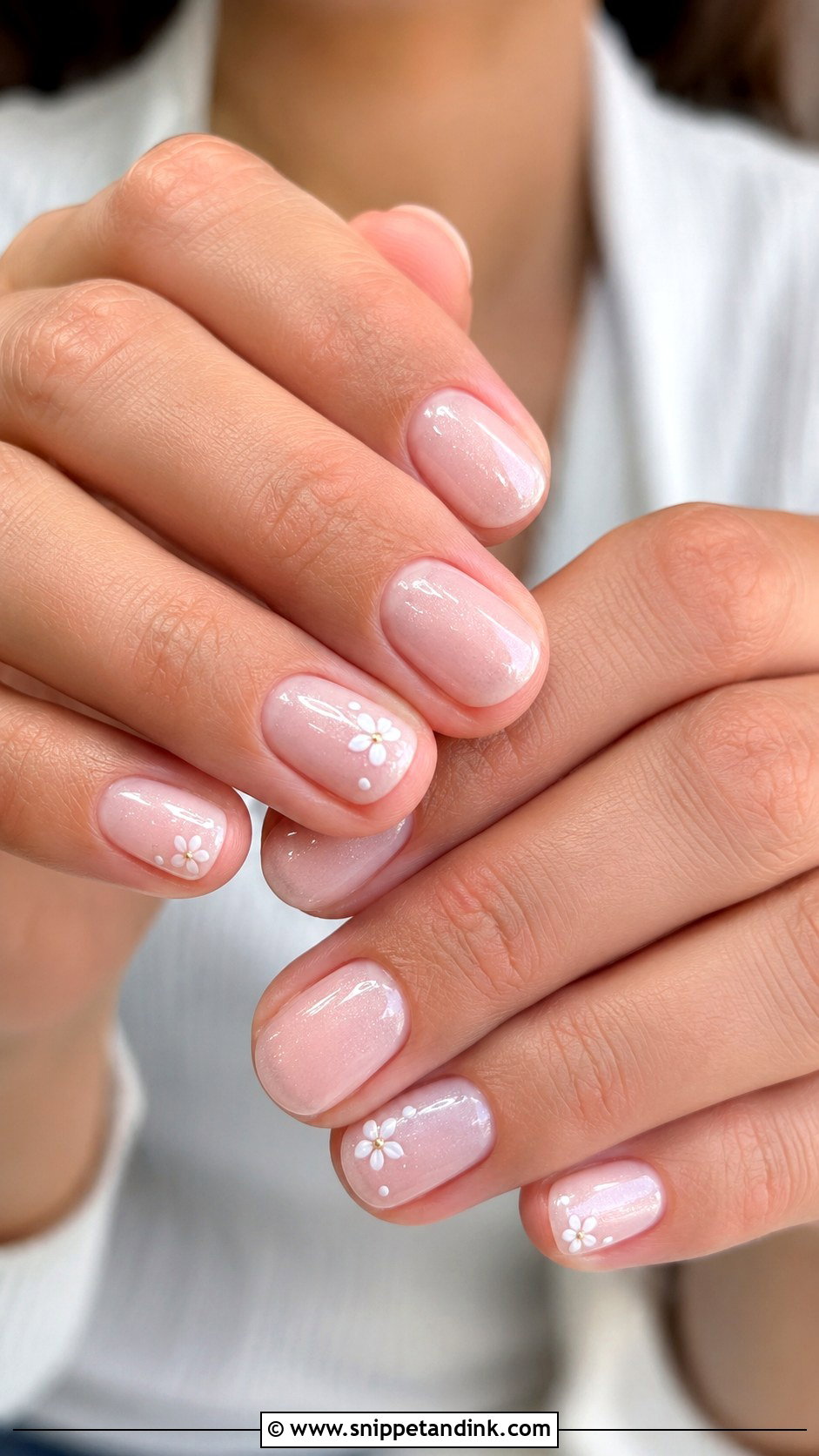
Shorter nails look elegant when the finish is precise: a soft squoval, round or short oval shape and sheer, polished color. Milky white, blush pink, nude, micro French, and pearl chrome all suit them. Cuticle care, smooth shaping and a glossy top coat carry the whole look, since there’s no length to distract. Short is also kinder if you don’t normally wear extensions. Nobody wants to be learning to type, fasten buttons or put in contact lenses with new length the week of the wedding. One delicate detail, a few florals or fine shimmer, is enough.
Pastels Shift Color Between the Salon and the Garden
Salon lighting is usually bright and white, while outdoor spring light changes hour by hour. Sheer and pastel shades move more than any other colors under that change. Lavender leans grey in shade, peach can tip toward orange in late afternoon sun, and milky white can look faintly blue on an overcast day.
Before you commit, take the swatch to a window or outside, look at it painted on your own nail rather than on the plastic stick, and hold it next to your dress fabric. A color that looks right both there and under the salon lamps will look right in the photos.
Soak-Off Gel, Builder Gel or Press-Ons?
What goes on underneath the color matters as much as the color itself. This is how I decide with each bride:
- Soak-off gel polish suits strong, healthy nails at short or medium length. It’s the thinnest option and comes off cleanly when removed properly.
- Builder gel adds a strengthening layer, so I use it for soft or peeling nails, or for a little extra length without extensions. It’s thicker and needs filing down before it’s soaked off.
- Press-ons make sense if you can’t commit to a set for weeks afterwards or have become sensitive to gel products. Have them sized and fitted by a professional, and keep spare nails and glue in your day-of kit.
- Pressed flowers, pearls and foil all need gel to encase them, so regular polish isn’t an option for those designs.
What to Hold Up Against the Swatches
Classic finishes like milky white, sheer pink, French tips and nude never feel dated, while florals, pearls, pastel tips, peach, lavender and pale blue tie the set to the season. To decide, bring three things to the appointment: a swatch or photo of your dress fabric, your engagement ring, and a picture of the bouquet colors. Hold the polish against all three in daylight. If you can, book a trial a few weeks before the wedding week to see how the color and shape wear. The set should feel easy on your hands, not just look right on a swatch stick.
You'll Like These Ideas:


Leave a Reply