
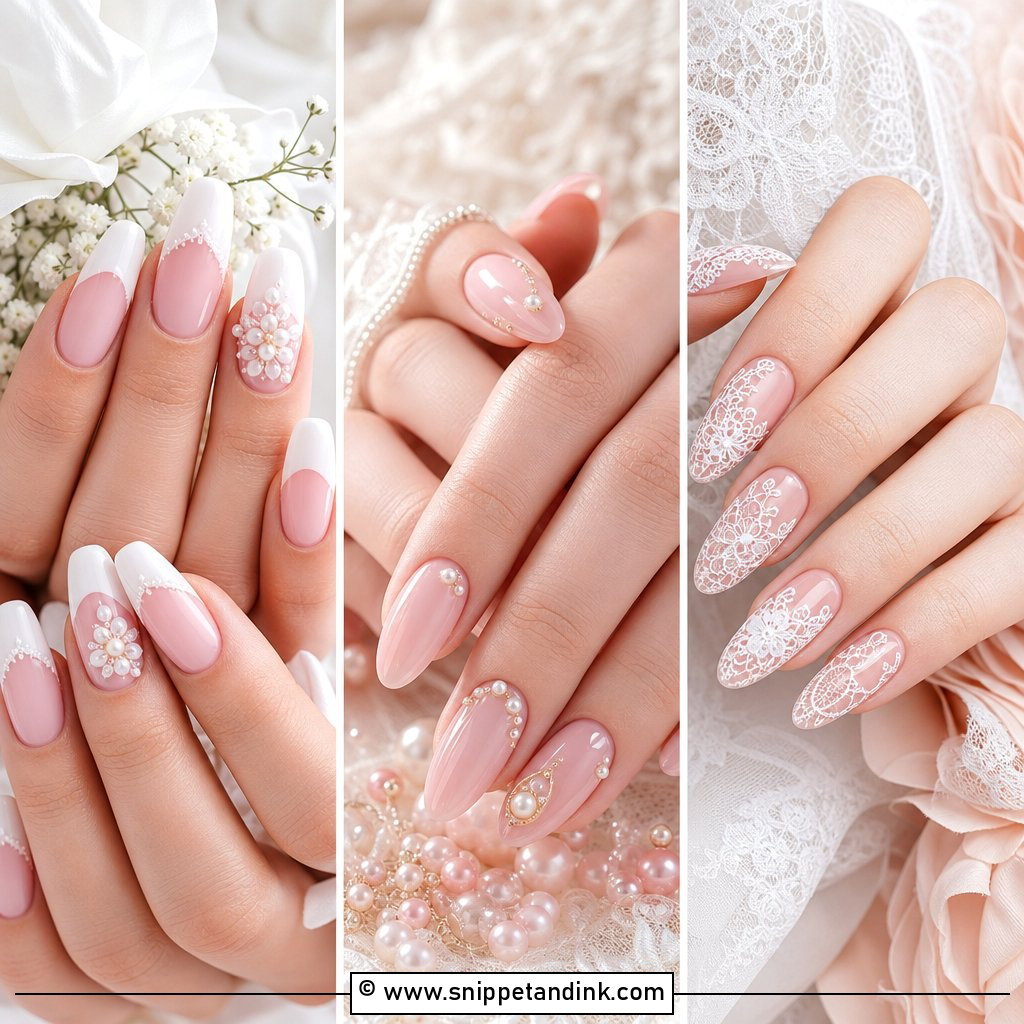
Most brides who sit at my desk already know they want a French manicure. What they’re really asking is which one. The bridal French has changed a lot: tips are thinner, bases are milkier, and there’s room for a pearl, a fine chrome or a bit of lace without losing the clean look that keeps attention on the ring. It also suits almost any length, from short natural nails to almond extensions and long coffins. Here are 25 versions I’d happily put on a bride, with what to ask for and where each one can go wrong.
The Smile Line Decides Whether a French Looks Expensive
Every French manicure comes down to one curve: the line where the white meets the nail bed. I set it to follow your own smile line, then mirror it on all ten nails so the depth matches. When that curve is too flat, too high on one side or deeper on the thumb than the pinky, the whole set looks cheap, even if the colours are perfect.
There are three ways I can build the tip, and each suits different nails:
- Freehand with a liner brush, best for micro and thin tips where precision matters.
- A soft silicone stamp, quick and even on medium tips, but harder on very curved nails.
- Sculpted in white gel or acrylic, the most durable and the brightest white, mostly for extensions.
If you’ve had a French that looked thick or uneven before, tell me at the trial. Usually the tip was set too deep for your nail bed length, and that’s easy to fix.
1. Classic French Bridal Nails
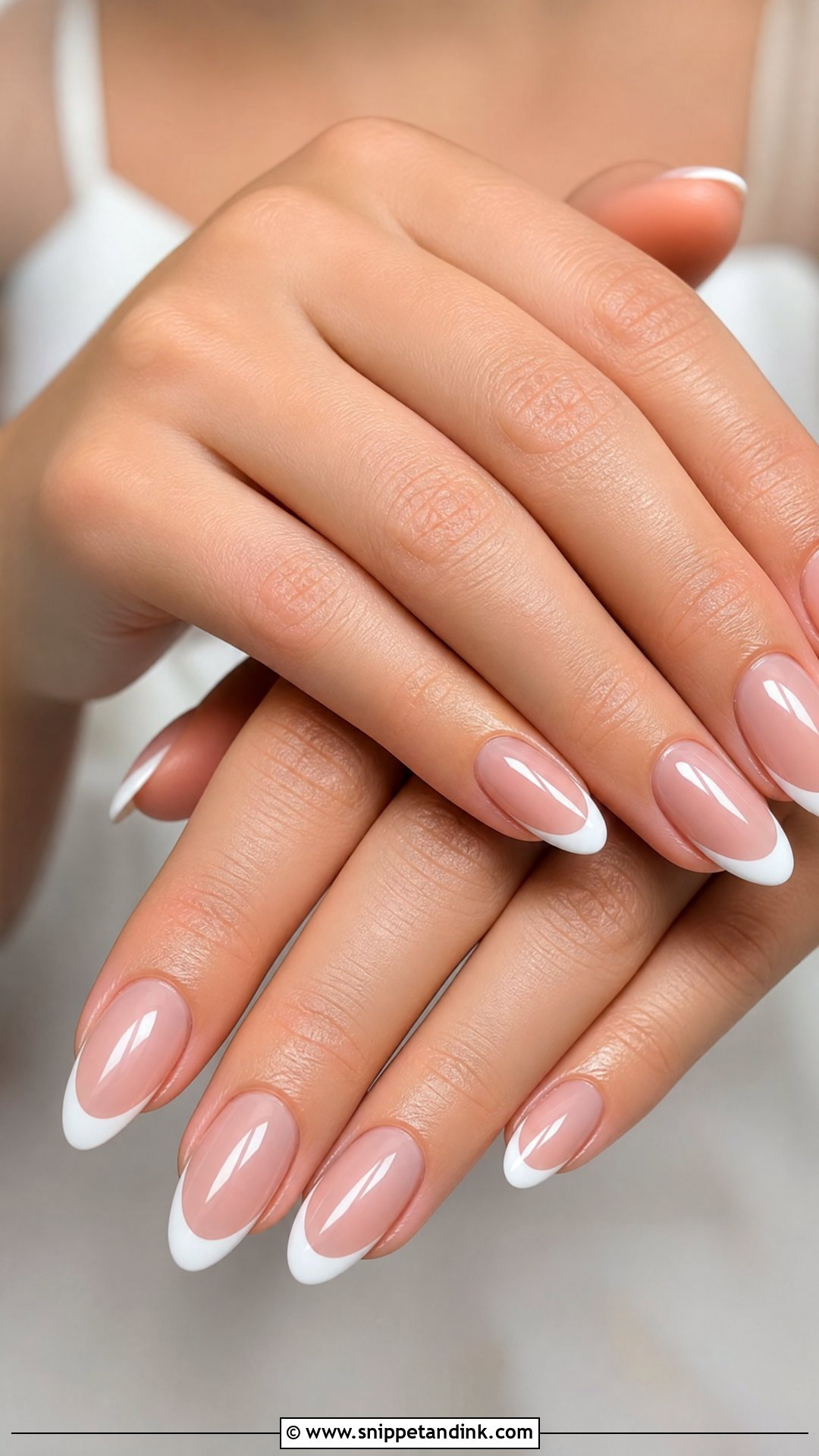
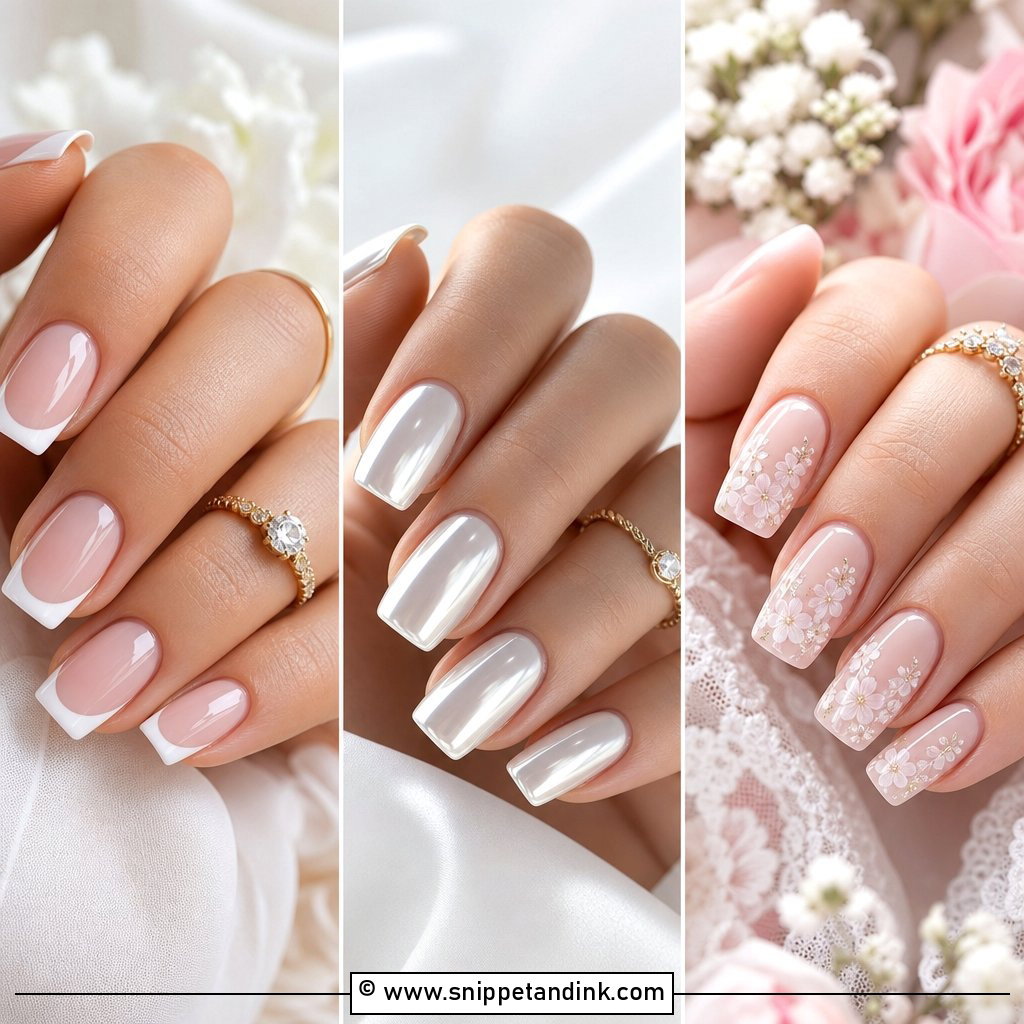
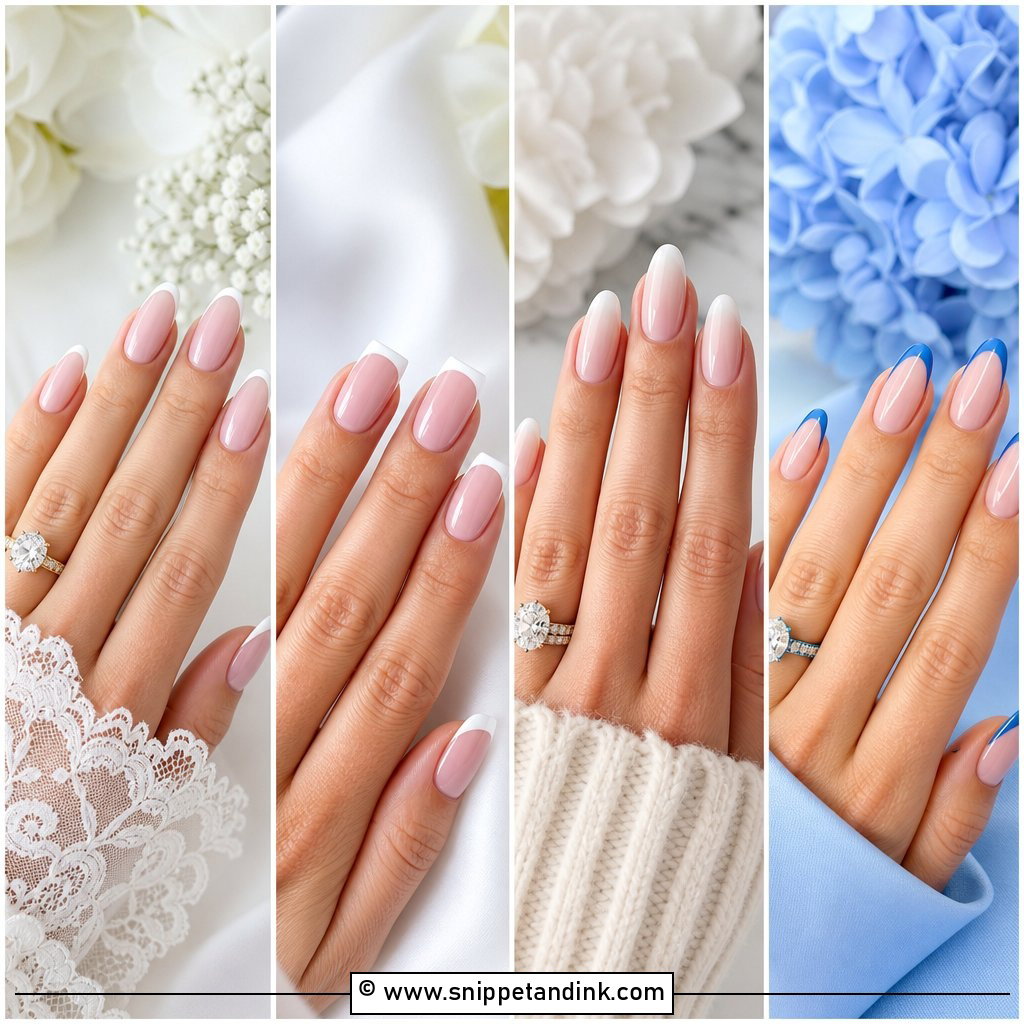
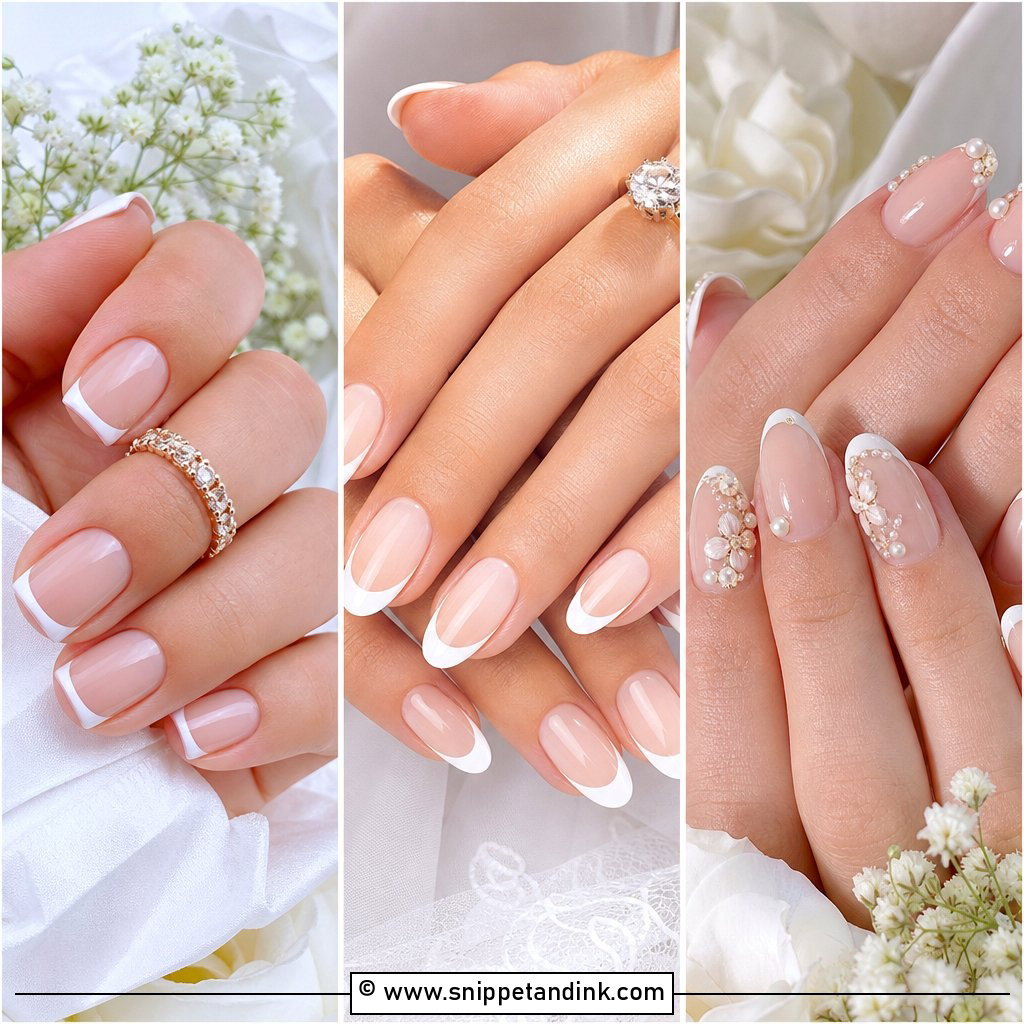
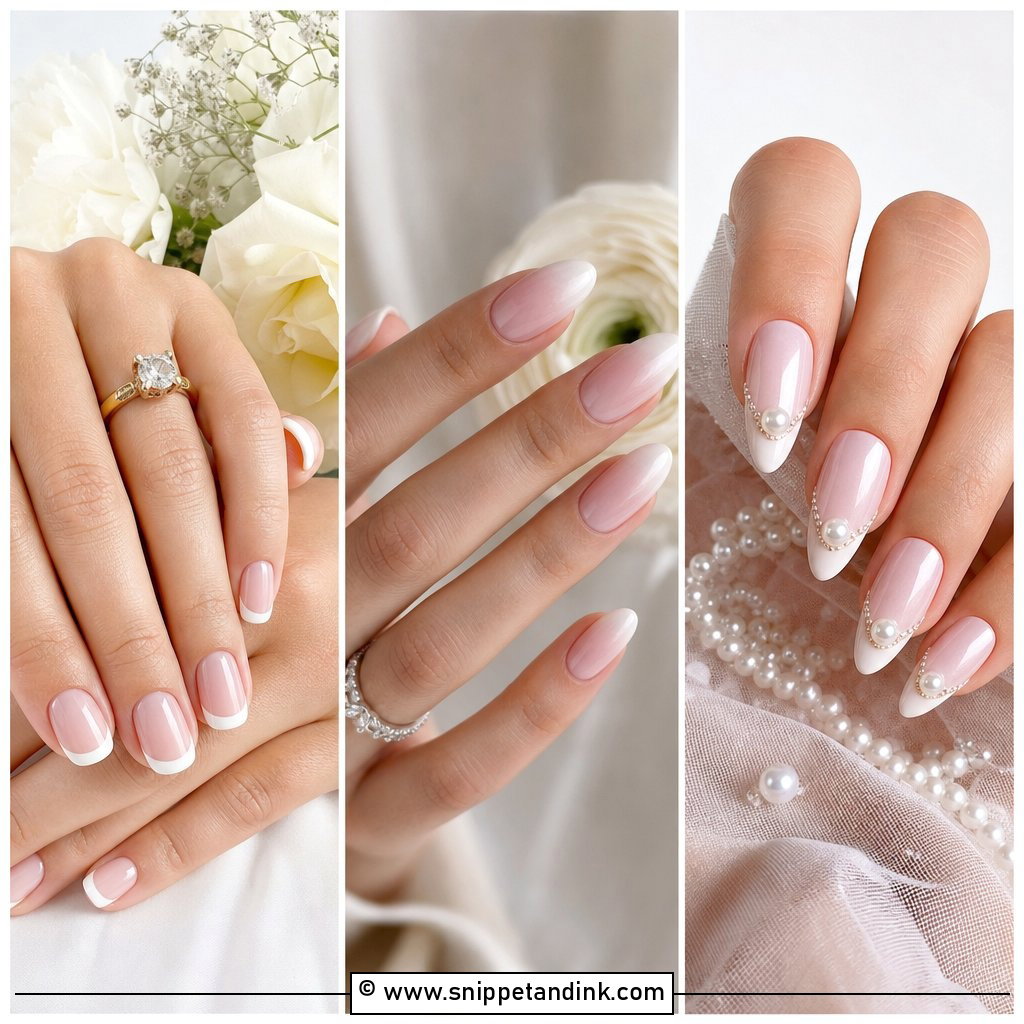
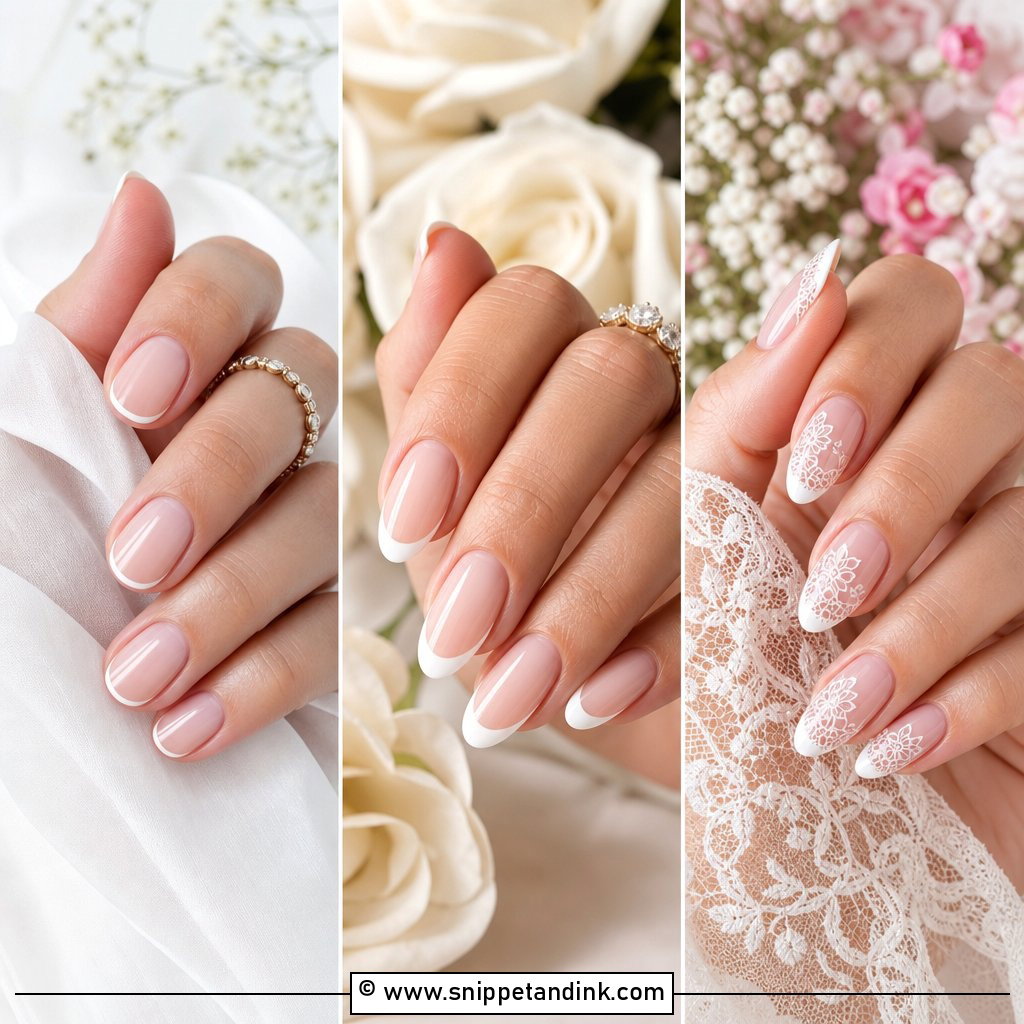
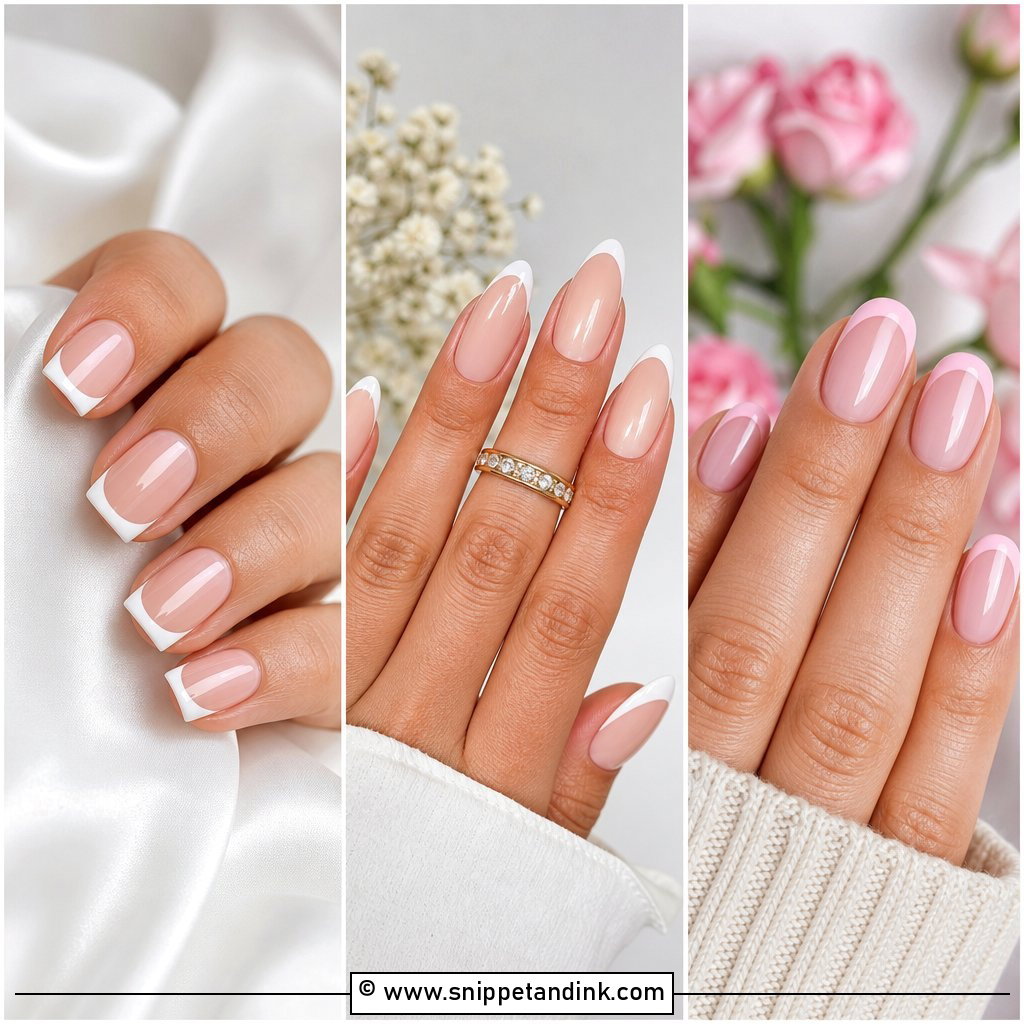
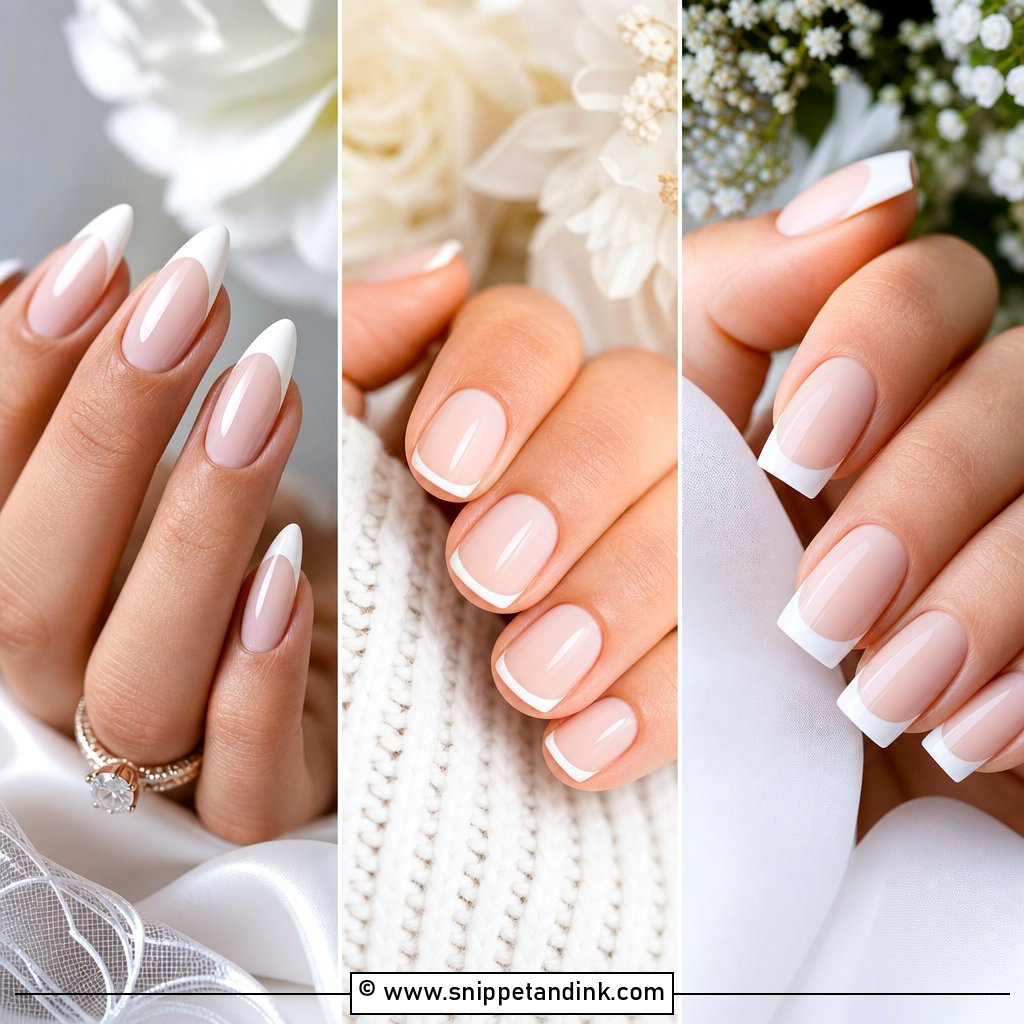
The classic set is still the one I’m asked for most: a sheer pink or nude base and a white tip following the nail’s own curve. The detail that dates it is tip depth. A thick, chunky band reads 2000s; a soft medium tip, about a third of the free edge or less, looks current. It suits almond, oval, square and squoval, and any dress fabric. Ask for a high-gloss top coat, and know that it’s the easiest design to patch if you chip one nail the day before.
2. Micro French Bridal Nails
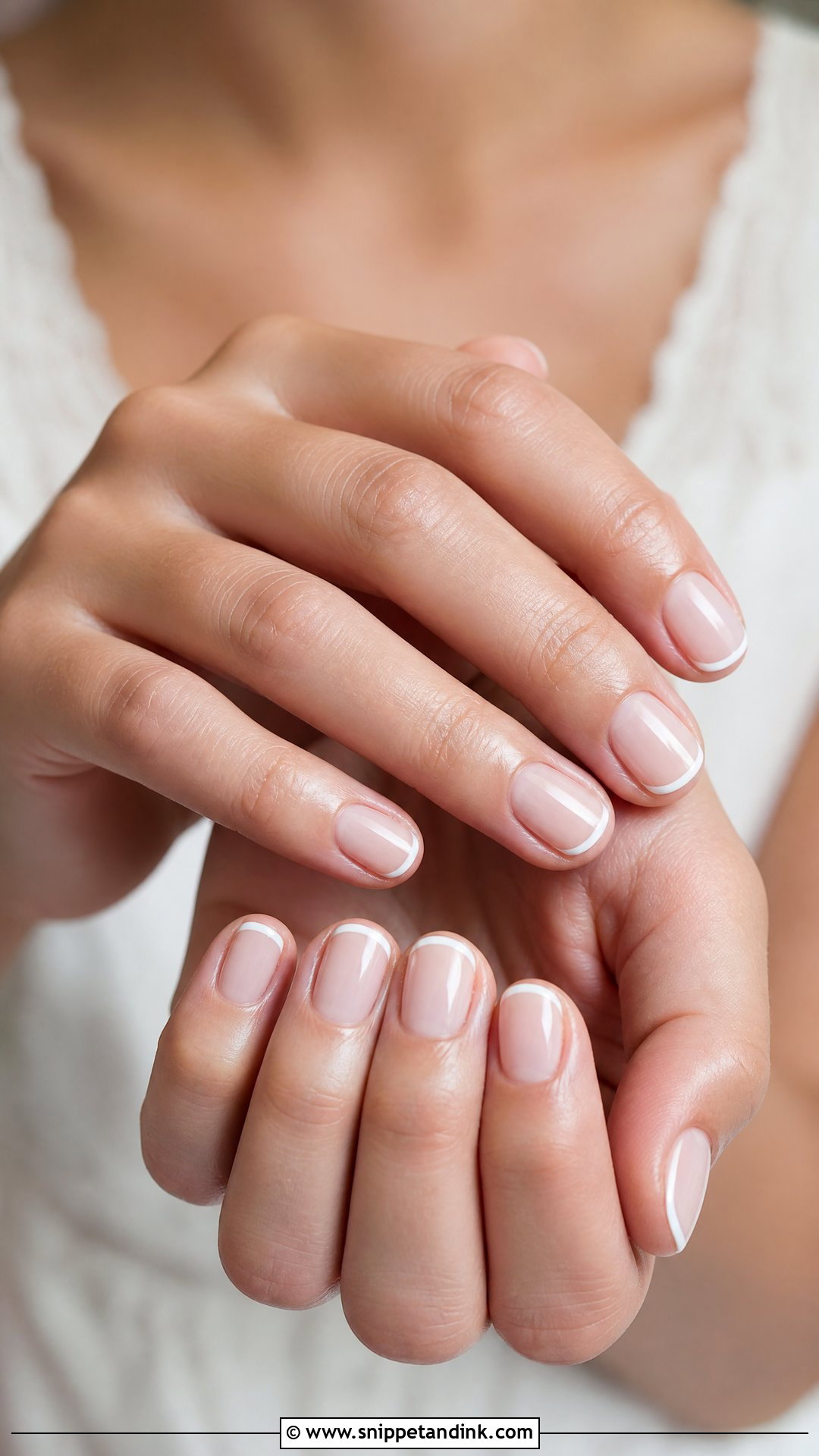
A micro French is a hairline of white right at the free edge. Brides who never wear nail art like it because from a step away it just looks like very well-kept nails. On short nails it’s my first suggestion, since a slim tip leaves more of the pink nail bed showing and the nail reads longer. Micro French nails are also the least distracting design in a ring close-up. The only demand is a steady hand: a wobble on a line that thin is obvious, so I paint it rather than stamp it.
3. Milky French Bridal Nails
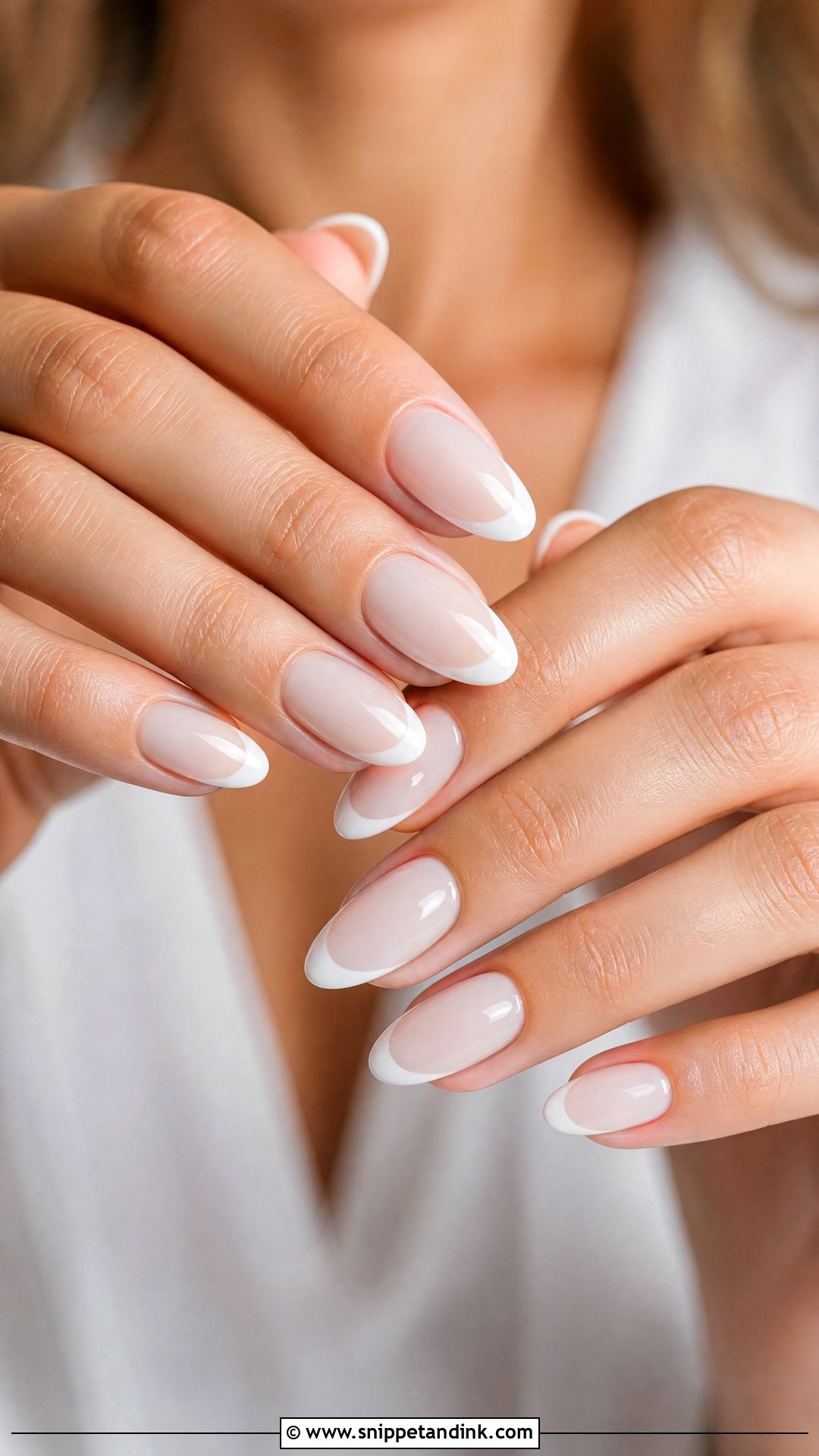
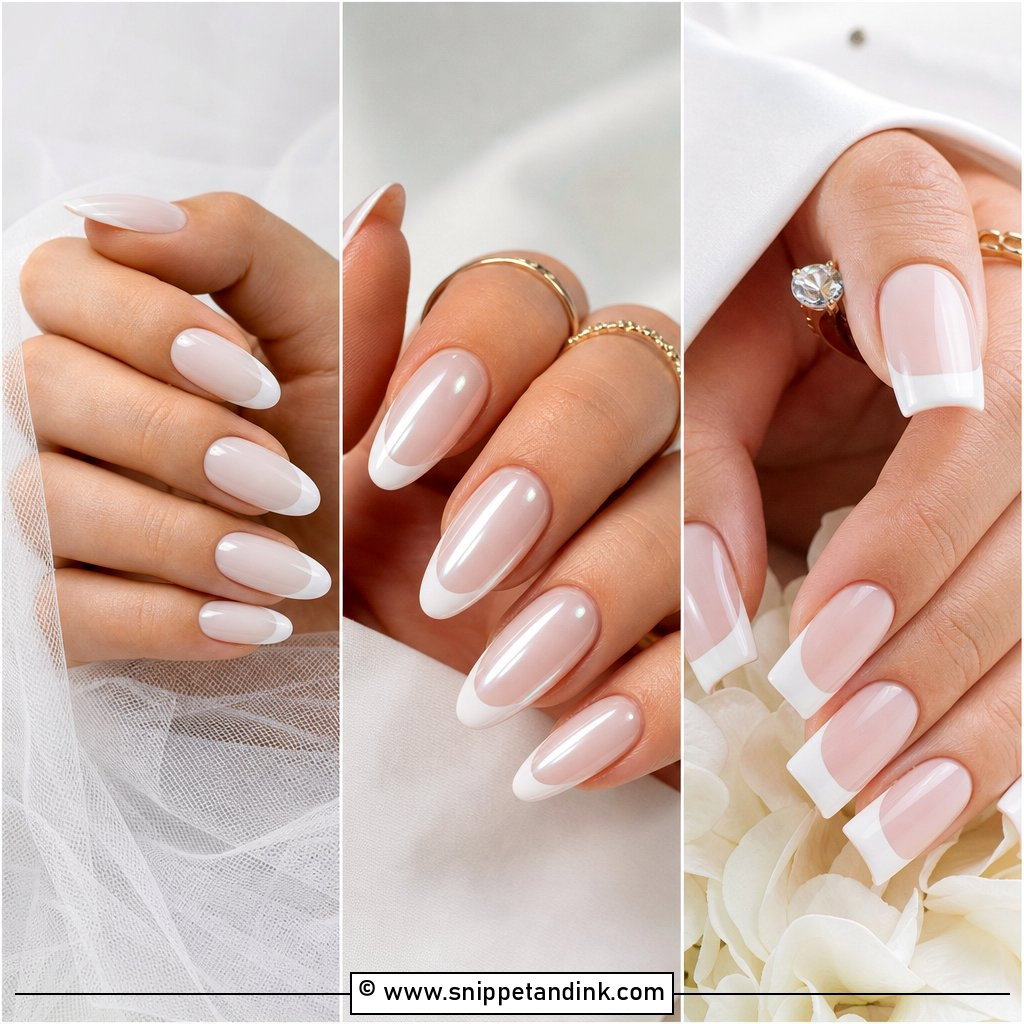
Milky bases are what I reach for with ivory and satin gowns. The base is a semi-sheer white, sometimes pushed pinker or more nude to suit your skin, with a soft tip over it. Here’s the warning I give everyone: some milky gels go streaky in one coat and need two or three thin layers to look even, so this set takes a little longer at the appointment. A diffused tip softens it further. Medium length and a glassy top coat finish it.
4. Ombre French Bridal Nails
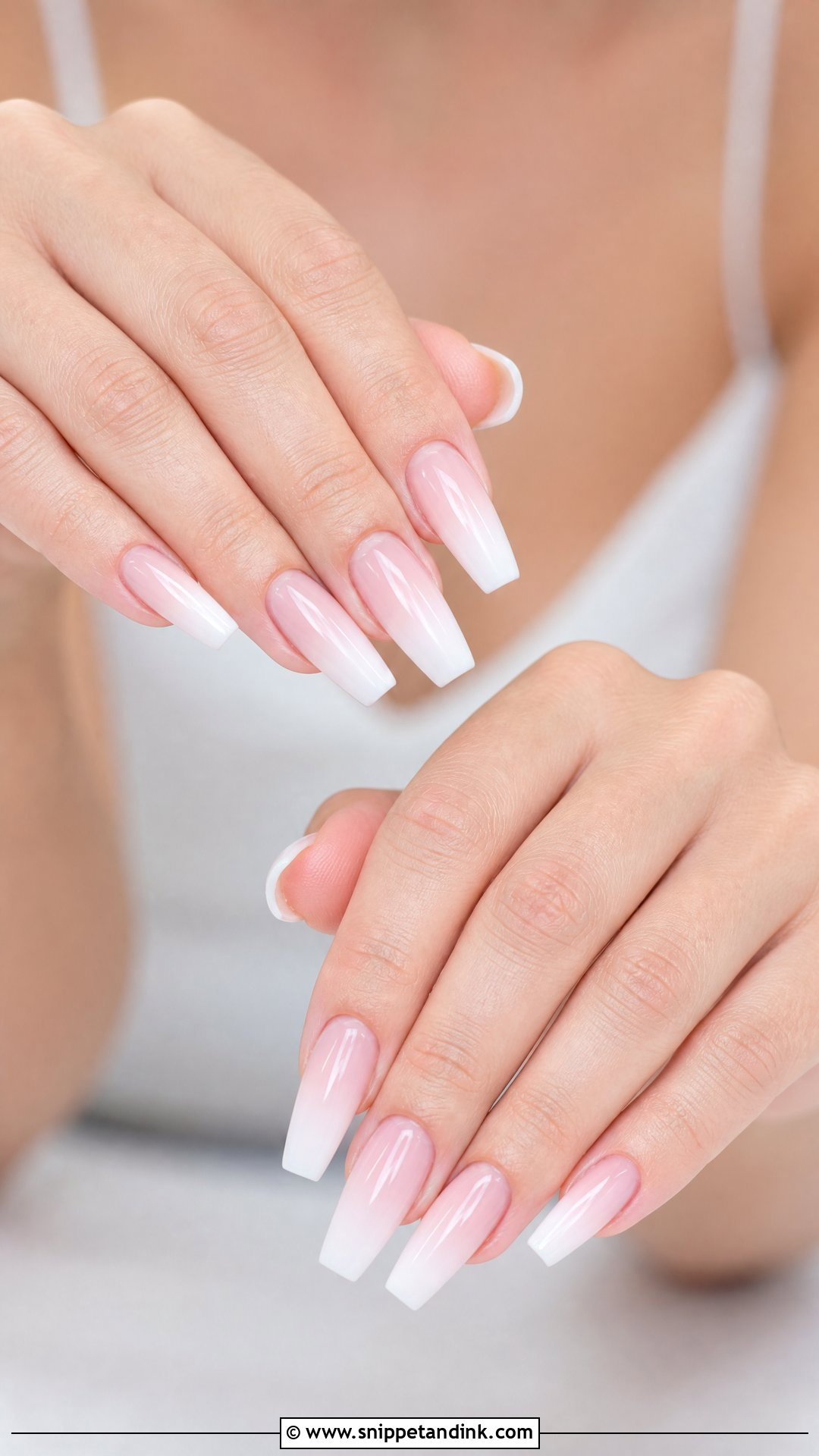
Ombre French, also known as baby boomer nails, fades from nude or blush at the cuticle into white at the tip with no hard line. I build it with a sponge or a gel blending technique, and the trick is keeping the fade low on the nail so it doesn’t turn the whole thing chalky. Because there’s no crisp edge, growth at the cuticle shows less, which matters if you’re doing it before a honeymoon. It pairs naturally with lace and tulle.
5. Pearl French Bridal Nails
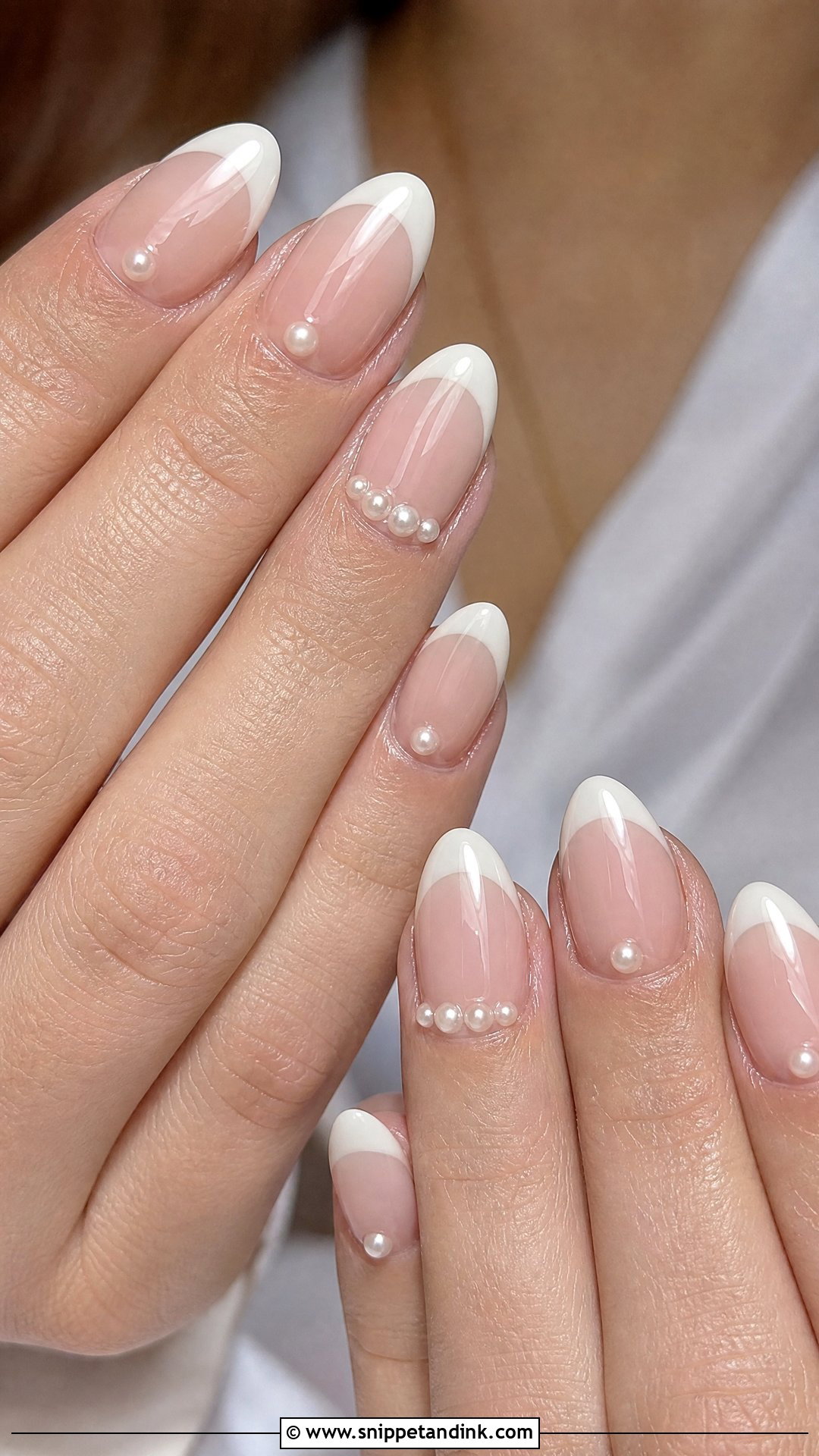
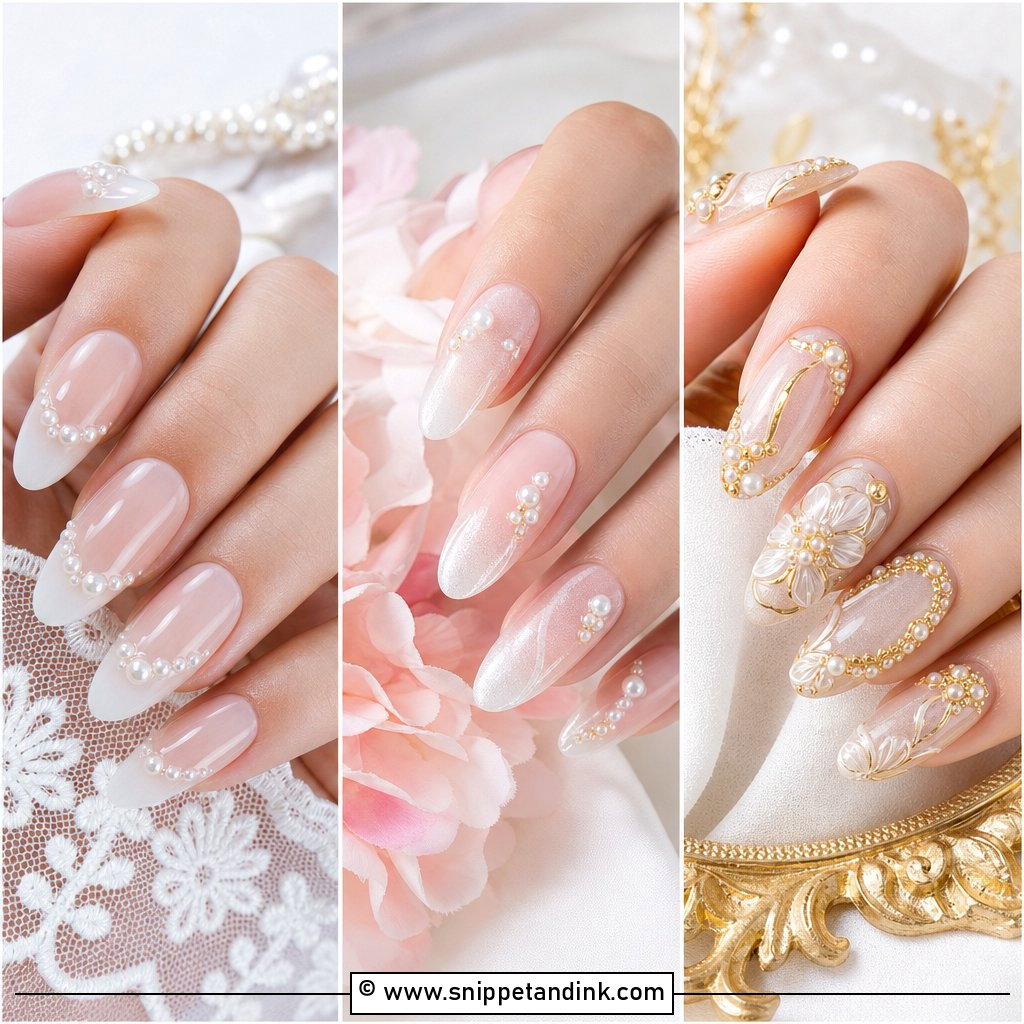
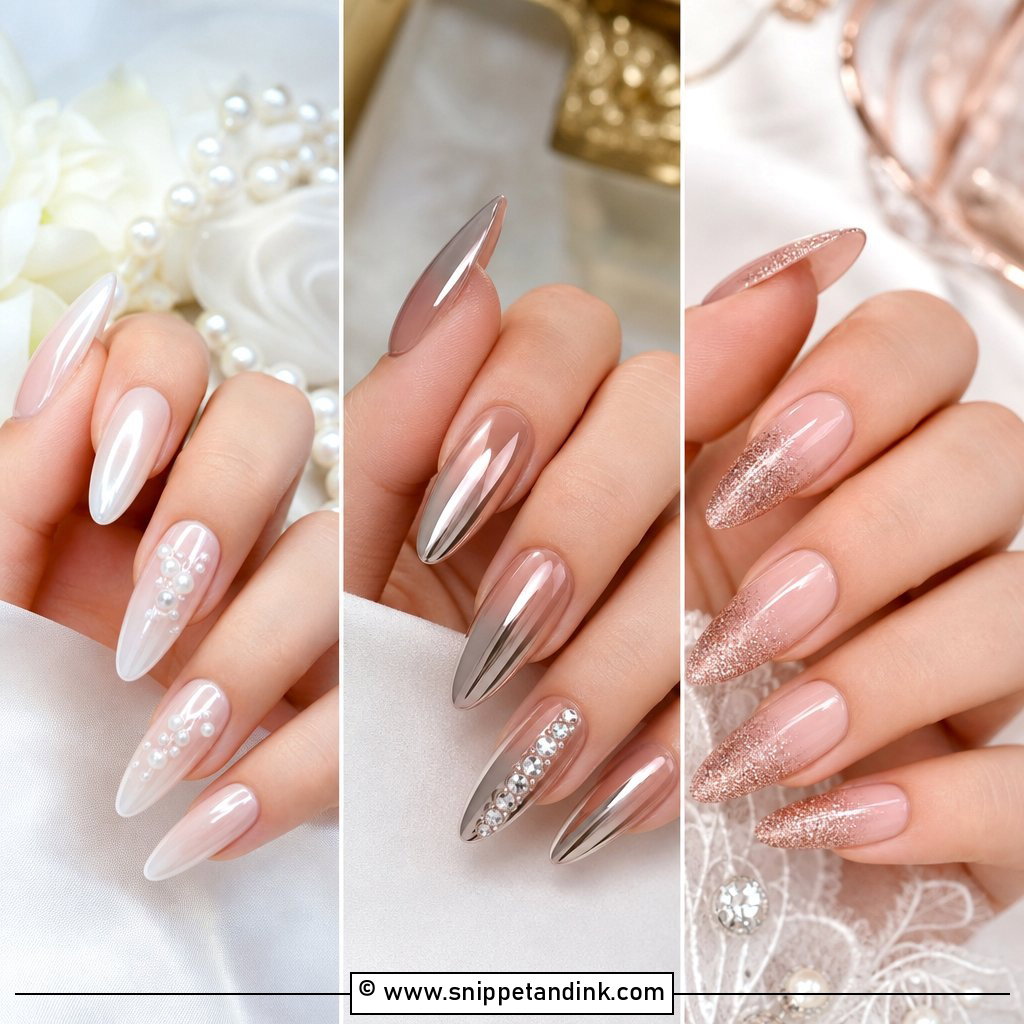
Pearls are where I see brides overdo it most. One or two tiny half-pearls near the cuticle, or a single one on each ring finger, look refined; a row on every nail snags hair and lace and starts to look heavy. I set them in builder gel so they don’t pop off when you’re hugging people all day. If your veil or earrings are pearl, this ties everything together. Keep the base sheer and the shape a medium almond.
6. Chrome French Bridal Nails
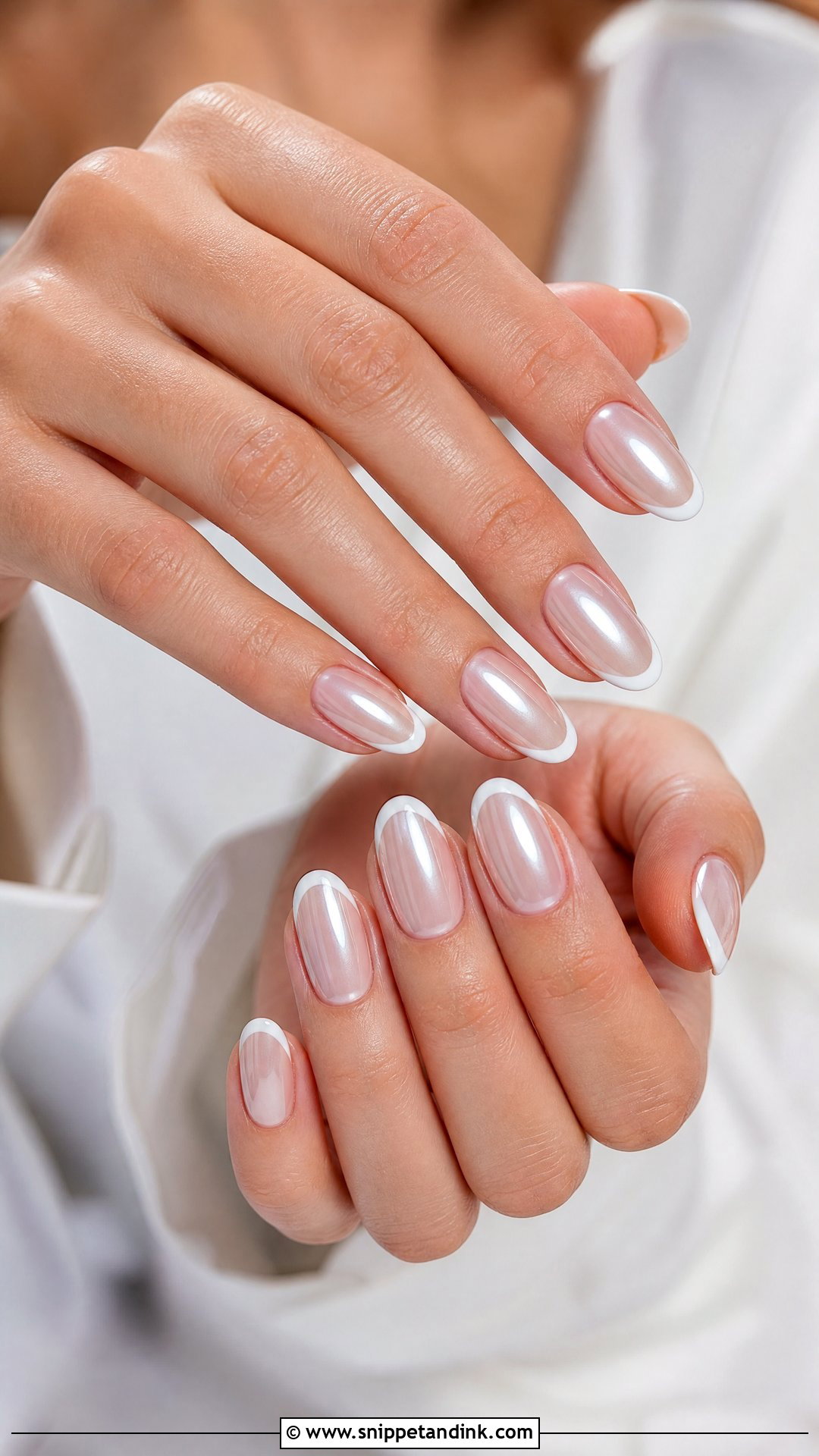
Chrome over a French goes one of two ways: a sheer pearl chrome rubbed over the whole nail, or chrome on the tips only for more definition. Champagne, pearl and pale pink powders stay bridal; silver mirror can look harsh under a photographer’s flash. I burnish the powder in a very thin layer and seal the edges carefully, because chrome that isn’t wrapped at the free edge can lift and peel by day two. Almond and oval show the reflection best.
7. Glazed French Bridal Nails
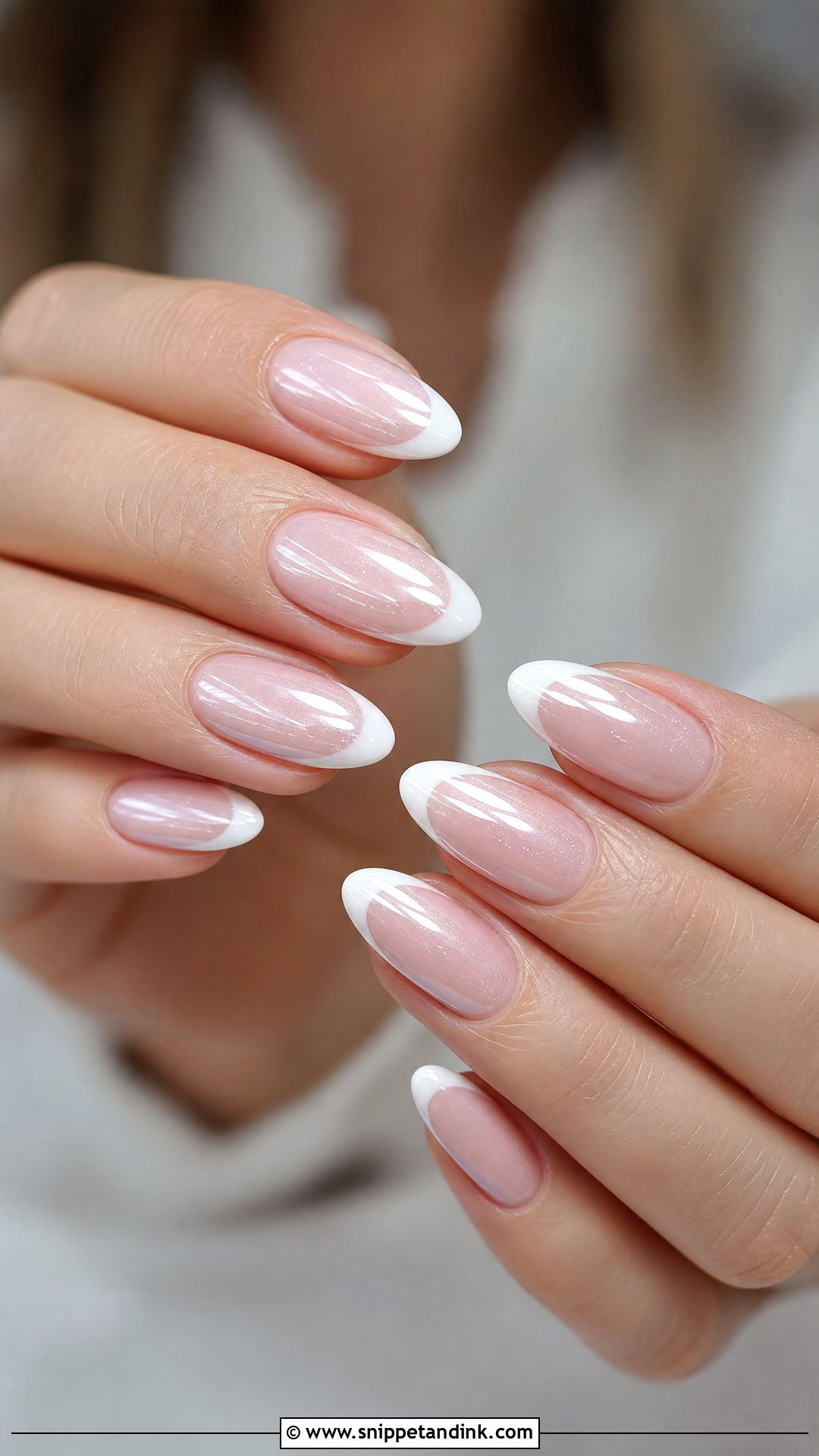
Glazed French is a lighter cousin of the chrome set: a fine pearl powder over a sheer pink, nude or milky base so the white tip looks softened and lit from inside. I’d steer anyone away from a heavy metallic layer here; the appeal is a glow, not a mirror. It sits nicely with silk, crepe and very plain gowns that need a touch of shine somewhere. If you’ve seen it called donut nails, that’s the same idea.
8. Blush French Bridal Nails
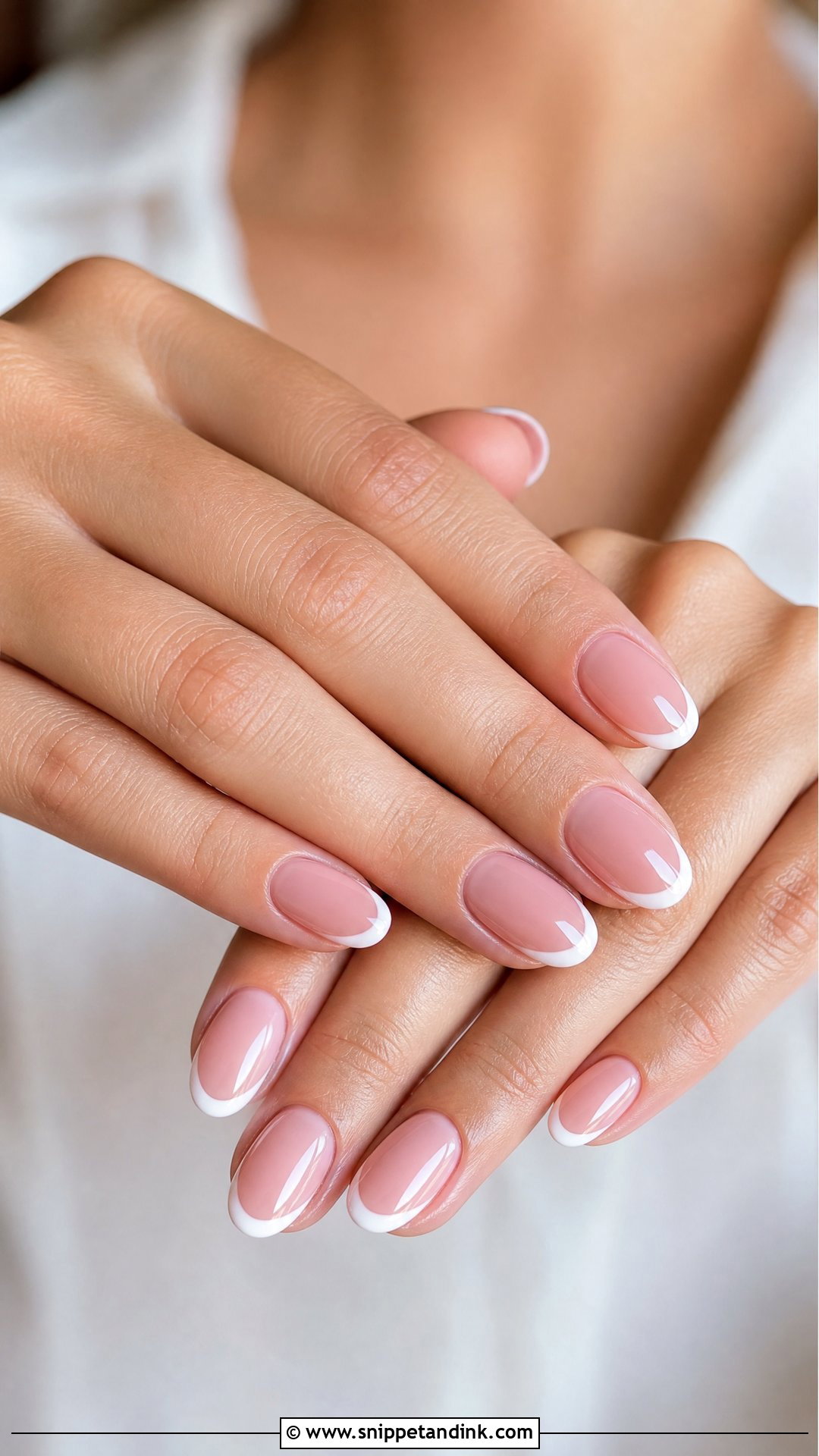
A blush base makes hands look warm and healthy, which is why I suggest it for brides with very pale or slightly ruddy hands. Swatch the pink against your skin, not on the bottle: some sheer pinks turn lilac on cool skin. Under a clean tip in any width, it ties in with pink makeup or a blush bouquet. Oval or almond keeps it delicate.
9. Nude French Bridal Nails
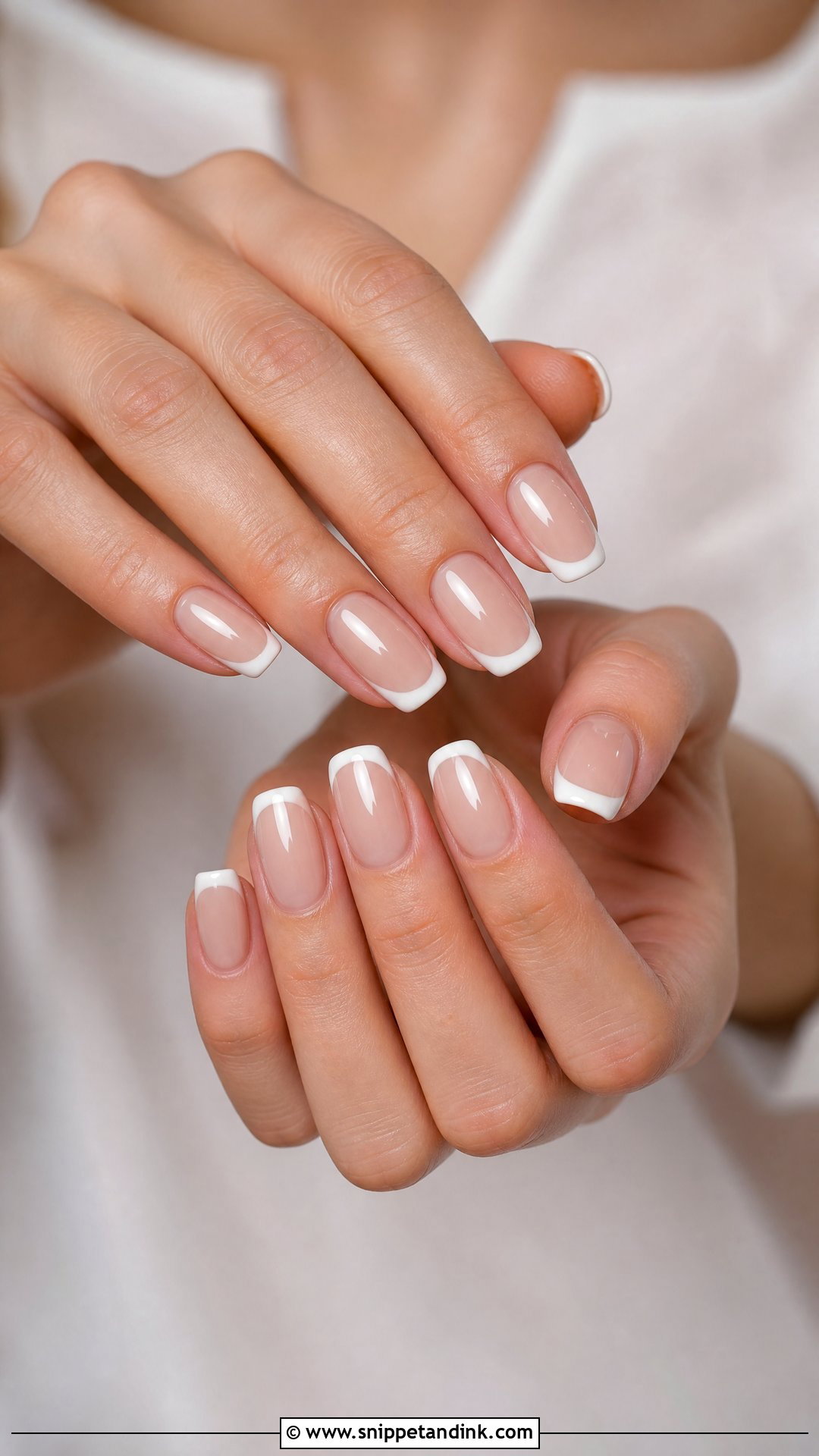
Getting the nude right is the whole job here. I hold two or three swatches against the back of your hand, close to the knuckle, because the base should match or be one step lighter than your skin. Fair skin usually takes a pink beige, medium skin a warm peach nude, deeper skin caramel, mocha or a rosy brown. Then decide between a crisp white or an off-white tip. Pick wrong and the fingers look shorter, which is the one thing a nude French should never do.
10. Almond French Bridal Nails
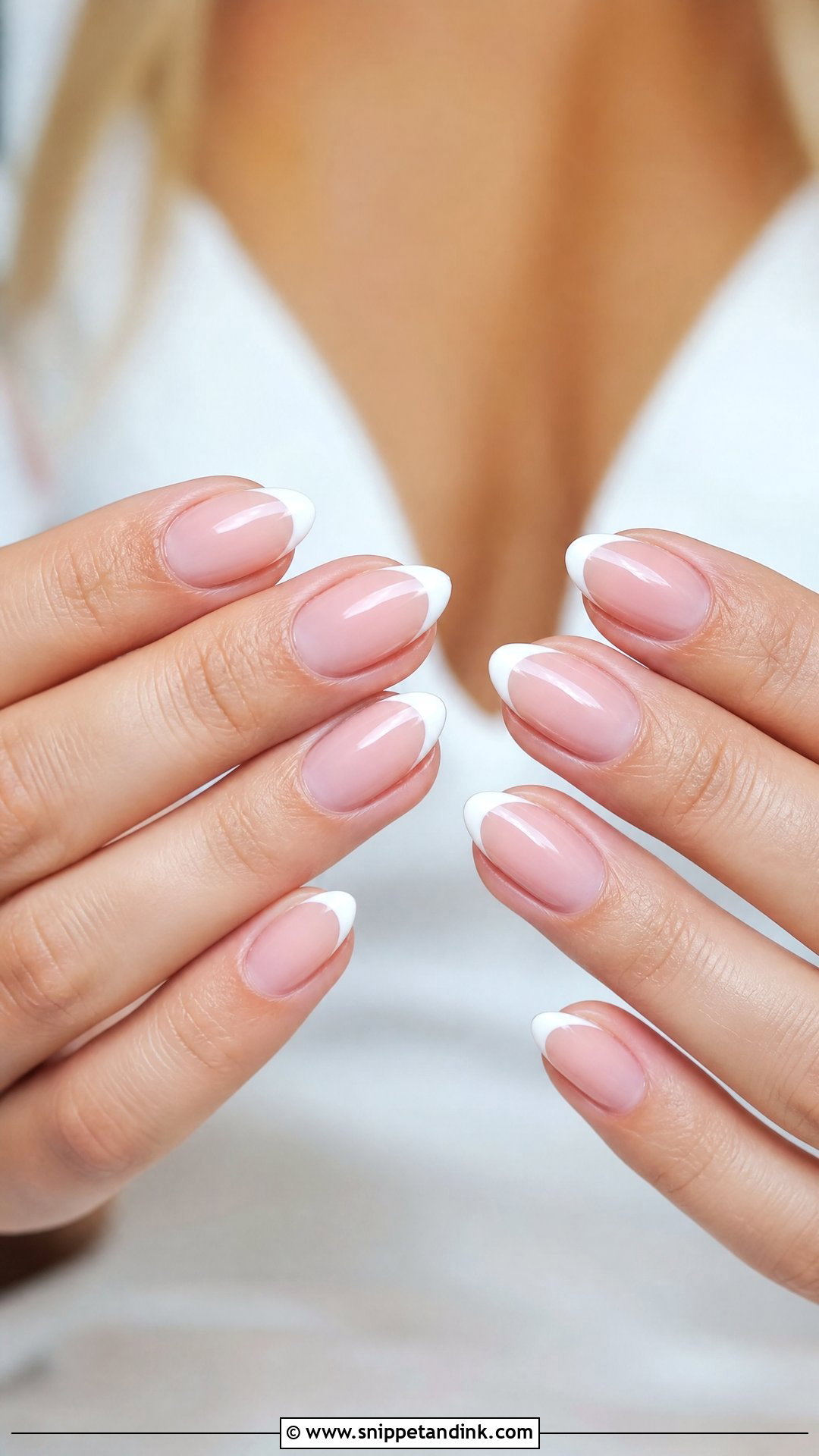
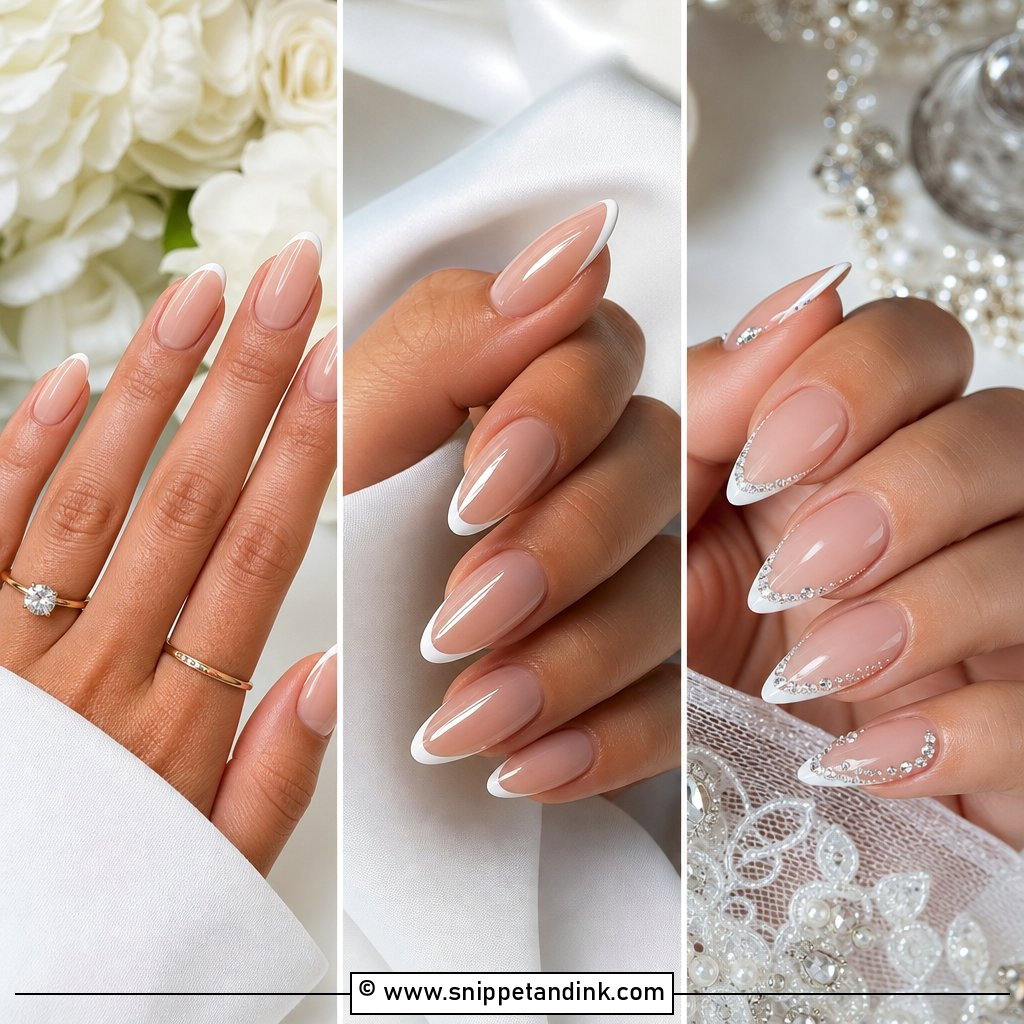
Almond is the shape I recommend more than any other for a French, because the curved sides and soft point make the smile line sweep instead of sitting like a flat band. It lengthens the fingers and works at medium length, so you can still do up a zip or a row of buttons. Classic, micro, chrome or pearl all suit it. On a natural nail that’s prone to breaking, I’d use a builder gel underneath for strength.
11. Square French Bridal Nails
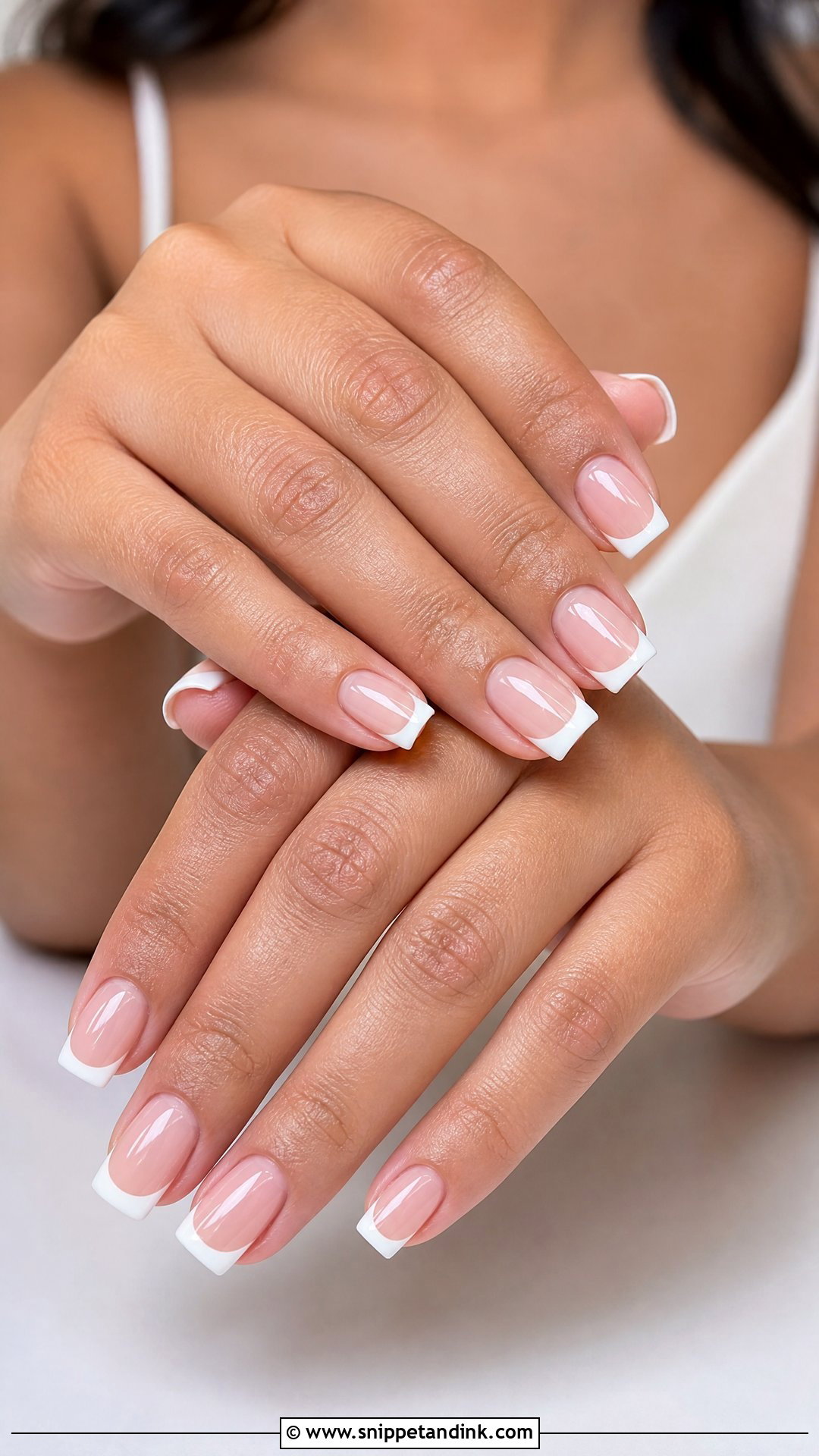
Square shows the tip boldly, so I keep the white thin or medium; a deep tip on a square nail looks blocky. It’s a good match for strong natural nails at short to medium length. The weak point is the corners, which catch on fabric and chip first, so I usually soften them slightly into a squoval. You keep the crisp front edge and lose the snagging.
12. Short French Bridal Nails
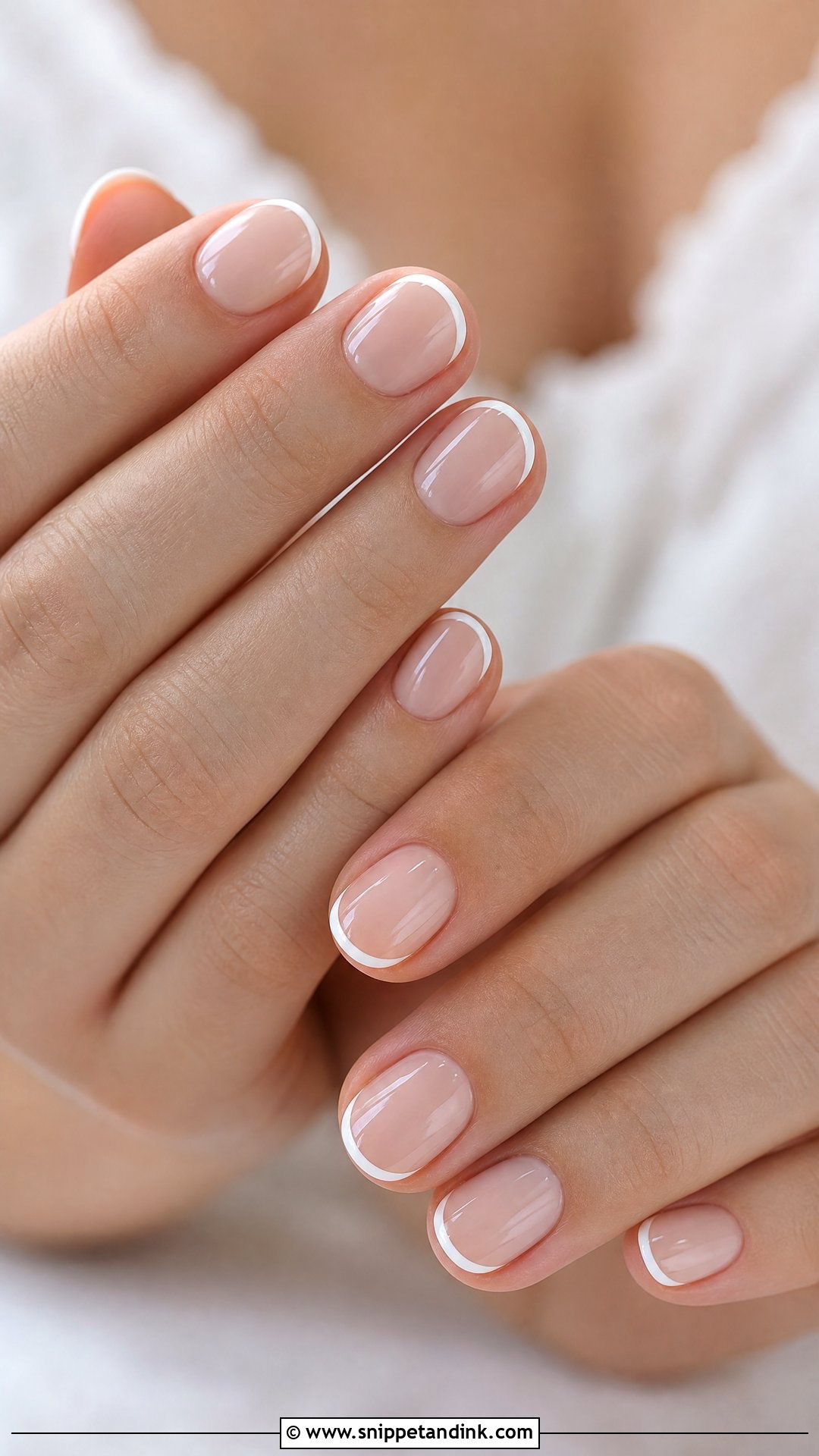
Short nails don’t need extensions to look bridal. What they need is a clean, consistent shape across all ten and a tip line that’s thin enough not to eat the nail. A micro tip on a sheer nude or milky base brightens the nail bed and keeps proportions right. I always tidy the cuticles carefully on short sets because there’s less nail for the eye to look at. Nurses, chefs, gardeners and anyone who types all day tend to choose this one, and it lasts.
13. Coffin French Bridal Nails
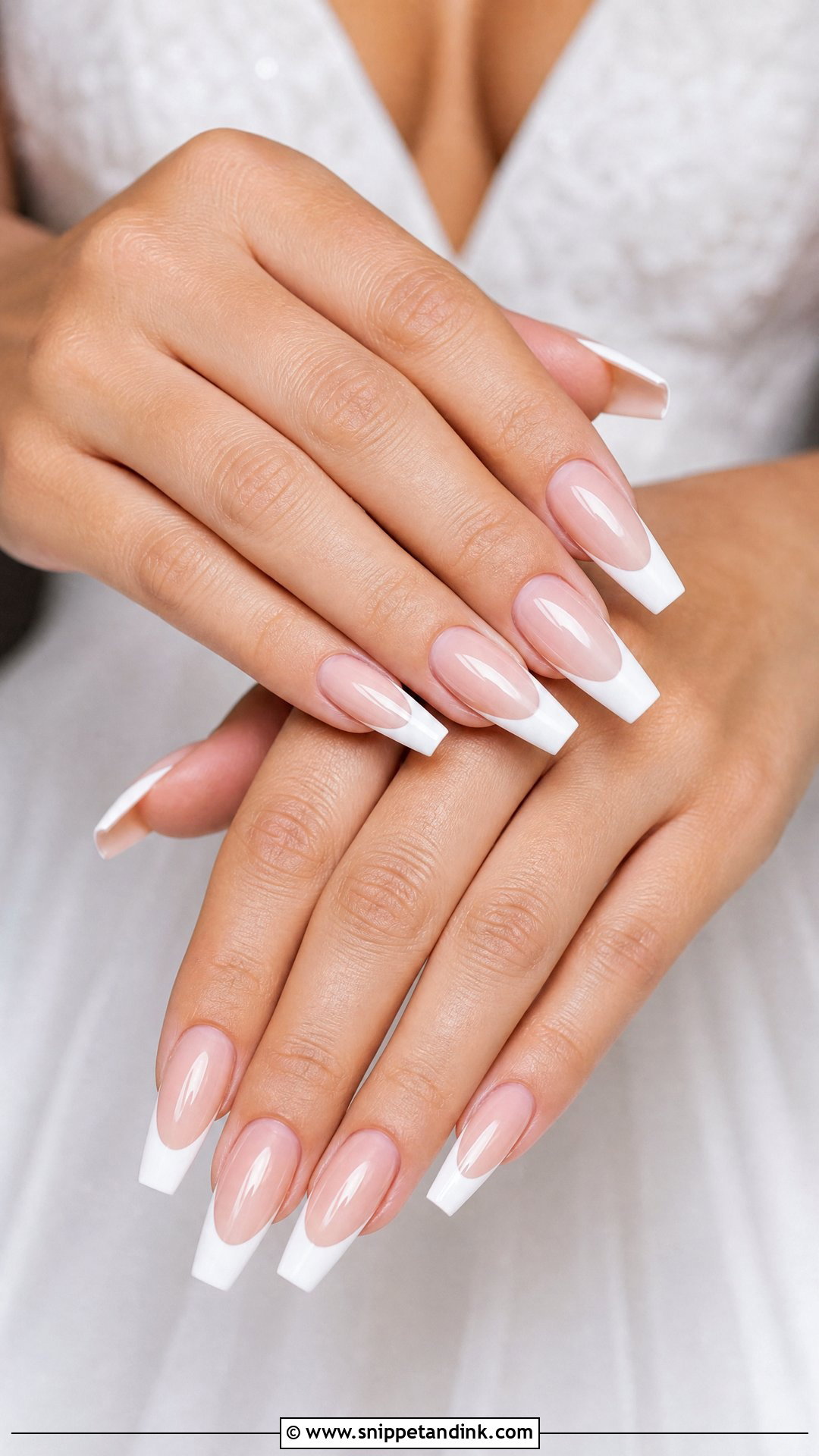
Coffin needs length to form the tapered sides and flat tip, so it’s usually done on extensions. A soft pink base and white tip keeps it bridal, and a milky base with chrome takes it more fashion-led. The thing I watch is tip depth: on a long coffin, a deep white band looks like a costume nail, so I keep it slim. Skip heavy charms if you’ll be holding a bouquet and dozens of hands.
14. Oval French Bridal Nails
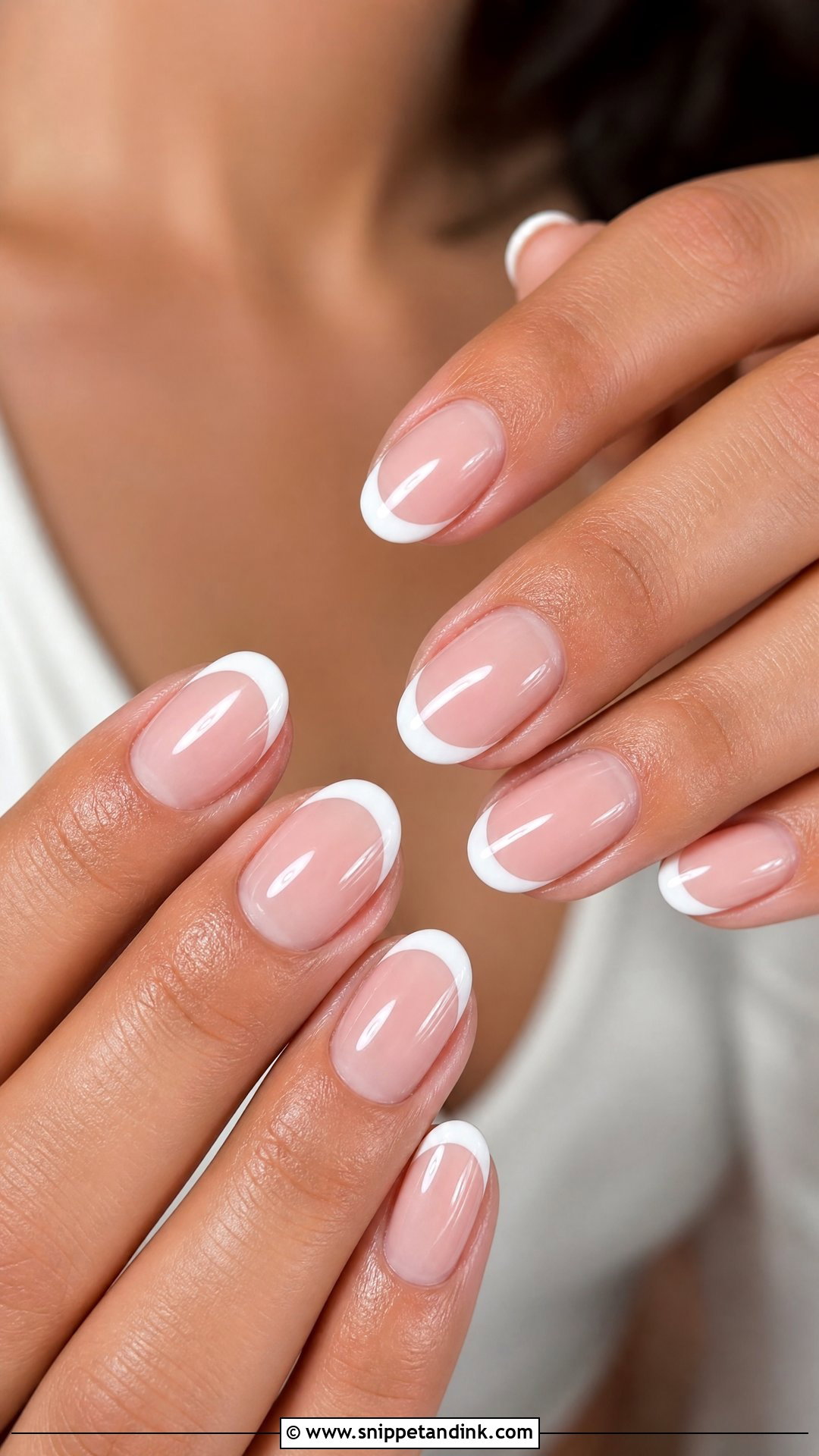
Oval follows the fingertip, so it’s the gentlest shape there is. A narrow white tip over a sheer base makes shorter fingers look longer, and it works on natural nails and extensions alike. Brides with romantic, soft gowns often land here after trying sharper shapes at the trial. Leave it glossy or add one or two tiny pearls. It’s also the shape that grows out most kindly over the honeymoon.
15. White French Bridal Nails
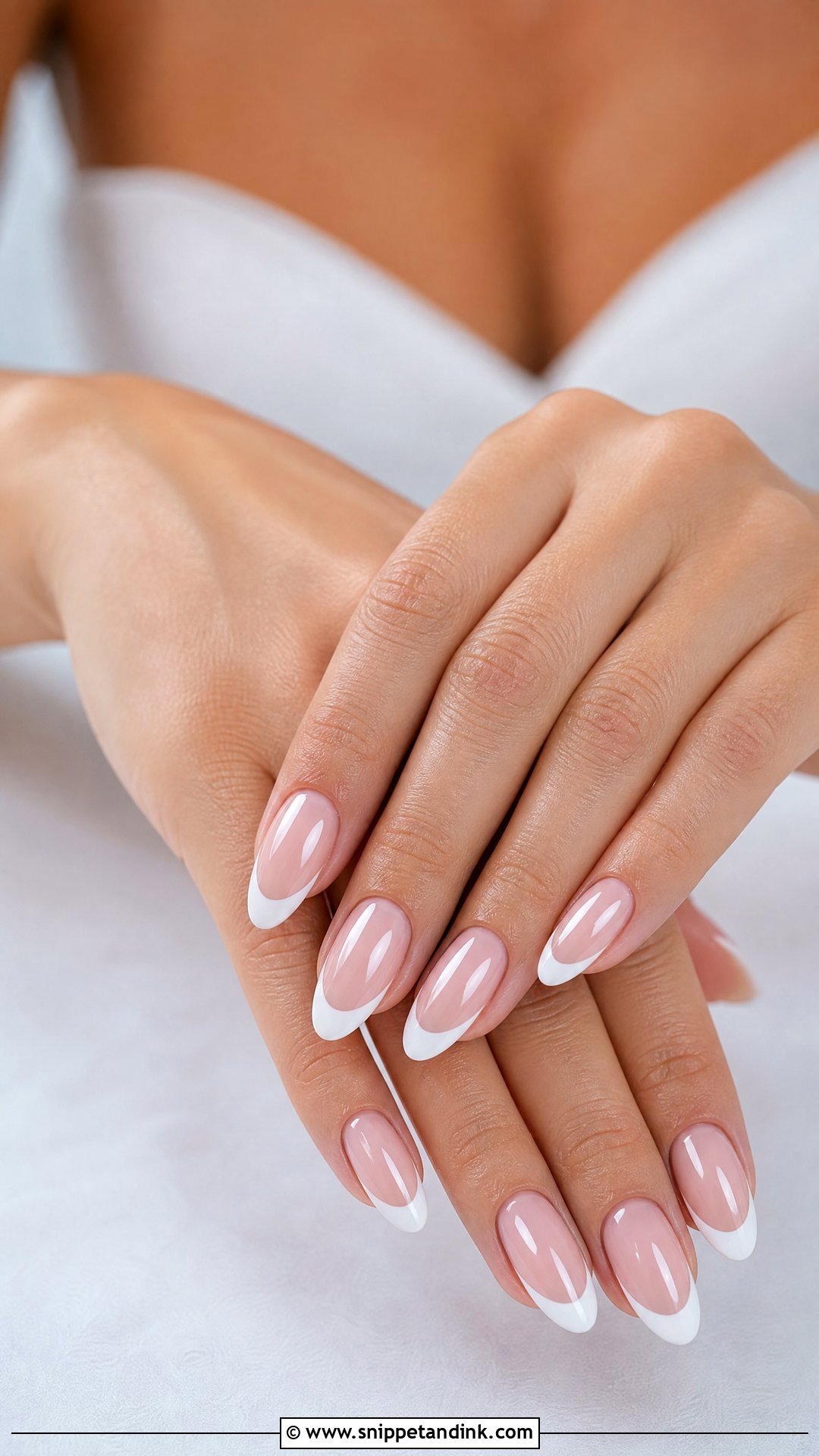
A true white tip is the most traditional French there is. My one question is: which white? A soft white looks natural; a stark, blue-based white gives maximum contrast and can look almost painted-on with an ivory dress. If your gown is bright white, the stark version matches. Keep the shape slim and the top coat high-gloss, and spend the time on clean lines, because white shows every wobble.
16. Ivory French Bridal Nails
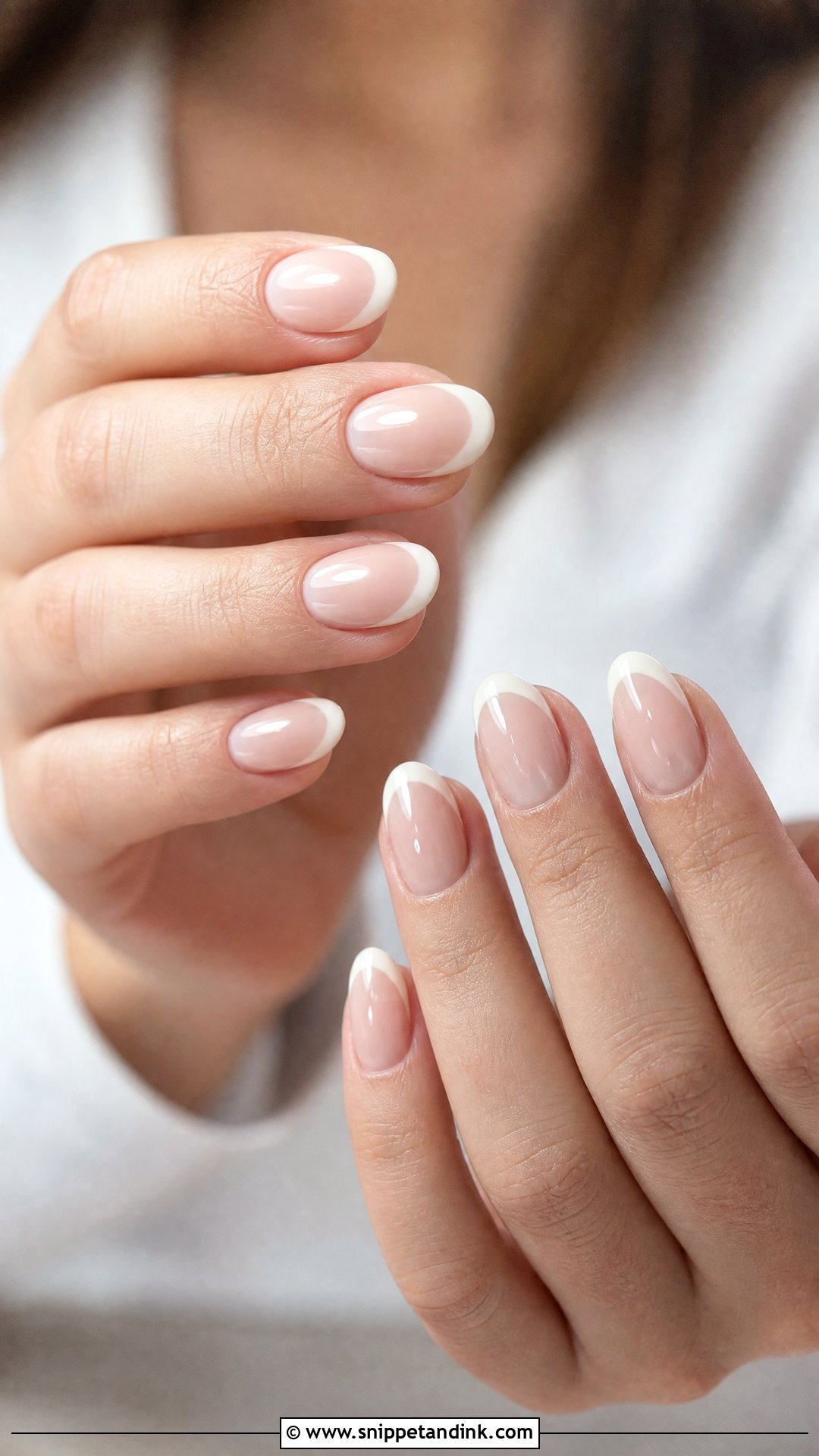
Ivory tips are my usual swap when a bride’s dress is cream, champagne or ivory and a bright white looked chalky next to the fabric at her trial. The off-white sits gently on warm skin too. I pair it with a peach, nude or warm pink base. Almond, oval and squoval all suit it, and a faint pearl glaze over the top lets the nails catch candlelight without any sparkle.
17. Lace French Bridal Nails
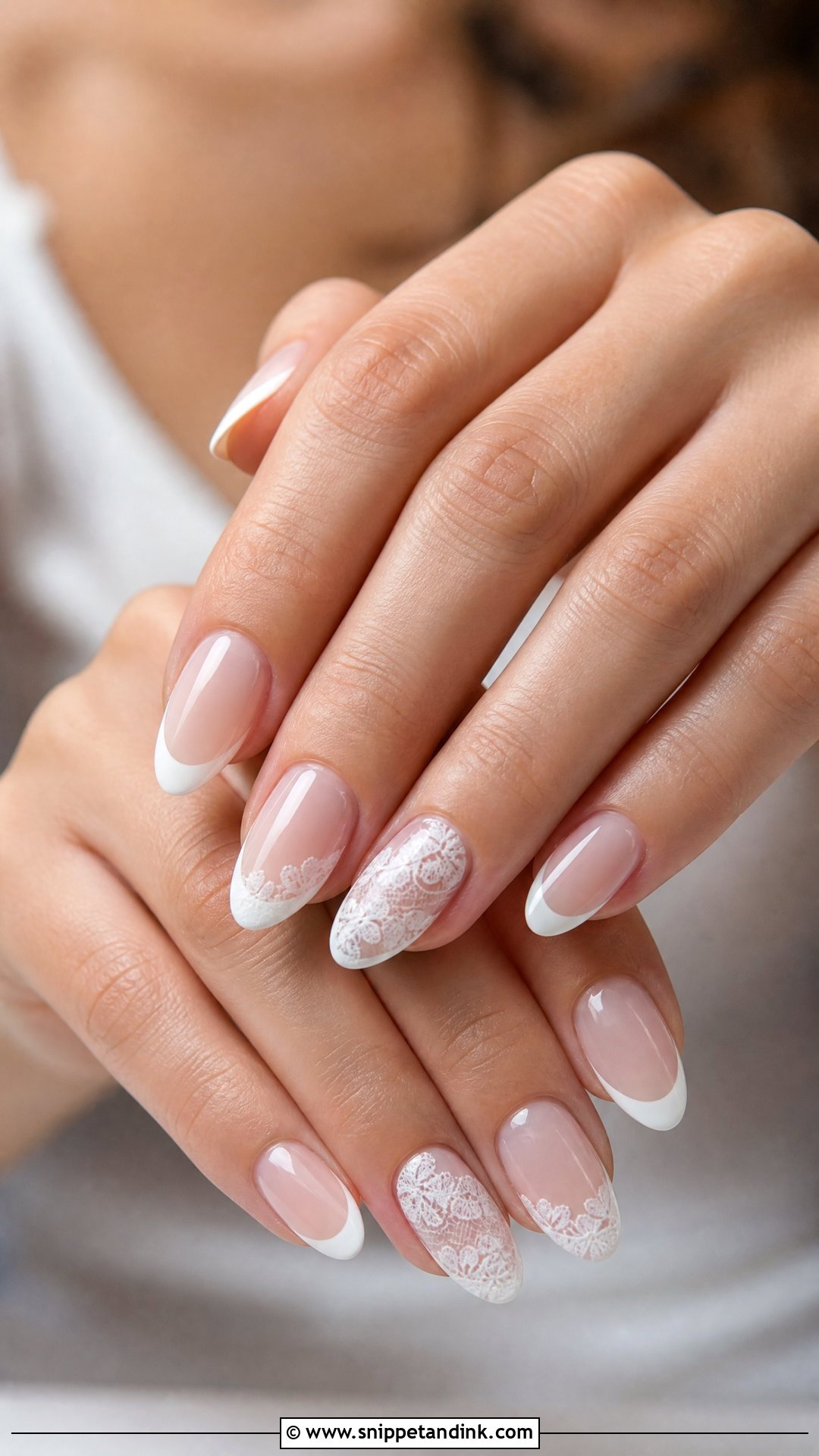
Lace art is fine linework, and it’s the design that most rewards a skilled hand. I usually put it on one or two accent nails, either freehand with a liner brush or with a thin stamping plate, and keep the rest a simple French. Copy the lace pattern from your sleeves or veil if you can; bring a photo or a scrap. Too much detail turns grey from a distance, so the art should stay thin and airy over a sheer nude or blush base.
18. Floral French Bridal Nails
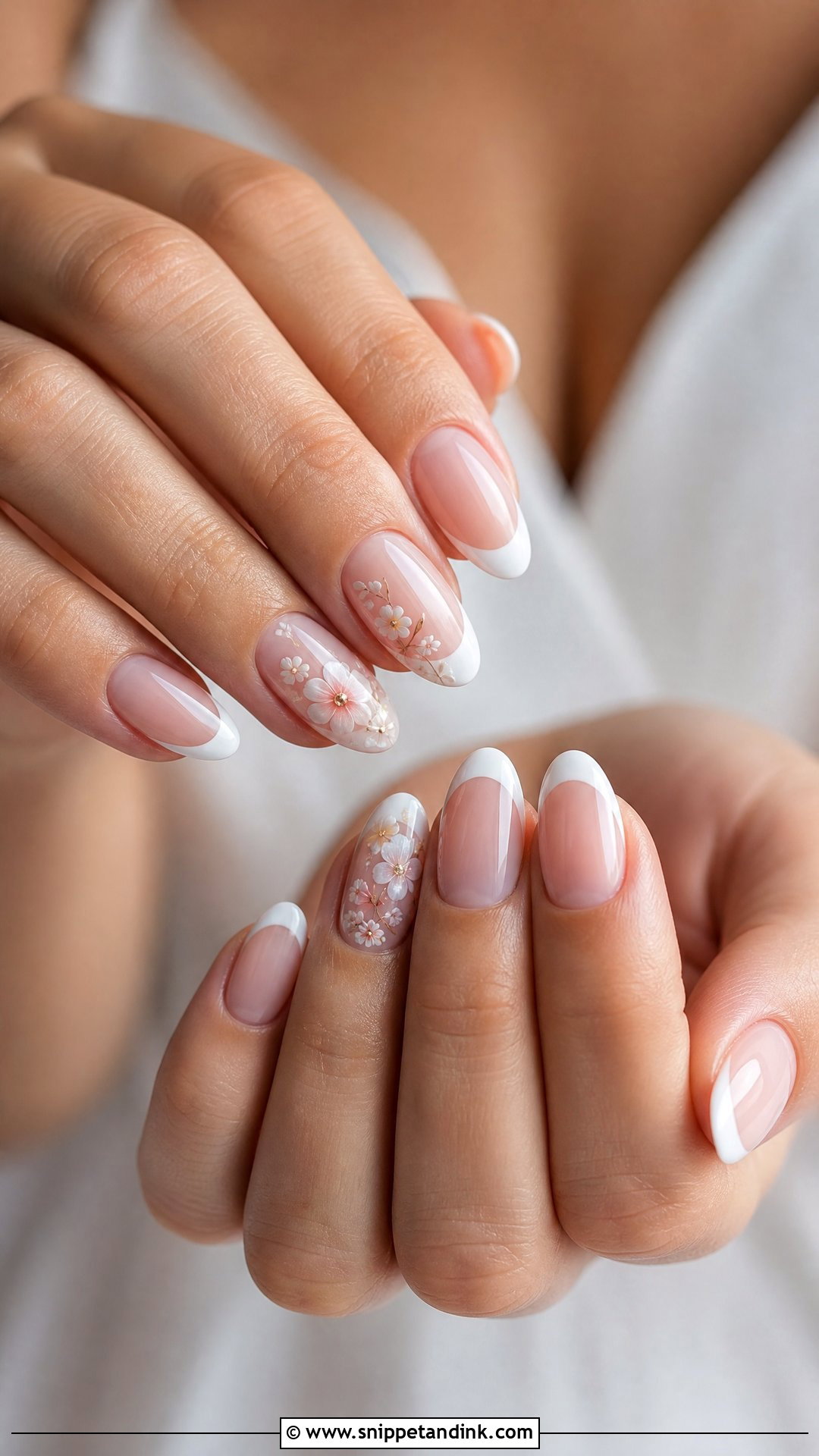
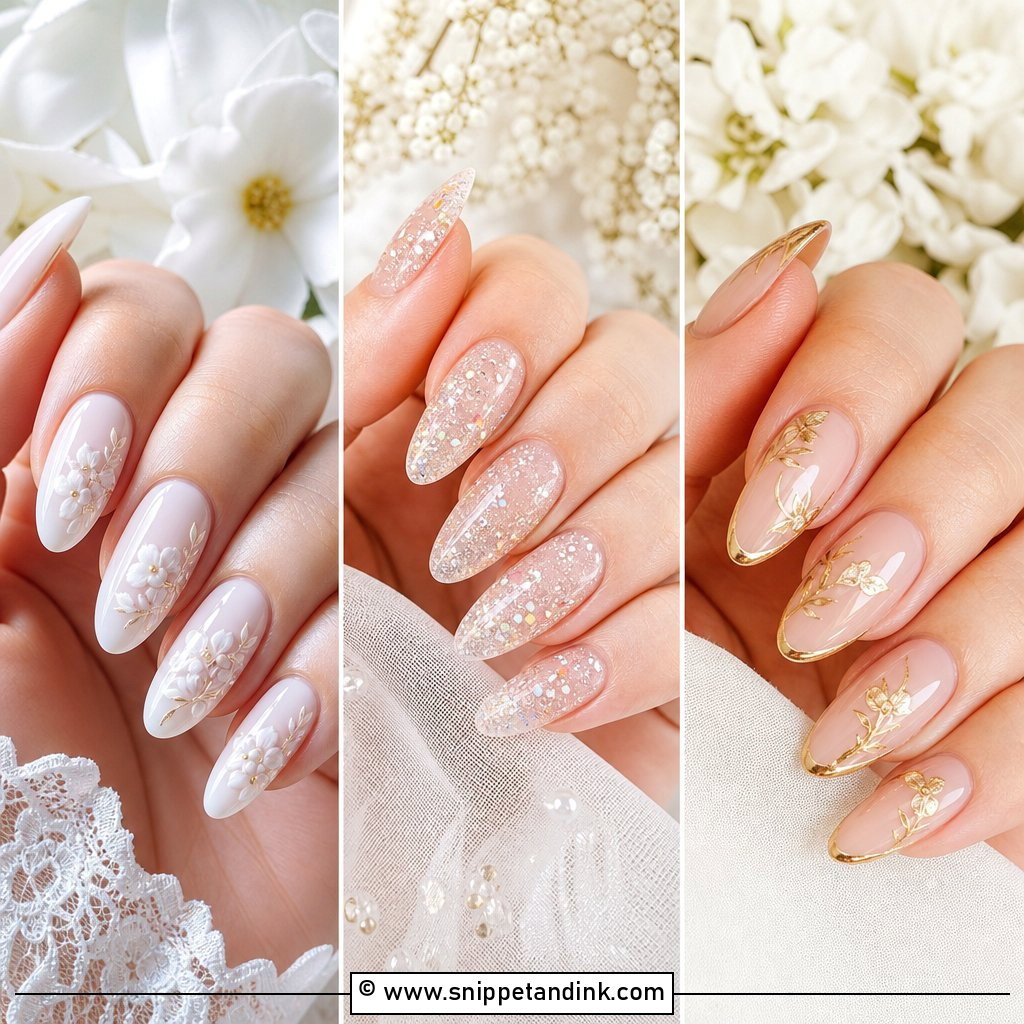
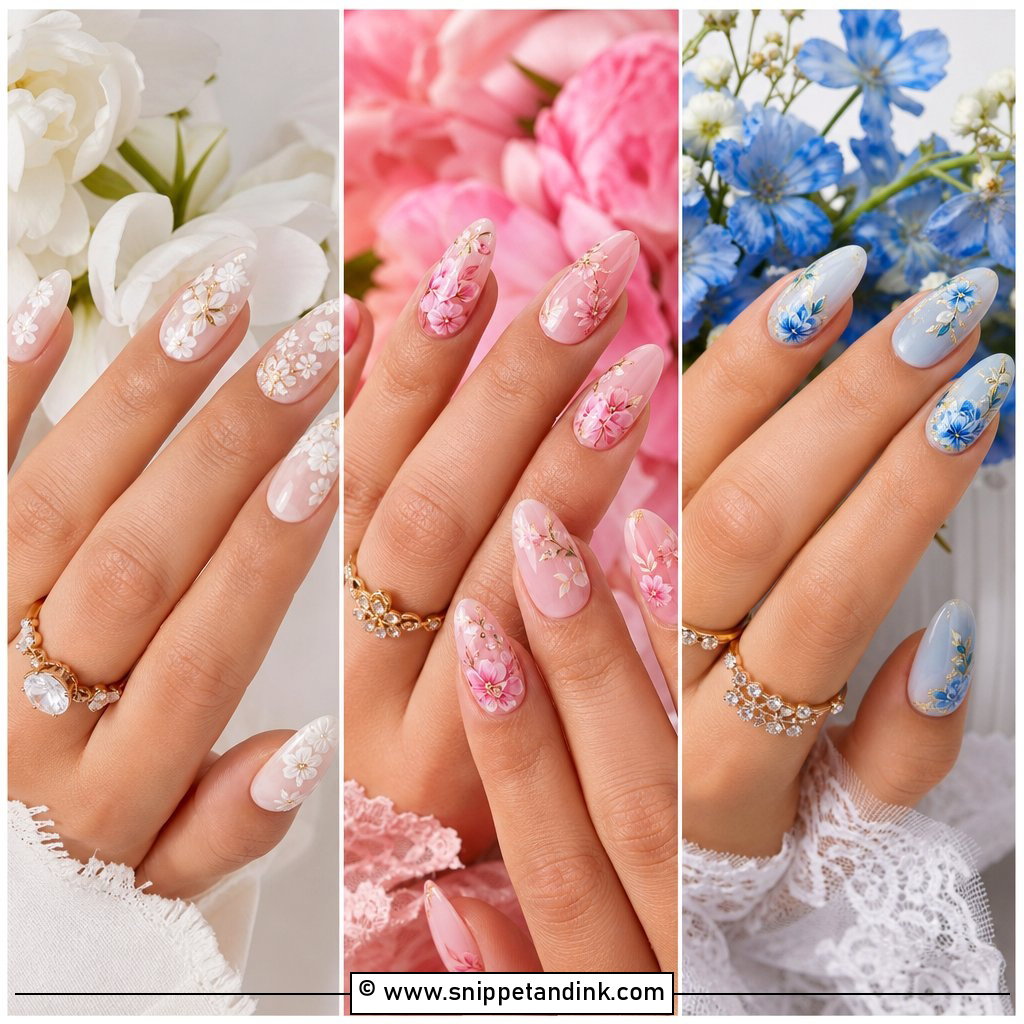
Tiny flowers over a French look fresh, but scale is everything. I paint them with a dotting tool and a fine brush, no bigger than a few millimetres, and place them by the cuticle or along one side of the tip. Two or three nails with florals is plenty. Spring and summer weddings suit it most, though dusty colours make it work later in the year. Sealing under a glossy top coat stops the petals wearing at the edges.
19. Glitter French Bridal Nails
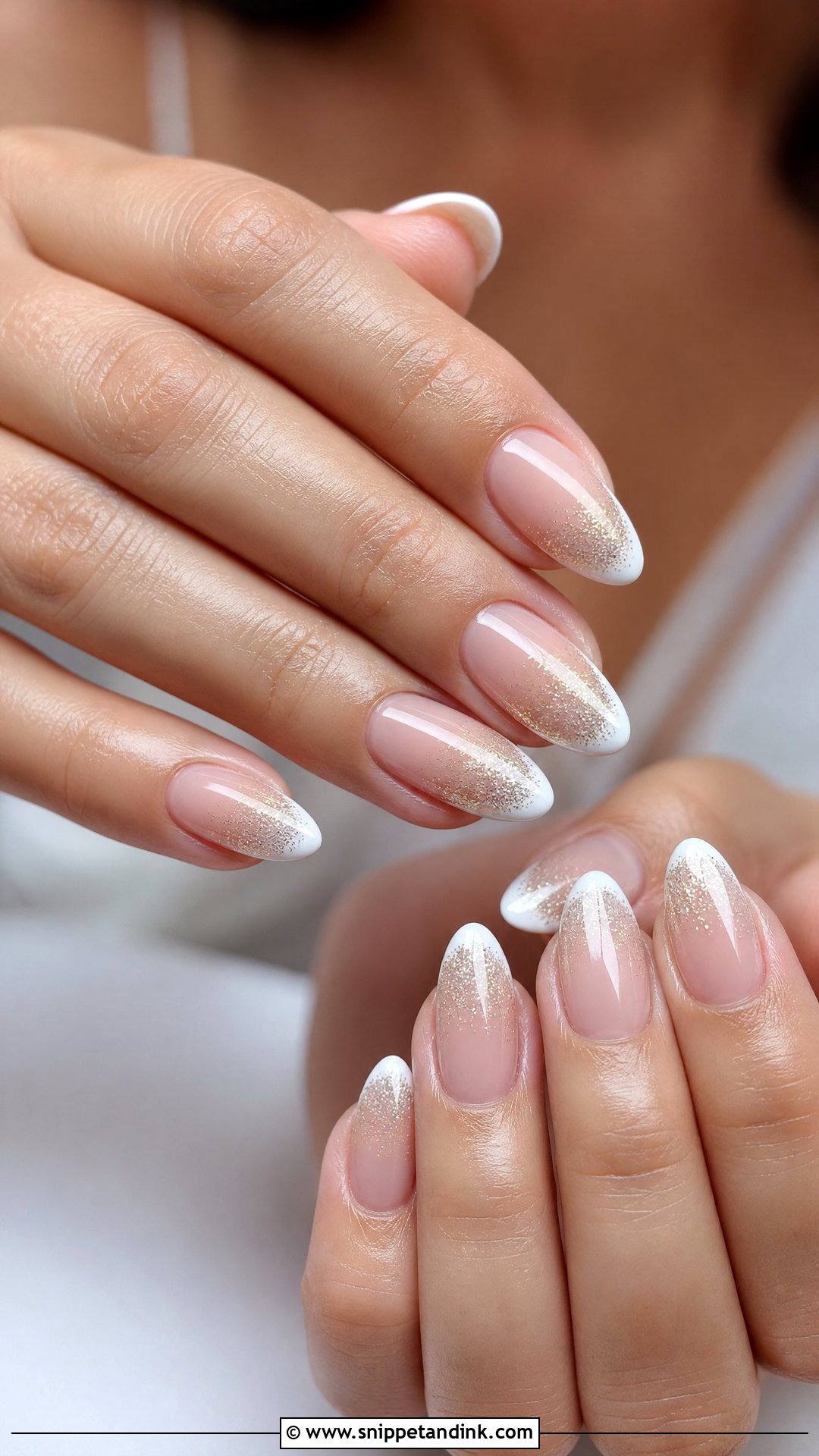
Glitter belongs at the tip or blended softly over it, never across the whole nail if you want it to stay bridal. Fine glitter in silver, champagne, pearl or rose gold looks like shimmer; chunky glitter looks like a party. The texture is the issue I watch: glitter needs an extra layer of gel or top coat to bury it, or the surface feels gritty and catches threads. Sheer nude underneath keeps it balanced.
20. Gold French Bridal Nails
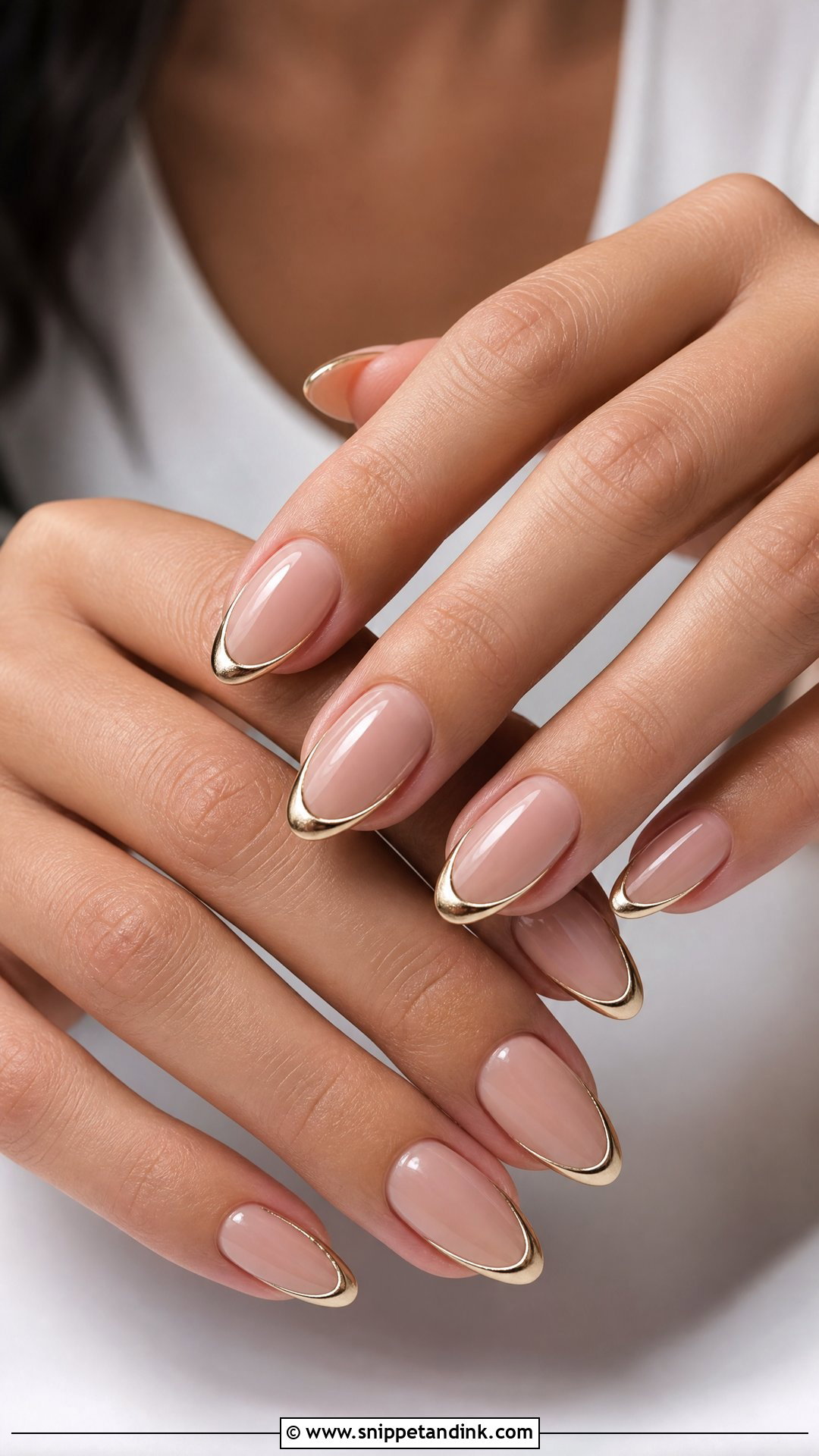
Gold French reads warm and works best when it echoes gold jewellery. Thin gold tips, a gold outline around a white tip or tiny flakes of foil over a sheer base are the three ways I do it. Champagne gold is softer than yellow gold and sits better with ivory and blush. Gold foil is delicate, so I set it under a full layer of top coat or it rubs off at the edges. Medium almond or oval suits it.
21. Silver French Bridal Nails
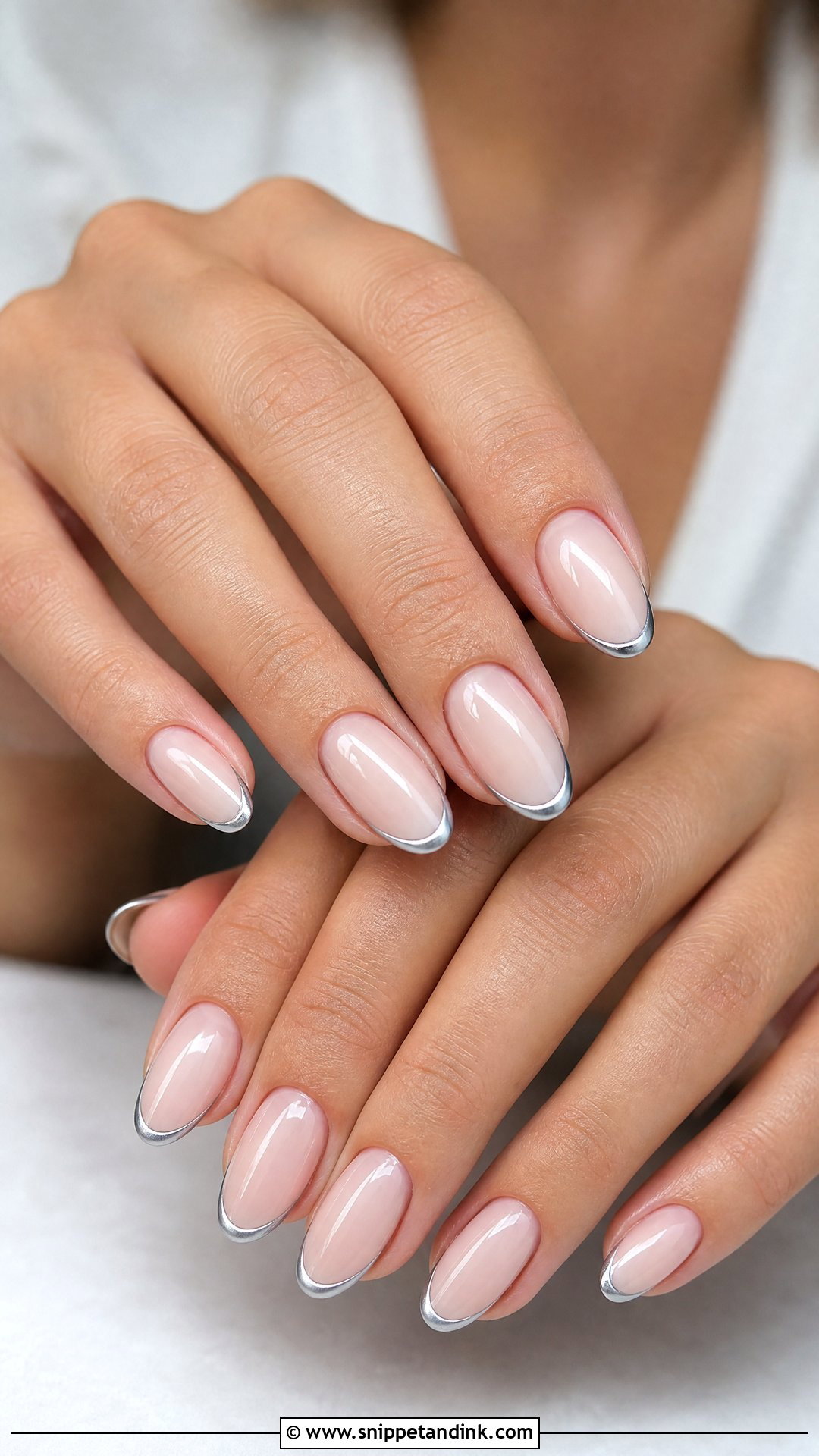
Silver is the cool-toned match for platinum, white gold or crystal jewellery. A thin silver tip, a silver outline on classic white French tips or a chrome-silver finish on the free edge are all options. Over a sheer pink or milky base it stays delicate. If your dress has crystal beadwork, this ties right into it. Mirror chrome at full strength can look like foil, so I prefer a micro tip.
22. Blue French Bridal Nails
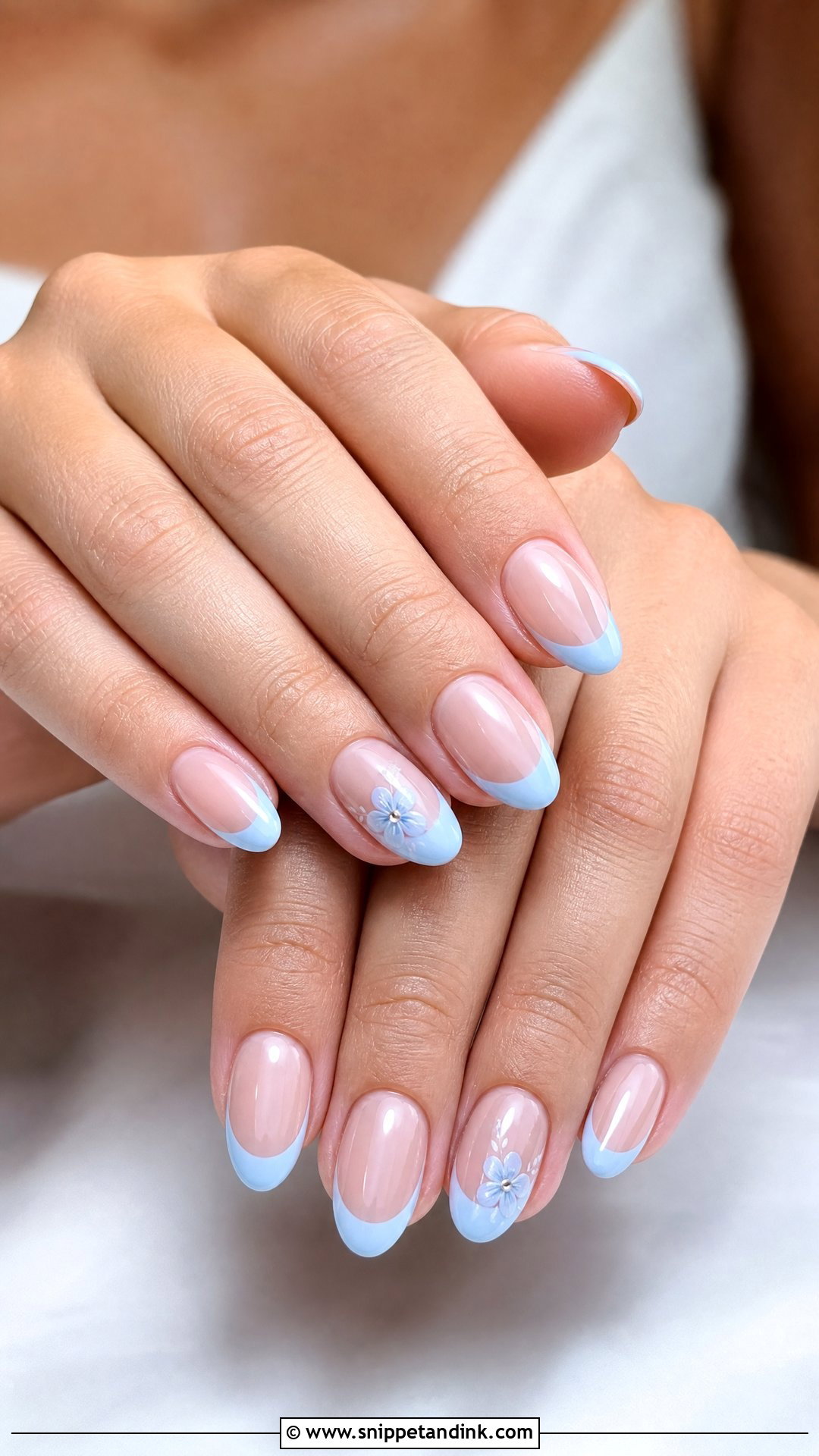
Pale blue tips are my favourite way to tuck in something blue without touching the dress. Baby, powder or icy blue reads soft against a sheer base, especially as a thin tip. Test it in daylight first; some pale blues go grey under warm reception lighting. Short oval, almond or square all wear it well, and a whisper of pearl chrome over the top softens it further.
23. Pink French Bridal Nails
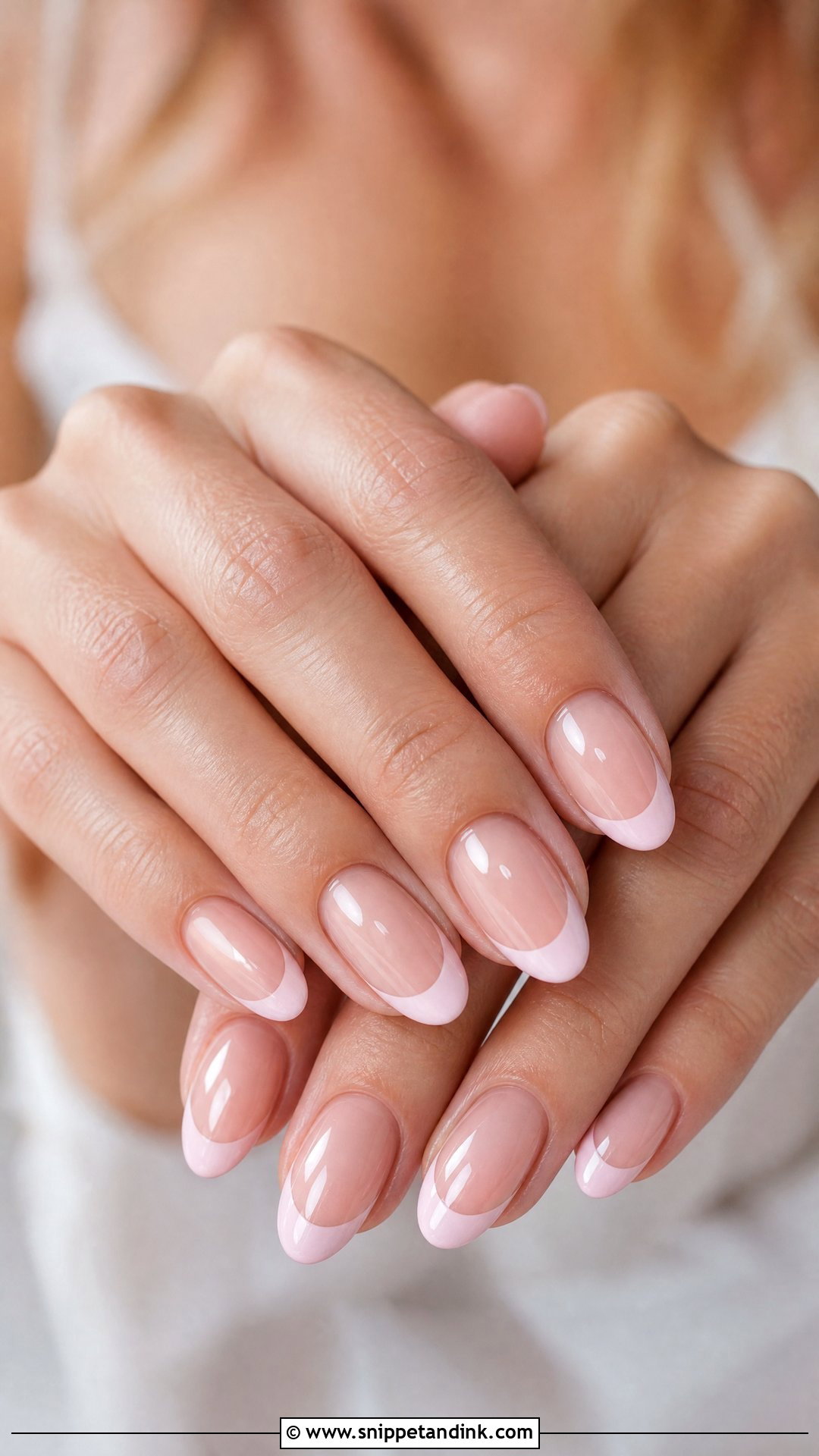
Pink tips over a sheer nude are a gentler twist on the classic. Blush or rose tips need a little more contrast against the base than you’d think, or the line disappears from a few feet away, so I go one shade deeper on the tip than the bride first picks. Thin for modern, slightly rounded for soft. It ties into pink makeup and flowers without any real colour risk.
24. Double French Bridal Nails
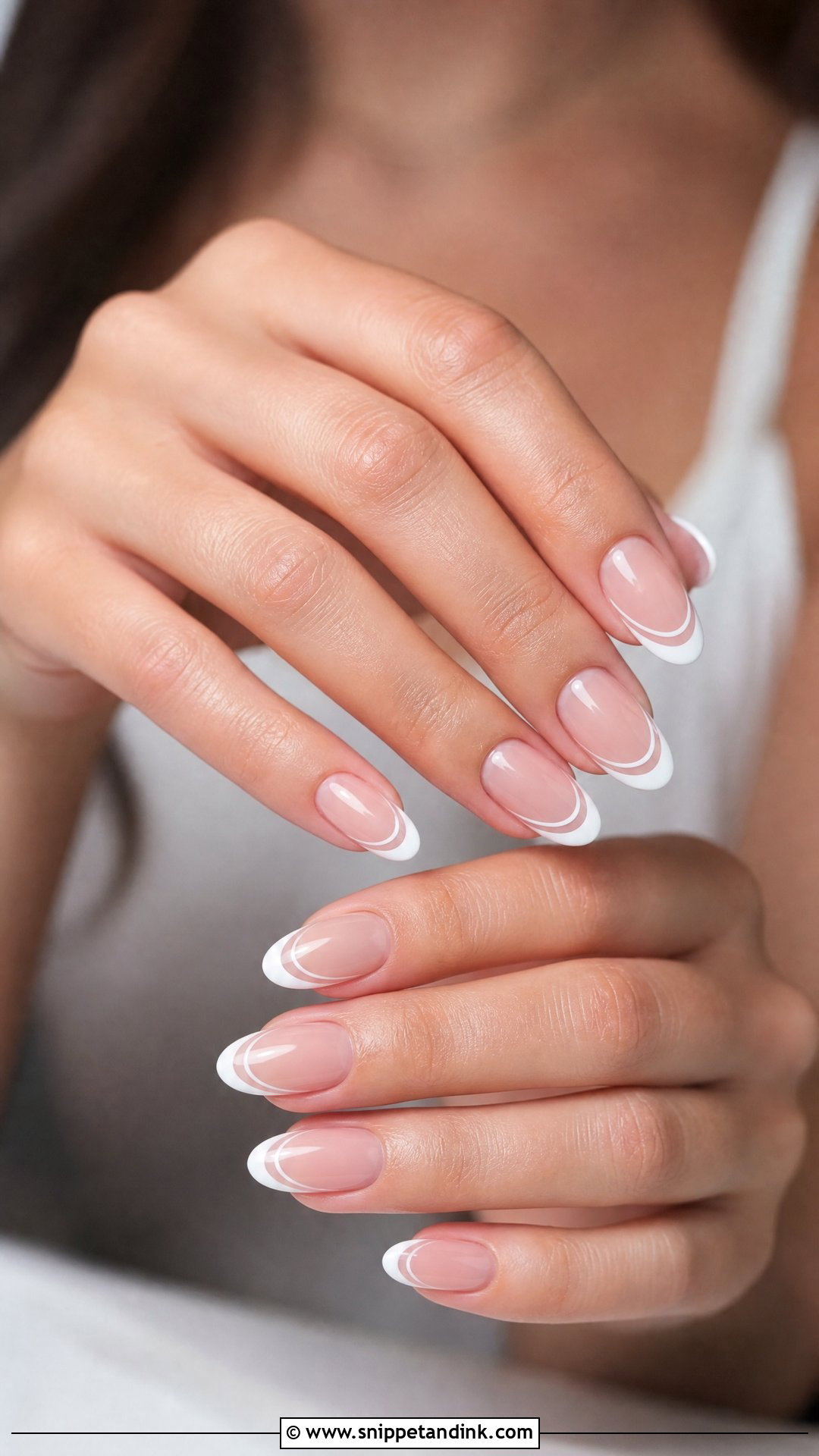
A double French adds a second fine line, either just below the tip or near the cuticle, in white, pearl, silver or gold. The spacing is what makes or breaks it: the gap between lines should be even on all ten nails, which takes patience and a striping brush. Keep the base sheer so the lines read. Almond and square give the lines the cleanest path to follow.
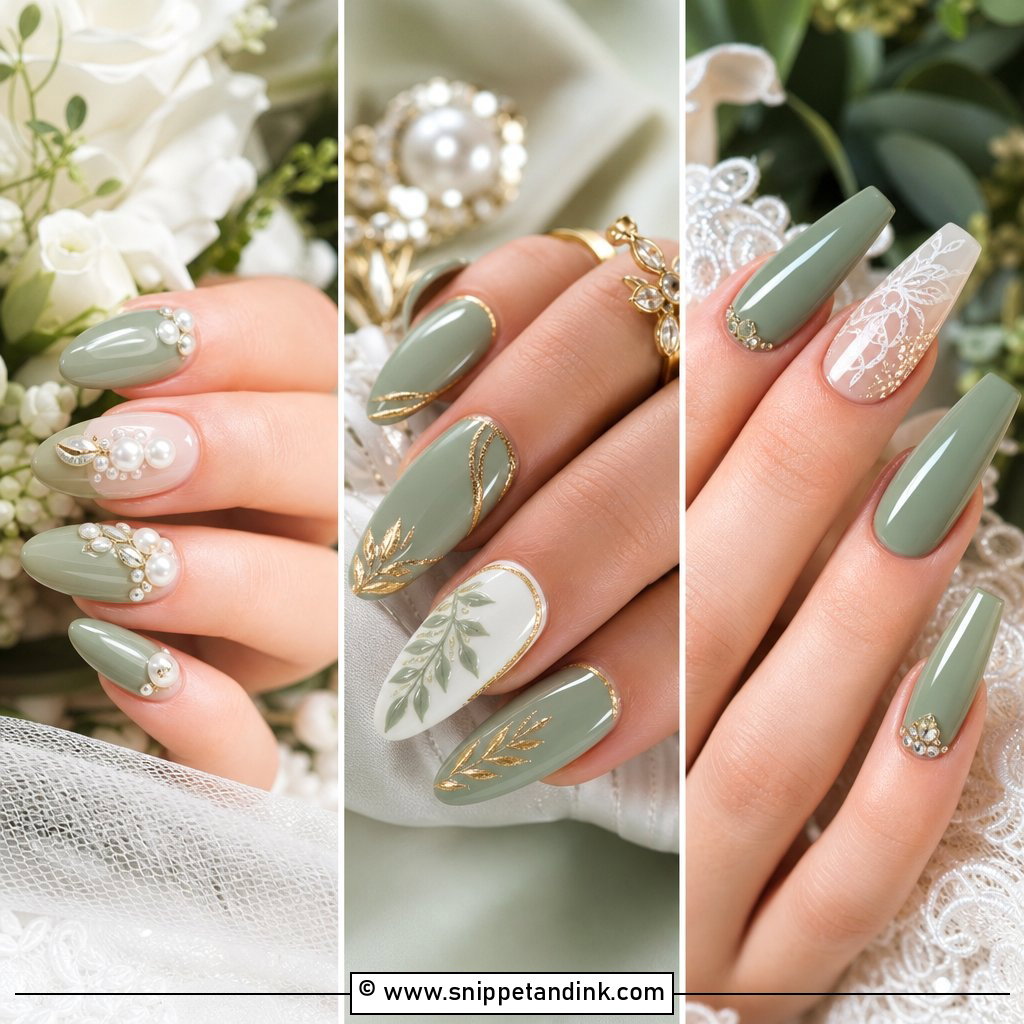
25. Reverse French Bridal Nails
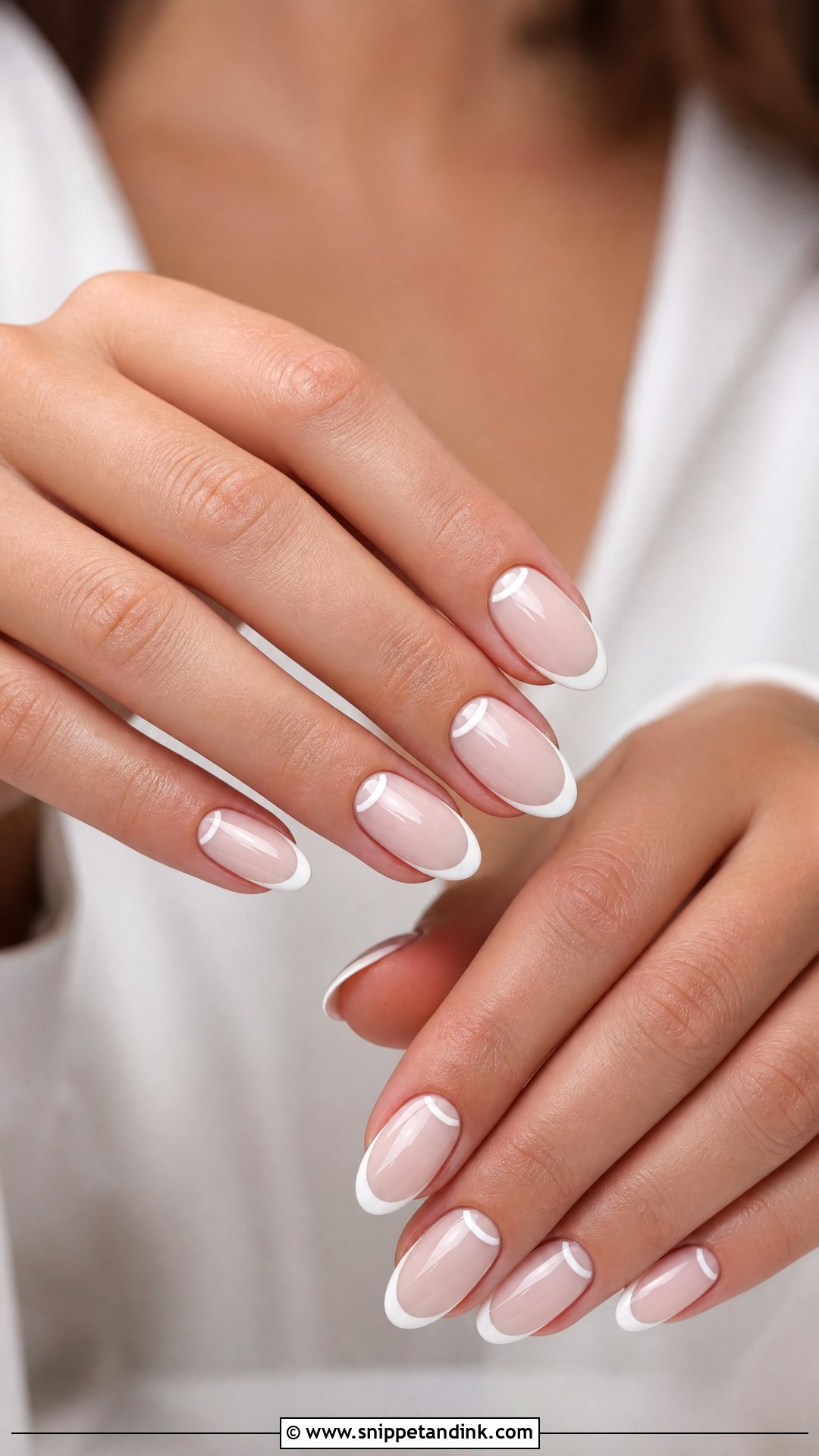
Reverse French bridal nails put a thin crescent at the cuticle instead of, or as well as, the tip. On a sheer nude, pink or milky base I paint it in white, pearl, gold or silver. The honest drawback: a cuticle accent shows regrowth sooner than a tip does, so book it close to the wedding. Oval and almond follow the curve best. Finish with high gloss.
Gel, Builder or Polish for a Wedding Week
The finish you choose decides when you book. Regular polish looks perfect for a day or two and then starts to chip at the tips, which is exactly where a French shows wear. I don’t recommend it for brides unless the appointment is the morning of the wedding.
- Gel polish: book two or three days before, so any lifting shows up while there’s time to fix it.
- Builder gel: adds strength to weak natural nails and lasts three weeks or so, good if the honeymoon follows straight on.
- Extensions: do a trial set a few weeks ahead to check the length doesn’t get in the way of zips, hooks and hairpins.
Hands Before the Close-Up
The ring shot is unforgiving. It shows dry cuticles, ridges and tiny gaps at the cuticle line far more than the design itself. I’d start cuticle oil every night for two weeks before the wedding and stop cutting cuticles yourself; ragged skin takes days to settle. Pack a small oil pen and a soft file in the bridal kit. A rough edge caught on lace is the most common emergency I hear about, and a file fixes it in a minute.
A Tip Line Thin Enough to Forget About
The French sets I’d call successful are the ones nobody comments on until they look at the photos and notice how tidy your hands are. Start from your dress, jewellery metal and nail length, and let your skin tone set the base colour. Classic, ivory and oval French lean traditional; micro, chrome, glazed or double French lean modern; pearl, lace and floral bring in detail. Bring your references, wear the shade for a week if you can, and it’ll look right in person and in every close-up.
You'll Like These Ideas:


Leave a Reply