
Dressing the bride’s sister is a different job from dressing a guest. You’ll stand closest to her in the family portraits, you’ll probably be on your feet for most of the day, and someone will hand you a bouquet, a phone or a train to hold at least once. So I start every sister consultation with three questions: what is the dress code, which colors has the couple already given to the bridal party, and what will you actually be doing on the day. The season and ceremony time decide the fabric; your role decides the cut. The twenty looks below run from garden-party prints to full South Asian formalwear, and under each one I’ve noted what I’d check before you buy.
Your Role on the Day Changes What You Can Wear
A sister who is maid of honor has a long list of physical jobs: bustling the train after the ceremony, fixing the veil before the processional, carrying the bouquet during the vows, sometimes giving a speech. A sister who is a guest has fewer tasks but stands in more family photos than anyone. I dress these two people differently.
- If you’ll be bustling a train, you need to kneel and bend. Skip mermaid shapes and very tight sheaths.
- If you’re giving a speech, choose a neckline you won’t need to adjust while holding a microphone.
- If you’ll be in a lot of portraits, avoid pale colors that blend into the bride’s gown and fine stripes or checks, which can flicker on camera.
- If you’re helping the bride change between outfits, have a layer that covers you when the dressing room door keeps opening.
Ask your sister directly whether she’d like you to match the bridesmaids, coordinate with them or stand apart. Some brides want family dressed in one shade; others want their sister to have her own moment. Knowing which before you shop saves at least one return.
1. Floral Midi Dress Wedding Outfit
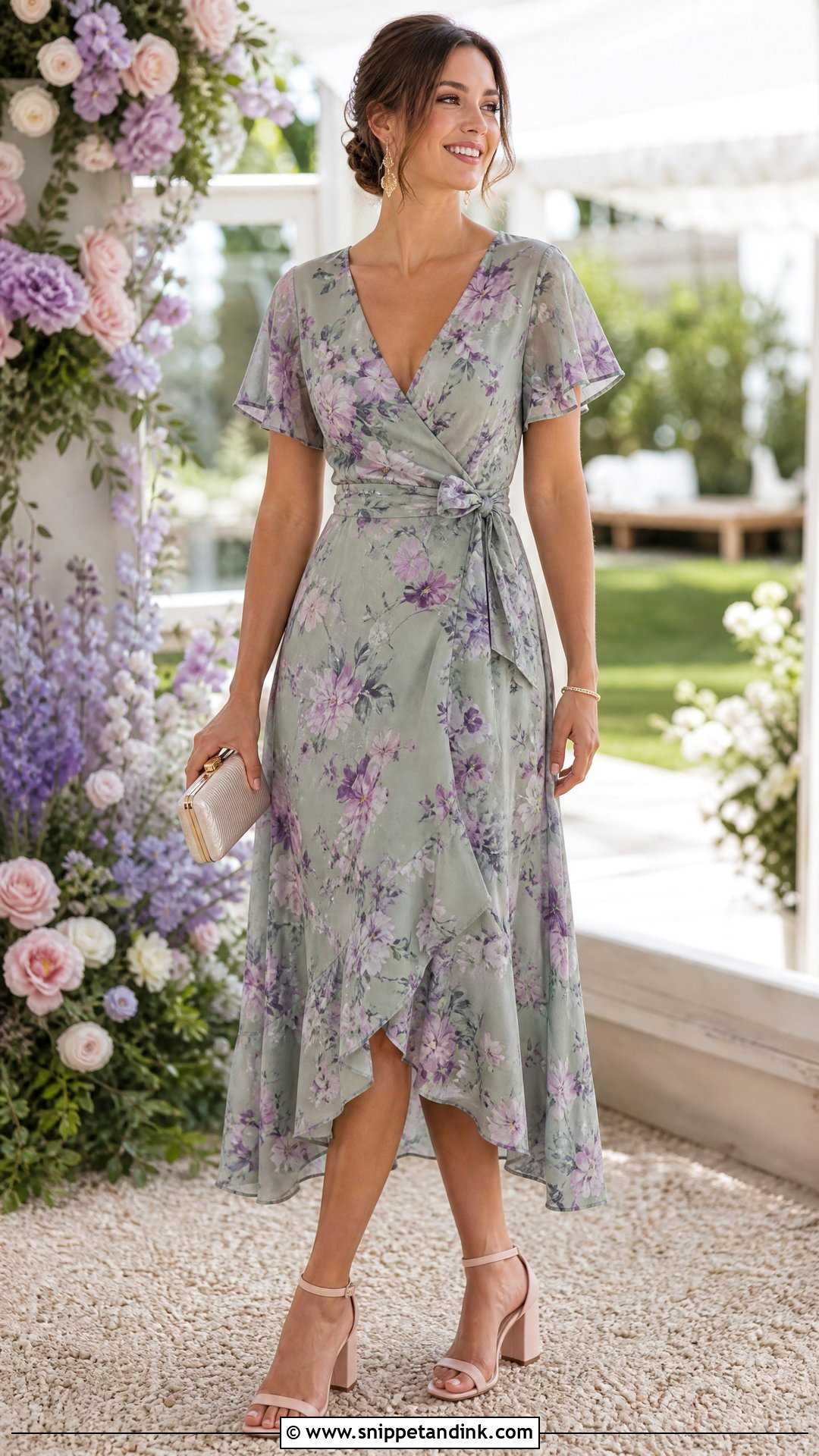
A floral midi dress is the easiest daytime answer, but the print does most of the work, so I look at it from across the room before I look at the cut. Two or three colors read as a pattern in photos; six or seven turn into noise next to a plain bridal gown. A wrap or fit-and-flare shape gives you room to bend and kneel for the dress-fluffing moments. Spring prints in lavender or sage, autumn ones in rust and navy. The one I’d refuse is any print on a mostly white ground unless your sister has said yes to it, because from the back row it reads as white. Block heels, a structured clutch and a light shawl cover the rest.
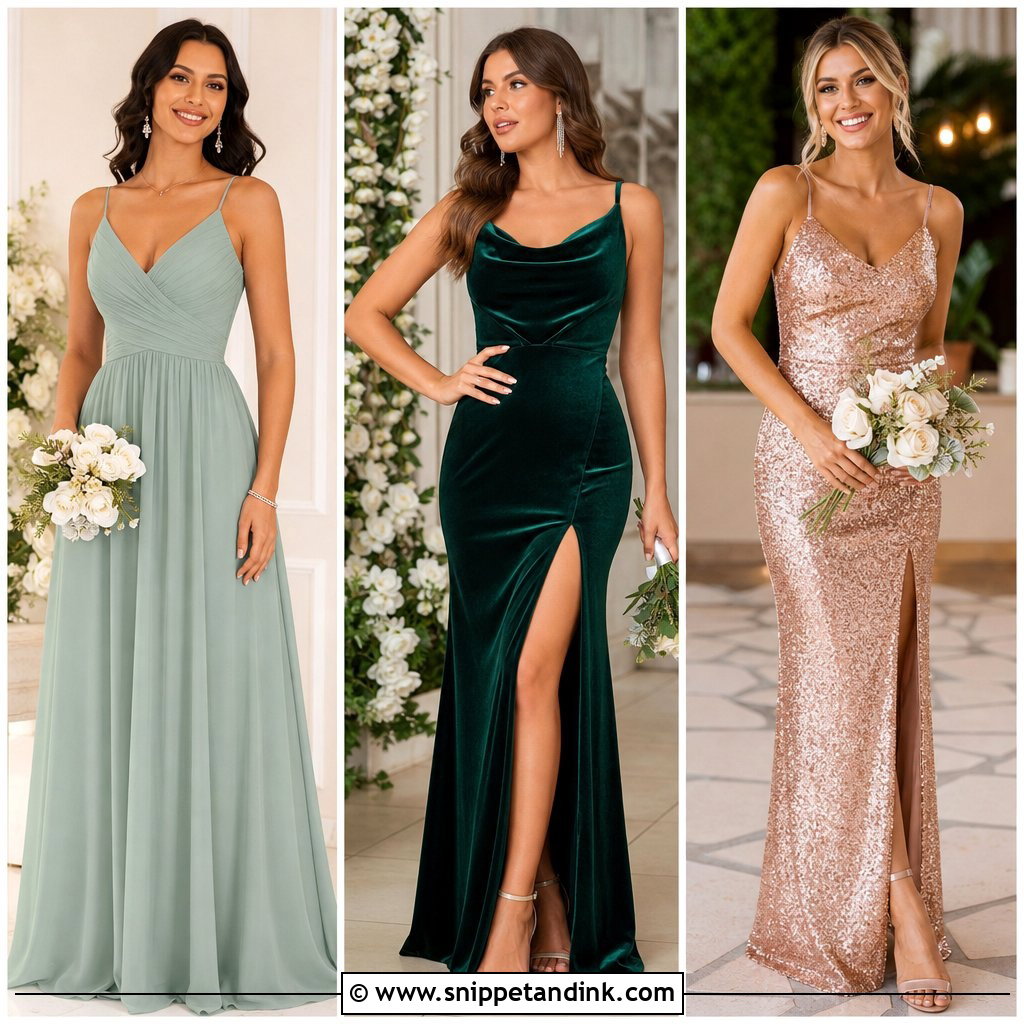
2. Satin Maxi Dress Wedding Outfit
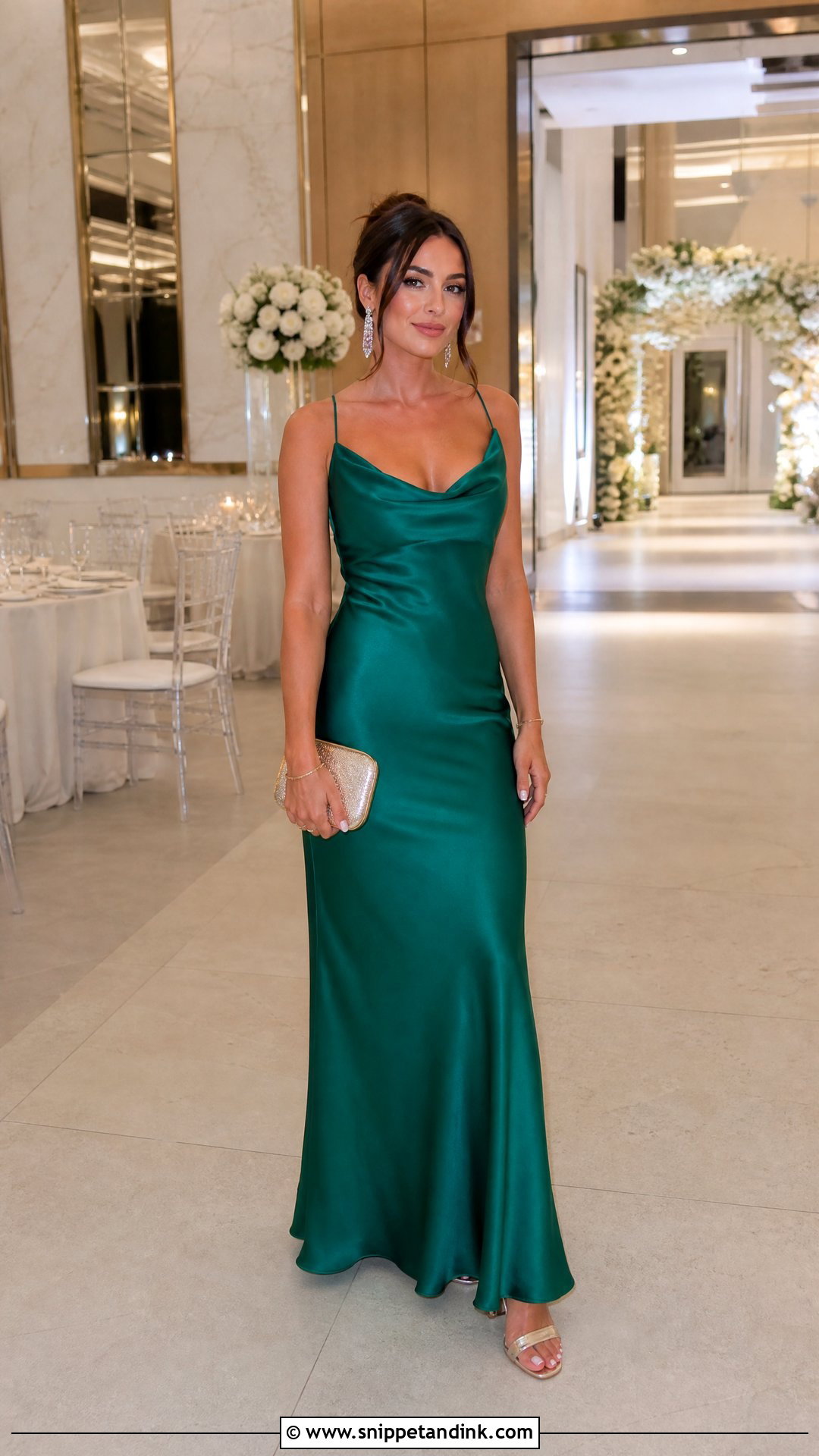
Satin is unforgiving, and that’s the honest reason to choose it carefully. It shows every seam and line underneath, and it creases across the lap the minute you sit through a ceremony, so I steer sisters toward a bias cut, which skims rather than clings and recovers better from sitting. Emerald, plum and copper hold their color under evening lighting; pale satin can wash out in flash photos. Use smooth, skin-tone underwear and a strip of fashion tape on a cowl neckline. Because the fabric already shines, slim metallic heels and small drops are plenty.
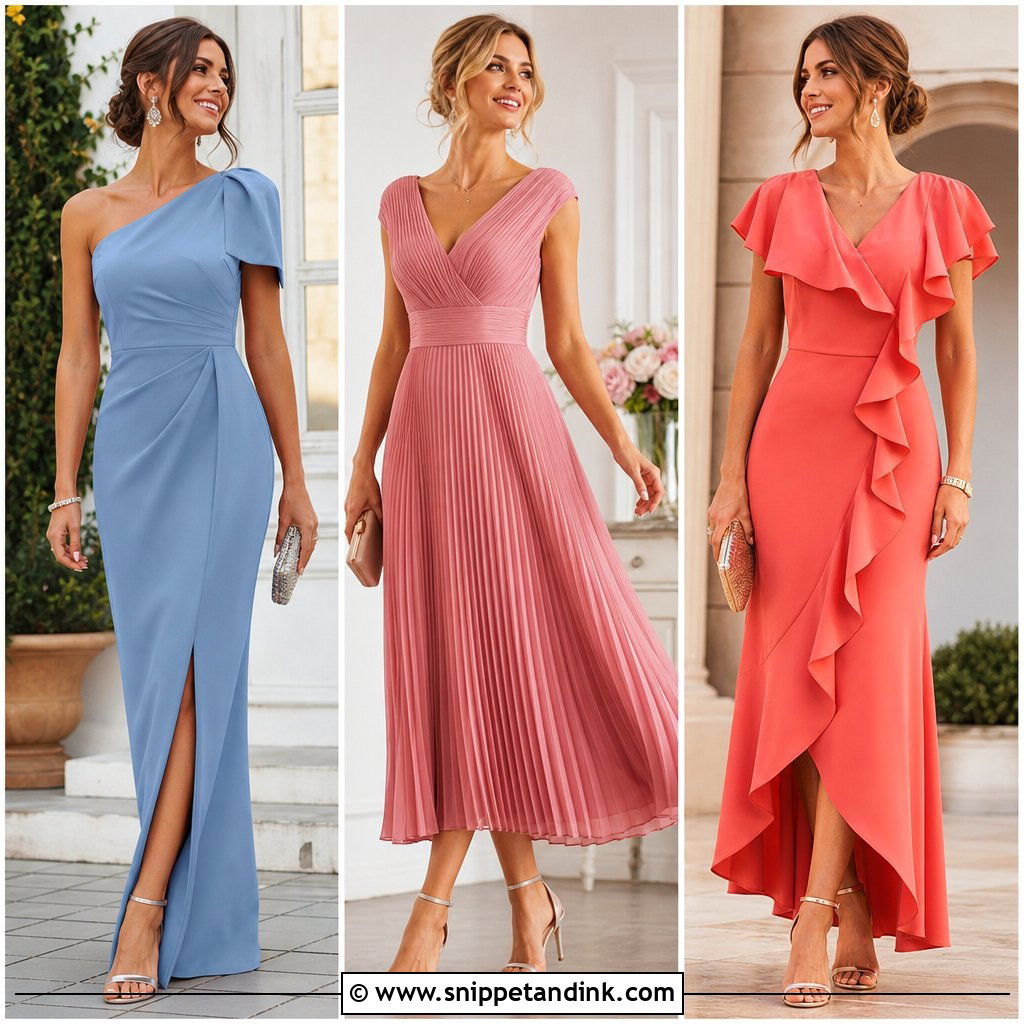
3. One-Shoulder Gown Wedding Outfit
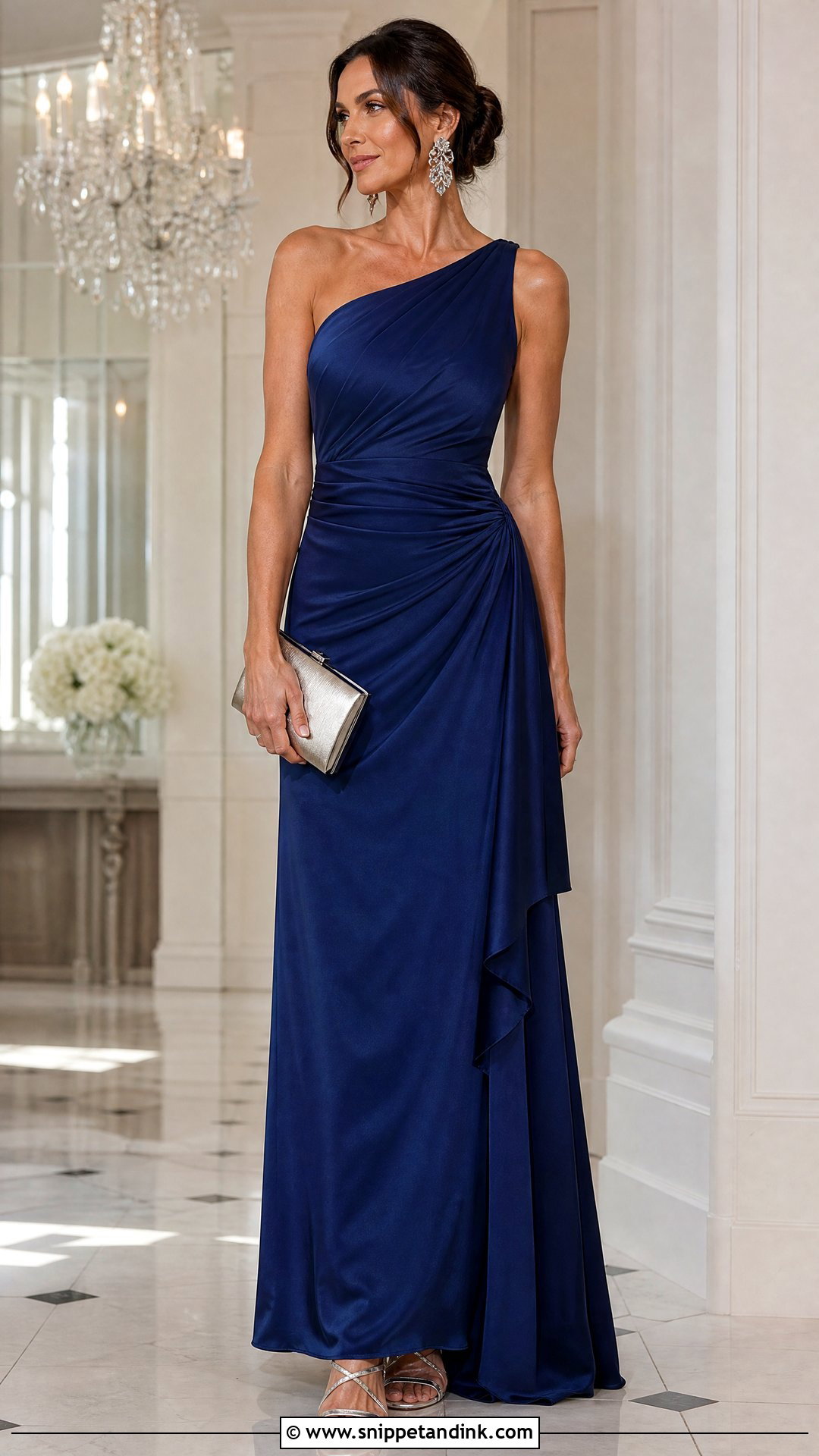
For black tie, a one-shoulder gown gives you shape without a single bead. The asymmetric neckline is the detail, so I’d keep jewelry to one sculptural earring on the bare side. What I check at the fitting is the strap: if it slips when you lift your arm to hug someone, it needs a hidden elastic or a bra loop sewn in. Hem the skirt in the exact shoes you’ll wear, since you’ll be walking an aisle and standing at the front where a dragging hem shows. Sweep your hair to the covered side so the line of the neckline stays clear.
4. Pleated Chiffon Dress Wedding Outfit
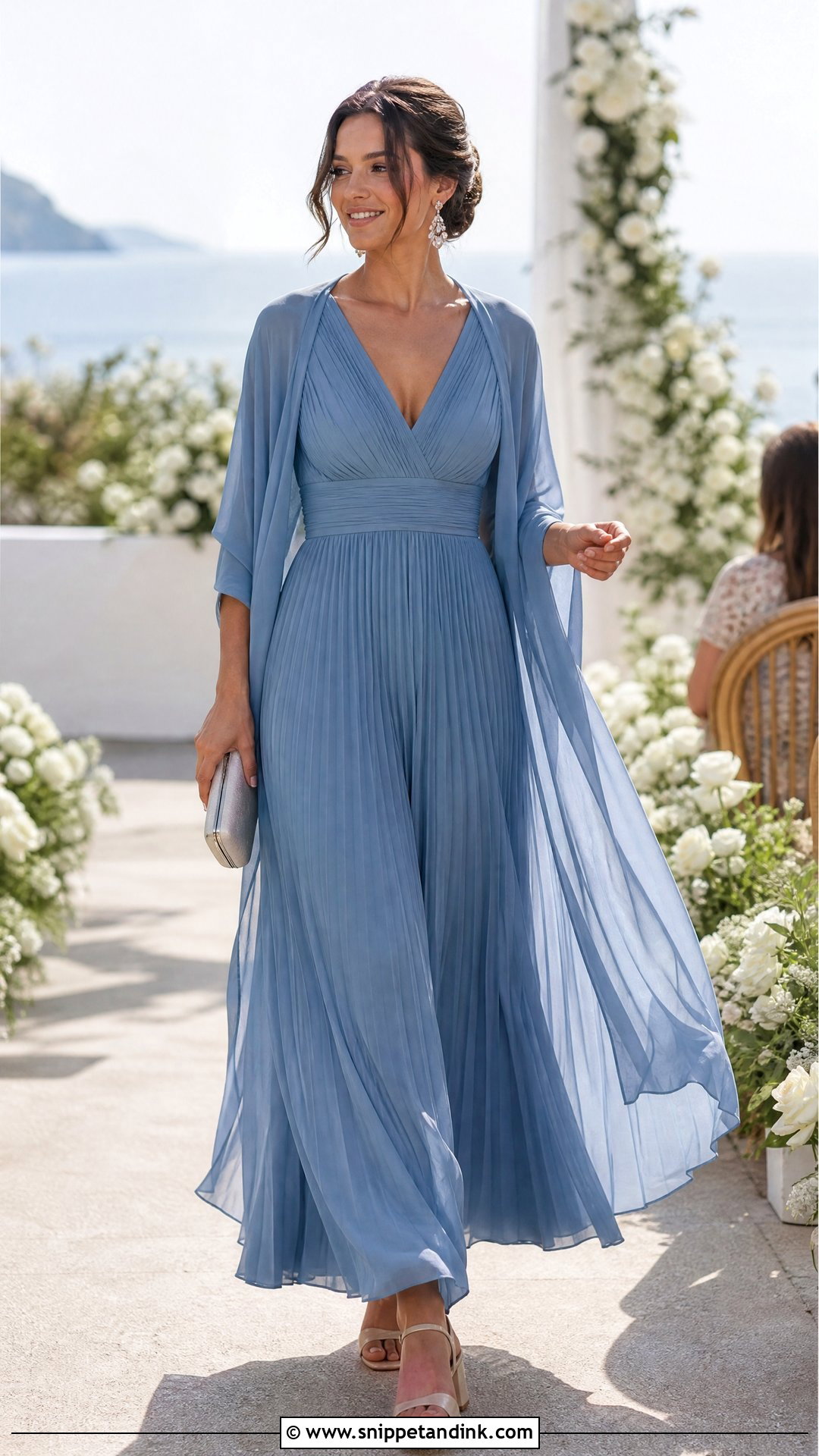
Pleated chiffon moves well outdoors, and it forgives a lot: a few pounds either way, a long car ride, a breeze. Look for a lined bodice and a defined waist, because unlined chiffon over a strapless bra is exactly the kind of thing that looks fine at home and transparent in afternoon sun. Dusty blue, terracotta and deep teal sit comfortably beside most wedding palettes. Pearl or crystal studs and a small satin bag are enough. One warning from steaming these on wedding mornings: the pleats are heat-set, so never press them flat with an iron. Steam from a distance and let them hang.
5. Wide-Leg Jumpsuit Wedding Outfit
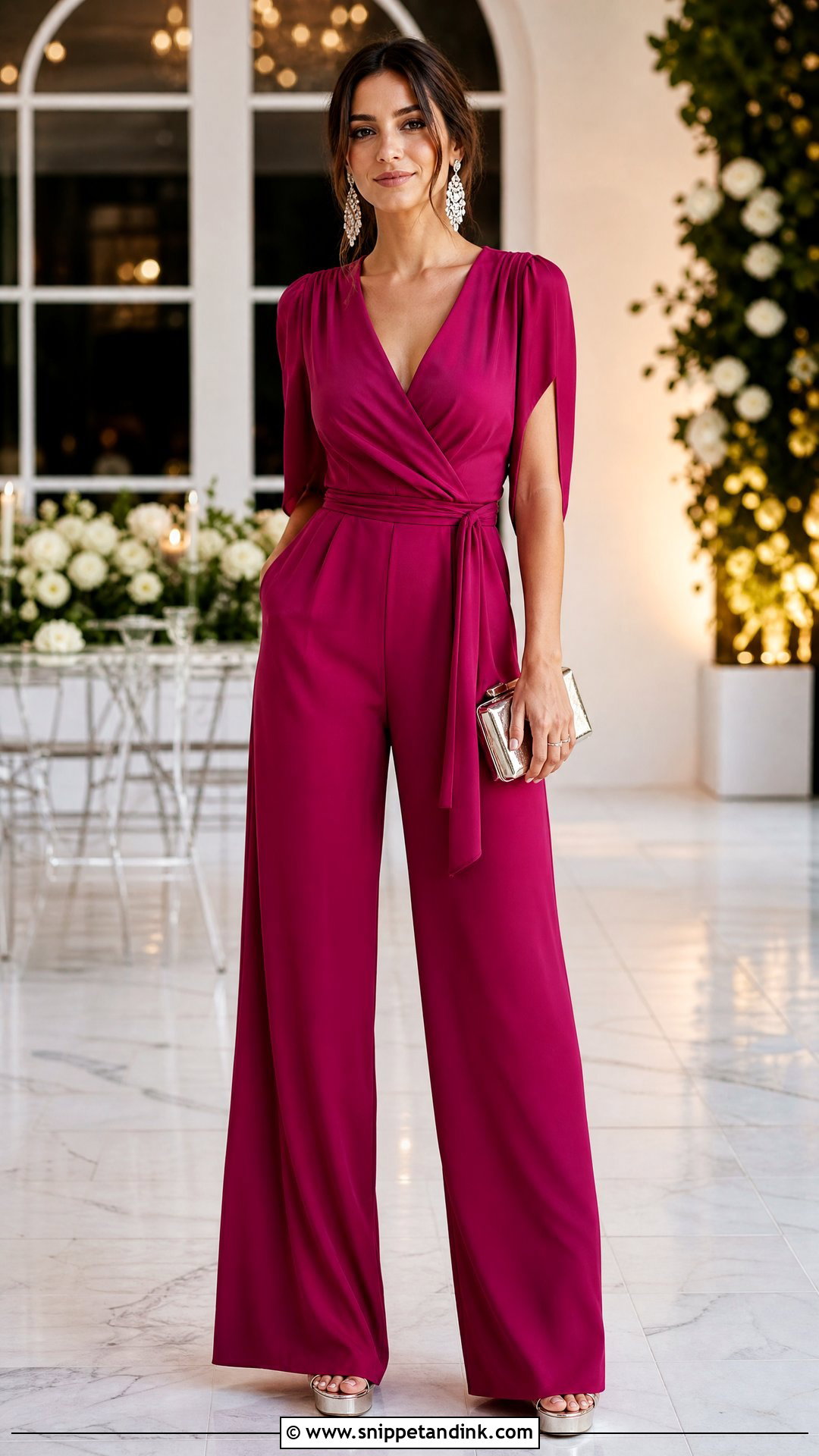
Prefer trousers? A wide-leg jumpsuit works for a sister who’ll be running errands between the ceremony and the speeches. Fit matters more here than with a dress: the torso length has to be right or it pulls at the crotch when you sit. I always ask clients to sit, squat and raise both arms in the fitting room. Cobalt, magenta or forest green suit evening; hem the legs to just clear the floor in your platforms. Check you can fasten it yourself, because the restroom trip during the reception is not when you want to hunt for help with a back zip.
6. Tailored Pantsuit Wedding Outfit
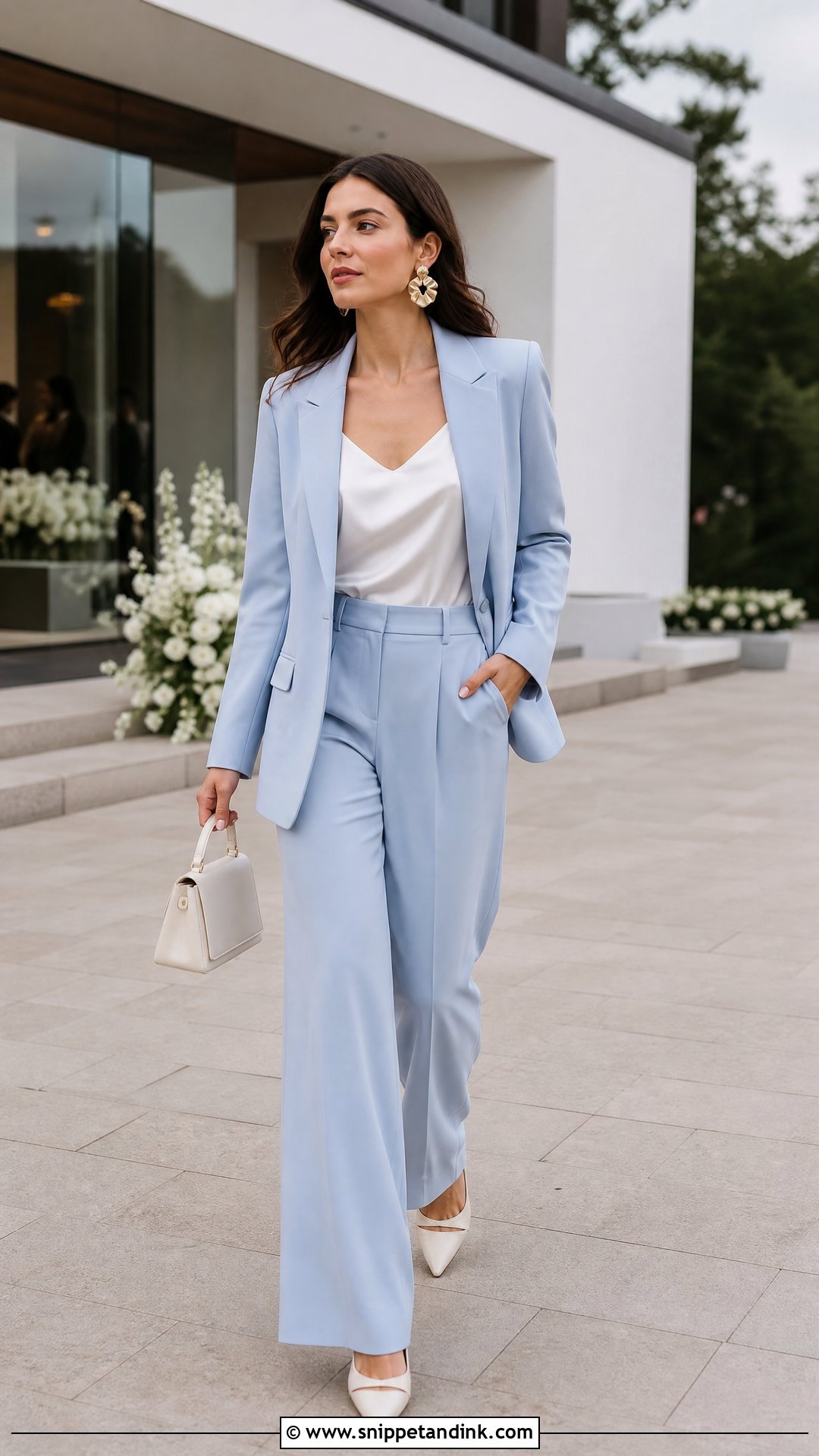
A pantsuit reads as wedding clothes rather than office clothes when the color and the top do the celebrating. Rose, lilac, teal or powder blue, worn with a silk camisole instead of a shirt, gets you there. Tailoring is the whole look: I’d budget for a tailor to take in the shoulders, shorten the sleeves to show a little wrist and hem the trousers for your heels. Wear the jacket open for a garden party, buttoned double-breasted for a formal evening. Pointed slingbacks and sculptural earrings finish it.
7. Velvet Maxi Dress Wedding Outfit
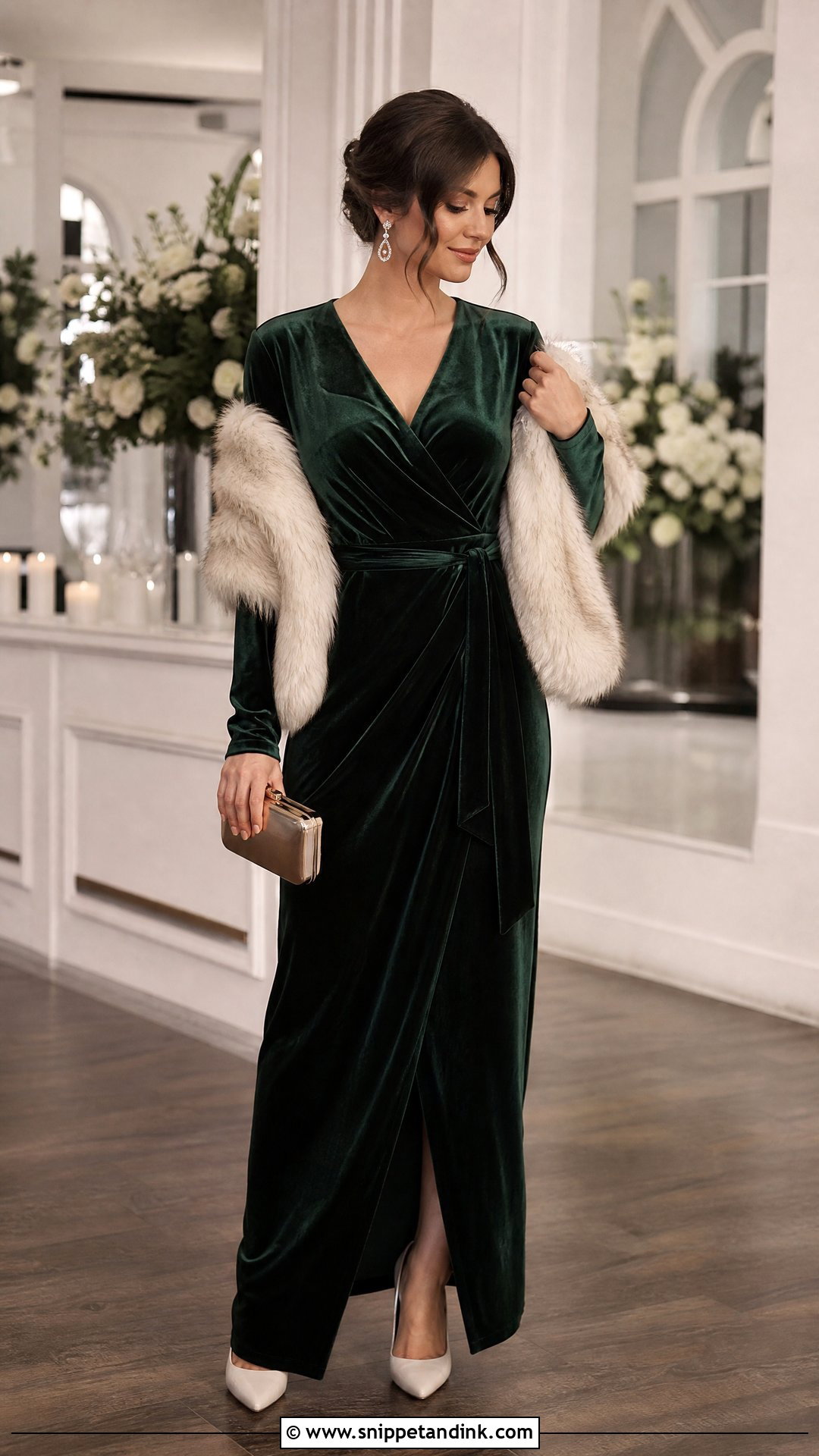
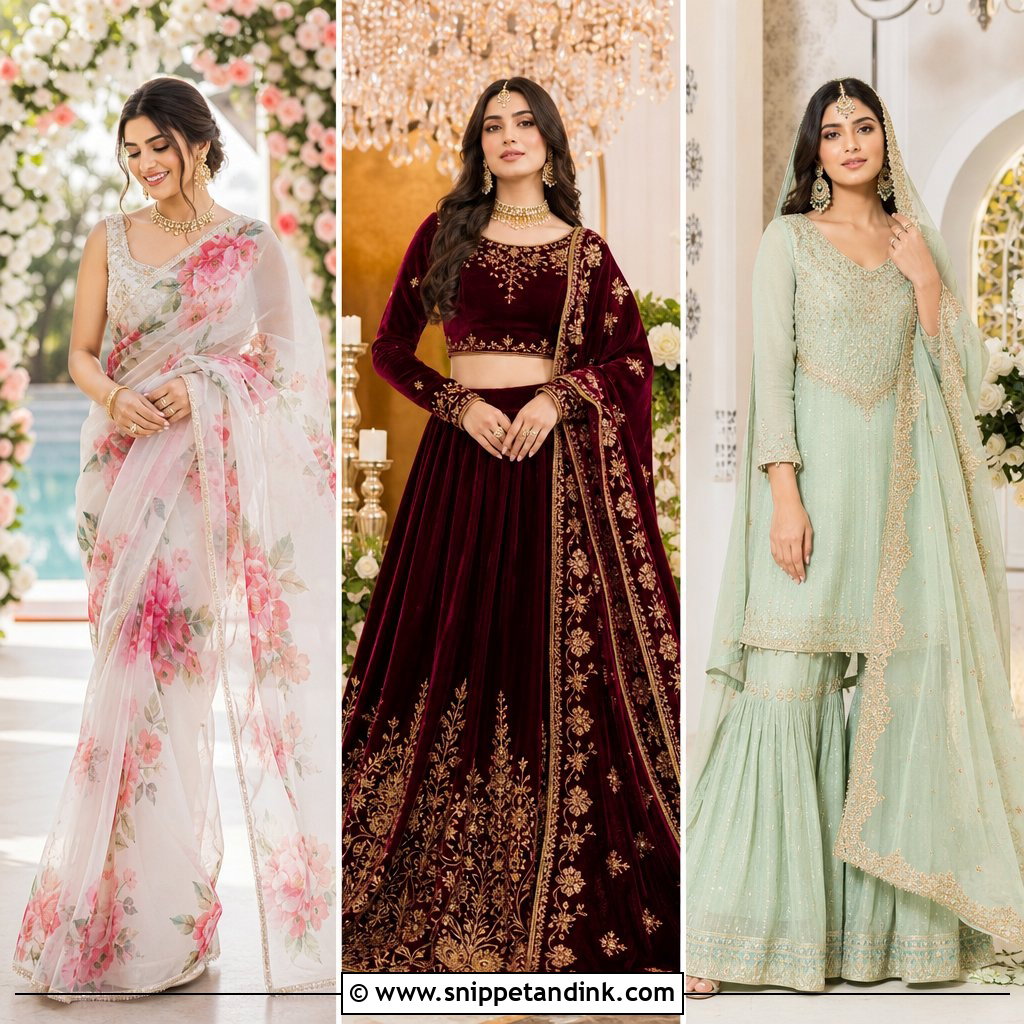
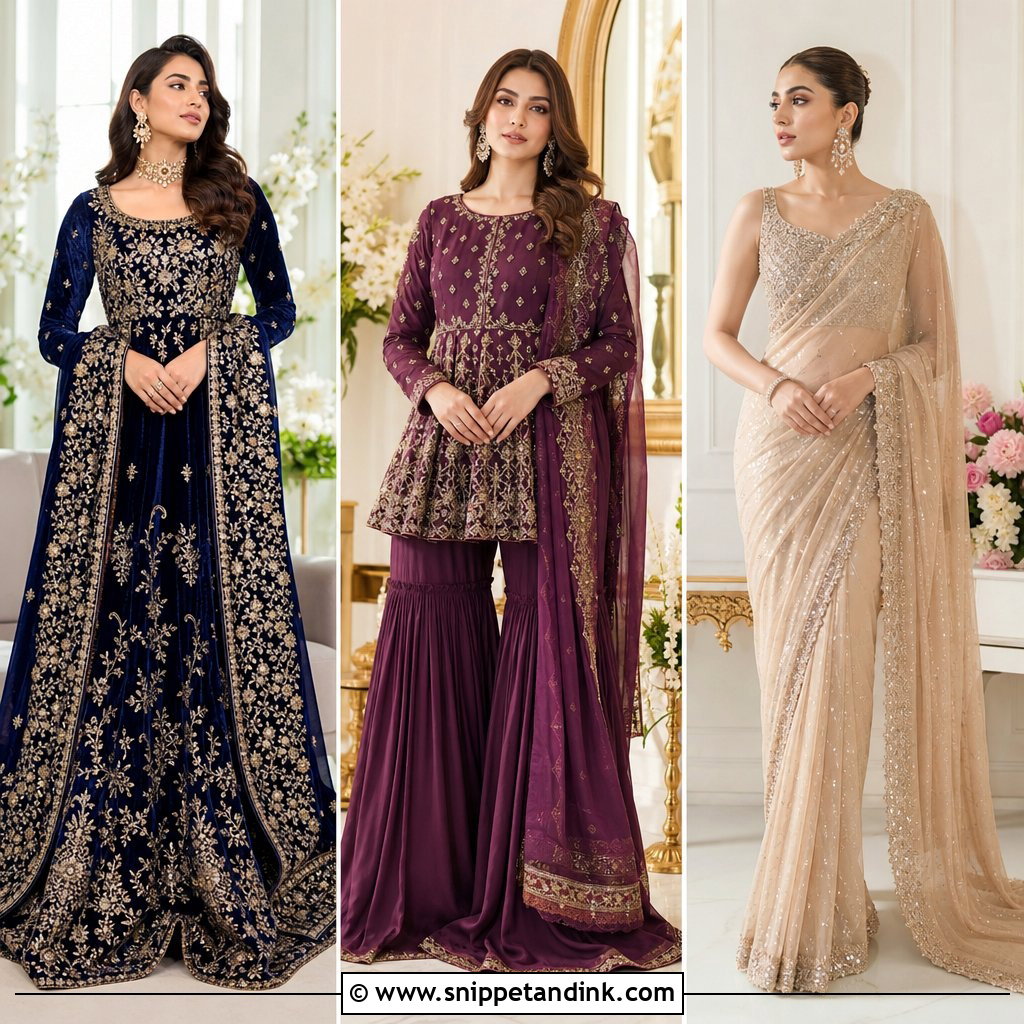
Velvet belongs to winter and late autumn, and it’s warmer than people expect, so I’d only put a sister in a long-sleeved velvet maxi for a cold venue. Burgundy, pine and aubergine look richest because velvet’s pile deepens dark colors. The pile also crushes: if you sit on it in a car, you’ll see shiny patches, so hang it on the back seat or change at the venue. Closed-toe pumps, a metallic clutch, and a wool coat or faux-fur stole for outdoor portraits. Keep the jewelry light; heavy pieces fight the fabric.
8. Long-Sleeve Wrap Dress Wedding Outfit
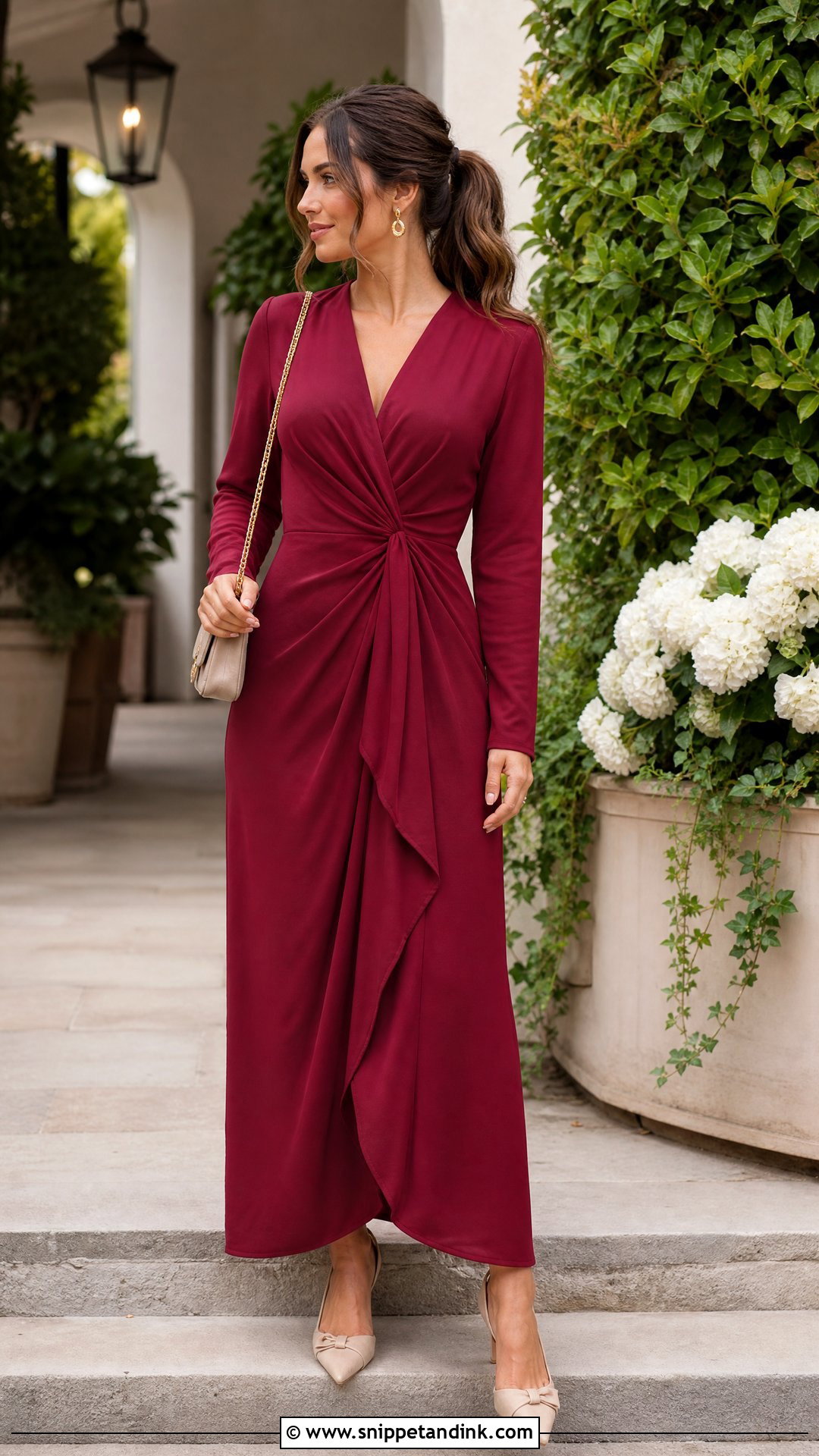
A long-sleeve wrap dress handles a day that starts cool and warms up. The adjustable waist is useful if the fitting was months ago, and crepe or jersey hardly wrinkles in a suitcase. The weak point is the neckline, which opens when you lean forward to straighten a veil, so I always add a tiny snap or a hook where the wrap crosses. Cranberry, teal or a small botanical print. A curled low ponytail suits the relaxed shape.
9. Sequin Midi Dress Wedding Outfit
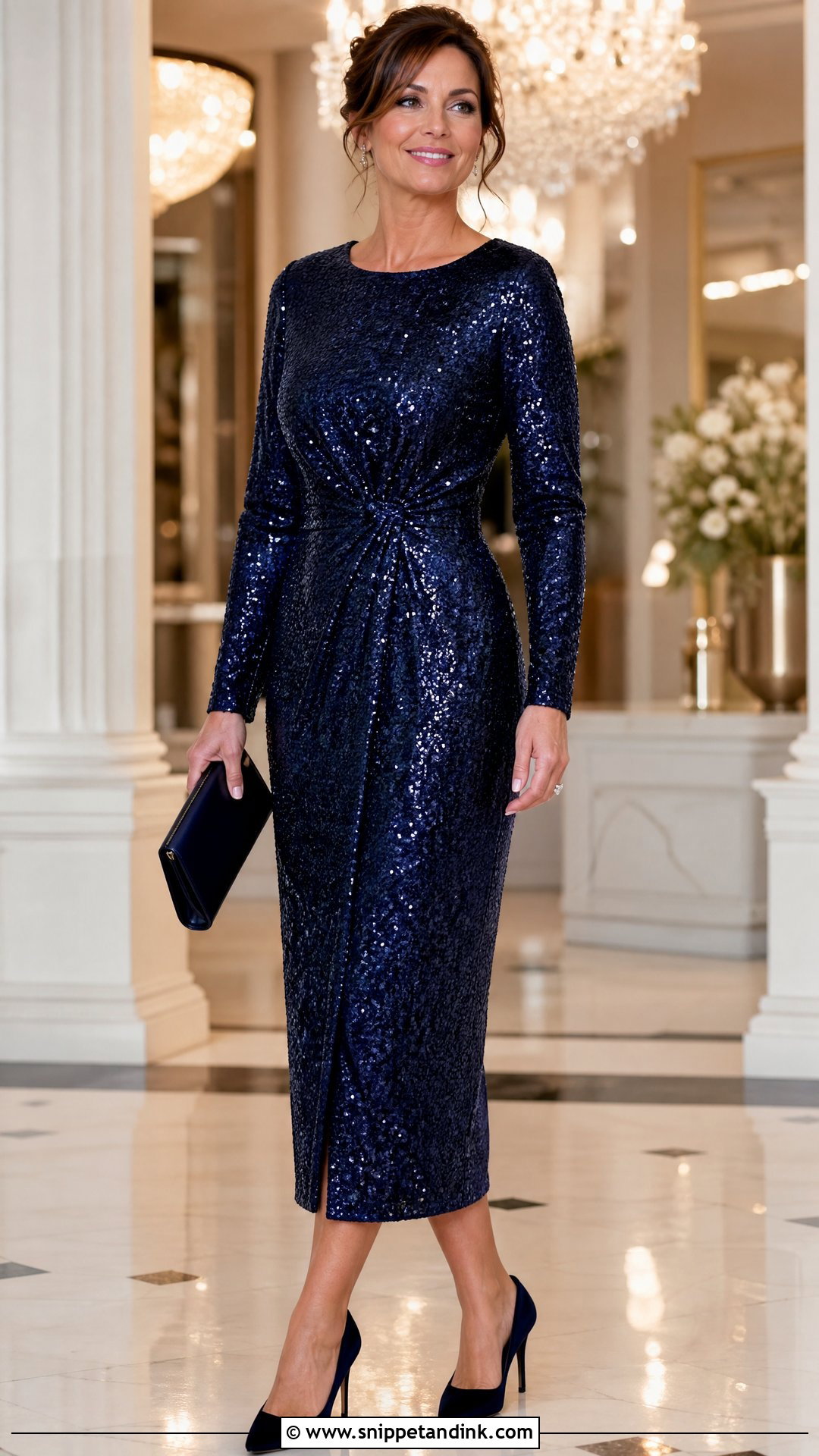
Sparkle on a sister is fine as long as it isn’t bridal sparkle. A sequin midi dress in navy, bronze or deep green looks festive; silver or white sequins can read as a second bride. I’d pick matte or small sequins over large paillettes, which flash hard in photographs and scratch anyone you hug. Skip the necklace, carry a plain satin clutch, and ask your sister what the bridesmaids are wearing before you commit so you’re not out-glittering them in the group shots.
10. Tea-Length Dress Wedding Outfit
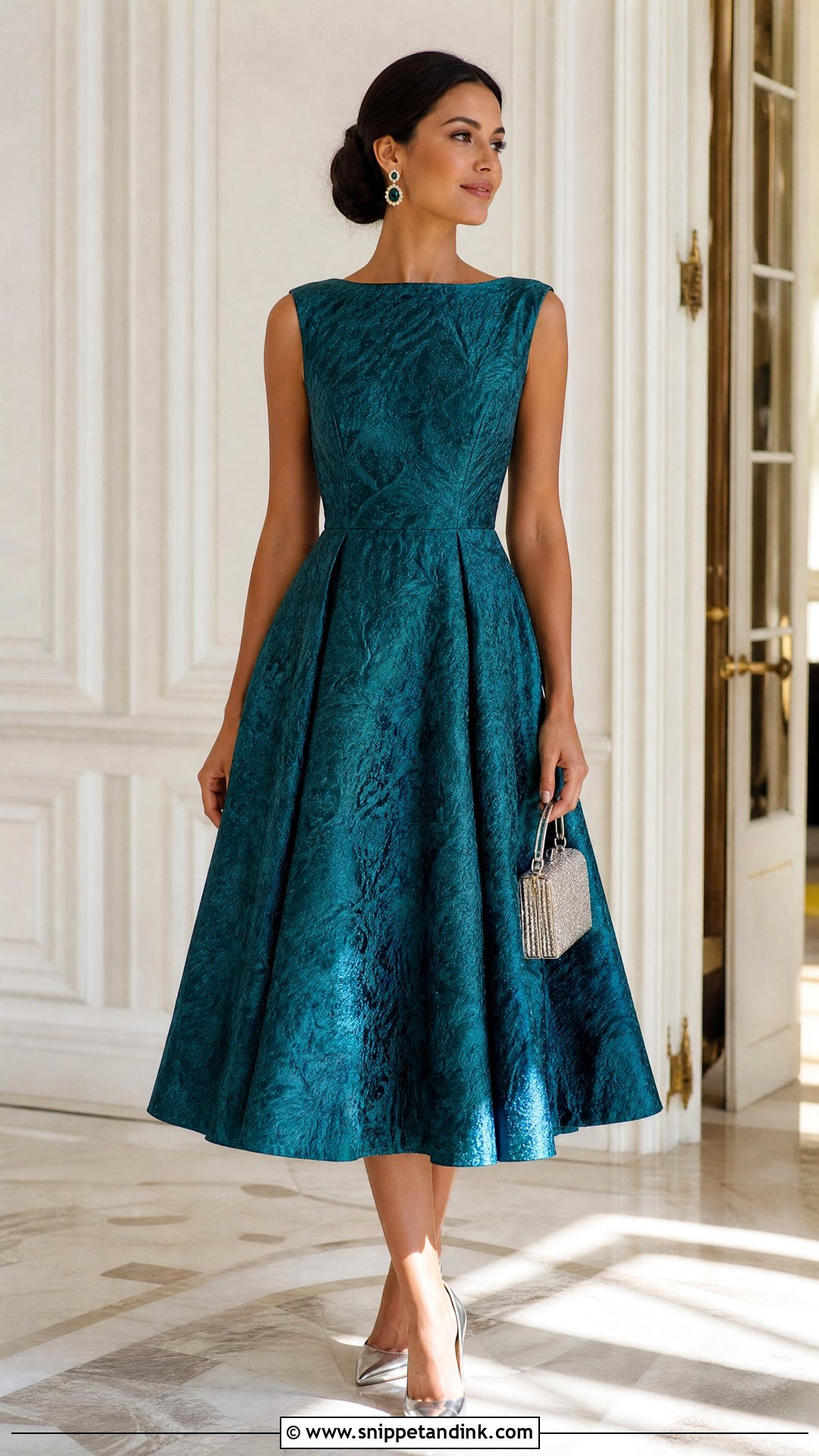
Tea-length sits between knee and ankle, which puts your shoes on show, so budget for a pair worth looking at. A structured A-line in jacquard or embroidered organza holds that full shape without petticoats. The trap I see most is a tea-length hem hitting at the widest point of the calf; at the fitting, move the hem an inch up or down until the leg looks longest. Jewel tones for cooler months, coral or soft blue for spring. A polished chignon keeps the vintage proportion.
11. Cape Dress Wedding Outfit
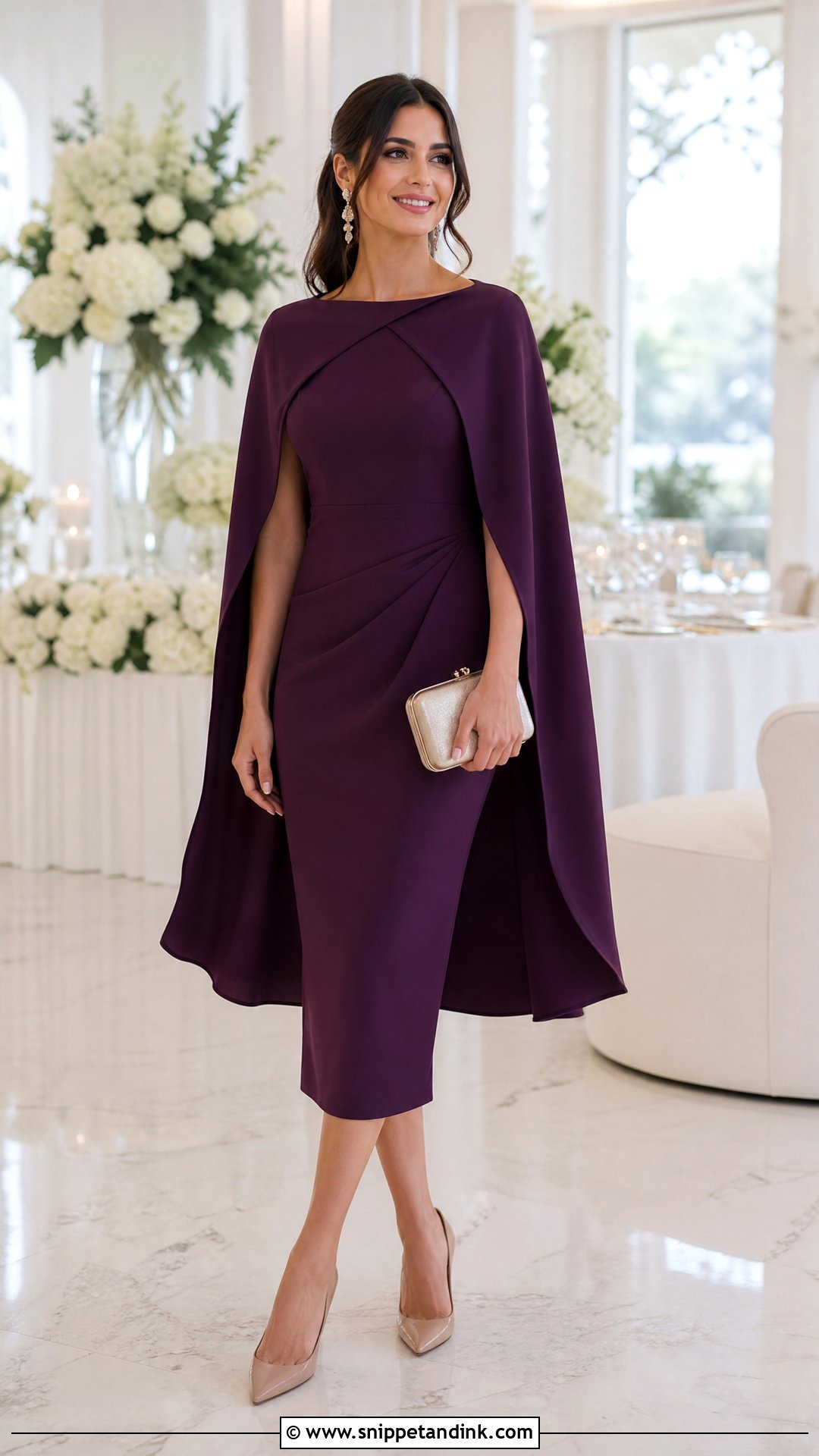
A cape dress gives shoulder coverage without a jacket that comes on and off all day. The cape adds volume up top, so I balance it with a narrow skirt and plain shoes. Before buying, test the arm openings: carry something heavy, reach above your head, and hug someone. Some capes are stitched at the wrist and restrict you badly, and a sister spends half the day holding things. Crepe in plum or emerald hangs best; chiffon capes catch wind outdoors. A low bun keeps hair off the cape.
12. Off-the-Shoulder Maxi Dress Wedding Outfit
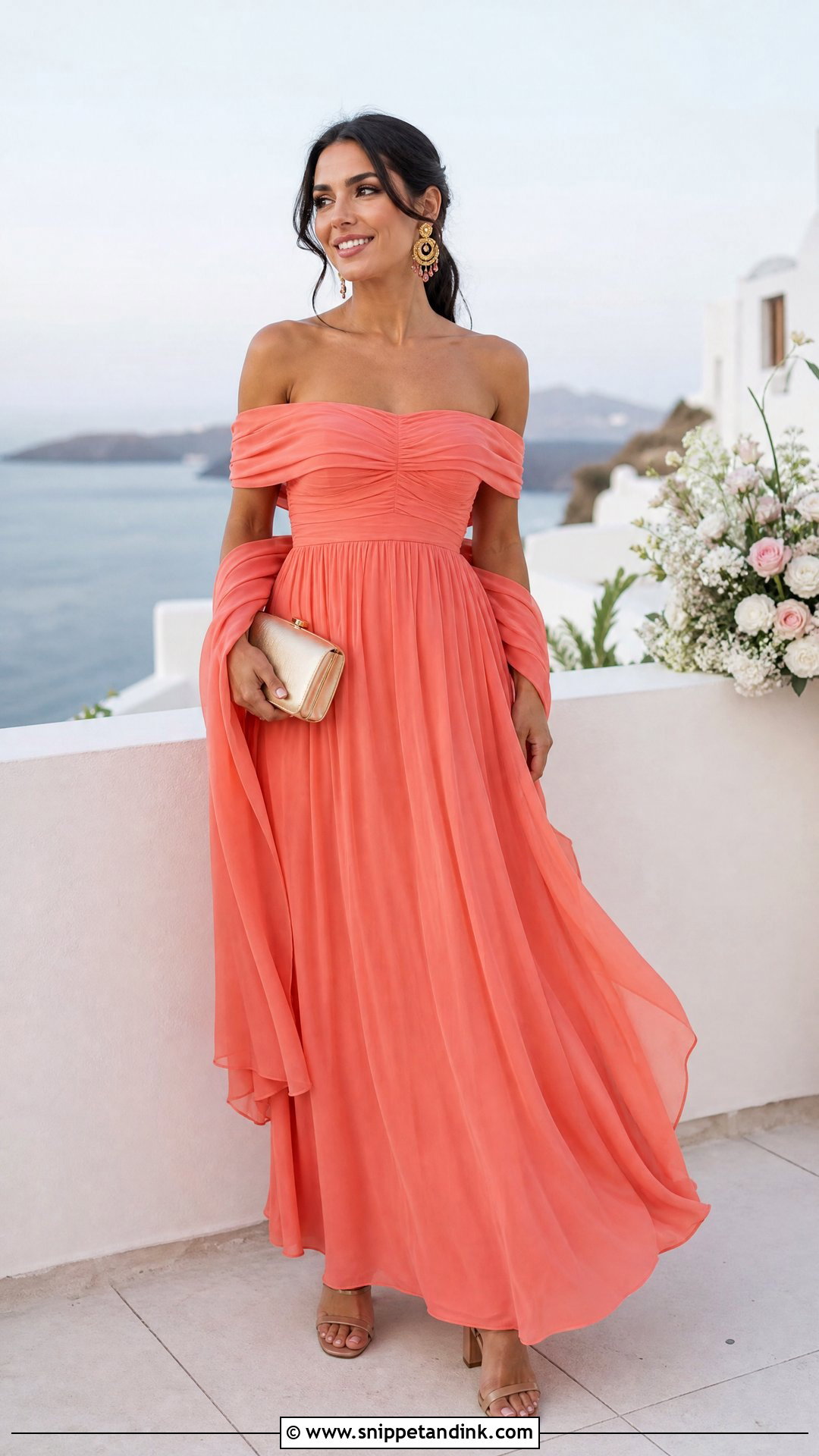
Off-the-shoulder necklines need internal structure, either boning or silicone grip tape along the top edge, or you’ll spend the day pulling the sleeves back up. I check this by asking clients to raise both arms; if the neckline rides up, it’s the wrong dress for someone who will be hugging and helping all day. Coral, turquoise and terracotta suit outdoor and destination ceremonies. No necklace; earrings that frame the face instead. Bring a wrap if the ceremony is in a conservative place of worship.
13. Embroidered Maxi Dress Wedding Outfit
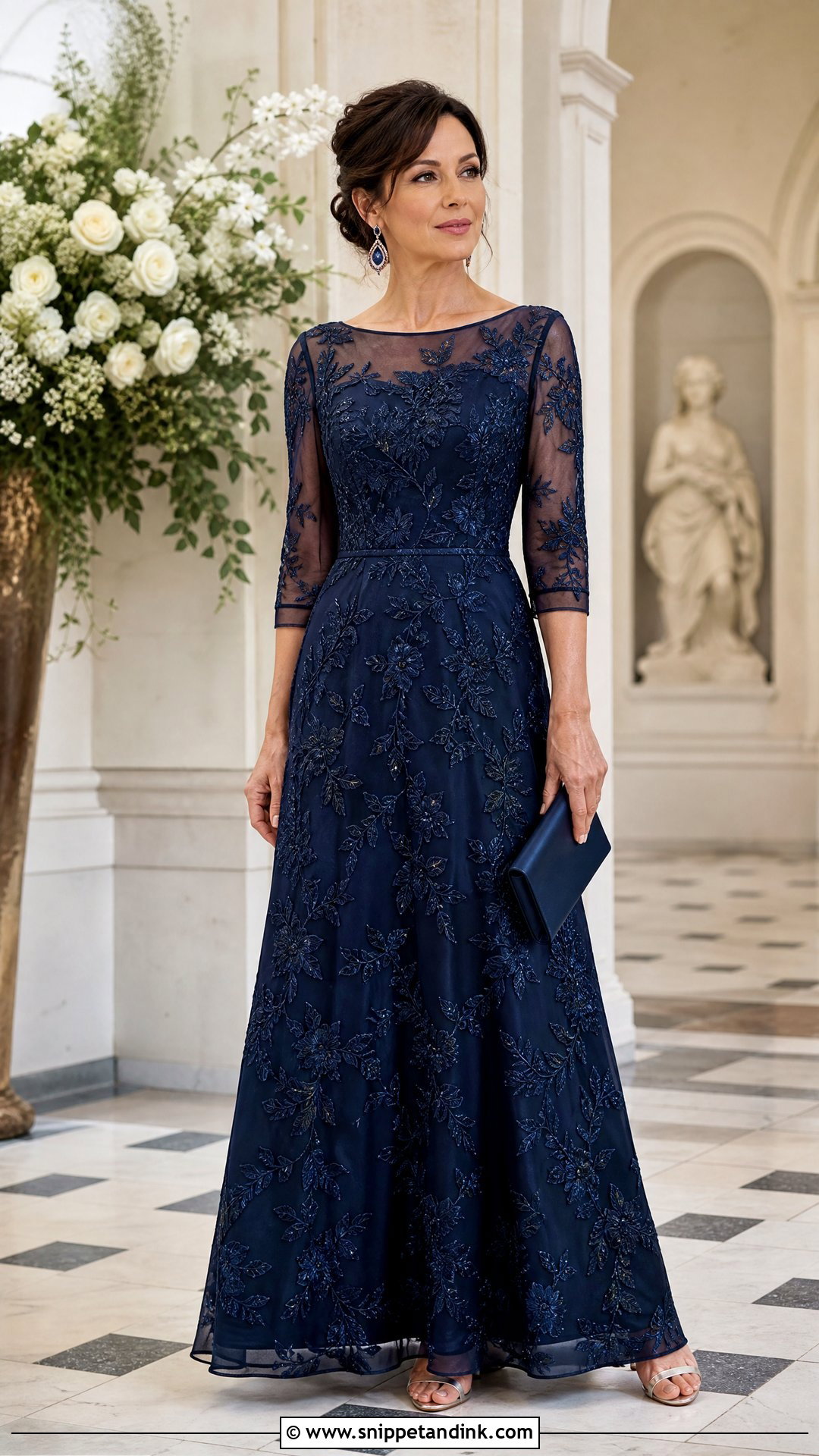
Embroidery gives you texture that shows up in close family portraits without relying on shine. Tonal floral work on navy, mauve or soft grey-blue looks richest. Repeat one thread color in your earrings and keep the bag plain. The practical check is snagging: beadwork catches on bracelets, rings and other people’s lace, so try on your jewelry with the dress before the day and swap anything with prongs for smooth settings. A fitted bodice over a flowing skirt keeps the weight of the embroidery from dragging.
14. Slip Dress And Blazer Wedding Outfit
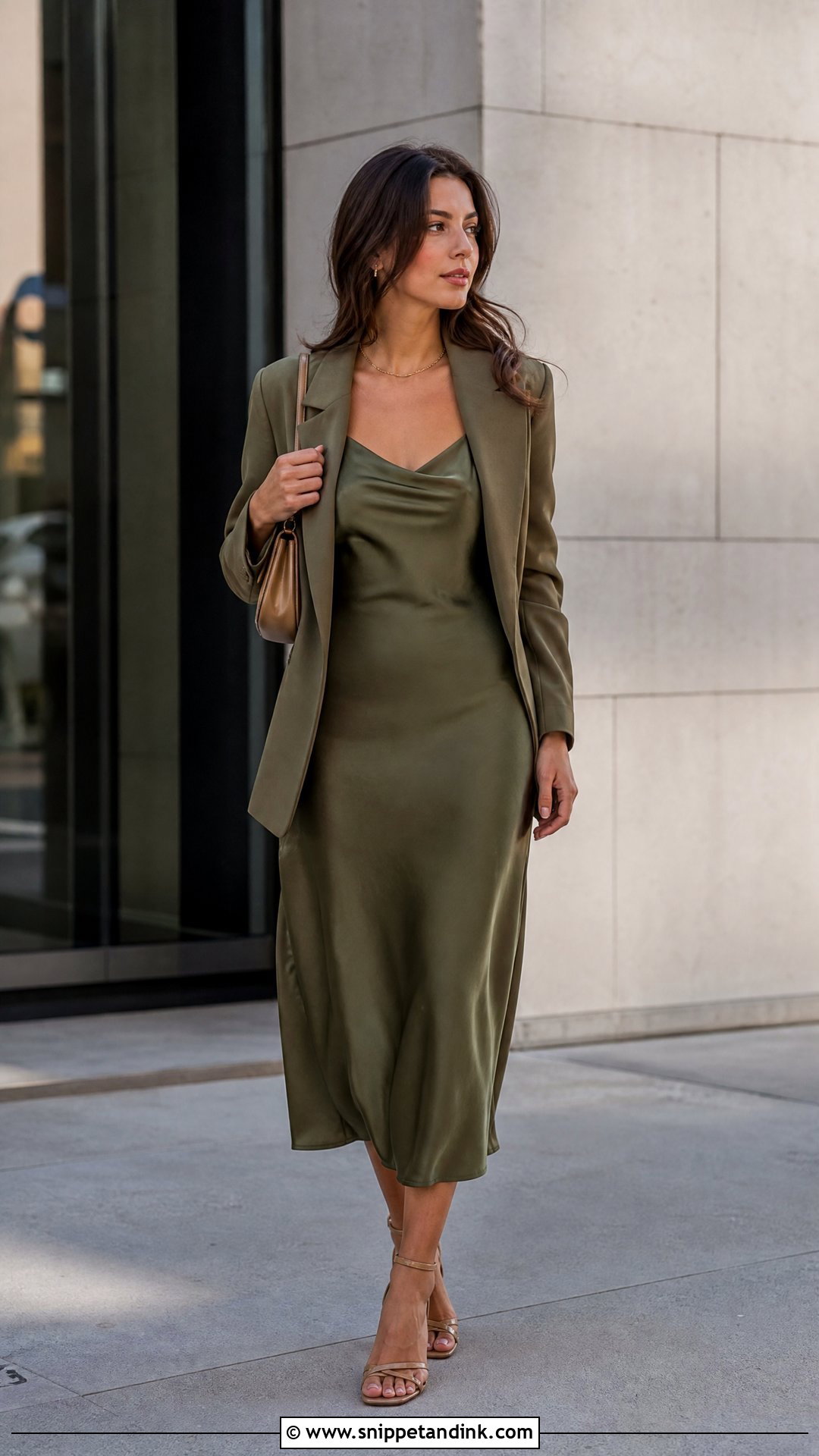
A satin slip under a tailored blazer is really two outfits: structured for the ceremony, lighter for dancing. Olive, copper or dusty rose slips pair well with a blazer in the same color family. Slip dresses show bra lines and straps, so sort out underwear first and build the outfit around it. I like the blazer worn over the shoulders for photos, buttoned for the walk in. Both pieces will be worn again, which is a real point in their favor.
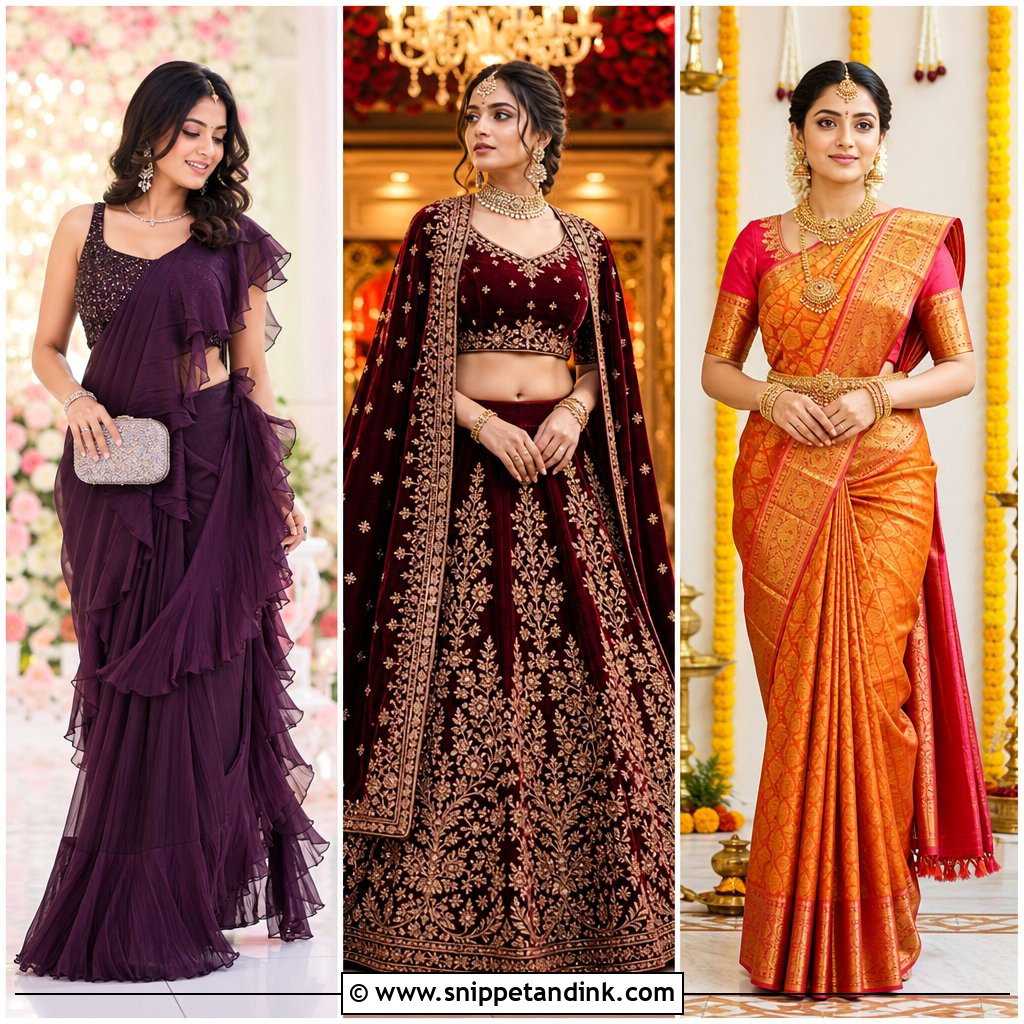
15. Lace Midi Dress Wedding Outfit
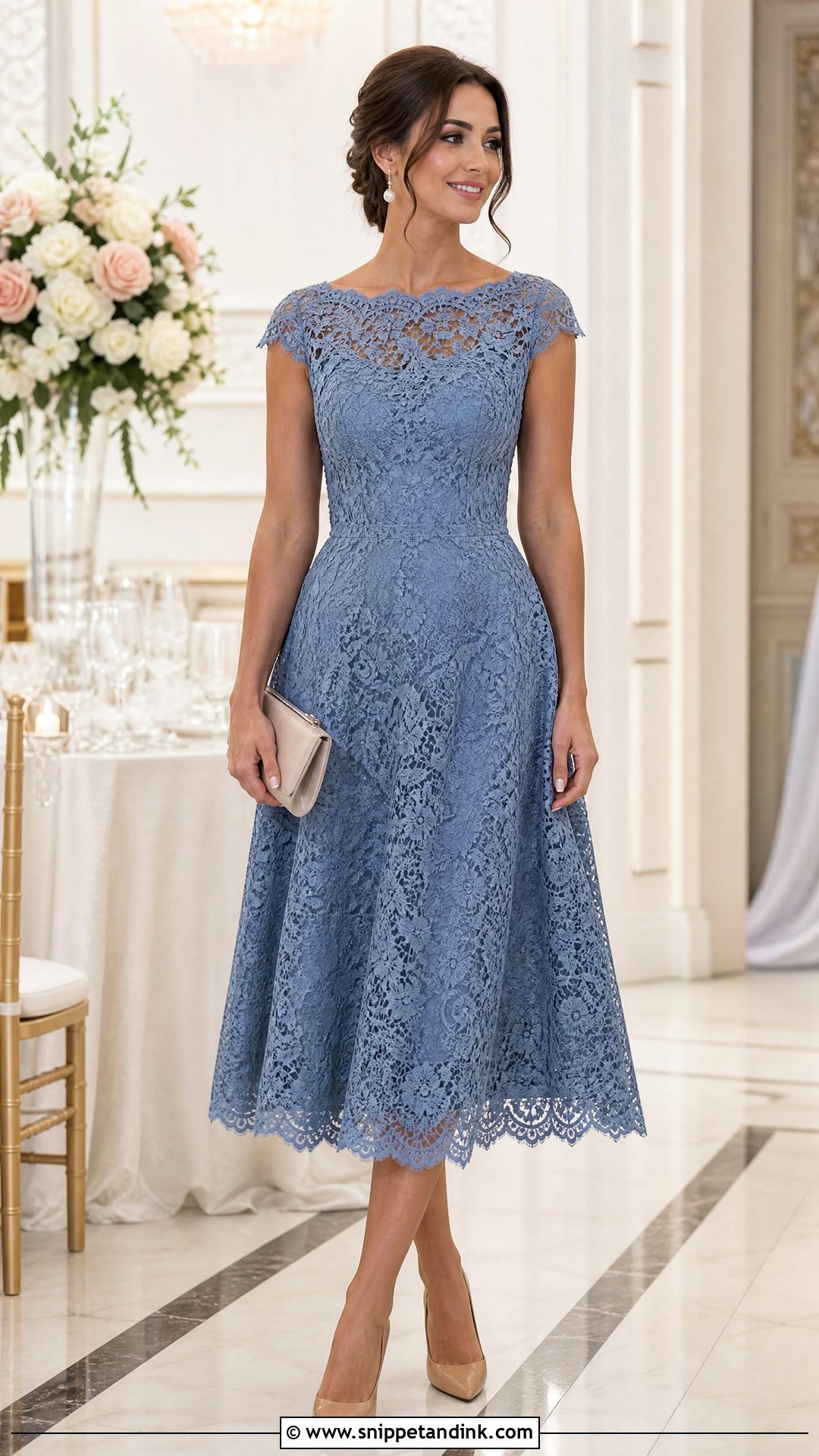
Lace is where the bride’s sister has to be most careful, because lace and pale colors together say bride. Colored lace over a matching lining solves it: berry, emerald or soft peach rather than ivory. Fine corded lace looks lighter than heavy guipure, which can make a midi length feel stiff. I’d pick a smooth clutch and smooth jewelry, since lace snags. Unless your sister requests white, cream or champagne, leave those shades to her.
16. Halter-Neck Gown Wedding Outfit
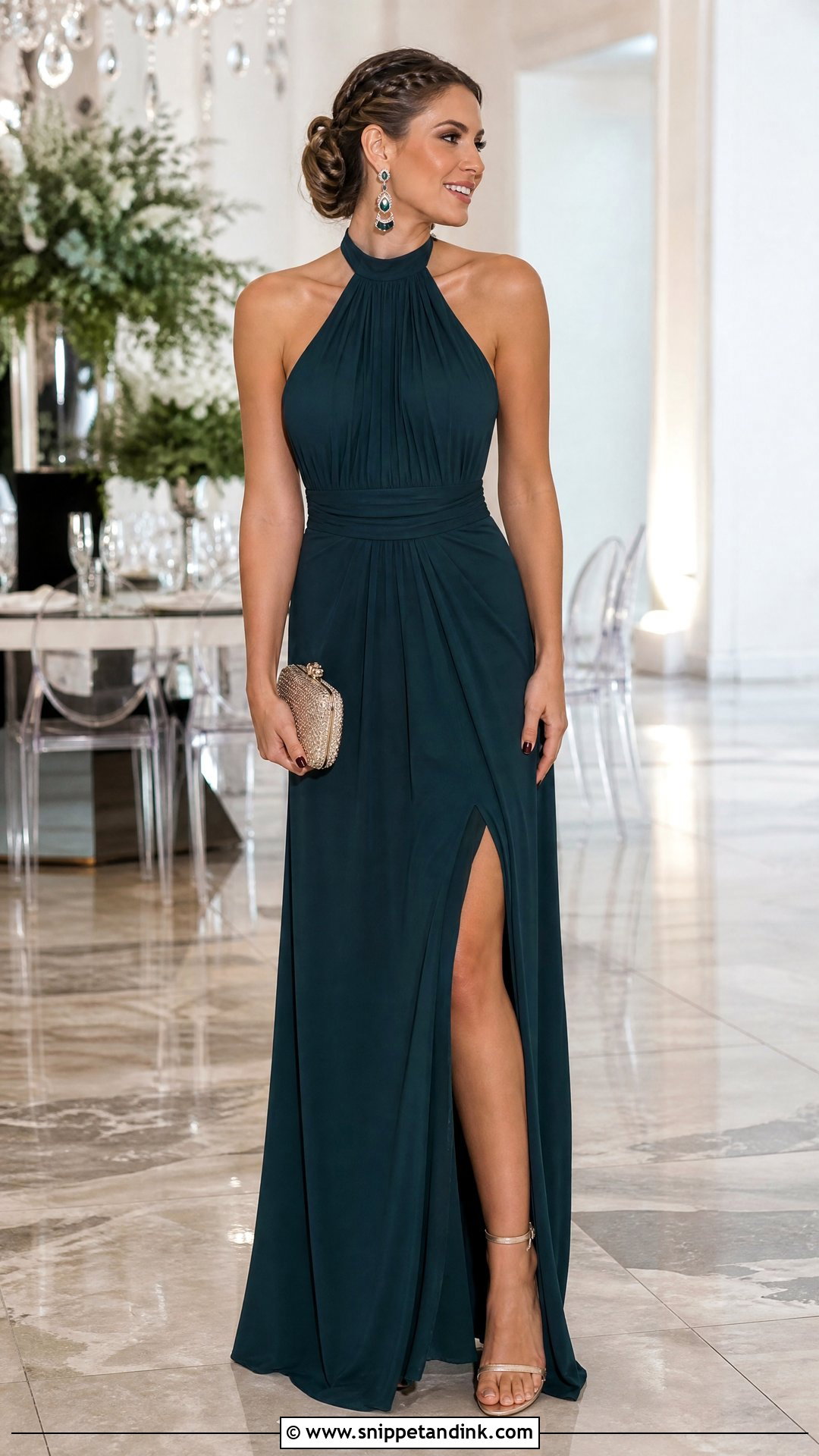
A halter gown pulls the eye up to the shoulders and is a strong shape for a ballroom evening. With the neckline already doing the work, wear statement earrings and no necklace. The fitting test I always run is raising your arms: halter armholes are cut close, and if they gape or the bodice shifts, a tailor can tack it before the day. Garnet, cobalt or chocolate brown look sharp under evening lights. An updo keeps the halter tie visible.
17. Pastel Saree Wedding Outfit
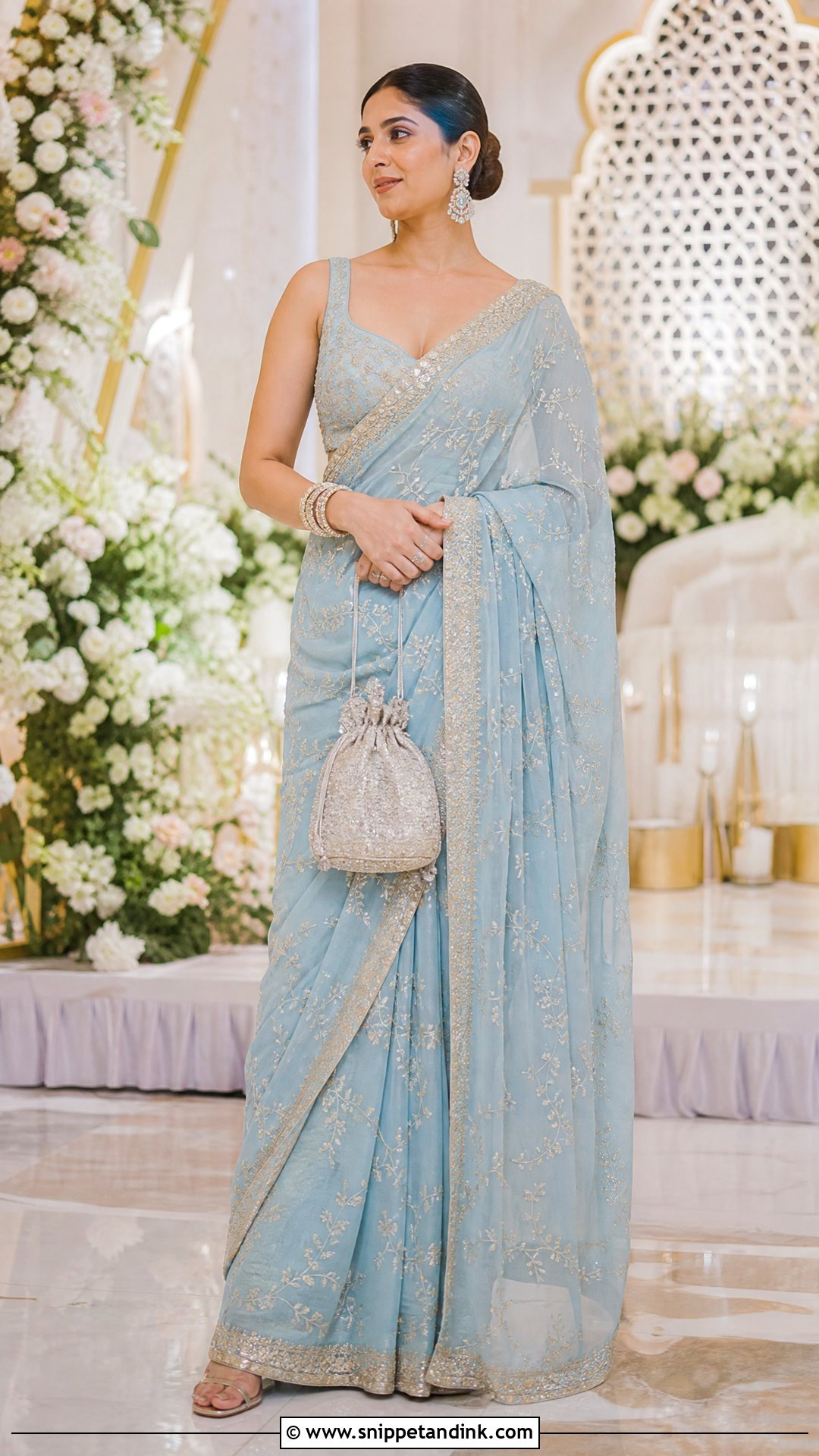
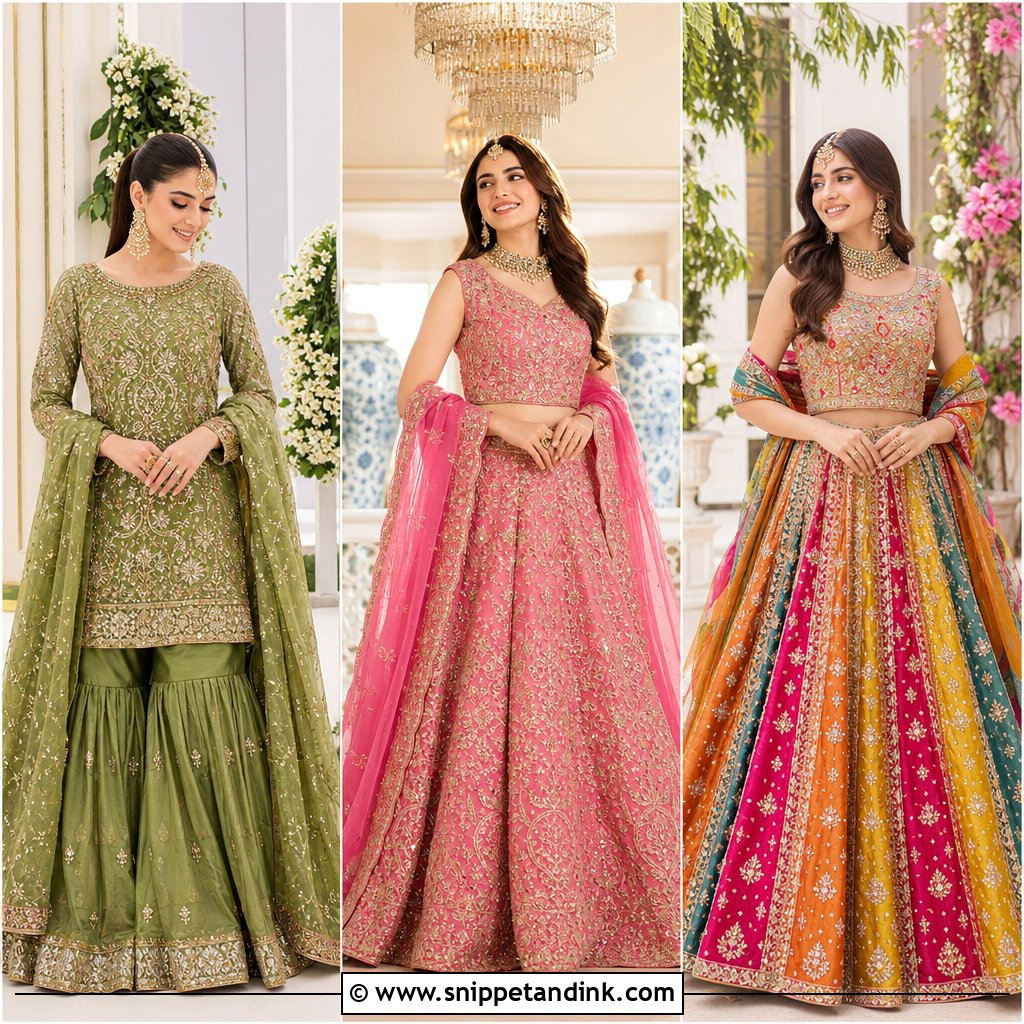
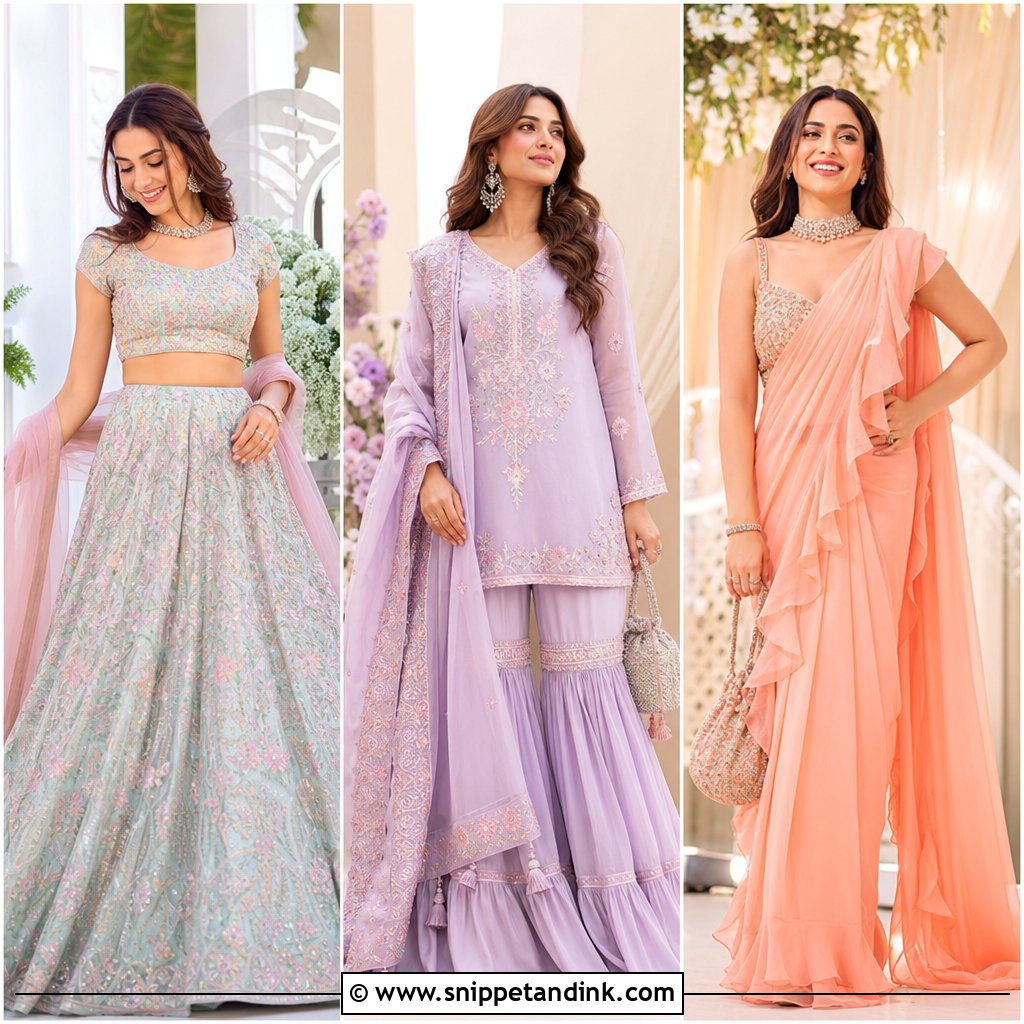
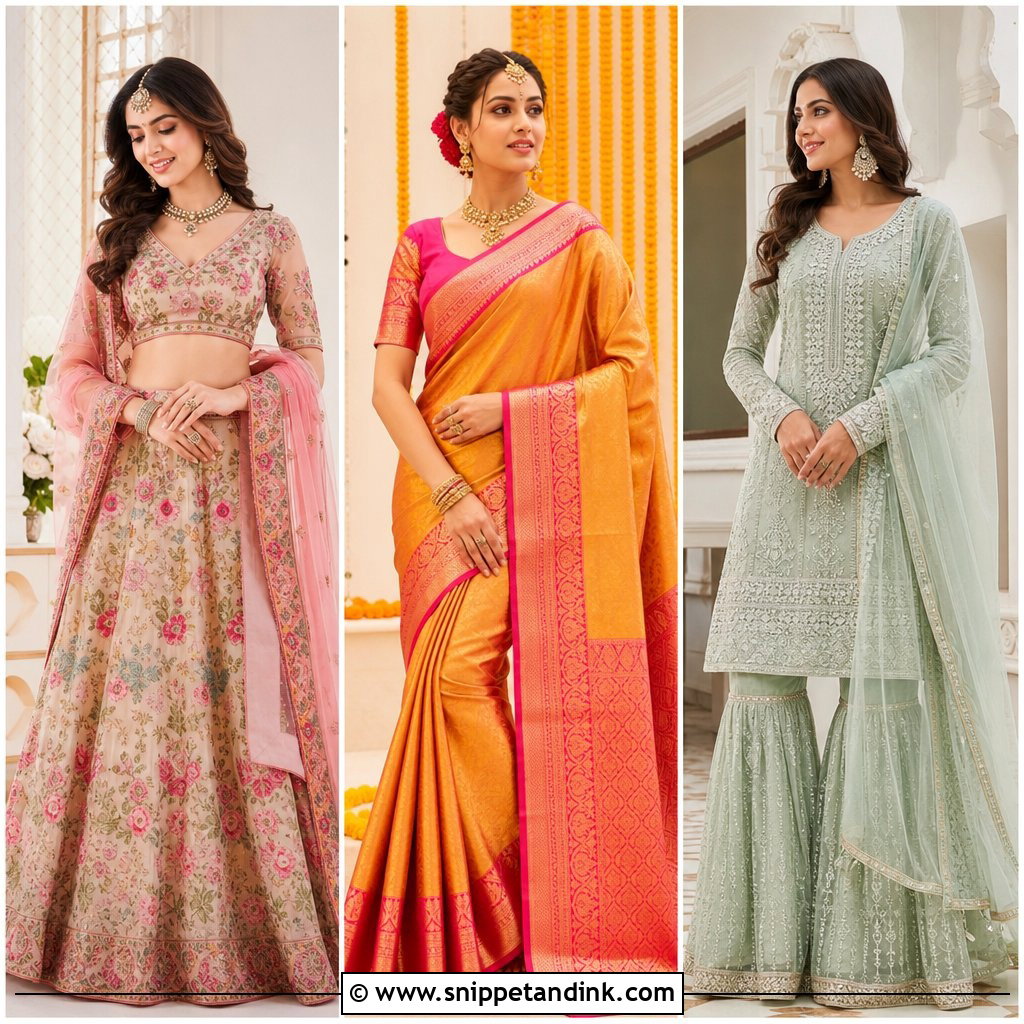
A pastel saree in powder blue, mint or peach suits a sister at a South Asian ceremony, particularly for daytime events. The blouse is where most problems start: have it fitted with enough room at the armhole for the rituals you’ll be part of, from carrying trays to hugging relatives. Have the pleats pinned by someone experienced and use more safety pins than you think you need, including one at the shoulder from underneath. Heeled sandals, a potli bag and a few bangles complete it. Daytime takes lighter fabrics; evening can carry more metallic border.
18. Embroidered Lehenga Wedding Outfit
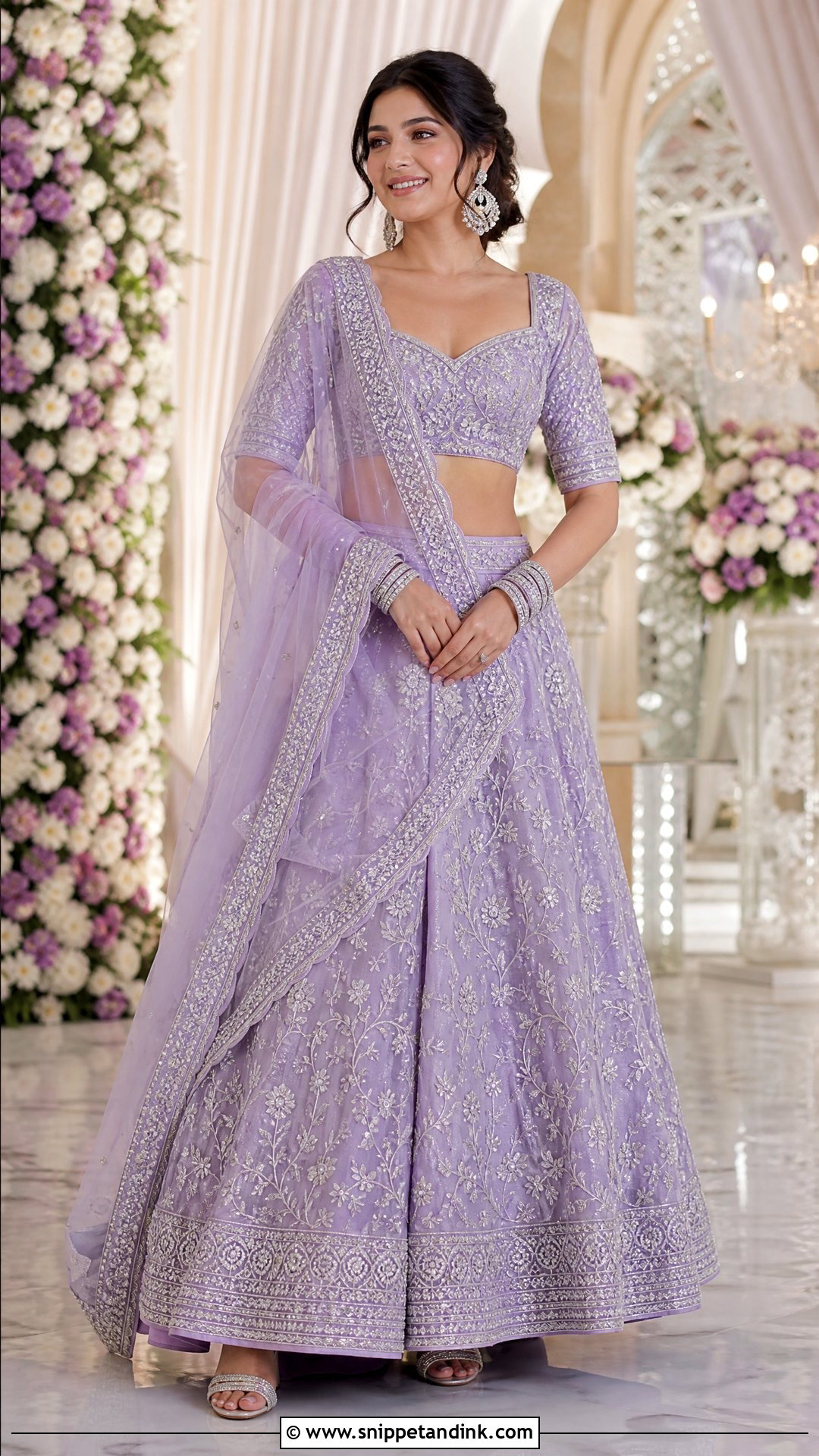
For the main event, an embroidered lehenga gives the bride’s sister the formality the occasion expects. I’d hold it next to the bride’s outfit, or at least a swatch, before final payment: the embroidery should be lighter than hers and the color clearly different. Heavy lehenga skirts pull at the waist by evening, so ask for a wide, structured waistband and test the weight for a full hour. Pin the dupatta at the shoulder and the waist to keep your hands free. Block heels beat stilettos on a long event floor.
19. Formal Maxi Dress With Sleeves Wedding Outfit
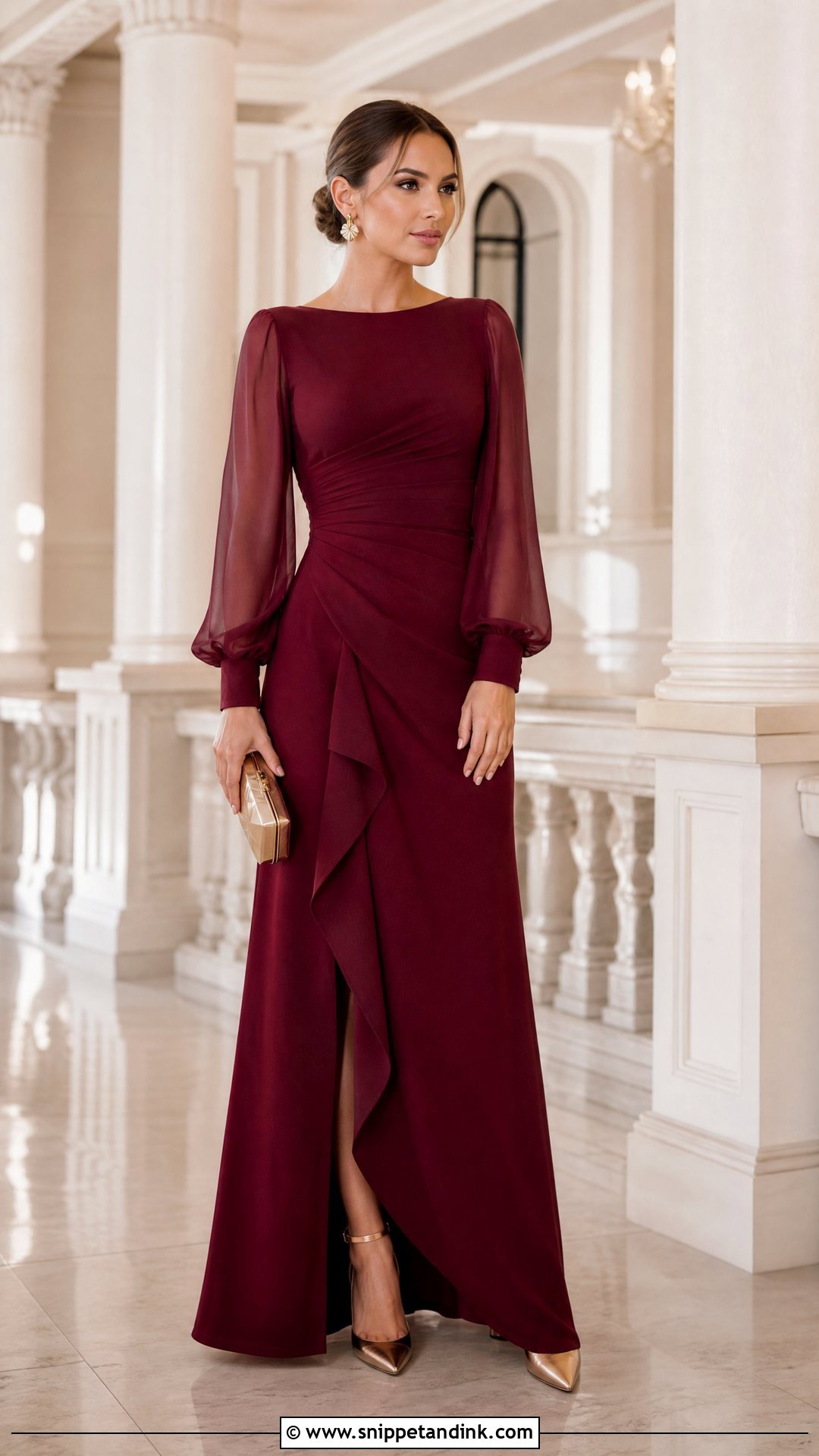
Sleeves add fabric, so a formal maxi with sleeves needs a defined waist and a fairly open neckline or it starts to swallow you. Sheer sleeves keep it light; bishop sleeves need a narrow cuff to stay out of the cake and the candles. I like wine, navy and slate for evening. This is the sensible choice for conservative ceremonies and cool venues, and the one I’d recommend to a sister who doesn’t want to think about shawls all night.
20. Draped Midi Dress Wedding Outfit
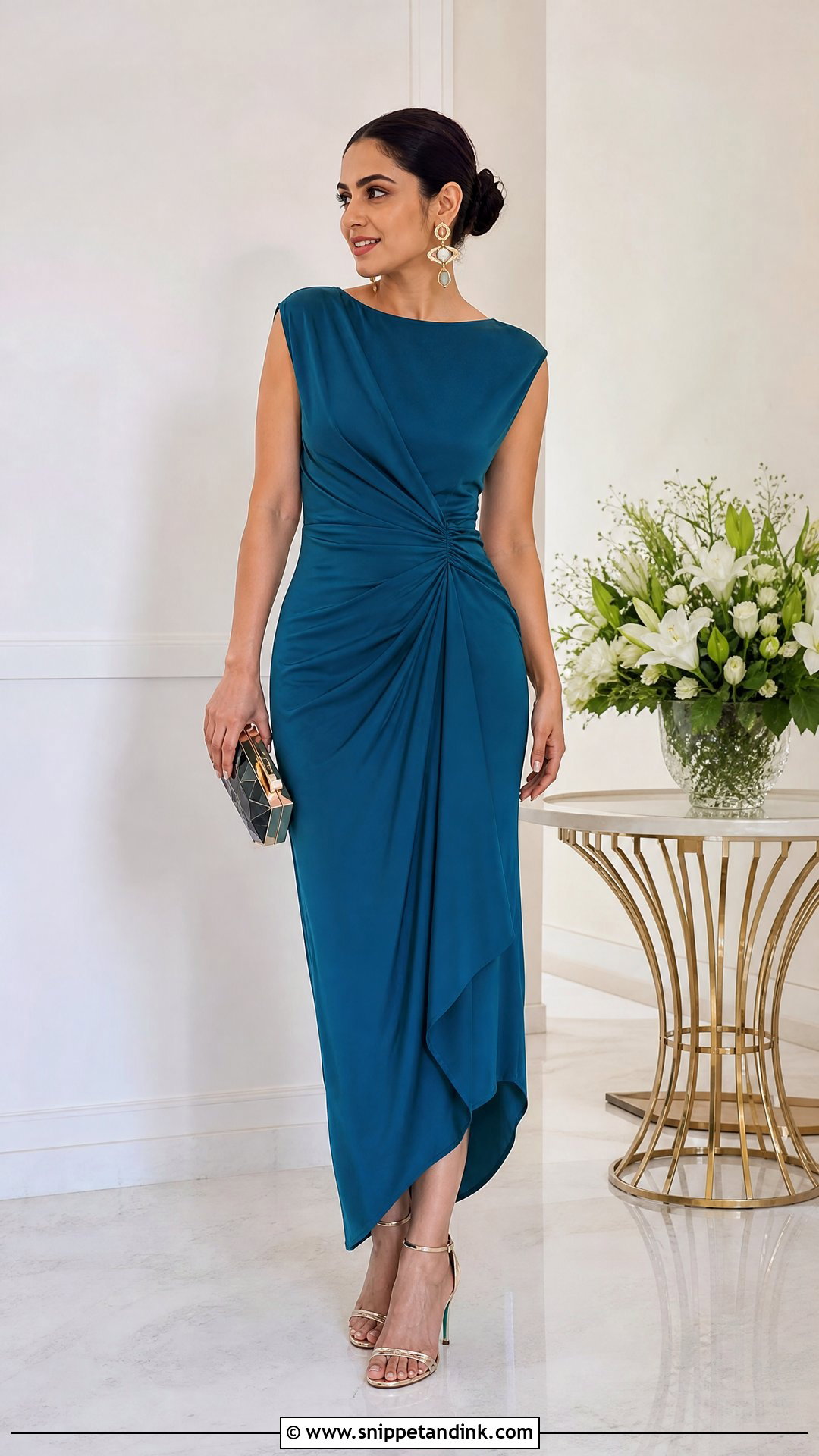
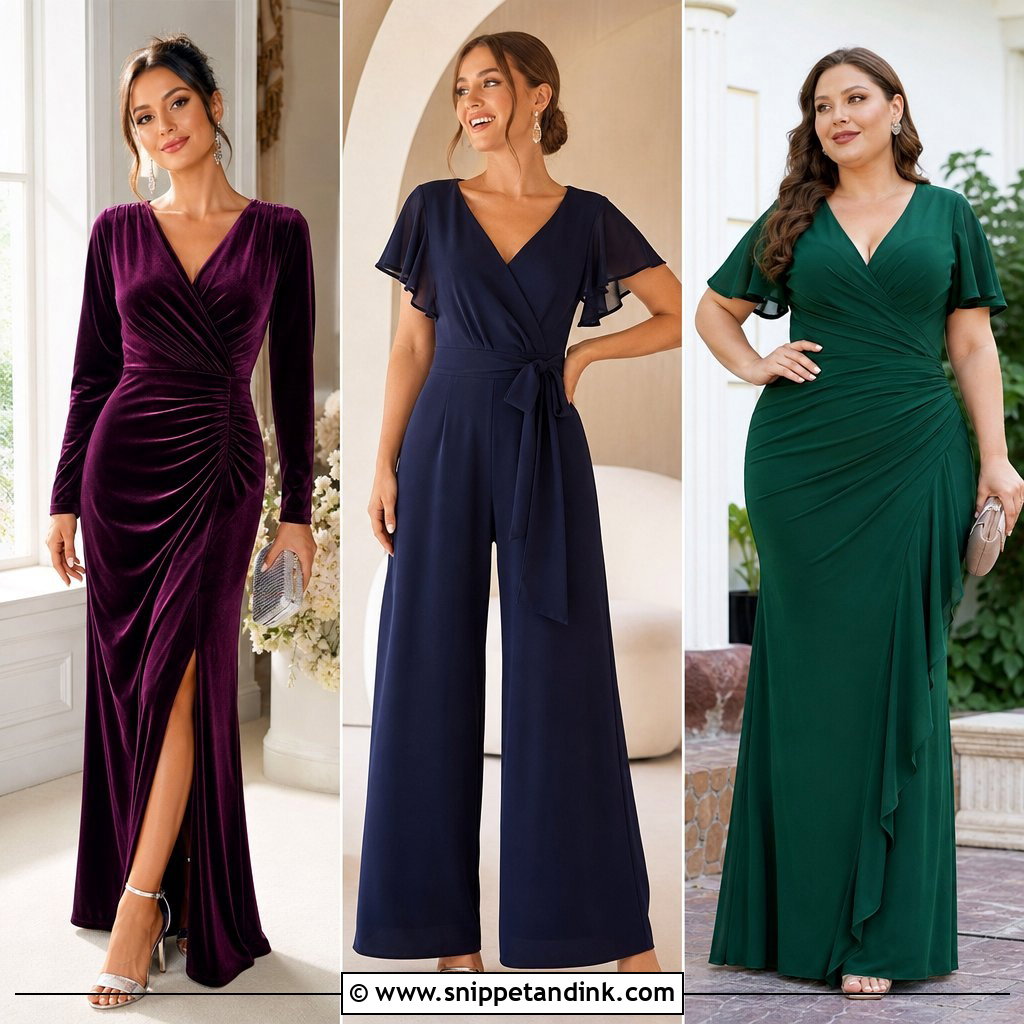
Draping across the hip or waist creates shape without fitting tightly, which is why I suggest a draped midi to sisters who want comfort above everything. Stretch crepe holds the gathers best; jersey can sag by late evening. Raspberry, peacock blue and rust all work. Keep other jewelry minimal so the draping stays the focus, and skip oversized bows, which flatten and look odd in group photos when everyone is pressed shoulder to shoulder.
A Realistic Alteration Calendar
Ready-to-wear outfits almost always need some tailoring, and good tailors get booked in wedding season. The timing I give sisters, which you can compress if needed:
- Three to four months out: buy the outfit, and order online pieces early enough to return them.
- Six to eight weeks out: first fitting. Bring the exact shoes and the underwear you’ll wear.
- Two to three weeks out: final fitting. Sit, walk stairs and lift your arms in it.
- The week of the wedding: collect it, try it on once at home, and hang it in a breathable cover.
Saree blouses and lehengas take longer, because tailoring and embroidery are often done to order. I’d add at least a month to every step for those.
What I Pack for the Bride’s Sister
Your clutch is also the emergency kit, because the bride won’t be carrying one. Mine always holds safety pins, double-sided fashion tape, a stain pen that is safe on silk, blotting papers, a few bobby pins, plasters for heels and a small pair of folding flats. For saree and lehenga days add extra pins and a spare blouse hook. None of it is glamorous, but each item tends to get used at least once.
One Last Fitting Before You Stand Beside Her
Start with the dress code and the venue, then let your job on the day narrow the shape. Shoes and underwear deserve as much attention as the dress, suit, saree or jumpsuit itself. Before anything is paid for, send your sister a photo and a fabric swatch, and leave her colors and her level of sparkle alone unless she invites you in. Then wear the whole outfit around the house for an hour. Whatever pinches at hour one will hurt by the last dance.
You'll Like These Ideas:


Leave a Reply