
A hijab at a Pakistani wedding is part of the outfit, not something added at the door. It sits right next to the embroidered neckline, it frames your face in every photograph, and it has to stay put through hugs, dancing and five hours of greeting relatives. When I style a hijabi guest, I plan the scarf at the same time as the dress: its fabric, its color and how much embellishment the clothes already carry. Chiffon and georgette drape softly for formal events, while satin and silk look sleeker but slip more. A good underscarf, the right pins and comfortable shoes do more for the finished look than any jewelry. The 20 outfits below cover mehndi, nikkah, baraat and walima, each styled with modest coverage from head to toe.
Underscarf, Pins or Magnets for a Long Wedding Night
Most wedding hijab problems come from the hold, not the scarf. A chiffon wrap that looks perfect at home slides back after an hour because nothing underneath is gripping it. My order is always the same: cap, then anchors, then the scarf.
The underscarf does the real work
A cotton or jersey tube cap gives smooth grip for chiffon and georgette. Velvet-lined or textured caps are better for satin and silk, which slide on anything smooth. Tie-back caps can be tightened, which helps on long nights, but tie them firmly enough to hold, not so tight they cause a headache by the reception.
- Straight pins: push them into the cap, not just through the scarf, so the scarf anchors to something that won’t move.
- Safety pins: the safest choice under the chin and at the shoulder, where a straight pin could work loose.
- Magnets: leave no holes in delicate fabric, but they can’t grip through thick layers and a hard tug pulls them apart. Anyone with a pacemaker or similar implant should ask their doctor before wearing strong magnets near the chest.
- Decorative pins: one is plenty. They’re heavy and should be placed where a plain pin is already holding.
1. Emerald Green Gharara With Chiffon Hijab
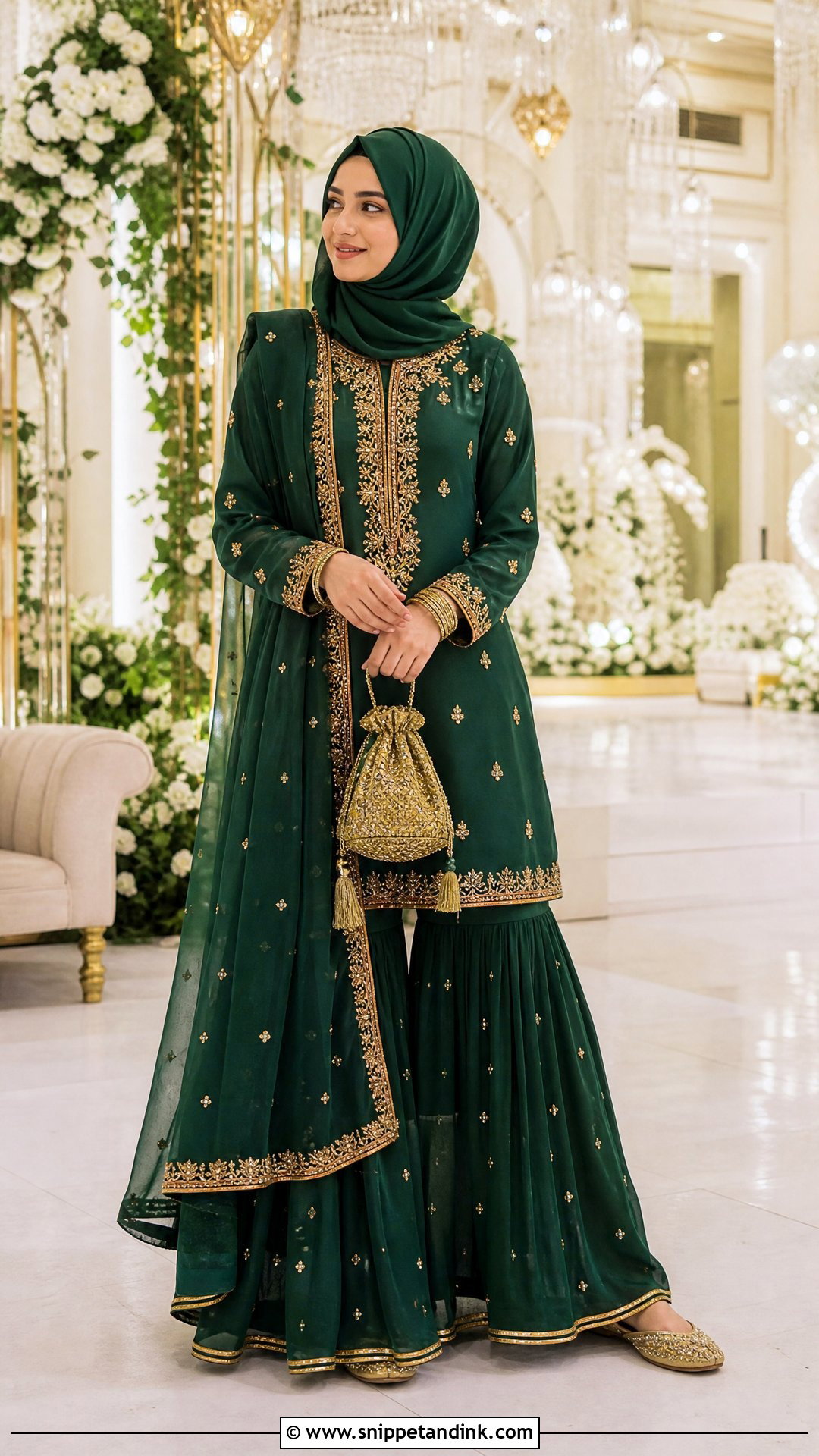
Emerald green holds its richness under hall lighting, and a gharara in it looks formal without needing heavy work. Choose a knee-length kameez with gold threadwork at the neckline, cuffs and hem over a gharara with a border near the knee. A lightweight emerald chiffon hijab softens all that tradition. I wrap it close around the face and let one end fall over the shoulder, which keeps the kameez neckline in view. When the clothes are heavily embroidered, leave the scarf plain and skip crystal pins; metal threads snag fine chiffon. Antique gold bangles and gold khussas finish it for a baraat or evening reception.
2. Mustard Sharara With Pink Hijab
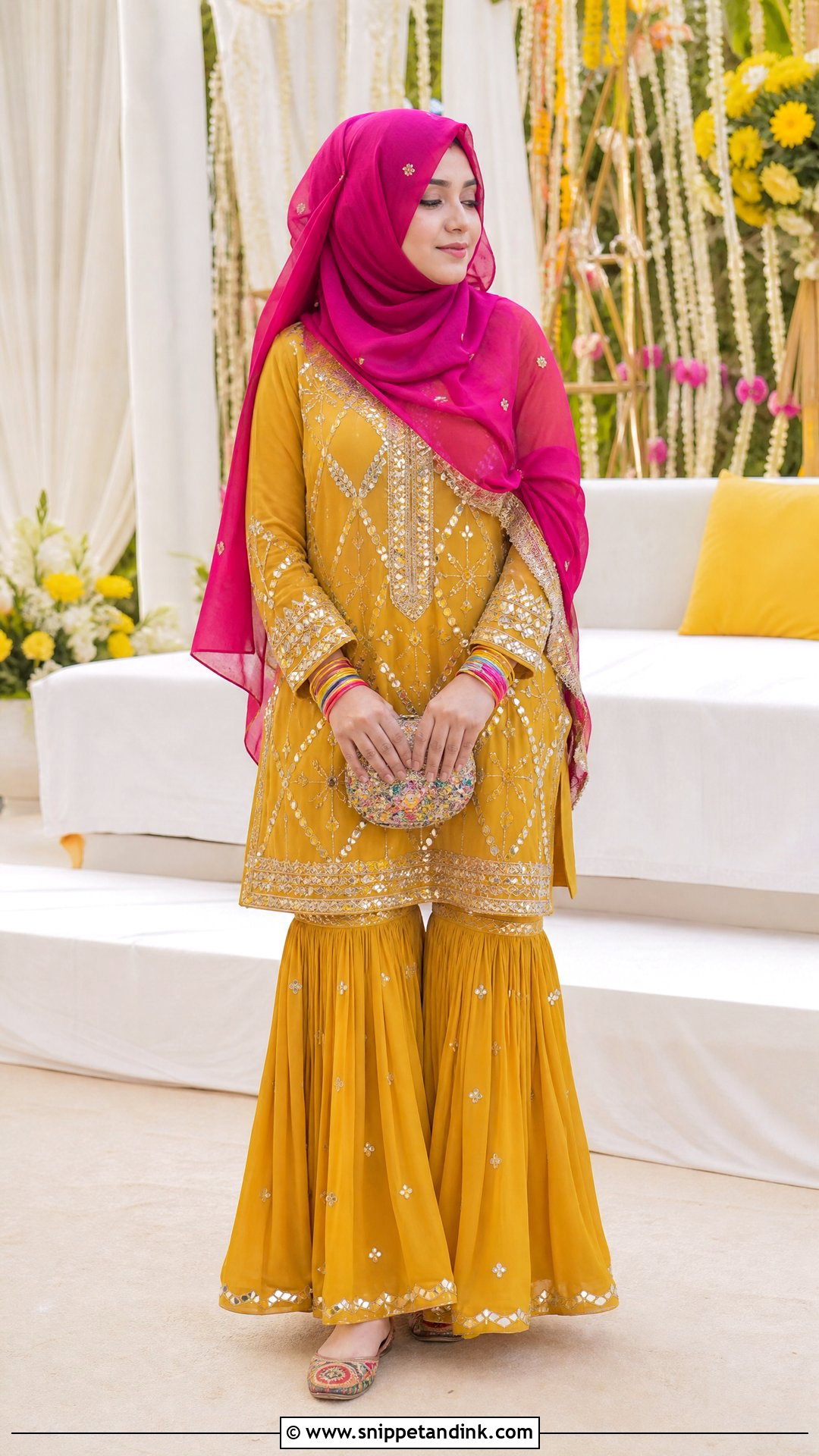
Mustard with pink is a mehndi pairing that always looks happy. Start with a mustard embroidered kurta and a matching chiffon or georgette sharara with gota or small mirrors. Add a deep pink chiffon hijab in a simple layered wrap. Dancing is the real test here, so I pin the scarf at the underscarf just above each ear, not only under the chin; side pins stop the whole wrap from rotating when you turn your head quickly. Embroidered khussas, colorful bangles and a beaded clutch complete it, with floral wrist jewelry if you like. Rosy cheeks keep the bold clothes in charge.
3. Blush Pink Pishwas With Pearl Hijab
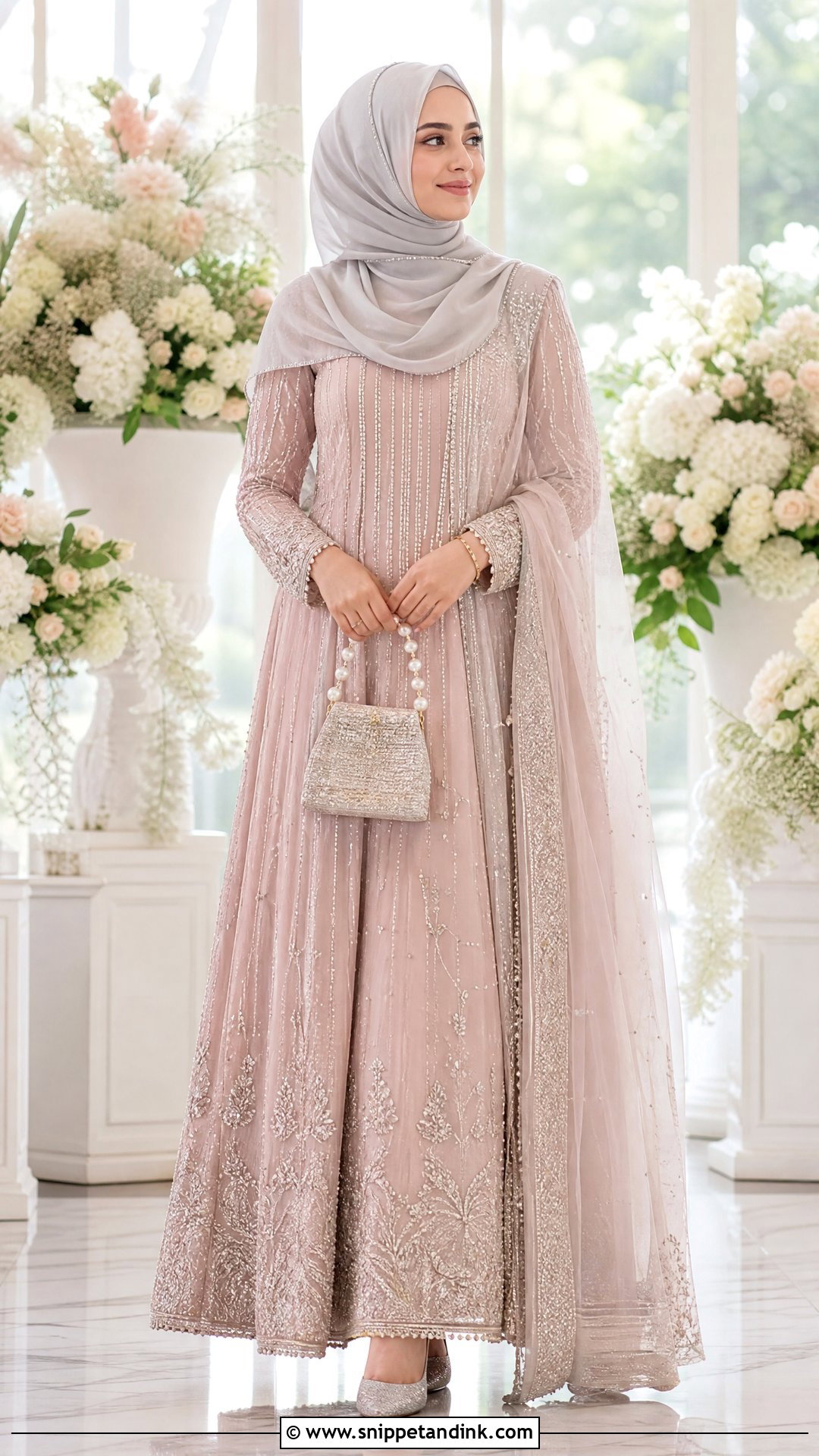
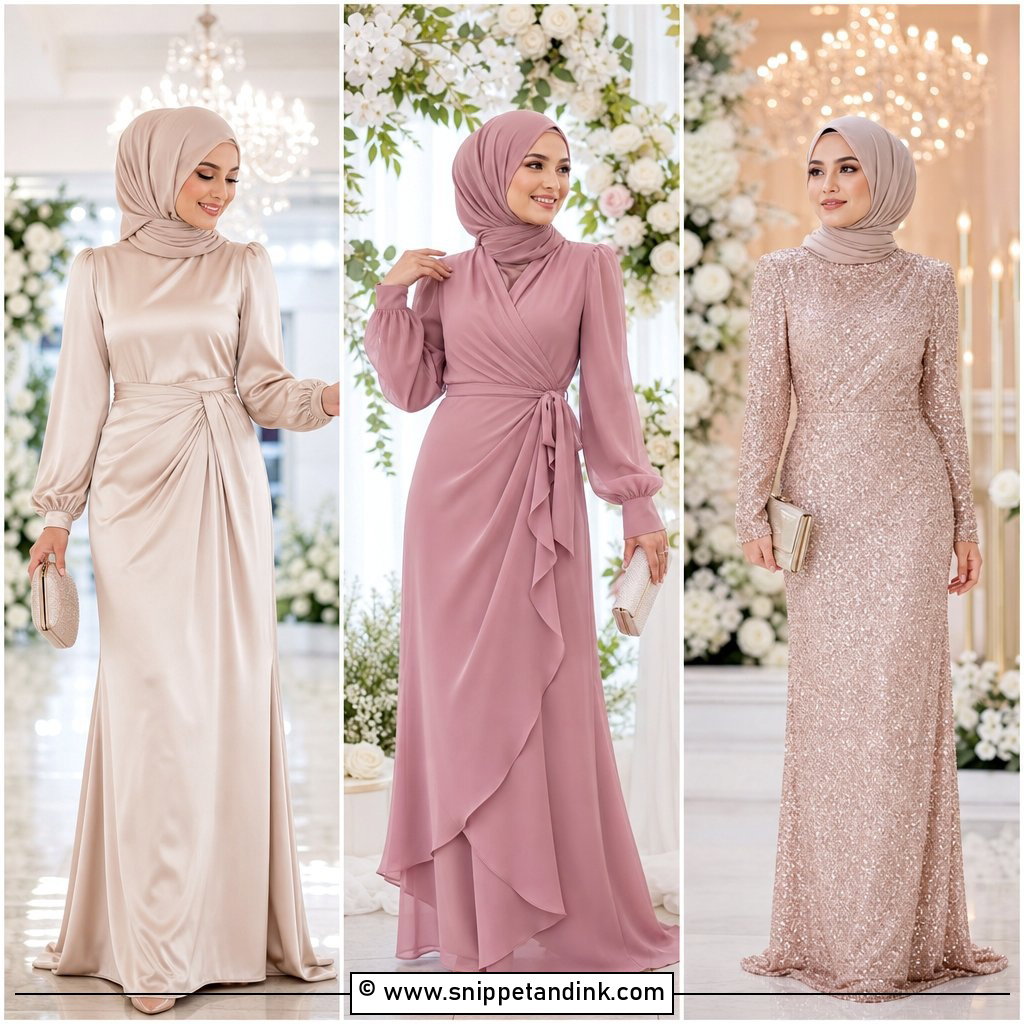
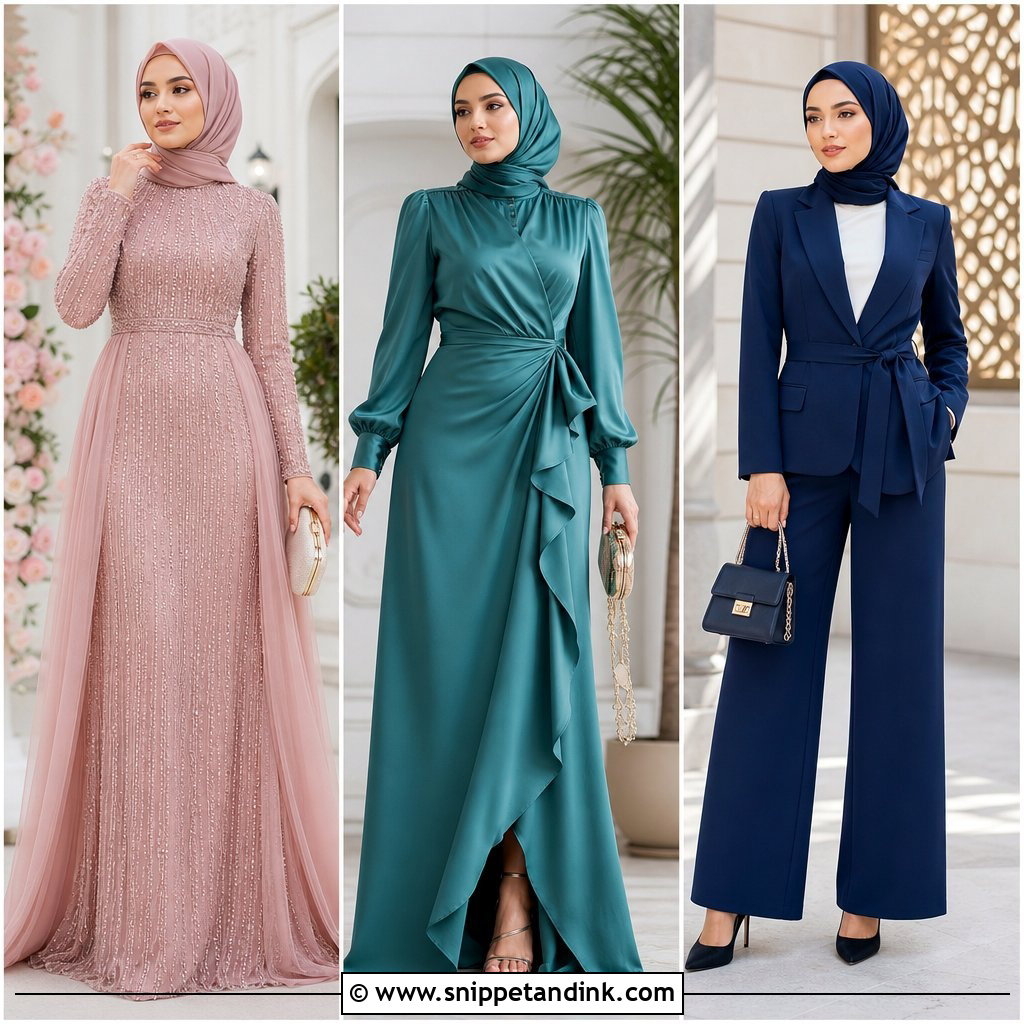
Blush is gentle enough for a daytime nikkah or walima without looking like the bride. Wear a floor-length pishwas with full sleeves and light silver embroidery or pearl accents. Pair it with a pearl-gray chiffon hijab over a nonslip underscarf. Gray against blush is a cool-warm mix that works because the gray is light; a darker charcoal would look heavy against the pink. Arrange smooth folds around the face and pin one end near the shoulder, with one small crystal pin as the only sparkle. Silver flats and a pearl-handled bag finish it, and it looks lovely in bright outdoor light.
4. Navy Blue Anarkali With Silver Hijab
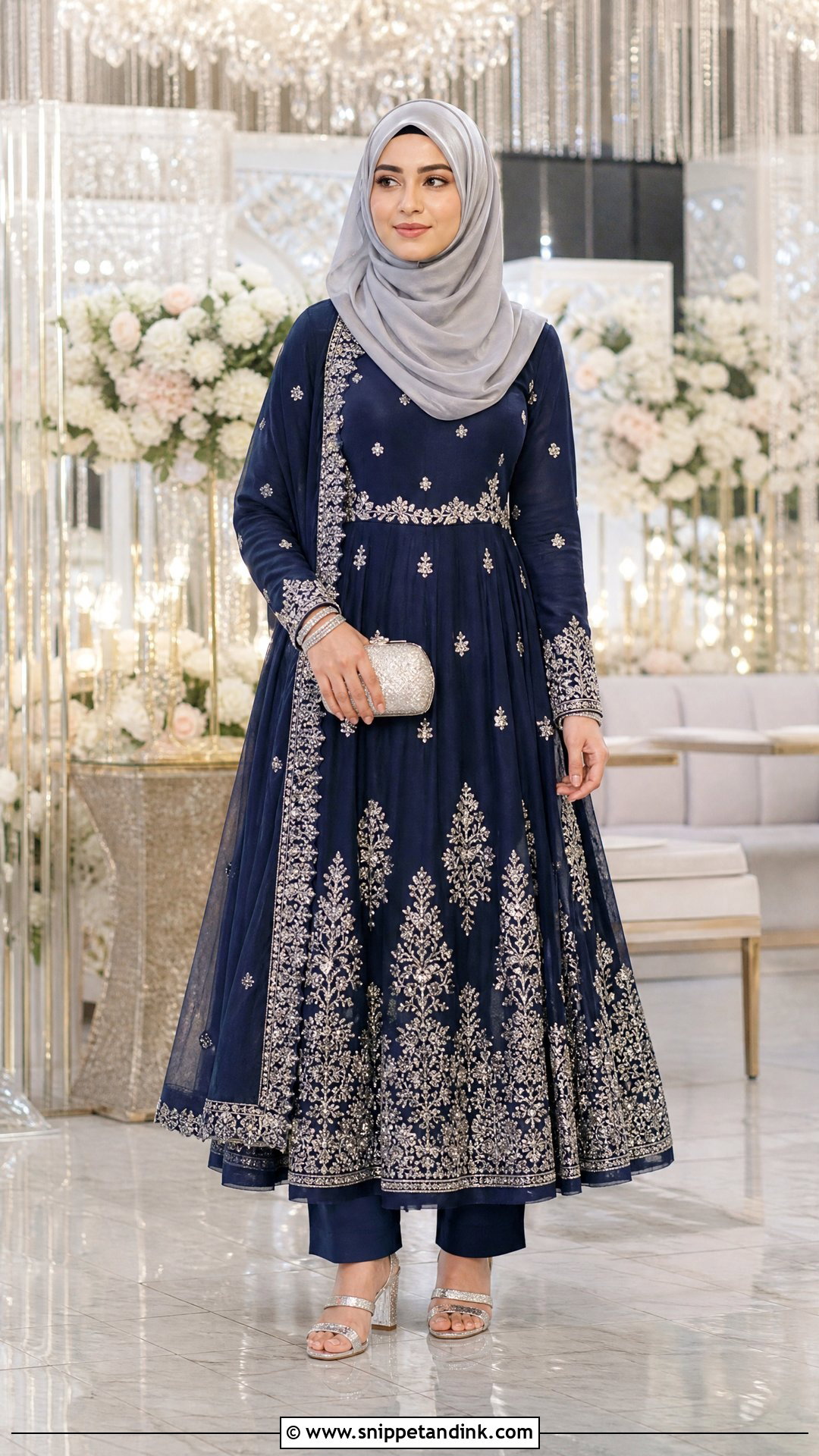
Navy makes silver embroidery stand out at an evening wedding. Choose a full-sleeve Anarkali with a fitted upper section, a wide skirt and silver zari along the neckline, sleeves and border. A silver-gray chiffon or soft georgette hijab continues the cool palette. I keep the folds narrow at the cheeks; bulky folds there make the face look wider in photographs, especially from the front. Drape the rest across one shoulder. Silver block heels and crystal bangles suit it, and straight pants underneath add coverage. A cool smoky eye matches the navy.
5. Maroon Lehenga With Beige Hijab
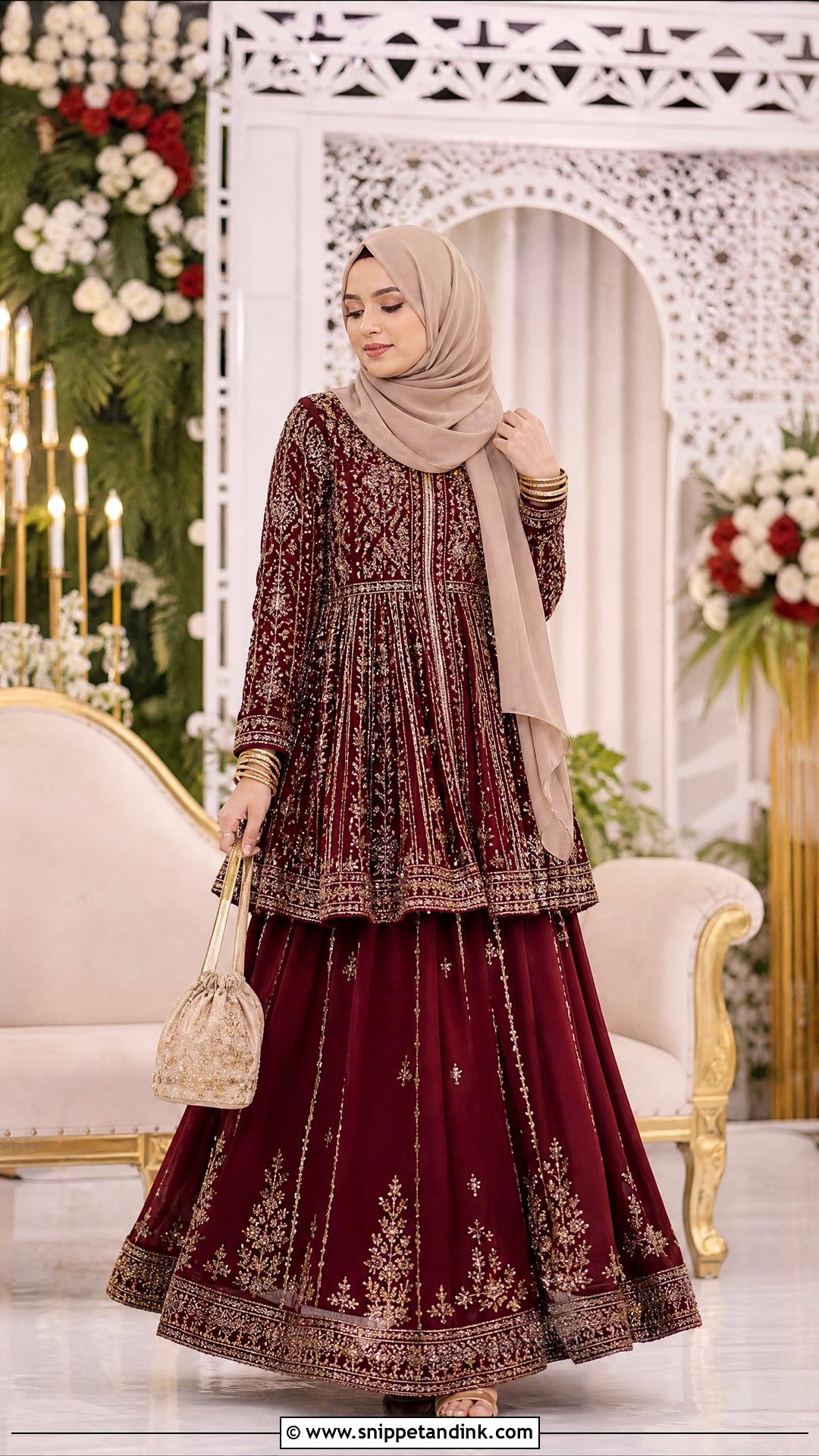
A maroon lehenga gives a baraat outfit traditional depth, and a beige hijab stops the dark color from closing in around the face. Choose a long blouse or peplum top with full sleeves and antique gold embroidery. A matte beige chiffon scarf brightens your complexion and links naturally to the gold. Drape it close to the head so the embroidered neckline stays visible. Antique gold hijab charms, a neutral potli and cushioned gold sandals finish it. If the lehenga is densely worked, keep the scarf completely plain. A beige that’s too pale can look washed out against maroon, so hold the two together before buying.
6. Ivory Angrakha With Lace Hijab
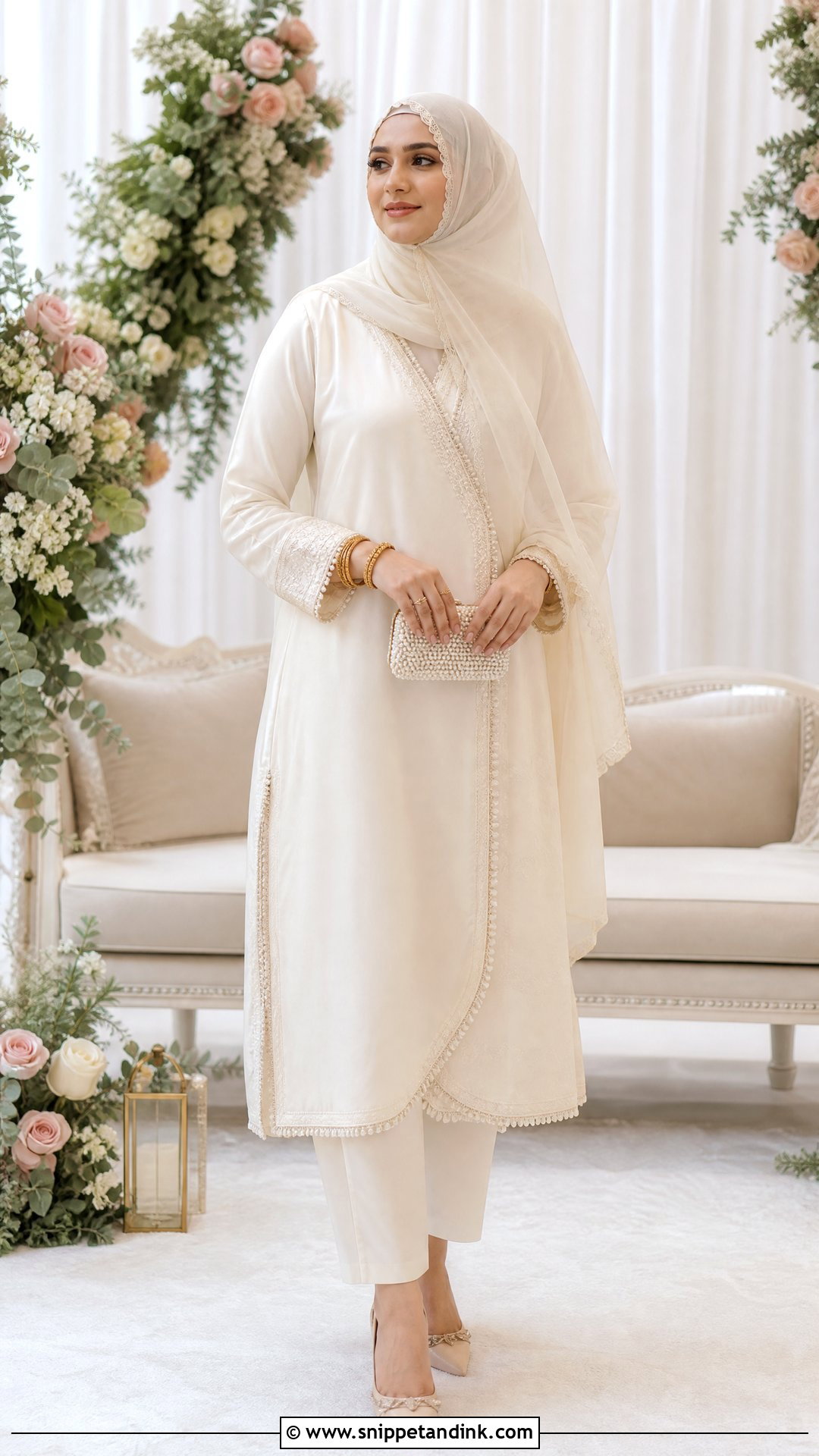
An ivory angrakha is soft and modest for a nikkah, but ivory sits close to bridal colors, so guests need to tone it down. Choose an ankle-length design with full sleeves, a crossover bodice and subtle gold or pastel embroidery, over straight ivory trousers. A matching chiffon hijab with a narrow lace edge adds texture; place the lace along one side of the face only. Lace edging is scratchy against the cheek for some people, so try it on for a full minute in the shop. Champagne heels and a pearl clutch suit it. Dusty rose or sage accents set you apart from the bride.
7. Lilac Kurta Palazzo With Matching Hijab
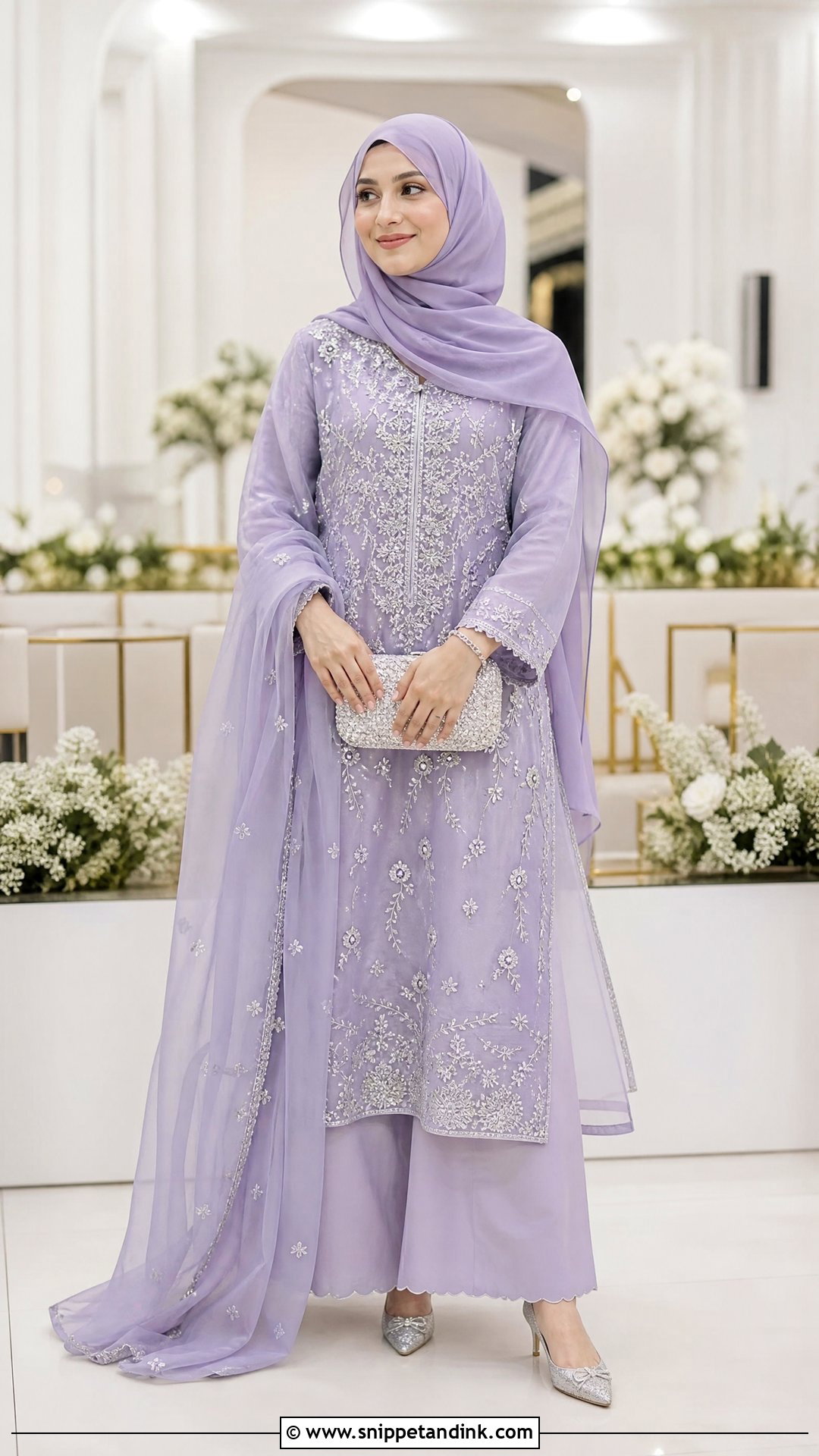
Lilac is a fresh walima color, and a kurta-and-palazzo silhouette keeps it modern. Choose a long organza or chiffon kurta with full sleeves, side slits and fine silver embroidery over wide palazzos. A matching lilac georgette hijab in a side-pinned wrap sits securely at the neck. If the kurta is sheer, make sure the lining runs the full length, including the sleeves. I keep the scarf matte when the clothes shimmer; two shiny surfaces side by side look busy on camera. Silver kitten heels and a crystal clutch complete it for a long reception.
8. Black And Gold Maxi With Satin Hijab
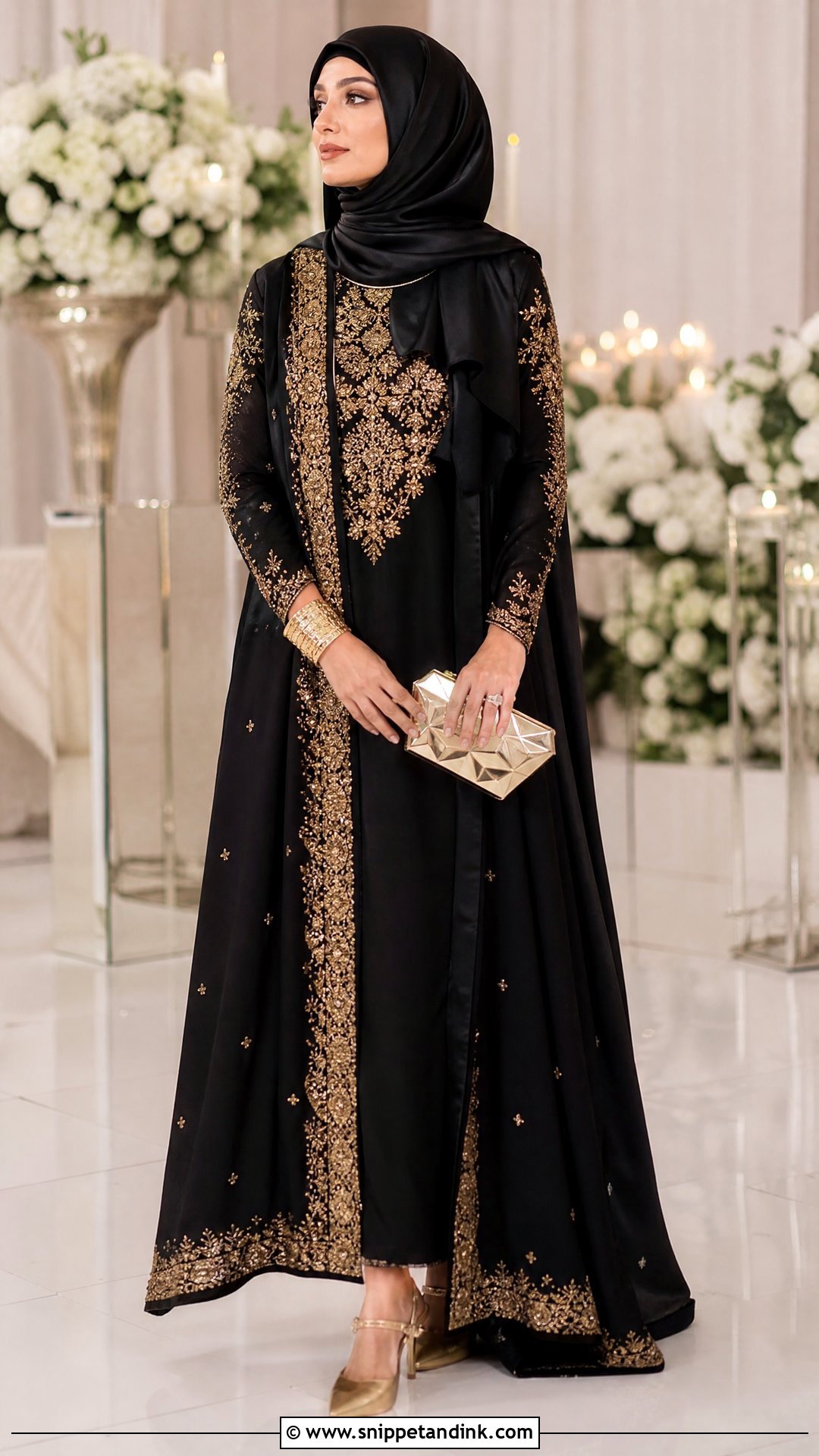
Black turns festive when the gold embroidery is concentrated around the bodice, cuffs and hem. Choose a full-length black maxi with long sleeves, then a black satin hijab for a sleek finish. Satin is the most slippery scarf fabric there is, so it needs grip underneath: a velvet or cotton underscarf, with the sides held by magnets or pins pushed into the cap. Gold heels, a box clutch and one statement cuff are enough. A warm neutral lip and defined eyes suit the drama. Check with the family first, since some still prefer guests avoid all-black at a wedding.
9. Teal Peplum Gharara With Gold Hijab
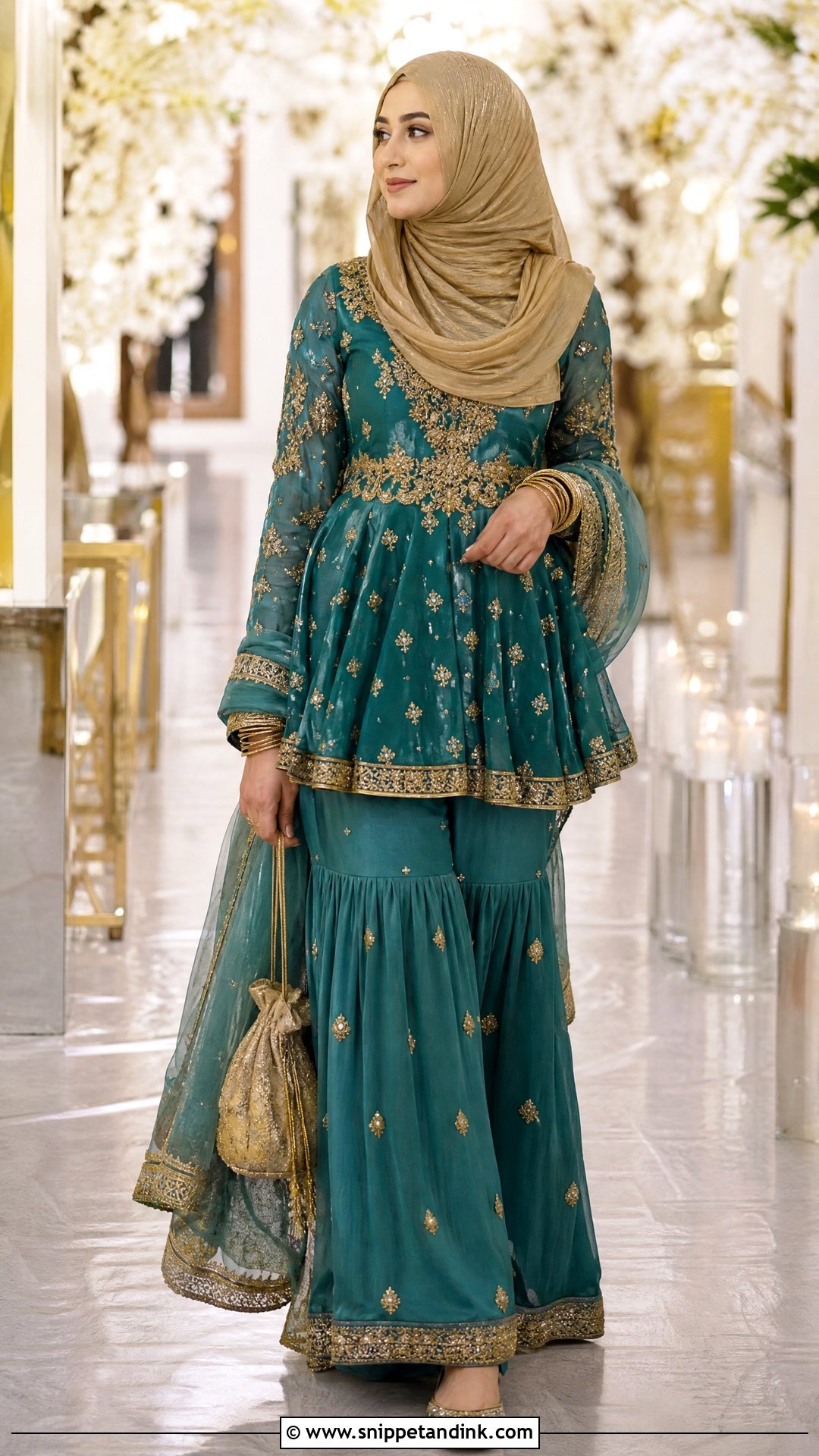
A teal peplum over a gharara gives a defined shape with full coverage. Look for a long peplum with fitted sleeves and delicate gold embellishment, plus a matching gharara with a comfortable waistband. A muted gold chiffon hijab picks up the embroidery and lifts the deep teal near your face. The peplum neckline and the scarf already frame the upper body, so leave out the necklace. Teal khussas, a gold potli and slim stacked bangles complete it. It suits a baraat or a formal wedding dinner, and it’s one of the more forgiving shapes for a fuller midsection.
10. Peach Saree With Cream Hijab
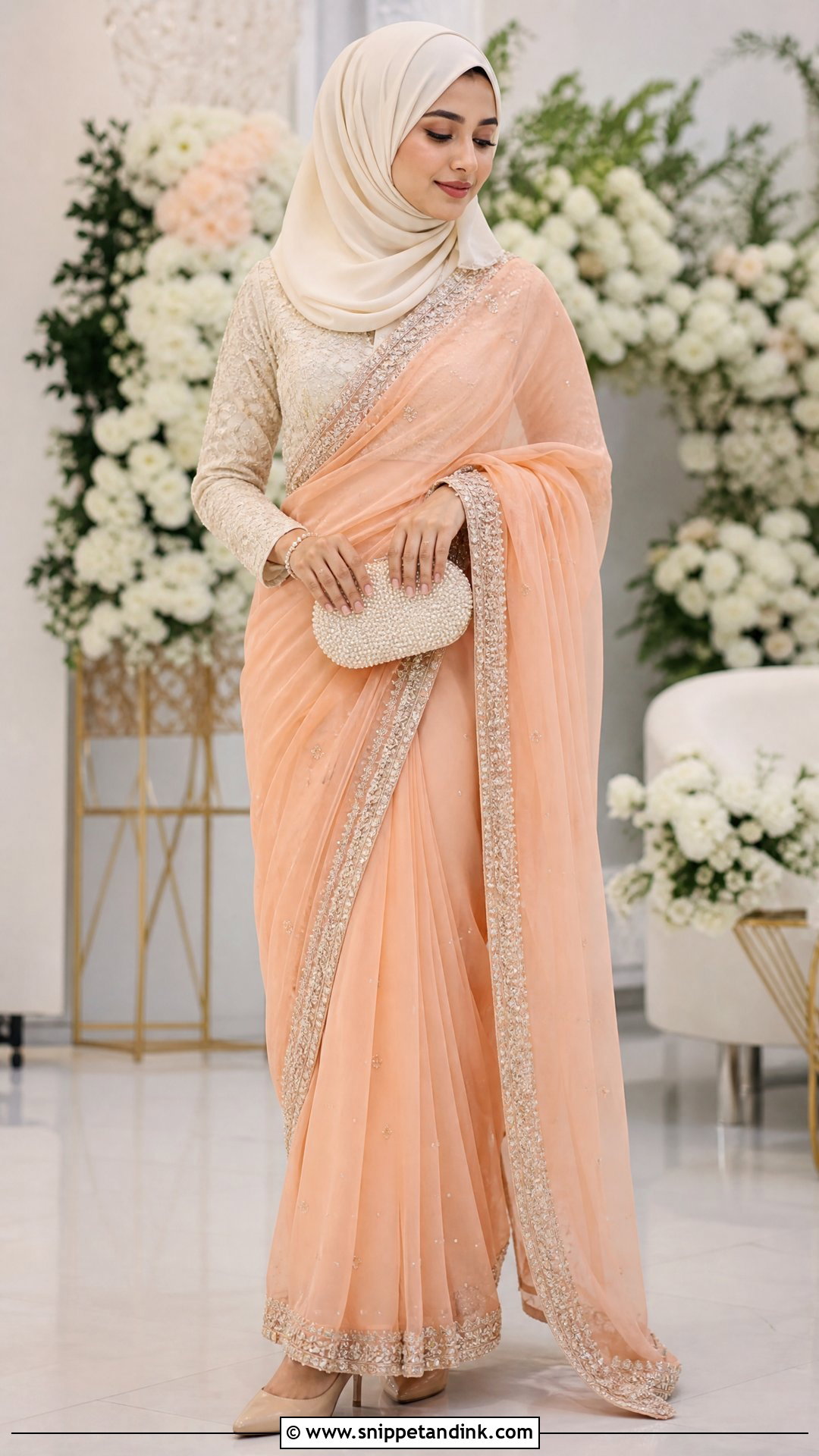
A peach saree can be fully modest with the right planning. Choose a light chiffon or georgette saree with a decorated border over a full-sleeve, high-neck blouse. I pin the pleats at the waist and lay the pallu across the chest to the shoulder, then pin it to the blouse so it doesn’t slide when you hug people. A cream chiffon hijab balances the peach; keep it compact so it doesn’t compete with the drape. A long-sleeve inner layer helps under sheer fabric. Nude heels and a pearl clutch finish it for a walima or daytime party.
11. Rust Red Frock With Neutral Hijab
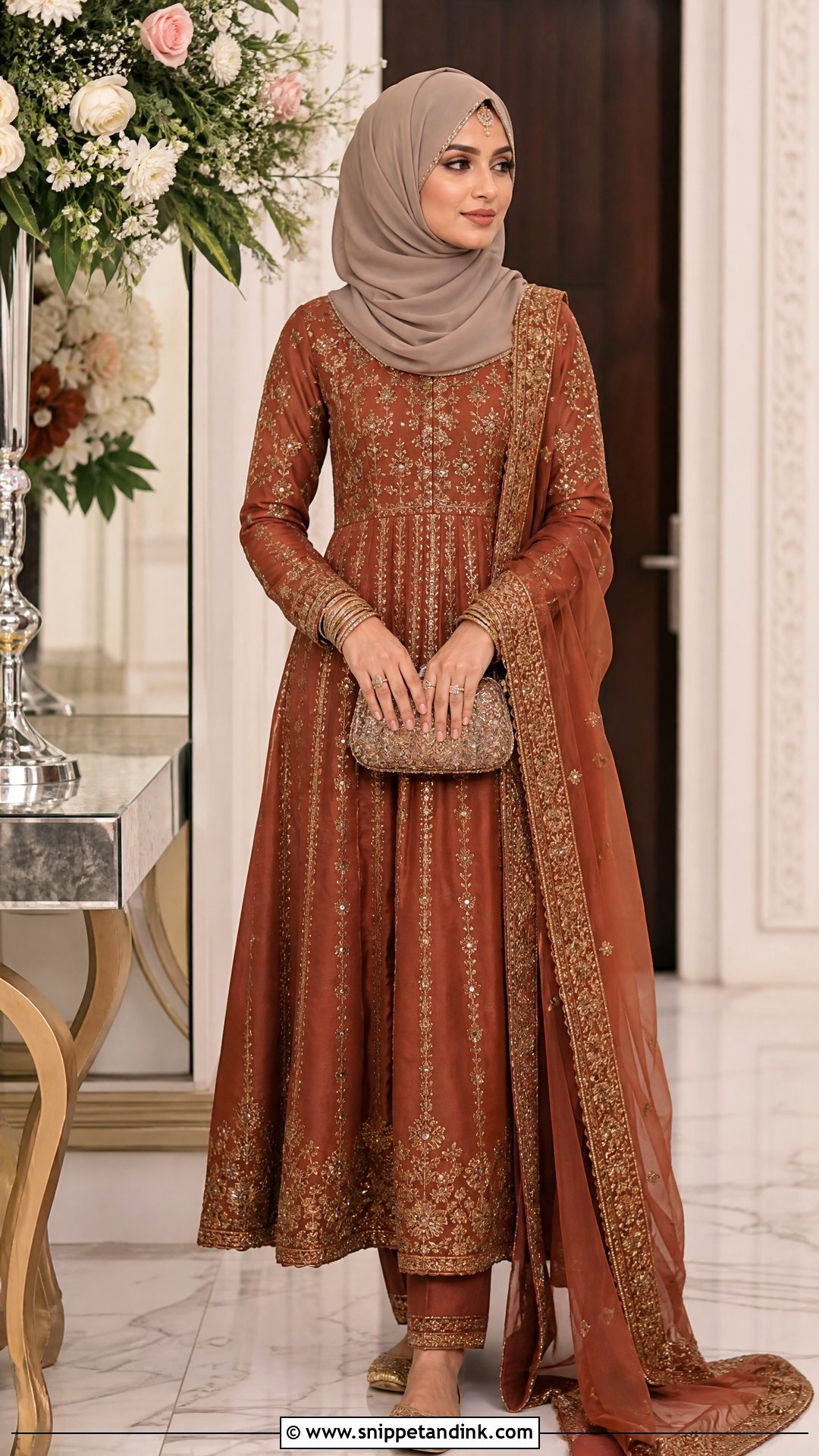
Rust carries the warmth of traditional wedding colors while staying clearly un-bridal next to bright scarlet. Choose a long frock with full sleeves, a defined waist and antique gold embroidery at the neckline and hem. Matching straight trousers go underneath if the skirt is short of the floor. A warm beige or taupe hijab flatters the face against rust. If you want decoration, use one subtle gold pin near the shoulder; jeweled pins at the forehead tend to drag the scarf down over the evening. Antique gold khussas and simple bangles suit an evening baraat.
12. Mint Green Shirt And Pants With Hijab
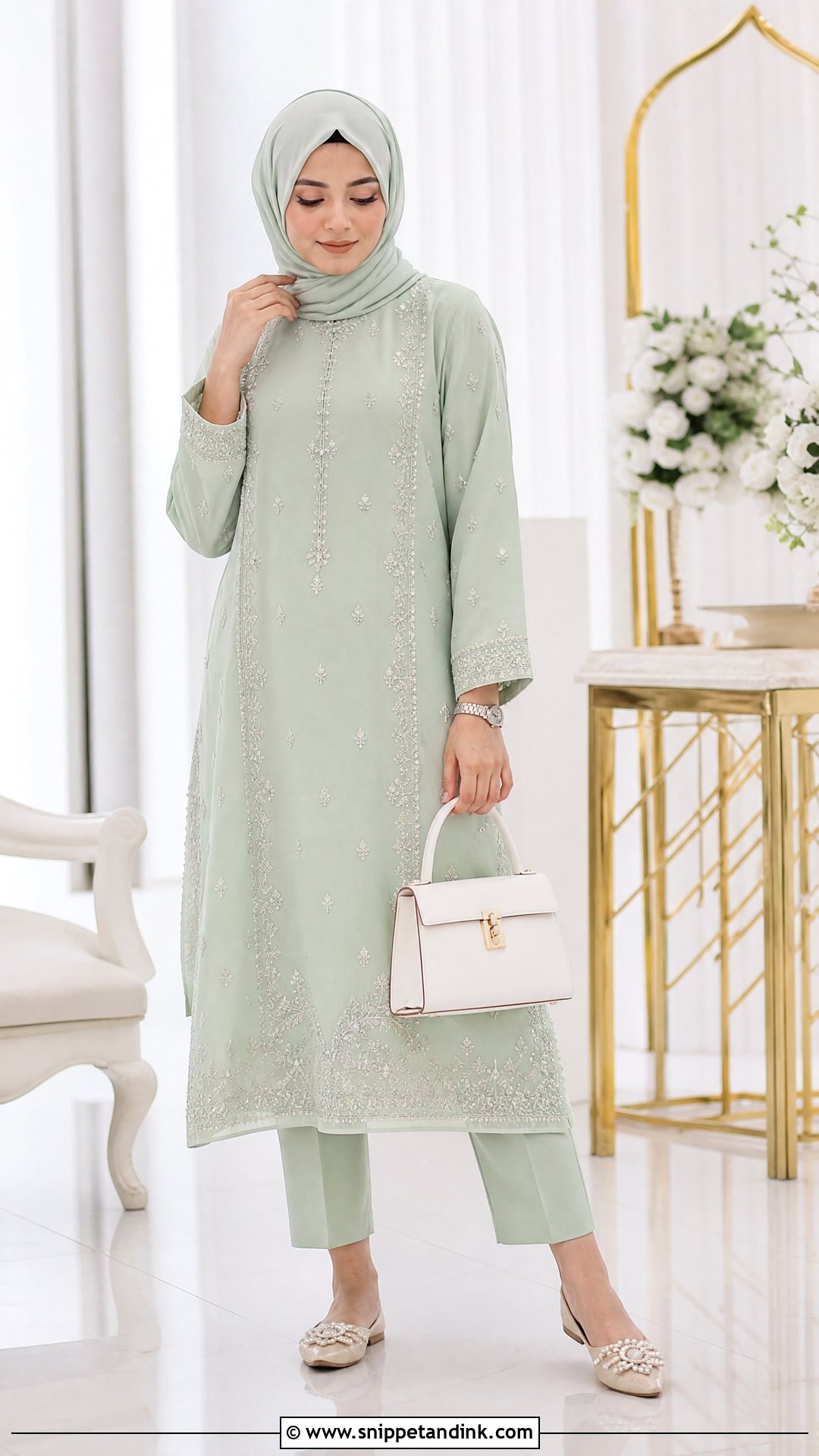
Clean tailoring makes a mint shirt and pants outfit a calm choice for a modern nikkah or walima. Choose a long straight shirt with full sleeves, a high neckline and white or silver embroidery, then matching cigarette pants or straight trousers. A mint chiffon hijab gives a tonal finish. When the shirt has an embroidered collar, I use a wrap with very little fabric at the neck so the collar isn’t buried. An organza dupatta folded over one arm adds tradition. Pearl flats and a white structured bag complete it. It’s easy to move in and doesn’t look overdressed.
13. Plum Kaftan With Draped Hijab
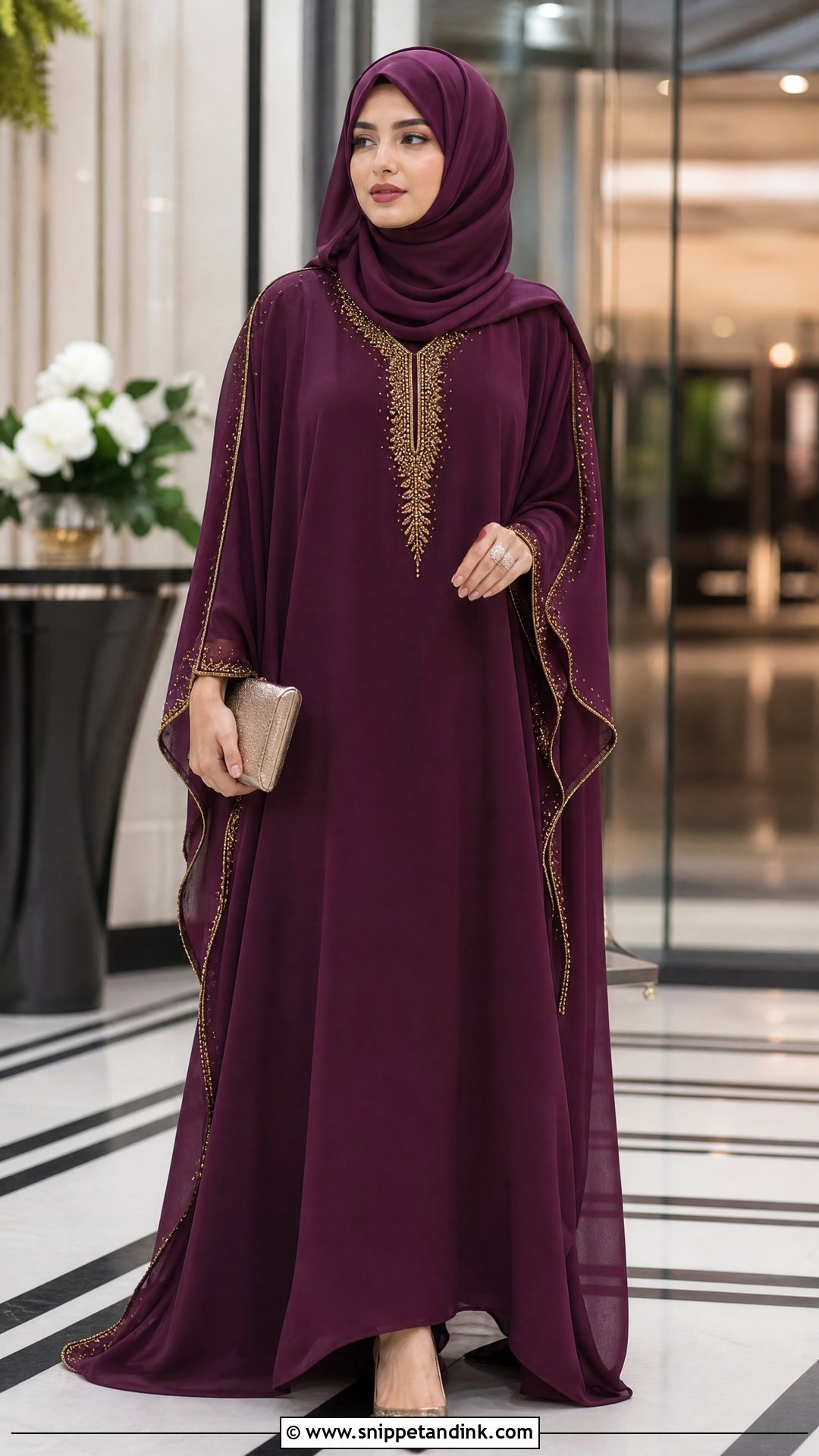
A plum kaftan gives generous coverage and fluid movement for an evening event. Choose a floor-length design with fitted inner sleeves so the wide outer panels don’t drag through food. Gold beadwork at the neckline and cuffs defines it. Style a plum chiffon hijab in a relaxed drape, smooth at the front and loose at the shoulders. A kaftan already carries volume, so an oversized scarf on top turns the whole look into one big shape; keep the hijab neat. A removable belt can add a waist. Pointed gold flats and a metallic clutch suit a reception or walima.
14. Powder Blue Jacket Lehenga With Hijab
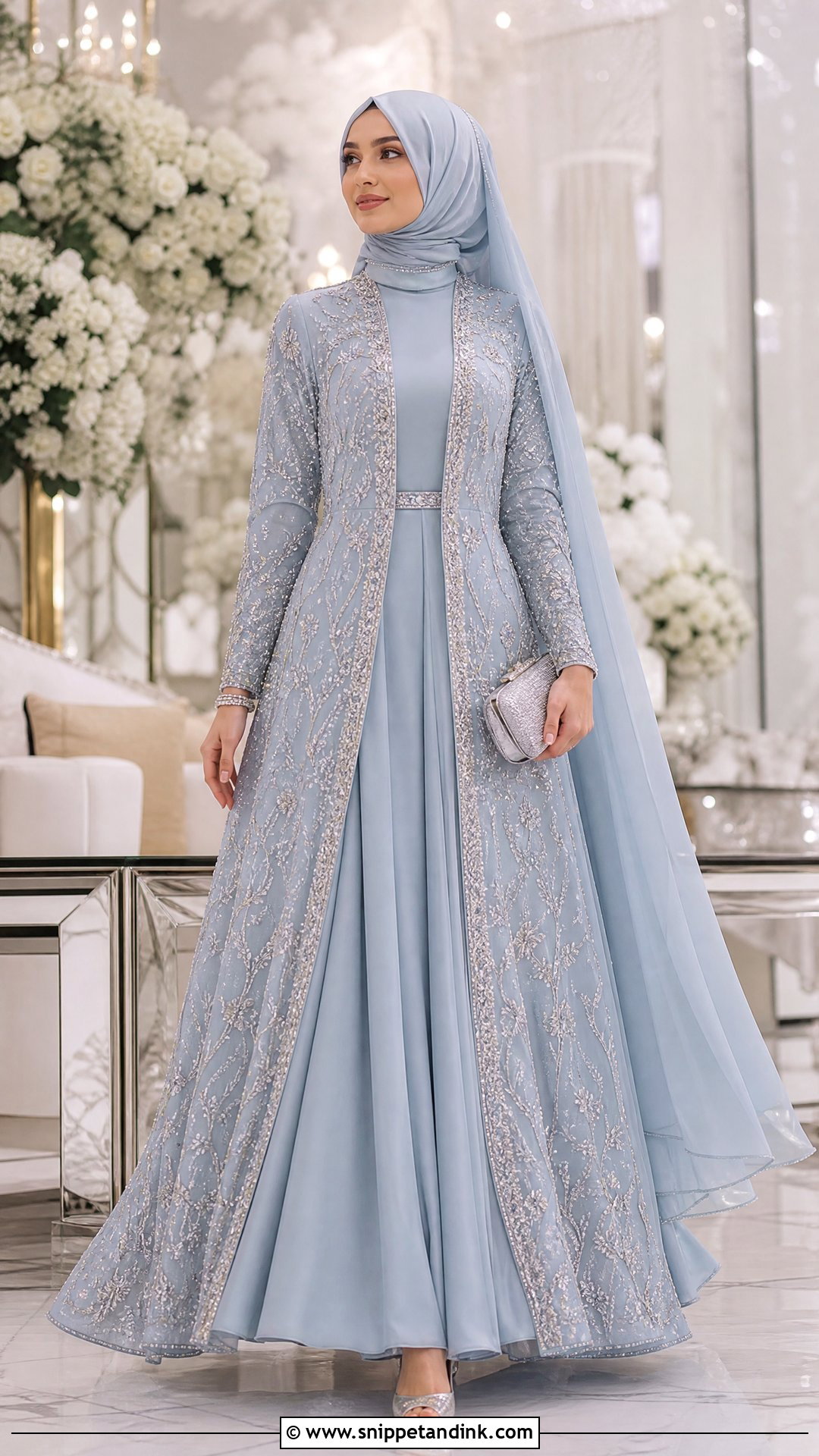
A jacket lehenga gives more coverage than a cropped blouse while still looking layered and festive. Start with a powder blue high-neck top and lehenga, then add a long embroidered jacket with full sleeves and an open front reaching below the knee. A silver-blue chiffon hijab keeps the cool palette. Let one end rest behind the shoulder; if it falls forward, it hides the jacket’s edge embroidery. Silver heels and a beaded clutch finish it. Keep the lehenga moderately worked so the jacket leads. It suits a walima or a bright banquet hall.

15. Hot Pink Angrakha Sharara With Hijab
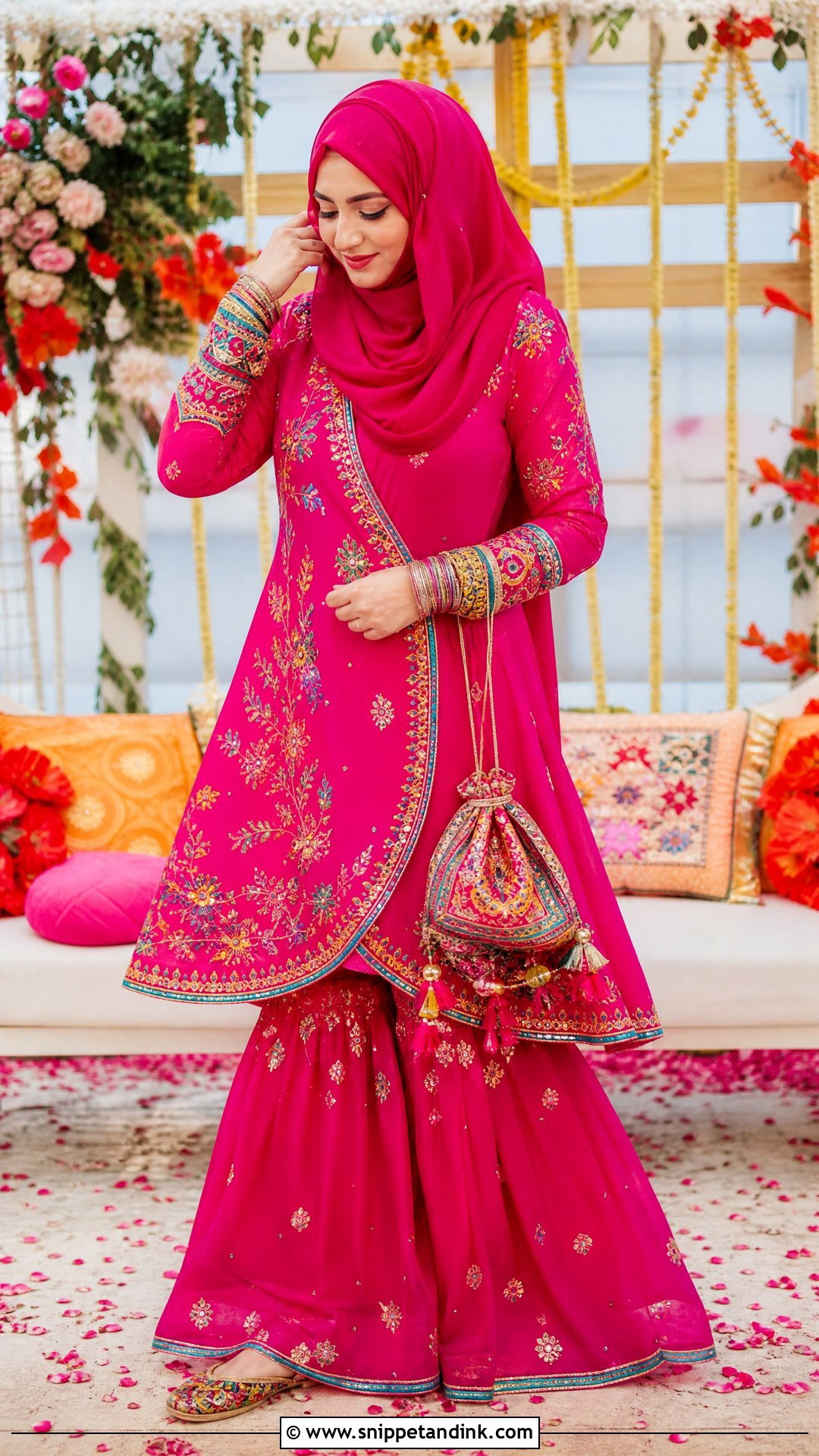
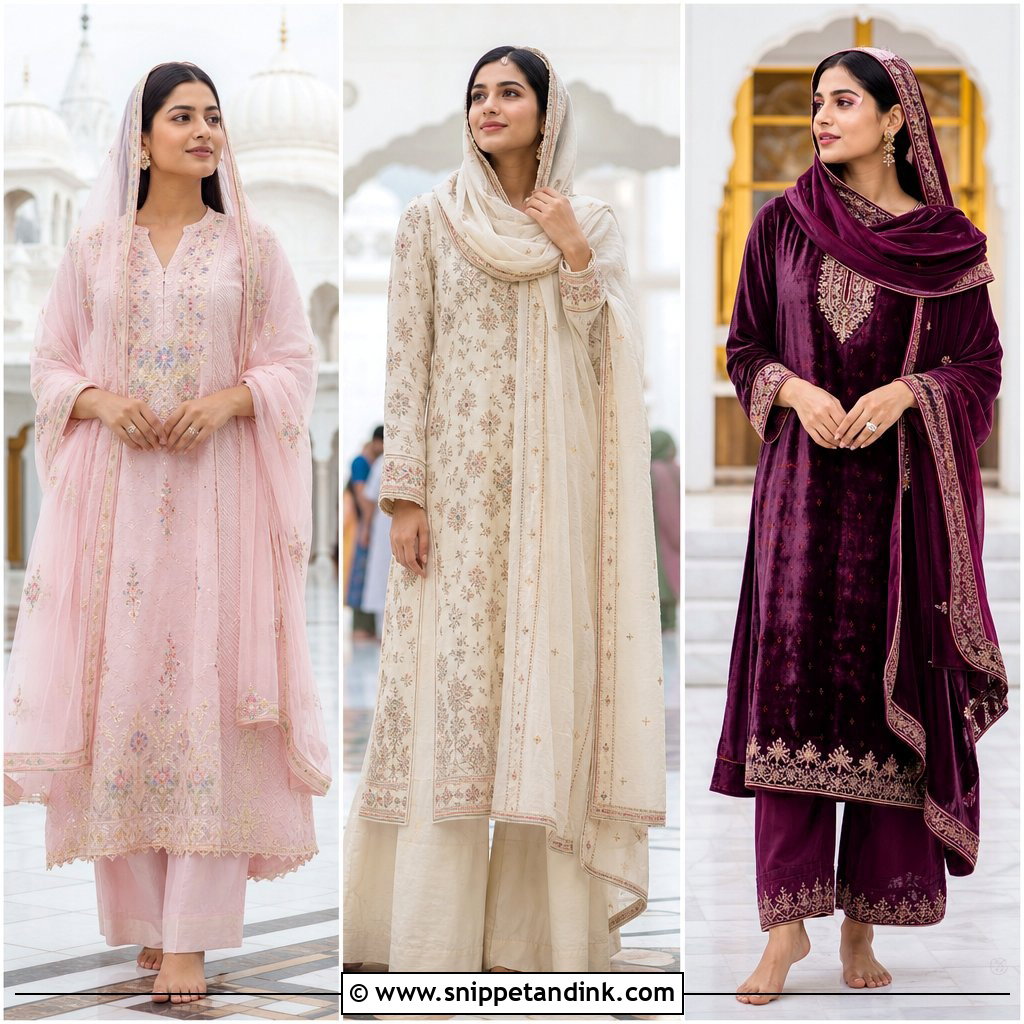
Hot pink brings energy to a mehndi, especially with orange, green or gold accents. Wear a knee-length angrakha with a crossover front, full sleeves and tassel ties, plus a matching sharara. A slightly deeper pink georgette hijab keeps it coordinated. Before the dancing starts, I pin the scarf under the chin and again at one shoulder, because a scarf that’s pinned only at the chin swings loose with every spin. Multicolored khussas and a potli complete it. Pick either floral jewelry or metallics, not both together.
16. Champagne Long Shirt With Farshi Shalwar
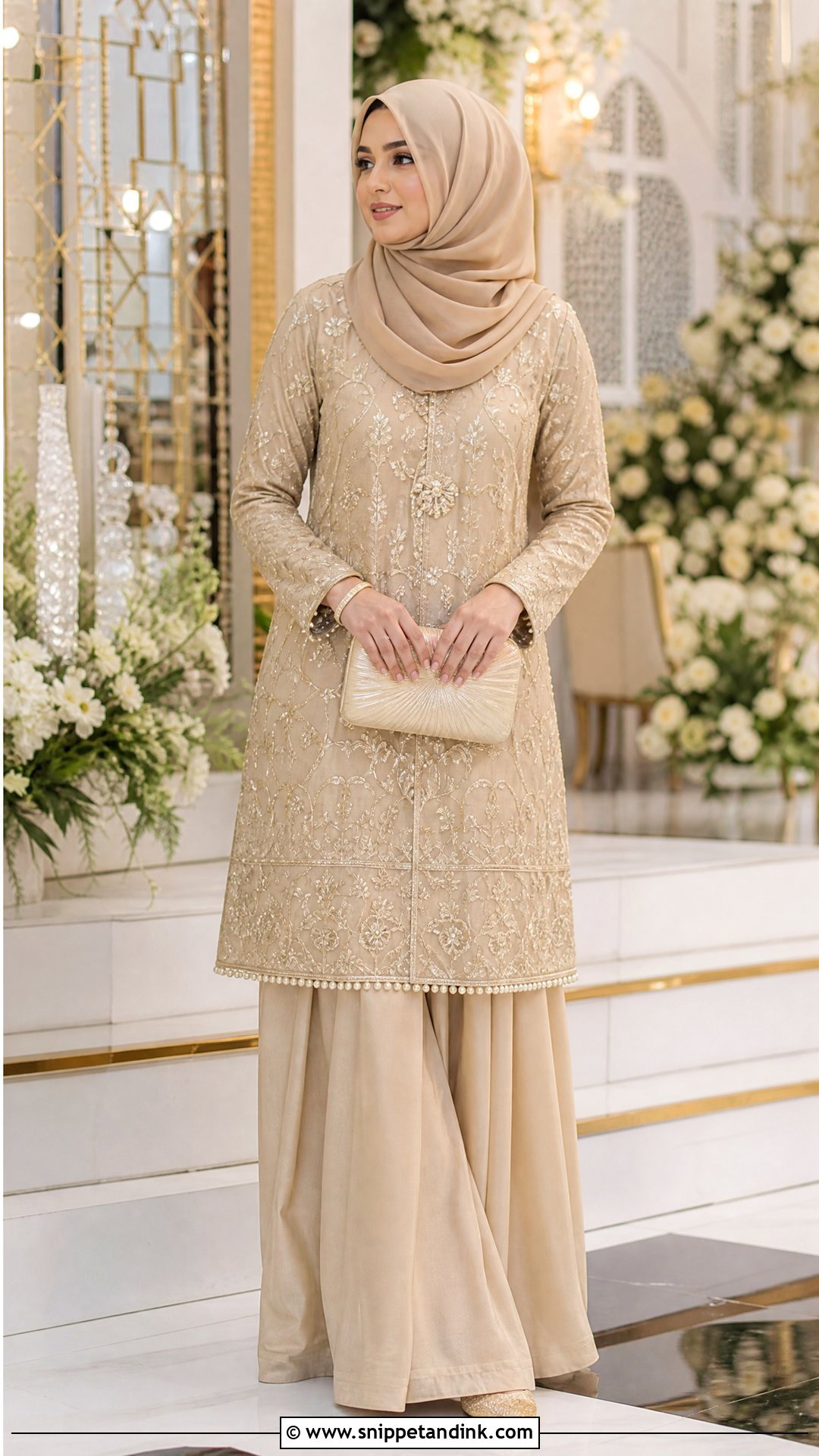
A champagne long shirt over a farshi shalwar combines traditional volume with a refined palette. Choose a calf-length shirt with full sleeves and fine gold embroidery. The farshi should have enough fabric to pool but still be walkable; practice in it and have the length adjusted if you catch your toe. A matte champagne hijab in a neat side wrap balances all that volume below. Champagne is close to many skin tones, so a slightly deeper or slightly lighter scarf than your skin keeps your face from blending into the fabric. Gold flats and a cream clutch suit a nikkah or walima.
17. Bottle Green Velvet Suit With Hijab
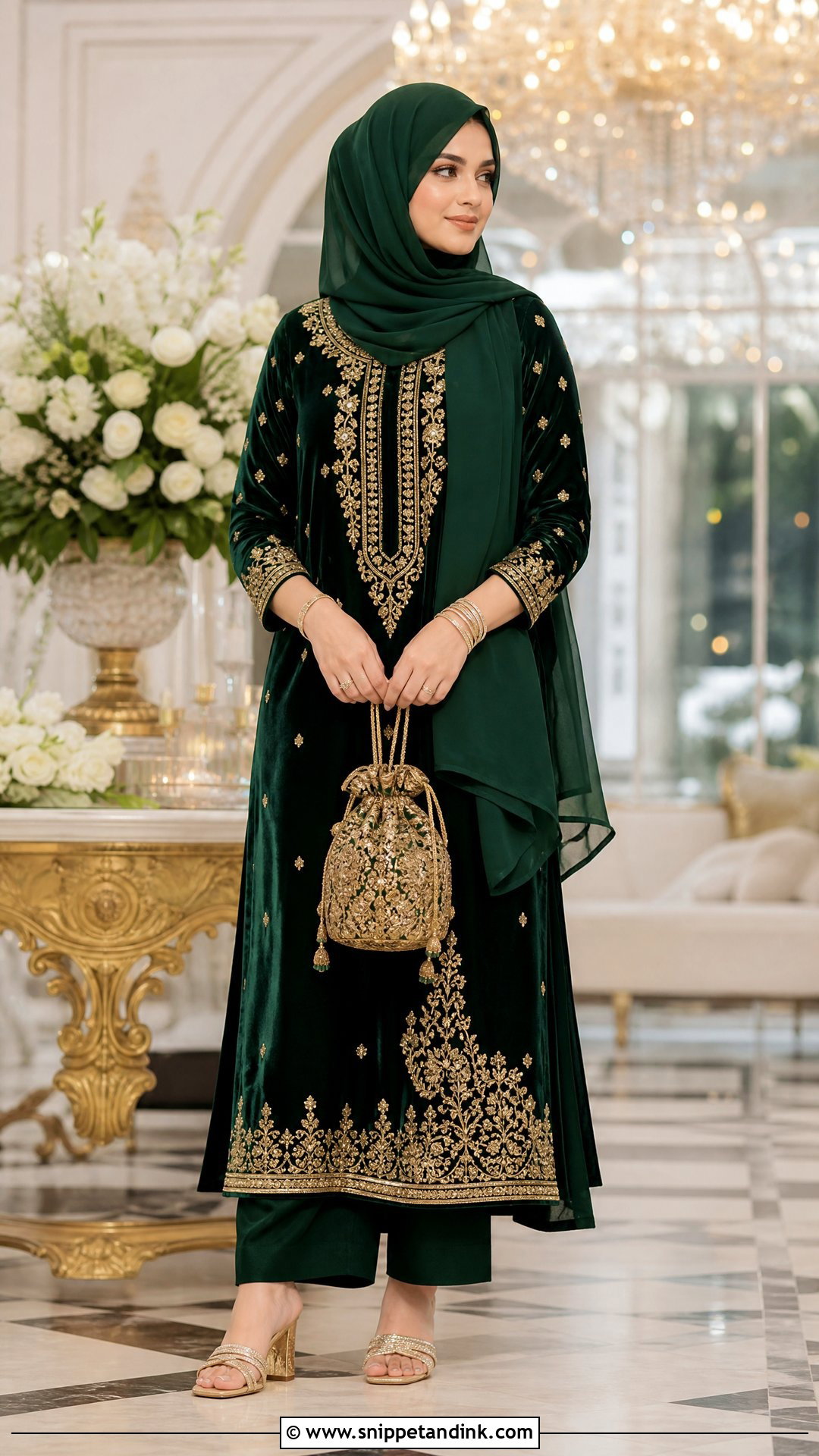
Bottle green velvet is a winter outfit with real presence. Wear a long velvet kameez over silk or raw silk trousers so the whole look isn’t heavy, with gold embroidery at the neckline, sleeve edges and slits. Choose a light bottle green chiffon hijab, not velvet. Velvet around the head is bulky and very warm, and indoor halls in winter are often overheated. Gold block heels, a traditional potli and slim bangles over the cuffs complete it. Softly luminous makeup keeps the deep fabric from overpowering your face. It suits a winter baraat or reception.
18. Coral Chikankari Suit With White Hijab
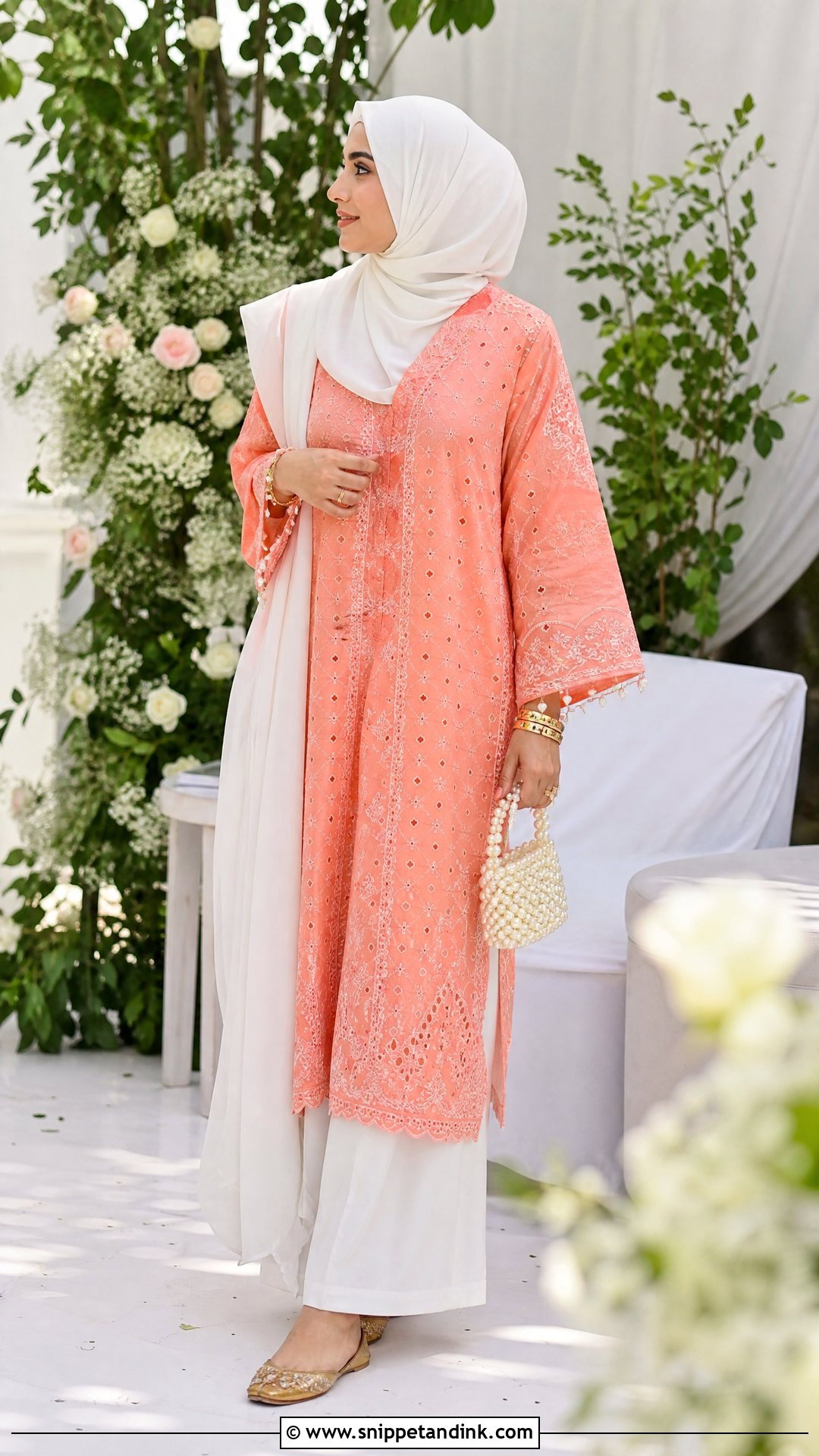
Coral chikankari gives a daytime event fine texture and cheerful color. Choose a long, fully lined chikankari kurta with full sleeves, over wide white trousers or a soft shalwar. A crisp white chiffon hijab highlights the embroidery. Keep the wrap simple: pin one side near the temple and tuck the rest neatly over the chest. White scarves show foundation along the edge by the end of a day, so I set the jawline with powder before pinning. White or gold flats and a woven pearl bag finish it for a summer nikkah or garden wedding.
19. Silver Gray Cape Dress With Hijab
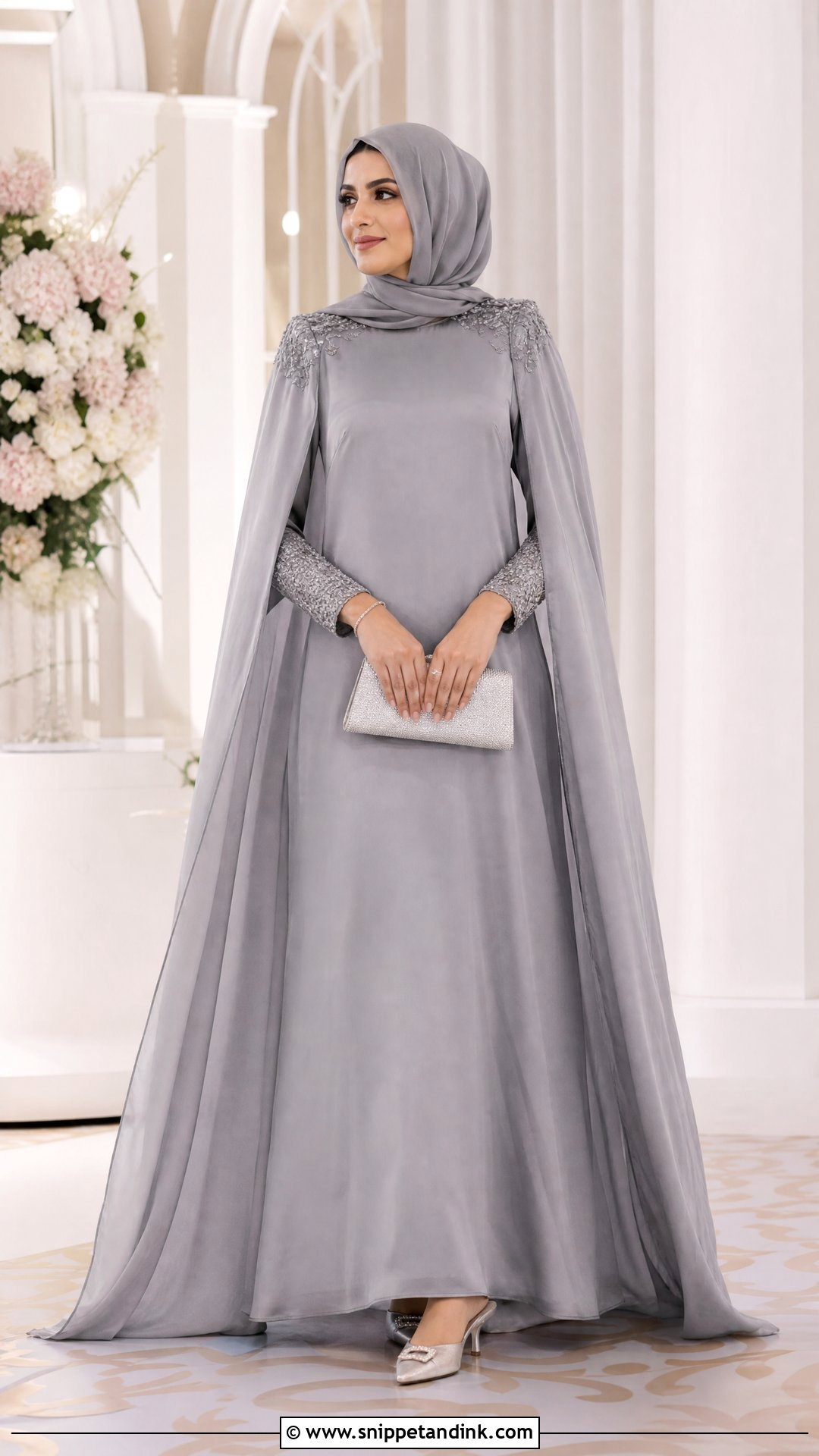
A silver-gray cape dress is a contemporary option that keeps full coverage. Choose a floor-length dress with long fitted sleeves under a light cape overlay, with crystal details near the shoulders. A matte gray chiffon hijab balances the sparkle. Keep the scarf ends short. Long hijab tails tangle with a cape every time you move your arms, and you’ll spend the night pulling them apart. Silver kitten heels and a crystal clutch suit it. Skip the necklace, since the cape and scarf already fill the shoulder area. It’s a good choice for a walima or an upscale reception.
20. Royal Blue Silk Pishwas With Hijab
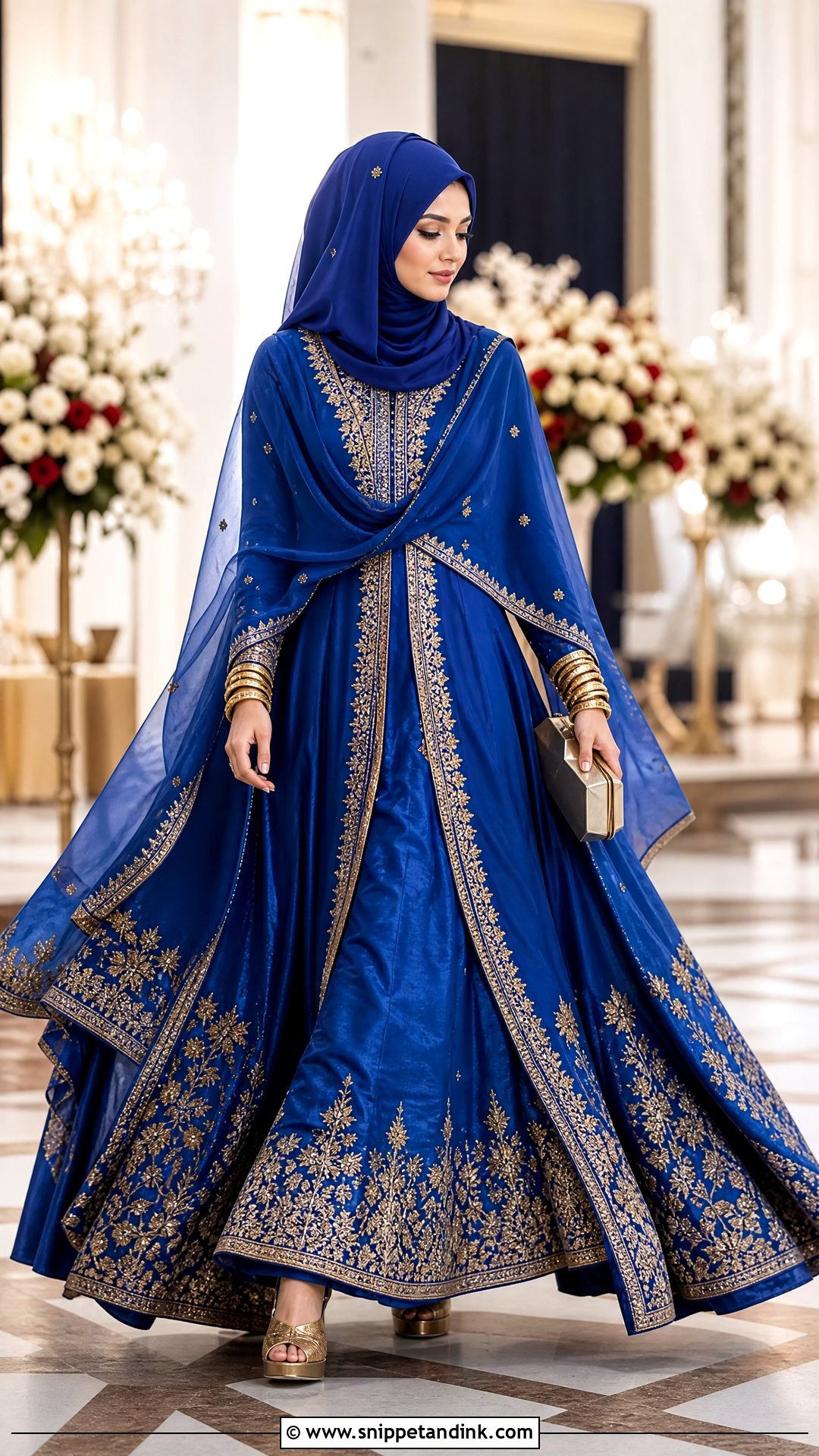
Royal blue silk is a strong color to end on, and it suits a baraat or a grand evening reception. Choose a long pishwas with full sleeves, a fitted waist and a generous flare, with gold embroidery along the bodice and lower border. A matching chiffon hijab gives a tonal effect; soft gold gives contrast. Silk already reflects a lot of light, so I keep the hijab drape controlled and simple. Gold block heels will carry you through long ceremonies. A structured clutch and bangles complete it. The saturated blue photographs clearly even in dim halls.
Wearing a Formal Dupatta on Top of a Hijab
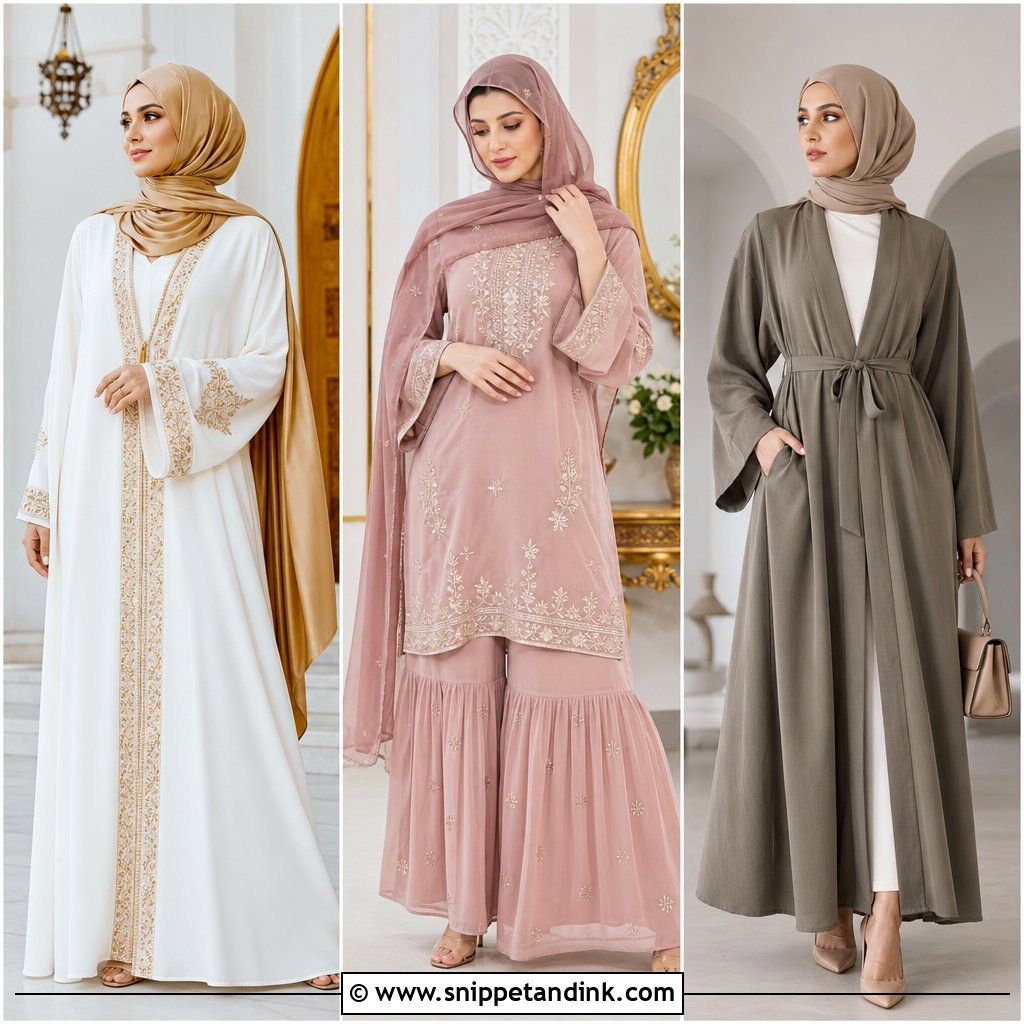
Many Pakistani outfits come with a dupatta, and hijabi guests often feel they have to choose between the two. You don’t. I treat the hijab as the fixed base and the dupatta as a styling layer that never sits on the head. Pin it at one shoulder and drape it over the opposite arm, or fold it neatly over the forearm for the nikkah.
Keep the colors in conversation. A plain hijab works with a worked dupatta; a printed or embellished dupatta over a printed scarf looks crowded. If the dupatta is heavy, pin it to the kameez or blouse, never to the hijab, or its weight will slowly drag the scarf off line.
Makeup Transfer and Heat Under the Layers
Foundation transfers onto the inner edge of a scarf within the first hour, and it’s most visible on white, cream and pastel chiffon. Set the jawline and the sides of the face with powder before you put the scarf on, and do your makeup before pinning, not after. A thin fold of the scarf at the face edge also hides minor transfer.
Wedding halls get hot, and a cap, a scarf and a full-sleeve outfit add up. Choose a breathable cap fabric for summer weddings, carry a small fan or blotting papers, and leave a little room at the neck so air can move. If you start to overheat, step out for a few minutes rather than loosening pins in the middle of the crowd.
A Hijab That Stays Put Until the Last Photo
Every look here works because the scarf, clothes, shoes and accessories were planned as one outfit. Ghararas, palazzo sets, pishwas, sarees and kaftans can all be styled with full coverage for any function. Think about the venue, the weather, any family color theme and how formal the event is. Then build the hold properly: underscarf first, pins or magnets second, scarf last. Do a full test at home, including sitting, hugging and turning your head. If it passes that, it will last the night, and you’ll feel festive in the coverage you’re comfortable with.
You'll Like These Ideas:



Leave a Reply