
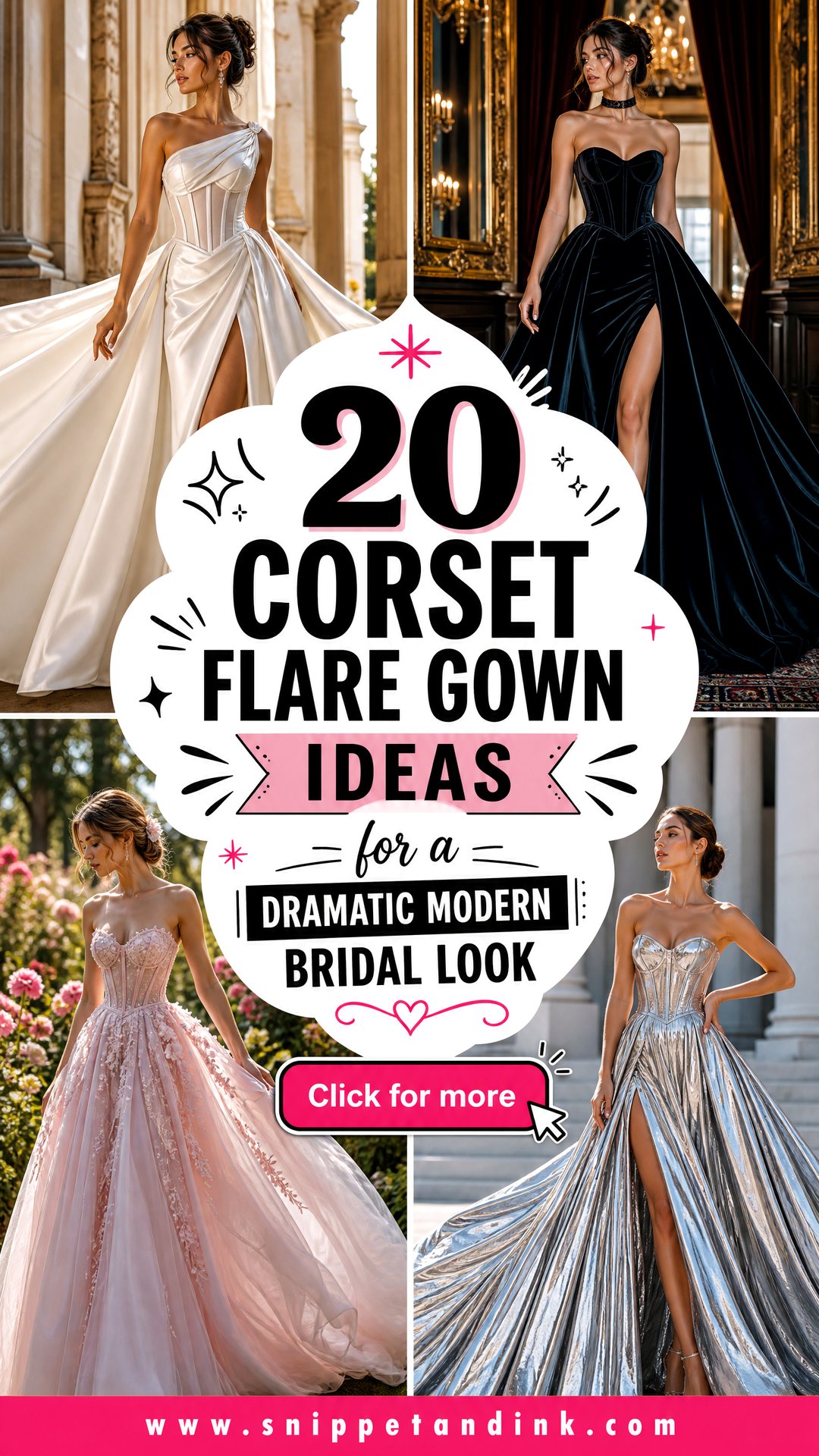
Put a sculpted bodice on top of a skirt that opens out, and the waist becomes the centre of the whole outfit. That is all a corset flare gown really is, and it’s why the shape works for brides, for a black-tie reception change and for guests at a formal wedding. The twenty gowns below range from black satin to floral tulle to winter velvet, each styled head to toe. In my fittings the gown is only half the decision. The other half is where the skirt starts to flare, how much the fabric weighs, and whether the shoes and bag fit the length you end up with.
Where Your Skirt Starts to Flare Matters More Than the Color
Two gowns can look identical online and feel completely different on, and the reason is usually the flare point. That’s where the fitted bodice stops and the skirt begins to open. Move it by a few centimetres and the whole proportion changes.
- At the natural waist: the classic choice. It defines the narrowest part of the torso and gives the most room through the hips. Easiest to sit and dance in.
- Slightly below the waist, at the high hip: lengthens a short torso and looks more modern, but the bodice now ends where you bend, so the boning must be cut carefully.
- Just above the waist: suits a long torso or a bust you’d like to balance, and gives a slightly empire feel.
Then look at how much fabric the skirt holds. A soft flare in crepe or chiffon falls close to the legs and suits a petite frame. A full flare in tulle or stiff satin adds width at the hip, which balances broad shoulders. Neither is better; it depends on what you want the eye to read.
When you shop, ask the consultant to pin the waist higher or lower on a sample so you can see the difference in the mirror. It takes a minute and saves you ordering a shape you’ll want changed.
1. Black Satin Corset Flare Gown
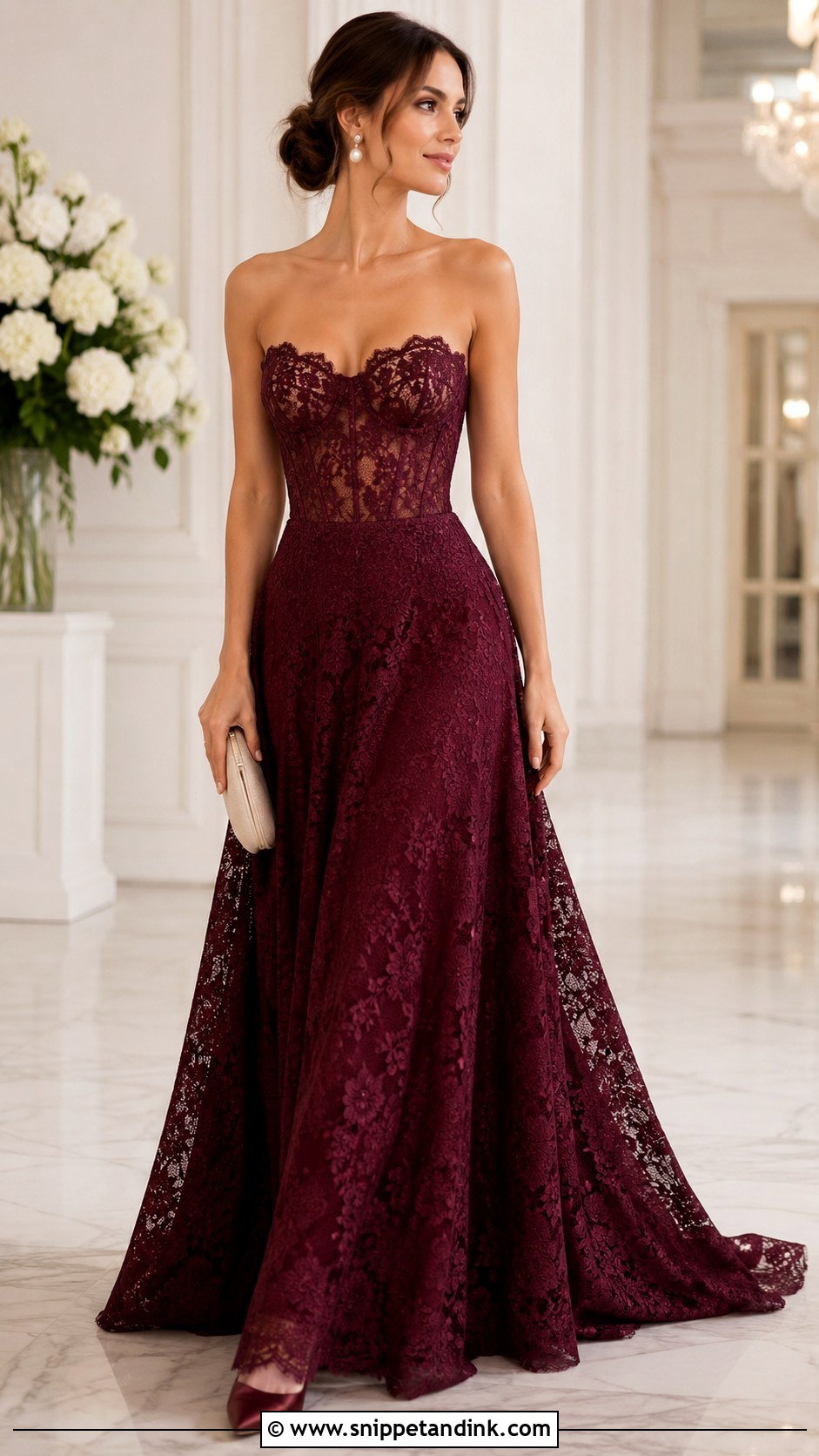
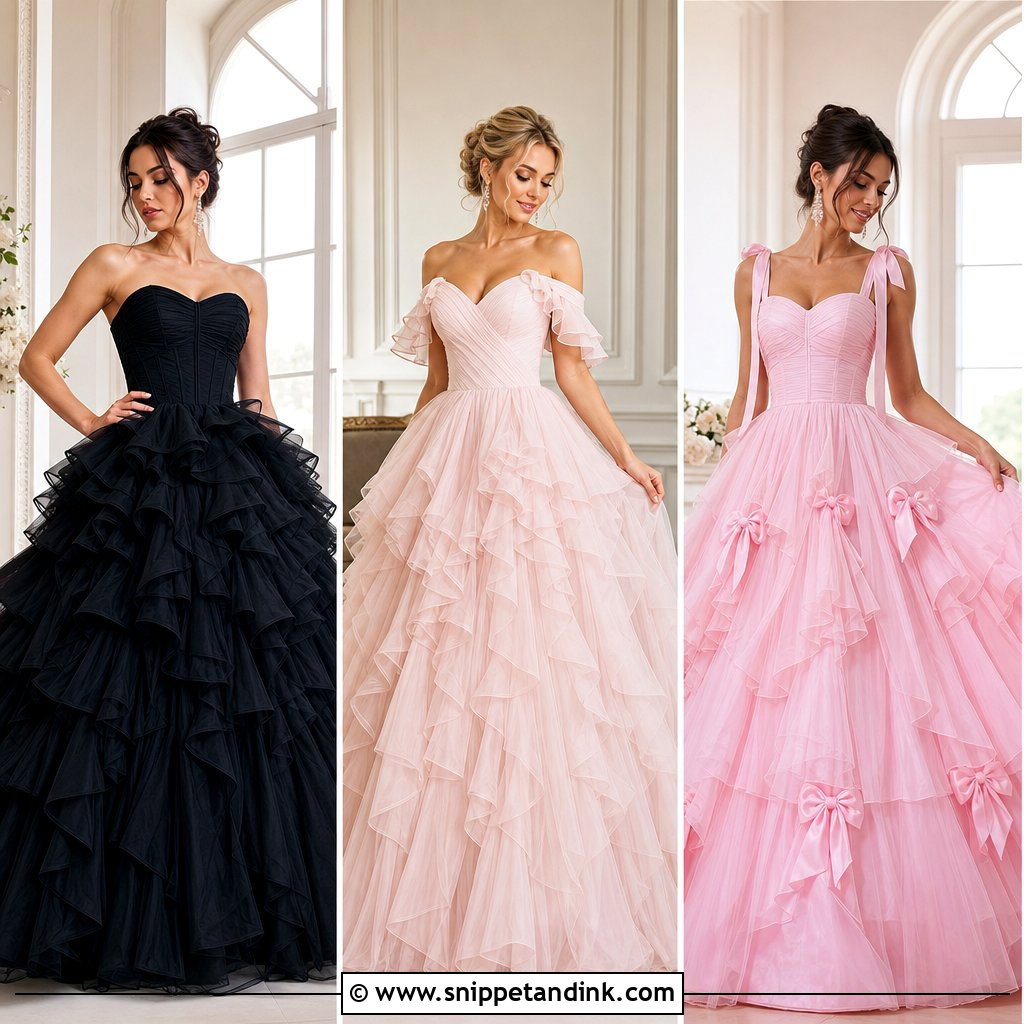
Black satin needs almost nothing added to it. A clean strapless neckline with proper boning and a softly pleated skirt carries the look; the satin’s sheen is the decoration. I keep accessories to silver drops and a small crystal clutch, and I put the hair in a low bun so the neckline stays sharp. Pointed black pumps keep the leg line unbroken. One thing to check: black satin shows every lint fleck and deodorant mark, so dress last and keep a lint roller in the bag. For an evening chill, a tailored black jacket over the shoulders beats a fluffy wrap.
2. Red Corset Flare Gown With Slit
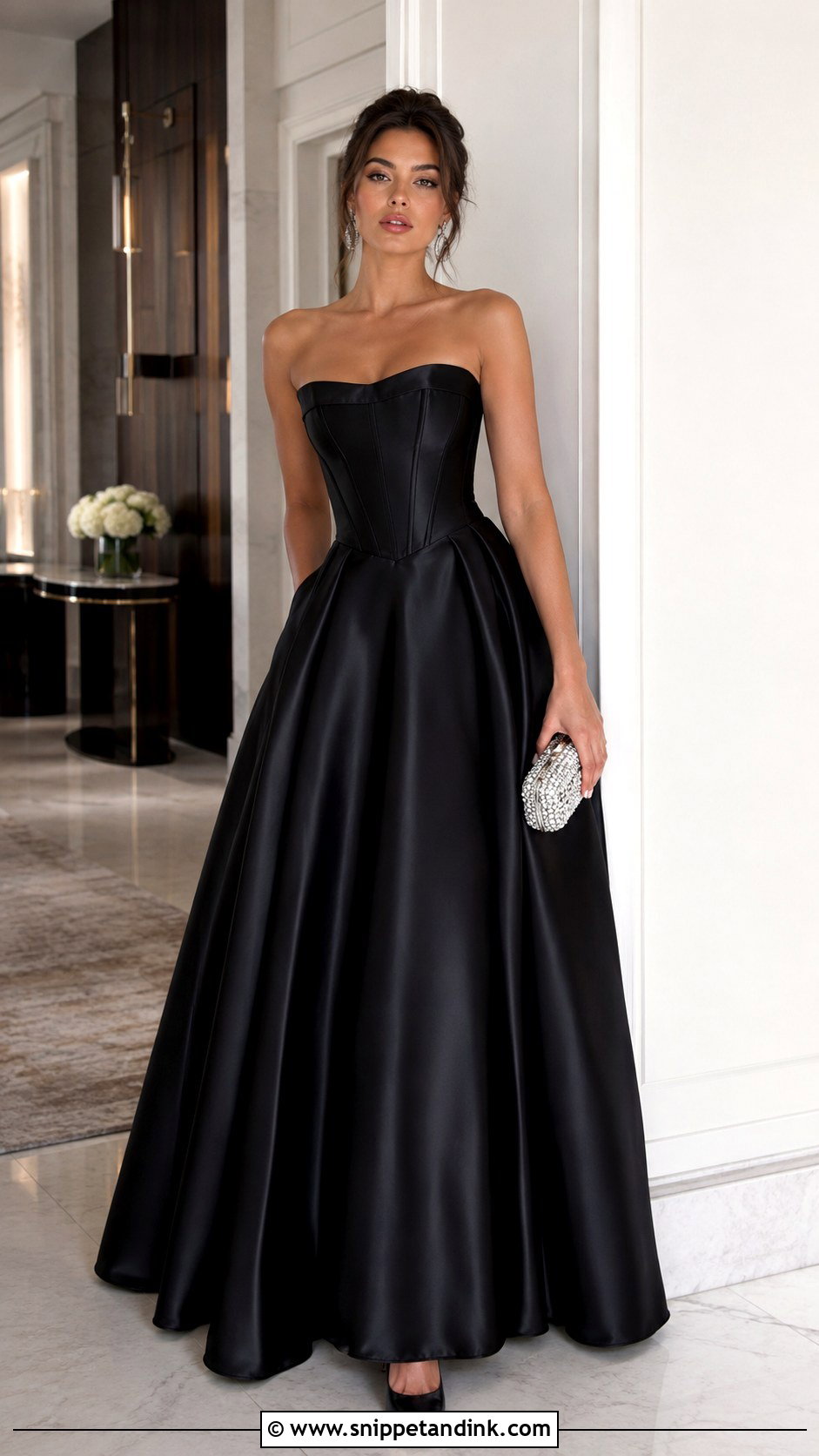
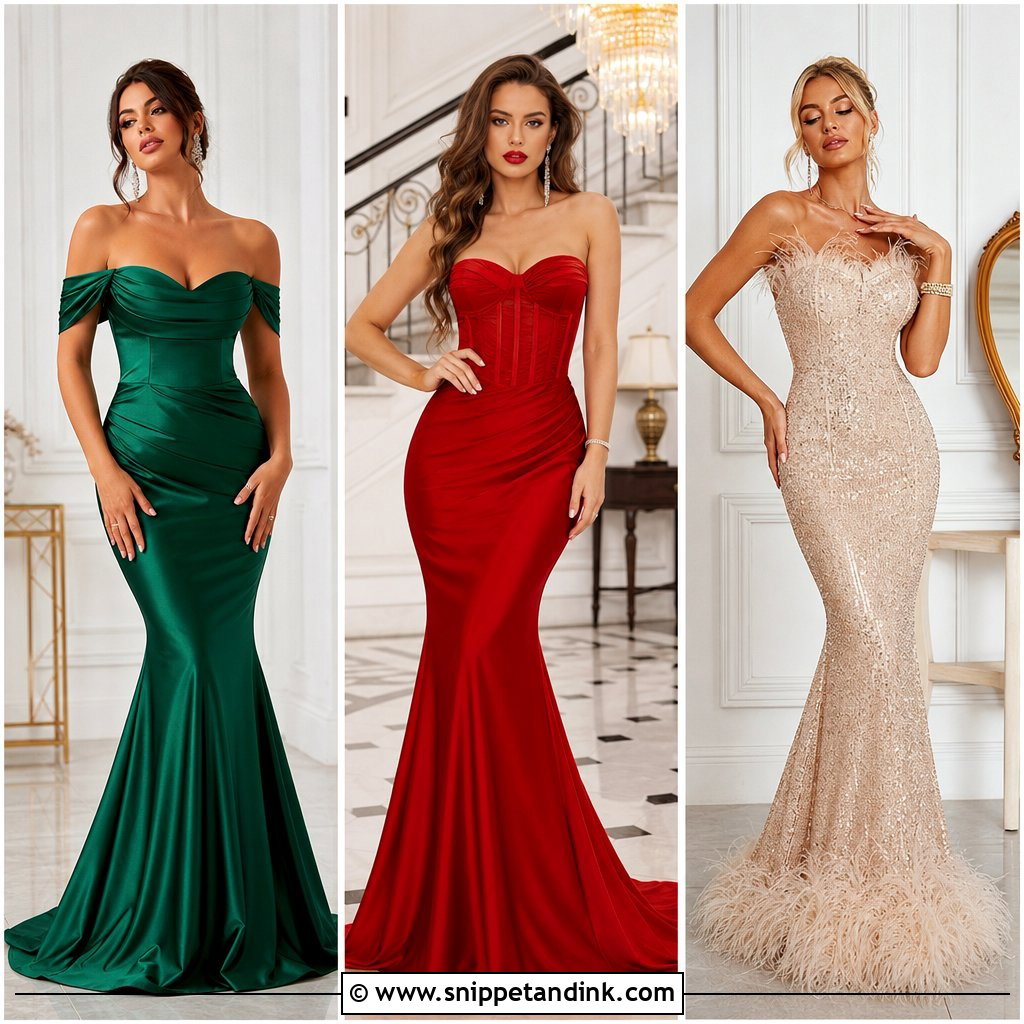
Red is confident on its own, so the embellishment can stay off. A sweetheart bodice, a fitted natural waist and a controlled thigh-high slit give you room to walk. Where that slit sits is the detail I fuss over: it should open when you step and close when you stand, not gape while you’re seated. Gold sandals, a gold clutch and one pair of statement earrings are plenty, and skip the necklace. If scarlet feels loud, burgundy or deep crimson is easier to wear in daylight. As a guest, check the couple’s colours first, since red can pull focus at some weddings.
3. Floral Corset Flare Gown
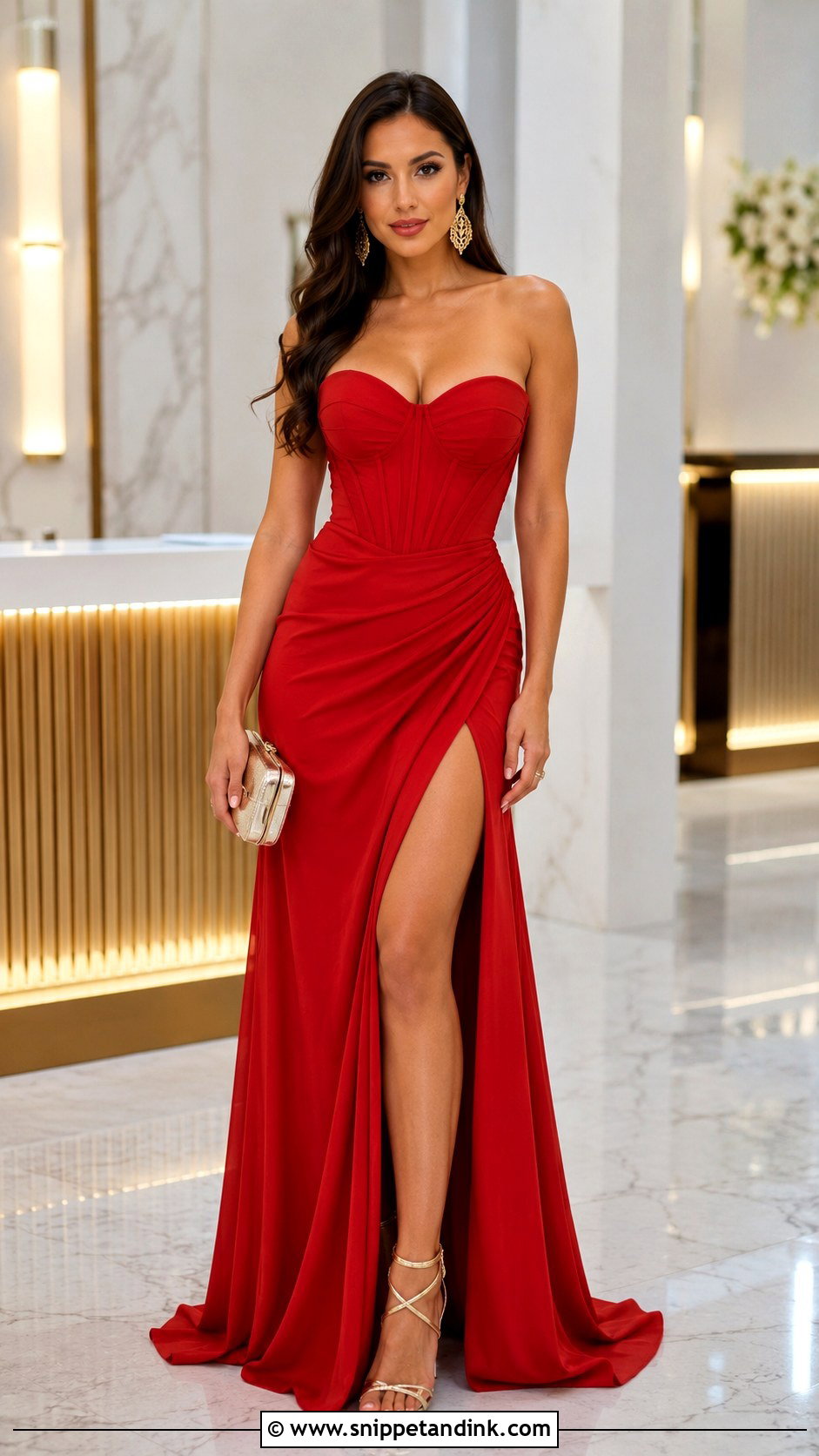
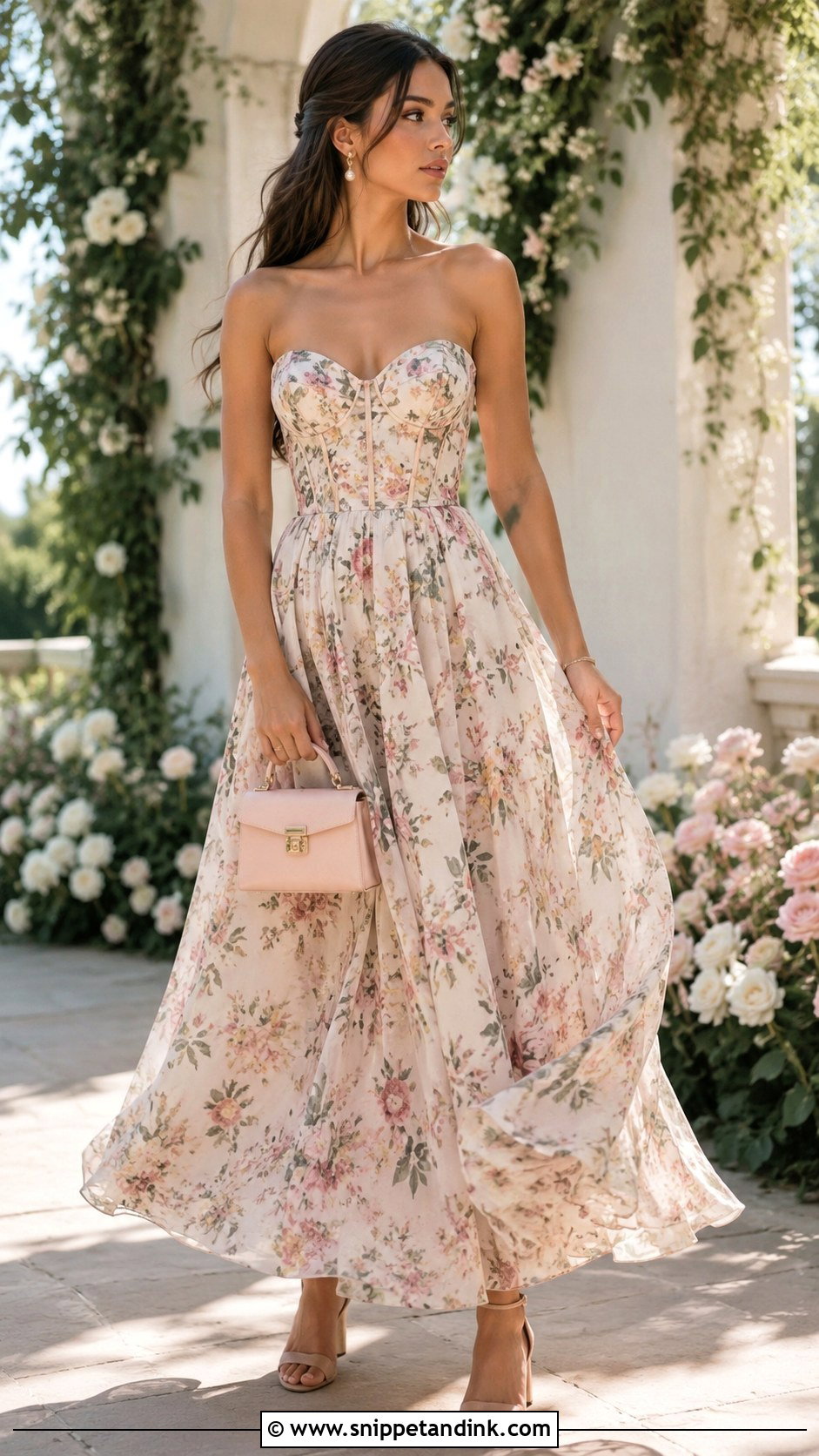
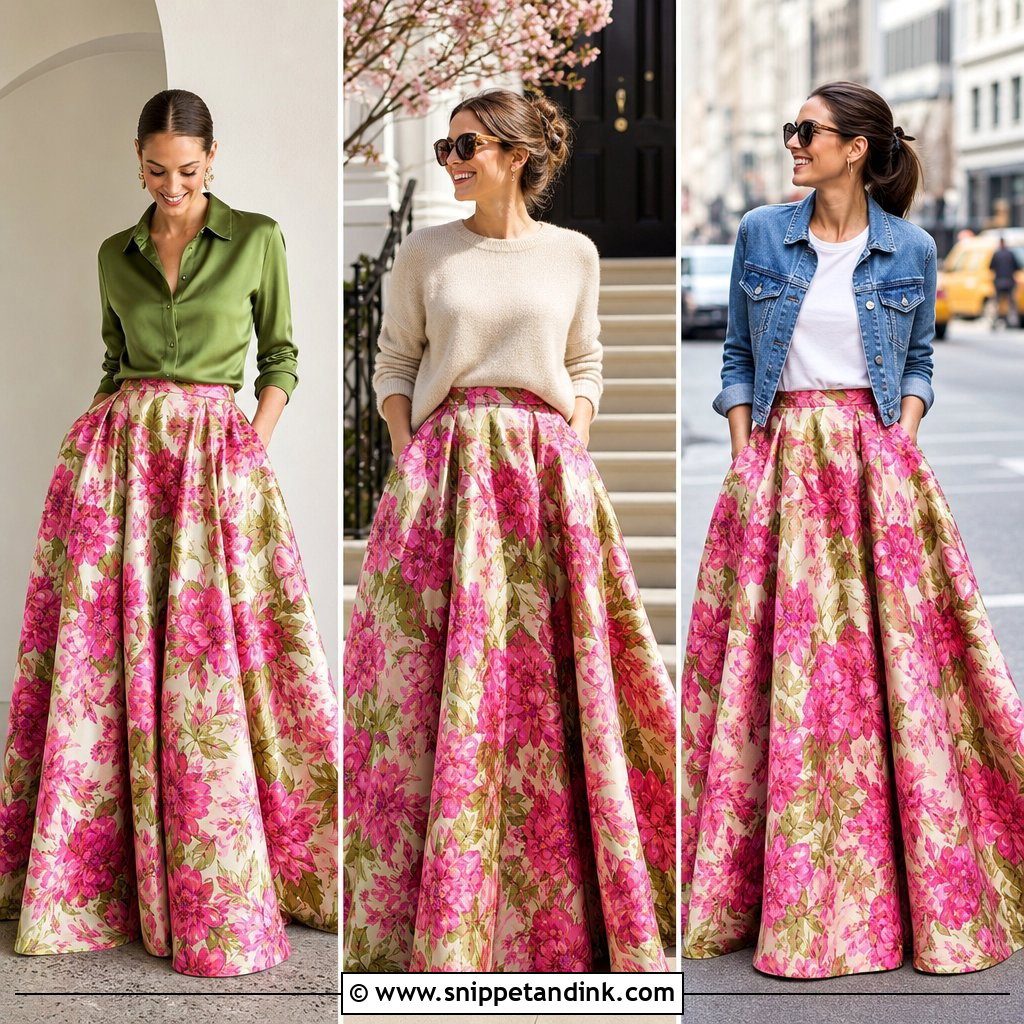
Prints are fussy on a corset because seams cut through the pattern. A medium-scale floral on a light ground hides that better than tiny ditsy flowers, which can look busy across a structured bodice. Wide straps add support and suit a daytime garden. On grass, wear block heels; stilettos sink. I pull the bag colour from one shade in the print, maybe the sage or the blush, and keep jewellery to pearls. Loose waves or a low textured ponytail feel right with the softness of the print.
4. Tulle Corset Flare Gown
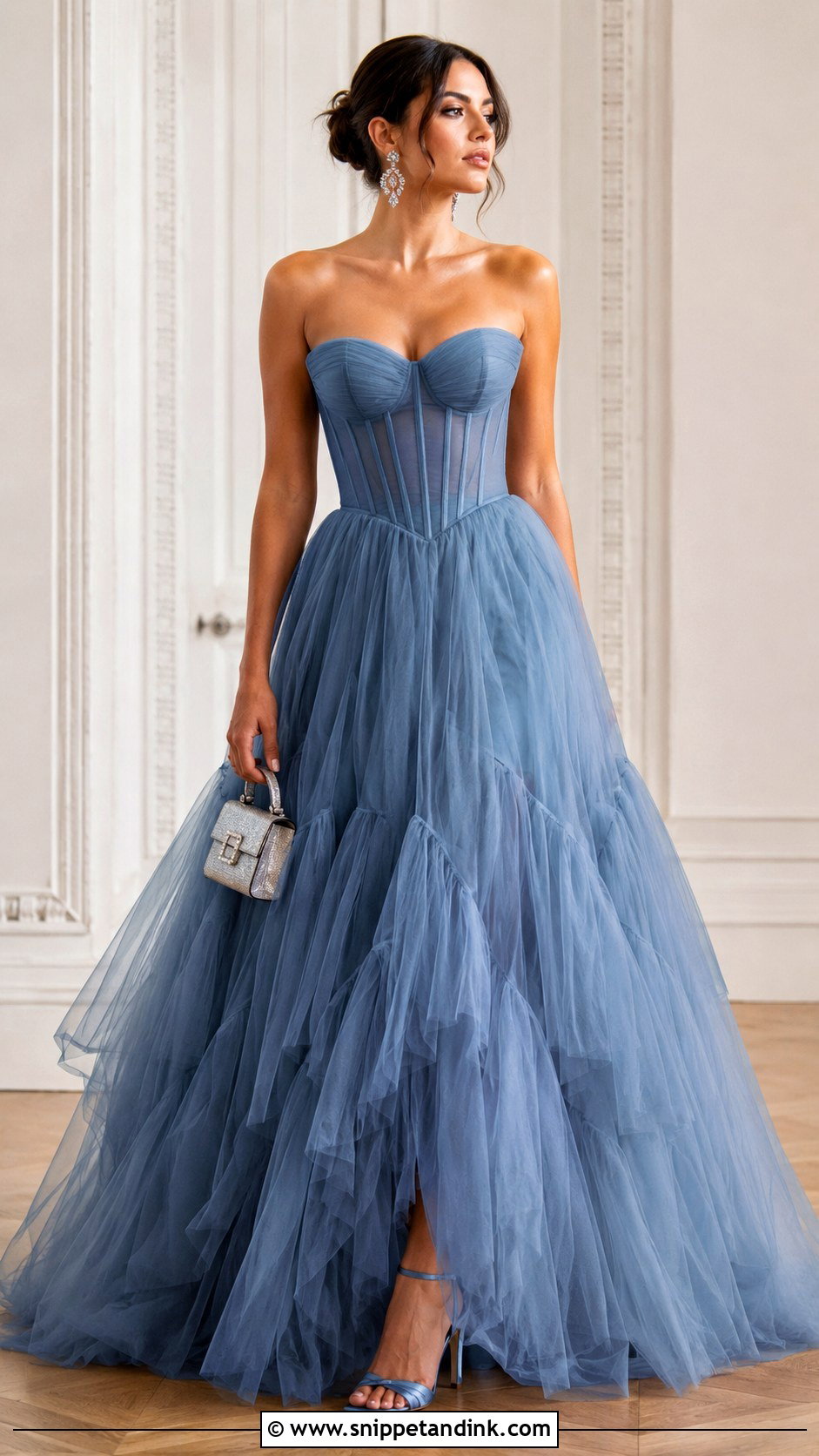
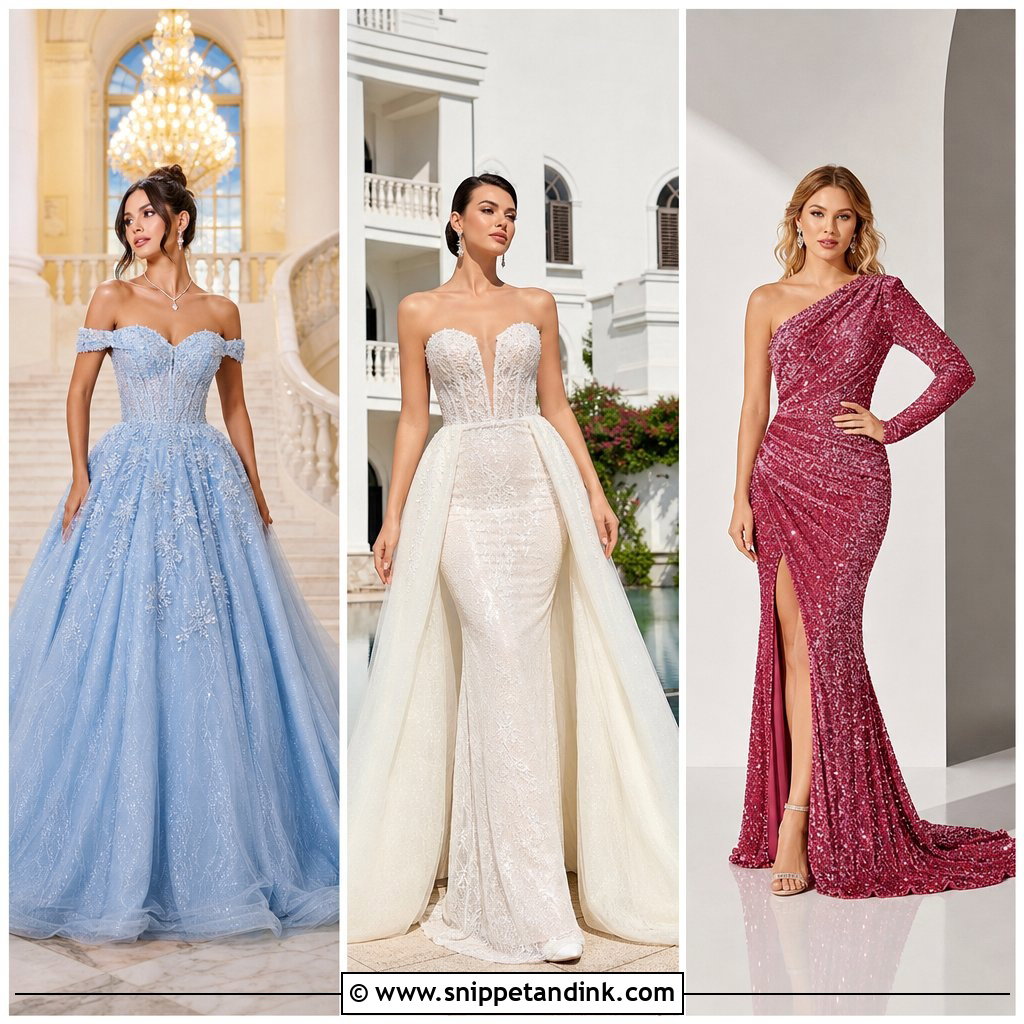
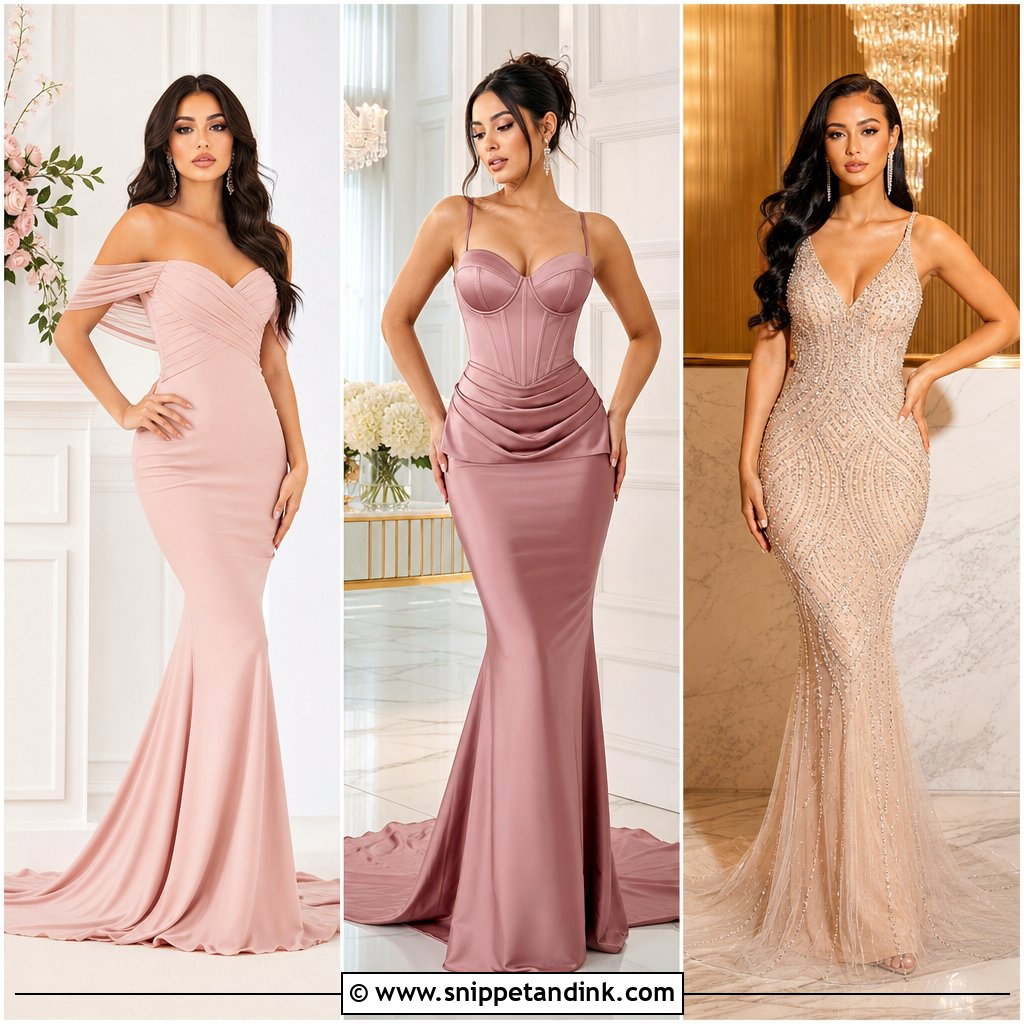
Tulle gives volume without much weight, which is why it pairs so well with a corset that already has firm structure. I like the skirt to start flaring right at the natural waist so the bodice has a clear end. Pale grey, dusty blue, soft pink and lavender all read soft in this fabric. The practical worry with tulle is snagging, so I steer brides away from rings with claw settings and bracelets with raised stones. An updo keeps long hair from catching in the layers, and a small structured bag gives the soft skirt some contrast.
5. Sequin Corset Flare Gown
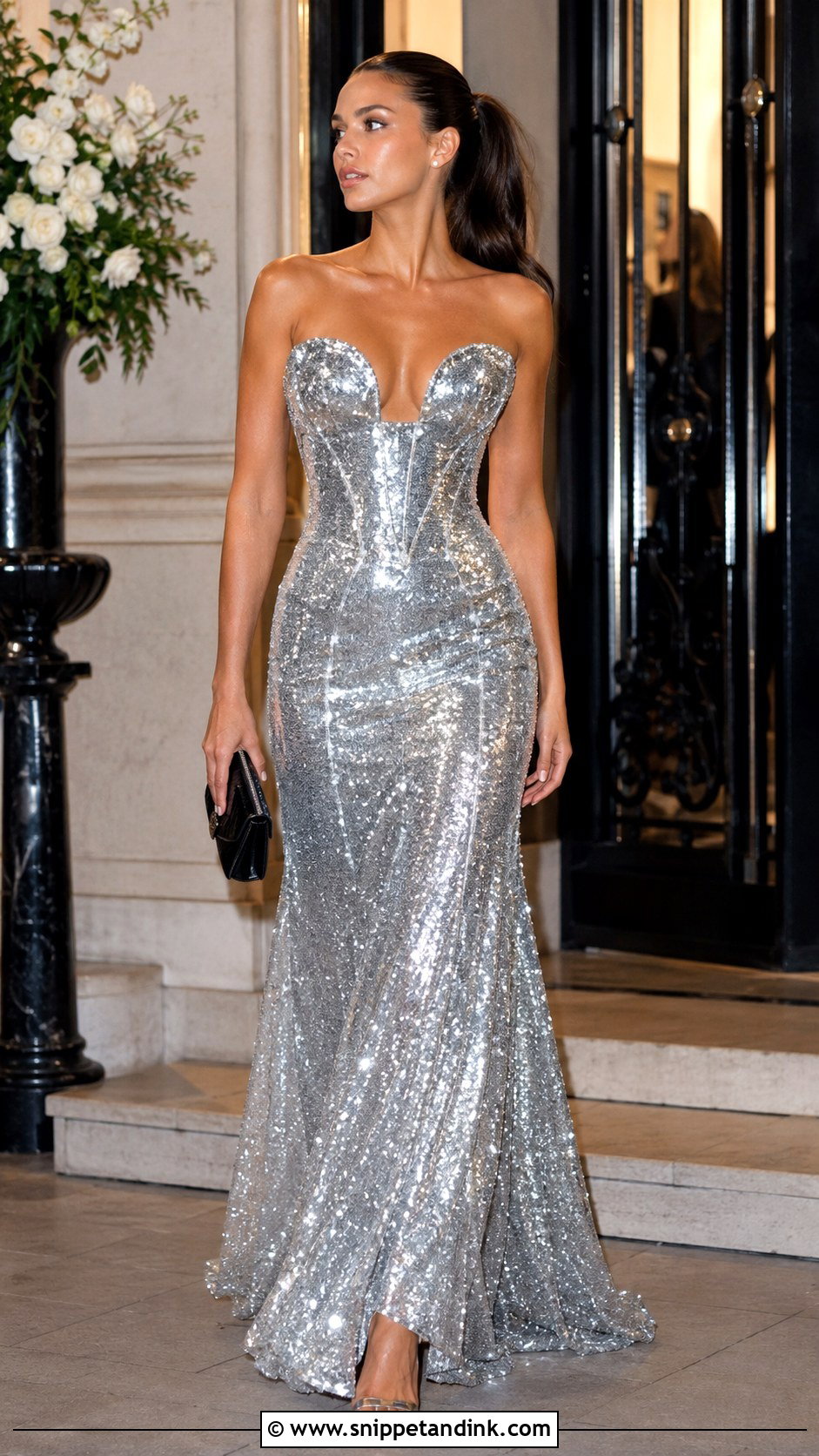
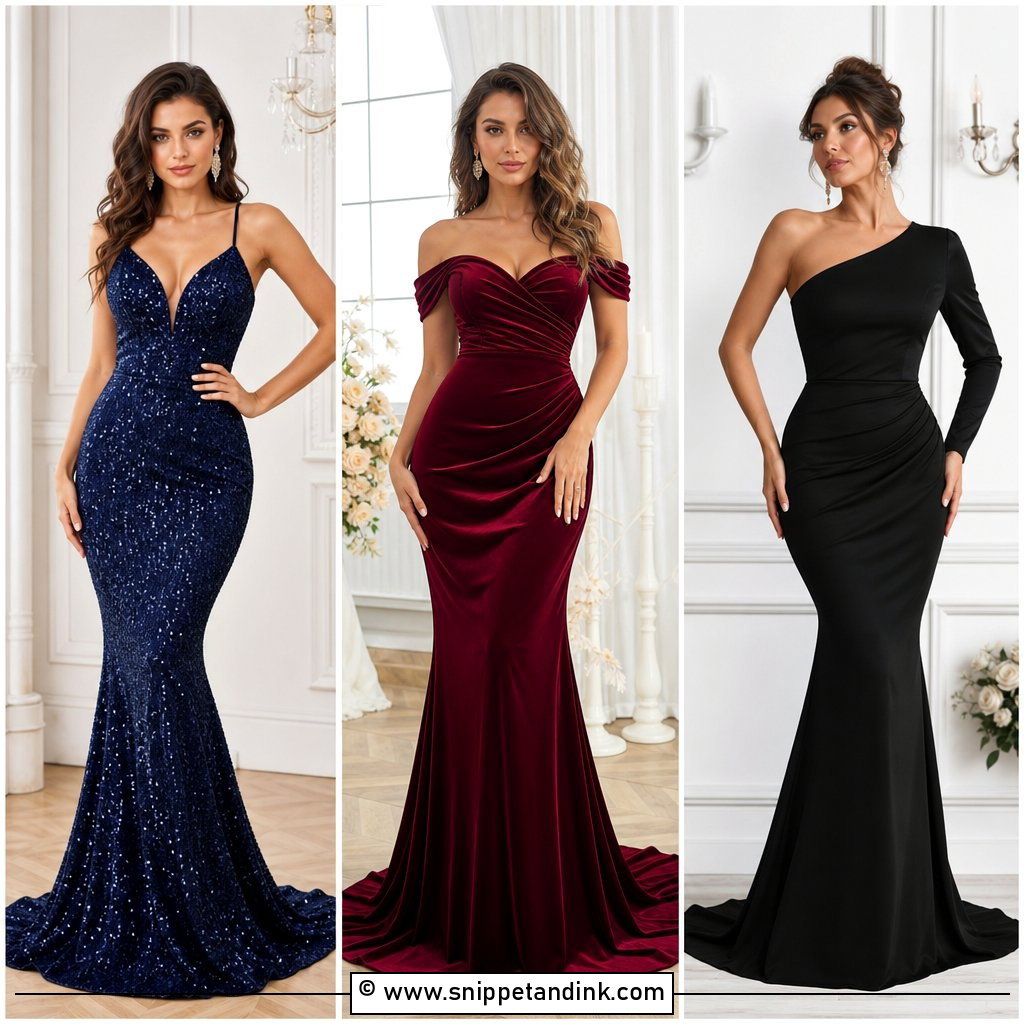
Sequins need restraint everywhere else. On a defined corset with a skirt that moves, black, silver, champagne or navy sequins look sharp for an evening event. The skirt should be lined with something soft, since raw sequin seams scratch your legs over a long night. Plain metallic sandals or pumps, a satin clutch with no crystals, and simple studs keep it calm. Leave the neck bare. On makeup, pick one feature: a classic lip or softly smoky eyes, not both, because the dress is already doing the talking.
6. Off Shoulder Corset Flare Gown
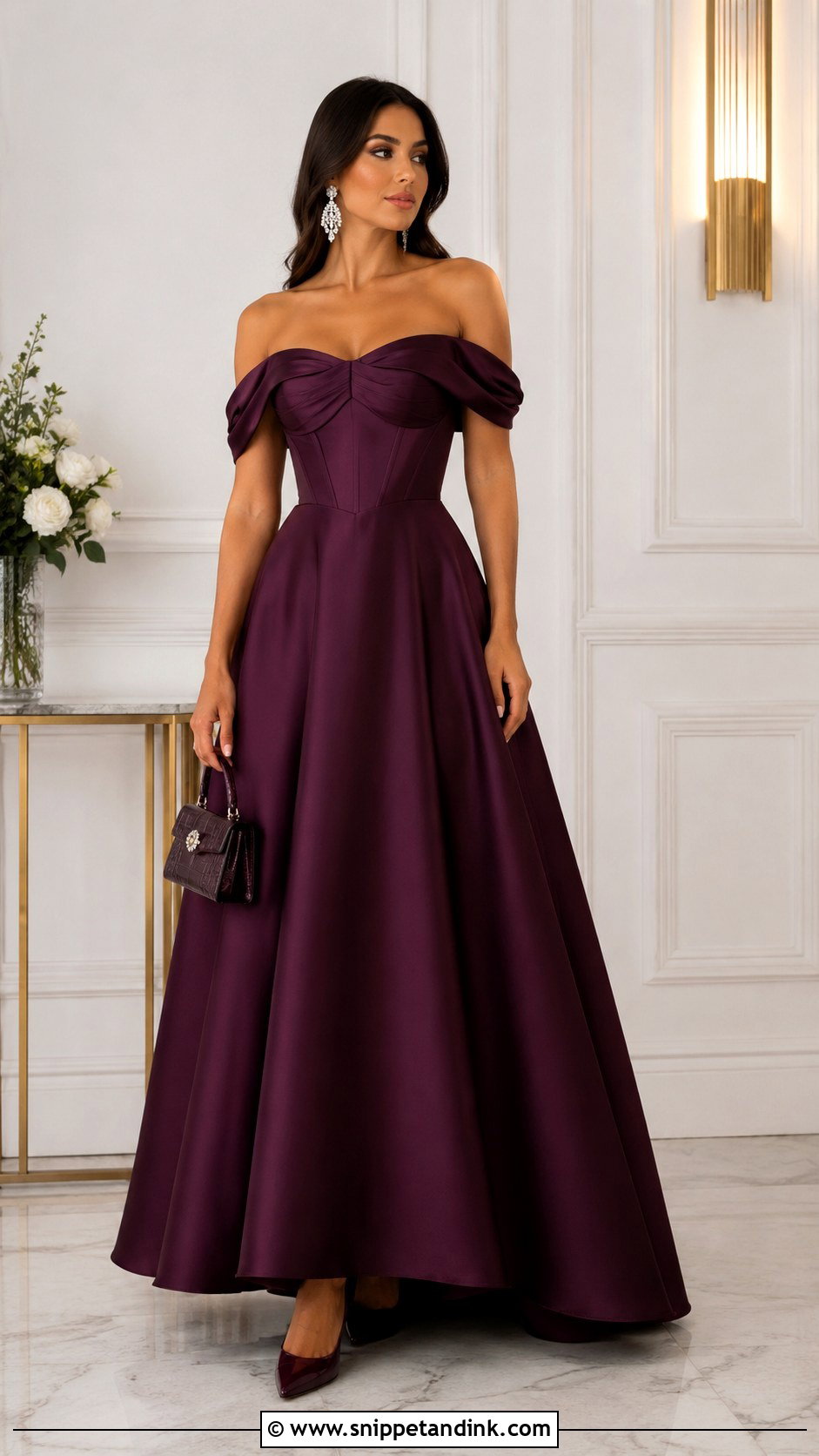
Off-shoulder sleeves look graceful and creep upward the moment you raise your arms. That is the honest trade-off, so the corset must hold the dress up by itself. A lace-up or reinforced zip back helps keep the bodice anchored. I usually leave the neck open and use chandelier earrings rather than a pendant. Sweep the hair back so the shoulder line stays visible from every side. For a cool evening, choose a cape or cropped jacket that sits over the sleeves without crushing them.
7. Long Sleeve Corset Flare Gown
Fitted sleeves change how the bodice behaves. If they’re cut tight, they drag the corset up every time you reach, so I always check the armhole first. Matching crepe gives a clean line; sheer embroidered sleeves feel softer. Navy, forest green, plum and black suit autumn and winter. A low bun keeps the neckline uncluttered, and if the cuffs are detailed, skip bracelets. Keep the flare moderate so the covered top half doesn’t look heavier than the skirt.
8. Strapless Sweetheart Corset Flare Gown
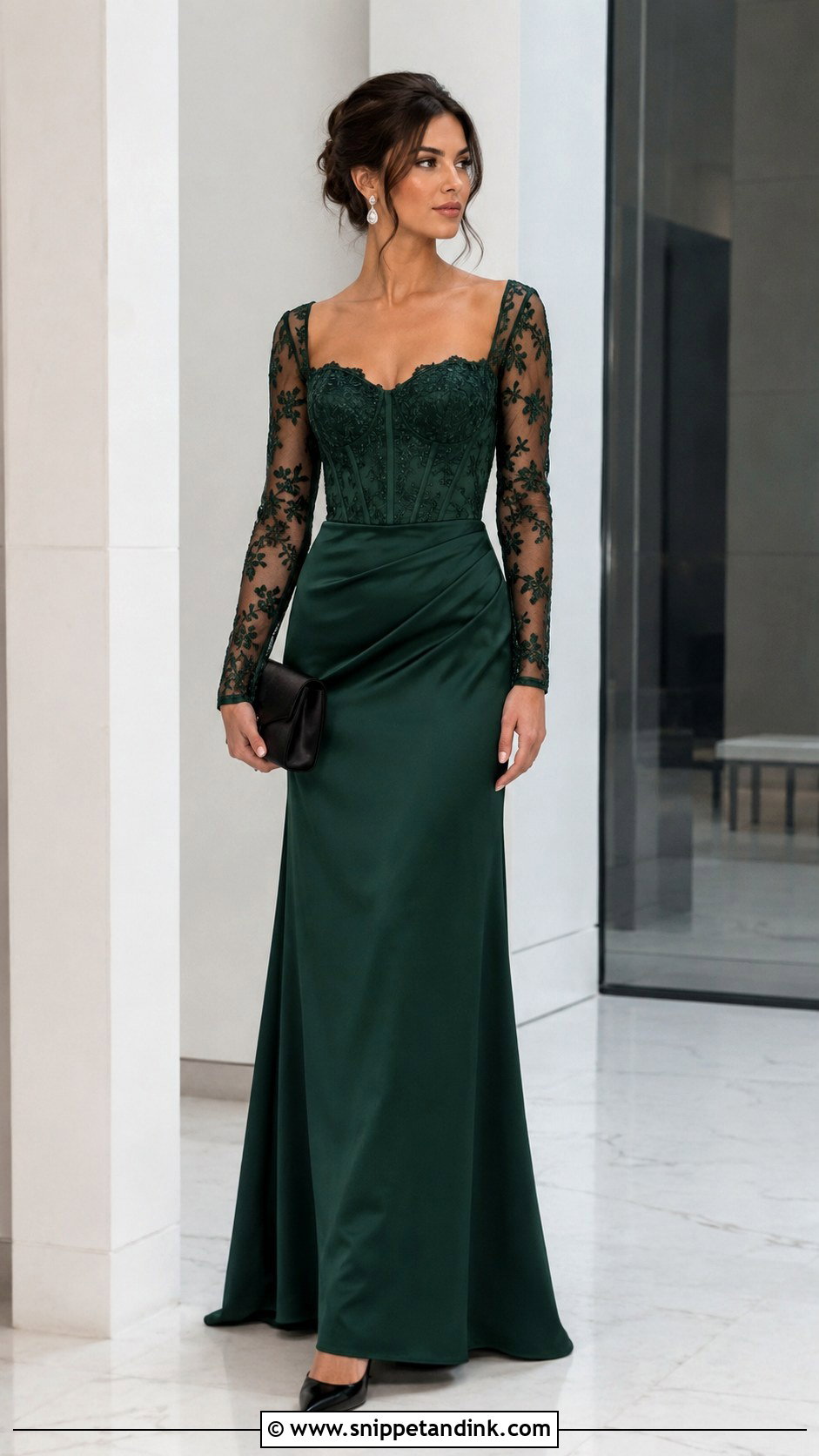
The curved neckline of a strapless sweetheart corset flare gown frames the face, but only if it sits flush. A gap at the top of the cups is the most common fault I see on strapless sweethearts, and it’s fixed by taking in the top edge, not by tightening the back. Flexible boning and a good closure keep you comfortable through dinner. A plain neckline suits a fine pendant; a beaded one suits earrings alone. Bring a light wrap for travelling between ceremony and reception.
9. One Shoulder Corset Flare Gown
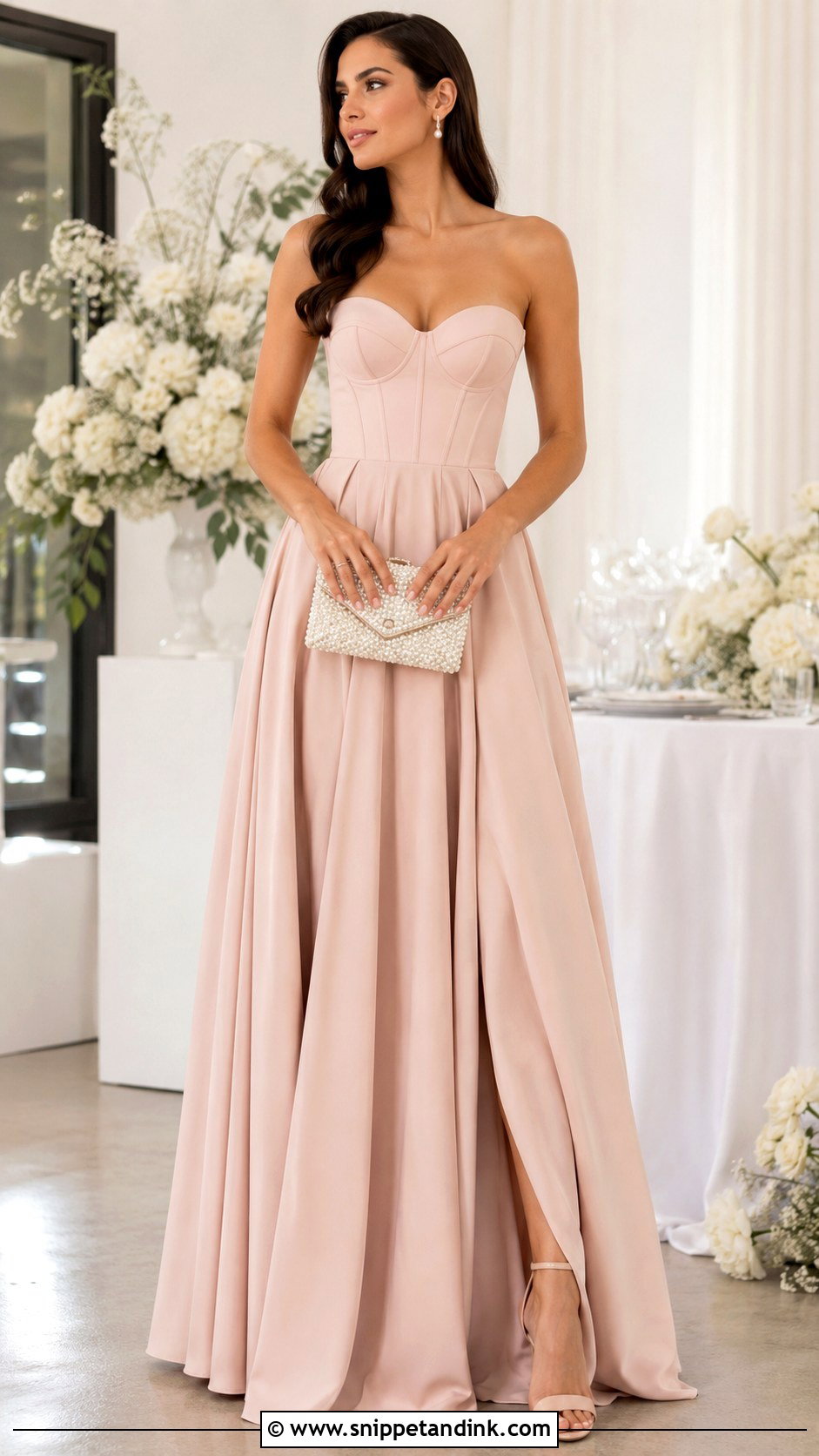
With only one shoulder covered, the bodice has to stay level without symmetric support. That’s my first check here: raise both arms and see if the bare side slips. The shoulder detail can be a plain strap or a soft drape, bow, or lightweight ruffle; the bigger it is, the plainer everything else should be. An even flare in the skirt balances the diagonal line. Wear your hair to the opposite side or centred, put a cuff on the bare arm, and keep earrings small.
10. Lace Corset Flare Gown
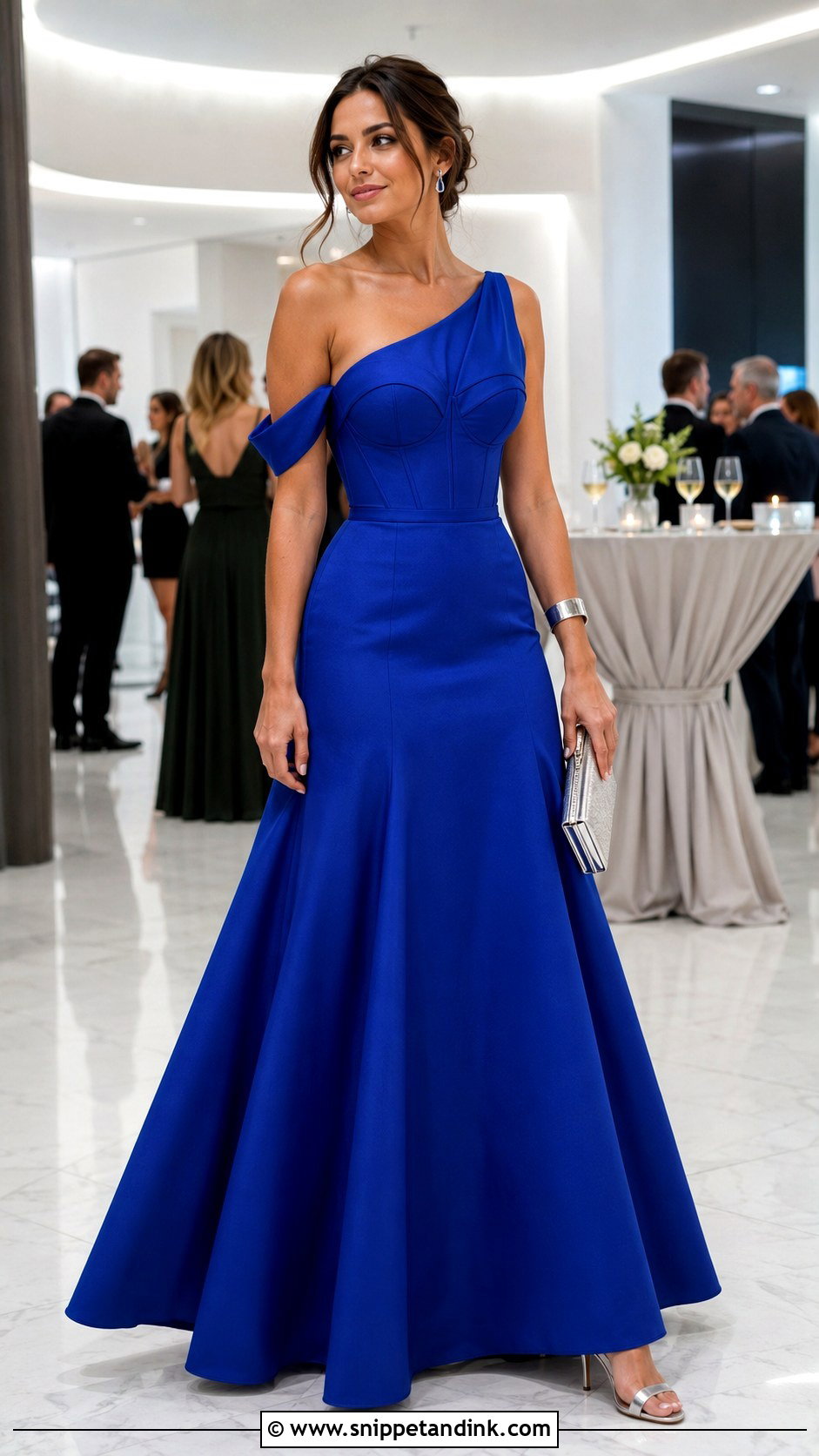
Lace softens corset seams without hiding the shape underneath. Tonal lace on a matching lining reads quiet; a contrasting underlay makes the pattern pop in photos. Scalloped edges along the neckline are a smart way to finish the top of a boned bodice. My warning with lace is always the same: check every clasp, bag chain and ring setting before the day, because one rough edge pulls a thread through the whole motif. Satin pumps, a smooth clutch and pearl or crystal earrings are enough.
11. Velvet Corset Flare Gown
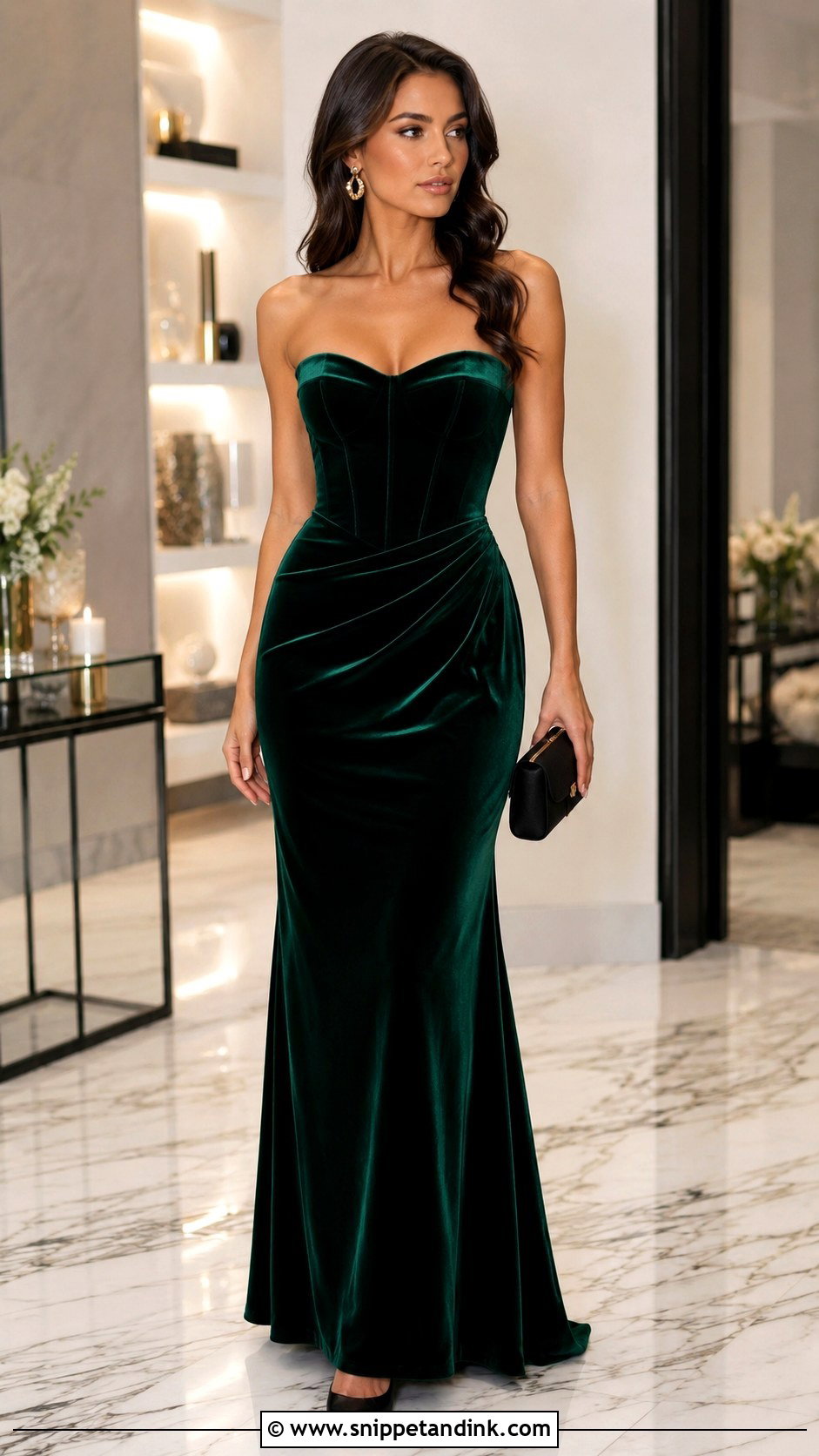
Velvet is warm and heavy, so a corset flare in velvet needs a restrained skirt. Too much gathering at the waist and the fabric bunches. Deep jewel tones like emerald, sapphire, burgundy, and plum show off the pile best. Velvet marks easily: body oil and fake tan transfer onto it and won’t brush out, so keep the décolletage products minimal. An updo stops long hair from flattening the nap at the shoulders. If you need a coat, choose smooth wool over another texture.
12. Pastel Corset Flare Gown
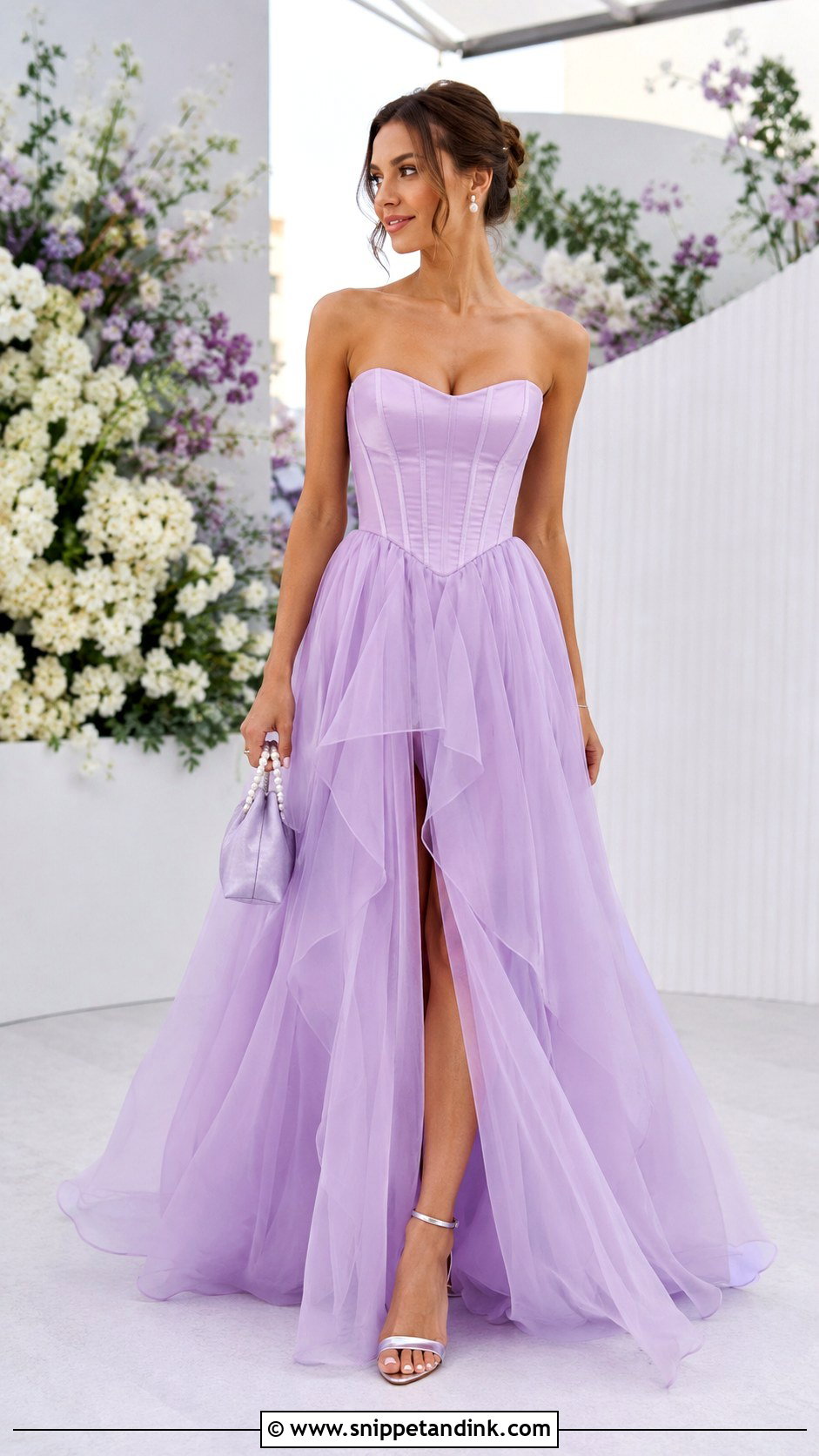
Pastels make the structured shape feel lighter. Powder blue, mint, lilac, blush and pale yellow all suit spring and daytime events. The fabric needs enough body to hold a corset, so satin, chiffon over a structured lining, or light organza work. Pale colours wash out quickly in strong sun, so I suggest a lip a shade deeper than the dress and a touch more blush than feels natural. Nude or colour-matched heels and a pearl mini bag keep the palette calm.
13. Emerald Green Corset Flare Gown
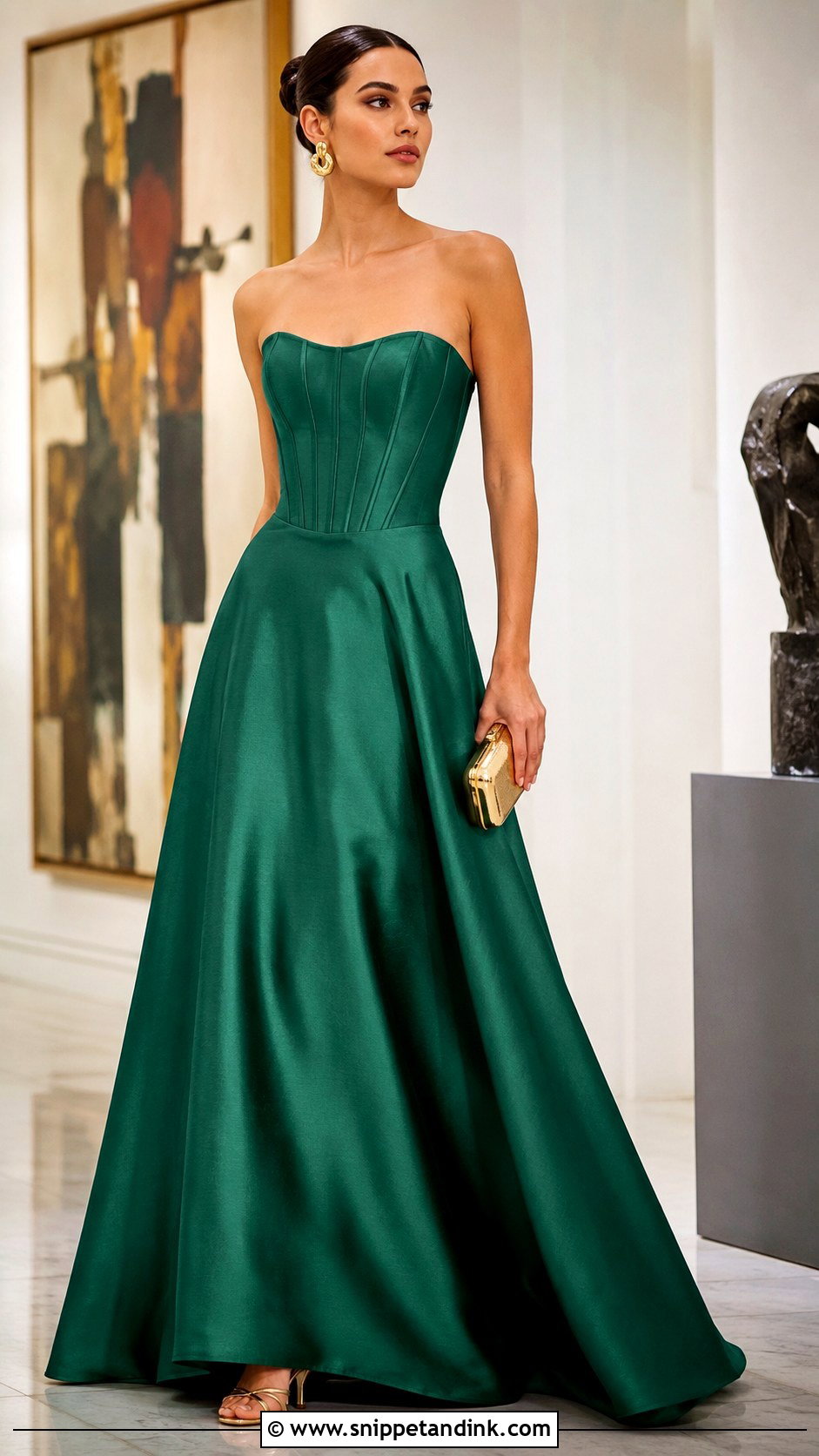
Emerald is one of the easiest strong colours to wear because it flatters most skin tones. It looks rich in satin and velvet, softer in layered chiffon. Gold accessories warm it up; silver cools it down, so decide on one metal and keep to it. I prefer sculptural earrings to a full matching set. If you need a wrap, go black, cream or the same green. Adding another bright shade just competes.
14. Navy Blue Corset Flare Gown
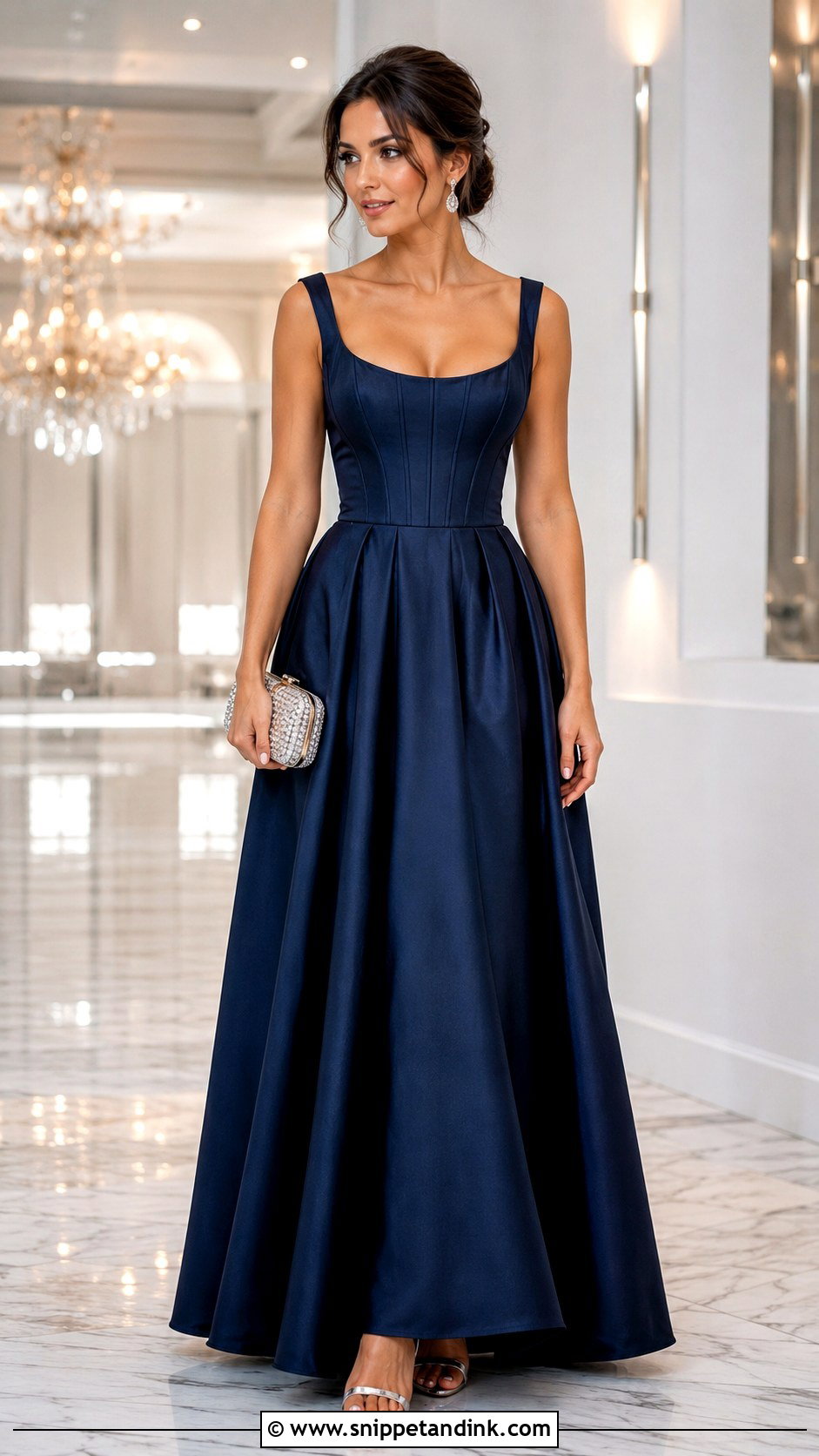
Navy is softer than black and suits a daytime formal as well as an evening one. Gentle pleating shows the depth of the colour as you walk. Choose silver for cool, gold for warm. The photography issue is real: navy can read as black on camera, especially indoors, so take a few test photos and lift your makeup a little if your face disappears beside the dark fabric. Pick either a necklace or drop earrings, and drop both if the bodice is beaded.
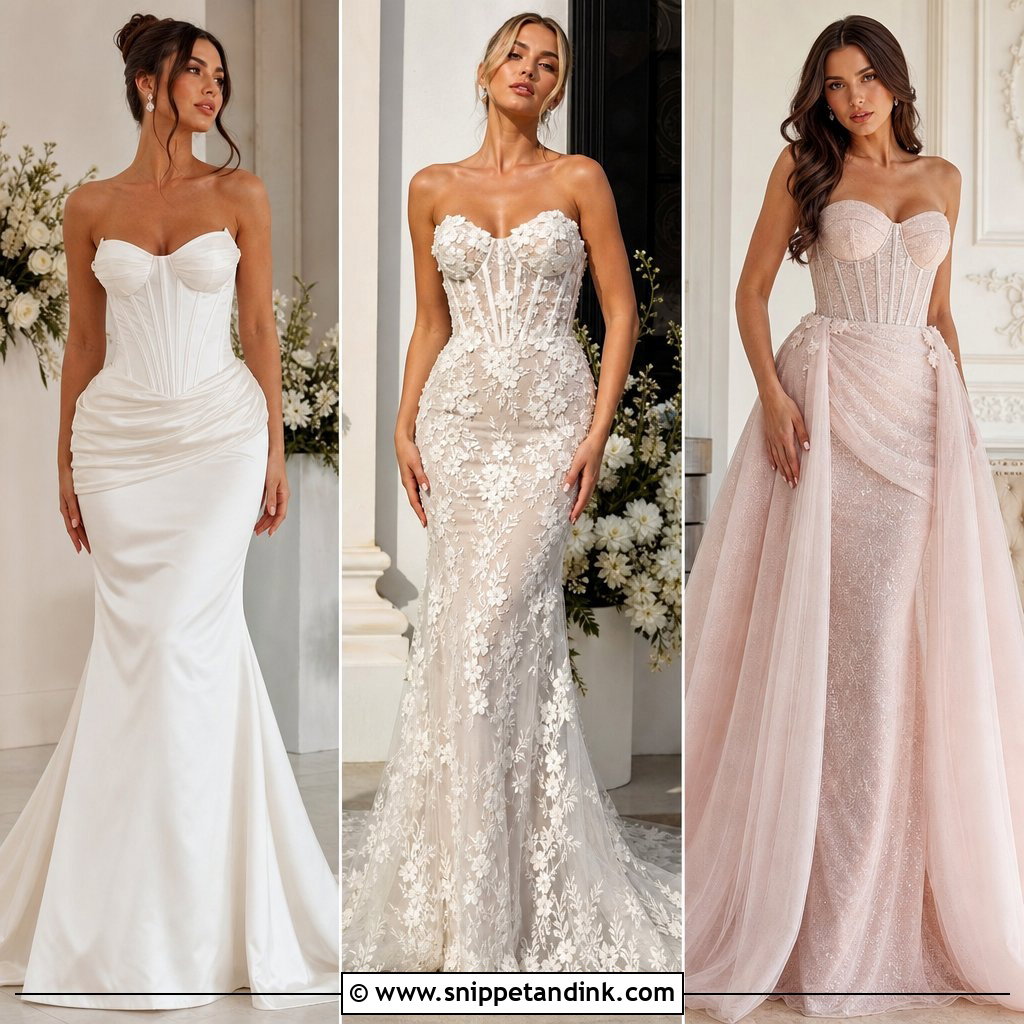

15. Metallic Corset Flare Gown
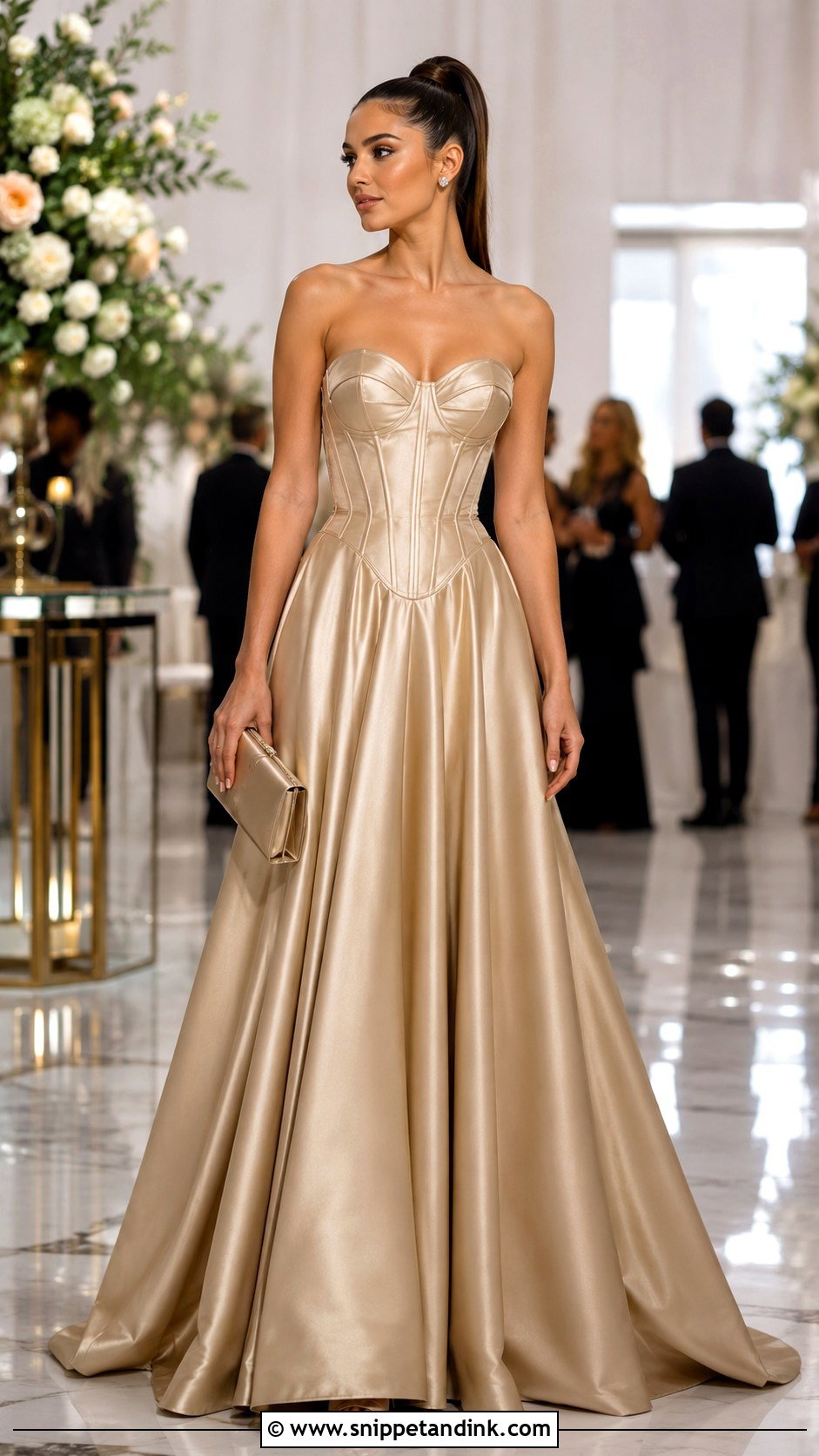
Metallic fabrics need a gentle hand. Champagne, pewter, soft gold and silver are kinder to skin than a mirror-bright finish, and a fine shimmer or woven texture moves better than a stiff lamé. Under flash, metallics can bounce light and look much brighter than they do in person, so test a few photos before the day. Neutral heels, a plain satin clutch and small studs in the same metal family keep the gown as the only shiny thing. A sleek high ponytail makes it feel current.
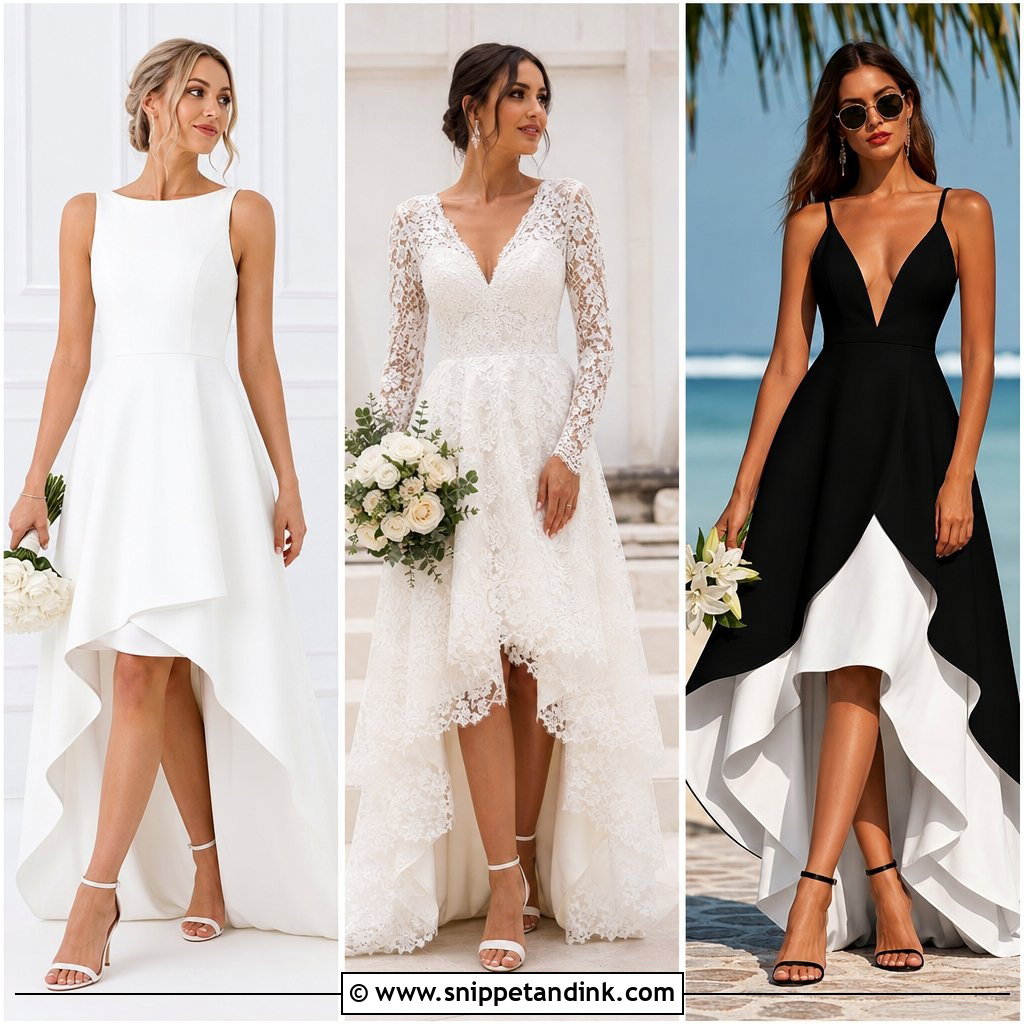
16. High Low Corset Flare Gown
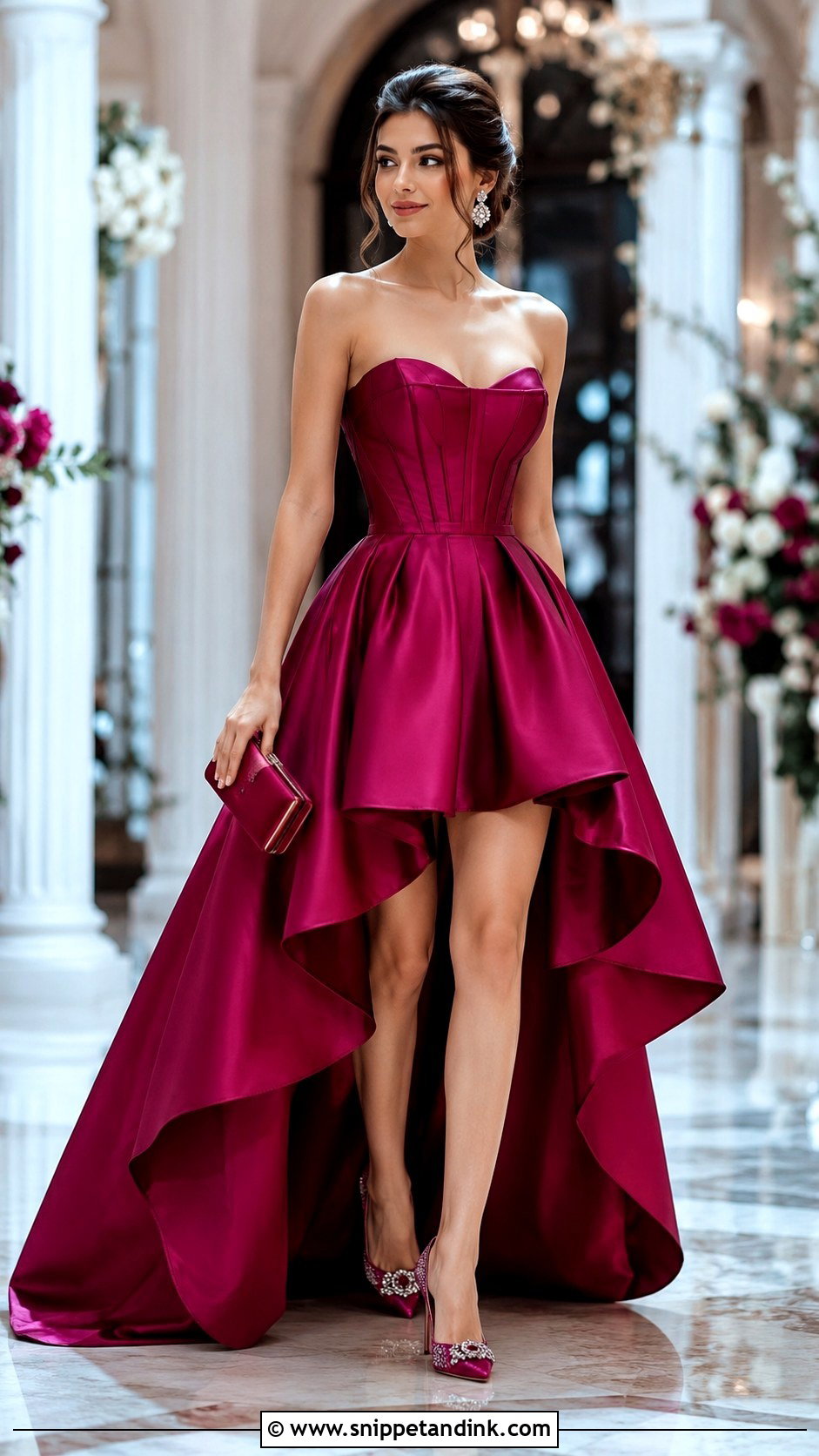
A high-low hem shows off the shoes and is far easier to walk in than a train. The front usually falls at the knee or mid-calf with the back sweeping the floor. Because your shoes are on display, they become part of the look, so I treat them like jewellery. People forget the lining shows too: the inside of the skirt is visible every time you step or sit, so it must be as neat as the outside. An updo or bouncy ponytail fits the livelier hem.
17. Cape Sleeve Corset Flare Gown
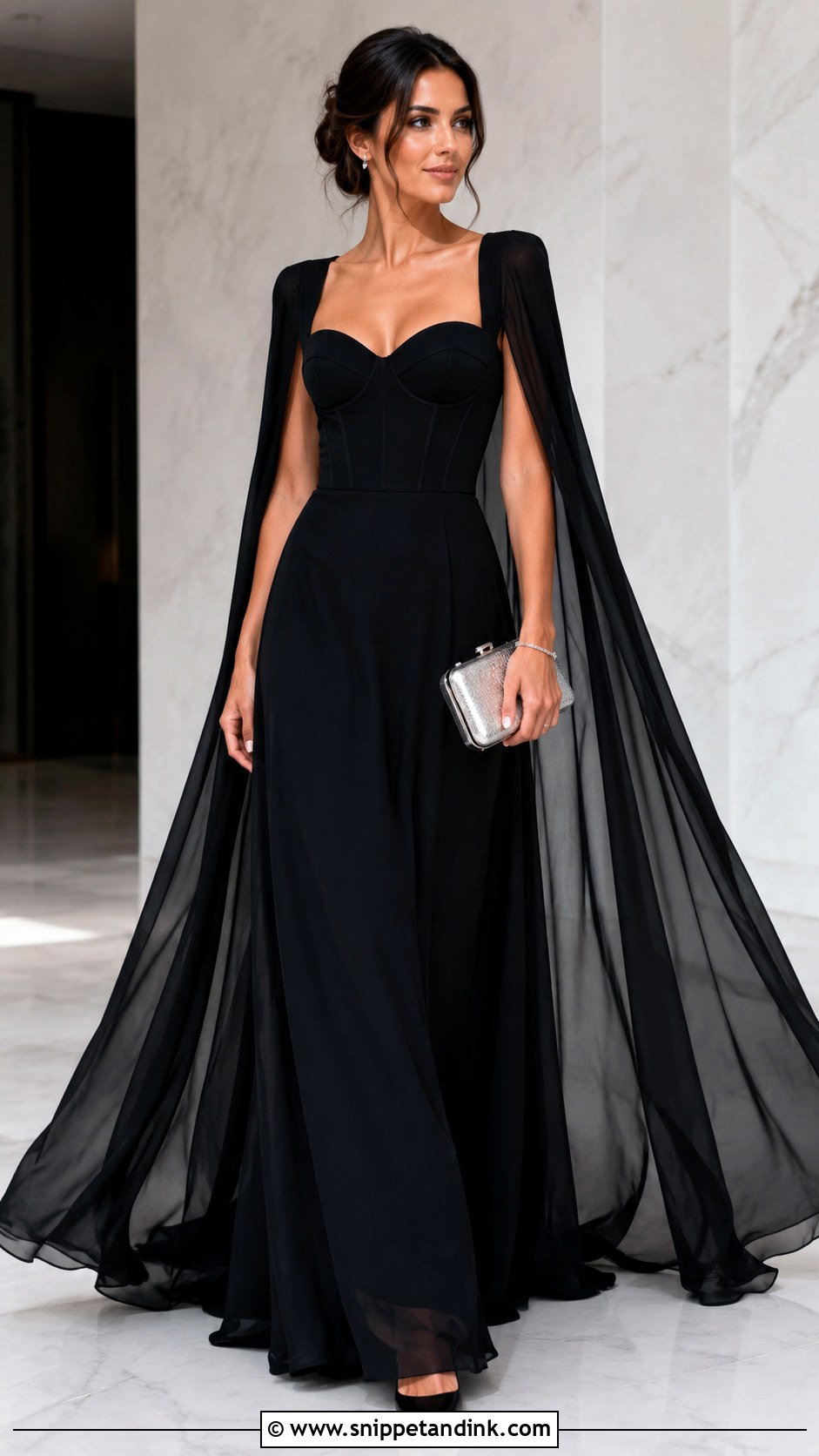
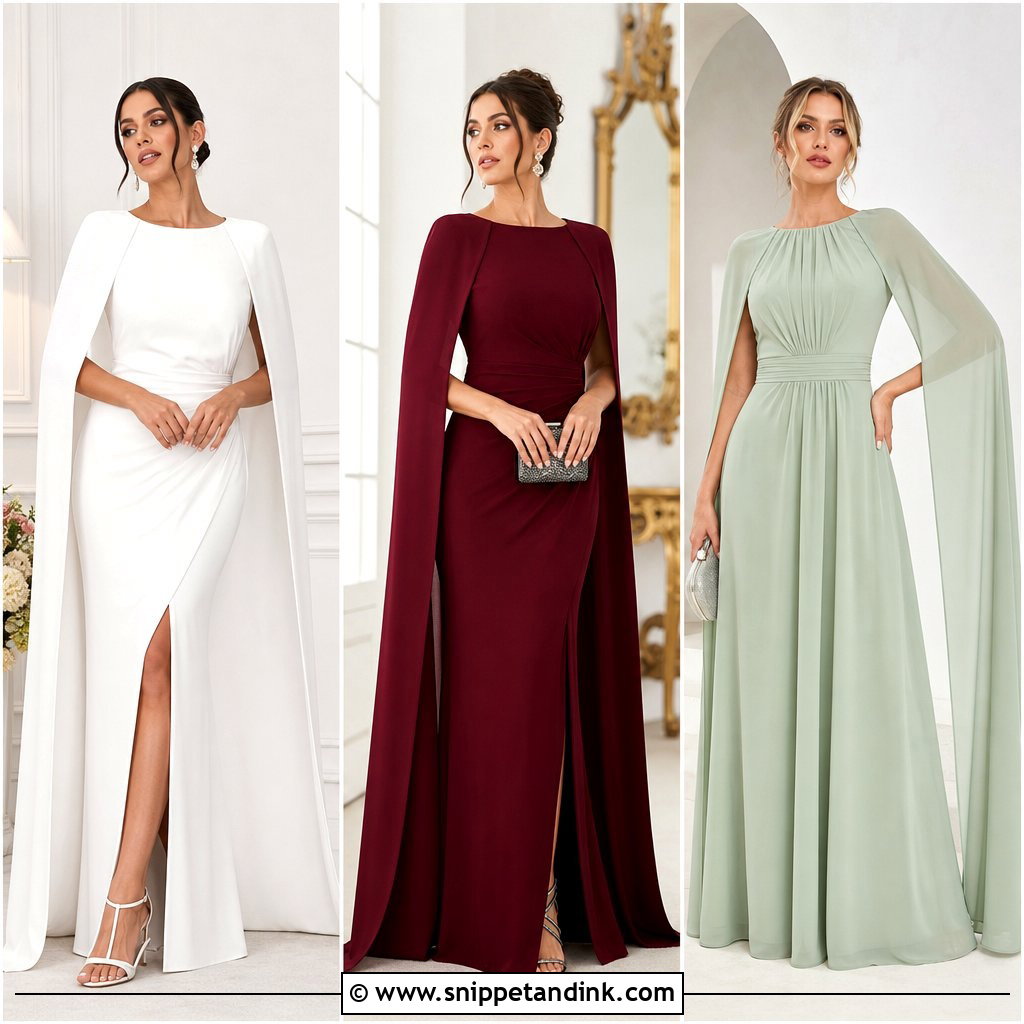
Cape sleeves add movement and coverage while leaving the waist on show. Light chiffon or georgette panels from the shoulders work best; heavy fabric drags the bodice back. The cape should finish around the hip or knee, not so wide that it fights the skirt. Long necklaces tangle in the panels, so skip them. Carry your clutch for a few minutes at home: a cape catches on bag chains and door handles more than you’d think.
18. Plus Size Corset Flare Gown
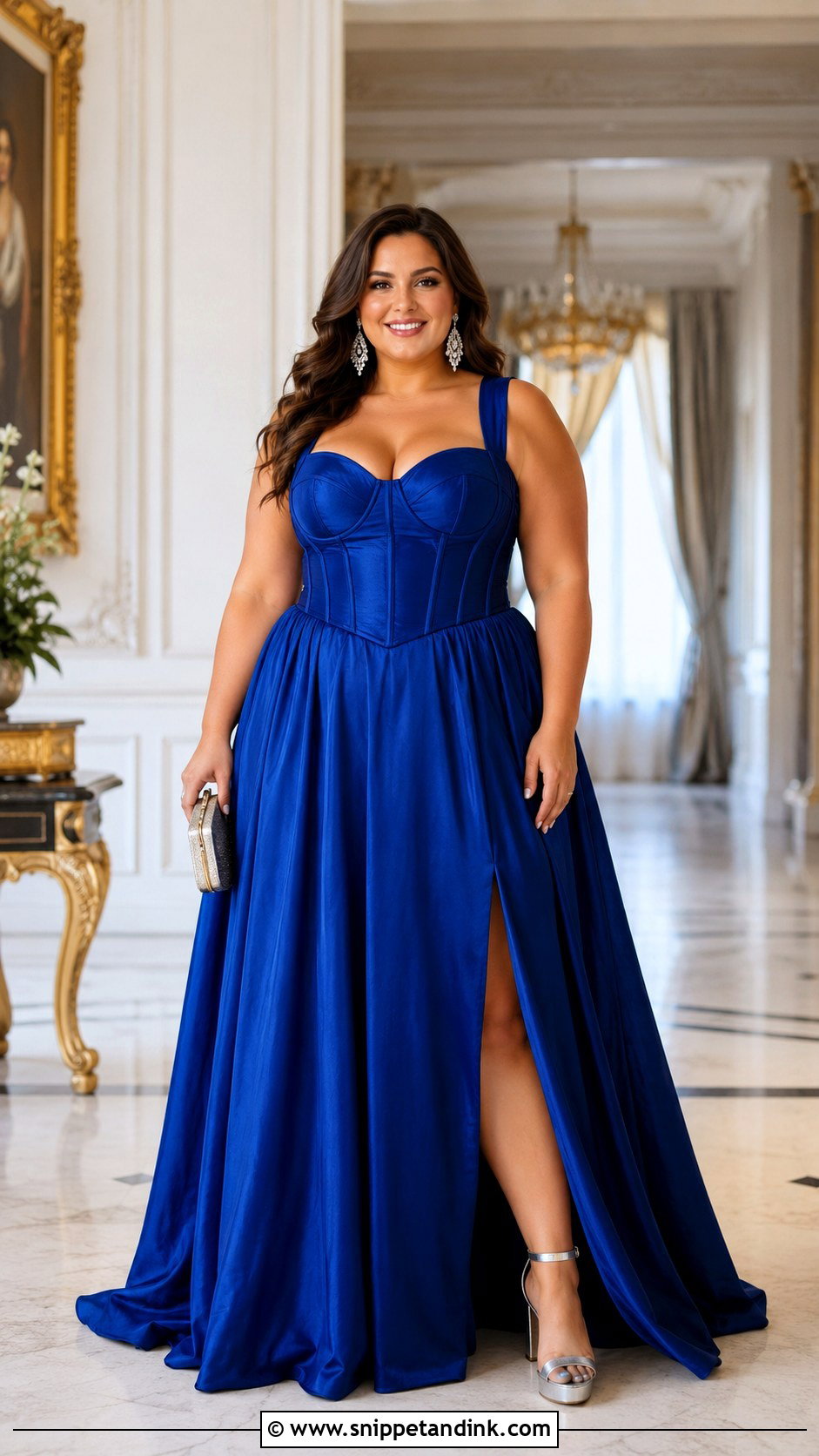
Support is the whole point of a corset on a fuller figure, so I look at the build before the colour. Flexible boning, adjustable lacing, wide straps or reinforced side panels spread the pressure. The skirt can flare from the natural waist or a touch higher, depending on where you want the shape to start. Block heels or supportive pumps keep you steady. Order by your real measurements, not the size you hope to be; a corset that’s too small pushes flesh over the top edge and pinches by the speeches.
19. Modest Corset Flare Gown
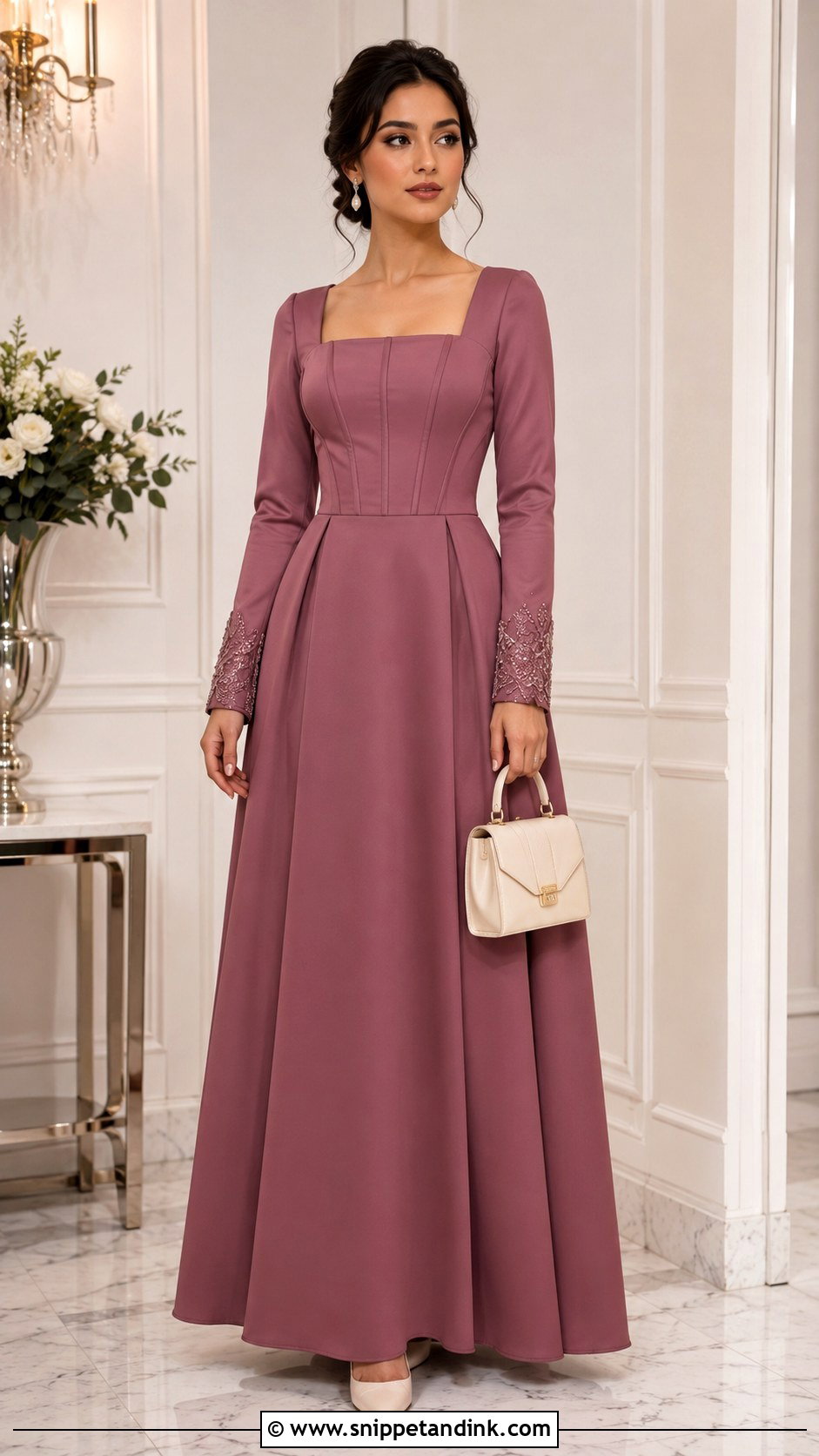
Structure and coverage can live together. A square, bateau or soft rounded neckline with wide straps or fitted sleeves still lets tonal boning show the corset’s shape. A fully lined floor-length skirt is the reliable choice for religious ceremonies. If the bodice feels plain, I’d add embroidered cuffs or covered buttons at the waist rather than a big necklace that sits on a high neck. Closed-toe pumps and pearl drops round it off.


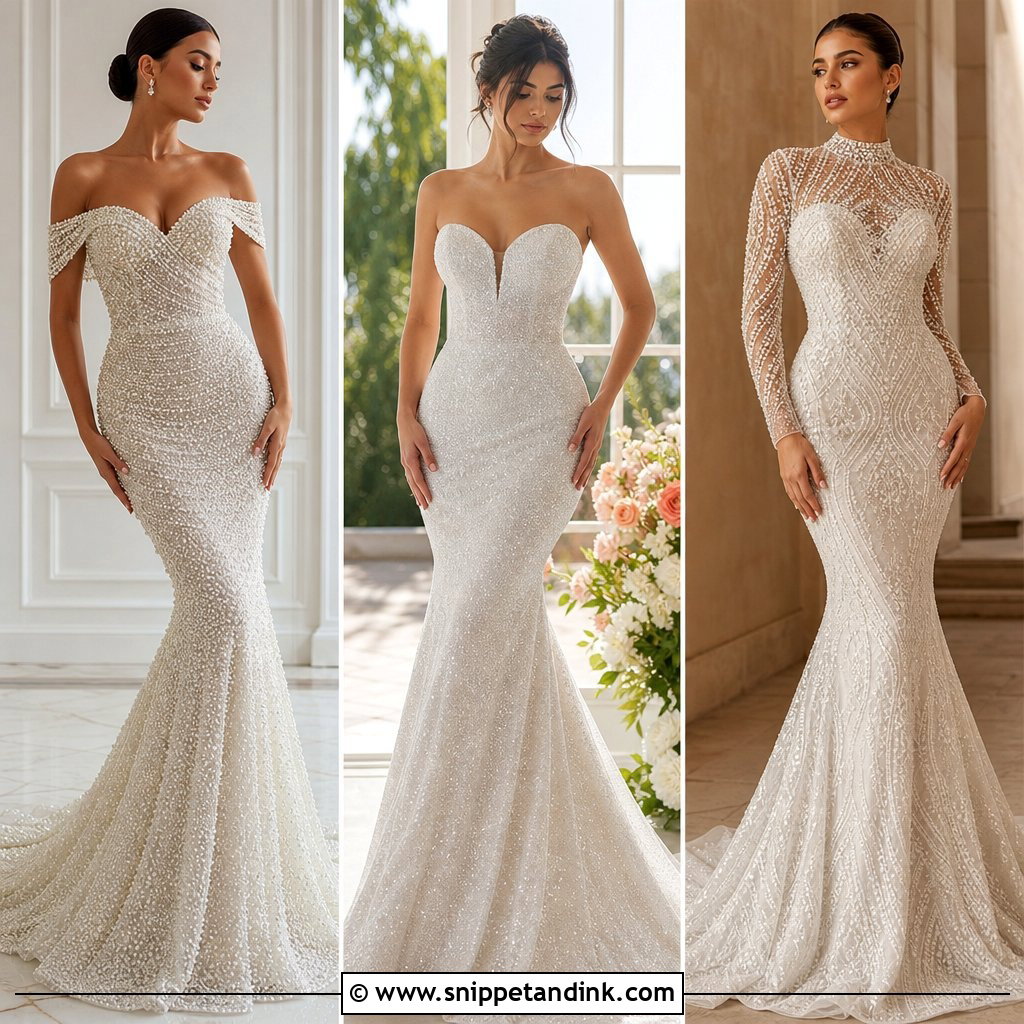

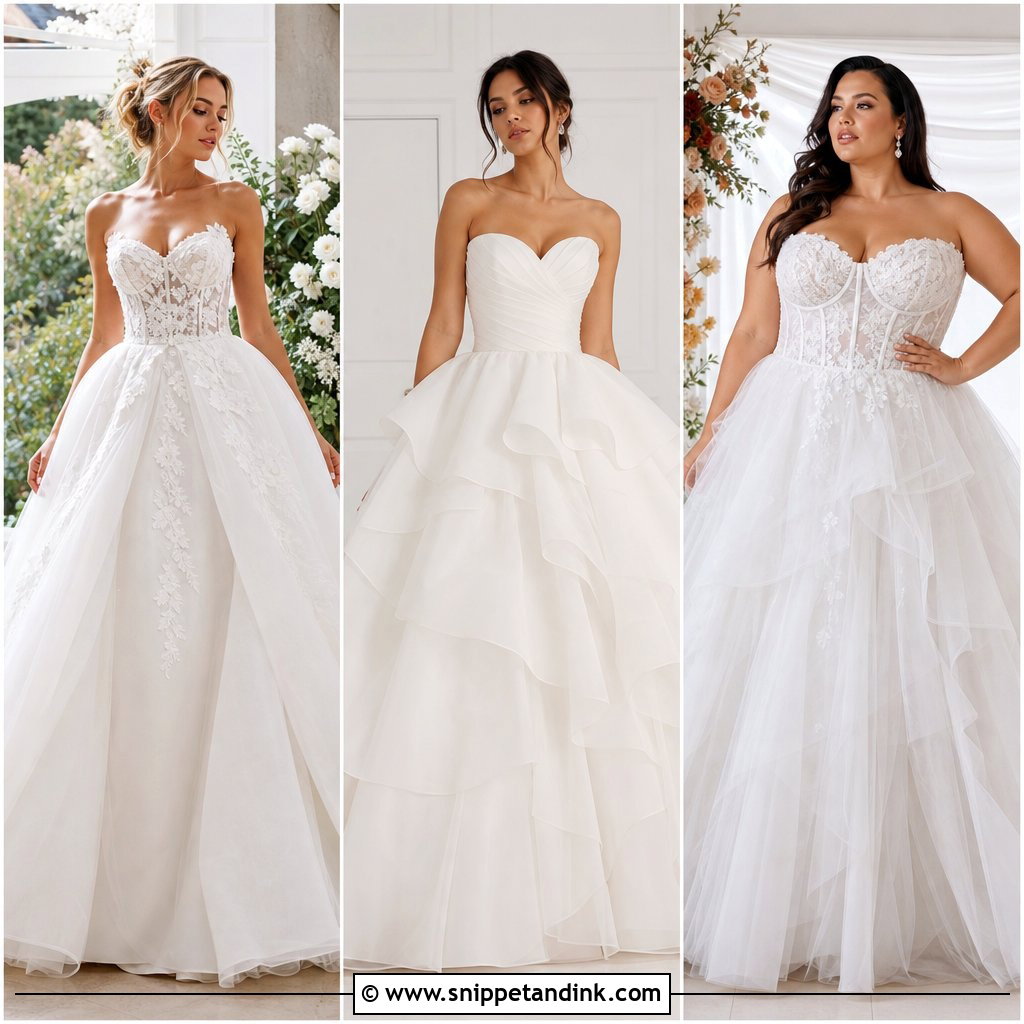
20. Ivory Bridal Corset Flare Gown
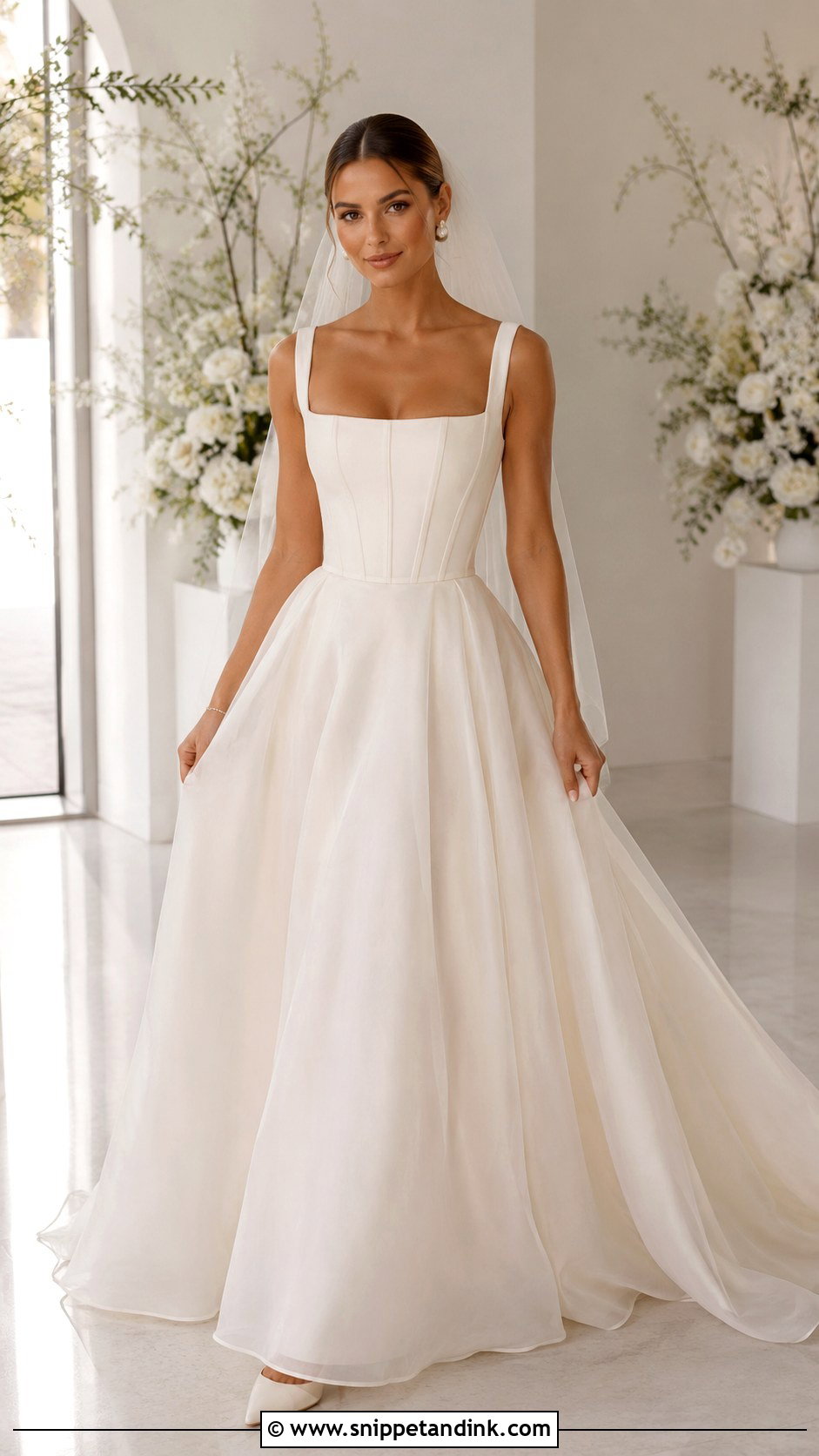
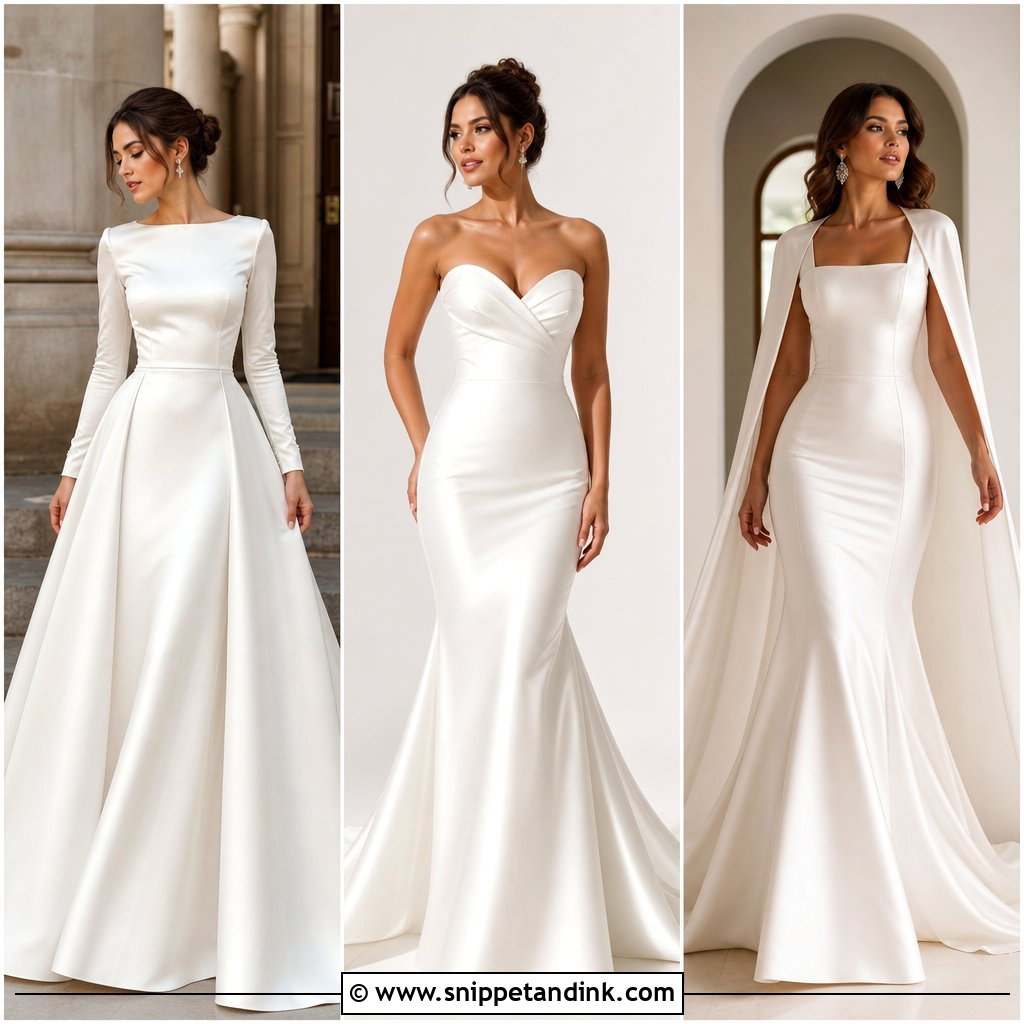
For a bride, ivory softens the structure of a corset more than bright white does, and it flatters more skin tones. A sweetheart, square or scooped bodice with covered boning keeps the line clean. Satin gives a smooth skirt, organza a light one, tulle a full one. The veil should be simple enough that the corset detail still shows through. Bring your exact undergarments and shoes to final fittings; the hem length and bust support are set by both, and changing either later means another alteration.
Wearing a Colored Corset Gown to Someone Else’s Wedding
Many of these gowns will be worn by guests rather than brides, and a structured, dramatic dress raises a few questions worth thinking through before you buy.
Colours I’d avoid as a guest
Ivory, champagne and very pale blush can read as white in photos, so leave the last gown on the list to the bride. Bright red is still frowned on at some weddings, and in some cultures red is the bride’s colour. If you aren’t sure, ask the couple or someone close to them. Black is widely accepted at evening and black-tie weddings now, but a daytime church service is a different setting.
Reading the dress code
- Black tie: floor length is expected, so a full corset flare in satin, velvet or sequins is right at home.
- Formal or black tie optional: a floor-length or elegant high-low gown works; keep sparkle moderate.
- Cocktail or garden: a corset flare is often too much. Choose a midi version or a softer bodice.
Finally, think about the day itself. A guest corset gown has to get through a ceremony, drinks standing on grass, a seated dinner and dancing, often without the help a bride gets. Choose a closure you can manage alone or with one friend, and pack a small safety kit: pins, plasters and a spare earring back.
Satin, Velvet or Tulle Over the Same Sculpted Bodice
Every gown here starts from the same idea: a secure bodice, a waist placed where it flatters you, and a skirt that moves when you do. Fabric and colour change the mood from black satin to floral tulle to winter velvet. Let the neckline decide the jewellery, and try your shoes with the finished hem. At every fitting, sit, walk and lift your arms. The gown that passes all three is the one to wear.
You'll Like These Ideas:




Leave a Reply