
Lace is the fabric Nigerian celebrations are dressed in. Aso ebi groups, naming ceremonies, receptions, milestone birthdays and family dinners all call for it, and the styles keep moving: corset bodices, mermaid skirts, bubu cuts, detachable trains, illusion sleeves, fringe hems and beaded accents. What I tell every client is that the style picture is only half the decision. The other half is the lace itself and the tailor who cuts it, because the same design sewn in cord lace and in net lace will hang, weigh and feel completely different by the end of the night. Here are 35 gown styles, with notes on what each one asks of the fabric and the fit.
Cord, French, Beaded or Voile: How Each Lace Behaves
Clients often bring me a picture and a lace that will never sew into that picture. The fabric decides more of the final shape than the style does, so it helps to know what you’re buying.
- Cord lace has a raised cord outlining the pattern. It’s heavier and holds structure well, which suits corset, mermaid and peplum styles, but it’s warm in an outdoor tent.
- French or net lace is fine embroidery on a soft net. It drapes and moves, so it suits A-line and flowing gowns, and it always needs a good lining.
- Beaded lace looks rich but must have beads removed along every seam line before sewing, then replaced by hand. Ask whether your tailor does that work.
- Swiss voile is a cotton lace with small eyelets. It breathes, so it’s comfortable for daytime and long outdoor events, and it suits bubu and kaftan shapes.
- Guipure has no net backing; the motifs join directly. It’s crisp and structured and best kept to simple shapes, since it doesn’t gather softly.
Lace is usually sold in five-yard pieces. That’s often enough for a fitted gown, but a bubu, a long train, a detachable skirt or very full sleeves can need more, so ask your tailor to estimate before you buy. If you need extra, buy it from the same seller at the same time, because a second batch can differ slightly in shade.
1. Nigerian Lace Mermaid Gown
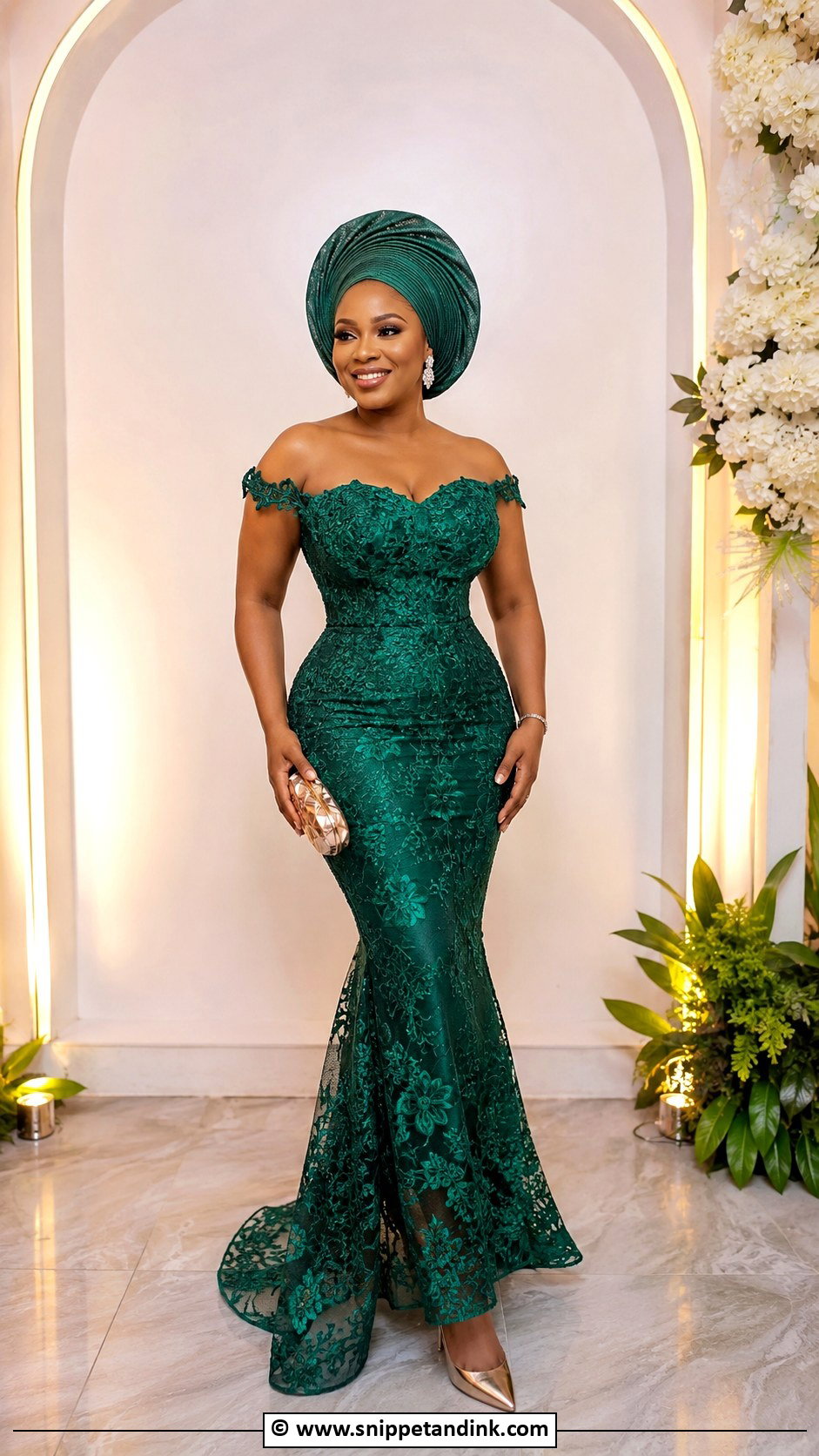
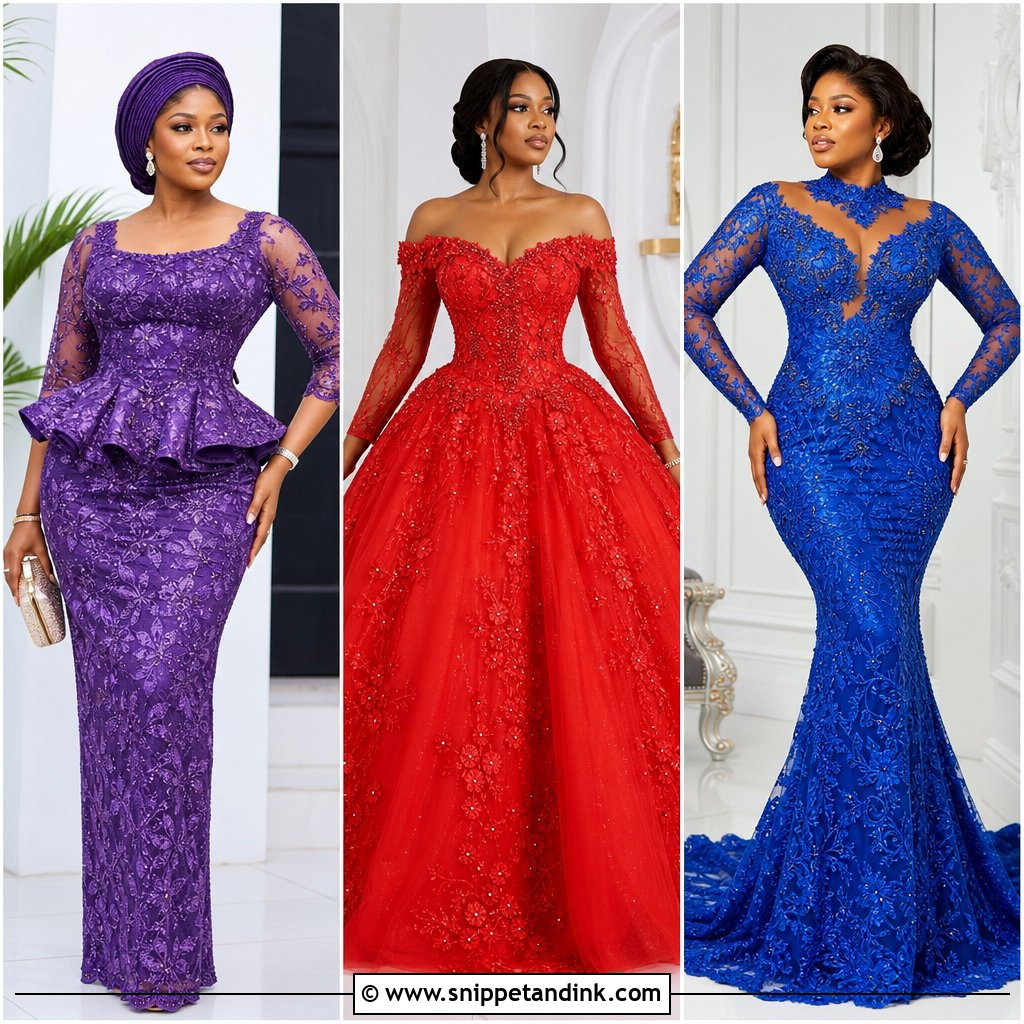
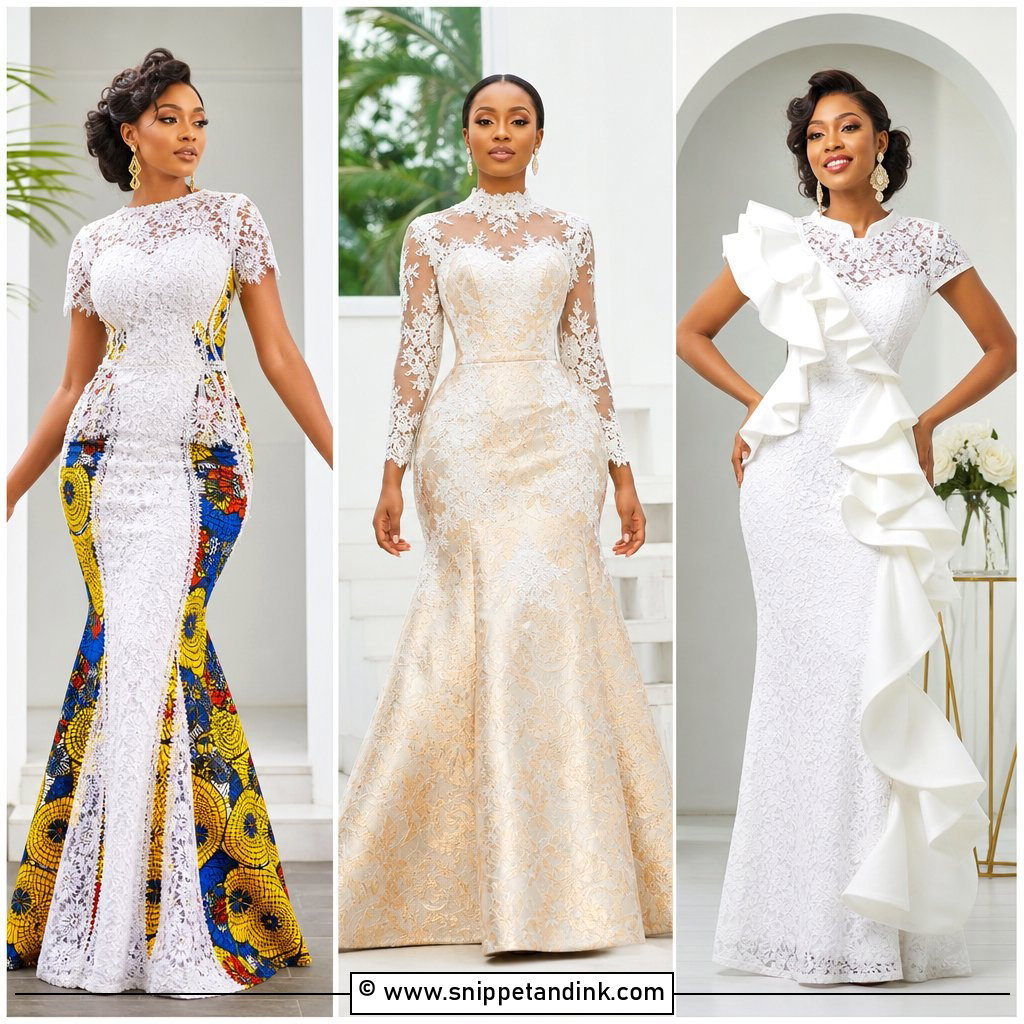
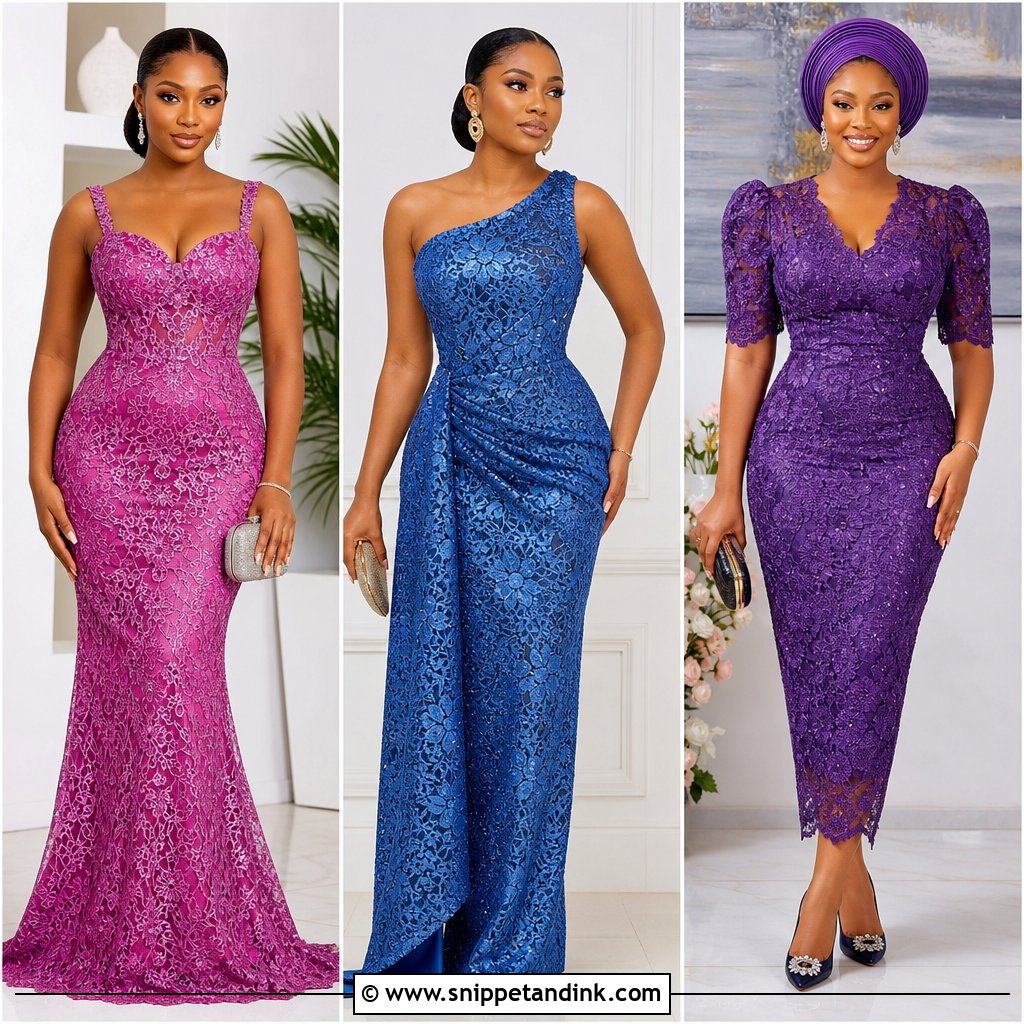
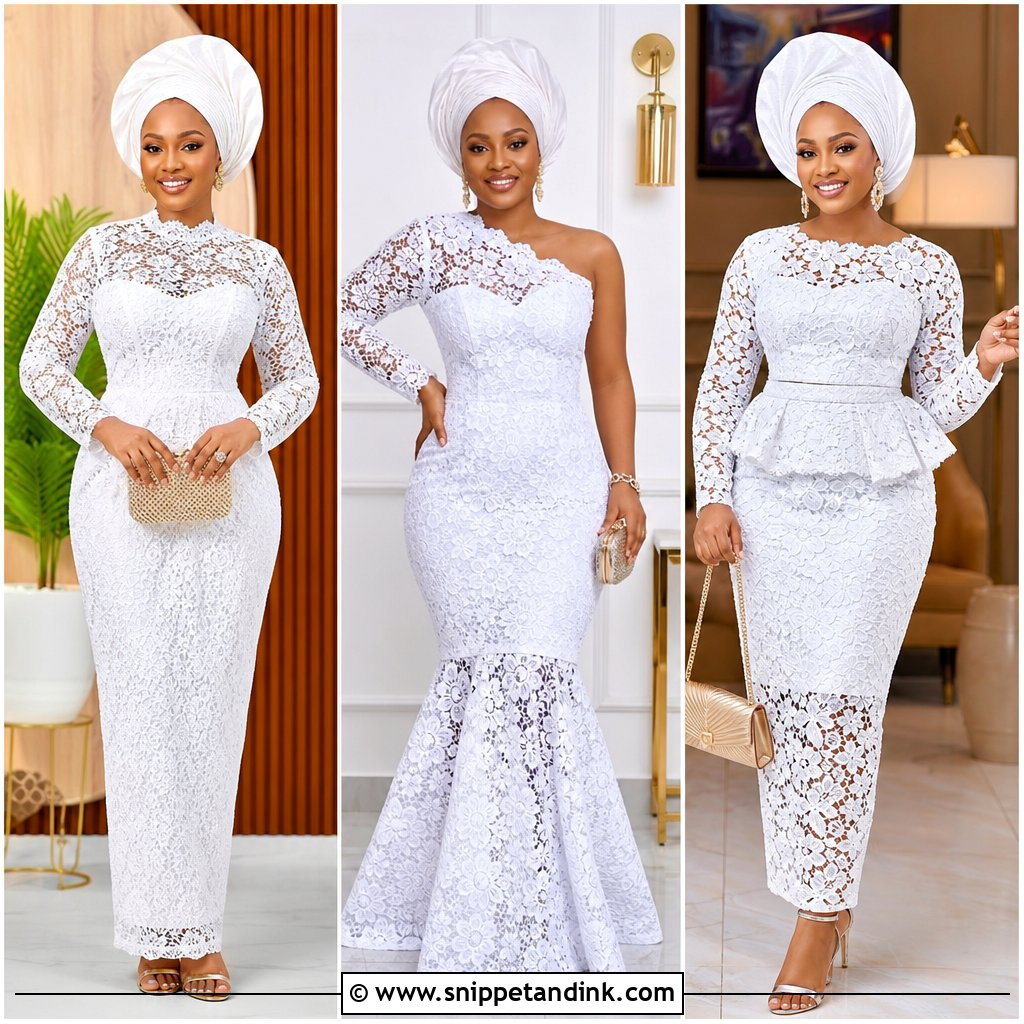
The lace mermaid hugs the waist, hips and thighs before flaring near the knee. Cord lace, French lace and beaded lace all suit it because the texture does the decorating. A sweetheart, high neck or off-shoulder cut sets how much skin shows. When I review a mermaid sketch with a tailor, I ask where the flare starts, because a flare cut too high in stiff cord lace makes stepping onto a dance floor hard work. A matching gele, crystal drops, a small clutch and pointed heels complete it for receptions and aso ebi events.
2. Nigerian Lace Corset Gown
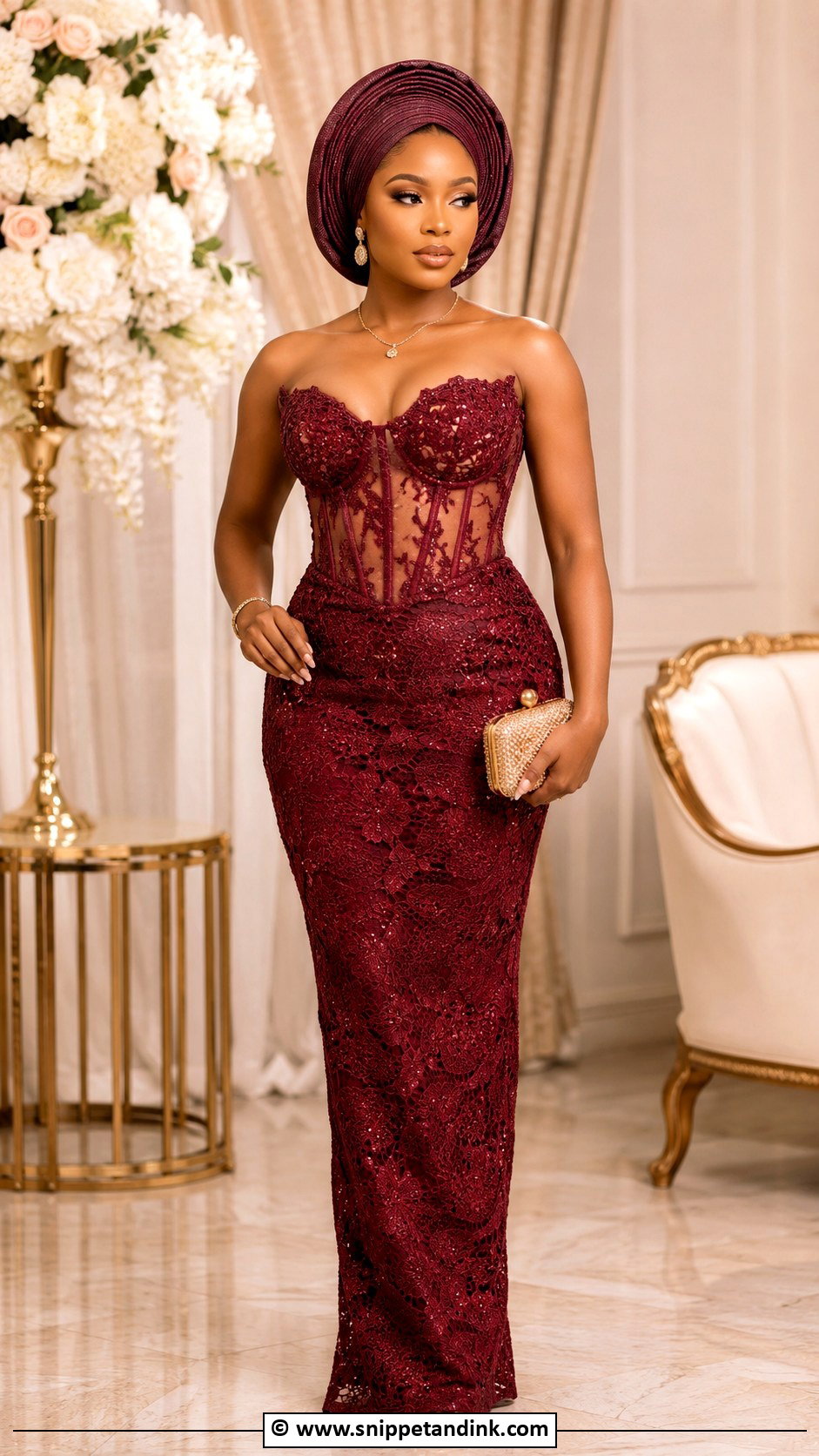
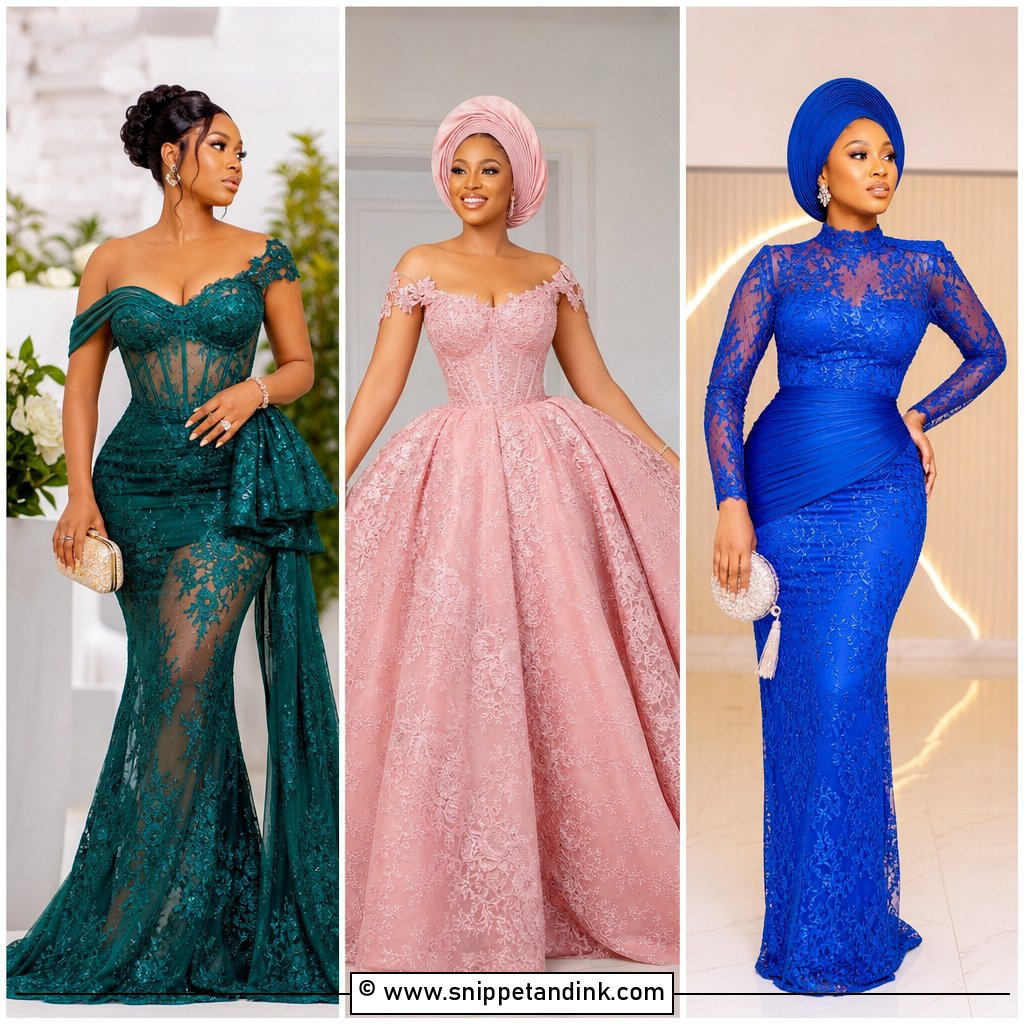
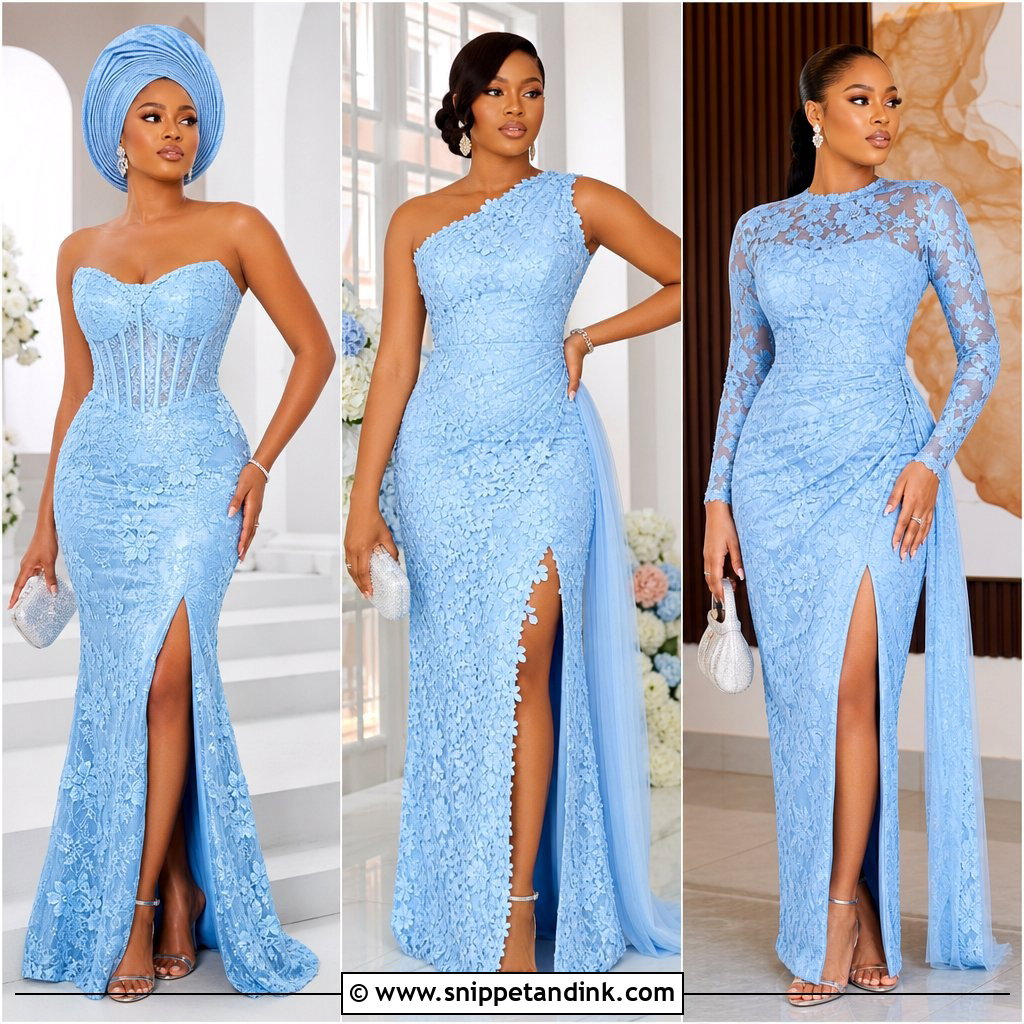
A corset bodice gives traditional lace a modern, sculpted finish. It defines the waist and supports the bust, and the skirt below can be straight, flared, mermaid or floor-length. Good lining is non-negotiable here, because boning channels show through thin lace if the lining is flimsy. Pastel lace or a nude lining gives a softer effect; emerald, wine, navy and royal blue are more dramatic. A sculpted gele, metallic heels, a box clutch and statement jewelry finish the look.
3. Nigerian Lace Bubu Gown
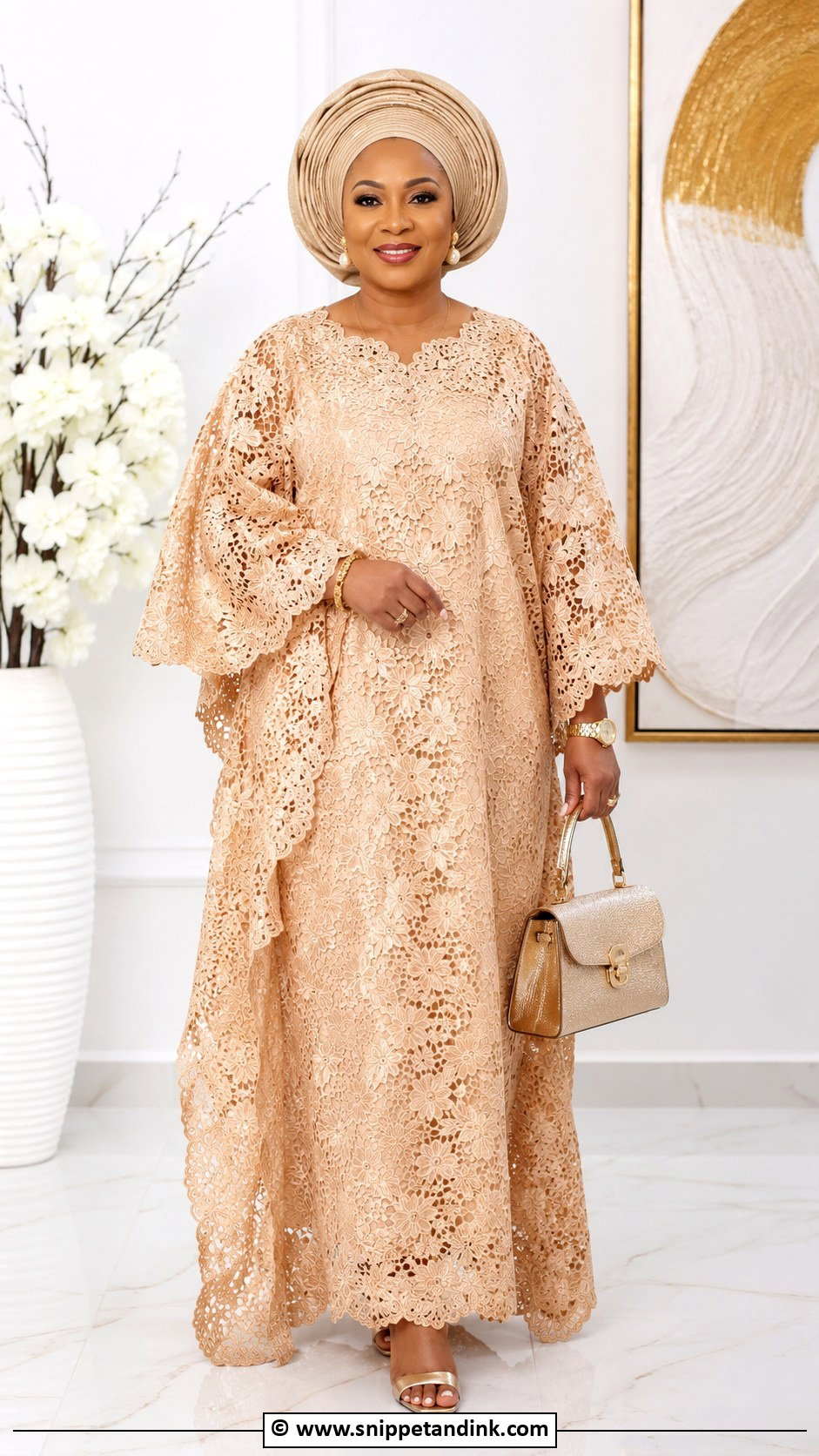
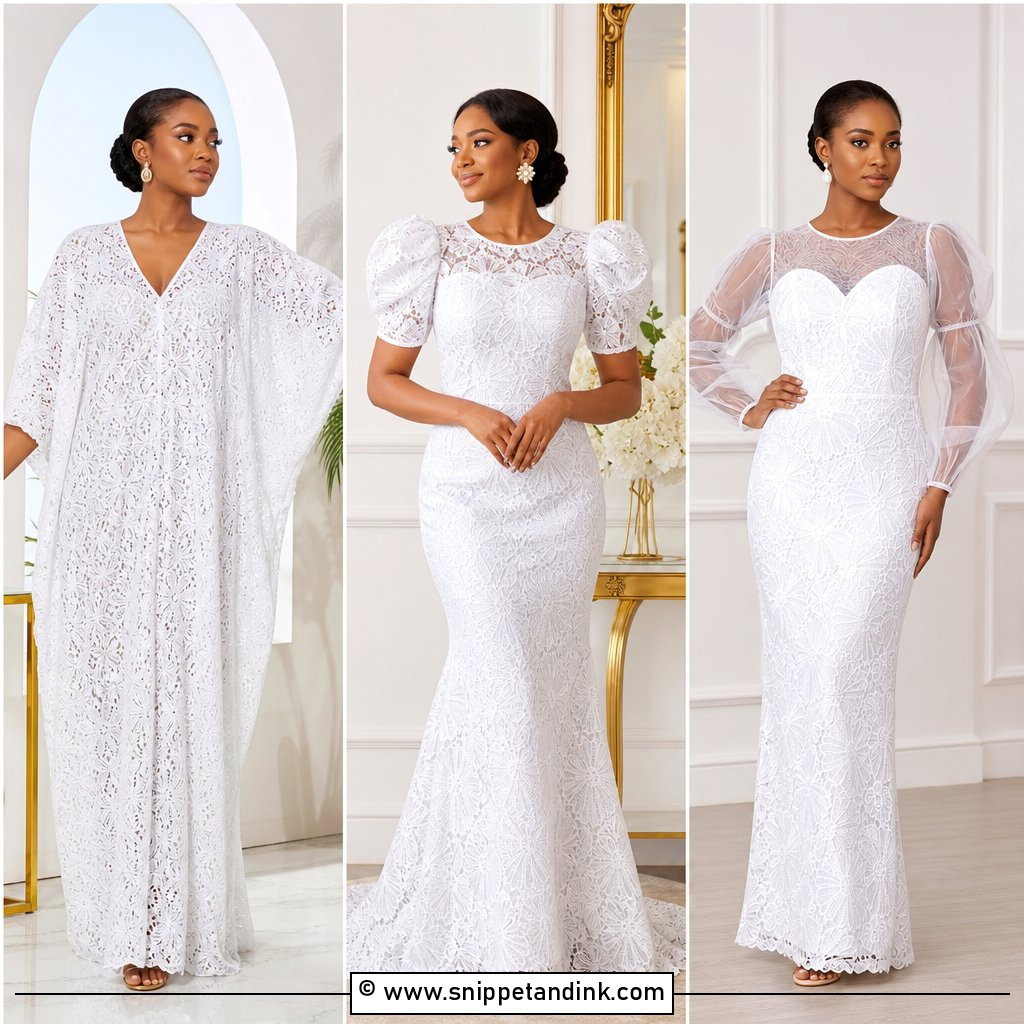
Few styles are as kind to the body as a bubu. The loose shape and wide sleeves give elegance without any tight fitting, which is why it’s a favourite with mothers of the couple and anyone who wants to eat, dance and sit comfortably. Rich embroidery, scalloped edges or subtle beading at the neckline and sleeves carry it. A bubu uses more fabric than most gowns, so check with your tailor that one bundle of lace is enough before you cut. Heeled sandals, a structured handbag, simple gold or pearl jewelry and a matching or contrasting gele make it formal.
4. Nigerian Lace Kaftan Gown
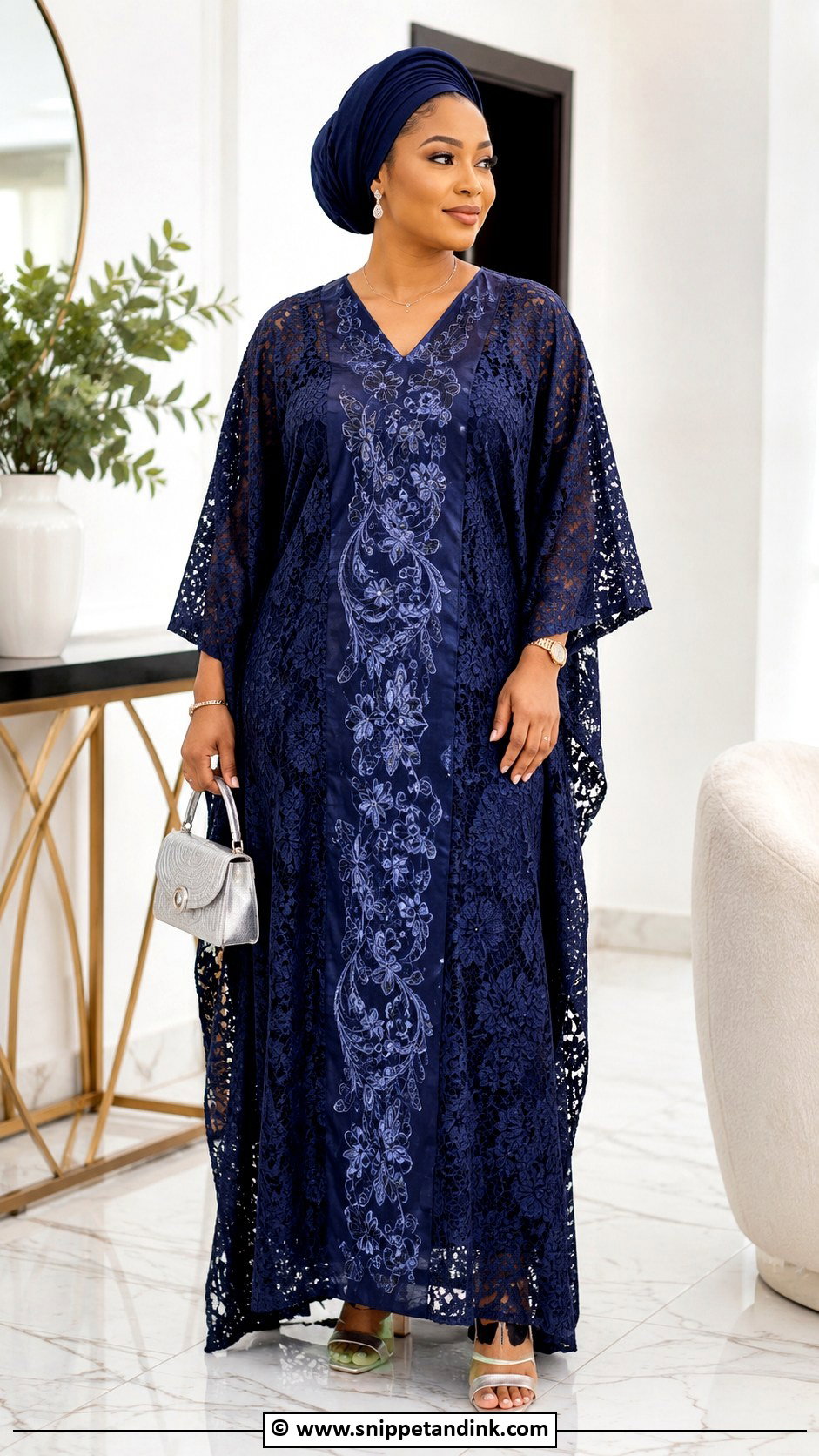
A kaftan is straighter and cleaner than a bubu, so it feels less voluminous while staying relaxed. It suits daytime celebrations and family gatherings. Soft lace with a light lining keeps it airy. A centre embroidery panel, beaded neckline or sleeve detail makes it look finished rather than casual. Low block heels, a neat gele or turban and a medium purse are enough. If you run warm, ask for a cotton lining instead of polyester; it makes more difference in an outdoor tent than the lace does.
5. Nigerian Lace A Line Gown
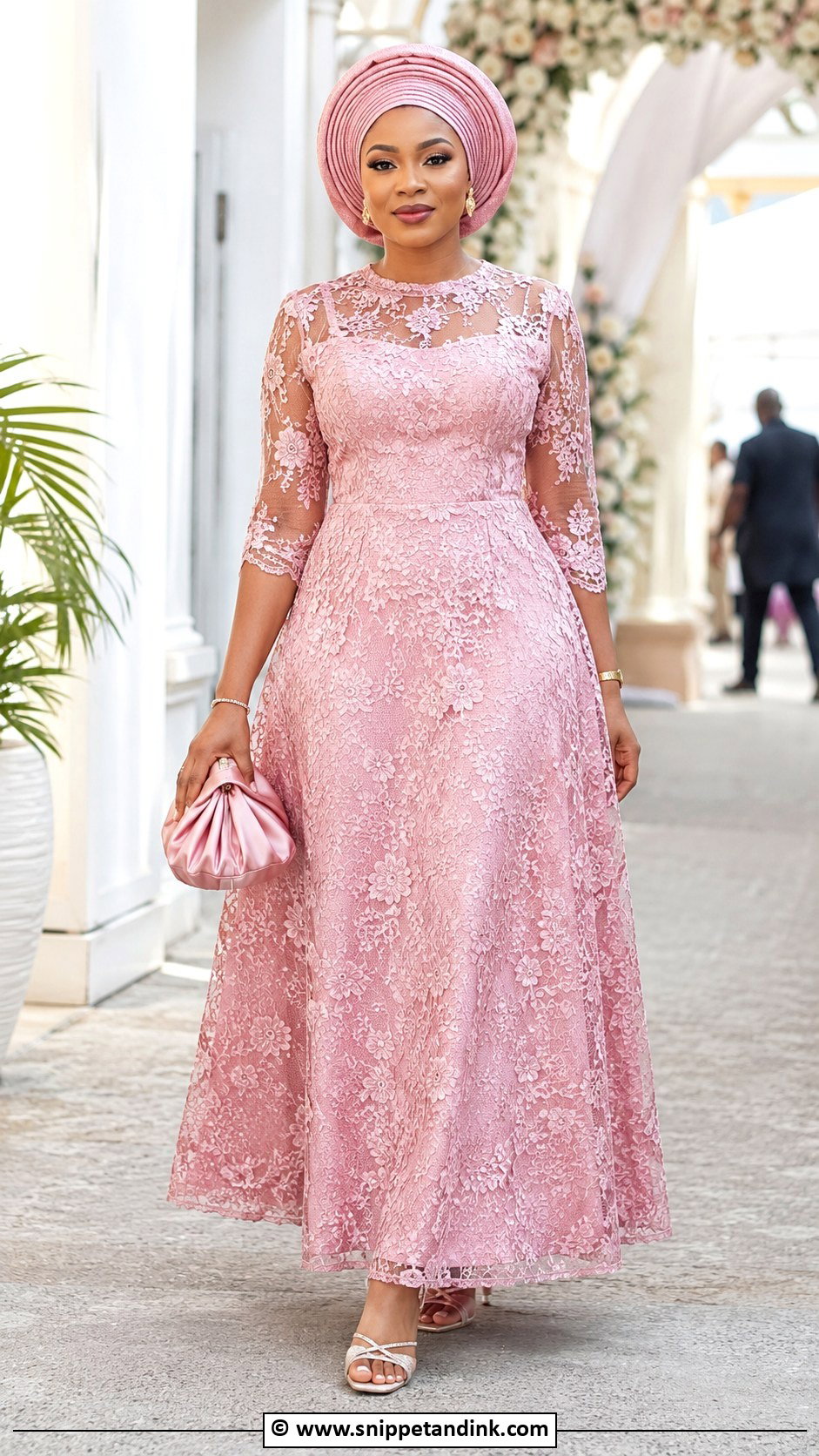
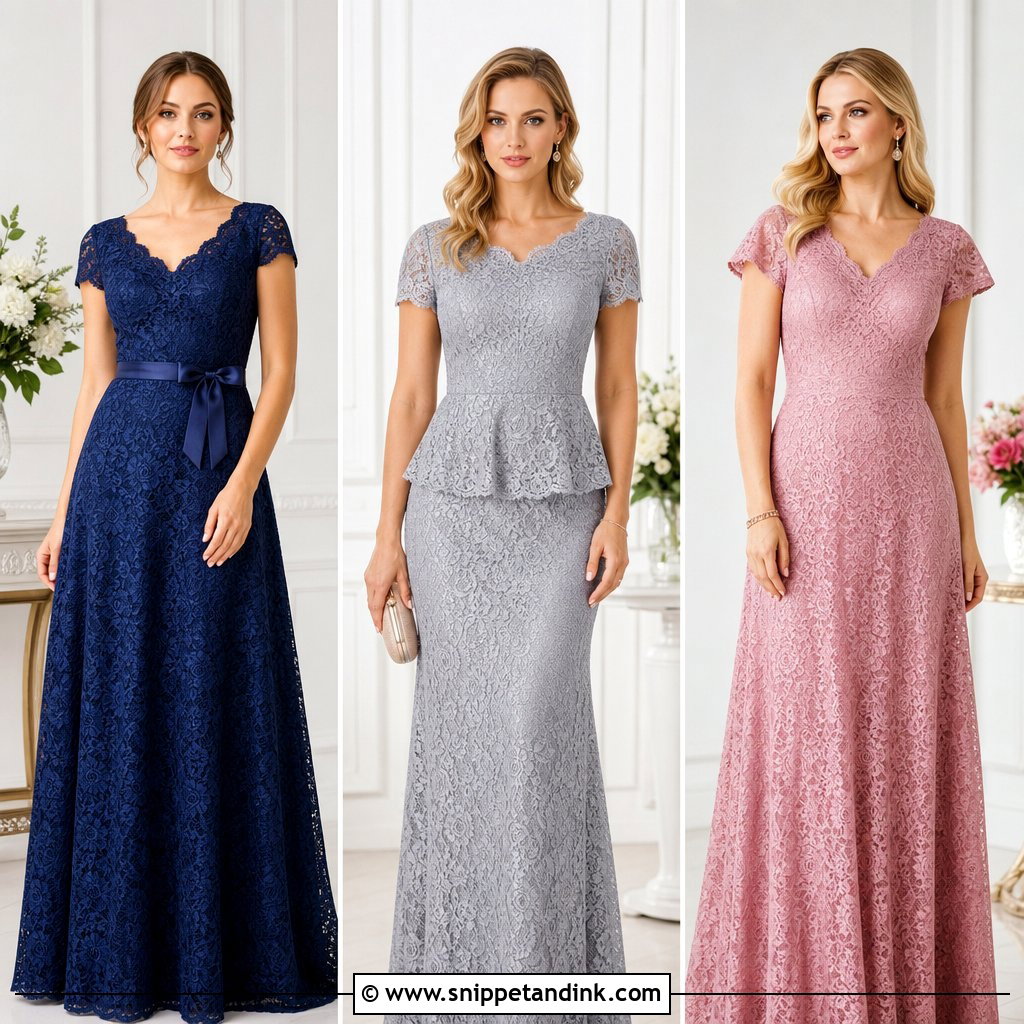
The A-line fits the upper body and widens gently from the waist, giving definition without anything tight around the hips. For a long event, it’s the shape I’d reach for first, since the skirt allows real movement. Short, long, illusion or off-shoulder sleeves all work. Strappy heels, a simple clutch and a gele that picks up the lace or lining colour finish it for weddings, cultural events and formal daytime occasions.
6. Nigerian Lace Ball Gown
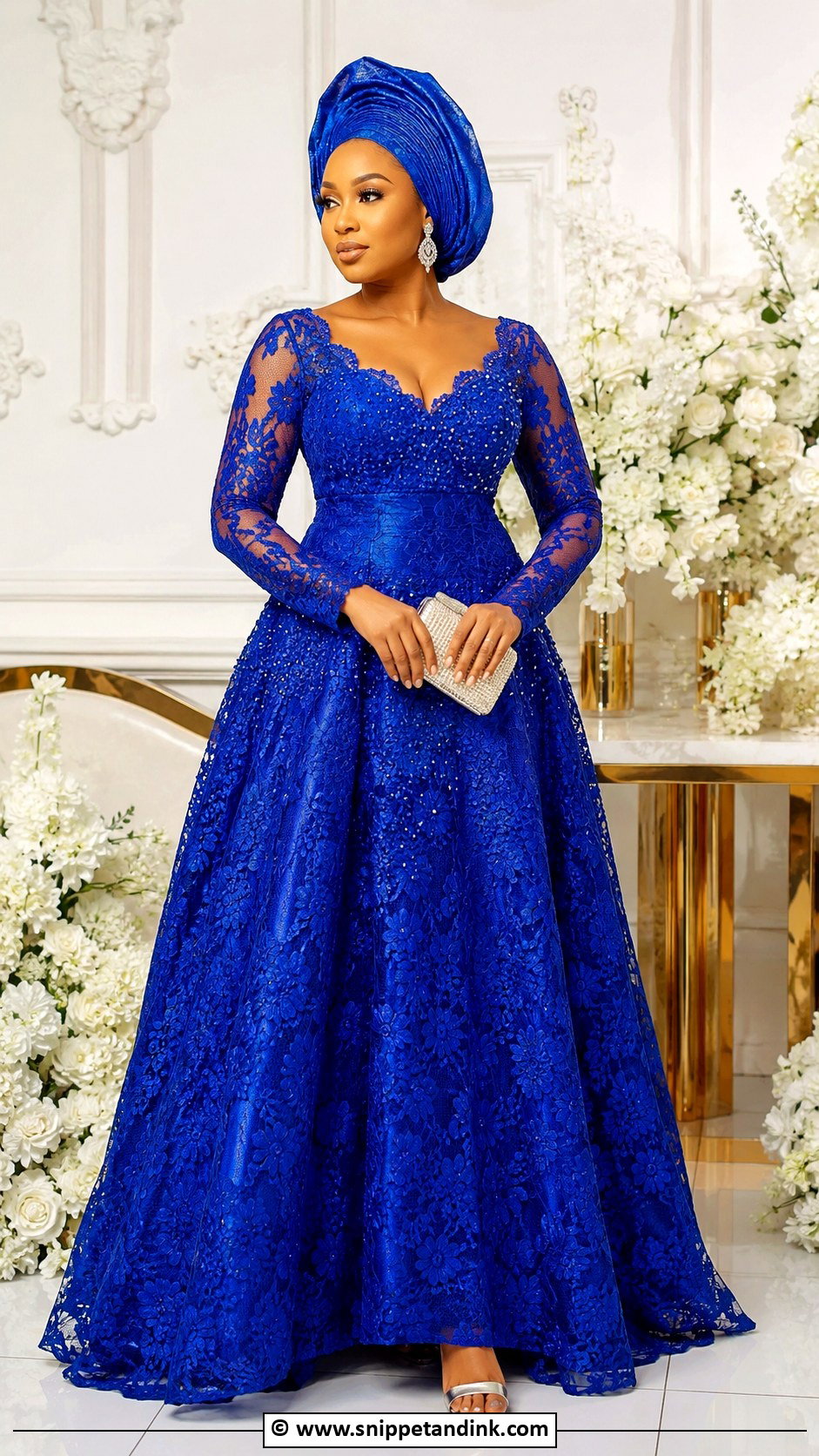
Ball gowns are for grand entrances: a fitted bodice and a full skirt held out with layers, tulle or a crinoline. Lace adds richness to all that volume, especially with beading, appliqué or a detailed hem. Keep accessories controlled, a sleek gele, chandelier earrings and a small clutch, and wear comfortable heels since nobody sees your feet anyway. A full skirt needs space, so think about the venue: a crowded hall with tight table spacing makes a ball gown hard work for celebrants and bridesmaids alike.
7. Nigerian Lace Off Shoulder Gown
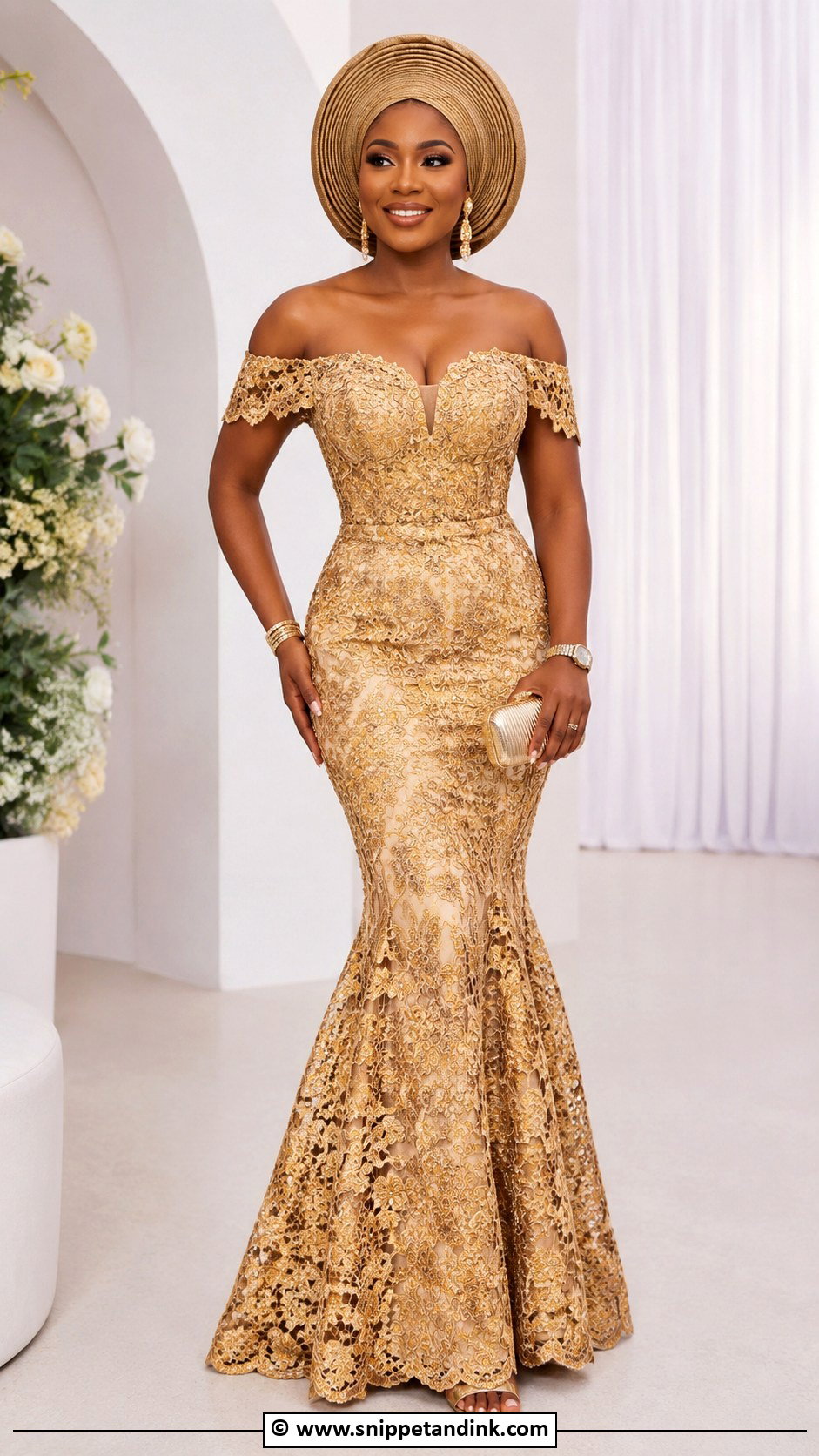
An off-shoulder neckline shows the collarbone and keeps everything else polished. It suits a fitted bodice, mermaid skirt or A-line. Off-shoulder bands on heavy lace need an inner elastic or a fitted lining band to stop them sliding up, so ask your tailor how it’s anchored. With heavily patterned lace, keep jewelry simple; a choker, small earrings or a clean updo works. Add a matching gele, clutch and heels for aso ebi groups and receptions.
8. Nigerian Lace High Neck Gown
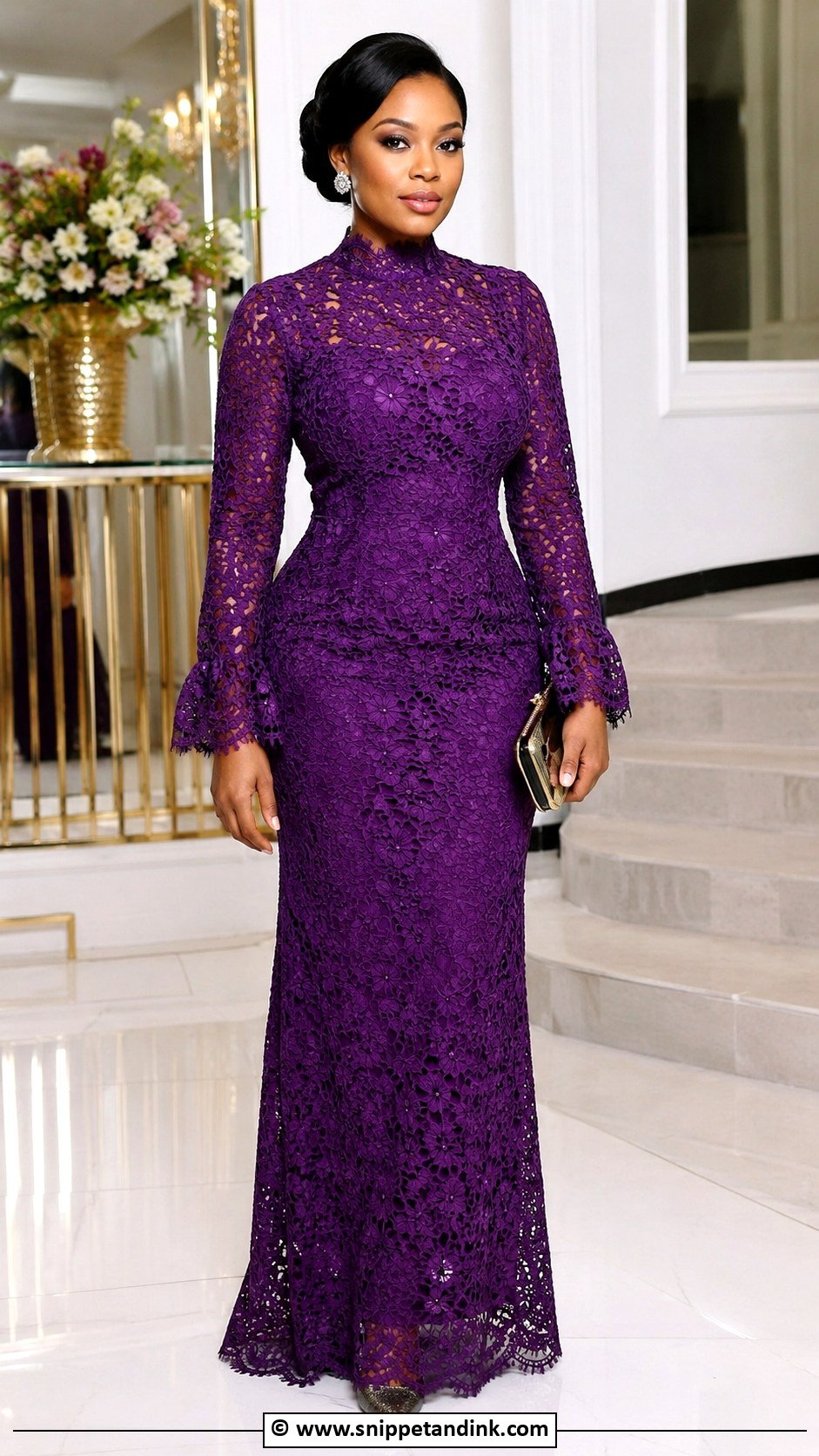
A high neck reads classy and modest, especially with long sleeves and a floor-length skirt. To stop it feeling heavy, choose lace with sheer illusion areas, delicate embroidery or a clearly defined waist. A sleek bun, stud earrings and a structured clutch keep it modern; pumps, slingbacks or embellished sandals all suit. The neckline must clear your gele and hairstyle when you dress, so ask for a back zip that runs high enough. It’s a dependable choice for formal events and family celebrations.
9. Nigerian Lace Long Sleeve Gown
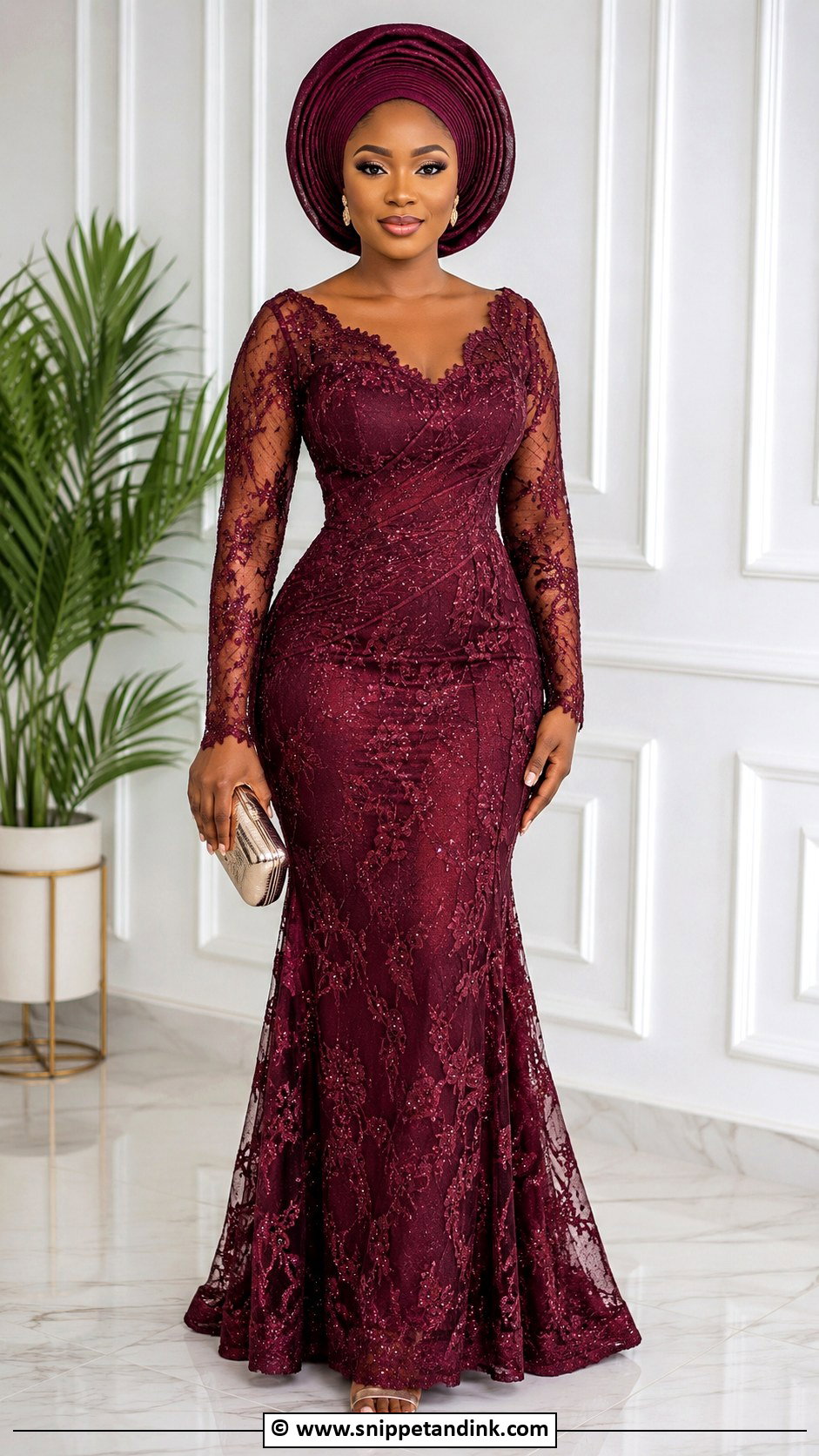
Long sleeves give coverage and still look graceful. They can be fitted, flared, sheer, beaded or finished with scalloped cuffs, and the rest of the gown can be as simple or dramatic as the occasion allows. Let the sleeves carry some of the detail and keep jewelry neat. A matching gele, metallic heels and a satin clutch suit it. Fitted lace sleeves need a little ease at the elbow, otherwise you can’t raise a glass or dance without strain. A defined waist and smooth lining give a slimmer line.
10. Nigerian Lace Short Sleeve Gown
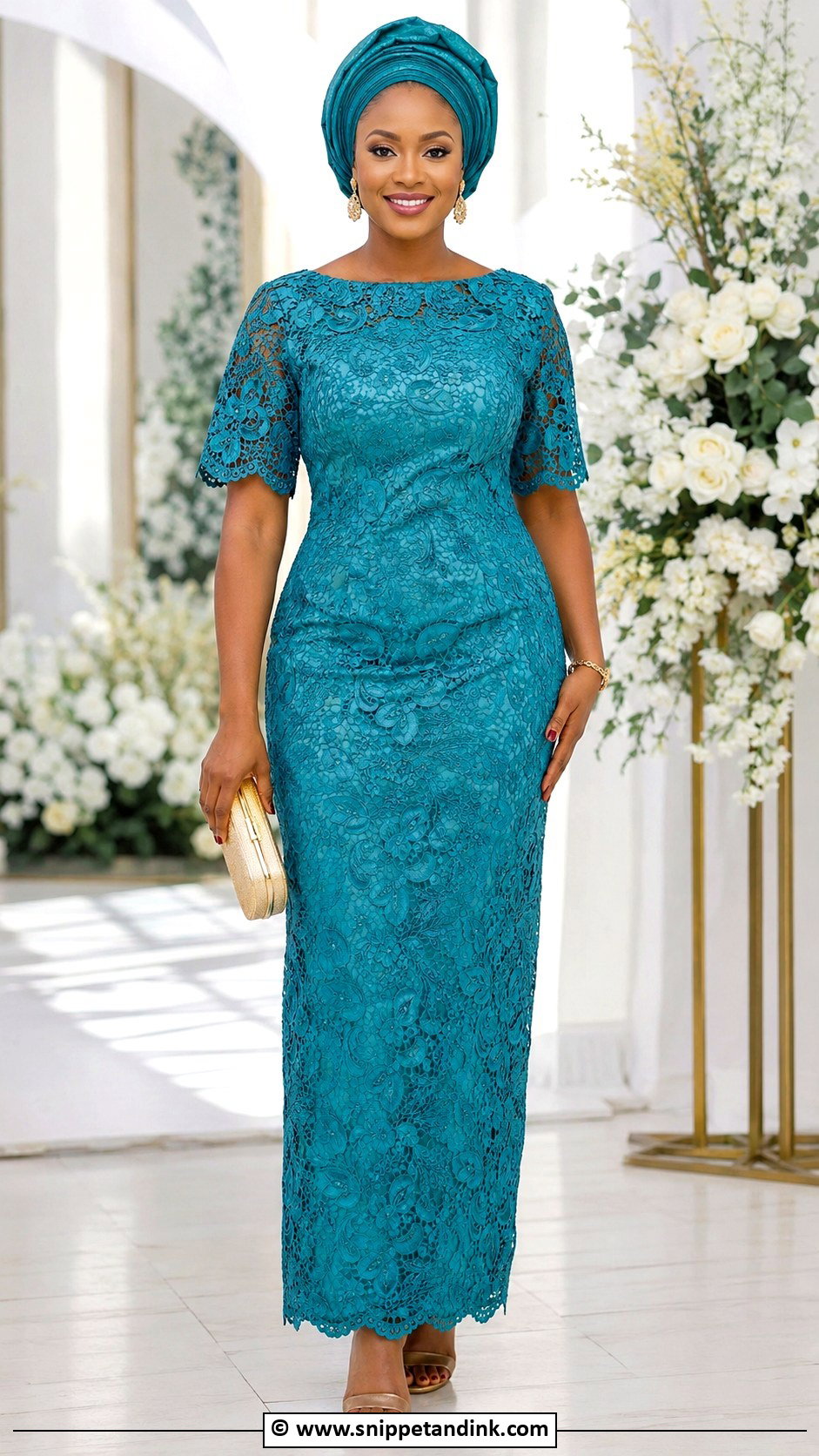
Short sleeves are practical for warm weather and daytime events, formal without being heavy. They can be plain, puffed, scalloped or slightly flared. A straight, A-line or mermaid skirt all work. With bold lace patterns, choose a plain lining to calm it down. Complete it with a gele, small handbag, earrings and comfortable heels. For introductions and family celebrations with lots of greeting and dancing, this is the cut I’d suggest, since your arms stay free.
11. Nigerian Lace Puff Sleeve Gown
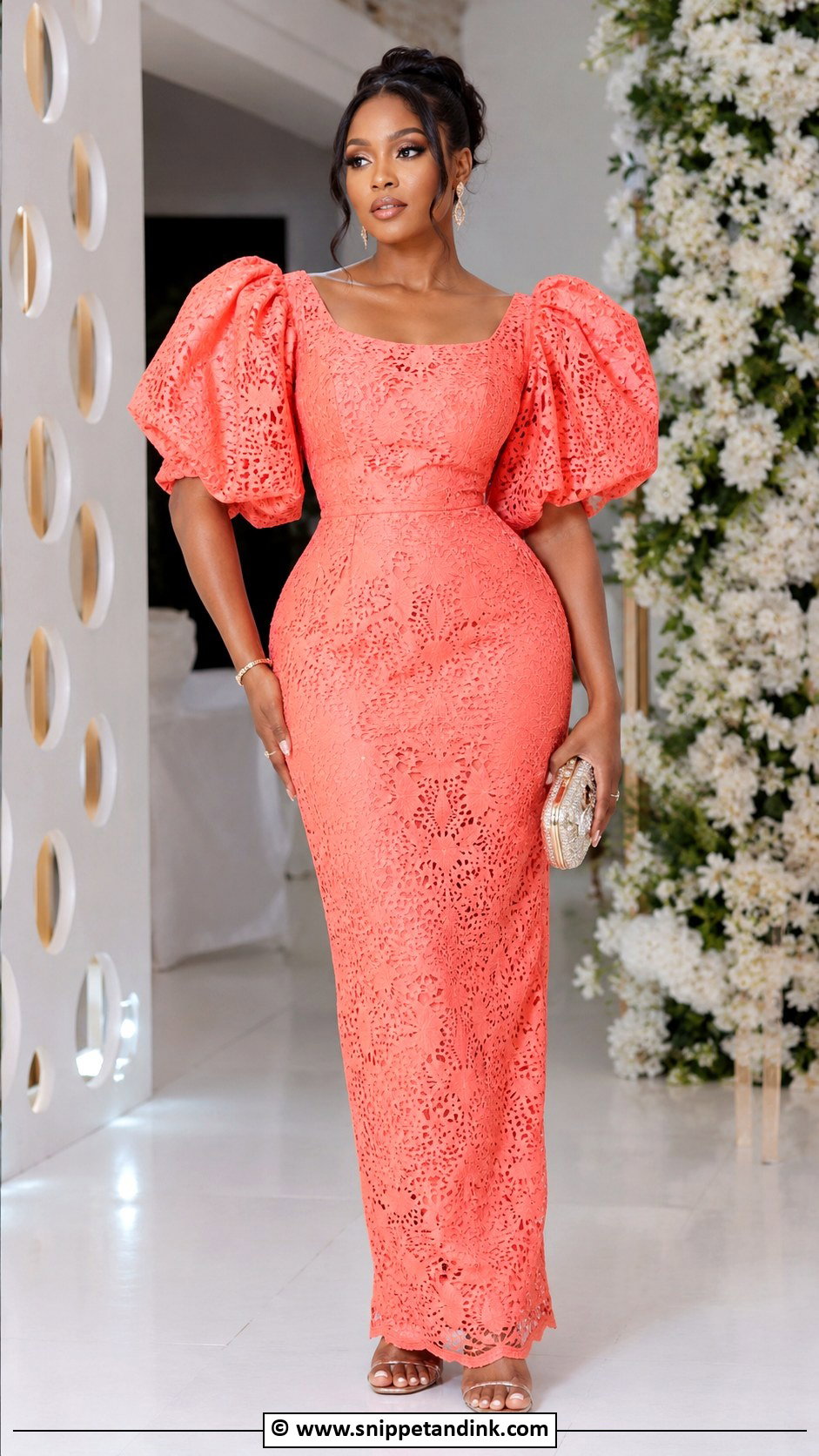
Puff sleeves add volume and personality, so you need fewer accessories. Soft puffs feel romantic, structured ones bold, and the lining decides which you get. A fitted bodice balances the sleeve shape, with a mermaid, pencil or A-line skirt. Sleek heels, a small clutch and earrings that don’t fight the sleeves complete it. Wrap the gele lower or cleaner to avoid too much volume near the face. It’s an easy route to a fashionable aso ebi look, as long as the sleeves are lined with organza or stiffened net so they don’t collapse by evening.
12. Nigerian Lace Cape Gown
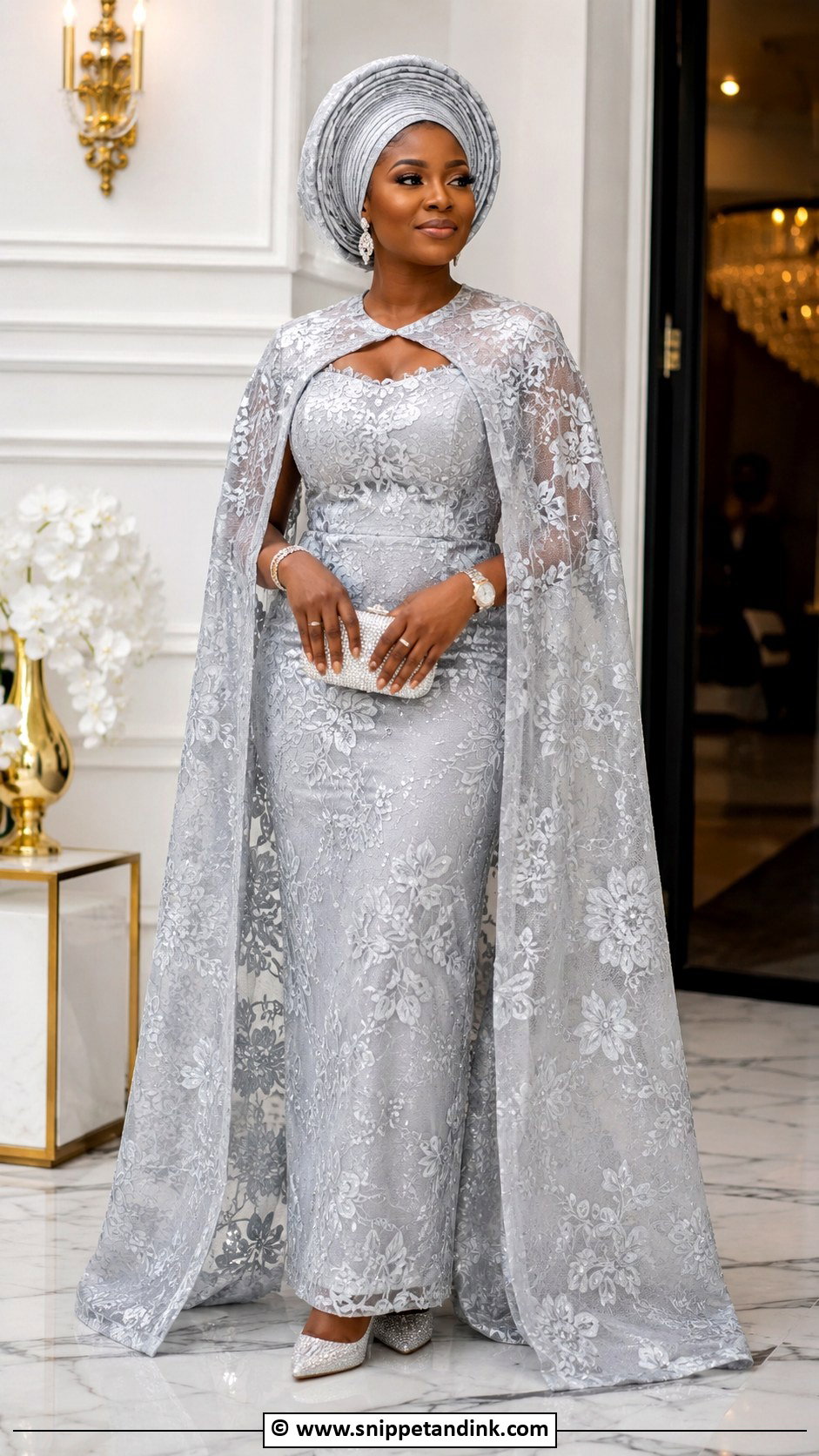
A cape brings movement and drama without the weight of a long train. It can attach at the shoulders, fall from the neckline or flow from one side. A fitted inner gown shows shape beneath it. Pointed heels, a neat clutch, simple earrings and a sleek gele or low bun let the cape stand out. Shoulder-attached capes sit better than ones fixed at the throat, which can pull backward when you walk, and that’s the first thing I’d check at a fitting.
13. Nigerian Lace Peplum Gown
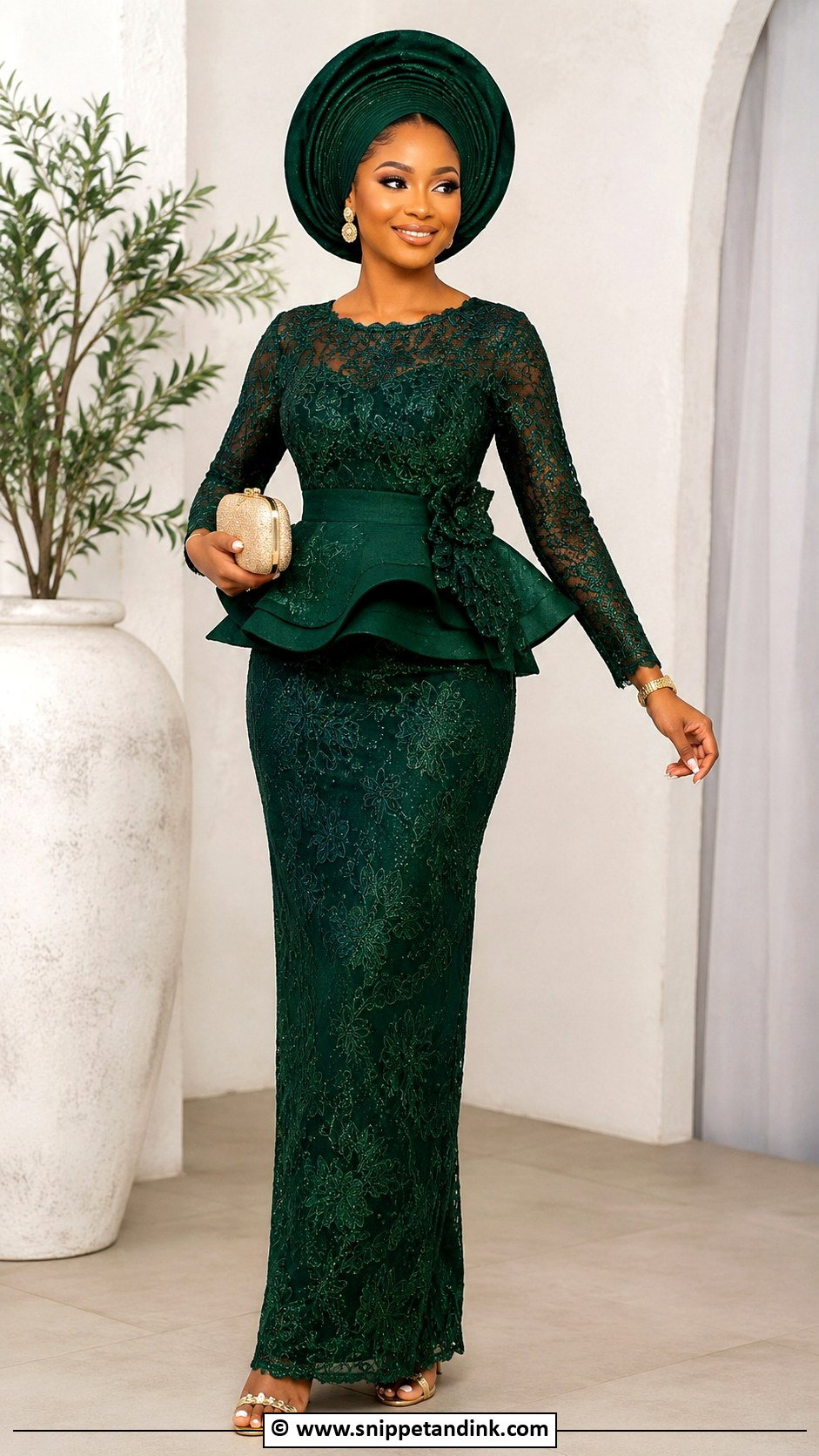
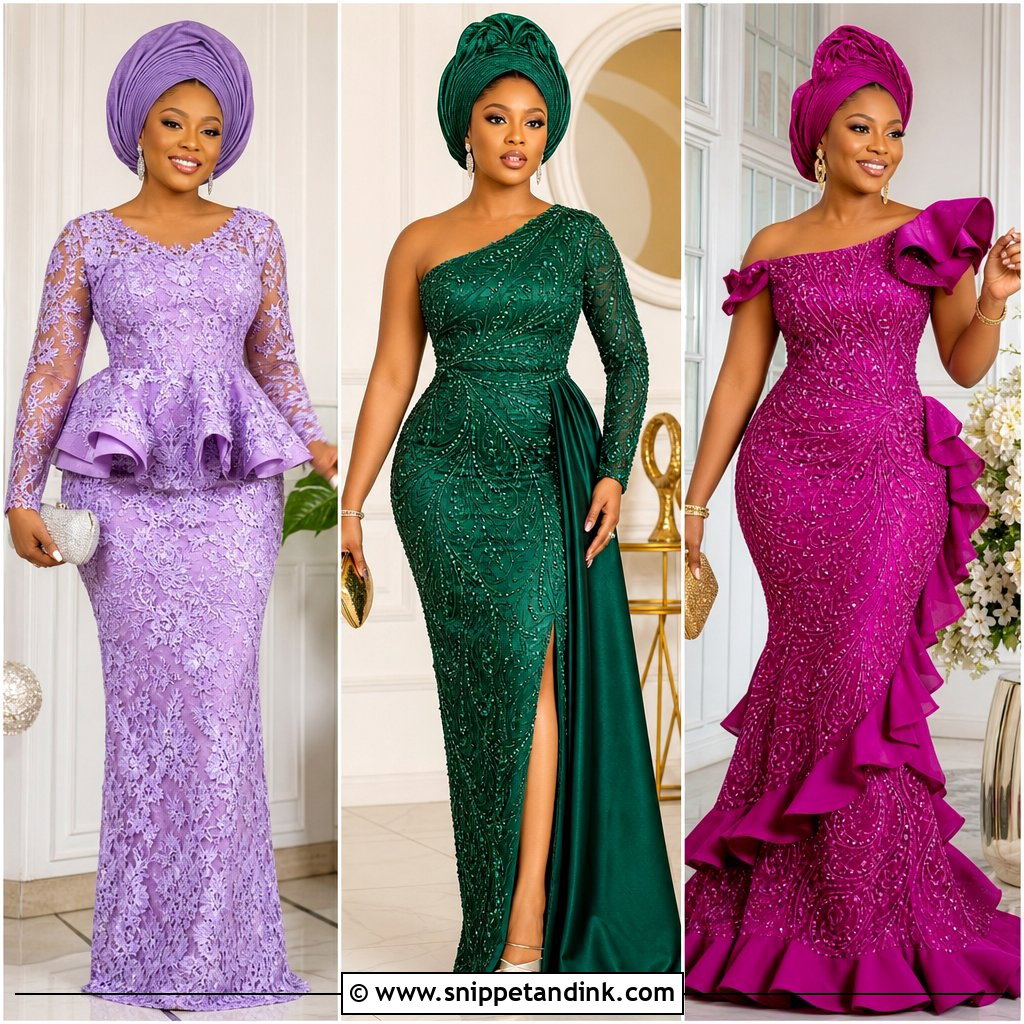
The peplum adds a layer around the waist, defining it and softening the tummy area at the same time. It can be small and neat or wide and dramatic. Pair it with a straight, mermaid or floor-length fitted skirt. Firm lace or a stiffened lining holds the peplum shape; soft net lace lets it droop. A gele, pointed heels, a structured clutch and small statement earrings finish it for most formal occasions.
14. Nigerian Lace One Shoulder Gown
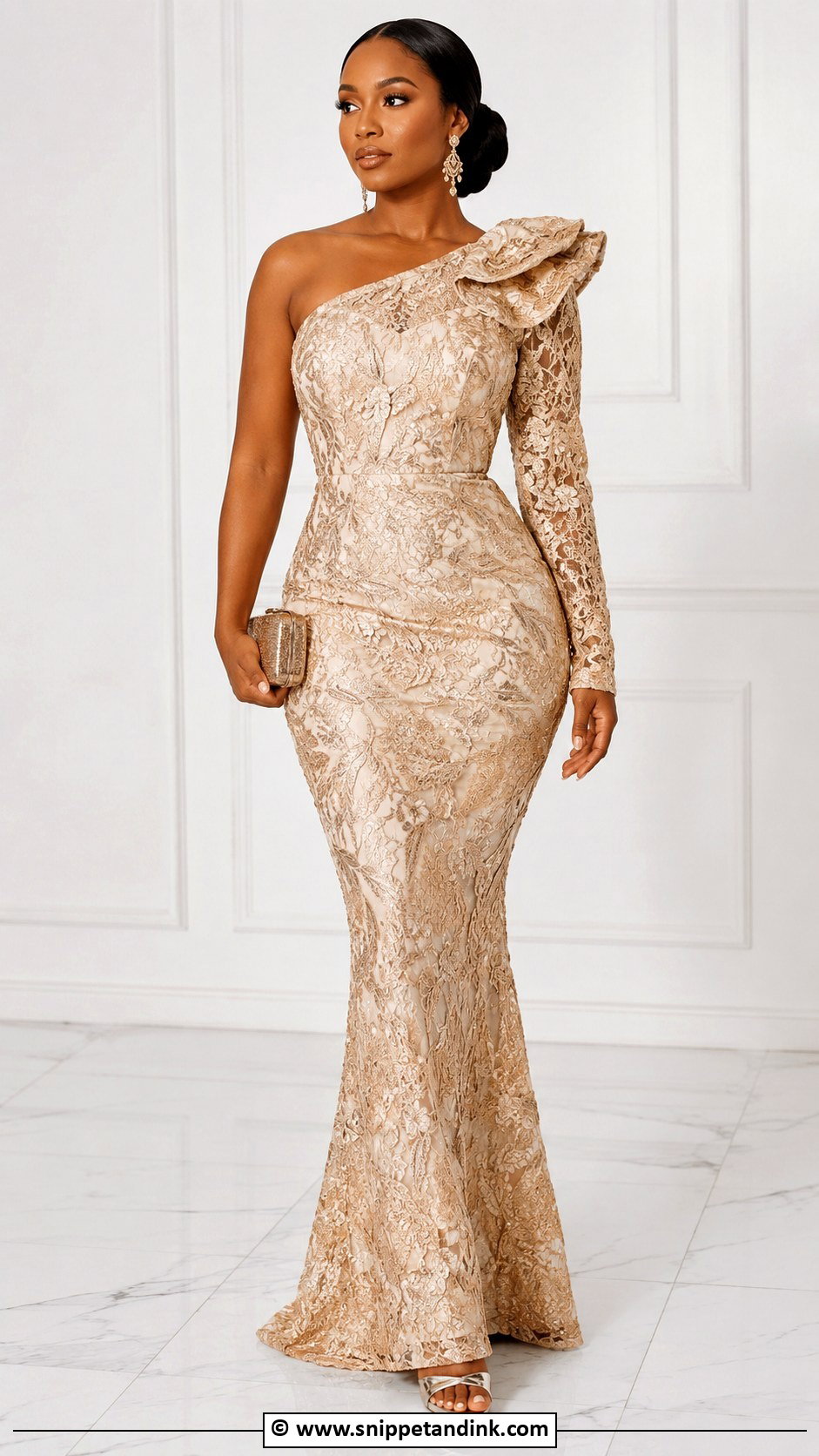
One shoulder gives lace a modern, asymmetric line. A fitted waist with a straight or mermaid skirt suits it, and one dramatic sleeve, a shoulder bow or a soft drape adds detail. Skip heavy necklaces and wear earrings instead. Lace is heavy on a single strap, so the bodice needs inner support to take the weight off that shoulder. A clutch, heels and a smooth gele complete a look that stands apart from the usual round neck.
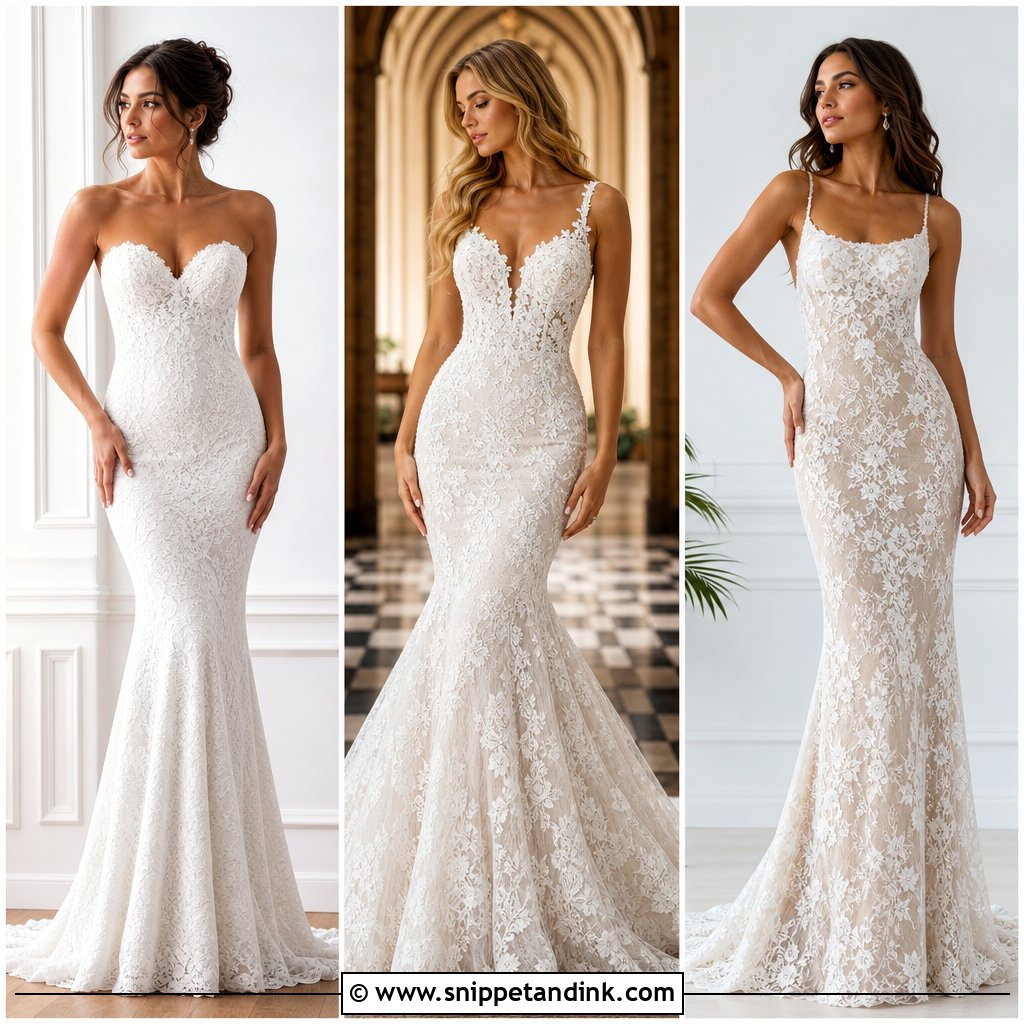
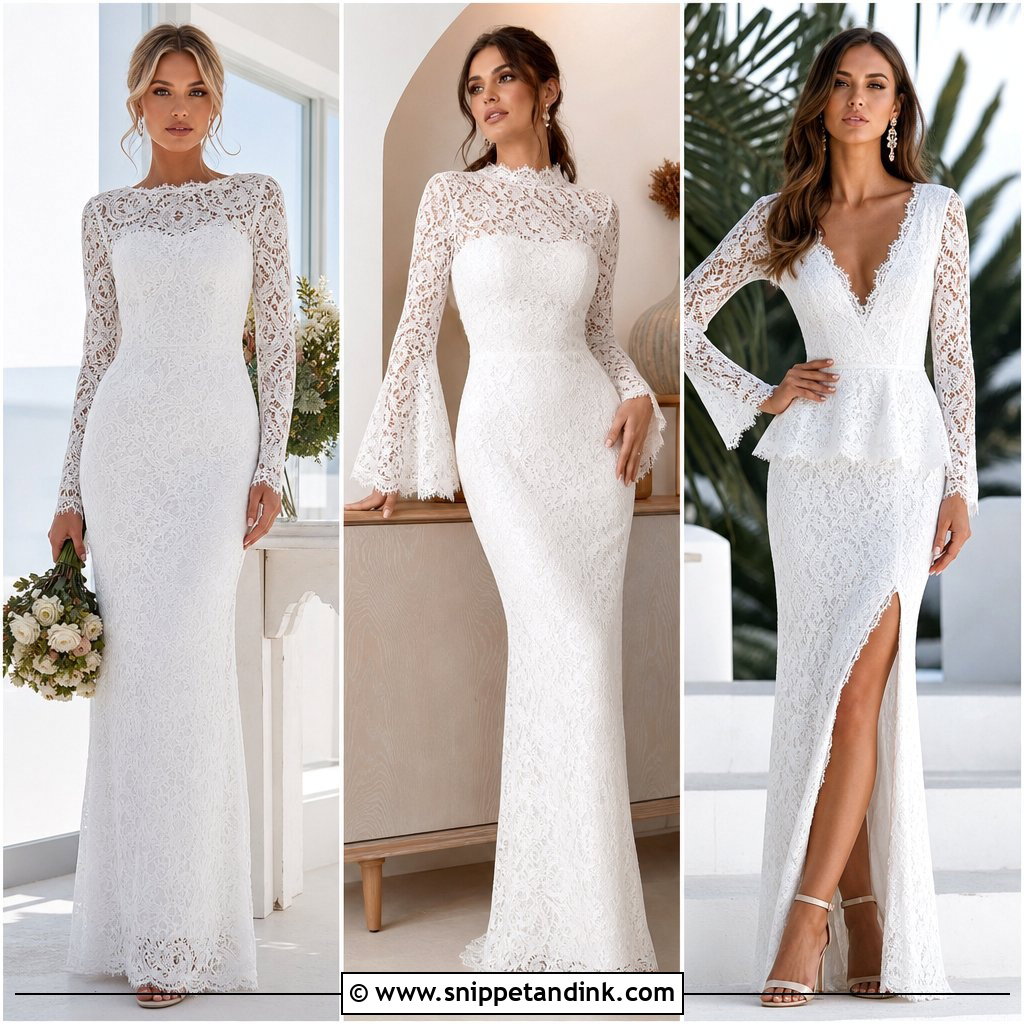
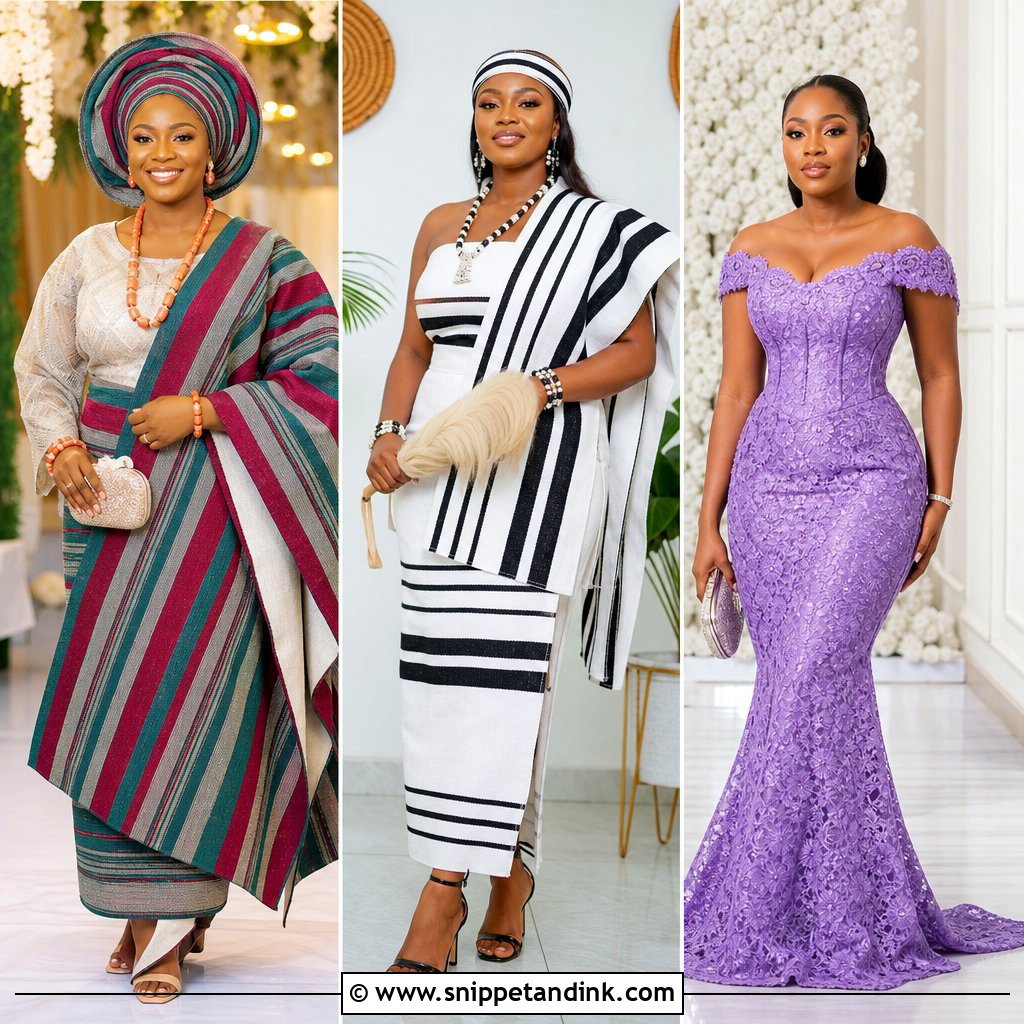
15. Nigerian Lace Straight Gown
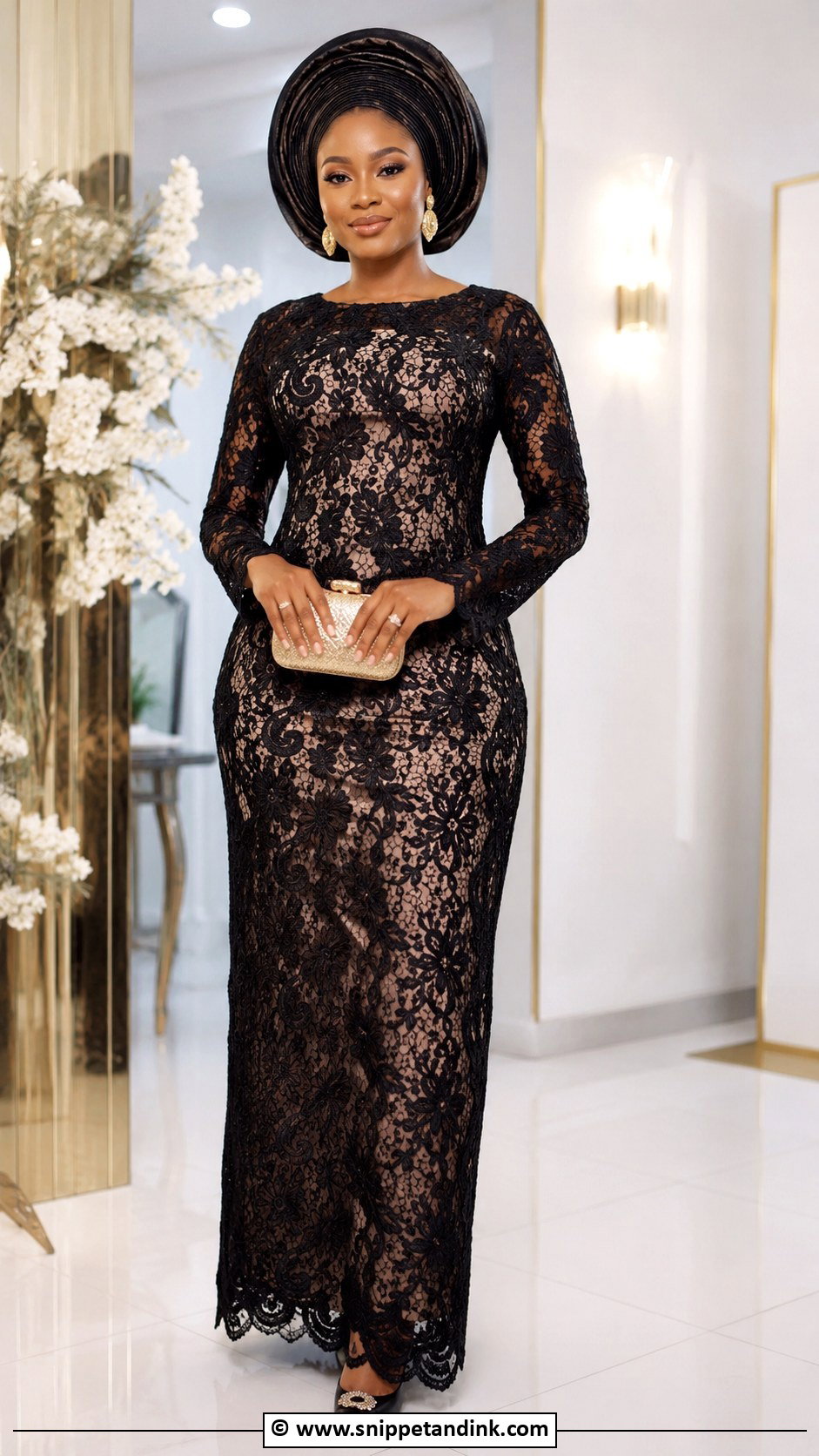
A straight gown falls close to the body without a flare, so walking and sitting are easy. Its success comes down to lace quality, lining, fit and finishing; nothing hides a poor seam here. A beaded neckline, side slit, illusion sleeves or scalloped hem add interest. Heeled sandals, a gele, a small clutch and refined jewelry finish it. A straight lace gown with no slit or kick pleat restricts your stride, so I always ask for one or the other. Receptions, naming ceremonies and birthdays suit it.
16. Nigerian Lace Maxi Gown
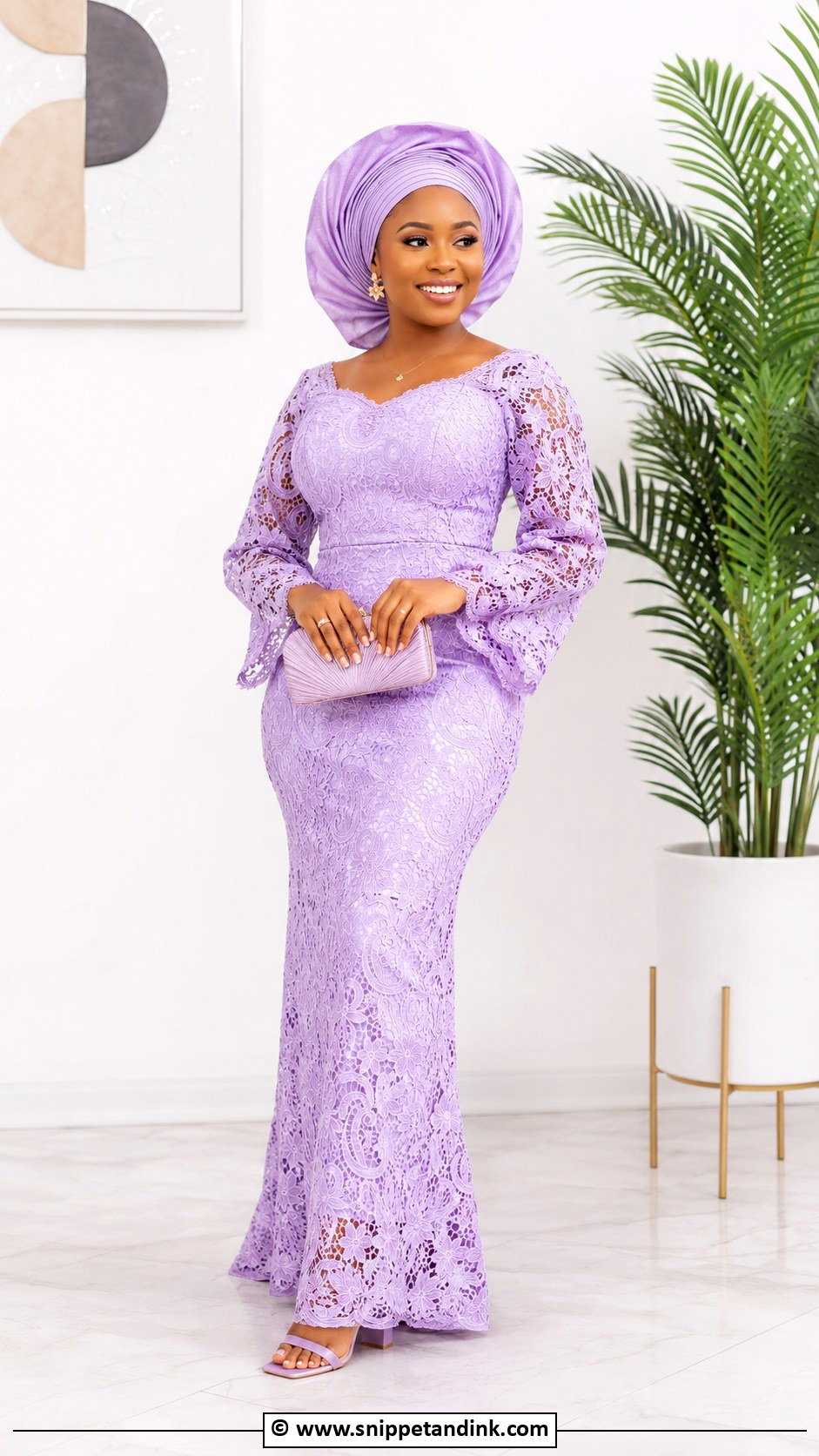
Long and flowing, the maxi can be fitted on top and loose from the waist, or fall straight from the shoulders. The length makes it formal while the lace keeps it decorative. Choose a lightweight lining for comfort through a long event. Block heels, a matching purse, earrings and a soft gele complete it. It suits most ages and body types, and it’s the safest option when you don’t yet know how much walking or standing the day involves.
17. Nigerian Lace Gown With Train
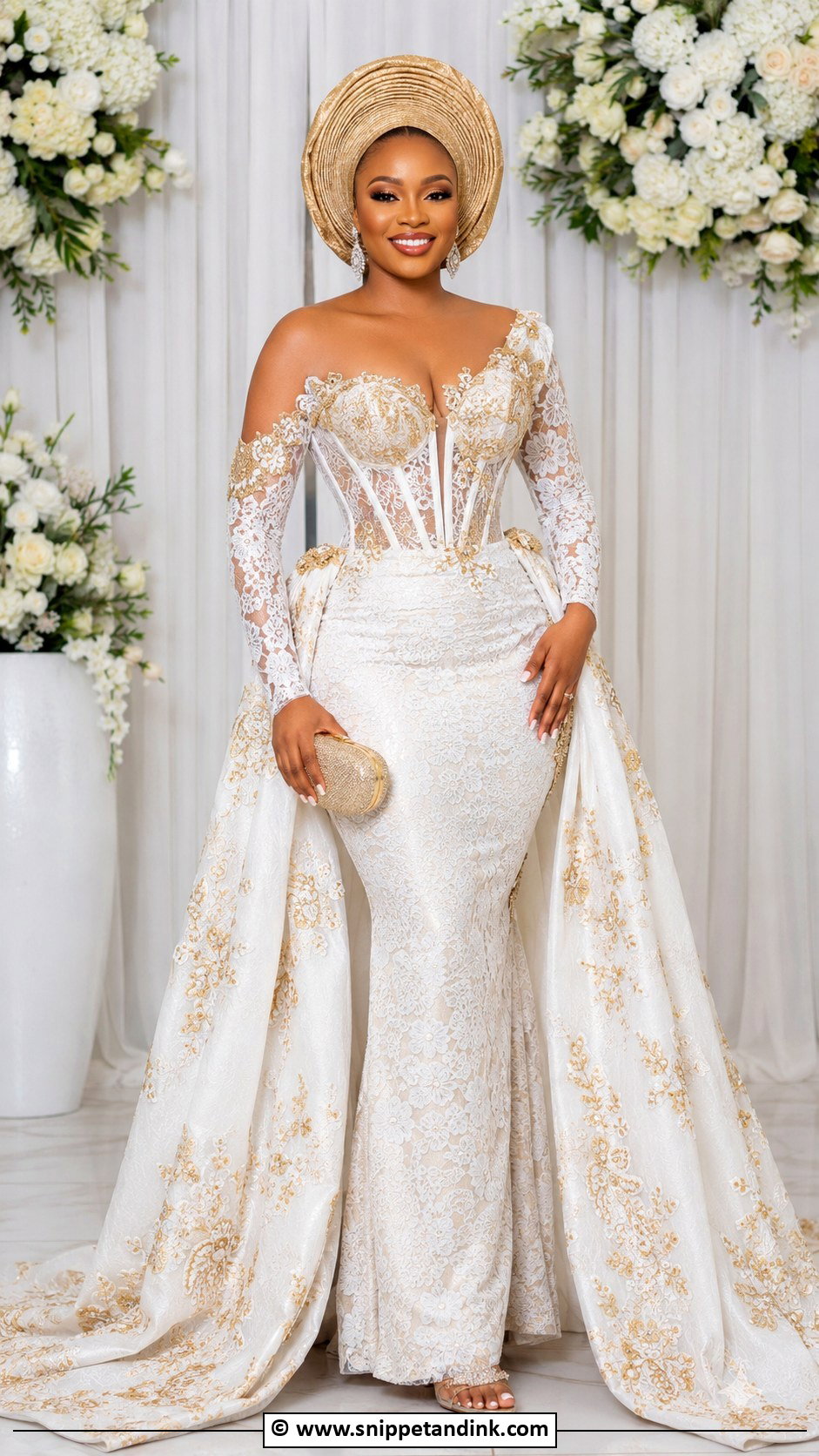
A Nigerian lace gown with train is made for big moments. The train can be short and detachable or long and flowing, and it looks intentional only when the gown underneath fits well. A corset bodice, mermaid skirt or straight gown can all carry one. High heels, a polished gele and jewelry suited to the neckline finish it. If there will be dancing or spraying, I’d always choose detachable, because a long lace train collects cash, dust and footprints fast.
18. Nigerian Lace Gown With Slit
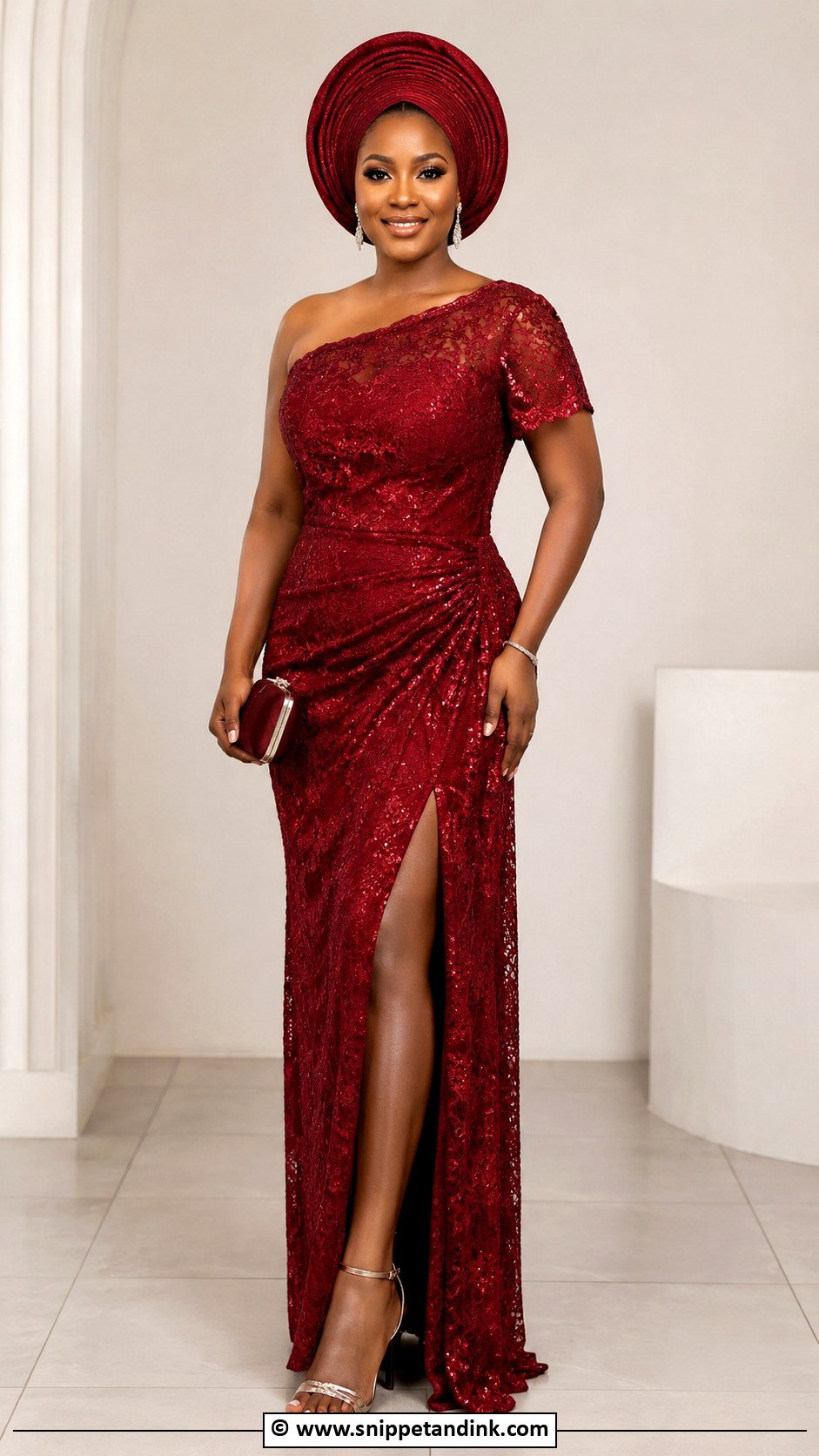
A slit adds movement and a modern edge. It can be at the front, side or slightly off-centre. Placement matters: a high slit suits a fitted or straight gown, while a softer one suits an A-line. The lining has to be finished cleanly at the opening, because raw edges show every time you step. Strappy heels, a clutch and earrings that match the lace tone complete it, and a gele keeps the traditional feel.
19. Nigerian Lace Wrapper Gown
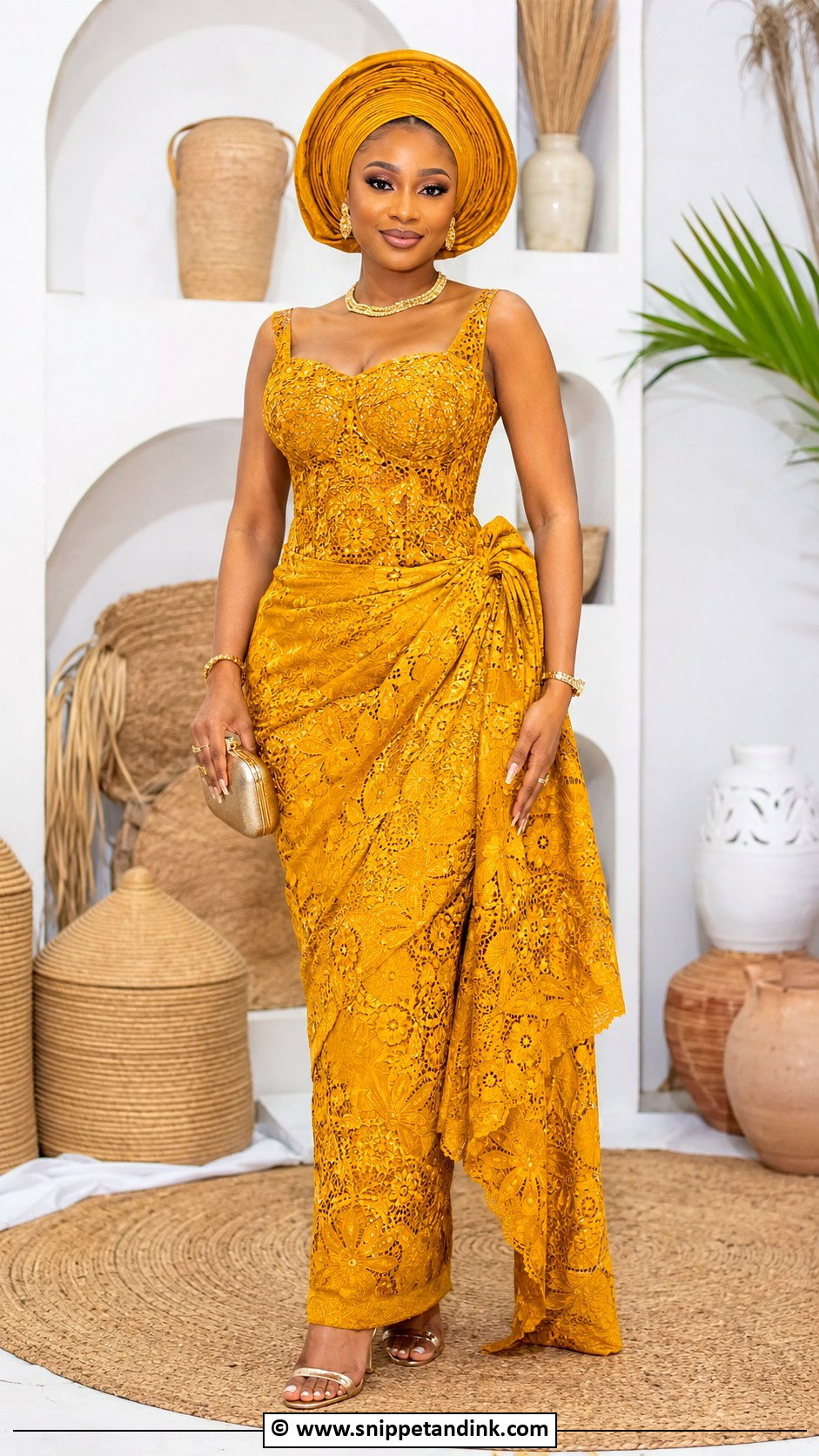
The wrapper gown blends a gown with the look of a traditional wrapper: a fitted top with a wrapped skirt effect, side drape or layered panel. The wrap creates shape around the waist and hips. Choose lace with a strong pattern so the wrap effect is visible. Pair it with a matching gele, coral-style beads or gold jewelry and classic heels. If the wrap is a real tie rather than sewn down, ask for hidden hooks to hold it, since a tied wrap loosens with dancing. Introductions and family ceremonies suit it.
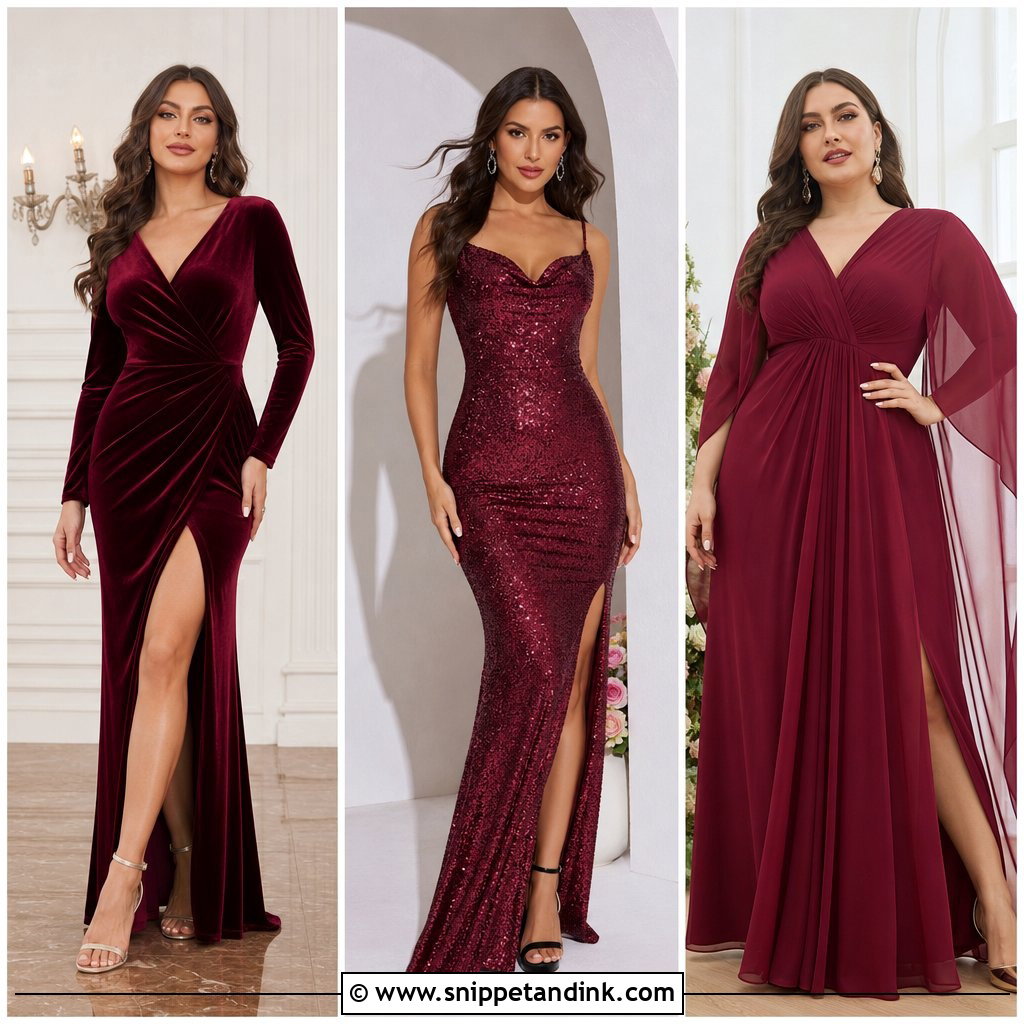
20. Nigerian Lace Gown With Gele
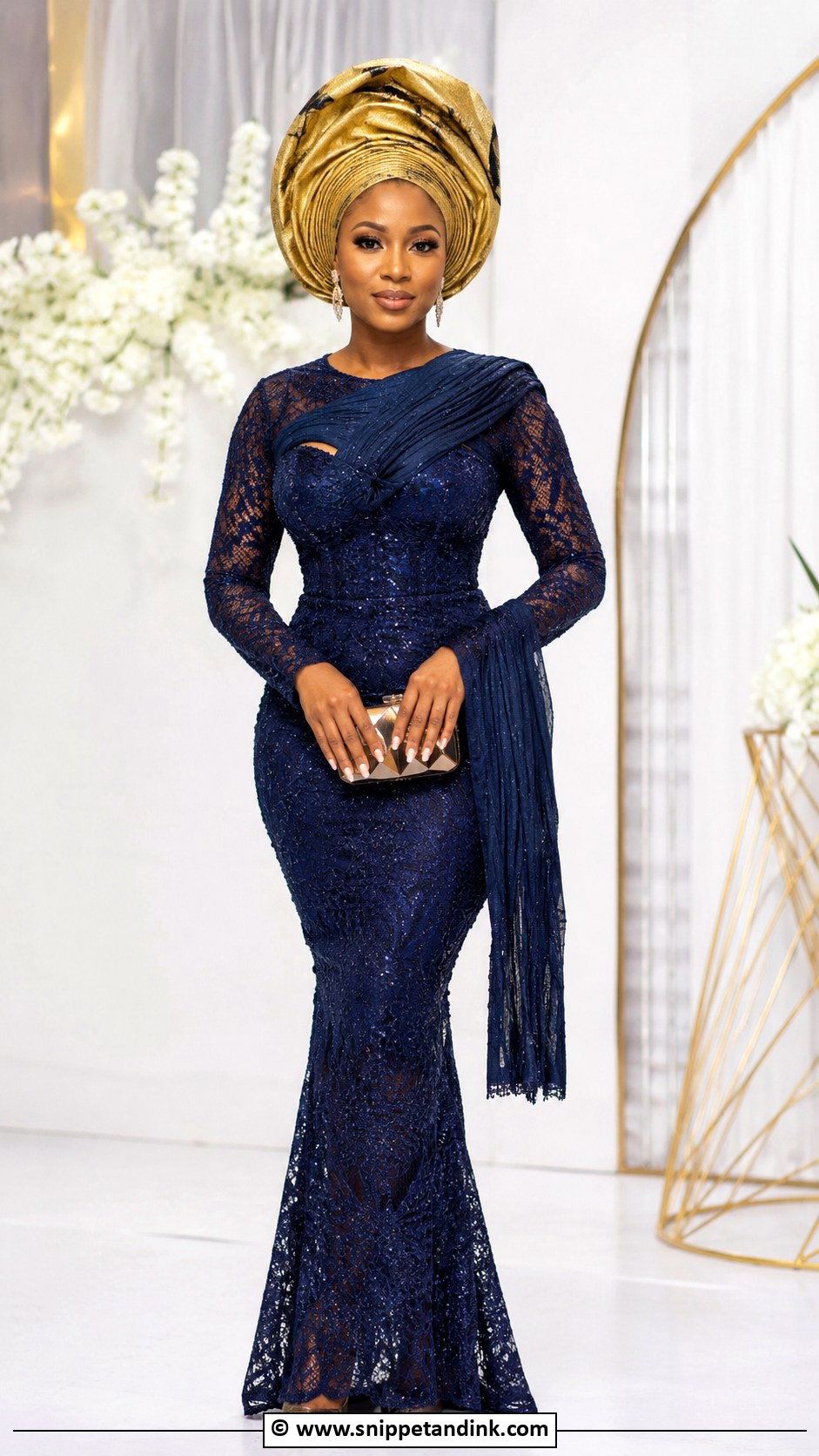
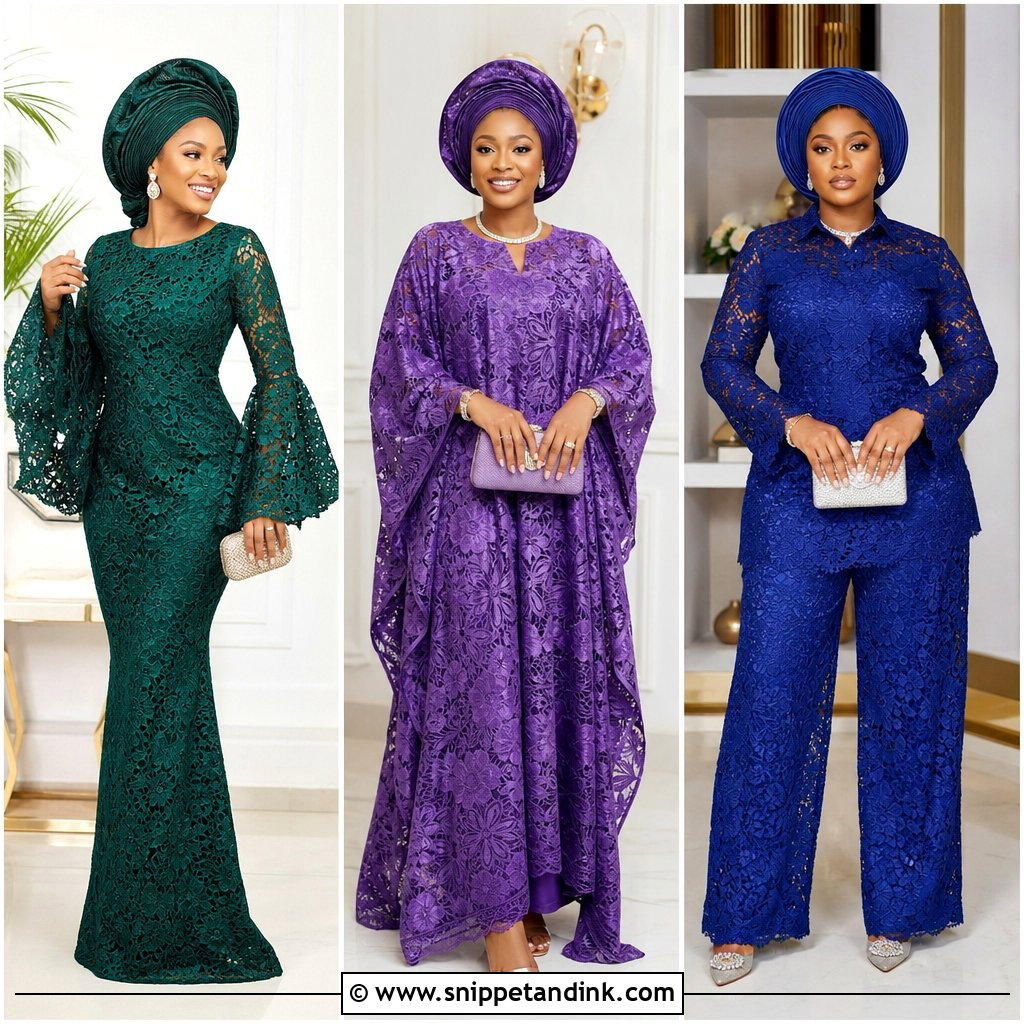
The gele brings height, colour and cultural polish; the lace gown brings structure. Match the gele to the lace, lining, embroidery or accessories so the pairing looks intentional. Gold gele works well with emerald, wine, navy and champagne lace. A fitted gown with a bold gele feels glamorous, while a bubu or kaftan with gele feels regal. Earrings, a clutch and heels complete it. Book your gele tying with time to spare; a sculpted gele is not a five-minute job, and you want your gown on before it’s tied, not after.
21. Nigerian Lace Gown With Beads
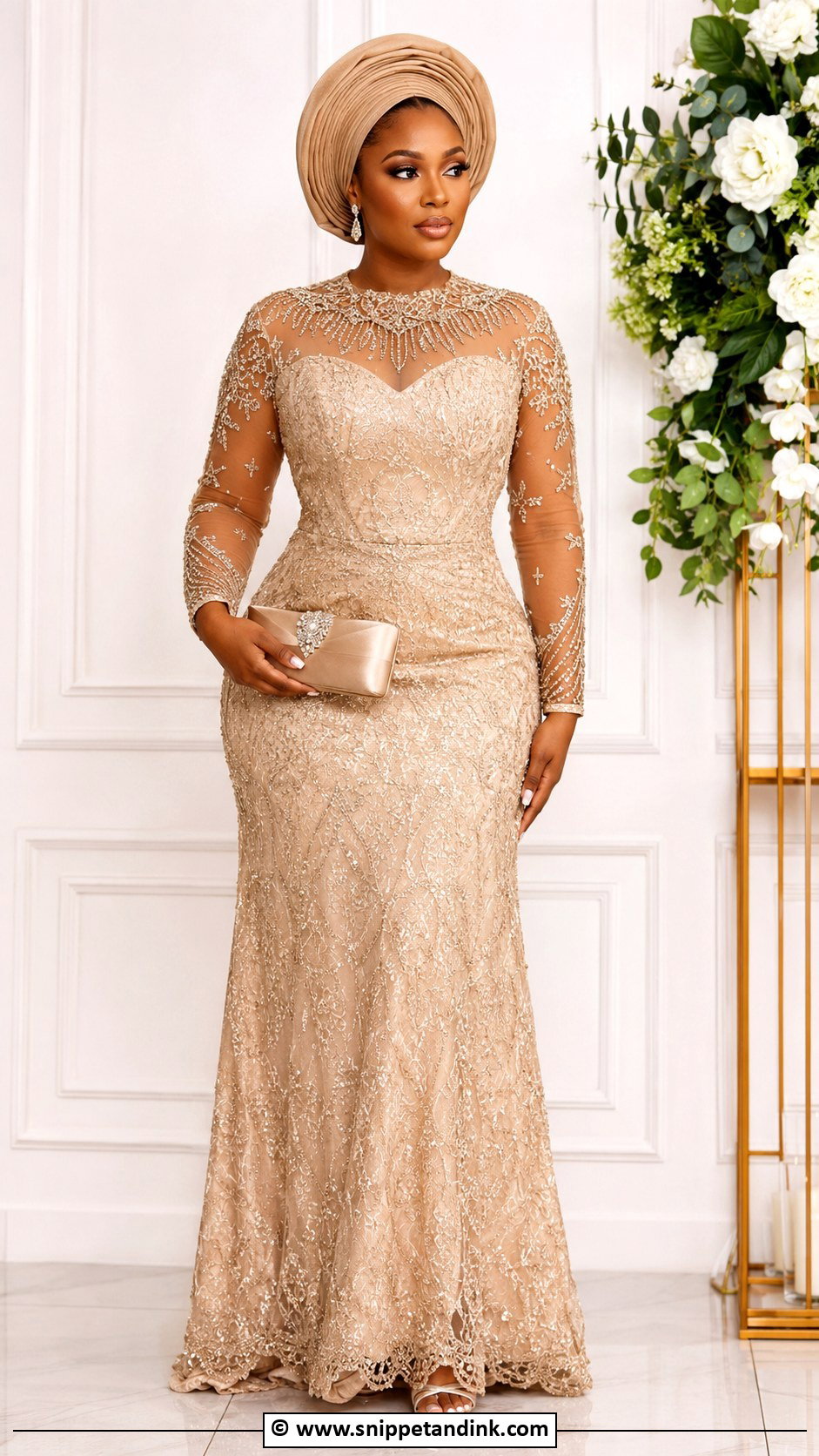
Beading on the neckline, sleeves, waist, bodice or hem adds sparkle under event lighting. Keep placement controlled so the fabric doesn’t get too heavy. A fitted bodice with light beadwork and a smooth skirt rarely goes wrong. With bold beads, choose simple heels, a neat clutch and smaller earrings, and a plain gele to balance. Beads near the seat or the underarm rub and snag, so I’d ask the tailor to keep them clear of those areas. Evening receptions and celebrant looks suit it.
22. Nigerian Lace Gown With Fringe
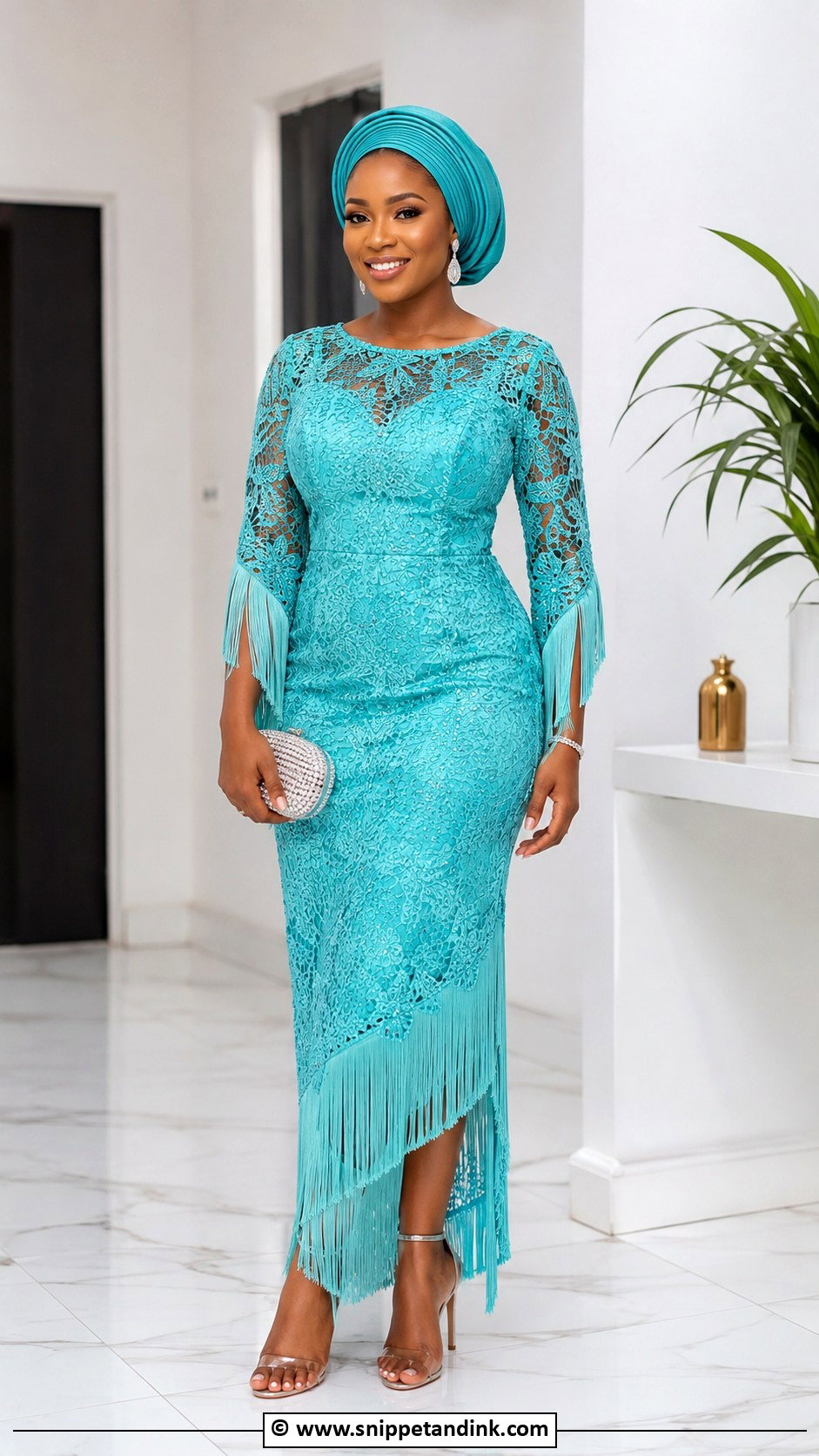
Fringe moves every time you do, so it’s made for a dance floor. It can sit on the sleeves, hem, neckline or side panels, with the lace still the main fabric. A fitted straight gown or a midi carries it well. Sleek heels, a small clutch and minimal jewelry keep the fringe as the highlight, with a simple gele or smooth hair. Fringe tangles in transit, so hang the gown rather than folding it and shake it out before you dress.
23. Nigerian Lace Gown With Illusion Neckline
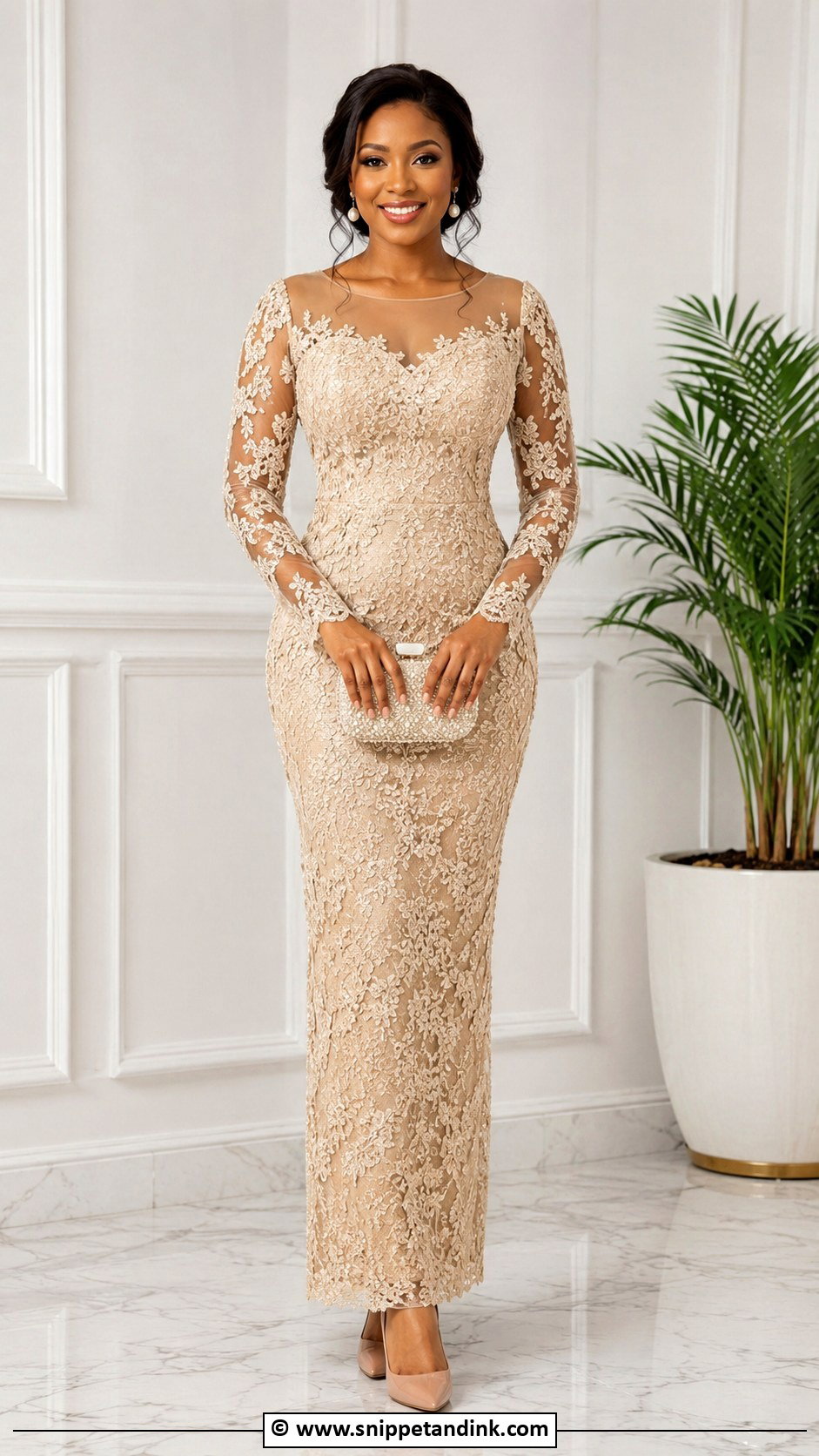
An illusion neckline gives coverage that still looks delicate. The sheer panel can sit at the chest, shoulders or upper sleeves, creating a skin-like effect under the lace. It works with high neck, sweetheart and boat neck designs. Mesh that matches your skin tone gives the cleanest result; check it in daylight, as some nude meshes look grey or pink outdoors. Earrings, a clutch, heels and a neat gele finish it for formal occasions.
24. Nigerian Lace Gown With Detachable Skirt
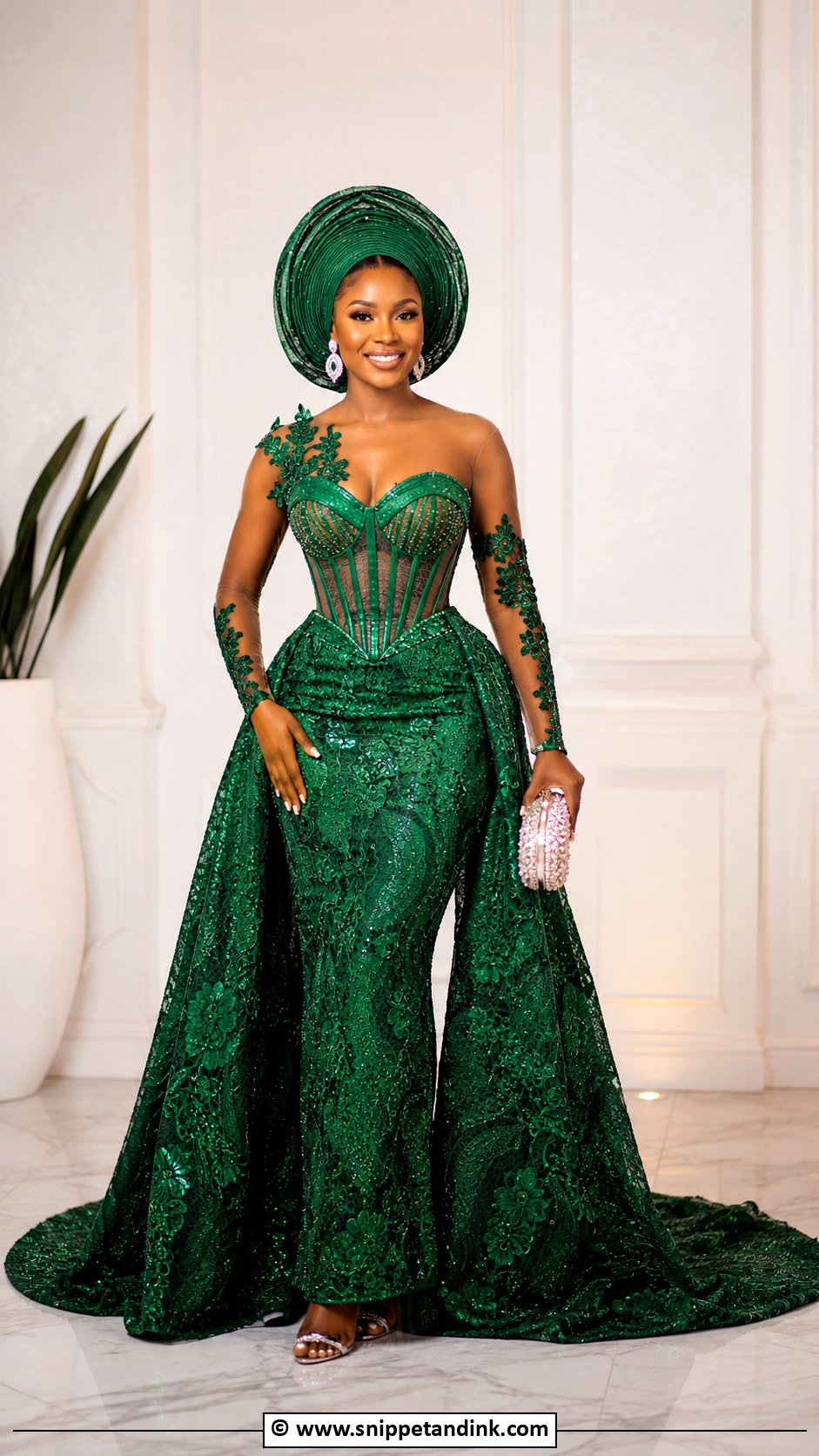
Two looks in one: the main gown stays fitted or straight, and a detachable skirt adds volume for the entrance and photos. Once the formal part ends, it comes off and you can move freely. It suits celebrants and bridesmaids especially. Elegant heels, a clutch and a structured gele complete it. The lace and lining of the removable piece must match the gown exactly, so have both cut from the same bundle, and practise taking it off once before the day.
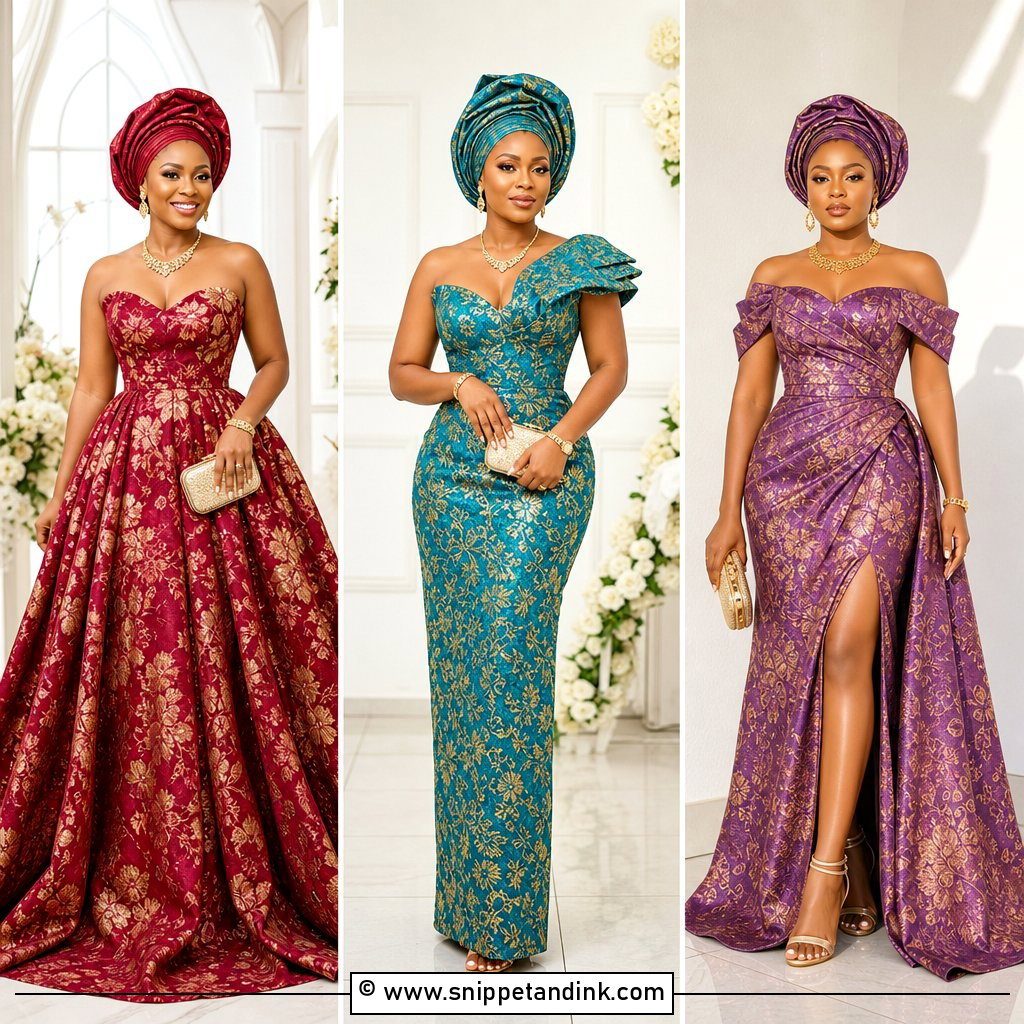
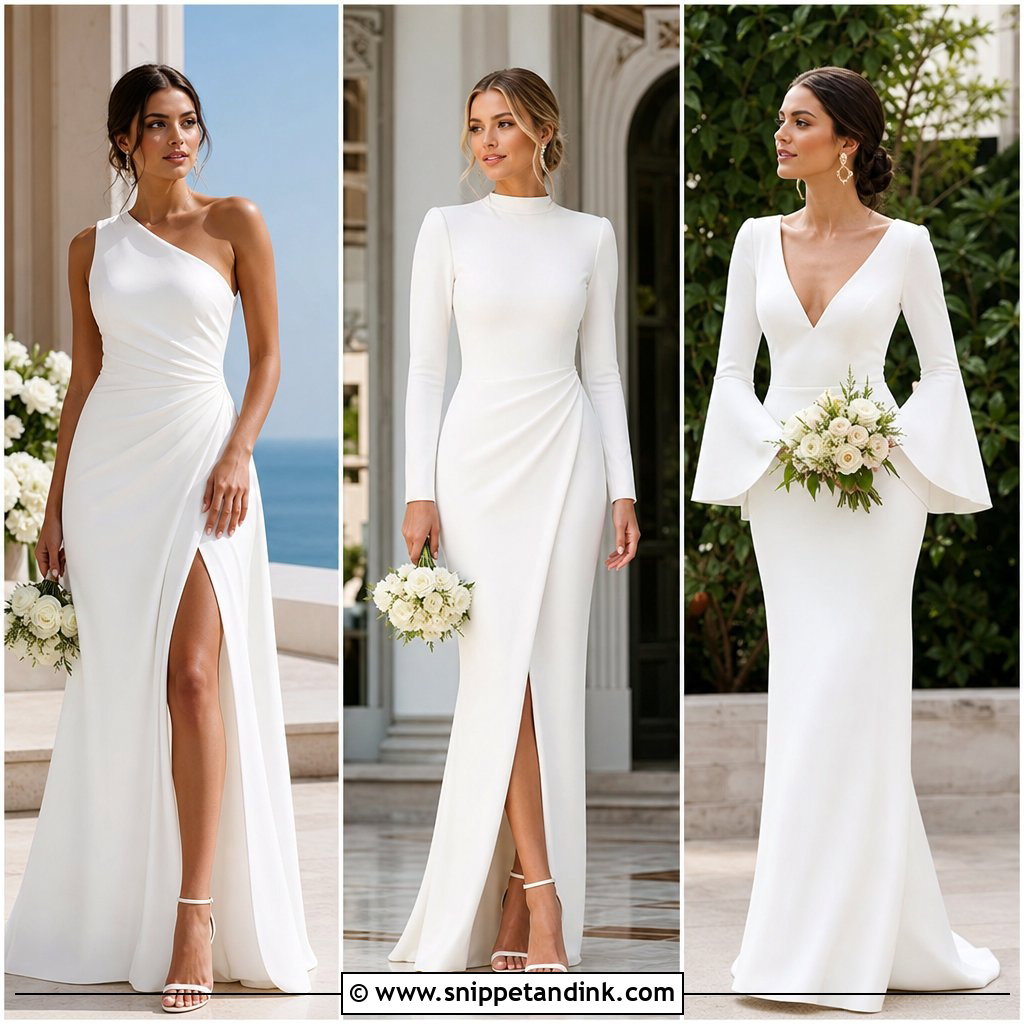
25. Nigerian Lace Gown With Ruffle Hem
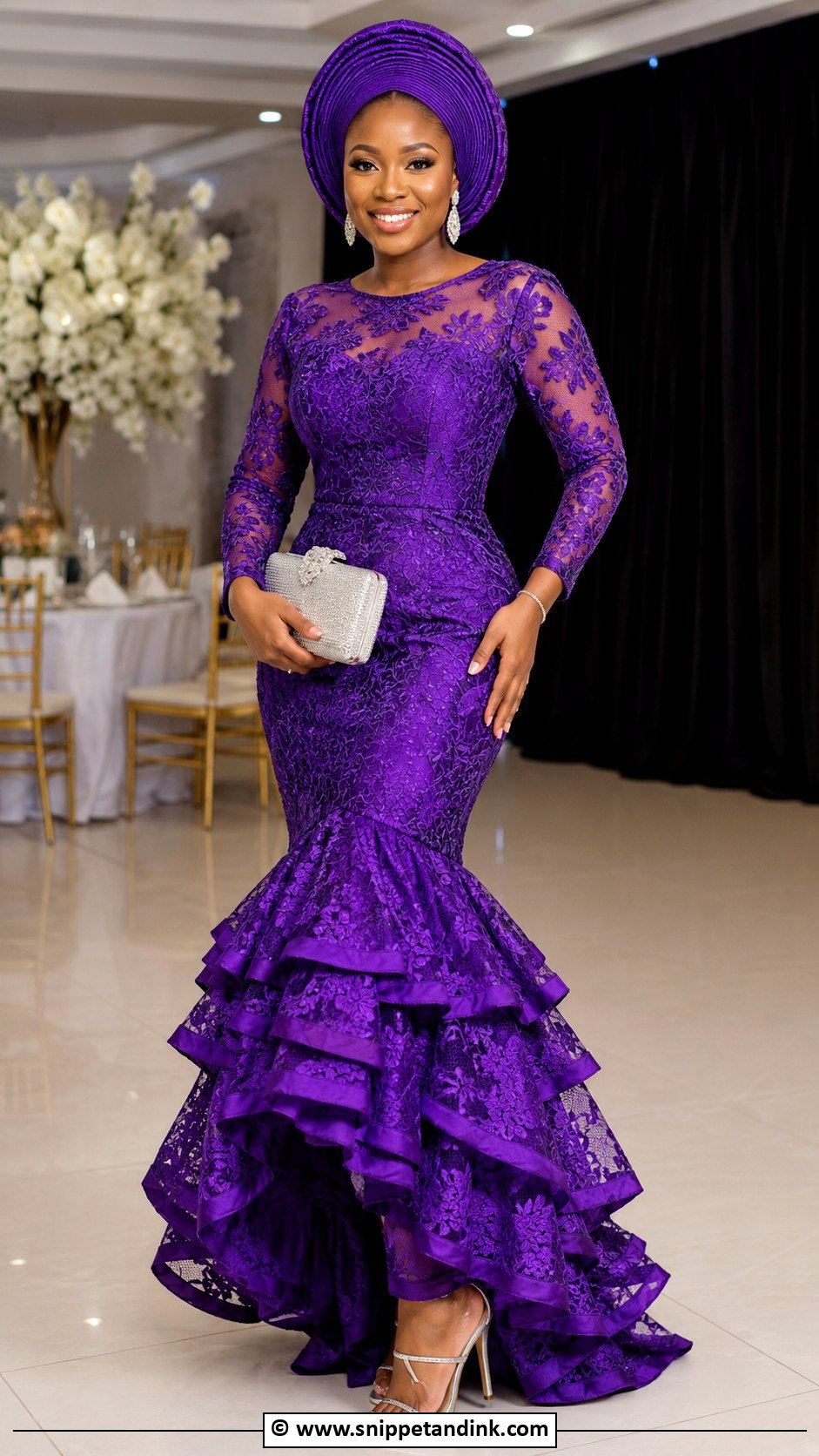
Ruffles at the hem soften the lower half and add movement. They can be small and neat or bold and layered. On a mermaid they exaggerate the flare; on a straight gown they add decoration. Choose heels that give height, a matching clutch and earrings suited to the neckline, and keep the upper body clean if the hem is very full. Long ruffled hems pick up dust on outdoor ground, so get the length right with your actual shoes on.
26. Nigerian Lace Gown With Organza Sleeves
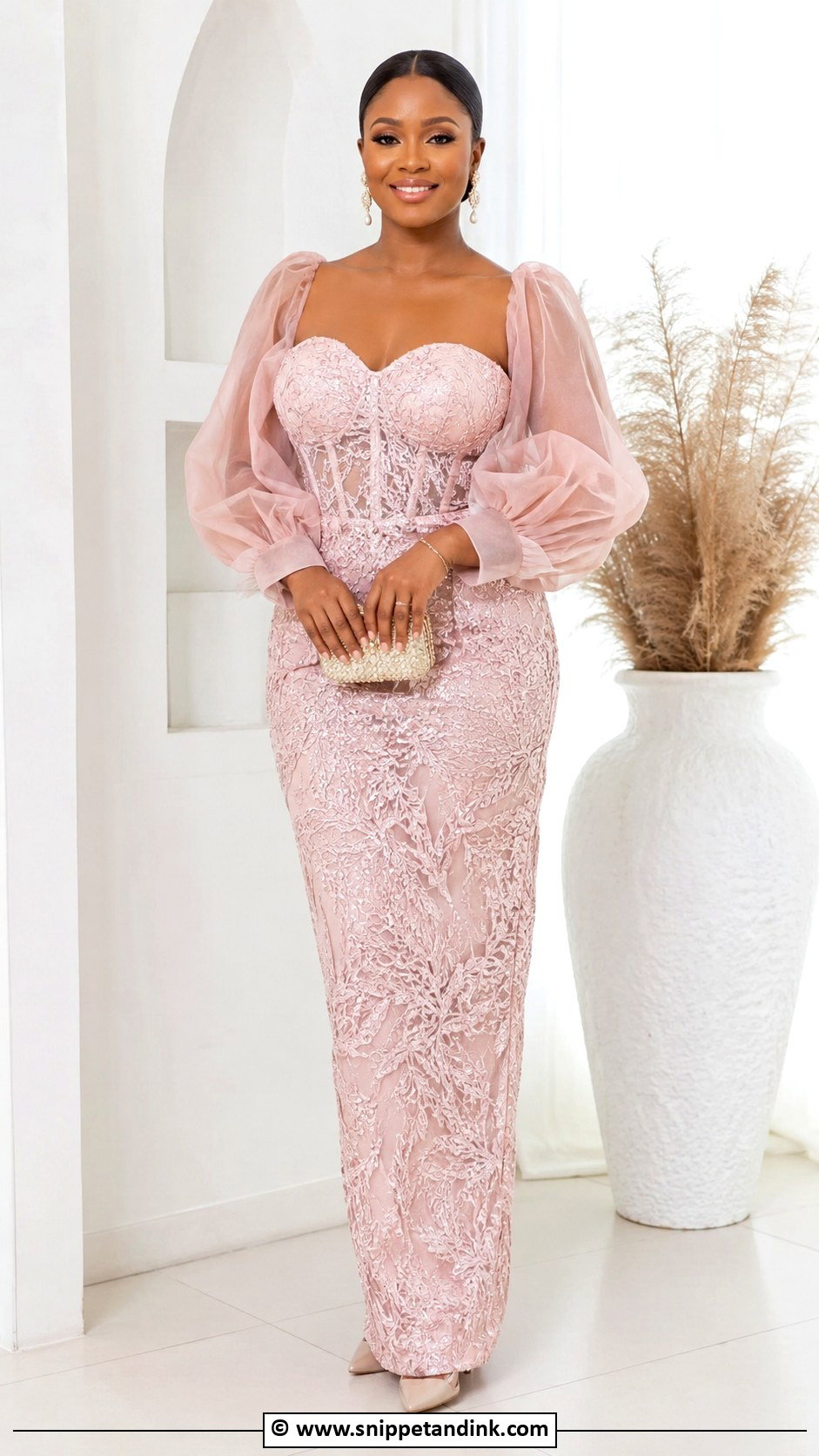
Organza sleeves mix textures: the lace gives pattern and structure, the organza light volume. Puffed organza is popular because it adds shape without weight. A fitted bodice, corset waist or straight skirt suits it. Match the organza to the lace for a smooth look or choose a soft contrast. Organza creases sharply, so keep a steamer handy on the day. Heels, a clutch, simple jewelry and a neat gele or pulled-back hair keep the sleeves visible.
27. Nigerian Lace Gown With Ankara Detail
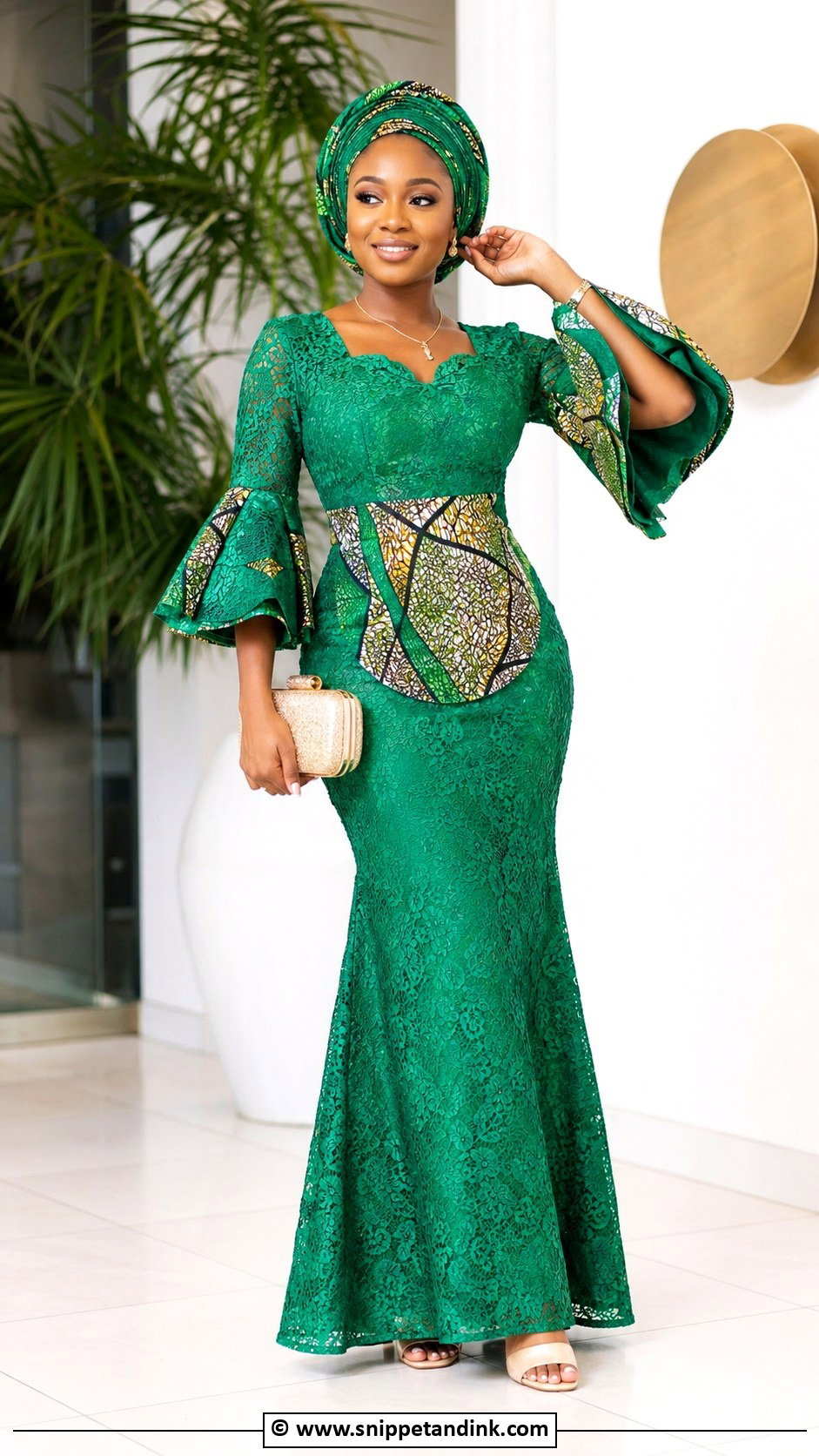
Ankara on the sleeves, waist, hem, peplum, neckline or side panels makes a lace gown colourful and expressive. It works when the colours connect, so pick an Ankara print that contains one shade from the lace or lining. A lace bodice with an Ankara flare feels youthful; small Ankara accents feel subtle. Wash or pre-shrink the Ankara before sewing, since cotton wax prints can shrink and pucker against lace that doesn’t. Simple heels, a clutch and one metal tone in your jewelry finish it.
28. Nigerian Lace Gown With Aso Oke Detail
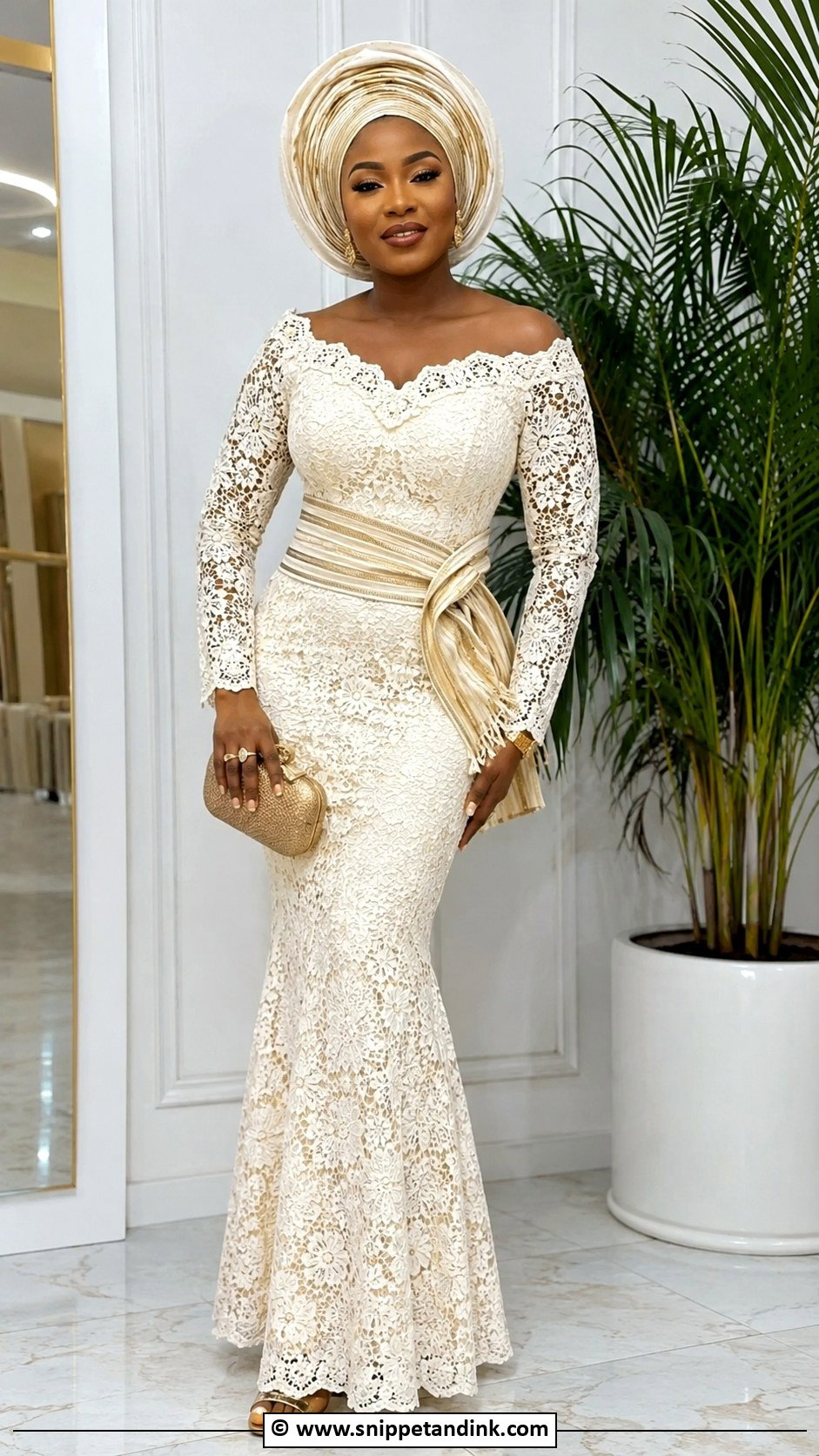
Aso oke adds structure and heritage to soft lace. It can form a waist panel, sleeve trim, neckline border, train or gele. Wear it with a matching aso oke gele, gold jewelry and elegant heels. Keep the gown shape clean, a straight, mermaid or corset gown, so the fabric combination doesn’t look crowded. Aso oke is stiff and heavy, so I’d keep it to panels and trims rather than large areas that need to drape, and save this combination for formal traditional celebrations.
29. Nigerian Lace Gown For Wedding Guest
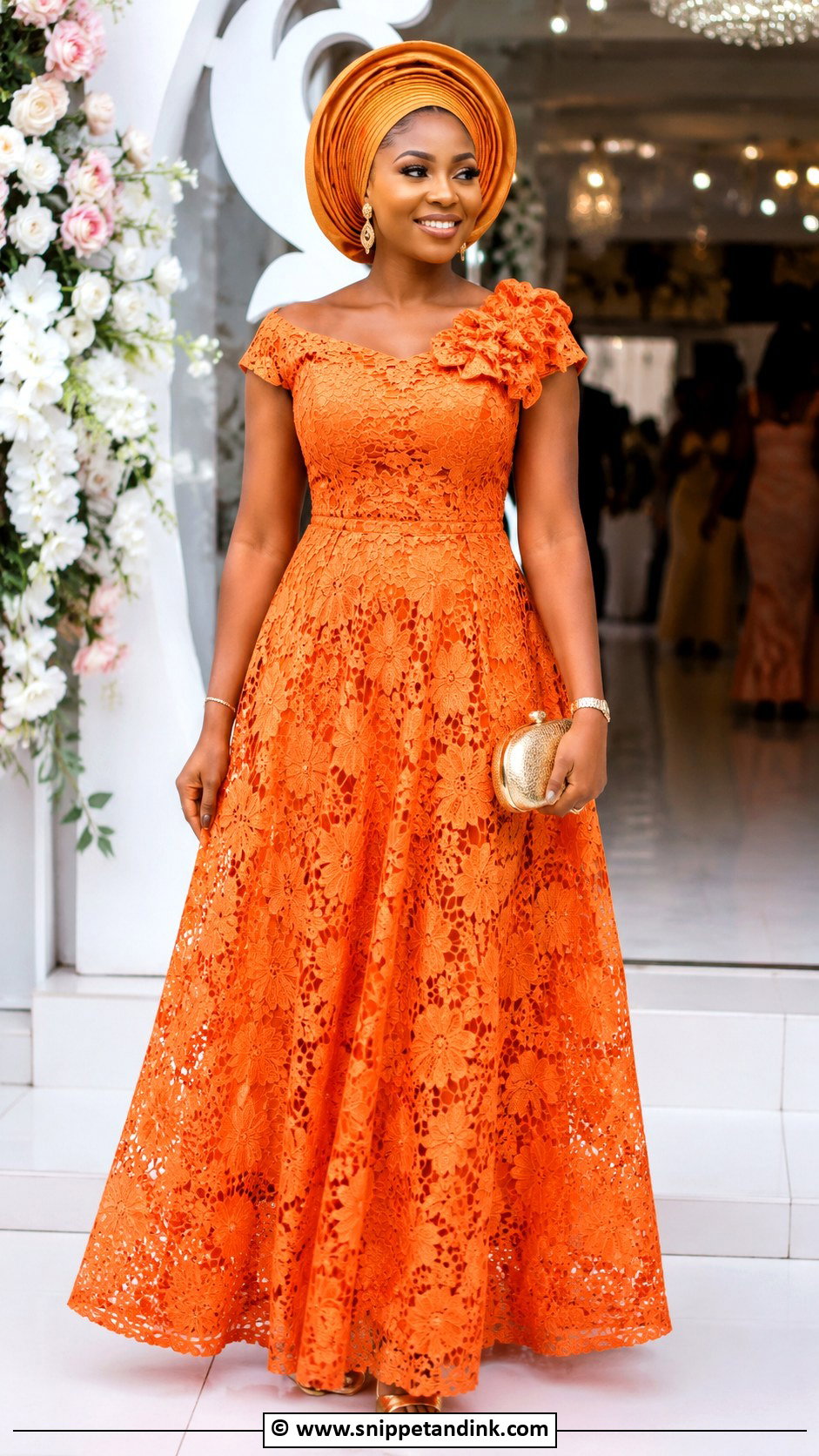
As a guest, you want to look festive and respectful and still be comfortable through a long celebration. Aso ebi colors often set the palette, but the cut should suit your body. Mermaid, A-line, bubu and peplum gowns are all strong options. With bold colours, keep accessories simple; with plain lace, use beadwork, sleeves or a stylish neckline. Never upstage the couple, so if the celebrant’s family is in a particular colour, steer clear of anything that looks like it belongs in their group.
30. Nigerian Lace Gown For Bride
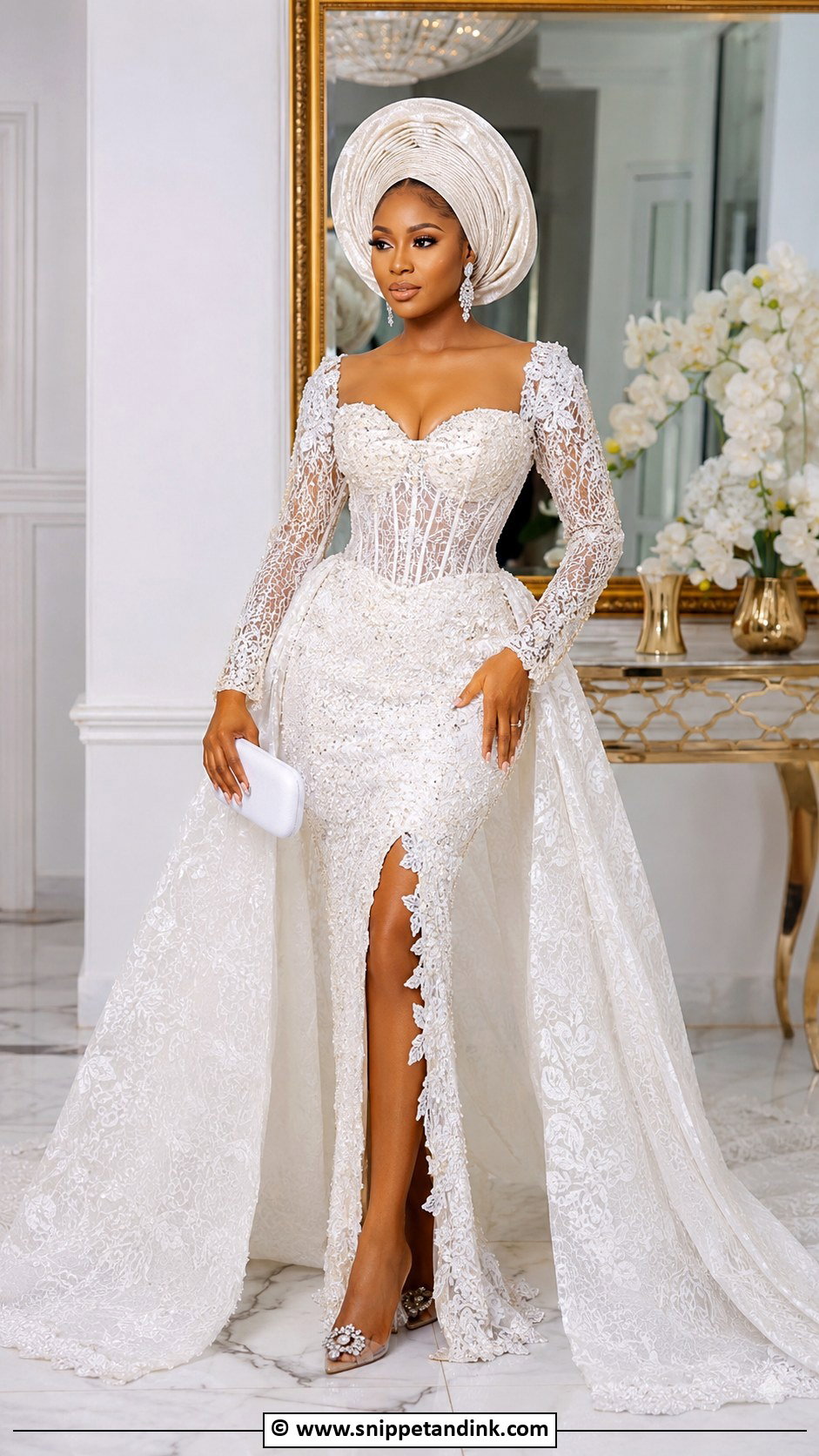
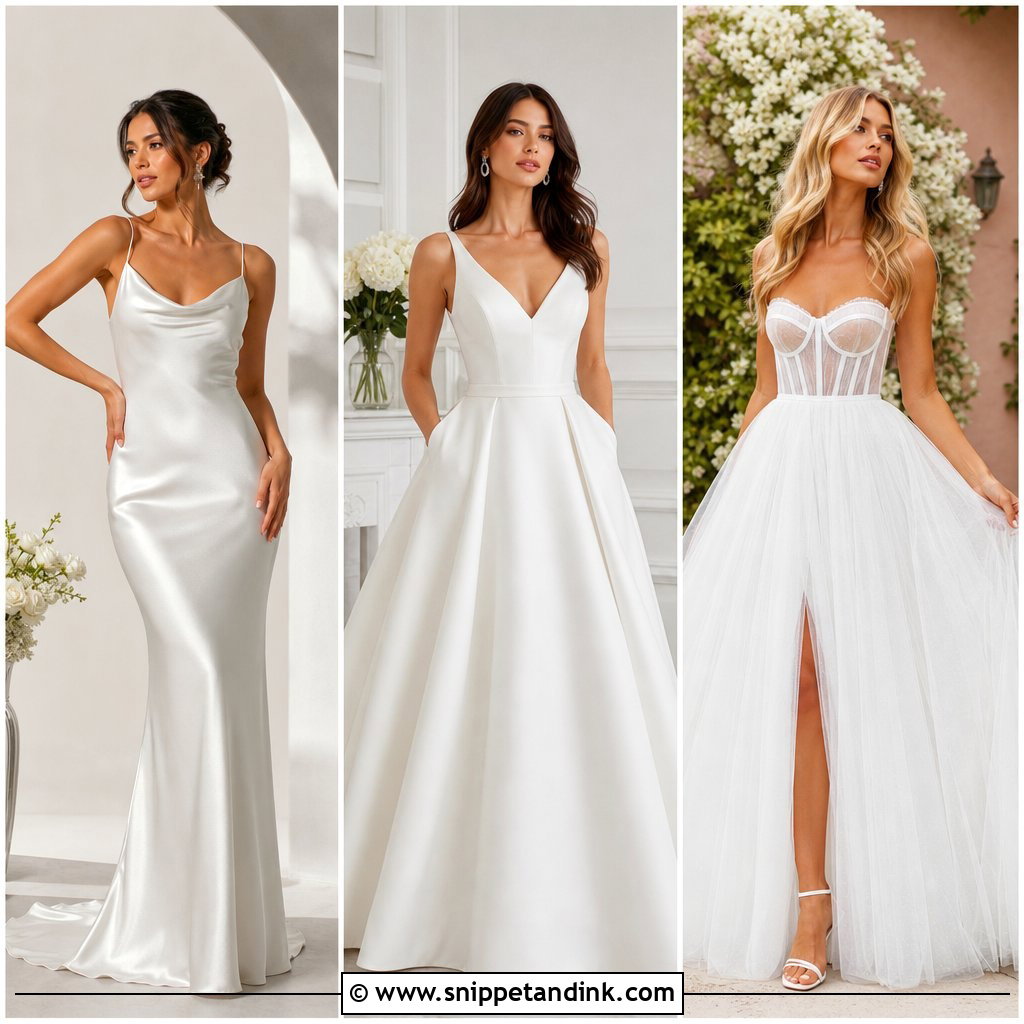
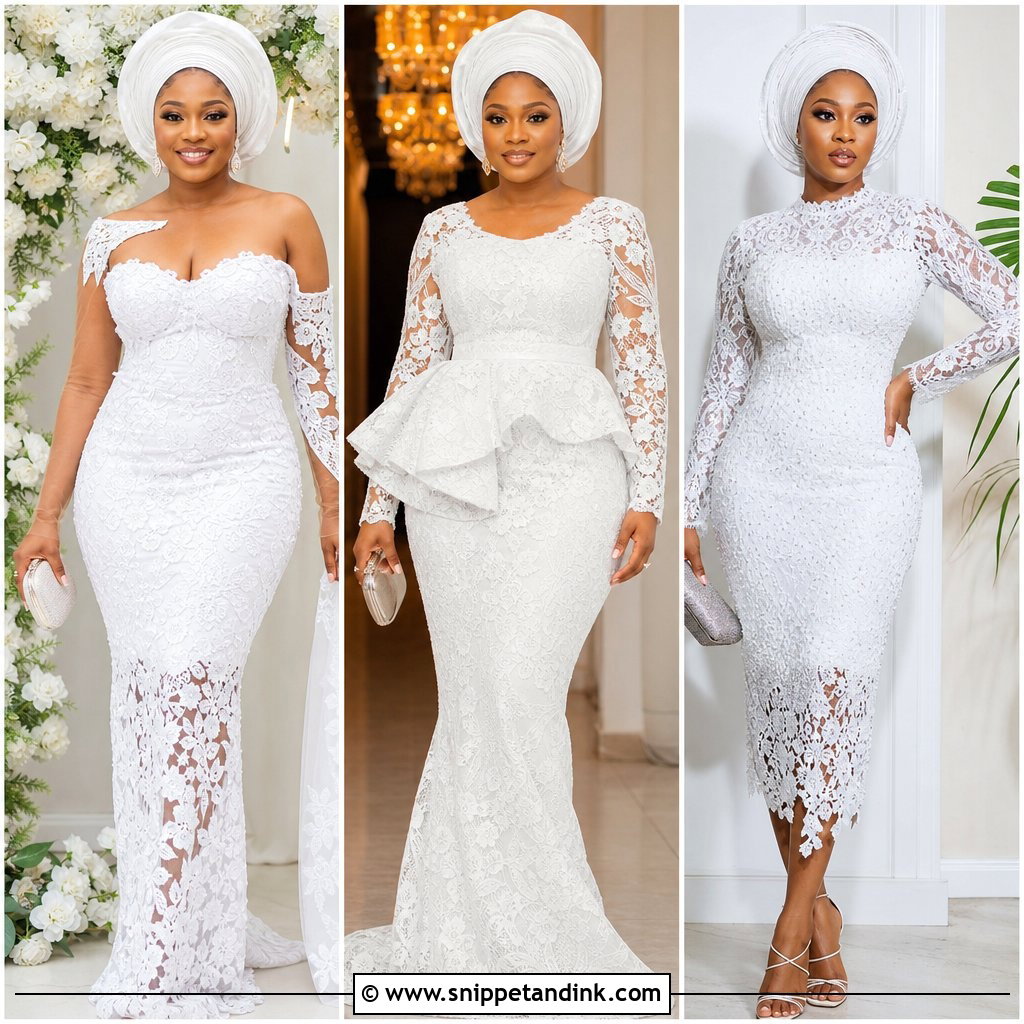
For a bride, white, ivory, champagne, blush, gold and soft silver lace are the usual choices, set by the event’s theme. A corset mermaid, ball gown, detachable skirt gown or lace gown with train all read bridal. Finishing matters most: the lining, beadwork, sleeves and fit should be immaculate, because she’ll be photographed close up all day. A bridal gele, sparkling earrings, a neat clutch and comfortable heels complete it. Many brides change outfits between the traditional ceremony and reception, so plan each gown’s fittings separately.
31. Nigerian Lace Gown For Bridesmaid
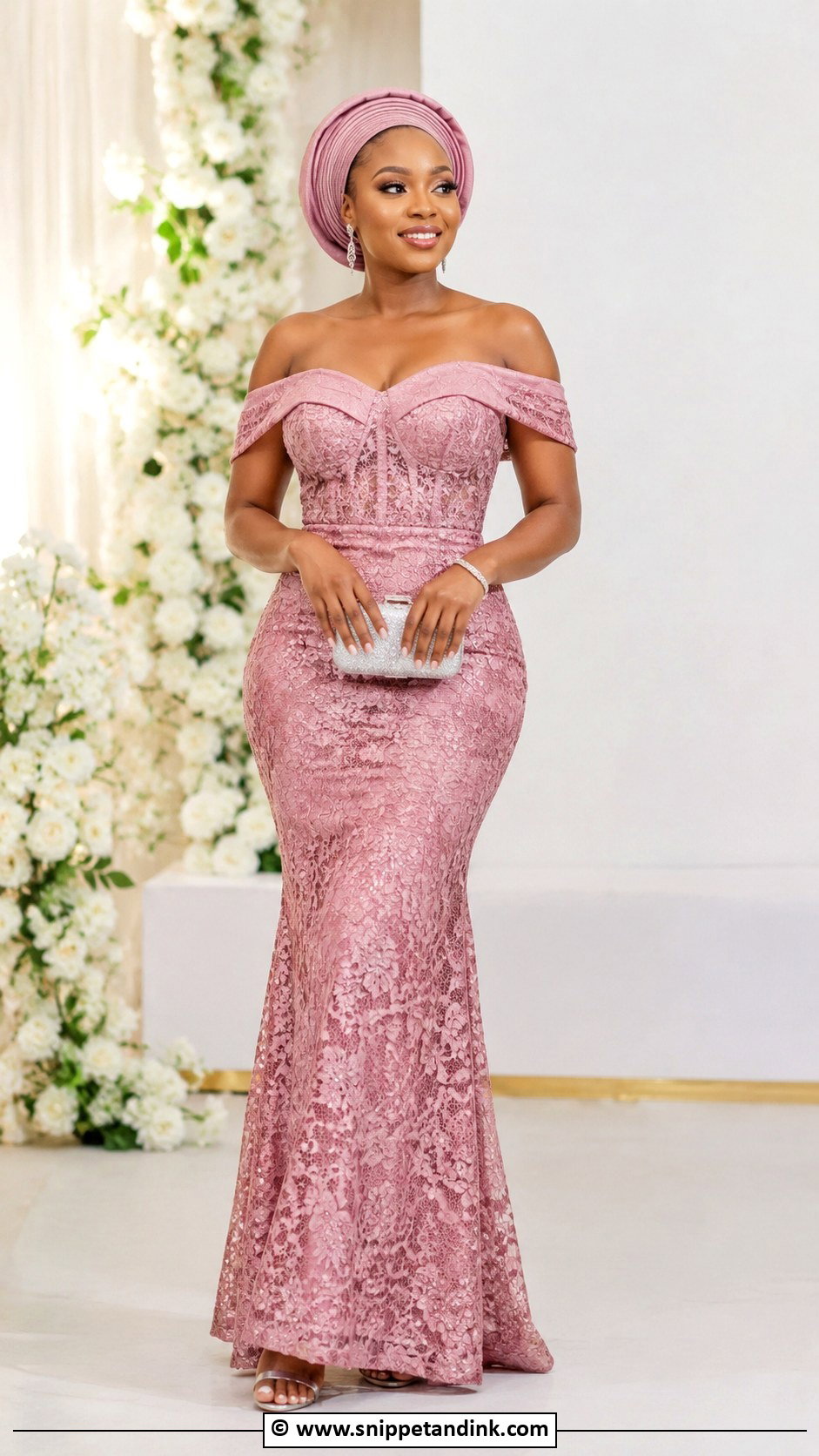
Bridesmaids look coordinated, not identical, when the bride picks one lace colour and lets each woman choose her cut: mermaid, A-line, straight or off-shoulder. Matching gele, similar jewelry and shoes in one colour family hold the group together. Keep beading consistent so the photos look neat. If several tailors are involved, give them all the same reference for hem length and lining colour, since small differences show in group pictures.
32. Nigerian Lace Gown For Plus Size
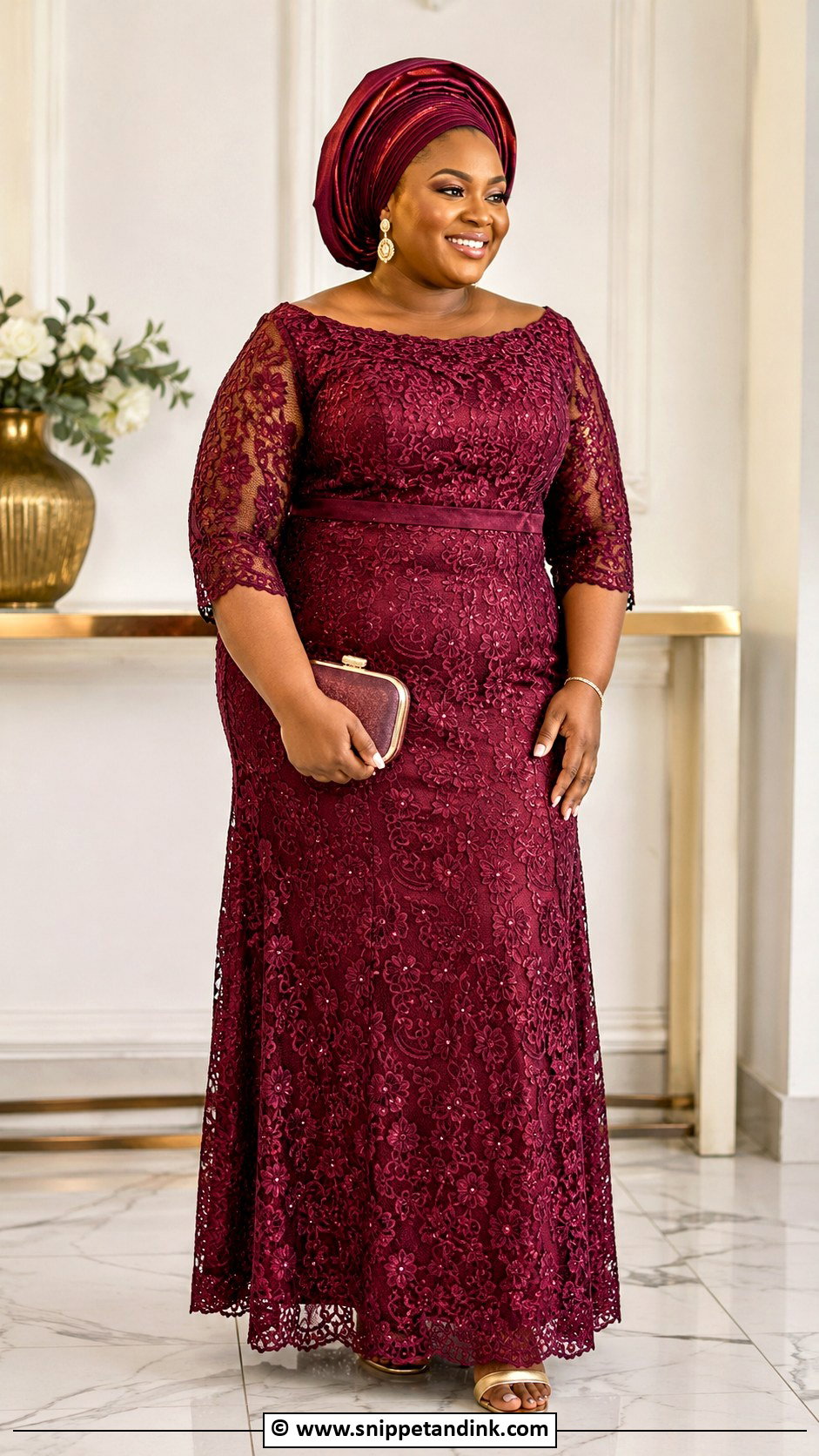
For plus size women, comfort, proportion and strong tailoring come first. A-line, peplum, bubu, kaftan and wrap-effect gowns all flatter. A defined waist, good lining and a smooth fit look polished without feeling tight. Medium-scale lace patterns tend to balance best; avoid bulky seams where you want a clean line. Supportive heels, a structured clutch, earrings and a gele that suits your face shape complete it. The best plus size lace gown is the one you stop thinking about once you’ve put it on.
33. Nigerian Lace Gown For Mature Ladies
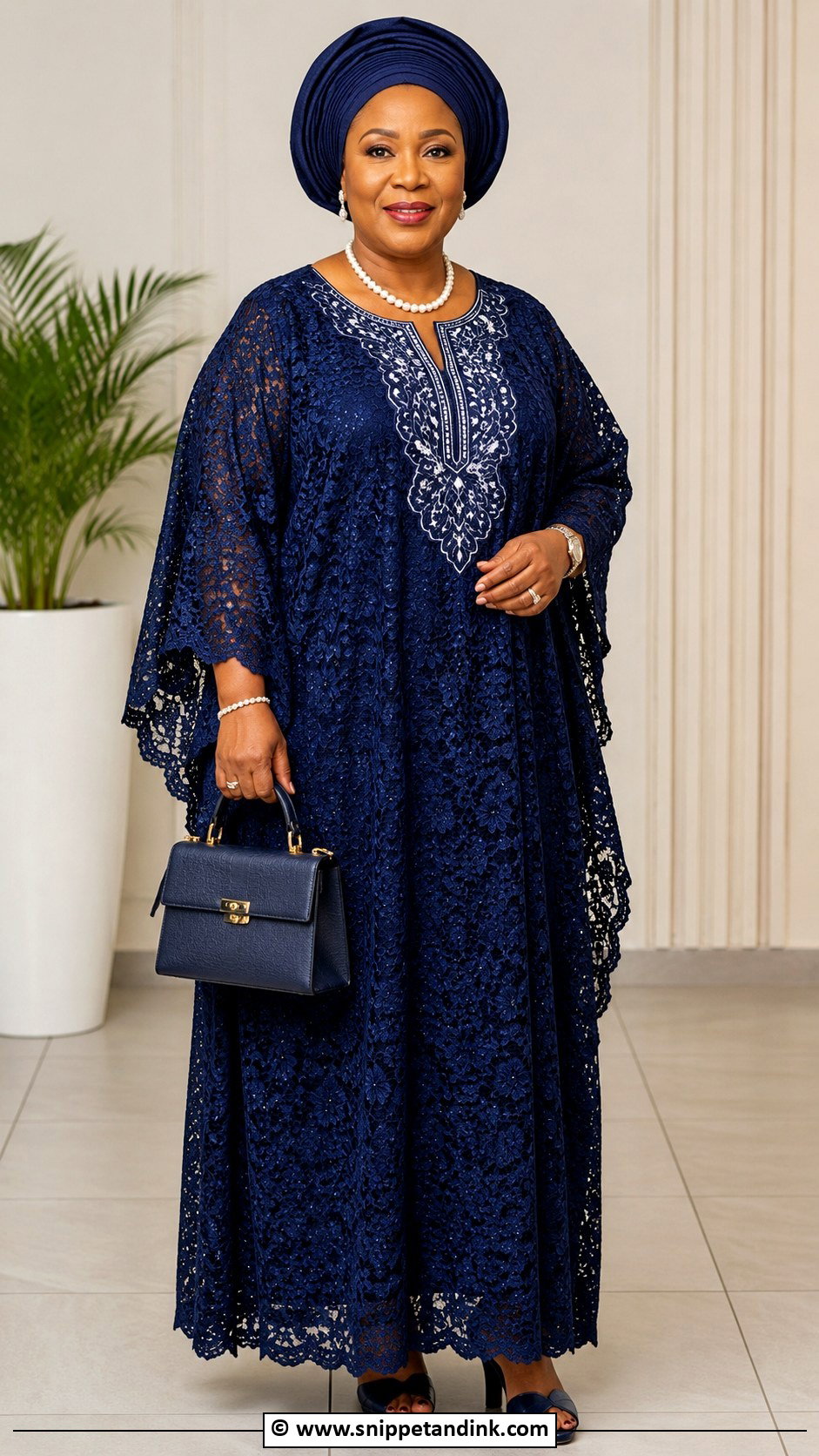
For mature women, elegance, comfort and good finishing come first. Long sleeves, kaftans, bubu gowns, A-line cuts and high necks are flattering choices. Navy, wine, emerald, chocolate, champagne and deep purple feel graceful without being loud. Embroidery, scalloped edges and light beadwork add interest without overwhelming. A classic gele, low or mid heels, a structured handbag and tasteful jewelry finish it. Mothers and aunties are often on their feet hosting all day, so I’d prioritise a lining that breathes and shoes that have been worn in.
34. Nigerian Lace Gown For Slim Ladies
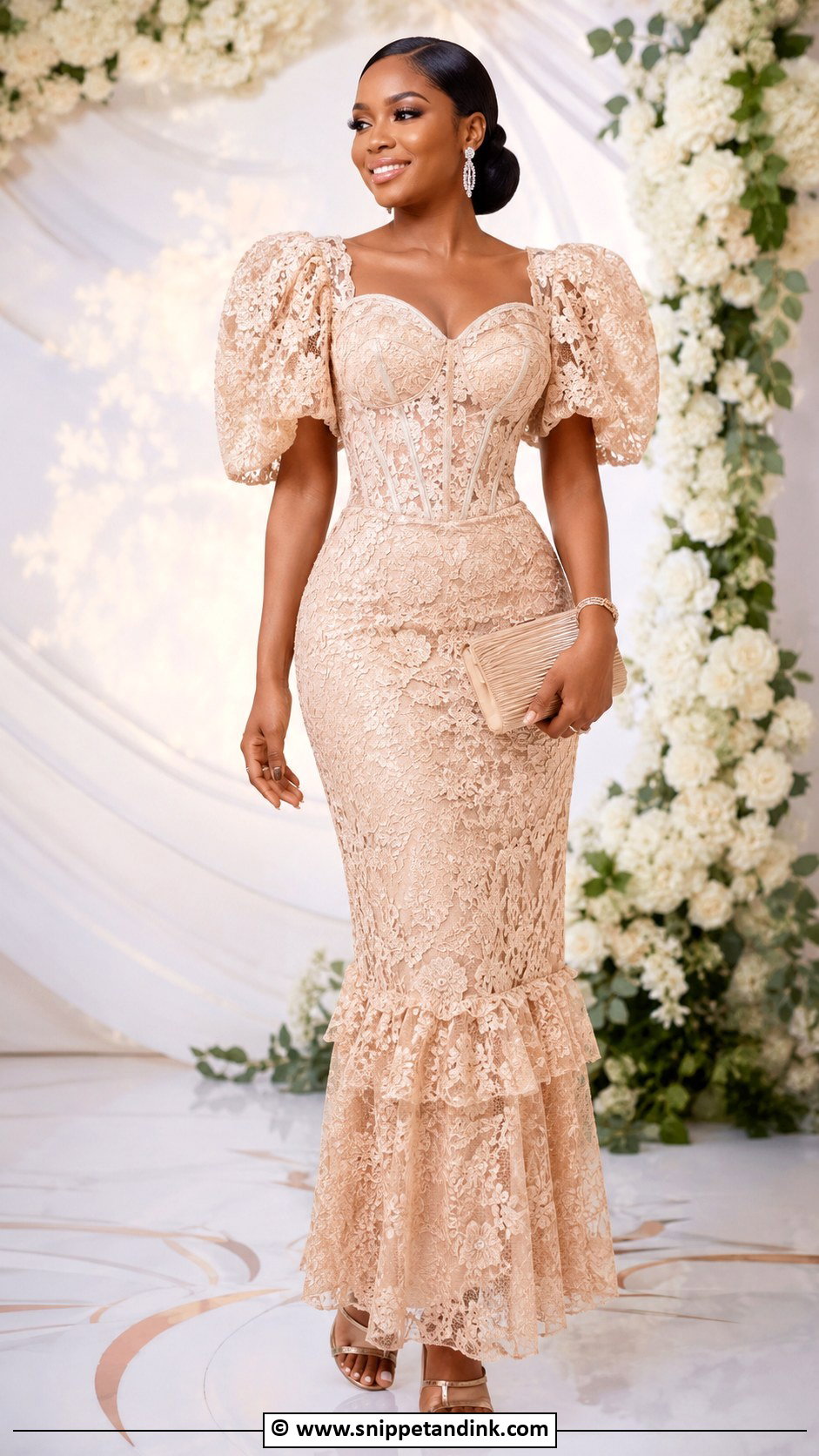
Slim figures can use volume, texture and structure for a balanced shape. Puff sleeves, peplum waists, ruffle hems, ball skirts and layered details add fullness where you want it, and a corset bodice defines the waist. A sleek straight or mermaid gown also works, especially with beadwork or a dramatic sleeve. Choose a gele that matches the scale of the gown; a huge gele on a slim straight dress can look top-heavy. Heels, a clutch and earrings complete it.
35. Nigerian Lace Gown For Simple Look
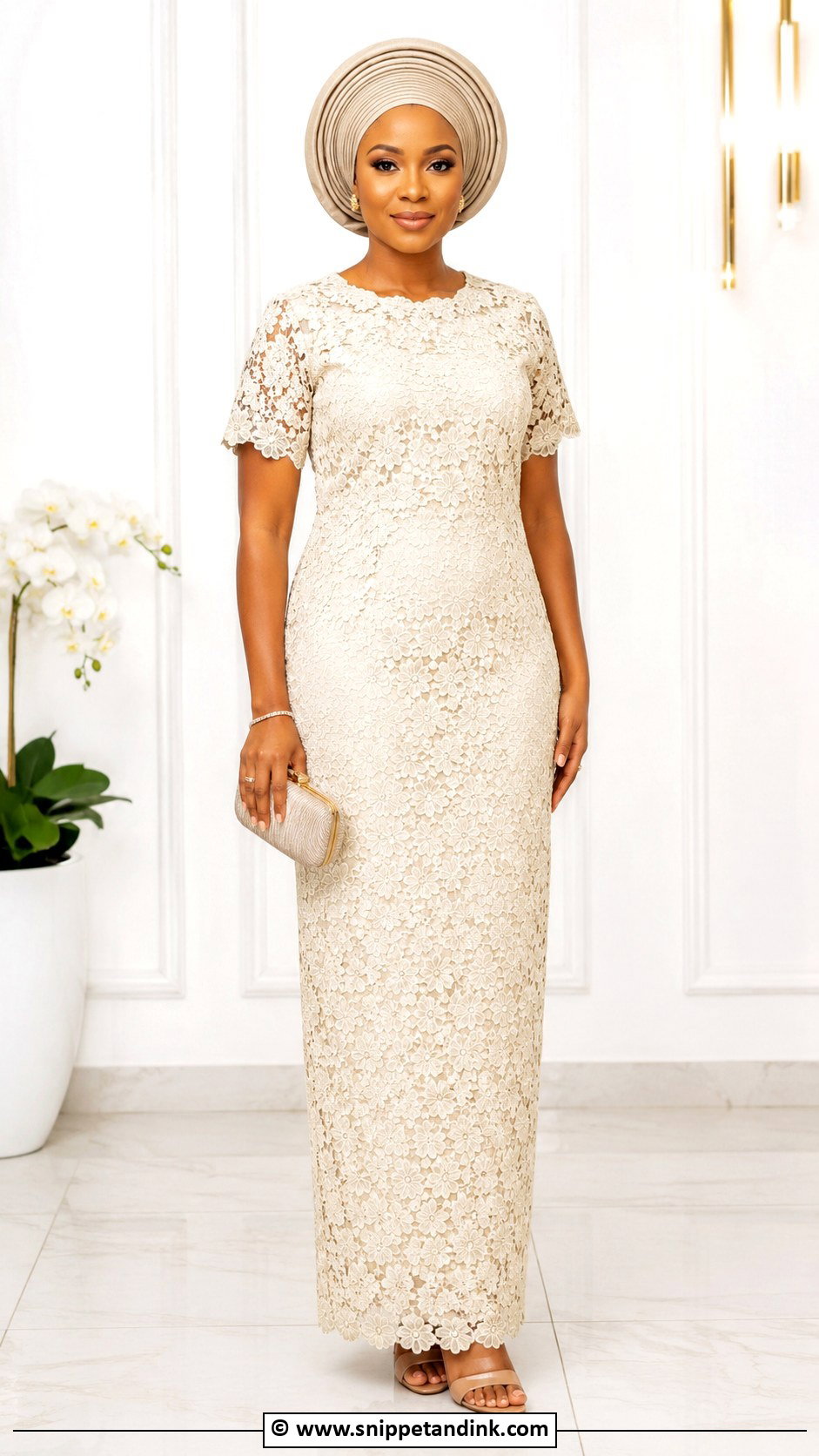
Sometimes the right gown is the quiet one. A clean straight, A-line, maxi or short sleeve design lets the lace carry the look, without excessive beads, ruffles or trains. Smooth lining, good tailoring and a flattering neckline make it look expensive. Classic heels, a small clutch, simple earrings and a softly wrapped gele if the event is formal finish it. With so little decoration, the quality of the lace itself shows, so this is where a better grade of fabric is worth the money.
From Fabric Bundle to Fitted Gown Without a Midnight Rush
In peak wedding season, tailors are fully booked, and aso ebi fabric often arrives late from the family. The gowns that go wrong are almost always the ones handed over in the final week.
- Deliver the lace and lining to your tailor as early as you can, ideally a month or more ahead in busy periods, with a clear picture of the style.
- Agree on at least one fitting before the final hem is cut, and bring the shoes and underwear you’ll wear on the day.
- Check the inside at collection: seams overlocked or bound, beads secure, the zip running smoothly, and the lining finished at every opening.
- Try the gown on at home while sitting, raising your arms and dancing for a minute. Small fixes are easy a week out and impossible on the morning.
On the day, dress before the gele is tied and before makeup is finished if the neckline goes over your head. Pack a small kit in your clutch: a few safety pins, a needle threaded in the lace colour and tape for straps. After the event, have heavily beaded gowns cleaned by someone who handles lace, and store them flat or loosely folded with tissue rather than hanging, since the weight of beading can stretch net lace on a hanger over time.
Lace, Lining and a Tailor Who Finishes Well
A bold mermaid, a comfortable bubu, a structured corset, a modest high neck or a dramatic train, lace adapts to almost any style of Nigerian occasion dressing. What makes the difference is the occasion, your comfort, your shape and the finishing. Clean lining, neat seams, balanced accessories and the right gele can change a whole outfit. Simple, regal, youthful or glamorous, start with a lace you love and a tailor you trust, and the rest follows.
You'll Like These Ideas:


Leave a Reply