
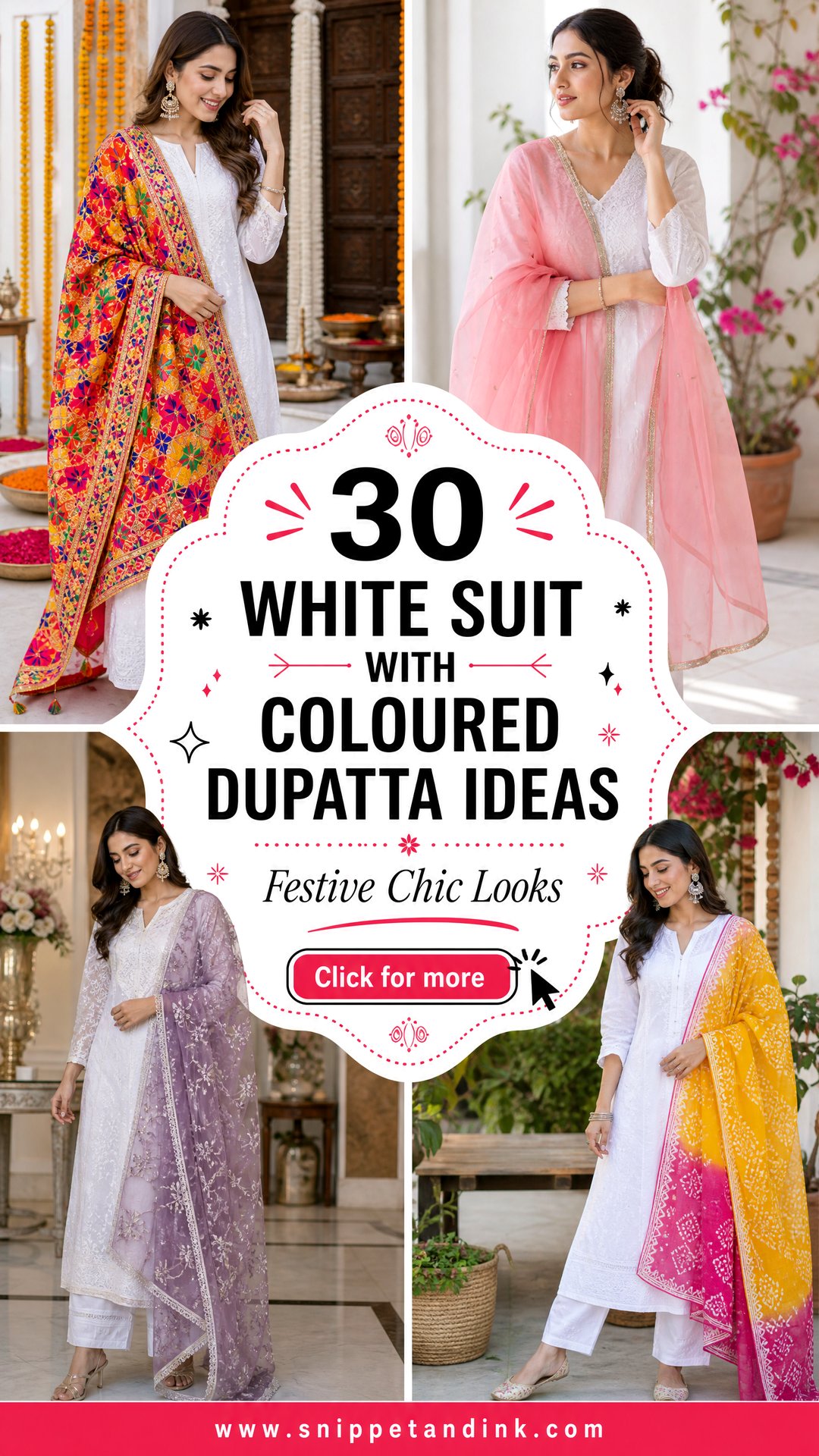
When a client tells me she has nothing to wear to a mehndi, a pooja or a cousin’s sangeet, I usually ask whether she owns a plain white suit. If she does, she’s most of the way there. The suit stays the same and the dupatta does the work: red and bandhani for a festive day, pastel organza for a lunch, phulkari for a family function, mirror work for a music night. A vibrant dupatta over white gives contrast without the weight of a full embroidered outfit. Below I’ve paired thirty dupattas with the white kurta shapes I use most, from straight cotton sets to anarkalis and chikankari, along with the fabric quirks that change how each one wears.
Draping Changes This Outfit Before Colour Does
The same red dupatta can look like a festive outfit or a casual one depending only on how it’s worn. When I style a white suit, I decide the drape first, then match the fabric to it, because not every dupatta can hold every drape.
- One shoulder, pleated and pinned: the most formal drape. It needs a fabric with some body, like silk, Banarasi or organza. Pin the pleats at the back of the shoulder, not the front.
- Over both arms, behind the back: shows the full front of the kurta and suits anarkalis and chikankari. Chiffon and georgette fall best this way.
- Across both shoulders like a cape: lets bandhani and leheriya patterns spread out. Good for daytime and for dancing.
- Across the body and tucked at the waist: the practical choice for a sangeet or for serving at a family function, since it frees both hands.
Length matters too. Most dupattas run around two and a quarter to two and a half metres, but handmade pieces vary. If you’re petite, a long one-shoulder drape can trail on the floor, so I fold the extra length into the pleats before pinning. Use small safety pins on the inside of the kurta, never through the embroidery itself.
1. White Suit With Red Dupatta
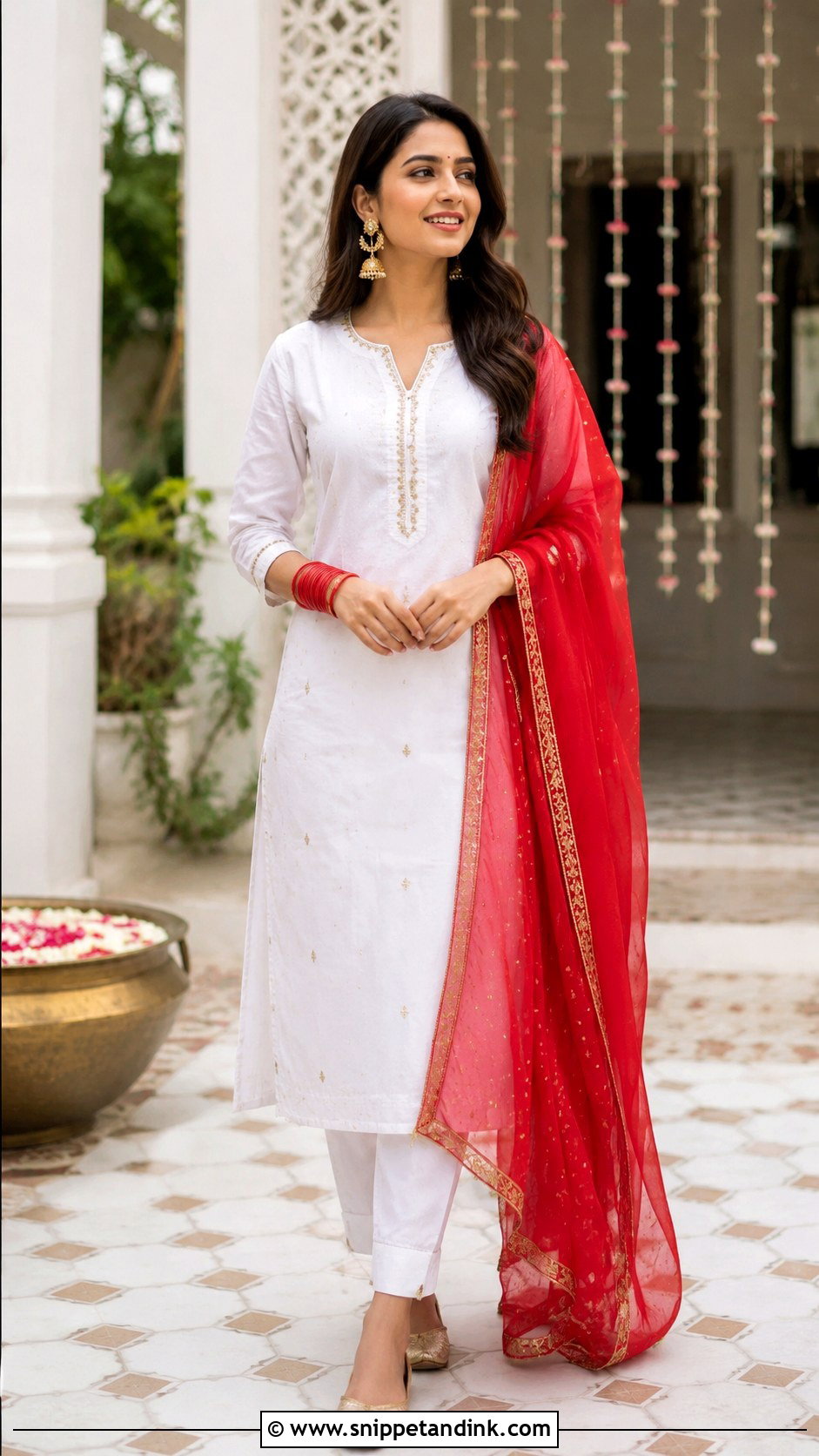
Red is the pairing I’d start with if you only buy one dupatta. A straight white kurta with cigarette pants or a churidar gives it a neat frame, and a red chiffon, silk or bandhani dupatta carries the festivity. I lay the border over one shoulder and pin it at the back of the kurta so the edge stays visible in every photo. Gold jhumkas, a few red bangles and nude or gold juttis are enough. Carry a small potli; anything larger competes with the red.
2. White Suit With Pink Dupatta
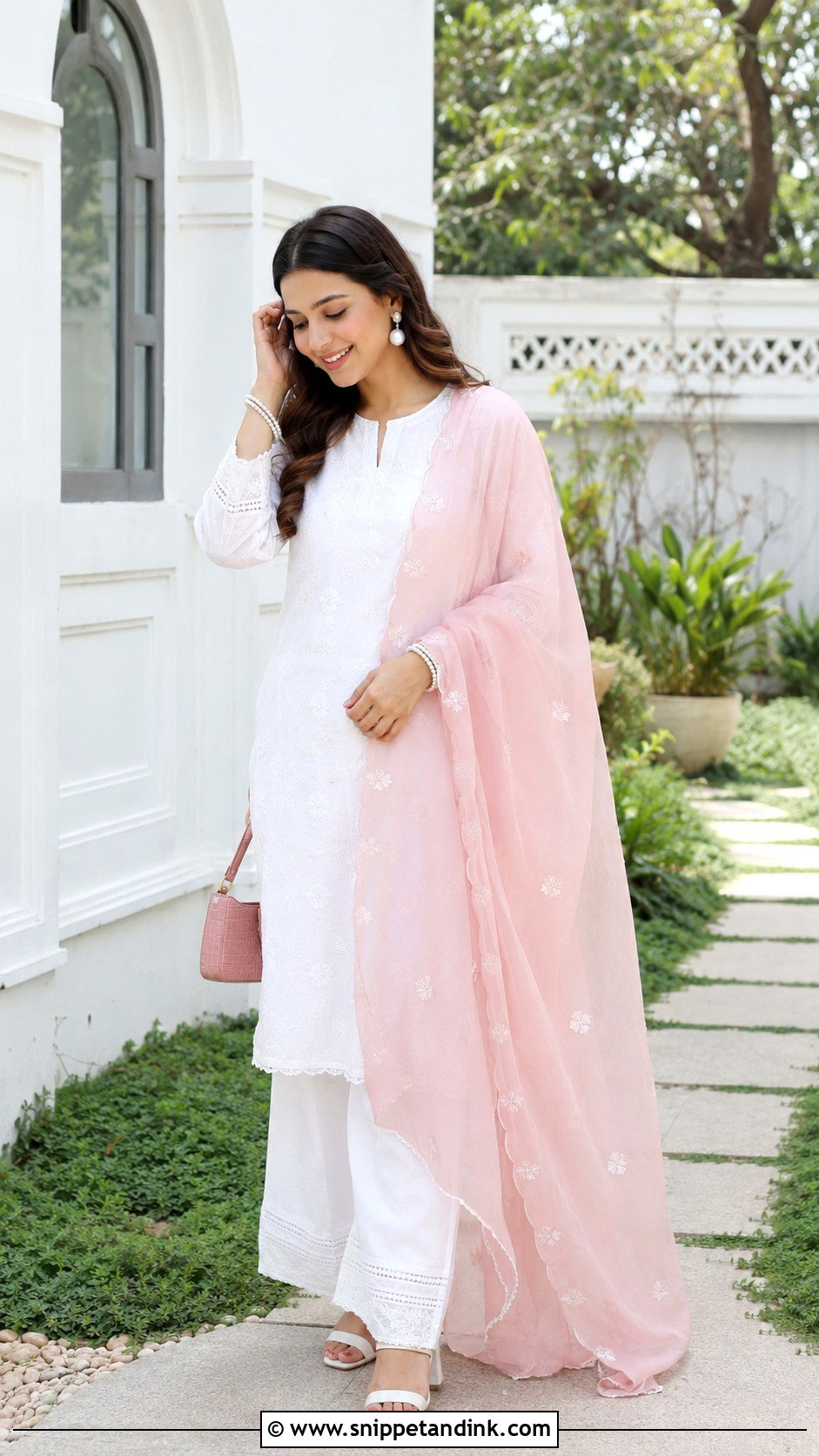
Pink is the easiest bright to wear because it shifts so much by shade. Blush organza over a white cotton kurta and palazzos reads soft and daytime. Rani pink silk with a zari edge reads evening, and I’d switch to pearl earrings and white block heels or embroidered juttis for that. The one thing I watch: pink organza can look almost peach under warm indoor lights, so check it in the venue’s kind of lighting if you can. A pink lip ties the face to the dupatta.
3. White Suit With Yellow Dupatta
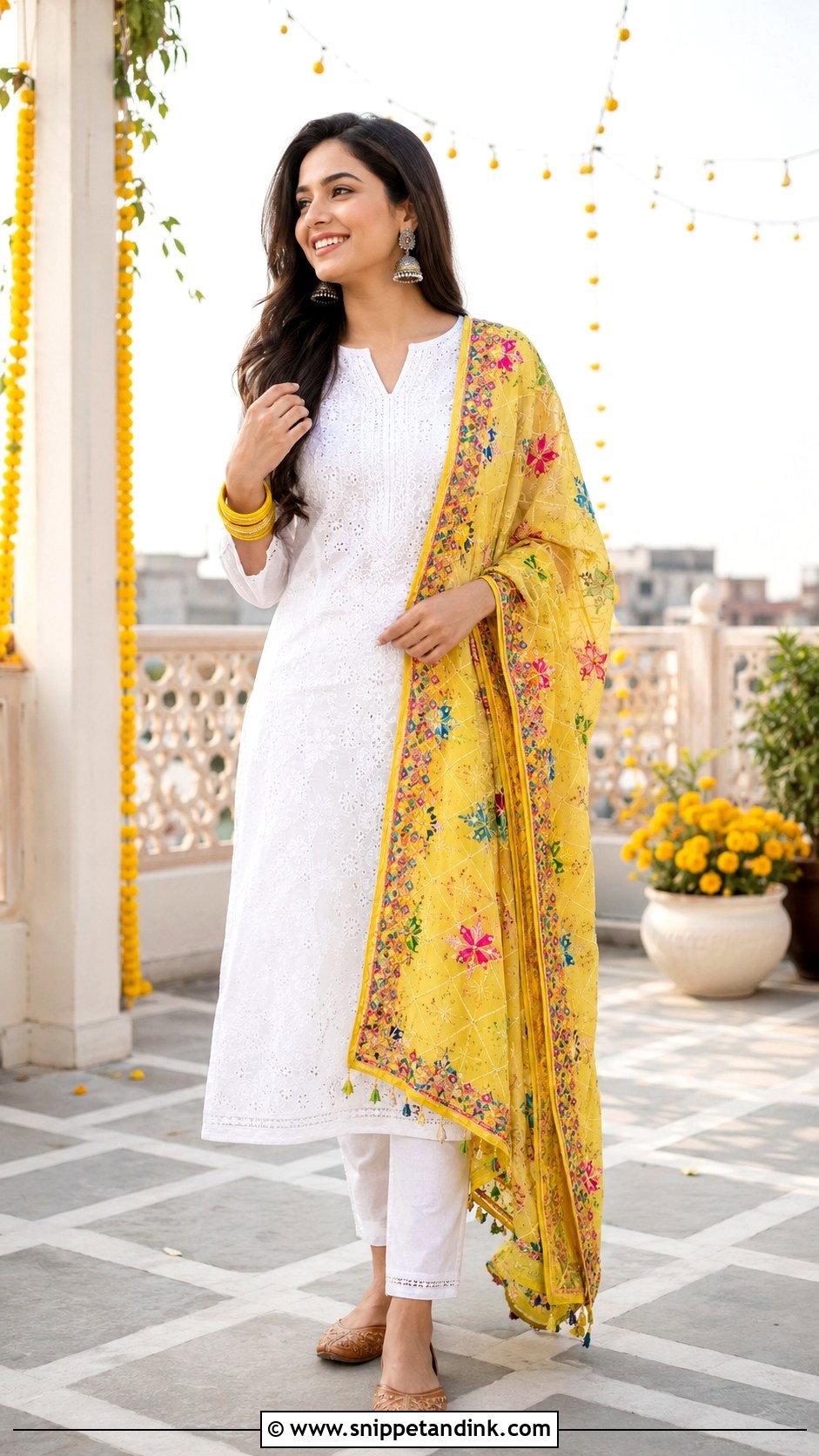
Yellow is the colour I see most at daytime haldi and spring functions, and it photographs warm against white. A white chikankari kurta with straight pants and a mustard or lemon dupatta is the balanced version. Choose phulkari if you want more texture. One honest caution: a pale lemon can wash out deeper skin tones in harsh sun, while mustard sits better across most complexions. Tan juttis, oxidised earrings and peach blush keep it fresh.
4. White Suit With Green Dupatta
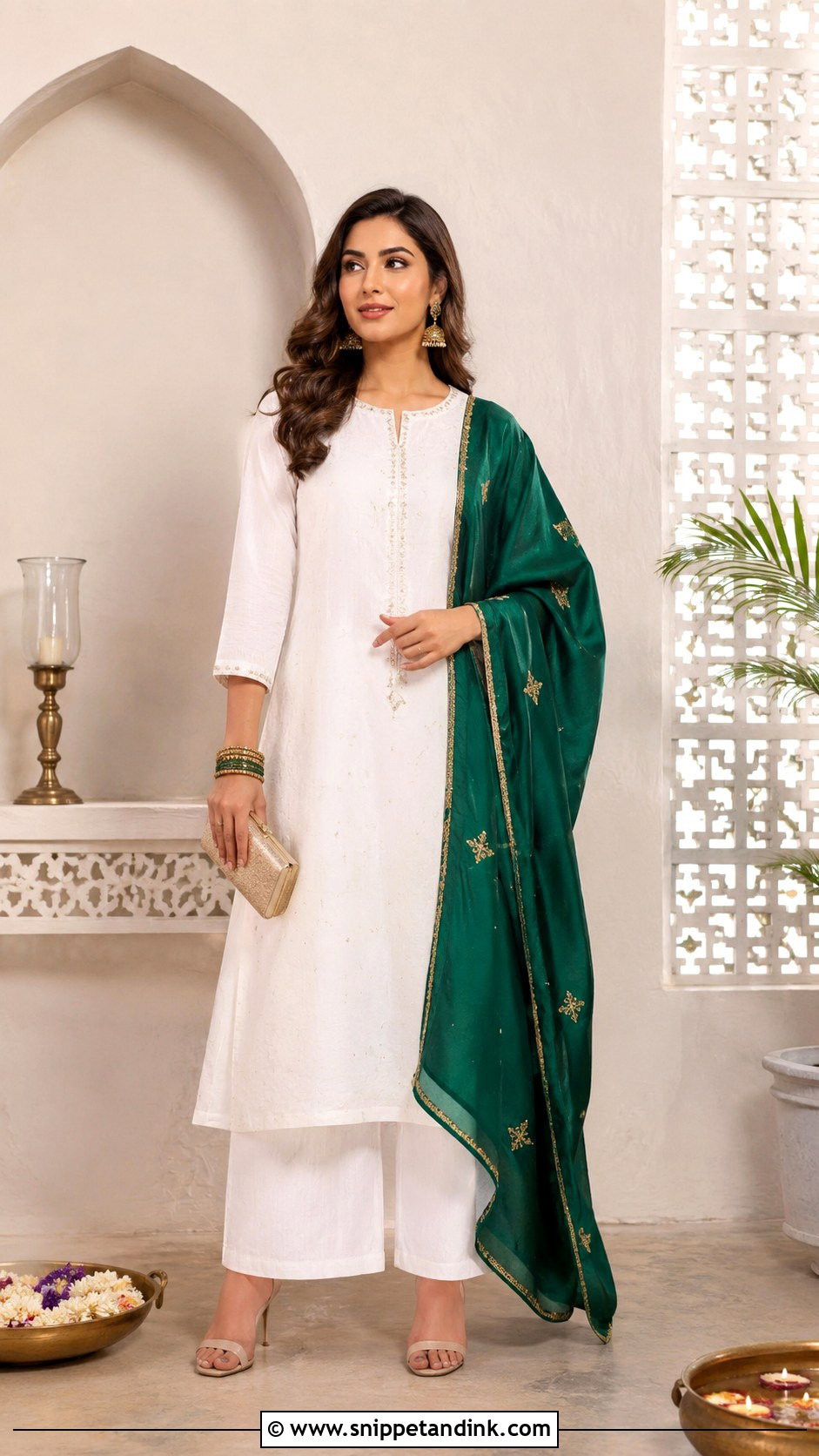
Green covers a wide range, and I pick the metal by the shade. Mint and sea green sit nicely with silver; emerald and bottle green look richer with gold. For a festive evening, put an emerald silk dupatta over a white kurta and wide-leg pants. For daytime, a printed cotton green dupatta keeps things relaxed. Finish with white sandals, metallic juttis or beige heels. A green bindi or two matching bangles quietly link the face and hands to the colour.
5. White Suit With Blue Dupatta
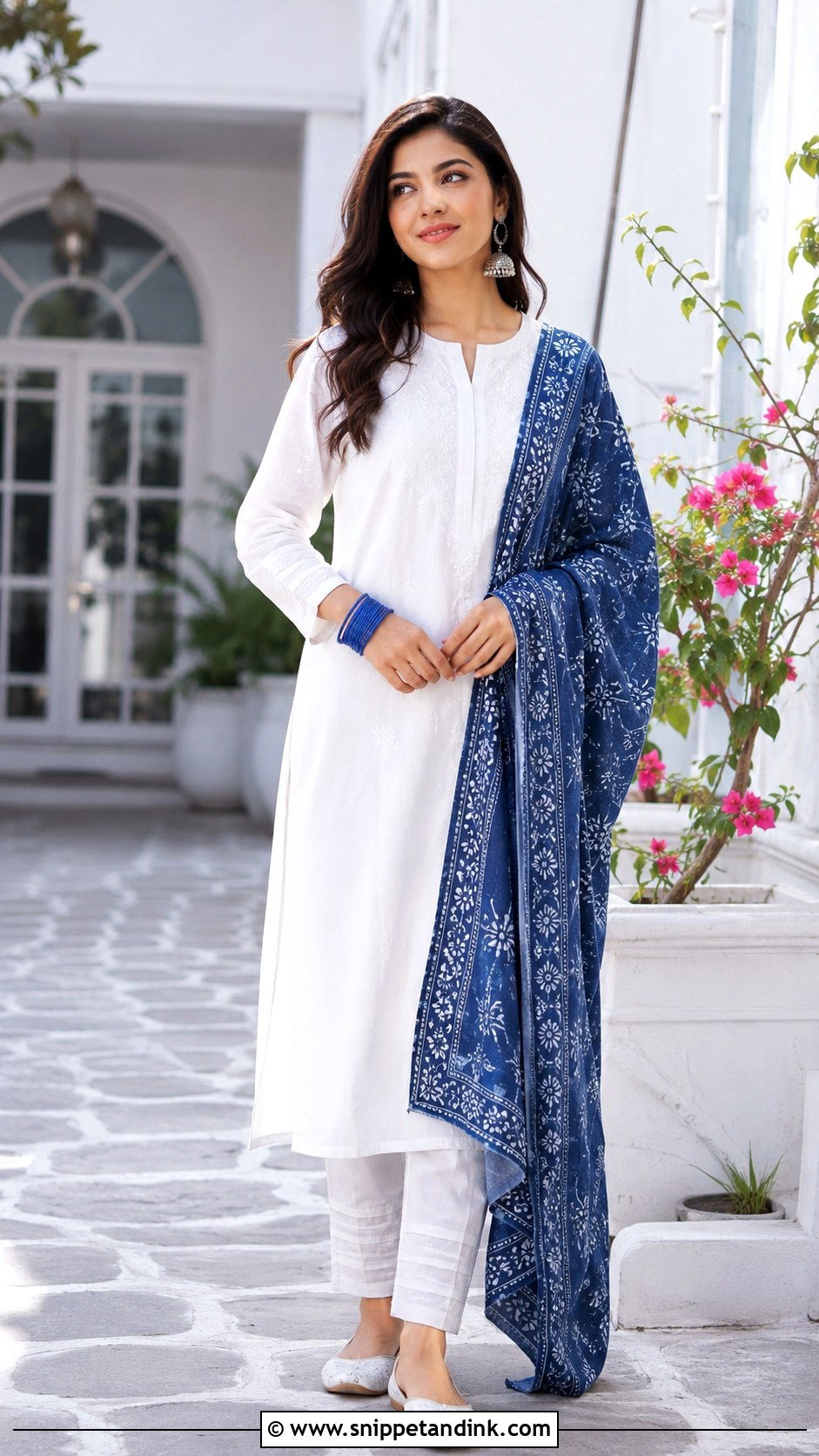
Blue is my go-to for clients who want ethnic wear that also suits an office day or a summer lunch. Indigo block prints feel handmade and grounded, and I’d wear one with a straight kurta and ankle pants. Royal blue chiffon dresses it up, especially with silver earrings. Powder or sky blue keeps it airy. Kolhapuri flats or low block heels, a silver watch and a neat tote make it practical. Indigo-dyed cotton can rub off on light fabric when new, so I’d wash the dupatta on its own a couple of times first.
6. White Suit With Orange Dupatta
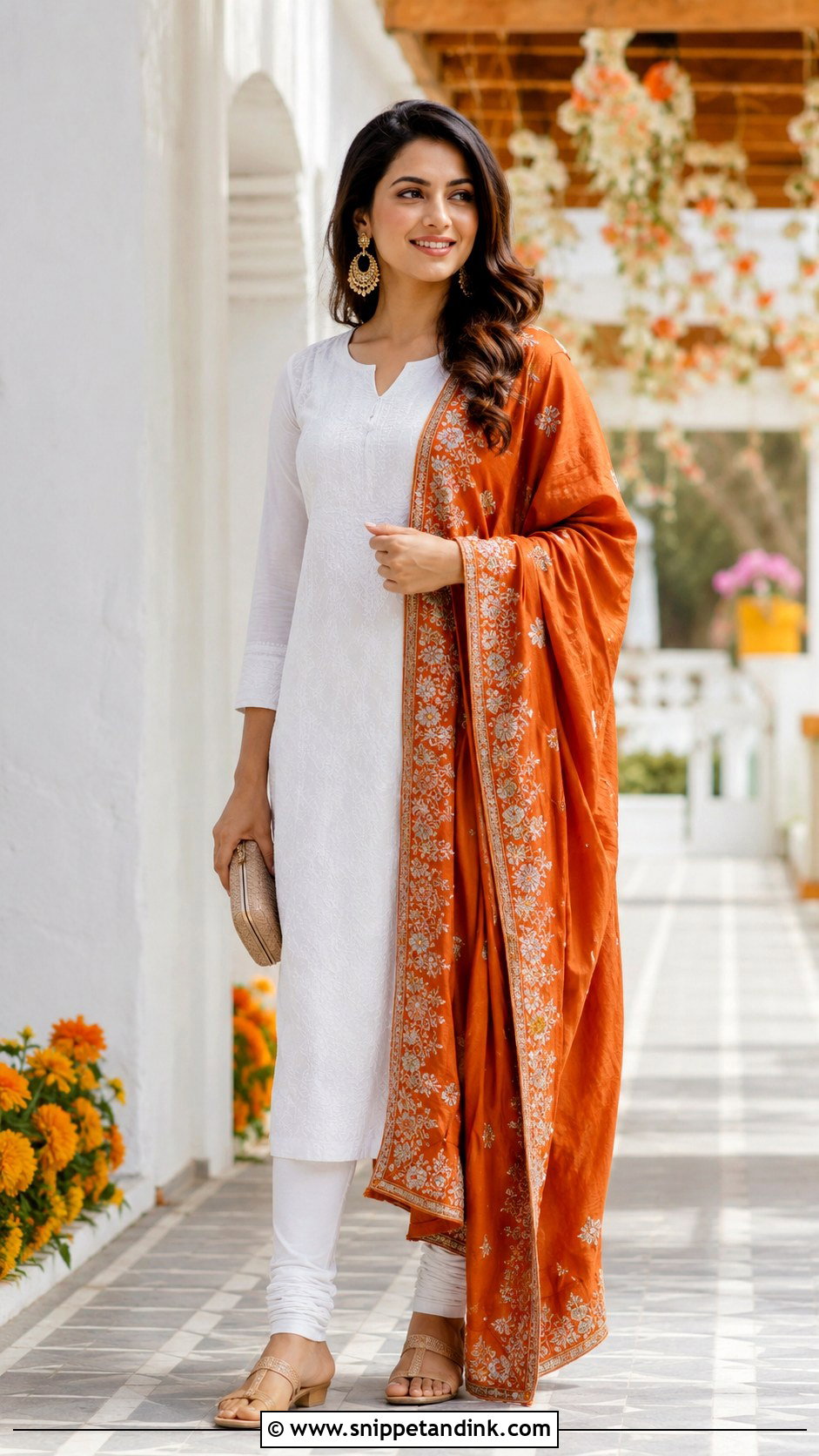
Orange changes personality with fabric more than any other colour here. A burnt orange dupatta on a white cotton suit looks grounded, almost earthy, while tangerine chiffon feels light and playful. When the dupatta has mirror work or embroidery, I keep the kurta completely plain so the eye has one place to land. Gold earrings, tan sandals and a simple clutch finish it for daytime functions.
7. White Suit With Purple Dupatta
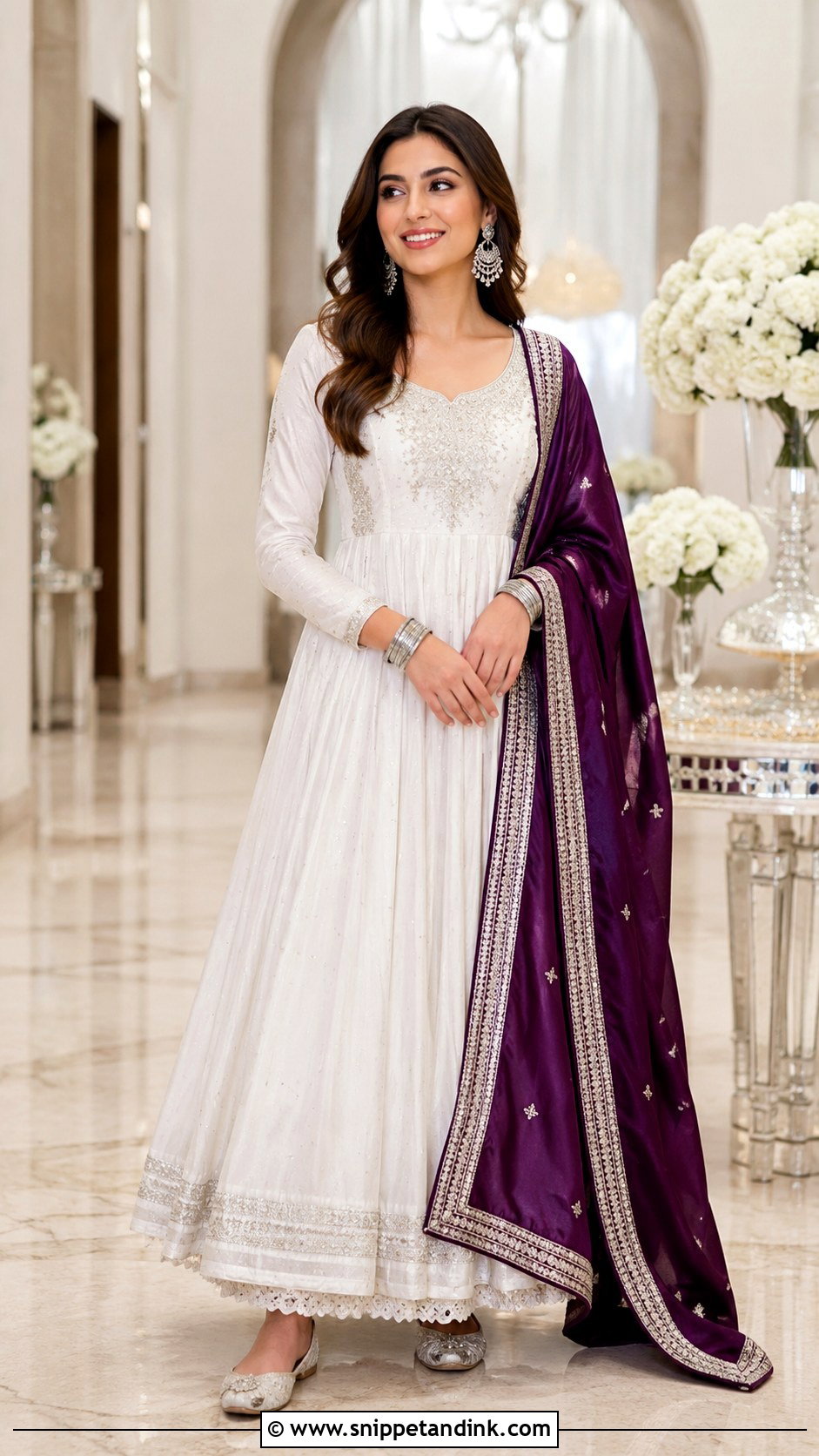
Purple runs from lilac to deep plum, and each shade sets a different tone. Lavender with pearl studs and white sandals is a gentle daytime look. Deep purple silk with a zari border is festive. My favourite pairing here is a white anarkali, because the flare gives the purple room to swing as you move. Keep it refined with silver bangles, a small clutch and light makeup; purple is rich enough without extra sparkle.
8. White Suit With Black Dupatta
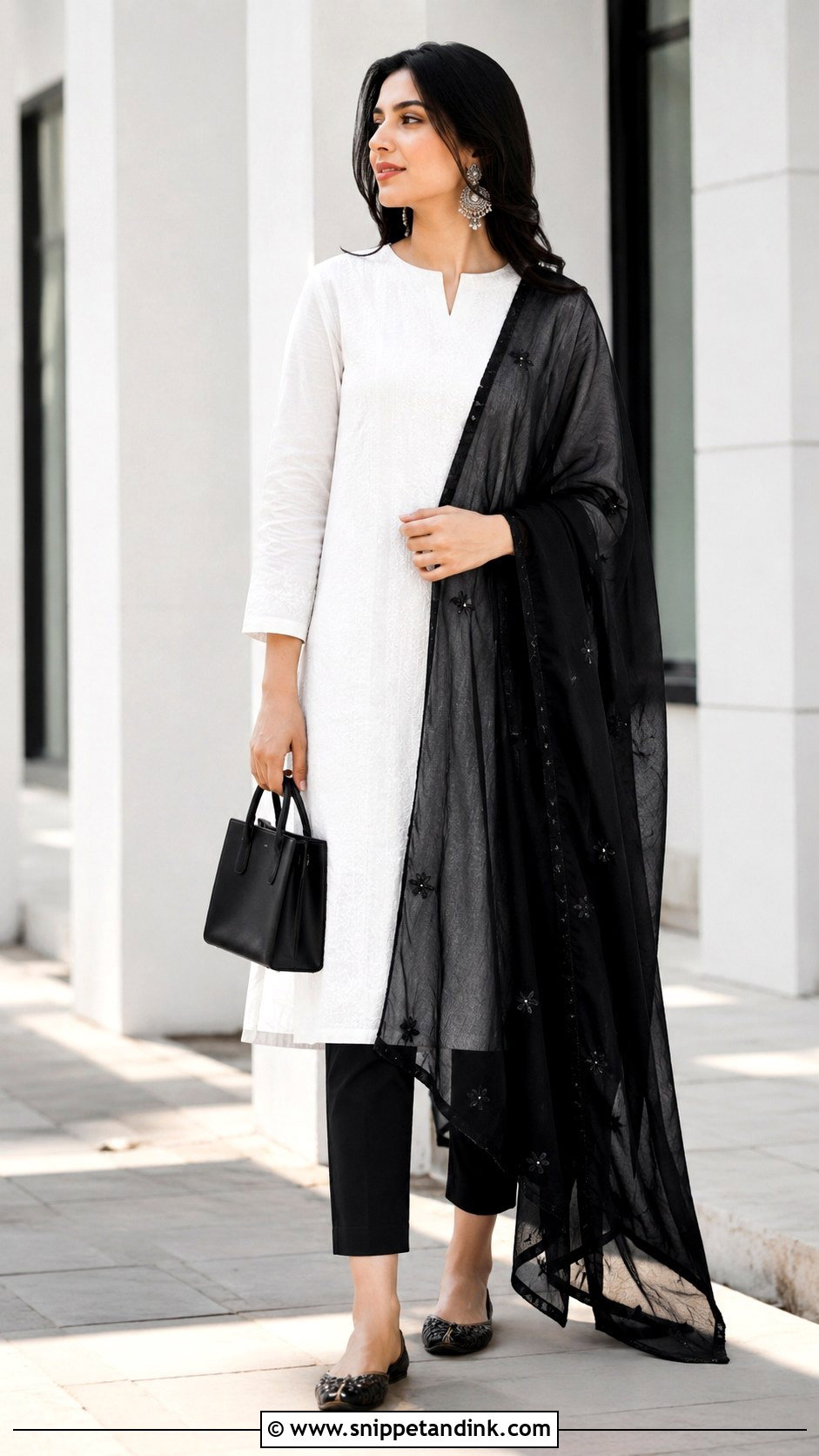
Black and white is sharp and modern, and a few families still avoid black at auspicious functions, so I’d check before wearing it to a wedding ceremony itself. For everyday ethnic wear, a printed black dupatta with black cigarette pants and a white straight kurta is crisp. A black chiffon dupatta with light sequins dresses it up for an evening. Oxidised silver earrings, black juttis and a sleek bag finish it. Don’t add a third colour; the contrast already reads as a choice.
9. White Suit With Multicolor Dupatta
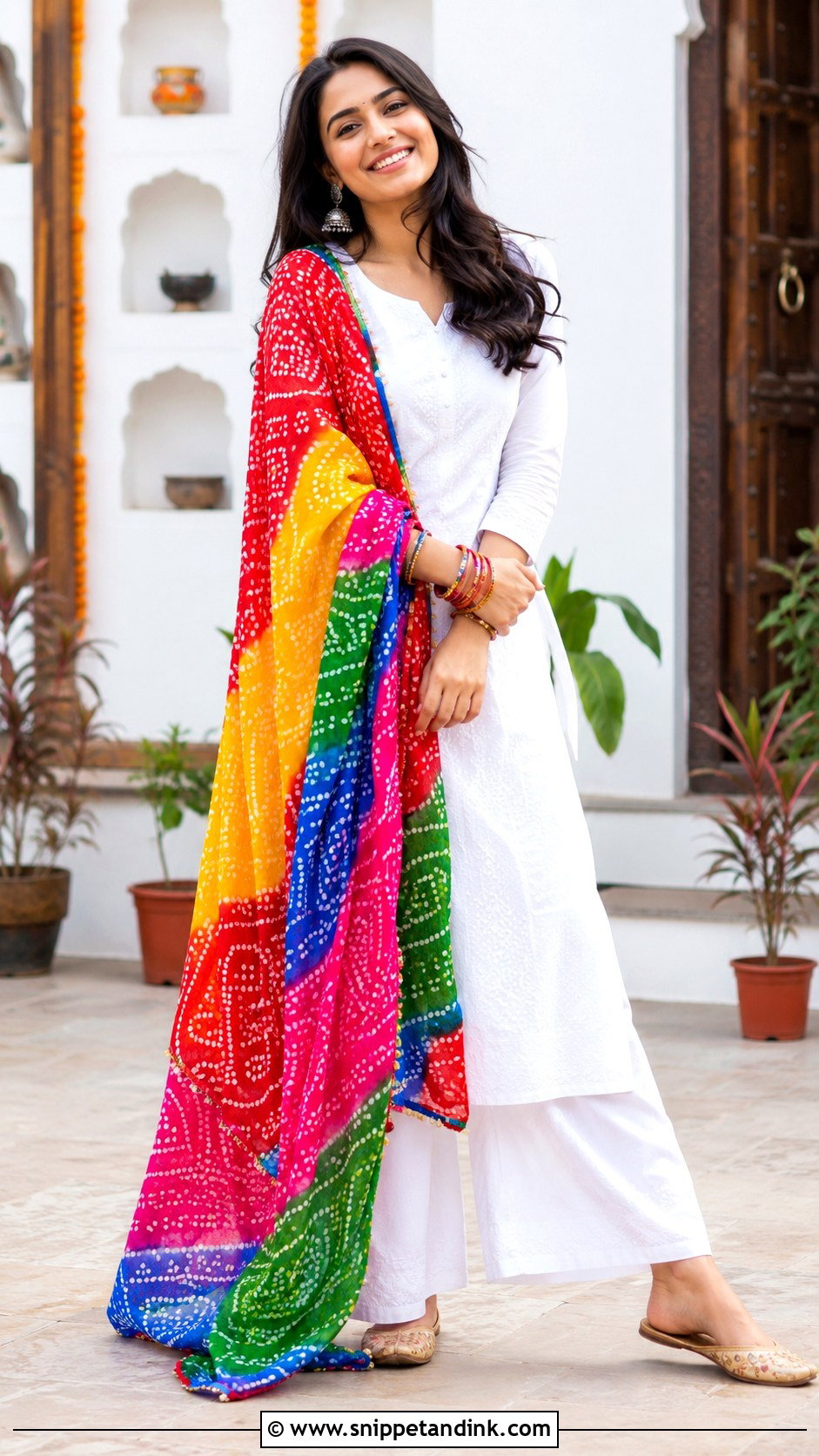
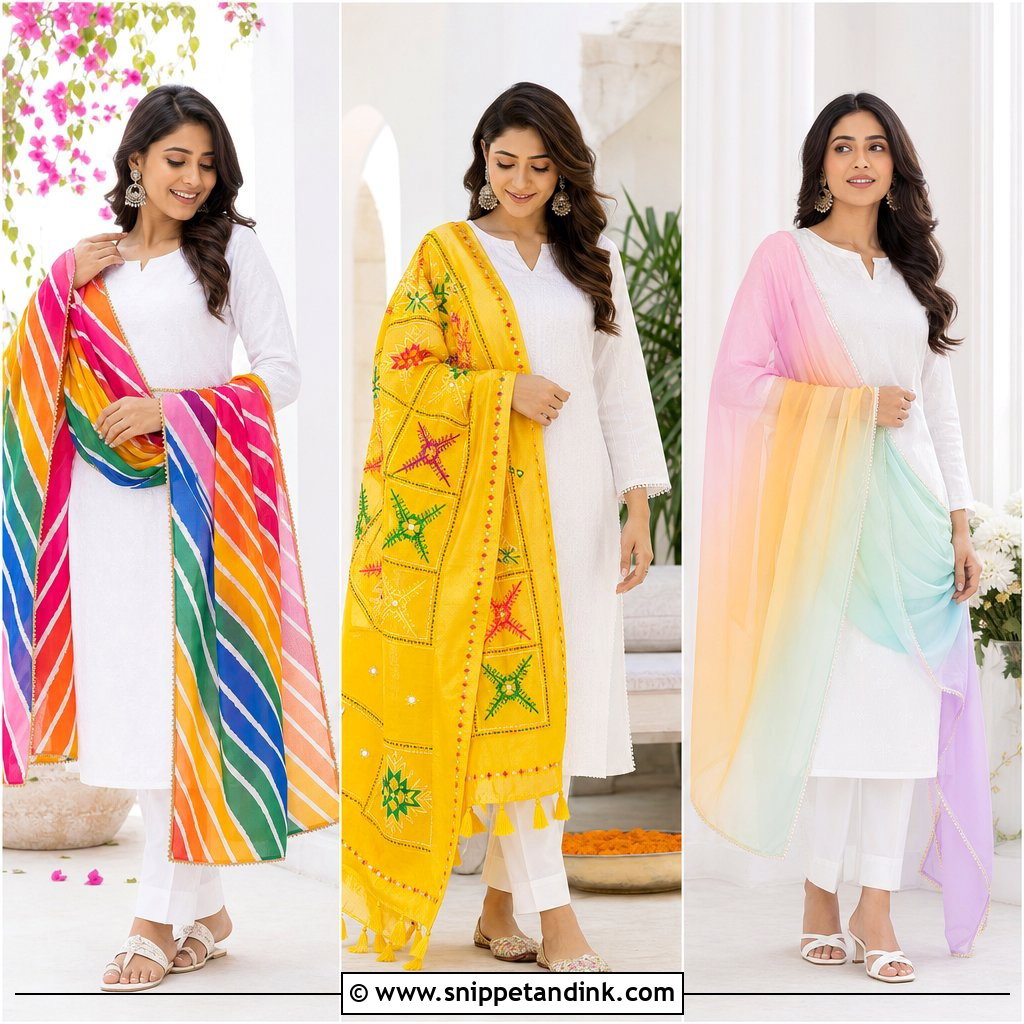
Multicolour dupattas are the most useful buy for travel, because one piece covers several outfits. Bandhani, leheriya, ikat and phulkari each bring a different mood. Keep the kurta and palazzos plain white so the dupatta can be busy without the outfit feeling cluttered. My trick: pick one colour out of the dupatta and repeat it only once, in bangles, a bag or shoes. Silver jhumkas and neutral juttis hold the rest together.
10. White Suit With Phulkari Dupatta
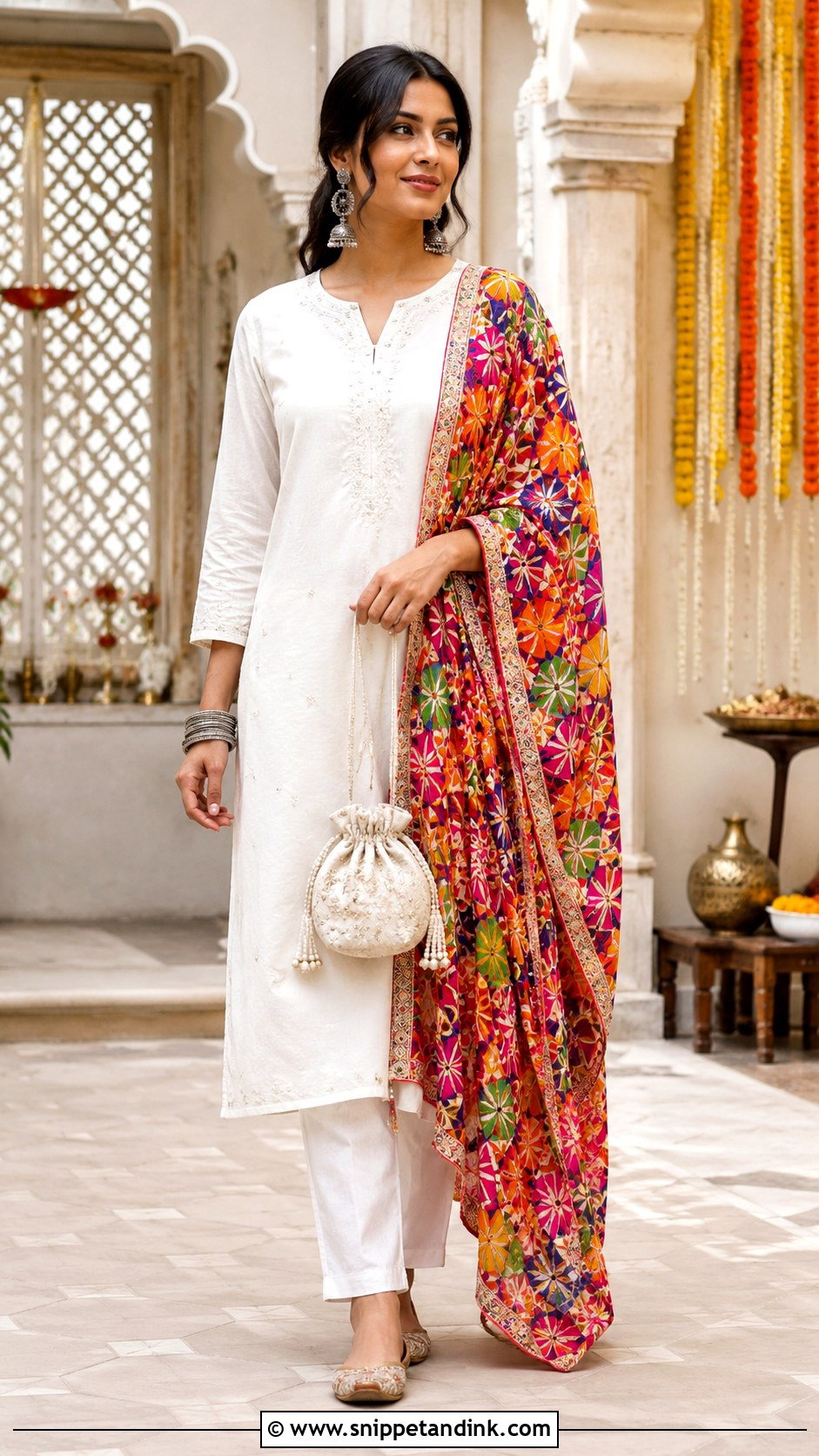
Phulkari is dense hand embroidery, traditionally darning-stitched in silk floss, and a true one is heavier than it looks. That weight is why I pair a phulkari dupatta with a plain straight kurta and tapered pants rather than anything embroidered. Bright pink, orange, green or yellow threadwork all suit white. Punjabi juttis, oxidised earrings and stacked bangles complete it. A heavy phulkari slides off chiffon or silk kurtas, so a safety pin at the shoulder is not optional at a jaago.
11. White Suit With Bandhani Dupatta
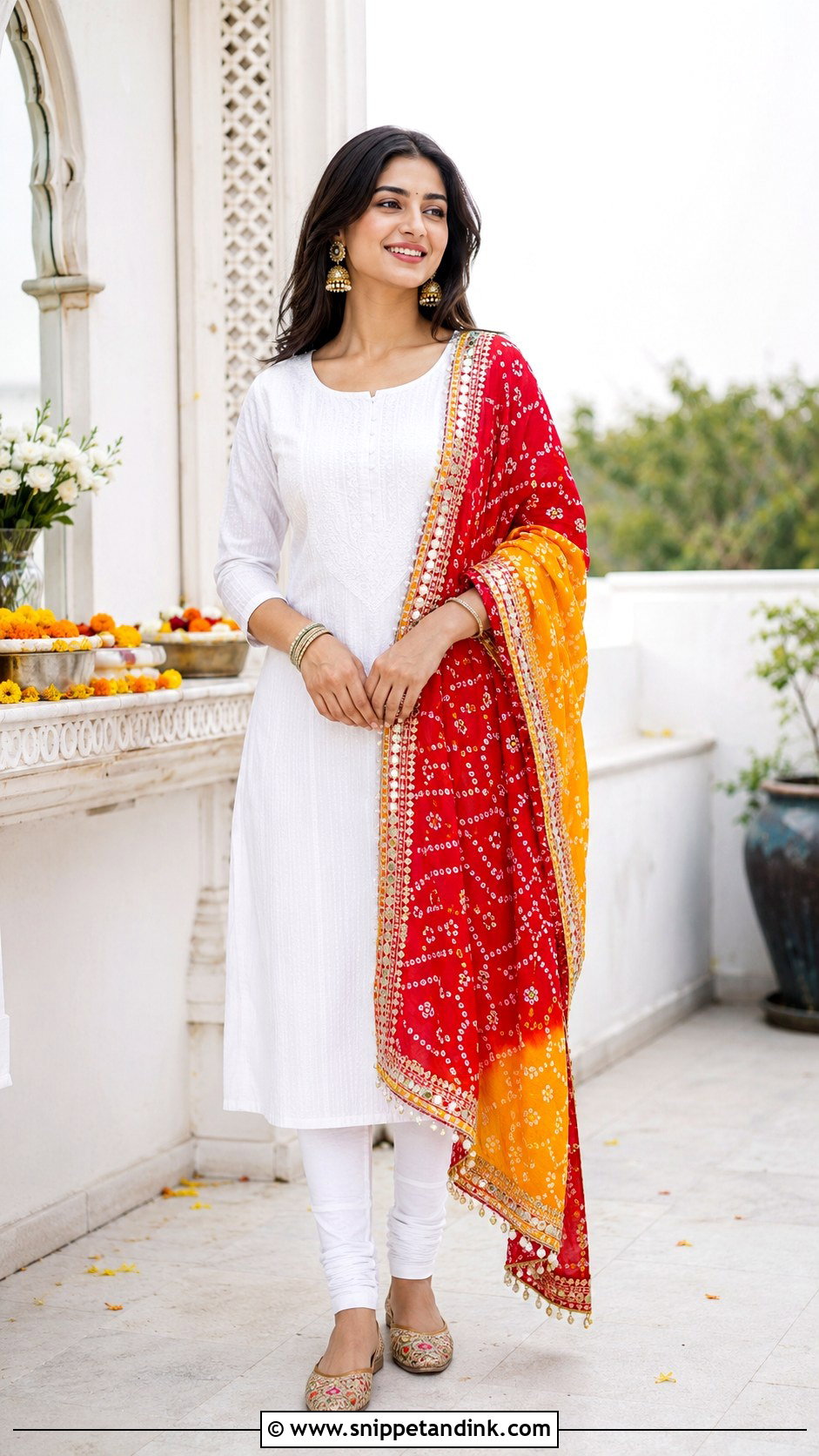
Bandhani is tie-dyed in tiny resist dots, so every piece is slightly irregular, and that’s part of its appeal. Red, yellow, pink or green bandhani with a plain white kurta and churidar is the classic. For a modern take, wear a short kurta with straight pants and let the dupatta hang loose from one side. Gold earrings, glass bangles and embroidered juttis finish it. Before wearing it over white for the first time, test whether the dye bleeds; bandhani is the dupatta most likely to stain a white kurta in summer heat.
12. White Suit With Leheriya Dupatta
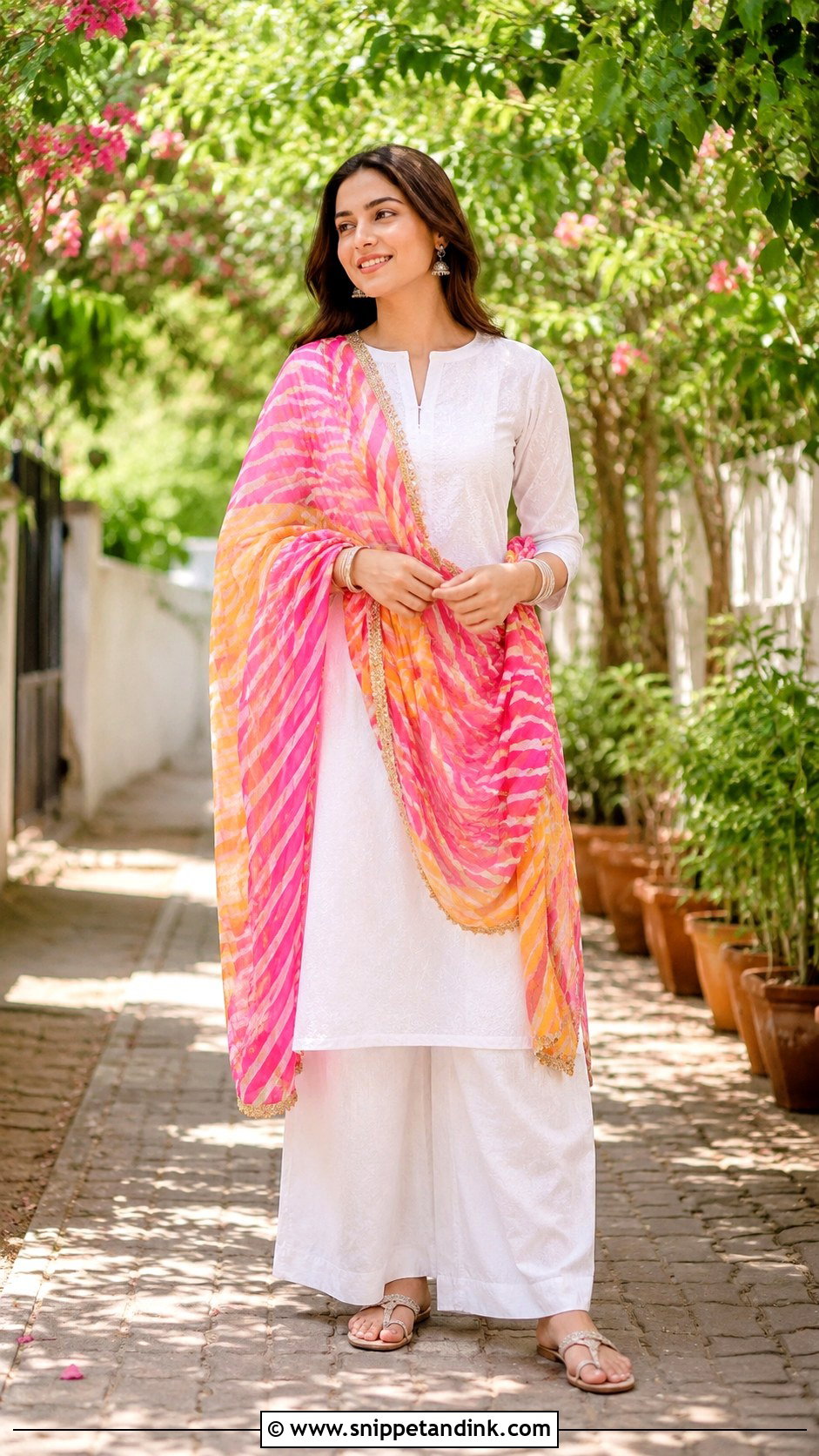
Leheriya’s diagonal waves come from rolling the cloth and tie-dyeing it on the bias, which is why it looks so lively on a breezy day. A white cotton kurta and palazzos with a pink-yellow, blue-green or orange-red leheriya dupatta is about the easiest warm-weather combination I know. Small jhumkas, thin bangles and flat sandals keep it light. For something dressier, look for a thin gota border. Let it fall across both shoulders so the waves show.
13. White Suit With Banarasi Dupatta
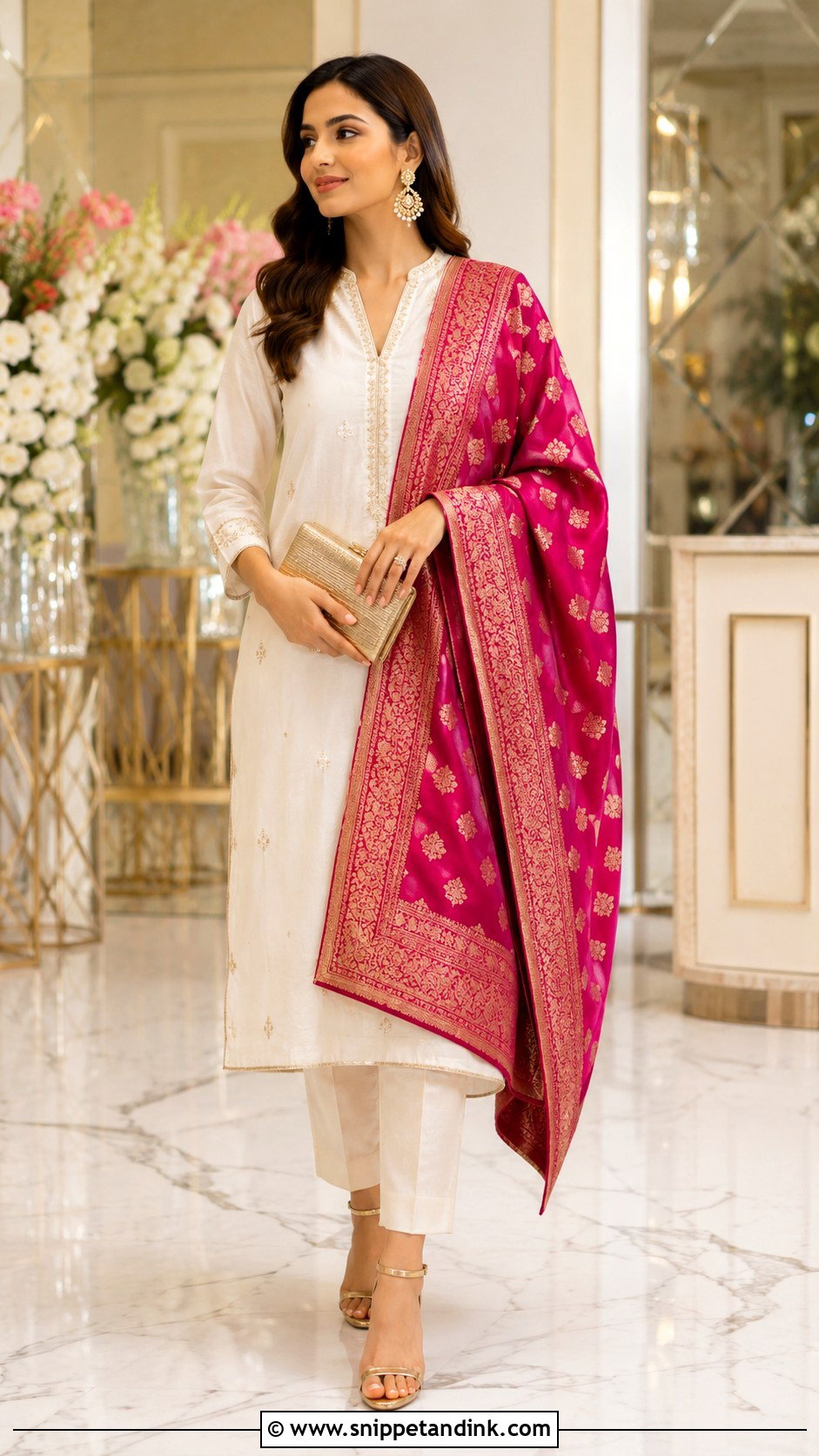
A Banarasi dupatta carries woven zari motifs on a silk base, and it will make a plain suit look like an occasion outfit on its own. Magenta, emerald, royal blue and maroon all work over a white silk or cotton-silk kurta with straight pants. I pleat it into neat folds over one shoulder for a formal function, and keep the kurta simple so the weave stays the focus. Gold heels, kundan earrings and a sleek clutch add polish. Real Banarasi zari is stiff at first and softens with wear, so drape it a few times before the event.
14. White Suit With Chiffon Dupatta
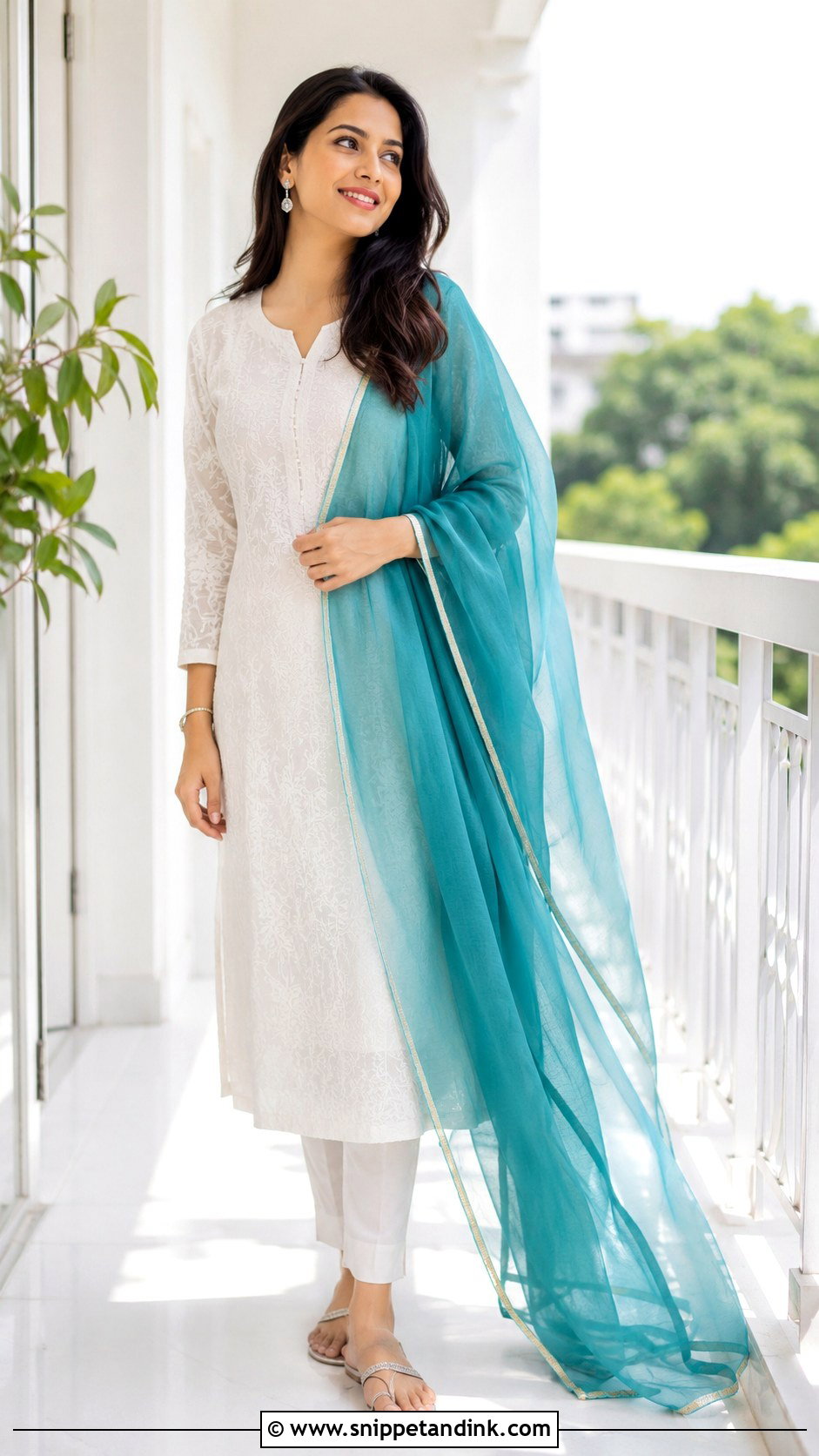
Chiffon is what I recommend for a long day. It’s light, it drapes close and it barely creases, so you’ll look the same at hour eight as at hour one. A pastel chiffon over a straight white suit is clean for daytime; red, teal or fuchsia with a thin embroidered border brings more drama. Because chiffon is sheer, it sits nicely over a textured kurta. The downside is that it slips. A small pin at the shoulder saves you from rearranging it all afternoon.
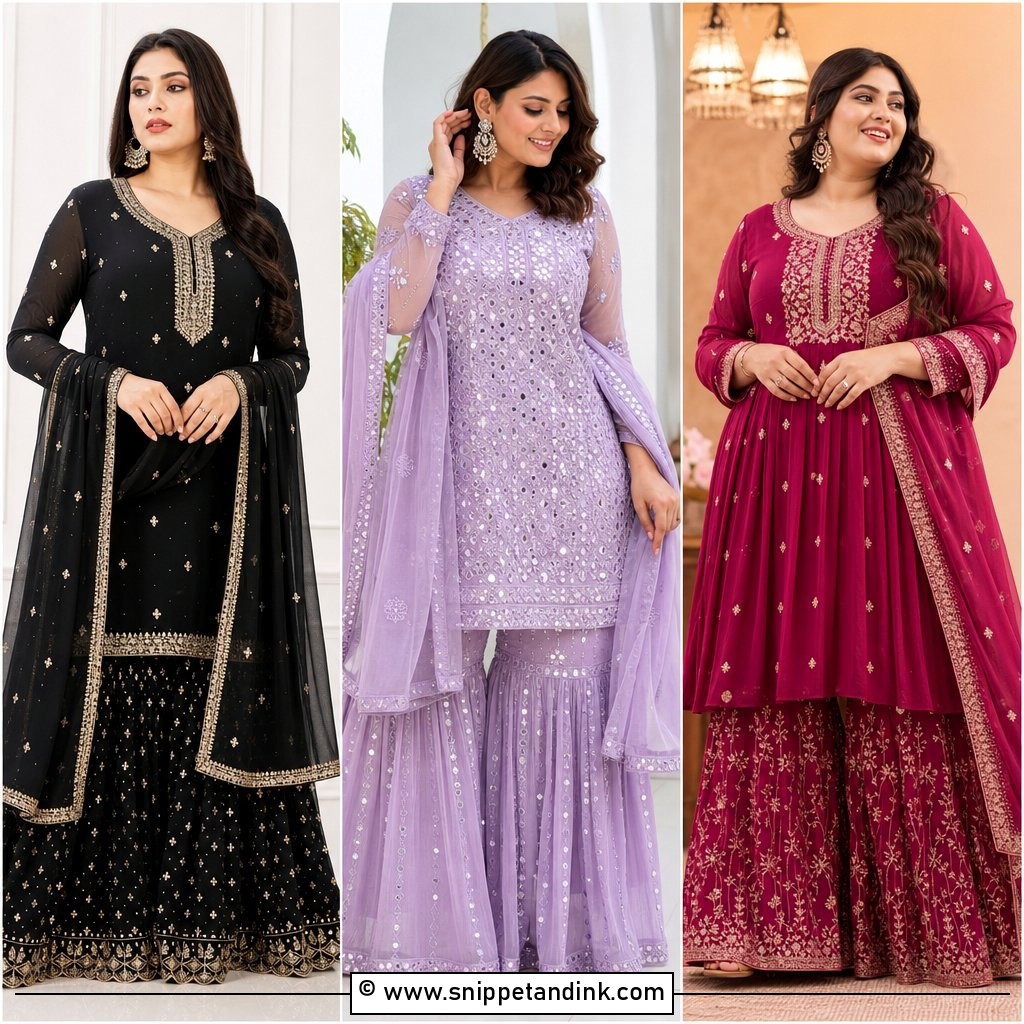

15. White Suit With Organza Dupatta
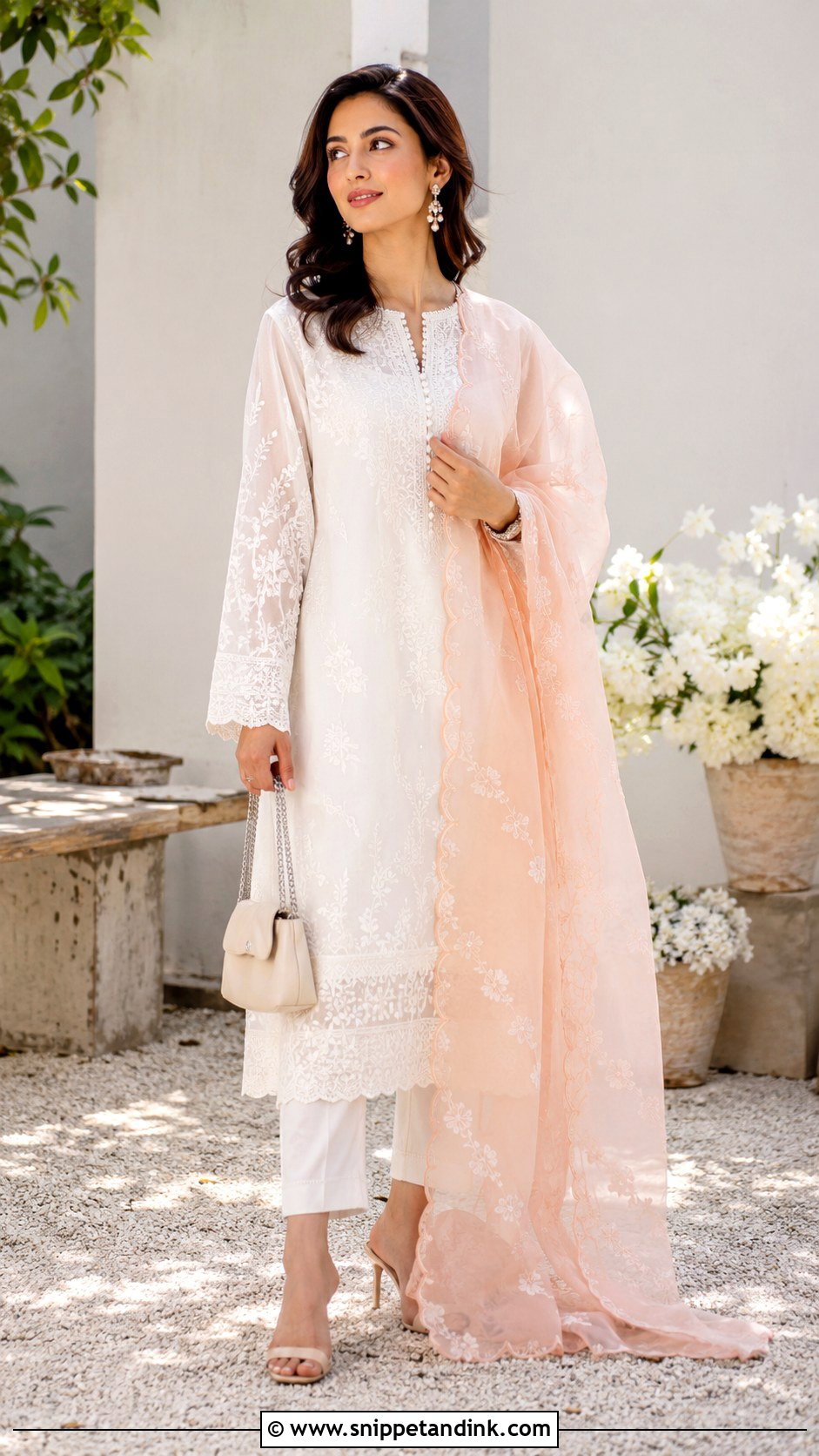
Organza has a slight crispness, so it holds a little volume and catches light at the edges. A pastel organza dupatta in peach, lavender, mint or powder blue over a white embroidered kurta and straight pants is dressy without weight. If it has floral embroidery or scalloped edges, I drape it so the border runs across the front. Pearl earrings, nude heels and a small handbag keep it soft. Organza creases sharply when folded, so roll it for travel rather than folding it into a bag.
16. White Suit With Silk Dupatta
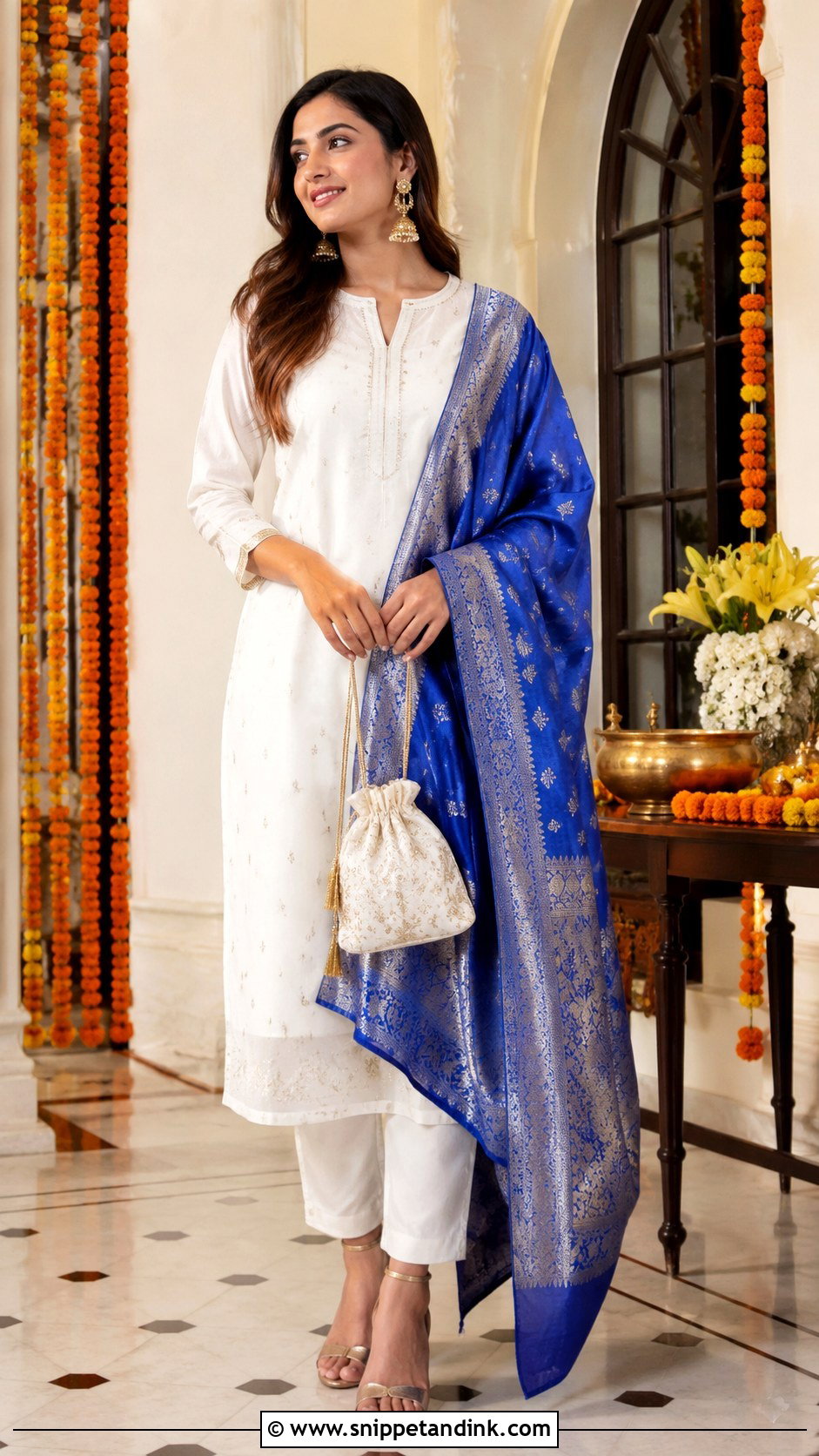
Silk gives a plain white suit shine and structure in one move. Jewel tones are the safe bet: maroon, teal, emerald, mustard or royal blue. Wear it with a white kurta and slim matching pants, gold jewellery, and dressy juttis or heels. A zari border makes it right for formal family events. I keep the bag small, a clutch or potli. Watch for perspiration marks under the arms where silk drapes; they show far more on silk than on cotton, so pick a breathable kurta underneath.
17. White Suit With Net Dupatta
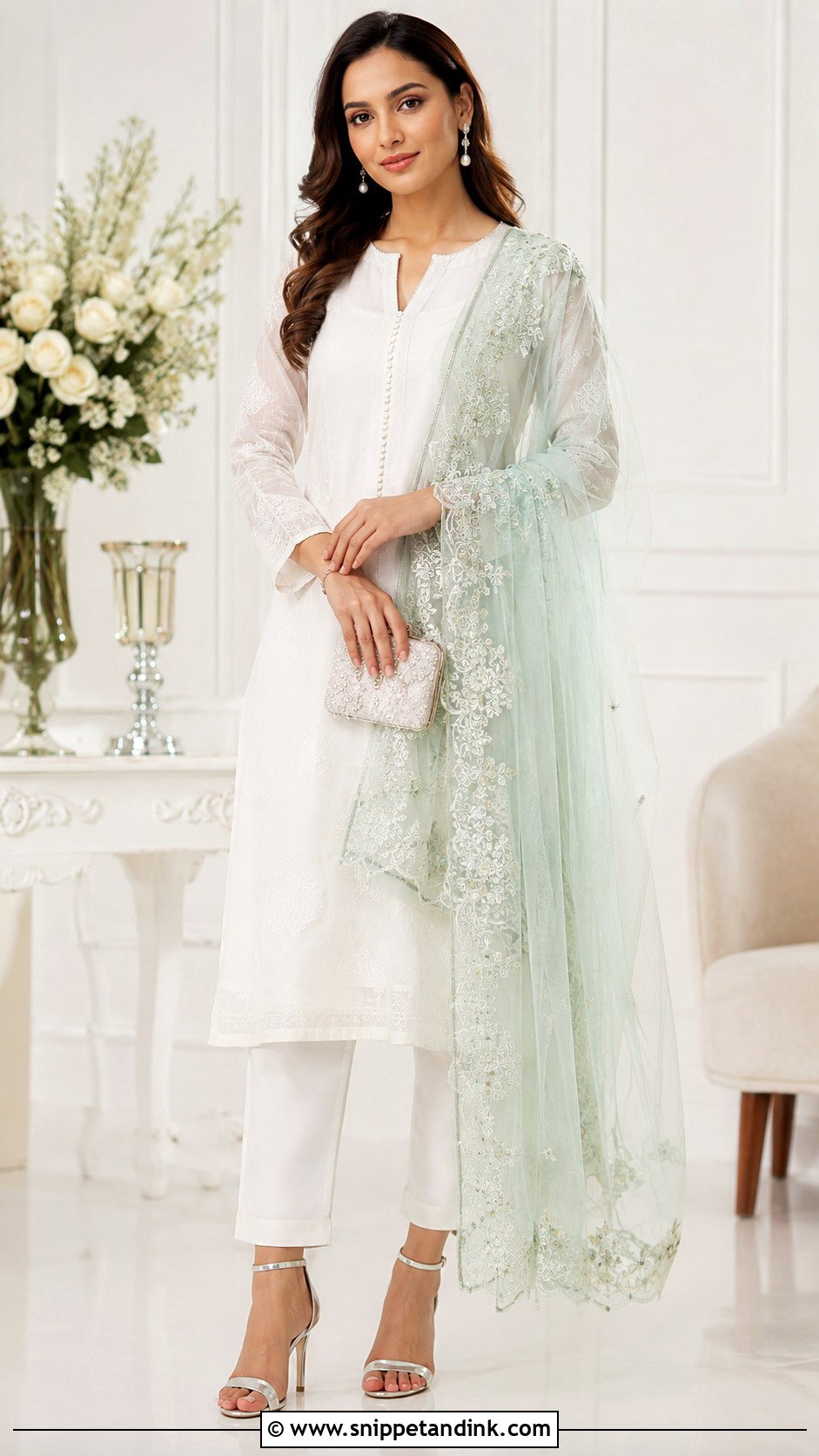
Net dupattas can look cheap or delicate, and quality decides which. I look for a soft net with fine embroidery, small motifs or a clean border, not a scratchy one that stands away from the body. Peach, pink, sea green or lavender net softens a white suit. A fitted kurta, straight pants and heels give it a polished shape. Choose pearl or stone earrings over chunky pieces, and skip extra metallics if the net already has shimmer. Net catches on bangles and watch clasps, so keep the wrists simple.
18. White Suit With Dupatta And Palazzo Pants
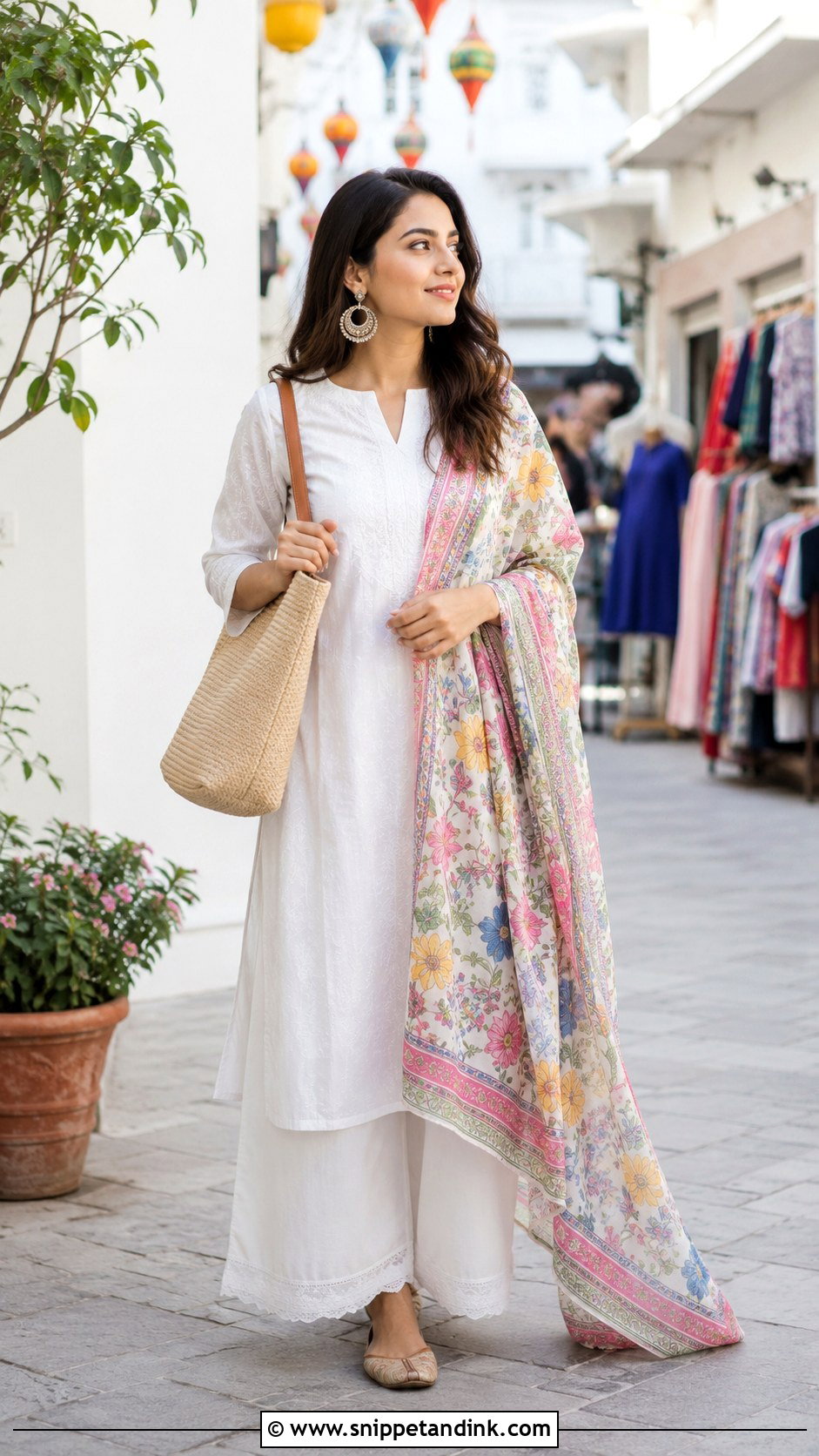
Palazzos are the comfort pick. The wide leg moves easily, and a long white kurta over white palazzos with a printed dupatta in blue, pink, yellow or green is about as easy as ethnic dressing gets. Flat juttis, ethnic hoops and a simple tote keep it practical for daytime. For a dressier function, switch to silk palazzos and a Banarasi or organza dupatta. I’d hem palazzos to just clear your shoe; too long and they collect dust from every outdoor floor.
19. White Suit With Dupatta And Straight Pants
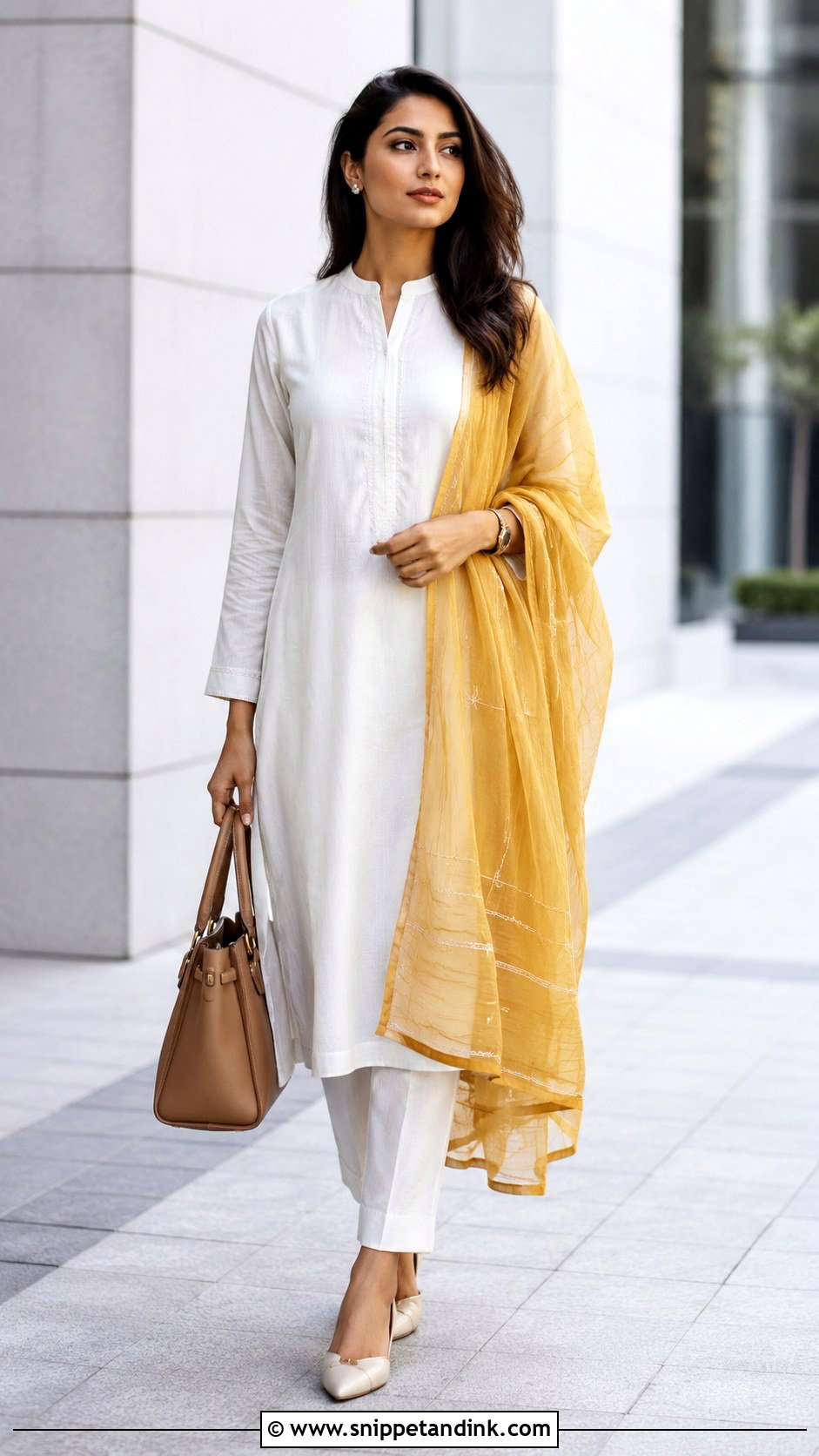
Straight pants give the cleanest line here, which is why bold dupattas look controlled with them. A knee or calf-length white kurta over ankle-length straight pants suits work events, lunches and casual celebrations. Indigo, emerald, rani pink, mustard or maroon all work. Pointed flats, block heels or simple juttis suit the tailored shape, with studs, a watch and a structured bag. It’s the version I’d repeat most often, because it needs the least thought each time.

20. White Anarkali Suit With Coloured Dupatta
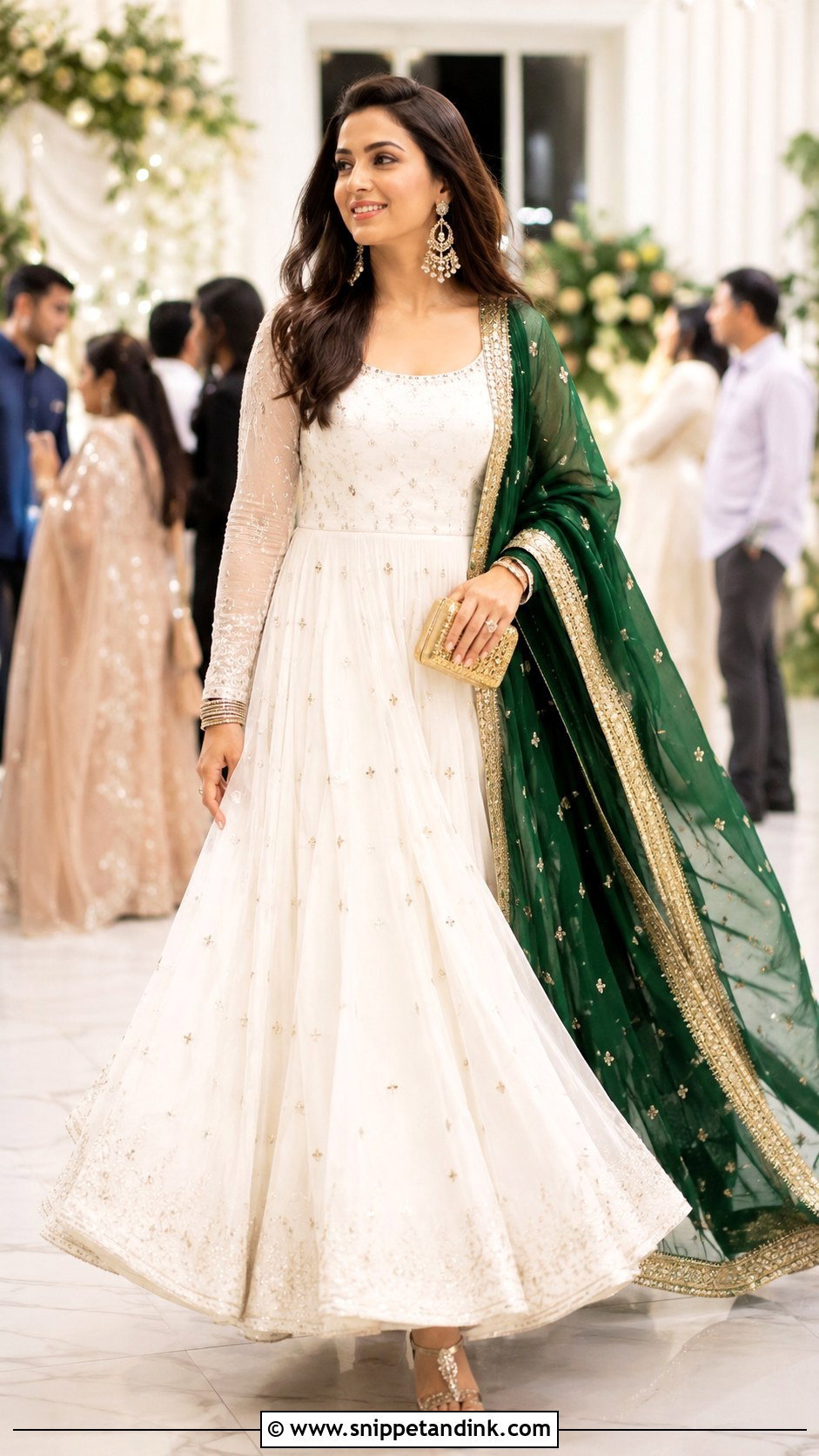
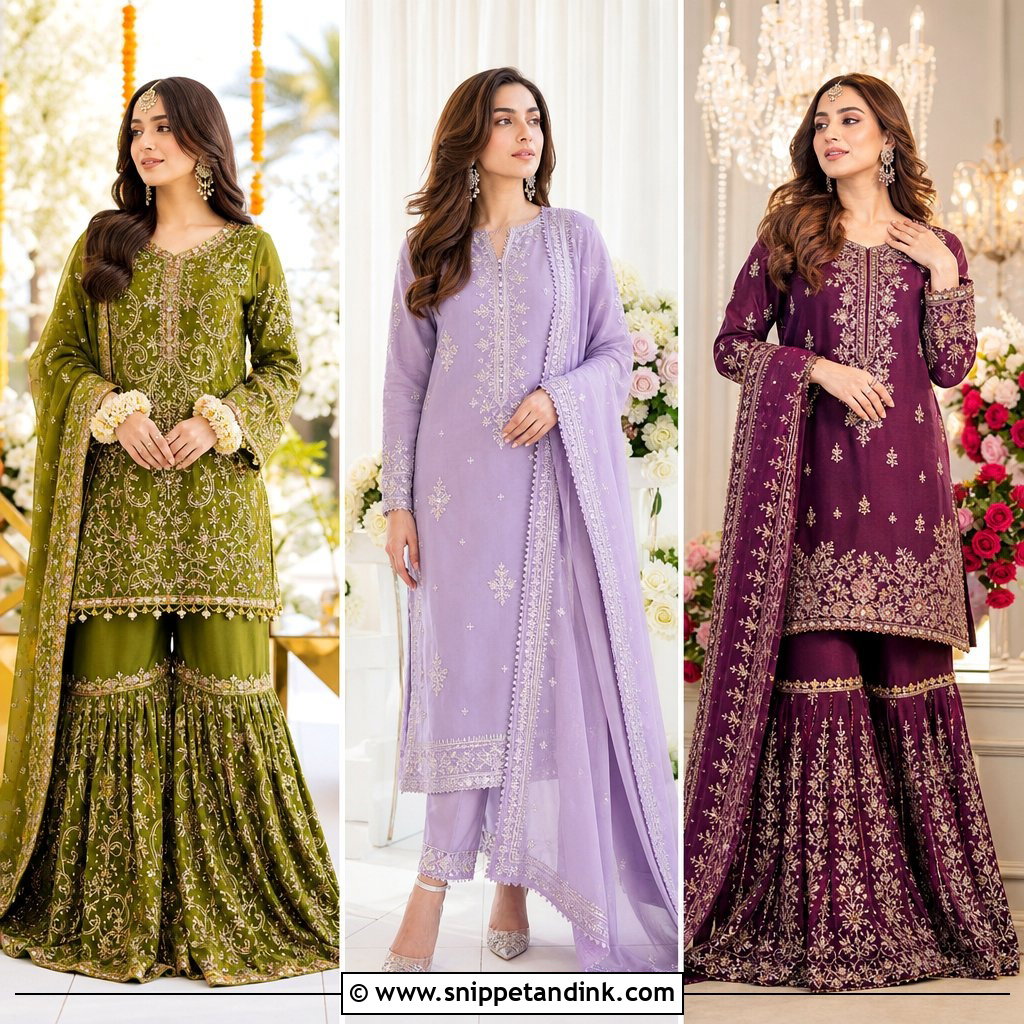
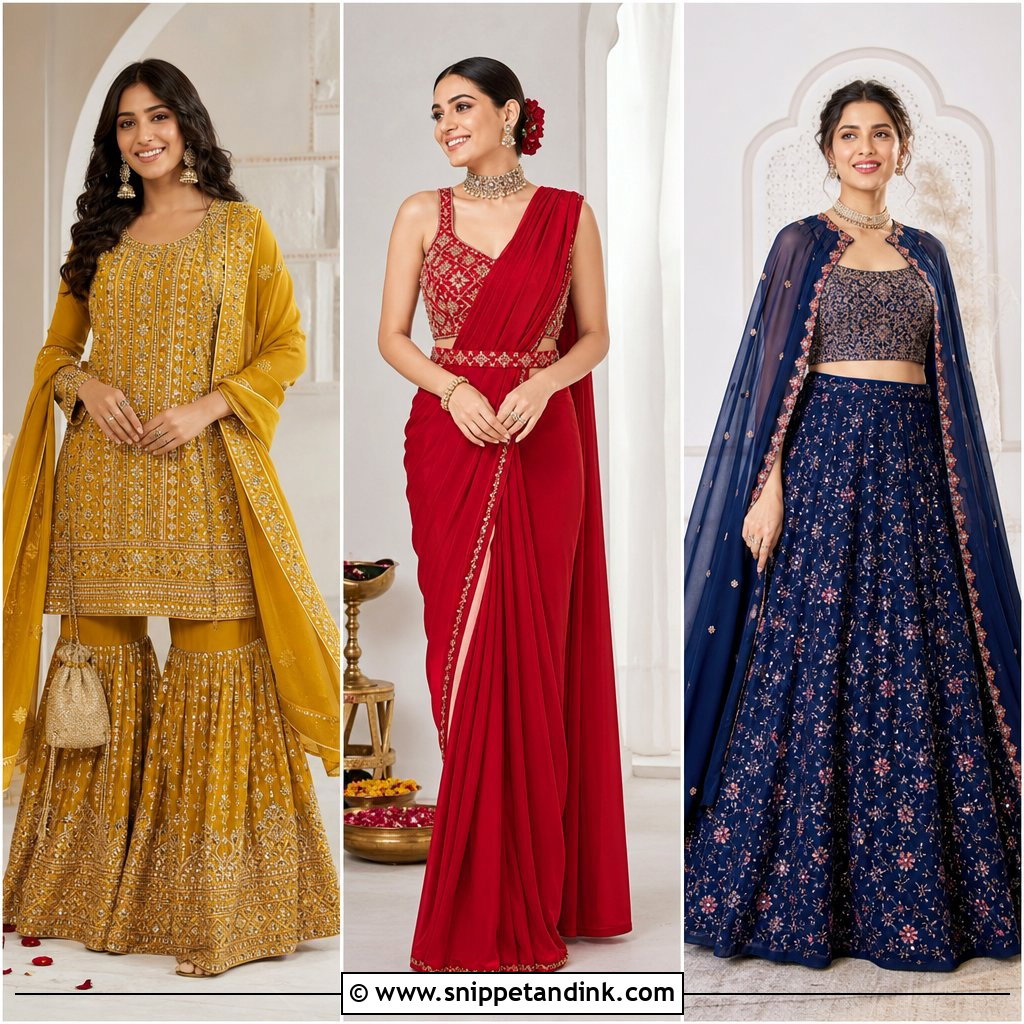
An anarkali is already dressy because of its flare, so the dupatta mainly sets the mood. Pastel pink, mint or lavender keeps it soft. Red, royal blue or green with zari or gota turns it festive. With anarkalis I drape the dupatta over both arms behind the back rather than across the chest, so the flare stays visible when you twirl. Chandelier earrings, bangles and embellished flats or heels finish it, with a small bag.
21. White Chikankari Suit With Coloured Dupatta
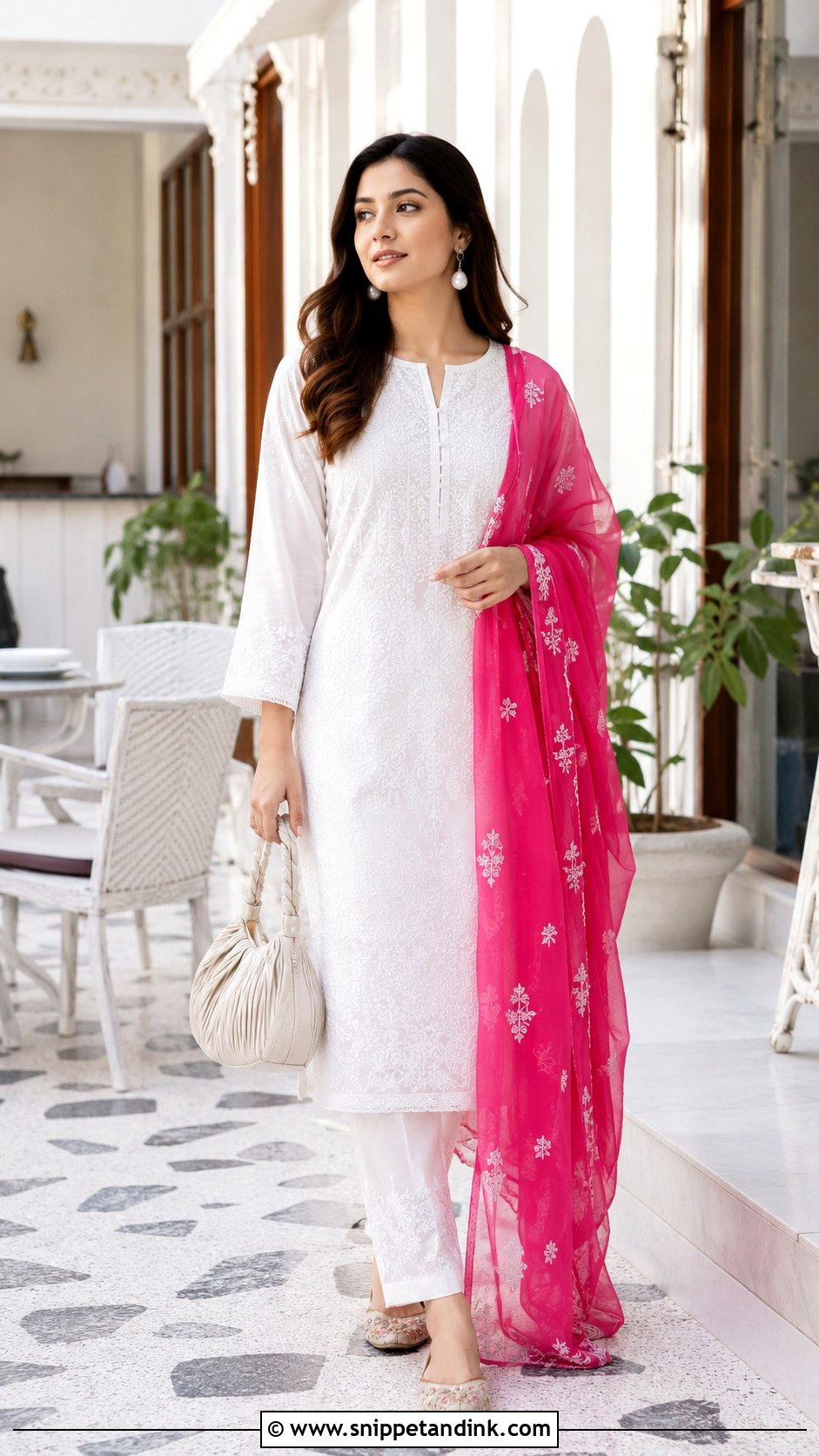
Chikankari is fine shadow-work and thread embroidery, traditionally done on light cotton or georgette, and it brings texture to white without any colour at all. Pair a chikankari kurta and matching pants with a pastel chiffon dupatta for daytime, or fuchsia, teal or mustard for more punch. Pearl earrings, silver jhumkas and embroidered juttis all suit it. Keep makeup fresh and light. Real chikankari is delicate, so I’d hand-wash it gently and dry it in shade.
22. White Cotton Suit With Coloured Dupatta
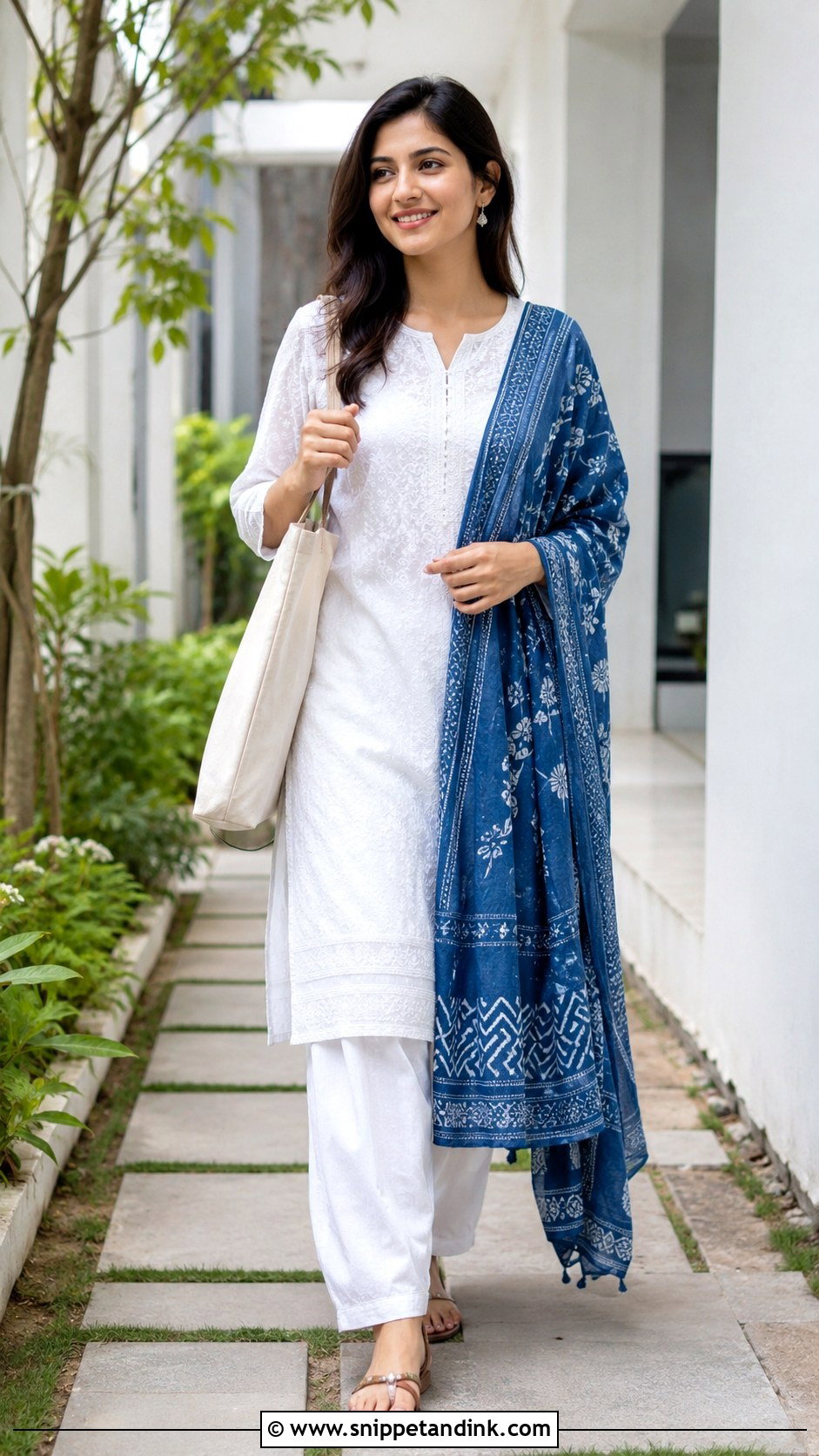
For everyday wear, a white cotton suit is the most practical base you can own. It breathes, it washes and it takes almost any print. Choose salwar, straight pants or palazzos by comfort, then add a printed cotton dupatta in block print, ajrakh, florals or geometrics. Flat sandals, juttis, a canvas tote and small earrings keep it casual for errands, college or travel. A contrast border is the simplest way to make it look more finished.
23. White Linen Suit With Coloured Dupatta
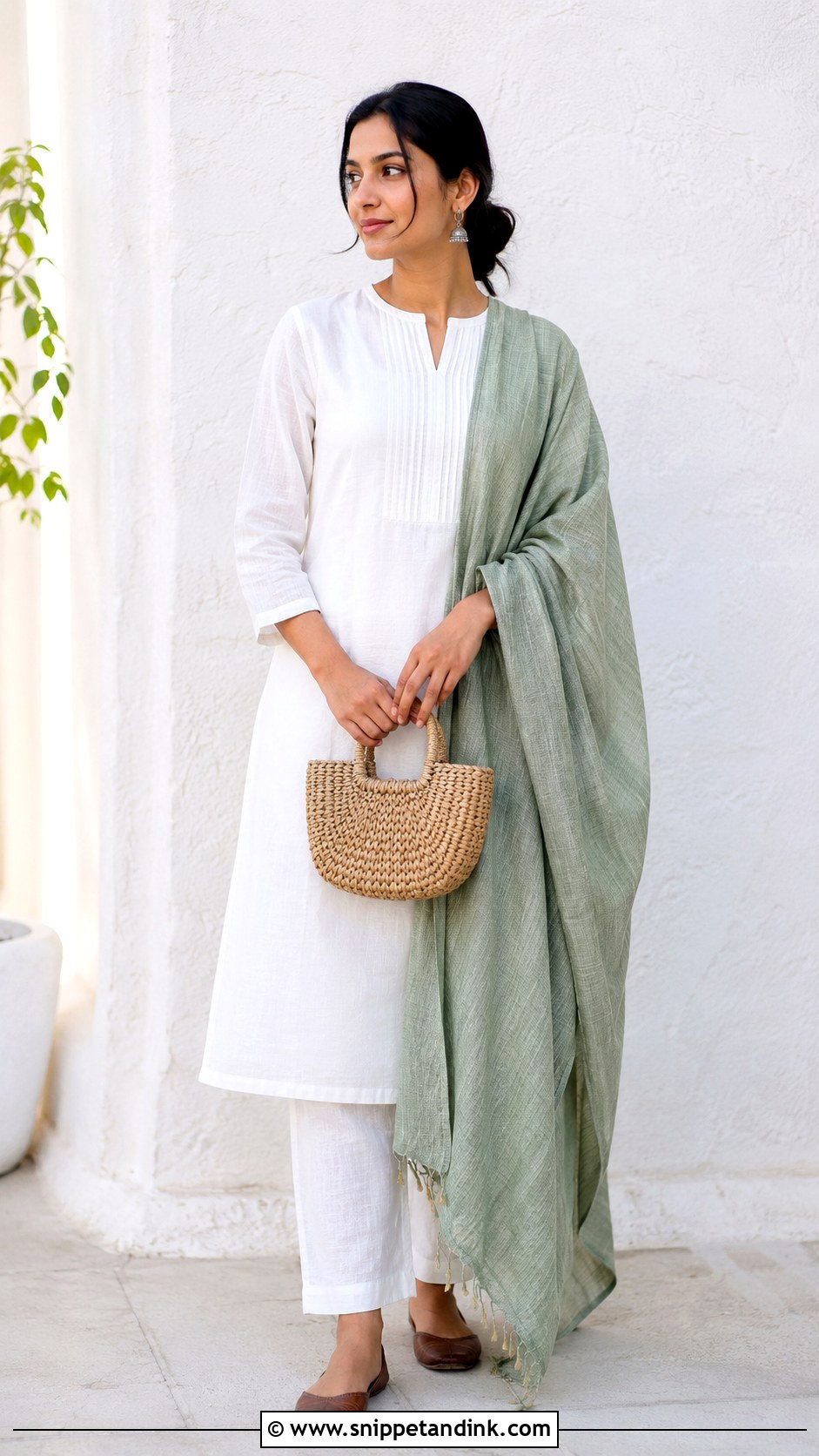
Linen has a natural slub and an easy rumple that looks considered rather than careless, which is why a plain white linen suit never reads basic. I pair it with muted dupattas: sage, dusty pink, rust or indigo, ideally handloom or cotton-silk to keep the texture organic. Leather flats, small silver earrings and a woven bag complete it. Avoid very shiny accessories; they look out of place beside linen’s matte surface. It creases, of course, so steam it just before you leave rather than ironing it the night before.
24. White Suit With Pastel Dupatta
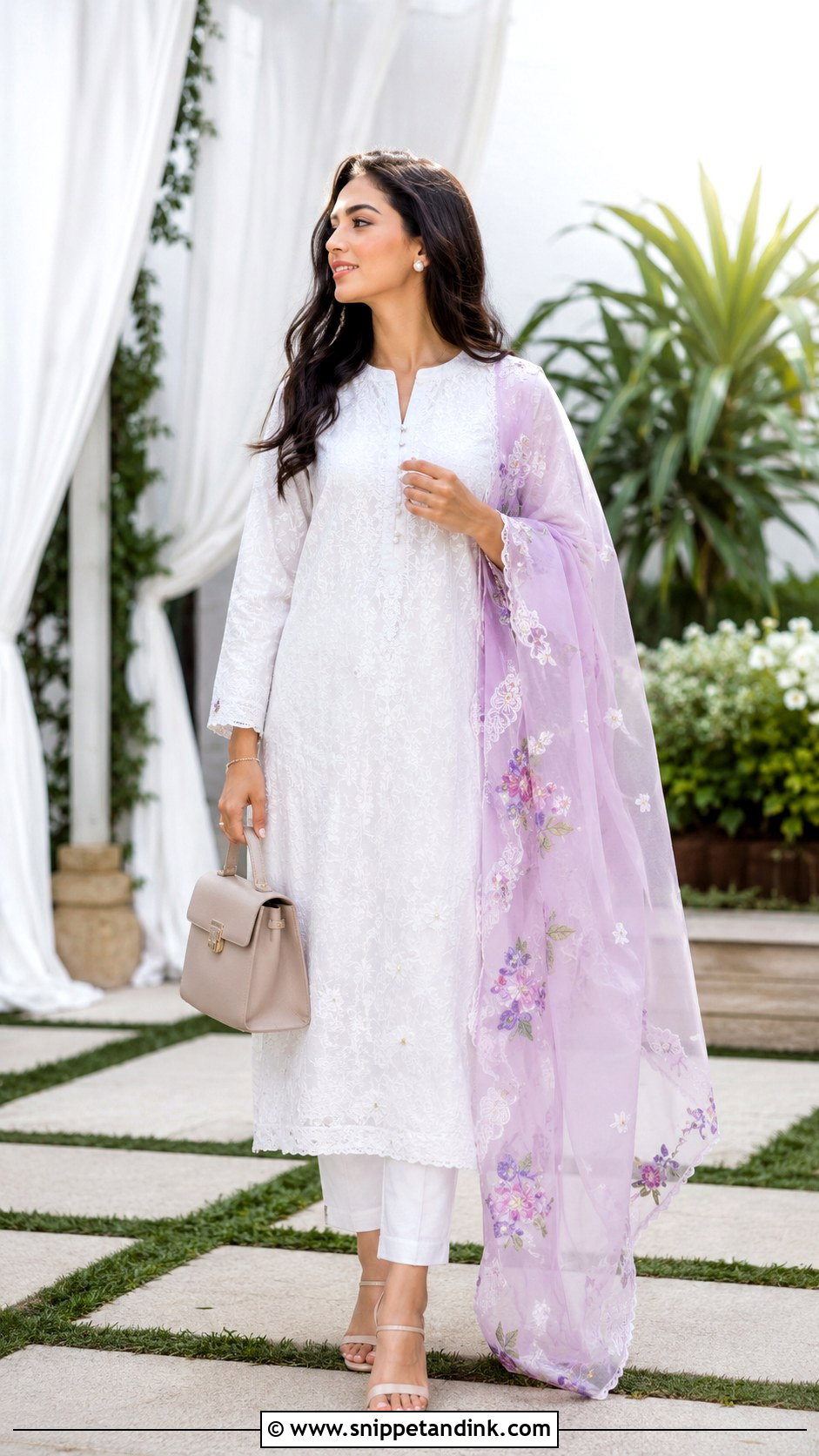
Pastels blend gently with white instead of contrasting with it, so this pairing reads calm. Blush, mint, lilac, peach and powder blue all work in organza, chiffon or cotton-silk, over a white embroidered kurta and straight pants. Pearl studs, nude sandals and a small bag keep it delicate. For more detail, look for floral embroidery or a scalloped border. On very fair skin, I’d go one shade deeper than you think, or the whole outfit can look faded in photos.
25. White Suit With Neon Dupatta
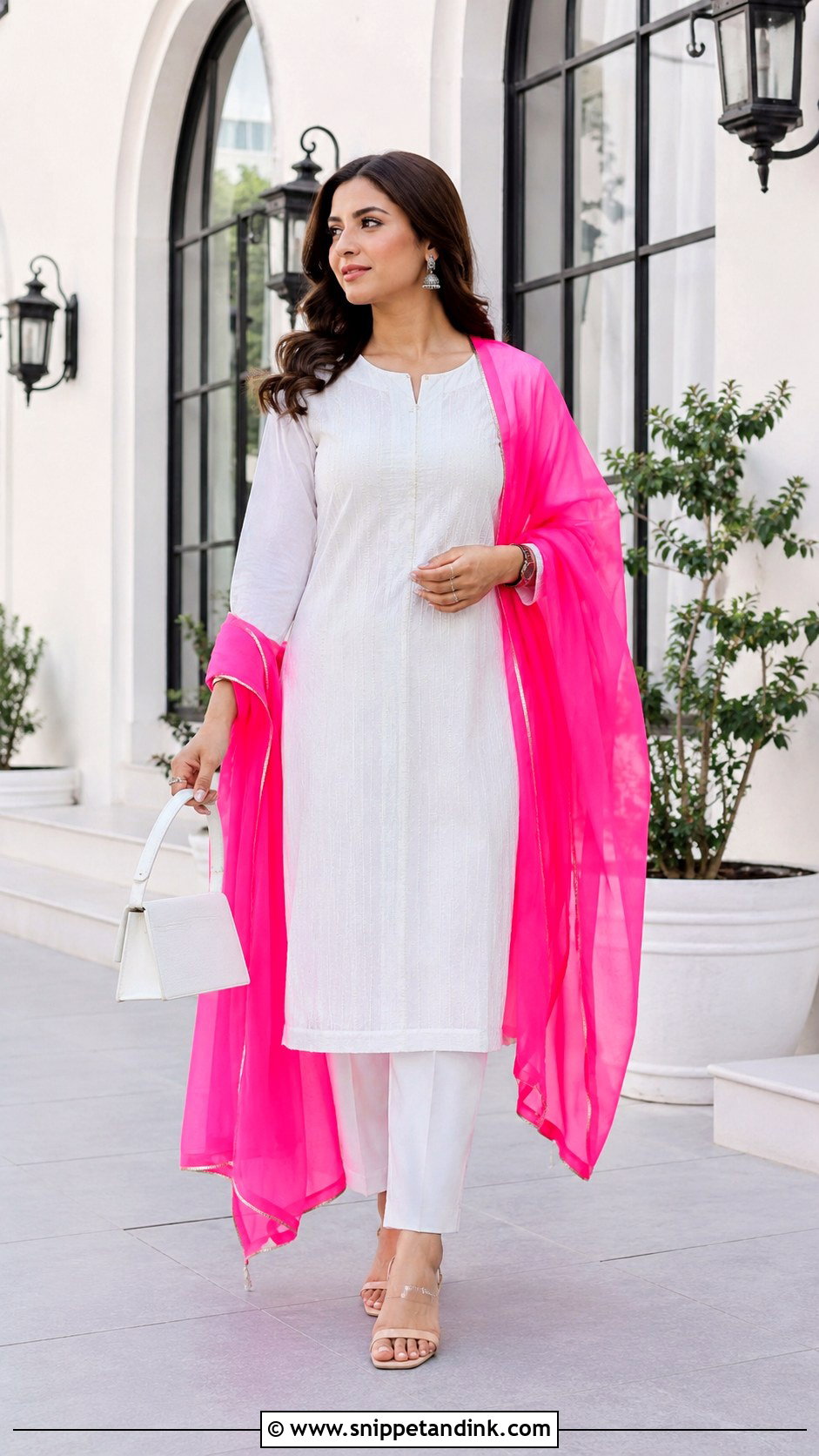
Neon over white is fun and very current, and it’s also the hardest colour here to repeat without people remembering it. Neon pink, lime, electric orange or fluorescent yellow need the plainest possible base: a white kurta and straight pants with nothing else going on. Keep jewellery minimal and shoes clear or nude. Daylight is where neon looks best; indoors under warm bulbs it can flatten, so I’d save it for daytime parties.
26. White Suit With Floral Dupatta
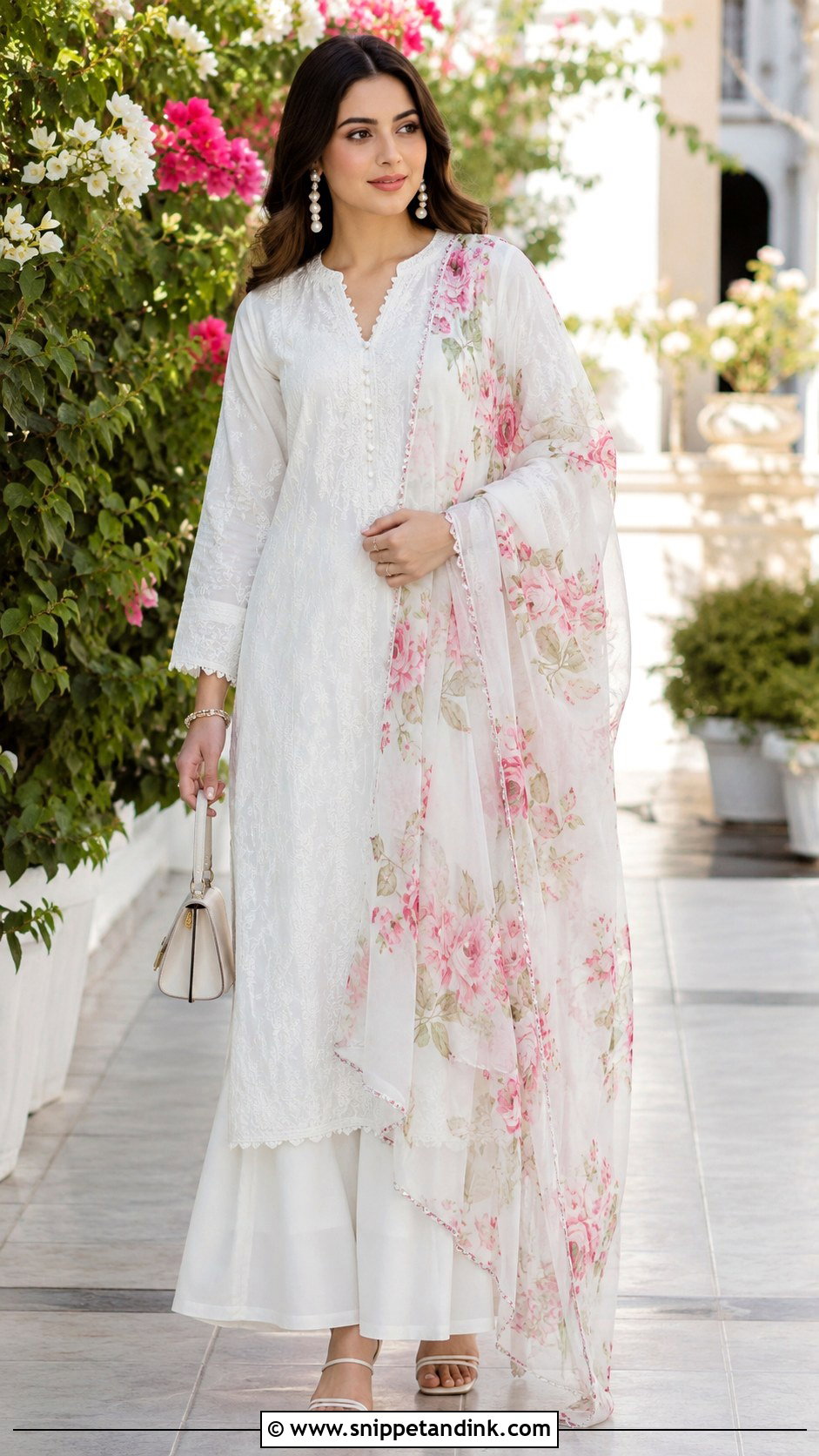
Floral prints soften white and suit brunches and daytime gatherings. A white kurta with palazzos and a floral chiffon or cotton dupatta in pink, blue, yellow or green tones is the easy version. Scale decides the accessories: with big, bold flowers, keep everything else plain; with a tiny print, you can add bangles or a light necklace. Pearl earrings, strappy sandals and a small handbag finish it.
27. White Suit With Mirror Work Dupatta
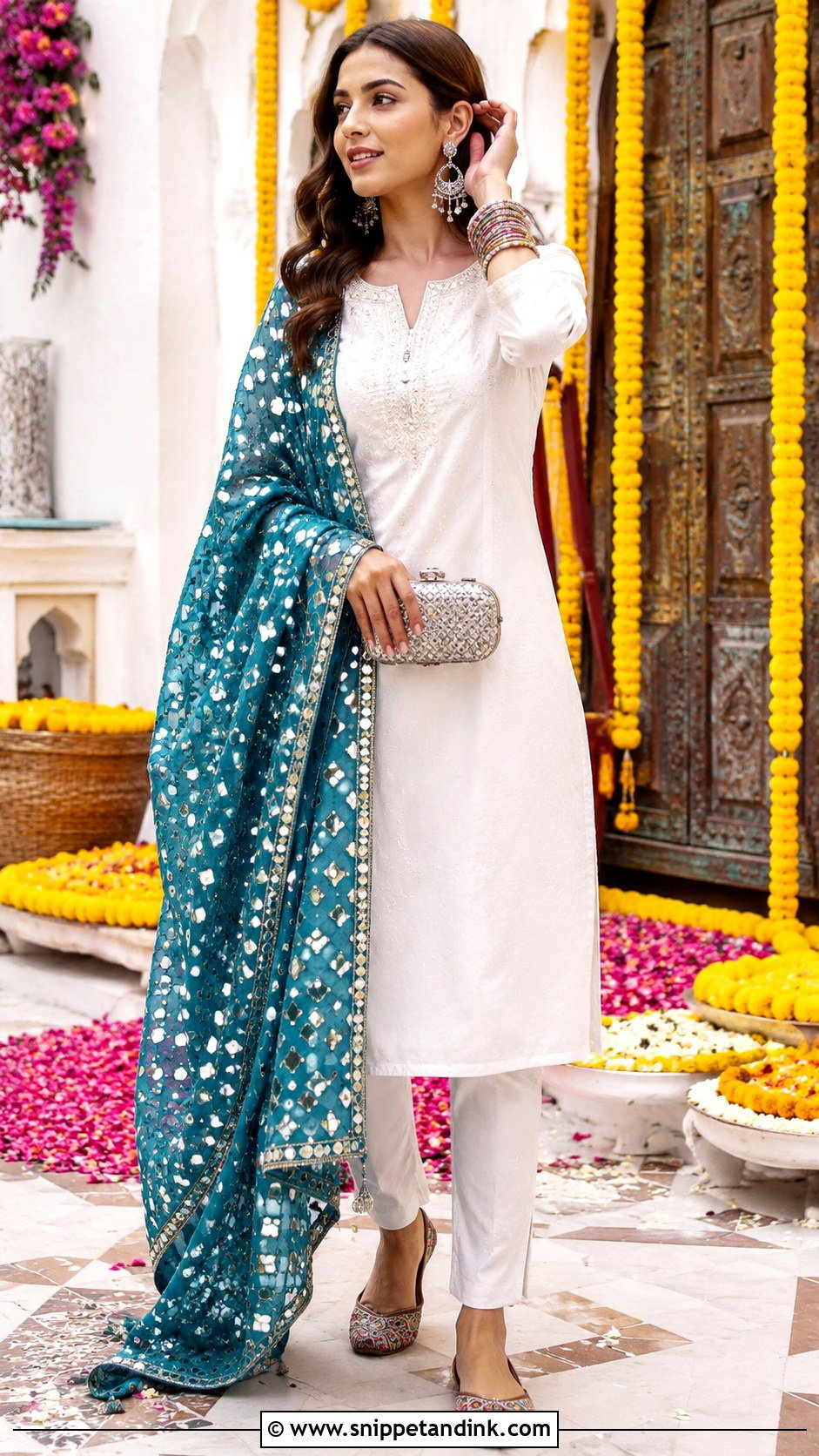
Mirror work catches light from every angle, which is wonderful at night and a little heavy to wear. Each mirror adds weight, so a dense mirror dupatta can pull to one side all evening. I drape heavy ones over one shoulder and pin them, or let them sit around the arms. Pink, orange, teal or yellow with small mirror accents work over a plain white kurta and slim pants. Oxidised earrings, embroidered juttis and a few bangles keep it festive for music functions.
28. White Suit With Gota Patti Dupatta
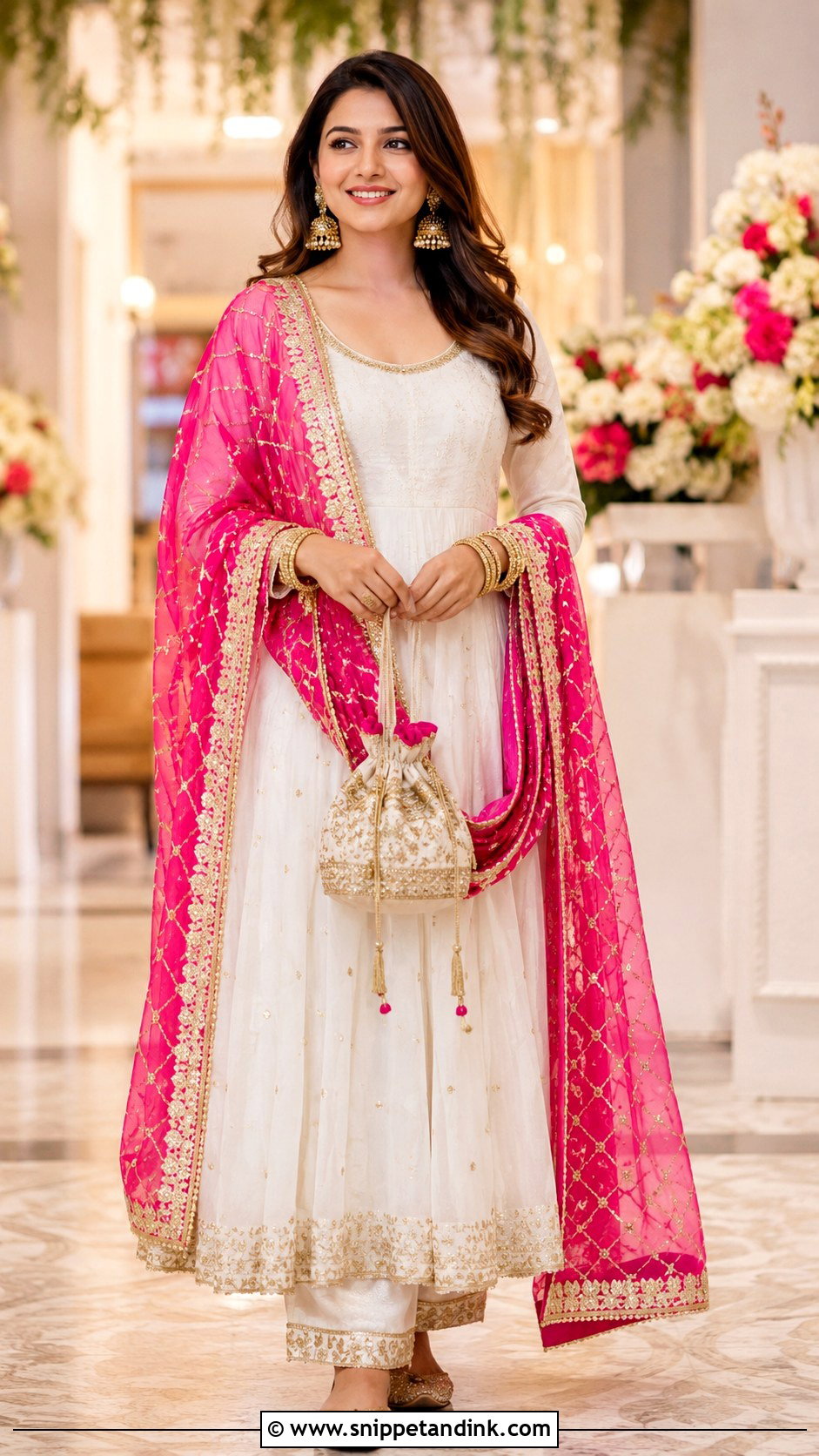
Gota patti is ribbon appliqué, traditionally gold or silver, cut and stitched into motifs, and it gives shine with less weight than zardozi. A gota patti dupatta in rani pink, yellow, orange, green or red brightens a white anarkali, straight suit or palazzo set. Gold jhumkas, bangles and embellished juttis complete it. If the border is wide, keep the kurta neckline simple. Store it rolled or folded with tissue between the gota; it tarnishes and creases if left crushed.
29. White Suit With Embroidered Dupatta
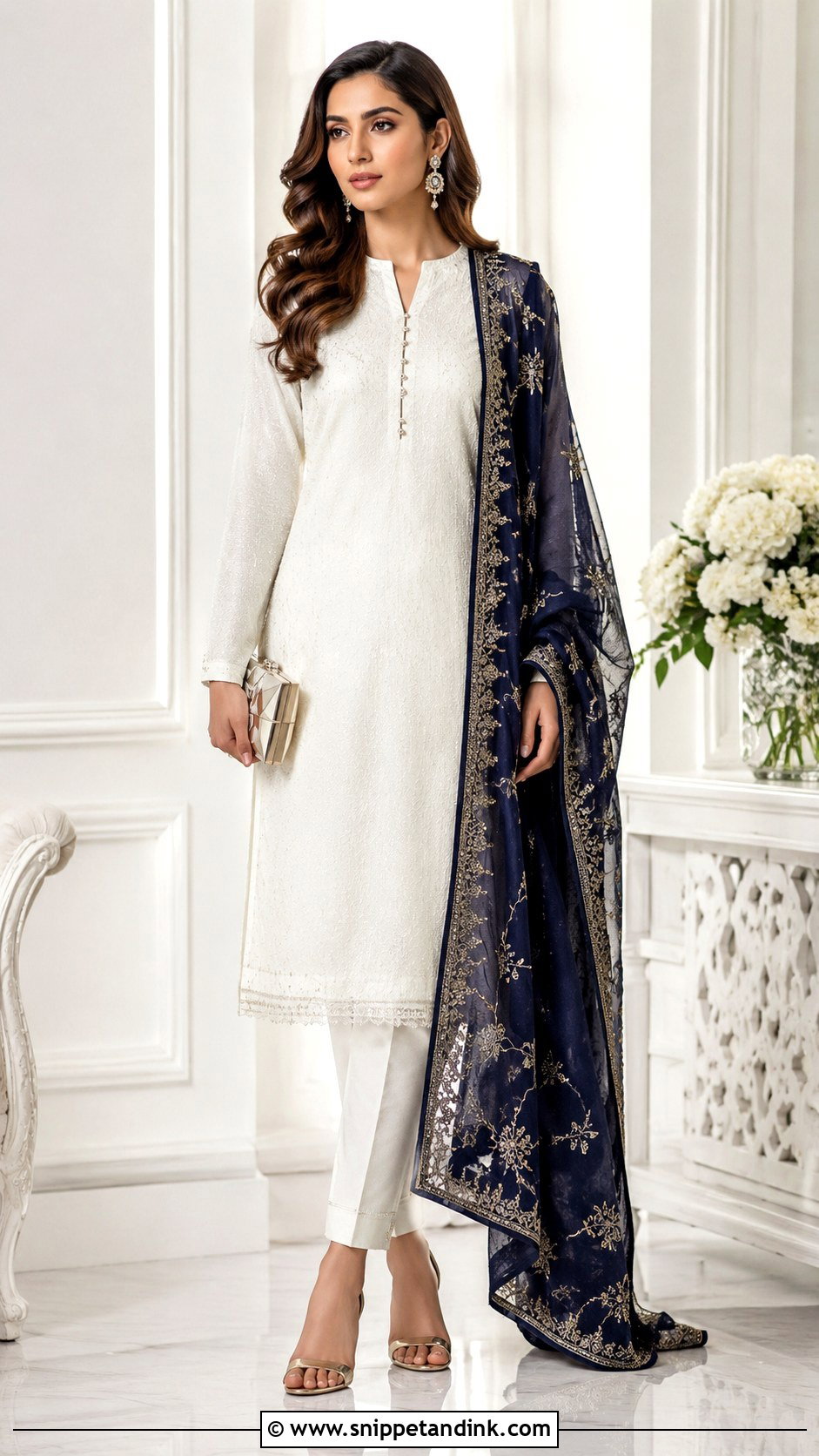
Embroidery type sets how dressy this one gets. Resham threadwork stays soft, zari adds shine and sequins push it toward evening. A white straight suit with a teal, maroon, peach or navy embroidered dupatta looks pulled together for gatherings. I match earrings to the embroidery’s metal tone rather than its thread colour, which keeps the face from looking busy. Heels, a clutch and neatly done hair finish it.
30. White Suit With Contrast Dupatta
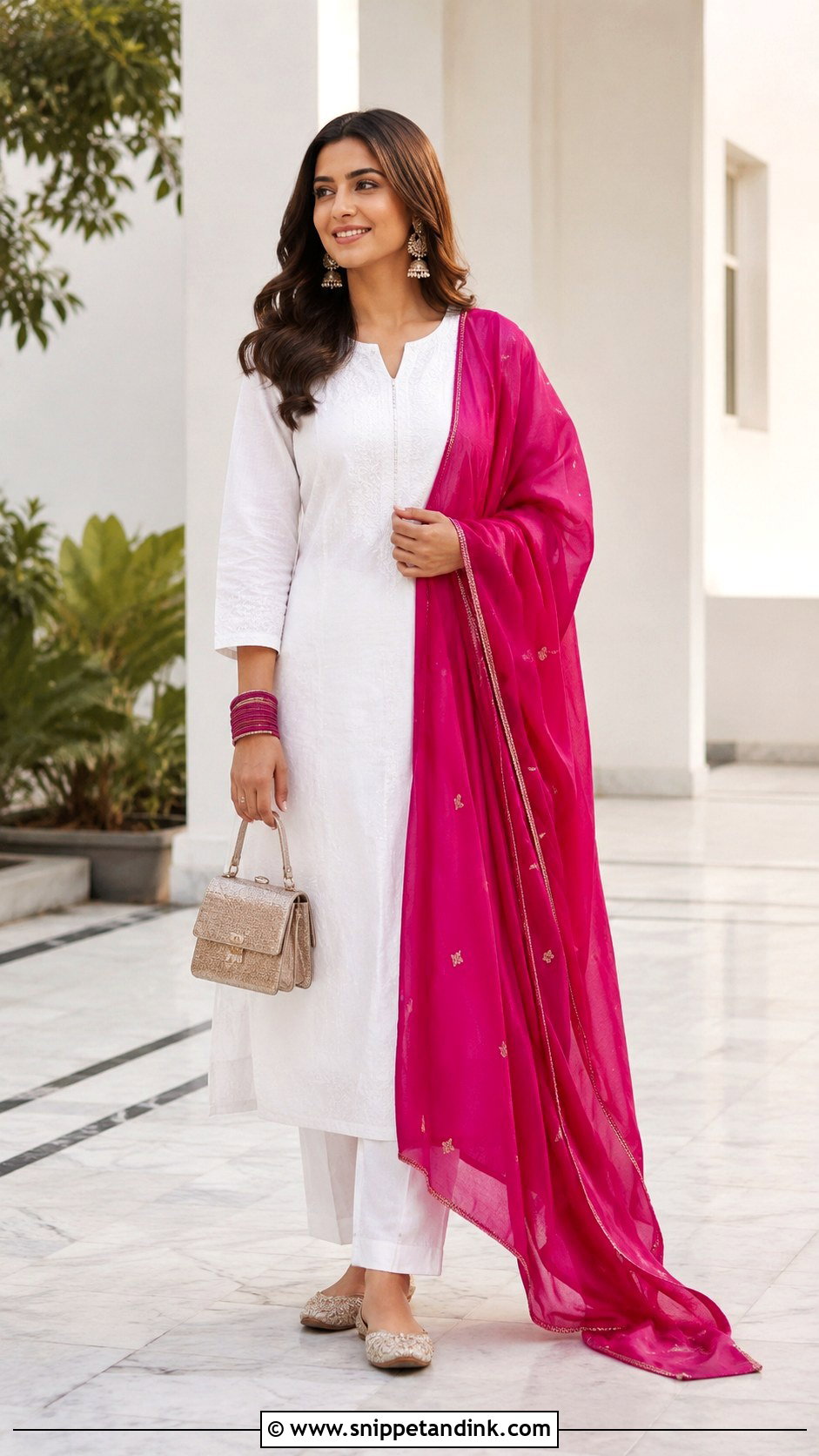
Contrast is really the principle behind every look on this list. A plain white kurta set is the canvas, and red, black, green, blue, orange or magenta dupattas give you a different outfit each time. Repeat the dupatta colour once, in earrings, bangles, shoes or bag, and stop there. Solid accessories go with printed dupattas; statement jewellery works only when the dupatta is plain. I lean on that one rule to get a dozen outfits out of a single suit.
Dye Bleed, Turmeric and Other Threats to a White Kurta
The risk with this whole look is simple: a coloured fabric lying against white all day, often in heat. A few precautions keep the kurta white.
Test the dupatta first
Hand-dyed pieces, especially bandhani, leheriya and some indigo prints, can release colour when damp. Press a wet white cloth on a hidden corner for a minute. If any colour comes off, wear the dupatta over a darker or patterned outfit instead, or have it dry-cleaned before you trust it near white. Sweat at the shoulder and underarm is where bleed usually shows up first.
Haldi and food stains
Turmeric stains white cotton fast and deep. If you’re attending a haldi, I’d honestly skip the white suit unless you’re happy for it to become a haldi outfit permanently. When a mark does happen, rinse it in cold water as soon as you can rather than hot, and dry the kurta in direct sun; sunlight fades turmeric stains far better than scrubbing does.
Is white right for this function?
In some communities, plain white is linked to mourning, and older relatives may notice an all-white outfit at a wedding. A strongly coloured dupatta usually settles that, but if you’re unsure, ask the host family which colours they’d prefer guests to wear. It’s a small question that saves awkwardness on the day.
Build the Dupatta Drawer, Keep the Kurta
A white suit earns its place in a wardrobe because it changes completely with the dupatta. Bright colours make it festive, pastels soften it, prints relax it and rich weaves make it ready for a function. Balance the dupatta against the bottoms, jewellery and footwear so the whole outfit looks intentional. Then collect dupattas slowly, by fabric and occasion, and let one good kurta carry them all year.
You'll Like These Ideas:



Leave a Reply