
I keep telling clients that a plain white salwar suit is the hardest-working outfit they’ll own. It’s a blank base, and the dupatta does all the talking, from heritage prints to heavy embroidery to a bright woven border. The same kurta can go to a family lunch, a sangeet and a wedding morning just by swapping the layer on top. For daytime, I keep it to breathable cotton and flats. Evenings can take silk, mirror work, metallic thread and a heel. Let your jewelry follow the dupatta instead of fighting it, and adjust the kurta length, pants and drape to your own shape. Twenty combinations follow, styled head to toe.
Is White Right for This Function? Ask the Family First
In many North Indian Hindu families, an all-white outfit is linked with mourning, and some older relatives still notice it at a wedding. In others, especially at a daytime mehndi or a gurdwara ceremony, white is completely normal. The colorful dupatta is what turns a white suit festive, so the brighter and more celebratory the dupatta, the safer you are.
My honest advice is to ask the hosts, or whoever is coordinating outfits, before you commit. Plenty of families now set a color theme per function, and white can clash with a request for yellow at the haldi or jewel tones at the reception. If you’re the bride’s close family, check twice. You’ll be in a lot of photographs standing right next to her.
If you’re still unsure, a few choices make white read as clearly celebratory:
- Pick a dupatta with strong color and metallic work, such as gota, zari or mirrors, over a pale print.
- Wear the dupatta across the front so it covers more of the white.
- Add colored bangles or juttis so white isn’t the dominant tone in photographs.
1. Plain White Suit with Red Bandhani Dupatta
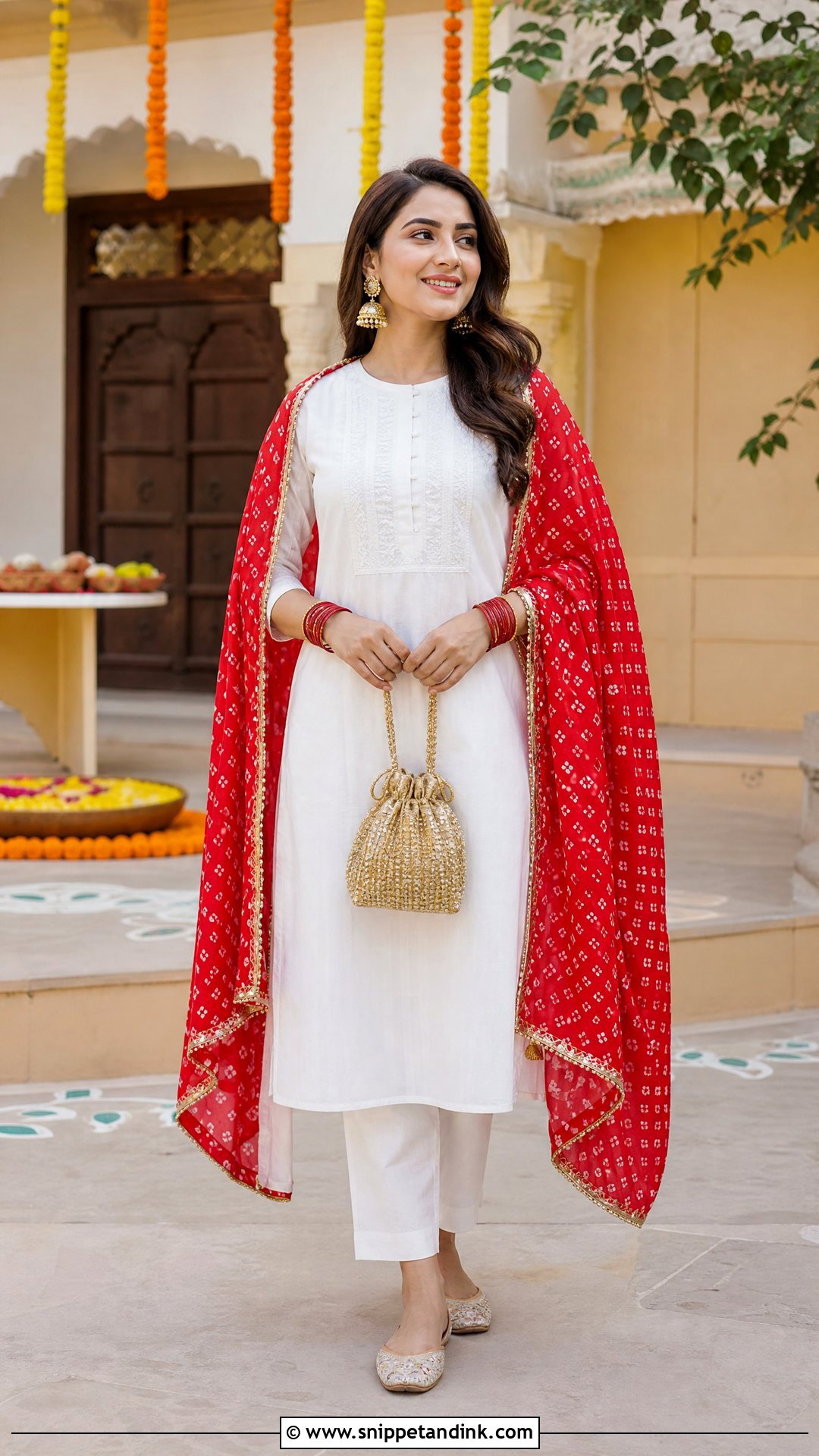
White dots on a red ground over a plain white kurta is about as traditional as this pairing gets. I start with a straight cotton kurta and ankle-length pants, then add a bright red Bandhani dupatta with a slim gota border or small tassels. One thing to know: real bandhani is tie-dyed by hand, and red is the dye most likely to run onto white if the fabric gets damp, so test it before the day. Drape it over one shoulder so the dots stay visible. Gold jhumkas, stacked red bangles and beige embroidered juttis are enough, with a small gold potli for the evening. Softly defined eyes, a muted red lip and a sleek low bun keep the face from competing.
2. Plain White Suit with Pink and Orange Dupatta
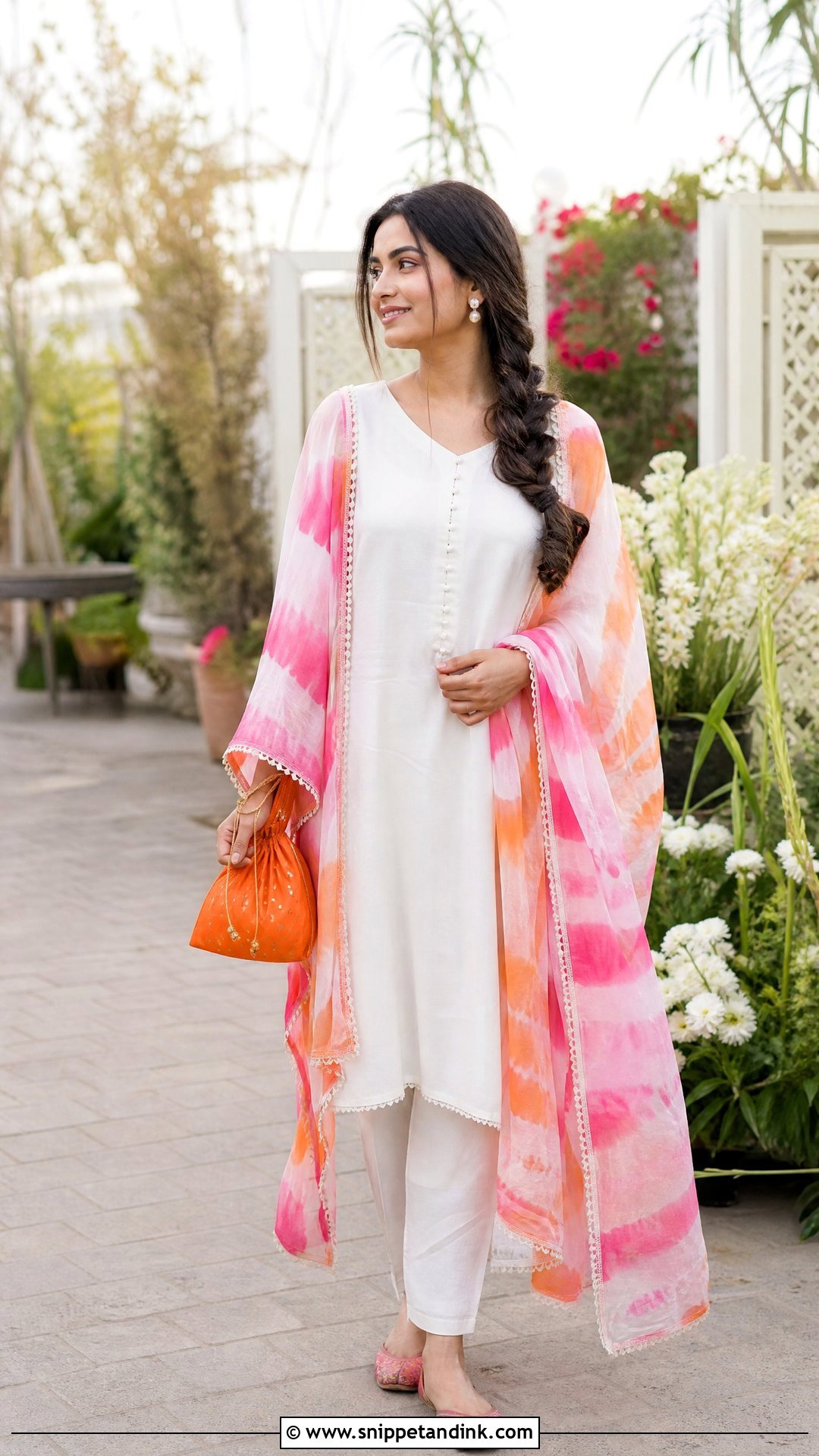
Pink and orange against crisp white is cheerful without tipping into formal, so I save it for daytime. A knee-length kurta over cigarette pants or a churidar works, with a light dupatta in pink and orange bandhani, tie-dye or a watercolor print. Repeat the colors in small doses: pink juttis here, an orange potli there. Pearl drops or simple gold hoops give enough shine. An even drape across both shoulders looks traditional, but if you’ll be balancing a plate at the buffet or chasing small cousins, gather it over one arm. Natural makeup, peach blush and a loose side braid finish it.
3. Plain White Suit with Multicolor Leheriya Dupatta
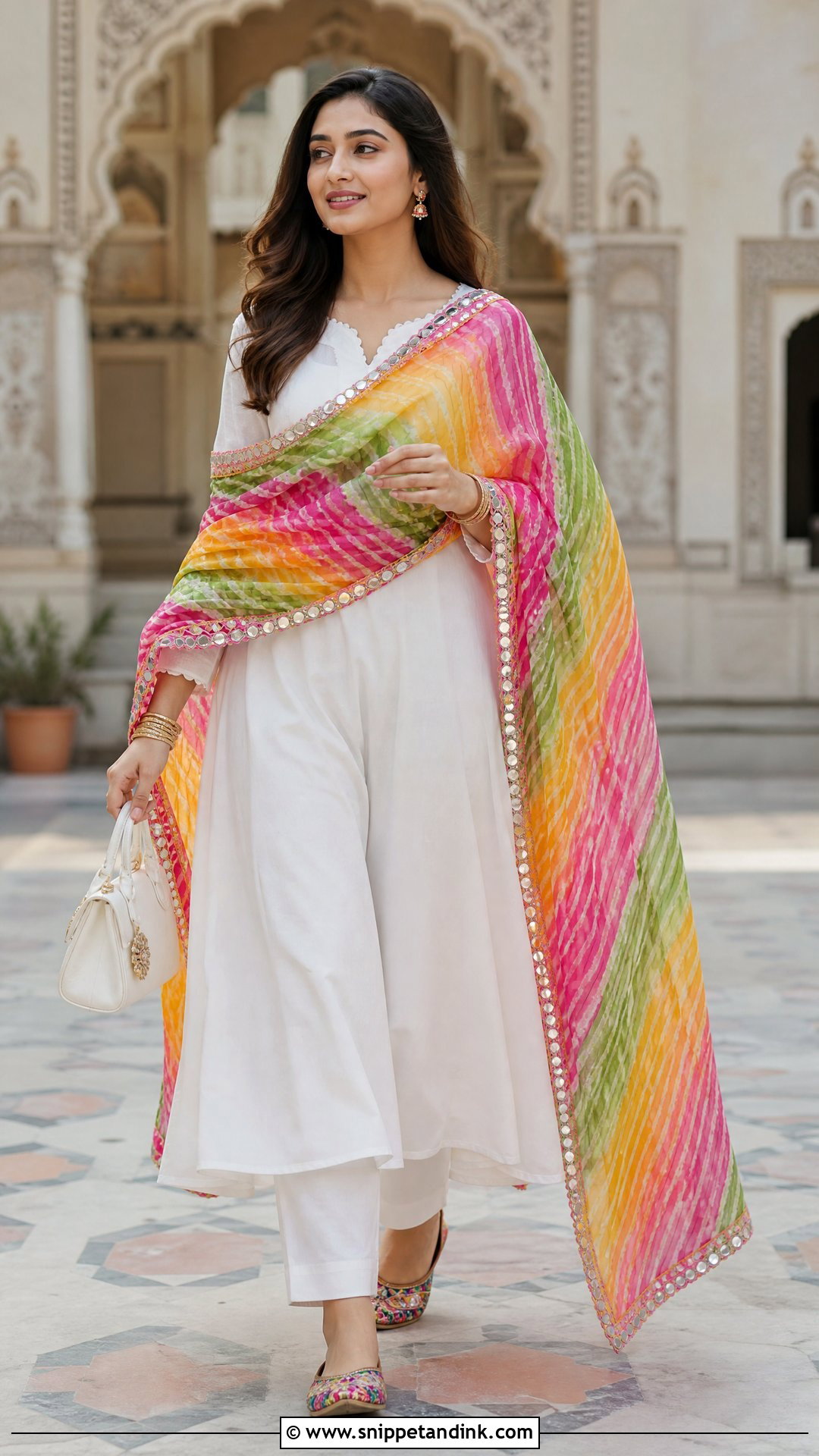
Leheriya is resist-dyed in diagonal waves, so a multicolor one in chiffon or georgette moves every time you do. That’s the point, which is why I let it fall freely from one shoulder rather than pinning it flat. Underneath, a white A-line kurta and slim pants keep the base calm. Pink, yellow, green, blue and orange is already a lot of color, so I don’t add more. Pick gold sandals or juttis in one of those shades, small mirror-work earrings and a few thin bangles. A narrow mirror border is the most sparkle I’d allow. Soft curls, a bright pink lip and a compact white bag.
4. Plain White Suit with Yellow Phulkari Dupatta
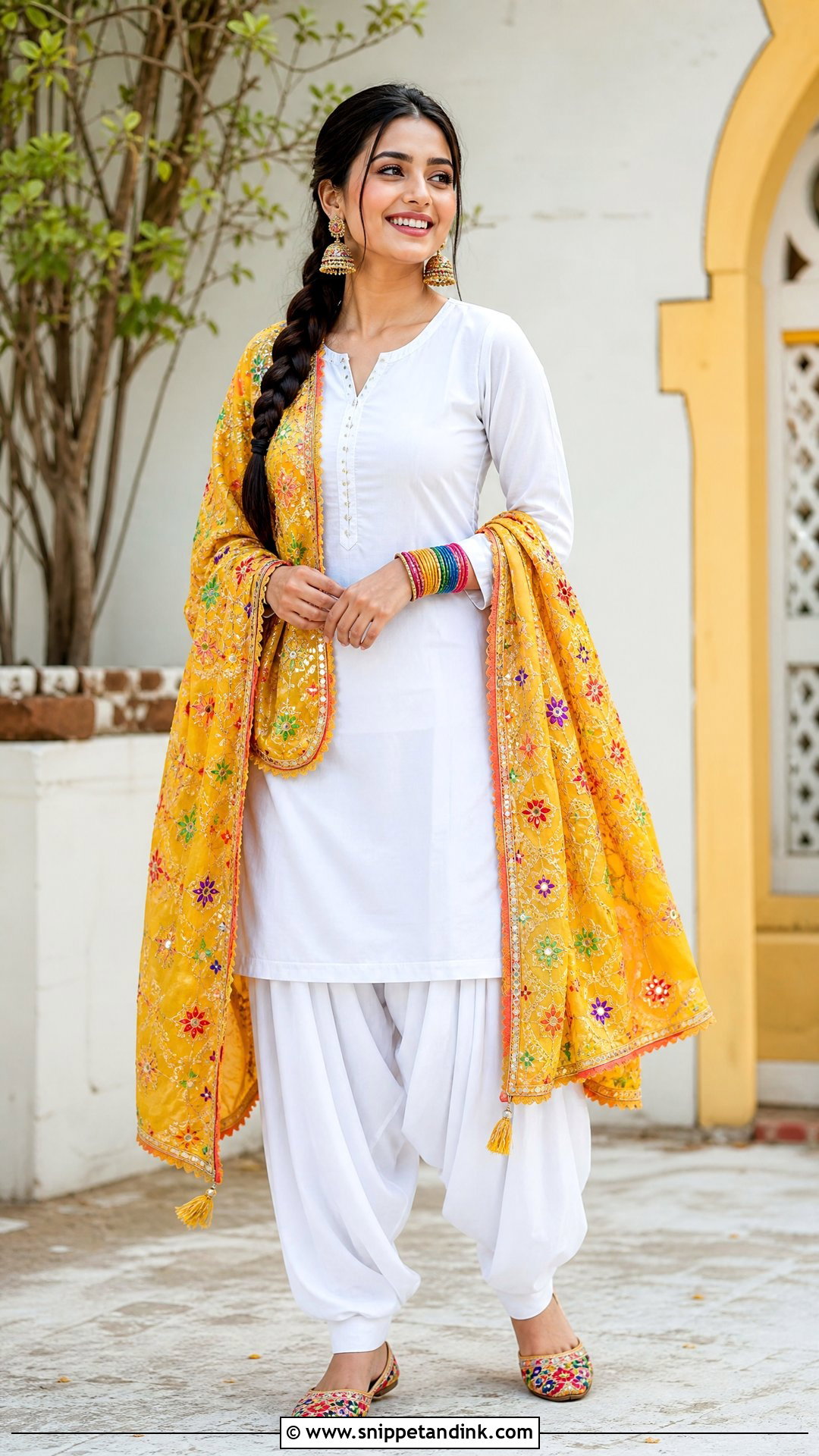
Phulkari is Punjab’s floral darn-stitch embroidery, and a yellow one carries the whole outfit by itself. Keep the kurta plain, with side slits, over a traditional Patiala salwar for the full pleated shape. A mustard or sunflower base with multicolored threadwork looks best. Real phulkari has weight to it, so it sits better across both shoulders than slipping off one, and it’s easy to bring up over the head during prayers or a gurdwara ceremony. Punjabi juttis in yellow, pink or gold, medium jhumkas and slim multicolor bangles echo the embroidery. Finish with a braid, soft kohl and a rosy lip.
5. Plain White Suit with Royal Blue Banarasi Dupatta
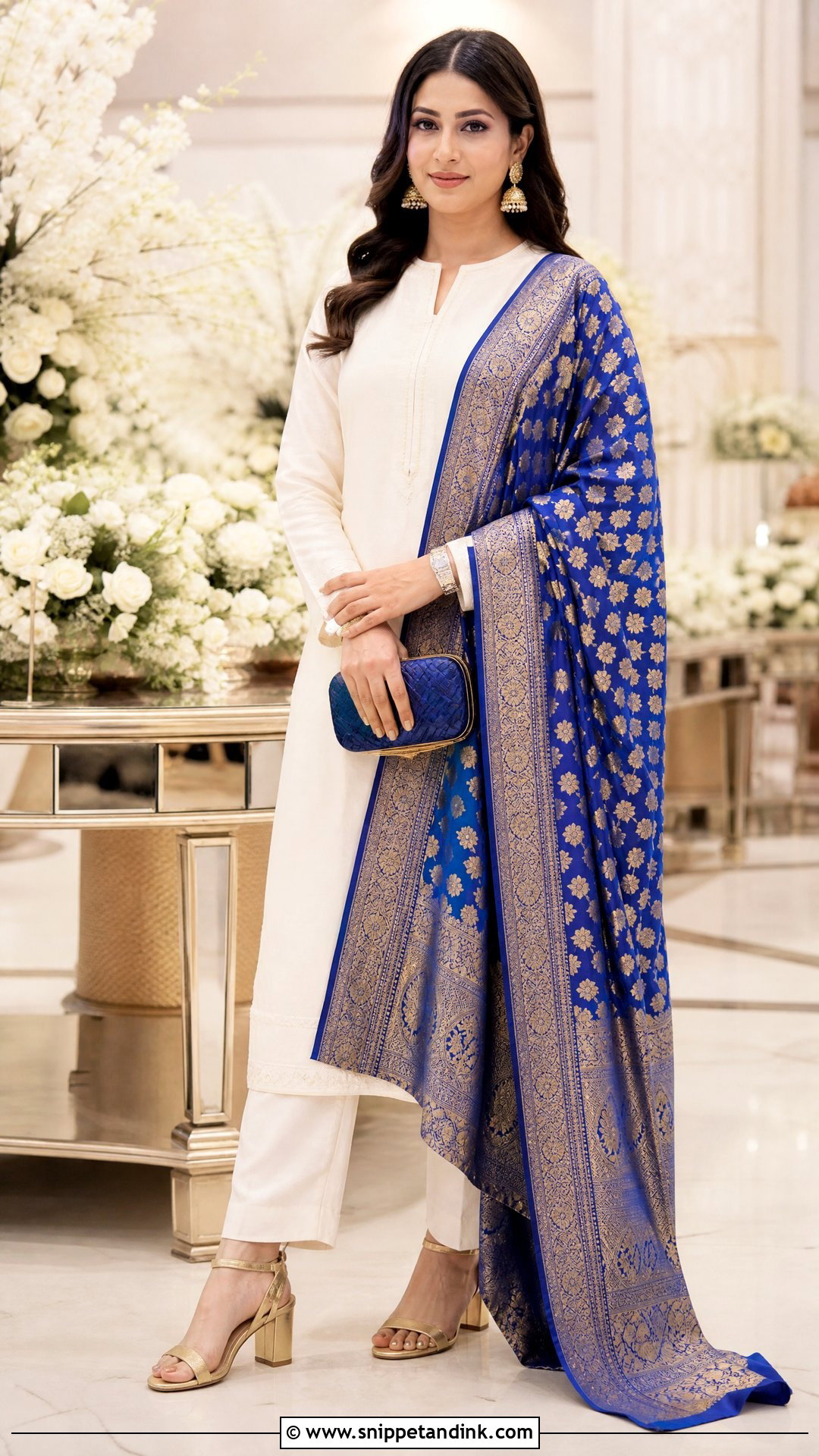
Royal blue on white is my pick when a client wants formal without wearing a lehenga. A long silk-blend kurta with straight pants and a touch of tonal embroidery at the neck sets it up. The Banarasi dupatta, with gold woven motifs and a deep border, goes neatly over one shoulder so the border frames the front. Banarasi silk is stiff and slides on silk, so I put a small safety pin at the shoulder seam from underneath. Skip layered necklaces, because the woven gold already sits near your face. Gold block heels, refined jhumkas and a structured blue clutch, then a center-parted low bun, softly lined eyes and a berry lip for evening receptions.
6. Plain White Suit with Green Chanderi Dupatta
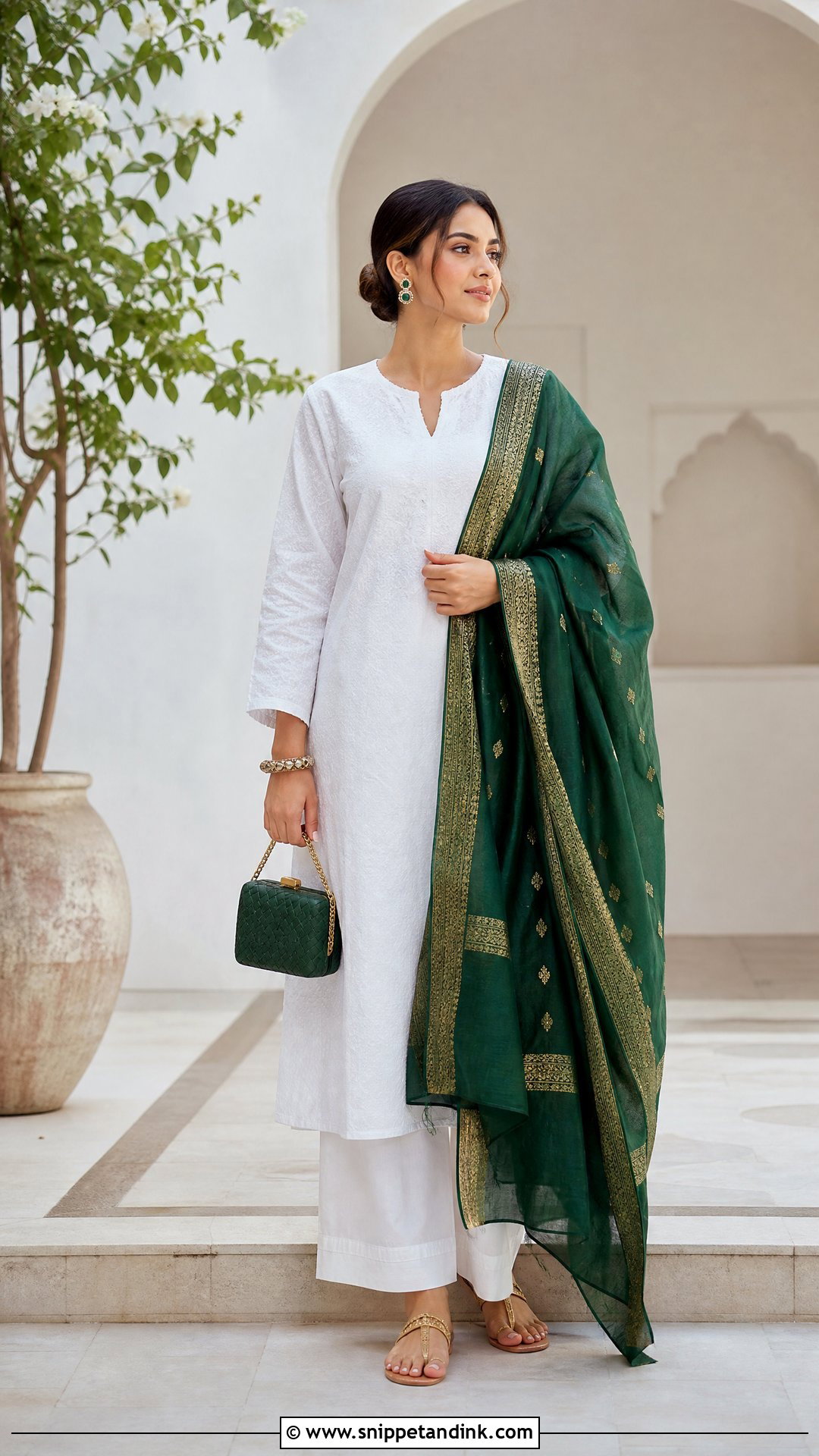
Chanderi is the answer when a white suit needs color but nothing heavy. The fabric is light, slightly sheer and has a soft sheen, so it behaves on one shoulder without dragging the kurta down. Go for bottle green or parrot green with small gold butis and a contrasting woven border, over a lightly textured kurta and wide-leg pants. Gold kolhapuris, green stone earrings and a slim metal bracelet. A cream or green bag keeps the palette tight. Pin it at the shoulder, wear your hair straight and keep the makeup to soft brown eyes and a rose lip.
7. Plain White Suit with Pink Floral Organza Dupatta
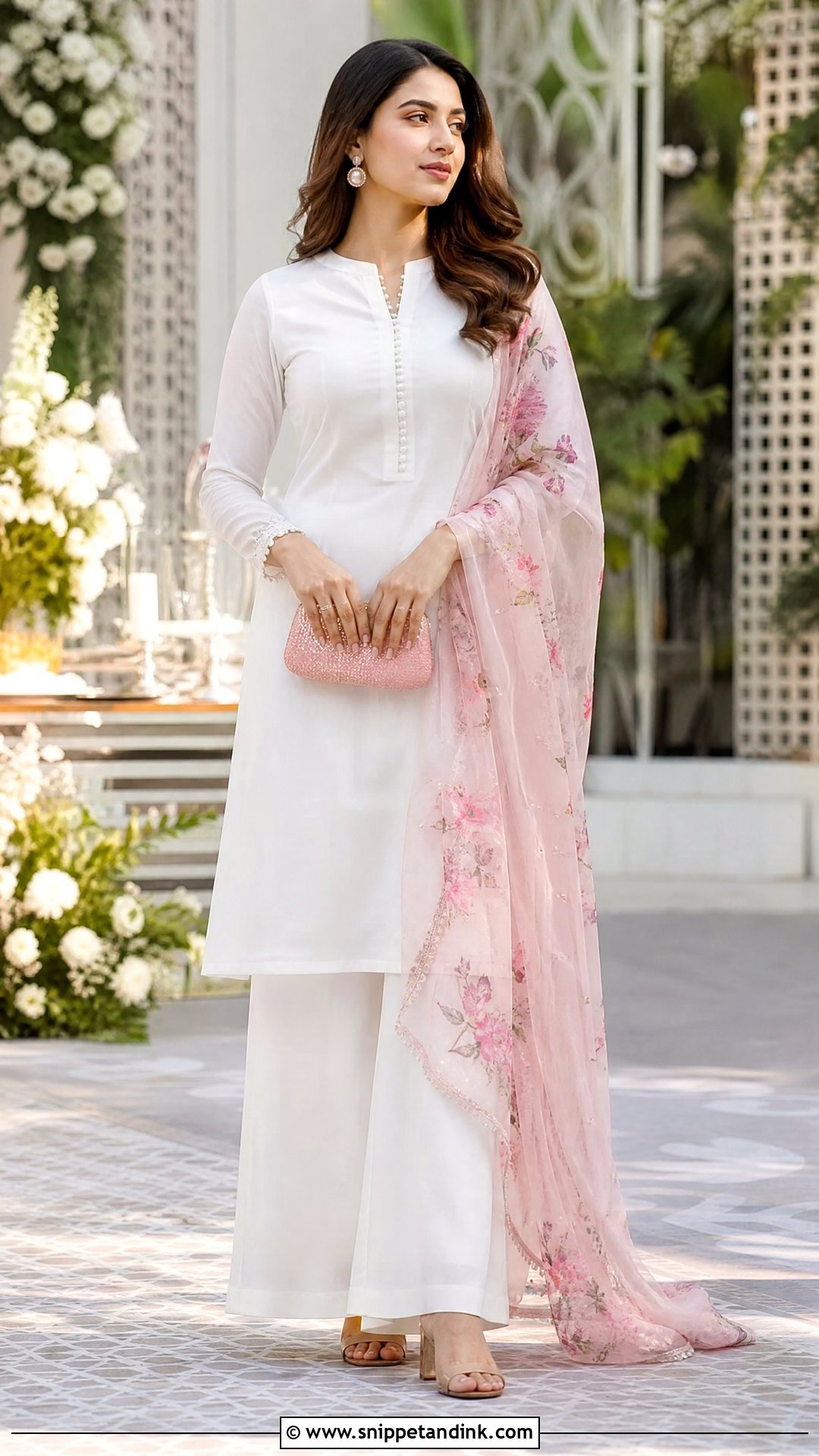
Organza is crisp and holds its own volume, which is why I never fold it into tight pleats. It creases sharply, and those lines are hard to steam out in a hotel room. Let it sit over one shoulder in loose folds. A blush or bright pink floral organza with a narrow scalloped edge goes over a fitted white kurta and flowing palazzos, which soften the dupatta’s stiffness. Pearl earrings, a slim bracelet and nude block heels are all it needs. Match the clutch to one flower, not the whole dupatta, and leave the neckline bare. Loose curls, glowing skin and a soft pink lip suit daytime functions.
8. Plain White Suit with Purple Silk Dupatta
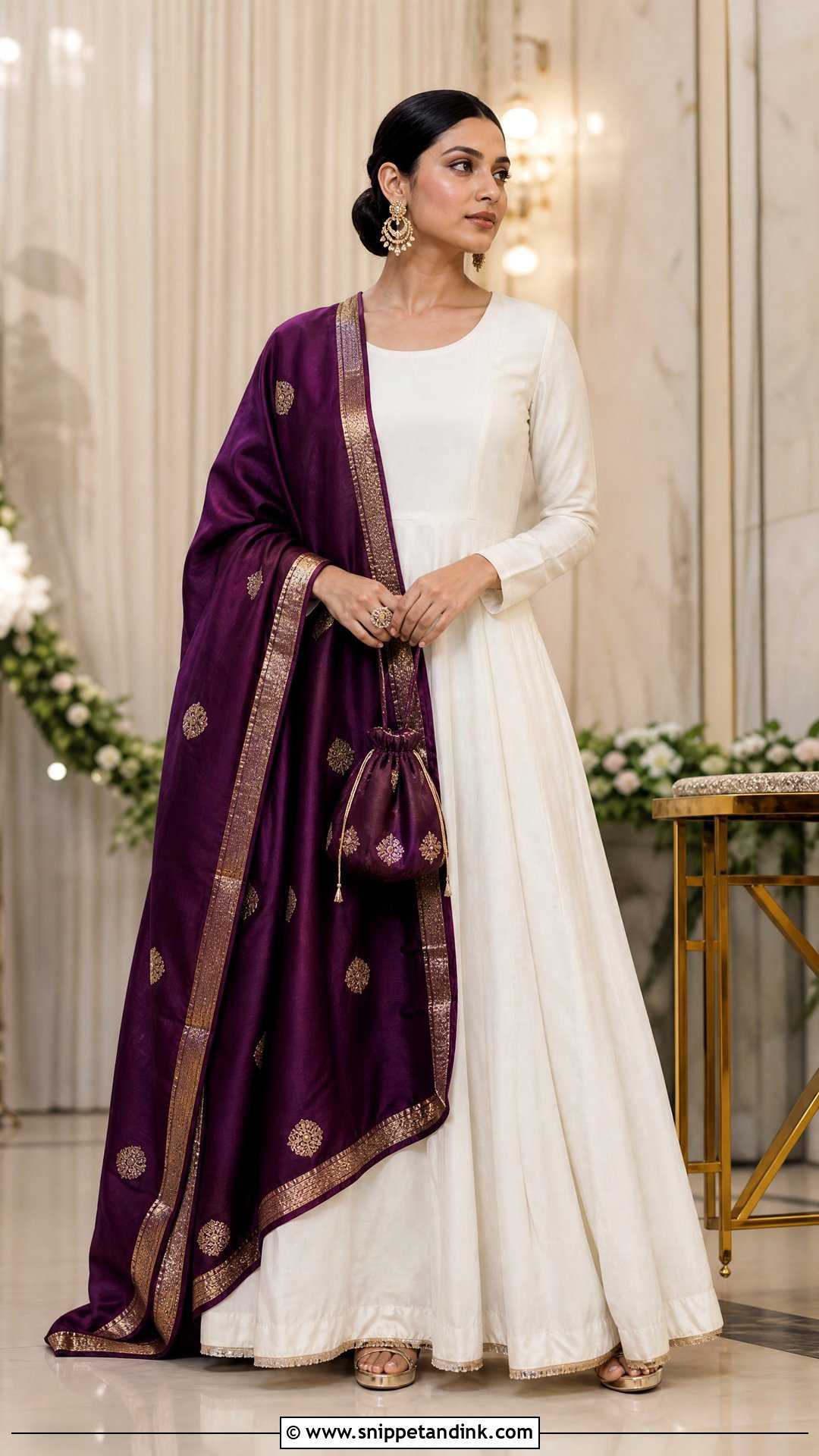
Deep purple makes a white outfit formal immediately. Here I’d move from a kurta to a floor-length white Anarkali with minimal tonal embroidery, because the flare balances the weight of a purple silk dupatta with gold edging, woven butis or restrained zari. For the entrance, drape it over both arms. Once you’re seated or dancing, secure it on one shoulder. Antique-gold earrings, one statement ring, metallic heels and a plum potli that repeats the purple instead of adding a new shade. A sleek bun, defined eyes and a muted mauve lip.
9. Plain White Suit with Turquoise Chiffon Dupatta
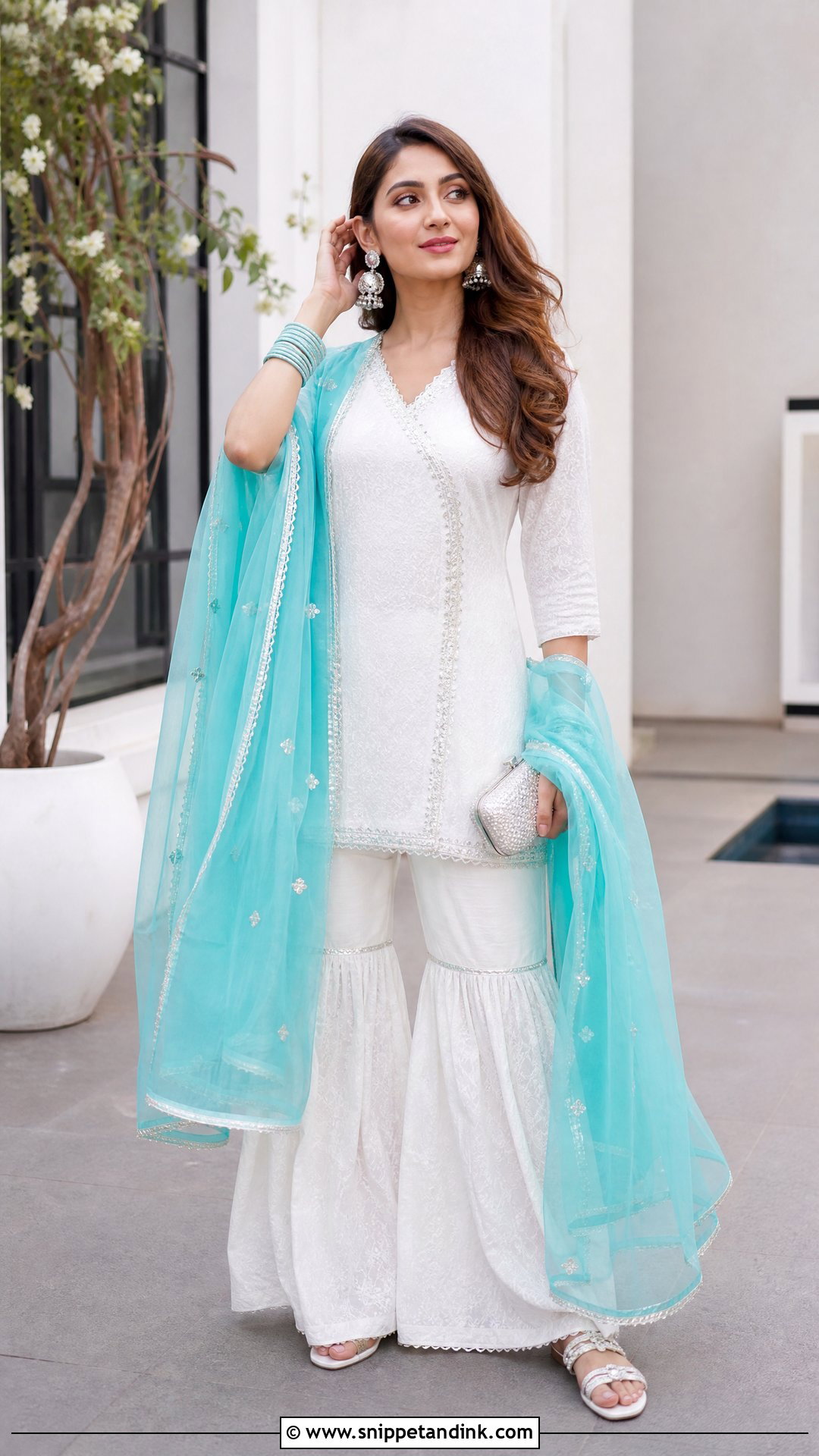
Chiffon drapes close to the body, so a turquoise chiffon dupatta gives you color without bulk. That matters over a short kurta and flared sharara, where the pants already carry plenty of volume. Silver sequins, embroidered edging or tiny scattered motifs all suit it. Chiffon slips constantly, so secure one end at the shoulder and loop the rest loosely around your arms. Silver jhumkas, turquoise bangles, white embellished sandals and a small silver clutch hold the cool palette together. Half-up hair, highlighted skin, a flick of blue-green liner and a nude lip.
10. Plain White Suit with Orange Gota Dupatta
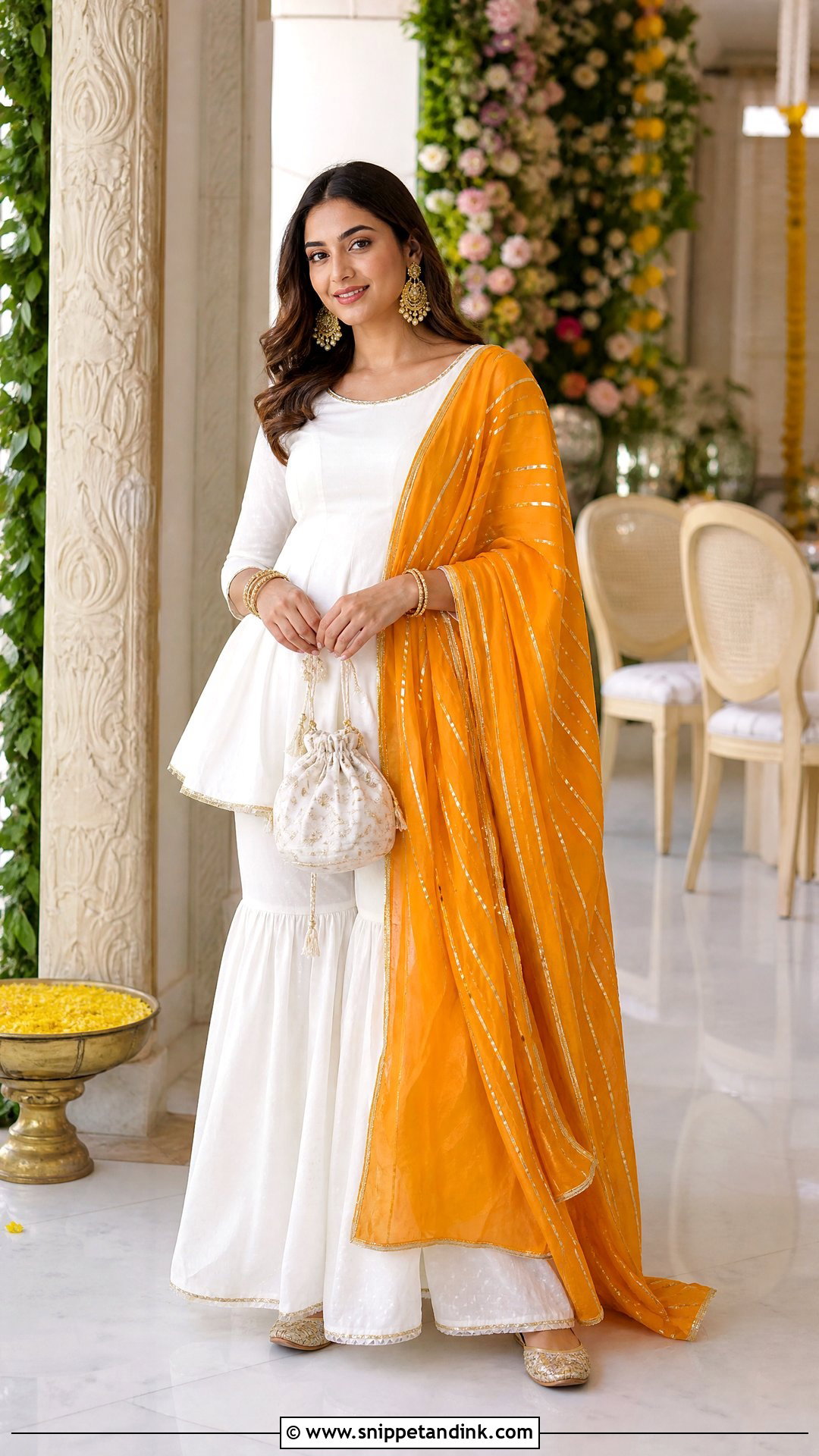
Gota is metallic ribbon appliquéd onto the fabric, and on a marigold or tangerine dupatta it reflects every light in the room. That’s plenty, so keep accessories in one metal: gold juttis, small chandelier earrings, a few delicate bangles. The base can be a white peplum kurta with straight pants or a gently flared sharara. Drape it diagonally across the torso if you want the gota stripes front and center. A white potli with a little gold embroidery balances the warmth. Gota edges can scratch bare arms over a long evening, so I’d choose a sleeved kurta with this one. Soft ponytail, warm peach makeup, coral lip.
11. Plain White Suit with Black Ajrakh Dupatta
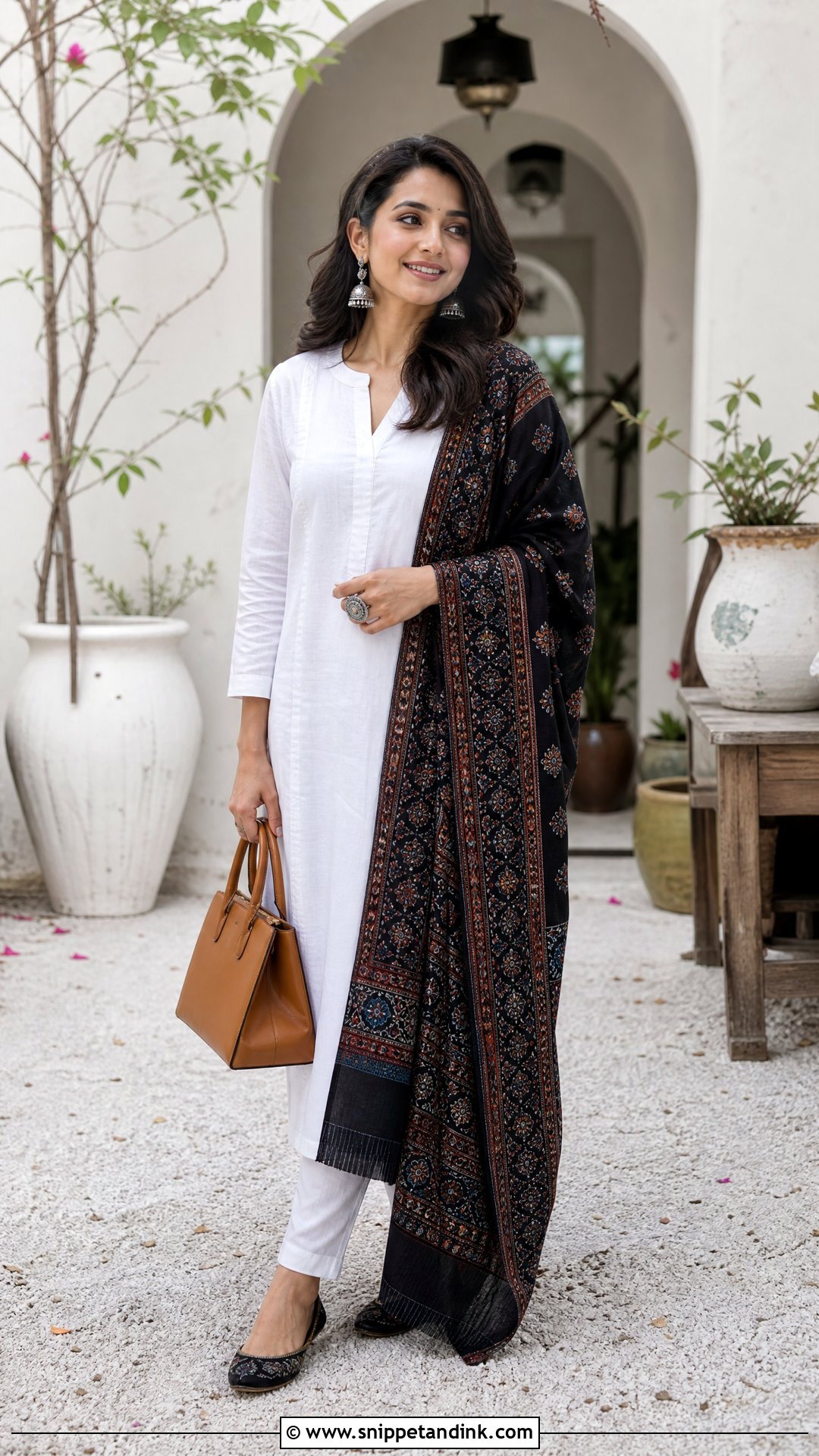
Ajrakh is block-printed with natural dyes, traditionally indigo and madder red, and its graphic repeats bring depth with no sparkle at all. Start with a relaxed cotton kurta and tapered pants, then add a black, indigo and rust Ajrakh dupatta in geometric or floral blocks. Oxidized silver earrings, a chunky ring and black leather juttis suit the handmade feel. A tan crossbody works for casual days and a black clutch for something dressier. Fold it lengthwise around the neck for everyday wear, or open it over one shoulder to show the full print. Hand-printed dyes can shed in the first few washes, so keep it out of the same load as the kurta. Low ponytail, kohl, neutral lip.
12. Plain White Suit with Indigo Block Print Dupatta
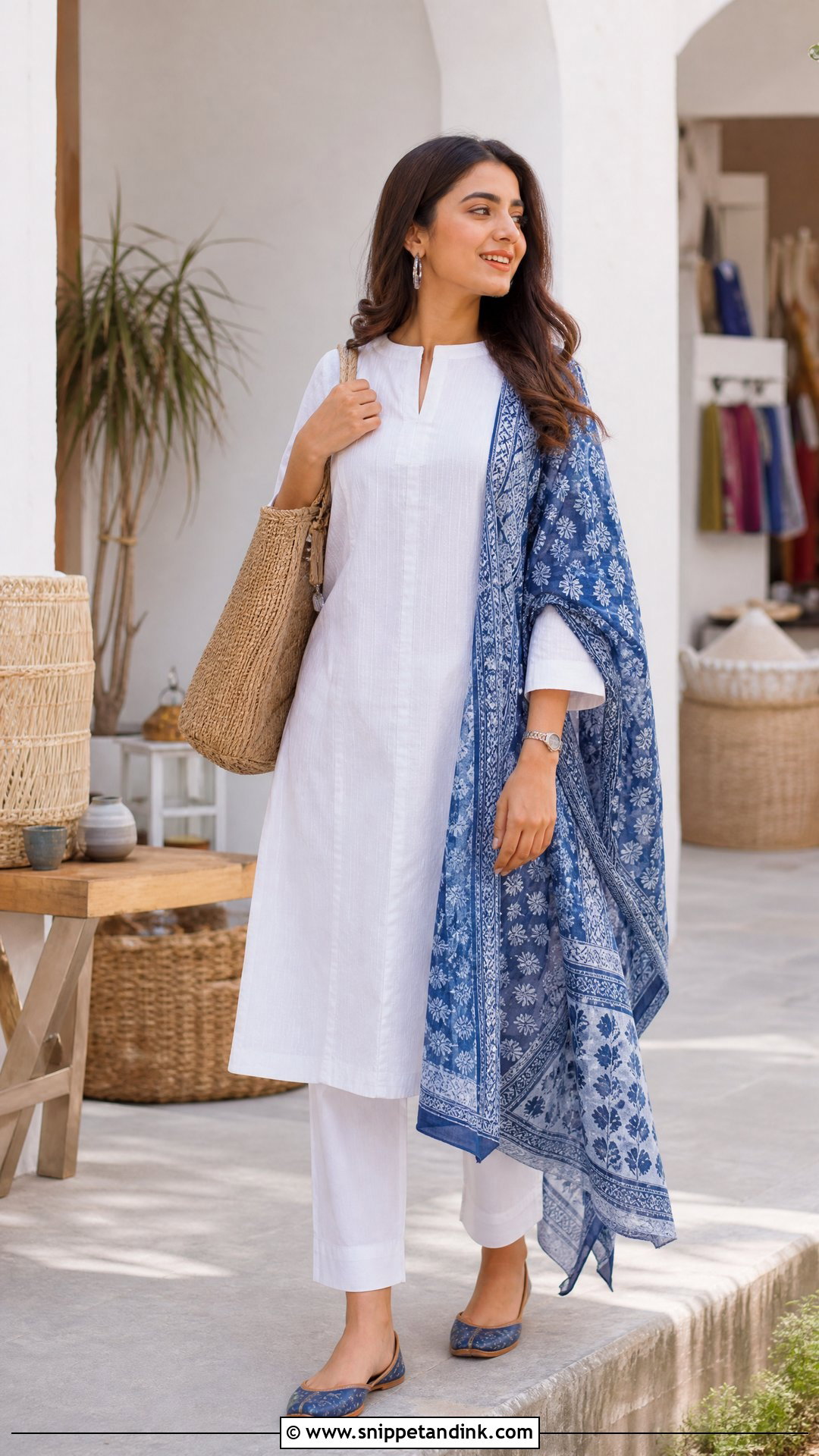
Indigo block print is my default for long, relaxed days: shopping, travel, a family lunch that runs into the evening. A breathable cotton kurta with cropped straight pants and side pockets keeps it practical. The dupatta can carry floral vines, geometric borders or small repeats, worn loosely around the neck with both ends at the front. Blue juttis or brown flats, silver hoops, a simple watch and one indigo bangle. A woven tote adds texture. Indigo softens and fades with washing, which I like, but the white kurta needs to be washed apart from it. Casual braid, light makeup, tinted balm.
13. Plain White Suit with Rainbow Striped Dupatta
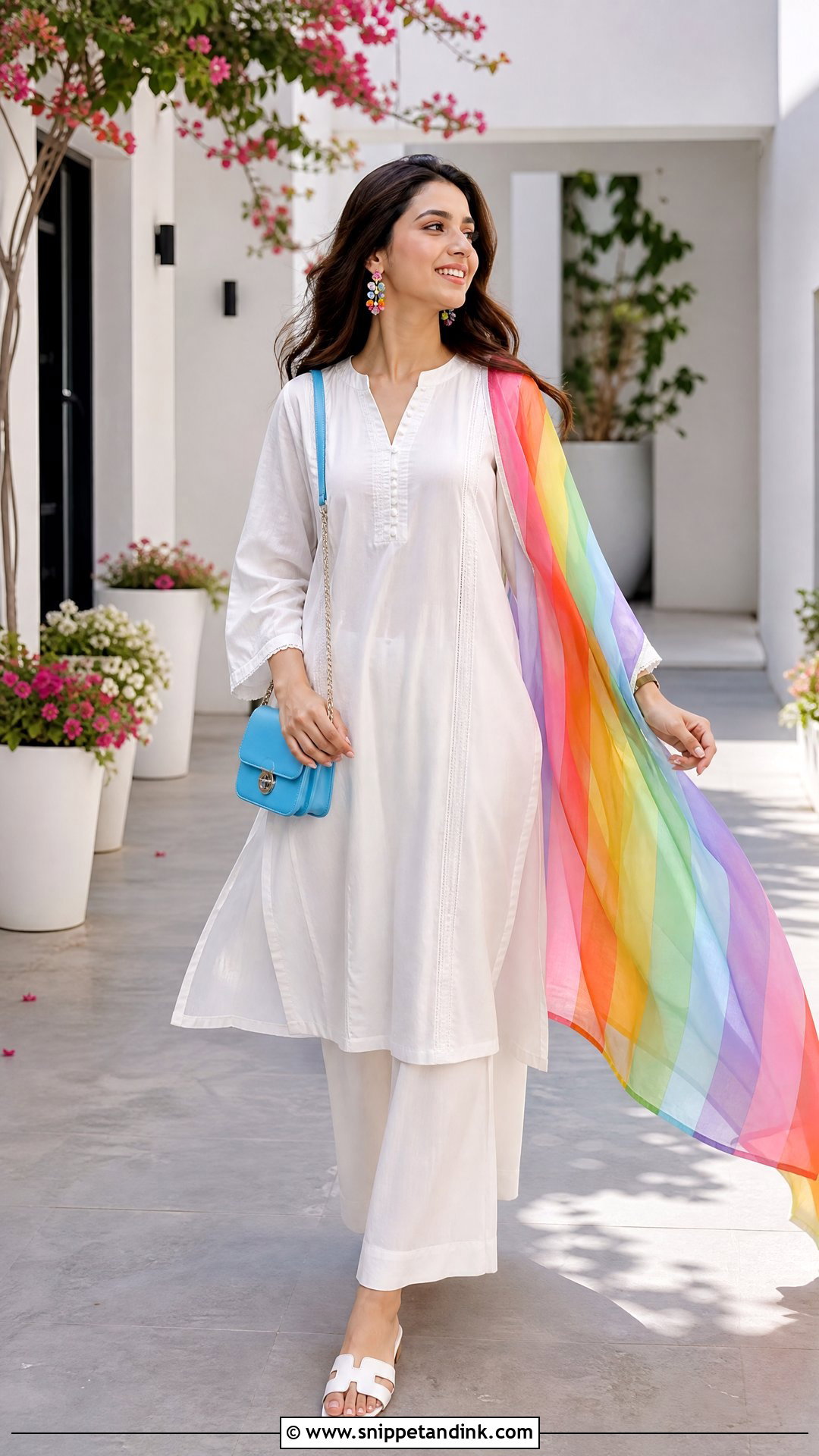
Rainbow stripes give the most color for the least effort, and they need almost nothing else. A calf-length white kurta with matching wide-leg pants keeps the stripes in charge. In georgette or chiffon, they can run horizontal, diagonal or ombré. White sandals and small multicolor earrings are enough; if you carry a colored bag, pick one shade only. Hang the dupatta vertically from one shoulder, which lengthens the body. Wrapped around the neck, horizontal stripes do the opposite and shorten it. A smooth ponytail and fresh makeup stop the outfit looking busy at daytime parties and casual festive events.
14. Plain White Suit with Magenta Mirror Work Dupatta
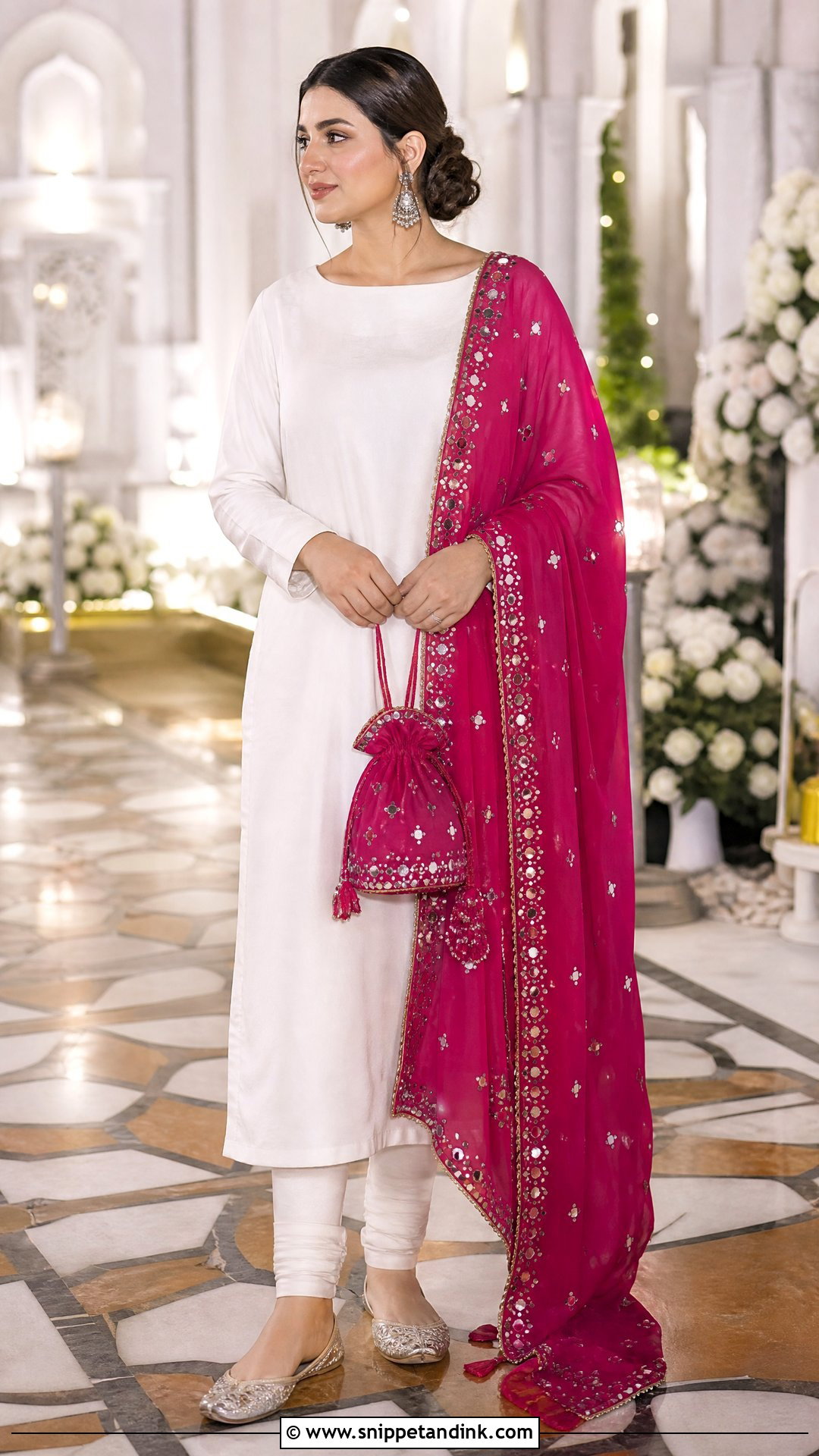
Mirror work needs light to do its job, so I keep this drape open across one shoulder where it can catch every lamp. A plain straight kurta with a fitted churidar and modest scoop neckline gives the cleanest background. Choose magenta with small mirrors, colorful thread embroidery and a narrow border. Silver juttis, mirror-work earrings and a small magenta potli coordinate without stacking more shine. No big necklace near reflective work. The mirrors are stitched-in glass with firm edges, so they can snag a fine chiffon kurta; cotton or a sturdier blend is safer underneath. A side-parted bun reads formal, loose curls softer, with defined liner and a muted pink lip either way.
15. Plain White Suit with Mustard Kalamkari Dupatta
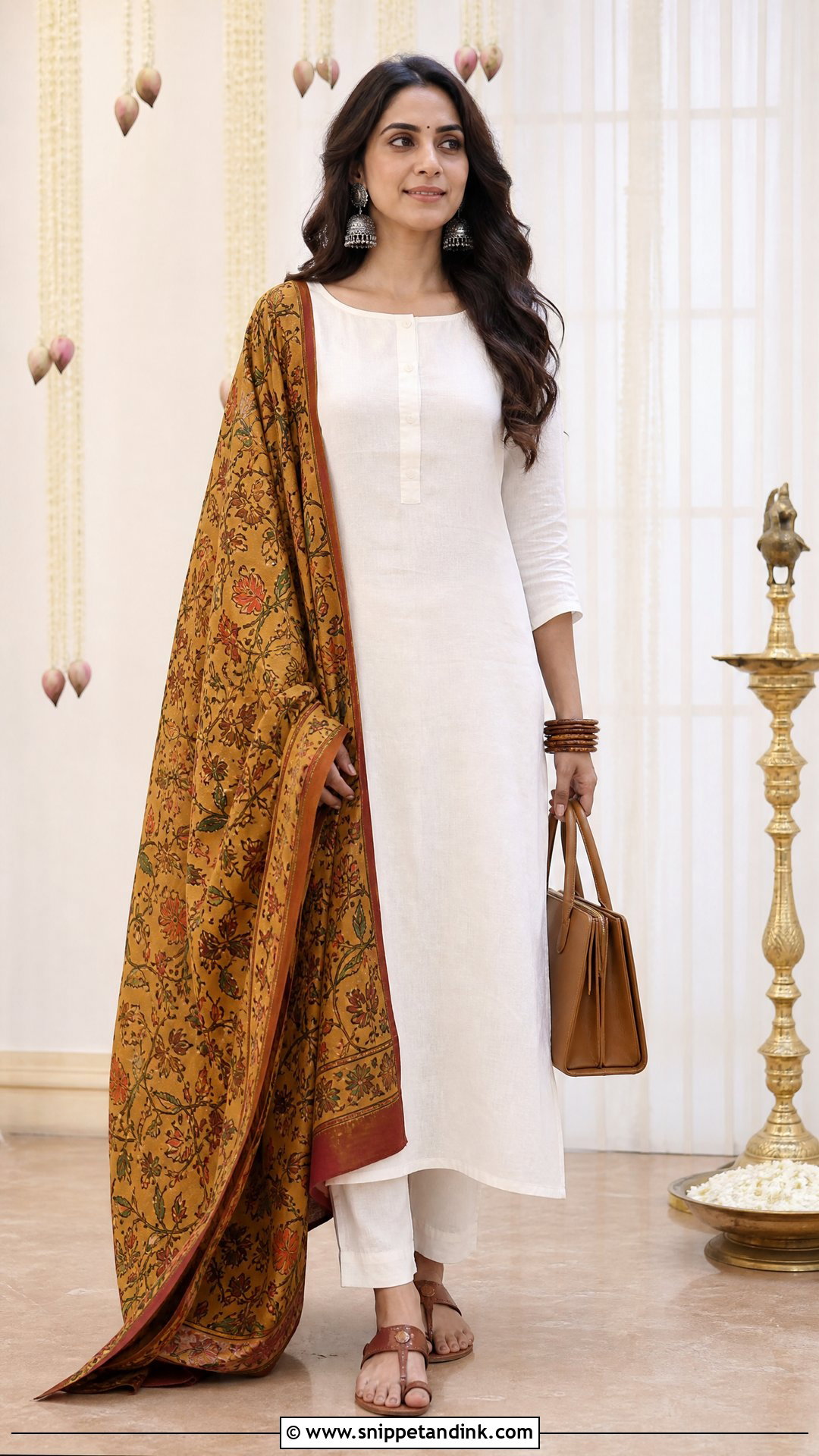
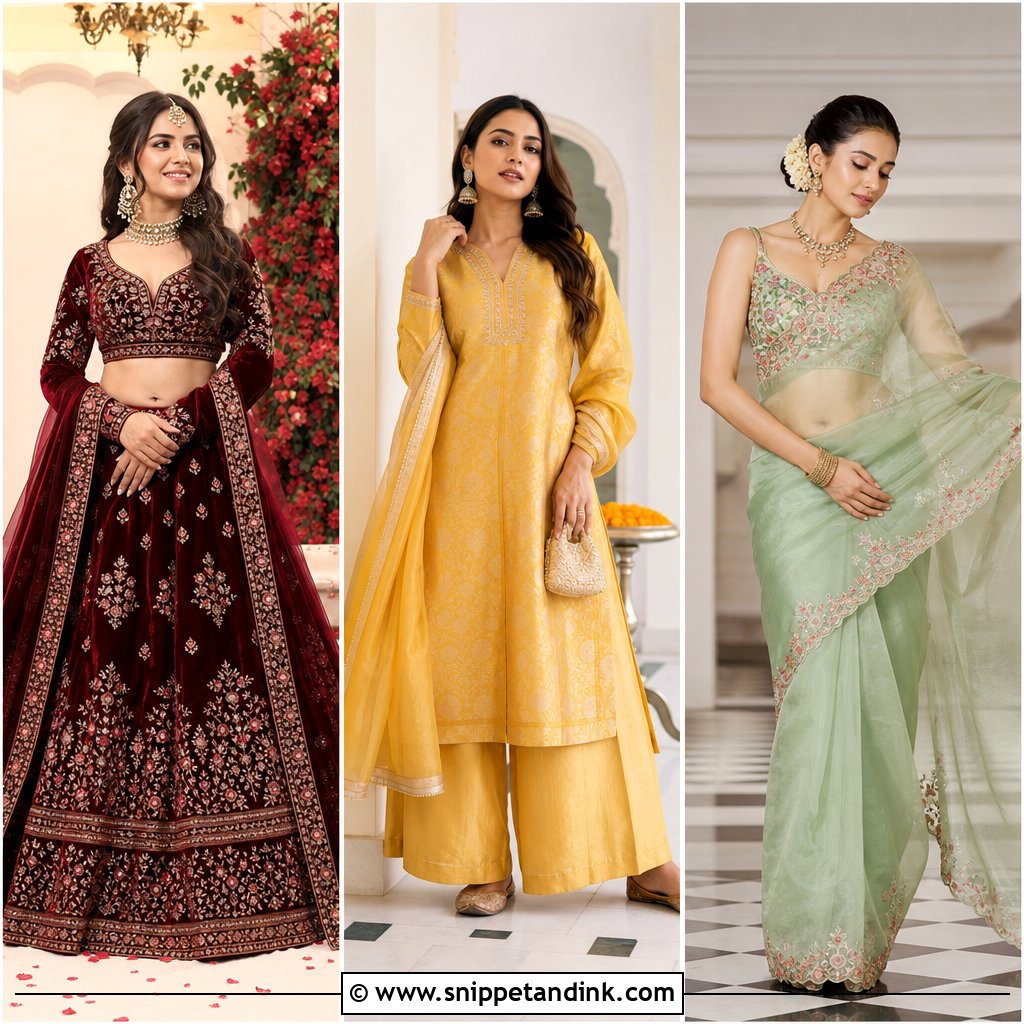
Kalamkari is hand-painted or block-printed with plant dyes, and its botanical motifs in rust, green, black and maroon give a white suit an artistic, grounded look. I pair it with a linen or cotton kurta with three-quarter sleeves and ankle-length pants. The print is detailed enough on its own, so the accessories stay earthy: antique-silver earrings, brown kolhapuris, a structured tan bag and a wooden bangle. Wear it over both shoulders for a traditional look or around the neck for something relaxed. Linen creases within the hour, so steam the kurta just before you leave. Loose bun, smudged kohl, terracotta blush, brick lip.
16. Plain White Suit with Teal Ikat Dupatta
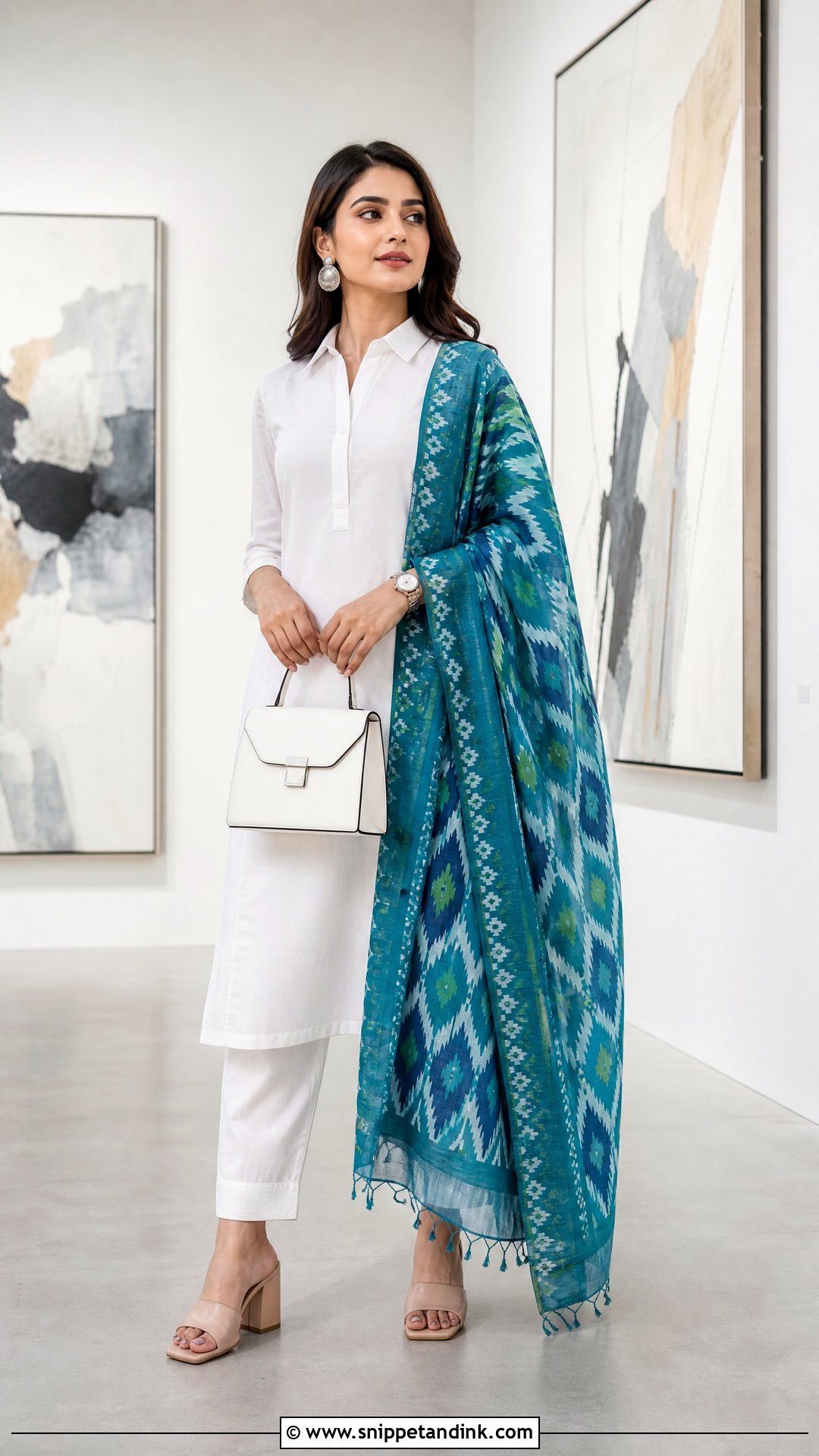
Ikat is woven from threads dyed before they reach the loom, which is what gives those slightly blurred geometric edges. A teal one over a collared white kurta and cigarette pants looks smart and contemporary. The weave may include blue, green, white or muted red; repeat only one of those in your accessories. Teal flat mules suit daytime, neutral block heels semi-formal. Brushed-silver earrings, a slim watch and a structured white bag. Ikat cotton has body, so it folds neatly over one shoulder and matches the sharp lines of the collar. Straight hair or a low ponytail, defined brows, rose lipstick.
17. Plain White Suit with Coral Embroidered Dupatta
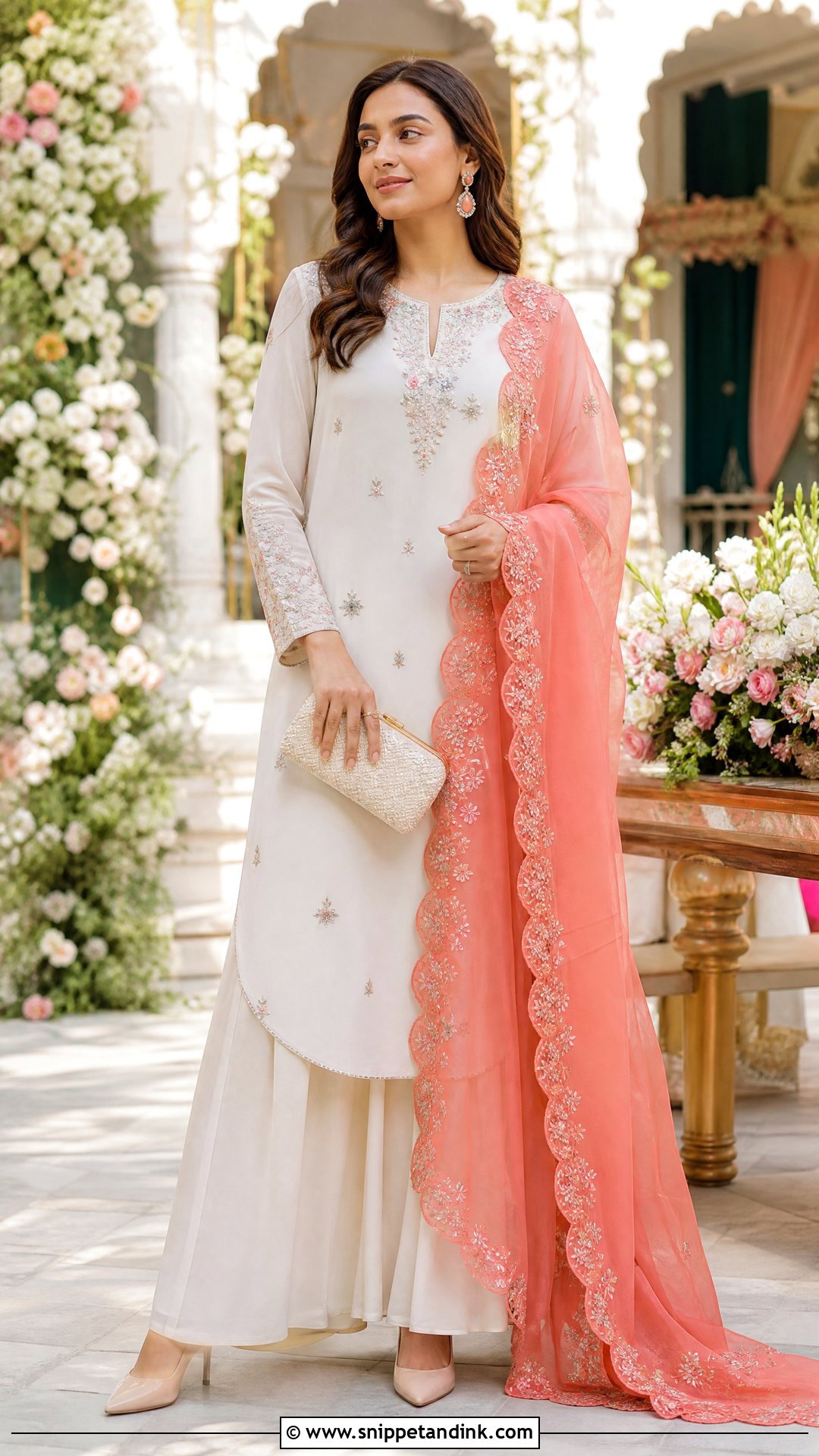
If red feels too loud, coral gives the same warmth at a lower volume, and it sits kindly on many skin tones in daylight. A kurta with a curved hem and flowing palazzos makes a soft base. The dupatta can be chiffon or net with floral thread embroidery, tiny sequins and a scalloped edge. Drape it across one shoulder and over the opposite arm, so the border shows without the kurta’s shape disappearing. Nude heels lengthen the leg, and coral stone earrings put color near the face. A cream clutch with minimal gold hardware, a loose low bun with face-framing strands, peach blush and a coral lip.
18. Plain White Suit with Emerald Velvet Dupatta
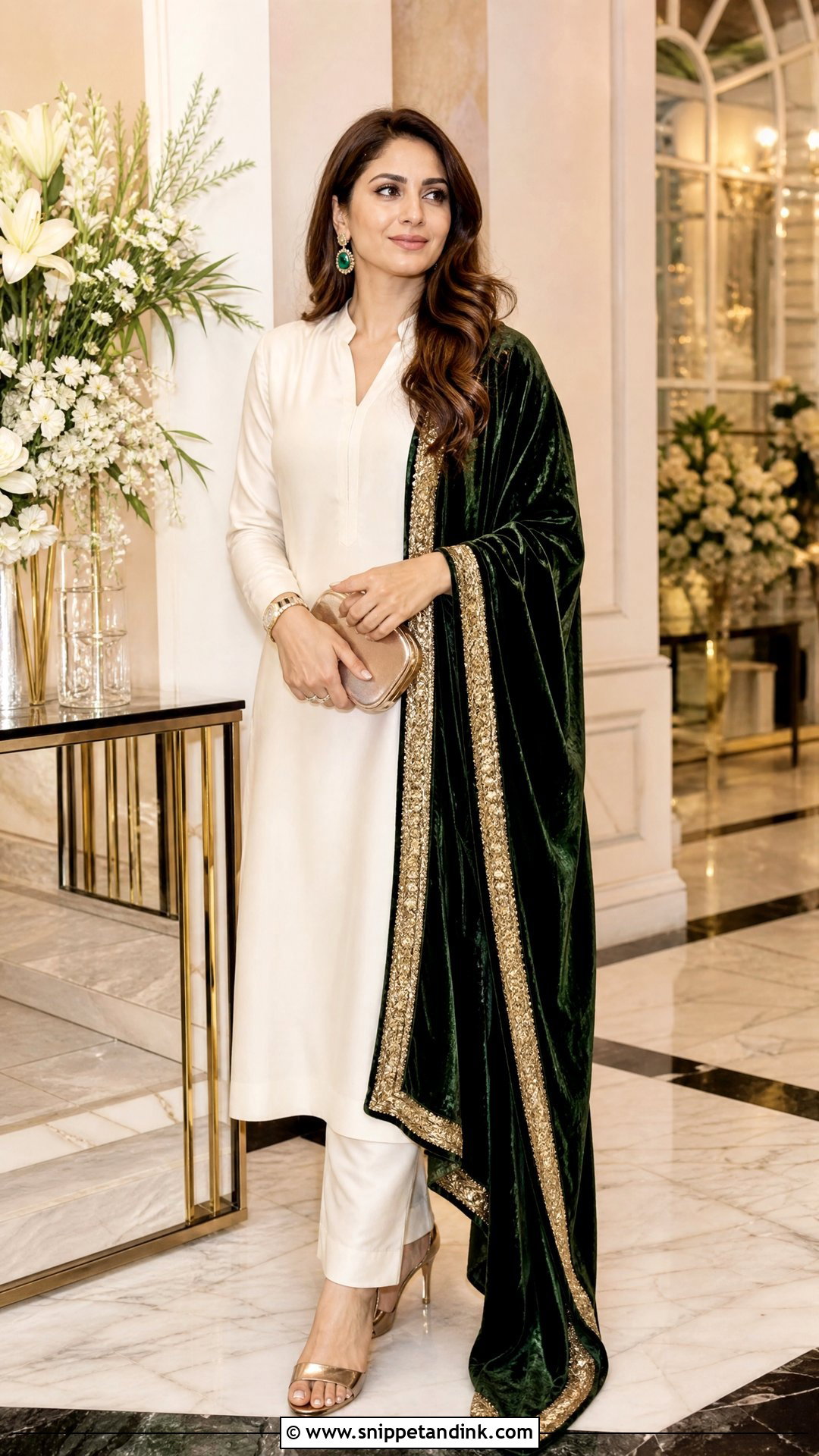
Velvet belongs to cold-weather evenings, when an emerald dupatta makes a white suit feel properly grand. Choose a full-sleeved silk kurta with straight trousers and a thin line of gold piping, then a dupatta with a gold border, small embroidered motifs or tassels. Velvet is heavy and warm. Drape it over one shoulder, because wrapped around the neck it drags and you’ll overheat once the dance floor fills. Between wears, store it rolled rather than folded, since the pile crushes and marks along fold lines. Gold heels, emerald drops and a metallic clutch, and very little else. Low bun or smooth waves, defined eyes, a deep rose lip.
19. Plain White Suit with Pastel Ombré Dupatta
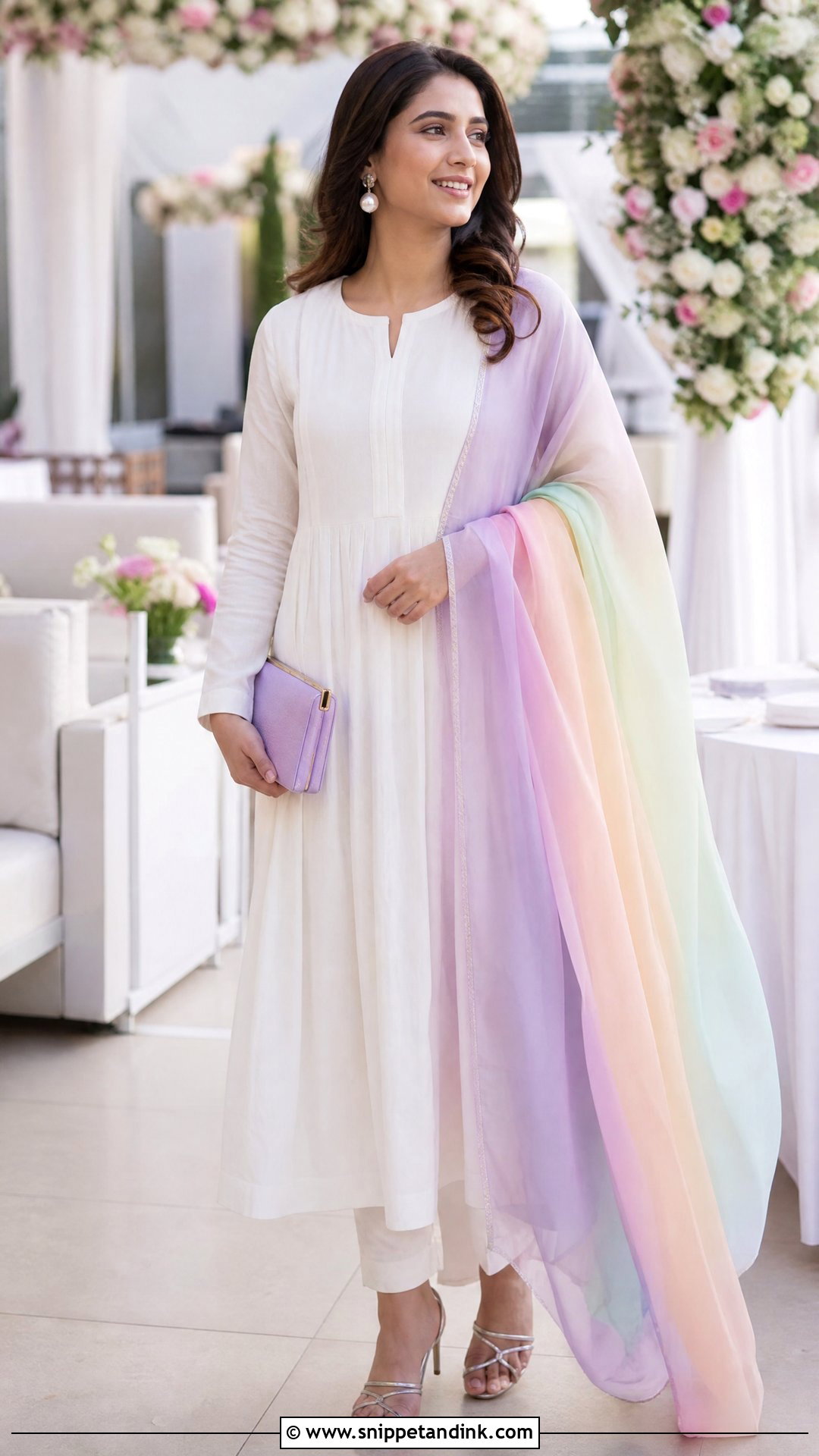
An ombré dupatta shifts gradually from one shade to the next, and in pastels it reads as a soft wash of color, often lavender into blush, mint, peach and powder blue. Because the gradient is the whole point, I let it fall loosely from both shoulders so you can see it top to bottom. A white Anarkali or long flared kurta with slim pants suits that flow, and a pearl or silver border gives the edge some definition. Pearl earrings, silver sandals, a pale lavender clutch, and no heavy bangles or bold necklace to interrupt it. Half-up hair, luminous skin and a pink-nude lip.
20. Plain White Suit with Multicolor Patchwork Dupatta
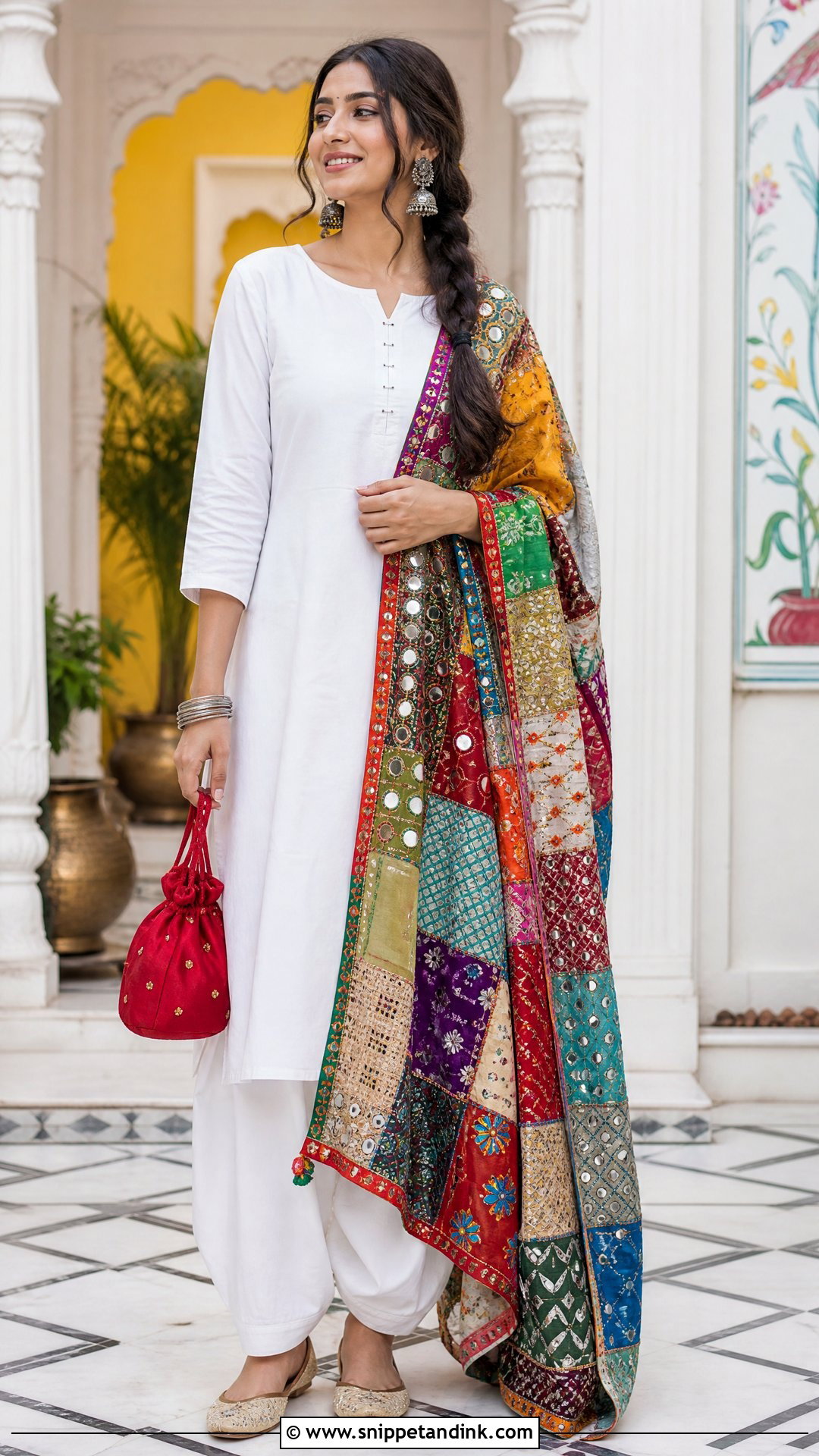
Patchwork puts embroidery, mirrors, printed panels and bright borders in red, blue, green, orange and pink into one piece, so the suit under it has to be truly plain. A straight kurta and comfortable salwar is all it needs. I always choose beige or gold juttis here, since colored shoes compete with the panels. Oxidized jhumkas and a solid-colored potli finish it. Spread the dupatta slightly across the arm from one shoulder so every panel shows. Vintage patchwork can be heavy on one end, so check it hangs evenly in a mirror before you leave. Simple braid or low bun, natural makeup, berry lip.
Stopping Bandhani and Indigo From Bleeding Onto Your Kurta
Hand-dyed dupattas are the ones most likely to ruin a white suit. Bandhani, leheriya, ajrakh and block prints often carry loose dye, and it moves the moment the fabric gets damp: sweat at the shoulder, a sudden shower, a spilled drink. Reds and deep blues are the worst.
Do a test at home first. Dampen a corner of the dupatta, press it against a white tissue and leave it a minute. If any color transfers, have it dry cleaned before you wear it, or rinse it alone in cold water until the water runs clear. On the day, never pin a damp dupatta against the kurta.
Haldi, See-Through Cotton and Other White Suit Trouble
Turmeric marks
Haldi paste stains white fabric yellow almost on contact. Blot it, don’t rub, then wash with plain soap as soon as you can. Turmeric fades in sunlight, so drying the kurta outdoors in direct sun often lifts what washing leaves behind. Keep chlorine bleach away from anything embroidered.
Sheer fabric in sun and flash
Thin white cotton and linen go transparent in bright sun and under camera flash. Wear skin-toned underwear and a skin-toned slip, not white, which shows through as a clear outline. Stand near a window and check yourself in a mirror before you leave the house.
One White Kurta, a Drawer Full of Dupattas
A neutral suit can be restyled endlessly. Bandhani, Phulkari, Leheriya, Ajrakh, Ikat, Banarasi and organza each set a different mood over the same white base. To keep the balance, match the kurta silhouette and footwear to how heavy and formal the dupatta is. With embroidered or mirror-work designs, wear fewer accessories, while plainer prints can take stronger jewelry. Pick the colors that brighten your own complexion, not just what’s popular this season. Drape with care and one white suit covers casual, festive and formal days alike.
You'll Like These Ideas:


Leave a Reply