
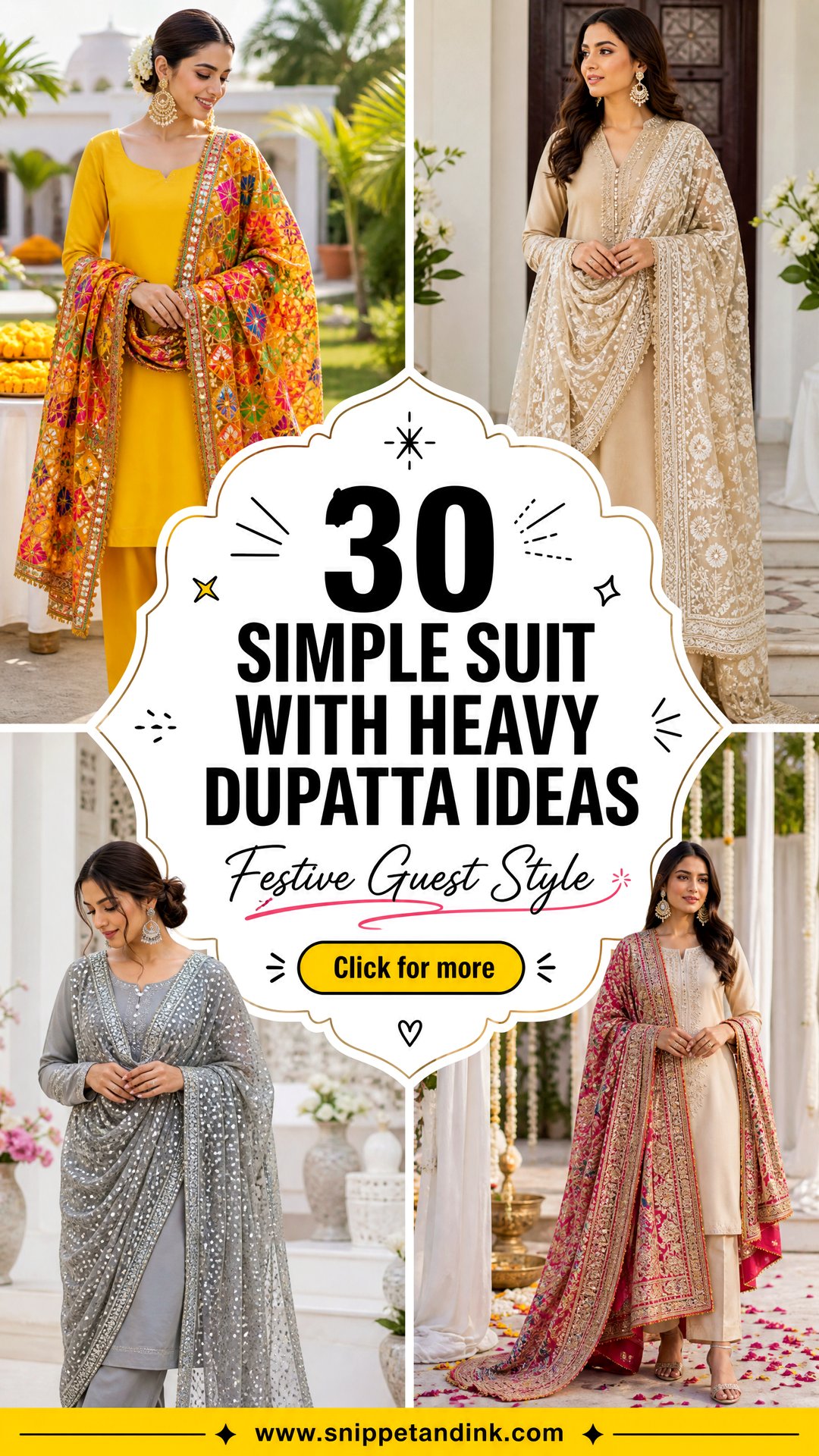
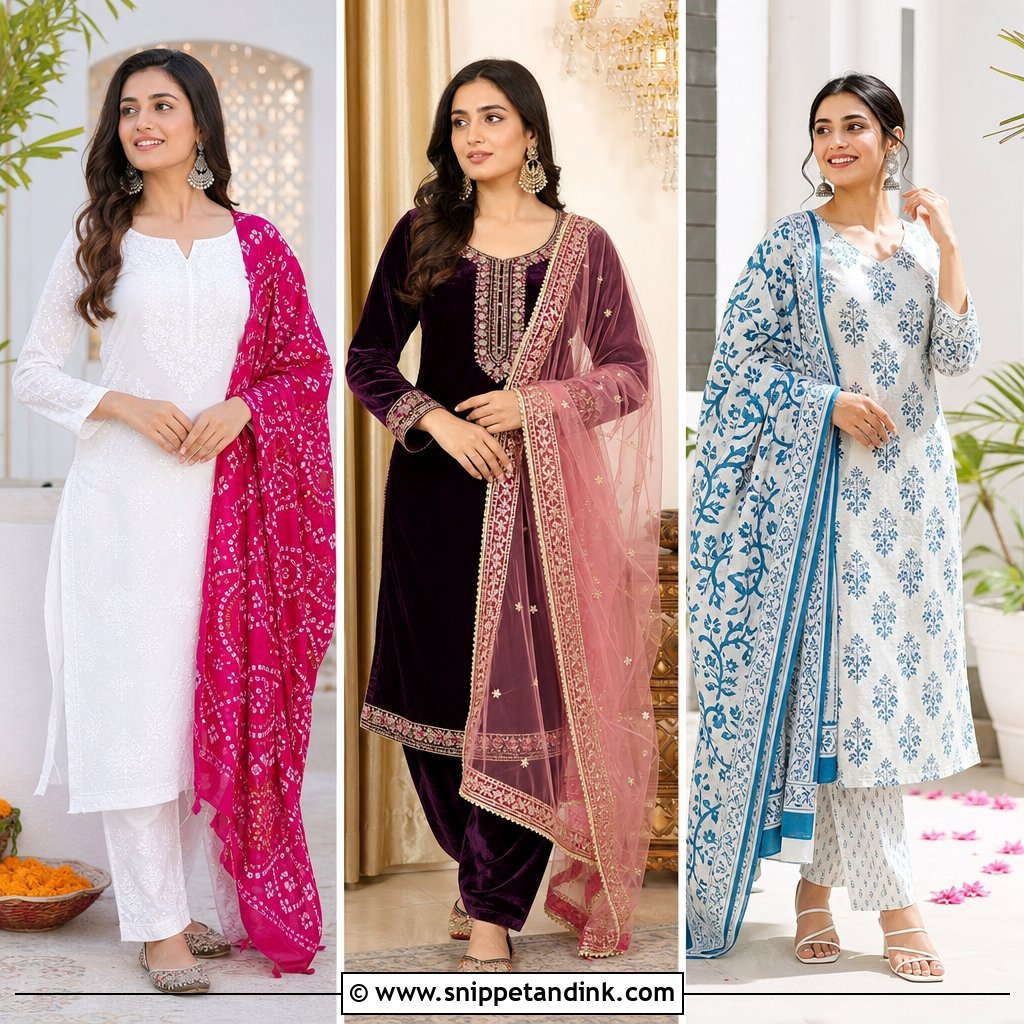
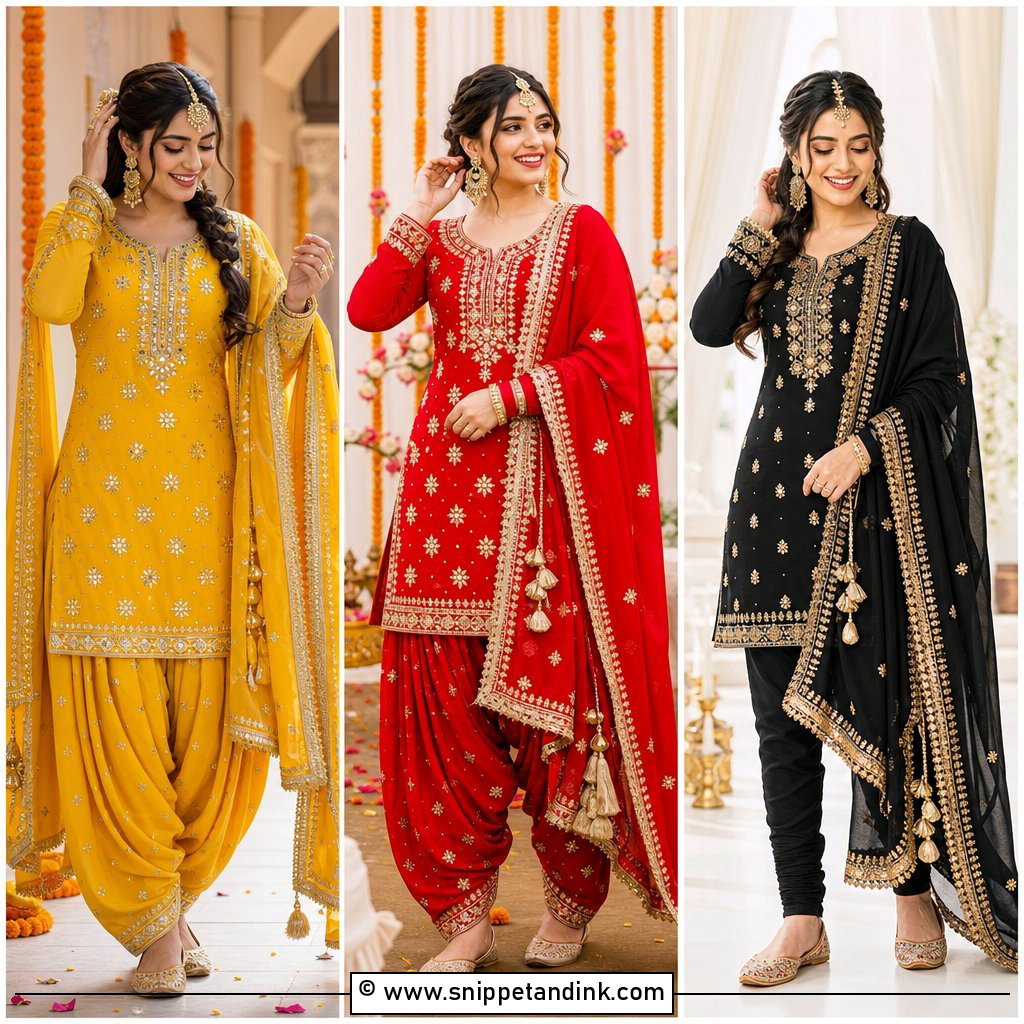
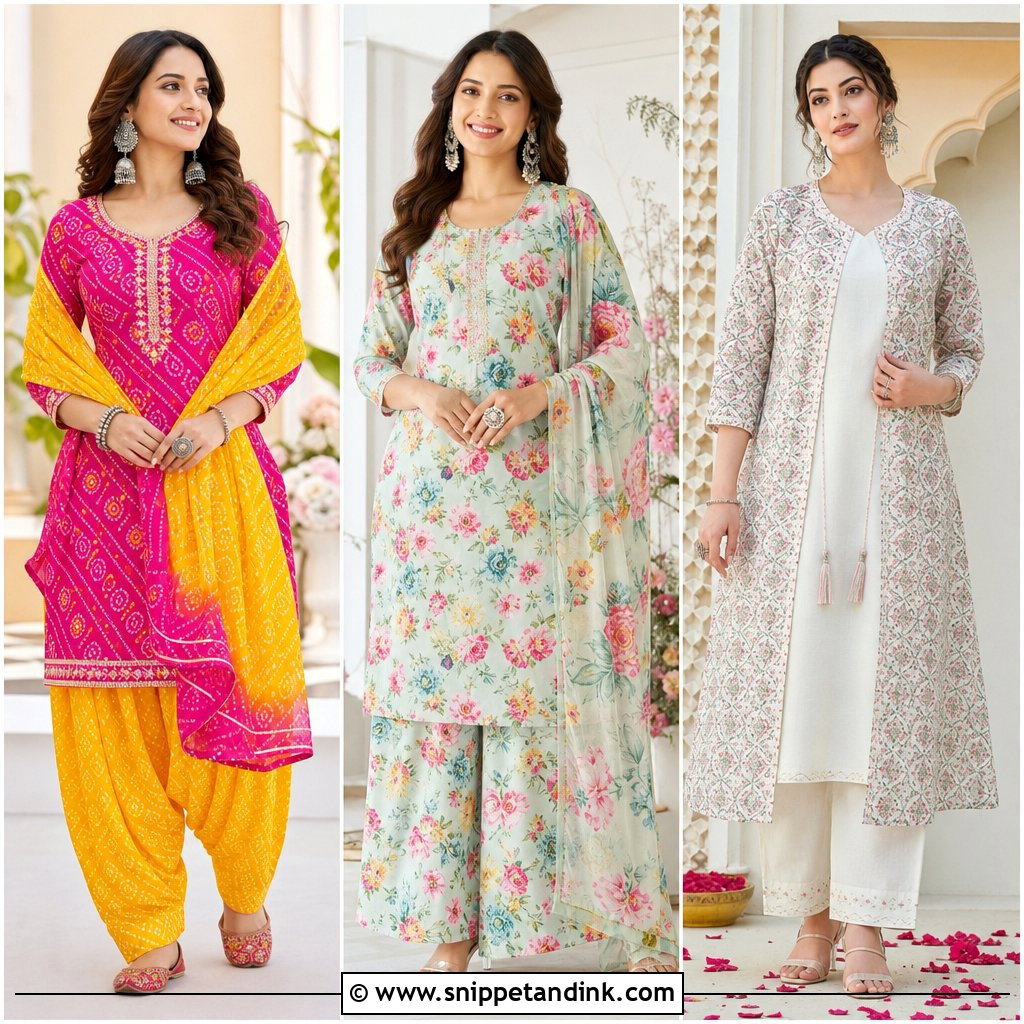
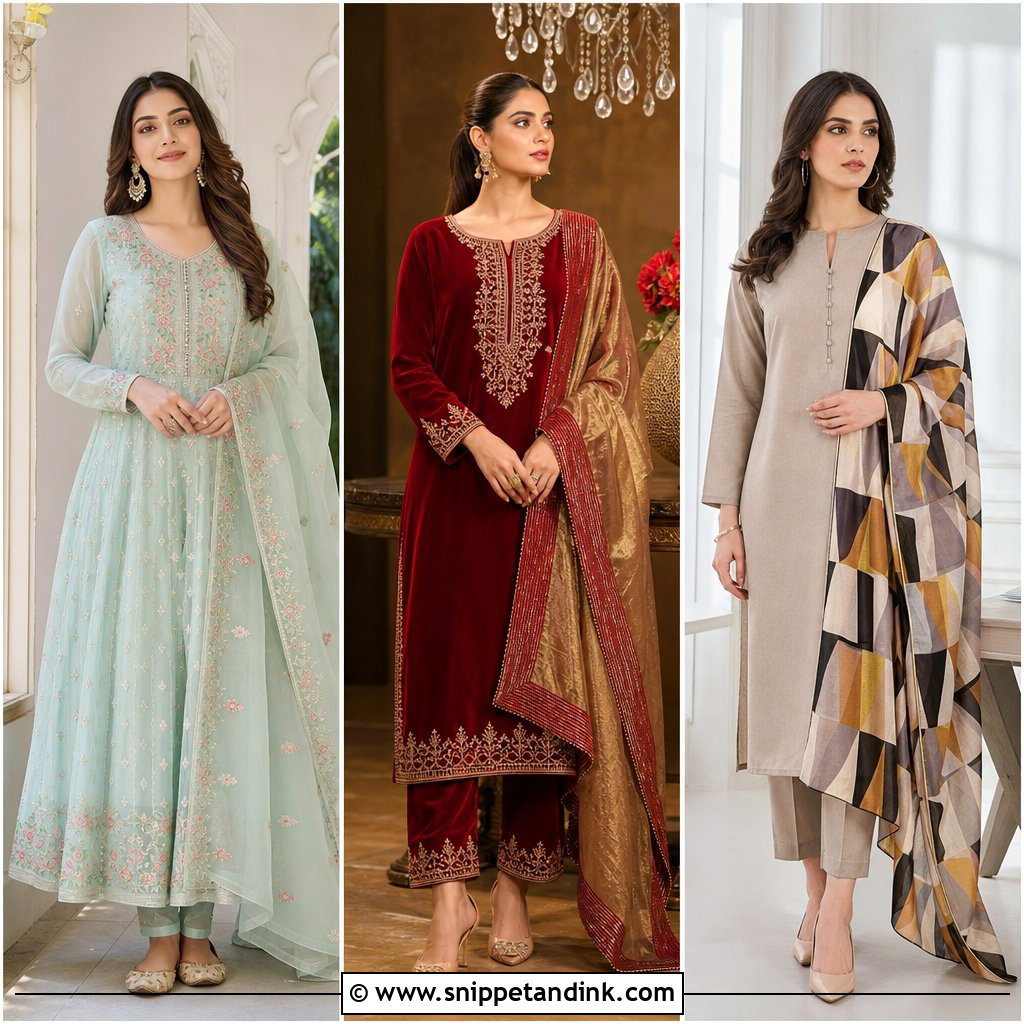
For wedding guests, a plain suit with a heavy dupatta is the outfit I recommend more than any other. The kurta and bottoms stay light enough to sit through a long ceremony, and the dupatta does all the festive work: colour, weave, sparkle and movement. It also stretches a wardrobe further, because one good dupatta can carry three different suits across a wedding season. Banarasi silk, phulkari, bandhani, mirror work, organza, chikankari, velvet and zari all have a place, depending on the function and the time of day. Here are thirty pairings I’d put together for family functions, sangeets, receptions and festive lunches.
Pairing a Heavy Dupatta With a Suit You Already Own
Most guests I dress don’t buy a new suit for every function. They bring one dupatta and two or three plain suits and ask which one works. I check three things, in this order.
- Weight. A heavy Banarasi or velvet dupatta over a flimsy georgette kurta pulls the neckline sideways. Heavier dupattas need a kurta with some body, like cotton silk, crepe or raw silk.
- Sheen. A shiny dupatta over a shiny kurta looks like a costume. Pair a woven, metallic dupatta with a matte suit, and a matte block print with a suit that has a little lustre.
- Colour. Take the suit colour from the dupatta’s border or the smallest motif in it, not the main background. That makes the dupatta look chosen for the suit.
If the dupatta has a very busy pattern, keep the neckline of the kurta plain with no embroidery at all. Two decorated areas next to each other cancel each other out.
1. White Simple Suit With Banarasi Dupatta
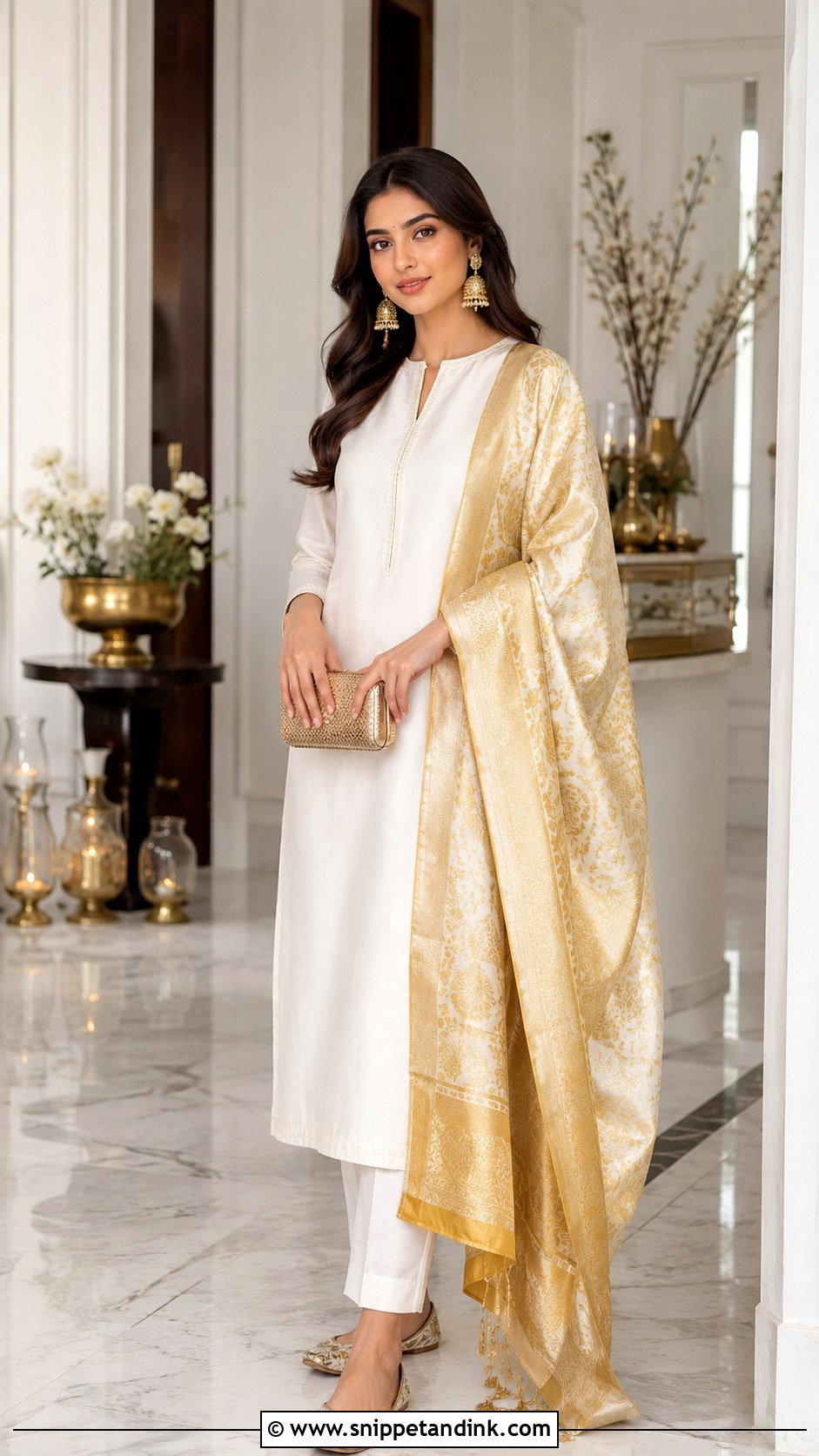
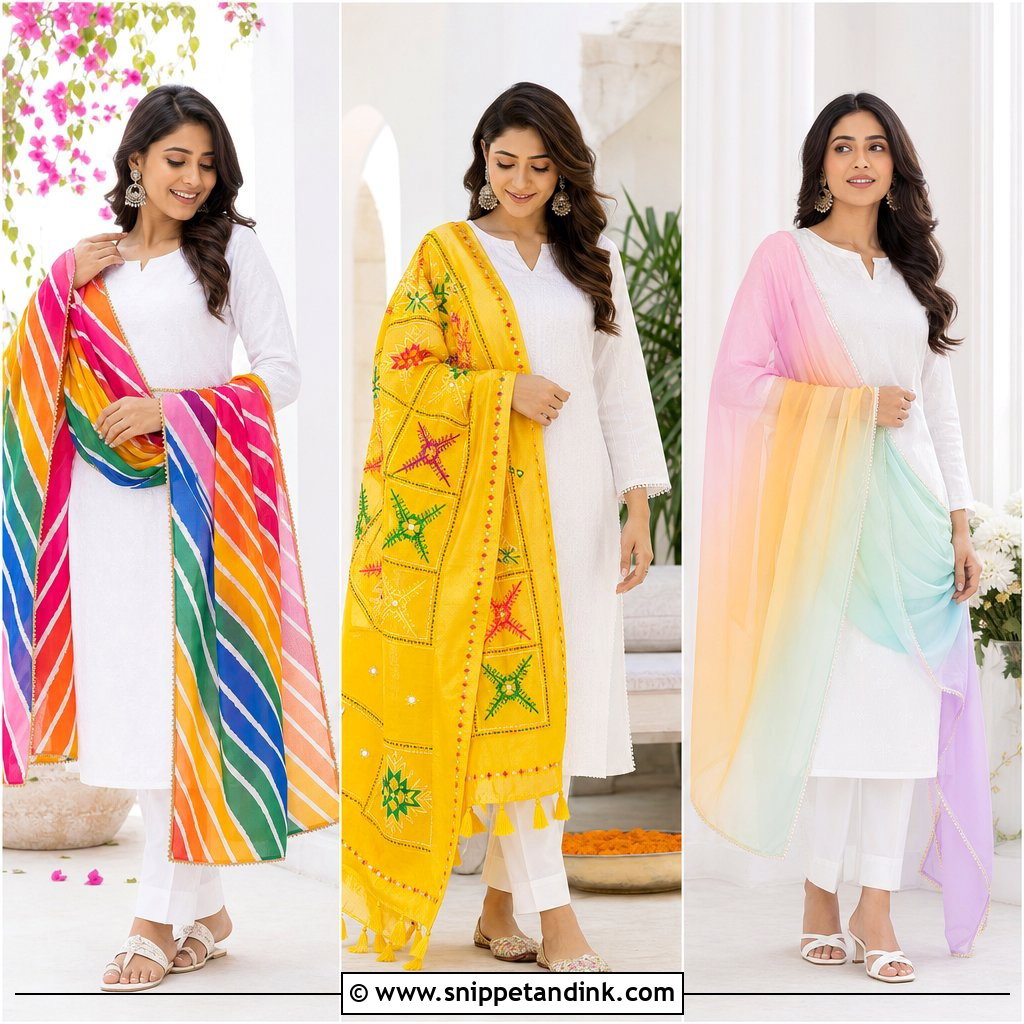
White is the cleanest canvas for a Banarasi, and the contrast does the work for you. A straight white kurta with slim pants or churidar lets a gold, red, green or royal blue weave sit right at the centre. Choose a matte cotton or crepe kurta rather than a shiny one, since two sheens next to each other compete. Gold jhumkas, a few soft bangles and embroidered juttis are plenty for festive lunches and pre-wedding gatherings.
2. Black Simple Suit With Heavy Embroidered Dupatta
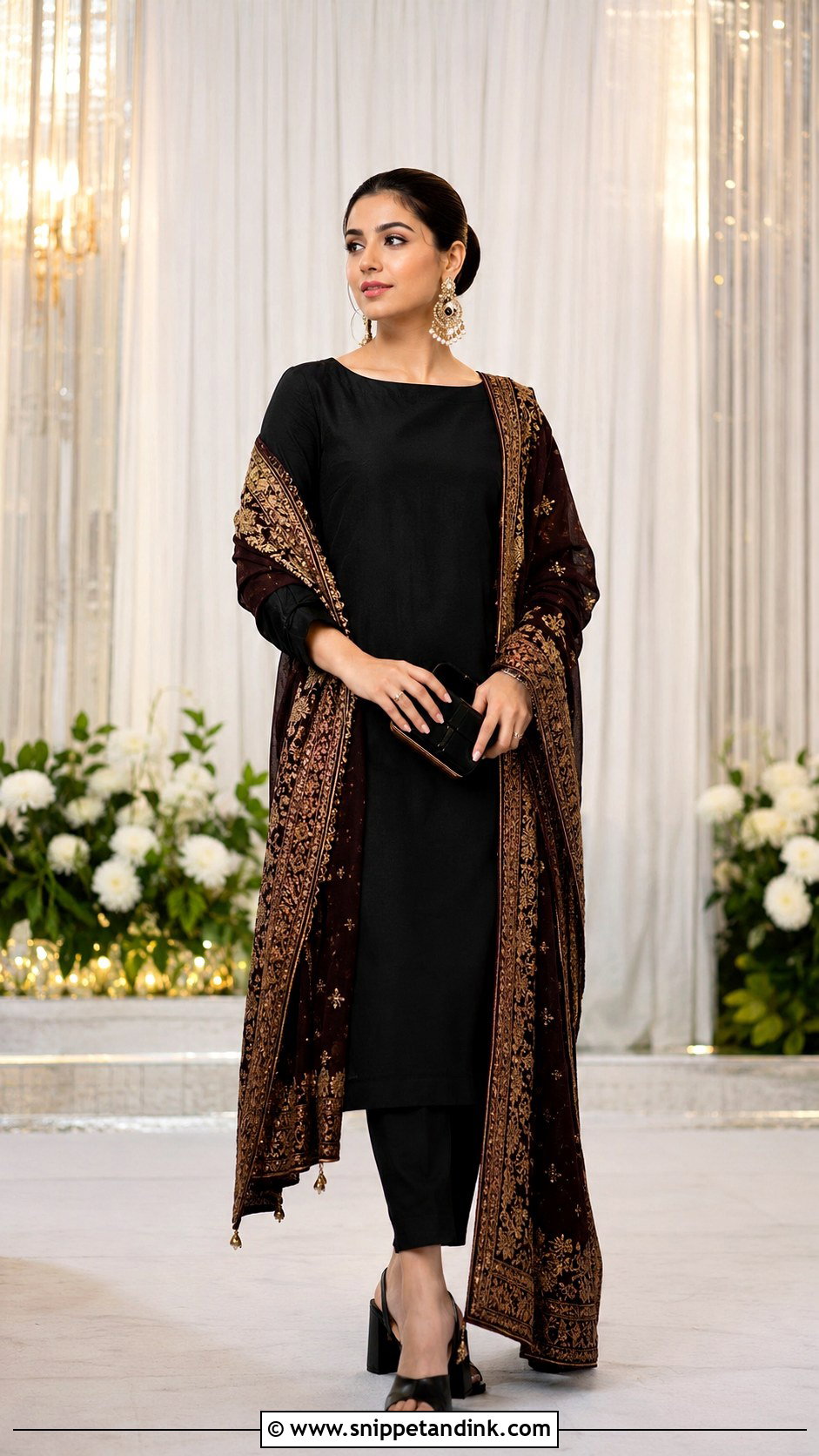
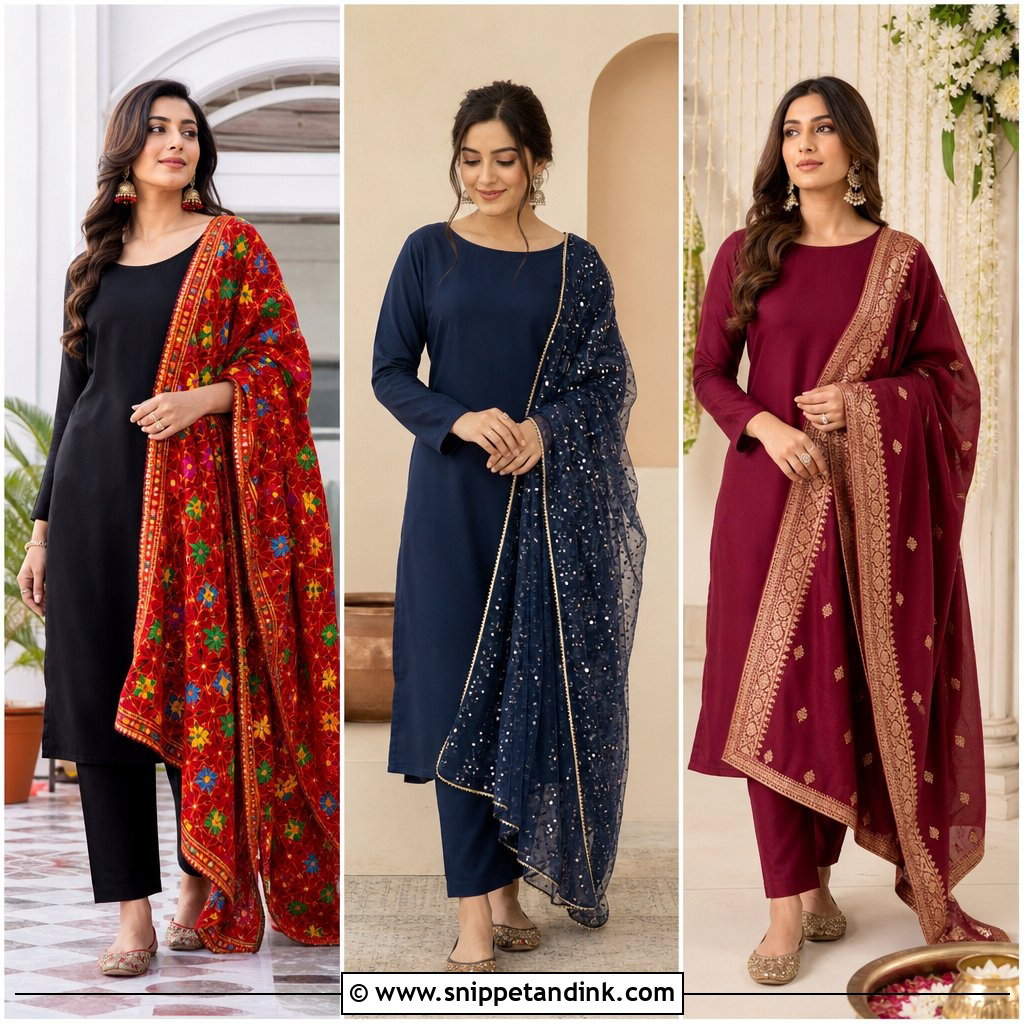
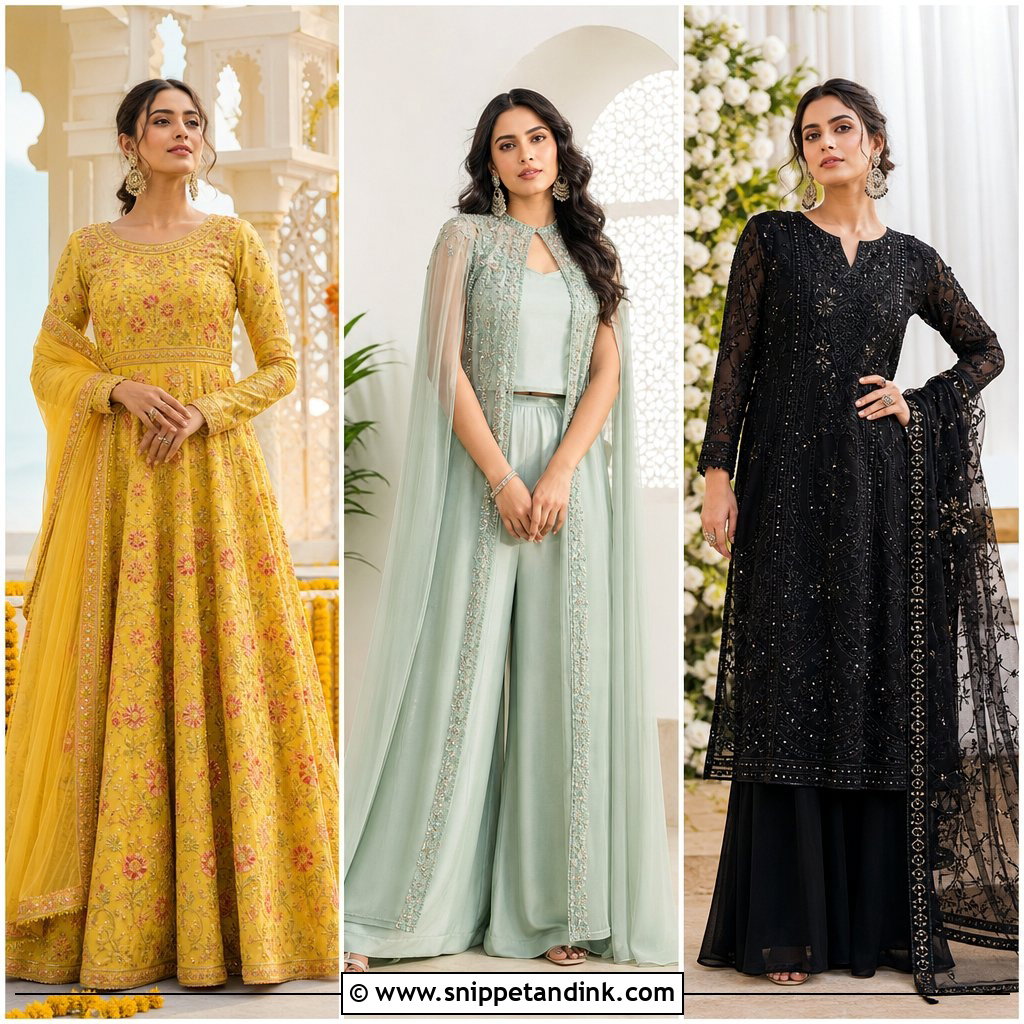
Embroidery reads more clearly against black than against any other base. Zari, sequins, threadwork and mirror detailing all stand out, so even a dupatta with moderate work looks rich. A plain black kurta with cigarette pants or palazzos keeps the line clean. Gold, maroon, emerald or multicolour embroidery all suit it. With a dense dupatta, I’d wear statement earrings and nothing at the neck. Black block heels or embellished flats for evening functions.
3. Red Simple Suit With Gold Dupatta
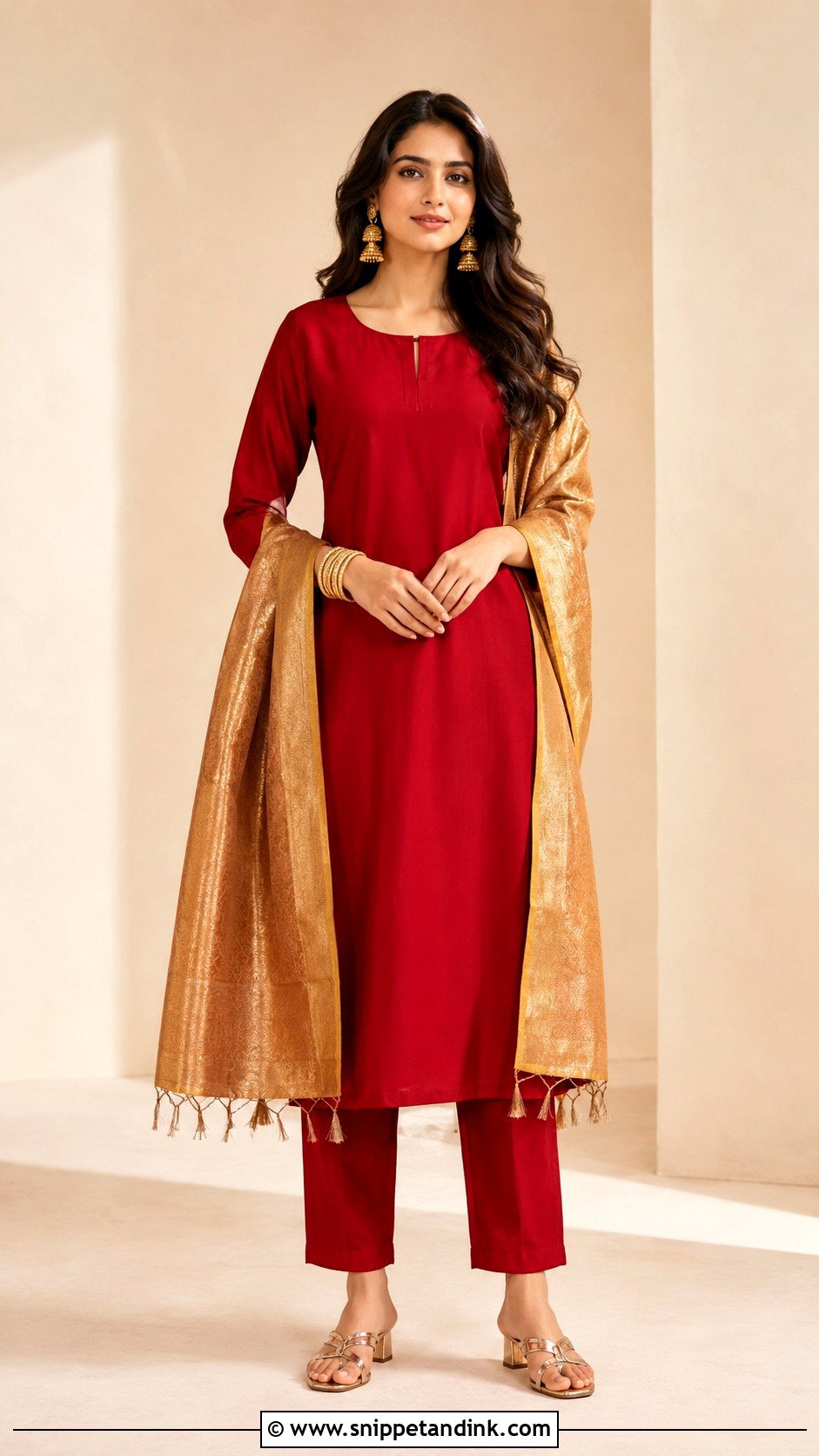
Red and gold has been worn at celebrations for generations because it works. Cotton silk, georgette or crepe all make a good plain red kurta; pair it with matching straight pants. The dupatta can carry zari borders, brocade or light sequin work. One thing to know: as a guest, an all-red outfit with heavy gold can look close to bridal at some family weddings, so a deep red or a slightly orange red keeps you clearly on the guest side. Gold earrings, a small clutch and metallic sandals finish it.
4. Pastel Simple Suit With Organza Dupatta
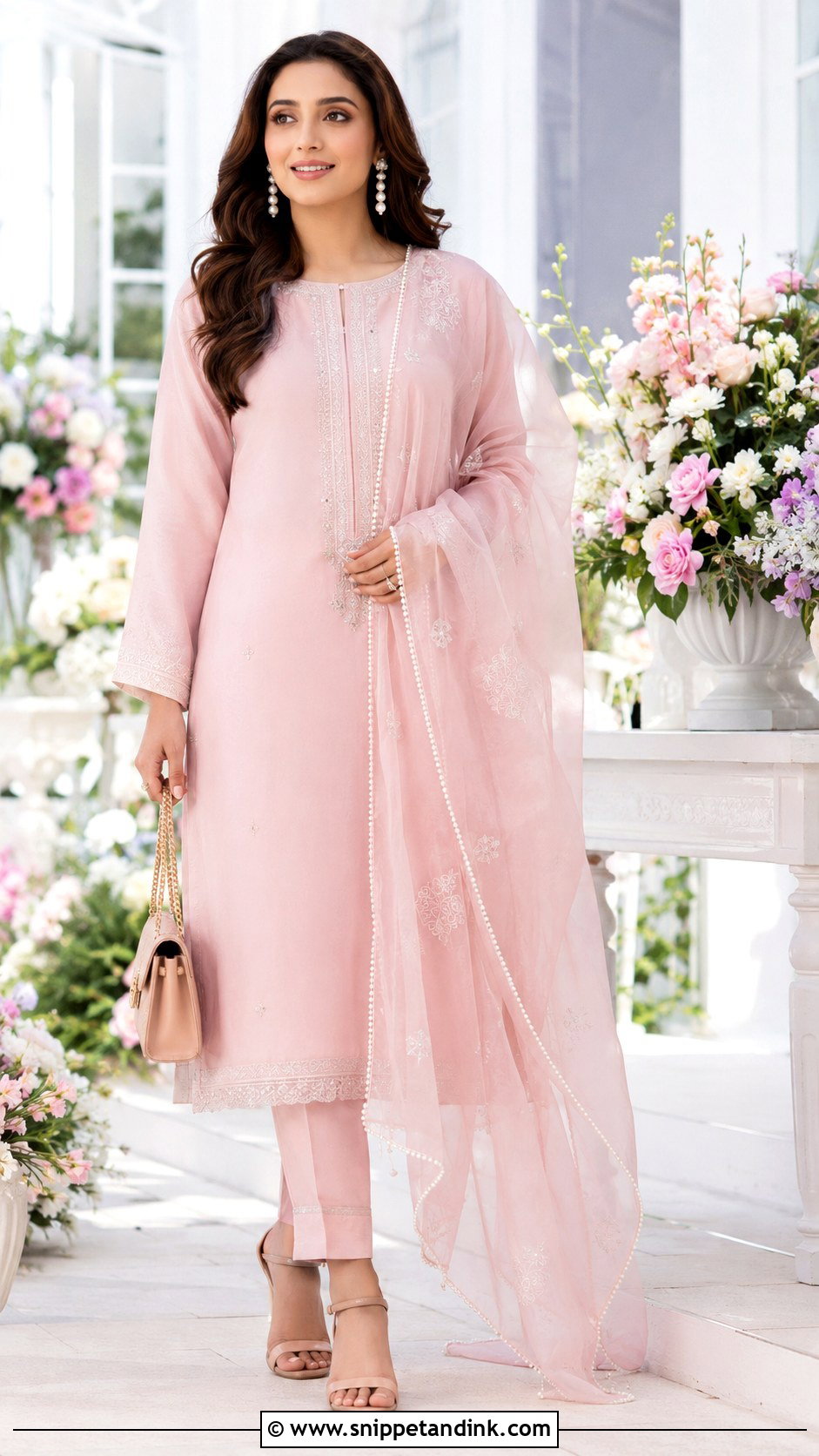
Organza is the lightest heavy dupatta you can wear, because the weight sits in the embroidery rather than the fabric. Powder pink, mint, lavender, peach and ice blue suits pair well with pearl work, lace borders or floral threadwork on a sheer base. Organza is crisp and holds its shape, so it drapes in a fuller curve than silk and creases sharply if crushed in a bag. Pearl earrings, nude heels and a small potli bag work for daytime and garden functions.
5. Yellow Simple Suit With Phulkari Dupatta
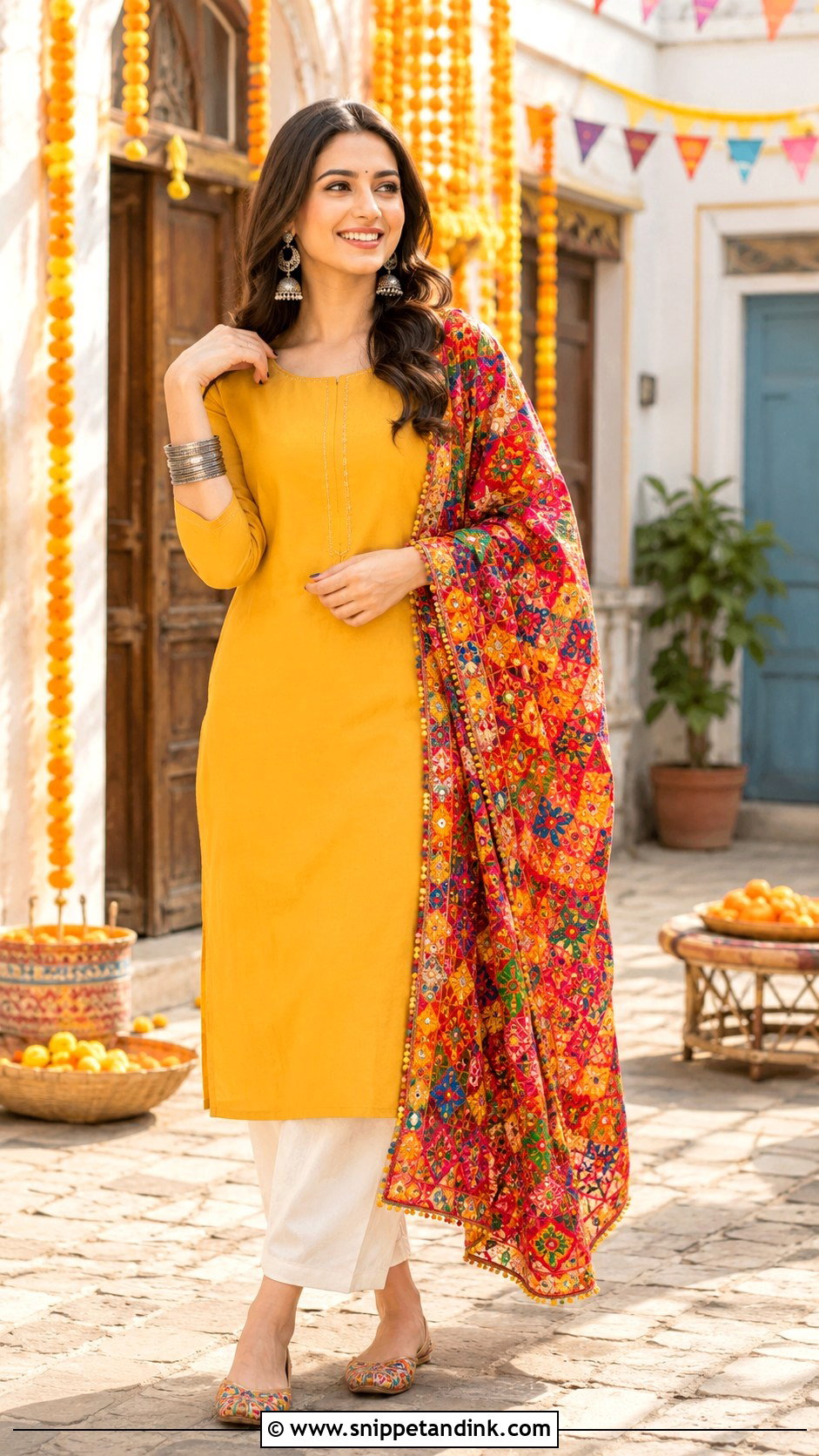
Phulkari is loud, colourful and joyful, so the suit underneath should be calm. A plain mustard, lemon or marigold kurta with white, beige or matching pants gives the threadwork room. Real hand phulkari is worked in silk floss and can bleed in a wash, so I always tell clients it’s dry clean only. Silver jhumkas, coloured bangles and Punjabi juttis complete it. I like it for haldi events, daytime celebrations and cultural gatherings.
6. Green Simple Suit With Mirror Work Dupatta
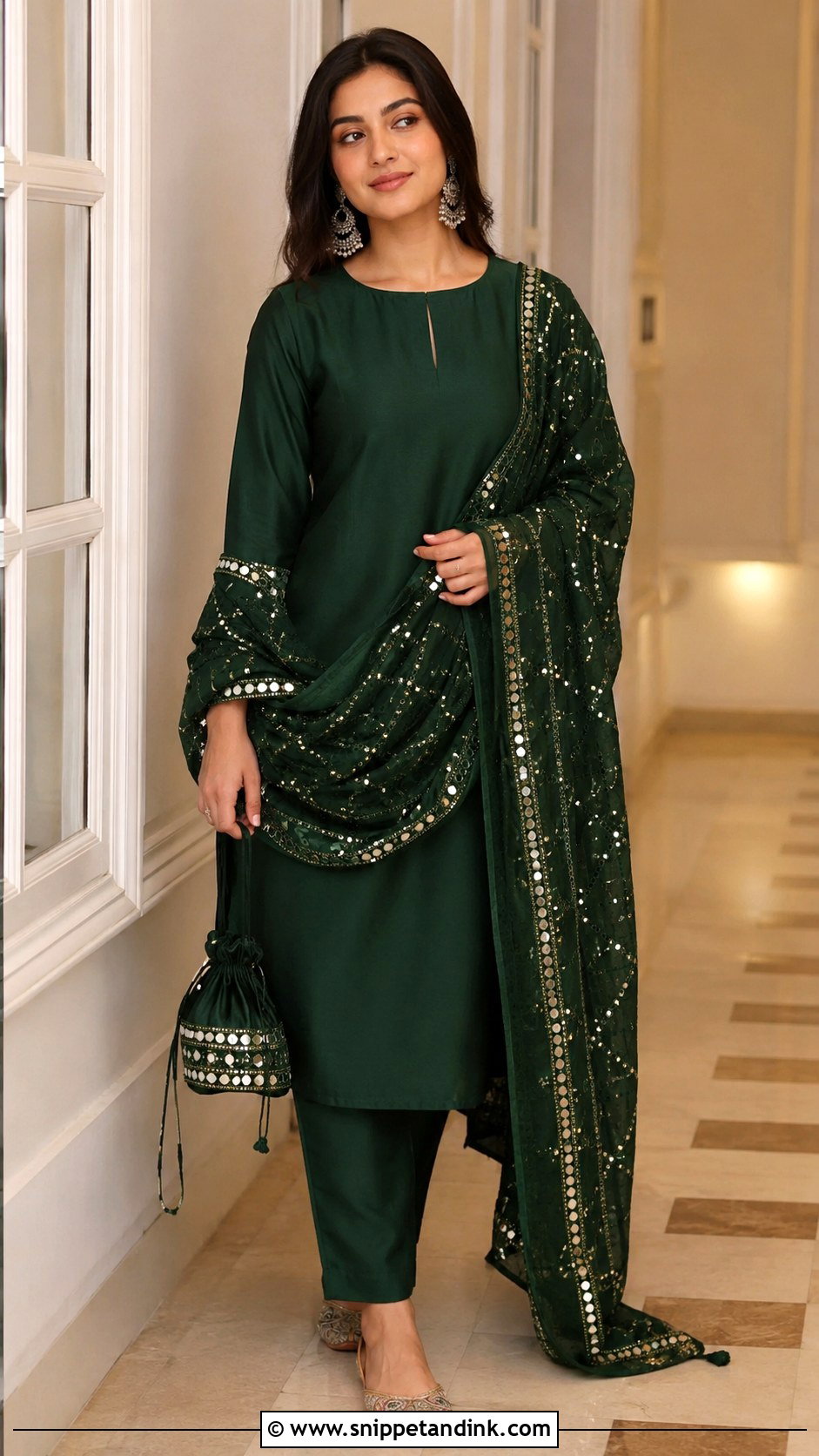
Mirror work catches every light in the room, which is exactly why it suits sangeet nights. Choose a plain emerald, bottle green, mehndi green or sage kurta with straight pants or a sharara, and let the mirrors and the border do the rest. Mirrored dupattas are heavier than they look and can drag one shoulder down, so pin them at the shoulder seam rather than just draping. Small chandbalis or oxidised silver earrings, plus embellished flats or block heels.
7. Blue Simple Suit With Silver Dupatta
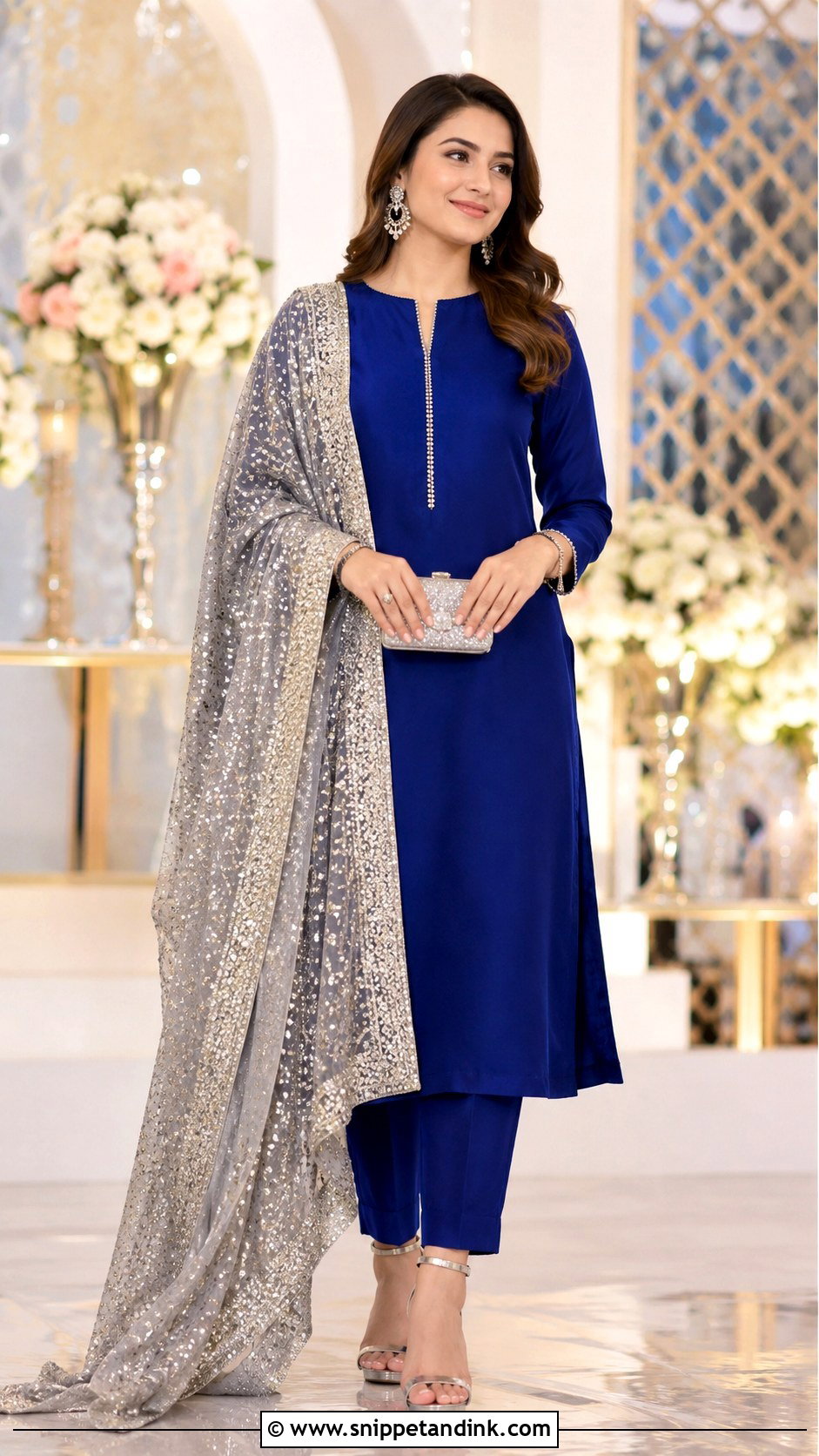
Silver on blue reads cooler and more modern than gold. Navy, royal blue, powder blue and teal all take silver zari, sequins or embroidered borders well. A straight kurta with cigarette pants is the cleanest base. Keep every metal silver, including shoes and earrings, since mixing them with a silver dupatta looks unplanned. I’d choose this for receptions and evening dinners, where silver reflects warm lighting softly.
8. Beige Simple Suit With Heavy Chikankari Dupatta
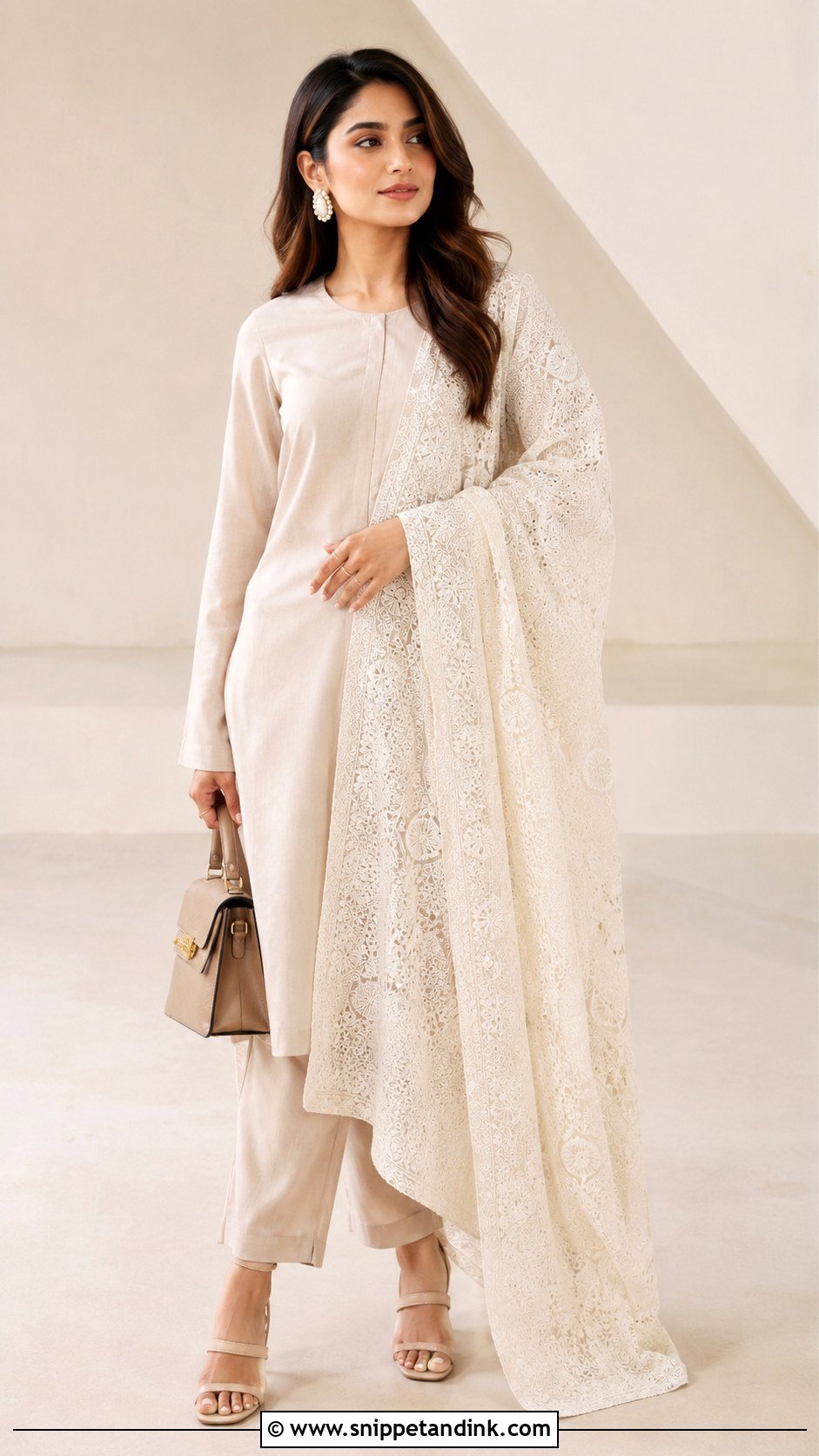
Chikankari is delicate white-on-white or tone-on-tone embroidery, and a heavy chikankari dupatta often adds mukaish (small metal work), scalloped borders or pearls. The effect is quiet and expensive. Beige, ivory or sand kurtas with matching straight pants let it show without contrast fighting it. This is the pairing I suggest for clients who don’t wear bright colours. Pearl studs, nude sandals and a structured handbag suit daytime and intimate family events.
9. Pink Simple Suit With Gota Patti Dupatta
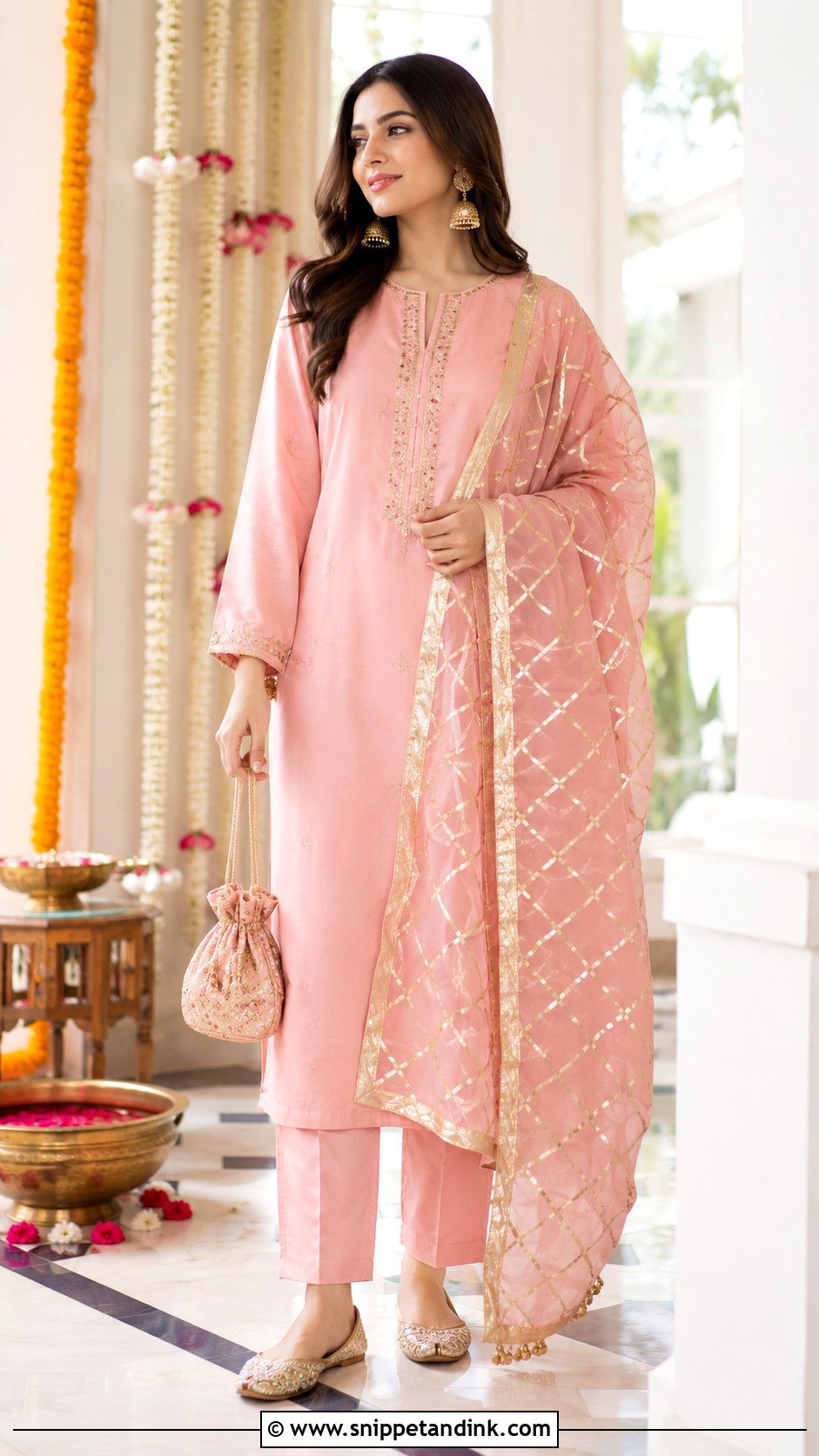
Gota patti is metallic ribbon appliquéd into borders and motifs, so it sparkles without being heavy. Blush pink keeps it soft, rose pink is in between, and rani pink is bold. A plain kurta and pants let the gota shine. Real gota can tarnish if it gets damp, so keep it away from perfume spray. Gold jhumkas, soft makeup and embroidered juttis suit mehndi functions and daytime wedding events.
10. Purple Simple Suit With Velvet Dupatta
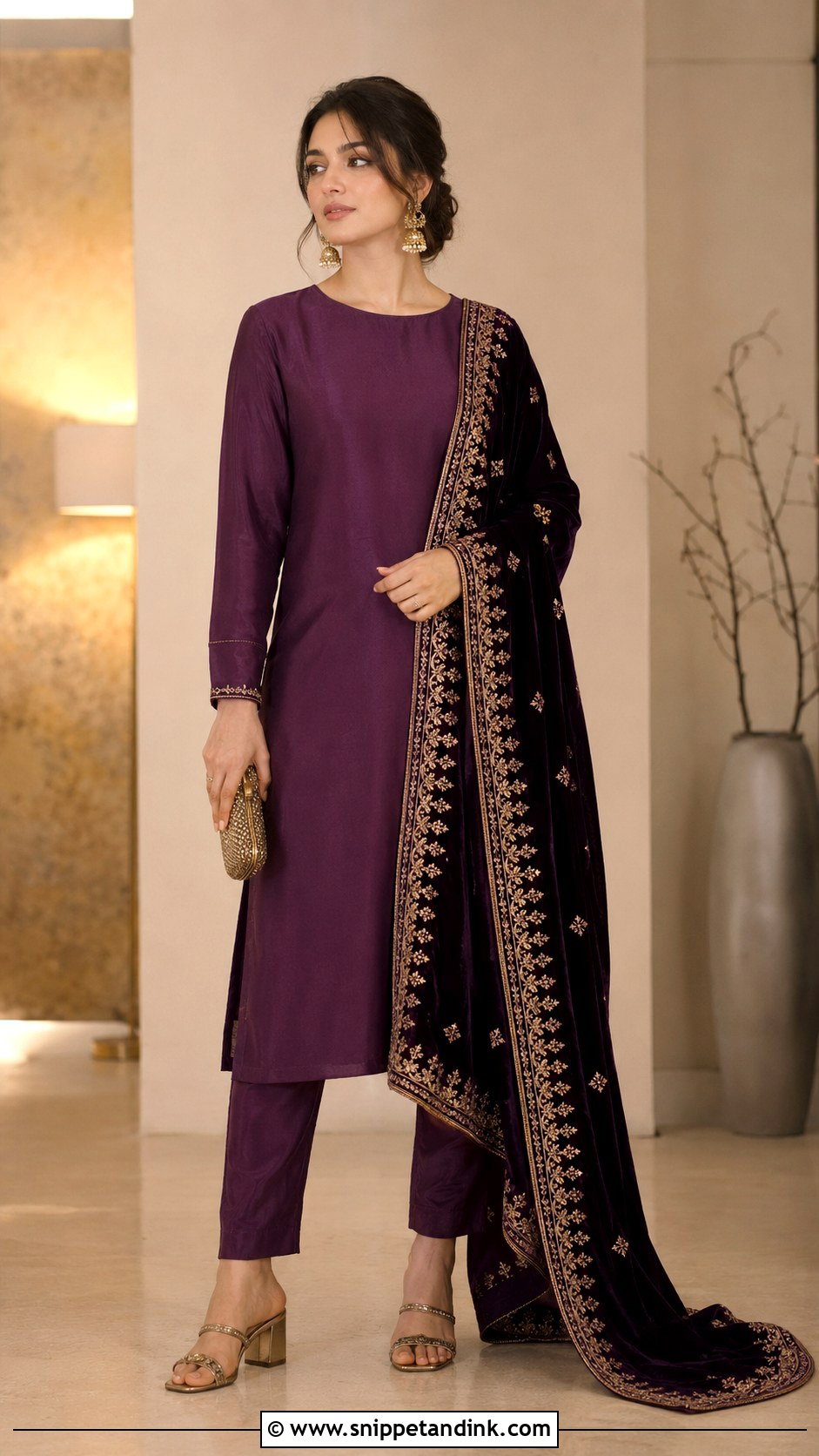
Velvet is my winter answer. It’s warm, it photographs with real depth, and a velvet dupatta with zari or antique gold borders feels regal on its own. Lavender, plum or deep purple suits work well. Velvet is heavy, so I’d only wear it over one shoulder or pinned at the back, and I wouldn’t choose it for a crowded daytime function. Straight pants, gold earrings, a small clutch and low heels keep it modern.
11. Cream Simple Suit With Heavy Floral Dupatta
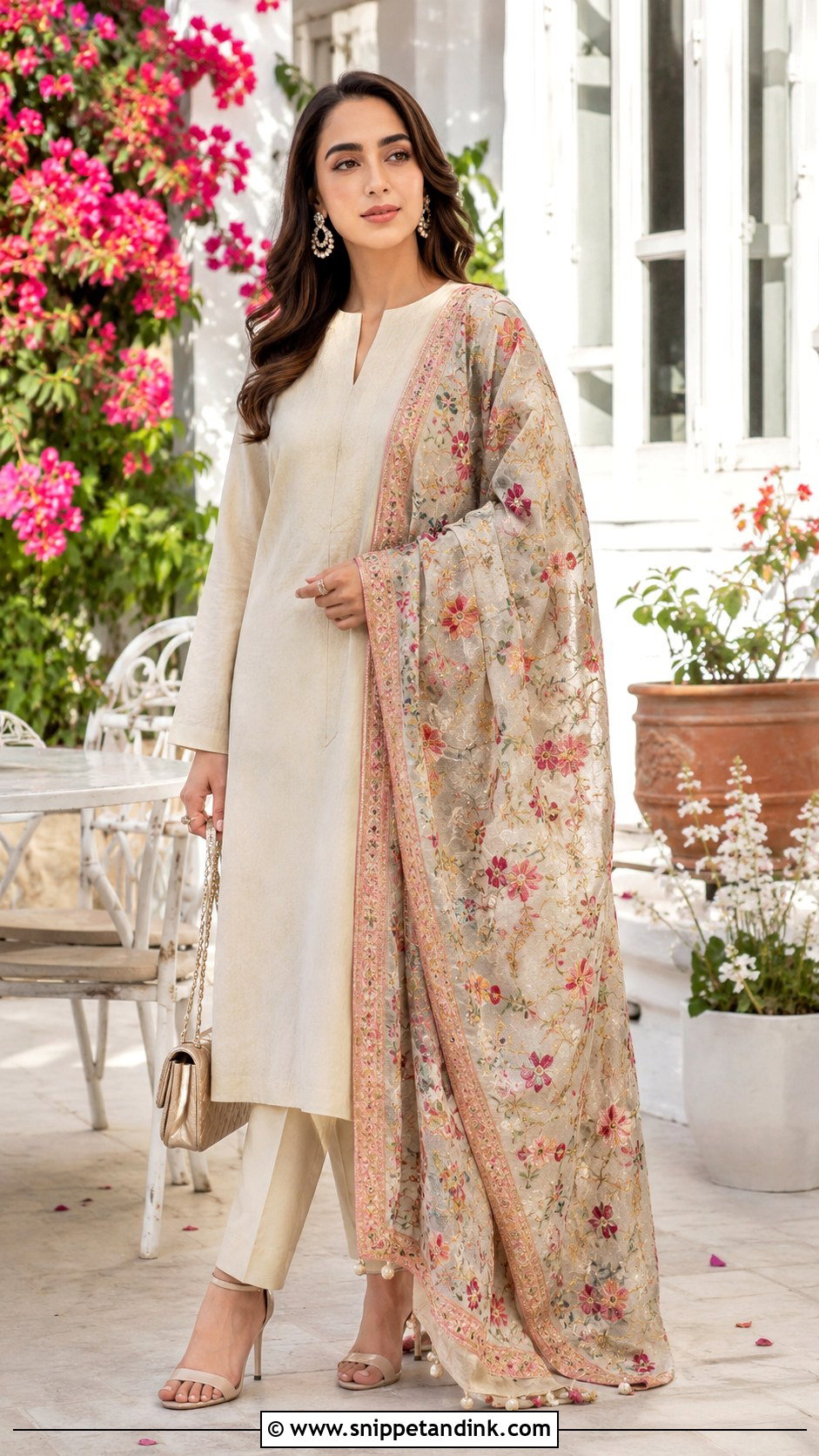
A floral dupatta, whether printed, threaded, zari vines or organza appliqué, works best over a cream, ivory or off-white kurta. The trick I use for accessories: pick one colour from the print, the least obvious one, and repeat it in your shoes or bag. That ties the outfit together without making it matchy. Delicate earrings, neutral heels and a small handbag carry it from festive brunches to evening family dinners.
12. Orange Simple Suit With Bandhani Dupatta
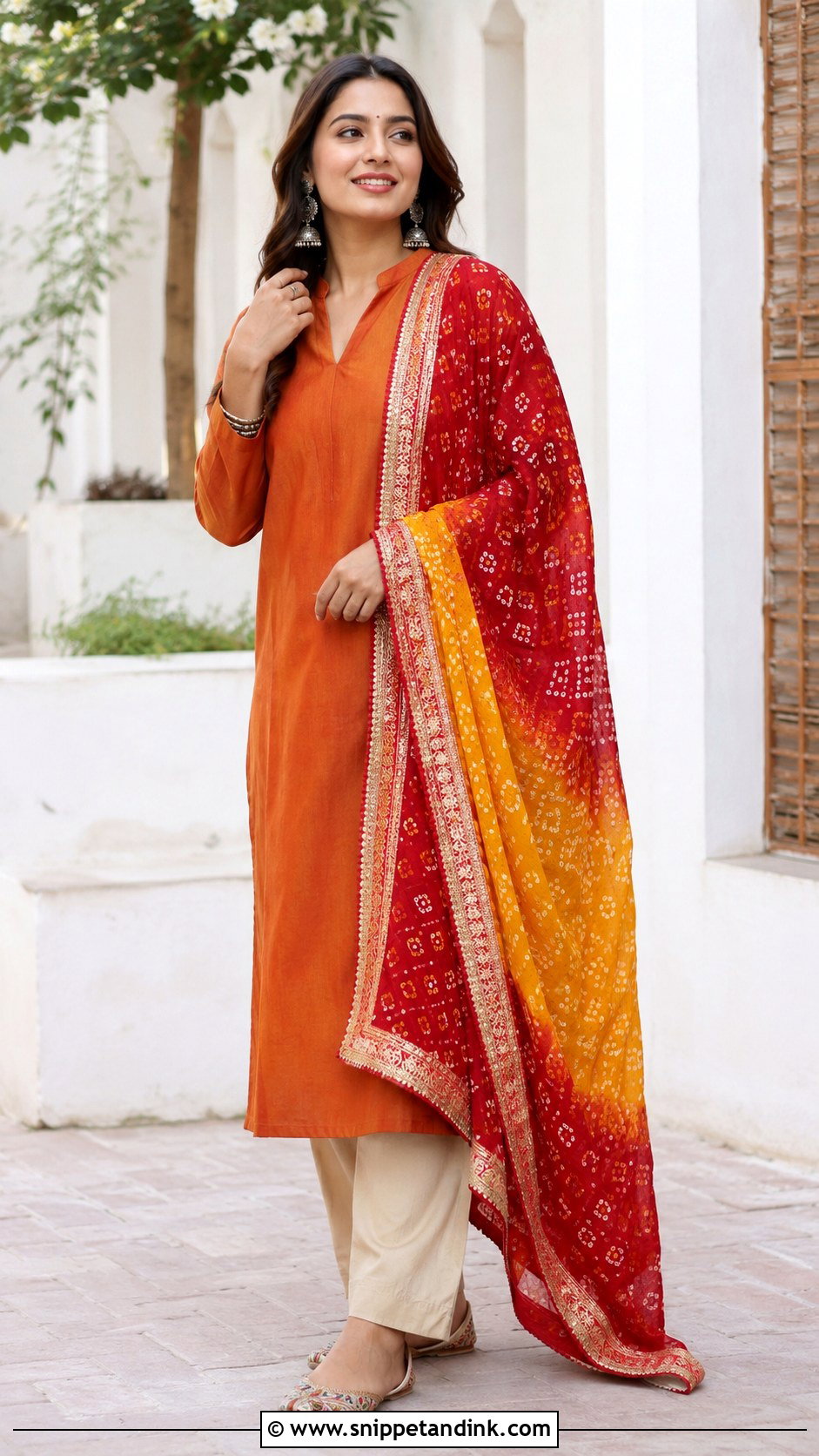
Bandhani’s tie-dyed dots add texture that plain fabric can’t. A plain orange, rust or coral kurta with matching or beige bottoms gives it a warm base. Add a heavy bandhani dupatta with zari borders, tassels or mirror accents. Bandhani dyes can run when they get wet, so a first wash should always be separate and cold, or skip it and dry clean. Oxidised earrings, bangles and juttis suit daytime functions. For a softer version, try peach with a red or pink bandhani.
13. Grey Simple Suit With Heavy Sequin Dupatta
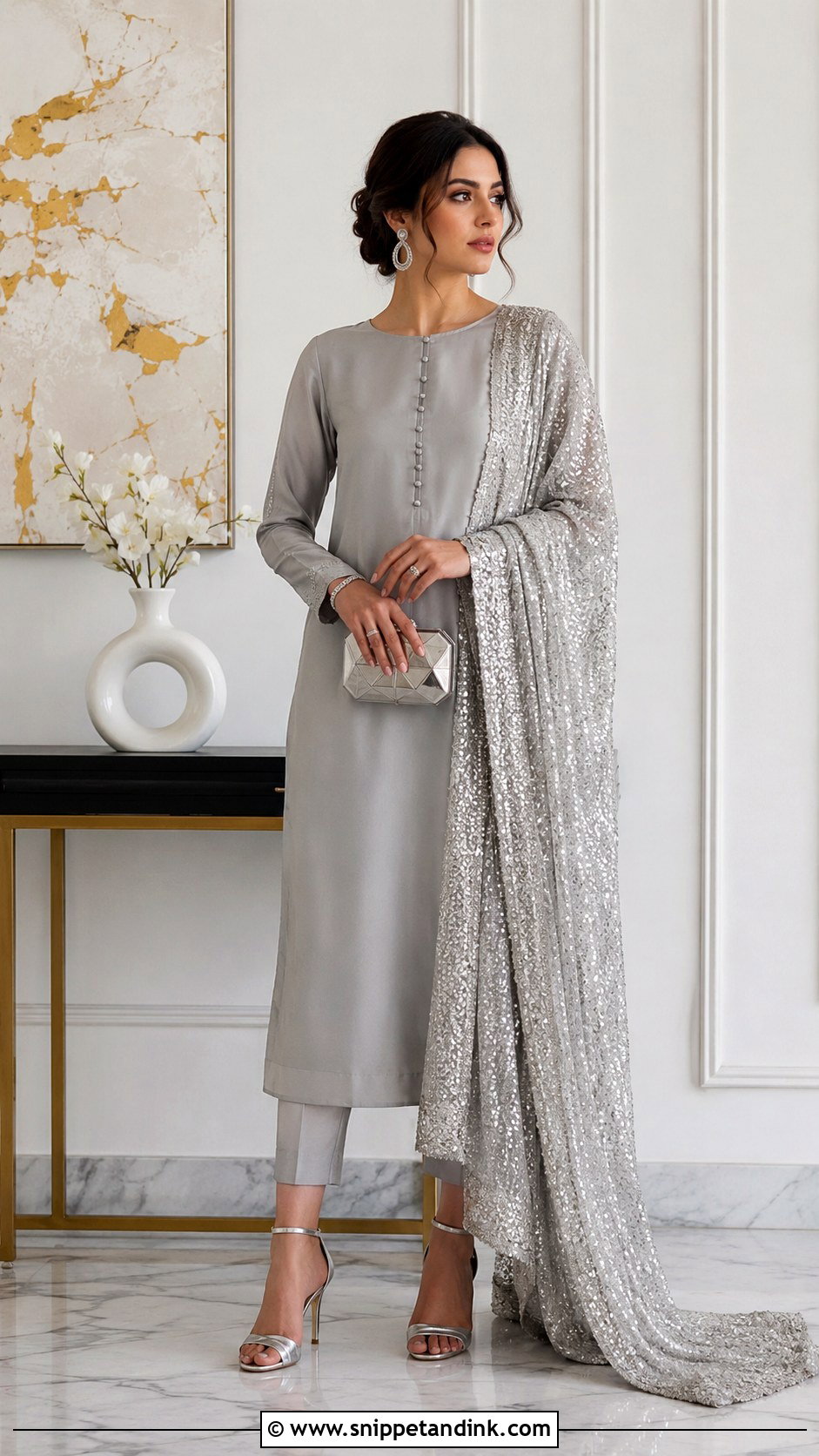
Grey is the most underrated base on this list. Dove grey, charcoal or silver-grey calms down a sequinned dupatta so the outfit looks modern rather than flashy. Scattered sequins, border work or tone-on-tone shimmer all work. Sequins can scratch bare arms over a long evening, so a sleeve that reaches the elbow helps. Studs or sleek earrings, metallic heels and a clutch for evening parties.
14. Maroon Simple Suit With Zari Dupatta
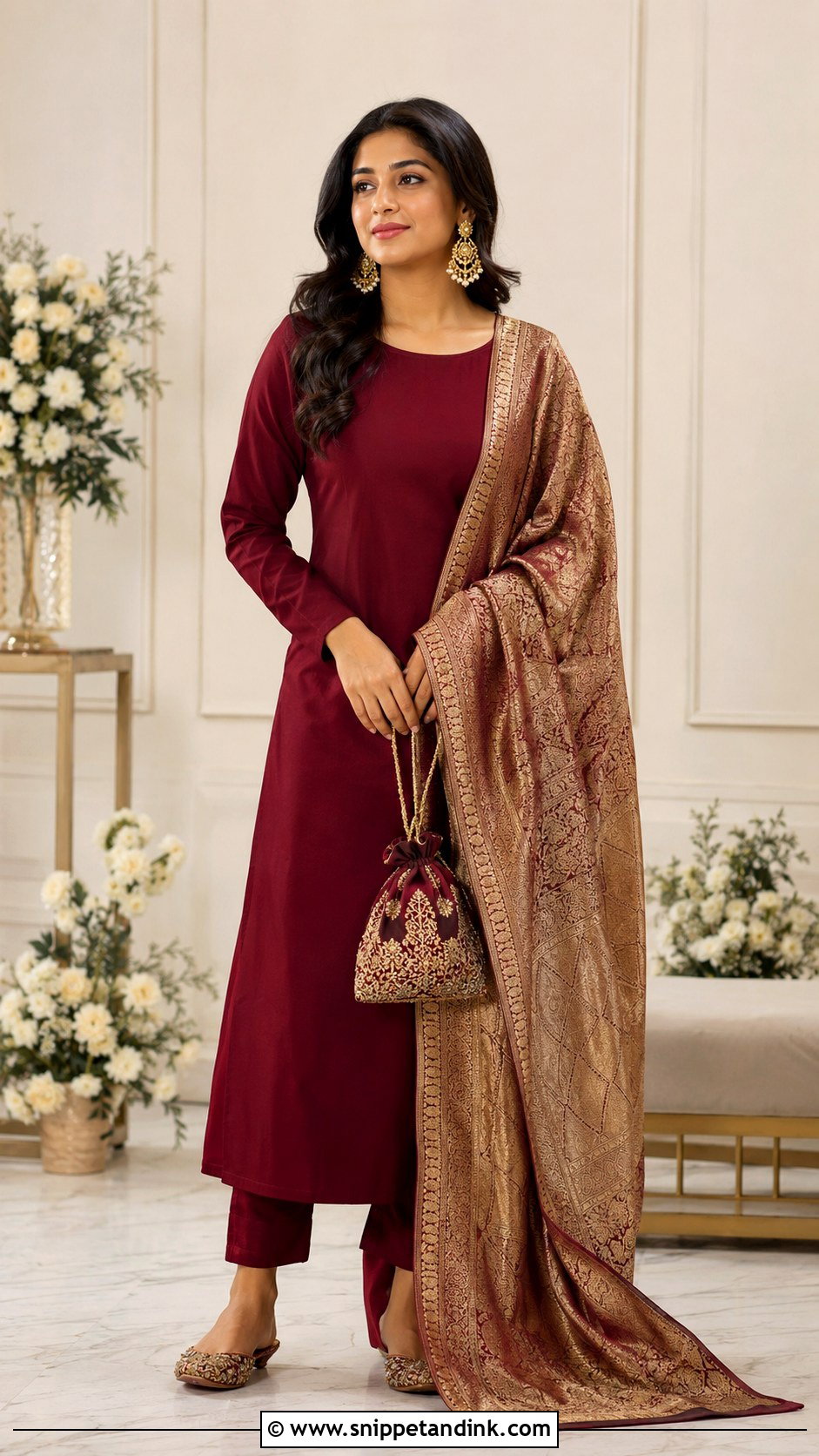
Maroon looks rich on its own, so a plain kurta with matching pants is enough. A heavy zari dupatta in gold, copper or antique tones gives it a traditional finish, and the stiffness of zari gives the drape structure. Over one shoulder looks clean; across both shoulders looks more formal and suits ceremonies where elders are present. Gold chandbalis, a potli bag and embroidered heels for family ceremonies and festive nights.
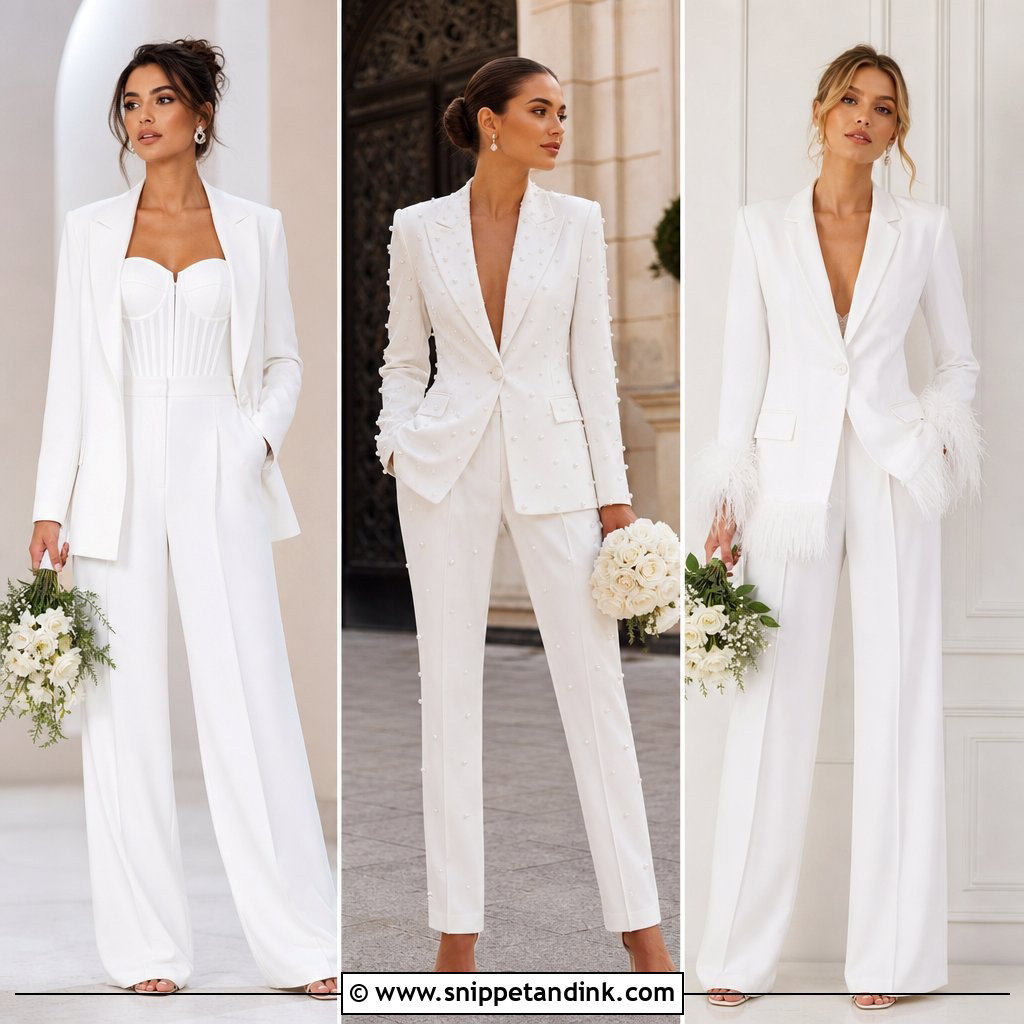
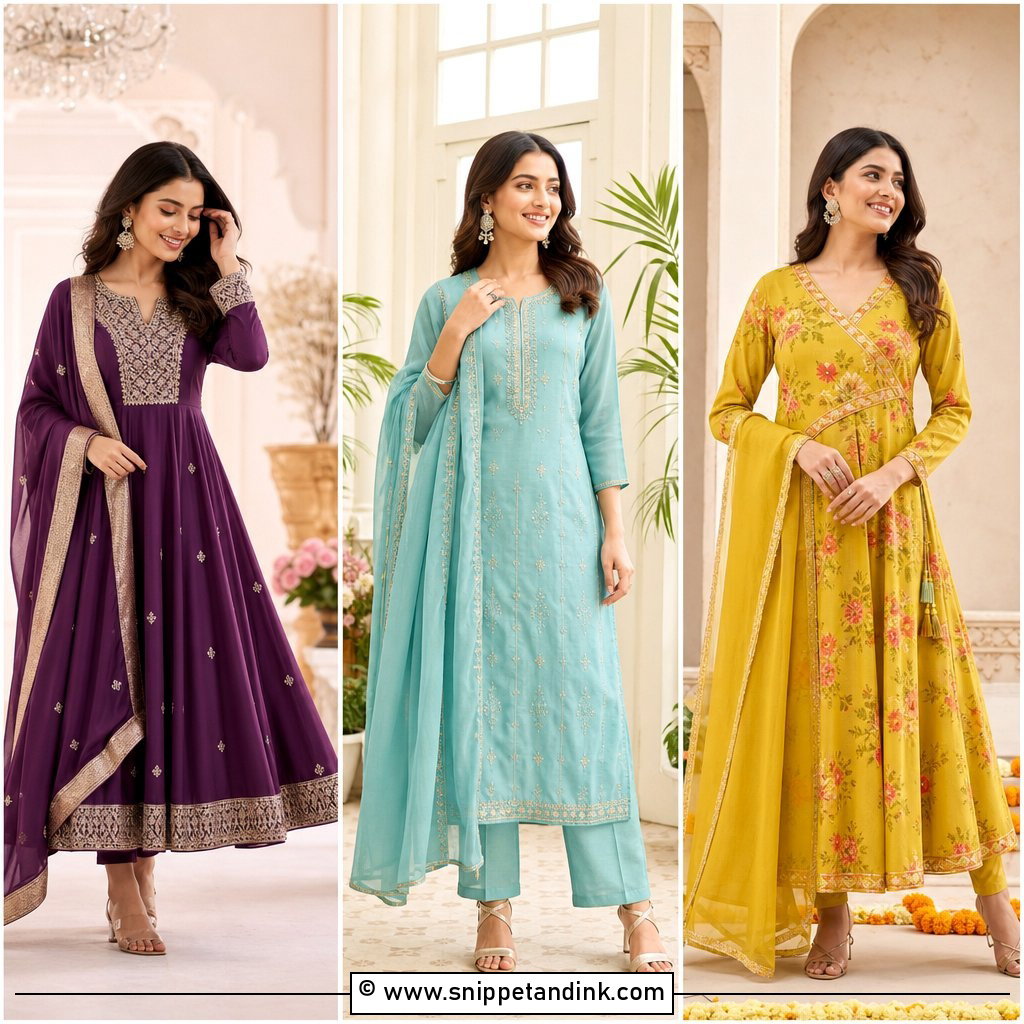
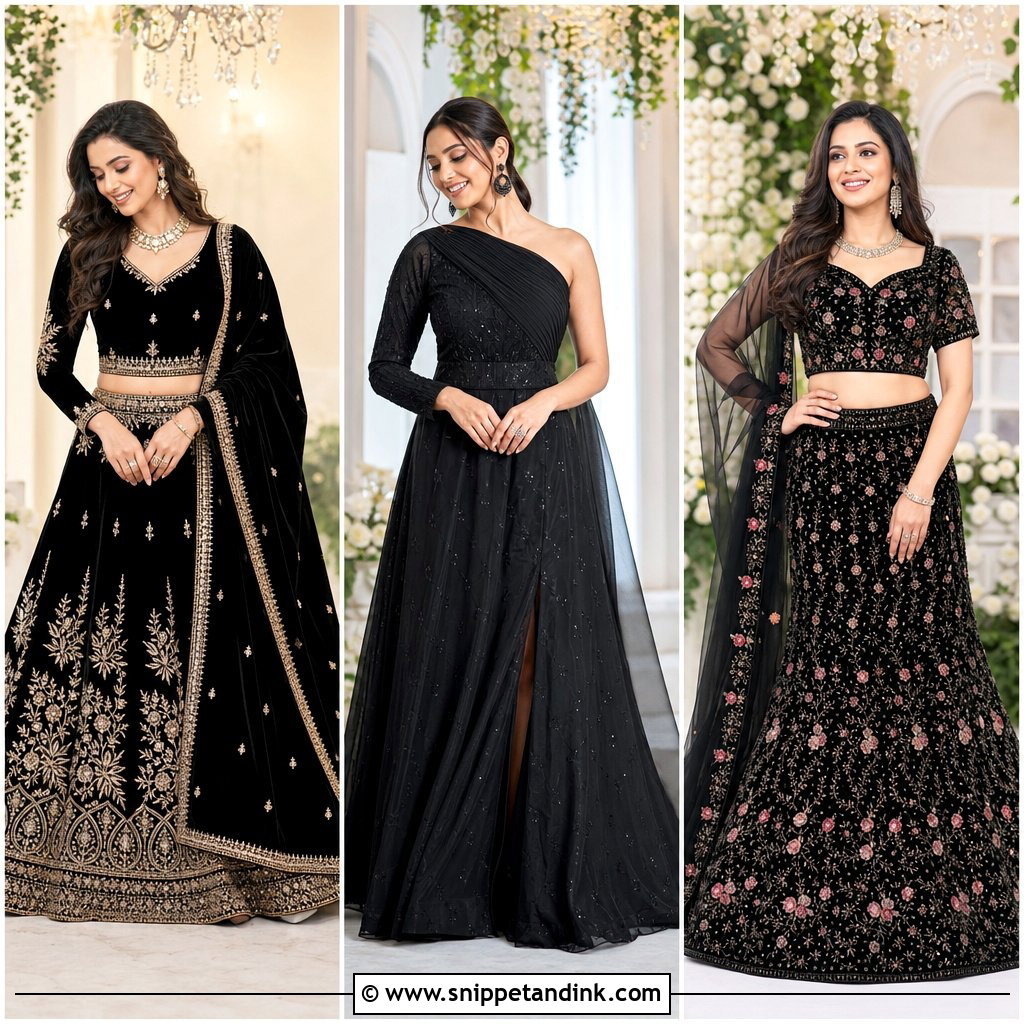
15. Navy Simple Suit With Heavy Net Dupatta
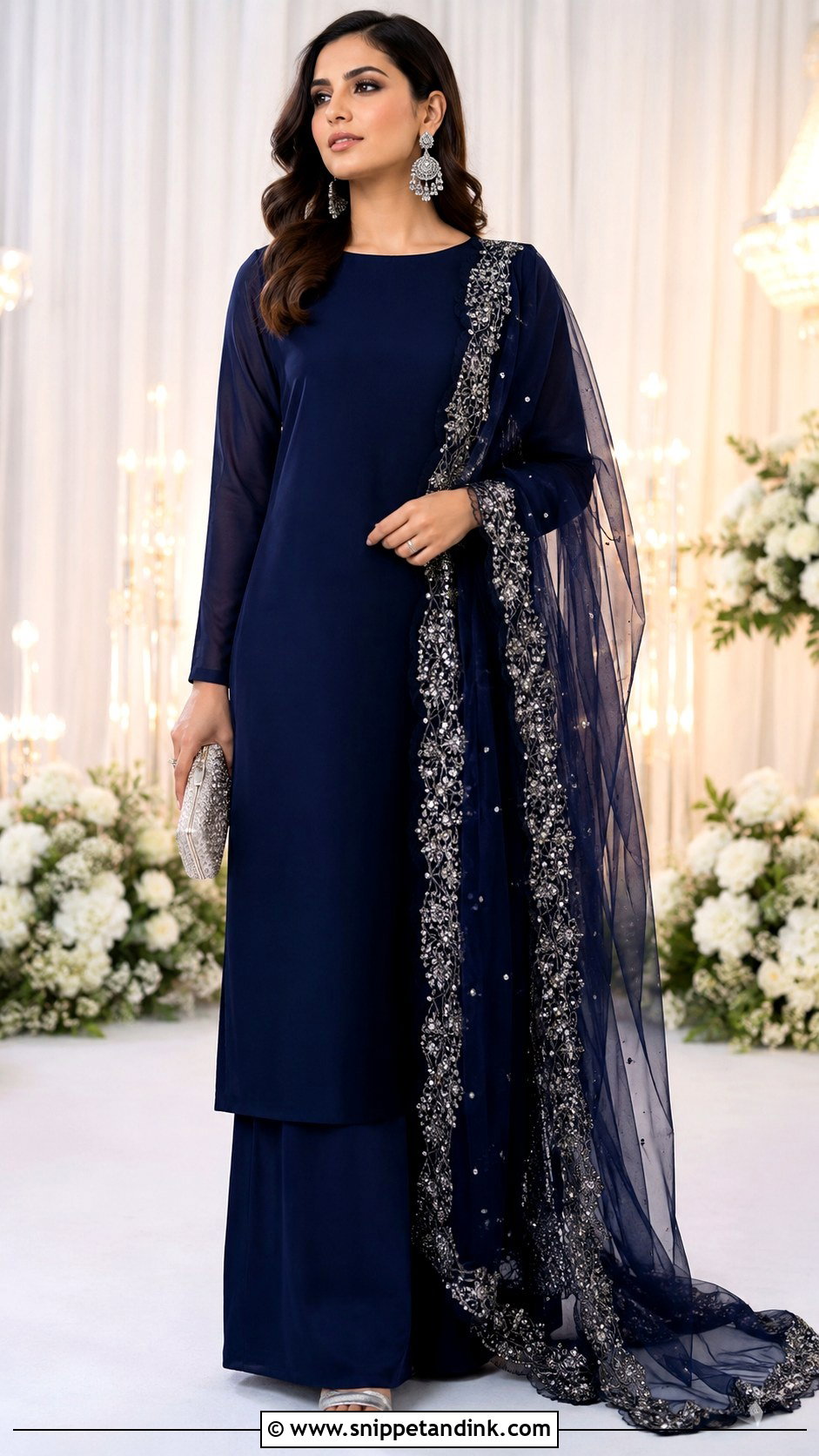
Net dupattas are sheer, which keeps an evening outfit from feeling bulky, while the embroidered borders, sequins, pearls or lace keep it festive. A plain navy kurta with cigarette pants or palazzos works best. Net snags on bangles and rings, so I’d keep jewellery smooth with this one. Silver or gold accessories, depending on the dupatta’s work. A good choice for formal dinners and wedding events.
16. Peach Simple Suit With Heavy Pearl Dupatta
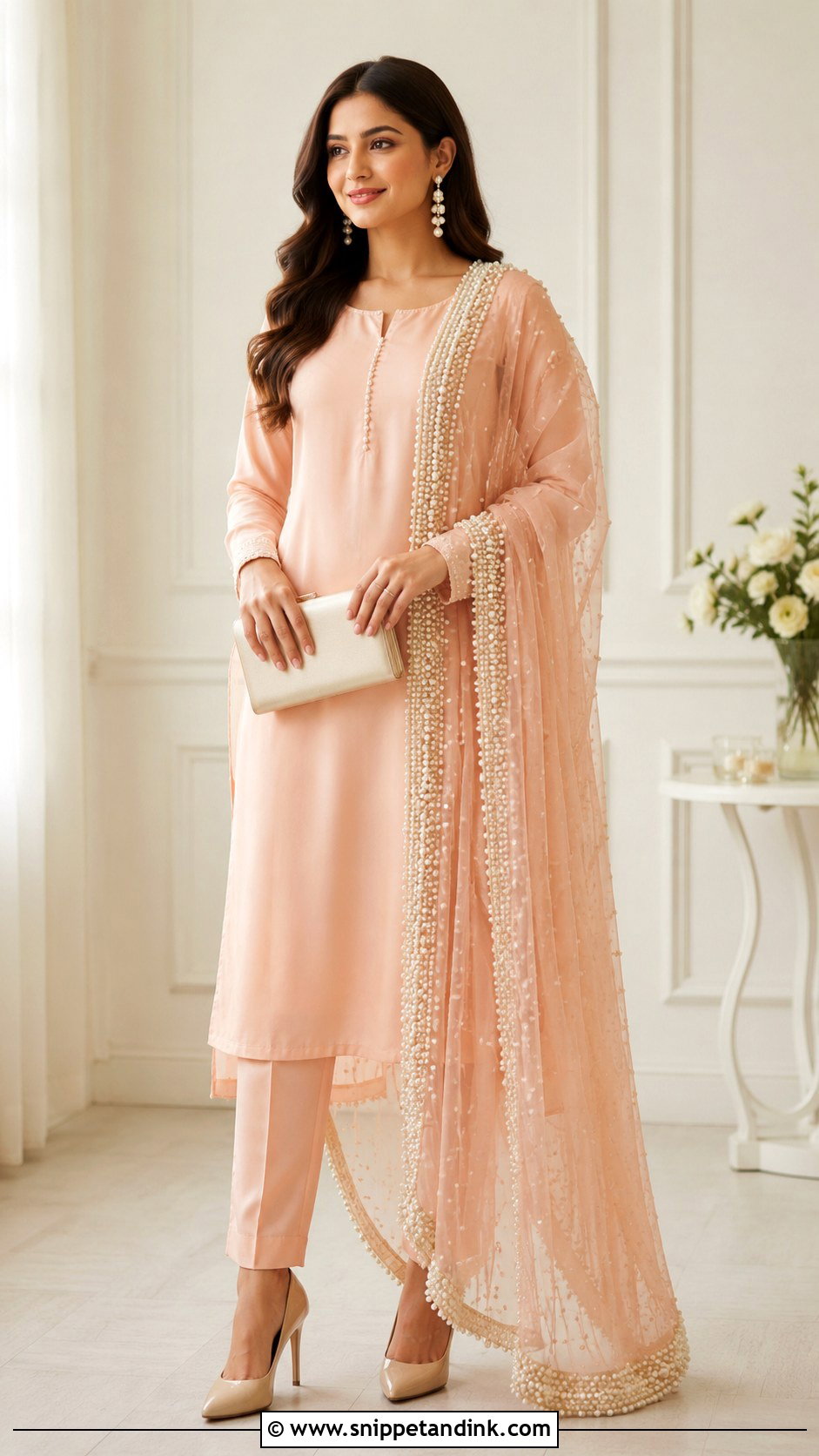
Peach and pearls glow in daylight. A plain peach kurta in georgette, silk blend or cotton silk with slim pants keeps the base soft. Add a dupatta with pearl edging, beadwork or light embroidery. Pearl borders add weight to the hem, which helps the dupatta hang straight in a breeze, but they also catch on chair backs, so watch them when you sit. Pearl earrings, nude heels and a small cream clutch for summer and daytime functions.
17. Mint Simple Suit With Heavy Lace Dupatta
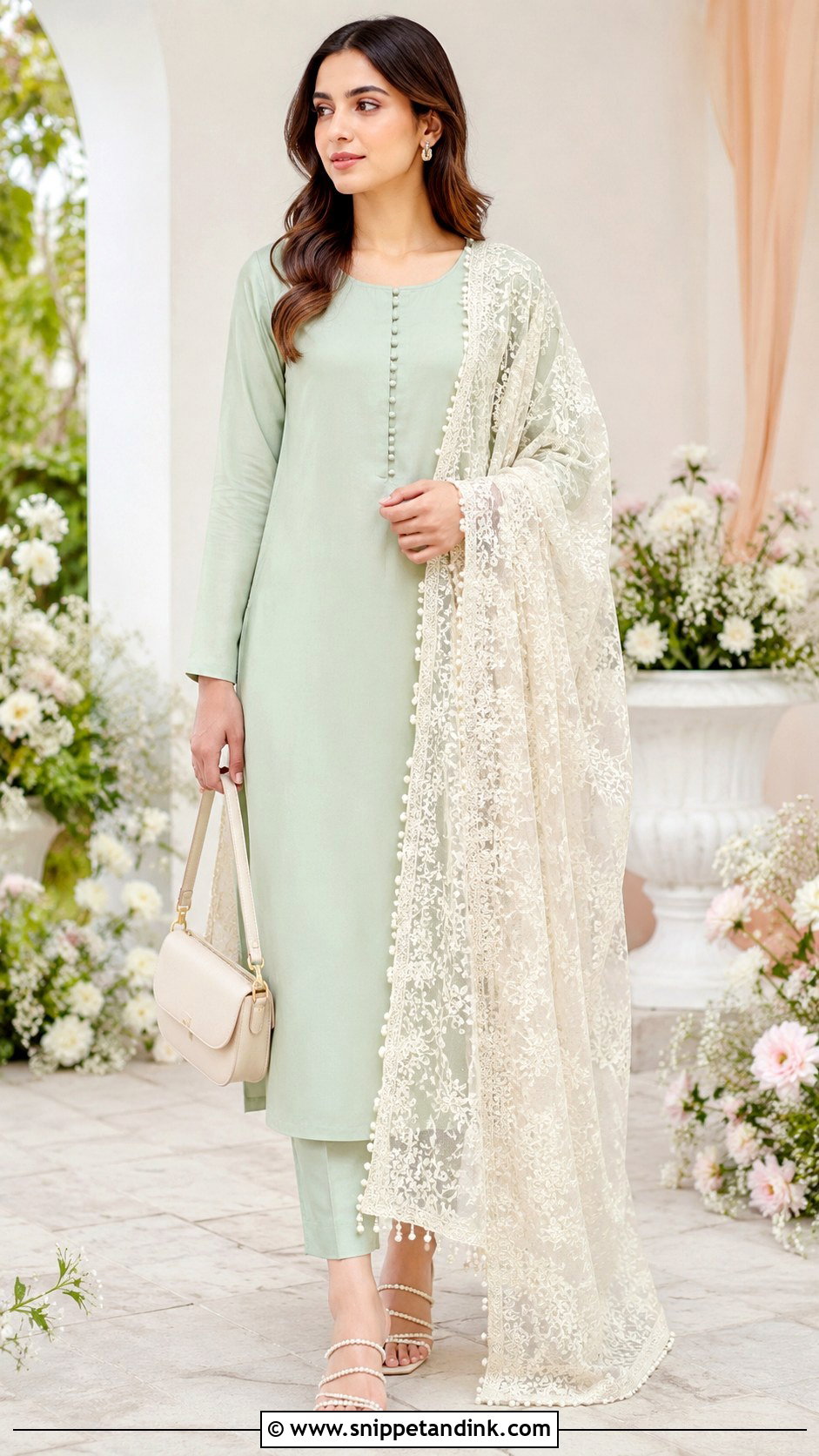
Mint is soft enough for daytime, and lace borders keep it special. A plain straight kurta with matching trousers makes a neat base. The lace dupatta can be white, mint or ivory, or lightly embellished with pearls. In heat, this is one of the most comfortable pairings here because both pieces breathe. Small earrings, strappy sandals and a soft handbag for warm-weather lunches.
18. Brown Simple Suit With Ajrakh Dupatta
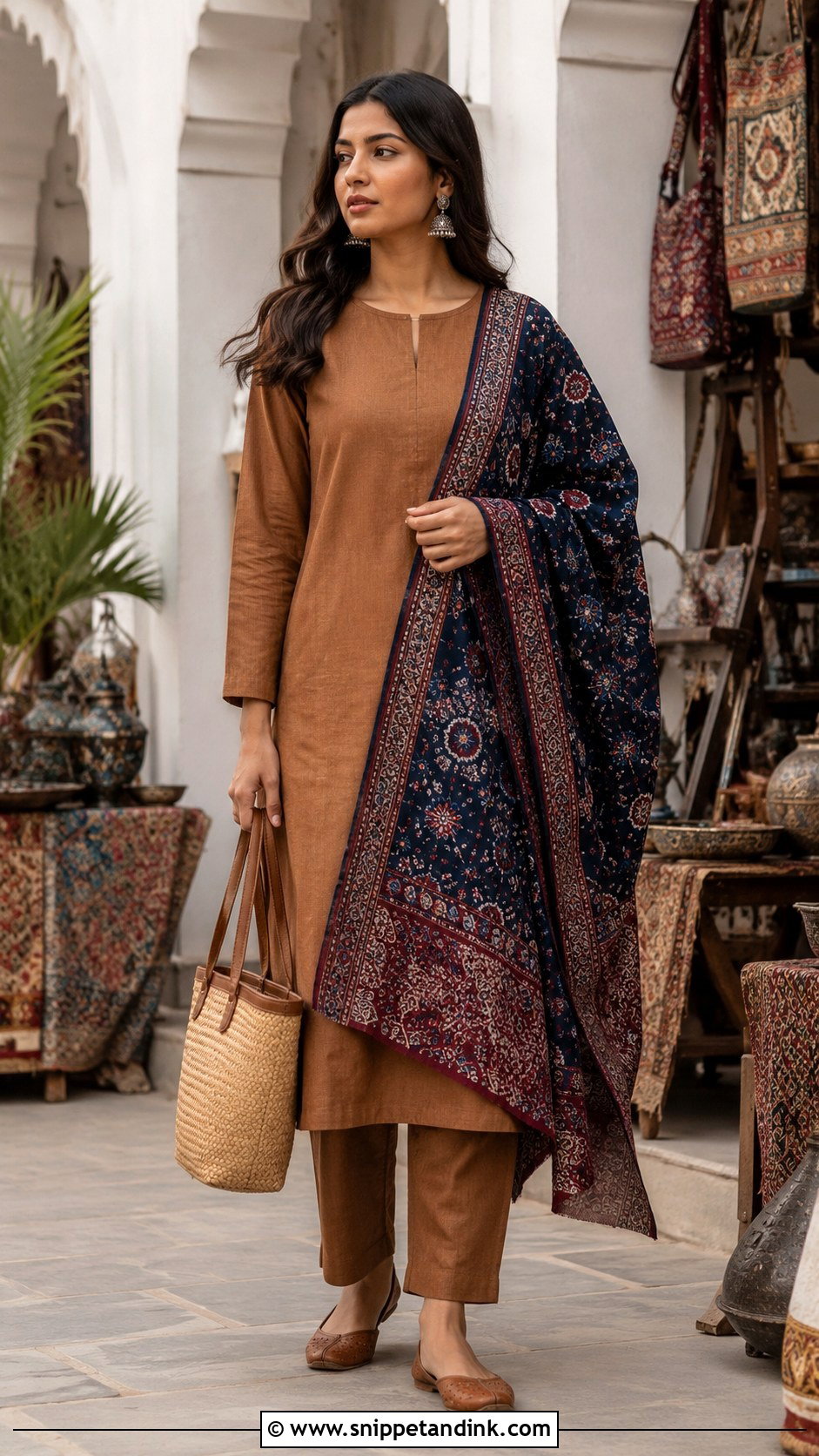
Ajrakh is a hand block print, traditionally in indigo and madder red with black, made through a long resist-and-dye process. Paired with a plain chocolate, coffee, tan or camel suit, it looks earthy and artistic. Oxidised silver jewellery suits it far better than gold. Leather-look flats or embroidered juttis finish it. I’d wear it to cultural events and relaxed festive gatherings rather than a formal reception.
19. Ivory Simple Suit With Heavy Dupatta
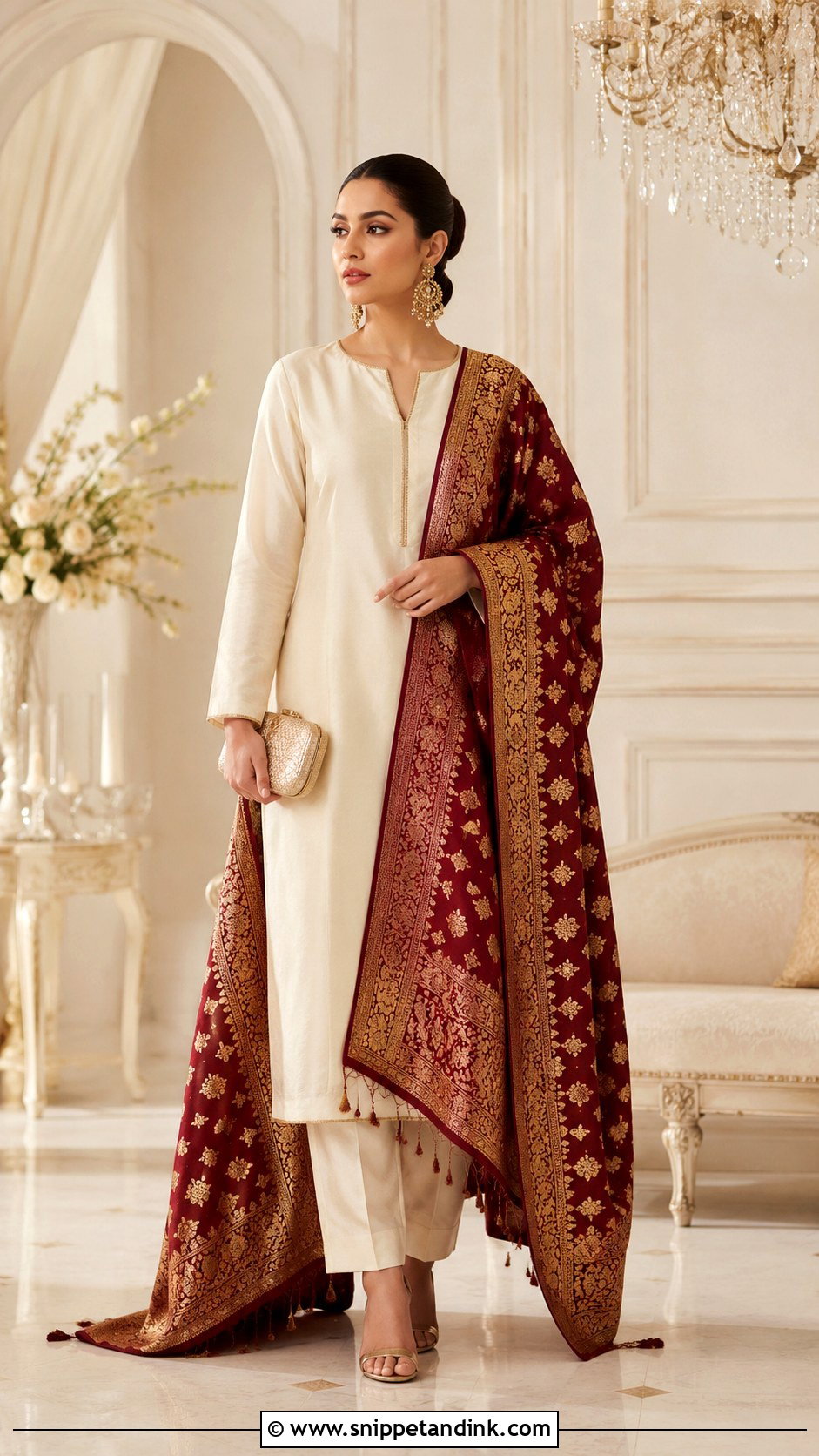
If you buy one suit this season, make it ivory. It works with almost every dupatta colour, from deep maroon to pale pastels. Choose a plain ivory kurta with straight pants, then rotate dupattas in Banarasi silk, organza embroidery, zari, gota or colourful threadwork. Gold jewellery makes it festive; pearls keep it soft. Ivory marks easily with makeup, so I’d keep a cotton handkerchief in your bag.


20. Simple Cotton Suit With Heavy Dupatta
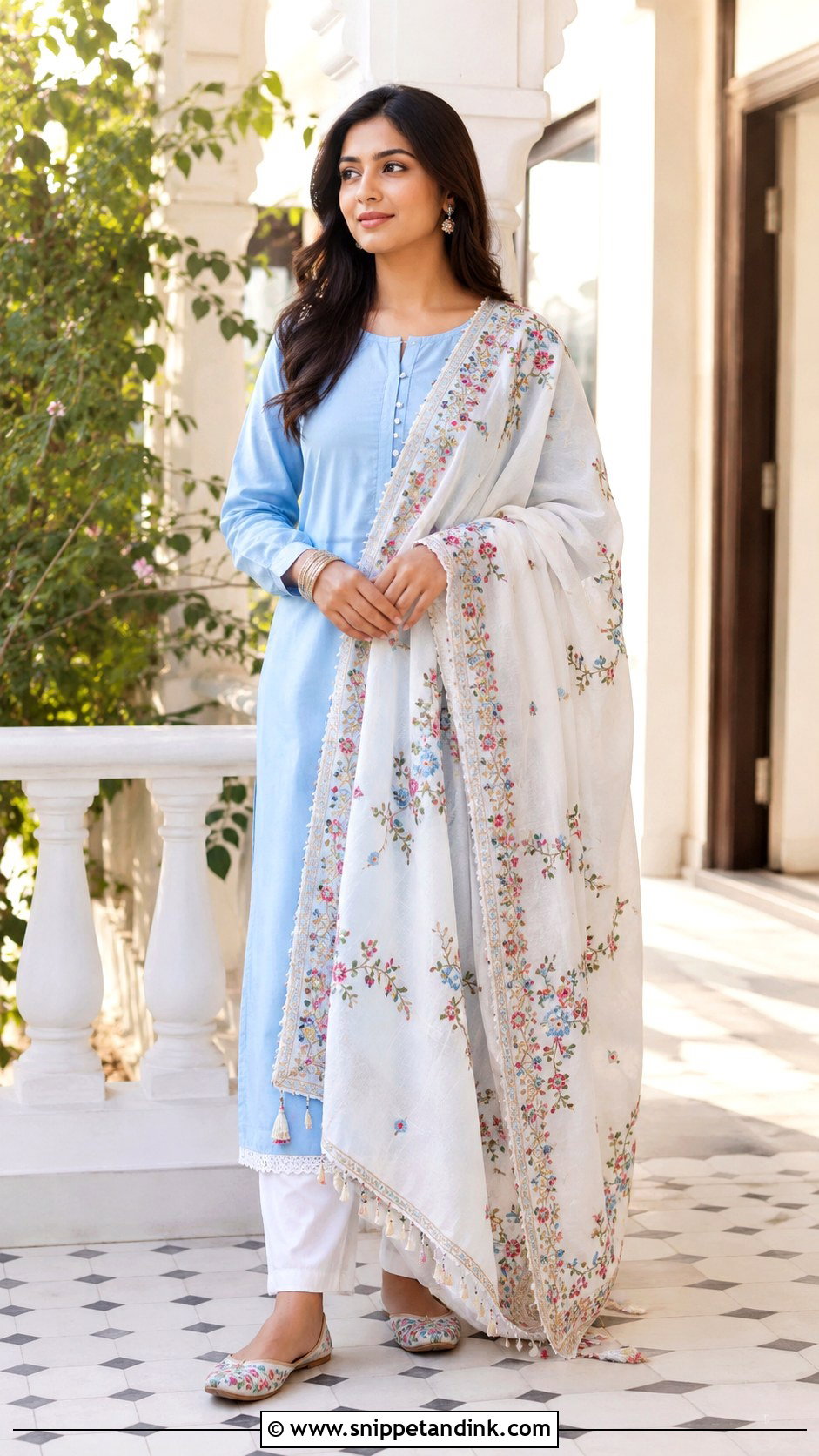
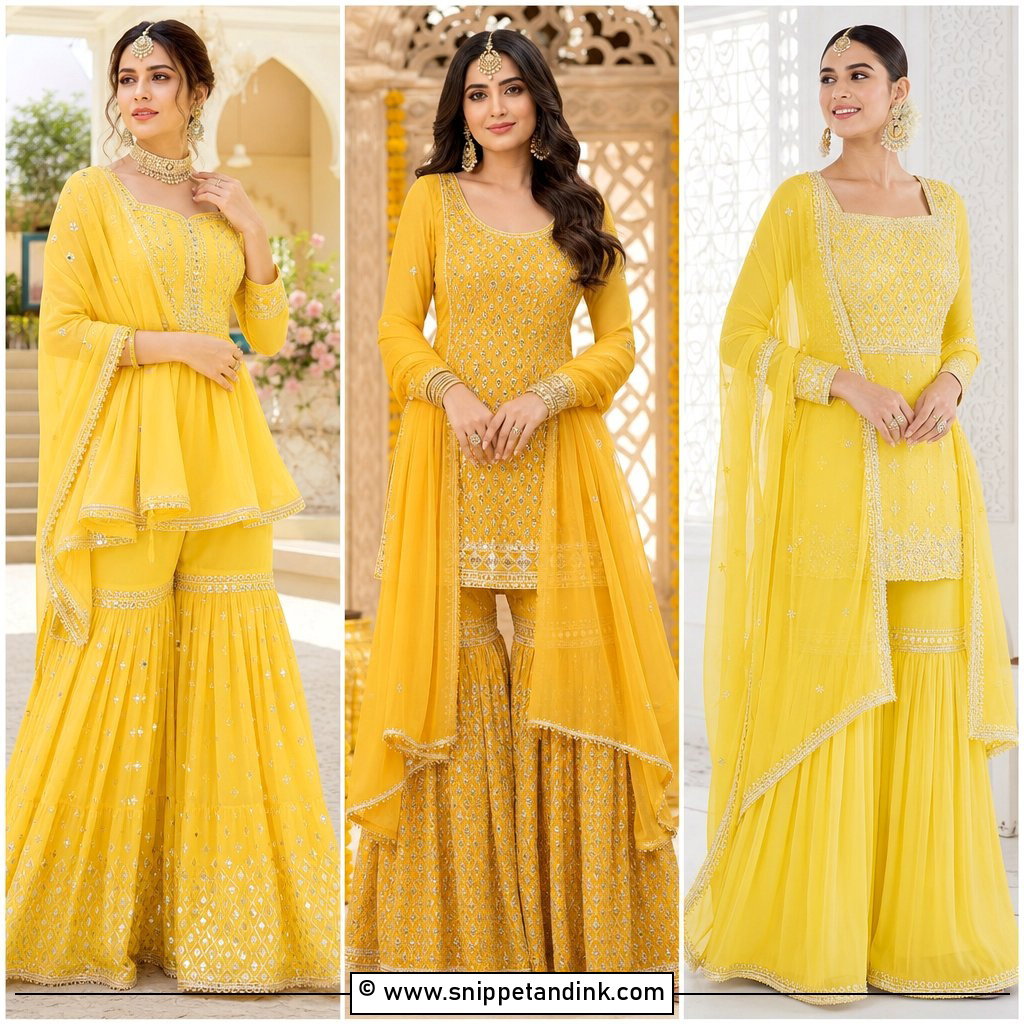
For a long outdoor day, cotton is the practical choice, and a heavy dupatta stops it looking casual. Choose a plain cotton kurta in white, beige, pink, blue or yellow, and pair it with a handloom, block print, phulkari or embroidered dupatta. Starch the kurta lightly so it holds its shape next to the heavier dupatta. Juttis, light bangles and small earrings keep it easy for daytime functions.
21. Simple Silk Suit With Heavy Dupatta
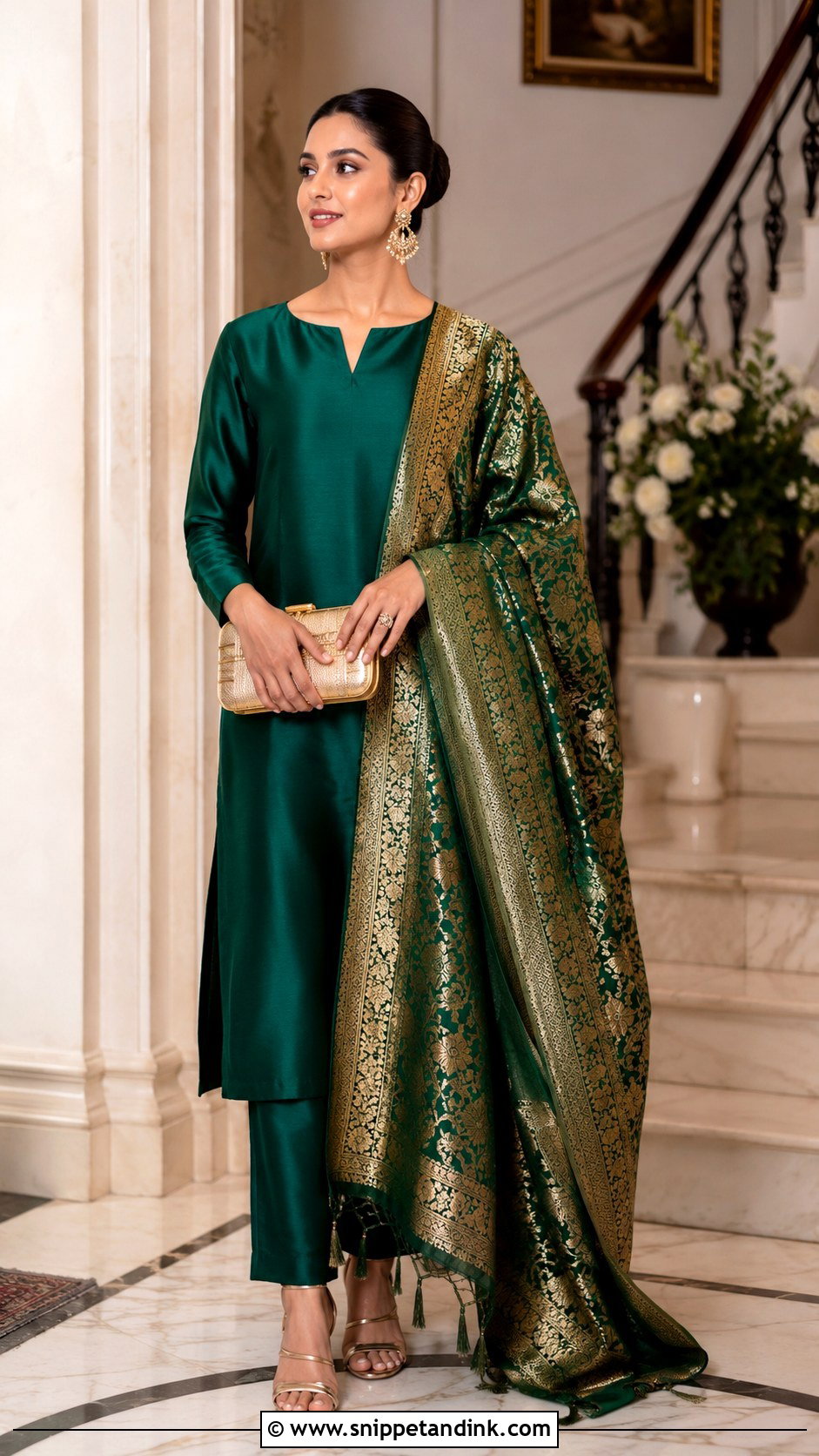
Silk has its own sheen, so even a plain silk kurta reads as dressed. Brocade, Banarasi weave, zari embroidery or a velvet border all work. Solid emerald, burgundy, navy, beige gold or rose pink keeps the base calm. Silk shows sweat marks under the arms more than any other fabric, so I’d add dress shields for a summer wedding. Structured jewellery and elegant sandals for formal family events and guest dressing.
22. Simple Anarkali Suit With Heavy Dupatta
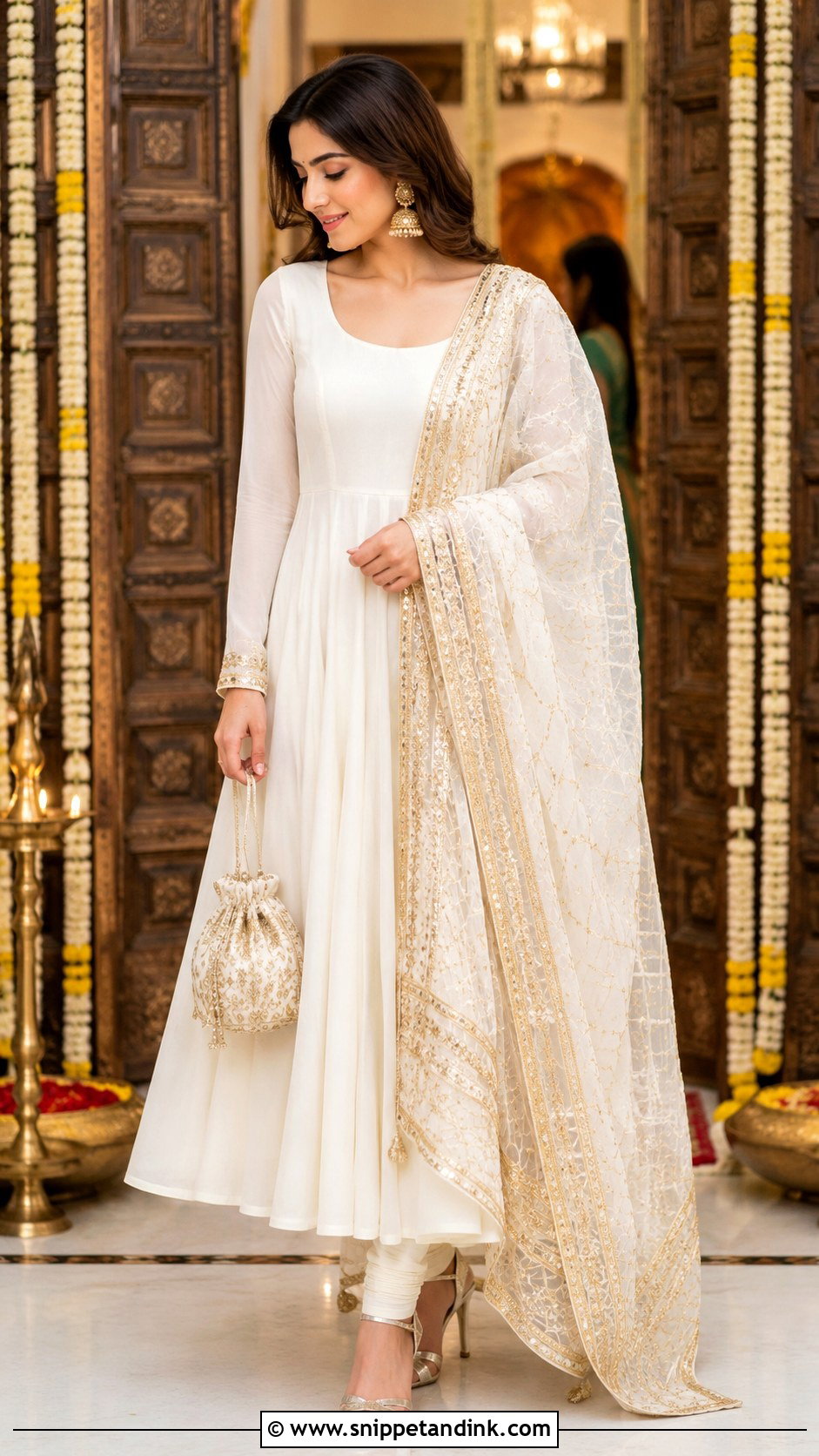
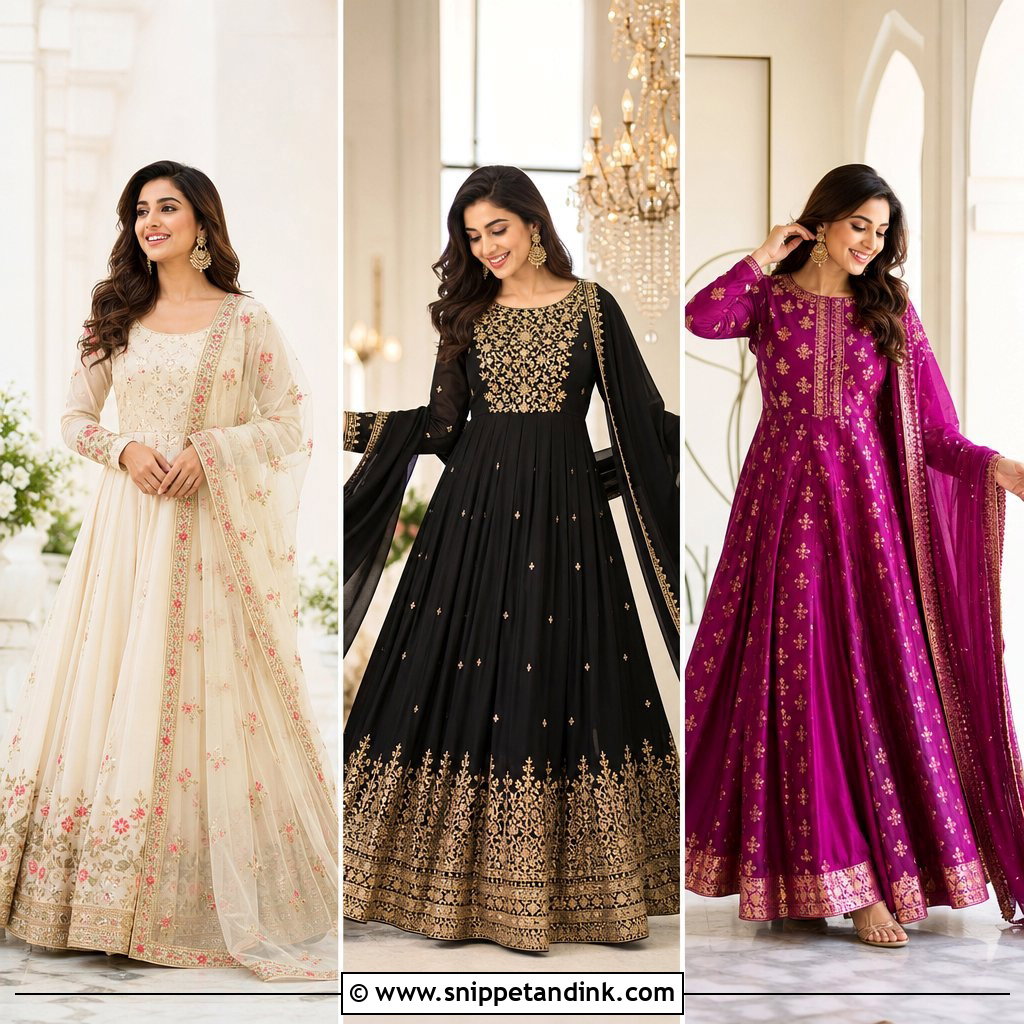
The Anarkali flares from the bust and moves as you walk, which makes even a plain one feel dressy. Cotton silk, georgette or rayon with minimal neckline detail keeps it simple. Add a dupatta with embroidery, gota patti, zari or a bold border. Because the skirt is already full, I drape the dupatta across both arms at the back so the border shows without hiding the flare. Jhumkas and heeled sandals for festive gatherings and family ceremonies.
23. Simple Straight Suit With Heavy Dupatta
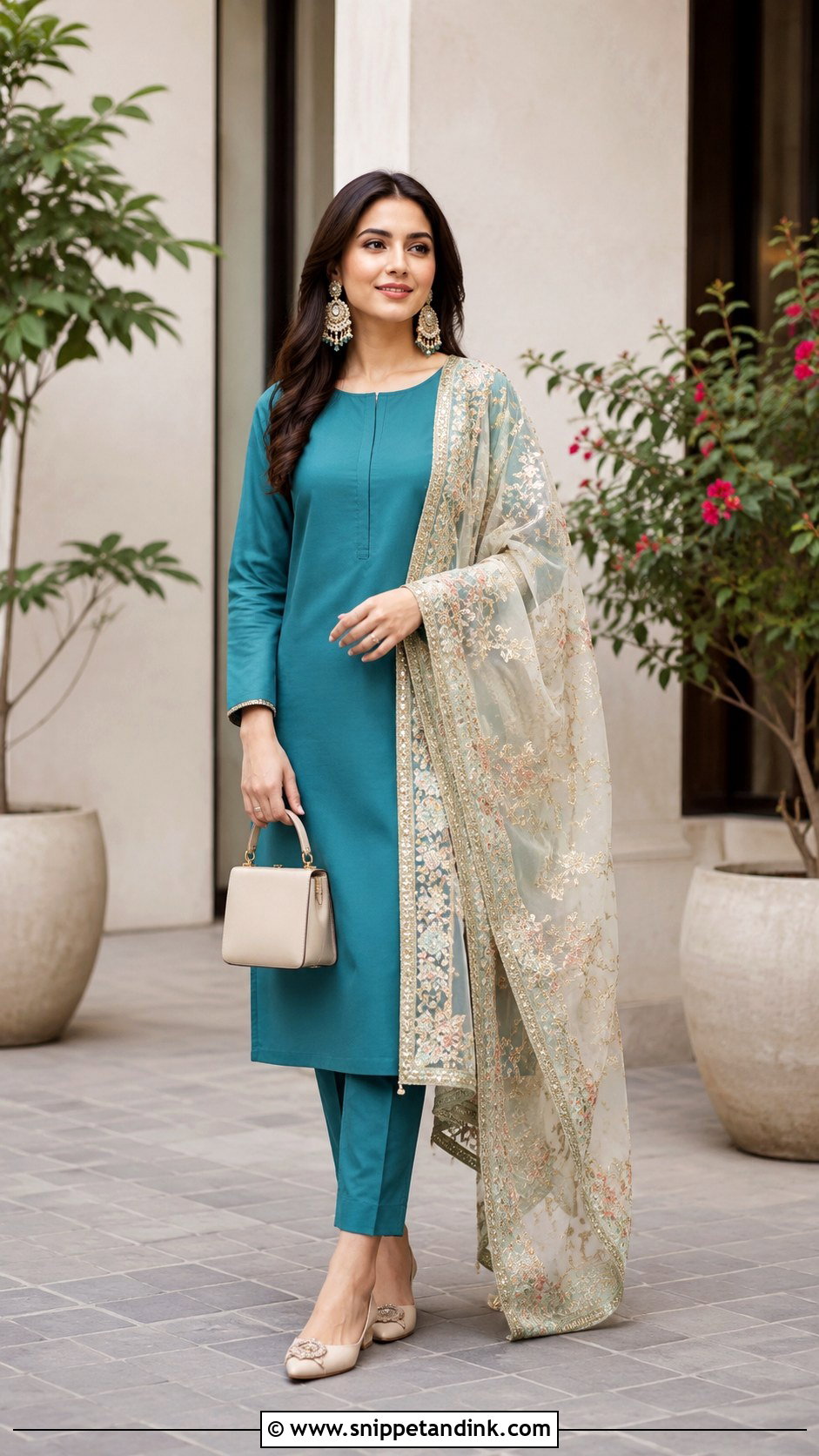
Straight kurtas create a long vertical line, which is why they suit most body types. Choose a plain kurta that ends below the knee with cigarette pants or slim trousers. Add a contrast dupatta in woven silk, organza embroidery, mirror work or floral threadwork. If you’re petite, keep the kurta just below the knee rather than mid-calf, or it can shorten your legs. Statement earrings, simple bangles and pointed flats or heels.
24. Simple Palazzo Suit With Heavy Dupatta
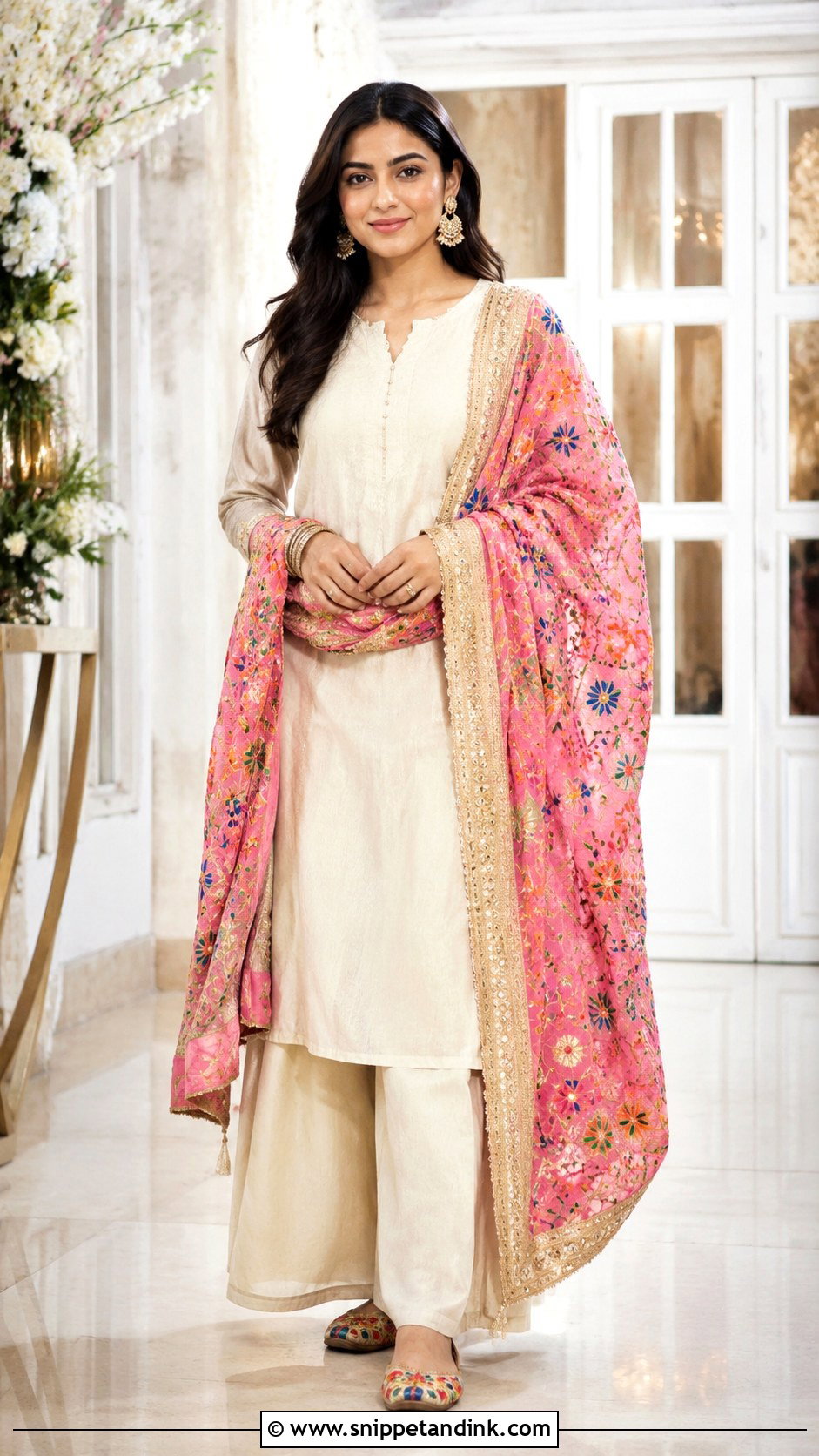
Palazzos give you more movement than slim pants, which matters at a function with a lot of sitting on the floor or dancing. Choose a plain kurta with matching or contrast palazzos, then add a dupatta with zari, gota, phulkari or embroidered borders. Mid-thigh or knee-length kurtas balance the wide leg best. Wedges, jhumkas and a potli bag for long celebrations.
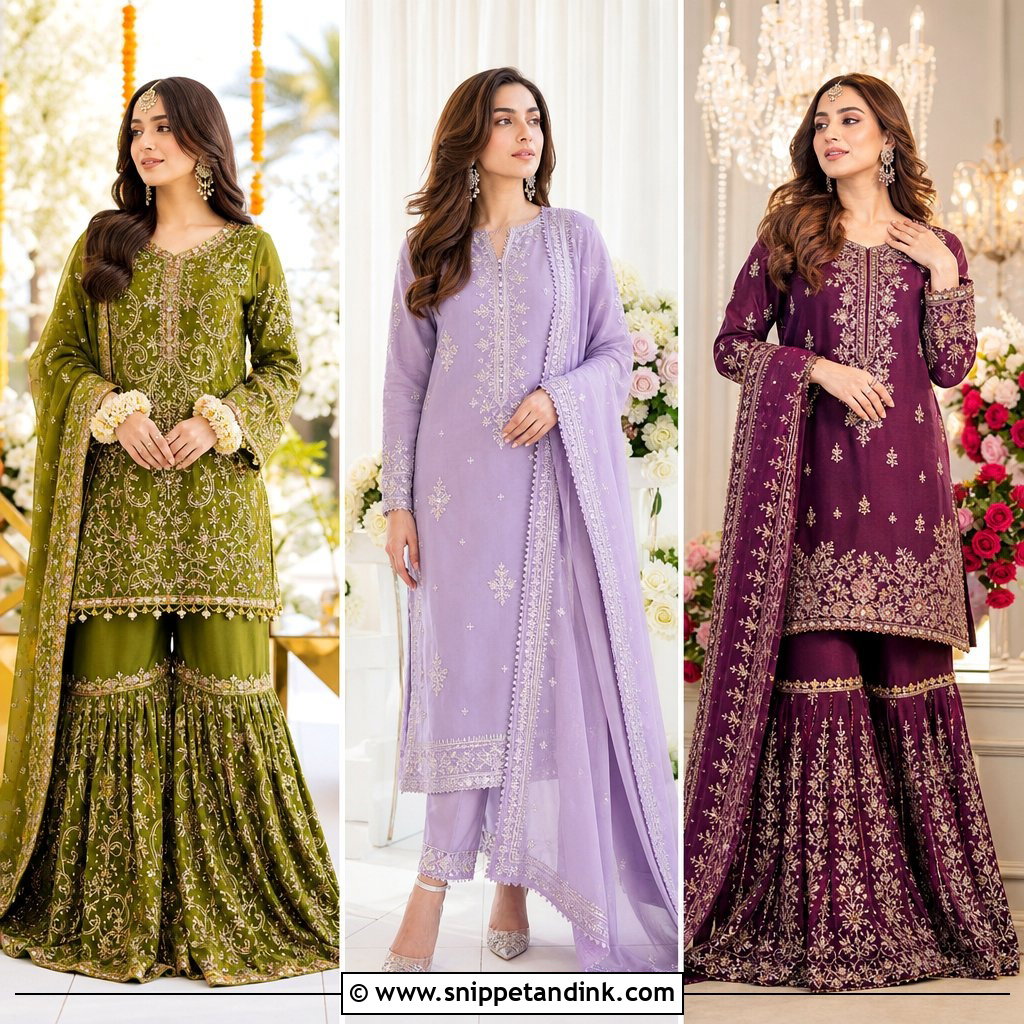
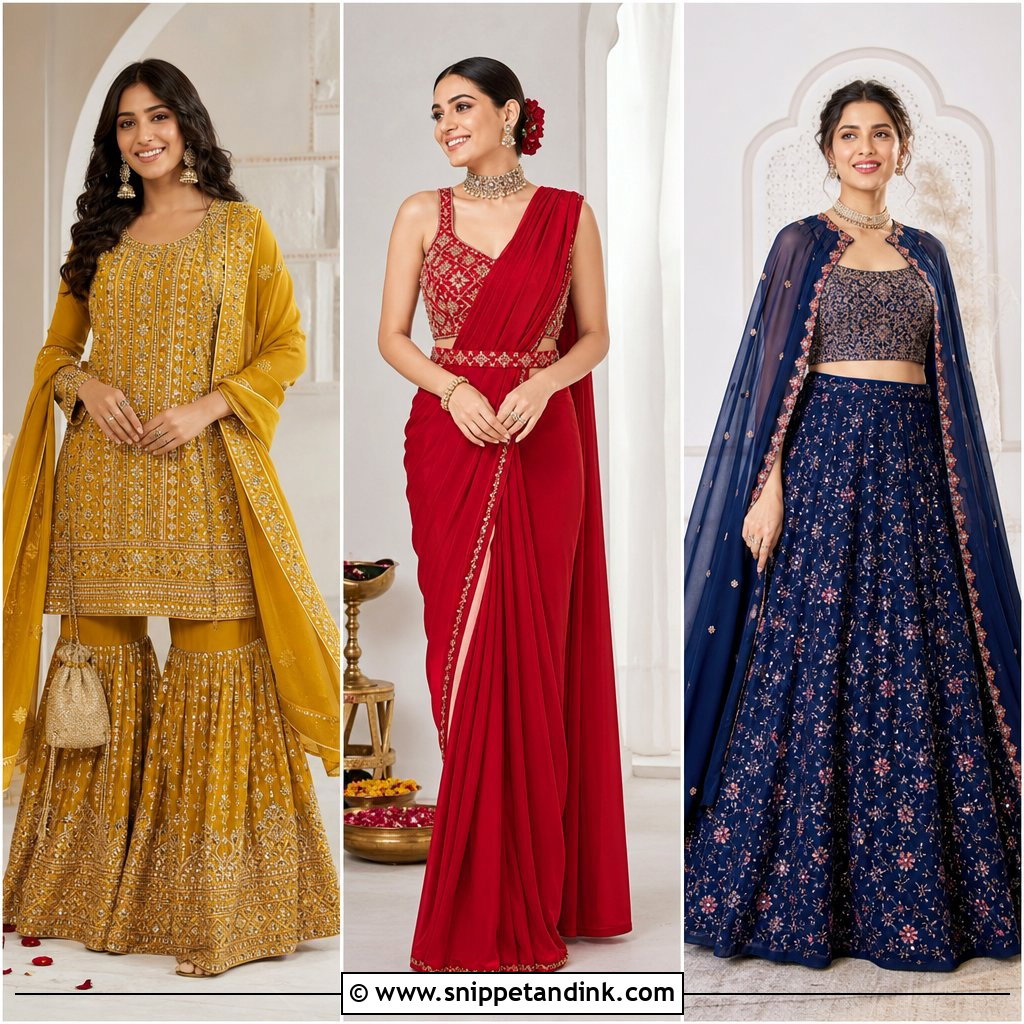
25. Simple Sharara Suit With Heavy Dupatta
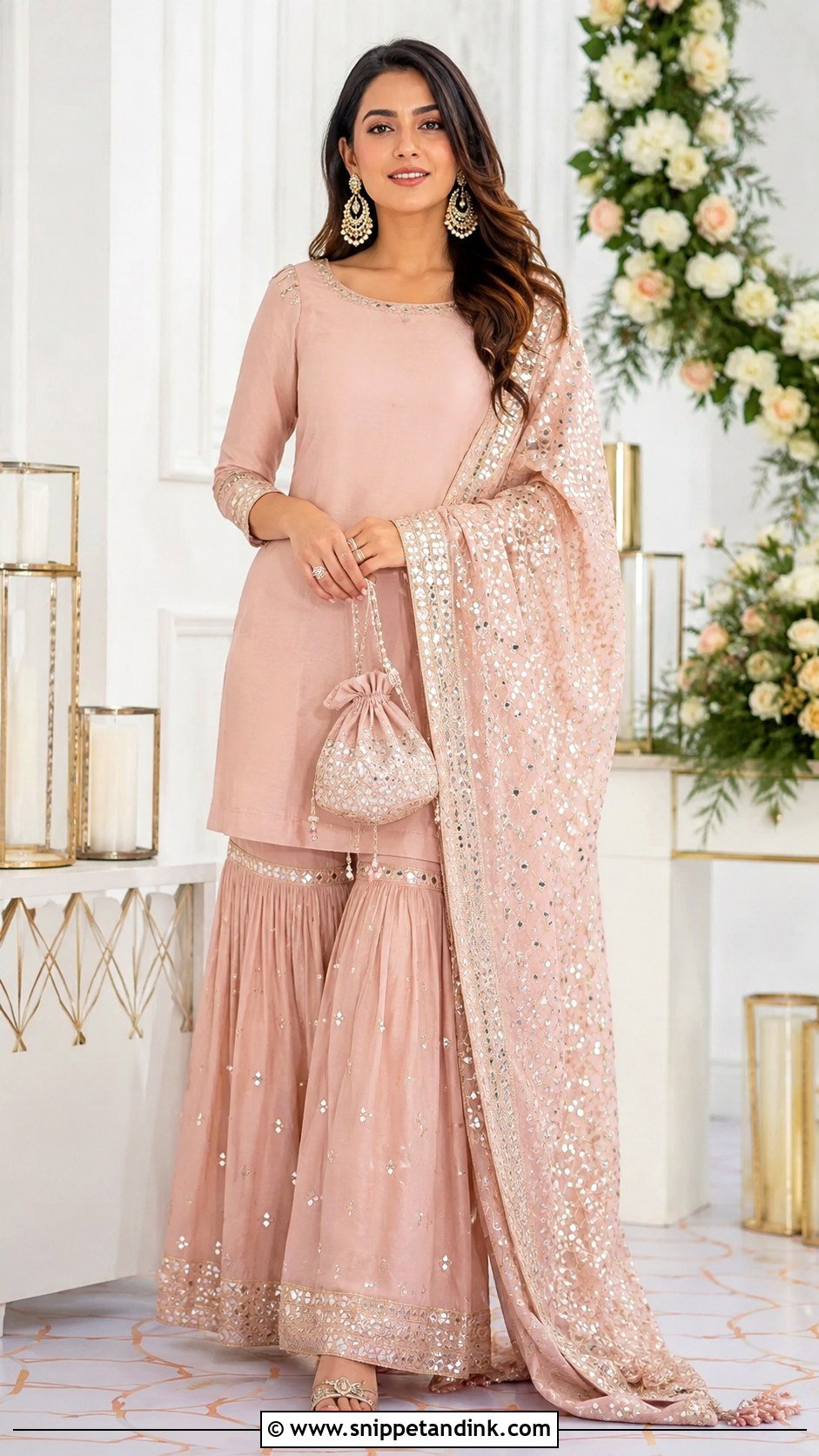
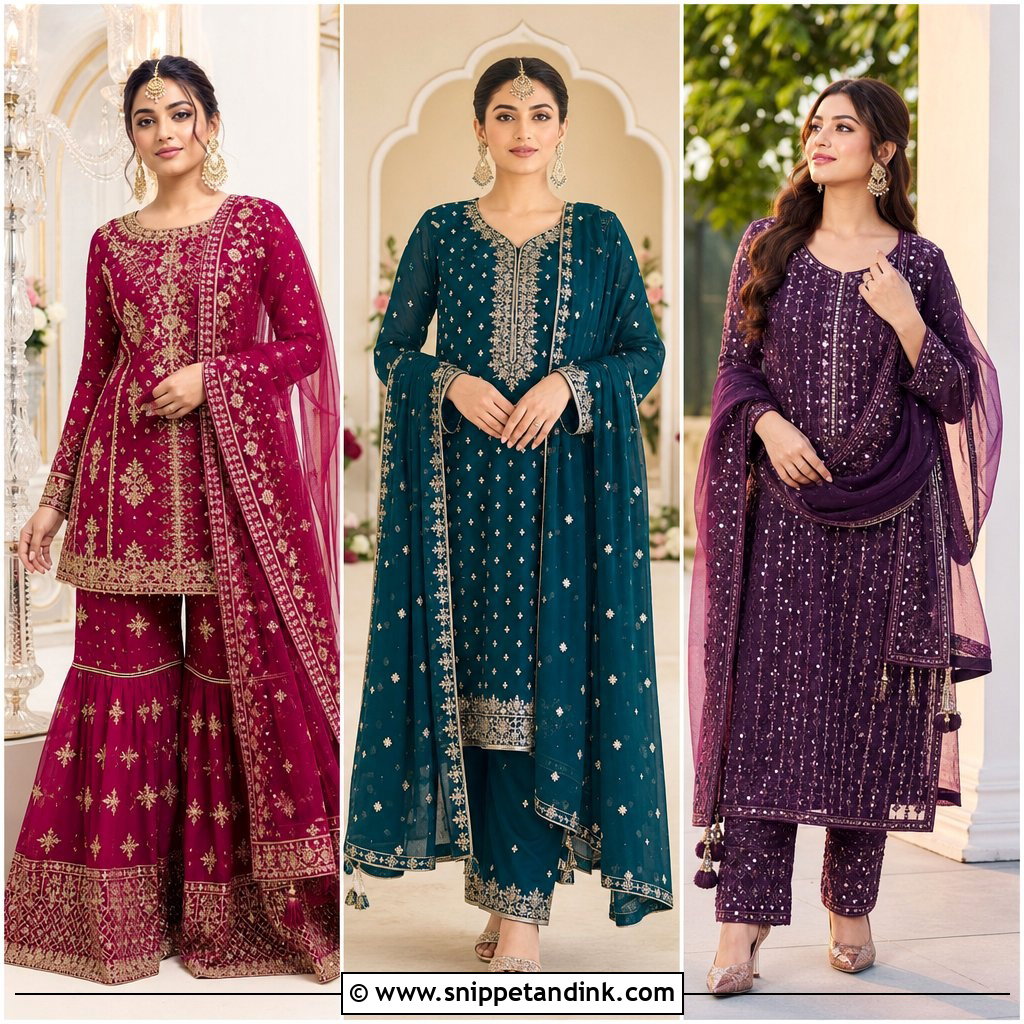
Shararas already have volume, so the kurta should be short, plain and well fitted. Then add a dupatta with gota, mirror work, zari or sequins. The weight of a heavy dupatta can pull a short kurta off-centre, so pin it to the kurta at the shoulder, not just to your bra strap. Chandbalis, bangles and embellished heels or juttis for mehndi nights and family parties.
26. Simple Churidar Suit With Heavy Dupatta
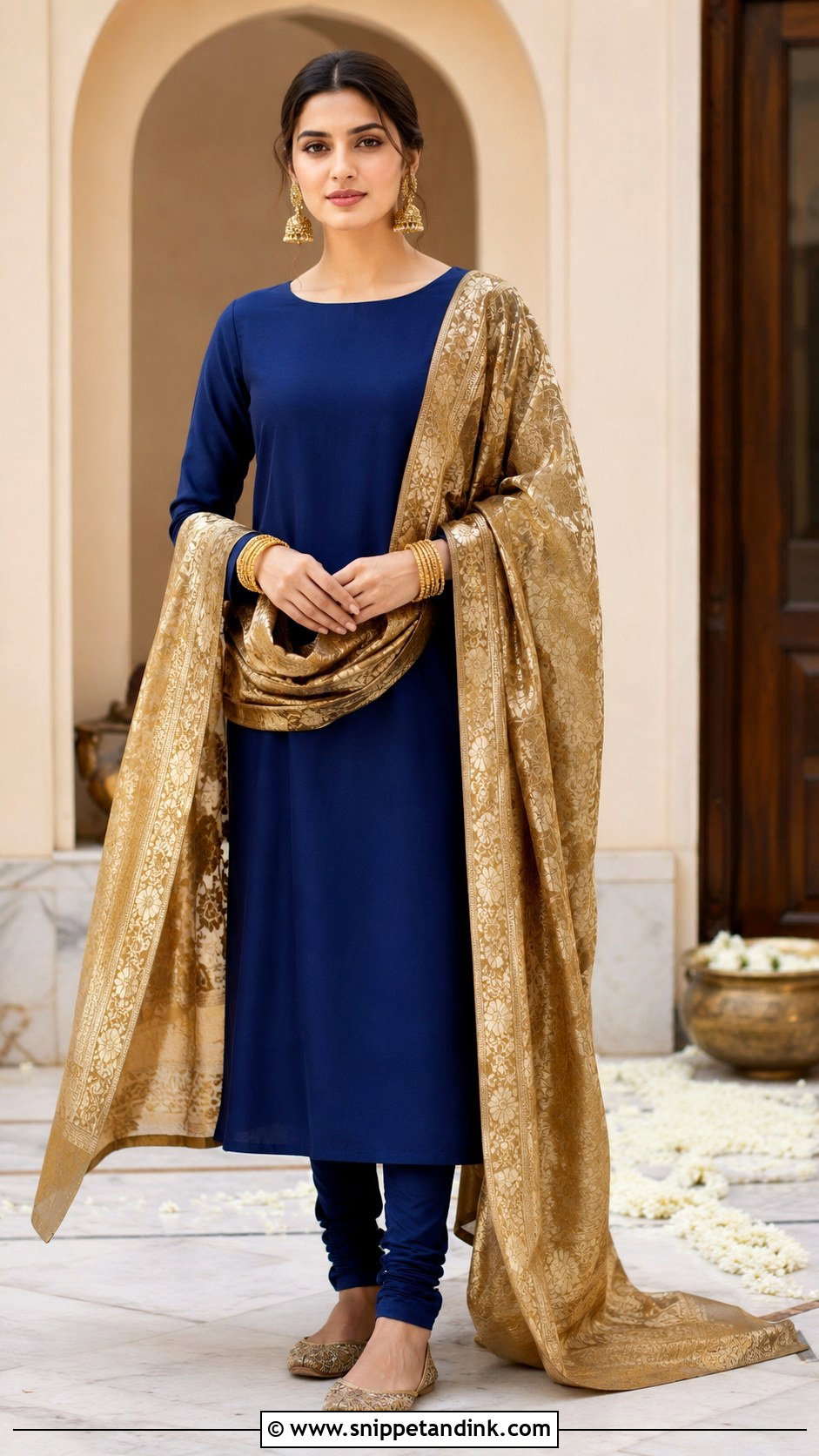
Churidar bottoms are fitted and bunched at the ankle, which balances a rich dupatta and keeps the whole outfit graceful. Wear them with a long plain kurta in the same colour, then add a Banarasi weave, zari borders or embroidered motifs. Get the churidar length right: it should be long enough to bunch, otherwise it looks like leggings. Gold earrings, bangles and embroidered juttis for ceremonies and dinners.
27. Simple Pakistani Suit With Heavy Dupatta
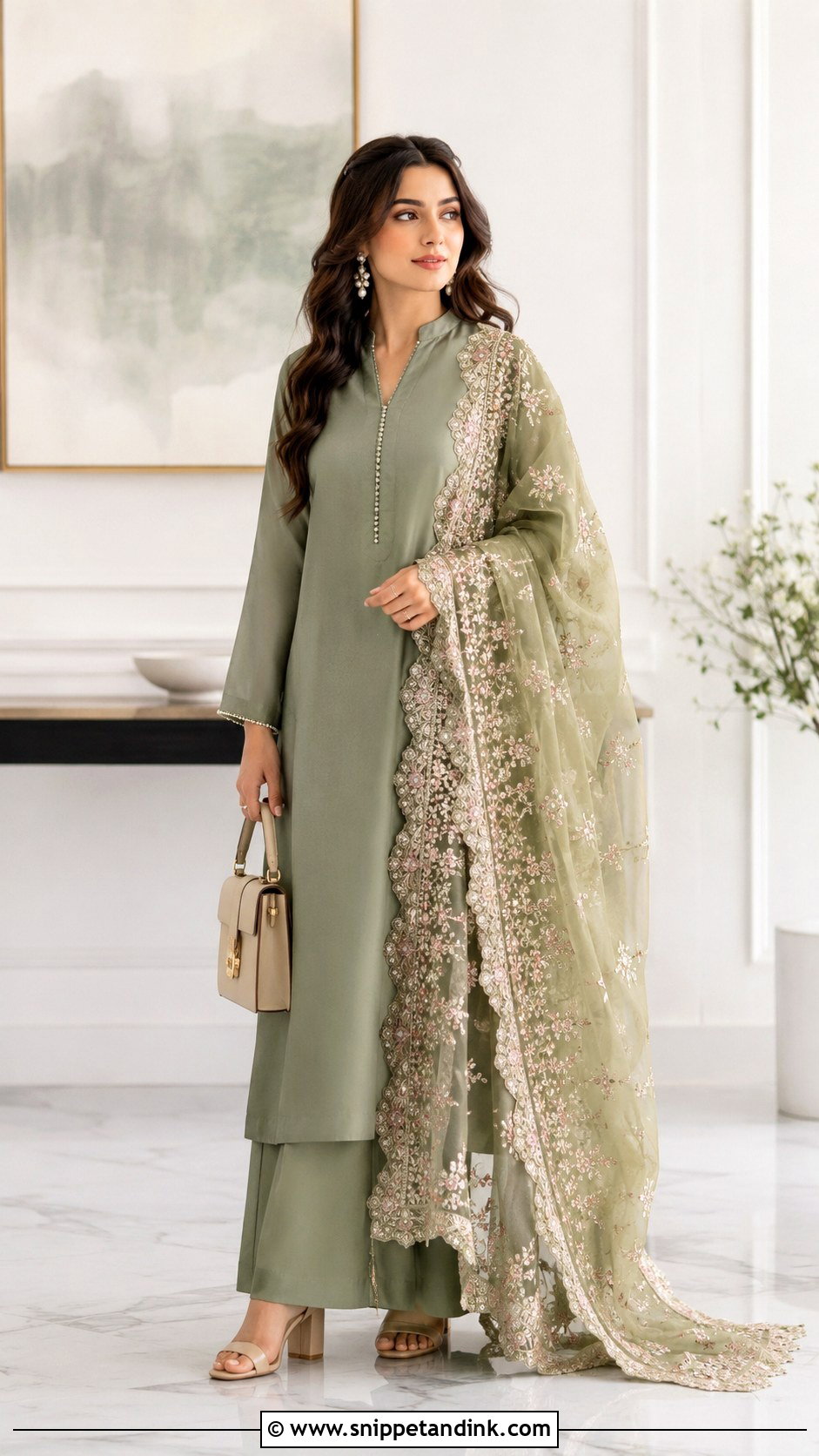
A simple Pakistani suit with a heavy dupatta elongates the body because the kameez is long and straight. Wear it with wide-leg trousers, cigarette pants or a relaxed salwar. Keep the kameez plain, then add a dupatta with embroidery, lace borders, organza work or thread motifs. Long kameez side slits should sit at the hip bone, high enough to sit down comfortably. Pearl earrings, block heels and a structured bag for formal gatherings.
28. Simple Punjabi Suit With Heavy Dupatta
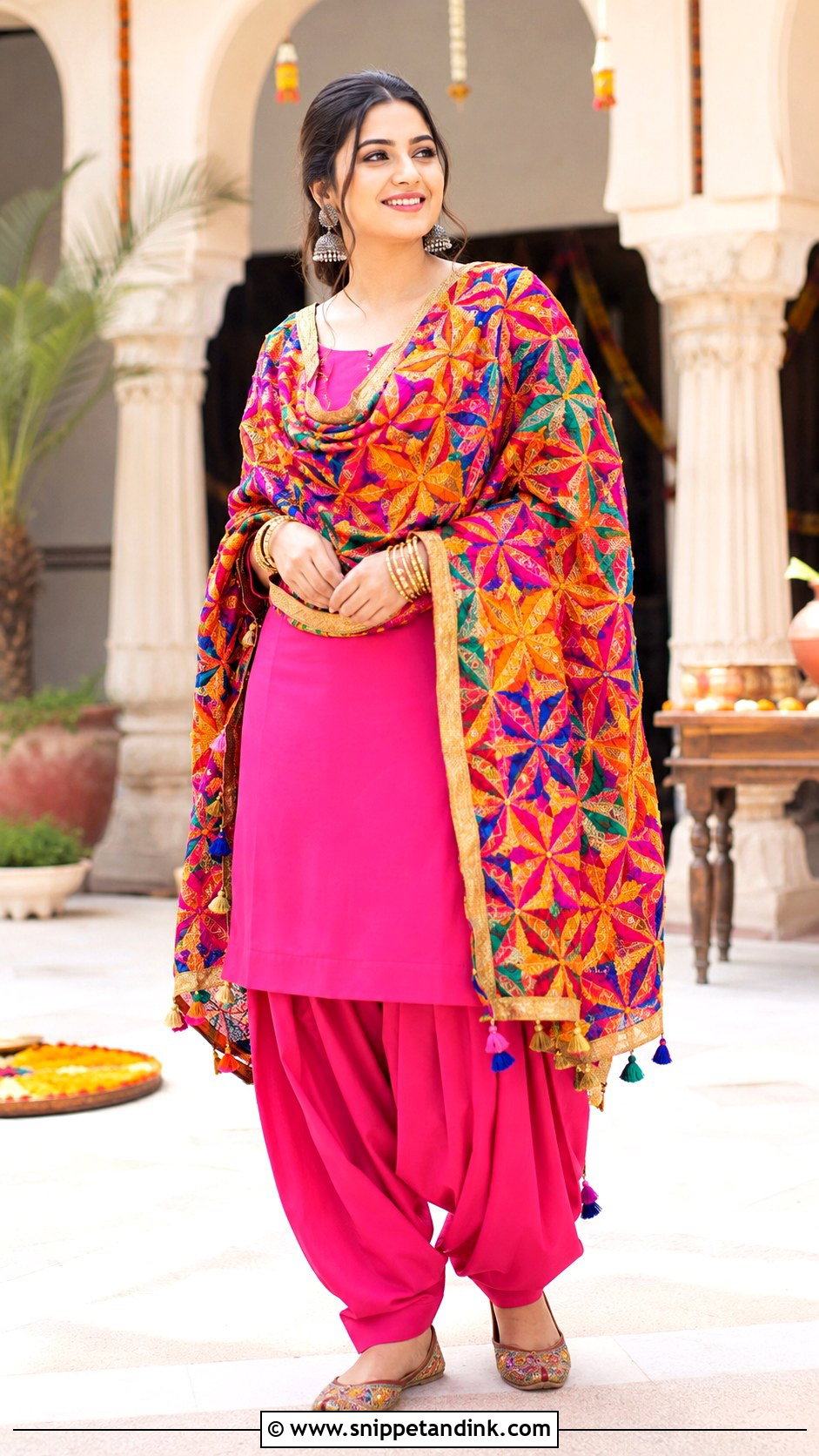
A simple Punjabi suit with a heavy dupatta is all about colour and comfort. A plain kurta with a salwar or Patiala bottom stays easy to move in, while a phulkari, bandhani, mirror work or embroidered dupatta brings the energy. Patiala salwars use a lot of fabric in pleats, so a light cotton or crepe keeps the bottom from feeling bulky. Yellow, pink, green and orange all suit it. Colourful juttis, bangles and oxidised or gold earrings.
29. Simple Office Suit With Heavy Dupatta
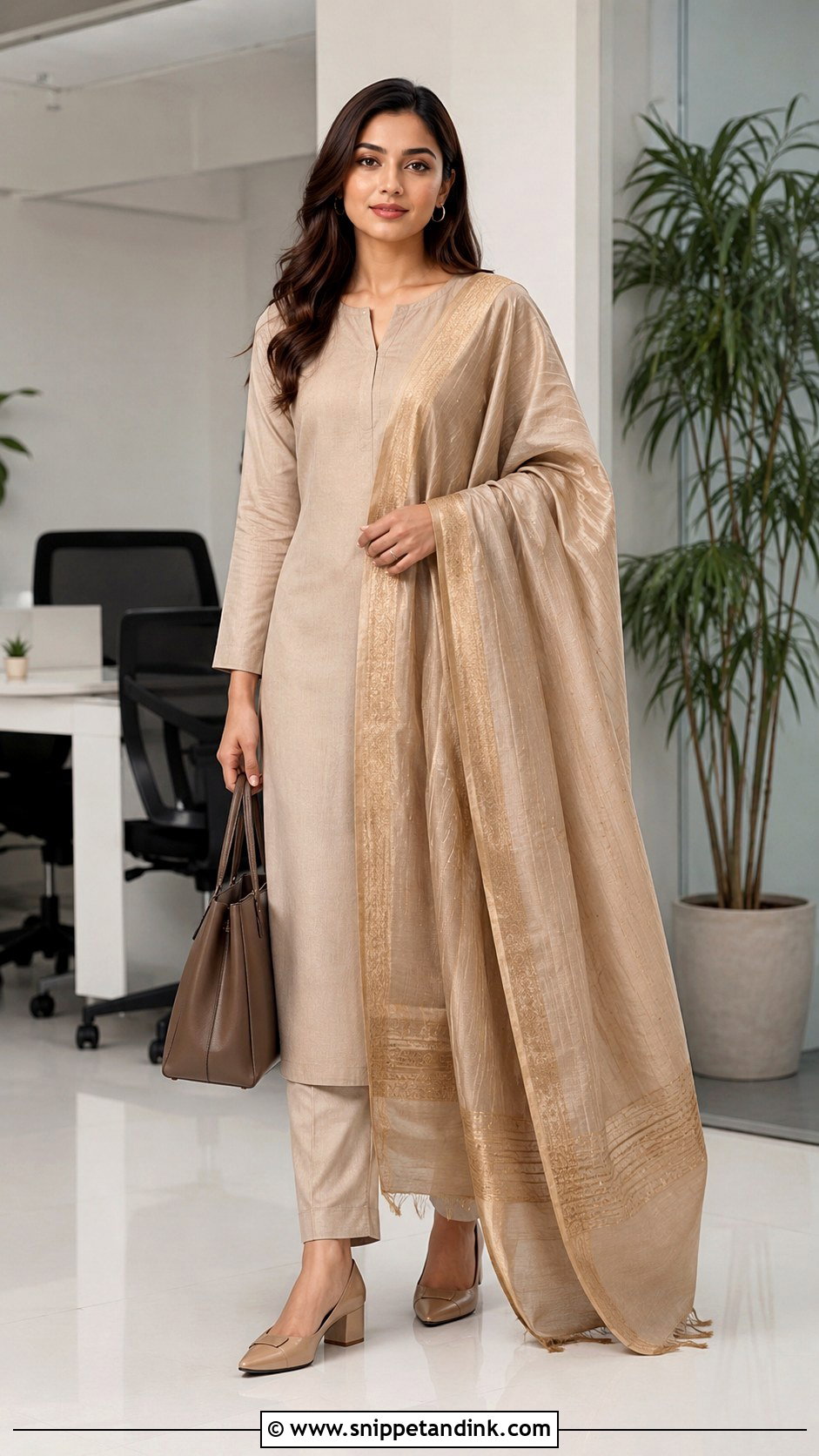
Workplace festive days need restraint. A plain straight kurta in beige, navy, grey, ivory or soft pink with tailored pants is the base. The dupatta should be rich but quiet: woven silk, subtle embroidery, block print or a neat zari border. Drape it over one shoulder and pin it, because you’ll be at a desk and lifting things. Studs or small hoops and comfortable flats or low block heels.
30. Simple Wedding Guest Suit With Heavy Dupatta
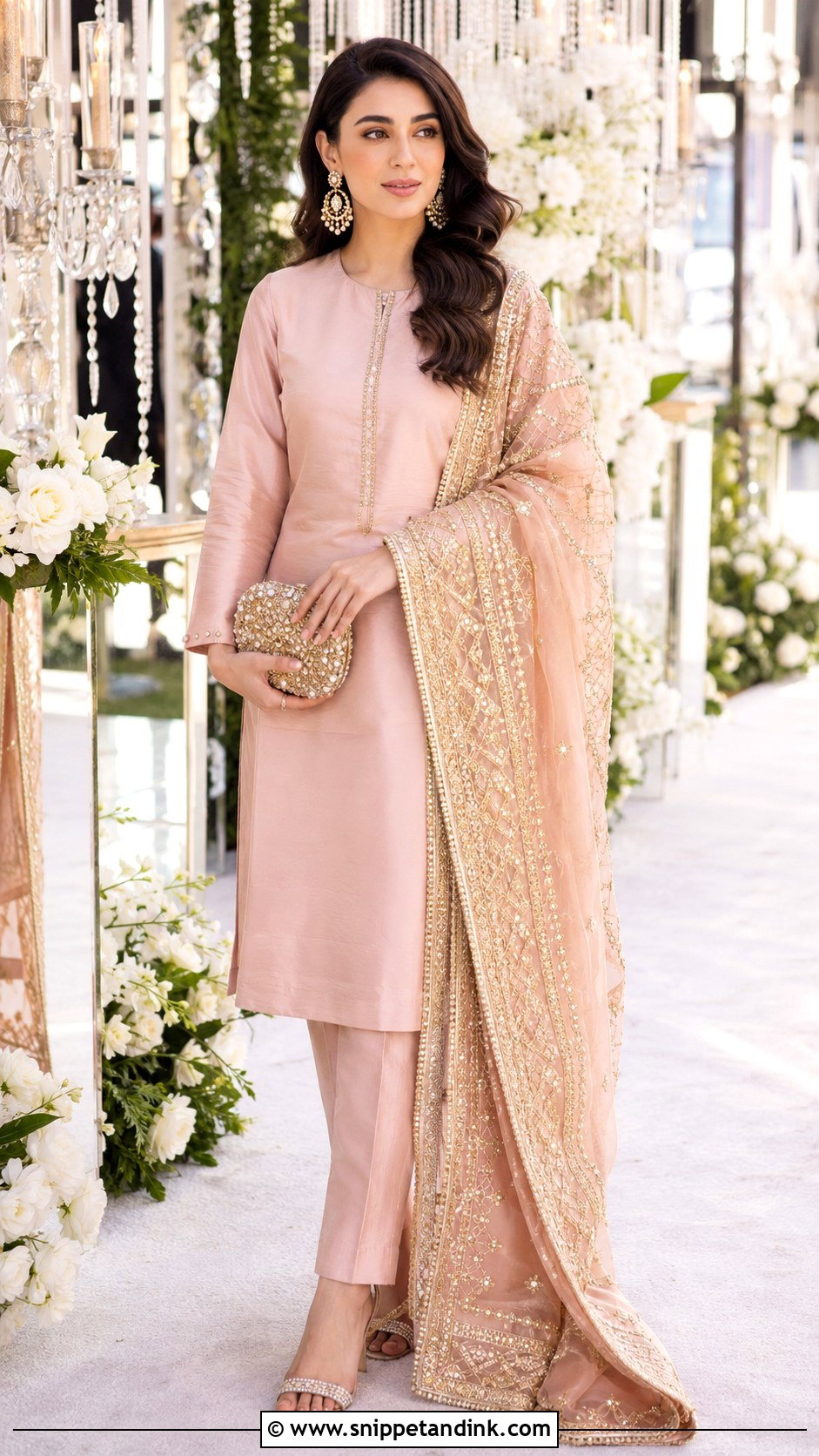
When you’d rather not wear a lehenga to a wedding, this is my alternative. A plain silk, georgette or crepe suit in emerald, blush, navy, maroon or ivory stays comfortable for long hours. Add a statement dupatta with zari, sequins, gota, pearls or Banarasi weaving. Check the bride’s colours if you know them, and stay away from her main shade. Statement earrings, a clutch and dressy heels or juttis for receptions and family ceremonies.
Draping So the Dupatta Stays Put Through Dinner and Dancing
A heavy dupatta that keeps slipping ruins an evening. I pin every one before a guest leaves the house, using small safety pins in a shade close to the fabric. Pins go through the dupatta and the kurta’s shoulder seam, never through the embroidery itself, because that’s where threads pull.
- One shoulder, pinned: the easiest and most modern. Best for straight suits and office functions.
- Both shoulders, open at the front: shows the full border and suits ceremonies and photos with family.
- Cape style, across the back with ends over the arms: keeps your hands free for eating and works well with Anarkalis.
- Over the head for religious ceremonies: pin it to your hair at the crown with a bobby pin so it doesn’t slide back every time you bow.
Zari, Velvet and Mirror Work Once the Party’s Over
Heavy dupattas are usually the most valuable piece in the outfit, and they’re also the easiest to damage in storage. Zari tarnishes with moisture and air, so I wrap zari and gota pieces in soft muslin or old cotton, never in plastic, which traps damp. Refold them every few months along different lines, since a permanent fold eventually cracks metallic thread.
Velvet hates being crushed, so roll it rather than folding. Mirror work should have a layer of tissue between folds so the mirrors don’t scratch each other. Iron any embroidered dupatta on the reverse with a cotton cloth on top, and always dry clean anything with phulkari, bandhani or metallic work.
Three Plain Suits Can Carry a Whole Wedding Season
The beauty of this approach is how far it stretches. A white suit is classic with Banarasi silk, festive with phulkari and modern with organza. A black suit turns dramatic with mirror work, zari or sequins. Keep the suit clean, let the dupatta lead, and choose accessories that support it instead of competing. Buy a few well-cut plain suits in ivory, black and one colour you love, then build the wardrobe through dupattas.
You'll Like These Ideas:



Leave a Reply