
Red has always belonged to the Punjabi bride, and a suit lets her wear it with real freedom of movement. A Patiala, an Anarkali, a sharara, a gharara and a straight cut each create a different mood, and the same red can feel festive, regal or understated depending on the embroidery. What turns a good suit into a bridal one is everything around it: the dupatta, Punjabi juttis, the chooda and kaleere, and jewellery chosen to suit the neckline. I’d also think hard about the venue and the ceremony itself, since a gurdwara morning and a banquet evening ask very different things of the same outfit. Here are twenty red Punjabi bridal suits, with notes on what to check in each.
Barefoot, Head Covered and Seated on the Floor at the Anand Karaj
If your wedding is in a gurdwara, the ceremony sets the rules for the outfit. Shoes come off at the entrance, your head stays covered the whole time, and you sit on the floor in front of the Guru Granth Sahib before walking the four laavan behind your groom. I fit Punjabi bridal suits with all of that in mind.
- Check the hem barefoot. A salwar or Anarkali hemmed for juttis with a heel can drag and trip you once the shoes are off.
- Choose a head dupatta that grips the hair well, since it must stay up through bowing, sitting and standing.
- Allow enough room at the knee and hip to sit cross-legged without the kameez pulling.
- Keep the neckline and sleeves modest enough to sit comfortably with your family’s expectations; ask if you’re unsure.
The laavan mean standing up and sitting down four times in front of everyone. Practise it at home in the finished outfit, including standing without using your hands. Long kaleere also swing as you rise, so ask whoever ties them to keep them clear of the dupatta border.
1. Red Punjabi Bridal Patiala Suit
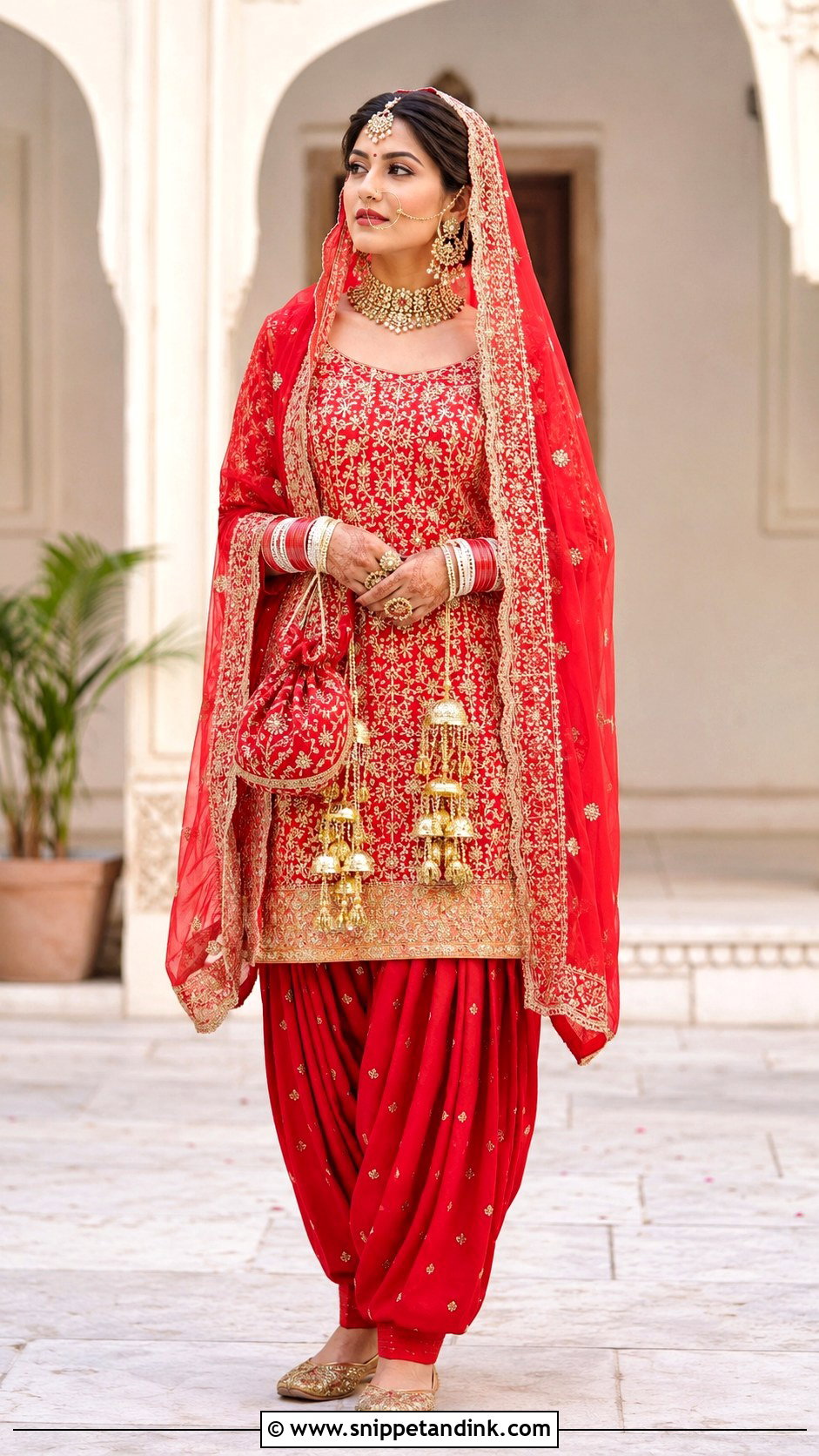
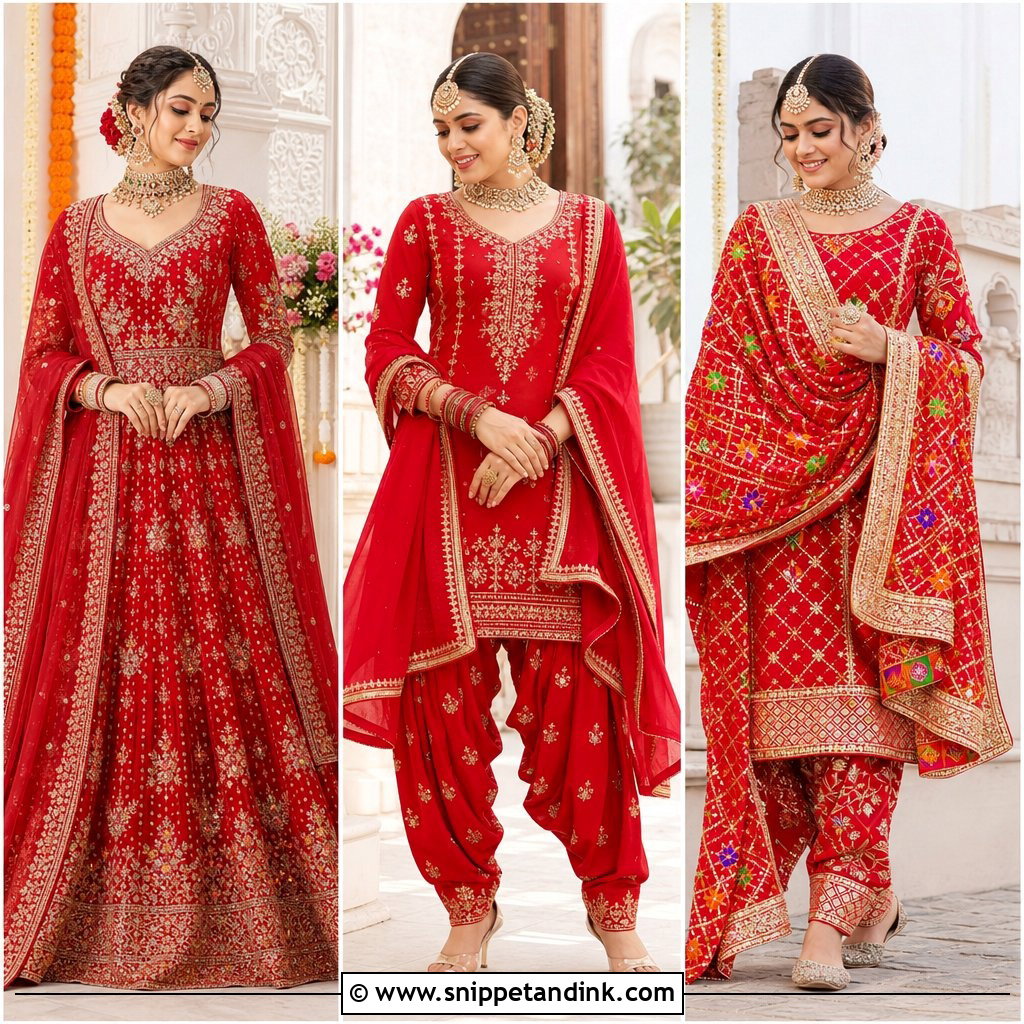
Pleats are the whole point of a red Patiala suit, and the fabric decides whether they fall or puff. Silk and satin drape into soft folds; stiff cotton silk can balloon at the hip. A fitted knee-length kameez in zari, dabka or fine sequins sits over them, and a red net dupatta with a wide border goes over the head and across one shoulder. Gold juttis, a kundan necklace, matching earrings, a small nath, red-and-ivory chooda and kaleere complete it. I’d keep the hair in a sleek bun or braid. With that much volume below, a big loose hairstyle makes the whole outfit look busy.
2. Red Punjabi Bridal Anarkali Suit
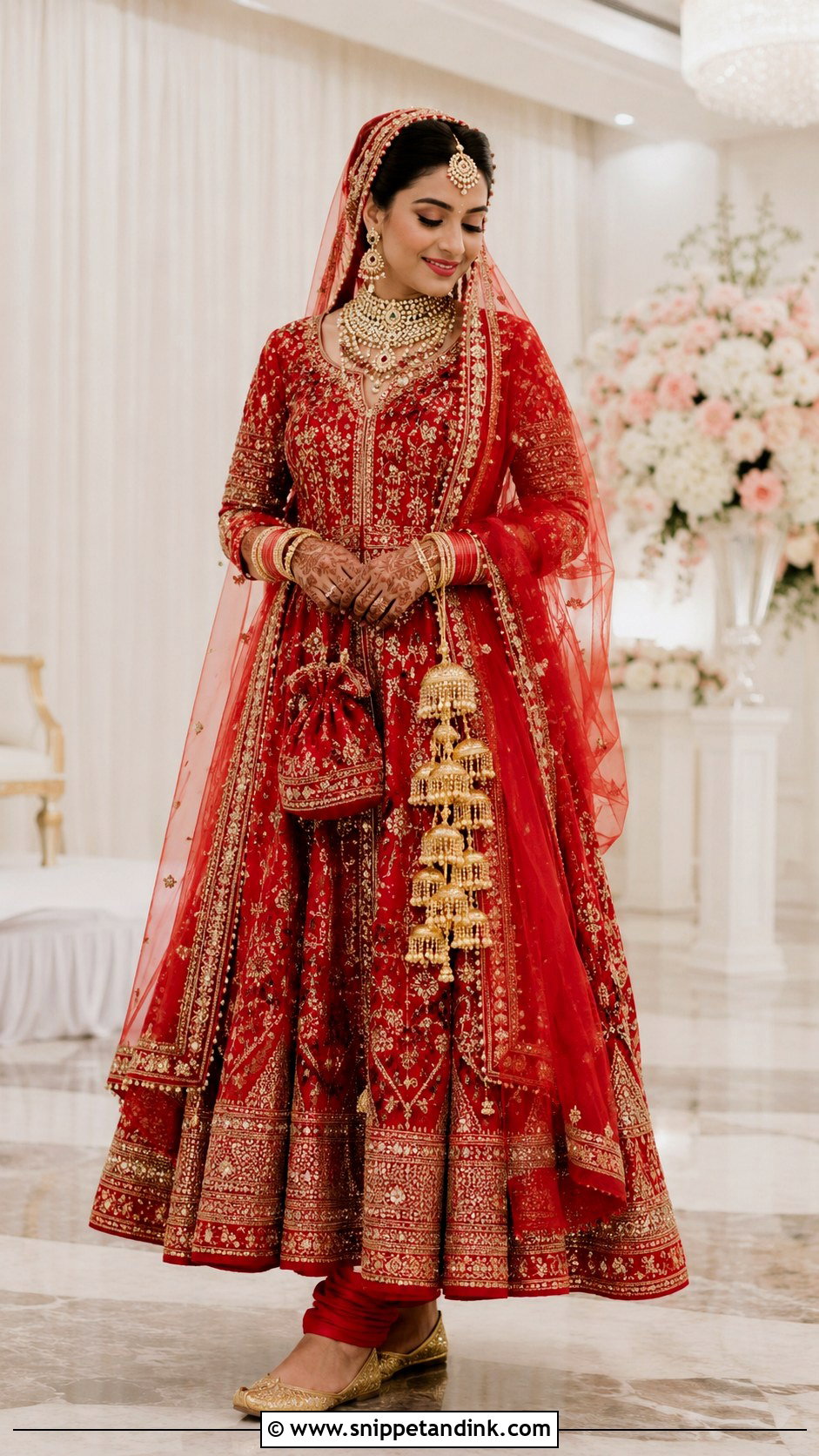
An Anarkali gives you the swirl of a lehenga in a single garment. The fitted bodice and waist need care: if the waist seam sits even slightly too low, the flare starts at the hip and you lose height. A floor-length red Anarkali with zardozi at the neckline, sleeves and hem, worn over narrow churidar and red or gold juttis, stays balanced. A sheer organza dupatta with scattered motifs covers the head without hiding the bodice. A layered kundan necklace, statement earrings, chooda and slim kaleere are enough. The skirt already has plenty of volume, so keep the potli small and the bun low.
3. Red Punjabi Bridal Sharara Suit
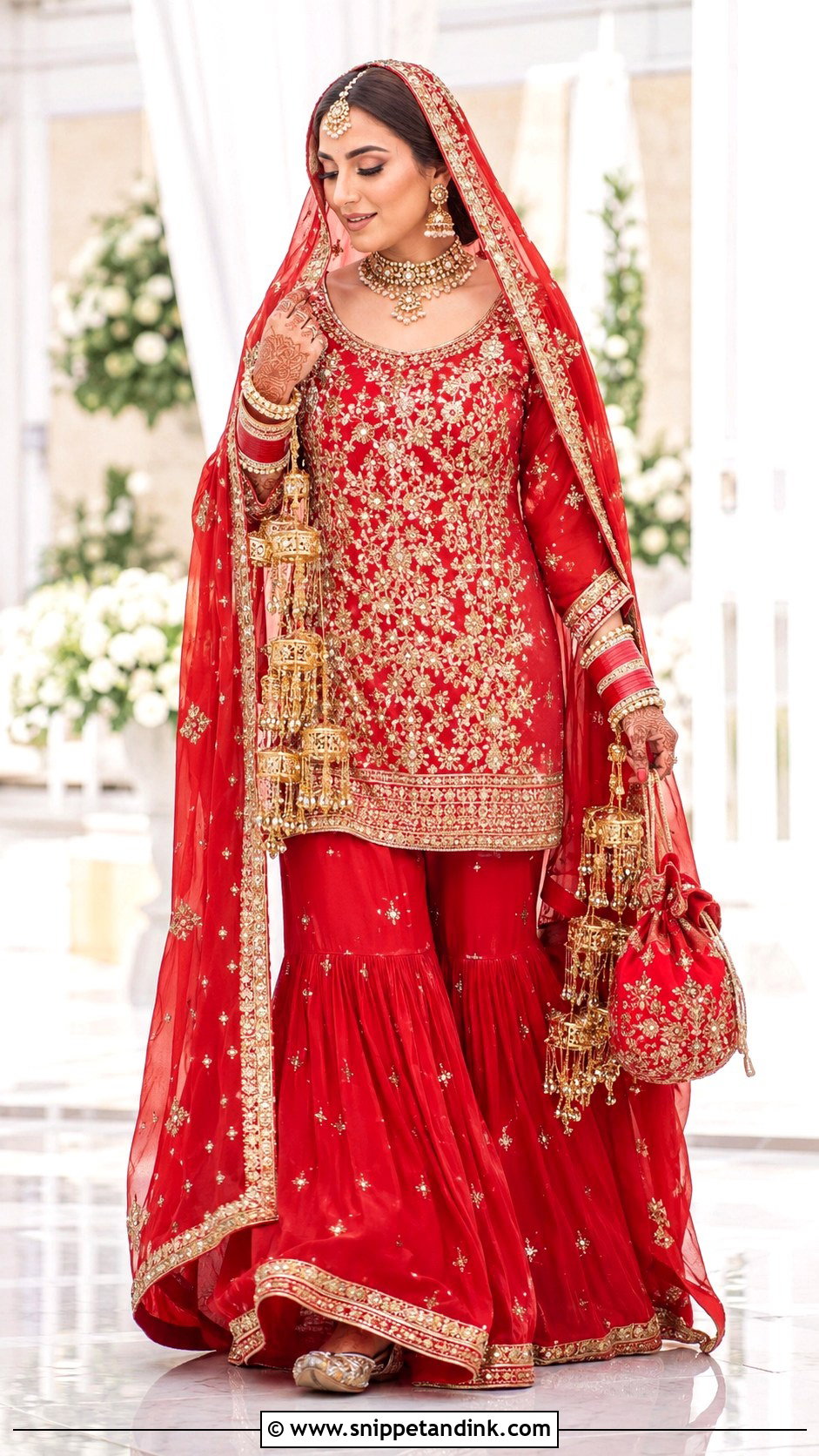
A red sharara outfit pairs a short embroidered kameez with wide pants that flare from the knee, and it moves beautifully during the bhangra. The kameez hem needs a clear, defined edge with concentrated gold work, otherwise the top and sharara blur together. Keep the pant motifs light and save the heavier border for near the floor. A net or organza dupatta over the head and across the body suits it, along with gold jhumkas, a choker, chooda, kaleere and embellished juttis. Leave the waist plain. Belts and hip chains fight the line where the kameez meets the flare.
4. Red Punjabi Bridal Gharara Suit
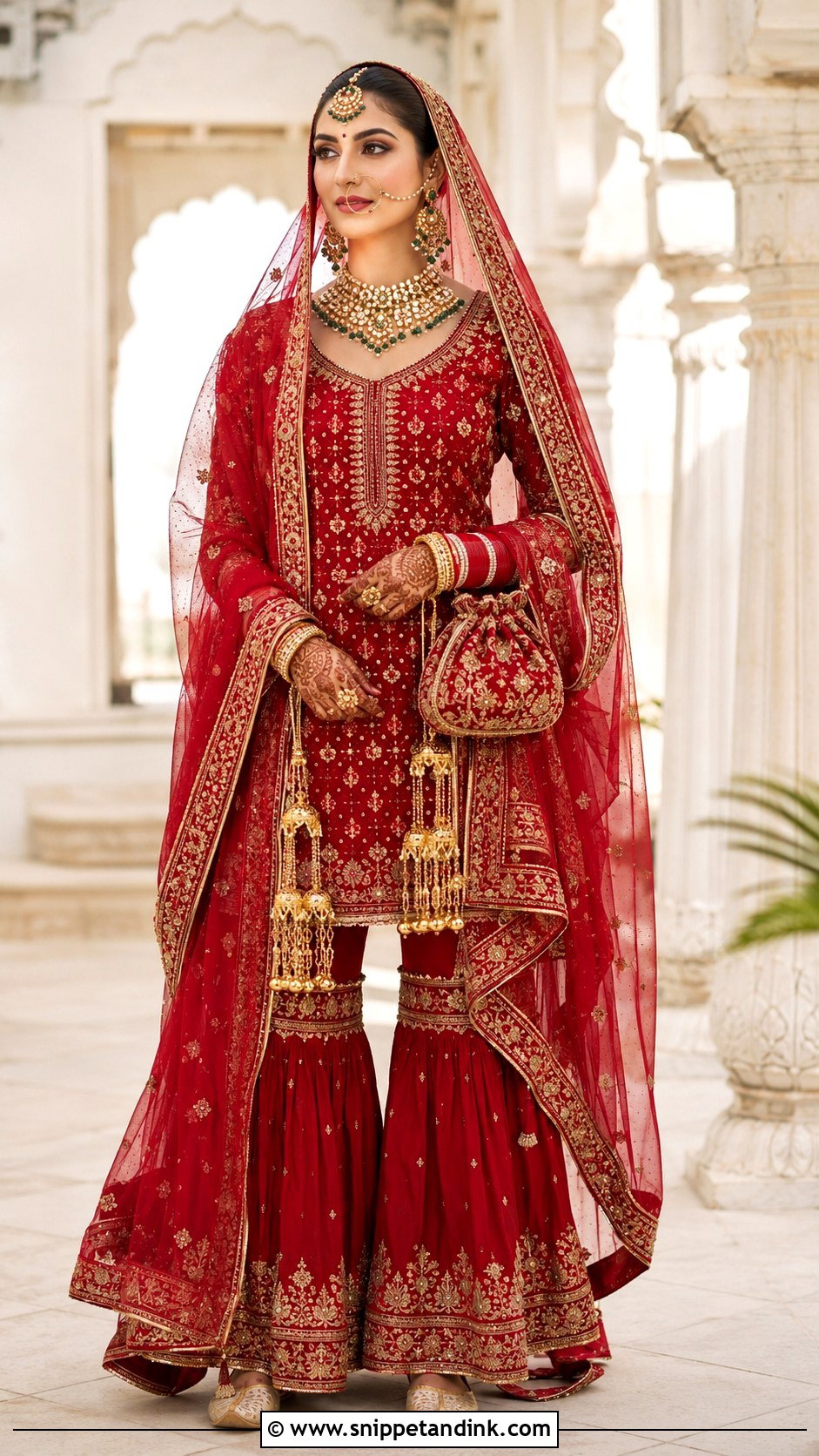
The gharara is fitted above the knee, then breaks into a flare at an embellished knee band. That band is the detail people notice, and it is also the first thing to land in the wrong place if the trousers are cut too long. Pair the gharara with a mid-thigh red kameez in gold threadwork and pearls, and a matching bordered dupatta over the head. Pointed gold juttis that peep out under the cropped flare, a kundan choker, long earrings, chooda, kaleere and a delicate forehead piece finish it. I always set the length with the wedding shoes on, so the knee band sits right at the knee.
5. Red Punjabi Bridal Silk Suit
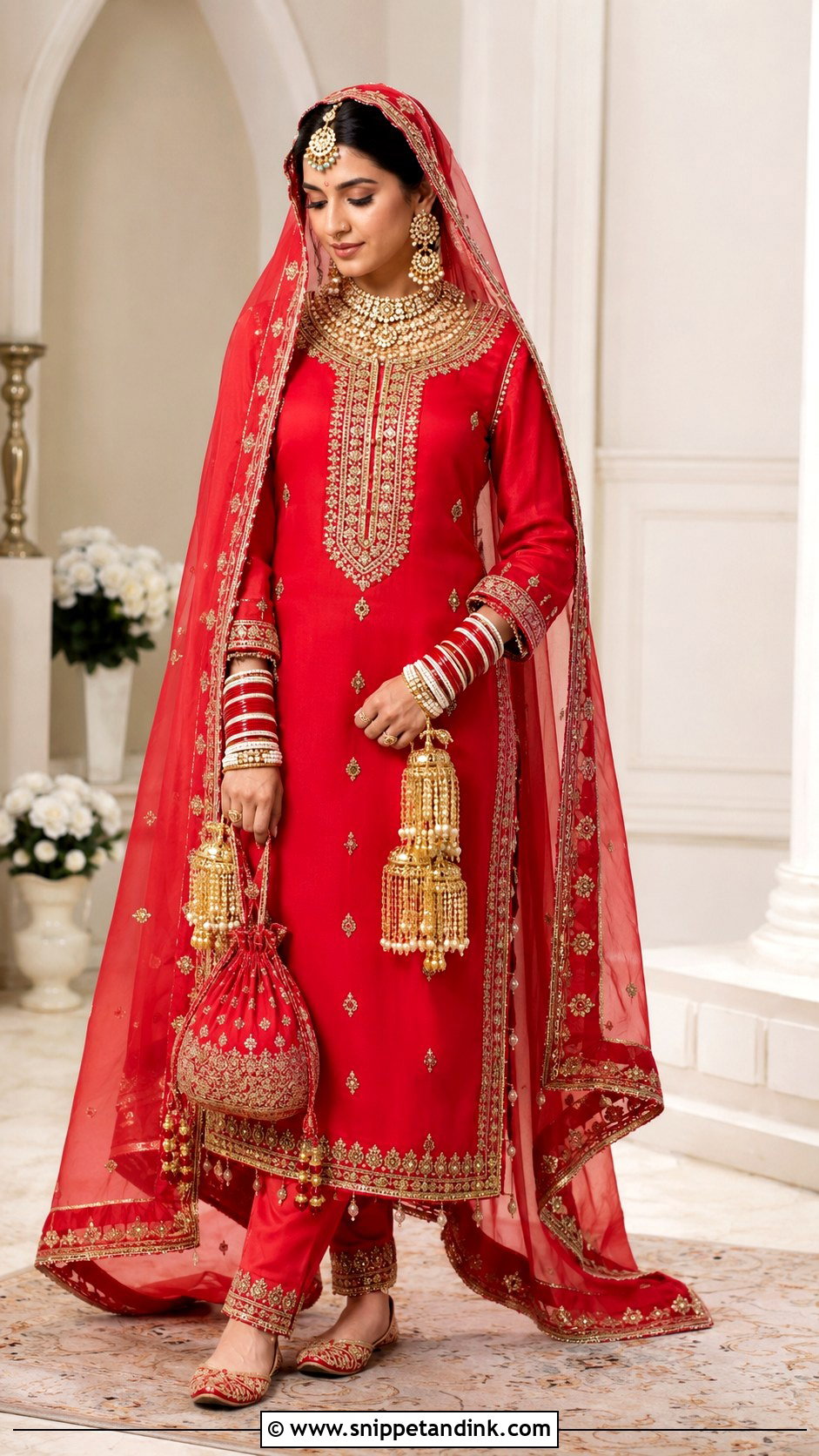
Silk lets embroidery read cleanly because the background is smooth. A long straight kameez in rich red silk with antique gold work at the neckline, cuffs, slits and hem, over salwar or slim trousers, looks composed. A tissue or organza dupatta with a broad border adds a lighter surface. Gold juttis, a structured potli and bridal bangles handle the lower half. I’d pair one short necklace with medium earrings rather than layering several heavy pieces, because silk shows the dents and pulls from heavy jewellery at the neckline. A centre-parted low bun under a well-secured dupatta keeps the whole look calm.
6. Red Punjabi Bridal Velvet Suit
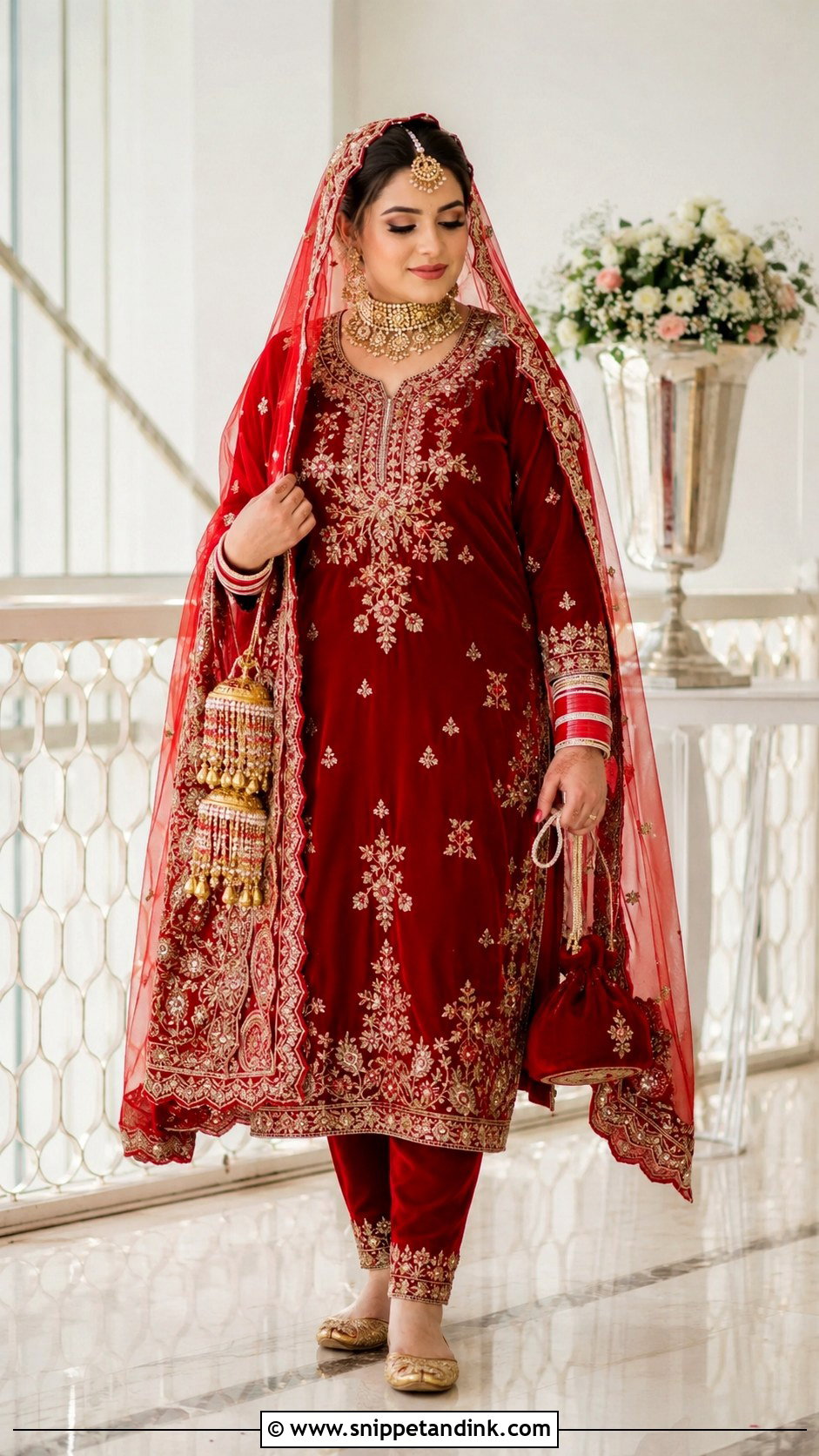
Velvet is a winter-only choice for me. In a warm hall it gets hot fast. A long velvet kameez with antique gold work at the neckline, cuffs, borders and side openings, worn with straight pants or a lightly gathered salwar, looks rich and holds its shape. Keep the embellishment to those edges, since velvet already has weight. A net dupatta over the head is lighter and grips better than velvet would. Closed juttis, a velvet potli, kundan earrings, a choker, chooda and medium kaleere suit it. Velvet crushes when you sit for a long time, so steam it from the reverse on the morning and avoid sitting on the back hem in the car.
7. Red Punjabi Bridal Phulkari Suit
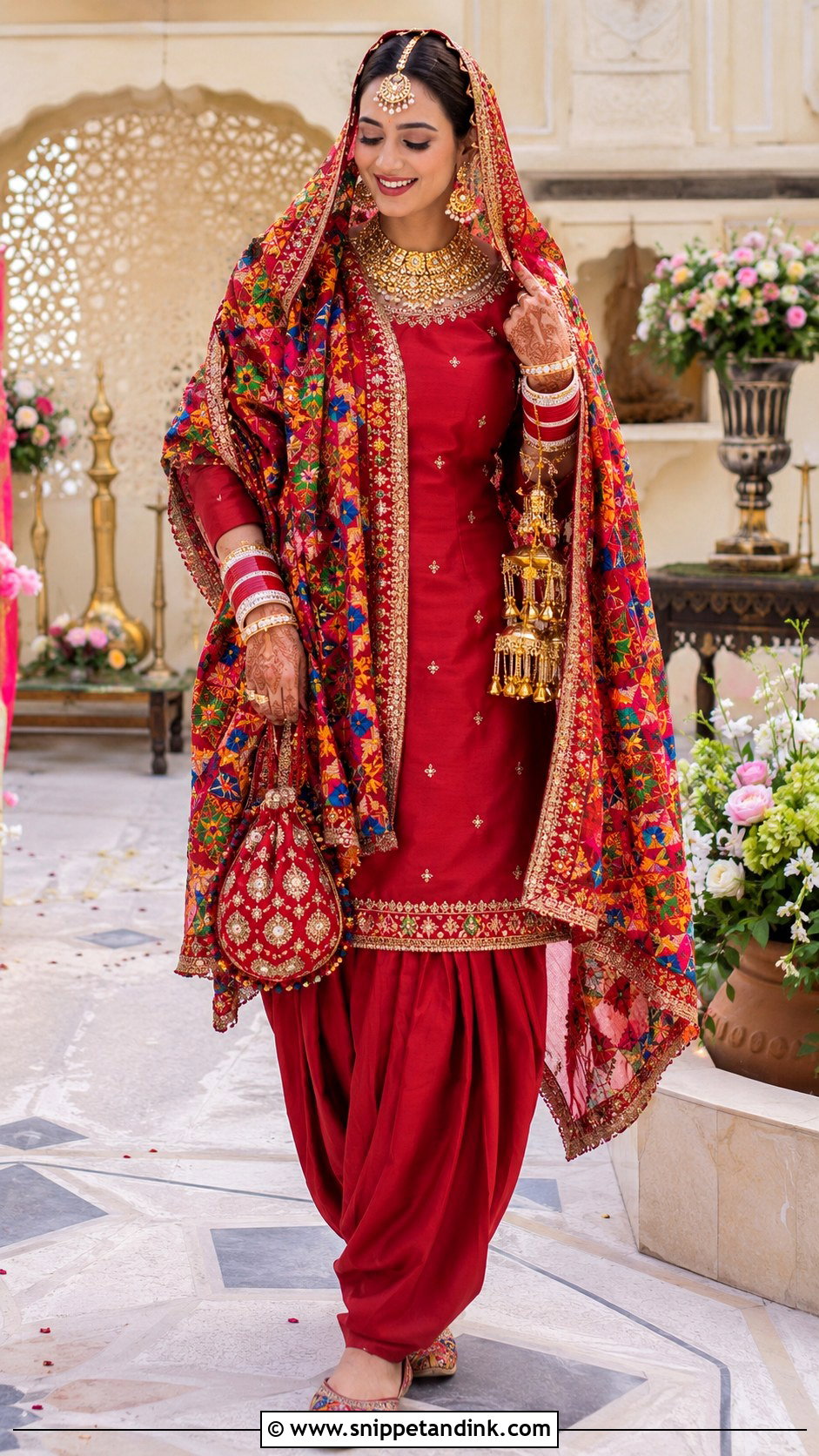
Phulkari is the embroidery most tied to Punjabi bridal tradition, and a red phulkari bridal suit can carry it on the suit or on the dupatta. Not both. Start with a red silk or cotton-silk kameez and a well-pleated Patiala salwar. If the phulkari dupatta is heavily worked, keep the kameez simpler. Juttis that repeat one or two thread colours, gold jhumkas, a medium necklace, chooda, kaleere and a fabric potli suit it. A long braid with a few small hair accessories fits the mood. The colourful threads tie it to Punjab more directly than any other option here.
8. Red Punjabi Bridal Gota Patti Suit
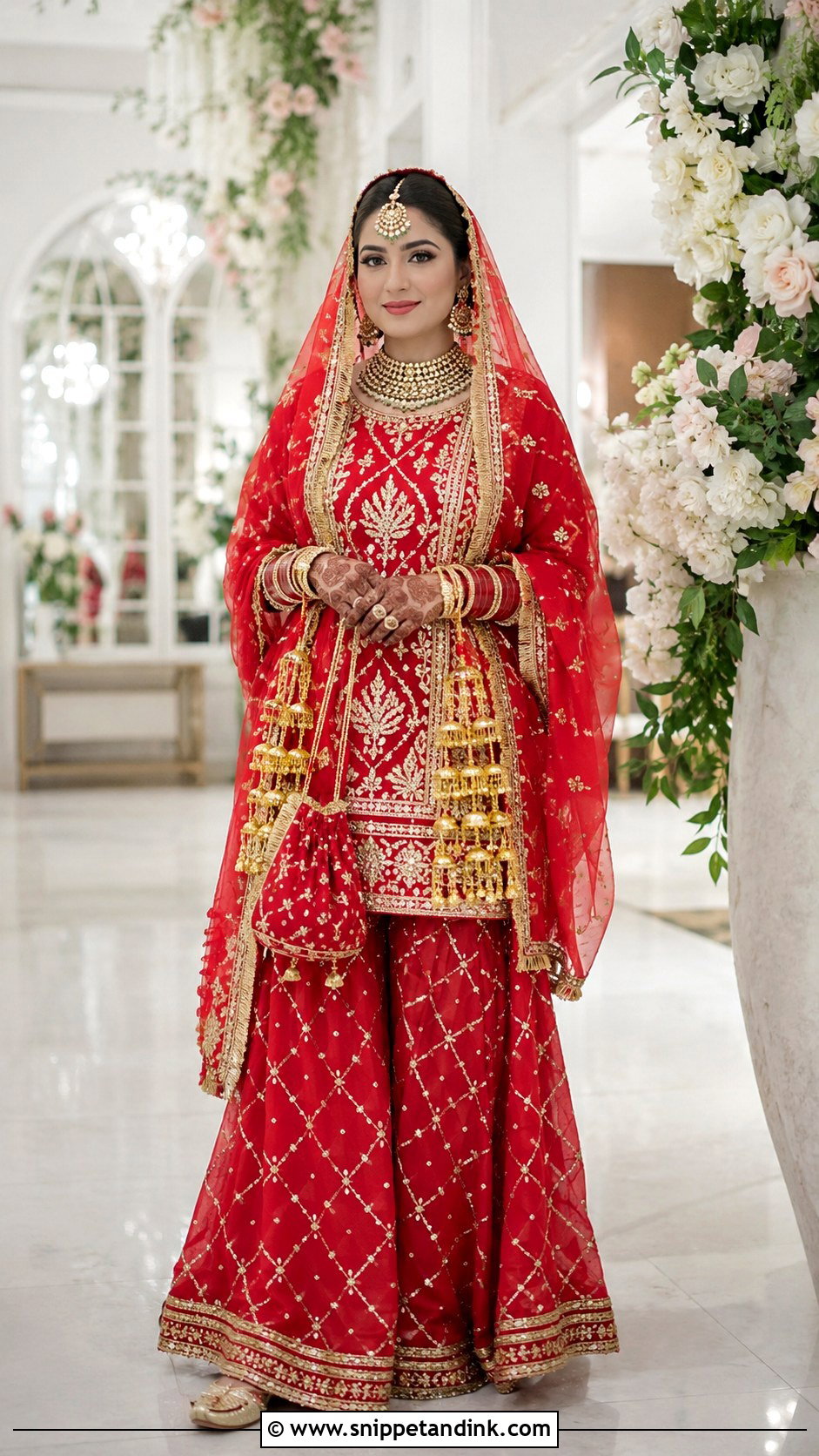
Gota patti is metallic ribbon appliqué, and it gives shine without the weight of stonework. Gold or silver-gold gota at the neckline, sleeves and hem of a red kameez, over a sharara, Patiala or straight pants with smaller matching motifs, keeps it festive. A light chiffon dupatta with a bold gota border is easy to wear over the head. Metallic juttis, a gota potli, a kundan necklace, earrings, chooda and cascading kaleere complete it. Match the jewellery’s metal to the gota, as yellow gold beside silvery gota looks accidental. With that much reflective trim, I’d hold the outfit to red and gold and add nothing else.
9. Red Punjabi Bridal Zardozi Suit
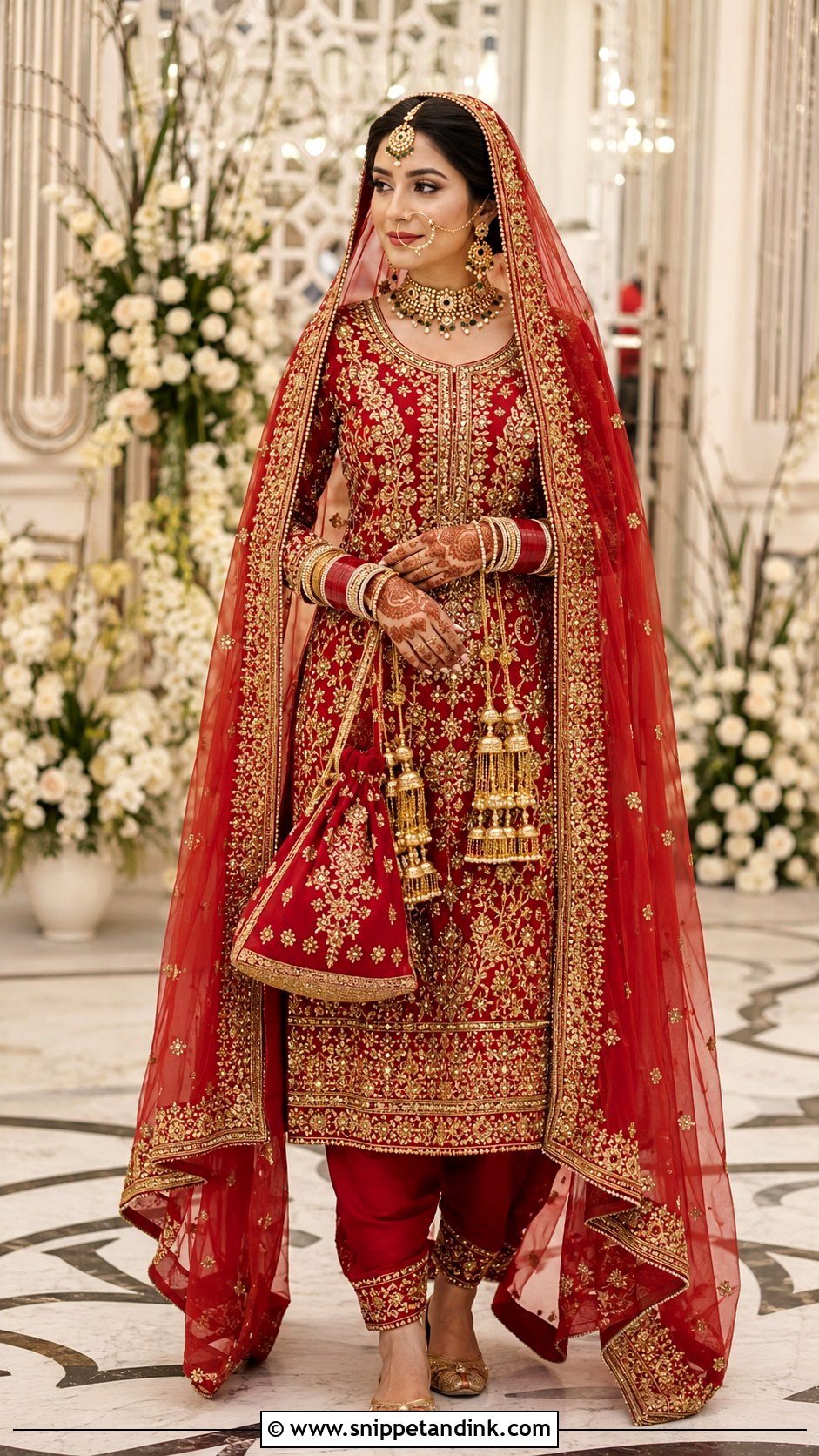
Zardozi is raised metal embroidery, and it can turn a plain red silhouette opulent. It is also heavy. I check where the weight lands at the fitting, especially on the shoulders and sleeves, because dense work there drags the kameez backward and the neckline starts to choke. A straight or gently flared kameez makes a stable base; pair it with a red churidar or narrow salwar so the surface stays the focus. A sheer net dupatta with a zardozi frame covers the head and leaves the neckline visible. Gold juttis, a structured potli, a layered necklace, earrings, chooda, kaleere and a small nath finish it.
10. Red Punjabi Bridal Mirror Work Suit
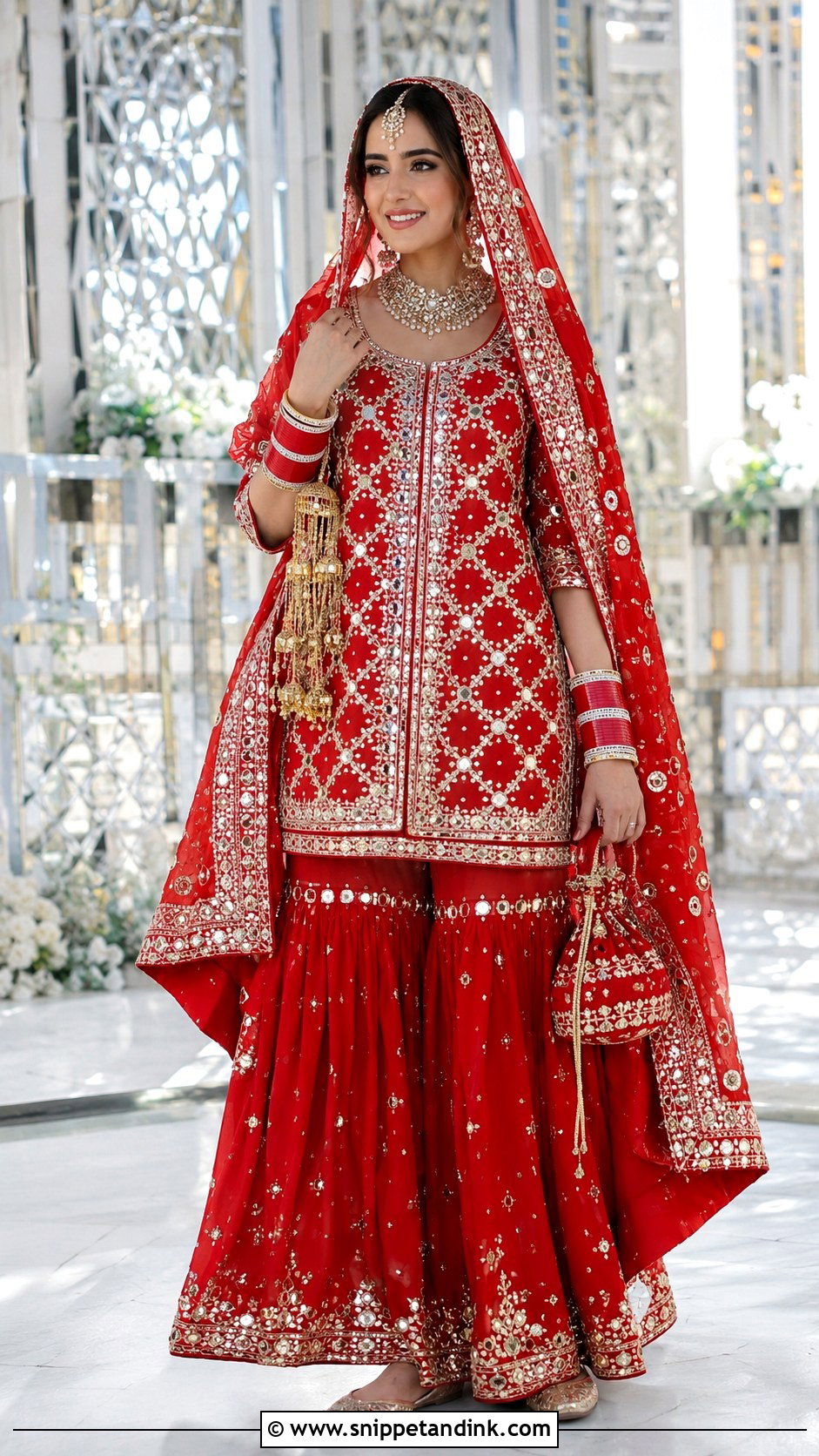
Mirrors look best scattered between thread embroidery, not covering every inch. A short or mid-length kameez with mirror accents goes with a wide red sharara or a Patiala salwar with a simpler border. A red chiffon dupatta with scattered mirrors ties the pieces together and is light enough to layer. Metallic juttis, a compact potli, chooda, kaleere and clear-stone or kundan jewellery suit it. Keep the necklace close to the neckline so it doesn’t sit on top of the mirrors, where the two rub and scratch. A braided bun gives it a clean background. It brings playful shine to the mehndi night or a daytime wedding.
11. Red Punjabi Bridal Sequin Suit
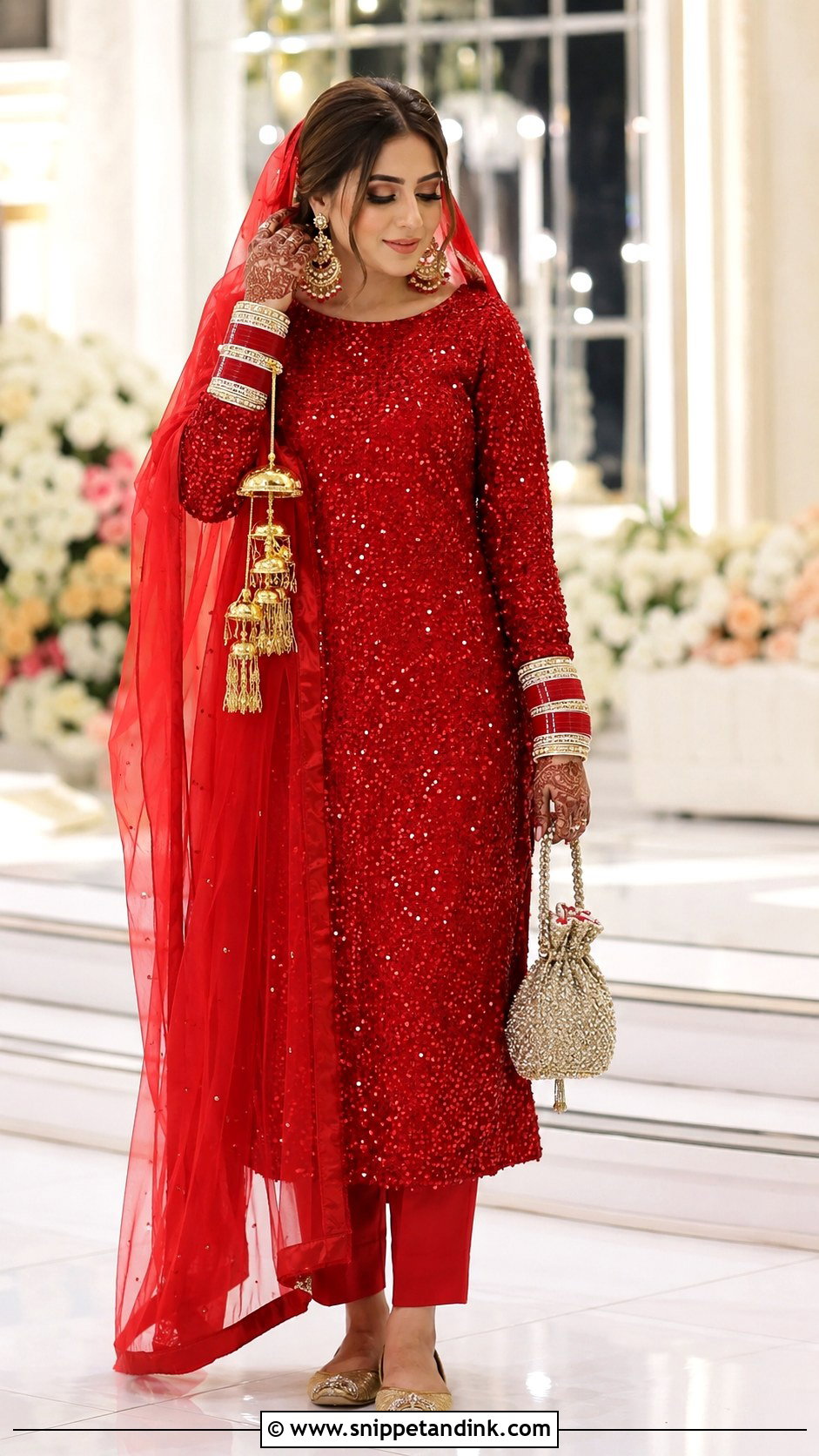
Sequins all over belong to the evening. For a reception, a long kameez in tonal red sequins with fine gold threadwork, over straight pants or a soft sharara, gives plenty of sparkle while staying refined. Tonal is the key word: red sequins on red fabric glow, while silver on red looks like party wear. Keep the dupatta plain red organza with only a narrow sequin border. Gold juttis or low block heels, a crystal potli, statement earrings, chooda and lighter kaleere suit it. Sequinned seams scratch the inner arm, so I ask for a soft lining in the sleeves before anything else.
12. Red Punjabi Bridal Suit With Organza Dupatta
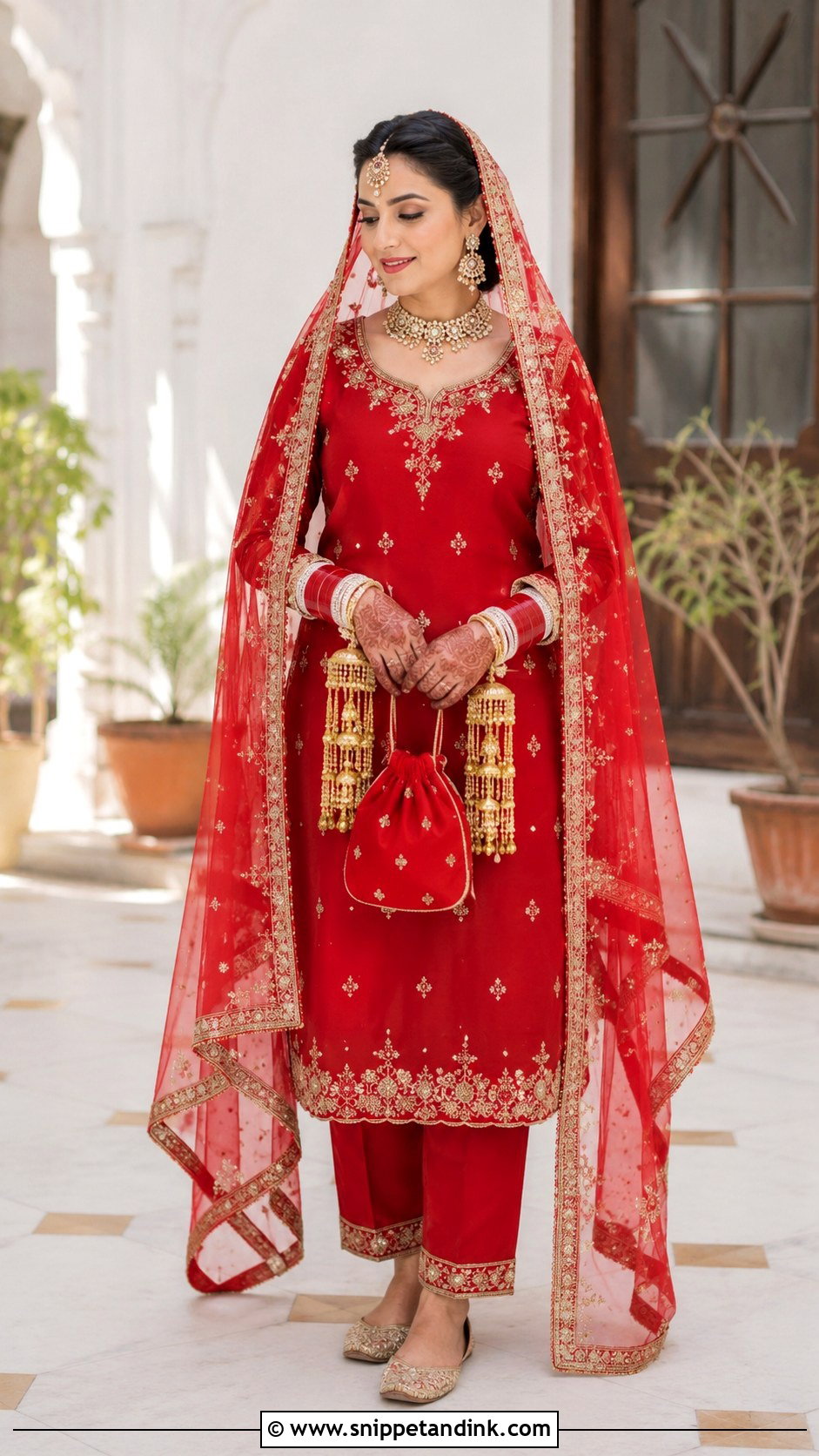
Organza keeps the shape you give it, which makes it the easiest dupatta to drape neatly and the hardest to soften. Build the outfit on a red silk kameez with matching straight pants or a modest Patiala salwar, and choose an organza dupatta wide enough for a full head drape, with embroidered edges and scattered gold motifs. Pin it at the crown and shoulder with a few hidden pins rather than a row of visible ones. Gold juttis, a silk potli, kundan earrings, a coordinated necklace, chooda and kaleere finish it. Keep the suit’s embroidery moderate, or the dupatta border and the kameez fight for attention.
13. Red Punjabi Bridal Suit With Double Dupatta
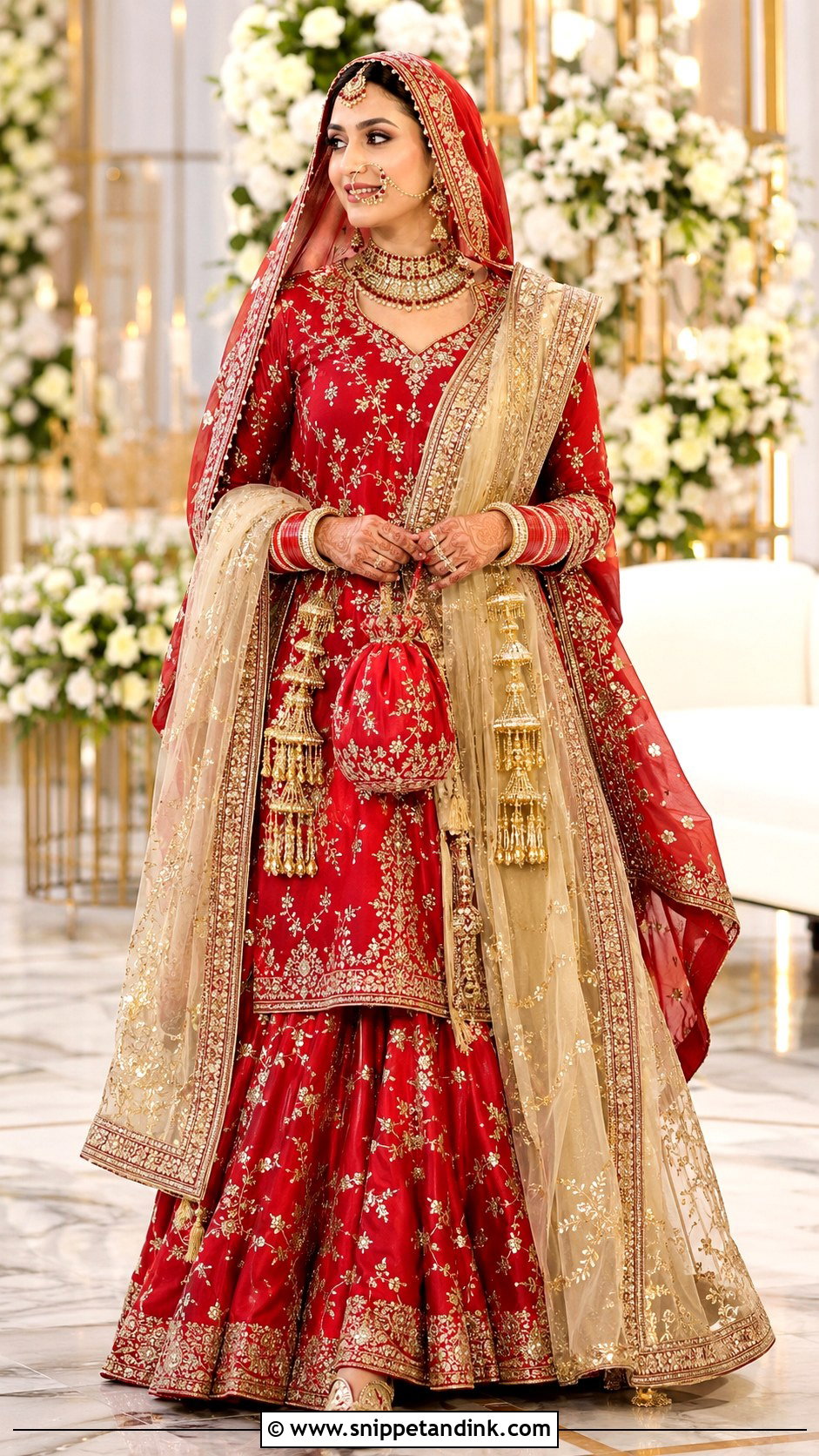
Two dupattas only work when each has a job. On a heavily embroidered red kameez and sharara, the head dupatta should be a light, sheer red that shows the hair and jewellery, and the shoulder dupatta, in red, gold or muted peach, carries the wider border. Embellished juttis, a bridal potli, a kundan choker, longer earrings, chooda, kaleere and a small nath complete it. Set both layers at the final fitting, then sit, walk and turn in them. If the shoulder layer slides every time you raise your arms, it needs a pin through the blouse seam, not another one on top.
14. Maroon Red Punjabi Bridal Suit
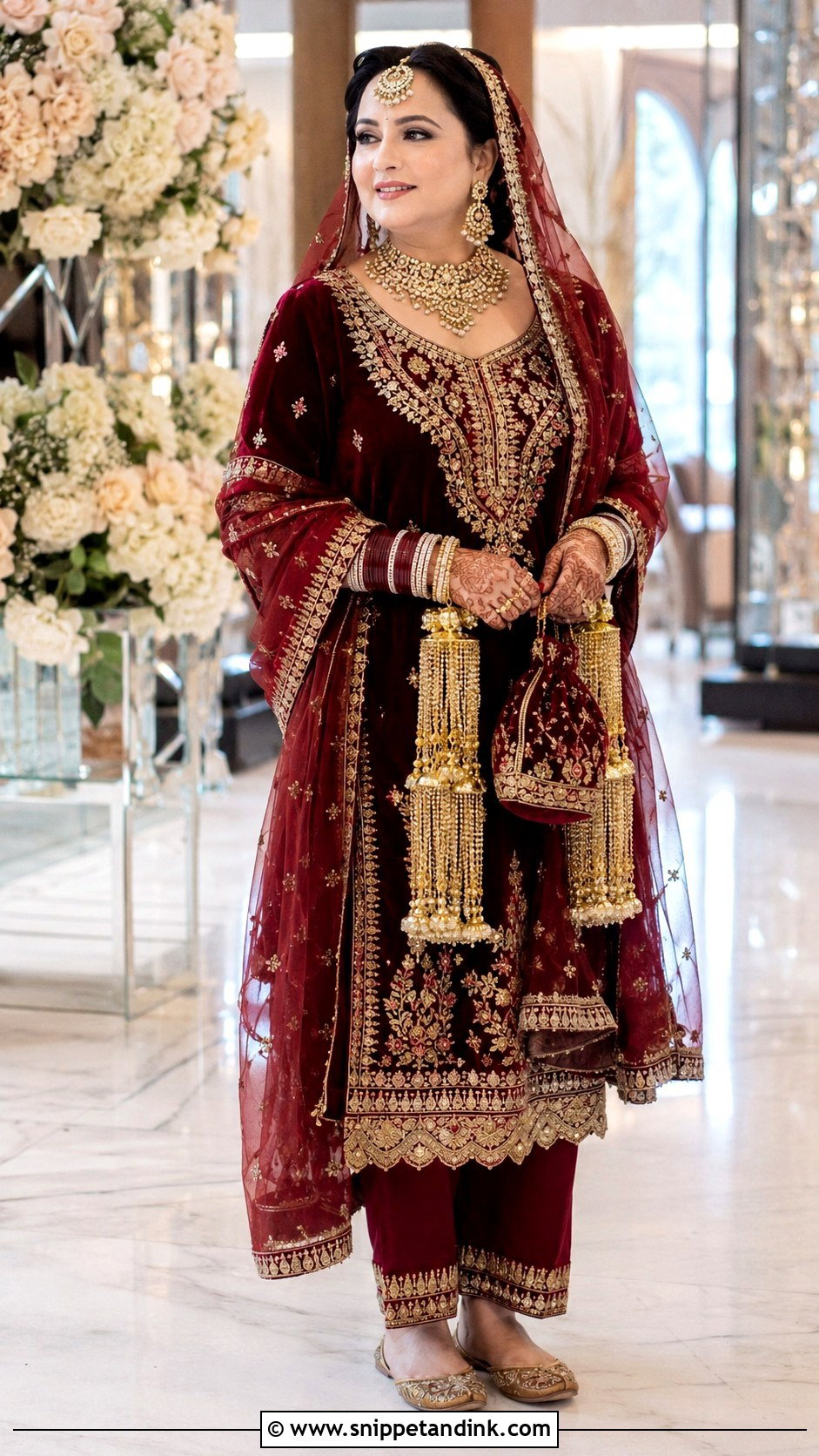
Maroon is the red I suggest when a bride finds scarlet too loud. It takes antique gold and warm ivory naturally. A long silk or velvet kameez with antique gold work, over straight trousers, a churidar or a soft sharara in the same shade, keeps it rich. A maroon net dupatta with a gold border gives a single unbroken colour from head to hem. Antique gold juttis, a matching potli, a choker, earrings, chooda and detailed kaleere suit it. Adding several contrasting colours breaks up the depth. Maroon can look almost brown under dim yellow light, so I’d ask for softly defined eyes and a lip with a little brightness to lift the face.

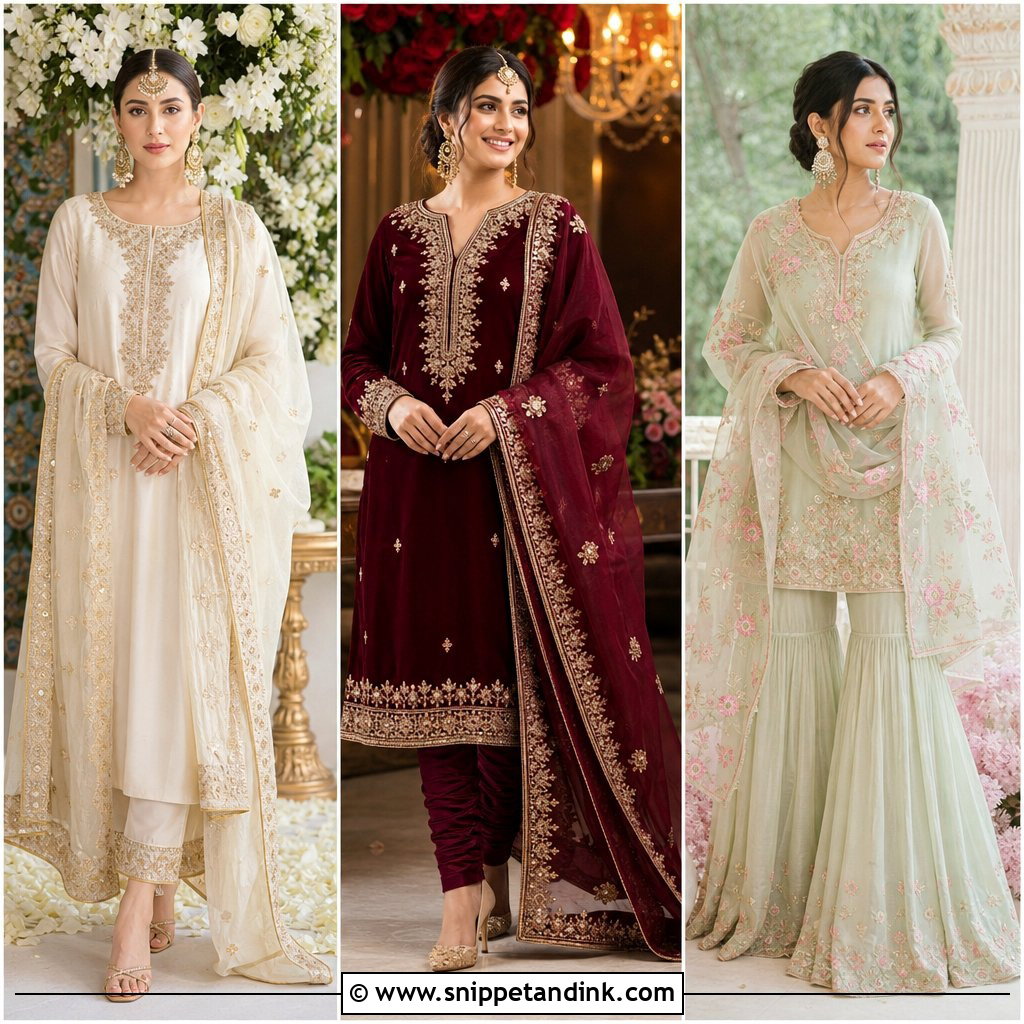
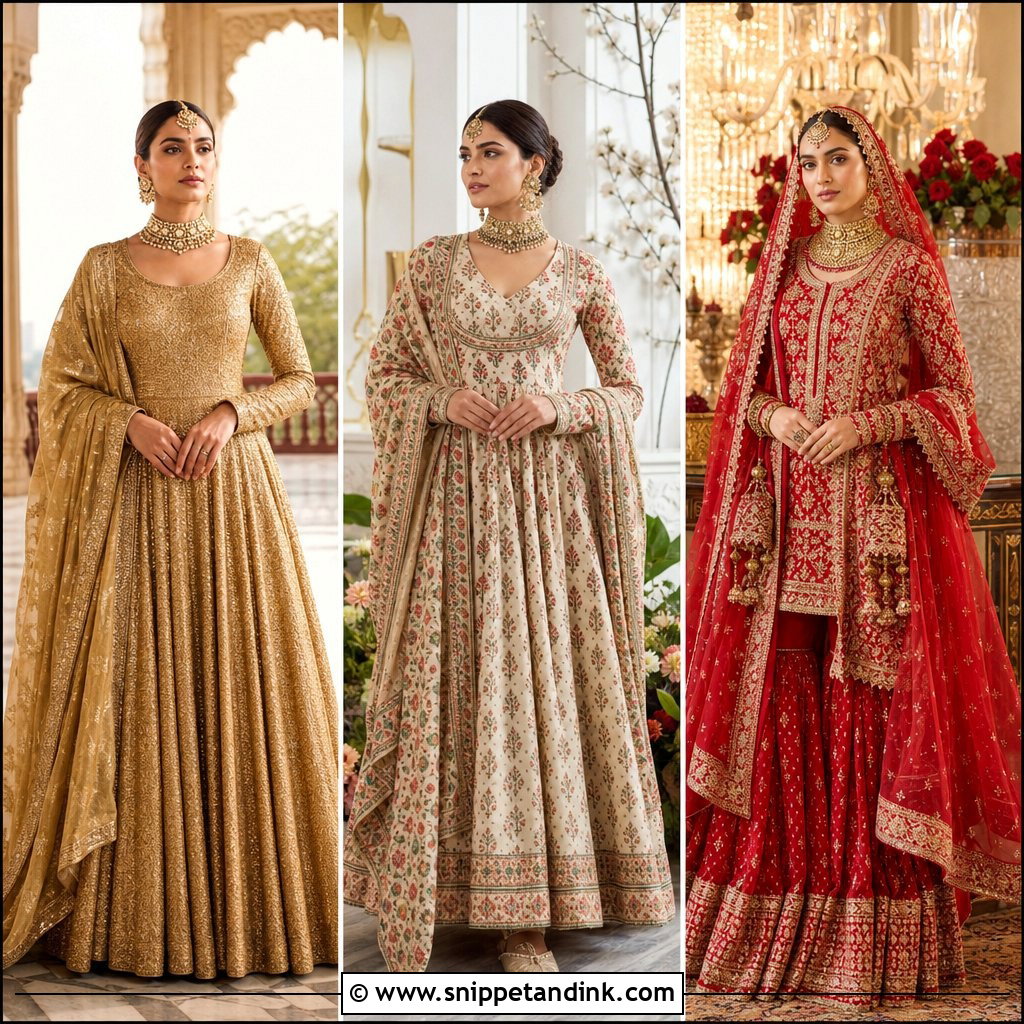
15. Crimson Red Punjabi Bridal Suit
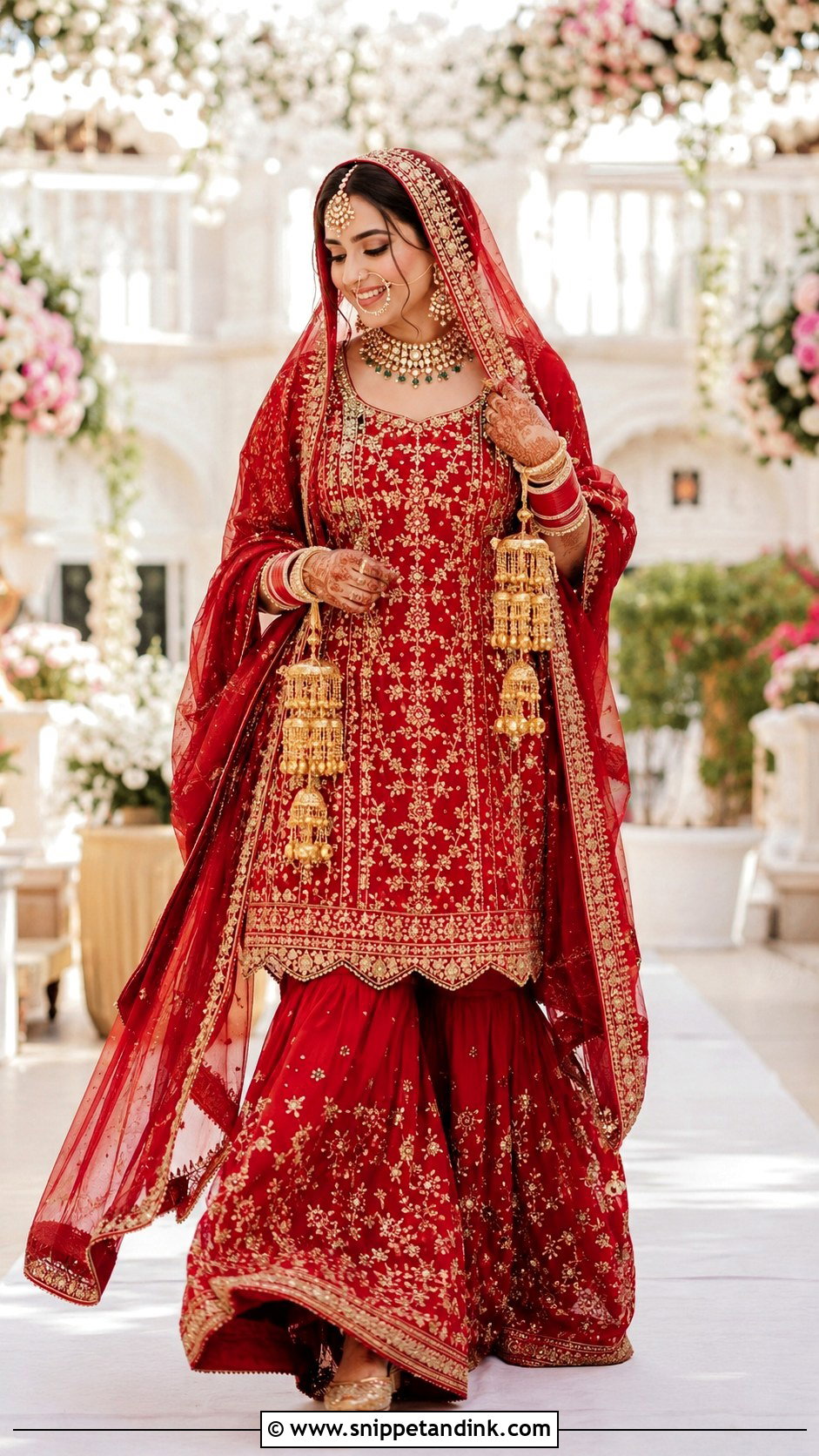
Crimson is the clearest, brightest red here, and the risk is mismatched undertones. A crimson kameez, a sharara and a dupatta bought from three places can turn out as three different reds the moment you step outside. Choose a kameez fitted above and gently flared below, with matching sharara pants or a full Patiala salwar. Fine gold embroidery, pearls and small sequins define it without dulling the colour. Drape a sheer crimson dupatta over the head and let one edge fall along the arm. Gold juttis, a red potli, kundan, chooda, kaleere and a delicate nath complete it. I’d check all three pieces together in daylight before the final stitching.
16. Red And Gold Punjabi Bridal Suit
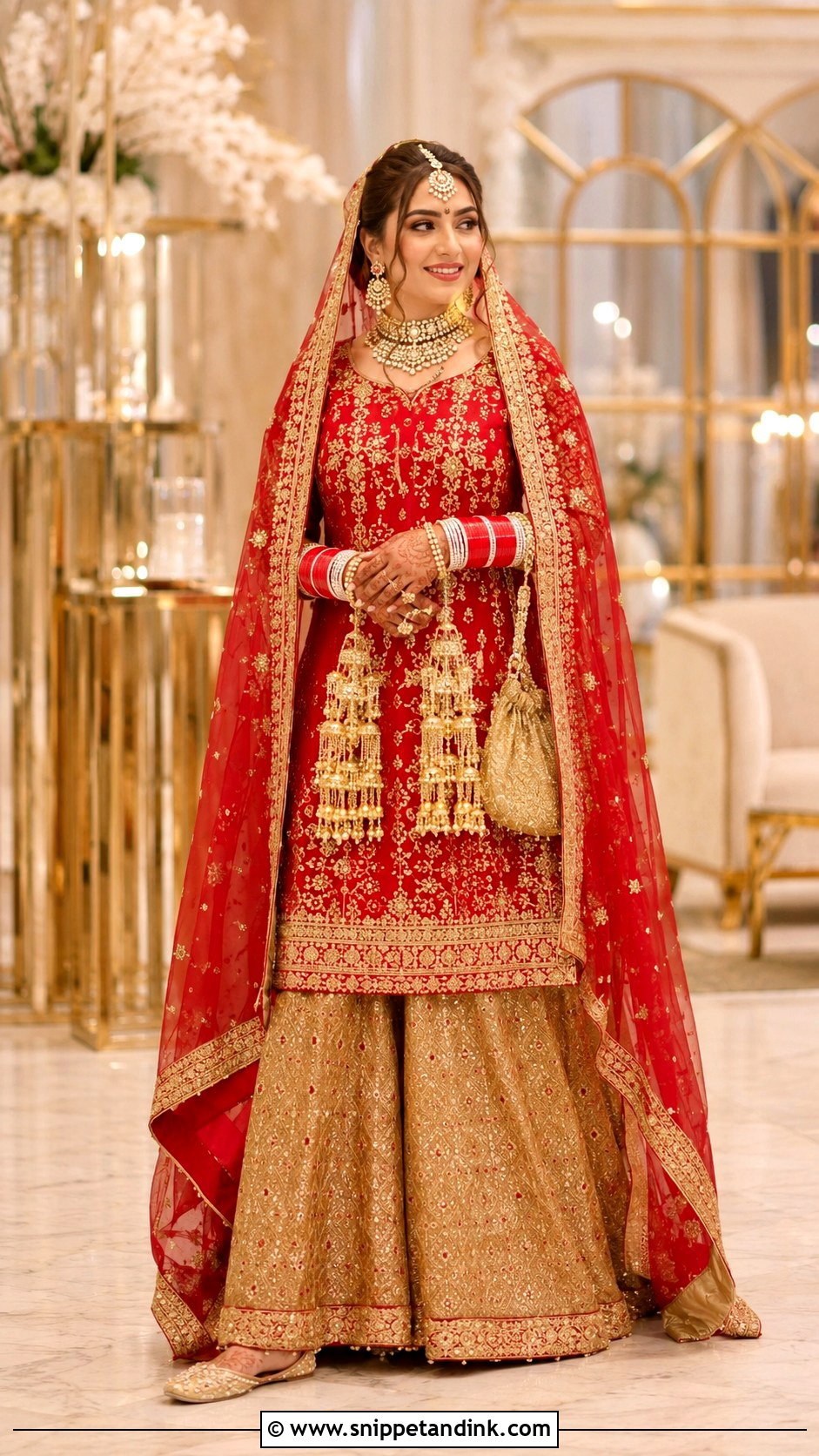
Red and gold need one consistent gold. Mix bright yellow zari with darker antique gold and the outfit looks pieced together, so I take the jewellery to the fitting and hold it against the embroidery. Start with a red silk kameez in gold work at the neckline, sleeves and border, over a gold-toned sharara or red Patiala salwar with metallic trim. A red dupatta with a generous gold border frames the face. Gold juttis, a metallic potli, kundan jewellery, chooda, kaleere and a small forehead piece complete it. A smooth bun keeps all that decoration tidy. Few extra colours are needed.
17. Red And Green Punjabi Bridal Suit
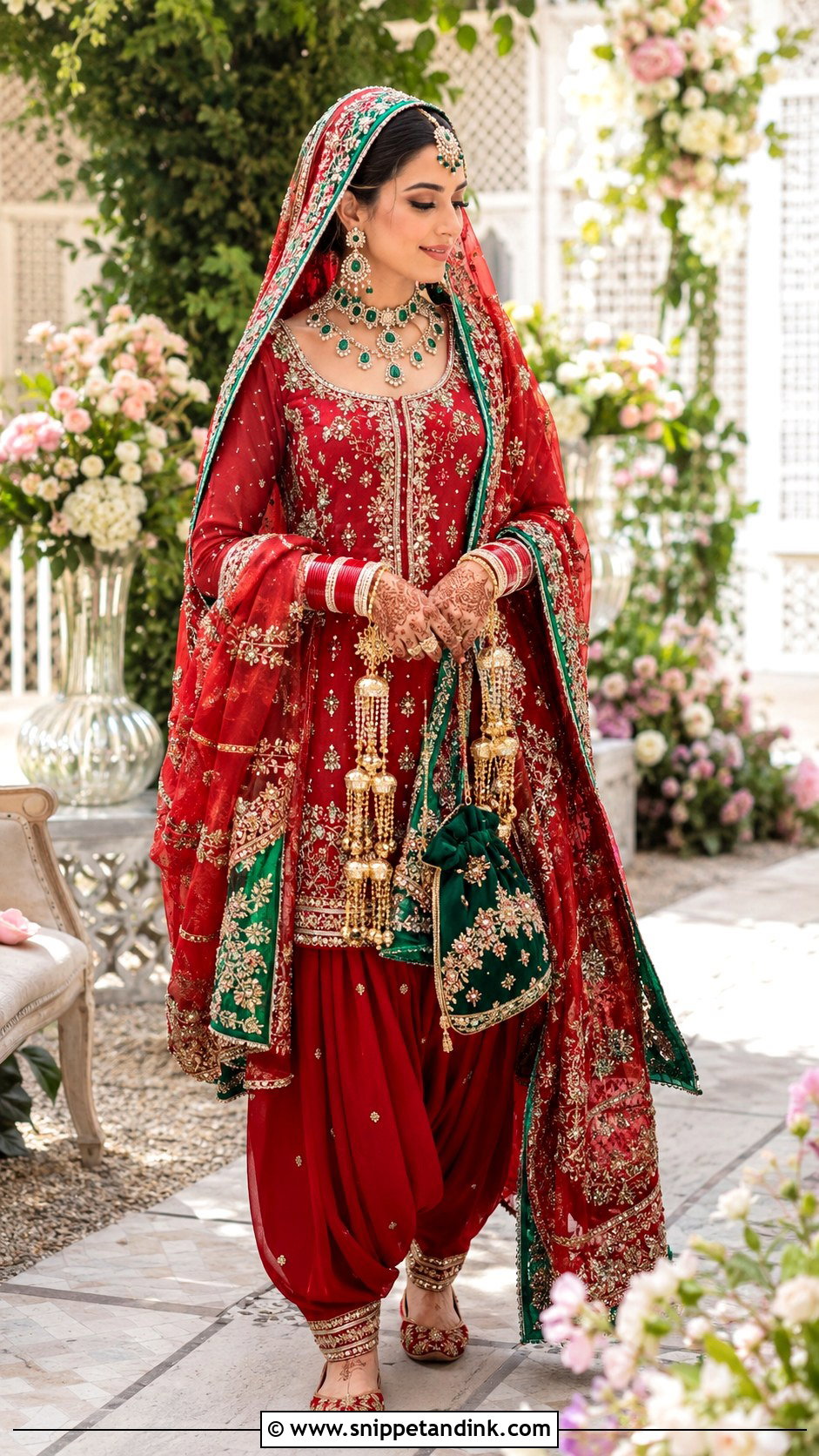
Green adds contrast to a red Punjabi bridal suit as long as it stays an accent. A red kameez with a matching Patiala salwar or sharara can carry deep green in the borders, small florals or the underside of the dupatta, and emerald-toned stones in the jewellery repeat it. A red dupatta with a slim green edge is the simplest way in. Red-and-gold juttis, a compact potli, chooda, kaleere, a kundan necklace and earrings complete it. Split the colours evenly and the outfit looks like two halves. Finish with a neat braid or bun so the green details stay visible.
18. Short Red Punjabi Bridal Patiala Suit
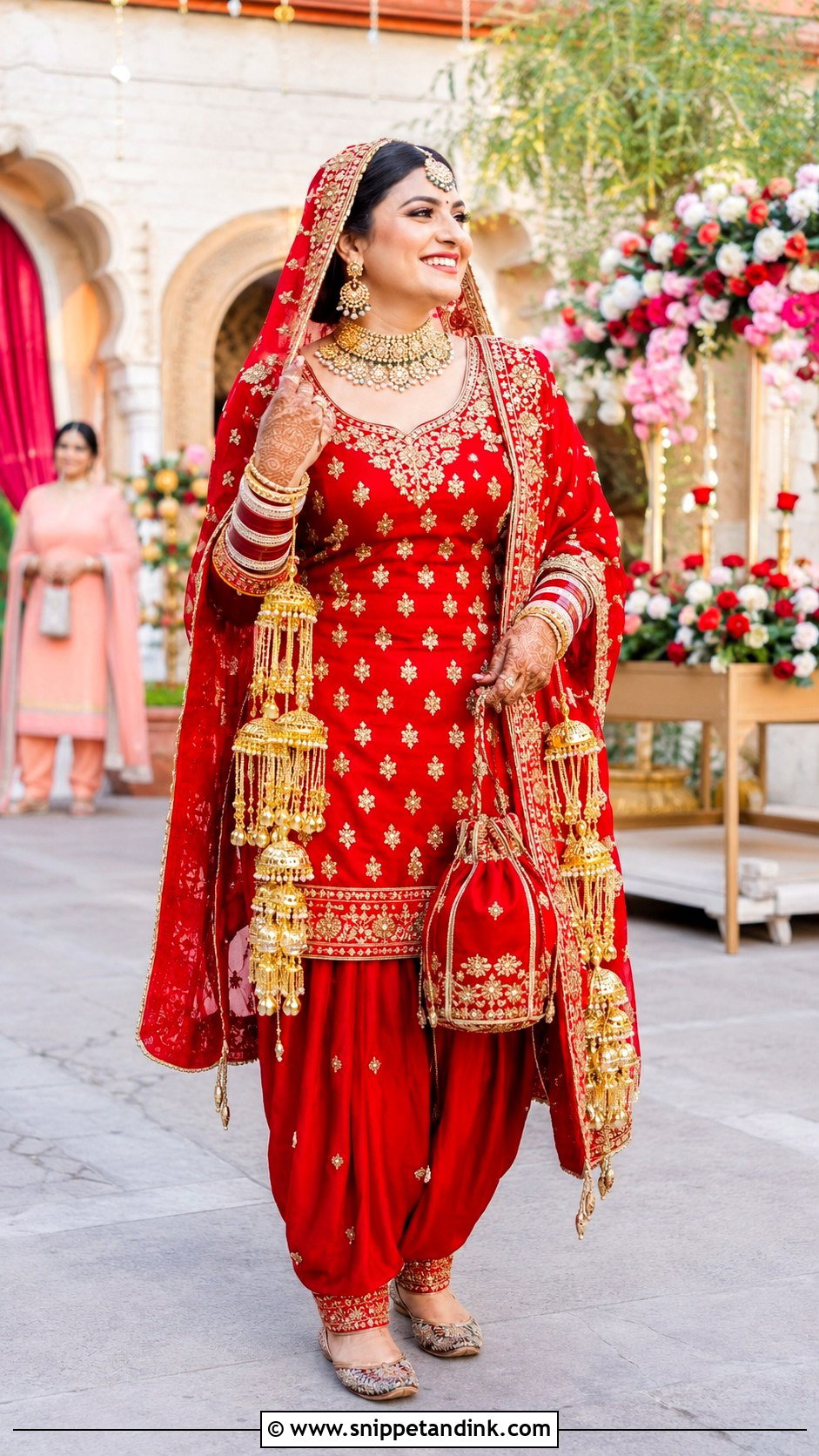
A short kameez over a full Patiala is the liveliest silhouette here, and the one I’d most want to see on the dance floor. The kameez should end around the upper thigh so the salwar pleats show clearly. Gold embroidery at the neckline, sleeves and hem gives the shorter top enough presence. A generous red dupatta with an embellished border drapes over the head and across one arm. Ornate juttis, a small potli, bold jhumkas, a choker, chooda and long kaleere suit it. Keep the upper half structured and well pinned, since the volume below already moves a lot. A long braid suits the energy.
19. Floor-Length Red Punjabi Bridal Suit
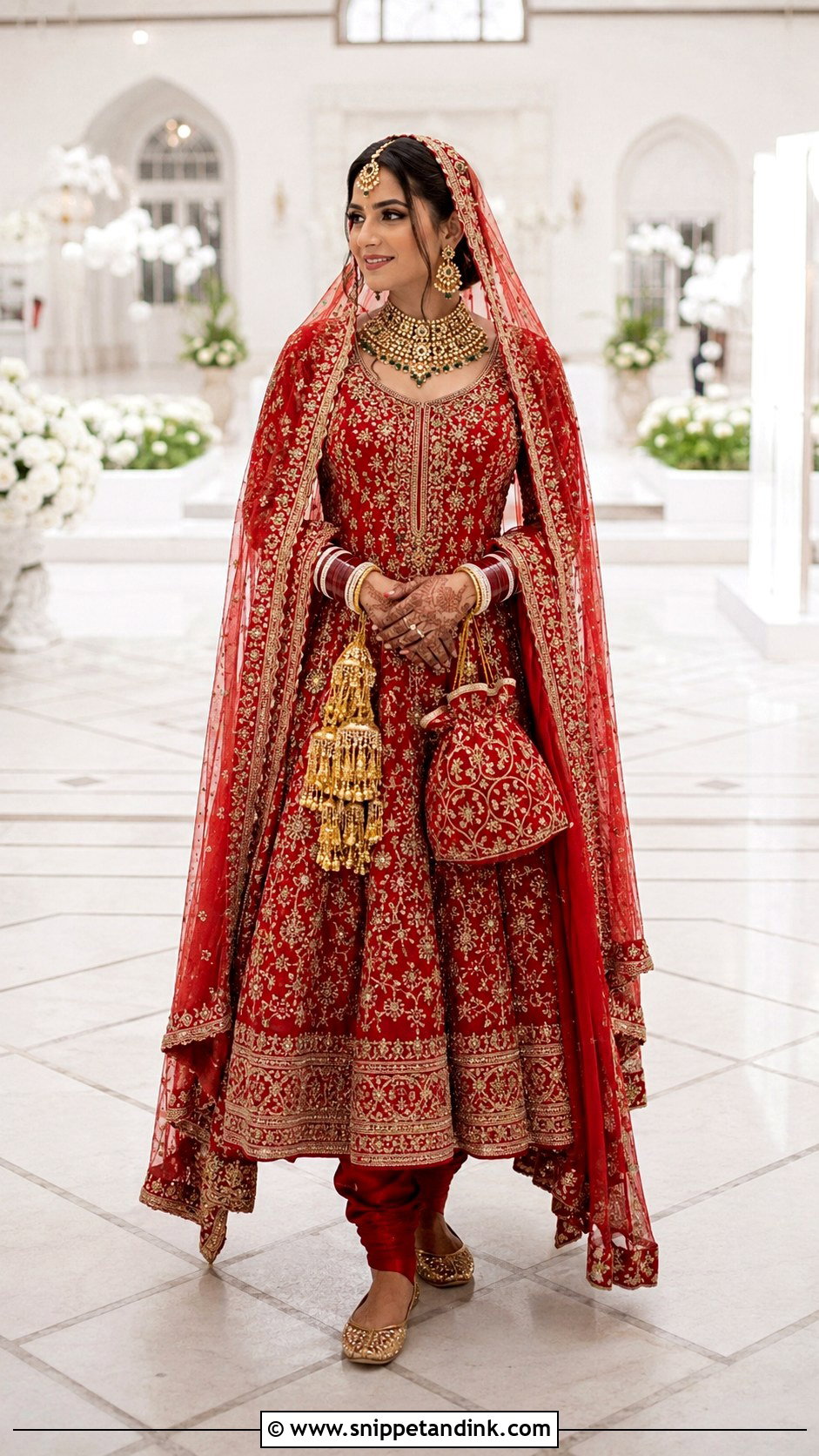
A floor-length suit has the presence of a gown with the coverage of a kameez, but the skirt needs room to step. When I fit one, I ask the bride to take a full stride; if the hem pulls taut, the skirt needs more width. A fitted bodice and defined waist sit above it, with heavier gold work at the neckline and lower border and lighter motifs across the skirt so it still flows. Slim churidar goes underneath, with low juttis that won’t catch the hem. A sheer red dupatta pins behind the shoulders. A kundan necklace, earrings, chooda, kaleere and a small potli finish it. Hem it in the shoes you’ll actually wear.
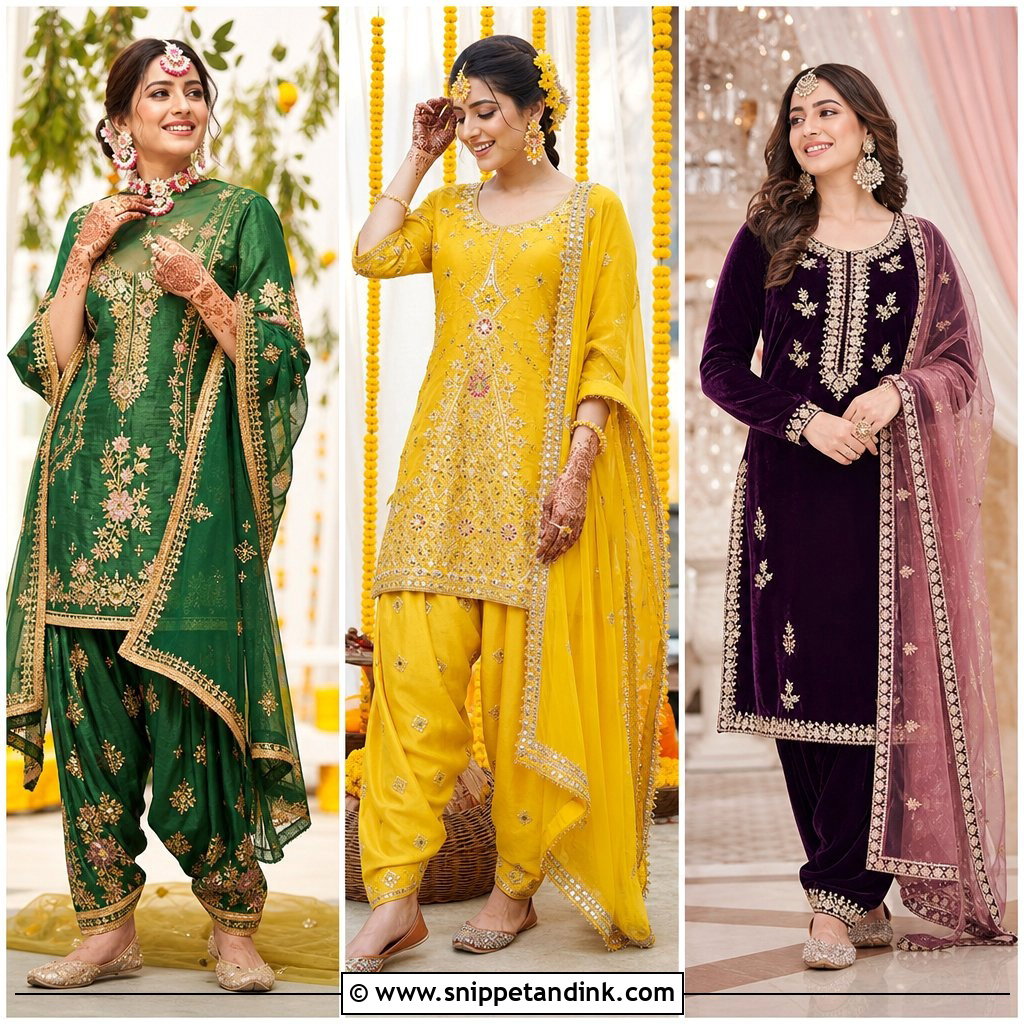
20. Simple Red Punjabi Bridal Suit
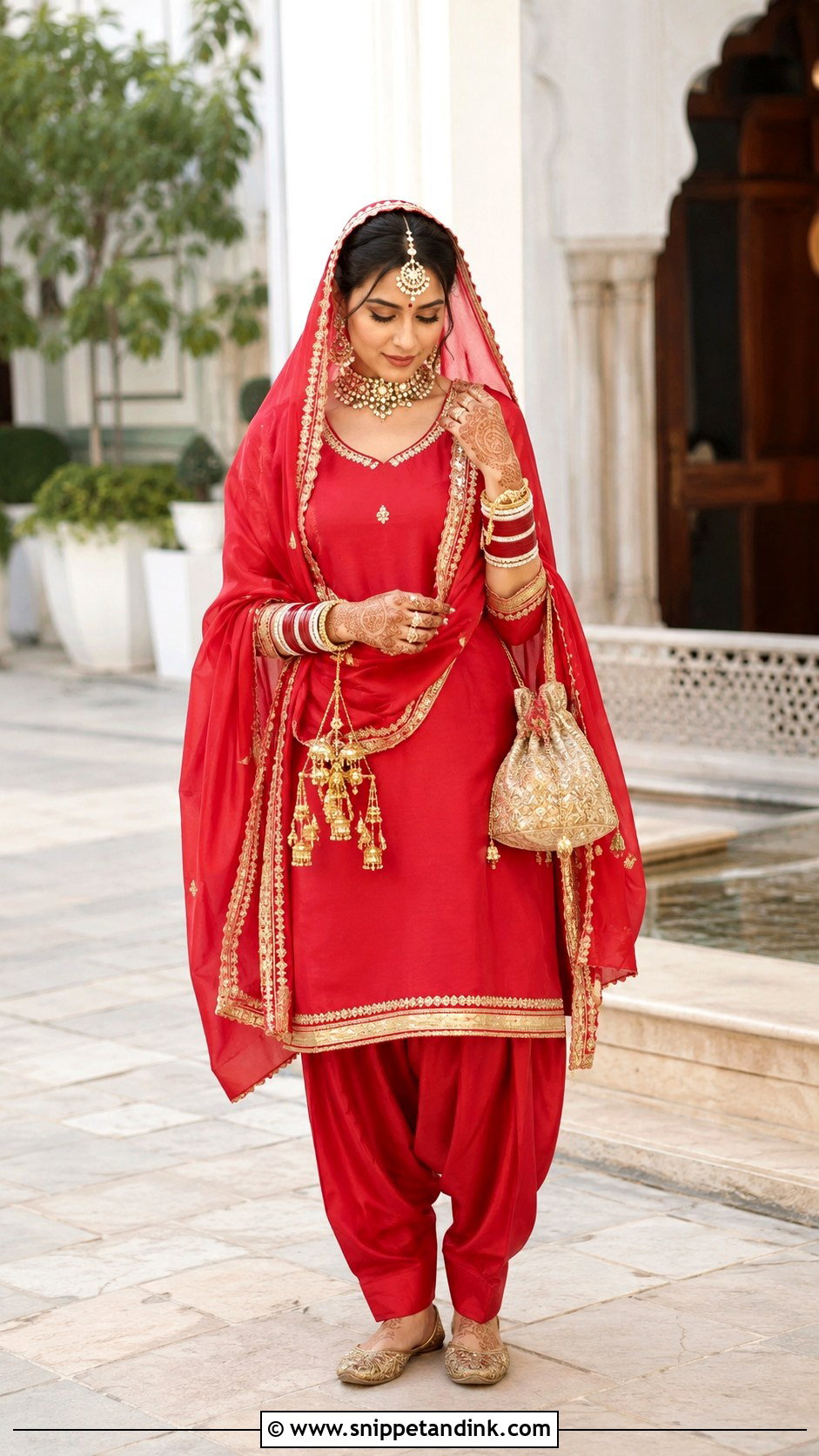
Simple suits fail when the fit is ordinary. Without heavy embellishment, every loose seam and every mismatched red shows, so the tailoring has to be precise. A clean straight-cut silk kameez with fine gold work at the neckline, cuffs and slits, over slim pants or a soft salwar, with a light dupatta and a neat border, looks finished. Gold juttis, a small potli, one well-scaled necklace, earrings, chooda and light kaleere are enough. A centre-parted low bun and a well-pinned head dupatta frame it. You can rewear it afterward, which makes it a sensible choice for a small wedding or a second-day function.
Matching the Suit’s Red to Your Chooda
The chooda is usually red and ivory, often given by the bride’s maternal uncle at the ceremony on the wedding morning. It sits on your forearms all day and in almost every close-up, so its red becomes part of the outfit. A blue-toned chooda beside an orange-toned suit looks off in photographs, even if no one can say why. I ask brides to find out early which shade the family plans to buy, or to bring a chooda sample to the fitting.
Kaleere bring their own problems. Large, heavy sets hang from the chooda and catch on embroidered cuffs, beaded dupatta borders and mirror work every time you move your hands. If you love big kaleere, keep the sleeve cuff plain and finish your sleeves above the chooda. Smaller kaleere suit a heavily embroidered sleeve better. When the kaleere ceremony comes and you shake them over your friends’ heads, you’ll be glad nothing is snagging.
One Red Suit From the Gurdwara Morning to the Doli
It comes down to the silhouette, how comfortable you’ll be and the mood you want. Patiala suits feel lively and traditional, Anarkalis and floor-length suits flow, shararas and ghararas bring volume, and a straight silk suit stays clean. Once the main shape is settled, build the dupatta, juttis, jewellery, chooda, kaleere and potli around its embroidery and its exact red. Do a final fitting barefoot and again in your shoes, since you’ll spend the ceremony in one and the reception in the other. Then sit, dance a few steps and lift your arms; if all of that feels easy, you have the right suit.
You'll Like These Ideas:






Leave a Reply