
A wedding week can ask you to sit cross-legged through a puja, dance through a sangeet and stand for reception photos, sometimes all in one day. When I put together party-wear salwar suits for guests and family, I start with how the day will move, then the fabric, and only then the embroidery. The twenty looks below run from Anarkalis and shararas to palazzo sets, jacket sets and straight-cut suits. As a rough rule, organza and georgette breathe at daytime events, while velvet, silk and brocade hold their own under evening lighting. Build the jewelry, clutch and shoes around one focal point, and pick footwear you can still stand in after the last dance.
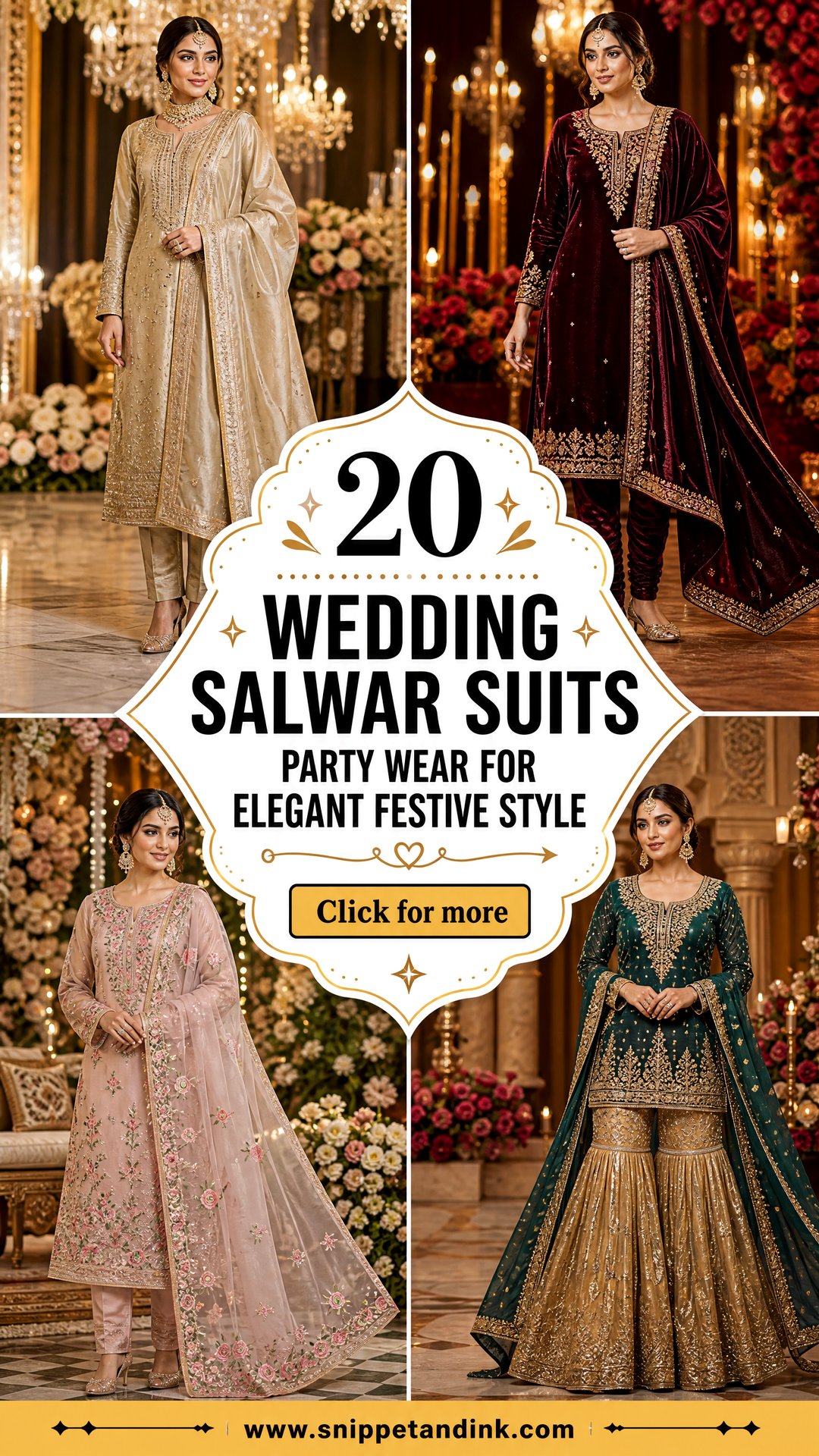
Which Fabric Suits Which Wedding Function
Guests often buy one suit they love and then wonder which event to wear it to. I work the other way round: list the functions, note whether each is indoors or out, day or night, and then match the fabric. A rough map I use when planning a wedding wardrobe:
- Mehndi and haldi: cotton, chanderi, light georgette or chikankari. Expect turmeric, henna paste and floor seating, so avoid anything you would be heartbroken to stain.
- Sangeet: shararas, palazzos and mirror work in crepe or georgette, cut so you can lift your arms and spin without the kurta riding up.
- Ceremony: silk, brocade or zardozi with fuller coverage. Temples and gurdwaras may expect covered shoulders and a dupatta for your head.
- Reception: evening fabrics such as velvet in winter, sequins and heavier embroidery, since hall lighting flattens plain cloth.
Heat changes everything. In a summer outdoor wedding, even a fully lined silk becomes tiring by mid-afternoon, so I’d move the heavier pieces to the cooler evening events and keep daytime outfits breathable.
1. Floor-Length Anarkali Wedding Salwar Suit
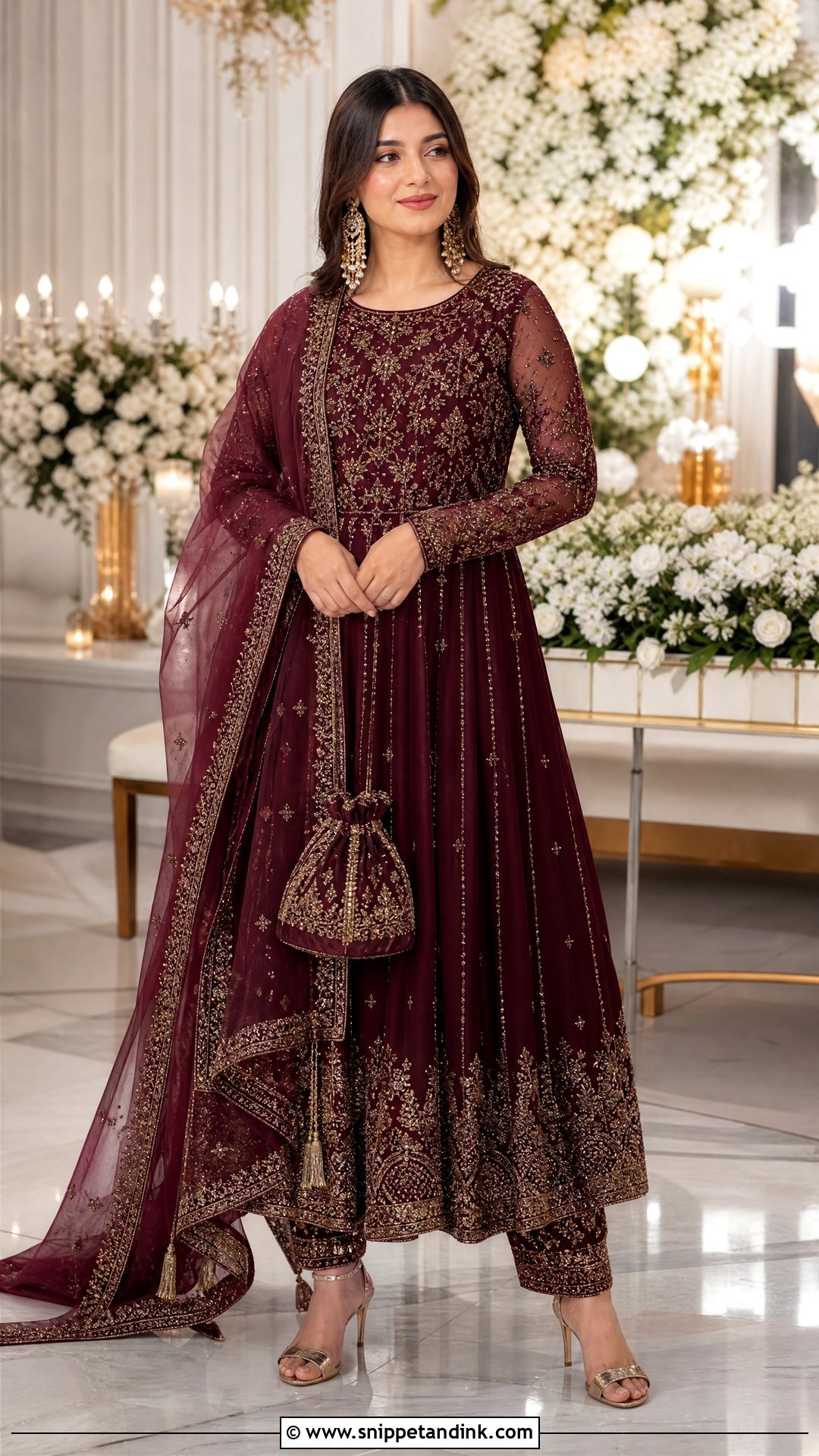
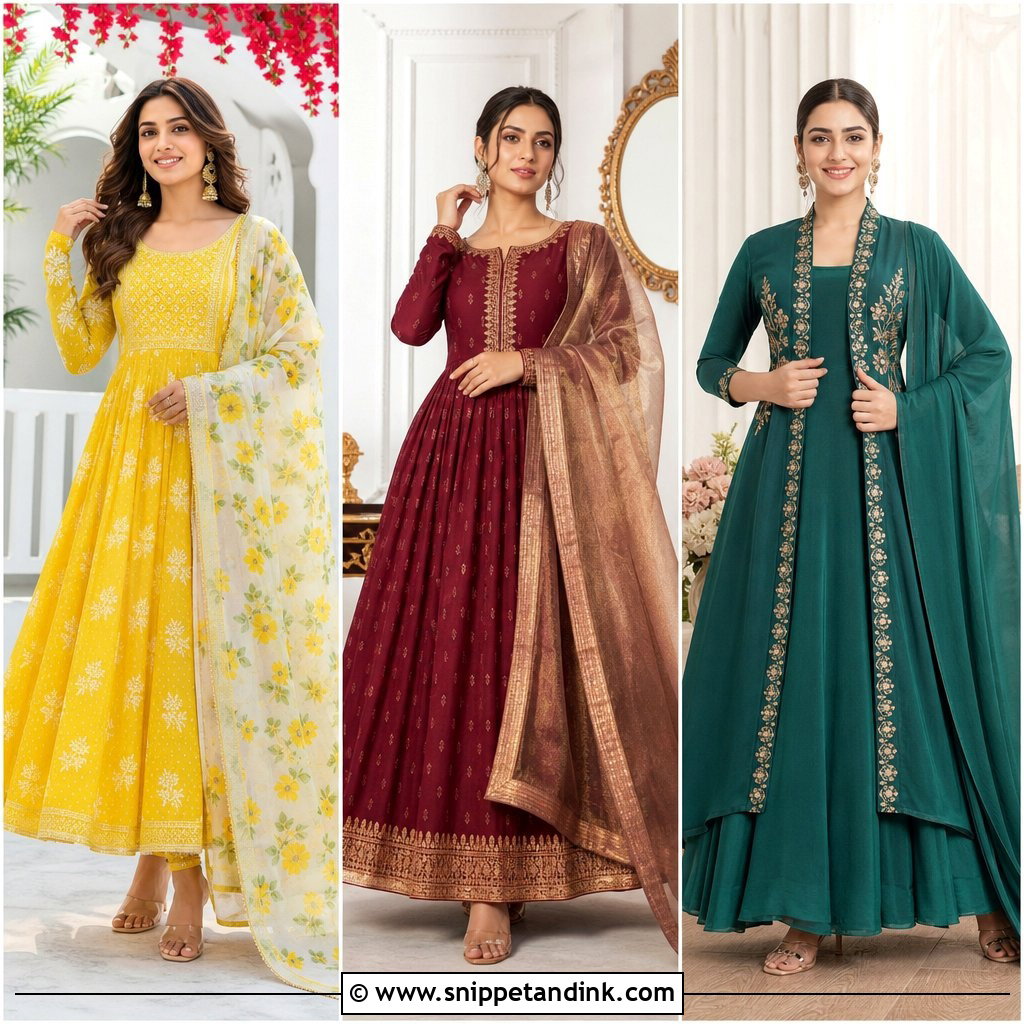
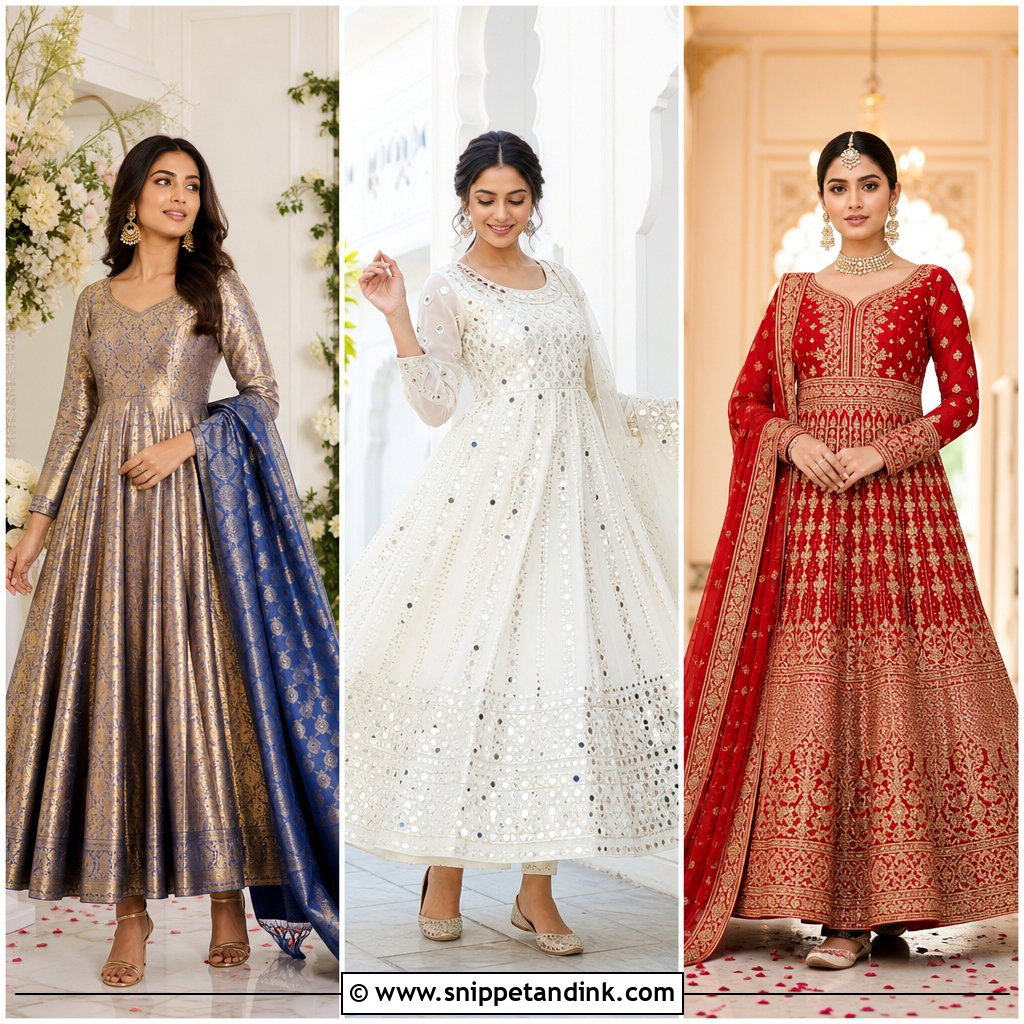
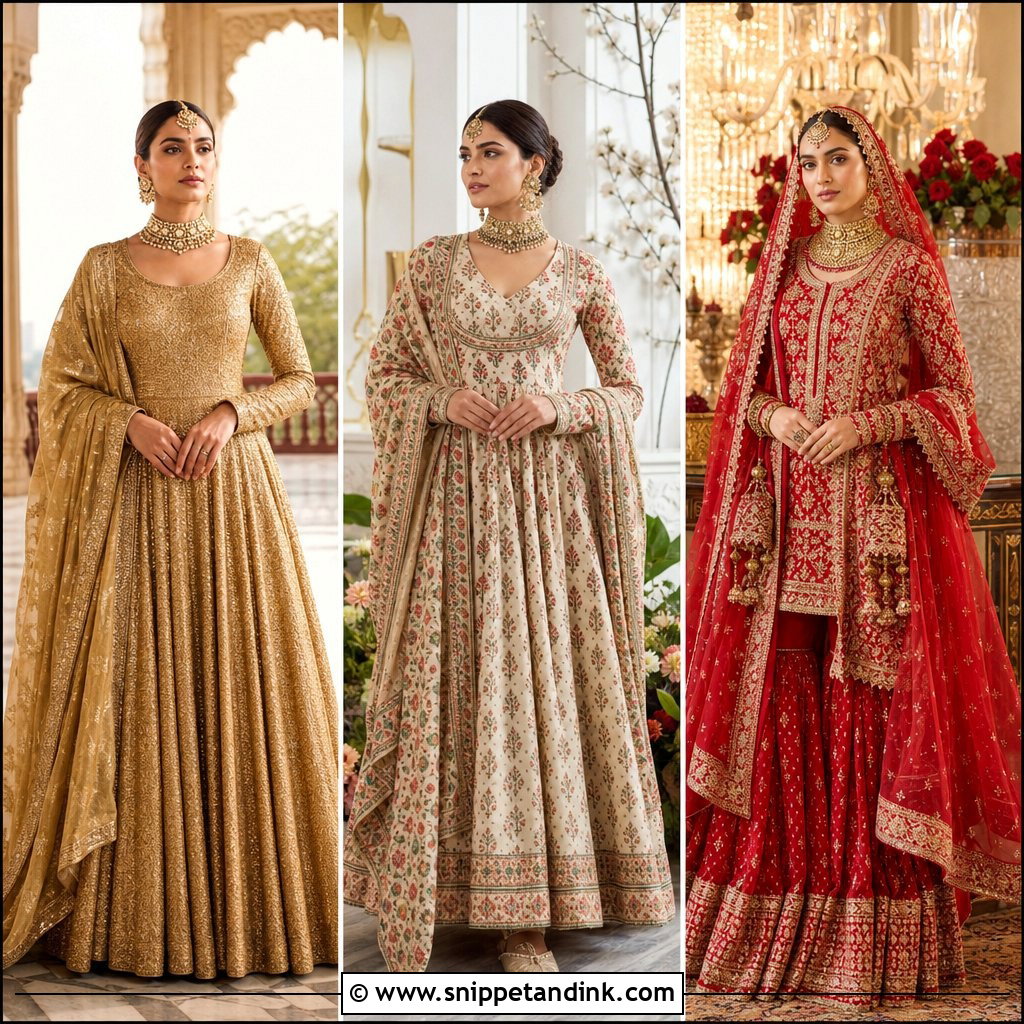
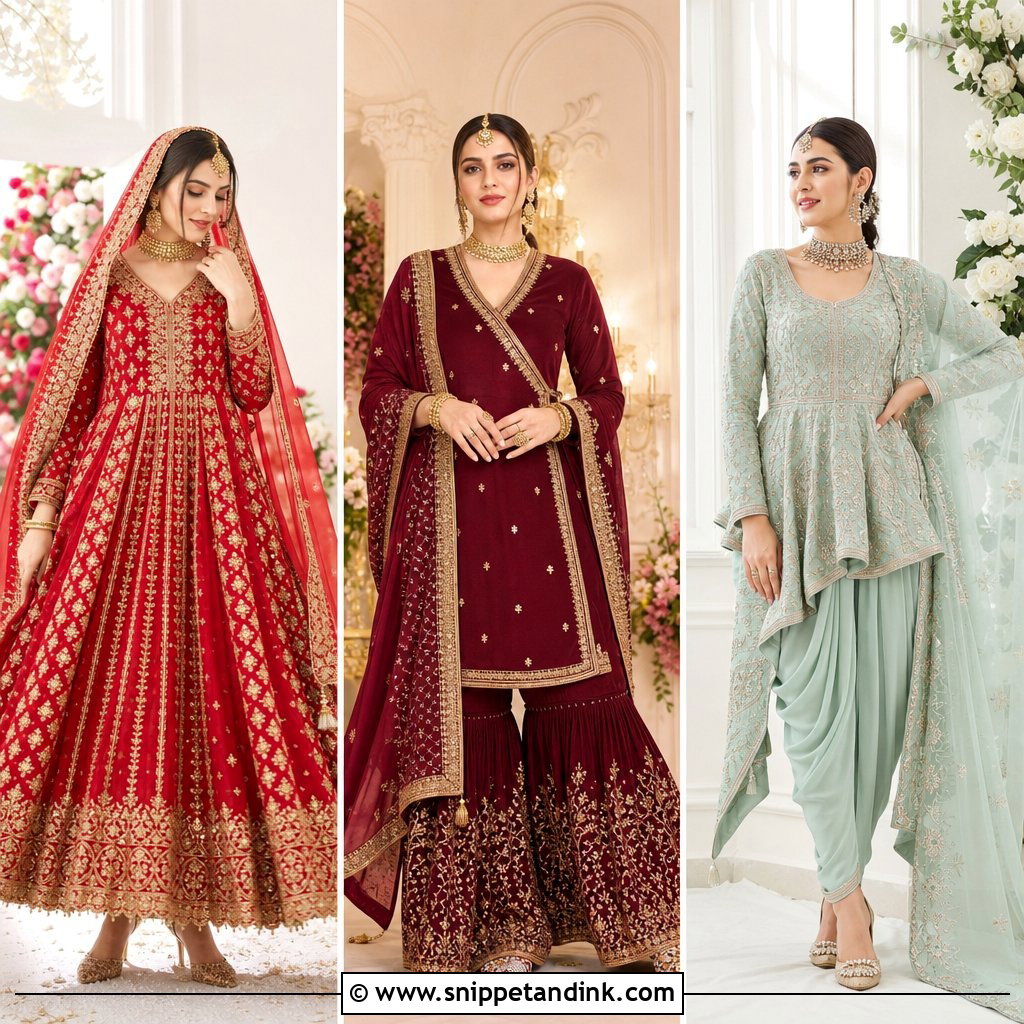
A floor-length Anarkali does most of the styling work for you, which is why I reach for it when someone has very little time to plan. Look for a fitted embroidered bodice over a full skirt in georgette, silk or chiffon; maroon and navy read richly at evening receptions. The first thing I check is the hem with the actual shoes on, because an Anarkali cut for flats drags under heels and catches on stairs. Wear it over a fitted churidar with a light dupatta on one shoulder. If the bodice already carries dense zari or sequins, skip the heavy dupatta: its weight pulls the neckline sideways by the end of the evening. A center-parted low bun keeps that neckline clear, and petite wearers do better with a slightly raised waist and fewer kalis so the flare doesn’t swallow them.
2. Embroidered Sharara Wedding Salwar Suit
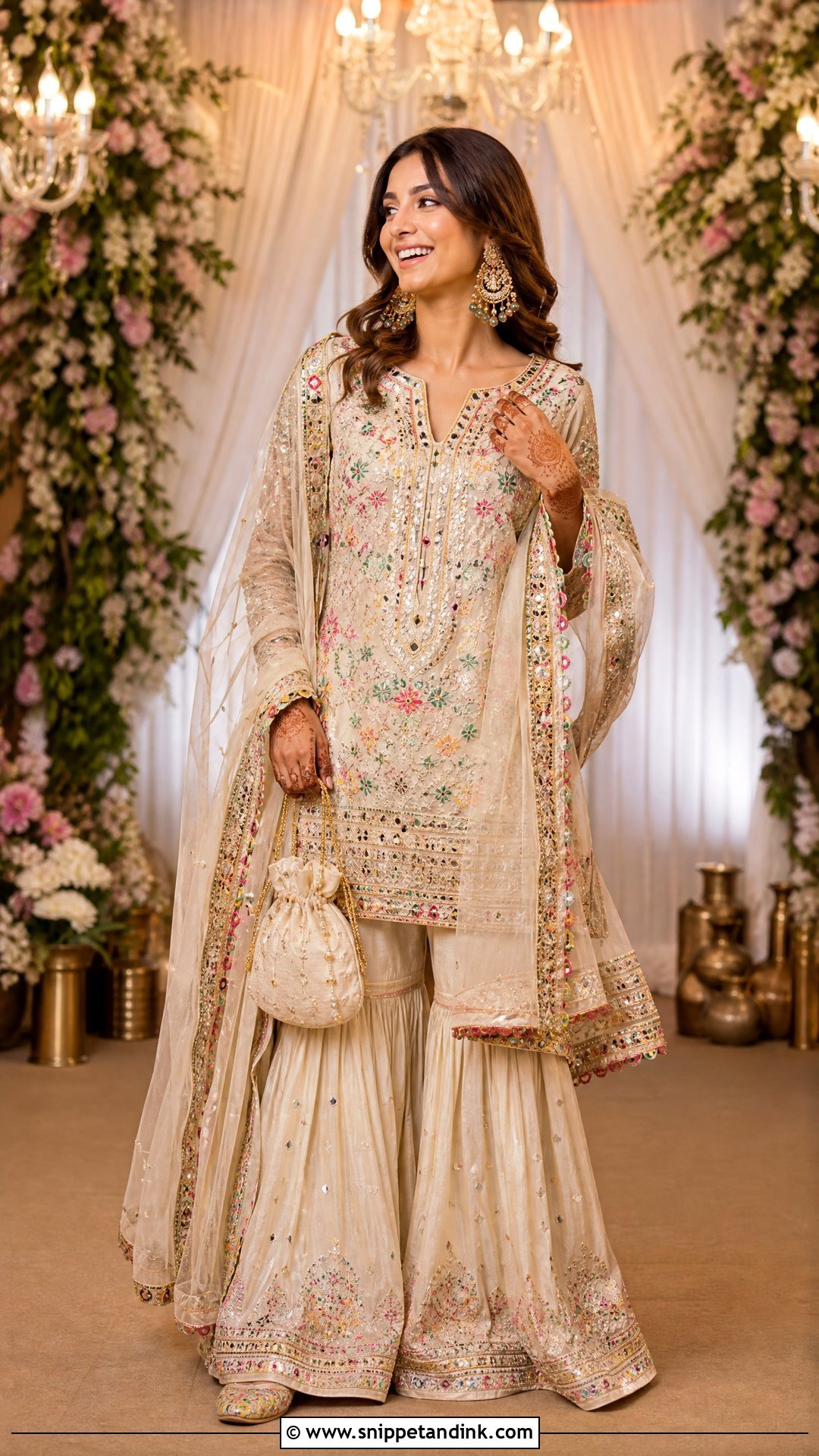
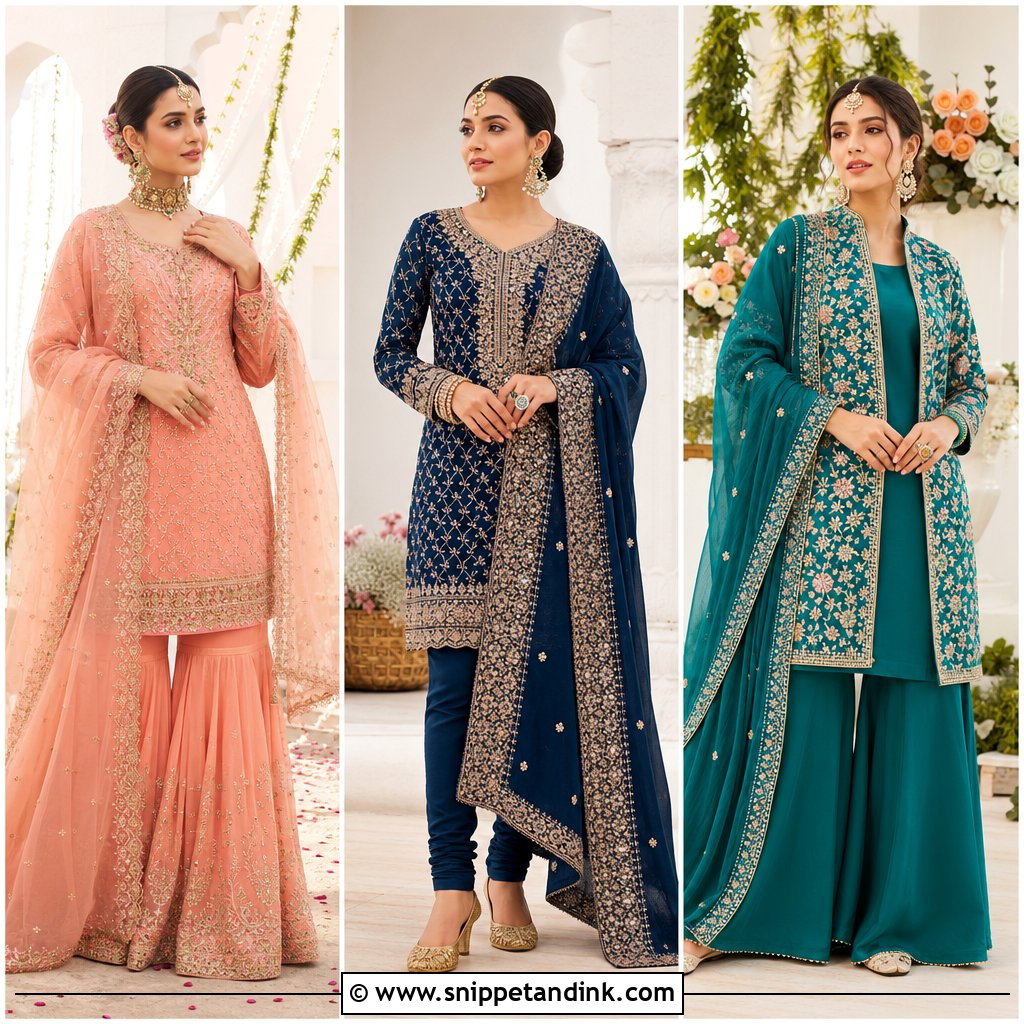
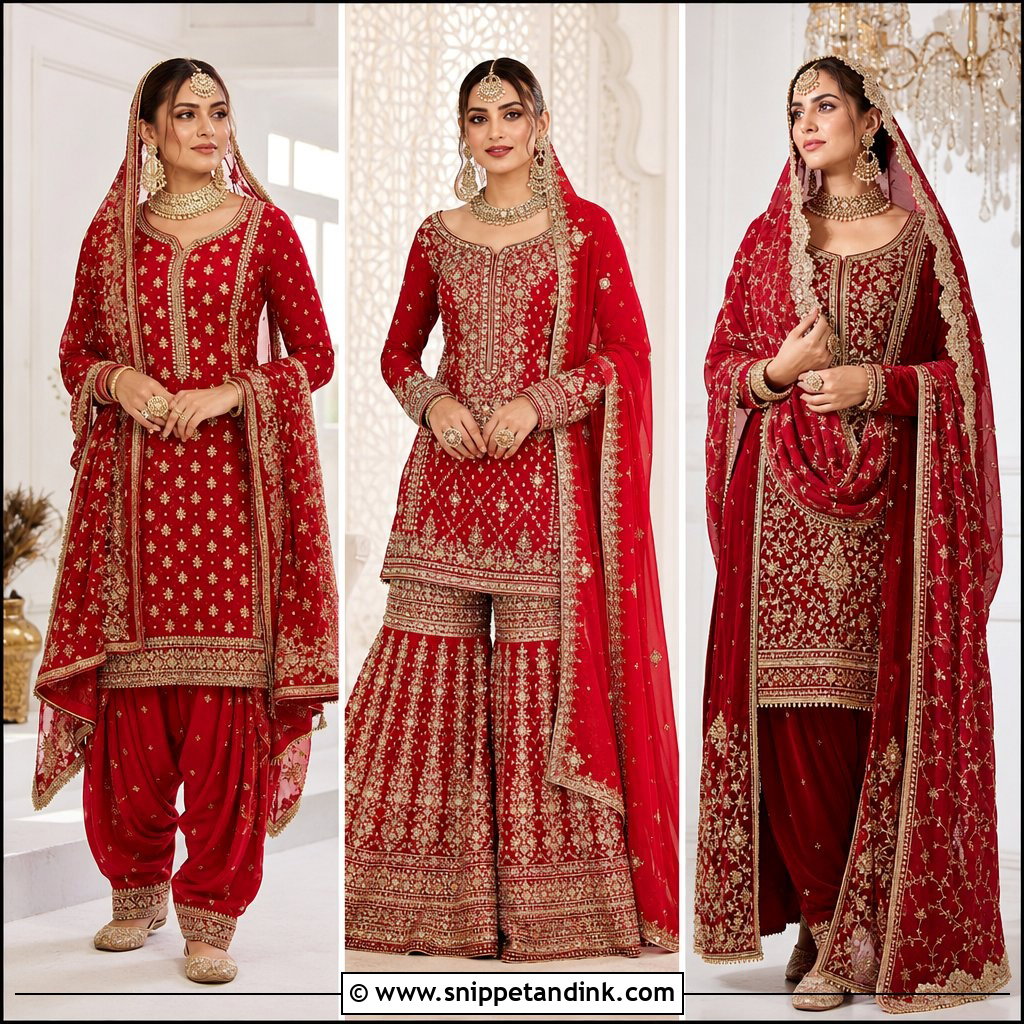
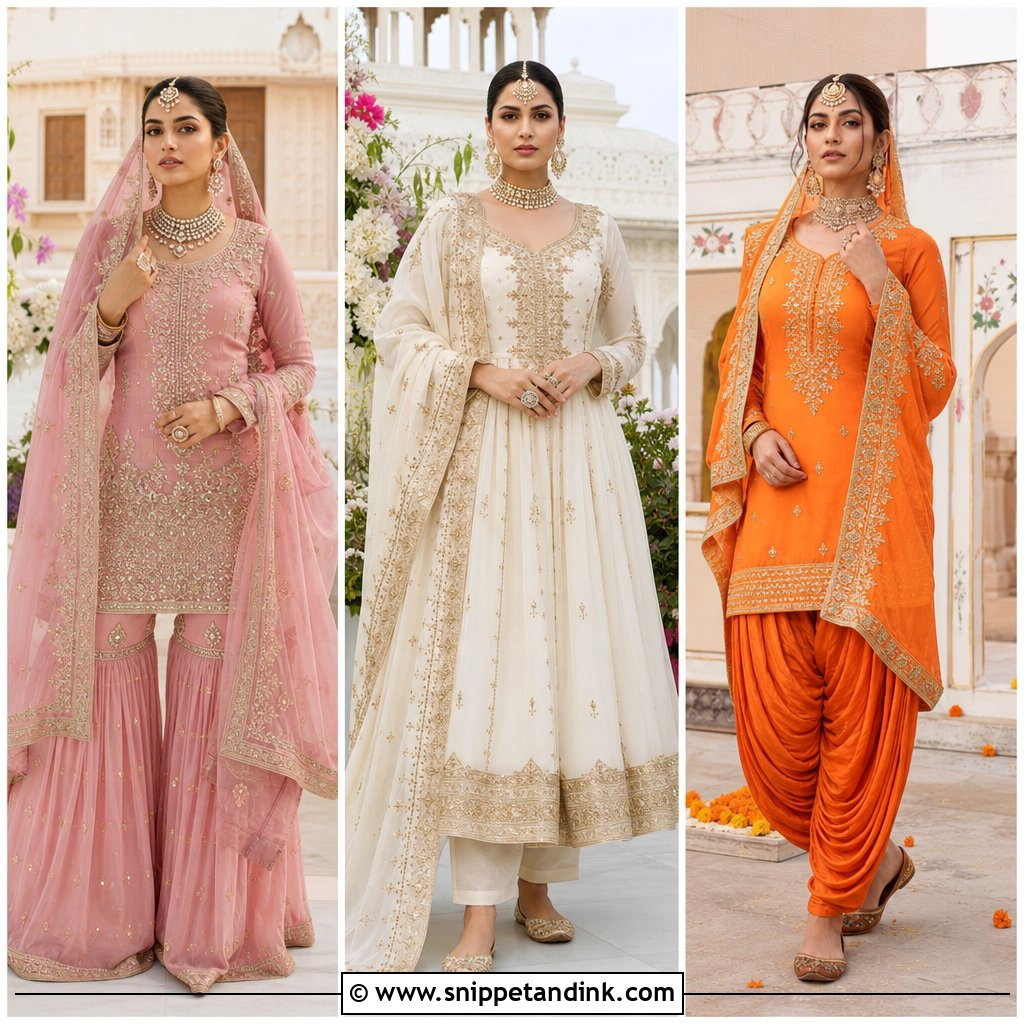
Shararas are made for the dance floor, since the flare swings with you instead of wrapping around your ankles. An embroidered sharara suit pairs a short or mid-length kurta with those flared pants and a coordinated dupatta. I fit the kurta at the shoulders first; if it pulls there, loosening the waist won’t fix how it hangs. Gota patti and mirror work give festive detail at a fraction of the weight of zari, which you’ll appreciate at a sangeet that runs past midnight. Nude or gold juttis cope with lawns far better than heels. Want more coverage? A longer kurta with the dupatta across both shoulders still dances well.
3. Palazzo Wedding Salwar Suit With Dupatta
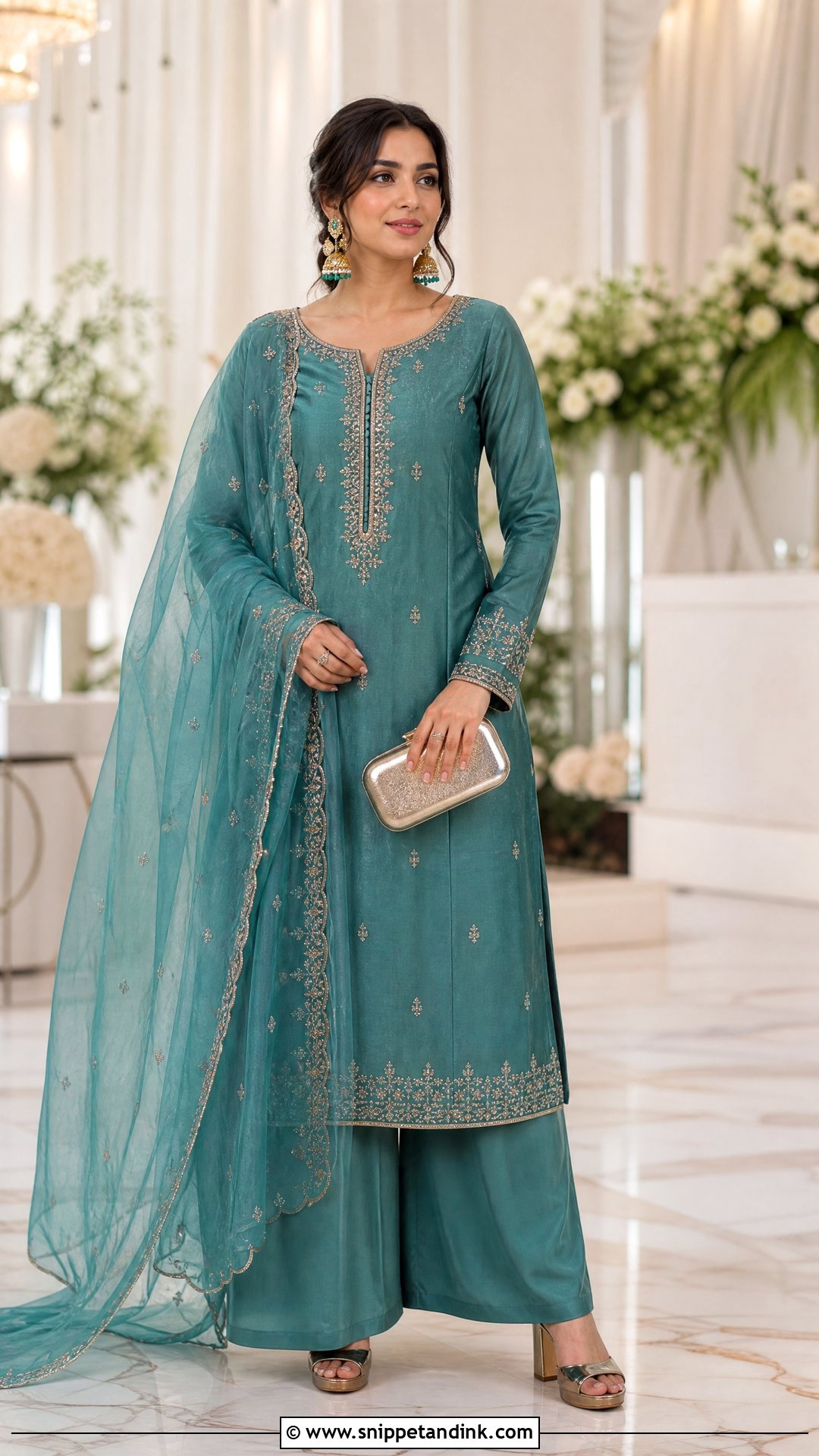
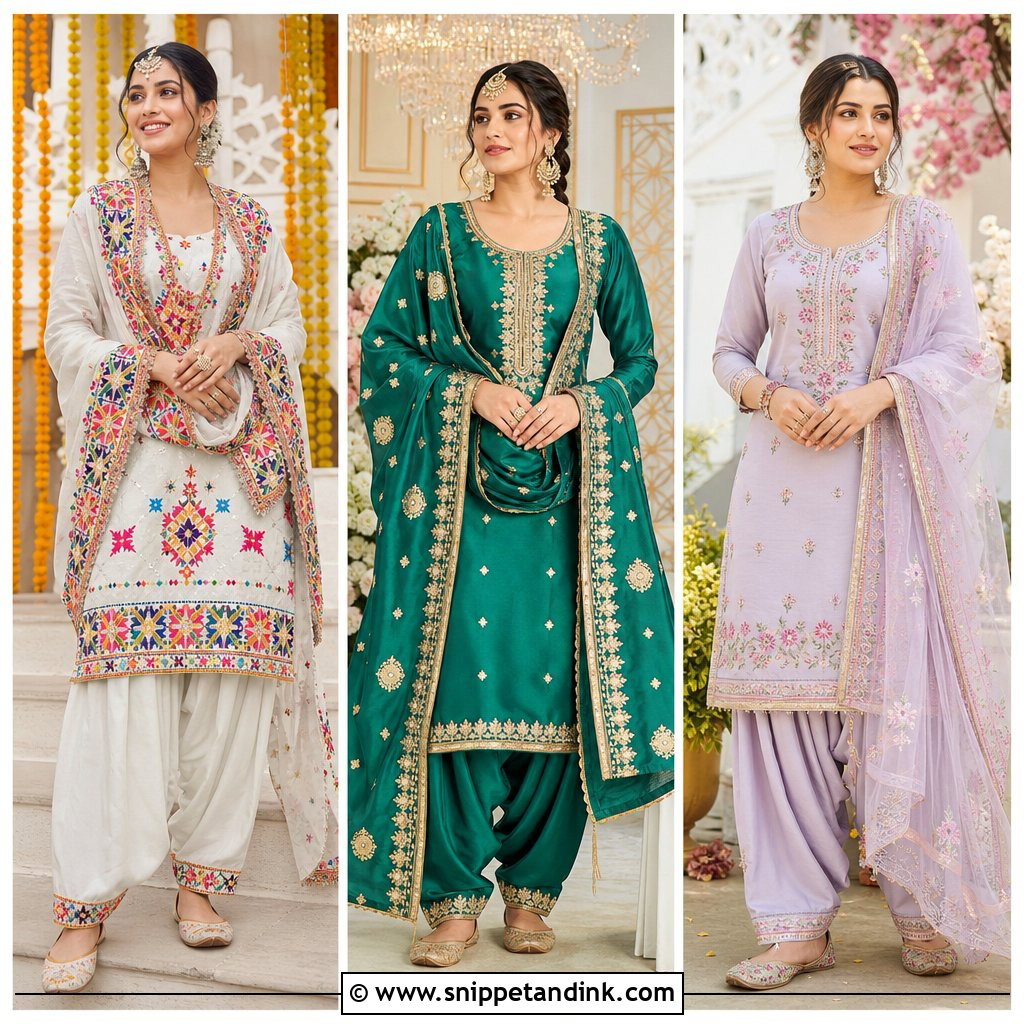
Palazzos are my fallback for anyone who has to sit on the floor during a ceremony and still look put together afterwards. Pair them with a straight knee-length kurta embroidered at the neckline, cuffs and hem. Crepe and silk give the wide leg enough body to hang straight, whereas very thin georgette palazzos tend to cling to the shin as you walk. A sheer organza dupatta with a narrow border keeps the top half light. Have the hem set with your block heels on so it just clears the floor; a little too long is exactly how people trip on mandap steps. One pair of medium jhumkas is plenty, and a single shade such as teal or wine from shoulder to hem adds height.
4. Straight-Cut Silk Wedding Salwar Suit
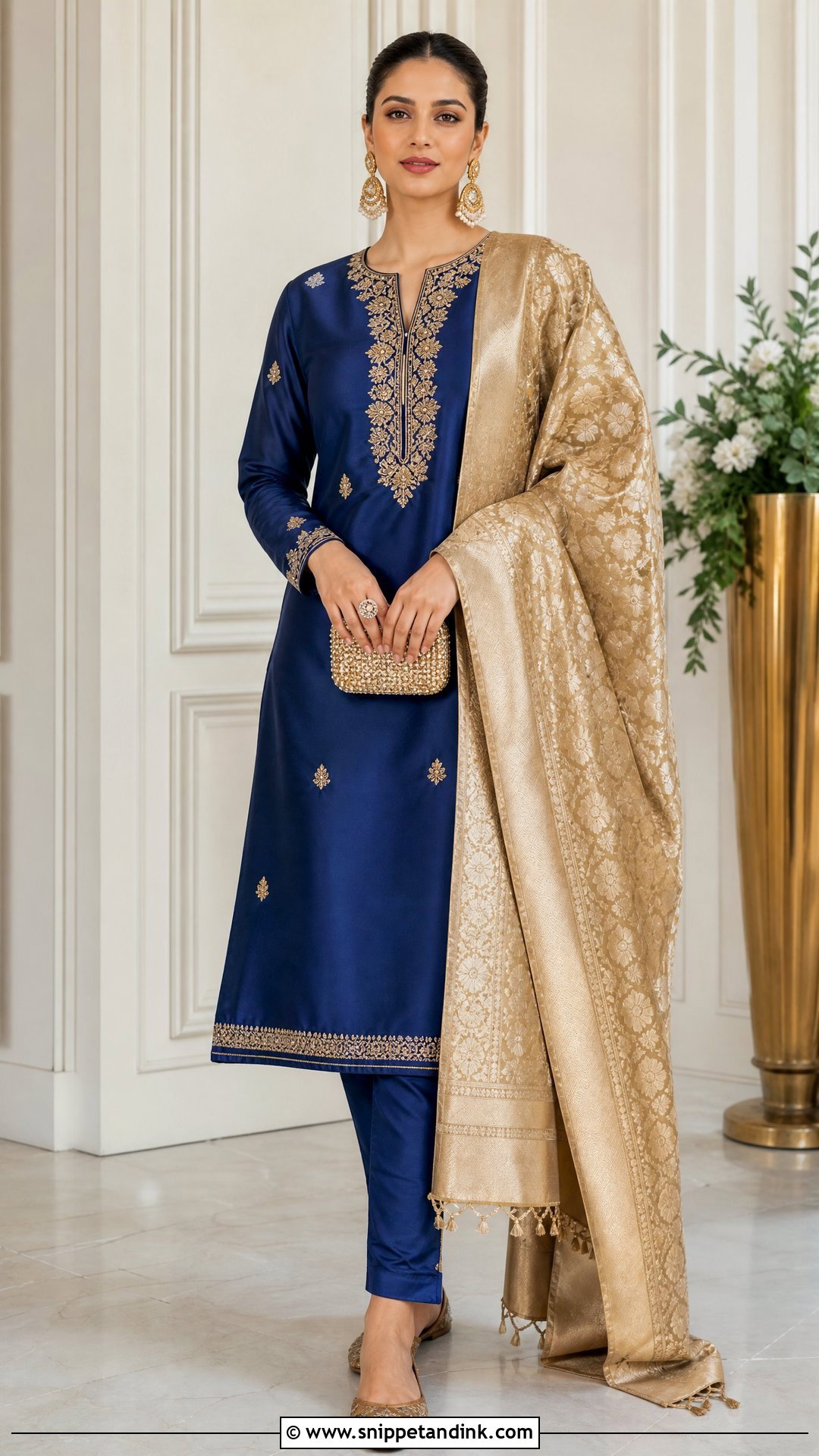
In a straight-cut suit the silk does the talking, so keep the embroidery restrained. Start with a long kurta that skims the body without clinging, then add narrow pants or a churidar. Woven zari borders sit better on silk than heavy surface work, which can pucker fine silk after a few wears and pressings. My usual approach is to let a Banarasi or brocade dupatta carry the decoration and keep the kurta plain in a complementary color. Silk shows every crease from the car ride, so press it on the day and make sure the sleeve stops at the wrist bone, where bangles sit properly.
5. Velvet Wedding Salwar Suit With Churidar
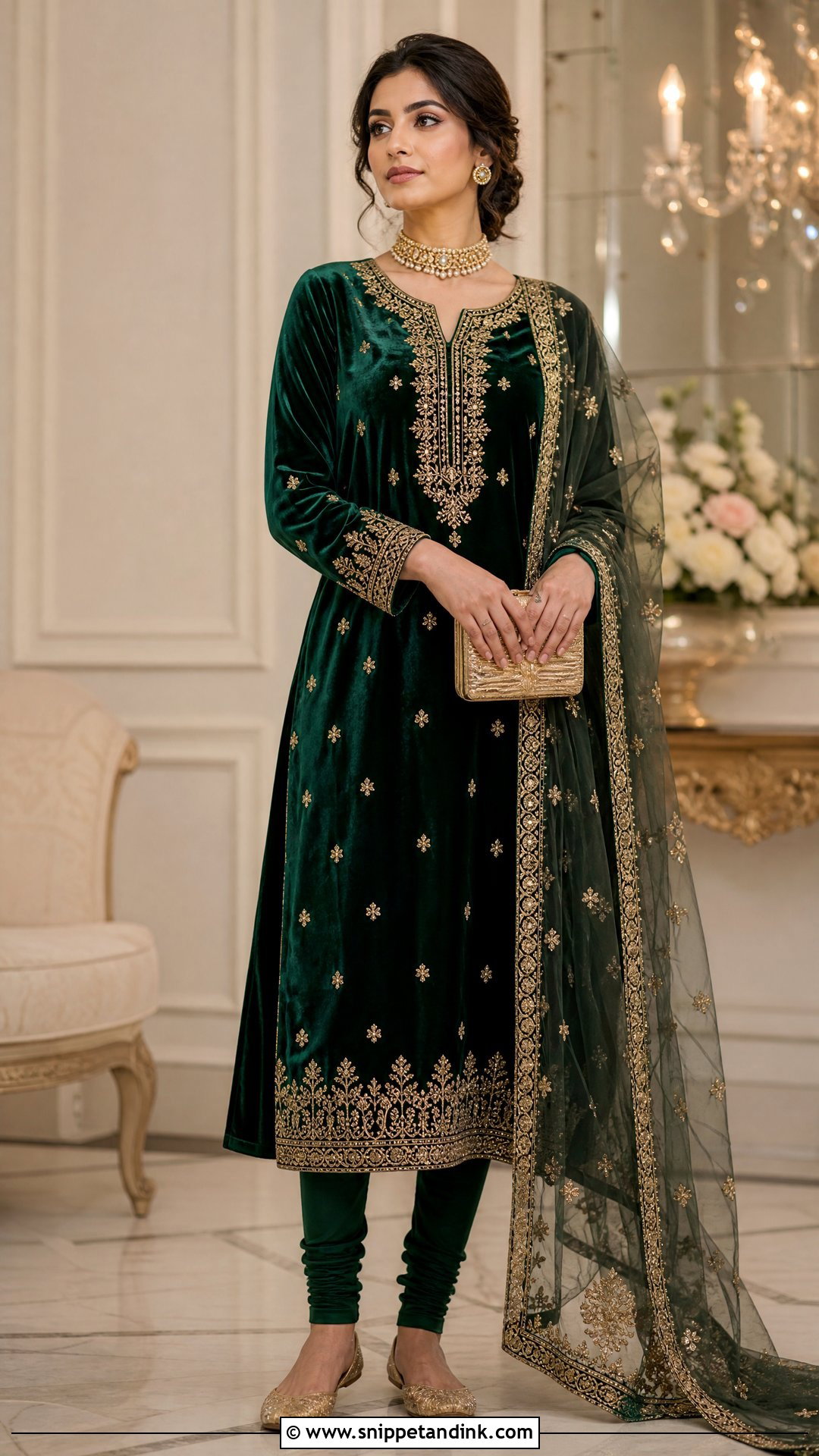
Velvet belongs at cool-weather weddings. Under a marquee heater or in a packed banquet hall it gets uncomfortable fast. Choose a straight or lightly flared kurta in emerald or burgundy and pair it with a churidar in a lighter fabric so the outfit doesn’t look bulky below the knee. Because the pile already catches light, a zari edge or a little beadwork at the neckline is enough decoration, and a sheer net dupatta is better than a second heavy layer. One practical warning: velvet crushes where you sit and those marks rarely steam out mid-event, so smooth the back of the kurta every time you sit down.
6. Organza Wedding Salwar Suit With Floral Embroidery
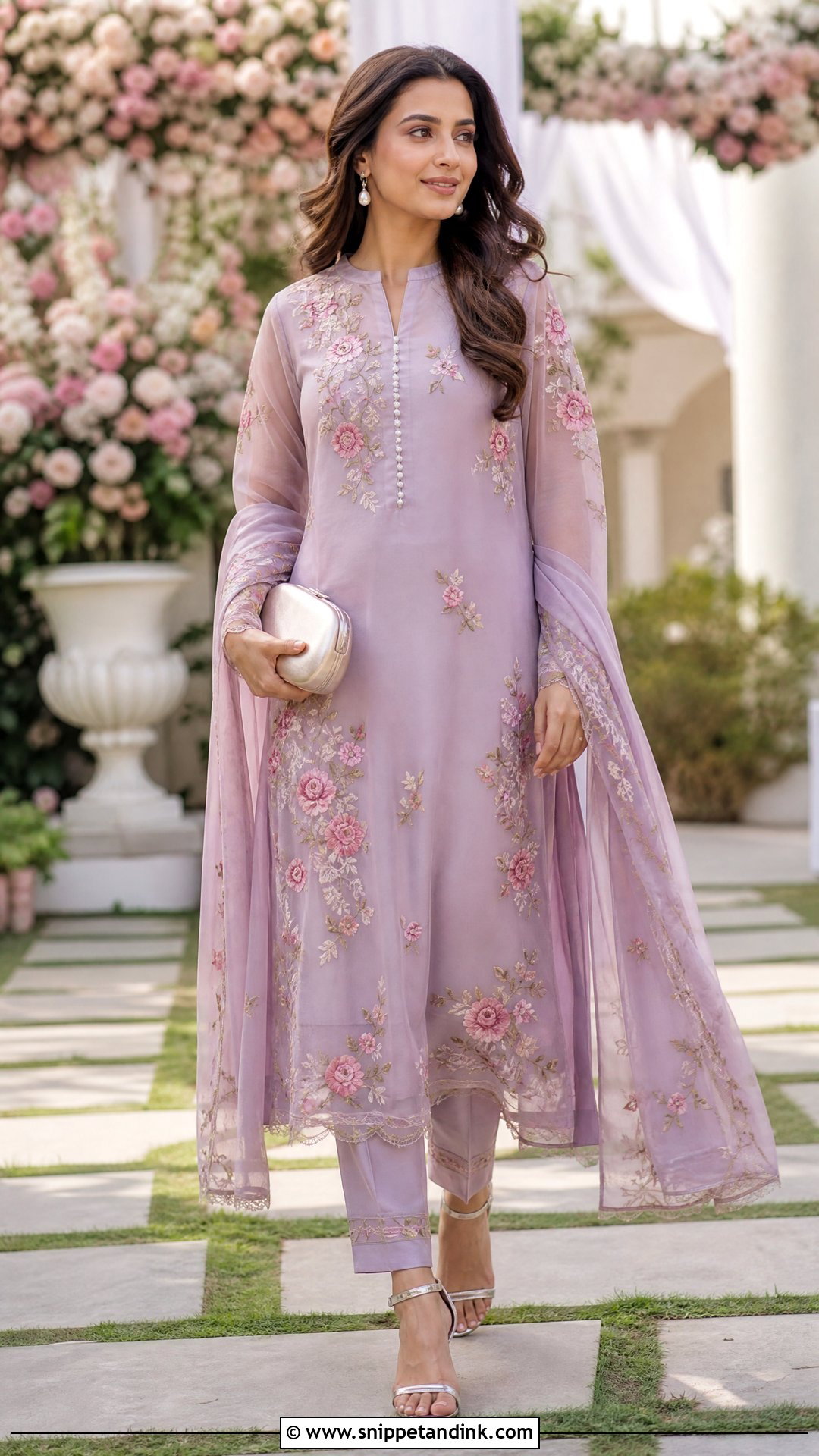
Organza is a daytime fabric to me. In natural light a pastel kurta with floral threadwork shows a texture that disappears under yellow hall bulbs. Choose a straight or A-line cut and keep the bottom plain with cigarette pants. Organza is crisp, so drape the matching dupatta loosely; pin it tight and it stands off the shoulder like a stiff collar. Lining is where cheaper organza suits let you down. Ask for one matched closely to the outer shade, or you’ll see a pale band wherever it ends. Lavender, powder blue and sage all photograph cleanly outdoors, and low heels or embroidered flats help if there’s a long stretch of standing.
7. Jacket Wedding Salwar Suit With Palazzo Pants
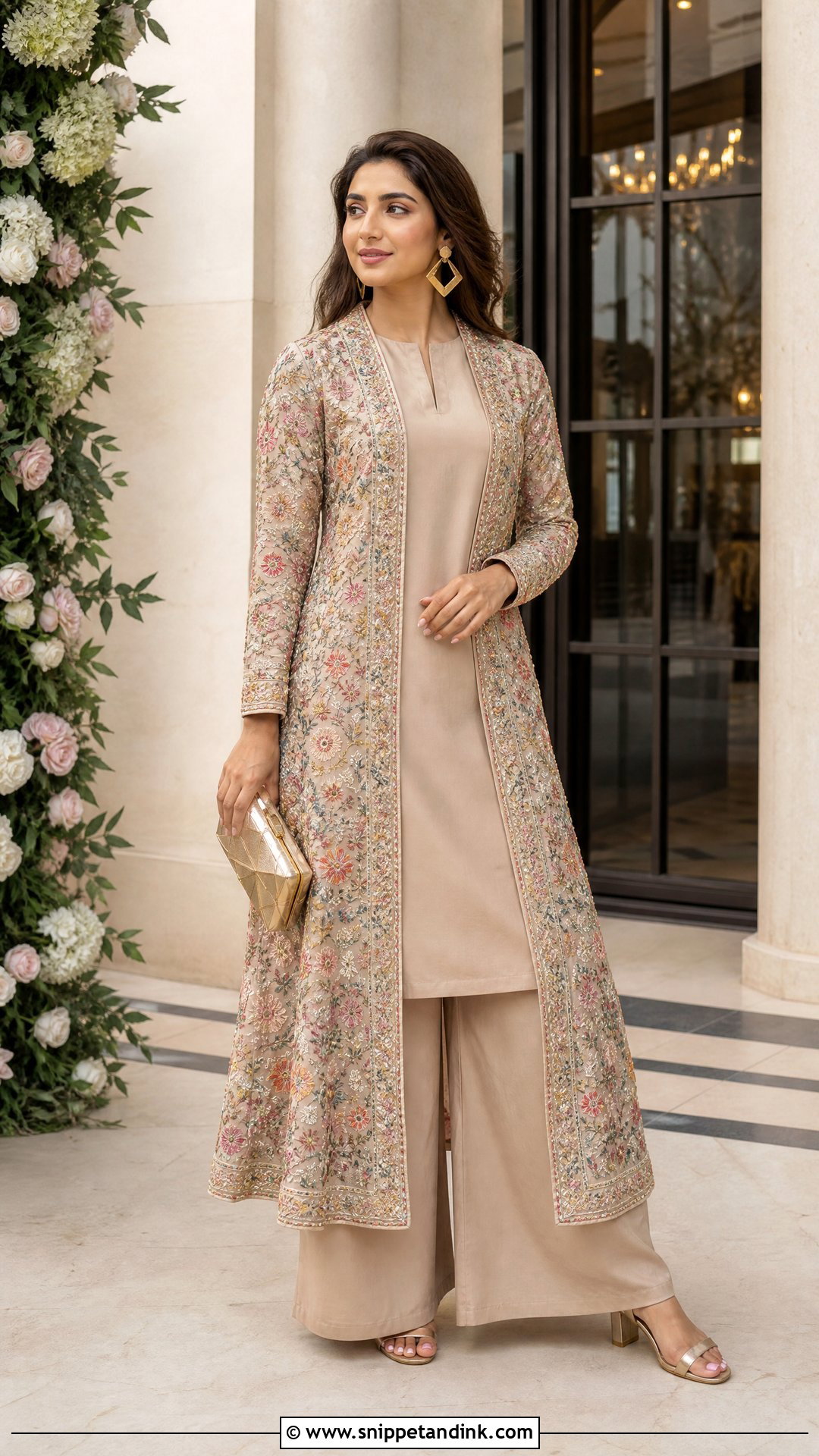
A long open jacket adds structure without the fuss of managing a dupatta all evening. Build it on a simple sleeveless or short-sleeve inner kurta and flowing palazzos, with the jacket falling below the knee. Let the jacket carry the mirror work or zari and leave the base pieces plain, or the three layers start competing. In the fitting room I always lift my arms: a jacket cut tight at the armhole rides up every time you wave or dance. Keeping the inner kurta and pants in one color draws a long vertical line that flatters most figures. A dupatta is optional here, and block heels with geometric earrings finish it.
8. Cape Wedding Salwar Suit With Cigarette Pants
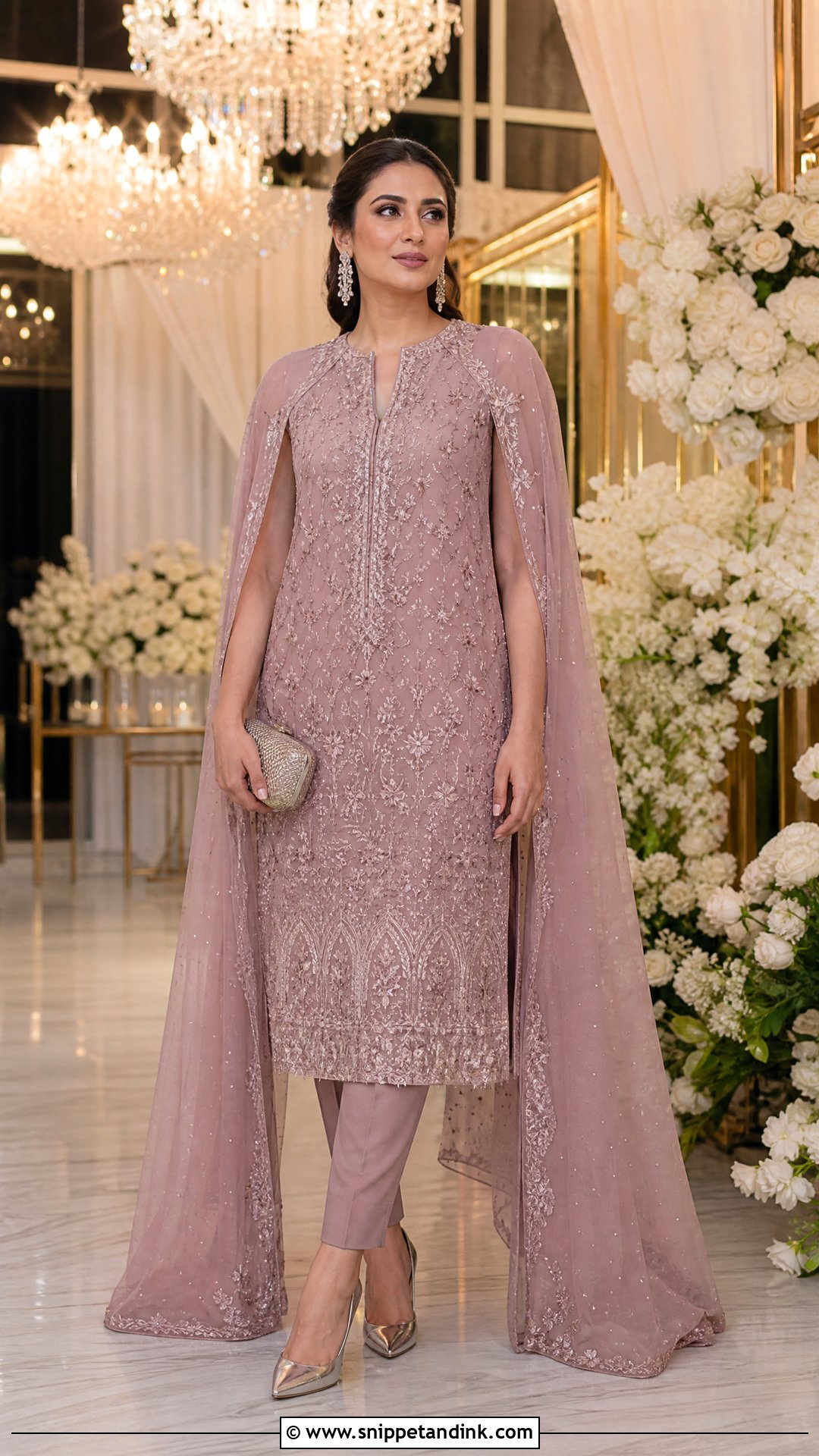
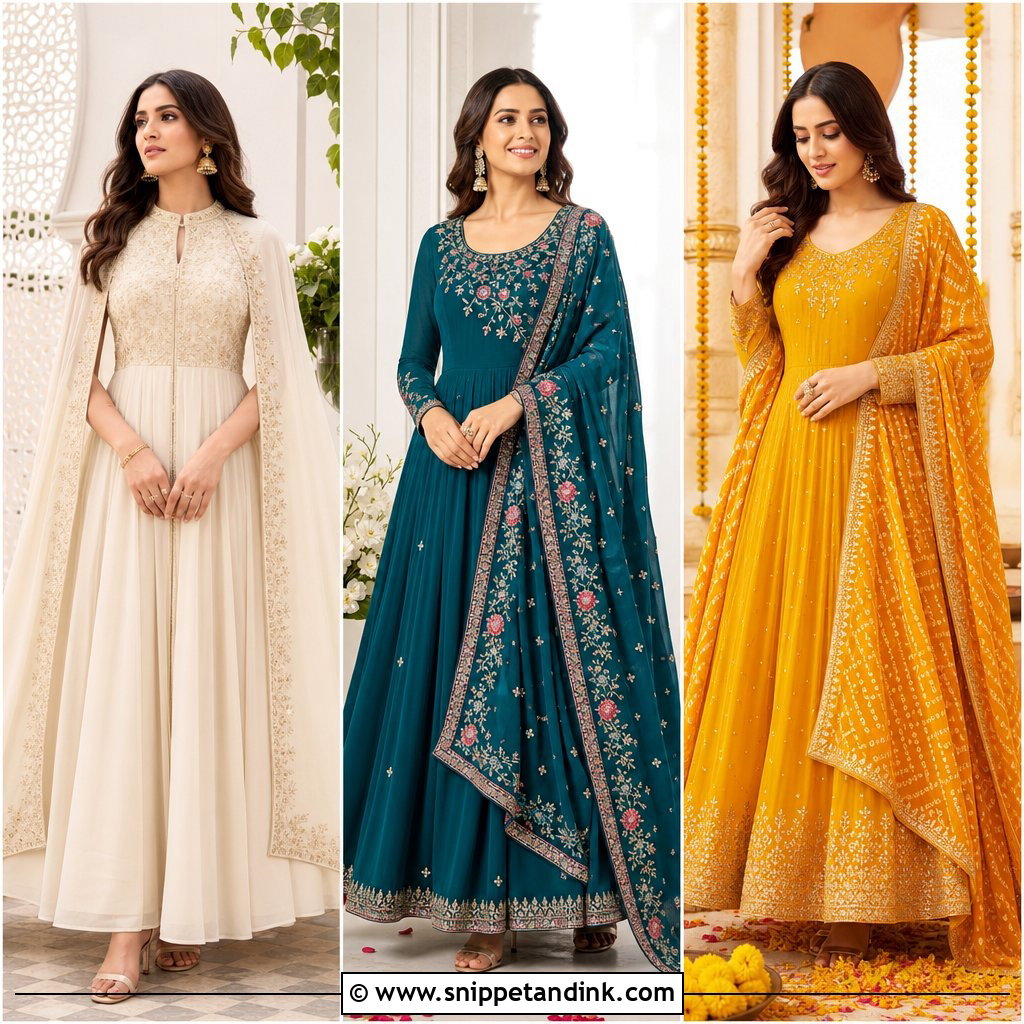
A sheer cape replaces the dupatta and gives you movement without anything sliding off your shoulder. Pair an embroidered straight kurta with tailored cigarette pants and a matching cape. I’d pick a cape with a decorated border or scattered beadwork, because an all-over embellished one is heavy at the shoulder seam and drags the neckline backwards. Champagne and mauve look polished at a party, and sleek hair keeps the neckline visible. Broad shoulders suit a softly falling cape with no structure at the shoulder. Watch the length as well. It should end low enough to flow but still let the cut of the suit show underneath.
9. Gharara Wedding Salwar Suit With Short Kurta
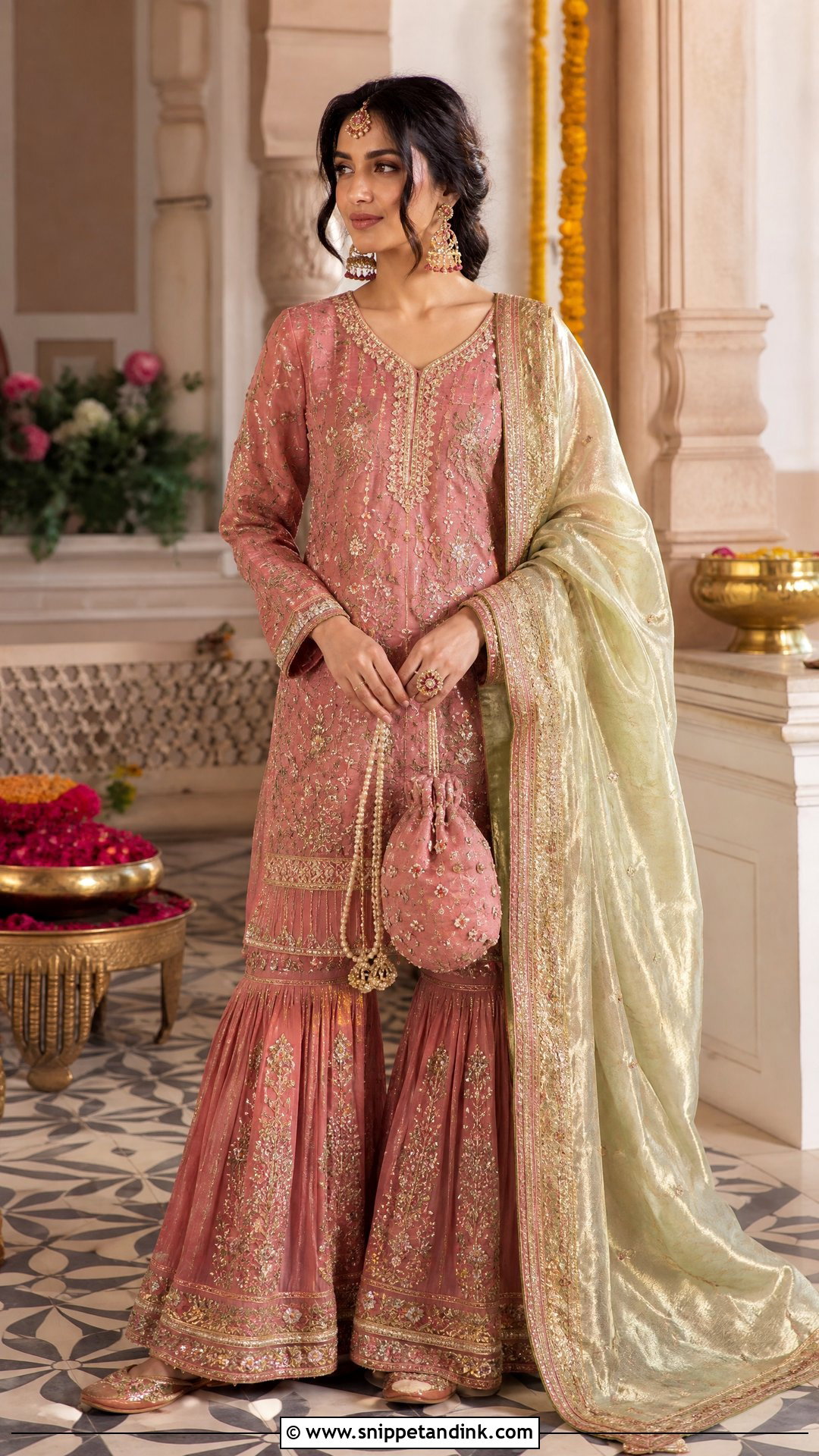
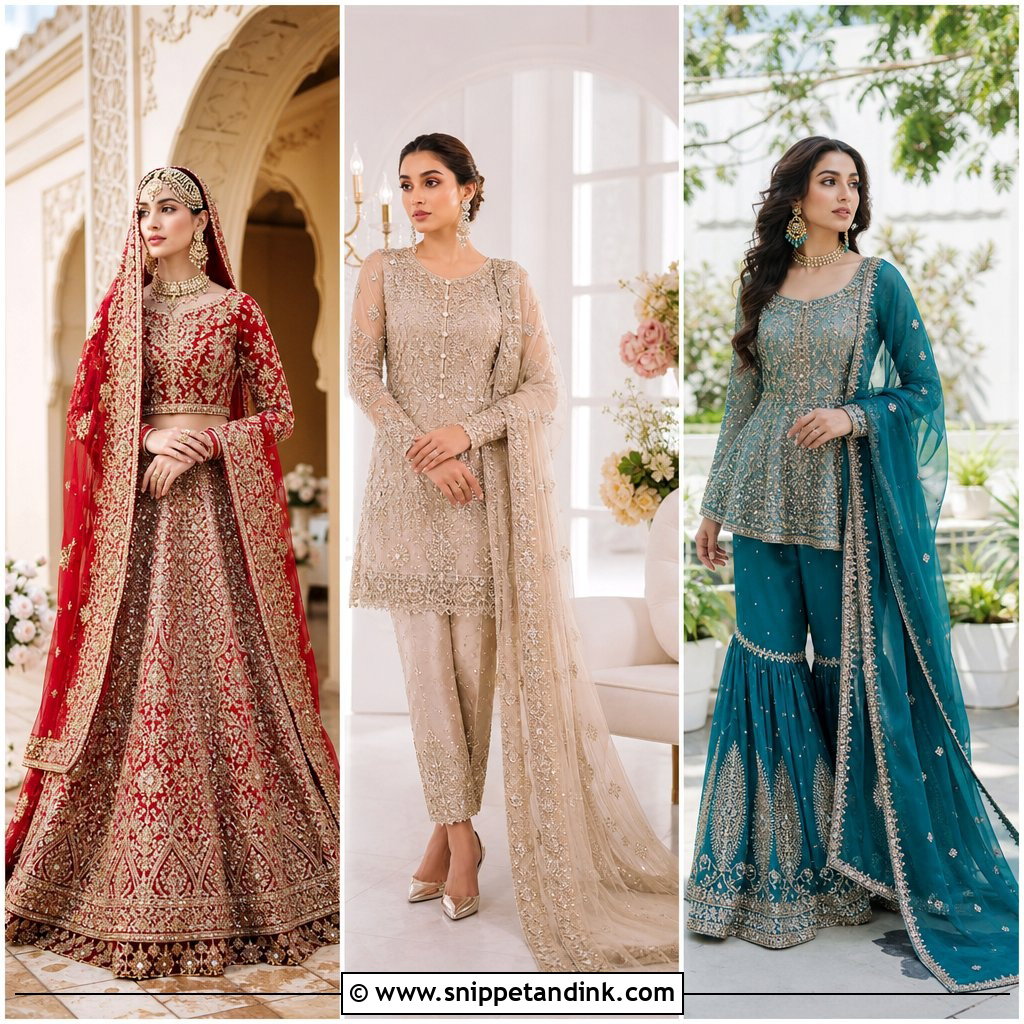
The gharara stands or falls on one seam. The pants fit closely down to the knee and then open into a pleated flare, and that joint has to sit right at your knee. Too high or too low and the flare buckles as you walk and the pants pinch when you sit, so have a tailor check it even on a ready-made set. Pair it with a short embroidered kurta that leaves the construction visible, and add a contrasting dupatta with a zari edge. Embellished juttis, a beaded potli and classic jhumkas keep the look traditional. I like it most for a family wedding or sangeet where older relatives will recognise the craft.
10. Punjabi Patiala Wedding Salwar Suit
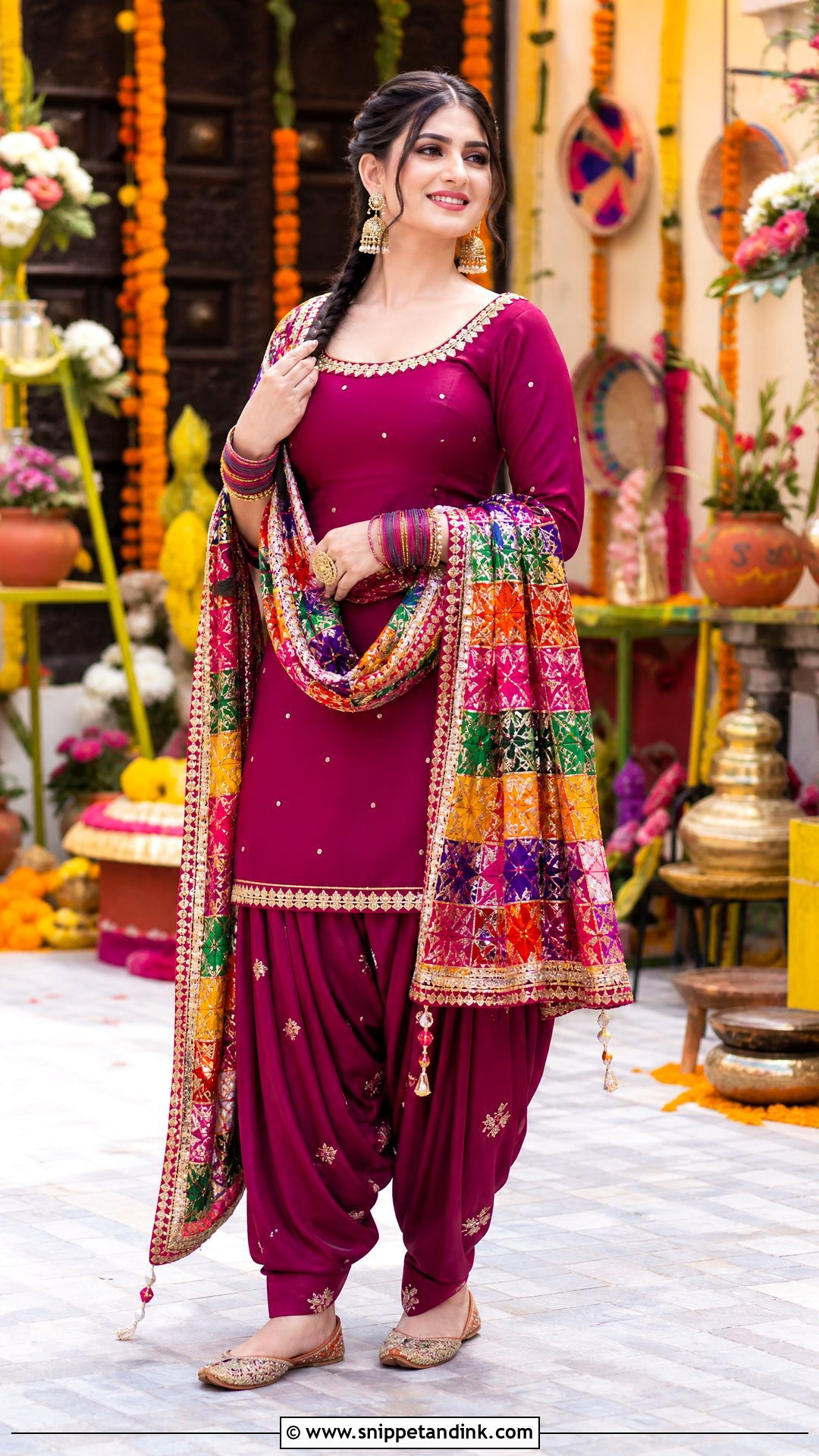
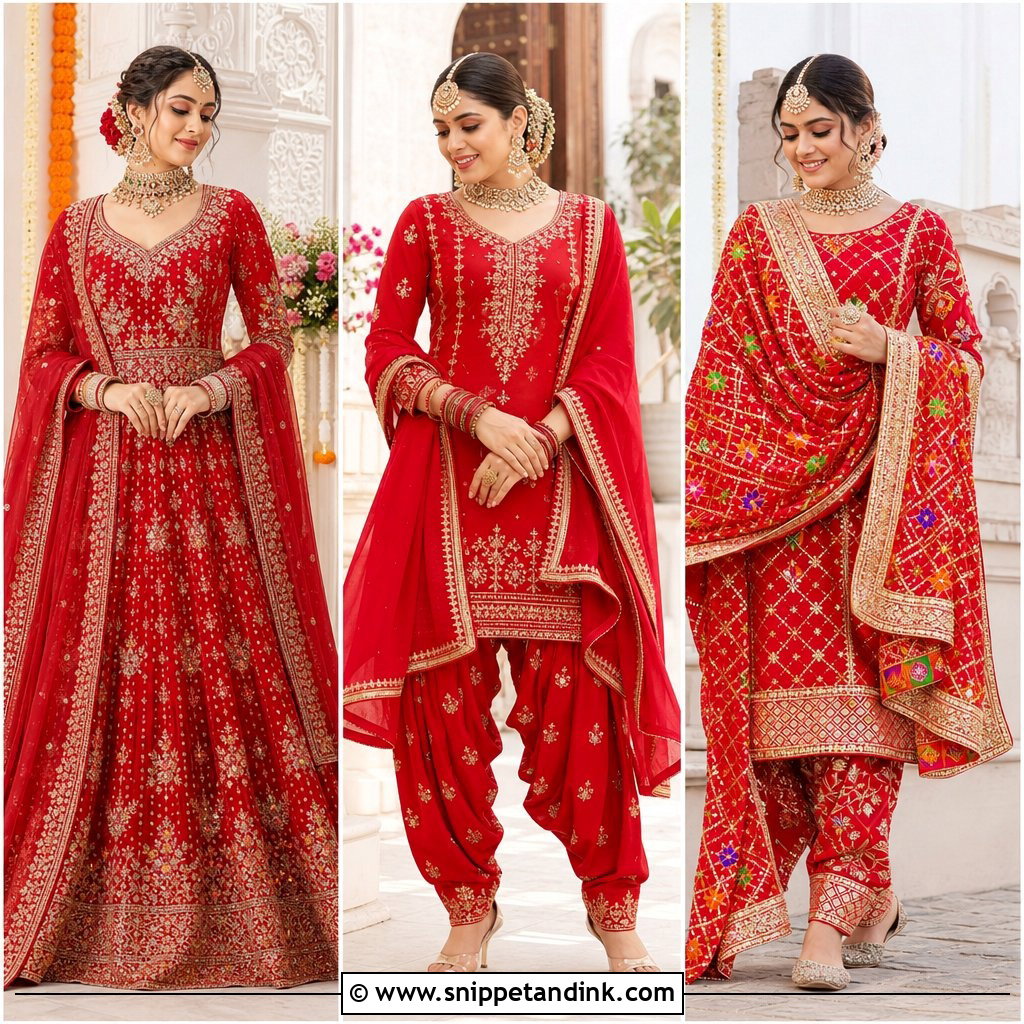
Color and pleats are the whole point of a Punjabi Patiala suit. Choose a short kameez gently shaped at the waist, with embroidery at the neckline, sleeves and hem, over a deeply pleated salwar in a silk blend or soft crepe. A phulkari dupatta makes a strong focal point; when it’s multicolored, I pull one shade from it for the kameez and salwar. The salwar uses a lot of fabric, so pure satin versions can feel hot and slippery, while a crepe blend gathers neatly into the ankle cuff. If that cuff is cut too wide, the pleats collapse into a puddle over your shoes. Juttis and stacked bangles suit the lively mood.
11. Chikankari Wedding Salwar Suit With Palazzo Pants
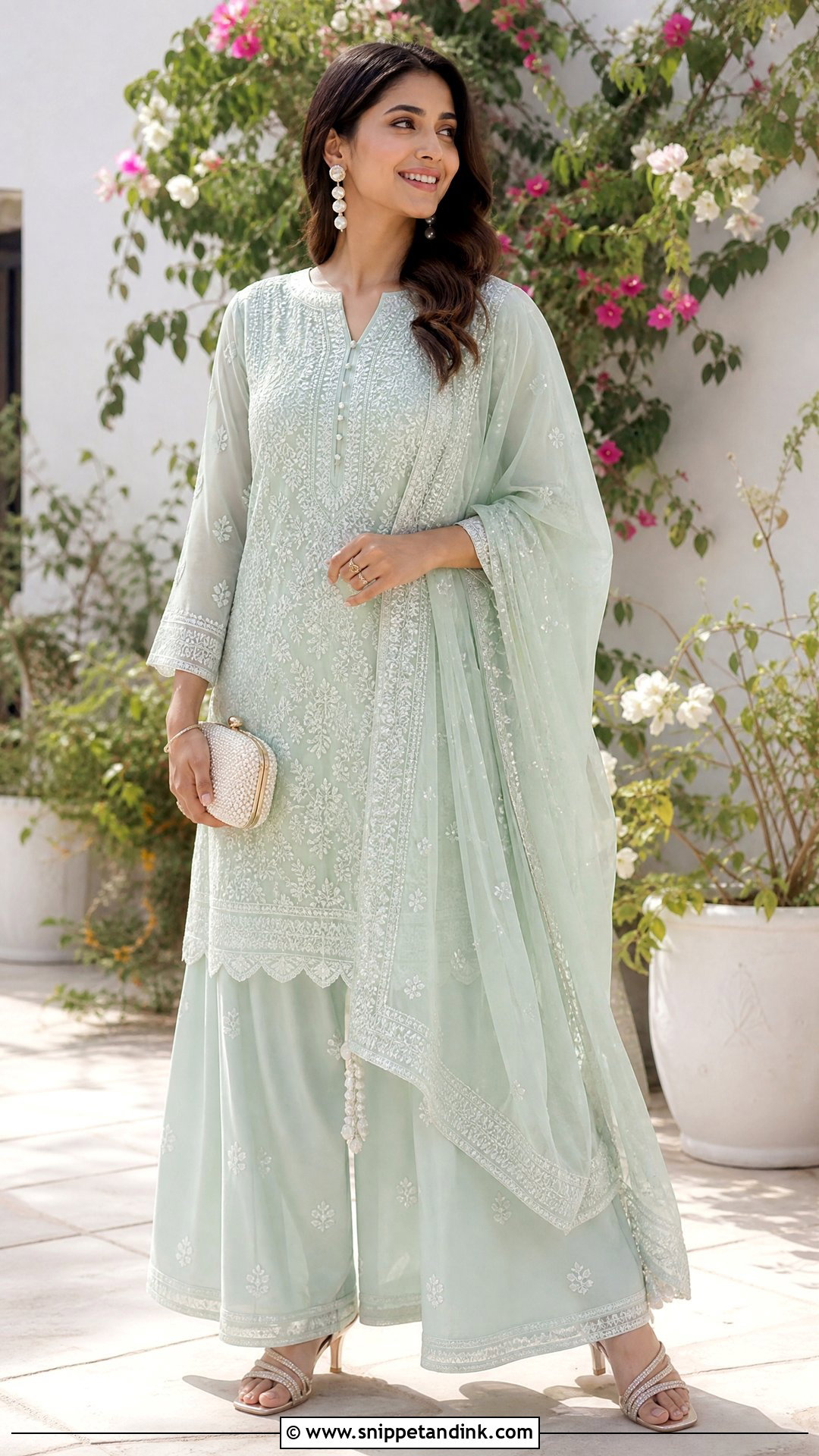
Chikankari is shadow embroidery worked by hand on fine cotton, georgette or chiffon, and its appeal is texture rather than shine. That subtlety is also its weak spot at a wedding, because on its own it can read as daywear. A dupatta finished with small sequins, pearls or a metallic border moves it into party wear. Choose a long kurta in ivory, blush or mint over coordinated palazzos, and insist on a closely matched lining, since the stitched pattern vanishes against a contrasting slip. For evening events, look for chikankari with mukaish, the tiny metal-wire work that catches light. Pearl drops and metallic sandals are all the jewelry it needs.
12. Mirror Work Wedding Salwar Suit With Sharara
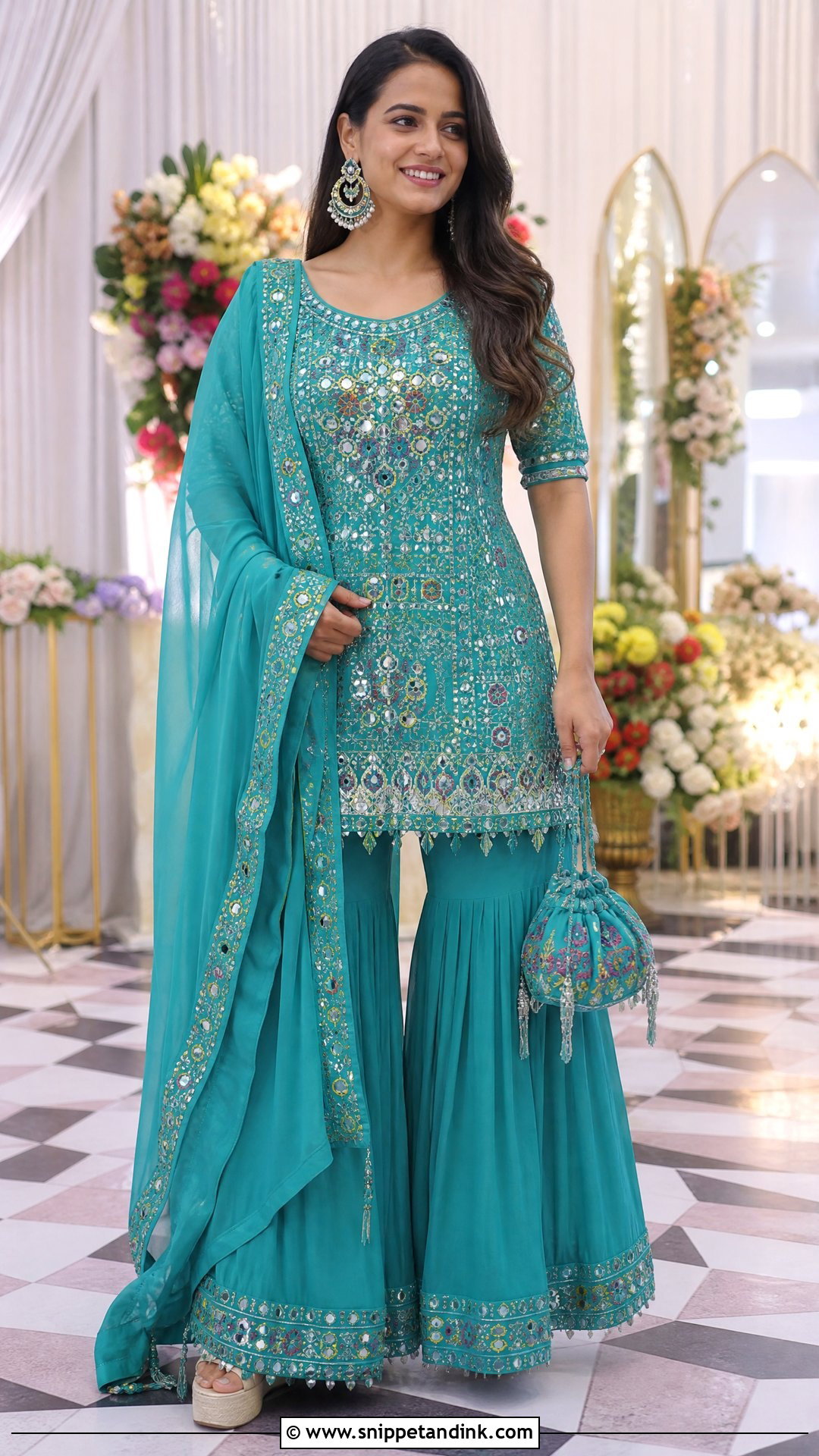
Mirror work comes alive under fairy lights, so I save it for the pre-wedding functions. Start with a fitted short kurta with evenly spaced mirrors and colored thread, then add a fluid georgette or crepe sharara and a light dupatta with a matching border. Keep the pants plain if the kurta is busy. When you try it on, run your fingertips over the inside of the kurta. Each mirror should have a smooth stitched edge, because a rough backing scratches skin and snags the dupatta all night. Skip the heavy necklace, which competes with the reflective neckline, and wear a high ponytail or braid that stays out of the way while you dance.
13. Zardozi Wedding Salwar Suit With Straight Pants
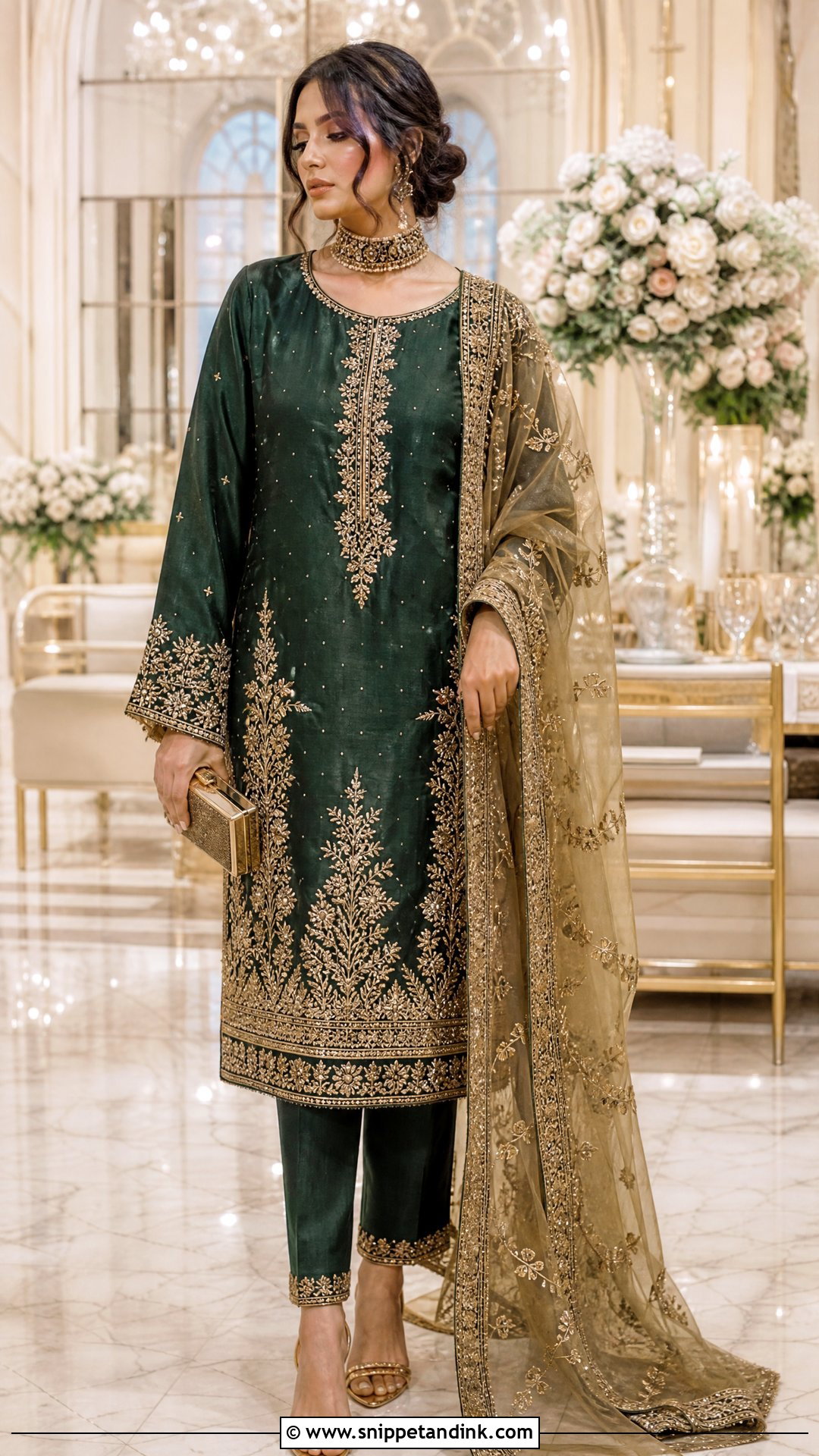
Zardozi is raised metallic embroidery, and the real thing has noticeable weight. I keep it for the main ceremony or reception, set on silk or raw silk with the work concentrated at the neckline, sleeves and lower border. Straight pants give it a clean base. Since the embroidery stiffens the fabric, the armholes need a touch more room than a plain kurta would, otherwise reaching for a plate at the buffet becomes awkward. A soft lining stops the metal threads scratching your arms. Pick one strong jewelry piece, perhaps a choker, and a net or tissue dupatta with a narrow edge. Deep red and forest green show the gold best.
14. Pastel Floral Wedding Salwar Suit
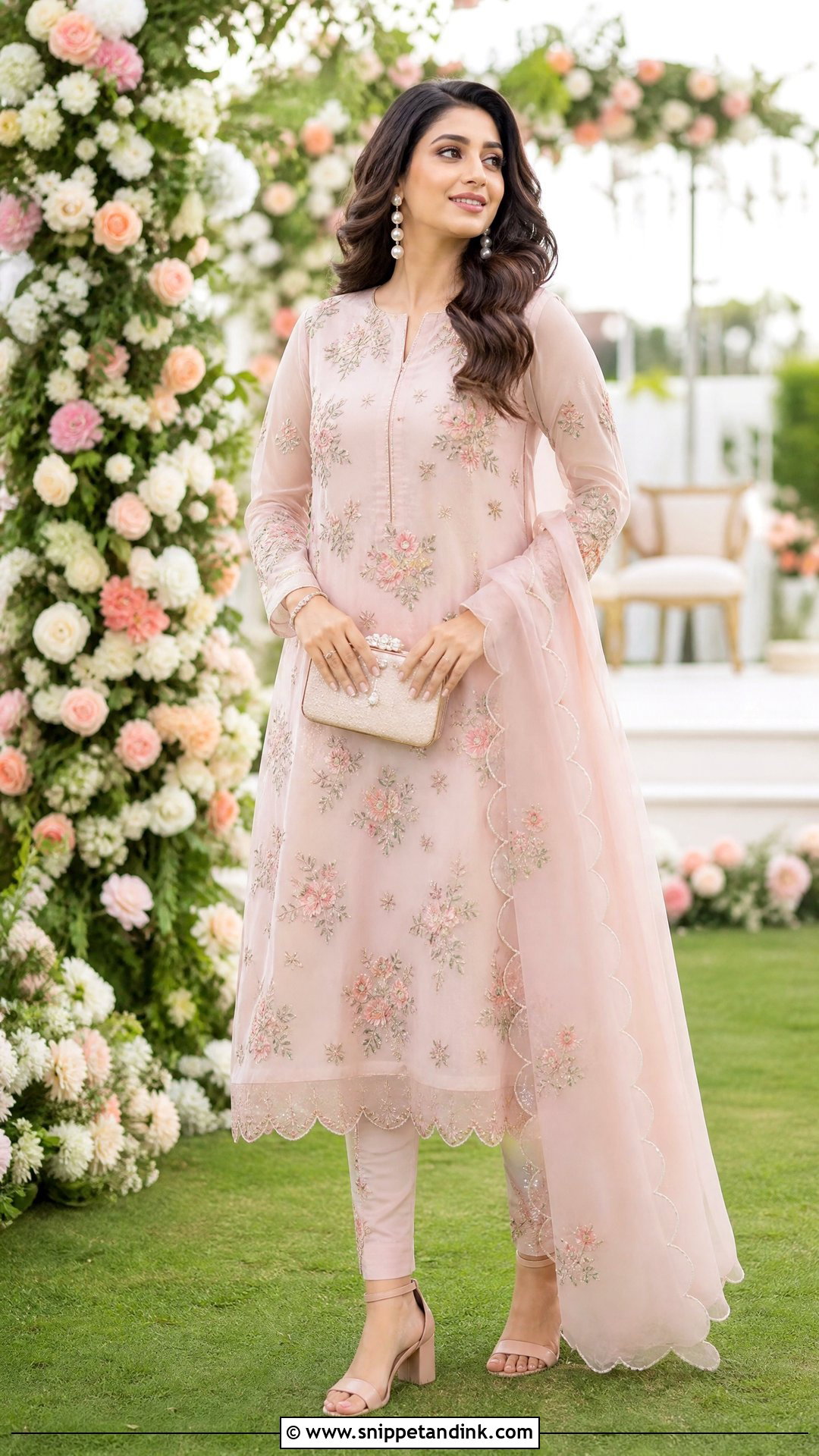
Pastel florals belong outdoors in daylight, where sun brings out the shading in the threadwork. An A-line kurta with flowers across the bodice and hem sits well over slim pants or soft palazzos in a matching solid, with a sheer scalloped dupatta that doesn’t cover the main design. Motif scale changes the mood more than color does. Small scattered flowers look quiet; large placed blooms feel contemporary. Some pastels drain color from the face in flash photos, so hold the fabric up near your face in daylight before you commit. Silver or pearl accessories sit easily with peach, lilac and mint.


15. Black Sequin Wedding Salwar Suit
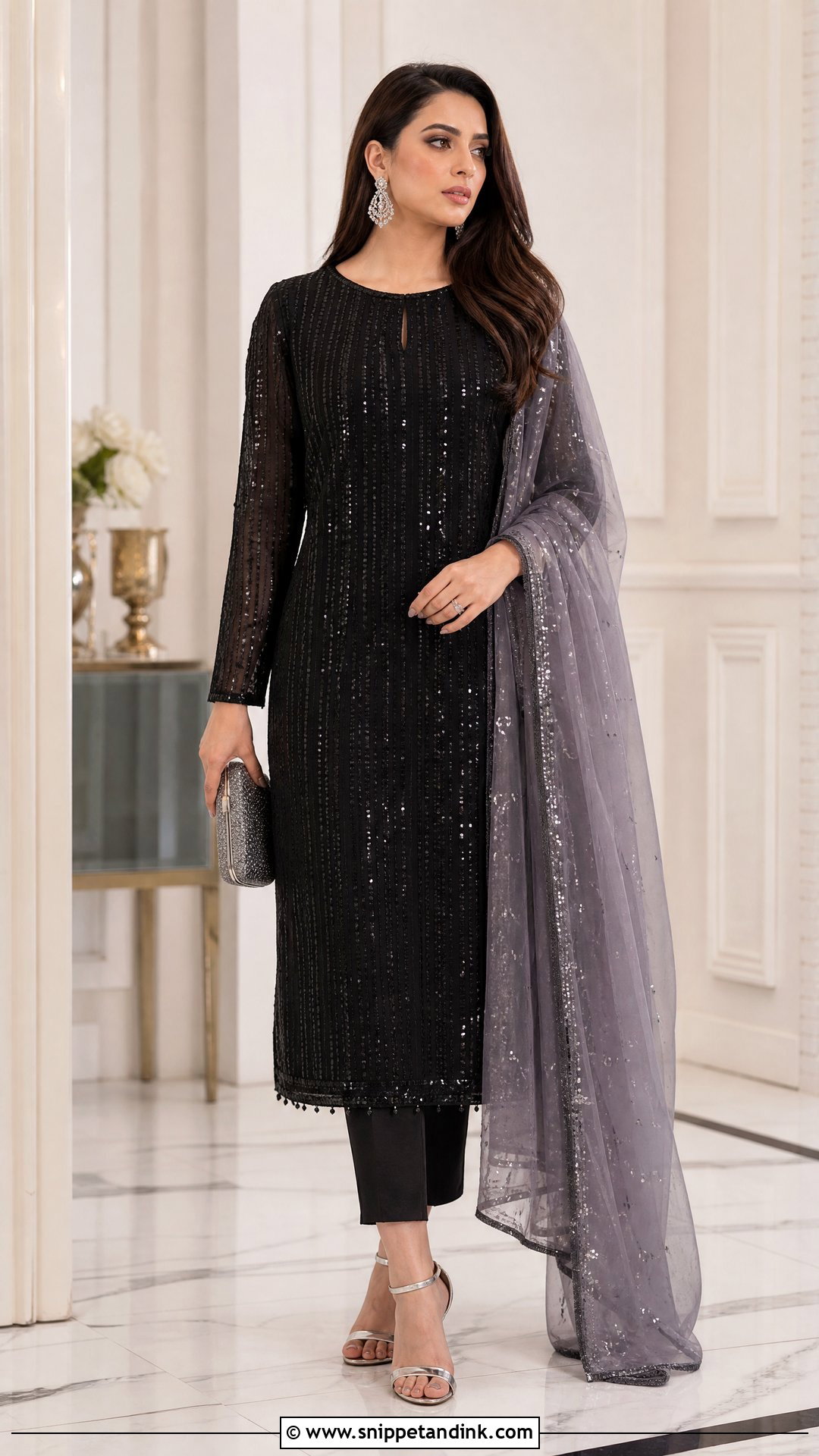
Black is still frowned on at some family weddings, so check the invitation and ask quietly before wearing it. Where it’s welcome, a black sequin suit looks sharp at an evening reception. Choose a straight or lightly flared kurta with sequins in vertical lines or small motifs, black cigarette pants and a smoky silver or jewel-toned dupatta for contrast. The sequins already throw a lot of light, so crystal earrings are enough. Turn the kurta inside out before you buy it. Sequin threads on the reverse can scratch, and a breathable lining with finished seams saves your skin over a long night. Precise sleeve and trouser fit keeps all-black from looking heavy.
16. Emerald Brocade Wedding Salwar Suit
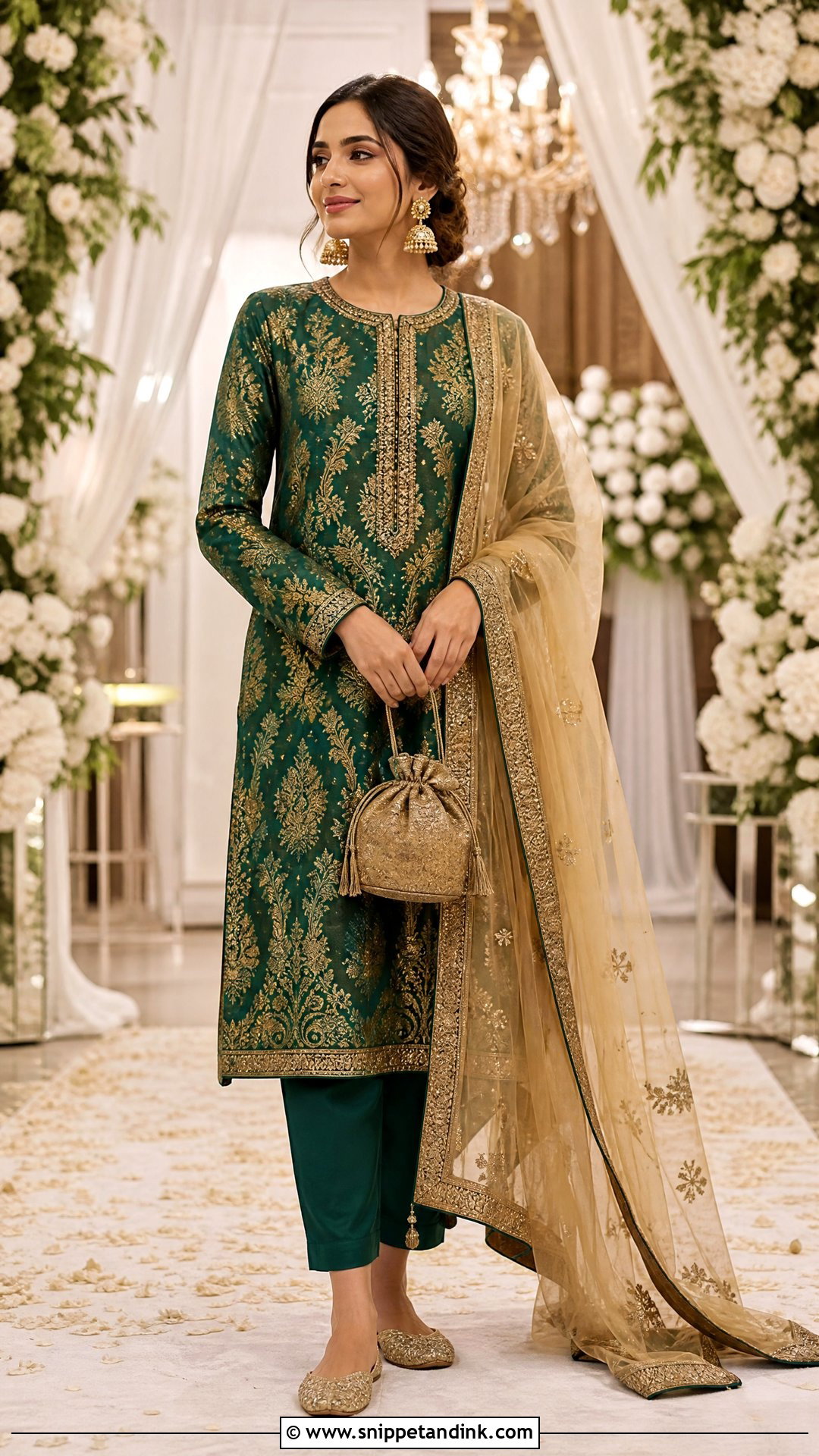
Brocade is woven rather than embroidered, so the pattern is part of the cloth and the fabric is often stiff. When I’m choosing an emerald brocade, I drape it over my hand first. If it stands away like card, a straight kurta made from it will box out at the hips. Pair the kurta with plain silk trousers or a churidar and a gold tissue or chiffon dupatta so the shoulders stay light. Gold-toned jhumkas, embroidered juttis and a small potli finish it, and a center-parted bun with a simple hair ornament suits the formality. Antique gold deepens the traditional feel, while champagne accents soften the contrast.
17. Ivory And Gold Wedding Salwar Suit
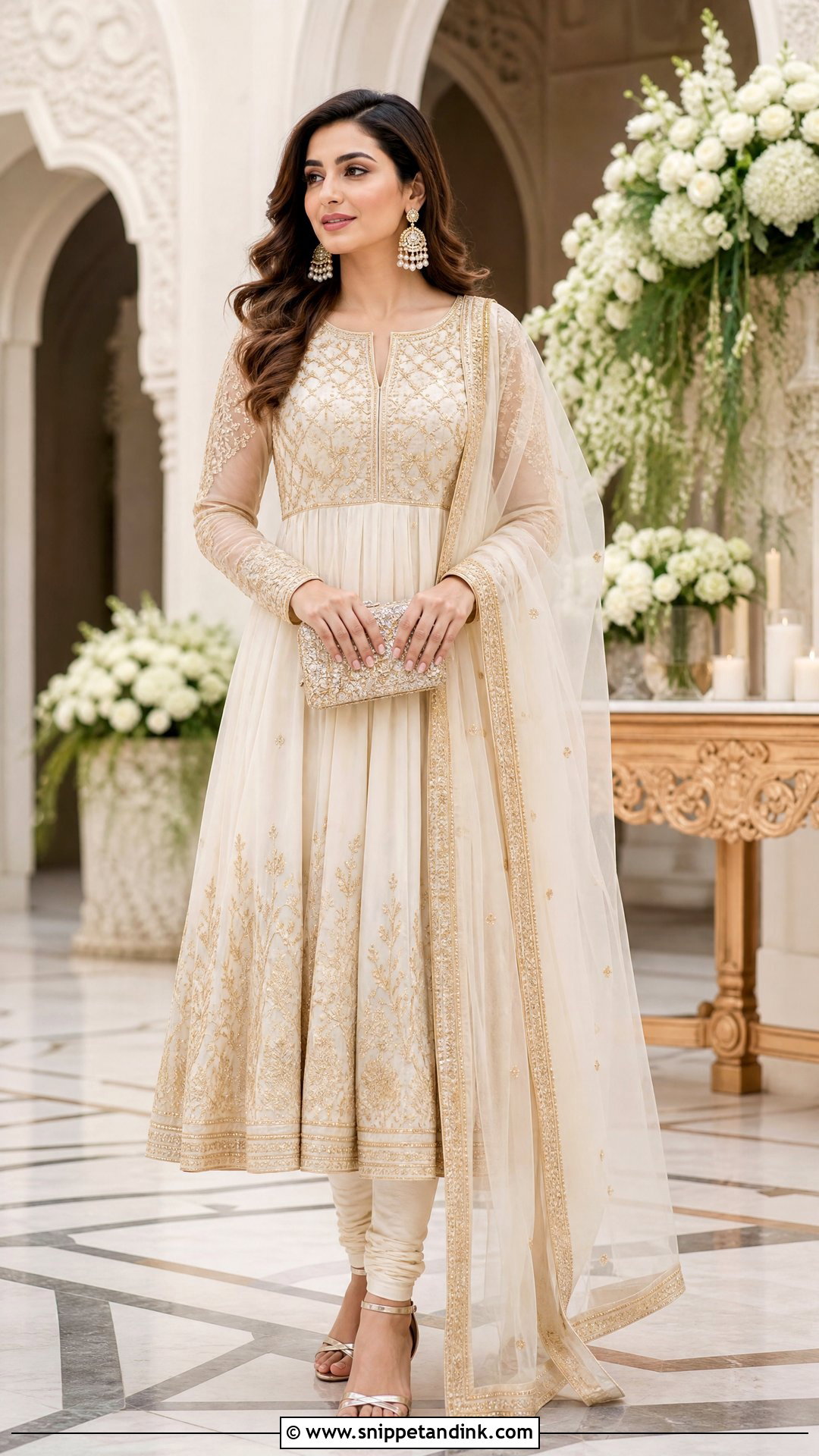
Ivory and gold is the one pairing I’d clear with the family first. Plenty of brides choose it, and a guest in near-matching colors stands out awkwardly in group photos. If it’s fine, an ivory Anarkali or straight kurta with gold thread embroidery and zari borders is graceful at formal events, worn with matching churidar pants and a sheer gold-edged dupatta. Ivory has to be fully lined and opaque, and you should check that in daylight, not only under shop lights. Mixing textures, silk against embroidered net for instance, stops a single tone from going flat. Pearl-and-gold earrings and a low bun suit it.
18. Peplum Sharara Wedding Salwar Suit
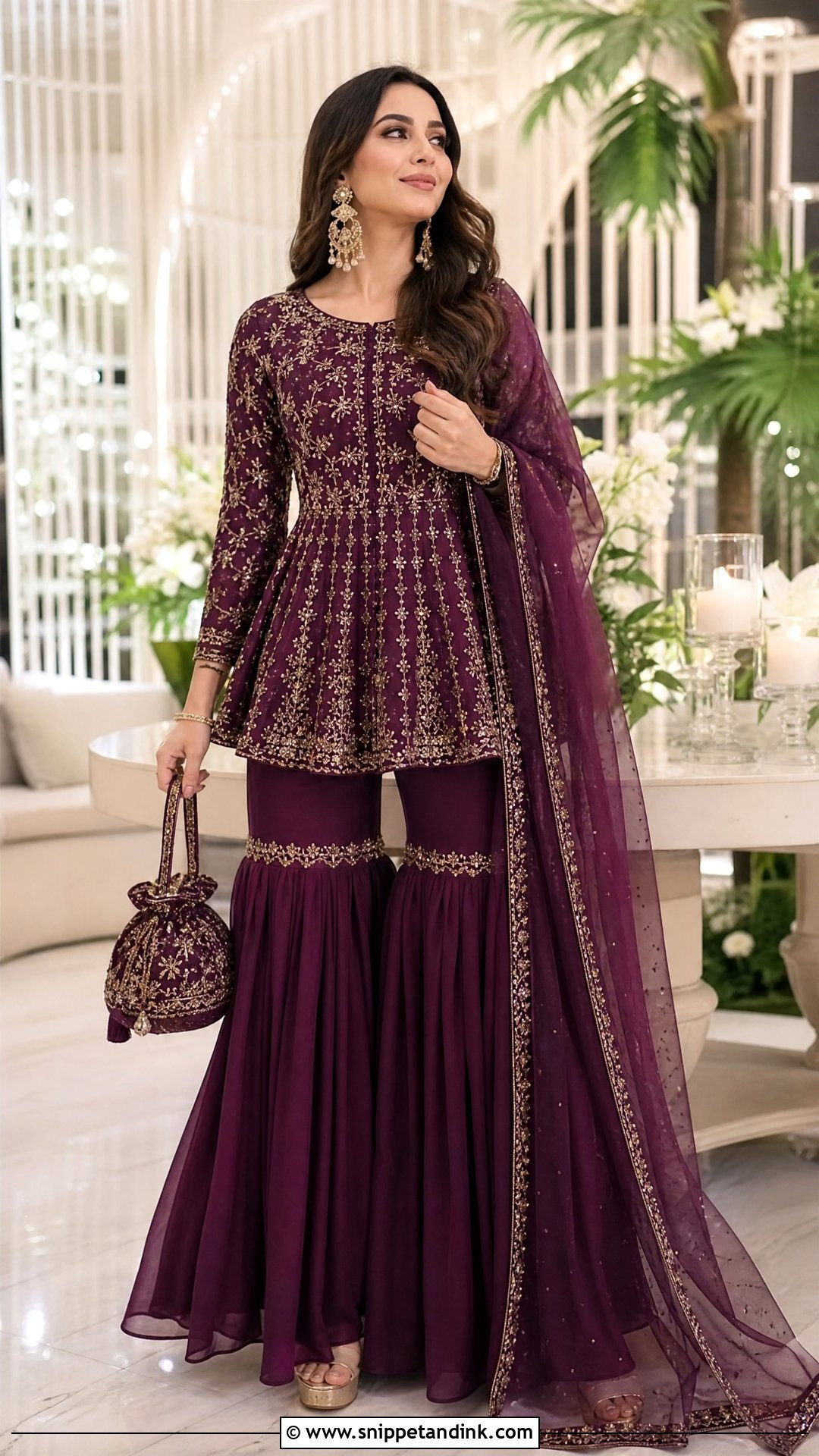
The peplum seam decides whether this suit flatters you. It should sit at the narrowest point of your torso so the flare starts in the right place; drop it too low and it cuts straight across the hip. The structured peplum kurta ends near the upper hip and goes over a high-waisted sharara in a fluid fabric, which keeps the volume light enough to move in. Embroidery at the neckline and peplum hem defines the shape. Drape a sheer dupatta over one shoulder or swap it for a short cape, and have the sharara length measured with your platform heels on.
19. Asymmetrical Wedding Salwar Suit With Dhoti Pants
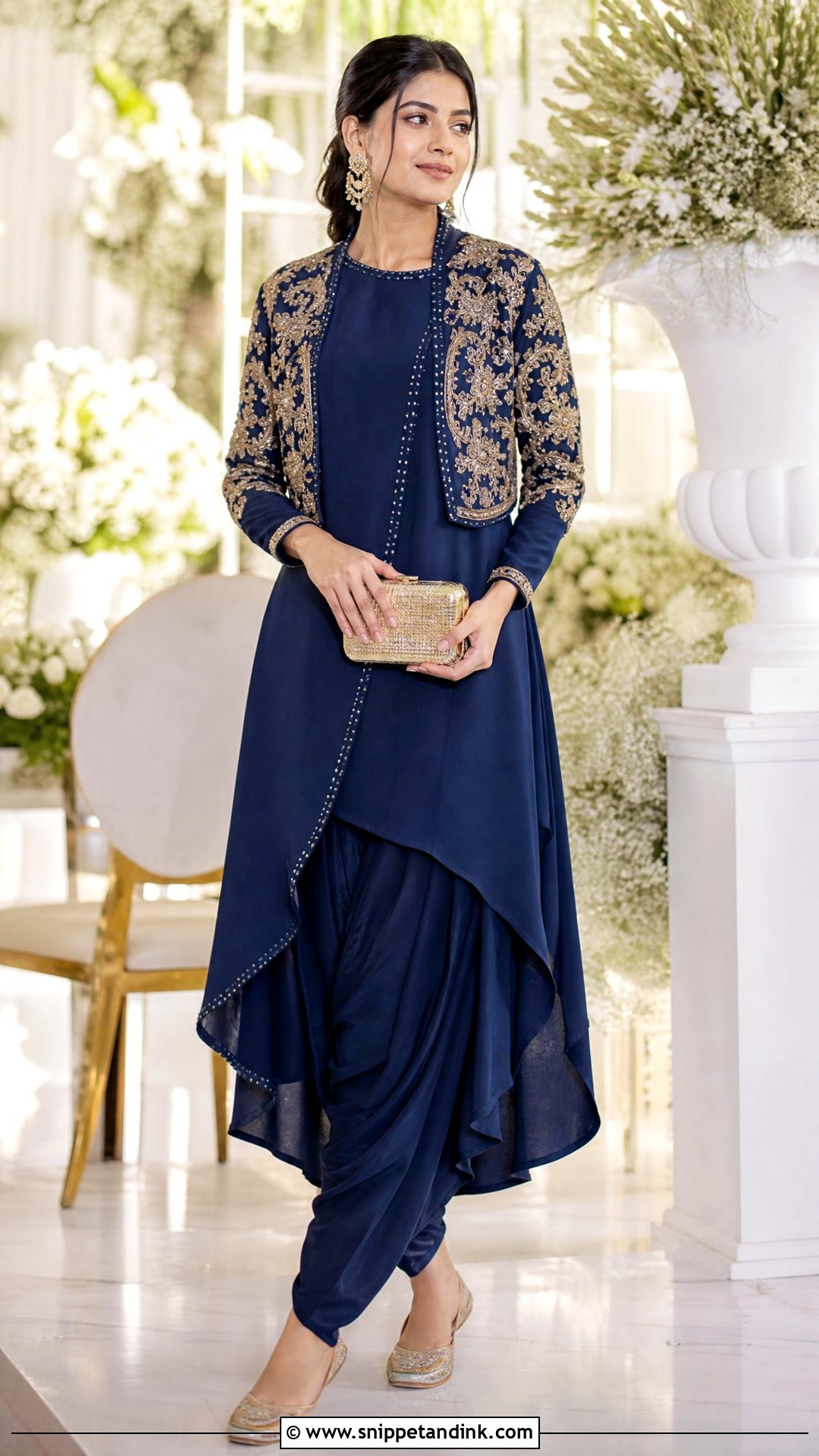
An asymmetrical kurta and dhoti-style pants modernize traditional wedding wear without abandoning it. Pick a kurta with a diagonal or high-low hem that reveals the drape of the pants. Soft crepe or georgette falls flat and works well, and since dhoti pants already carry folds, a ruffled top over them looks crowded. Add a short embroidered jacket if the event calls for more ceremony. This is the look where finishing shows most. A badly finished uneven hem looks like a mistake rather than a choice, so check it from the side and back in a mirror. Pointed juttis or block heels suit the tapered ankle.
20. Plus-Size Empire-Waist Wedding Salwar Suit
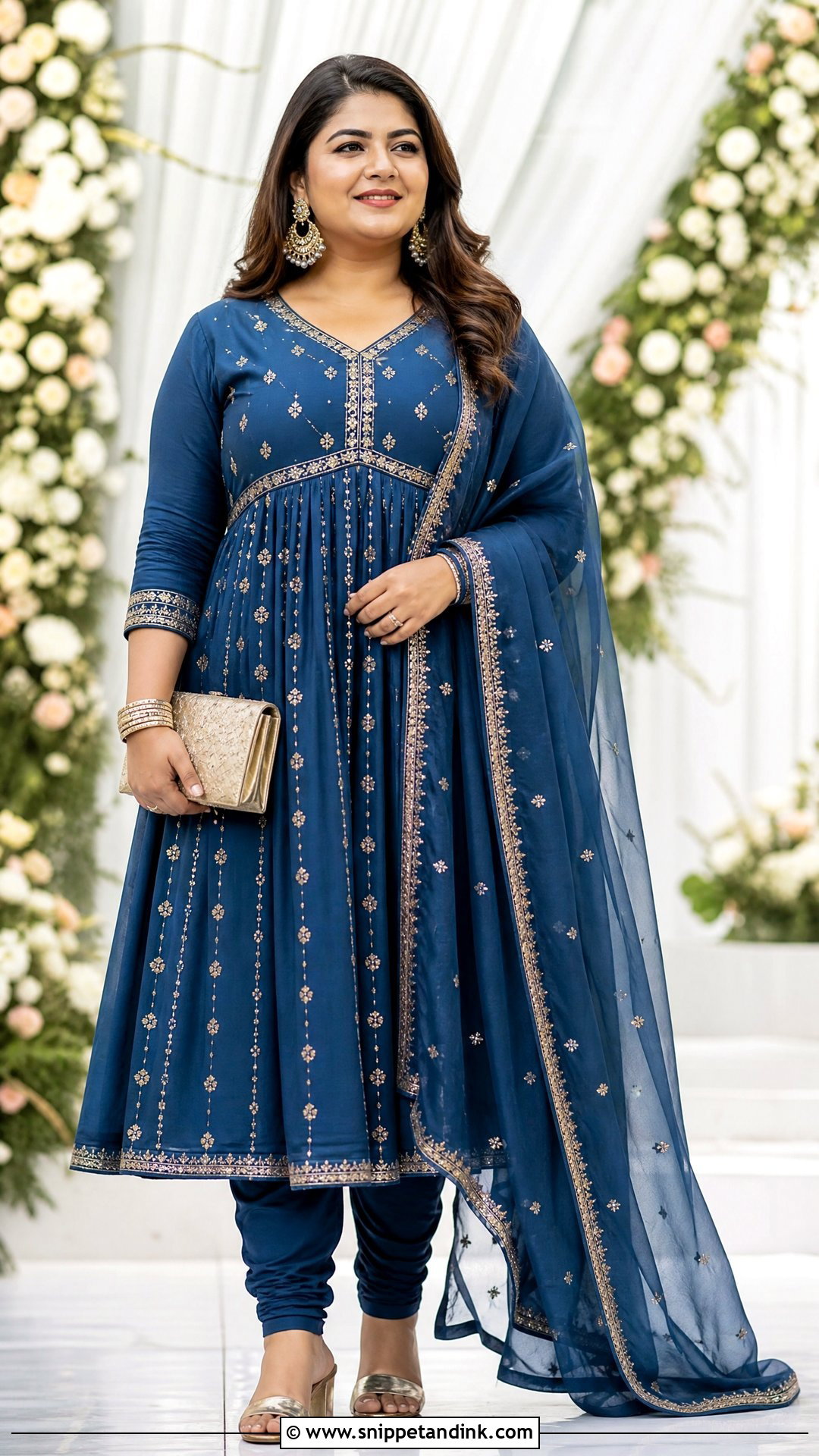
An empire-waist salwar suit defines the body just under the bust and lets the fabric fall freely from there. Choose an Anarkali-style kurta fitted through the shoulders and upper bodice, with the flare starting right below the bust. The mistake I see most often is sizing up for comfort. An oversized kurta slides off the shoulders and drops the flare too low, hiding the shape the empire line is supposed to create. Get the shoulder, sleeve and bust right and let the skirt provide the room. Vertical embroidery and an open neckline lengthen the torso, and block heels or supportive embellished flats carry you through a long celebration.
What a Tailor Can Change on a Ready-Made Suit
Almost every ready-made salwar suit needs some alteration, and knowing what is easy saves you from buying something that can’t be rescued. Taking in side seams, shortening sleeves, raising a hem and adjusting the salwar or churidar length are routine jobs. Letting a kurta out is harder, because most come with only a small seam allowance, and adding length to a kurta or Anarkali is rarely possible without a visible border.
Embroidery limits alterations too. A tailor can’t cut through zardozi or mirror work cleanly, so if the work runs over the side seam, buy the size that fits your bust and shoulders now. During wedding season tailors get booked up, so drop the suit off at least two to three weeks ahead and take the shoes you plan to wear to the final fitting.
Packing Embellished Suits for a Wedding Weekend
Heavy suits travel better folded than hung. A weighty Anarkali or zardozi kurta on a hanger stretches at the shoulders over a few days. Fold each piece with acid-free tissue between the layers, embroidery facing inwards, and wrap it in a cotton cloth or muslin bag rather than plastic, which traps moisture and can tarnish metallic threads.
On arrival, hang the lighter pieces in a steamy bathroom to release creases, and steam heavy suits from the reverse. Never press an iron straight onto sequins or mirrors. After the wedding, air everything before storing it, and send zari and zardozi to a dry cleaner who handles embellished wear.
One Focal Point Per Outfit, and a Tailor to Make It Fit
Most of the choices above come down to the function. A palazzo or sharara set for the mehndi and sangeet, plus silk, brocade or zardozi for the ceremony and reception, will see you through most wedding weeks. Give each outfit a single focal point, be it the dupatta, the jacket or the embroidery, and let shoes, jewelry and bag support it. Then set aside part of the budget for a tailor. An elaborate suit that pulls at the shoulders looks cheaper than a plain one that fits, and you’ll feel the difference long before the night is over.
You'll Like These Ideas:





Leave a Reply