
A Punjabi wedding isn’t one outfit, it’s a week of them, and each function asks something different of a suit. The jaggo is for dancing through the streets, the Anand Karaj means sitting on the floor of the gurdwara with your head covered, and the reception wants polish under evening lights. When I plan a client’s wedding wardrobe, I start from those demands, then bring in the cut: Patiala, sharara, gharara, Anarkali or straight kameez, with phulkari, mirror work, gota patti, brocade, velvet or soft pastel embroidery. Every suit below has a note on where it works best and what to watch for when you sit, dance and greet relatives for hours.
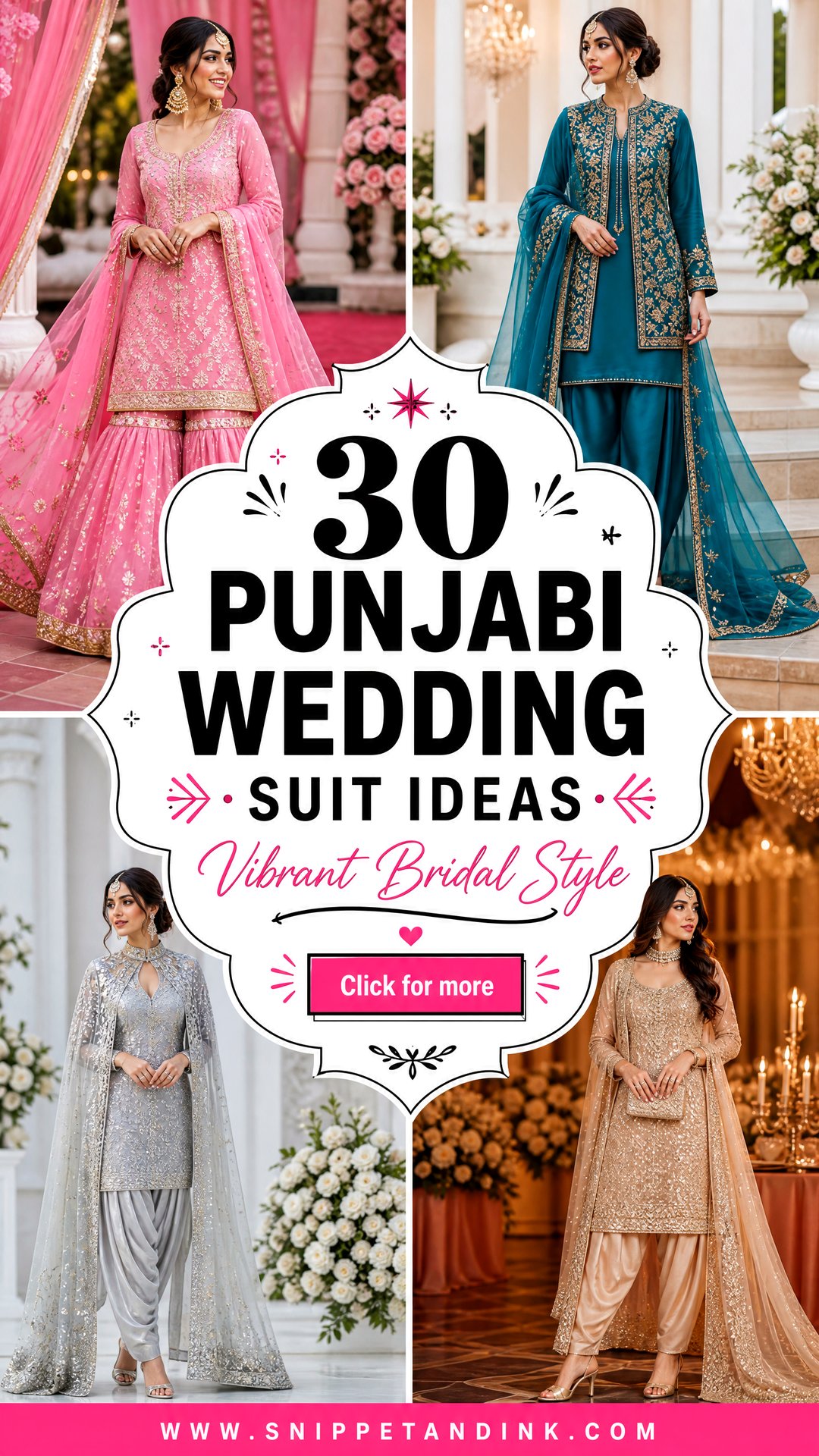
Matching the Suit to Each Function on the Wedding Calendar
When a family hands me the wedding schedule, I plan the suits function by function, because each one has its own practical demands.
- Jaggo and mehndi: dancing, late nights and sometimes outdoors. Short kurtis with Patiala salwars, phulkari and mirror work, and juttis or flats.
- Haldi: turmeric stains. Wear something washable in yellow or a pastel you don’t mind sacrificing.
- Chunni and family functions at home: comfortable straight suits or Anarkalis in rich colours, with a dupatta that stays put while you serve and greet.
- Anand Karaj: a morning ceremony in the gurdwara, where you remove your shoes, cover your head and sit on the floor. Choose a salwar, churidar or palazzo that lets you sit cross-legged, a dupatta long enough to cover your hair, and modest necklines and sleeves.
- Reception: the evening glamour. Velvet, brocade, sequins, capes and heavier work all belong here.
If you can only buy one statement suit, I’d save it for the reception and wear simpler suits with a special dupatta for the rest.
1. Red Punjabi Patiala Suit
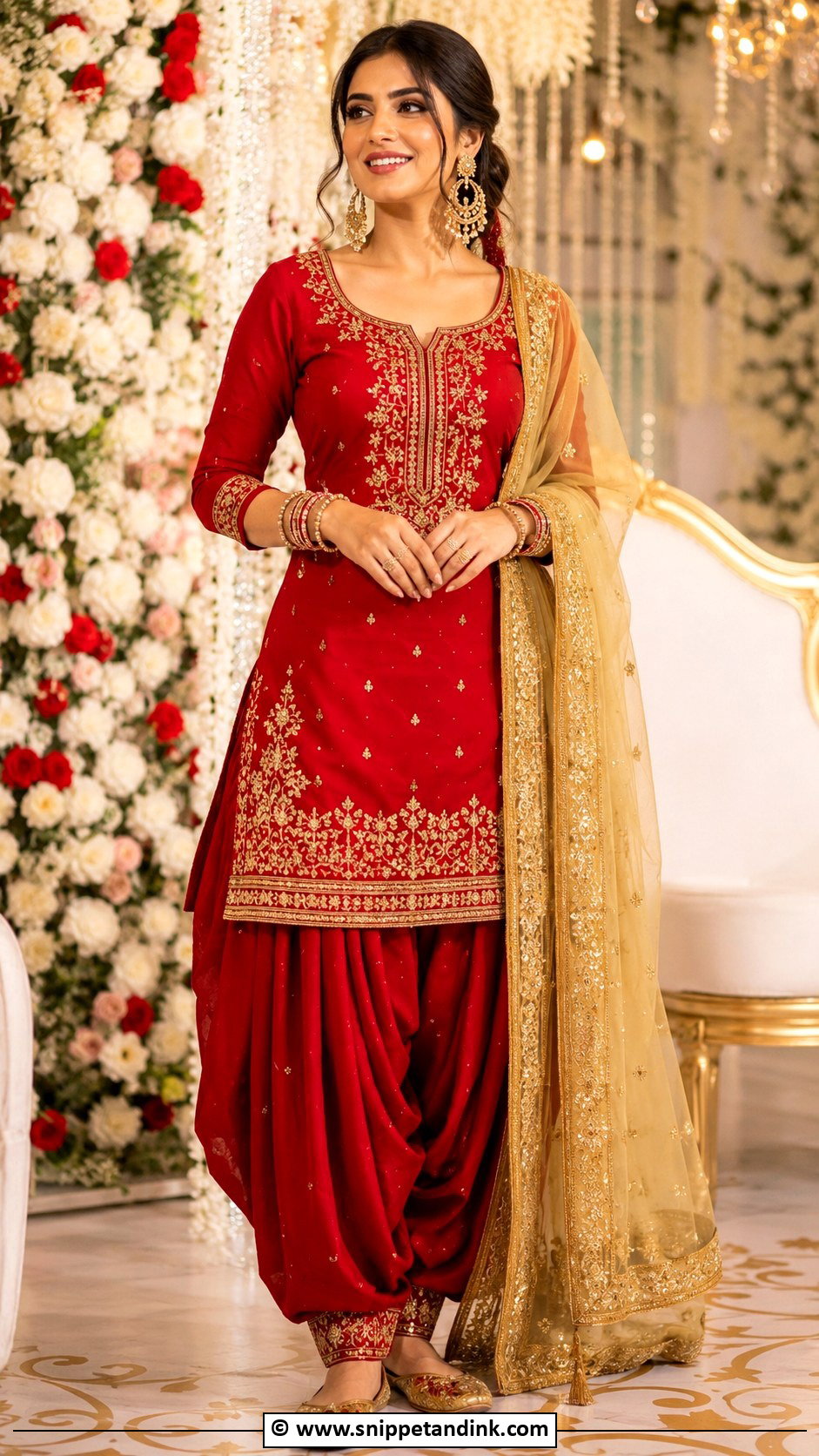
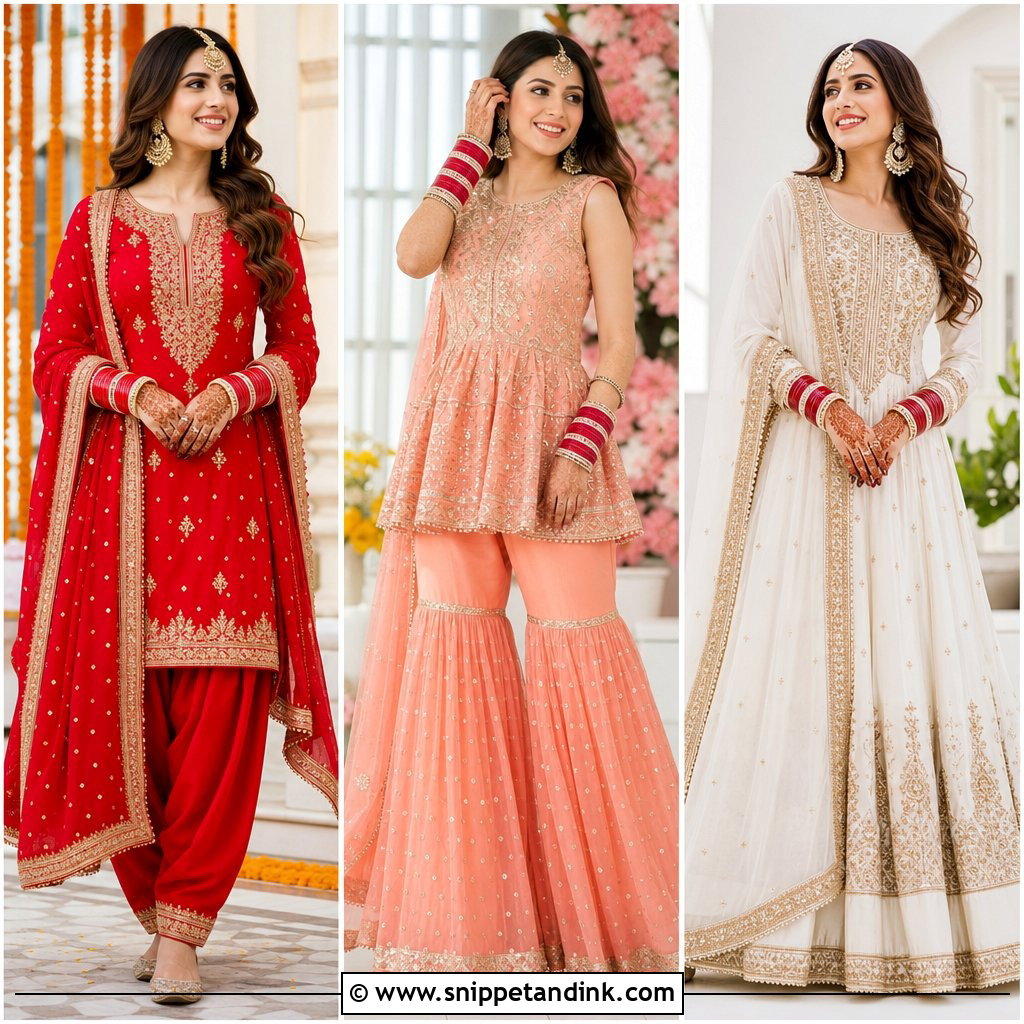
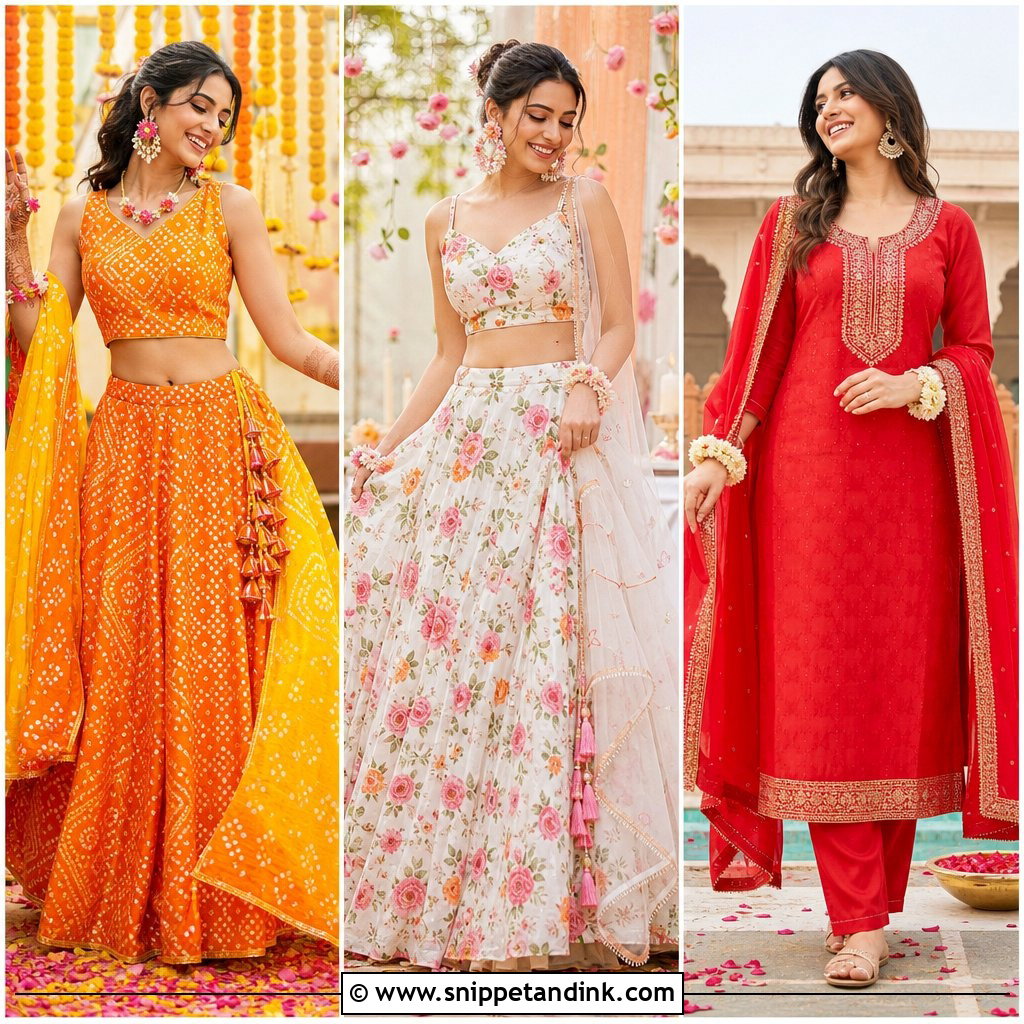
The Patiala salwar is cut from a lot of fabric and stitched into deep pleats that fall in folds below the knee, which is why a short kameez over it gives that unmistakable Punjabi outline. In red, with gold zari, dabka, gota patti or threadwork, it’s festive the moment you put it on. Keep the dupatta lighter, in organza, net or chiffon, so the outfit doesn’t feel heavy. Juttis, gold bangles, statement earrings and a low bun or soft waves finish it. Bridal red is usually the bride’s colour, so for guests I’d only suggest it at a smaller pre-wedding function, or for close family who know the bride won’t mind.
2. Pink Punjabi Sharara Suit
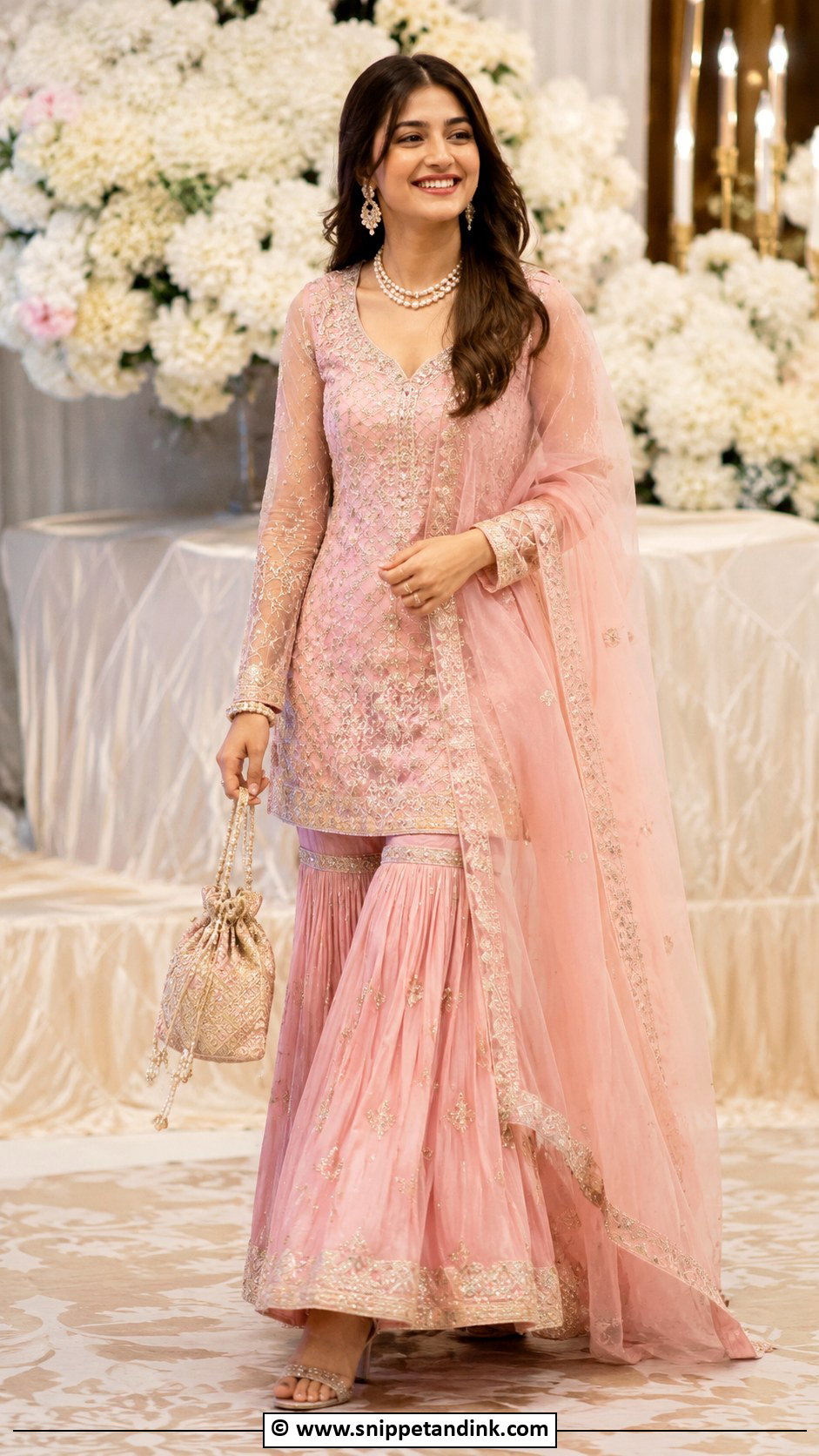
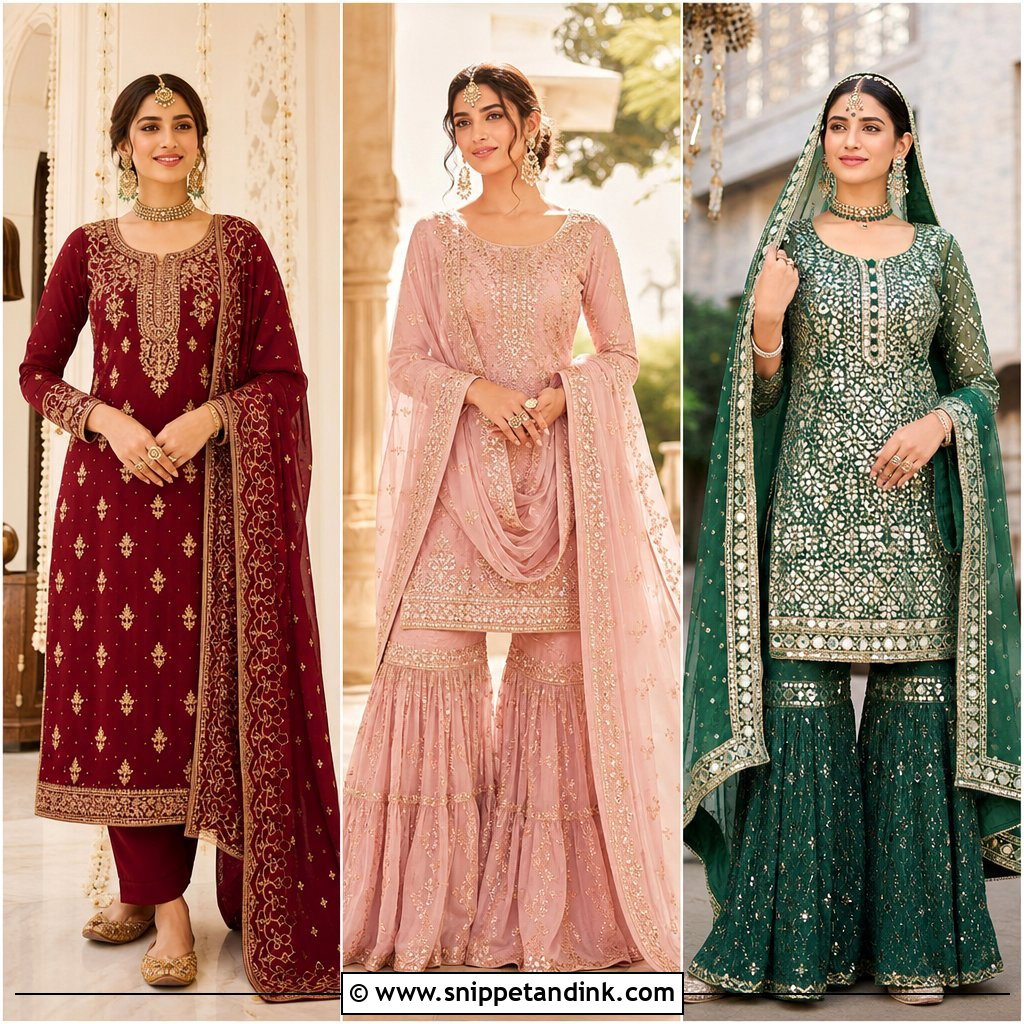
A sharara flares from the hip or knee, and the swing when you walk is the reason people love it. Balance it with a short or mid-length kameez. Blush pink suits daytime; rani pink is brighter for the sangeet or evening. Ask for embroidery on the neckline, sleeves, hem and dupatta border, so the outfit holds up from every angle in group photos. Pearl or kundan jewelry, embellished heels and a small potli bag are enough. I check the hem length with the exact heels, because a sharara that drags gets trodden on during giddha.
3. Green Punjabi Anarkali Suit
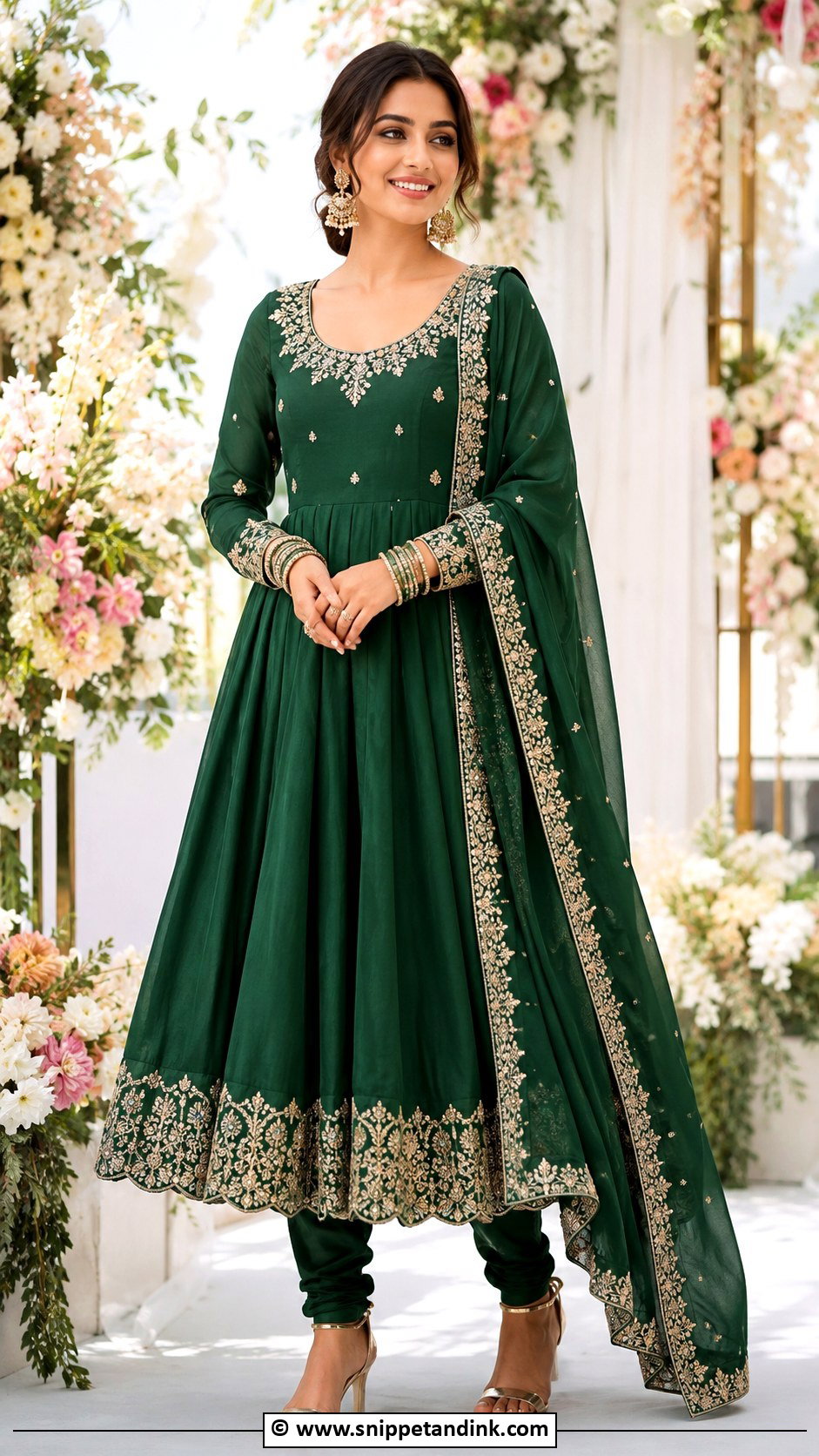
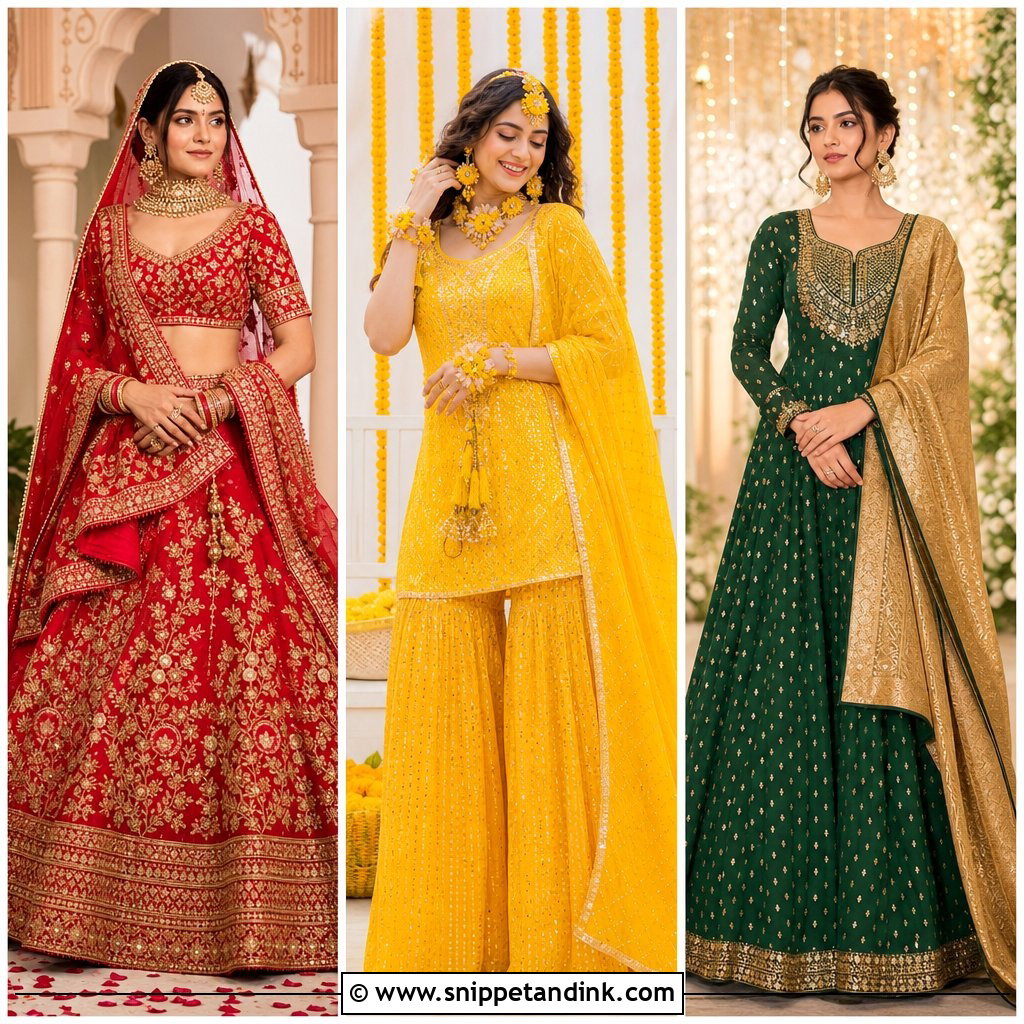
Anarkalis lengthen the body, and in green they carry a royal note. Emerald and bottle green suit evening; mehndi green and sage feel lighter for daytime. Pair the flared kameez with churidar or slim trousers. Embroidery should follow the time of day: thread and mirror for afternoons, zari and sequins after dark. The flare is heavy at the hem if it’s fully worked, so I check that the bodice is lined and the shoulder seams are strong enough to carry it. Jhumkas, bangles, soft makeup and metallic heels finish it for the mehndi, sangeet or reception.
4. Yellow Punjabi Salwar Suit
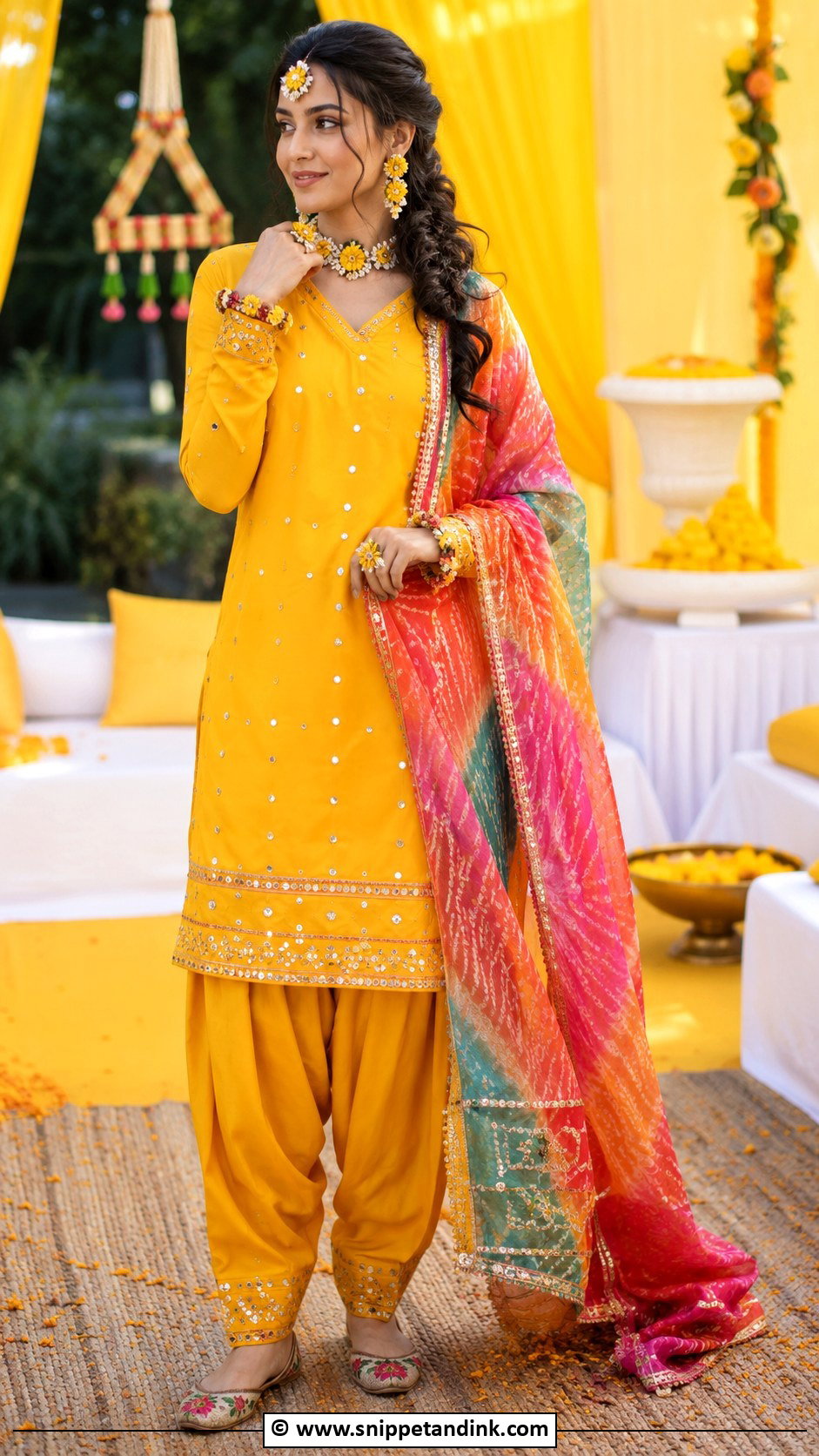
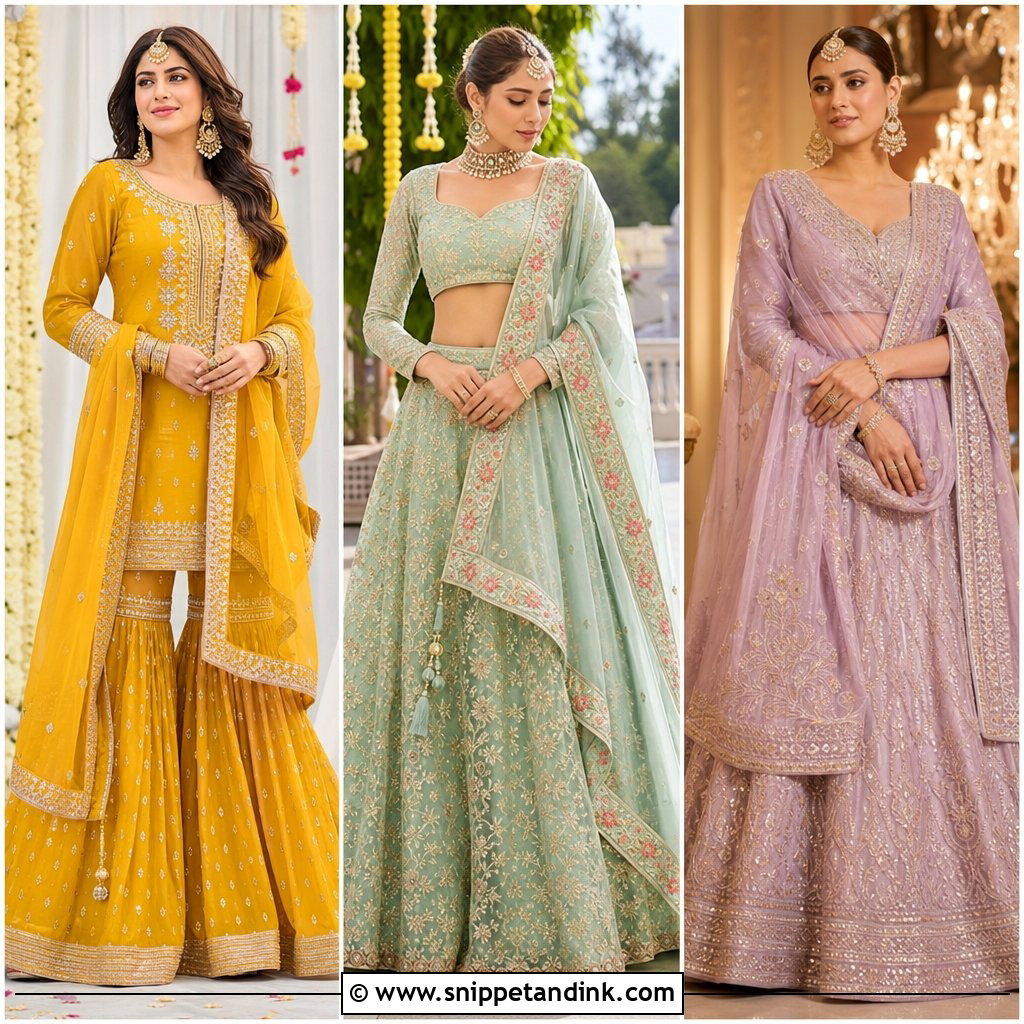
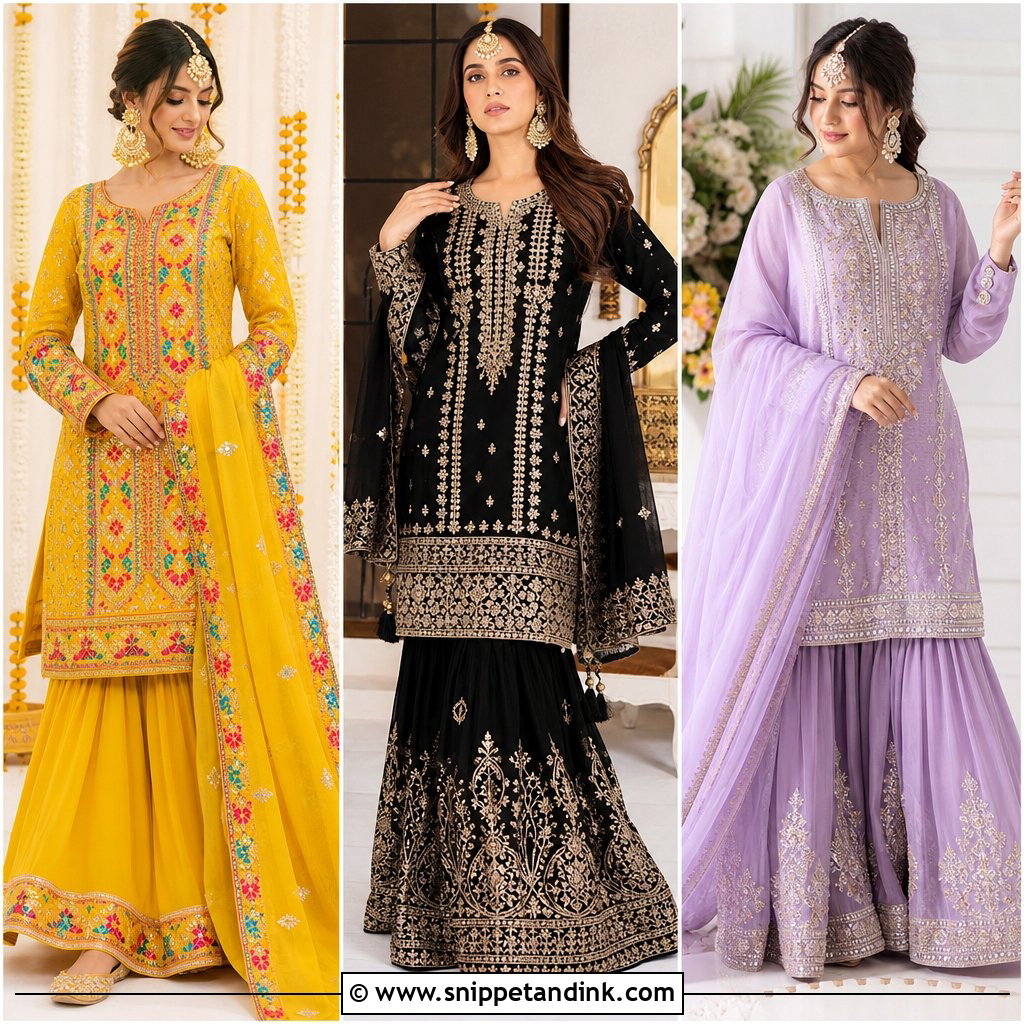
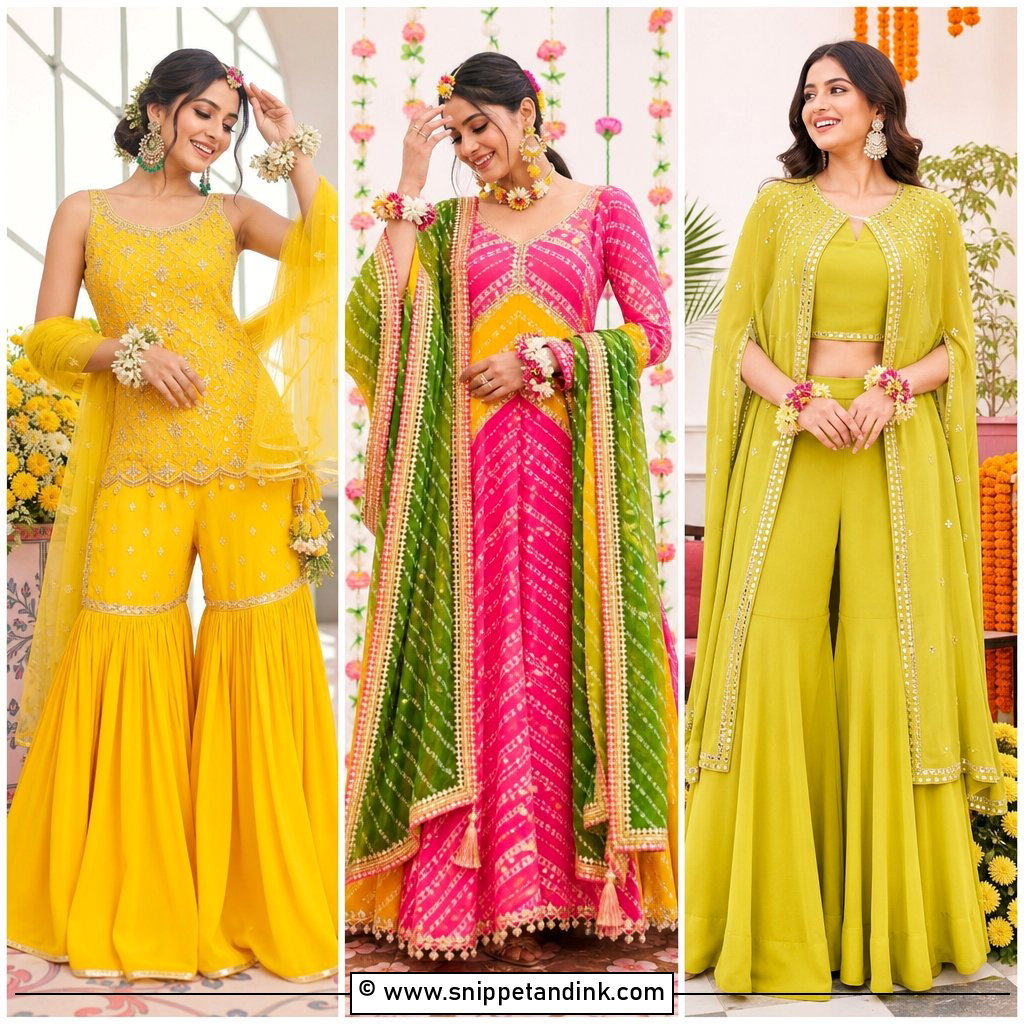
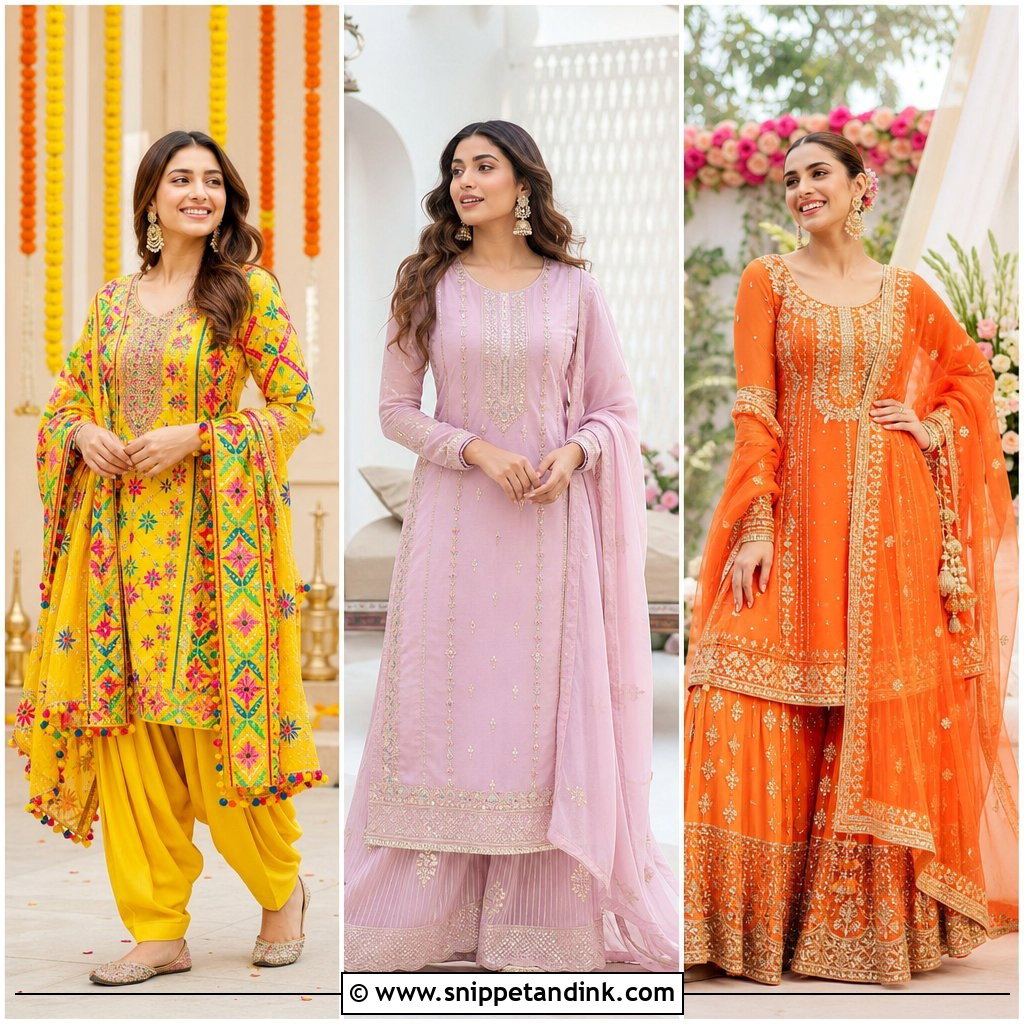
Yellow belongs to the haldi and daytime functions, and mustard, sunshine and marigold shades all bring warmth. A straight or short kameez with a classic salwar keeps you comfortable while turmeric paste flies around, which is also why I’d choose a washable fabric and skip anything delicate. Mirror work, gota lace or phulkari makes it event-ready. A contrasting pink, green or orange dupatta gives it a traditional Punjabi feel. Juttis, floral jewelry or gold hoops keep the accessories playful.
5. White Punjabi Gharara Suit
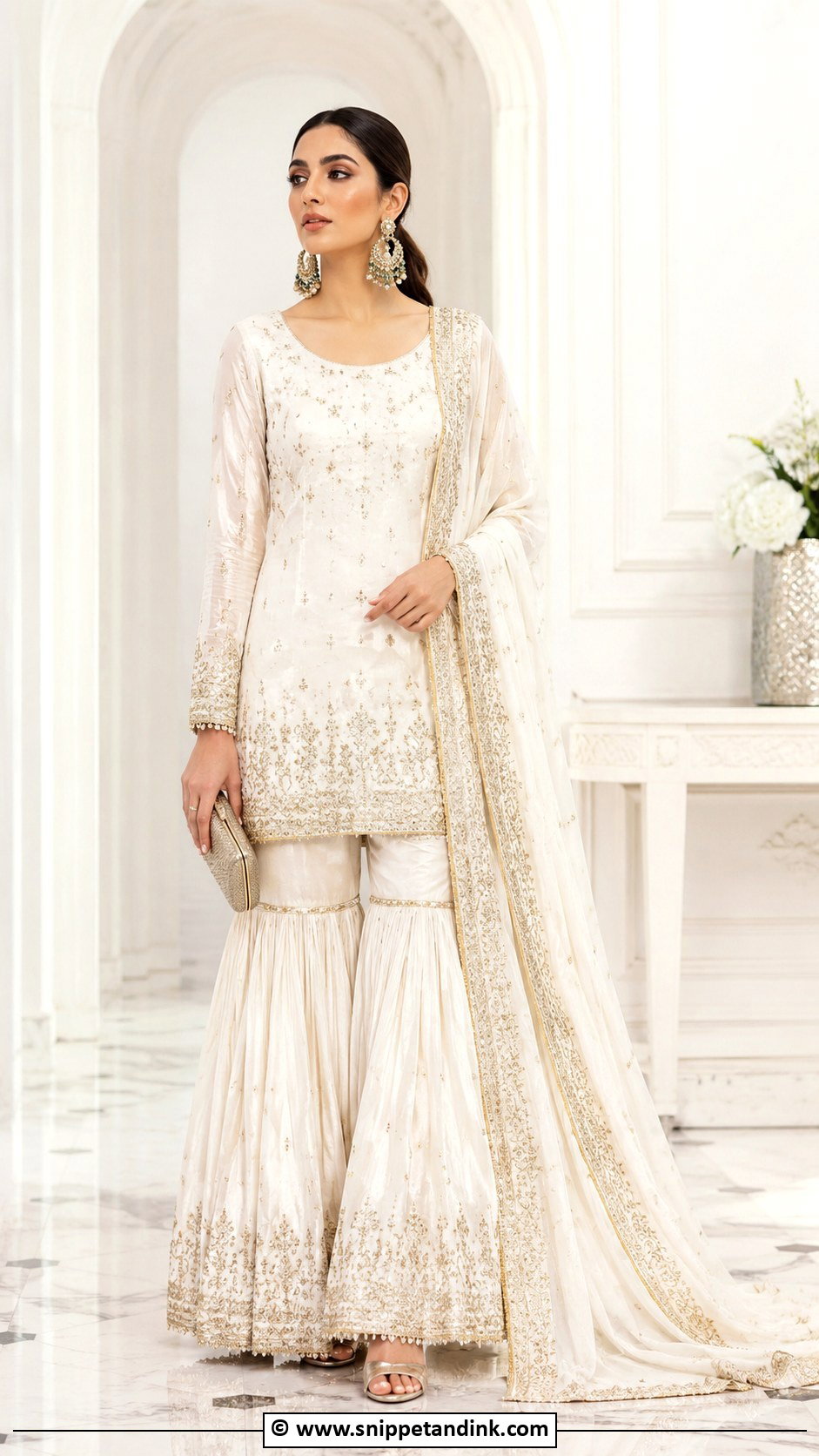
A gharara is joined just below the knee with a band, usually embroidered or edged in gota, and flares out from there, so a short kameez that ends above the joint shows it properly. In ivory, pearl or off-white with gold, silver or pastel threadwork, it reads festive rather than plain. White is avoided at some Punjabi weddings because of its association with mourning, so I’d check with the family before wearing it to a ceremony; for a reception or engagement it’s usually welcome. A sheer scalloped dupatta, metallic heels and kundan earrings complete it.
6. Blue Punjabi Palazzo Suit
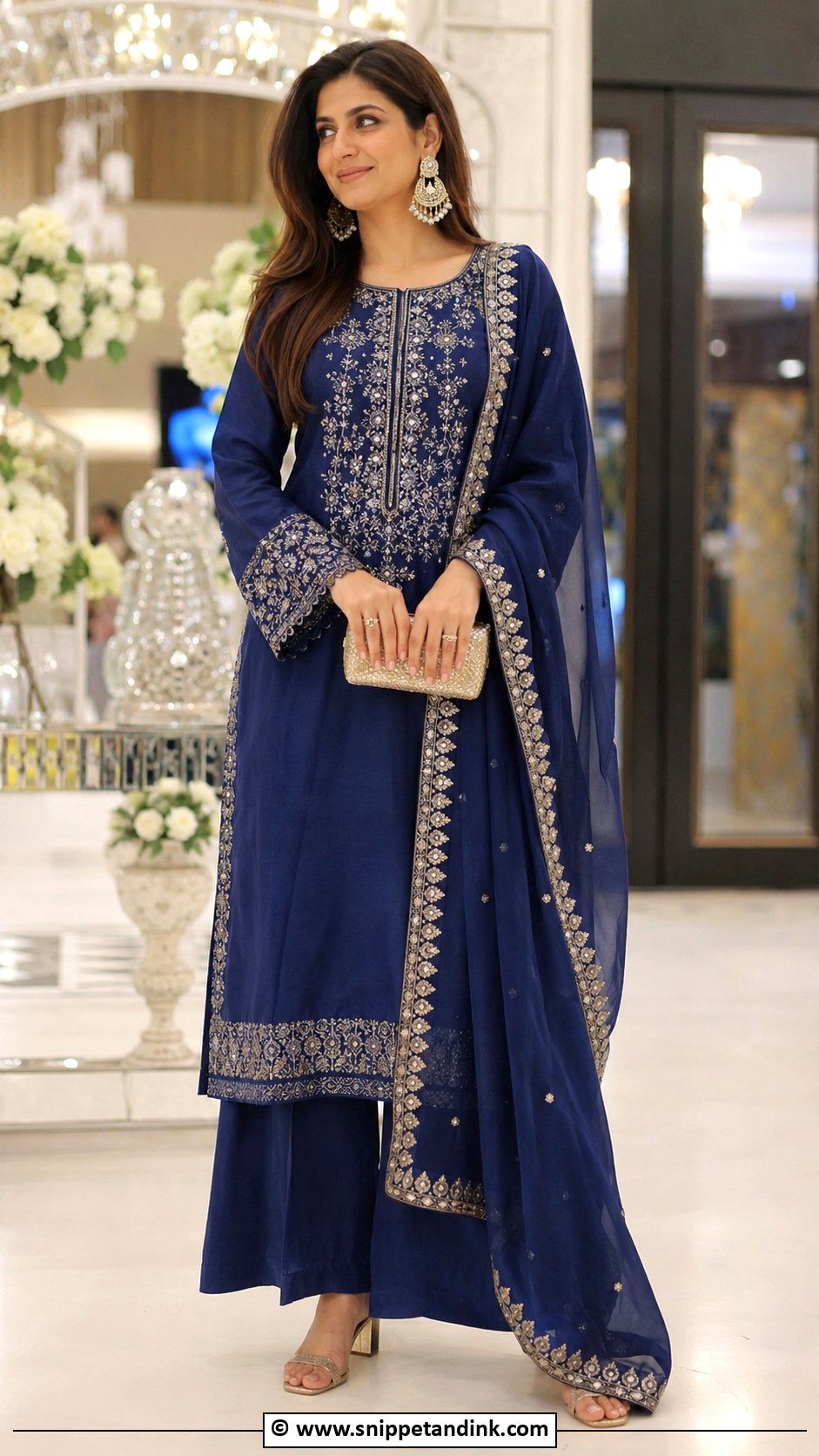
A palazzo suit is my usual answer for guests who’ll be on their feet all day and want something easy. Navy, royal blue, powder blue or teal all suit it, with a straight embroidered kameez and wide palazzos that give a clean, long line. The palazzos should clear the floor in your heels, since wide hems catch on stairs. A dupatta with sequin, lace or zari borders adds polish, and block heels, a sleek clutch and statement earrings finish it for a sangeet night, reception or family dinner.
7. Maroon Punjabi Velvet Suit
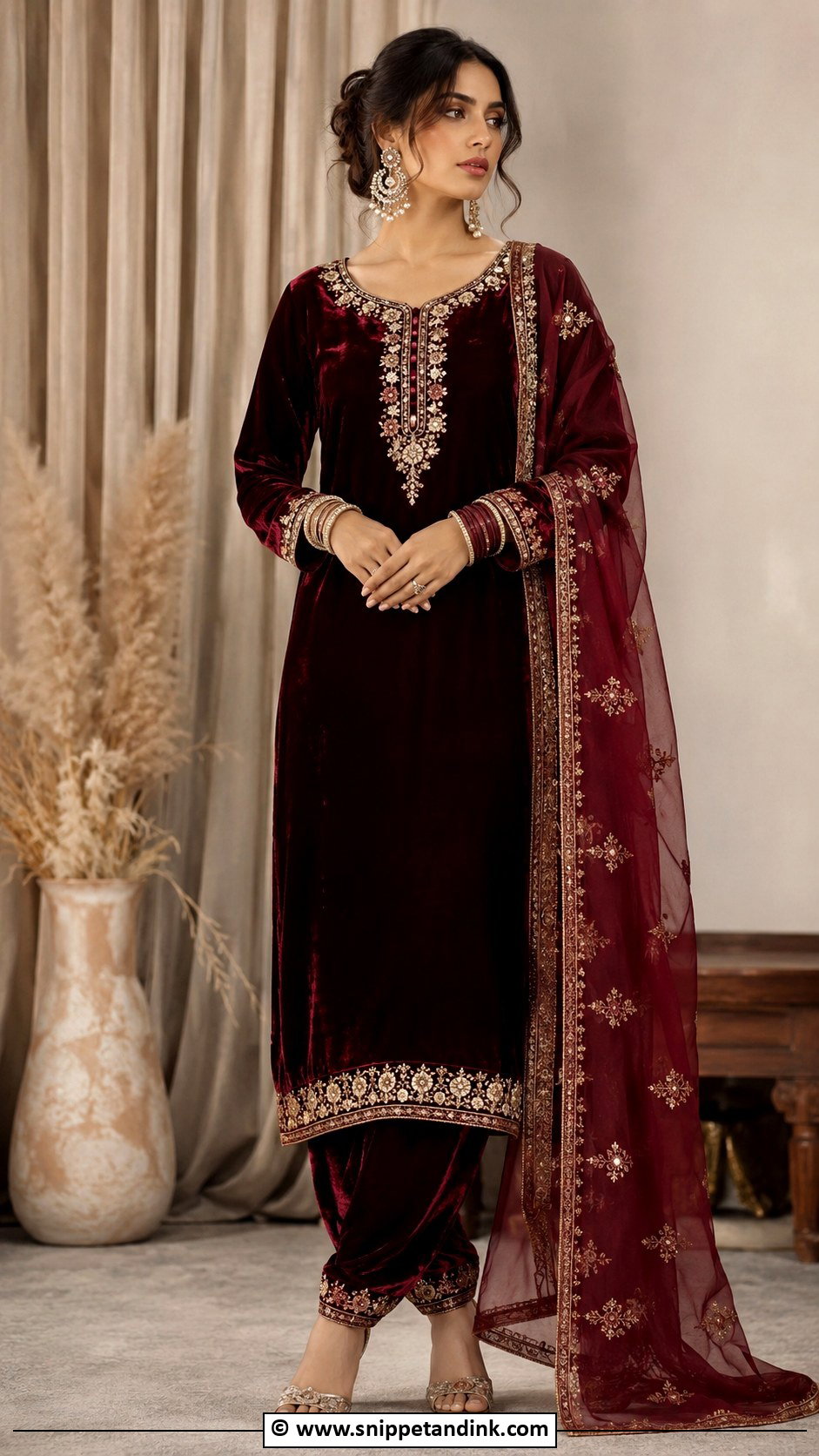
A maroon Punjabi velvet suit is what I reach for at winter evening functions, because velvet looks formal even in a simple cut and keeps you warm in a cold banquet hall. A straight kameez or short kurti with salwar, sharara or palazzo works. Gold embroidery, antique zari or a little stonework sits well on deep maroon. Velvet is heavy, so pair it with a net, organza or chiffon dupatta. Polki earrings, a small clutch and embroidered juttis or heels complete it. Velvet crushes where you sit, so hang it the night before rather than folding it.
8. Orange Punjabi Phulkari Suit
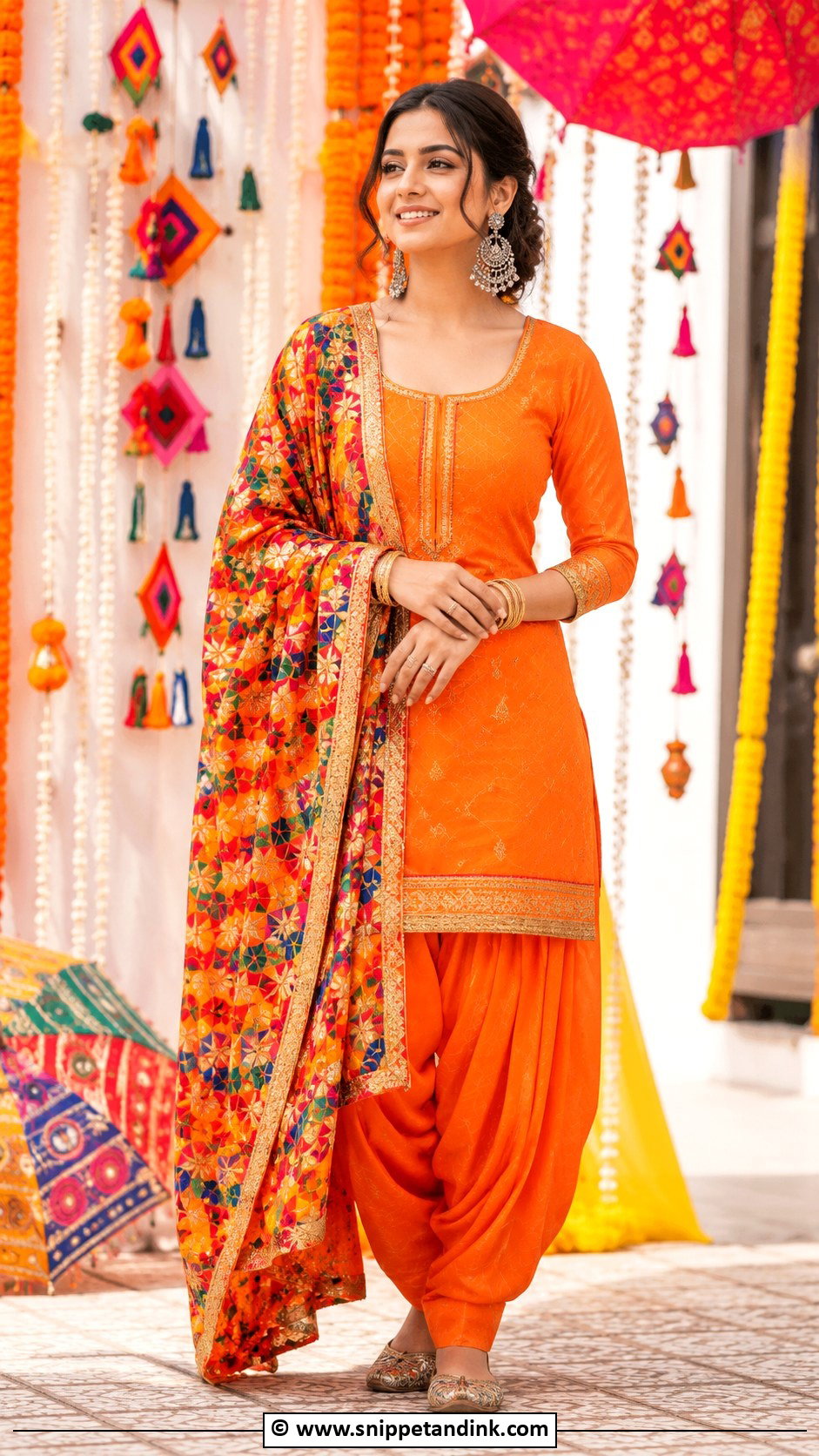
Phulkari is the embroidery most closely tied to Punjab: traditionally worked in floss silk with a darning stitch from the back of the cloth, so the flowers build up from many long, straight stitches. That history makes it meaningful at a wedding. Choose an orange kameez with a colourful phulkari dupatta, or keep the suit simple and let the dupatta lead. A Patiala salwar or straight pants both work. Oxidised earrings, gold bangles and juttis suit the mehndi, jaggo or daytime celebrations. Hand-worked phulkari should be dry cleaned, as the silk floss can bleed.
9. Purple Punjabi Straight Suit
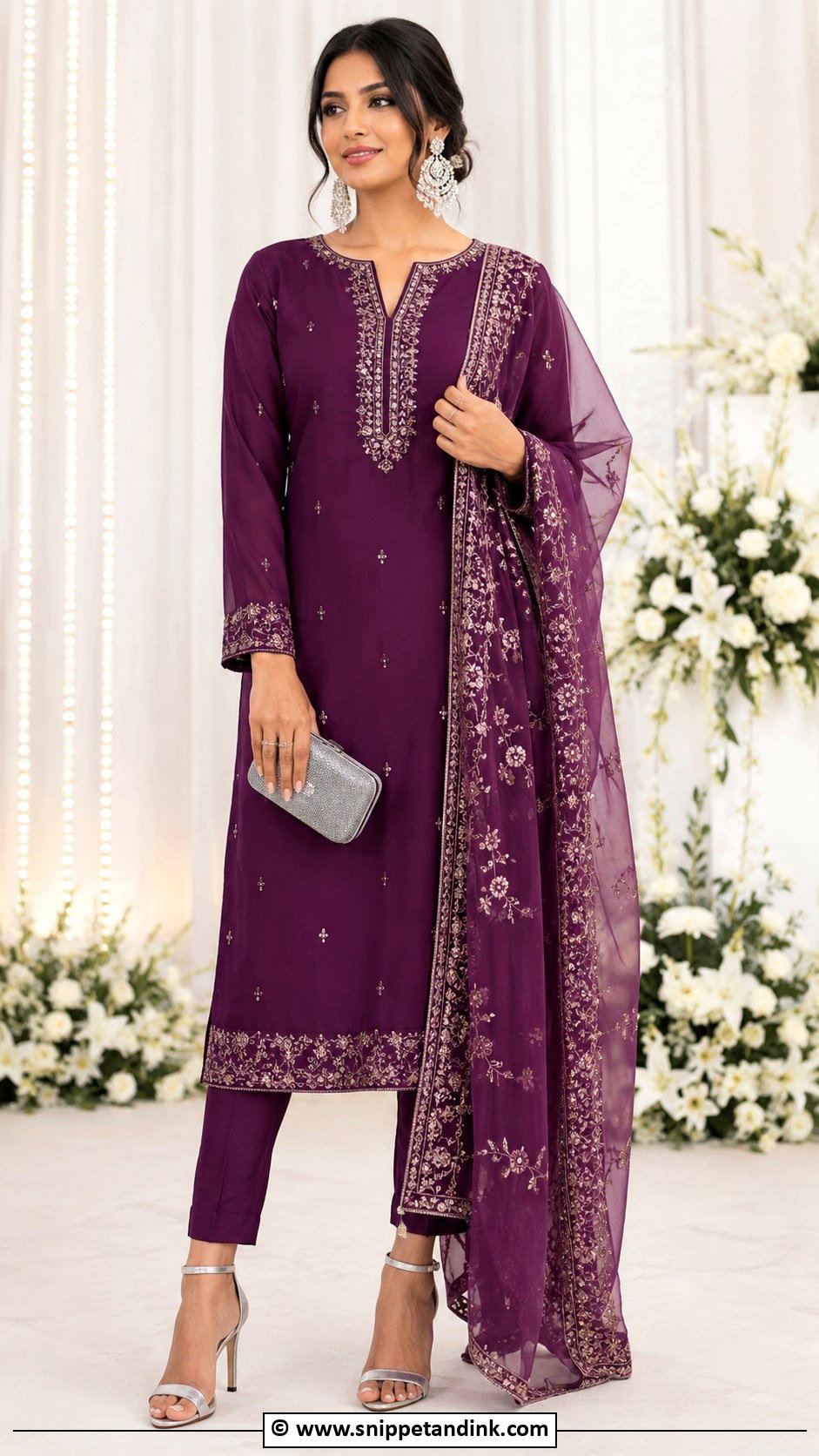
Straight suits are the most forgiving cut I style. A straight kameez with slim pants or churidar creates a neat column that works on petite, tall and curvy figures alike. In purple, plum reads formal for evening, lavender and lilac softer for daytime. Keep embroidery at the neckline and cuffs so it frames you without crowding. A net or organza dupatta with a detailed border finishes it. Silver jewelry suits cool lilac; gold suits warm plum.
10. Peach Punjabi Churidar Suit
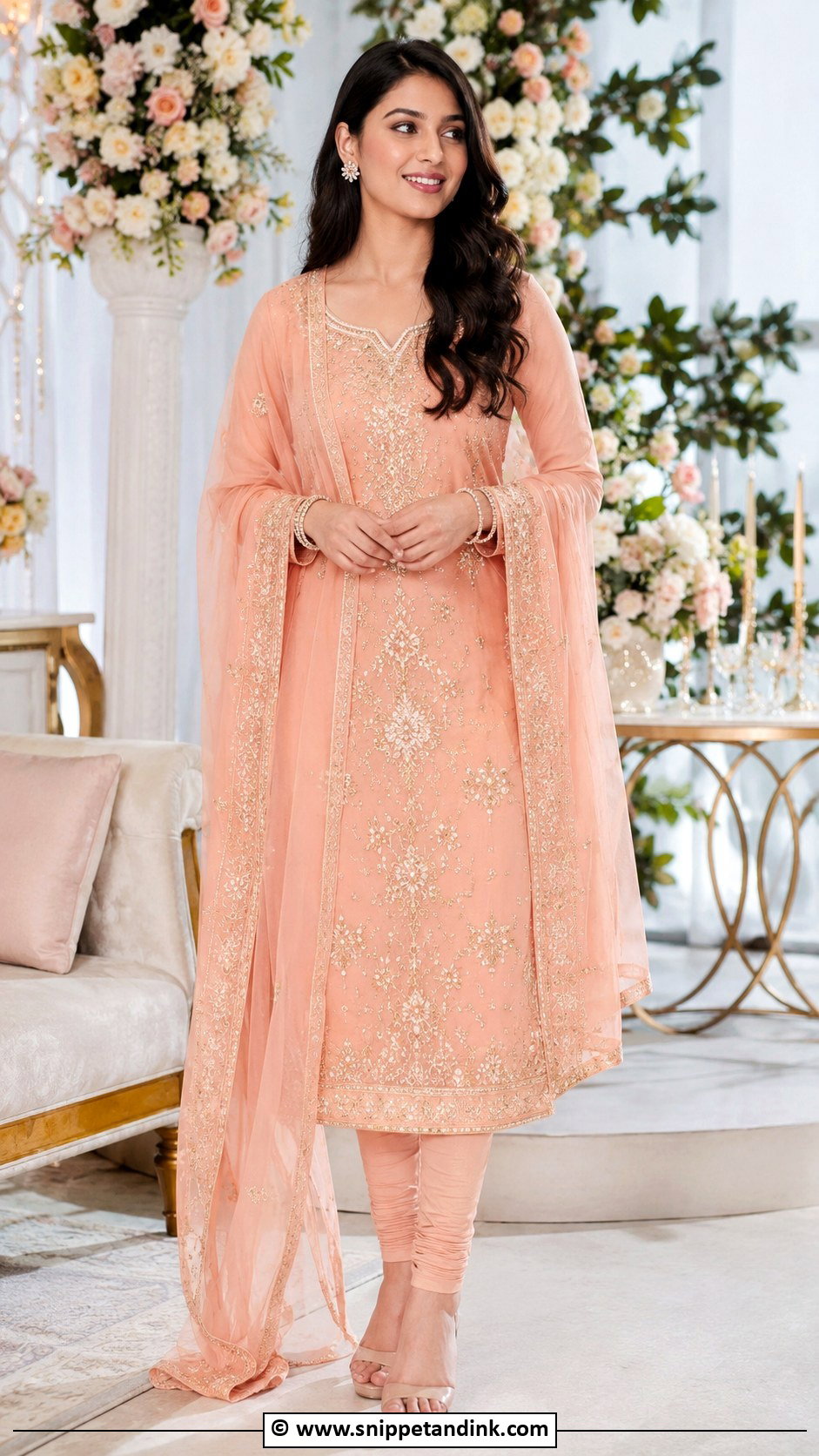
A churidar is cut longer than the leg, so the extra length gathers into soft rings at the ankle, and it needs a longer kameez over it to look balanced. Peach suits sisters, bridesmaids and guests, especially with gold embroidery, pearls, sequins or fine threadwork in georgette, silk or organza. A matching dupatta keeps it calm; mint, ivory or coral adds contrast. Nude heels, kundan studs and soft waves complete it. Churidars need a little stretch or a side opening at the ankle, or you’ll struggle to sit cross-legged.
11. Black Punjabi Suit With Dupatta
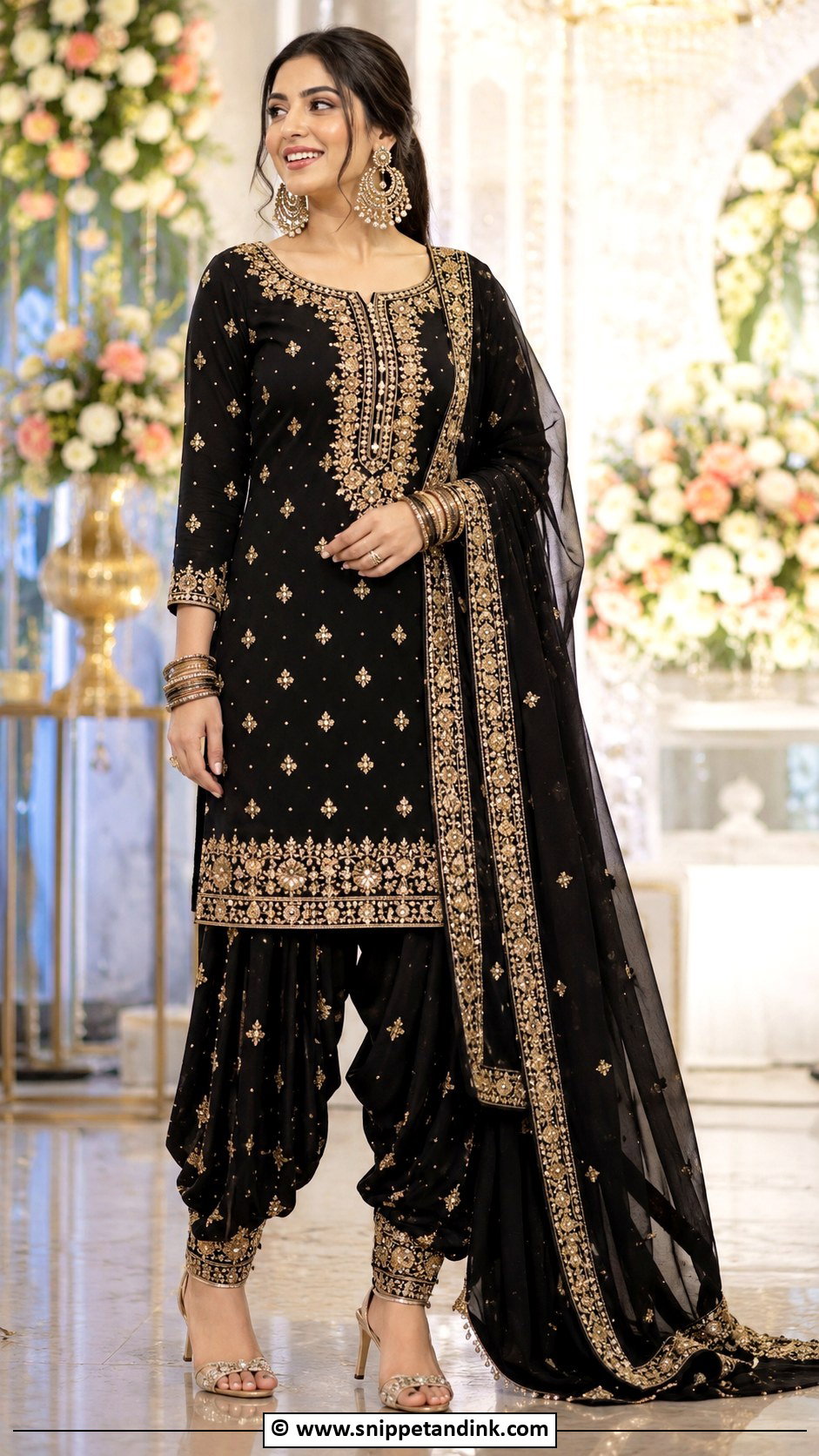
Black has a complicated place at Punjabi weddings: many families see it as unlucky for a wedding day, while younger couples are relaxed about it at the sangeet or a cocktail-style reception. I’d keep it for evening and check with the family first. When it’s welcome, choose black with gold, silver or colourful embroidery so it feels festive. A short kameez with Patiala salwar is traditional; a straight kameez with palazzos is modern. The dupatta does the heavy lifting here, with mirror work, gota patti, phulkari or sequins. Chandbalis, stacked bangles and an embellished clutch finish it.
12. Cream Punjabi Suit With Red Dupatta
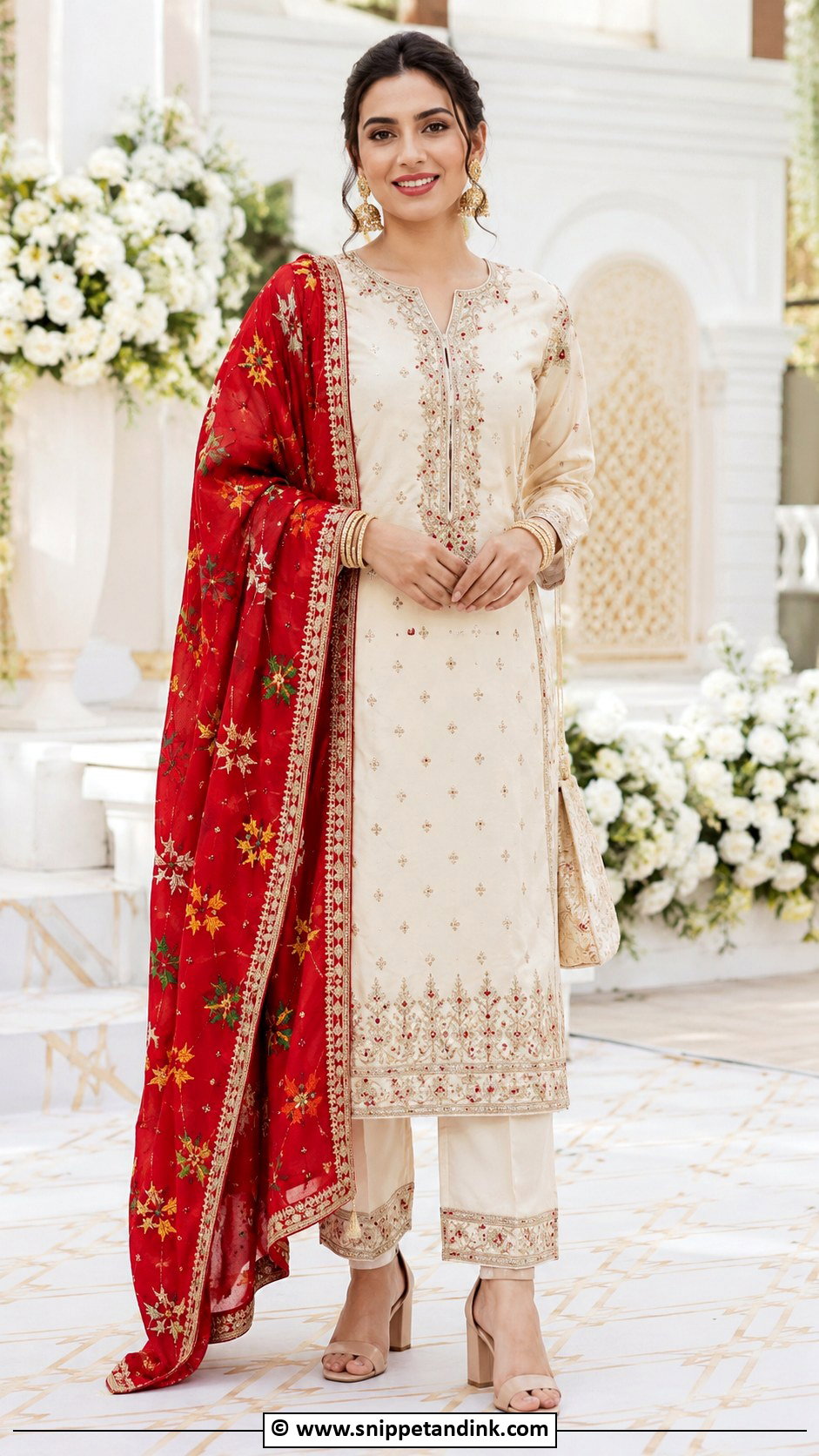
A cream suit with a red dupatta gives you the wedding red without wearing a full red outfit, which is why it’s one of the looks I suggest most for Anand Karaj guests, mothers and bridesmaids. A straight or A-line kameez with gold embroidery over salwar, churidar or palazzos is the base, and the red dupatta can carry phulkari, gota, zari or a heavy border. Make sure that dupatta is long and soft enough to cover your head comfortably in the gurdwara. Gold earrings, bangles and neutral heels complete it.
13. Gold Punjabi Brocade Suit
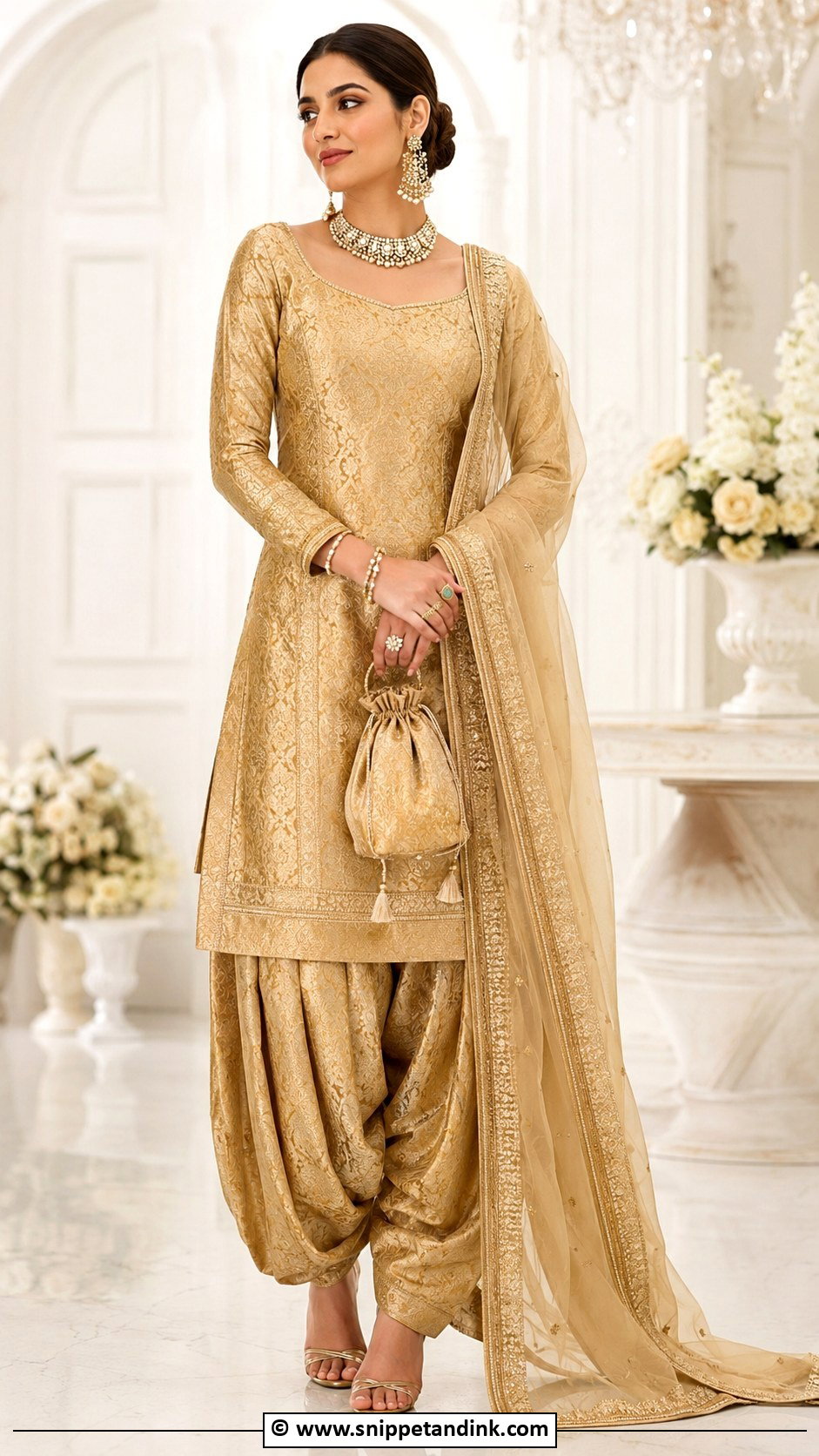
Brocade is woven with metallic zari right into the cloth, so the pattern is part of the fabric rather than added on top. It’s stiff and grand, and that stiffness means it doesn’t take big alterations well, so I’d get the fit right at the first stitching. A short brocade kameez with Patiala salwar feels very Punjabi; a longer straight kameez with pants looks more refined. Balance the shine with a plain silk or organza dupatta, or match it fully for a bold look. Pearl, kundan or antique gold jewelry suits receptions, engagements and evening functions.
14. Mint Punjabi Mirror Work Suit
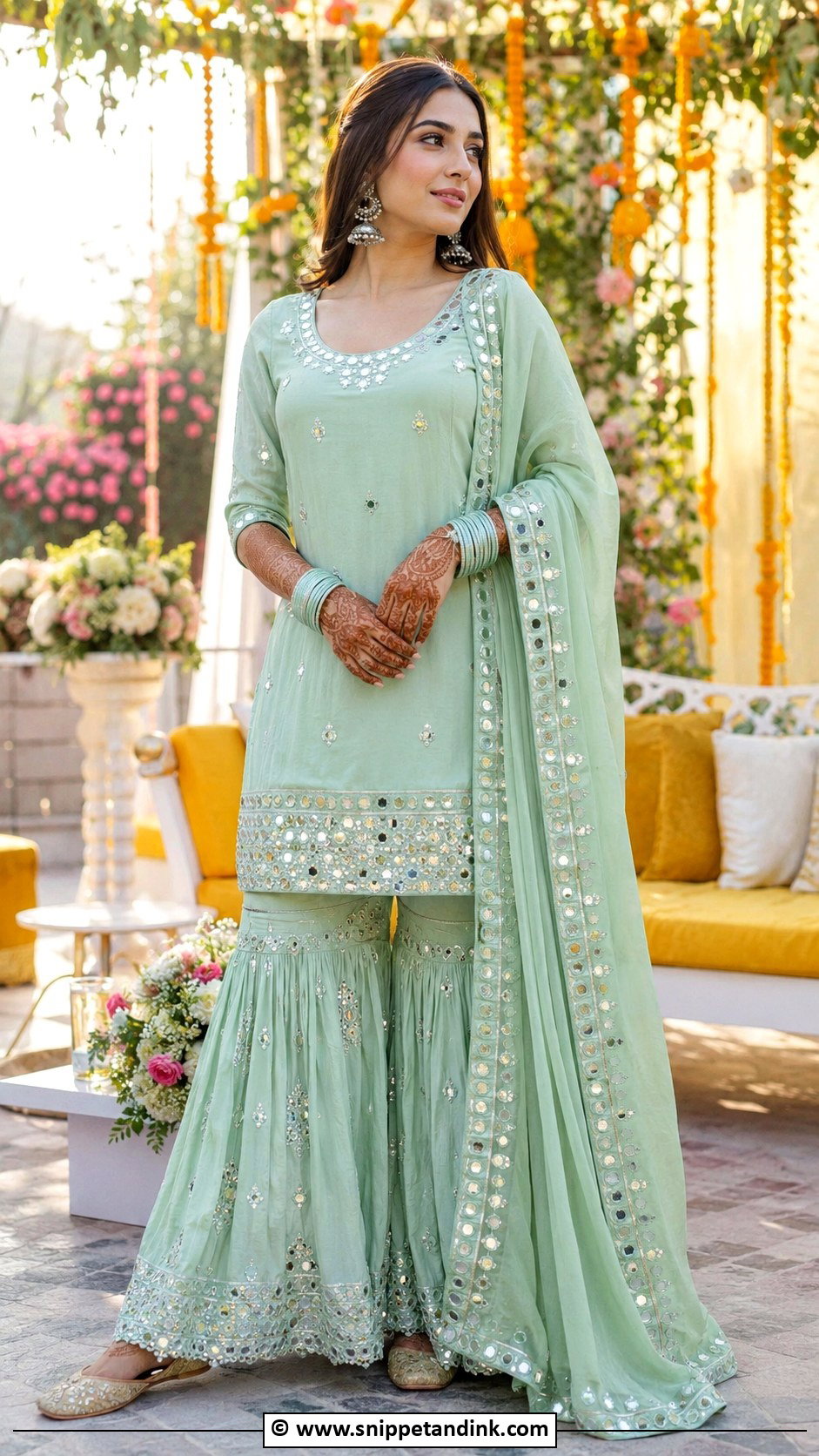
Mirror work, or shisha, is small pieces of mirror held in place by a ring of stitches, and in daylight it sparkles more than sequins. A mint suit with mirror work stays light and fresh for the mehndi, haldi or outdoor functions. A short kameez with a sharara looks playful; a straight kameez with palazzos is more relaxed. Mirrors add weight and their edges can catch fine dupattas, so choose one with a mirror border or tiny scattered mirrors. Silver jhumkas, glass bangles and embellished flats or heels finish it.
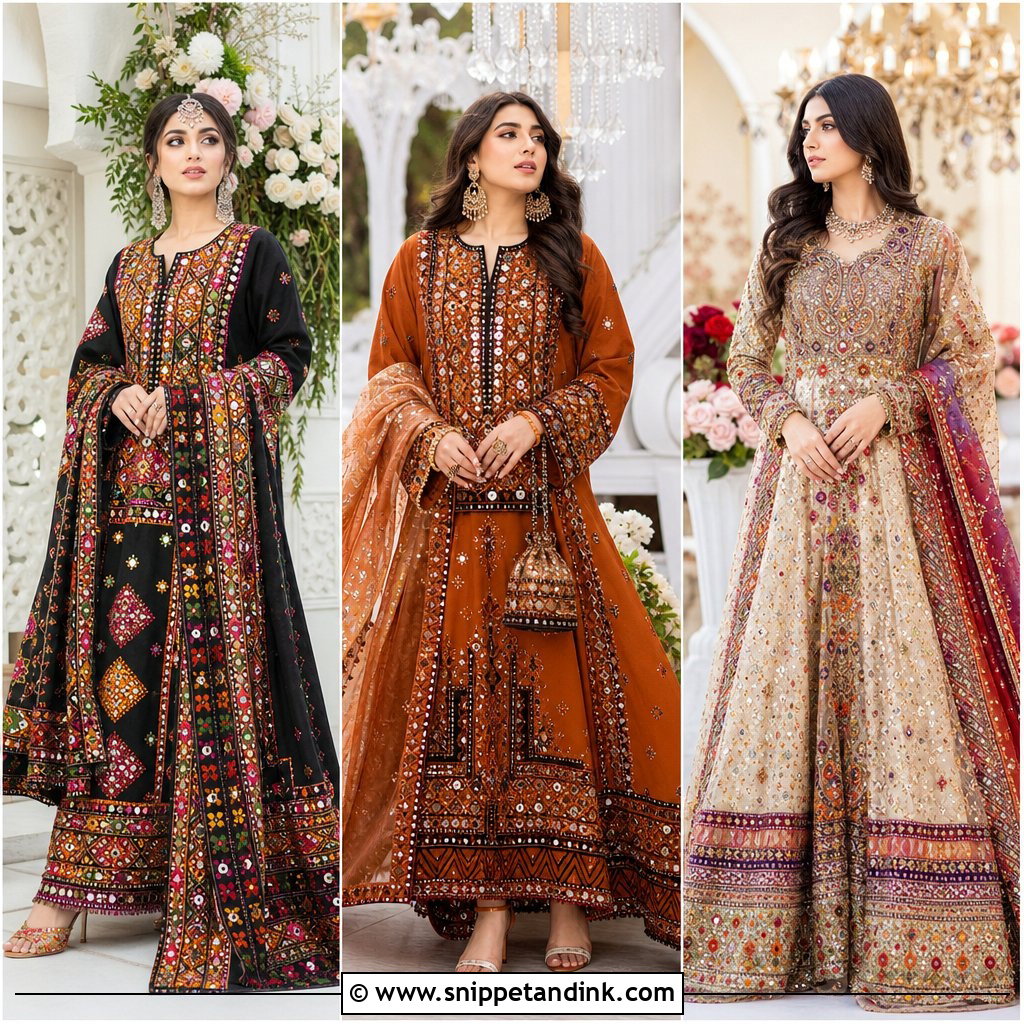


15. Navy Punjabi Embroidered Suit
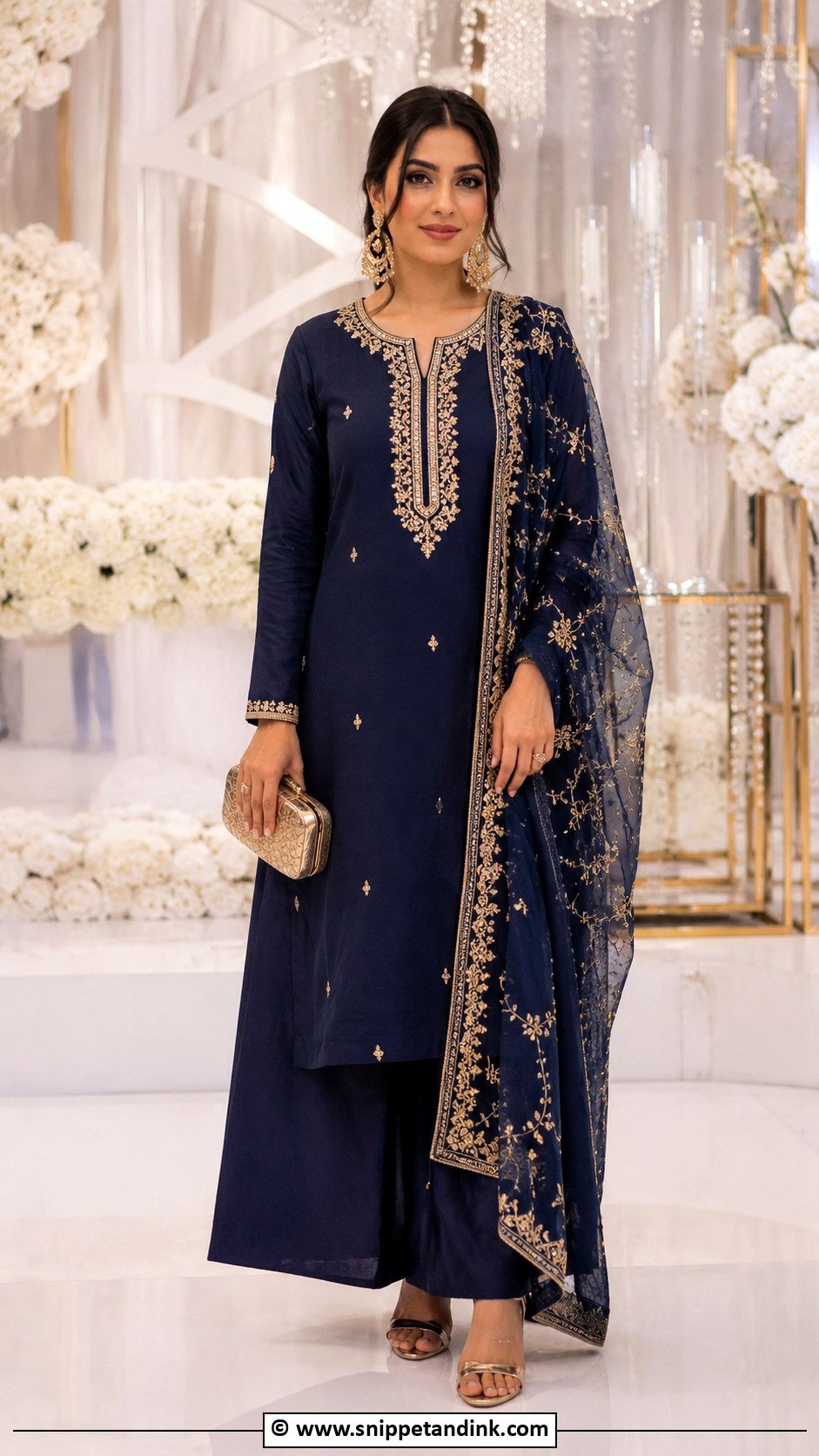
Navy is the colour I’d suggest to a mother of the bride or groom who wants something formal, modest and repeatable. It works with gold, silver, copper and champagne embroidery, so you can match it to jewelry you already own. A straight kameez with palazzos looks modern; a Patiala salwar adds cultural charm. A dupatta with a defined border frames the outfit. Metallic heels, a sleek clutch and statement earrings finish it, and it will look right at the next three family weddings too.
16. Lavender Punjabi Net Suit
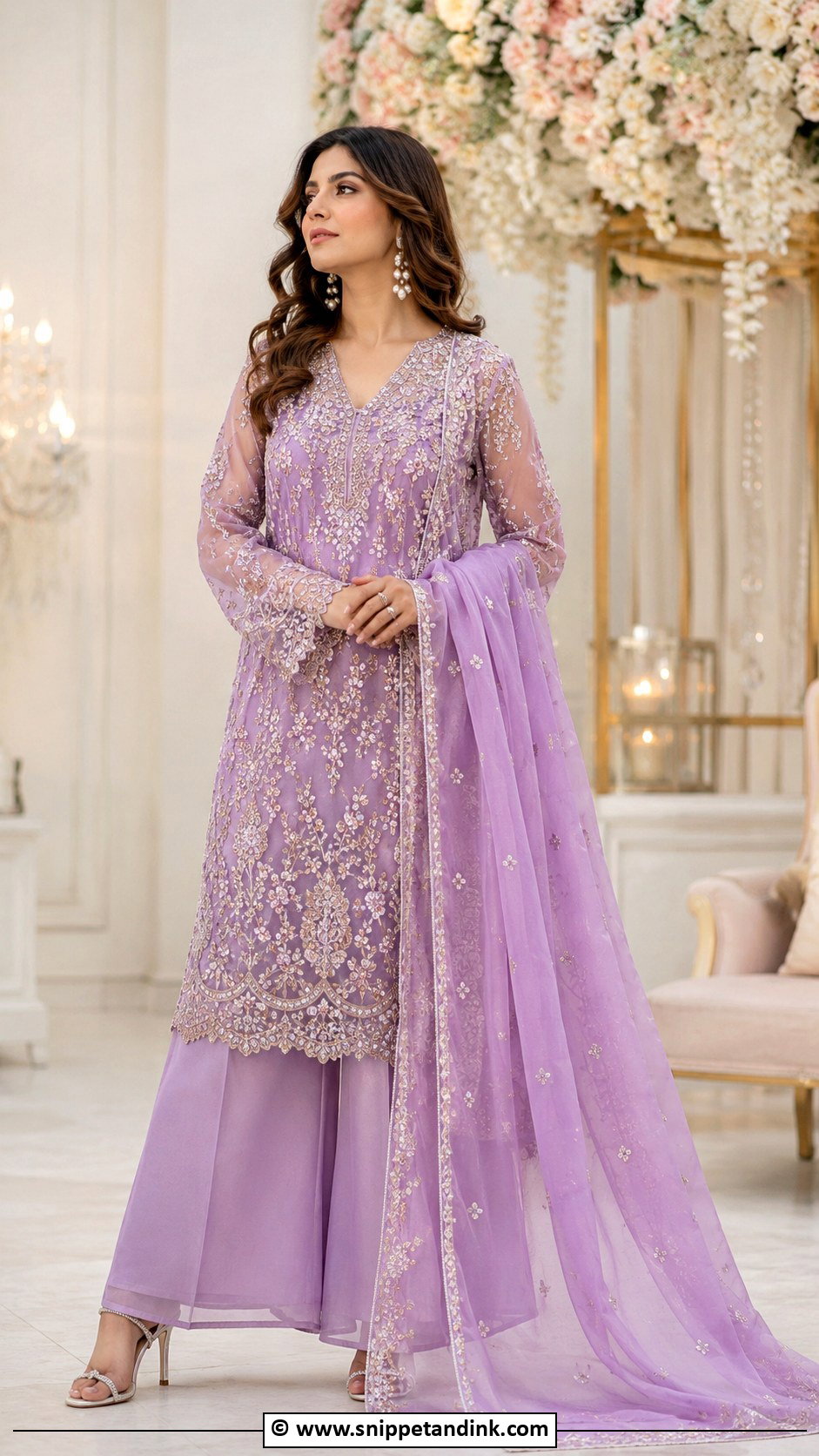
Net looks dreamy, but it’s scratchy against skin, so a lavender net suit needs a soft full lining, and I check the inside of the sleeves and neckline before anything else. Lavender suits silver embroidery, pearl work, sequins and floral threadwork. A sharara or palazzo adds flow, while a churidar gives a classic shape. Keep the dupatta light with a matching border. Silver heels, pearl earrings and soft pink makeup complete it for engagement ceremonies, receptions or daytime events with a pastel theme.
17. Teal Punjabi Jacket Suit
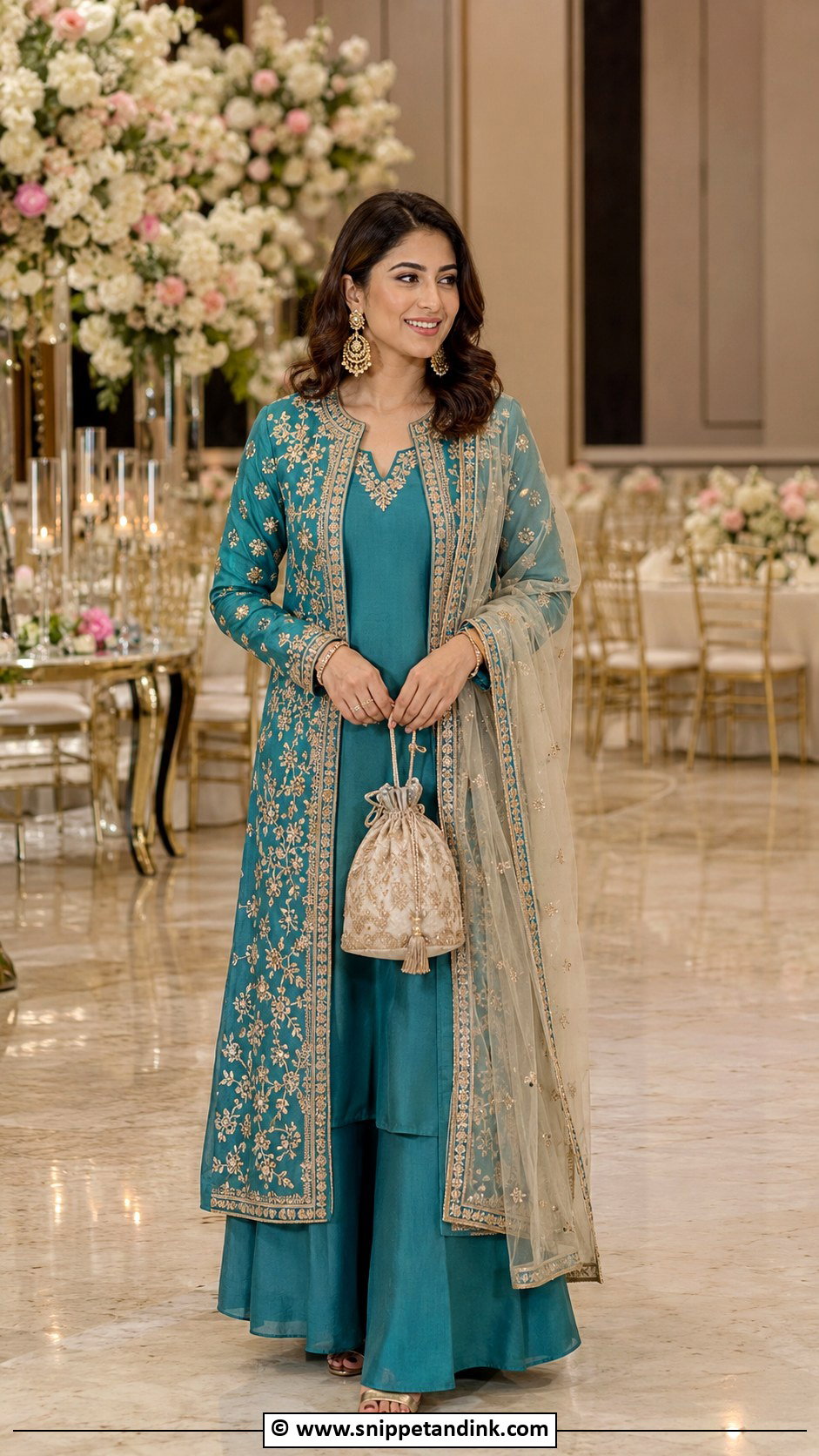
A jacket over a plain kameez turns a simple suit into a complete outfit and gives coverage without a heavy dupatta. Choose a sleeveless or long-sleeve embroidered jacket over a plain teal kameez with palazzo, cigarette pants or a sharara. Teal suits gold, antique and champagne accents. You can drape the dupatta lightly over one shoulder or skip it if the jacket carries enough detail. Heels, a potli bag and statement earrings finish it. I’d keep the jacket a touch loose under the arms, because you’ll want to raise them on the dance floor.
18. Magenta Punjabi Silk Suit
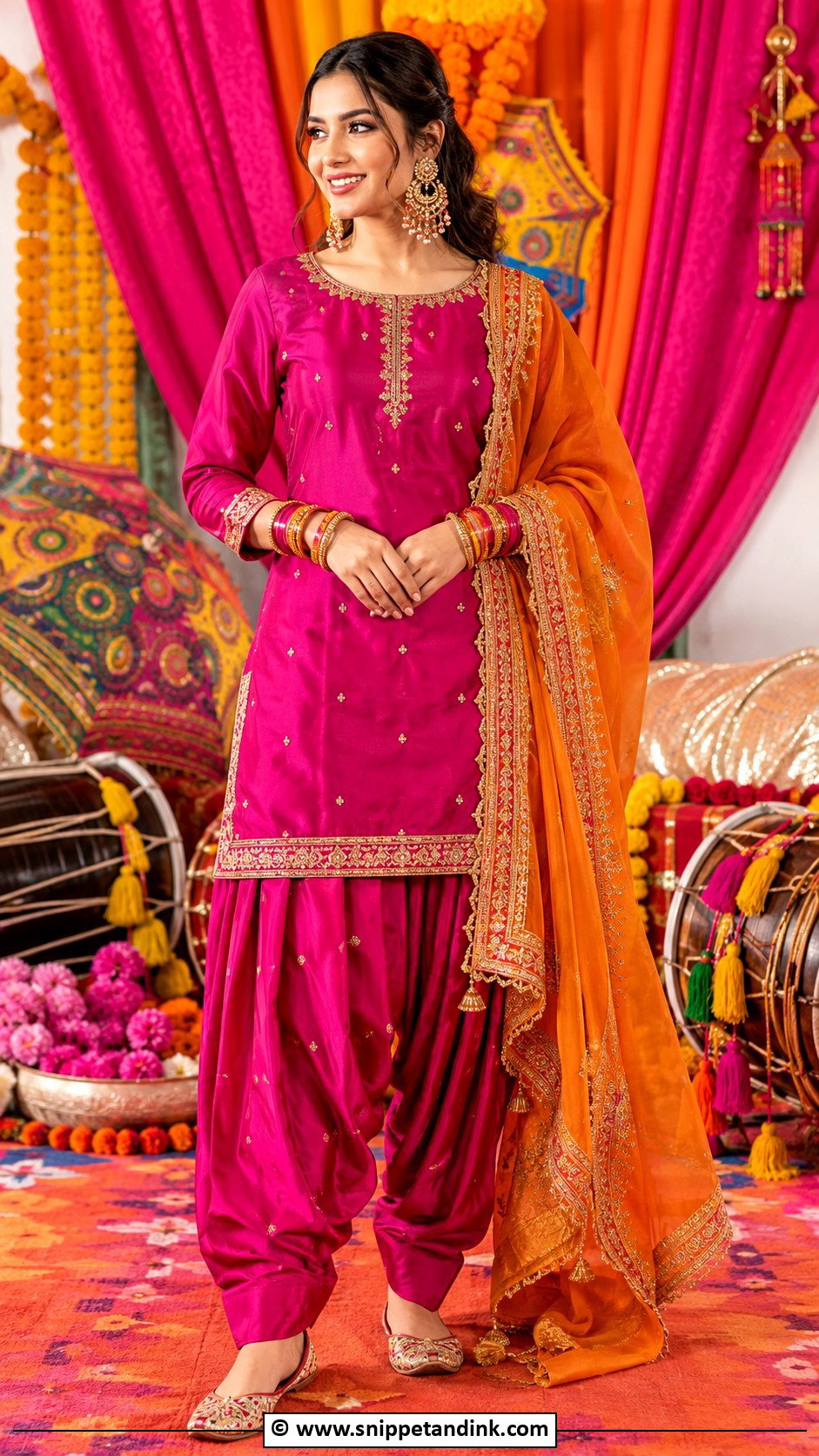
Magenta silk is for anyone who loves colour and wants a bright, festive suit. A short kameez with Patiala salwar is classic; a straight kameez with brocade pants looks polished. Gold embroidery, zari borders and small sequins suit the shade. Add a matching or orange dupatta for a traditional Punjabi colour story. Silk shows sweat marks under the arms in a crowded mehndi, so I add dress shields inside the kameez. Gold juttis, bangles and chandbalis finish it for the mehndi, jaggo or sangeet.
19. Beige Punjabi Sequin Suit
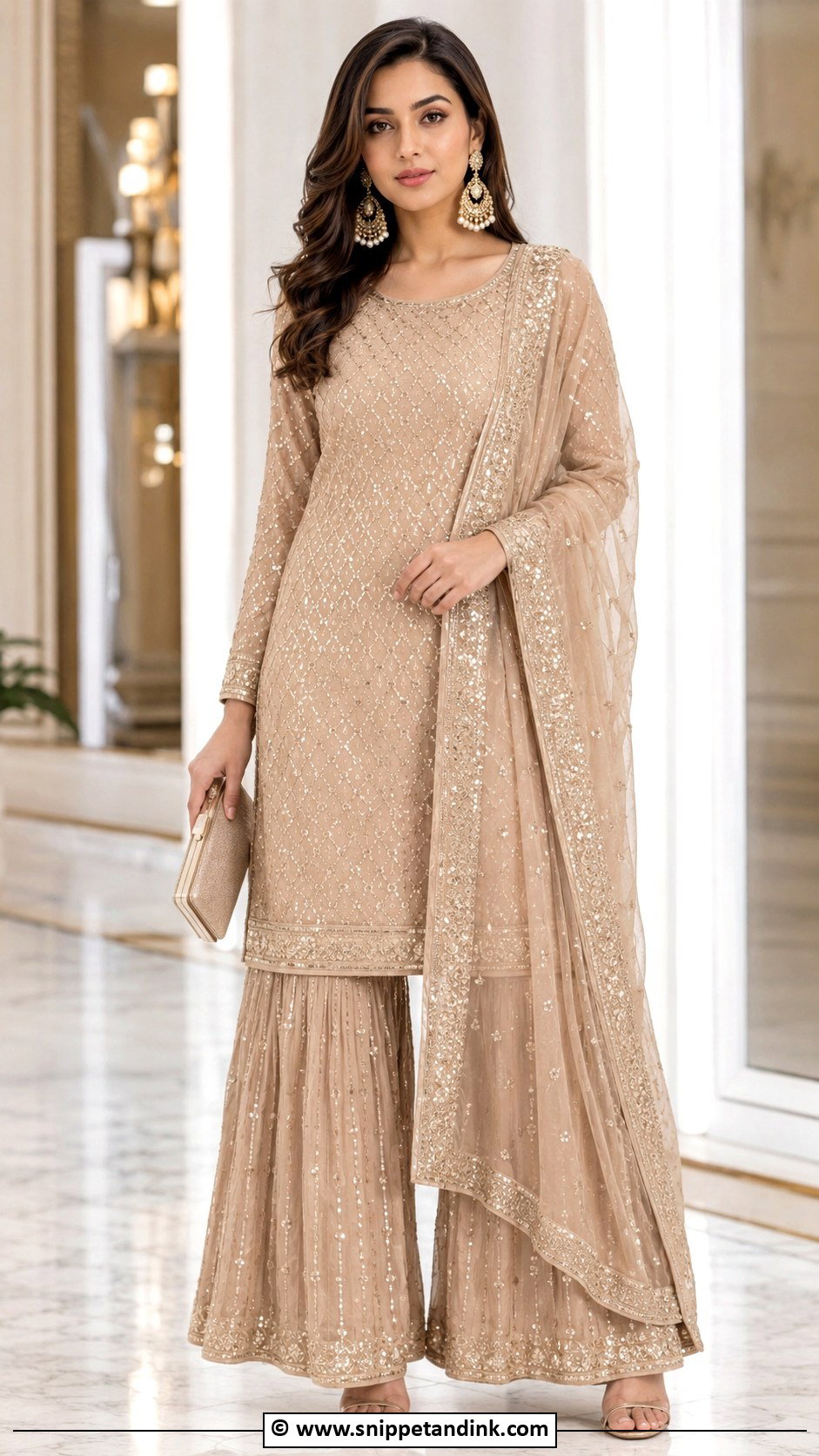
Beige, champagne and sand tones with sequins give you sparkle in a neutral palette. A straight kameez with palazzo or sharara pants keeps the shape clean, and a sheer dupatta with sequin edging finishes it without weight. Because the colour is soft, you can carry bold earrings or a statement clutch. Check the beige against your skin in daylight; if it’s too close to your own tone, it can look washed out in photos, and a slightly warmer champagne often fixes that. Nude heels, soft curls and glowing makeup suit receptions and evening engagements.
20. Mustard Punjabi Gota Patti Suit
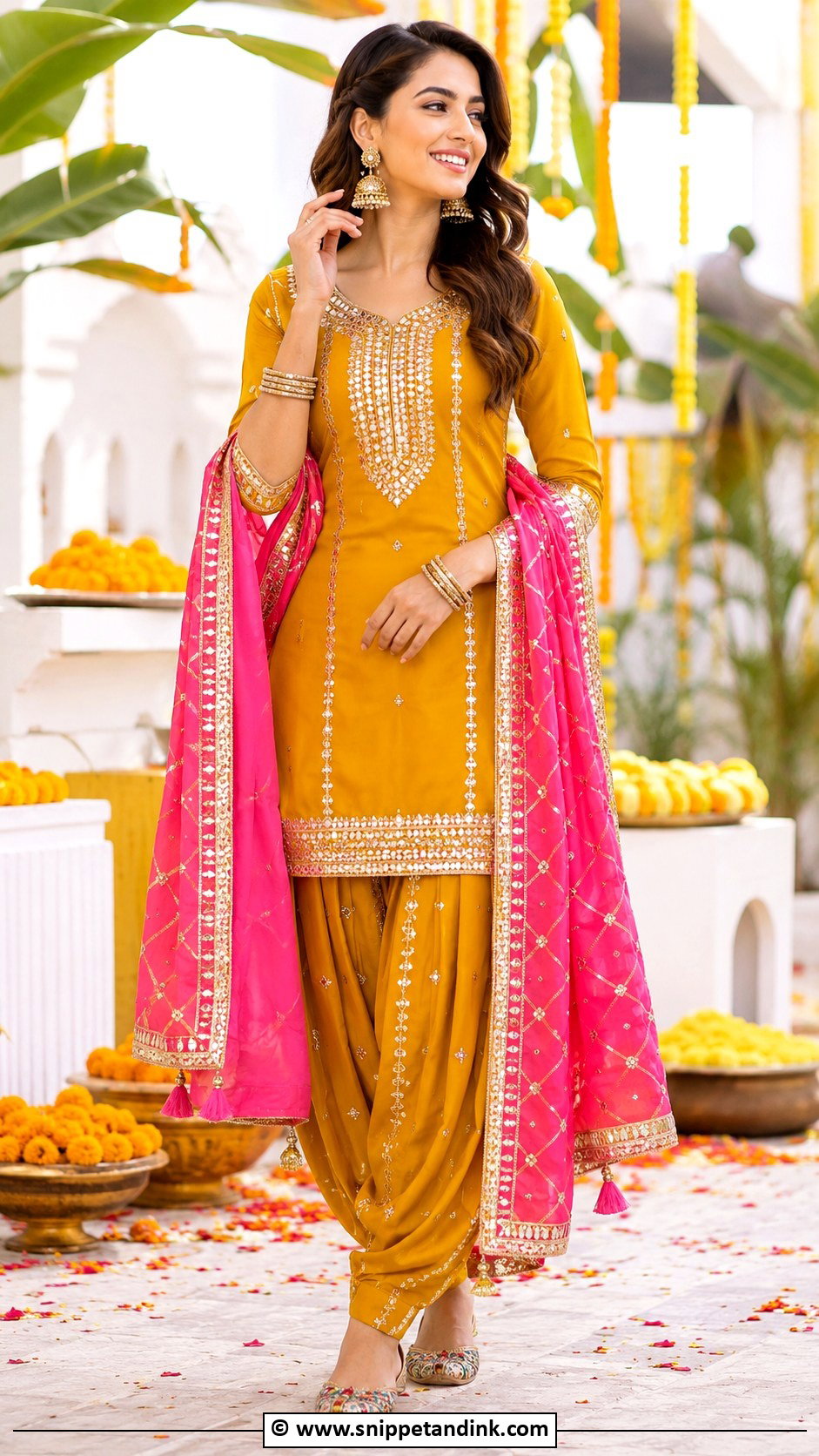
Gota patti is an appliqué of woven gold or silver ribbon, cut into shapes and stitched onto the fabric, so it catches the light like small metal leaves. A mustard Punjabi gota patti suit glows at the mehndi, haldi or daytime events. A short kameez with Patiala salwar feels lively; a longer kameez with palazzos is more relaxed. A contrast dupatta in pink, green, ivory or orange adds depth. Gold jhumkas, bangles and embroidered juttis finish it. Store gota in a muslin cloth, since some ribbon tarnishes if left in plastic.
21. Coral Punjabi Organza Suit
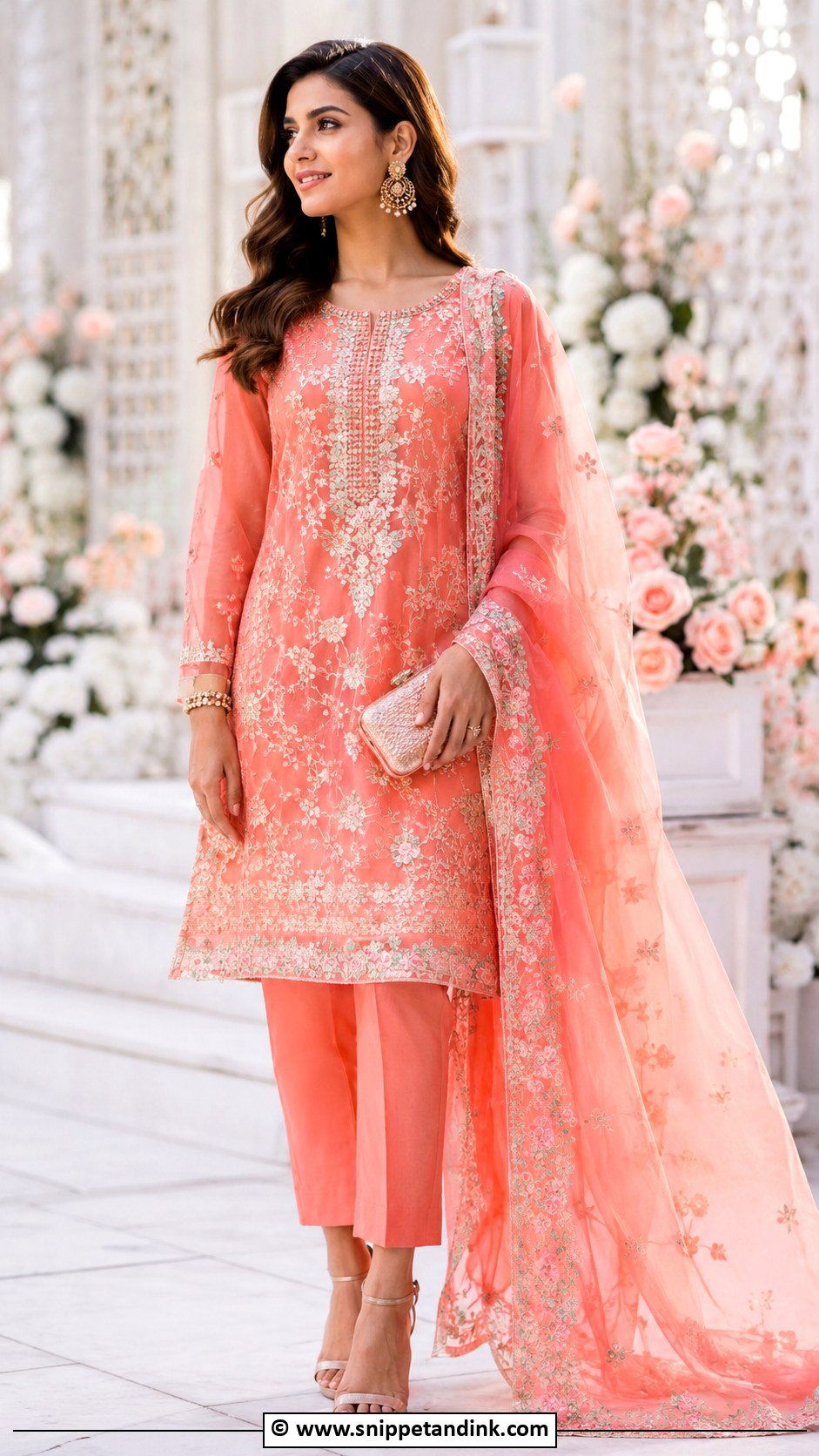
Organza is crisp and holds volume without weight, which suits spring and summer weddings. A coral kameez with fine threadwork, sequins or floral embroidery over straight pants, palazzos or a soft sharara keeps it bright. An organza dupatta with embroidered borders pulls it together. The downside is that organza creases sharply and can crunch when you sit, so steam it on the day and keep it on a hanger in the car. Gold, pearl and rose-toned accessories, a neat hairstyle and comfortable heels suit daytime receptions and family lunches.
22. Burgundy Punjabi Heavy Work Suit
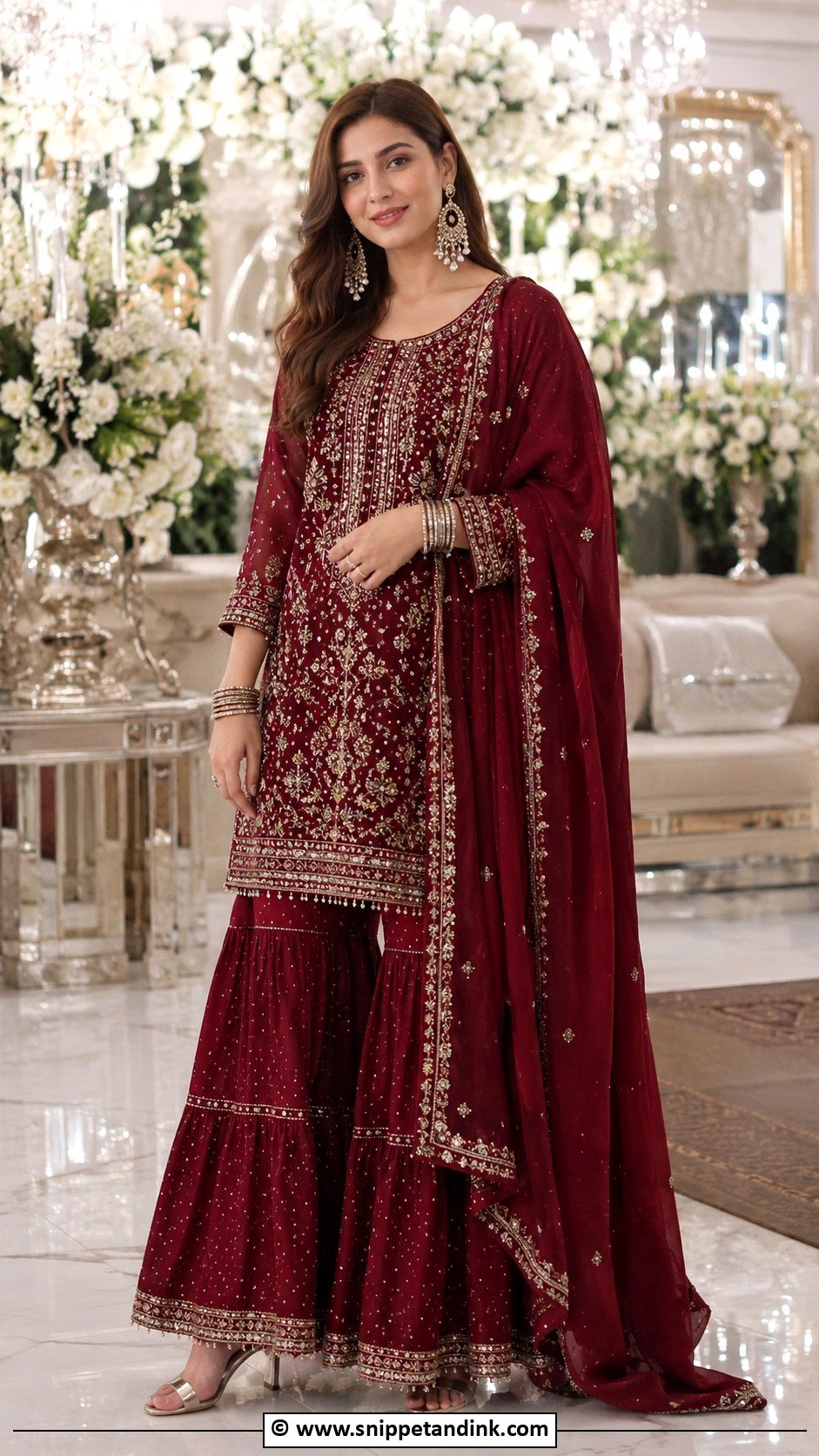
Burgundy has red’s richness but feels deeper and more grown-up, which is why I suggest it for close relatives at evening functions. Heavy work on the neckline, sleeves, hem and dupatta border gives it grandeur. A straight kameez with sharara or palazzos keeps it balanced; a Patiala salwar is more traditional. Heavy embroidery adds real weight, so try it on for a full hour before the wedding to know whether your shoulders can take it. Polki earrings, a bracelet stack and metallic heels are all you need.
23. Pastel Punjabi Floral Suit
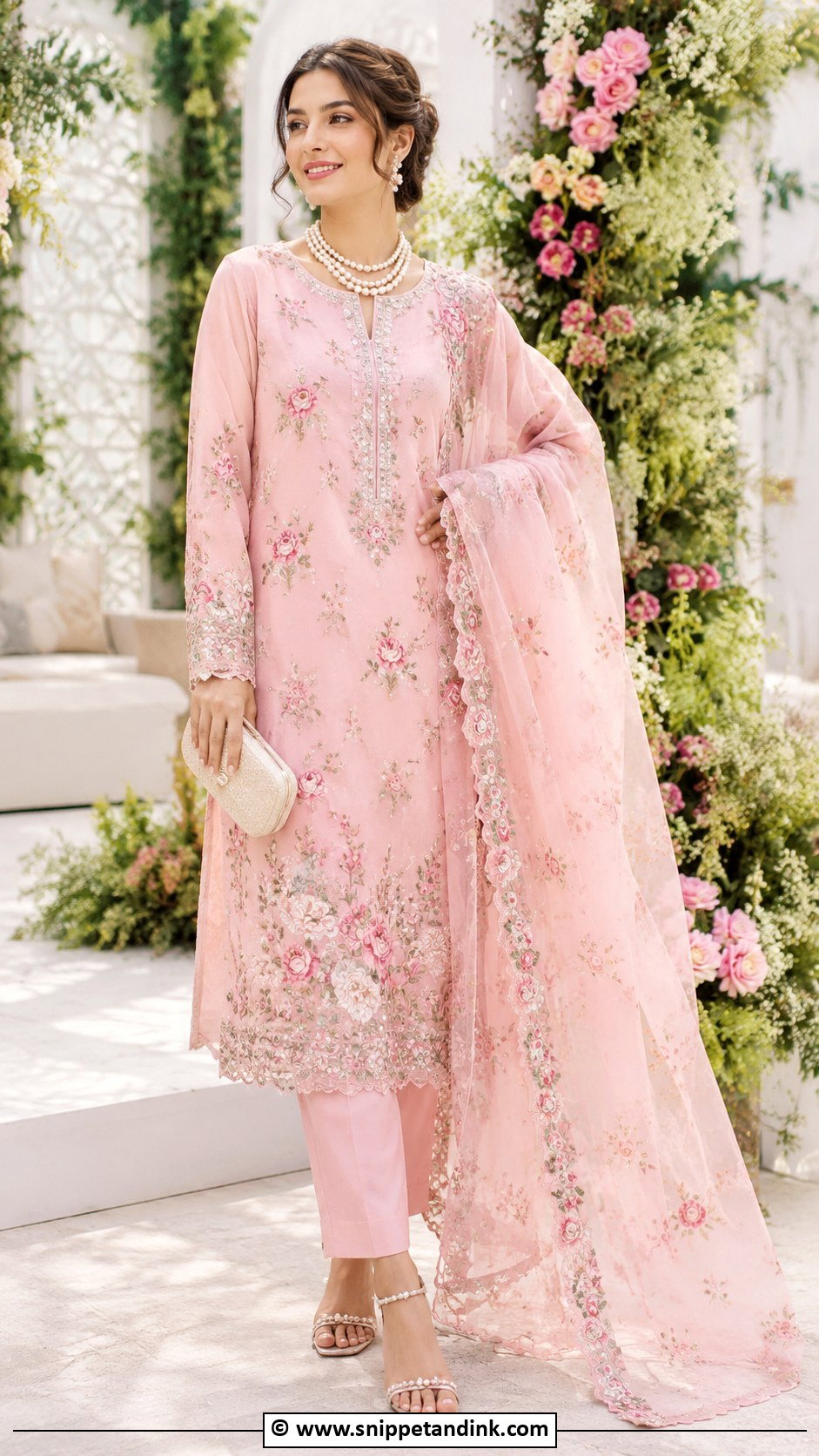
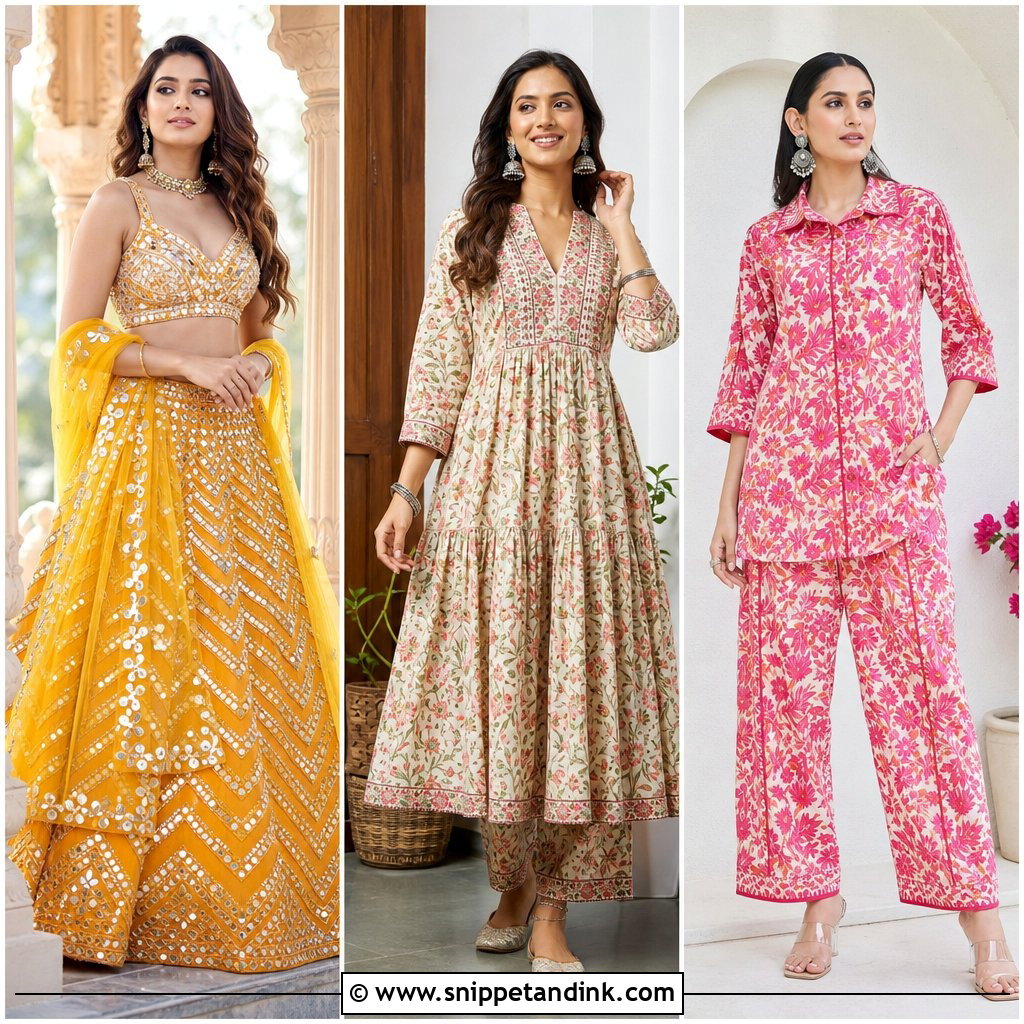
Pastel florals keep daytime events light. Powder pink, mint, lilac, peach and sky blue with floral embroidery or print look fresh without being too plain. A straight kameez with pants gives a clean line; a sharara set gives more movement. A sheer dupatta with floral borders adds a delicate finish. Pastels show every mark, so for a garden ceremony on grass I’d keep hems off the ground and bring a stain pen. Pearls, small jhumkas or kundan studs suit morning functions and pre-wedding gatherings.
24. Rust Punjabi Angrakha Suit
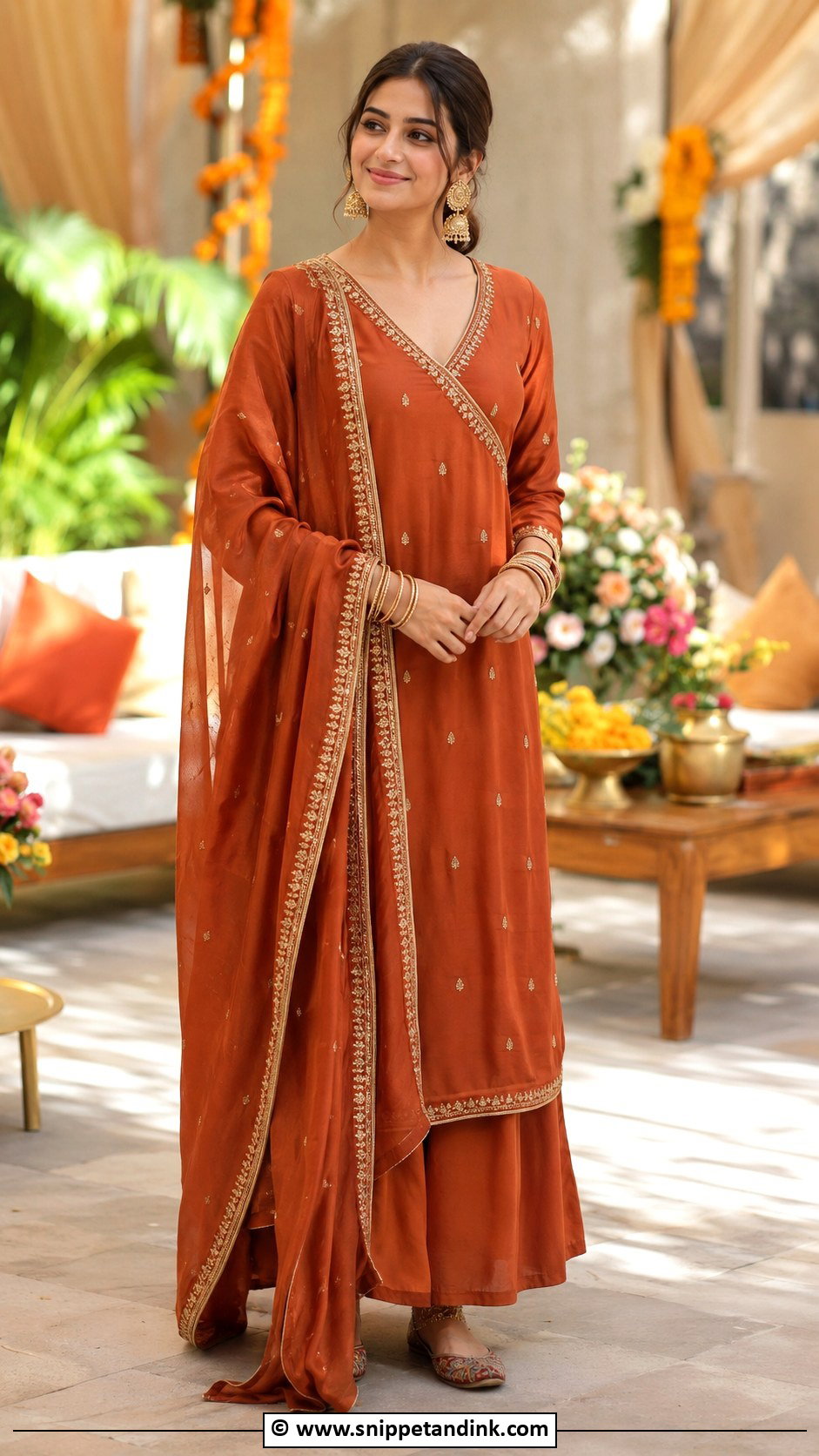
An angrakha is cut with overlapping front panels tied at the side, so the neckline itself becomes the detail, even with little embroidery. Rust pairs well with gold, maroon, olive, beige and antique accents. Choose churidar, palazzo or sharara pants depending on formality, and a bordered dupatta for movement. The ties need to be secure, with a hidden hook as backup, because they loosen after a few hours of dancing. Antique jewelry, embroidered juttis and a soft bun or loose waves suit the mehndi, sangeet or family functions.

25. Fuchsia Punjabi Peplum Suit
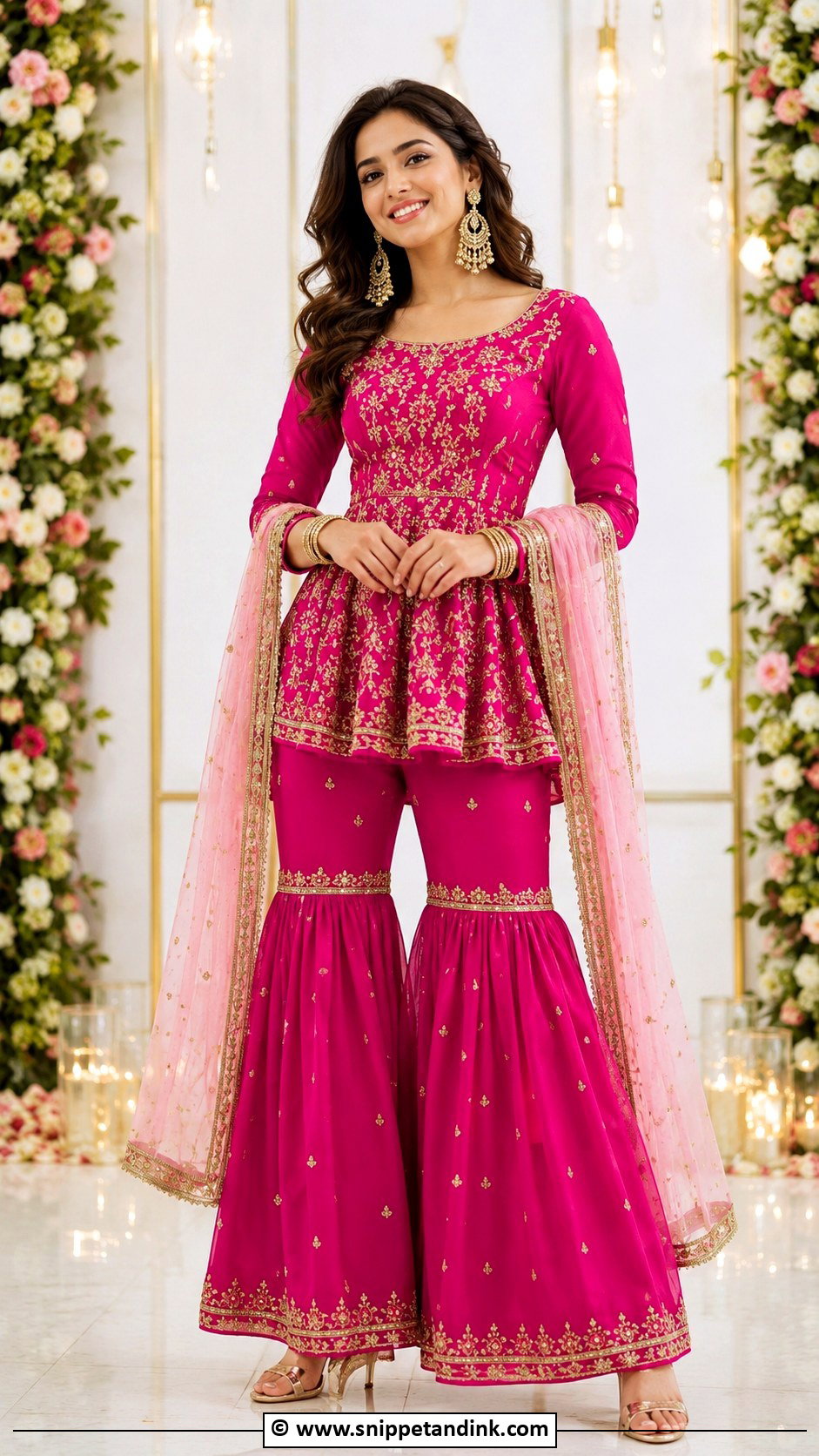
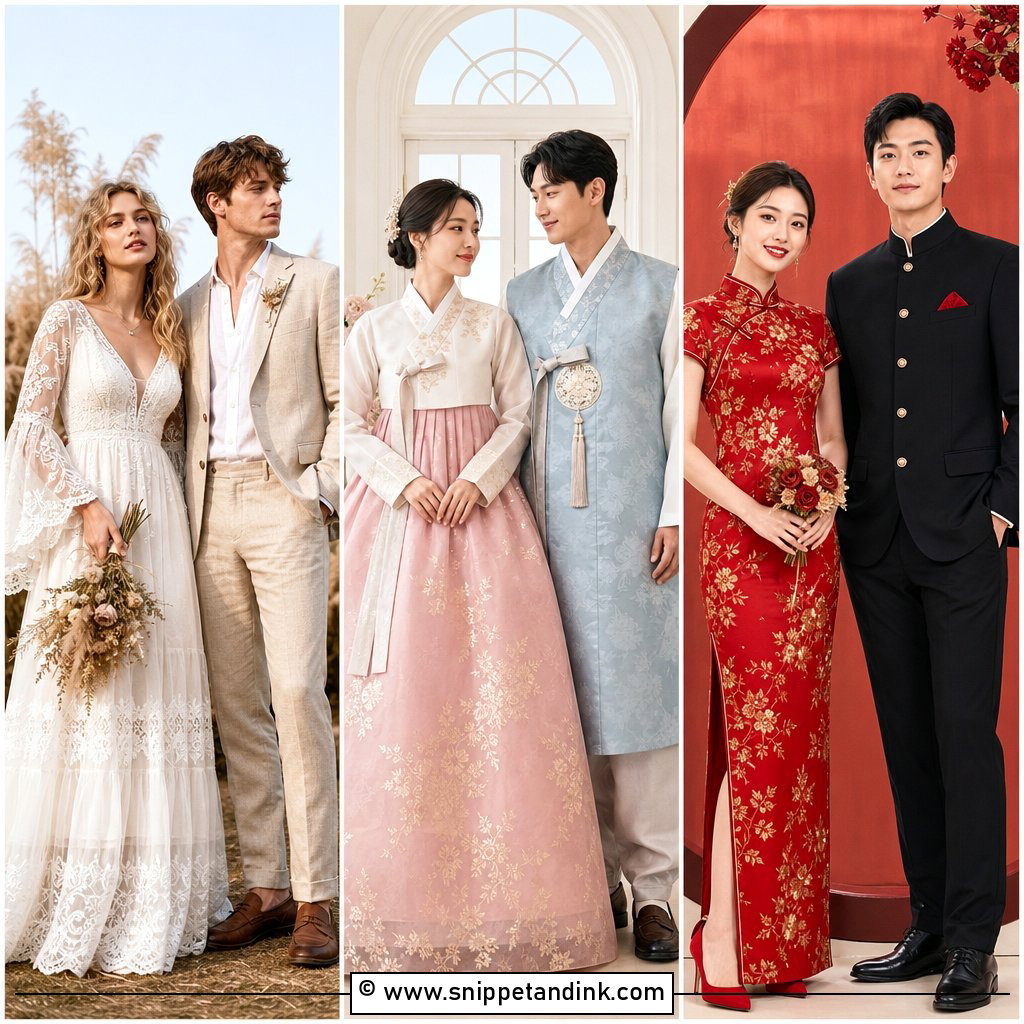
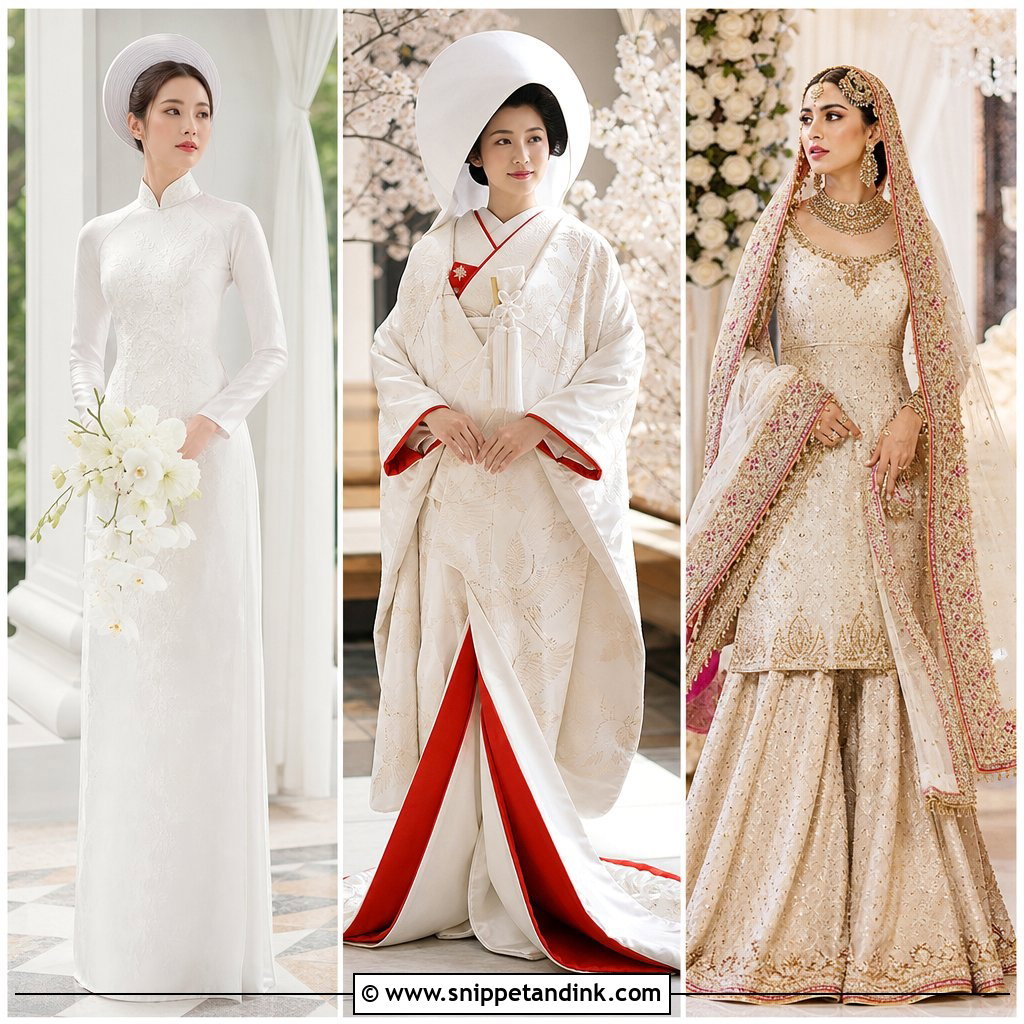
A fuchsia Punjabi peplum suit marks the waist with a flared top, while sharara or gharara pants add volume below. It’s a good shape for anyone who wants something other than a straight kameez but still wants a suit. Gold embroidery, mirror work, sequins or thread details all suit fuchsia. Keep the dupatta light, draped on one shoulder or the arms, so it doesn’t hide the peplum. Statement earrings, bangles and heels lengthen the frame for the sangeet, mehndi or any dance-heavy function.
26. Olive Punjabi Pakistani Suit
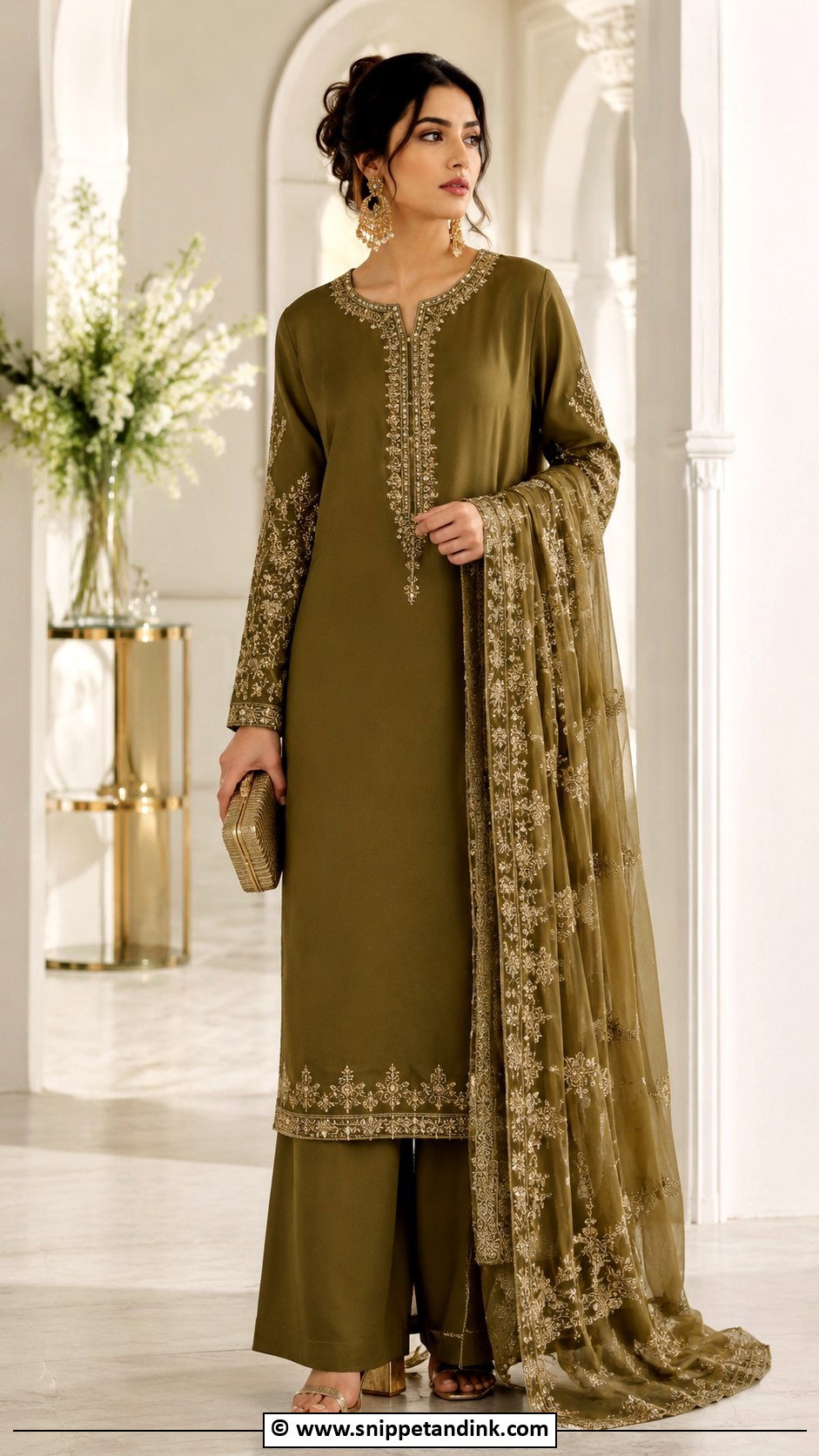
A long Pakistani-style kameez with wide pants or trousers gives a long, polished silhouette that suits formal settings and offers plenty of coverage. Olive feels refined and pairs well with gold, bronze, copper and beige embroidery. A dupatta with a rich border or scattered motifs gives a wedding finish. A long kameez needs side slits cut high enough to let you sit and climb stairs, which I always check before the final stitching. Block heels, a structured clutch and antique earrings suit receptions and family ceremonies.
27. Turquoise Punjabi Short Kurti Suit
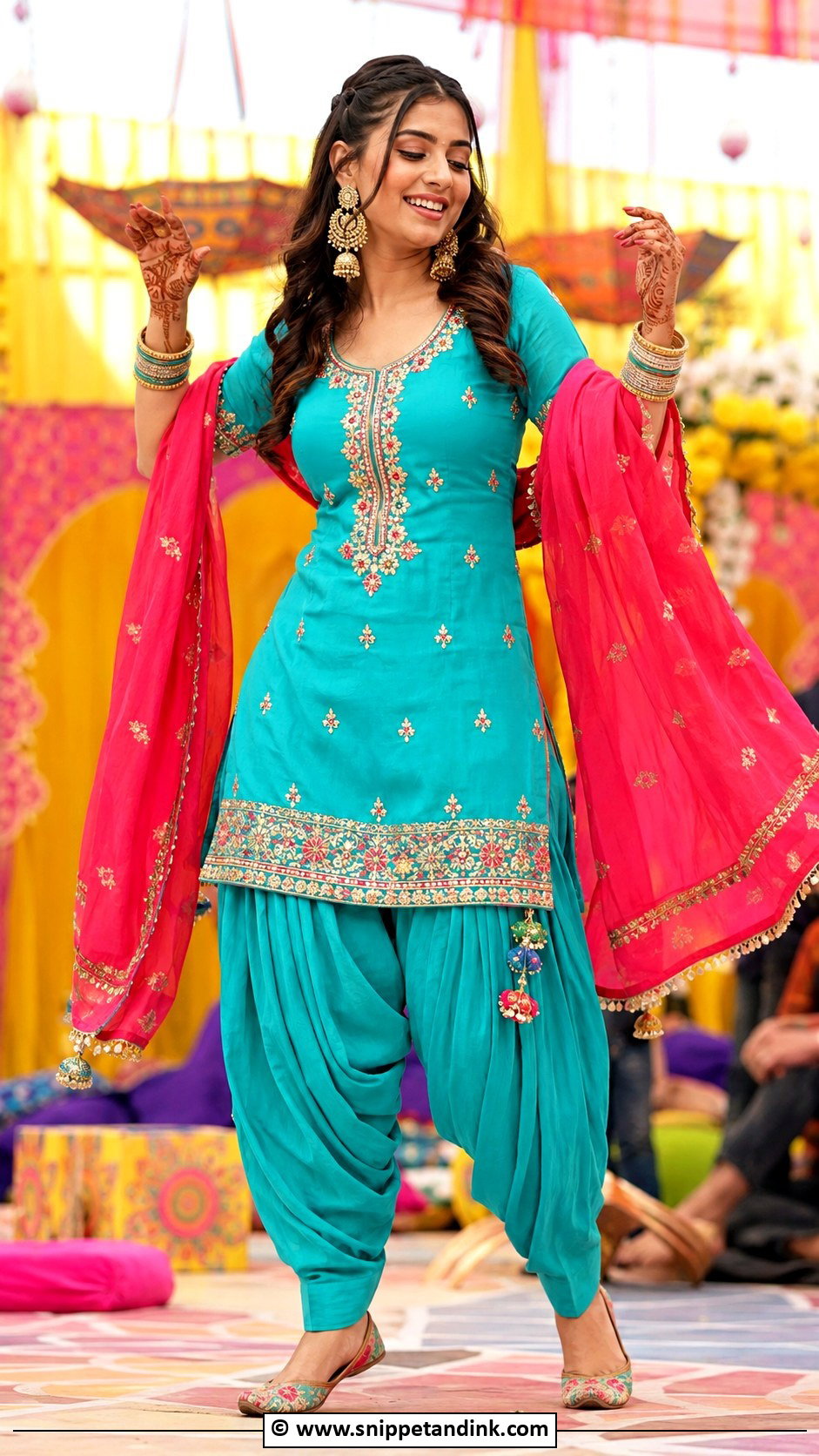
A turquoise Punjabi short kurti suit over a Patiala salwar is one of the most recognisable Punjabi wedding looks, and it’s the most comfortable for dancing. Turquoise feels fresh by day and festive at night with gold or mirror work. A contrast dupatta in pink, orange, yellow or royal blue makes a joyful mix. Juttis, bangles and large jhumkas finish it for the mehndi or jaggo. Break in new juttis before the wedding, as stiff leather rubs the heel raw on a long night.
28. Silver Punjabi Cape Suit
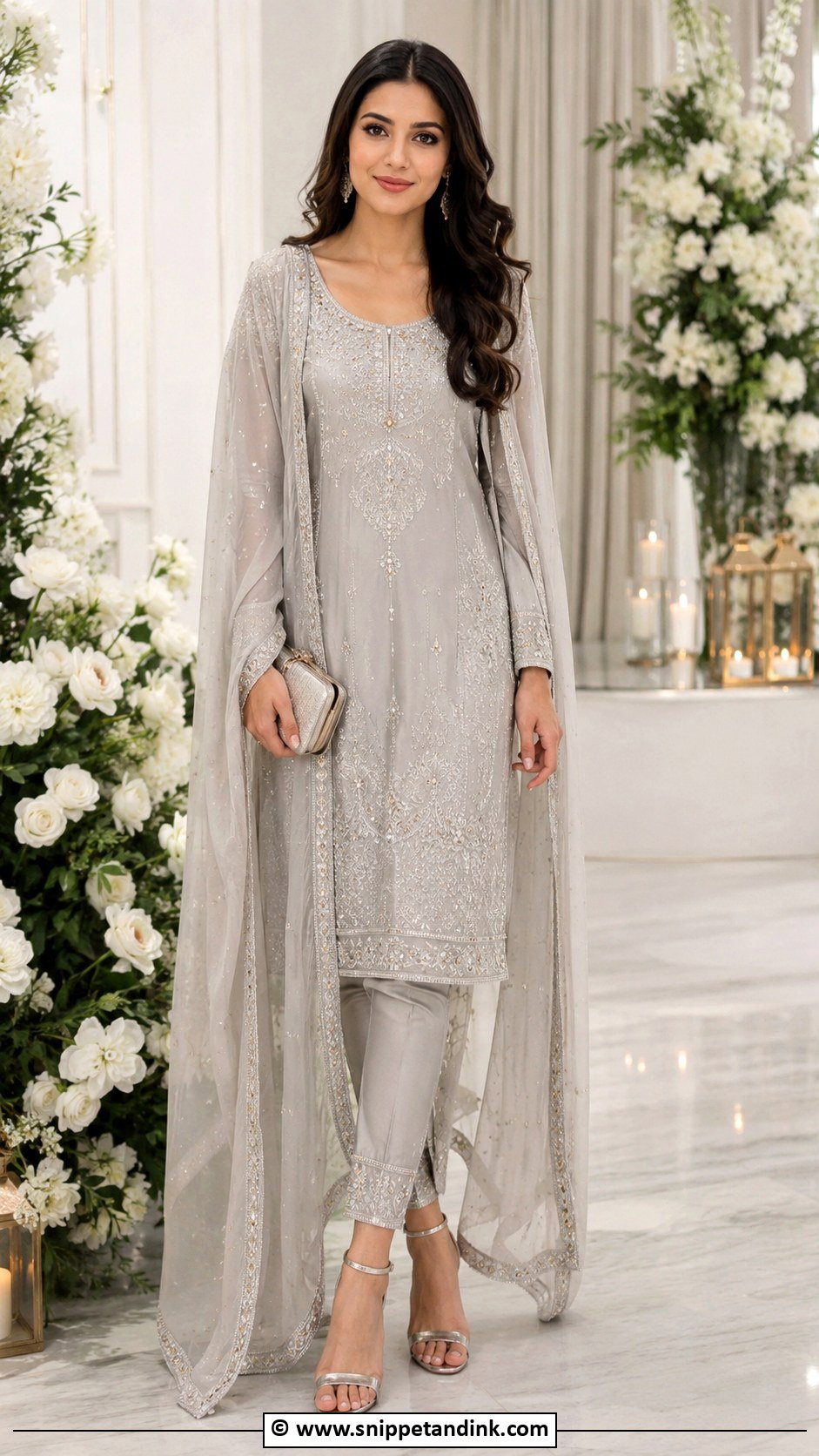
A cape replaces or layers over the dupatta, giving a sleek, modern line, so it suits receptions and engagement parties with a contemporary dress code. A silver embroidered kameez with slim pants, palazzos or a sharara works, with sequins, beads or crystals for evening. Keep jewelry minimal so the cape stays the focus. At the Anand Karaj, a cape won’t cover your head, so keep a separate dupatta or scarf for the gurdwara. Metallic heels and a small clutch complete it.
29. Champagne Punjabi Reception Suit
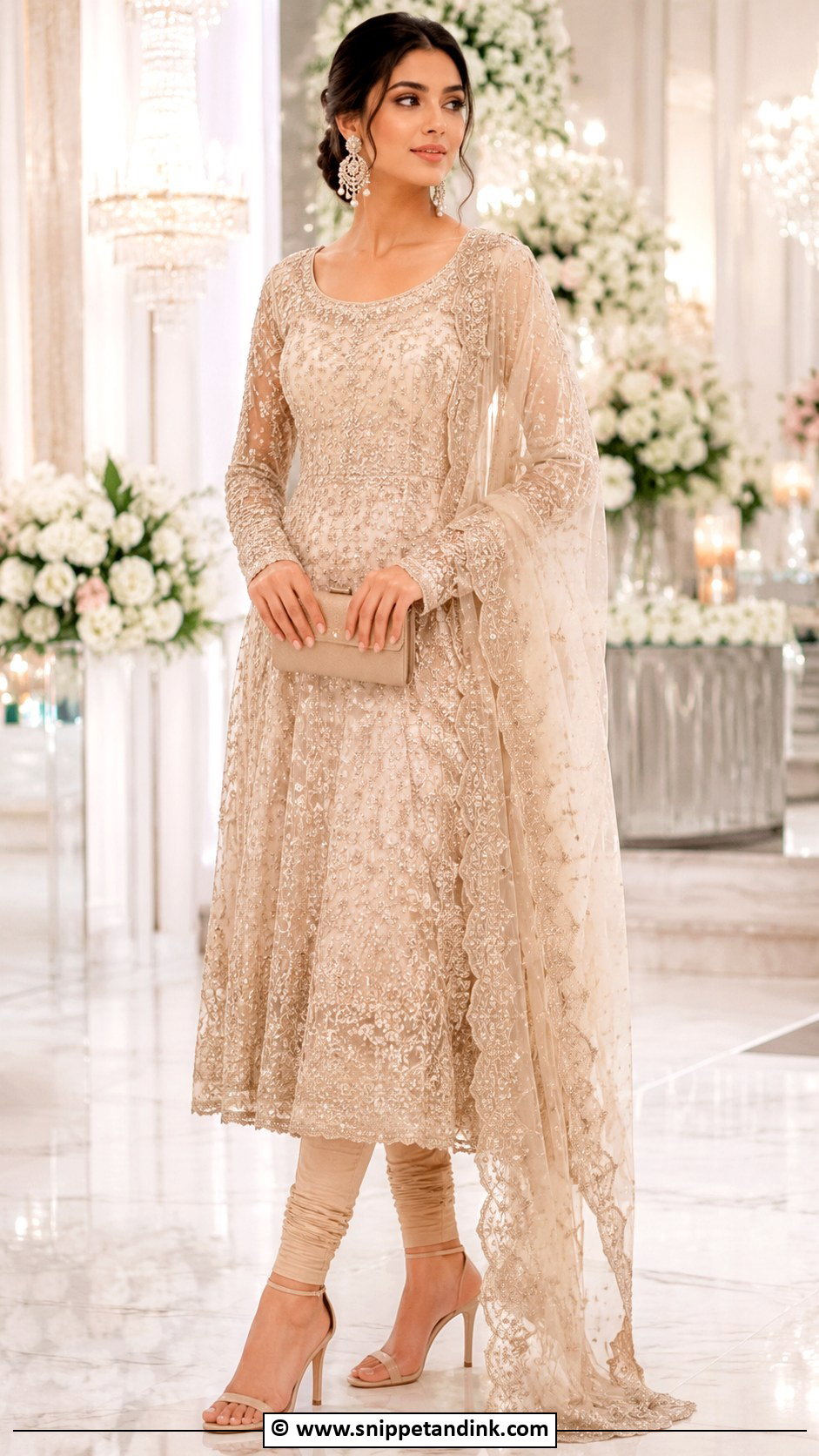
Champagne is softer than gold but still dressy under reception lighting. Choose a straight-cut kameez or Anarkali with delicate sequin, pearl or zari embroidery, over palazzo pants, churidar or a soft sharara depending on comfort. A sheer dupatta with a scalloped border adds a graceful finish. Pearl earrings, nude heels and a sleek clutch complete it. It’s a quiet, glamorous option for receptions and engagement dinners, and I like it for anyone who wants to stand out without loud colour.
30. Multi Color Punjabi Phulkari Suit
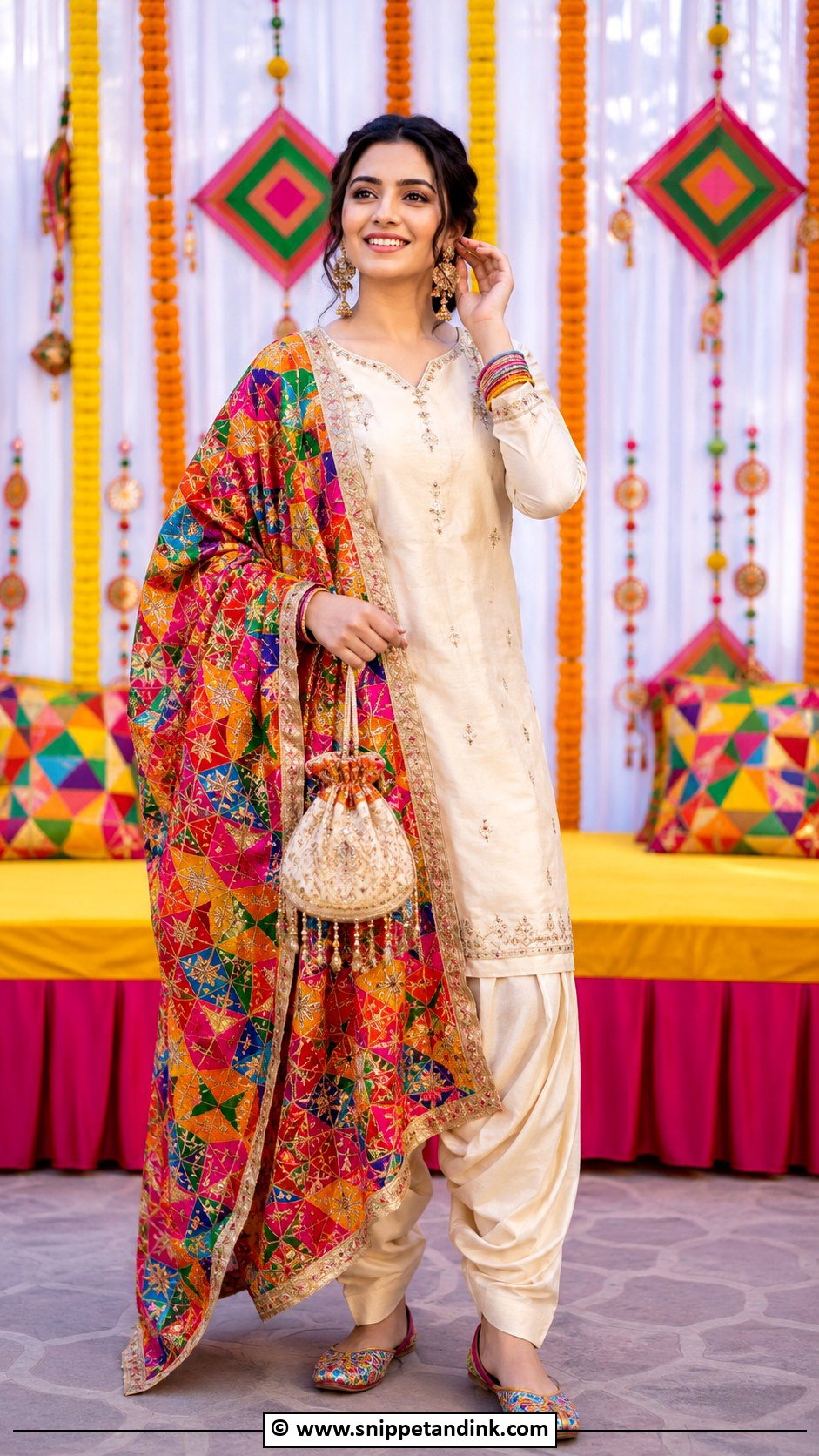
A multicolour phulkari suit is pure celebration. Start with a solid kameez and salwar in cream, black, red, yellow or green and let a bright phulkari dupatta lead, or go bolder with a fully embroidered phulkari kameez. Many families keep an older phulkari or bagh as an heirloom; wearing a grandmother’s piece at the jaggo or mehndi is something I always encourage, with a light lining behind it so the old fabric isn’t strained. Juttis, bangles and oxidised or gold earrings keep the styling rooted in tradition.
Stitching Timelines and What to Bring Your Tailor
Many Punjabi suits are still bought as unstitched fabric and made by a tailor, and wedding season is when every tailor is busiest. I tell clients to hand over fabric as early as they can, ideally several weeks before the first function, so there’s time for a fitting and a correction.
- Bring a kameez that already fits you well. It’s a better reference than measurements alone.
- Decide the bottom before cutting. A Patiala or gharara needs much more fabric than a straight pant, so check the length you’ve bought covers it.
- Ask for side seam allowance in the kameez. Weight changes before a wedding are common, and spare seam lets the tailor let it out.
- Try every suit on with the shoes and the dupatta, and sit down in it at the fitting.
Pinning a Dupatta So It Survives the Bhangra
A loose dupatta spends the night sliding off. I pin it on the left shoulder with two small safety pins hidden under a fold, one at the front and one at the back, then let the other end hang free or tuck it at the waist. For the gurdwara, I set it over the head with a few bobby pins pushed into the hair underneath, so it stays put when you bow.
One Suit Per Function, Each Worn Its Own Way
Punjabi suits give you a different outfit for every function without giving up comfort or tradition. Patialas, phulkari dupattas, shararas, ghararas, Anarkalis, jacket suits and capes can each be adjusted to your body, your taste and the event. Lighter colours and breathable fabrics suit daytime; velvet, brocade, silk and heavily worked georgette belong to the evening. The balance I always come back to is simple: a detailed suit, shoes you can dance in, jewelry that doesn’t fight the embroidery and a dupatta pinned securely enough to forget about.
You'll Like These Ideas:




Leave a Reply