
A gown made from material that already exists can look every bit as finished as a new one, provided you match the material to the occasion. Recycled polyester, deadstock silk, vintage lace, old denim, worn-out shirts and even newspaper have all been turned into formalwear, but they are not equal. Some of the ideas below will carry you through a ten-hour wedding; others are pieces of wearable art that belong on a runway, in a school showcase or at a recycled-fashion competition. I’ve marked which is which, and for each one I give the shoes, accessories and styling that pull it into a complete outfit, plus the construction detail that decides whether it holds together.
Wearable All Day or Built for the Runway?
When a bride brings me a reclaimed fabric, I sort it into one of two piles before we talk about style. The first pile is real cloth: recycled polyester, deadstock satin, saree silk, old lace, curtain jacquard, shirting, knitwear and denim. These can be cut, sewn, cleaned and altered like any dress fabric, so they suit a ceremony, dinner and dancing.
The second pile is everything that only imitates cloth: newspaper, magazines, plastic bags, candy wrappers and paper flowers. They make wonderful exhibition and competition pieces, but they tear when you sit, crease when you hug, and react to heat and damp. If one of those is your dream for a wedding, I’d suggest a compromise: wear it for the portraits or the entrance, then change into a fabric gown for the reception.
Quick tests on a found fabric
- Pull it gently along the grain and across it. Sun-rotted fabric splits with very little force.
- Wash and dry a scrap. If it shrinks, bleeds color or goes stiff, you’ve learned that before cutting the gown.
- Hold it against your skin for a minute. Anything that itches now will be unbearable after six hours.
- Measure the usable yardage, not the total. Stains, holes and faded edges always take more than you expect.
1. Recycled Plastic Bottle Evening Gown
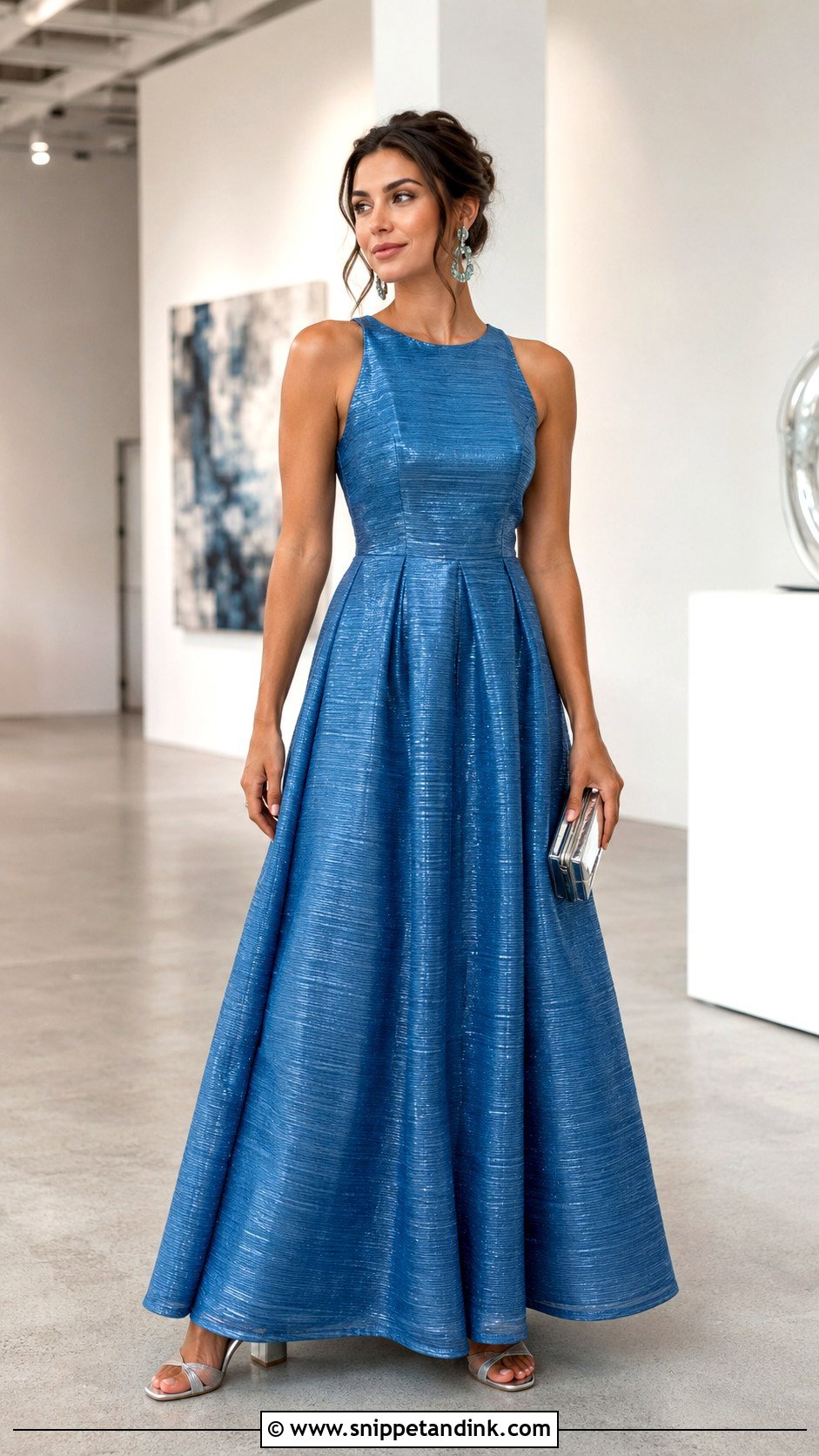
Bottles never touch the dress directly; they are shredded, melted and spun into polyester yarn, which is why a recycled plastic bottle evening gown can drape like any other evening fabric. A floor-length A-line in ocean blue, emerald or black, with a fitted sleeveless bodice and a pleated skirt, lets the cloth move without decoration. Add recycled glass earrings, a secondhand metallic clutch and block-heel sandals. If you commission one, ask for the recycled-content percentage, what the lining is and how to clean it. Polyester holds heat, so I’d choose a breathable cotton or viscose lining for a summer wedding. Of everything here, this is the easiest to wear for a full day.
2. Upcycled Denim Patchwork Gown
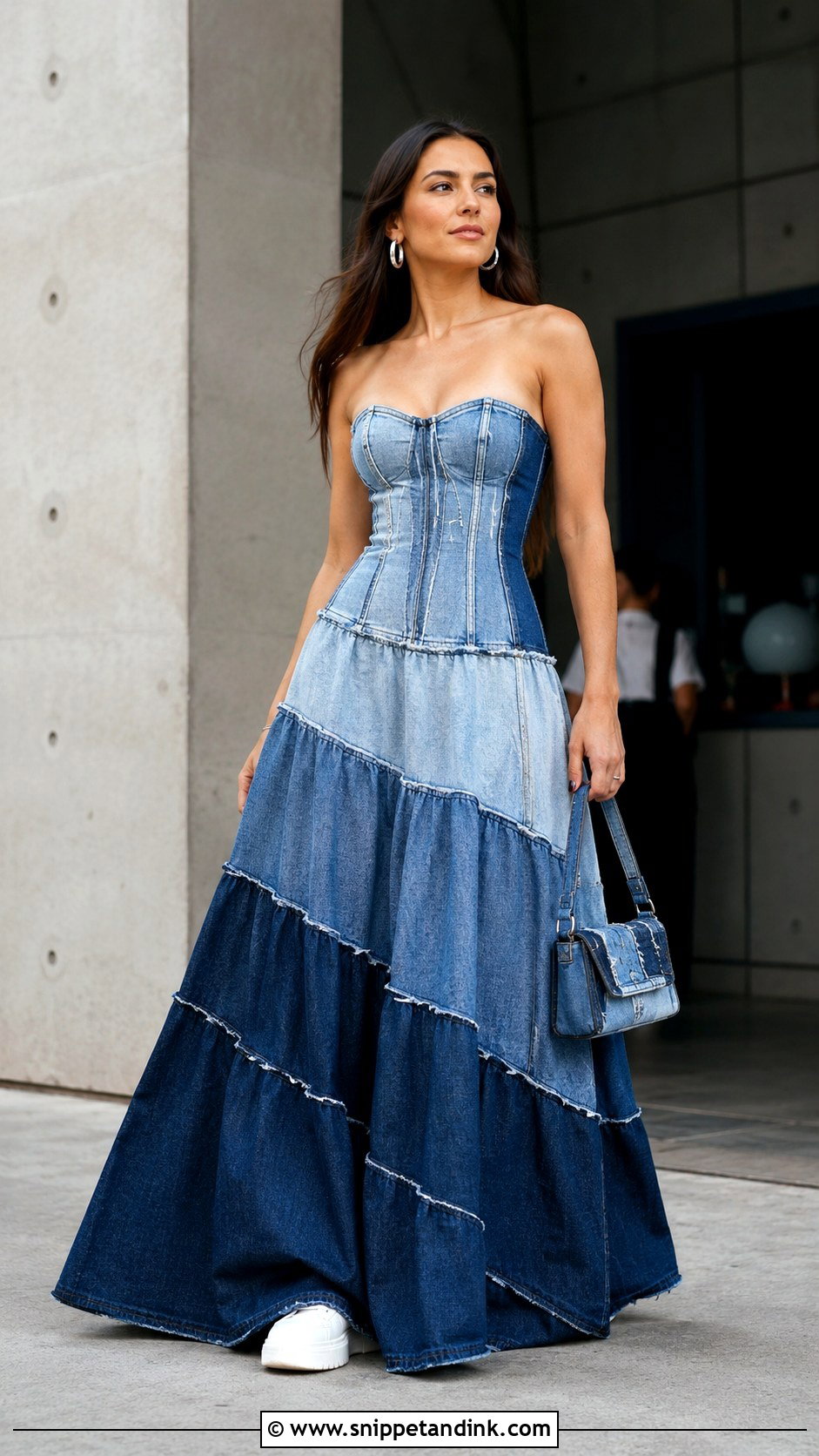
Denim is heavy, and that weight is the first thing I plan around. An upcycled denim patchwork gown looks best when the shades are graded, pale blue at the bodice deepening to indigo at the hem, so the darkest and heaviest panels hang low. Old jeans give you a structured corset top and a tiered skirt, and pockets, flat-felled seams and worn edges can stay visible on purpose. Tailor it closely at the waist or the skirt will drag the bodice down by evening. Recycled silver hoops, a small denim bag and white platform sneakers or low block heels finish it. Expect it to feel warm; it is a cooler-season gown.
3. Recycled Newspaper Ball Gown
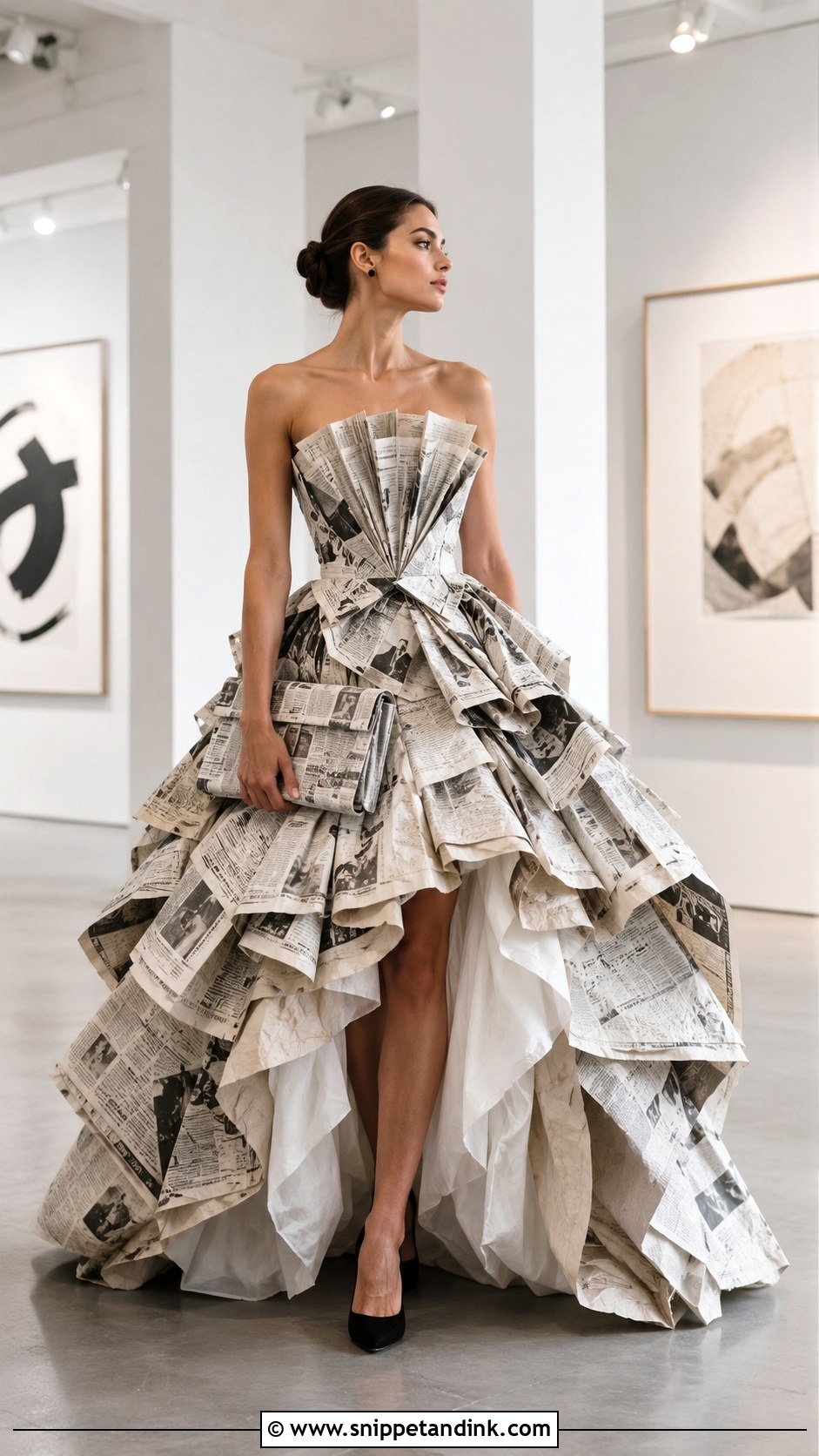
Newspaper gives a ball gown a sharp editorial look through crisp folds and black-and-white print. I build the skirt from layered paper panels over a reusable fabric base, and the bodice from folded strips or paper rosettes, with a cotton lining between paper and skin. Plain black pumps, small studs and a recycled-paper clutch keep it graphic. Paper tears at the waist and under the arms first, the places that flex, so reinforce those zones with fabric tape on the back. Keep it away from rain, candles and crowds. This one is for a school showcase, an exhibition or a photo shoot, never a full reception.
4. Recycled Magazine Page Gown
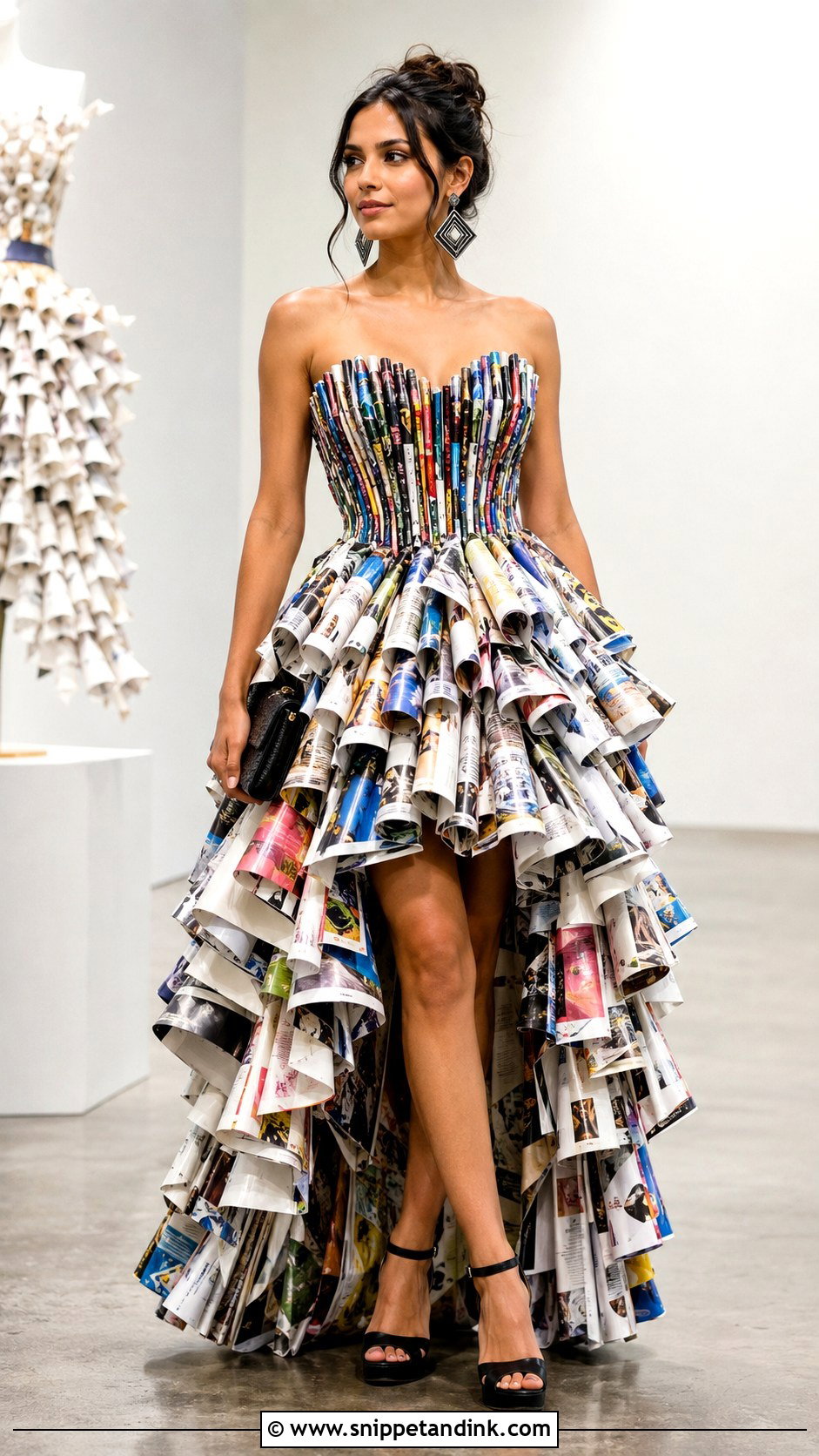
Magazine pages bring color that newspaper cannot. Roll pages into narrow tubes for a fitted bodice, then overlap larger folded pieces into a structured high-low skirt. The make-or-break step is sorting pages by color before you start: a jewel-toned set, neutral fashion spreads or a gradual rainbow all look deliberate, while random pages look like a scrapbook. Wear it with solid ankle-strap heels, geometric earrings and a sleek low bun. A secondhand slip underneath gives comfort and coverage. Stitch, use paper fasteners or back it with fabric wherever you can; glue alone lets go under body heat. It is wearable art for exhibitions and competitions.
5. Upcycled Saree Silk Gown
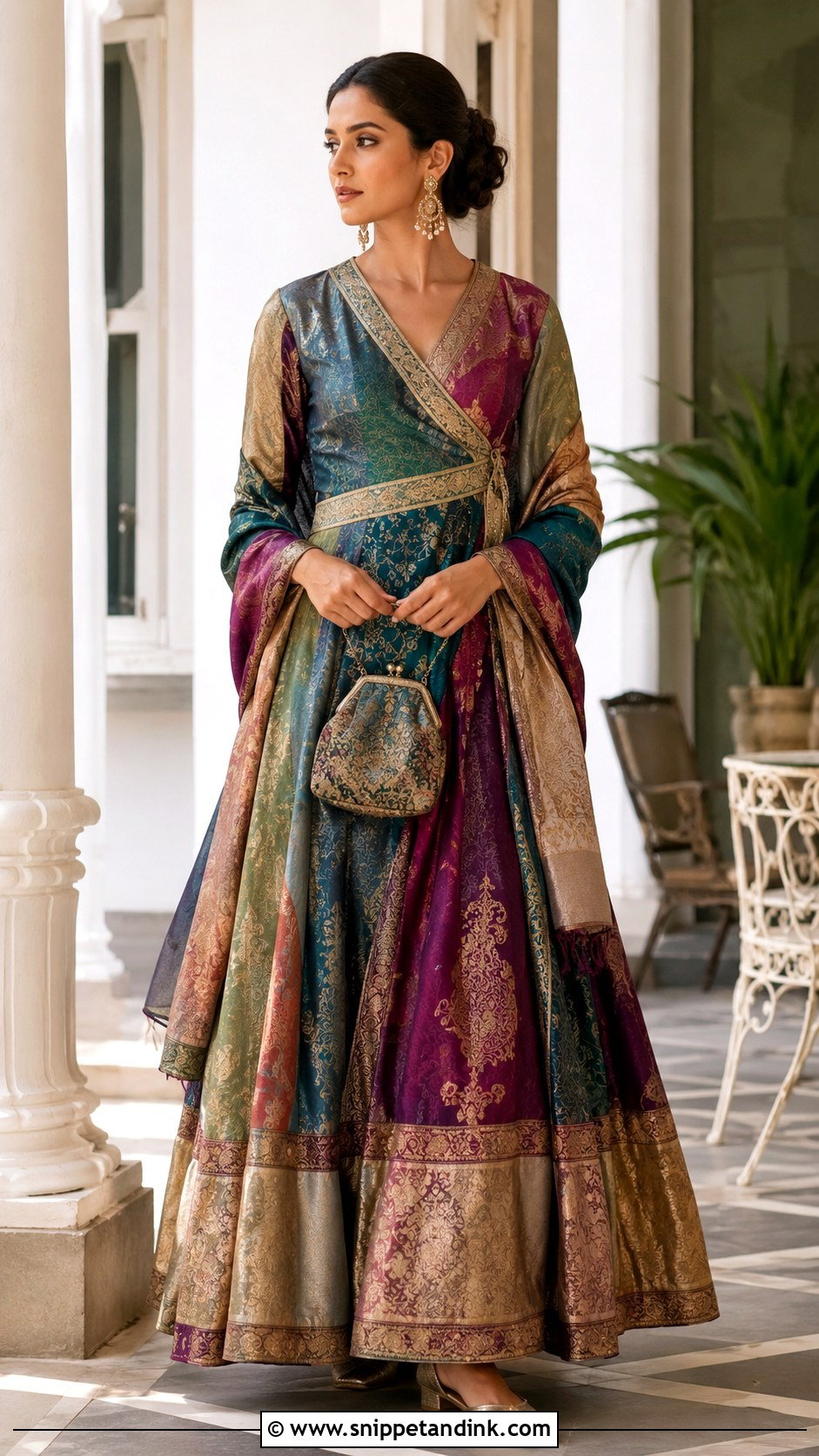
Saree silk is a gift to work with because the most valuable part, the woven or embroidered border, is already finished. Combine damaged or unworn sarees into a fitted wrap bodice, a defined waist and a full skirt, and place the border at the neckline, waist or hem where it will be seen. When several sarees are mixed, tie them together through one shared color such as gold, teal or burgundy. Low metallic heels, a vintage evening bag, drop earrings and a polished bun suit it, and a matching shawl gives coverage. Older silk can split along the grain, so have your tailor reinforce seams and the zip area. It turns family textiles into something you can wear again.
6. Deadstock Satin Slip Gown
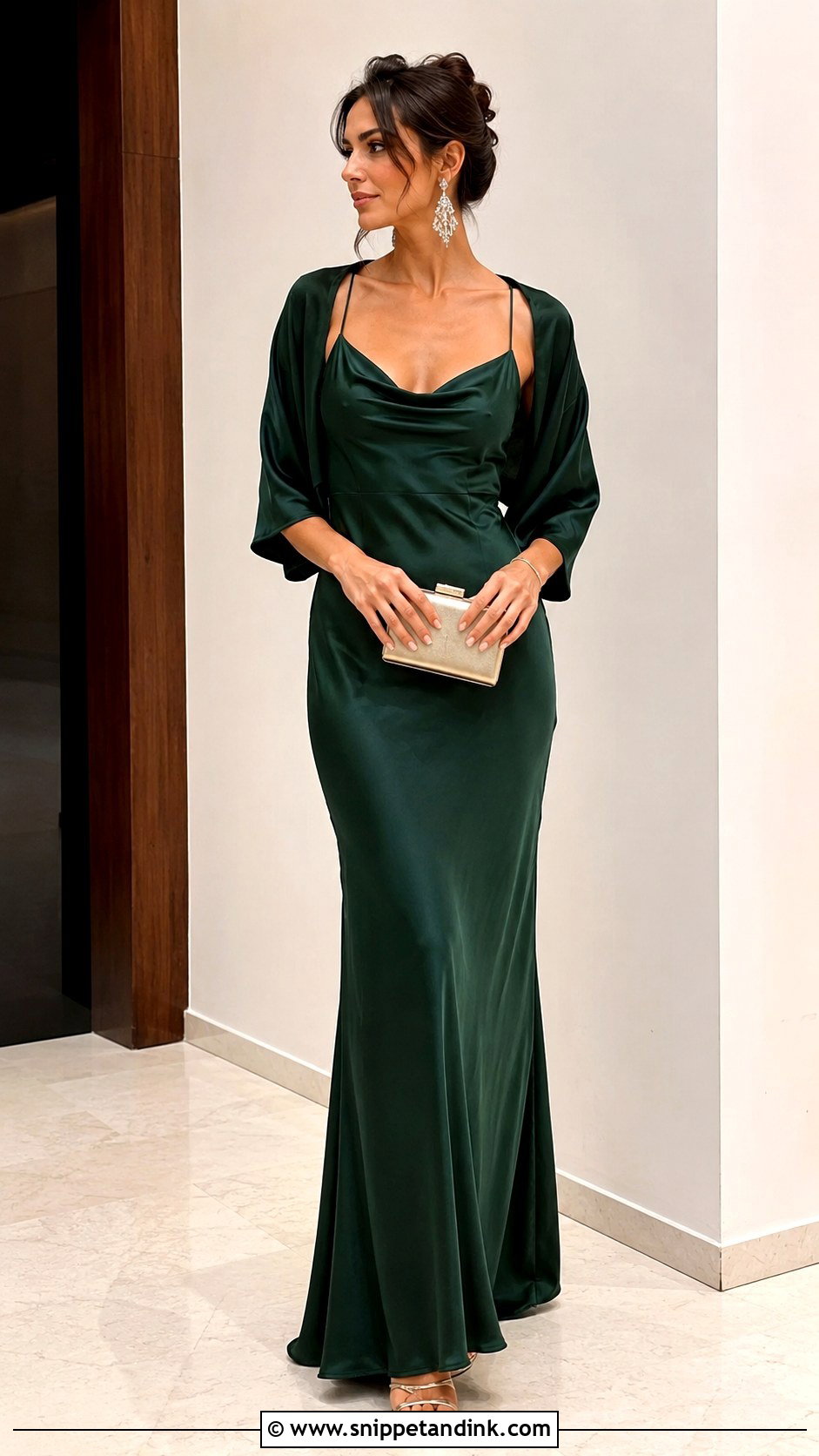
Deadstock is surplus fabric a mill or brand never used, so a satin slip gown made from it costs no new production. Pick champagne, forest green, navy or berry and cut it on the bias with a draped neckline; a low back or slim straps add elegance, and a cropped wrap gives cover. Vintage crystal earrings, a pre-owned box clutch and minimal strappy heels finish it. Satin shows every seam, so careful cutting and clean finishing matter more here than anywhere. Deadstock often comes in short lengths, so I have the pattern laid out on the actual yardage before anyone falls in love with a design. Adjustable straps and a modest slit help with fit and movement.
7. Vintage Lace Wedding Gown
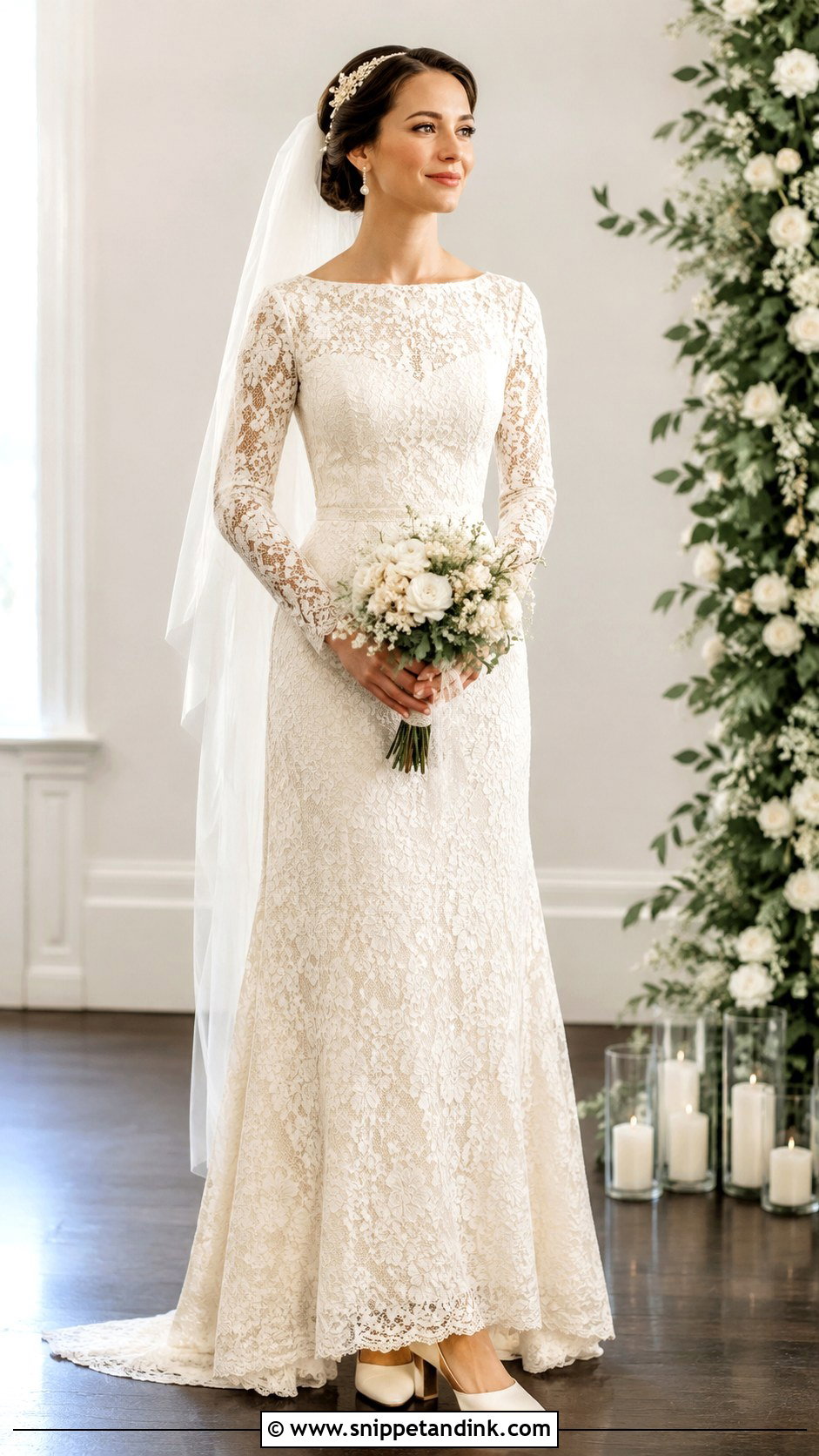
Old lace carries history, but it is also the most fragile thing on this list, so I have it assessed before any design is drawn. Lace can come from a family dress, a damaged gown, curtain panels or antique table linen. Place the strongest sections over a fitted lining for long sleeves, a bateau neck and a softly flared skirt. Small holes can hide under hand-applied motifs or covered buttons. Vintage pearl earrings, an heirloom comb, a plain veil and comfortable ivory block heels are enough, because aged lace already has plenty of texture. Check for brittle threads and yellowing; a specialist cleaner can often lift discoloration, and a well-built gown can be altered and passed on again.
8. Upcycled Parachute Fabric Gown
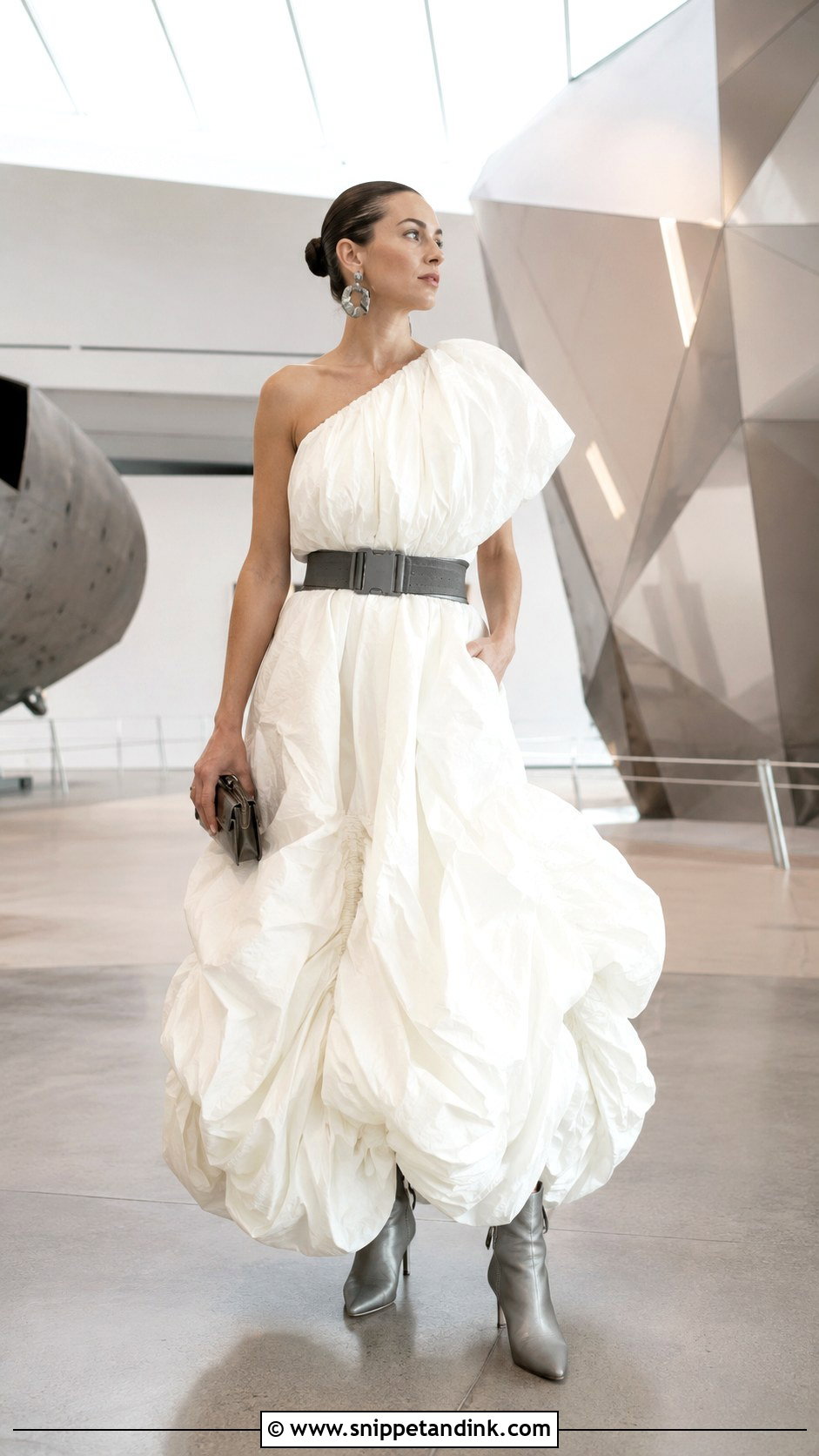
Parachute nylon is light enough that you can build huge volume without weight, which is why it suits a runway or a statement event. Gather it into a one-shoulder bodice and a bubble or tiered skirt, and keep the original white, grey, olive or orange to hold onto its utilitarian character. A wide reclaimed-fabric belt defines the waist. Sculptural recycled-metal earrings, a small secondhand clutch and streamlined ankle boots or block sandals complete it. Synthetic nylon melts under a hot iron, so test pressing and seams on scraps first. Add a breathable lining, since the fabric itself traps heat, and adjustable ties so it can be worn by more than one body.
9. Recycled Tulle Princess Gown
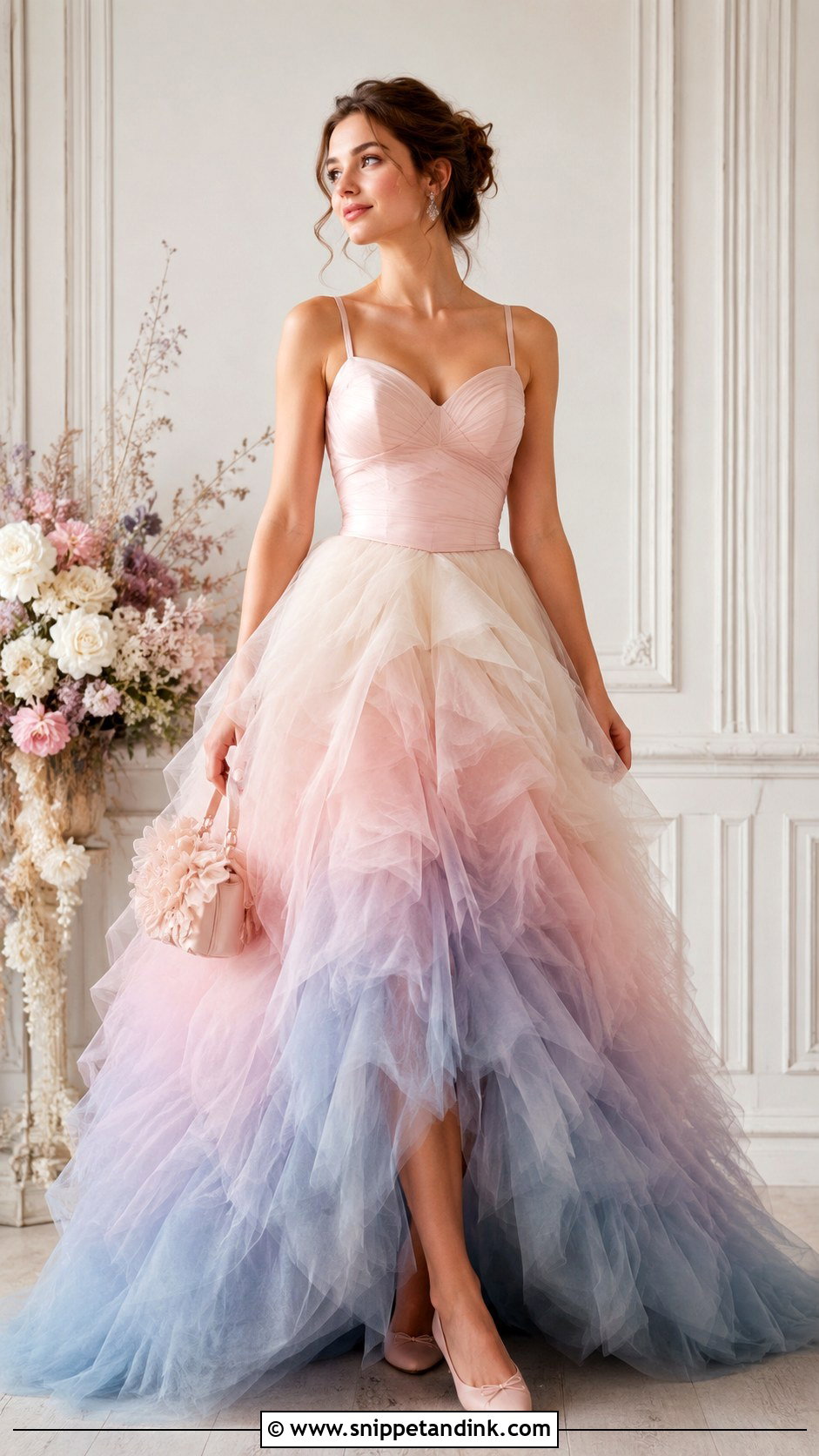
Old veils, dance costumes, formal dresses and event drapes can all supply tulle for a princess gown without a meter of new fabric. Sort related shades such as blush, lavender, ivory and dusty blue into a soft ombré skirt, and pair it with a fitted recycled-satin bodice on supportive straps. Ballet flats, vintage crystal earrings and a small fabric-covered bag finish it. Cut the layers at staggered lengths; the uneven edge hides small tears and moves better. Mixed tulles vary a lot in stiffness, so wash and sort every piece first and keep the stiffest layers underneath as structure. Concentrate any embellishment at the waist or neckline.
10. Upcycled Feed Sack Prairie Gown
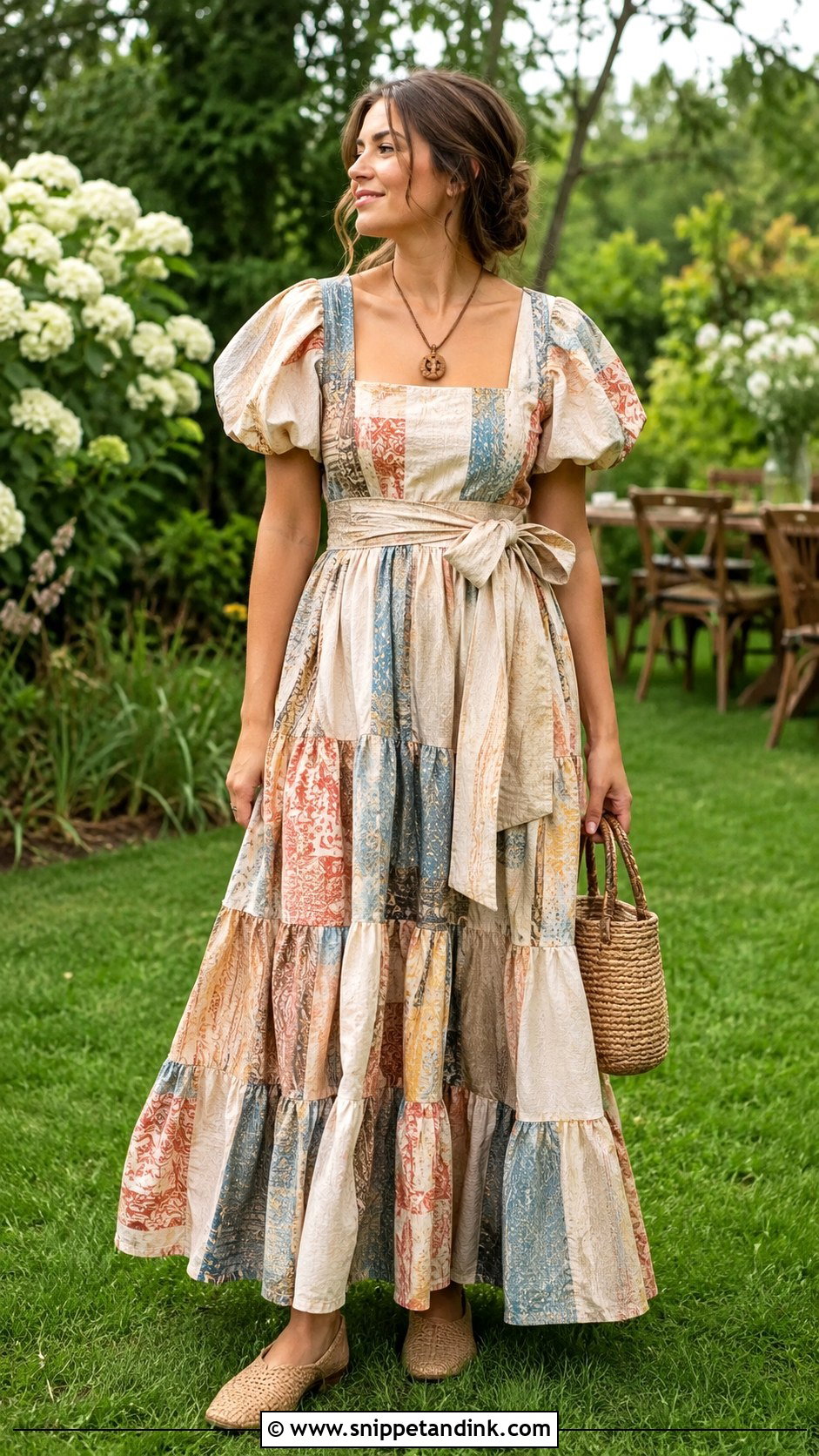
Feed sacks were printed cotton precisely so families could sew them into clothes, which makes an upcycled feed sack prairie gown one of the most historically honest ideas here. Use clean vintage sacks or modern printed packaging fabric, joined into a square-neck bodice and long tiered skirt with puff sleeves, covered buttons and a wide waist tie. Woven flats, a reclaimed wood pendant and a small basket bag suit a garden party or relaxed outdoor wedding. Never use sacks that held chemicals or oily products, and wash everything twice. A soft cotton lining helps. Keep the prints to two or three shared colors so the patchwork looks intentional.
11. Upcycled Curtain Jacquard Gown
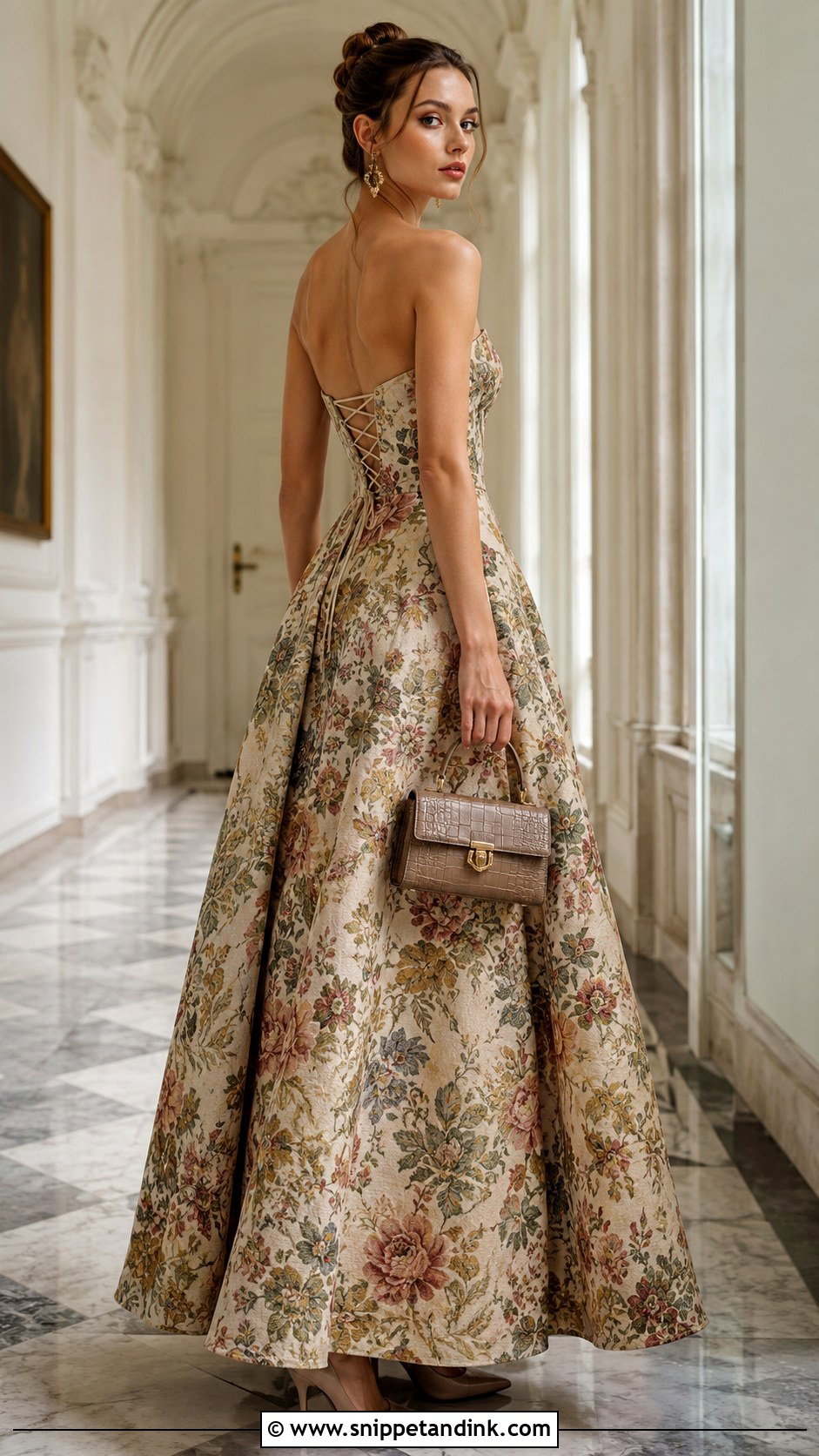
Curtain jacquard is woven to hang, so it gives a skirt real body, but not every curtain is fit to wear. An upcycled curtain jacquard gown starts with a panel that is clean and flexible; sun-damaged fabric along the window edge often tears at a fingernail’s pull, so test it. Turn a floral or geometric weave into a strapless structured bodice and sweeping A-line, using the finished border at the hem or neckline to save cutting. A lace-up back gives sizing room when yardage is tight. Pointed pumps, vintage gold earrings and a structured bag finish it; skip necklaces. Remove old lining, hooks and weights before any cutting.
12. Upcycled Button-Down Shirt Gown
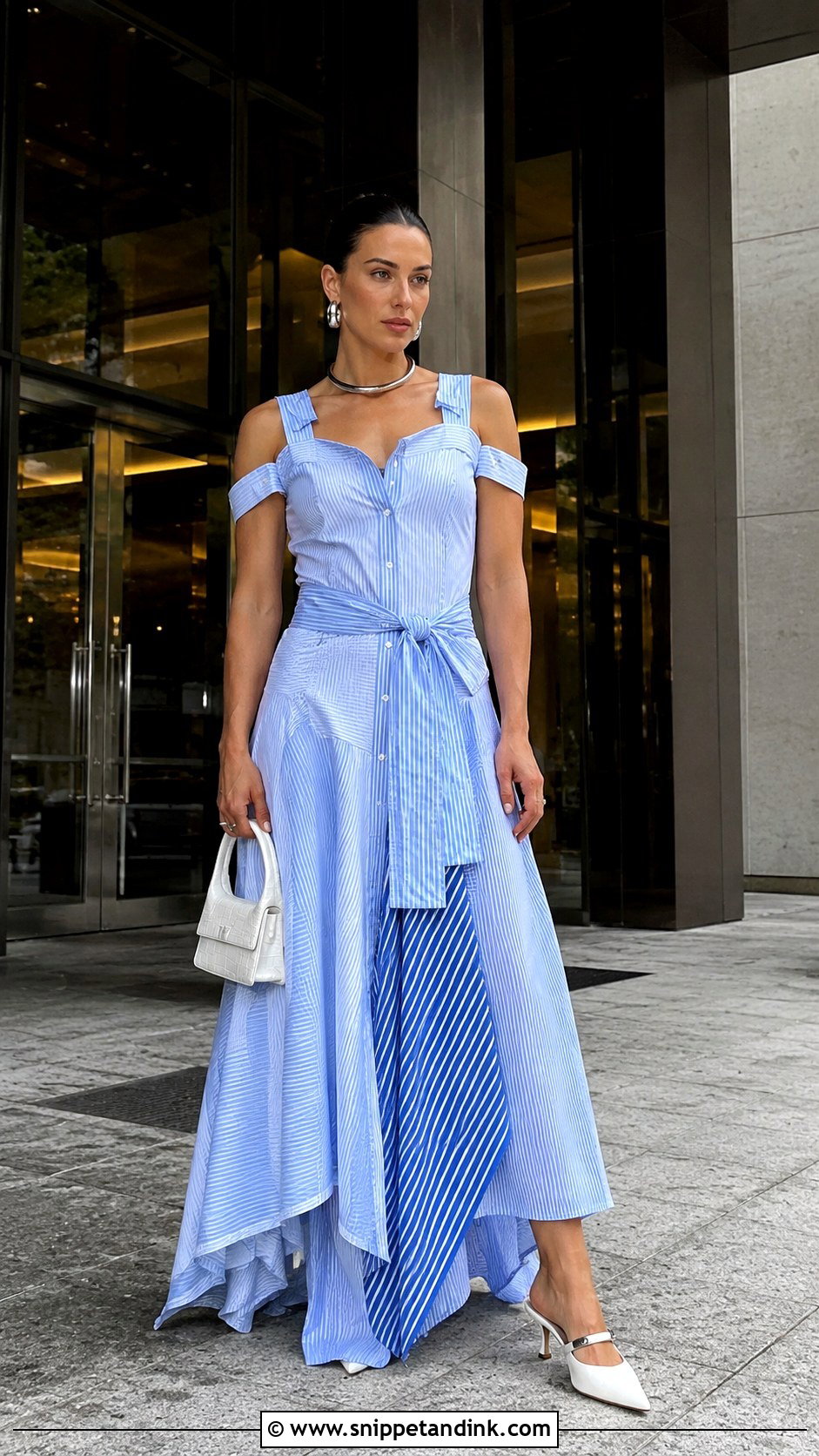
Button-down shirts are a dressmaker’s shortcut: the collars, cuffs and plackets are already finished. Use white, blue or coordinating striped cotton shirts to build a fitted button-front bodice and an asymmetric paneled skirt. Cuffs become straps, collars frame the neckline, plackets become adjustable openings, and leftover sleeves make a wide belt. Loafers or low slingbacks, a secondhand top-handle bag and quiet silver jewelry suit it. Mix shirts of similar weight or the skirt hangs crooked. It is the obvious home for shirts with frayed collars but plenty of good fabric in the back and sleeves.
13. Recycled Sequin Mermaid Gown
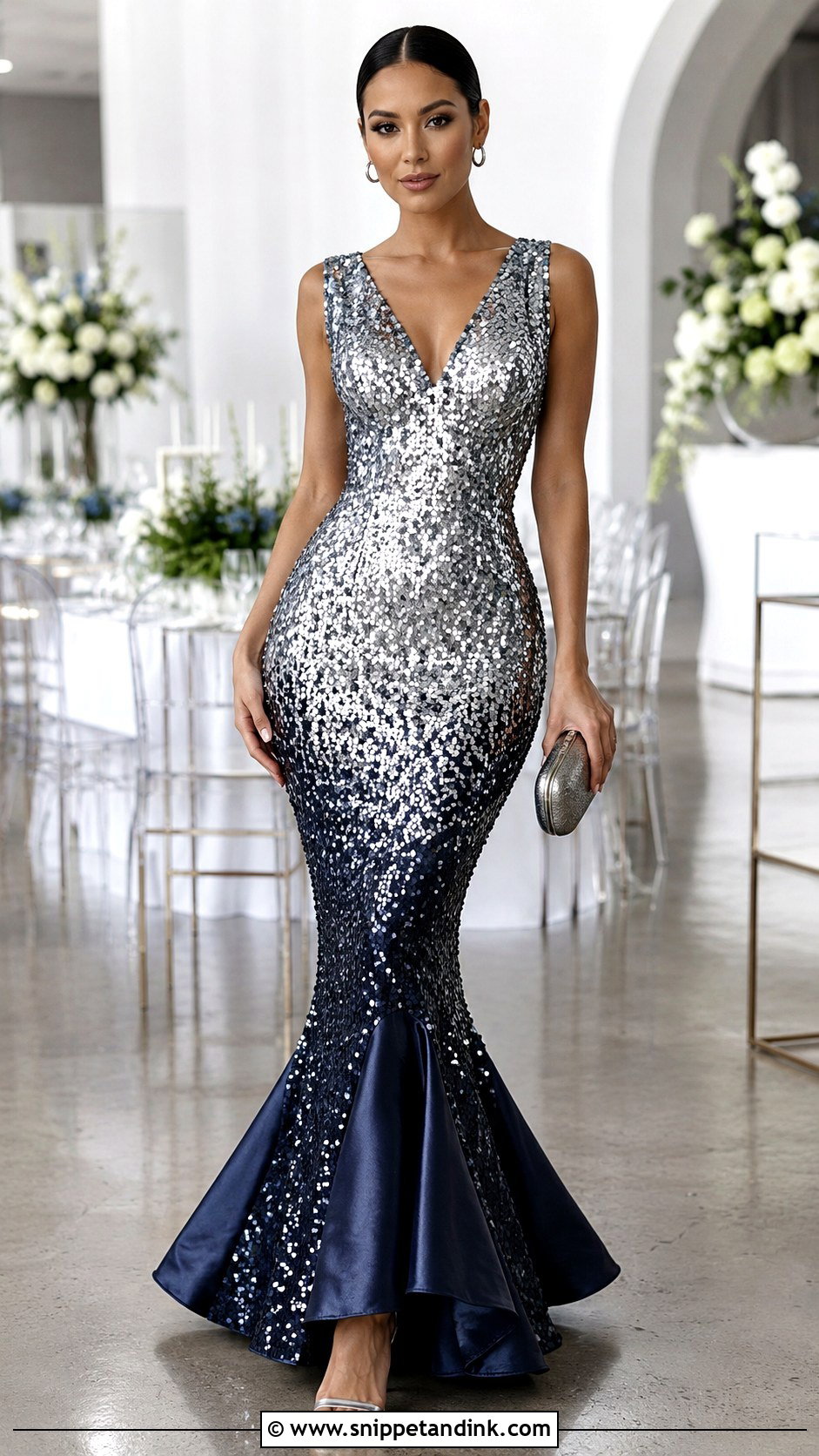
Salvaged sequin panels from old party dresses can be laid over a fitted stretch lining in the same color and shaped into a mermaid line through bodice, waist and hips, then flared at the hem with recycled satin or tulle. Mixing matte and reflective sequins adds depth without chaos. Metallic sandals, small hoops and a smooth vintage clutch are all it needs. Keep hair sleek, because loose waves snag on sequin edges. Sequins cannot simply be sewn through at a seam, so they have to be removed along seam lines, sewn, then replaced by hand. That is why I’d ask for a corset back or a discreet stretch panel, which allows future alterations without unpicking.
14. Upcycled Sweater Knit Gown
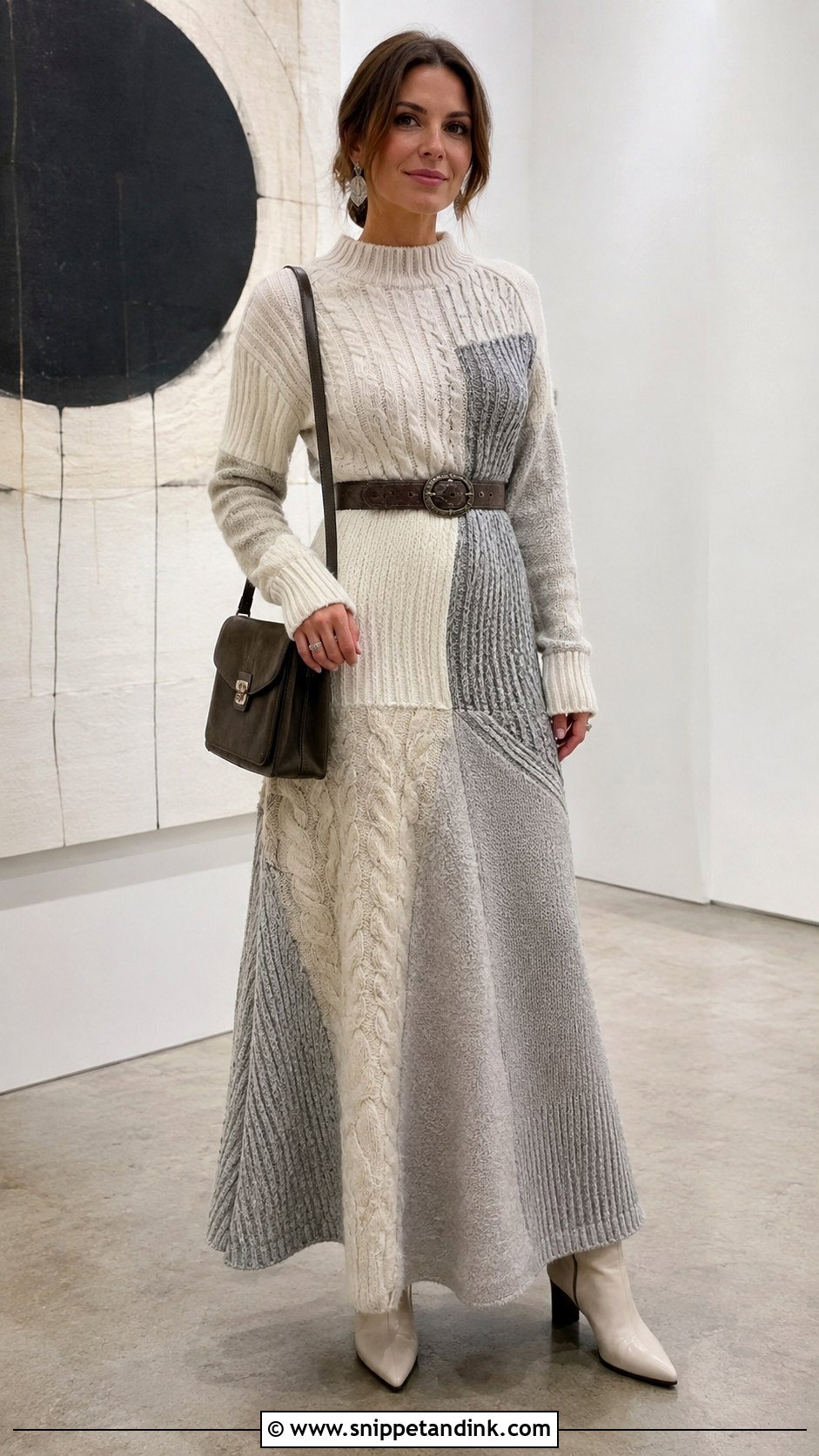
Knitwear stretches out of shape under its own weight, and that is the problem to solve with a sweater gown. Collect soft sweaters in complementary colors, check each for holes and felting, and cut the best areas into vertical panels for a long-sleeve bodice and a flared maxi skirt. Ribbed cuffs make a neckline or waistband; scraps become covered buttons or fabric flowers. Tape the shoulder and waist seams with stable fabric so the skirt cannot drag them down over the evening. Pointed ankle boots, a vintage belt, recycled-metal earrings and a shoulder bag suit it, with a jersey lining against the skin. It is made for a winter celebration.
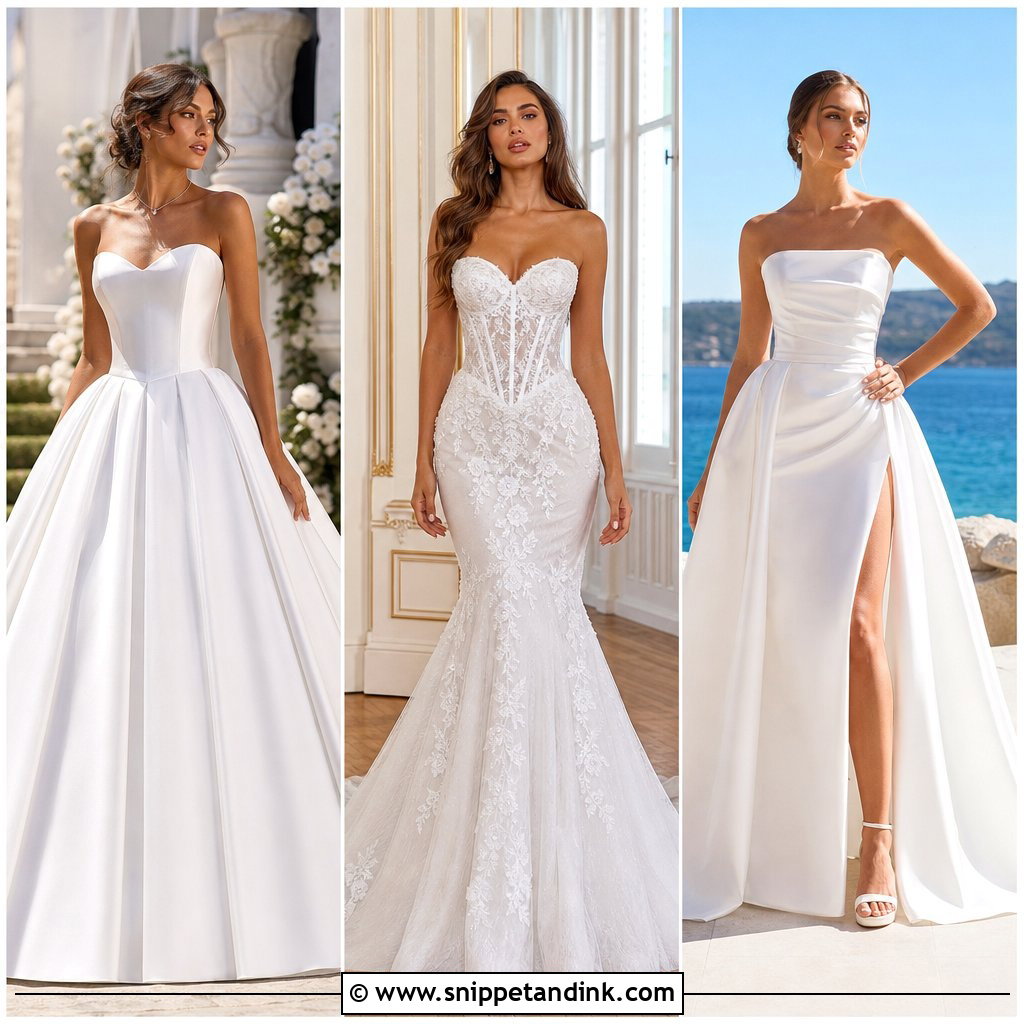
15. Recycled Plastic Bag Ruffle Gown

A plastic bag gown is a message, not a garment for a long event, and I’d treat it that way from the first sketch. Clean bags cut into strips and layered as ruffles over a reusable fabric base give a fitted halter bodice and a voluminous tiered skirt. Translucent white, soft grey and one accent color look more considered than a random mix. Secondhand platforms, recycled acrylic earrings and a small structured bag finish it. Plastic must never sit against skin; it traps sweat within minutes, so a cotton lining is essential and every cut edge should be smoothed. Keep it far from heat and flame.
16. Recycled Candy Wrapper Gown

Candy wrappers give a gown a bright metallic surface, but only if each wrapper is washed and flattened first; sugar residue attracts dust and goes sticky under stage lights. Fold them into uniform tiles, scales or woven strips and attach them firmly to a sleeveless fabric base, densest at the bodice and spacing out across the skirt. A black, silver or jewel-toned lining pulls the mixed colors together. Plain black heels, a recycled-metal cuff and a clutch from leftover fabric are enough; no necklace. Reinforce each attachment point where the body bends. Short presentations, photo shoots and competitions are where it belongs.
17. Recycled Paper Flower Gown
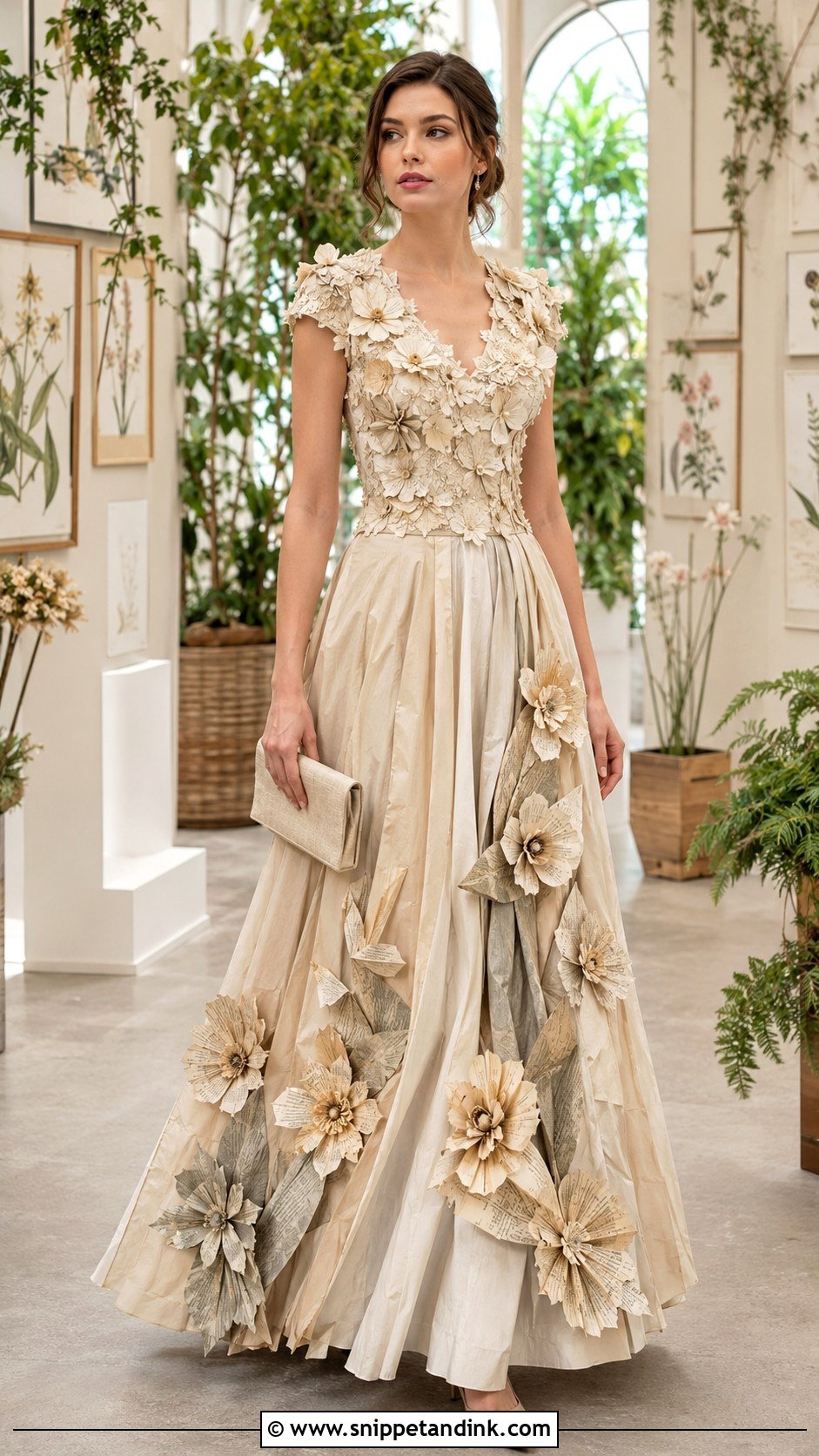
Paper flowers are the most delicate look here. Book pages, maps, paper bags or craft paper can be shaped into blooms of several sizes and attached to a reusable fitted bodice and a secondhand fabric skirt, with larger flowers near the hem and smaller ones at the neckline. A single-color palette reads elegant; muted watercolor tones feel more garden-like. Neutral pumps, tiny studs and a plain fabric clutch suit it, and keep the hair up and away from the paper. Back each flower with a small fabric disc so it can be stitched rather than glued. Paper softens in humid rooms, so keep this to an indoor exhibit or a careful photo session.
18. Upcycled Tablecloth Embroidered Gown
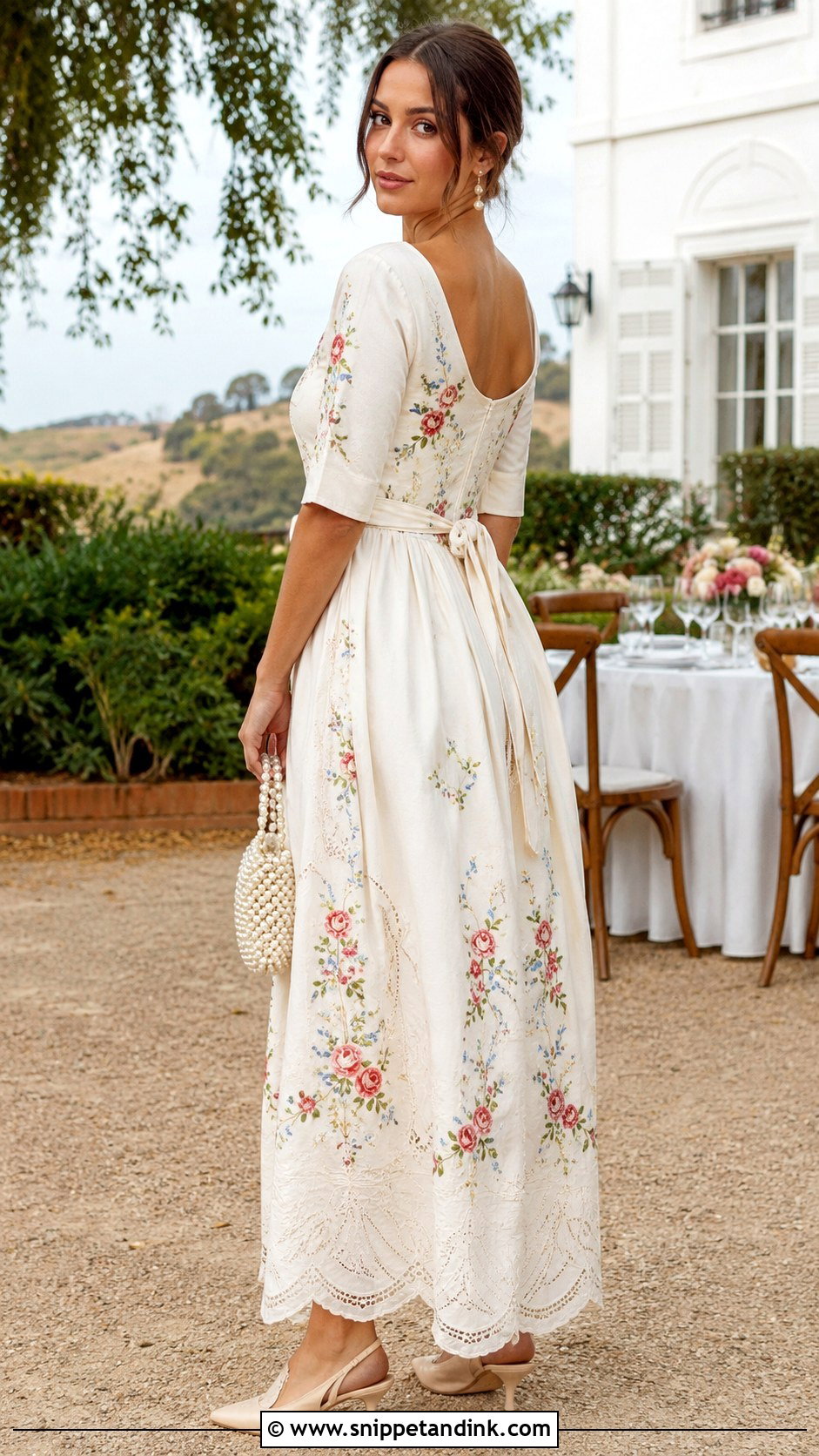
With an embroidered tablecloth, the hard work is planning the layout, because the best motifs sit in the corners and rarely land where a bodice needs them. I map every pattern piece on the cloth before cutting. Put the decorative corners across the bodice, sleeves or front panel, use plain sections for a gathered skirt, and borrow fabric from matching napkins for pockets, cuffs or a sash. Low slingbacks, a vintage pearl bag and fine earrings suit it. A lining close to your skin tone shows off openwork while keeping coverage, and small stains can hide under pleats or appliqués. Intimate daytime celebrations suit it best.
19. Recycled Fishing Net Gown
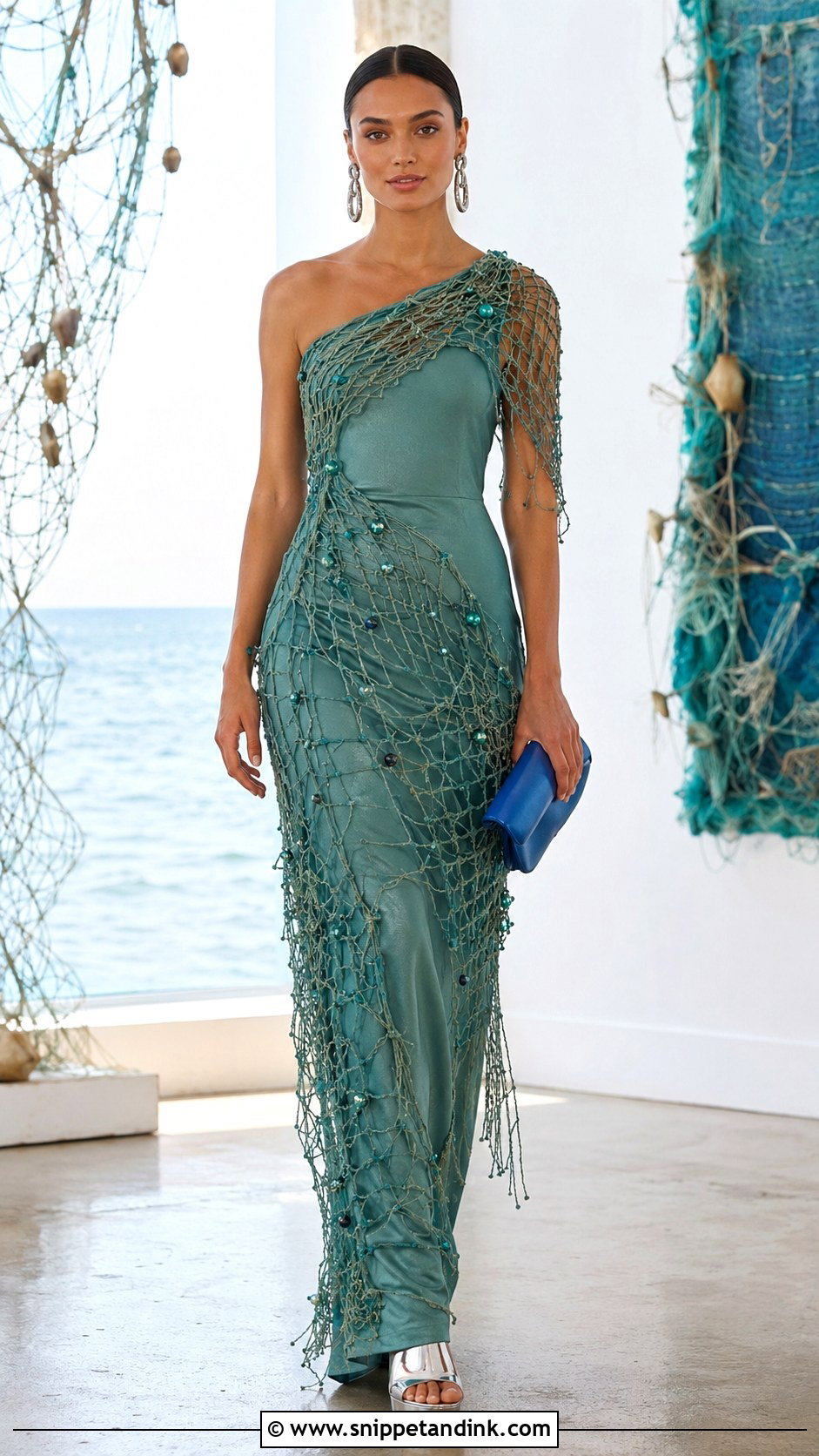
Recovered fishing net only works as an outer layer over a proper gown; raw netting is scratchy and must be professionally cleaned and processed before it goes anywhere near a dress. Layer it over a fitted blue, sea-green or silver column, gather it across one shoulder and let it fall over the skirt. A few reclaimed-glass beads can suggest water droplets, but keep them sparse. Silver block heels, recycled-metal earrings and a smooth blue clutch finish it. Close or trim every loose loop, because those loops catch on chair legs and heels. Recycled nylon made from old nets does exist as a fabric, but the gown still needs careful sourcing and finishing to be safe and comfortable.
20. Zero Waste Scrap Fabric Gown
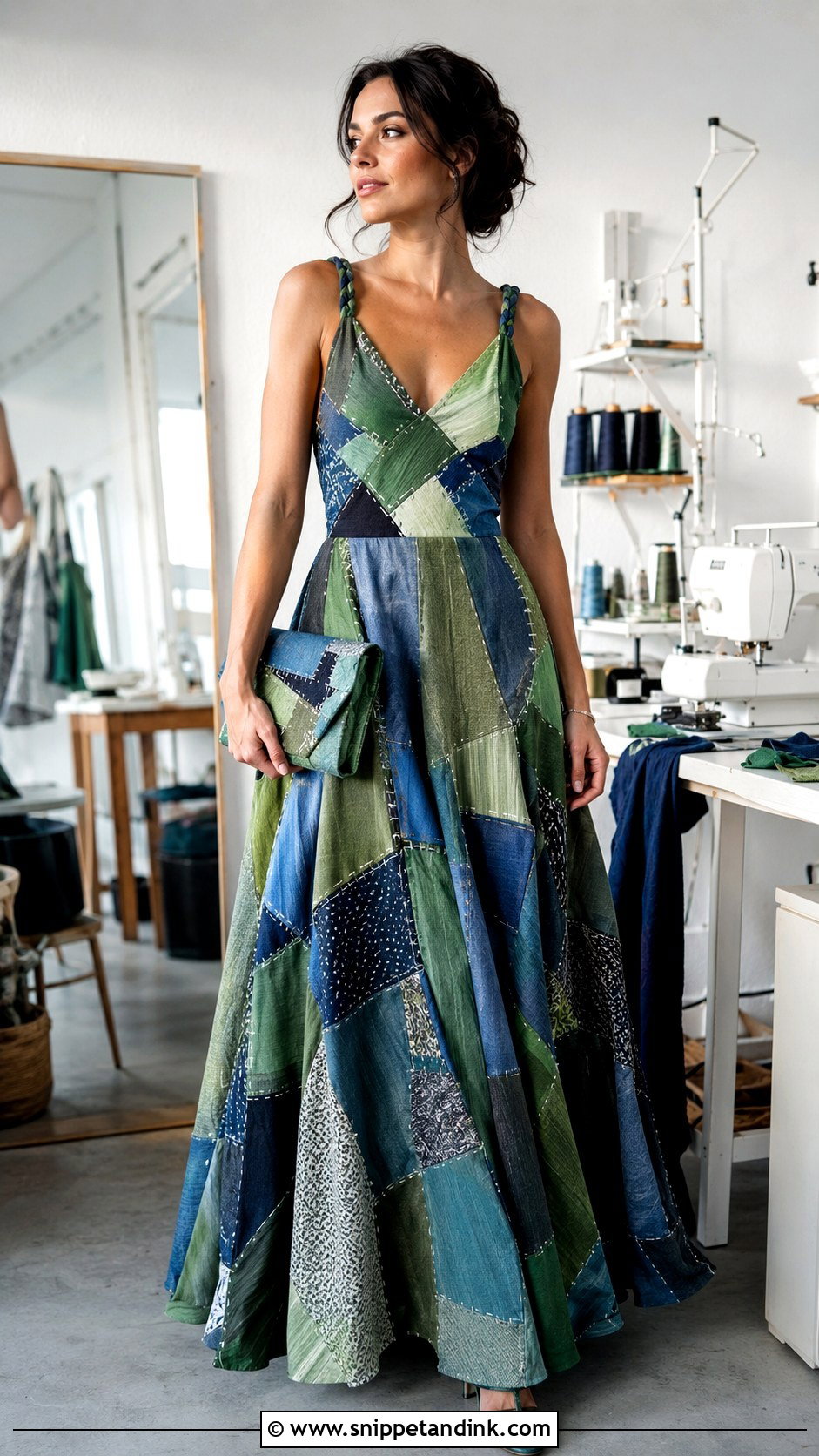
Scraps become the design in a zero waste gown. Sort leftovers by color, weight and fiber, then join them into larger patchwork panels for a fitted V-neck bodice and a full paneled skirt. A tonal palette of greens, blues, neutrals or warm reds keeps it from looking chaotic. Narrow scraps make braided straps, piping, covered buttons or a matching clutch. Put heavier fabrics low on the skirt and lighter ones near the bodice so it hangs straight. Mixed fibers shrink differently, so prewash everything before you sew. Visible mending can strengthen joins and show the handwork. It works with remnants from sewing projects, damaged garments and unused swatches.
Working With a Dressmaker on Reclaimed Fabric
A gown built from salvaged material takes longer than a gown from a bolt, because the design has to adapt to what is in front of the maker. Give your dressmaker more lead time than you would for a standard custom dress, and bring all the fabric to the first meeting so they can judge whether there is enough.
Ask for a test garment, usually made in inexpensive cotton, before the real fabric is cut. With one-of-a-kind material there is no second chance, and the test fitting is where the neckline, waist position and skirt length get decided. I also ask the maker to keep every offcut until after the wedding; those scraps are what a repair or a later alteration will need.
- First meeting: inspect and measure the fabric, agree on design and a rough schedule.
- Cleaning and prep: wash, repair and press everything before patterns are laid out.
- Test fitting in cotton: adjust the shape on your body.
- Real fittings: usually two or three, with the last one in your wedding shoes and undergarments.
- Collection: ask how to clean, steam and store this particular mix of fibers.
Match the Material to How Long You Need to Wear It
Every recycled gown starts with one decision: is it for a day of wear or for an hour on display? A practical deadstock satin gown can carry you through a full formal event, while newspaper, wrappers or plastic bags belong at exhibitions and competitions. In both cases the gown lives or dies on clean construction, a comfortable lining, smooth edges and strong seams. Adjustable closures and dark, dry storage keep a wearable piece useful for years. Start from what you have, and let the fabric tell you what it can become.
You'll Like These Ideas:


Leave a Reply