
Some of my favourite brides have walked down the aisle in secondhand gowns, and none of them looked like they’d compromised. Thrifted wedding dresses are far more flexible than a bridal rack. A secondhand gown can be vintage, designer, handmade or a plain evening dress you alter, dye, shorten or layer into something new. What decides success is not the price tag but the inspection: fabric condition, seams, zip, lining and how much room the dress has to be altered. Below are the secondhand styles I’d hunt for, with what I check on each before a bride hands over any money.
Where Damage Hides on a Secondhand Gown
Shop lighting and a quick look on the hanger hide most problems. Take the dress to a window, turn it inside out and work through it in this order before you decide.
- Underarms and the bodice lining: yellow or brown marks here are old perspiration and are the hardest stains to remove.
- The hem and train: grey edges, tears and shortened tulle tell you how hard the dress was worn.
- The zip or button loops: run the zip fully up and down twice. A replacement zip is a routine fix, but budget for it.
- Seam allowances: look inside the side seams. A wide allowance means the dress can be let out; a narrow one means it can only be taken in.
- The smell: mustiness from long storage usually cleans out, while smoke and strong perfume can linger in silk and lace.
Then read the size label as a rough guide only. Vintage and bridal sizes tend to run smaller than high-street sizes, so I always measure the dress flat and compare it with the bride’s own measurements.
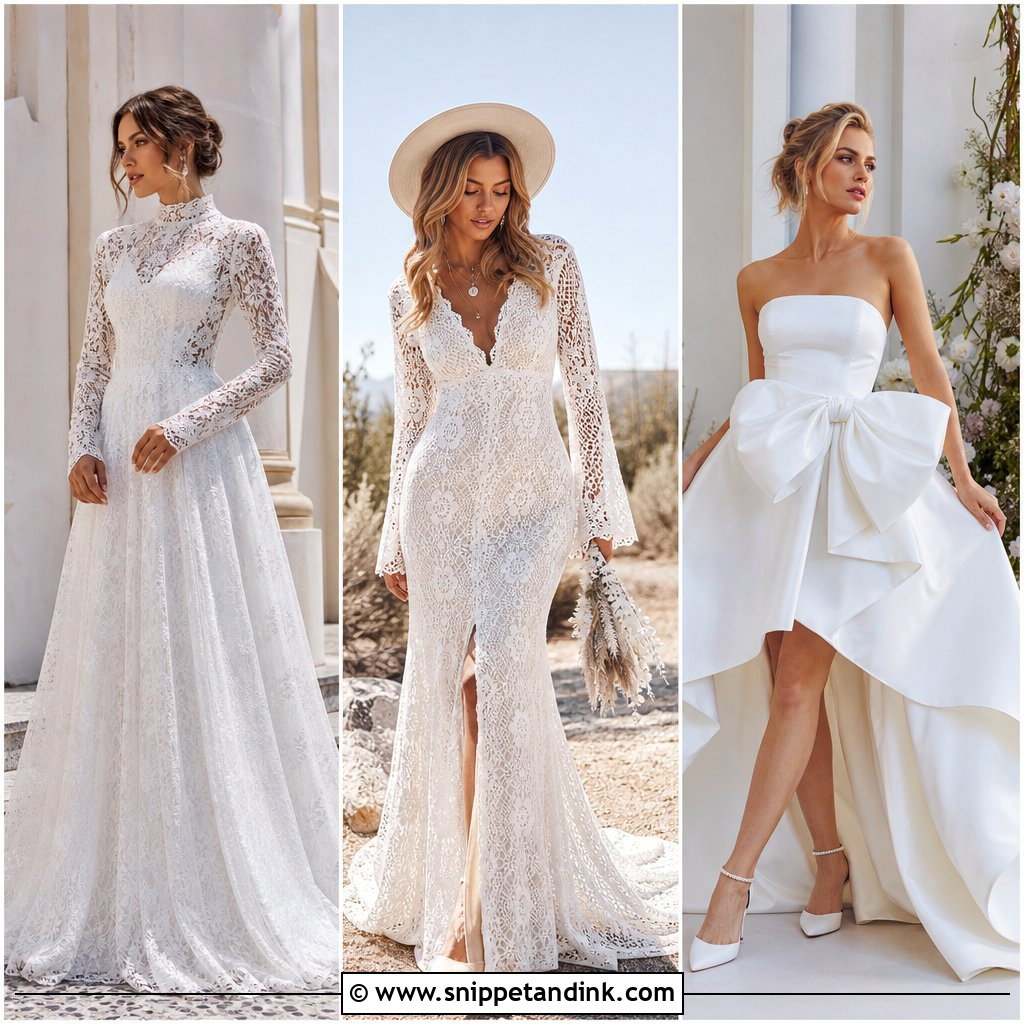
1. Thrifted Lace Wedding Dress
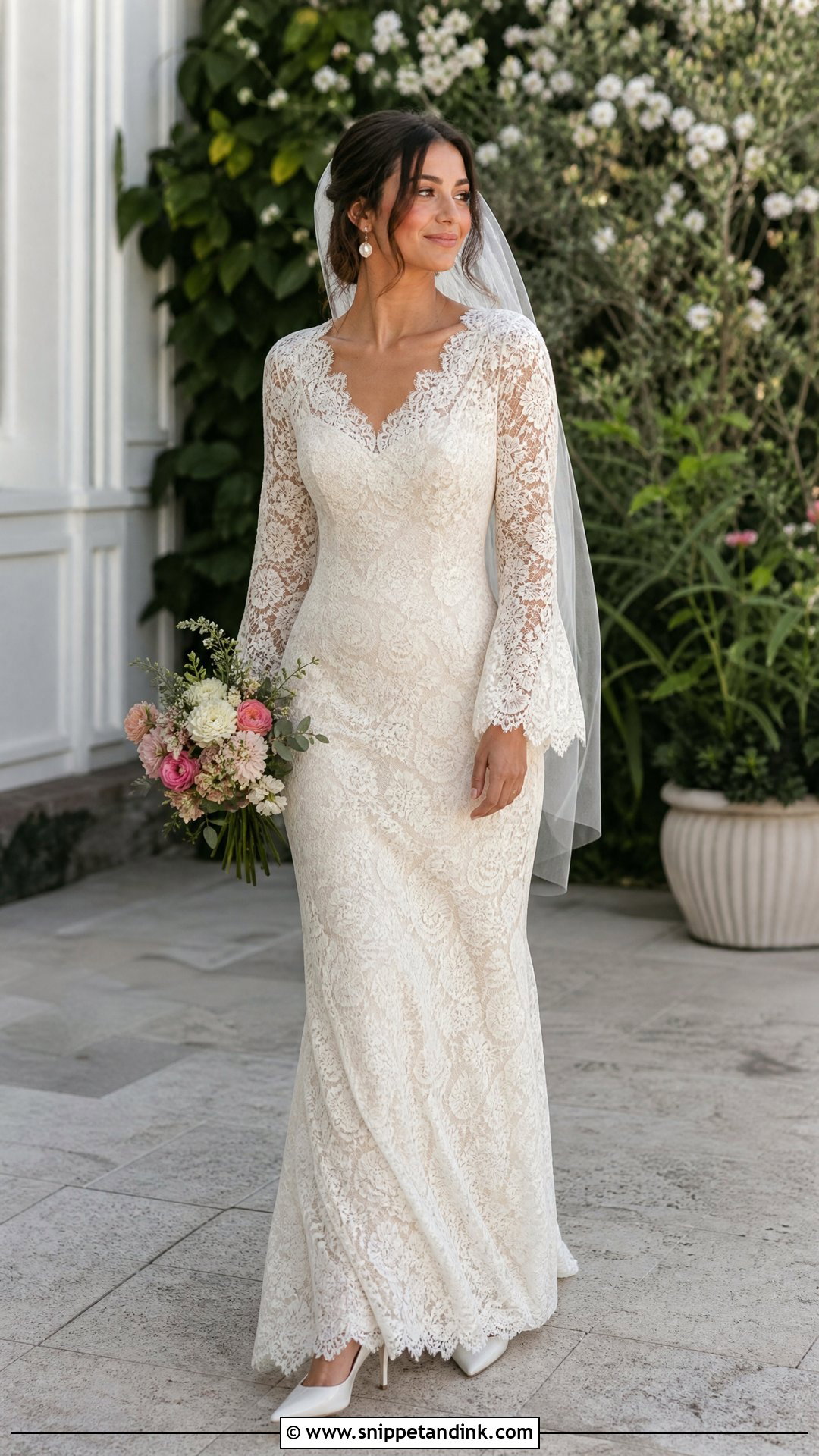
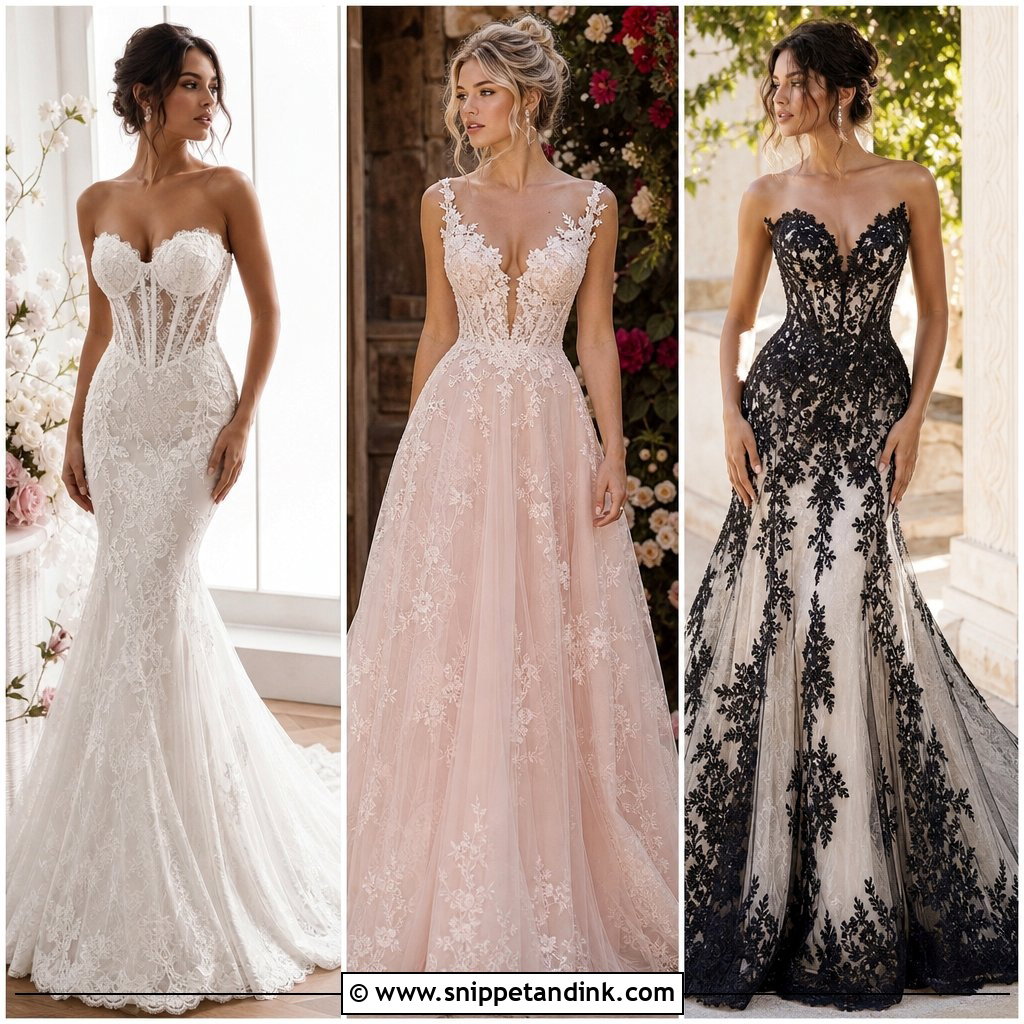
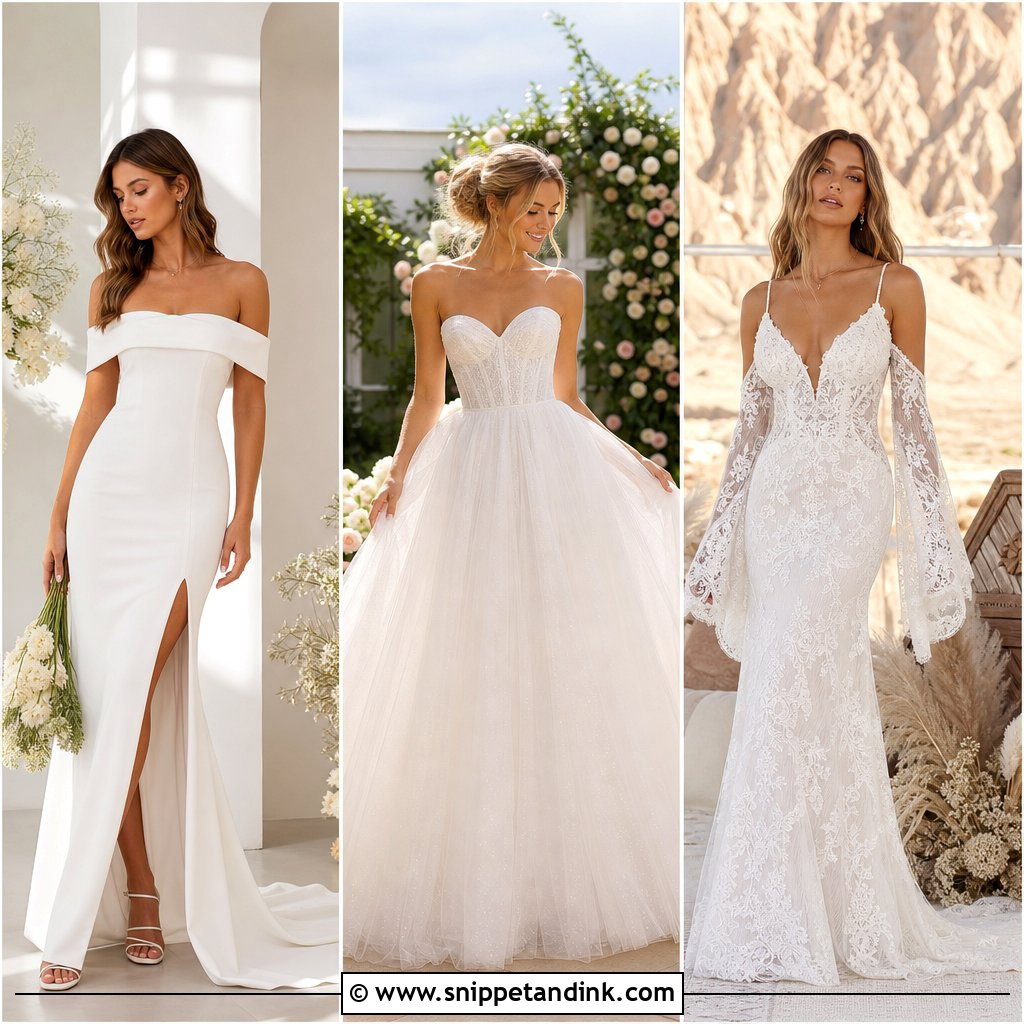
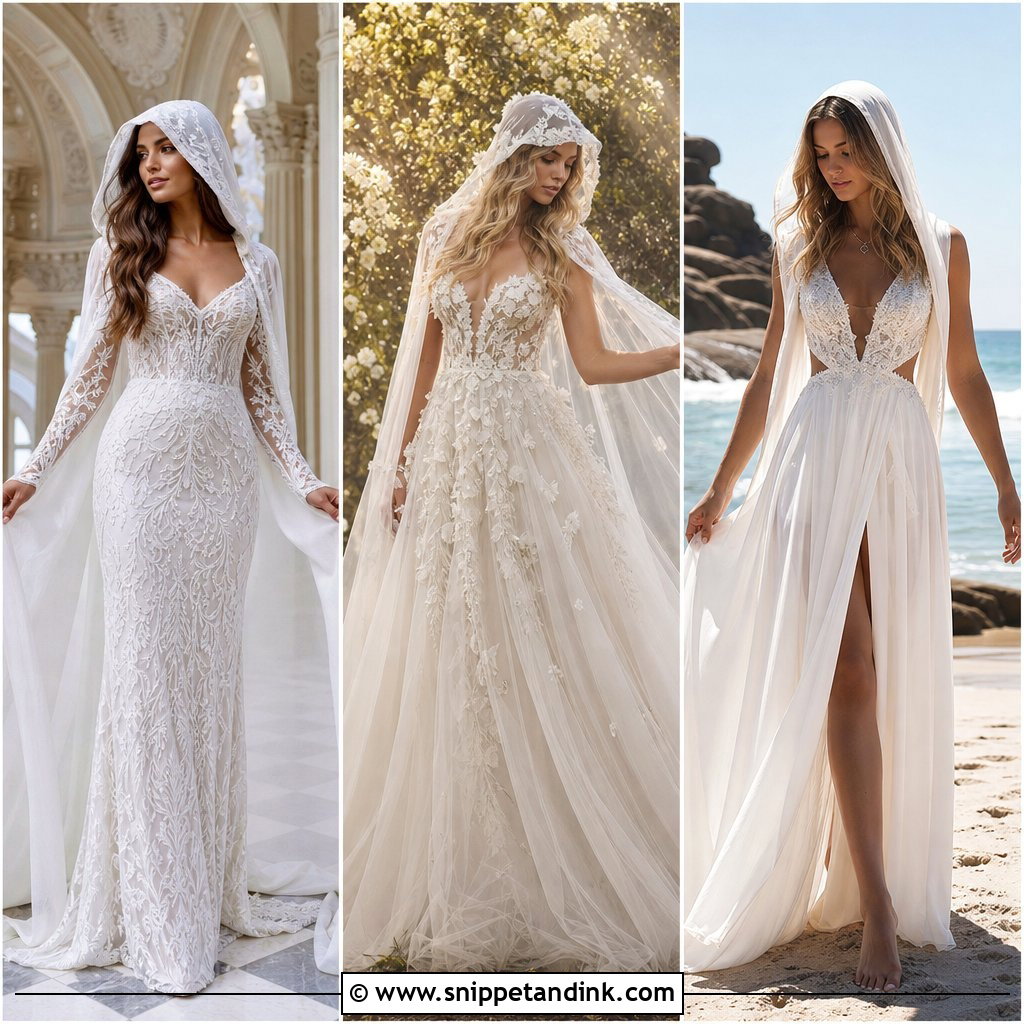
Lace is forgiving secondhand because small pulls disappear into the pattern. I look for soft floral lace, scalloped edges or long sleeves on a bodice that already holds its shape. Yellowed or torn lining is common and fixable; a seamstress can replace it in ivory, champagne or blush, and a blush lining can even hide uneven ageing in the lace. Pearl studs, sleek low heels and a clean veil stop it feeling dated. Keep flowers simple, white roses or greenery, so the lace leads.
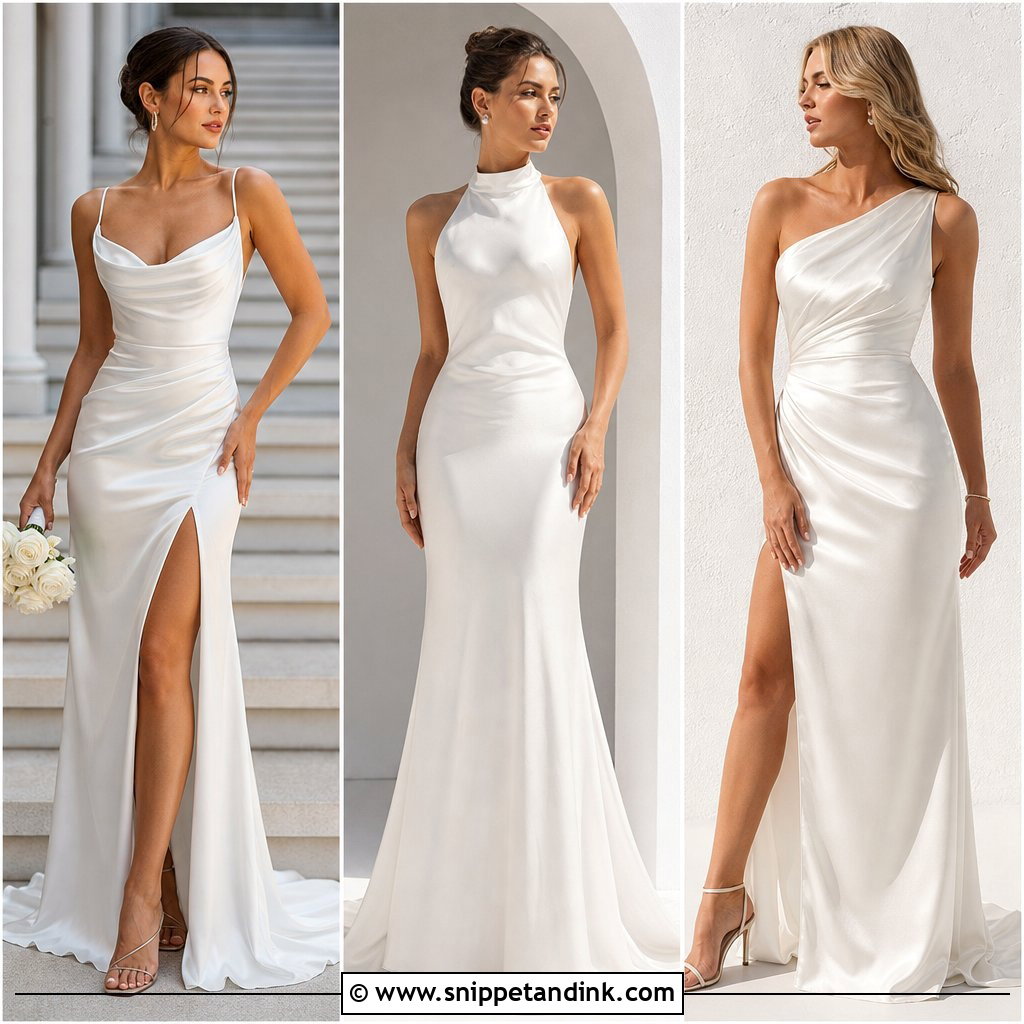
2. Thrifted Satin Slip Wedding Dress
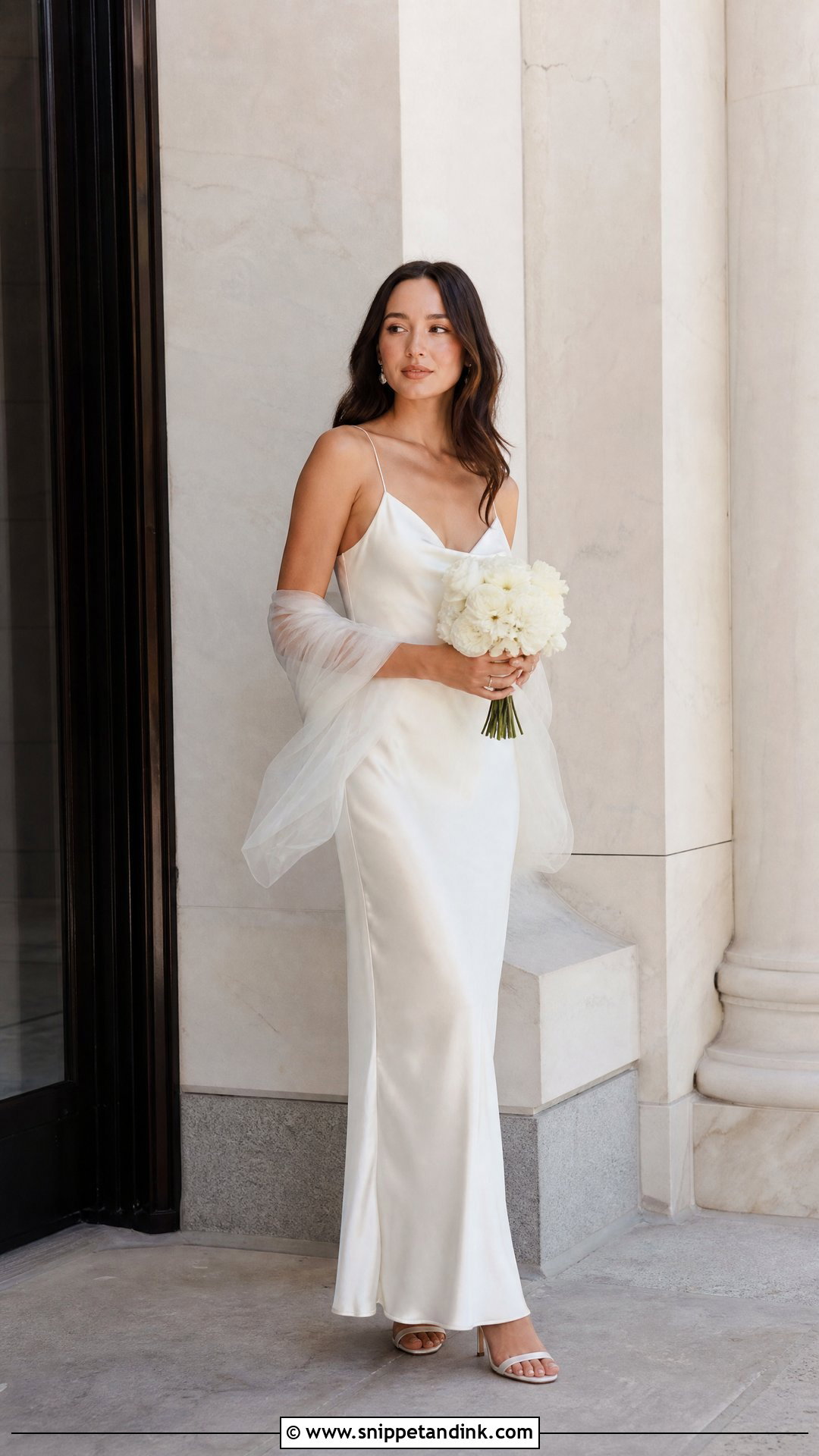
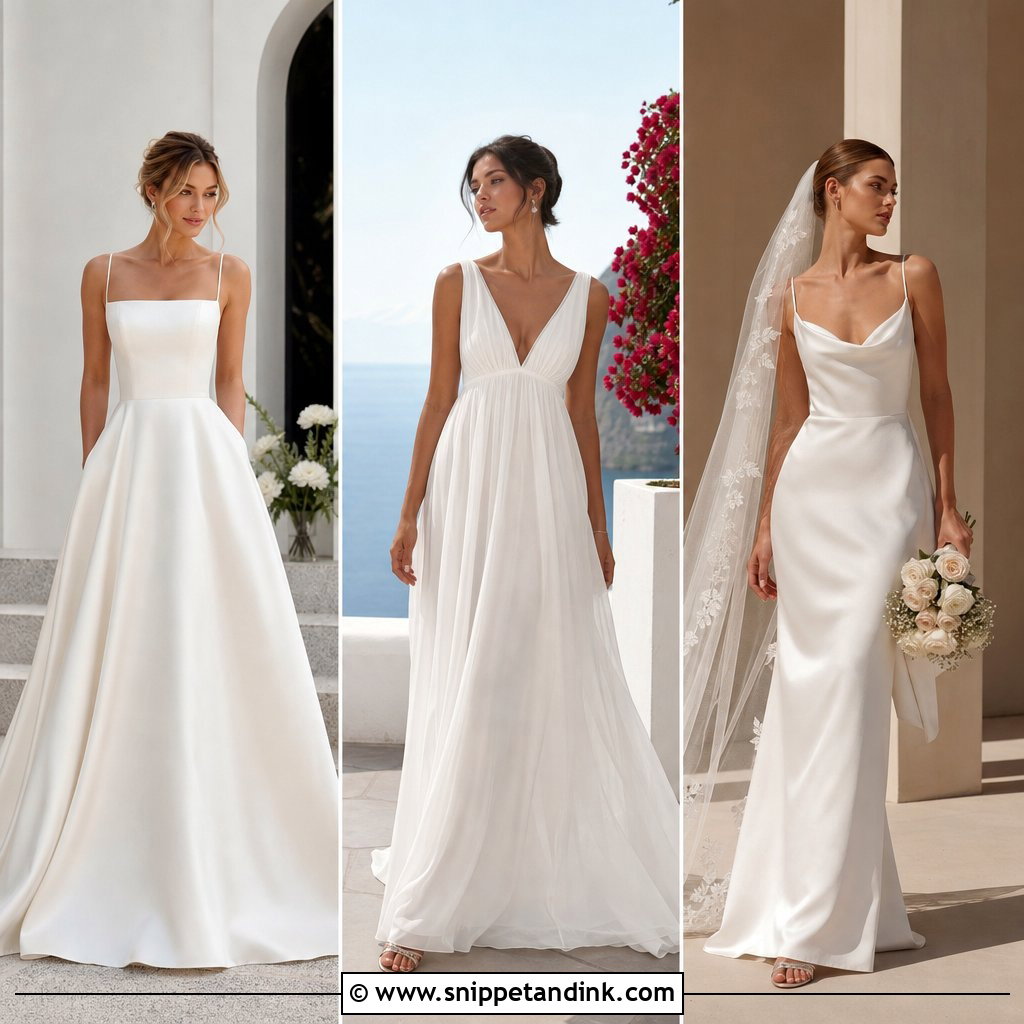
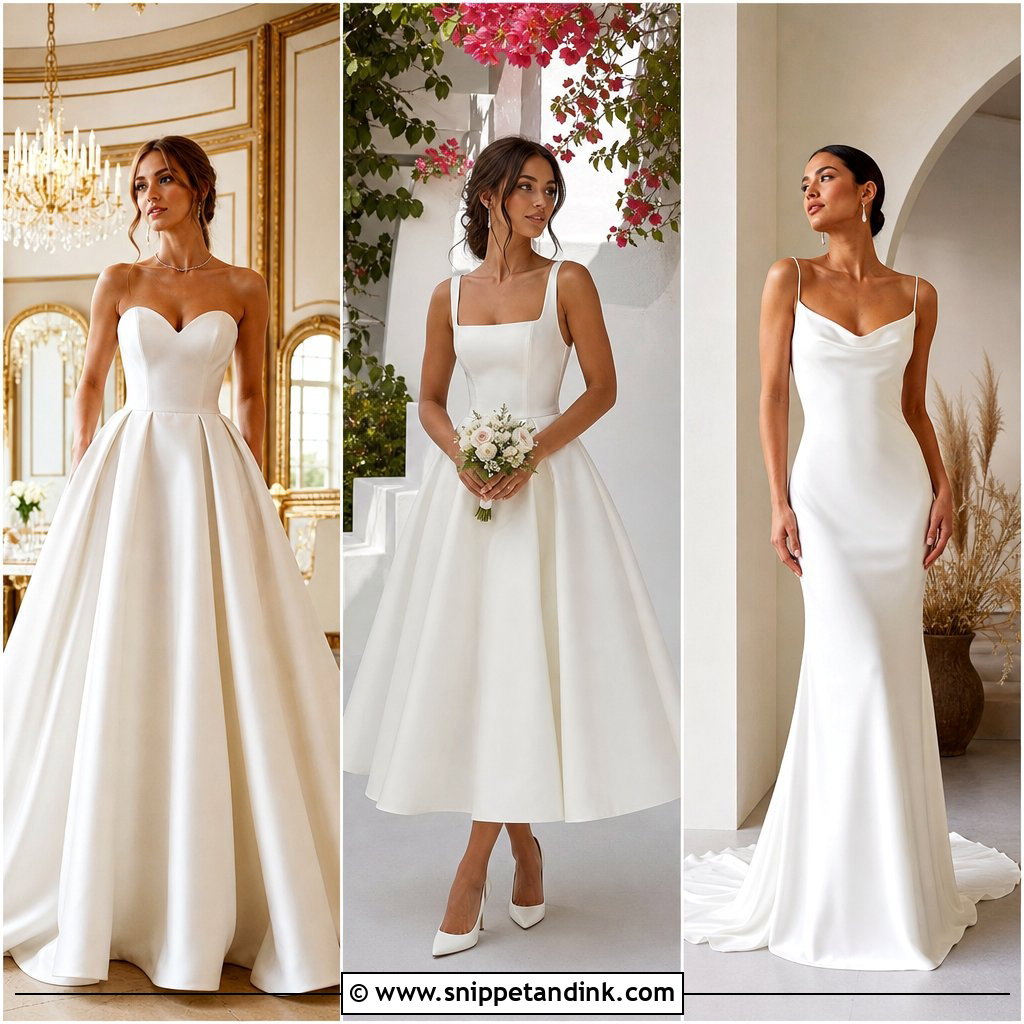
Plenty of vintage satin slips started life as evening gowns, and they turn bridal with almost no effort. Search for bias cuts, cowl necks, thin straps and an ankle-skimming hem. Bias-cut satin is fussy to alter, so buy one that fits through the hips and only needs the straps and waist adjusted. It shows every crease, so plan to steam it at the venue. A sheer wrap and strappy heels suit courthouse weddings and city elopements.
3. Thrifted Tea Length Wedding Dress
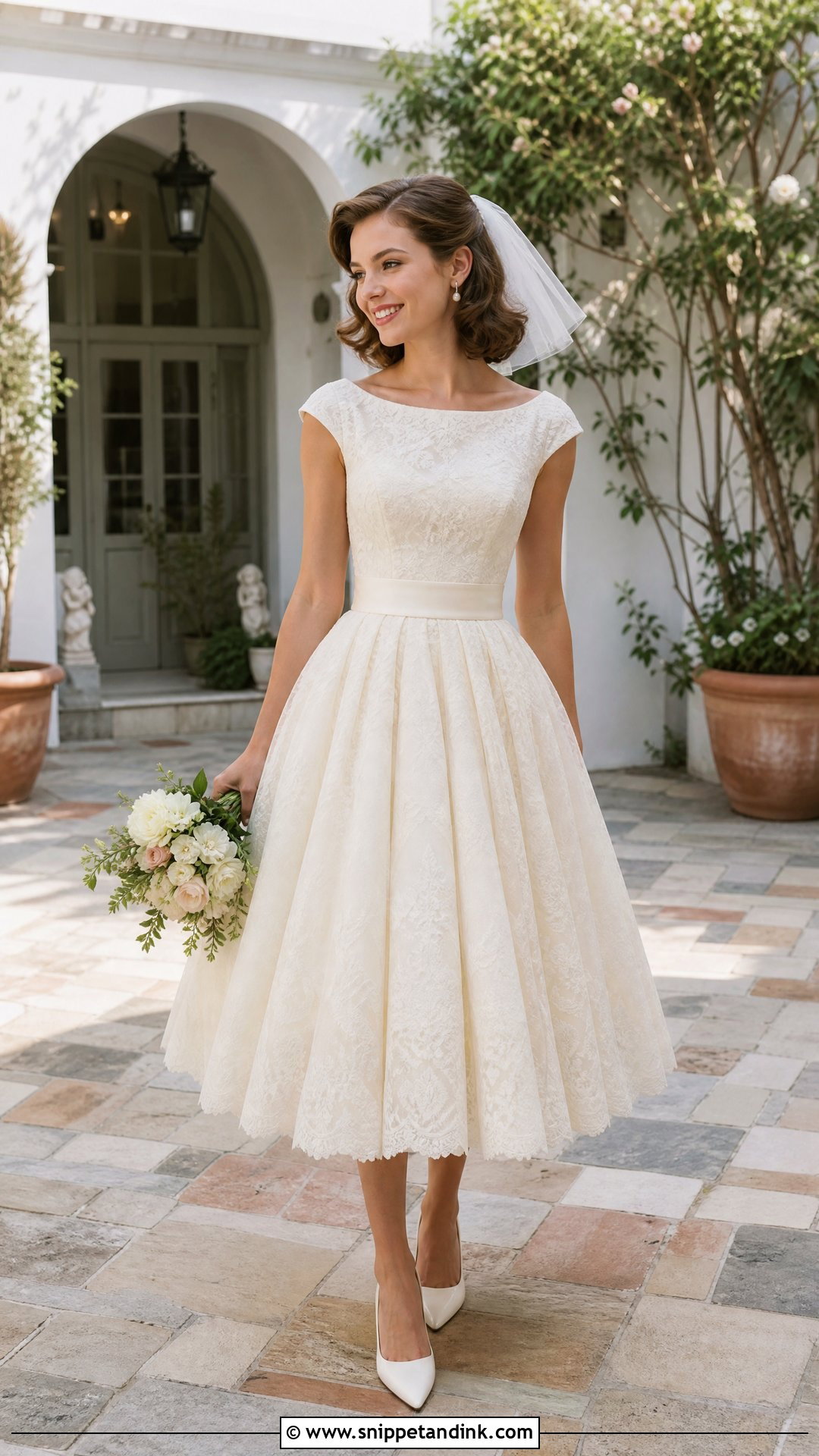
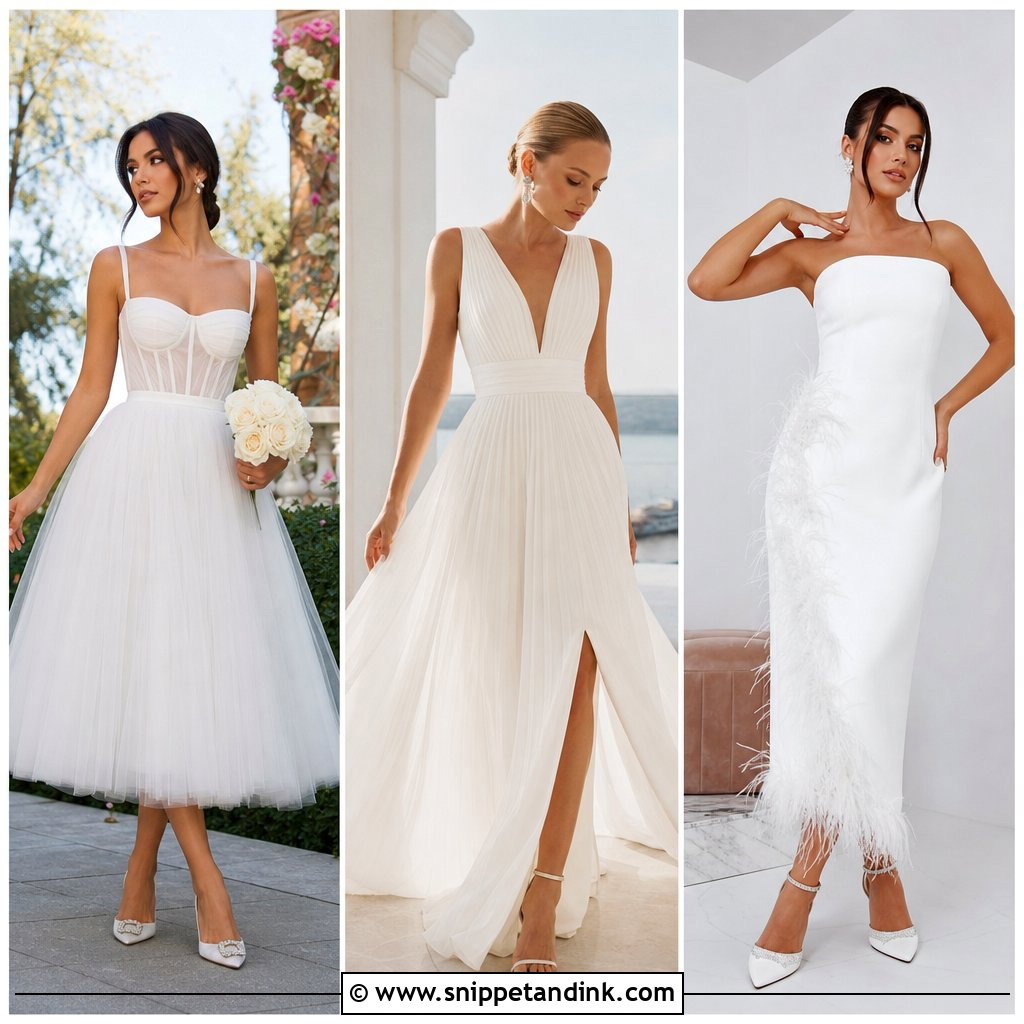
Tea length shows up often in vintage shops because it was the everyday party length for decades. The hem falls between knee and ankle, so walking, dancing and showing off your shoes are all easy. Full skirts, fitted waists, sweetheart necks or cap sleeves are what I search for. If the skirt has gone limp, a soft petticoat underneath brings back the shape for very little money. Pointed pumps, a short veil and a small structured bag suit it.
4. Thrifted Long Sleeve Wedding Dress
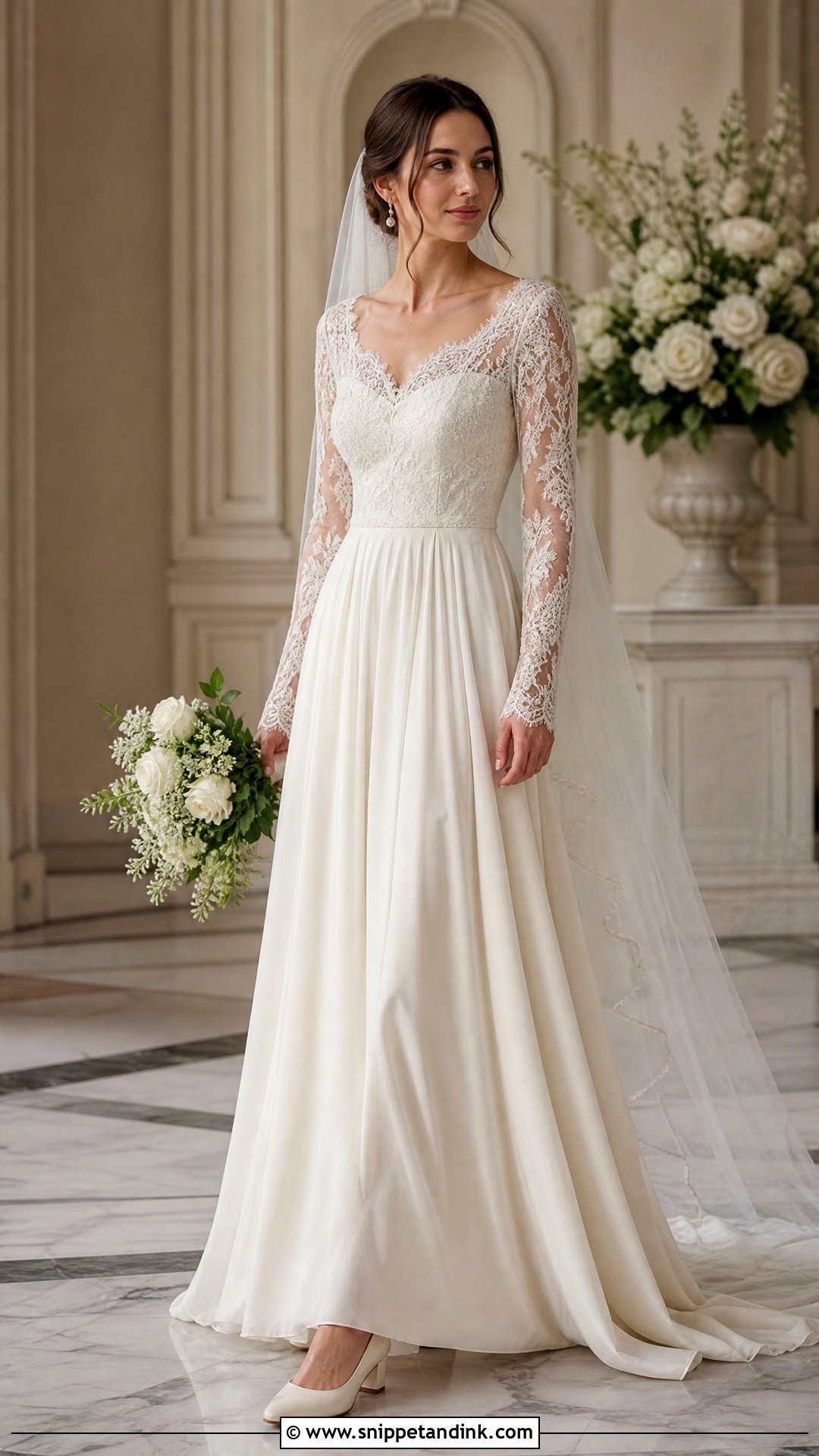
Long sleeves are where the decade shows most. Shoulder pads and big puffed shoulders are common in 1980s gowns, and a skilled seamstress can usually remove the pads and reduce the volume while keeping the sleeve. What she can’t do is add length to a short sleeve, so test that first by reaching forward with both arms. Check armholes too, because vintage cuts often sit higher and tighter than you’re used to. Sleek hair and simple earrings let the sleeves carry the look.
5. Thrifted Beaded Wedding Dress
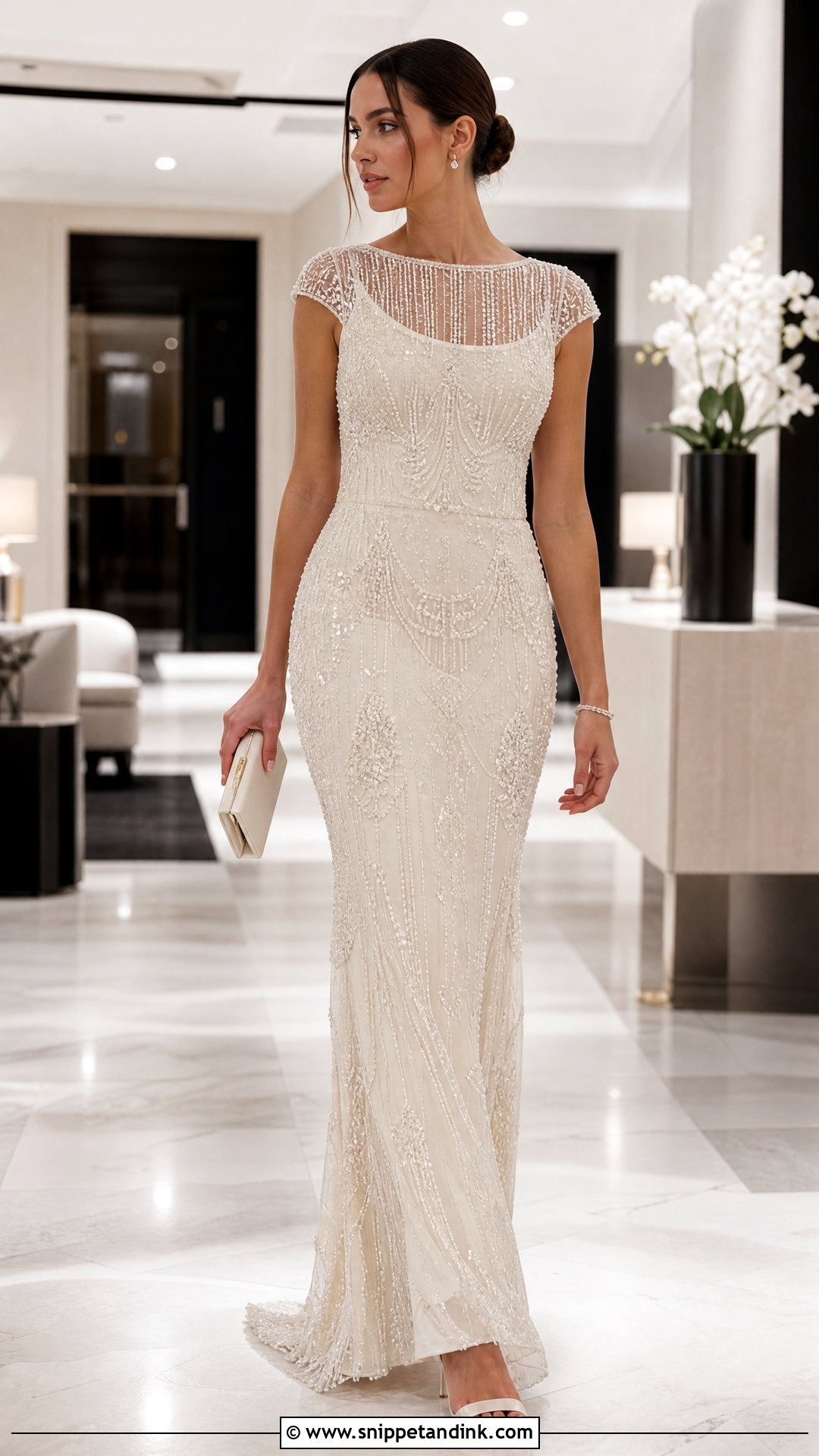
Beaded gowns are where thrift bargains can turn expensive. Check every panel under good light for missing beads, loose threads and bald patches, because hand rebeading is slow, skilled work. If the beadwork is sound, you get a high-impact dress for much less than new. Keep everything else quiet: satin heels, a sleek clutch, tiny crystal studs and no dramatic veil.
6. Thrifted Boho Wedding Dress
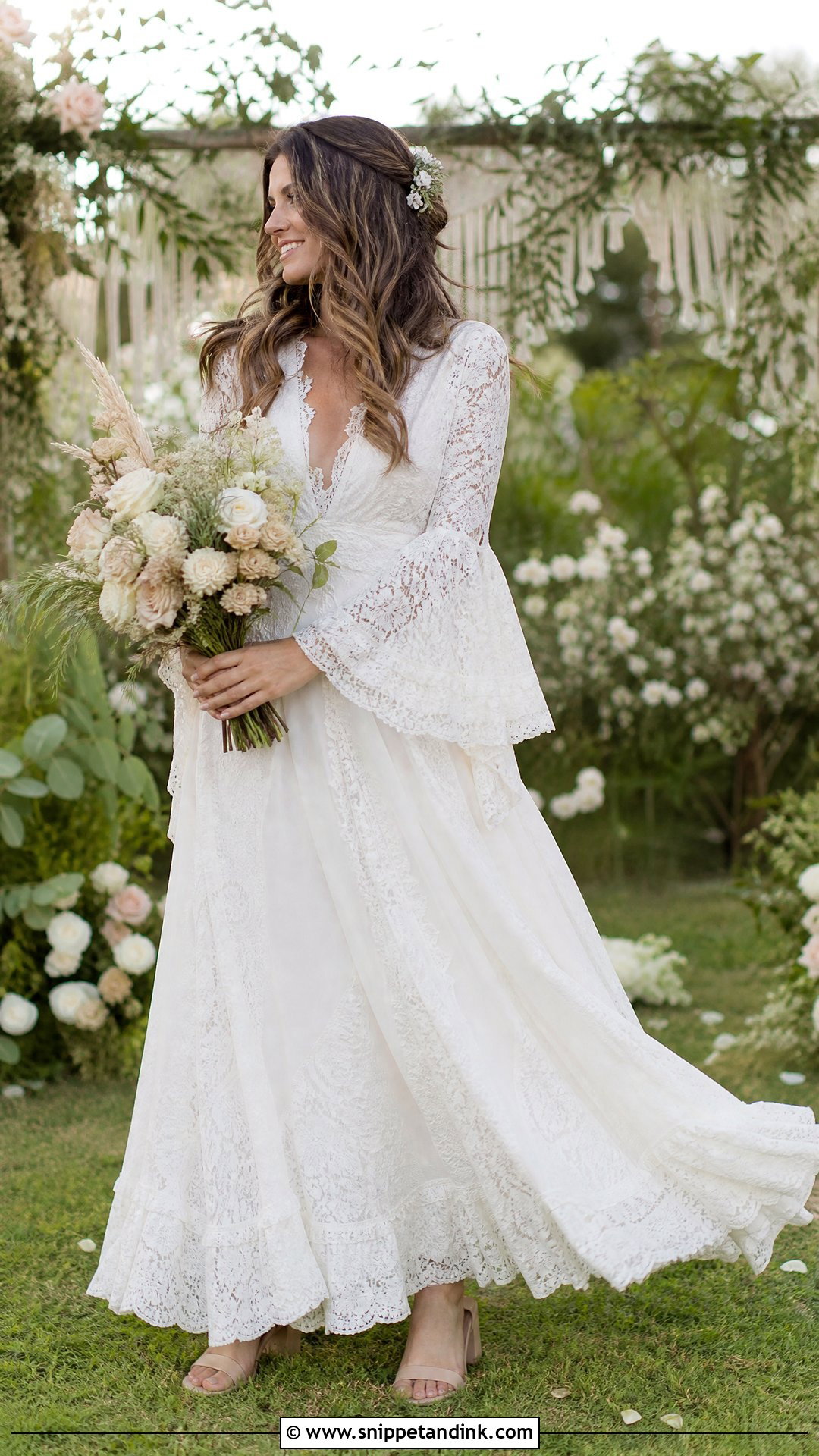
Boho gowns are some of the easiest finds, since many come from 1970s bridal, prairie dresses or handmade pieces. Cotton lace, crochet trims, bell sleeves, empire waists, tiered skirts and flowing chiffon are all worth a look. Older cotton lace can be thin, so hold it up to the light and check for holes before you buy. If it’s sheer, a nude or ivory slip underneath solves it. Block-heel sandals, loose waves and a flower comb keep the feeling relaxed.
7. Thrifted Courthouse Wedding Dress
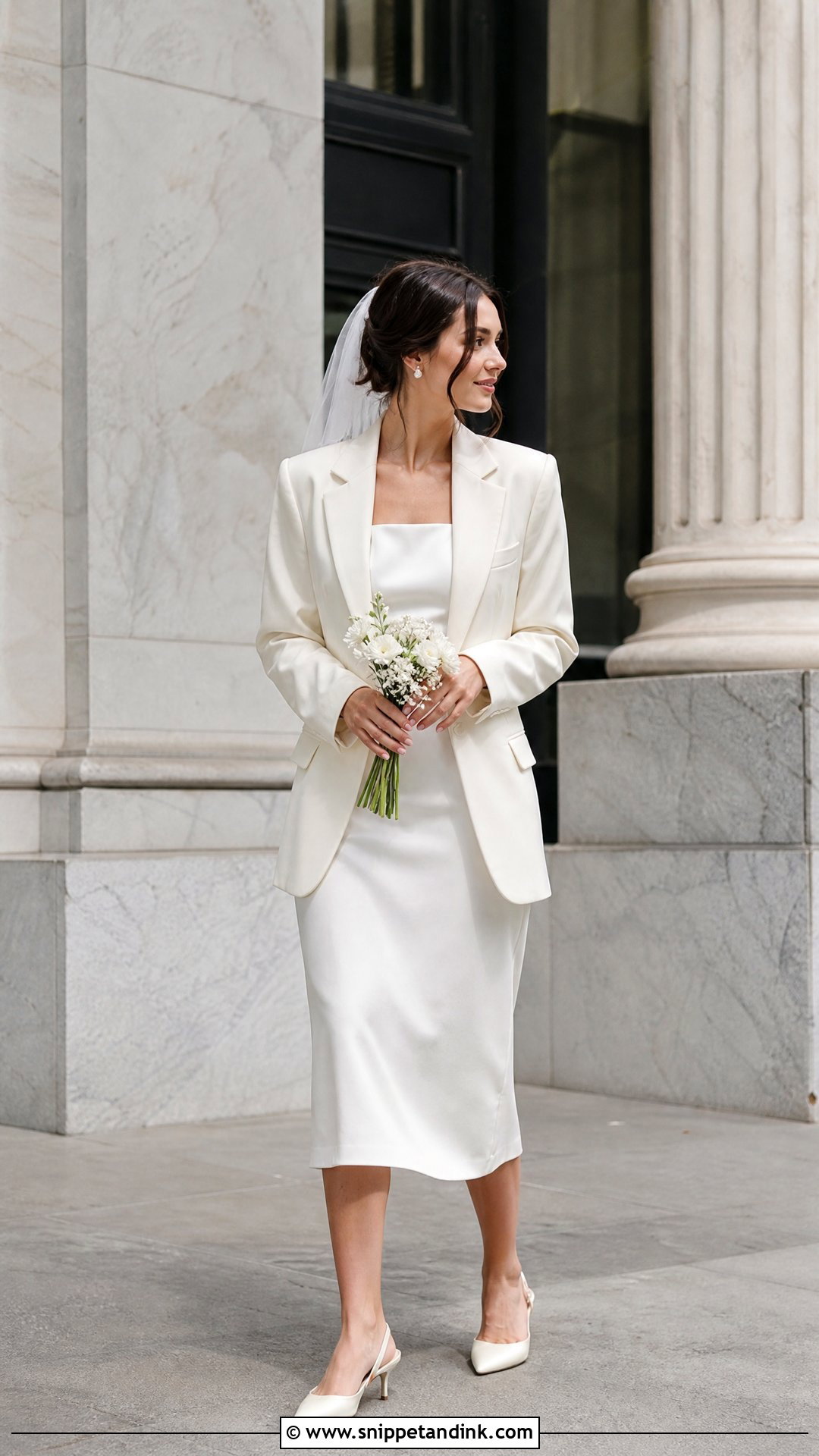
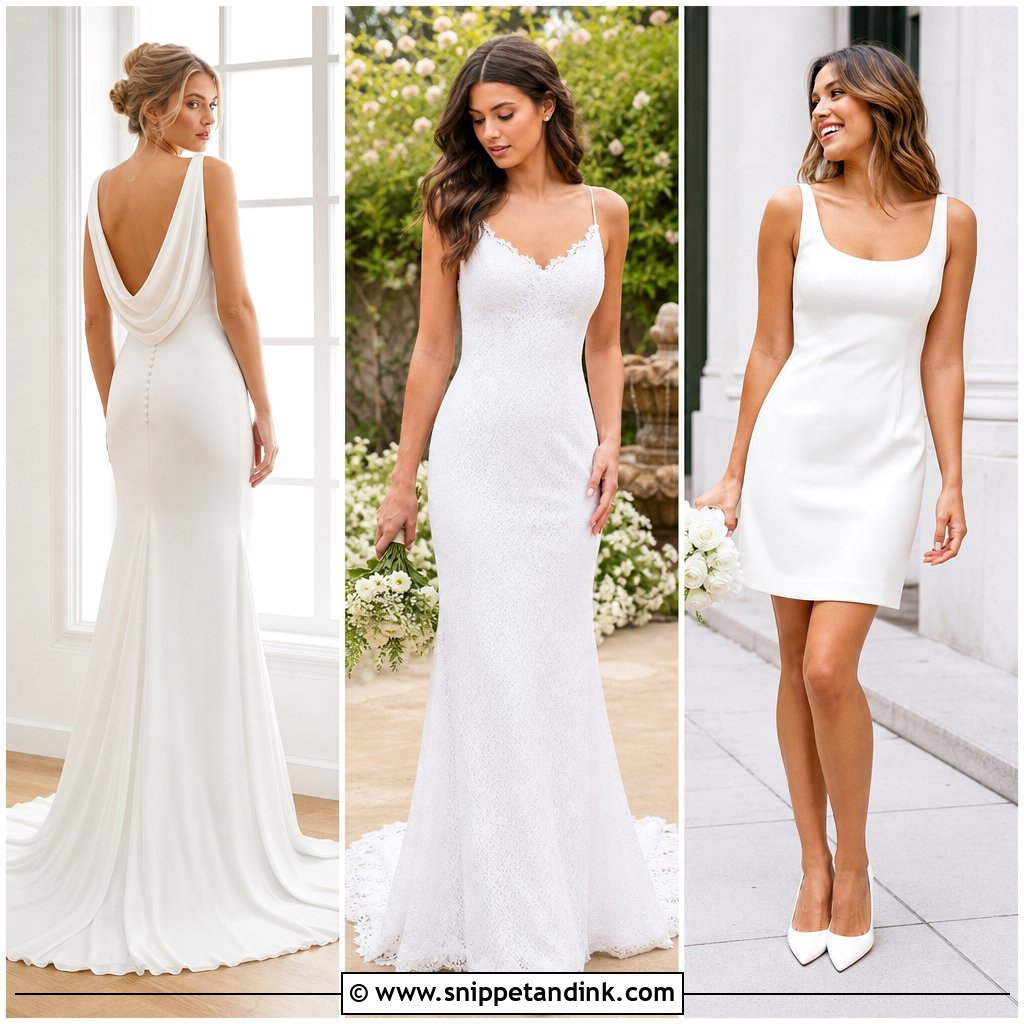
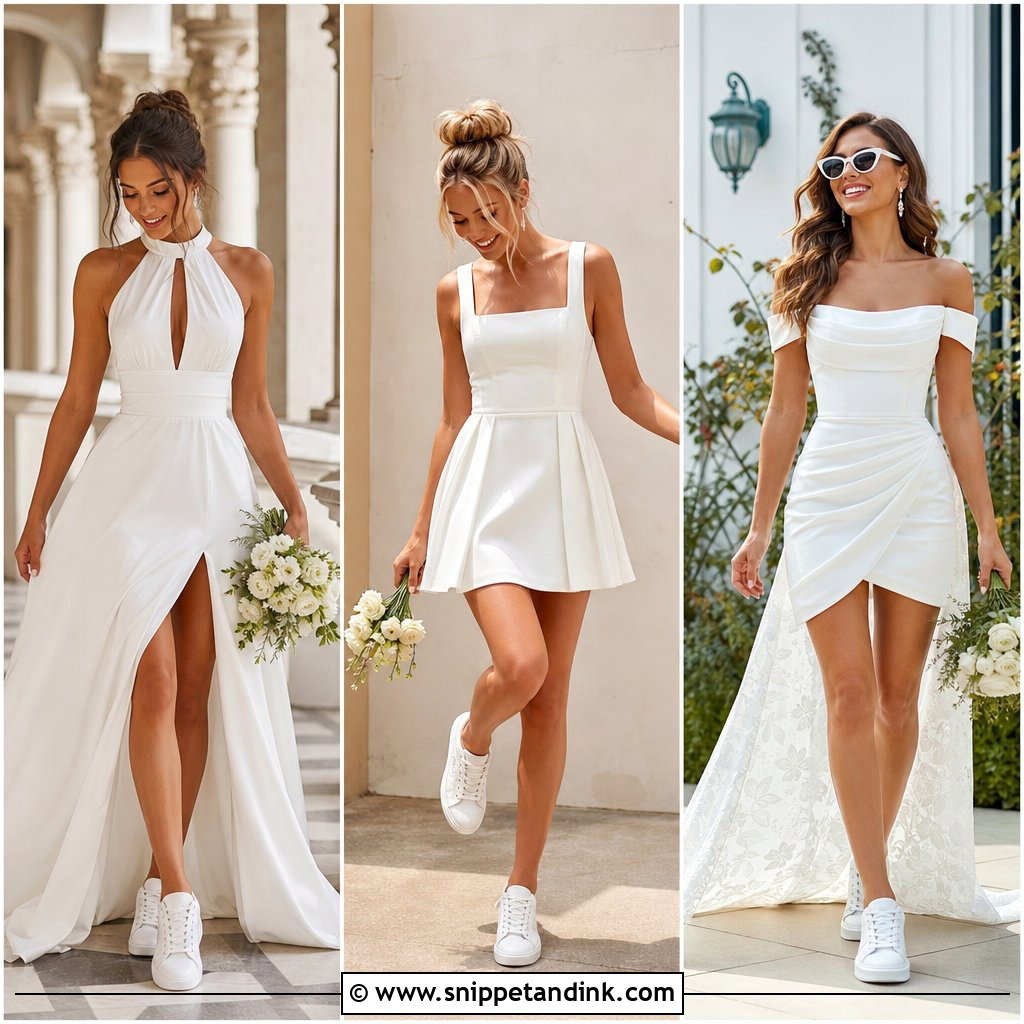
At a courthouse you’ll stand, sit, sign and pose close to the camera, so the dress has to be comfortable and well finished. White midis, satin slips, structured minis, lace sheaths and plain columns all work. Sit down in it in the changing room and look at the side view in a phone photo, since seated and side angles are most of the courthouse shots. Kitten heels, a small bouquet and a short veil or bow make it intentional. A blazer adds polish and coverage.
8. Thrifted Mini Wedding Dress
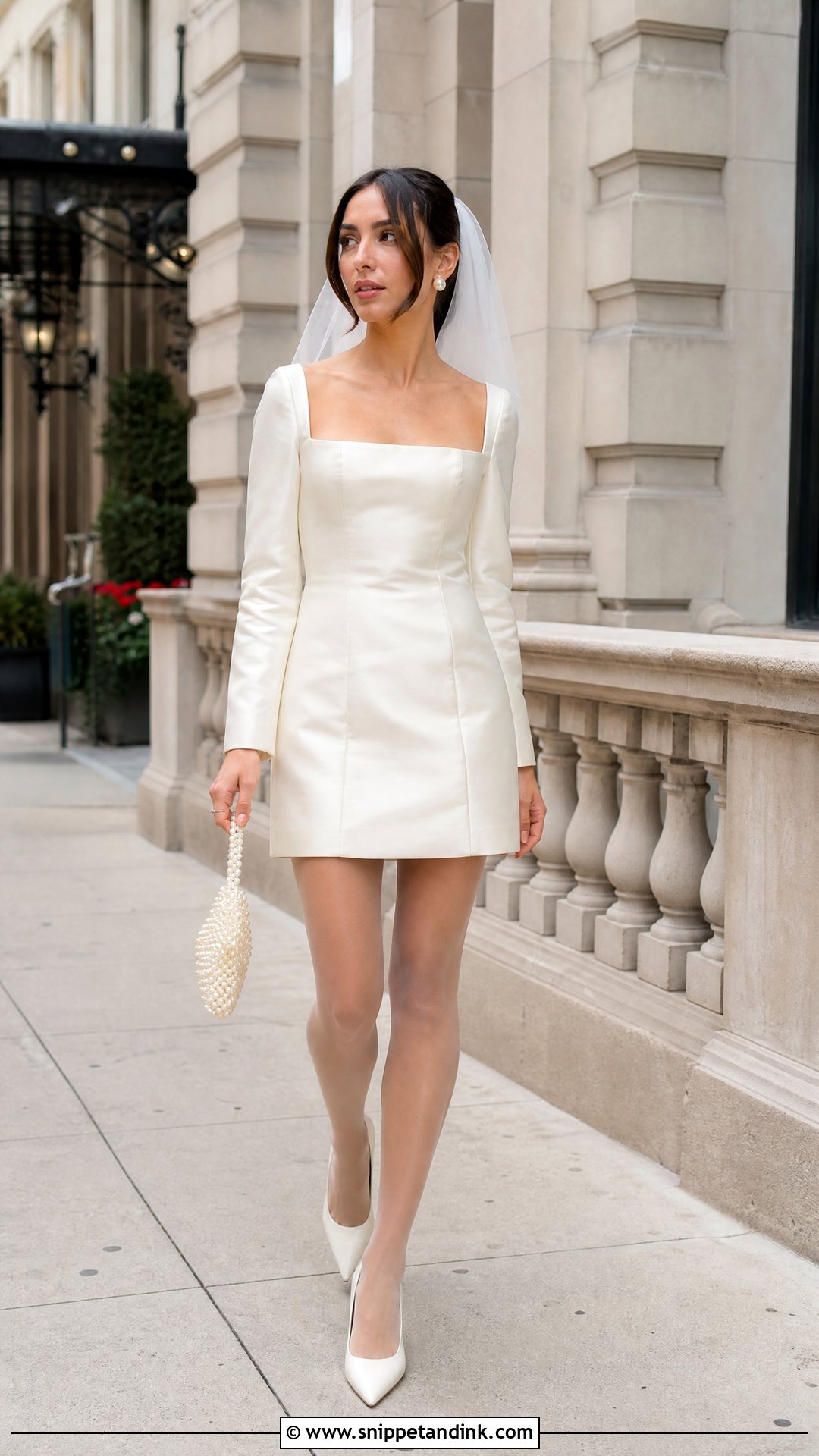
Short dresses make fit more visible, which is why I always budget for tailoring on a thrifted mini. Look for structured white minis, lace shifts, satin cocktail dresses or vintage party dresses. If it’s very short, closed-toe heels, sheer tights or a longer veil balance it. Pearl earrings and a top-handle bag keep it bridal. It also makes a good second look after the ceremony.
9. Thrifted Ball Gown Wedding Dress
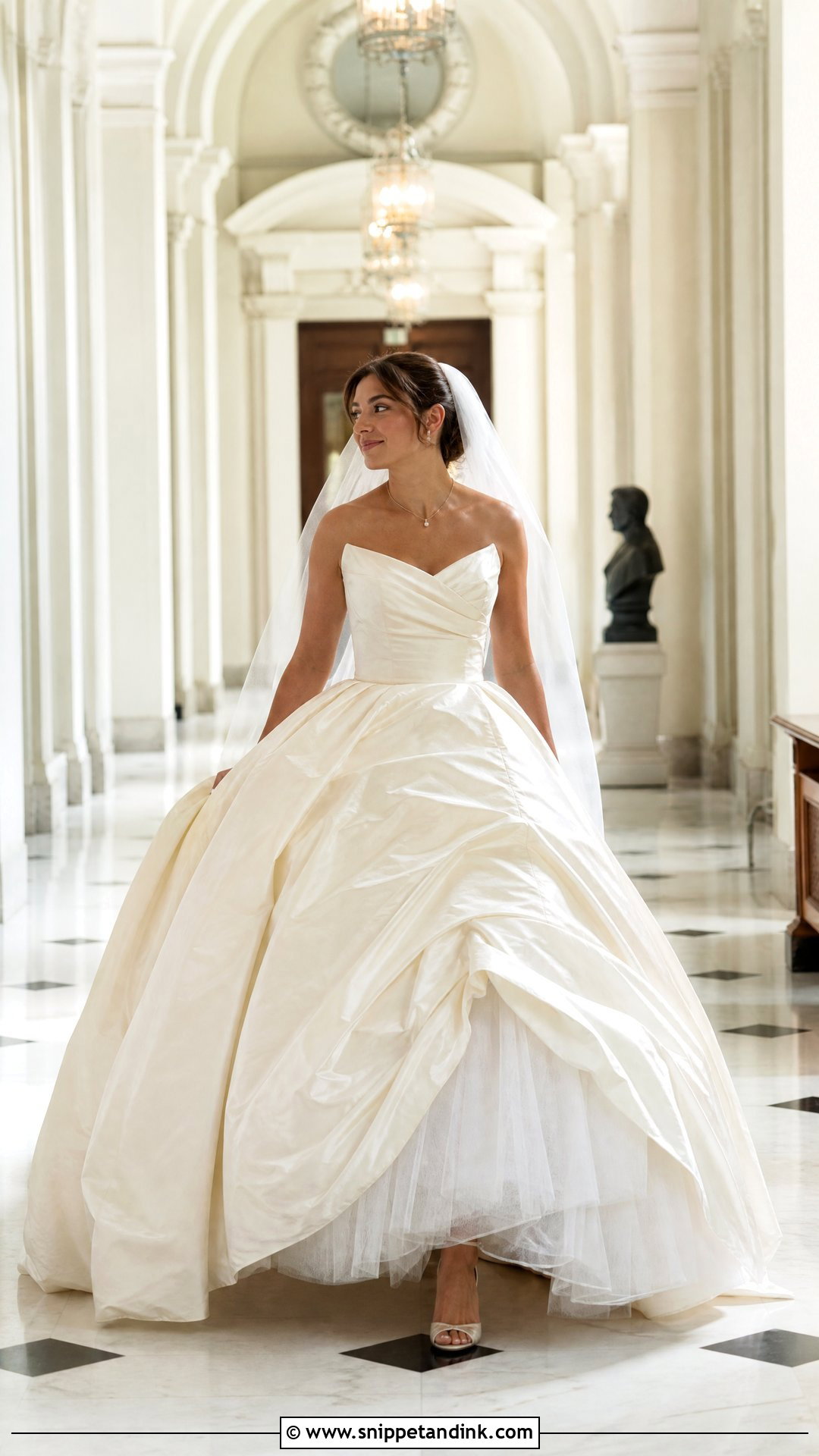
A secondhand ball gown can give you a full boutique entrance for far less. Check four things: the zip, the bodice structure, whether the skirt layers still hold their volume, and the hem, underarms and train for stains. Hems on big gowns are often grey from previous wear, and that can usually be cleaned or trimmed. A dated neckline or sleeves can be altered. Simple shoes and a veil that doesn’t fight the skirt keep it classic.
10. Thrifted A Line Wedding Dress
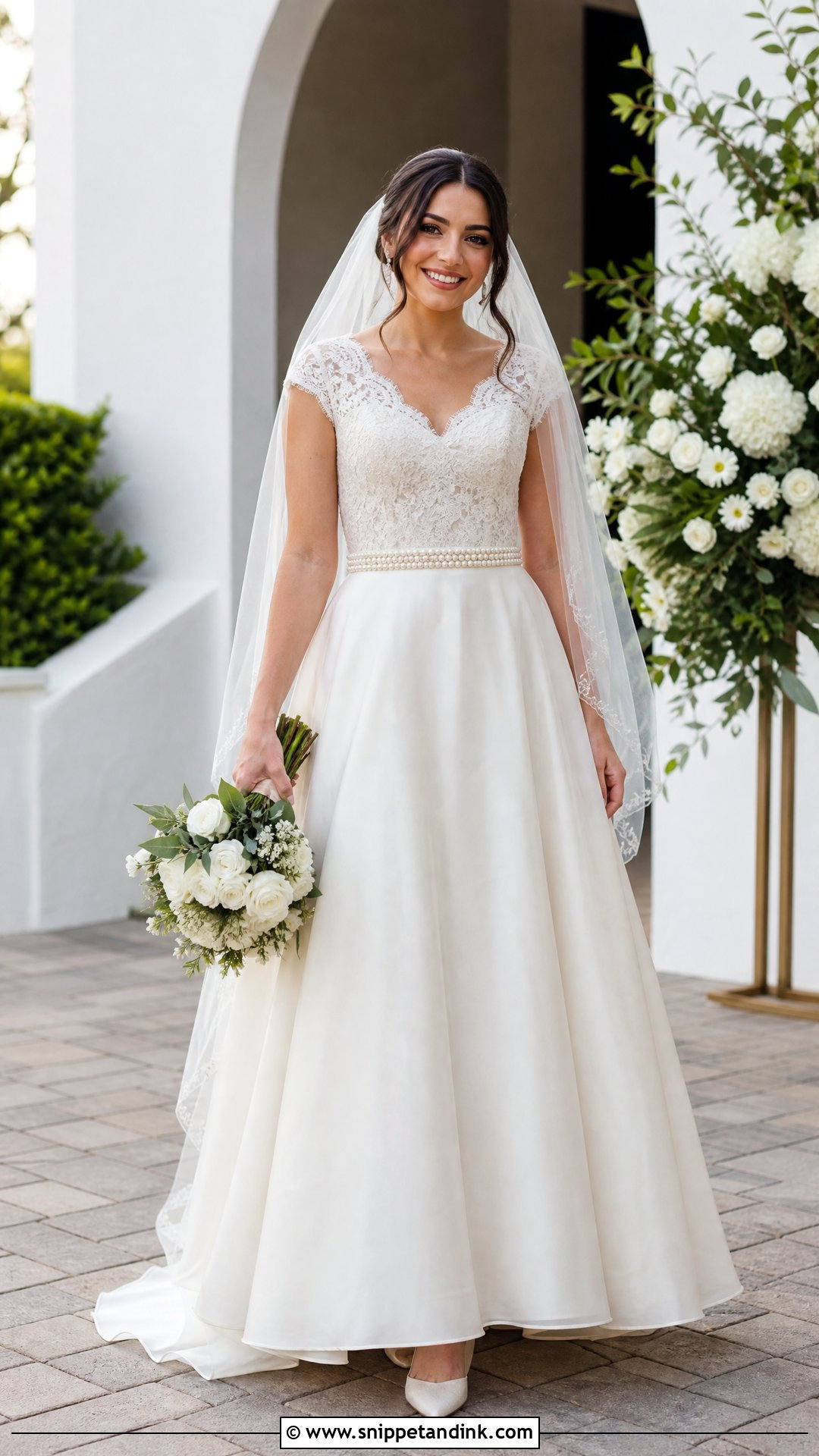
A-lines are the easiest thrift find to alter, because the shape fits through the bodice and the skirt hides small length changes. Satin, lace, chiffon or tulle all exist secondhand in this cut. If the dress feels plain, add a pearl belt or lace gloves; if it’s busy, a seamstress can often unpick extra bows or appliqués. It walks easily and suits almost any venue.
11. Thrifted Column Wedding Dress
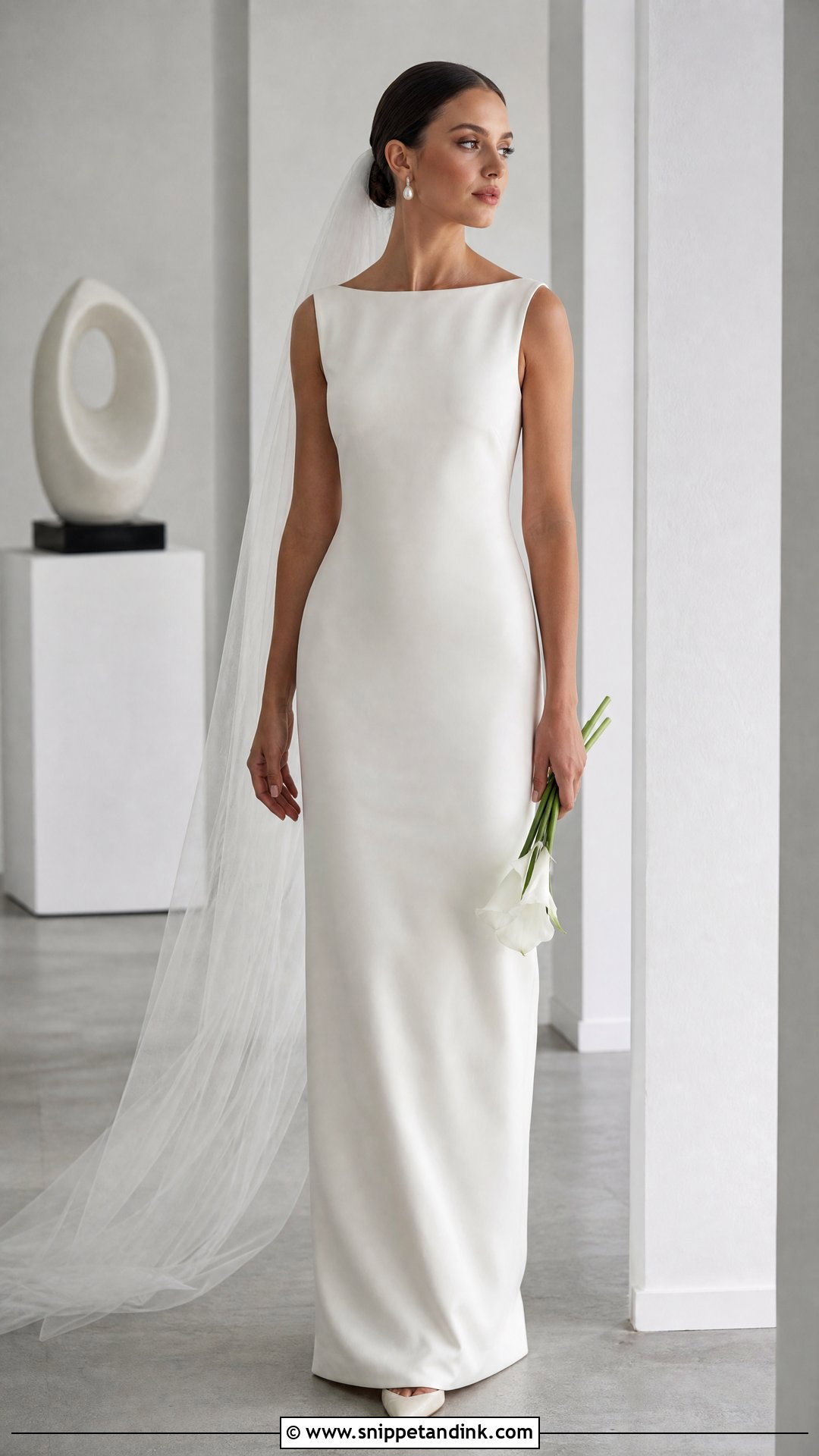
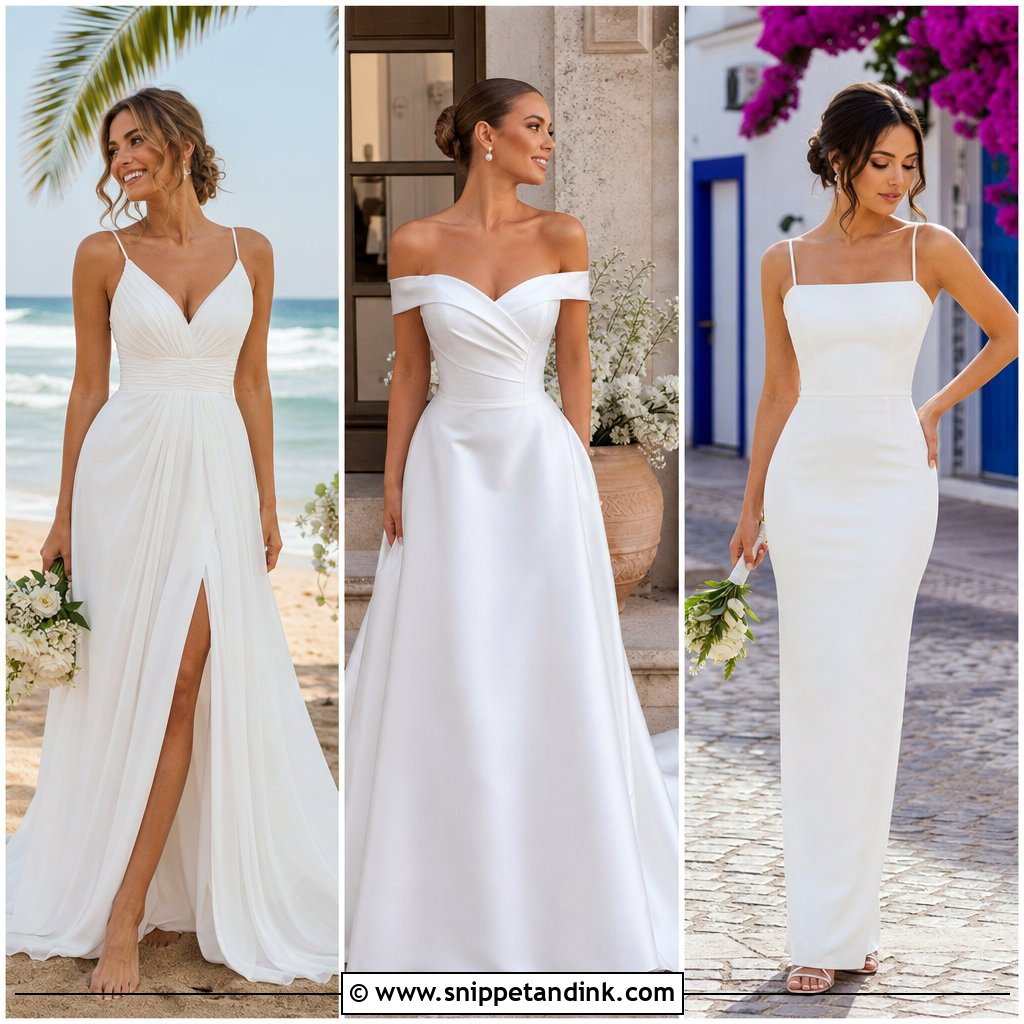
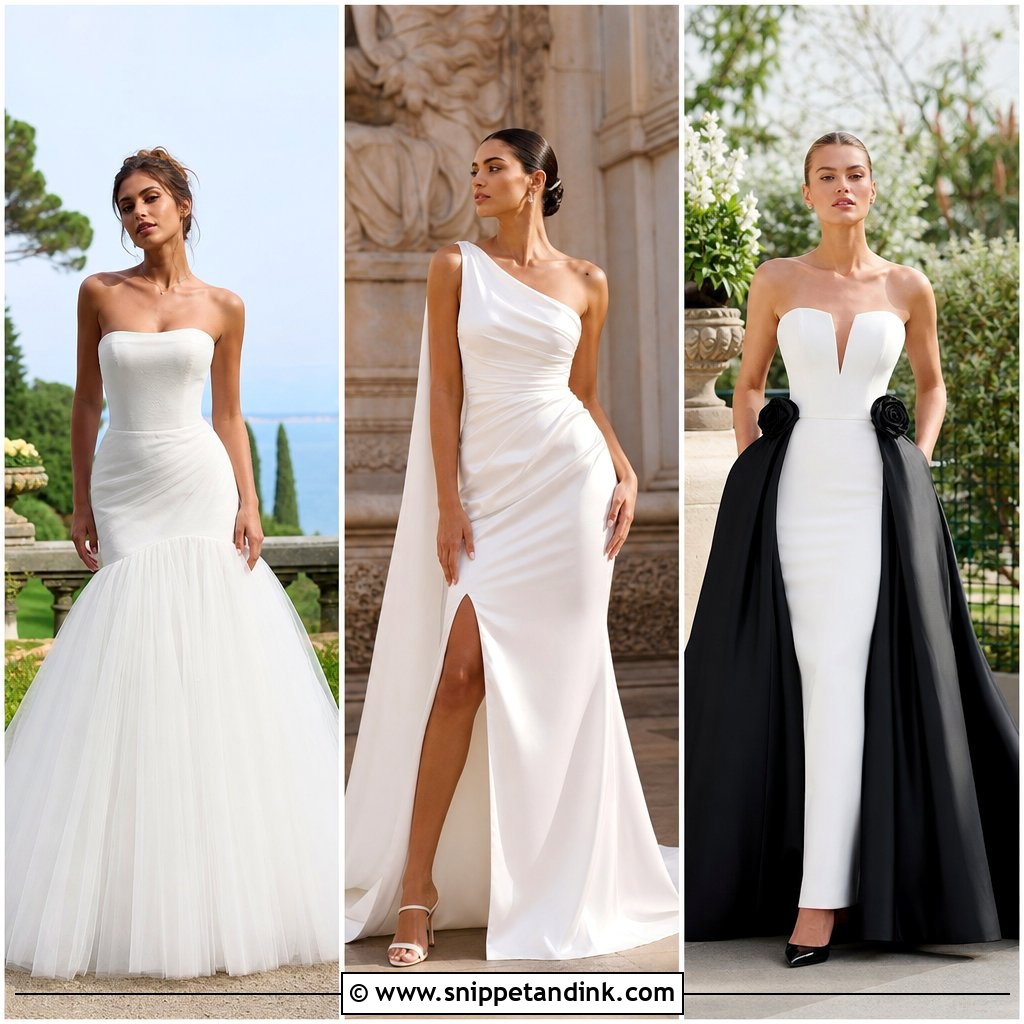
Columns show every fit issue, so this is the one style where I’d be strictest about measurements. Crepe, silk, satin or a matte fabric should fall cleanly from shoulder to hem. Check hip, bust and zip under strain by sitting and bending. A tailor can add waist darts or adjust straps, but she can’t add width at the hip if the seam allowance is narrow. Sleek heels and a long veil suit gallery venues and beach elopements.
12. Thrifted Puff Sleeve Wedding Dress
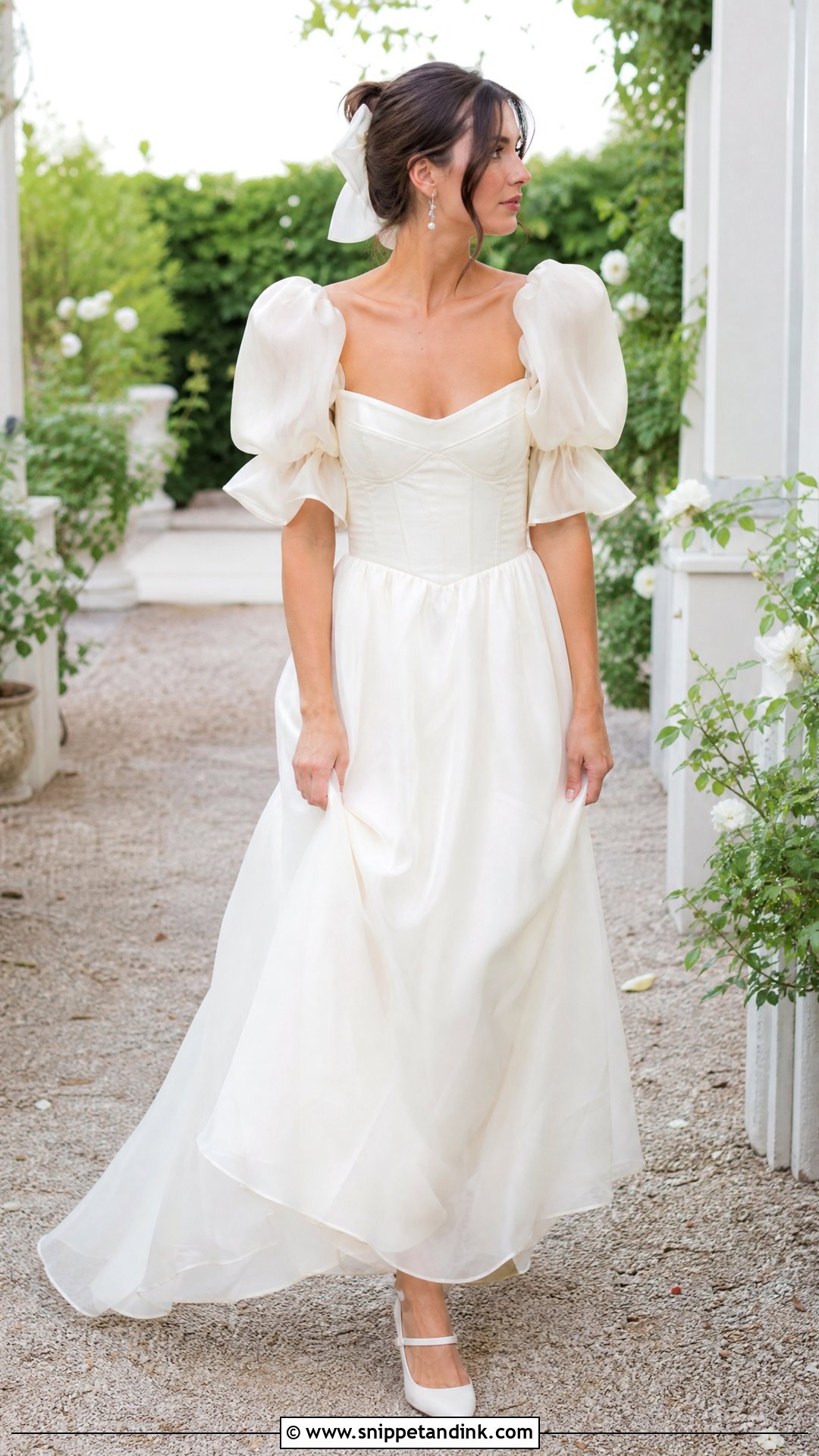
Puff sleeves read sweet when small and fashion-forward when large. Cotton lace, organza, satin and tulle versions all turn up in vintage. Oversized sleeves can usually be reduced, since there’s plenty of fabric to work with; tiny sleeves can’t be made bigger. Keep the hair smooth and the jewelry minimal, and pair it with a short veil or a ribbon bow.
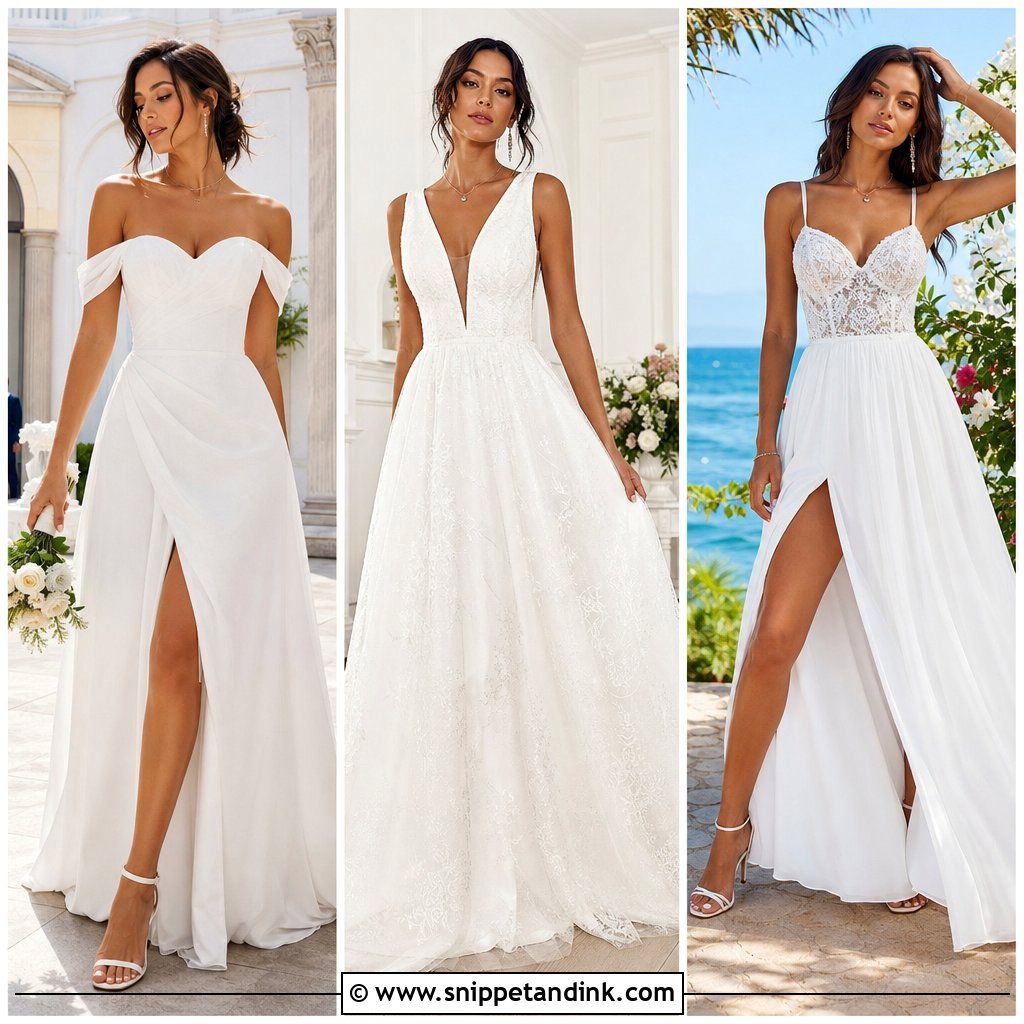
13. Thrifted Off Shoulder Wedding Dress
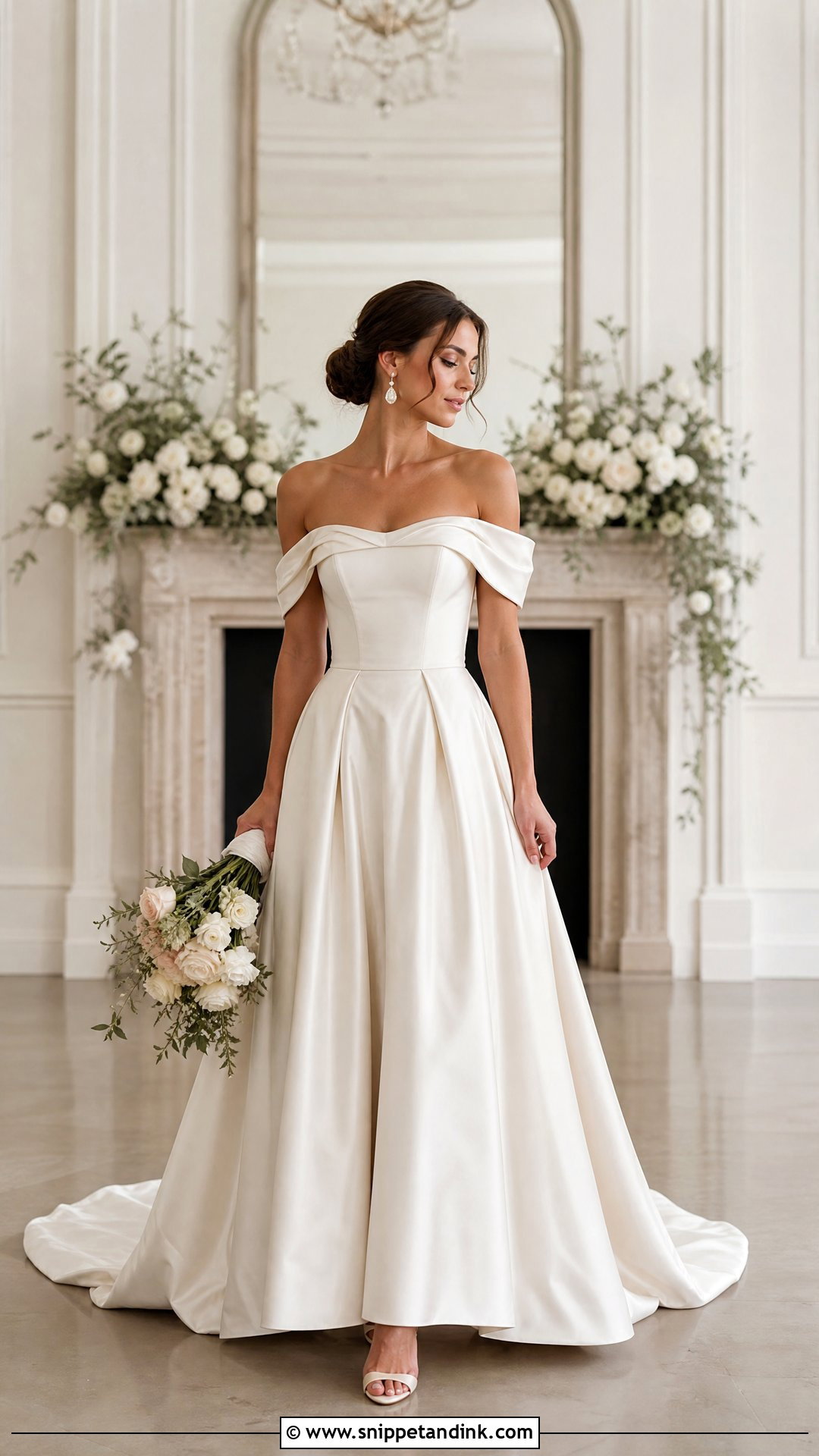
Off-shoulder necklines have to stay put, and a secondhand dress was fitted to someone else’s shoulders. Look for structured bodices, fold-over collars or satin draping, then raise your arms and hug yourself in the mirror. If it slips, a tailor can add hidden elastic or grip tape. Drop earrings and a low bun keep the neckline open. A fine chain works if the bodice is plain.
14. Thrifted High Neck Wedding Dress
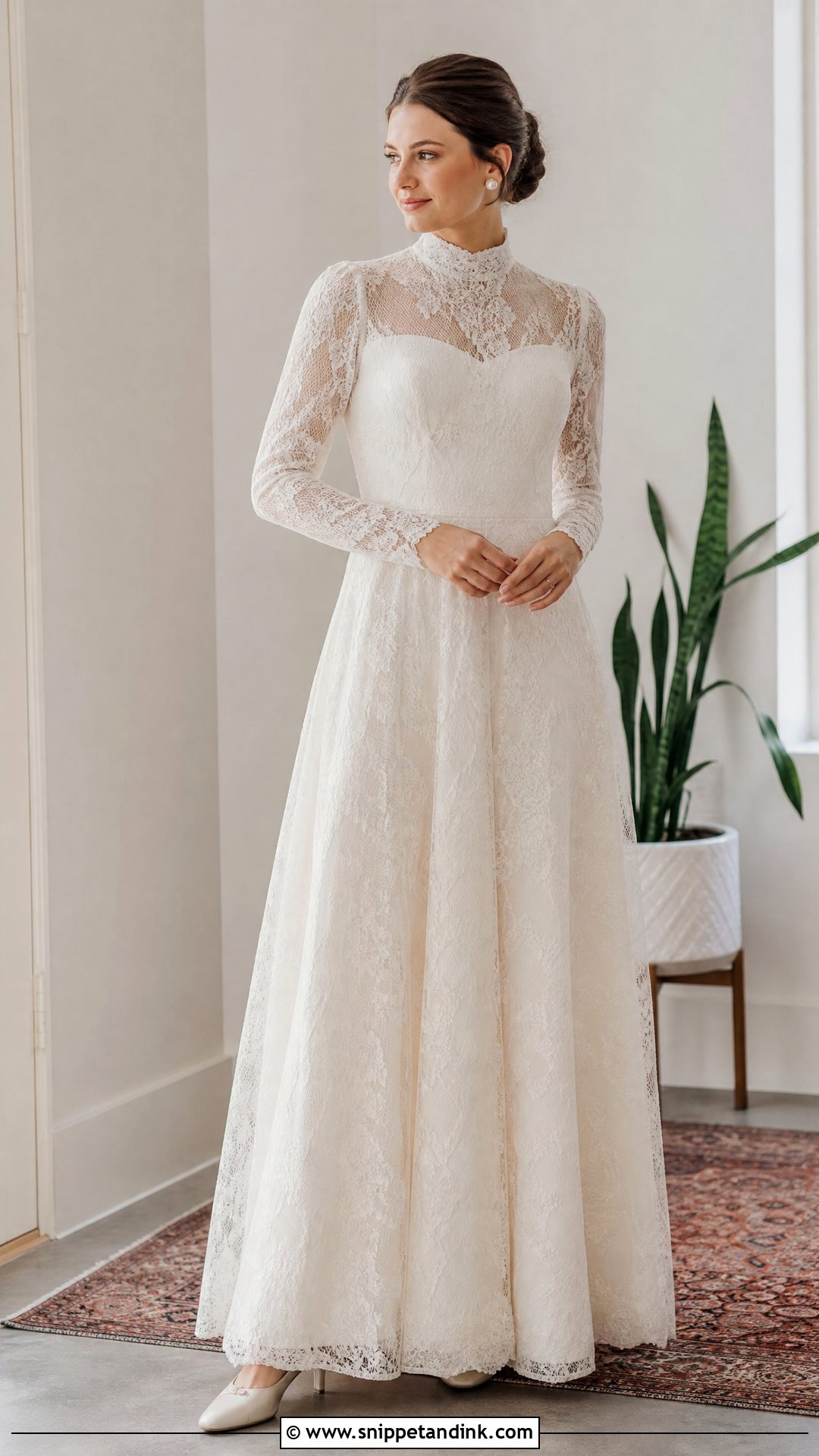
High necks are common in vintage stock, with lace collars, illusion necklines, mock necks and button backs. Collars can be eased only a little, so if it feels tight when you swallow, don’t buy it hoping for a miracle. Hair pulled up shows the neckline best. Sheer lace or light chiffon keeps it from feeling heavy, which makes it suit autumn, winter and formal indoor venues.
15. Thrifted Corset Wedding Dress
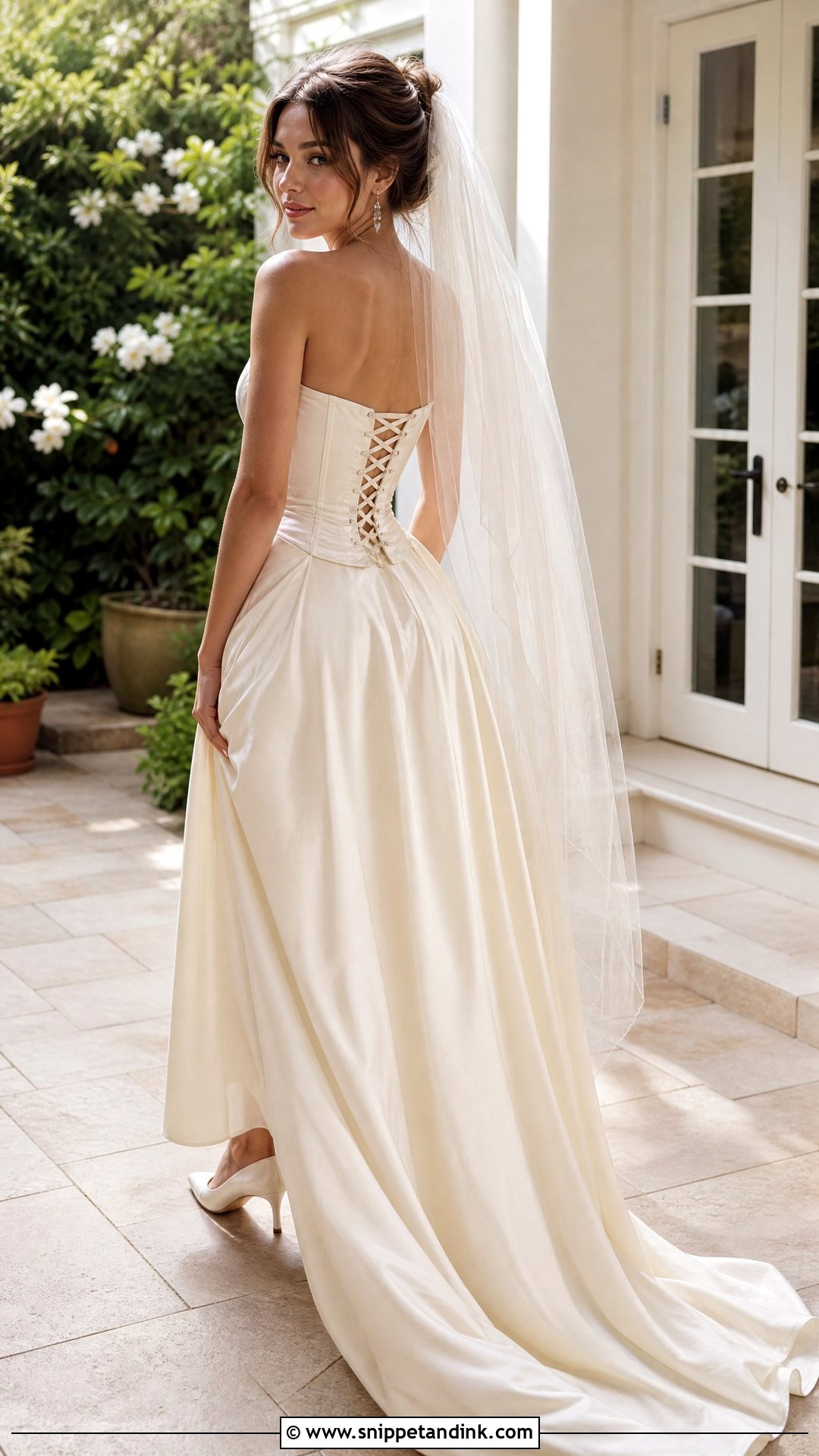
Before you fall for a vintage corset gown, press along the boning. It should lie flat with no tips poking through the fabric, and the lace-up back should close without the seams pulling. Sit in it for a few minutes. If the bodice is sound but the skirt is damaged, I’d turn it into a two-piece with a new skirt. A flowing veil and satin pumps soften the structure.
16. Thrifted Embroidered Wedding Dress
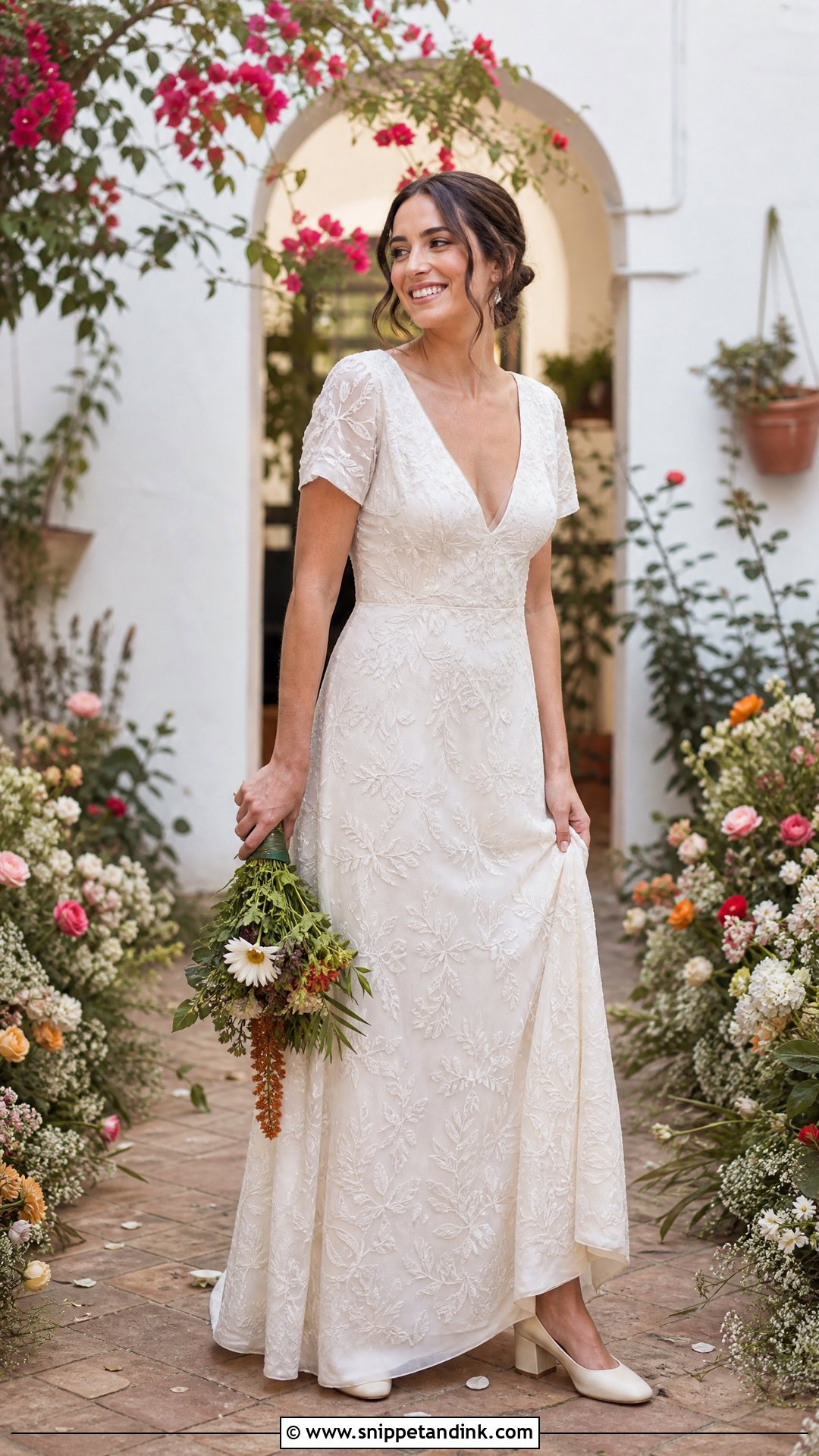
Embroidery often looks handmade on older gowns, which is exactly its charm. Floral work, tonal ivory stitching, tiny pearls or soft coloured thread are all worth finding. Inspect for snags and unravelling threads, because a loose end can run when caught on a ring. If the thread is coloured, pull one shade into the bouquet or shoes. Keep accessories delicate.
17. Thrifted Tulle Wedding Dress
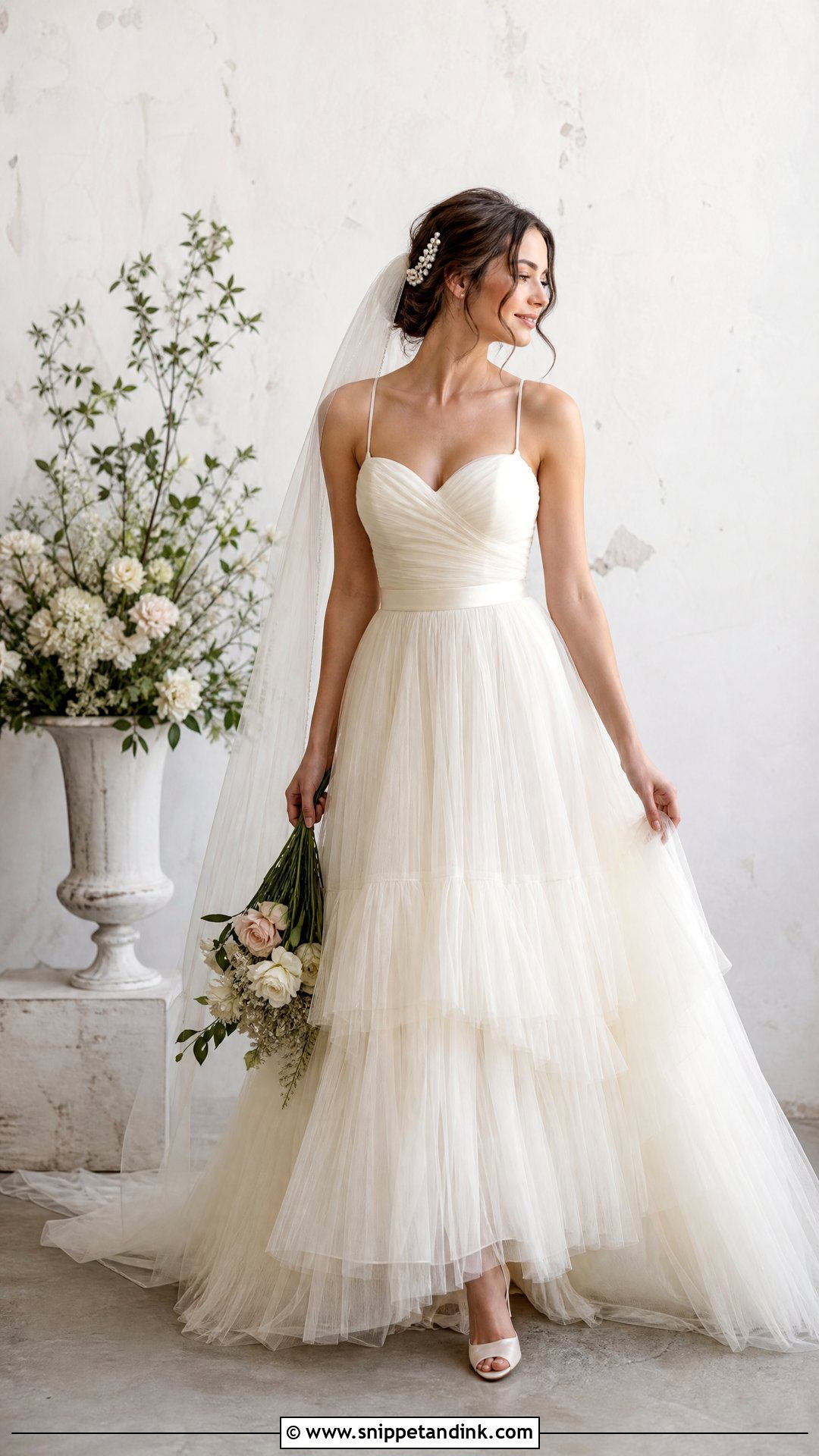
Tulle snags, tears and greys at the hem, so this needs the most careful check of anything on the list. Look at every layer, not just the top one. If the skirt is too full, a seamstress can remove a layer, and a torn bottom layer can sometimes be removed entirely without anyone noticing. A fitted bodice keeps the volume from feeling bulky. A satin belt or pearl clip adds definition to a plain tulle gown.
18. Thrifted Chiffon Wedding Dress
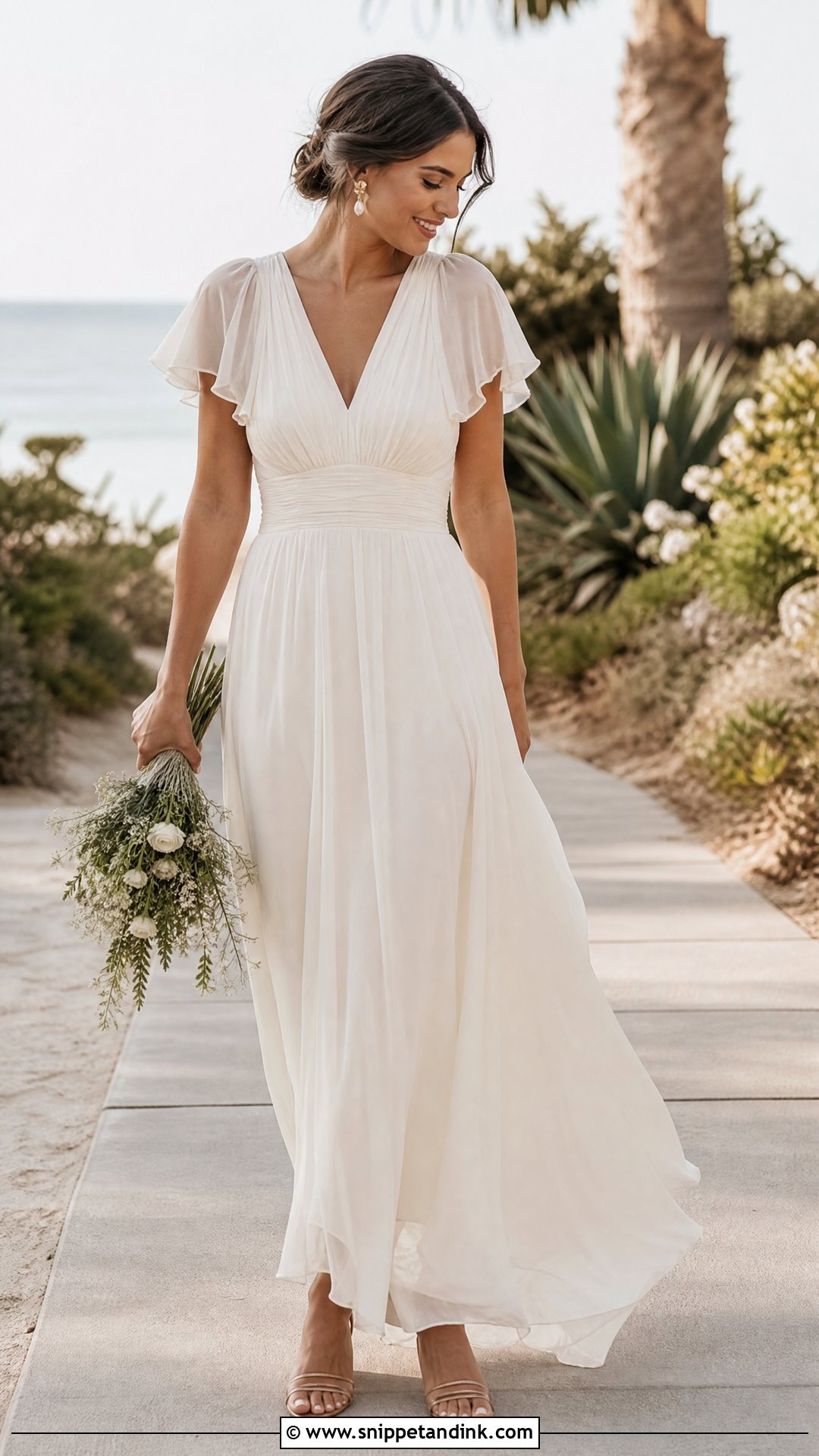
Chiffon is light and moves well in outdoor ceremonies. Search for empire waists, wrap bodices, flutter sleeves and soft gathered skirts. Pulls and runs in chiffon are almost impossible to repair invisibly, and uneven hems are common because chiffon drops over time on a hanger. Barely-there heels and a simple veil keep it airy for beach and destination weddings.
19. Thrifted Silk Wedding Dress
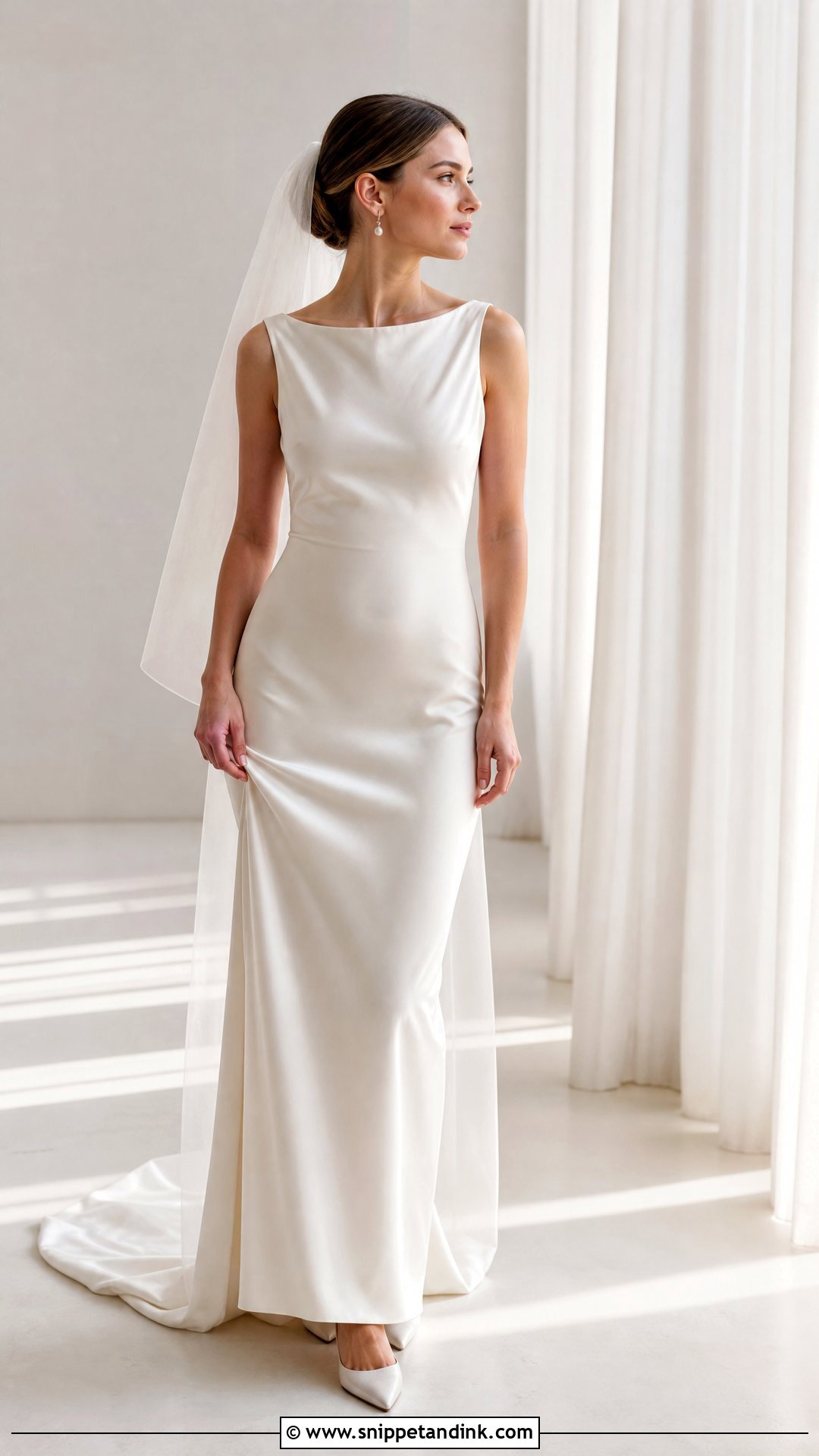
Real silk has a soft glow and fluid drape that secondhand prices rarely reflect. Silk slips, columns, wrap dresses and simple vintage gowns are worth searching. Silk is also where ageing shows: underarm stains, water marks and thinning fabric along the seams. Have it professionally cleaned before alterations so the seamstress isn’t fitting around a stain that may shift. Low satin heels, pearl earrings and a clean veil keep it quietly luxurious.
20. Thrifted Short Sleeve Wedding Dress
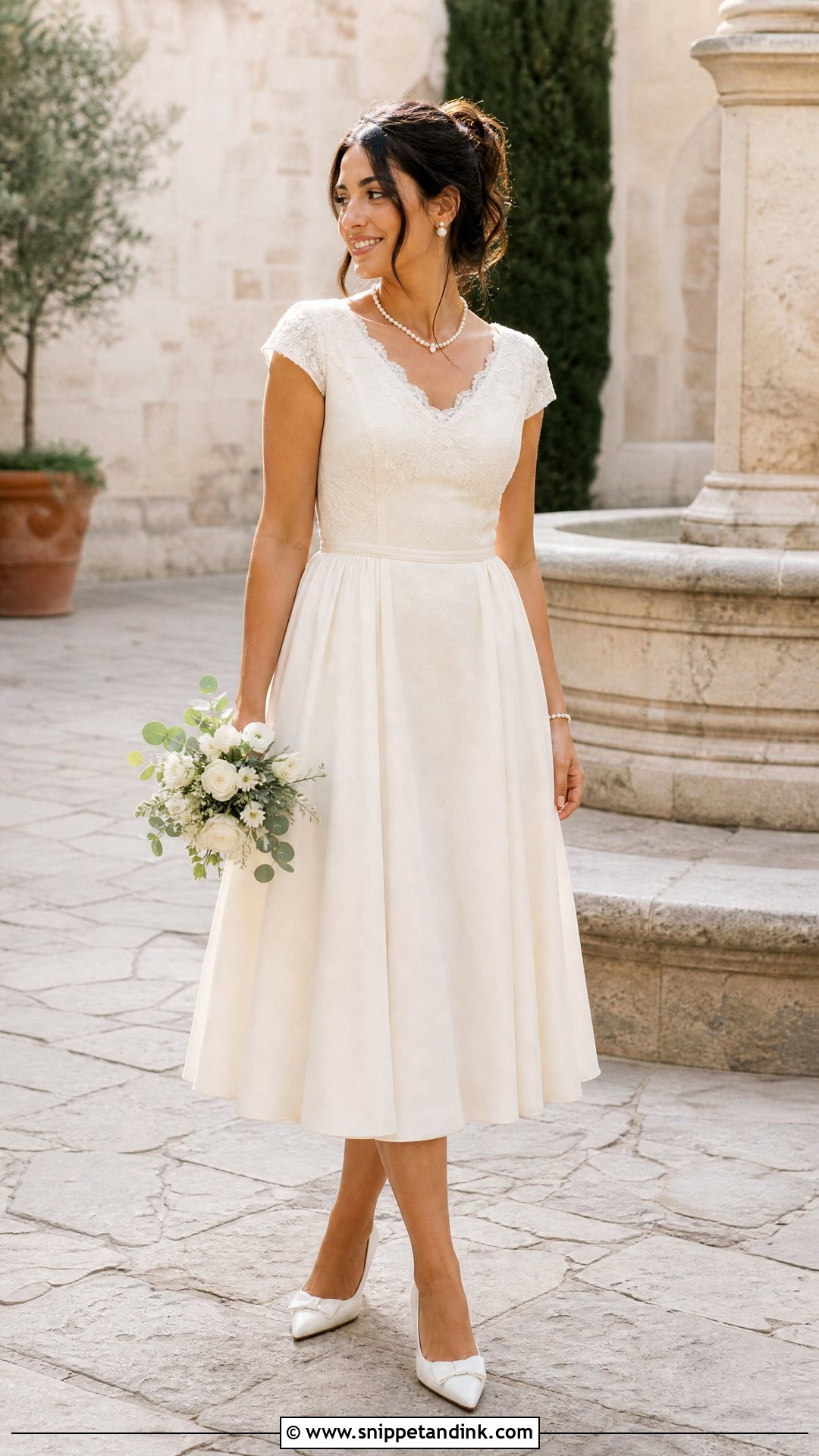
Short sleeves give a little coverage without the warmth of long ones, which makes them easy for daytime and outdoor ceremonies. Cap, flutter, lace or fitted sleeves all appear secondhand. Dated trim can usually be unpicked, and a sleeve can be reshaped. They also leave room for a jacket or shawl. Pointed heels and pearl jewelry suit a classic finish.
21. Thrifted Two Piece Wedding Dress
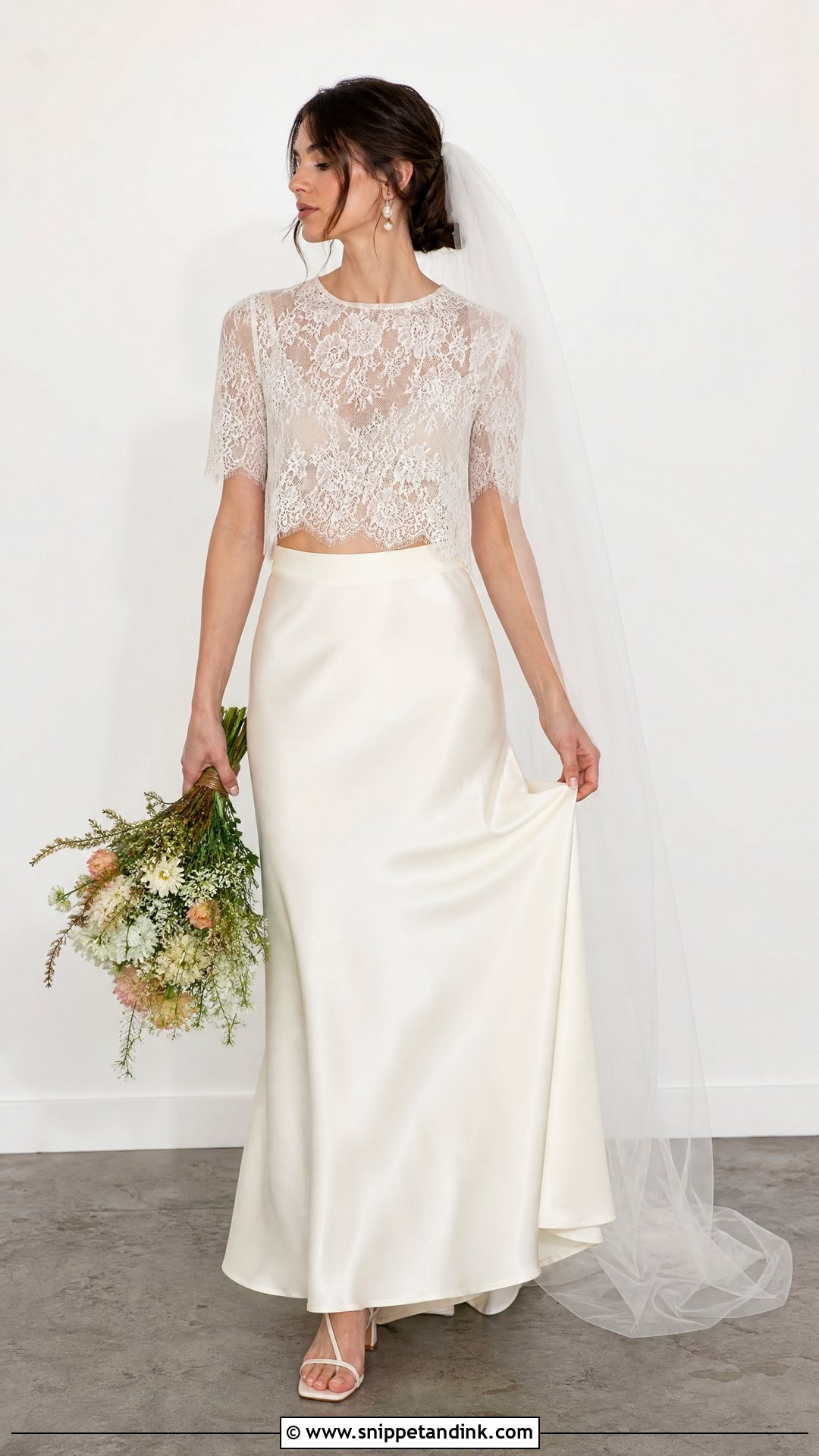
Separates solve the biggest thrift problem: finding one gown that fits both your top half and bottom half. A vintage lace top with a satin skirt, a beaded camisole with a chiffon maxi or a cropped blouse with a high-waisted skirt all work. Keep the whites close in tone, ivory with ivory or cream with champagne, and check them side by side in daylight. Simple heels and a veil make it bridal.
22. Thrifted Vintage Prairie Wedding Dress
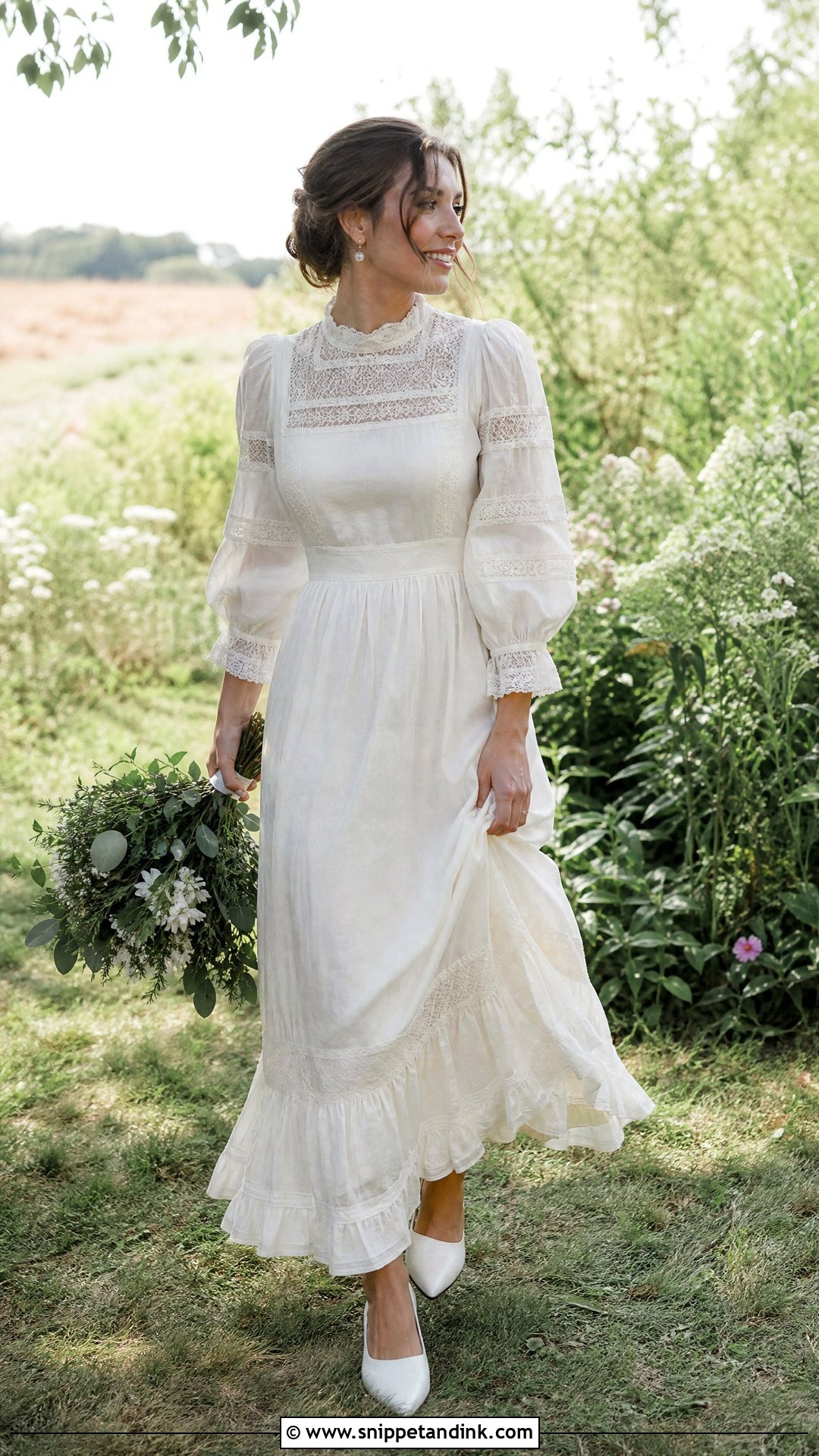
A vintage prairie wedding dress comes with high necks, lace trim, puff sleeves, ruffled hems and cotton or eyelet fabric. Styling decides whether it reads bridal or costume, so I keep everything else fresh: clean white shoes, simple pearl earrings and natural makeup. Cotton eyelet often has small age spots, which can usually be lifted with a gentle soak, unlike stains on silk. Small alterations can lower a neckline or slim a sleeve. Rustic venues and outdoor ceremonies suit it.
23. Thrifted Designer Wedding Dress
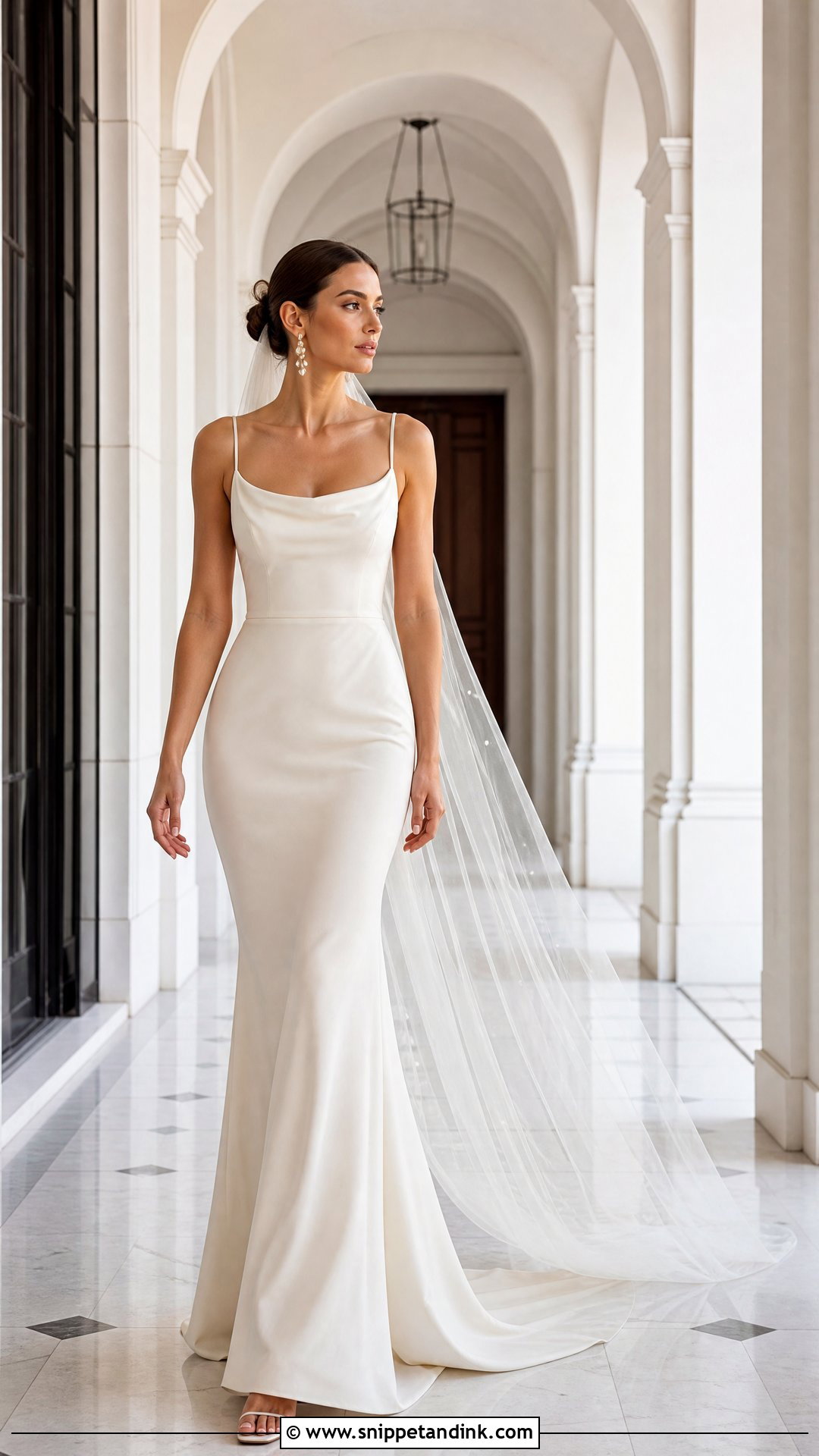
Designer gowns come up in resale shops, bridal consignment stores, vintage boutiques and trusted online platforms. Check the label, the inside finishing, closures, lining and fabric quality; poor finishing inside a designer label is a warning sign. Compare sold listings before paying, and add cleaning and alterations to the price. Style it to the dress: modern earrings for a sleek gown, softer accessories for lace.
24. Thrifted Reception Wedding Dress
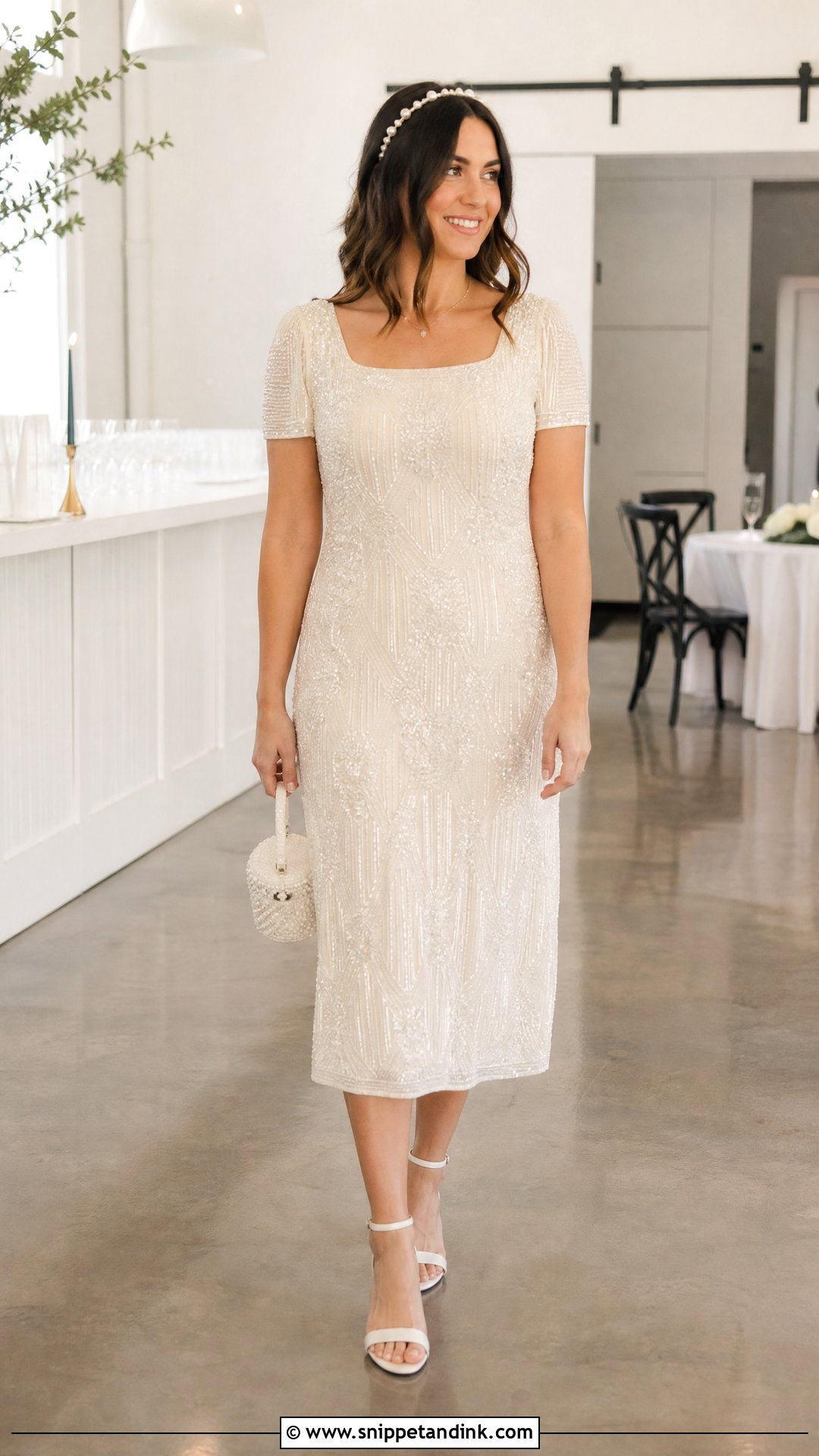
Reception dresses have to dance, sit and survive spilled drinks. Look for minis, midis, light satin slips, simple lace or beaded party dresses in ivory, cream or champagne. You can be more playful than at the ceremony. If it sparkles, keep the jewelry minimal; if it’s plain, use statement shoes or a bow veil. It also spares your ceremony gown from food and floor marks.


25. Thrifted Plus Size Wedding Dress
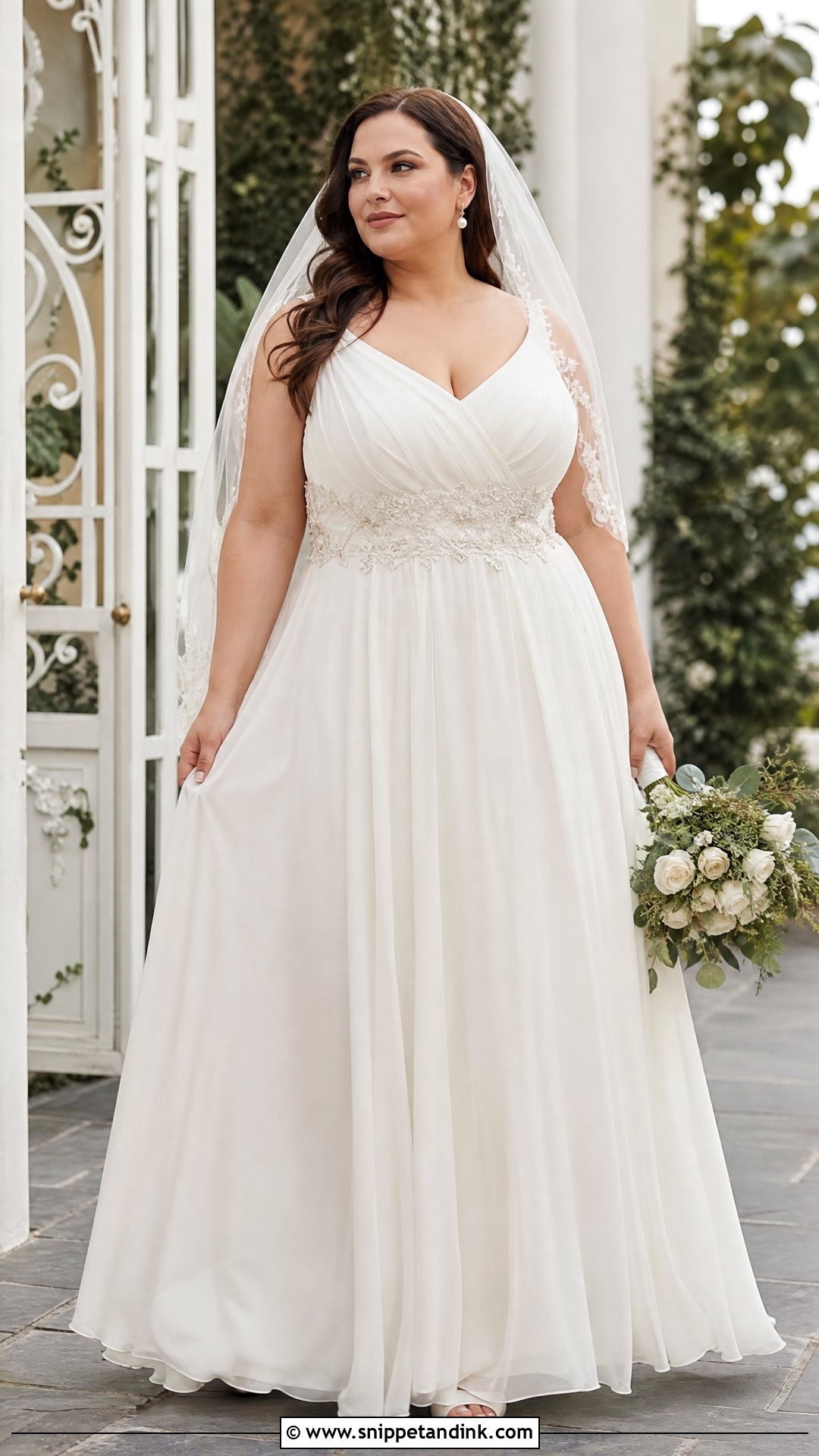
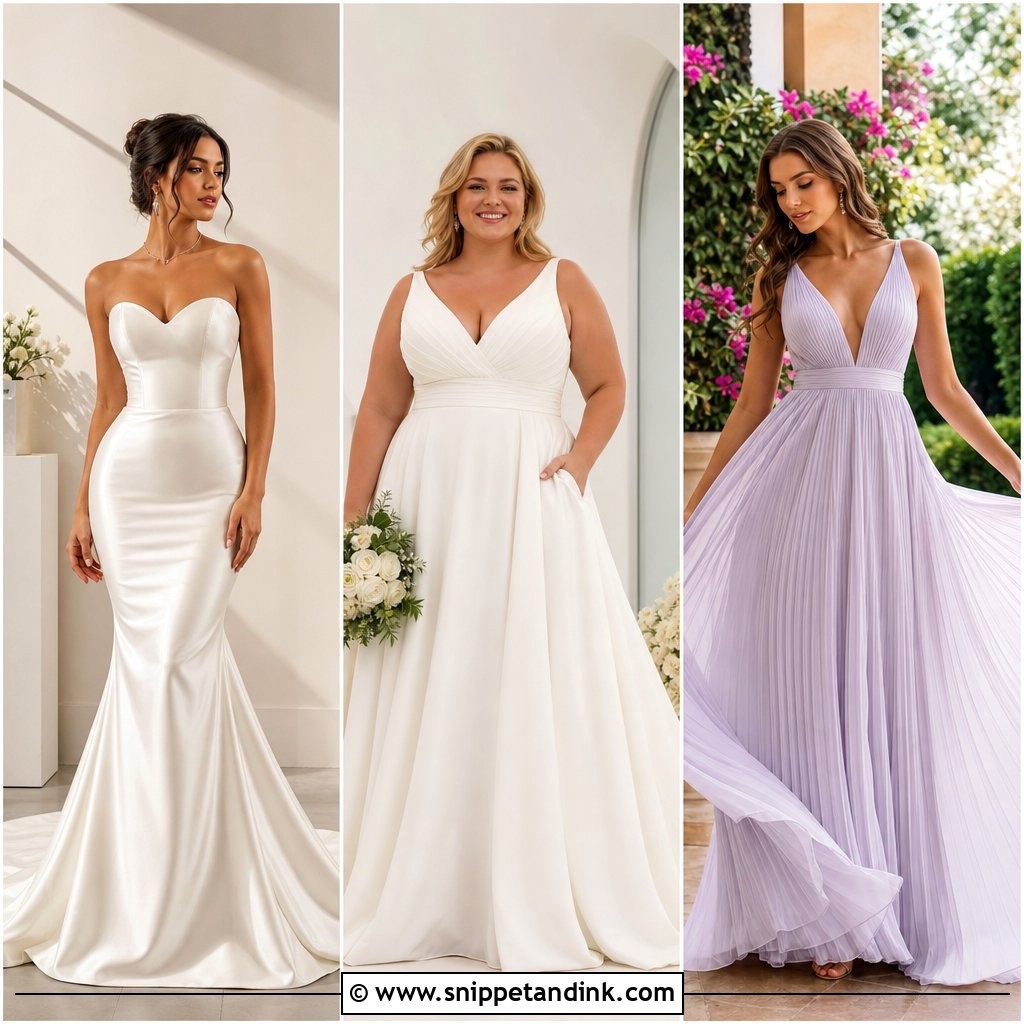
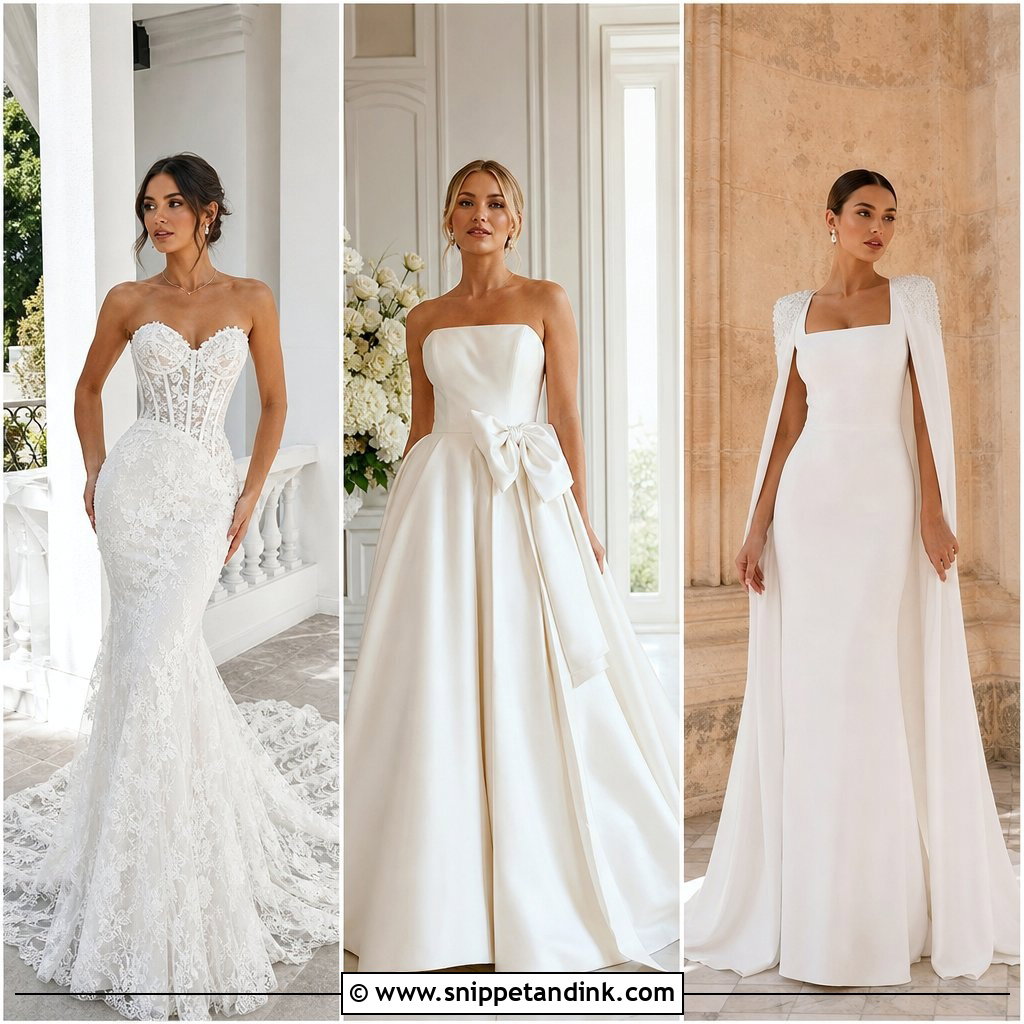
Plus-size thrift needs patience, and exact measurements matter far more than tags, since vintage and bridal sizes run smaller than everyday clothing. Start with bridal consignment stores, resale filters and sellers who list bust, waist, hip, length and arm measurements. A-lines, wrap dresses, corset backs, empire waists and soft chiffon are the most adjustable shapes. Buy your undergarments before the first fitting so the dress is tailored over them. Comfortable heels and a secure veil finish it.
How Long a Thrifted Gown Takes to Become Wedding-Ready
A secondhand dress usually needs cleaning before it can be altered, and alterations come before the final press. That order takes longer than people expect, so I’d aim to buy at least six months ahead if you can.
Cleaning comes first
Take older gowns to a cleaner who handles bridal and vintage fabrics, and tell them the rough age of the dress. Yellowing on an old gown often comes from the fabric oxidising or from sugar and body oils that weren’t cleaned out after the first wedding. Some of it lifts, some doesn’t, and an honest cleaner will tell you before they start. Older acetate and rayon linings can shrink with water, which is another reason not to soak a vintage dress at home.
Alterations second
Bring your shoes and underwear to every fitting. Taking a dress in is almost always possible; letting it out depends on those seam allowances, and adding length is rarely possible at all. If a bodice can’t be let out, a lace-up corset back panel is a common fix that can look deliberate.
Small touches last
Once it fits, swap anything that dates it: plastic buttons for covered ones, a stiff old petticoat for soft tulle, a heavy belt for a ribbon. These changes are cheap and they make a thrifted gown look newly made.
A Secondhand Dress That Looks Made for You
The best thrifted dress isn’t the cheapest or the rarest. It’s the one that fits your body, suits your venue and lets you move. Inspect the fabric, check stains and closures, and price in cleaning and alterations before you buy. With good tailoring, a simple secondhand dress can look made for you, and a dramatic vintage gown can feel modern with pared-back jewelry and clean shoes.
You'll Like These Ideas:



Leave a Reply