
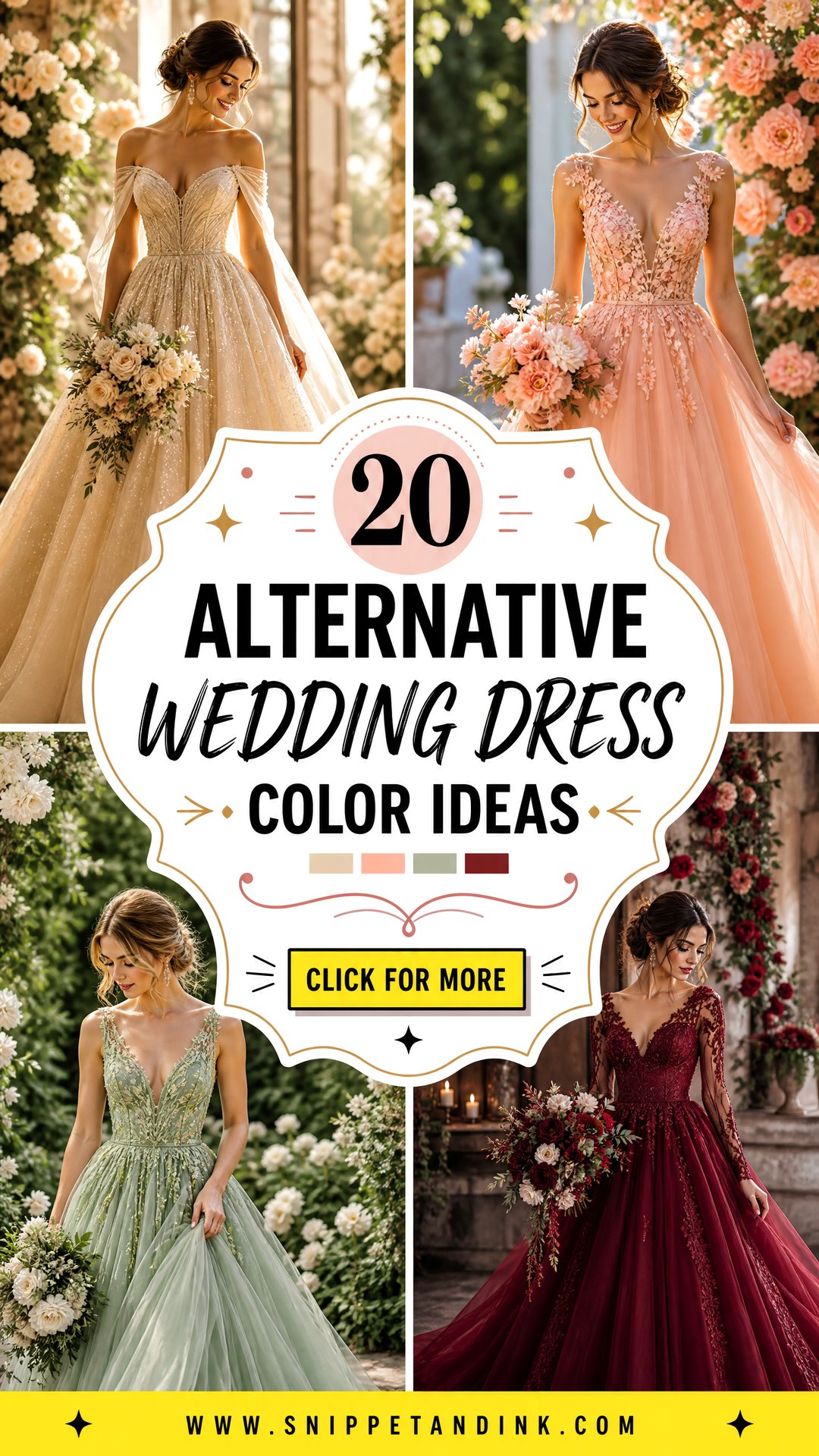
A colored gown changes more than the dress. The veil, the shoes, the flowers and even your makeup all have to be rethought, because almost every bridal accessory is made to sit beside white or ivory. When a bride brings me a color she loves, the first thing I do is hold the fabric under her chin by a window, then again under warm indoor bulbs, and photograph both. Satin deepens a shade and throws it back onto the skin, while tulle and chiffon soften it, so the same pink can look like two different dresses. Below are twenty shades I see brides wear well, each with the styling decisions that make it read as bridal rather than as a party dress.
Ordering a Colored Gown Without a Dye Lot Surprise
Most colored bridal gowns are cut and dyed to order, and that changes how you should shop. The sample in the store was dyed in a different batch from the one your dress will come from, so small shifts in tone are normal. On pale colors like blush or sky blue, a shift you would never notice on navy can be obvious.
Here is what I do with every bride ordering color:
- Ask for a cut swatch from the production fabric, not the sample, and keep it. You will need it for the veil, the shoes and the florist.
- Allow longer than you would for ivory. Made-to-order gowns commonly take several months, and custom dye work can add weeks on top, so ask the shop for its own timeline in writing.
- Check whether the lining is dyed to match. A white lining under colored chiffon lightens the shade and can show at the hem.
- Confirm the veil supplier can match the color, or plan on ivory. A veil that is almost the right shade looks worse than one that is clearly neutral.
When the dress arrives, I lay the original swatch on it in daylight before the first fitting. If the color is off, that is the moment to raise it, not after alterations have started.
1. Champagne Wedding Dress
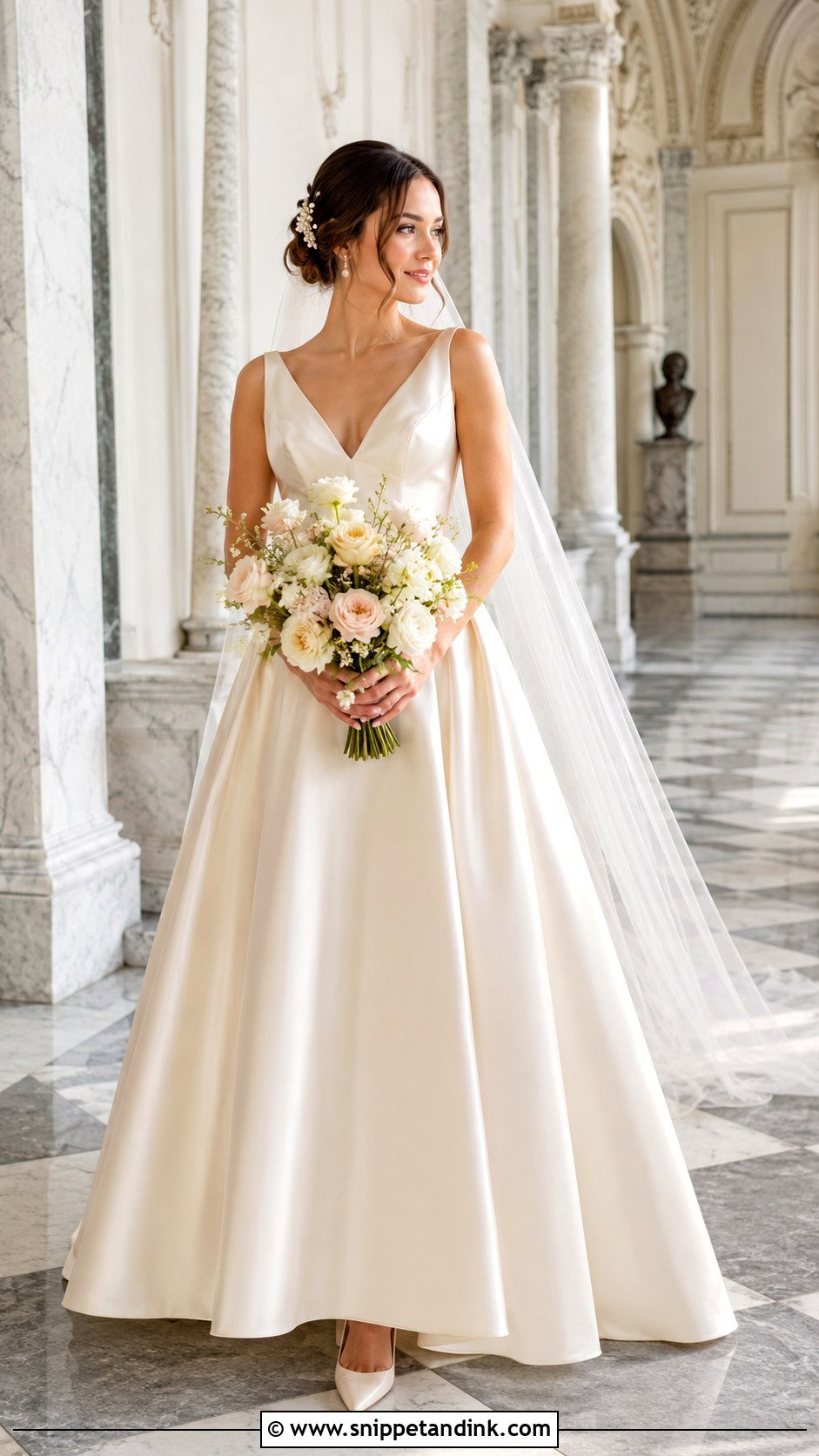
Champagne is the shade I suggest to brides who want color but whose families expect a wedding dress to look like one. A satin A-line reads smooth and polished, and champagne tulle under ivory lace gives depth without anyone noticing a color at all. The problem I see most often is the veil: a bright white veil next to warm champagne makes the dress look faintly dirty, so I always bring the veil into the fitting room before anything is bought. Gold earrings, a pearl comb and neutral pointed heels finish it, with cream roses and pale peach blooms in the bouquet.
2. Blush Pink Wedding Dress
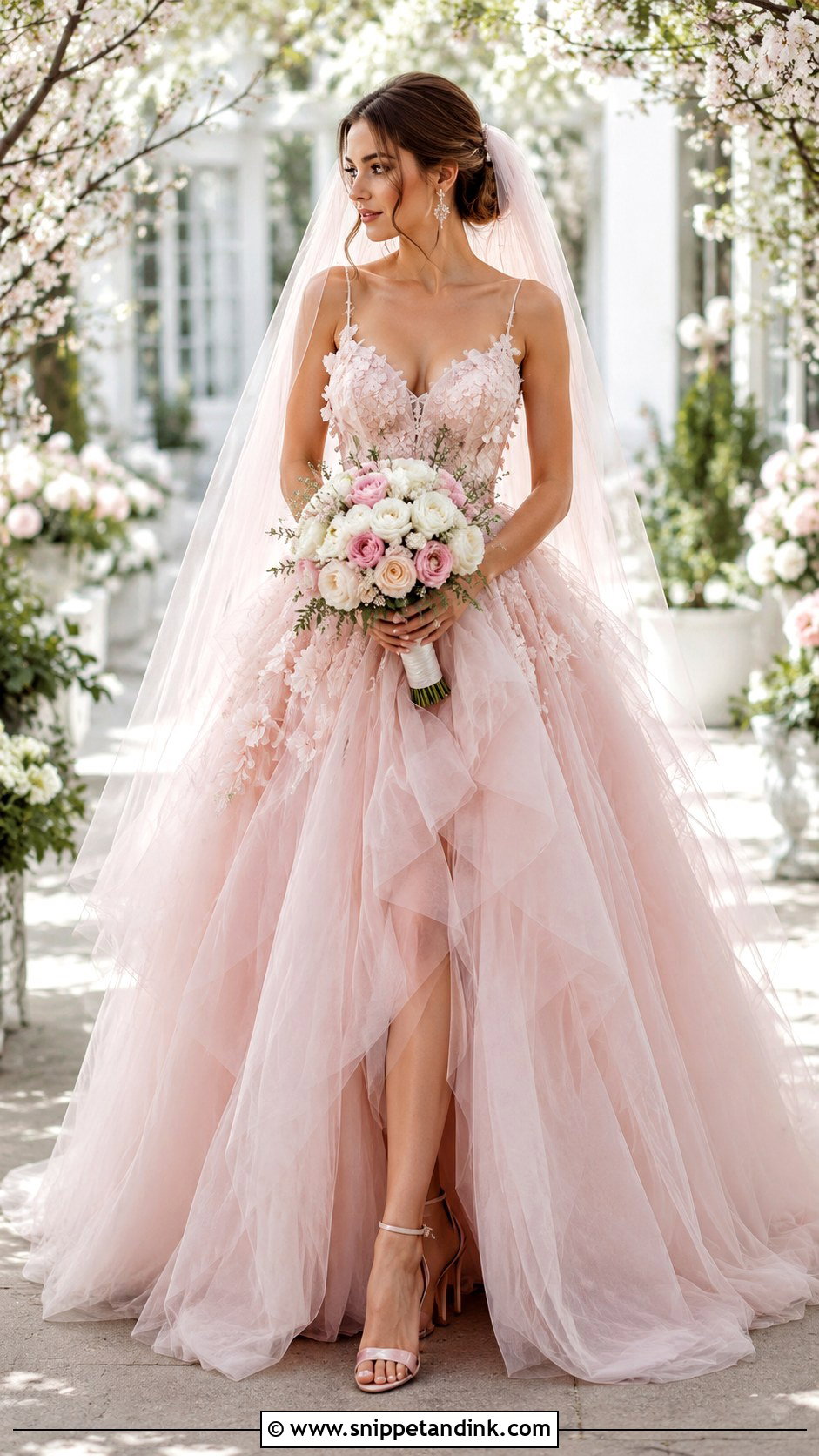
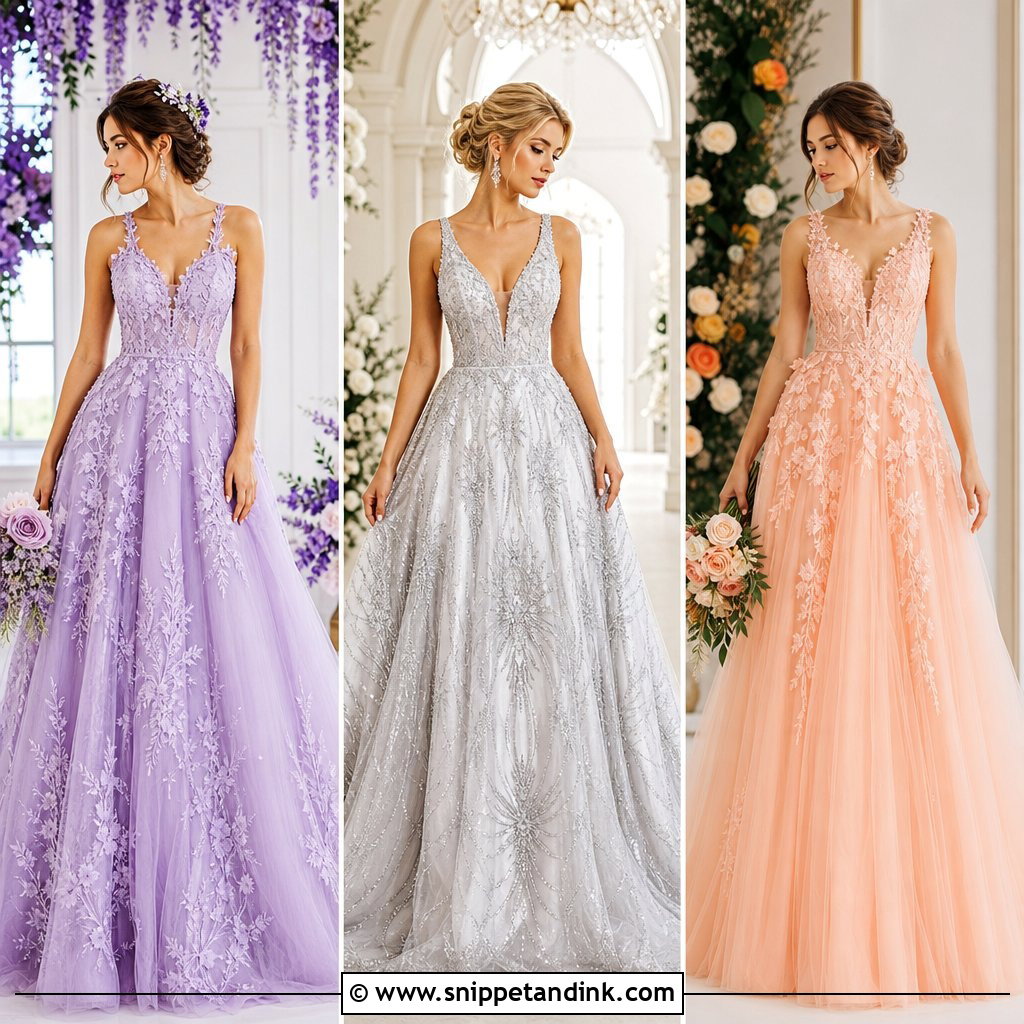
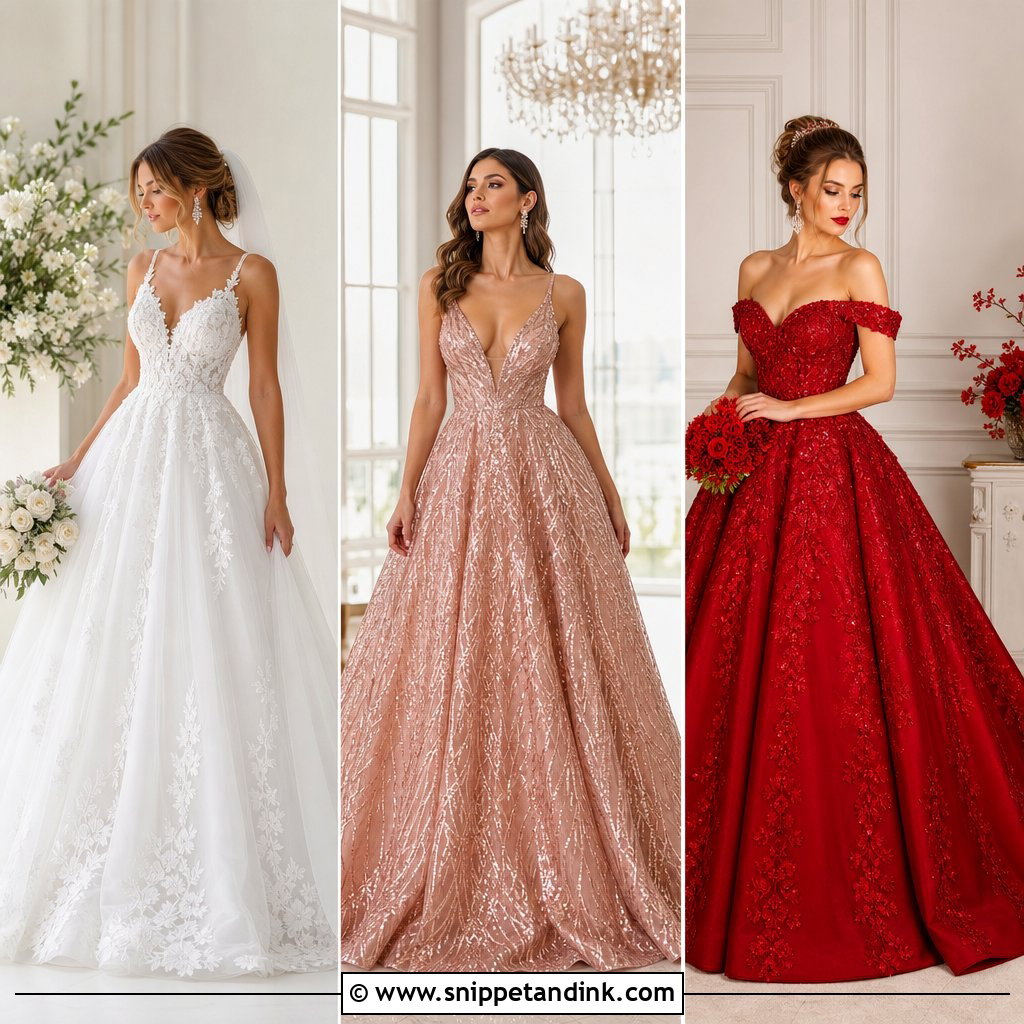
Blush is the gentlest step away from white, and on a tulle ball gown with a fitted bodice and floral appliqués it still looks unmistakably bridal. Blush is not one color, though. Some versions lean peach and some lean cool pink, and the wrong one can make fair skin look flushed. I test at least two swatches against the bride’s jawline before we commit. Rose-gold earrings, pale pink heels and a fingertip veil with a matching blush undertone keep it tonal, and if embellished tulle feels like too much, smooth crepe in the same shade is calmer.
3. Dusty Rose Wedding Dress
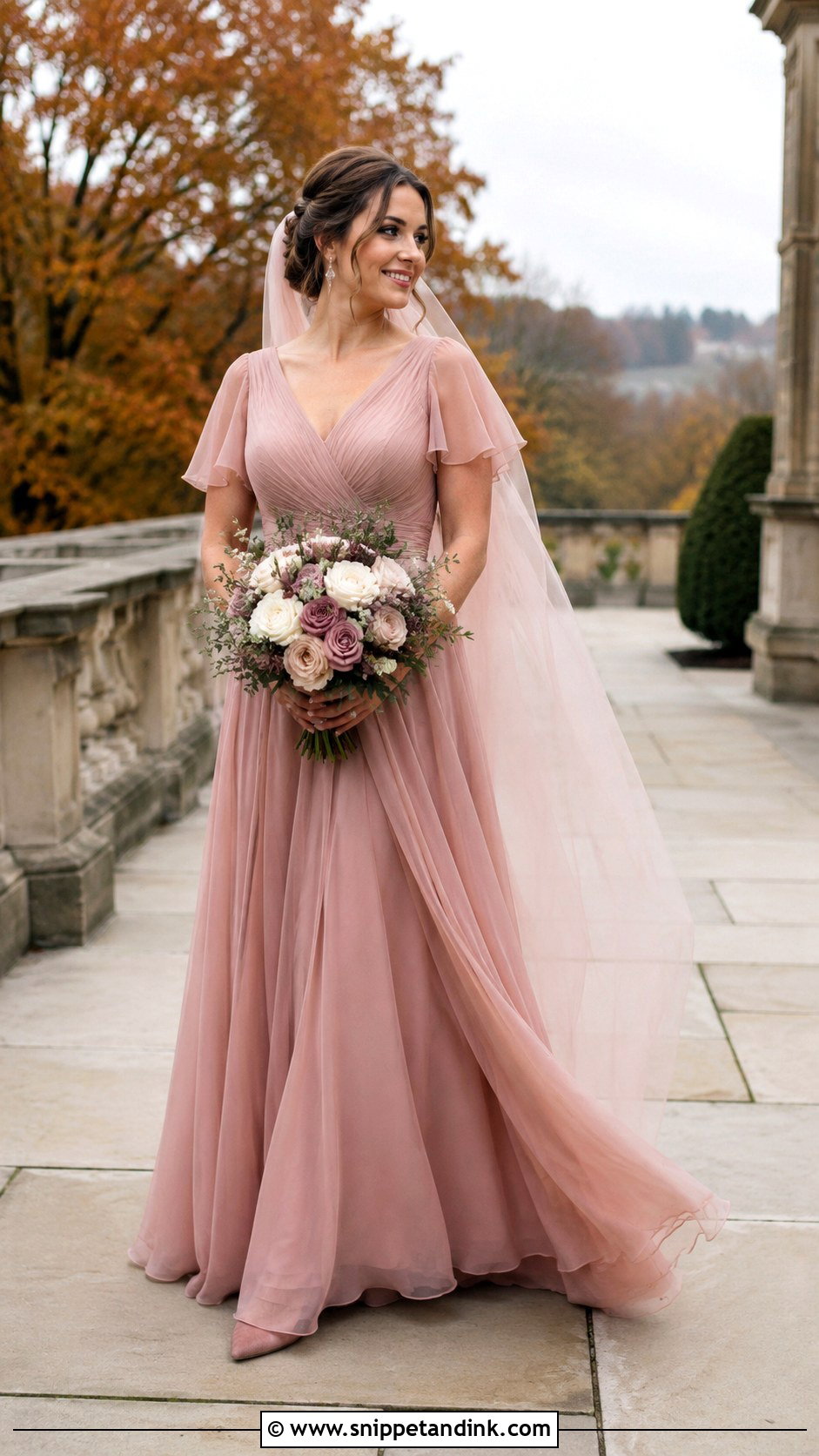
Dusty rose has enough gray in it to look grown up, which is why I like it for chiffon gowns with soft sleeves and a sweeping train. Pick nude or muted rose heels to lengthen the line, and skip the bright white veil; pale rose tulle, beige netting or a small floral headpiece all sit better against it. Cream flowers with mauve accents and eucalyptus-like greenery give contrast. For makeup I tell brides to wear a rose lip that is related to the gown rather than an exact match, because a perfect match tends to flatten the face in photos.
4. Peach Wedding Dress
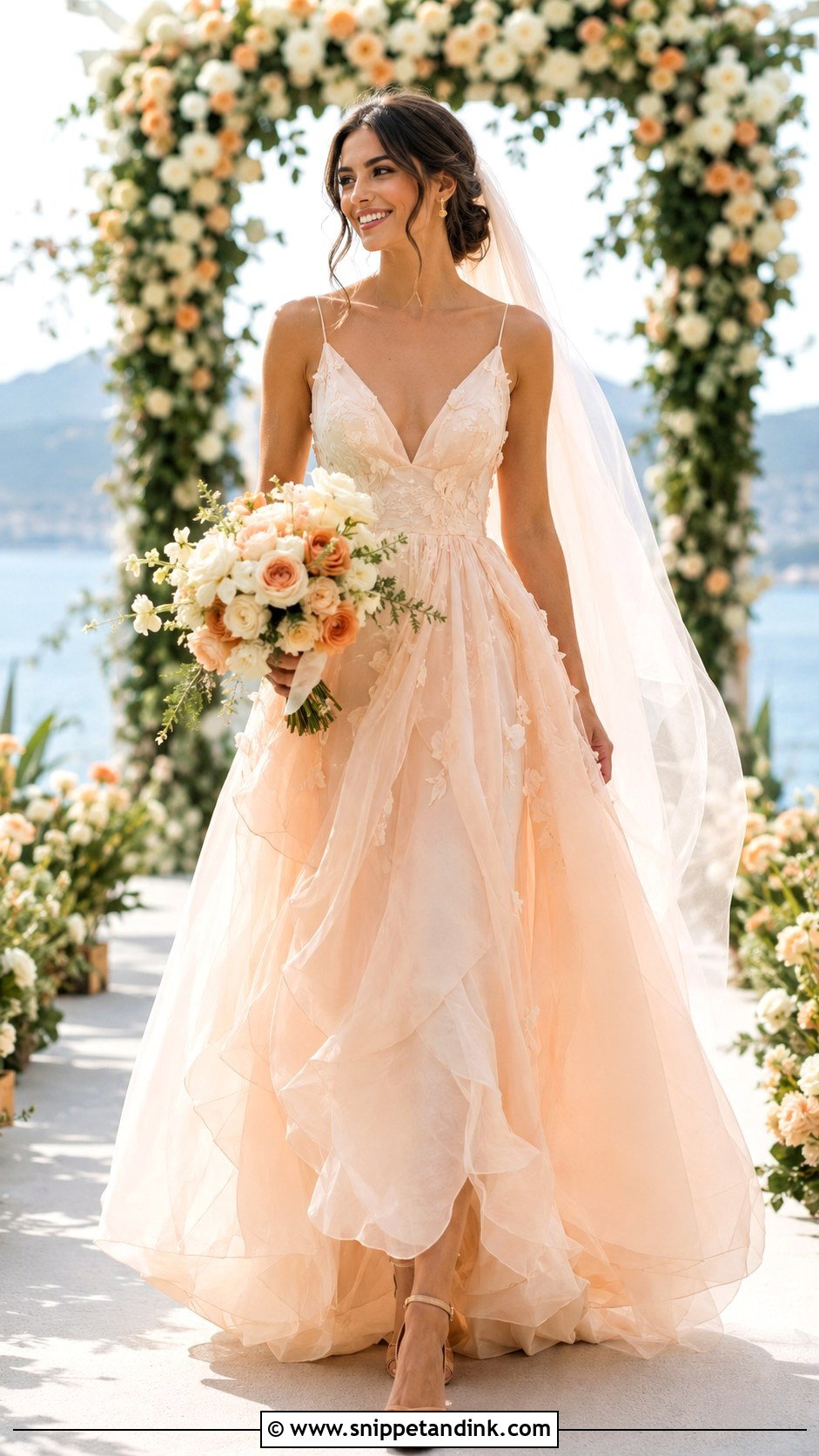
Peach runs from barely tinted to almost coral, and the depth matters more than the hue. A pale peach organza A-line with a fitted bodice looks fresh in daylight; push it toward coral and it starts competing with your skin. I usually pair it with champagne heels, small gold earrings and a sheer veil carrying the faintest peach tint. Cream, apricot and pale yellow flowers stop the gown sliding toward pink. It suits spring, summer and destination weddings where natural light does most of the work.
5. Butter Yellow Wedding Dress
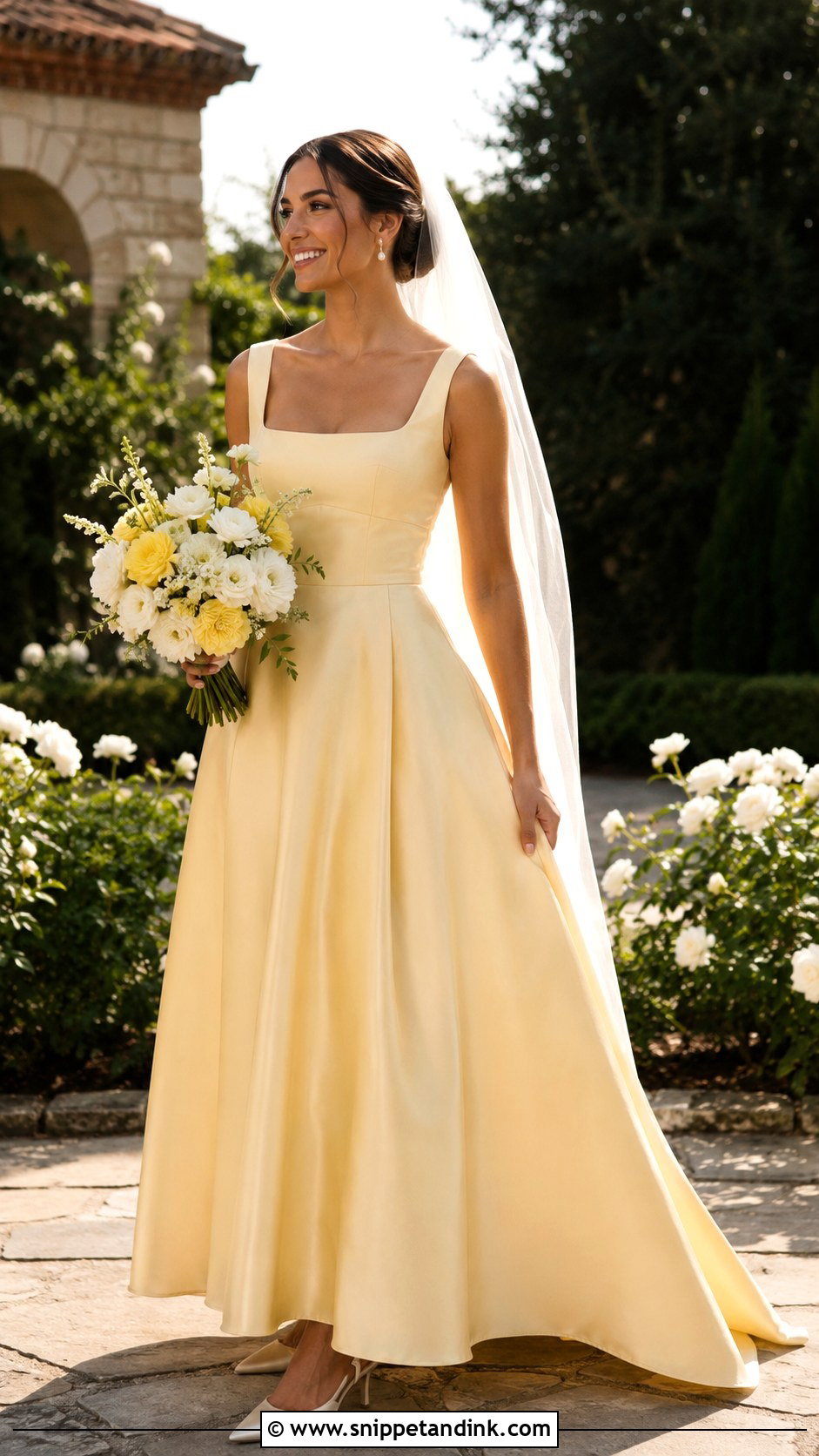
A butter yellow wedding dress needs structure to stay sophisticated, so I look for silk or satin with a square neckline, a defined waist and a clean full-length skirt. Yellow is the color that changes most indoors: tungsten bulbs push it toward mustard, so check it under the light your reception will actually have. Pearl drops, cream slingbacks and a lightweight ivory veil with minimal trim keep it bright. If solid yellow feels like too much for your skin, ivory lace over a butter yellow lining gives you the color as a glow rather than a block.
6. Lavender Wedding Dress
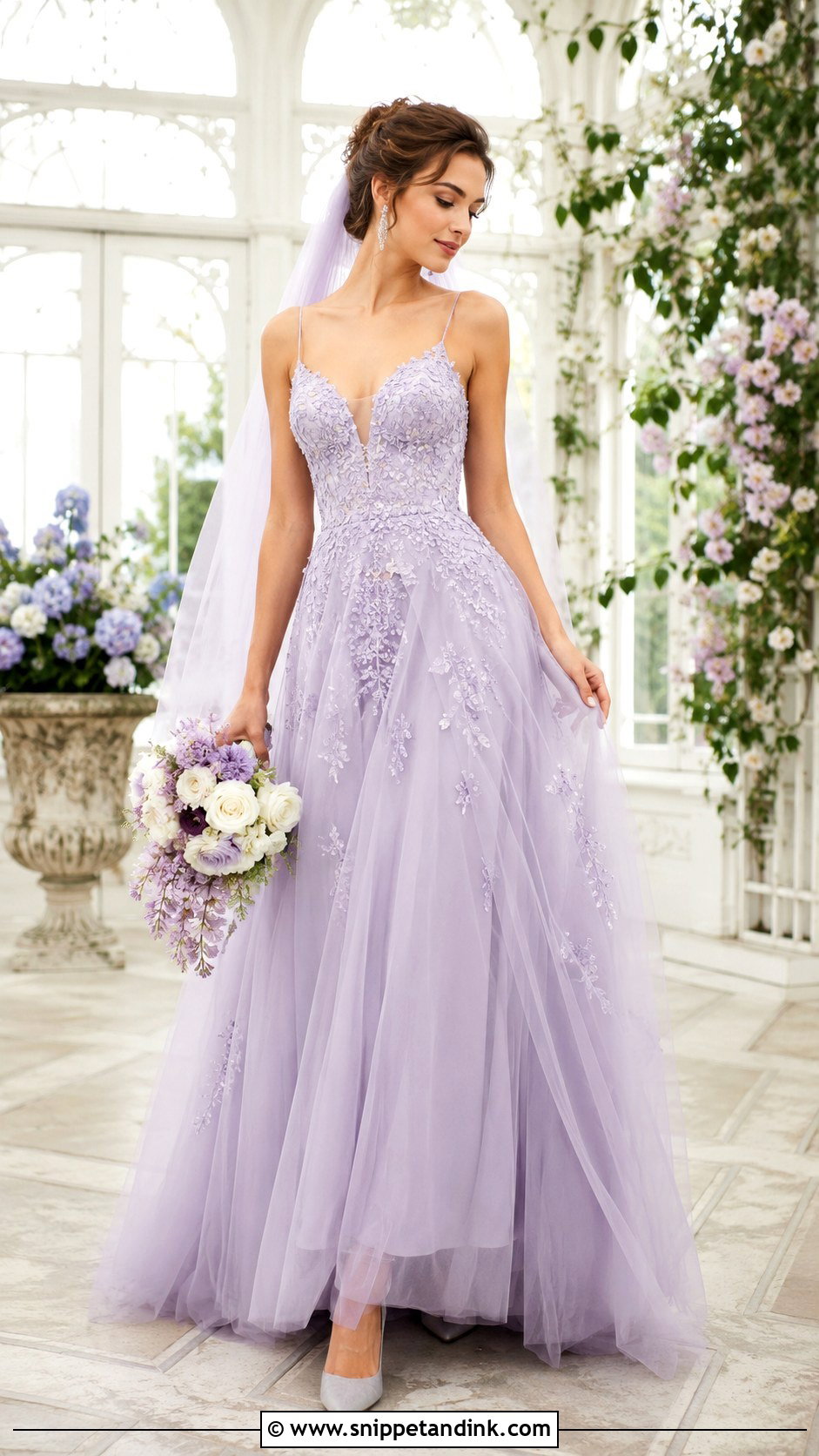
Lavender shifts with the light more than brides expect. The same tulle can look pink by a window and gray under an overcast sky, so I hold swatches near the face in both before deciding. A corset-style bodice with delicate straps and floral embroidery keeps the traditional bridal shape. Silver earrings, pale gray heels and a lavender-tinted veil hold the cool palette, and a bouquet of white flowers with lilac and soft green accents keeps it light. When the embroidery is busy, I cut the accessories back to one bracelet.
7. Lilac Wedding Dress
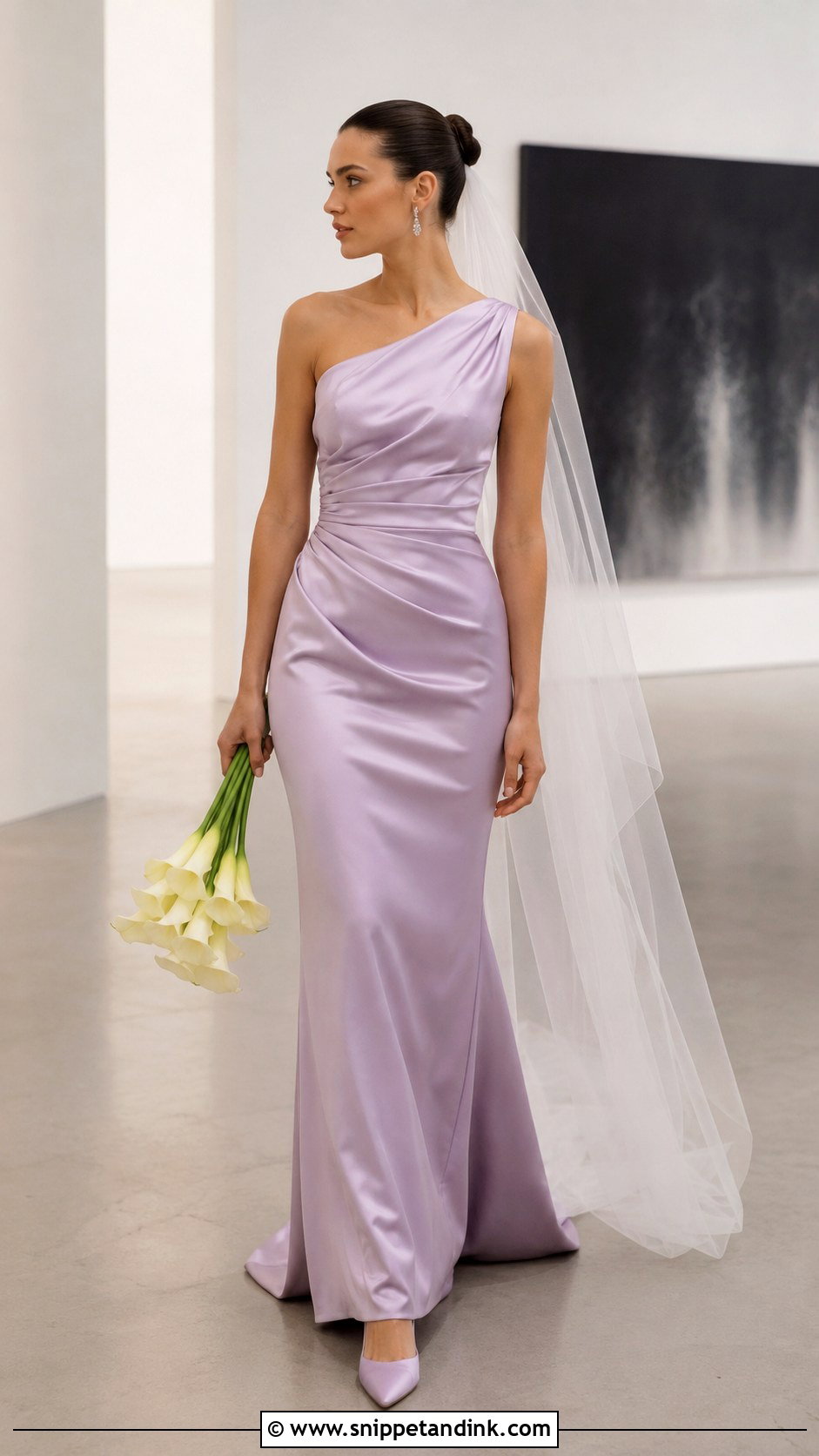
A brighter purple works best on clean lines, which is why I steer a lilac wedding dress toward a draped satin column rather than layers of ruffles. Satin reflects whatever is around it, so a lilac gown under orange uplighting can turn muddy; ask your venue what color the evening lighting runs. Silver or white-gold jewelry, pale lilac pumps and a long sheer veil tucked under a smooth bun suit it. Want more drama for the ceremony? A detachable overskirt or matching cape can come off for dancing.
8. Sky Blue Wedding Dress
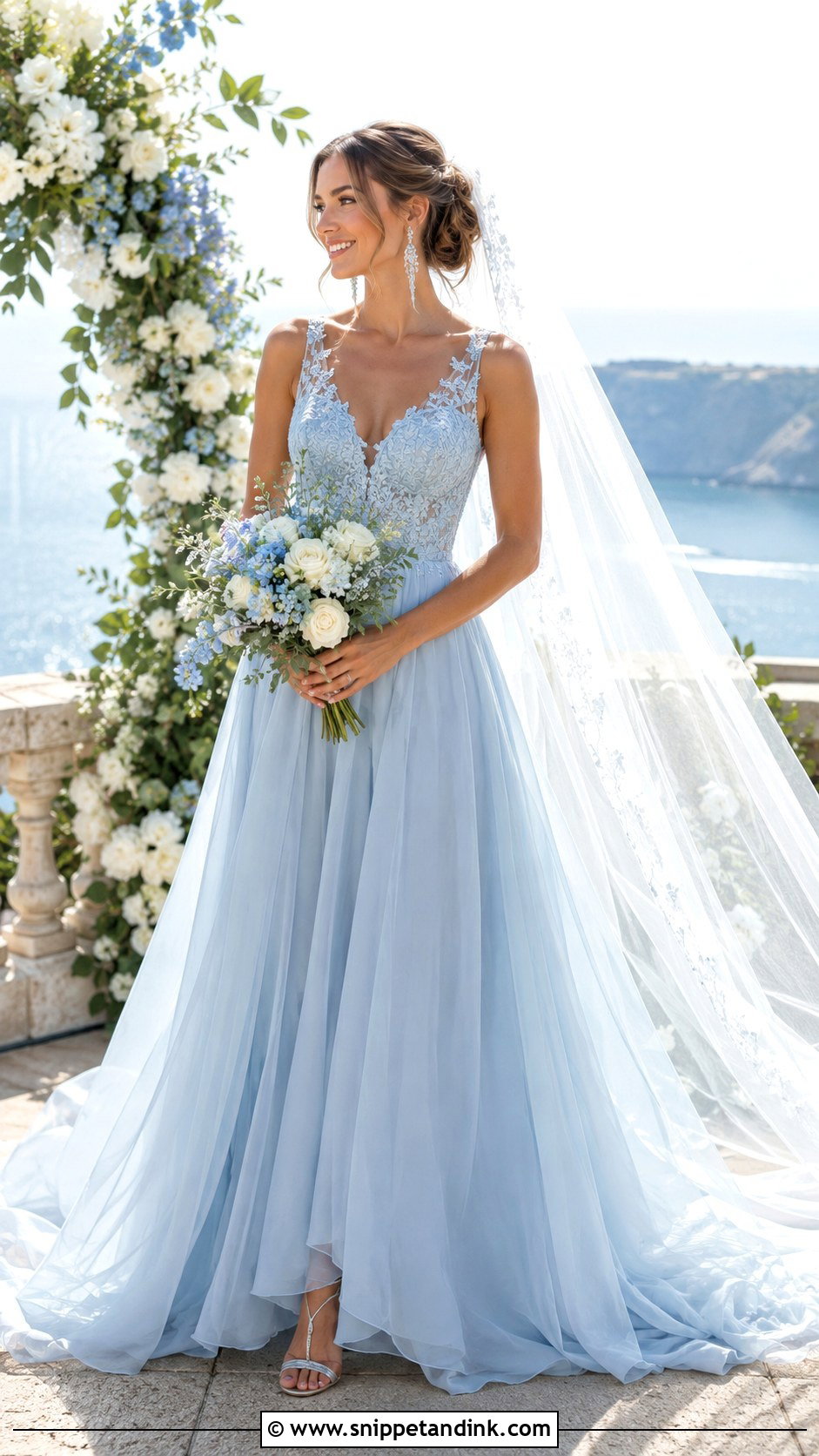
A sky blue wedding dress doubles as your something blue, and an airy chiffon or tulle skirt under a fitted lace bodice keeps the silhouette recognizably bridal. Blue reacts sharply to undertone. Icy blue can wash out warm skin, while a slightly gray-blue tends to sit kindly on most people, so I bring three swatches to compare. Crystal earrings, silver sandals and a pale blue cathedral veil complete it, and white flowers with small blue accents stop the whole look turning monochrome. If the gown sparkles, keep everything else plain.
9. Navy Blue Wedding Dress
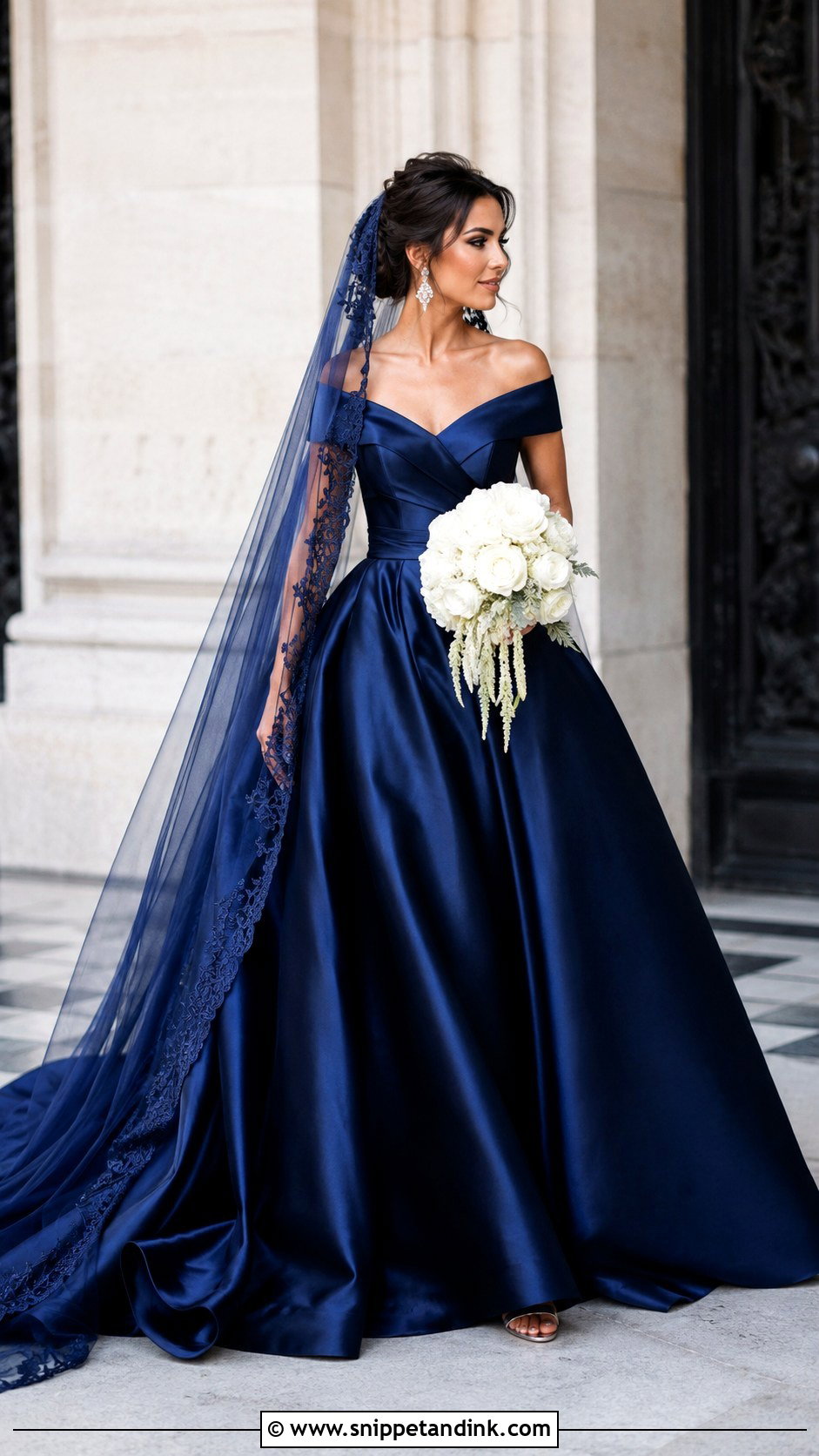
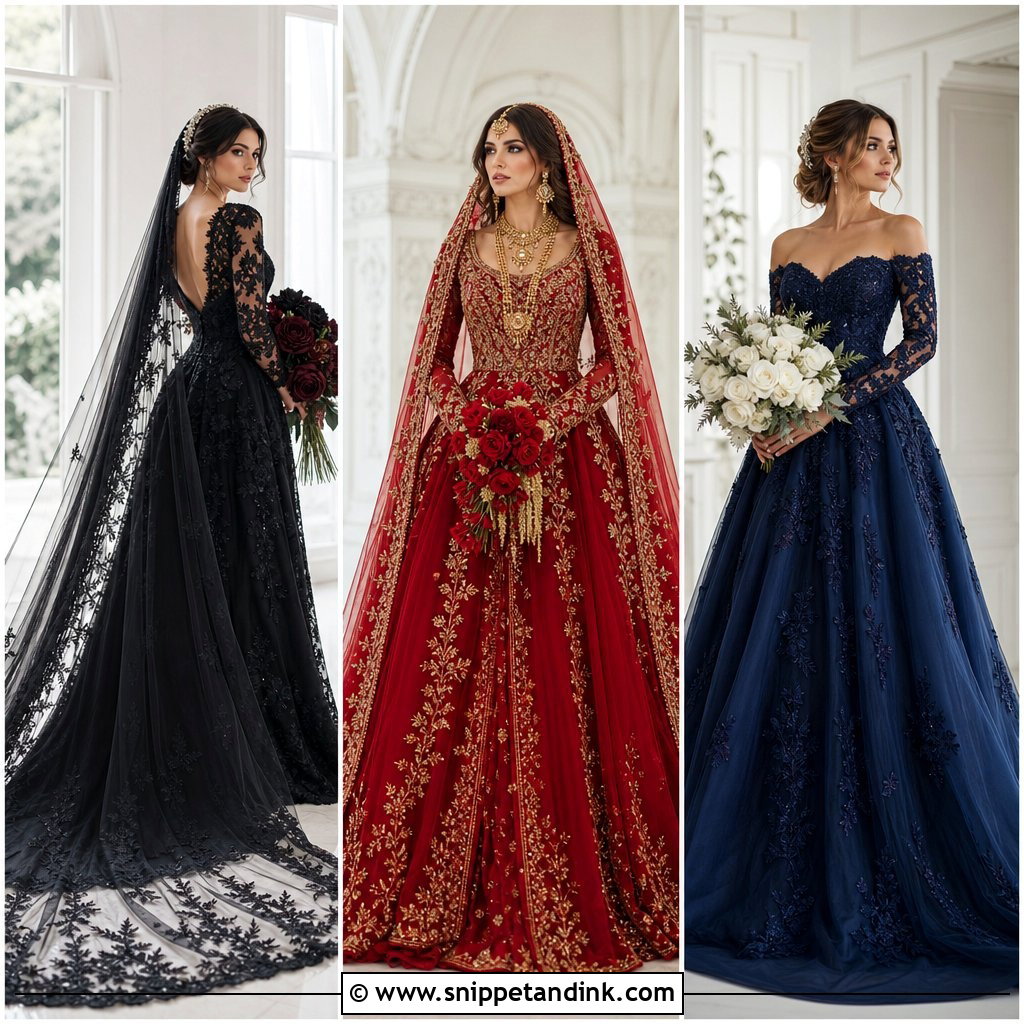
Navy is where I send a bride who wants drama but finds black too stark. A structured satin ball gown with an off-the-shoulder neckline and a sweeping train gives it ceremony, and a sheer veil edged in matching dark embroidery tells everyone this is a wedding dress, not an evening gown. White flowers do the same job. One practical step: I tell brides to quietly ask family and attendants to avoid navy, since a dark gown disappears fast in group photos when an aunt is wearing the same shade.
10. Sage Green Wedding Dress
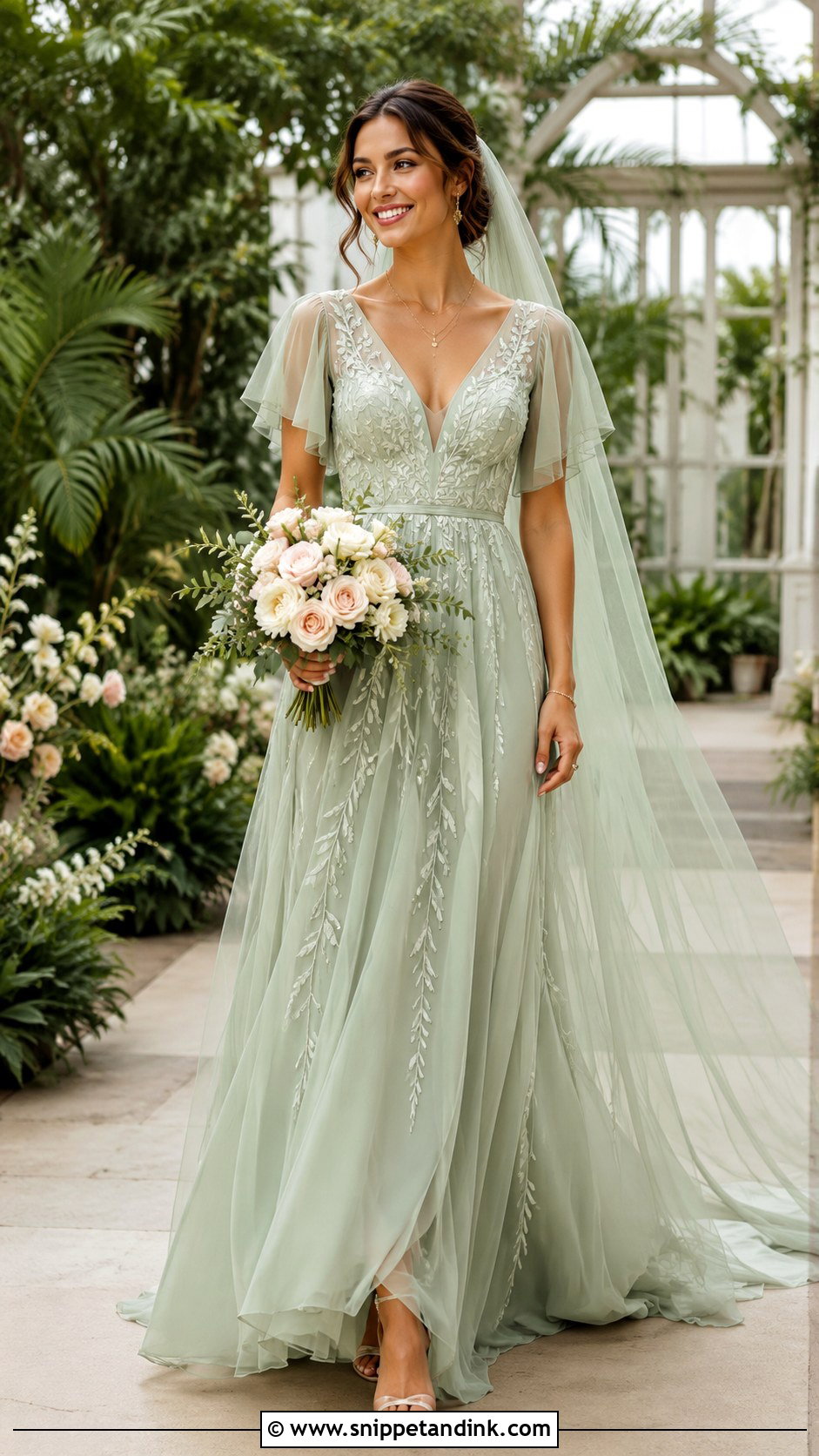
Sage is calm and earthy, and it looks most at home outdoors or in botanical spaces. I like it in softly draped chiffon with flutter sleeves, a defined waist and subtle embroidered leaves. Because sage is muted, it can drift toward bridesmaid territory, so I insist on at least one unmistakably bridal element: floor length, a veil or a real train. Champagne heels and fine gold jewelry suit it. On the makeup side, a peachy blush warms the cool green near your face.
11. Emerald Green Wedding Dress
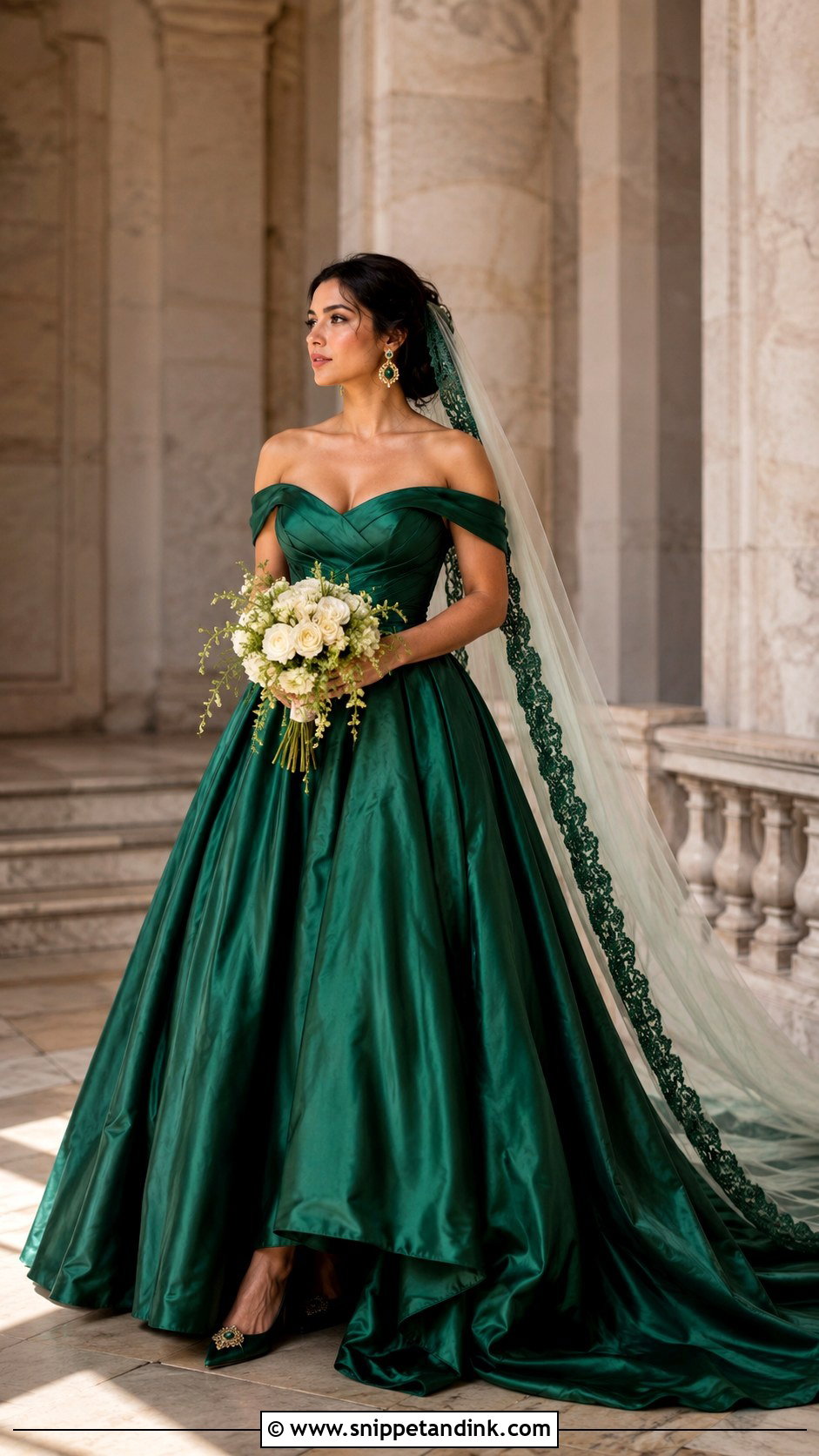
Emerald carries so much color that one strong accessory is plenty. I see brides add statement earrings, a jeweled belt and a headpiece together, and the eye has nowhere to land. Velvet or satin with a fitted bodice and dramatic train suits the depth, with gold earrings, matching heels and a long veil with subtle green edging. Cream flowers keep the bouquet from vanishing against the dress. Ask attendants to wear lighter neutrals, and finish with a classic updo.
12. Silver Wedding Dress
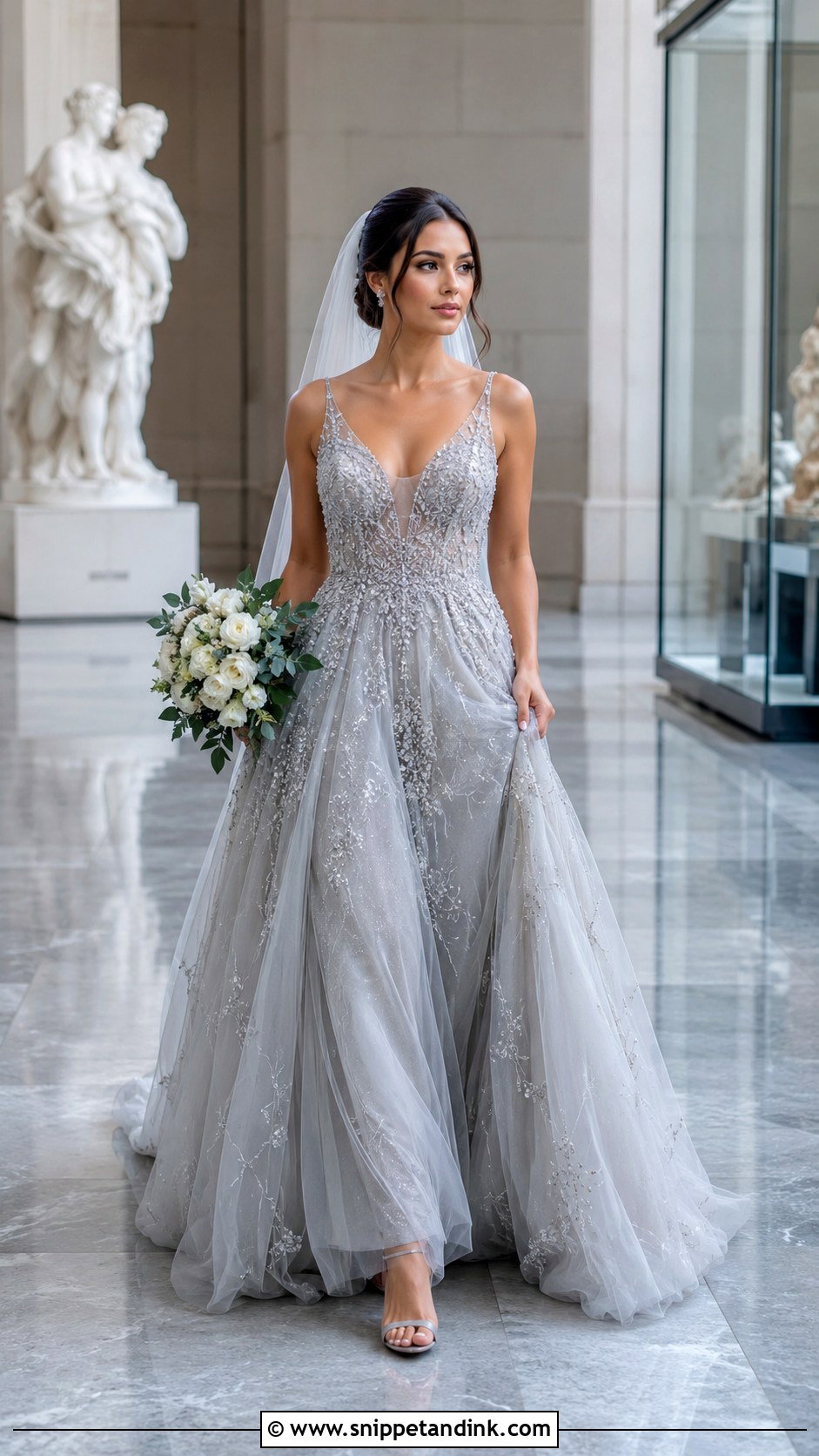
Silver goes wrong when the fabric itself is reflective; under flash, a heavily metallic gown can look like foil. I prefer soft silver tulle with tonal beadwork, so the sparkle comes from the embellishment and the base stays gentle. Understated crystal studs, pale gray heels and a plain sheer veil let the beadwork lead. Silver ranges from nearly white to deep pewter, and I match the intensity to how formal the evening is. Matte accessories and natural makeup keep it bridal.
13. Dove Gray Wedding Dress
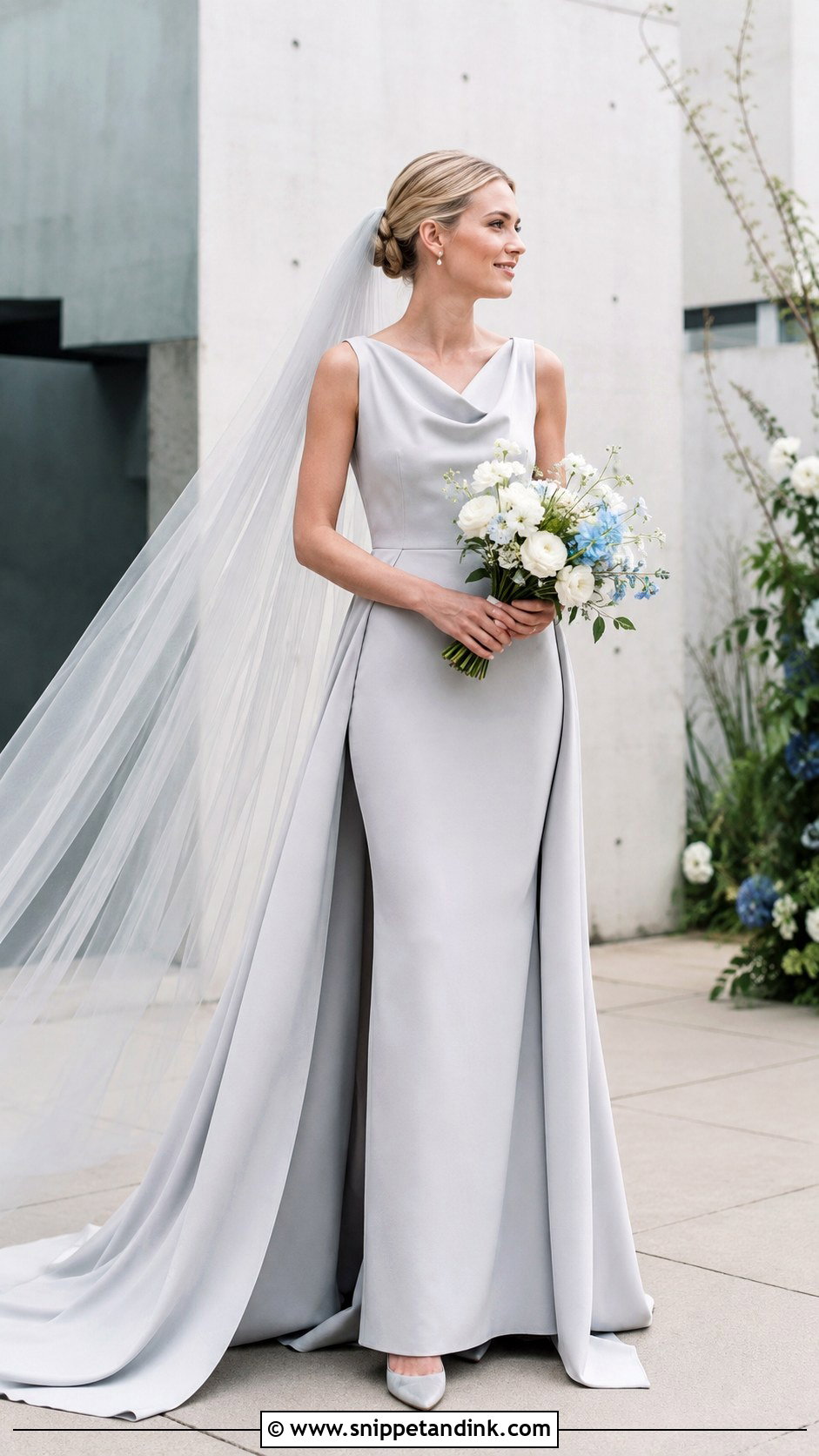
Dove gray is quiet color, and it rewards sharp tailoring. A crepe gown with a sculpted neckline, a long clean skirt and a detachable train looks deliberate. Avoid bright white shoes, because next to stark white the gray reads dull rather than chosen. I keep everything tonal instead: pearl earrings, light gray pointed heels, a veil in matching gray tulle and a bouquet of white flowers with dusty blue accents and silvery foliage. Luminous makeup gives the muted shade some life.
14. Gold Wedding Dress
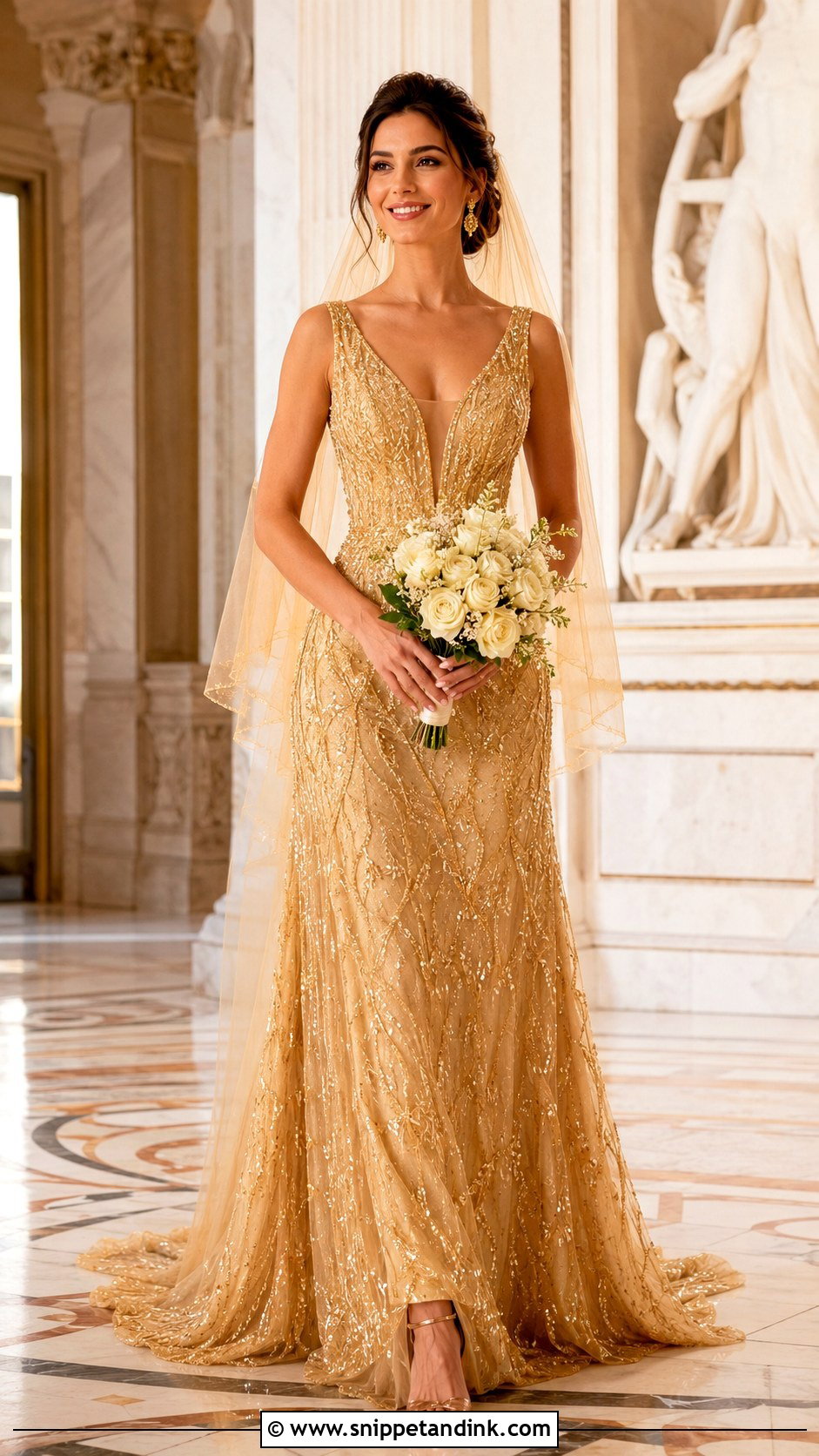
Gold gowns tempt brides into sequins on every layer, and I usually talk them back to fine beadwork on a fitted bodice with a fluid skirt. Heavy all-over sequins are heavy in the literal sense, and they scratch the inside of your arms through a long reception. Match the metal of your jewelry to the fabric: yellow gold for warm, saturated gold, and pale gold with softer champagne finishes. A plain champagne veil, neutral metallic heels and cream flowers keep it from competing. A sleek bun and a neutral lip leave the fabric in charge.

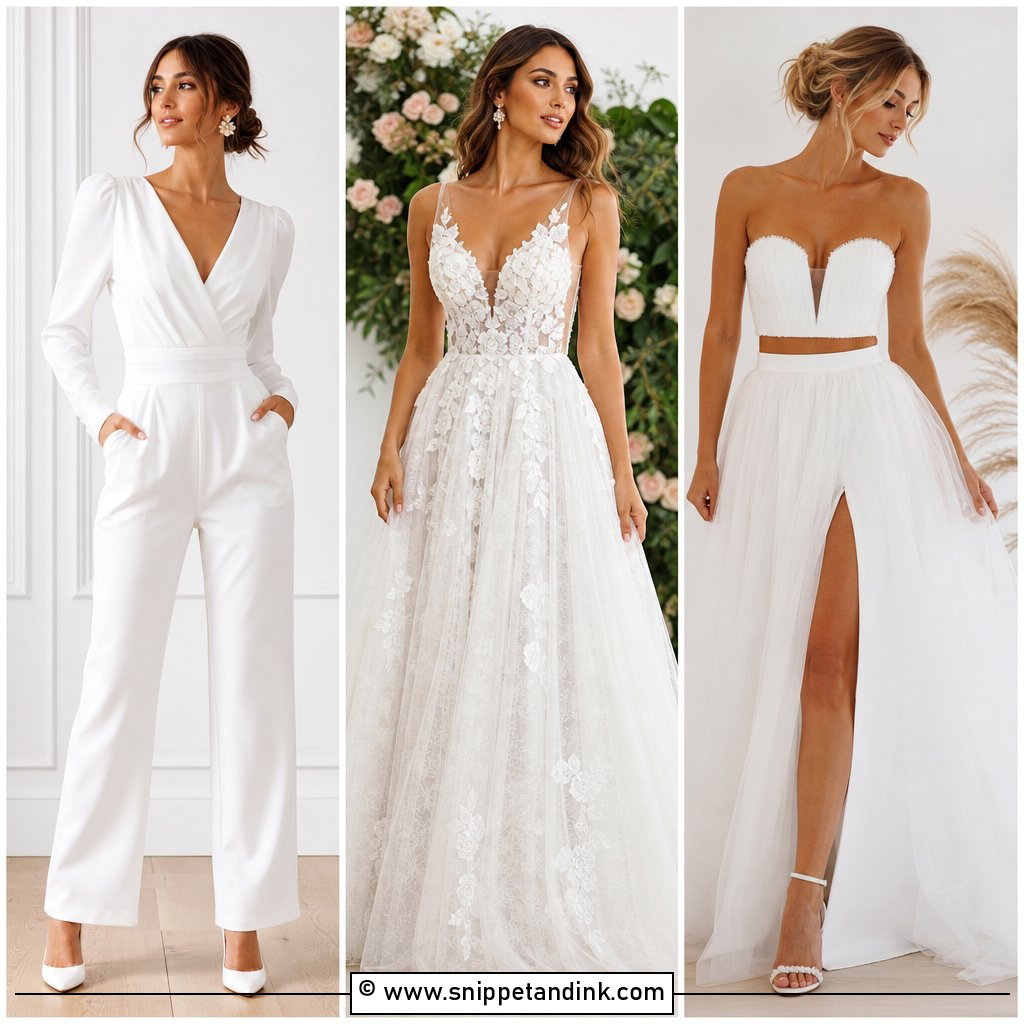
15. Bronze Wedding Dress
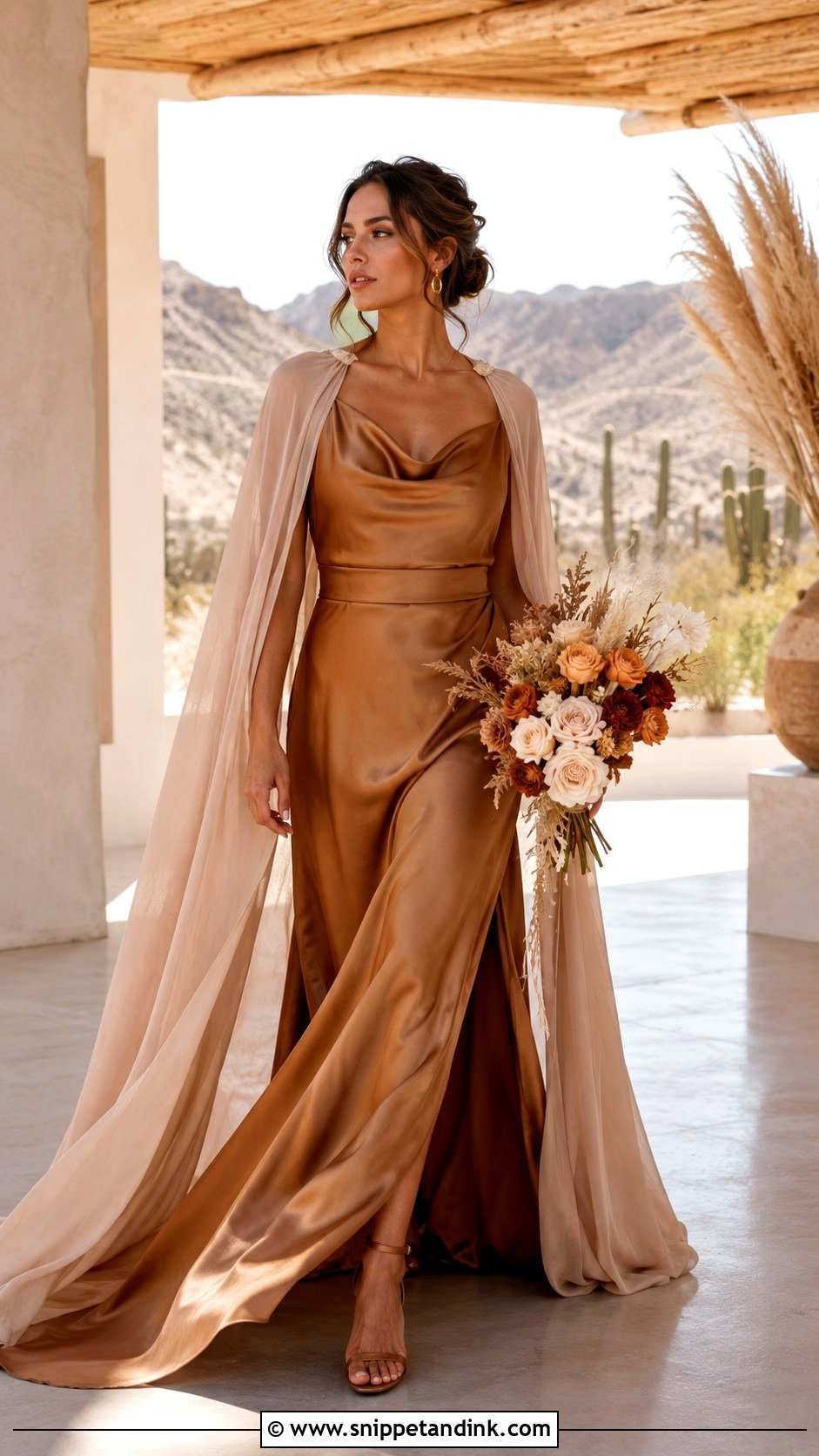
Bronze can sit very close to some skin tones, and when it does, the dress and the bride blur into one block in photos. I create separation through the neckline, the hair and the accessories, so something always breaks the line between skin and satin. A draped neckline, fitted waist and full skirt catch the light as you move. Small gold earrings, chocolate or bronze heels and a light neutral cape in place of a white veil suit it, and cream, rust and muted peach flowers complement the earthy color. Check it in natural and indoor light so the metallic undertone looks rich rather than flat.
16. Black Wedding Dress
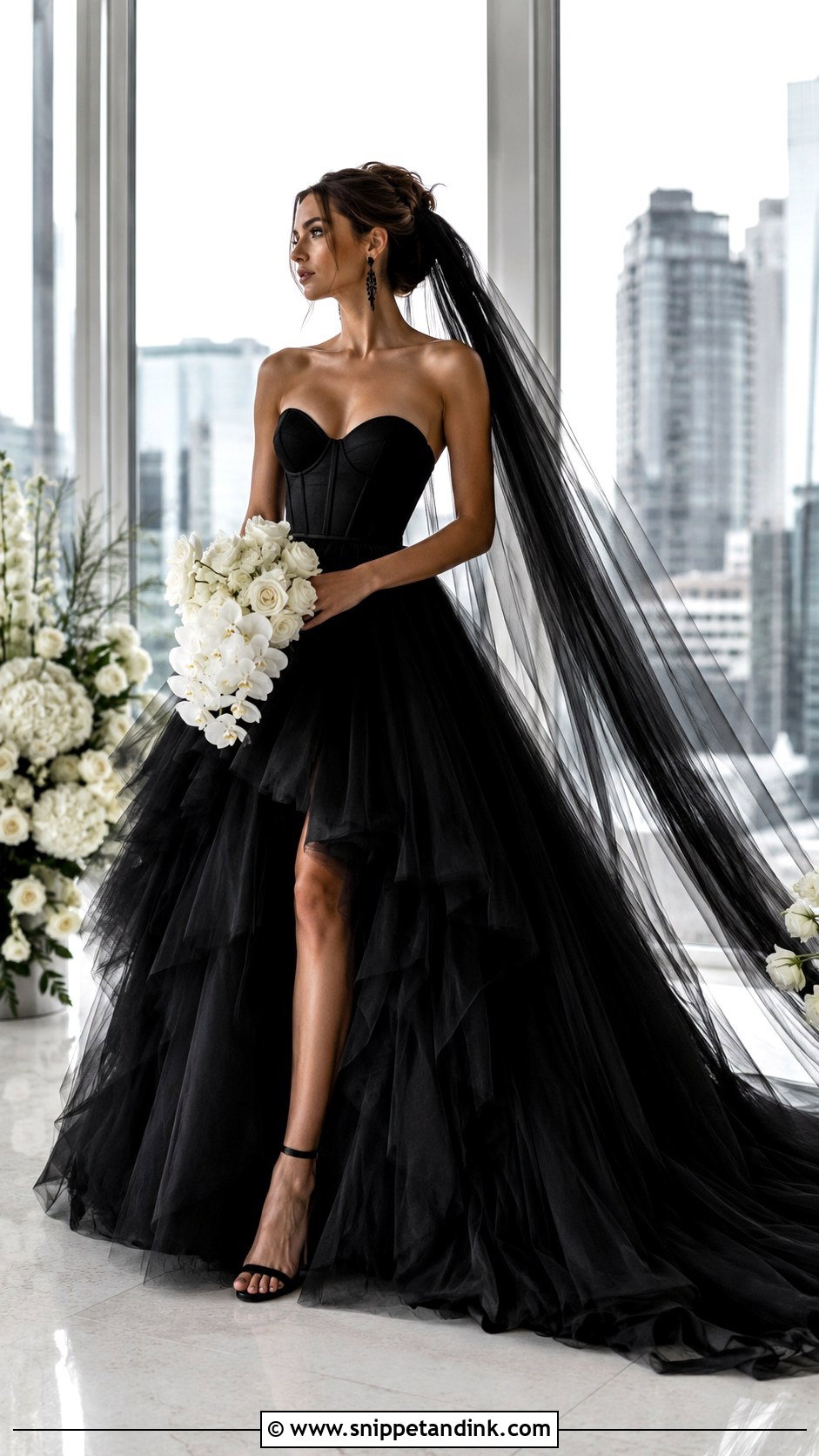
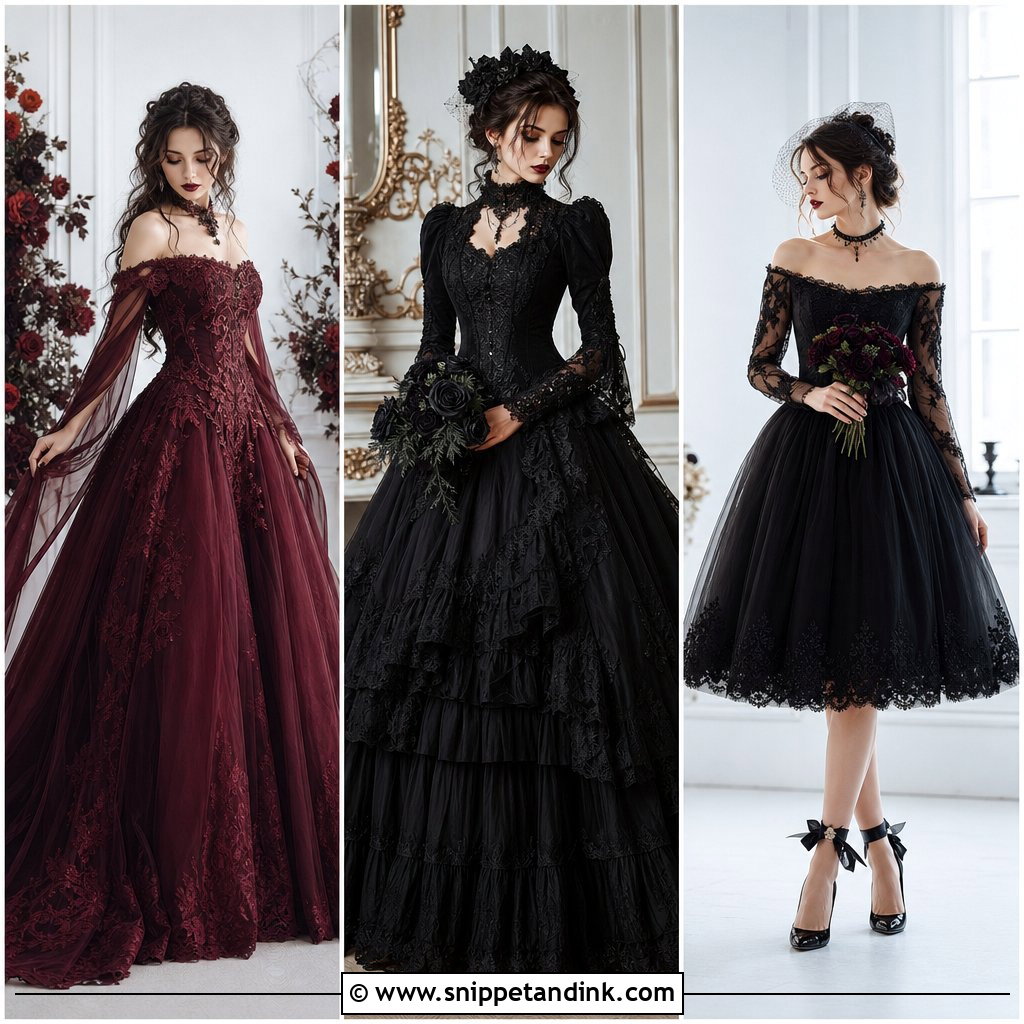
Black needs texture or it photographs as a flat silhouette. Lace, satin and layered tulle each catch light differently, so a structured bodice over a tulle skirt shows detail where plain black crepe would not. Black heels, refined drop earrings and a dramatic black cathedral veil make it ceremonial. I hand black-gown brides white or deep red flowers, because the bouquet is often the only bright point in the frame. Keep accessories limited, or the look tips into costume.
17. Red Wedding Dress
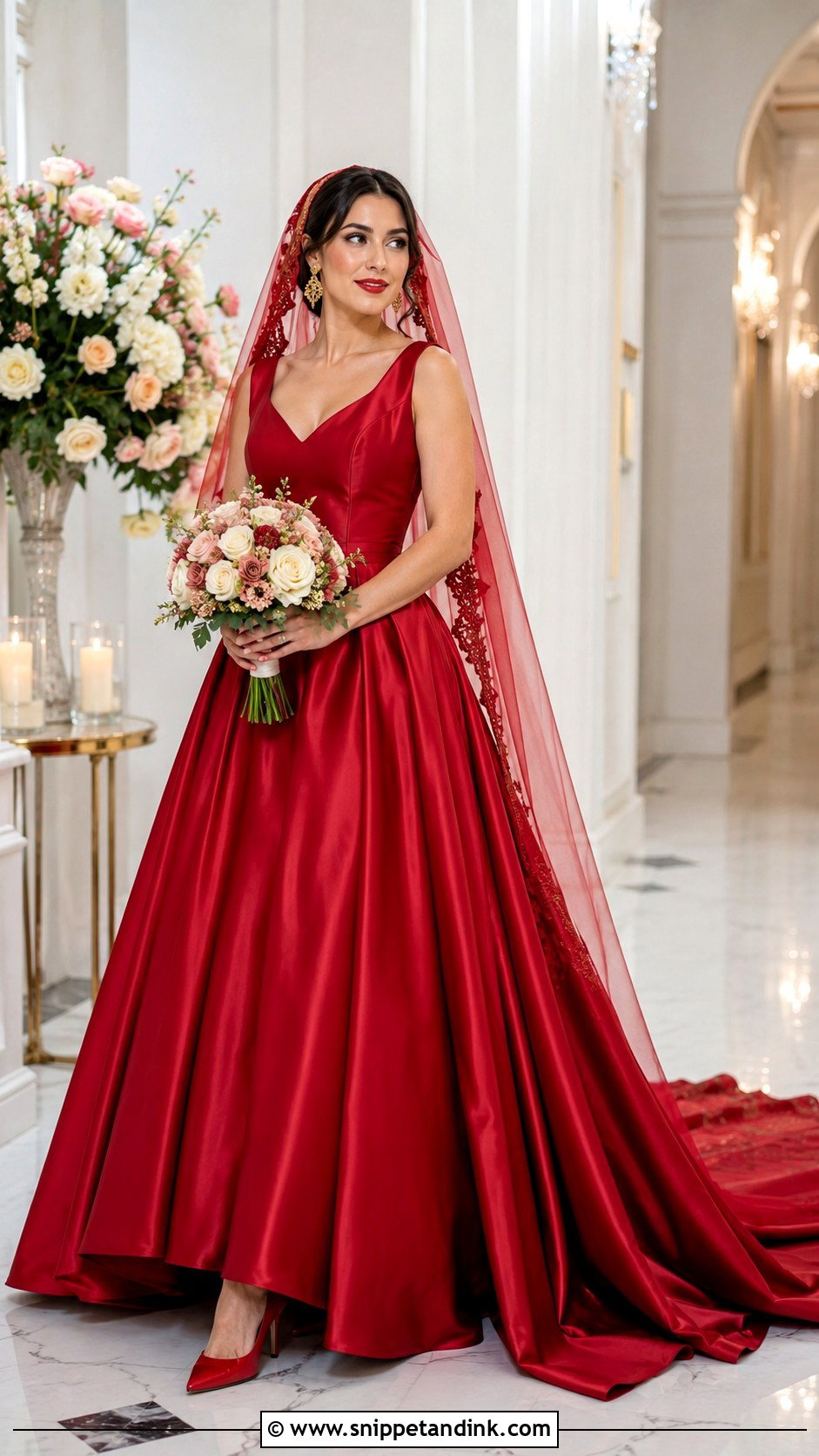
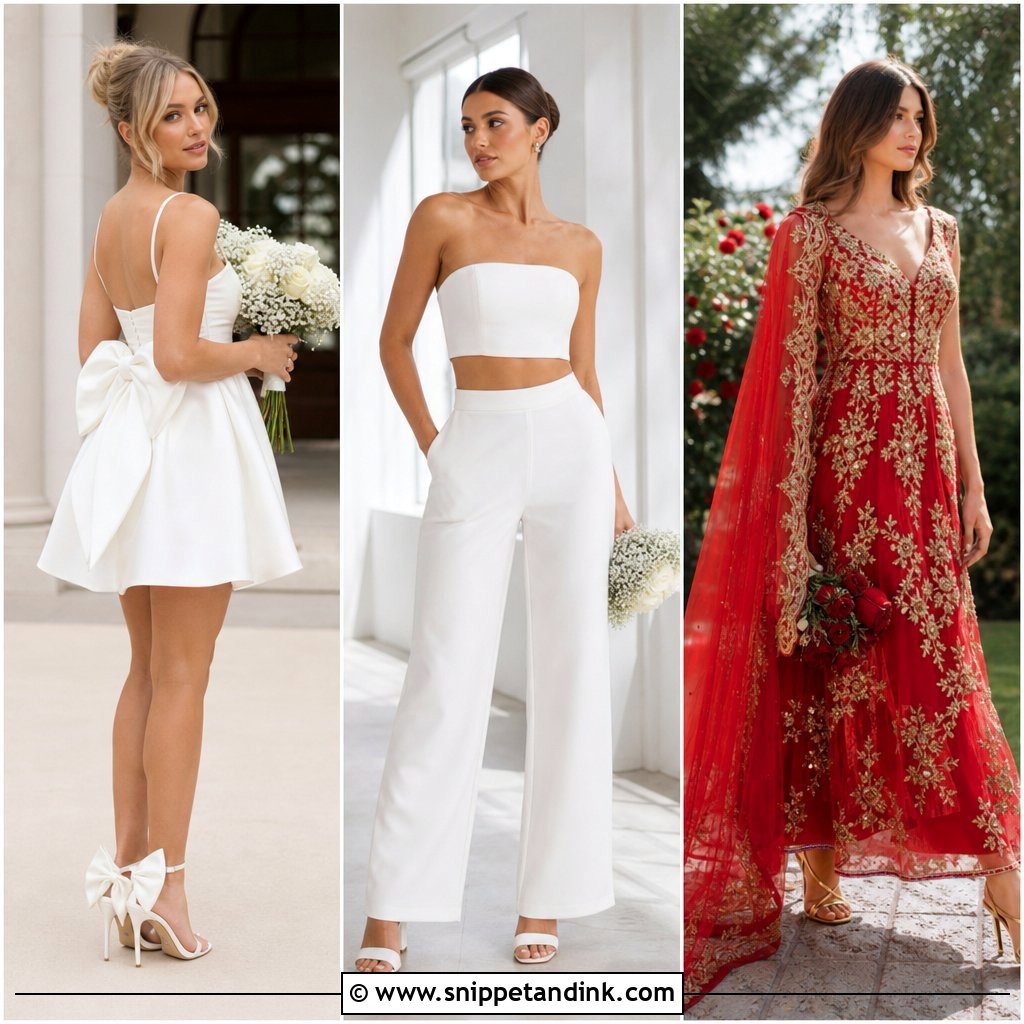
Red means different things to different families, and for many brides it is the traditional wedding color rather than an alternative one. If red carries cultural meaning for you, build the jewelry and details around those traditions first, then style the rest. For a formal effect I look at rich red silk with a fitted bodice, full skirt and train, paired with gold earrings, red satin heels and a matching sheer veil. Scarlet and crimson suit different complexions, so compare both against your face. Cream or soft pink flowers calm the intensity.
18. Burgundy Wedding Dress
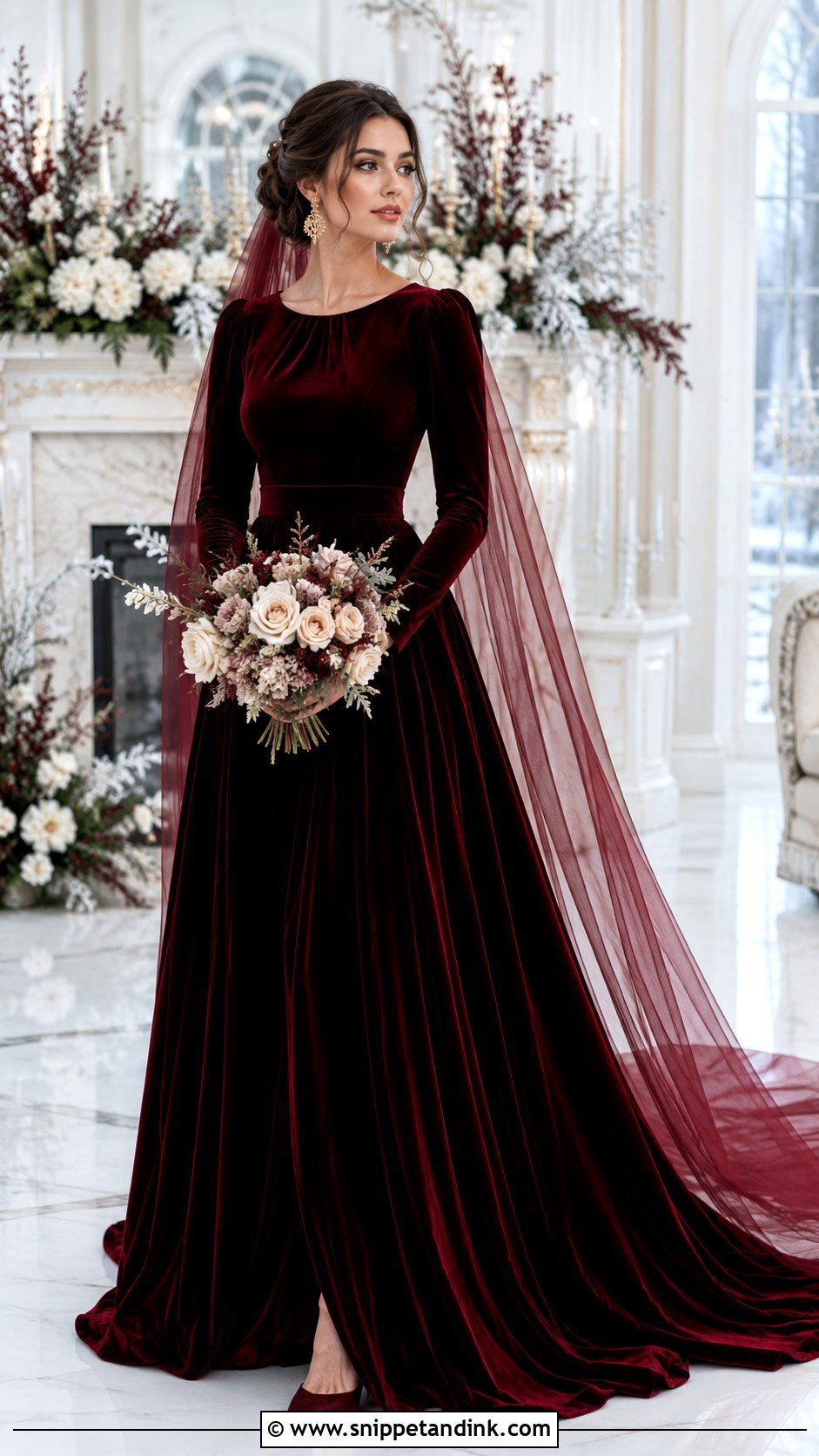
Burgundy in velvet is a cold-weather fabric in every sense: it is warm to wear and it drinks light beautifully in candlelit rooms. Long sleeves, a defined waist and a sweeping skirt suit fall and winter evening ceremonies. Antique-gold earrings, matching pumps and a long sheer veil in a softer berry tone work well. Where I see it go wrong is dark on dark, with burgundy shoes, a burgundy bouquet and a deep lip all at once. Carry ivory, blush and muted green flowers instead, and keep the makeup fresh.
19. Floral Wedding Dress
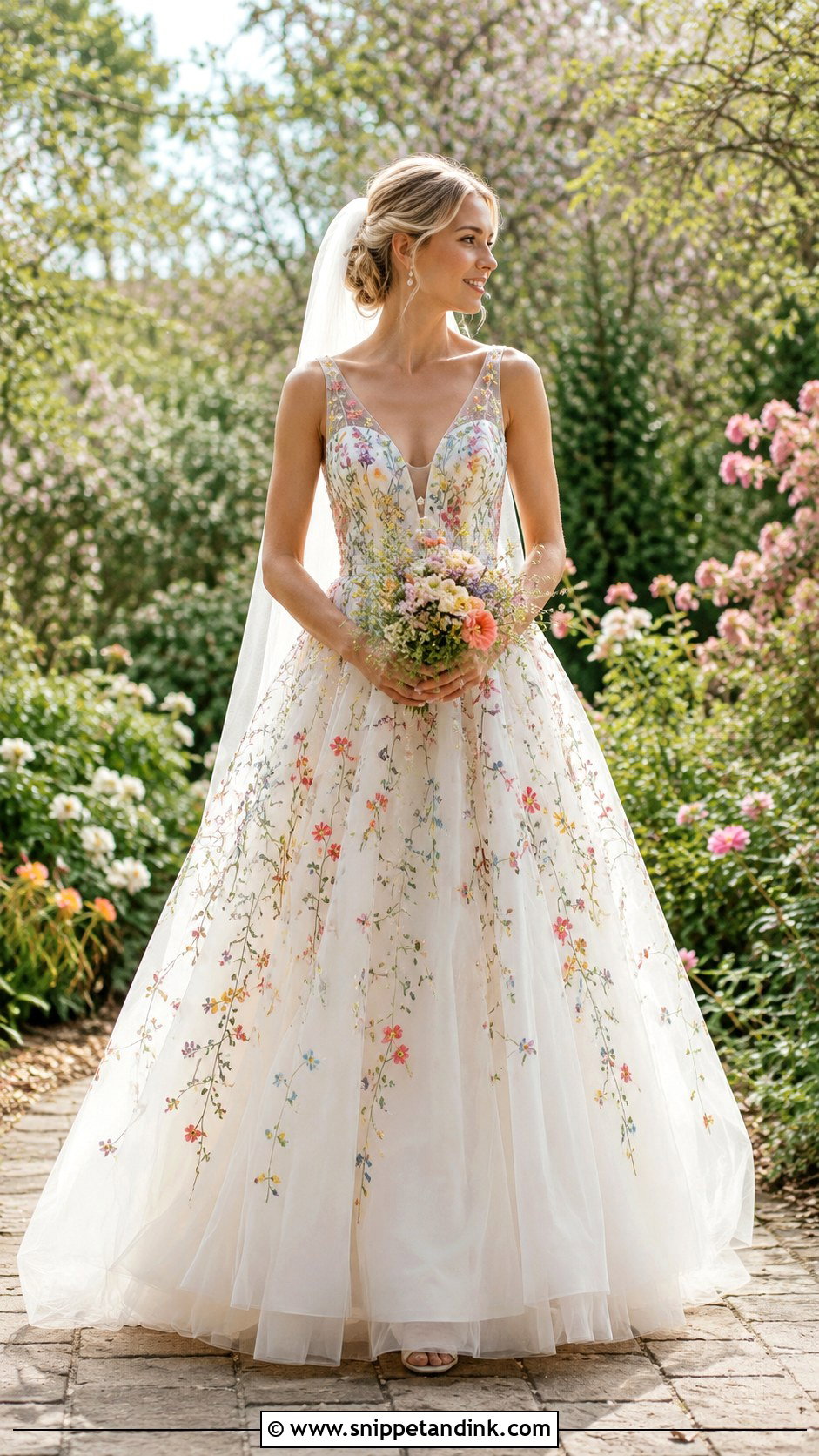
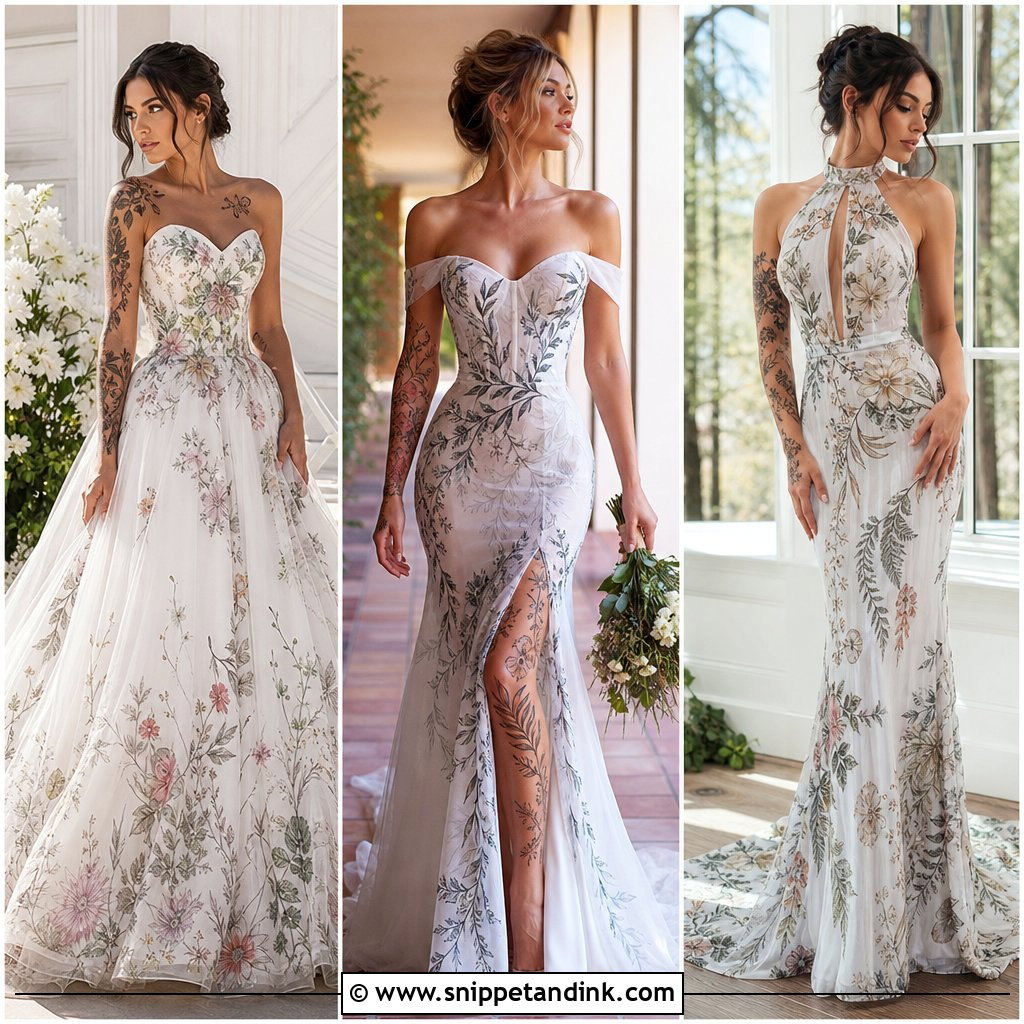
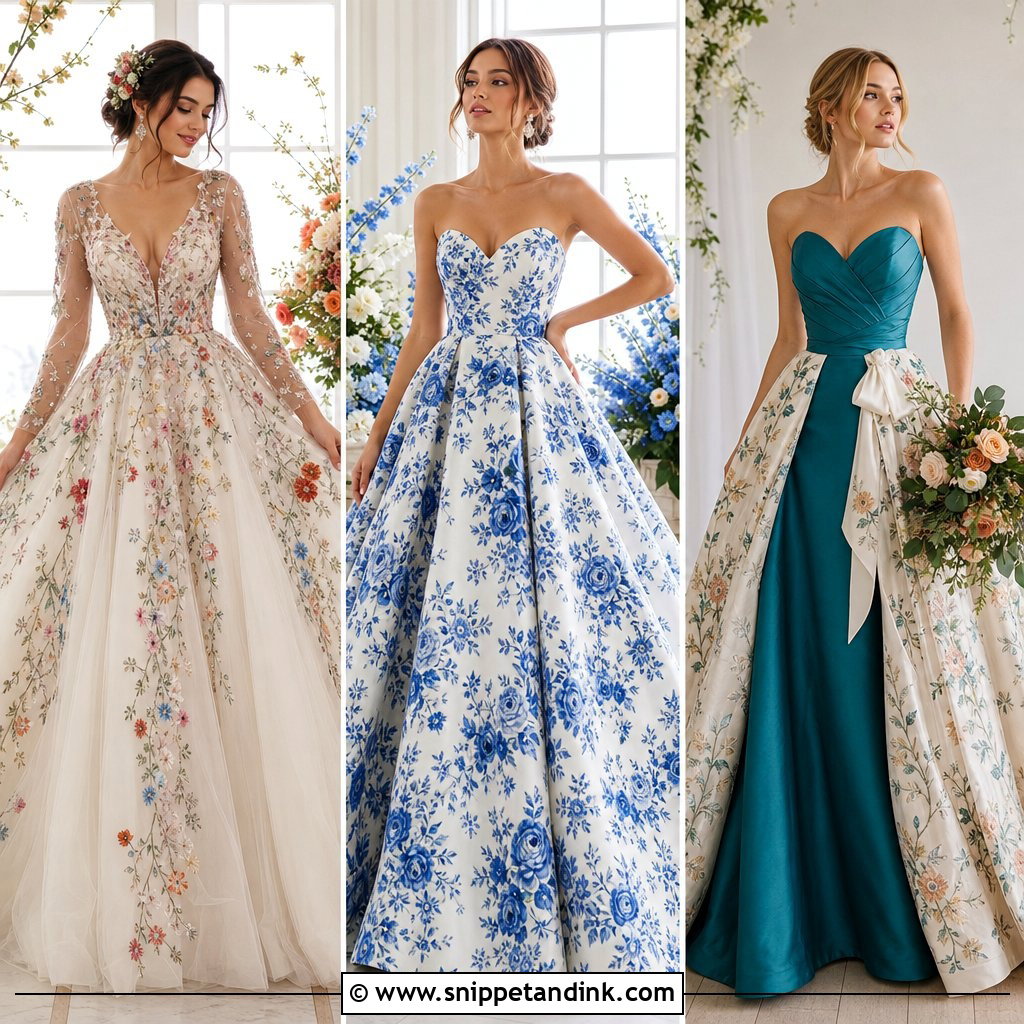
With a floral gown, the dress already holds the whole palette, so I style everything else as if it were plain. Pick a base of ivory, blush or pale blue covered in embroidered wildflowers or dimensional appliqués, with a fitted bodice and full tulle skirt for a traditional shape. Choose a veil that matches the base color, not the flowers. For the bouquet, pull two or three shades from the embroidery rather than reproducing every bloom; copying them all makes the look themed. Garden ceremonies suit it best.
20. Ombre Wedding Dress
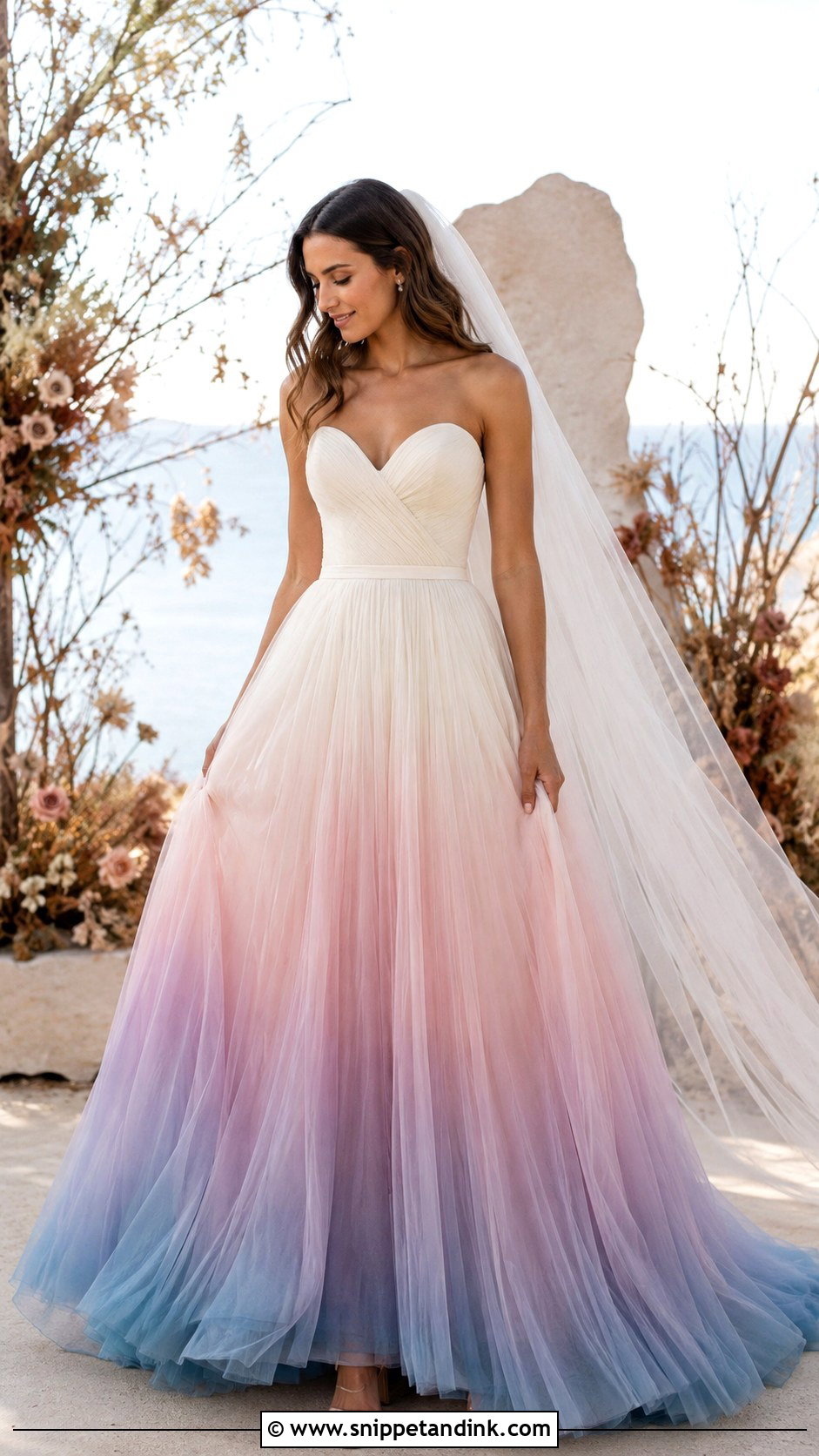
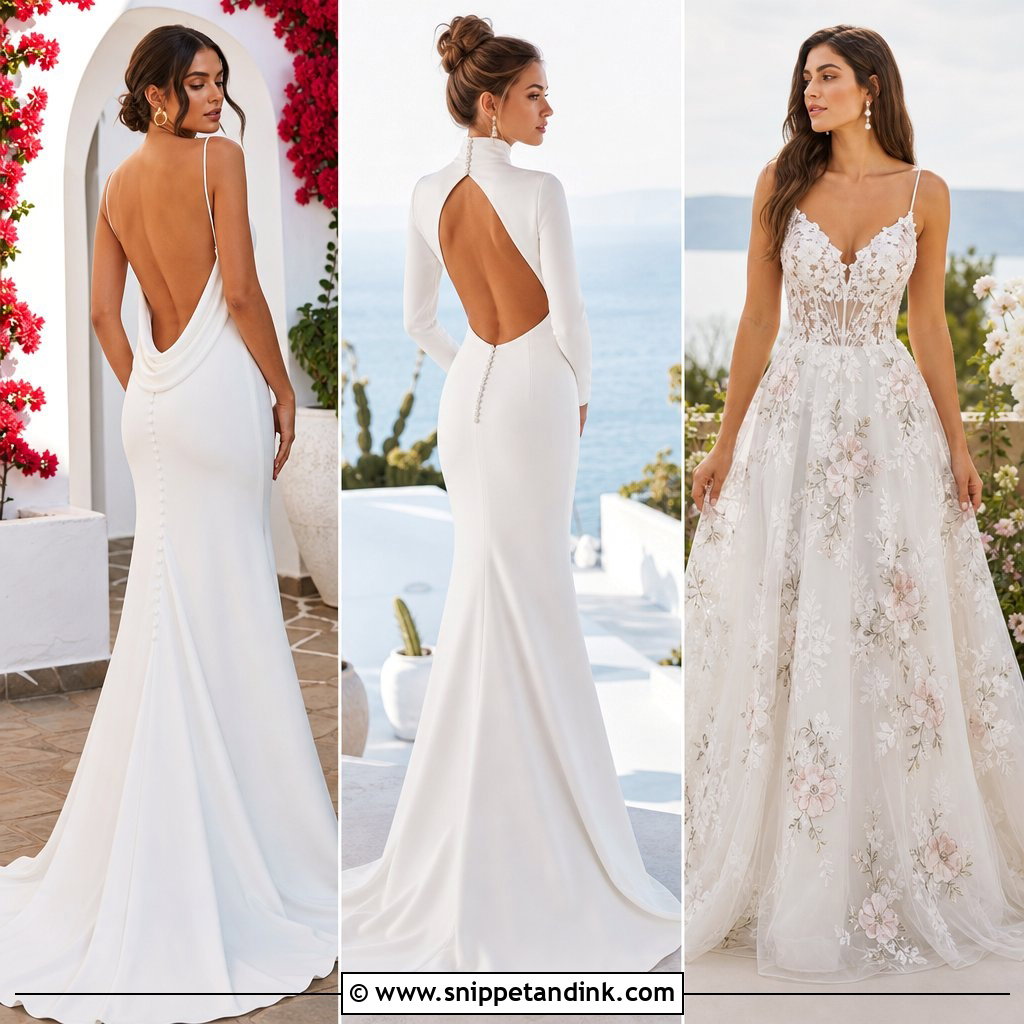
An ombre wedding dress moves color down the gown gradually, often from an ivory bodice through blush, lavender or blue toward the hem of a tulle skirt. Ombre is dyed by dipping, and where the transition starts can vary from the sample, so I always request a full fabric sample or rendering showing exactly where the color begins. A smooth gradient photographs better than bands of separate colors. Neutral heels, simple earrings and a plain ivory veil tie the upper half to traditional bridalwear, and flowers should echo the deepest shade at the hem.
Colored Silk Marks Faster Than White, So Plan for It
White hides a surprising amount. Colored satin and silk show water spots, deodorant transfer and makeup on the neckline far more clearly, and dark gowns show dust and lint at the hem by the end of the night.
On the morning
Put your deodorant on at least half an hour before you dress, and step into the gown rather than pulling it over your head. I keep a clean scarf over the bride’s face for that moment. Lint rollers matter for black, navy and emerald; a pale gown needs a white cloth and nothing wet, because water on dyed silk can leave a ring that is darker than the dress.
After the wedding
Take it to a cleaner who handles bridalwear within a few weeks, and tell them the fabric is dyed. Stains like sugar from champagne are invisible at first and darken over time. Store the gown in a breathable cotton bag, away from windows and bright closet lights. Colored fabric fades on the folds and shoulders when it sees light for months, and that fading cannot be reversed.
Which Shade Still Looks Like You in Every Light?
A bridal gown does not need to be white to feel like a wedding dress. Blush, champagne, lavender and sky blue are gentle departures, while black, emerald, red and navy make a firmer point, and metallics, florals and ombre give you more room still. Whichever way you lean, style the whole outfit, not just the dress: veil, shoes, jewelry, flowers and makeup should all follow the gown’s undertone. My last piece of advice is the same one I give at every fitting. Look at the color in daylight, in lamplight and on a phone camera before you order, and choose the one where you still recognize yourself.
You'll Like These Ideas:



Leave a Reply