
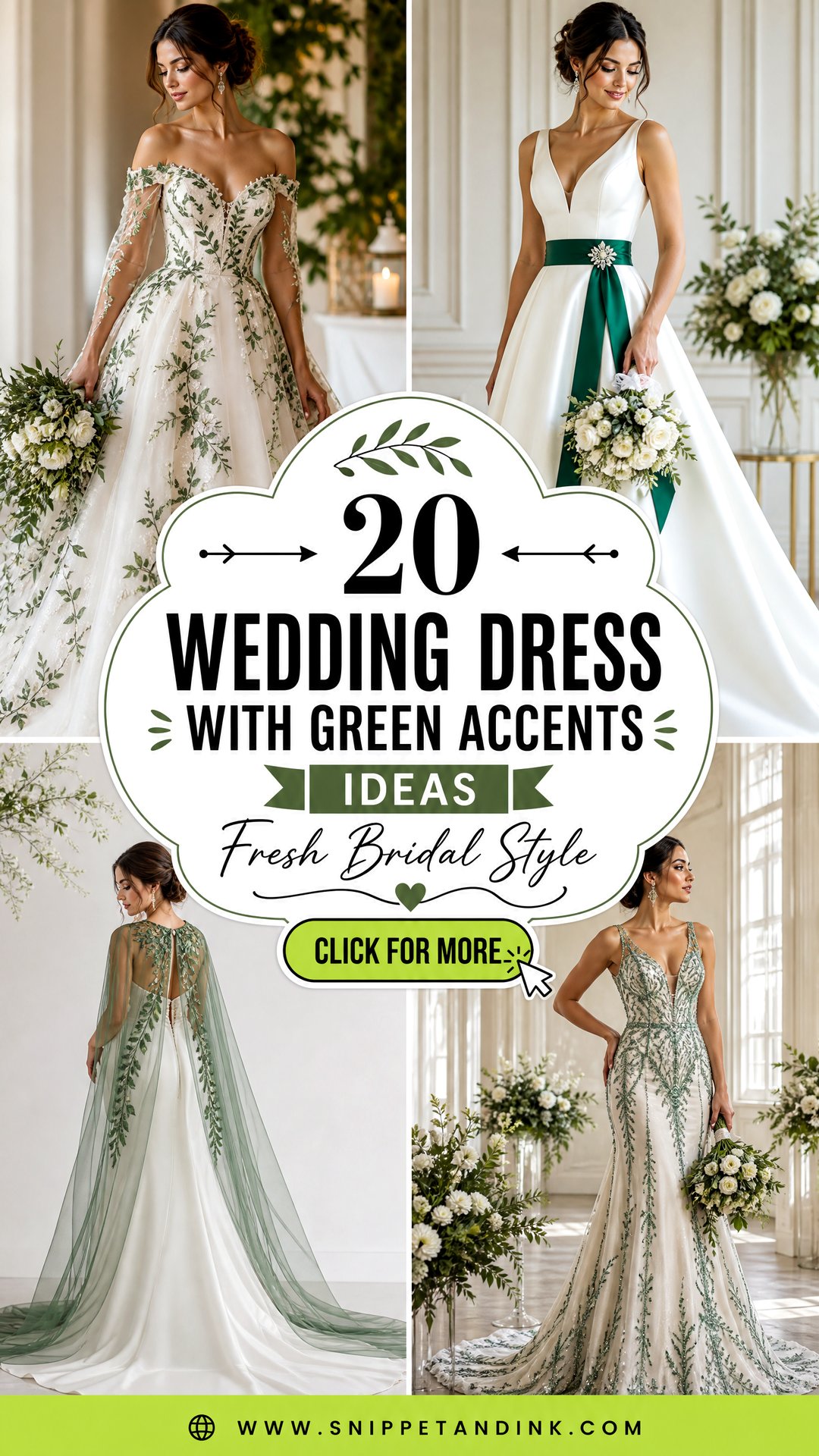
Green is the colour I see brides hesitate over longest, then love most once it’s on. It can be a whisper of sage embroidery on an ivory bodice or a full emerald train behind a plain white gown. The shades that work in bridal run from mint, sage, moss, forest, and emerald, carried by floral appliqué, coloured tulle, satin, velvet or embroidered leaves. What decides the right one for you is your skin, your venue’s light and how formal the day is. The twenty dresses below are styled down to shoes, jewellery, veil and bouquet, so you can see how much green each look really needs.
Green Near Your Face, in Your Venue’s Light
Before we talk about dresses, test the shade on you. Green is the colour that reacts most to skin undertone and lighting, and the same sage can look silvery at a candlelit dinner and minty at noon.
At an appointment, I hold fabric swatches up under the chin in daylight by a window, then under warm indoor bulbs. Cool and pink undertones usually take mint, sage and emerald easily. Warm and olive undertones tend to glow in moss, olive and forest, and can look tired in icy mint. If the green will be on sleeves, a bodice or a cape, this test matters most. On a hem or train, you have far more freedom.
Then think about the setting. Outdoors among trees and lawn, a mid-green accent can blend into the background, while deeper emerald or very pale mint holds its own. Bright midday sun bouncing off grass also throws a green cast onto skin, so I steer brides who want lots of green toward ceremonies in open shade or later afternoon light. In a white or neutral room, almost any green reads clearly.
1. Green Floral Embroidered Wedding Dress
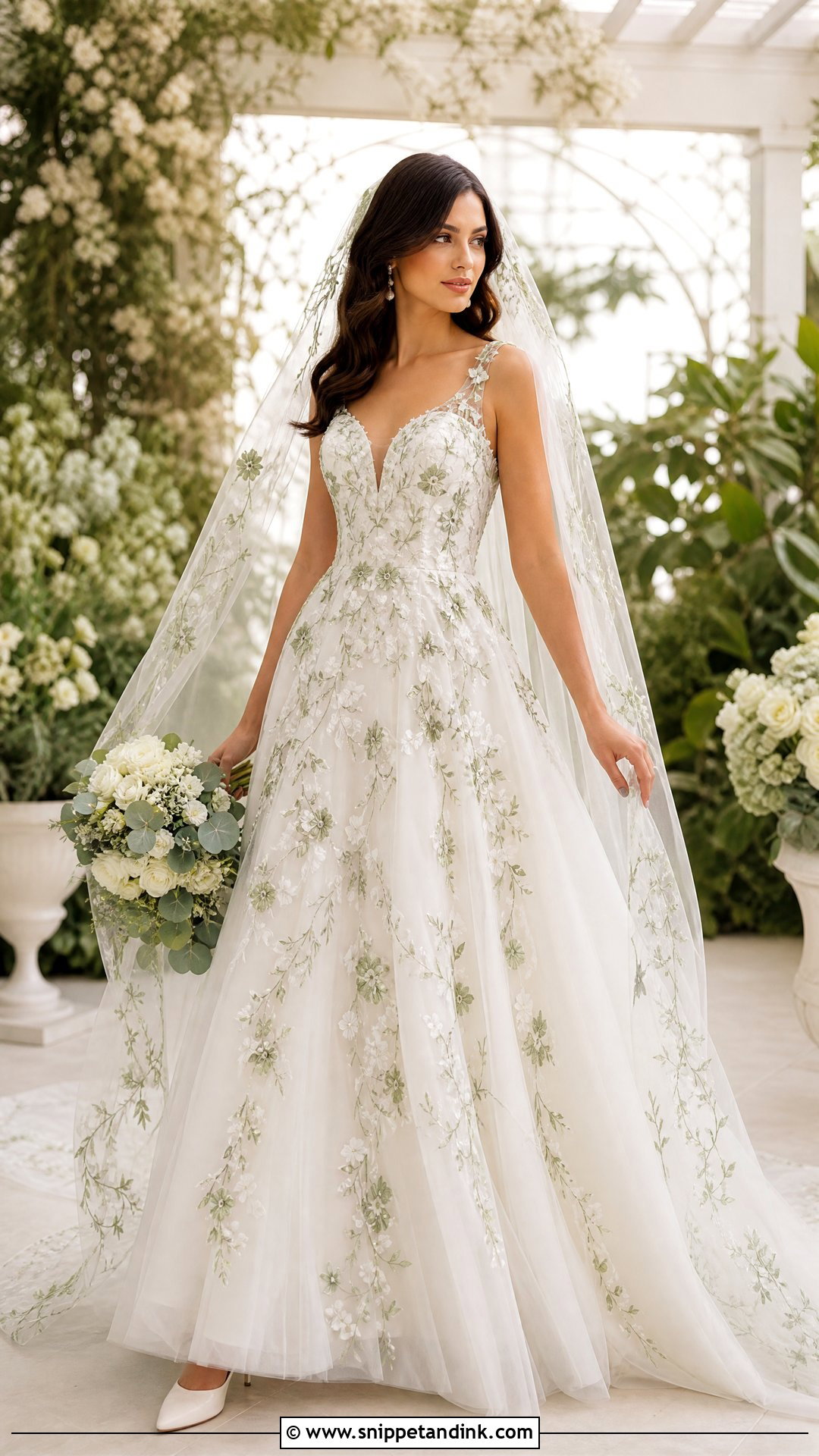
Embroidered sage leaves and small green flowers scattered over an ivory A-line are the gentlest way into green. A fitted waist stops the embroidery from spreading the silhouette, and a tulle overlay softens the stitching so it looks grown rather than printed. I keep accessories ivory and pearl: pointed heels, pearl drops, a loose low bun with tiny white flowers. If the veil carries matching embroidery, ask for it near the edge only. Embroidery across the whole veil sits right over the bodice in photos and the two patterns blur. White garden roses with eucalyptus and trailing greenery suit a garden or conservatory.
2. Sage Green Lace Wedding Dress
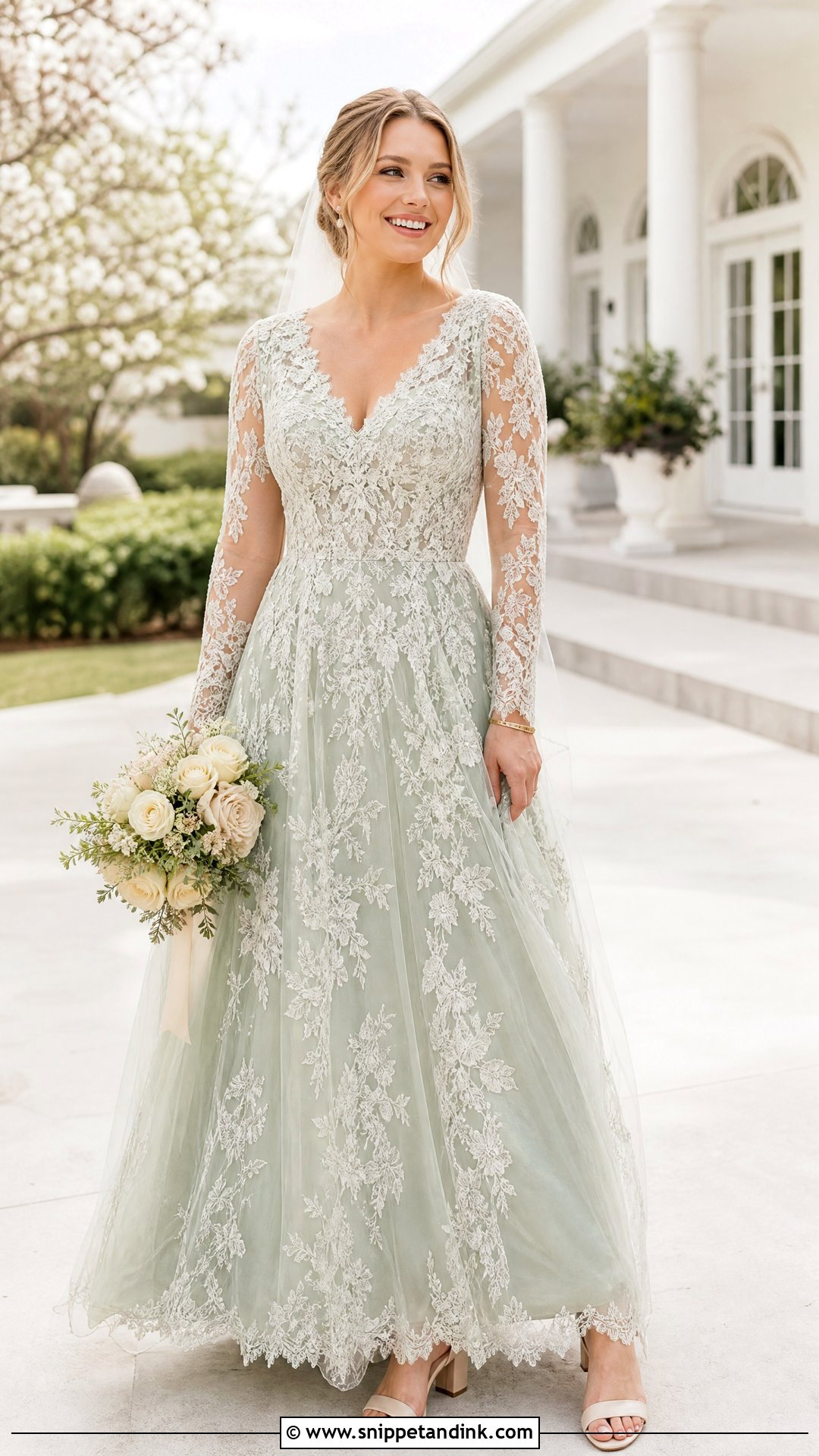
Sage lace over an ivory lining reads green in daylight and almost grey-silver by candlelight, so I always look at a swatch under both before a bride commits. The shape here is simple on purpose: floor-length A-line, natural waist, modest V-neck, sheer lace sleeves. Champagne block heels, pearl studs and a fine gold bracelet are plenty. A plain ivory fingertip veil lets the lace pattern lead. Cream roses, white ranunculus and silvery eucalyptus tie to the sage without matching it exactly. Loose waves or a half-up style suit spring, barns and greenhouse venues.
3. Ivory Wedding Dress With Green Vine Appliqué
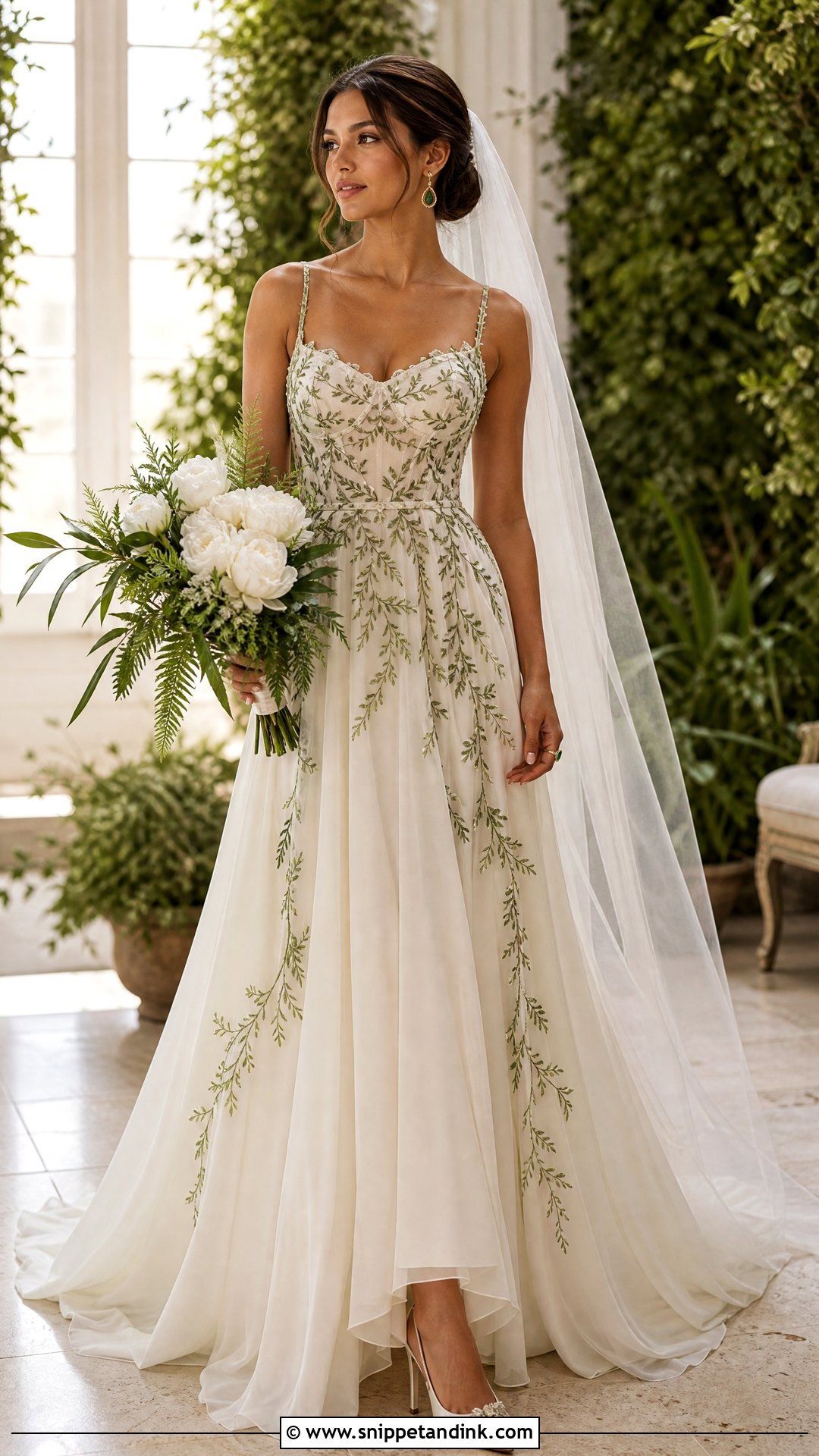
Green vine appliqué climbing from the waist toward the neckline turns a classic ivory gown botanical without changing its shape. Most of the dress stays ivory, which is what makes the green look deliberate. Under the arm is where appliqué catches and lifts first, so I check those edges at the final fitting. Ivory slingbacks, a slim emerald ring and simple gold earrings are enough; a low chignon keeps the neckline clear. The veil should be completely plain. White peonies, ferns and olive branches finish a garden or woodland look.
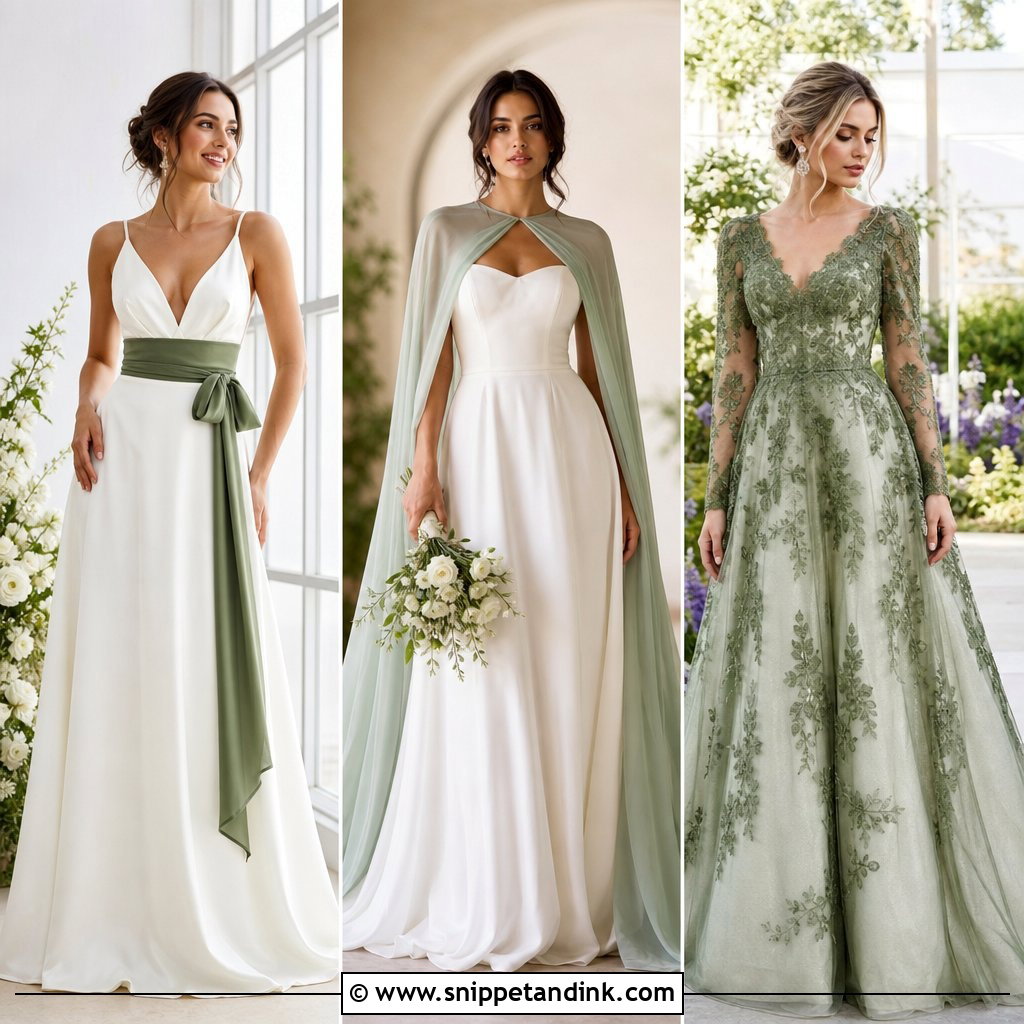
4. Emerald Green Belt Wedding Dress
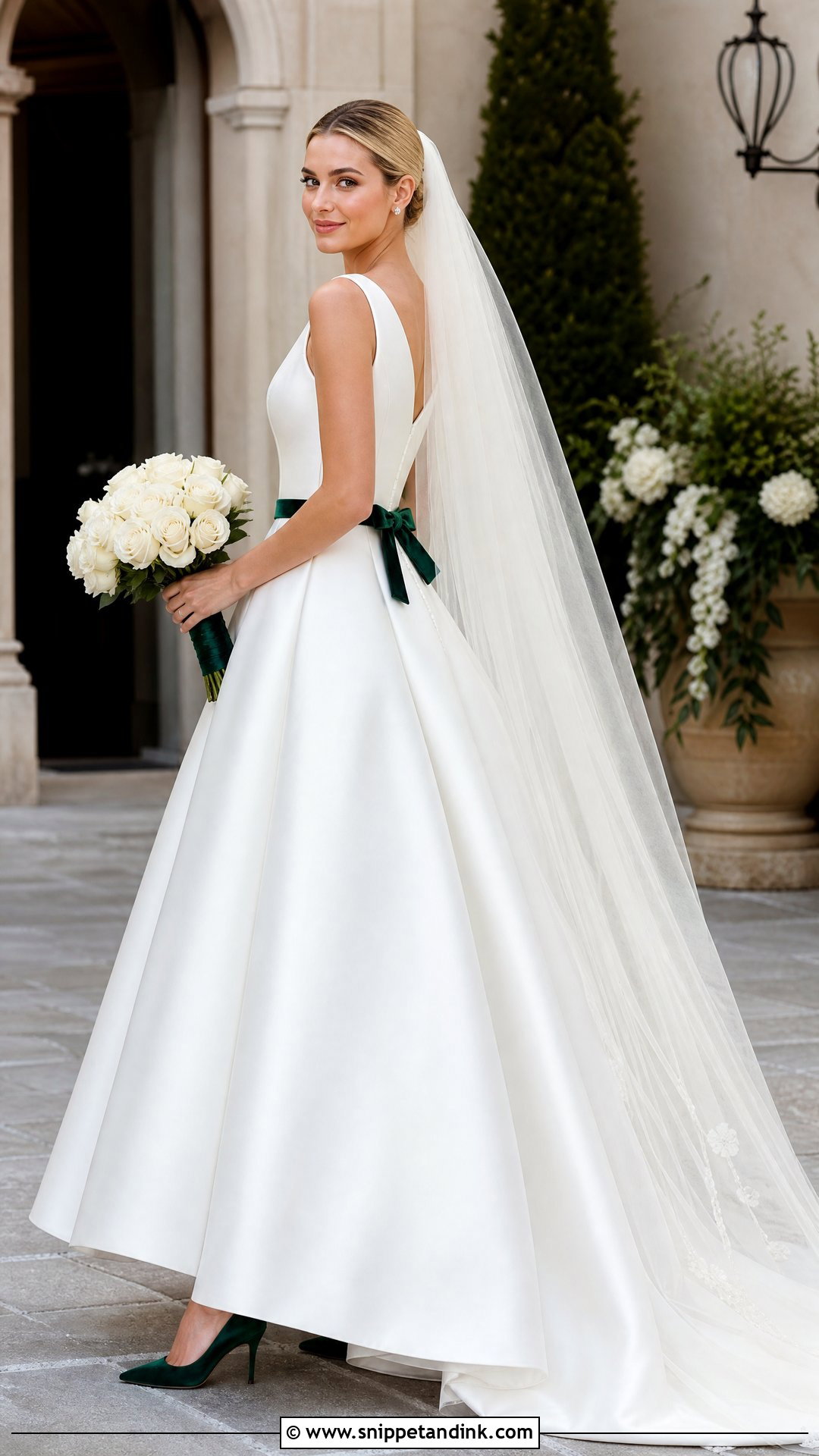
An emerald velvet belt is the most reversible colour choice on this list: you can take it off for the reception and the gown is classic ivory again. I’d keep it narrow at the natural waist of a structured satin ball gown or mikado A-line, fastened at the back with a small bow or crystal clasp. Velvet loses its pile where it’s crushed, so it should be stored flat or rolled, never folded, until the morning. Emerald pumps make a nice surprise under the hem. Diamond-style studs, a simple bracelet, an ivory cathedral veil and a sleek bun keep it formal. White roses with a few dark leaves and an emerald ribbon wrap repeat the accent once.
5. Green Ombre Wedding Dress
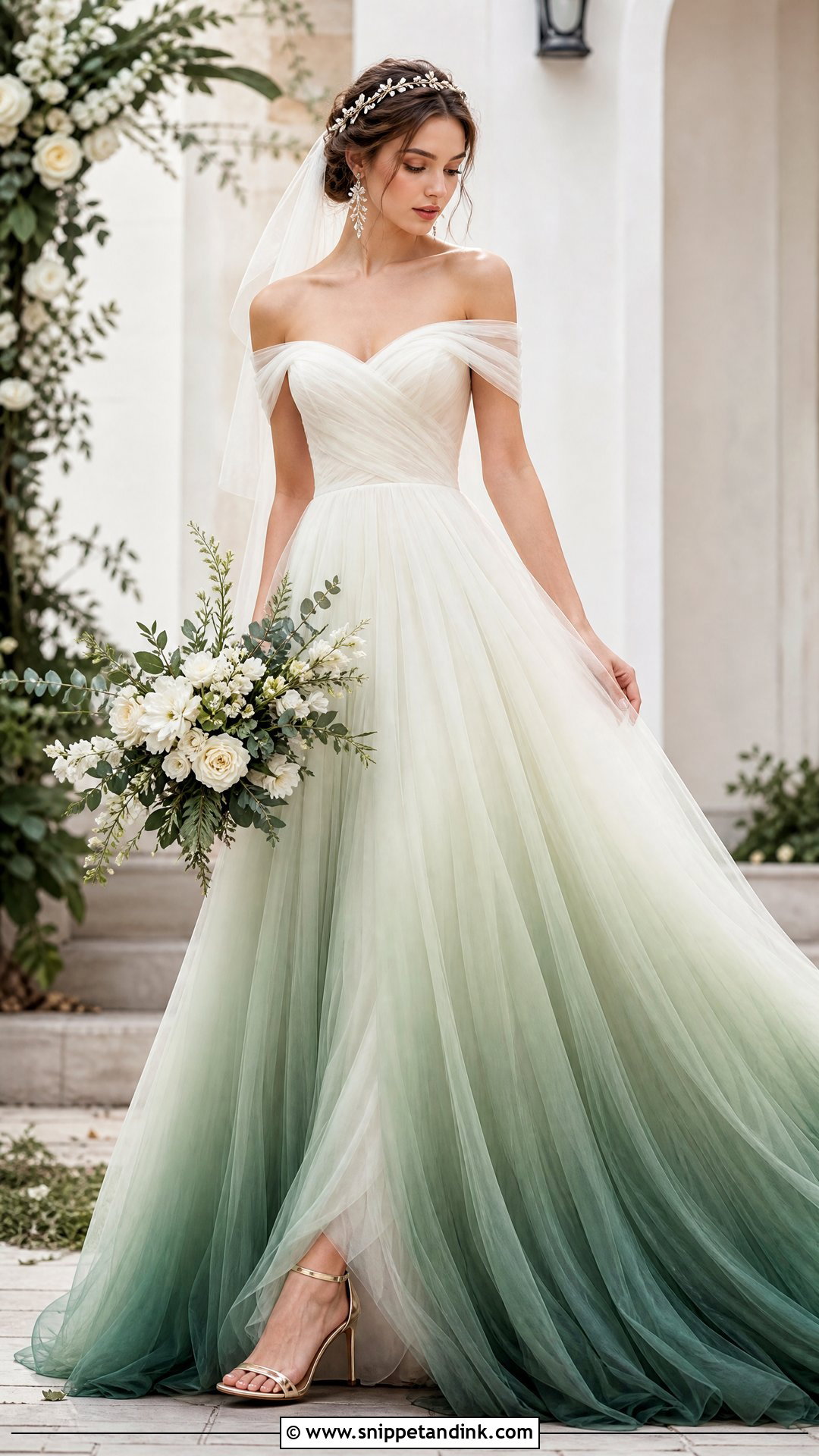
Ombré only works if the fade is gradual. Layers of tulle dyed from ivory through pale sage to deeper green at the hem give a soft blend; a single dyed layer tends to show a hard tide line. I tell brides to look at the hem under ceremony lighting, because a dark green hem on grass can disappear in photos. Neutral metallic heels, crystal drops and a slim silver hair vine suit the gown. Cut the veil to finish above the darkest band so the gradient stays visible. A mostly white bouquet with a touch of eucalyptus and pale green hydrangea keeps the colour at the hem where it belongs.
6. White Wedding Dress With Green Botanical Print
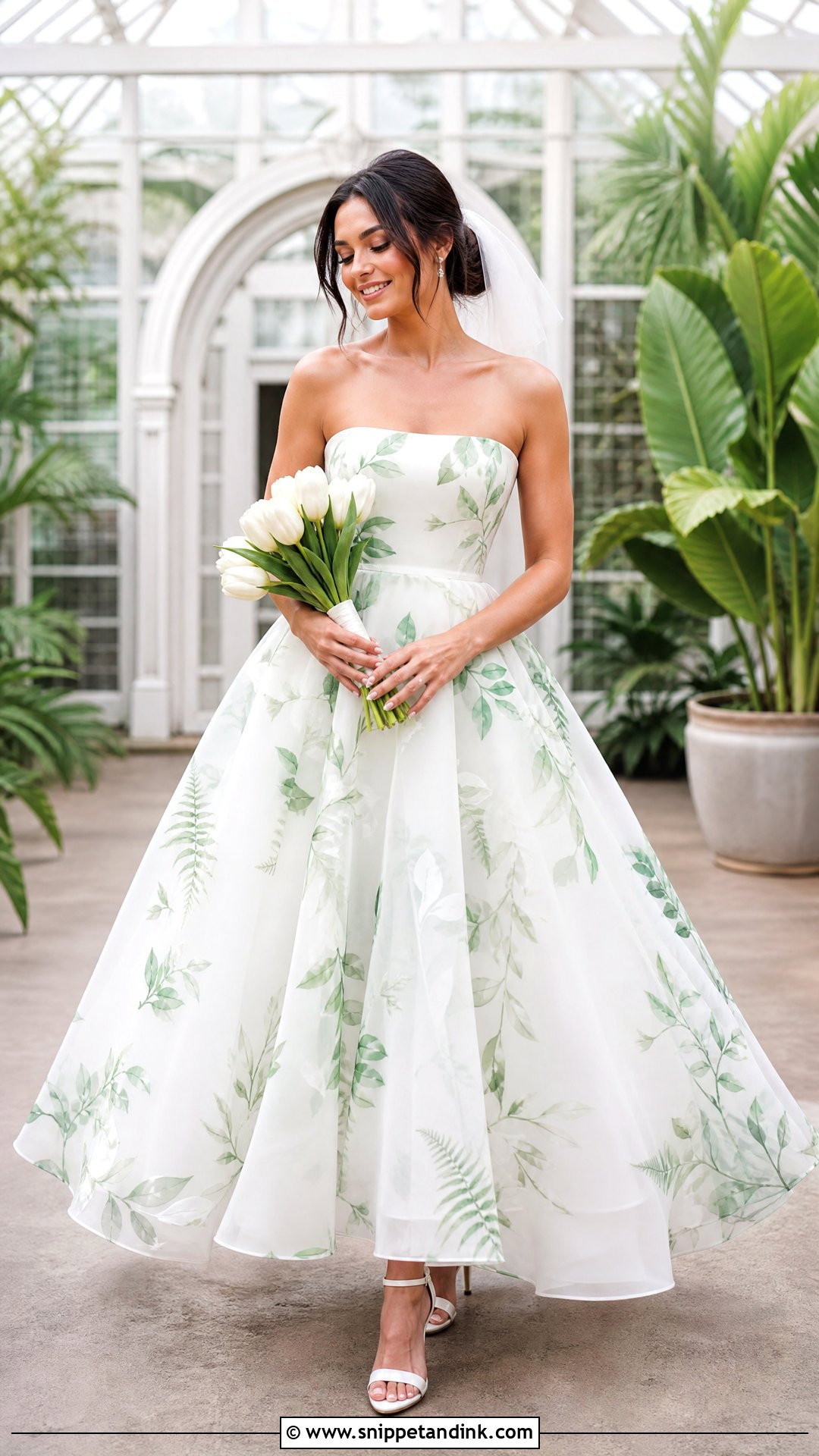
A botanical print of watercolour leaves and fern fronds on organza keeps the white base bright while adding real colour. Printed organza is crisp and slightly stiff, so I pair it with a simple strapless bodice to avoid a busy top half. White ankle-strap heels, pearl earrings and a structured ivory clutch finish it. Skip the long veil; a short sheer one or a comb won’t fight the print. White tulips with a few stems of greenery suit spring and summer in gardens, greenhouses or bright rooms with little décor. Ask your florist to see a swatch, since print greens rarely match real foliage.
7. Mint Green Tulle Wedding Dress
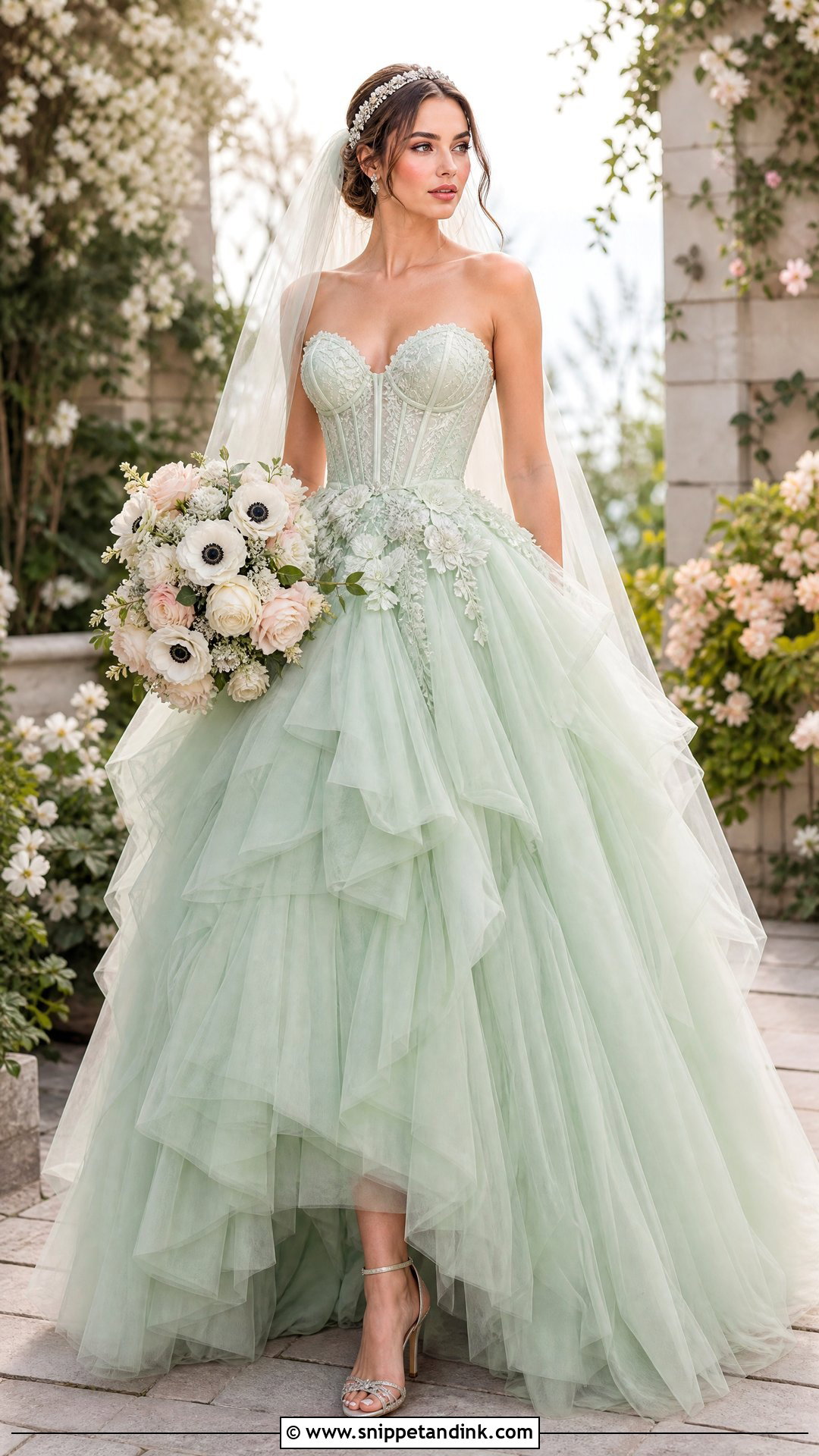
Mint green tulle looks almost weightless, but pale mint is also the shade most affected by skin tone. On very fair or very cool skin it can look fresh; on warm olive skin it sometimes reads slightly sickly, so I hold it near the face before ordering. A ball gown with an ivory-lined, softly corseted bodice gives the full skirt structure, and scattered appliqués at the waist break up the colour. Silver heels, crystal studs, a narrow jewelled headband and an ivory chapel veil keep it bridal. White anemones and pale blush roses, plus a soft pink lip, flatter cool green.
8. Forest Green Velvet Wedding Dress
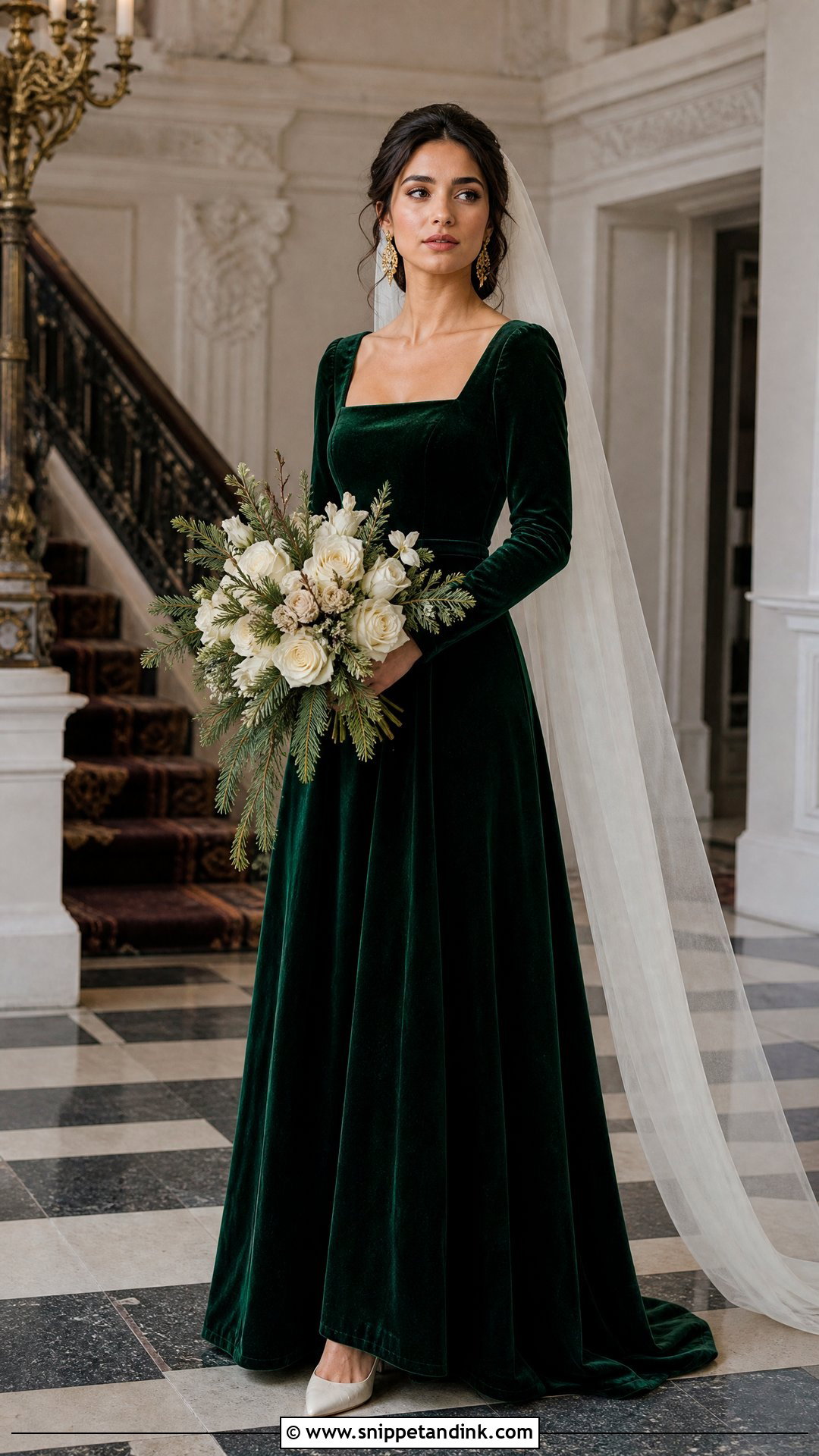
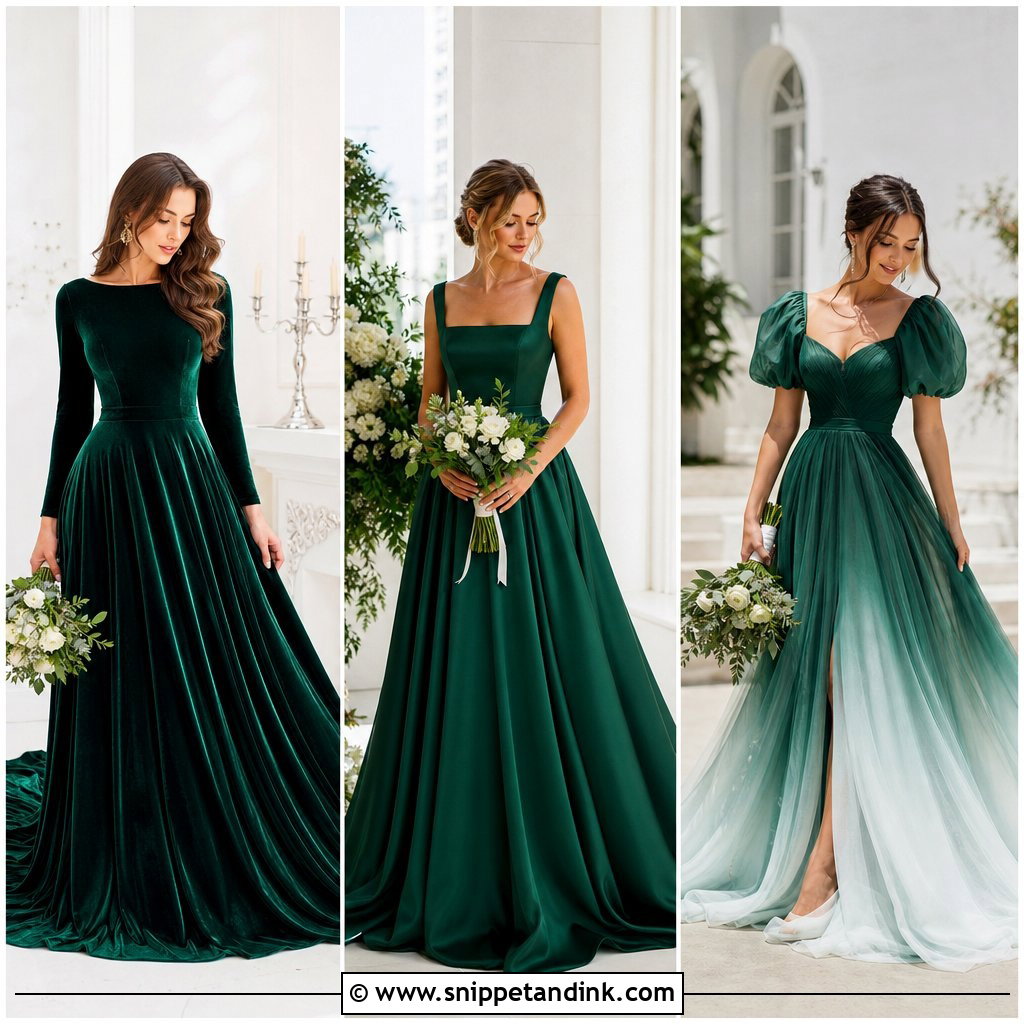
Forest green velvet is a true winter wedding dress, not an accent. Long sleeves, a defined waist and a gently flared skirt let the fabric carry the look; a square, bateau or modest V-neck keeps the plush cloth from feeling heavy. Ivory satin pumps bring back the bridal colour, with antique gold earrings and a gold comb. A sheer ivory veil softens the depth. Velvet has a nap that shows every brush and crease, so I steam it from the inside on the morning and keep someone from sitting on the train. Cream roses, white berries and evergreen foliage complete it; skip heavy beading.
9. Wedding Dress With Green Corset Bodice
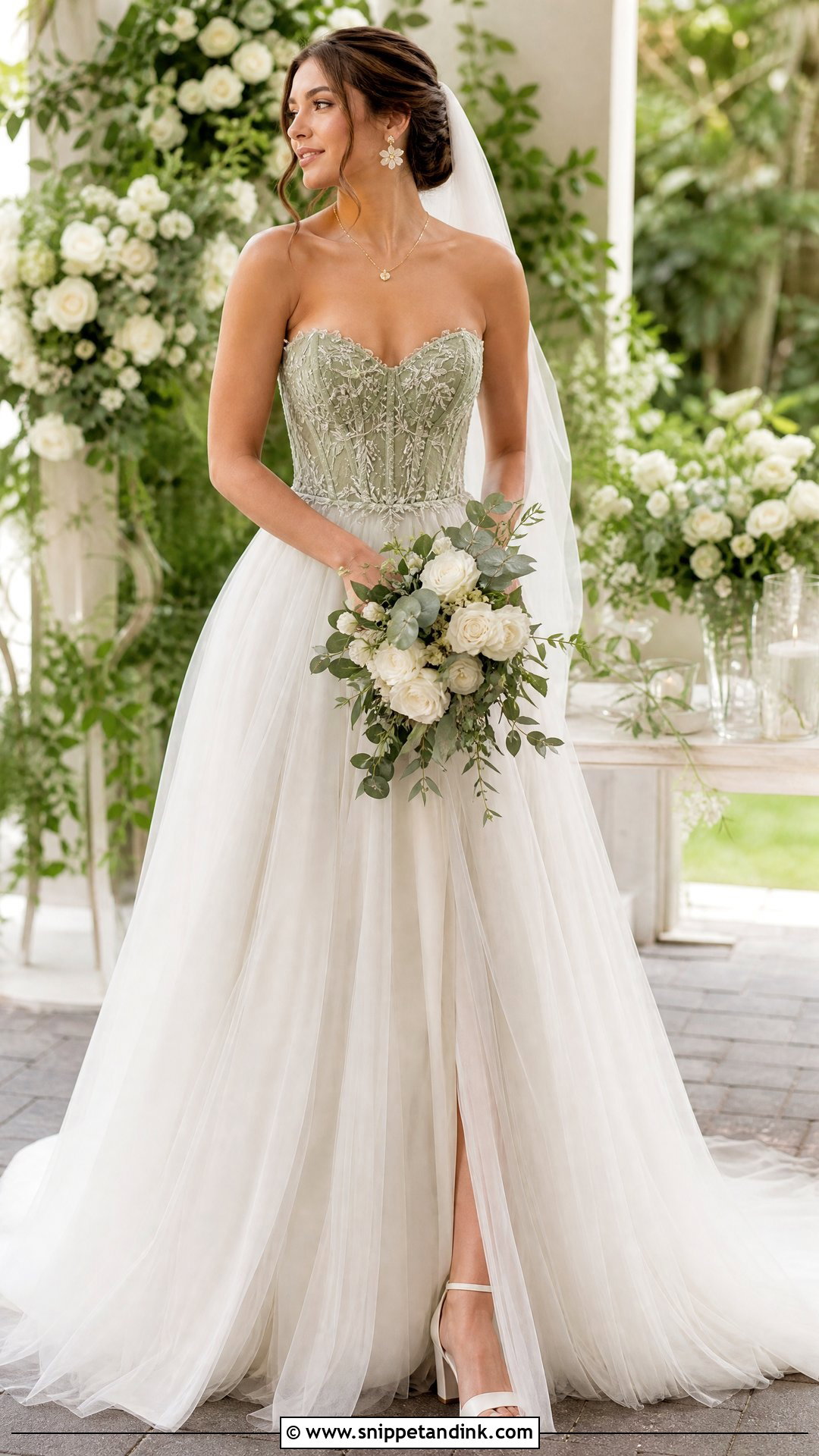
A two-tone gown reads modern and also flatters, because colour sits on the narrowest part of the body. Pair a muted sage bodice with an ivory tulle skirt falling into a soft A-line. Embroidery along the neckline that dips into the skirt helps connect the two halves. The corset has to fit exactly, as sage shows gaping at the edges more than ivory does. Ivory block heels, a fine gold necklace and small floral earrings work, with a loose updo so the bodice stays visible. White roses, lisianthus and eucalyptus with a sage ribbon finish it.
10. Wedding Dress With Green Detachable Sleeves
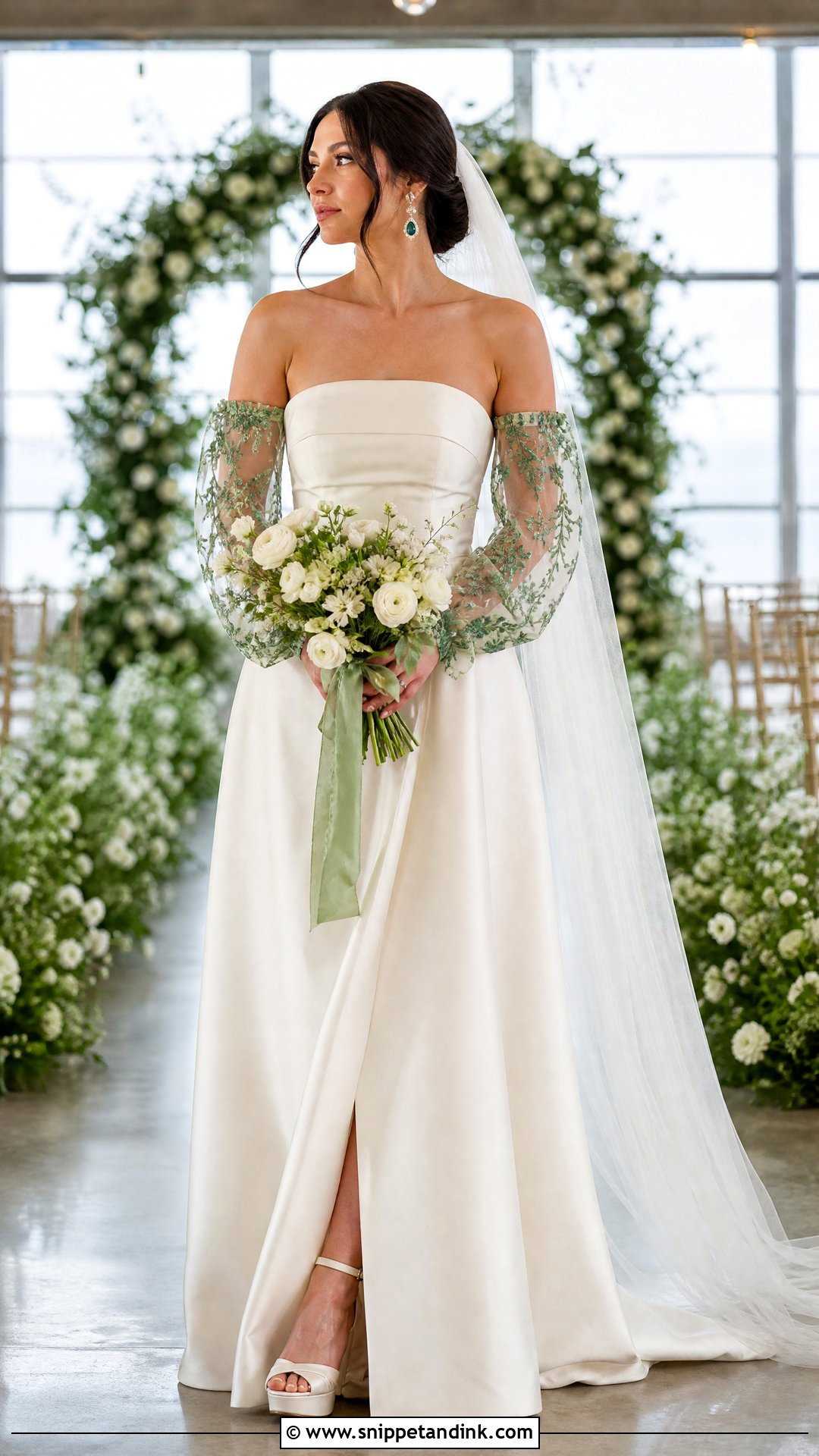
Detachable sleeves give you two dresses: covered and romantic for the ceremony, cleaner and freer for dancing. Sheer off-the-shoulder sleeves embroidered with green leaves attach to an ivory strapless A-line with sage embroidery at the neckline and waist. Ask your seamstress how they fasten. Tiny snaps or loops hold better than elastic, which slides down the arm after an hour. Ivory platform sandals, pearl-and-emerald earrings and a twisted updo suit both versions, as does a plain fingertip veil. White ranunculus, cream roses and olive branches with a pale green ribbon finish it.
11. Wedding Dress With Green Cape
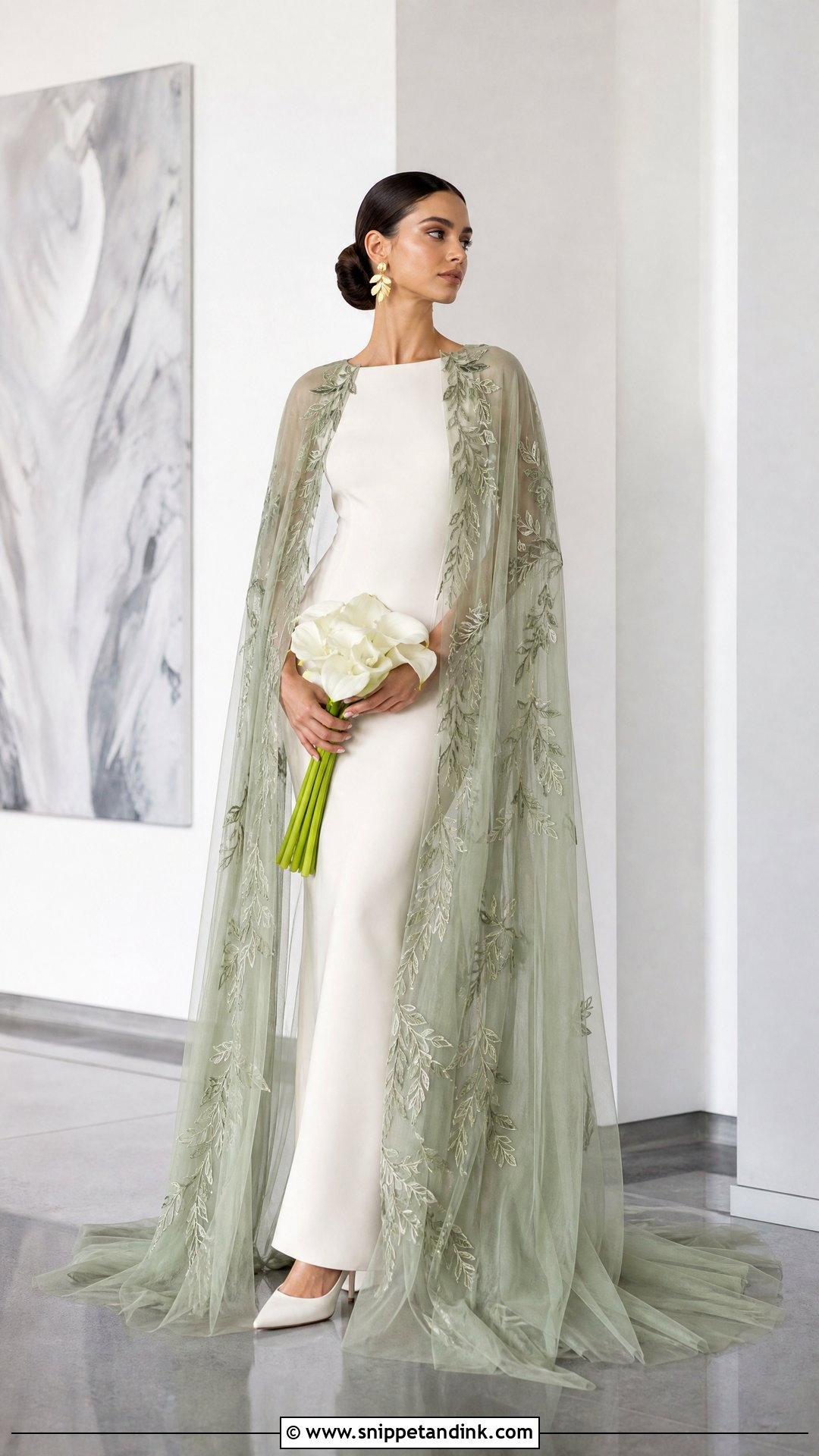
A sage cape can replace a veil entirely and suits brides who don’t want tulle near their face. Over a sleek ivory column with a high neck or plain strapless bodice, a sheer cape with leaf embroidery at the shoulders and hem moves well at floor or chapel length. Sheer capes slip on bare shoulders, so I attach them with discreet hooks or a few hand stitches to the gown. Ivory pointed heels, sculptural gold earrings and a smooth low bun keep it modern. White calla lilies with glossy leaves suit the long lines. Take the cape off after the ceremony and you have a minimal reception gown.
12. Wedding Dress With Green Train
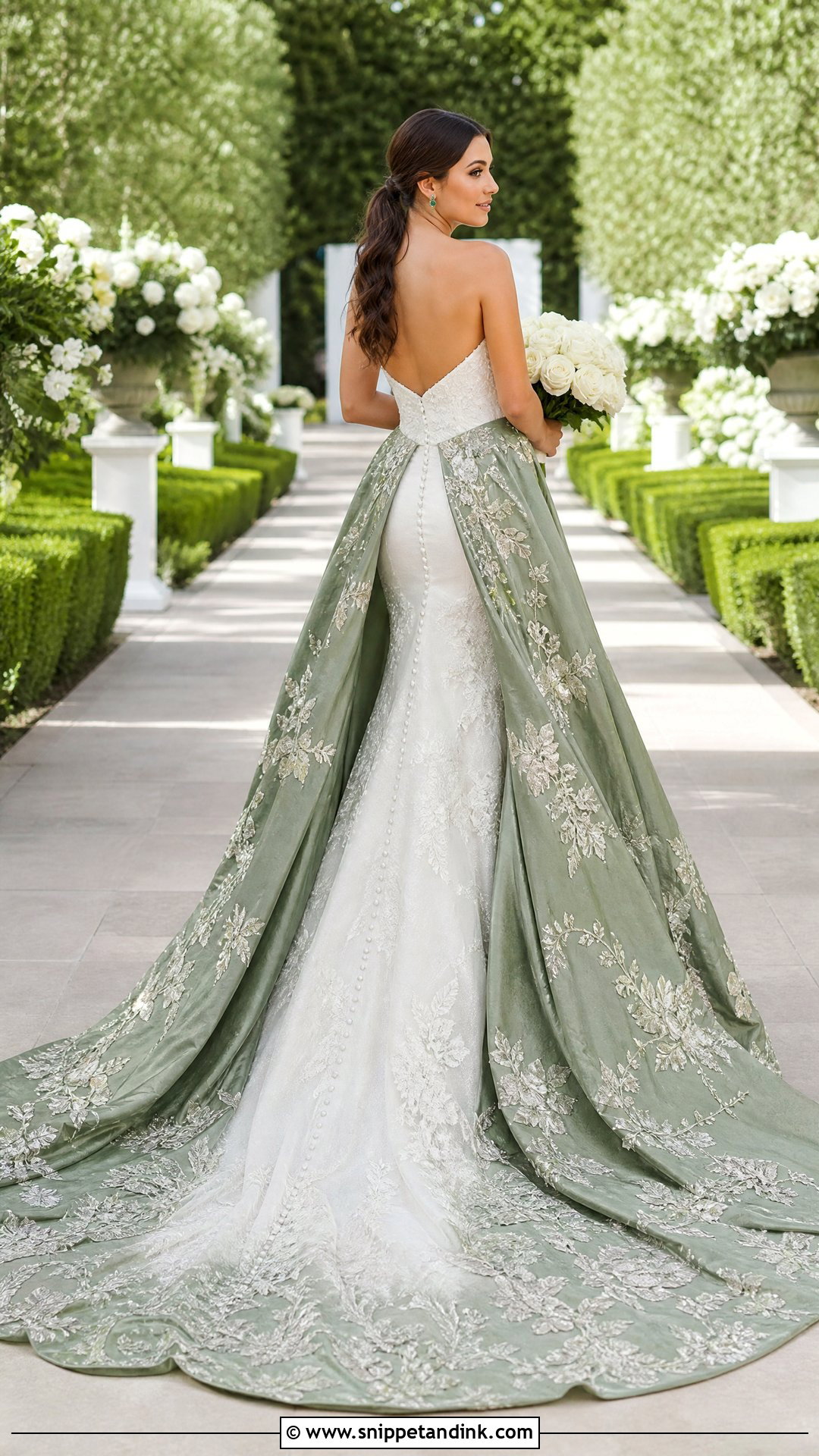
The green train is all about the walk away from your guests. A detachable sage or emerald overskirt on an ivory fit-and-flare, with floral embroidery that thickens toward the hem, gives you that back view, and you unhook it for the reception. Practise the detach with whoever is helping you; the hooks and buttons on overskirts are fiddly in a hurry. Ivory heels, green gemstone studs and a low ponytail keep the front quiet. Keep the veil short or skip it so it doesn’t cover the colour. A structured bouquet of white roses and dark foliage balances the long train.
13. Wedding Dress With Green Bow
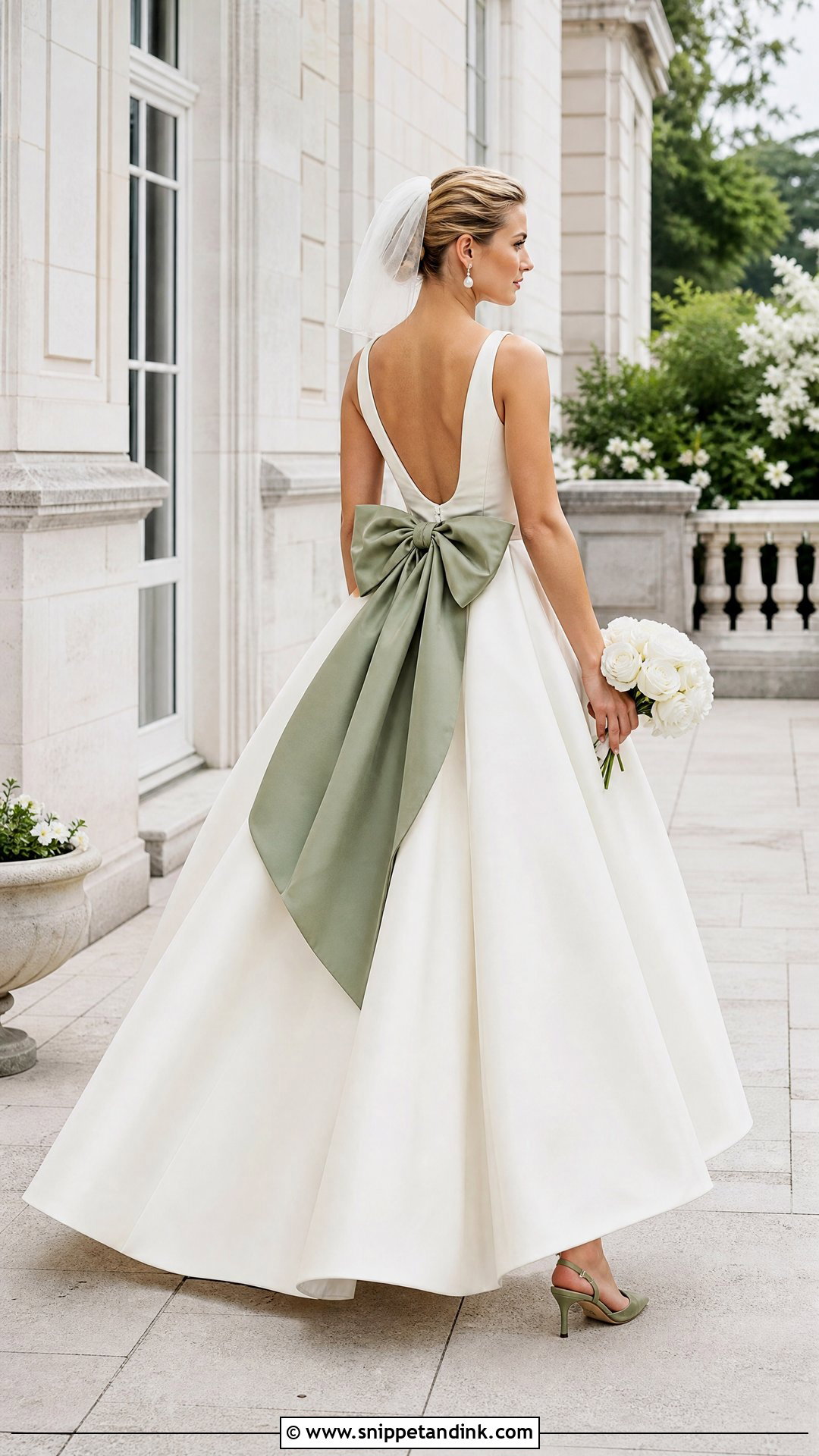
No embroidery, no print: just a sage bow at the back waist of an ivory mikado gown, with tails running partway down the train. Mikado holds a bow’s shape better than softer fabrics, which is why I like this pairing. Emerald velvet makes a bolder version. A big back bow also crushes in a car seat, so I sit the bride slightly forward on the drive and fluff the loops before she gets out. Matching green slingbacks, pearl drops, a neat low bun and a short veil keep the bow visible. White roses with a ribbon in the bow’s shade finish the look for formal estates or restrained modern venues.
14. Wedding Dress With Green Beading
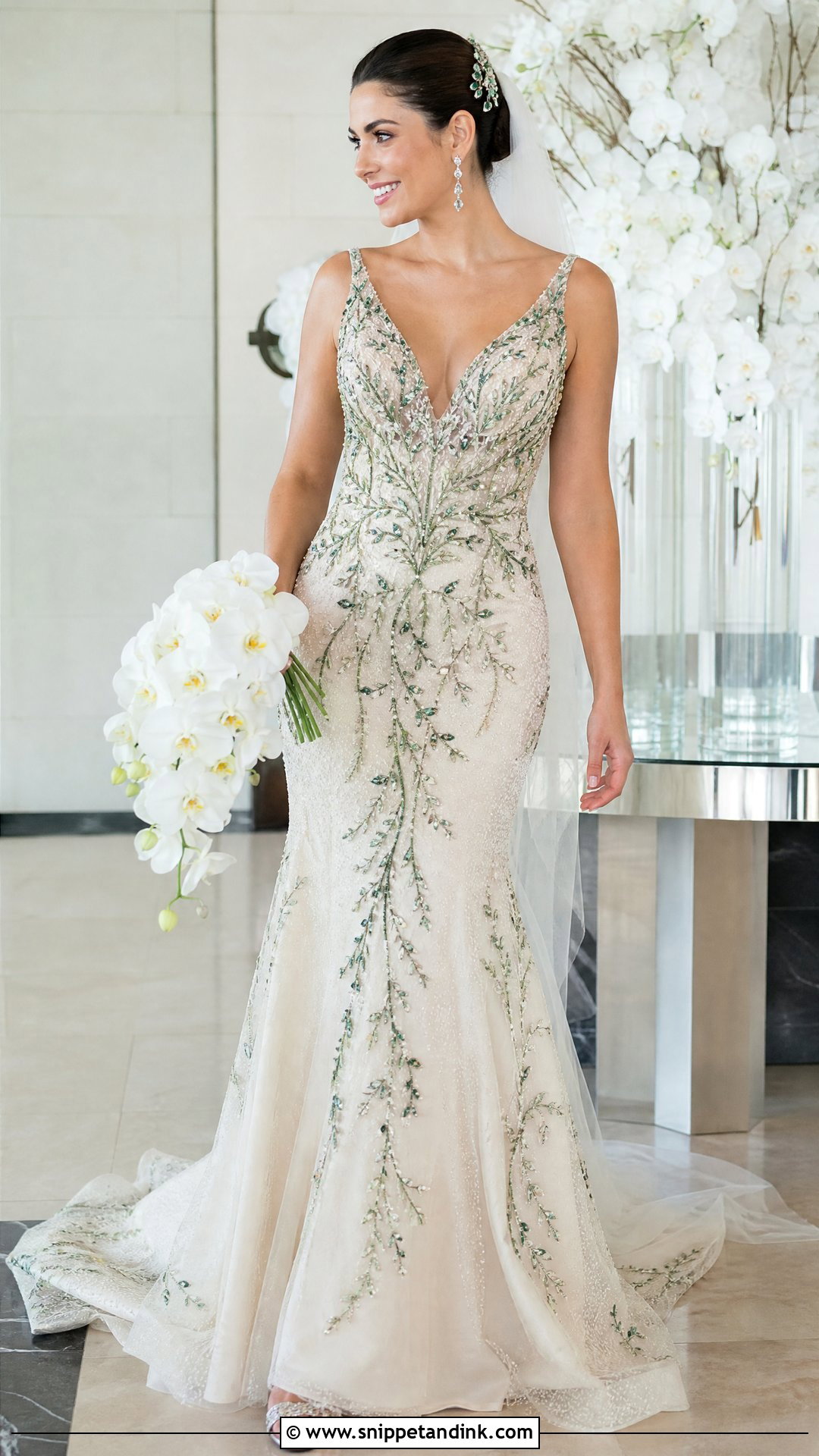
Beading changes with movement and light, so emerald, sage and clear beads in vine patterns sparkle differently with every step. I’d want the embellishment heaviest on the bodice and lighter toward the skirt of a sheath or fit-and-flare. Beaded bodices are heavy, though, and that weight needs a well-built inner corset or the neckline sags by evening. Silver sandals, small crystal earrings and one green gemstone hairpin are all it needs; a plain veil and smooth hair keep the surface from looking busy. White orchids or callas with a few polished leaves suit evening venues.
15. Wedding Dress With Green Satin Skirt
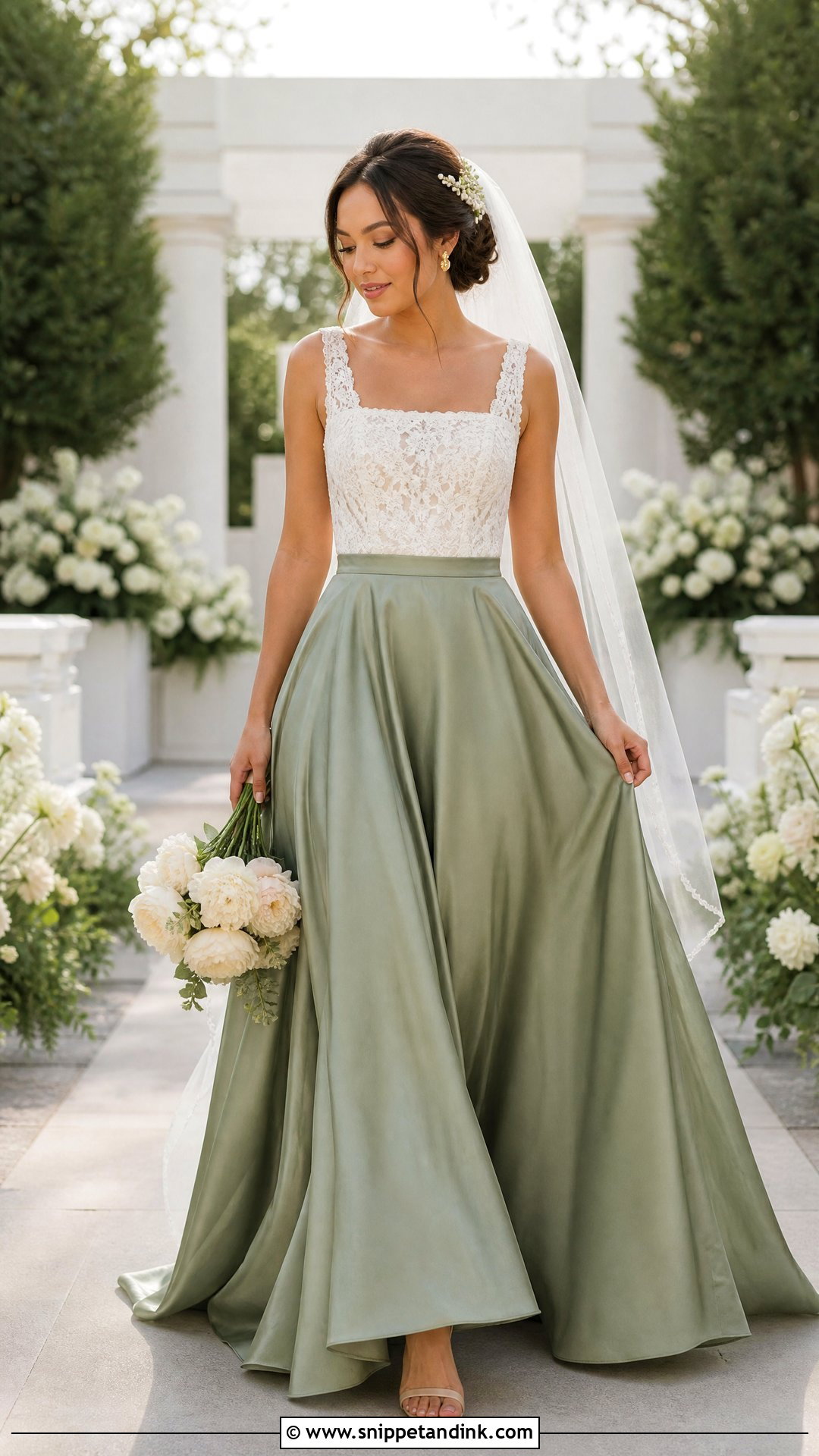
Separates are one of the most practical ways to wear green: a high-waisted sage satin skirt with a full A-line shape under an ivory lace bodice. A narrow ivory waistband joins the two and defines the waist. Satin creases where you sit, and pale sage shows those creases more than ivory, so I bring a handheld steamer for between ceremony and photos. Champagne heels, a pearl comb and gold earrings suit it. Wear a fingertip veil for the ceremony, then take it off to show the separates. Cream peonies, white roses and eucalyptus support the soft palette, and you can wear the skirt again.
16. Tea Length Wedding Dress With Green Accents
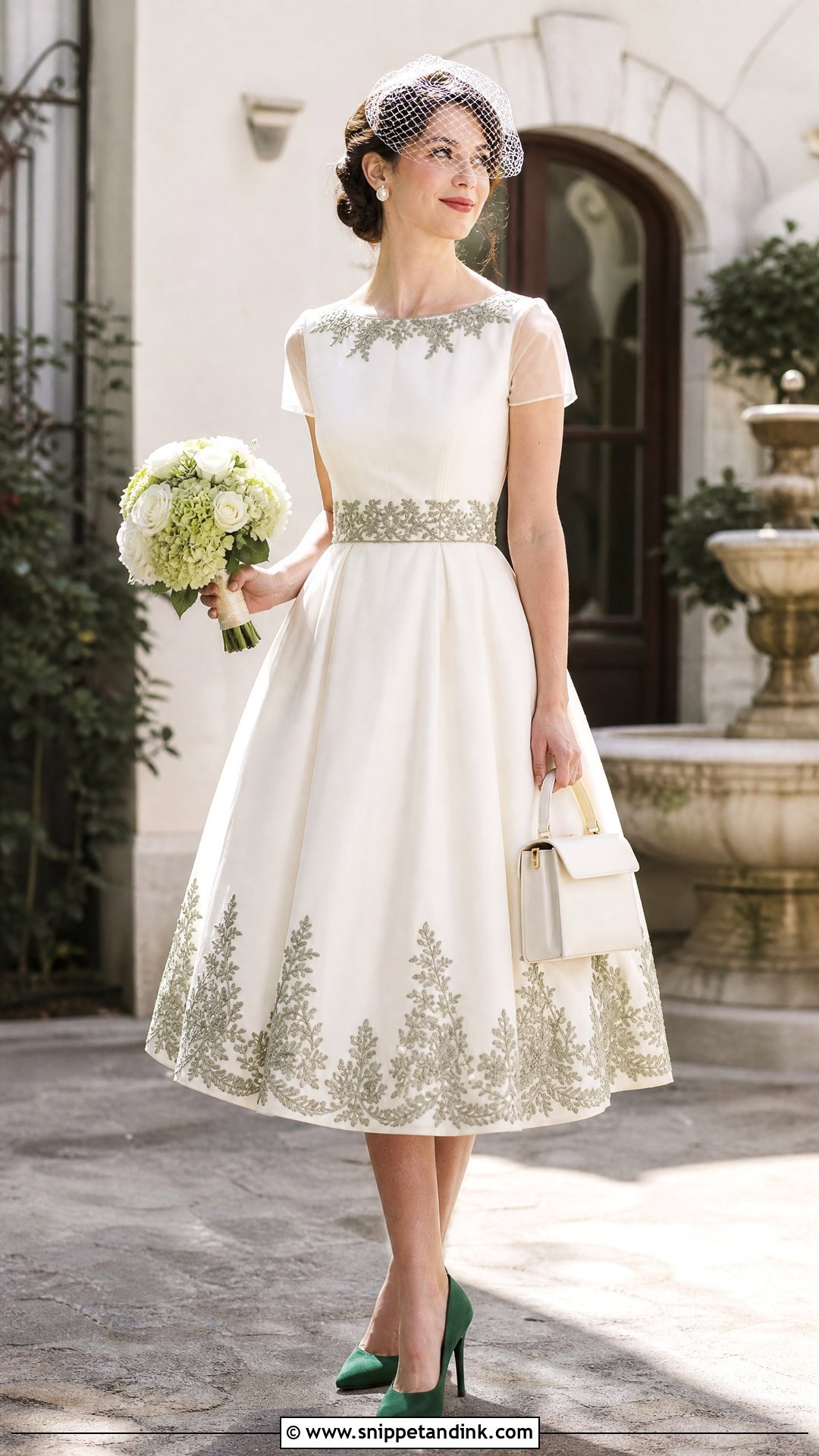
Tea length puts your shoes on show, so they become part of the green story. An ivory fit-and-flare ending below the knee, with sage embroidery along the neckline, waist and hem, pairs naturally with emerald or moss pointed pumps on a low heel. The trick is matching shades: compare the shoes and embroidery in daylight, not in a shop’s warm lights. A structured ivory bag, pearl studs and a birdcage veil give it a vintage feel; soft waves or a low twist keep it neat. White roses, green hydrangea and leafy stems in a small bouquet suit courthouses and daytime weddings.
17. Boho Wedding Dress With Green Embroidery
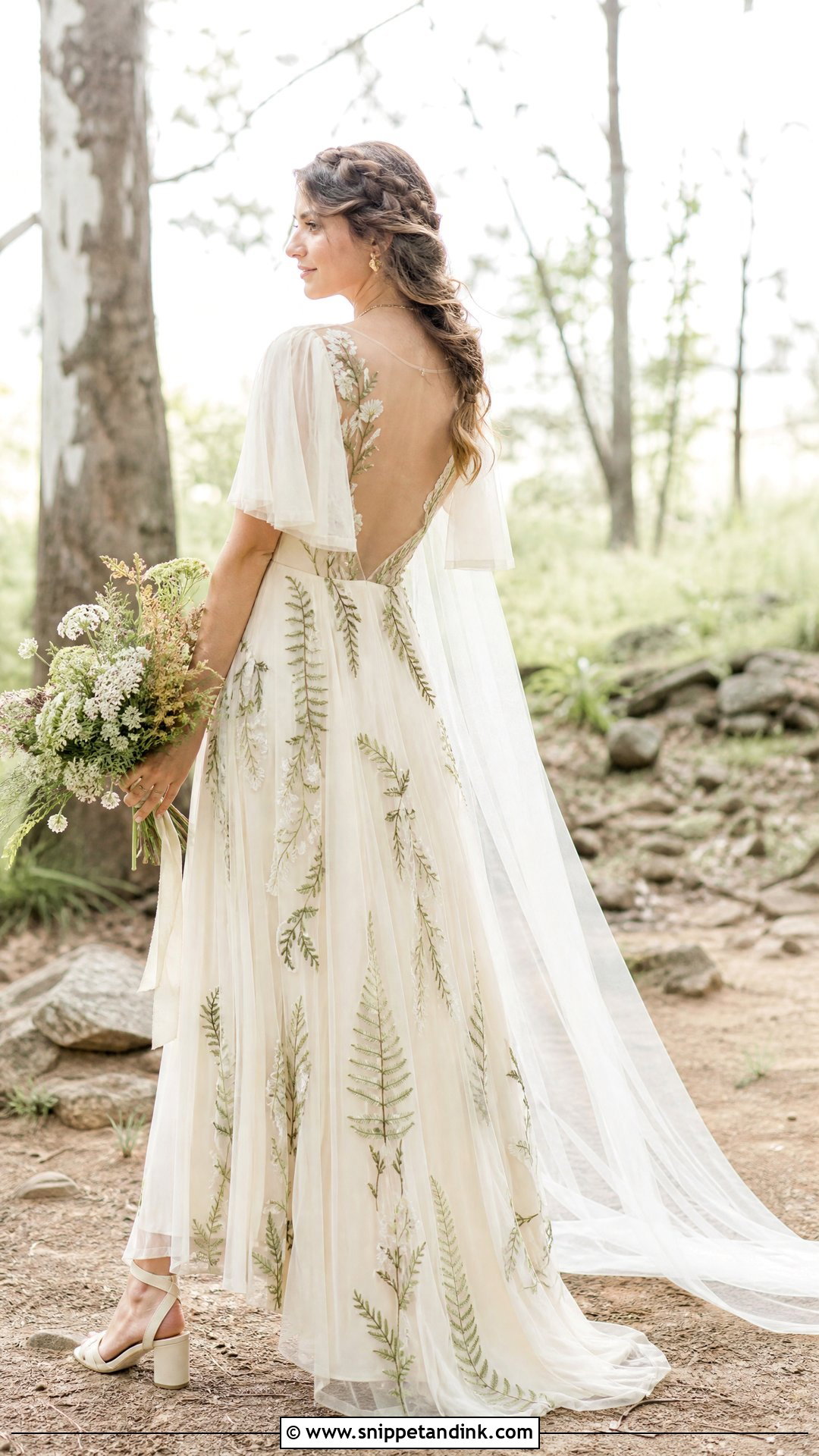
Moss and sage embroidery on a flowing boho gown looks like it grew there. Embroidered ferns and wild leaves frame the bodice of an ivory A-line with flutter sleeves and an open back, then scatter lightly across the skirt. Ivory leather flats or low block sandals cope with grass. I’d choose a braided style with a floral comb over a tiara, and a raw-edge veil. Thread embroidery on light chiffon can pucker if the fabric isn’t stabilised underneath, so I check that the skirt hangs flat at the fitting. White wildflowers and grasses finish it.
18. Long Sleeve Wedding Dress With Green Lace
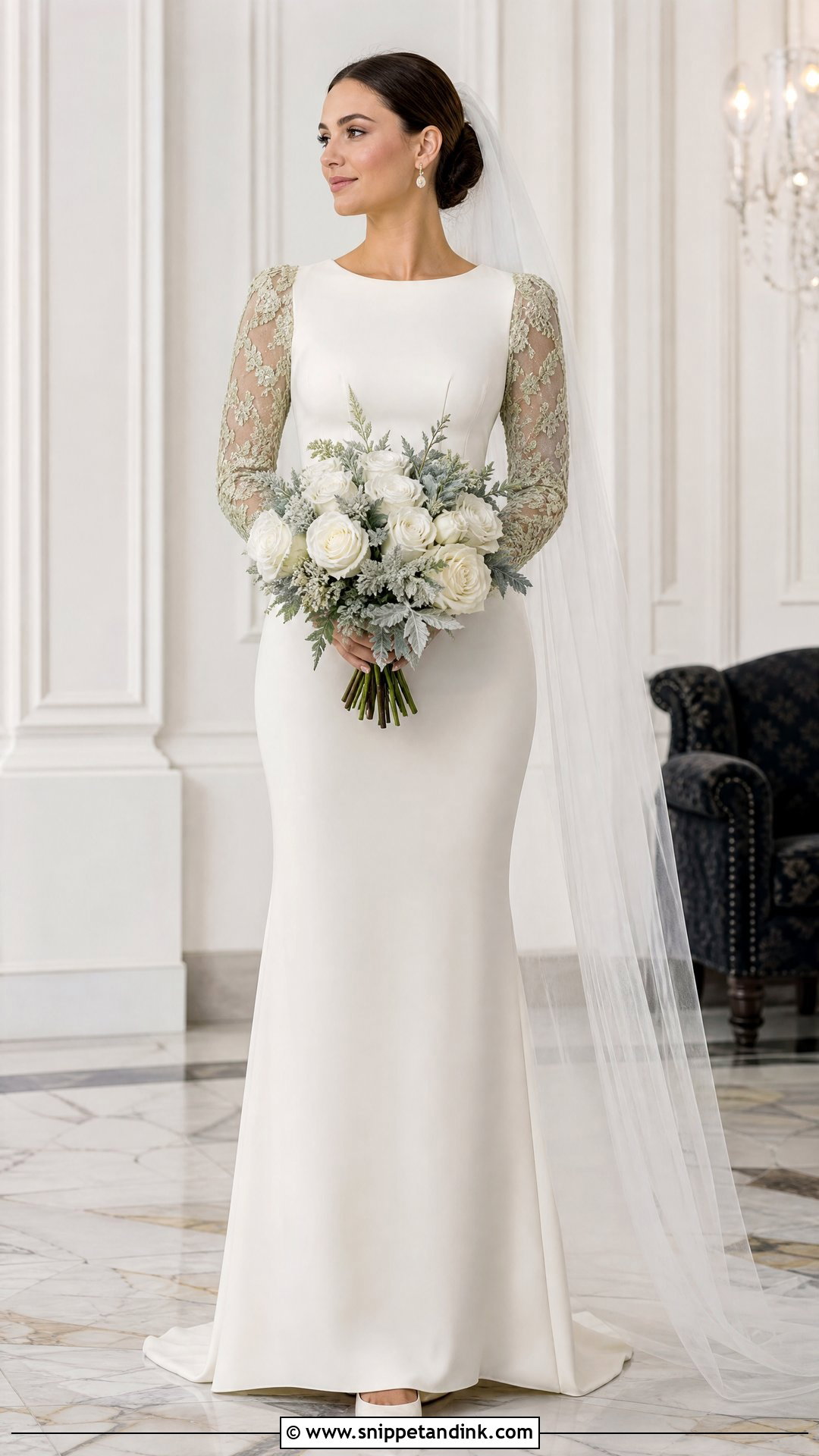
Long green lace sleeves place colour close to the face, so test the shade against your skin, not just the dress. On an ivory crepe gown with a fitted waist and a clean skirt, sheer sage lace sleeves look intentional when the same lace edges the neckline or back. Ivory closed heels, pearl-and-gold earrings, a smooth chignon and a long plain veil keep it formal. The clean skirt is what stops the gown feeling fussy. Lace sleeves need room at the elbow; I have brides hug someone at the fitting to check. White roses with silver-green foliage suit cooler seasons and traditional venues.
19. Plus Size Wedding Dress With Green Accents
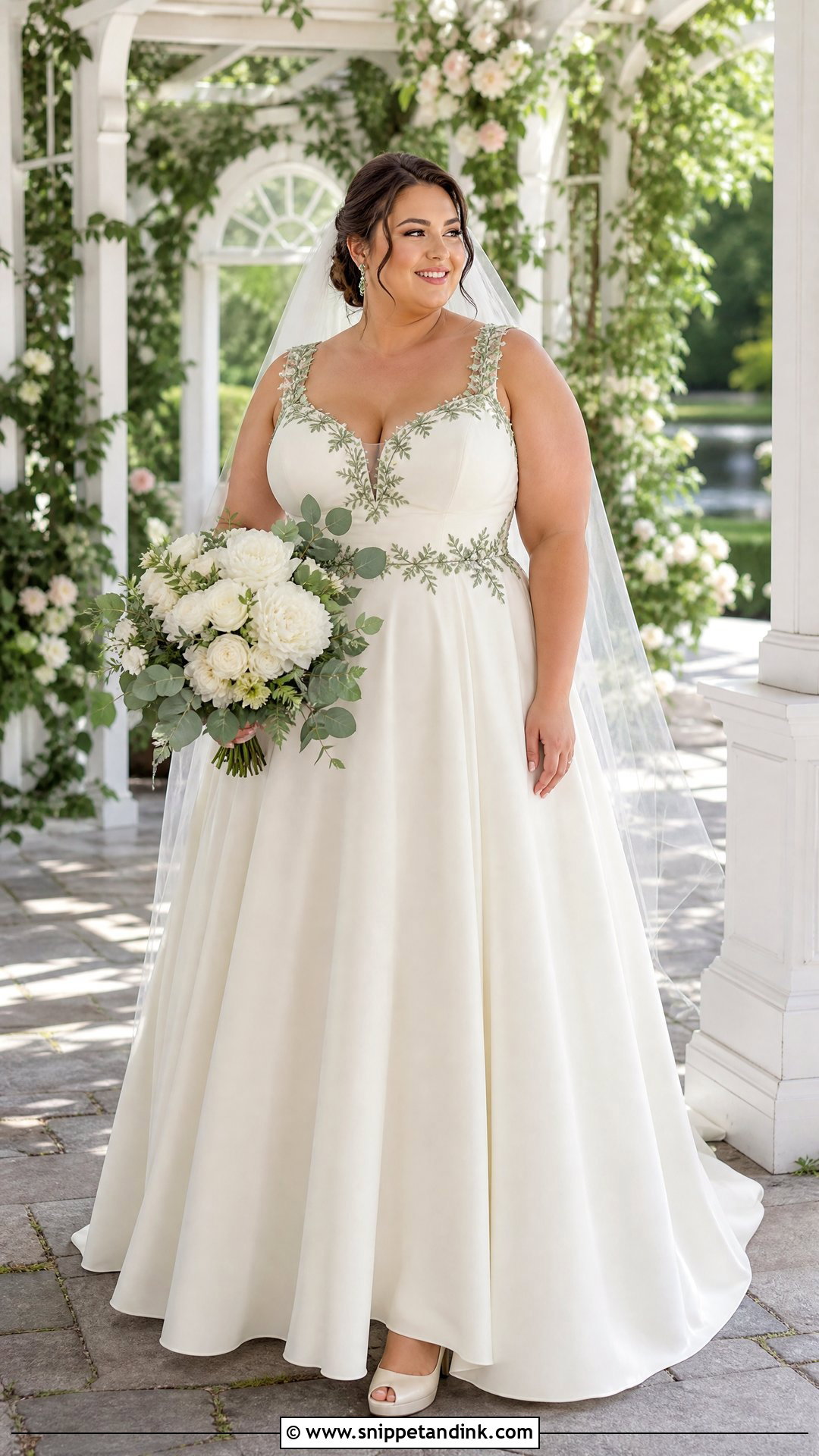
Placement matters more than size. On an ivory A-line with a structured bodice and wide straps, sage floral appliqués gathered at the neckline and natural waist draw the eye exactly where most curvy brides tell me they want it. Embroidery that runs vertically down the skirt keeps the line long. Supportive block heels, emerald studs and an updo or side-swept waves suit it. Attach a chapel veil below the hair so it doesn’t add width at the shoulders. Choose a bouquet that suits your frame rather than a tiny one. Tailoring through the bust and waist is where I’d spend the budget first.
20. Minimalist Wedding Dress With Green Piping
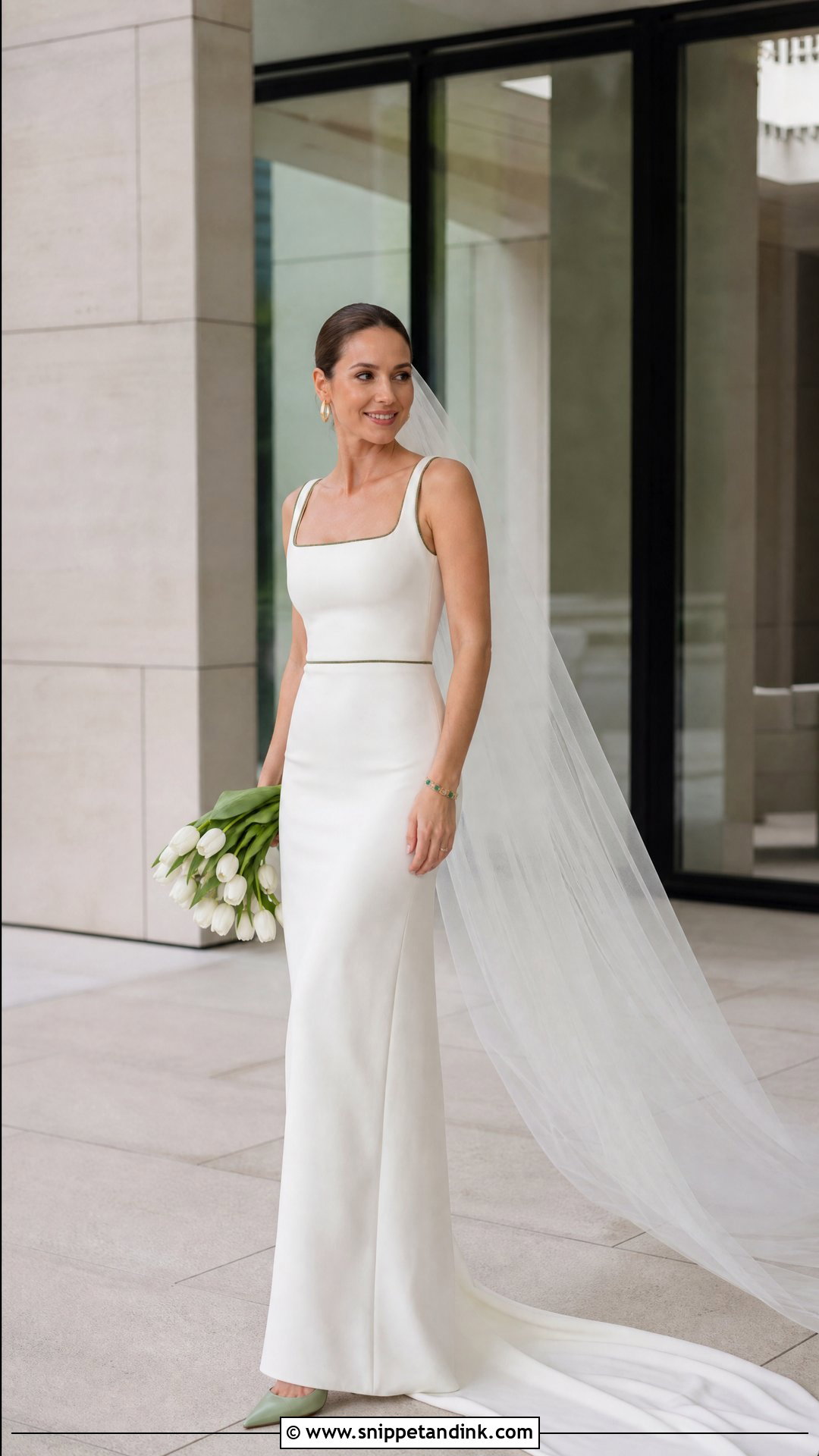
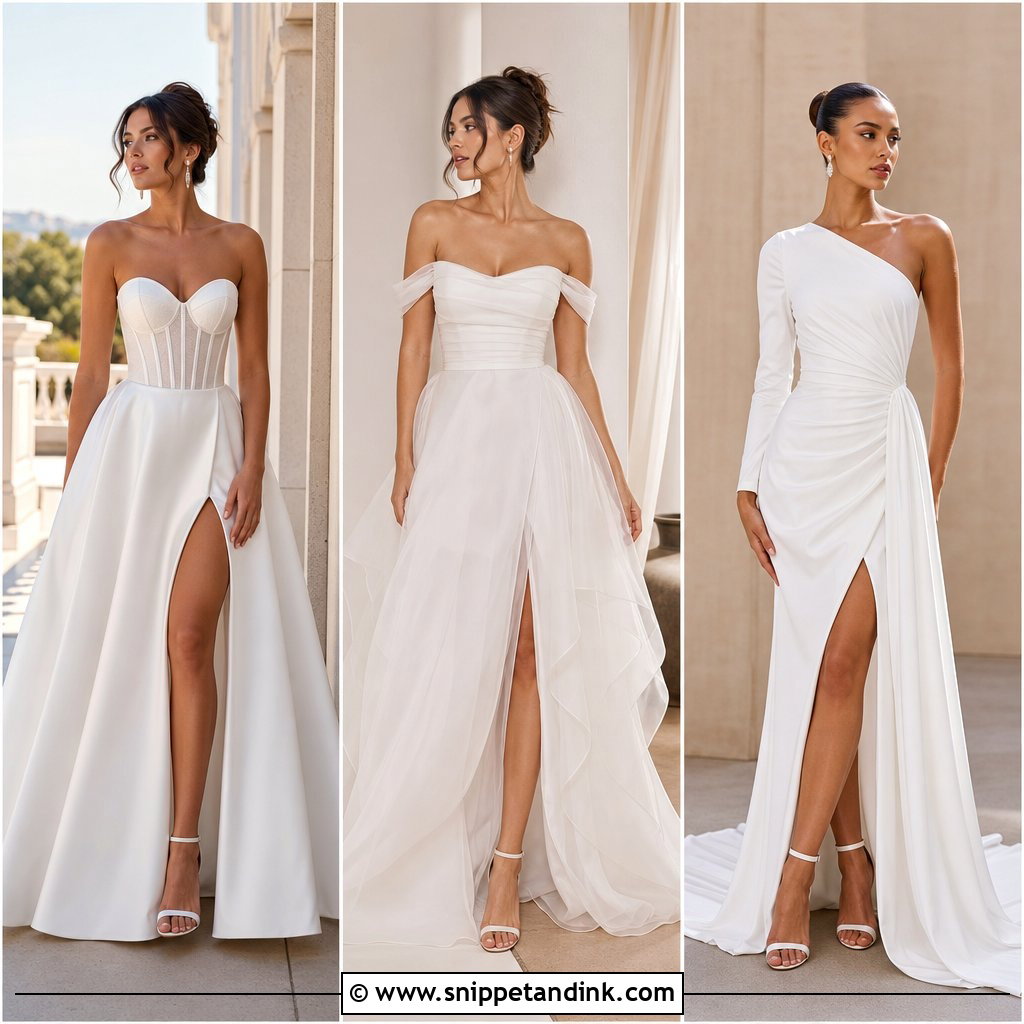
Narrow sage piping around a square neckline, waist seam and low back shows off construction rather than decoration. On a smooth ivory crepe column, that line is very exact, so a tailor has to keep piping straight through alterations or it wobbles visibly. Sage pointed heels, small gold hoops and a slim green gemstone bracelet repeat the colour. A sleek low bun and plain cathedral veil keep the ceremony look clean. White tulips, calla lilies and a few long leaves suit the minimalism. Lace, heavy beading and big accessories would only blur it; galleries and city venues suit it best.
Adding Green to a Gown You’ve Already Bought
Plenty of brides find the green idea after the dress is ordered. That’s fine, but some routes are much safer than others.
- Removable pieces first. A belt, a bow, a cape, sleeves or an overskirt add colour without touching the gown, and you can change your mind.
- Appliqué or embroidery added by a seamstress. Ask to see a sample on scrap fabric and agree on placement with pins at a fitting before a single stitch goes in. Allow extra weeks; hand embroidery is slow.
- Dyeing is the risky one. Synthetic bridal fabrics often refuse dye or take it unevenly, and the lining, lace and thread may each come out a different shade. I only suggest it for a separate layer, never the whole gown.
- Colourfastness matters. Any dyed green tulle, ribbon or velvet that touches ivory fabric can bleed if it gets damp from rain, a spilled drink or sweat. Have the seamstress test a corner with a wet white cloth.
Bring a fabric swatch to your florist and shoe shop as well. Greens from different suppliers almost never match exactly, and a near-miss looks worse than a clear contrast, so either match closely or pick a deliberately different green.
How Much Green Is Enough?
Green is far more flexible than it looks on a hanger. Sage lace and mint tulle feel soft, while emerald velvet, beading and coloured trains carry real drama. If you love ivory, bring green in through embroidery, piping, a bow, a belt, sleeves or a detachable layer. I repeat the chosen shade two or three times across shoes, jewellery, flowers or ribbon, then stop; matching everything looks like a costume. Check the colour in your venue’s actual light, at the hour you’ll marry. And above everything, wear a gown that fits and feels like yours, so the green reads as part of you rather than an add-on.
You'll Like These Ideas:


Leave a Reply