
Aari work is embroidery done with a fine hooked needle on fabric stretched tight across a wooden frame, and it’s the reason so many South Indian bridal blouses look the way they do. The hook makes a continuous chain stitch, and beads, stones and zari are fed in as the artisan works, so the detail can be as dense or as light as you like. I plan it most often on silk saree blouses, but it suits lehenga cholis, dupatta borders and sleeves just as well. The 25 designs below run from temple and Lakshmi motifs to pearl, thread and minimal work. For each one I’ve noted the fabric it needs, where it sits on the body and what I’d watch for when you brief your artisan.
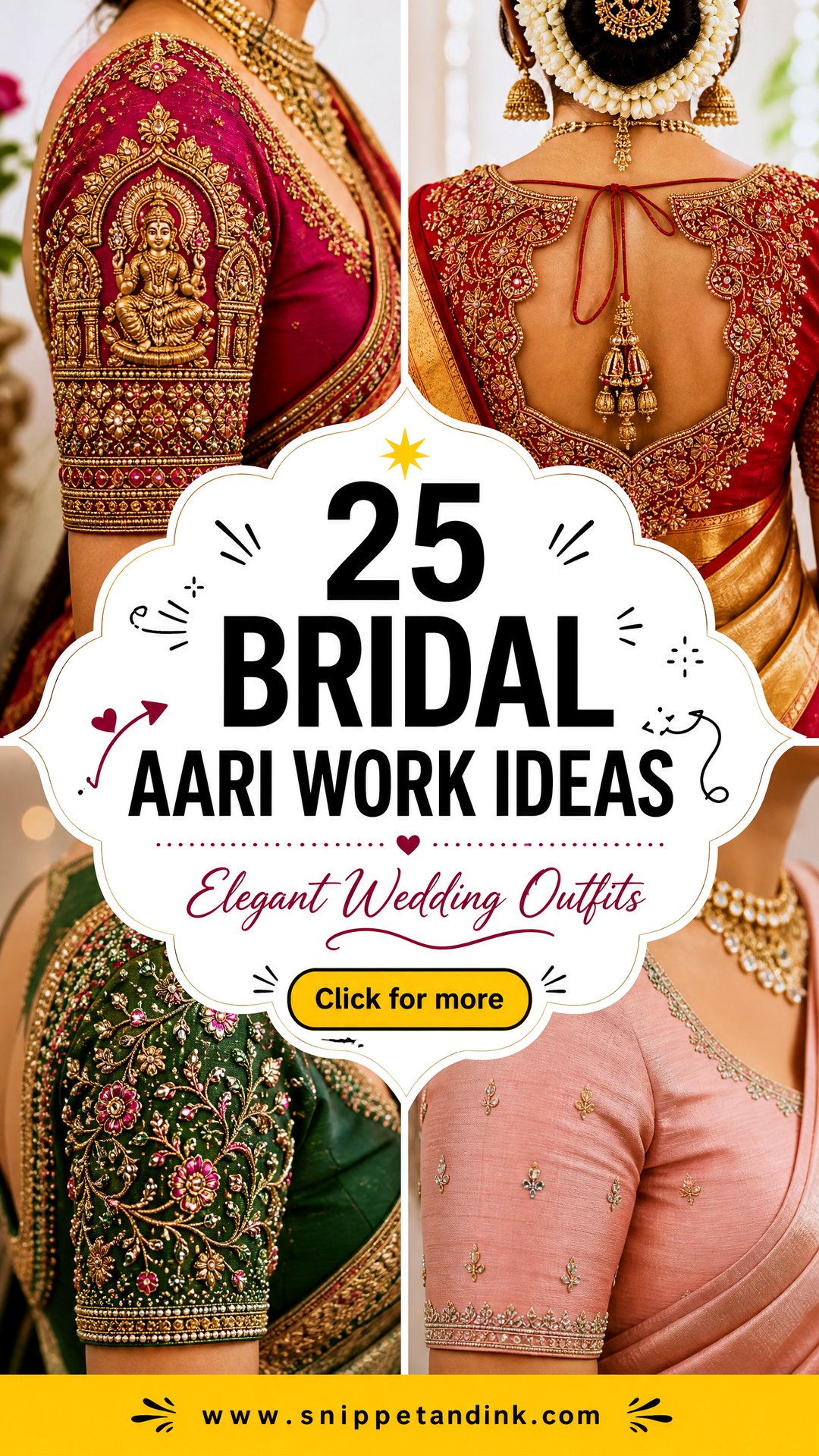
Aari Is Embroidered Before Your Blouse Is Ever Stitched
This surprises a lot of brides. The artisan marks the design onto cut fabric panels, stretches each one on the frame and embroiders it flat. Only after that does the tailor sew the panels into a blouse. So your measurements and the neckline shape have to be final before any embroidery starts; there’s no moving a peacock two inches to the left once it’s worked.
Here’s how I sequence it with my brides:
- Buy the saree or lehenga first, so the blouse fabric, color and border can be matched to it.
- Get measured and decide the neckline, back shape and sleeve length with your tailor.
- Approve the design on paper: the artisan’s tracing shows exactly where every motif will sit.
- Allow several weeks for heavy bridal work, and more during wedding season when artisans are booked out. Ask for a firm date.
- Book a trial fitting once the blouse is stitched, with enough time left for alterations.
If you’re losing or gaining weight before the wedding, tell the tailor. Most will leave extra seam allowance so the blouse can be adjusted without cutting into the embroidery.
1. Bridal Peacock Aari Work Blouse
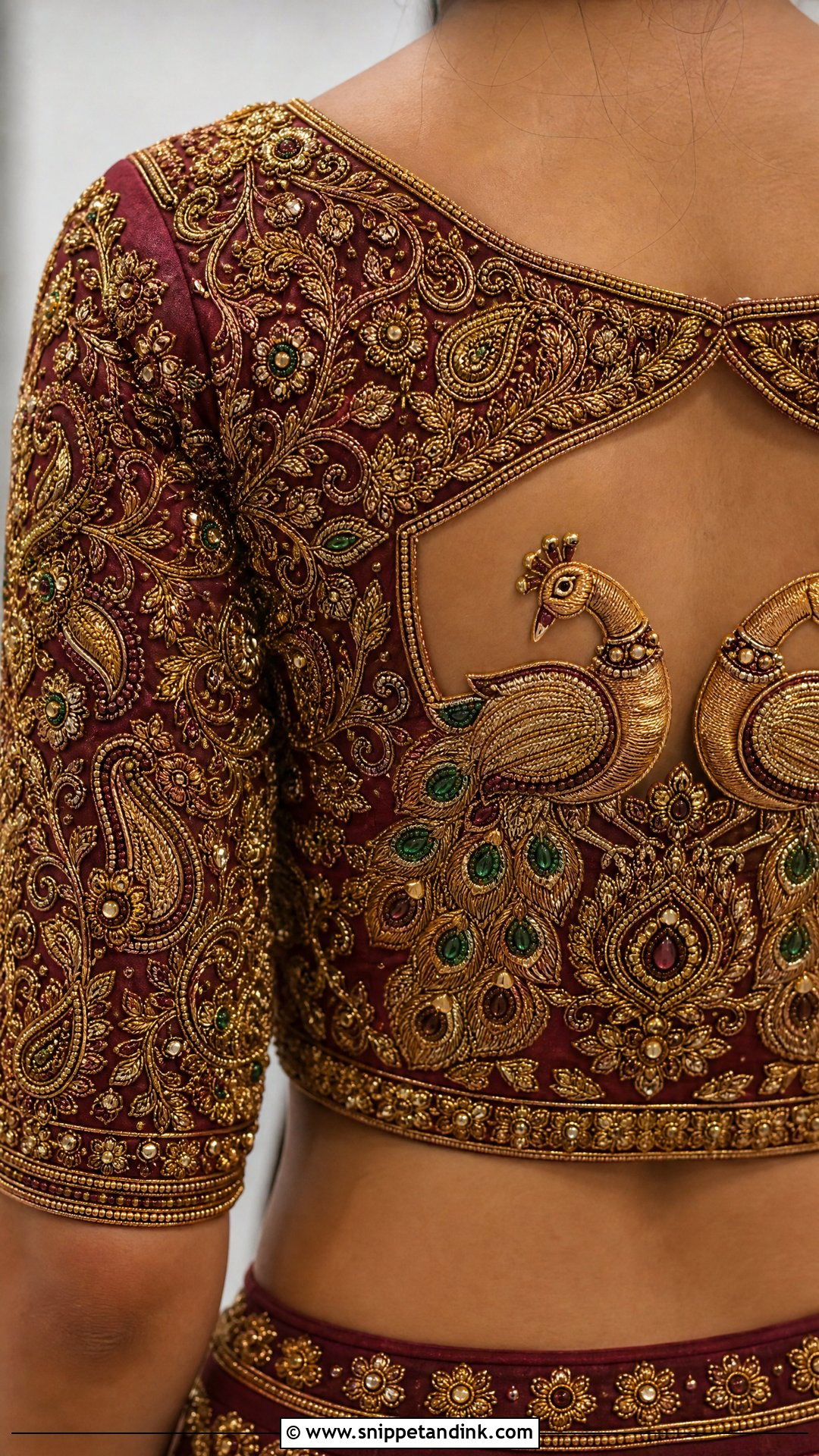
Peacocks are the motif I’m asked for more than any other on a Kanjivaram blouse. The back gives the feathers room to spread, so a twin-peacock design in antique gold zari, with beads and stones picking out the eyes of the feathers, is the classic choice. On a smaller budget or a lighter saree, I’d move the peacocks to the sleeves and run a floral vine around the neckline instead. Maroon, emerald, royal blue and magenta grounds all carry gold well. Look at the saree border before finalizing the size; a huge peacock beside a heavy border can look crowded.
2. Bridal Lakshmi Aari Work Blouse
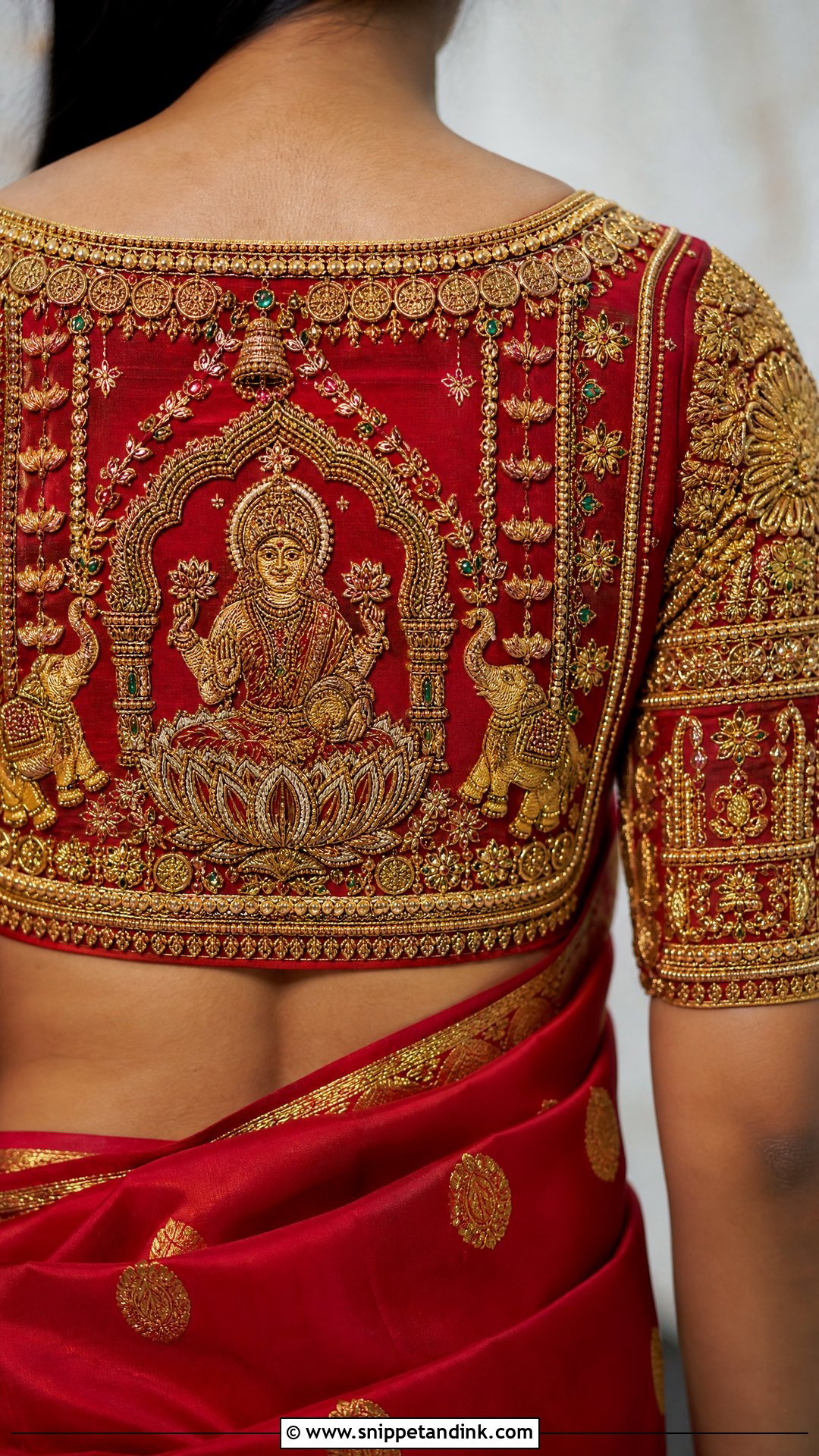
The Lakshmi blouse is a devotional design, worn mostly for the muhurtham or the main temple-style ceremony. The goddess usually sits at the center back, framed by lotuses, temple borders, mango motifs, coins and antique zari. Elephants, a kalash, a conch or lamps can be added around her. Because the face and hands are tiny, this is where workmanship shows: ask to see a finished Lakshmi face from your artisan before you commit. Keep the neckline clean and the sleeves structured so she stays the focus. Red, mustard, green and gold silks suit it.
3. Bridal Temple Aari Work Blouse
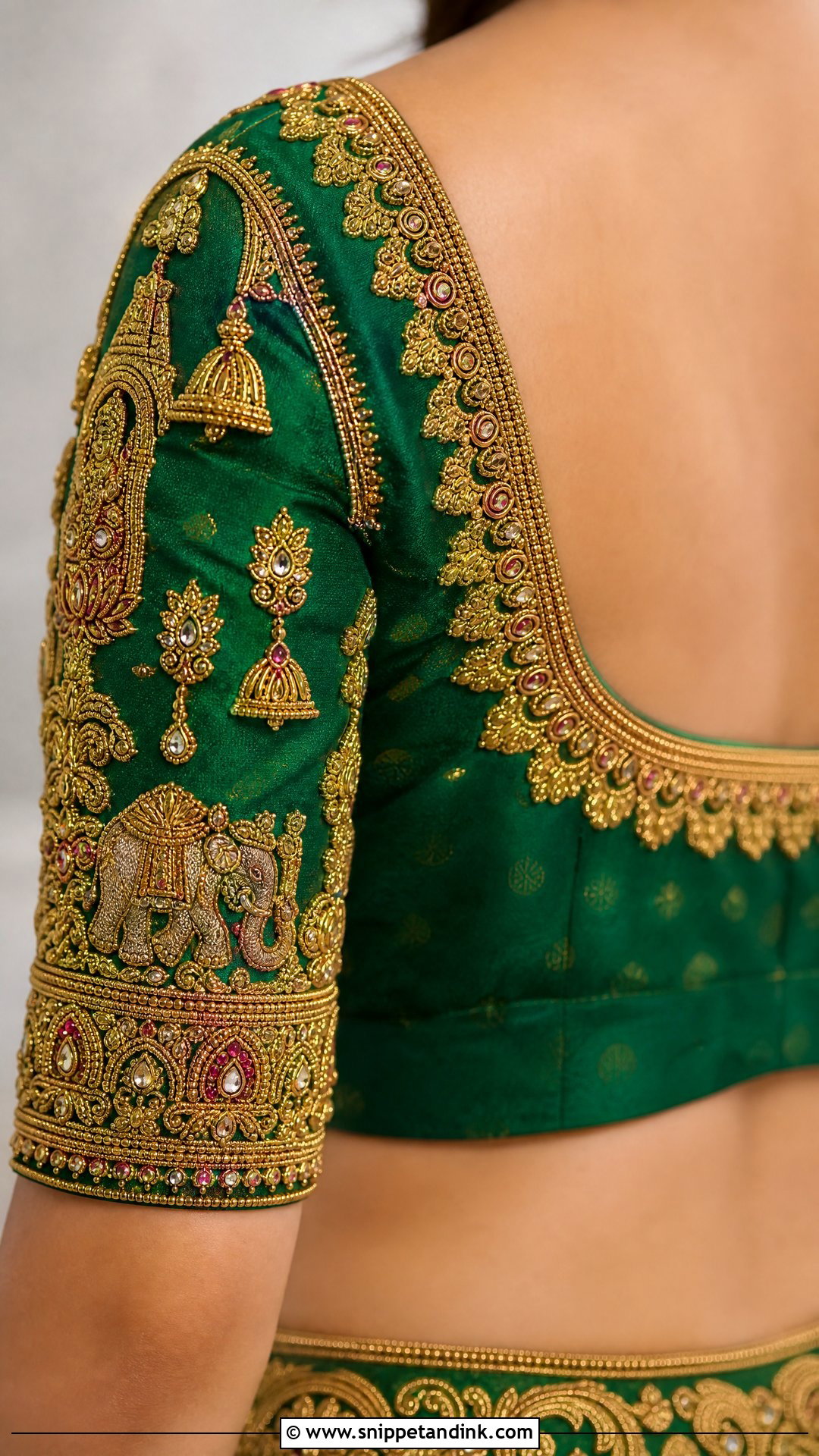
Temple aari takes its shapes from South Indian temple architecture: gopuram borders, bells, lotuses, elephants, all outlined in gold zari. It needs a firm silk, because heavy temple work on soft fabric puckers. I like to echo the saree itself here. If your Kanjivaram has a temple border, give the artisan a photo of it so the blouse repeats that same shape on the sleeve edges and back neckline. Antique gold beads and cutdana add depth without too much shine.
4. Bridal Zardosi Aari Work Blouse
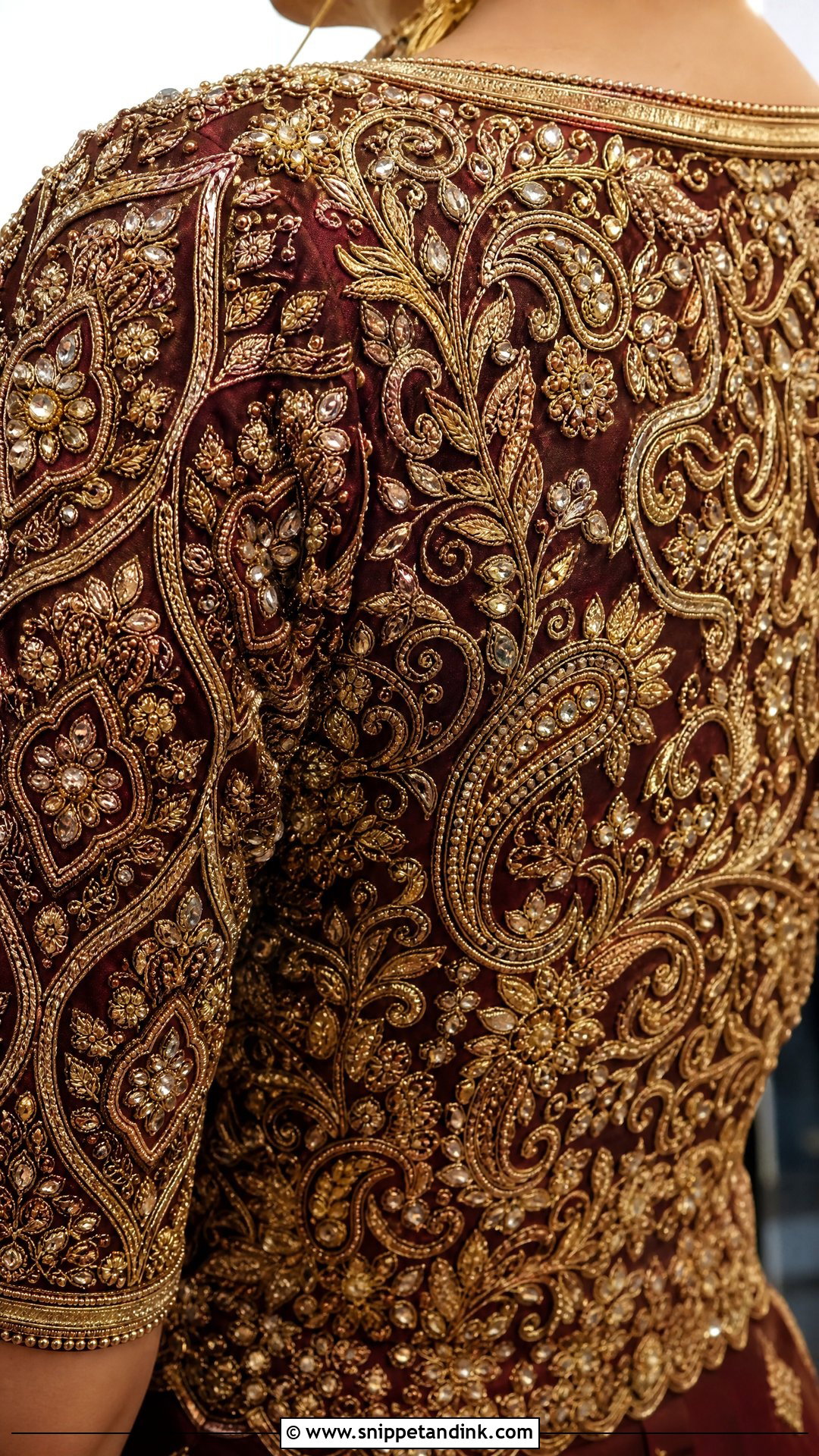
Zardosi uses coiled metal wire and metallic thread to build raised texture, and paired with aari’s fine chain stitch, it gives you both relief and detail. It’s my pick for a reception saree or bridal lehenga that has to hold its own under evening lights. Floral scrolls, paisley panels and royal jaal patterns suit the back and sleeves. Gold, copper, champagne and rose gold look rich on velvet, raw silk and brocade. The honest drawback is weight: heavy zardosi can drag on the shoulders, so insist on a proper lining and a fitting before the final stitching.
5. Bridal Stone Aari Work Blouse
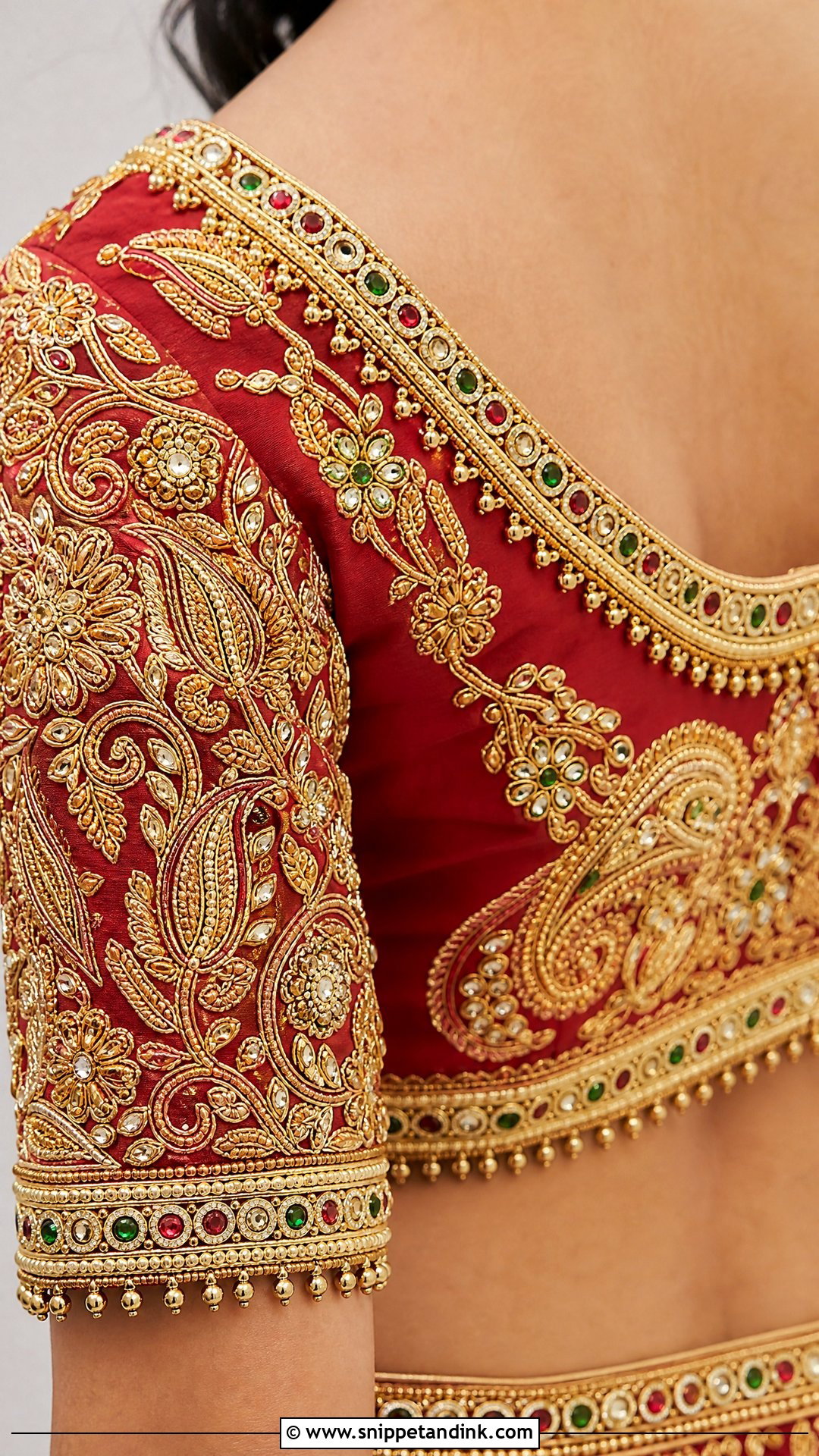
Stones bring sparkle that shows up best at evening functions and receptions. Clear stones read like diamonds, red and green feel traditional, and pastels suit a modern outfit. I want stones placed along floral vines, sleeve borders, back neck patterns and paisley centers, not scattered at random. One practical point: ask whether stones will be stitched in or glued. Stitched stones hold through dry cleaning; glued ones can pop off. And if the saree is already heavy, keep the stones small.
6. Bridal Maggam Aari Work Blouse
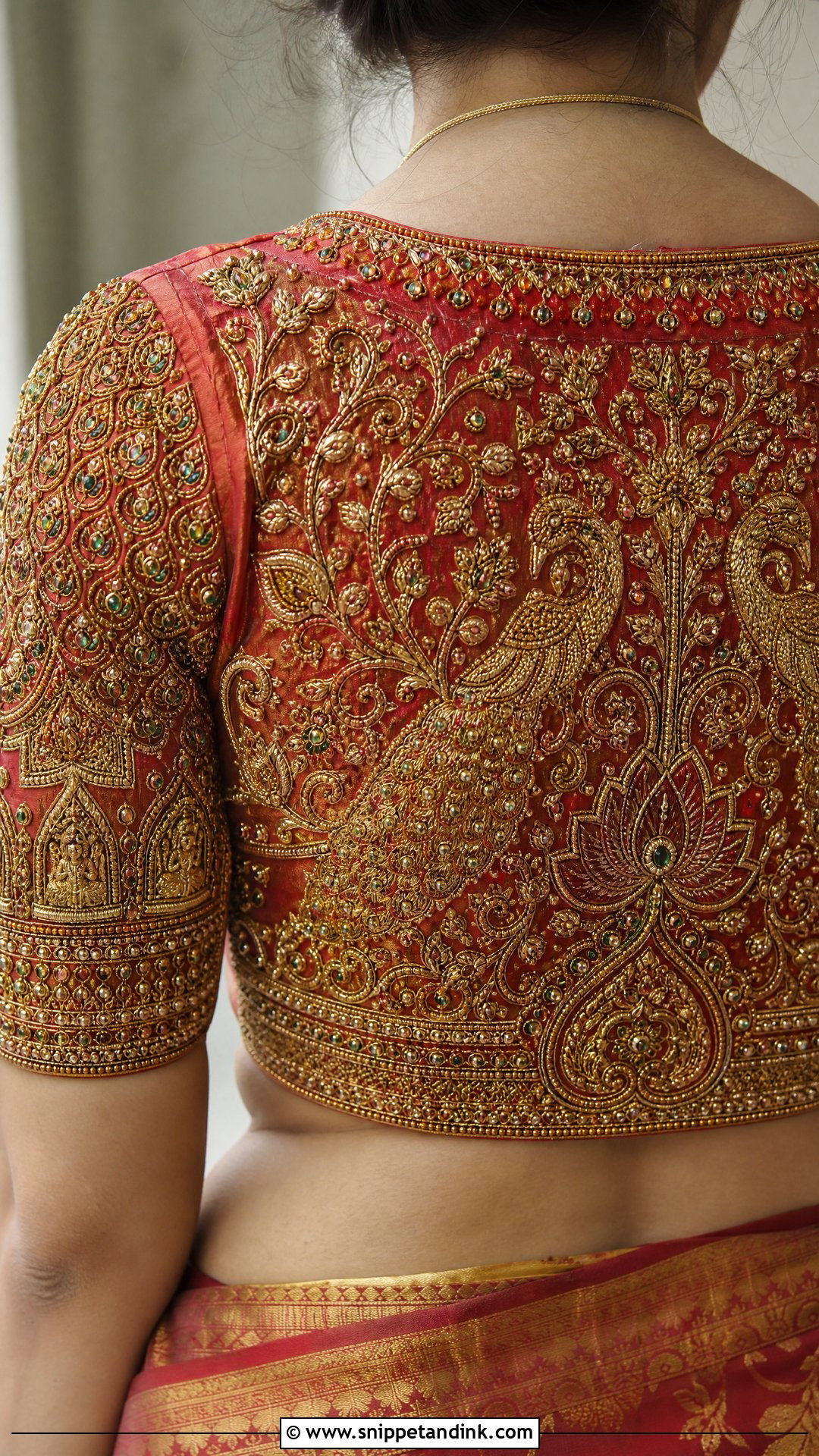
Maggam is essentially the South Indian name for this kind of frame embroidery, so a bridal maggam aari work blouse is about as traditional as it gets. Beads, zari, stones and thread all come together on elbow sleeves, deep back necklines and high necks. Peacocks, lotuses, mangoes, temple borders and bride-groom figures are the usual motifs. Ask for raw silk, silk cotton or pure silk; thin fabric can’t take the weight. A heavy maggam blouse can turn a plain saree into a bridal one, which is a smart move if you’d like to rewear the saree afterward.
7. Bridal Floral Aari Work Blouse
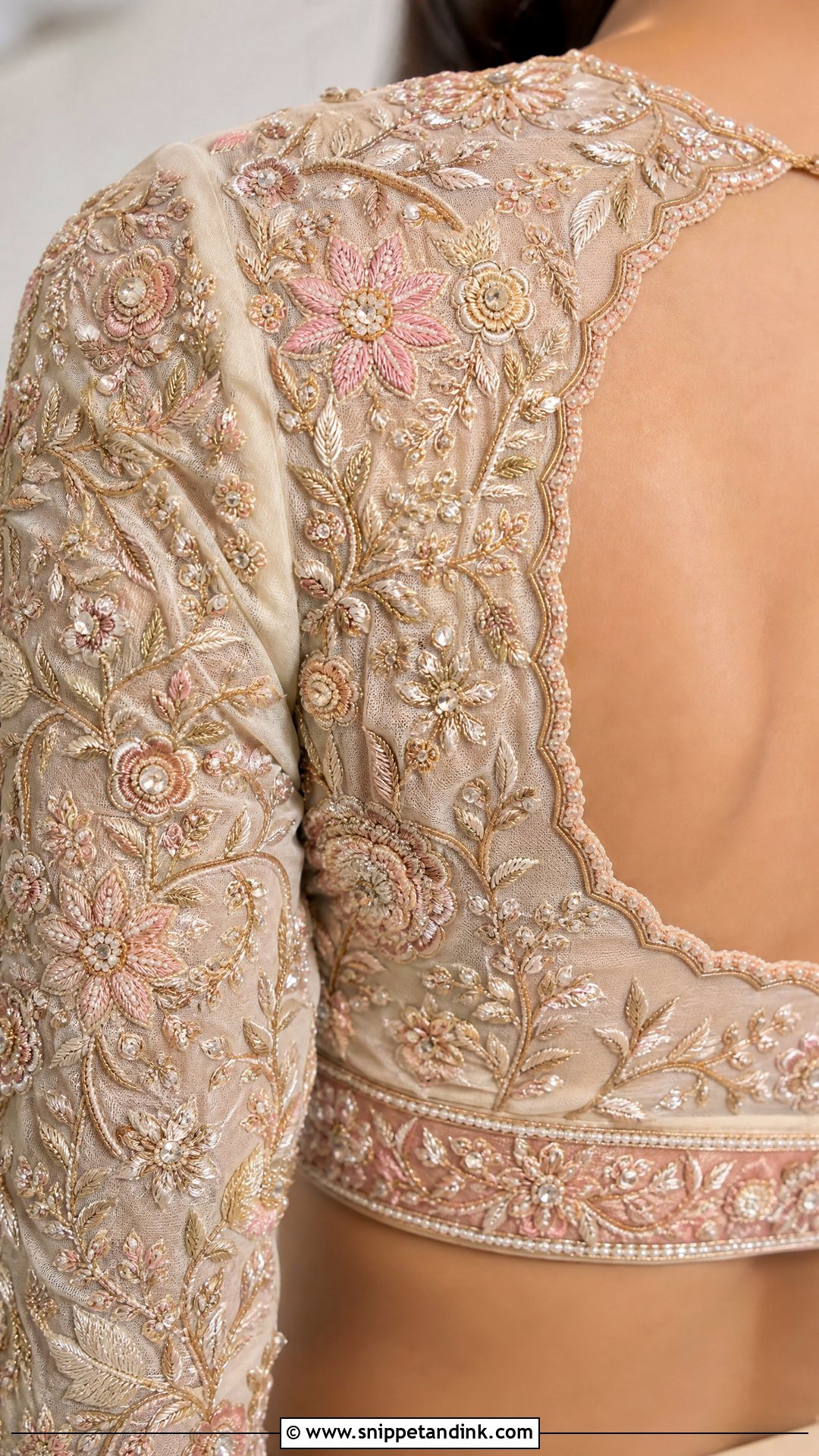
Floral work is what I suggest to brides who want something wearable after the wedding. Flowers can be stitched in zari, silk thread, beads, sequins or stones, so the same layout scales from a light mehndi blouse to a full bridal one. A floral jaal over the sleeves looks grand, while scattered flowers on the back feel delicate. With pastel sarees, I’d use blush, ivory, mint or lavender thread; with traditional silks, gold and maroon. This is also the design I’d give sisters and bridesmaids, with lighter detailing than the bride’s.
8. Bridal Paisley Aari Work Blouse
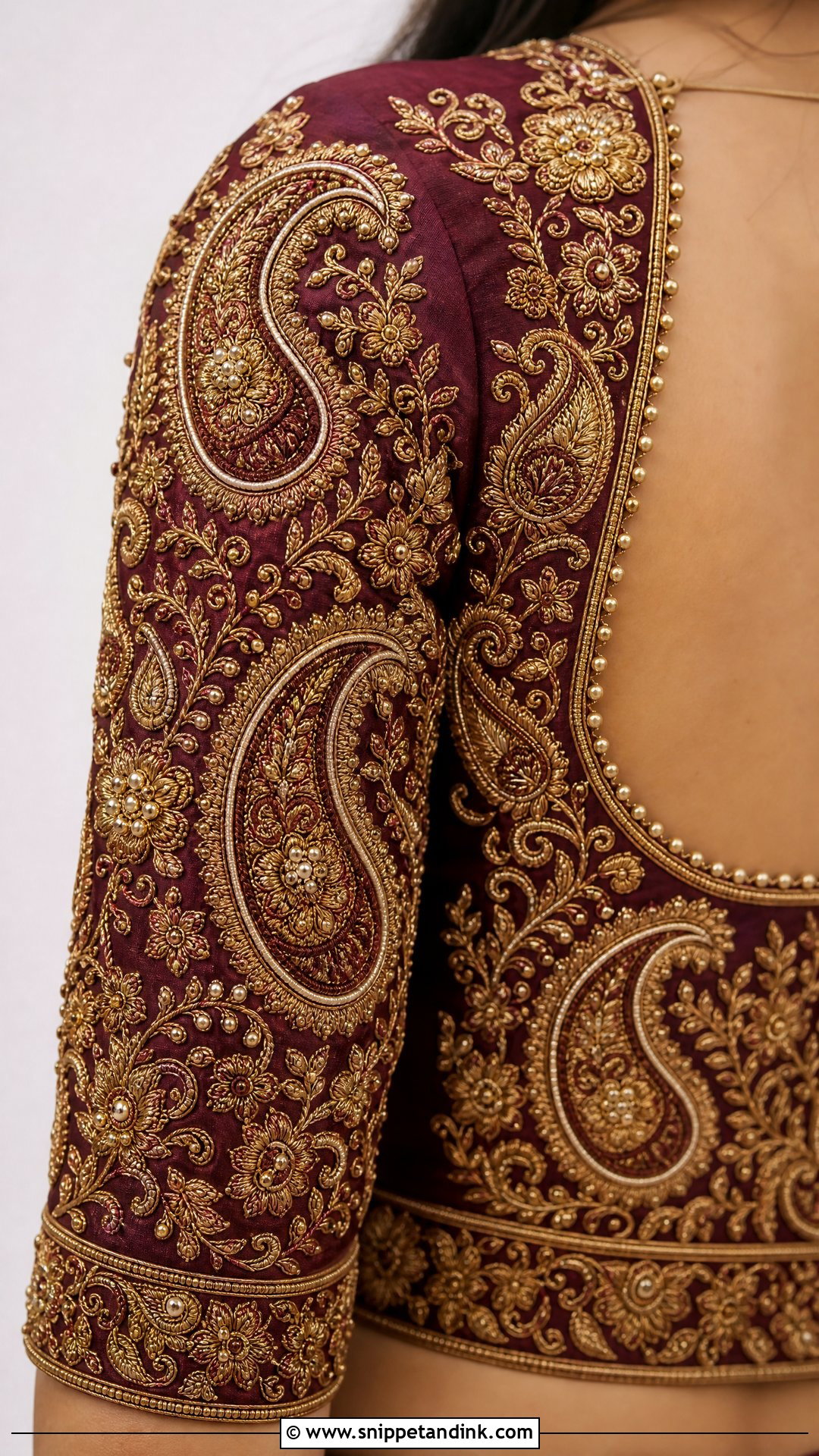
Paisley, called mango in many bridal designs, is the motif that never looks dated. Large paisleys filled with beads, zari curls, small flowers and stone centers look grand on the back; paisley vines around the neck and sleeves look cleaner. It pairs well with Kanjivaram, Banarasi, Paithani and pattu sarees. Since it holds its appeal for years, it’s a good choice if you want the blouse to be part of your trousseau rather than a one-time outfit.
9. Bridal Full Sleeve Aari Work Blouse
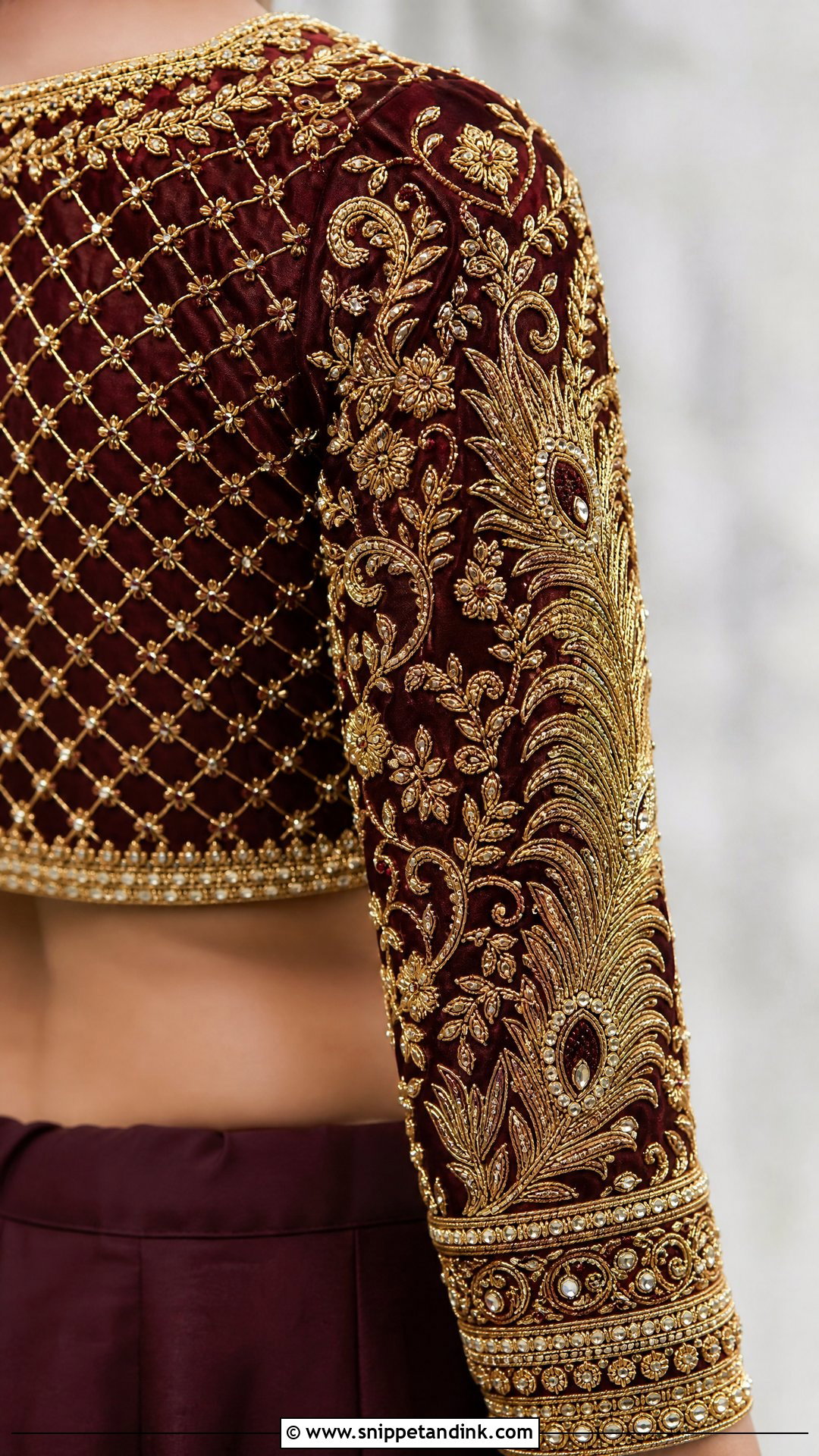
Full sleeves turn the arms into the main design area, which suits winter weddings, temple ceremonies and brides who prefer coverage. Floral vines, peacock feathers, jaal, stones and zari borders can run from shoulder to wrist. Sheer net sleeves with aari feel modern; silk sleeves feel traditional. I always ask the tailor to leave a little ease at the elbow, because embroidered sleeves don’t stretch and you’ll be raising your arms during rituals. If the back is heavy, space out the sleeve pattern; if the saree is plain, let the sleeves carry the look.
10. Bridal Elbow Sleeve Aari Work Blouse
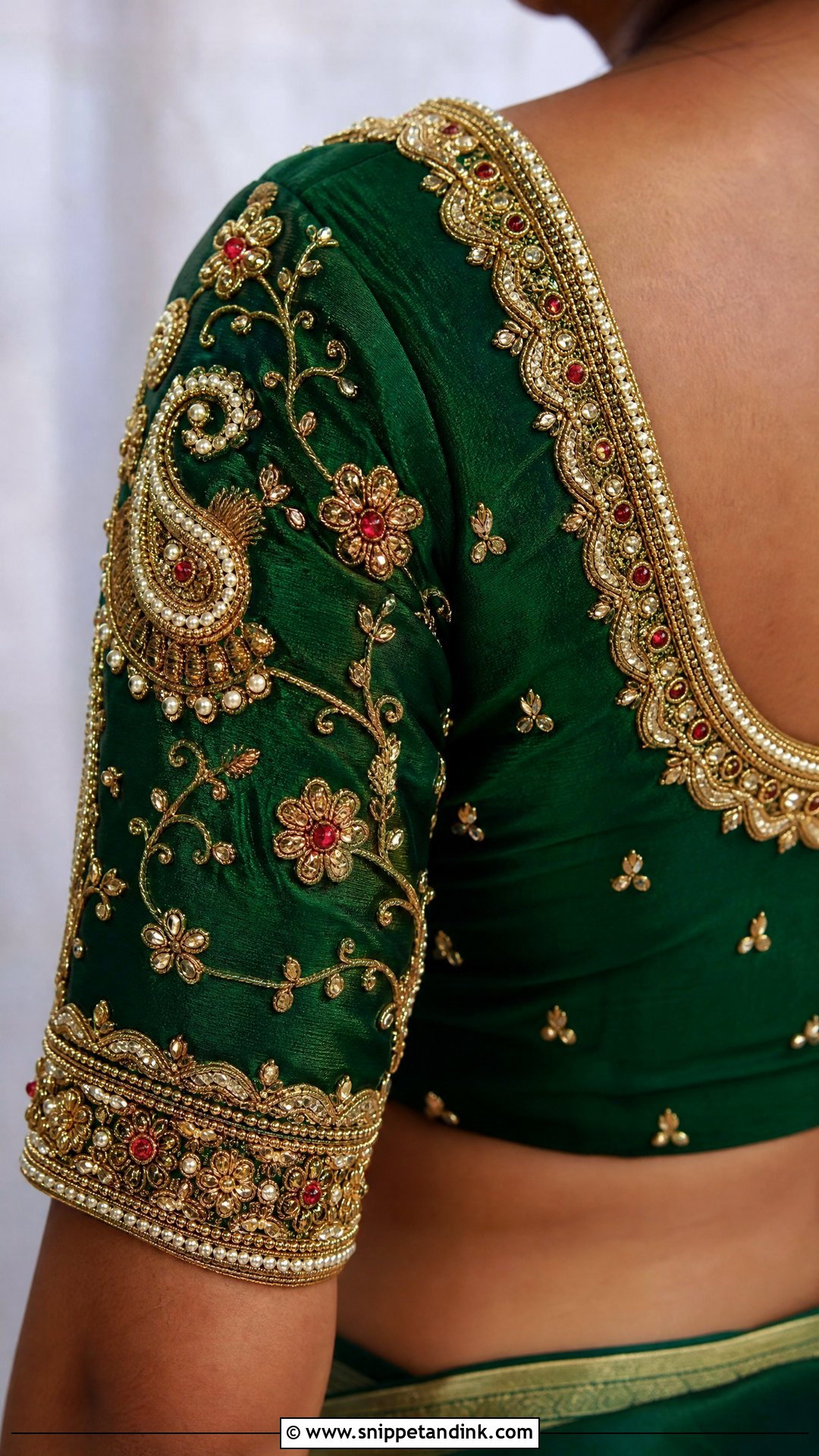
Elbow sleeves are the length I recommend most often with silk sarees. There’s room for a detailed border at the cuff, a floral band or a peacock motif, with lighter scattered work toward the shoulder. That gradient keeps the blouse comfortable and balanced. Elbow sleeves sit right where bangles and armlets show, so plan the cuff work alongside your jewelry. Gold zari on red, green, purple or mustard is classic; pearl outlines or pastel thread give it a modern touch.
11. Bridal Back Neck Aari Work Blouse
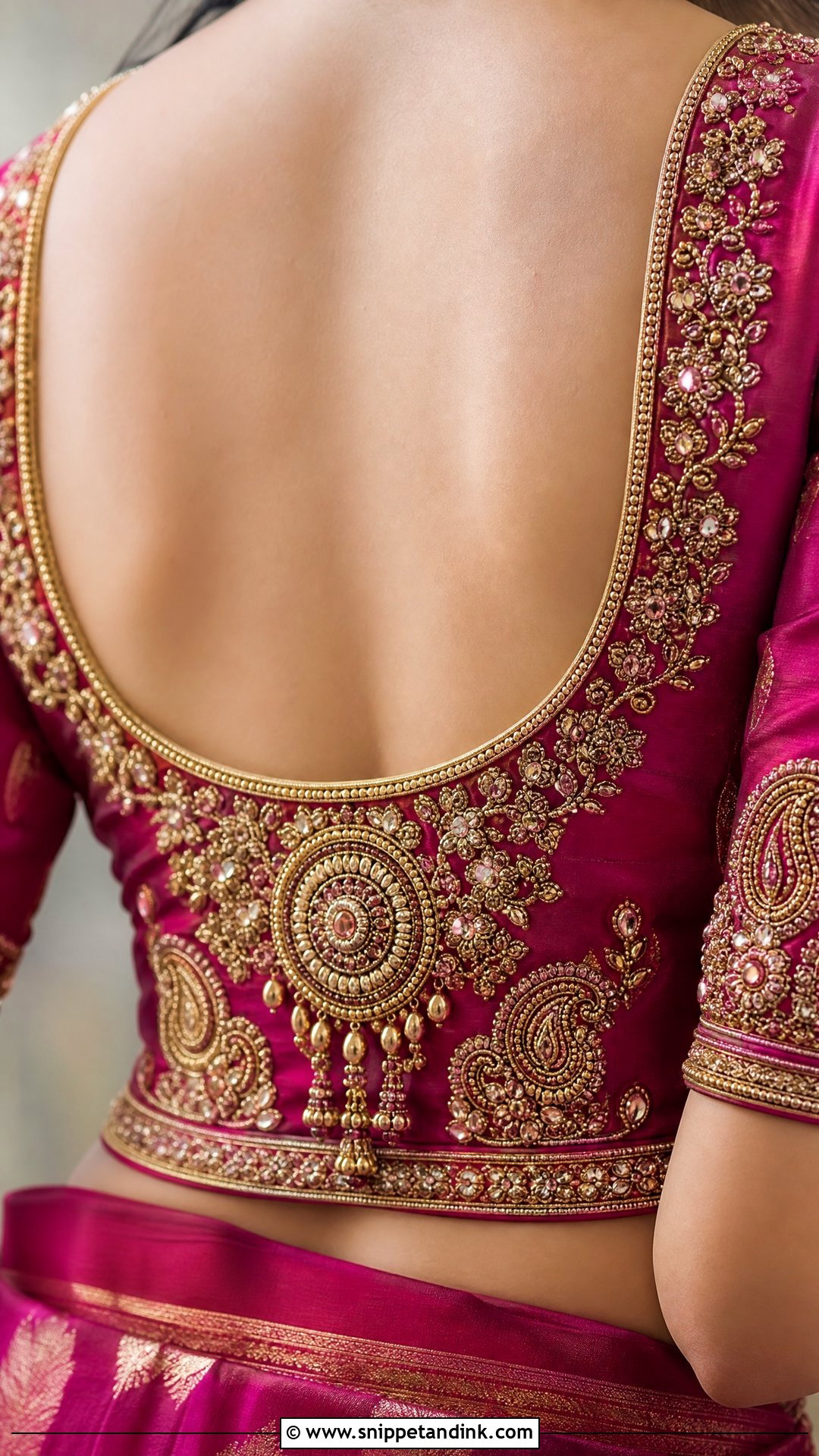
The blouse back is in more photos than brides expect, especially while the saree is being draped and during the ceremony. A round motif, deep U border, peacock pair, floral arch, temple frame or initials can all go here. Tassels, bead drops or embroidered latkans add movement. The key question is the pallu: if it’s heavy, it will cover most of the back, so choose a bold border that still shows. With a light pallu, a fully embroidered back is worth the investment. Make sure the shape is comfortable and secure.
12. Bridal High Neck Aari Work Blouse
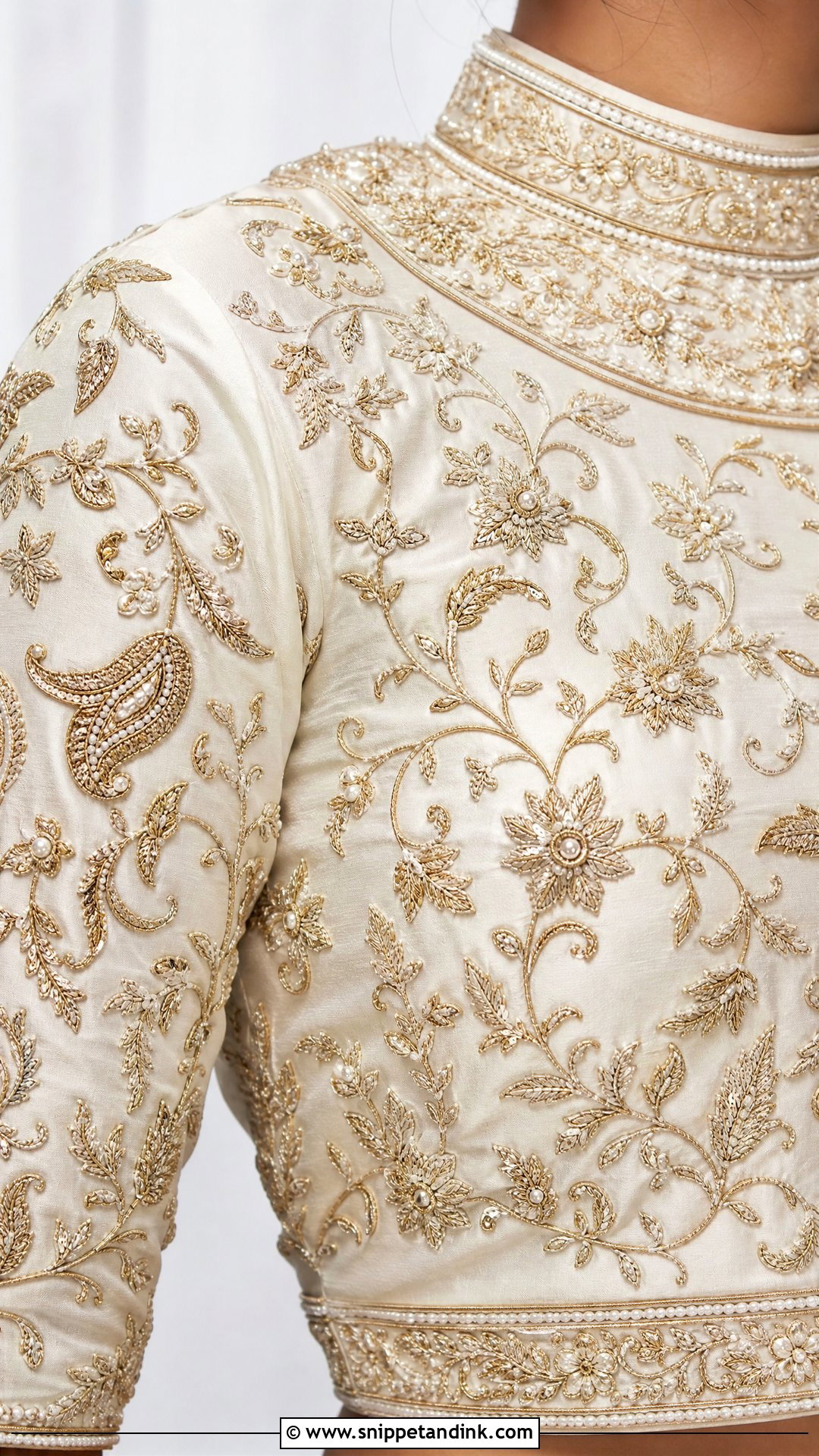
A high neck puts the embroidery right at the collar, shoulders and sleeves. It suits plain silk sarees, reception sarees and lehengas. Fine zari vines, bead lines, floral collars or temple patterns all work at the neck. I’d ask for a back or side opening and a collar that isn’t tight, since bridal events run for hours and an embroidered collar won’t give. Skip the heavy necklace; statement earrings let the collar embroidery show.
13. Bridal Boat Neck Aari Work Blouse
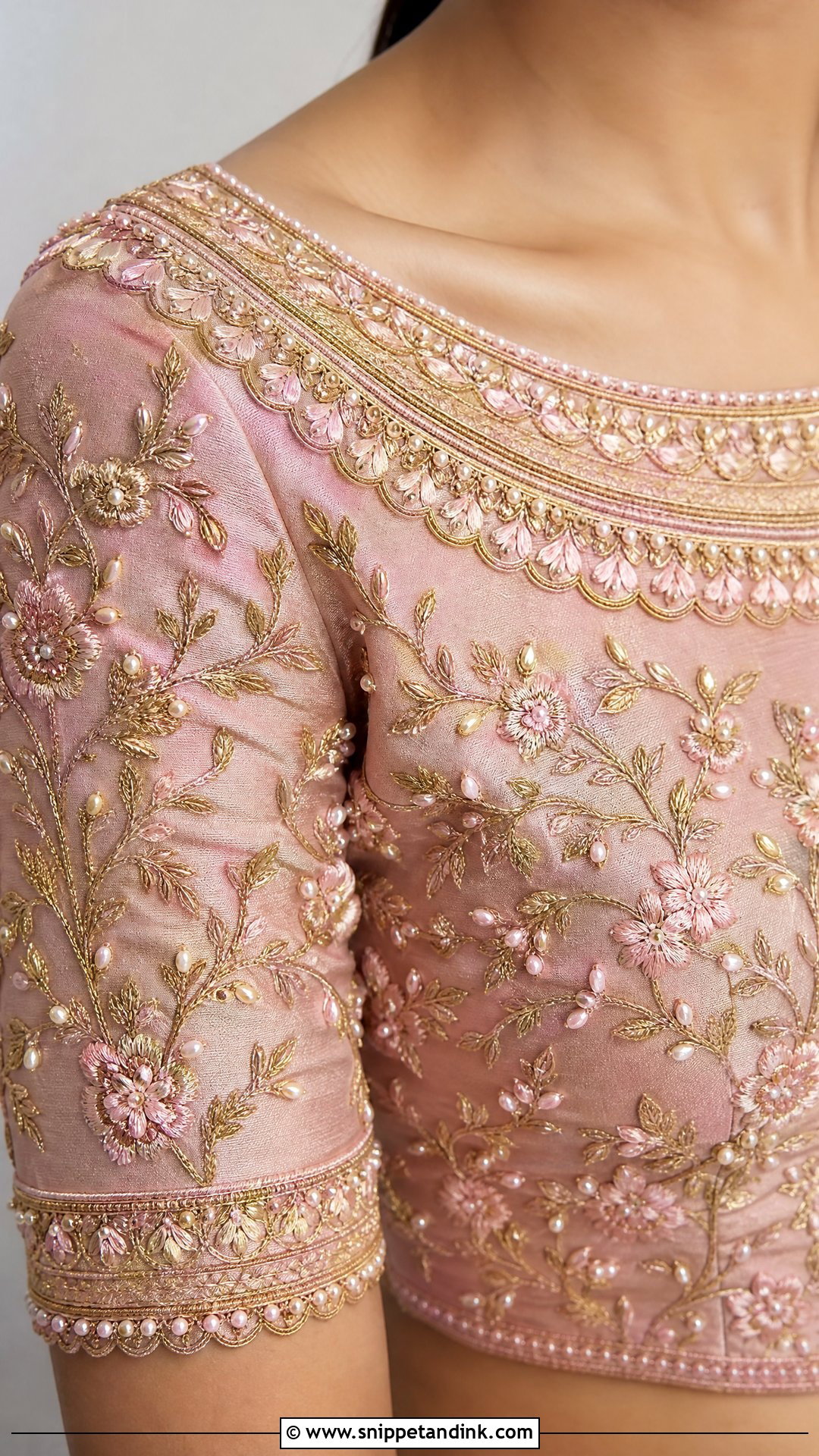
A boat neck aari work blouse frames the collarbone and shoulders with a wide, shallow neckline. It’s a good option if you don’t want a deep neck. I continue the embroidery from the front neckline over the shoulders so it looks like one piece. Floral vines, small paisleys, bead dots and zari scallops suit it. It pairs well with heavy silk sarees because it doesn’t fight the pallu, and for a reception, tone-on-tone thread with pearls or stones looks polished.
14. Bridal Deep Back Aari Work Blouse
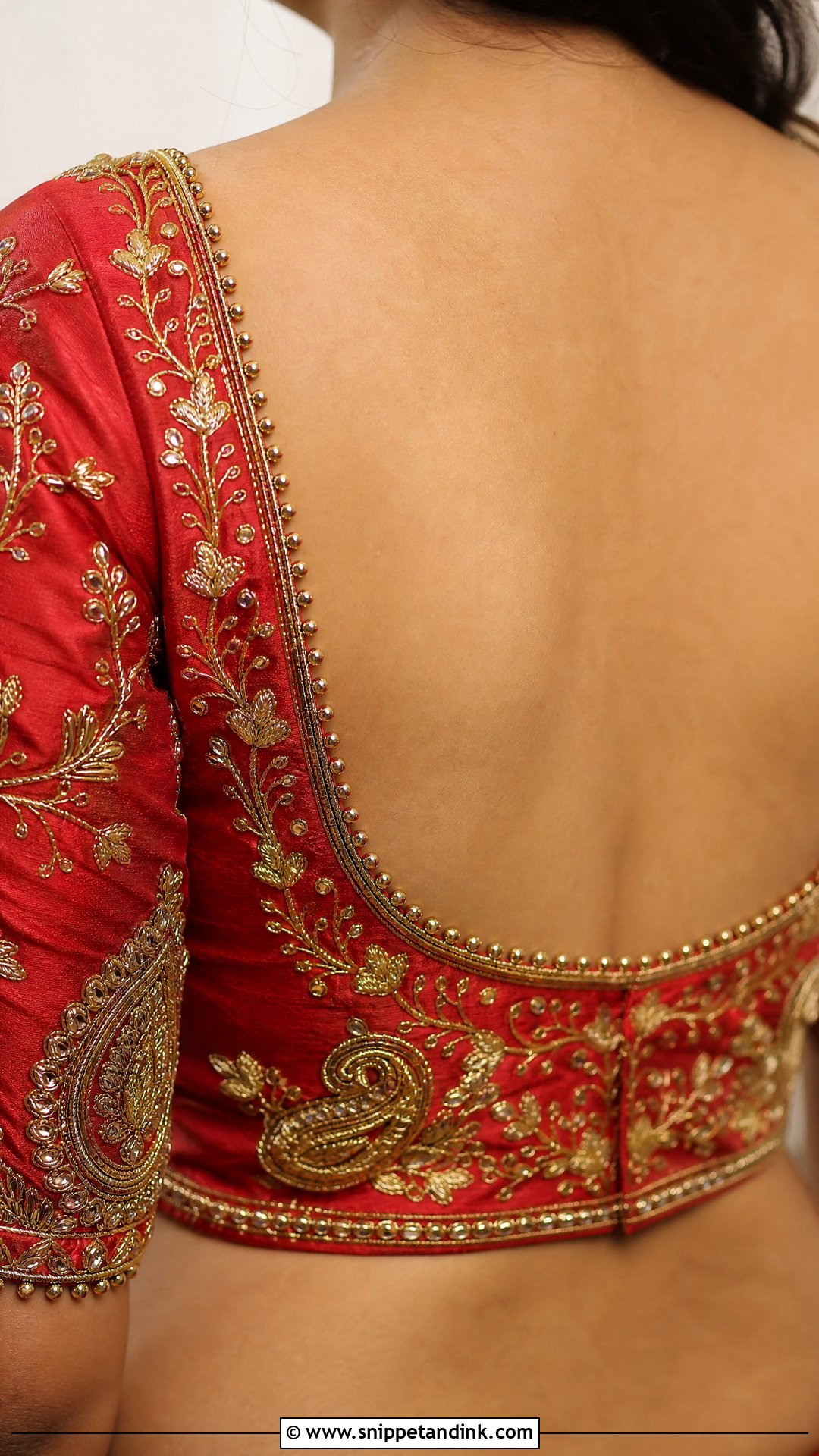
A deep back is the most dramatic shape here, and the embroidered border around the cut does all the work. Round, square, V or potli-tie backs can all be framed with aari borders in zari, stones, beads and small florals. A hanging tassel or embroidered dori finishes it. If you want coverage, a sheer embroidered panel over a deep back is a good compromise. The structure matters: deep backs on silk or velvet need firm stitching and support so the blouse doesn’t slip off the shoulders.
15. Bridal Cutwork Aari Work Blouse
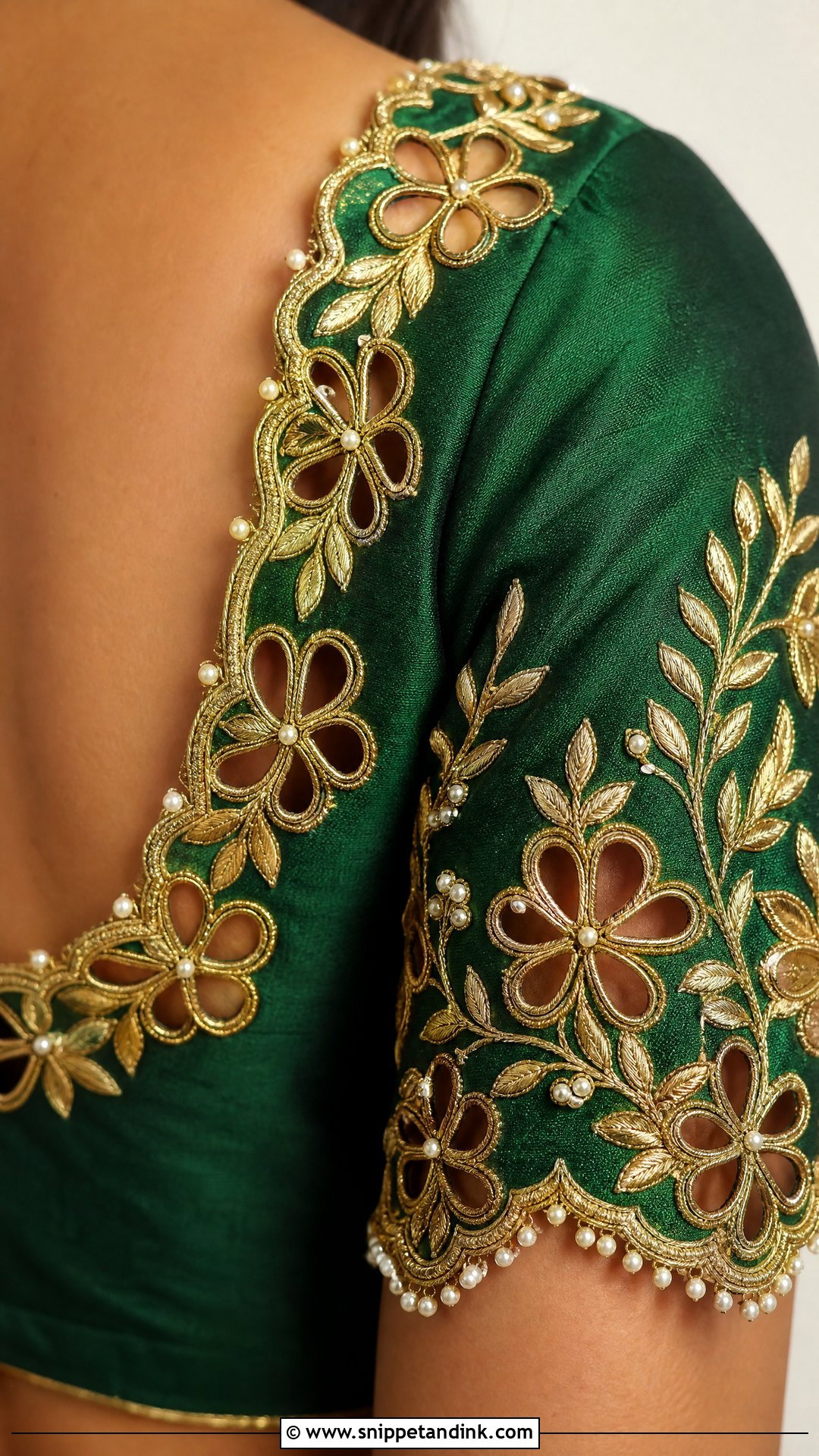
Cutwork creates shaped edges around flowers, leaves, scallops or borders, so the blouse looks almost like lace. It suits sleeves, back necklines and hems. It’s one of the more delicate options in this list, and the finishing has to be clean, because loose threads at the cut edge fray fast. That makes the artisan’s skill very important here. Gold zari and small beads keep it bridal; on sheer sleeves or organza, it looks modern.
16. Bridal Mirror Aari Work Blouse
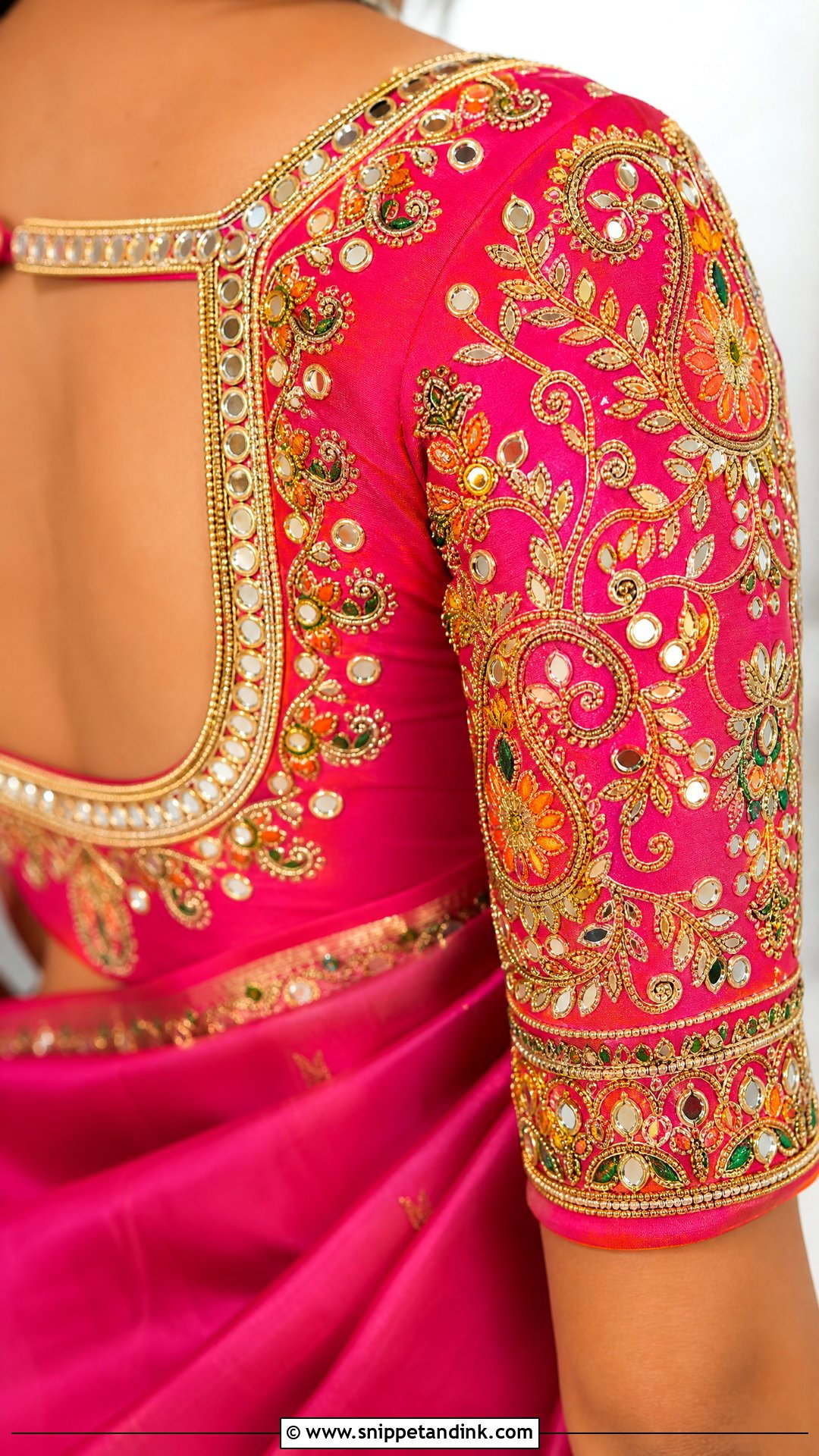
Mirror work is cheerful, and I love it for mehndi, haldi, sangeet or a colorful reception lehenga. Small mirrors sit inside florals, paisleys, sleeve borders or a scattered jaal, each one held by a ring of gold thread. Tiny round mirrors with antique beads feel traditional; mirror work with pastel thread on ivory, peach or mint feels modern. Keep the mirrors small. Large ones dig in when you sit, and their edges can catch the saree when you drape.
17. Bridal Pearl Aari Work Blouse
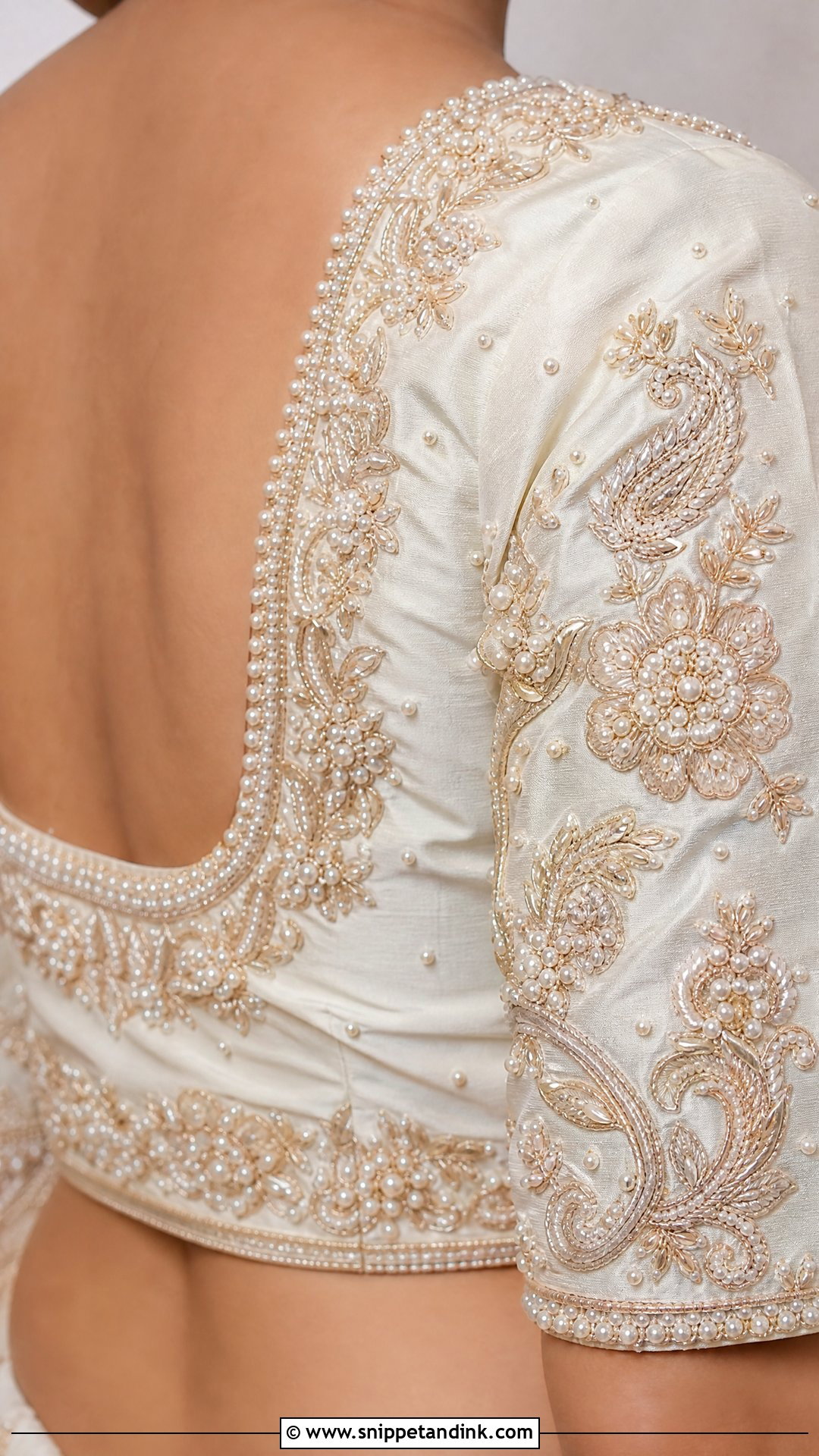
Pearls soften aari work, which is why I use them on ivory, blush, champagne, powder blue and pastel green outfits. They can outline flowers, fill paisley centers, decorate sleeve cuffs or form a neat neckline border. Pearl clusters with gold beads on raw silk or velvet look royal; single pearl lines at the neck and sleeves look minimal. Check that each pearl is stitched through, not glued, because loose pearls are the first thing to fall off during a long day.
18. Bridal Bead Aari Work Blouse
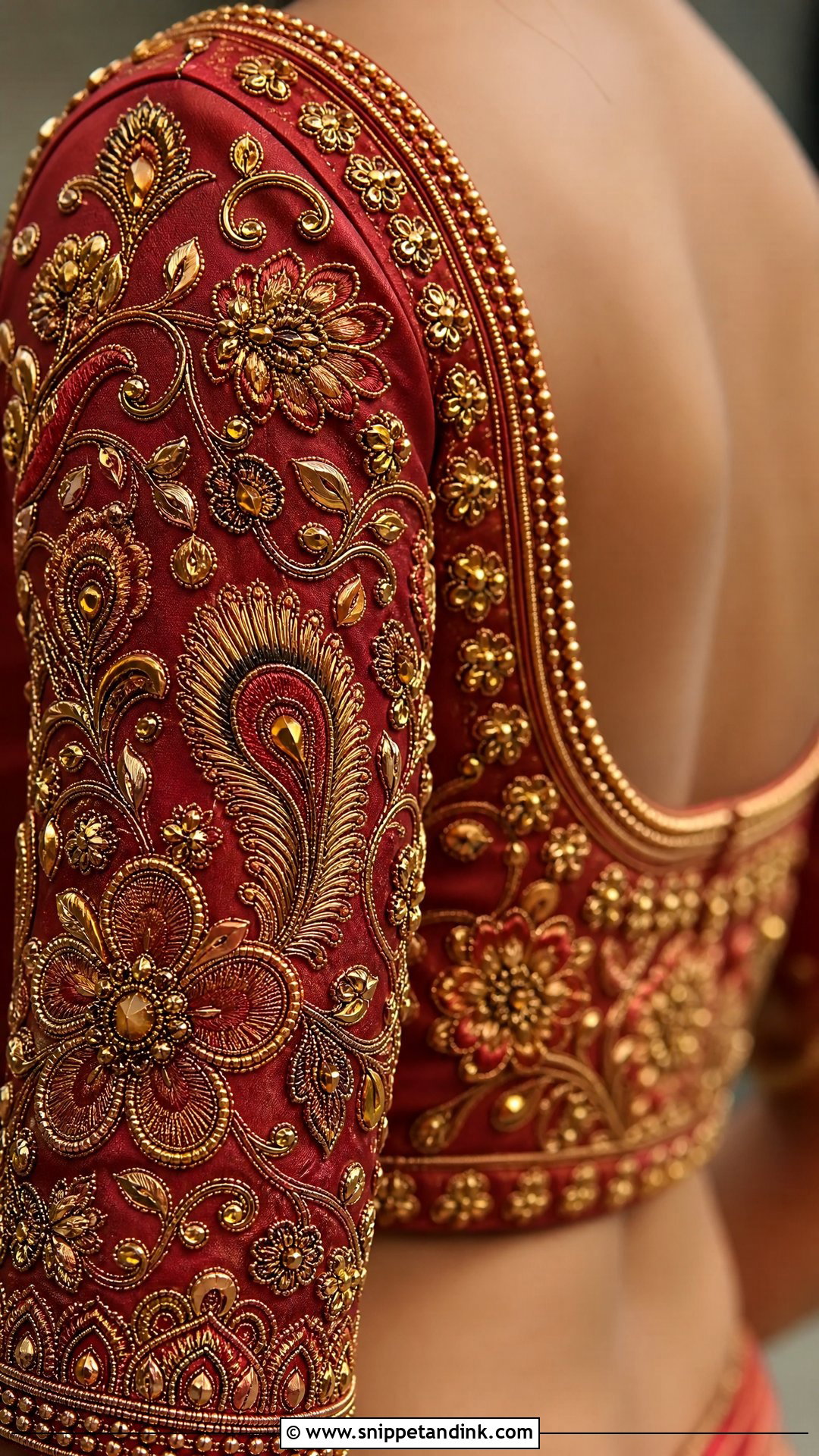
Beadwork is about texture rather than shine. Beads build borders, fill petals, outline paisleys and add depth to peacock feathers, and they look best up close. Antique gold beads suit traditional sarees; pearl, silver or colored beads suit modern outfits. A full bead sleeve can get heavy, so I balance it with lighter work on the front. Matte beads also behave well in photos, without the glare that shiny stones sometimes give under flash.
19. Bridal Thread Aari Work Blouse
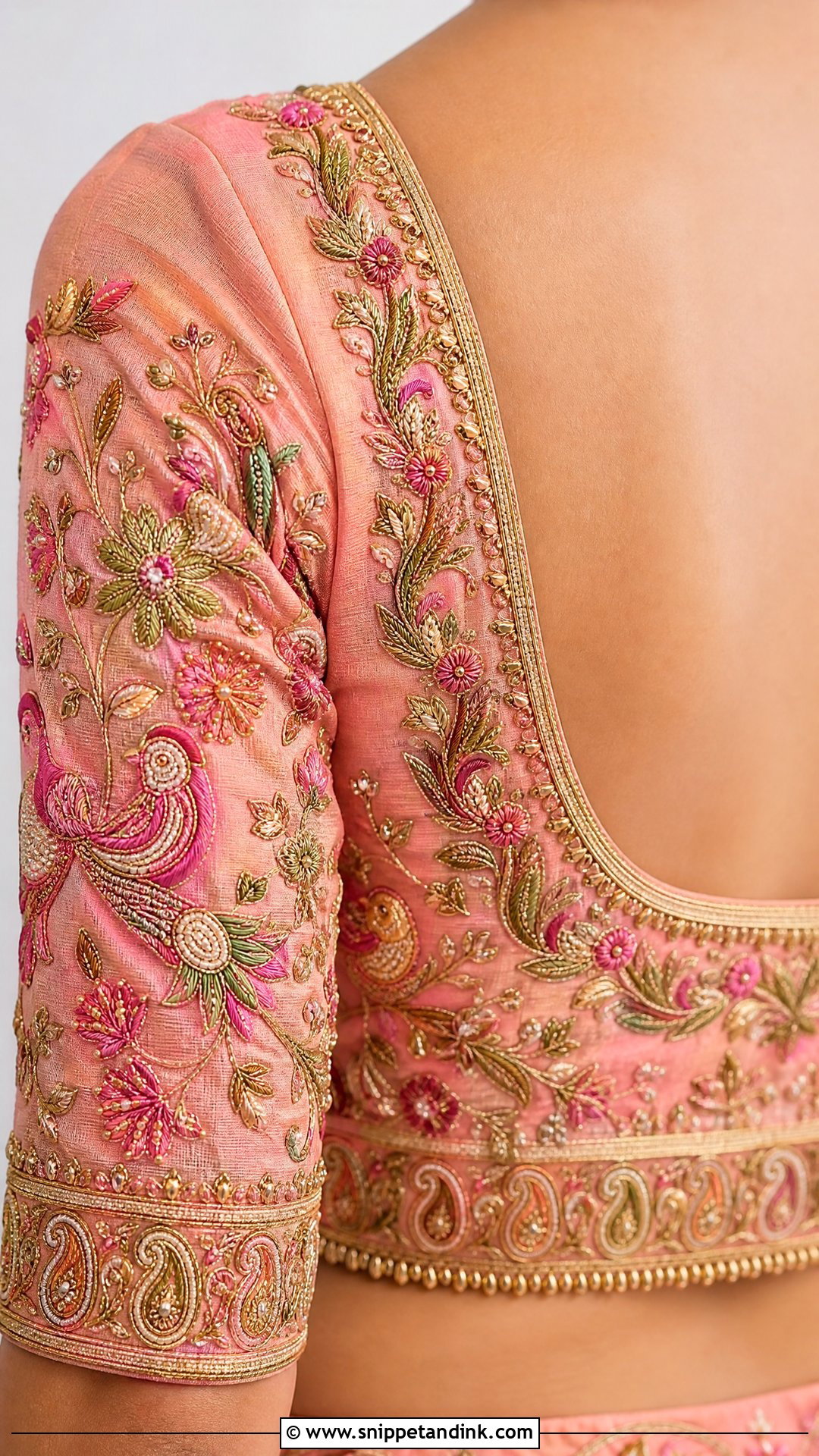
Thread aari uses silk or resham thread rather than stones and metal, so it’s softer, lighter and more colorful. Flowers, vines, birds, paisleys and borders all work in thread. It suits pastel sarees and floral lehengas, and it’s the most comfortable option for a long ceremony. Tone-on-tone thread looks refined; contrast thread looks bolder. Adding a little zari or beadwork makes it feel more bridal without adding much weight.


20. Bridal Jaal Aari Work Blouse
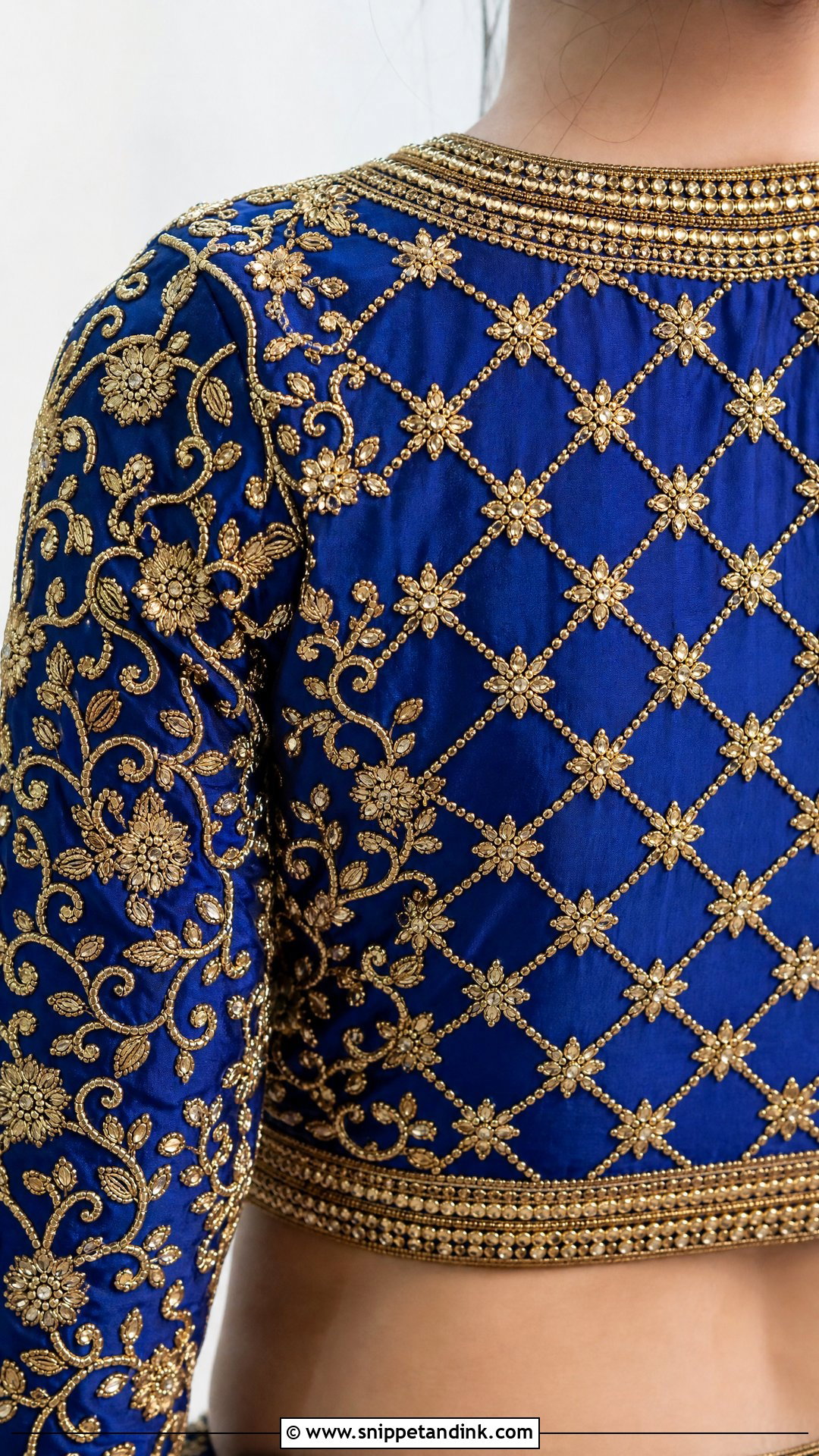
Jaal is a repeating, net-like layout of flowers, vines, diamonds or small motifs that covers a whole area. On a blouse back, full sleeves or a lehenga choli it looks grand. Pair a heavy jaal blouse with a plain or lightly bordered saree for contrast. Spaced floral jaal with tiny beads is soft; dense zari jaal with stone centers is royal. Balance is everything here. With full jaal, I keep the neckline simple and the fit clean so the outfit doesn’t look busy.
21. Bridal Name Aari Work Blouse
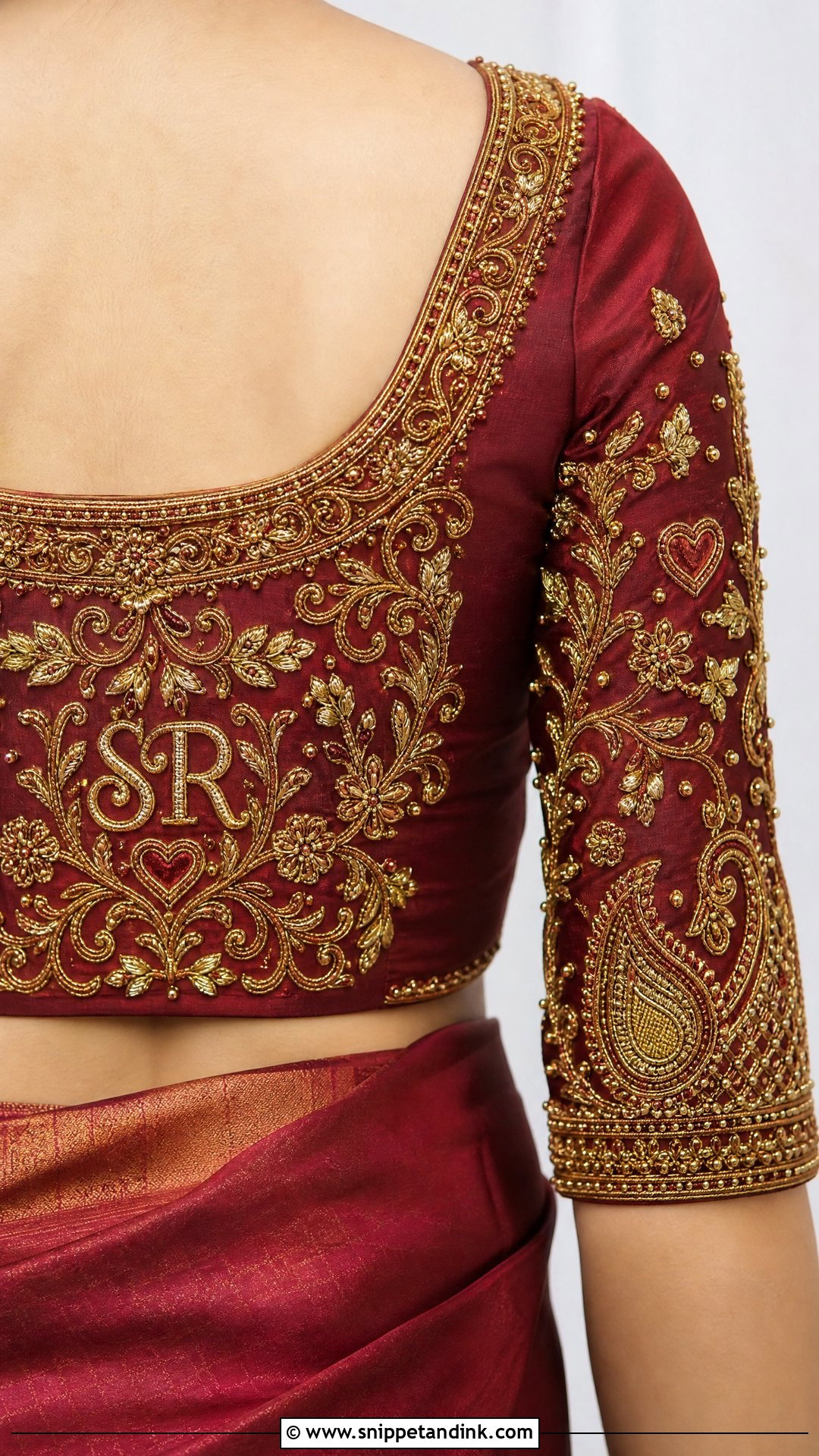
A name blouse hides the couple’s names, initials, wedding date or a meaningful symbol in the back design or sleeve motif. The lettering can sit inside a floral vine, beneath a peacock or along the border. Keep the letters fine and small, stitched in zari or thread, so they look like part of the embroidery rather than a label. Lotuses, hearts, bells or temple elements can surround them. Double-check spelling on the artisan’s paper tracing before stitching starts; it can’t be undone once it’s worked.
22. Bridal Bride Groom Aari Work Blouse
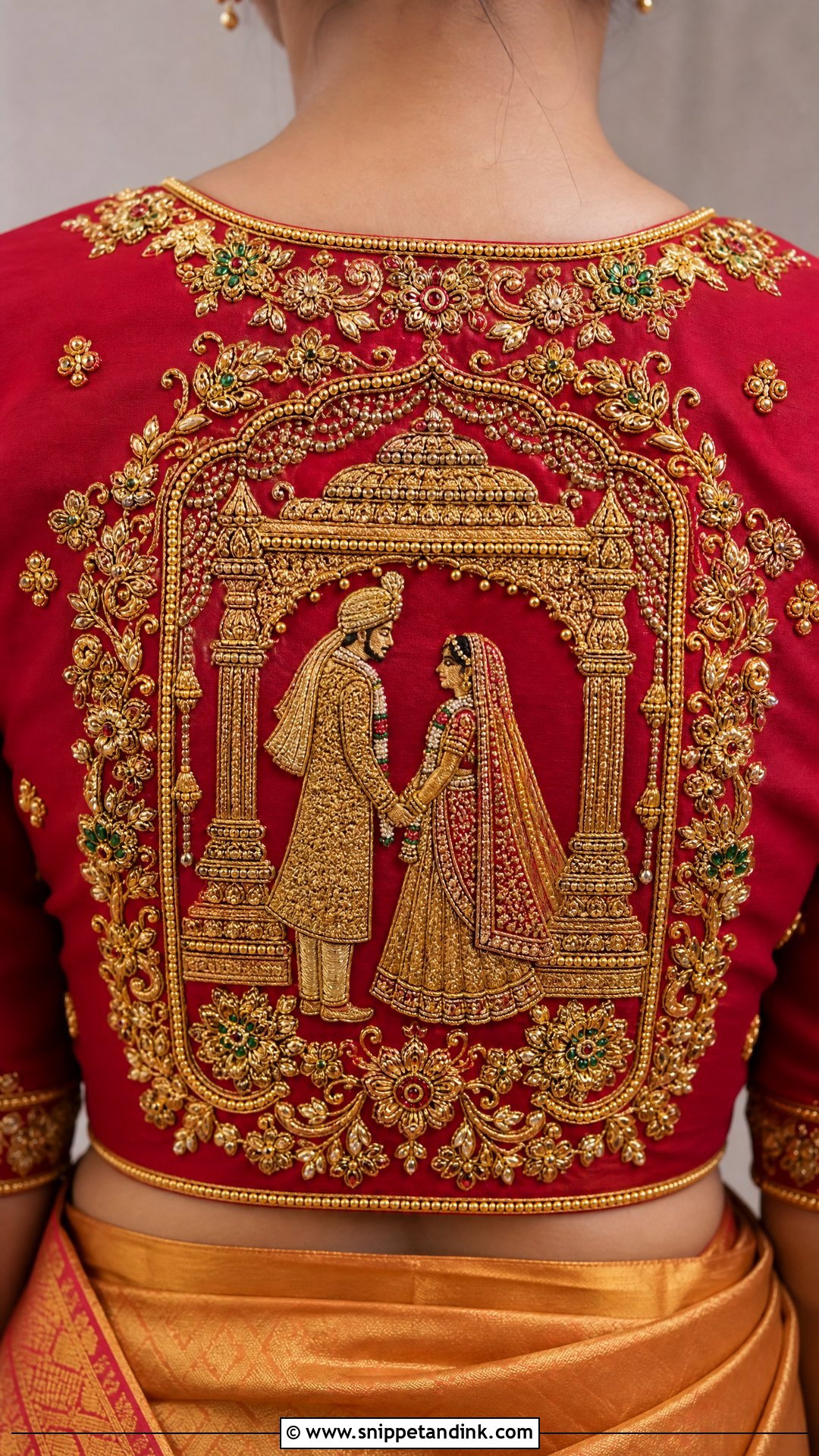
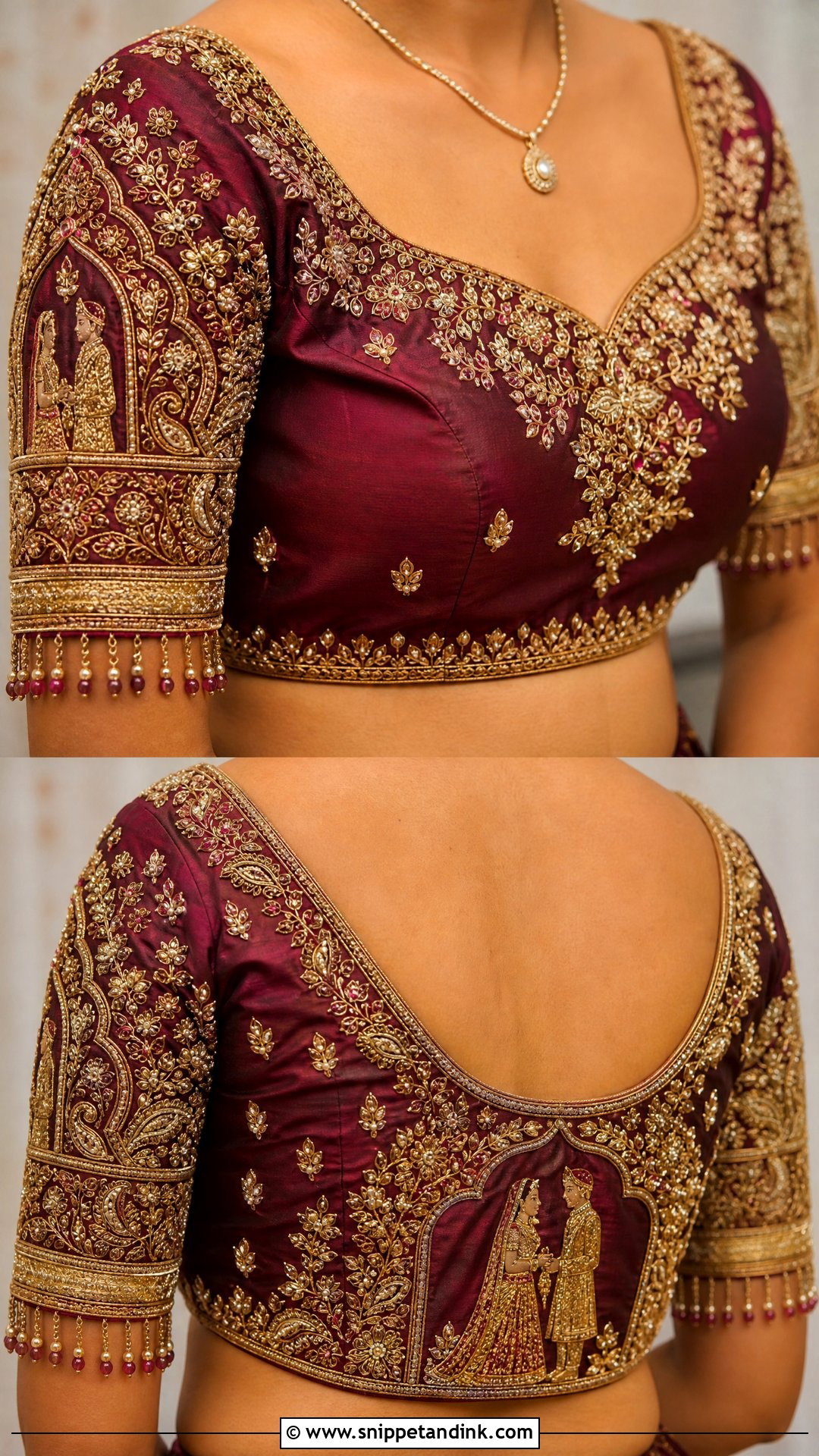
A bride-groom blouse tells a story on your back: a wedding couple, a varmala scene, a mandap outline or traditional figures. It needs space, so it suits larger blouse backs, where the artisan can fit facial outlines, clothing, jewelry and borders. I keep the sleeves simple when the back has a full scene. Antique zari, resham thread, small stones and beads add depth. This is the most personal design on the list, and the one I’d book earliest, because detailed figure work takes time.
23. Bridal Minimal Aari Work Blouse
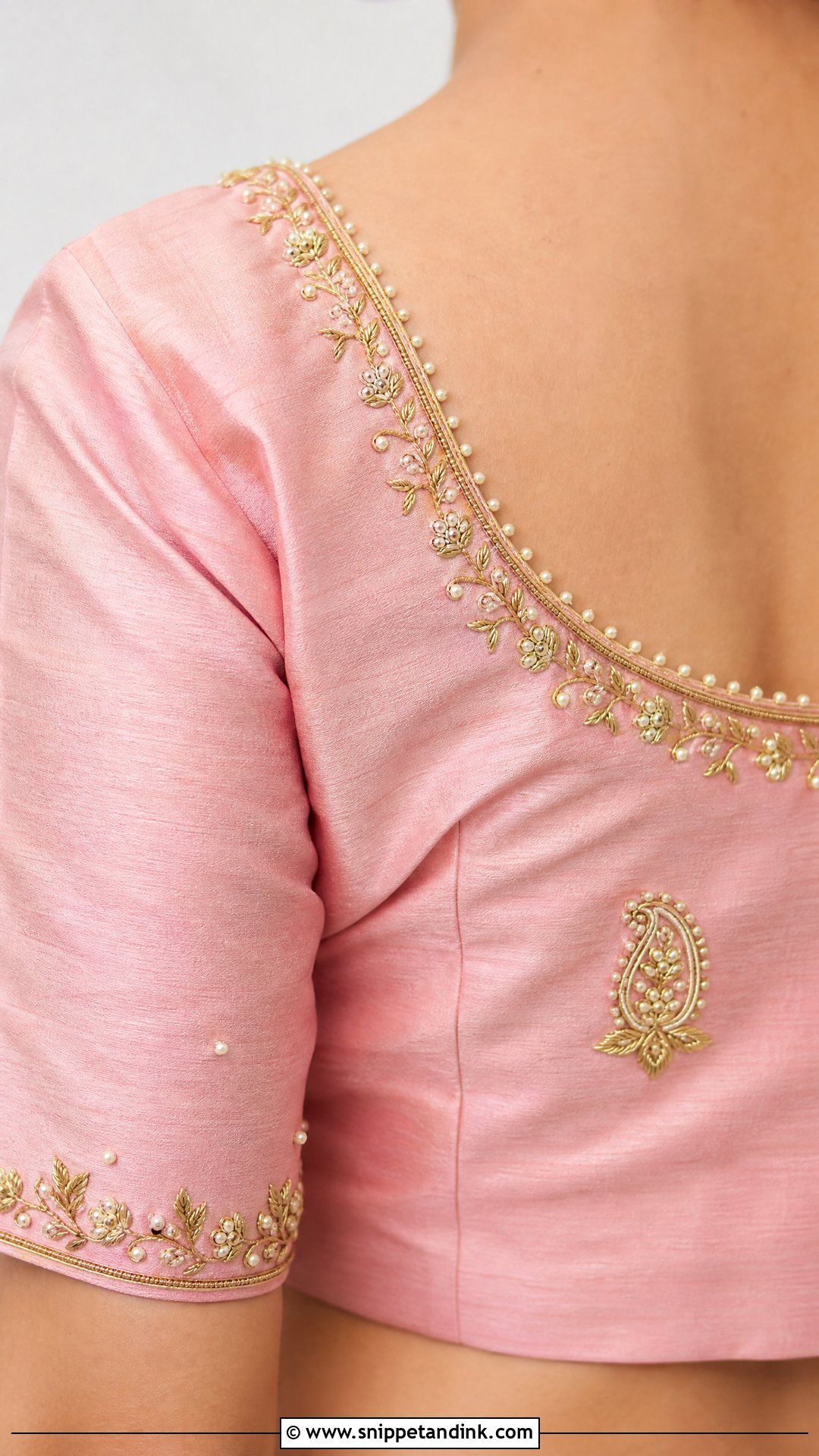
Not every bride wants heavy embroidery, and a minimal aari blouse can look just as bridal. Clean borders, small floral vines, simple sleeve cuffs and neat neckline work are enough. It suits lightweight silk sarees, intimate weddings, pre-wedding rituals and brides who prioritize comfort. It’s also the right call when the saree is already very rich. Fine gold zari, small pearls or tone-on-tone thread keep it refined. And it’s the easiest blouse to rewear after the wedding.
24. Bridal Velvet Aari Work Blouse
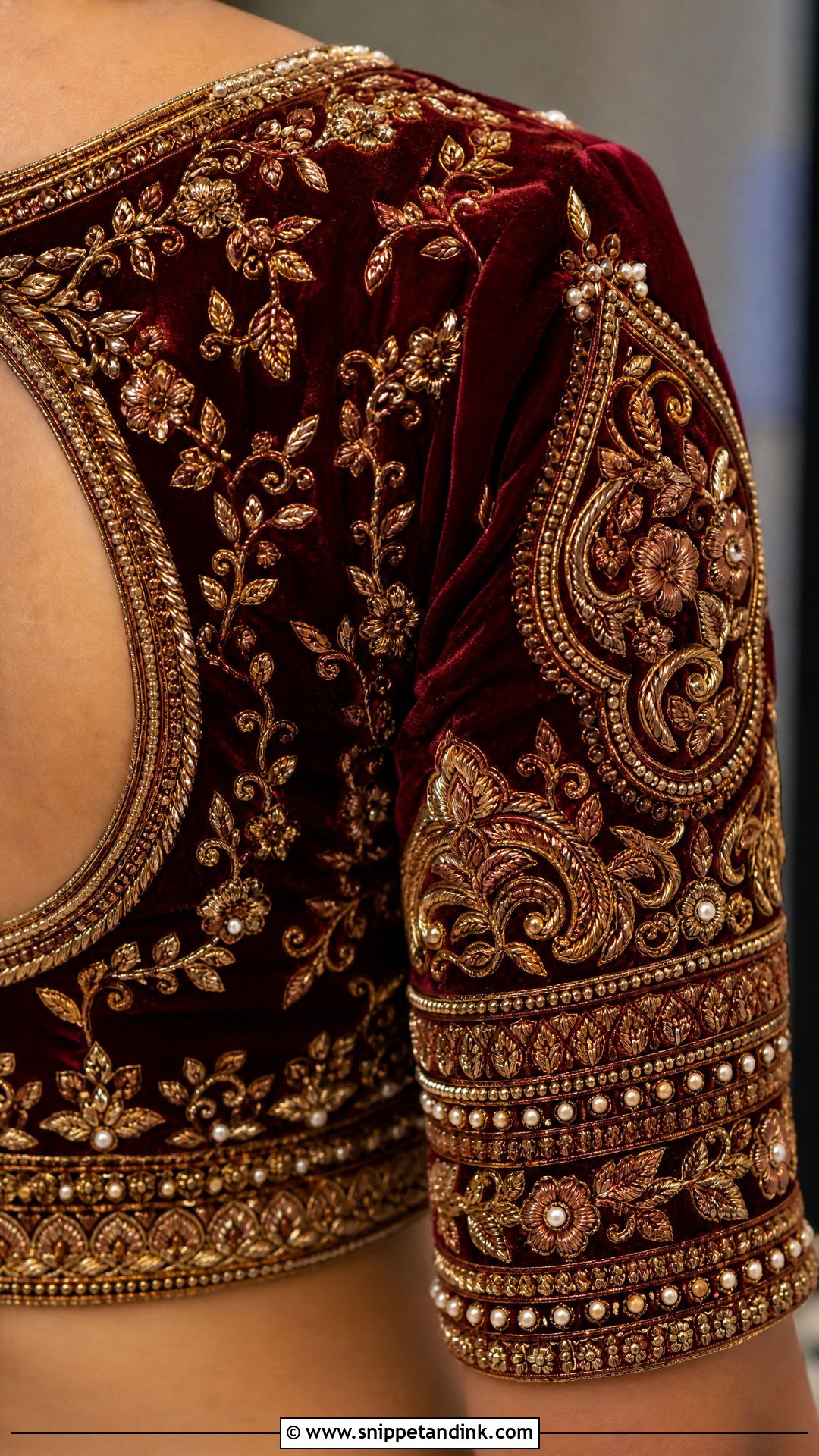
Velvet holds embroidery well and makes gold, copper, pearl and stone work look deeper, which is why I like it for receptions, winter weddings and evening functions. Maroon, bottle green, navy, deep burgundy and royal purple are popular. Velvet already looks rich, so plan the aari design carefully: heavy borders, floral vines and zardosi motifs work, but too much dense work feels bulky. Velvet also crushes under the frame, so ask your artisan how they protect the pile. A comfortable lining matters, and avoid tight sleeves. It pairs with silk sarees, brocade lehengas and classic bridal jewelry.


25. Bridal Lehenga Aari Work Blouse
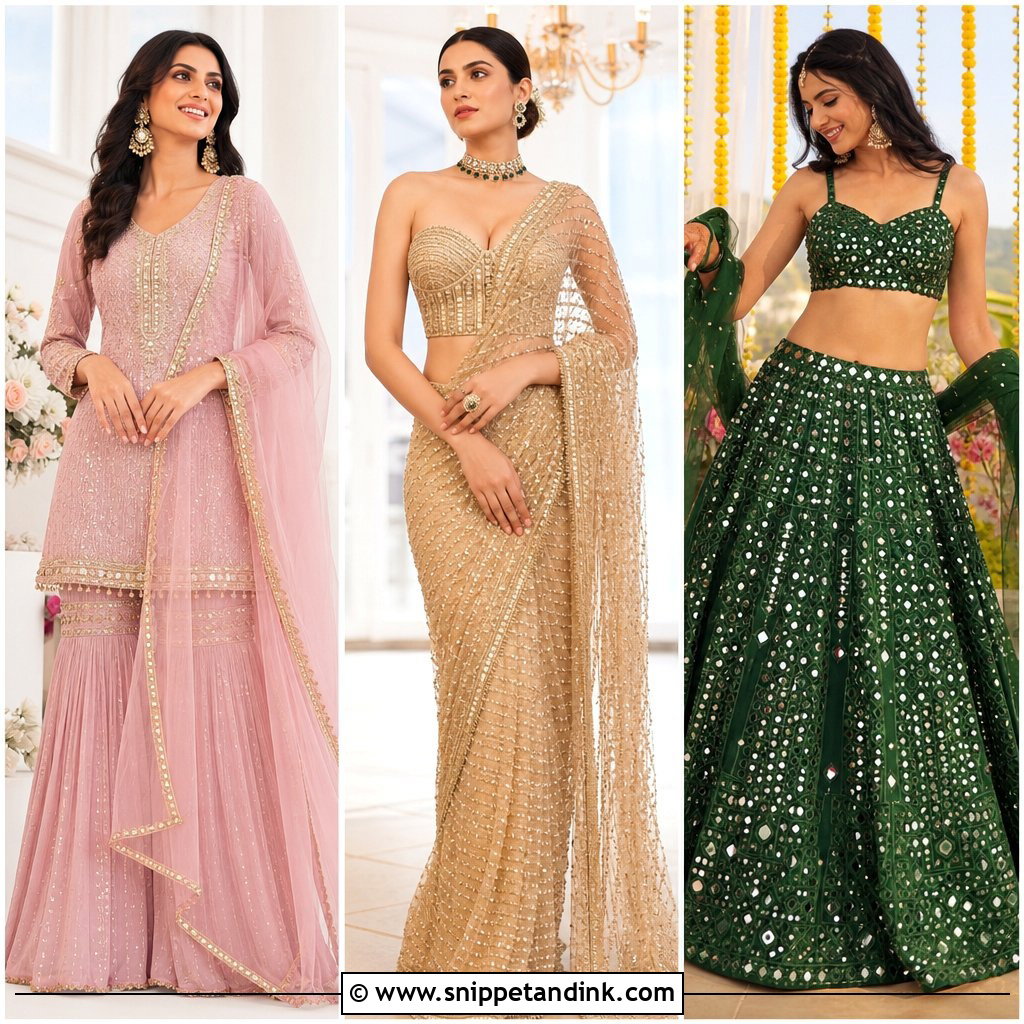
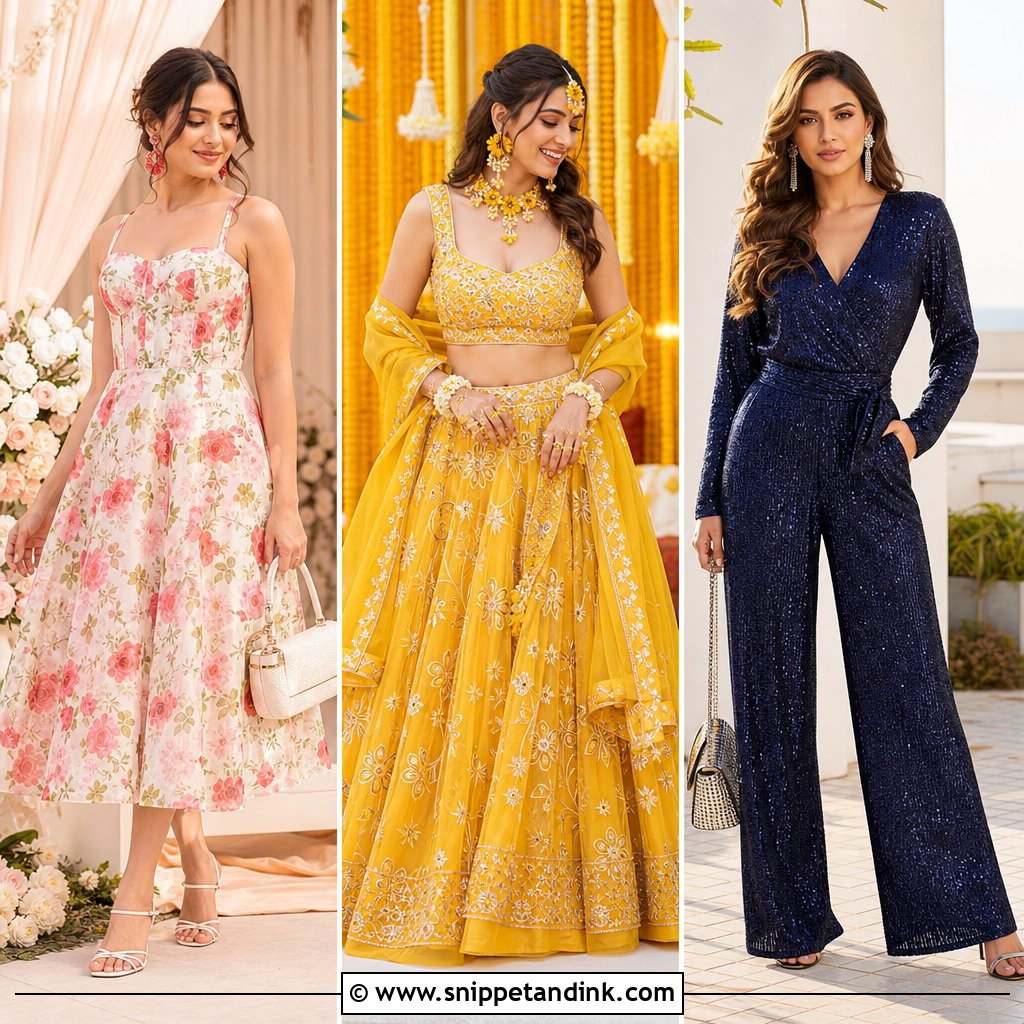
A bridal lehenga aari work blouse gives you more freedom than a saree blouse, because the whole choli is visible and not covered by a pallu. All-over floral jaal, heavy sleeve work, mirror borders, pearl highlights or zardosi panels can go anywhere. Antique gold suits red and maroon lehengas; pearl, champagne and thread suit pastels. I always match the blouse embroidery to the lehenga border and dupatta, so the outfit reads as one piece. Personal motifs, initials or a special back design can be added.
Telling Hand Aari From a Machine Copy
Machine embroidery that imitates aari is cheaper and quicker, and for some events it’s perfectly fine. For a bridal blouse, I’d want to know which one I’m paying for. A few things I check:
- The reverse side: hand aari shows small, slightly irregular stitches; machine work has a dense, uniform backing of thread.
- The chain stitch: by hand, it varies very slightly in length and follows curves smoothly.
- Stones and beads: in handwork, each is stitched through individually rather than glued on.
- Raised zari and zardosi: true handwork has real depth you can feel with your fingertips.
Storing an Embroidered Blouse So the Zari Stays Bright
Zari and metallic threads tarnish with moisture and perfume, and heavy embroidery can stretch the fabric if it hangs. After the wedding, I tell brides to let the blouse air out for a day, then send it for dry cleaning with a cleaner who handles embroidered pieces. Never machine wash it.
Store it folded flat, wrapped in soft muslin or cotton, with acid-free tissue between the folds so beads and stones don’t press into the fabric. Keep it away from plastic, which traps humidity. Spray perfume before dressing, not on the blouse, and take it out to refold and air it every few months so the creases don’t set.
Plan the Blouse Around the Pallu and Your Necklace
Aari done by hand has a depth that machine embroidery doesn’t fully copy. Which design suits you comes down to fabric, color, the event and how much weight you’re comfortable wearing for hours. Traditional brides will lean toward peacock, temple, Lakshmi, paisley or maggam work; a softer look comes from floral, pearl, thread or minimal designs; and zardosi, jaal, velvet or bride-groom work make a bold statement. Whatever you pick, put the pallu, the drape and your necklace on the table at the first meeting with your artisan, because they decide where the embroidery will actually be seen.
You'll Like These Ideas:



Leave a Reply