
The work on a dupatta, more than its drape, is what sits closest to your face all day, so it’s the part I look at hardest when I style a bride. Embroidery decides how heavy the fabric feels on the head, how it catches the camera and how well it plays with the jewelry. Zardozi and Banarasi weaves carry the most tradition; sheer veils, pearl edges, appliqué flowers and chain trims feel newer. Comfort is where many brides get caught out. A fully worked dupatta that photographs like a dream can feel like a wet towel on the crown by the third hour. Here are 20 designs, red classics to pastels and personalised pieces, with my notes on where each one sits comfortably and where it doesn’t.
Ordering Hand Embroidery Without a Last-Minute Rush
Handwork takes time, and dupatta embroidery is often the last thing a workshop finishes because it depends on the lehenga being settled first. Zardozi, cutwork and personalised lettering are slow techniques. I tell brides to treat several months as normal for a custom worked dupatta, and to ask their designer for an honest timeline at the first appointment rather than assuming. Machine-worked or ready pieces are much quicker, which is useful if your date is close.
Before the work starts, ask to see the motif drawn out at full size on paper or traced on a test piece. A design that looks delicate on a small sketch can look crowded at real scale.
- Confirm the dupatta length and width against the drape you plan to wear.
- Approve the motif at full size, plus any lettering in writing.
- Agree where the heaviest work will sit, keeping the crown section light.
- Ask for a weight check or a quick try-on over your hair before final finishing.
1. Red Zardozi Bridal Dupatta
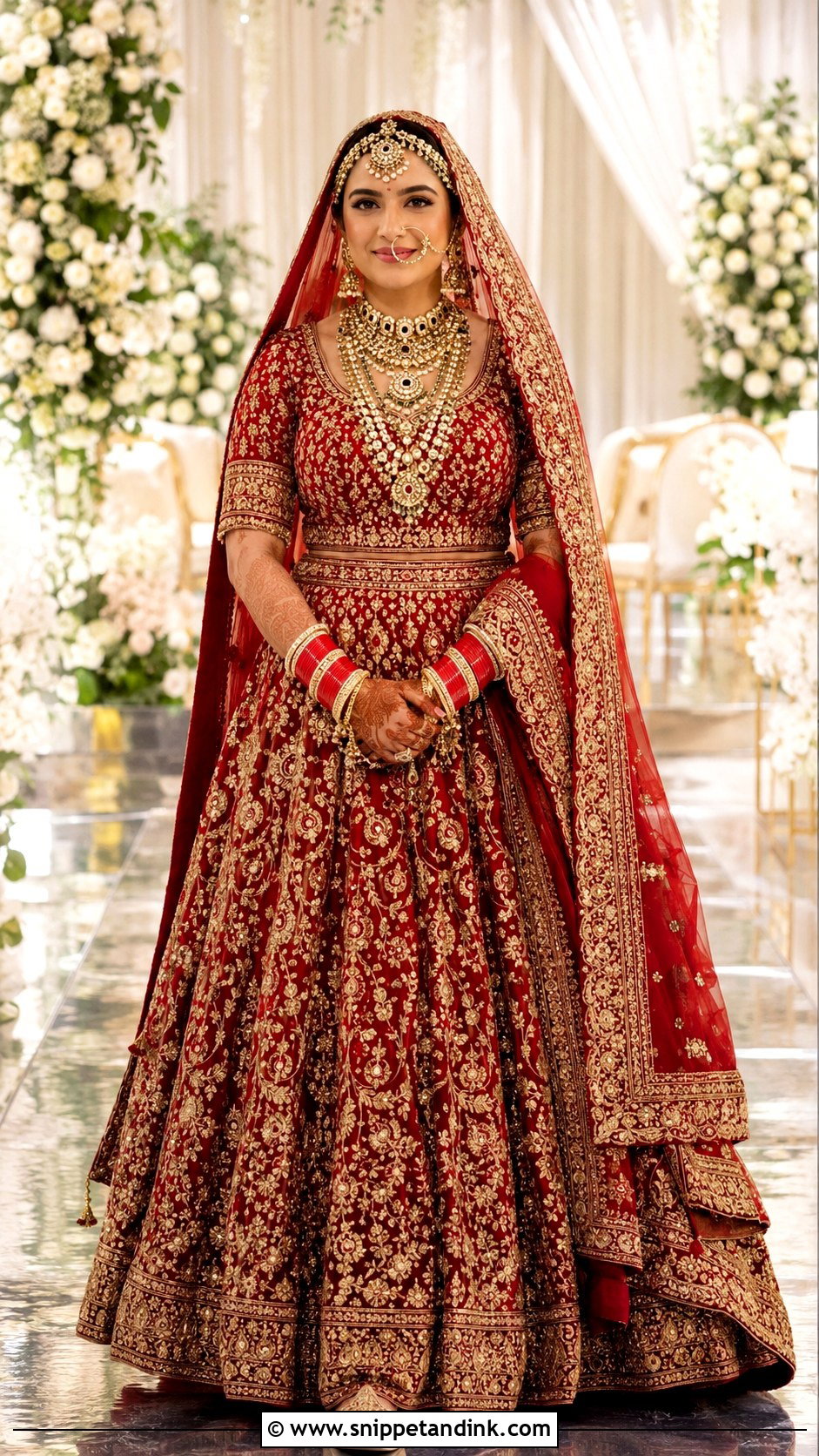
With a red zardozi bridal dupatta, I always ask the designer to keep the heaviest work in the border and run only light florals or paisleys through the centre. Zardozi uses metal wire and thread, and spread across the whole fabric it gets heavy enough to drag the bun backward. A scalloped edge softens all that gold around the face. Antique gold reads warmer and older than bright gold, which suits a matha patti and layered kundan. Wear it with a centre-parted bun, gold juttis you’ve broken in and a classic red lip; the lip ties the face to the fabric in photos.
2. Gold Embroidered Bridal Dupatta
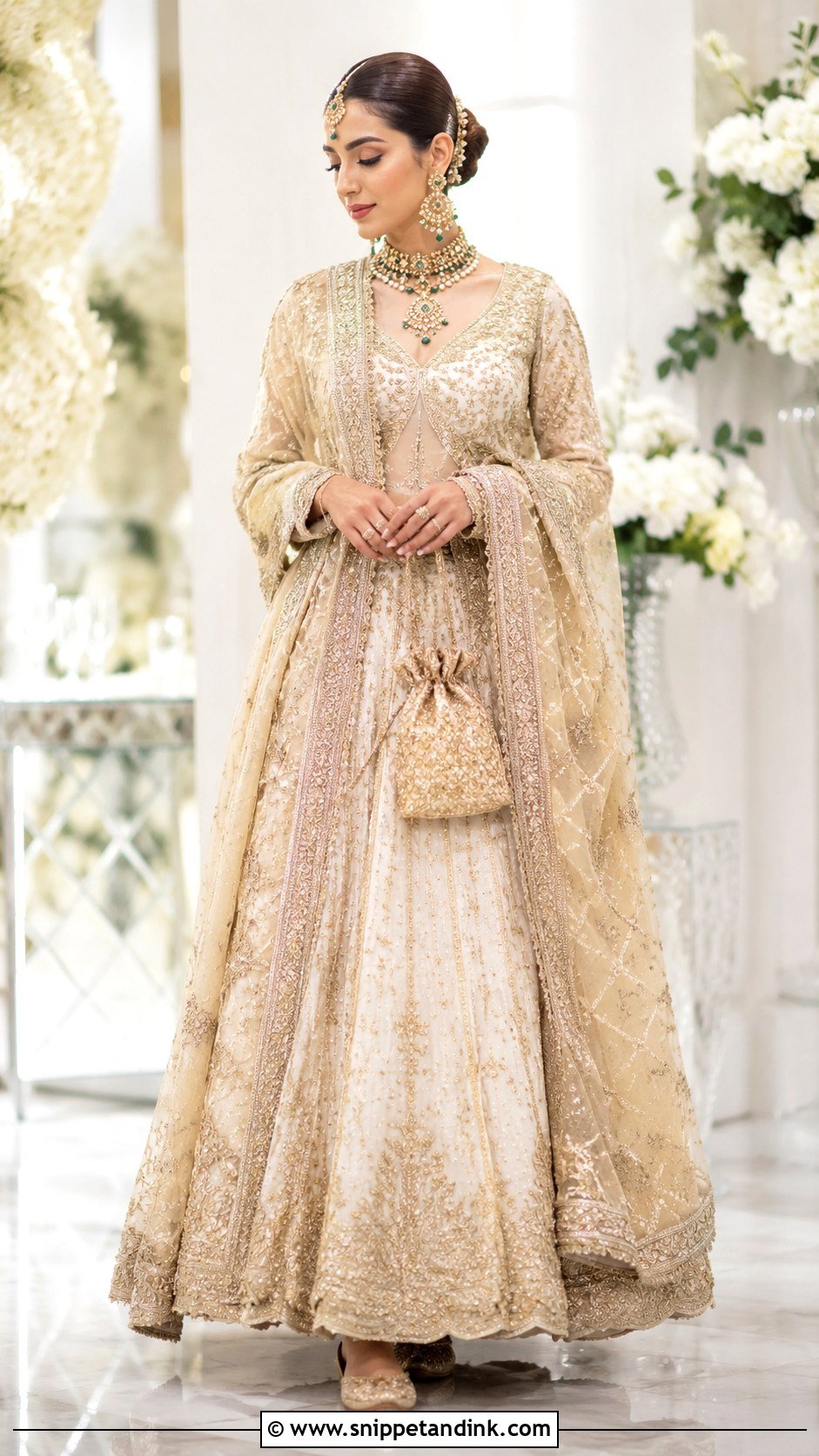
A soft gold dupatta is the quiet option for ivory, champagne or beige lehengas. I pick sheer net or organza for it, so the blouse embroidery still shows underneath. Fine dabka, sequins, pearls and metallic thread can build a delicate allover pattern, held together by a medium border. The risk with gold on gold is that everything blends into one beige mass in pictures. One emerald accent, in the earrings or the necklace drop, gives the eye somewhere to land. Bronze eyes and a rose lip keep the face warm against it.
3. Personalized Name Bridal Dupatta
Names, initials, a date or a short blessing along the border turn a dupatta into something you’ll keep. Lettering is where I’m strictest. Uneven spacing, or a script that’s too fine, turns into a blur in close-up photos, so ask for a size you can read from arm’s length. On a red or maroon base, gold thread lettering reads best. If the personalised dupatta is heavy, wear it over the head for the ceremony and add a simpler second one across the shoulder for movement. Approve a written proof of every spelling and the exact placement before a single stitch goes in, because embroidery can’t be quietly erased.
4. Double Bridal Dupatta
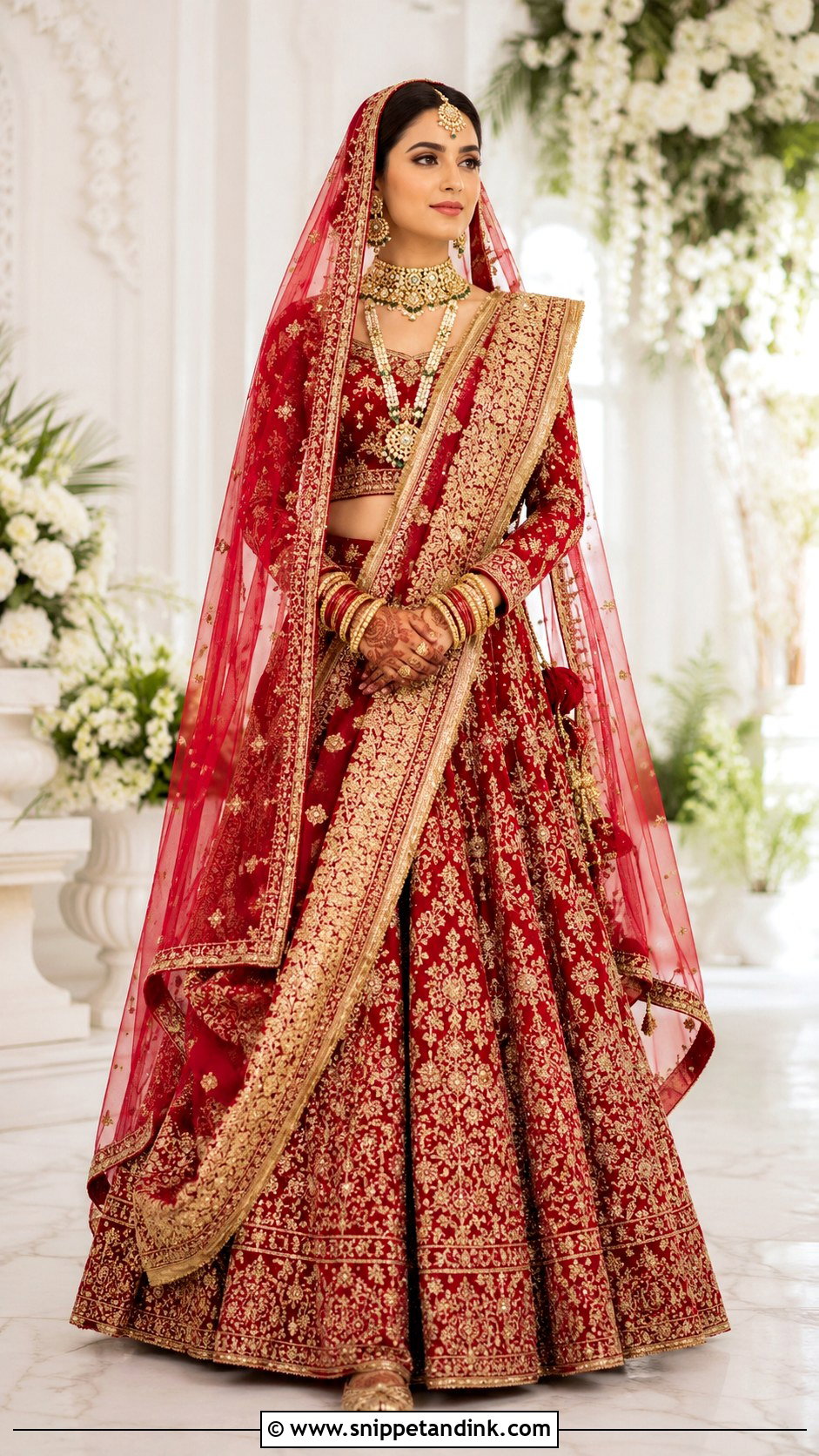
Two dupattas solve a real dilemma: you want a traditional veil, but you also want a drape that lets you move. A lightweight net dupatta goes over the head, and the worked organza, silk or georgette one runs across the torso. I give the head layer a narrow border only. A wide one competes with the maang tikka and pushes the earrings around. The body dupatta can carry the heavier embroidery that matches the lehenga. Pin both layers discreetly, then sit, walk and turn in them before the day, since two layers shift against each other in a way one never does.
5. Contrast Bridal Dupatta
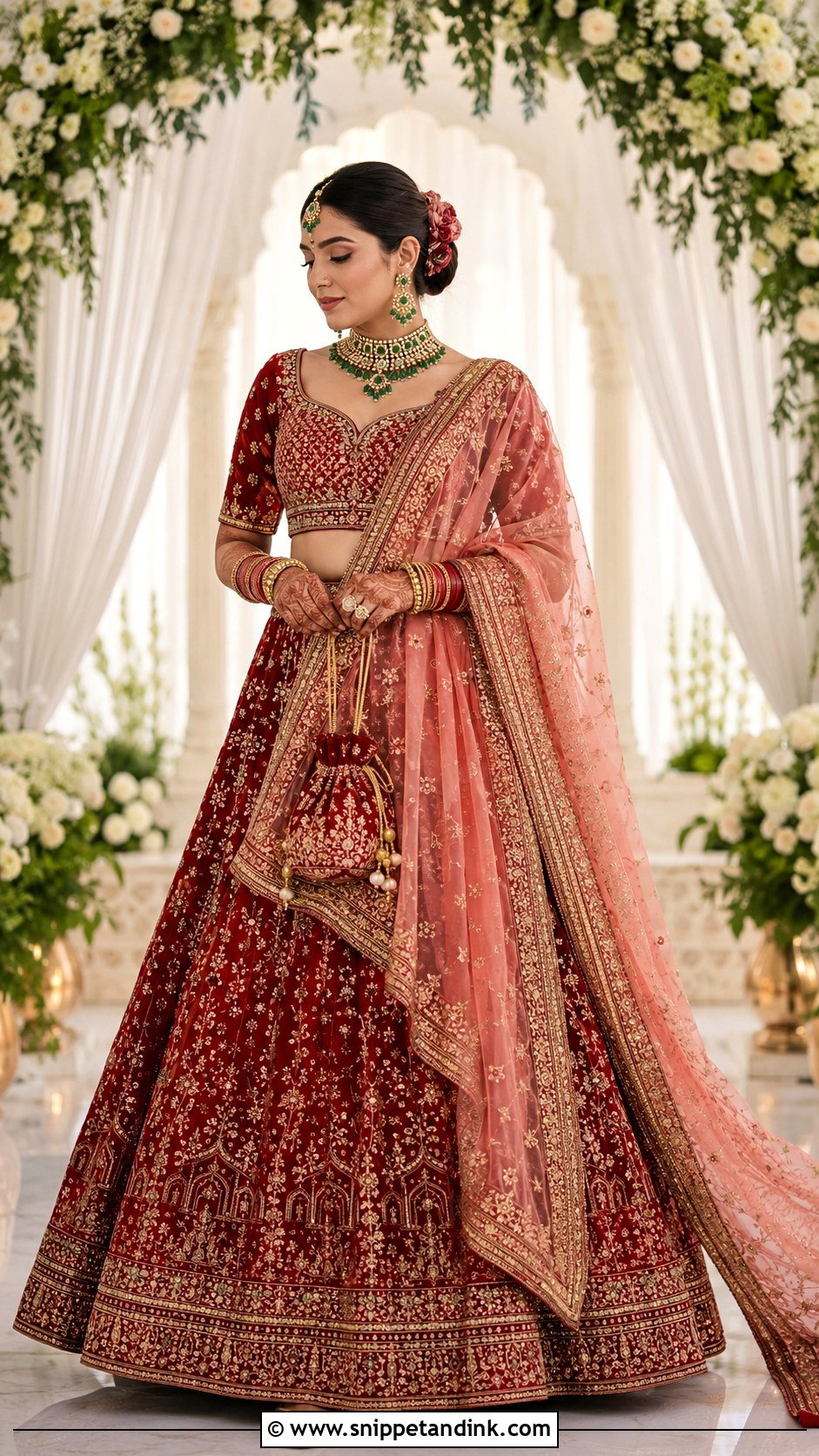
Contrast works when it repeats. A blush dupatta on deep red, rust on gold or emerald on maroon all look deliberate as long as that second color appears once more, in the jewelry stones, the blouse piping or the potli. Without that echo, the dupatta looks borrowed from another outfit. Keep it sheer with a coordinated border so the lehenga still shows. I check every contrast pairing in daylight and under warm indoor light, because some dyes shift noticeably between the two, and the photographer’s lights will show you a third version.
6. Floral Embroidered Bridal Dupatta
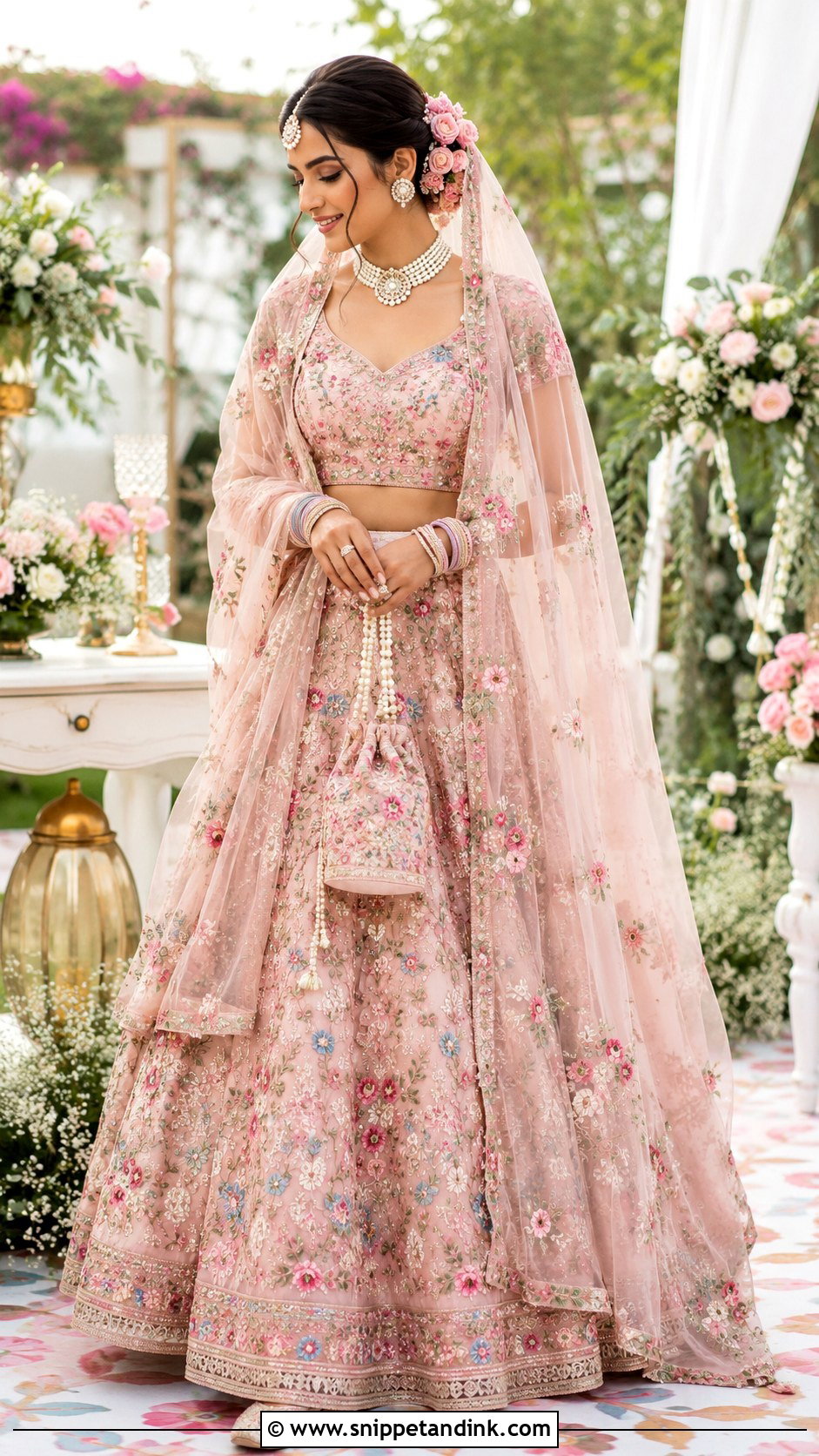
Floral embroidery suits pastel and neutral lehengas: blush, ivory, peach, lilac, pale sage. Scattered small flowers on organza feel light; a full floral border frames you more strongly. I’d make the lehenga embroidery related but not identical, so the dupatta stays the focus instead of disappearing into a matching set. Pearls or soft kundan sit well with it, along with a low bun with fresh flowers. One comfort note: ask for the dense floral work to stop short of the section that sits on your crown, where raised threadwork presses into the scalp.
7. Pearl Border Bridal Dupatta
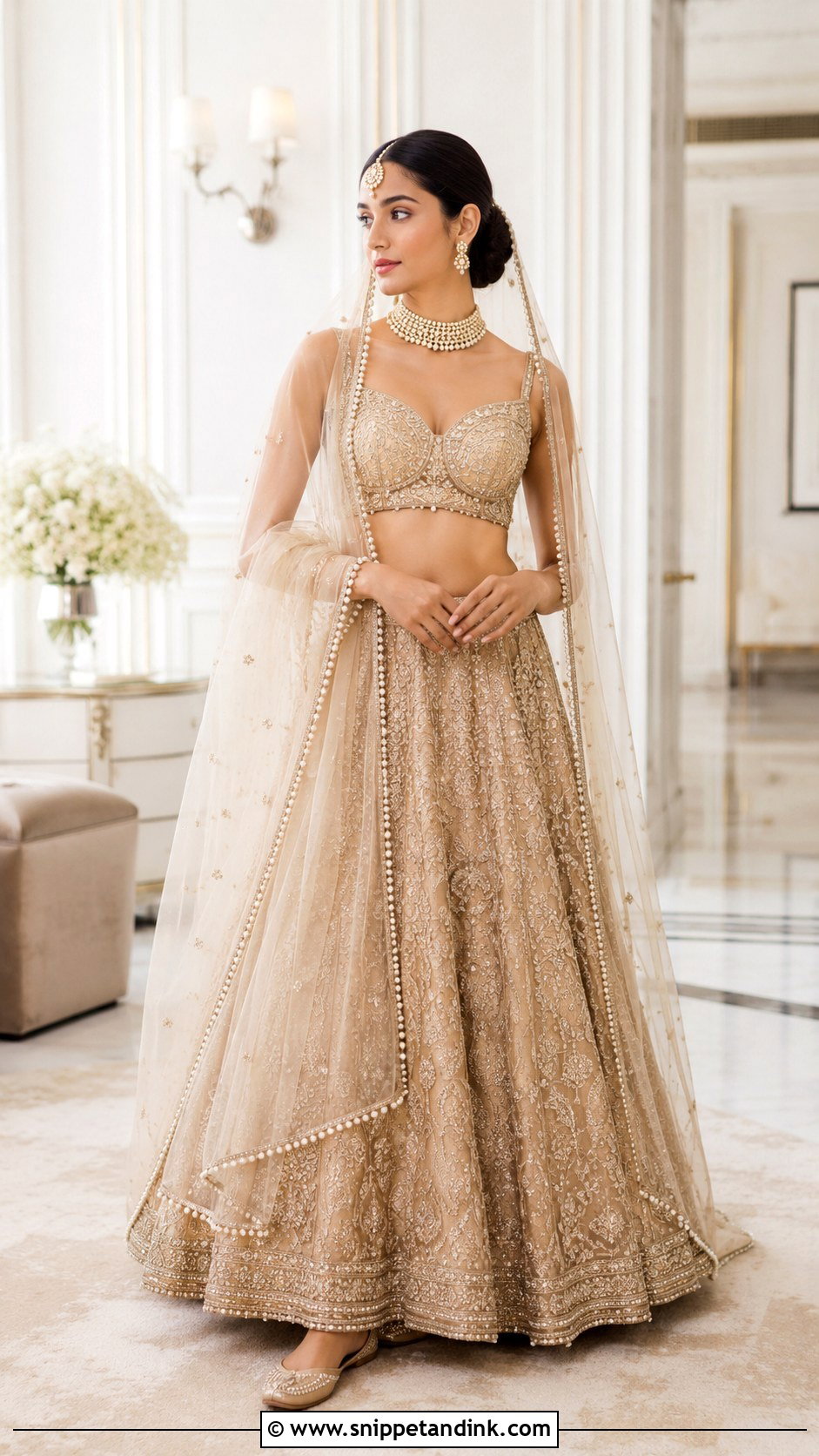
Pearls give a dupatta a soft glow instead of metallic glare, which is why they suit ivory, blush, powder blue and champagne. Choose light net with small pearl clusters at the edge and very little through the centre. A narrow pearl border is fine for a head drape; save the fuller pearl edge for a shoulder. Pearls add up fast, though, and a long pearl border is heavier than it looks on the hanger. Ask for each pearl to be stitched individually rather than strung on one long thread, so a snag loses one bead instead of a whole row, and test the weight on your actual hairstyle.
8. Velvet Bridal Dupatta
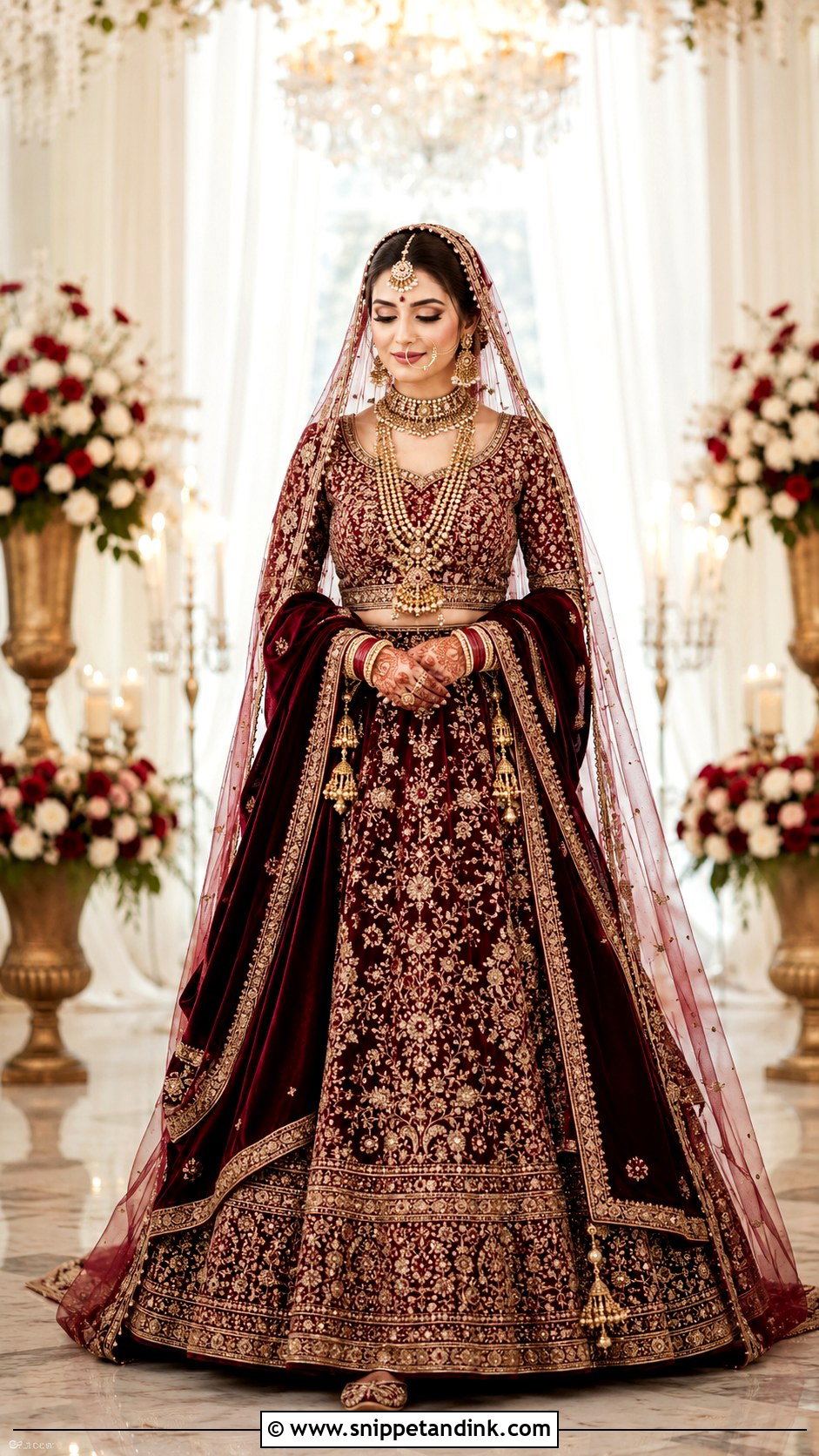
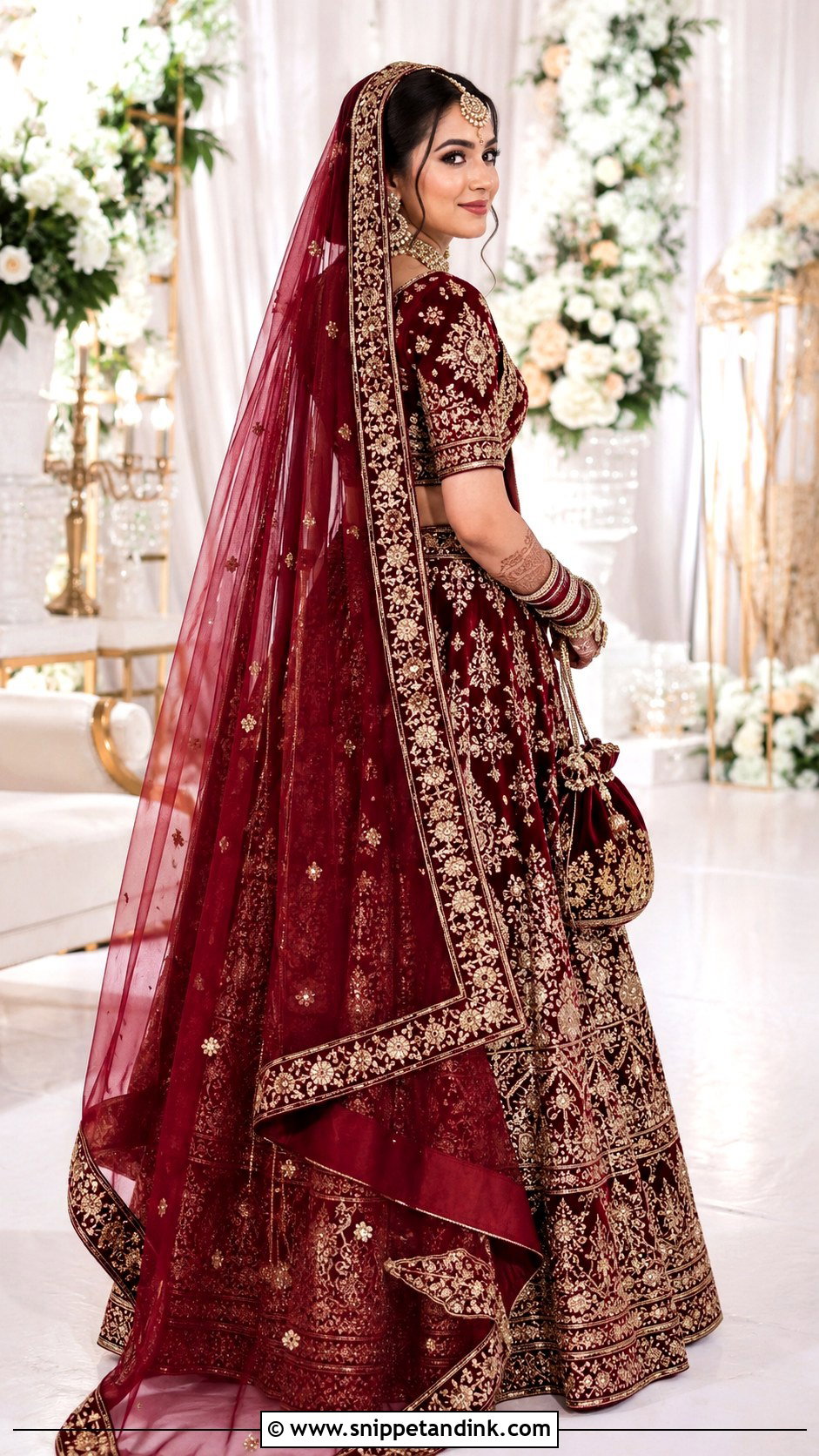
Velvet belongs on the shoulder, not the head. It is warm and royal in maroon, burgundy or bottle green, but it’s also heavy and slightly springy, and it won’t settle neatly around a bun. I drape a velvet dupatta over one shoulder or across the arms and add a light net veil if you need head coverage. Keep the zardozi to the border so the weight stays manageable. Antique gold and a deep berry lip suit the fabric. Velvet swings rather than floats, so walk in it before the day to learn how it moves.
9. Banarasi Silk Bridal Dupatta
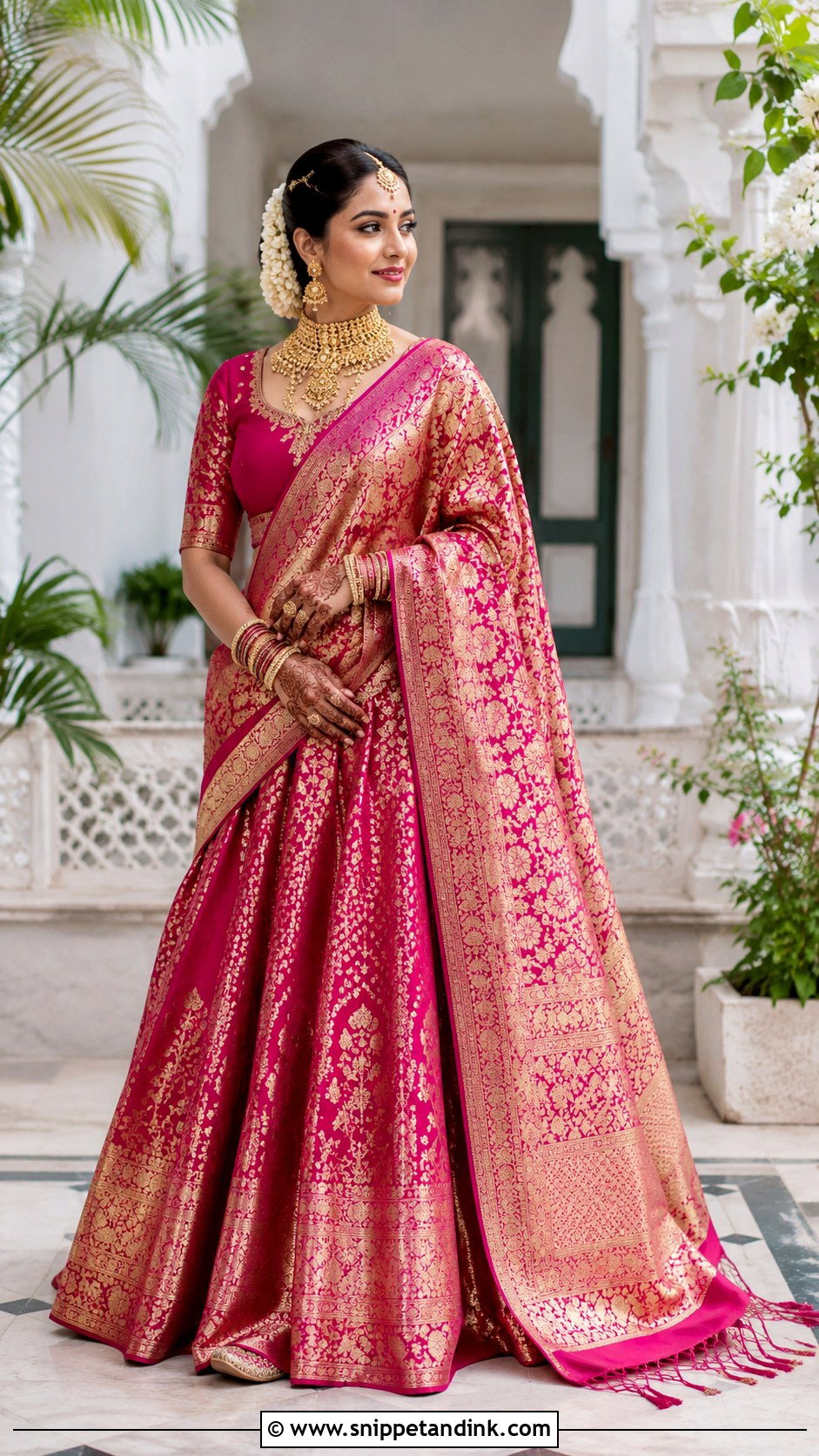
Banarasi silk has a natural body that most net dupattas don’t, and that changes how I style it. Loose arrangements make it look stiff, so I pleat it neatly over one shoulder, where its structure looks deliberate. Red, magenta, mustard or green weaves pair with a silk lehenga, brocade blouse or a minimally worked skirt. Match the zari motifs to the outfit, floral to floral, geometric to geometric. Temple or kundan jewelry suits it, depending on your family’s tradition. For a head drape, look for a lighter weave with a modest border, or the silk will pull on the hairstyle all through the ceremony.
10. Gota Patti Bridal Dupatta
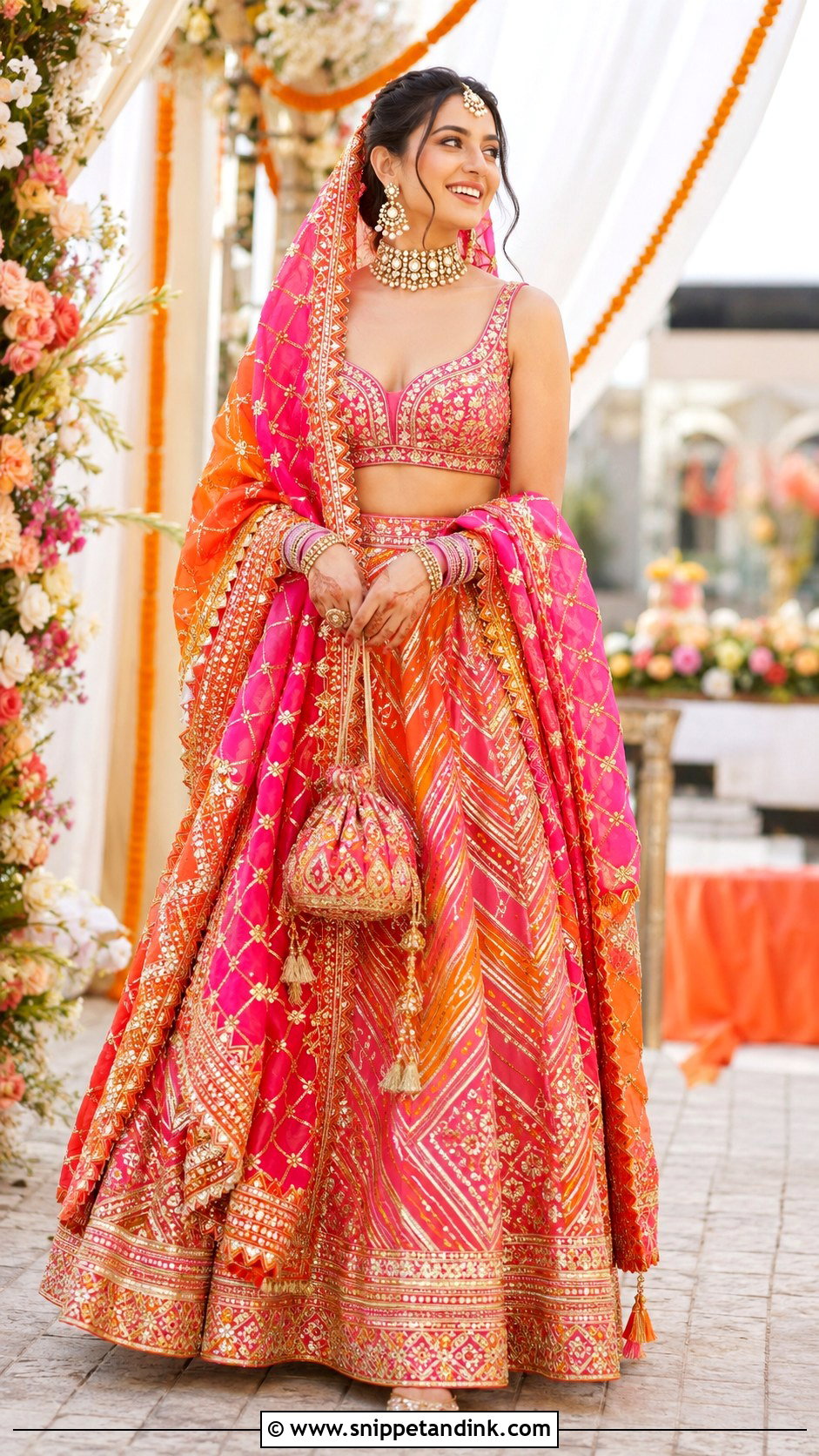
Gota patti is metallic ribbon appliquéd onto the fabric, which is why it shines but stays lighter than dense embroidery. It’s at its best on bright pink, red, orange or yellow for daytime ceremonies. Geometric or floral gota on the border with small motifs scattered through the middle is a good balance, and tiny tassels at the edge give it some swing. It can go over the head or diagonally across the blouse. Pair with kundan, stacked bangles and a braided or low bun. Turn it over before the wedding: rough gota edges on the reverse snag chiffon and net, so I cover them with a soft lining strip if needed.
11. Sequin Bridal Dupatta
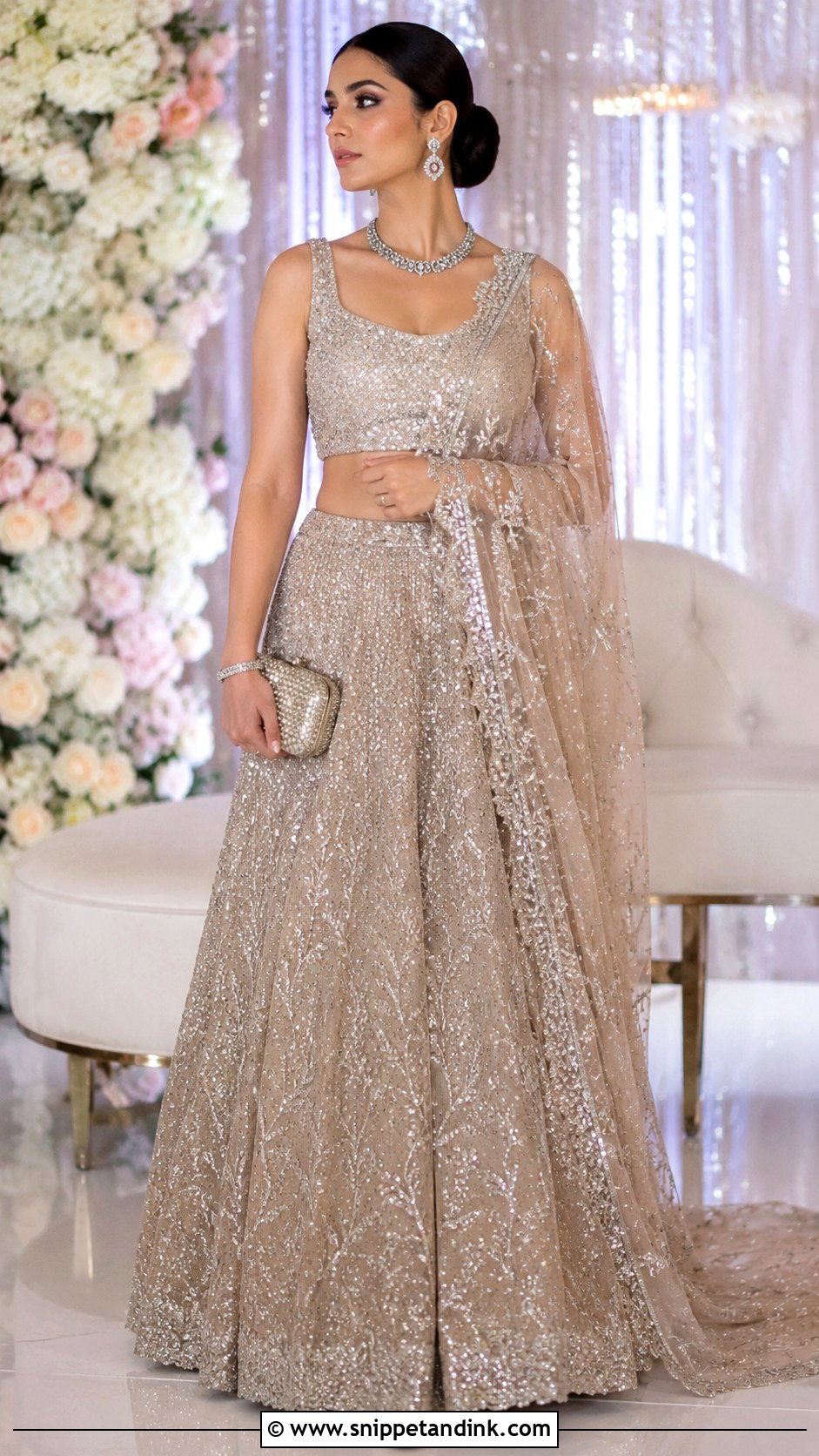
Sequins are made for evening light, and they behave very differently from thread. Pair a champagne, silver, blush or wine sequin dupatta with a lehenga in the same tonal family. Fine sequins laid in vines or florals look smoother than large scattered discs, which can flare white in flash photos. Keep the blouse structured and the skirt calm so the sparkle has one home. Crystal or sleek polki jewelry suits the reflective surface. Around the face, insist on a narrow, flexible border; stiff sequin edges scratch the cheek and jaw over a long evening.
12. Scalloped Border Bridal Dupatta
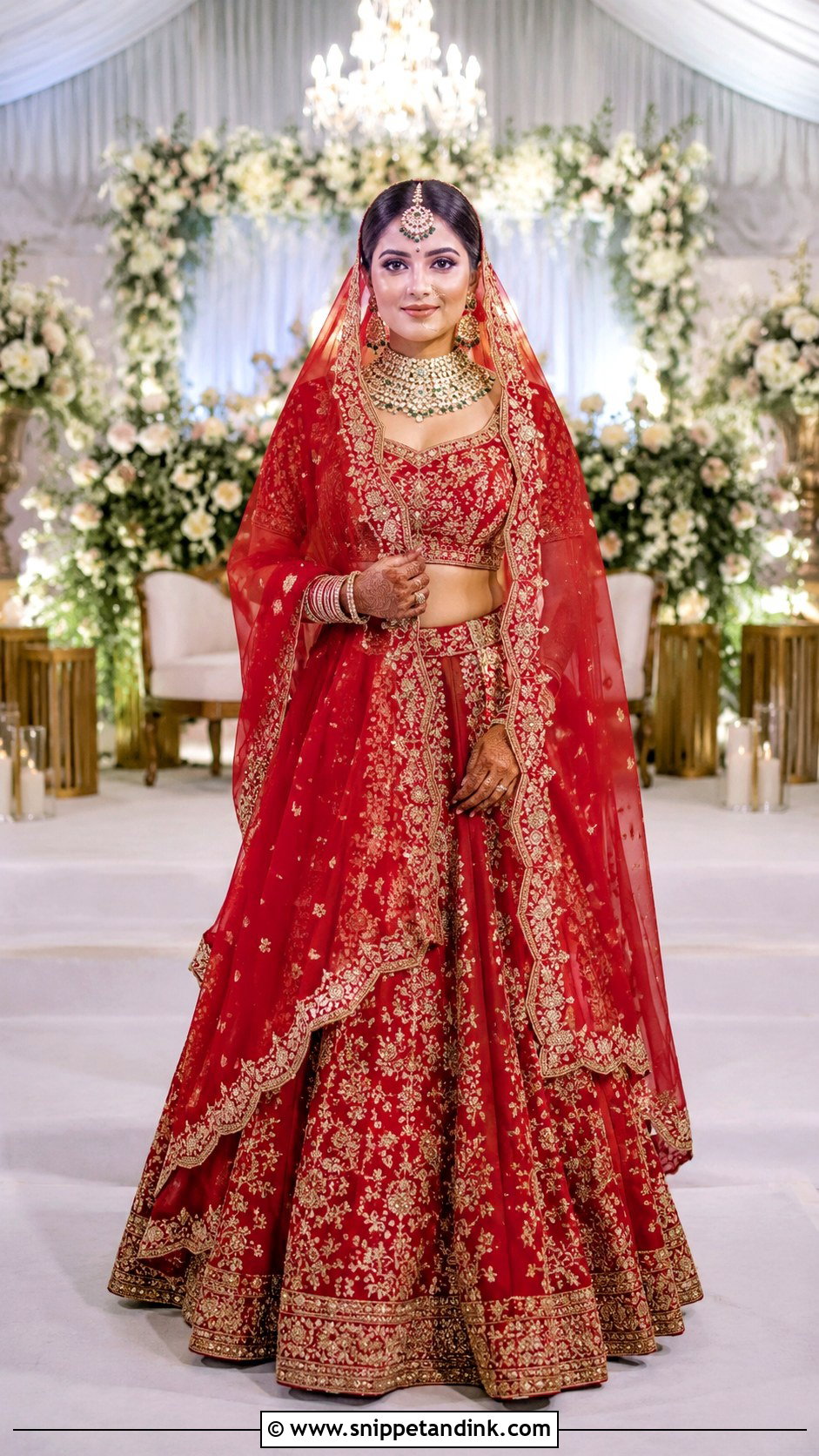
A scalloped border frames the face with curves instead of a straight line, and it can be built from thread, pearls, sequins, zardozi or appliqué. Keep the rest of the dupatta lighter so the scallops stay the feature. With a fitted blouse and a smooth low bun, each scallop falls evenly. Poorly backed scallops twist and curl after a few hours, so I ask the workshop for extra finishing around every curve. At the final fitting, photograph the dupatta from the front, side and back to make sure the border sits symmetrically.
13. Mirror Work Bridal Dupatta
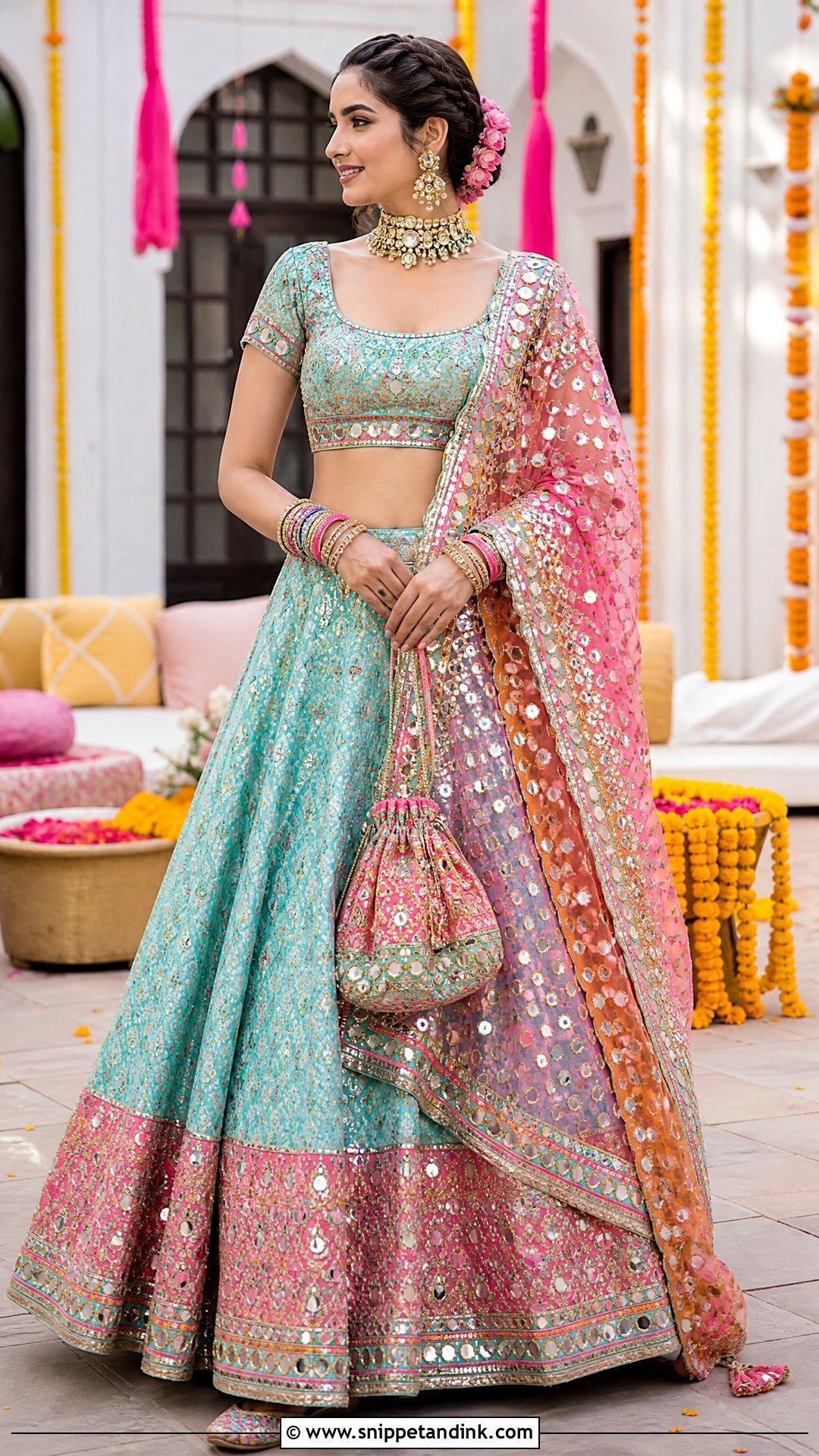
Mirror work is cheerful and a little playful, which is why I steer it toward daytime and pre-wedding events. A mirror work bridal dupatta sparkles without the stiffness of heavy metal embroidery, since each small mirror is held in a ring of thread. Pink, orange, turquoise and ivory combinations suit it. Keep the jewelry simpler, a kundan choker and stacked bangles, because mirrors and big stones fight for light. A braid or tight bun stops loose hair catching on the mirror edges. Before the day, run your hand over every mirror; a loose or chipped one can scratch skin or catch the lehenga.
14. Organza Bridal Dupatta
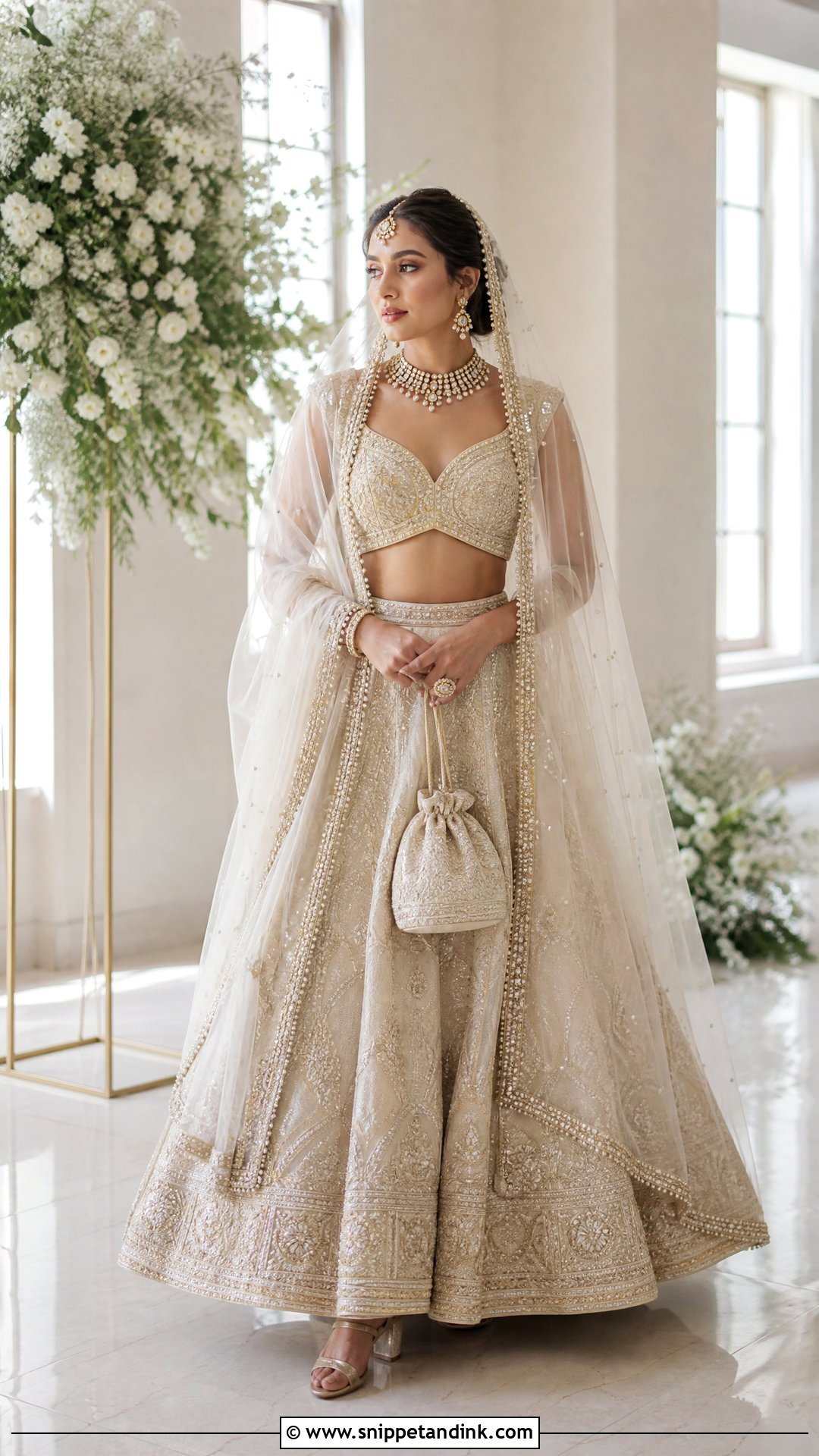
Organza is crisp enough to keep a shape and light enough to wear on the head, which makes it my usual choice for a long veil that should look full in portraits. It pairs with pastel, ivory, red or gold. Fine thread, pearls or a narrow zari border keep it airy. The catch is creasing. Organza holds fold lines stubbornly, so I steam it carefully on low heat the morning of the wedding and never store it sharply folded in the weeks before. A low bun gives the pins something solid to hold.
15. Net Bridal Dupatta
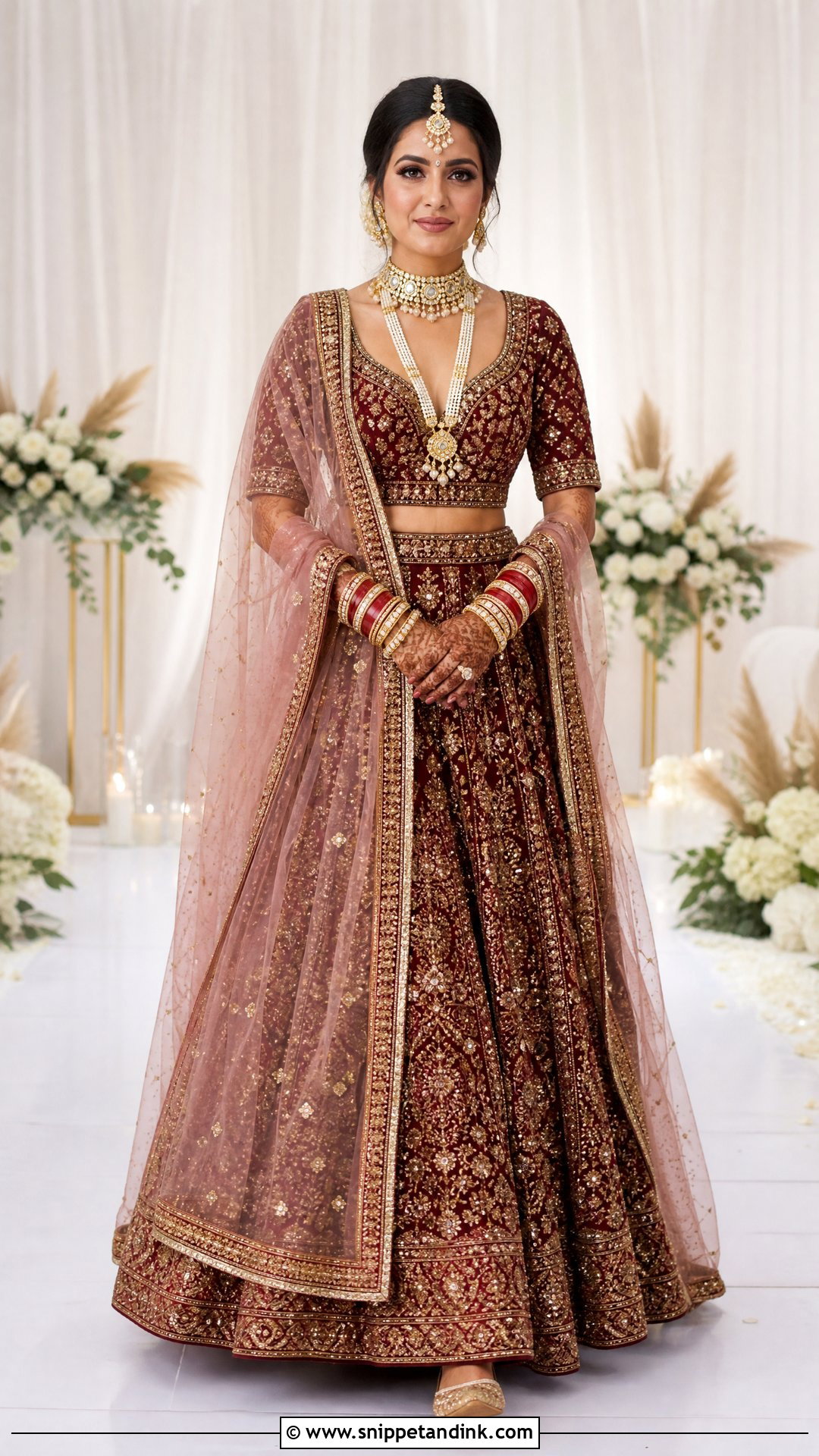
Net is the practical answer when the blouse and lehenga already carry the embroidery. It’s transparent, so the work underneath stays visible, and it’s the lightest fabric for a head drape. Quality varies a lot, though. Cheap net feels scratchy along the hairline and holds a stiff, papery shape, so feel it against your neck before choosing. A narrow embroidered border or tiny scattered motifs is enough decoration. Pin near the bun and shoulders, through the plain net rather than the large motifs; a pin through dense embroidery loosens stitches and leaves visible holes.
16. Kiran Border Bridal Dupatta
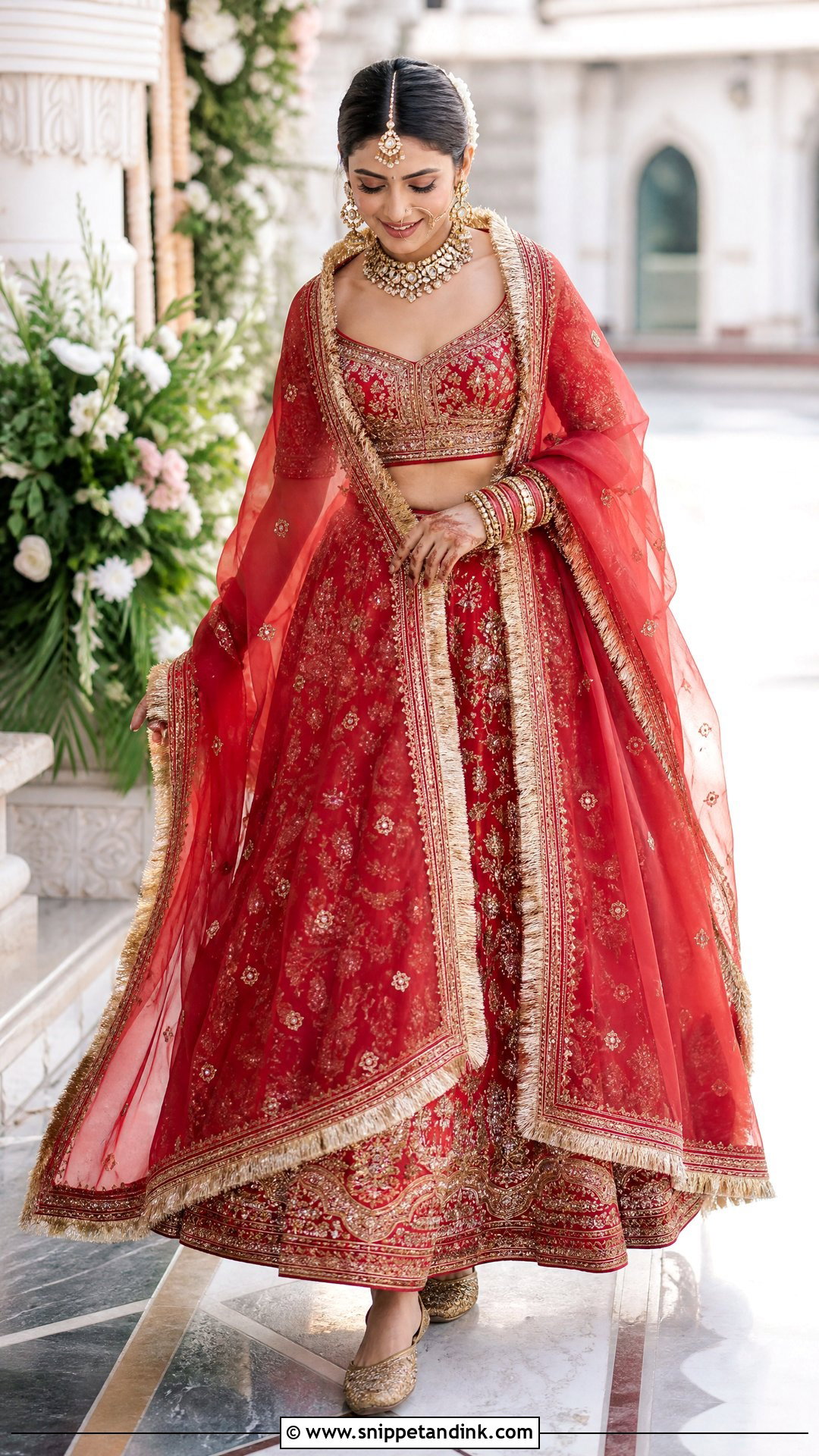
Kiran is a fine metallic fringe, and its charm is the way it shimmers as you walk. It suits red, pink, maroon and gold lehengas, on soft net, chiffon or organza with restrained embroidery in the centre. A short, light kiran edge can frame the head; a fuller fringe belongs on the shoulder. Skip oversized tassels elsewhere so the edge isn’t crowded. I always run a hand along the strands before the day, because rough metallic ends catch on blouse embroidery and tangle in necklace clasps.
17. Cutwork Bridal Dupatta
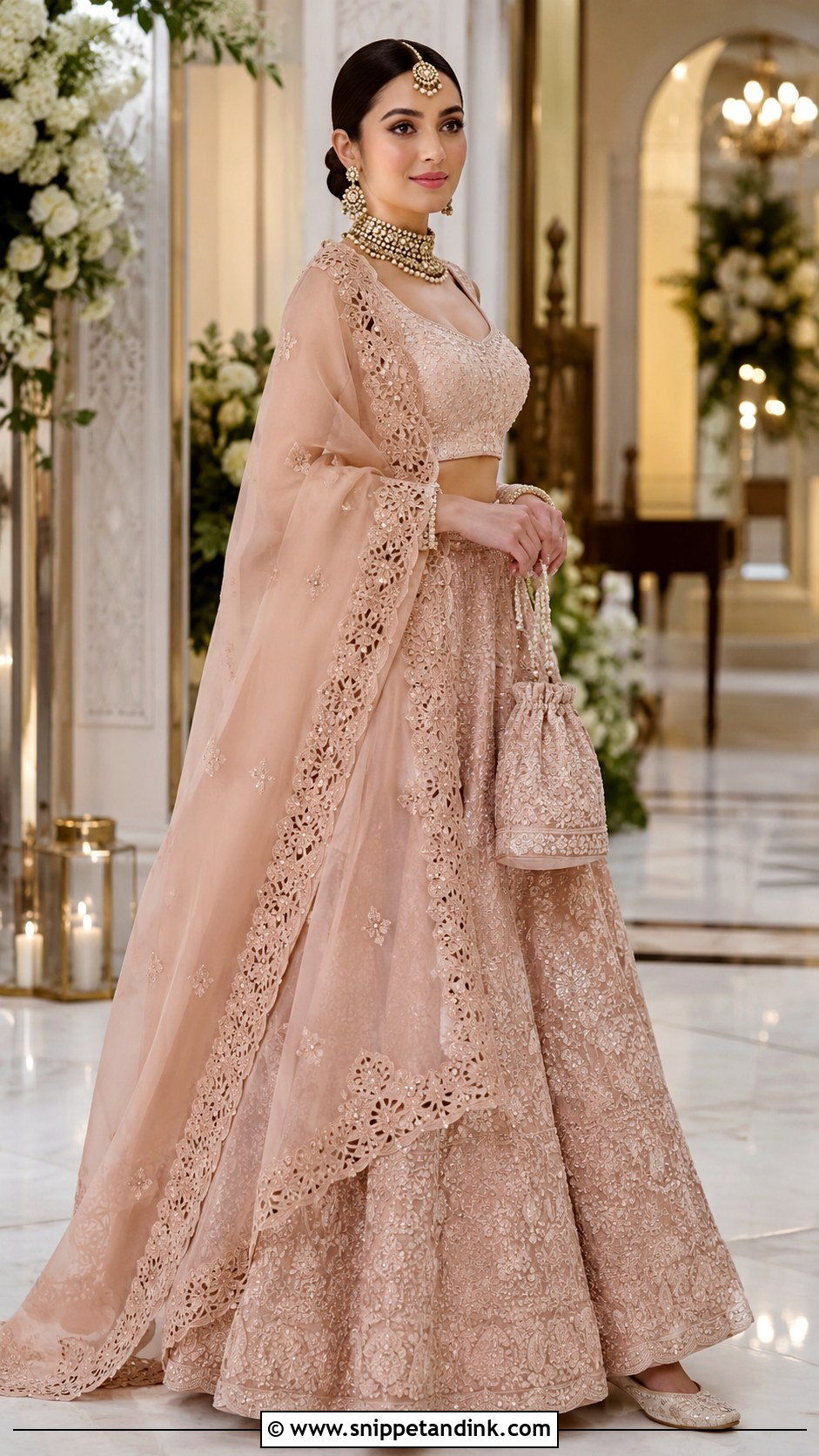
Cutwork turns the border into something close to lace. floral or paisley cutwork along the edge, with neat thread embroidery and a few beads, looks traditional and fine at once on blush, ivory, beige or soft red. Leave the centre sheer so the border has room. The weak point is the cut edge itself. Check that every opening is properly overstitched before the wedding, and keep pins well away from those sections, because pressure can stretch the shapes and fray an under-finished edge.
18. Floral Appliqué Bridal Dupatta
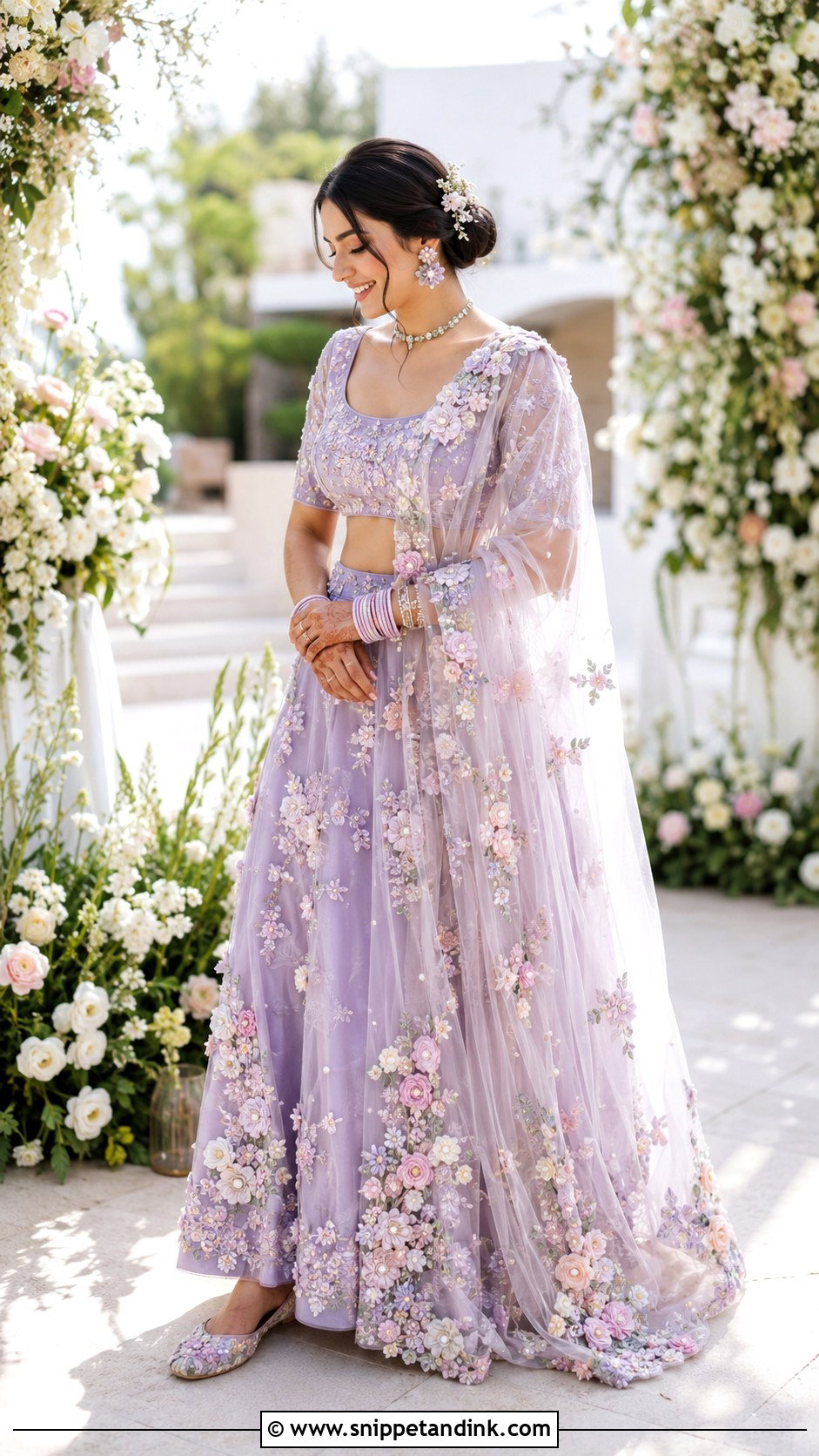
Fabric flowers give a dupatta real texture, and I find they suit garden venues and daytime weddings better than night events. Place them along the border or in a few clusters rather than all over; full coverage turns the dupatta into a stiff blanket. Pearl centres or a few sequins add a little light. Soft pink, peach, ivory and lilac all suit a lightweight lehenga. A low bun with small fresh flowers echoes the idea without matching it exactly. Keep the appliqué away from pin points, and check the flowers flex enough to lie flat when the dupatta drapes over a shoulder.
19. Chain Detail Bridal Dupatta
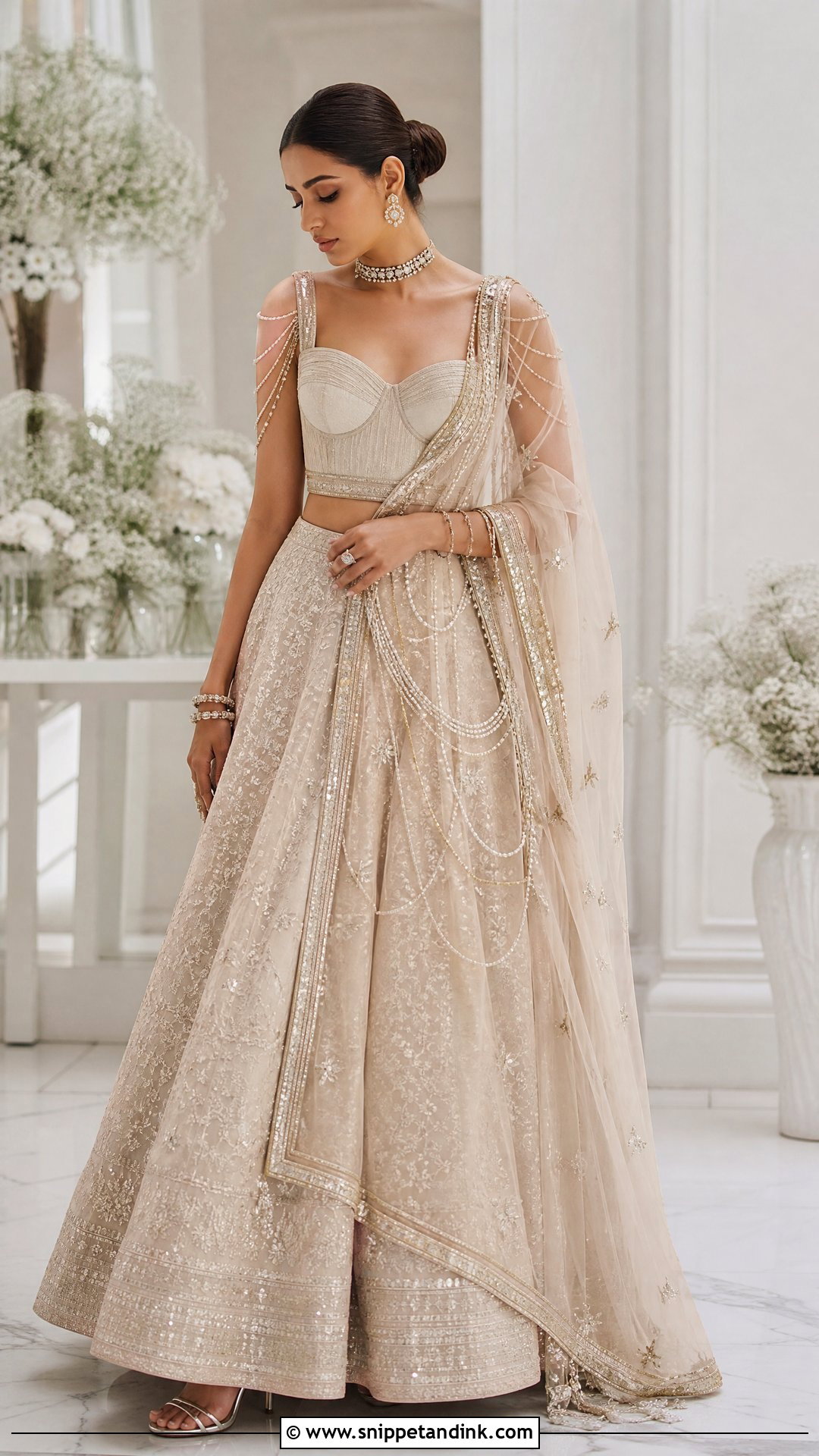
Chain trim swaps embroidery for jewelry-like detail: fine metal, crystal or pearl chains along the edge, between the shoulders or falling down the back like a cape. With chains doing the decorating, the lehenga and blouse should be quiet. Champagne, ivory, silver and blush give it a modern palette. Chains are heavier than they look and tangle with everything, so I ask for them to be fixed to reinforced points, keep earrings and necklaces sleek, and have brides lift their arms a few times to check nothing catches.
20. Long Veil Bridal Dupatta
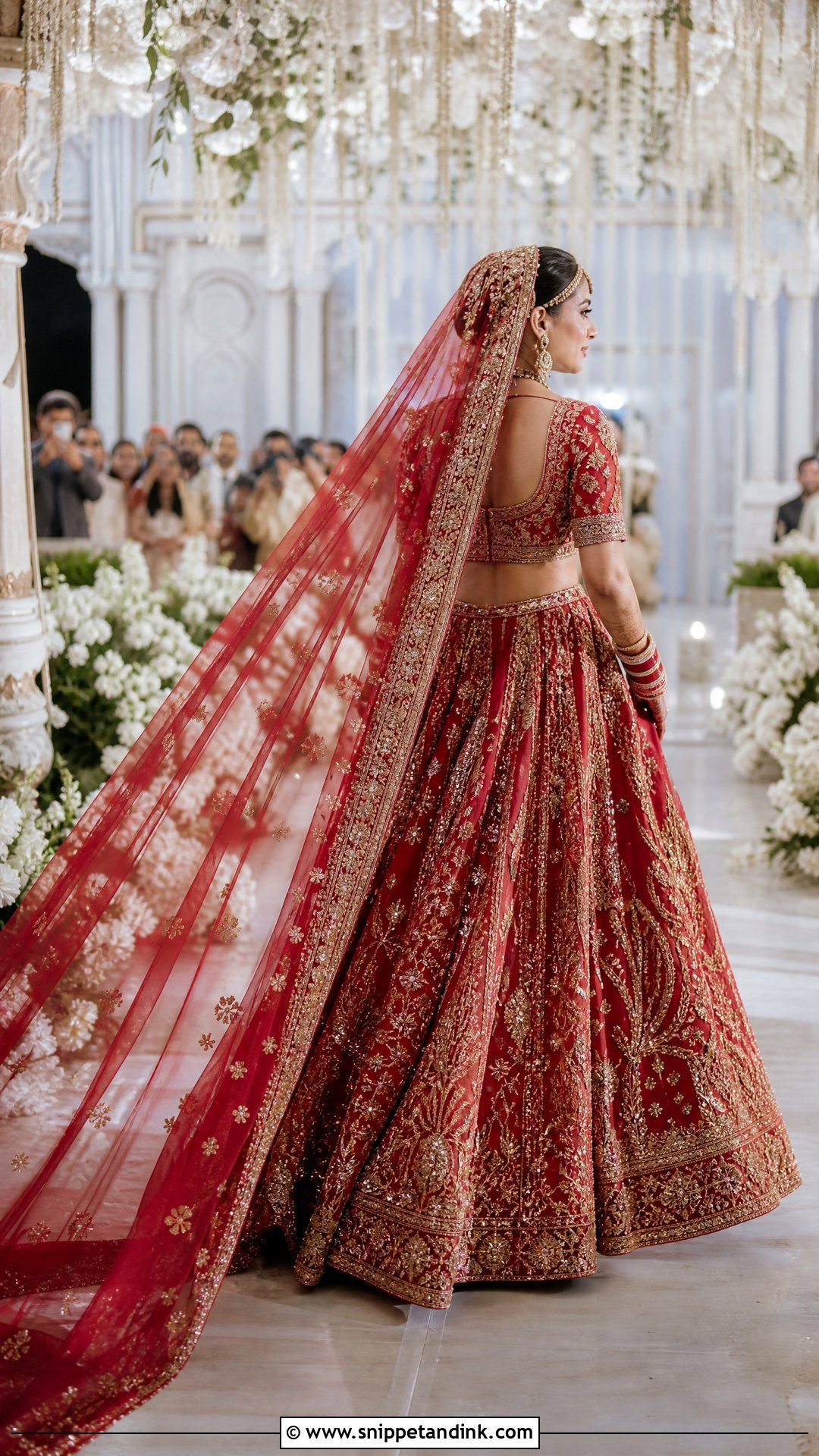
A long veil dupatta is the most dramatic piece here and the hardest to manage. Use light net or organza with a border that picks up the skirt embroidery, and keep the centre sheer so the veil floats rather than drags. A secure low bun is the base; hidden loops sewn into the veil let the hairstylist spread the weight across several pins. Arrange the front neatly at the shoulders so your arms stay free. Rehearse walking, turning and sitting in it. Then hand one person the job of straightening the train before every entrance and portrait.
How Zari, Sequins and Pearls Read on Camera
Embellishment looks different through a lens than in a mirror, and I find it worth planning for. Gold zari and zardozi photograph warm and rich in nearly every light. Large sequins and mirrors can flare into white spots when a flash hits them straight on, which is why fine sequins usually look smoother in pictures. Pearls go softer and almost matte, so a pearl dupatta reads gentle rather than sparkly. Thread embroidery holds its color best of all.
If your photographer works with flash at an evening reception, mention the reflective pieces in your outfit beforehand. Some will adjust angles or bounce the light to keep the detail.
Muslin, Not Plastic: Putting the Dupatta Away
A worked dupatta can last for decades if it goes into storage properly. Air it out for a day after the wedding so any perspiration or perfume dries, then wrap it in clean muslin or soft cotton. Plastic traps moisture, and metallic thread tarnishes faster in a damp, sealed bag.
- Fold it loosely with tissue between the layers, and refold along different lines every few months.
- Store it flat; hanging pulls heavy borders out of shape.
- Keep perfume, deodorant and hair spray off the embroidery, both before and after the wedding.
- Use a cleaner who handles zari and beadwork, and point out every stain.
Which Embroidery Will Feel Right at Hour Eight?
A good bridal dupatta suits the lehenga, works with the hairstyle and stays comfortable until the last guest leaves. Zardozi, Banarasi silk, gota patti and kiran carry the heritage looks; pearls, organza, appliqué, chains and long veils lean lighter or newer. Whichever direction you lean, try it with the full outfit, jewelry, shoes and the planned hairstyle, and look at it in daylight and indoor light. Feel the weight on your head for at least ten minutes, not one. Any of these designs can be adjusted to your traditions, venue and season, as long as the embroidery frames you rather than hiding the outfit underneath.
You'll Like These Ideas:


Leave a Reply