
A long trail dupatta turns a lehenga into an entrance. It is also the piece I see go wrong most often, because brides choose it on a hanger and only feel its weight on their head on the wedding morning. The pieces that work are light at the crown, heavier toward the hem and pinned in more places than you would guess. Below are twenty complete bridal looks built around a trailing veil, from red zardozi and maroon velvet to pearl-edged organza and a personalized border, each with the draping and comfort notes I would give at a trial. Walk, sit and turn in yours before you commit to a length; how it moves matters as much as how it hangs.

How Long Should the Trail Really Be?
Length is the first decision I make with a bride, before color or embroidery. A dupatta that just kisses the floor behind you looks graceful and needs no help. Once it sweeps a metre or more behind your heels, someone has to manage it every time you turn, climb a step or sit on the mandap.
- Your height: a petite bride under a very long trail can look swallowed by fabric. I keep the trail in proportion to the lehenga’s flare rather than chasing a set length.
- The venue: grand staircases and long aisles reward a dramatic trail. A crowded banquet hall or a garden path full of gravel and grass punishes it.
- Your rituals: if you will sit on the floor or walk around a fire, a shorter trail or a detachable second piece saves a lot of fuss.
- Your helper: a trail longer than a couple of metres needs a named person to lift, fold and settle it all day.
Measure from the back of your head while wearing your wedding shoes, because heels change where the trail starts to drag.
1. Red Lehenga With Long Trail Dupatta
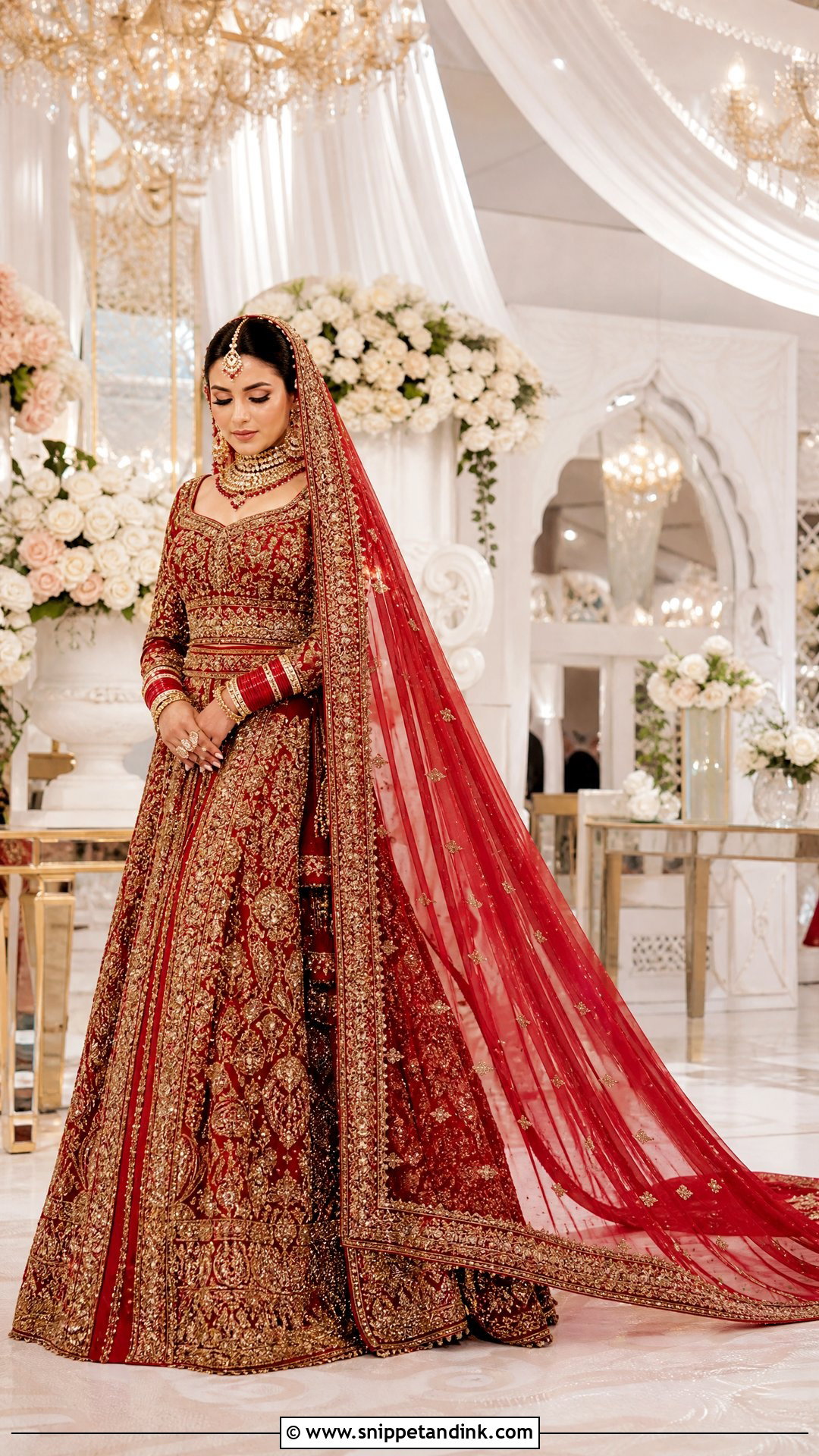
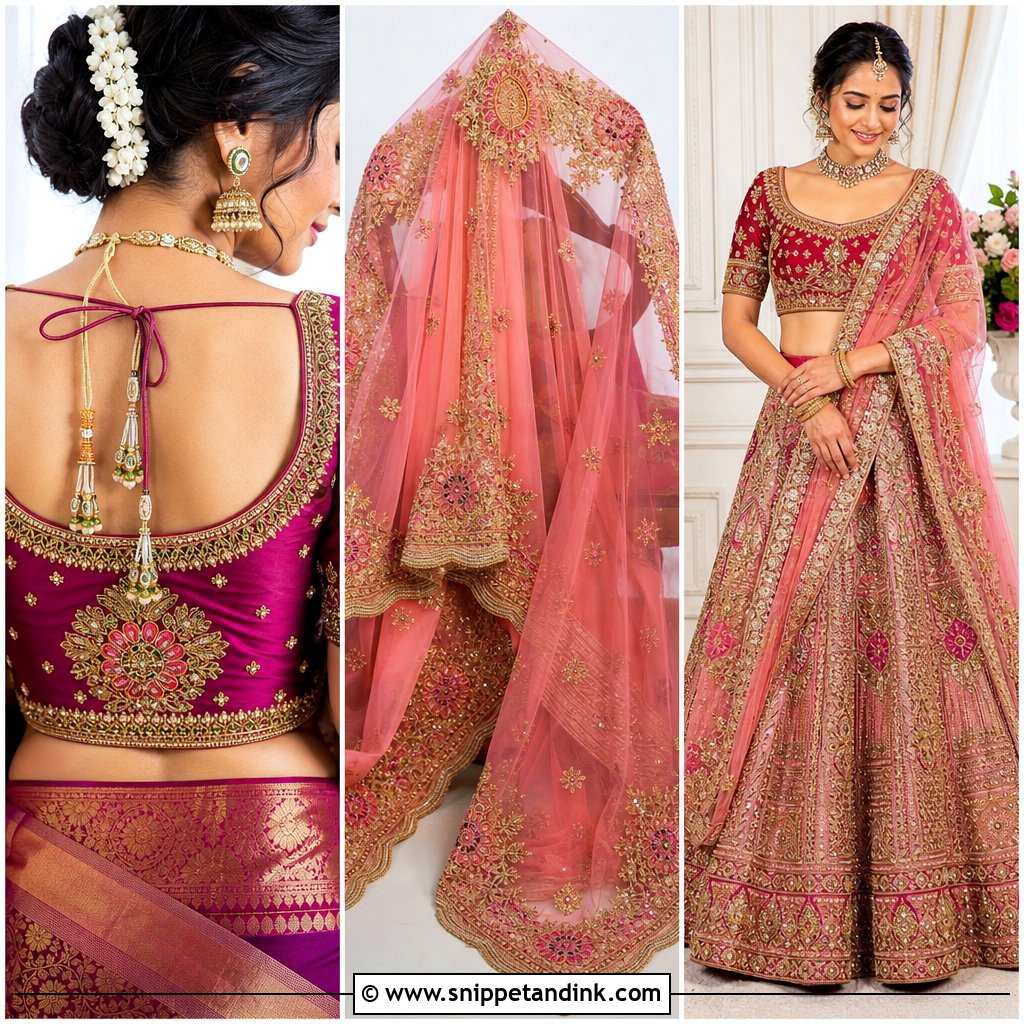
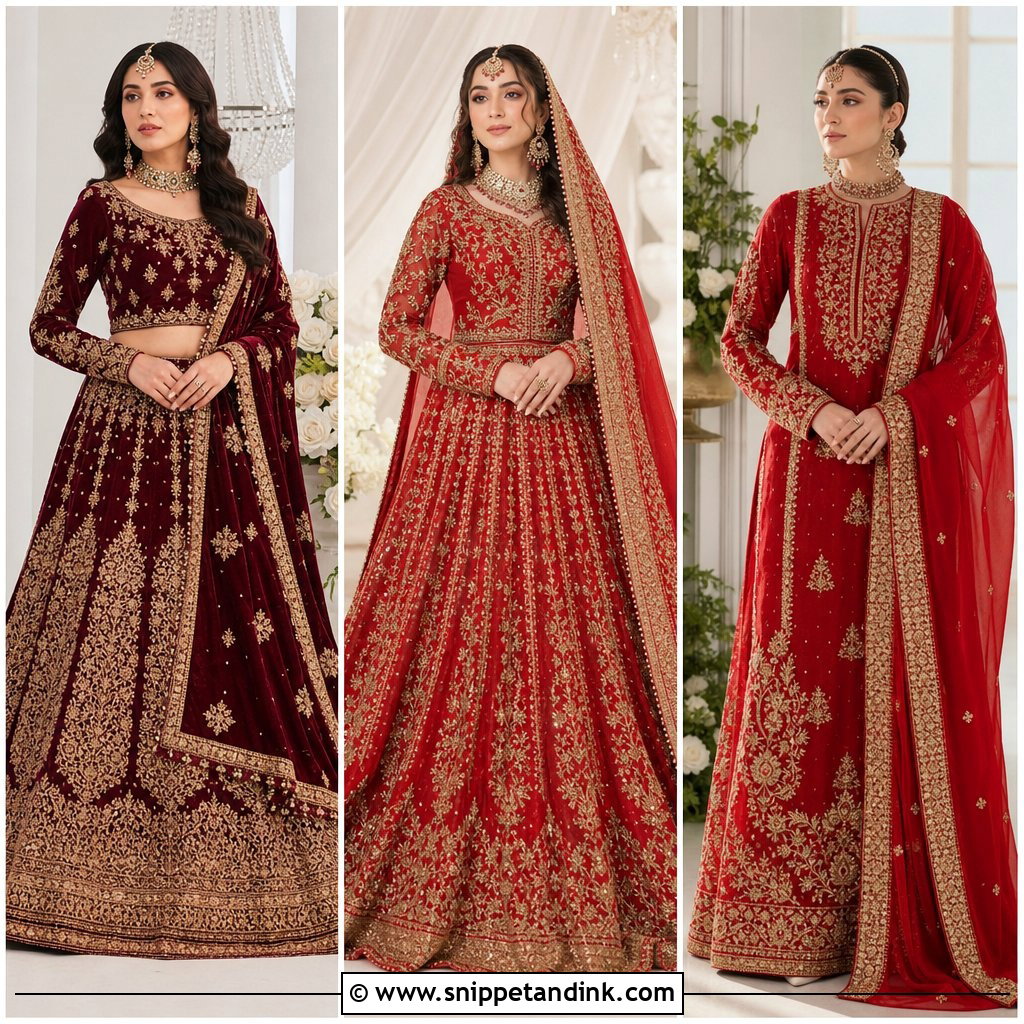
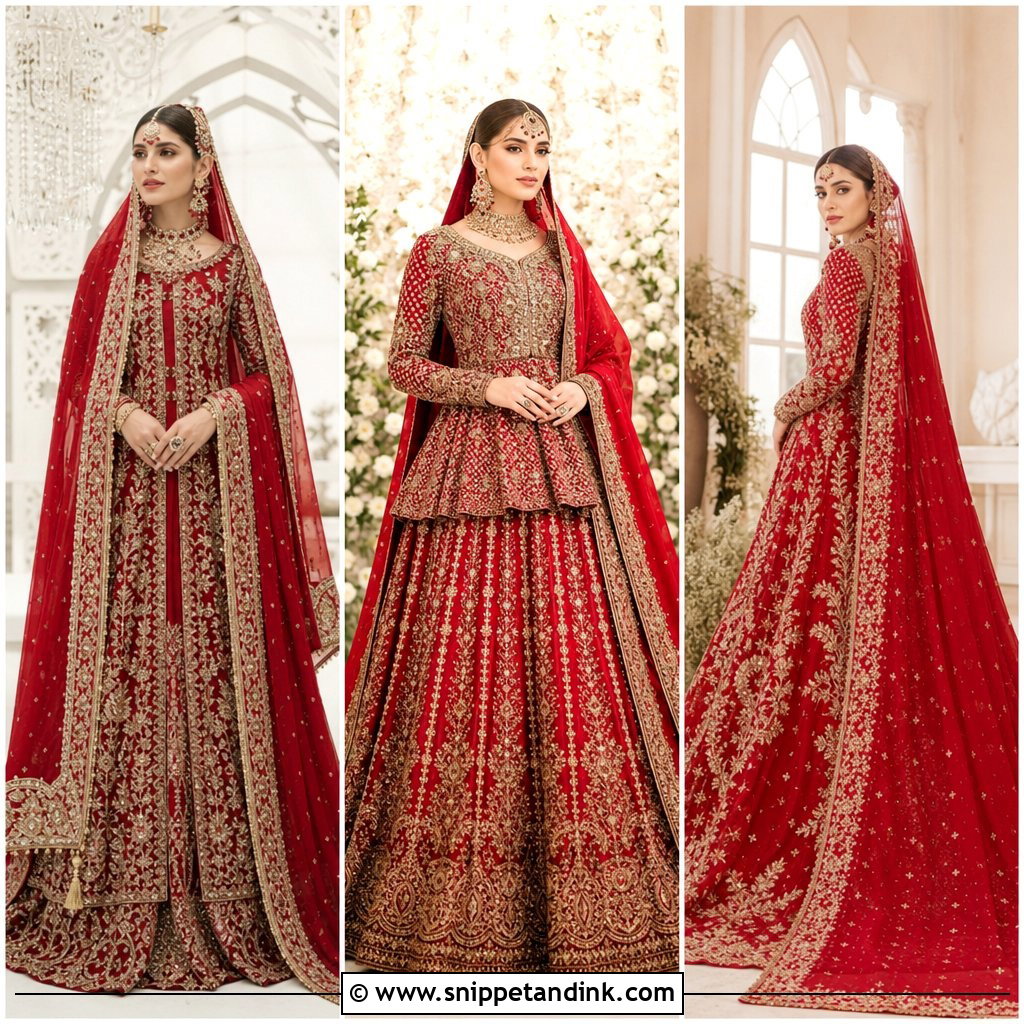
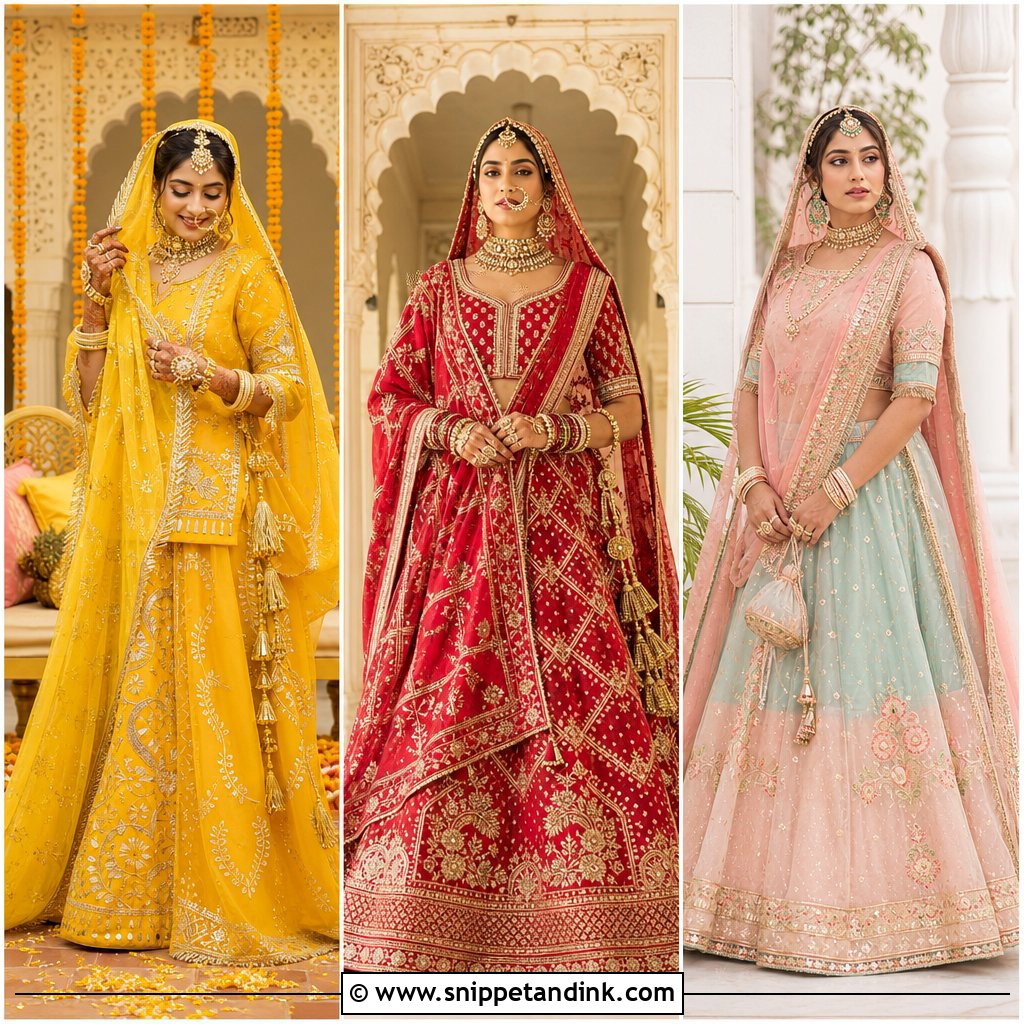
A red bridal lehenga with a long matching trail is the classic version, and it photographs reliably. Repeat the lehenga’s zardozi or floral embroidery on the dupatta border, but keep the base in light net. A heavy base drags the bun backward within an hour, and the first sign is a headache. Pin it over a low bridal bun and let the length fall straight behind you. A fitted embroidered blouse, kundan jewelry, red bridal bangles and cushioned gold platforms complete it, with a shorter second dupatta across one shoulder if you want coverage. Leave the center of the trail fairly plain so the red and the border carry the frame.
2. Maroon Lehenga With Velvet Trail Dupatta
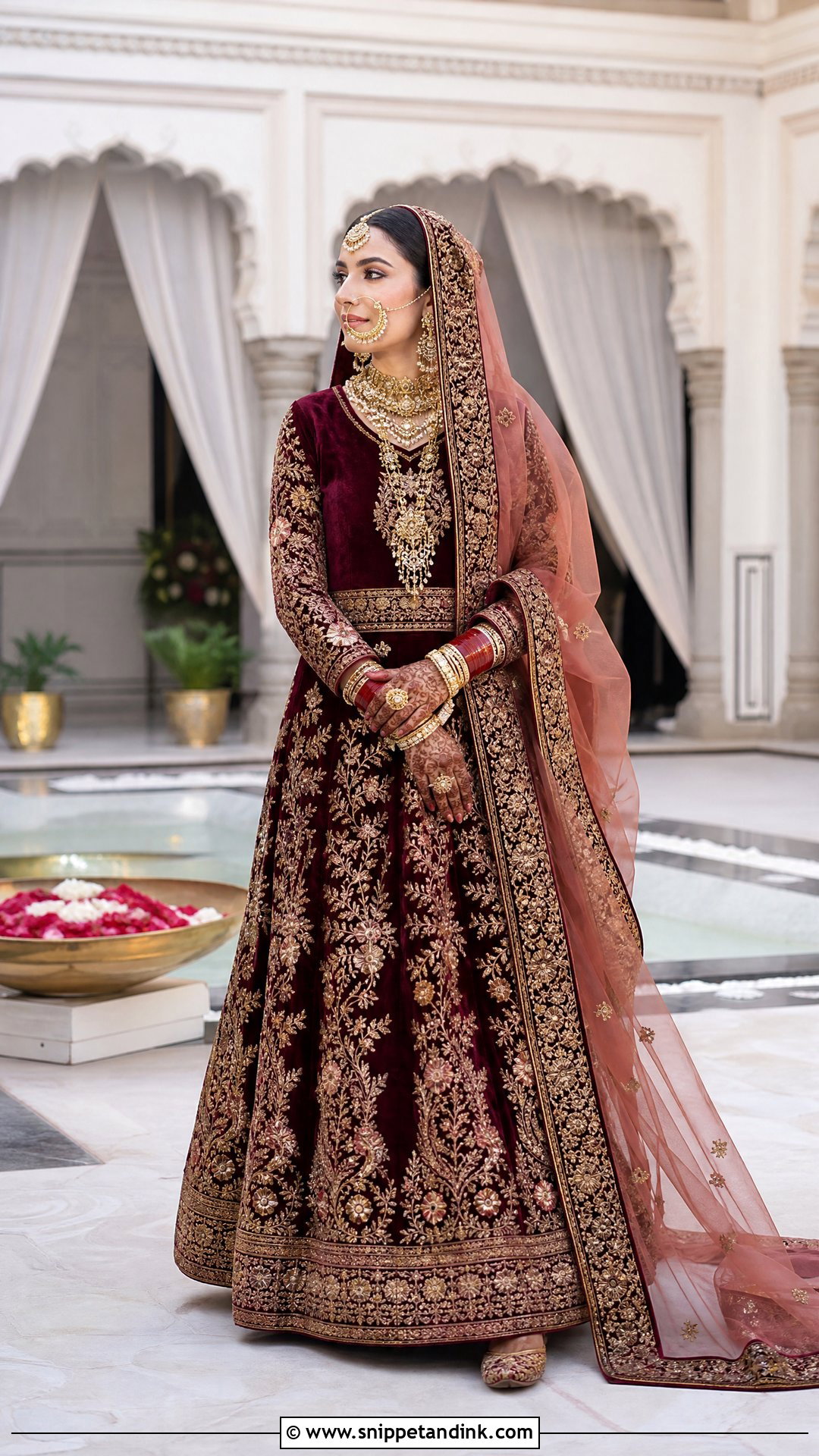
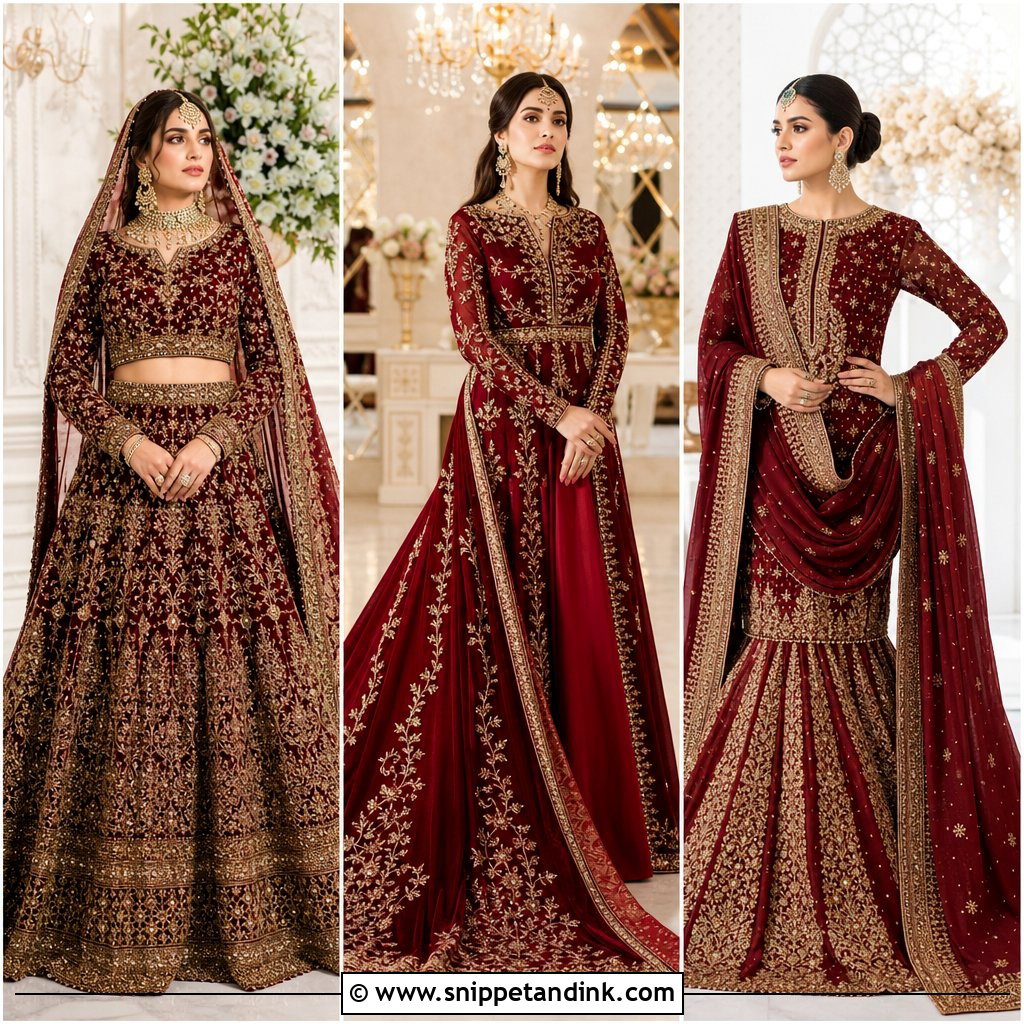
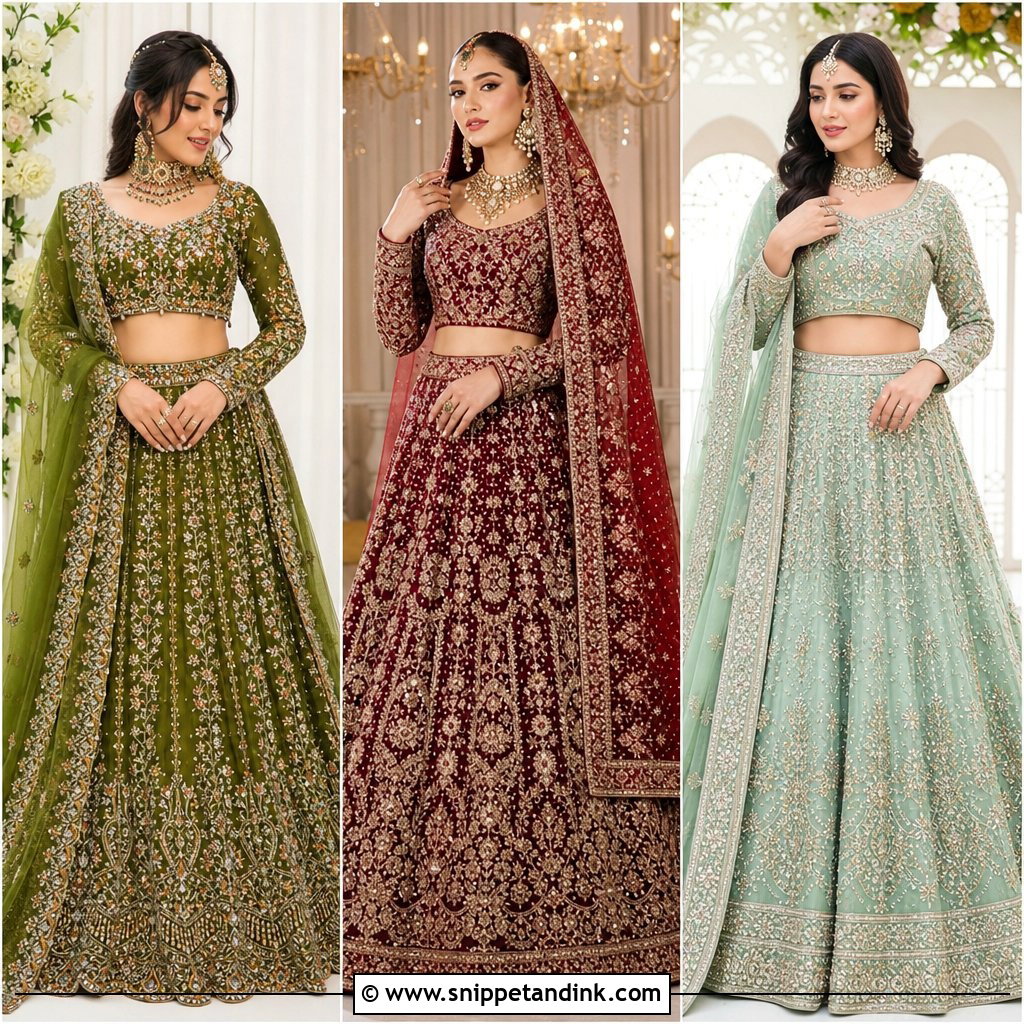
Rich maroon velvet gives a winter bride depth and warmth. I would never put a full velvet dupatta on a head, though; it weighs far too much. Pair the structured velvet lehenga with a long net or chiffon trail and a wide velvet border, which connects the veil to the outfit without the bulk. Antique zari, gold dabka or fine vine embroidery shows up well against maroon. Drape from the crown or the bun, keeping a little volume around the face to frame the jewelry. An embroidered full-sleeve blouse, antique gold necklaces, a statement nath, maroon bangles and cushioned juttis finish it, and it stays comfortable through a long ceremony.
3. Pink Lehenga With Floral Trail Dupatta
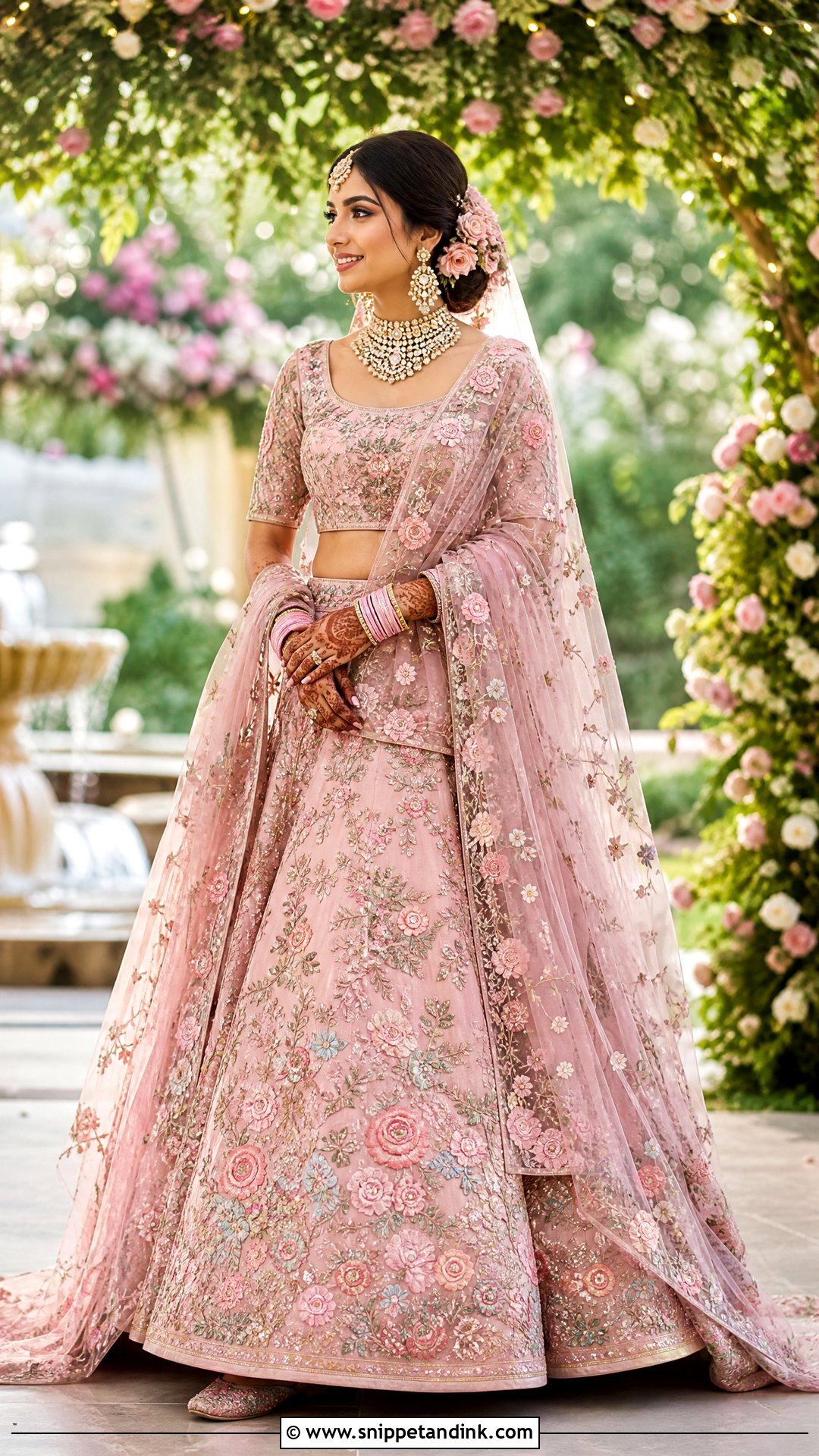
Soft pink suits a floral trail because the flowers can build gradually. Start with a blush, rose or dusty pink lehenga with scattered embroidery and a blouse cut to flatter your neckline. On the dupatta, I ask the embroiderer to keep the flowers small and sparse near the head and let them grow toward the border and the end. Large motifs beside your face fight with the makeup and earrings. Net, tulle or light organza keeps the movement airy. Wear it over a textured bun with a few small flowers, then add polki jewelry, pastel bangles, a fine waist belt and embellished pink juttis. Save the boldest bloom for the part of the trail the photographer shoots from behind.
4. Ivory Lehenga With Pearl Trail Dupatta
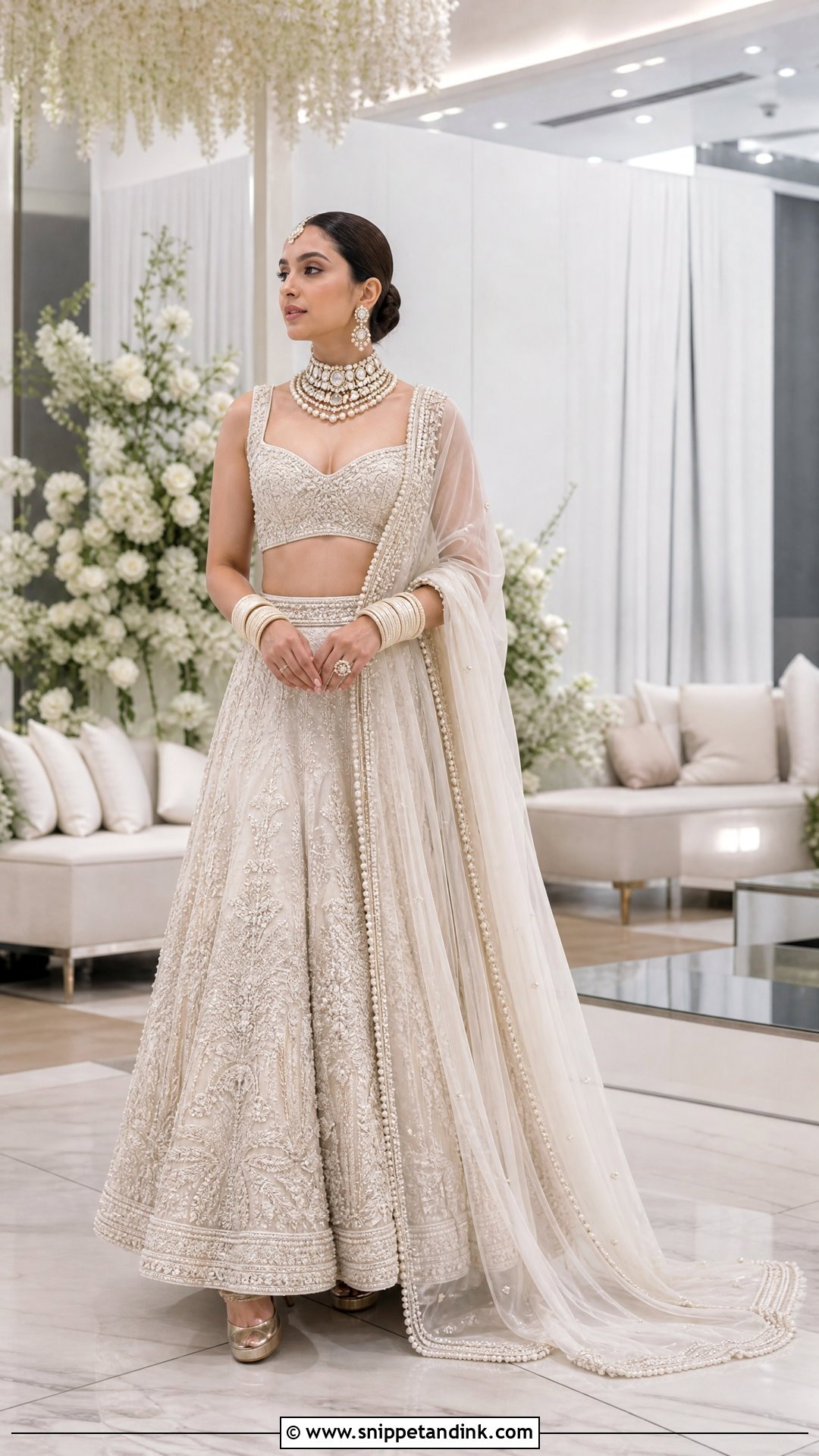
Ivory and pearls are a quieter alternative to bright bridal color. Choose an ivory or cream lehenga with tonal threadwork, silver sequins or a little gold, and a sheer net dupatta with scattered pearls and a defined pearl border so the full length reads crisp in aisle shots. Pin it under a sleek bun or behind softly pinned waves. A structured embroidered blouse, layered pearl and kundan jewelry, ivory bangles, a small potli and metallic heels complete it. Pearls are heavy in quantity, and that weight hangs from your pins. I always ask for lighter work near the crown and denser pearls toward the end, where the floor takes the load.
5. Pastel Lehenga With Scalloped Trail Dupatta
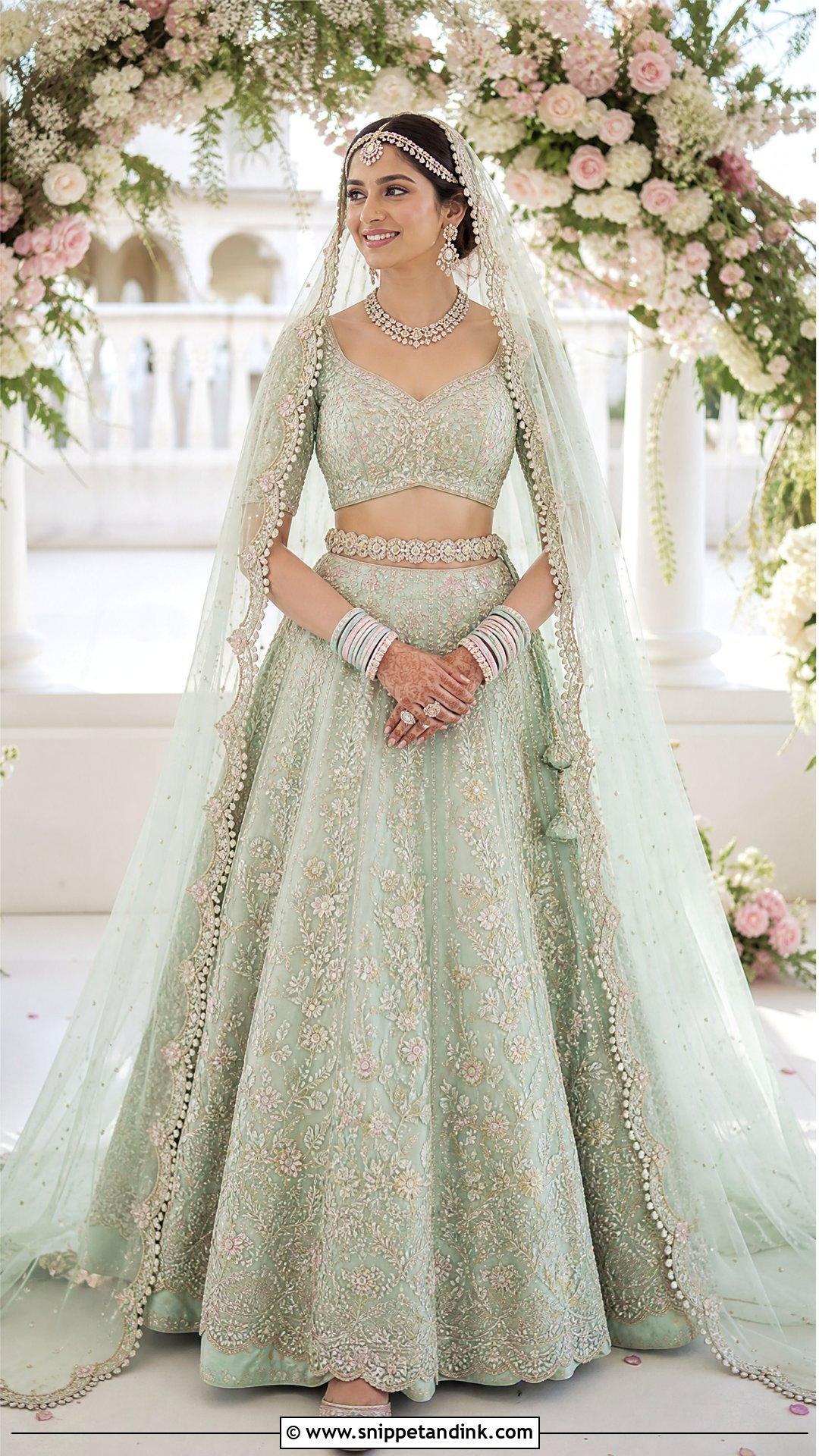
A scalloped edge finishes a pastel dupatta without needing heavy embroidery. Mint, powder blue and lilac all suit it, as does a peach lehenga with a fitted blouse and a sheer dupatta in the same family. The scallops can be fine threadwork, small pearls or crystals. I start the veil at the back of the head so the neckline and earrings stay visible, and use a matching waist belt to anchor a second shoulder dupatta. Diamond or polki jewelry, soft makeup, pastel bangles and embroidered juttis complete it. Ask for even scallops along the sides and a broader decorated panel at the end; that wider end is what makes the trail look intentional.
6. Gold Lehenga With Sheer Trail Dupatta
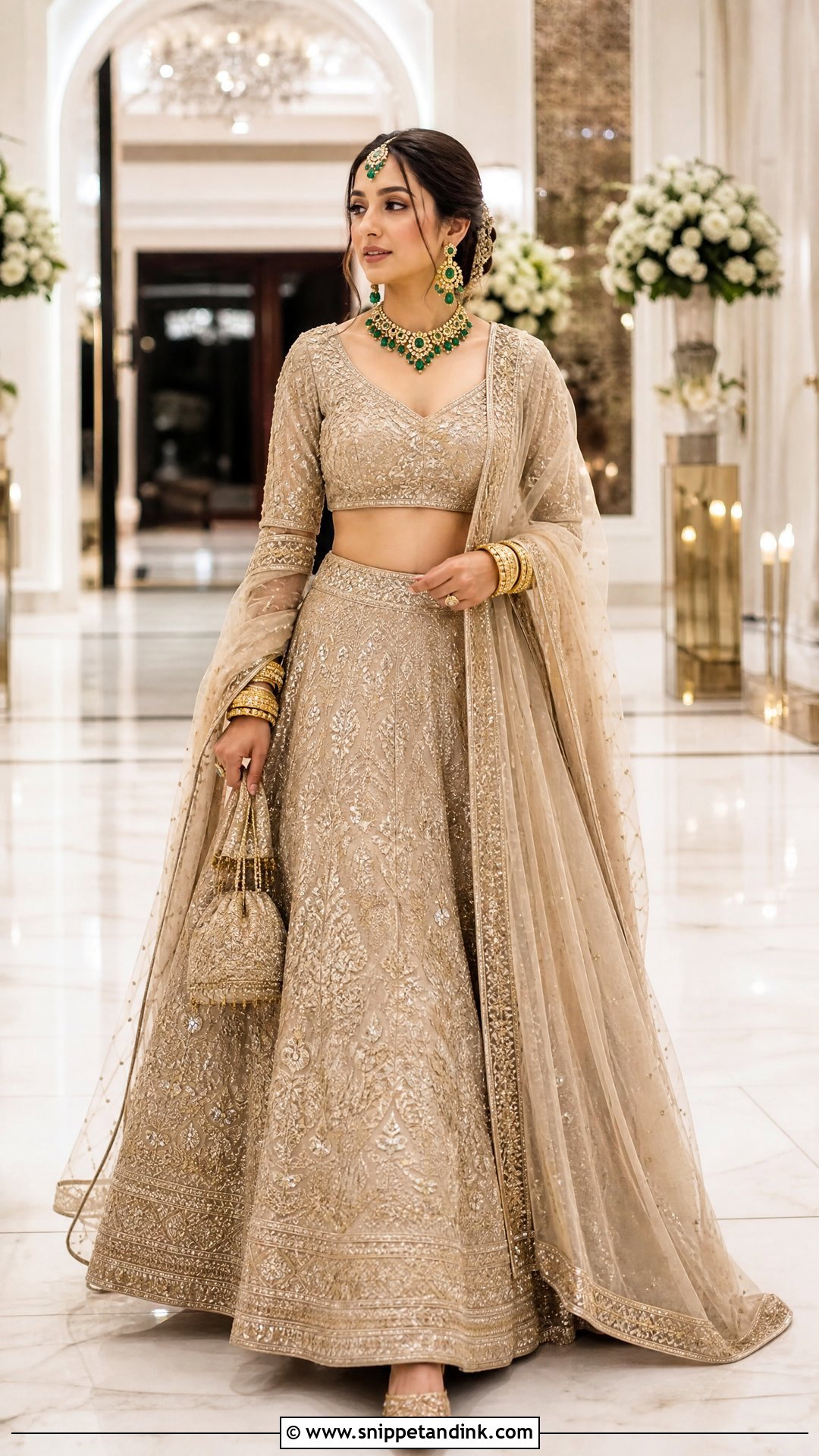
Gold on gold can turn heavy fast, so a sheer trail is the balancing move. Start with an antique gold or champagne lehenga with textured embroidery and a well-constructed blouse, then choose fine net with small sequins and a narrow metallic border instead of repeating the dense work. Set the dupatta just behind the crown and let it fall over the shoulders into a smooth trail. Emerald jewelry gives contrast; kundan and champagne stones keep it tonal. Gold juttis, stacked bangles and a small embroidered potli finish it. Under strong reception lights a fully sequinned veil can flare white on camera, which is another reason I keep the sequins sparse. A sleek hairstyle lets the neckline share the attention.
7. Green Lehenga With Contrast Trail Dupatta
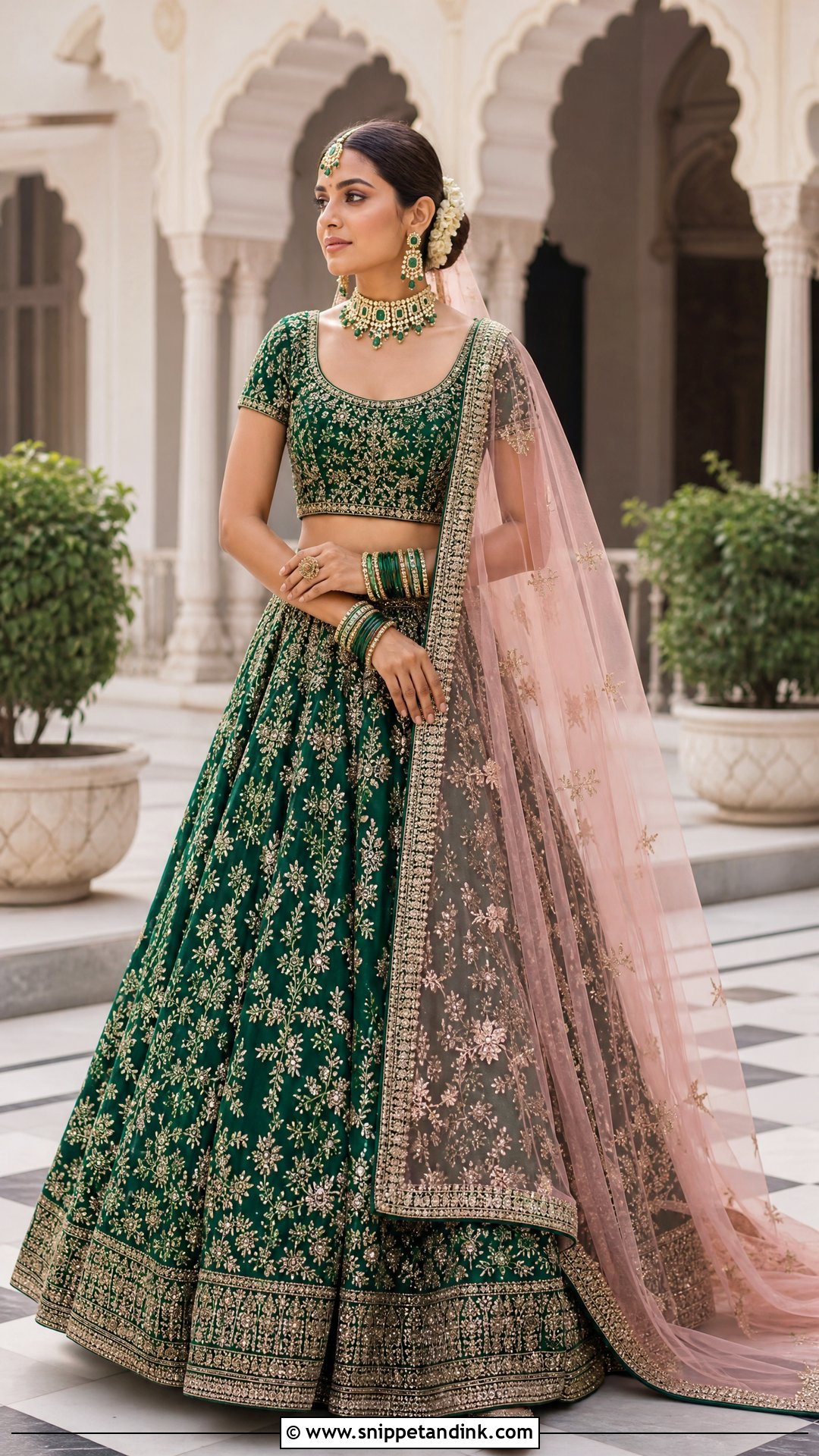
Contrast is the boldest way to wear a trail. Deep emerald takes blush, rust, red or antique gold; sage green sits better with ivory or peach. My rule is to pick a contrast color already present in the lehenga embroidery, so the veil looks planned rather than borrowed. Use a light net or organza base with a border matching the blouse or skirt, and drape it from a secure low bun so the color frames you from behind. An embroidered blouse, kundan with green stones, matching bangles and metallic juttis complete it. Repeat the contrast shade in one or two accessories at most. More than that, and the outfit loses its center.
8. Peach Lehenga With Organza Trail Dupatta
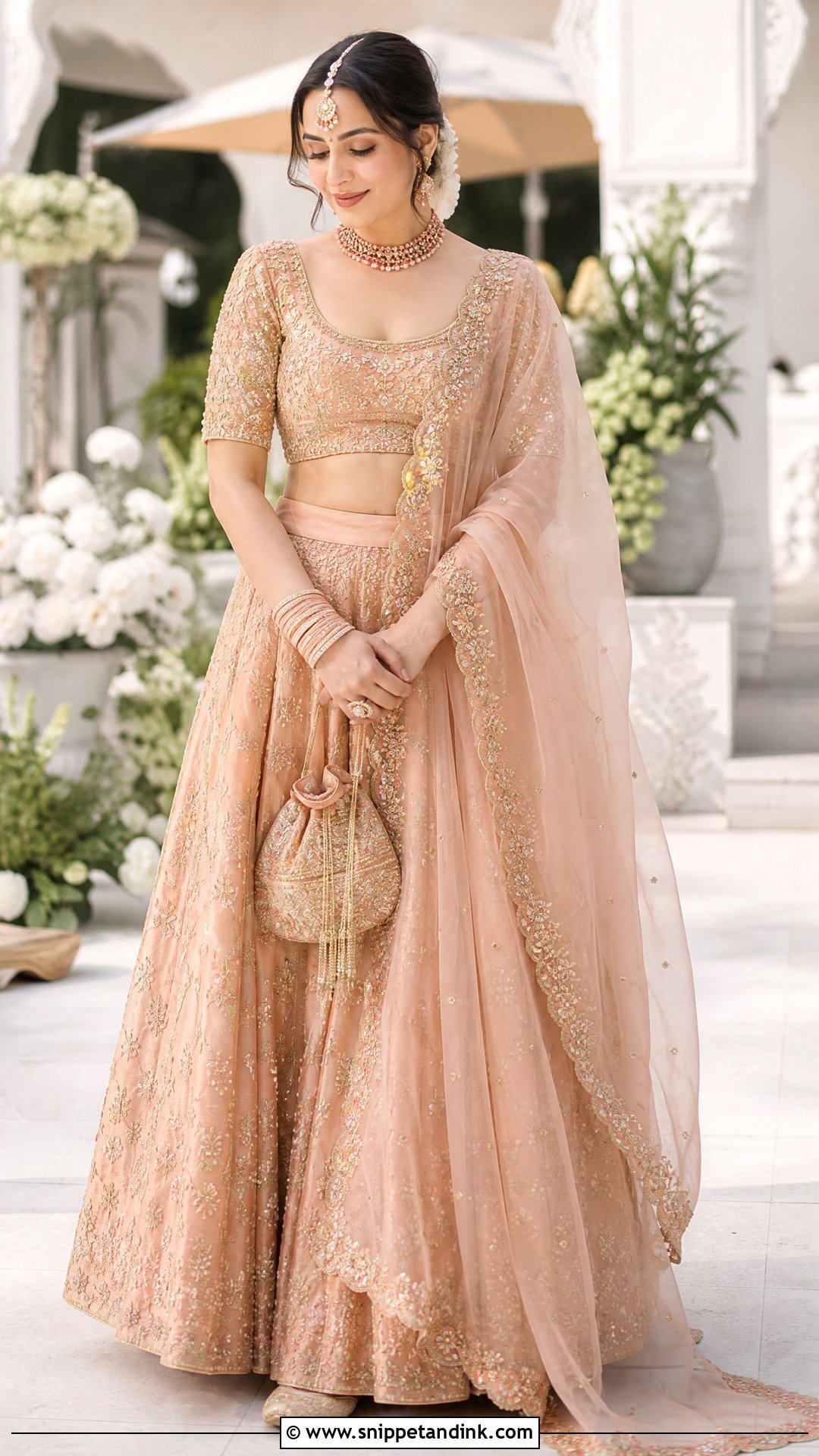
Peach organza floats, which makes it my favorite for daytime ceremonies. Organza has natural body, so it holds volume behind you without heavy gathering at the pins. Pair it with a peach lehenga in delicate gold threadwork and small sequins, plus a fitted blouse with subtle embroidery, and give the trail a narrow scalloped or floral border for definition. Pin carefully at the back of a low bun, away from the face. Rose-gold jewelry, peach bangles, embroidered juttis and a structured potli finish the look. Organza also holds creases stubbornly. Steam the trail on the morning itself; a fold line from the garment bag will show across the plain center in every photo.
9. White Lehenga With Crystal Trail Dupatta
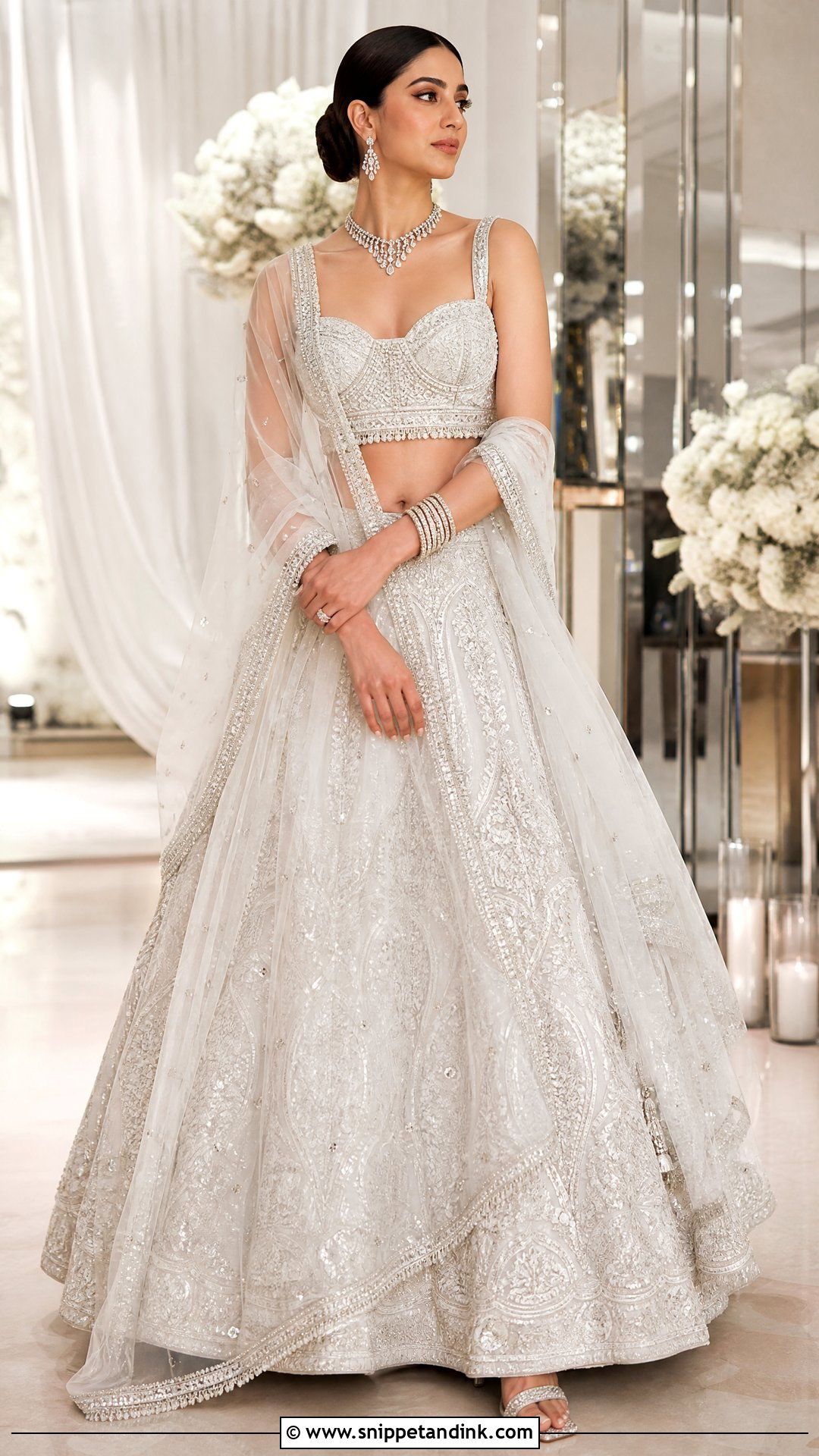
Off-white with crystals reads modern and luminous. Choose a lehenga with silver embroidery, mirror accents or tonal appliqué, and a sheer veil with carefully spaced crystals and a narrow crystal border to outline the trail. Wear it from the crown for a traditional line or under a smooth bun for a contemporary one. A structured blouse, diamond jewelry, silver bangles and white embellished heels or juttis complete it, with cool-toned makeup and a soft pink lip. Keep crystals away from the pinning points. Clustered stones there add weight exactly where the fabric is held, and the veil starts slipping before the ceremony is over.
10. Double Dupatta Lehenga With Long Trail
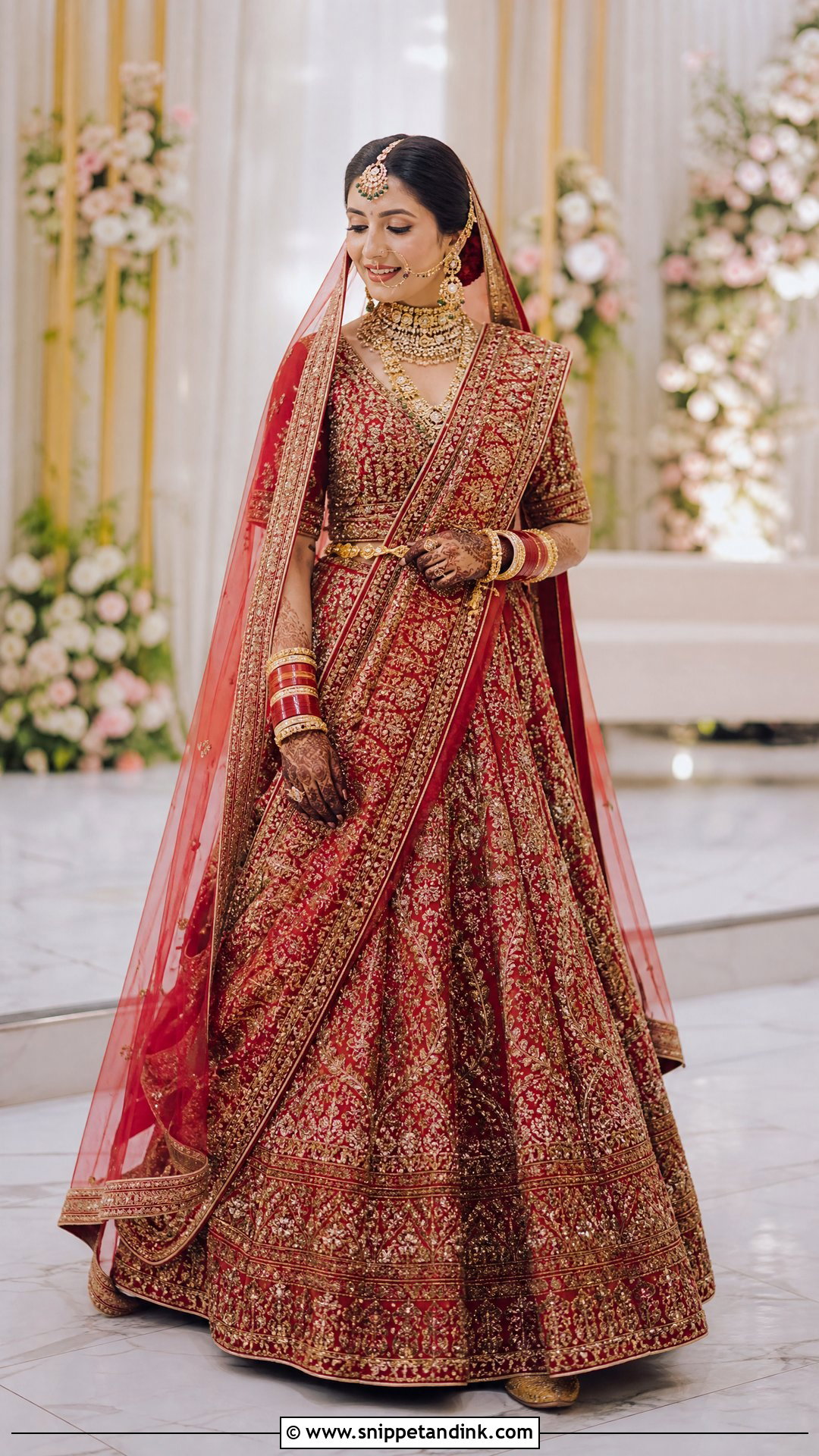
Two dupattas give you traditional coverage and the drama of a trail. Usually I put the lightweight veil on the head and the more decorated piece on the shoulder; if the long piece is very sheer, I reverse it. Keep both in one color family and vary the texture or border width so they read as two layers. The lehenga and blouse should still show beneath them. Secure the trail at several hidden points around a sturdy bun, then pleat the shorter dupatta neatly over one shoulder and pin it to the blouse. Layered kundan, a maang tikka, bangles, a waist belt and comfortable juttis finish it. Sit down at the trial, since two layers pulling in different directions will drag at the neckline.
11. Red Lehenga With Gold Contrast Trail Dupatta
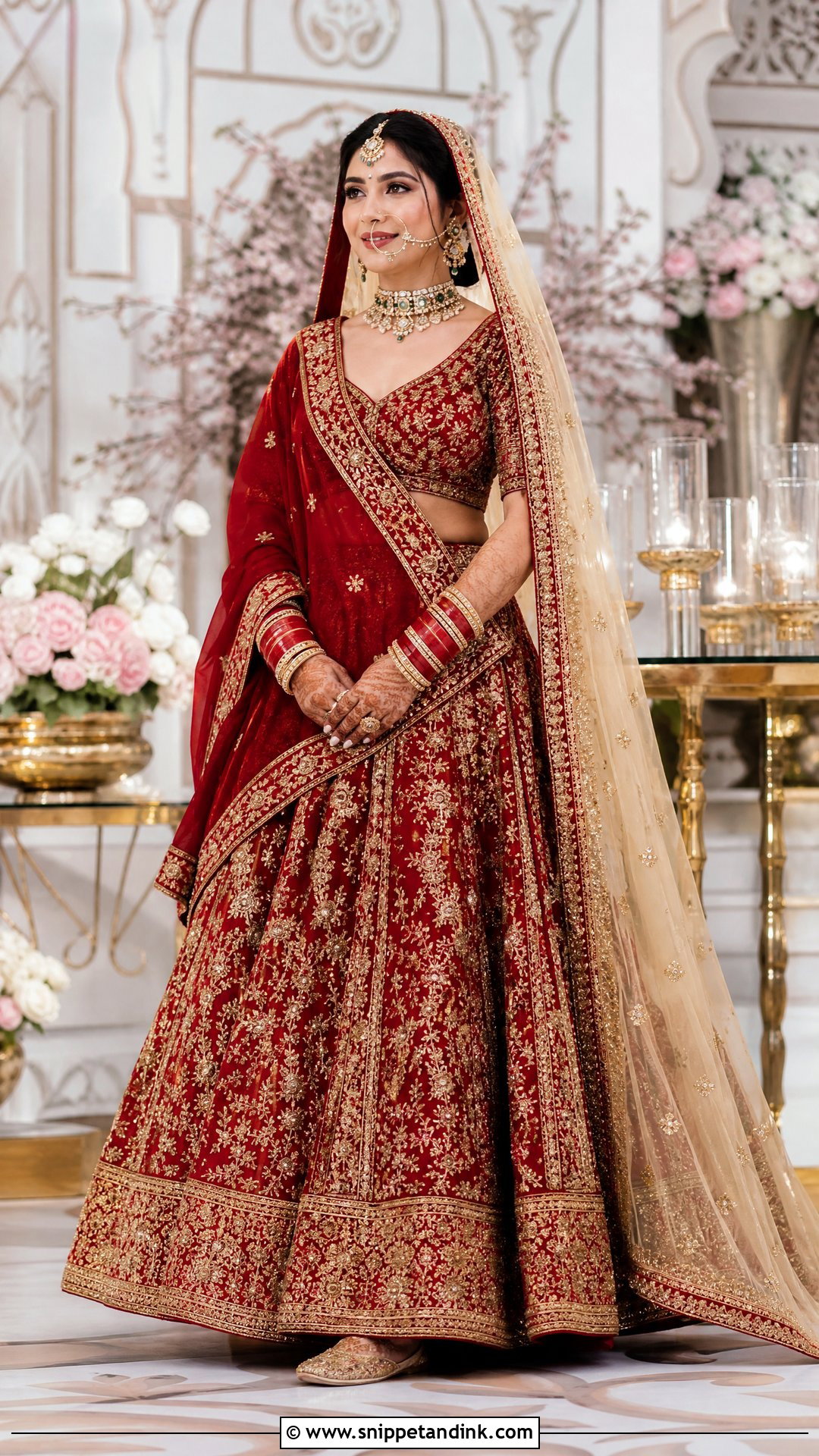
Red with a gold trail mixes the classic bridal shade with a metallic finish. Choose a deep red skirt and blouse in gold embroidery, then a sheer champagne or antique gold dupatta repeating the same motifs. A red velvet or embroidered border on the veil ties it back to the lehenga. Wear the gold dupatta over the head with its length behind you, and add a shorter red dupatta across the torso for coverage. Kundan jewelry, a red and gold chooda, a statement nath and cushioned gold juttis complete it. The gold veil has to stay translucent. If it is too dense, the red disappears in every back view and you are effectively wearing a gold outfit.
12. Bridal Saree With Long Trail Dupatta
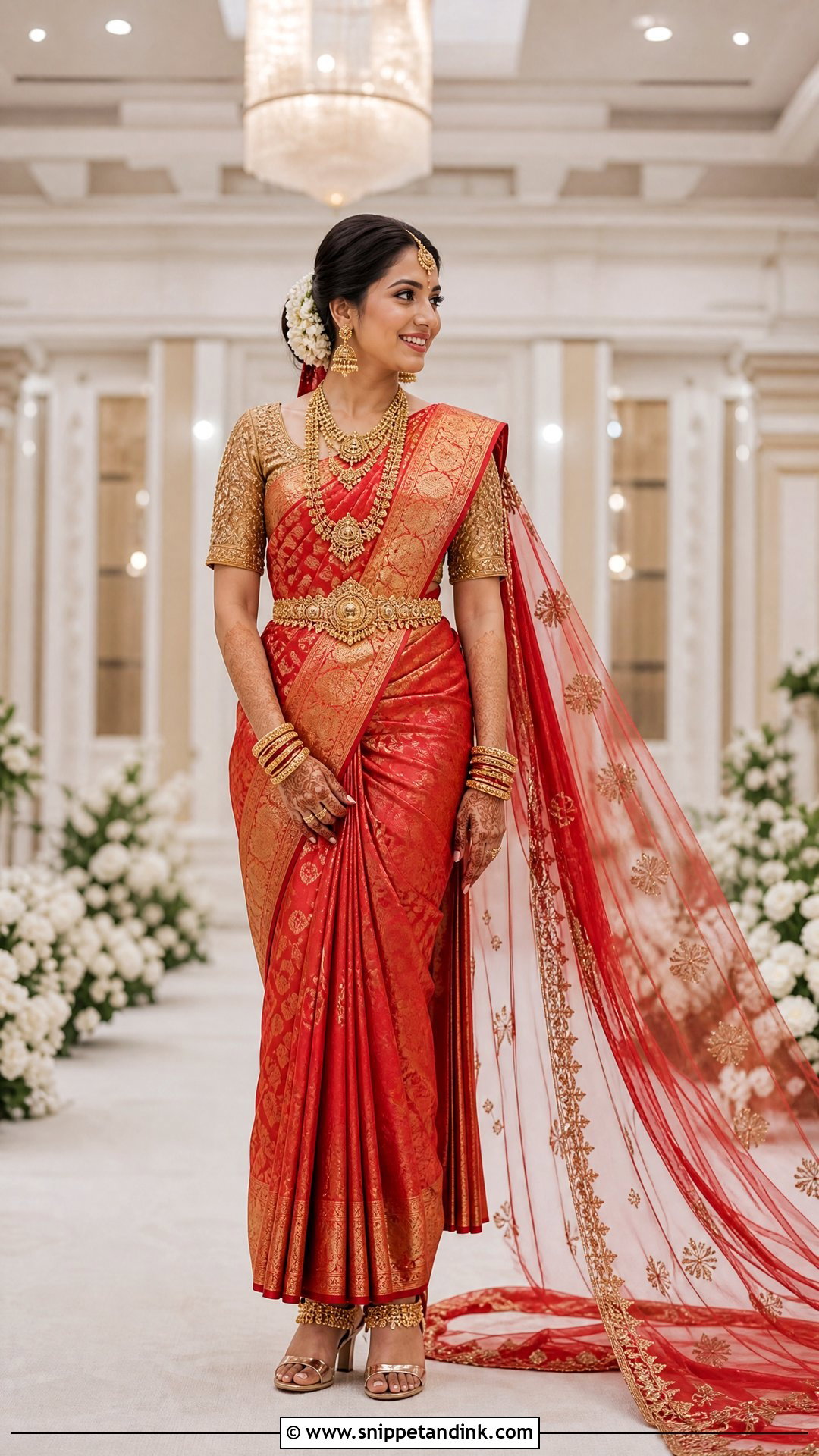
A saree takes a trail dupatta well, though it needs a different drape than a lehenga. Start with a silk, tissue or embroidered saree in red, ivory, gold or another shade that means something to your family. The blouse matters here because it carries the veil’s pins, so I prefer a fitted one without bulky shoulder work. Choose a light net dupatta with motifs that echo the saree border, secure it to a low bun and let it fall behind the pallu rather than wrapping it around you. Temple jewelry, kundan or pearls, chosen by the saree finish, plus bangles, a waist belt, anklets and comfortable heels complete it. Set the pleats and the dupatta separately, or the trail drags the pleats out of line as you walk.
13. Bridal Sharara With Trail Dupatta
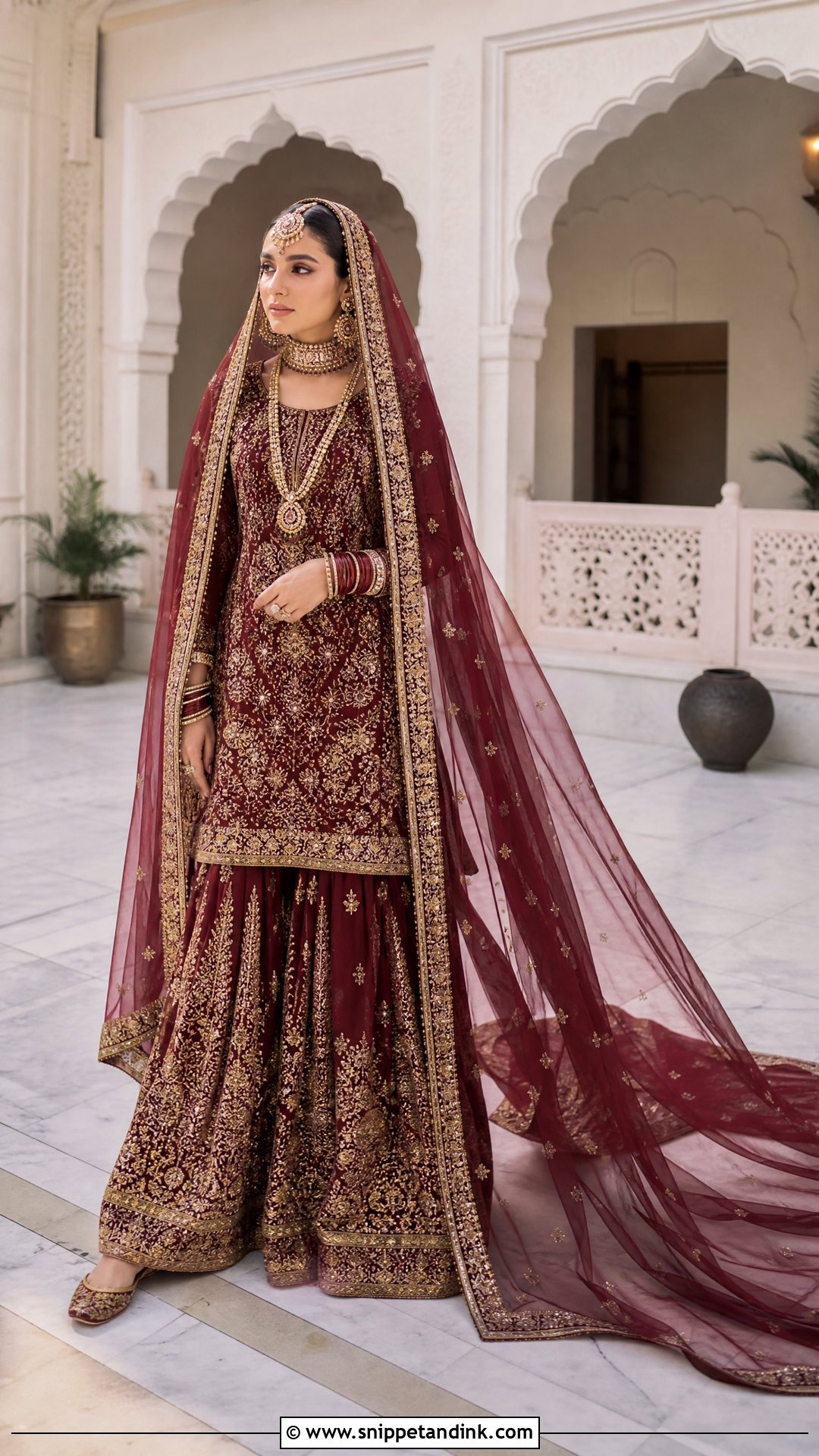
A sharara already has volume below the knee, so the trail has to be lighter than the outfit. Choose a long embroidered kurta and wide sharara pants in maroon, red, ivory or muted pink, then a net, chiffon or soft organza dupatta. Wear it over the head with the front open enough to show the neckline and layered necklaces, and give it a broad border that mirrors the kurta hem. Add a passa, choker, long necklace, bangles and pointed juttis. I narrow the veil at the shoulders and let it widen toward the back. Draped wide at the top, it hides the kurta’s line and you lose the silhouette you chose.
14. Bridal Anarkali With Long Trail Dupatta
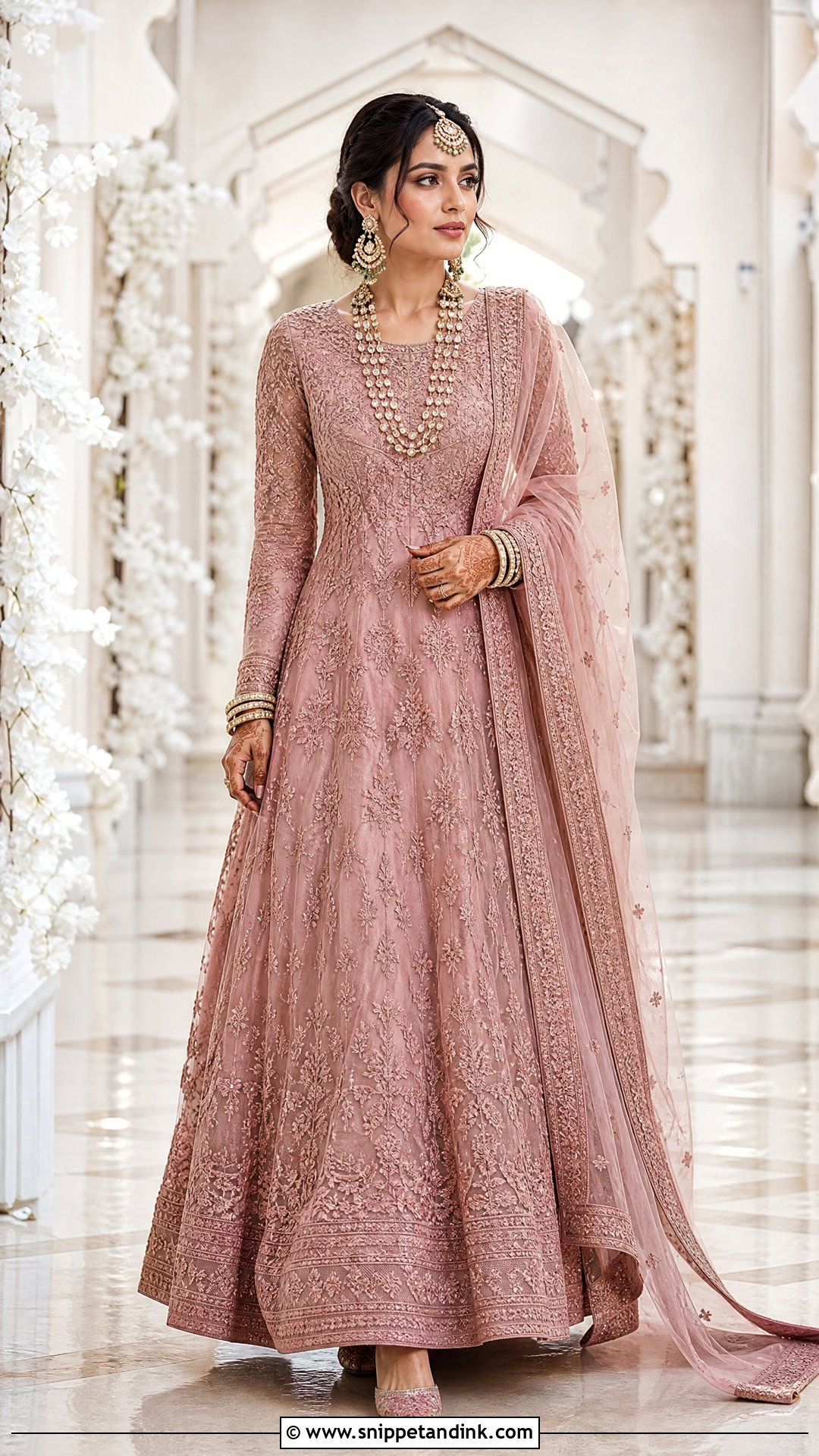
An Anarkali and a long trail share the same flowing line, so they pair naturally. Choose a floor-length Anarkali with fitted sleeves, a defined waist and embroidery that grows richer toward the hem. Pin a sheer veil over a bun and let it extend behind the dress, so the line runs unbroken from bodice to trail. I prefer a shade slightly lighter or darker than the outfit; an exact match flattens the layers in photographs. A layered necklace, chandbali earrings, bangles and embellished closed-toe shoes finish it. Drape the front softly over one shoulder so the Anarkali’s flare stays visible. A light border also makes greetings and seated portraits much easier.
15. Minimal Lehenga With Embroidered Trail Dupatta
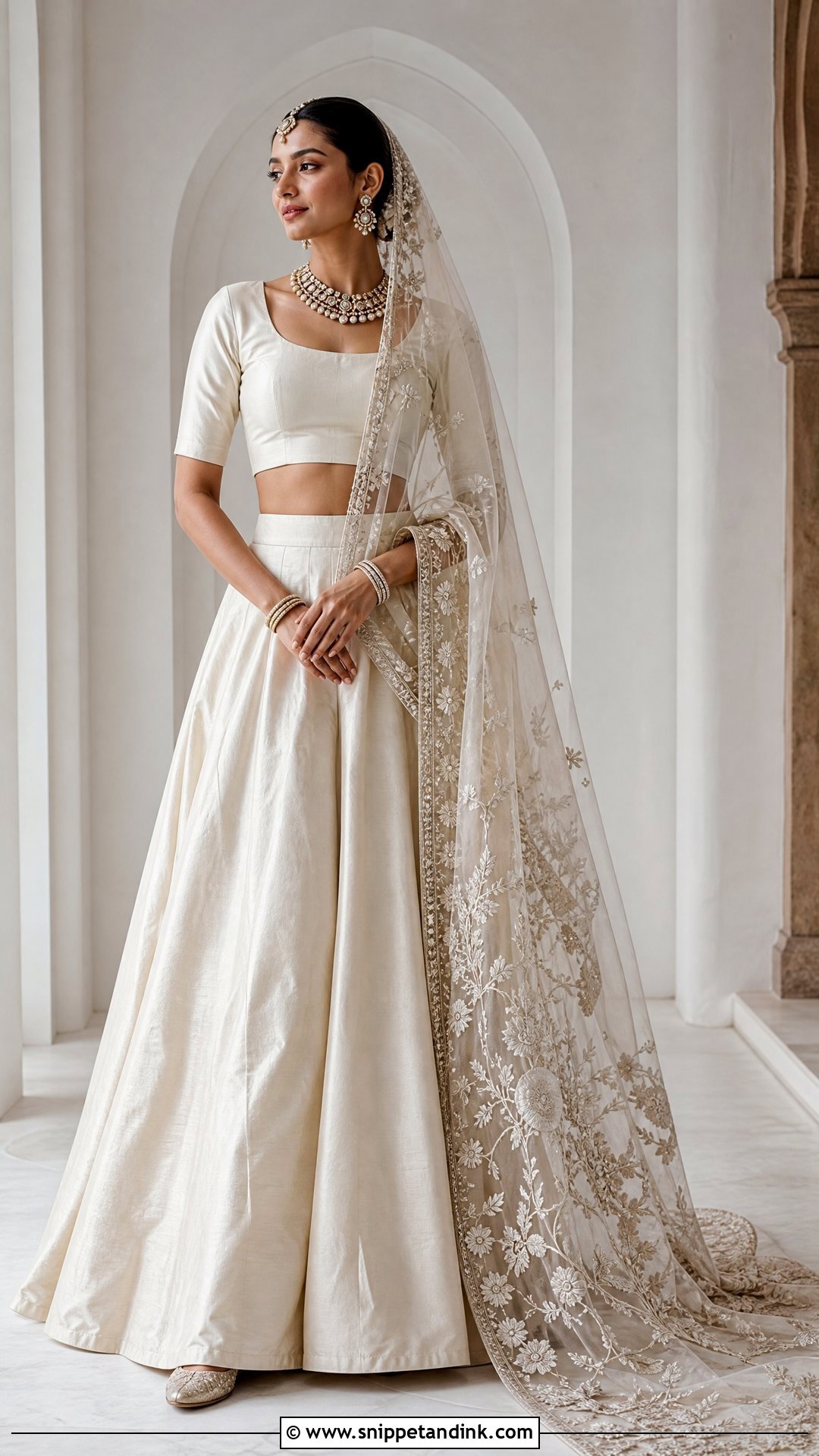
Here the dupatta is the star and the lehenga steps back. Choose plain silk, raw silk or a lightly textured skirt with a clean blouse in the same shade, and let the veil carry floral vines, geometric work, sequins or pearls along its whole length. I grade the embroidery: open and light near the head, dense toward the end. That gives impact behind you and keeps the top of the dupatta comfortable. One statement necklace, matching earrings, slim bangles and simple embellished juttis are enough, with a sleek bun and polished makeup. Resist adding more ornaments. The contrast between a quiet lehenga and a busy dupatta is the whole point.
16. Heavily Embroidered Lehenga With Plain Trail Dupatta
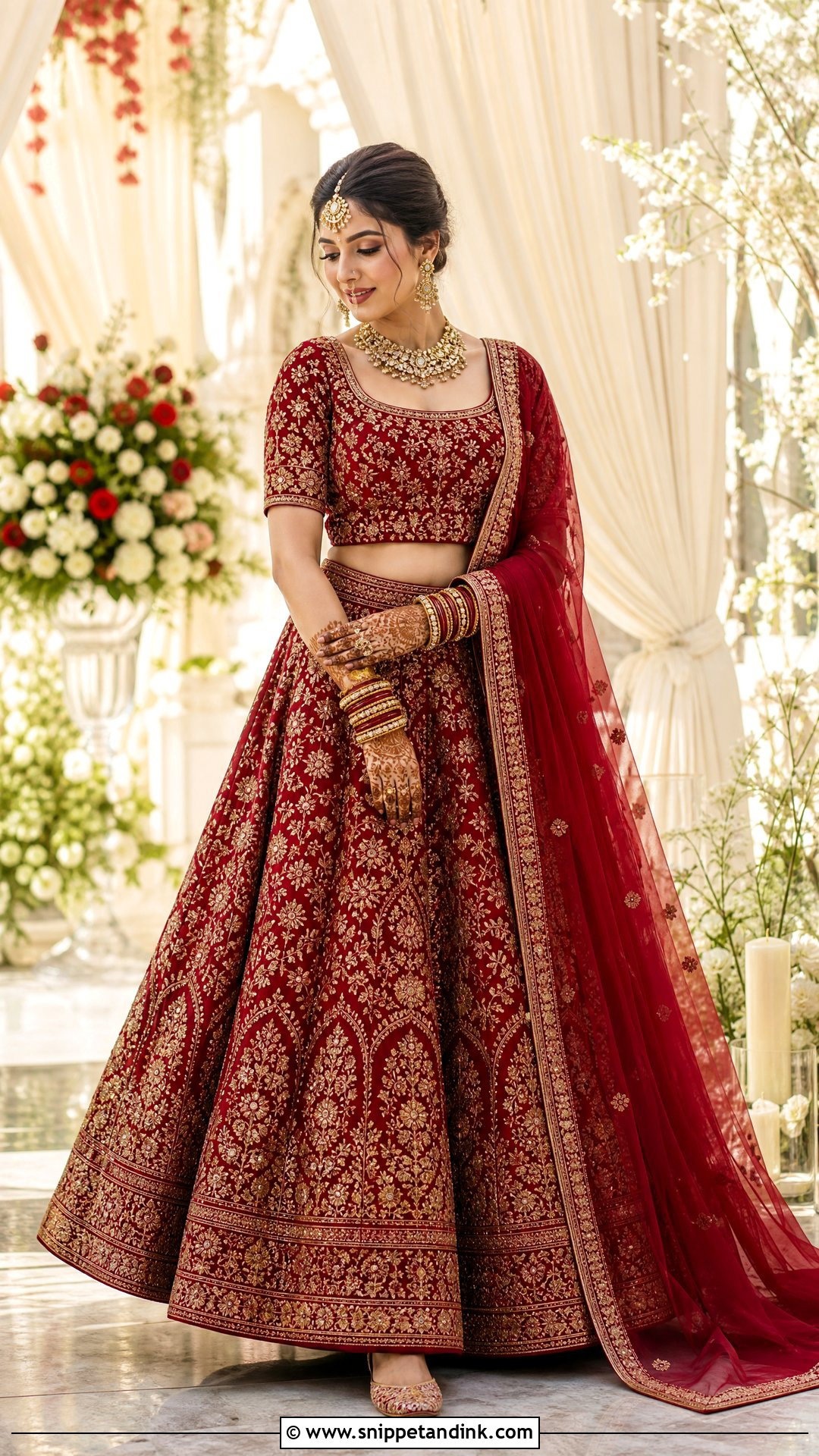
The reverse also works. When the lehenga is covered in embroidery, a plain trail gives the eye somewhere to rest. Choose sheer net, chiffon or organza in the skirt’s base color with a slim border, scattered sequins or a few motifs near the end. Pin it toward the back of the hairstyle and let it fall cleanly without bunching. For jewelry, echo a single element of the embroidery, pearls or emeralds or antique gold, and add coordinated bangles and comfortable juttis. A heavy lehenga already tires you over a long ceremony. A plain veil is one less weight on your head, and brides notice that difference by the end of the night.
17. Personalized Name Trail Dupatta
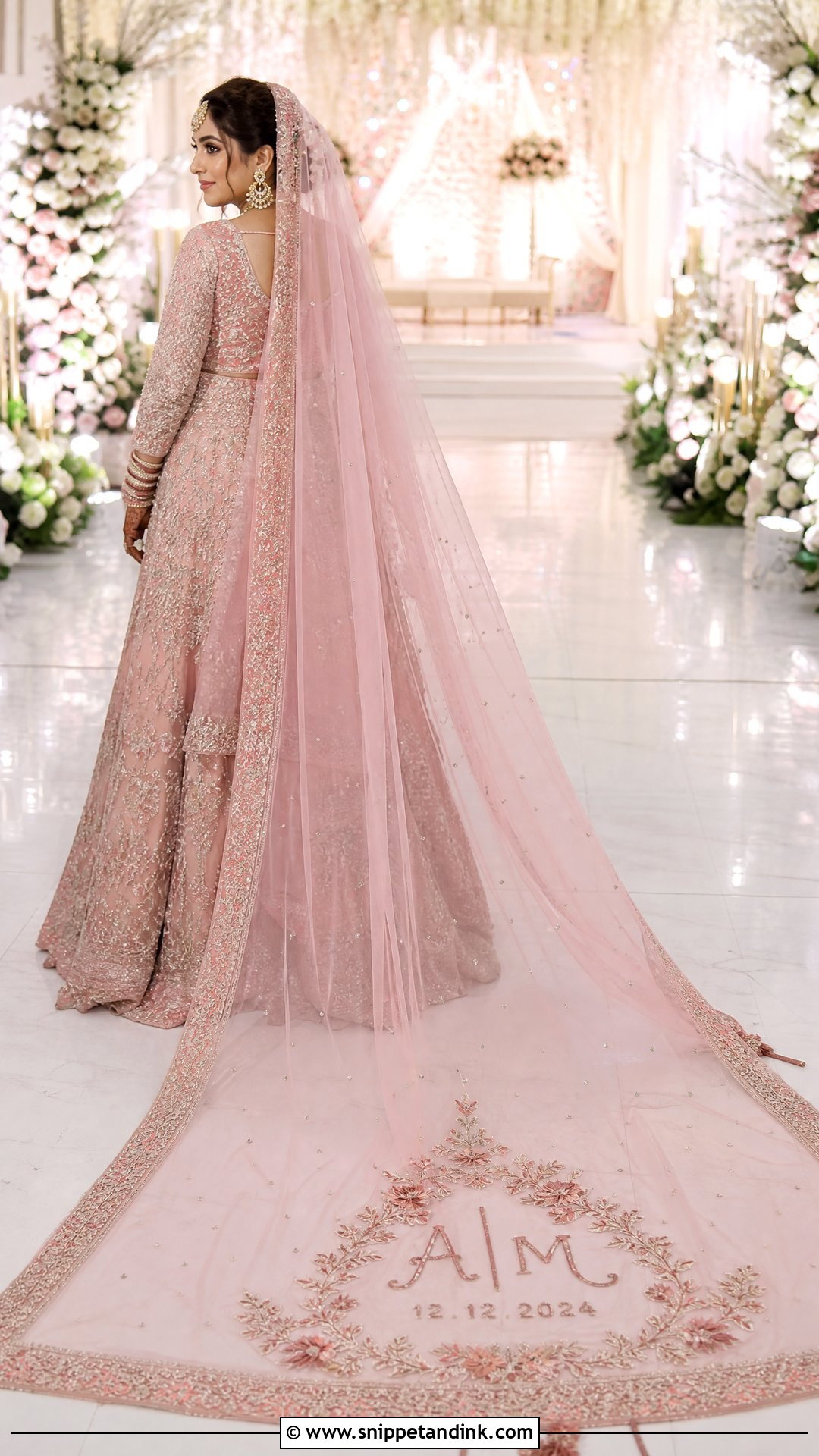
A personalized trail dupatta carries something only you can wear: names, initials, the date, a short blessing or a family motif embroidered along the border or near the end. Pair it with a lehenga in red, pink, ivory or your chosen color, and use embroidery that contrasts gently with the base so the words stay readable. Keep lettering away from folds and pinning points, where it disappears. A fitted blouse, heirloom-style jewelry, matching bangles and embroidered footwear complete it. Ask for a full-scale printed layout before production rather than a small digital sketch. On a long trail, spelling and spacing mistakes only show at real size, and embroidery cannot be undone.
18. Floral Border Trail Dupatta With Pastel Lehenga
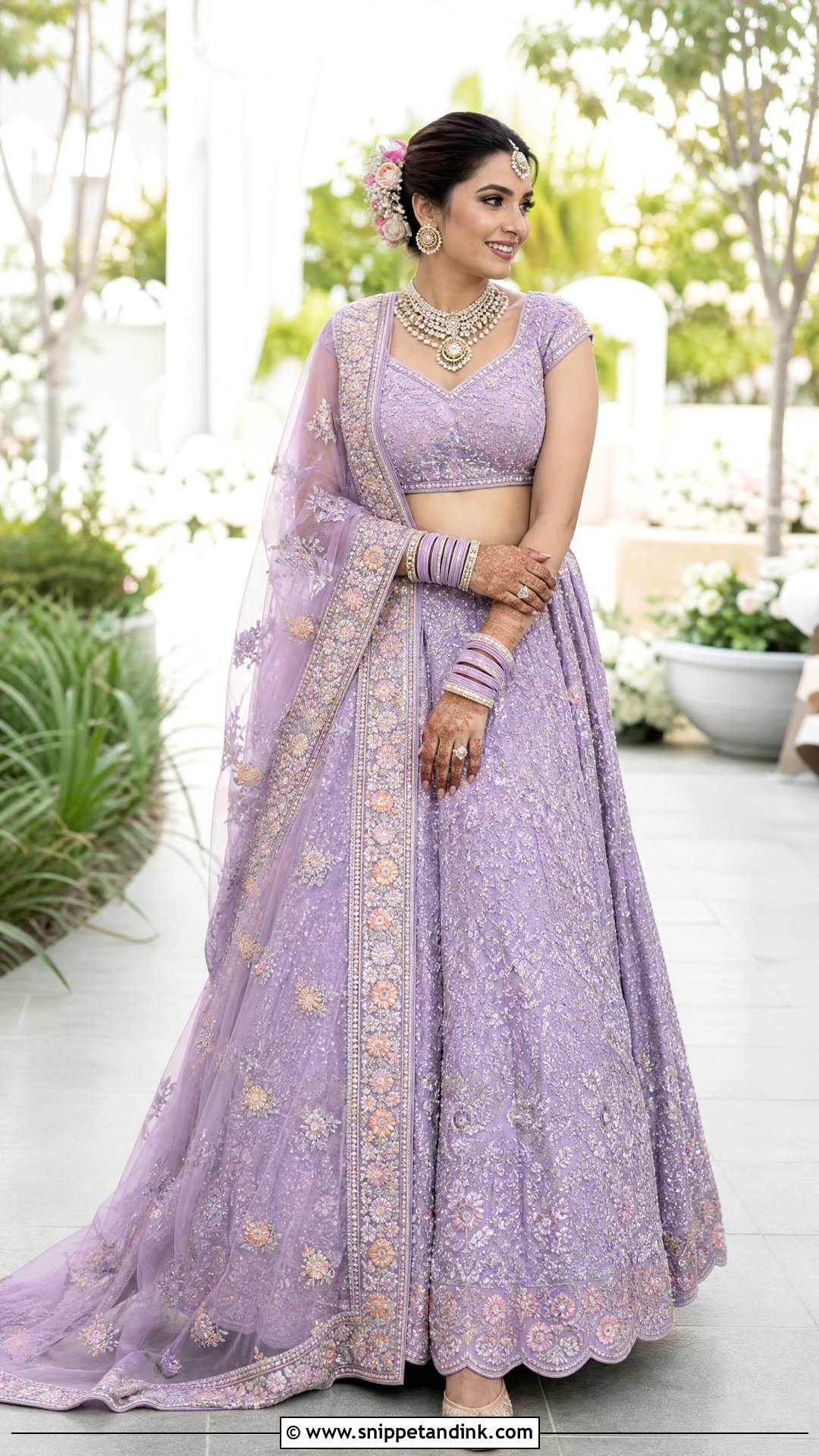
A floral border frames a pastel lehenga without crowding it. Start with lavender, blush, mint or powder blue with tonal embellishment, then a sheer dupatta with embroidered flowers down both sides that gather into a wider arrangement at the end. The border can use complementary pastels instead of an exact match. Wear the veil behind a low bun dressed with a few small flowers that echo the embroidery. A fitted blouse, fine polki or diamond jewelry, pastel bangles and metallic juttis finish it. Keep the center lightly decorated so the border frames you. The detail I check is flower scale: tiny motifs on the lehenga and oversized blooms on the veil look like two different outfits.
19. Mirror Work Lehenga With Net Trail Dupatta
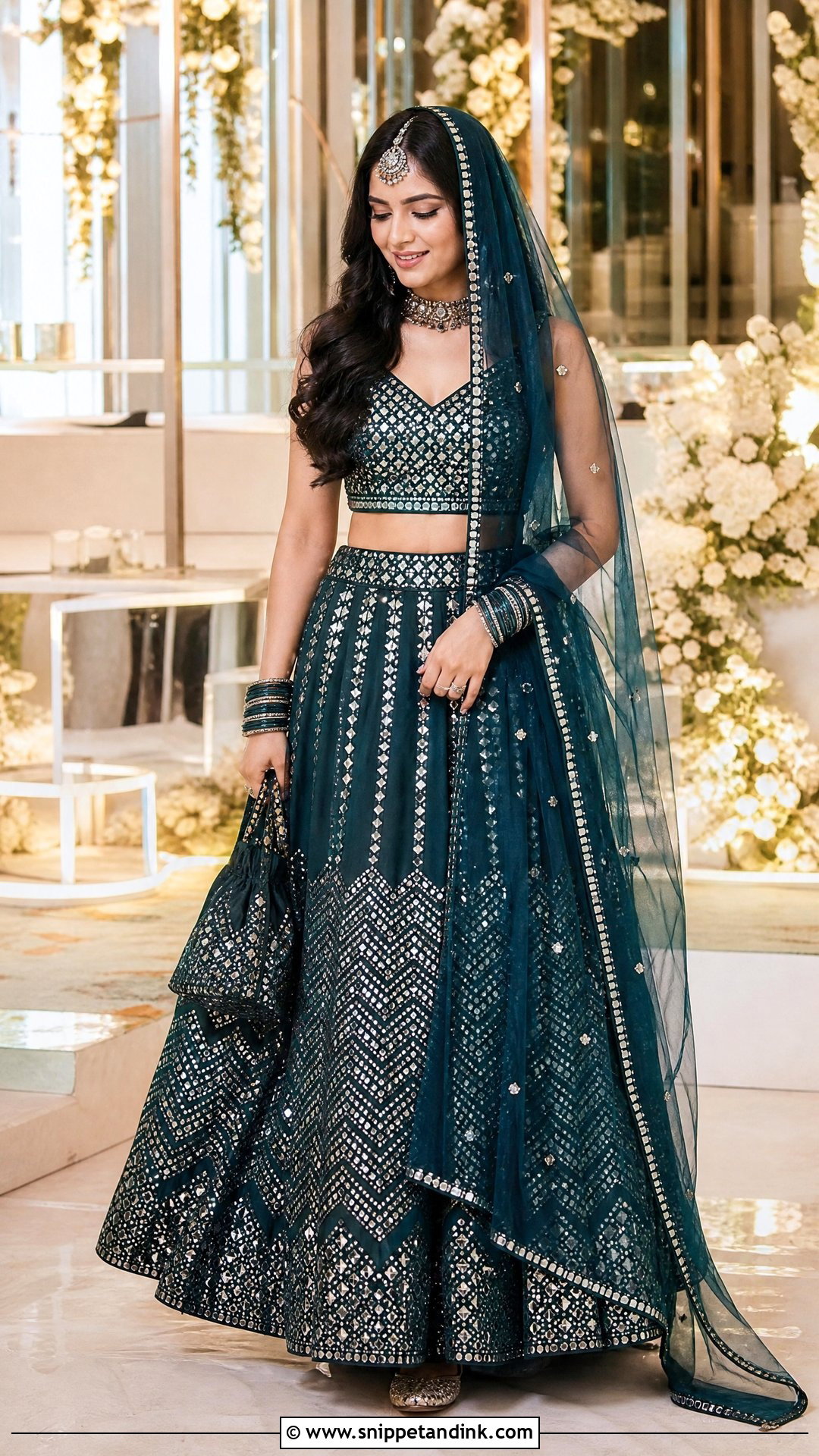
A mirror work lehenga already reflects plenty of light, so the trail should calm it down. Choose a jewel-toned, pastel or neutral lehenga with evenly placed mirrors and a matching blouse, and a net dupatta with only a narrow mirror border or a few scattered reflective pieces. Pin it beneath a braided or sleek bun and let the sheer fabric show the back of the blouse. Oxidized silver, polki or diamonds, chosen by the embroidery color, plus bangles, a potli and comfortable juttis finish it. Rough mirror settings snag net. I run my hand over every mirror edge before the day and ask for a smooth lining strip where the veil meets the hair.
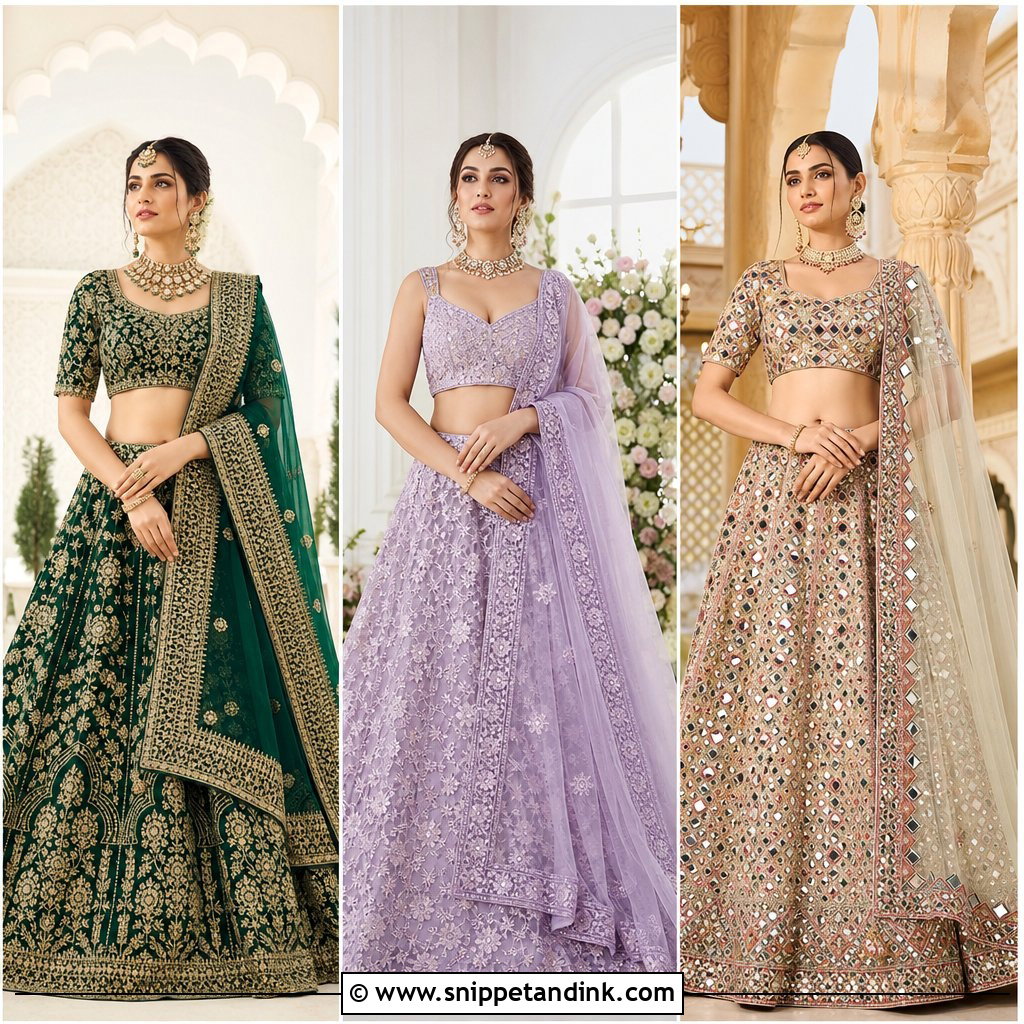

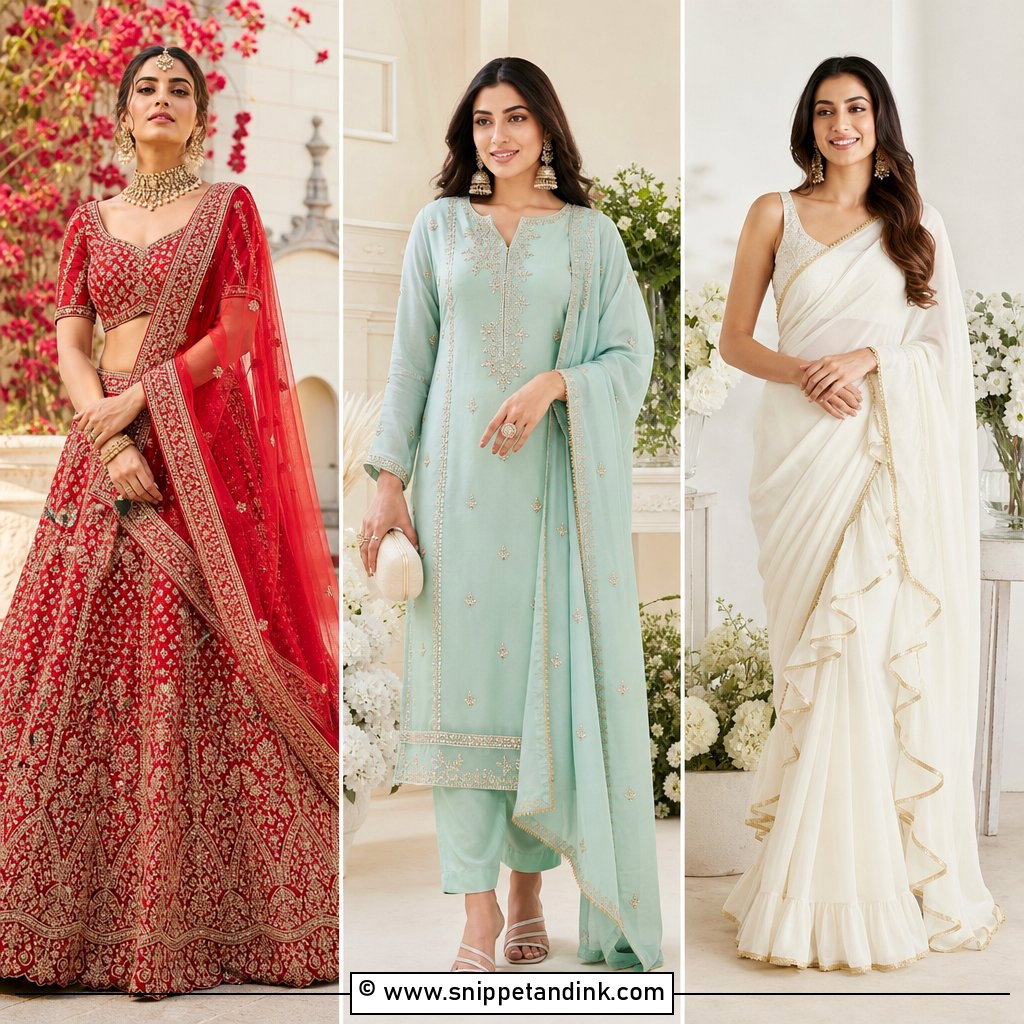

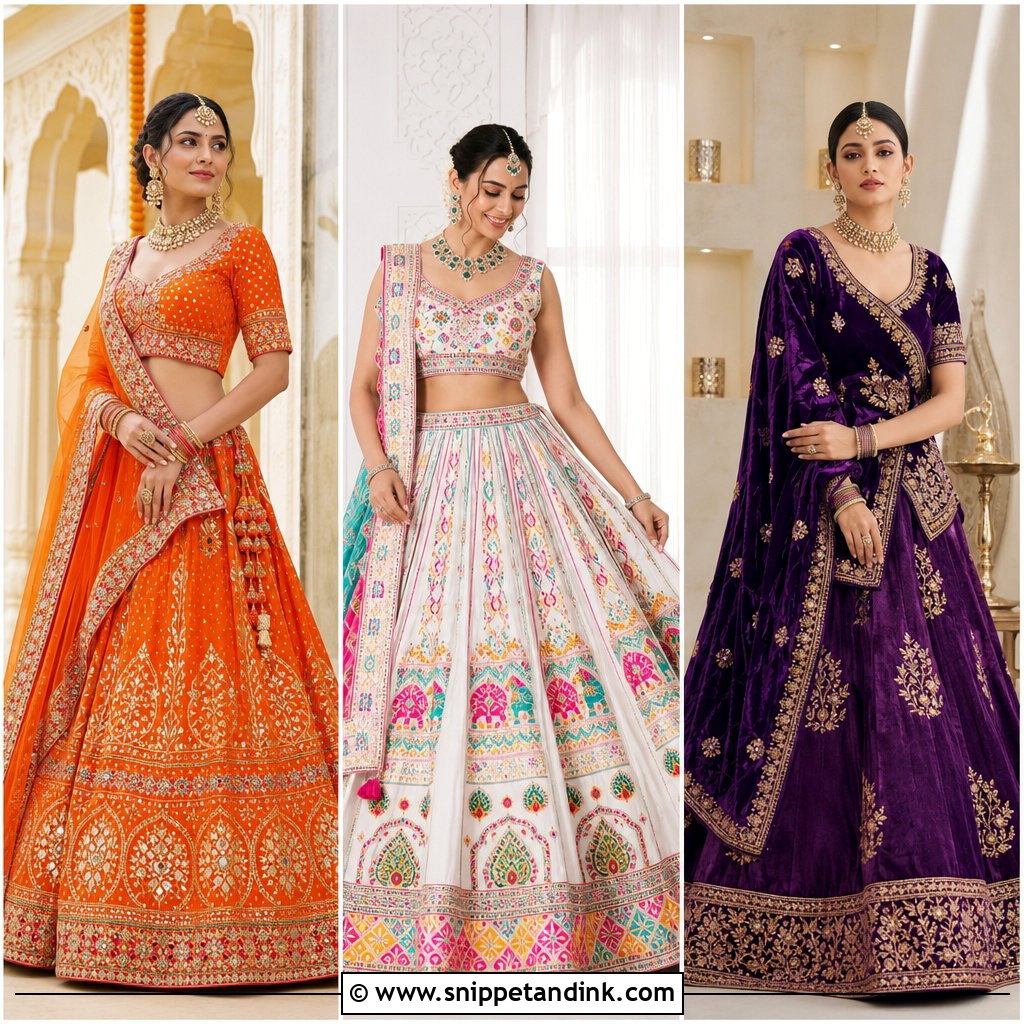
20. Reception Lehenga With Cape Trail Dupatta
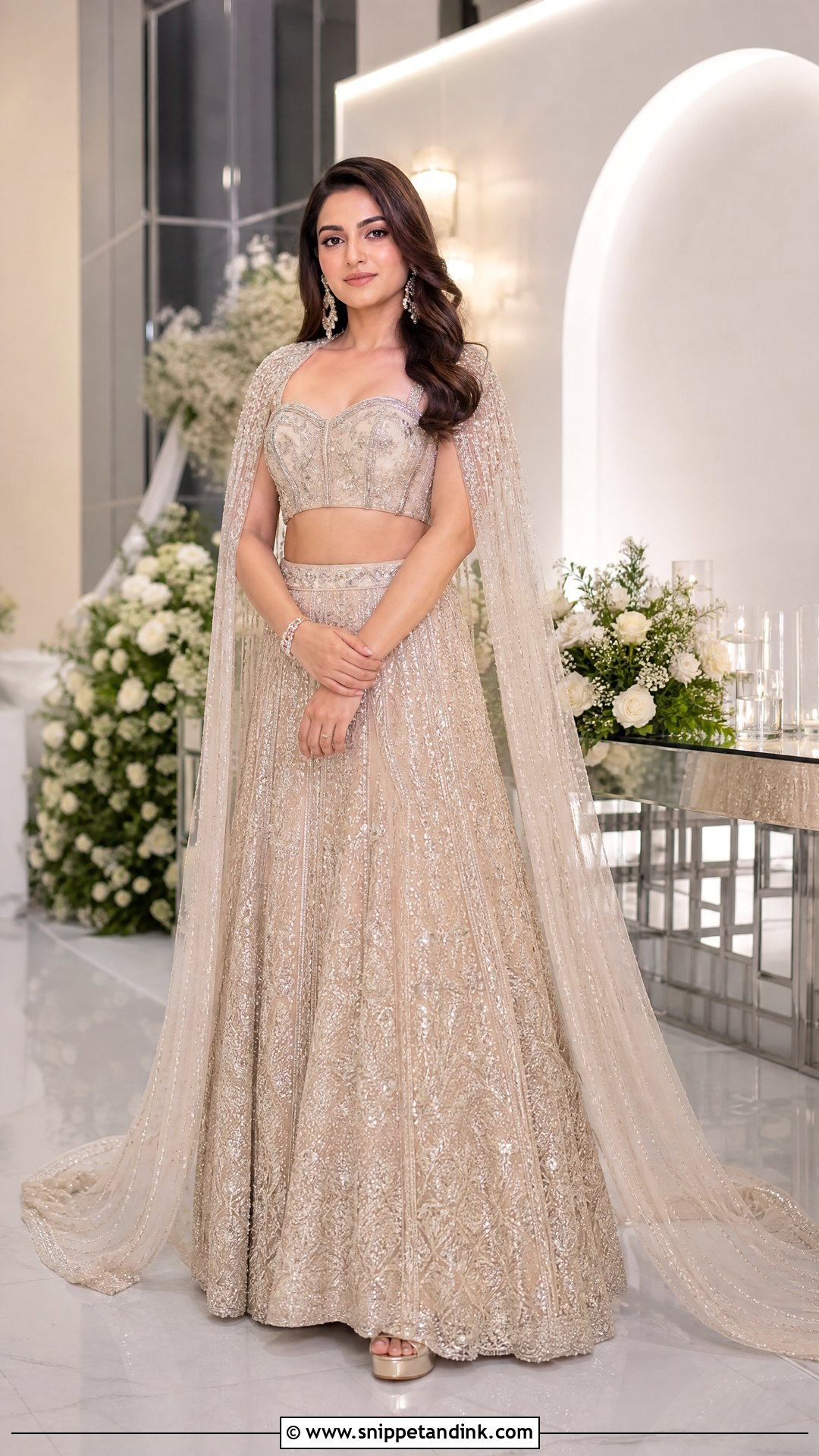
A cape-style trail is my pick for a reception, when the bride wants drama but needs her arms free. Pair a fitted or softly flared lehenga with a structured blouse in champagne, silver, deep green, navy or muted rose, and attach a sheer embellished dupatta at both shoulders so it falls like a cape into a long trail. It shows the blouse, waist and jewelry clearly. Choose crystals, sequins, pearls or tonal embroidery that suit the room’s lighting. Statement earrings, a slim bracelet, a small clutch and comfortable metallic heels complete it, with a smooth bun or polished waves. Have the shoulder attachments reinforced with hooks or stitched loops, not just safety pins, since a cape pulls harder when you walk.
Pins, Order and Timing on the Draping Morning
A trail is held by the hairstyle, not the head, so the bun has to be built for it. I ask the hairstylist for a firm, well-gripped base and then work in this order.
- Blouse, lehenga and the heavier necklaces go on first, so nothing is pulled over the veil later.
- The maang tikka and passa are fixed next, since the dupatta frames them.
- The dupatta is pinned to the bun with U-pins or dupatta pins at three or four points, not one. A single pin turns into a pivot and the veil swings.
- The shoulder side is fixed to the blouse with small safety pins on the inside, out of sight.
- Finally, walk across the room. Anything that tugs is re-pinned before you leave.
Allow at least half an hour for draping a trail on top of the hair and makeup time. Rushing this step is how veils slip during the first photographs.
Fire, Floors and the Moment to Take It Off
Net and organza are light and sheer, and many are synthetic, which means they catch flame easily. During the pheras or any ritual near a havan, I gather the trail and have someone hold it well clear of the fire. Do not let it trail behind you around the flame.
Seated rituals are the other hazard. Fabric pools around you, gets stepped on, and pulls the pins when you stand. Have your helper lift the trail before you rise. For dinner and dancing, most brides I dress either remove the trail or switch to a lighter dupatta; plan where it goes and who carries it, so it does not end up crushed on a chair.
A Trail You Forget You Are Wearing
A trail dupatta is worth wearing only if you can move in it. Weigh the fabric, the border, the pinning points and how it relates to the lehenga before you fall for the embroidery. Light net, chiffon, tulle and organza give you length without bulk, and heavier work belongs toward the lower part of the trail, where the floor carries it. Do a full draping trial with your real hairstyle, jewelry, shoes and blouse, then walk, turn and sit in it. Any of the twenty looks above can be adapted to your colors; what makes it yours is a dupatta that still feels light at the end of the night.
You'll Like These Ideas:









Leave a Reply