
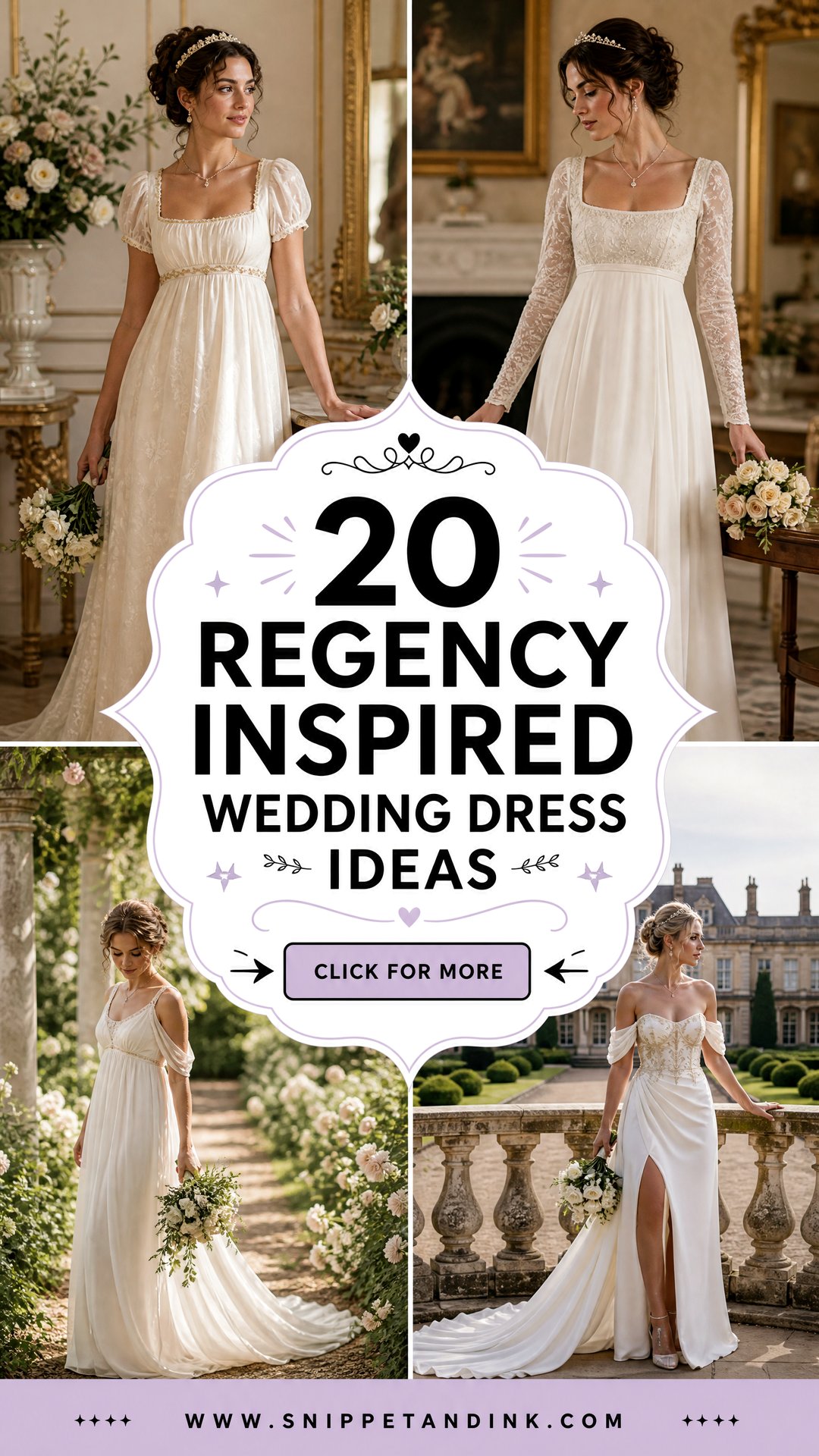
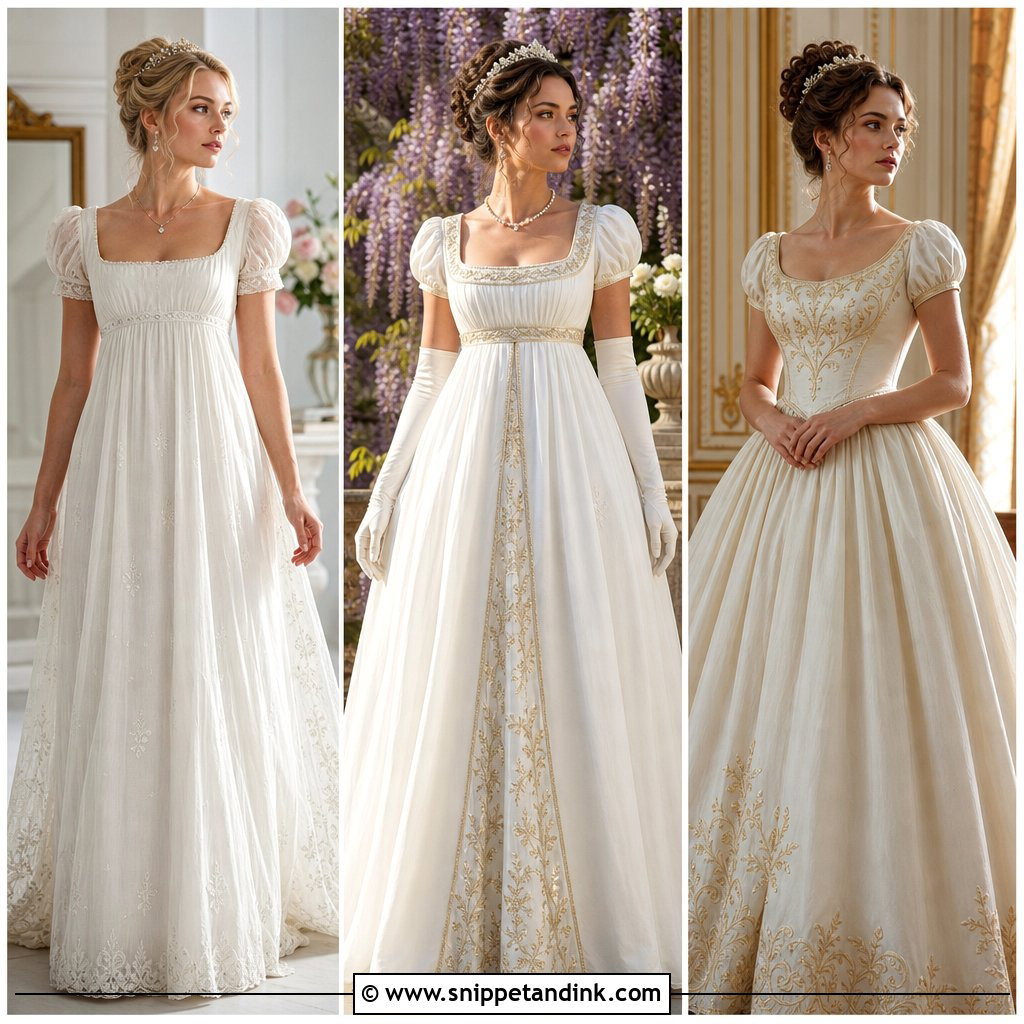
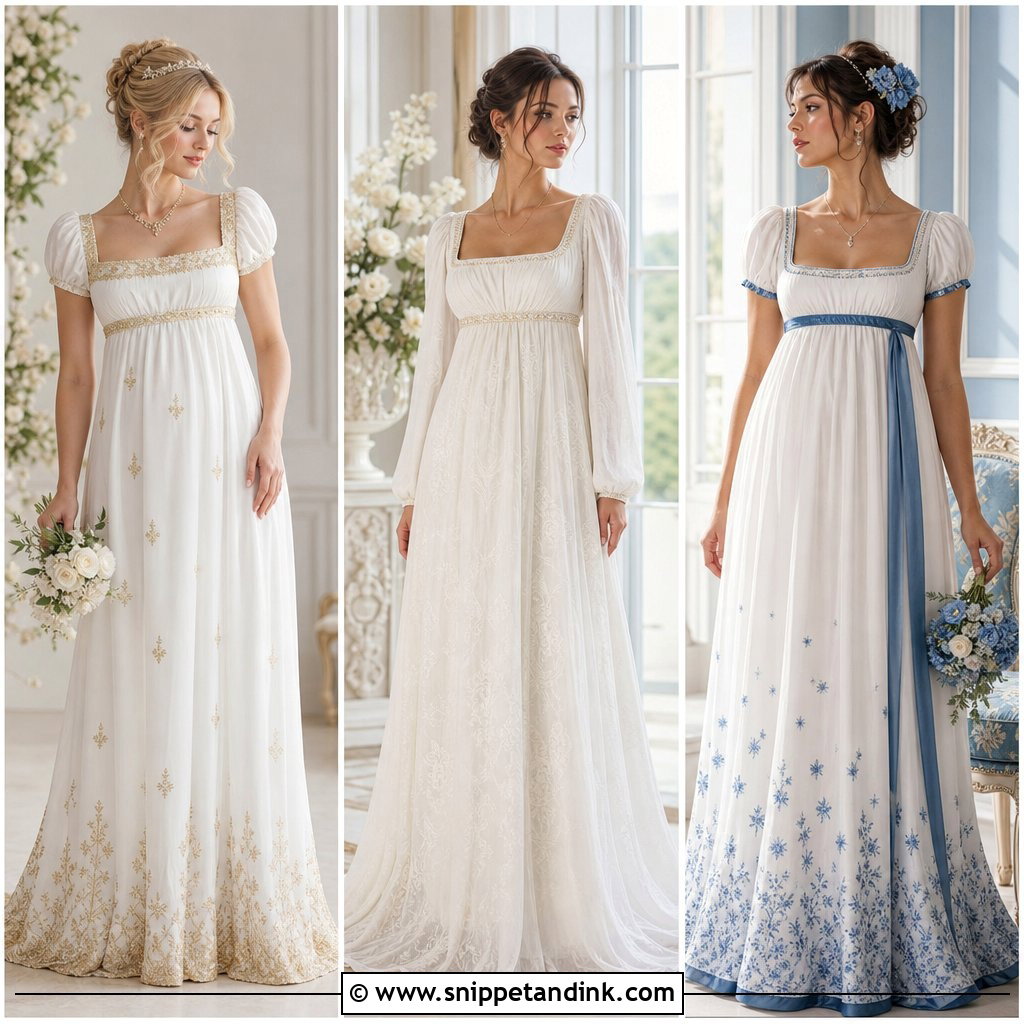
Regency style borrows from early nineteenth-century dress, and the version brides wear now keeps the romance while adding the support and tailoring modern bodies expect. The signatures are empire waistlines, square or softly curved necklines, small sleeves, long flowing skirts and very little embellishment. Today’s designers add floral embroidery, detachable trains, satin bows, pearls and light layers on top. The shape suits gardens, historic houses, ballrooms and small courthouse ceremonies, and it’s kinder to more body types than people assume. My rule when styling it: one or two clear period details plus clean modern fit. Go further than that and the dress starts to look like a costume. Here are twenty ways to wear it.
The Empire Seam Lives or Dies on Your Bra
Women in the Regency period wore short stays that lifted the bust high, and the dresses were cut around that lift. A modern empire gown still needs the bust supported and lifted, or the seam slides down onto the ribs and the whole silhouette sags. So when a bride tells me she wants Regency, my first question is what she’ll wear underneath.
- Decide on your bra or built-in cups before the first fitting, and wear the same one every time. The seam is pinned to wherever your bust sits.
- Larger busts usually need structure built into the bodice. A soft chiffon bodice alone won’t hold the lift for ten hours.
- If you’re petite, a correctly placed empire seam lengthens the leg nicely. If you’re tall, ask for the skirt cut long enough to touch the floor in your shoes, since empire skirts often come up short on long legs.
- Sit down in the dress at every fitting. The high seam can ride up when you sit if the bodice is too short.
1. Empire Waist Regency Wedding Dress
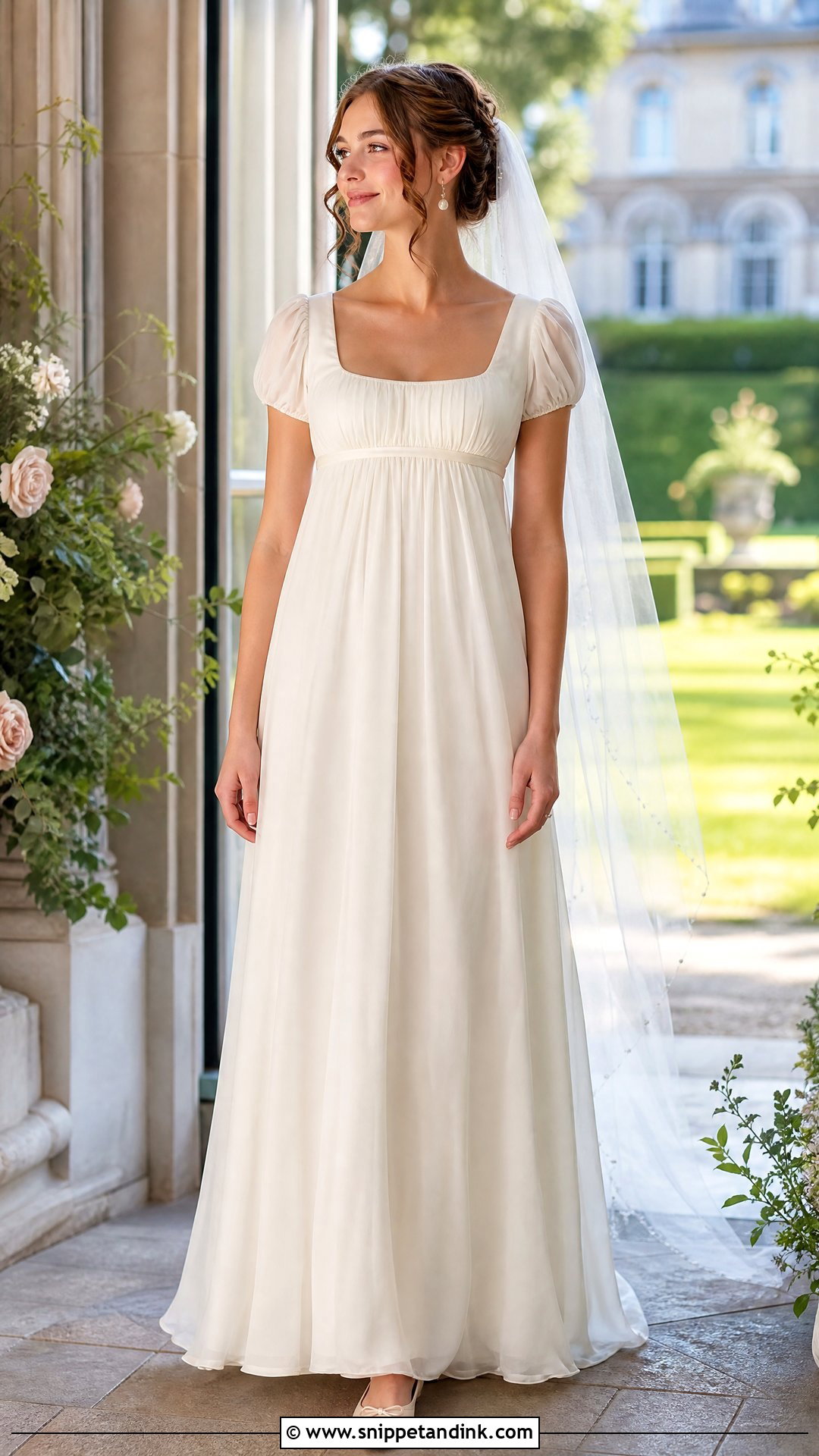
The empire waist is the defining Regency detail, and the seam has to sit exactly under the bust, not half an inch below it. That’s the first thing I pin at a fitting. Ivory silk chiffon with a fitted bodice, a square neckline and short gathered sleeves gives the clearest version of the look, falling straight to the floor from that high seam. A narrow ribbon at the waist adds definition. Pearl drops, satin ballet flats and a sheer fingertip veil under a simple twisted bun keep it light. Light chiffon also means you can walk across a lawn, greet everyone and dance without fighting your dress. Gardens and old estates suit it best.
2. Square Neck Regency Wedding Dress
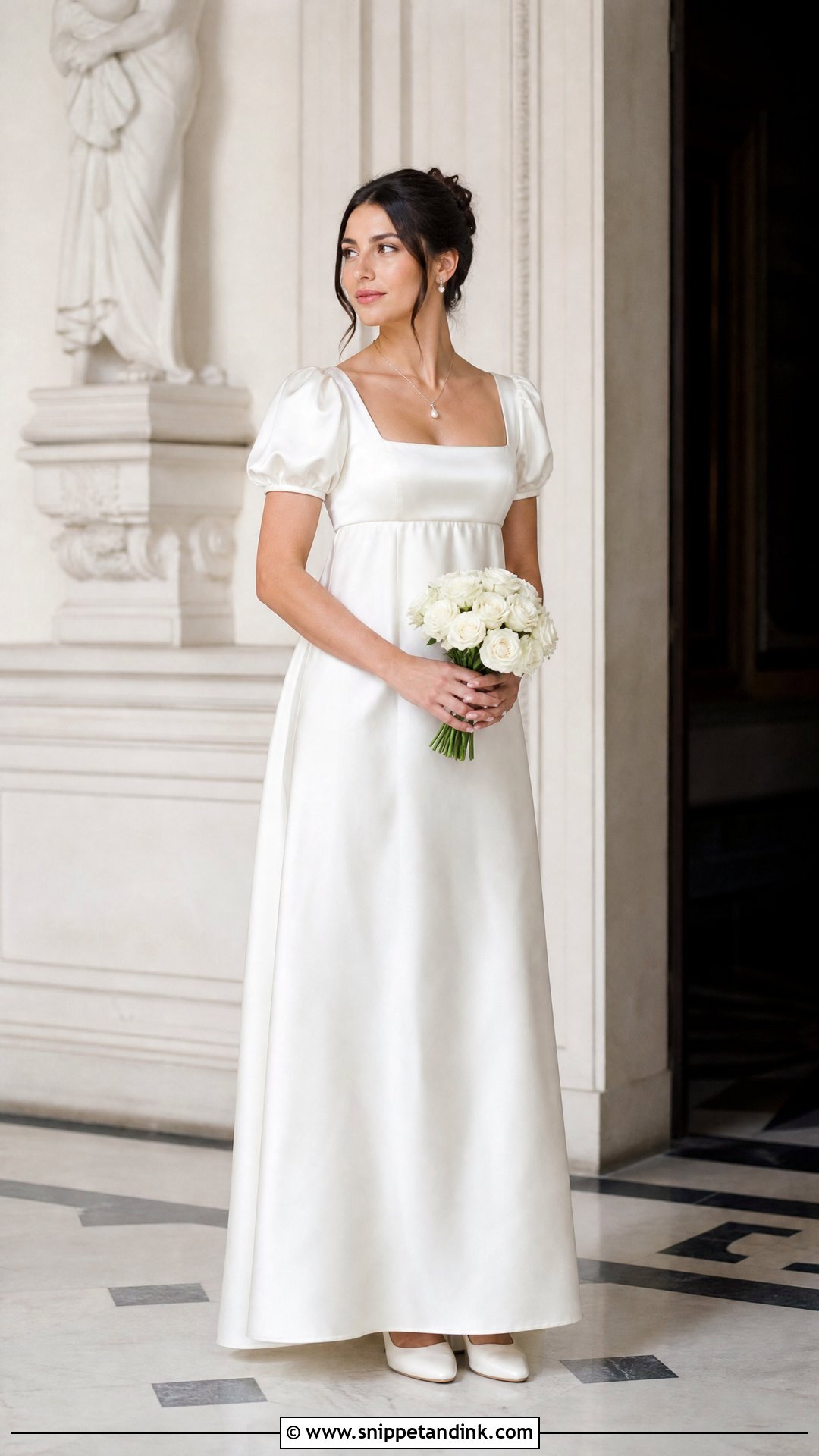
A structured square neckline makes the collarbones the frame of the whole outfit, so the neckline needs to stay crisp. Soft satin holds the line better than chiffon. Look for a lightly gathered empire bodice, a fluid A-line skirt and short puff sleeves to balance the shoulders. Covered buttons down the back finish it neatly. A delicate pearl pendant sits inside the square without breaking it. Low ivory block heels and a compact bouquet of white roses and greenery keep it grounded. A smooth low bun with a narrow ribbon headband keeps the neckline clear. Formal indoor rooms and historic venues suit this one.
3. Puff Sleeve Regency Wedding Dress
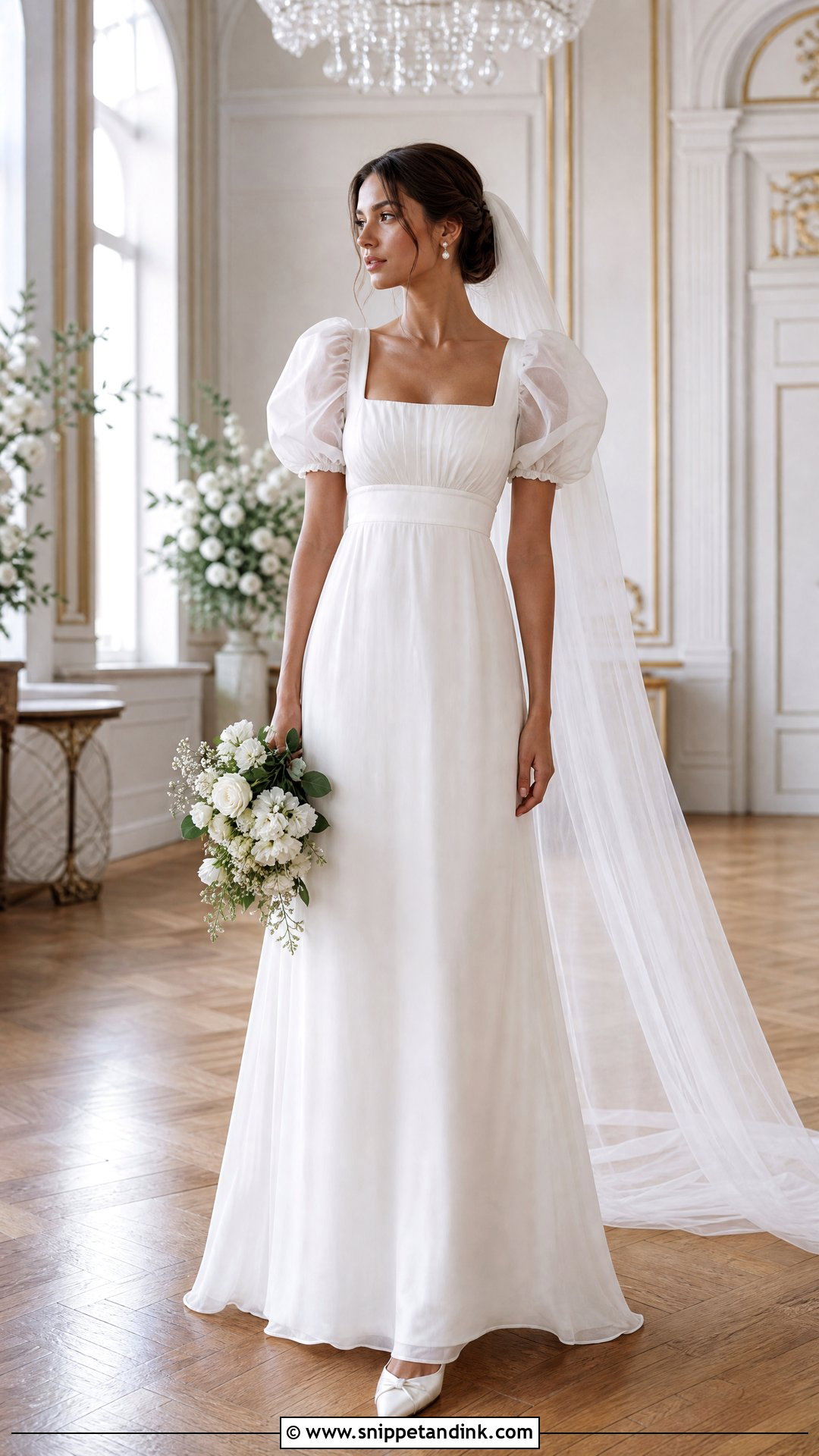
Volume at the shoulder is what people recognise first as Regency, and a puff sleeve Regency wedding dress leans right into it. I prefer sleeves in translucent organza that end above the elbow; opaque fabric puffs look heavier and can widen the shoulders more than you’d like. A fitted empire bodice and a light crepe skirt that skims rather than clings keep the rest calm. Small pearl studs, pointed satin flats and a cathedral veil with a raw edge suit it, plus a loose chignon with a few soft waves at the face. Skip the bold necklace, since the sleeves already give plenty to look at. Spring ballrooms and gardens are its natural setting.
4. Long Sleeve Regency Wedding Dress
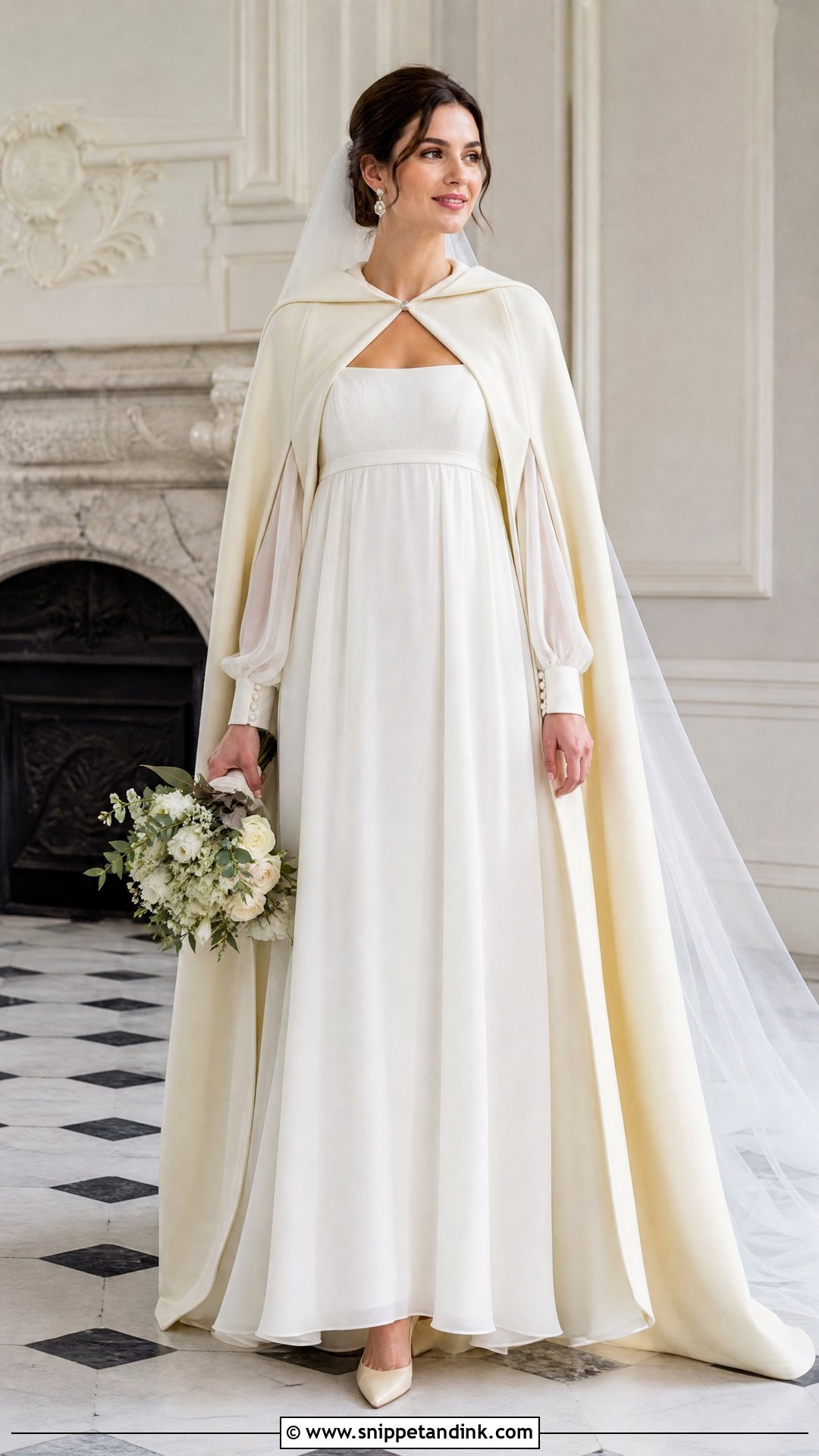
Sheer bishop sleeves gathered into buttoned cuffs give coverage in cool weather without weighing the dress down. Choose an ivory gown with a square neckline and a raised waist, with a gathered chiffon skirt running into a small chapel train. Pearl-and-crystal earrings, closed-toe pumps and a light cathedral veil make it formal. A smooth low knot shows off the neckline and sleeves. A tailored cream cape keeps you warm outdoors and comes off inside. Keep embroidery at the cuffs or neckline only. One fitting check: buttoned cuffs need a little ease, or they’ll pinch when you hold the bouquet for an hour.
5. Lace Regency Wedding Dress
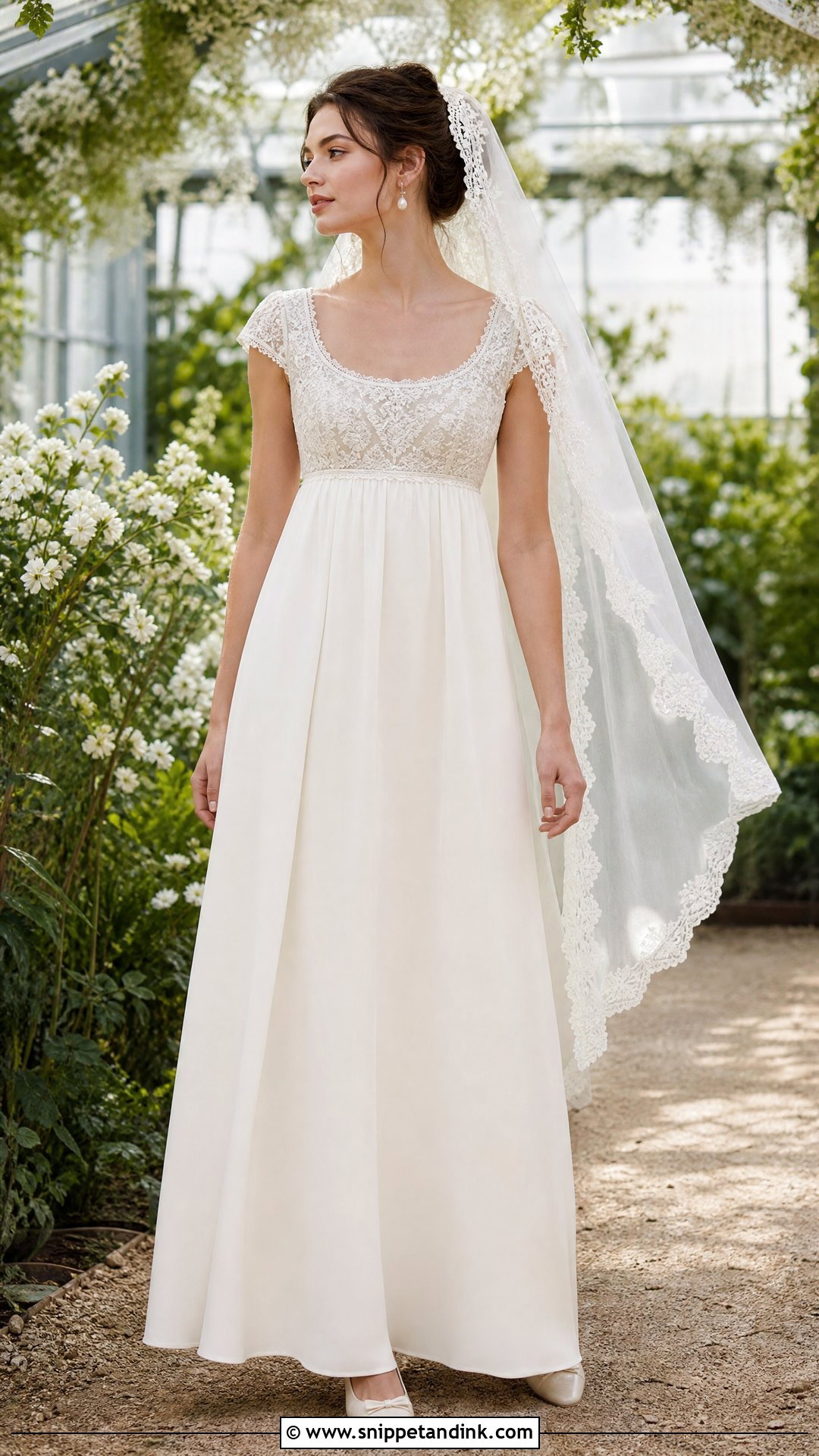
Lace on a Regency dress works best in small doses, because the original gowns were mostly plain and the column shape looks cluttered under heavy appliqué. Start with an ivory crepe gown, a lace-covered empire bodice, short cap sleeves and a soft square neckline, then let the skirt fall plain to the floor. Fine floral lace at the neckline, sleeves or hem is plenty. Vintage-style pearl earrings, low kitten heels and a narrow lace-edged veil suit the scale, with a small posy of sweet peas, ranunculus and trailing greenery. It’s right at home in a historic house, a botanical garden, or a bright room with classical architectural details.
6. Satin Regency Wedding Dress
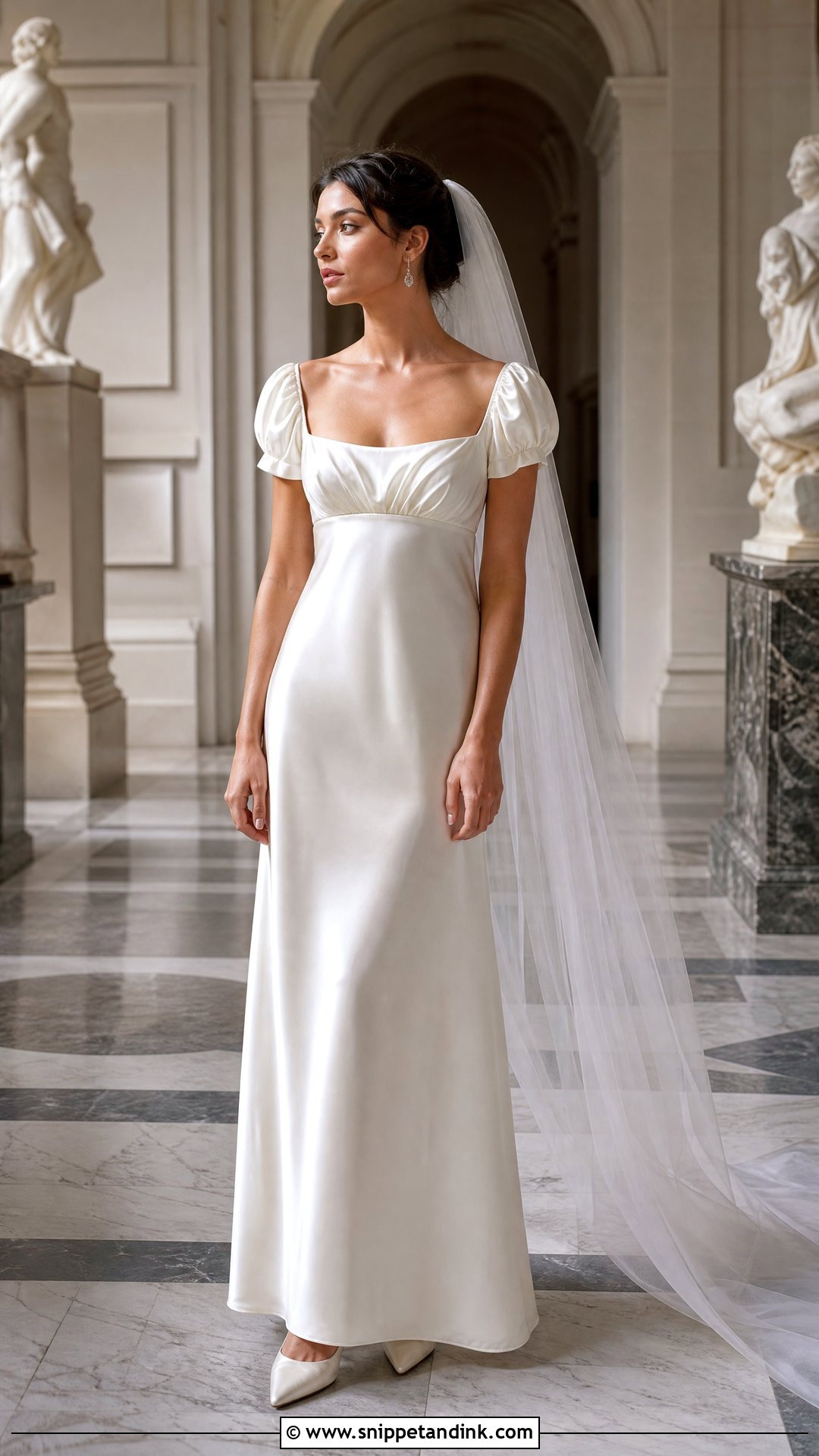
Satin is the cleaner, more modern way into Regency. An ivory satin gown with a square neckline, a softly draped bust, a high waist seam and a narrow A-line skirt does it, with short lightly gathered sleeves for just enough history. Satin reflects light on its own, so beading is unnecessary. Pearl drops, sleek pointed heels and a small structured bag for portraits complete it, with a centre-parted bun and a plain chapel veil. The fit through the bodice has to be precise, because satin shows every pull. Ask for a skirt with enough weight to fall straight without going stiff. Hotels, museums and formal estates suit this version.
7. Chiffon Regency Wedding Dress
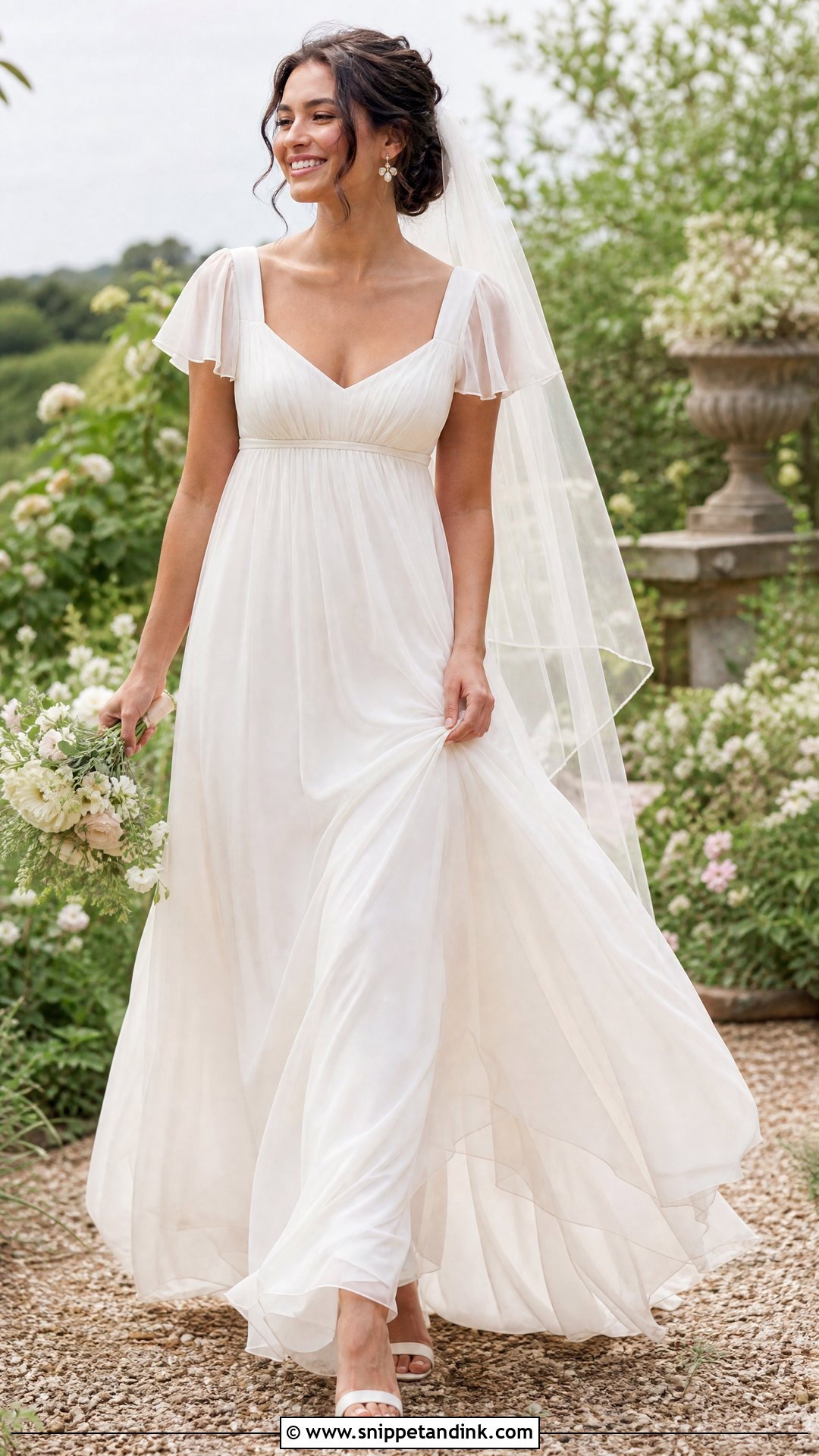
Chiffon is the fabric that moves, and outdoors that’s half the appeal: the skirt lifts a little with every step and every breeze. A gathered empire waist, flowing layers and a plain bodice keep it simple. A soft V-shaped square neckline and fluttery cap sleeves stay cool in warm weather. Pearl cluster earrings, ivory strappy block heels and a fingertip veil that doesn’t fight the skirt work well, with a relaxed braided bun and garden roses. Beaches, gardens and countryside venues all suit it. Ask for a smooth, breathable lining that reaches the hem, since layers of chiffon still go sheer in direct sun.
8. Floral Embroidered Regency Wedding Dress
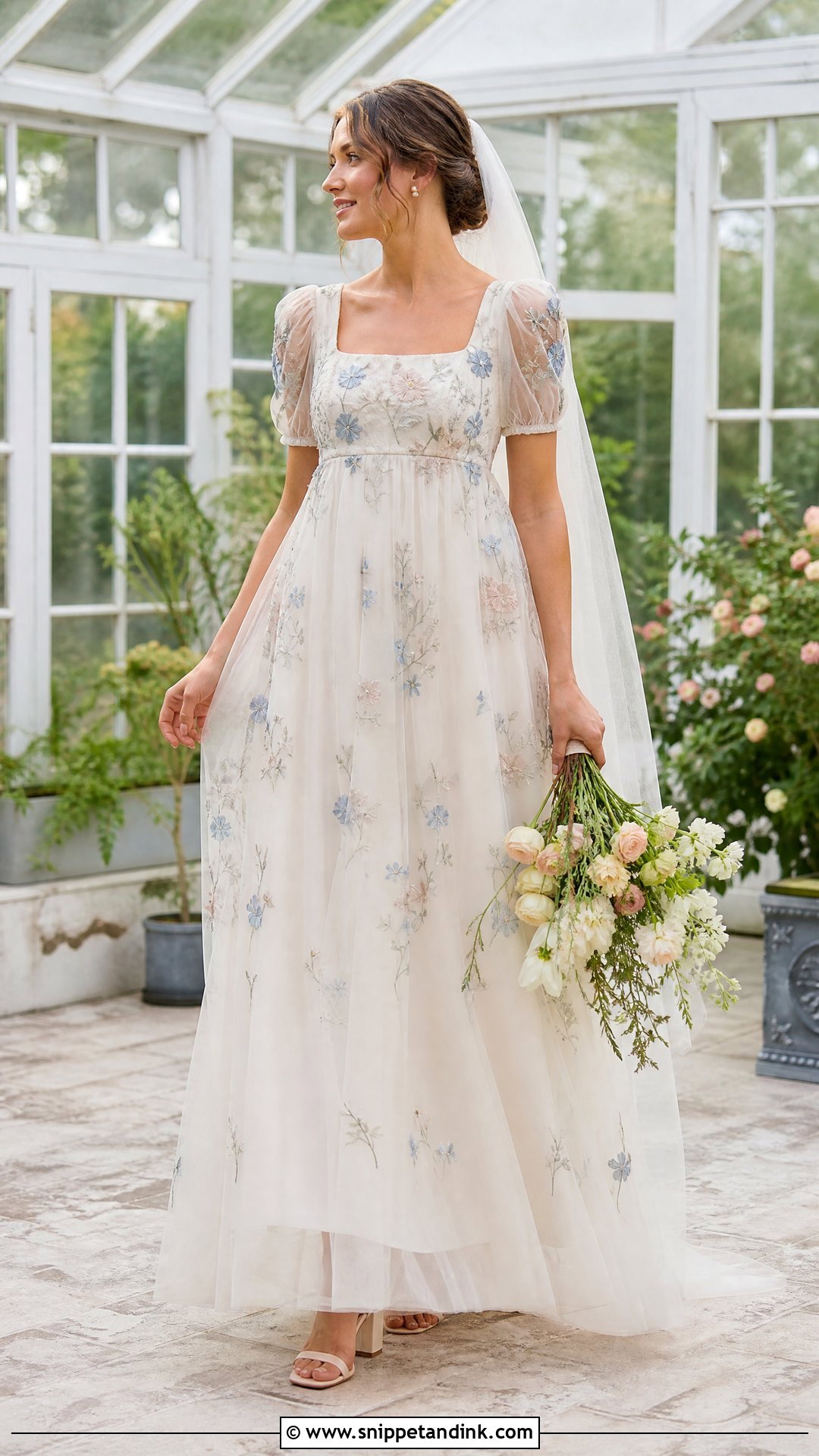
Colour is where this one differs. A sheer tulle overlay embroidered with pale blue, blush or ivory botanicals over a simple lined empire gown gives a fresh, slightly modern Regency look. Keep the square neckline and short puff sleeves for the period reference. Everything else stays neutral: pearl studs, ivory block-heel sandals and a plain veil that lets the embroidery show through. Half-up waves with tiny floral pins tie it together. Pick one or two colours from the embroidery for the bouquet, not all of them, or the whole outfit tips into a theme. Spring gardens and conservatories are ideal.
9. Off Shoulder Regency Wedding Dress
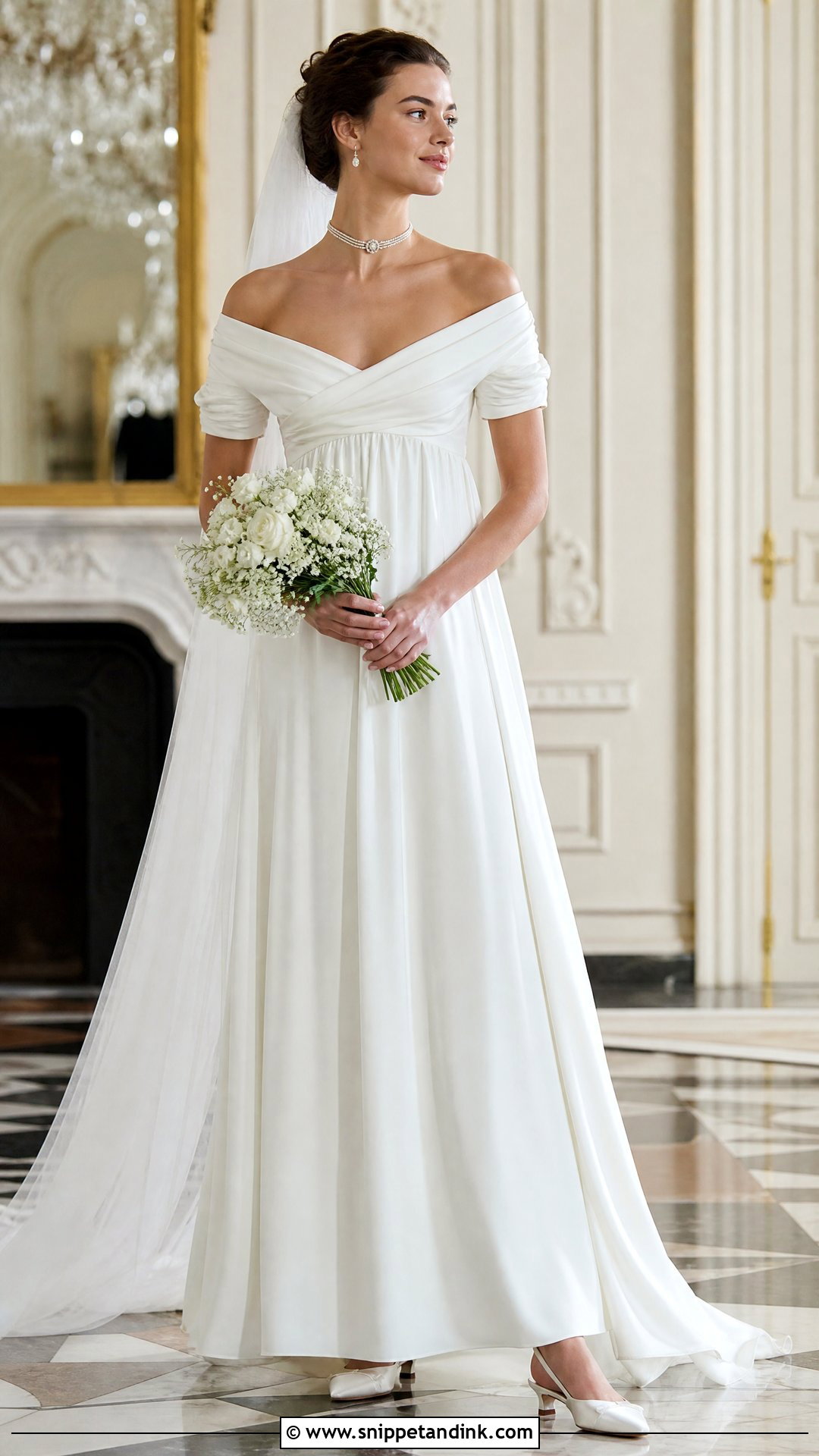
Off-shoulder necklines appeared in later Regency evening dress, and they give a little more glamour than the square neck. Look for a softly folded neckline, short gathered sleeves resting at the upper arm and a raised waist releasing into a fluid crepe skirt. The bodice has to grip without you adjusting it all evening, so ask how it’s built: boning, a waist stay or silicone grip tape at the neckline all help. A fine pearl choker, drop earrings, ivory slingbacks and a long plain veil suit it, with hair in a low textured bun. Keep embellishment away from the neckline; the bare shoulders do enough. Evening ballrooms and estates suit it.
10. Regency Wedding Dress With Cape
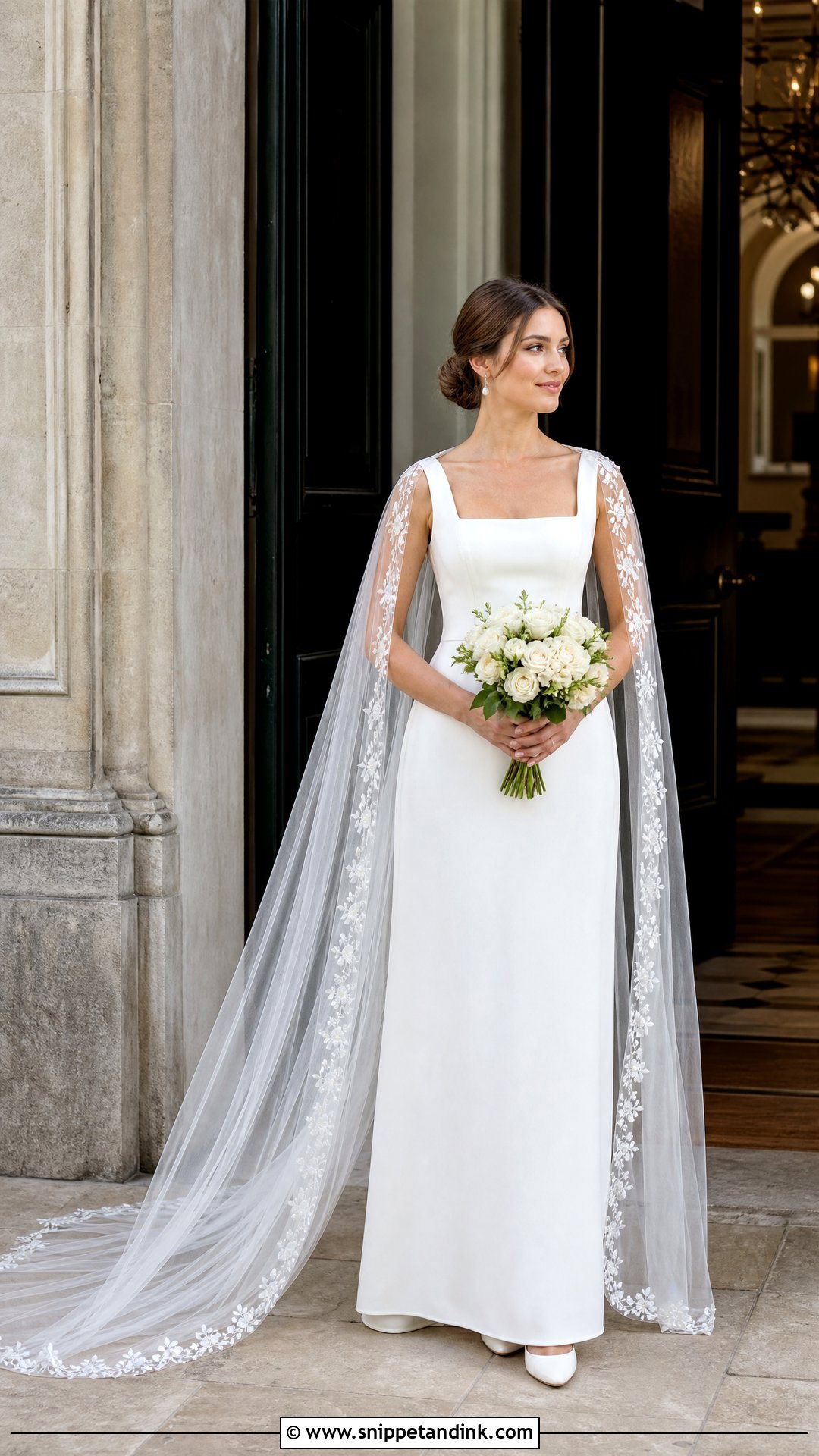
A cape turns a plain empire gown into a ceremonial one and can stand in for a veil. Start with a sleeveless empire dress, a square neckline, a smooth crepe bodice and a narrow floor-length skirt, then add a sheer cathedral cape attached discreetly at the shoulders with fine floral embroidery along the edge. Pearl earrings and closed-toe satin pumps are enough; leave off the necklace. Put a small comb into a polished bun, positioned below where the cape sits so the two don’t catch. Practise unhooking the cape before the day, because after the ceremony it comes off and you’ve got a lighter dress for dancing.
11. Regency Wedding Dress With Gloves
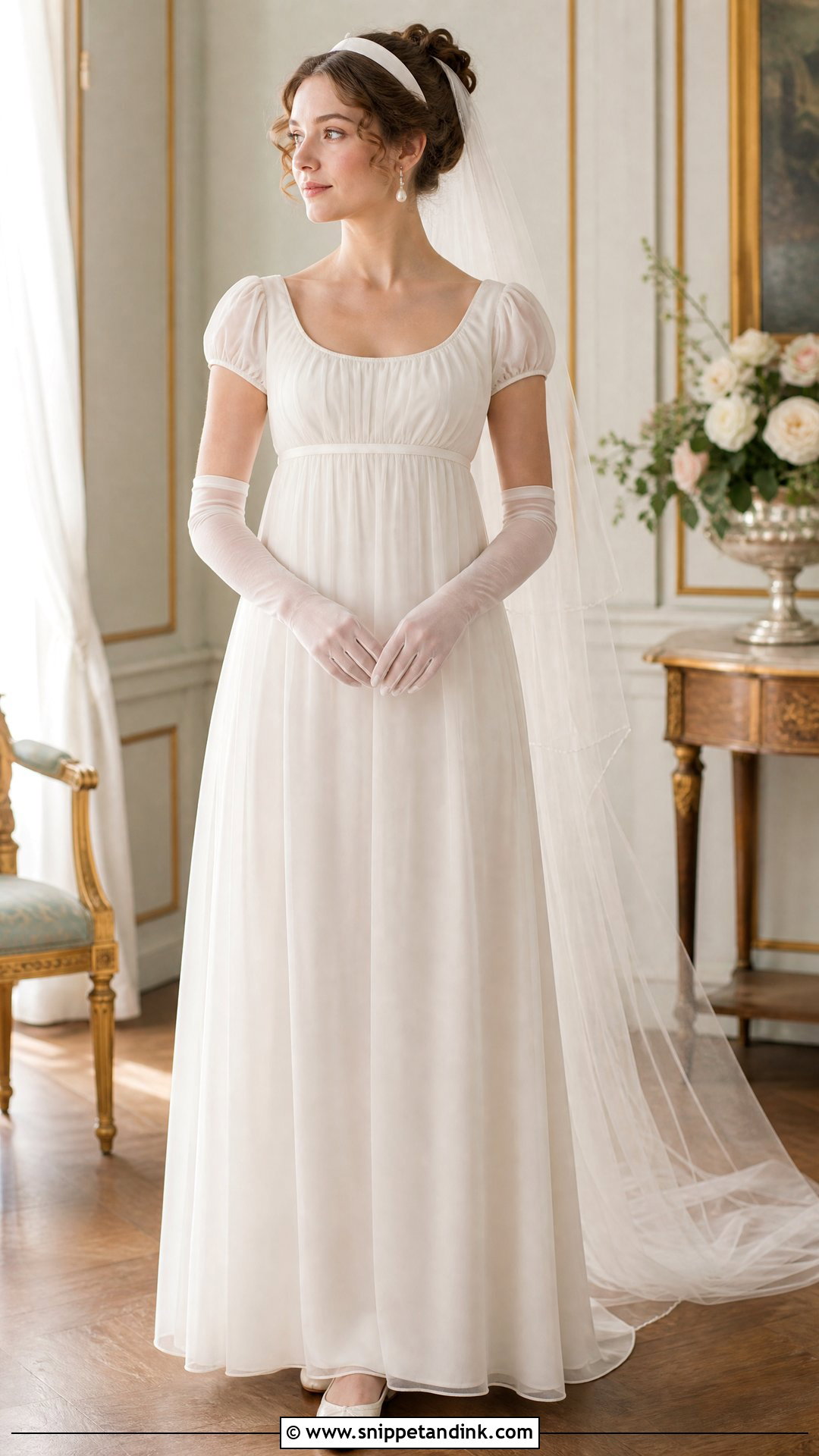
Gloves are the accessory that makes Regency styling feel deliberate, and elegant bridal gloves work best on a gown with almost no decoration. Choose an ivory chiffon dress with a softly draped empire bodice, short sleeves and a scoop neckline. Elbow-length sheer gloves with tiny covered buttons or a fine embroidered edge are the right weight. Pearl drops, satin ballet flats and a narrow ribbon headband finish it, with a light fingertip veil that ends before the gloves begin. Practically, gloves come off to eat, to sign the register and often for the ring exchange, so decide in advance who holds them and where they go.
12. Minimalist Regency Wedding Dress
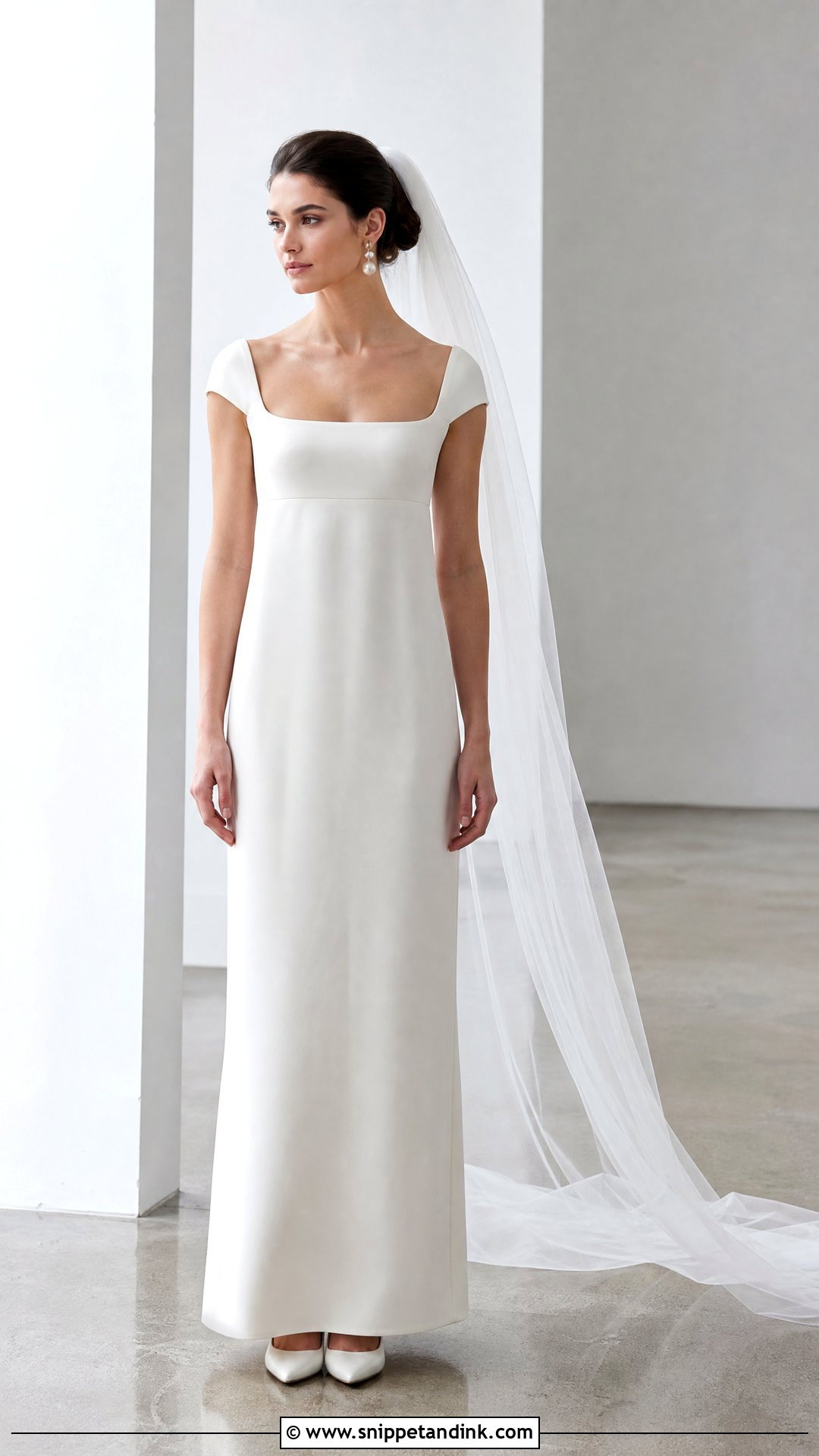
Minimal Regency relies on fabric and cut, with nothing to hide behind. Matte silk crepe, a softly squared neckline, narrow straps or simple cap sleeves and a precise seam under the bust are all you need, with a skirt falling in one line to a small sweep train. Sculptural pearl earrings, sleek ivory pumps and a plain cathedral veil keep it modern, plus a centre-parted low bun. No lace, no heavy beading, no layered accessories. Because there’s no decoration, the tailoring has to be exact, especially that bust seam. Galleries and city venues suit it, and a detachable chiffon cape or long-sleeve topper adapts it for cold months.
13. Beaded Regency Wedding Dress
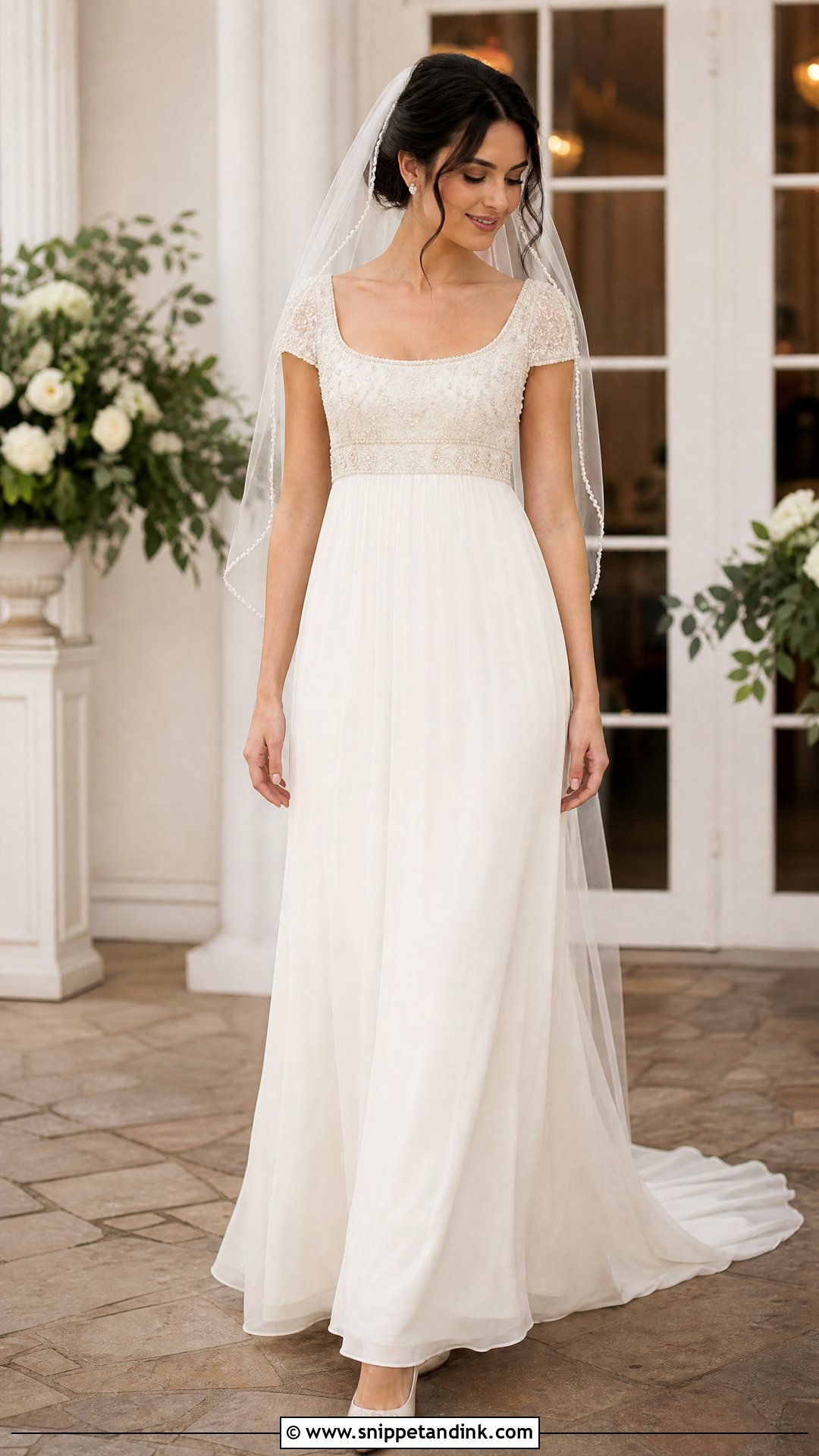
Beading on a Regency bodice should be small and soft. Pearls, clear crystals and tiny seed beads look right; large reflective stones look out of place on such a gentle shape. Choose a hand-beaded empire bodice, a soft square neckline, delicate cap sleeves and a plain chiffon skirt. Simple studs, ivory kitten heels and a veil with a narrow beaded edge finish it, with hair in a low braided bun so the bodice shows from every angle. Candlelit evening receptions bring the beading out. Keep the bouquet small and mostly white. When you try it, run your inner arm along the side seams, and check whether the weight of the beads drags the light bodice down.
14. Regency Wedding Dress With Bow
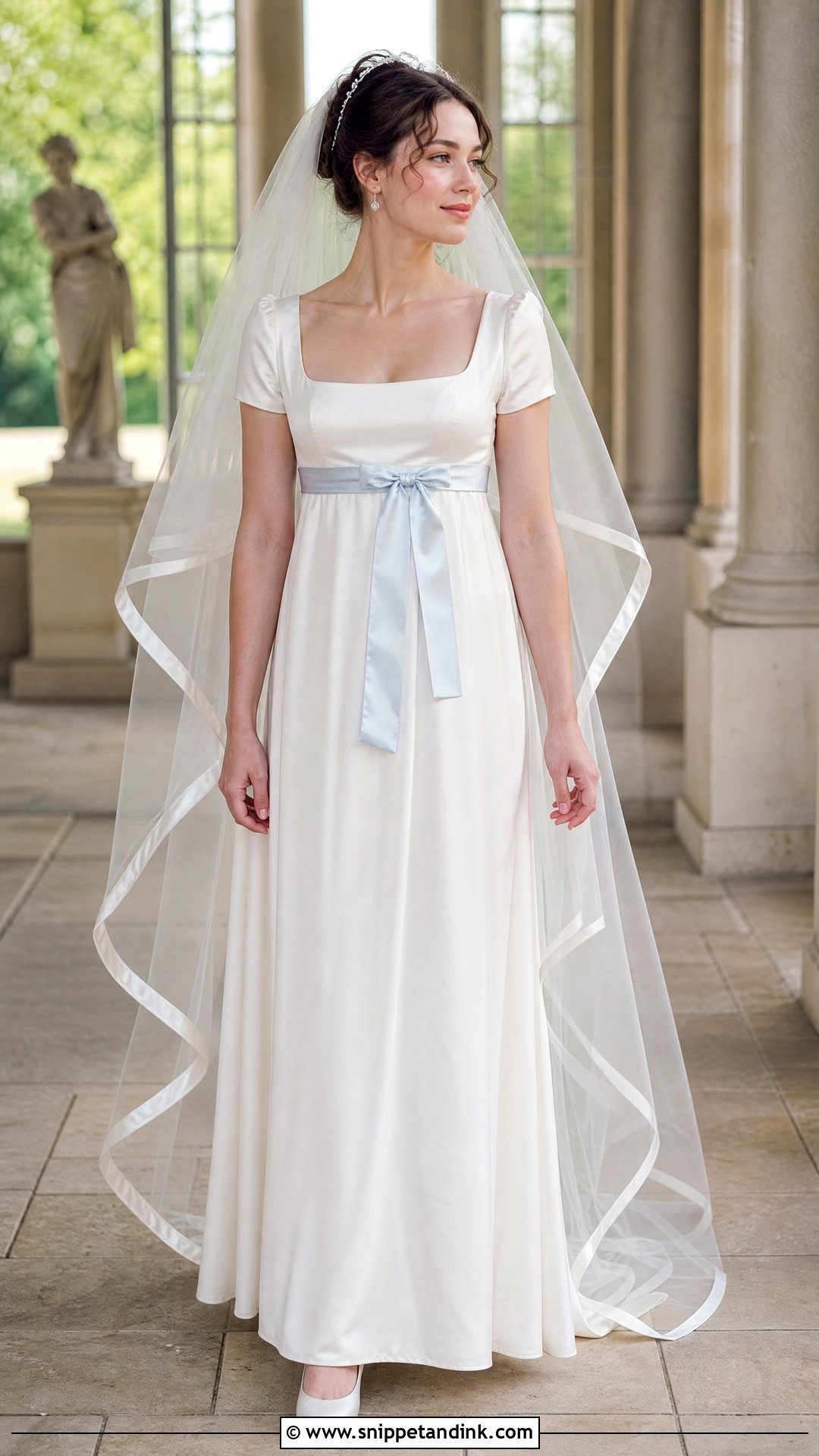
A satin bow under the bust underlines the high waist and gives the eye somewhere to land. Pick a dress with a square neckline, fitted short sleeves and a soft A-line skirt. A front bow is seen during the vows; a back bow shows in portraits from behind and as you walk away, so decide which matters more to you. Pearl earrings, low satin pumps and a fingertip veil edged in narrow ribbon suit it, with a smooth bun or soft half-up curls. A bow in the dress fabric is subtle. A pale blue ribbon is a quiet “something blue” that doesn’t disrupt the palette. Ask for it to be tacked in place so it doesn’t slide sideways during the day.

15. Tea Length Regency Wedding Dress
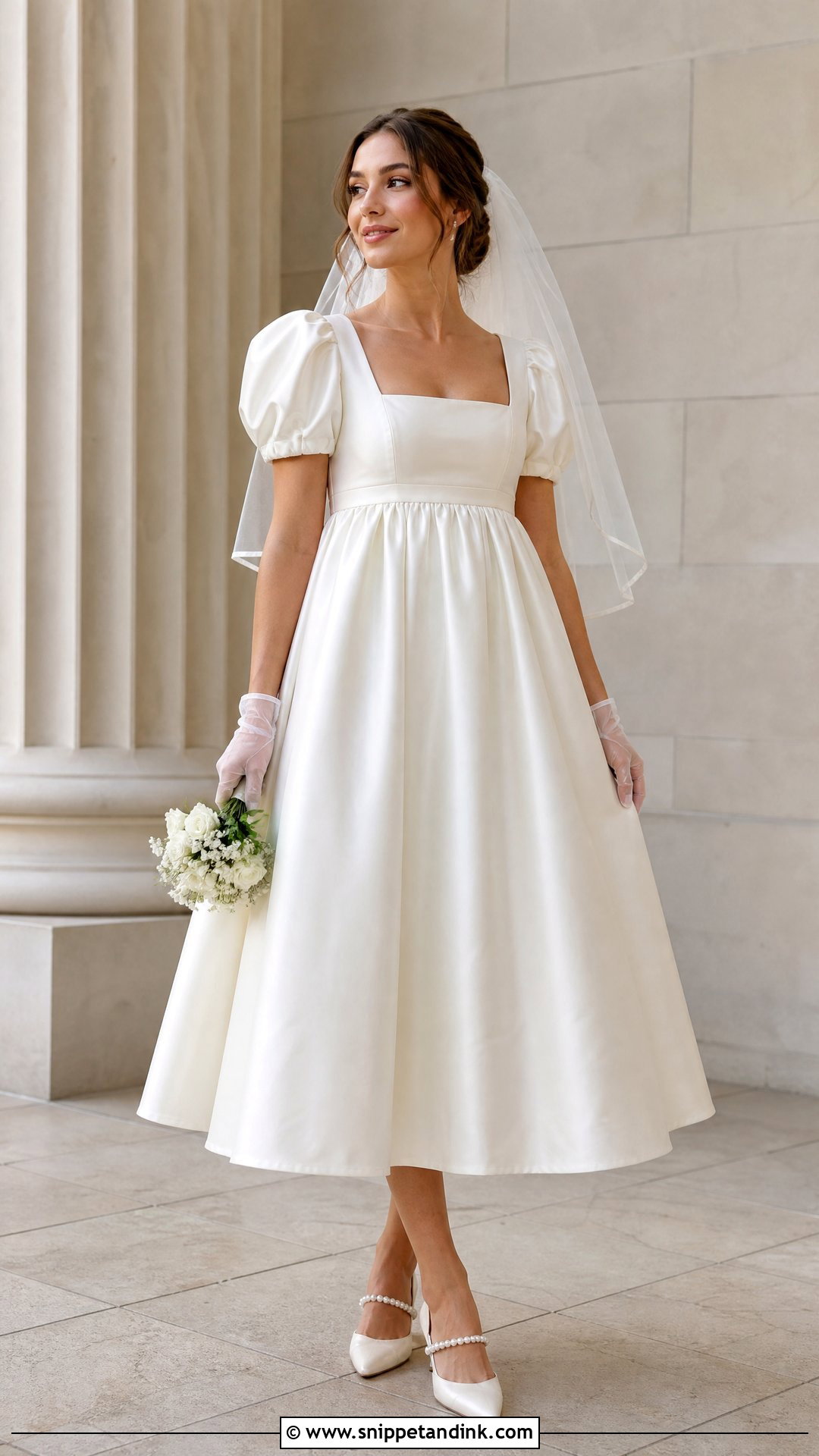
Tea length makes Regency playful, and taffeta is the fabric I’d choose, because its crispness holds a short skirt out without petticoats. An ivory dress with a square bodice, short puff sleeves and a skirt ending between knee and ankle keeps the raised waist and the romance. Your shoes are on show, so choose pearl-trimmed slingbacks or satin block heels you love. Small drops, short sheer gloves and a shoulder-length veil keep proportions balanced, with a soft bob or neat low bun. Courthouses, daytime receptions and smaller historic venues suit it. Hidden pockets are worth asking for; they don’t change the outside at all.
16. Maternity Regency Wedding Dress
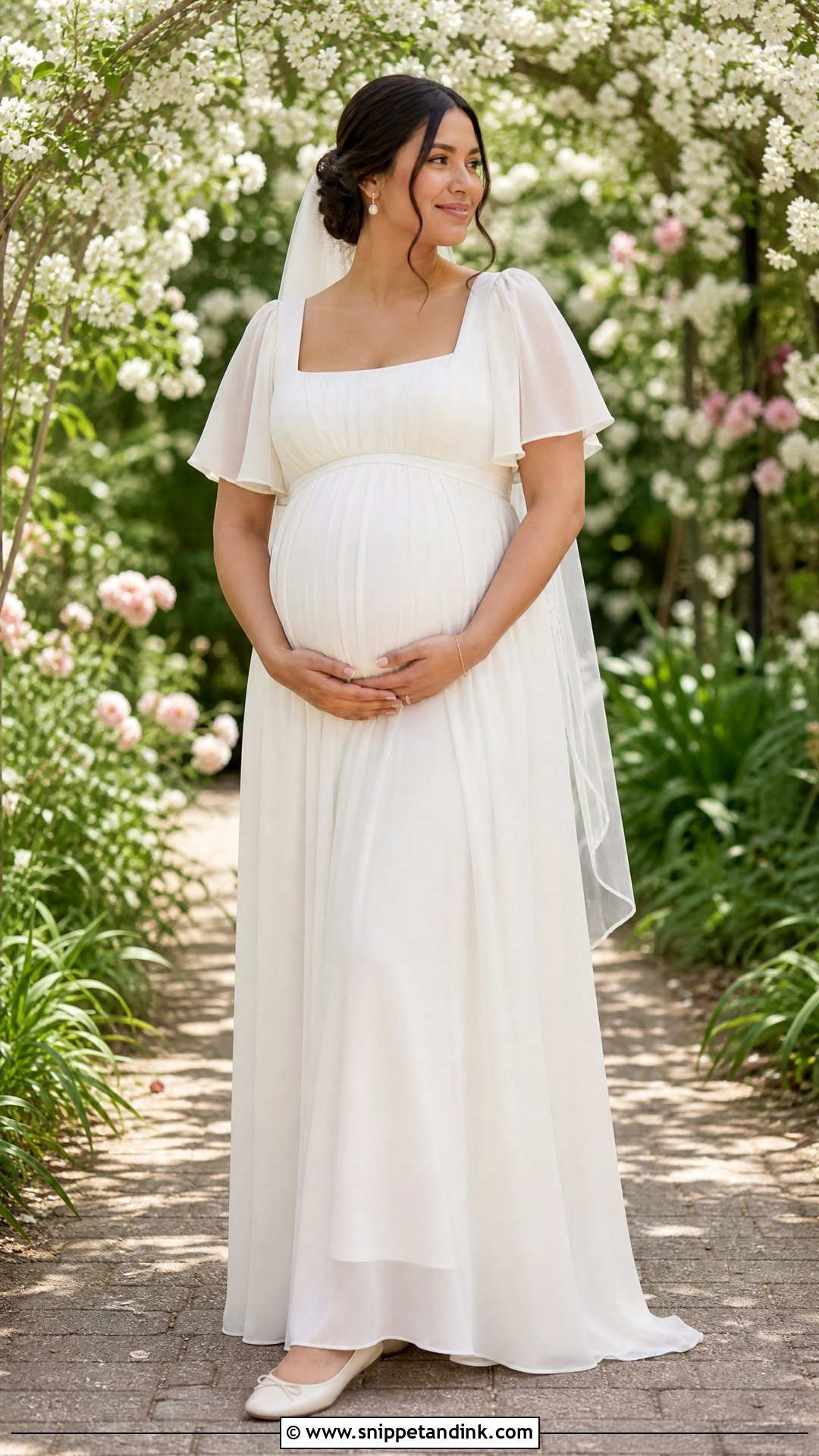
The empire line is one of the most comfortable shapes for a pregnant bride, because the seam sits above the bump and the skirt falls freely over it. A soft chiffon gown with a supportive square-neck bodice, a gently elasticated empire waist, short flutter sleeves and a flowing skirt works well. Avoid tight bands and rigid boning, which get uncomfortable as the hours pass. Cushioned low block heels or embellished flats, light pearl earrings and a simple fingertip veil complete it, with a relaxed low bun. Schedule the final fitting as close to the wedding as your seamstress allows, since measurements can change week to week. The lining should be breathable and roomy through the front.
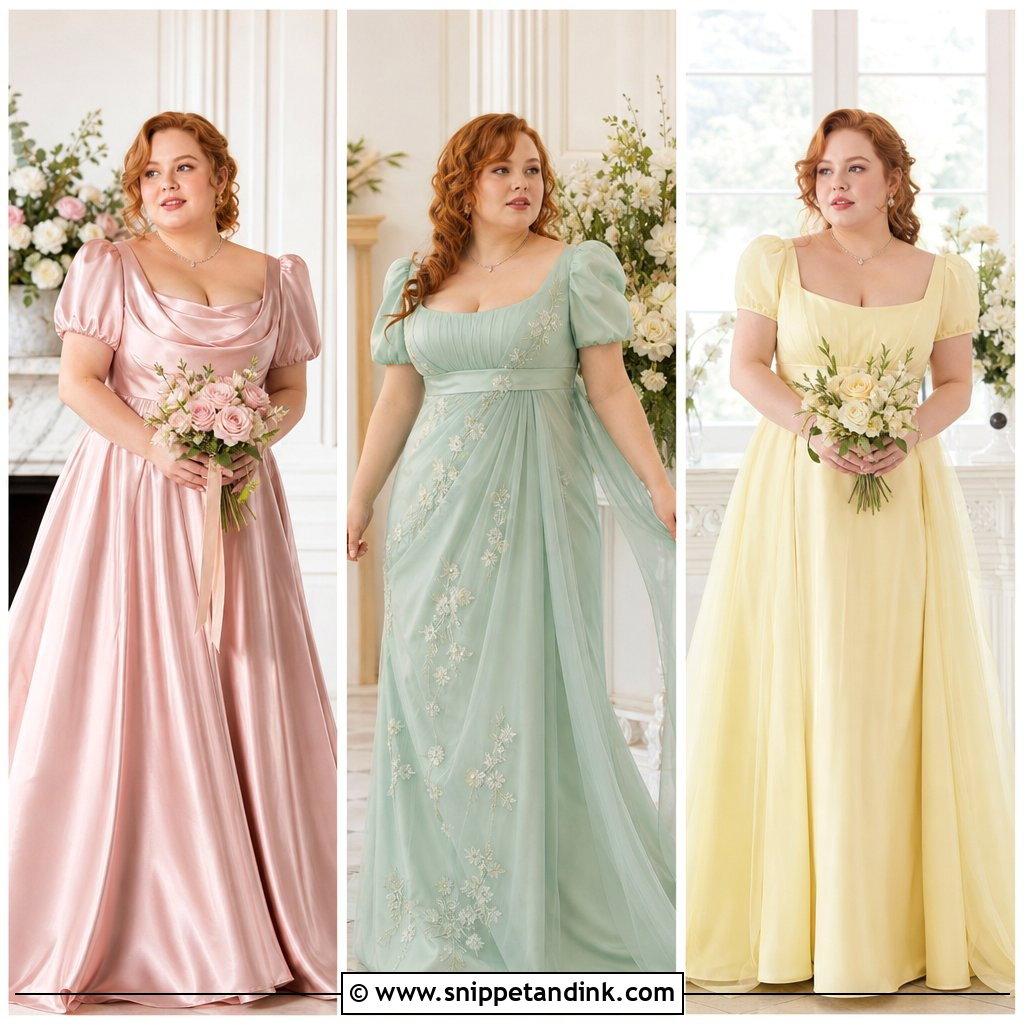
17. Plus Size Regency Wedding Dress
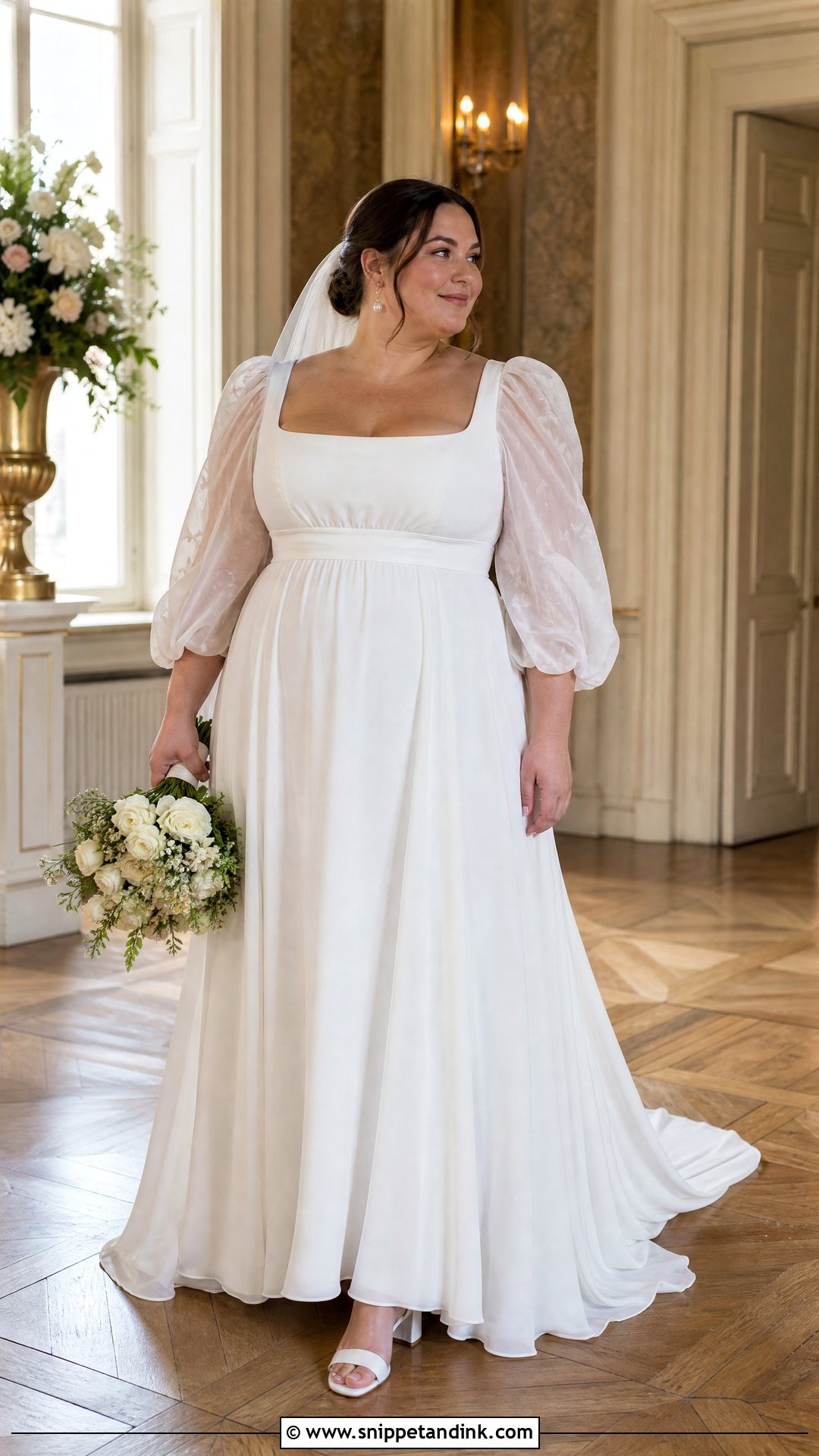
Plus-size brides are often steered into loose, shapeless empire dresses, and that’s a mistake. A good Regency gown for a fuller figure has a structured square-neck bodice with real bust support, a wide seam under the bust and a chiffon or crepe skirt that glides rather than tents. Definition at the bust and high waist creates the shape; the skirt supplies the ease. Short puff sleeves or detachable sheer sleeves balance the shoulders. Wide-set straps and a well-fitted lining add support without changing the look. Pearl drops, comfortable block heels and a veil under a low bun finish it. Good alterations keep the neckline secure and the hem in proportion.
18. Boho Regency Wedding Dress
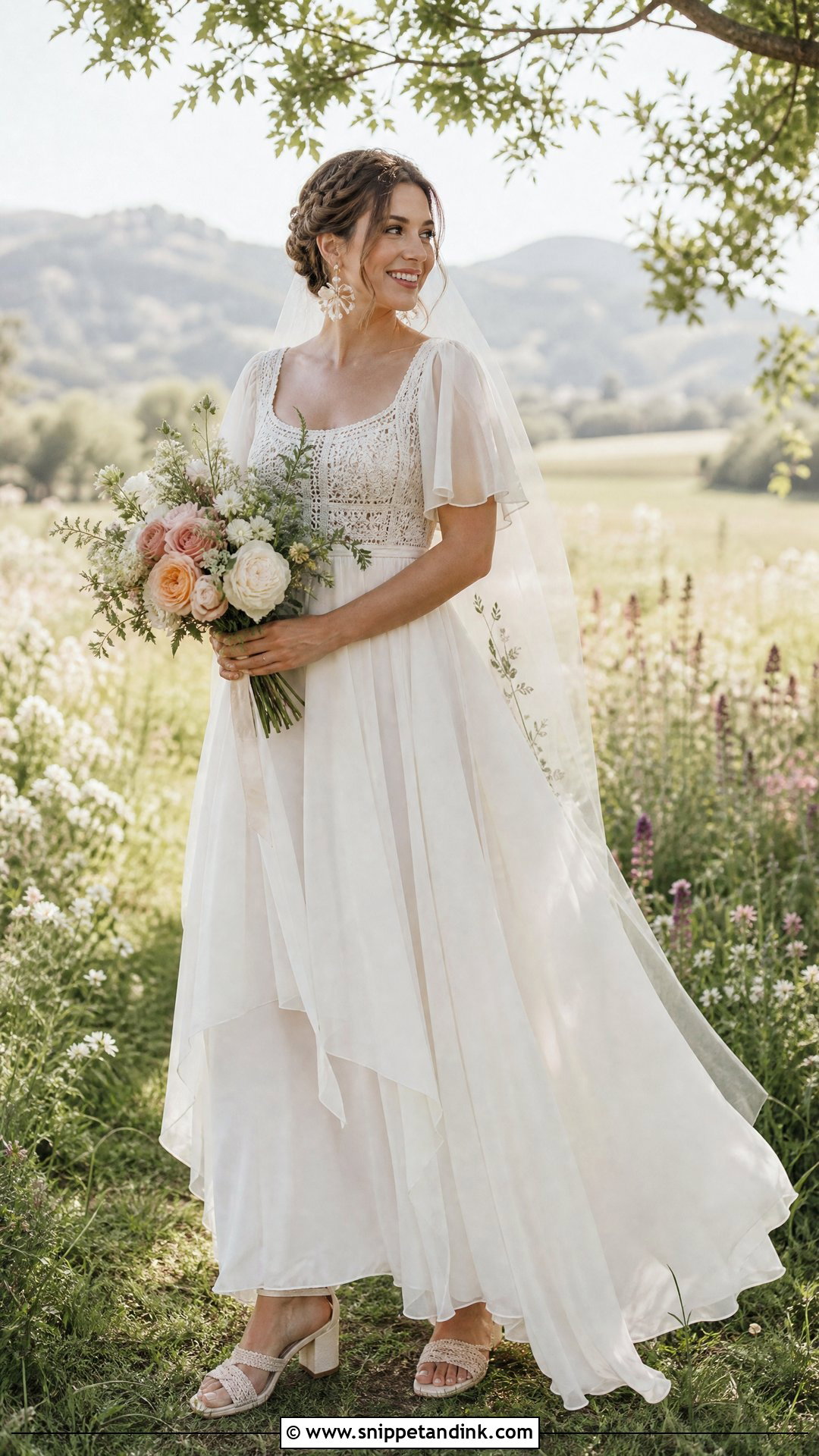
Boho and Regency meet more easily than you’d think, since both love flowing fabric and natural flowers. A Regency wedding dress with a crocheted lace empire bodice, sheer flutter sleeves and a layered chiffon skirt with a modest train is the outdoor version. A soft square or scoop neckline keeps the period reference while the crochet feels modern. Pearl-and-floral earrings, cream block-heel sandals and a light veil with a hint of botanical embroidery suit it. A loose braided updo with a few small white flowers, plus garden roses, cosmos and greenery, keeps it relaxed. Meadows, gardens and rustic estates suit it. Crochet lace can stretch, so hang the dress rather than folding it in the weeks before.
19. Winter Regency Wedding Dress
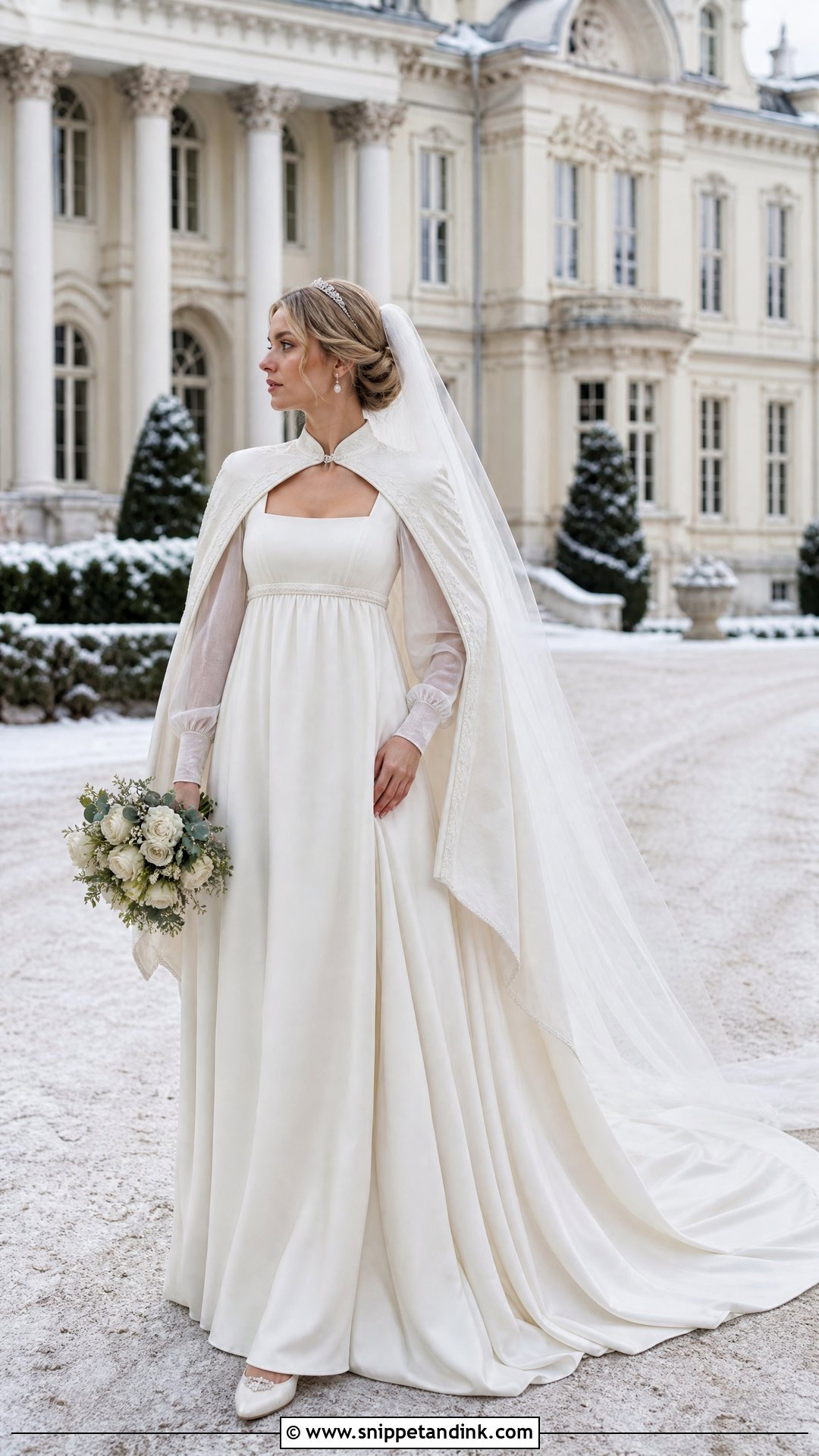
A winter Regency dress has to look light while keeping you warm, and that tension is what I plan around. Heavyweight silk crepe with a square neckline, a high waist, long sheer sleeves and a soft sweeping train is the base. A fitted ivory velvet cape covers you for travel and outdoor photos. Pearl drops, closed-toe block heels and a long veil keep the sparkle low. A secure low chignon stays neat under the cape. A warm lining and nude thermal tights help if you’ll be outside a lot. Keep bulky layers away from the bodice, or the empire line disappears. Take the cape off indoors for the ceremony and reception.

20. Modern Regency Wedding Dress
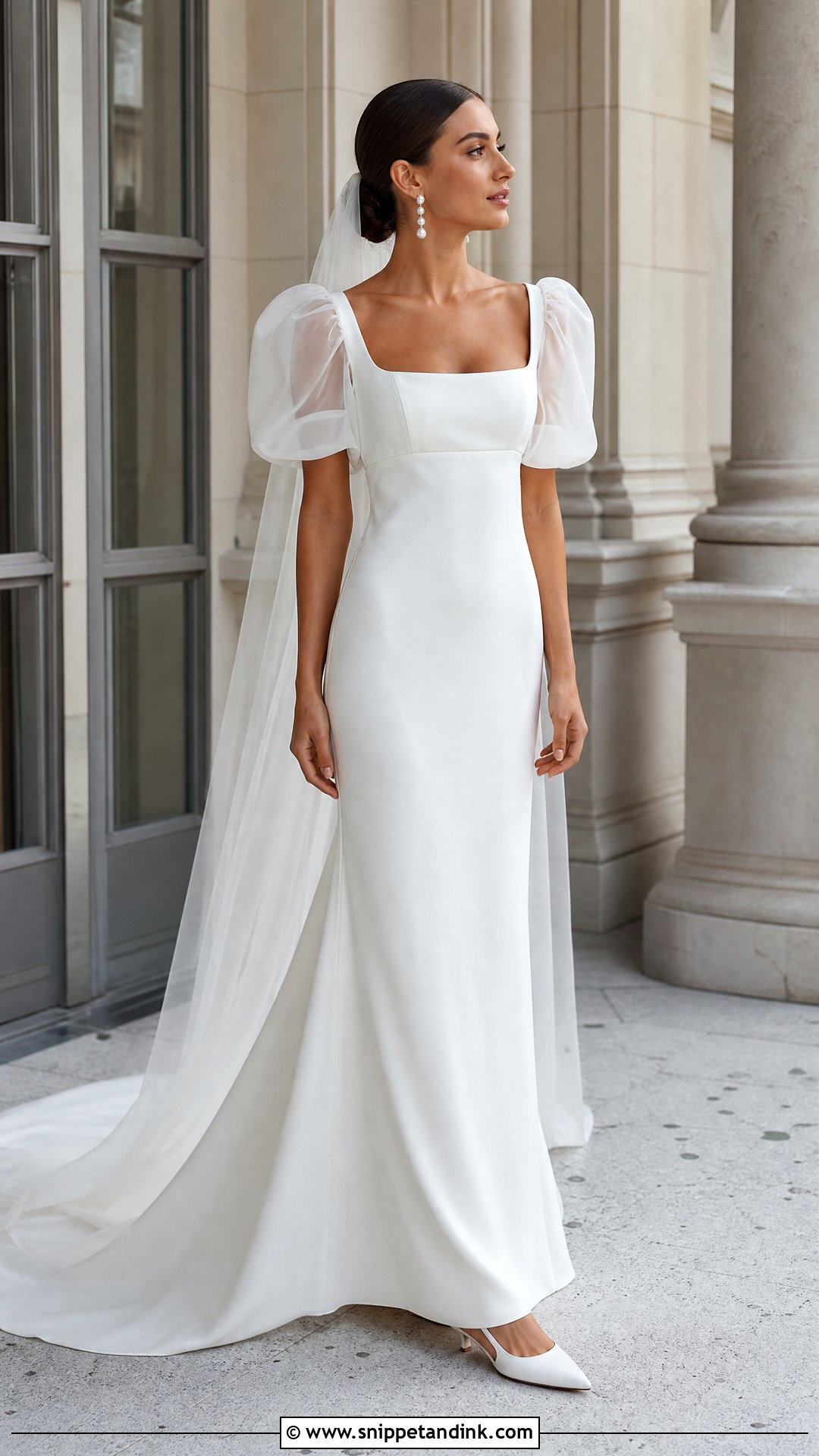
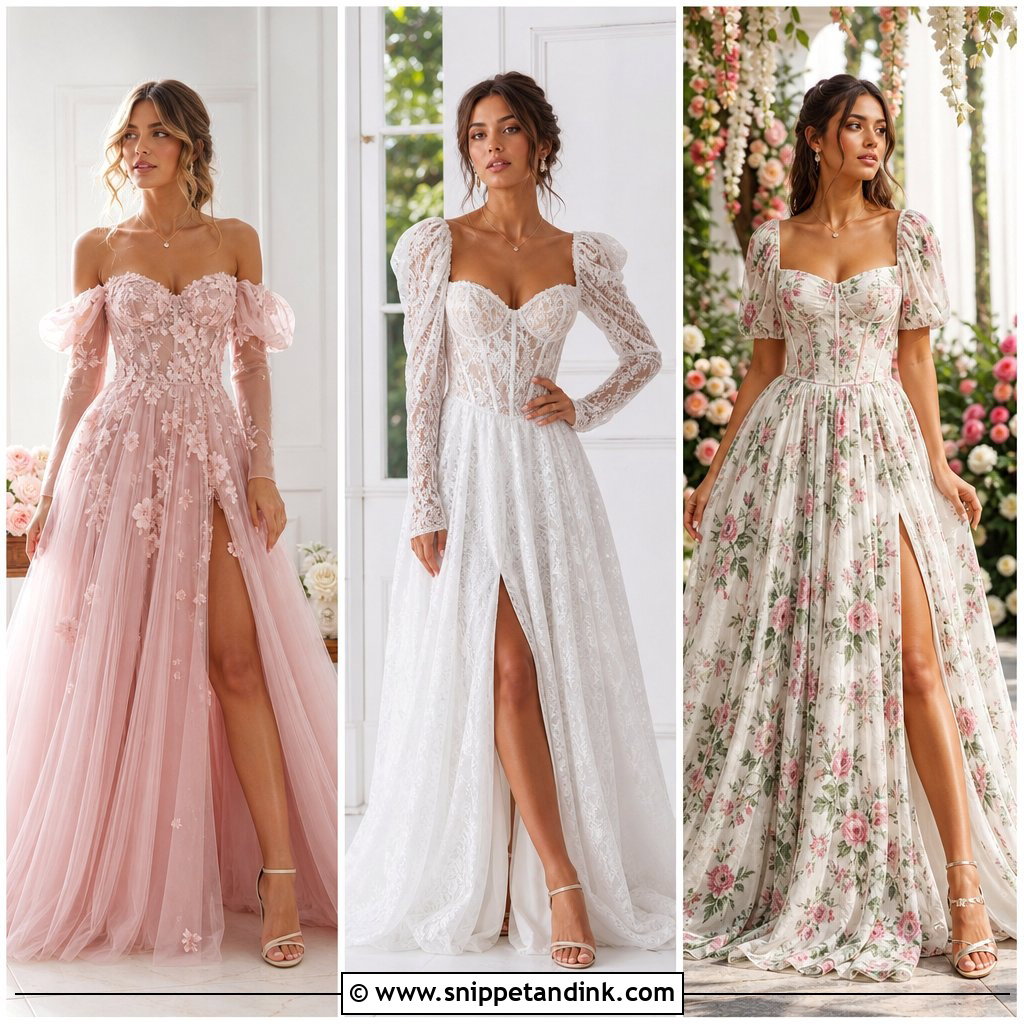
The modern version keeps the Regency references but sharpens the tailoring. A sculpted square-neck bodice with a subtle empire seam, detachable organza puff sleeves and a smooth column skirt with a back slit or a dramatic train is the shape. Bold pearl earrings, pointed slingbacks and a minimal shoulder-length veil keep it current, with a sleek bun and fresh makeup. Wear the sleeves for the ceremony and take them off for the reception. Limit yourself to one statement feature; the moment you add bows, gloves and embroidery as well, it looks historical again. Galleries, city hotels and architectural venues suit it.
Period Hair and Headpieces That Don’t Look Like Fancy Dress
The hair is often what decides whether a Regency dress looks romantic or theatrical. Fashionable women of the time wore their hair gathered high at the back of the head, with soft curls around the temples and forehead. You can borrow that shape loosely: a knot set a little higher than a usual low bun, with a few soft face-framing pieces, reads as Regency without anyone thinking of a costume drama.
Headpieces that suit the era
- A narrow ribbon or pearl bandeau worn across the crown is very much of the period and very easy to wear.
- A small comb or a few pearl pins tucked into the knot keeps things modern.
- A delicate tiara works for an evening ballroom wedding; keep it small, because a big one with puff sleeves and gloves is too much in one look.
- Anchor the veil under the knot, not on top, so it falls cleanly behind the high waist.
Whatever you choose, do a hair trial wearing the dress or at least the neckline. Square necks and puff sleeves change how high a bun should sit, and seeing them together in a mirror settles it in minutes.
How Much Regency Is Enough?
A Regency wedding look works when it borrows from history rather than copying it. Empire seams, square necklines, puff sleeves, flowing fabric, bows, pearls and fine embroidery all signal the era, but you only need two or three to make the point. Think about the season, the venue, how much support you need, how heavy the fabric is and how far you’ll be walking. Let accessories serve the soft shape instead of crowding it. Minimal satin, floral tulle, light chiffon and detachable sleeves are all good starting points. Pick the version that feels like your own dress first and a period piece second.
You'll Like These Ideas:





Leave a Reply