
The high-waisted gown that Jane Austen’s heroines wore is one of the gentlest silhouettes in bridal, and also one of the trickiest to fit. Its signature details are a waist seam just under the bust, a skirt falling straight from there, puff sleeves, a square neckline, fine lace, sheer layers, ribbons, gloves and pearls. Styled lightly, it reads modern; styled heavily, it starts to look like a costume party. The 25 looks below range from minimal crepe to full Bridgerton romance, and I’ve added the fitting notes I’d give you on each, because with this shape the bust support and the seam placement decide everything.
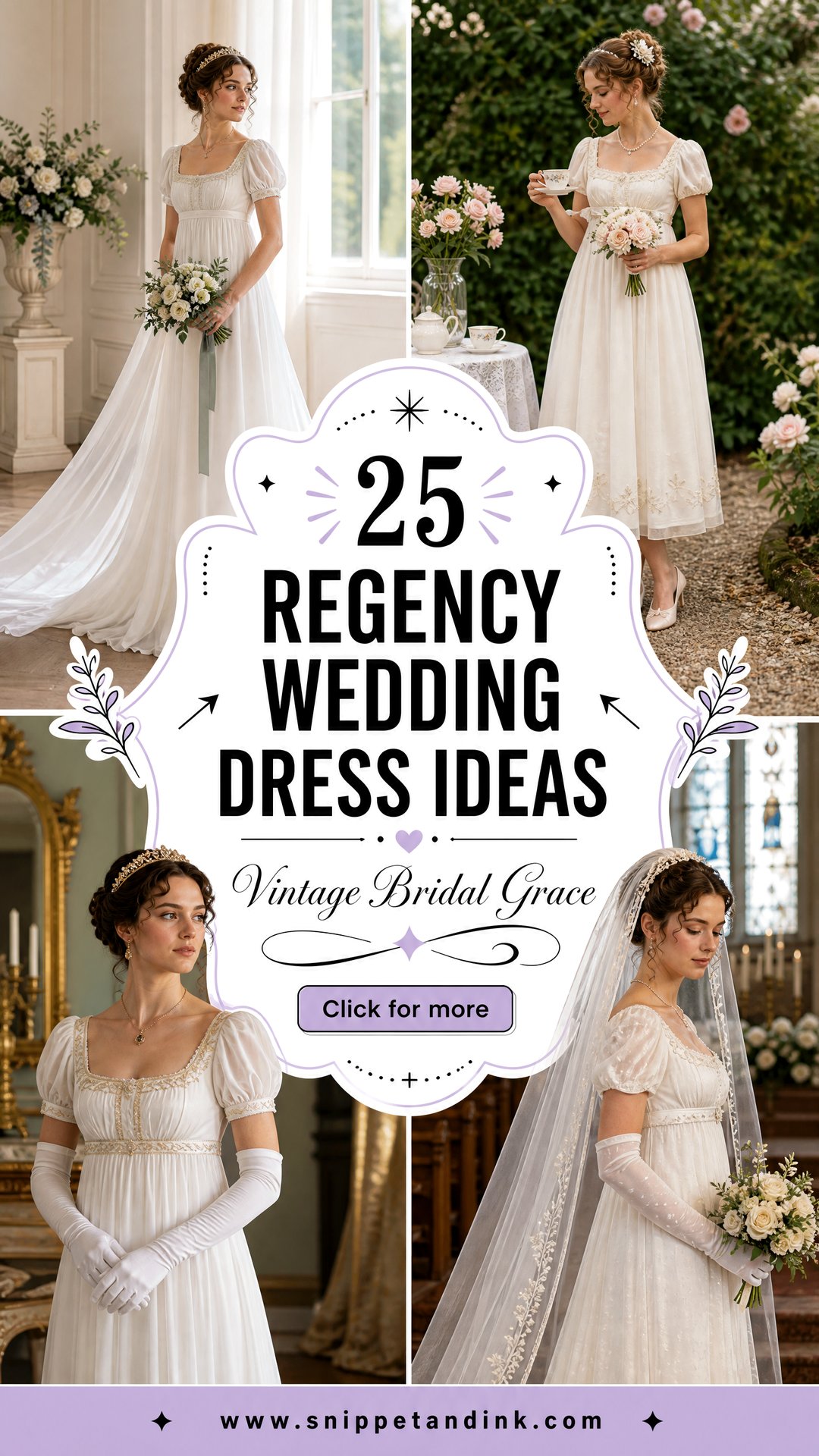
Support Under a High Waistline Is the Real Fitting Job
The empire seam has to sit exactly in the fold under your bust. Too high and it flattens you; too low and it slides onto the ribcage and the whole dress looks like a nightgown. I fit that seam before I look at anything else, and I fit it in the underwear you’ll actually wear.
That underwear is the hard part. Wide square necklines and low backs rule out most everyday bras. Women in the original era wore short stays to lift the bust; today the same lift usually comes from cups and light boning built into the bodice. Ask whether the gown can have them added. It costs far less than spending the day adjusting a strapless bra.
- Petite brides: keep the skirt fabric fine and the sleeves small, or the volume overwhelms the frame.
- Fuller busts: an empire seam can make the skirt tent outward from the bust; a slight curve to the seam and darts underneath fix it.
- Long torsos: the high waist balances you beautifully, so this is one shape I’d actively suggest.
- Bring the shoes to every fitting, since even a low heel changes where the skirt breaks.
1. Empire Waist Regency Wedding Dress
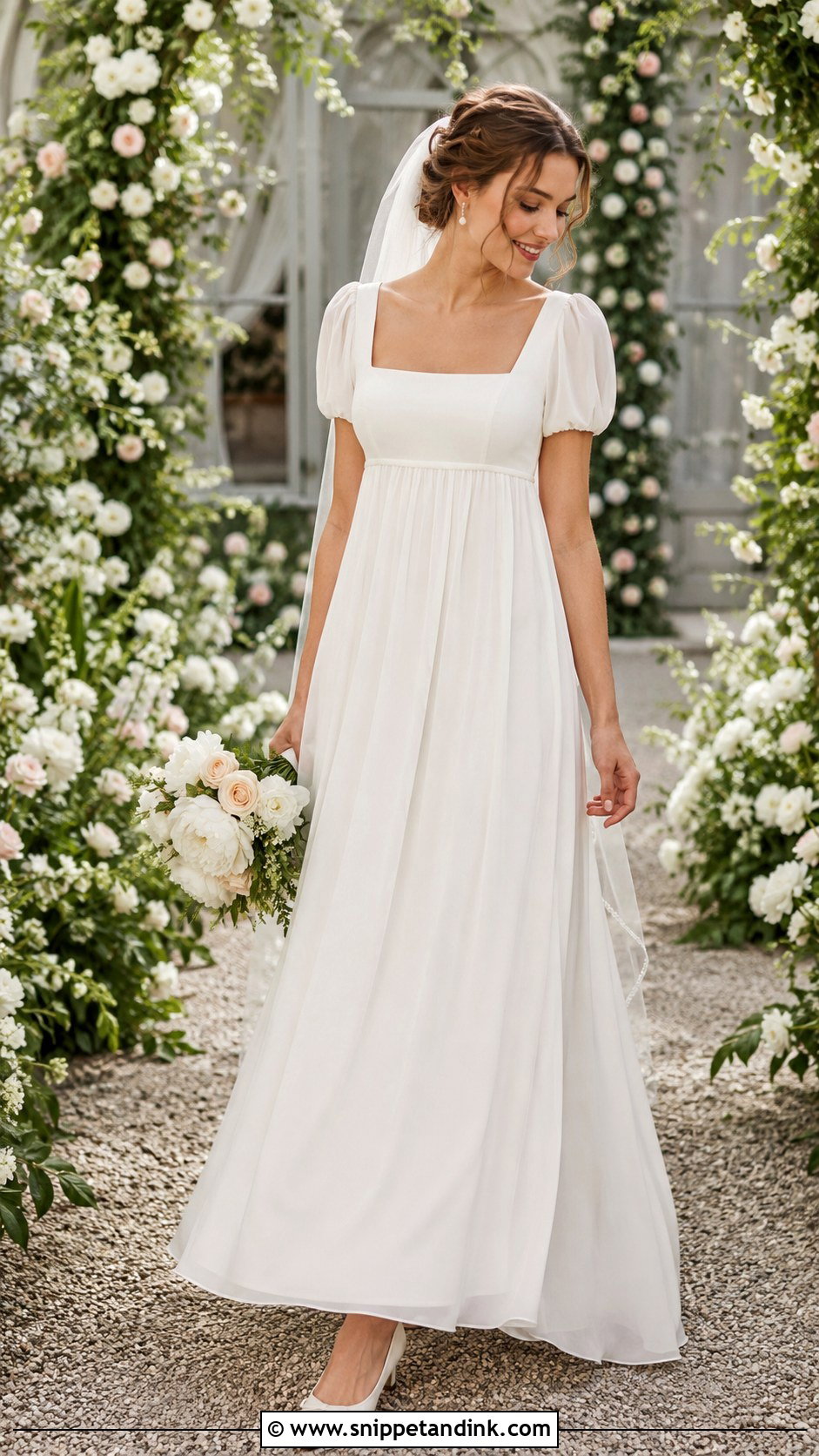
Everything in this style hinges on one seam. An empire waist Regency wedding dress puts the waistline just below the bust, and I pin it at the fitting with the bride standing tall, then again sitting, because the seam rises when you sit and can end up cutting across the bust. Ivory chiffon, silk, crepe or organza let the skirt fall freely. A square or soft scoop neckline, pearl drops, satin ballet flats and a veil set at the crown keep it light. Garden ceremonies and historic houses suit it best.
2. Puff Sleeve Regency Wedding Dress
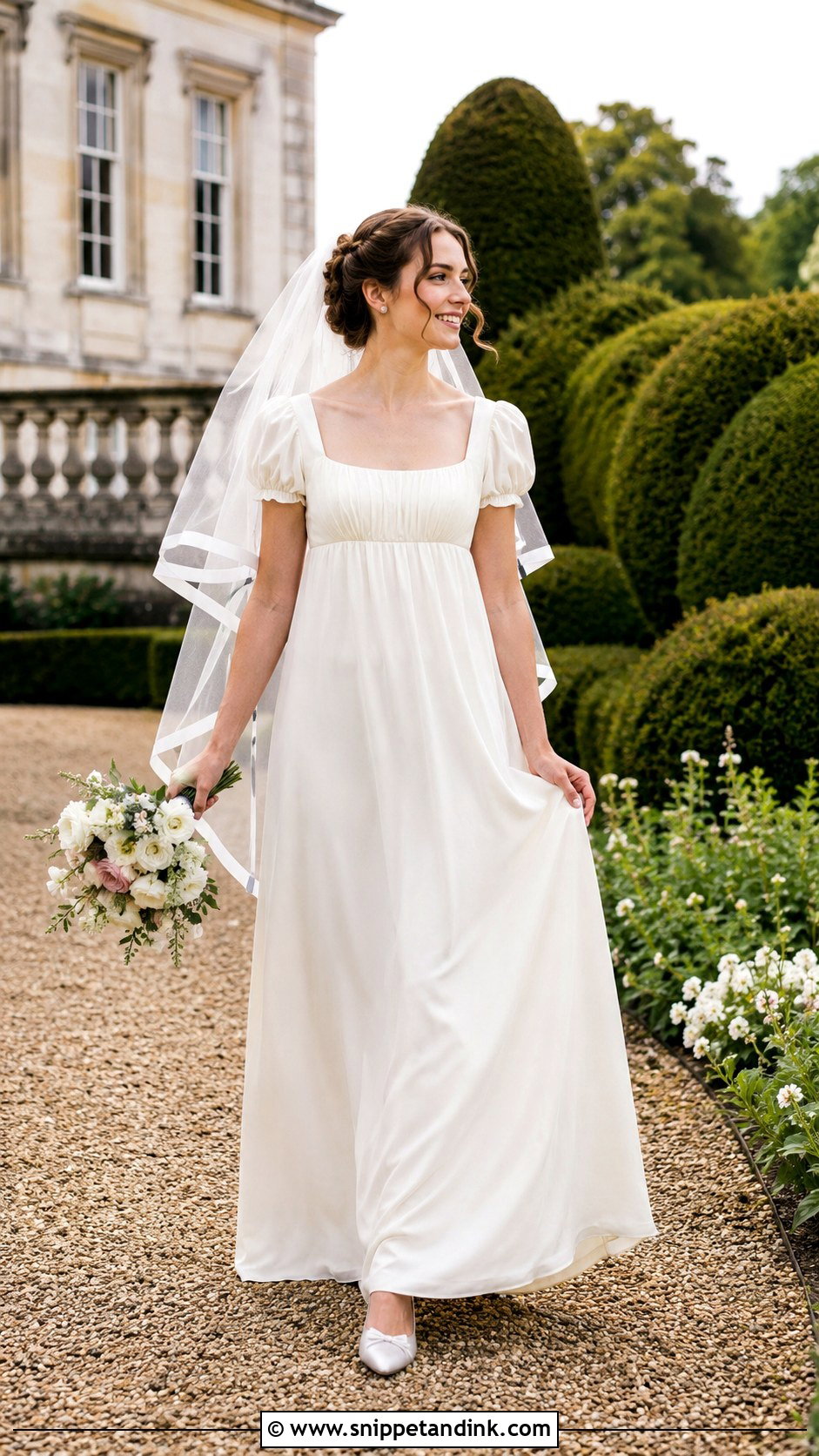
Puff sleeves carry the whole romantic mood, so they need a quiet partner. A slim bodice and a softly flowing skirt keep the volume from tipping into costume. Short rounded puffs read sweet; sheer, airy ones read soft; lightly structured ones add drama. Raise your arms at the fitting. Puffs set too low on the shoulder pull the neckline up when you hug. Pearl studs, a ribbon-edged veil and satin shoes, and no necklace at all if the sleeves are the main event.
3. Square Neck Regency Wedding Dress
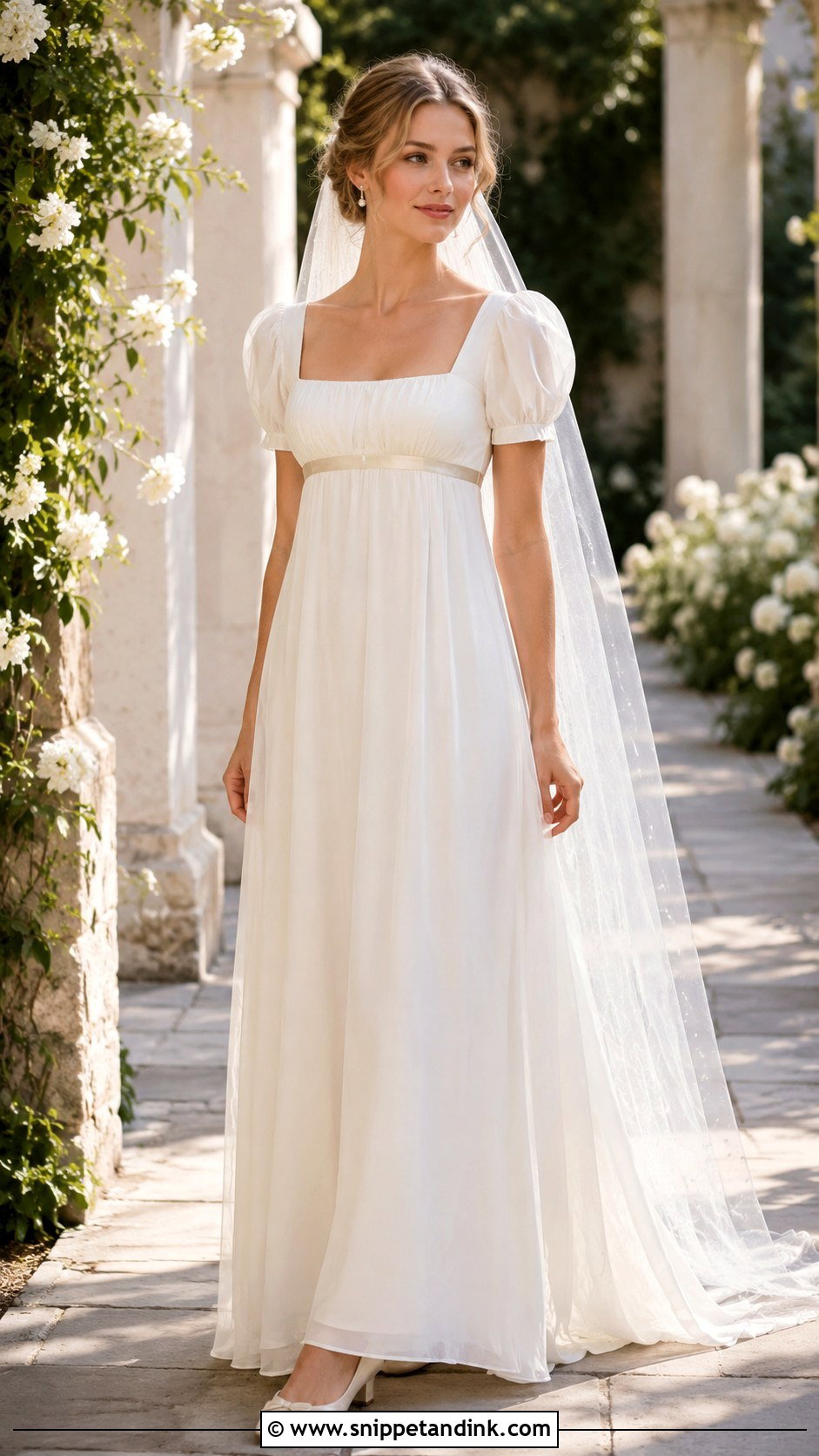
Of all the necklines in this list, the square one does the most to say Regency. It frames the collarbone cleanly and pairs well with puff, cap or slim sheer sleeves. Watch the corners: in soft fabrics they can sag into a curve by afternoon, so I ask for a stay tape sewn inside the neckline edge. An ivory gown, a gently gathered skirt and a narrow satin ribbon under the bust are enough. Add pearl earrings, a low bun, a sheer fingertip veil and flats.
4. Lace Regency Wedding Dress
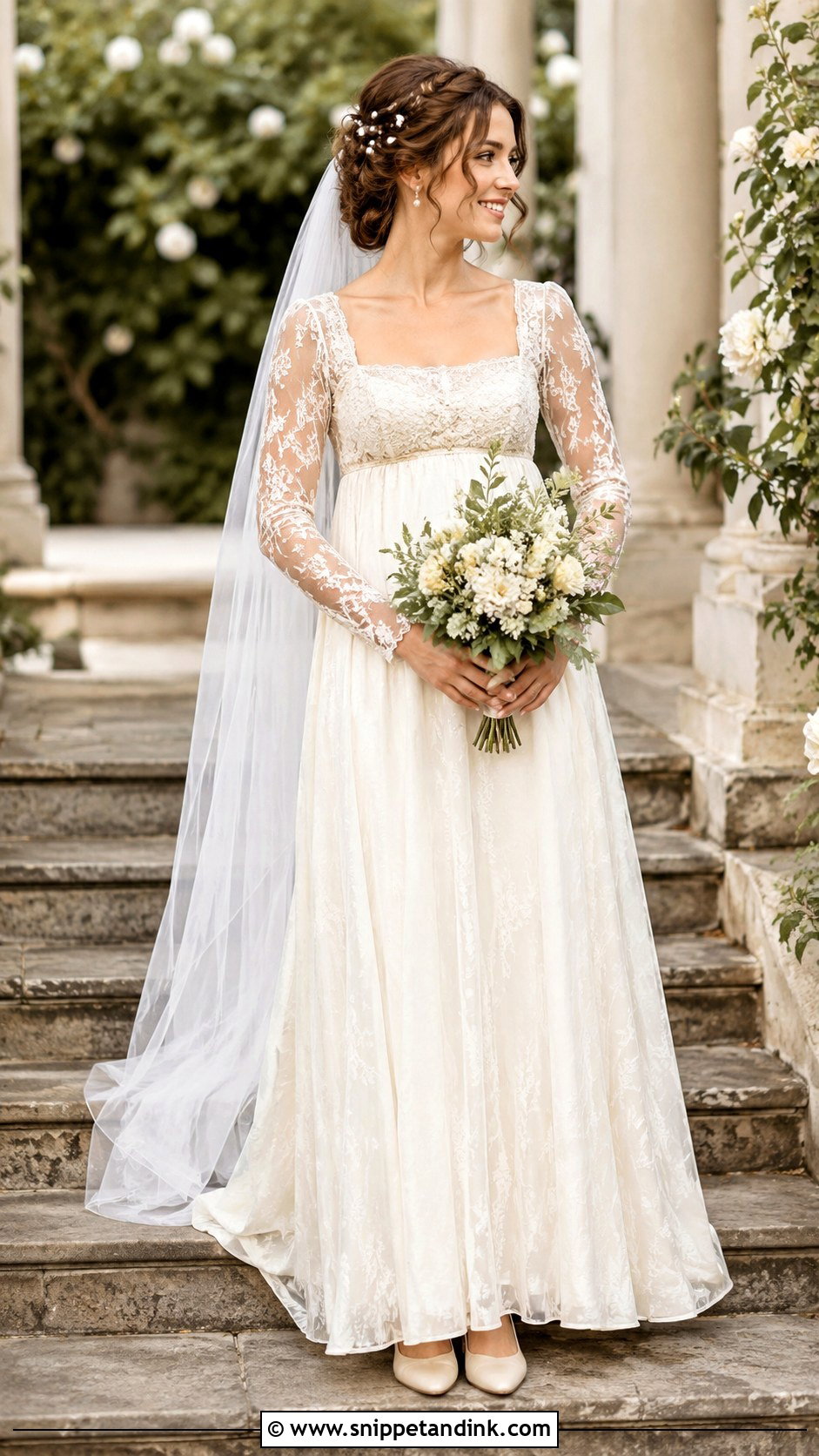
Fine floral lace, embroidered tulle or appliqué over the bodice and sleeves adds texture without weight. Heavy corded lace fights this silhouette; it drags the light skirt down and stiffens the drape. I’d choose a delicate lace and keep it to the upper body. Pearl hair pins, small drops and a plain veil leave room for the lace to show. Cream, ivory and soft champagne all suit it, and it fits outdoor ceremonies and estate settings.
5. Satin Regency Wedding Dress
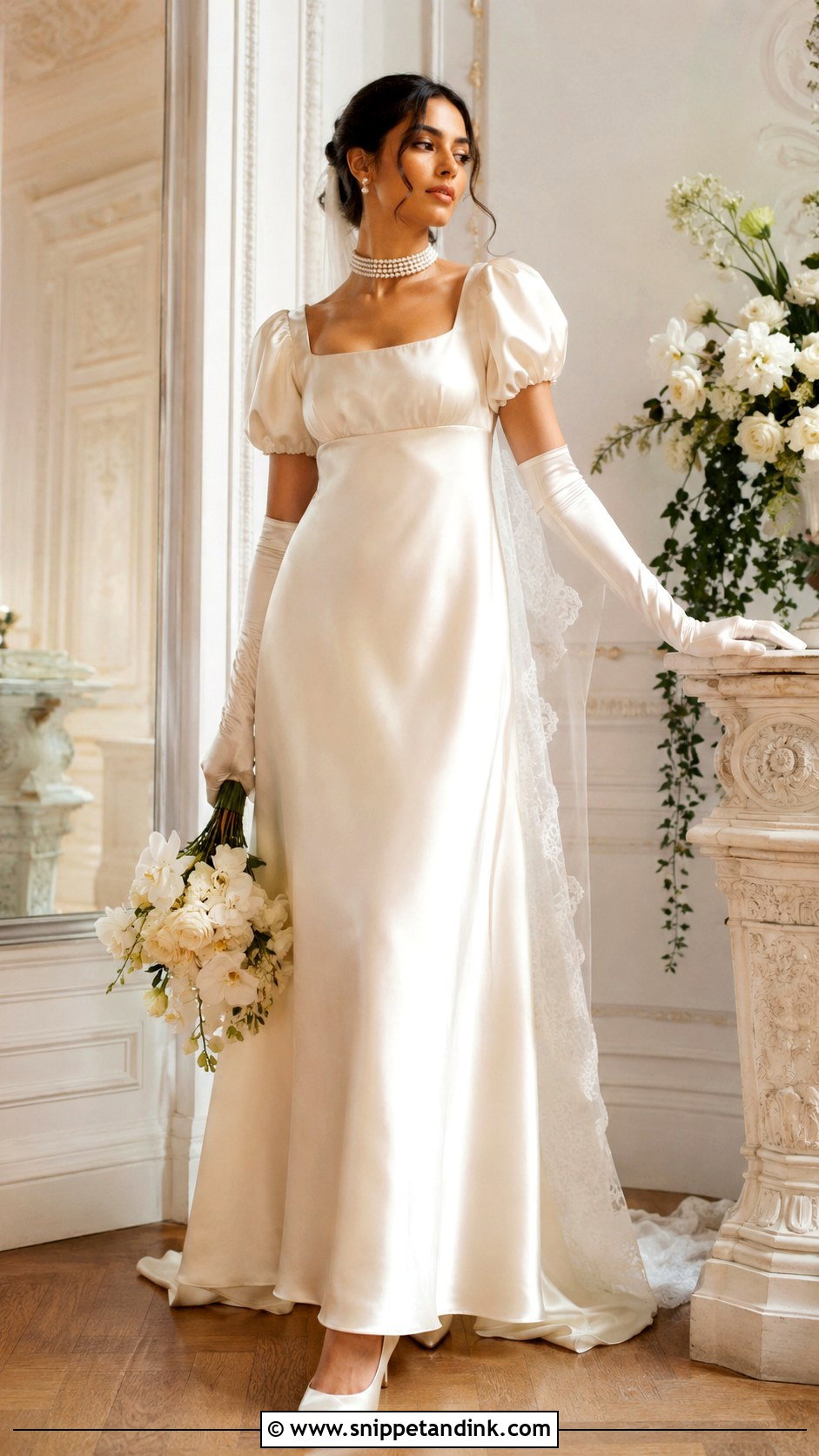
Satin smooths out the silhouette and adds a gentle sheen, which turns a simple empire gown into something formal without any embellishment. The catch: satin is heavier than chiffon, so a long skirt can cling at the hips rather than fall away. A soft, fluid satin rather than a stiff duchess weight solves that. Pair with soft puff sleeves, a pearl choker, satin gloves and pointed flats or low heels. A sleek bun or loose waves both suit a ballroom.
6. Chiffon Regency Wedding Dress
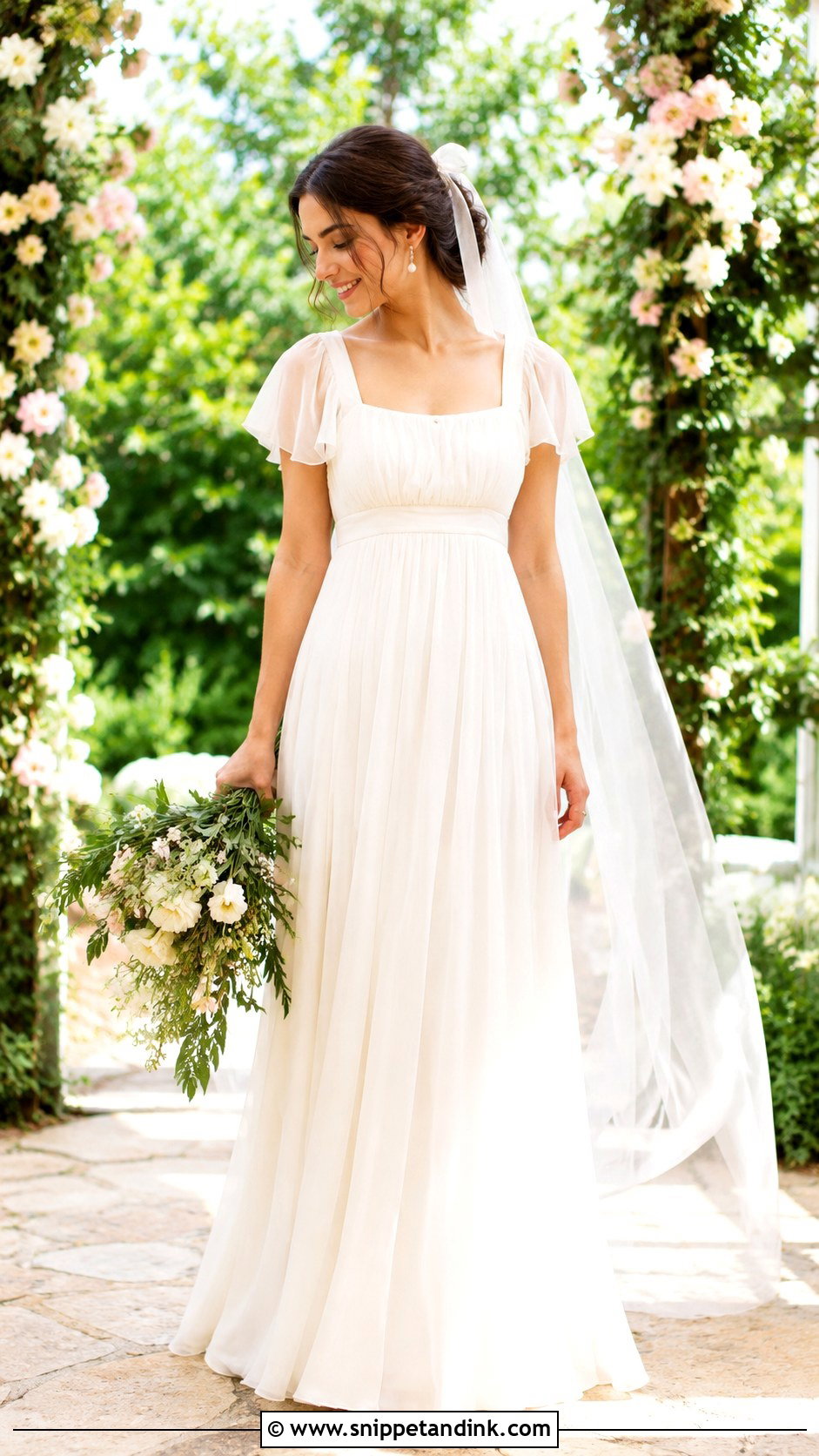
Chiffon gives this shape its float. It’s the most forgiving fabric for an empire gown because it skims rather than clings, and it moves with every step. Sheer puffs or flutter sleeves keep it light. The trade-off is fragility; chiffon snags on brick, rough wood and bouquet wire, so I ask for a rolled hem and tell brides to keep florists’ pins away from the skirt. Pearl earrings, a hair ribbon, sandals or low heels, and a soft veil that blends into the fabric. Spring and summer suit it best.
7. Organza Regency Wedding Dress
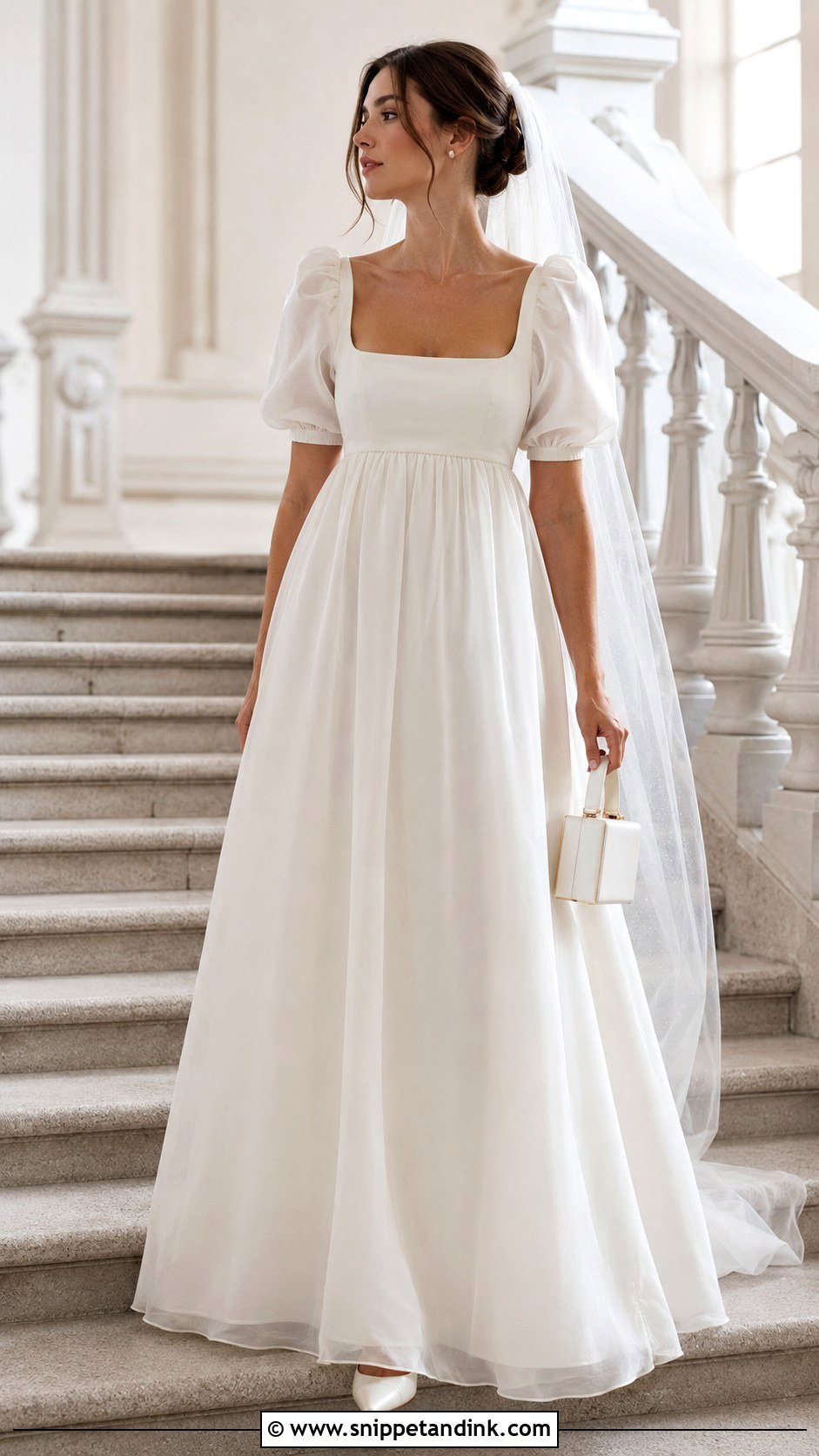
Organza is crisp, so it holds a softly full skirt without petticoats. With a square neckline, puff sleeves and a high waist, it becomes very recognizably Regency. I keep the skirt moderate, because organza can quickly balloon into something more Victorian than intended. It also creases sharply if you sit on it carelessly; smooth the back of the skirt as you sit. Pearl studs, a sheer veil, satin shoes, and maybe a small structured bag. Bright rooms and staircases catch its glow.
8. Long Sleeve Regency Wedding Dress
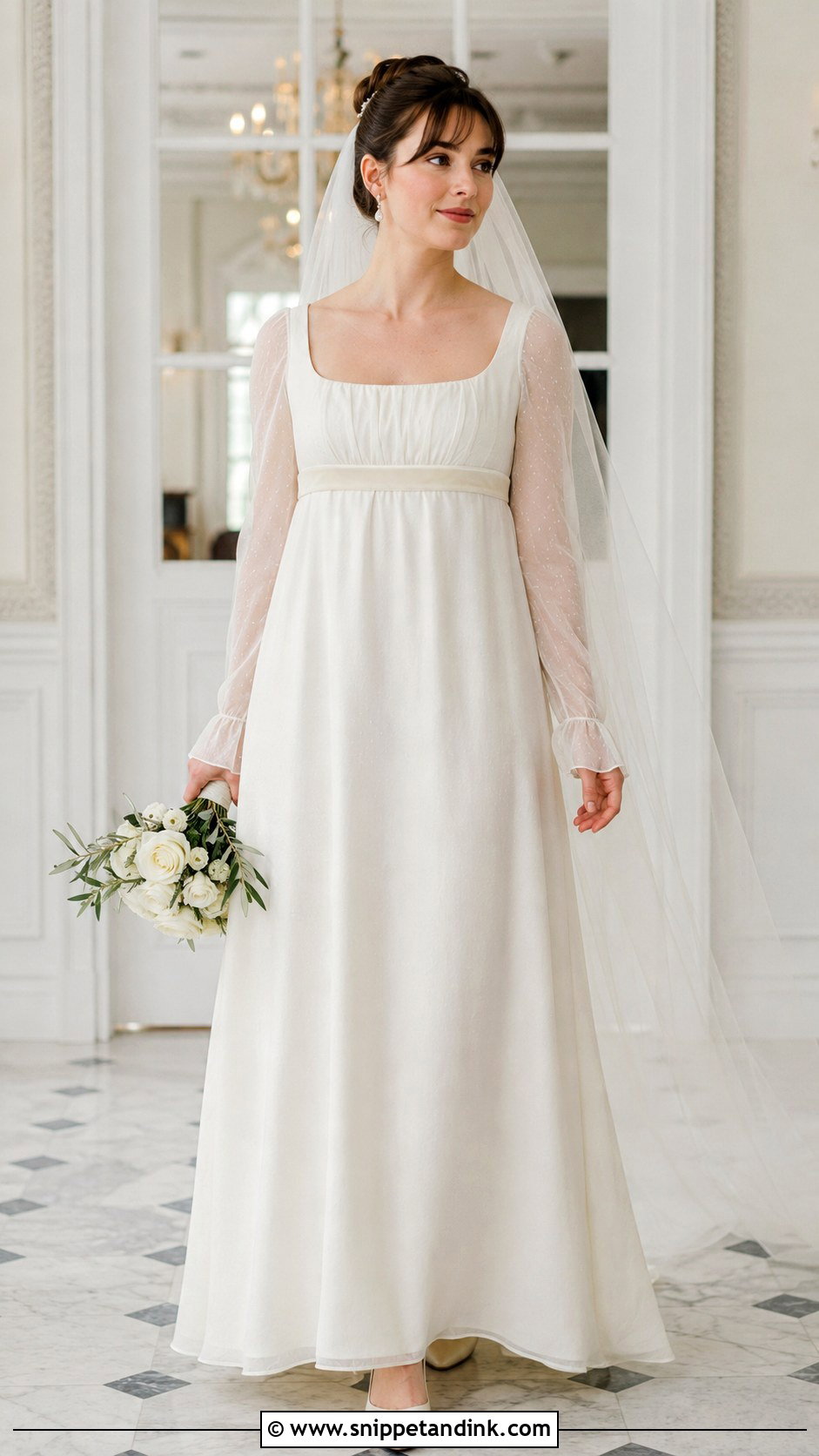
Long sleeves give coverage and suit cooler months. Sheer, slim lace or soft bishop sleeves all work; bishop sleeves add volume at the wrist, which is pretty but catches on cake, so plan accordingly. The bodice stays fitted under the bust, the skirt falls to the floor. A velvet ribbon at the waist leans autumn or winter; satin keeps it lighter. Pearl earrings, closed heels and a soft veil. Close-ups and walking shots show the sleeve shape best.
9. Short Sleeve Regency Wedding Dress
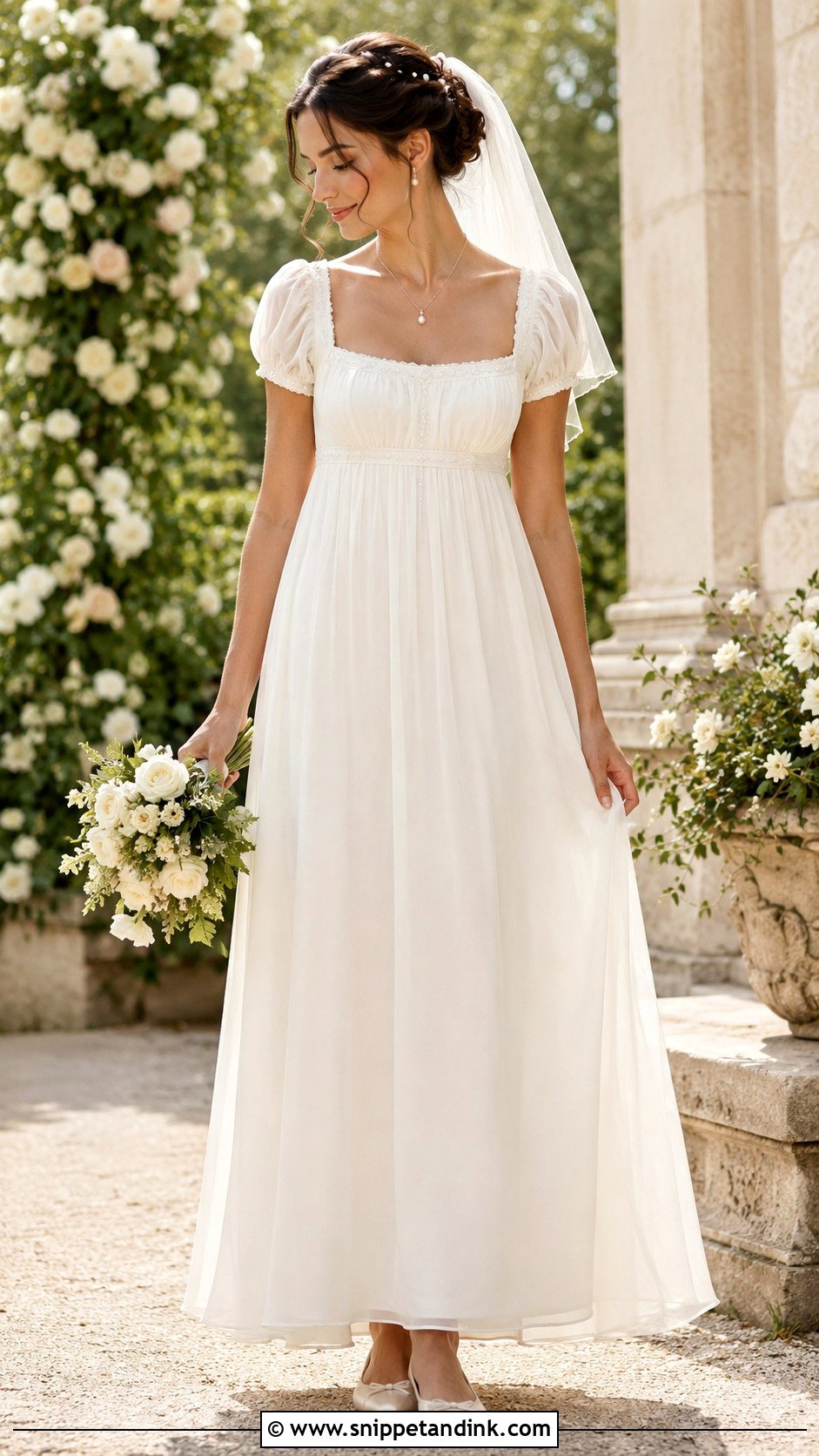
Daytime weddings suit short sleeves well. Small puffs, caps or gathered sleeves sitting just off the shoulder keep it fresh. Pair them with an empire bodice and a light A-line skirt. A simple pendant, pearl hair pins and satin flats are plenty, and if the gown has lace or embroidery, take one of those away. I’d steer upper-arm-conscious brides toward a slightly longer cap rather than a tight puff, which can grip the arm.
10. Off Shoulder Regency Wedding Dress
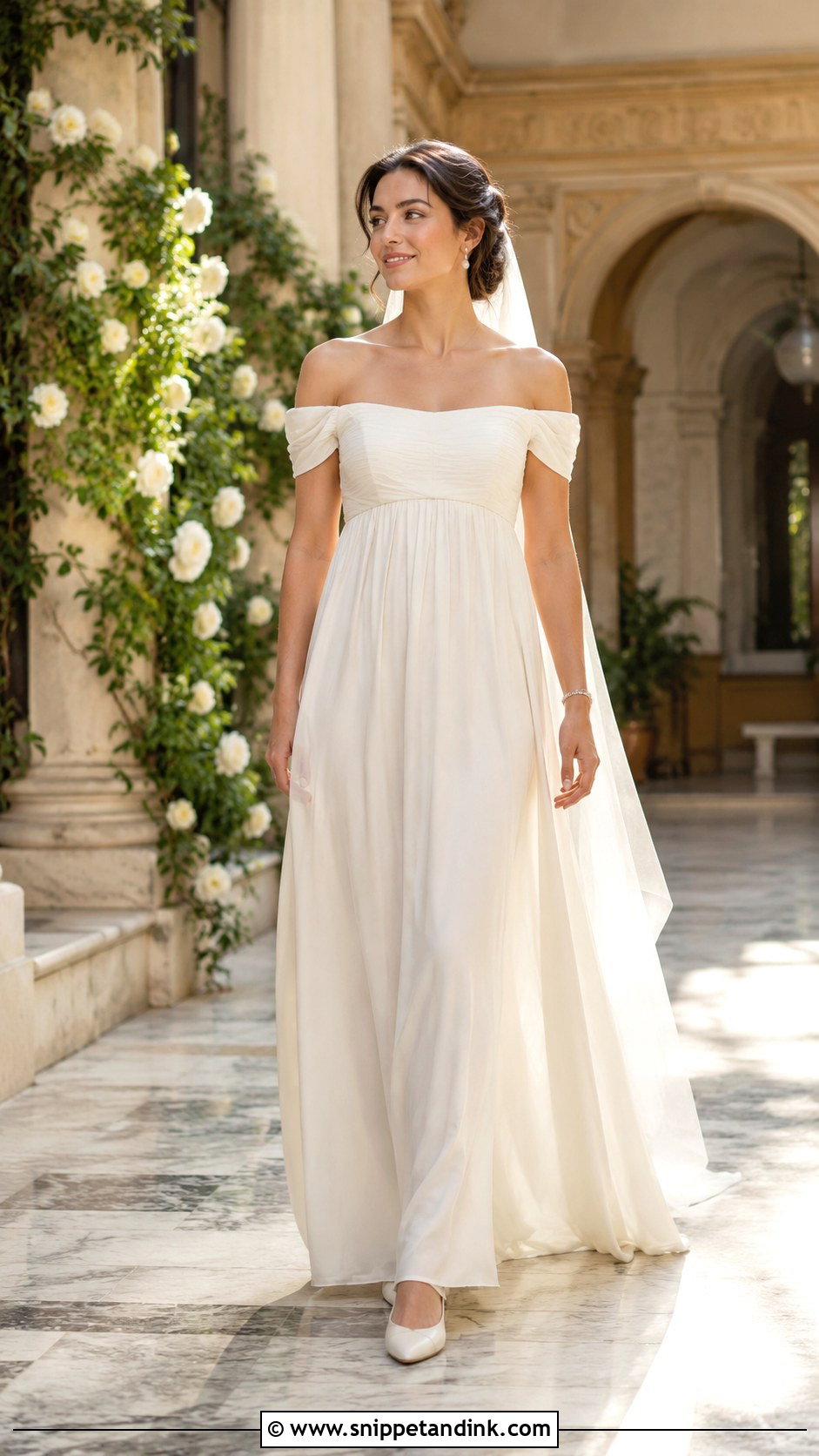
Off-shoulder necklines need to sit securely, and on an empire bodice there’s less structure to anchor them. I check by having the bride lift both arms; if the band rides up, it needs elastic or taking in across the back. Small puffs or draped bands work well. A flowing skirt softens the shape, and pearl earrings, a slim bracelet and a veil placed behind soft waves keep it portrait-like. Low satin heels finish it.
11. Embroidered Regency Wedding Dress
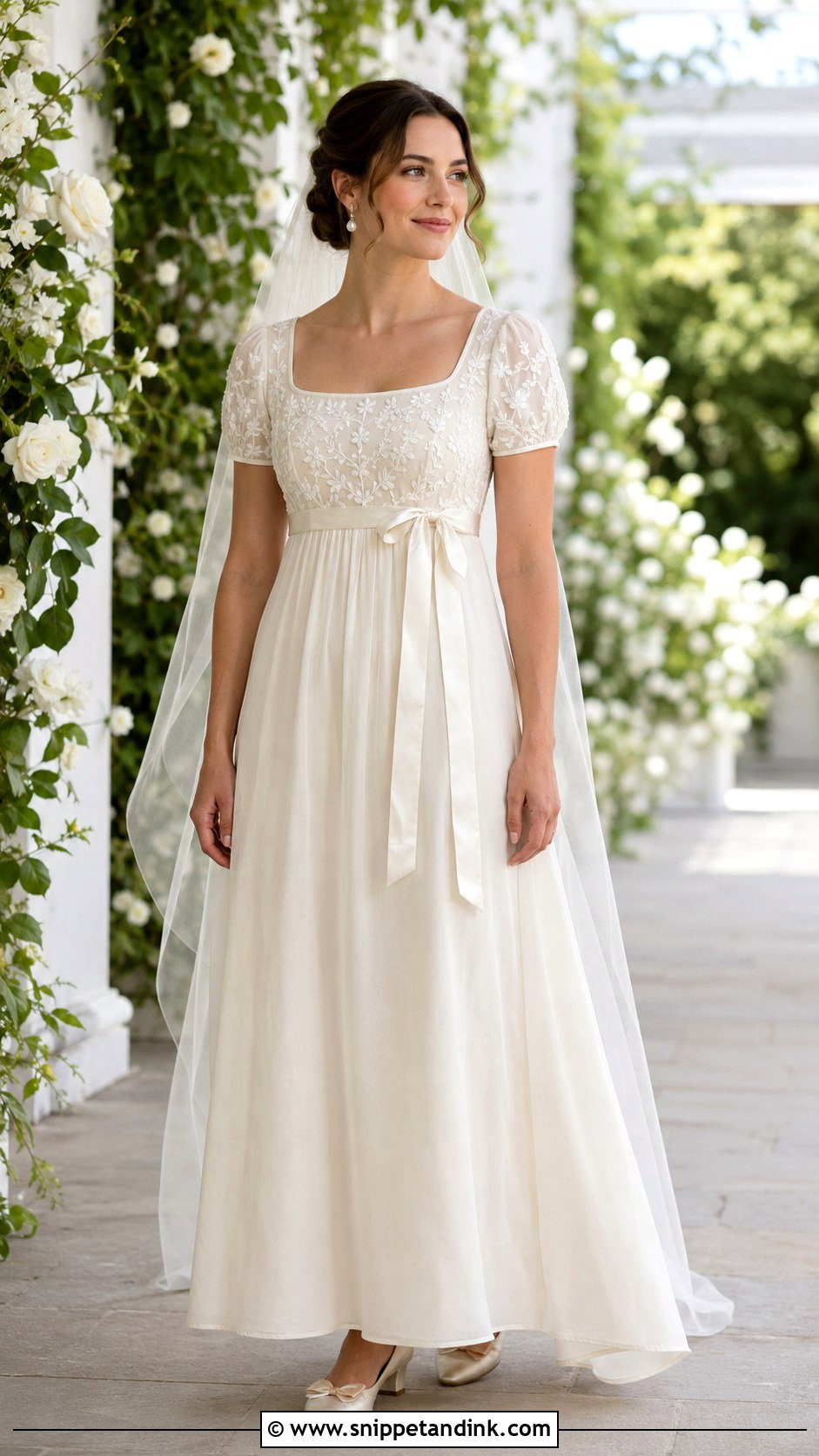
White-on-white threadwork is my favorite version of this idea: it gives detail without any sparkle, which suits the period better than beading. Floral embroidery, vines or tiny dots across the bodice, sleeves or hem all work, while the skirt stays light. If the embroidery includes color, keep accessories in ivory, blush or champagne. Pearl earrings, a ribbon waist tie and a soft veil complete it. Hand embroidery takes time, so allow longer if you’re ordering custom work.
12. Floral Regency Wedding Dress
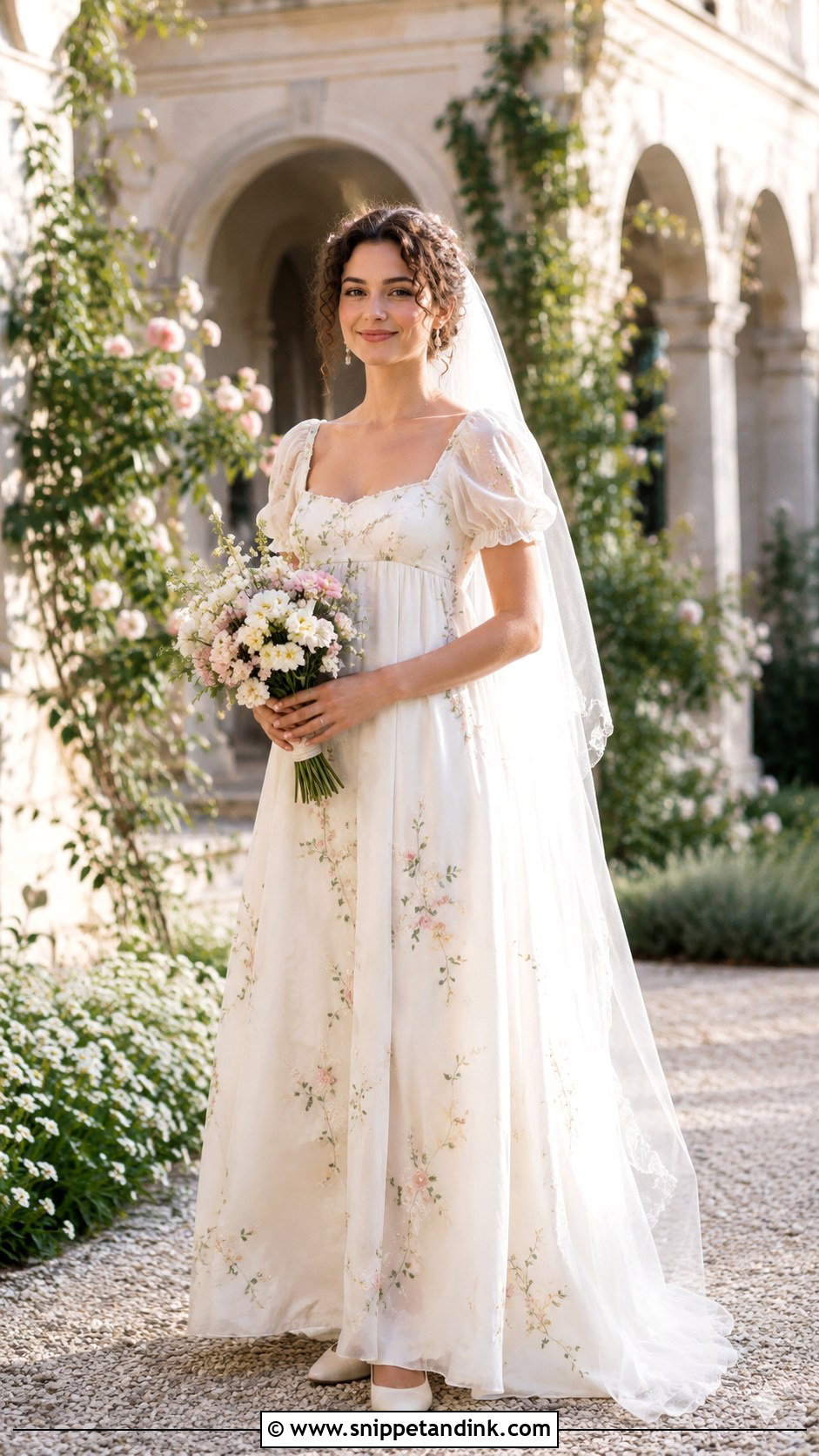
Florals can be embroidered, printed, appliquéd or woven in. Keep the base light (ivory, cream, blush or pale blue) so it still reads bridal. A busy print on chiffon softens because the fabric is sheer, while a print on satin looks sharper and more modern. The high waist and flowing skirt carry the Regency feel. Pearl earrings, soft curls and nude or ivory heels, and a plain veil if the florals are detailed. Spring and outdoor weddings suit it.
13. Minimal Regency Wedding Dress
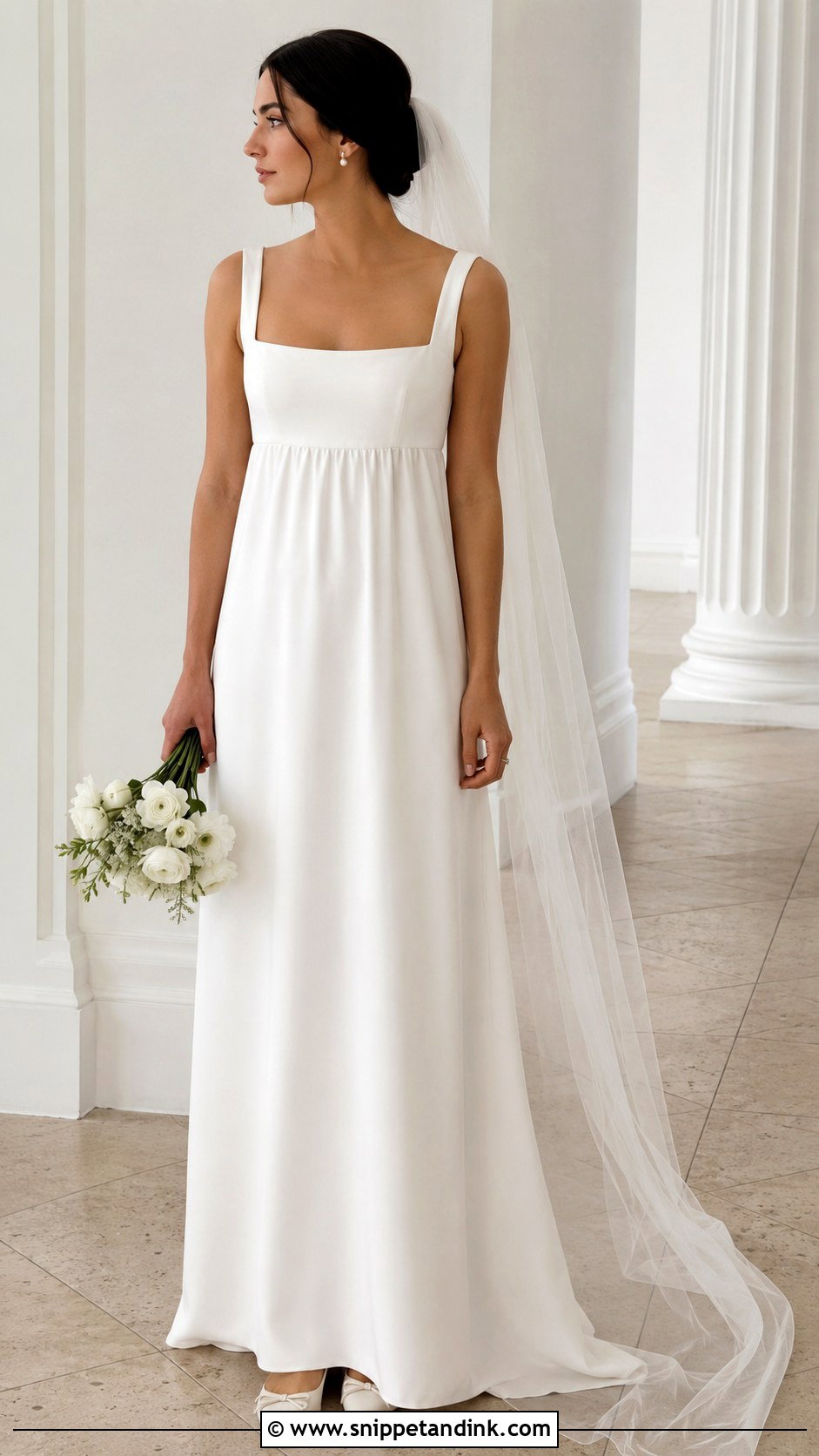
With nothing on the dress, every accessory shows, so I choose them as carefully as the gown. A plain ivory gown with an empire waist, square neckline and smooth skirt in silk, crepe or satin is the base. Pearl studs, a sleek veil, satin flats and a low bun finish it, and a narrow ribbon under the bust adds a whisper of period detail. Modern venues and civil ceremonies suit it. This is also the version that ages best in photographs.
14. Vintage Regency Wedding Dress
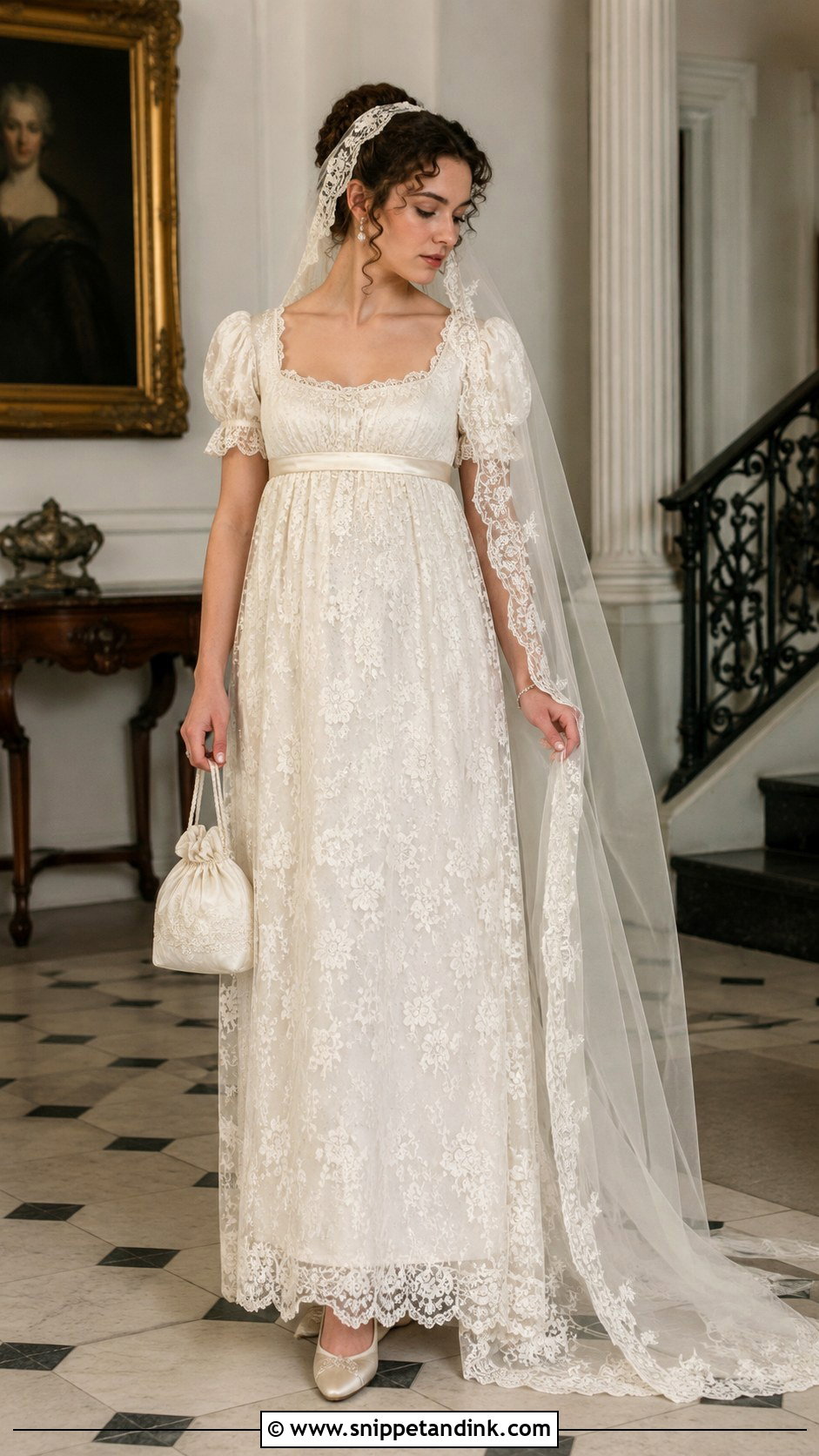
Old-world details like antique-style lace, covered buttons, ribbon trims and a softly aged ivory give a vintage feel. Modern tailoring keeps it wearable; a real antique gown is often too fragile and too small to alter without damage, so I suggest a new dress with vintage trims instead. Pearl earrings, a lace-trimmed veil, closed satin heels and a small beaded bag. Historic homes and soft, natural-light photography suit it.

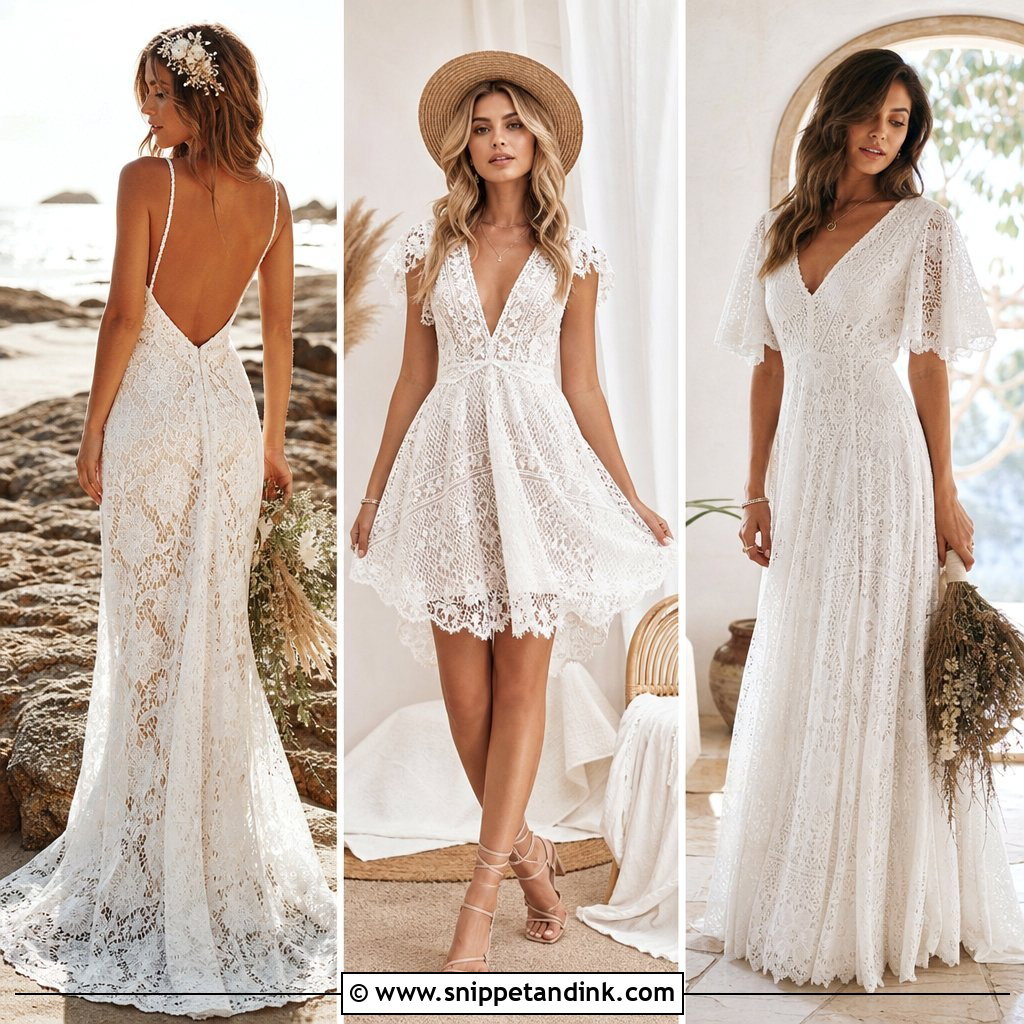

15. Bridgerton Regency Wedding Dress
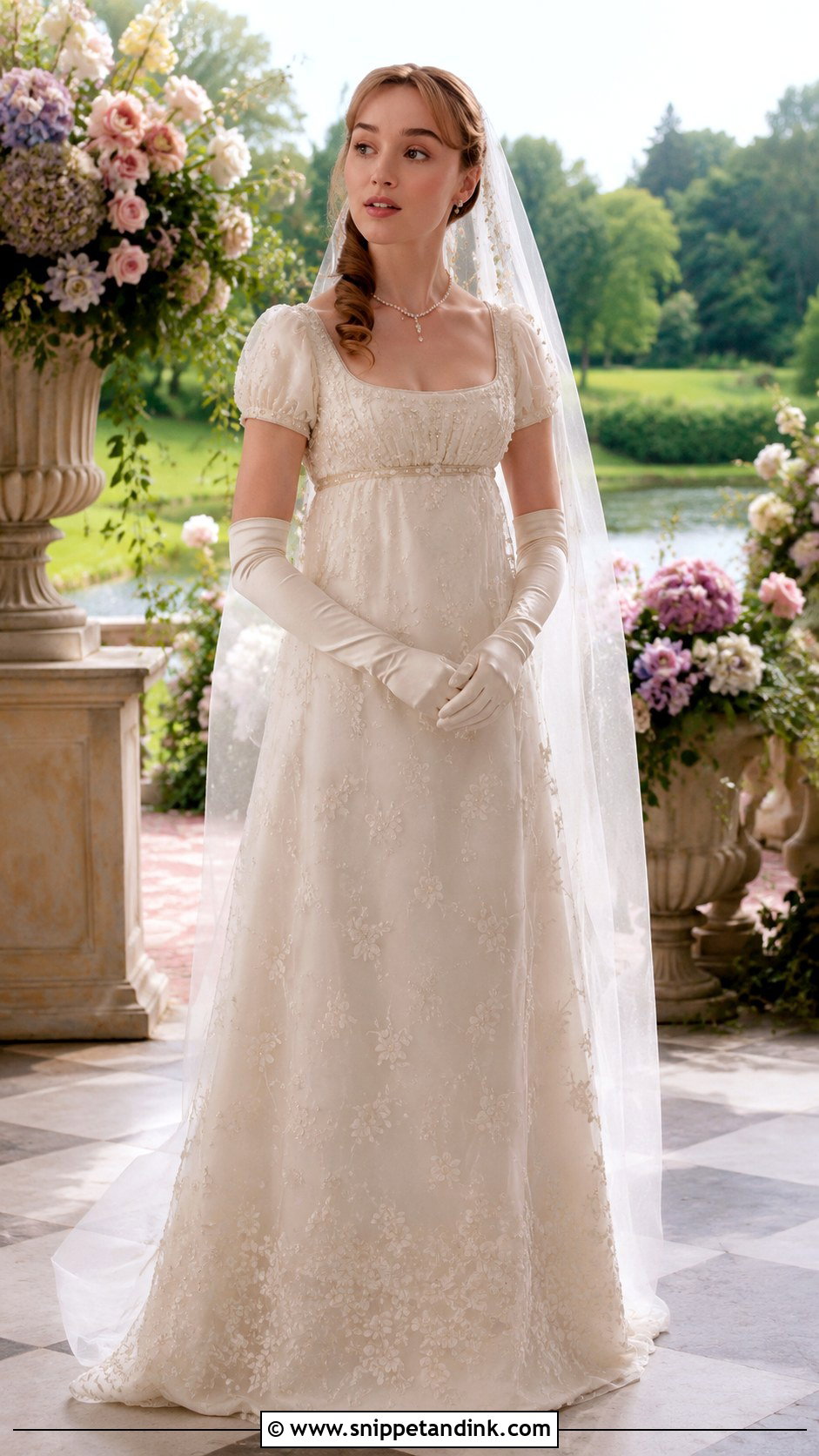
Restraint is what keeps a Bridgerton Regency wedding dress bridal. The look draws on empire waists, puff sleeves, delicate shimmer, soft florals and a graceful skirt, but I’d pick one or two of those, not all five. A square neckline with pearls and a sheer veil is complete on its own. Satin gloves work if the gown is simple. Pastel florals and gentle shimmer give it that television-glamour feel without tipping into fancy dress.
16. Jane Austen Regency Wedding Dress
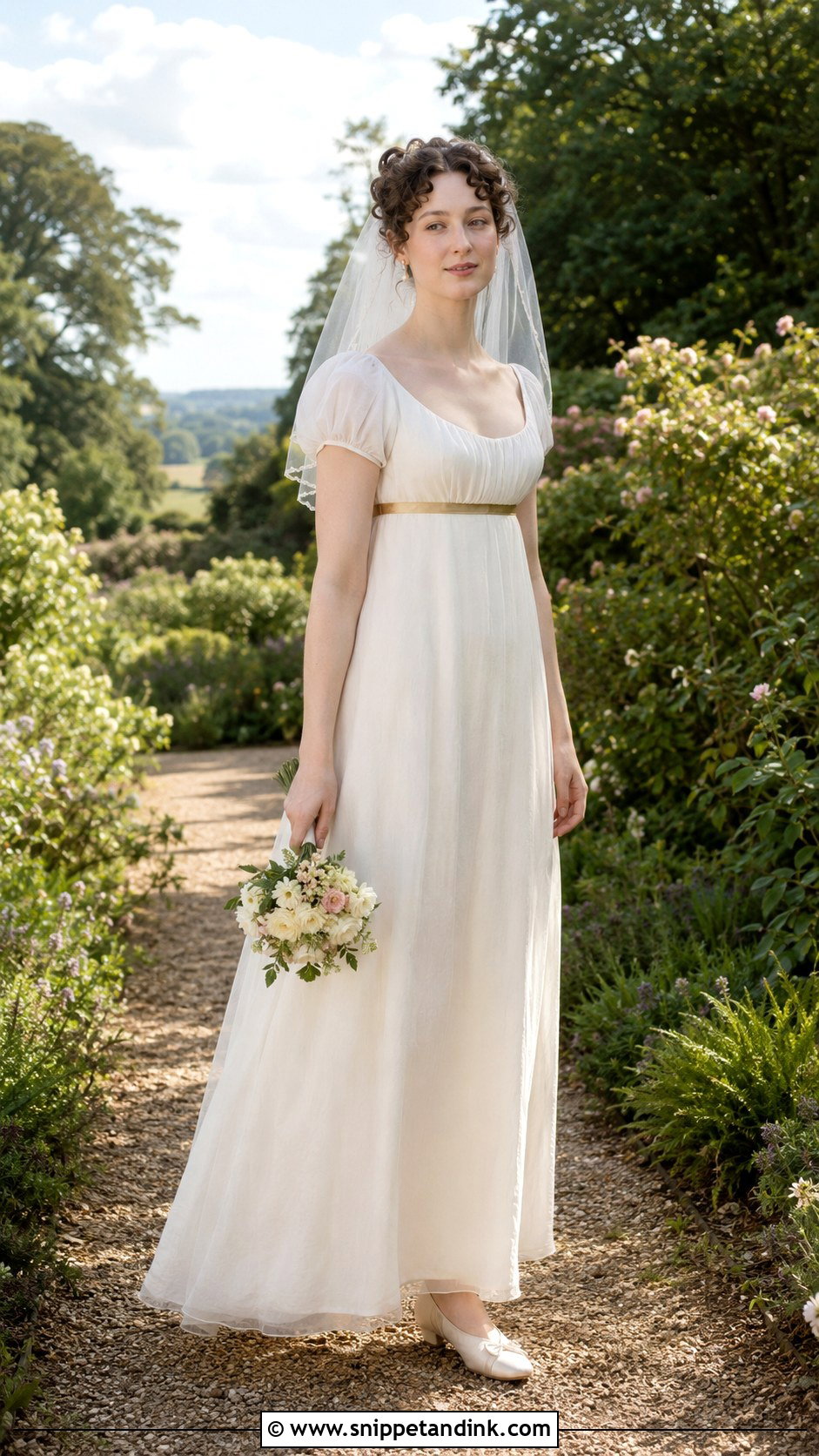
An Austen-style gown should be quiet. Choose a simple empire gown in a fine cotton that mimics muslin, chiffon or soft silk, with a square or scoop neck, short puff sleeves and a narrow ribbon under the bust. Real muslin creases quickly, so steam it on the morning, not the night before. Pearl earrings, soft curls and flat satin shoes complete it. Skip heavy embellishment; a countryside setting does the rest.
17. Regency Ball Gown Wedding Dress
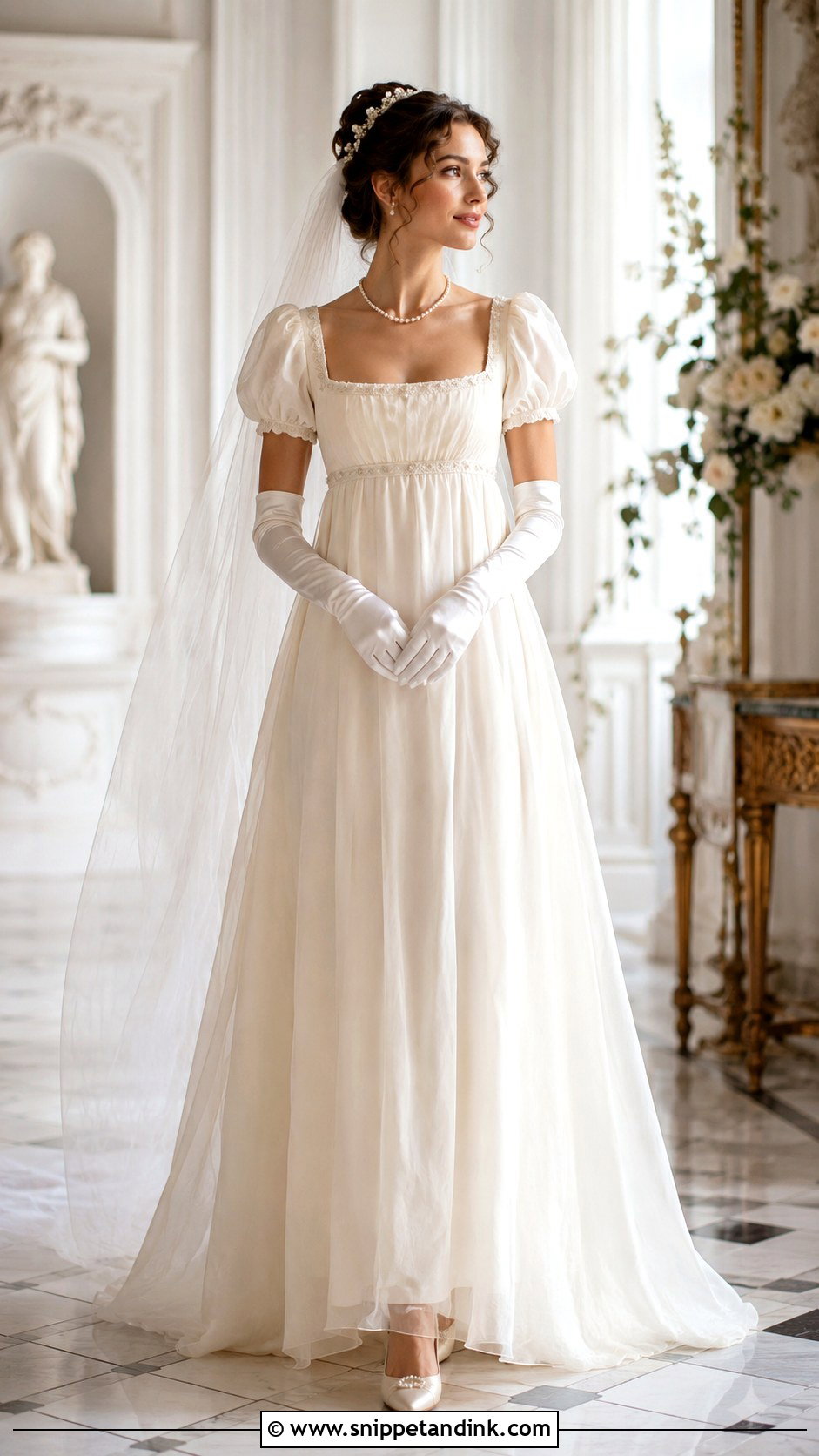
A softly full skirt flowing from a raised waist is the Regency version of a ball gown, much gentler than a modern princess skirt. Puff sleeves, a square neckline and satin or organza make it grand. Too much volume on an empire waist can make you look shorter, so I’d keep the fullness starting lower, around the hip. A pearl necklace, long gloves and a sheer veil, with a low bun or pinned curls, suit formal venues.
18. Regency Tea Length Wedding Dress
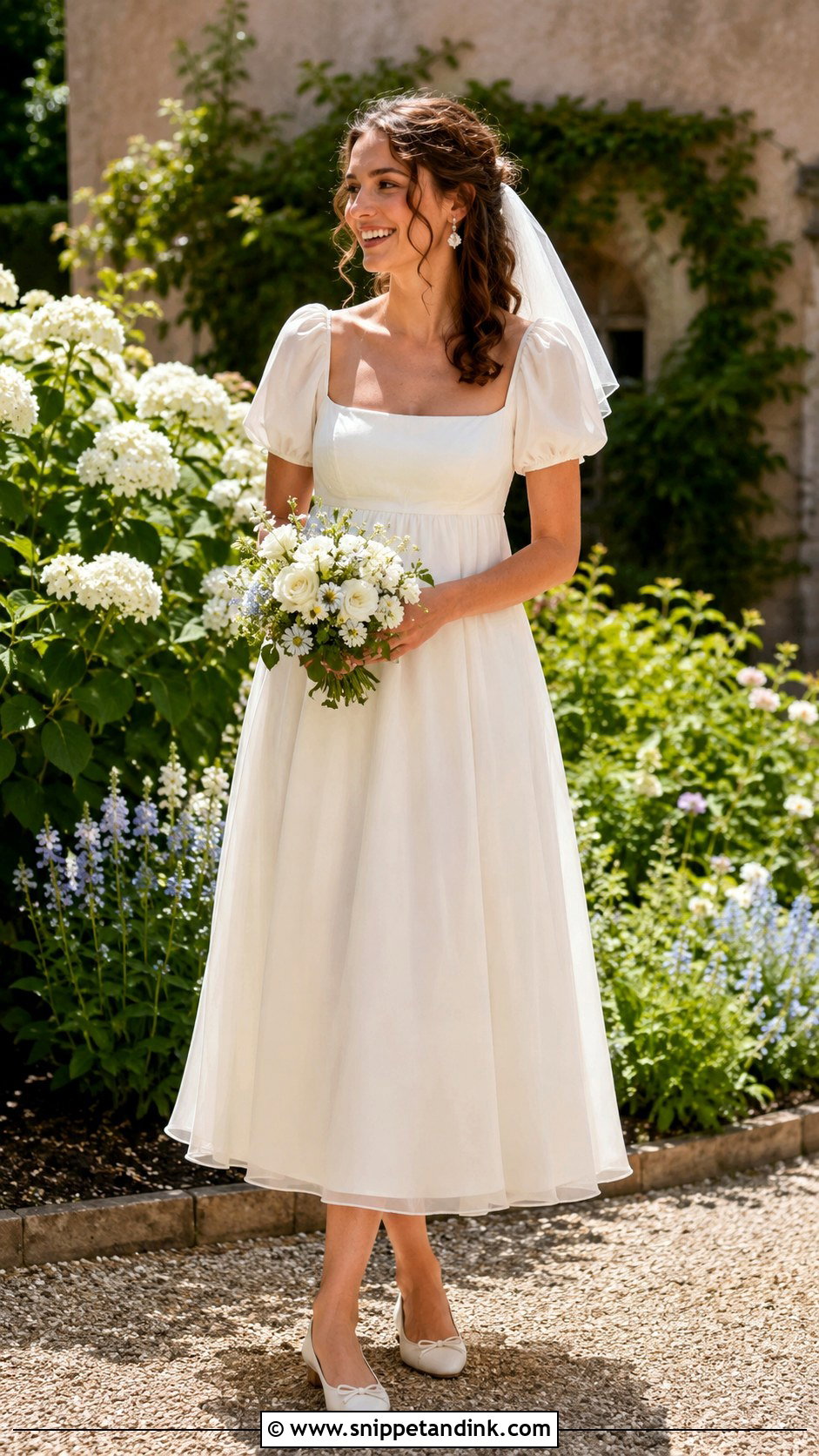
A Regency tea length wedding dress takes the empire silhouette and cuts it between knee and ankle, which gives it a playful, modern twist. Puff sleeves and a square neckline keep the period cues. The shoes are on show, so satin ballet flats, low block heels or Mary Janes need choosing before the hem. Pearl earrings, a short veil and soft curls. Courthouse weddings, garden ceremonies and brunch celebrations suit it.
19. Regency Wedding Dress With Gloves
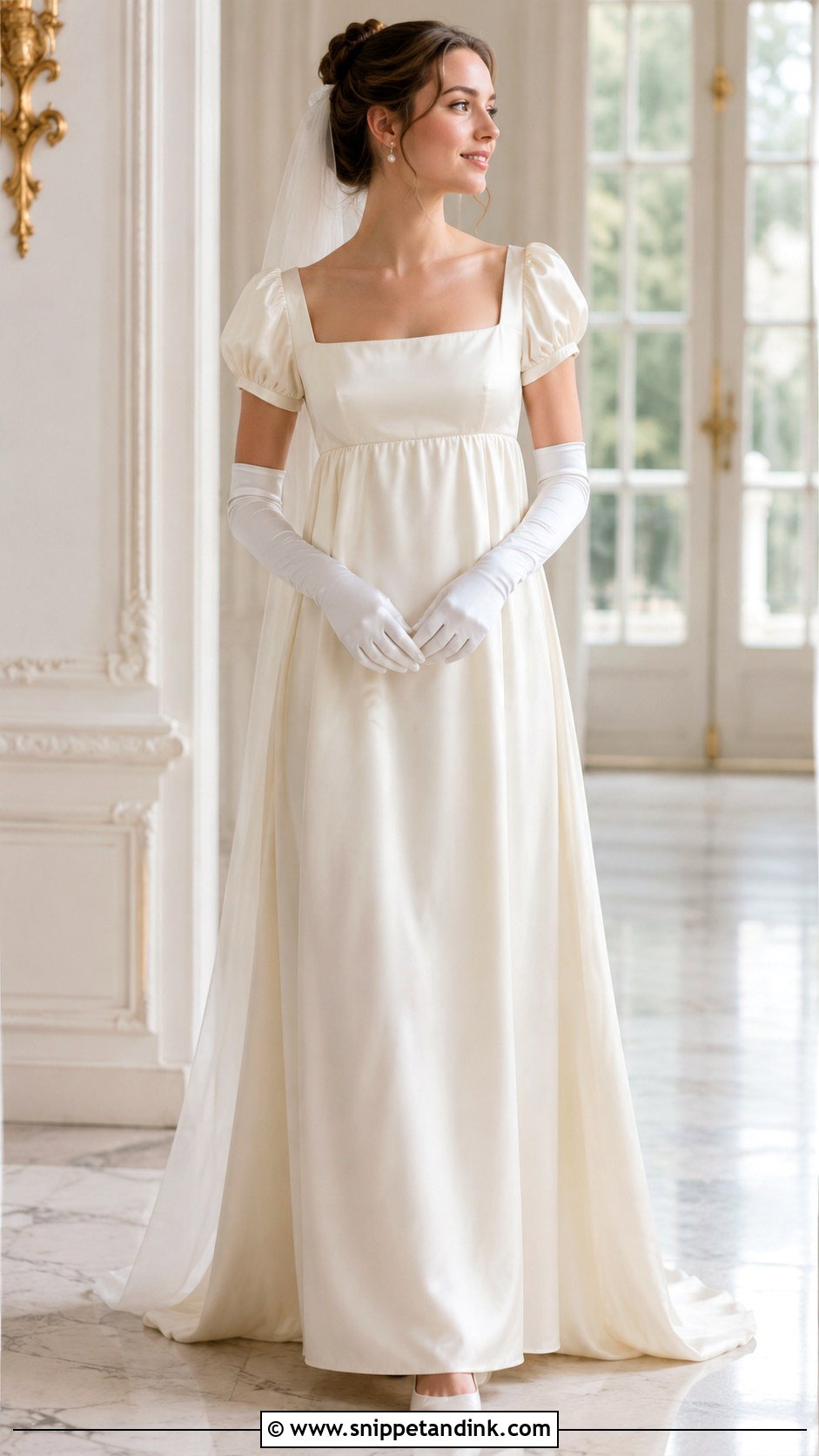
Gloves change with length. Short ones read sweet and vintage; long ones look formal. Keep the neckline simple so the outfit doesn’t get crowded at the top. The detail brides forget is the ring: long gloves either need a slit at the ring finger or have to come off for the exchange, so decide in advance and tell whoever will hold your bouquet. Pearl earrings, a soft veil and satin shoes. Bouquet and ring close-ups make the most of them.
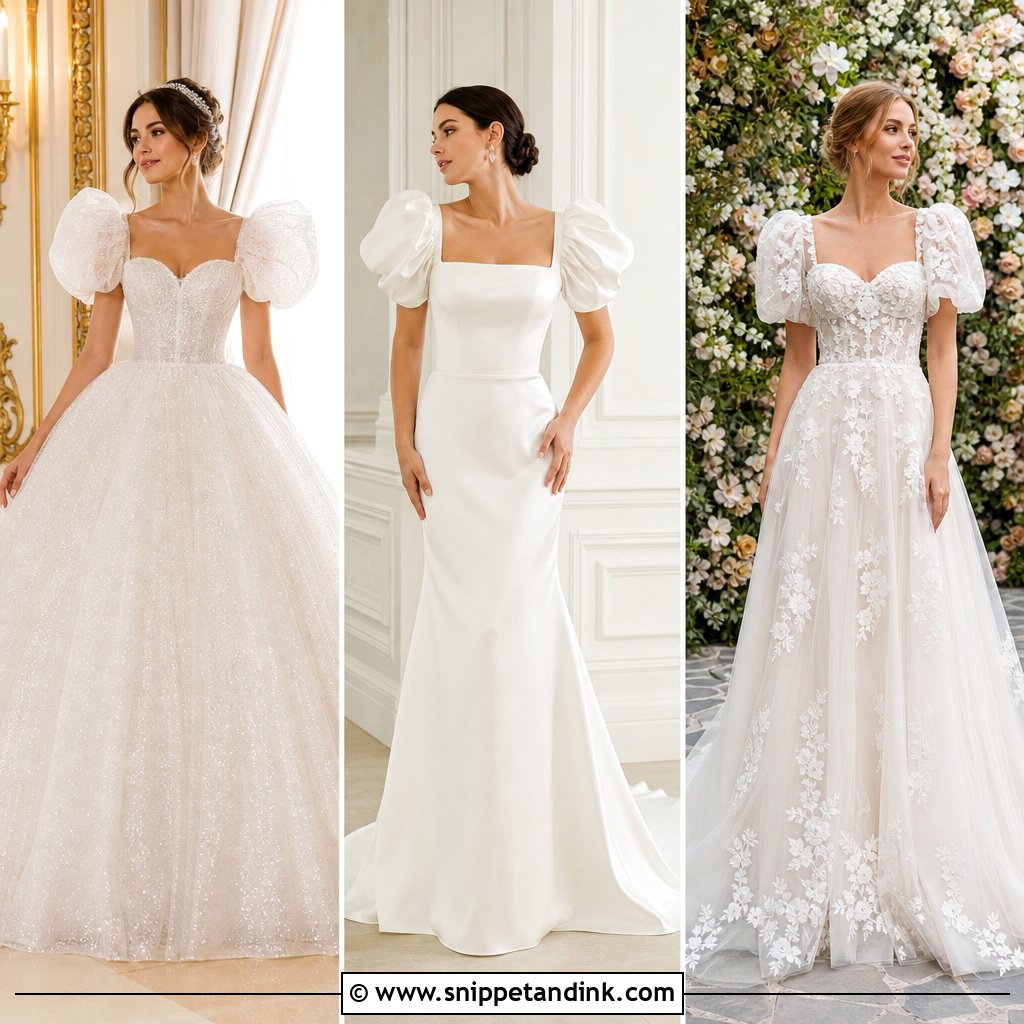

20. Regency Wedding Dress With Veil
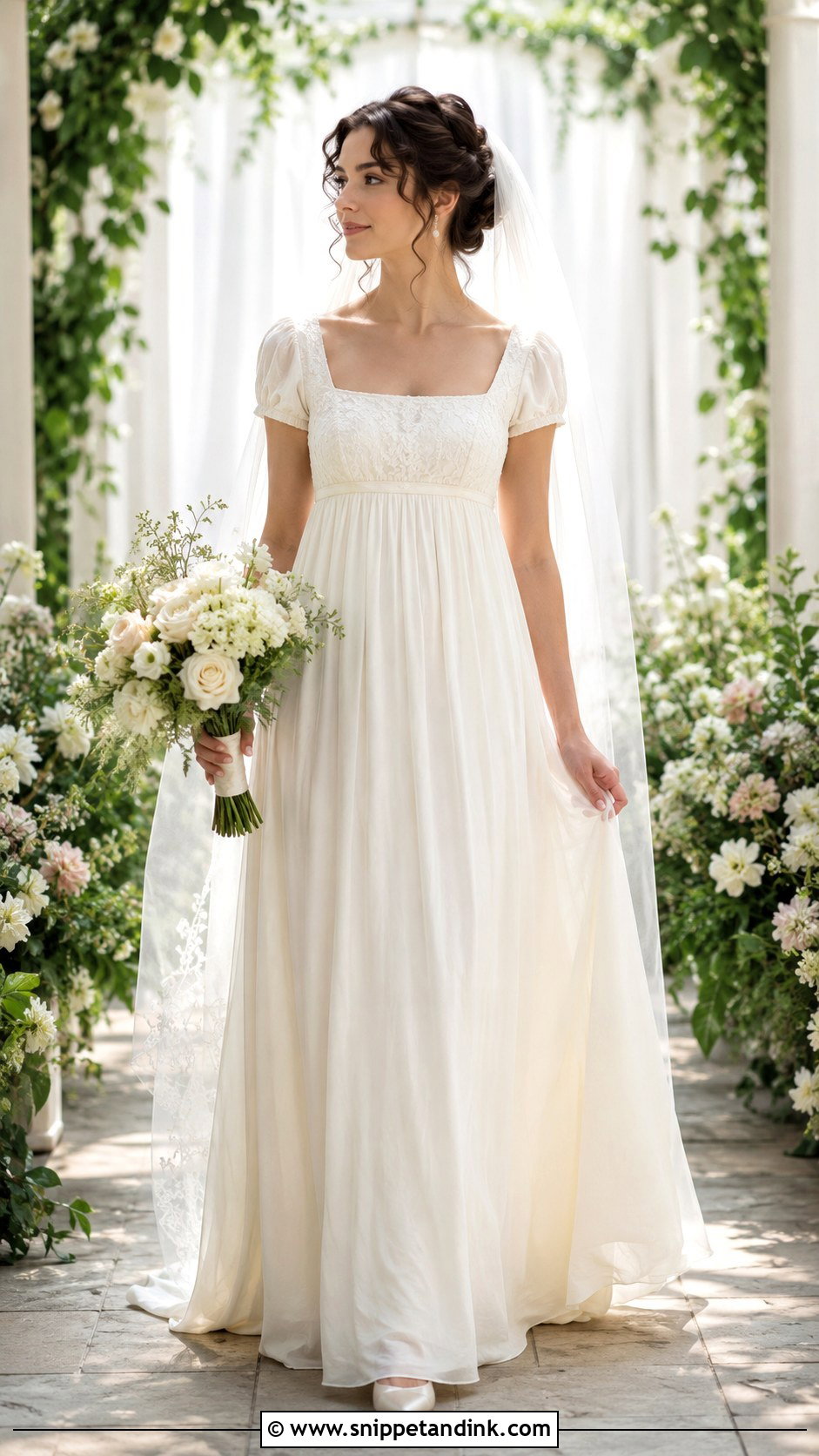
The veil should support the gown, not hide it. With puff sleeves or embroidery, I go plain tulle; on a simple dress, a lace edge adds romance. Fingertip or chapel length usually balances an empire waist without overwhelming it. I place the comb just below the crown, so the veil falls behind the shoulders and the sleeves stay visible from the front. An empire gown with a square neckline, pearl earrings and satin shoes completes it.
21. Regency Wedding Dress With Ribbon Sash
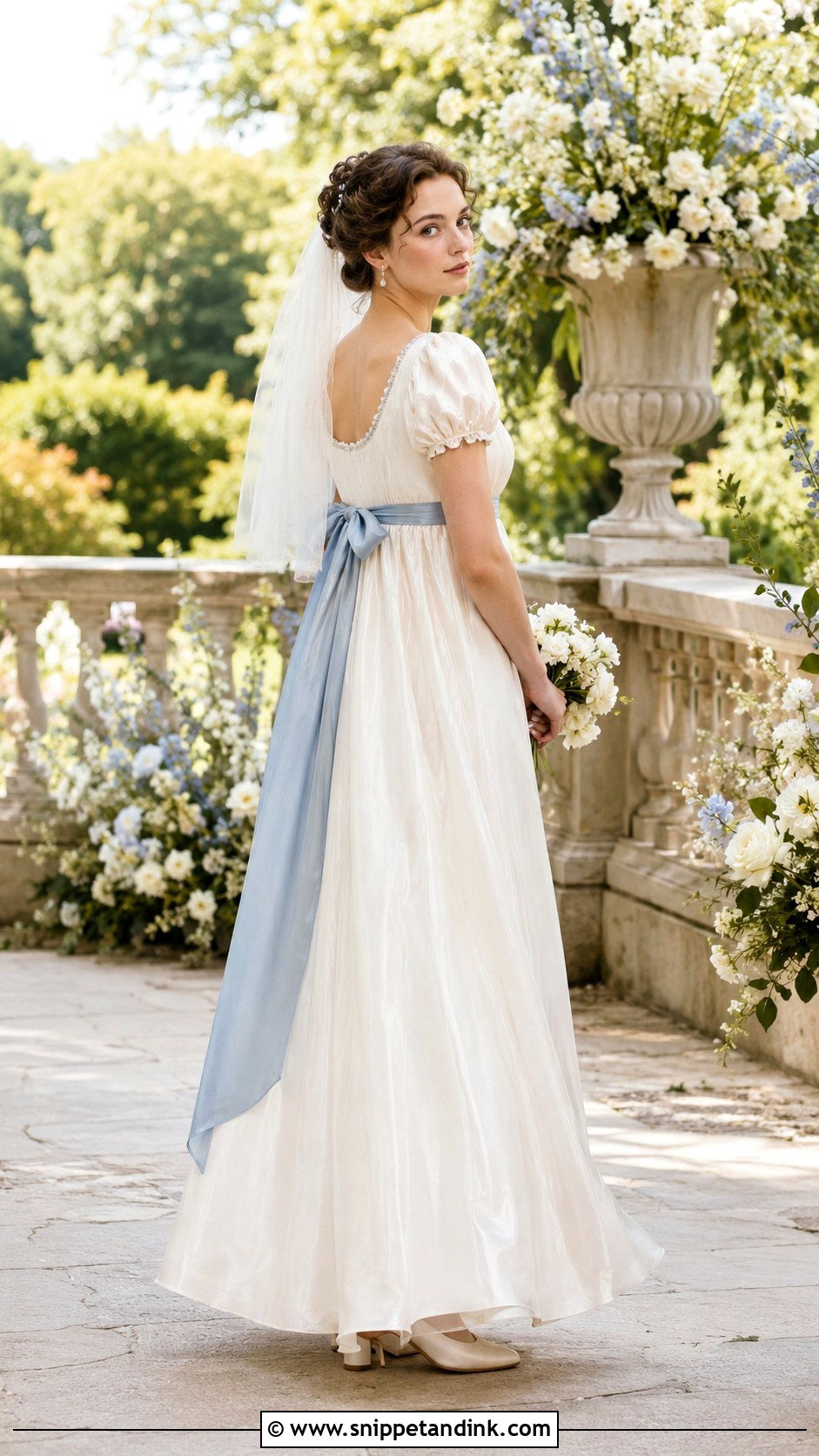
A ribbon is the simplest way to mark the empire waist. Ivory reads subtle, champagne soft, pale blue romantic. Tie it neatly at the back or let the ends fall over the skirt. On a plain dress, the sash adds shape; on a detailed one, keep it narrow. Silk ribbon creases where it’s knotted, so I tie it once on the day and leave it. Pearl earrings, a simple veil and low satin heels.
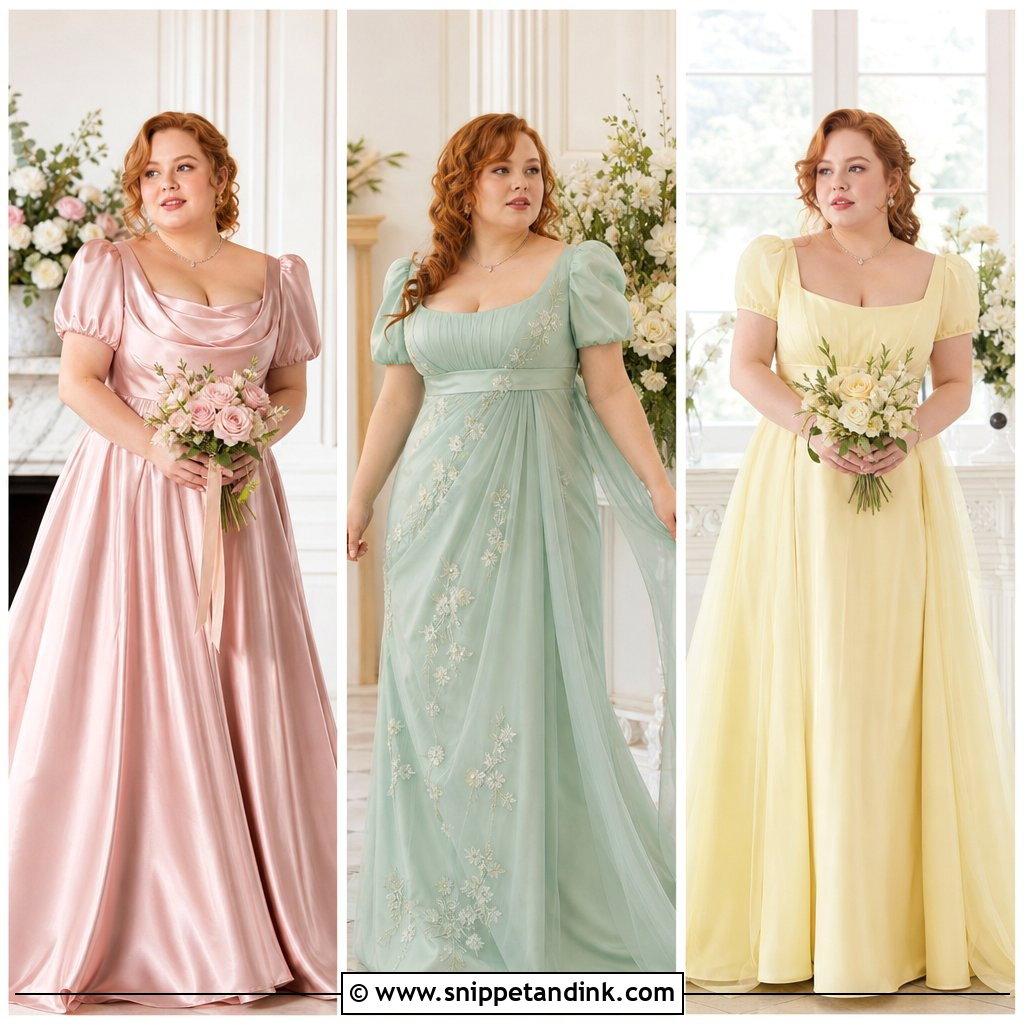
22. Plus Size Regency Wedding Dress
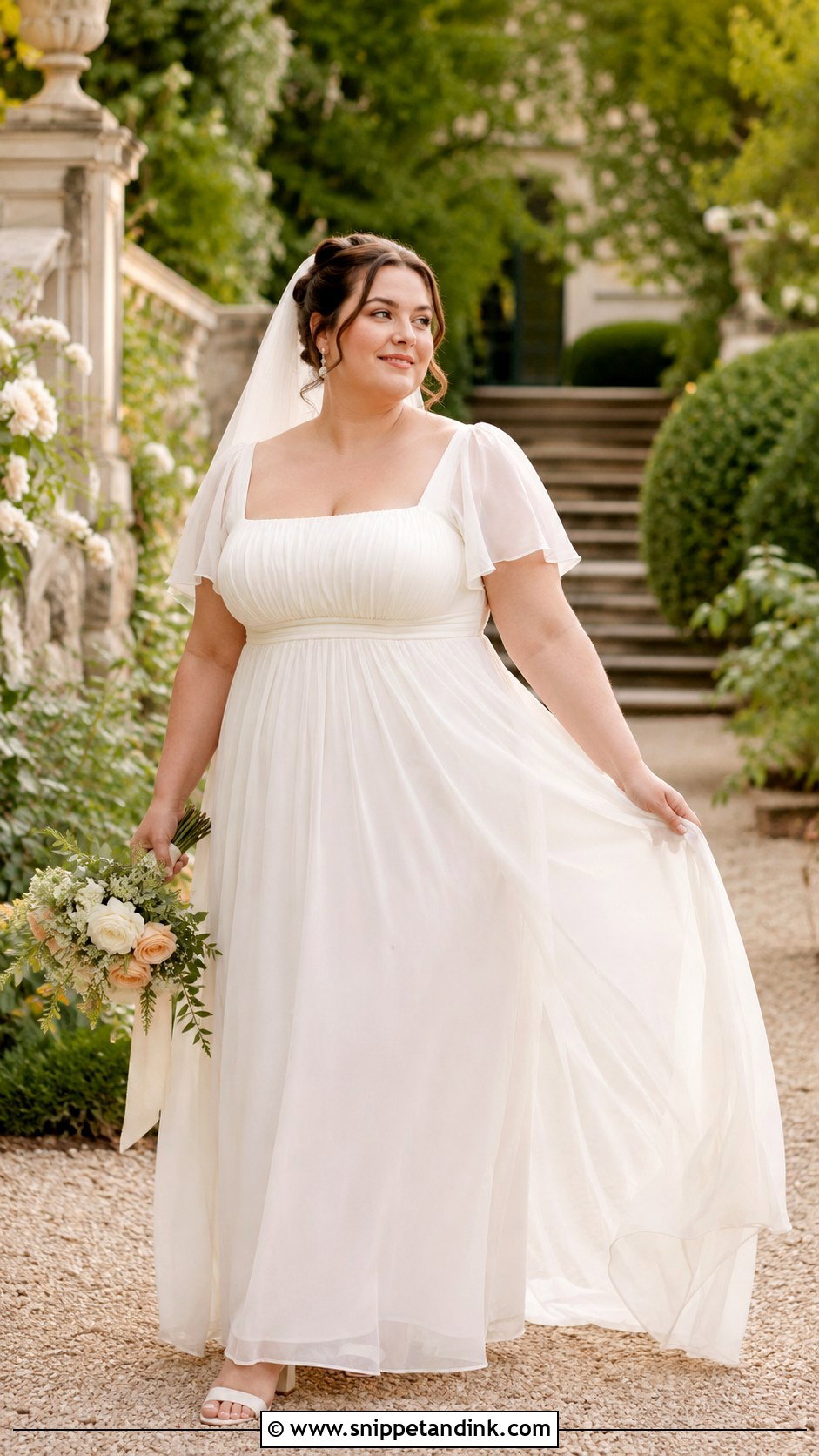
Proportions matter more than size. I look for a supportive bodice with real structure, a raised waistline that sits comfortably under the bust rather than across it, and a skirt that flows without stiffness. Chiffon, crepe and lace drape well. A square neckline, flutter or sheer sleeve frames the upper body. Without proper support, the empire seam drops and the whole silhouette sags, so built-in cups or a well-fitted longline bra are non-negotiable. Pearl earrings, a light veil and comfortable block heels.
23. Maternity Regency Wedding Dress
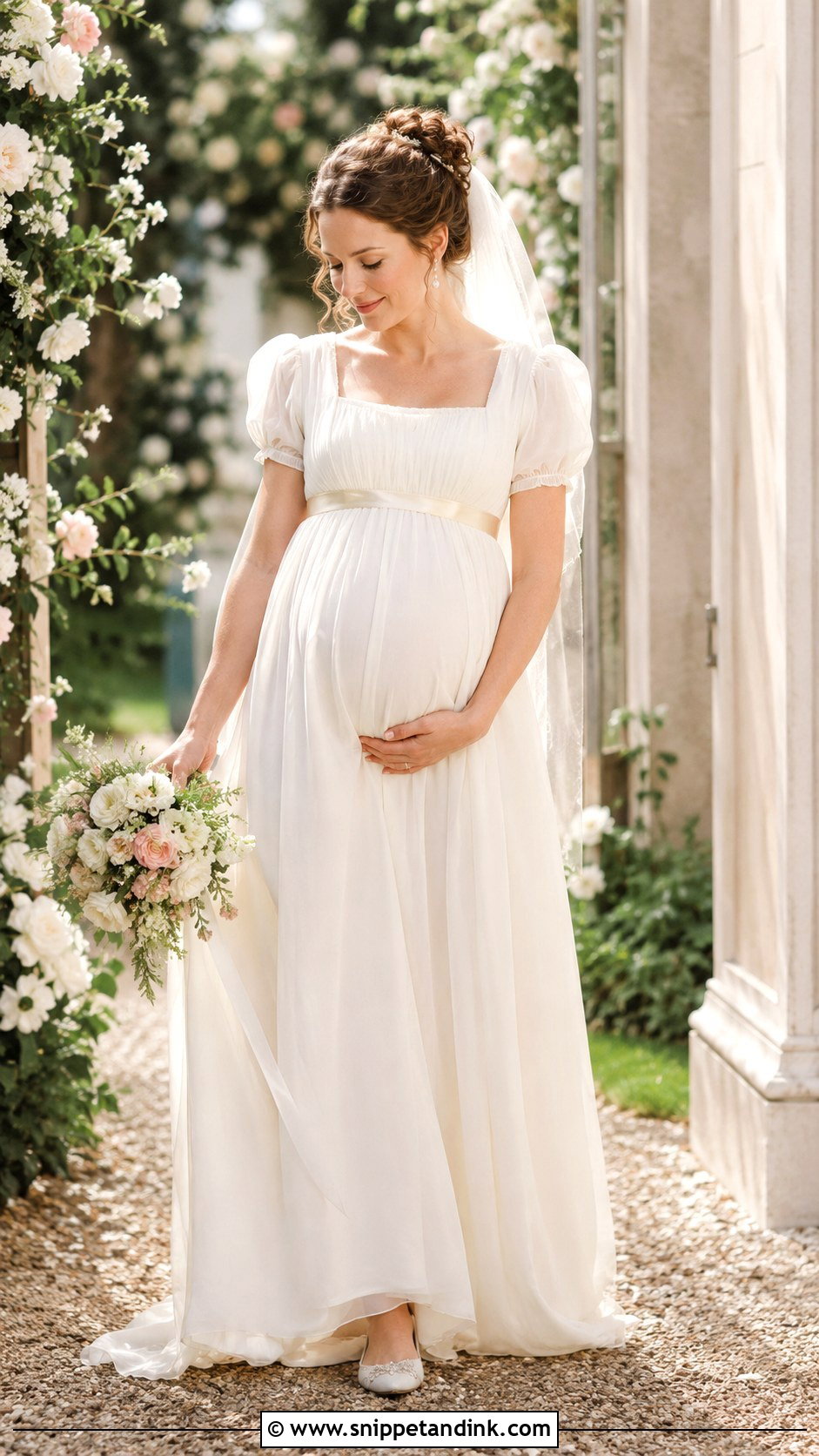
Pregnancy suits this shape naturally, and a maternity Regency wedding dress gives room where you need it. Soft chiffon, tulle or stretch crepe drape over the bump. Schedule the final fitting as close to the date as possible, ideally within the last two weeks, because the body changes fast. A square neckline, puff sleeves, a gentle skirt and a ribbon under the bust that defines without squeezing. Low heels or embellished flats, pearl earrings and a simple veil.
24. Beach Regency Wedding Dress
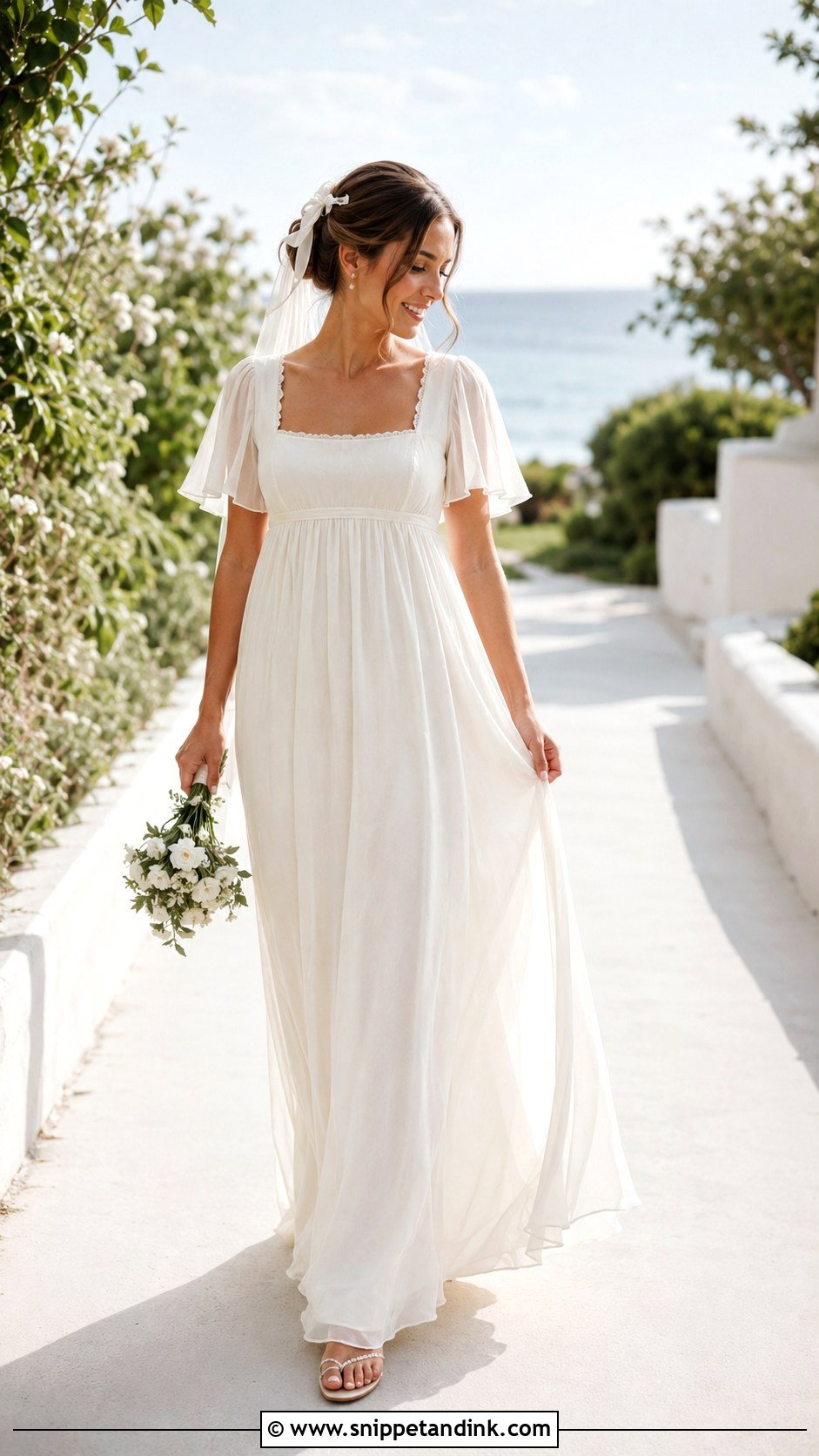
Sand and wind change the plan. A beach Regency wedding dress should be light chiffon, soft cotton or lightweight crepe, with an empire waist and a flowing skirt. Puff, flutter or sleeveless square necklines all work. Skip the train and anything stiff. A long chiffon skirt can wrap around your legs in a sea breeze, so I’d hem it to just clear your sandals. Flat sandals, pearl studs and a veil or ribbon light enough not to whip around.
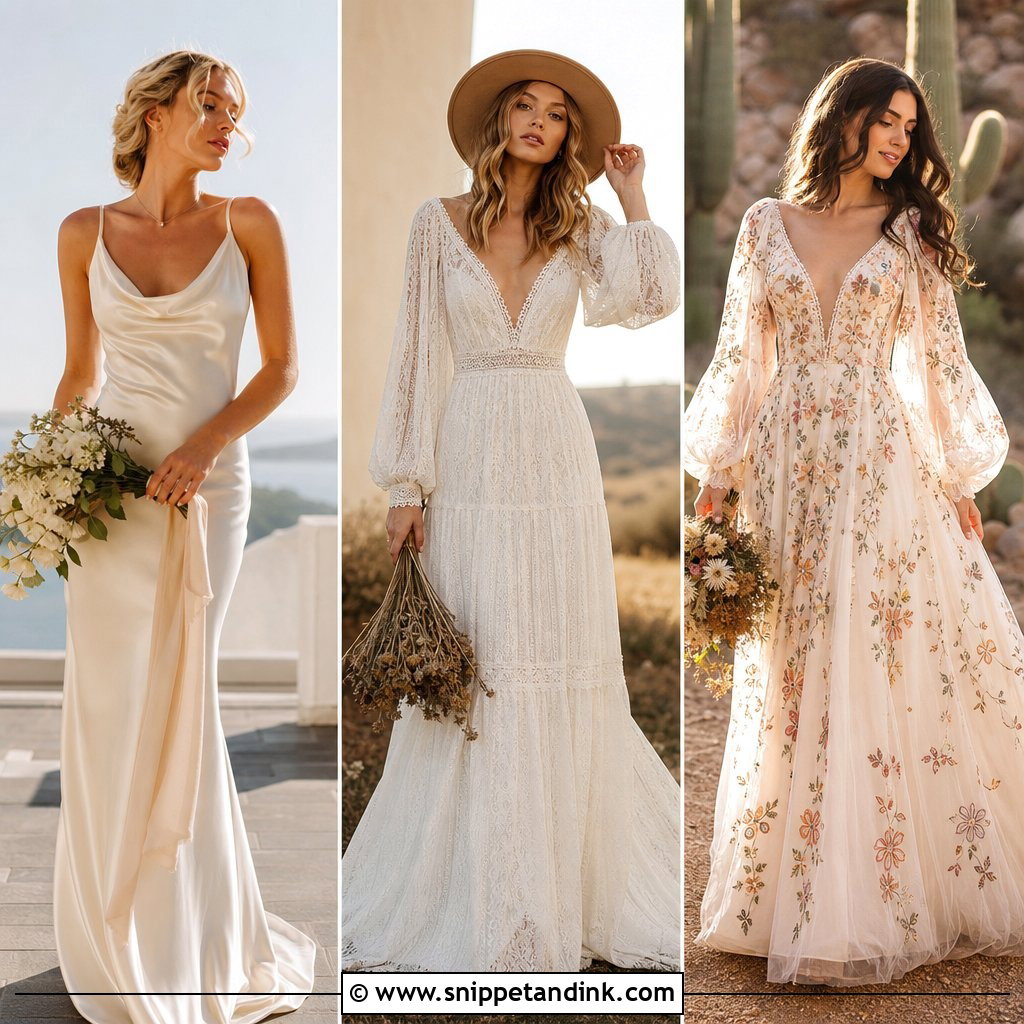
25. Winter Regency Wedding Dress
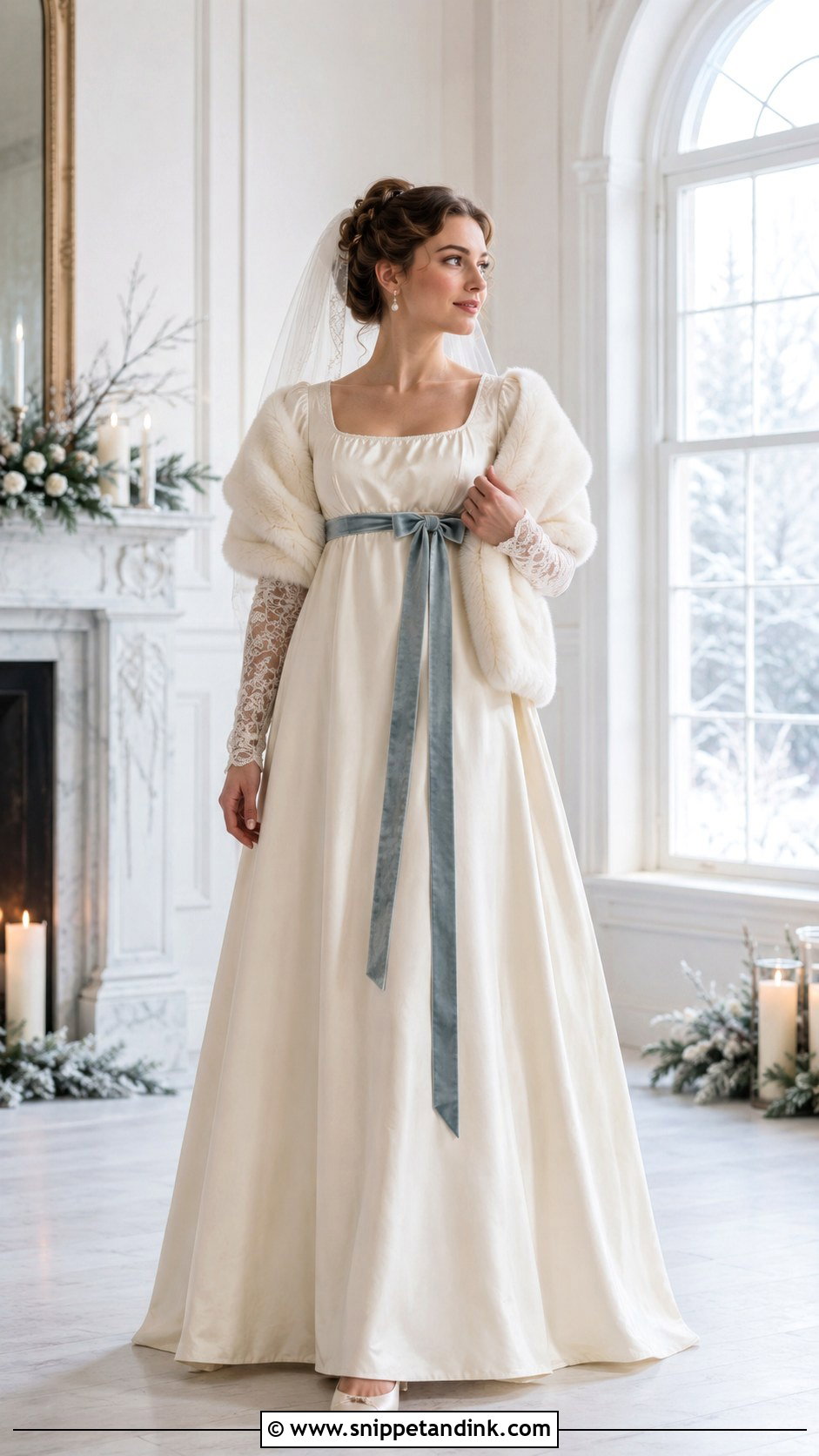
Texture keeps a winter version from looking thin. Start with a long-sleeved empire gown in satin, crepe or lace, then add a faux fur wrap, a velvet ribbon sash, pearl earrings and closed satin heels. Period brides used a short cropped jacket called a spencer for warmth, and a tailored one in velvet or satin keeps you warm through outdoor photos. Ivory, cream, champagne and pale silver suit the season. A soft veil and a low bun keep it neat.
How Close to History Should a Regency Bride Go?
Brides of that period didn’t wear a special white gown as a rule; many simply married in their best dress, often in white or pale muslin because it was fashionable. So there isn’t one authentic wedding look to copy, which frees you to borrow the details you like and leave the rest.
Details that translate well
- A spencer jacket or short velvet shrug instead of a modern bolero for cold ceremonies.
- Short gloves and a simple ribbon in the hair rather than a full bonnet, which tends to read as fancy dress.
- A short train on the skirt, which gowns of the period often had, for a little ceremony drama.
- Flat slippers in satin or kid leather, closer to the period than heels and much easier on lawns.
If your venue is a historic house, I’d also check its rules on trains, confetti and candle placement early. Some older properties restrict all three, and that may affect how much skirt you want.
A Raised Waist and a Light Hand With the Details
The empire line rewards a light touch. Puff sleeves, square necklines, lace, satin, ribbons, gloves or flowing chiffon can all look right, as long as you pick a few and let them breathe. Get the seam placement and the bust support right first, since they decide whether the gown looks graceful or droops by evening. Then plan the whole outfit, from shoes and veil to jewelry, hair and any seasonal layer. That’s the difference between a period costume and a Regency-inspired bride.
You'll Like These Ideas:






Leave a Reply