
Muslin is the fabric I reach for when a bride tells me she wants to feel like she’s wearing a summer dress, not a costume. Historically, white muslin dresses included romantic empire silhouettes that skimmed the figure instead of relying on boning and petticoats. By muslin gown I mean a finished dress cut from fine dress-weight cotton muslin or cotton gauze, not the calico mockup a dressmaker pins on you during a custom fitting. The honest catch is that the lightest weights turn sheer in daylight, so lining, the right undergarments and careful tailoring do most of the work. The twenty looks below run from loose beach gowns to covered long-sleeve designs, and I’ve added what I’d check at the fitting for each one.
Holding a Muslin Swatch Up to the Window First
Muslin is a plain-weave cotton, and the word covers everything from a gauze you can read a newspaper through to a firm, tightly woven cloth that behaves almost like a light poplin. Two gowns both described as muslin can look and wear completely differently, so I never let a bride choose from a photograph alone. Ask for a swatch of the actual dress fabric and of the lining, and run three quick tests at home.
- Hold the swatch against a bright window, then against your skin. If you can see your hand clearly through one layer, the dress needs a full lining, not just a slip.
- Scrunch a corner tightly in your fist for thirty seconds and let go. That is roughly what the back of the skirt will look like after the ceremony and the car journey.
- Take a phone photo of the swatch with the flash on. Flash and strong midday sun reveal sheerness the naked eye misses, and your photographer will use both.
Ask the maker whether the cotton was pre-washed. Untreated muslin can shrink a little the first time it meets water or a hot steamer, and a hem set on unwashed fabric may creep up after one careless press. Double gauze, two fine layers stitched together at intervals, is the version I like most for gowns: it hides undergarments better than single muslin, wrinkles more softly and still breathes in the heat.
1. A-Line Muslin Wedding Dress
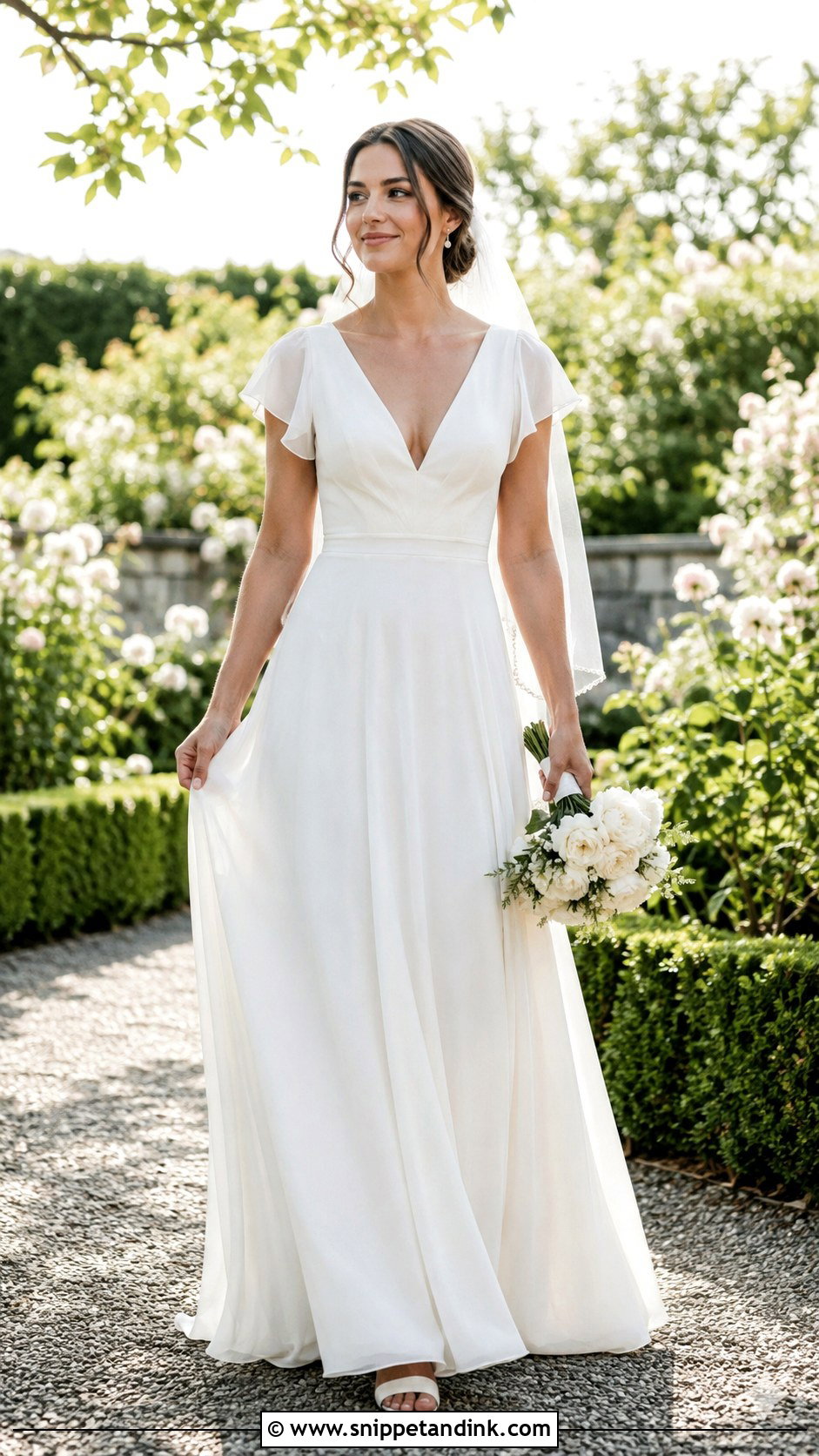
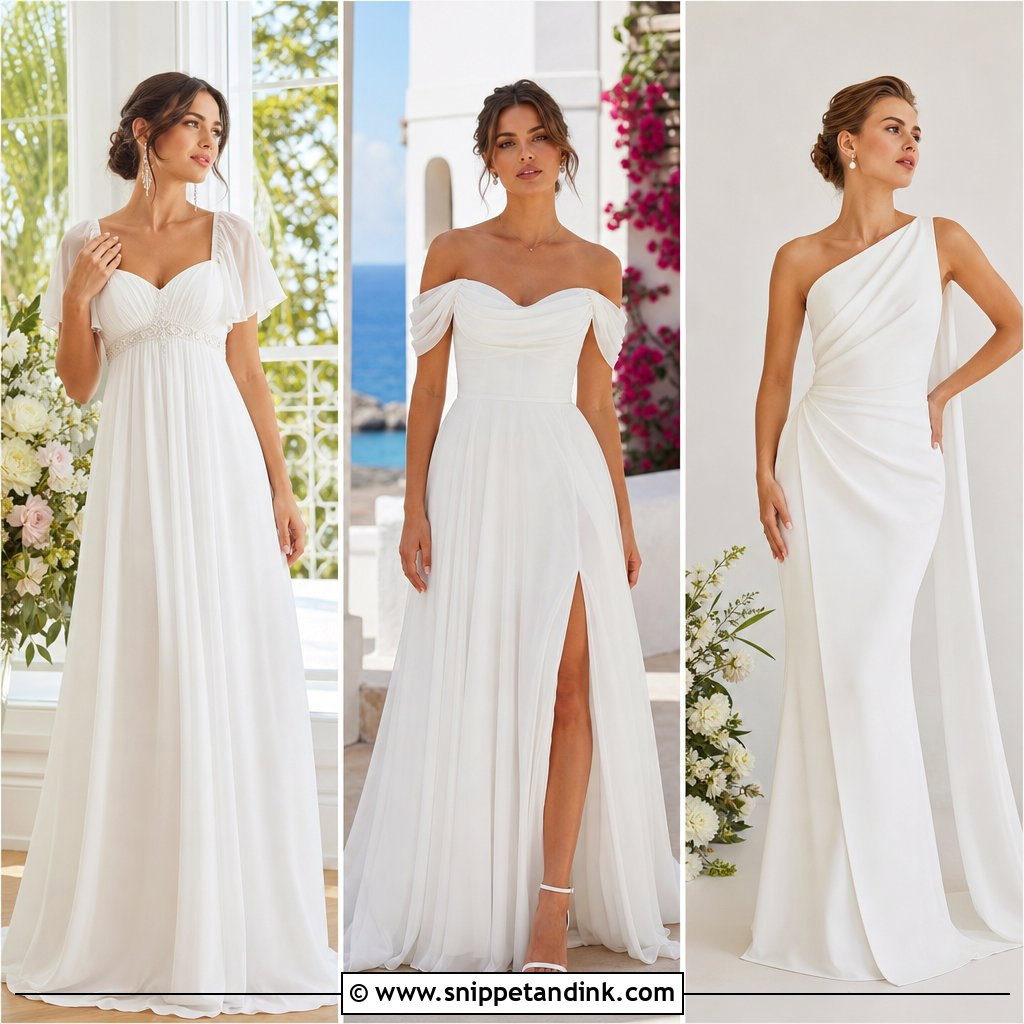
An A-line is the easiest place to start, because the skirt drops away from the waist and forgives the slight stretch cotton develops over a long day. I like an ivory gown with a fitted V-neck bodice, a softly defined waist and a skirt lined in breathable cotton rather than polyester, which traps heat. Short flutter sleeves give a little shoulder coverage and move when you do. Low block-heel sandals, pearl drops, a small white-and-green bouquet and a fingertip veil keep it bridal without hiding the weave. One thing I always ask for: reinforce the waist seam, since a gathered cotton skirt pulls on it every time you sit, and set the hem while you’re wearing the actual shoes.
2. Empire Waist Muslin Wedding Dress
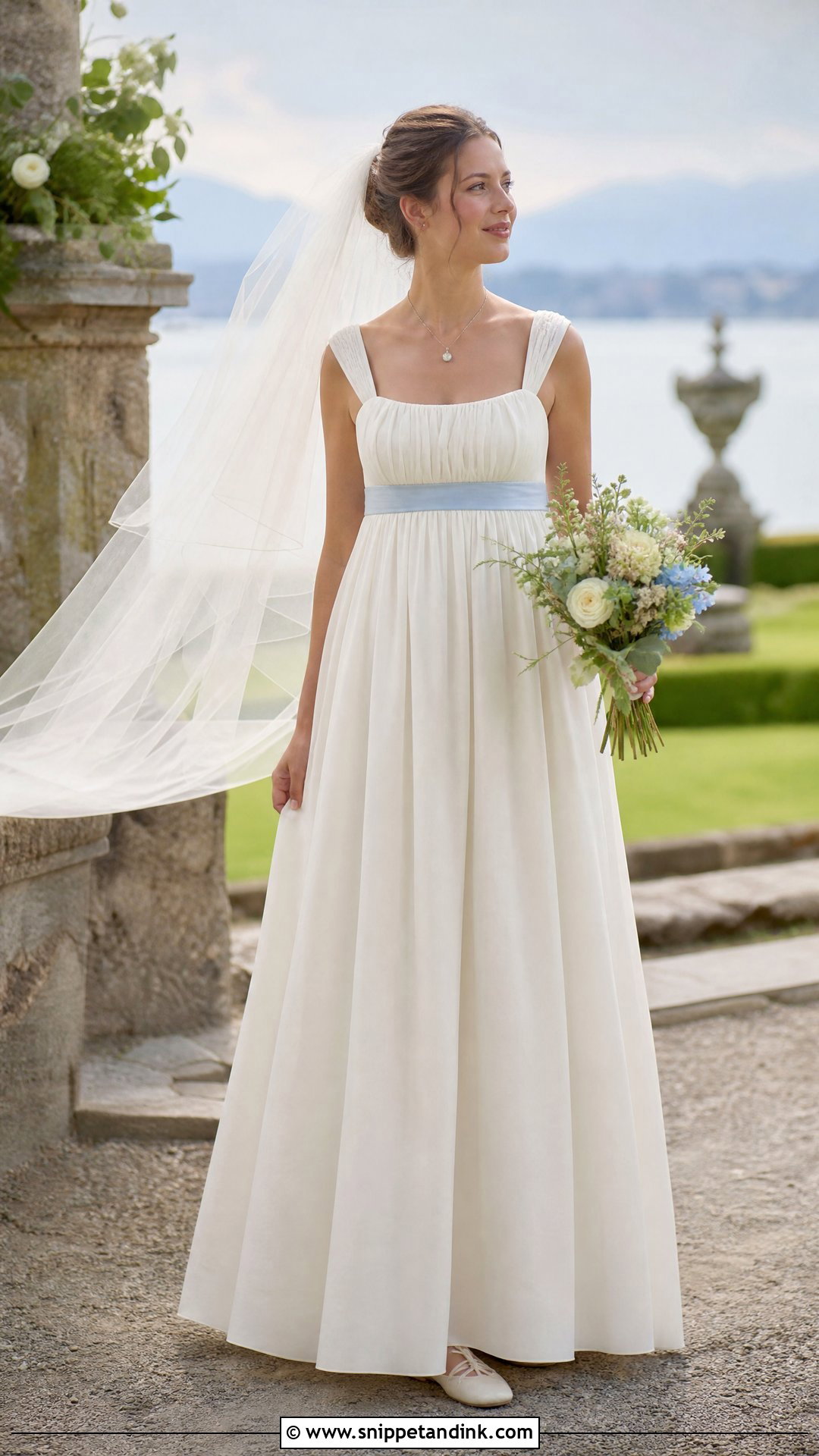
A raised waist with light fabric falling from it has a Regency feel without looking like fancy dress. Look for a softly gathered bust, wide straps and a full-length skirt that starts just under the bustline. An ivory, pale blue or muted sage ribbon marks the high waist. Ballet flats, a small pendant and a lightweight chapel veil finish it. Because nothing grips the waist or hips, I suggest this cut to brides facing a long ceremony in the heat. Fine muslin is translucent on its own, so insist on an opaque slip or full cotton lining dyed to match; a white slip under ivory muslin reads grey at the edges in photos.
3. Square Neck Muslin Wedding Dress
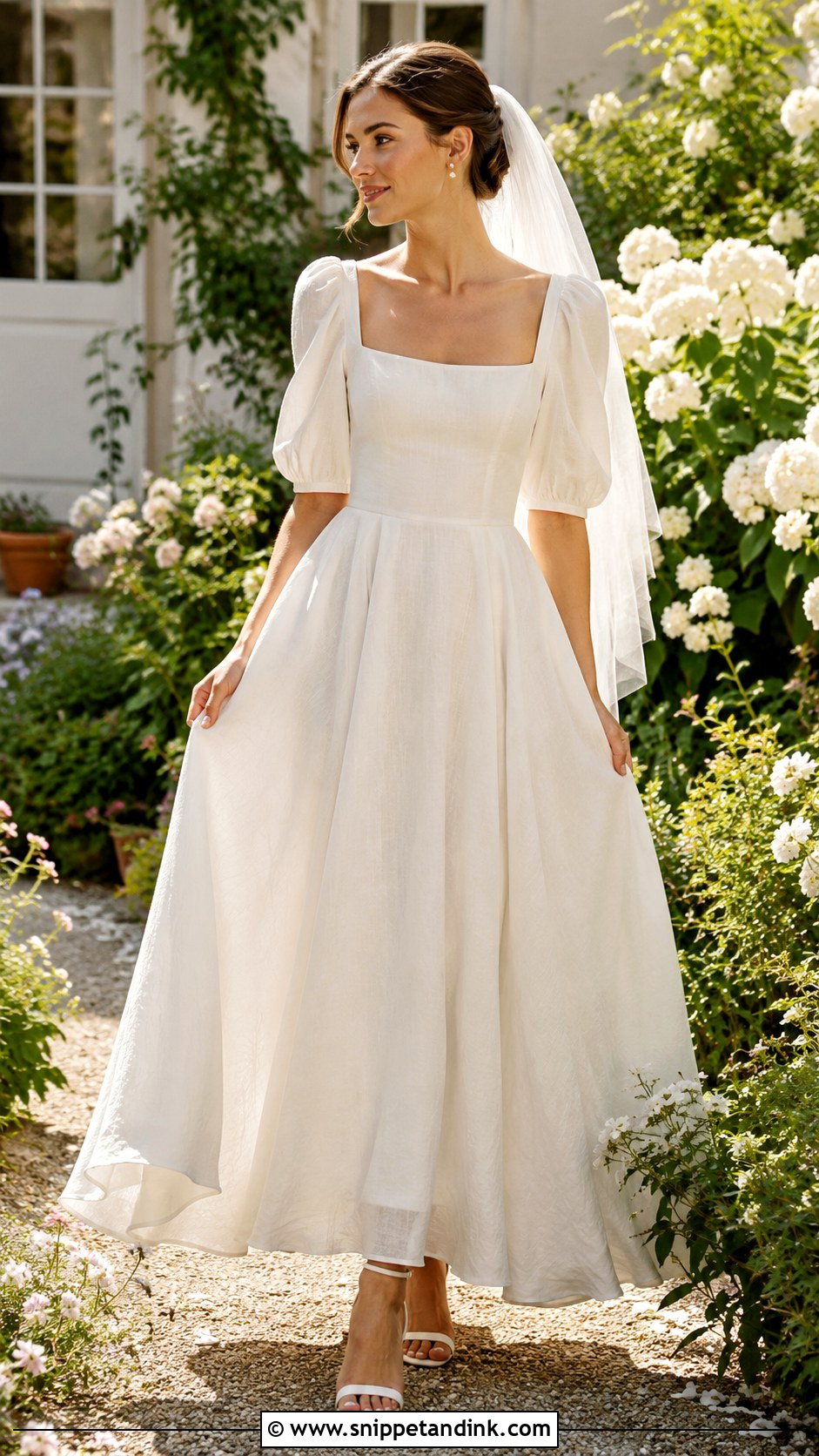
A square neckline gives soft cotton a firm edge for the eye to land on, which muslin needs because the fabric itself is quiet. Look for a fitted bodice with light internal support, elbow-length puff sleeves and a sweeping A-line skirt; tiny covered buttons down the back add detail without fighting the weave. Pearl studs, ivory ankle-strap heels, a shoulder-length veil and a low bun keep the neckline clear. Where this one goes wrong is sleeve volume. Muslin puffs collapse by mid-afternoon unless the sleeve head has a layer of net or organza inside, so ask what is holding them up. A seamstress can also bring a wide square neck in or out for more or less shoulder coverage.
4. Long Sleeve Muslin Wedding Dress
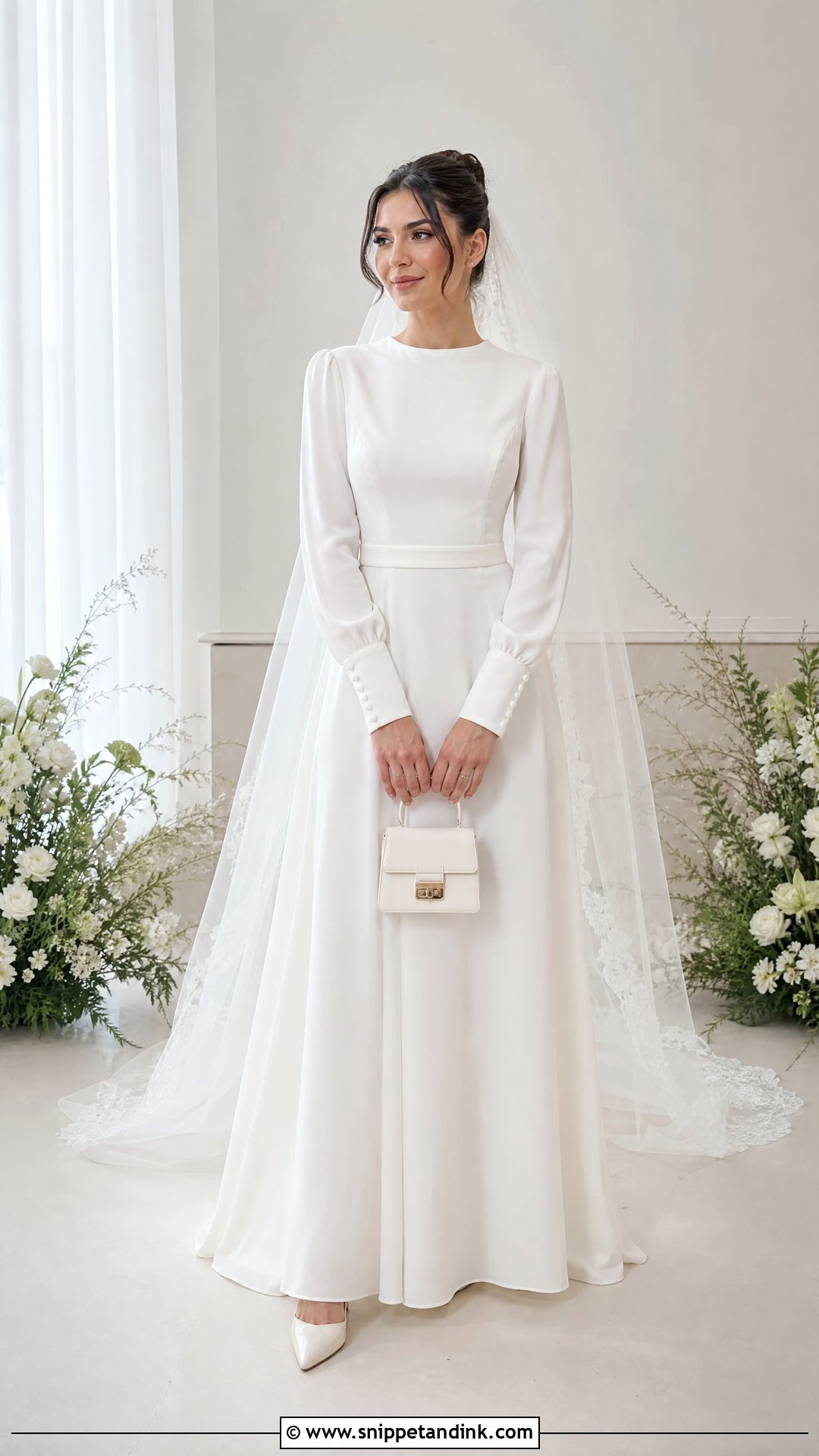
For a covered look, a long sleeve muslin gown with a high round neck, fitted cuffs and a gently flared skirt stays cool in a way lace sleeves rarely do. Lined or double-layer sleeves give real coverage while keeping the light look. A fabric-covered belt and small pearl buttons at the cuffs add polish; pointed ivory flats, a cathedral veil and a structured mini bag for portraits complete it. If you wear a hijab, I’d swap the veil for an ivory headscarf in a matte texture so it sits with the cotton instead of shining against it. Fitted cotton sleeves have almost no give, so at the fitting I make brides sit, walk and lift both arms as if hugging someone. If the armhole is cut low, the whole bodice rises when you reach.
5. Off Shoulder Muslin Wedding Dress
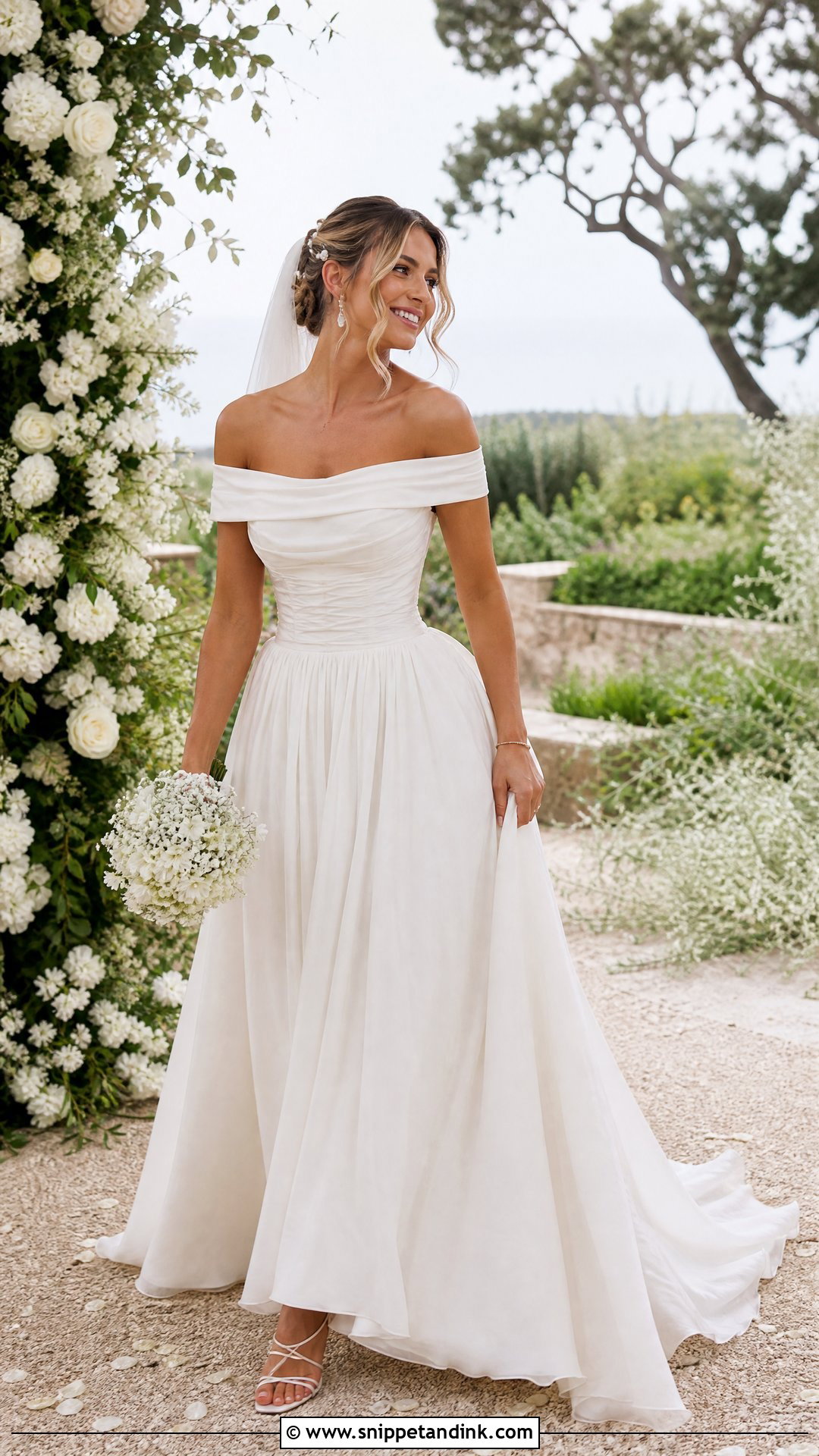
Muslin folds softly at an off-the-shoulder neckline, more softly than satin ever will. Choose a full-length gown with a folded neckline, a supportive fitted bodice and gentle gathers into the waist, with detachable sleeves or a matching wrap for a chilly church. Pearl hairpins, a short tulle veil, strappy low heels and a compact bouquet are enough, and I’d stop at one delicate bracelet so the shoulders stay the focus. The risk with this cut is a neckline that creeps upward every time you lift your arms. Silicone grip tape along the inside edge and a bodice that is anchored at the waist, not held up by the folds, solve most of it.
6. Halter Neck Muslin Wedding Dress
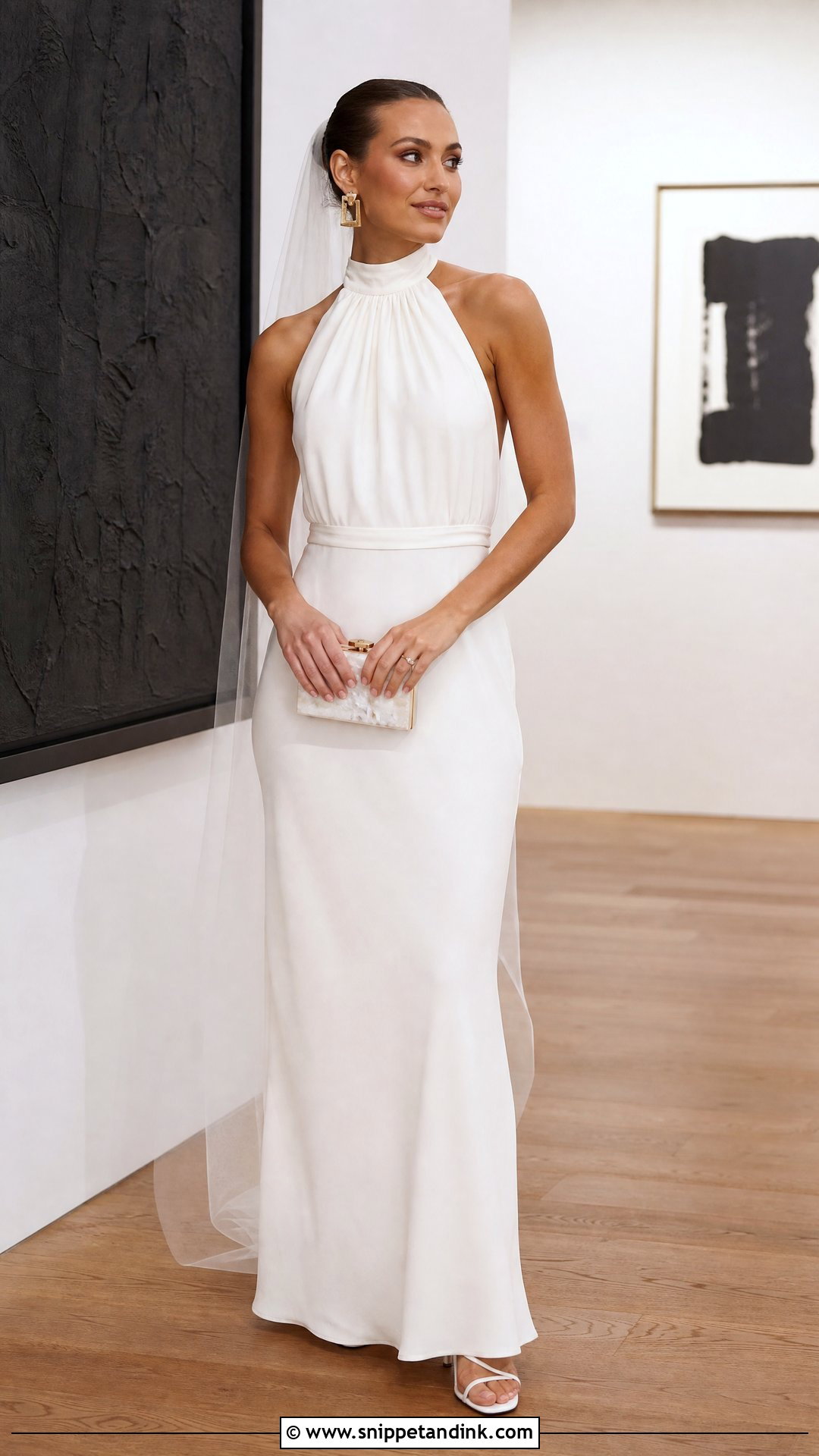
A halter brings modern definition to a relaxed fabric. Select a lined gown with a high gathered neck, a natural fitted waist, an open upper back and a long fluid skirt, finished with a narrow tie or covered buttons at the nape. Geometric earrings, sleek ivory sandals, a wrist-length veil under a smooth low bun and a structured clutch suit a gallery or a minimalist outdoor ceremony. I’m cautious with halters in cotton: the whole weight of the skirt can end up hanging from your neck, and by evening that aches. Built-in cups and a waist that carries the skirt take the strain off the tie.
7. Wrap Muslin Wedding Dress
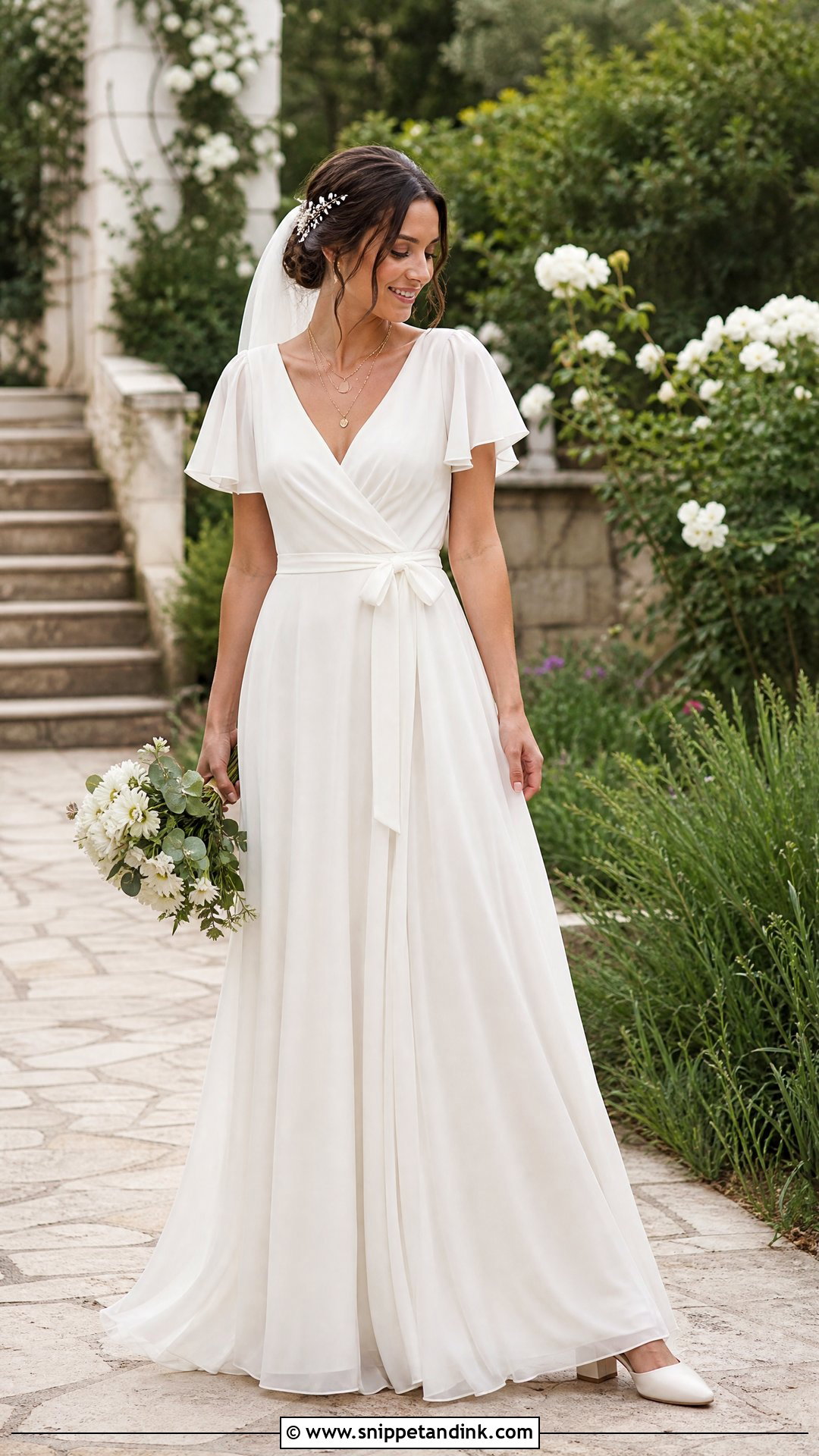
A wrap is the most forgiving shape on this list, since you can tighten or loosen it on the morning itself. Choose a true wrap or a carefully secured faux-wrap with a V-neck, flutter sleeves and a full-length skirt, plus a wide sash tied in a bow at the side or back. Closed-toe block heels, a fine layered necklace, a floral comb and a short plain veil keep the neckline from getting busy. Cotton wraps do gape at the bust when you lean forward, so I always add two hidden snaps along the crossover and a matching lining under the skirt so a breeze doesn’t reveal more than the ceremony needs.
8. Tiered Muslin Wedding Dress
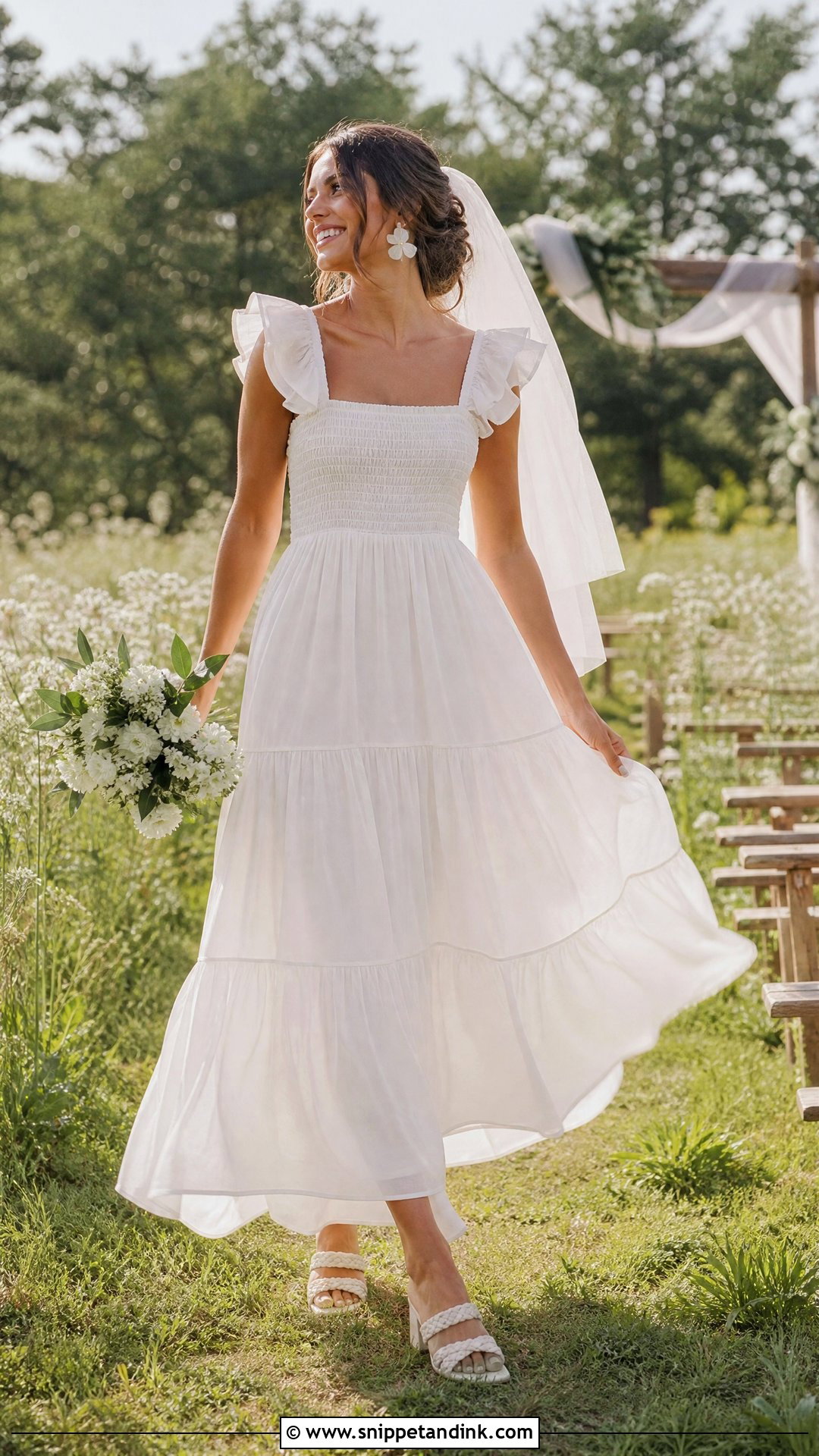
Tiers are how muslin gets volume without a stiff ball-gown structure. A fitted or smocked bodice over a floor-length skirt in three broad gathered tiers is the classic version, balanced by slim straps, flutter sleeves or a modest scoop neckline. Woven ivory heels, flower-shaped earrings, a plain fingertip veil and a loose braided updo suit a meadow or farm wedding. The detail I inspect closely is the tier seams: if the gathers are uneven, the skirt looks homemade rather than relaxed. Each tier also adds hem length to snag, so expect the bottom one to collect grass and dust outdoors.
9. Tea Length Muslin Wedding Dress
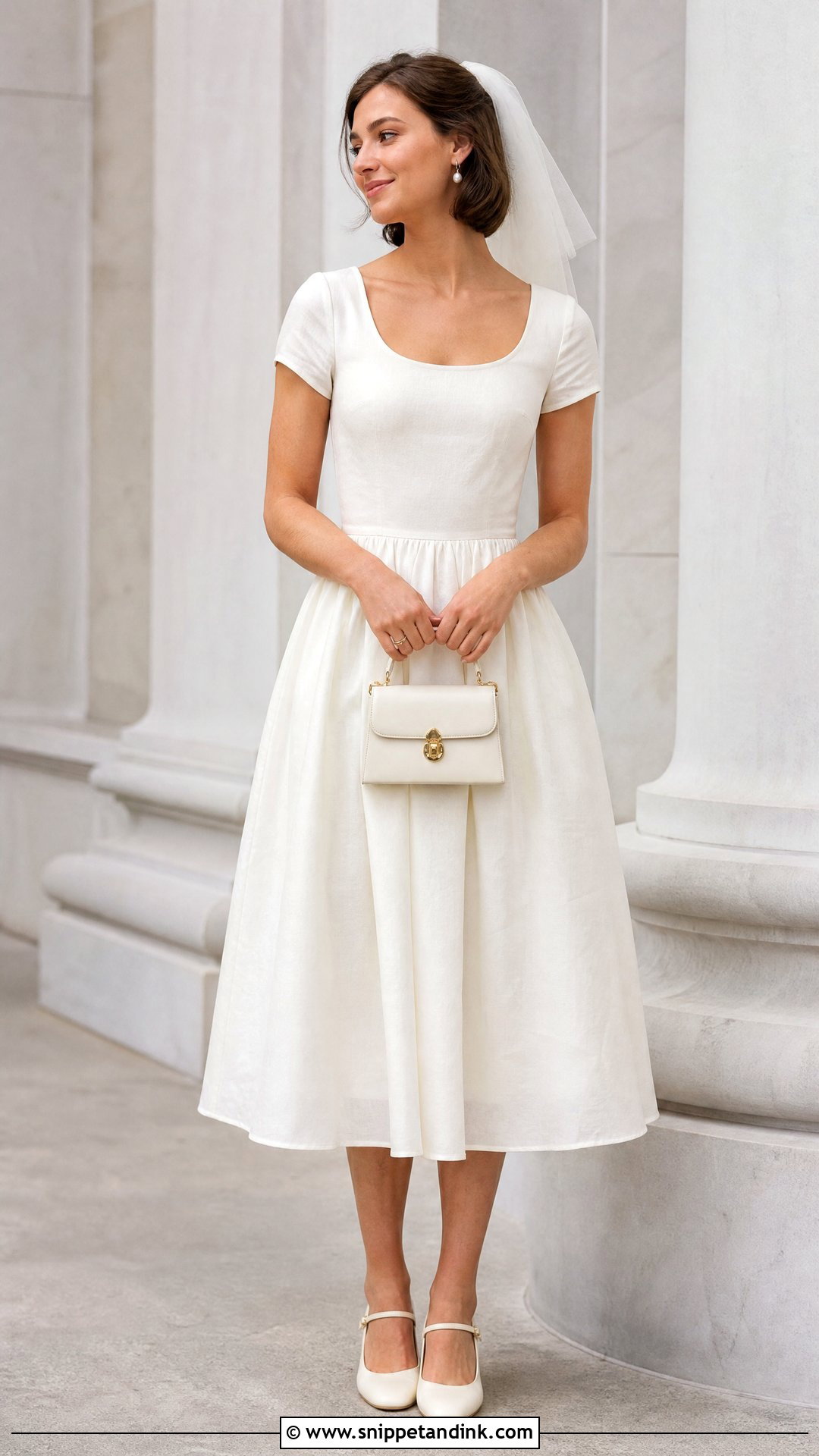
Tea length is the most practical cut here, and it is the one I see brides enjoy dancing in. Go for a fitted scoop-neck bodice, short sleeves, a defined waist and a gathered skirt ending between the knee and ankle. Your shoes are on show, so ivory slingbacks, pointed flats or bridal Mary Janes matter more than usual; add a short veil, pearl earrings and a small top-handle bag. It suits courthouse ceremonies and brunch receptions. The hem should break at the narrowest point of your lower leg, which moves by a couple of centimetres depending on heel height, so finalise it in the exact wedding shoes.
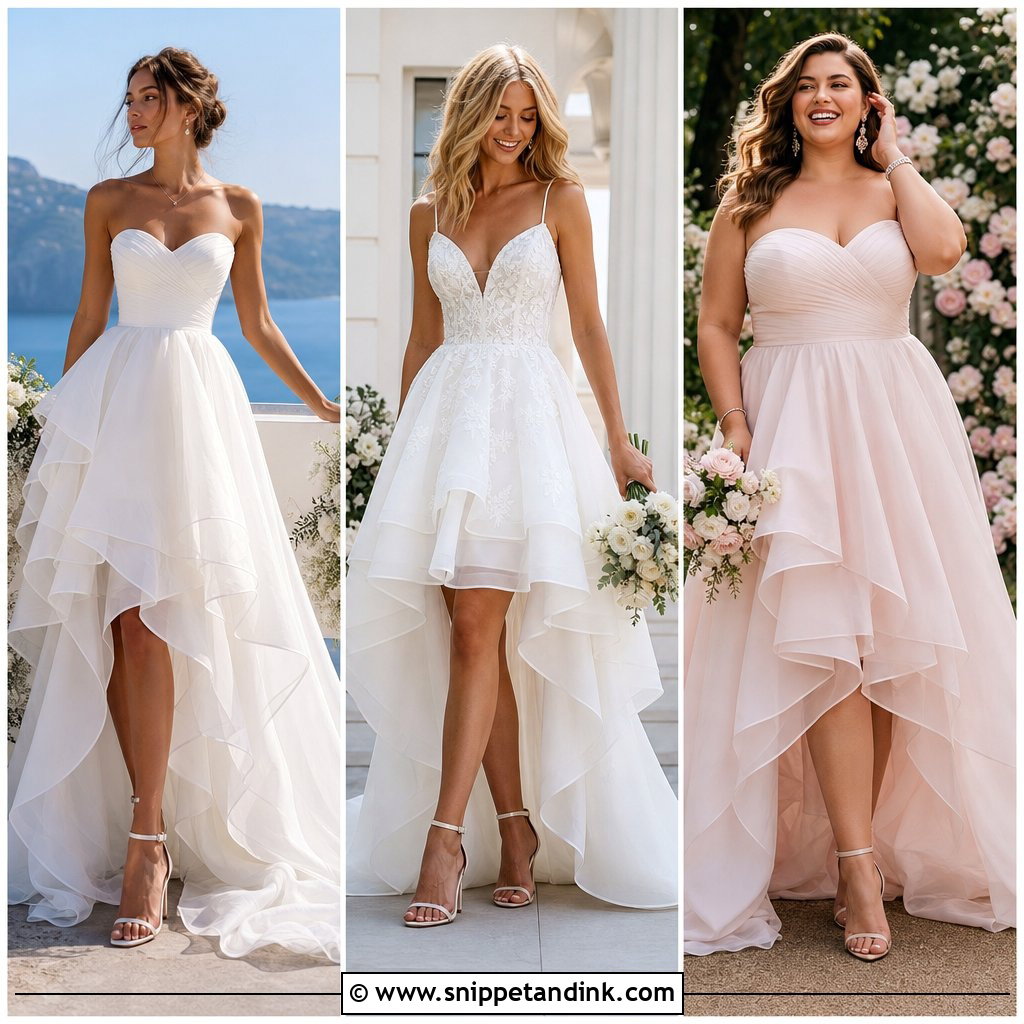
10. High Low Muslin Wedding Dress
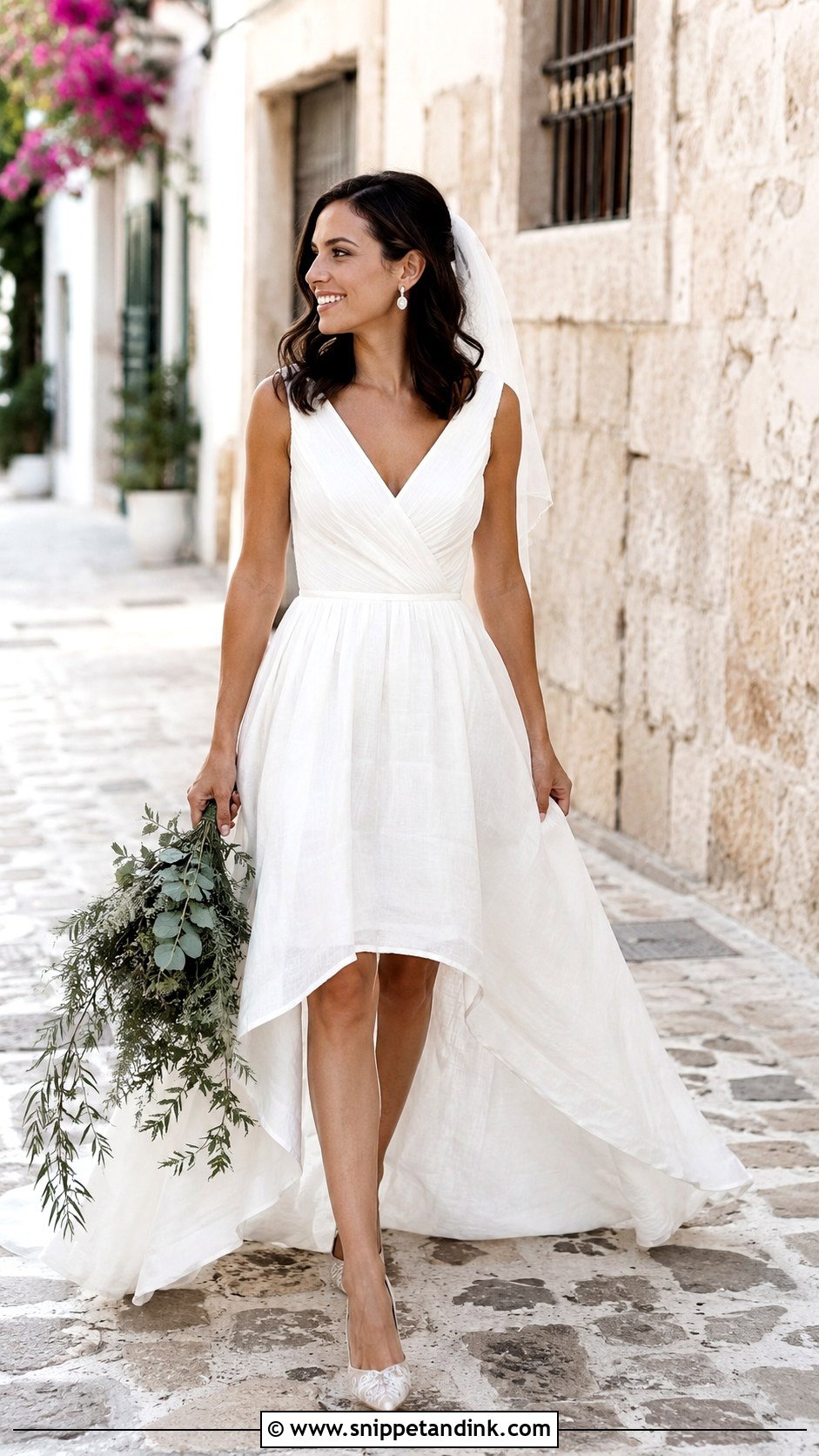
A high-low skirt gives you a long back without a train dragging through the lawn. Choose a wrap bodice or square neck, a defined waist and a skirt that lengthens gradually toward the back; I’d keep the difference modest, because a steep drop dates quickly. Embroidered ivory heels, small drop earrings, a shoulder-length veil and a bouquet with trailing greenery echo the line of the back hem. Lightweight cotton tends to twist on a curved hem, so ask your seamstress to distribute the skirt volume evenly and check it from the side, not just the front.
11. Muslin Slip Wedding Dress
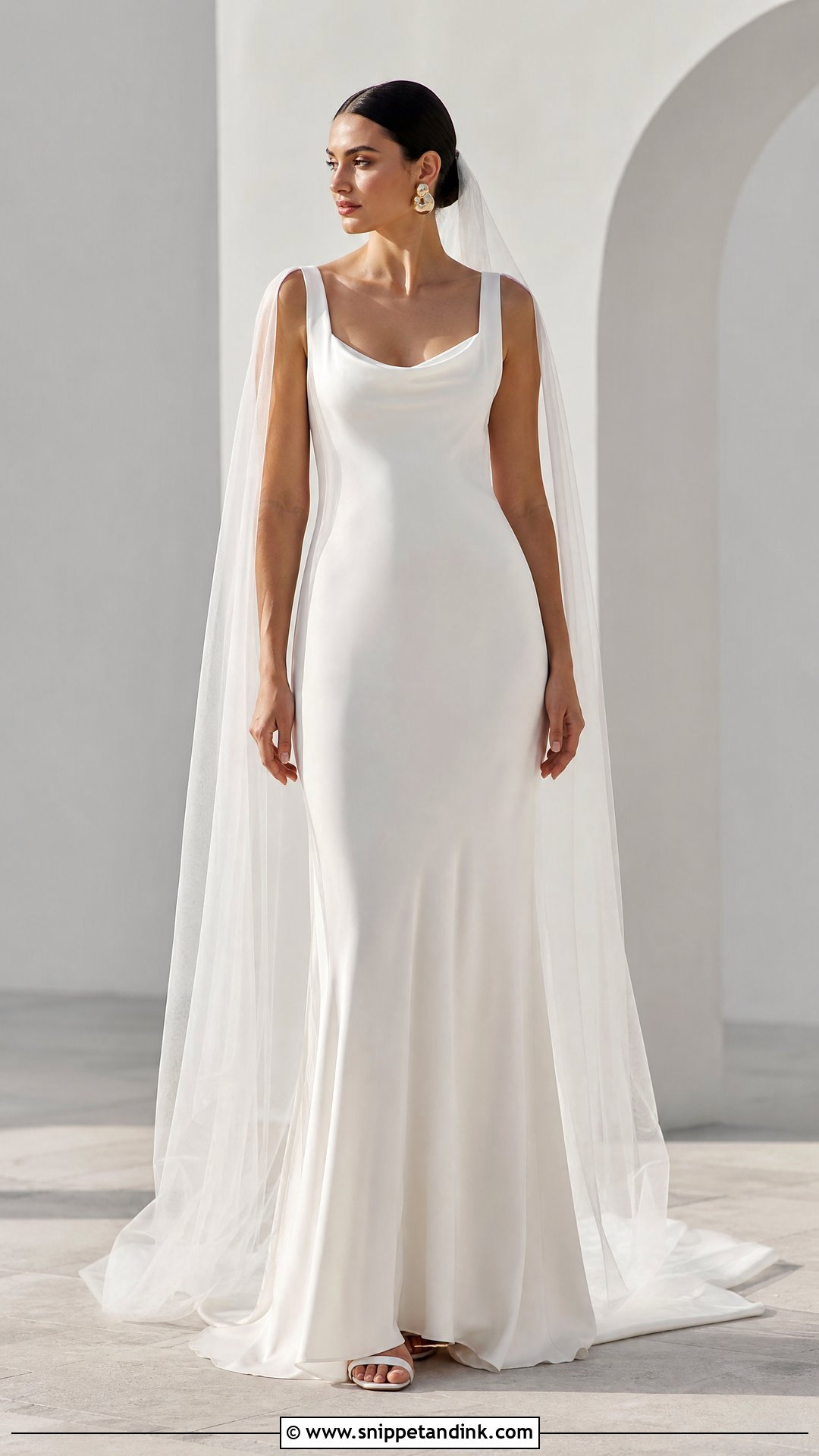
Clean lines make a muslin slip dress feel modern, quiet, and effortlessly bridal. I only recommend it in double-layer fine muslin or cotton gauze, with wide straps, a draped neckline and a bias-inspired skirt that follows the body without clinging. A muslin cape, shawl or cropped jacket covers you for the ceremony; minimalist sandals, sculptural earrings, a sleek bun and a narrow chapel veil do the rest. This is the least forgiving cut for undergarments. Shapewear seams and bra lines show straight through single-layer cotton, and cotton cut on the bias does not drape like silk, so try a full-length sample before ordering.
12. Corset Bodice Muslin Wedding Dress
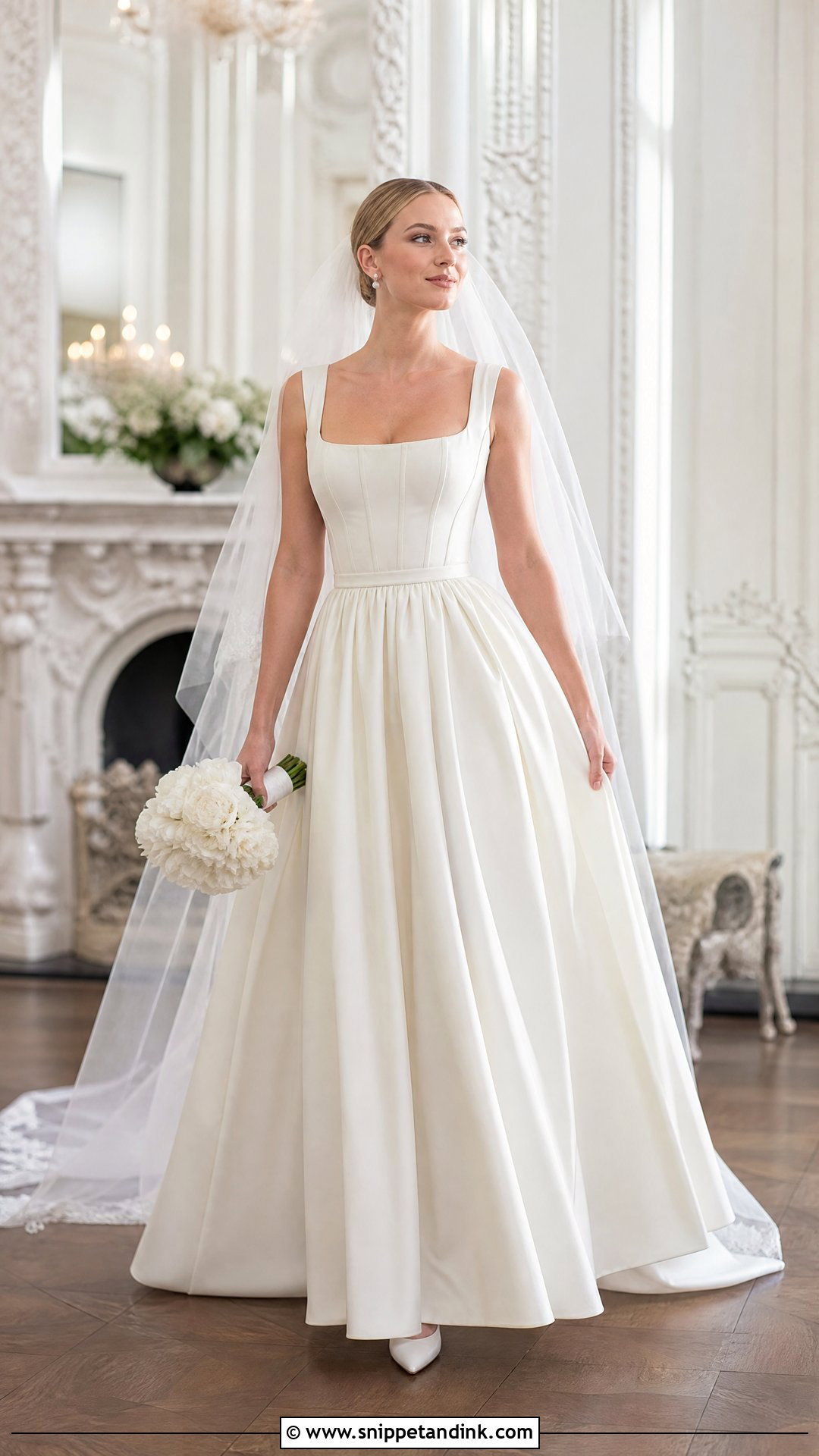
A structured bodice makes soft muslin read formal. Select an opaque corset-style top with internal boning, wide straps and a gathered full skirt, using neat vertical seams rather than exposed lingerie details. Pearl earrings, closed-toe pumps, a cathedral veil and a small bouquet with a wrapped stem suit it, and an ivory ribbon belt softens the join between stiff top and airy skirt. In my experience the boning channels are where cotton fails first; the fabric is thinner than satin, so the bones can wear through or ridge unless the bodice is interlined. Fit it seated, too, because a bodice that is level standing often digs in at the hip once you sit down.
13. Lace Trim Muslin Wedding Dress
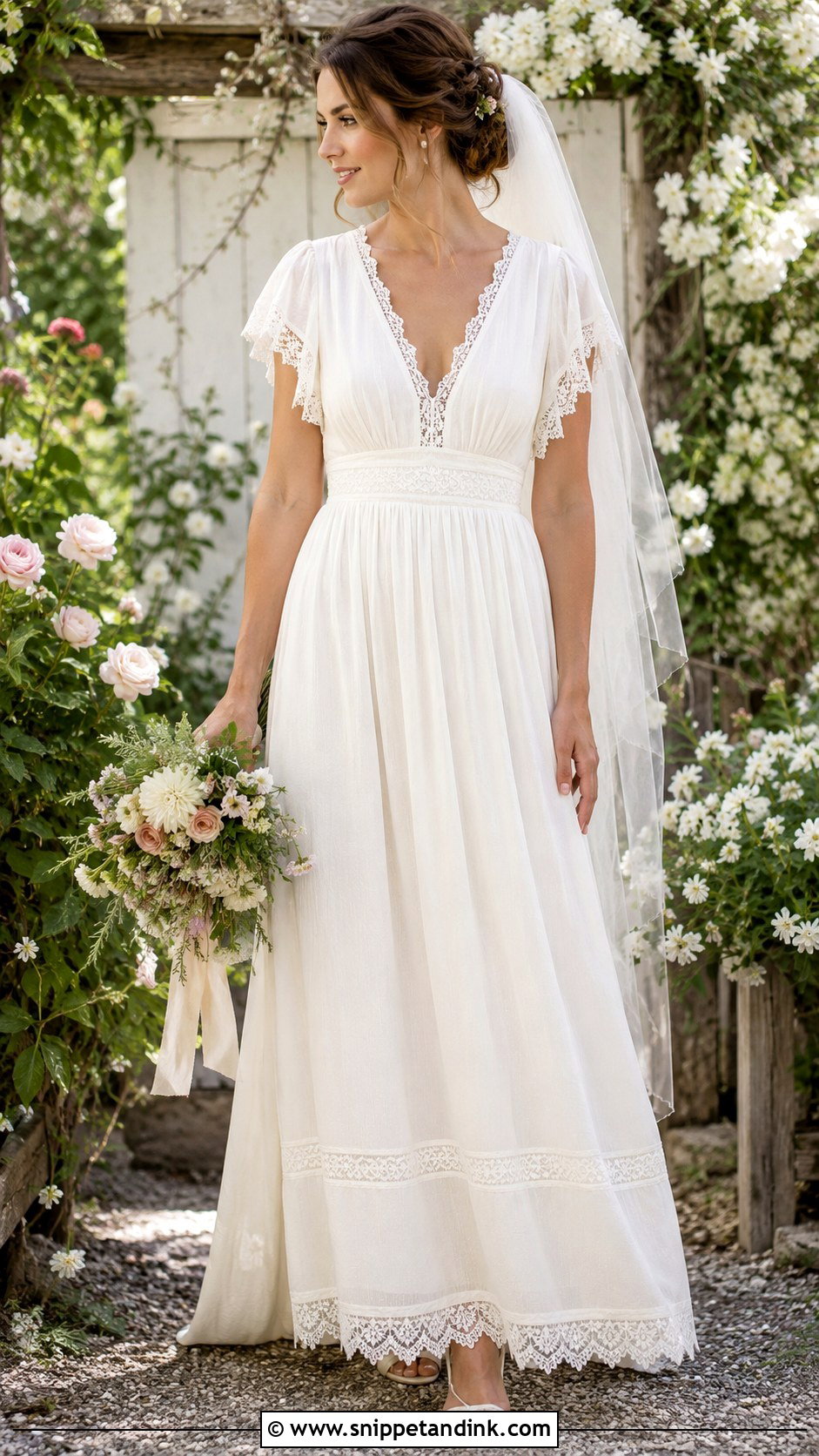
Lace trim adds detail without hiding the cotton. Look for an ivory gown with a V-neck or round neck, lace-edged flutter sleeves, a defined waist and a long gathered skirt, with narrow lace inserts at the neckline and hem. Low lace-covered heels, a simple veil, pearl studs and a loose floral updo suit a cottage garden or historic house. The mismatch I see most often is colour: lace from one dye lot next to muslin from another can be two different ivories. I hold the trim against the dress fabric by a window before anything is stitched, and I prefer matte cotton lace, since shiny trim makes the muslin look dull beside it.
14. Embroidered Muslin Wedding Dress
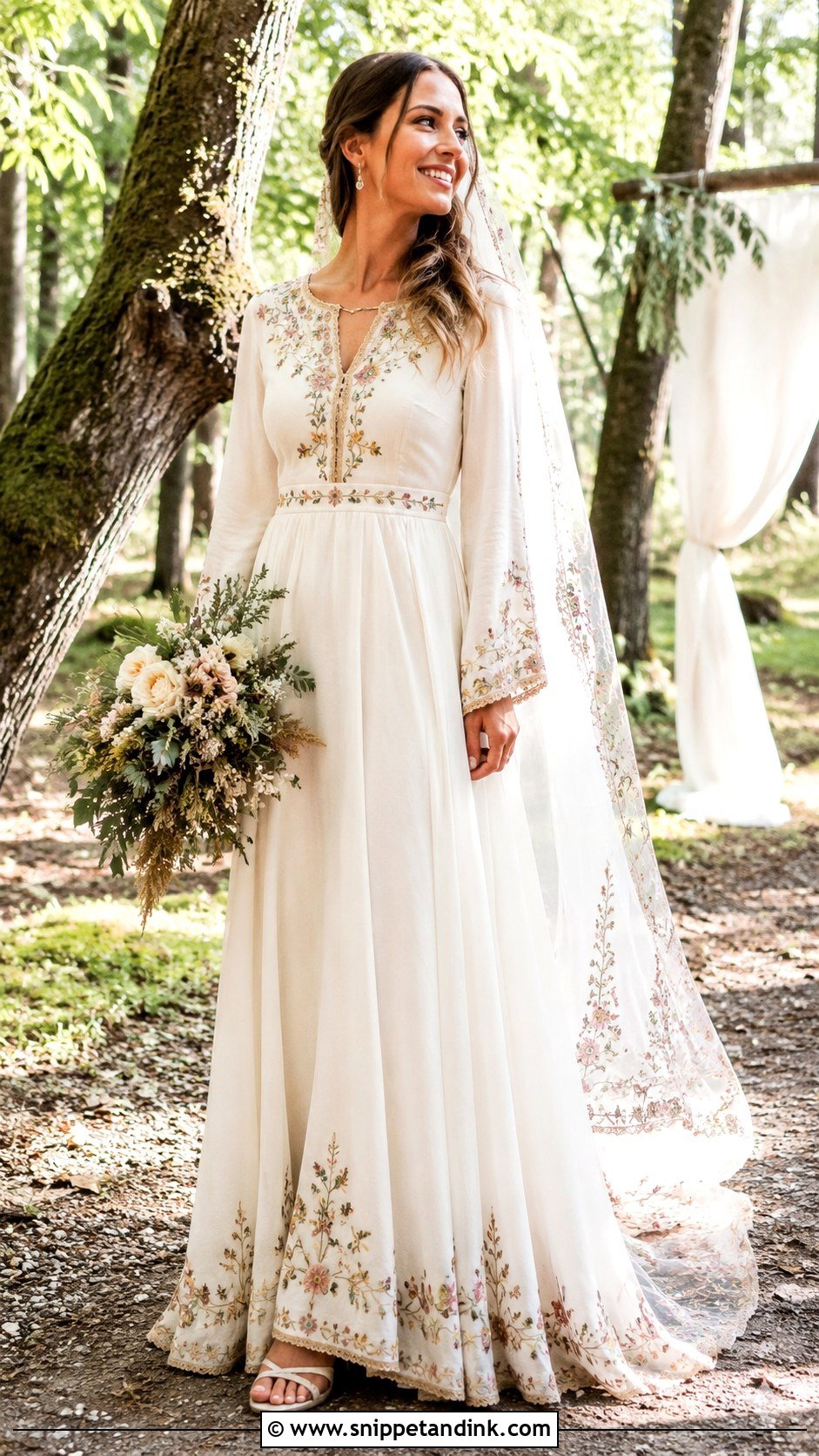
Embroidery turns a plain muslin gown into something with a bohemian character. Choose a lined A-line with floral threadwork at the neckline, cuffs, waist or skirt border; white-on-white is subtle, and pale blue, sage or muted blush adds a hint of colour. Ivory leather sandals, small gemstone earrings, a muslin veil with a matching embroidered edge and a loose seasonal bouquet keep it natural. I’d limit the embroidery to a few zones, because dense stitching makes thin cotton pucker and stiffen. Before ordering, turn the dress inside out: the back of machine embroidery can be scratchy against bare skin unless it is backed with a soft lining.
15. Column Muslin Wedding Dress
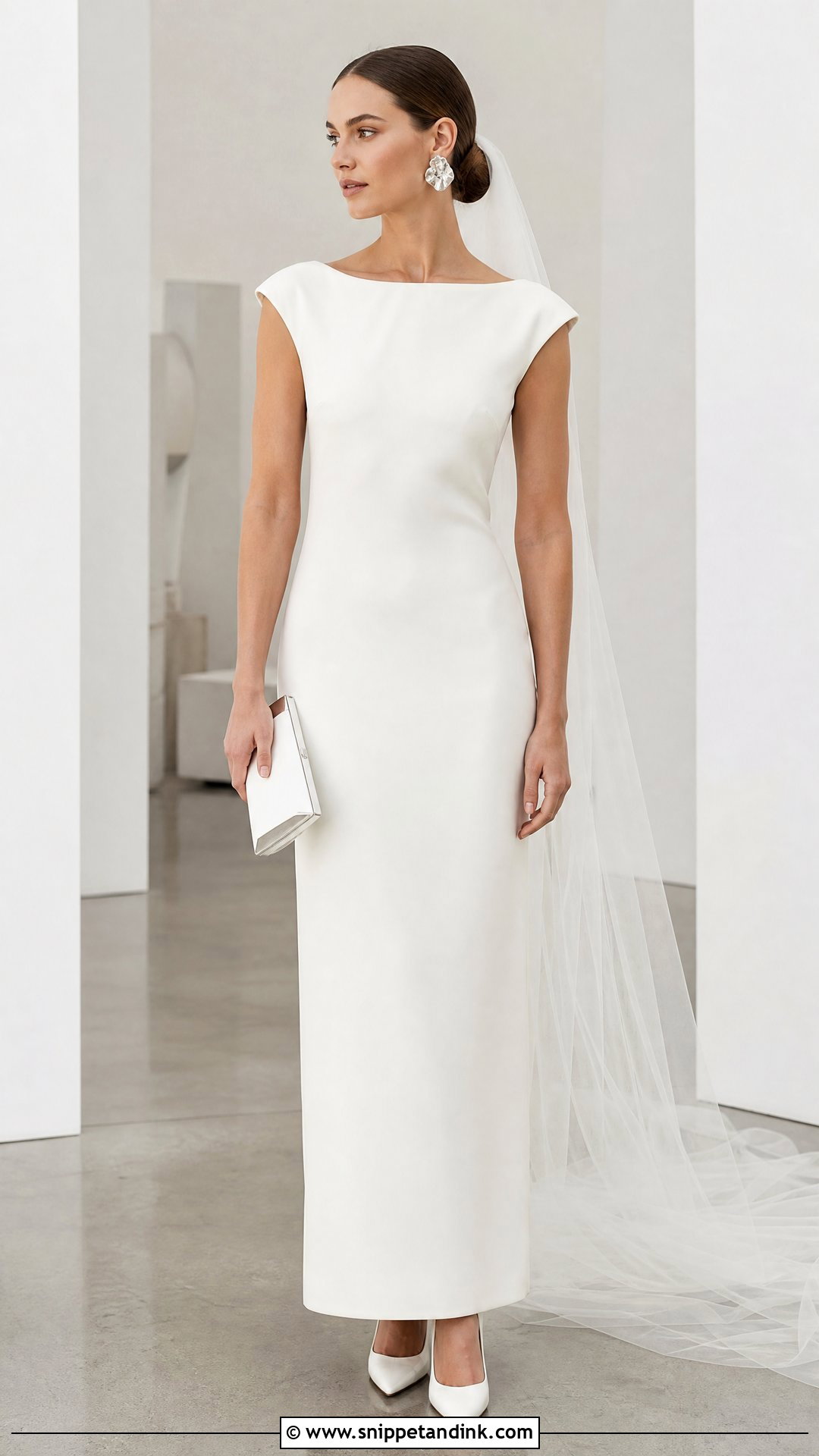
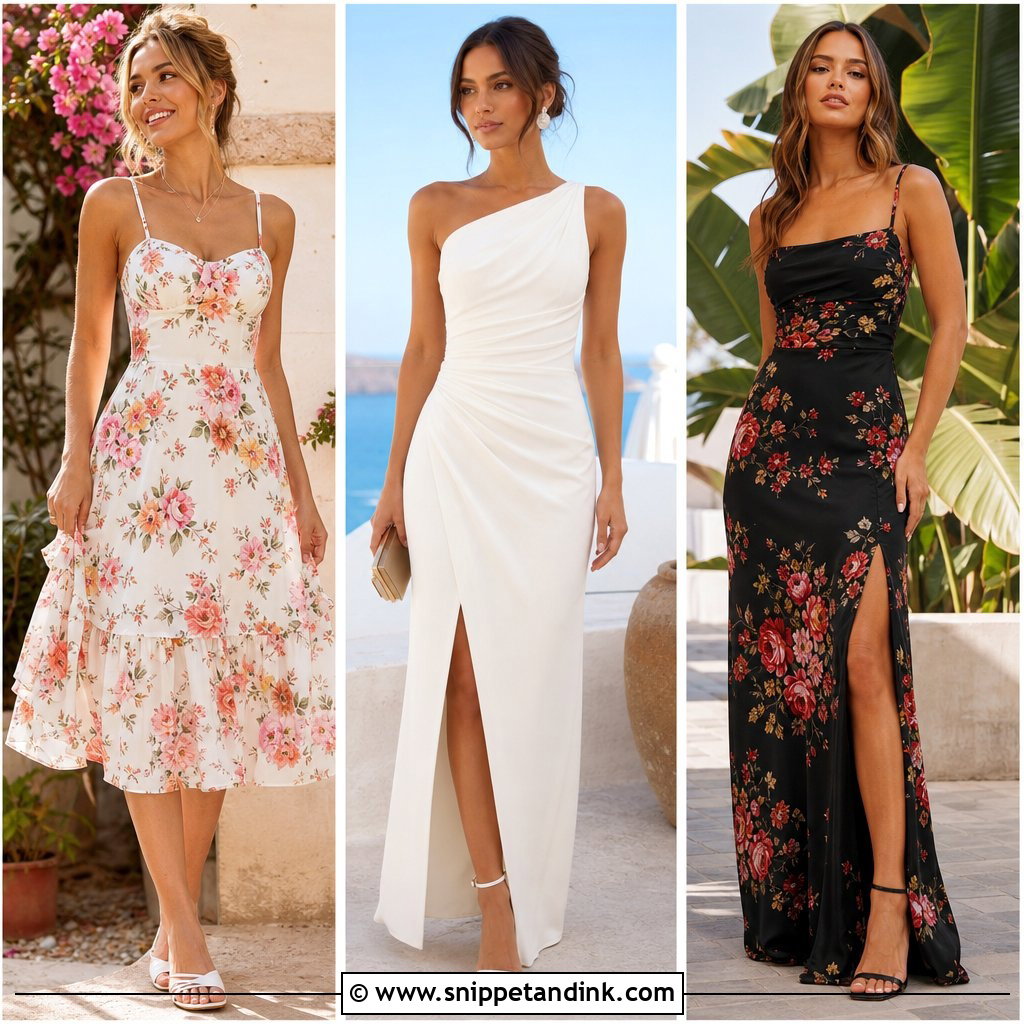
A column is the sharpest option and the hardest to get right in cotton. Choose an opaque, fully lined gown with a boat neckline, a sleeveless or cap-sleeve bodice and a straight skirt falling cleanly from the hips, with a short back slit for walking. Pointed ivory pumps, a structured clutch, sculptural earrings, a long plain veil and a smooth low bun suit a city venue or small formal ceremony. Straight muslin shows every crease and every seam, so pressing and precise tailoring matter more here than on any gathered style. The skirt should skim the hips and thighs; if it grips standing, it will ride up the moment you sit.
16. Ruffle Muslin Wedding Dress
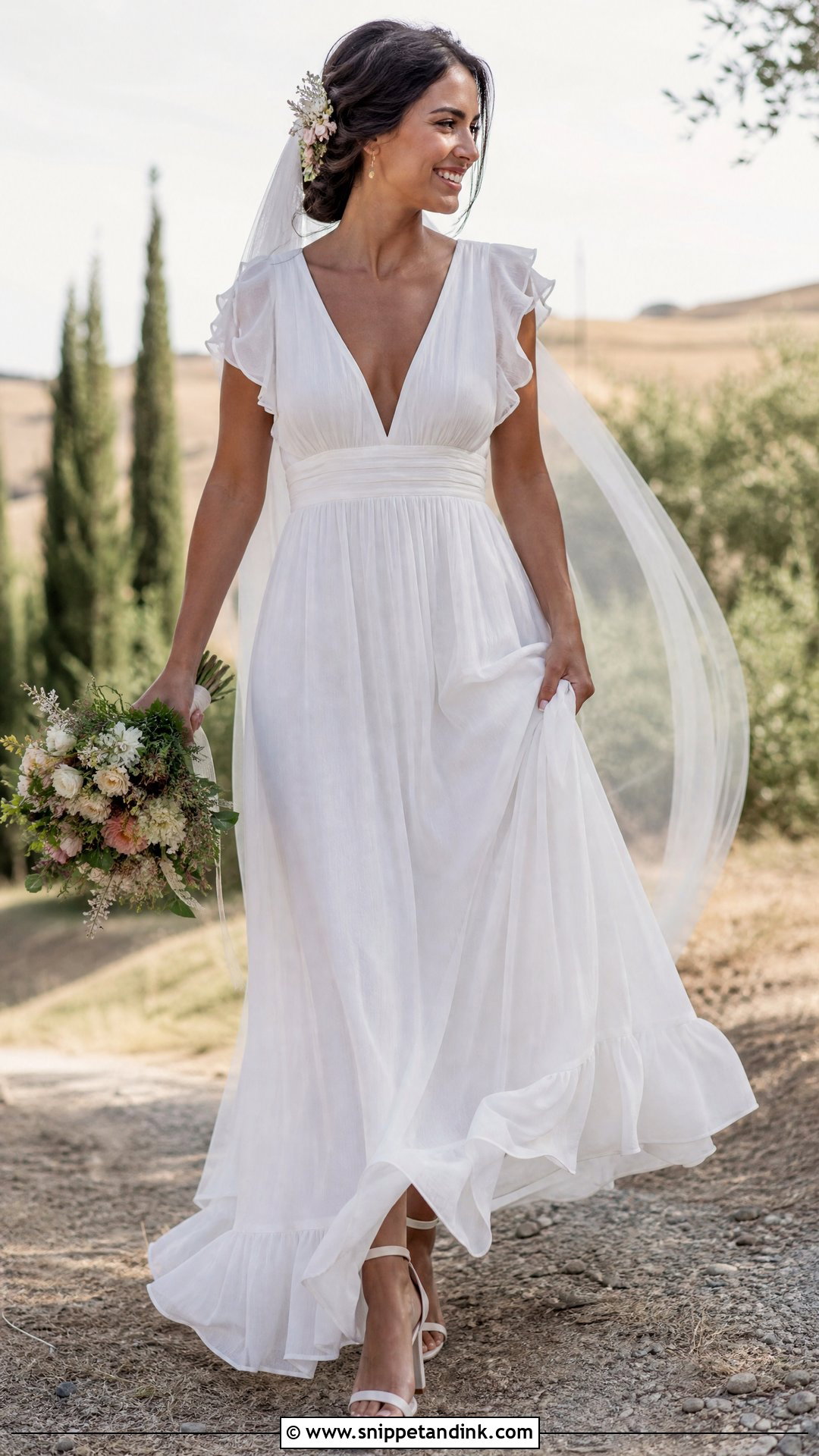
Ruffles give a muslin gown movement while keeping it relaxed, as long as there are only one or two of them. Pick a V-neck with fluttering shoulder ruffles, a fitted waistband and a floor-length skirt finished with one broad ruffled hem. Simple block-heel sandals, small hoops, a floral comb, a plain fingertip veil and a low ponytail or loose updo keep the shoulders visible. It suits a breezy garden, beach, or countryside ceremony. Cotton ruffles go limp in humidity, so I ask for a lining with enough weight to steady the skirt while the outer layer moves, and I pack a steamer for the shoulder frills.
17. Cape Sleeve Muslin Wedding Dress
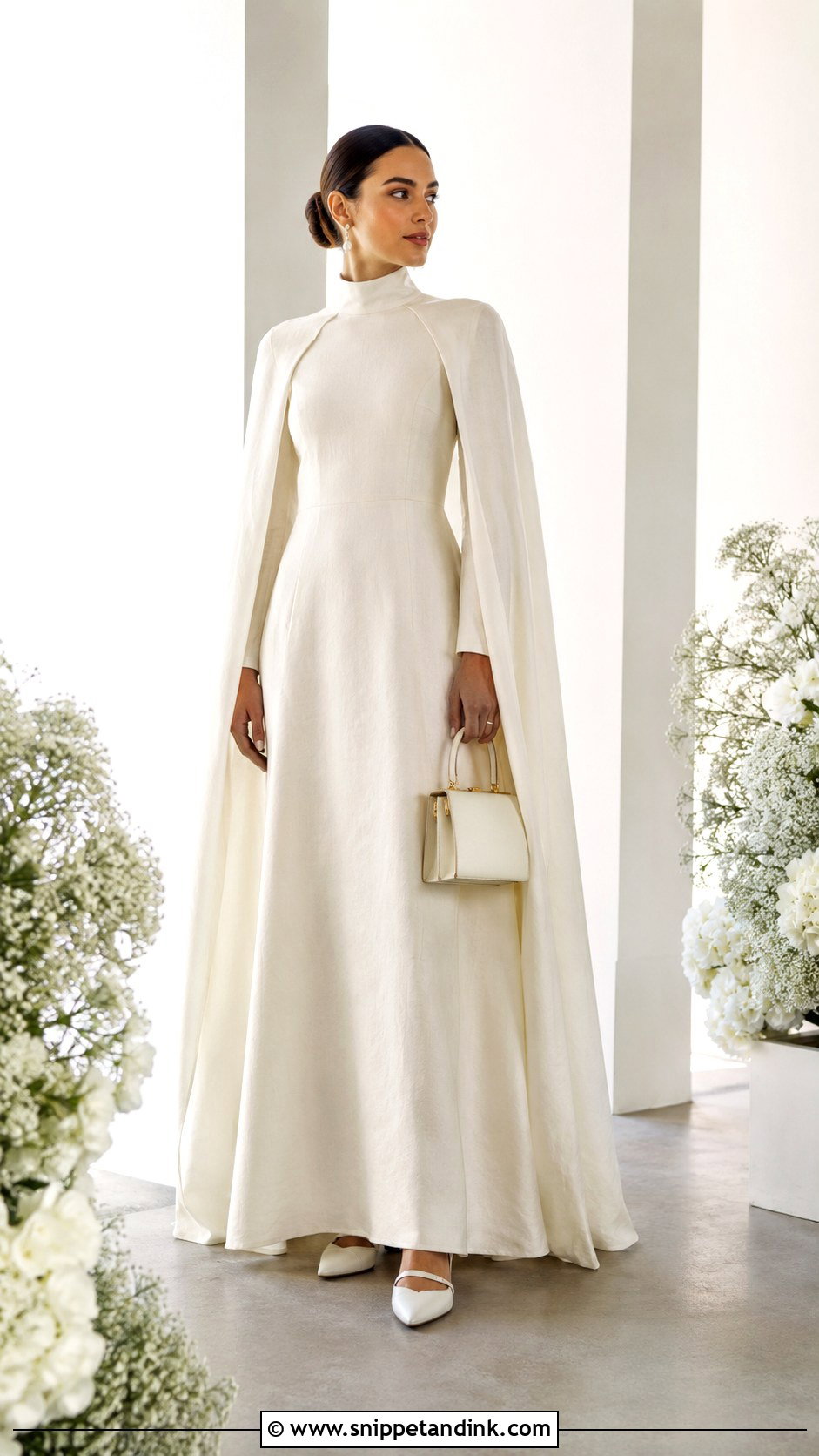
Cape sleeves give coverage and a little drama without the tight feel of fitted long sleeves. Choose a simple column or A-line with a high neckline and lightweight cape panels falling from the shoulder to the elbow or wrist; a detachable cape lets you change the look for the reception. Pointed flats, pearl drops, a sleek bun and a small structured bag are all it needs. I’d skip the veil if the cape runs down the back, since the two layers tangle and compete. At the fitting, raise and lower your arms several times: a cape that is too short pulls the neckline backward every time you lift your bouquet.
18. Plus Size Muslin Wedding Dress
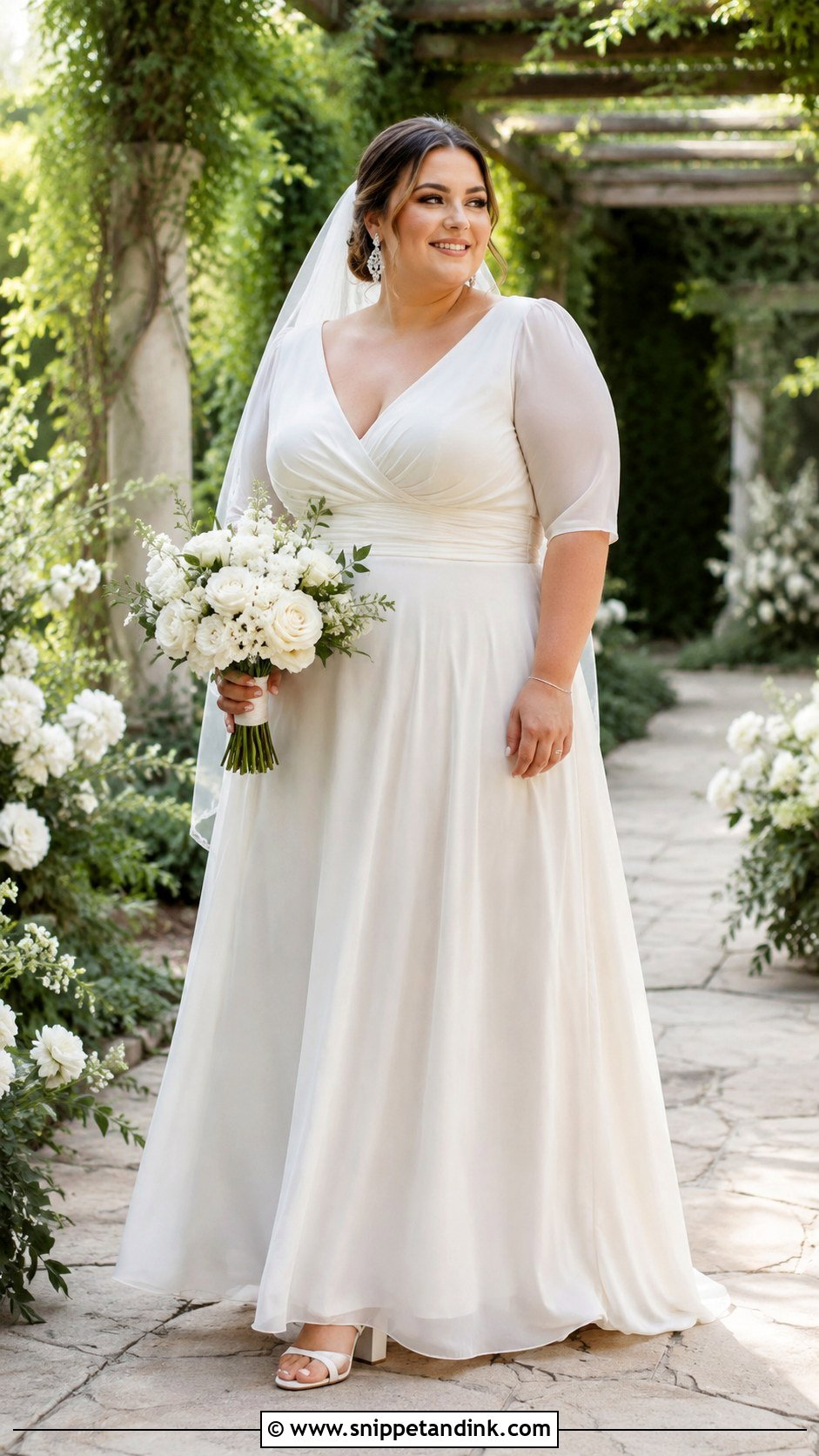
Muslin can be a very comfortable fabric for curvy brides, provided the support is built in rather than borrowed from the fabric. I’d look at a supportive V-neck bodice, wide straps or elbow-length sleeves, a defined waistband and an A-line skirt that glides over the hips, with diagonal ruching to shape the waist instead of bulky gathers. Stable block heels, statement earrings, a fingertip veil and a bouquet in proportion to the gown finish it. Forget body-type rules; what matters is a bra-friendly bodice, smooth lining and a waist placed where your own waist is. A custom hem and a proper bust adjustment change the fit far more than the size on the label.
19. Maternity Muslin Wedding Dress
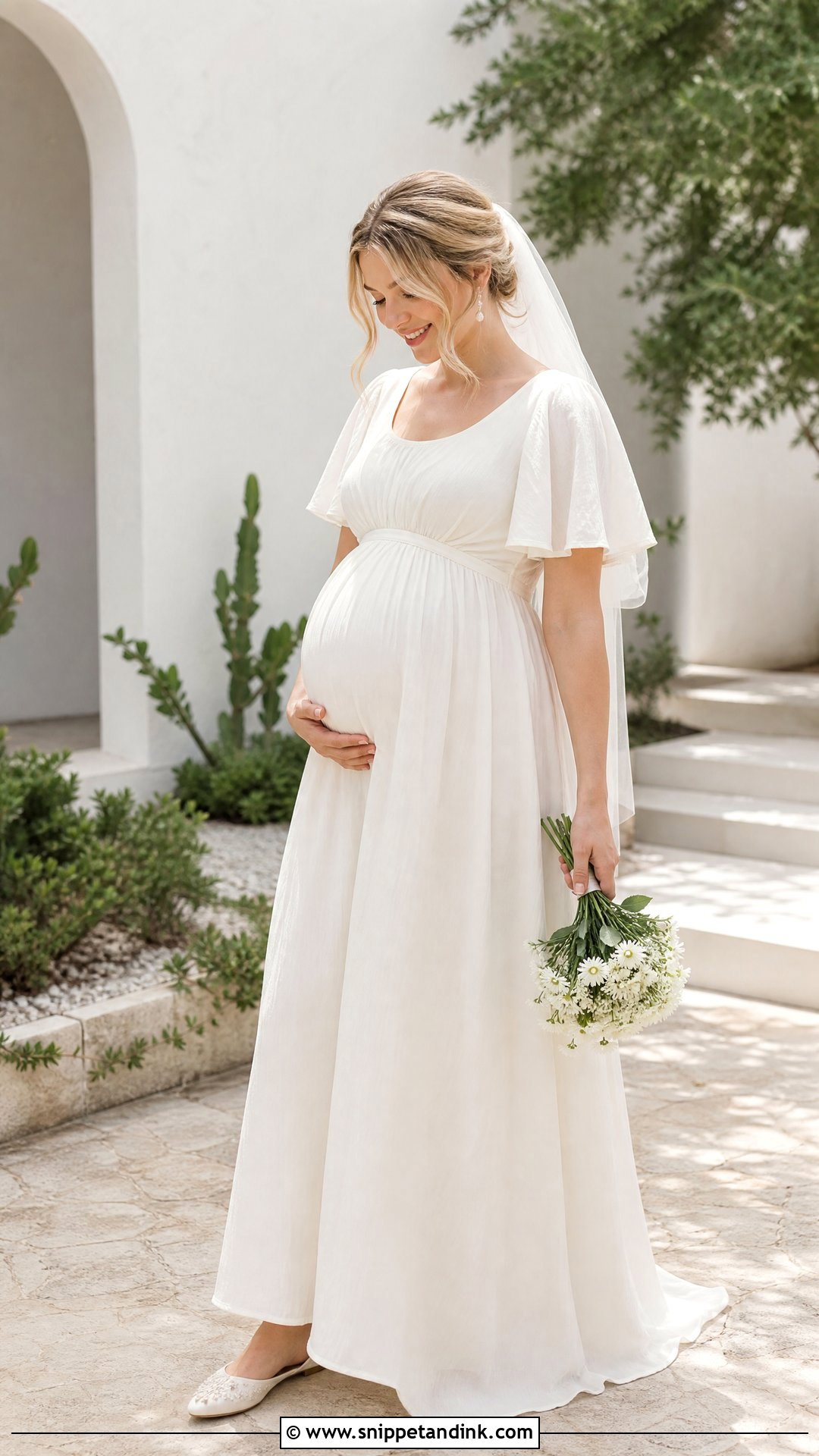
An empire waist is the natural maternity choice, because the skirt starts above the bump and nothing presses on it. Choose a supportive wrap or gathered bodice, comfortable sleeves and a flowing skirt, and skip tight waistbands, rigid closures and heavy layers. Cushioned low heels or flats, delicate earrings, a lightweight shoulder-length veil and a small bouquet keep the proportions easy. The timing is the hard part: I book the final alteration as late as the seamstress will allow, usually within the last couple of weeks, so the bust and bump measurements are current. A soft jersey lining also gives more stretch than a woven one. Stand, sit and walk in the full outfit for several minutes before you sign it off.

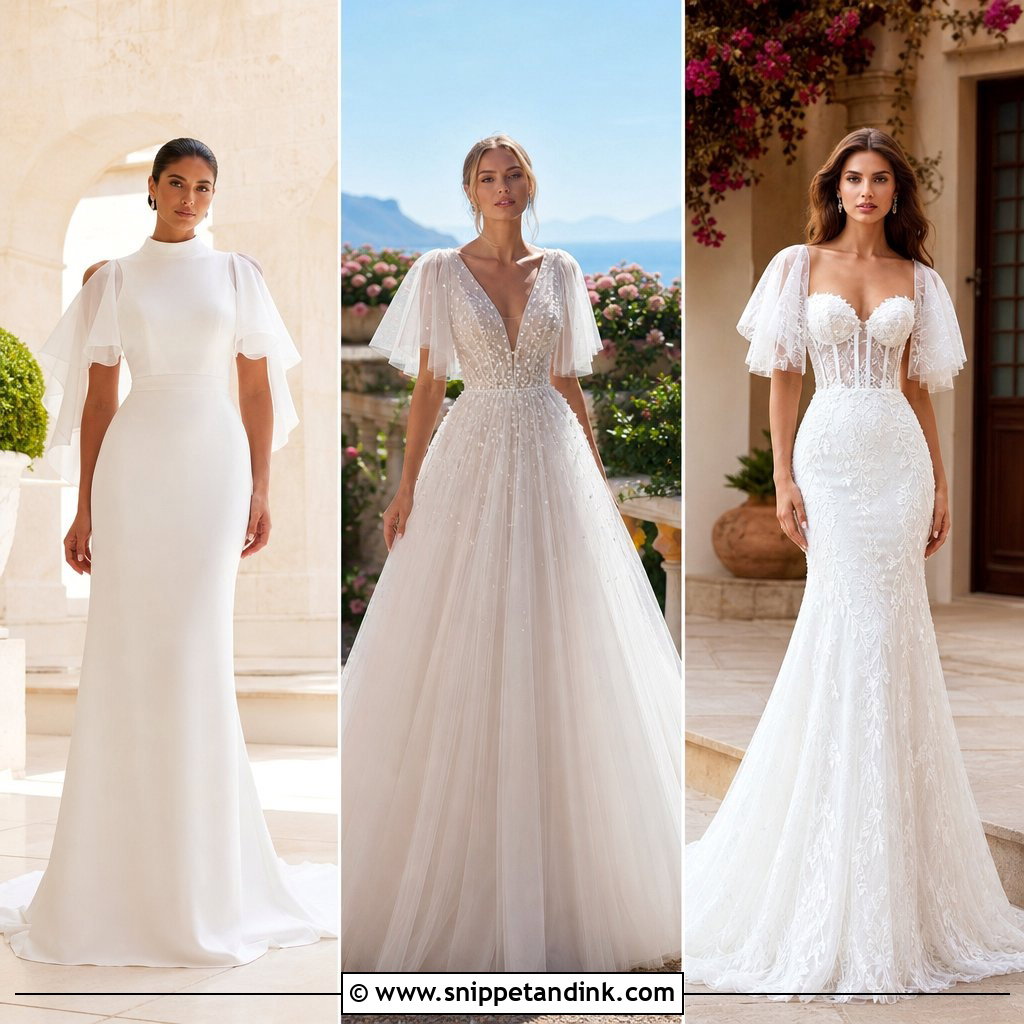
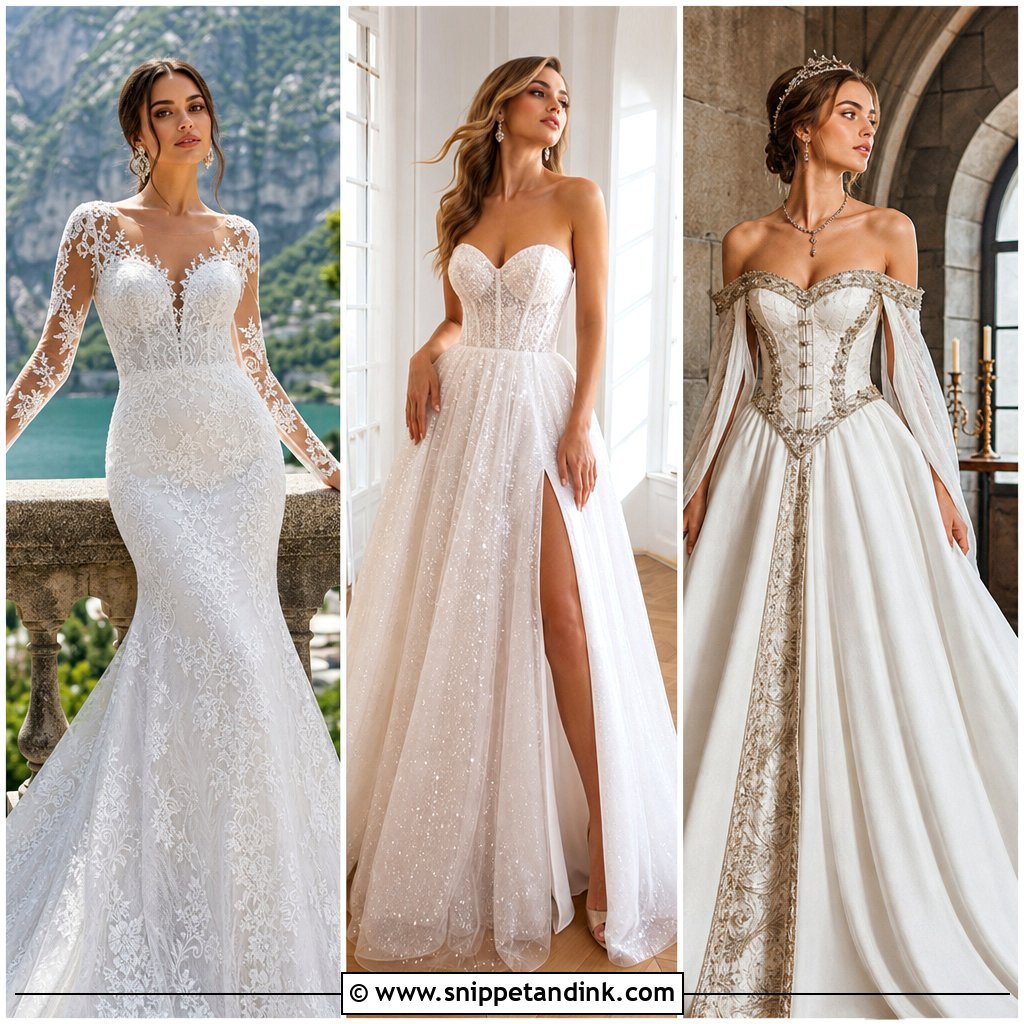

20. Blush Muslin Wedding Dress
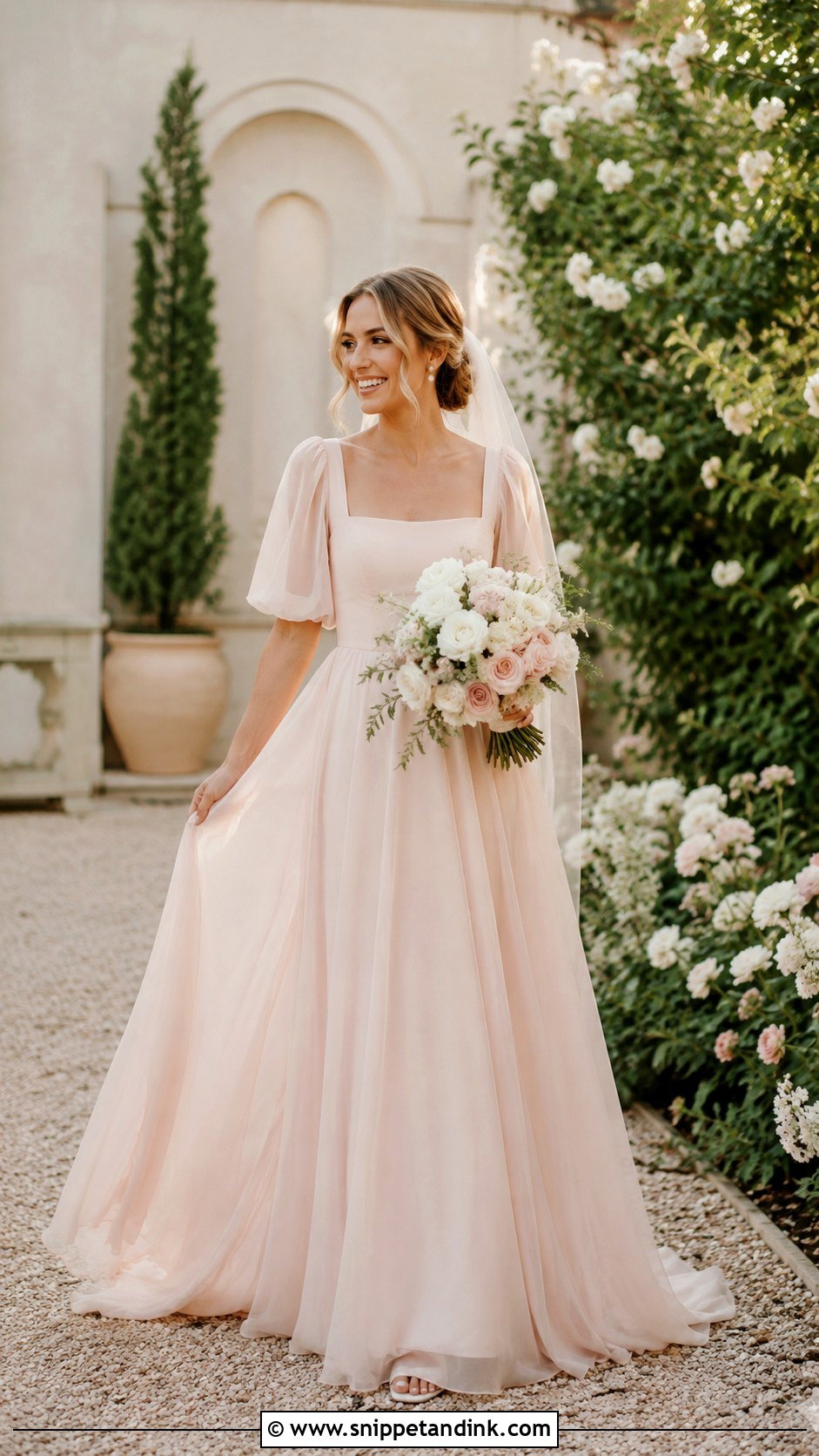
Blush is a gentle step away from white, and muslin takes pale dye well. Picture a pale pink gown with a square neckline, fitted waist, puff sleeves and a full-length skirt, worn with ivory shoes, rose-gold or pearl earrings, a sheer neutral veil and a white, pink and green bouquet. A shade that looks bridal in a shop can drift peach, mauve or beige under warm reception lights, so I ask for swatches and look at them outside and under a tungsten bulb before committing. For a subtler result, put a blush lining beneath an ivory muslin overlay; the pink then glows through rather than sitting on top.
Creases Will Happen, So Plan the Steamer Breaks
Cotton creases. No lining or finish changes that, and I tell every muslin bride so before she buys, because the dress at the evening party will never look quite like the dress at the first look. The good news is that soft wrinkles in muslin read as relaxed rather than messy, provided the creases are spread out instead of a sharp crushed band across the back of the skirt.
- Hang the dress the night before and steam it on the hanger, never with an iron directly on the face of the fabric. Keep the steamer moving so the cotton doesn’t spot.
- Put the dress on as late as you can, after hair and makeup, and avoid sitting in it until the ceremony.
- In the car, lift the back of the skirt and sit on the lining instead of the outer layer.
- Ask someone to bring a small handheld steamer and do a two-minute pass before portraits and again before the reception entrance.
Hems are the other weak point at outdoor weddings. Light cotton picks up grass stains and dust within the first hour, so I’d take the hem a touch shorter than you would with satin, or add a horsehair or self-fabric facing that can be brushed clean.
Muslin Can Go in the Wash, Which Changes How You Store It
Unlike silk or beaded tulle, a plain muslin gown can usually be cleaned gently by hand, and that is one of its quiet advantages. Check the care label and any trims first: embroidery and lace may not be colourfast, and boned bodices should go to a specialist cleaner rather than into water.
Whatever the method, clean it within a few weeks. Sweat, champagne and cake leave invisible sugars that turn yellow-brown in cotton over months. Once it is clean and fully dry, fold it loosely with acid-free tissue in the folds, keep it in a breathable cotton bag or acid-free box, and store it somewhere dark and dry. Avoid plastic covers, which trap moisture, and refold it along new lines once a year so permanent creases don’t weaken the fibres.
Making Plain Cotton Look Bridal
Muslin rewards brides who care more about how a dress feels at hour eight than how it looks on a hanger. The cuts above range from simple A-line and empire shapes to embroidered, tiered, modest, maternity and blush versions, and all of them rise or fall on the same few things: fabric weight, opacity, lining, bust support and hem length. Bring your real shoes and undergarments to every fitting, and test the dress sitting, walking and with your arms up. Keep the accessories matte and natural, pearls, cotton lace, fresh flowers, a plain veil, and a well-tailored muslin gown will look polished and personal rather than casual.
You'll Like These Ideas:




Leave a Reply