
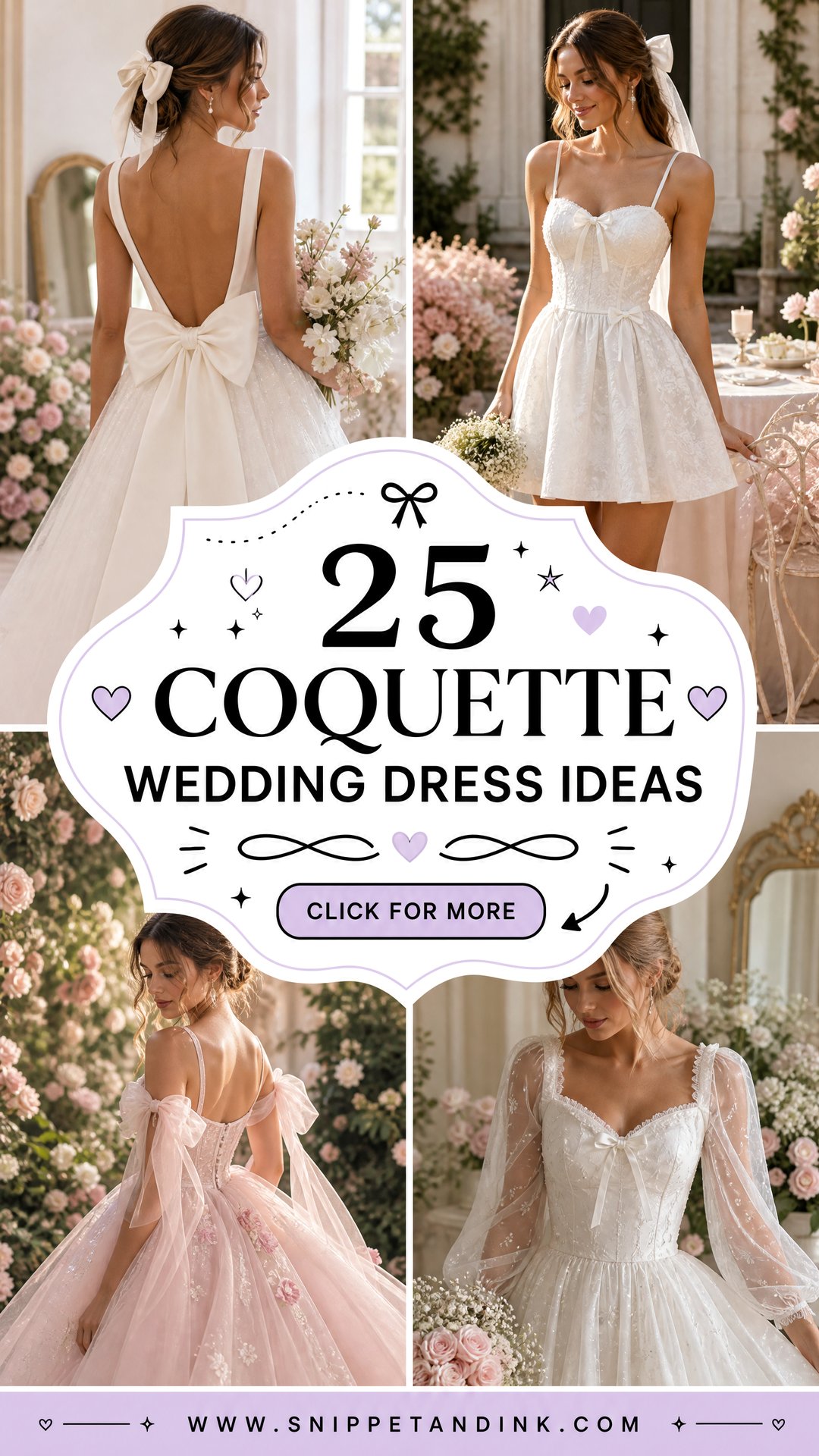
Coquette bridal style borrows from lingerie and ballet: bows, pearls, corsetry, sheer tulle and a lot of ivory ribbon. As a bridal stylist, the thing I watch for is how quickly it tips from romantic into costume, and that line usually comes down to how many details are fighting on one dress. Done well, it can be as quiet as a pearl-trimmed slip at a courthouse or as full as a lace ball gown in a ballroom. Below are 25 dresses in that spirit, with what I’d check on each before you commit.
Testing Bows, Boning and Pearls at Your First Fitting
Coquette dresses carry more small, fragile details than most bridal styles, and those details fail in predictable ways. I run through a short check at the first fitting, before a single alteration is pinned:
- Sit, stand and lean forward. Boning that pokes or a neckline that gapes when you bend is easier to fix now than after the hem is cut.
- Pinch a bow loop. If it stays flat instead of springing back, ask for interfacing or a hidden tack stitch so it keeps its shape all evening.
- Turn the beading over. Thread means the pearls are sewn; a hard shiny backing means glue, which can let go on the dance floor.
- Raise your arms as if hugging someone. Puff and sheer sleeves pull on a bodice far more than plain straps do.
- Bring your wedding shoes and the underwear you’ll wear. Hem length and the line of a satin skirt both depend on them.
Alterations on a corseted or heavily trimmed gown also take longer than on a plain one, because beading often has to be unpicked and resewn around any seam that moves. I plan for at least two fittings, with the last one roughly two weeks before the wedding so there is room to fix anything that shifts.
1. Coquette Lace Wedding Dress
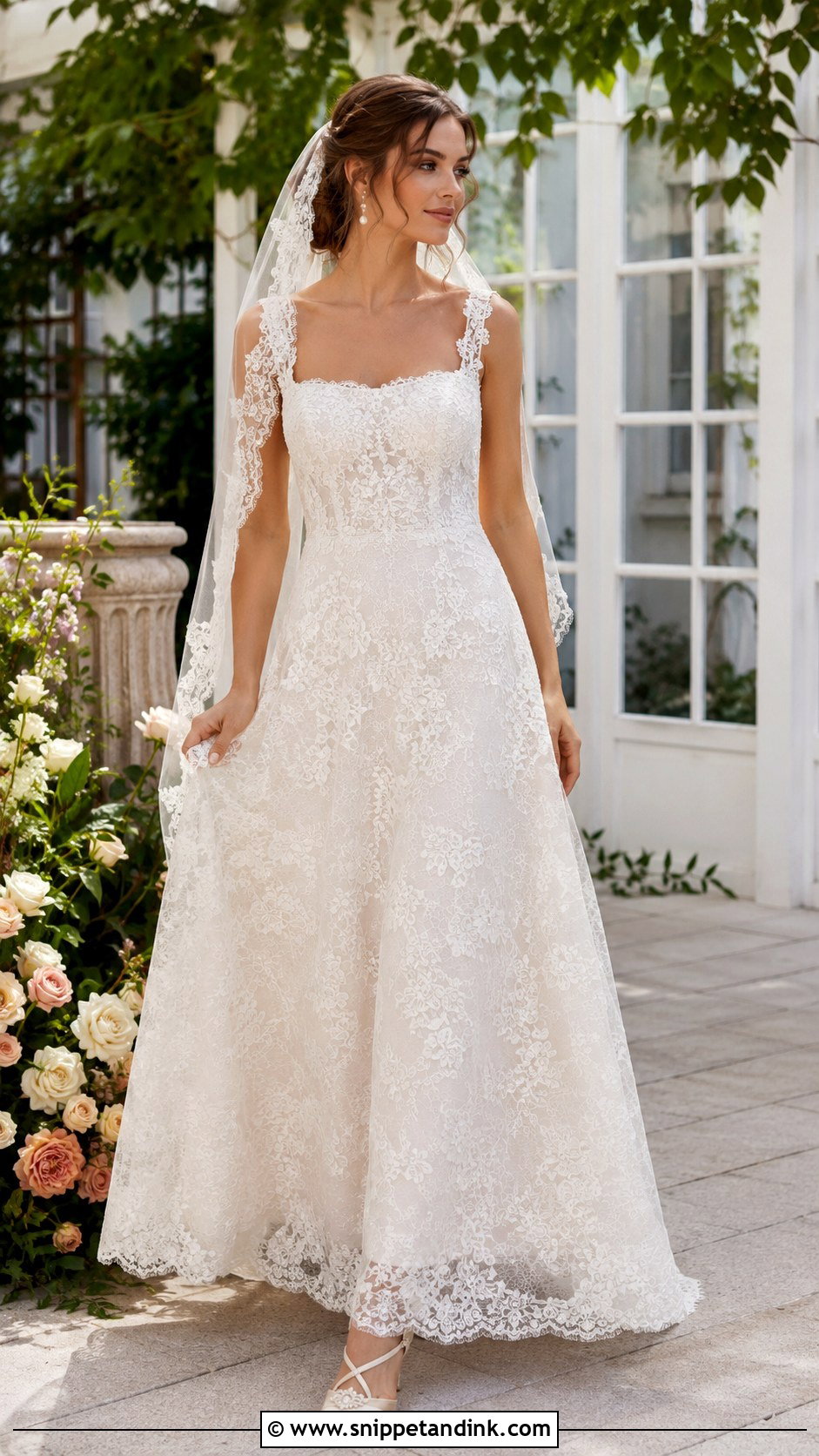
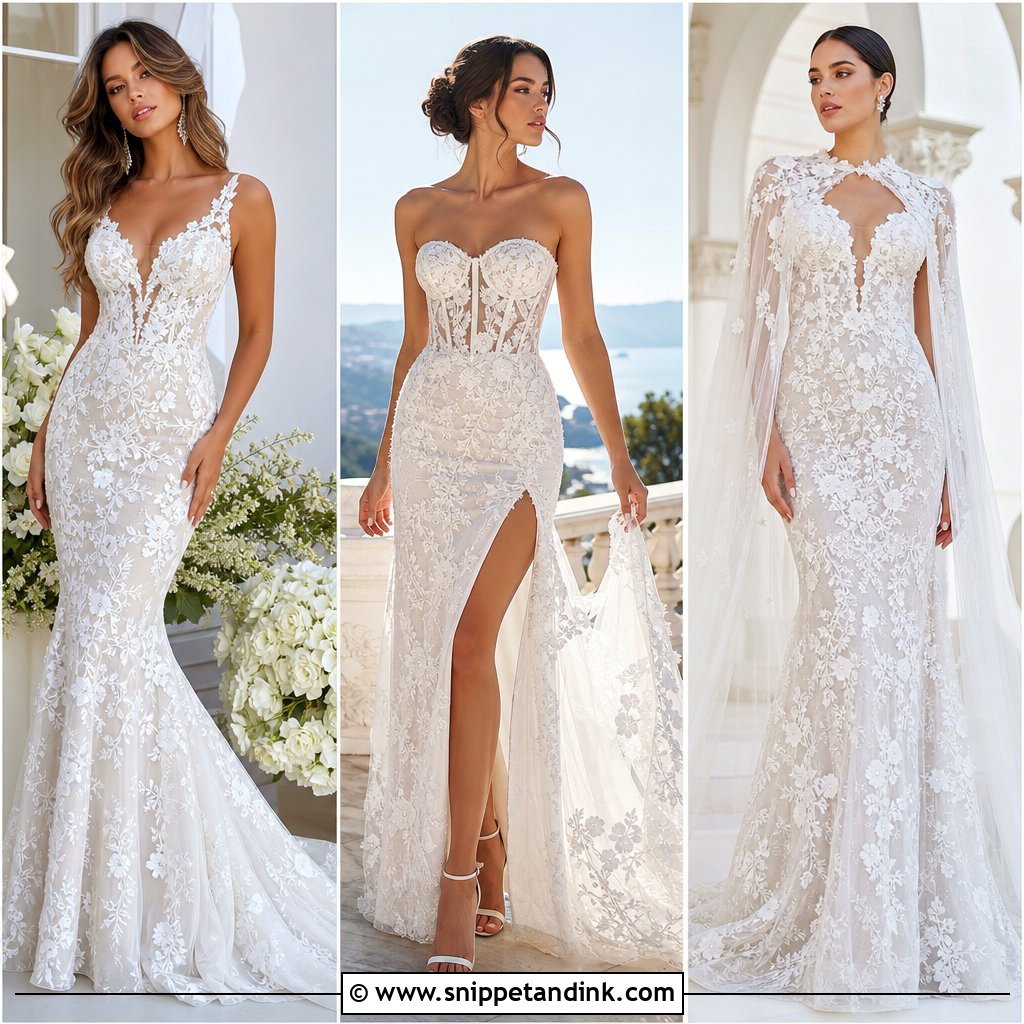
Lace is where most coquette gowns start, and a coquette lace wedding dress with scalloped edges and a fitted bodice is the version brides fall for fastest. Before anything else, I look at how the scallops are finished at the hem and neckline. Hand-cut, appliquéd lace sits flat; machine-edged lace can start to curl after a few hours of wear. A square or sweetheart neckline suits most frames, and pearl drops, a thin ribbon bow in the hair and a lace-edged veil are all it needs. If the sheath version feels loose on you, ask for the same lace over a corset bodice.
2. Coquette Bow Back Wedding Dress
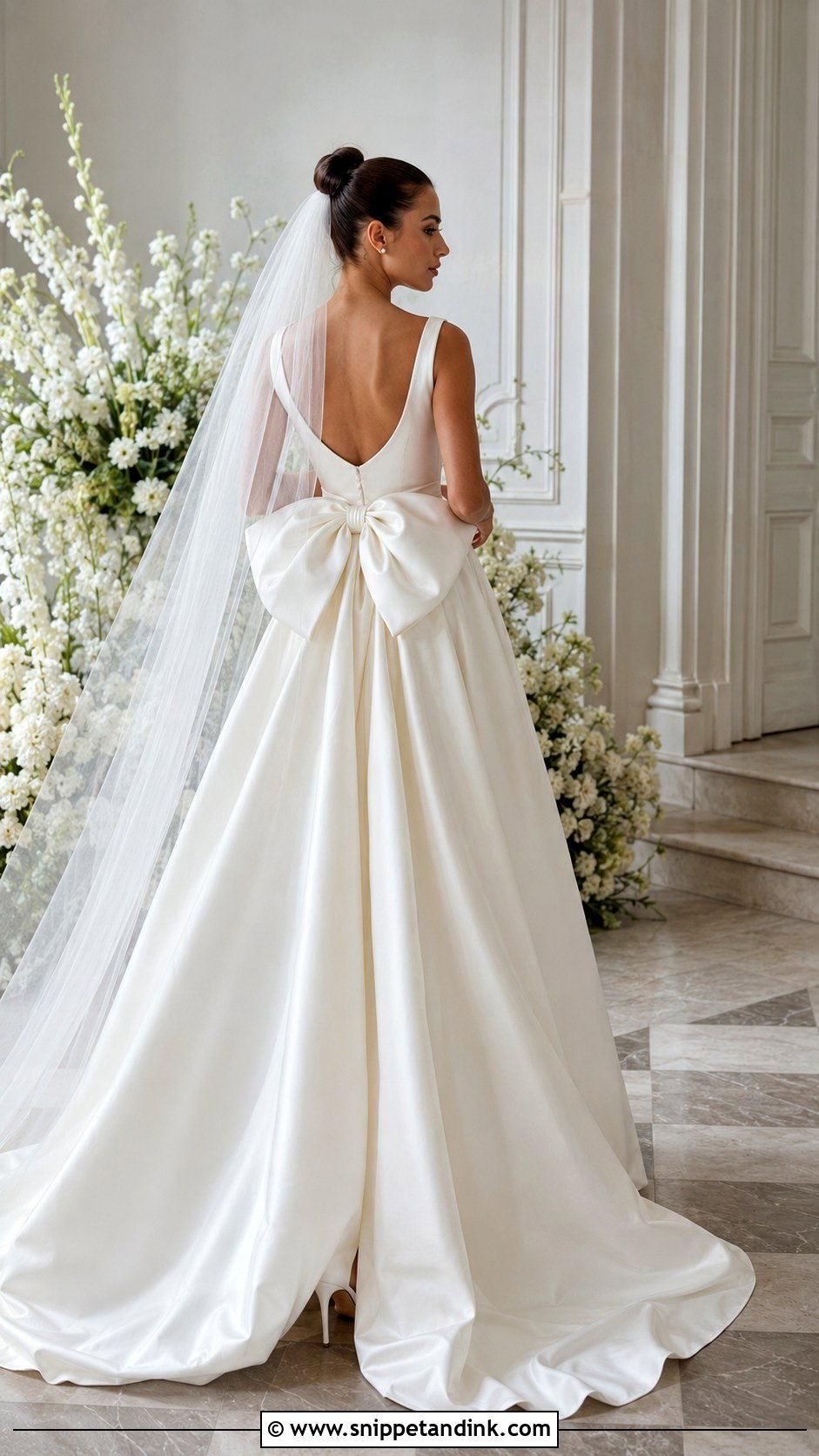
Most of the drama here happens behind you, which is exactly what guests see during the ceremony. A bow on satin or mikado holds its loops; on soft organza it can collapse unless the inside is interfaced, so I pinch a bow loop at the fitting to see if it springs back. Long tails need hemming so they clear the floor, or you’ll step on them on the first staircase. Keep the front quiet with pearl studs and a sleek bun so the back reads clearly from the pews.
3. Coquette Tulle Ball Gown Wedding Dress
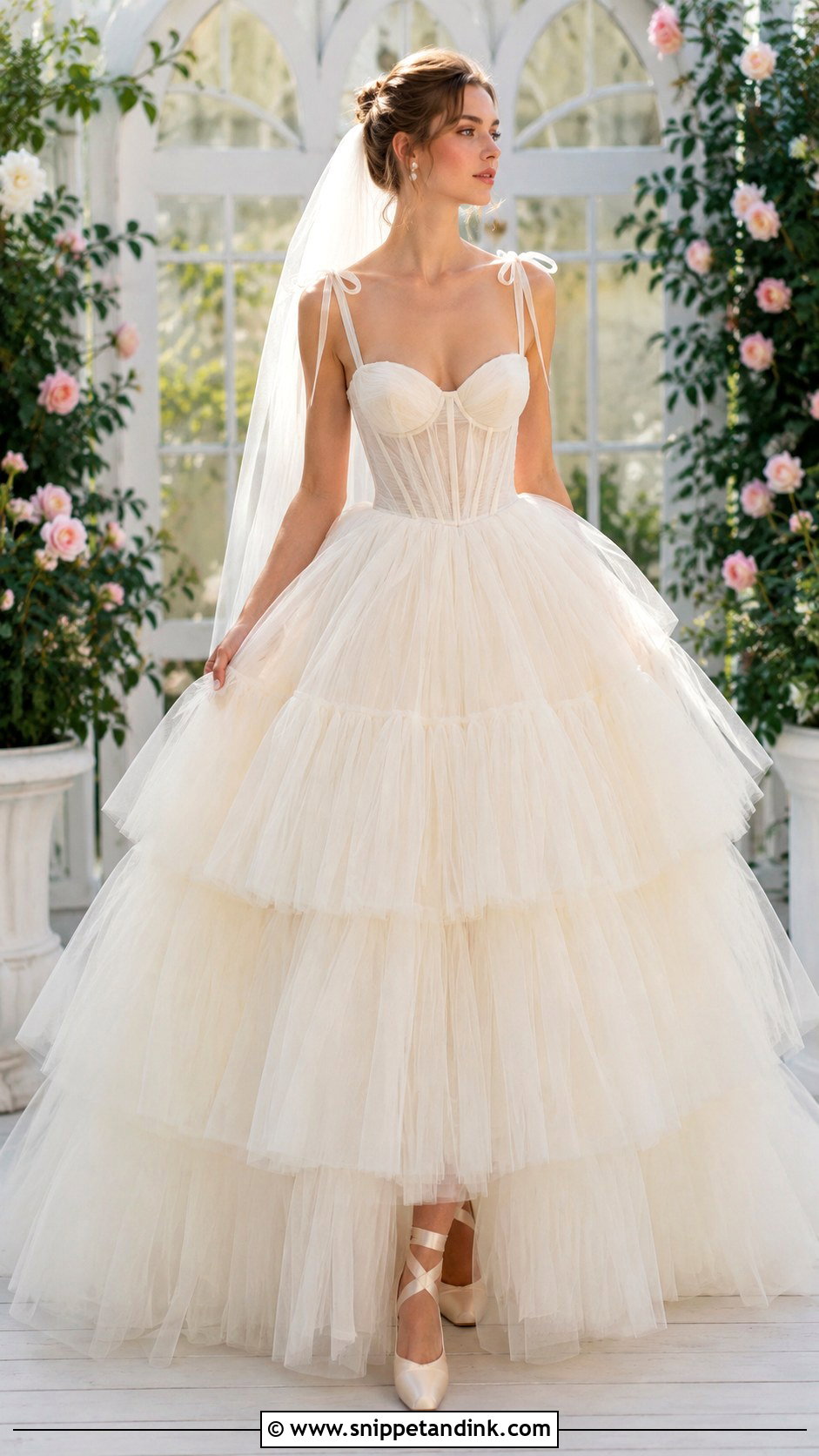
Tulle gives you volume without weight, which is why this ball gown feels lighter than it looks. The trade-off is that tulle catches on everything: bracelets, bouquet wire, rough stone steps. I steer brides toward studs over chain earrings and ask the florist to wrap the bouquet stems in ribbon. Ivory, blush or champagne layers all work, and small bows on the straps or pearl buttons bring in the coquette note. For a princess feeling that stays delicate, pair it with a soft updo and satin Mary Janes rather than a tiara.
4. Coquette Corset Wedding Dress
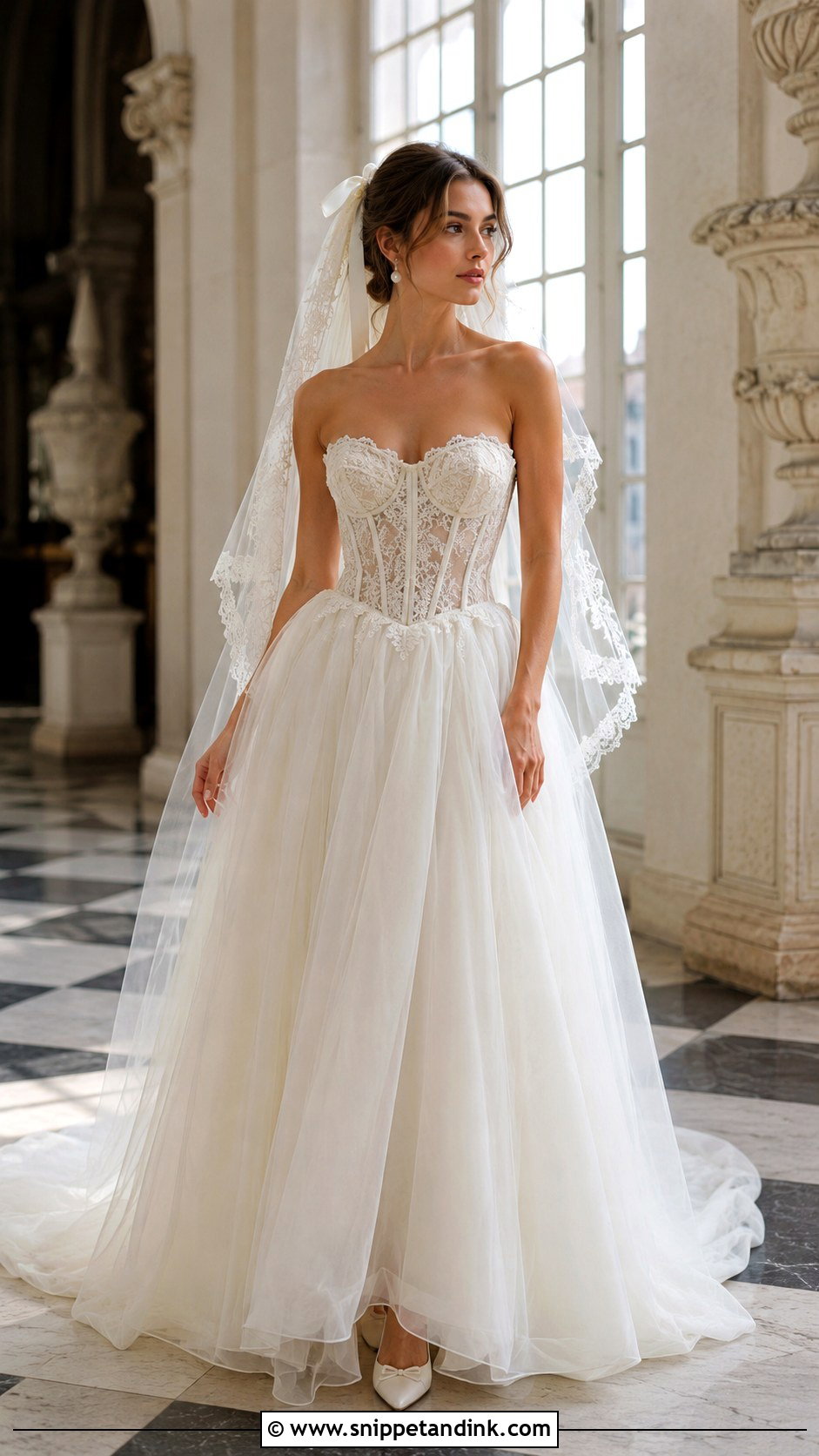
The difference between a bridal corset and a costume one is mostly in the boning. Spiral steel bends with you when you sit; cheap plastic boning kinks at the waist and leaves a visible ridge by evening. At a fitting I ask brides to sit, lean forward as if signing the register, and take a full breath. If any of that hurts, it needs letting out. Lace overlays and satin panels keep it bridal, and an A-line skirt balances the defined waist. Exposed seams read modern, so keep the accessories soft and let the structure lead.
5. Coquette Satin Wedding Dress
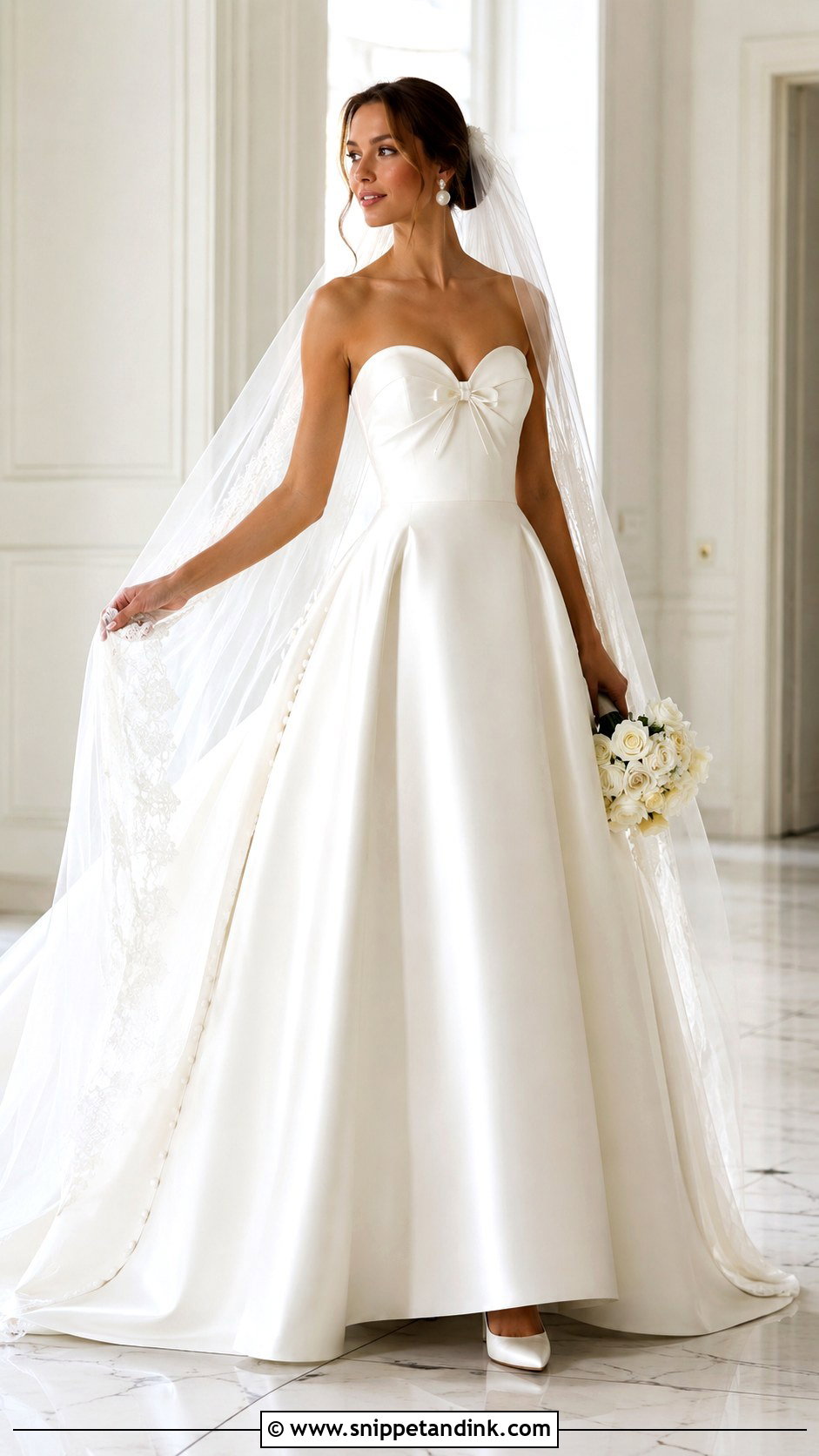
Satin is honest fabric. It shows every seam, any pulling across the hips and each crease from the car ride, which is why I only recommend it once the fit is close to right. Heavier duchess or crepe-back satin behaves far better than thin polyester satin, which can flare harshly under flash. A sweetheart neckline, bow straps or covered buttons down the back give it the coquette touch, and it carries a cathedral veil well in a formal room. Ask whoever drives you to lay the skirt flat across the back seat.
6. Coquette Pearl Wedding Dress
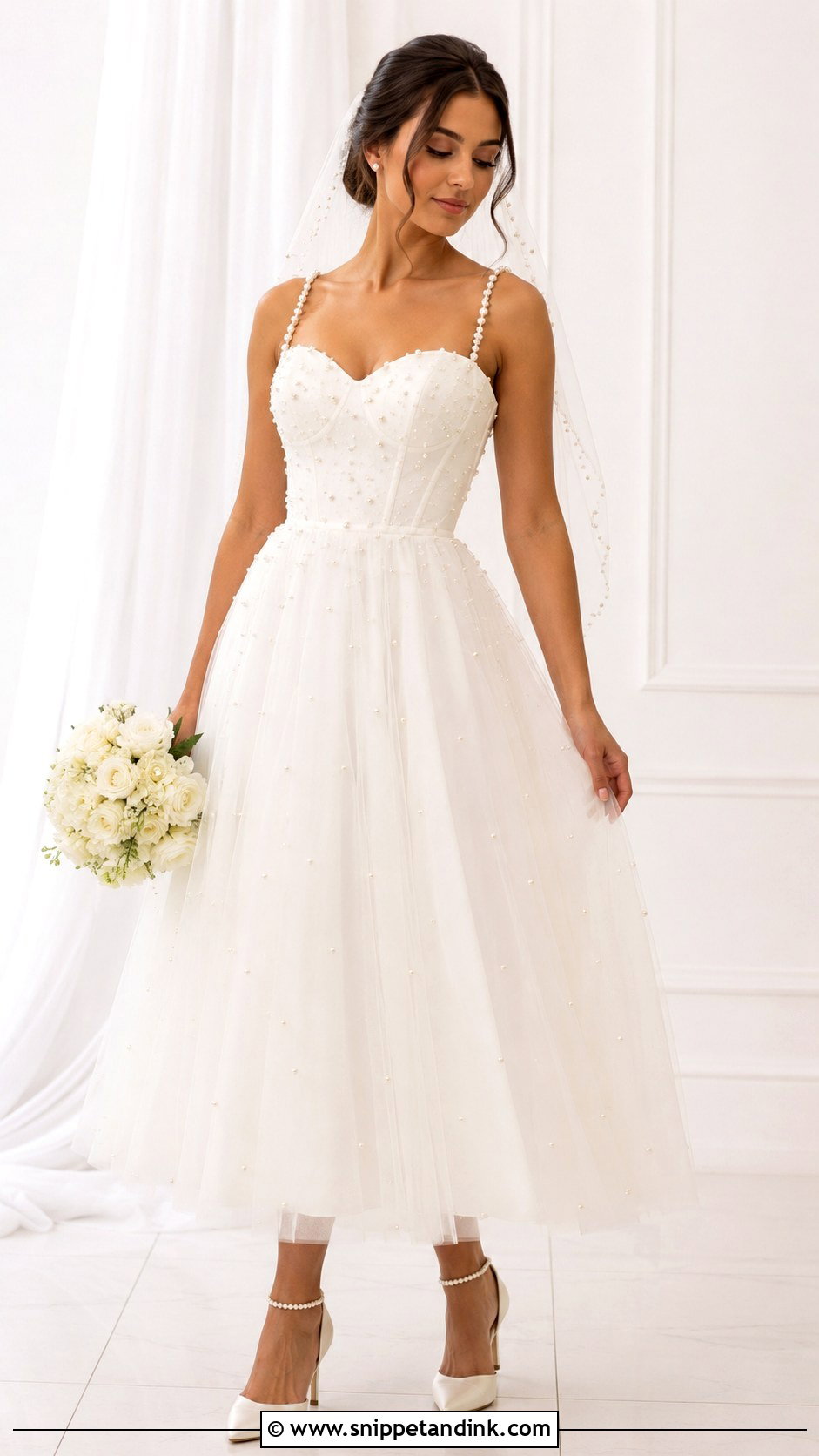
Pearls are the quickest route into this aesthetic: scattered beading, pearl straps, pearl buttons or a pearl-edged veil. What brides rarely ask is how they’re attached. Hand-sewn pearls survive a night of dancing, while glued ones can pop off a tulle skirt within the first hour, so turn the fabric over at the boutique and look for thread. When the bodice is covered, I’d drop the necklace entirely. Small studs keep a second set of pearls from competing with the first.
7. Coquette Mini Wedding Dress
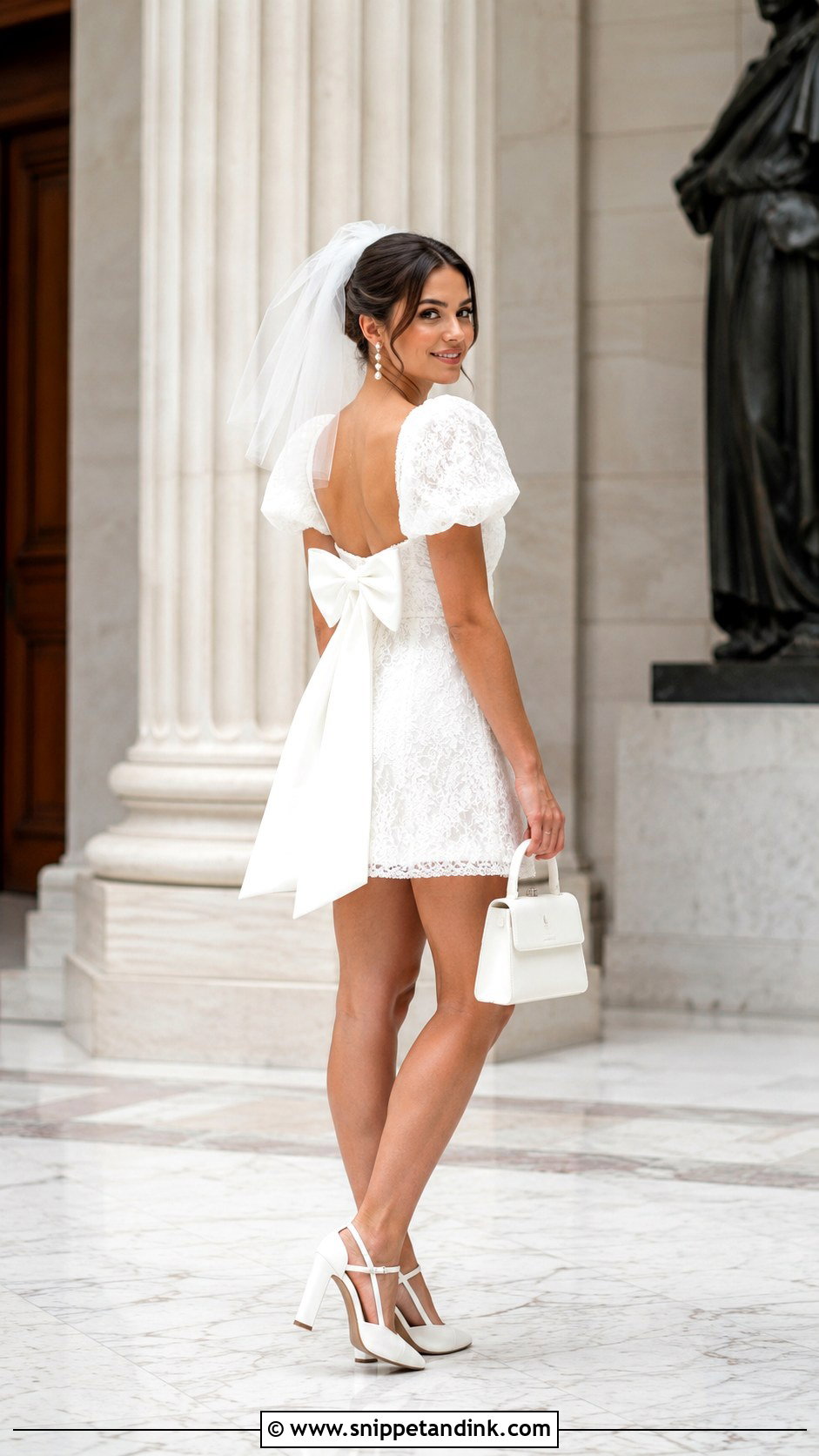
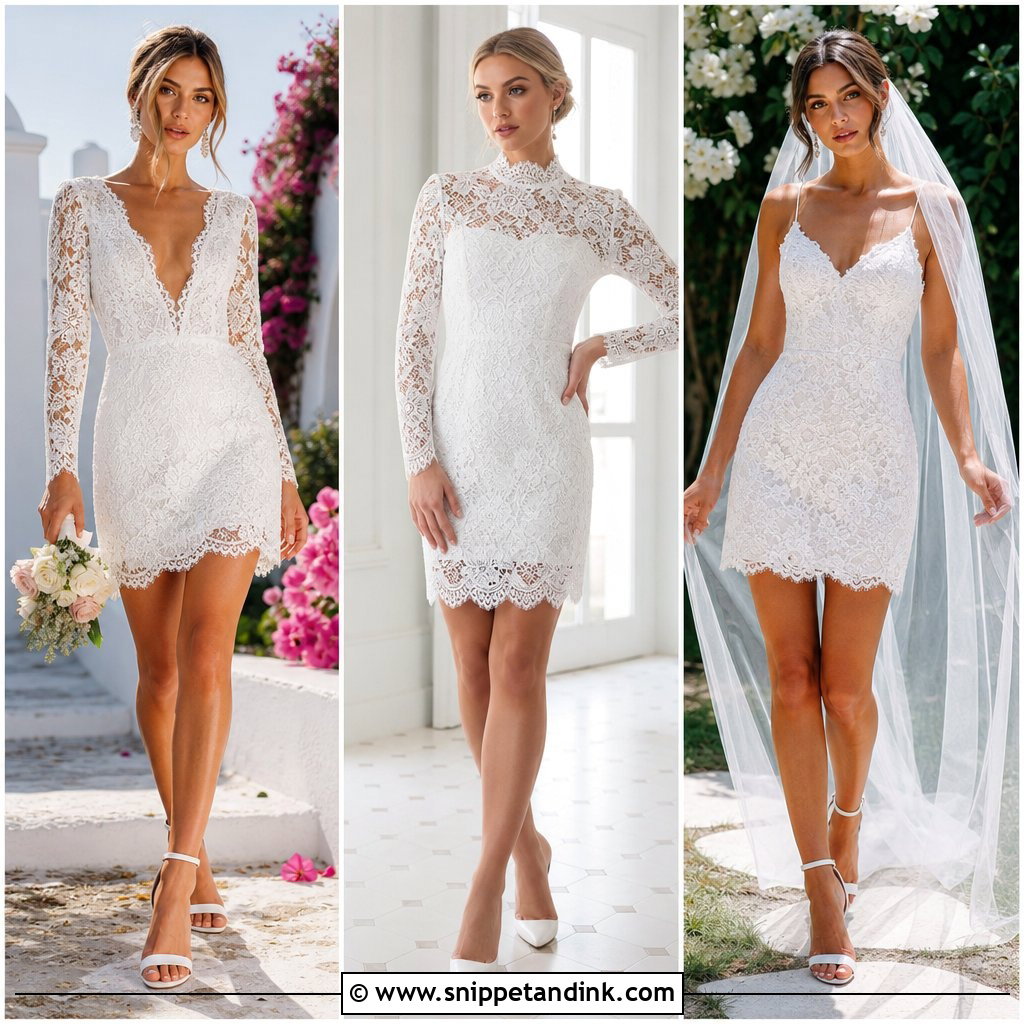
Short dresses earn their place at courthouse ceremonies, elopements and after-parties. A mini dress with puff sleeves, a square neckline or a back bow keeps it bridal while the hem keeps it playful. The fit point I watch on a mini is the hemline once you sit, because a length that looks right standing can ride up several centimetres on a chair. Do that test in the mirror. White Mary Janes, sheer tights in cooler months and a short veil or bow headband finish it; keep the cut tailored so it doesn’t drift into party-frock territory.
8. Coquette Puff Sleeve Wedding Dress
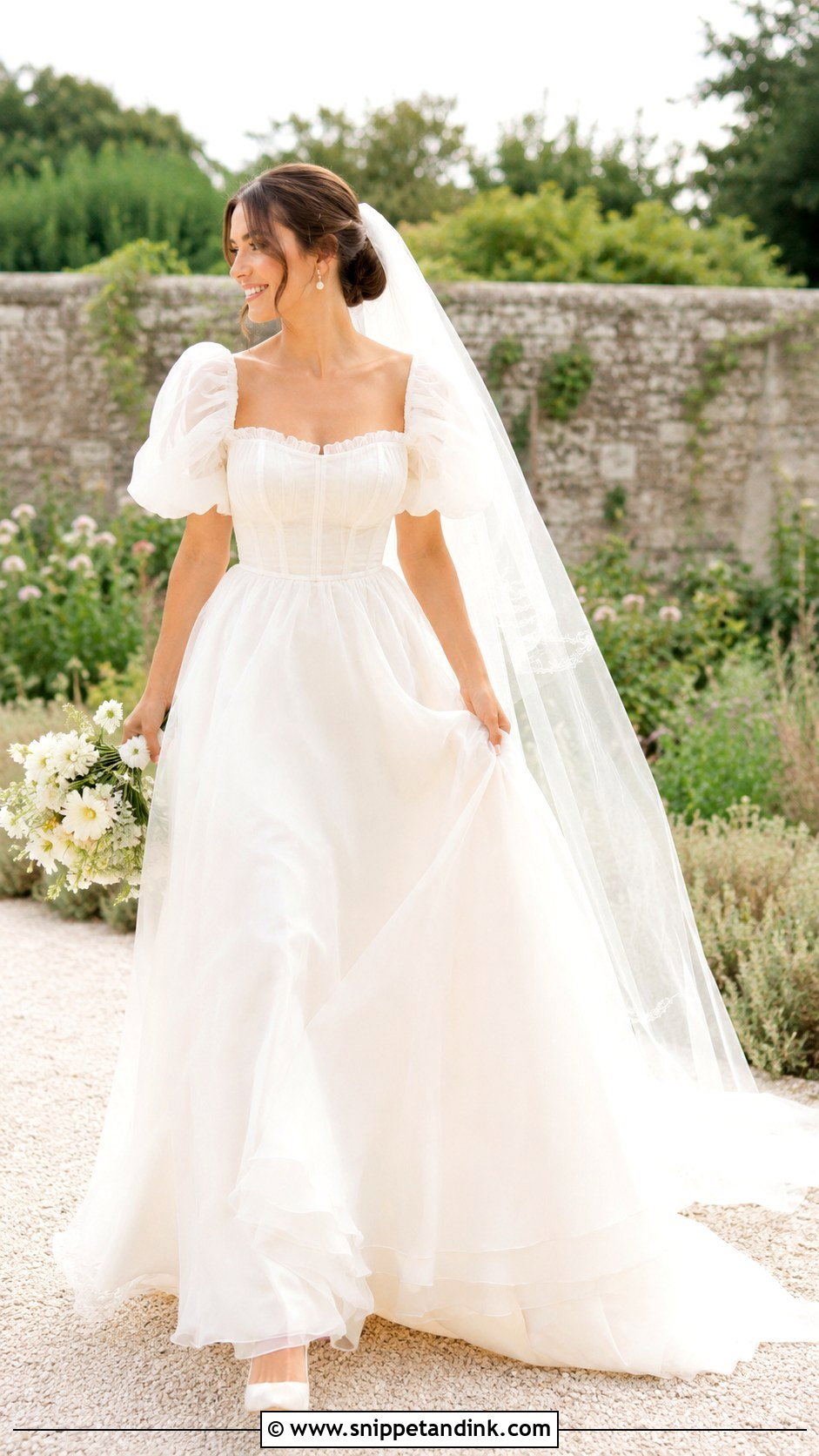
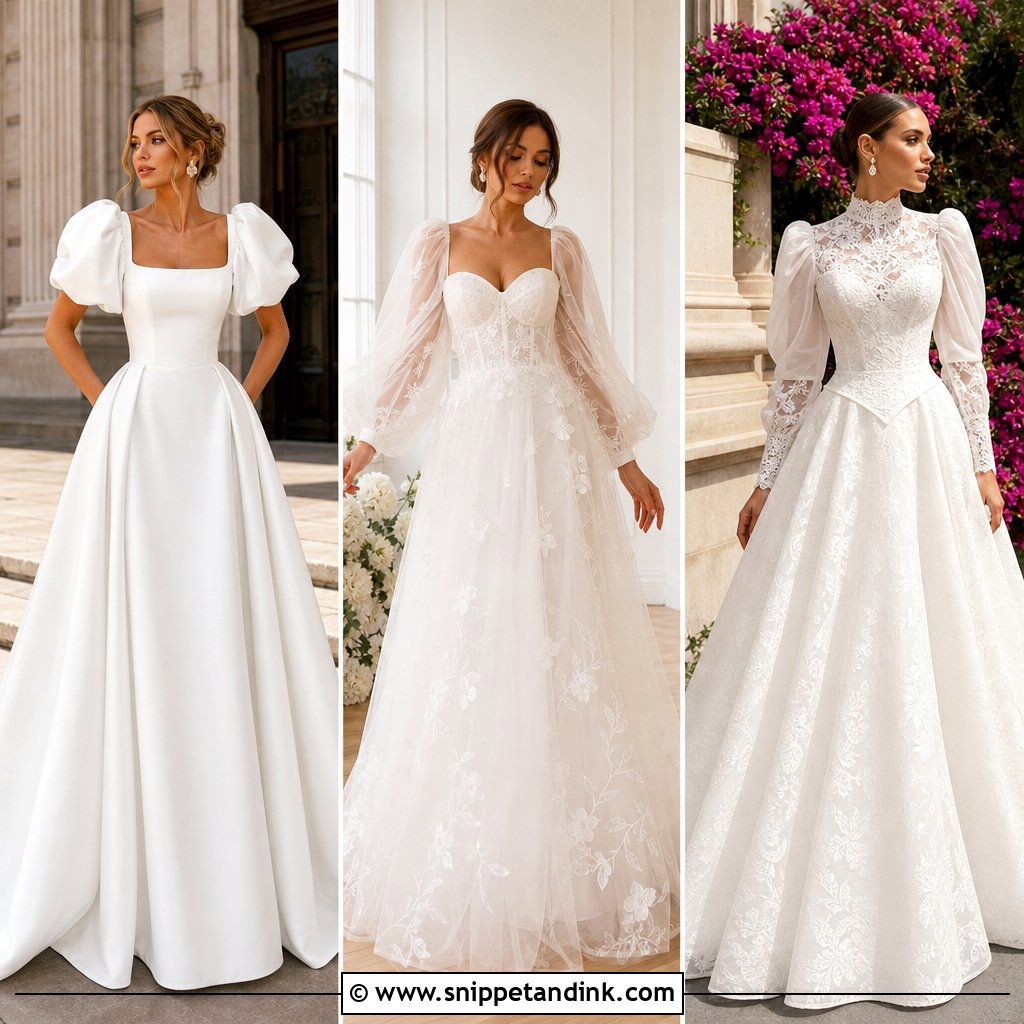
Puff sleeves add width at the shoulder, which balances a full skirt and makes the waist look smaller. They also restrict arm movement more than brides expect. Raise both arms at the fitting as if hugging someone taller; if the bodice lifts, the armhole needs work. Organza holds the puff shape longest, while chiffon versions flatten by evening. Detachable puffs are worth asking about for a cleaner reception look, and a low bun keeps the neck clear so the sleeves don’t crowd your face in portraits.
9. Coquette Off Shoulder Wedding Dress
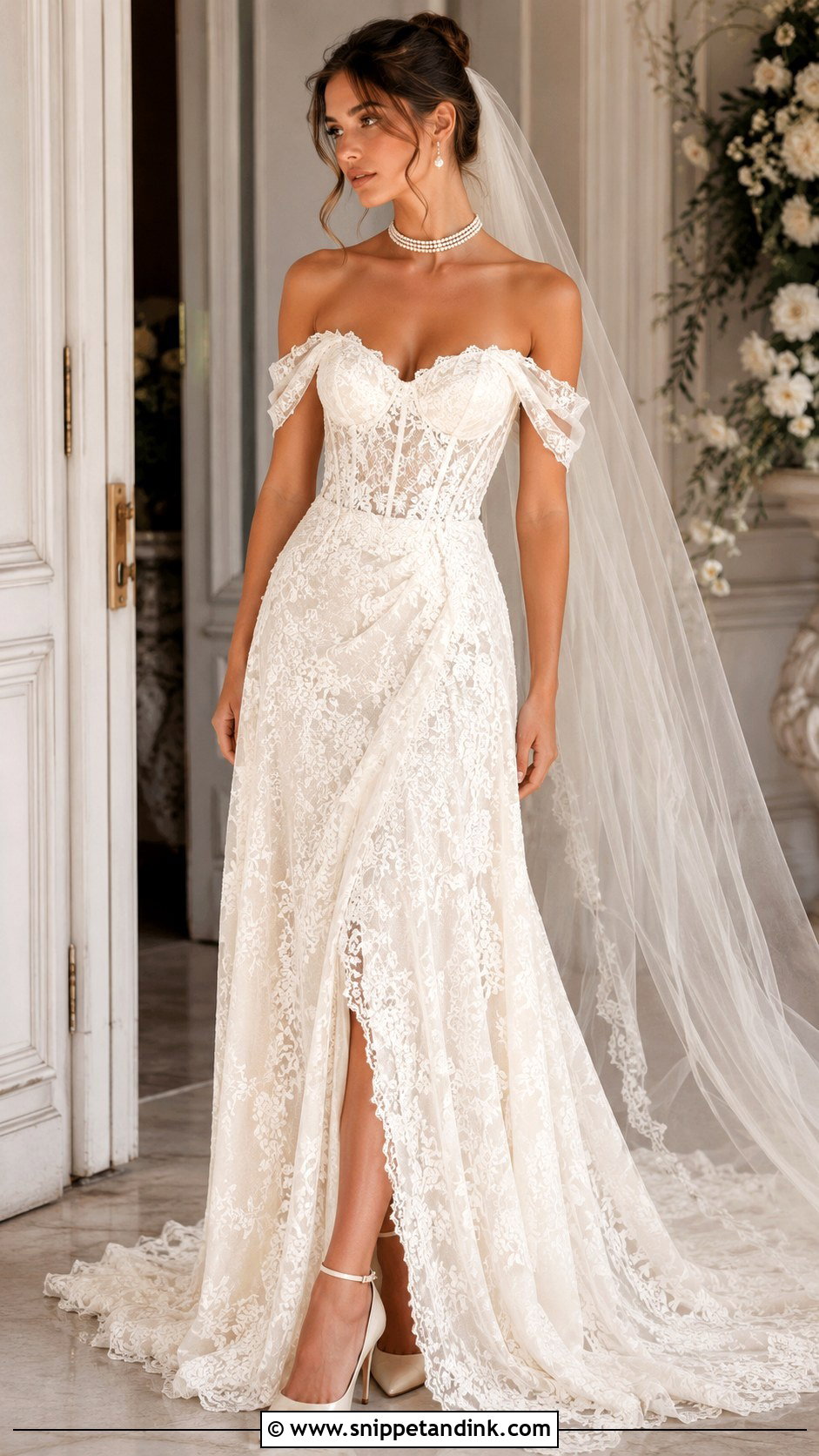
Off-shoulder necklines show off the collarbones, but they rely entirely on the bodice to stay put. I check for silicone gripper tape along the inside edge and a snug fit at the top of the ribcage. If the bodice is even slightly loose, the sleeves creep toward your shoulders all evening and you spend the reception hitching them down. A corset bodice makes this neckline far more secure. A pearl choker fills the open space well, and the veil should attach at the crown so it doesn’t drag on the draped sleeves.
10. Coquette Square Neck Wedding Dress
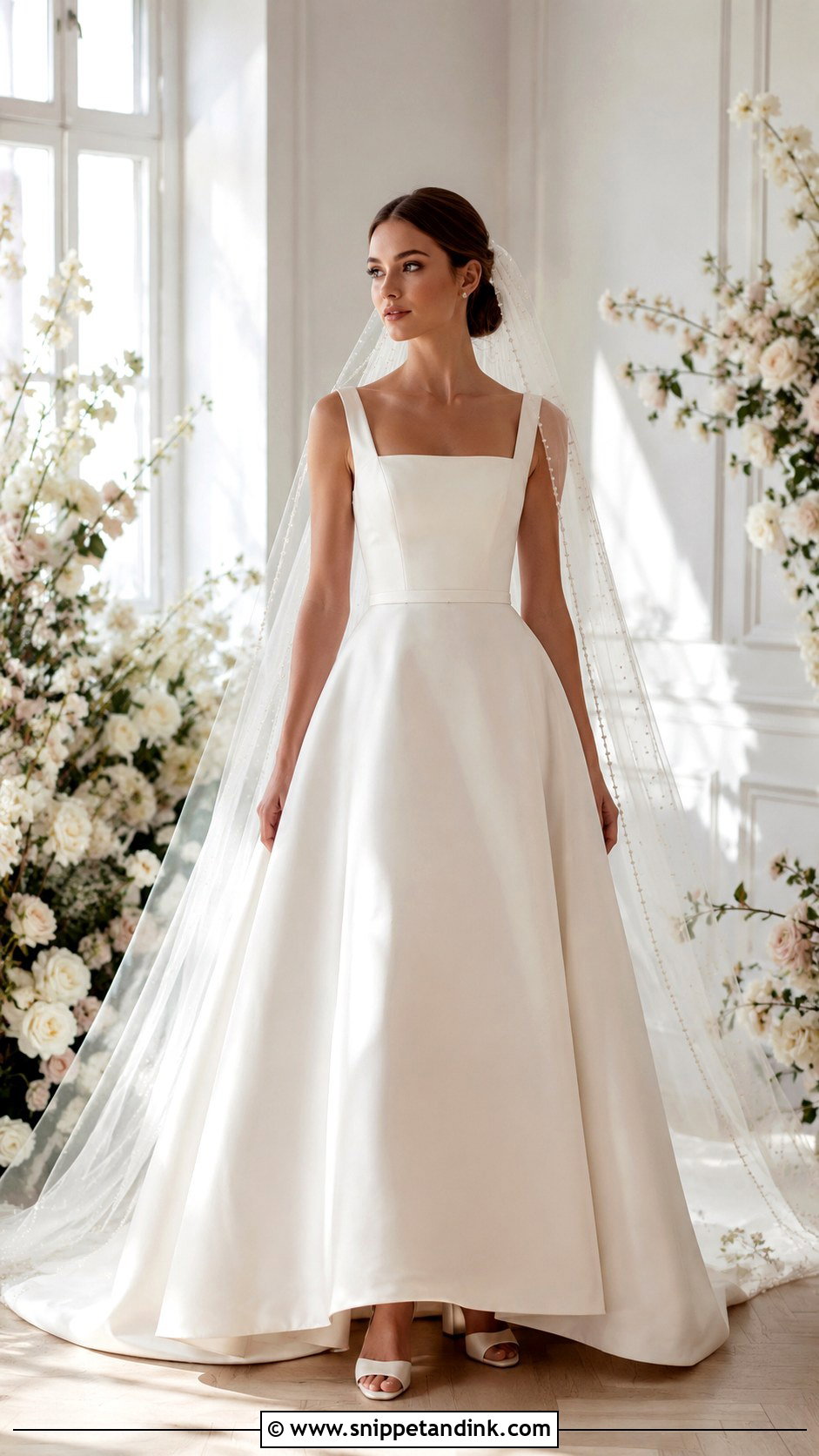
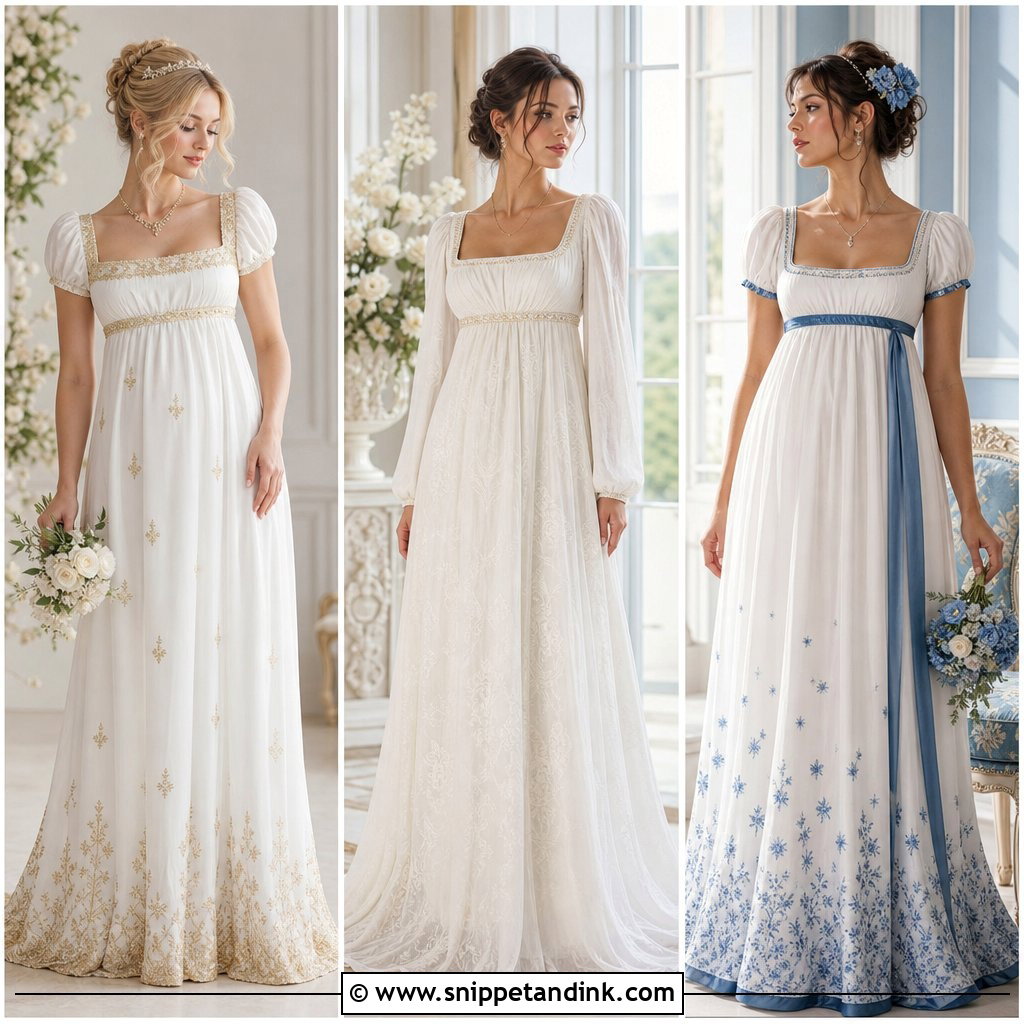
Of every neckline on this list, the square neck is the most forgiving. It sits flat across most bust sizes, leaves room for any earring and reads vintage without trying. I suggest it to brides who find a sweetheart too bridal and a V too open. A narrow ribbon at the waist adds the coquette detail with almost no effort. Pearl studs, a low bun and ivory block heels are practical companions, and a veil edged in pearl or lace echoes the straight line across the chest.
11. Coquette Floral Applique Wedding Dress
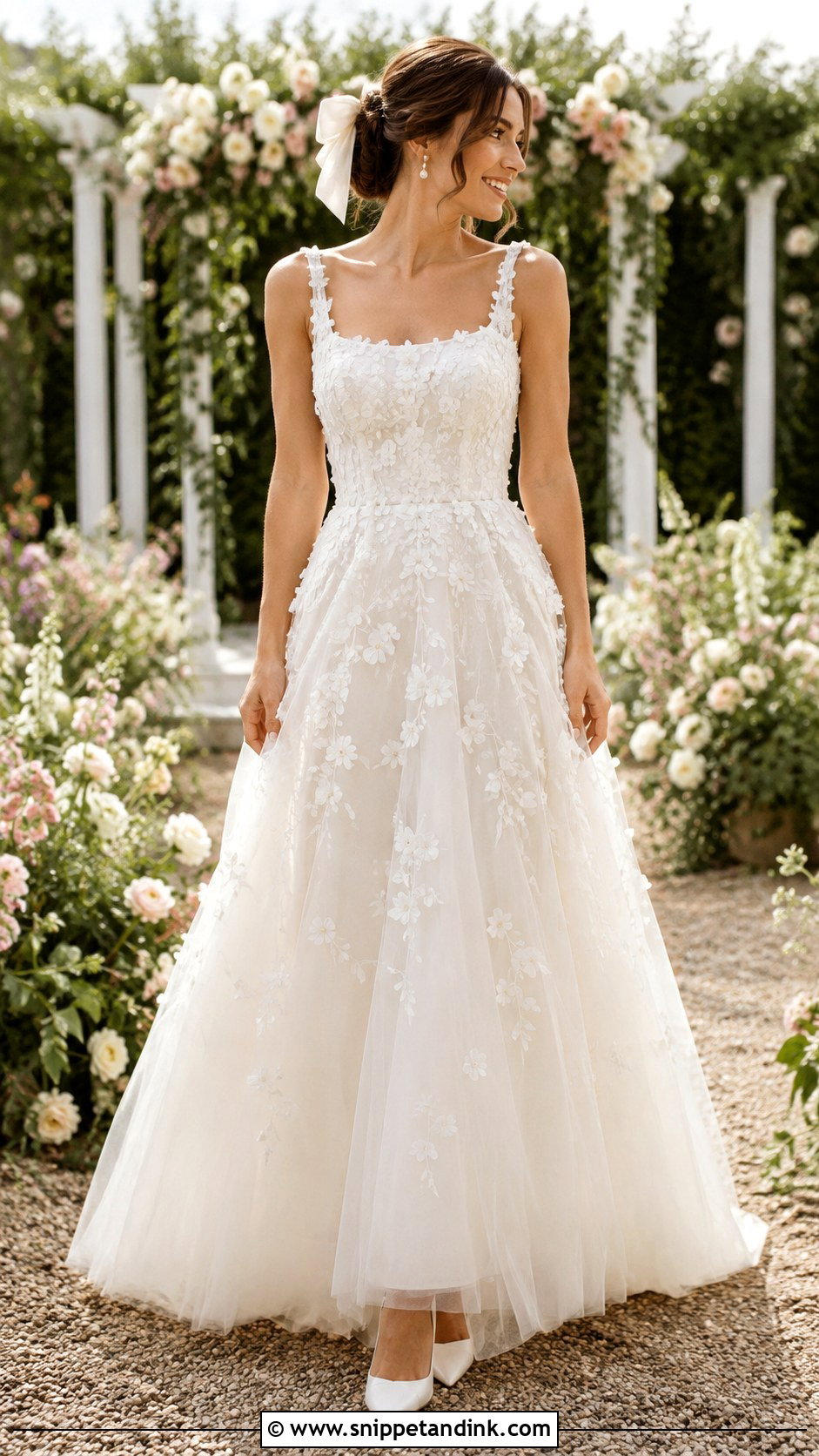
Raised flowers bring texture without leaning on lace, but three-dimensional appliqués crush. If you’ll wear a bustle, hold your bouquet against your hip or sit through a long dinner, ask where the flowers sit relative to those contact points; petals on the lower skirt survive far better than petals at the waist. A sheer tulle or organza overlay keeps the finish light. Skip a necklace when the bodice is covered. This one makes the most sense in spring and in gardens, where the flowers have something to answer to.
12. Coquette Drop Waist Wedding Dress
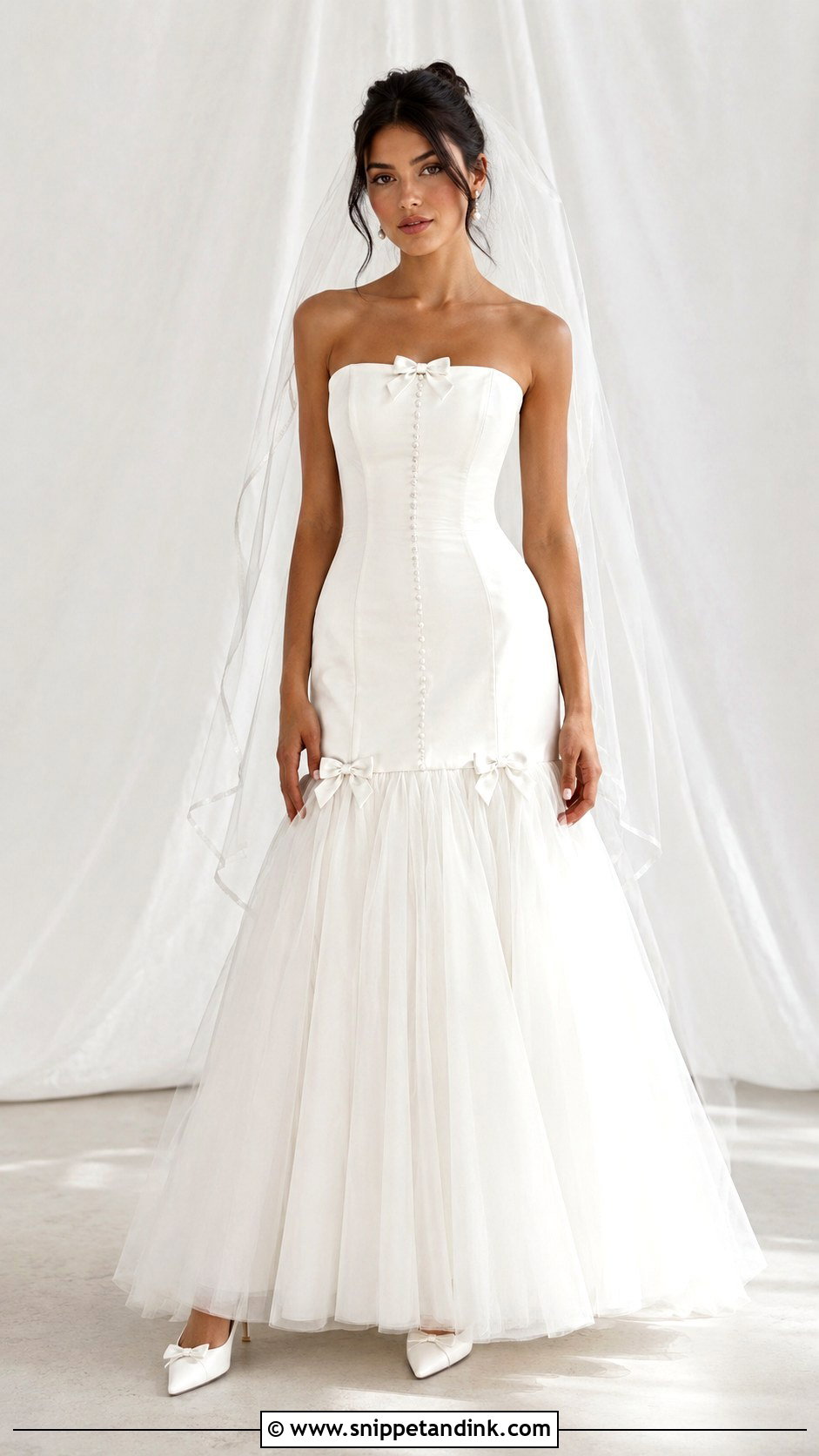
The drop waist is the most fashion-led shape here, and the one that depends most on torso length. The seam should land at or just below the hip bone. On a short-waisted bride, a dropped seam can cut across the widest point of the hips and shorten the legs in photos, so I always check it side-on in the mirror before anyone says yes. Bow accents, lace trim or pearl buttons keep it romantic. Pointed satin heels help lengthen the line, and a veil worn behind the shoulders leaves the long bodice visible.
13. Coquette Tea Length Wedding Dress
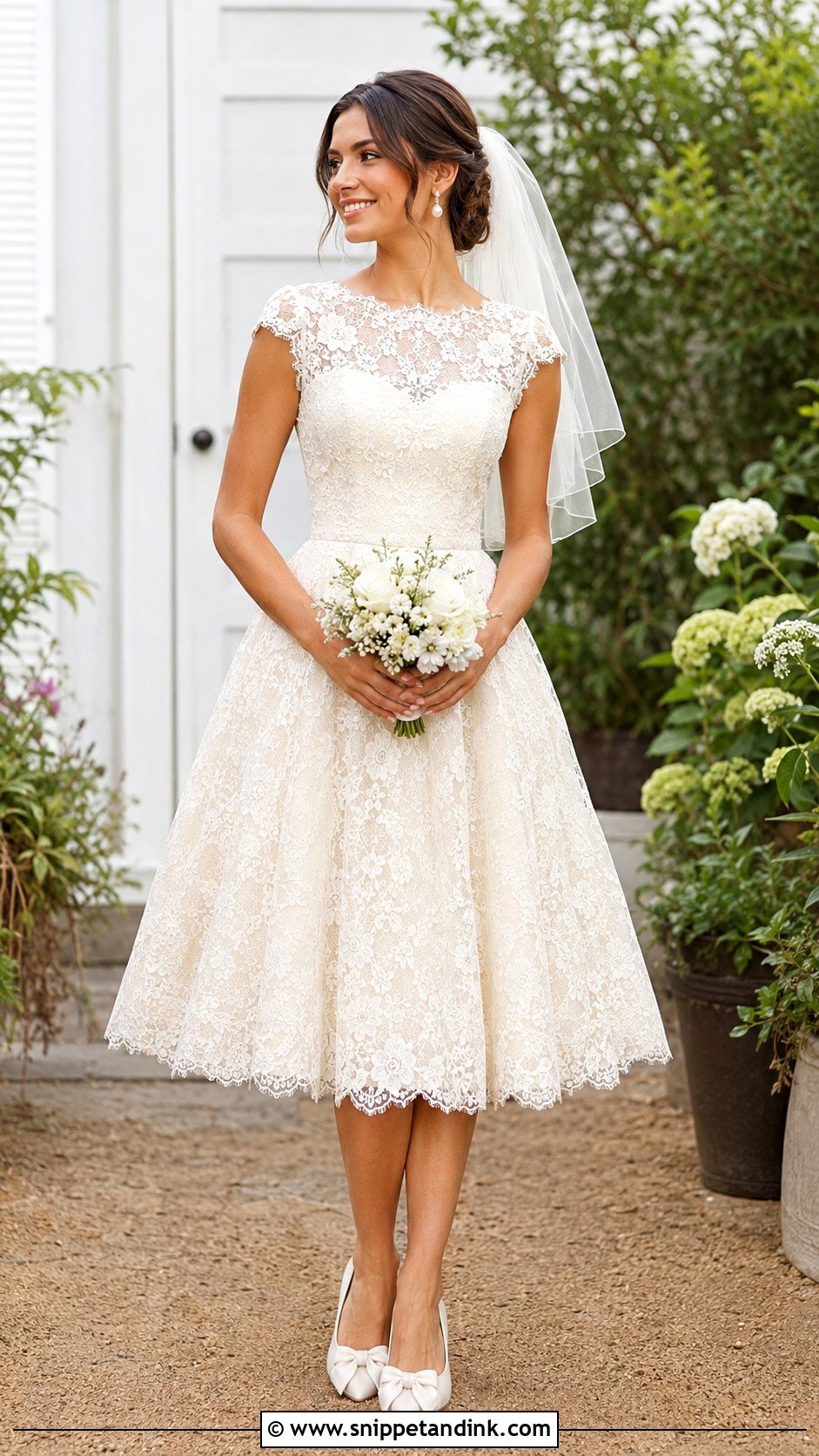
Tea length falls between the knee and ankle, so your shoes become part of the outfit and deserve the same attention as the dress. A full skirt on a fitted bodice gives a 1950s shape; lace or organza keeps it bridal. I ask brides to bring their actual wedding shoes to the hemming fitting, because a small change in heel height moves where the hem lands on the calf. Bow heels, pearl earrings, a short veil and a small bouquet complete it, and the result is a dress that feels joyful from the vows to the last song.
14. Coquette Organza Wedding Dress
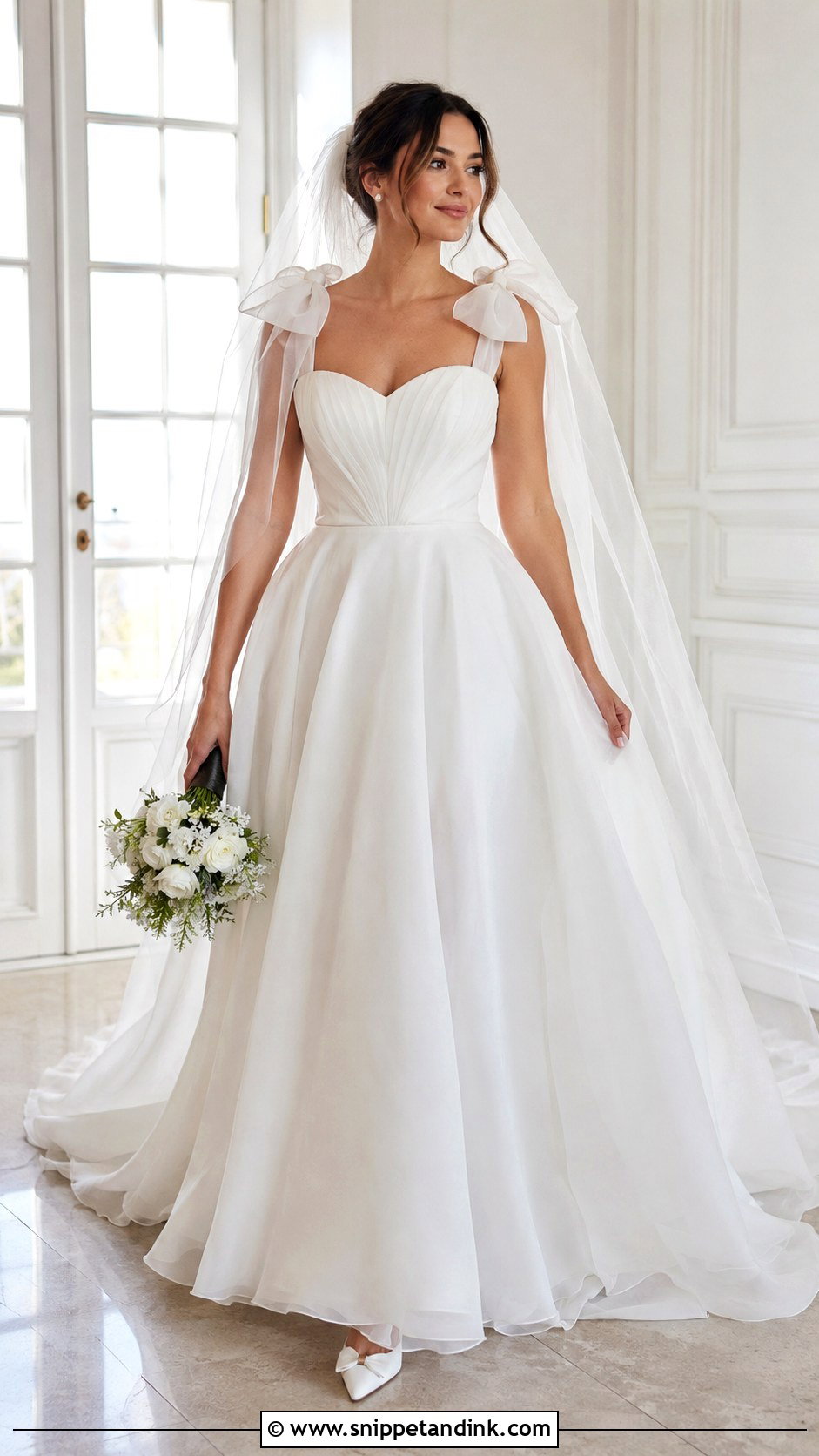
Organza is crisp where tulle is soft, so it holds pleats, bows and puff sleeves without collapsing. That crispness has a downside. Organza creases sharply from sitting, more visibly than tulle, so I keep a handheld steamer at the venue for exactly this fabric. The version I reach for most often has a sweetheart neckline with soft pleating, and organza bows at the shoulders add personality if you want it. Pearl studs, satin heels and a sheer veil are enough.
15. Coquette Ribbon Strap Wedding Dress
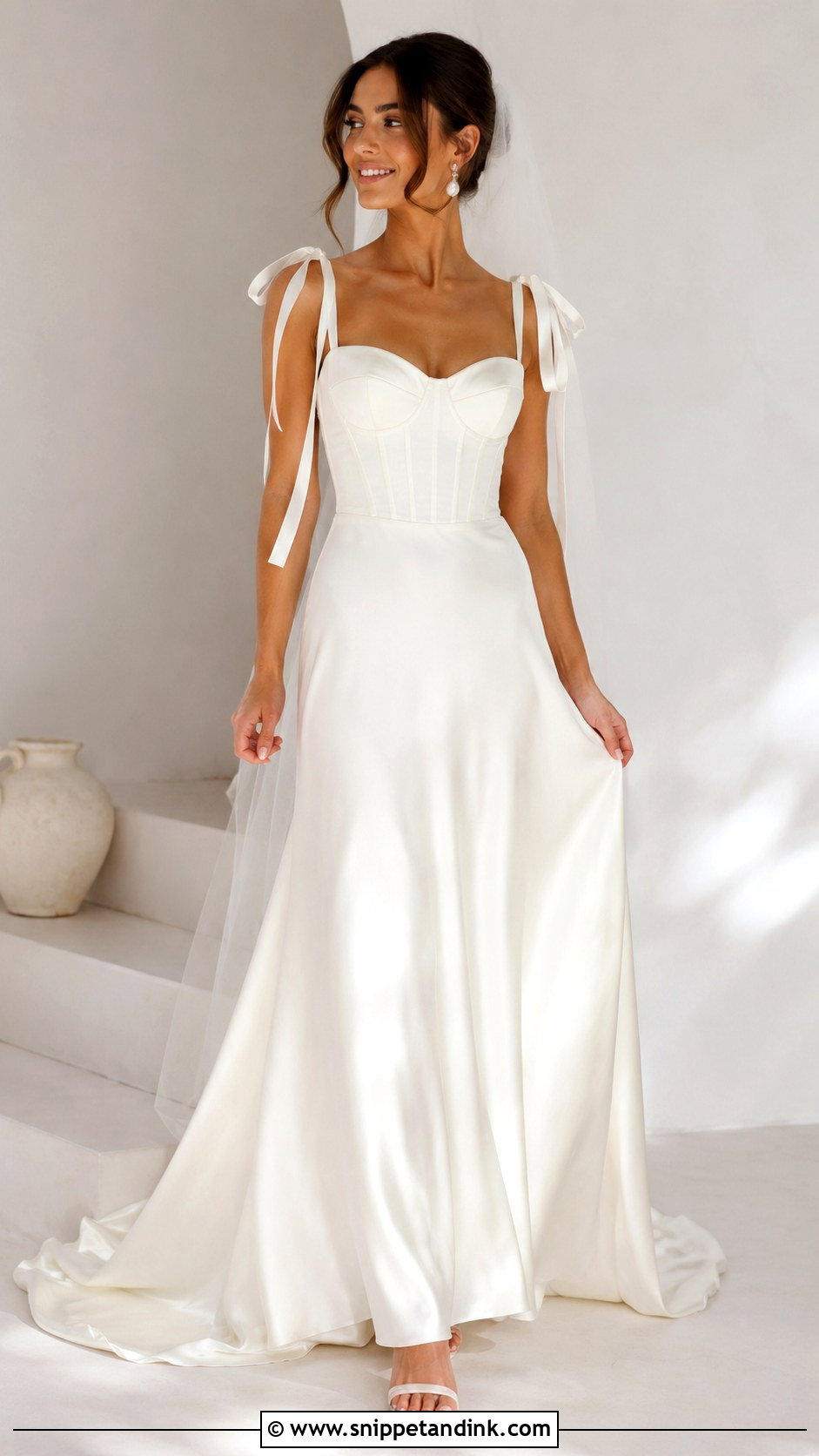
Ribbon straps are the lightest way to add coquette detail to a gown. Tied straps look sweet but loosen as you move, so I ask the seamstress to tack the knot once you’re fitted; nobody wants to retie a shoulder in the venue bathroom. Matching the ribbon to the dress matters more than people think. A slightly whiter ribbon on an ivory gown looks like an afterthought. Satin, lace and tulle bodices all take ribbon well, with ivory sandals and a soft veil keeping the rest light.
16. Coquette Blush Wedding Dress
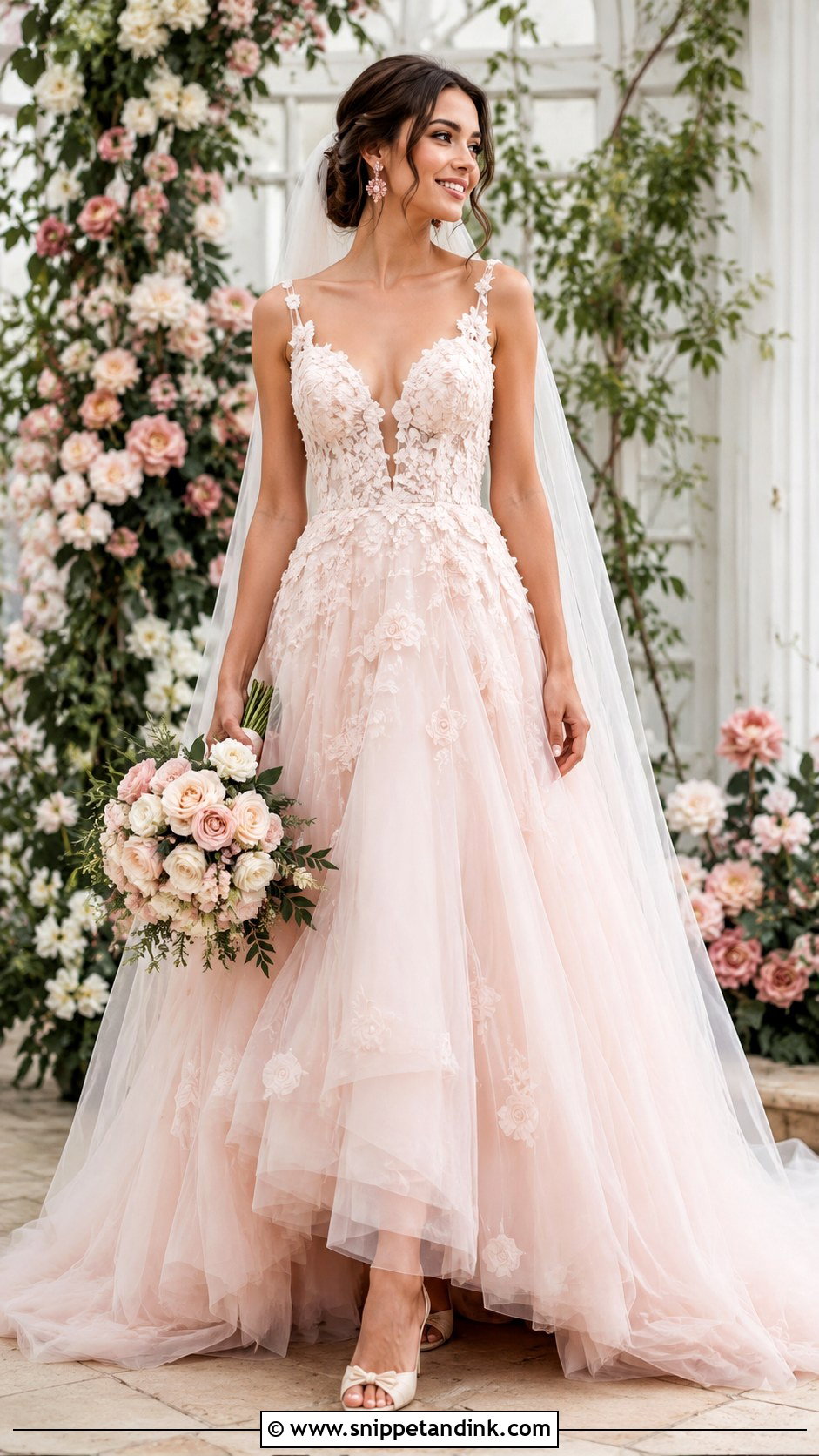
Blush is a gentle way into colour if stark white doesn’t feel like you. The catch is that pale pink can read nude or slightly grey depending on the light and on what’s layered beneath it; blush lining under ivory tulle looks very different from solid blush satin. Always see the dress in daylight against your skin before ordering. Floral appliqués and pearls suit it, cream and pink flowers in the bouquet tie it together, and fresh, natural makeup keeps the colour of the dress in charge.
17. Coquette Champagne Wedding Dress
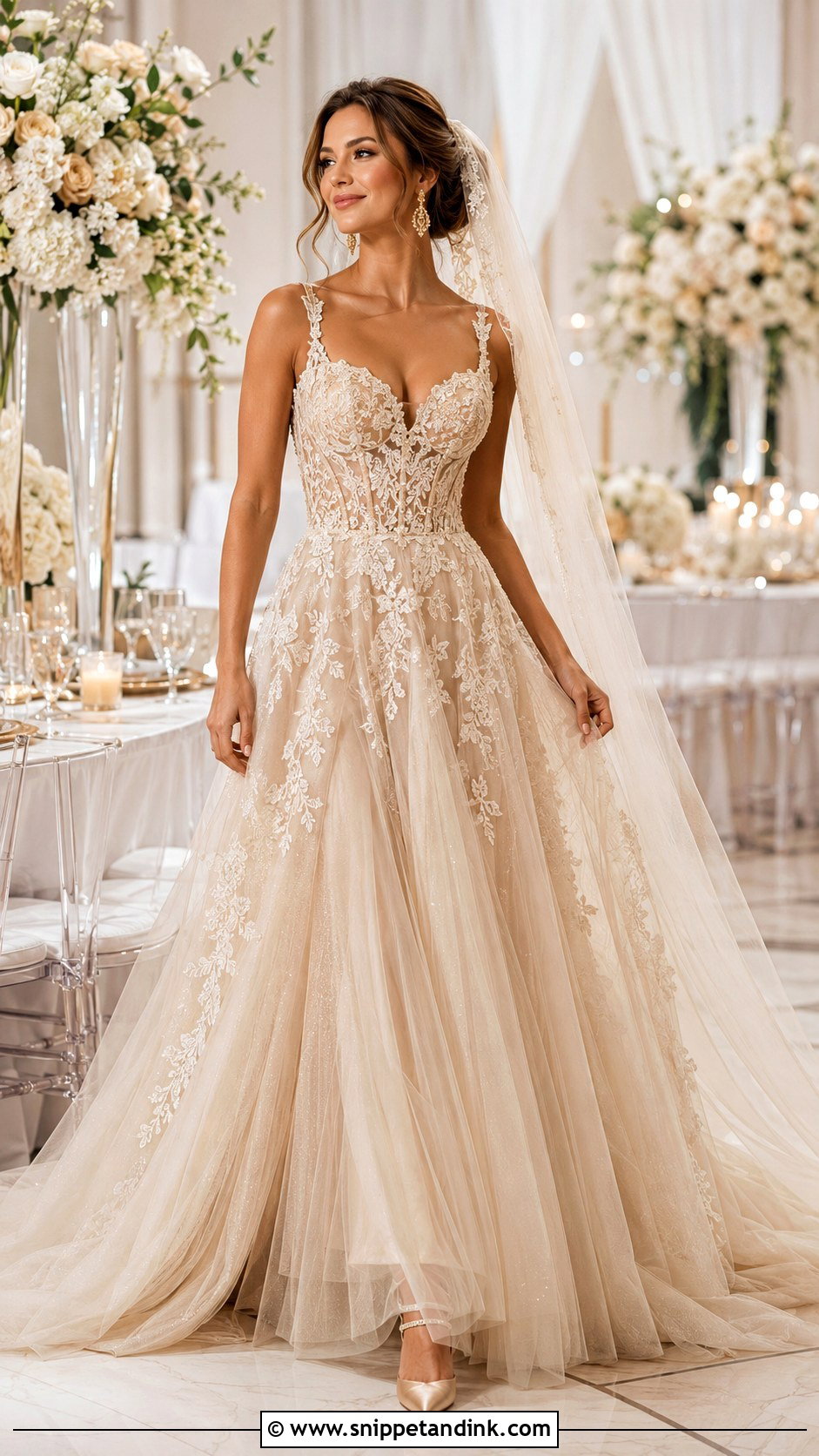
Champagne’s golden undertone warms most complexions and looks rich in evening light. Watch the veil, though. A white veil against a champagne gown shows up clearly in photos, so I always order the veil in the dressmaker’s champagne or a warm ivory to match. Lace, pearls and fine beading suit the warmth, and soft gold jewelry works here where it might look out of place on bright white. Historic venues and candlelit receptions are where this shade comes into its own.
18. Coquette Sheer Sleeve Wedding Dress
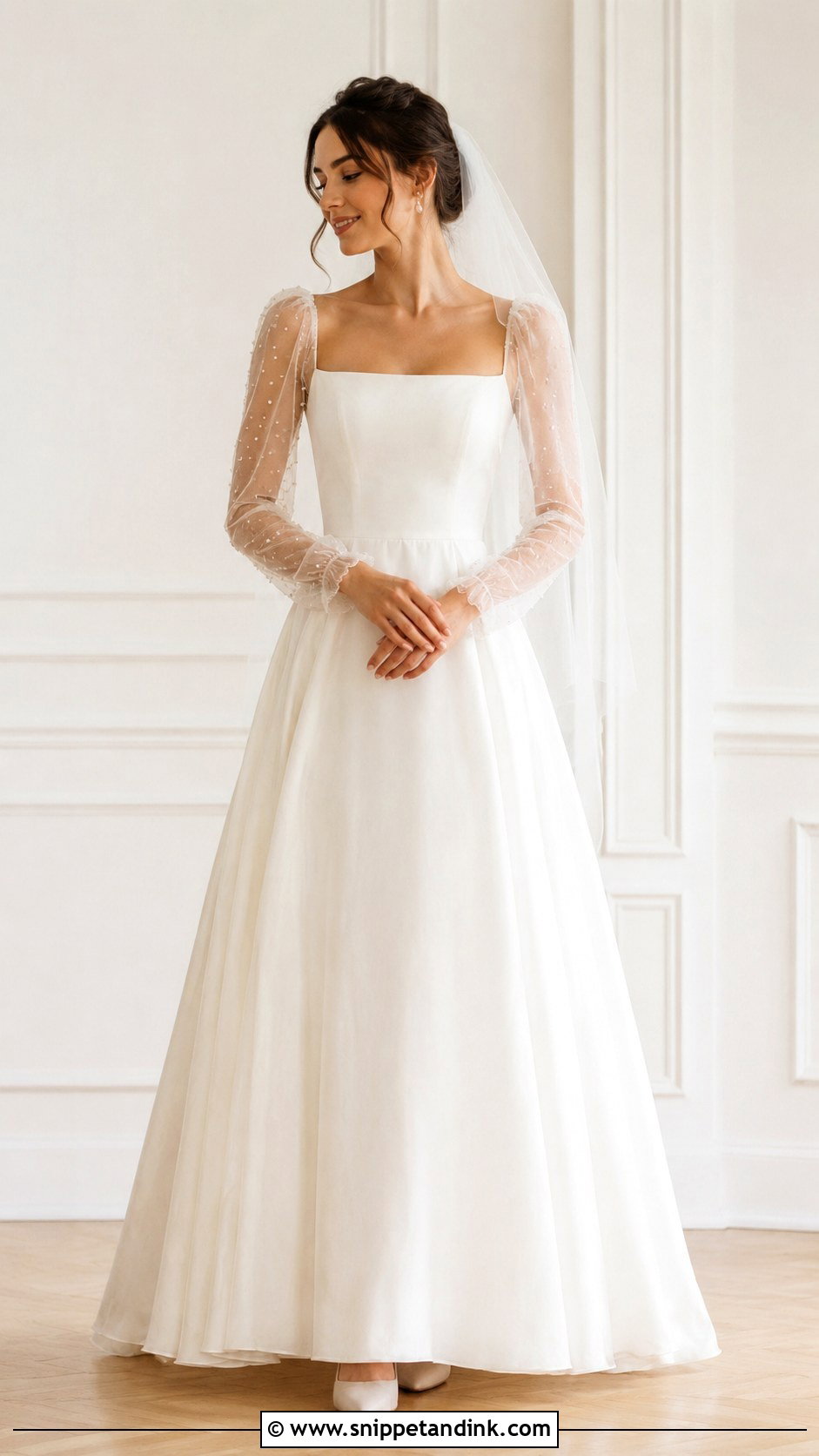
Sheer sleeves give coverage while still feeling light, usually in tulle or fine lace dotted with tiny pearls, bows or embroidered flowers. The fit point to check is the cuff. A sleeve that’s tight at the wrist makes it awkward to hold a bouquet or lift a glass, so I ask for a little ease or a button cuff. They pair with A-line, sheath or ball gown skirts equally well. For fall, winter or indoor weddings, add pearl earrings and closed-toe ivory heels.
19. Coquette Basque Waist Wedding Dress
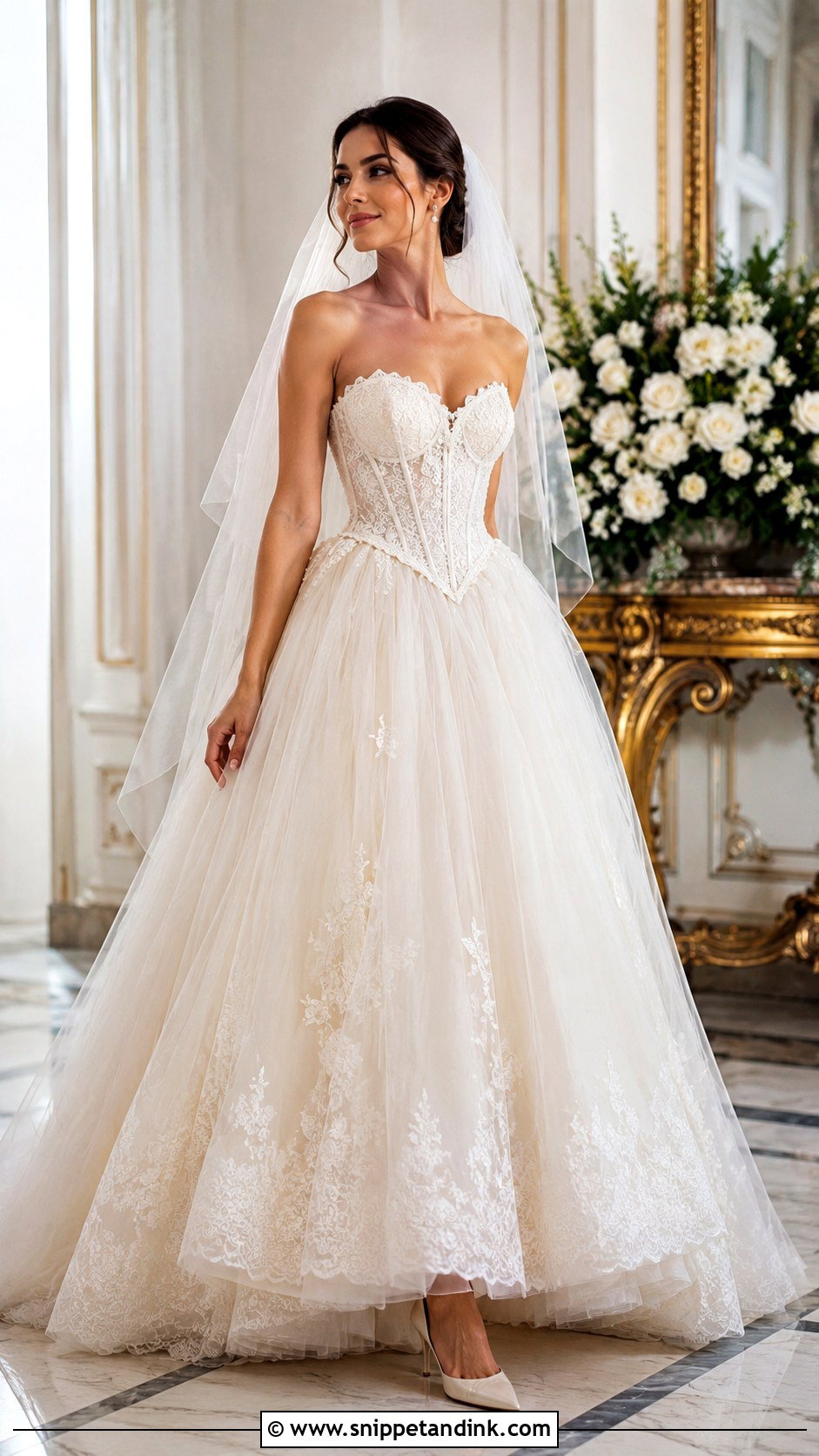
A basque waist dips to a point at the front, which lengthens the torso and draws the eye down through the centre of the body. That makes it one of the most flattering shapes for brides with a straighter or fuller midsection. It needs firm construction, or the point rides up every time you sit, so ask whether the bodice is boned right down to the tip. A full skirt with a bow back is the dramatic version; a soft A-line keeps it gentler. Lace or satin, a soft veil and ivory heels complete it.
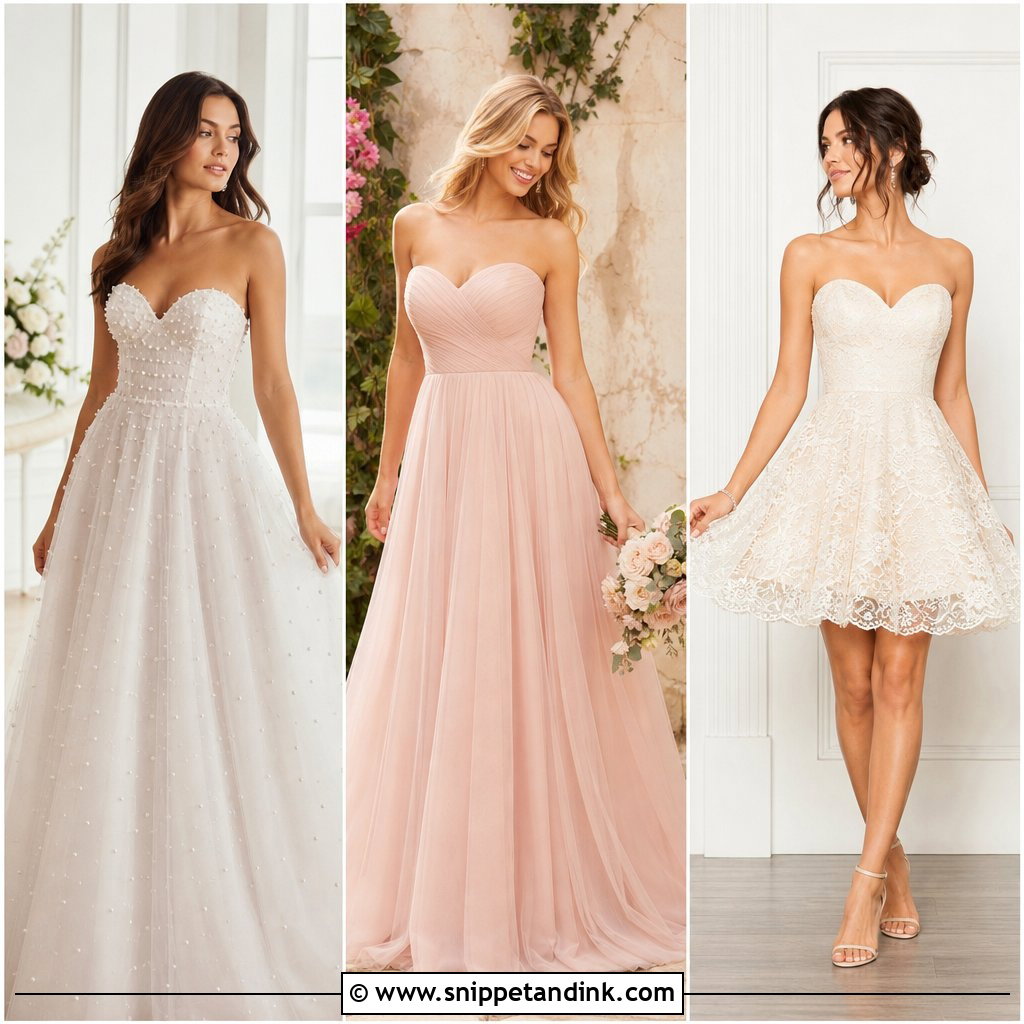
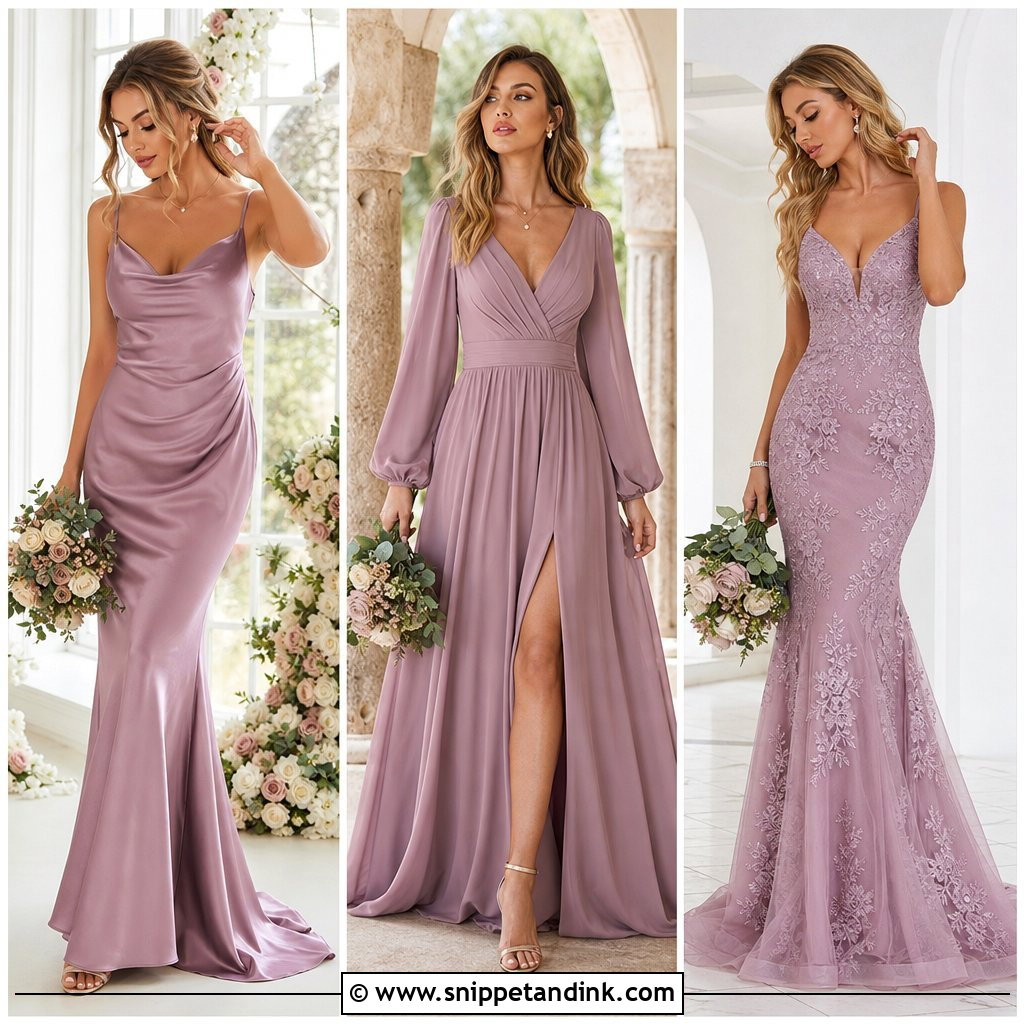
20. Coquette Slip Wedding Dress
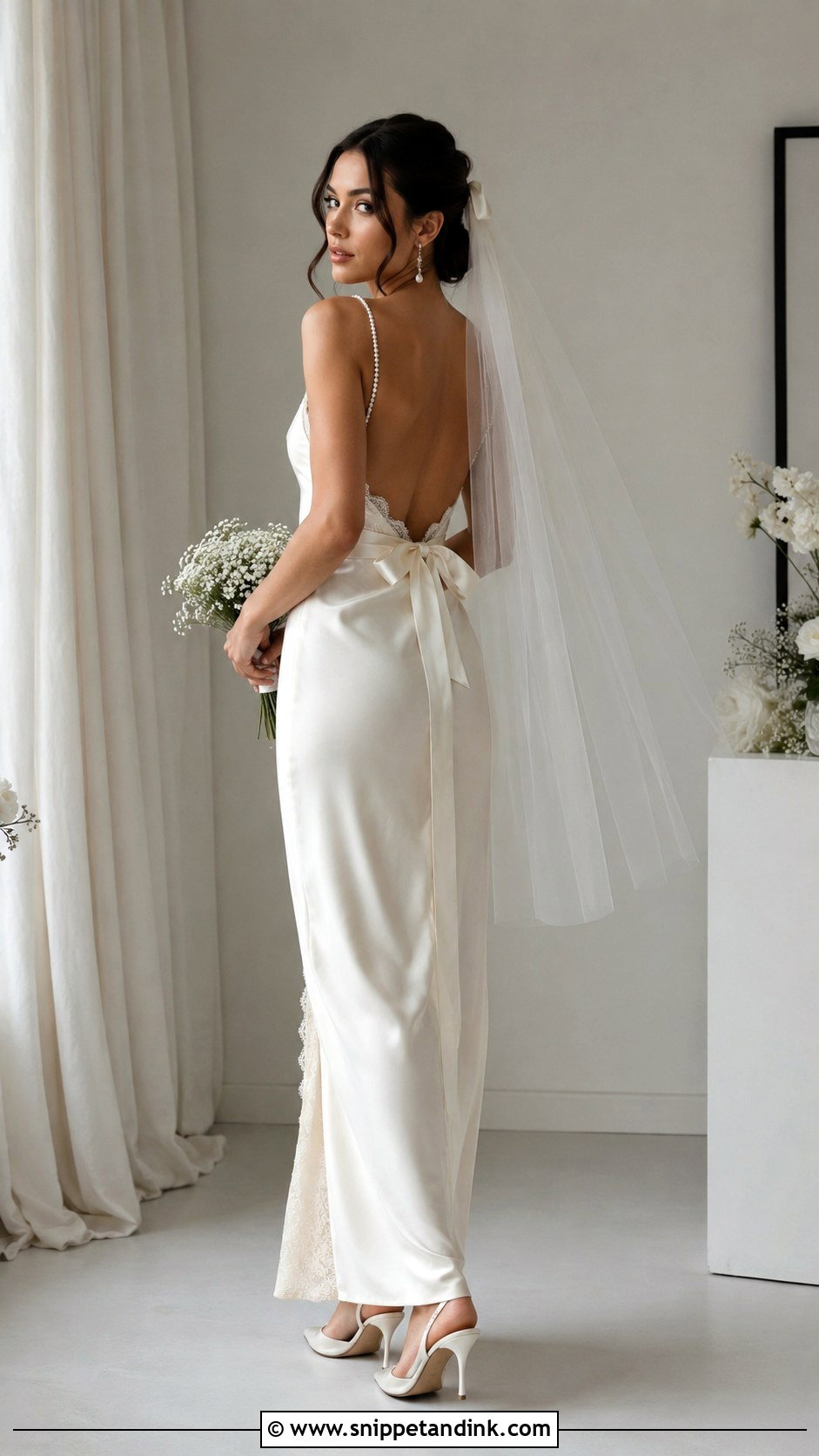
A slip is the plainest silhouette in this list, so the coquette part has to come from small things: lace trim, pearl straps, a tiny bow at the neck or back. Bias-cut satin is honest about what’s underneath, so I have brides try it on over the exact smooth, no-line underwear they’ll wear on the day. Pearl drop earrings, a ribbon hair tie, slingback heels and a sheer veil build the outfit. It suits intimate weddings, beaches and rooftops where you want to move freely.
21. Coquette Ruffle Wedding Dress
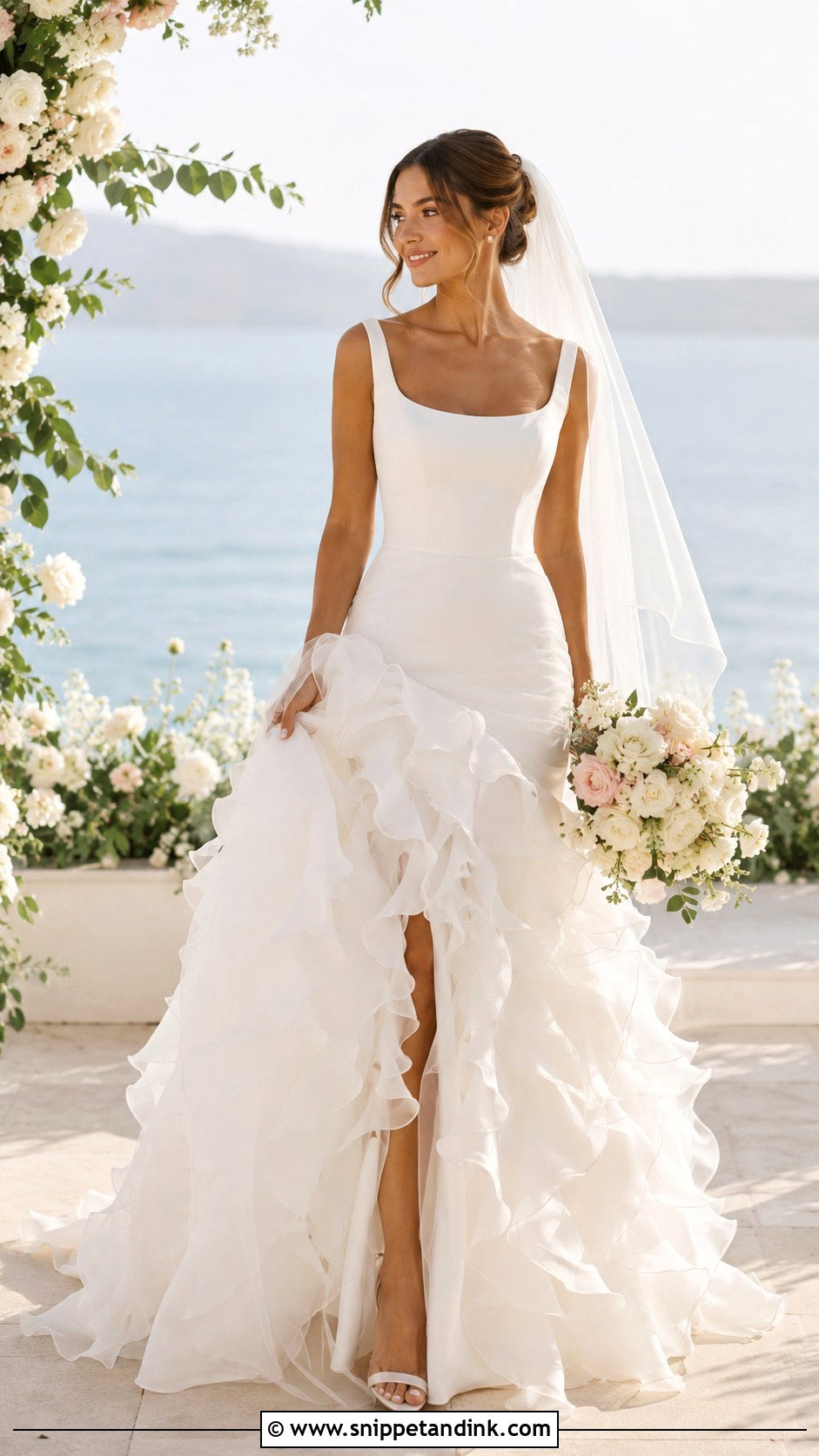
Ruffles move, and that’s half their appeal. Stiff ones can look heavy, though, so I lean toward cascading tulle or soft organza layers. My rule at fittings is to let one area carry the ruffles: a dramatic skirt gets a simple bodice, ruffled sleeves get a cleaner skirt. Pearl studs, satin heels and a plain veil keep it balanced. Outdoor ceremonies suit it best, where a breeze actually catches the layers.
22. Coquette Ballerina Wedding Dress
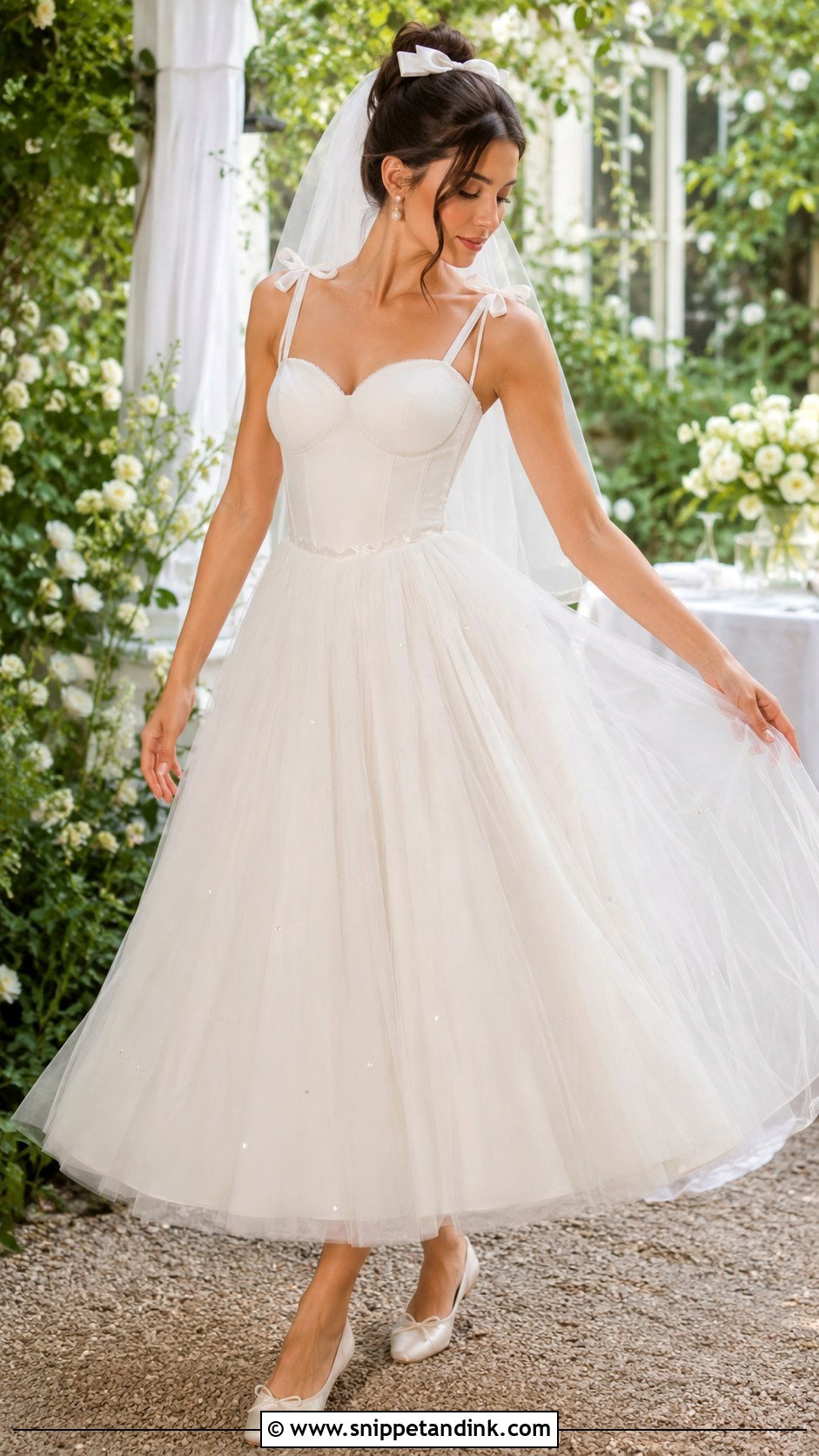
A ballerina wedding dress is the most literal take on the trend: fitted bodice, fine straps and a tulle skirt that floats. Fabric quality decides whether it looks bridal or like a recital costume. Cheap tulle is scratchy and flattens in photos, while soft silk tulle drapes and moves. Tea or ankle length shows off satin ballet flats or a low block heel, and pearl earrings plus a ribbon in the hair are plenty. I’d suggest this one to brides who intend to dance most of the night.
23. Coquette High Neck Wedding Dress
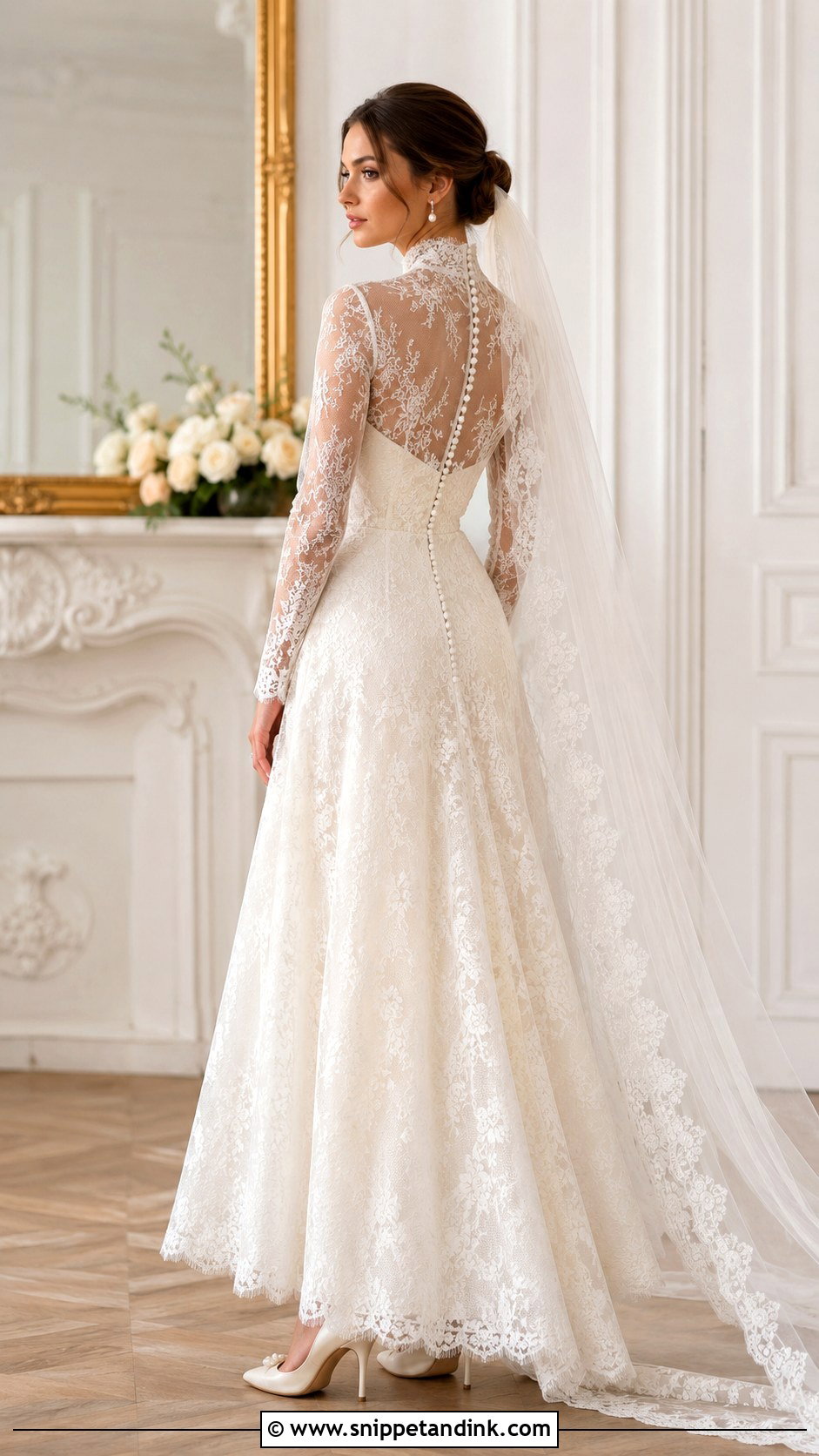
High necklines lean modest and vintage; the coquette version uses a lace high neck, sheer tulle panels and small buttons. The detail that matters most is collar height. It should sit just below the jaw without touching it when you look down, or it will crease and scratch through the speeches. Skip necklaces completely. A neat bun shows off the neckline and a lace-trimmed veil finishes it, which works well for formal venues, cooler months and ceremonies with coverage requirements.
24. Coquette Bow Shoulder Wedding Dress
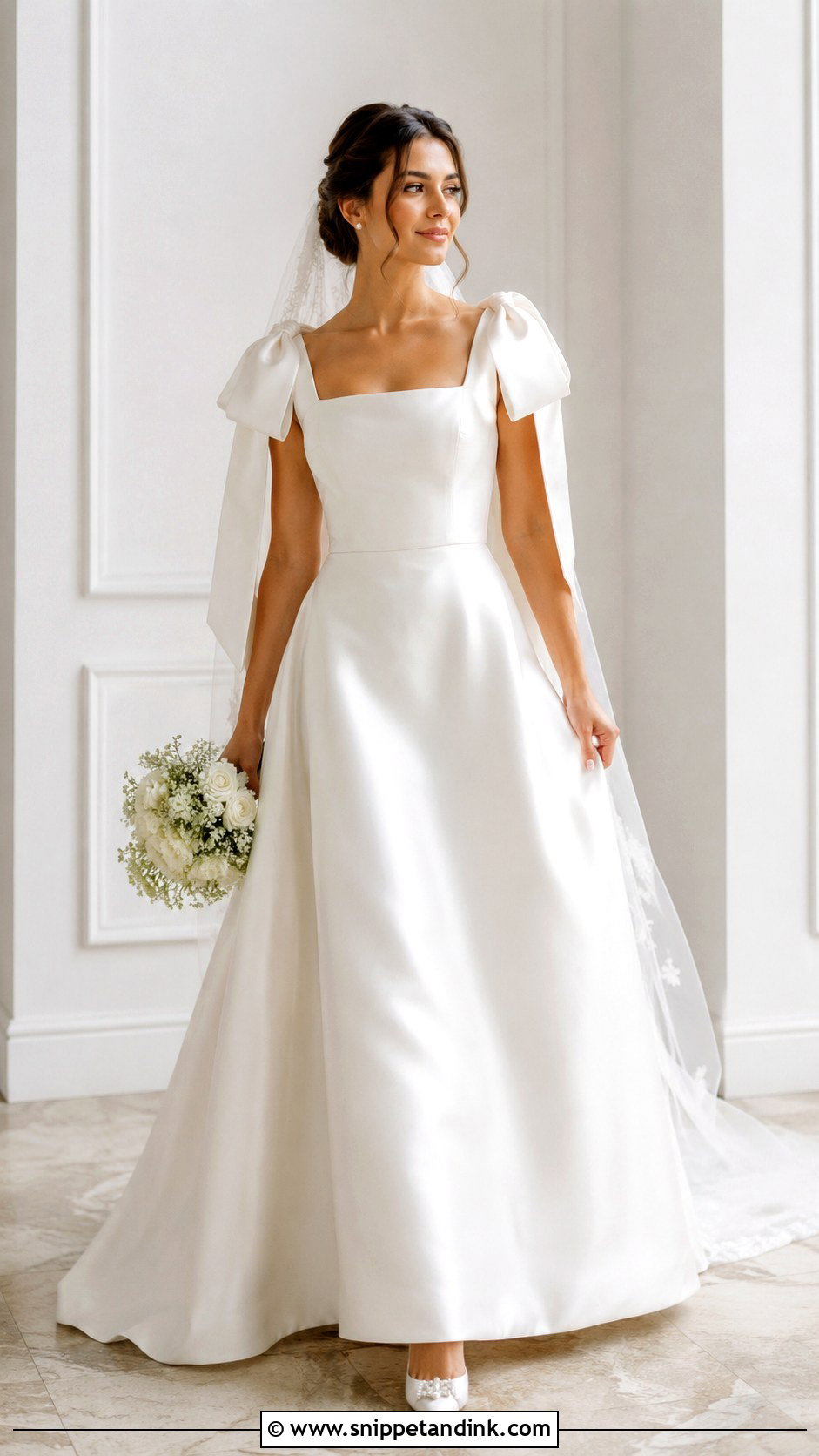
Shoulder bows pull the eye up toward the face, so they’re a smart choice if you want the attention on your neck and collarbones. Oversized bows need some stiffening inside; without it, they droop by the reception. I’d keep them on clean shapes like a satin A-line or a column gown, where nothing else competes. Jewelry stays minimal, just pearl studs or tiny drops. Close-up portraits are where this detail shows best.
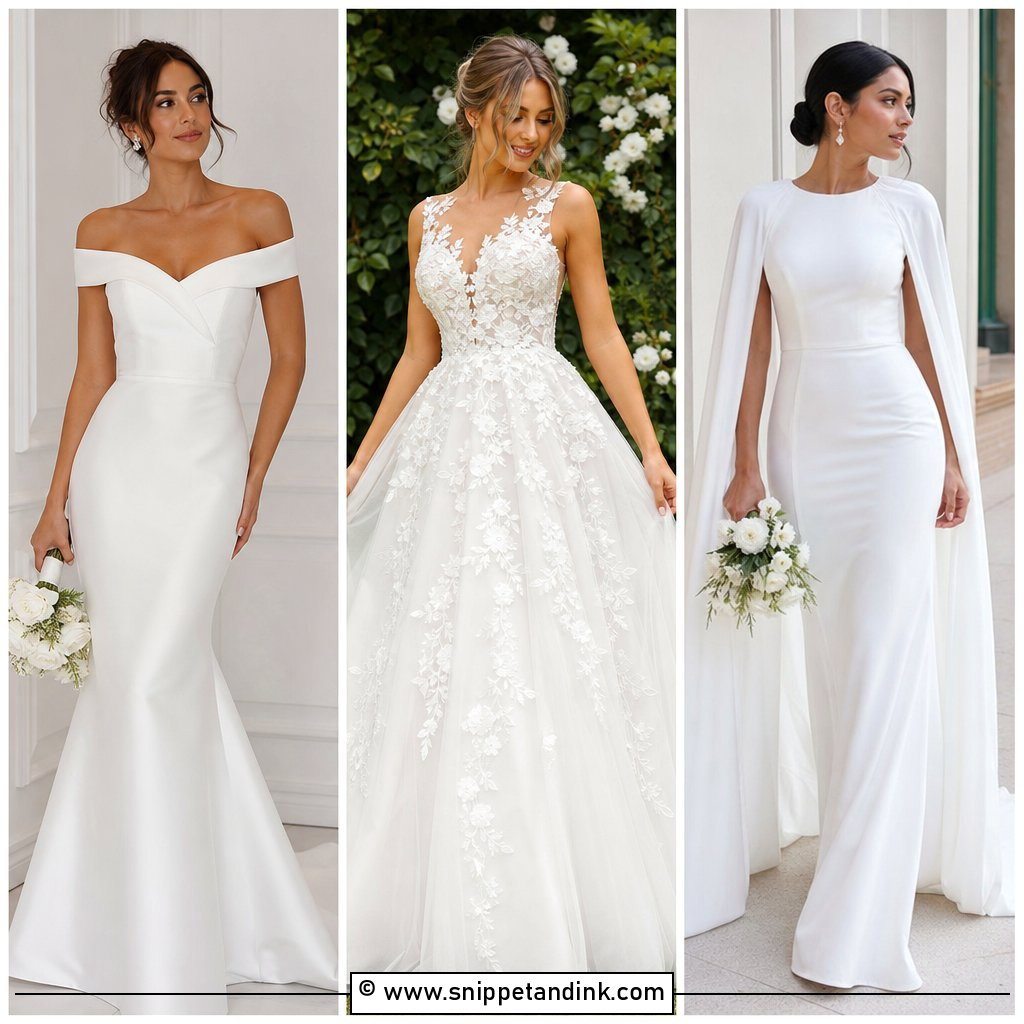
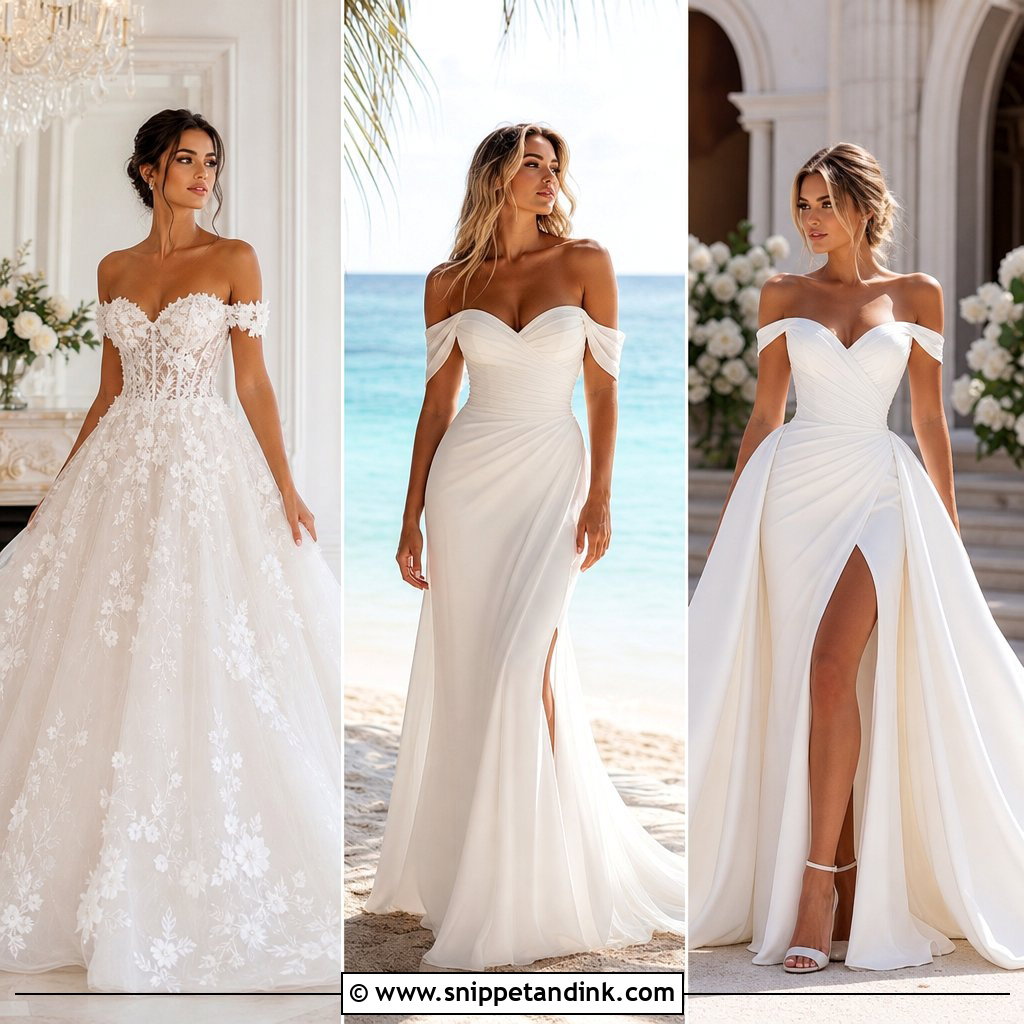
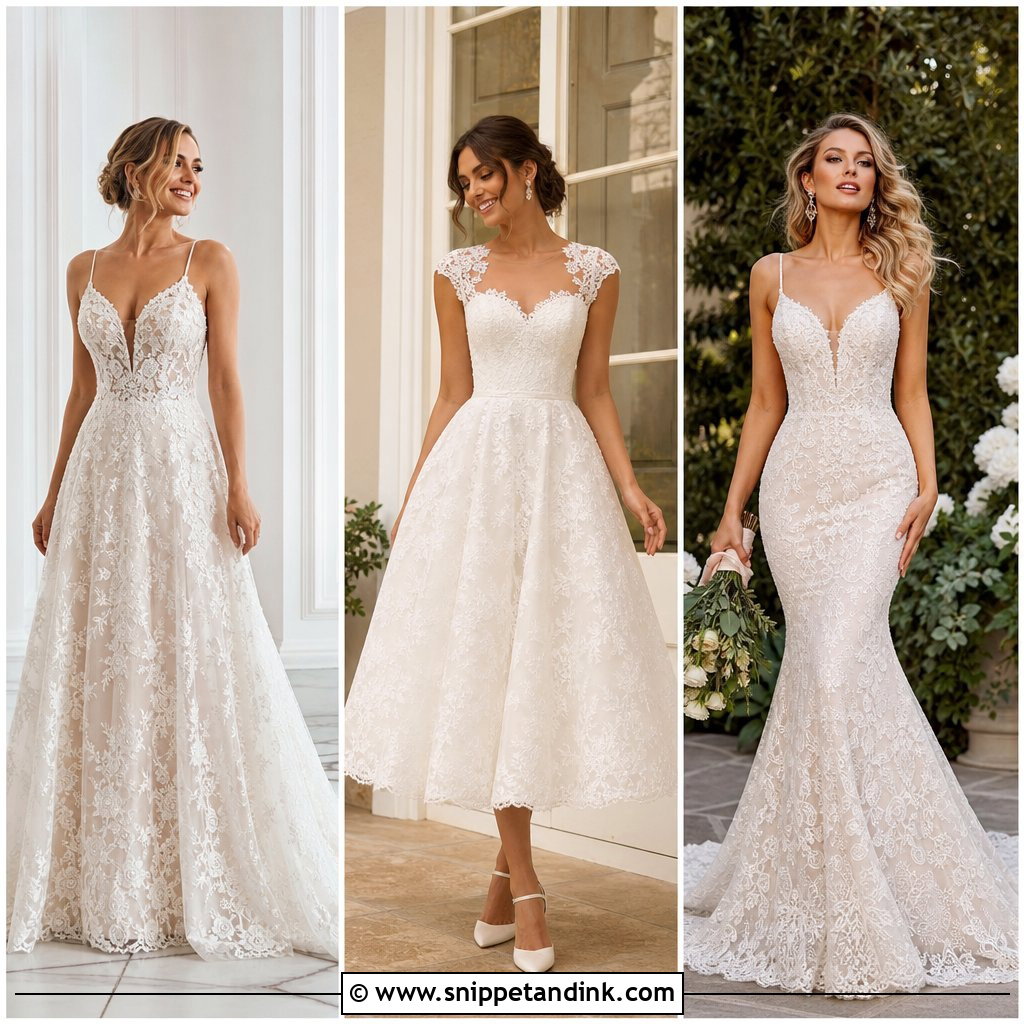
25. Coquette Reception Wedding Dress
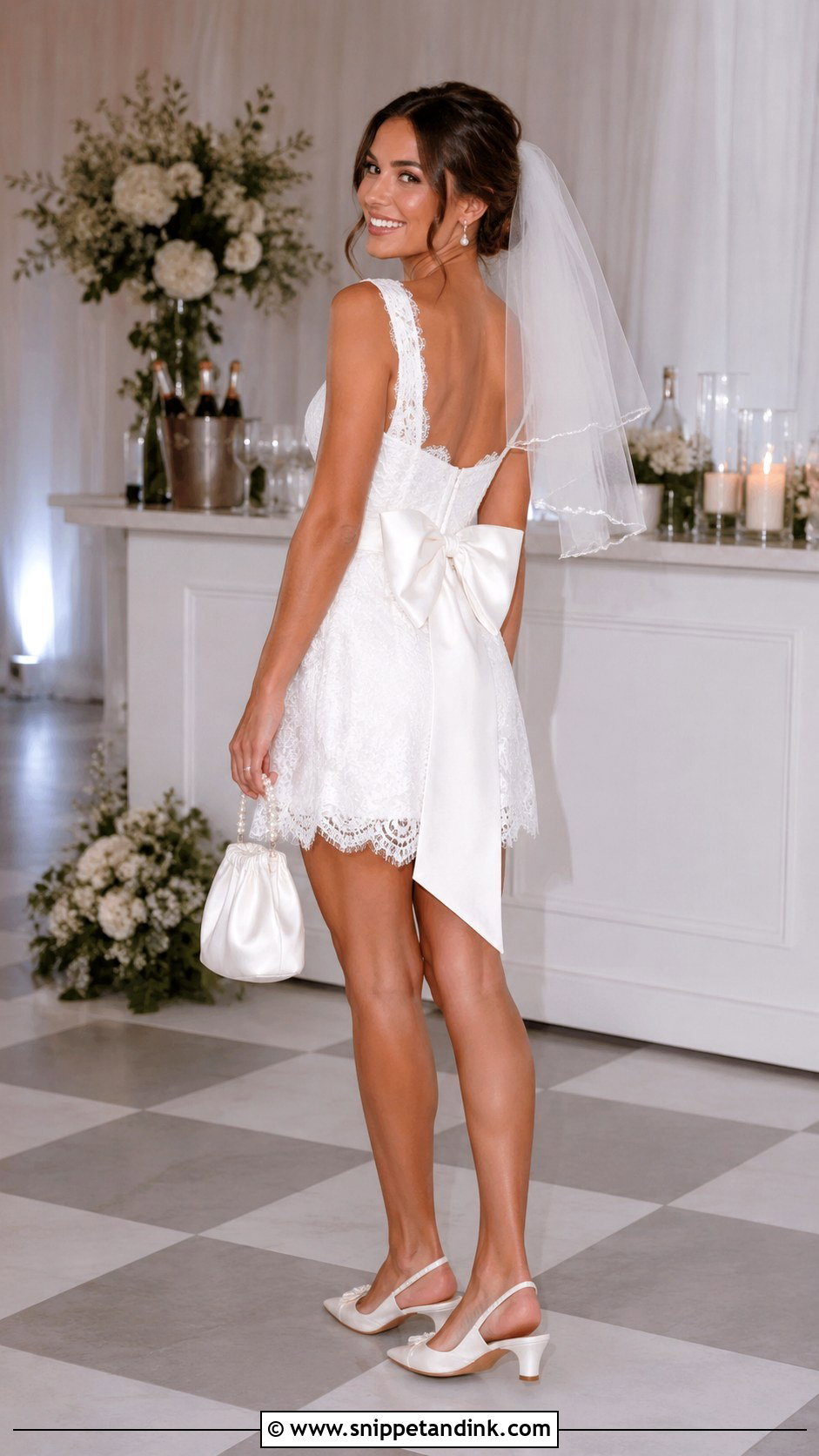
Your reception dress should be easier to move in than the ceremony gown. A lace mini, satin bow-back dress, short tulle dress or pearl-trimmed midi all carry the theme forward. Plan the change itself: a short dress with a zip and one hook takes minutes, while a laced corset back takes much longer and needs a helper who knows how it ties. Choose shoes you can dance in, add pearl earrings and a hair ribbon, and keep the details restrained so the second dress doesn’t compete with the first in the album.
How Many Bows Is Too Many?
The fastest way to lose the romance is to stack every element of the trend on one person. Bows on the dress, bows in the hair, bows on the shoes and a pearl-scattered veil all fight for the same glance. When I style a coquette bride, I count the focal details from head to toe and stop at two. Everything else is plain ivory, plain satin or simple pearl studs.
Guests are a separate question. If you want bridesmaids to nod to the theme, give them one small detail, such as a ribbon in the hair or a pearl clip, rather than matching bows, so the bride stays the only person wearing the full look.
Cleaning Satin and Pearl Trim After the Wedding
Embellished gowns should go to a cleaner who handles bridal wear regularly, because some solvents soften the glue behind pearls and sequins. Point out any glued trim and every stain you know about, including clear ones like champagne or sugary drinks, which brown as they oxidise if they’re left in the fabric.
For storage, fold the dress in acid-free tissue inside a breathable box rather than sealing it in plastic, which traps moisture and can yellow ivory over the years. Stuff large bow loops with tissue too. Left flat and pressed, they set with creases that are very hard to steam out later.
Restraint Is What Makes Coquette Look Bridal
Coquette works when one or two details lead and everything else supports them. A bow back can carry a plain front, and a pearl-covered bodice needs almost no jewelry. Decide which detail you love most, then judge every accessory against it. If an earring, veil or shoe competes for attention, swap it for something quieter. That restraint is what keeps a romantic dress looking like a wedding dress.
You'll Like These Ideas:






Leave a Reply