
A removable skirt gives you two dresses’ worth of mood from one fitting process: full and formal for the aisle, slimmer and lighter once the music starts. Brides ask me about detachable skirts far more than they used to, along with removable sleeves, trains and toppers, and the reason is practical. Nobody wants to dance in eight metres of satin. The catch is that the pairing has to work twice. I judge every combination as two separate outfits, base gown first, and the twenty below are built that way, with shoes, veil and hair chosen for both versions.

How an Overskirt Actually Holds On
Before you look at styles, it helps to know how these skirts attach, because the fastening decides how smooth the waist looks and how fast you can change. Most are a separate skirt with its own waistband that closes over the base gown. The weight of the skirt then hangs from that band, so the band has to be firm and fitted to you.
- Hook-and-eye or hook-and-bar closures are the most common. They’re secure and flat, but fiddly with nervous hands.
- Hidden snaps are quicker to release, though a heavy satin skirt can pop them if they’re too small.
- Buttons look neat on an open-front style and take the longest to undo.
- Wrap styles with a tie are easiest to put on, and the tie can leave a slight bump under thin fabric.
If you’re buying the base gown and the overskirt from different makers, take a fabric swatch from one to the other. Whites differ more than people expect. Ask too whether the base gown needs its own bustle once the overskirt is off; some do, and it’s easier to plan both at the first fitting.
1. Satin Mermaid Wedding Dress With Removable Skirt
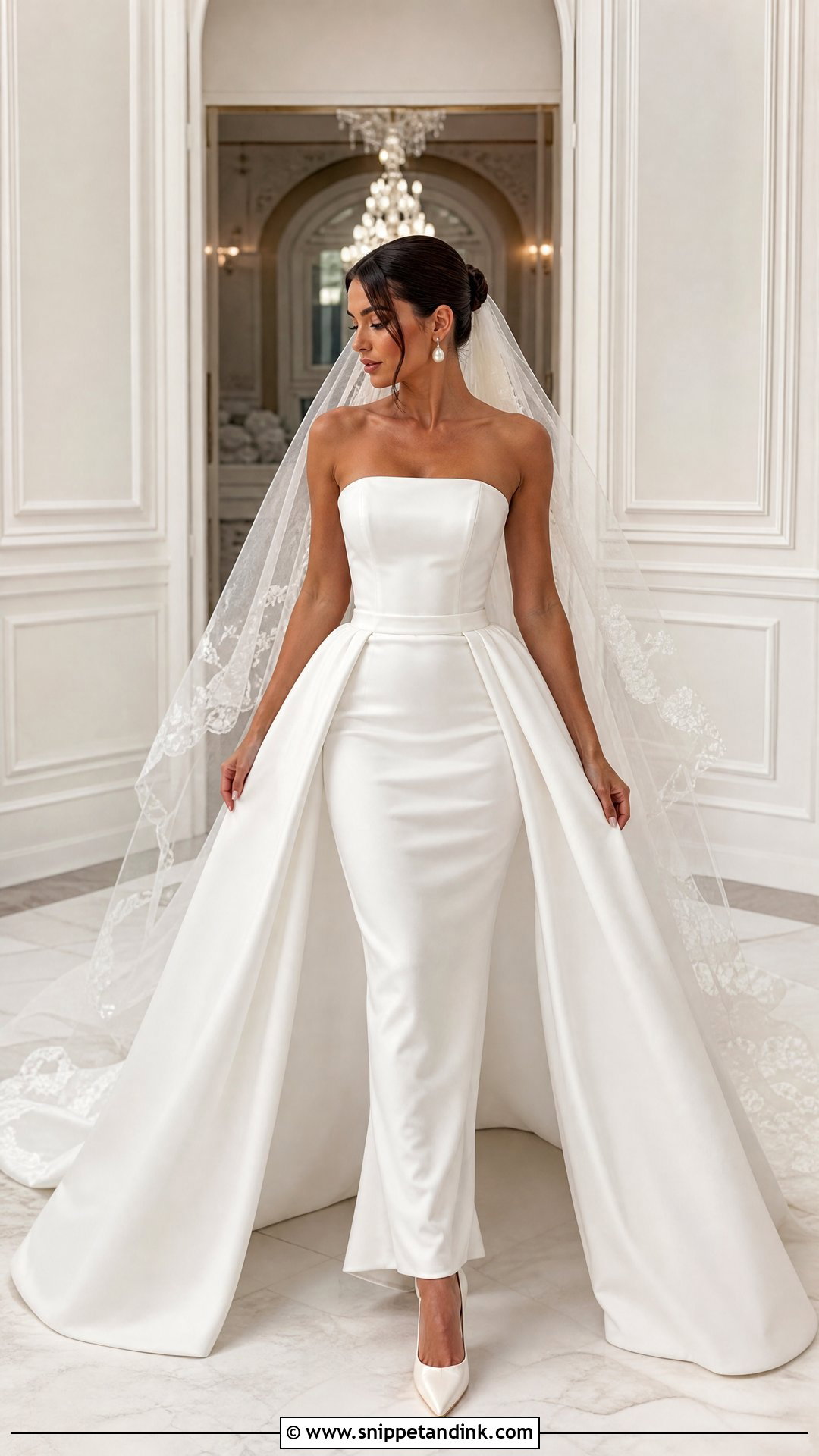
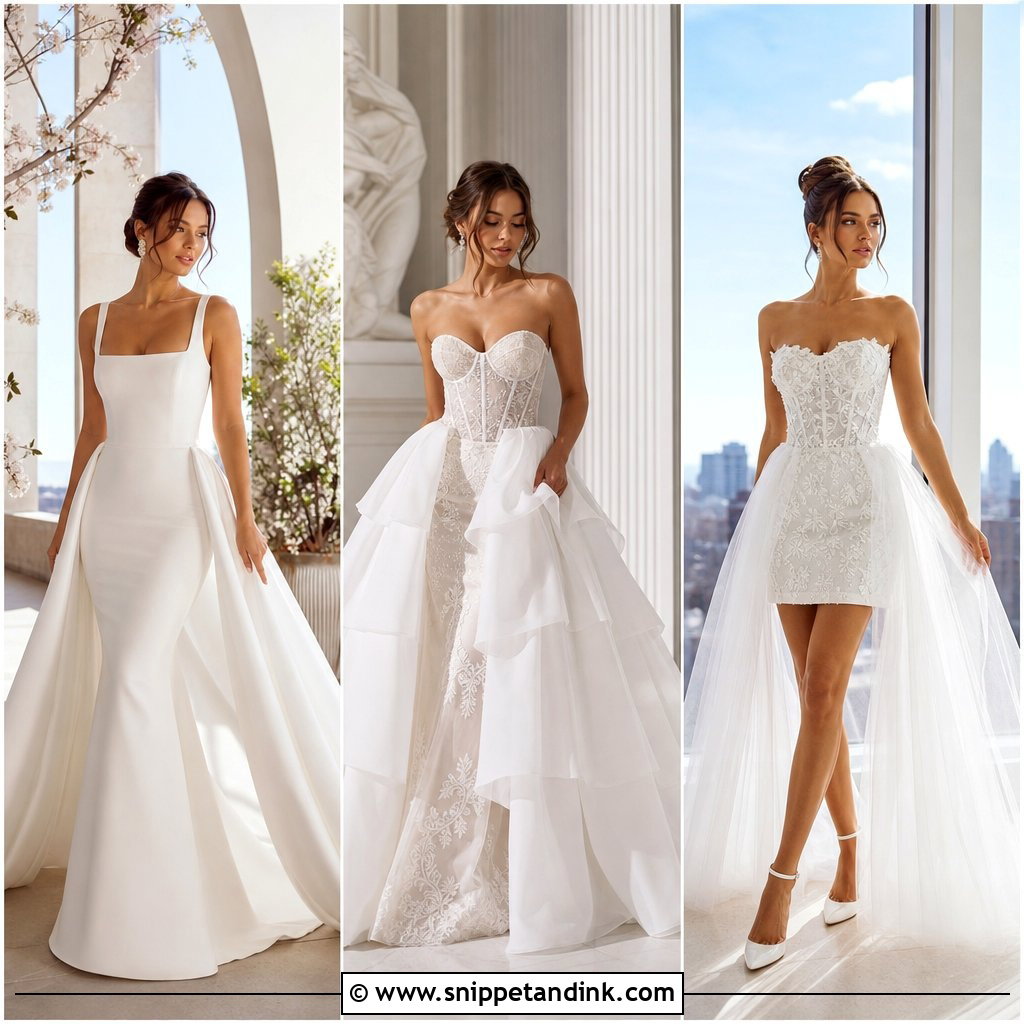
Satin mermaid bases are the most common pairing I fit, and they make sense: the fitted gown is what you’ll dance in, and a full satin overskirt opening slightly at the front gives you ball-gown volume over it. The difficulty is the waist. A mermaid’s seaming curves over the hip, while an overskirt wants a straight waistband, so ask your seamstress to hide the join under a narrow satin belt. Pointed ivory pumps, pearl drops, a cathedral veil and a low bun or glossy waves keep everything sleek.
2. Lace Mermaid Wedding Dress With Tulle Overskirt
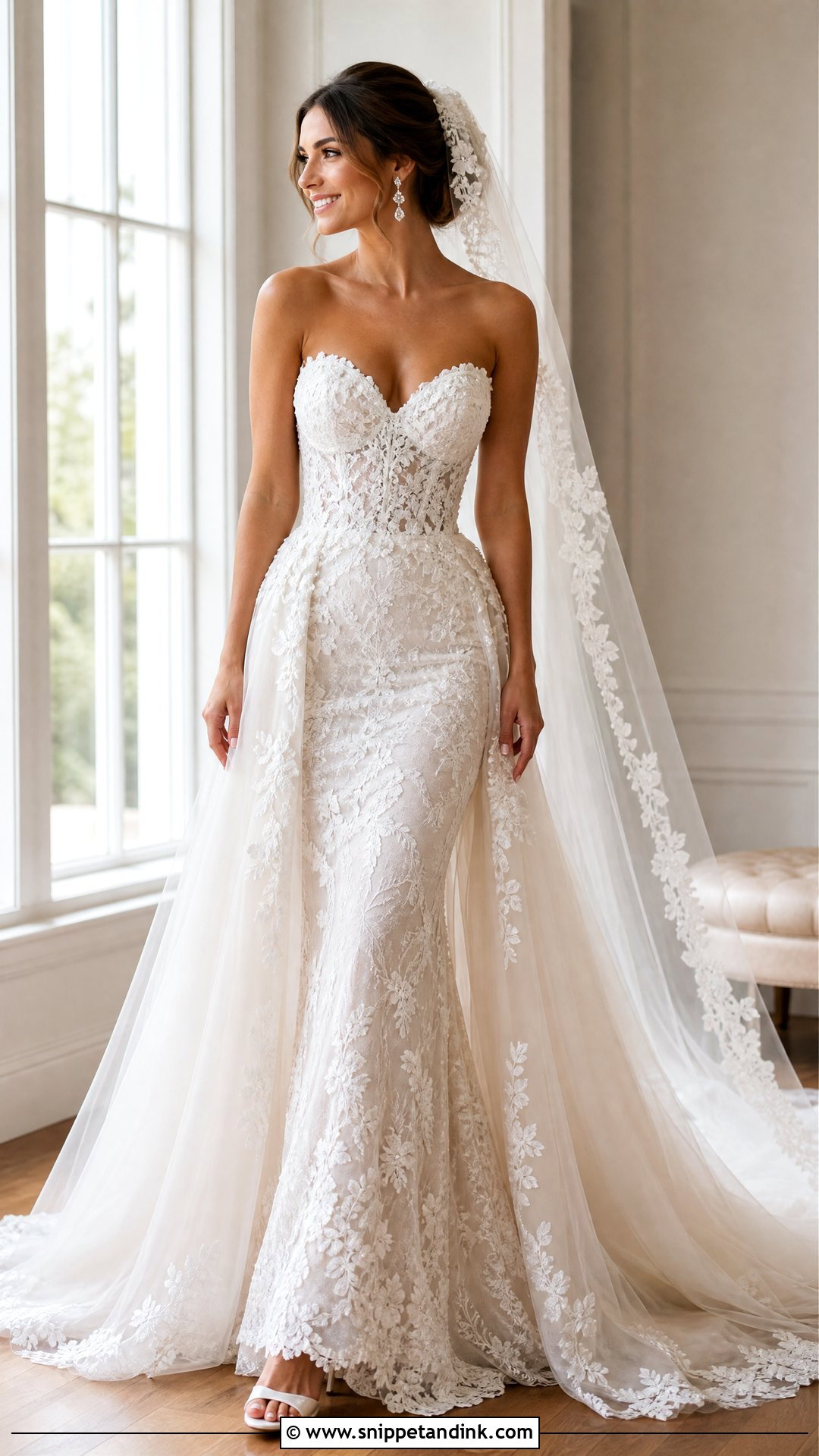
Tulle over lace is softer than it sounds. A fitted sweetheart gown with floral appliqués stays visible through a lightly gathered tulle layer, so you don’t lose the lace you paid for. Colour is the thing to watch. Ivory tulle and ivory lace from different mills rarely match exactly, and flash photography exaggerates the gap, so compare them side by side in daylight. Crystal earrings, ivory slingbacks and a fingertip veil edged with the same appliqués tie it together, with loose waves or a textured bun.
3. Strapless Column Wedding Dress With Satin Overskirt
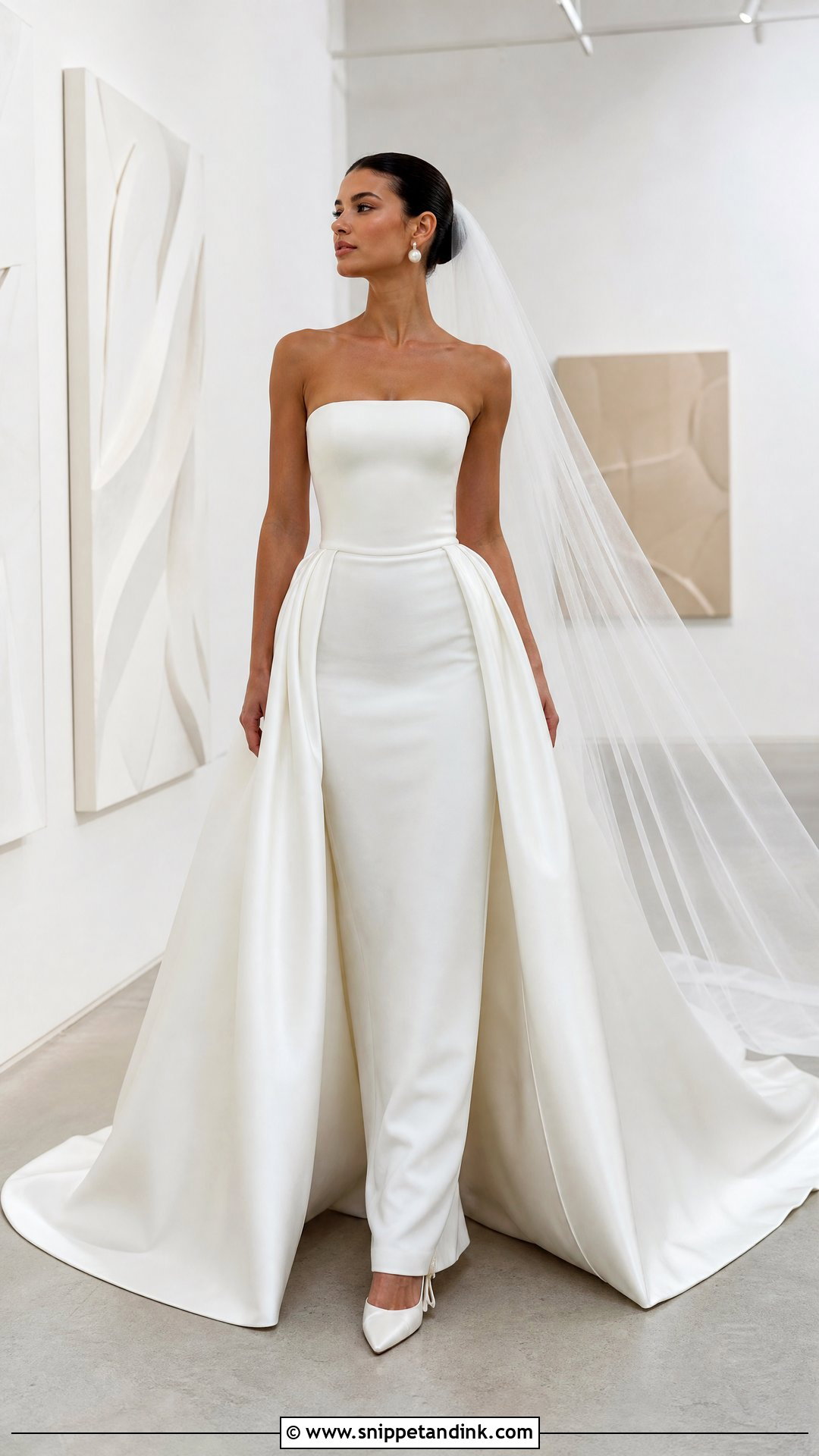
Here the base is a strapless column that skims the body with almost no decoration, and the overskirt does all the theatre. A pleated removable skirt with a chapel train makes the entrance; once it’s off, you’re in a light, modern reception dress. A column with no slit is hard to dance in, so I’d add a discreet back slit before the hem is finished. Hidden hooks at the waist hold the overskirt without breaking that clean line. Sculptural pearl earrings, pointed satin heels and a sleek bun suit the minimal mood.
4. Corset Wedding Dress With Removable Ball Gown Skirt
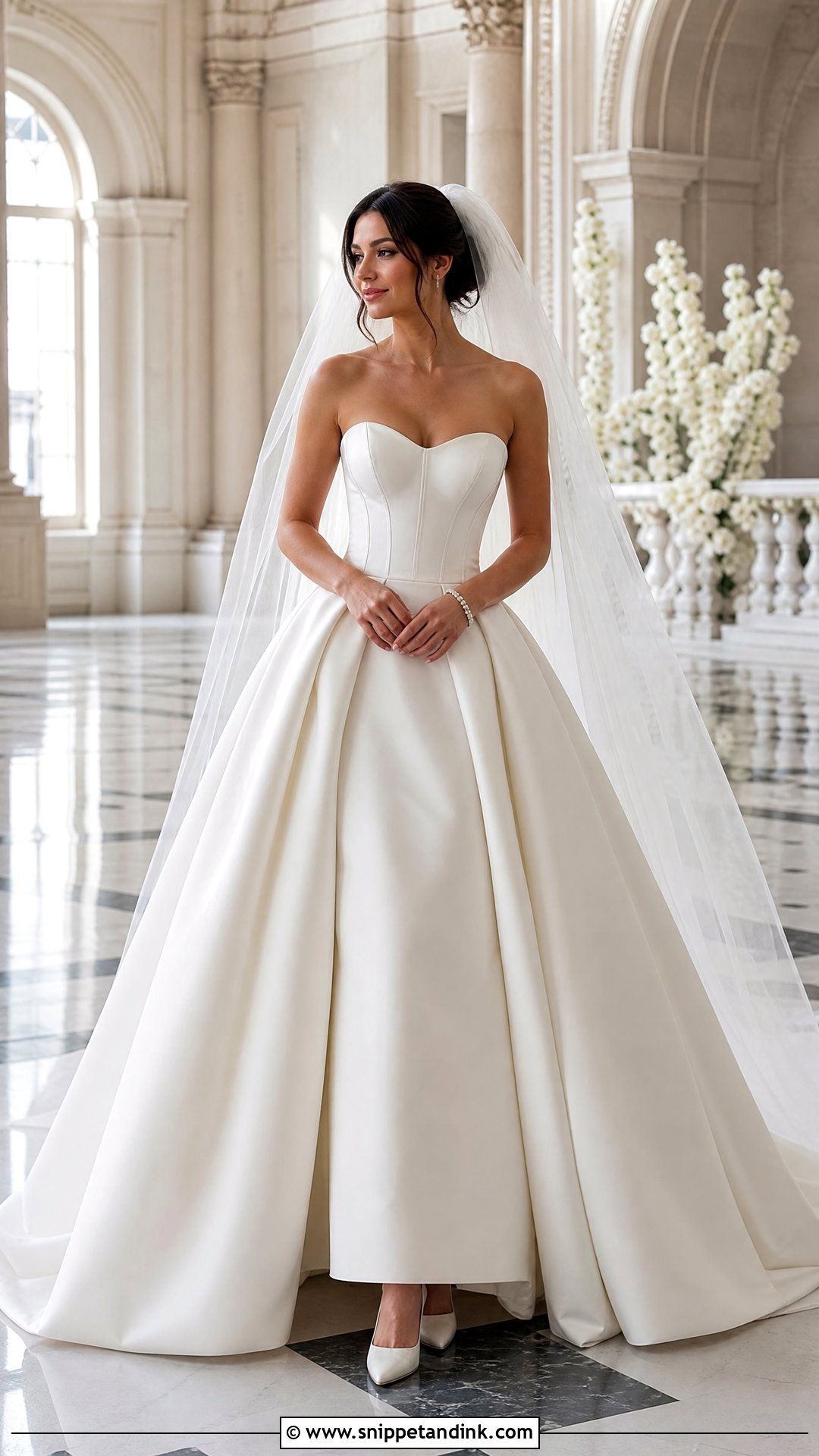
With a corset base, the boning does the shaping and the removable ball-gown skirt only has to add volume. Crisp satin or mikado with deep pleats holds its shape over a fitted underskirt. The fit check that matters: the corset’s lower edge and the overskirt’s waistband must sit at exactly the same height, or you get a ridge that shows through the satin. A long veil under a polished bun suits a formal indoor venue, and you can switch it for statement earrings after the skirt comes off.
5. Off Shoulder Wedding Dress With Lace Overskirt
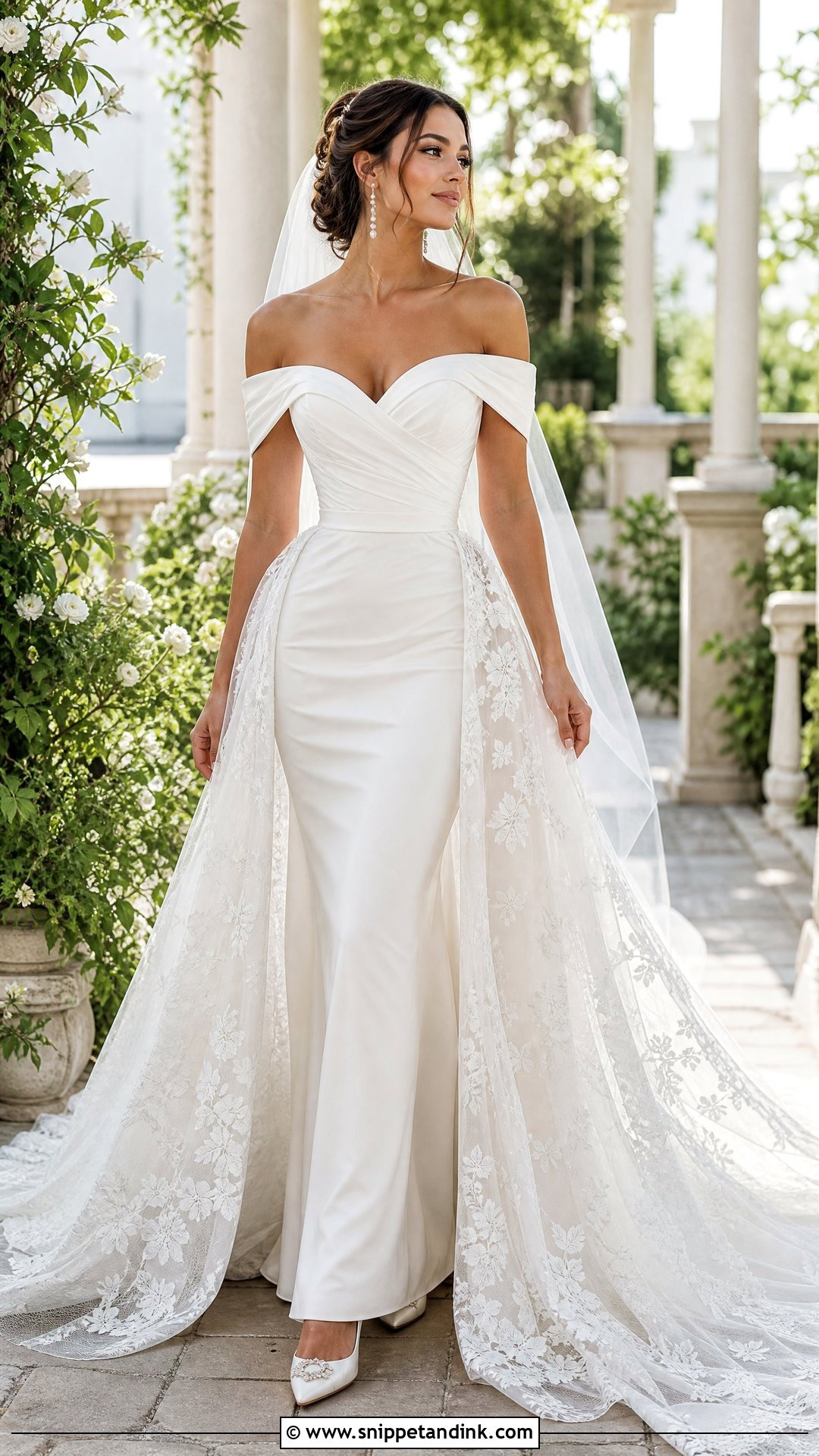
Off-the-shoulder necklines need a hair choice that leaves the collarbones clear, so a low chignon is my usual call here. The base gown in crepe or satin, with soft draped sleeves, keeps things smooth; the removable lace overskirt with a light chapel train adds the texture. Fasten the skirt at the natural waist, not the hip. A hip-level join shortens the leg line badly, and it’s especially obvious in the fitted dress underneath once the lace comes away. Pearl-and-crystal earrings, almond-toe heels and a simple tulle veil.
6. Long Sleeve Wedding Dress With Sheer Overskirt
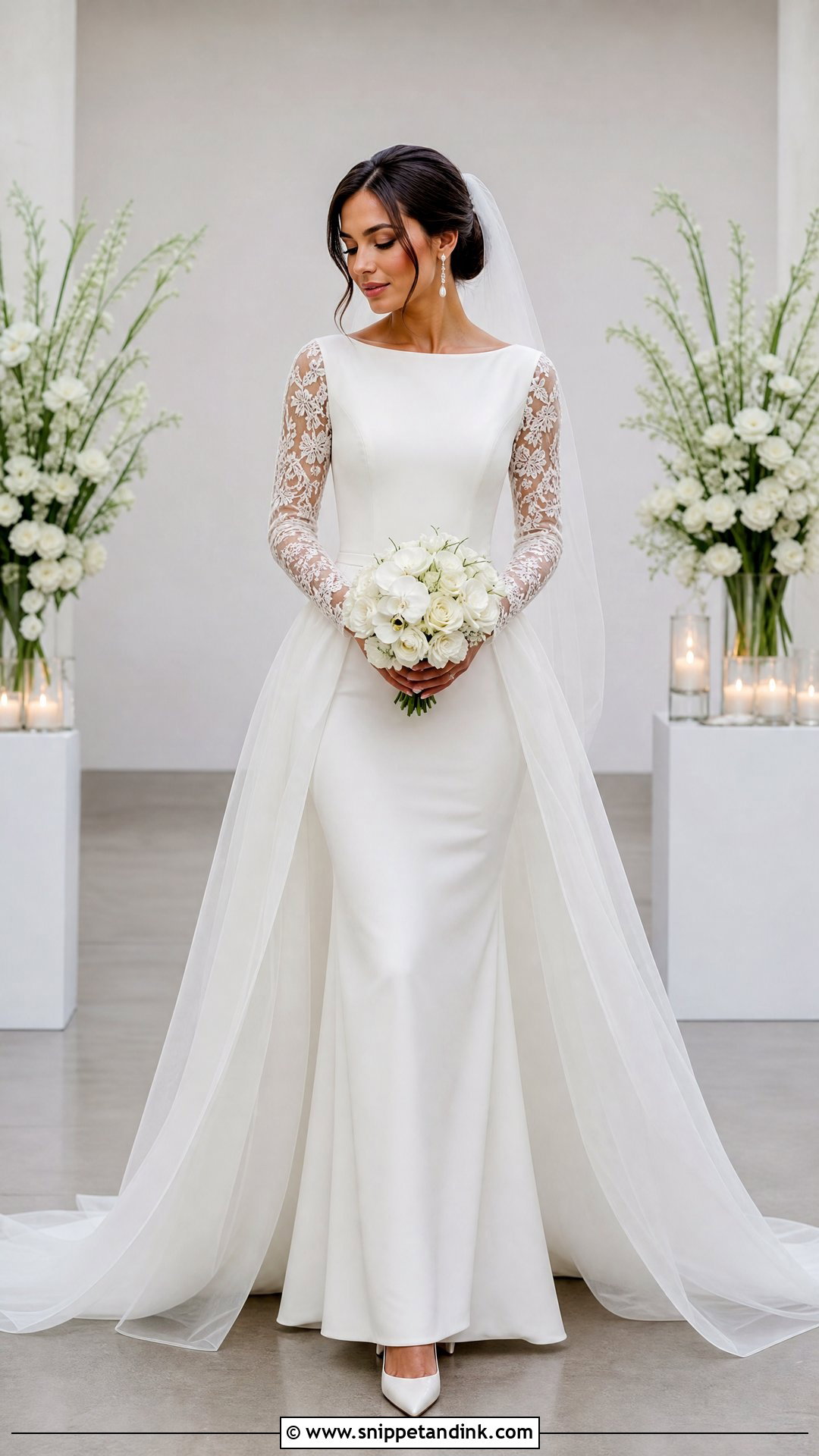
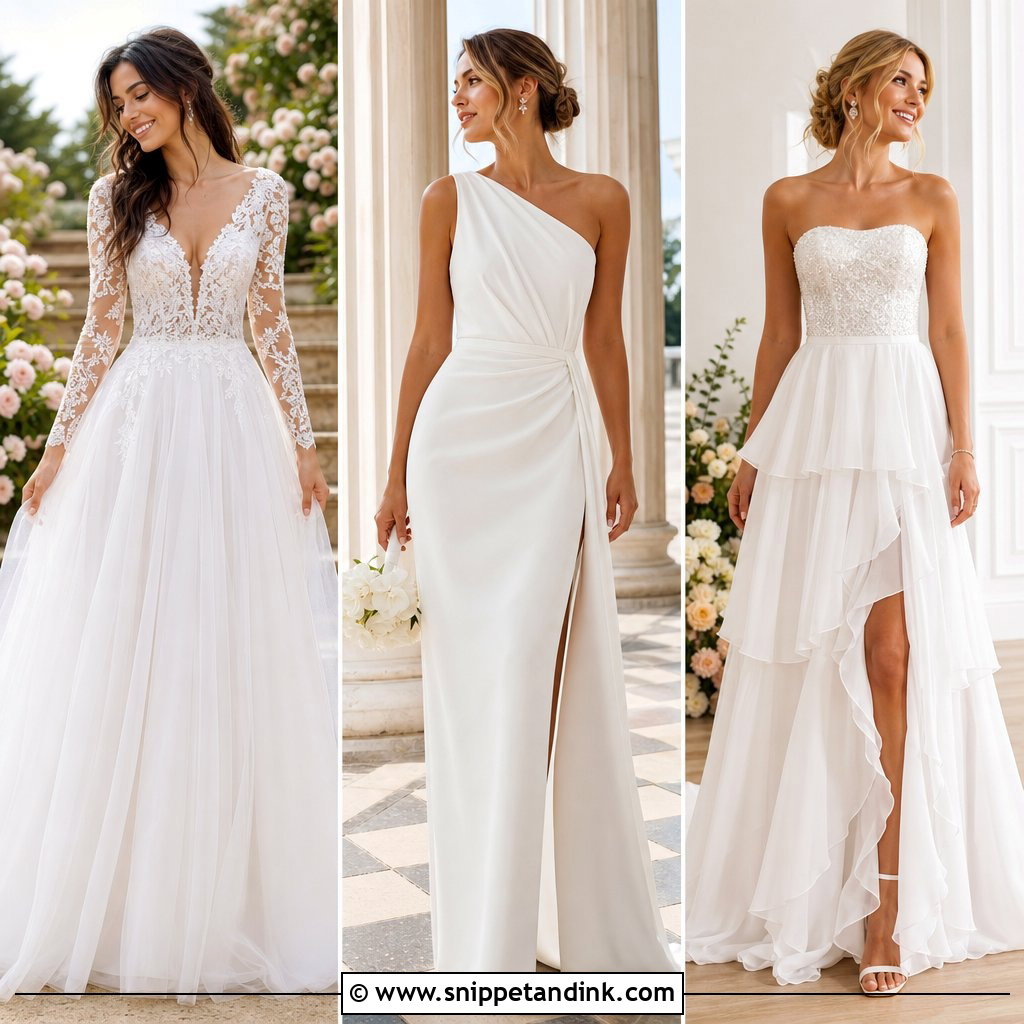
Sleeves add warmth to a dress, and a heavy overskirt on top can make the whole thing hot by the end of a long ceremony. That’s why I’d keep the removable layer here to sheer organza or tulle on a narrow waistband. A fitted lace or crepe gown with a modest open back stays visible through it. Pointed pumps, small drop earrings, a chapel veil and a neat low bun. If your wedding is indoors in summer, ask about a lighter lining in the base gown too.
7. Square Neck Wedding Dress With Pleated Overskirt
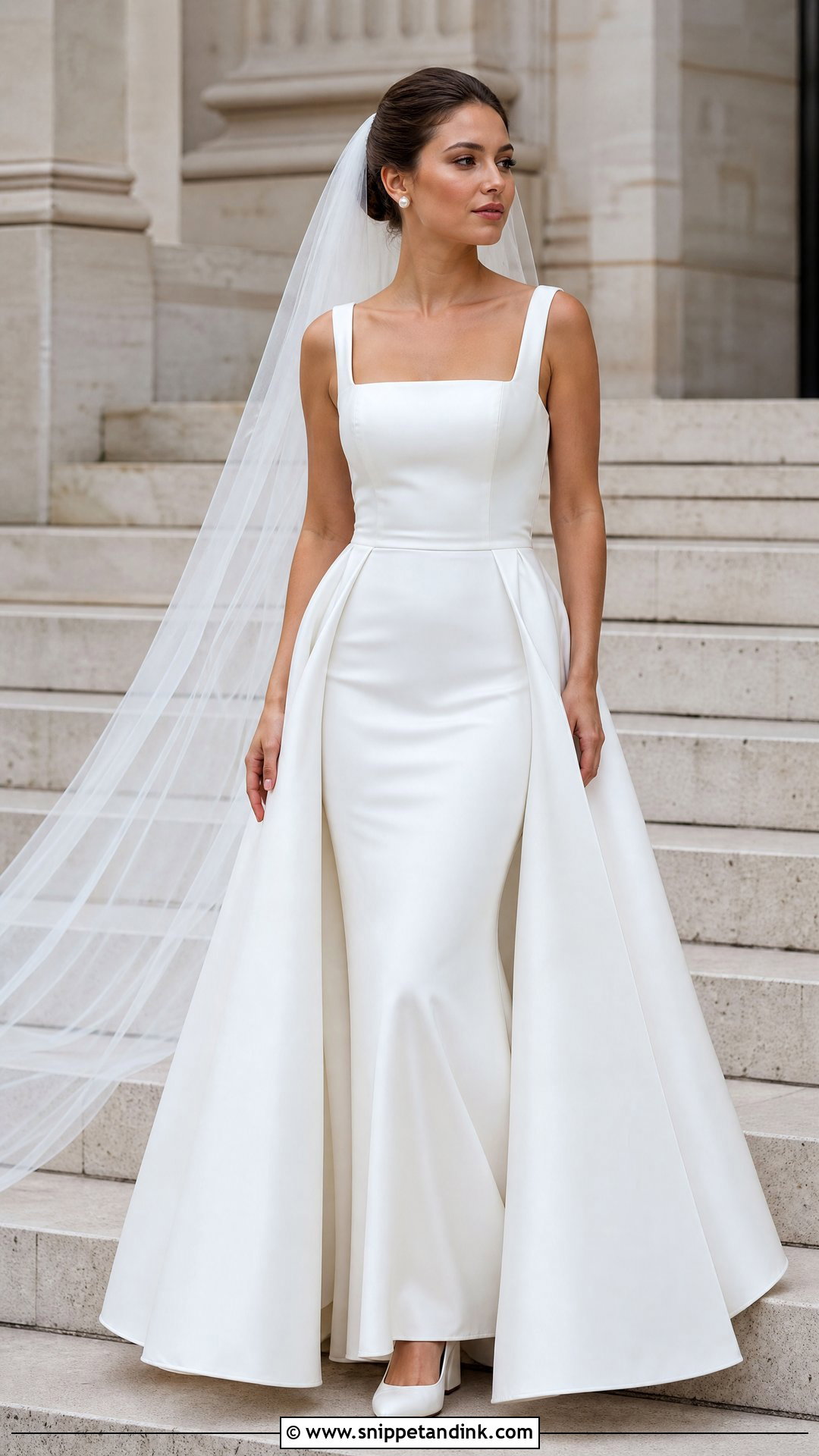
Square necklines and box pleats share the same geometry, which is why this pairing looks deliberate. Wide straps and supportive tailoring in satin or crepe form the base; a structured mikado overskirt with broad pleats and a sweeping train goes over it. During fittings, sit down and stand up in both versions and watch the waistband: mikado is stiff enough to fold over at the front when you sit. Raising the waistband slightly often fixes it and lengthens the torso. Block-heel pumps, pearl studs, and a center-parted bun.
8. High Neck Wedding Dress With Open Front Overskirt
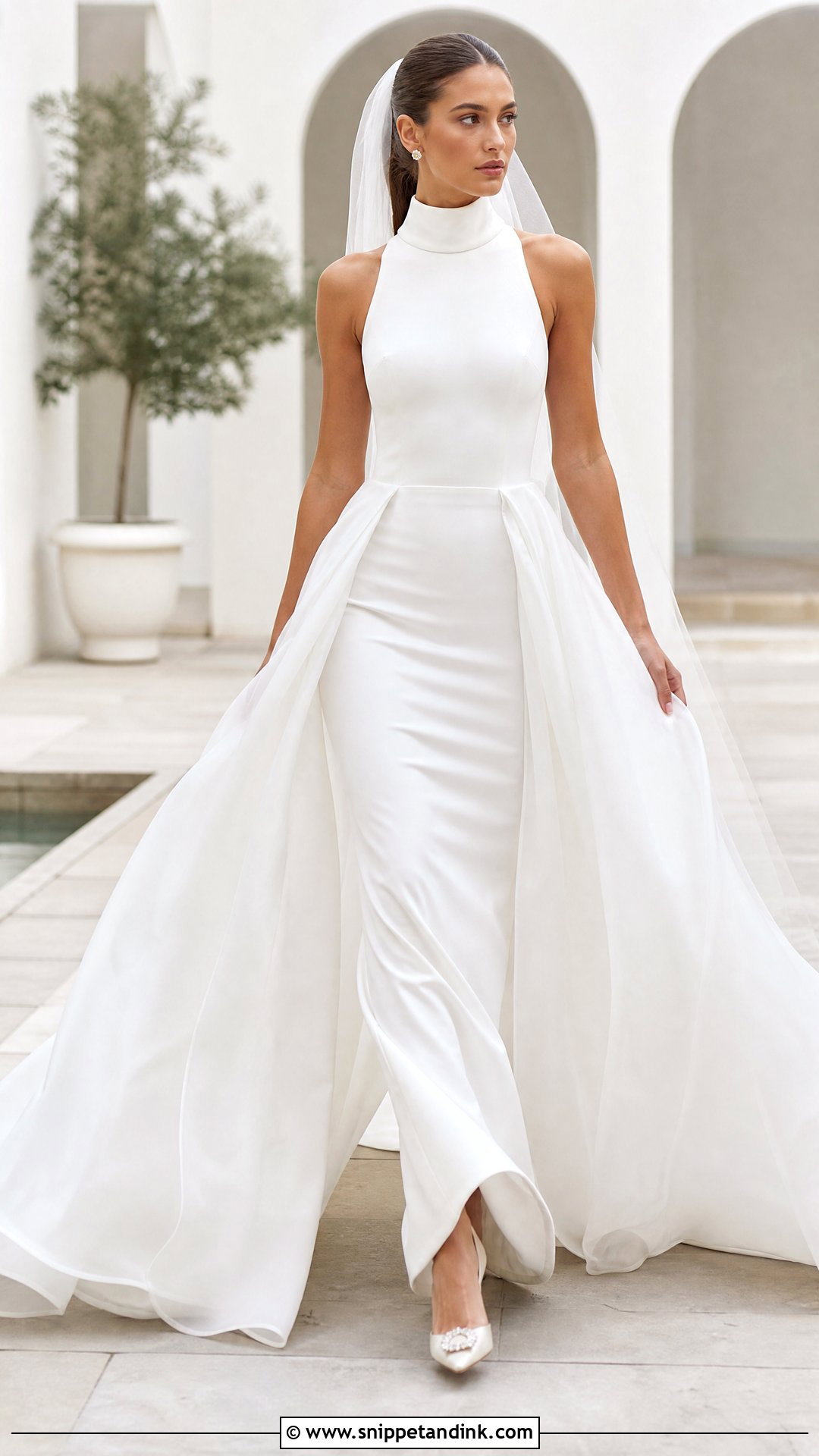
An open-front overskirt separates at the center, so you see the slim base gown with every step. It carries far less bulk than a closed skirt. The base can be a sleeveless high-neck in crepe, lace or matte satin; if it’s already lace, keep the tulle or organza plain. Walk in it with your actual shoes and take long strides: a front opening that isn’t hemmed evenly catches on a pointed toe. Crystal studs, a sheer veil below a sleek bun, then a sparkly comb once the skirt is off.
9. Sweetheart Wedding Dress With Floral Overskirt
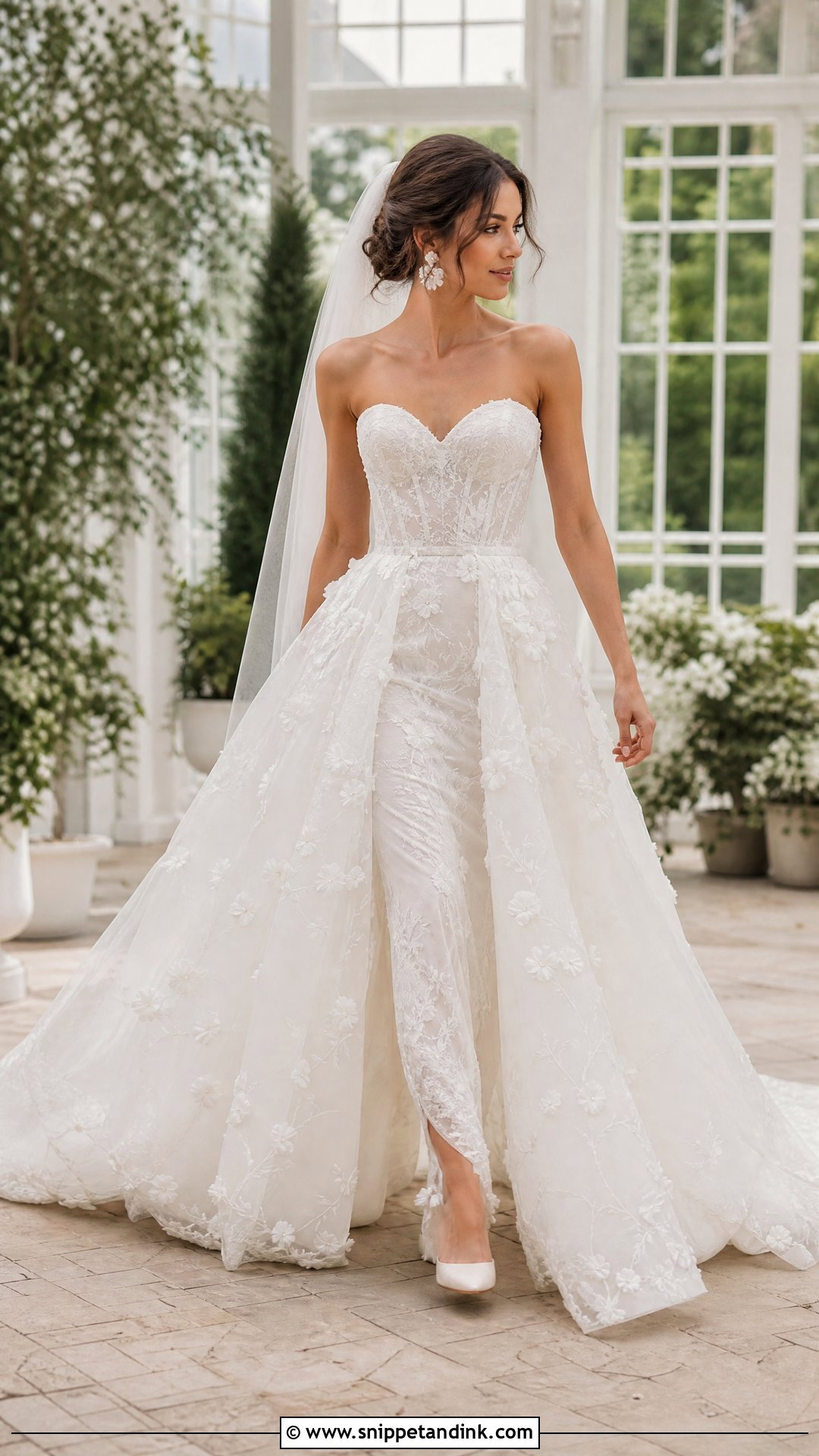
Let the overskirt carry the decoration and keep the sweetheart base plain. Scattered appliqués, embroidered vines or a few three-dimensional petals on soft tulle look richest concentrated toward the hem and train, which also keeps weight off the waist. A matching appliqué or two on the bodice ties the pieces together so they read as designed rather than assembled. Floral earrings, ivory pumps and a plain veil, with loose waves or a softly pinned updo. The reveal is stronger here than on most, because the dress beneath is so much simpler.
10. Crepe Wedding Dress With Cathedral Train Overskirt
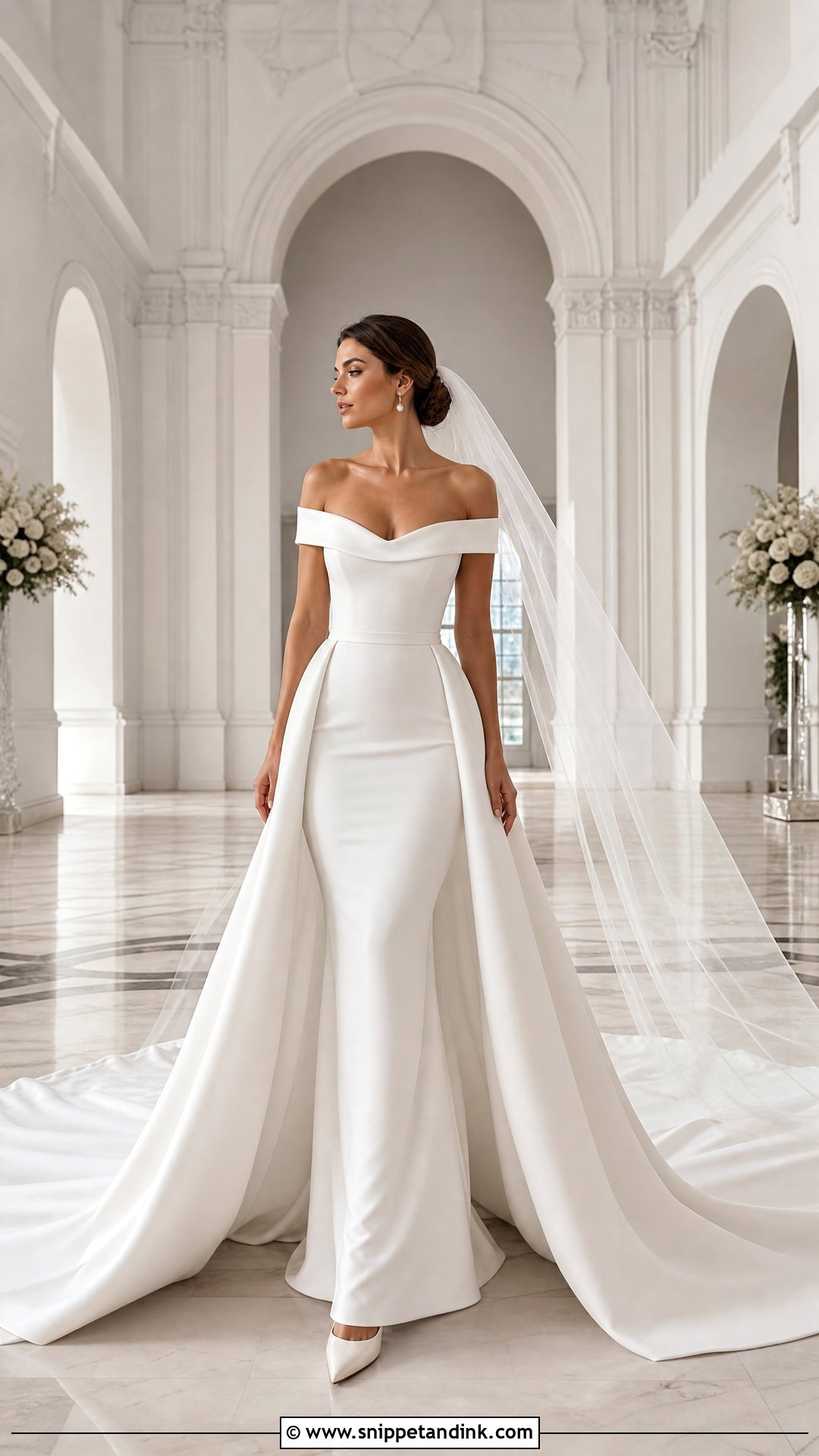
Crepe is unforgiving, which is why I like it as a base: it shows good tailoring and hides nothing. A scoop, bateau or off-the-shoulder neckline, then an overskirt in matching crepe or a lightweight mikado with a cathedral train. Have an attendant arrange both layers before you walk, because a long train twists easily on the way in. Afterward, the overskirt needs a proper home. Hang it by the waistband on a wide hanger, not folded on a chair, so it’s undamaged for any later photos.
11. Beaded Wedding Dress With Plain Tulle Overskirt
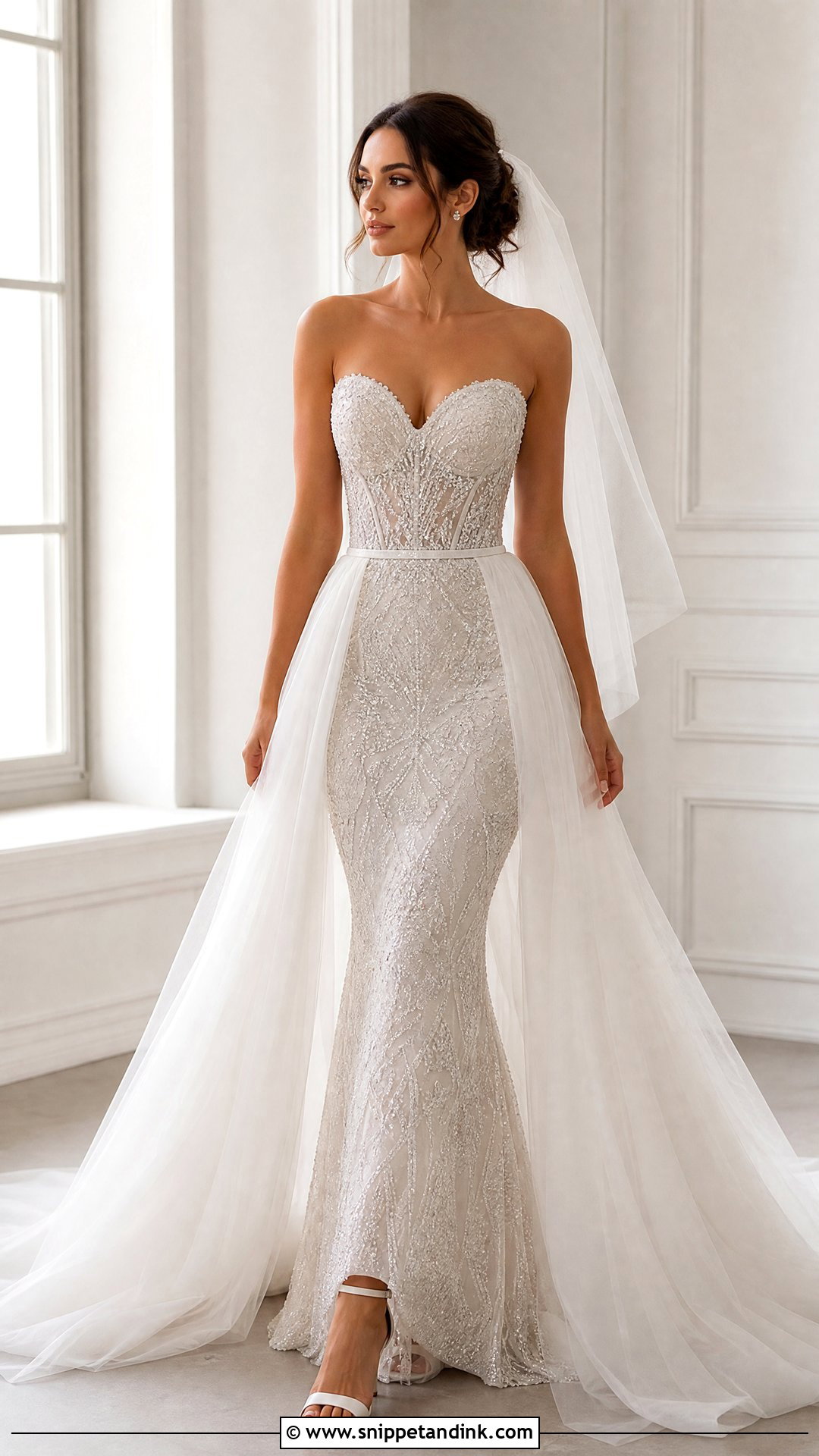
When the base gown sparkles, plain tulle over it lets the beadwork show without competing. A fitted beaded sheath or trumpet dress with a secure lining sits underneath a soft, gathered tulle skirt that falls into a chapel train. The practical risk is snagging: raised crystals and sequins catch tulle every time you sit, and especially during removal. Ask for a fine lining on the inside of the tulle at hip level. Satin heels, small crystal studs and a smooth updo, which keeps hair out of the beading.
12. Pearl Wedding Dress With Organza Overskirt
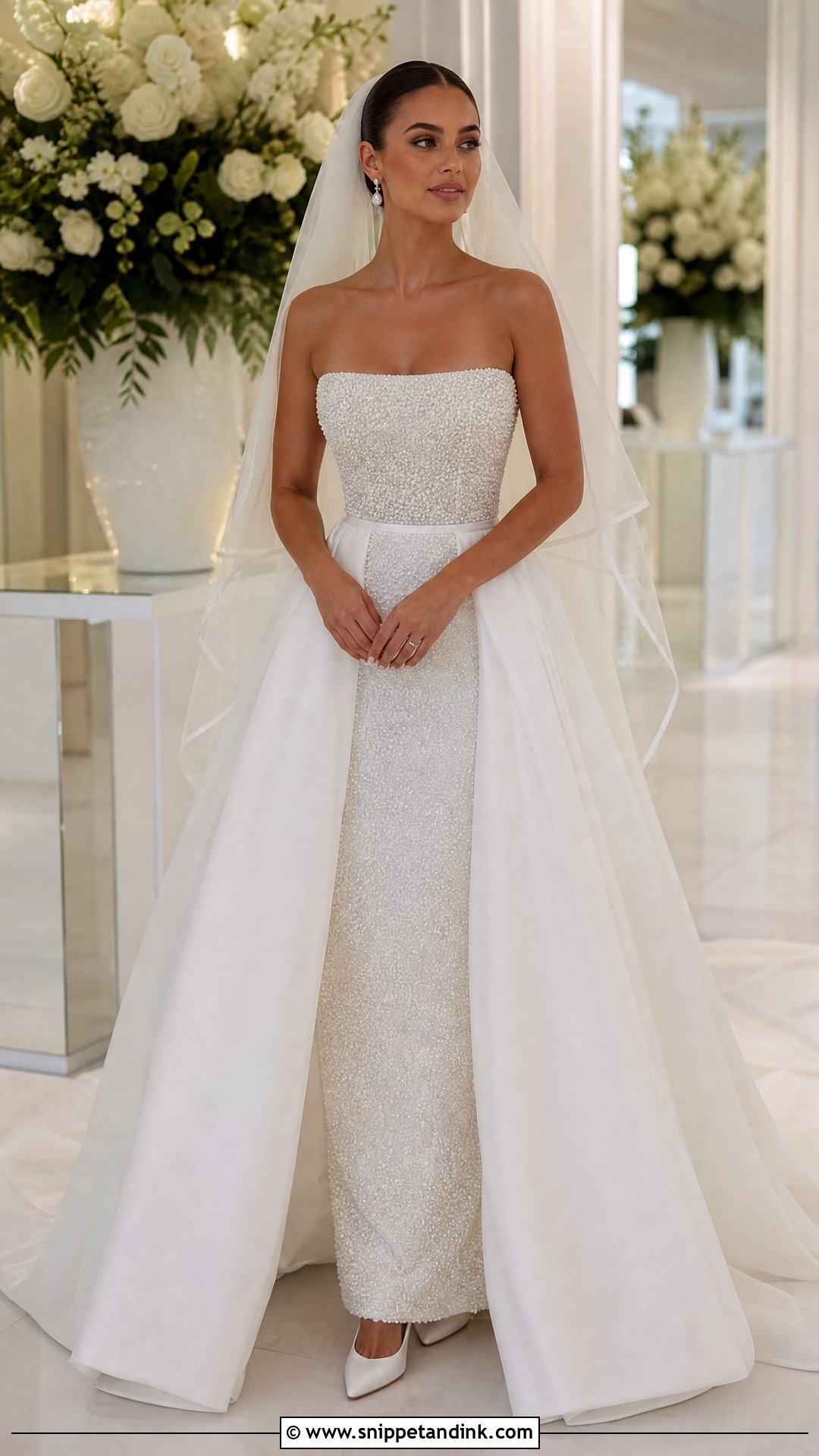
Organza holds its shape better than soft tulle, so you get volume from fewer layers and less weight. Over a fitted gown with scattered pearls on the bodice and upper skirt, a gently pleated organza overskirt with a rounded train gives plenty of drama. Keep gathers away from the front; organza is crisp enough to stand out over the stomach if there’s too much fabric at the waistband. Finish the waistband in the same fabric as the base gown. Pearl earrings, satin pumps, and a polished bun.
13. Floral Lace Wedding Dress With Satin Overskirt
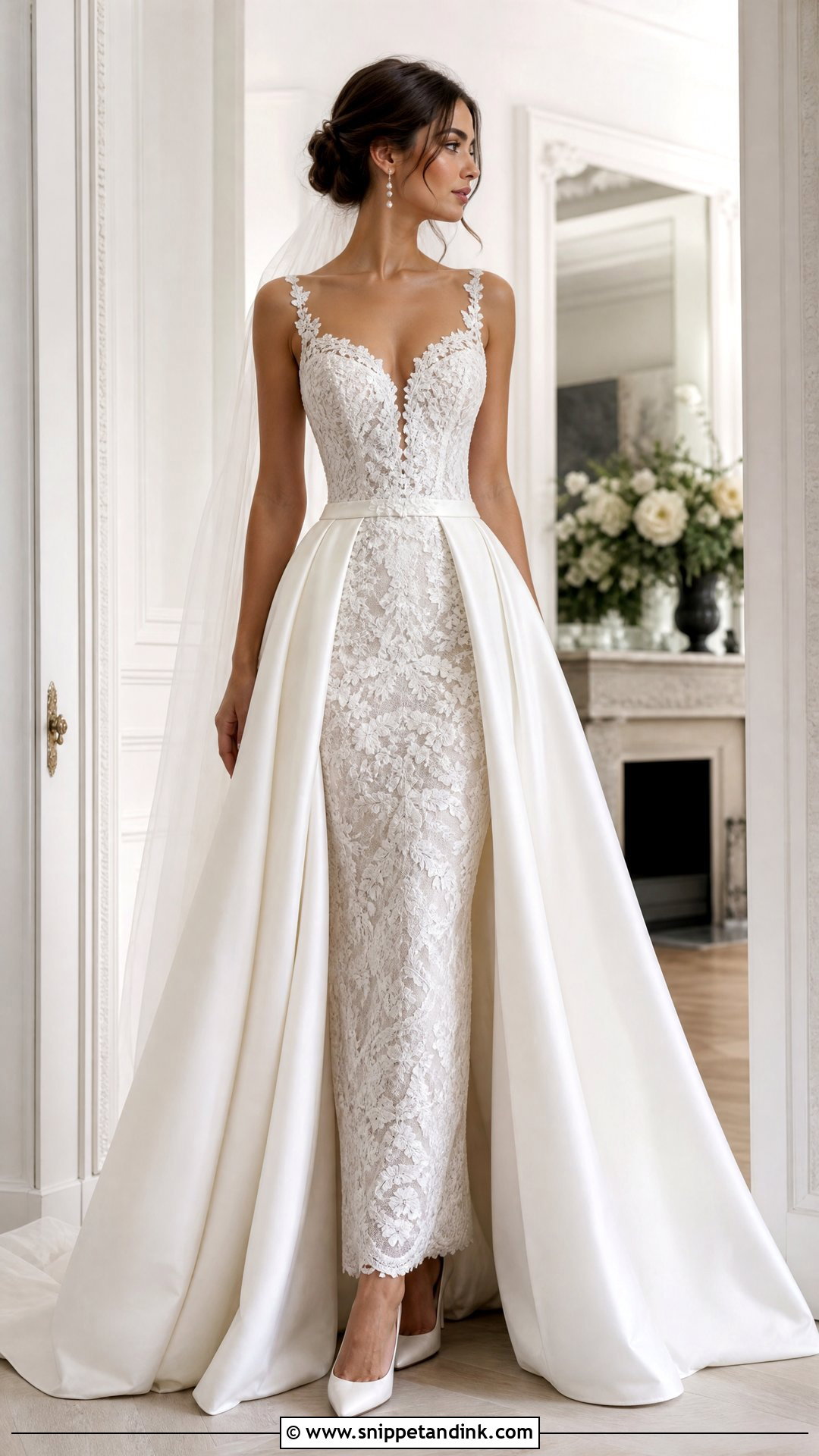
Floral lace with plain satin is a texture contrast that photographs well even in low light. A sweetheart or scoop-neck lace gown is the base, with a satin overskirt pleated at the sides; choose an open-front cut if you want the lace visible during the ceremony. The waistband should be narrow and plain, since a wide one cuts across the lace pattern. A seamstress can stitch a few matching appliqués near the fastening to soften the transition. Classic pumps, pearl drops, and a low textured bun.
14. Minimalist Wedding Dress With Draped Overskirt
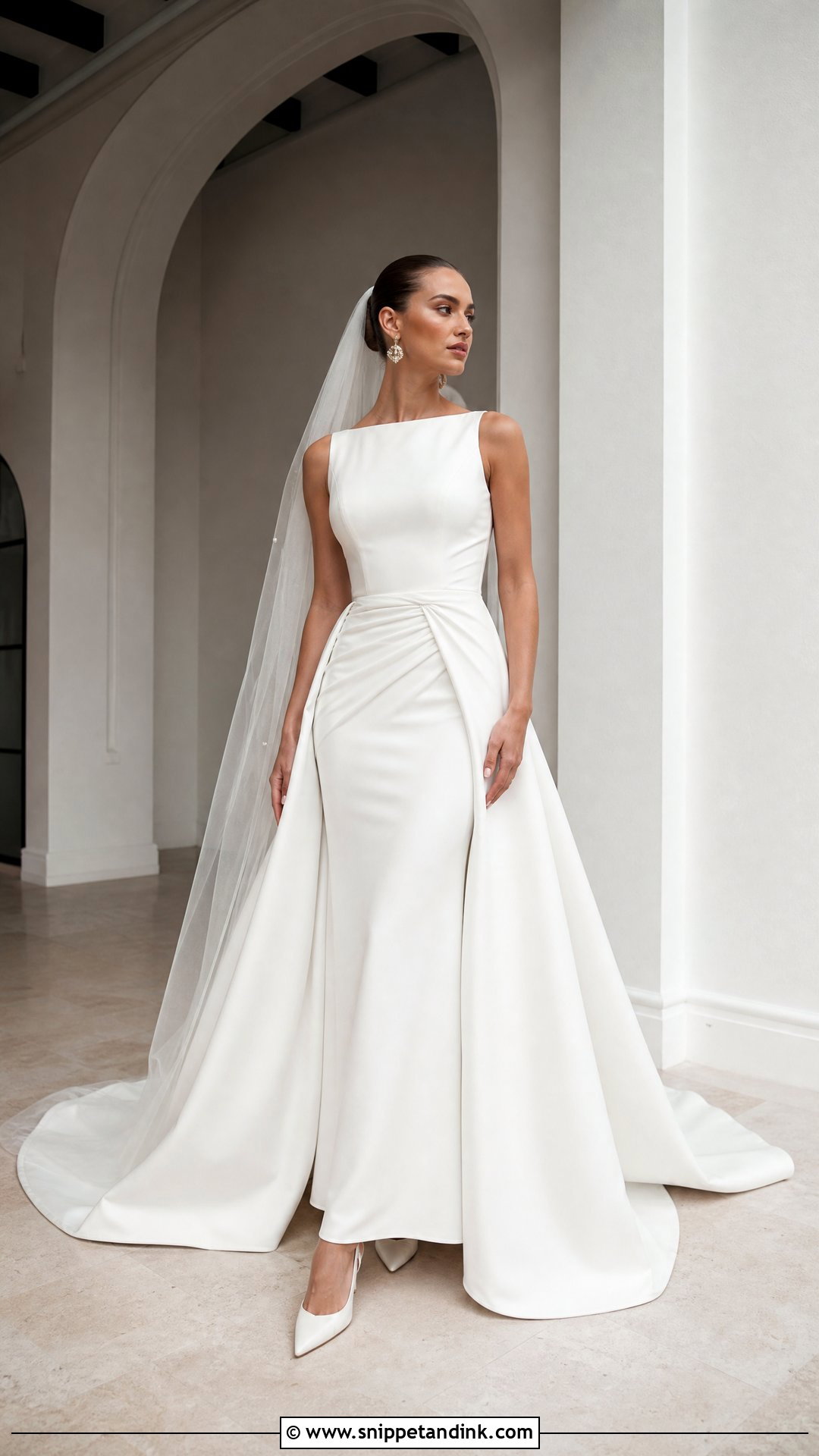
Draping is harder to fit than pleating. A diagonal gather or soft side folds can define the waist, but if the folds start in the wrong place they add width at the hip instead. I’d have every drape pinned on your body, not on a hanger. The base gown in crepe or silk-like satin stays plain, and a sweep or chapel train suits a simple venue without overwhelming it. Sculptural earrings, slingbacks, a fingertip veil and a sleek ponytail.
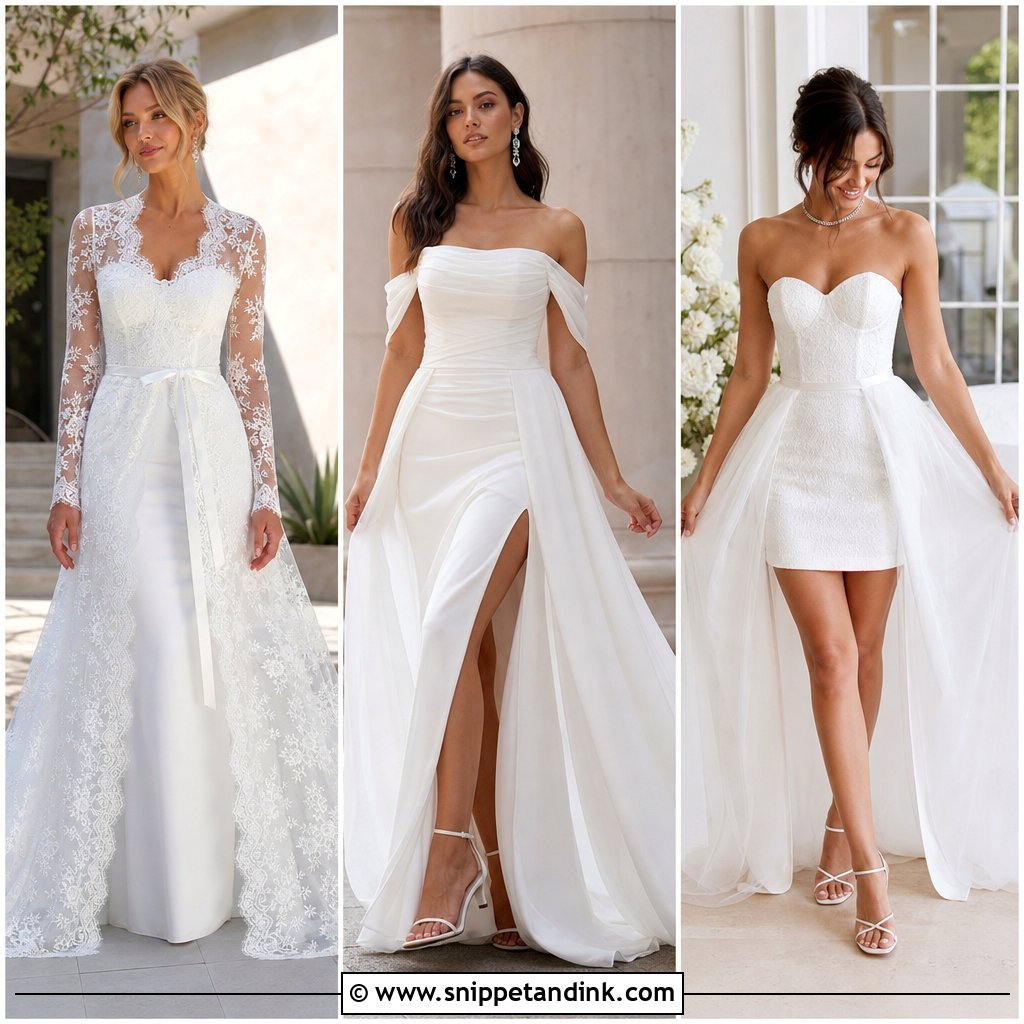
15. Mini Wedding Dress With Removable Full Skirt
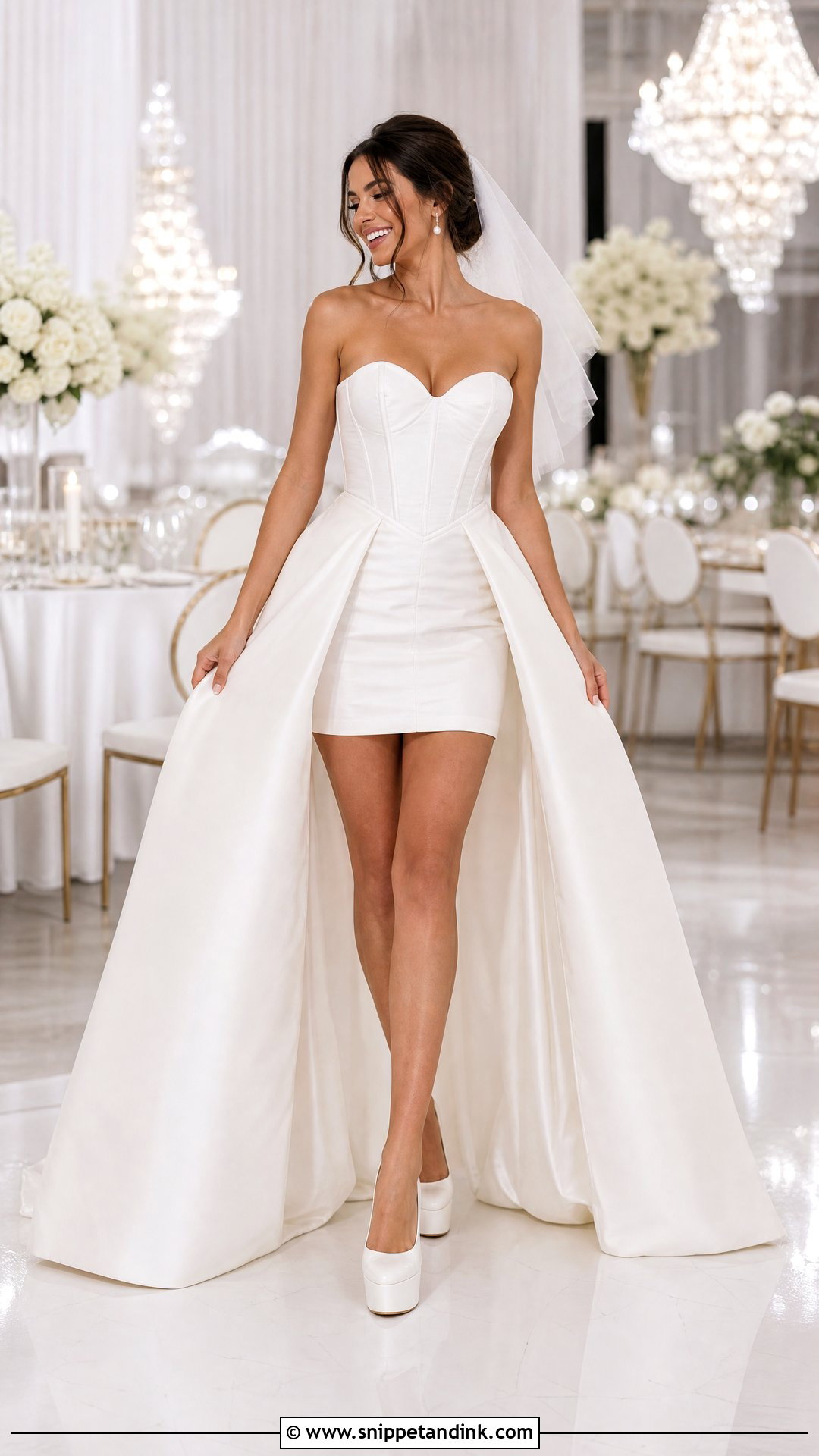
The mini underneath a full skirt is the biggest reveal on this list, and it needs the most testing. A structured mini with a corset bodice and good lining is covered completely by a floor-length satin or mikado overskirt for the ceremony. Check it from the side and back in a three-way mirror; an overskirt that opens even slightly at the back flashes the short hem with every step. Closed-toe platforms keep your leg line under the long skirt and look playful afterward. Pearl earrings, a short veil, and a high ponytail for dancing.
16. Tea Length Wedding Dress With Removable Skirt
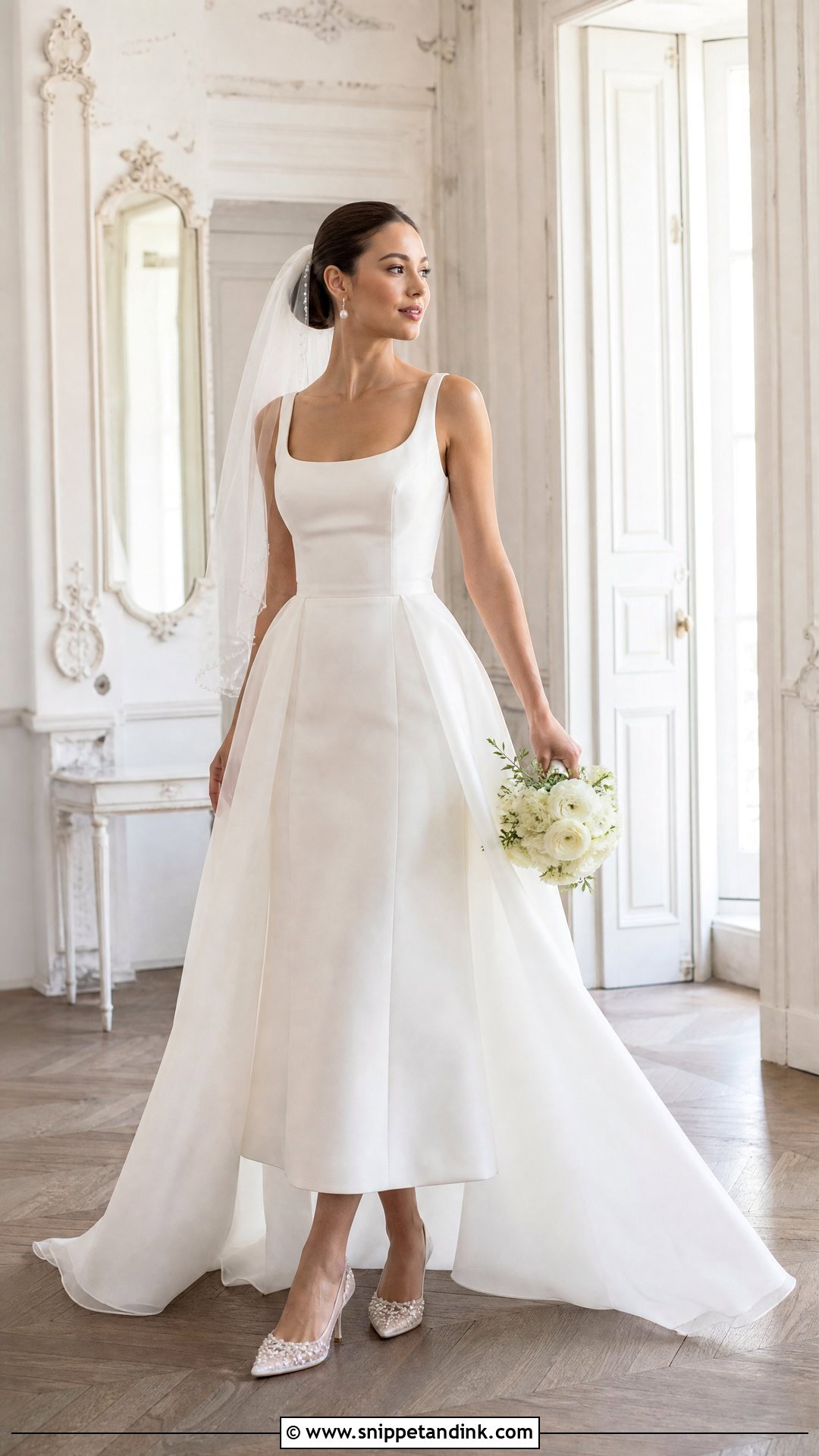
Tea-length bases put your shoes on show for the reception, so choose them with that in mind: embellished slingbacks or pointed pumps. A fitted bodice with a softly flared skirt that ends between knee and ankle sits under a light satin or organza overskirt. The shorter skirt can bunch or twist under the outer layer, so walk briskly and turn a few times at your fitting. Light pleating on the overskirt helps it fall cleanly. Pearl earrings, a fingertip veil and a smooth updo for the ceremony.
17. A Line Wedding Dress With Detachable Train Skirt
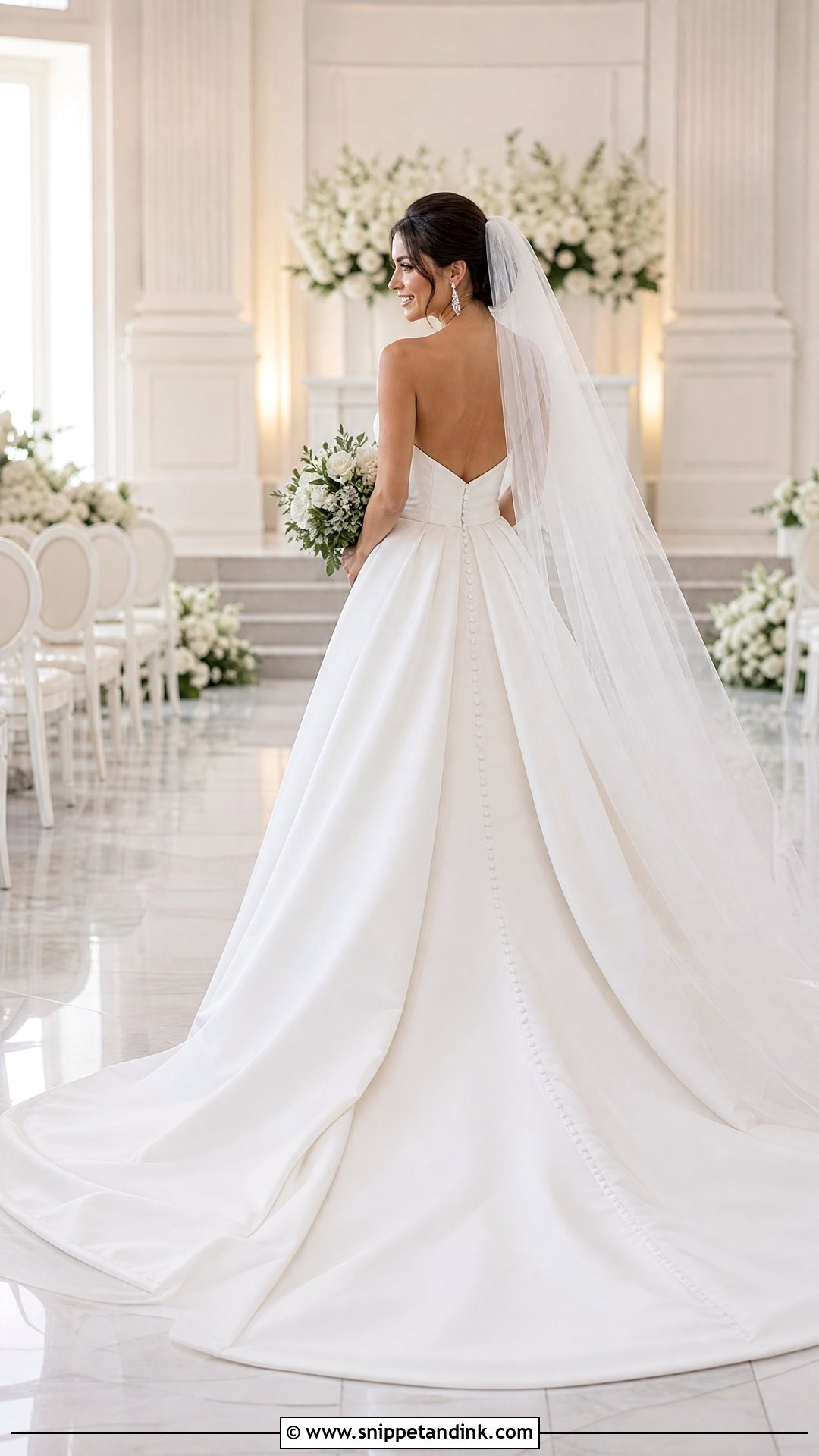
Some detachable skirts barely add volume; they mostly add train. Over a soft A-line, a lightweight overskirt follows the same shape and then extends into a chapel or cathedral length. It changes the back view dramatically while the waist stays comfortable. The weight of a long train pulls backward, so the hooks need to be spaced around the full waistband, not just at the back, or the base gown gets dragged off its waistline. Match fabric and hem finish closely. Classic heels, drop earrings, and a long veil below a soft bun.
18. Colored Wedding Dress With Sheer Overskirt
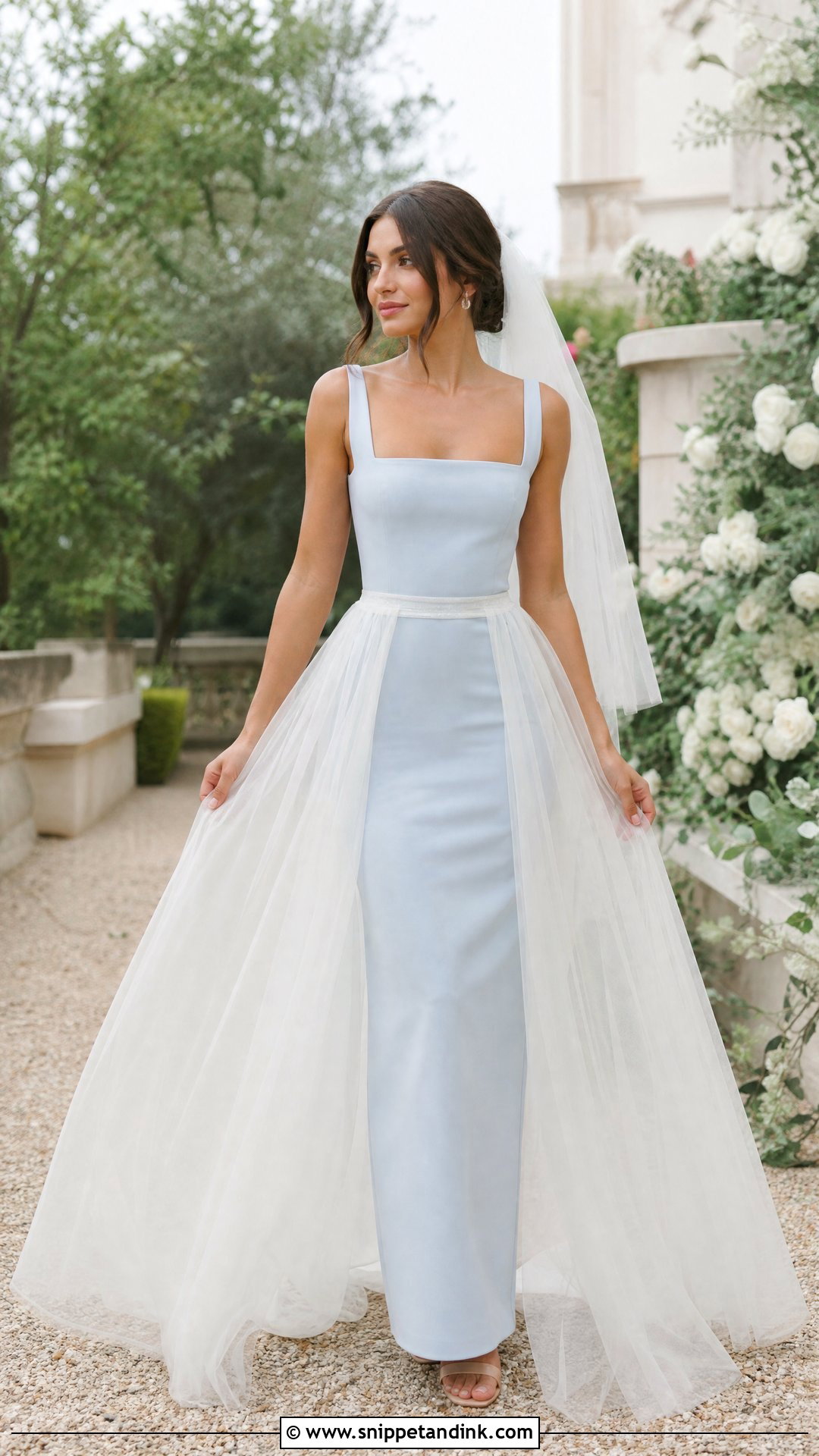
A colored base gown under sheer ivory tulle gives a soft, shifting tint during the ceremony and a fuller hit of colour once the tulle is gone. Blush, pale blue, lavender and champagne all work. Keep the bodice simple, strapless or square-neck, and match the veil to the overskirt rather than to the dress. Look at the fabrics together by a window before you buy: boutique lighting is often warm and hides how ivory and pastel really interact.
19. Plus Size Wedding Dress With Removable Overskirt
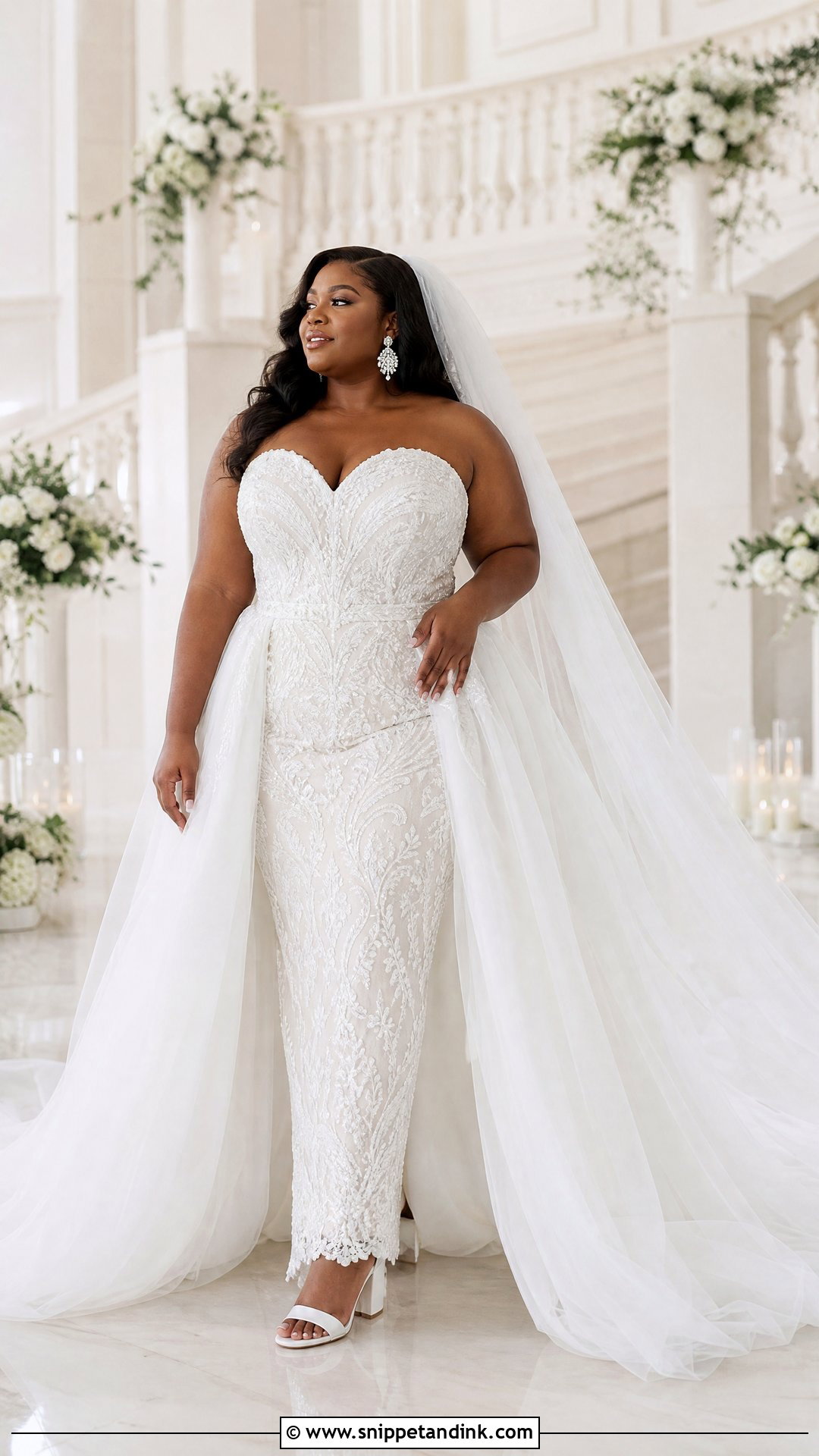
For plus-size brides, the overskirt’s weight and gathering matter more than its style. Dense gathers at the front add bulk exactly where most brides don’t want it, so I’d go for side pleats, open-front panels or lightweight tulle. The base gown, fit-and-flare or column, needs real internal structure, and the overskirt should fasten at the natural waist. Sit, walk and breathe deeply at every fitting; the waistband should feel secure without digging in. Stable block heels, statement earrings, and a veil scaled to the train. Wear your hair whichever way you feel strongest in.
20. Modest Wedding Dress With Removable Skirt
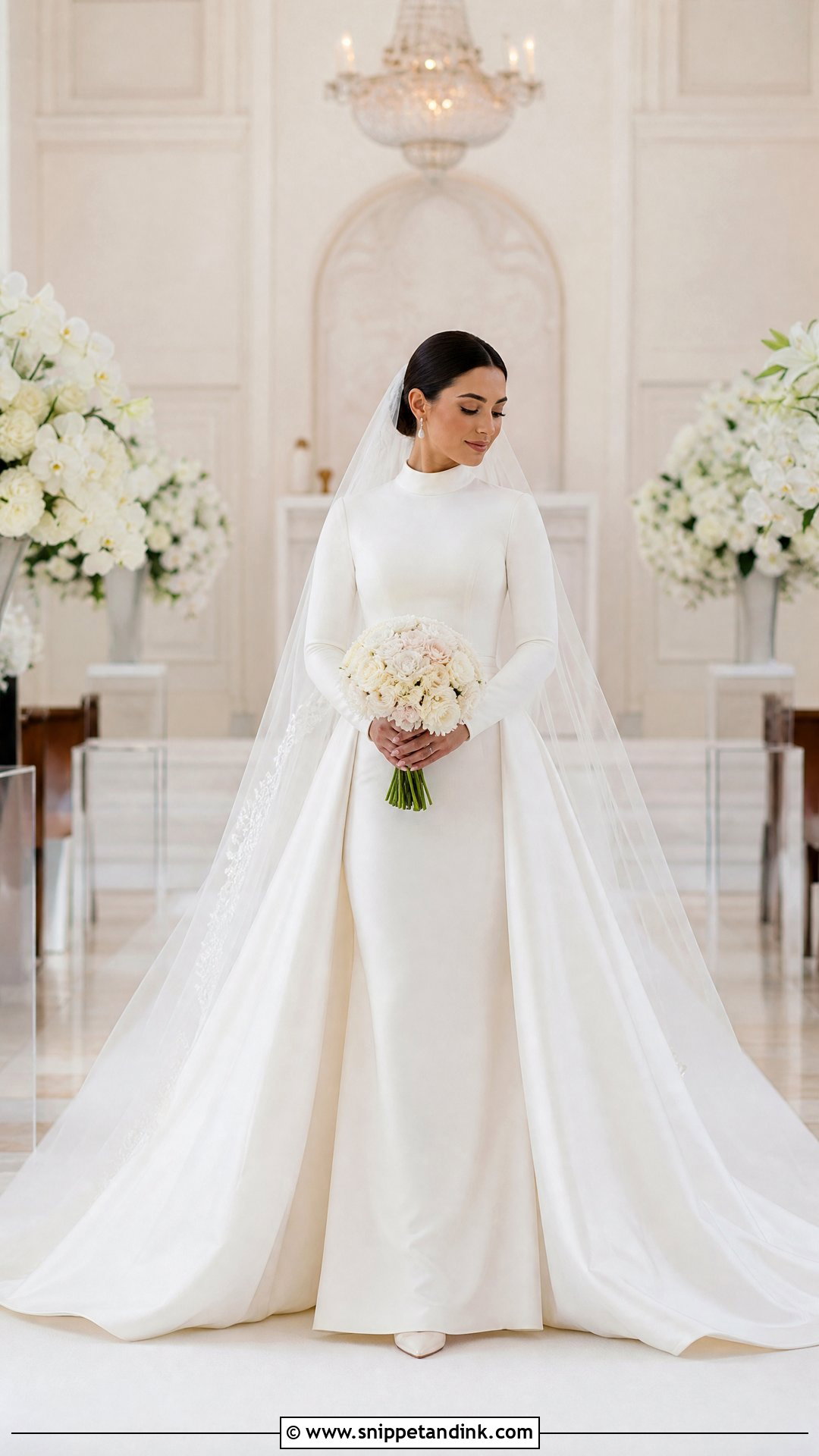
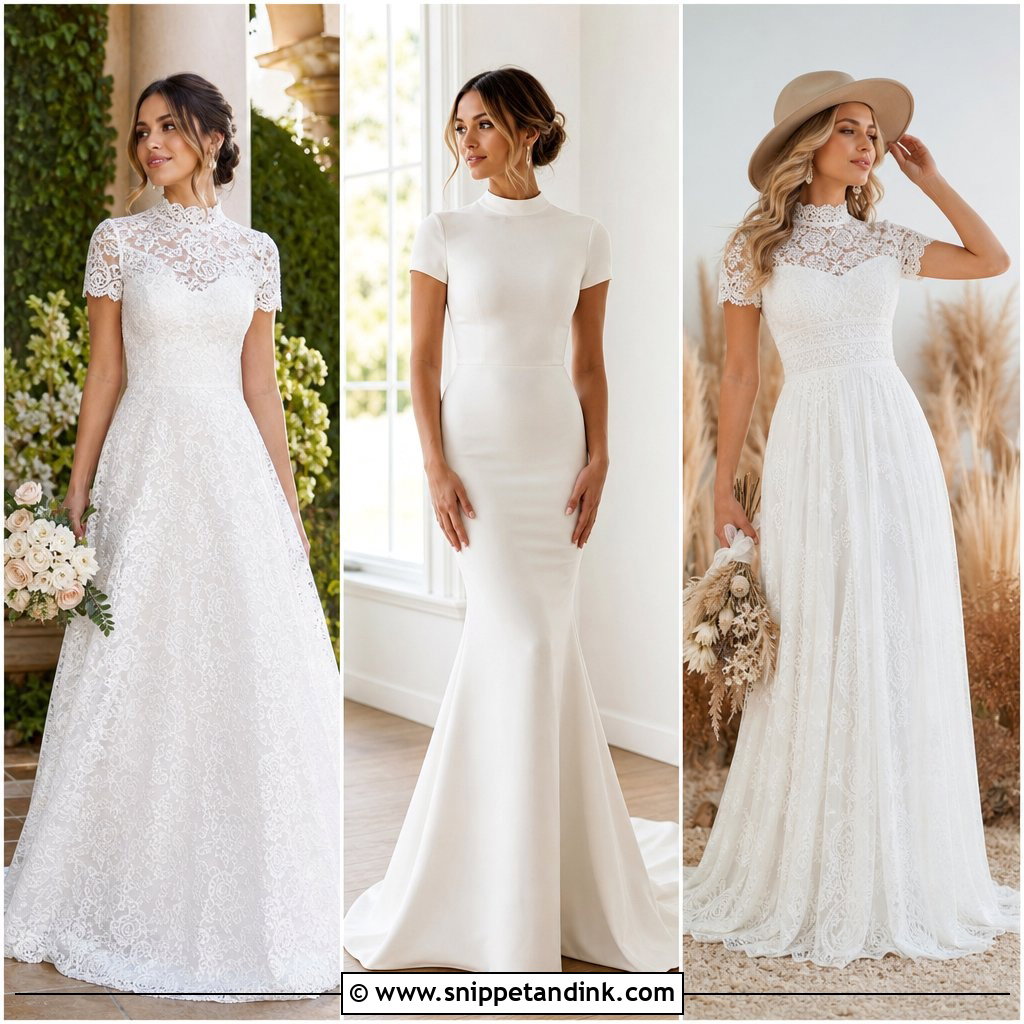
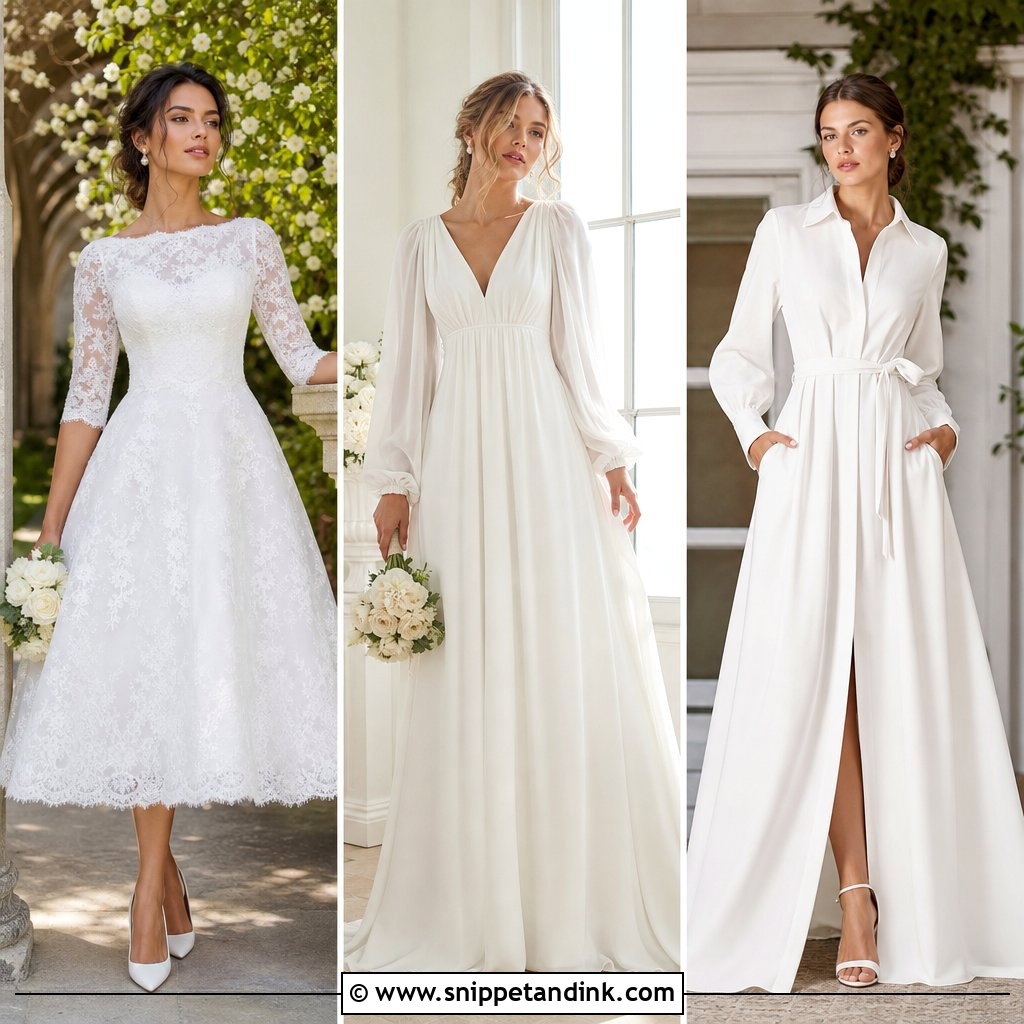
Modest gowns work well with removable skirts because the coverage stays exactly the same in both versions. A long-sleeved A-line or column with an opaque bodice and higher neckline forms the base, with a full satin, mikado or lace overskirt from the natural waist into a formal train. Place the fastening where a trusted attendant can reach it without pulling at sleeves or buttons. Pointed closed-toe shoes, pearl earrings and a simple cathedral veil, with a low bun, soft curls or covered hair.
Rehearsing the Change Before the Wedding
A removable skirt only feels like a clever idea if the change is quick. Decide who’ll do it, usually a bridesmaid or your mum, and bring her to the final fitting so the seamstress can show her the closures in person. Have her do it twice while you stand still.
When to Take It Off
Most brides switch after the formal portraits and before the first dance, which gives the photographer both looks in good light. Plan a quiet spot near the dance floor, not a hike back to the bridal suite. If your entrance into the reception is a moment you care about, you might keep the skirt on for it and change straight after.
Where It Goes Afterward
A full satin overskirt is bulky. Bring a long garment bag and a padded hanger, and give someone the job of getting it to the car at the end of the night. Tulle and organza crush less but snag more, so keep them away from chair backs and table edges.
Two Looks, One Gown and a Good Seamstress
The base dress is the one you’ll spend the longest in, so fall for that first. Then match an overskirt to its color, waistline, fabric weight and mood, and test sitting, walking, turning and removal at every fitting. Your attendant should practice the release and know where the skirt goes afterward. Lace, satin, tulle, organza, a fitted mermaid silhouette or a bridal mini can all succeed, as long as both versions look finished. Good tailoring is what makes the second look feel planned rather than leftover.
You'll Like These Ideas:



Leave a Reply