
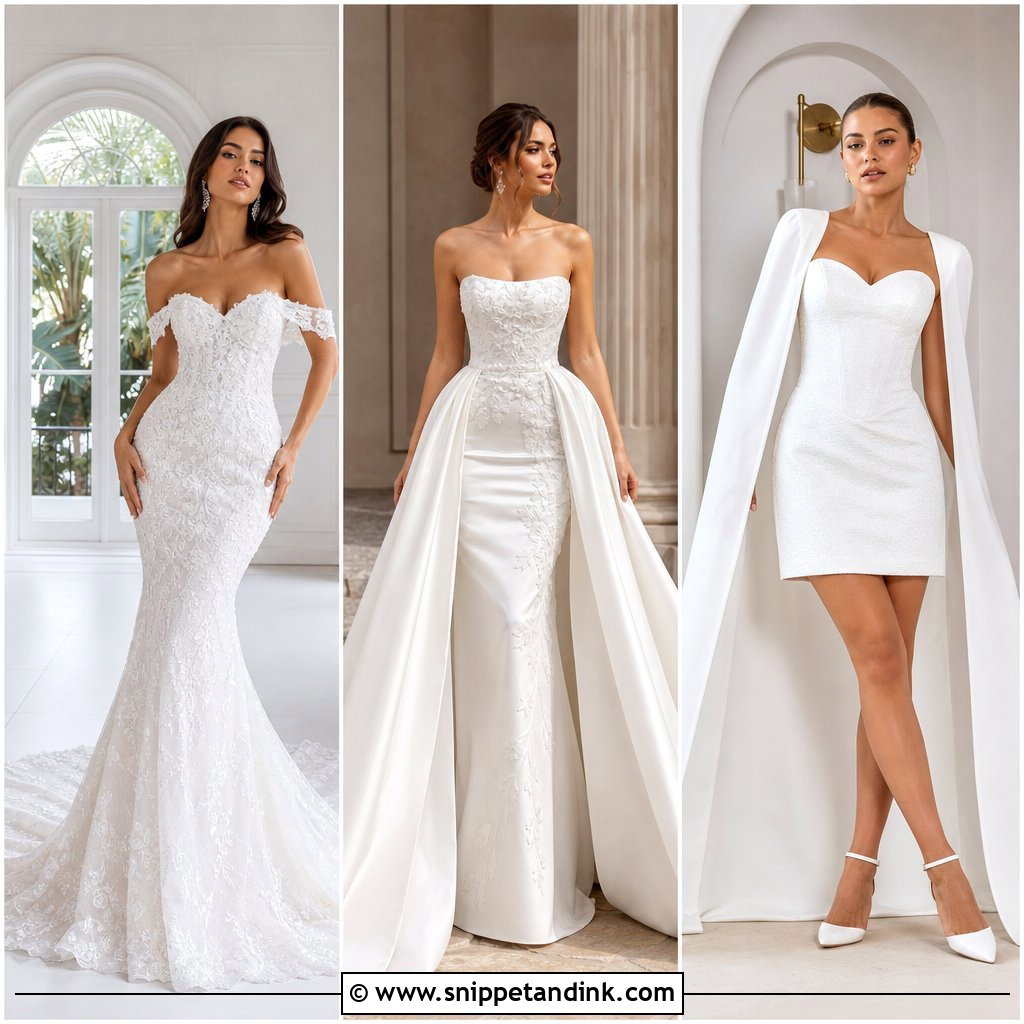
Fitted gowns are judged in the mirror while the bride stands still, and that’s the trap. A slim dress that looks perfect standing can be miserable seated at dinner, so I judge every fitted gown by how it sits, walks and climbs a step. The twenty below cover mermaid, trumpet, sheath, column and fit-and-flare shapes in clean satin, lace, corsetry, florals and convertible overskirts, along with a few current details such as strapless necklines, dropped waists and structured bodices. Each comes with shoes, jewelry and veil suggestions, and the support or alteration point I’d focus on for that particular shape.
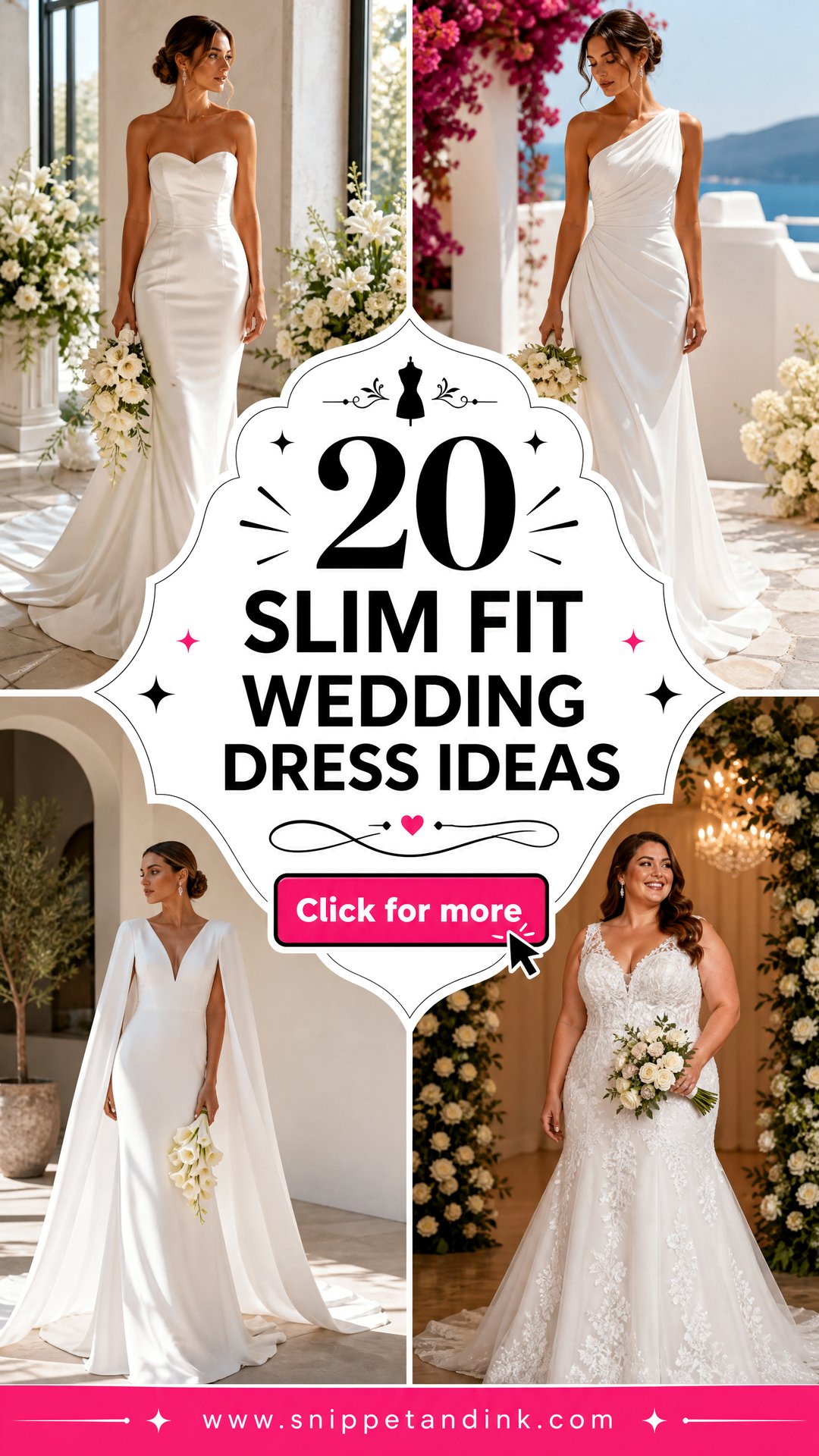
Where the Skirt Releases Changes How You Move
Every fitted silhouette is really a question of where the skirt stops hugging you. That one point decides how big a step you can take, how easily you sit and how much you’ll enjoy the dancing. From least to most restrictive, this is how I explain them:
- Fit-and-flare: fitted through the bodice and waist, opening from just below the hip. The easiest to live in.
- Sheath: follows the body loosely all the way down, with no real flare. Comfortable if the fabric skims rather than grips.
- Trumpet: fitted to mid-thigh, then flares. Still allows a fairly normal stride.
- Column: straight and narrow throughout. Usually needs a back slit or stretch lining to walk freely.
- Mermaid: fitted to the knee or just below, then a dramatic flare. The most striking and the hardest for stairs, sitting and dancing.
None of these is wrong for any body type. What matters is matching the flare point to your day. A long ceremony with lots of standing suits a mermaid fine; a wedding with stairs, a boat or a hillside walk might not.
1. Strapless Satin Slim Fit Wedding Dress
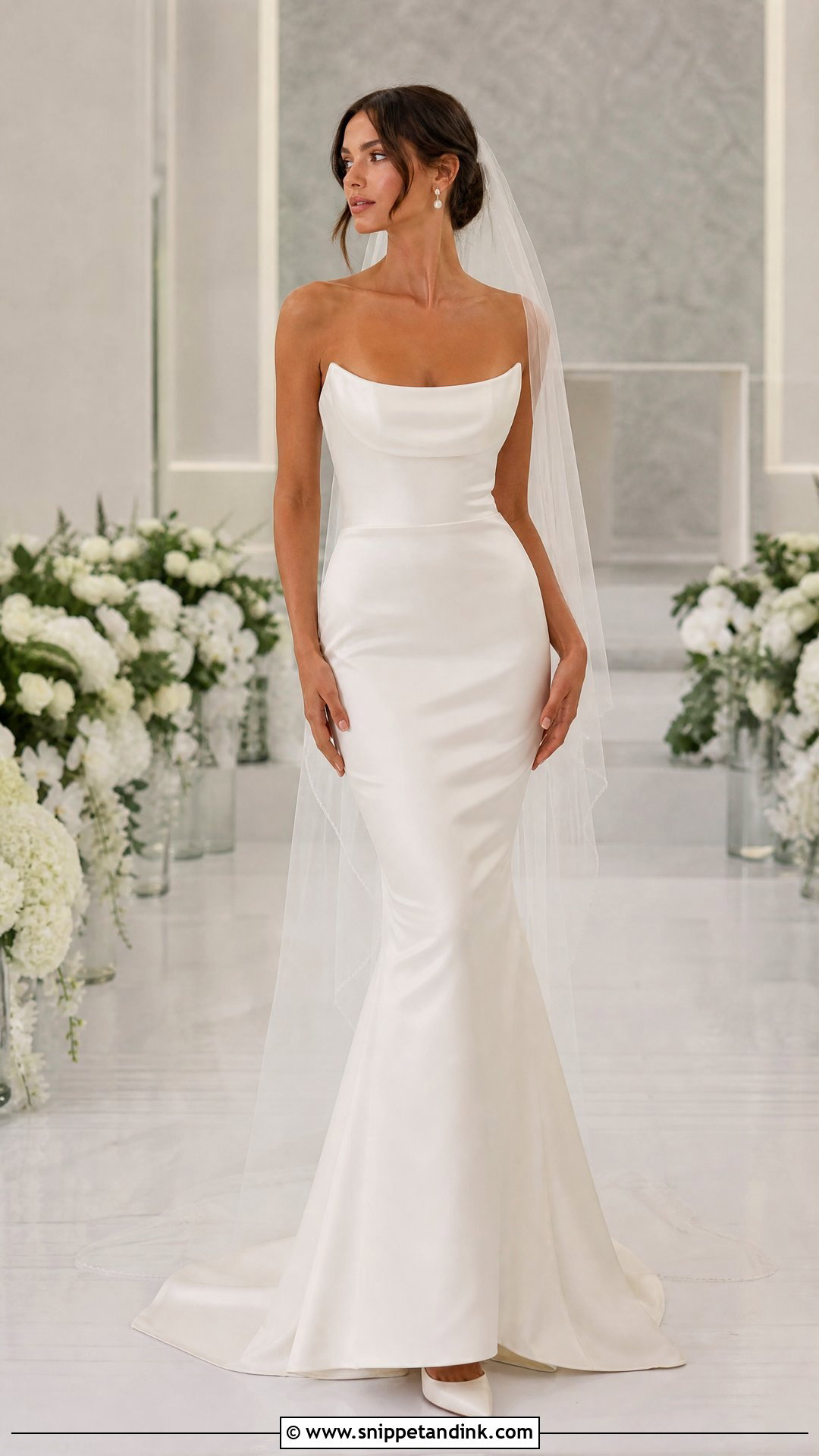
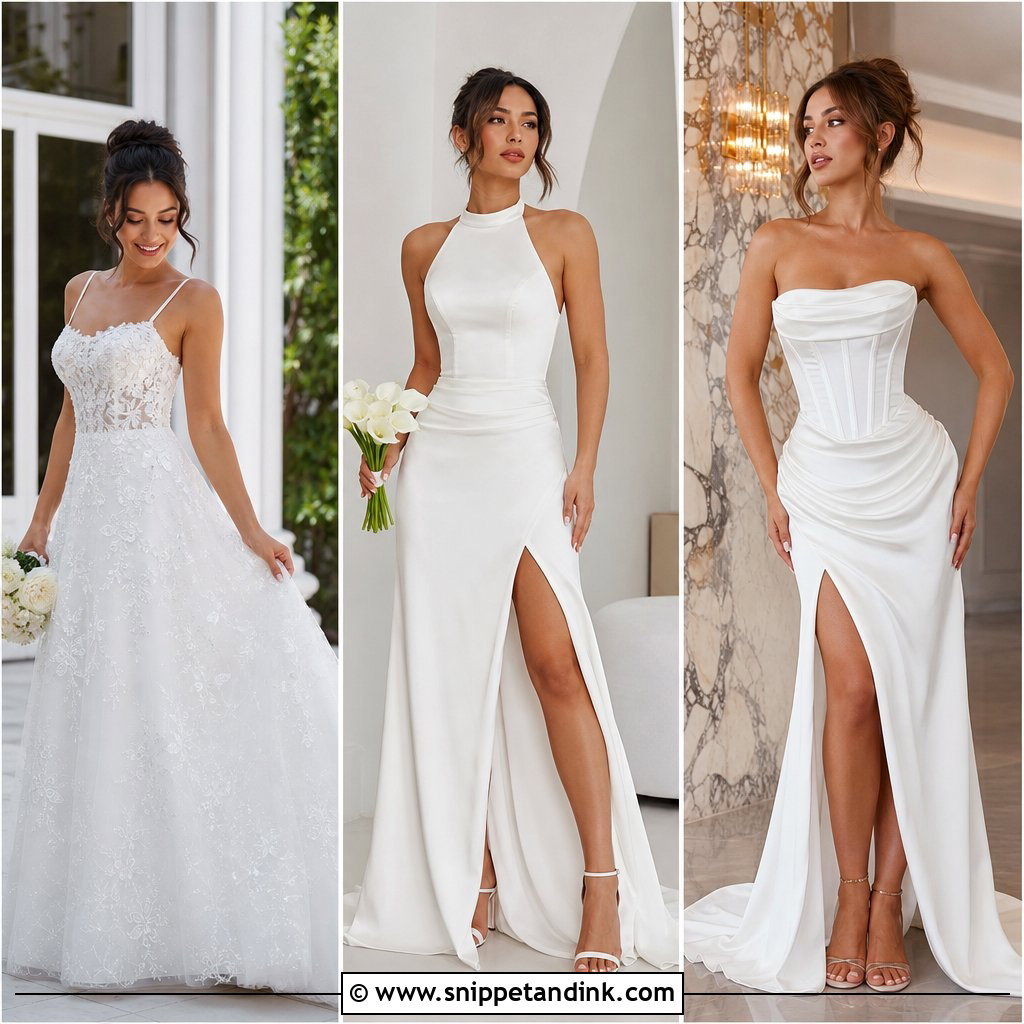
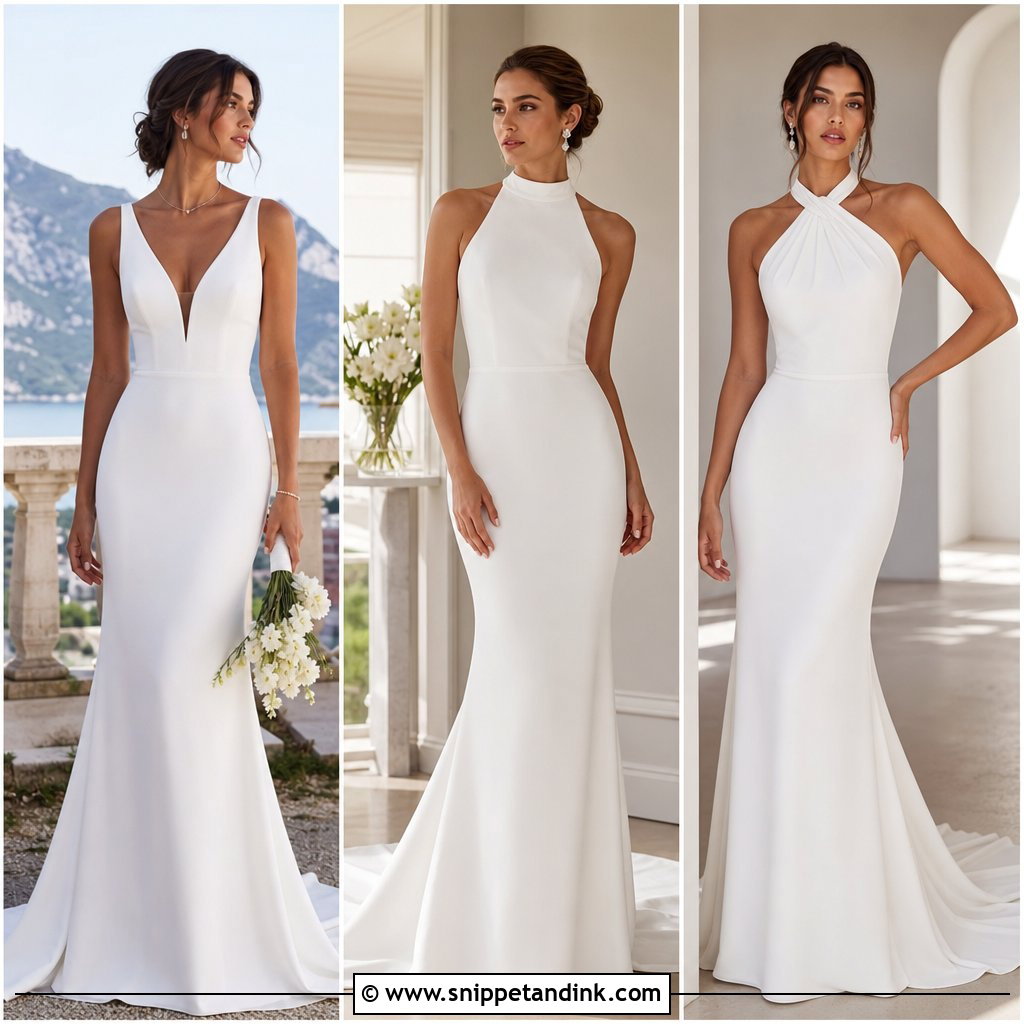
Strapless satin and a fitted skirt are a demanding combination, because nothing can hide a bodice that slips or a seam that puckers. I look for real internal boning and a mermaid or fit-and-flare skirt that releases near the knee. A softly curved or scoop neckline usually stays put better than a sharp straight edge. Pointed ivory pumps, pearl drops and a low bun keep it classic, with a fingertip veil that leaves the shape on show. Sit, walk and lift your arms at every fitting; if you catch yourself tugging the bodice up, it isn’t fitted yet. Satin shows each seam, so smooth underlayers are essential.
2. Long Sleeve Lace Slim Fit Wedding Dress
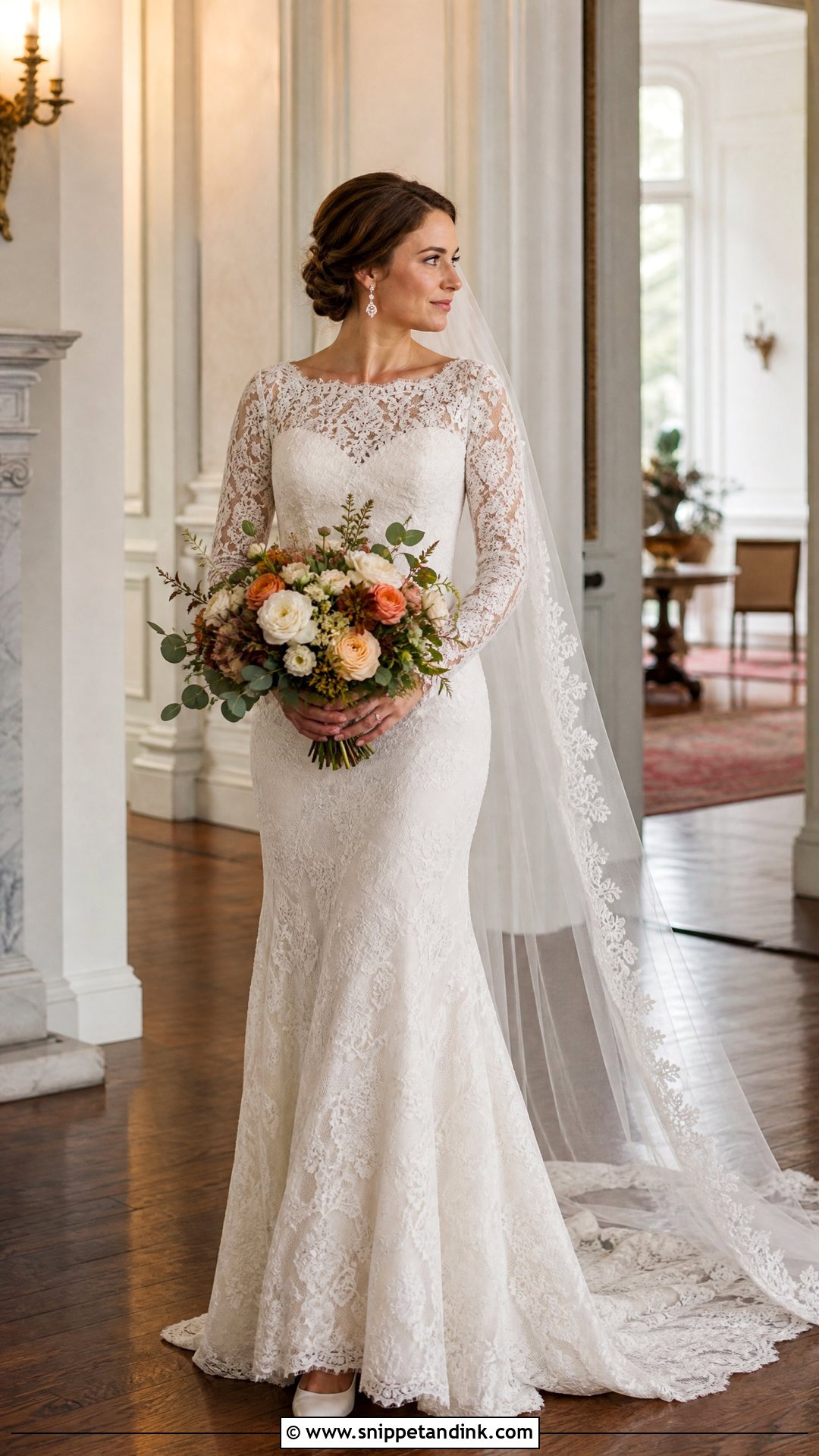
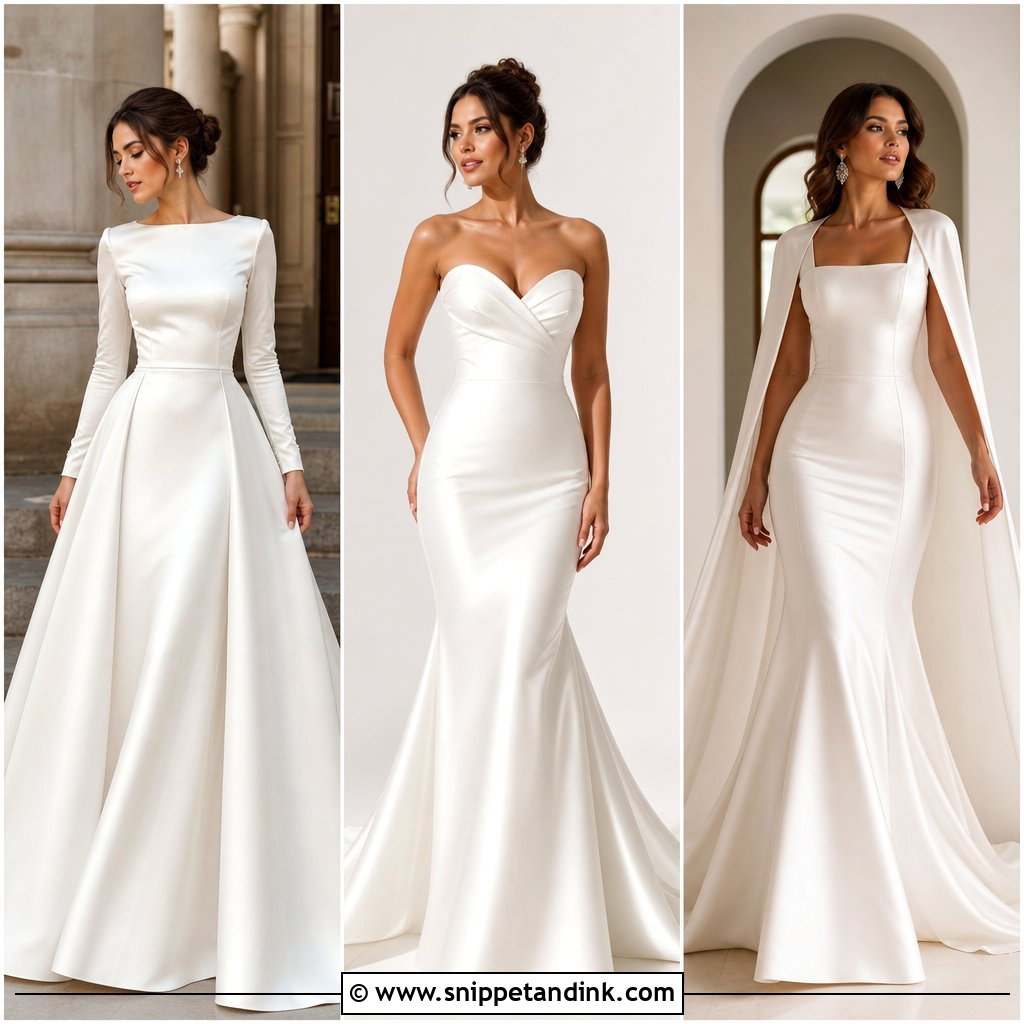
Coverage and definition can live together. A lined, supportive bodice with sheer lace sleeves and a skirt that opens slightly below the hips gives you both. Floral lace reads romantic; geometric lace reads modern. Closed-toe heels, small crystal earrings and a veil edged in matching lace suit it, with a soft chignon so the neckline stays visible. It’s natural for autumn and winter, and lighter lace works in spring. My check here is the shoulder: fitted sleeves on a fitted bodice leave no room to reach, so I make brides hug me before I approve the sleeve width.
3. Square Neck Crepe Slim Fit Wedding Dress
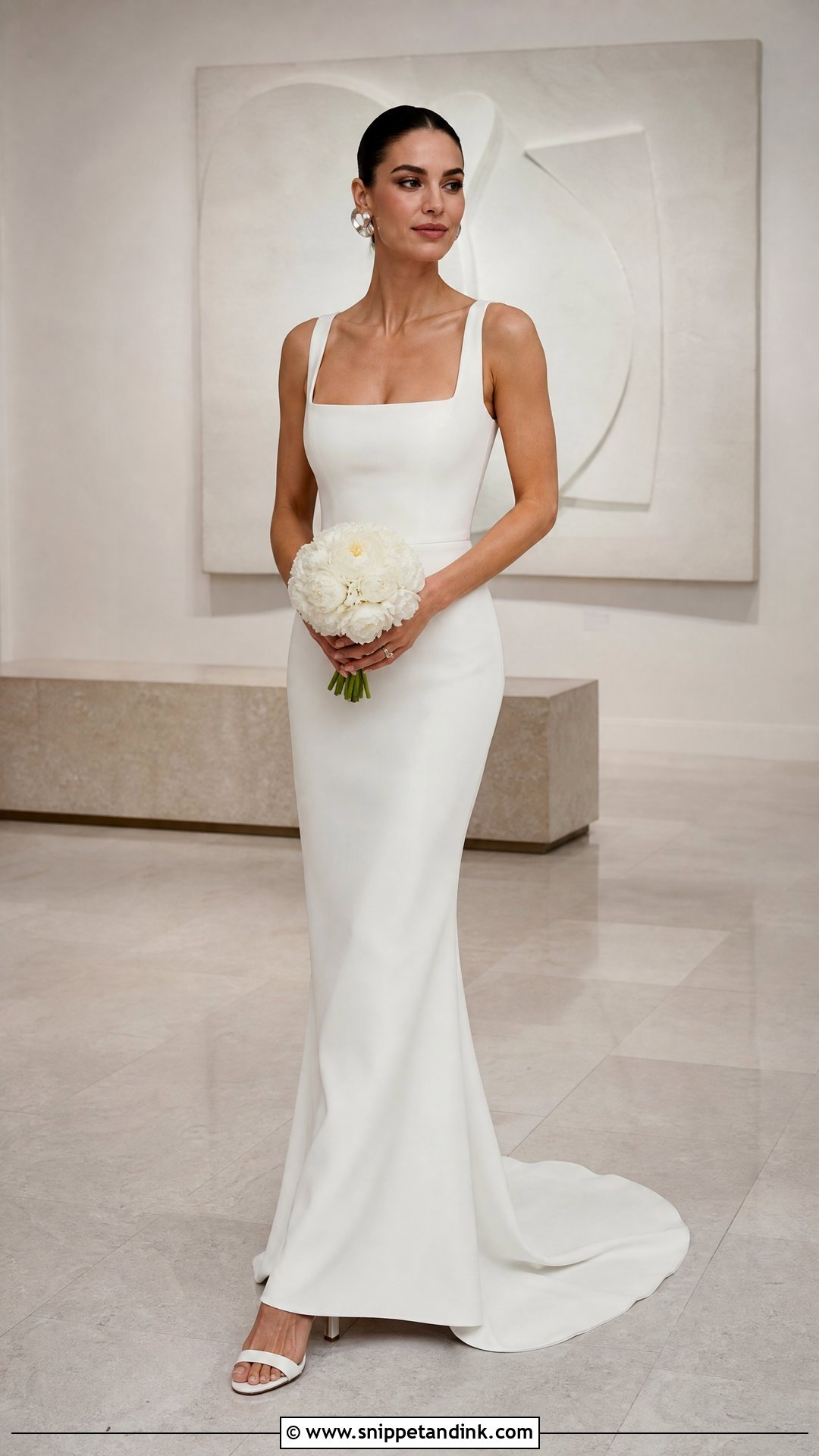
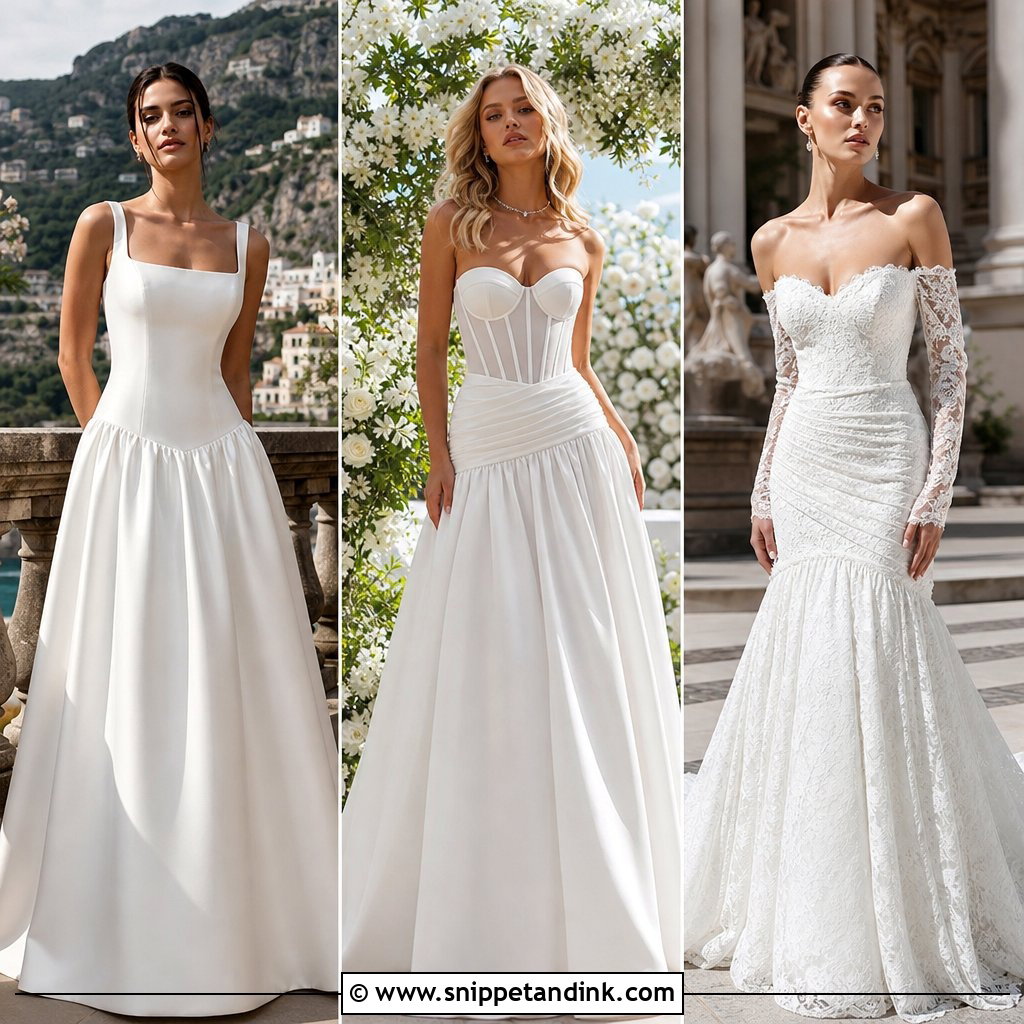
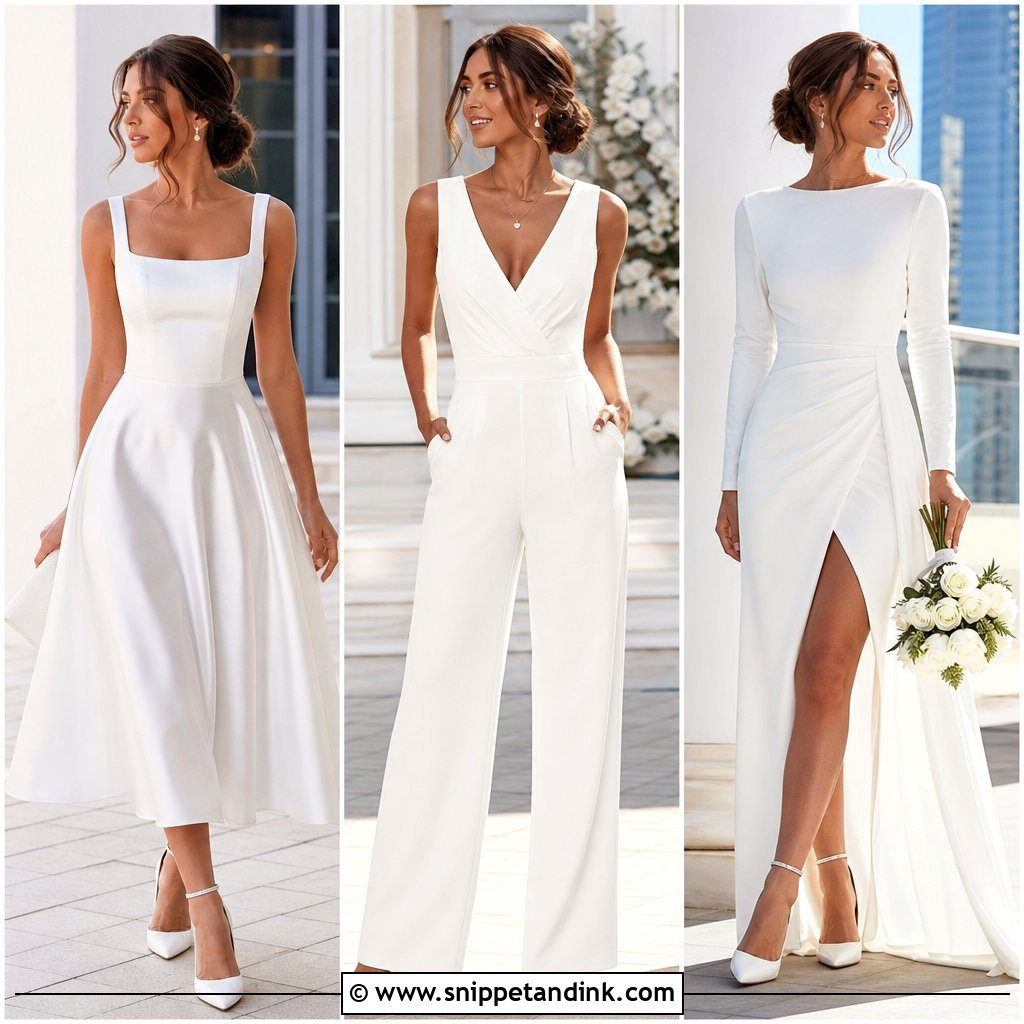
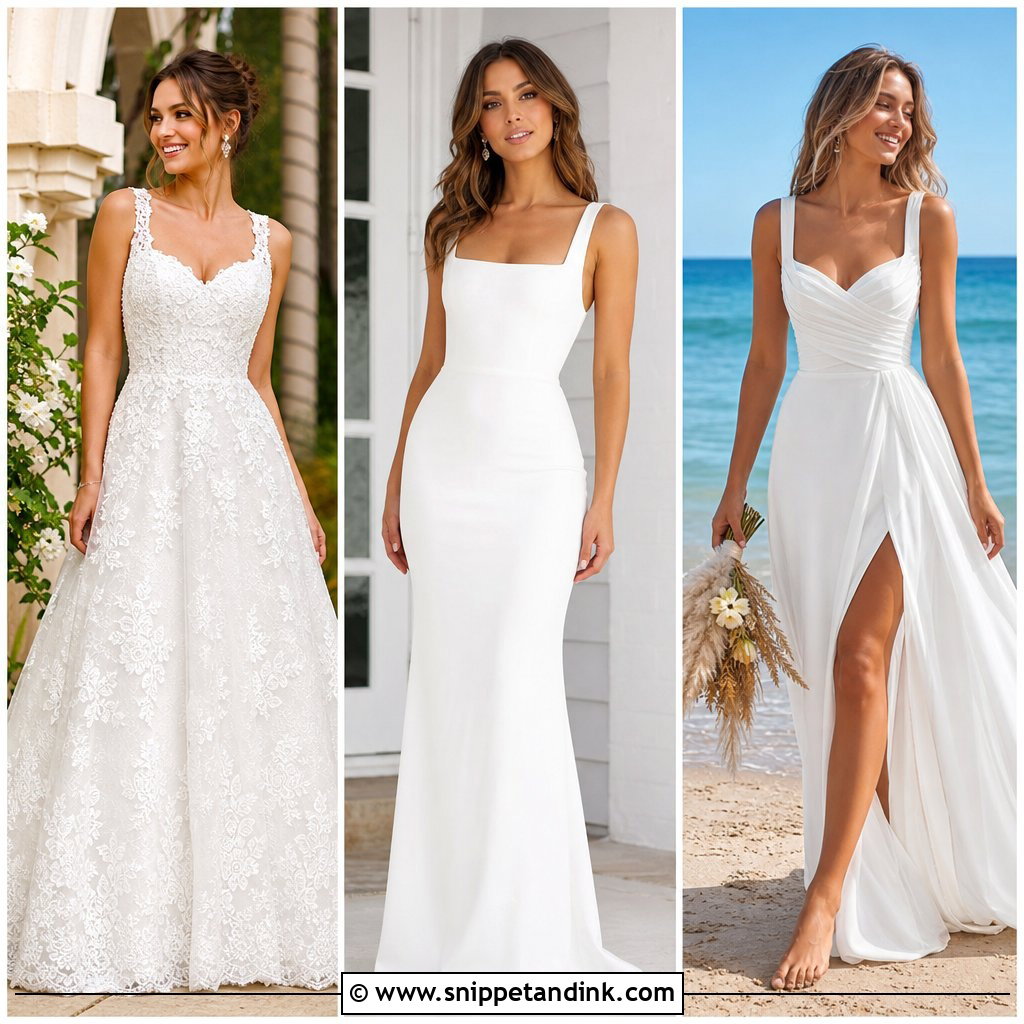
Matte crepe with a square neck is one of the cleanest fitted looks there is. The fabric has no shine to distract, so the cut does all the work, and well-placed seams shape the waist and hips instead of darts or boning. Wide straps or short sleeves give support. A column or subtle fit-and-flare with a back slit or stretch lining lets you walk. Sleek ivory heels, sculptural earrings and a compact bouquet finish it, plus a straight veil or a plain comb. I always have brides climb a couple of steps and sit for several minutes; crepe is less forgiving than people assume once it’s cut close.
4. Off Shoulder Trumpet Slim Fit Wedding Dress
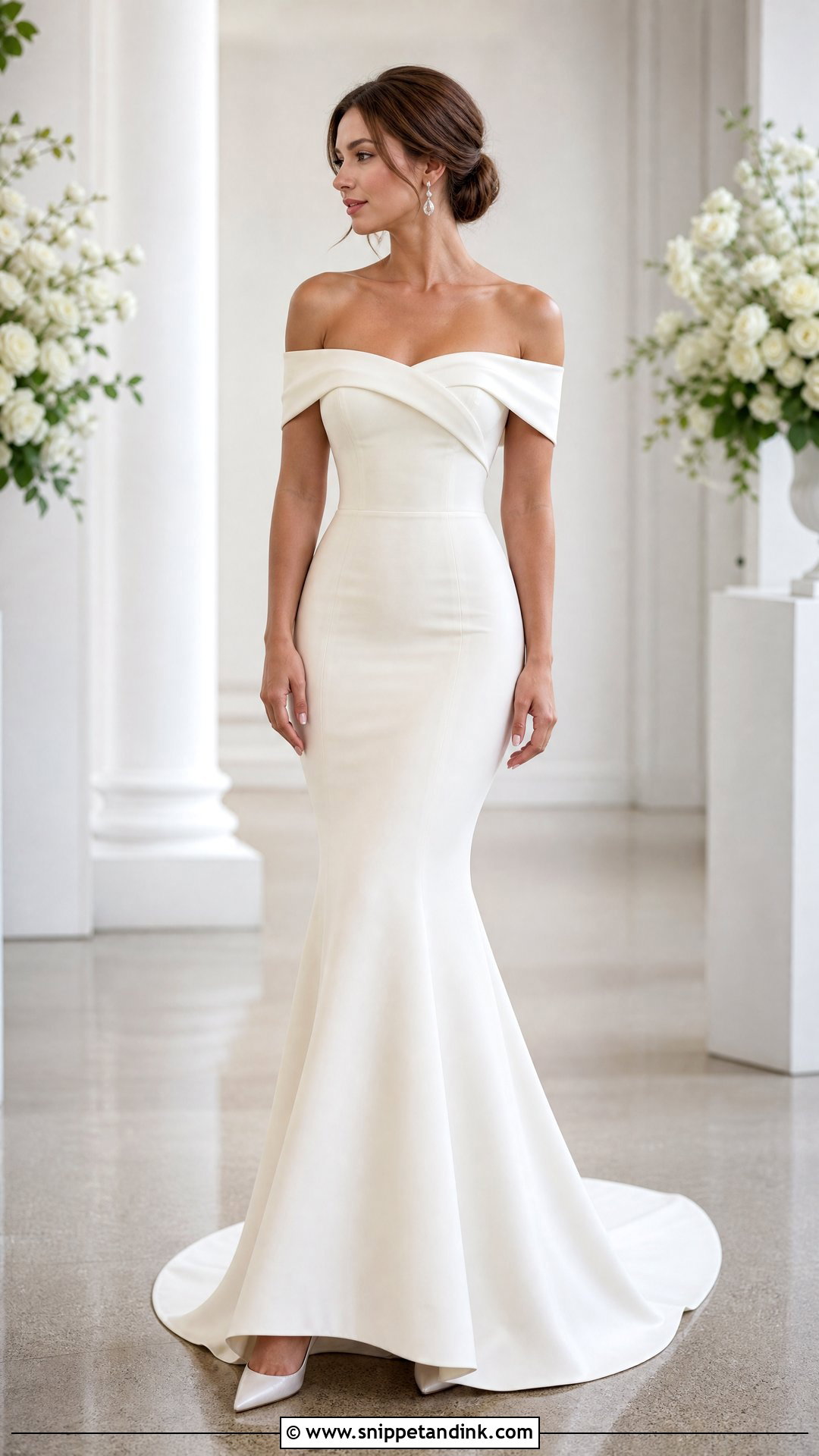
Trumpets flare from mid-thigh rather than the knee, which makes them noticeably easier to move in than a strict mermaid. Paired with an off-shoulder neckline, the bodice must sit securely across the bust while the skirt hugs the hips. Pointed pumps, a delicate necklace and drop earrings draw attention to the open neckline, and swept-back hair keeps the shoulders clear. For cold weather, add detachable fitted sleeves or a wrap. The off-shoulder band is the bit I fuss over: it should hold the arms gently without stopping you hugging, dancing or lifting a glass.
5. Halter Neck Sheath Slim Fit Wedding Dress
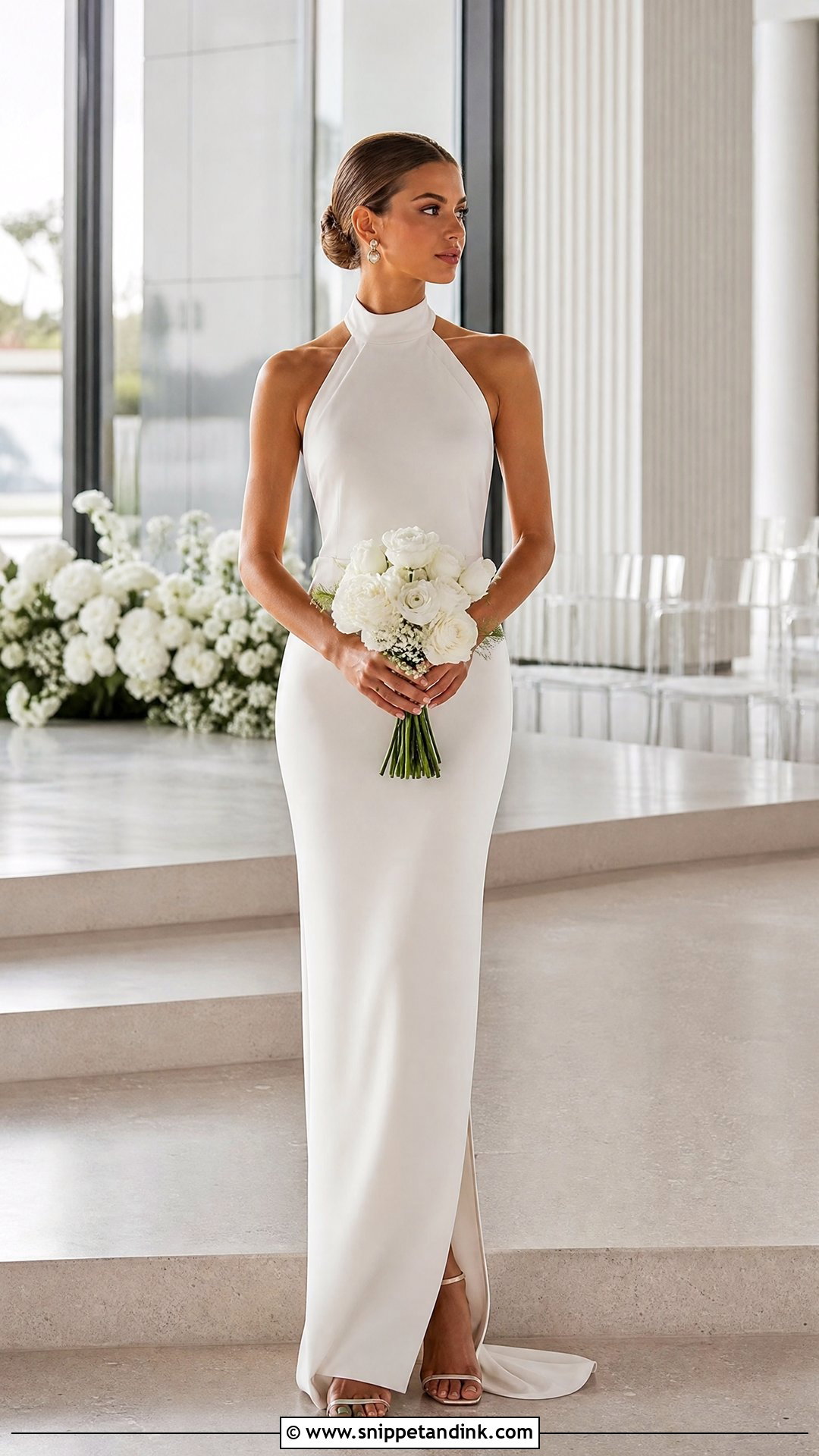
Straight, lengthening lines are what a sheath does best, and a halter neck sheath slim fit wedding dress adds a fresh, modern edge. Choose a high halter for more coverage or a softly draped one for ease. The skirt should skim the body rather than grip it, falling straight from the hips. Ankle-strap heels, metallic earrings and a neat ponytail or twisted bun suit it; leave out the necklace. A lightweight veil, a cape or a polished hair piece adds ceremony impact. I’d ask for a stretch lining, since a sheath with a rigid lining shortens your stride. It suits modern indoor weddings and destination ceremonies.
6. Sweetheart Corset Slim Fit Wedding Dress
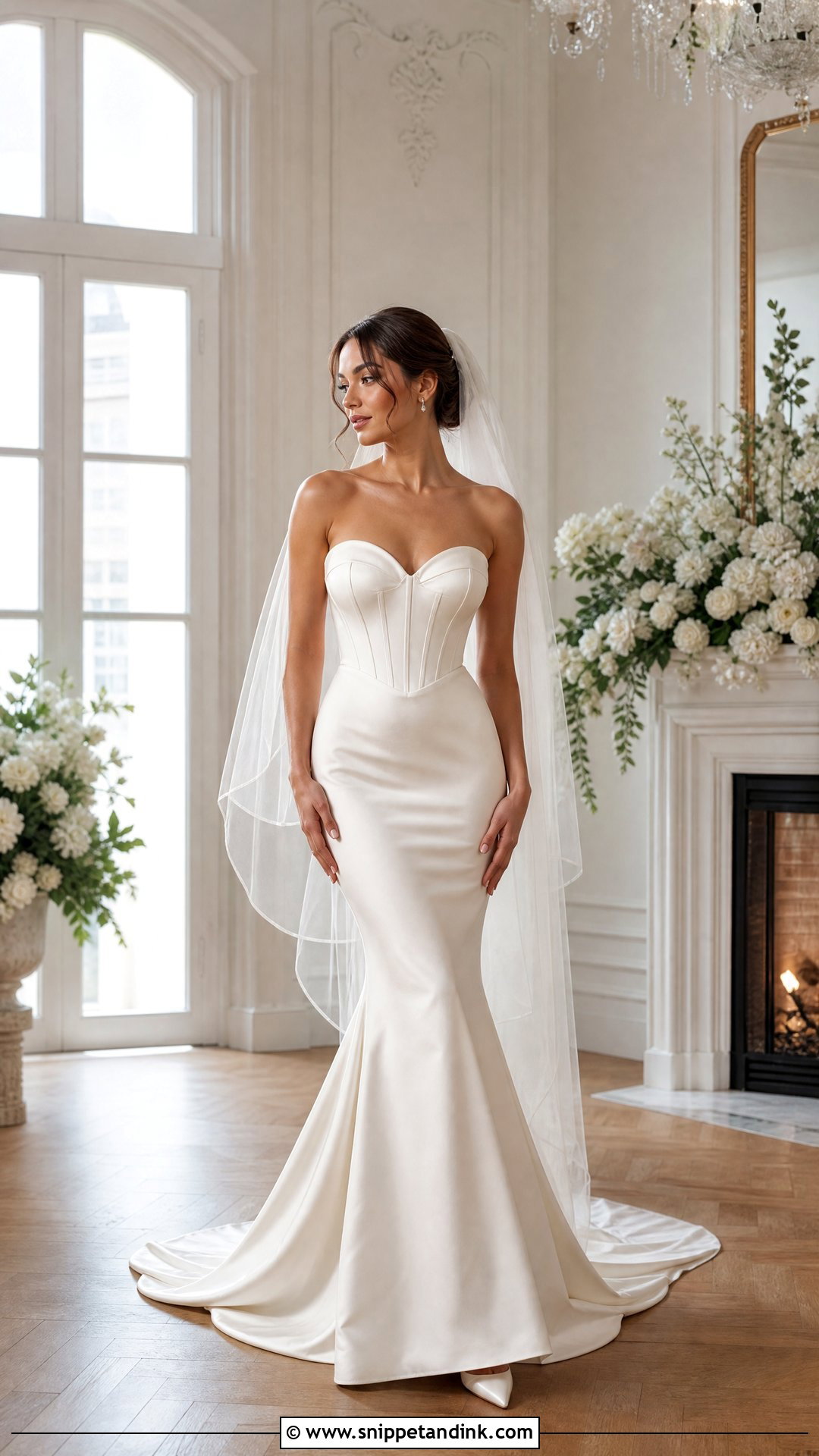
A sweetheart corset paired with a mermaid skirt gives a real hourglass, but the corset must be built for a full day. Visible boning reads contemporary; covered construction looks traditional. Pearl studs, pointed satin heels and a medium veil suit it. Loose waves soften it, and an updo sharpens the neckline. The test I use: breathe in deeply, sit, and bend to pick something up. If any of those hurts, it’s too tight, and a corset that’s painful at a fitting is worse after dinner. For more coverage, ask for detachable straps, lace sleeves or a sheer panel at the neckline.
7. Minimalist Slip Slim Fit Wedding Dress
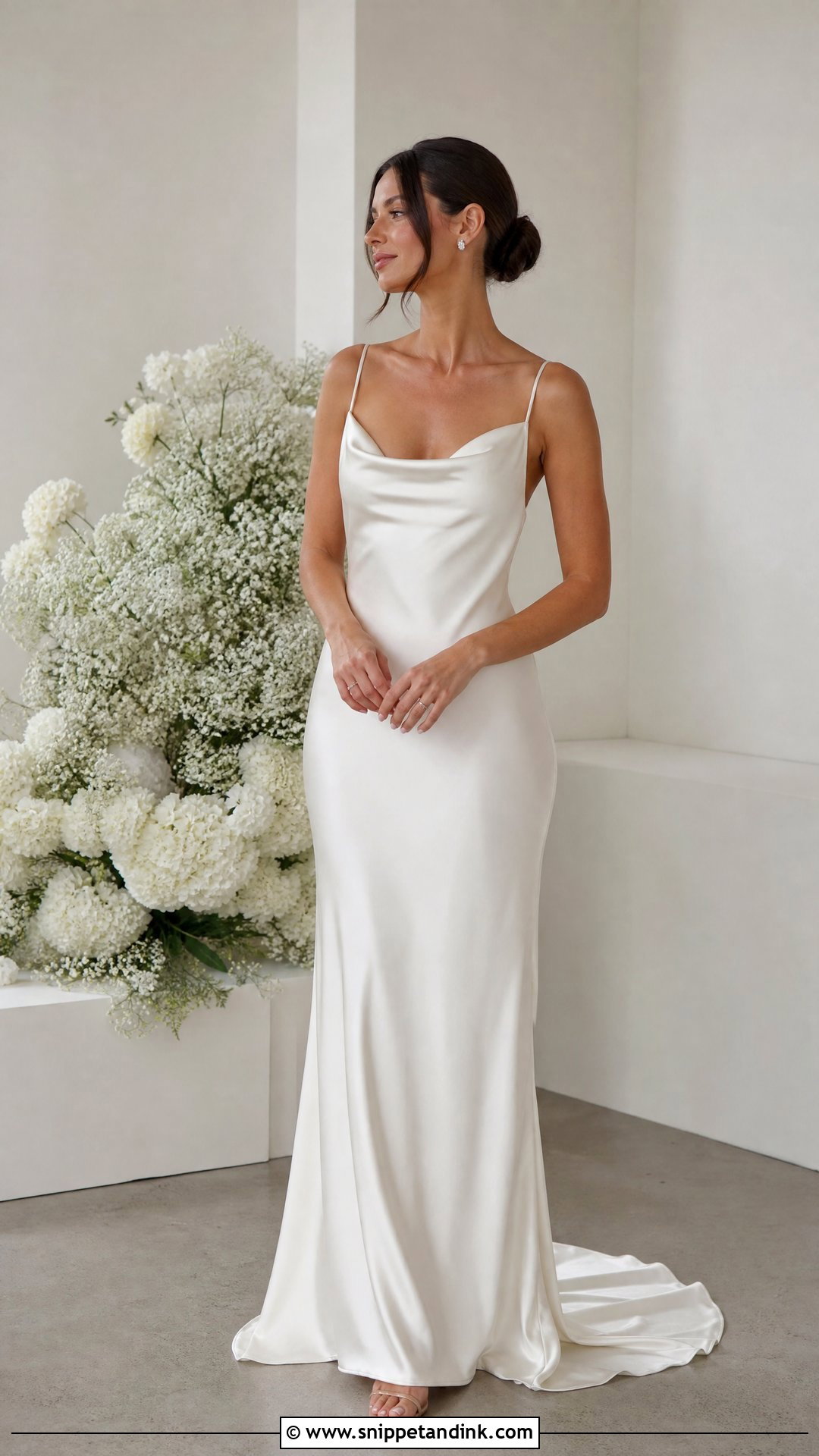
Slip dresses suit a bride who wants fluid fabric and very little fuss. Silk, satin or a good satin-backed crepe cut on the bias follows the body without rigid shaping. A gentle cowl softens it, while a straight neckline gives a crisp 1990s-inspired finish. Barely-there heels, small diamond or crystal earrings and a sleek bun are enough; the veil can be cathedral for drama or short for a modern party. Slips show everything beneath them, so smooth underlayers and a careful hem matter. I’d ask about a slightly flared hem and adjustable straps, because bias-cut skirts can restrict your step more than they appear to.
8. Open Back Crepe Slim Fit Wedding Dress
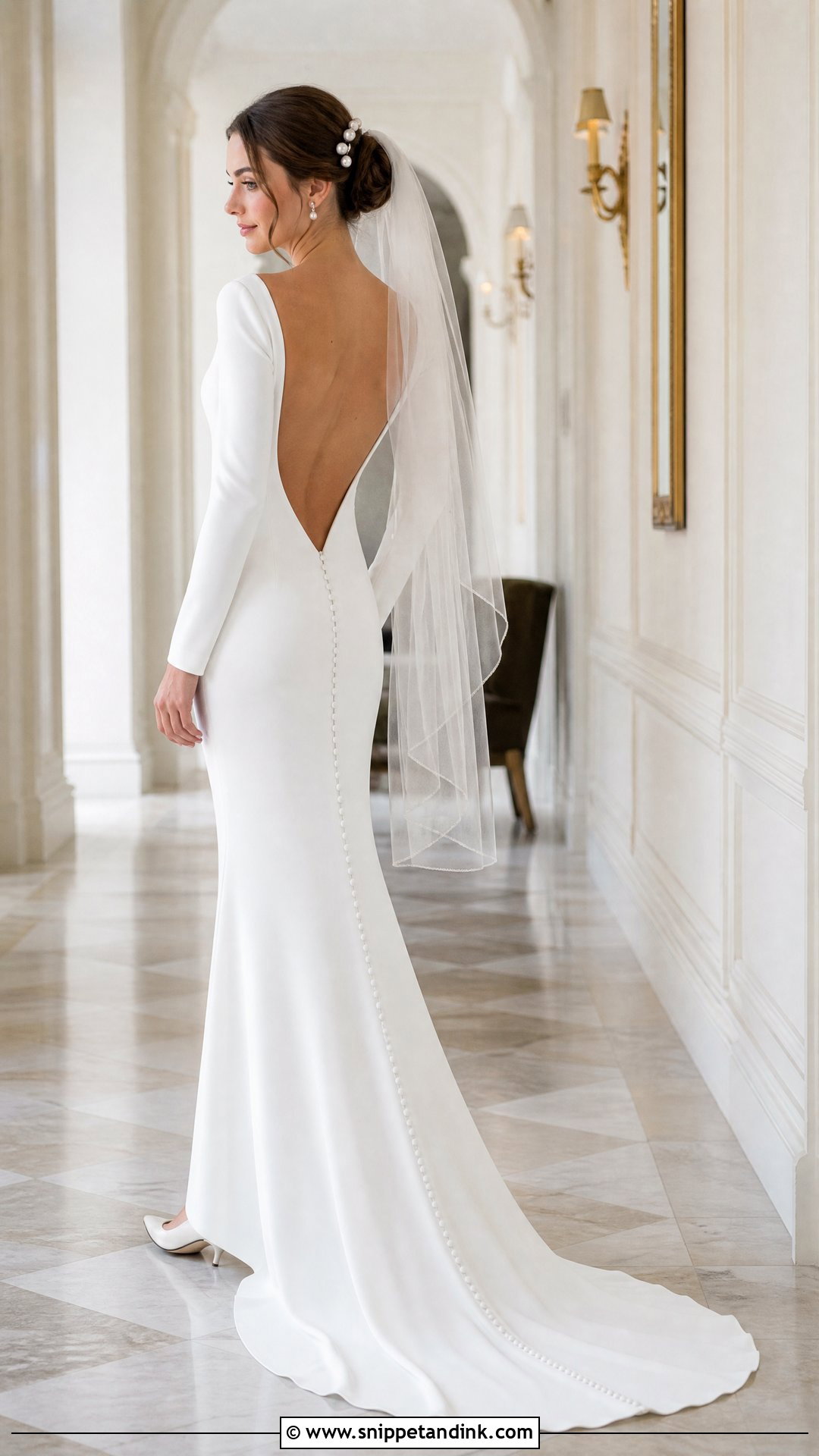
From the aisle, an open crepe back is what people remember; from the front it’s quite plain. A bateau, scoop or high neckline balances the bare back, and covered buttons down the opening add detail. A slim column with a small train keeps it clean. Pearl pins, low pointed heels and an updo that fully reveals the back finish it, with a veil fixed above the bun so it can come off after the ceremony. The depth of the opening decides what support you can wear, so settle undergarments first. At alterations, watch the edges as you sit and reach forward. Gaping there is common and fixable.
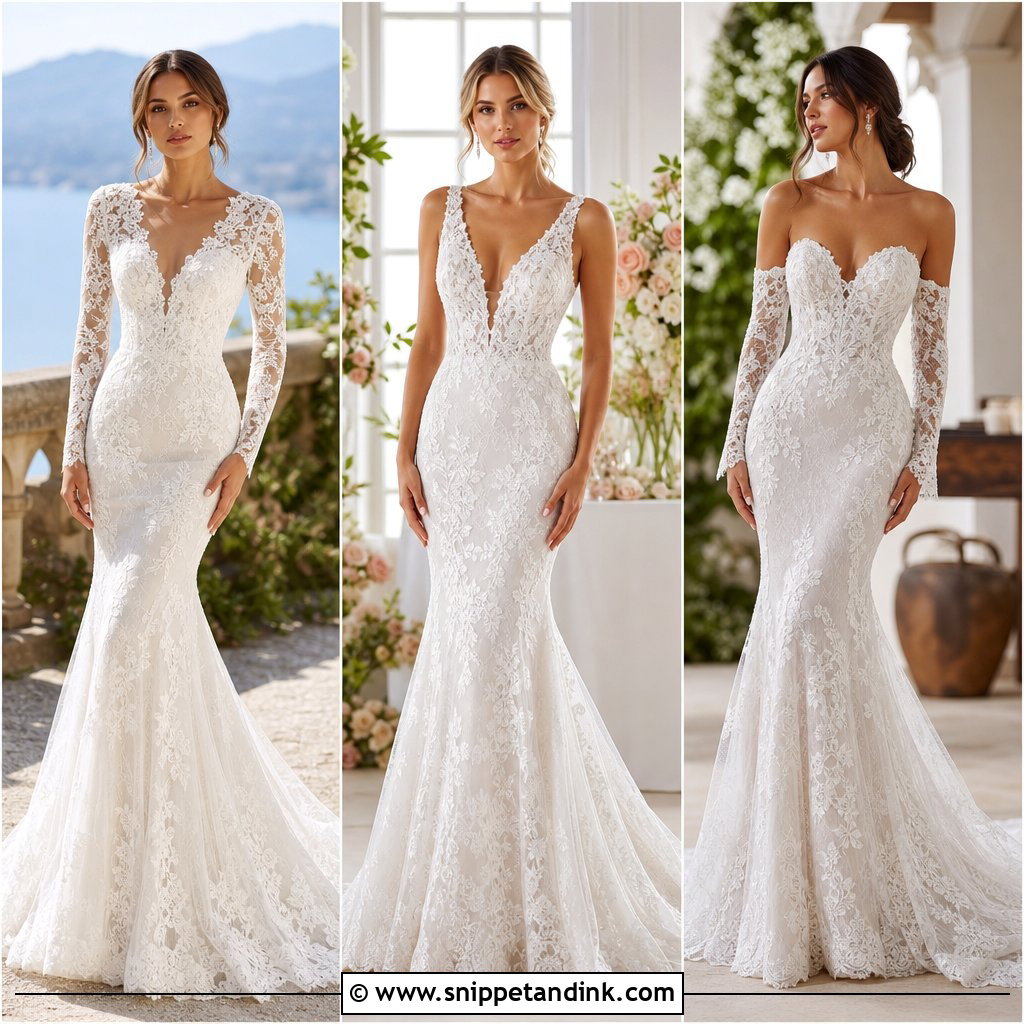
9. Illusion Sleeve Lace Slim Fit Wedding Dress
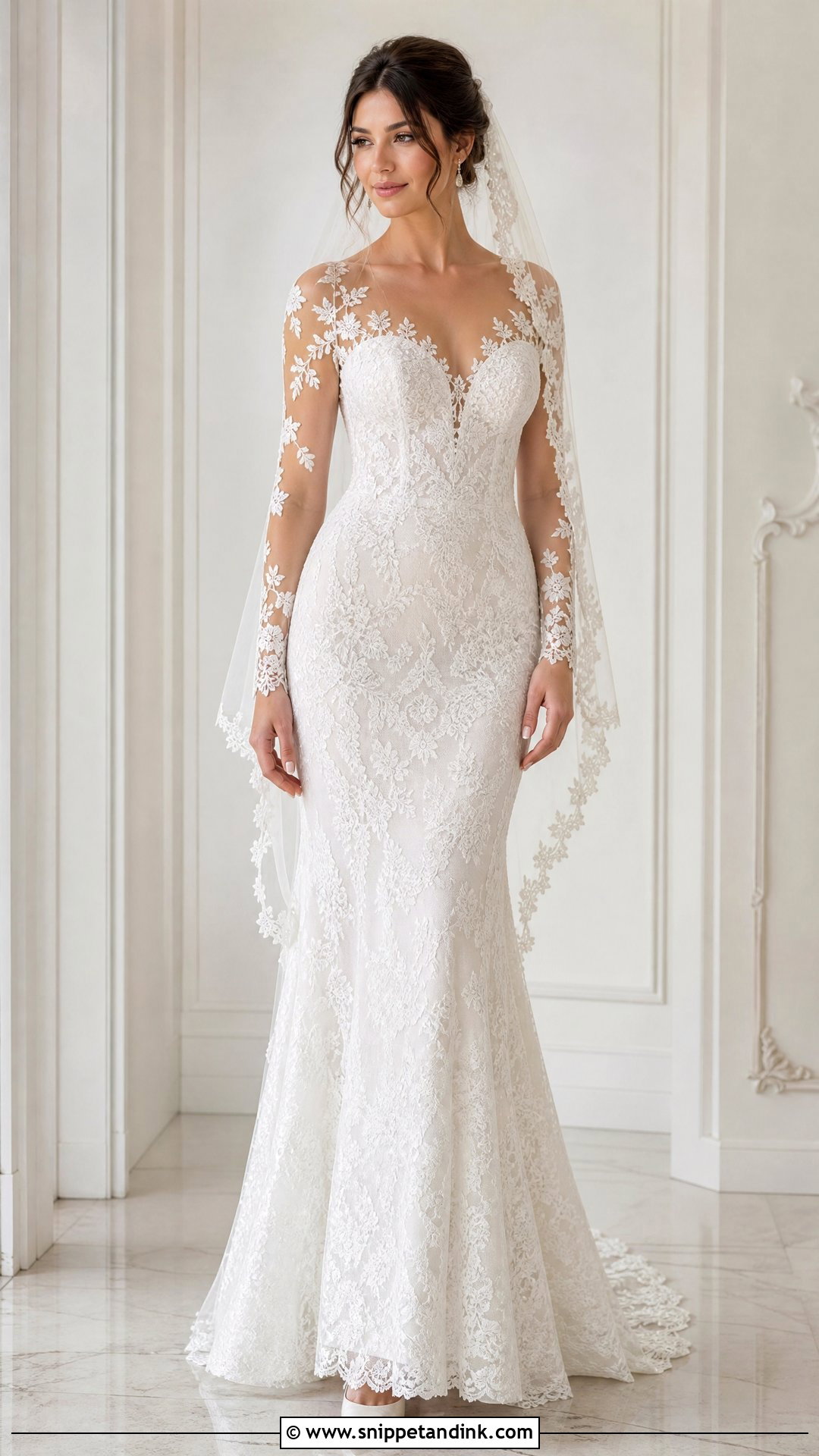
Illusion sleeves and fine lace make a fitted gown look almost weightless. The base needs to be properly supportive, with sheer tulle over the shoulders, arms and neckline and lace appliqués placed to give coverage and define the waist. Ivory pumps, understated earrings and a lace-trimmed veil suit it. A low bun keeps the neckline visible and stops hair catching on appliqués. Formal venues and cool months suit it, and the tulle stays breathable in mild spring weather. I check every appliqué edge for scratchiness and have the bride bend her elbows; the sleeves should move without pulling.
10. One Shoulder Draped Slim Fit Wedding Dress
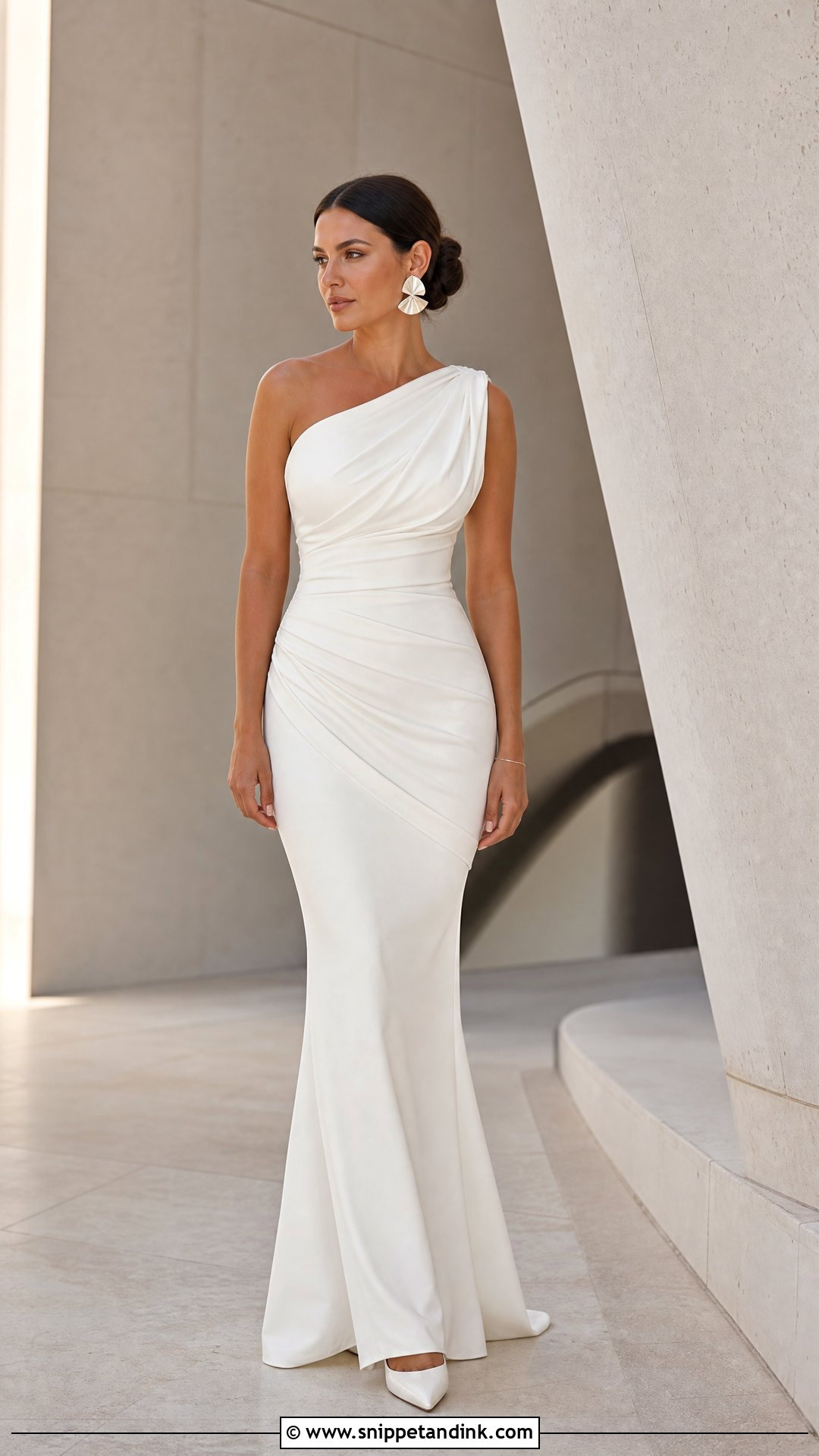
Asymmetry suits a fitted gown well. Soft folds across a one-shoulder bodice shape the waist and bring movement to a clean column or trumpet. Stretch crepe gives a matte modern finish; satin is shinier and more formal. A single statement earring, a slim bracelet and pointed ivory heels keep things balanced, with a side bun on the opposite side to the strap. I usually prefer a sculptural comb to a veil here. The single strap has to support the bust evenly, so I watch the bare side as the bride moves. Well-placed draping also softens the midsection without losing the fitted shape.
11. Basque Waist Satin Slim Fit Wedding Dress
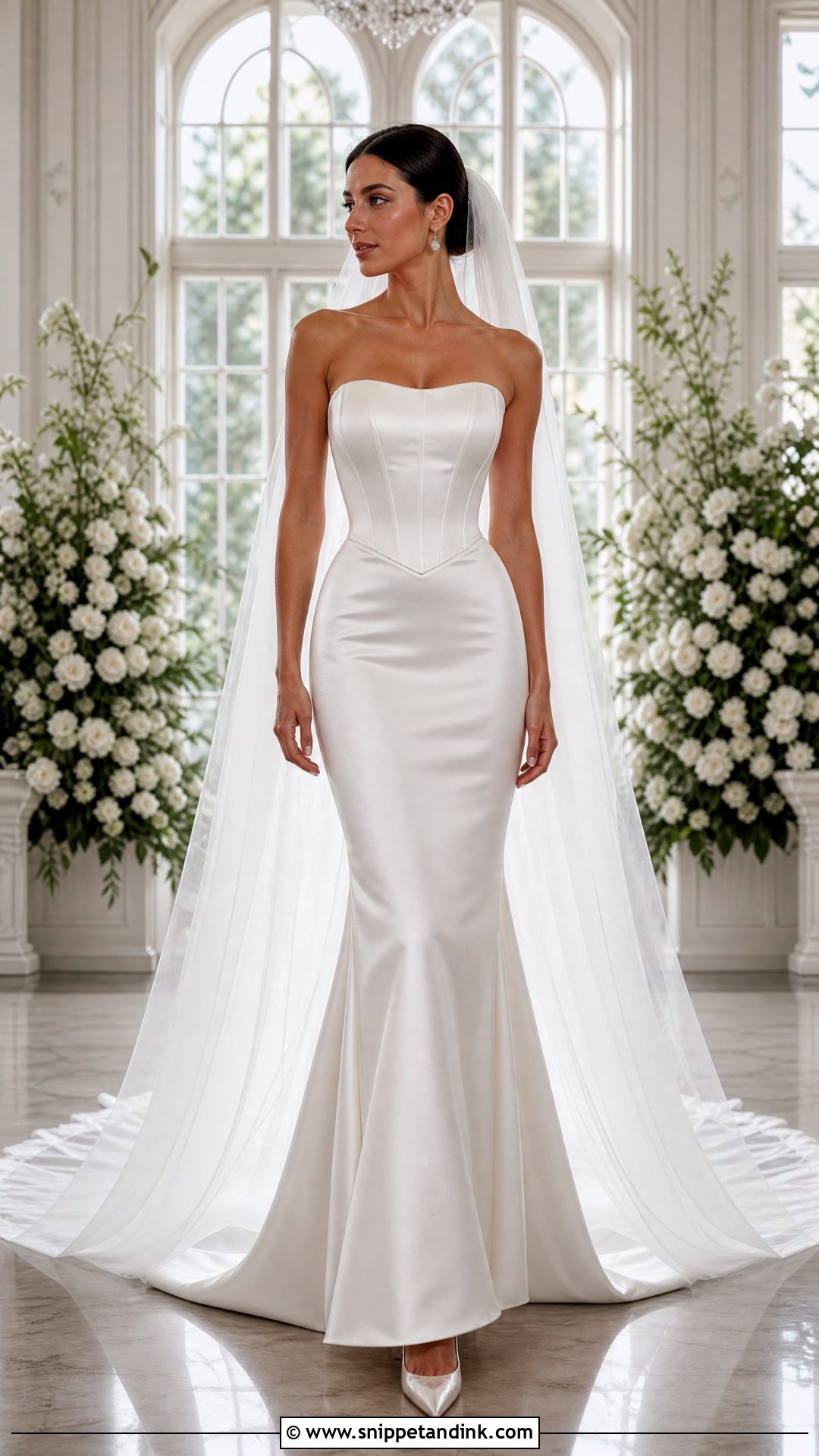
A pointed basque waist lengthens the torso, and it’s had a big return in bridal design lately, often with strapless necklines and structured fabric. It pairs best with a corseted bodice and a skirt fitted through the hips before a controlled flare. Satin pumps, pearl earrings and a cathedral veil suit it, and a smooth bun keeps it regal. Skip a wide belt, which fights the waistline. At fittings, sit down and look at the point: it should stay flat, not buckle or jab. Flexible boning and a soft lining make a real difference to comfort by the evening.
12. Drop Waist Slim Fit Wedding Dress
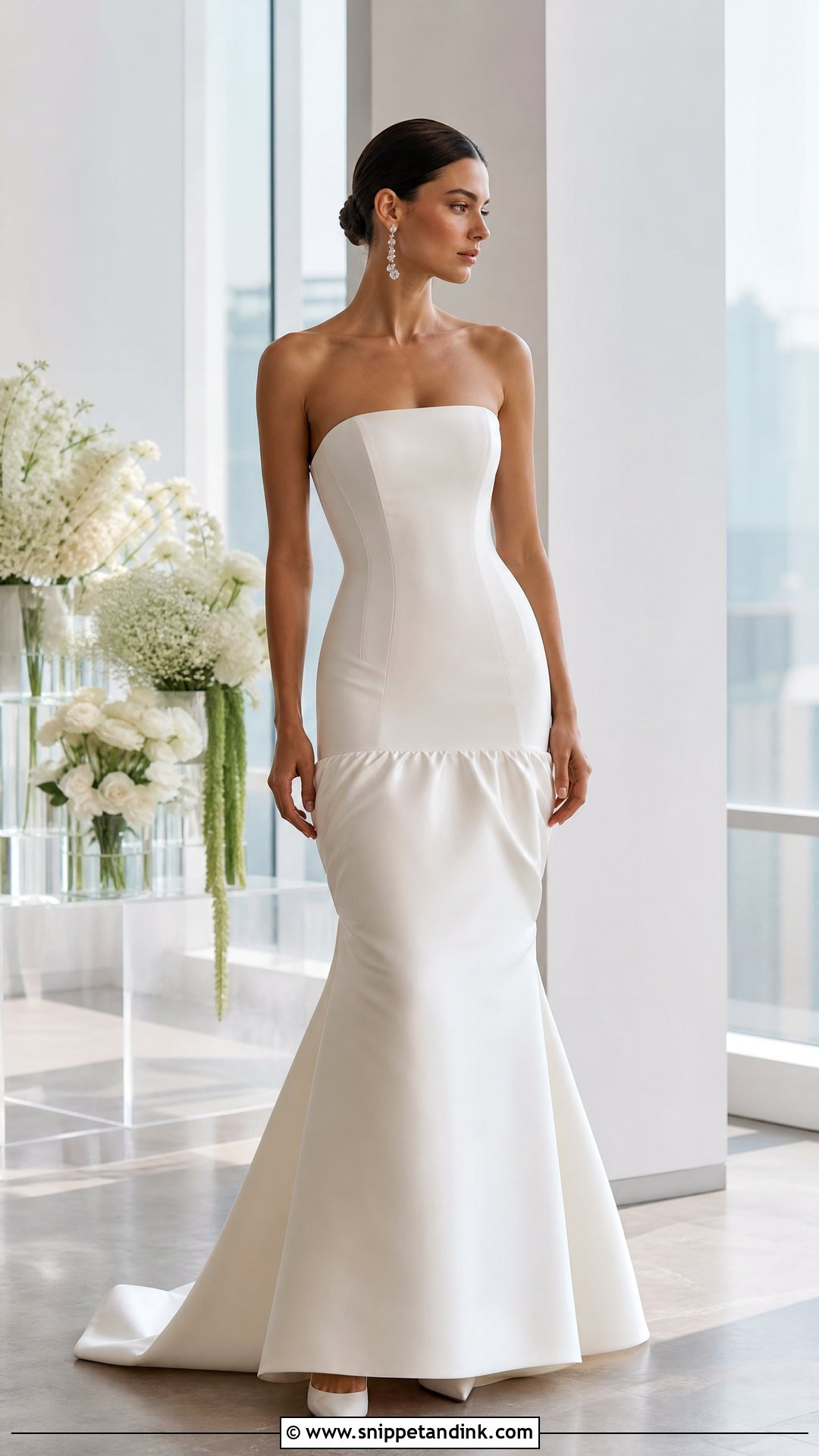
Drop waists live or die on one measurement: where the seam lands. Set too low, it cuts across the widest part of the hips and shortens the legs; set right, it gives a long elegant torso. Structured satin suits a formal ceremony, and softer crepe looks contemporary. The skirt can open at the upper thigh, fall into a gentle trumpet or carry on as a slim column. Long drop earrings, pointed heels and a low bun keep the line long, with a plain veil. I’d ask whether stretch panels can go into the bodice, since a long fitted bodice makes sitting harder.
13. Beaded Vintage Slim Fit Wedding Dress
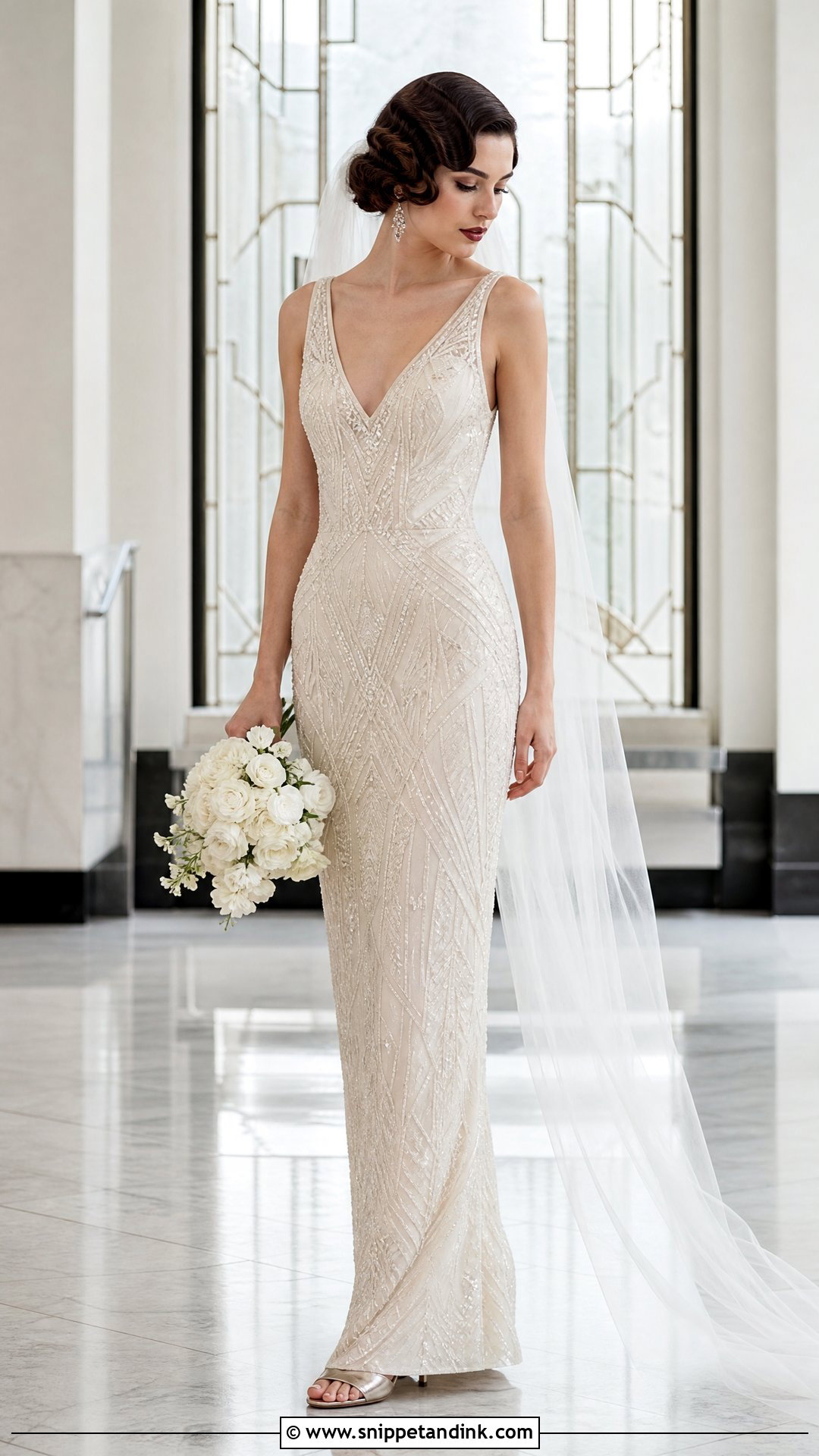
Beadwork brings sparkle to a slim silhouette and also adds weight that hangs from the shoulders. Geometric beading, fine sequins or art deco-inspired patterns on a sheath or gentle fit-and-flare suit a vintage mood. A V-neck or bateau keeps it period without tipping into costume. Metallic low heels, crystal earrings and finger waves or a side bun complete it, with a plain tulle veil. At fittings, I check shoulder support and ask for a smooth lining between skin and beads. A compact bouquet lets the pattern show in full-length photos.
14. Floral Appliqué Mermaid Slim Fit Wedding Dress
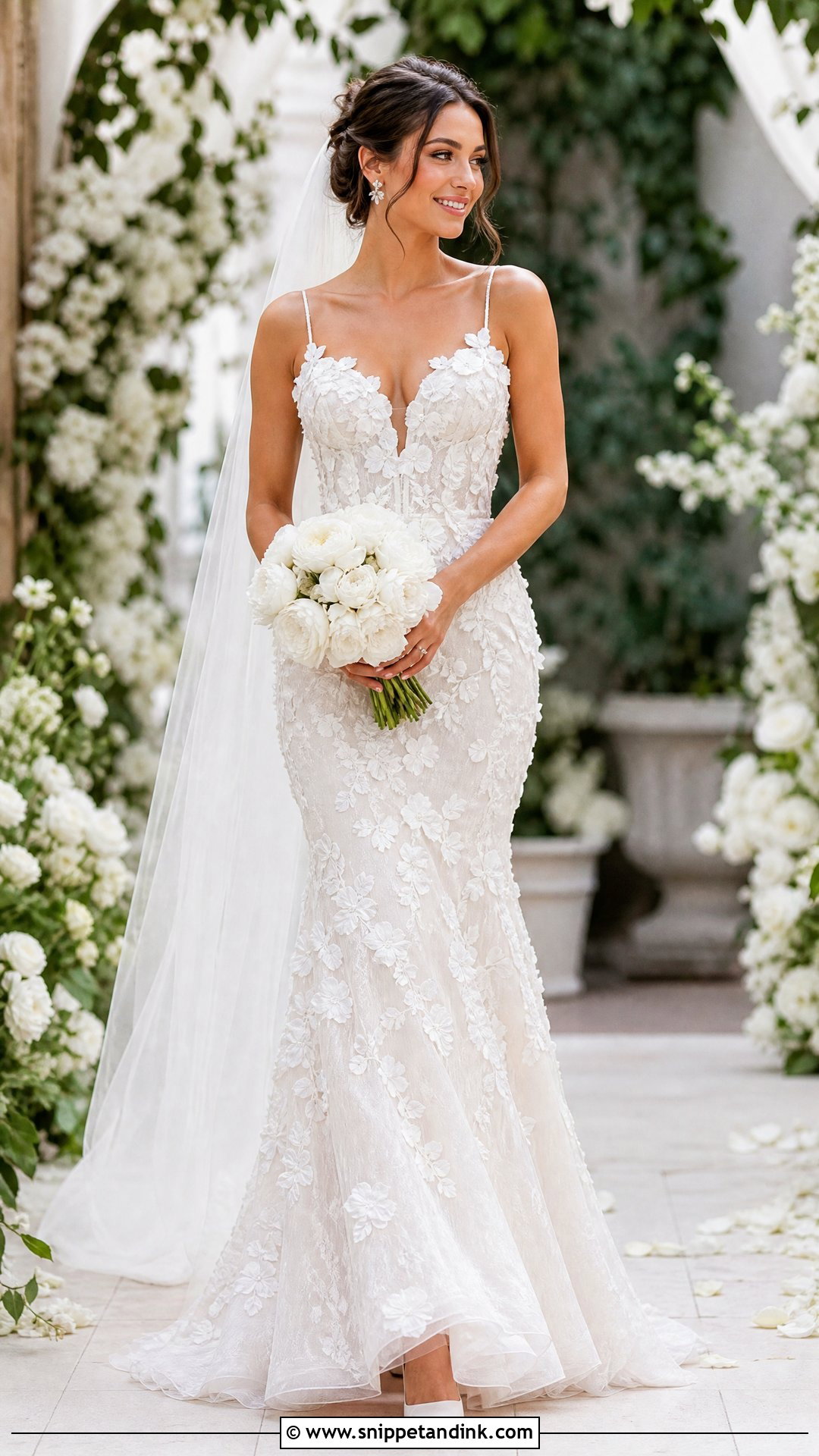
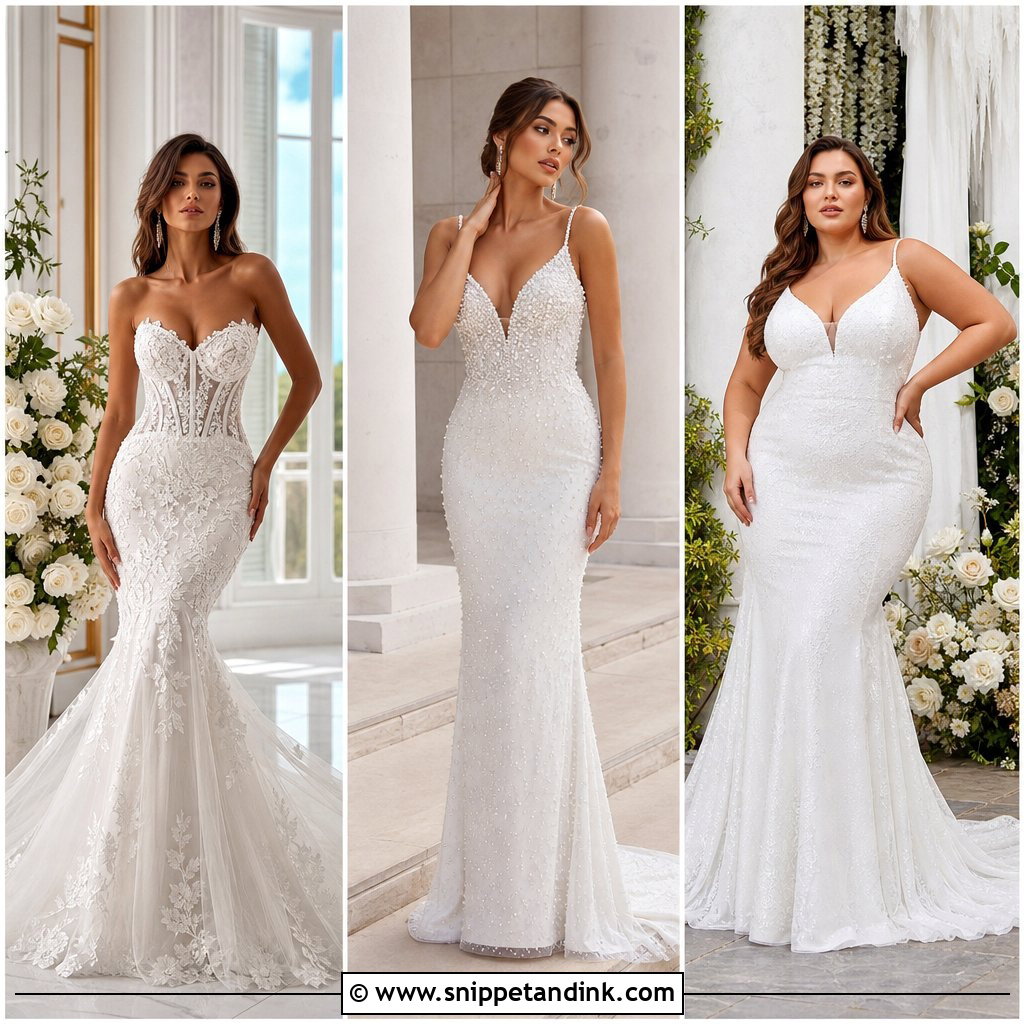
Placement is everything with floral appliqué on a mermaid. I like the flowers concentrated on the bodice and hips, thinning toward the flare, so the fitted shape is emphasised without the skirt looking heavy. Ivory pumps, floral studs and a plain veil keep it calm; a loose low bun or soft waves suit the garden mood. Outdoors, check that appliqués are firmly stitched and skip a very long train on uneven ground. Raised flowers cast small shadows, so look at the gown in daylight and indoors. A nude underlay makes the pattern stand out; an ivory one is softer.
15. Pearl Embellished Column Slim Fit Wedding Dress
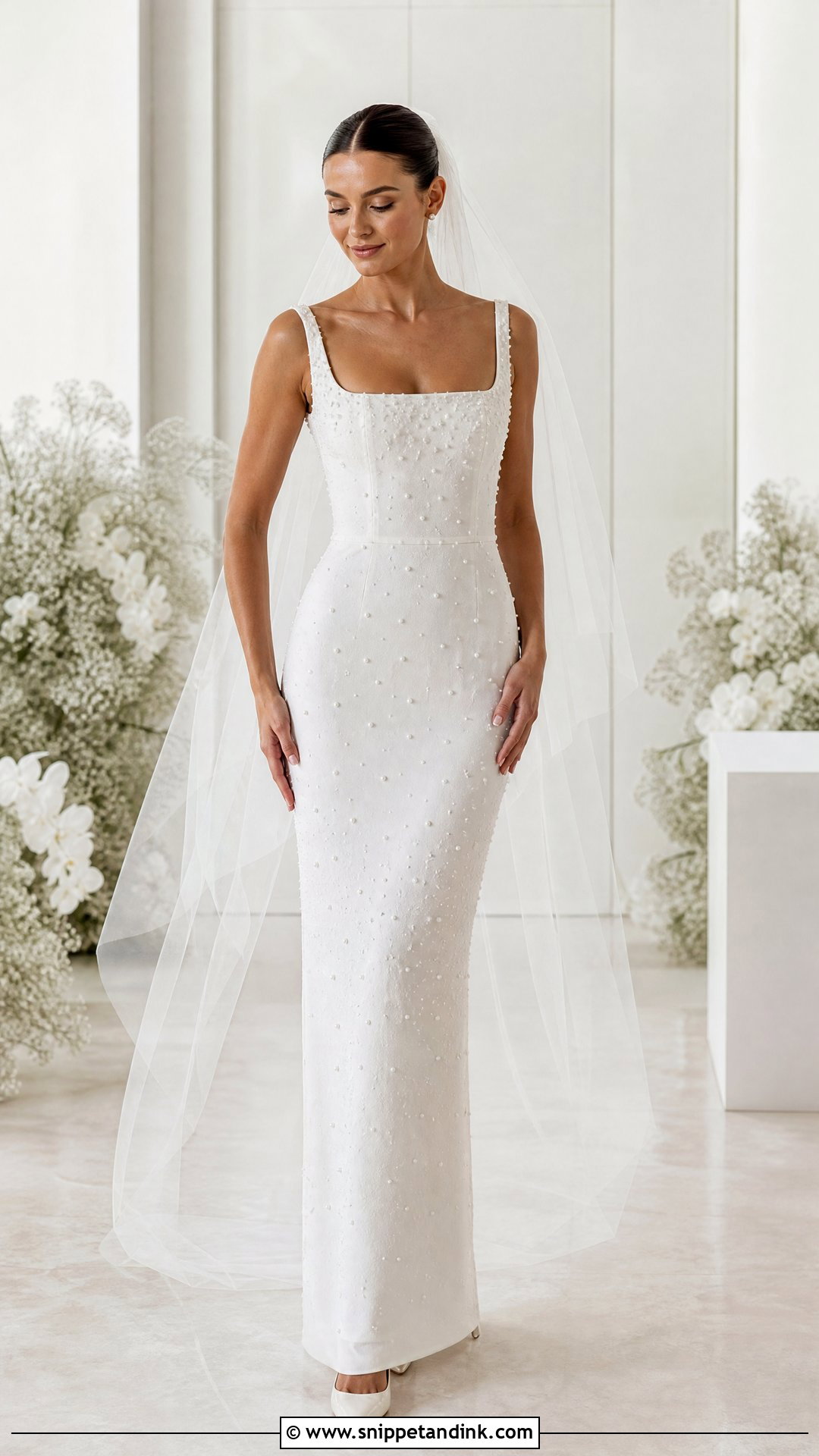
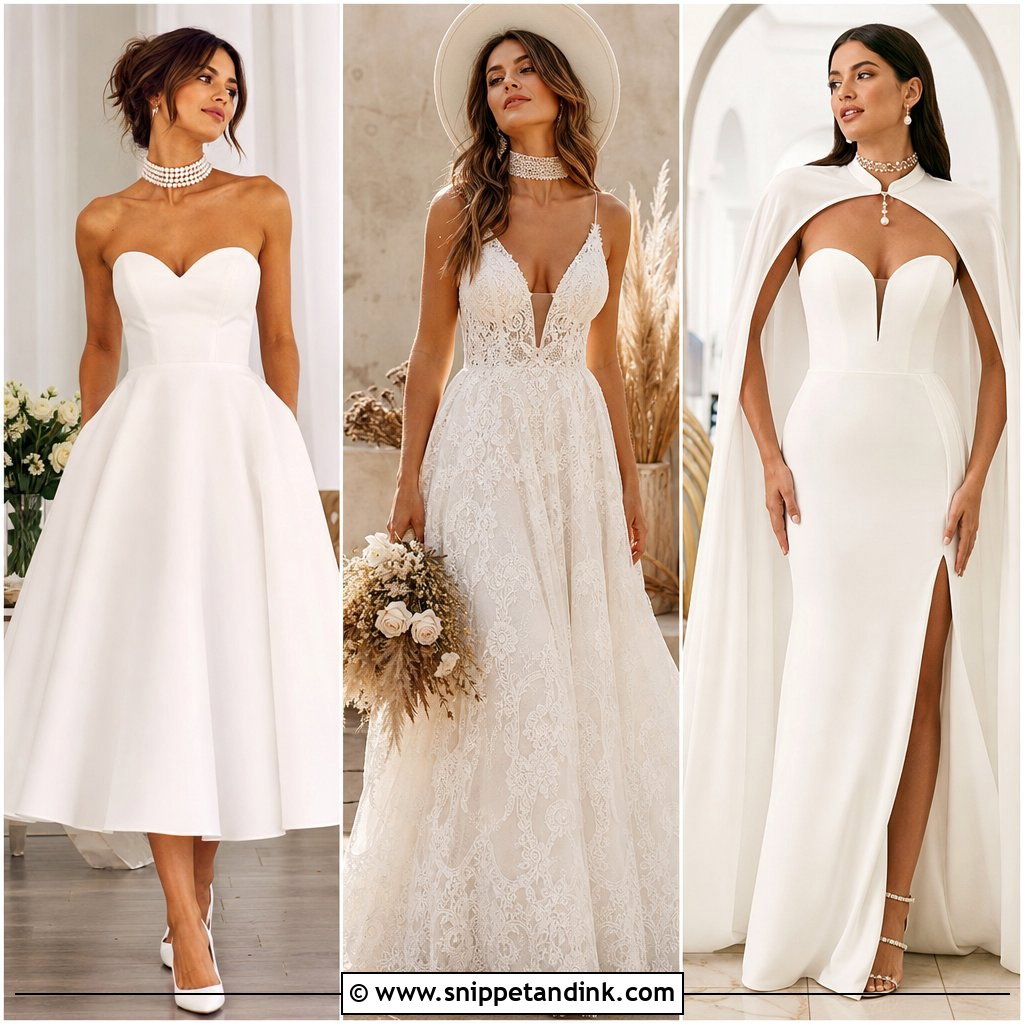
Pearls on a straight column give quiet texture. Scattered pearls shimmer lightly, while dense clusters at the neckline and waist give definition. Scoop, square or high necklines make a clean base. Plain pumps, small pearl earrings and a smooth veil keep the rest restrained, and a sleek bun or short polished hair suits it. Check that the pearls are sewn firmly, especially across the seat and underarms, because that’s where they rub off first. A column has little flare, so a back slit, stretch lining or removable overskirt gives you room to walk and dance.
16. Cape Sleeve Slim Fit Wedding Dress
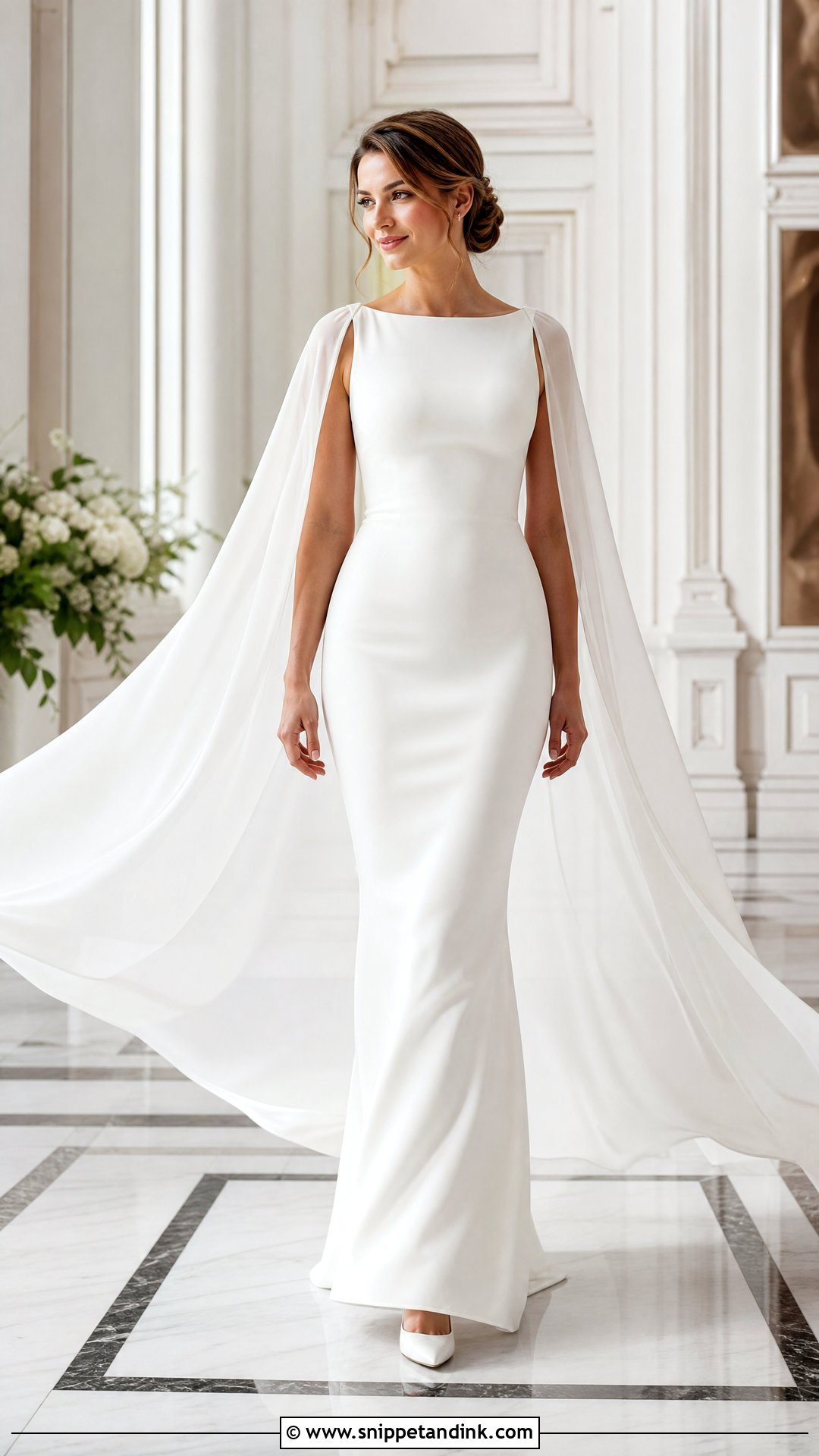
A cape adds movement to a narrow gown without hiding it. Start with a clean sheath, trumpet or column, and attach the cape at the shoulders or neckline. Chiffon is soft; structured crepe is architectural. Pointed heels, small studs and a simple updo are enough. If the cape already trails into a train, skip the veil, since two long layers get tangled. I like detachable capes because they come off for the reception. Make sure the attachment doesn’t drag the neckline backward, and that the cape clears your heels so you don’t step on it on the way down the aisle.
17. Detachable Overskirt Slim Fit Wedding Dress
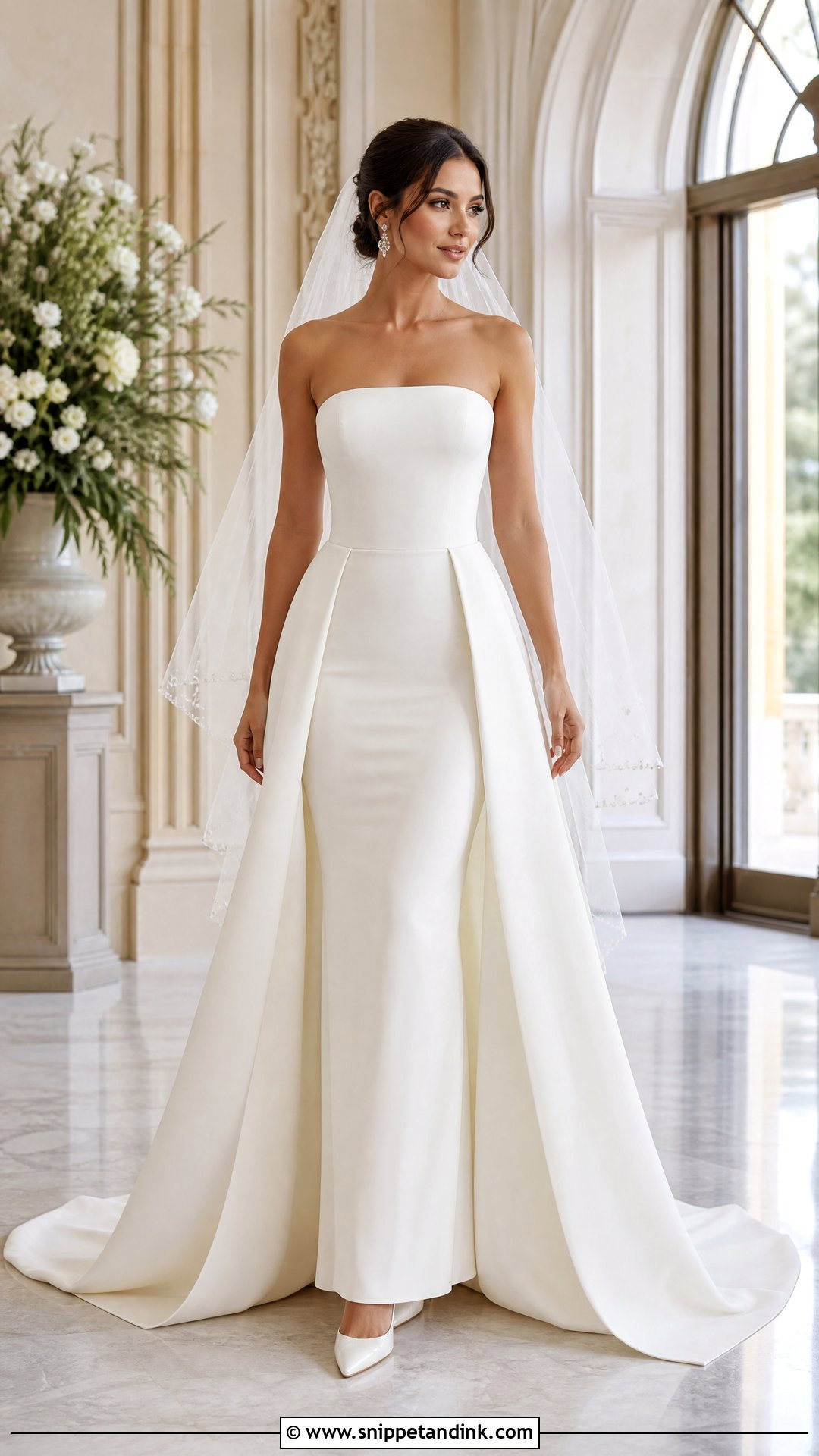
A detachable overskirt slim fit wedding dress gives you a ceremony look and a party look from one gown. A fitted crepe, lace or satin dress sits under a light overskirt for the vows; take it off later to show the sheath or mermaid beneath. Convertible pieces like this have become a practical choice for modern brides. Pointed pumps, delicate earrings and a fingertip veil work for both. The overskirt can be plain or lace to match the base. Check that the waistband fastens smoothly and stays hidden, and rehearse removing it so the change takes a minute, not ten.
18. Petite Sheath Slim Fit Wedding Dress
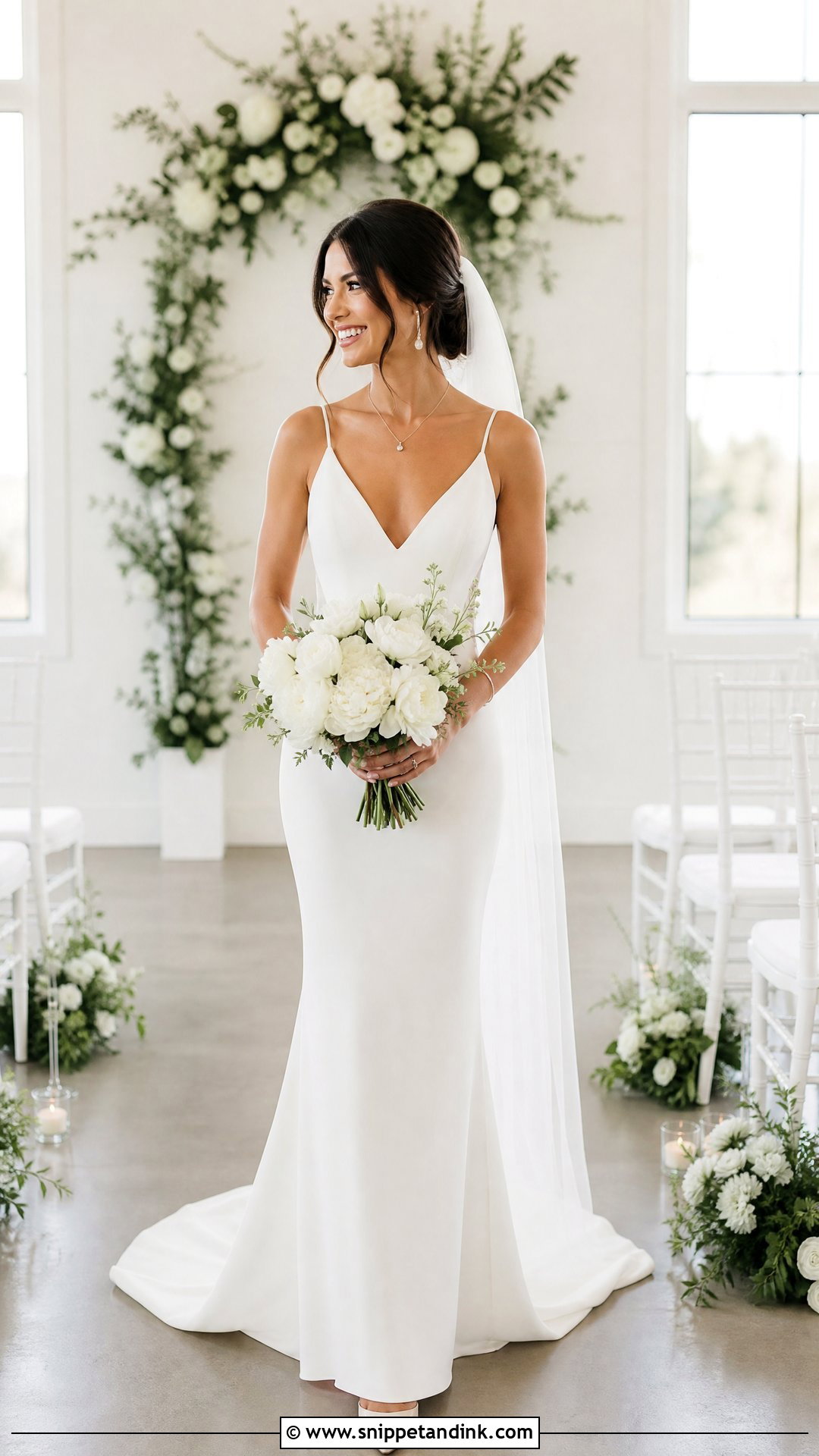
Petite brides often get told to avoid fitted gowns, and I disagree. A sheath lengthens a small frame as long as it isn’t swamped by heavy fabric. A slightly raised waist seam, unbroken vertical lines and a skirt that skims the hips help. V-necks, square necklines or narrow straps keep the top open. Ivory or skin-tone pointed heels, delicate jewelry and a narrow veil keep proportions in check, and lace motifs should be scaled down too. Petite sizing is a better starting point, though straps, torso and hips may still need adjusting. Wear heels you can actually stand in rather than chasing height.
19. Plus Size Fit And Flare Slim Fit Wedding Dress
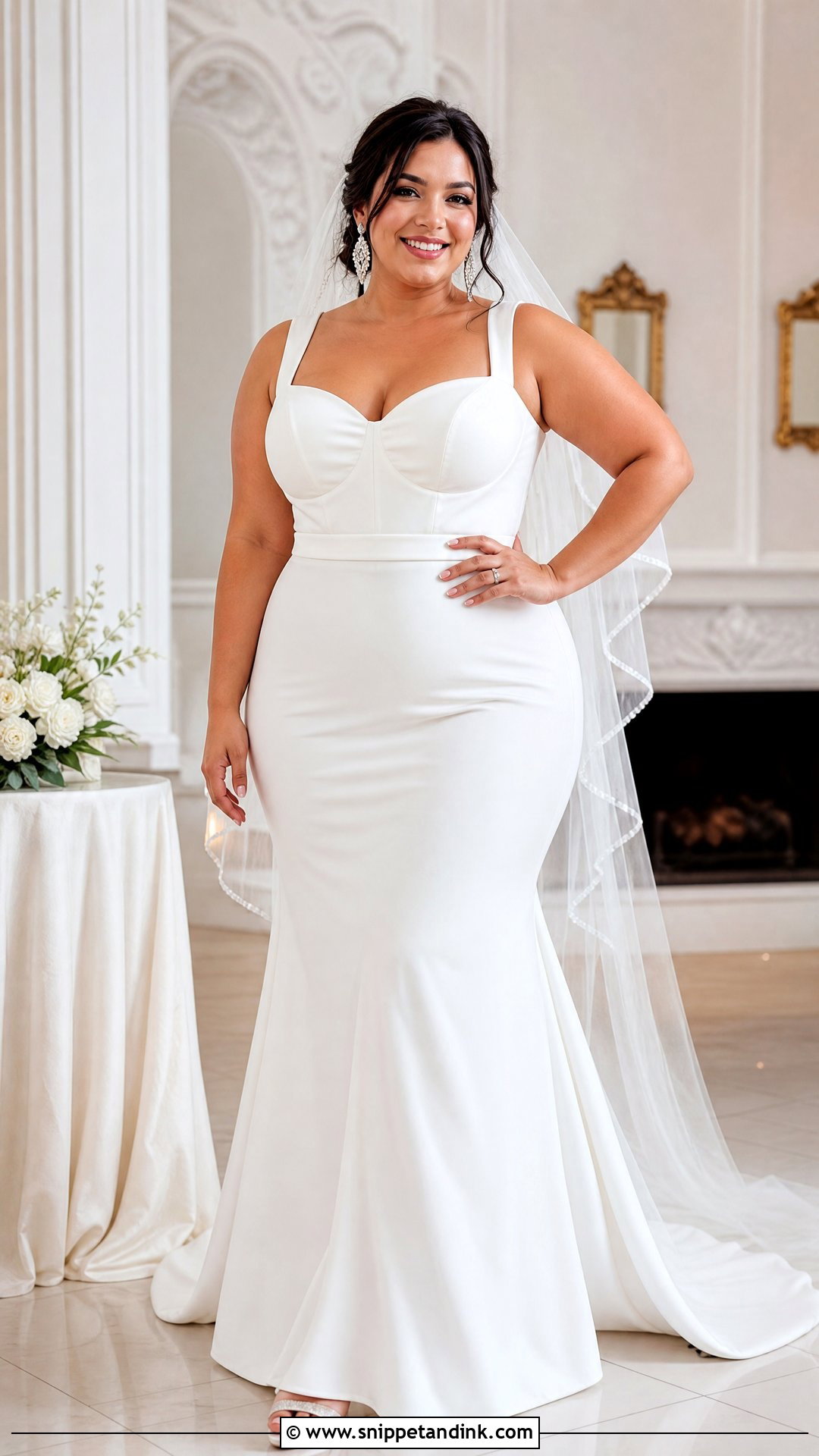
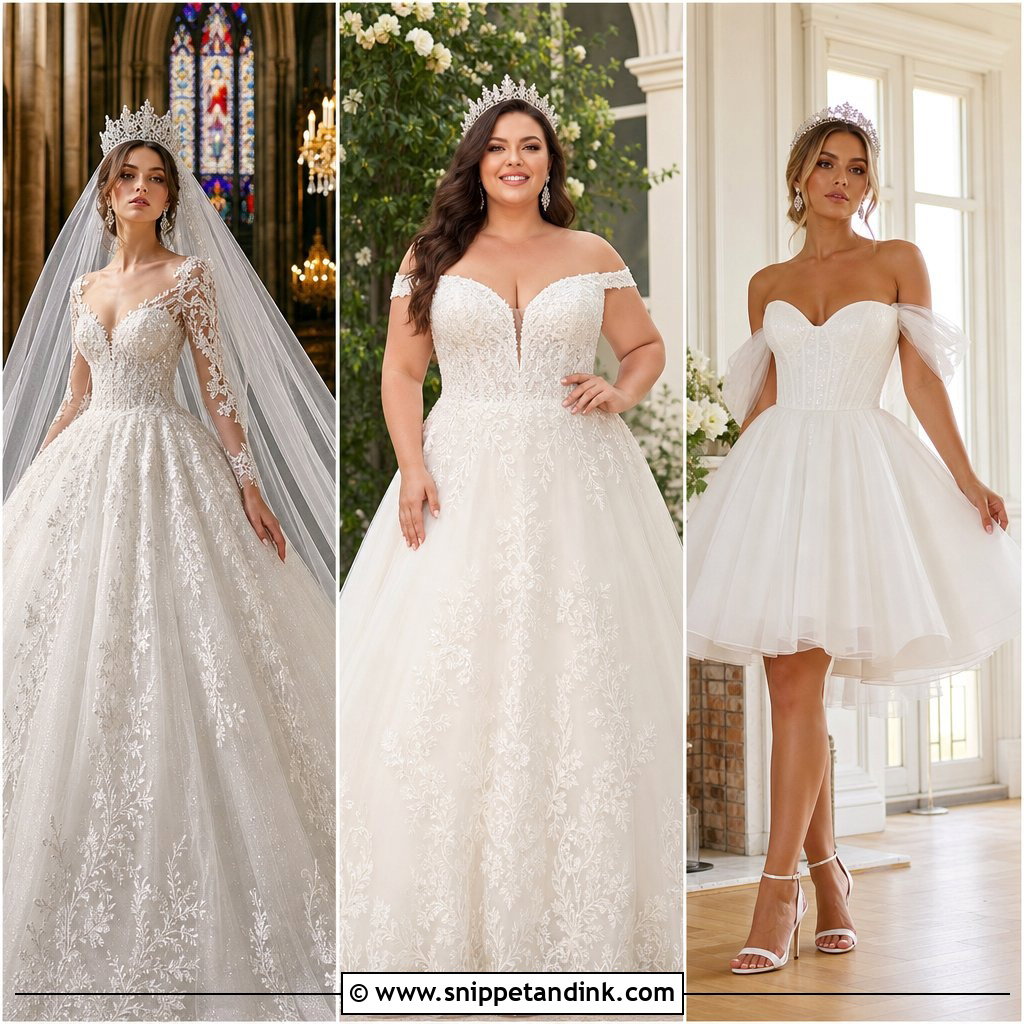
Fit-and-flare is designed to define the waist while giving more room below the hip than a column, which is why it works so well on curvy brides. Support is the priority: a structured bodice with properly sized cups, comfortable boning and a stretch lining that follows the body without cutting in. The skirt should stay close through the hips before opening gradually. Block heels, statement earrings and a fingertip veil keep you comfortable. Wide straps, off-shoulder sleeves or a secure strapless neckline can all work with good fitting. Judge the dress by how it feels sitting and walking, not by the number on the sample tag.
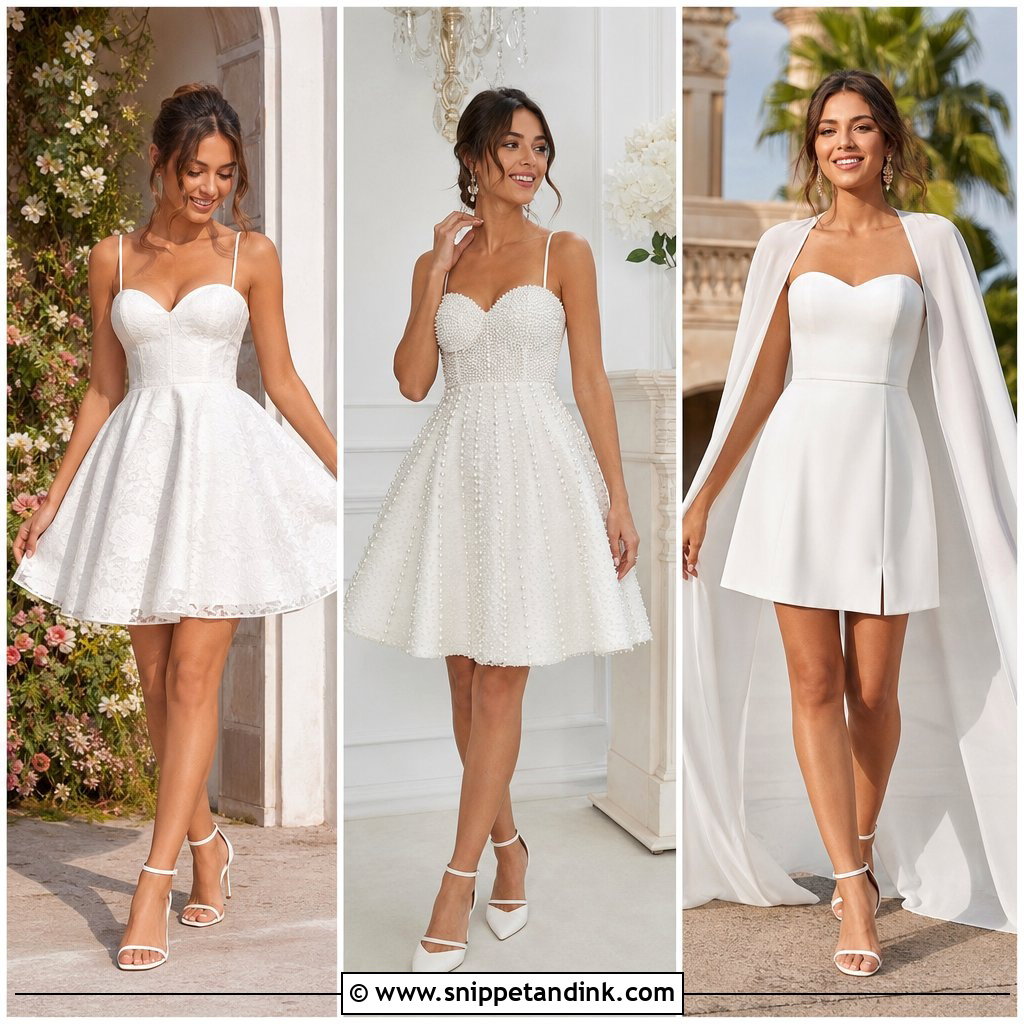

20. Short Slim Fit Wedding Dress
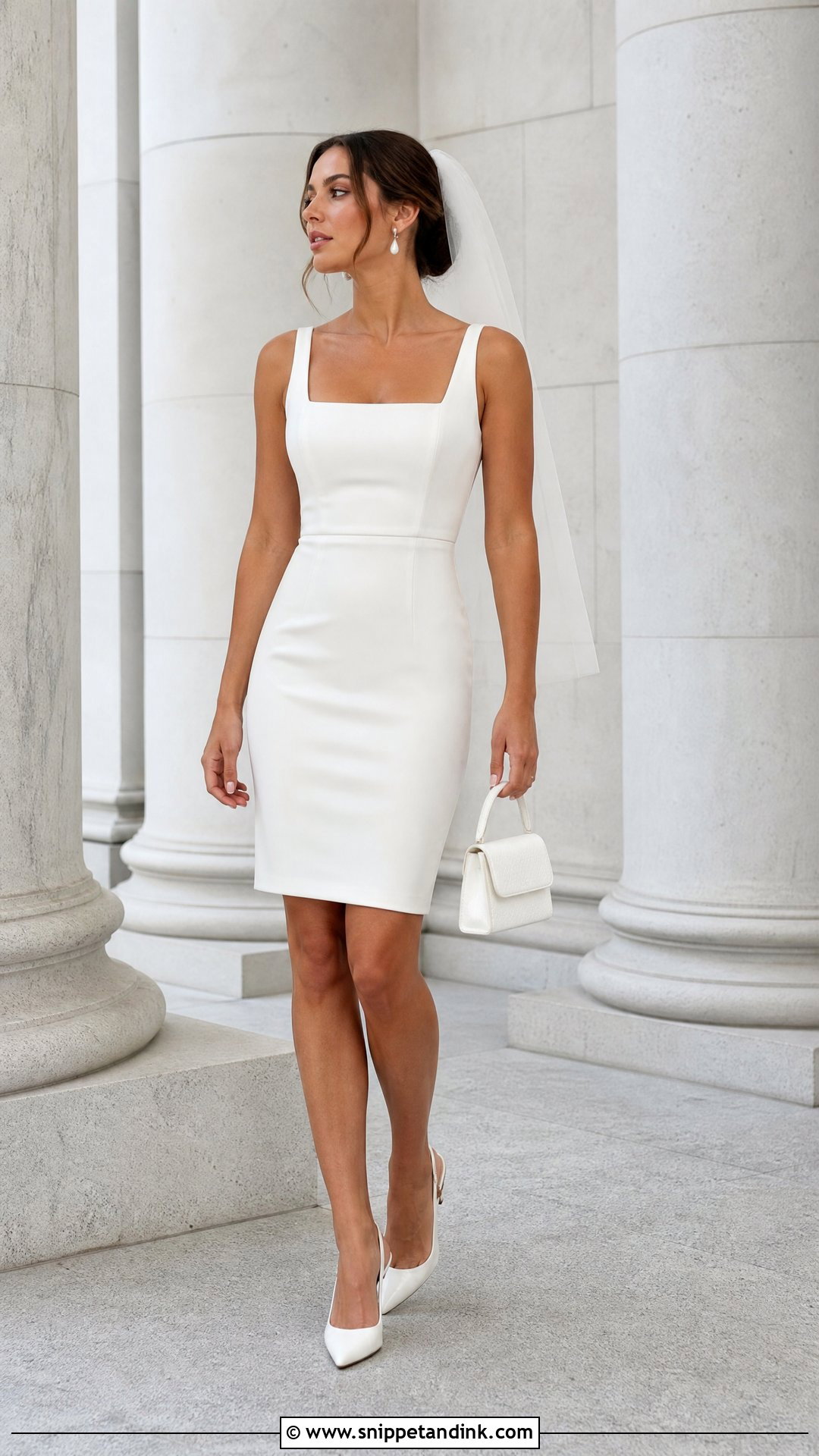
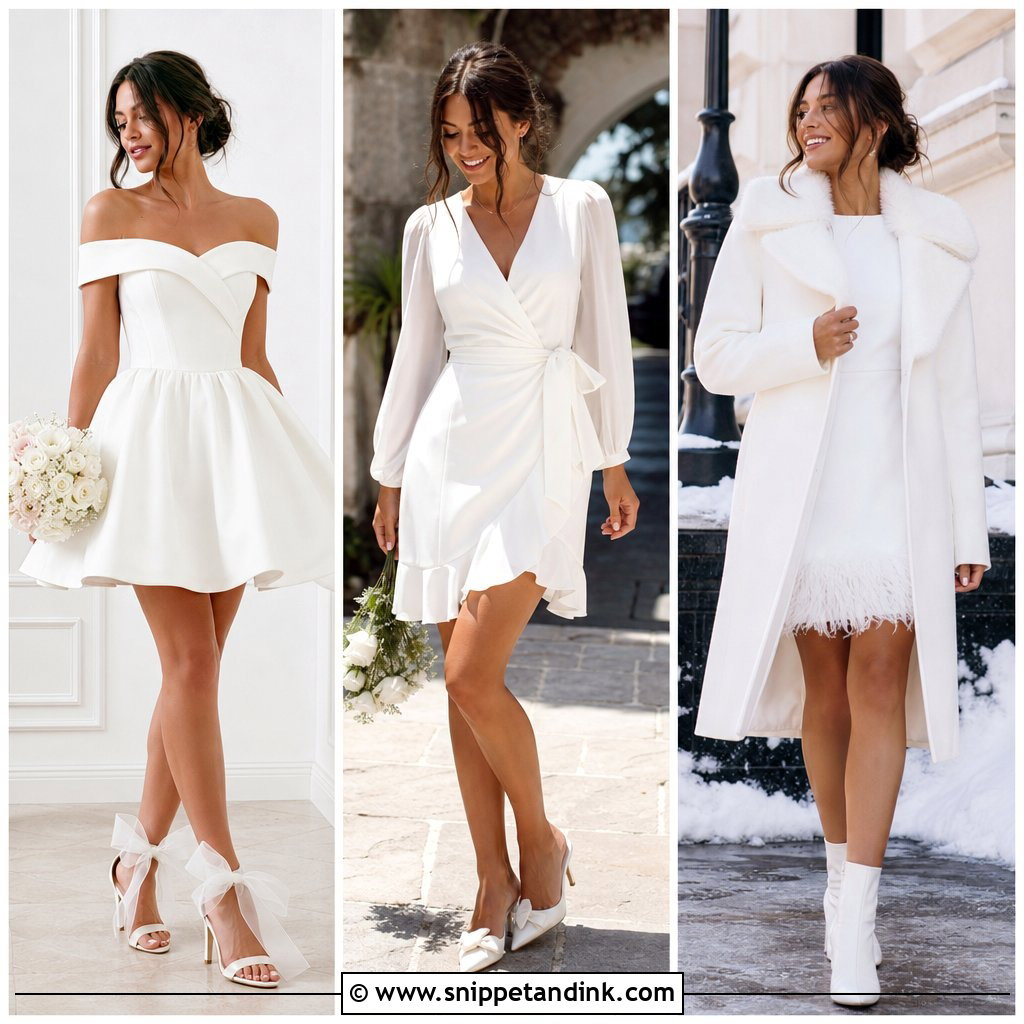
Short fitted dresses are playful and polished for a courthouse ceremony, destination wedding or reception change. A tailored mini, knee-length sheath or tea-length pencil silhouette with a structured bodice all work. Satin looks classic, crepe looks modern, and lace is softer. Your shoes are fully on show, so choose pointed pumps, slingbacks or ankle straps you’ve already broken in. Pearl earrings, a short veil and a compact bag finish it. A detachable bow, small train or overskirt adds drama for the ceremony. Sit down in front of a mirror to check the hem; slim-fitting shorts underneath help on a mini.
Cars, Stairs and the Restroom in a Narrow Skirt
Nobody thinks about this at the boutique, and everyone thinks about it on the day. Fitted gowns need a little practical planning.
Getting into a car
Sit down first, backward onto the seat, then swing both legs in together. Have someone gather the train onto your lap. A low sports car is hard work in a mermaid, so ask what the wedding car is before you book it.
Stairs
Lift the skirt slightly at the front with one hand, keep the other on the rail and take each step sideways if the flare is low. Practise on the stairs at home in your shoes and a long skirt.
The restroom
With a fitted skirt, the easiest method is often facing the cistern so the skirt can be gathered up from behind. Bring one trusted helper. A gown with a back zip that you can partially open is far easier than a long row of buttons.
One last point on timing: fitted dresses are sensitive to small body changes. If your weight tends to move, hold the final fitting close to the wedding, two to three weeks out, so the fit is right on the day itself.
Support You Can Breathe In Beats a Perfect Standing Pose
A fitted gown should support your body, suit your venue and let you move from the ceremony to the last song. The twenty ideas above show how satin, crepe, lace, corsetry, sleeves, appliqués and detachable layers each change a narrow silhouette. Try several shapes, from sheath and column to trumpet, mermaid and fit-and-flare, and test each one sitting, walking, turning and reaching up. Professional alterations matter more for fitted dresses than for any other kind. Keep accessories in support of the gown, and pick the one in which you feel held, not squeezed.
You'll Like These Ideas:







Leave a Reply