
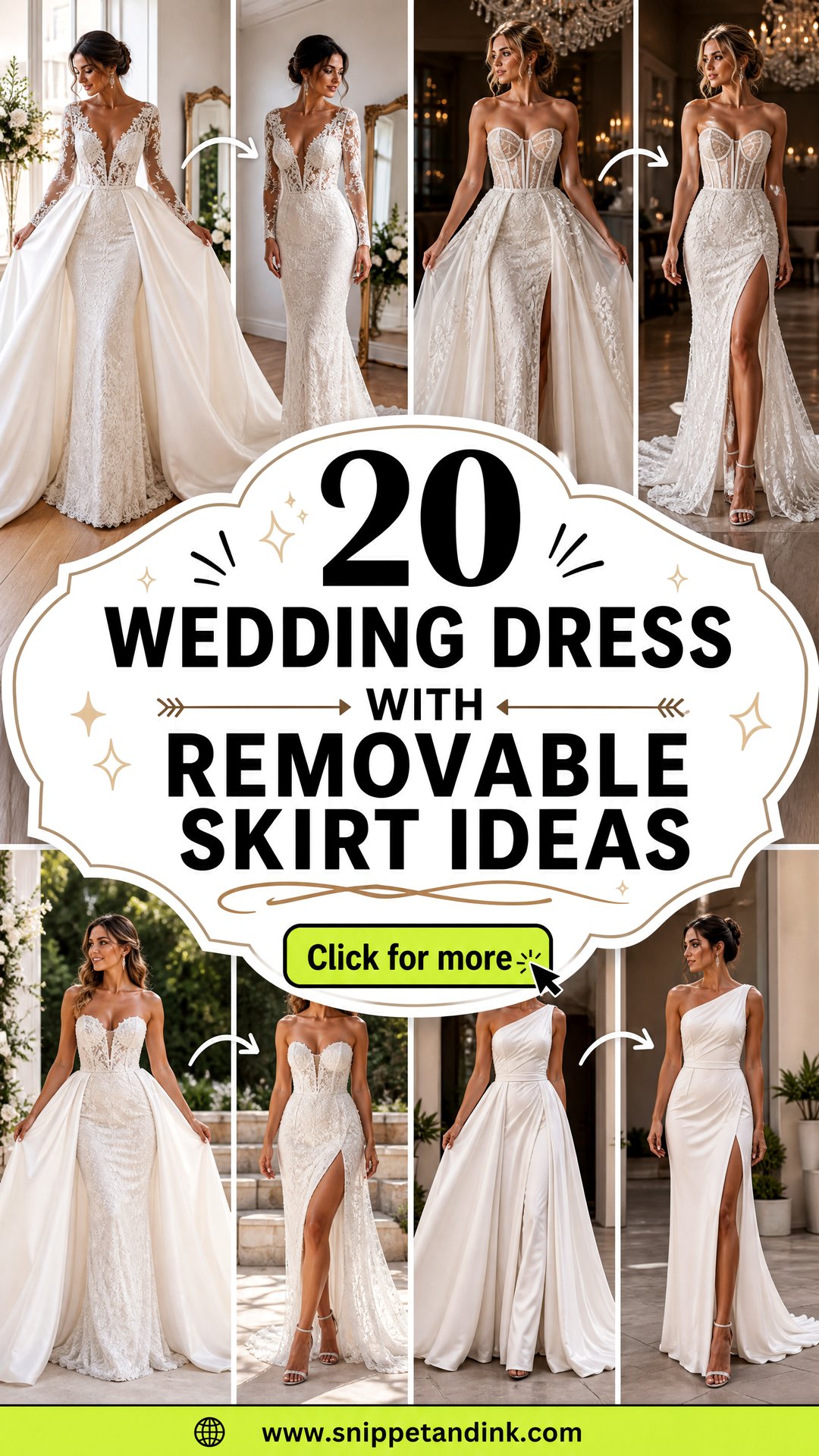
A removable skirt gives you two dresses on one body: a fuller, more formal shape for the ceremony and a lighter gown you can actually dance in. The overskirt usually wraps the waist and closes at the back, adding volume, a longer train, or both, and when it comes off the dress underneath has to stand on its own. That last part is where I spend most of my time at fittings. A convertible gown only works if the base dress looks finished without its outer layer, so I look hard at where the fastenings sit, how heavy the overskirt fabric is, and whether the waist seam still reads cleanly once the extra skirt is gone. The ideas below run from crisp satin pairings to soft floral lace, with the fitting notes I’d give a bride for each.
Hooks, Snaps or Buttons: How the Overskirt Actually Stays On
Before I look at fabrics, I ask how the overskirt is fastened, because that decides how secure it feels and how quickly it comes off. Most removable skirts wrap the waist and close at the back, and the closure is usually one of three types.
- Hook and bar or hook and eye: flat, discreet and strong under tension. It’s what I trust most for heavy satin or mikado, though it needs a second pair of hands.
- Covered buttons with loops: pretty and secure, but slow to undo. Fine if you have a helper and no rush.
- Snaps or a hidden zip: quick to remove, though snaps can pop open under the weight of a long train, so I’d only use them on lighter tulle or chiffon.
Many good overskirts also hook onto small loops or a waist stay sewn inside the base dress. That spreads the weight across the waistband instead of hanging it from the bodice fabric, and it stops the outer layer from slipping down. If your gown doesn’t have one, a seamstress can usually add it during alterations. Bring both pieces to every fitting, and have the hem marked with the overskirt on, because the extra layer can change where the base skirt falls.
1. Lace Mermaid Wedding Dress With Removable Skirt
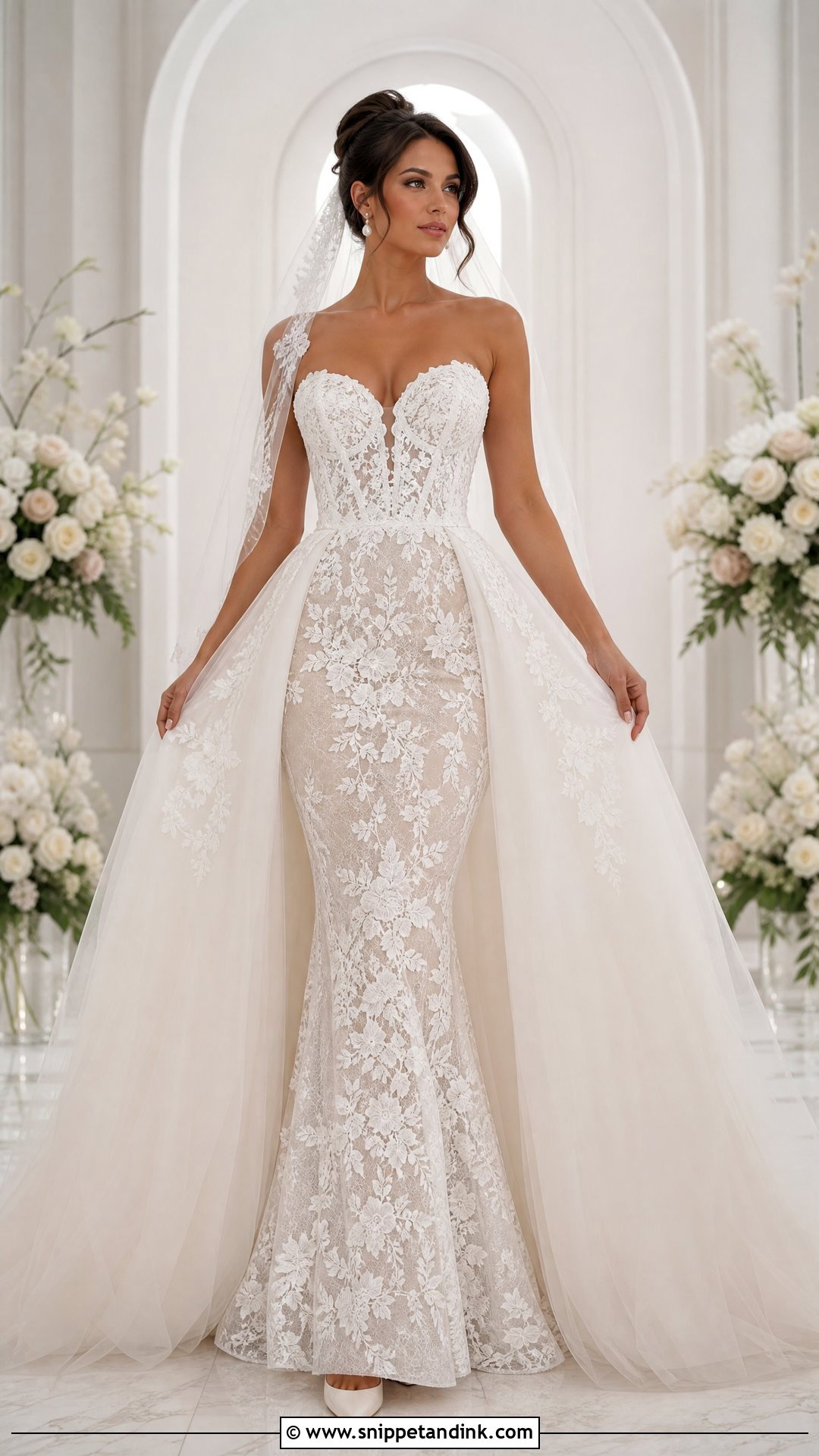
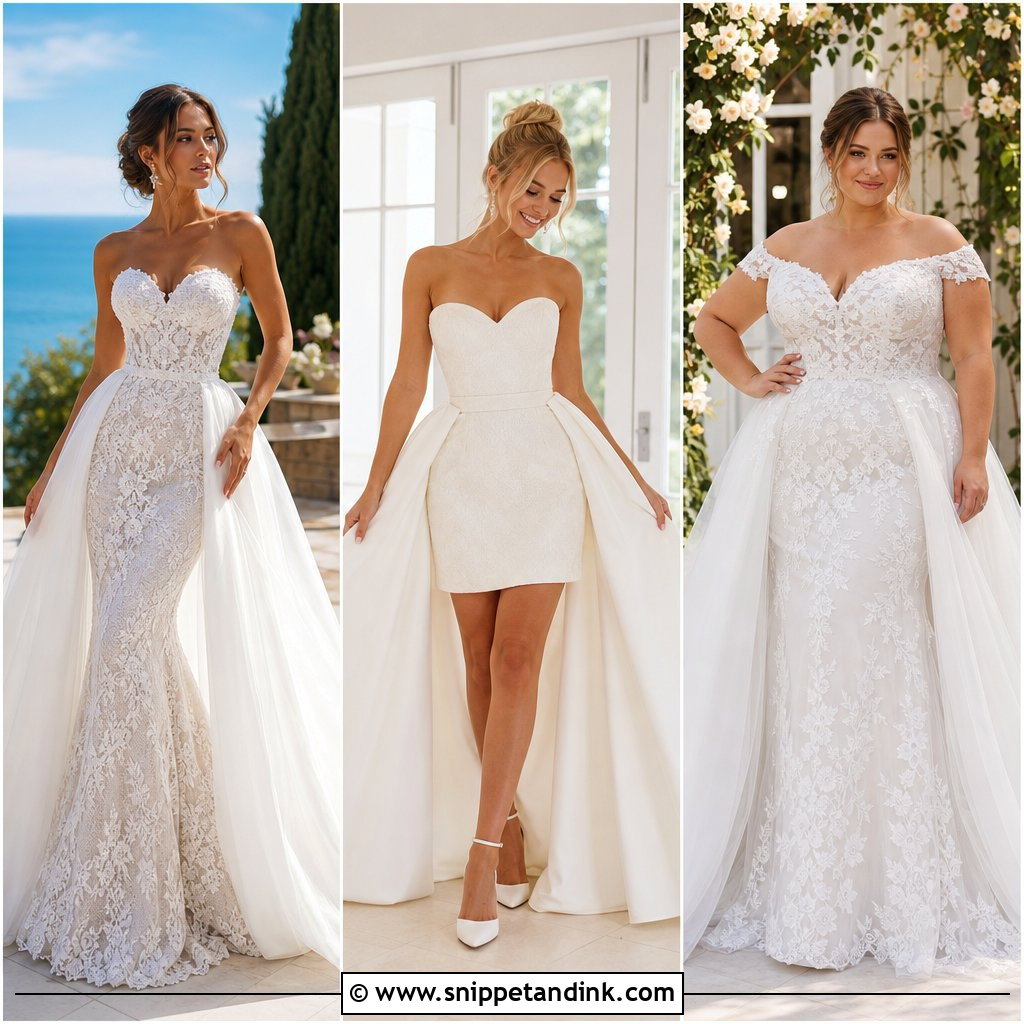
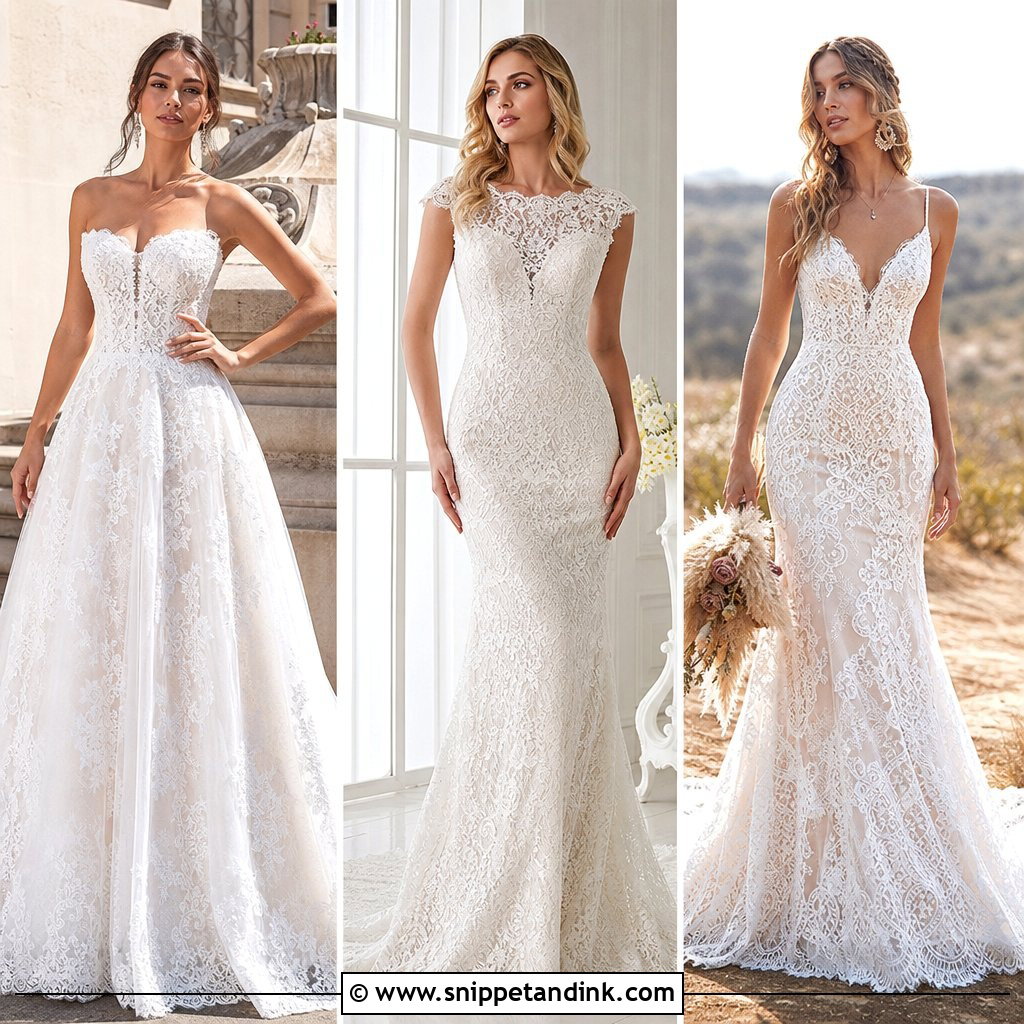
Lace mermaid is the base I see most often under a removable skirt, and it rewards one specific choice: lace appliqués that run past the hip and stop around the knee, so the fitted shape still has detail once the overskirt is off. A soft tulle overskirt with matching lace at the hem turns the mermaid into a full A-line for the aisle. The catch with mermaids is the flare point: if the overskirt waistband pulls even slightly, the fitted skirt underneath twists and the flare drifts off-centre. I ask the seamstress to hide the hooks under a couple of loose appliqués or a narrow belt, and I keep the rest quiet with a sweetheart neckline, pearl earrings and pointed satin pumps.
2. Satin Wedding Dress With Removable Ball Gown Skirt
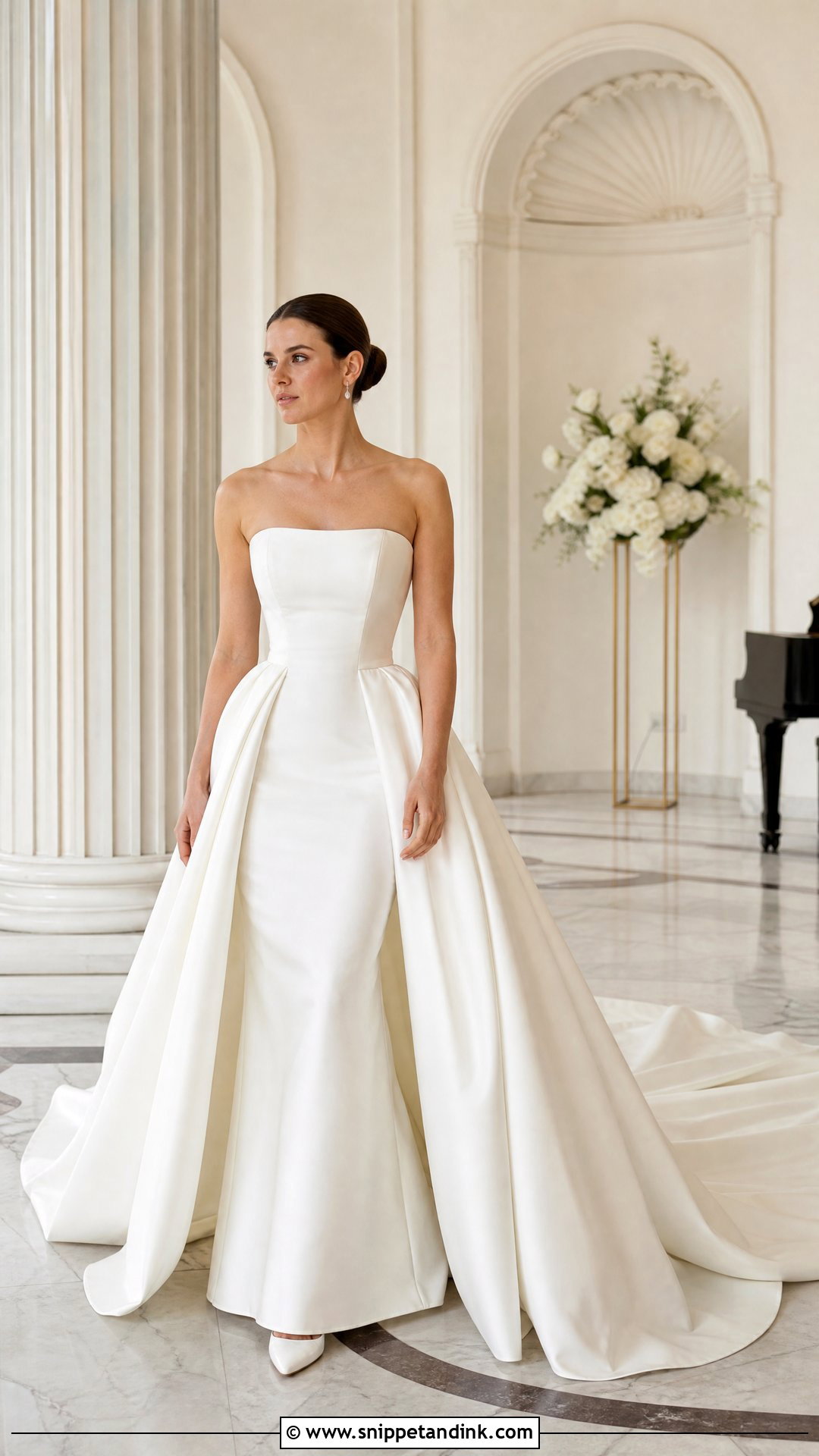
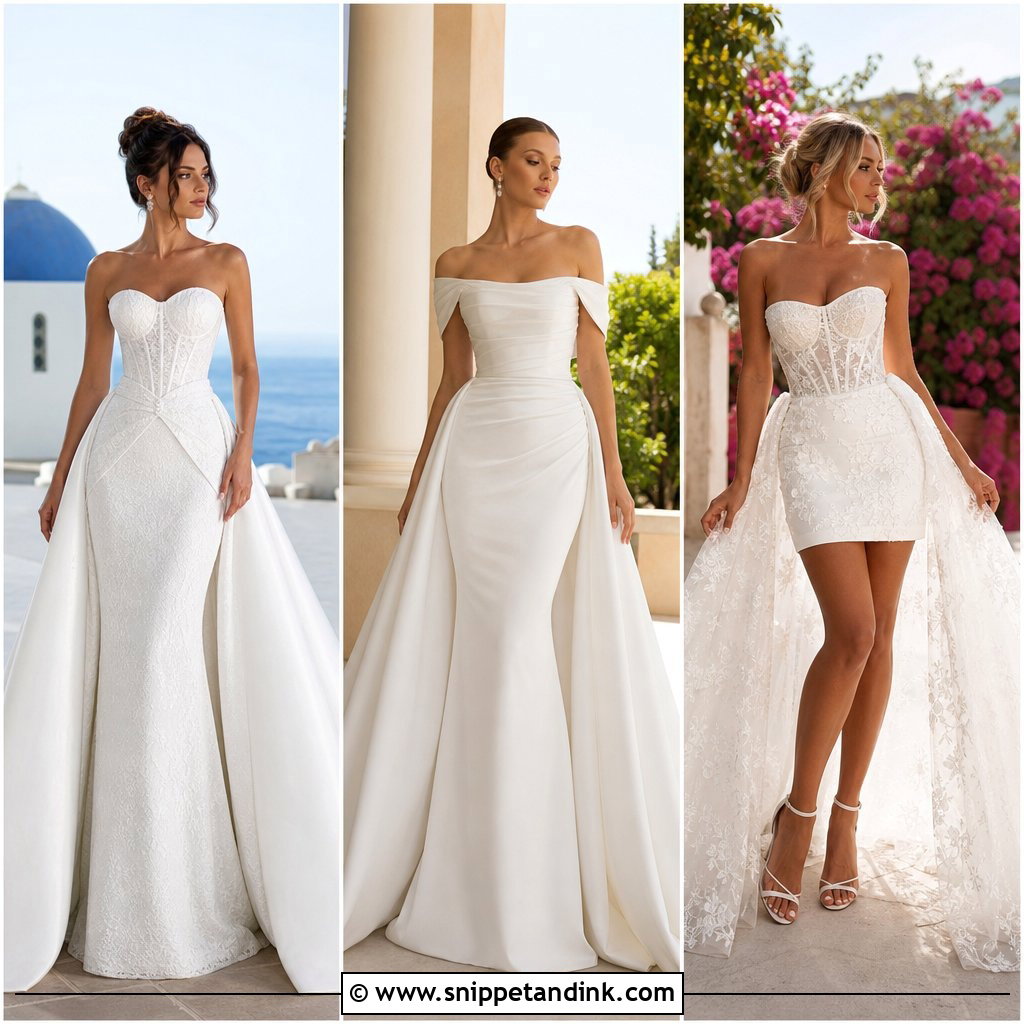
Satin does the heavy lifting here. A pleated satin overskirt holds its own shape, so it reads as a true ball gown rather than a layer sitting on top of a dress. Underneath, I like a strapless satin column or fit-and-flare that feels almost weightless by comparison once dinner starts. My one warning is about buying the two pieces separately. Ivory satins vary in both tone and sheen, and a pair that matches in a shop can split into two colours under flash. Hold both layers together by a window and again under warm indoor bulbs before committing. If the overskirt already carries a long train, a fingertip veil is plenty.
3. Strapless Wedding Dress With Removable Tulle Skirt
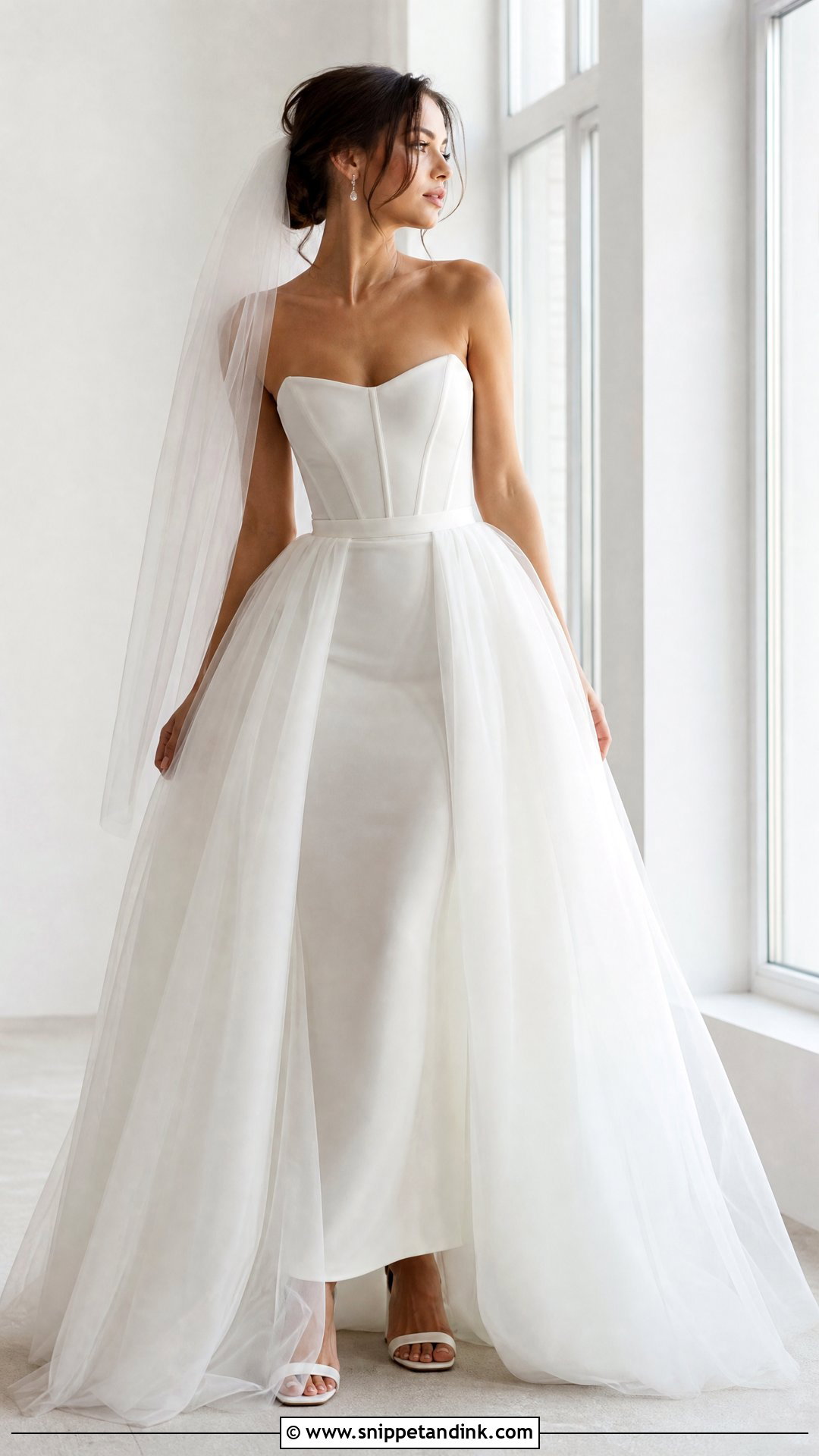
Tulle is the softest way to change a strapless dress, and it’s also the lightest, which matters more than people expect. A strapless bodice is held up by its own boning and grip at the ribs, and a heavy overskirt hanging from the waist slowly drags it down through the ceremony. Gathered tulle avoids that. I’d pair it with a slim crepe or satin skirt underneath and use a narrow waistband or a scatter of appliqués to cover the closures. For the reception, swap a long veil for a hair bow or a single statement earring. At alterations, sit, stand and walk the aisle distance in both versions, and watch the top edge of the bodice each time.
4. Long Sleeve Wedding Dress With Removable Skirt
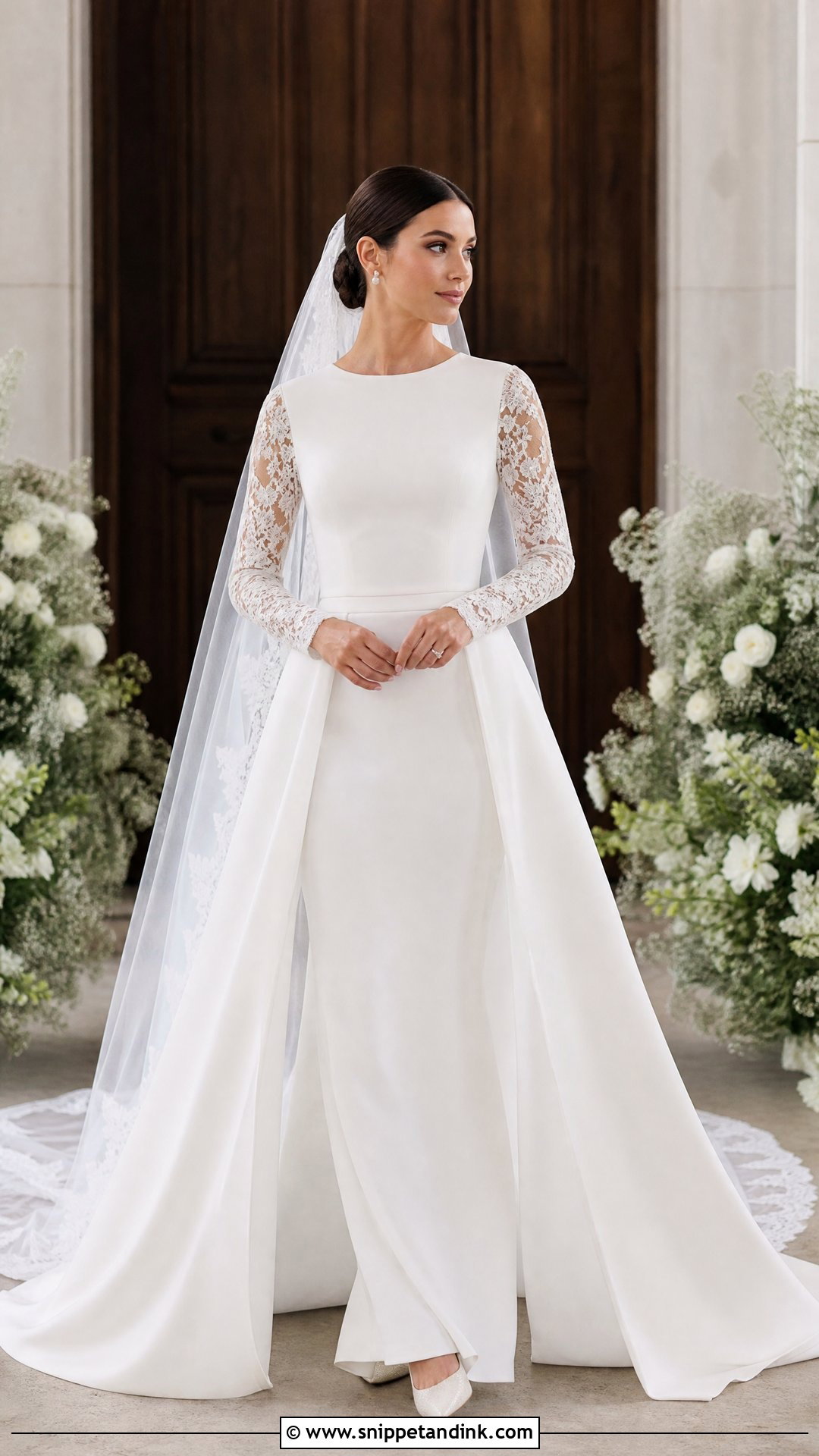
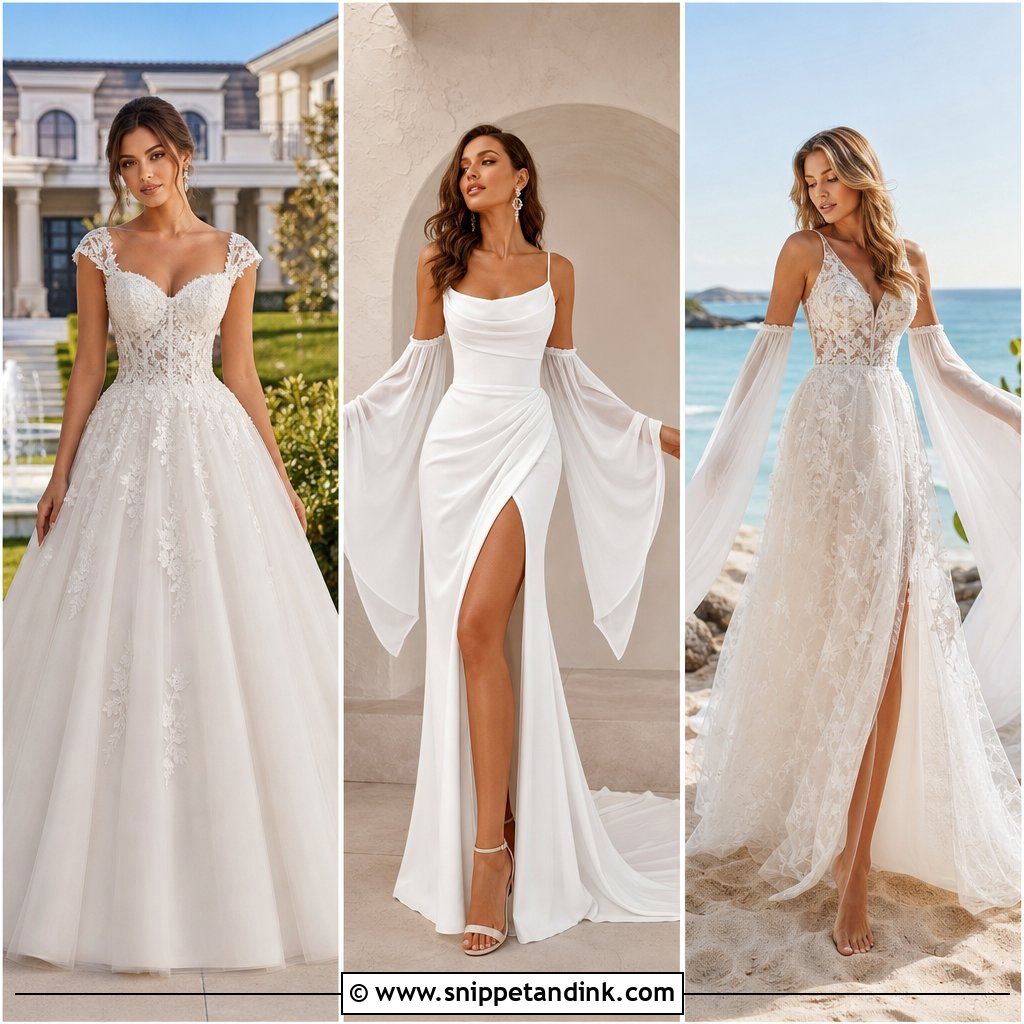
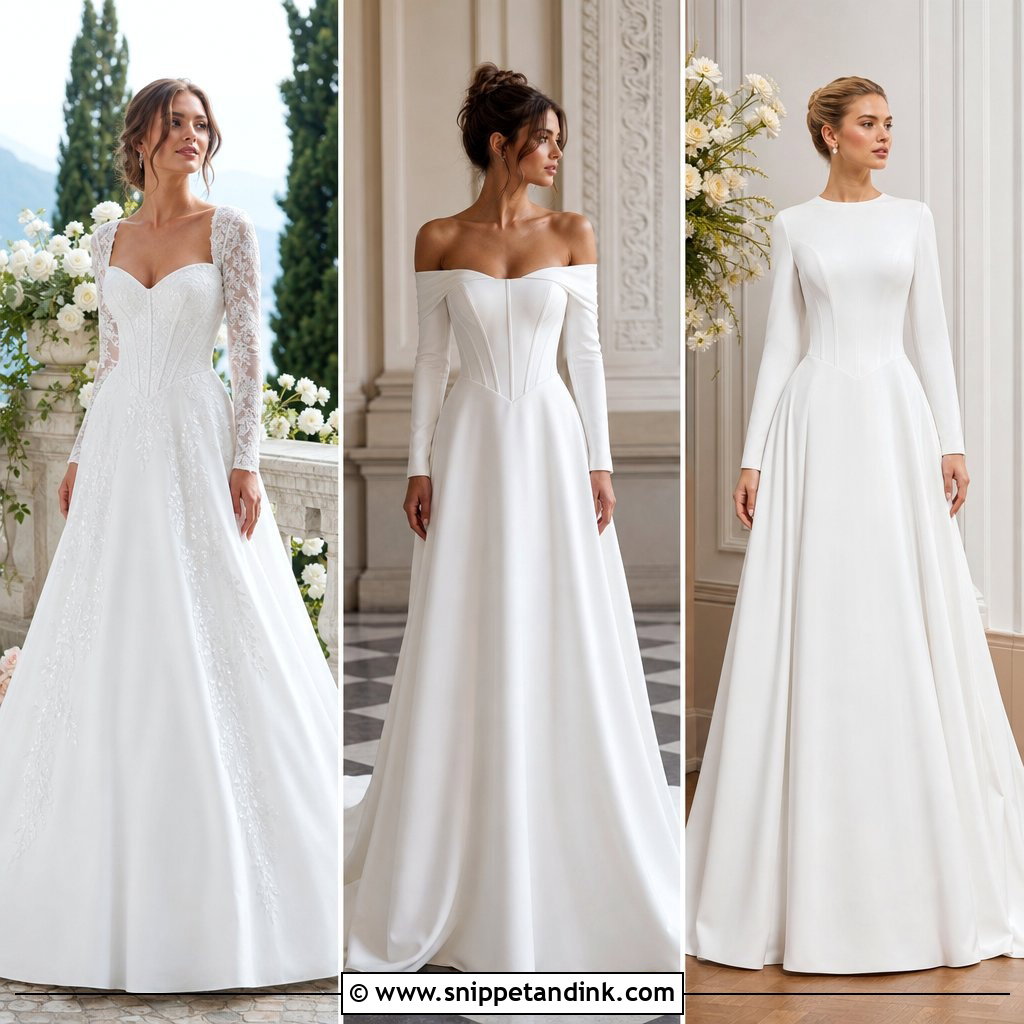
Sleeves change how a removable skirt should be built. A crepe base with lace sleeves already carries a lot of visual weight up top, so I prefer an open-front overskirt in chiffon or organza that frames the fitted dress instead of burying it. The thing I check first is the waistband: long-sleeve gowns often have princess seams that meet at the waist, and a bulky overskirt band sitting on those seams creates a lump you’ll see in every side-angle photo. A flat, wide band or a hook-and-bar closure lies cleaner. Keep the styling simple: pearl studs, a sleek chignon, and a cathedral veil to carry the line down your back.
5. Off Shoulder Wedding Dress With Removable Skirt
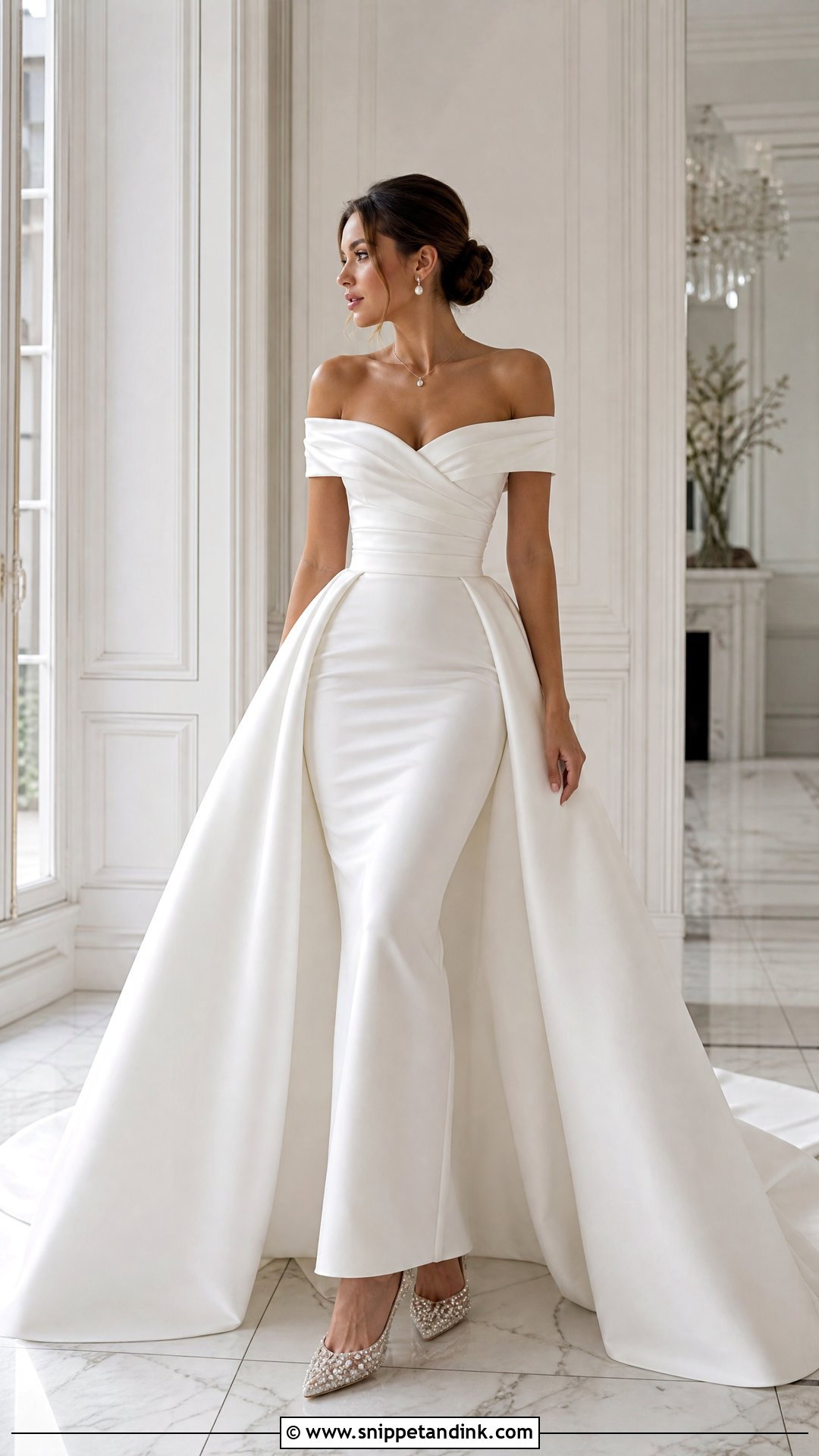
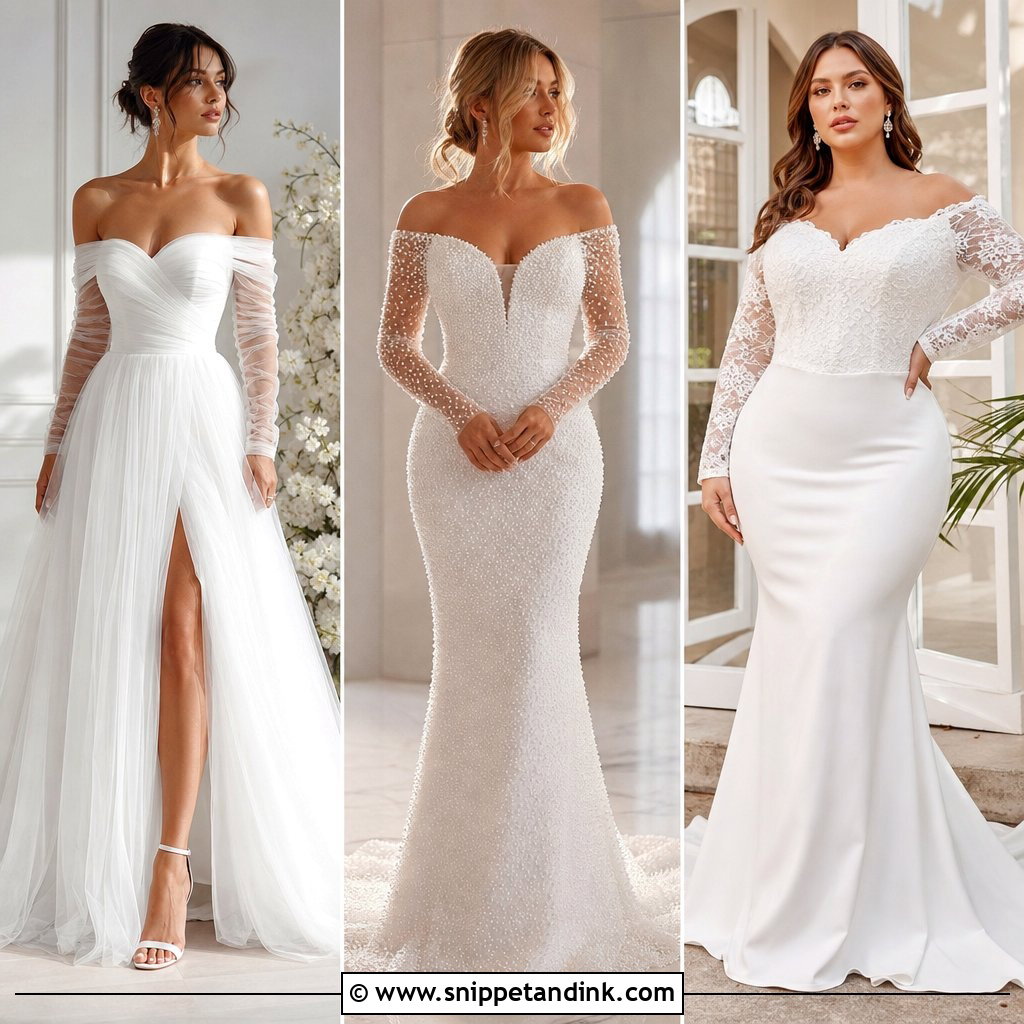
Off-the-shoulder necklines look relaxed, but they’re one of the most restrictive cuts to move in, since the sleeve band sits across your upper arms. That’s worth knowing before you add a heavy skirt to the equation. I’d choose a boned base dress with a sculpted bodice and a removable satin or mikado overskirt that starts at the natural waist and opens slightly at the front. At your fitting, hug someone, raise both arms, and do a few dance steps. If the bodice shifts or the overskirt rotates, the fix is usually extra boning or a waist stay rather than tighter fastenings. A low twisted bun and a fine necklace finish it.
6. Beaded Wedding Dress With Removable Tulle Skirt
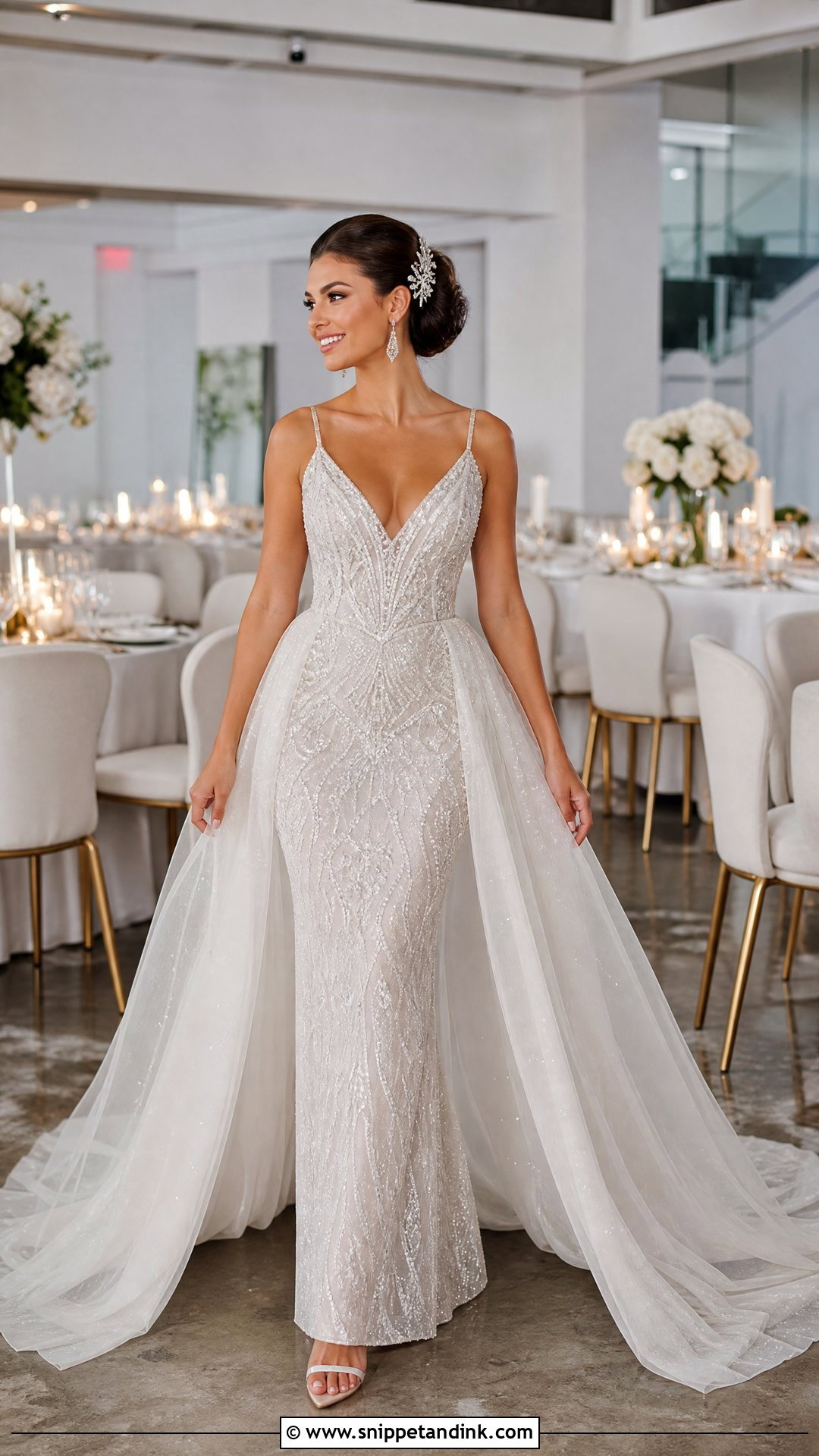
Beaded bodices and tulle overskirts get along well as long as the tulle stays sheer enough to let the sparkle show through. Start with a fitted beaded sheath gown with a simple neckline and an even spread of embellishment, then add a light overskirt with a few crystals near the waist to tie the two together. Weight is the real issue. Beadwork is stitched to fine fabric, and an overskirt pulling on the same seam line can stretch the base dress over a long day. I ask the tailor to anchor the attachment points to the waist stay, not the beaded fabric itself. Silver earrings and a crystal comb are enough jewellery here.
7. Crepe Wedding Dress With Removable Overskirt
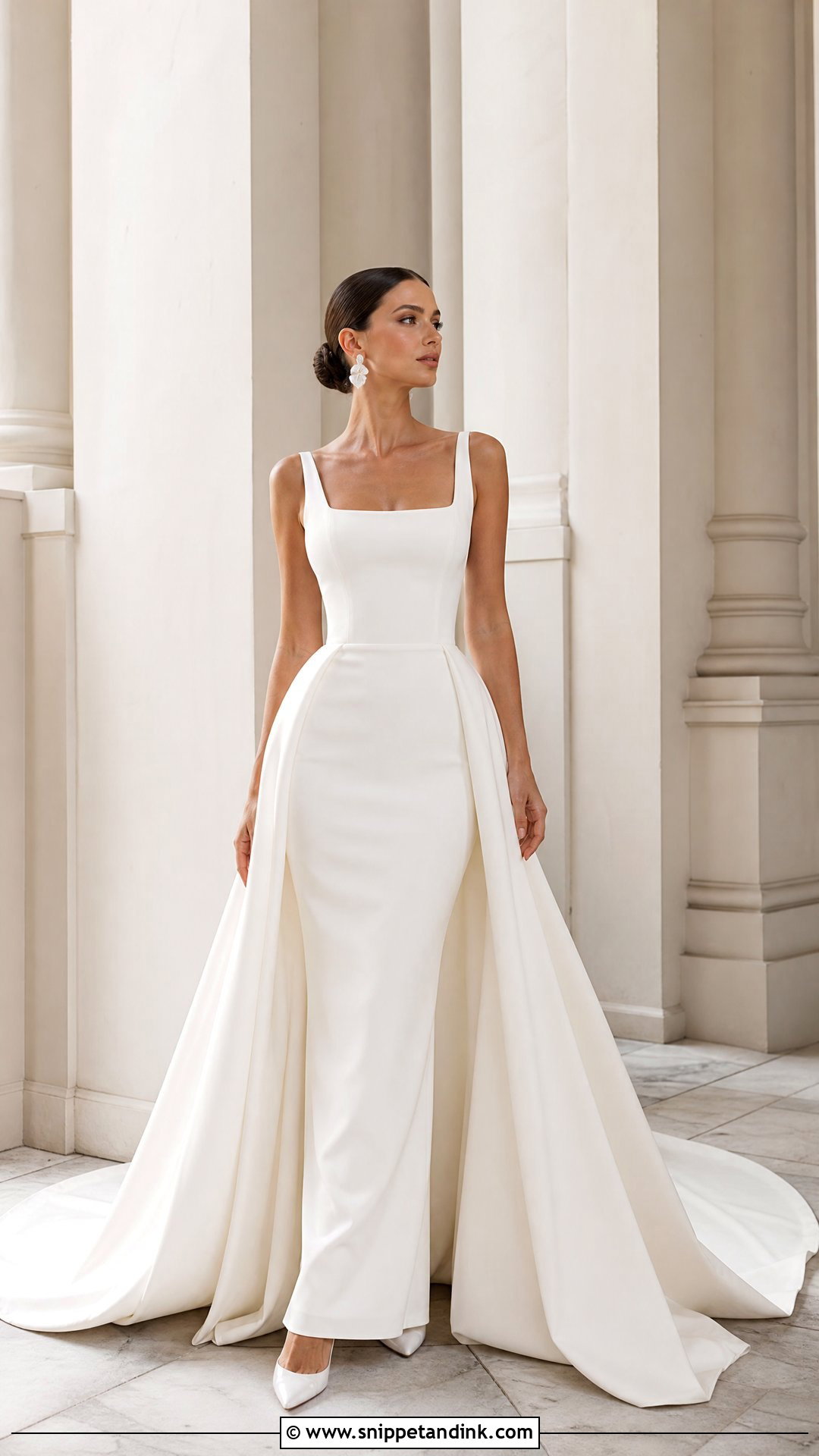
Crepe is my favourite base for a modern bride because it has a matte, fluid drape that follows the body without the shine of satin. A square-neck, halter or one-shoulder crepe dress with a fitted skirt pairs well with a removable crepe overskirt in crisp pleats and a chapel train. Matching the fabric makes the two pieces read as one gown. The trade-off is that crepe hides nothing: a fastener that bulges or a waistband that rolls shows immediately on a matte surface. I check it from the side and the back, not only the front mirror. For the reception, a bold cuff bracelet refreshes the base dress without any other change.
8. Floral Wedding Dress With Removable Skirt
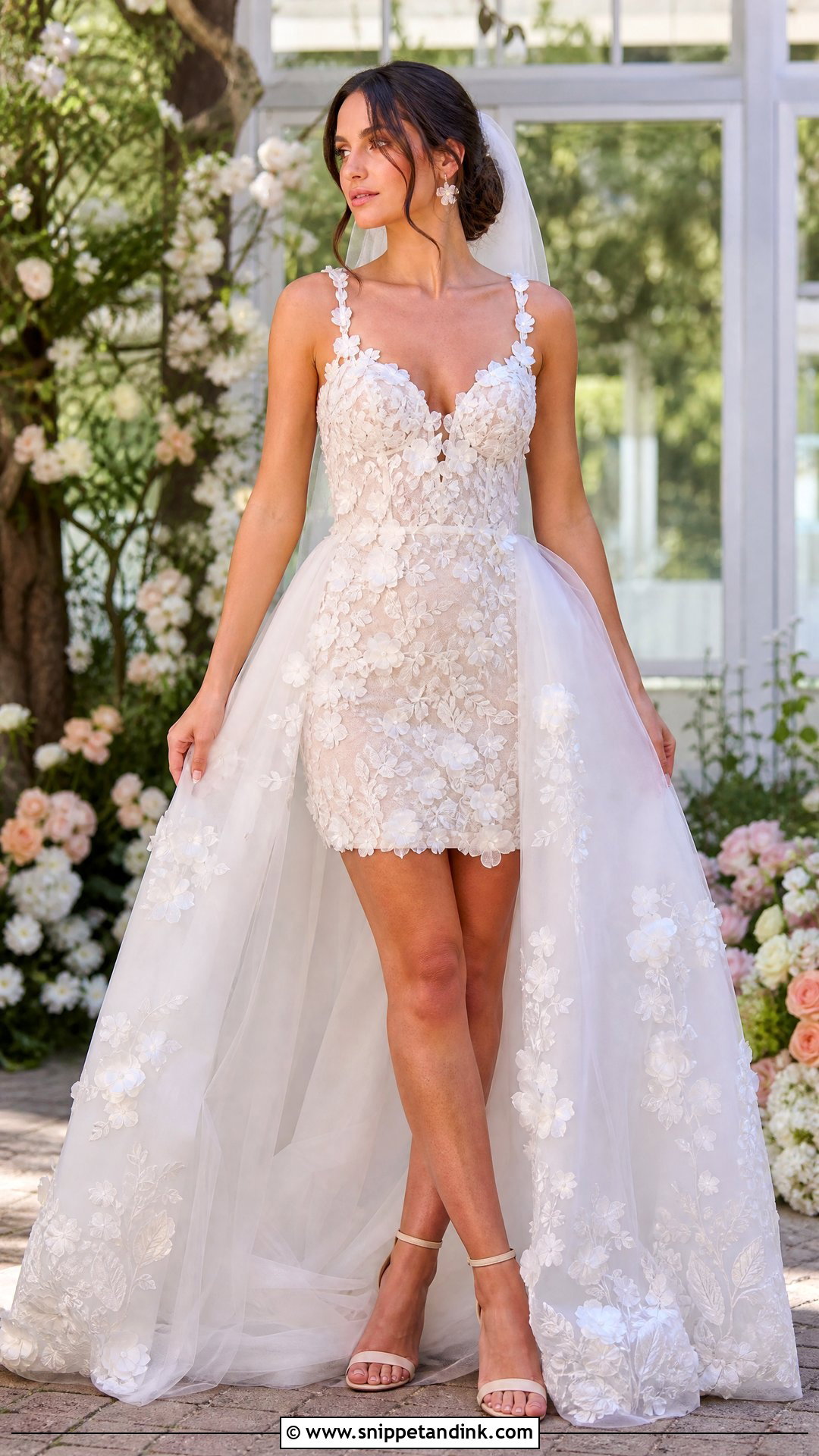
Three-dimensional flowers are what make this version feel personal. I look for a base gown with floral appliqués concentrated around the bodice and hips, then a tulle overskirt with matching blossoms that thin out toward the hem, so the ceremony look has one continuous pattern. The weak spot is the waistband. Where the overskirt’s flowers meet the dress’s flowers, a mismatch in placement makes the layers look like two separate purchases. Ask your tailor to stitch a few spare blooms over the closures; most appliqué gowns come with extras, or your seamstress can cut some from the hem allowance. A loose low bun keeps the neckline visible.
9. Mini Wedding Dress With Removable Long Skirt
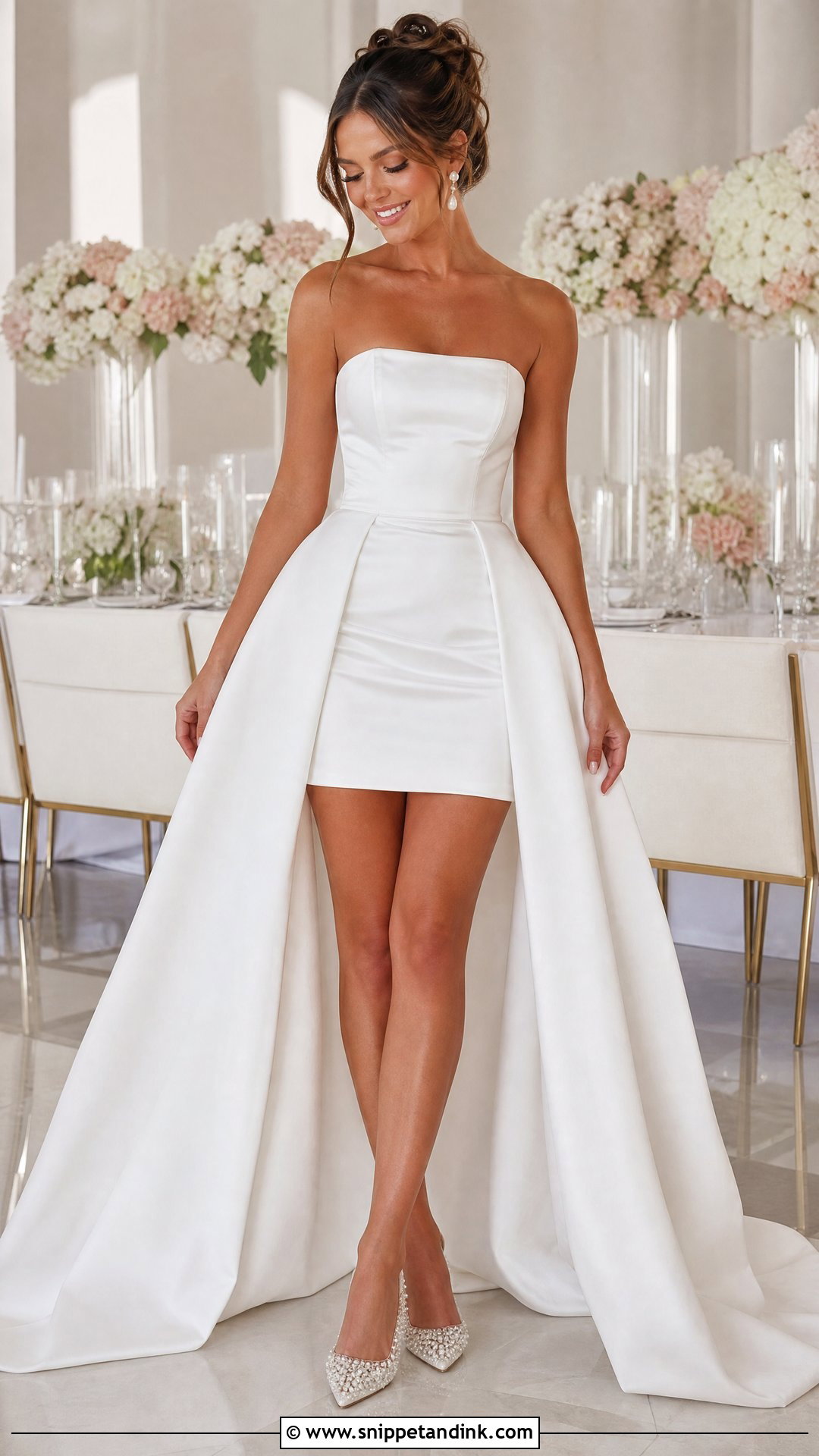
The mini reveal is the most dramatic change on this list, and the one that needs the most structure. For the ceremony, the overskirt has to cover the short hem completely and hold the silhouette of a full gown, which is why I’d steer toward satin, mikado or several layers of tulle rather than a single soft layer that might show the mini’s outline. The base dress needs a structured bodice or straps so it stays put during the swap. My main fitting check: sit down and stand up a few times. If the overskirt waistband rides up, the mini peeks out early. Repeating the same fabric or neckline detail on both lengths keeps them looking related.
10. A Line Wedding Dress With Removable Train Skirt
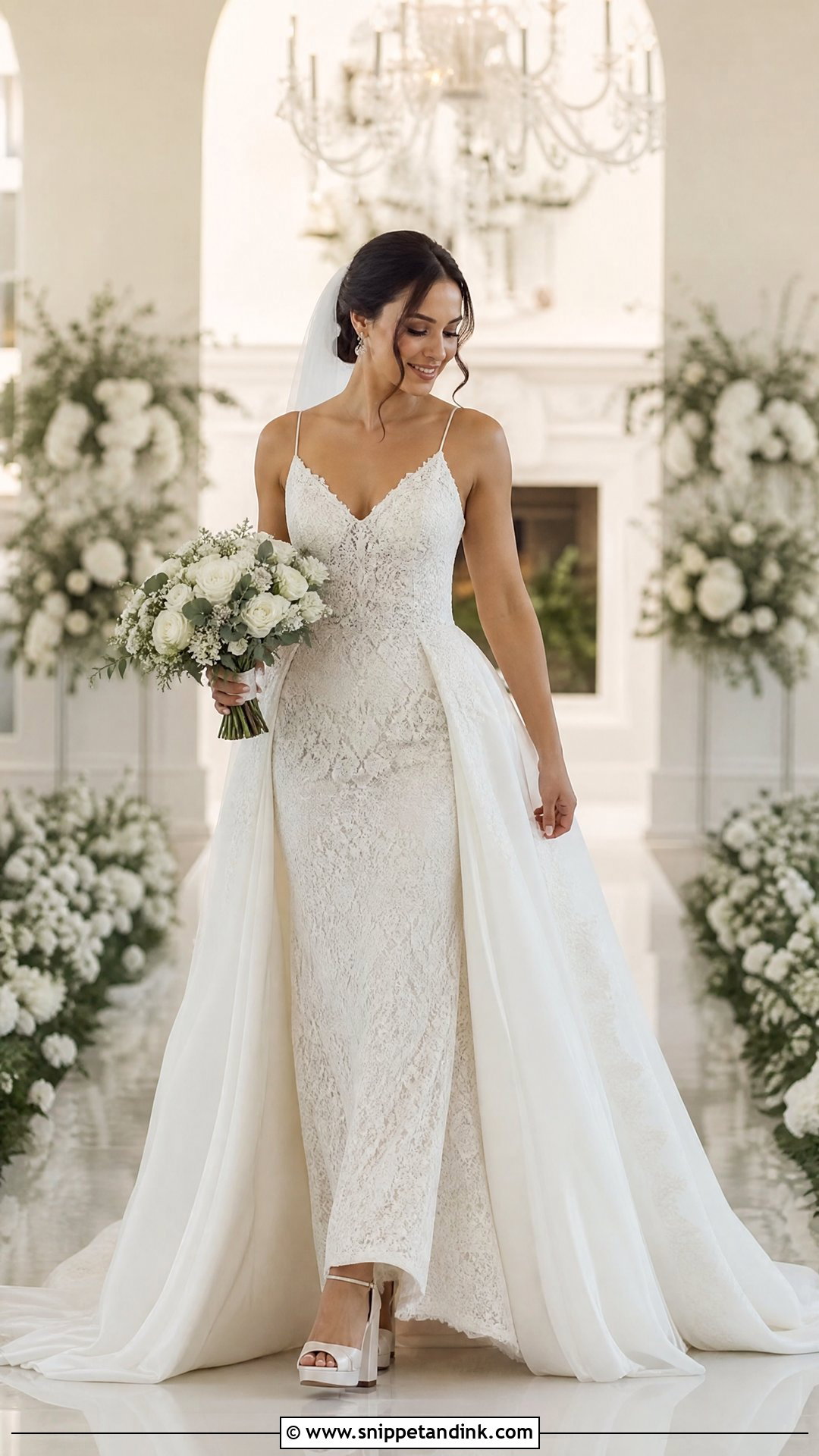
A removable train skirt is the gentlest version of this idea, and I often suggest it to brides who want ceremony drama without waist volume. The extra layer wraps only the back and sides of a simple lace, satin or chiffon A-line, leaving the front of the original skirt visible. You get a longer, fuller train while the dress still feels like itself. During the fitting, walk backward and turn a full circle in both versions. A train attached only at the sides tends to pull the waistband off-centre when it drags, so look at your waist seam in the mirror after every turn. Block heels help on uneven aisles.
11. Corset Wedding Dress With Removable Skirt
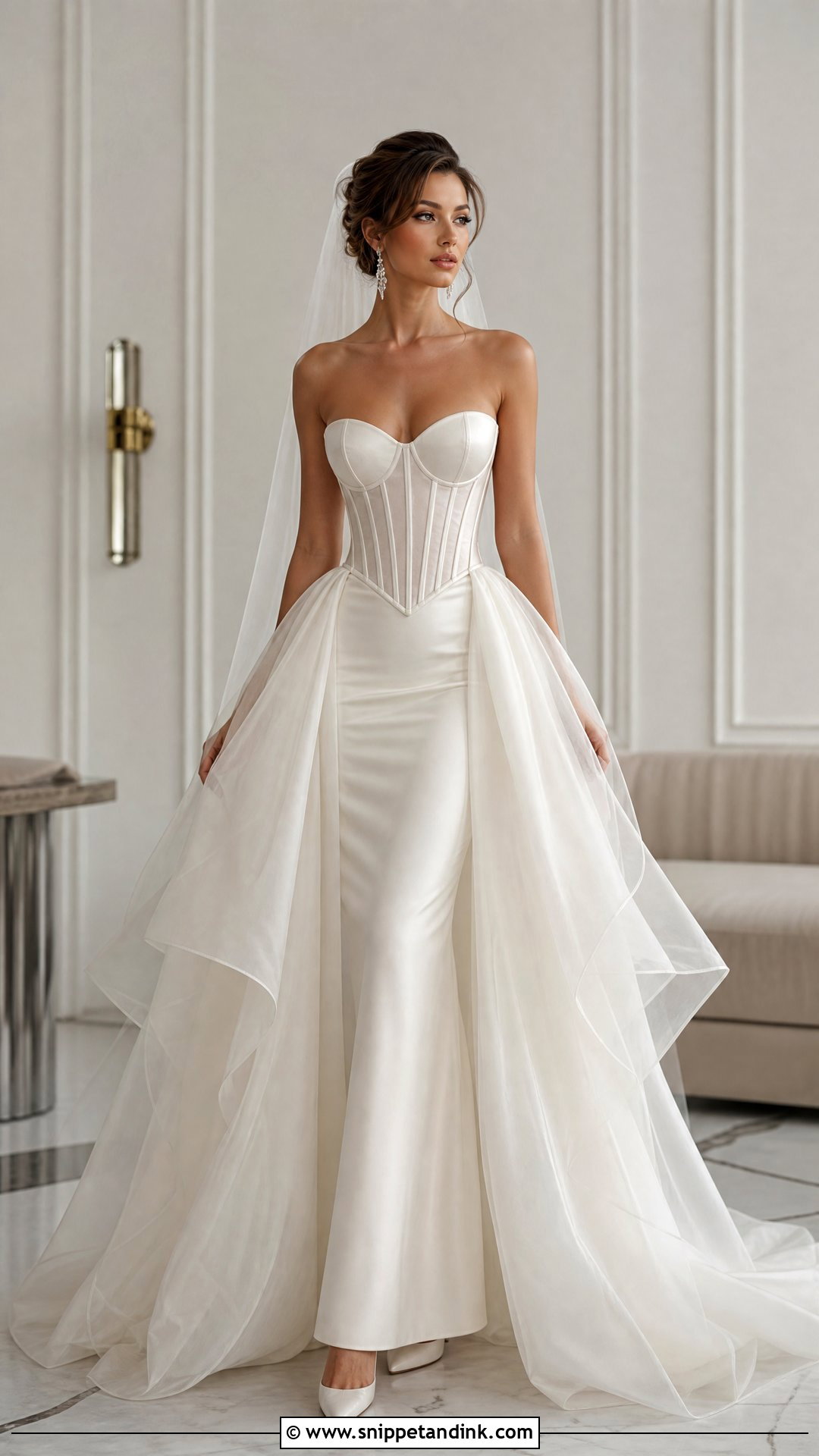
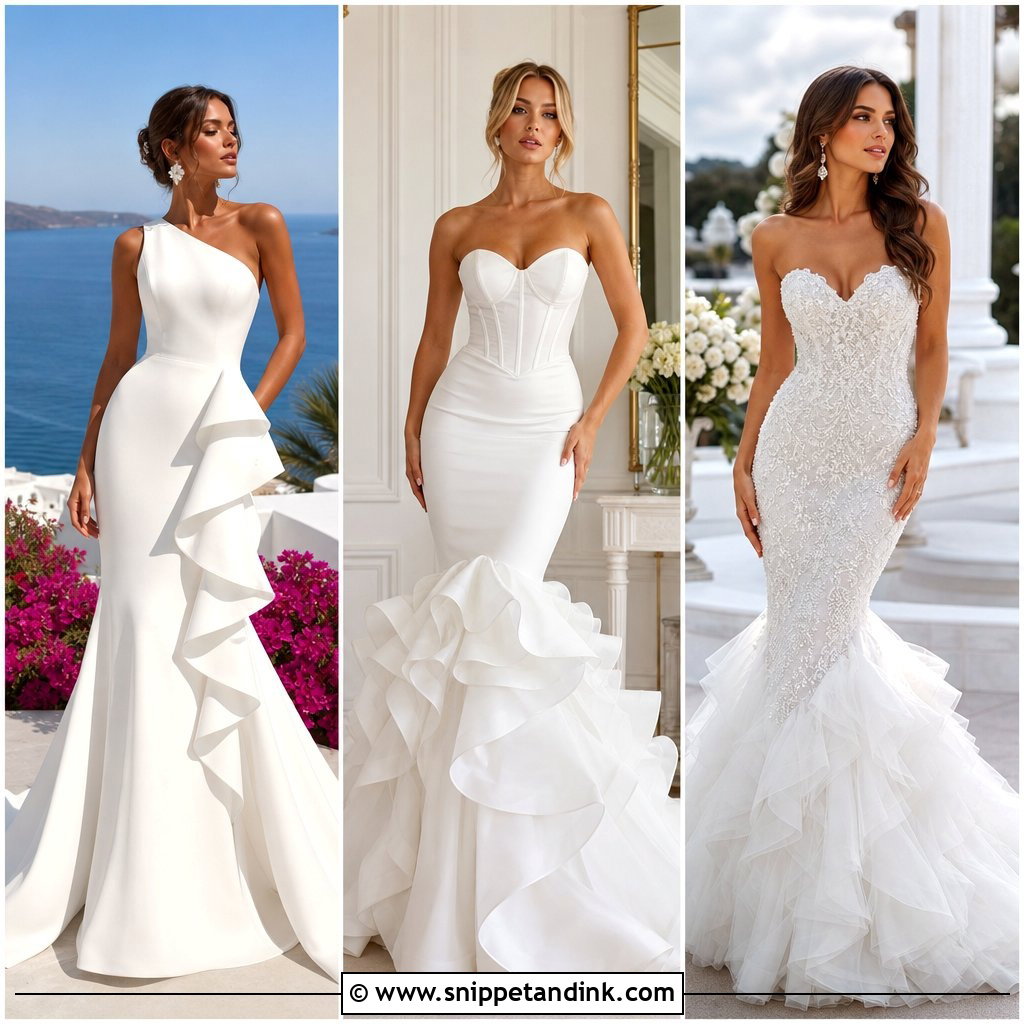
Corset bases are excellent under removable skirts because the boning gives the overskirt something firm to sit against. Choose one with cups placed for your bust and a waistline that sits comfortably, since a corset that digs in at the start of the day will feel far worse by the speeches. Sheer or lined both work, depending on coverage. Pair it with a full tulle, organza or satin overskirt fastened directly at the defined waist. I’d always check that the overskirt band doesn’t cover the corset’s best seaming or press the bottom of the bones into your hips when you sit. A nonslip grip tape inside the waistband stops it creeping.
12. Square Neck Wedding Dress With Removable Skirt
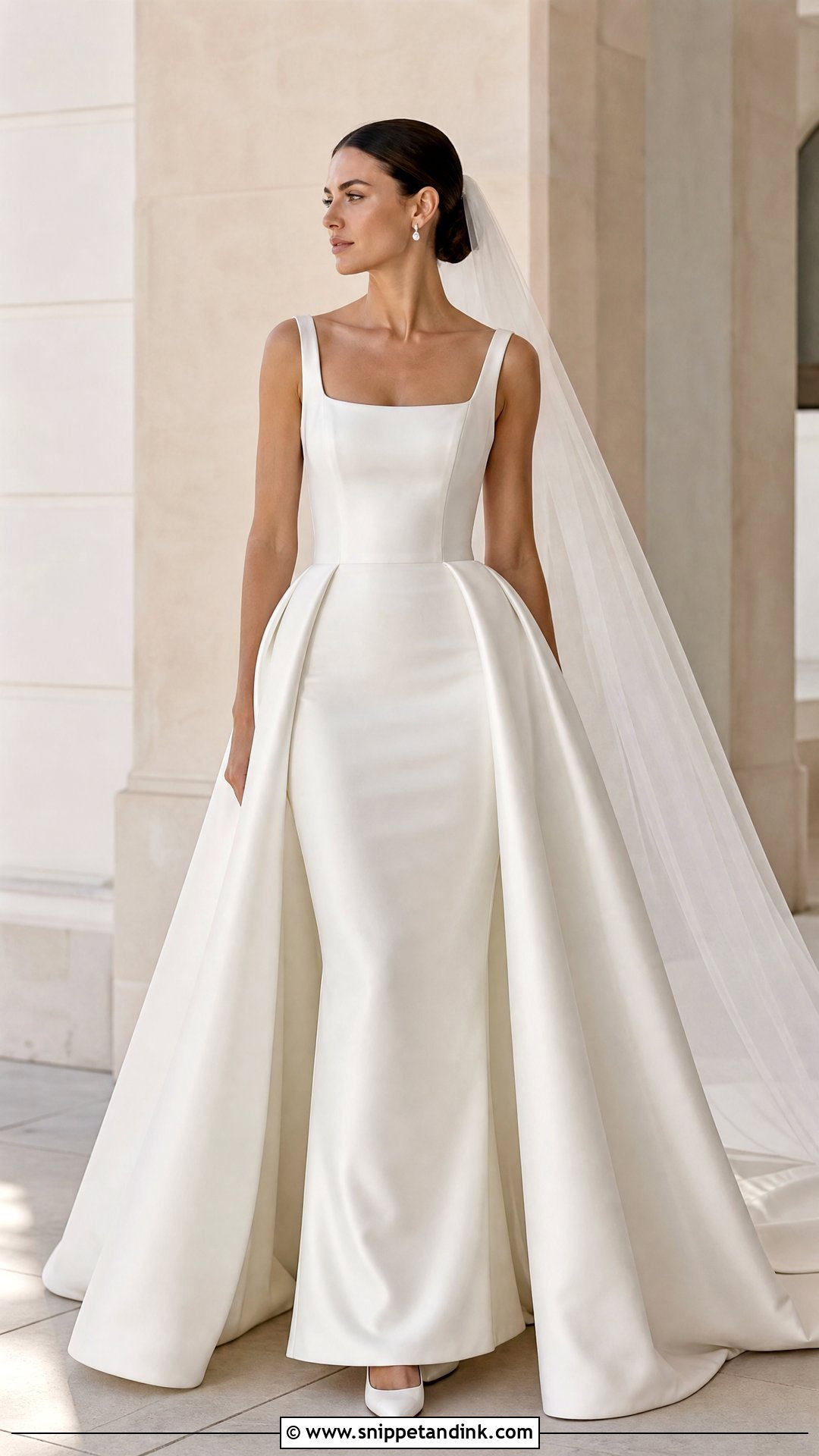
A square neckline gives the gown a clean, architectural appearance, and that geometry carries a much larger skirt than you’d guess. Wide straps and a fitted bodice over a straight or softly flared base skirt can take a pleated satin or mikado overskirt with real width. I pay attention to proportion here: if the overskirt has a visible band, it should match the width of the dress’s own waist seam, otherwise you see two horizontal lines stacked at the waist. Keep the rest calm with a low bun, small drop earrings and a sheer veil with minimal edging.
13. Sweetheart Wedding Dress With Removable Skirt
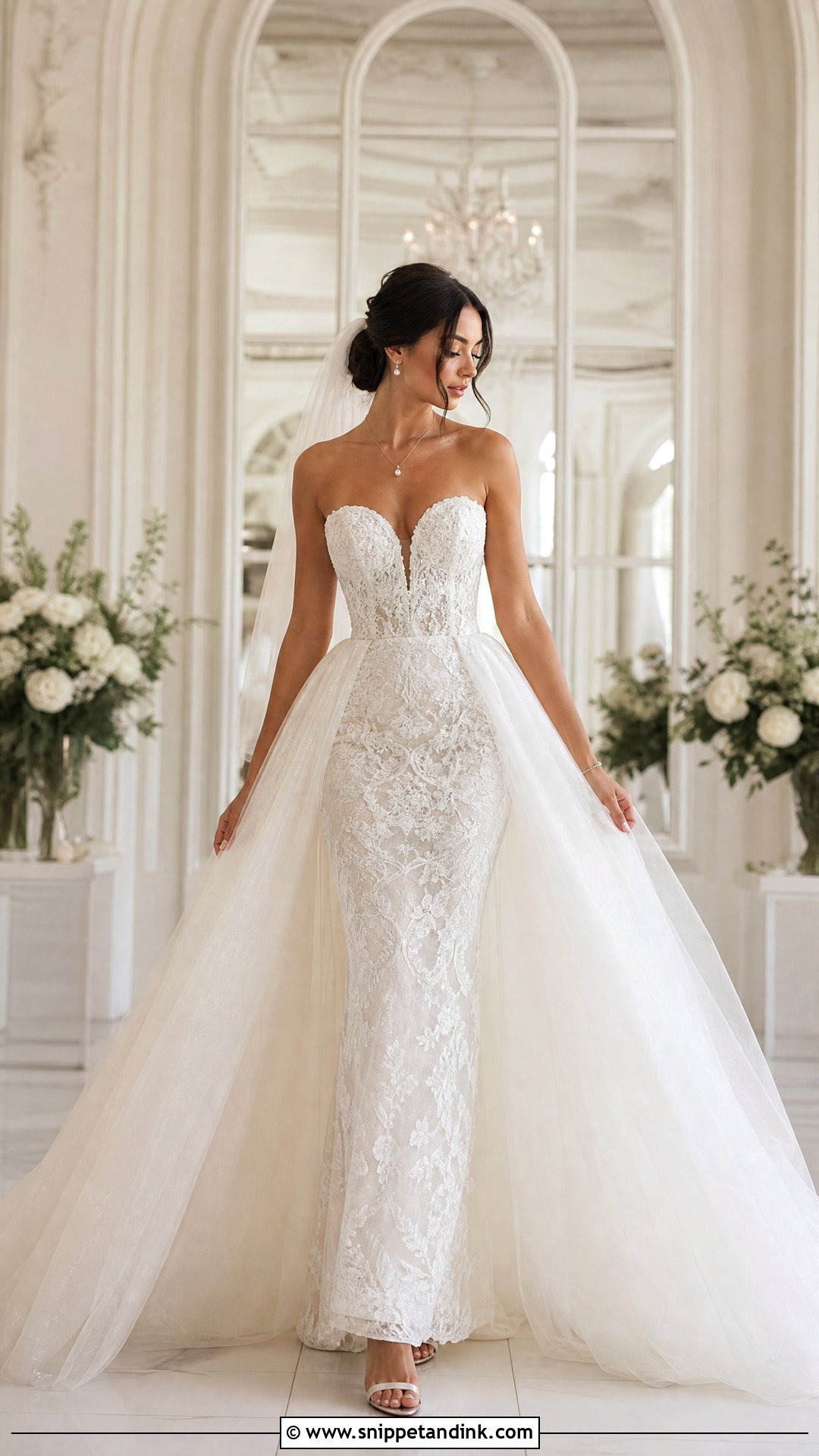
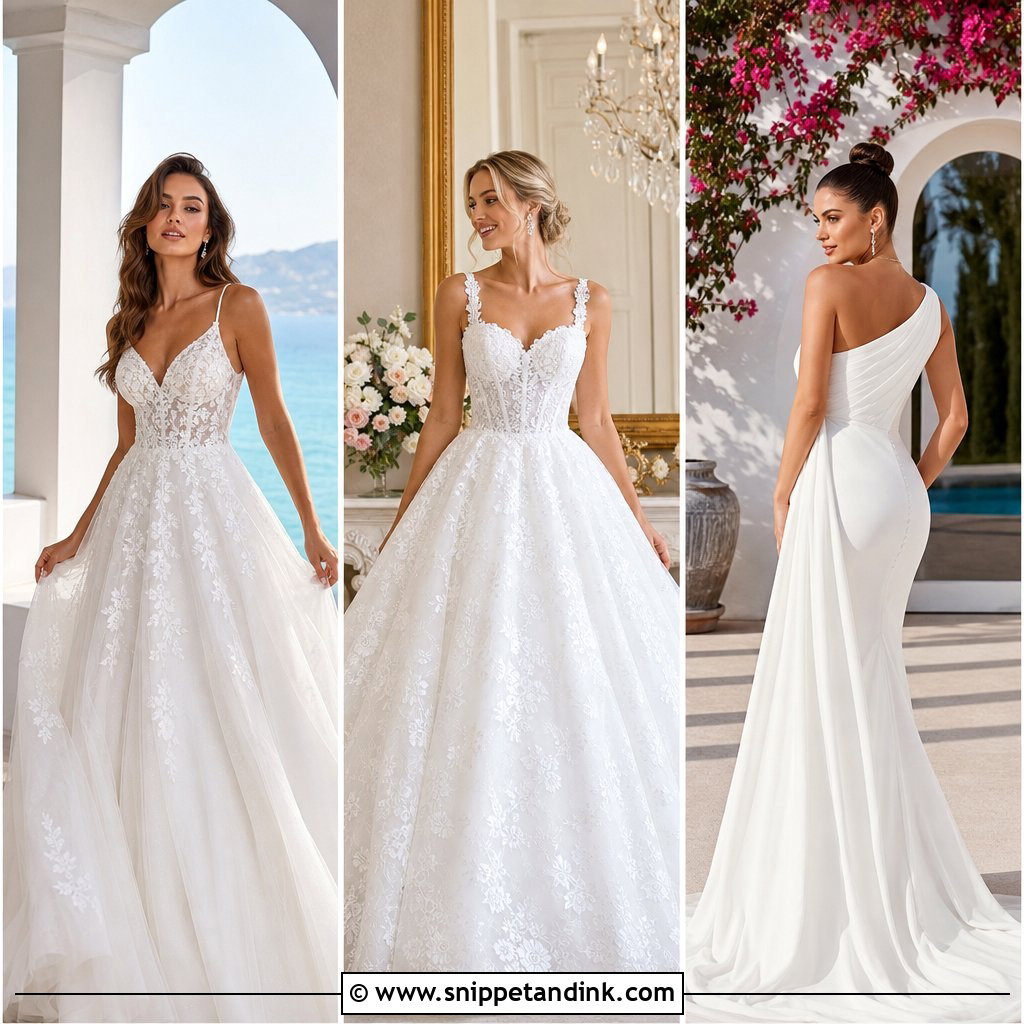
Sweetheart bodices look romantic under almost any overskirt, but there’s one proportion problem I catch often. If the overskirt waistband sits too close to the lowest dip of the sweetheart, the torso looks short and crowded. Leave a little space between the two and the whole figure looks longer. Underneath, a fitted lace, satin or beaded base works; on top, layered tulle gives a soft ball gown, while box-pleated satin with a long train is the more structured route. Attach the veil beneath a low updo so it falls behind the shoulders and keeps the neckline open. A fine pendant is the only necklace this cut needs.
14. One Shoulder Wedding Dress With Removable Skirt
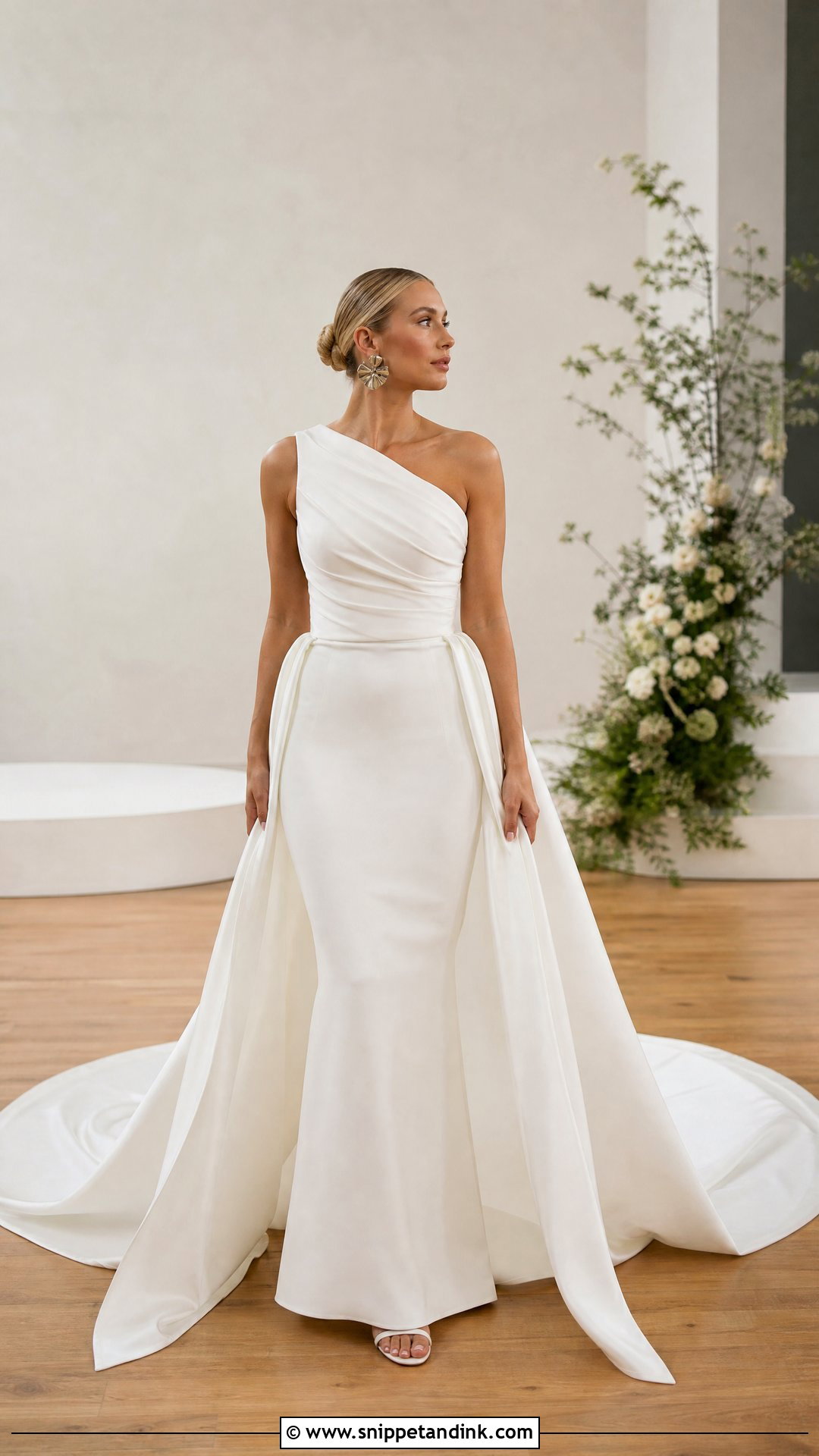
One-shoulder gowns are asymmetric on purpose, and that makes balancing an overskirt trickier than it looks. Choose a fitted crepe or satin dress with clean draping and enough internal support that the single strap isn’t doing all the work. The overskirt should gather lightly at the waist and fall into a chapel train, without ruffles competing with the neckline. Here’s the test I always run: stand in front of a mirror and check both sides separately. The upper half has deliberate uneven weight, but the overskirt must hang level, so the hem should be marked with you standing, never on a hanger. Earrings rather than a necklace, and a small hair comb in place of a veil if you prefer.
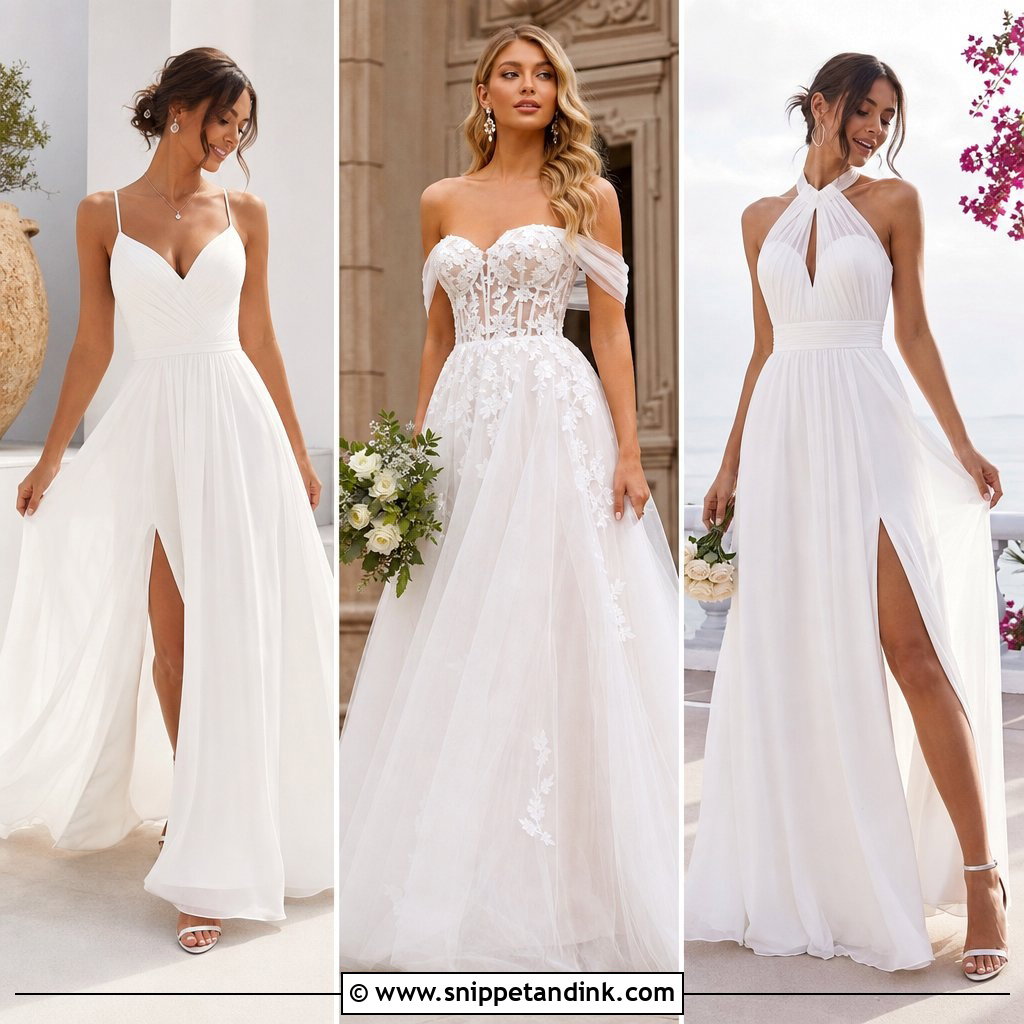
15. High Neck Wedding Dress With Removable Skirt
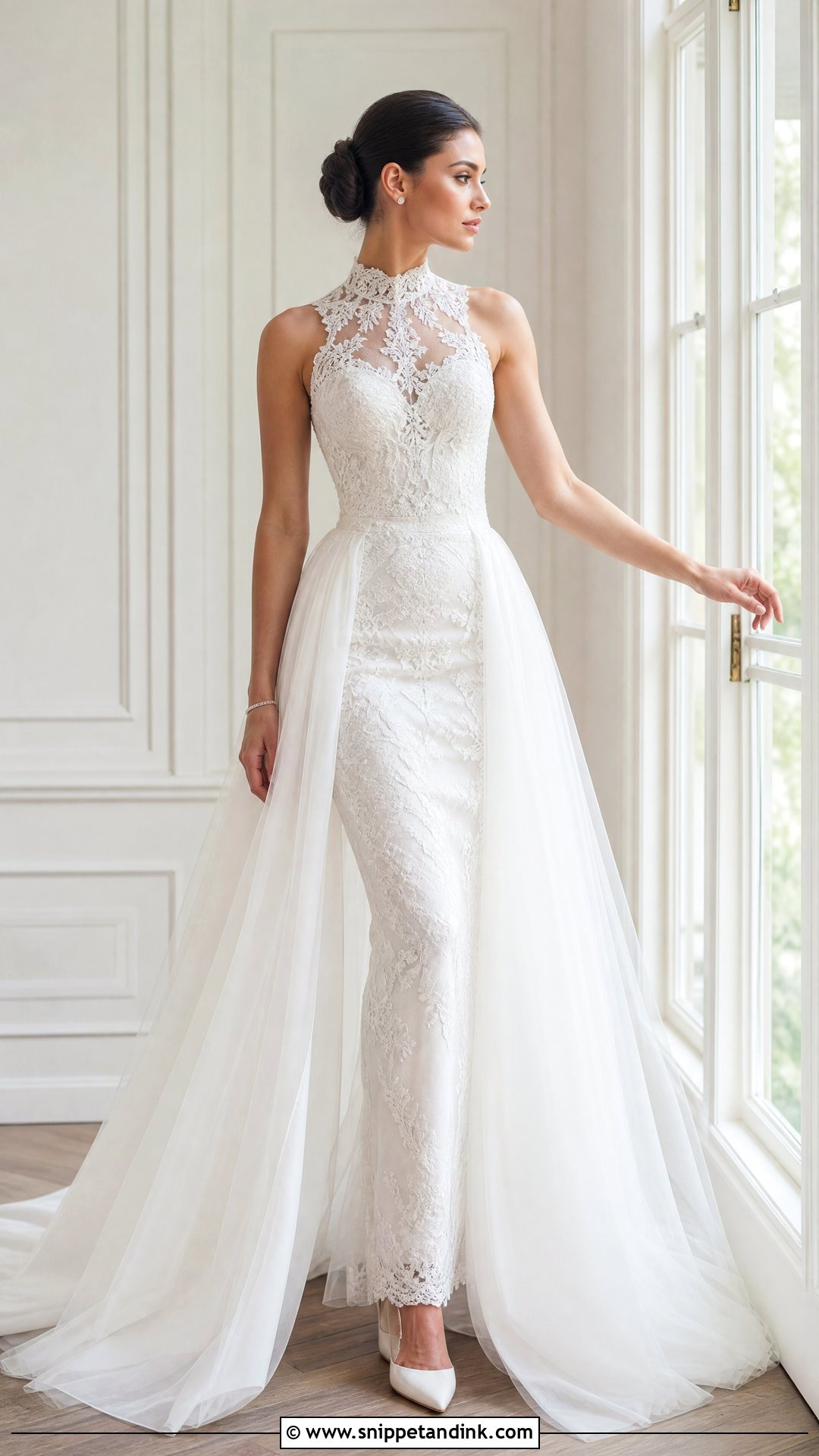
With a covered neckline, the risk is a top-heavy look once a big skirt goes on. A high-neck gown in lace, illusion or soft draping already has plenty going on near the face, so I’d pair it with sheer tulle and an open or lightly gathered front that keeps the long vertical line. If the bodice has intricate lace, repeating a small amount of it on the overskirt’s waistband or hem connects the two pieces without making the outer layer busy. Skip the necklace altogether. A smooth bun, studs and a delicate bracelet or hairpin are the right weight for this neckline.
16. Pearl Wedding Dress With Removable Skirt
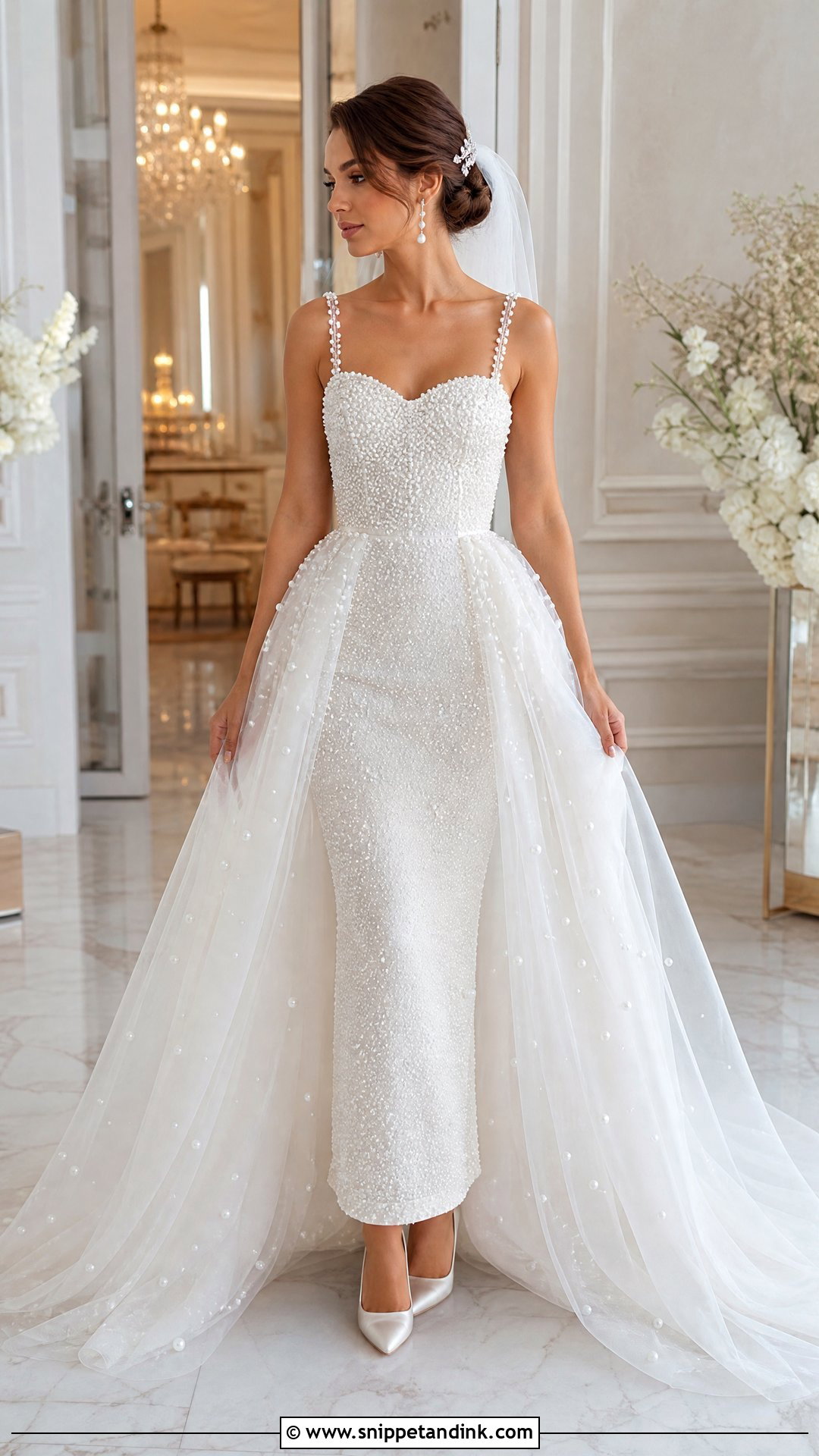
Pearls catch light softly, which is why they suit a convertible bridal gown so well. I prefer them placed on the bodice, straps or neckline rather than everywhere, with a translucent tulle overskirt carrying a few scattered pearls that thin out toward the hem. What people forget is that pearls are heavy. A heavily pearled overskirt can sag at the back, where it has the least support, so ask whether the waistband needs a reinforcing stay. Before the ceremony, keep the overskirt hung by its loops or laid flat; folding it presses pearls into the tulle and leaves marks. Pearl drops and satin pumps keep the theme going.
17. Plus Size Wedding Dress With Removable Skirt
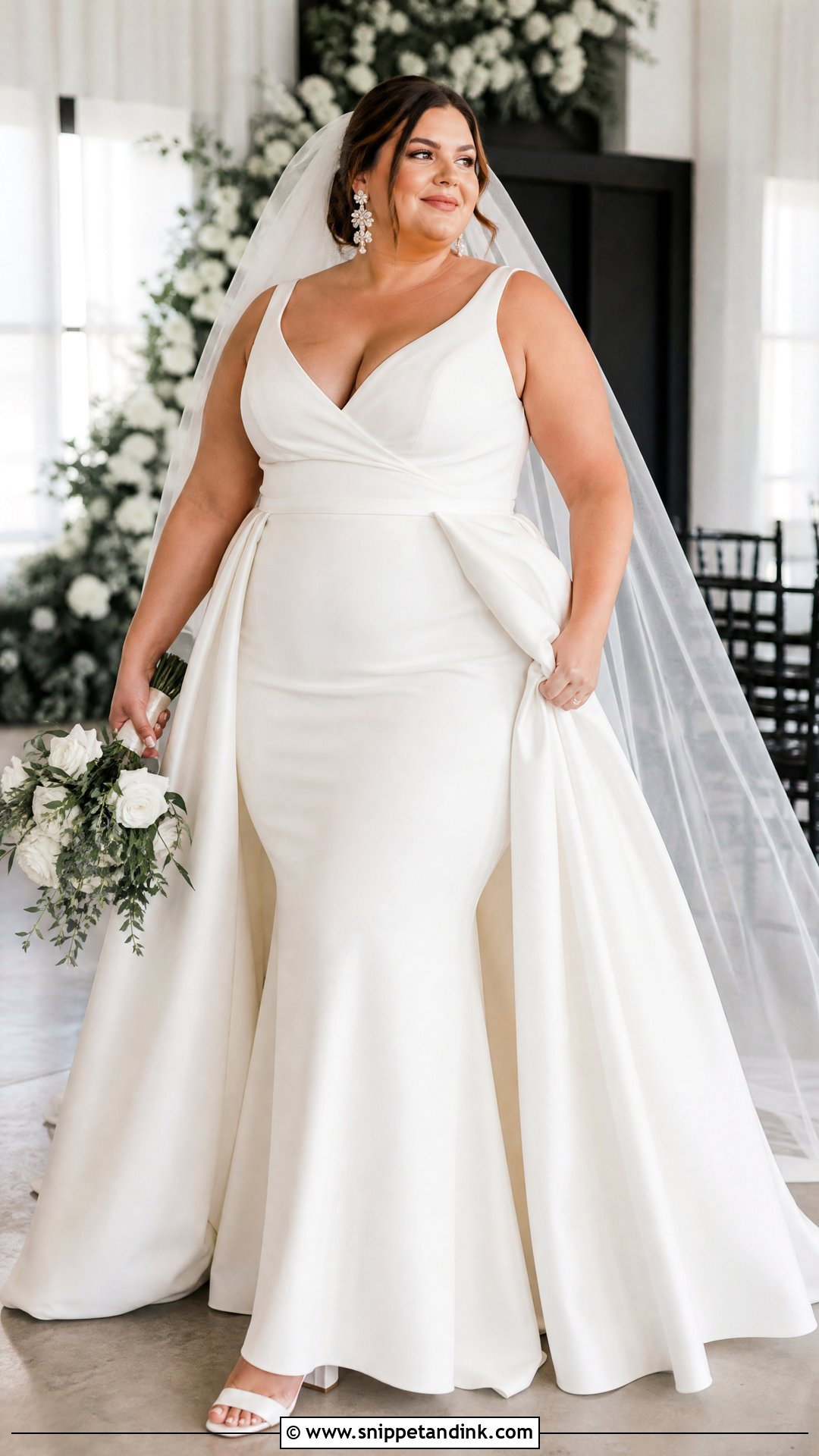
For plus-size brides, the base dress decides everything. I look for internal boning, cups fitted to your actual bust, and seams that define the natural waist, because the overskirt will hang from that waist and needs a firm line to sit on. Fit-and-flare, sheath and structured column shapes all work underneath. On top, choose smooth pleats or controlled gathering; a heavily gathered waistband adds bulk exactly where you don’t want it. An open-front overskirt shows the fitted gown and draws a longer line. Supportive block heels and statement earrings finish it. Most of all, have both layers tailored to your body. Good fit matters far more than any rule about which silhouette a size should wear.
18. Modest Wedding Dress With Removable Skirt
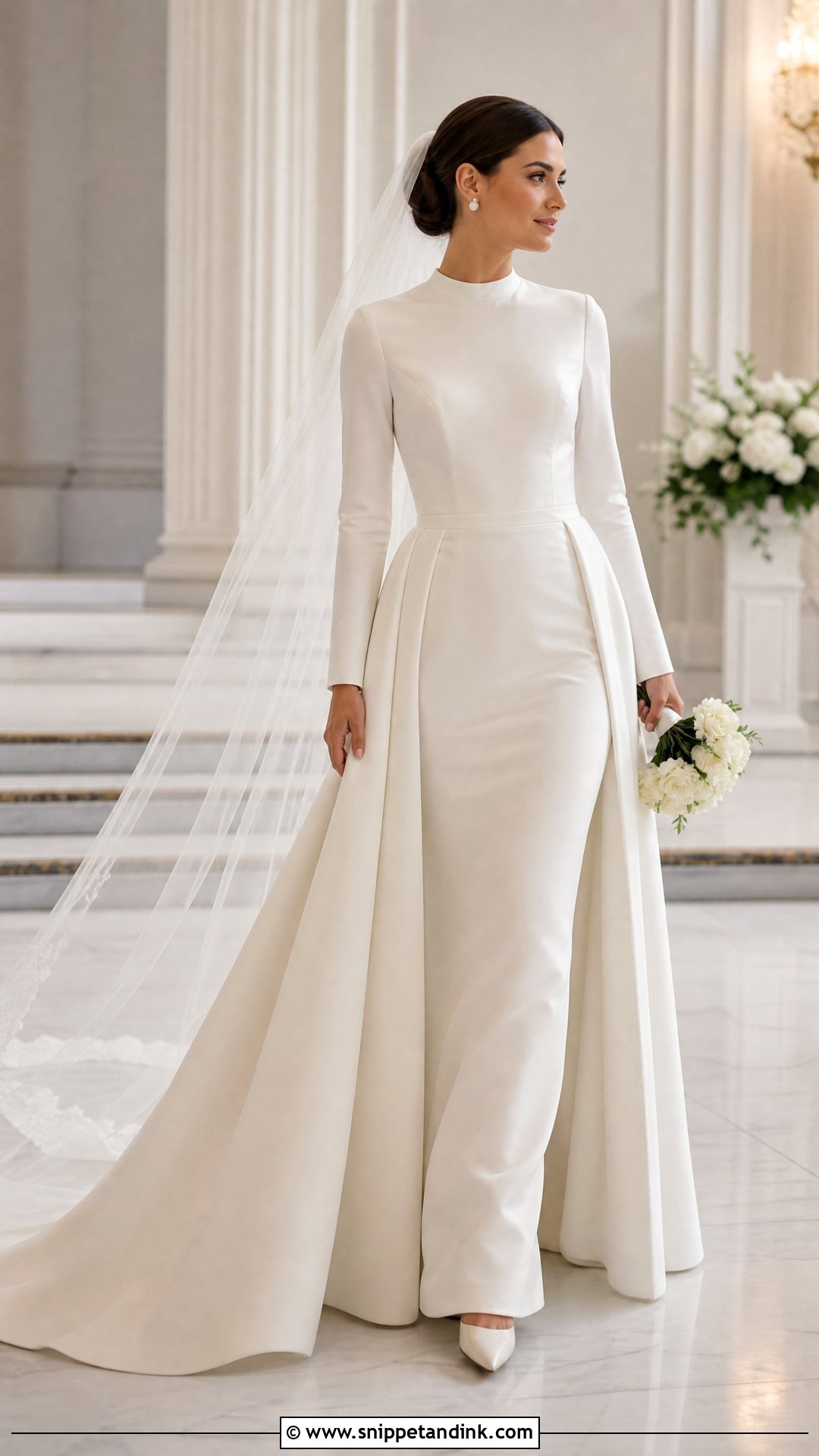
Full coverage and a removable skirt work together well, and I’d start with the base: long sleeves, a higher neckline, and an opaque lining through the bodice so nothing changes when the overskirt comes off. Princess seams or a defined waist keep the shape structured. Then add a removable A-line in satin, organza or lined tulle with gentle pleats, which gives fullness without bulk at the midsection. I check two things at fittings. First, that every fastener is concealed, since modest gowns tend to have plain bodices where hooks show easily. Second, that the waistband stays put when you sit. Matching the linings of both pieces also keeps their colour consistent in photos.
19. Boho Wedding Dress With Removable Skirt
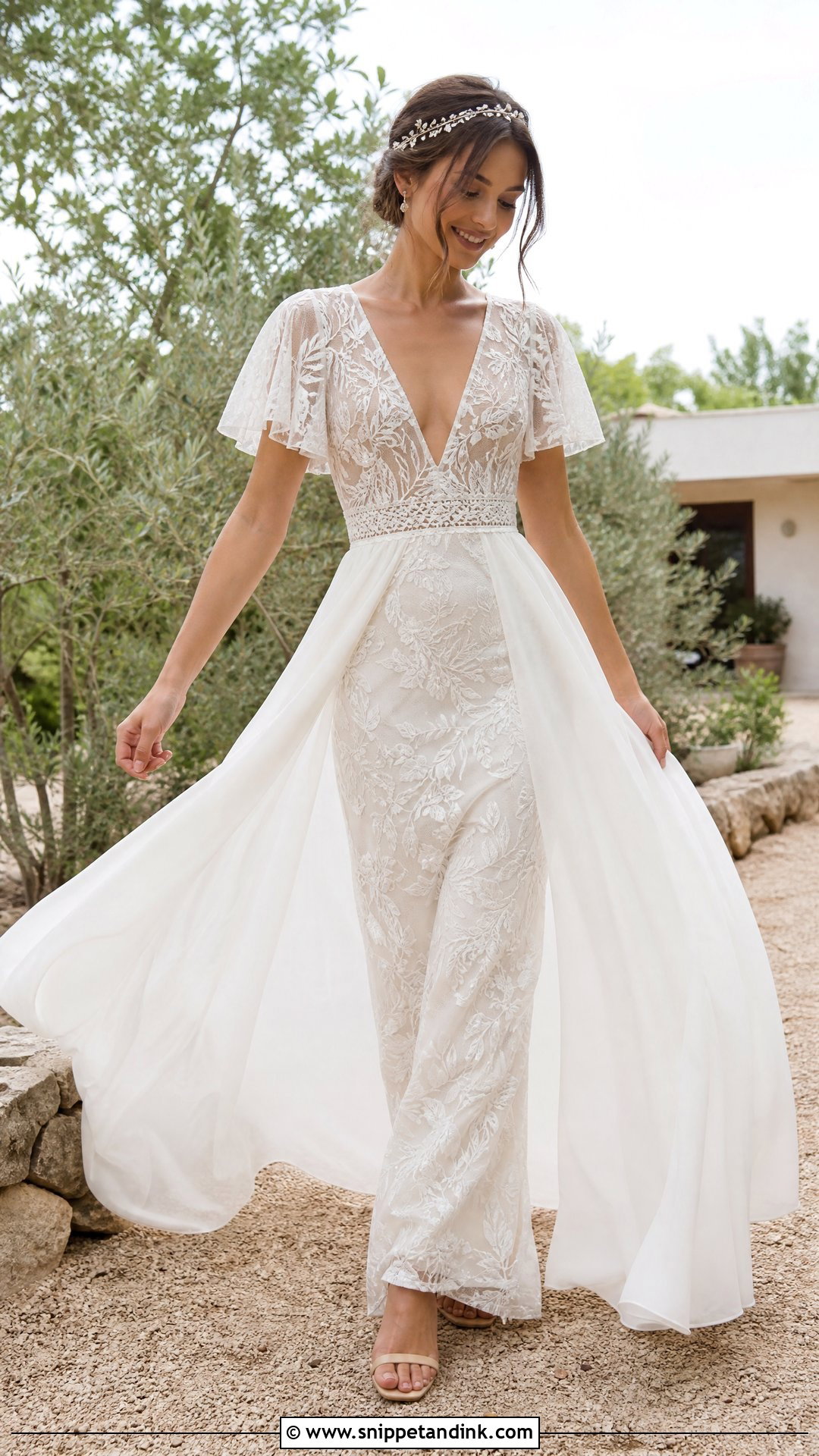
Boho versions need movement, not structure. I’d choose a fitted or gently flared gown with botanical lace, flutter sleeves or a low open back, then an airy chiffon or soft tulle overskirt that floats rather than holding a shape. A narrow lace band can join the layers and hide the attachment. Outdoors, keep the train short enough to cross grass without collecting debris, because chiffon snags on twigs and dry seed heads more easily than satin. With loose waves, a fine hair vine and block-heel sandals, you don’t need much jewellery; the lace already provides the texture. Plan where the removed skirt will be hung, since chiffon creases badly if it’s bundled on a chair.
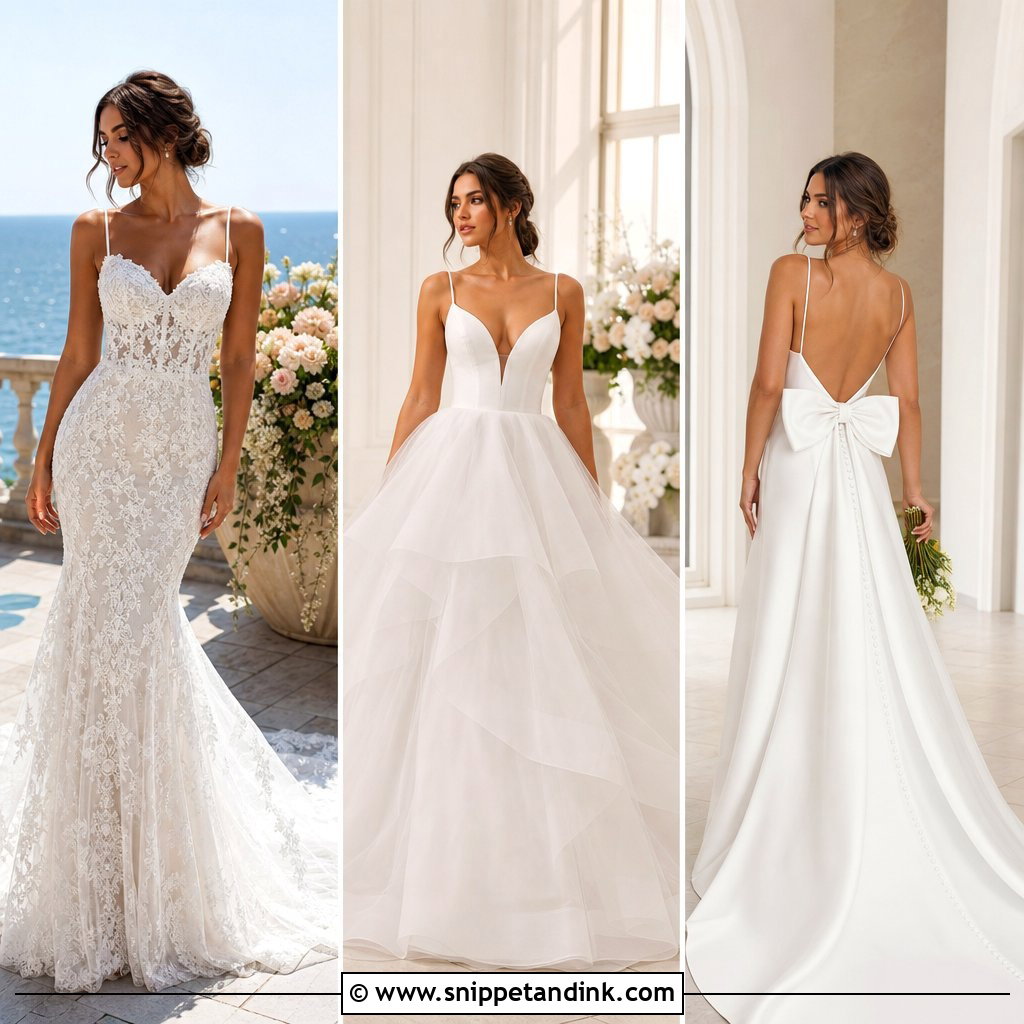
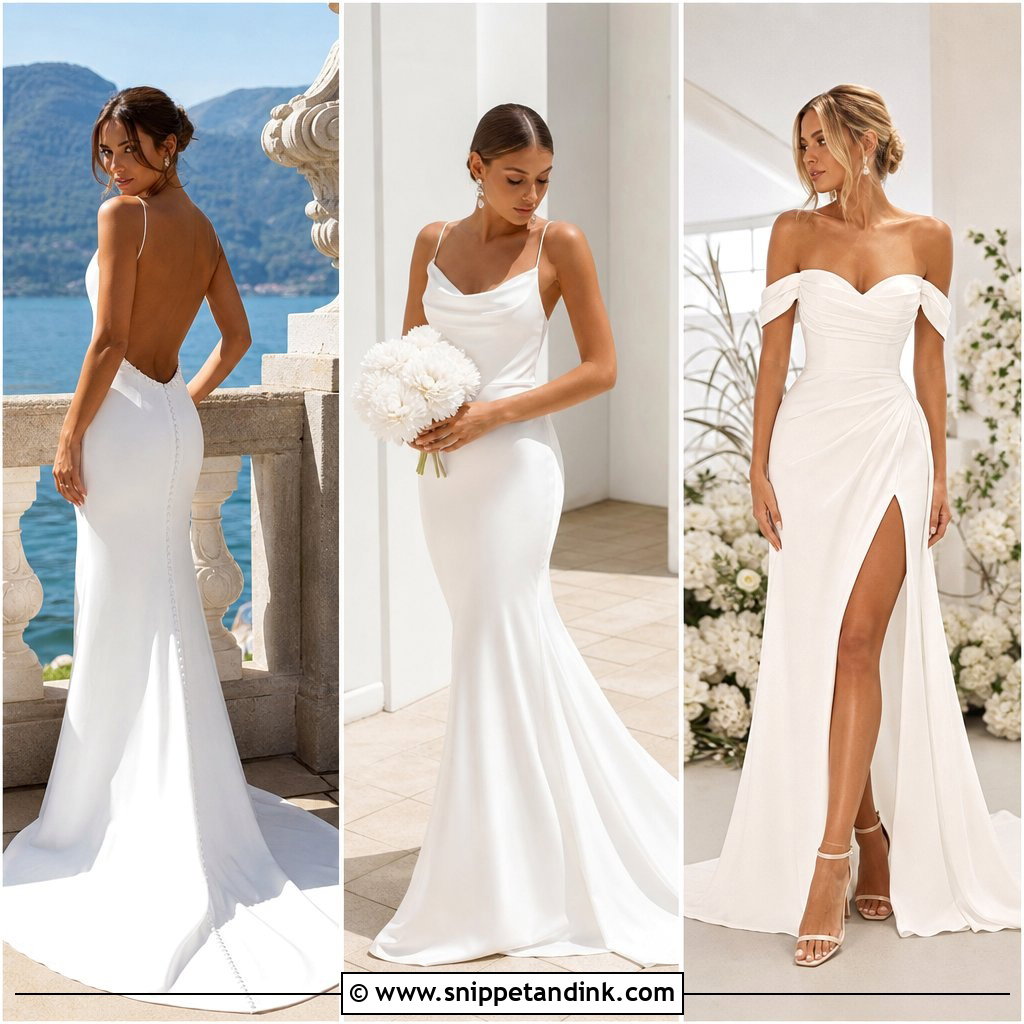
20. Minimalist Wedding Dress With Removable Skirt
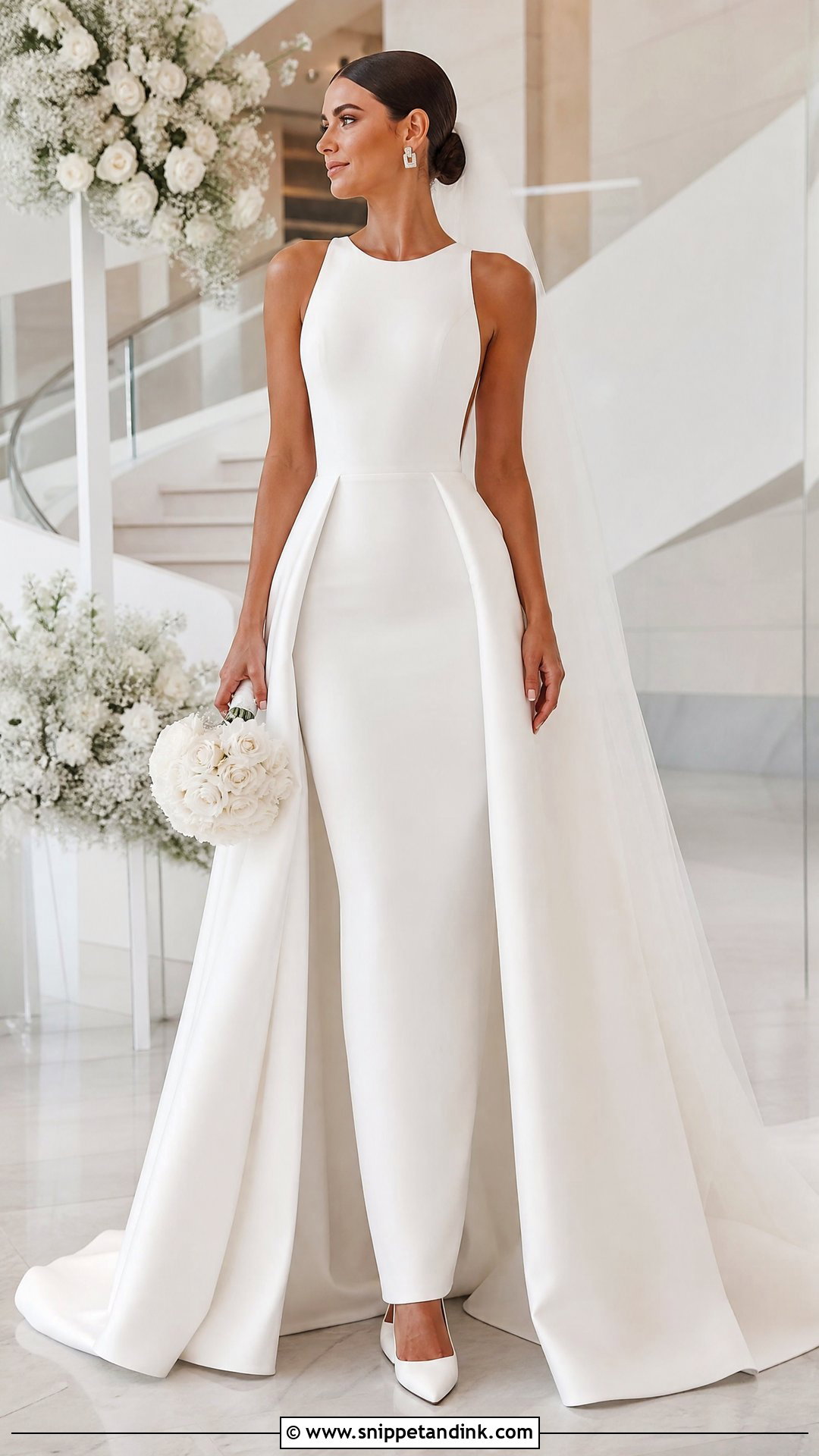
A minimalist convertible gown has nowhere to hide, which is exactly why I like it. With no lace or crystals, every seam and closure is on show. Choose a clean column or fit-and-flare in crepe, satin or mikado with precise seams, then a matching overskirt built around a single feature: sculpted pleats, an open front, or an extended train. Tailoring is the whole budget here. I check that the closures line up perfectly at the back and that the base gown still has a finished waist and back once the overskirt is off. Otherwise you end up with one complete outfit and one that looks like something is missing. A sleek bun and geometric earrings suit it.
The Changeover: Who Helps, Where, and How Long It Takes
The reveal itself takes only a few minutes once it’s been practised, but I’ve rarely seen it go smoothly when nobody planned it. Decide in advance when it happens. Most brides change between cocktail hour and the first dance, or just before the reception entrance so guests see the second look arrive.
- Pick one helper who attended at least one fitting and knows the closures by touch.
- Ask your venue for a private room with a full-length mirror and a clean hook or rail, not a bathroom stall.
- Undo the fastenings in the reverse order they were done up, then step out of the overskirt rather than pulling it over your head.
- Check the base dress in the mirror: waist seam centred, no thread loops or exposed hooks, hem lying flat.
- Touch up lipstick and hair while the helper hangs the overskirt.
Rehearse it once at your final fitting, with the same shoes on. That run-through shows whether you need a small pair of scissors for a stubborn thread, or whether a fastener needs moving a centimetre so it’s easier to reach.
Caring for the Detached Skirt After the Reception
Once the overskirt is off, it often gets forgotten on a chair until the end of the night. Bring a breathable cotton garment bag and a padded hanger that fits its loops, and let the helper hang it as soon as it comes off. Plastic bags trap moisture, and tulle crushed under coats overnight is hard to revive.
After the wedding, have both pieces cleaned together by the same cleaner. Spills and perspiration mark the base dress and outer skirt differently, and cleaning them separately can leave two slightly different shades of ivory. For long-term storage, I’d ask for acid-free tissue in the folds and keep everything in a cool, dark cupboard rather than an attic or basement. If you might wear the base gown again for a renewal or anniversary party, try it on before the season begins, since fabrics can relax over time.
Two Dresses, One Waistband: What Makes the Pairing Work
The convertible gowns that work best share a few practical traits: the two layers match in fabric or detail, the waist seams line up, the fastenings stay hidden, and the base dress looks finished on its own. Wear the full outfit under more than one kind of light before the wedding, and practise walking, sitting, turning and the removal itself. Give one trusted person the job of handling the change and looking after the overskirt afterwards. Lace, satin, tulle, crepe or plain tailoring, the right gown should feel complete in both versions, not just the first.
You'll Like These Ideas:






Leave a Reply