
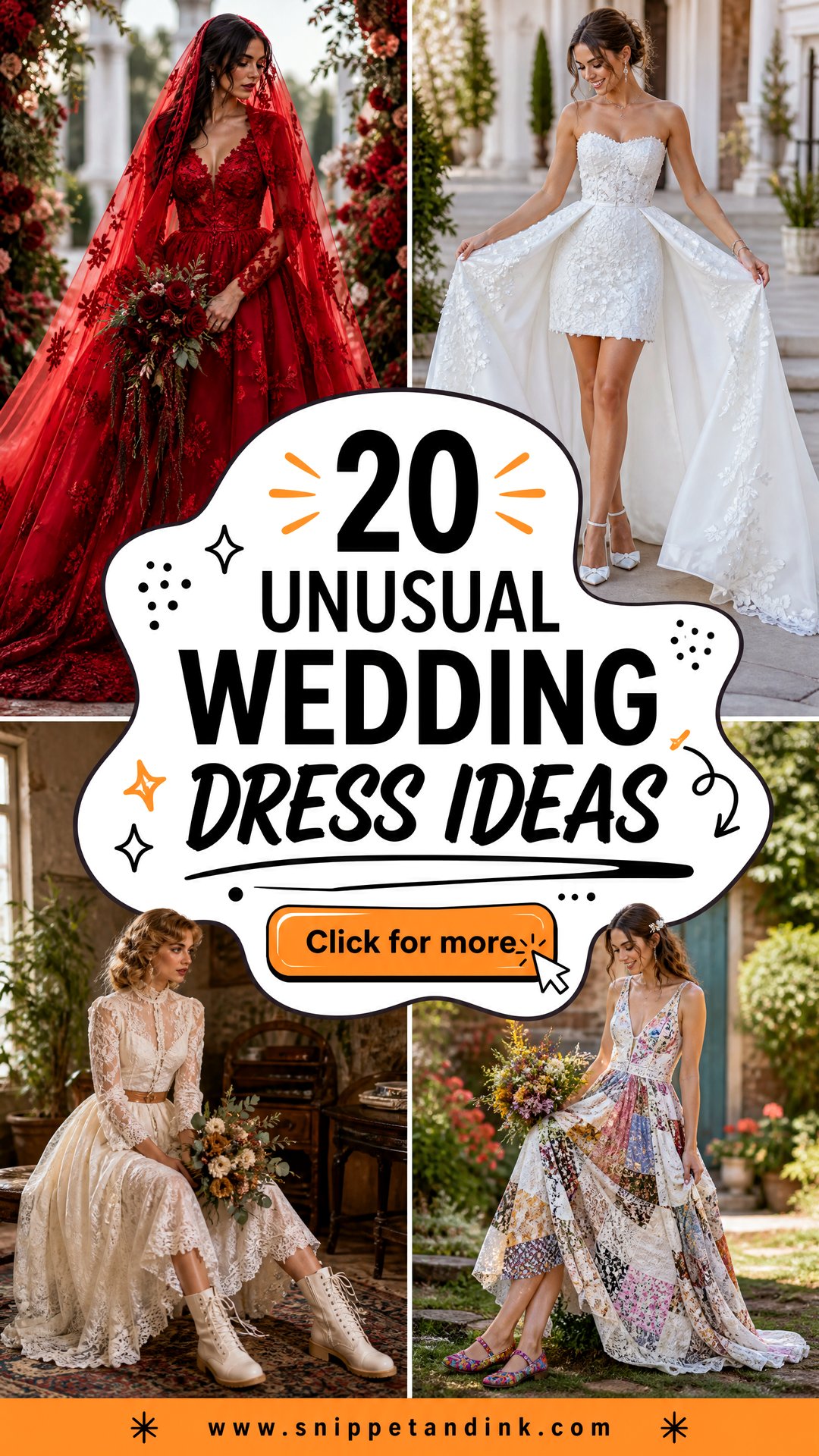
White is one option, not a rule. The dresses below play with color, tailoring, texture, odd hemlines and pieces that come off halfway through the night, and short dresses, separates and trousers are fair game too. Any of them can look polished at a ceremony if the shoes, veil and jewelry point the same way. For each one I’ve added how I’d style it, plus the practical snag I’d warn a bride about before she places an order.
What a Colored Dress Signals to Your Guests
Color carries meaning, and it helps to know what yours says before you’re standing at the front. Red is the traditional bridal color in Chinese and many South Asian weddings, so a red gown can read as a nod to heritage or, to some relatives, as a surprise borrowing. In Chinese tradition white has long been tied to mourning, and black has its own history too: Spanish brides once commonly married in black. None of this should stop you. It just means a quick conversation can save a gasp.
Tell the people who’d mind
I’d show parents and grandparents a photo before the wedding rather than letting the aisle be the reveal. It turns the color into part of your story instead of a shock.
Coordinate the people standing near you
- In a black gown, put the bridesmaids in another color or a lighter tone so you don’t blend into a row of black.
- With a red or blue dress, ask guests to avoid your shade, and put it on the wedding website rather than relying on word of mouth.
- Give the florist a fabric swatch, because flowers close to your dress color vanish against it.
- Send a swatch to the photographer as well, since colored fabric needs careful white balance to stay true.
1. Black Wedding Dress With Cathedral Veil
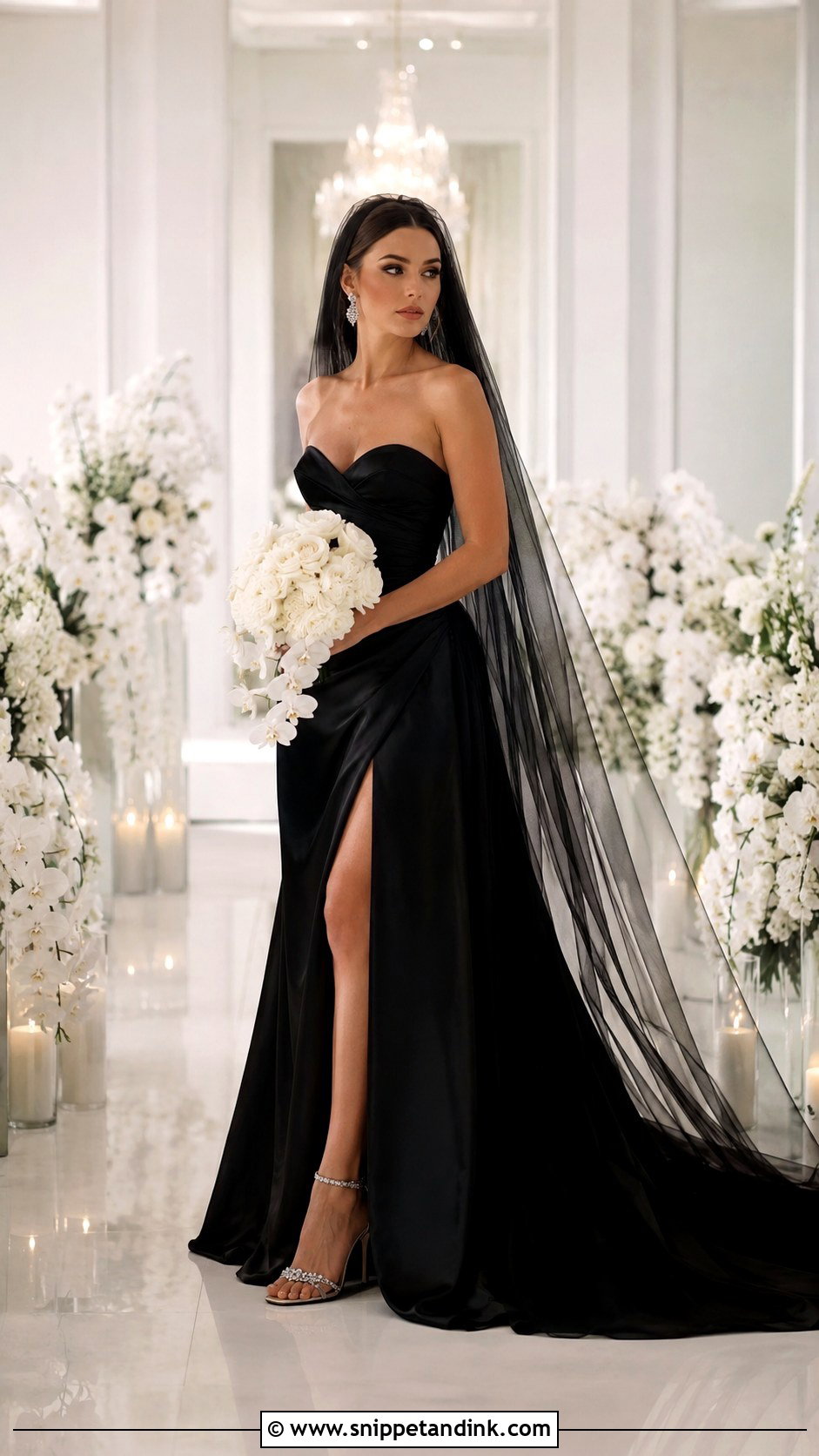
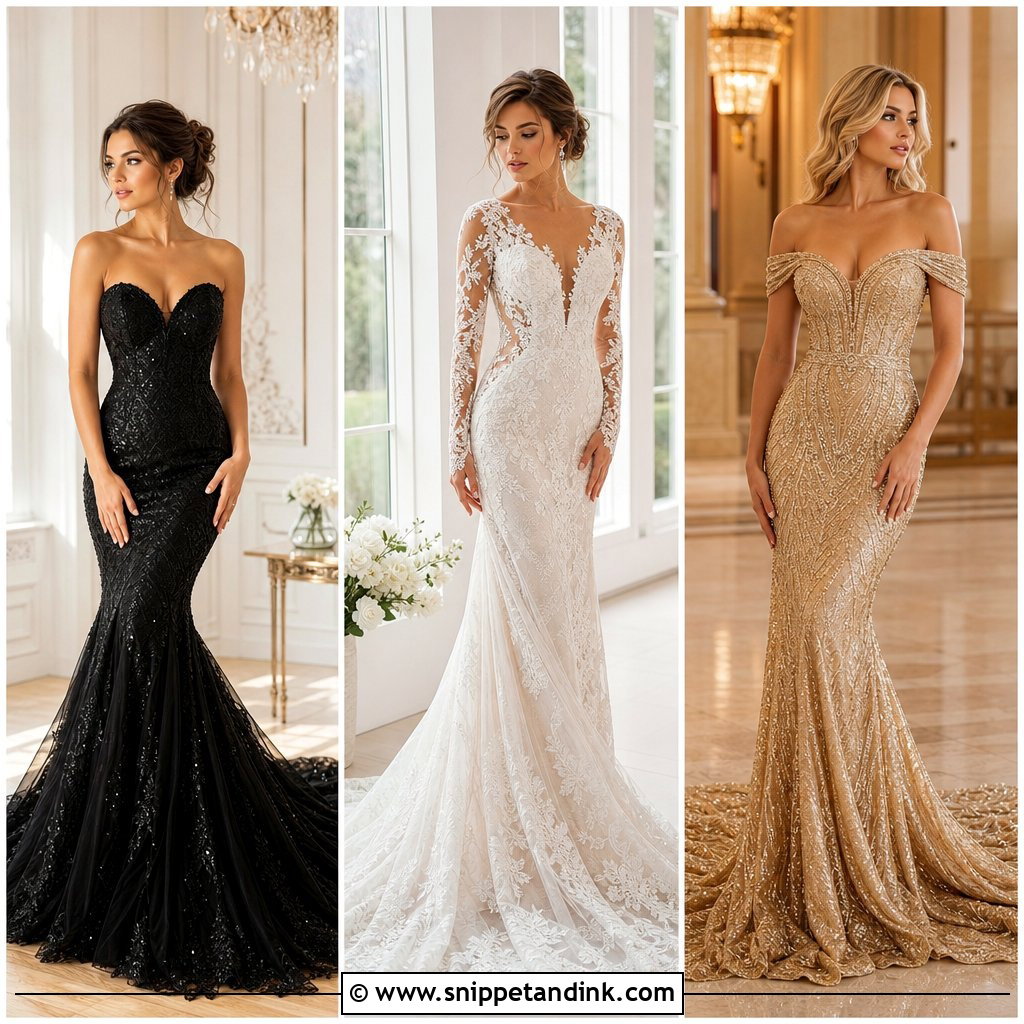
Black reads as dramatic, but it can be soft as well, depending on the fabric. Matte crepe looks sleek and serious; layered black tulle looks lighter, almost romantic. With a fitted bodice and a sweeping skirt, a black cathedral veil adds height, and a fine embroidered edge keeps it from feeling heavy. Black swallows detail in photos, so I steer brides toward texture or a satin sheen that lets the camera pick up the shape. Pointed black pumps, silver earrings and an ivory bouquet give contrast. Keep the makeup luminous rather than smoky, or your face gets lost against the dress.
2. Floral Embroidered Wedding Dress With Colorful Heels
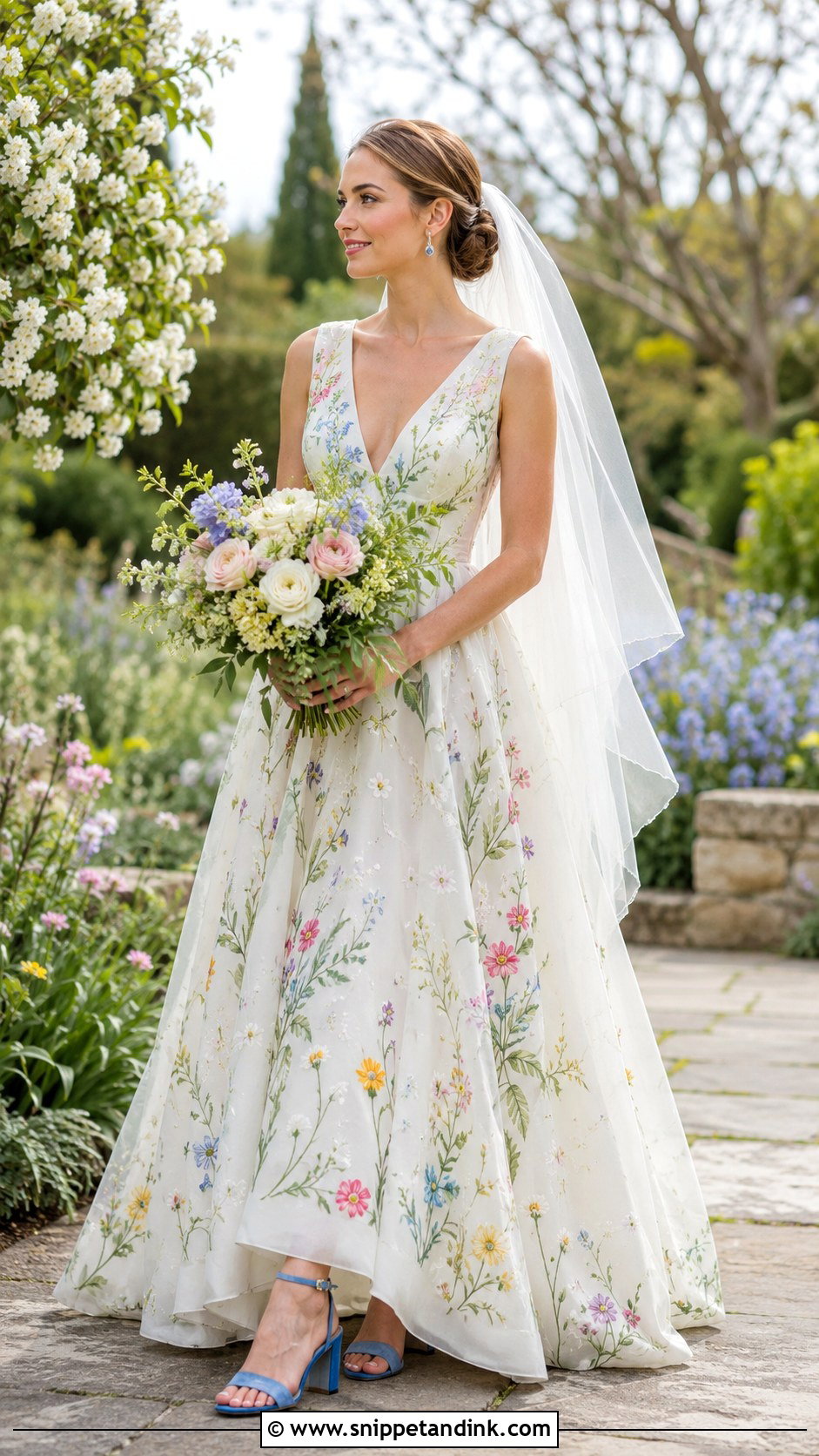
If you want something unusual but still recognizable as bridal from across the room, start here. An ivory A-line with embroidered wildflowers, vines or scattered botanical appliqués does exactly that. I like the stitching concentrated at the bodice and hem, which frames the figure without crowding it. The fun is in the shoes: block heels in one thread color, blue or green perhaps, which also won’t sink into a lawn. Keep the veil fingertip length and plain. Small gemstone earrings, a soft bouquet and a compact satin bag finish it for a garden or woodland ceremony.
3. Celestial Wedding Dress With Star Veil
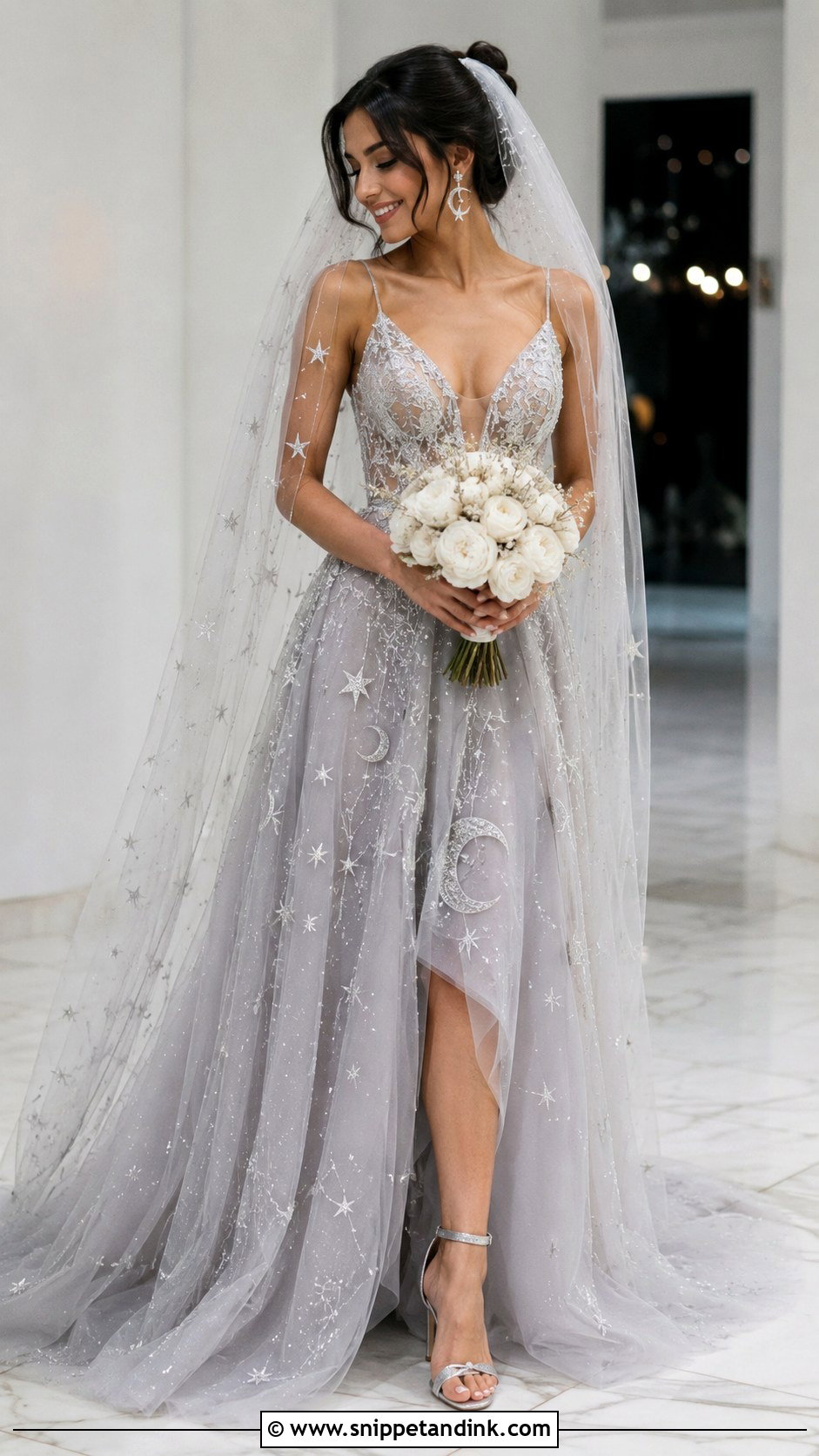
Stars stitched into tulle catch the ceremony lights every time you move. A celestial gown might carry silver constellations, moon-shaped beading or crystal stars over an ivory, gray or midnight-blue lining, and the lining changes the whole mood, so ask to see the overlay against each option. A fitted bodice and flowing skirt give the motifs room. A star-embroidered veil, silver ankle-strap heels and small moon earrings are already plenty of theme, and I’d stop there. One more themed piece and it starts to look like costume. A small bouquet of white flowers keeps it fresh.
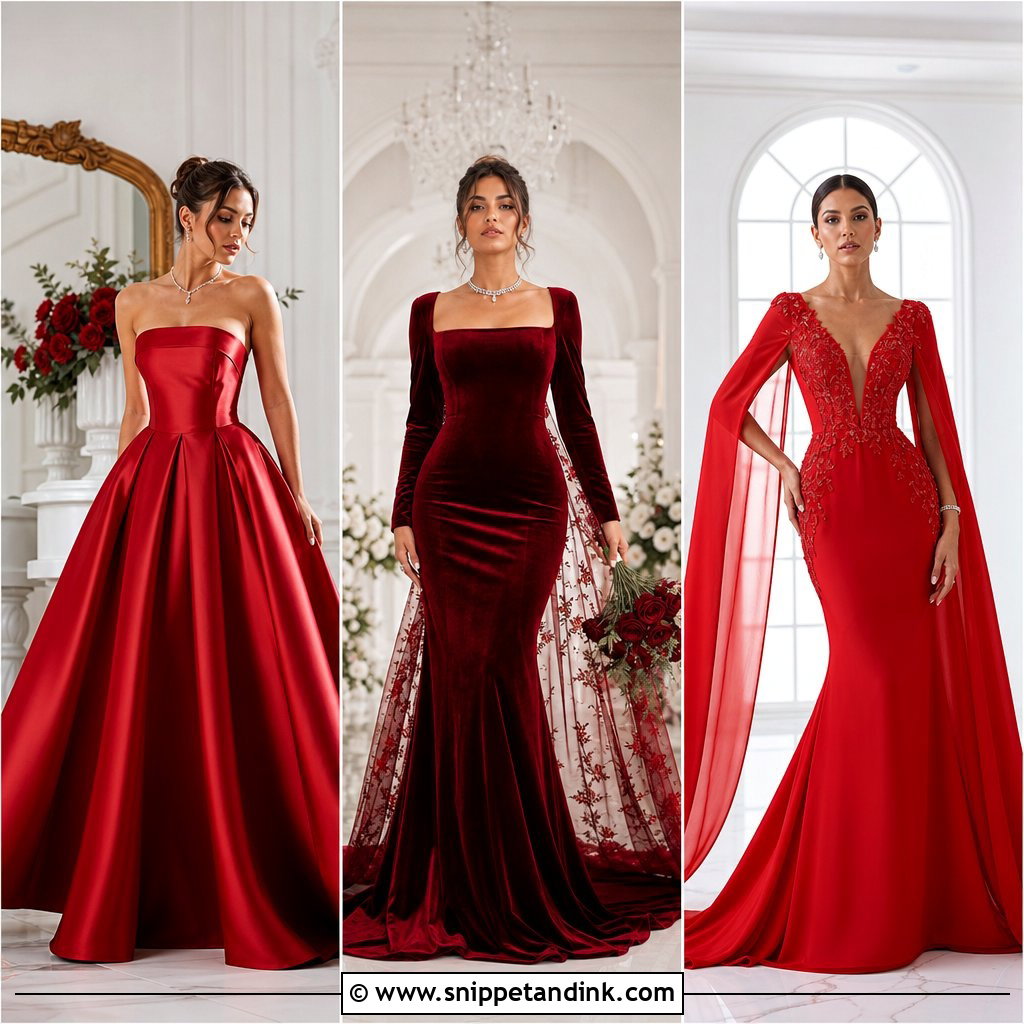
4. Red Wedding Dress With Matching Veil
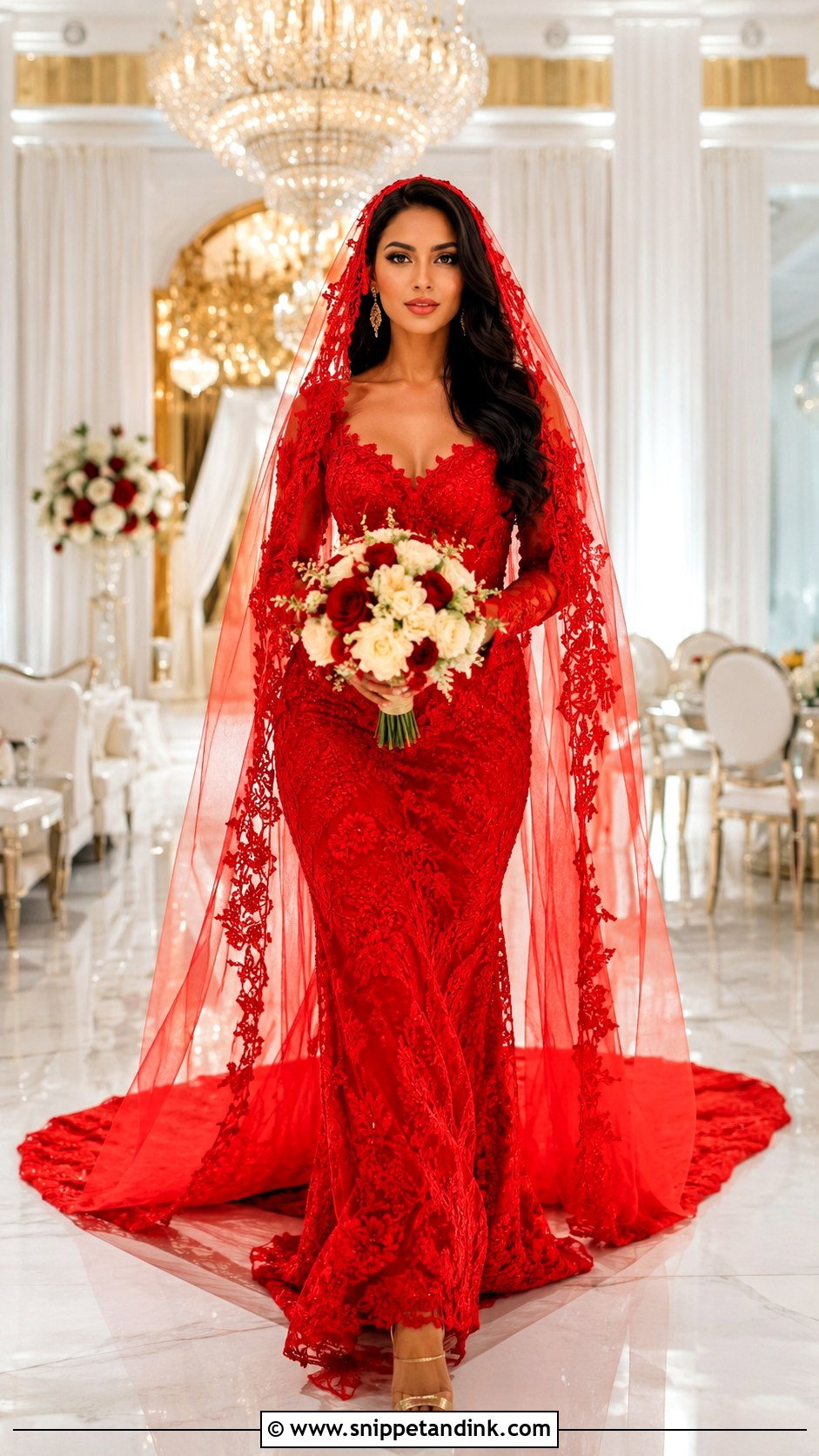
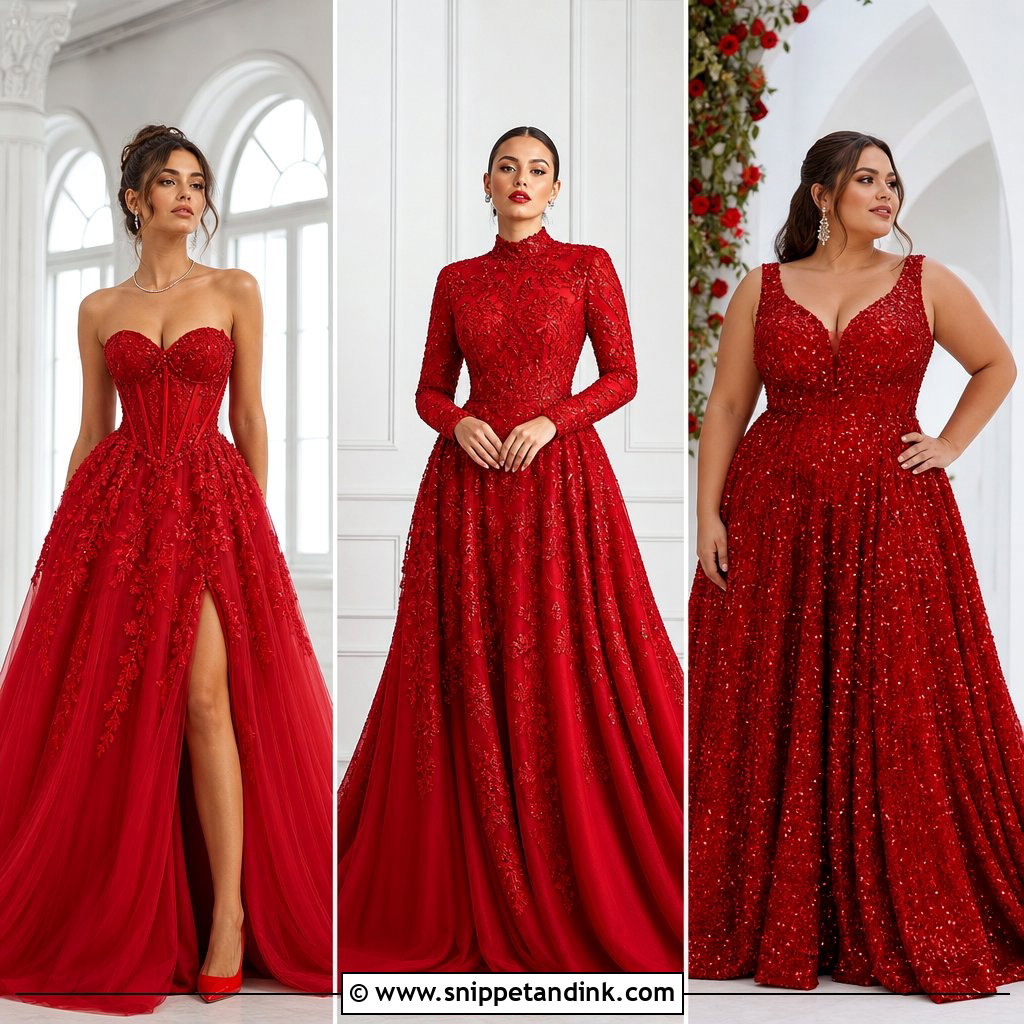
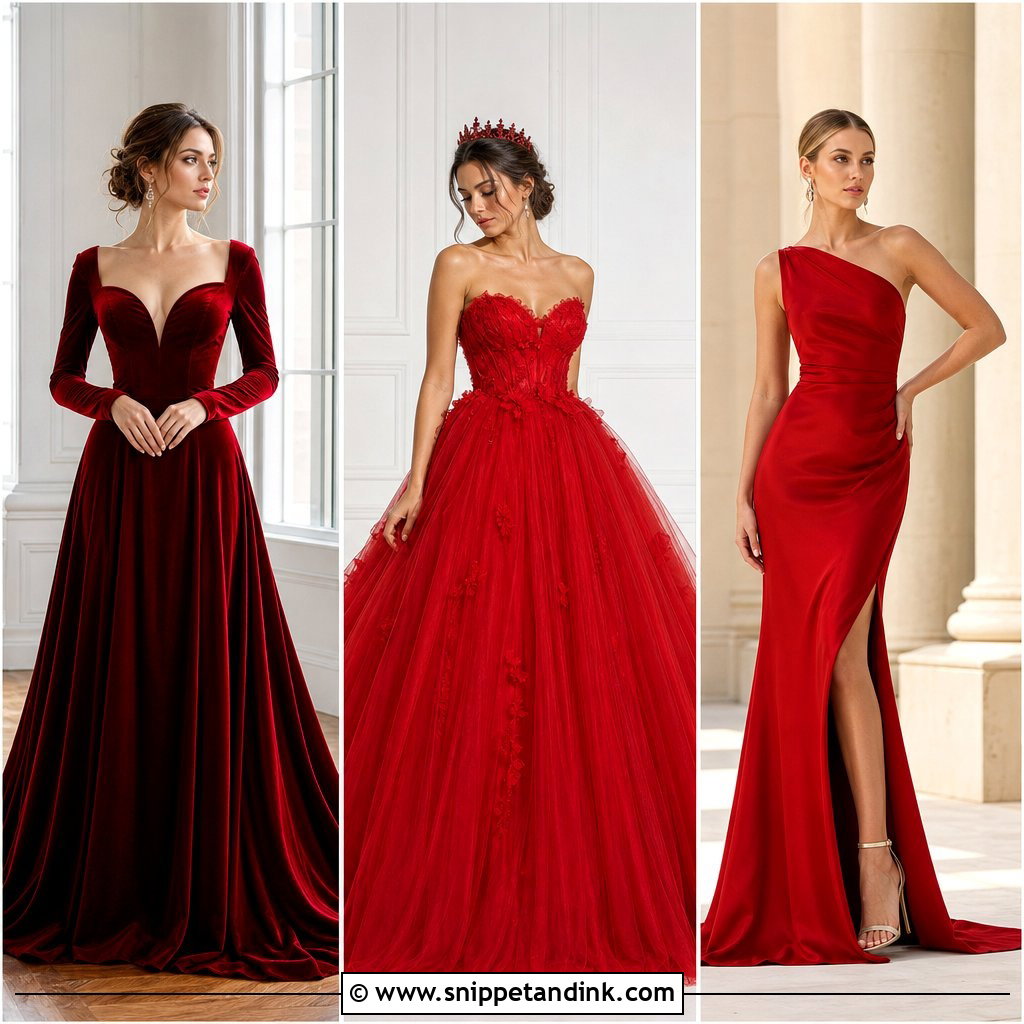
A red wedding dress is the boldest swap for white, and the exact red matters. Scarlet and cherry lean bright and warm, while burgundy and crimson are deeper and often kinder to cooler skin tones. Hold the fabric to your face in daylight before deciding. A column is sleek; a ball gown is more ceremonial. Repeat the color in a sheer red veil or choose a neutral one for softer contrast, then warm it all up with gold heels and simple gold jewelry. I mix cream, blush and deep red in the bouquet, because all-red flowers disappear against the dress.
5. Gold Wedding Dress With Sculptural Bow
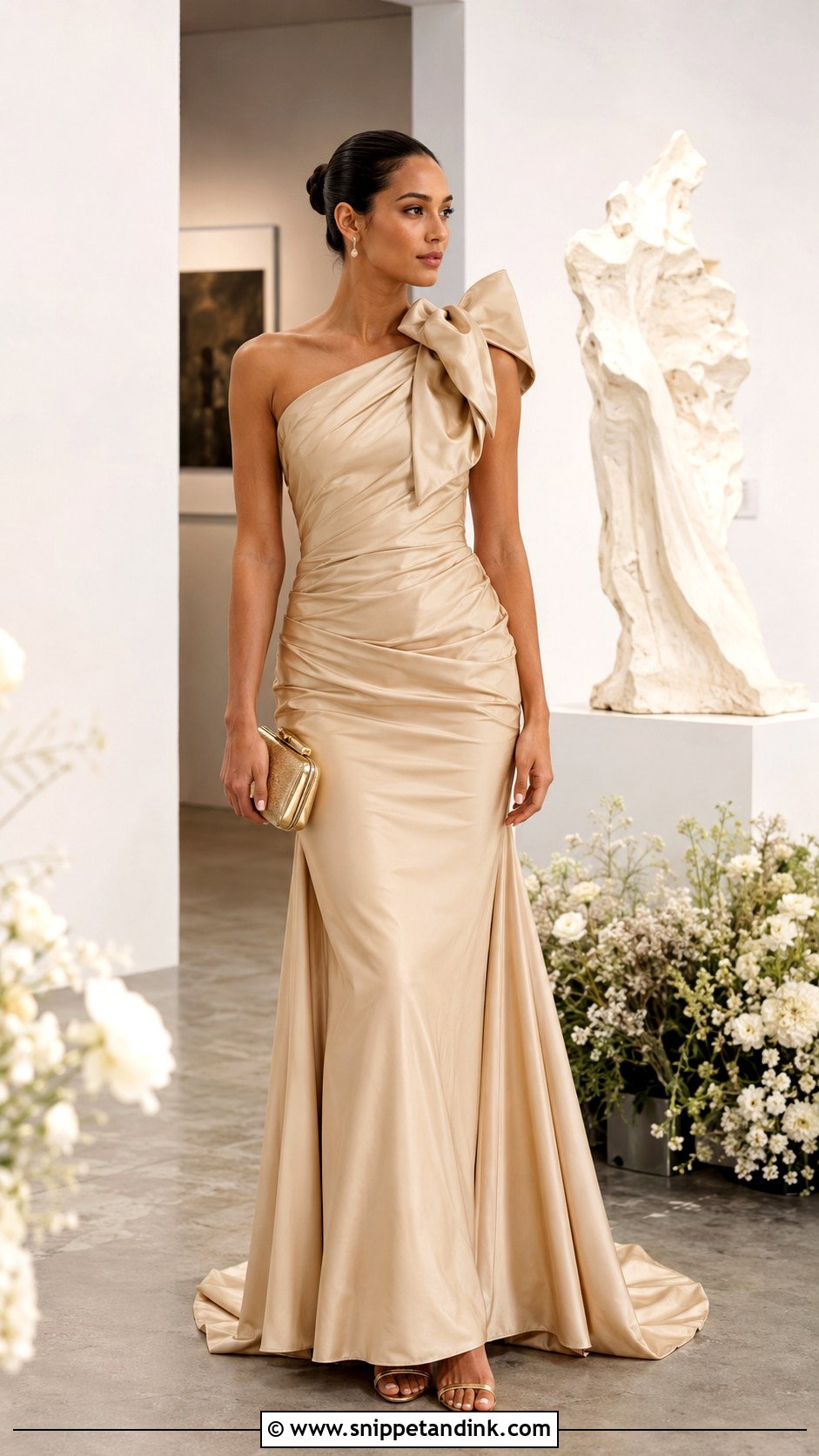
Metallic fabric reacts to light more than anything else you could wear, which is the reason to choose it. A soft gold gown with a structured neckline, fitted waist and an oversized bow at the shoulder or back turns a simple shape into a statement. Champagne gold is subtle. Brighter lamé looks editorial and shows every crease, so ask how the sample behaves after an hour of sitting. If the bow sits near your neckline, skip the necklace. Gold sandals, a compact metallic clutch, small drops and a sleek bun keep the line clean, and warm evening light is when the fabric really glows.
6. Blue Ombre Wedding Dress With Silver Shoes
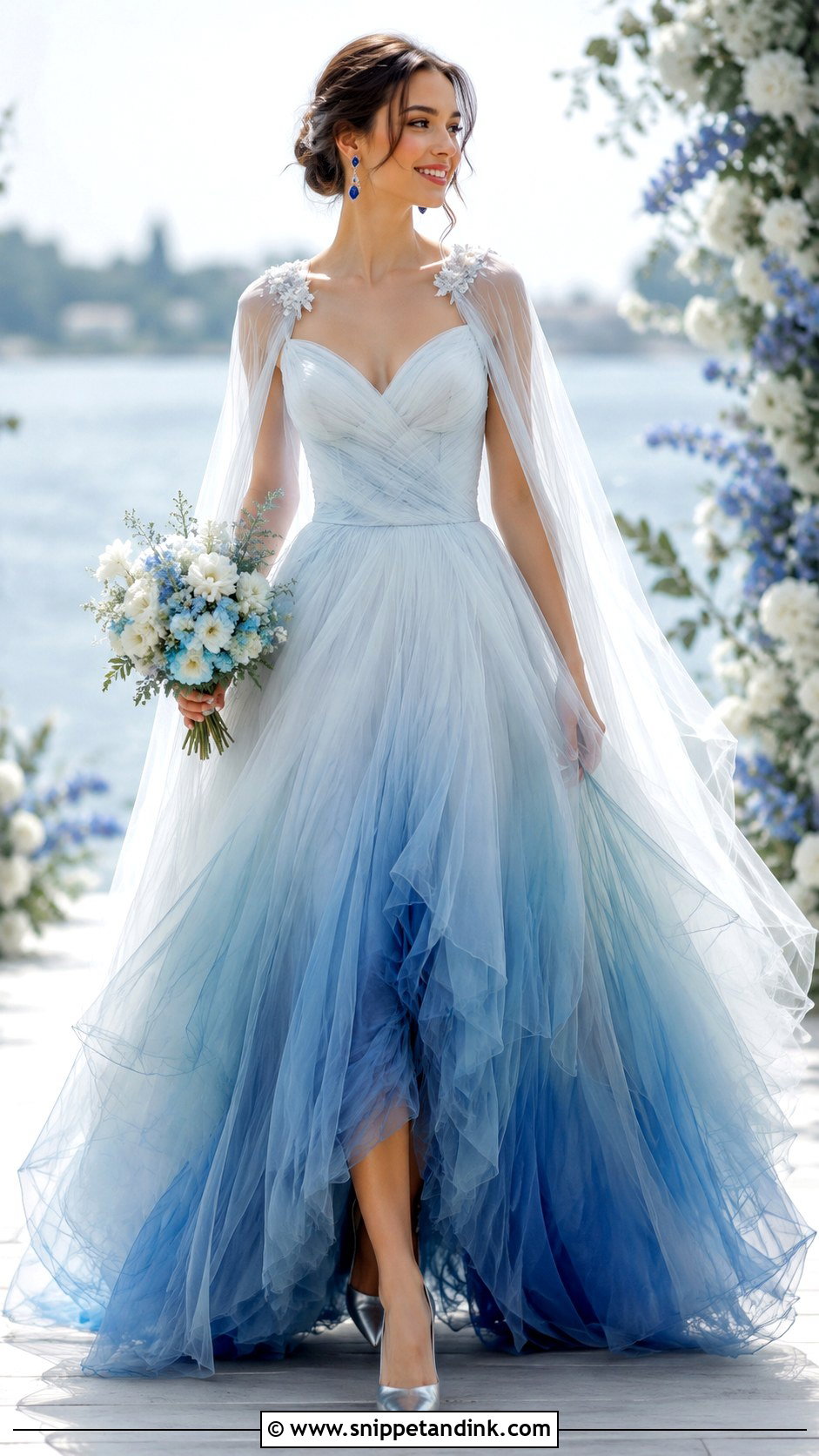
An ombre gown fades from an ivory or pale-blue bodice into dusty blue, sapphire or navy at the hem. Layered chiffon or tulle gives the smoothest transition, because each layer softens the one beneath it. I always ask whether the color is dyed into a single fabric or built from layers of different shades; layered versions move more, while a poorly dip-dyed skirt can show a hard line. Silver heels, blue gemstone earrings and a gray or ivory clutch suit it. A plain veil or a sheer cape at the shoulders won’t fight the gradient, and a white bouquet with a few blue accents finishes it.
7. Printed Wedding Dress With Bright Accessories
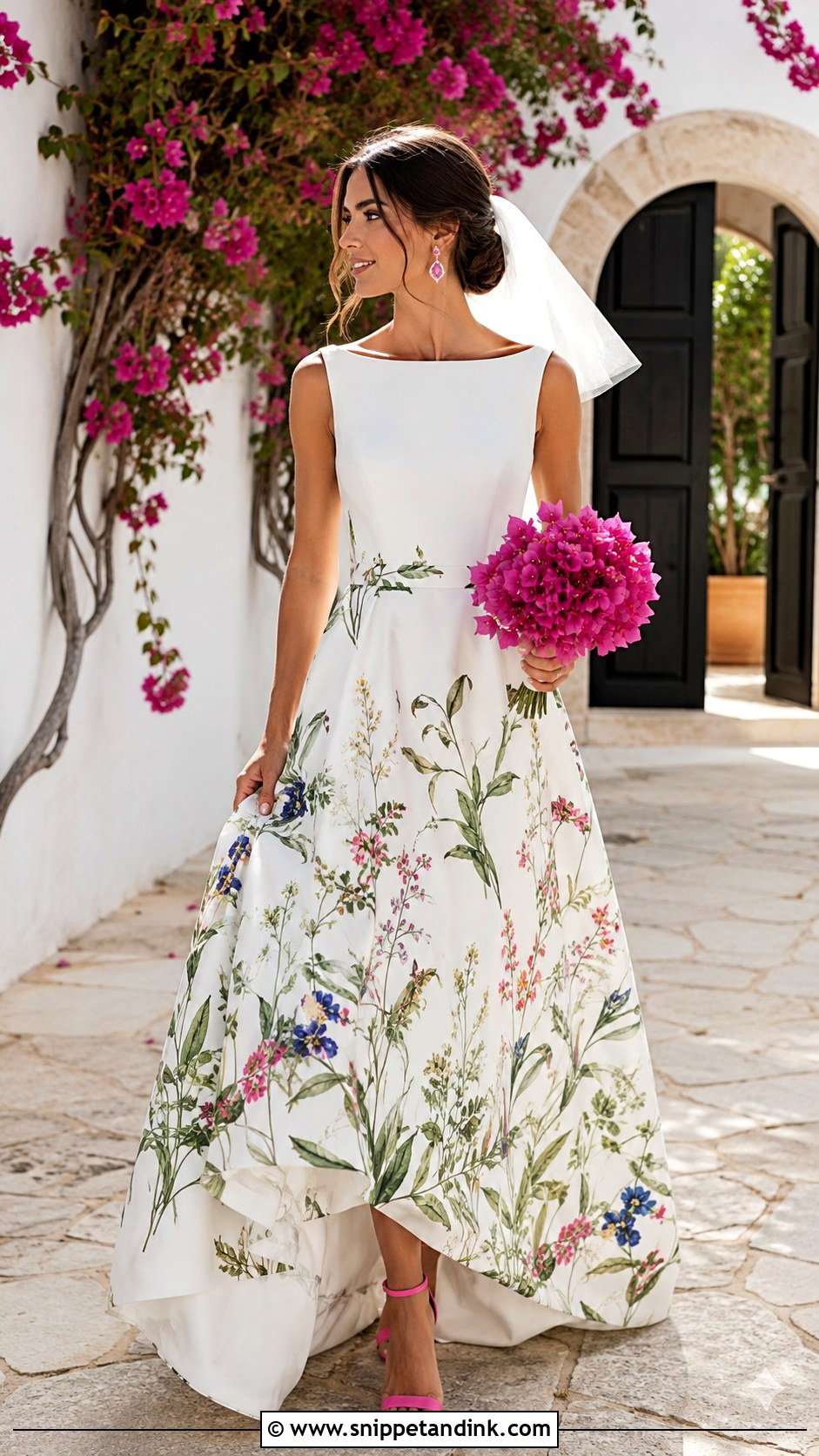
Prints let a dress tell a story lace can’t. A full-length gown printed with watercolor flowers, abstract shapes, birds or a botanical pattern needs a clean neckline and a simple cut, or the outfit turns busy. I pull one secondary color from the print for the shoes or earrings and leave everything else neutral. A short plain veil or a sculptural bow adds the bridal note without covering the pattern, and the bouquet should stay compact, in one or two colors. Printed gowns are also the easiest dresses here to wear again.
8. Mini Wedding Dress With Detachable Train
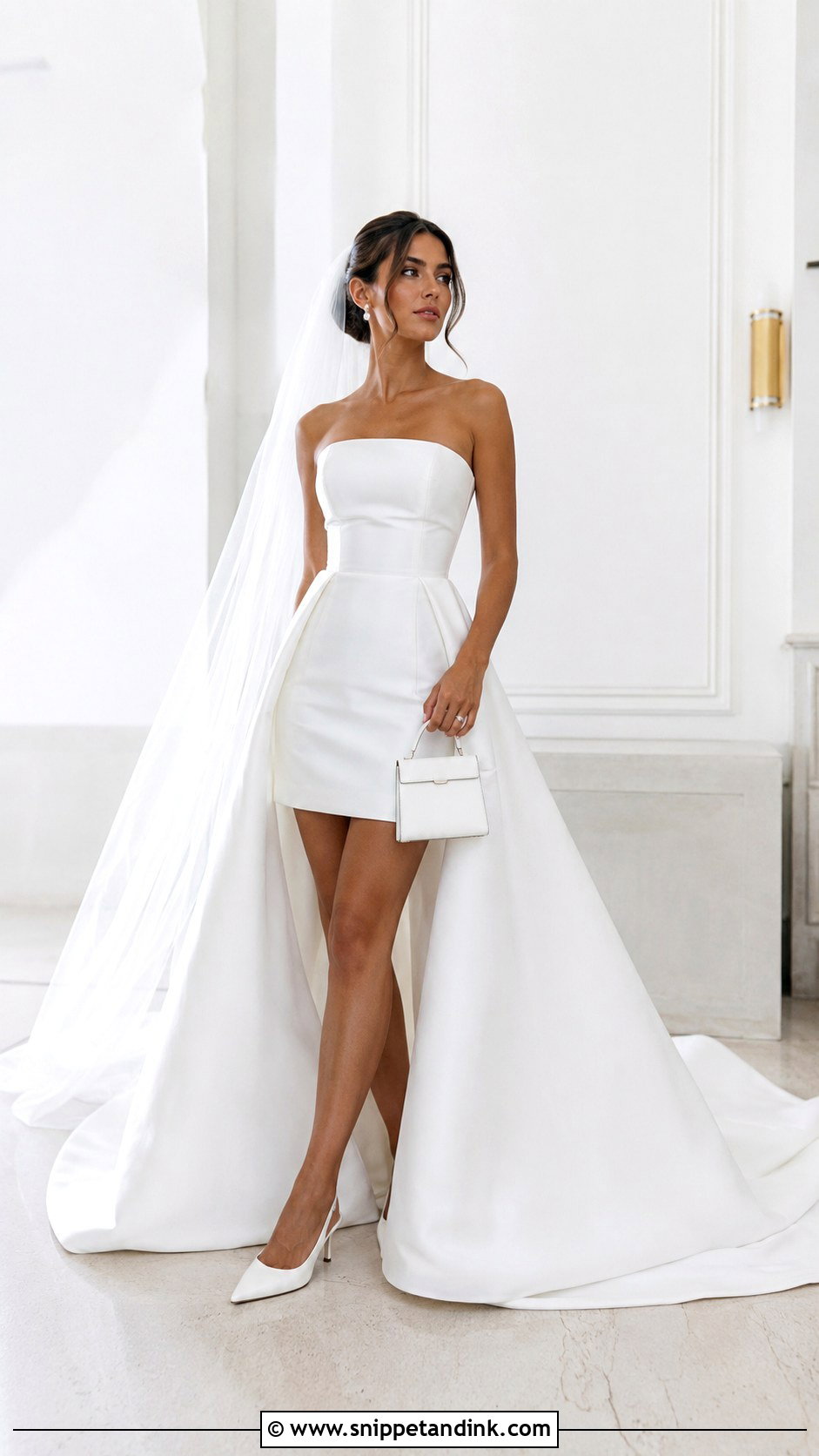
Two looks, one dress. A fitted mini handles dinner and dancing, and a floor-length overskirt or train fastened at the waist brings formality to the ceremony. Short bridal dresses no longer have to feel casual; paired with a long veil and a sculptural shape, they hold their own at an altar. Choose a mini with a little stretch so you can sit comfortably, and check that the waist fastening lies flat once the train comes off. Pointed pumps, slingbacks or embellished flats all work, along with pearl earrings and a structured mini bag.
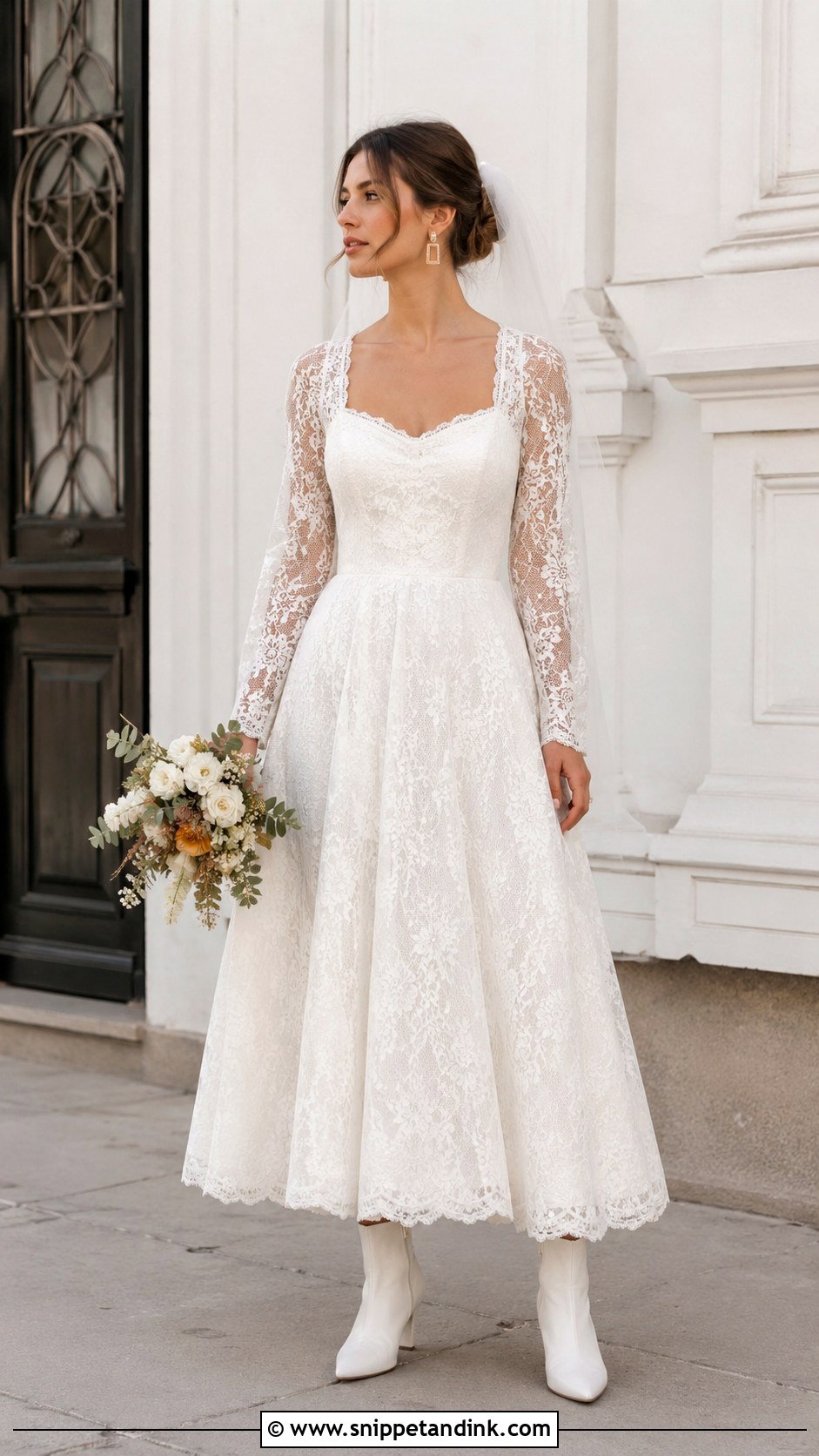
9. Tea Length Wedding Dress With White Boots
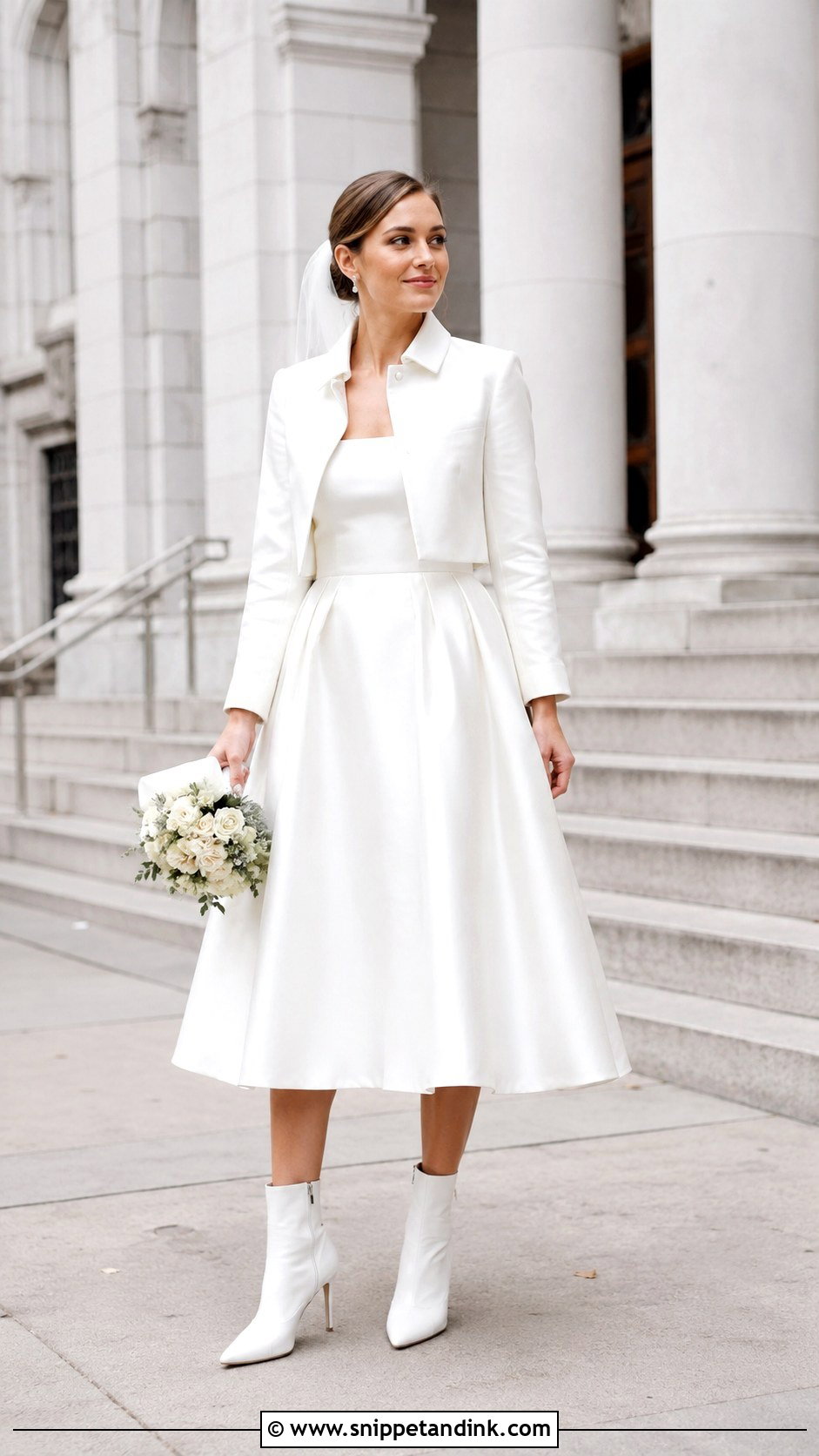
Boots under a tea-length skirt are practical and a little cheeky. A fitted bodice and a structured skirt ending between knee and ankle put the footwear on show, so choose sleek white ankle boots or knee-highs with a heel you can stand in for hours. The gap between hem and boot top is what I adjust. A few inches of leg or tights looks deliberate; a boot stopping just under the hem looks like an accident. Satin, brocade or textured organza gives the skirt enough body, and a cropped jacket, short veil or pillbox headpiece suits it. Courthouse steps and uneven ground are no trouble.
10. Wedding Jumpsuit With Flowing Cape
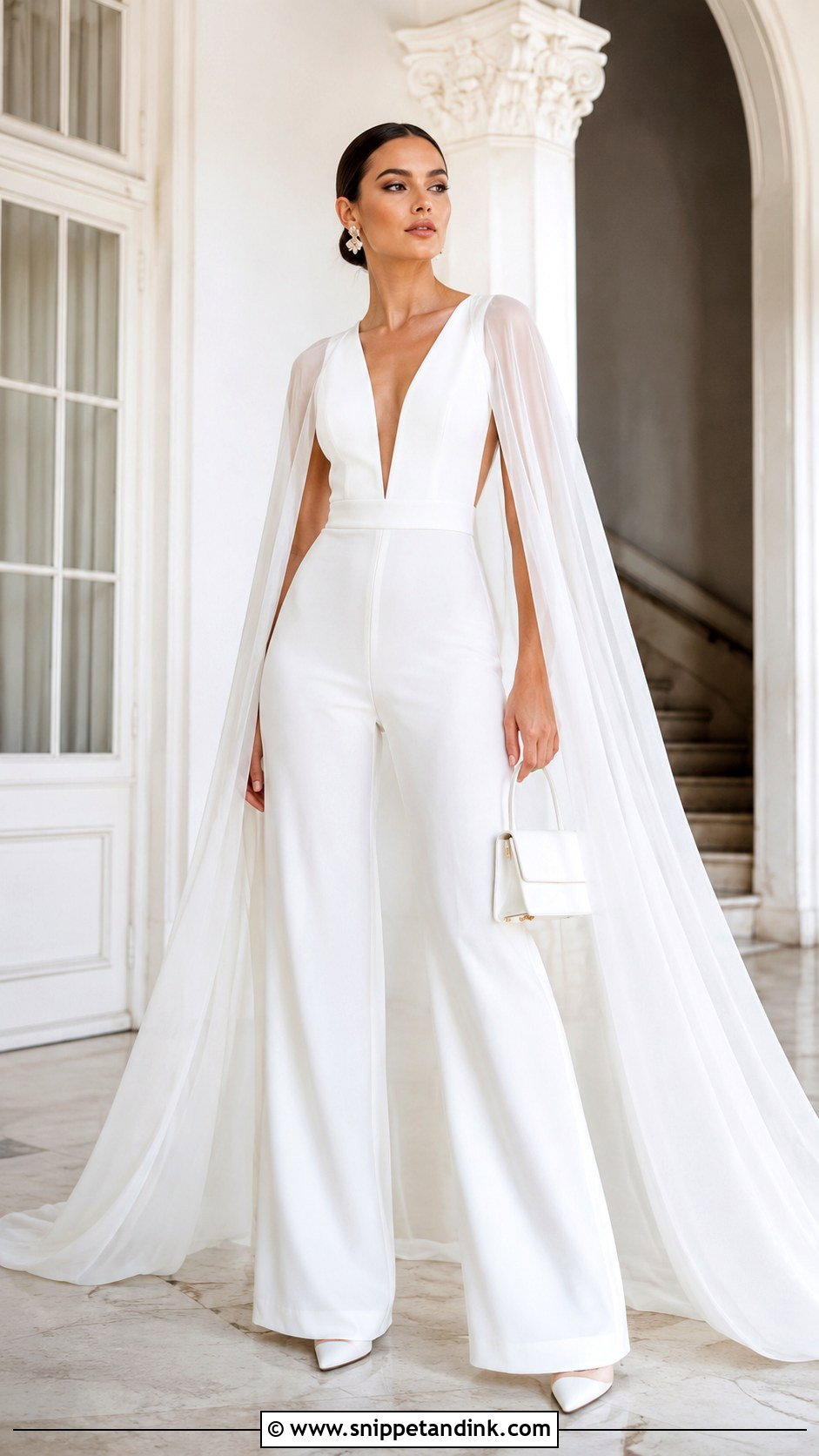
A jumpsuit becomes ceremonial the moment a long cape goes over it. Wide-leg trousers, a defined waist and a structured or softly draped bodice form the base, and the cape should clip cleanly at the shoulders and fall close to the floor so it reads as a train. Weight matters here: a heavy cape drags the shoulders back through a long ceremony, so I prefer chiffon or a light crepe. Pointed heels lengthen the trouser line. If the neckline plunges, a discreet inset panel saves you from adjusting it all day. Take the cape off for the reception and you have a second look.
11. White Bridal Pantsuit With Statement Hat
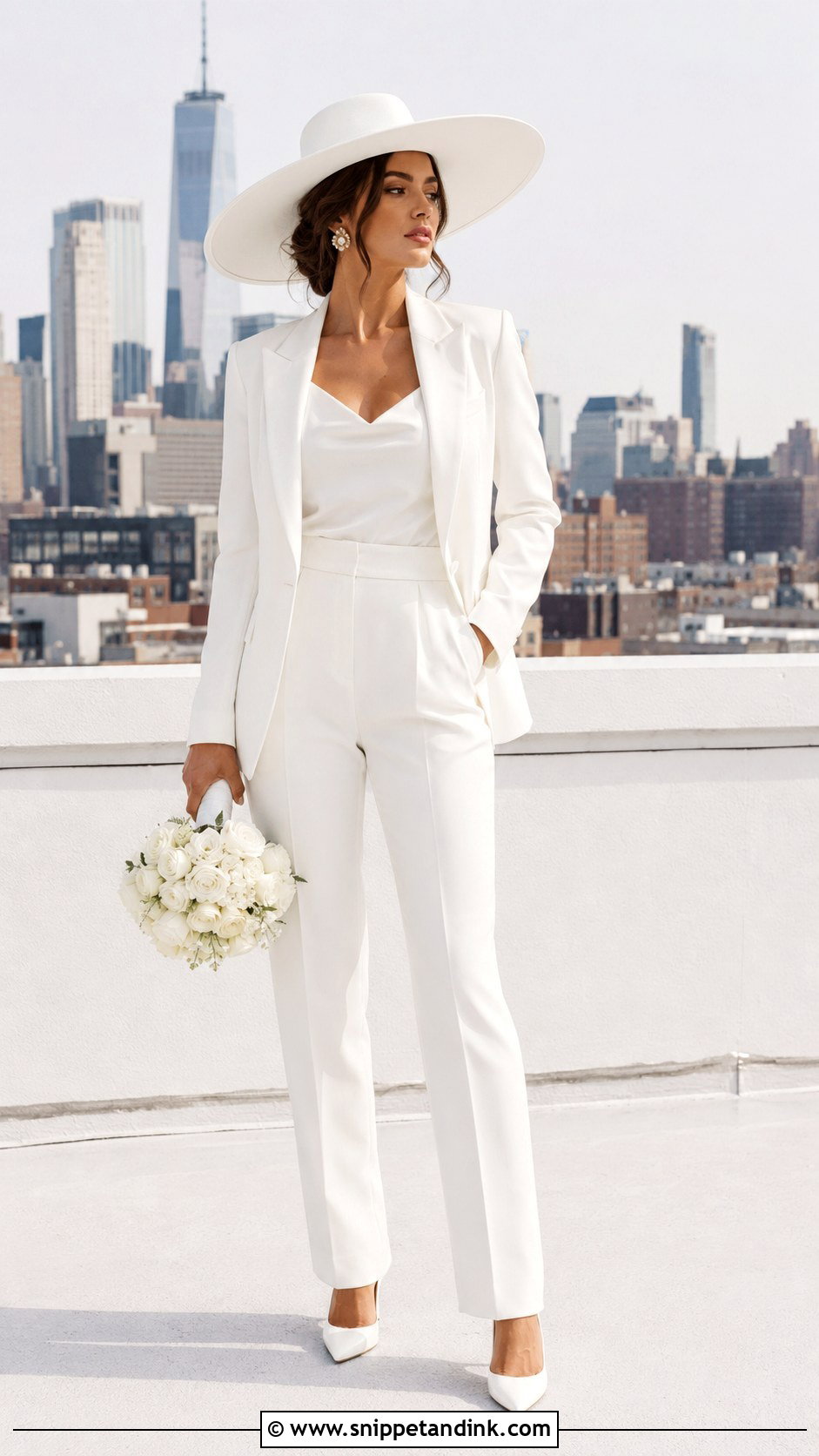
A hat moves a white pantsuit from smart to bridal faster than any veil. High-waisted trousers and a matching single- or double-breasted blazer in the same white form the base, with a silk camisole or buttoned vest underneath. Then pick one headpiece: wide brim, pillbox or an oversized bow. Wide brims throw shadow over the eyes in outdoor photos, so tilt the brim back or choose a smaller shape, and tell your hairstylist early, since the hat dictates the hairstyle. Pointed pumps, loafers or heeled ankle boots work. Keep jewelry and hardware in one metal.
12. Two Piece Wedding Dress With Crop Top
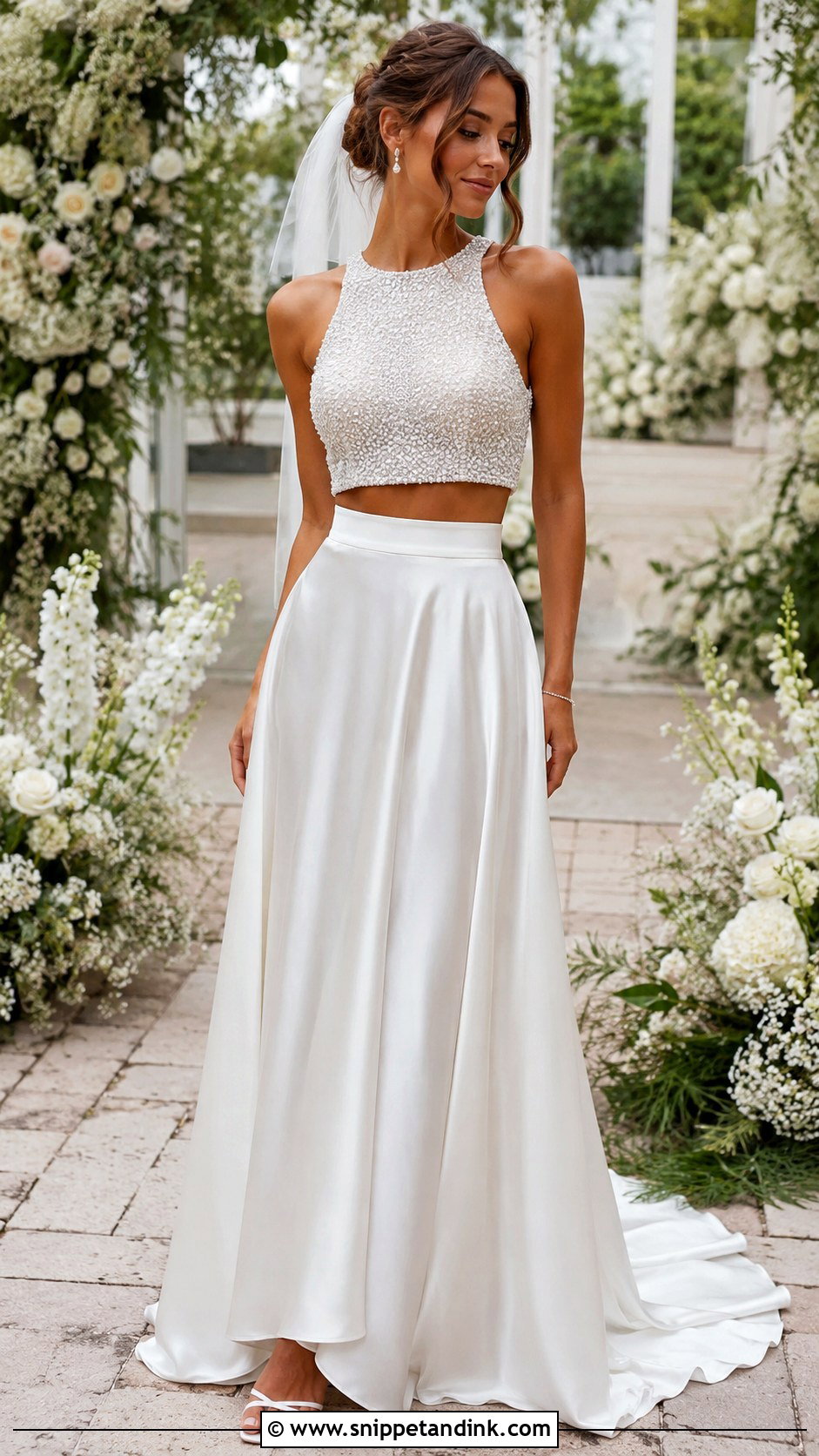
Two pieces give you a bridal look you can split up and wear again later. A structured crop top over a high-waisted full skirt should show only a narrow band of skin. Matching fabric keeps it formal, while contrasting textures, such as a beaded top over plain satin or a crisp silk top with layered tulle, add interest. The test I always do is sitting and raising both arms: the band should stay narrow and the top shouldn’t ride up. Minimal sandals, drop earrings and a short veil finish it, with a cropped jacket for a cool ceremony.
13. High Low Wedding Dress With Colored Pumps
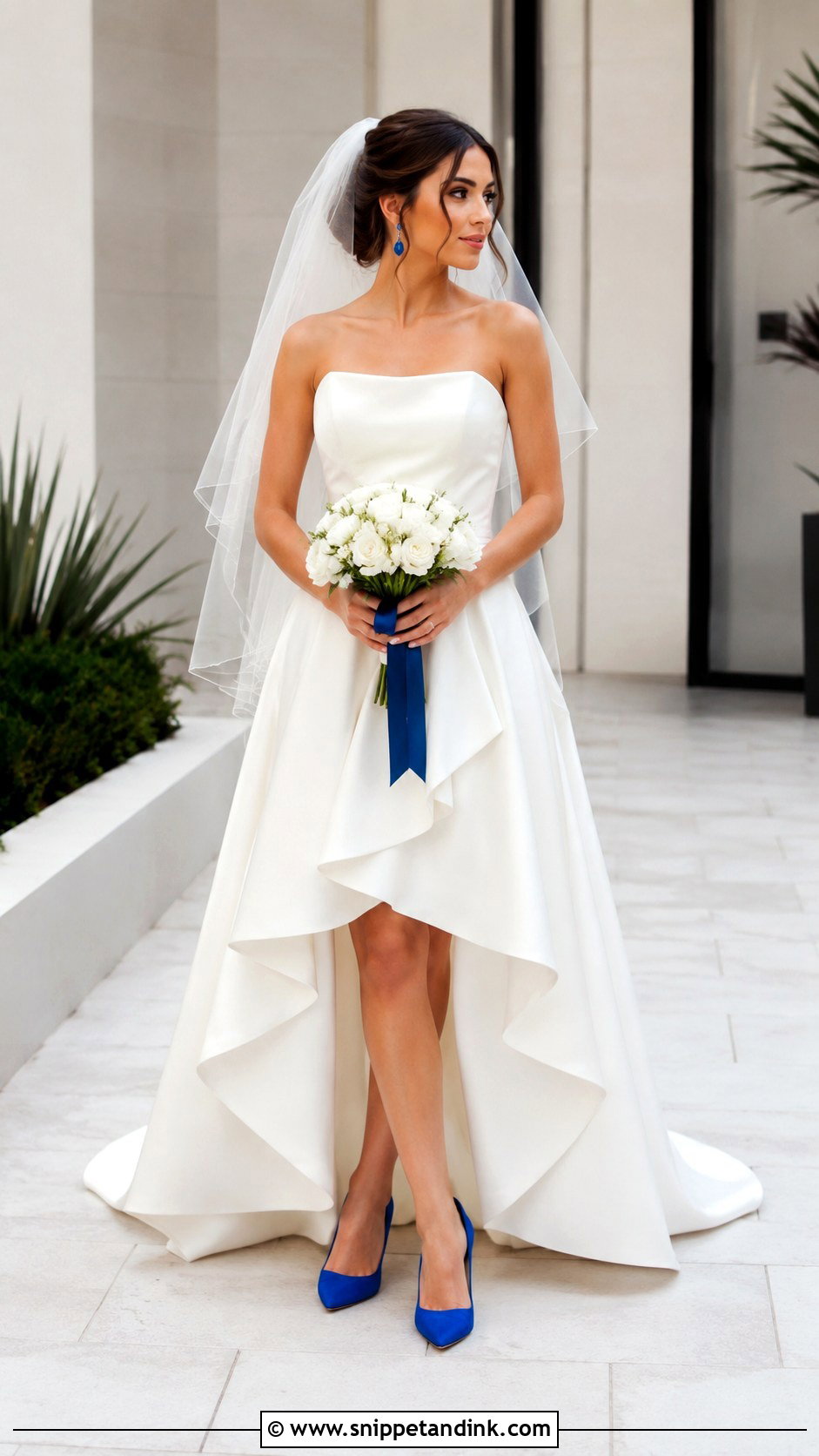
A high-low hem gives you a train’s drama behind while showing your shoes in front. A structured skirt landing around the knee or mid-calf at the front and at the floor behind needs a simple fitted bodice so the uneven line looks intentional. Cobalt, pink or emerald pumps are the point. Repeat the shade once, in earrings or a bouquet ribbon, and stop. I’d use a fingertip veil, since a cathedral length fights the back of the skirt. Practice any steps at your venue, too, because the front rises and the back trails as you walk down.
14. Feather Trim Wedding Dress With Satin Sandals
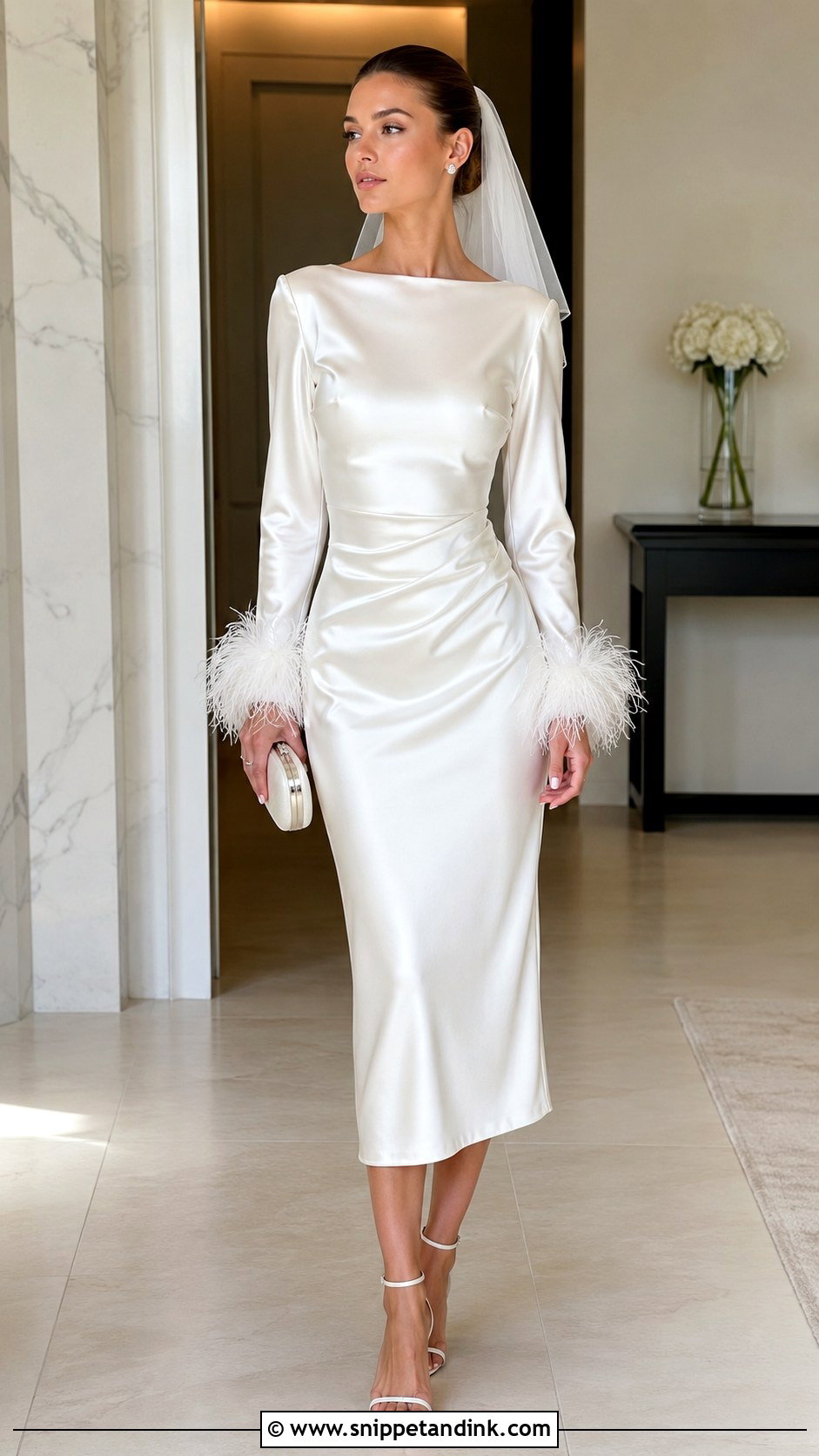
Feathers belong in one place. A sleek midi or floor-length dress with feather trim at the cuffs, neckline or hem stays wearable, while feathers everywhere tip into costume. A satin or crepe column makes the best base, since the smooth fabric lets the texture stand out. Ostrich feathers move the most but flatten in damp air, so for a humid venue, ask how the trim recovers and keep a hairdryer on its cool setting nearby. Slim satin sandals, crystal studs and a compact clutch are plenty. Skip the fluffy bouquet.

15. Fringe Wedding Dress With Block Heels
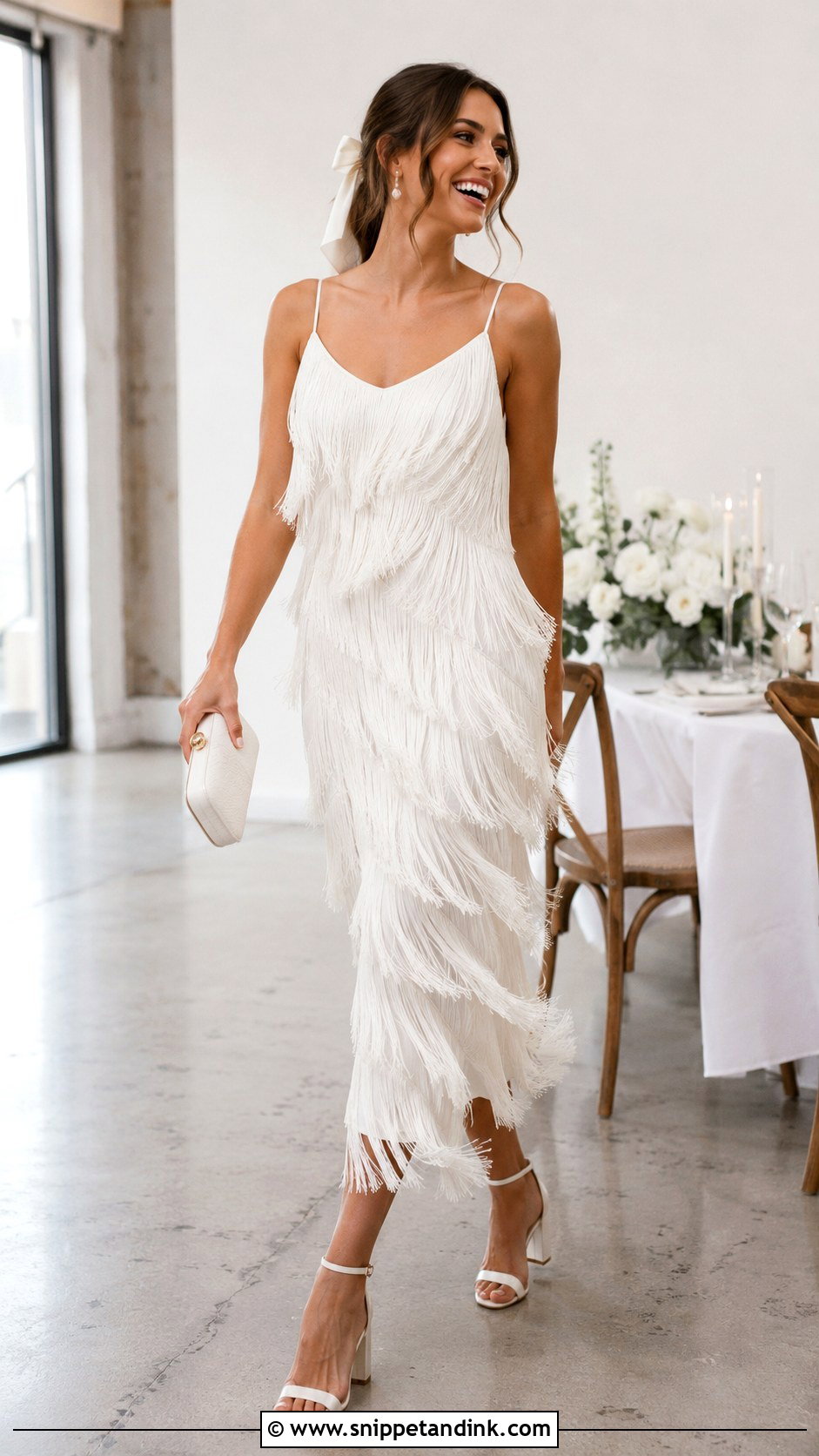
Fringe is made for dancing. A midi covered in layered fringe is playful, and a fitted gown with fringe only on the sleeves is quieter. Choose light, smooth strands that swing rather than dense trim that adds bulk. The real problem is tangling: fringe knots when you sit on it or brush past other fabric, so shake the dress out after dinner and run your fingers through each layer. Necklaces snag strands, so leave them off. Block heels keep you steady, and simple earrings, a sleek clutch and a short veil or hair bow finish the look.
16. Sculptural Ruffle Wedding Dress With Minimal Accessories
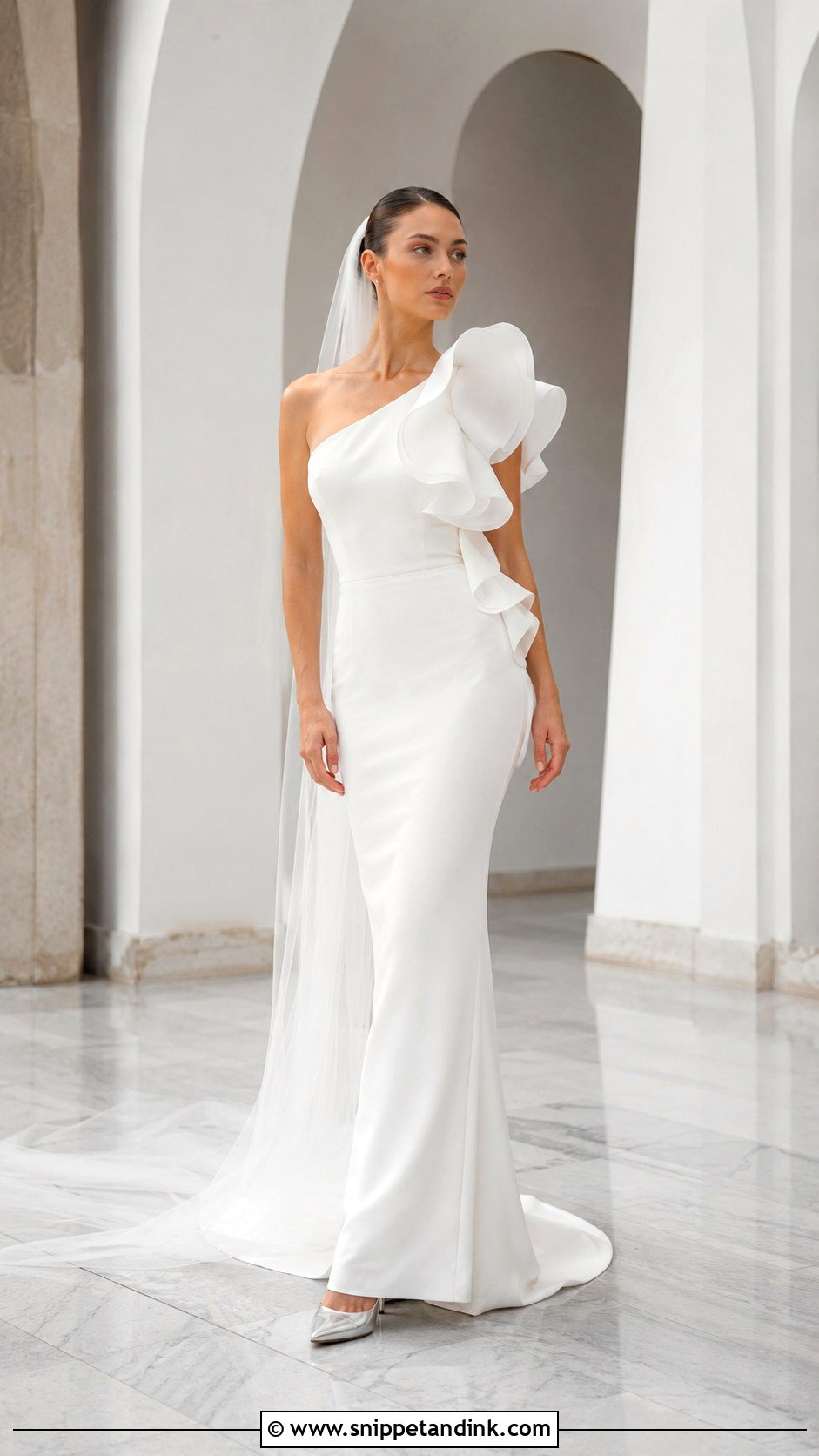
One sculptural ruffle can make a plain gown read as art. Look for an asymmetric dress with a curved shoulder detail, a dimensional hip ruffle or an organza spiral across the bodice, and keep everything else clean. Organza holds its shape well, but a ruffle crushed in a suitcase may need steaming before it recovers, so transport the dress hanging, never folded. If the ruffle sits near your face, skip the necklace and wear one pair of small earrings. White or silver pointed pumps and a sleek bun suit a gallery. At fittings, sit and lift your arms to be sure nothing restricts you.
17. Hooded Wedding Dress With Silver Jewelry
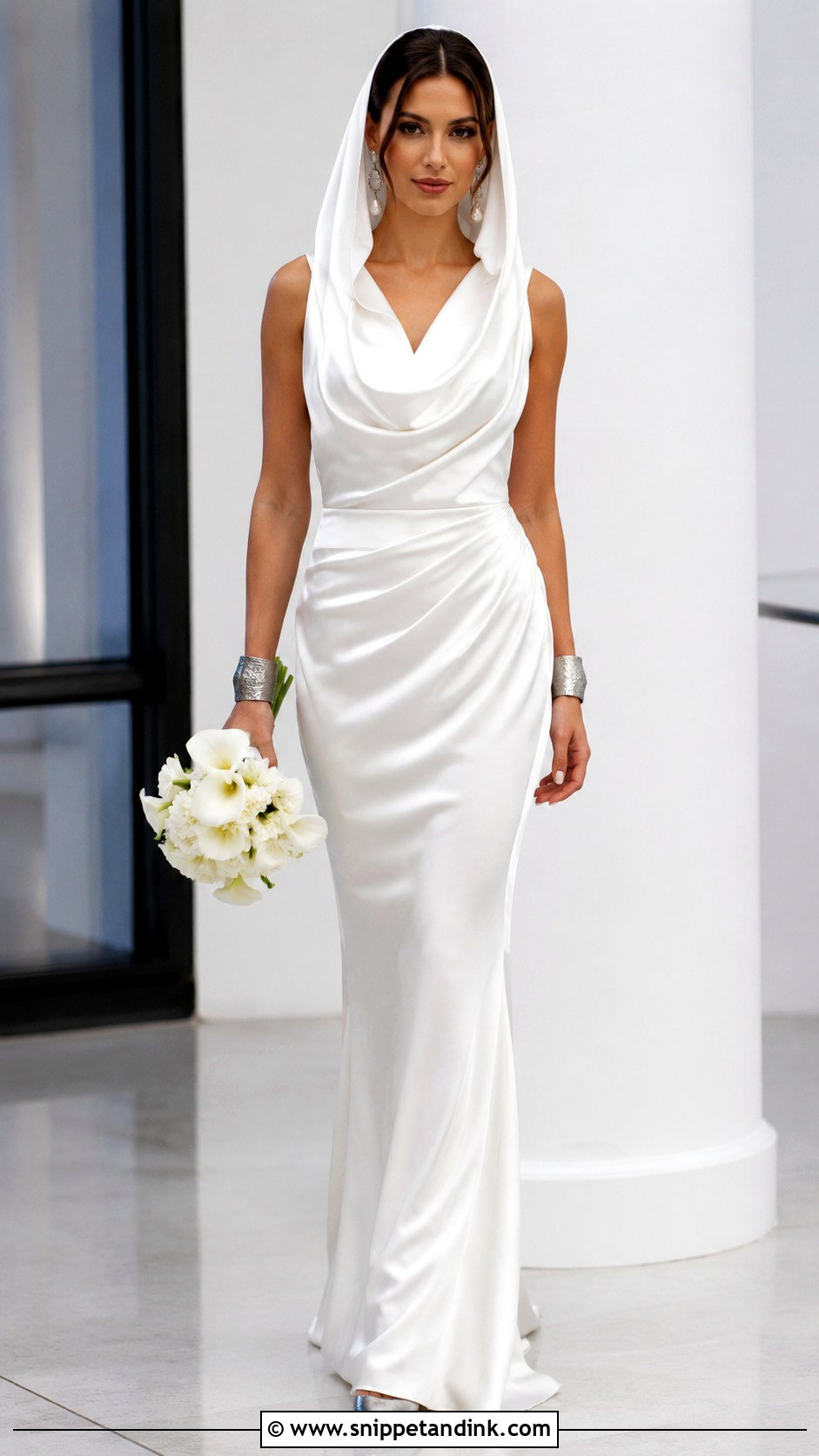
A hood frames the face in a way a veil never quite does. On a fluid crepe or satin gown with a softly draped hood attached at the neckline, a fitted column skirt stays sleek, and a wider skirt looks more ceremonial. The hood has to be cut roomy enough to sit over your hairstyle without flattening it, so bring your trial hair, or at least a similar updo, to the fitting. Avoid big necklaces that interfere with the drape. Silver cuffs, drop earrings and white or silver pointed shoes complete it. At the reception, let the hood fall behind the shoulders like a soft cowl.
18. Vintage Wedding Dress With Modern Boots
A vintage gown becomes yours through alteration. A family dress, a secondhand find or an authentic piece from a favorite decade can have its fit updated, sleeves removed, neckline reshaped or hem shortened while the meaningful details stay. Take it to a tailor who works with older fabrics, because aged lace and silk can be fragile. Once it fits, modernize through the accessories: sleek ankle boots, geometric earrings and a simple contemporary veil. Copying the original decade from head to toe is what makes vintage look like fancy dress.
19. Convertible Wedding Dress With Pants
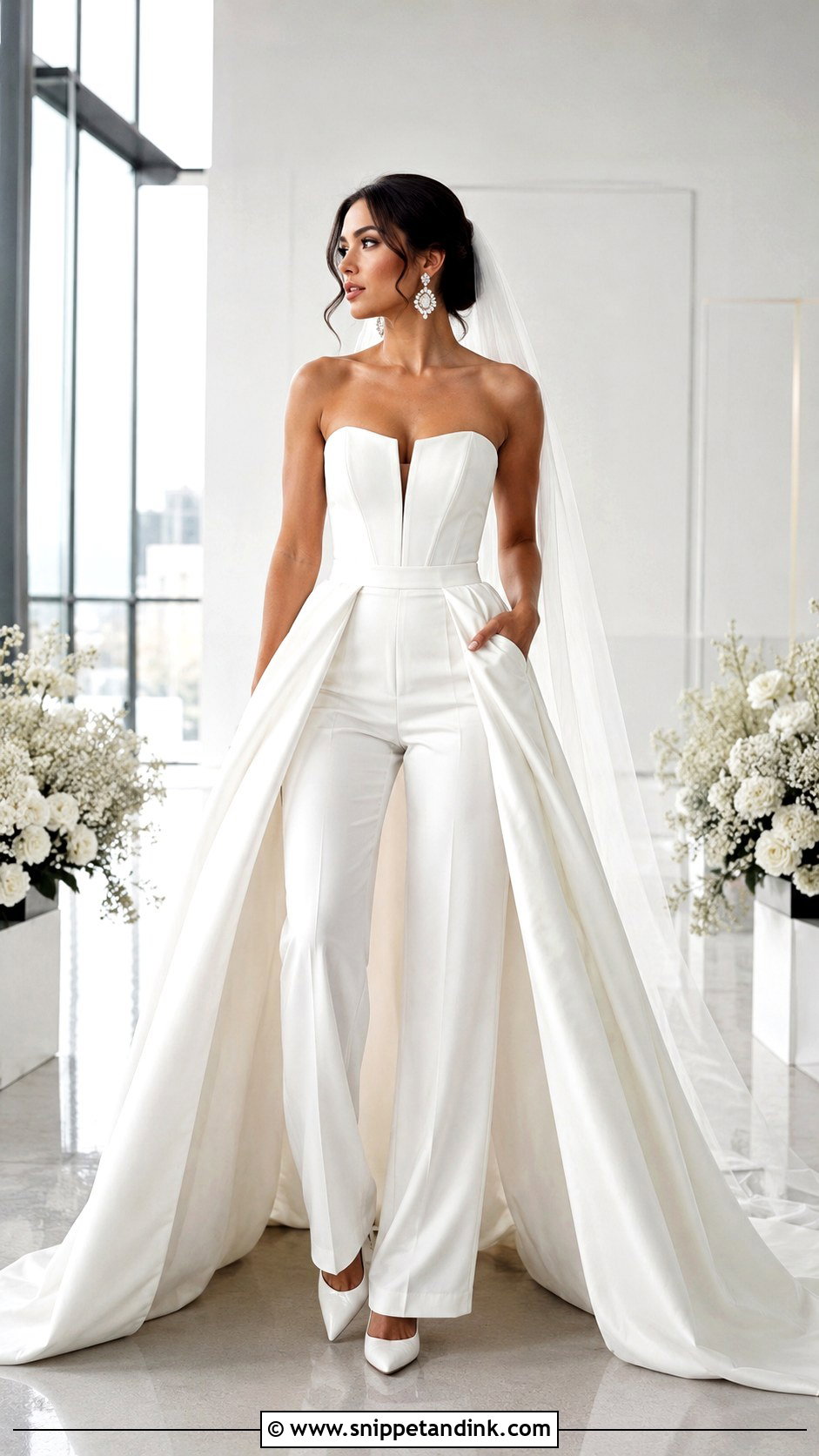
Can’t decide between a gown and trousers? Start with fitted or wide-leg pants and a structured bodice, then add a removable full skirt that closes securely at the waist. The skirt gives you a traditional aisle silhouette, and the trousers appear for the reception. The tricky spot is the waistline, where two layers can look thick, so I ask for the overskirt to sit on its own flat band. Check the fastening from every angle at fittings and time how long removal takes; it should be a matter of moments. Pointed heels, a simple veil and bold earrings suit both versions.
20. Patchwork Wedding Dress With Colorful Flats
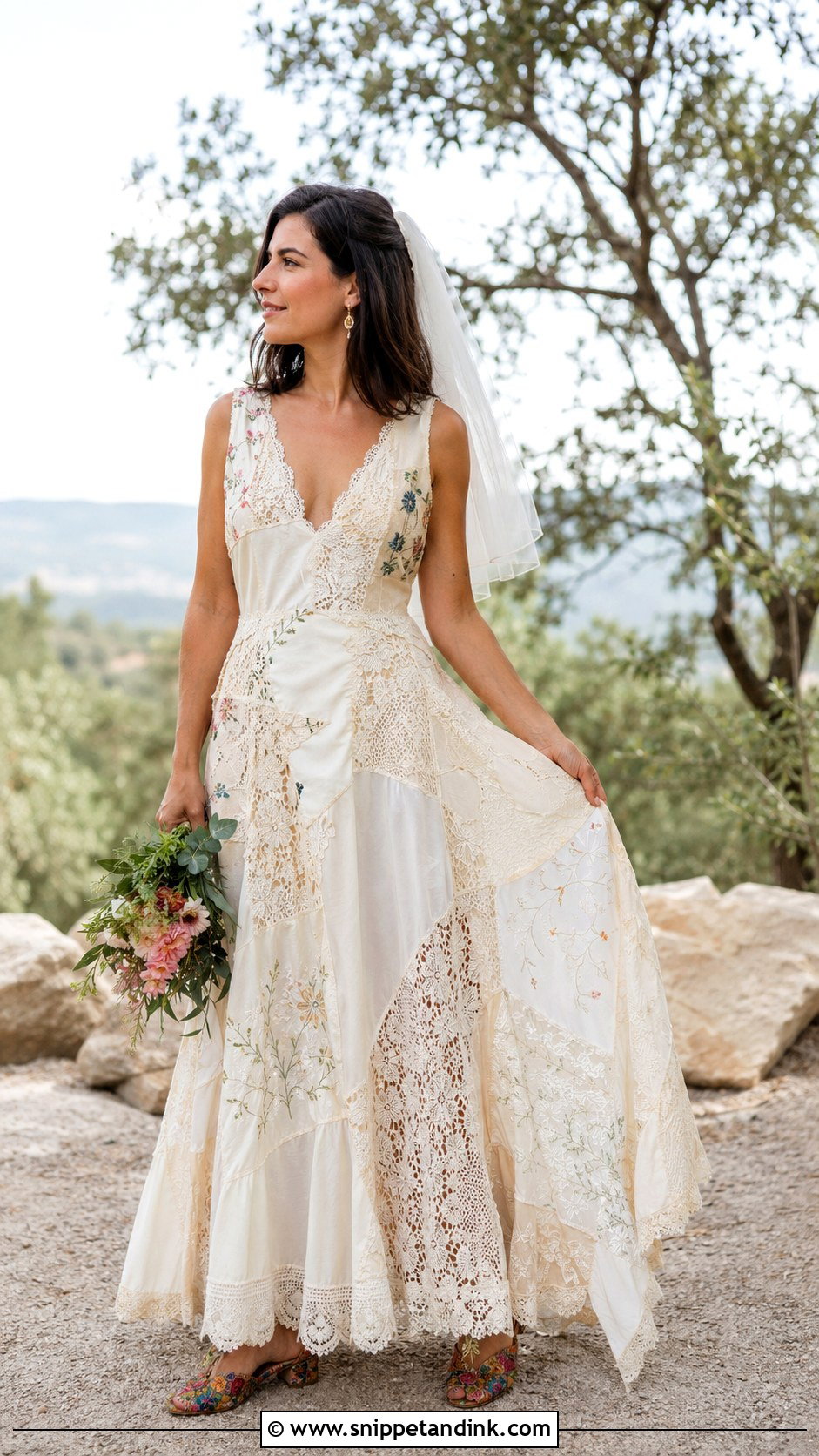
A patchwork wedding dress is about as personal as bridal clothing gets. It might combine vintage lace, embroidered fabric and satin panels in ivory and soft color. A simple A-line or column keeps the patchwork organized, and a skilled maker will place panels so the seams follow the body instead of looking random. If you want fabric from a family garment, ask before anyone cuts it, and expect older pieces to need a backing for strength. Colorful flats or low block heels in one shade from the dress, small earrings and a plain shoulder-length veil are plenty.
Reworking an Old Gown Starts With an Honest Inspection
Vintage and family dresses can be wonderful, but they need a realistic look before anyone plans a redesign. I go over an old gown in daylight, inside and out, before promising a bride anything.
- Yellowing: fabric that has turned cream or yellow can sometimes be lightened by a specialist cleaner, though not always, and never with household bleach.
- Shattered silk: very old silk can split along the grain. If it tears under gentle tension, it can’t take much alteration.
- Underarm and hem marks: perspiration and spills oxidize over the years and often look worse now than they did at the time.
- Seam allowances: check how much fabric sits inside the seams before planning to let anything out.
- Fragile lace: older lace may need a fine net backing before it can be cut or restitched.
Allow more time than you would for a new dress. Cleaning comes first and every change waits on it, so a restoration often runs longer than ordering off the rack. I ask the cleaner and the tailor to talk to each other, and I get a written plan of what will be removed so nothing sentimental disappears by accident.
A Wedding Dress Doesn’t Need to Be White to Count
The boldest outfit isn’t automatically the right one. The right one feels natural to wear, suits the setting and says something real about you. Color, tailoring, short hems, sculptural details and convertible pieces all look polished once the shoes and accessories point in one direction. Book fittings early, move around in the outfit and have it photographed from several angles before you finalize anything. Comfort counts as much as impact over a long day. A black gown, celestial embroidery, vintage patchwork or a cape jumpsuit can all be a wedding dress if you wear it like one.
You'll Like These Ideas:




Leave a Reply