
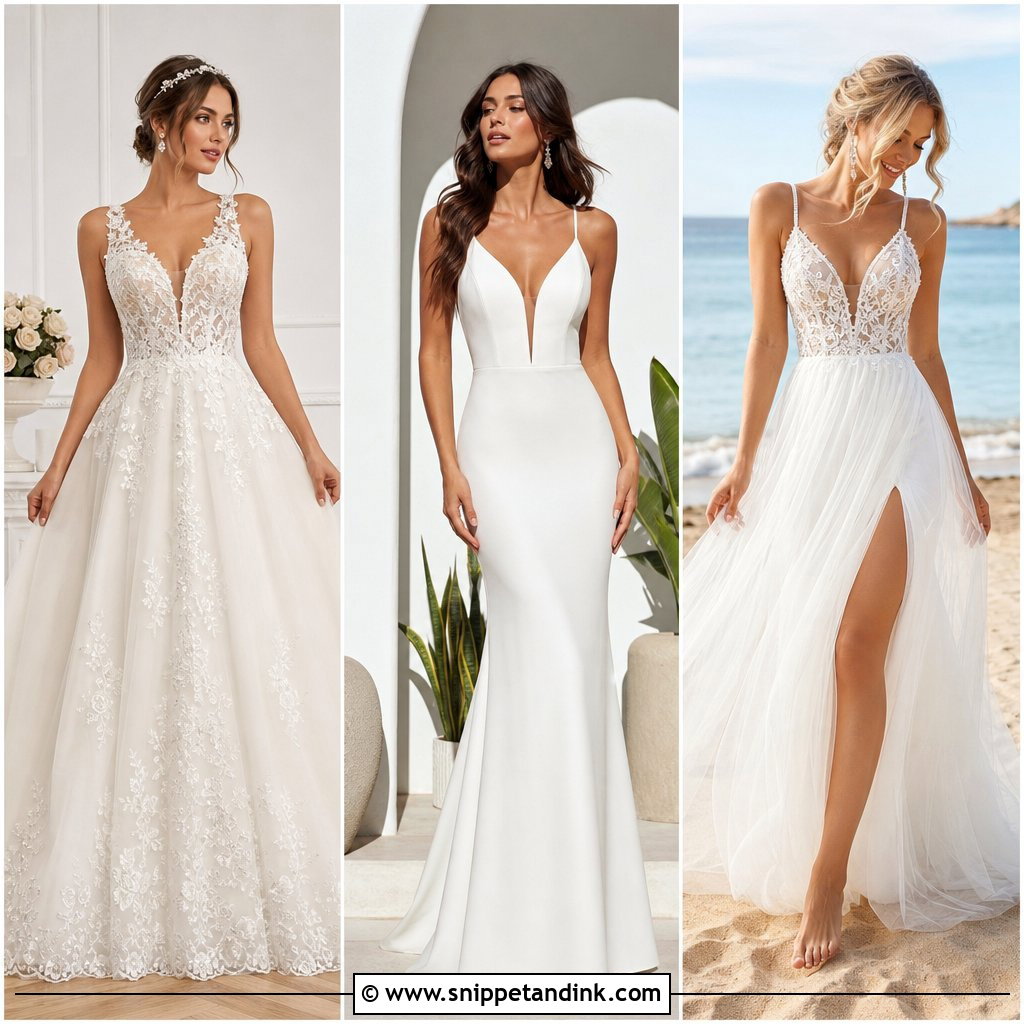
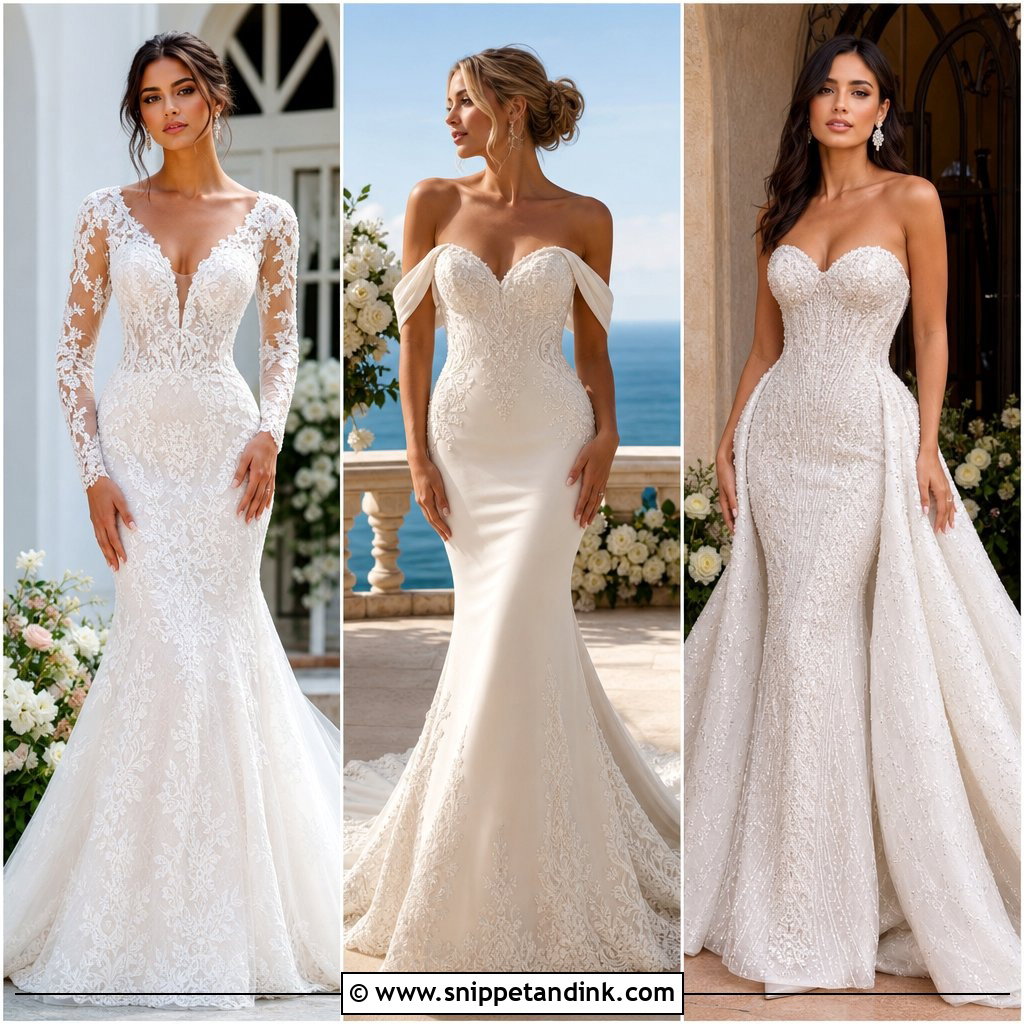
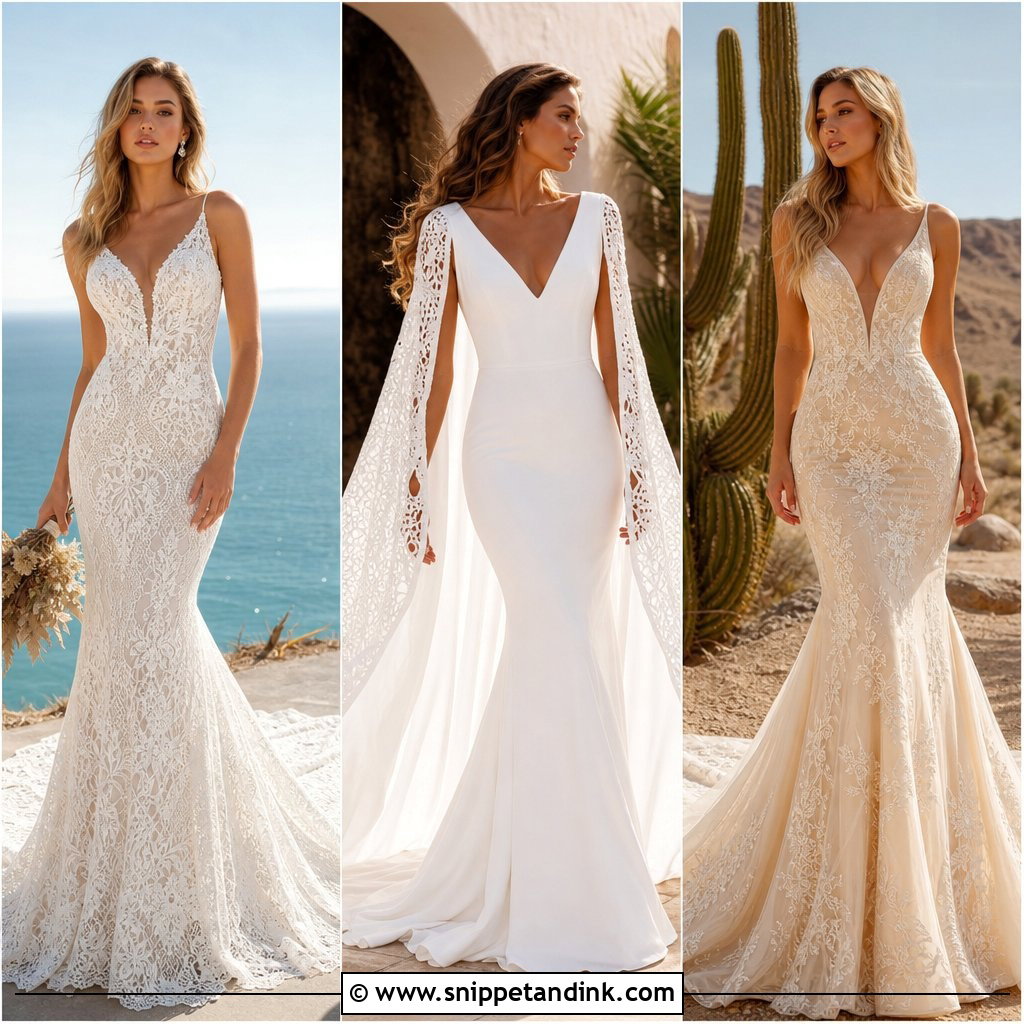
Mermaid gowns are back on a lot of the brides I see this season, and I understand the pull. The bodice shapes you, the hip is sculpted and the skirt opens out near the knee, so you get drama without the width of a ball gown. The silhouette is also far more varied than it used to be: clean crepe, lace with long trains, corset bodices, off-shoulder necklines, pearls, detachable overskirts and soft drapes all show up in 2026 collections. Which one suits you depends on your venue, how much structure you can tolerate and how you plan to move all day. Here are 25 versions, with what each fabric and neckline is like to actually wear.
Trying On Mermaid Samples That Aren’t Your Size
Most bridal shops carry one sample of each gown, often in a single size, and they’ll clip it to fit you. With loose, flowing gowns that hardly matters. With a mermaid it matters a lot, because the whole look depends on where the dress meets your body.
- Ask the consultant to clip at the hip and knee, not just the back of the bodice, so you can see where the flare will really fall.
- If the sample is too small to zip, look at it from the side in the mirror. The line from waist to flare tells you more than the front view.
- I ask every bride to sit down in each finalist, even clipped. If you can’t sit in the sample, you’ll need a trumpet version or a higher flare.
- Take photos from the back and sides, and wear shoes close in height to your wedding shoes so the hem looks right.
Made-to-order gowns often take several months to arrive, and fitted styles need alterations after that. Ask each shop for its current delivery estimate before you fall for a dress you can’t get in time.
1. Lace Mermaid Wedding Dress
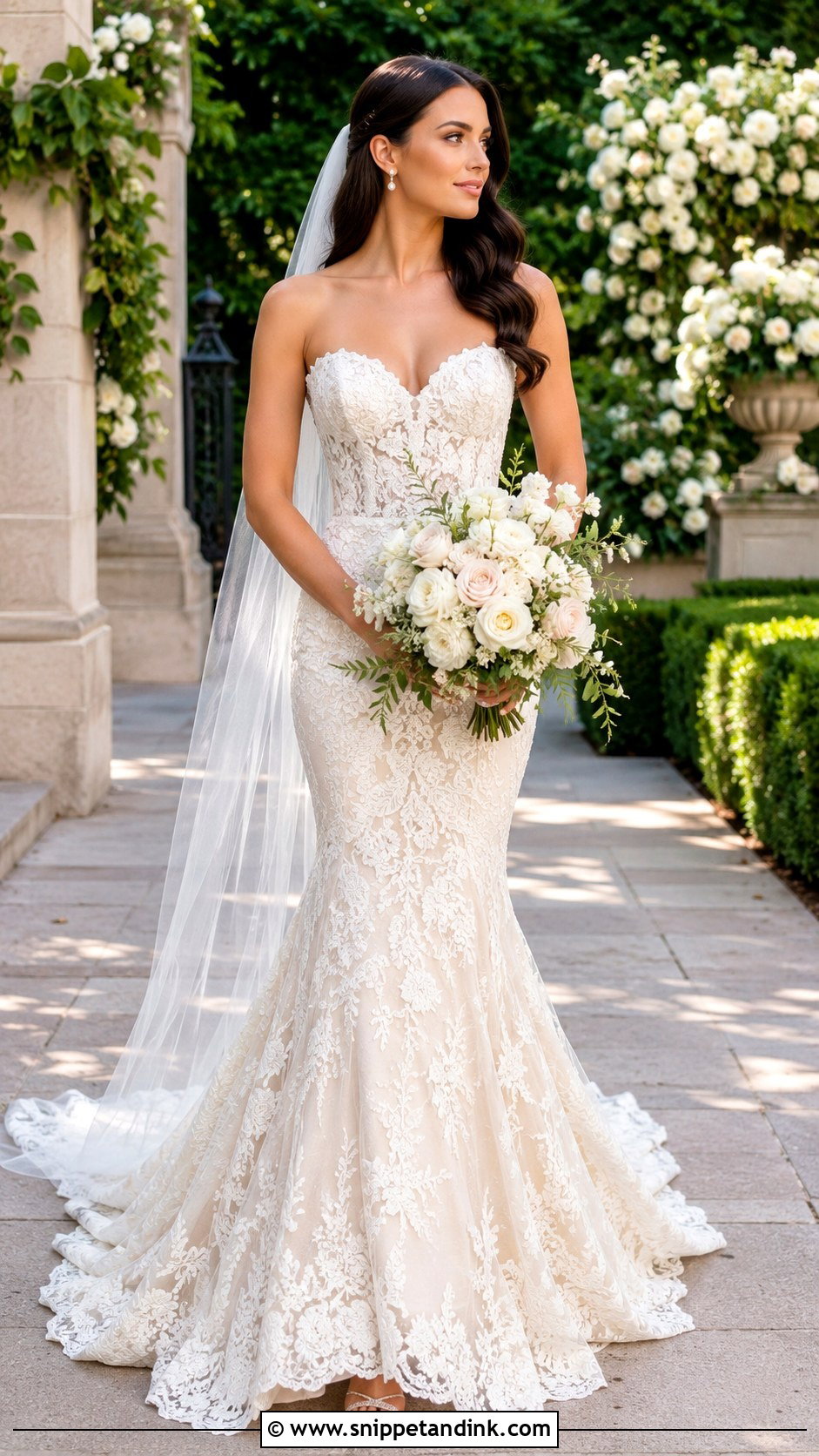
A lace mermaid wedding dress is the version most brides try first, and the lace type changes everything. Floral Chantilly is soft and flat; corded lace has a raised outline that gives more texture; beaded lace is the formal ballroom option. Lace over a fitted body can show the lining through it, so look at the gown in daylight as well as shop lighting, and ask whether the lining comes in nude, ivory or a lighter tone. A sweetheart or illusion neckline, pearl earrings, a sheer veil and delicate heels let the lace lead.
2. Satin Mermaid Wedding Dress
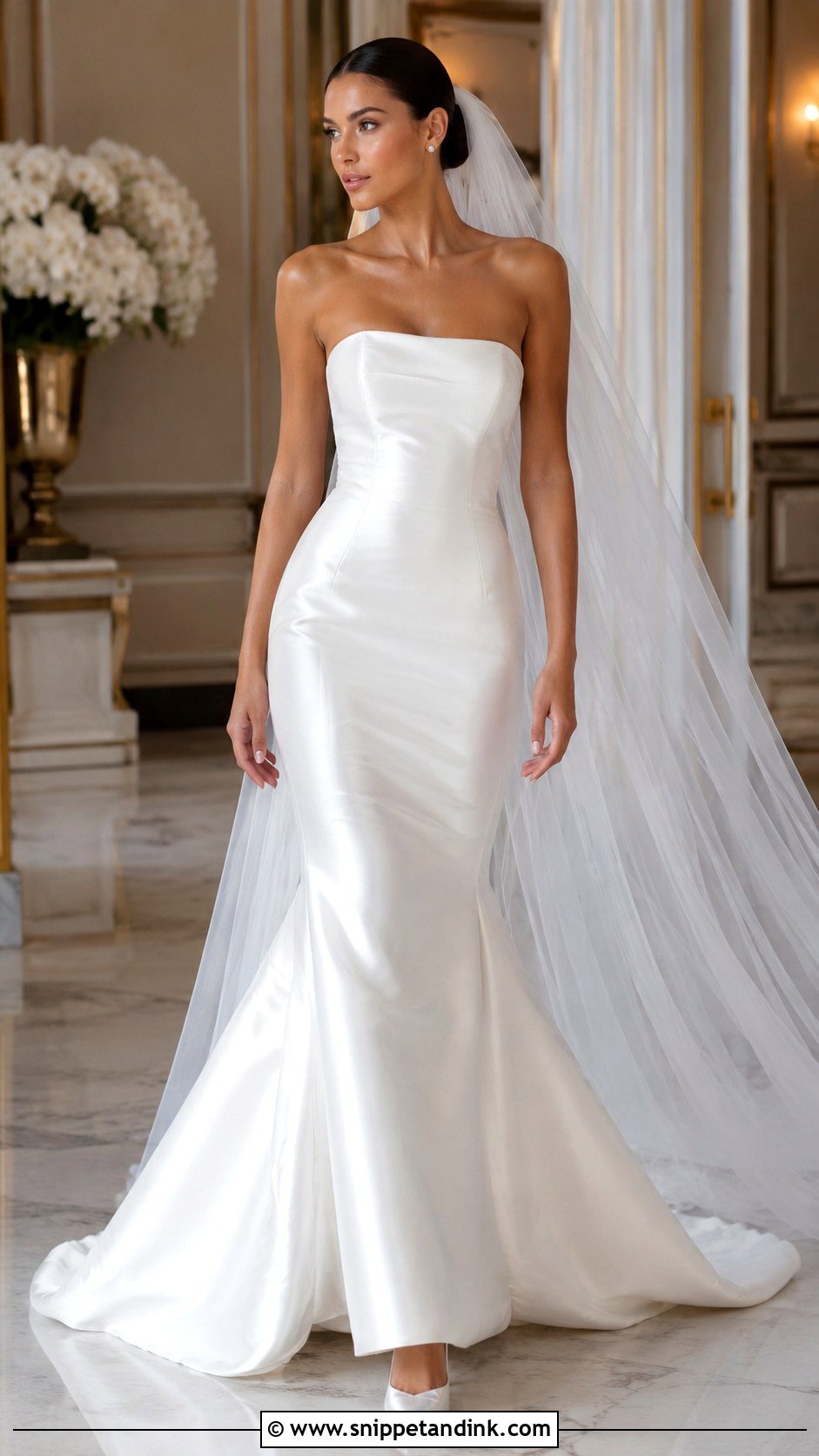
Satin shows the structure underneath it more clearly than any other fabric, which is a gift when the tailoring is right and a problem when it isn’t. A strapless neckline, pointed bodice or folded cuff suits it. The first thing I check is whether the bodice gapes when you bend forward, and the flare should let you walk and sit. Heavy duchess satin holds a crisp line; lighter silk satin clings more and shows creases. Crystal studs, a sleek bun and a long veil suit hotels, ballrooms and evening weddings.
3. Crepe Mermaid Wedding Dress
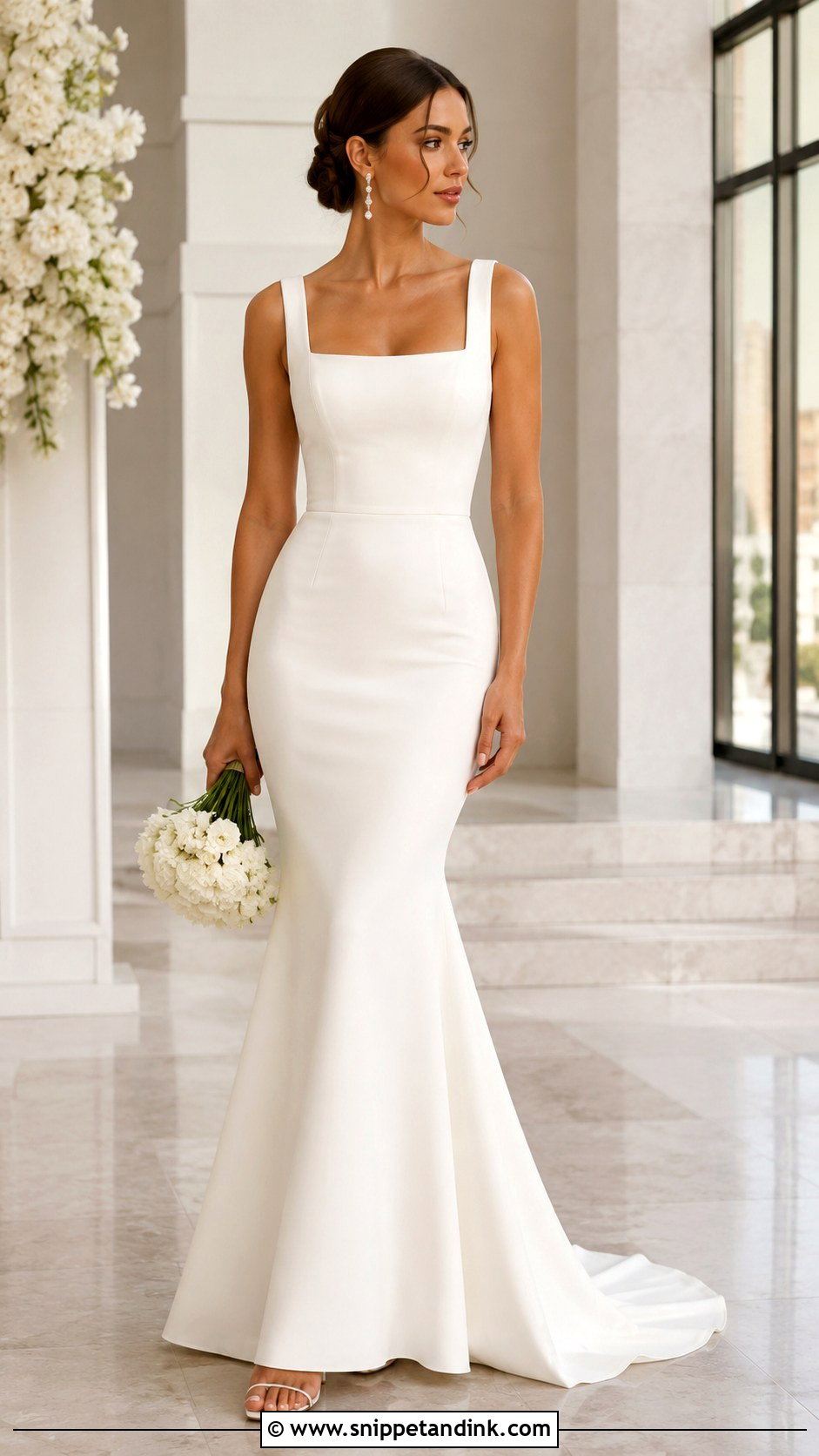
Crepe has a slightly matte surface that skims rather than shines, so the silhouette looks sleek without the spotlight effect of satin. Good bridal crepe is thick enough to smooth over the body; thin crepe shows every seam allowance. Look for supportive seaming, a structured bodice and a gentle flare below the hip or knee. Square, bateau or plain strapless necklines keep it current. A low chignon, drop earrings and pointed heels suit city venues, rooftops and minimalist receptions, and a cathedral veil adds drama if the dress feels too plain.
4. Strapless Mermaid Wedding Dress
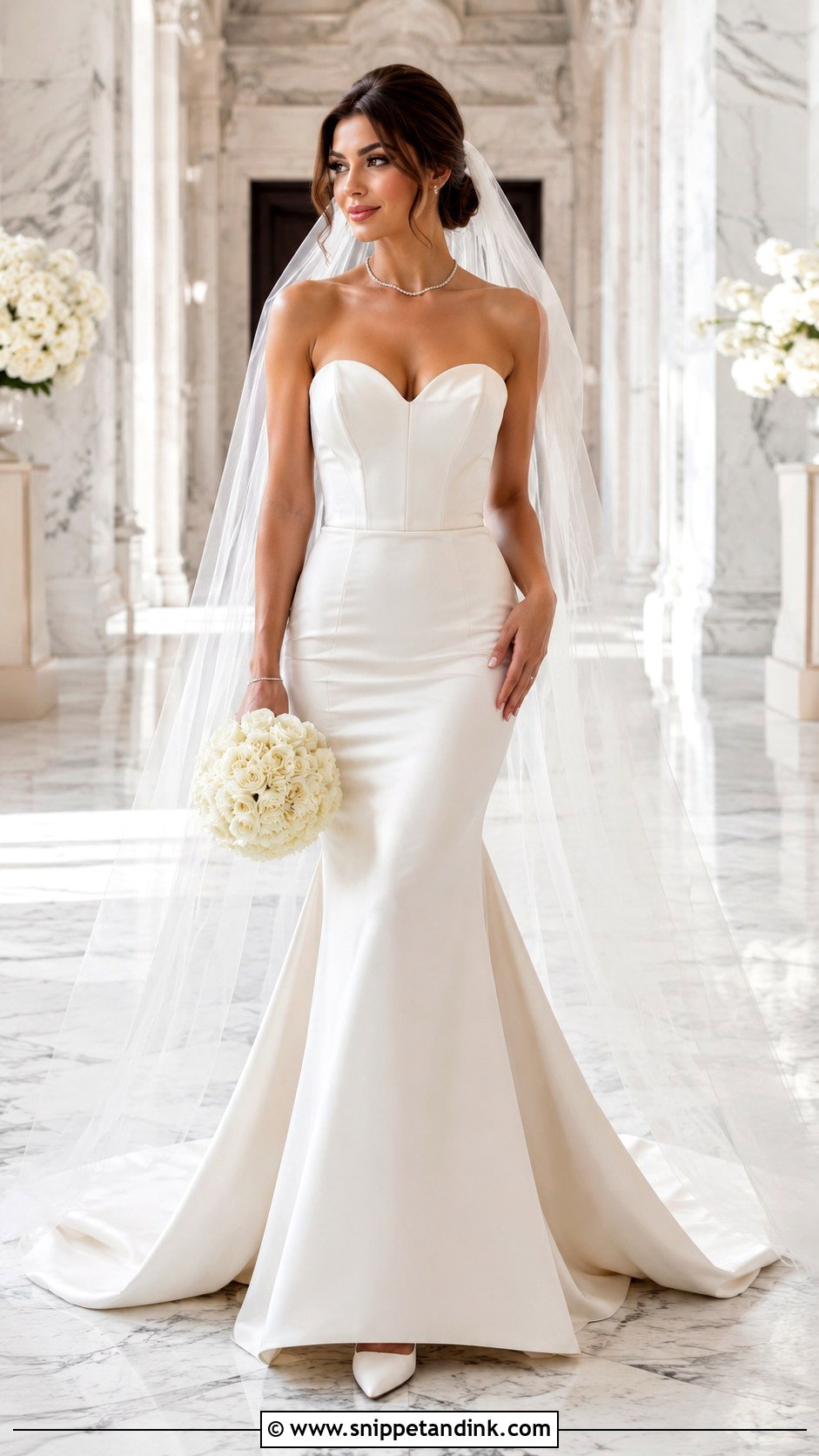
With a strapless mermaid wedding dress, everything depends on what’s inside the bodice. Proper boning, a waist stay and alterations that take the top edge in snugly keep it up without constant tugging. A straight neckline reads modern; a sweetheart is softer. A tennis necklace, pearl studs or long gloves finish it. Strapless mermaid gowns pair well with a detachable overskirt, giving you a fuller ceremony look and a sleek reception one.
5. Off Shoulder Mermaid Wedding Dress
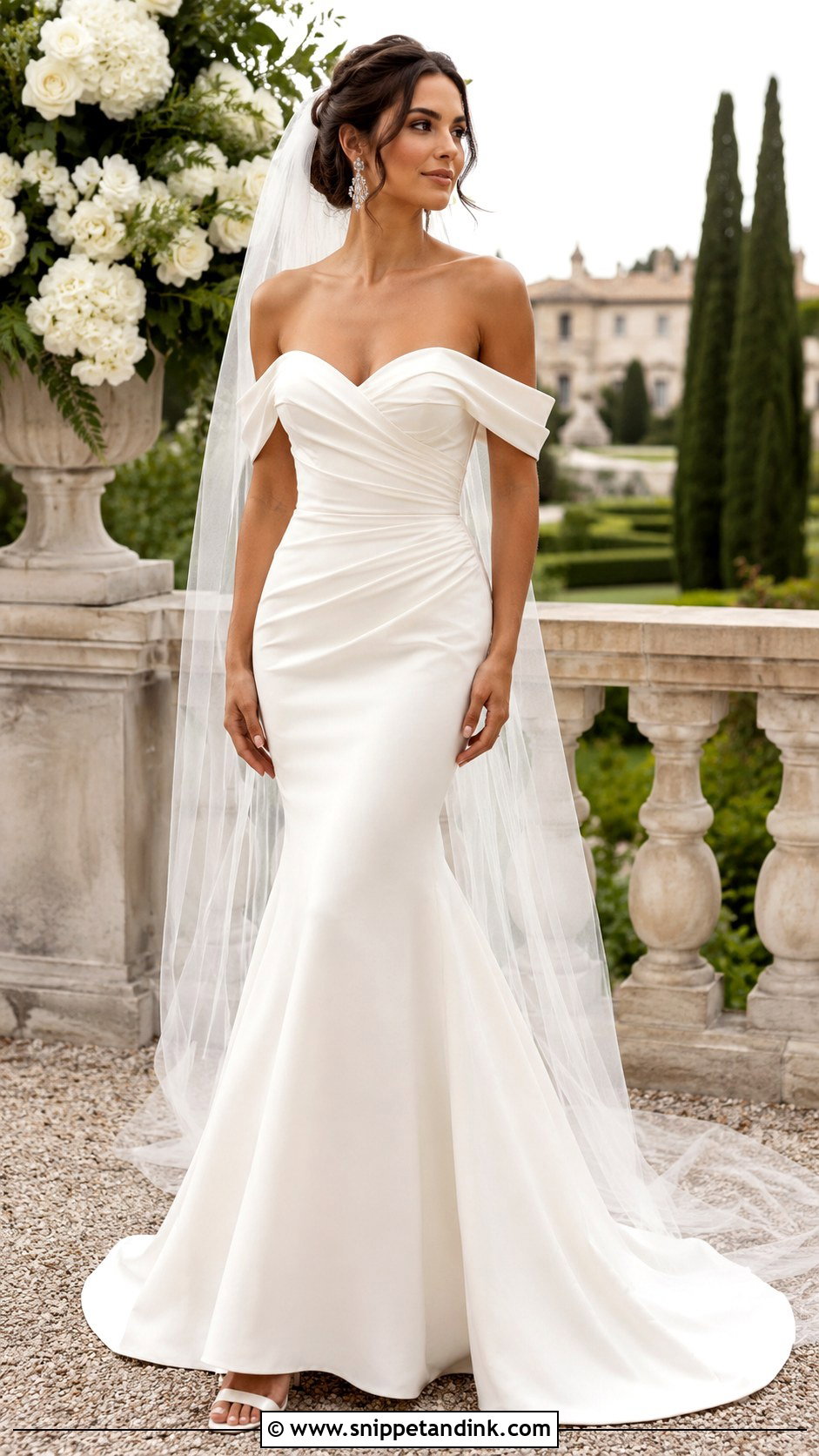
Sleeves resting just below the shoulders frame the collarbone and soften all the fitting below. Draped satin sleeves look sophisticated; lace off-shoulder straps are softer and more traditional. These sleeves restrict how high you can lift your arms, so try a hug and a wave at the fitting before you commit. Skip the necklace and wear statement earrings instead. A clearly defined waist keeps the shape from looking boxy. It suits estates, ballrooms and formal gardens.
6. Long Sleeve Mermaid Wedding Dress
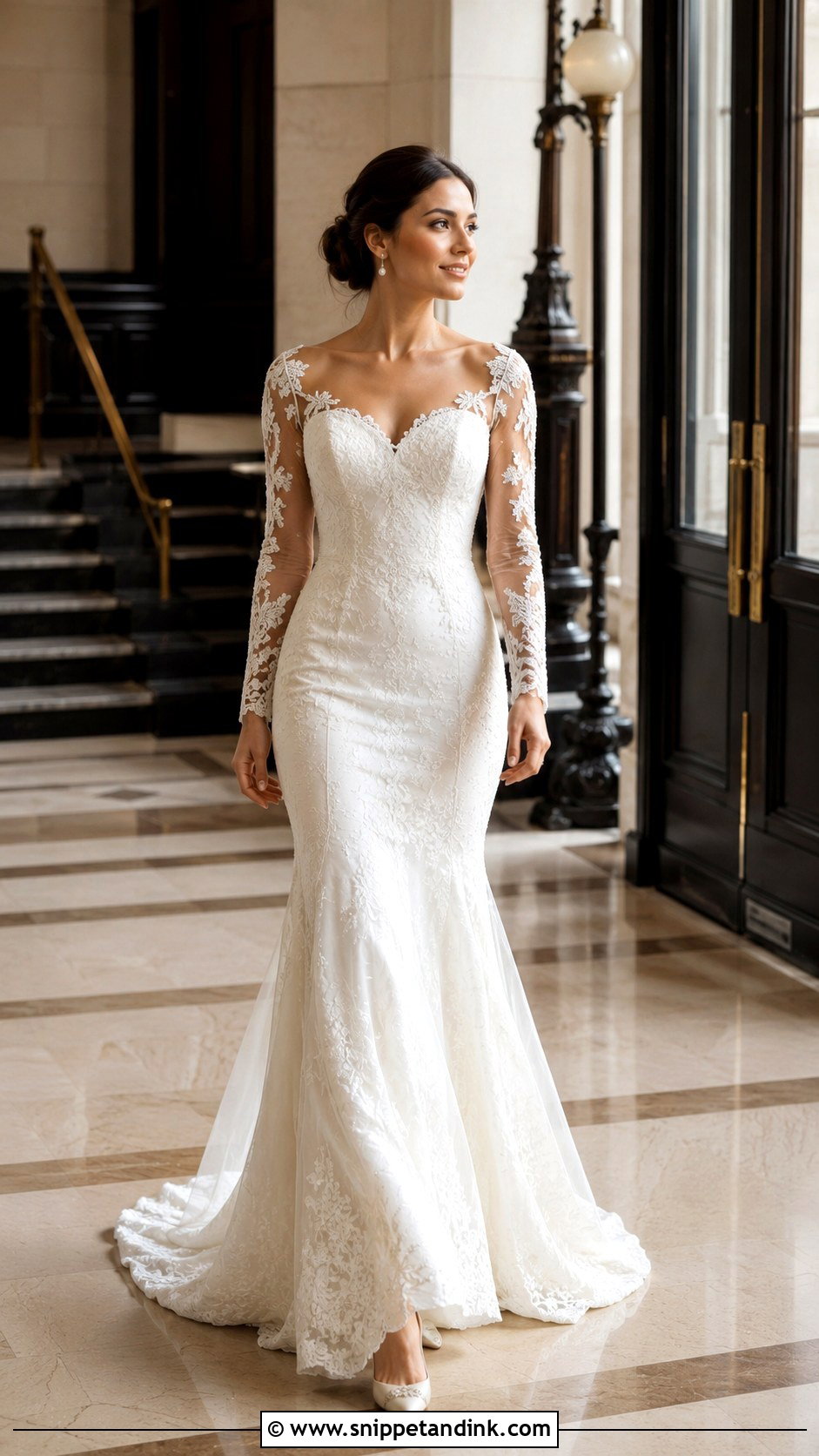
Long sleeves change a mermaid gown’s mood from glamorous to quietly formal. Lace sleeves look romantic, crepe or satin sleeves look clean, and sheer sleeves with appliqué soften the fitted body, especially paired with a deep neckline or open back. They suit autumn, winter and heavily air-conditioned venues. With detailed sleeves, keep jewellery minimal and the veil simple. Ask for the sleeve to be cut with a little ease at the elbow, otherwise sitting at dinner with your arms bent pulls on the shoulder seams.
7. Corset Mermaid Wedding Dress
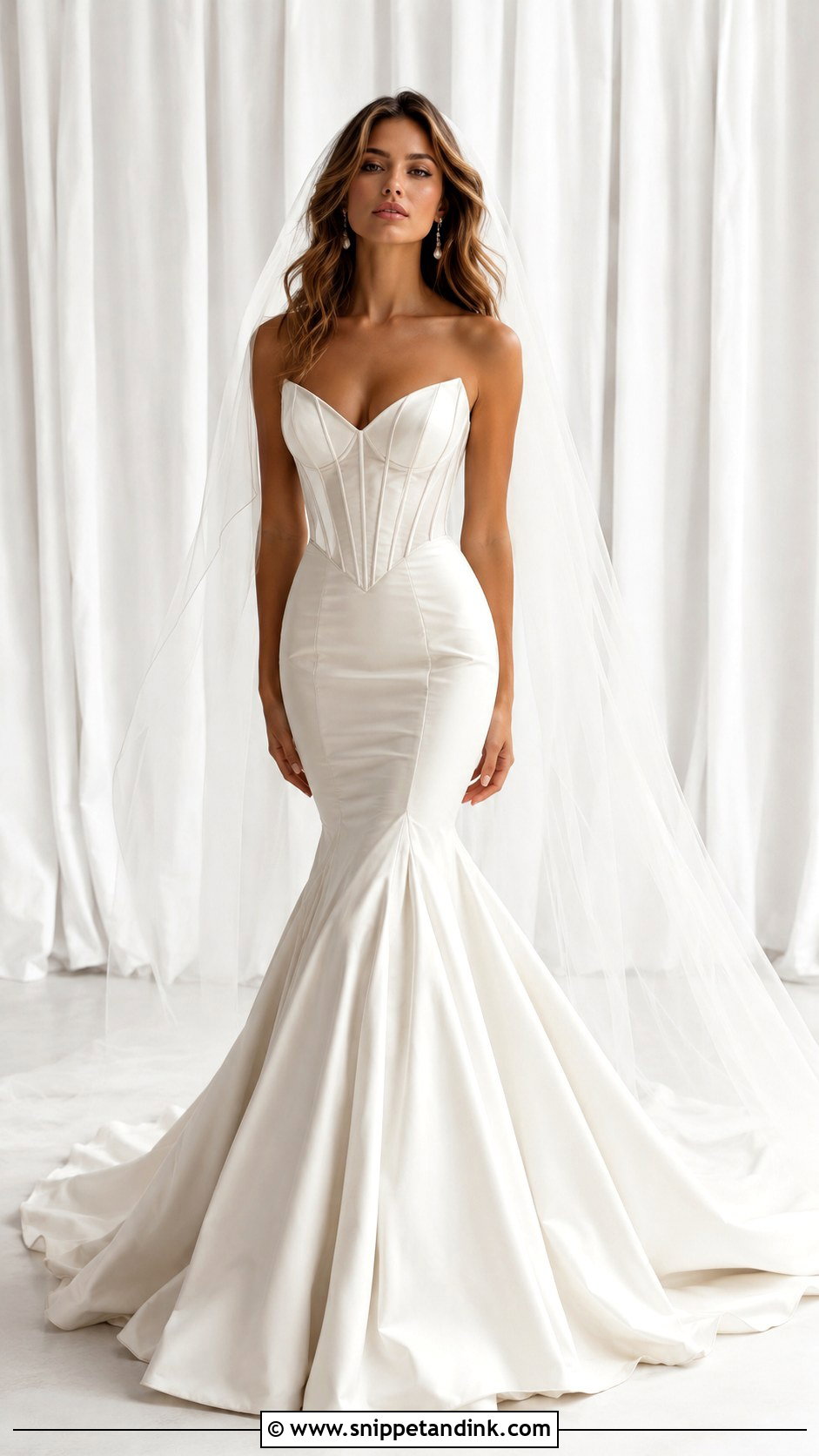
A corset mermaid wedding dress gives the most support of any style here, which is why brides with a fuller bust often find it the most comfortable despite how it looks. Exposed boning is the fashion-forward version; hidden corsetry gives a smoother line. A basque or pointed waist lengthens the torso before the flare. It pairs with satin, lace, crepe or tulle. Schedule alterations with time to spare, because corsets are fitted closely and need checking after any change in weight. You should be able to breathe deeply and sit without the boning digging in.
8. Beaded Mermaid Wedding Dress
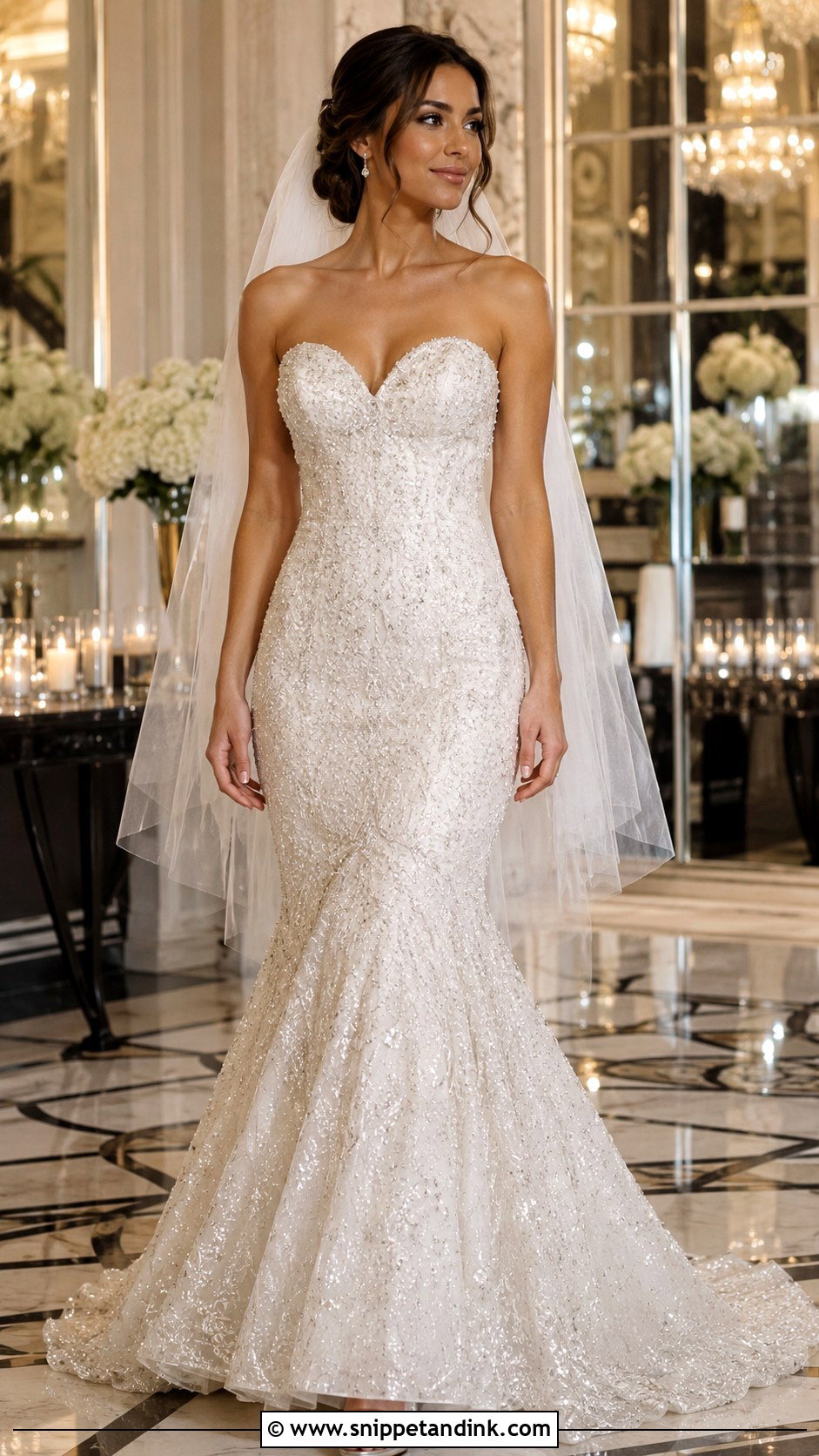
Beadwork catches light from the ceremony through the evening, and how it’s placed matters more than how much there is. Vertical patterns lengthen; allover beading looks red-carpet; scattered pearls or crystals give a softer glow. Beaded gowns can weigh noticeably more than plain ones, so wear it for at least ten minutes at a fitting. Simple heels, a plain veil and small earrings are enough. It suits evening weddings, ballrooms and art deco venues.
9. Simple Mermaid Wedding Dress
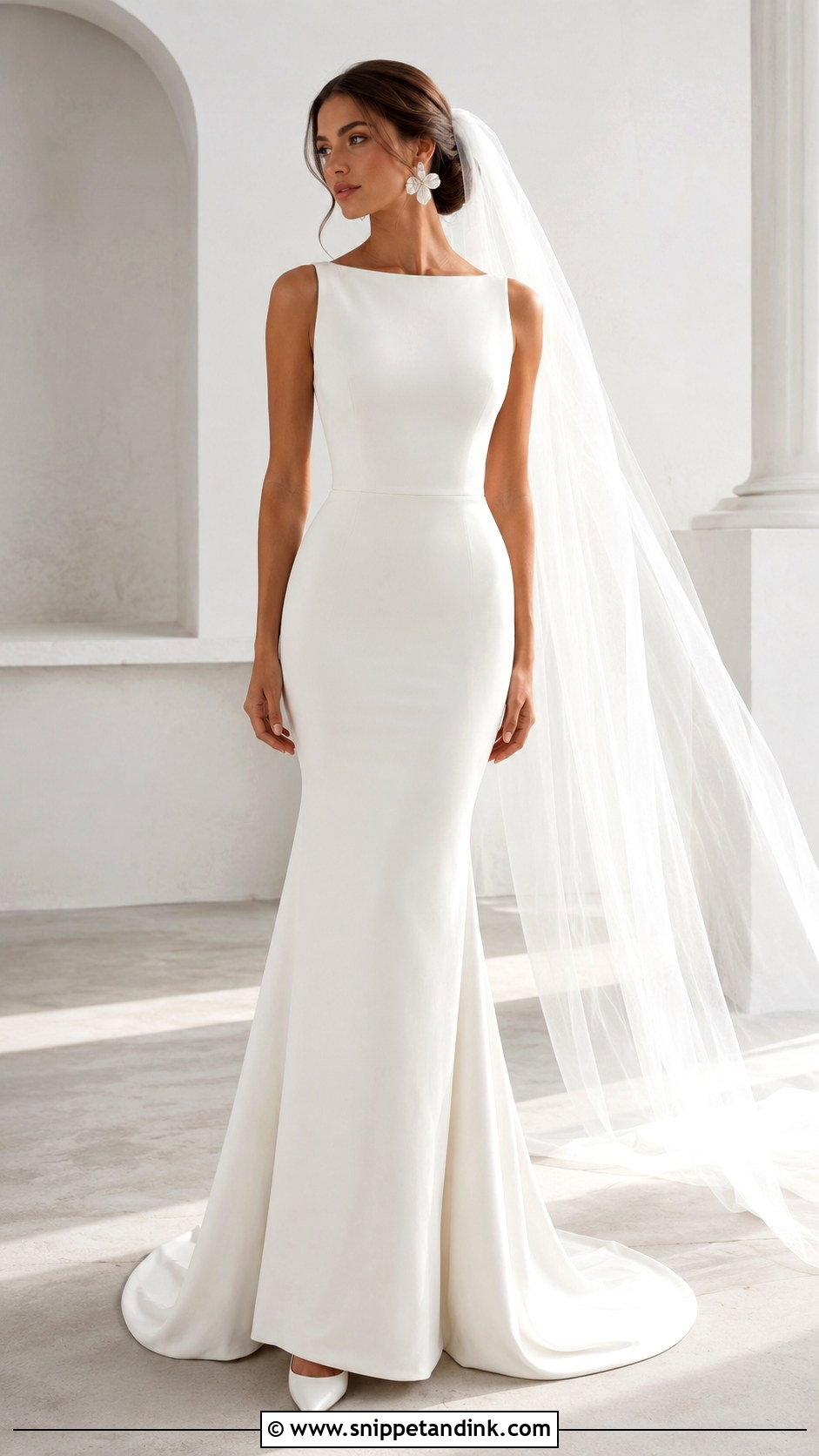
Plain gowns are where I see the most nerves at a fitting, because there’s nothing to hide behind. That’s also their strength: clean crepe, satin or mikado with a precise cut and a good neckline is a strong look on its own. A simple dress also frees up the accessories, so a dramatic veil, pearl gloves, sculptural earrings or a bridal cape can carry the personality. The flare should land at the right point for your height. It works for courthouses, modern venues and destination weddings.
10. Tulle Mermaid Wedding Dress
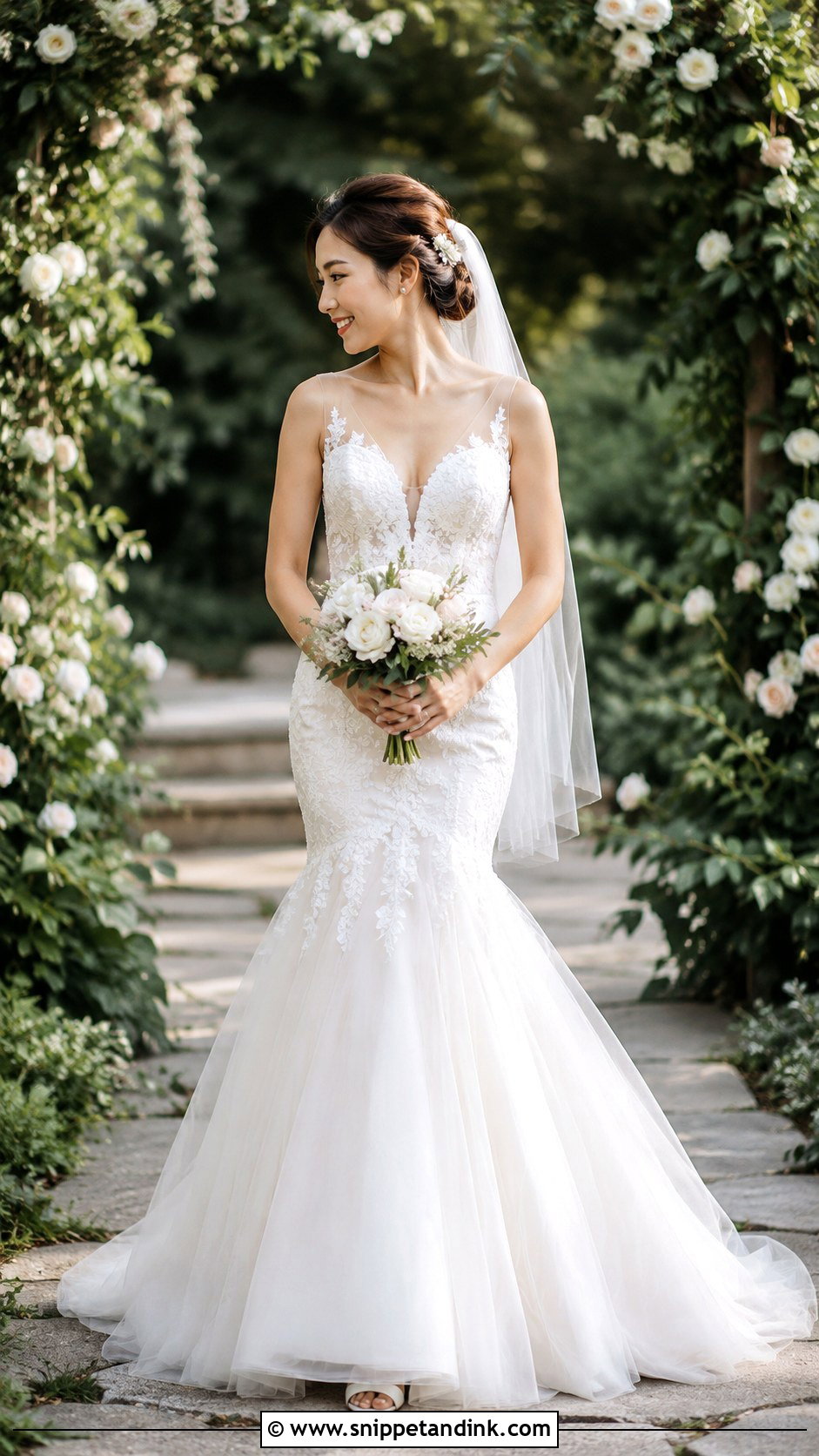
Tulle softens the mermaid’s sharp flare into layers that move around the knees and hem. Lace appliqué, a sheer bodice or a soft train add dimension. It’s a good middle ground for brides who like romantic, whimsical gowns but don’t want a full ball skirt. Tulle snags easily on rough paving and heel straps, so check the hem binding and practise walking in your shoes. Soft curls, floral pins and delicate sandals or pumps suit garden ceremonies and airy reception spaces.
11. Mikado Mermaid Wedding Dress
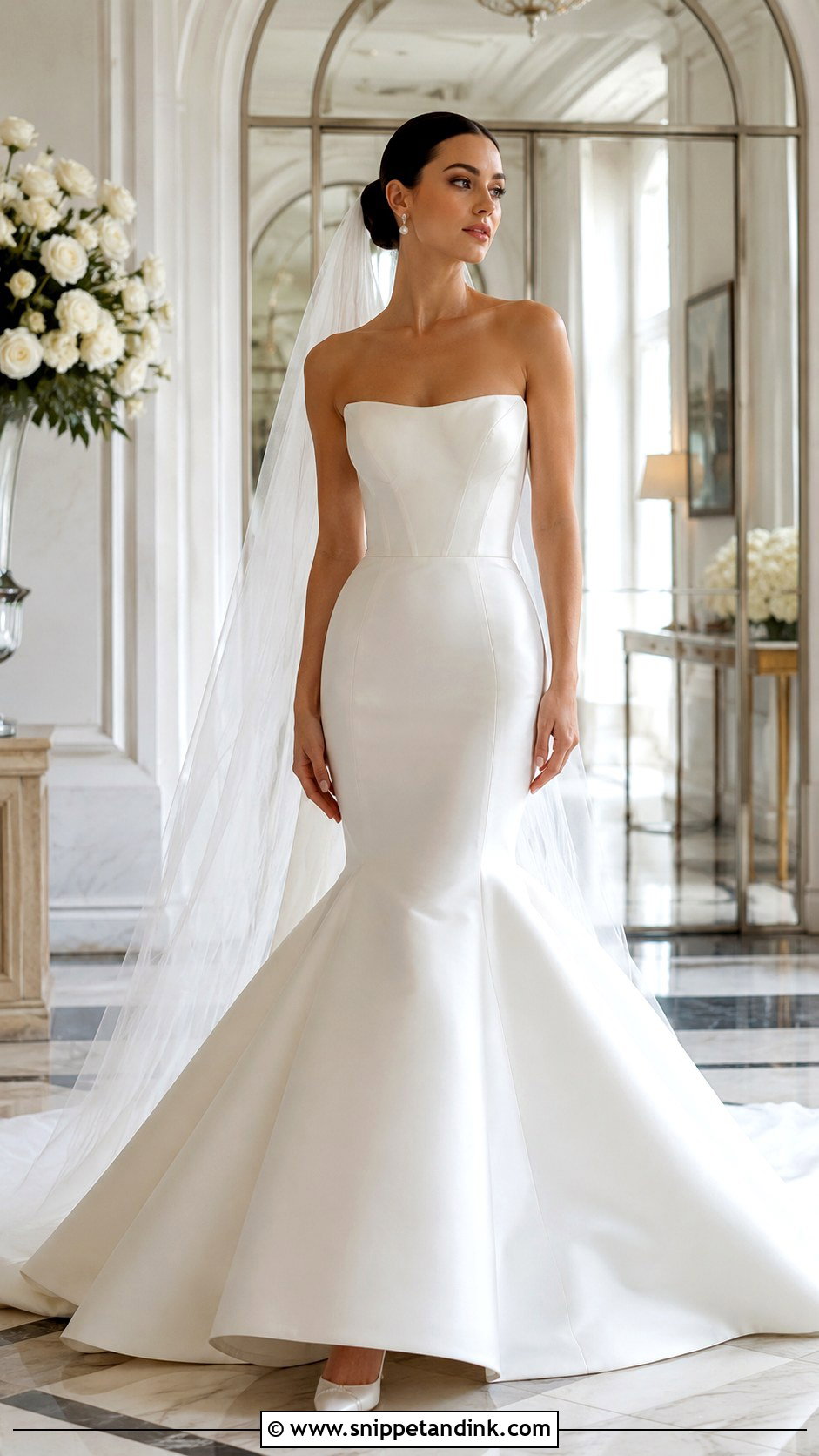
Mikado is a heavy silk or silk-blend with a slight twill texture, so it holds a crisp, architectural shape that satin can’t. A strapless bodice, clean seams or a large bow suit it. The flare stays sculpted rather than soft. Because of its weight, mikado can feel warm in summer, which I always mention before a July wedding. Pearl earrings, a smooth veil and pointed heels are enough. It suits formal venues, black-tie receptions and traditional ceremonies.
12. Pearl Mermaid Wedding Dress
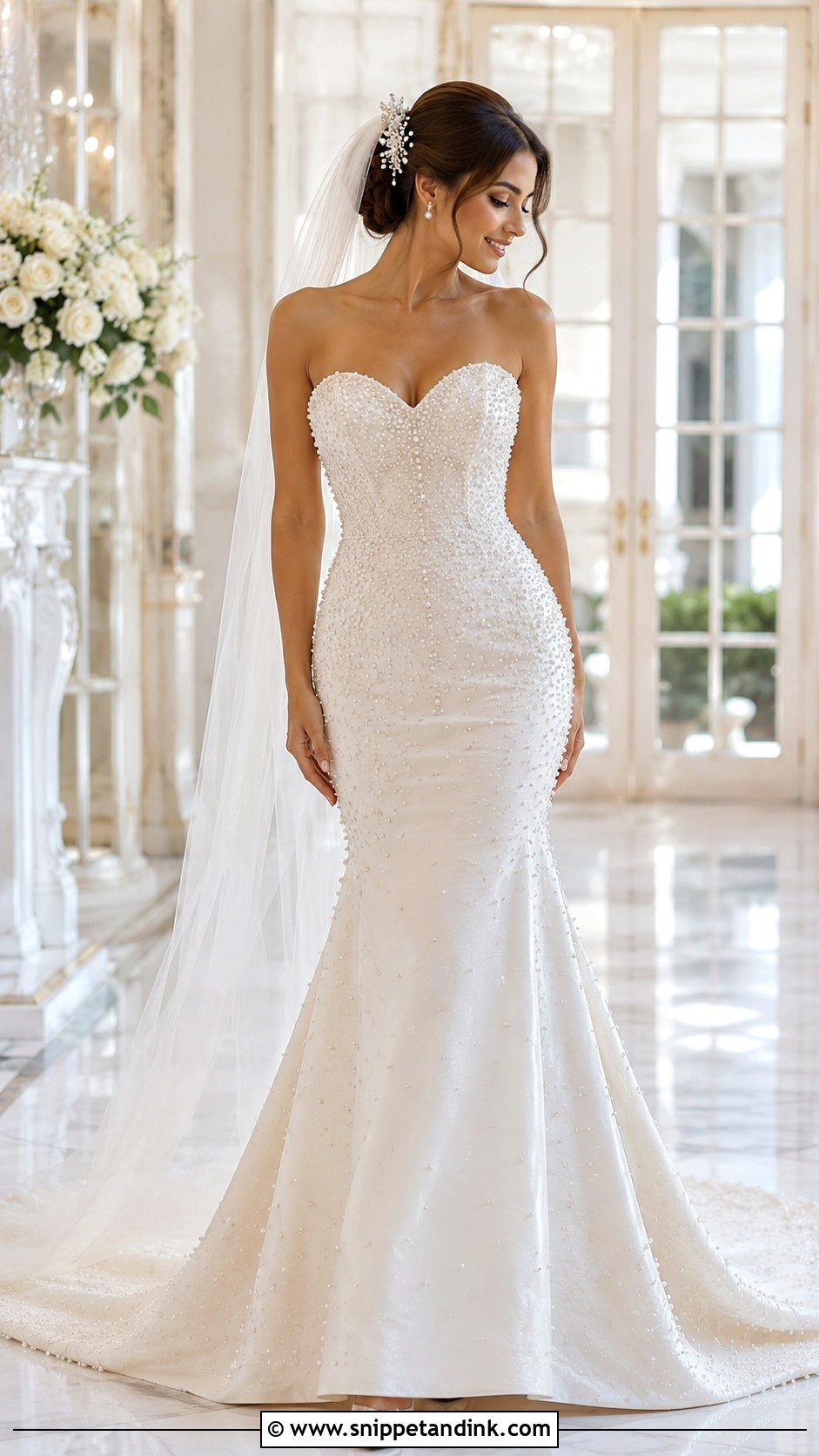
Pearls add a soft glow rather than sparkle. Tiny scattered pearls look subtle; larger pearl appliqués look more fashion-led. They suit tulle, lace, crepe or sheer sleeves. Avoid matching pearl earrings, necklace, comb and bracelet all at once; one or two pearl pieces look deliberate, four look like a set from a box. Ask how the pearls are attached, since glued pearls can pop off on a dance floor while hand-sewn ones stay. A simple veil lets the texture show.
13. Floral Mermaid Wedding Dress
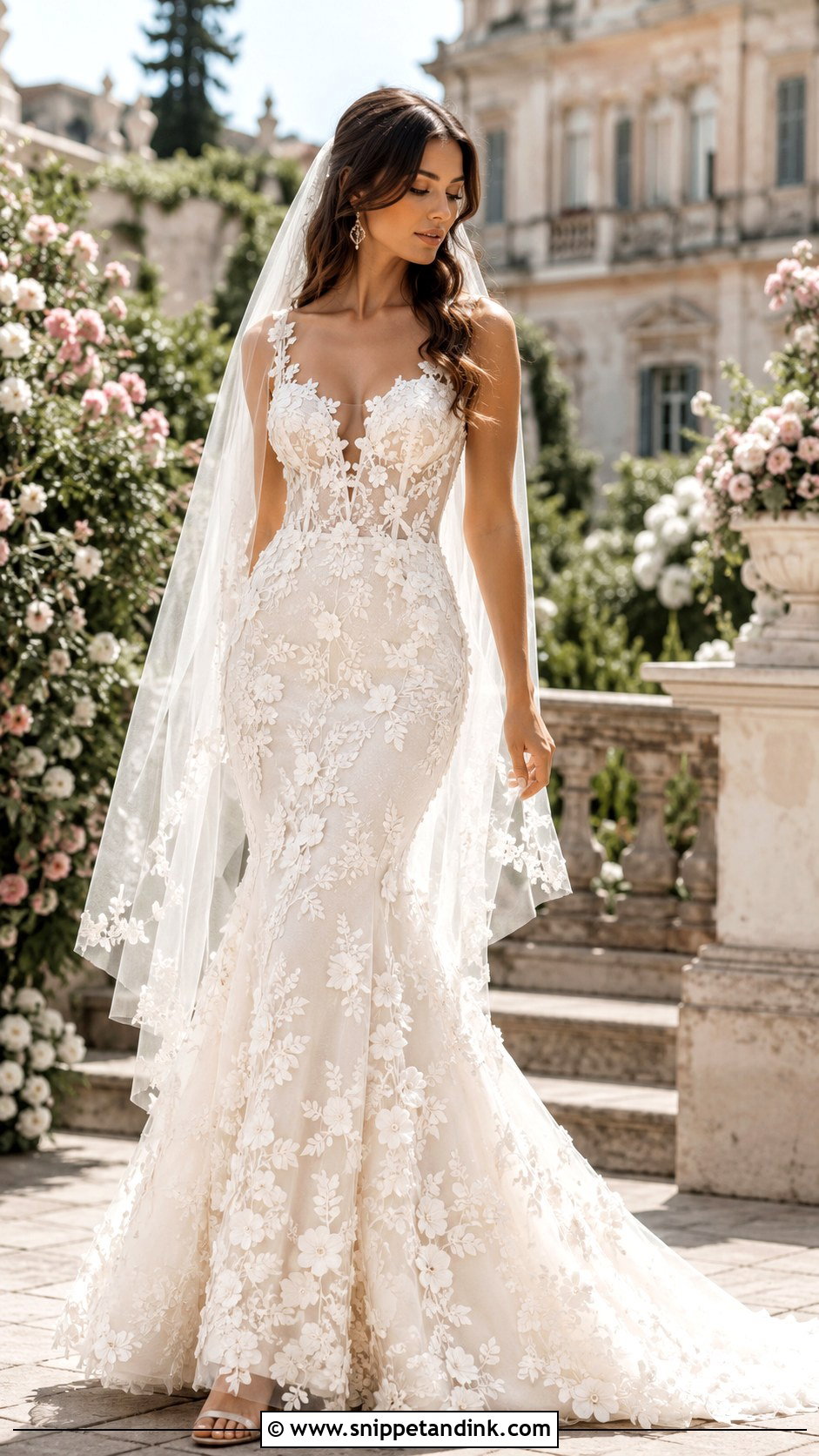
Floral appliqués can trail over the bodice, wrap the hips and fade into the skirt, which gives a mermaid gown depth. Flat ivory flowers feel classic; 3D petals feel more runway. Placement matters: a dense cluster right at the hip line draws the eye to the widest point, while a diagonal trail lengthens. Keep the shoes and jewellery simple. A sheer veil with a matching appliqué ties it together for garden venues, conservatories and outdoor ceremonies.
14. Halter Mermaid Wedding Dress
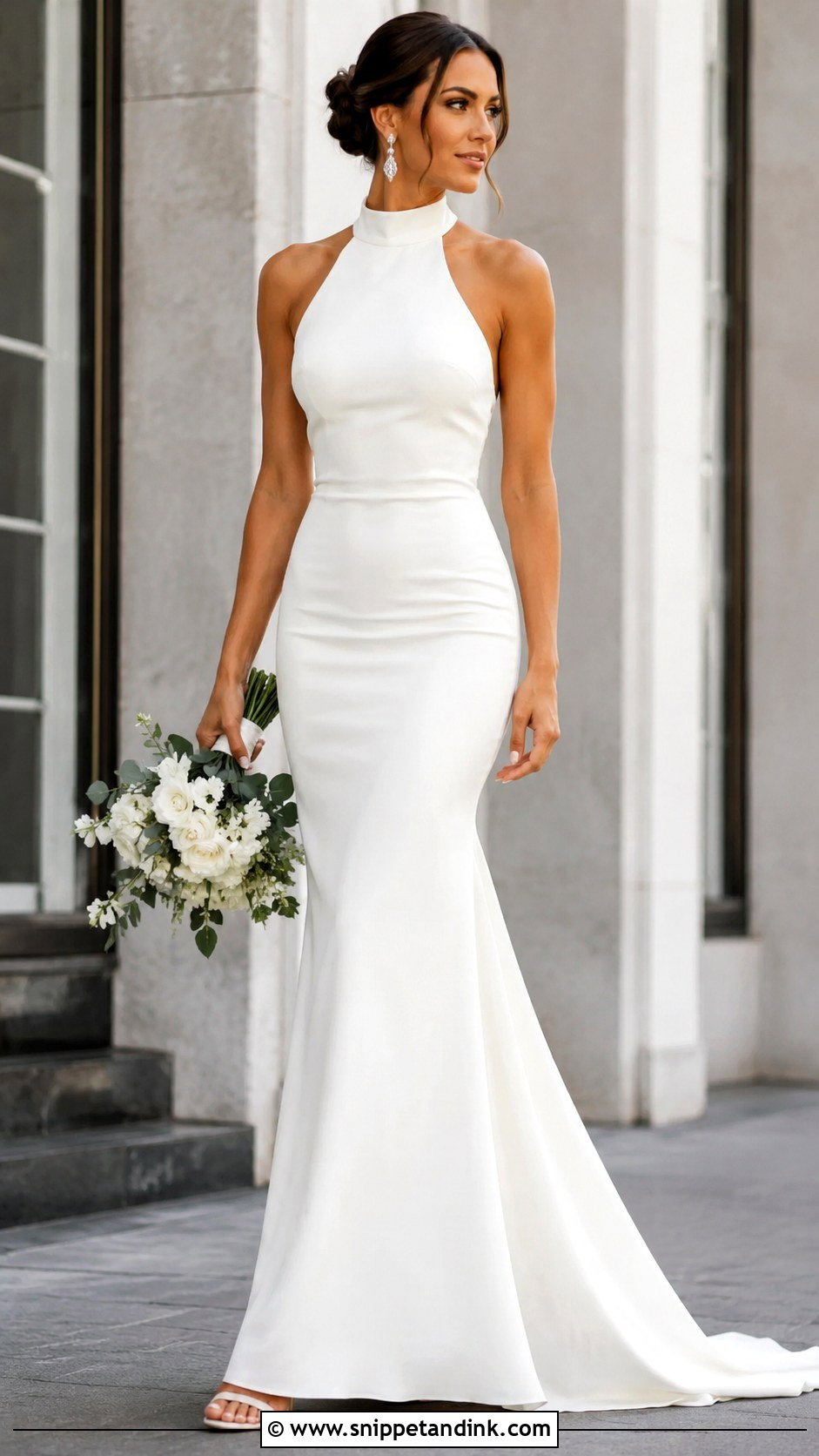
A halter neckline lifts the eye to the shoulders and gives support without traditional straps. A high halter in crepe reads modern; a lace halter softer. With an open back, the gown becomes just as striking from behind. Skip a necklace and choose long pearl or crystal earrings. The practical check is weight on the neck: a heavy skirt hanging from a halter tie can give you a headache by evening, so make sure the bodice, not the strap, carries the dress.
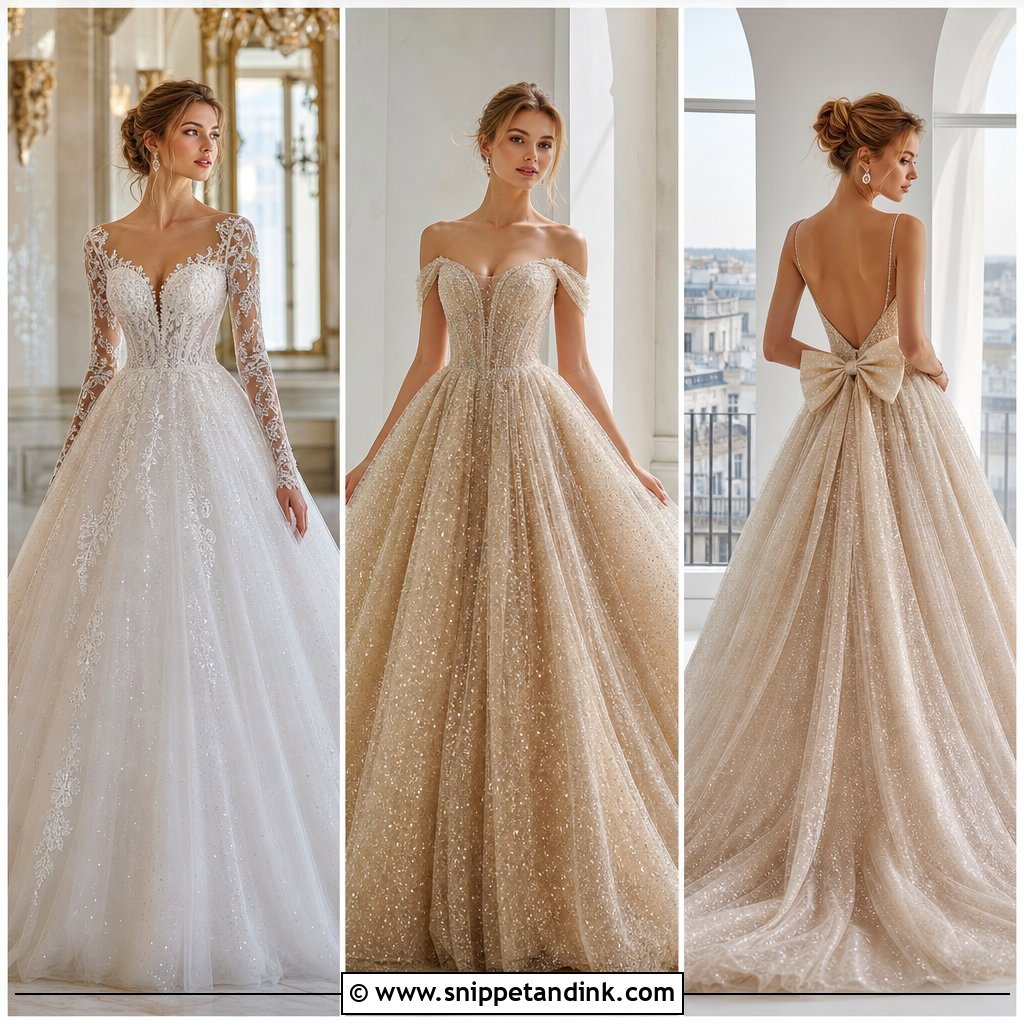
15. V Neck Mermaid Wedding Dress
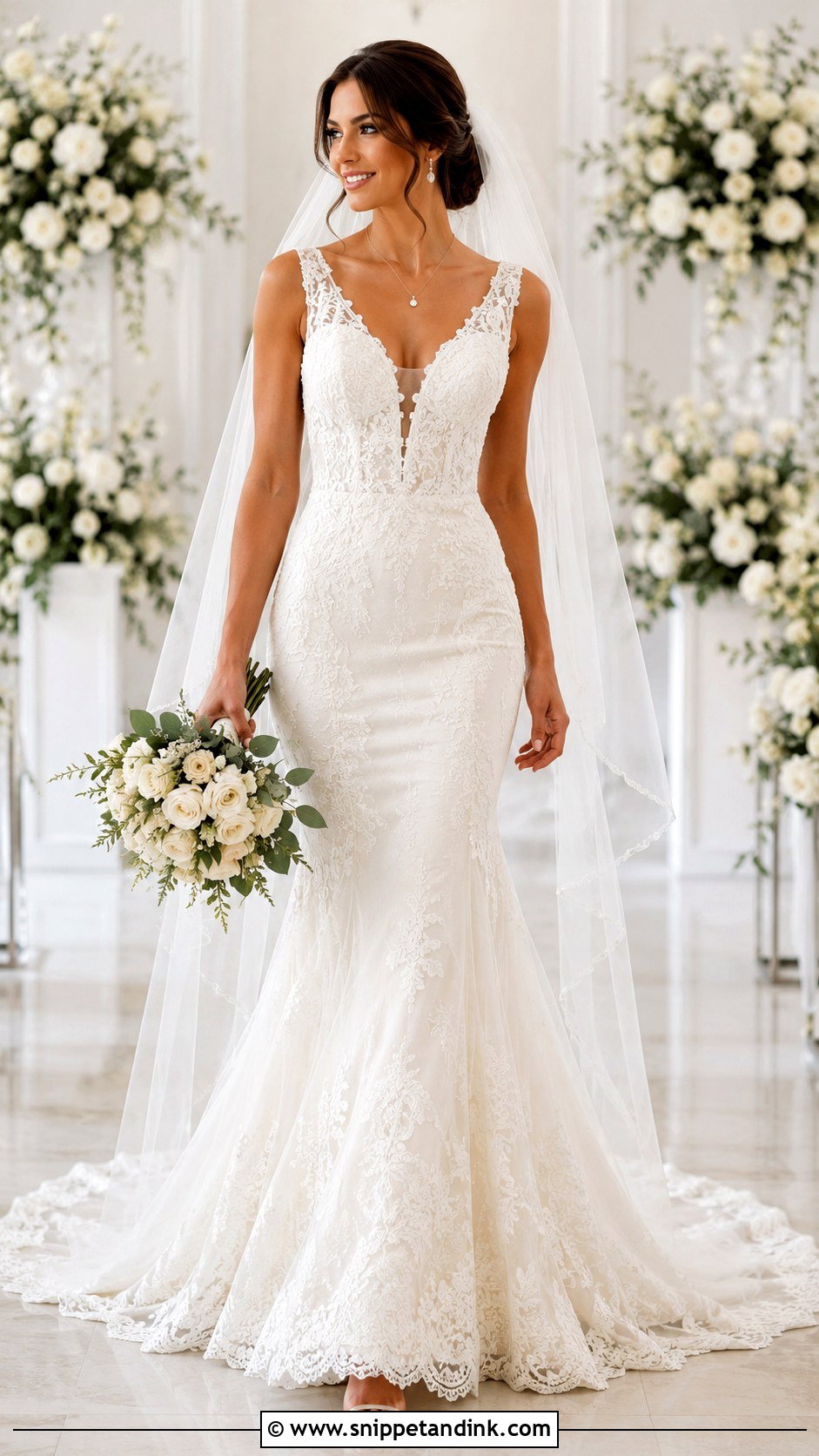
A V-neck adds a vertical line to the bodice that balances the fitted lower half, so it flatters a wide range of figures. A soft V is easy to wear; a deep V is more dramatic, and illusion mesh across it keeps everything in place when you move. It pairs with lace, crepe, satin or beading, and works with straps or long sleeves. A delicate pendant, drop earrings or a clean veil suits it depending on how detailed the dress is.
16. Square Neck Mermaid Wedding Dress
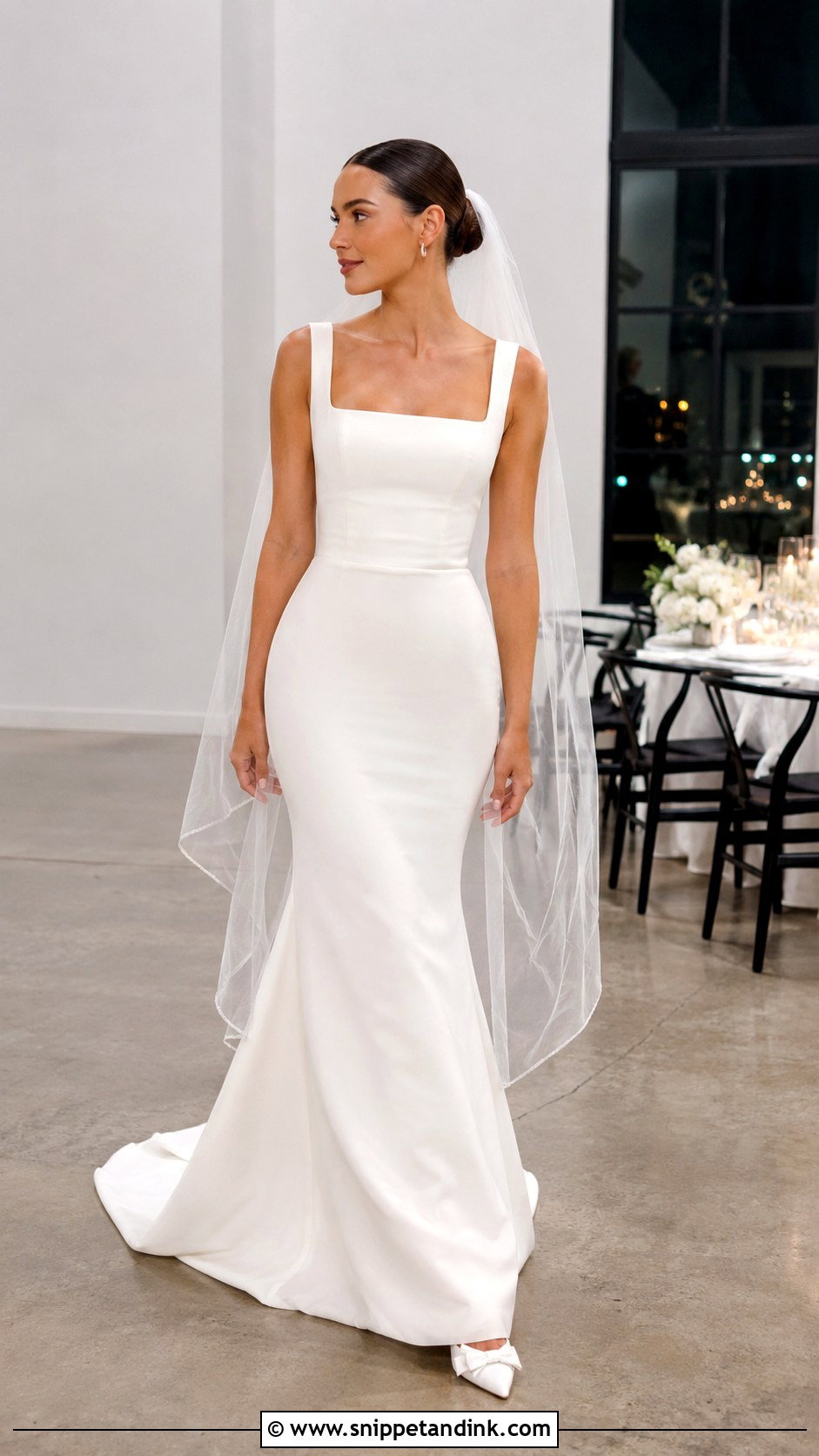
A square neckline frames the collarbone with a clean, slightly architectural line. It sits between a sweetheart and a high neck in formality, and it gives a little more coverage. Crepe and satin versions look especially sharp. Square necks are unforgiving if the straps are even slightly too wide set, since they’ll slip off the shoulder, so get the strap position pinned at the first fitting. A sleek bun, small hoops and a fingertip veil suit modern venues and intimate receptions.
17. High Neck Mermaid Wedding Dress
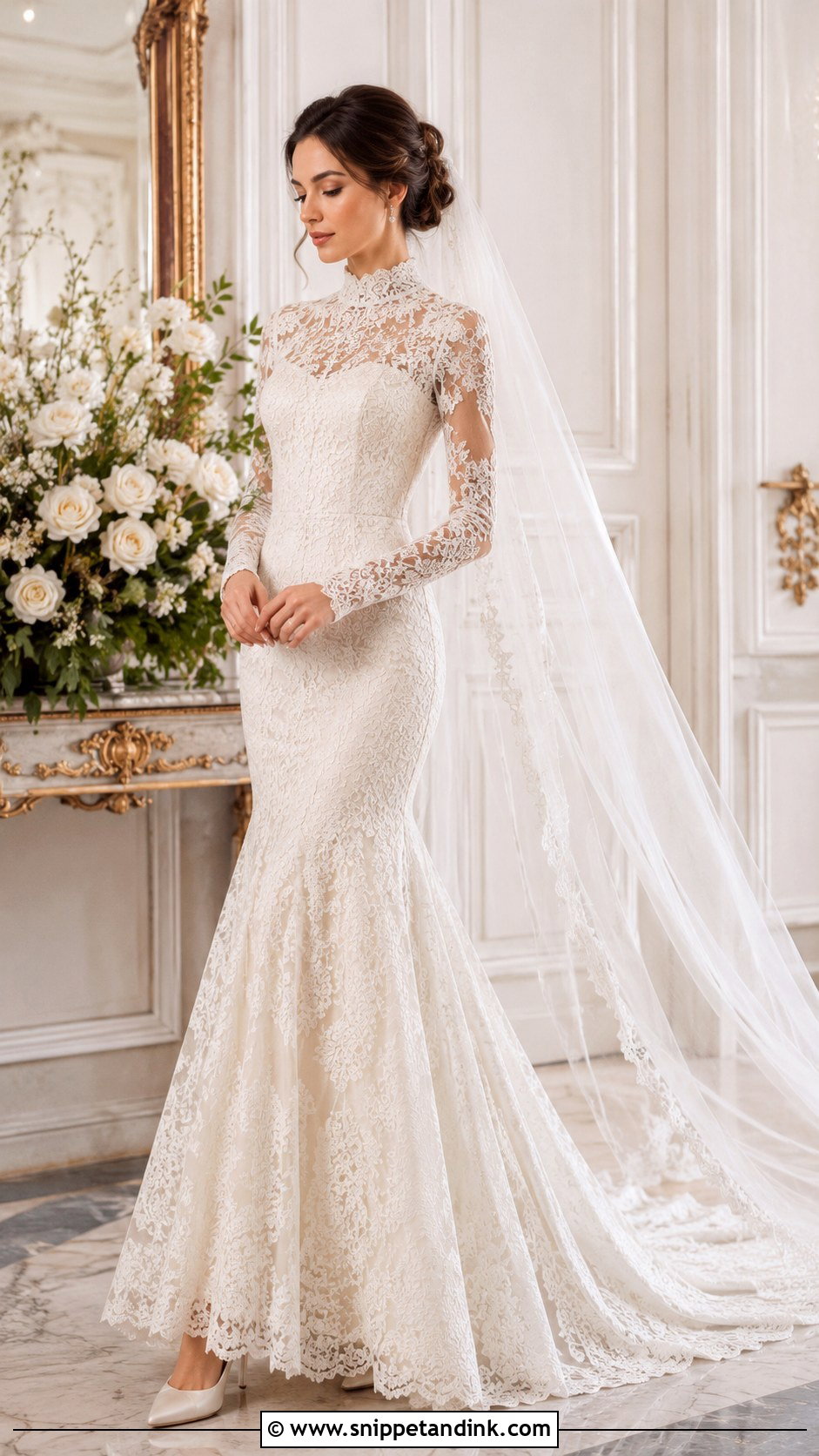
A high neck covers the front and lets the mermaid shape do the talking. Lace, illusion mesh or clean crepe suit it. Pair a modest front with an open back if you want one memorable detail. Wear your hair up so the neckline stays visible, and stick to small earrings or a slim bracelet. High-neck lace can feel warm, so a breathable illusion yoke is worth asking about for spring and summer. It suits formal venues and winter weddings.
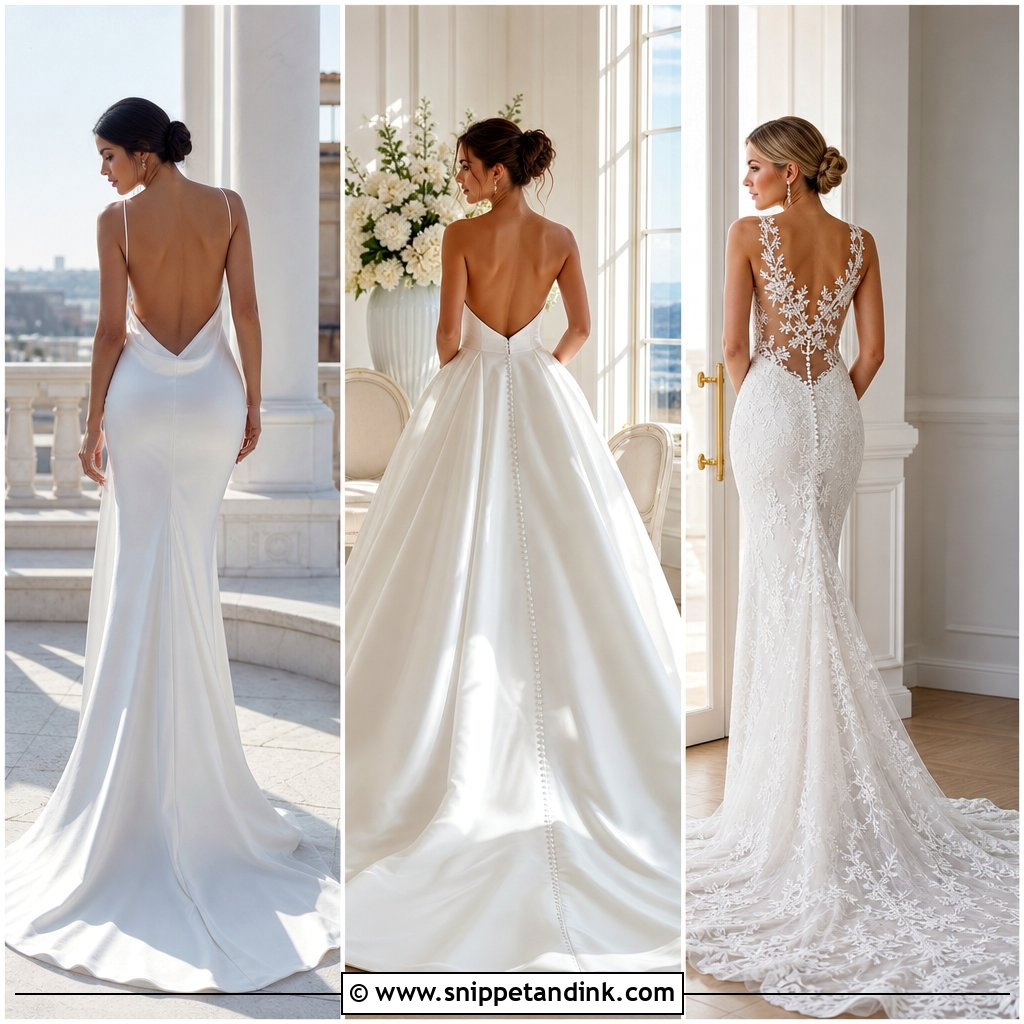
18. Backless Mermaid Wedding Dress
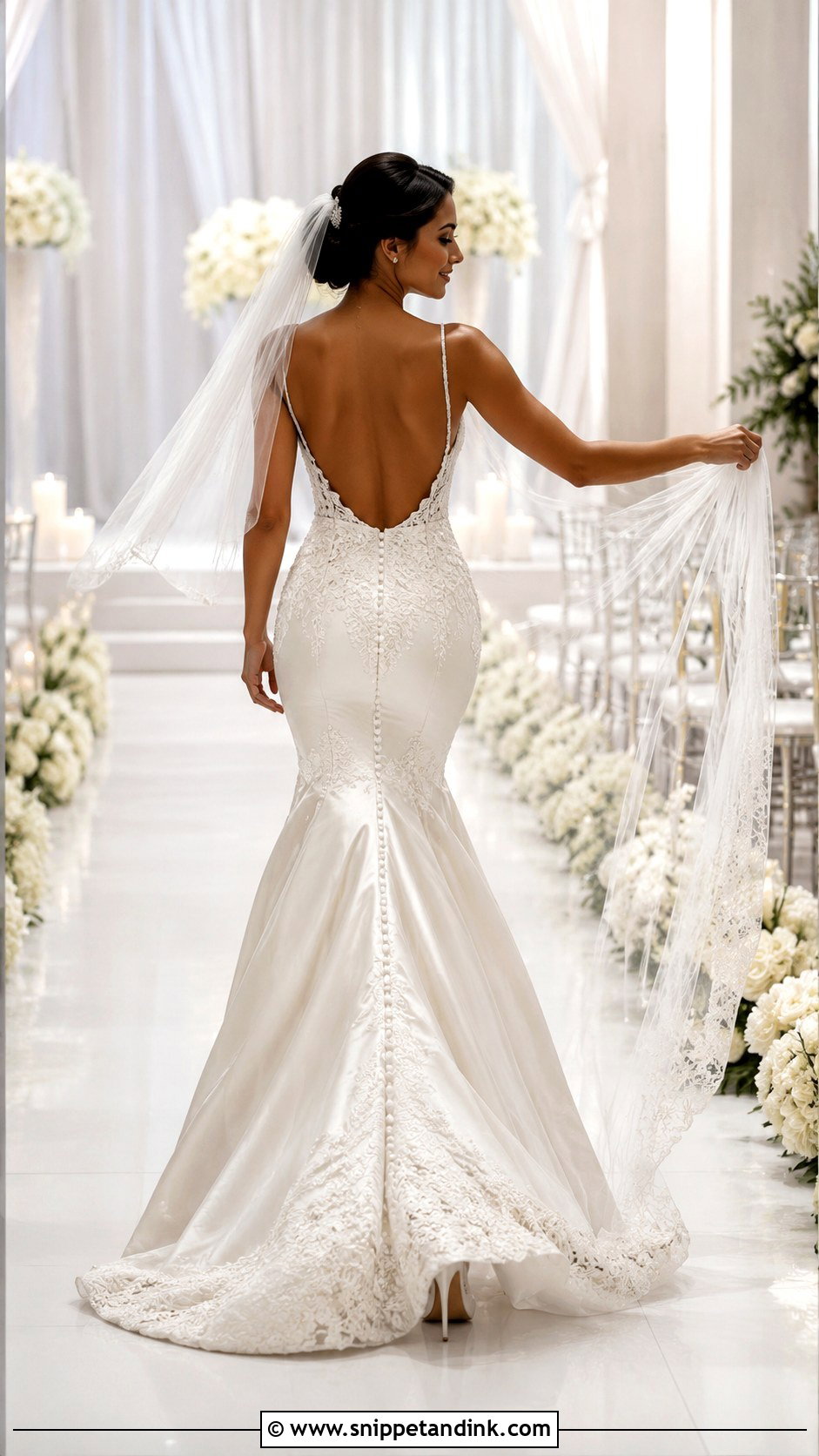
An open back gives the guests a moment to look at during the ceremony, when you’re facing away from them for much of it. A low scoop, keyhole or illusion lace back all work, depending on how much skin you want to show. Support has to come from built-in cups, boning or secure straps, since a regular bra won’t work. Style it with an updo, a back necklace or a removable veil, and keep the front of the gown simple. It suits indoor venues, destination weddings and evening receptions.
19. Detachable Train Mermaid Wedding Dress
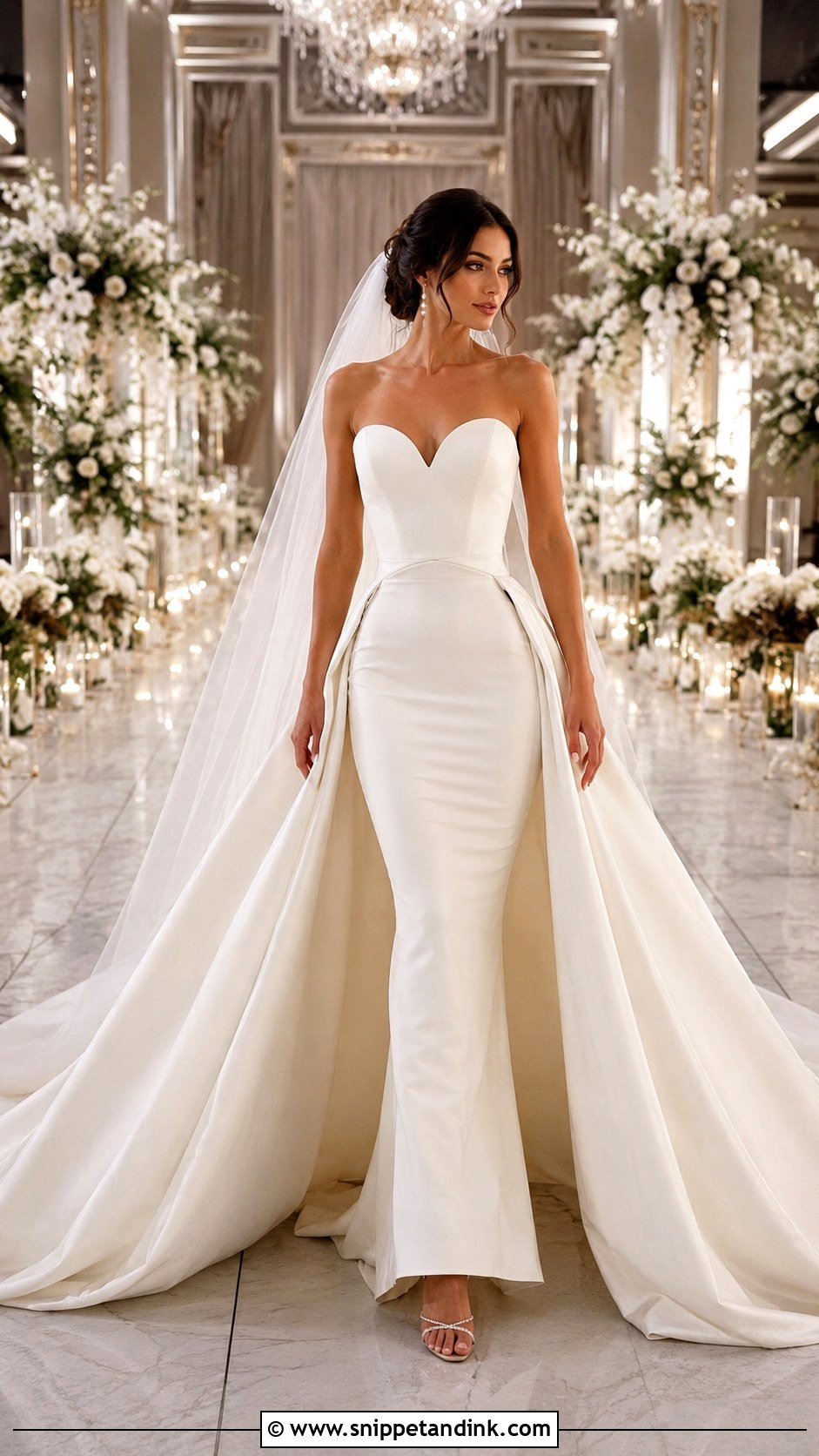
A detachable train gives you the full aisle moment and then lets you dance freely. The gown underneath stays sleek; the train adds volume and movement for the entrance. Some trains attach at the waist like an overskirt; others clip on at the back so the join is hidden. Choose satin, tulle, lace or organza to match the gown. I’d have whoever will help you practise removing it at least twice, since it’s often done in a hurry between photos and the reception. It suits ballrooms and large celebrations.
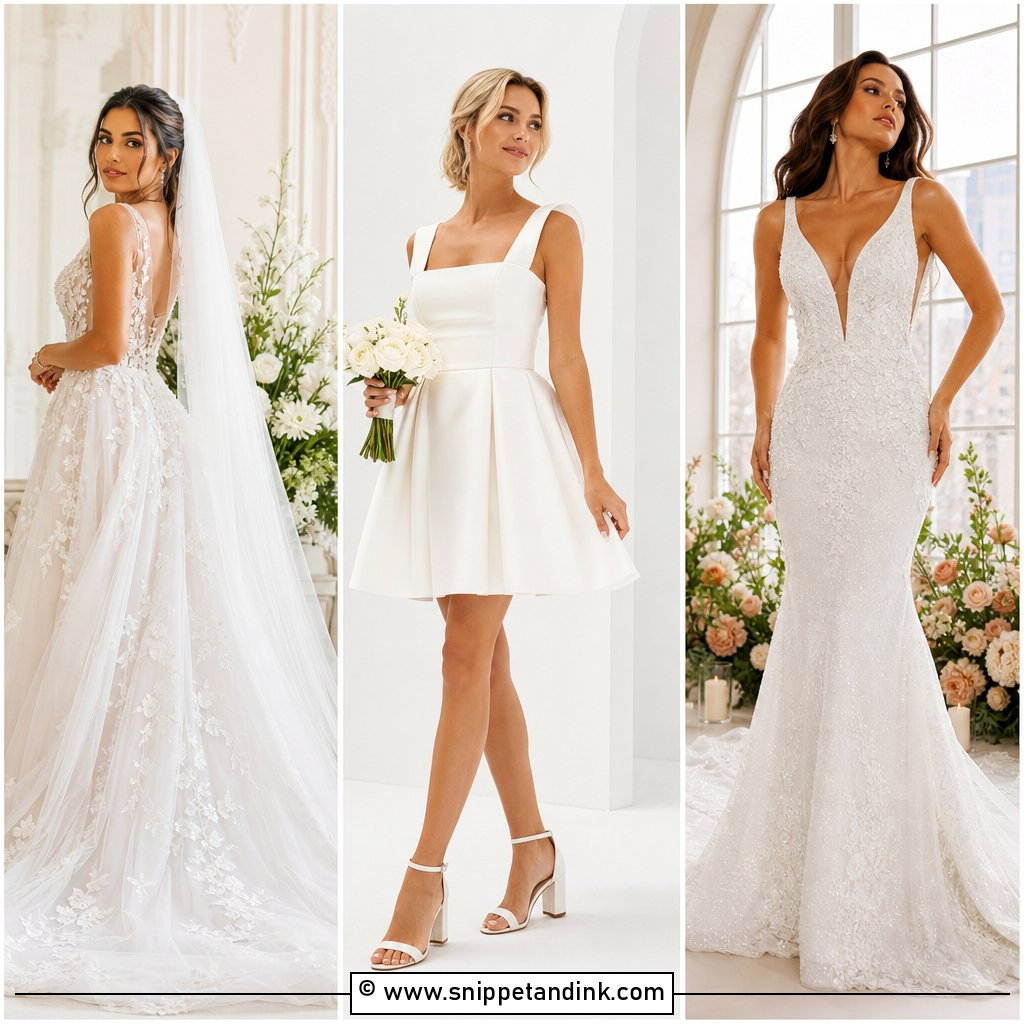
20. Overskirt Mermaid Wedding Dress
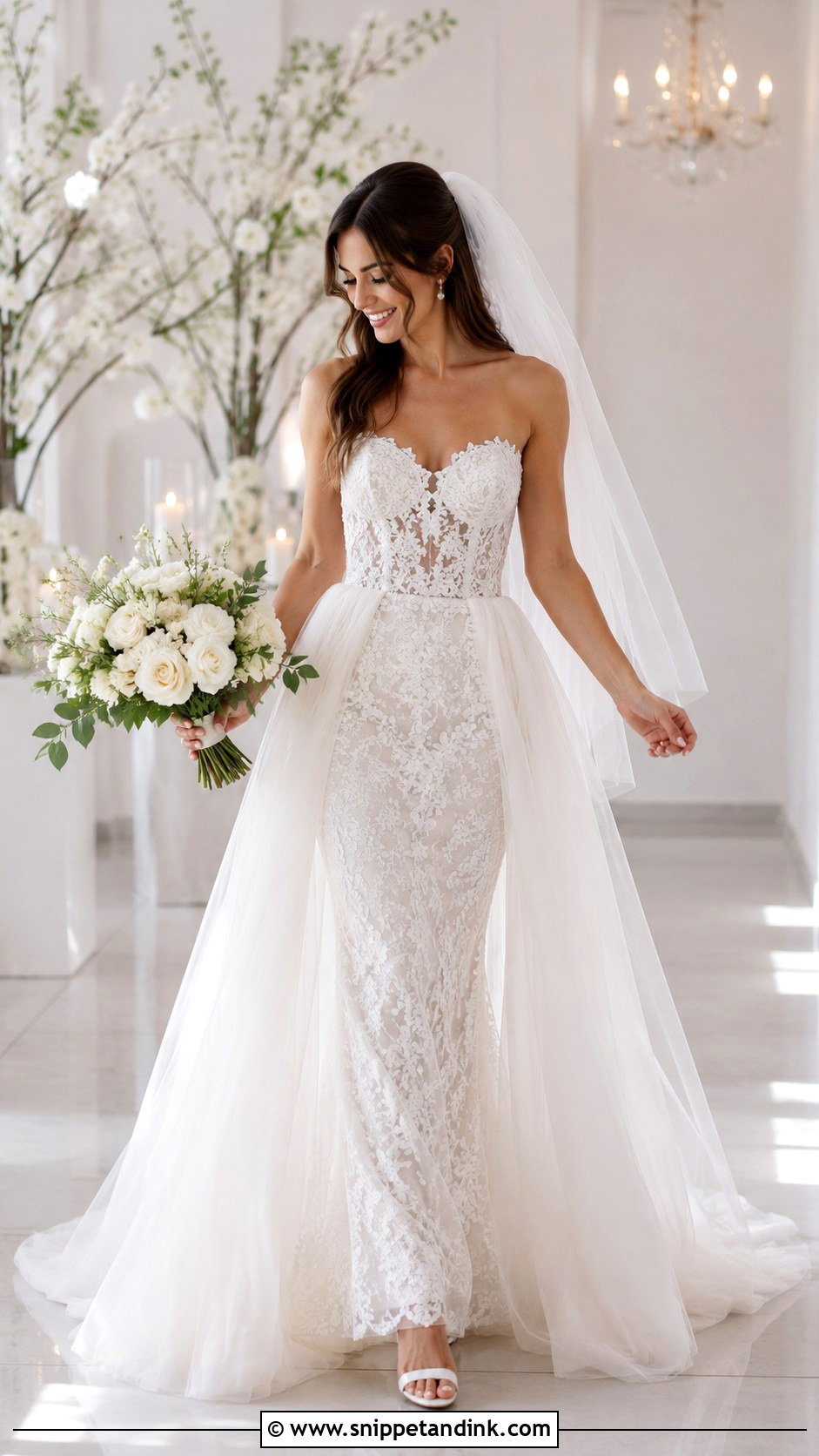
An overskirt gives you two silhouettes in one: a fuller look for the ceremony, then the sculpted mermaid underneath once it comes off. It’s a good answer for brides torn between a ball gown and a fitted dress. Tulle overskirts are airy; satin or mikado ones look more formal. The attachment at the waist should lie flat and not add bulk under the bodice, which is where cheaper versions give themselves away. A clean veil and simple jewellery keep both looks intentional.
21. Ruffle Mermaid Wedding Dress
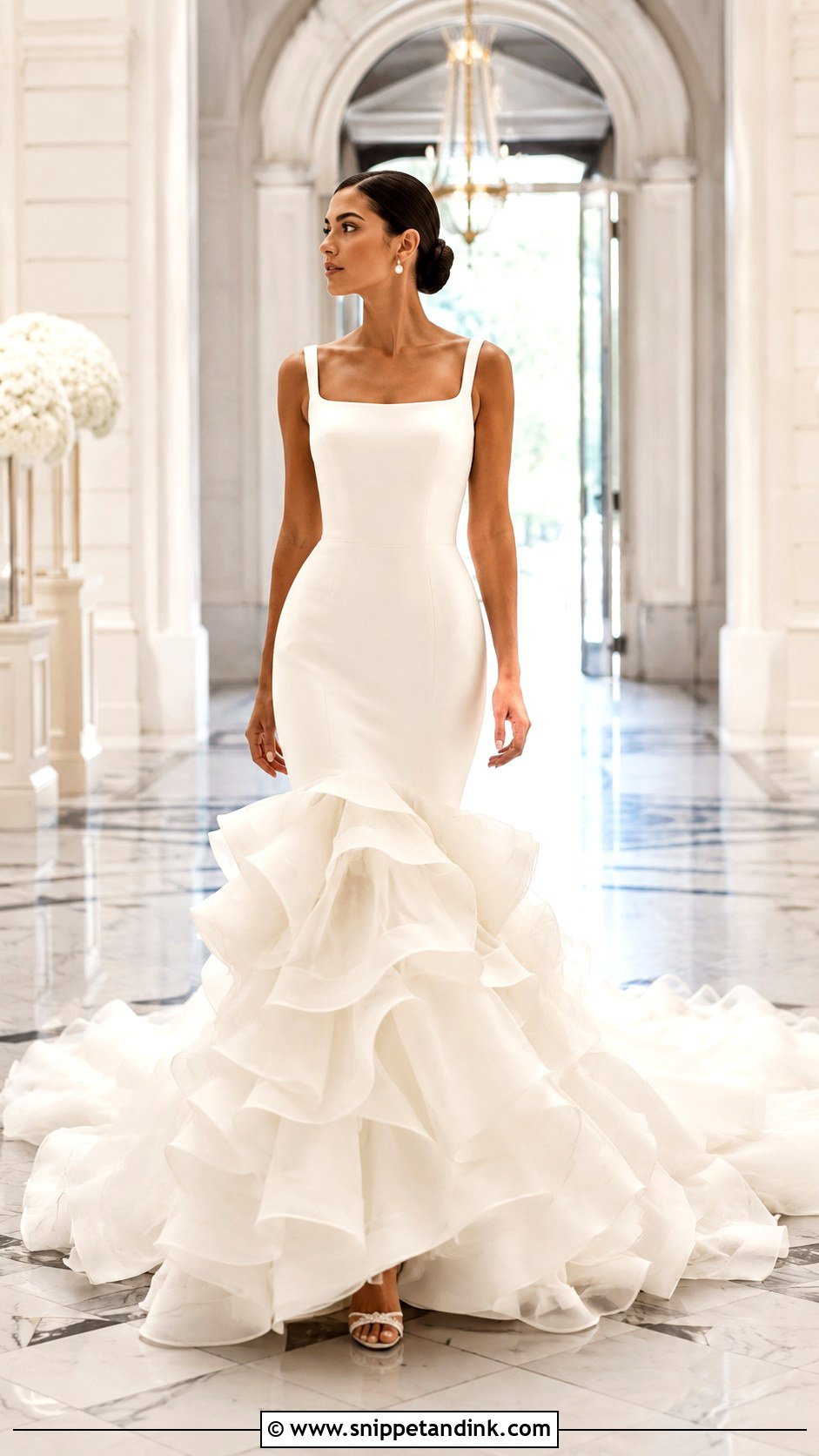
A ruffle mermaid wedding dress puts its volume at the flare, along the train or throughout the skirt. Soft organza ruffles look romantic; structured ruffles look editorial. Ruffles add bulk at the bottom, so keep the bodice plain and the neckline simple. They also catch on chair legs and doorframes, so plan a little extra space for your entrance and seat. A strapless neckline, smooth bun and minimal earrings balance the skirt for large venues and grand entrances.
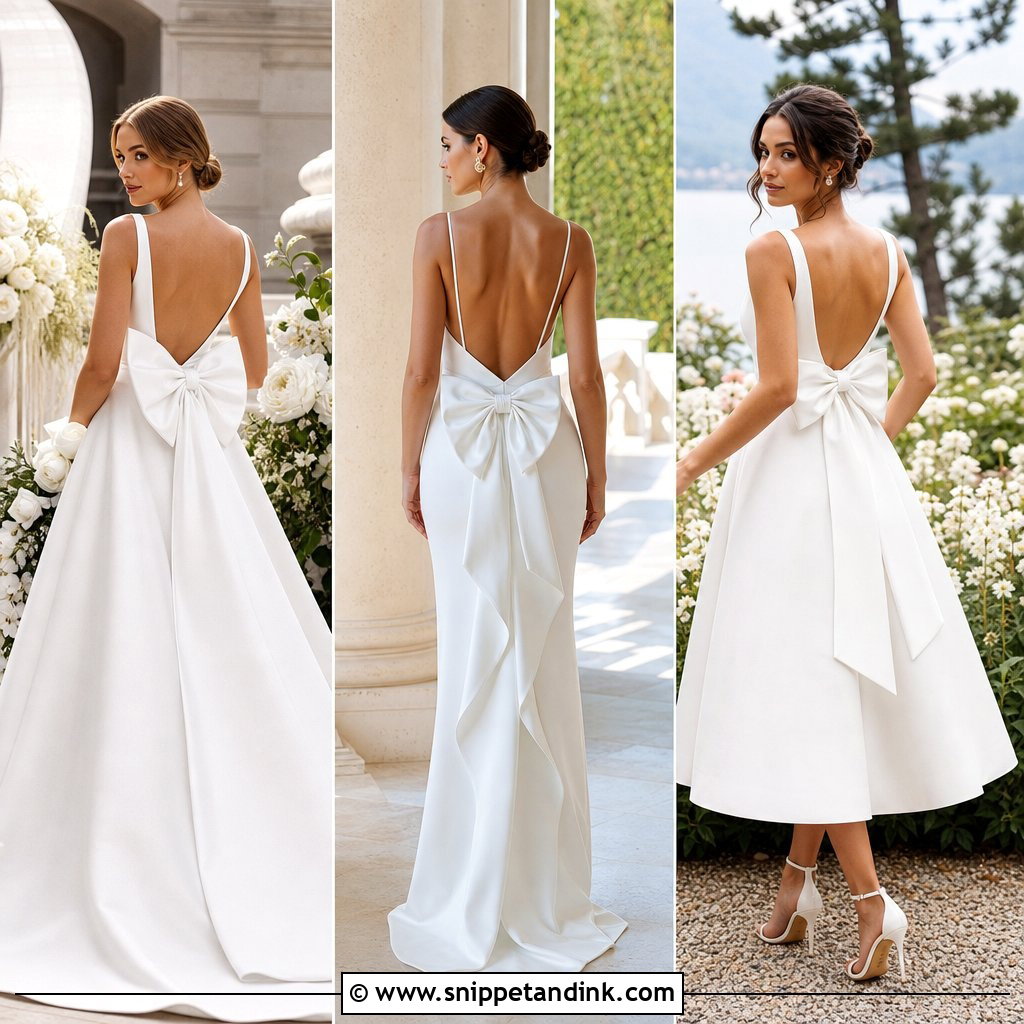
22. Bow Mermaid Wedding Dress
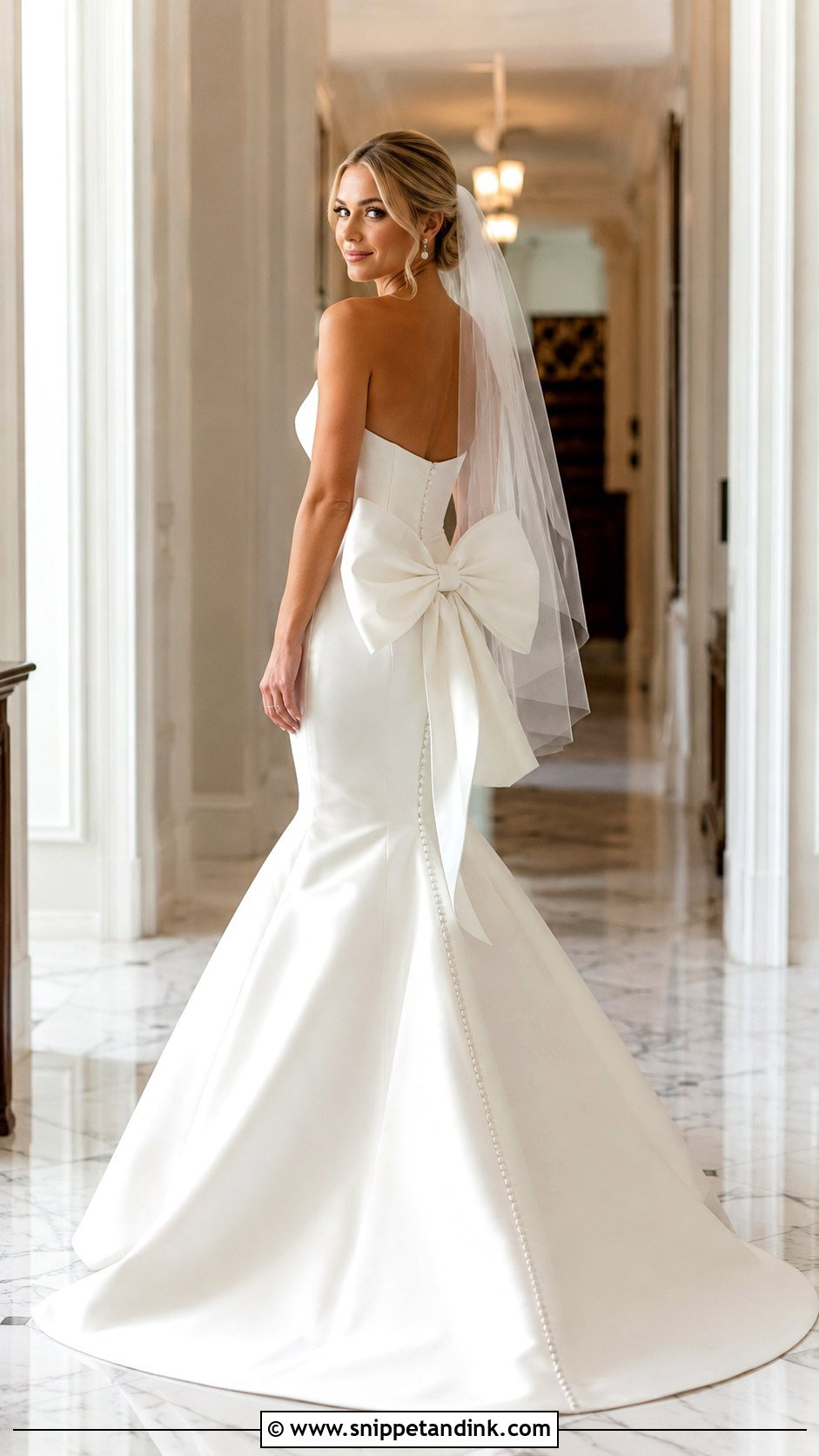
A bow mermaid wedding dress adds a single focal point, whether at the back waist, across the neckline, on one shoulder or above the train. A large satin bow is dramatic; a small one sweet and understated. Bows look sharpest on firm fabrics like mikado, satin and crepe; on soft fabrics they droop by evening unless they’re interfaced. If the bow is oversized, keep the veil short or sheer so the back stays visible. Pearl earrings, smooth heels and soft makeup suit it.
23. Champagne Mermaid Wedding Dress
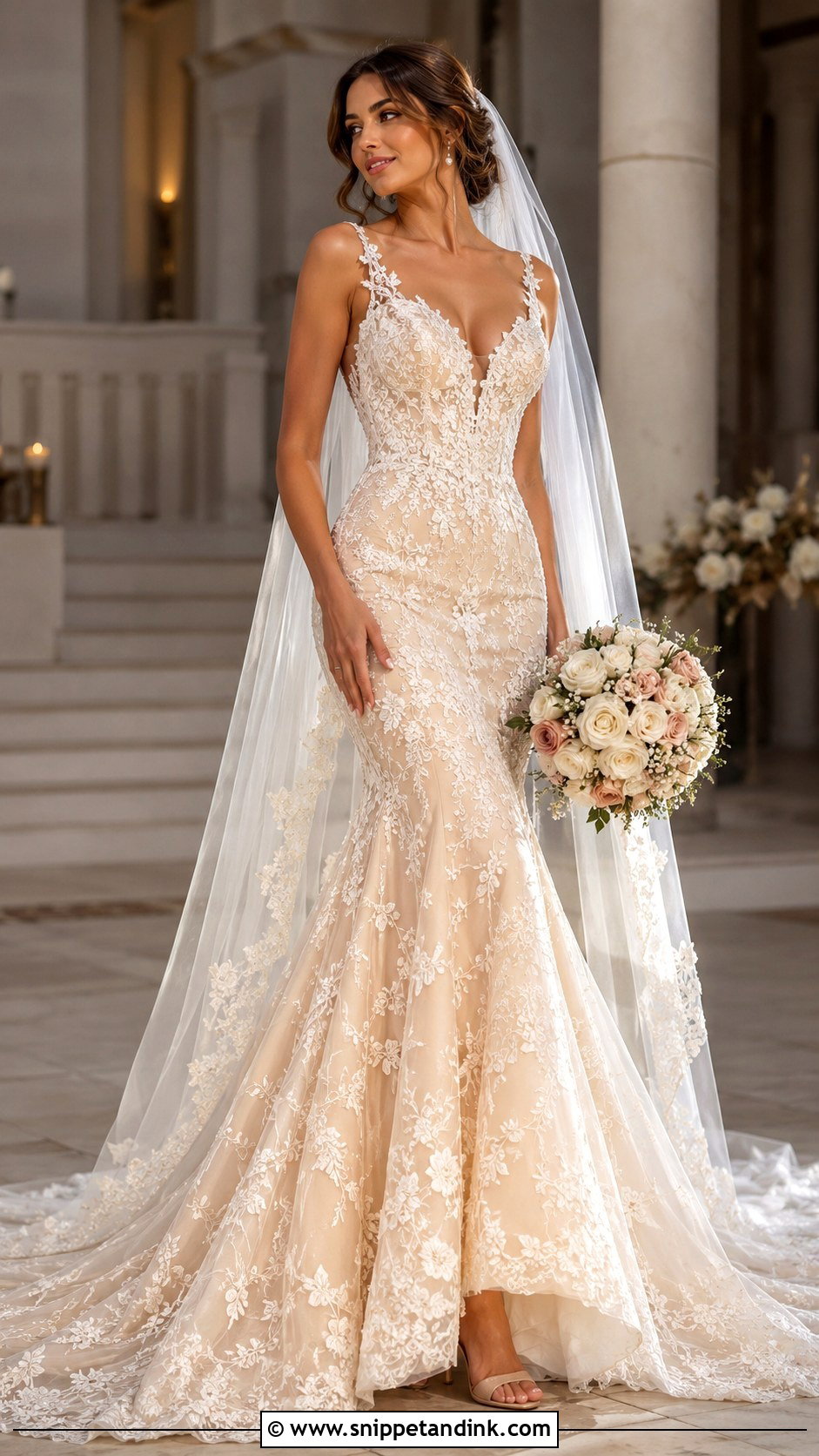
Champagne is the warm alternative to bright white, and it suits many skin tones, especially warmer ones that bright white can make look sallow. Lace, beading and appliqué show up better on a champagne base because the contrast adds depth. It suits evening weddings, outdoor ceremonies and venues with natural textures. I always send brides to veil shopping with a swatch; a bright white veil against champagne makes the gown look dirty rather than warm. Ivory, nude or metallic accessories keep everything cohesive.
24. Plus Size Mermaid Wedding Dress
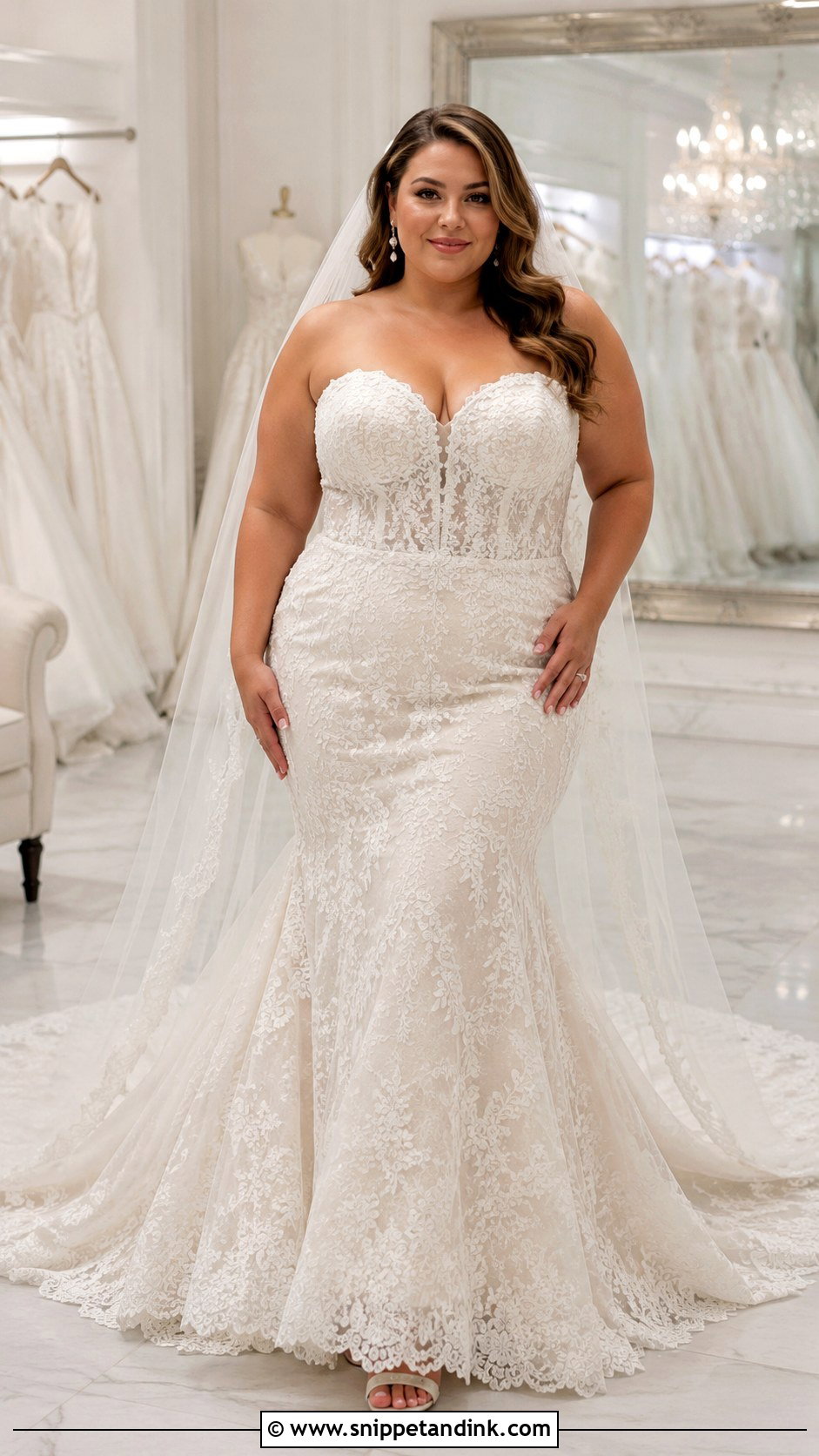
A plus size mermaid gown can be incredibly flattering when the structure does its job. Look for supportive bodices, strong seams, a comfortable lining and a flare set at the right point for your proportions. Lace appliqué, ruching and vertical details shape without hiding. Try several necklines, including sweetheart, off-shoulder, V and square, because small changes make a big difference. The dress should support you, not squeeze you, and alterations should be done by someone experienced with fitted bridal gowns. Comfortable heels and secure undergarments matter more than any accessory.
25. Beach Mermaid Wedding Dress
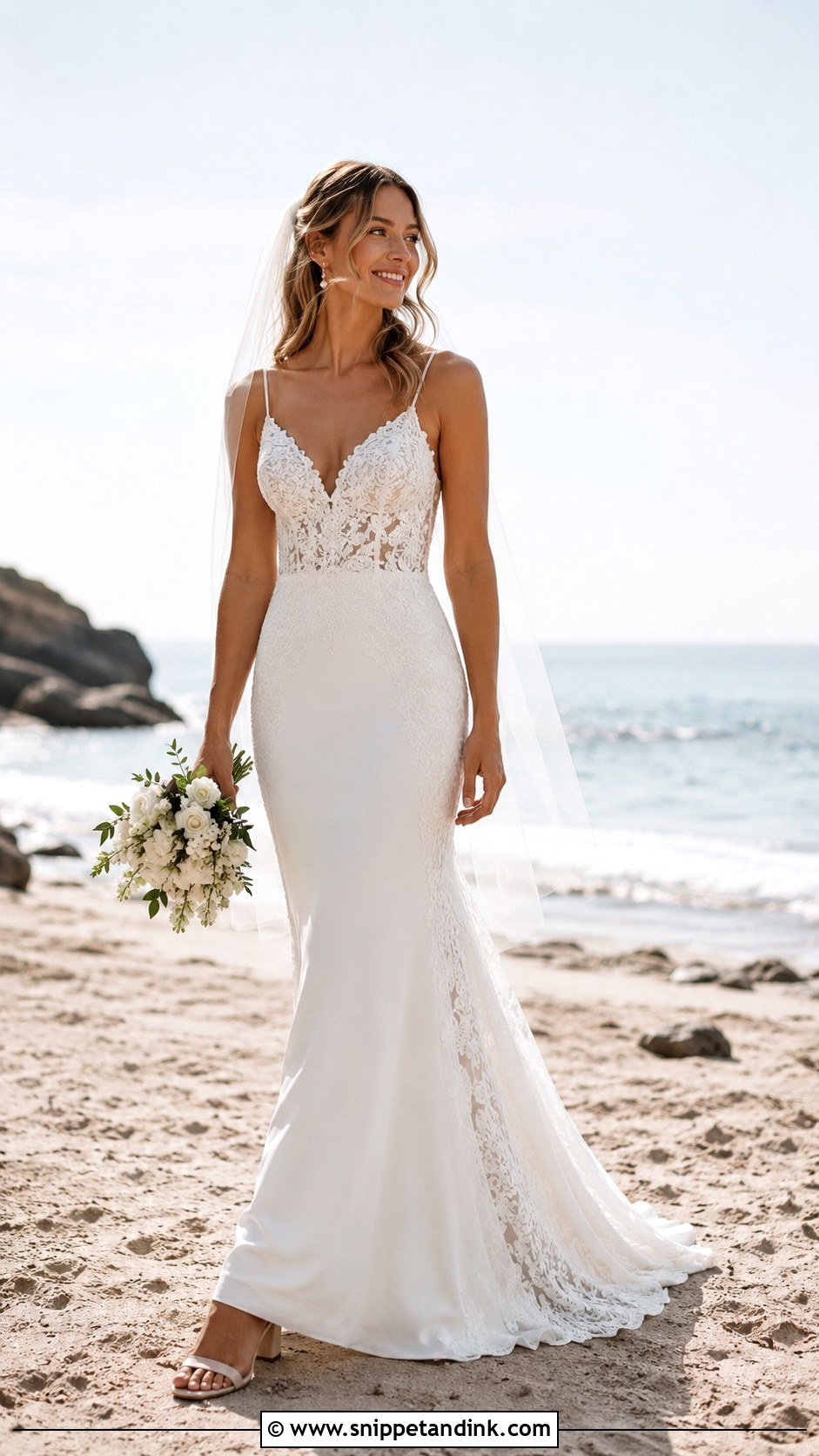
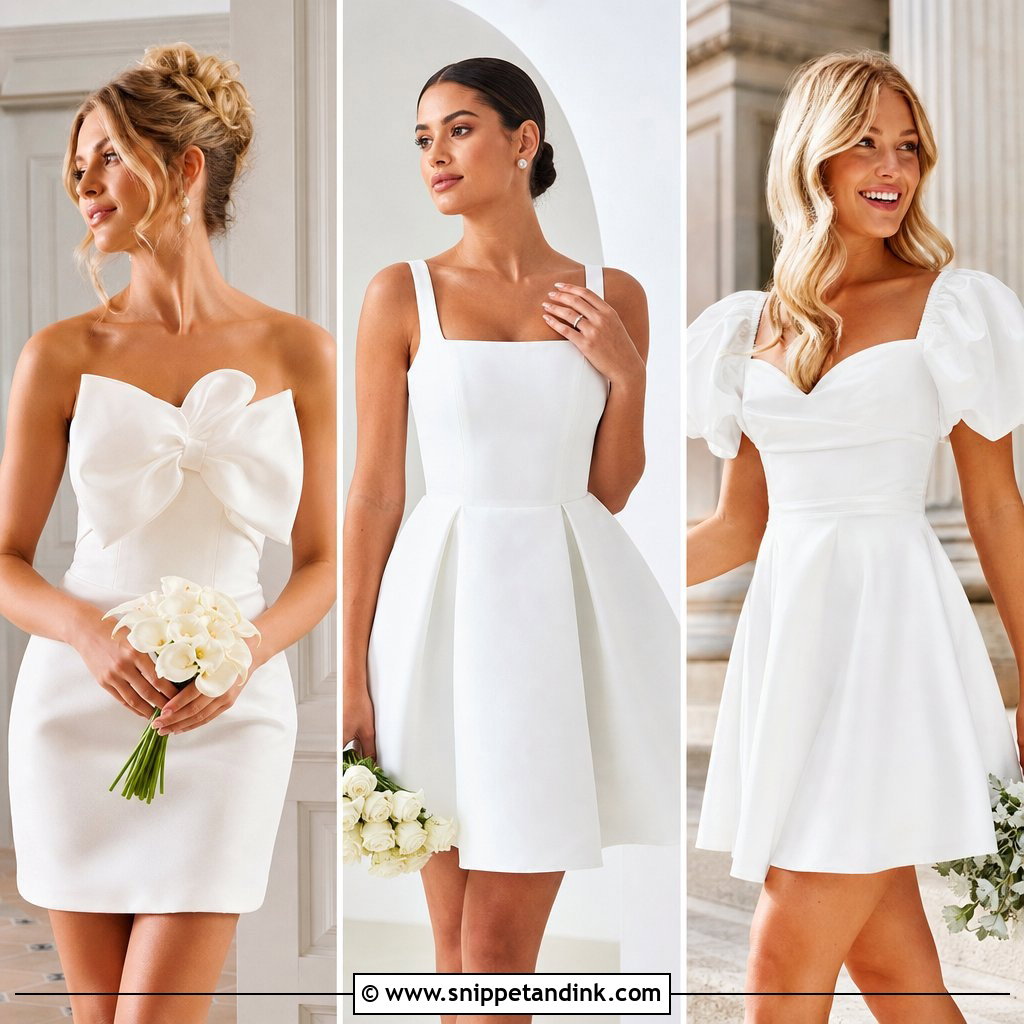
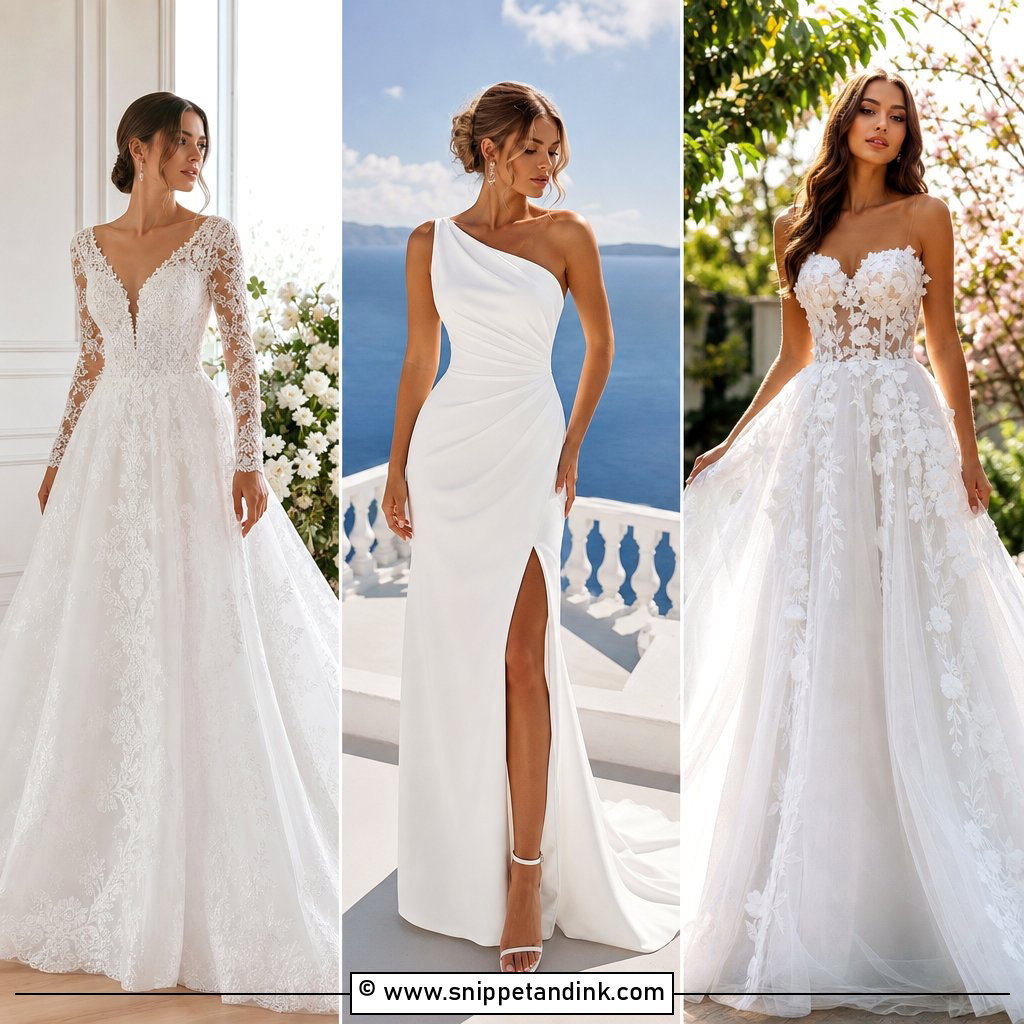
A beach mermaid wedding dress needs to breathe and move on sand. Choose stretch crepe, soft lace or airy tulle instead of heavy satin or mikado, and a gentle flare rather than a big structured train, which drags sand along with it. Thin straps, off-shoulder sleeves or a simple V suit a relaxed setting. Pearl earrings, soft waves and wedges or barefoot sandals work, and a light veil should be weighted or pinned firmly, because sea breezes rarely let a veil float the way photos suggest.
What to Wear Underneath a Gown This Close-Fitting
Underwear is the detail brides leave until last, and with a mermaid it’s the detail that shows first. Satin and crepe in particular reveal any edge or seam beneath them.
Support
Many mermaid gowns can have cups sewn in at alterations, which removes the need for a bra entirely and works with open backs and plunging fronts. If you prefer a bridal bustier or longline bra, buy it before your first fitting so the dress is altered around it.
Smoothing
- I’d choose shapewear that ends above the knee, since a band that stops exactly at the flare line shows through.
- Skin-tone underwear disappears under white and ivory far better than white does.
- Avoid high-compression pieces you’ve never worn; after hours of sitting they roll at the waist and dig in.
- Wear the full set to every fitting, every time.
Finally, think about the bathroom. A fitted skirt plus a shapewear bodysuit with no opening is a long process, so a two-piece set or one with an opening saves a lot of time in a small room.
Can You Sit, Hug and Dance in It?
Those three tests tell you more about a mermaid gown than any photo. Some brides will land on clean crepe and a square neck, others on lace, beading, pearls, ruffles or a detachable train. Whatever the fabric, a fitted silhouette depends on construction, so check the boning, the lining, the flare point and the hem against your shoes. Try several fabrics and flare points, bring your own shoes, and keep going until the dress holds you securely without asking you to hold your breath.
You'll Like These Ideas:


Leave a Reply