
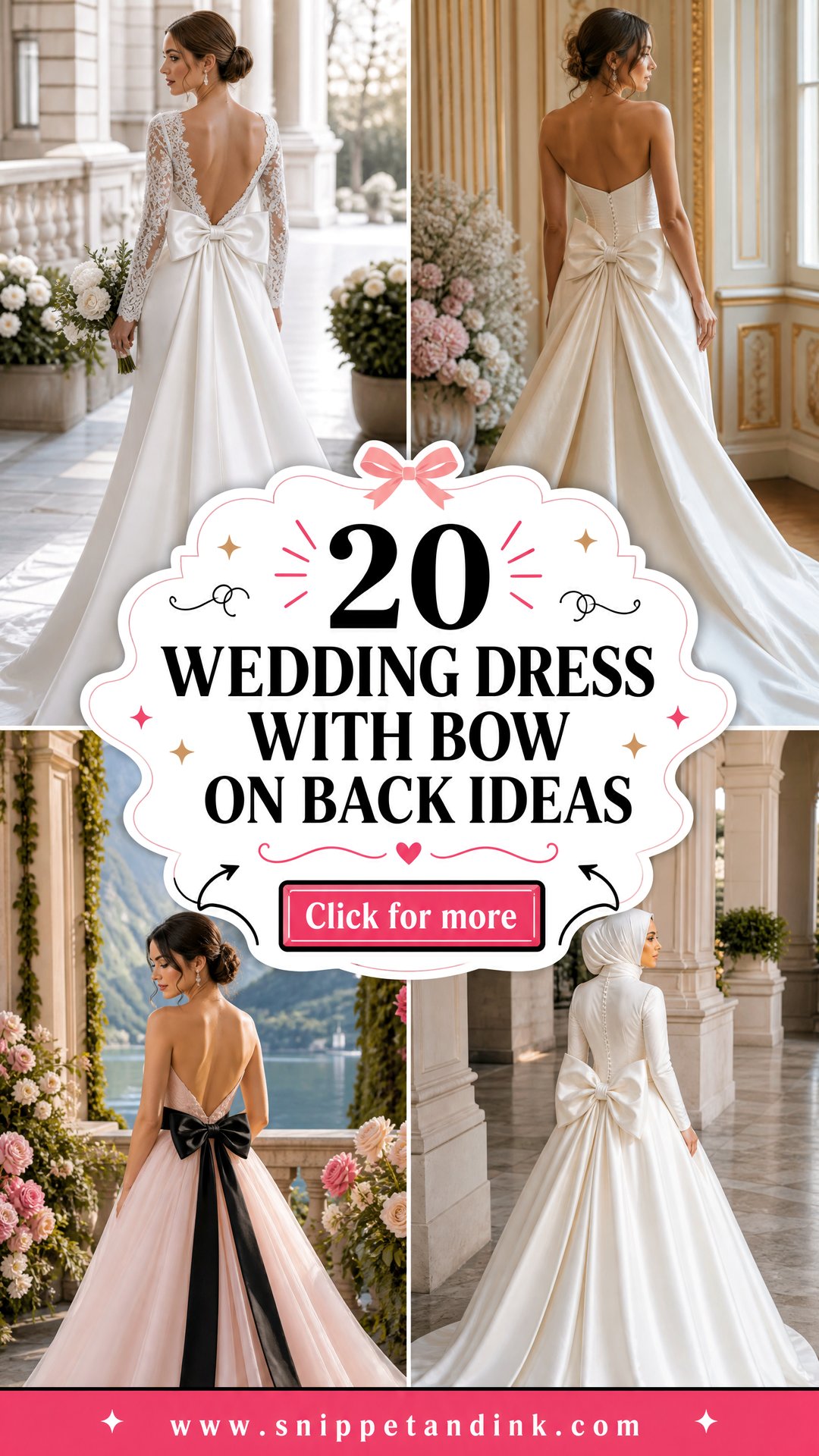
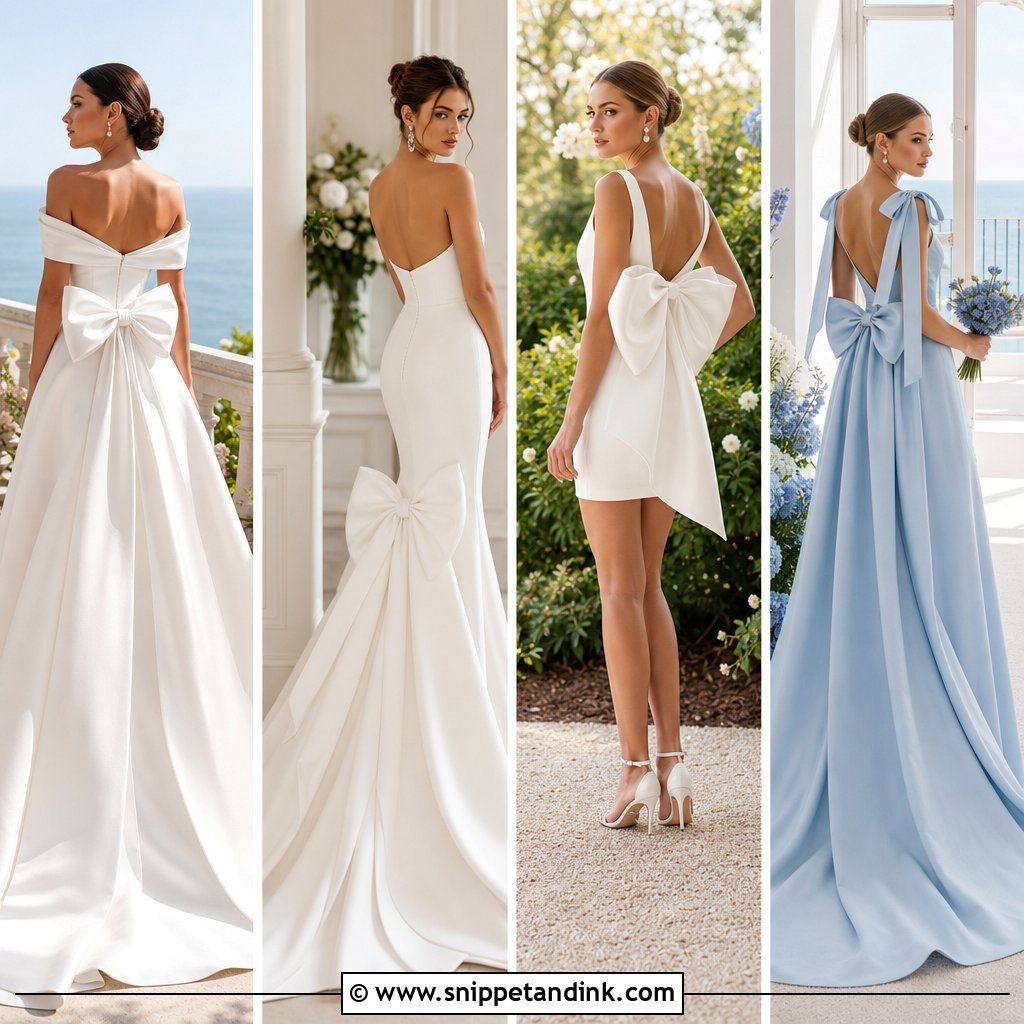
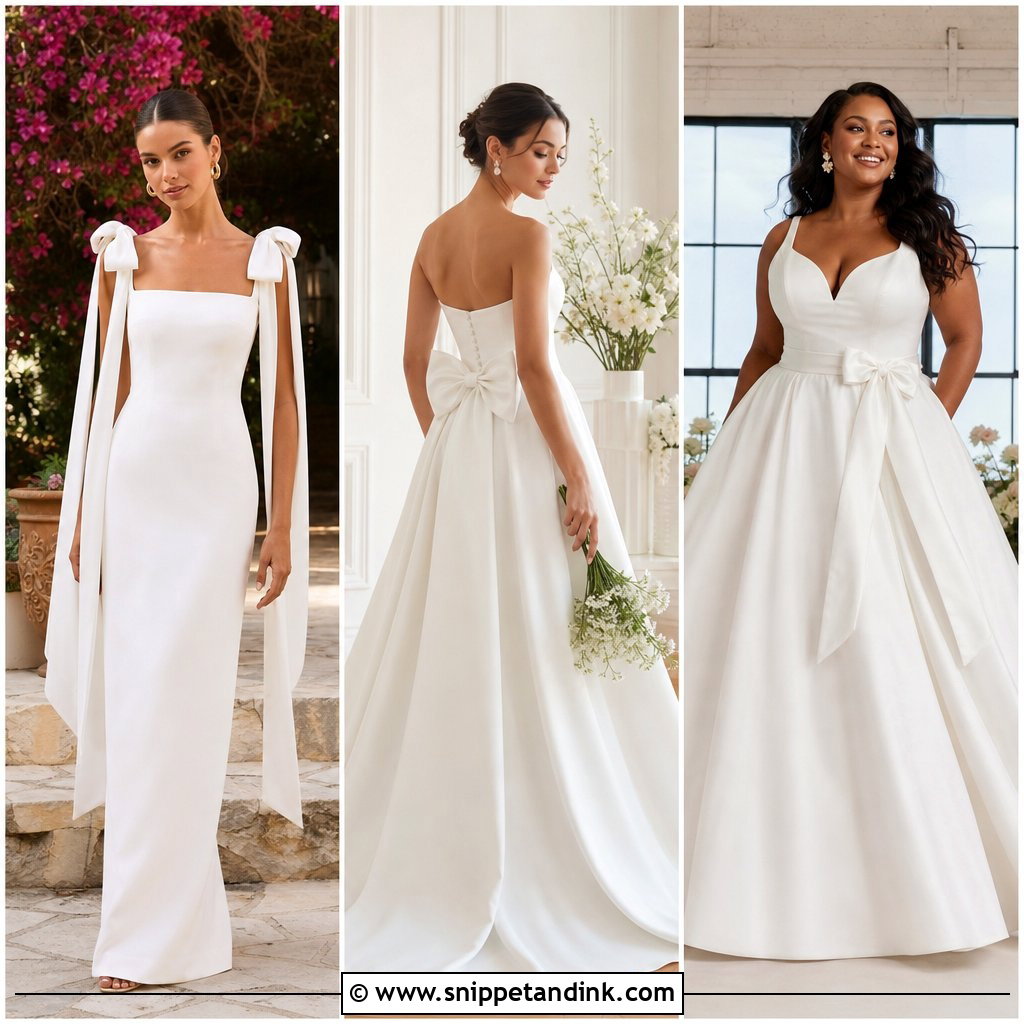
Your guests watch the back of your gown for most of the ceremony, which is why a wedding dress with a bow at the back is such a good use of detail. Bows come as fine ribbons, structured loops, long sweeping tails or full detachable trains, and they sit happily on satin, Mikado, crepe, lace and organza. Designers keep showing both tiny and oversized versions, many of them removable for the reception. What I look at first with any bow is whether it frames the best part of the dress or sits on top of it. The twenty gowns below range from minimal columns to full ball gowns, with notes on venue, season and fit.
Sizing a Back Bow to Your Height and Train
A bow that looks right on a tall sample model can swamp a petite bride, and a tiny bow can vanish on a big ball gown. When I size a bow, I look at three measurements together.
Width
A useful starting point is a bow no wider than your back at the waist. Wider than that and it reads as wings from the front, which some brides want and most don’t. Petite frames usually look best with medium loops; tall brides can carry an oversized bow without it taking over.
Tail length
Tails should end with purpose: at the hem, at the start of the train, or blended into it. Tails stopping halfway down the skirt look like they were cut short by mistake.
Height on the back
At the natural waist a bow defines your shape. On a low back it frames skin. A high bow between the shoulder blades gives a more fashion-led look but interferes with veils and long hair. Pin a paper template or a spare ribbon at a fitting and look at it in a phone photo from about ten steps away, which is how most guests will see it.
1. Mikado A-Line Wedding Dress With Oversized Back Bow
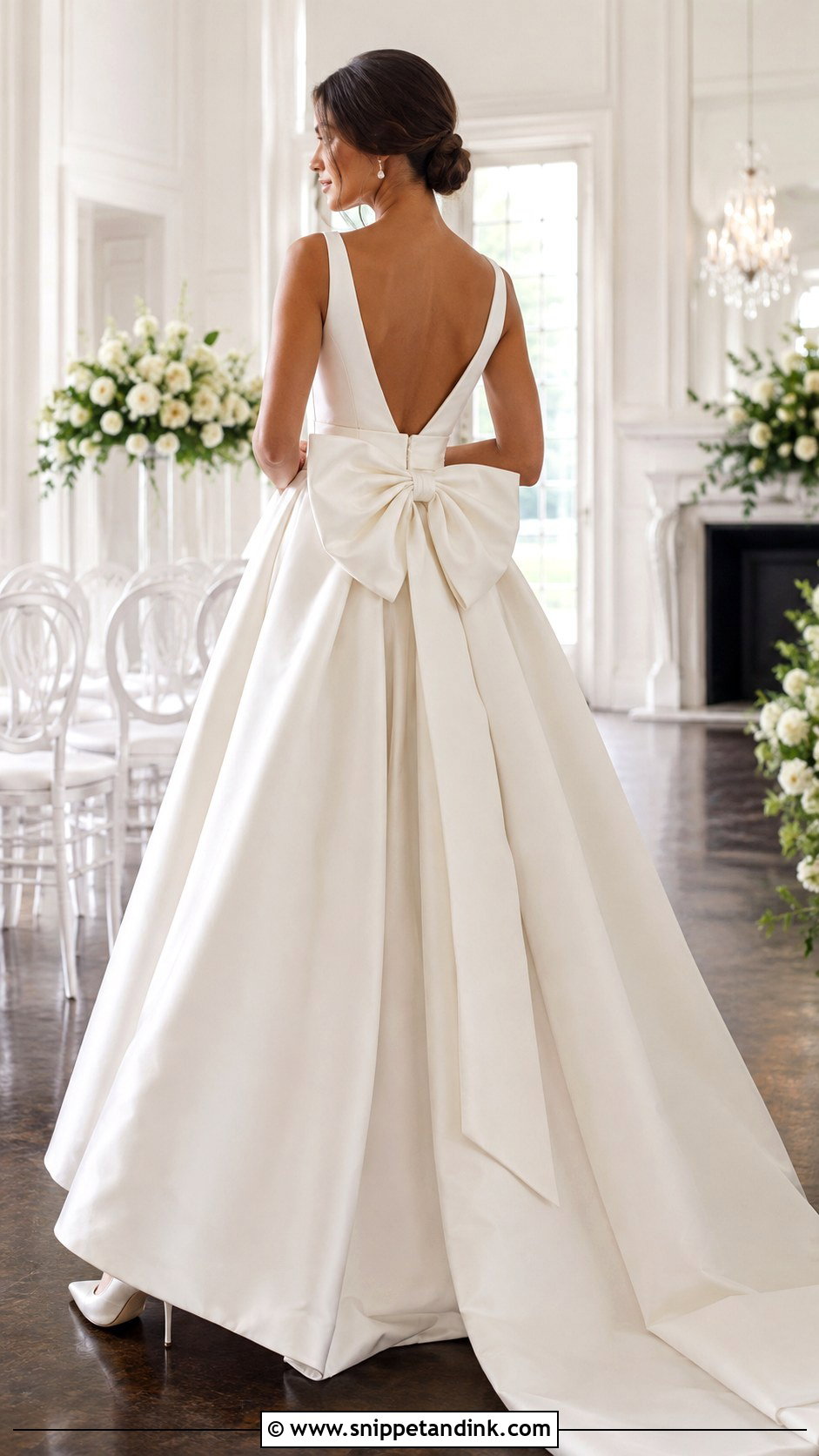
Mikado is the fabric I reach for when a bride wants a big bow, because its tight weave holds a loop without any help. Set on an A-line with a fitted bodice and natural waist, a wide bow at the back waist gives drama while the gown itself stays plain. Long tails can run into a chapel train so the back reads as one continuous line. Pointed ivory heels, pearl studs and a smooth low bun suit it. The veil needs a decision: a fingertip length should finish clearly above or below the bow, never halfway across it. An oversized bow is heavy, so ask your seamstress to anchor it to the waistband, not just the outer fabric.
2. Satin Mermaid Wedding Dress With Detachable Back Bow
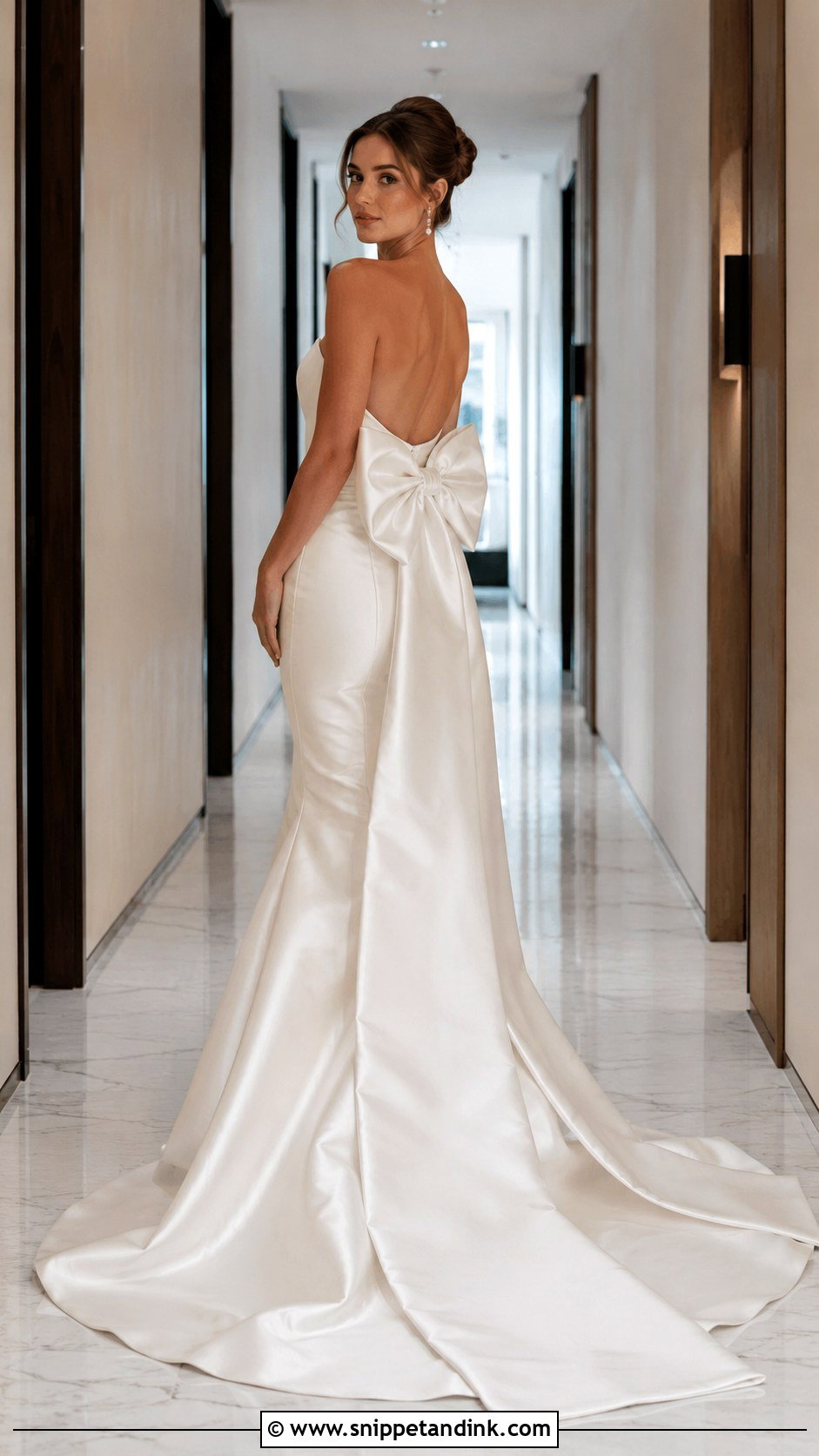
Picture smooth satin following the body and opening into a soft flare. A detachable bow at the lower back adds volume right where the mermaid curve is strongest. Medium loops with long tails falling over the train look balanced; huge loops on this shape can make the hips look wider than the gown intends. Wear it through the ceremony and portraits, then unhook it for dancing. Satin reflects every ripple, so the fit across waist and hips has to be precise. When the bow comes off, check the back in a mirror; any visible hook or snap means the fasteners need to be moved inward.
3. Strapless Ball Gown Wedding Dress With Bow Train
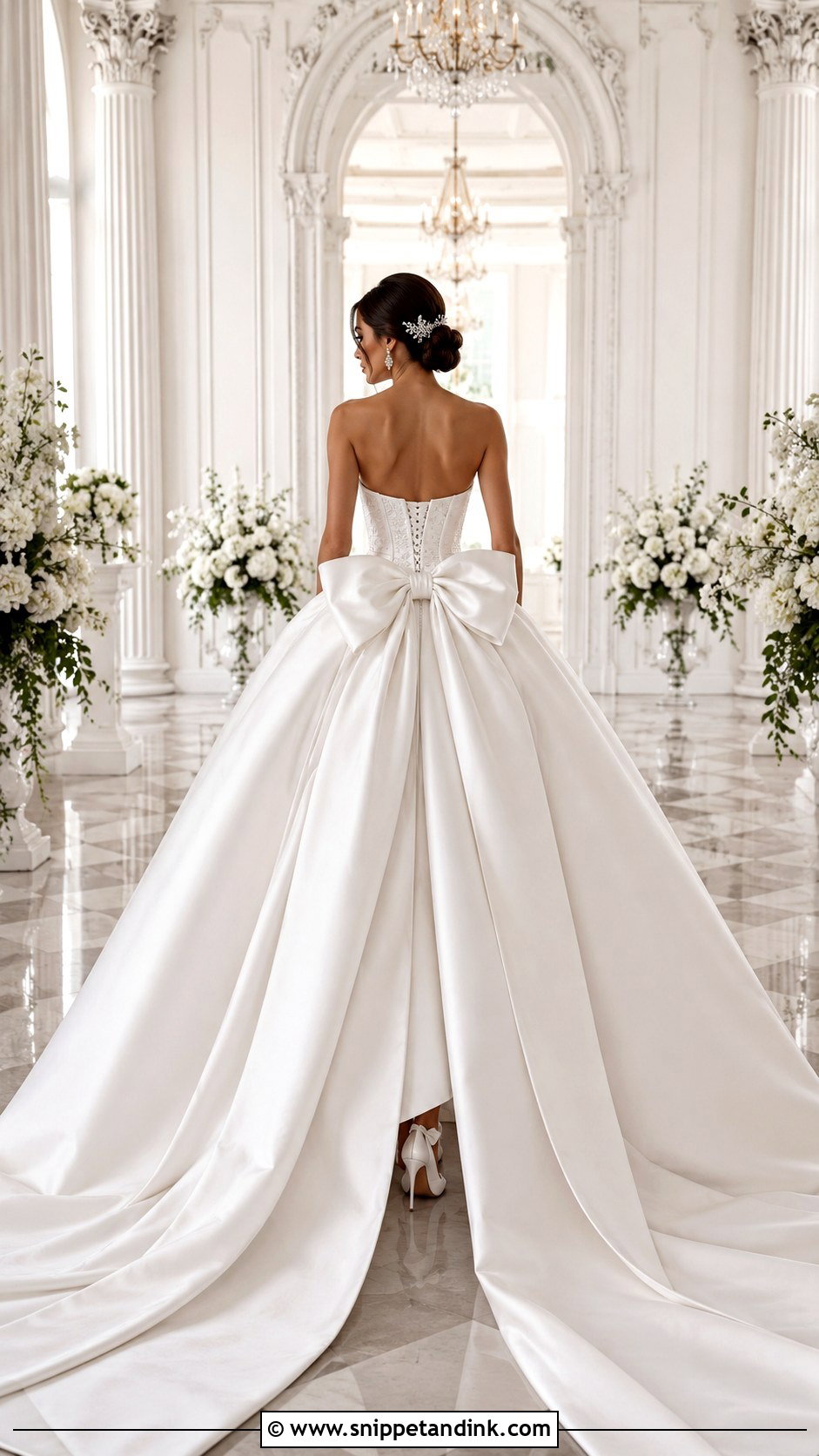
No heavy beading needed: a strapless ball gown with a bow that becomes a train makes the entrance on its own. Look for a supportive corset bodice, a gently scooped neckline and a full satin or Mikado skirt. At the back, an oversized bow extends into long panels that read almost like a second train. Keep the head simple with a crystal comb and small earrings, and closed satin heels underneath. A cathedral veil doubles the drama but hides the bow; a shorter one leaves it in view. Panels that long need either to detach or to bustle with the skirt, and I’d sort out which during the first fitting, not the last.
4. Square Neck Wedding Dress With Low Back Bow
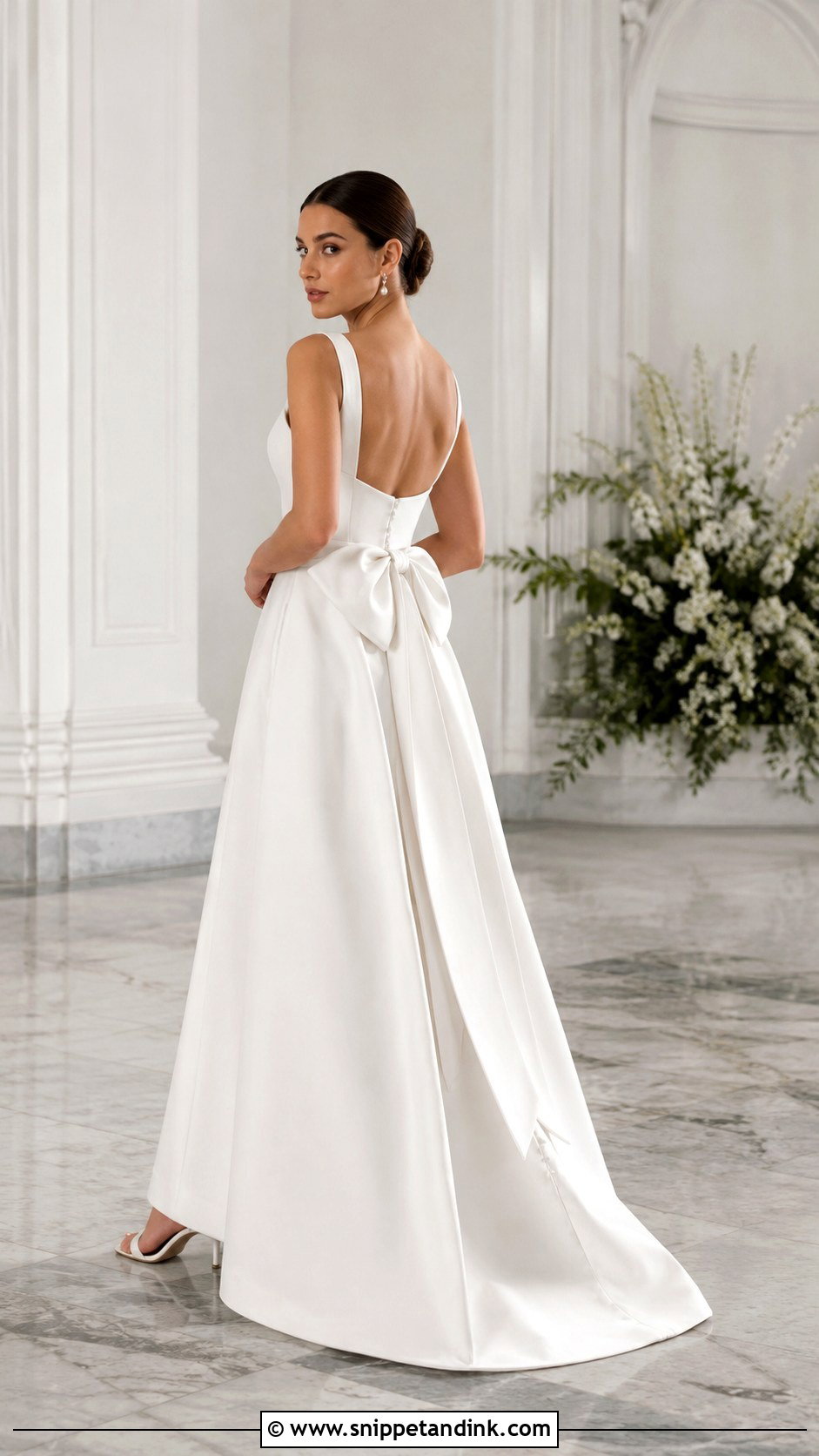
A square neckline keeps the front architectural while a low back and bow carry the romance behind. Pick a fitted bodice with wide supportive straps over an A-line or column skirt in satin, crepe or faille. The bow belongs at the lowest point of the opening, where it frames the waist instead of filling the cutout. Pearl drops, a neat chignon and slim heels are plenty, and the square neck needs no necklace. Before buying, work out what goes underneath. Low backs rule out most bras, and a bow stitched only to thin fabric at the base of the opening will drag it down unless it’s anchored to the waist seam.
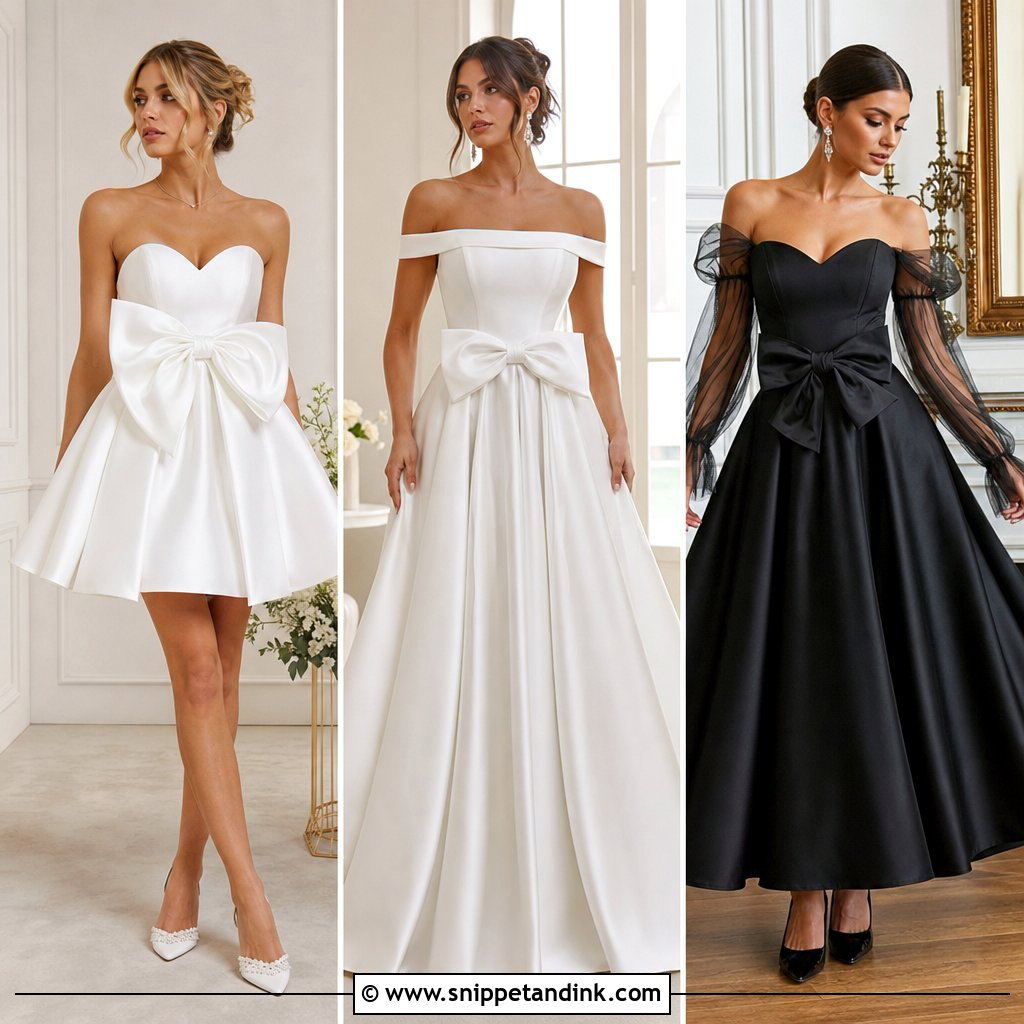
5. Off Shoulder Wedding Dress With Structured Back Bow
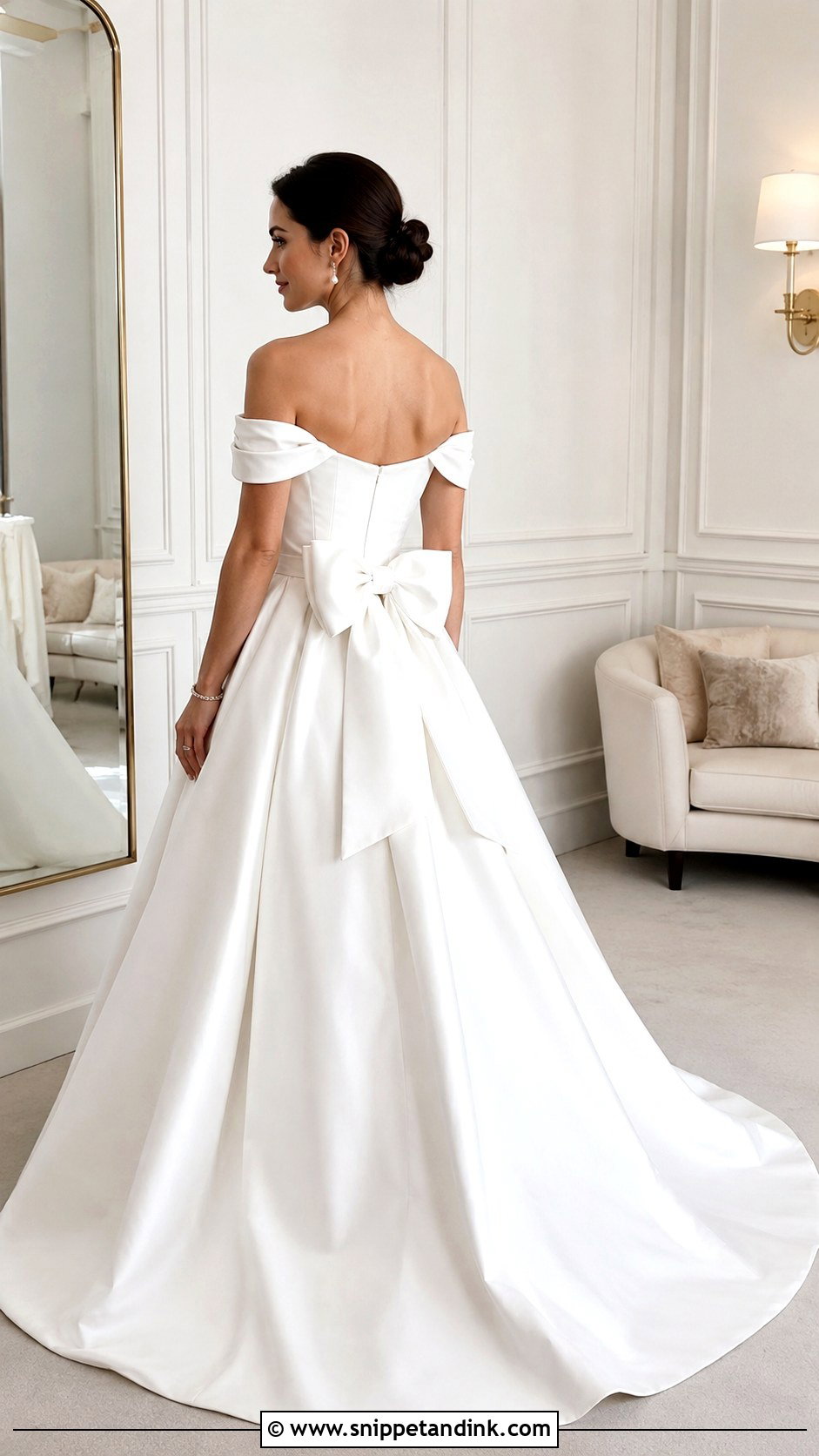
Soft off-the-shoulder sleeves and a structured bow give two different moods front and back, which I find makes for a more interesting gown. Keep the bodice smooth, the waist fitted and the skirt a full A-line. A medium or oversized bow cut from the same Mikado looks designed in rather than added later, and its horizontal shape helps mark the waist. A delicate bracelet, pearl earrings and hair swept back to leave the shoulders bare finish it. Block heels are fine under a long skirt. A clean-edged veil is the best partner; heavy embellishment competes with both the neckline and the bow.
6. Lace Wedding Dress With Satin Back Bow
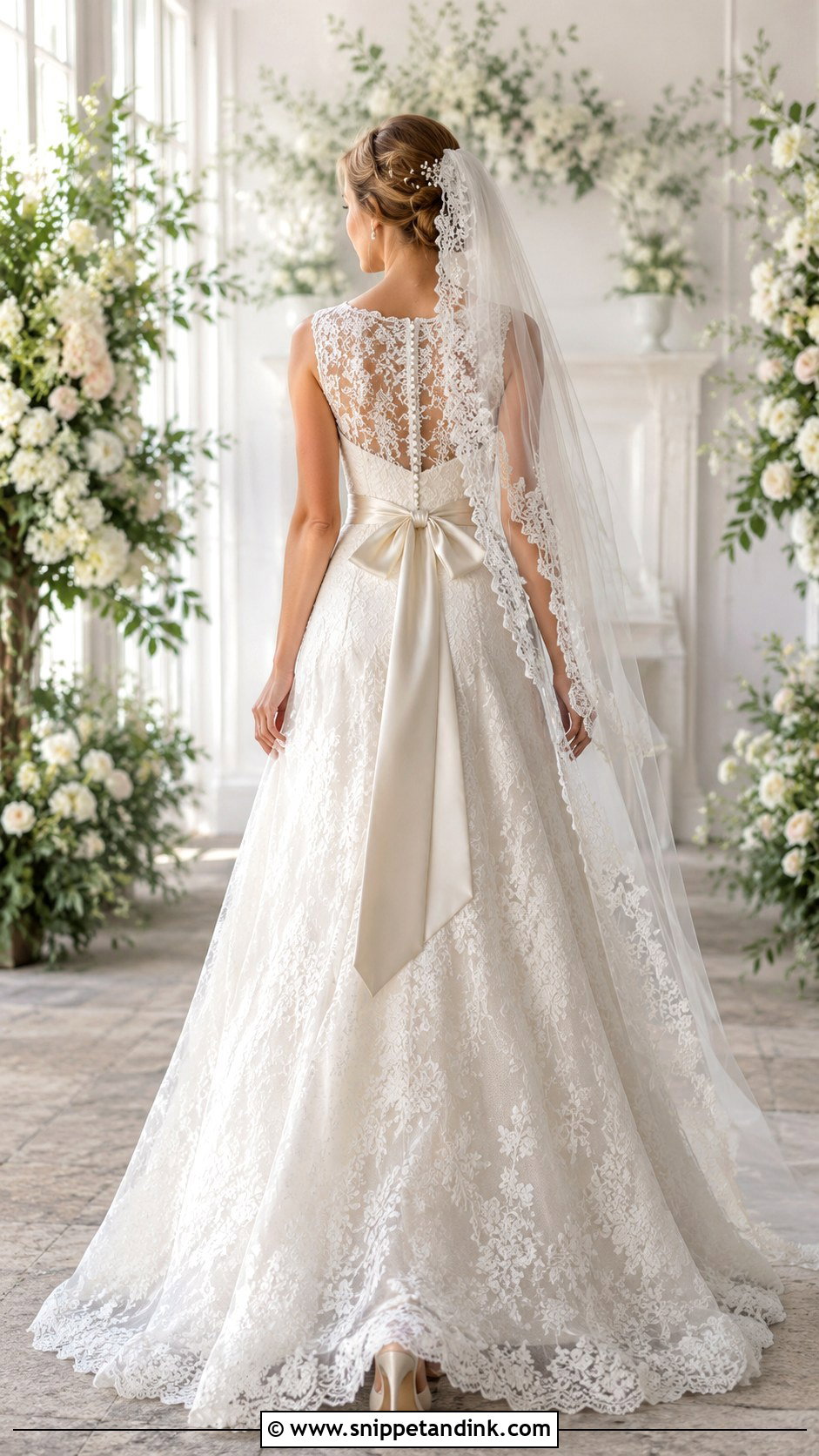
Smooth satin against textured lace makes both look stronger. Start with a fitted lace bodice over a flowing A-line, or an allover lace gown with a clean back waist. The satin must match the gown’s exact ivory, white or champagne, and that’s harder than it sounds: lace is often dyed separately from satin, so hold the two together in daylight before agreeing. Medium loops and soft tails define the waist without hiding the lace. Pearl pins, ivory pumps and a light tulle veil with a fine lace edge are enough. At the fitting, have someone photograph your back, because a bow can easily land on top of the best lace motif.
7. Minimalist Crepe Wedding Dress With Small Back Bow
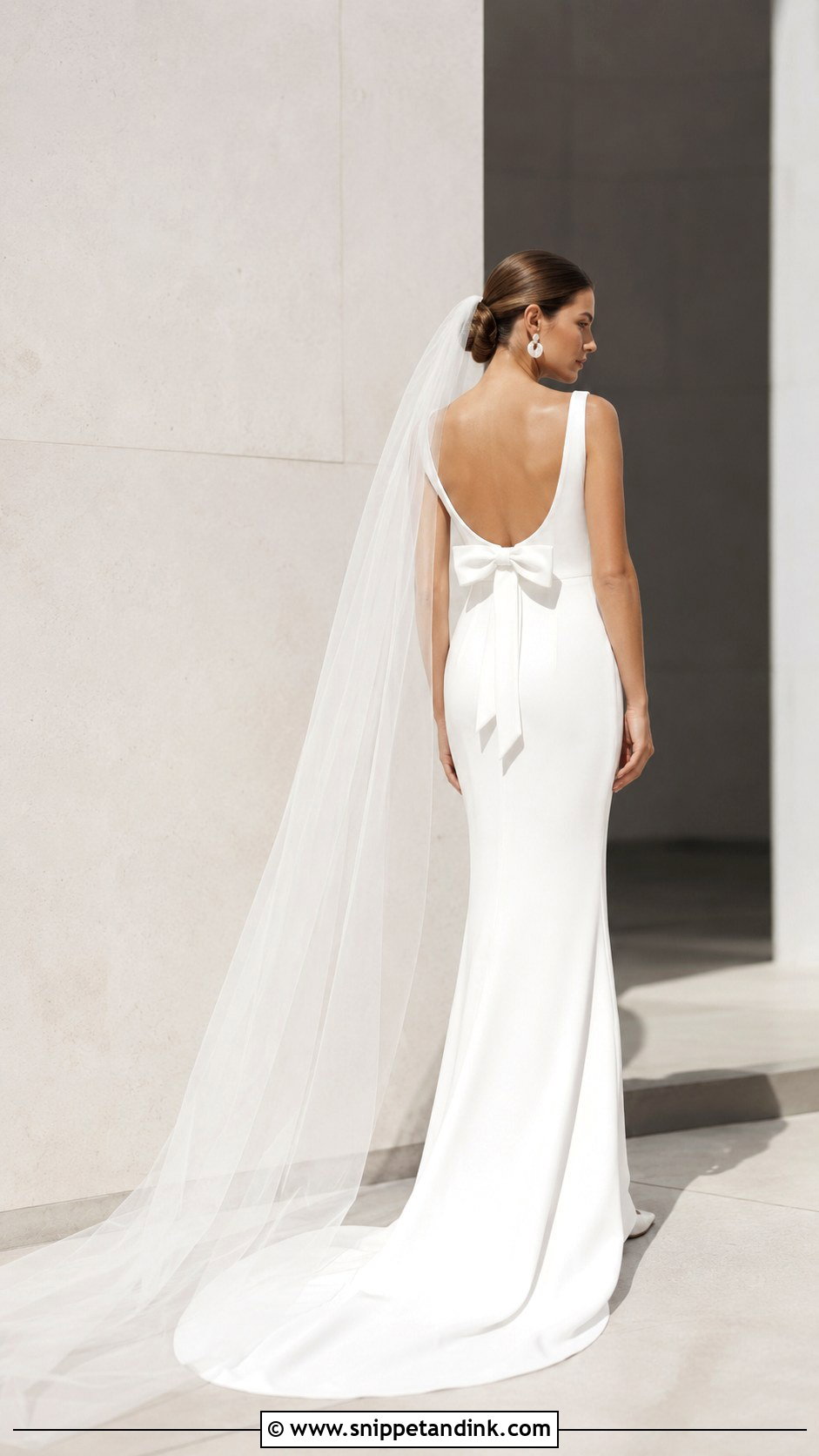
Not every bow needs to be big. A small, neat bow softens a minimalist crepe dress and keeps the line sleek. Choose a column or fit-and-flare with a clean neckline and smooth back, and set the bow above a row of covered buttons or at the top of a narrow opening. Short tails keep it tidy. Sculptural earrings, pointed pumps and a sleek low bun suit the mood, with a plain cathedral veil for ceremony contrast. Crepe clings, so smooth, no-line underwear and careful alterations are essential. I check that a small bow sits dead centre, because on a plain back even a slight tilt is obvious.
8. Long Sleeve Wedding Dress With Bow Back
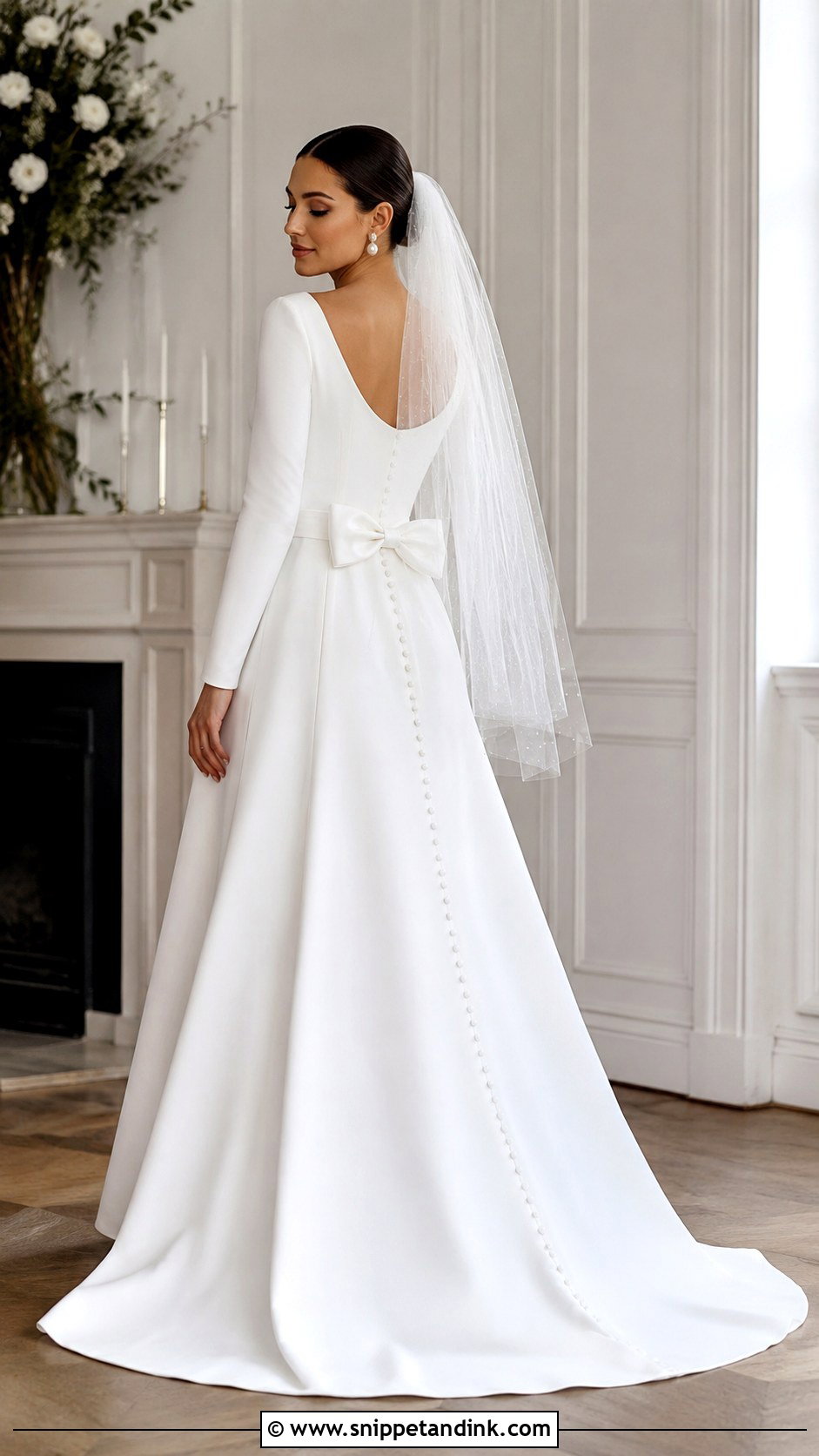
Cooler months or a wish for coverage make a long-sleeve gown with a bow at the back waist a strong option. Crepe sleeves look clean; lace sleeves add texture. A modest bateau or high neckline balances well with a shallow V-back, covered buttons and a medium satin bow. An A-line skirt moves easily. Closed heels, pearl earrings and a smooth bun or soft waves pinned back complete it, with a fingertip veil so the sleeves stay visible. The bow should finish the line between bodice and skirt, and I make sure it doesn’t sit over the button placket, or nobody can undo it at the end of the night.
9. Halter Neck Wedding Dress With Draped Back Bow
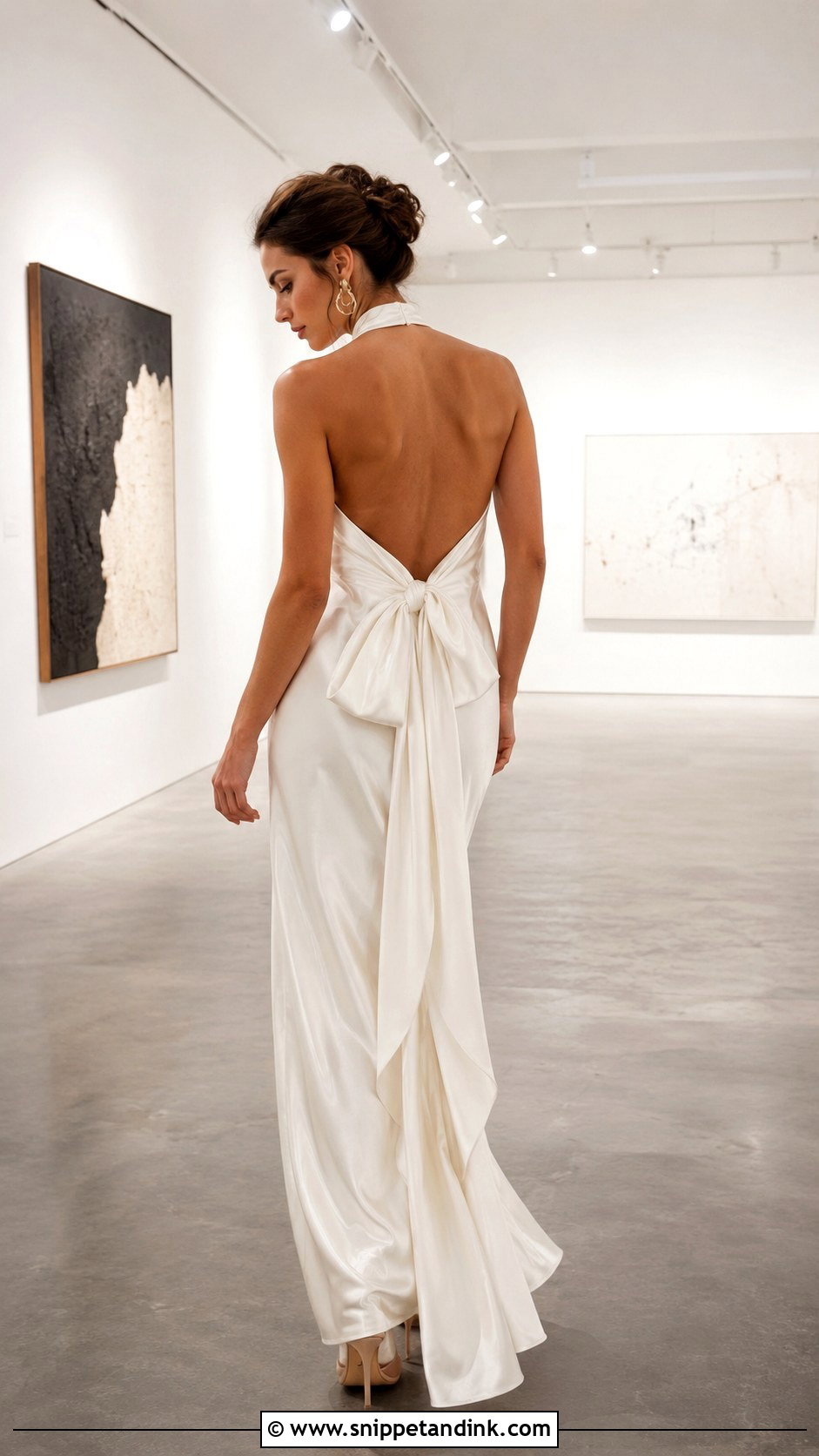
A halter neck already sends attention to the shoulders and back, so a draped bow at the waist makes the rear view the main event. Silk satin or fluid crepe lets the bow tails fall softly instead of standing stiff. A fitted column or gentle fit-and-flare keeps the long line. An updo, statement earrings and slim heels suit it, with nothing at the neck. I’d swap a traditional veil for a comb or a short veil that doesn’t cover the open back. Look at the bow side-on as well as from behind, since draped fabric can add bulk at the waist that only shows in profile.

10. Basque Waist Wedding Dress With Back Bow
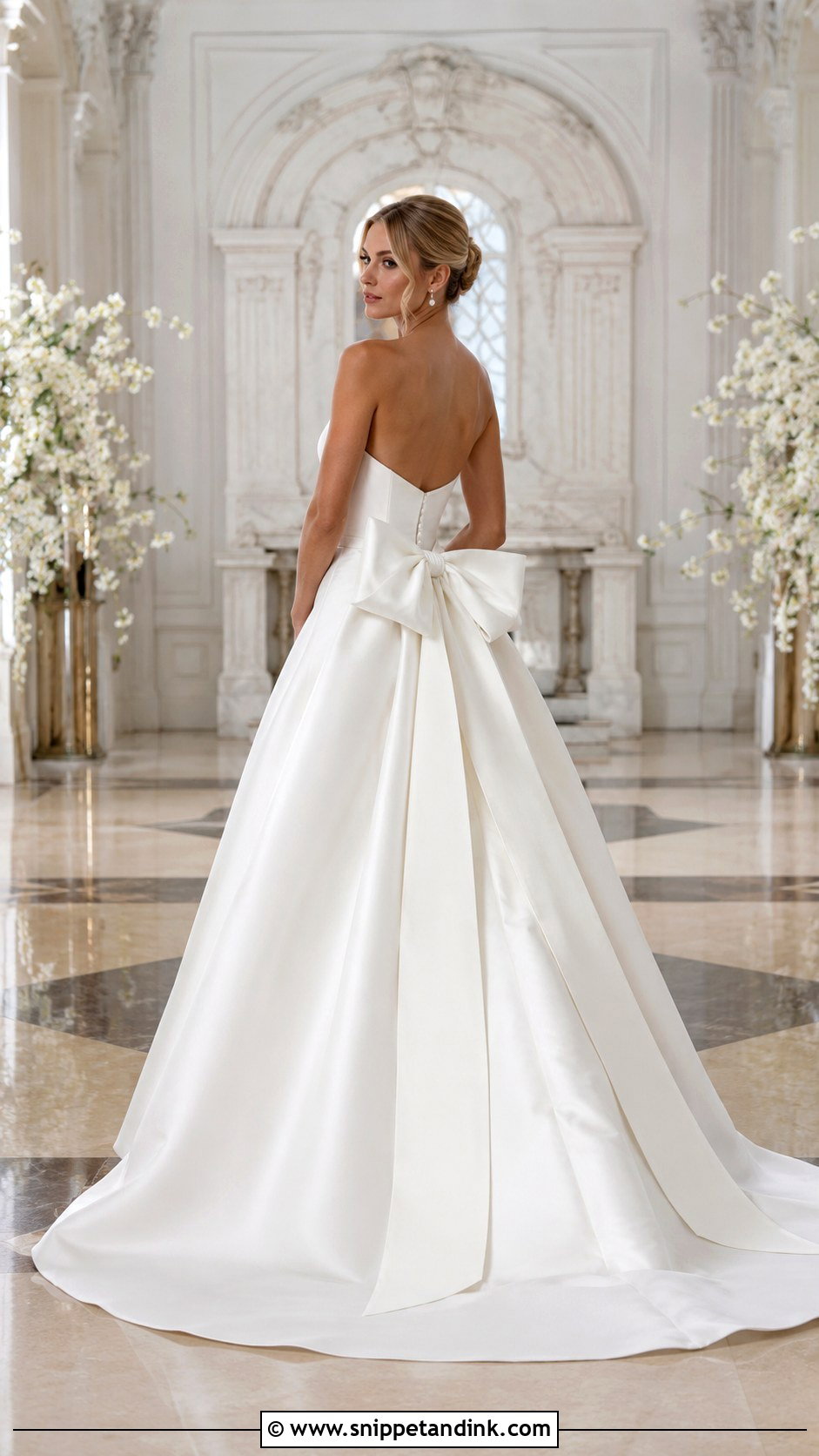
A basque-waist gown pairs a pointed bodice with a full skirt, and a structured bow at the centre back mirrors the point at the front. Satin, faille or Mikado keep both bodice and bow sculpted. Keep the bow noticeably narrower than the skirt so proportions stay calm, and let long tails follow the centre of a chapel train. Pearl earrings, a polished updo, classic pumps and a lightly edged sheer veil suit its formal character. The common fitting problem is the bow sinking into the skirt gathers, so it needs to sit just above where the volume starts.
11. Tea Length Wedding Dress With Back Bow
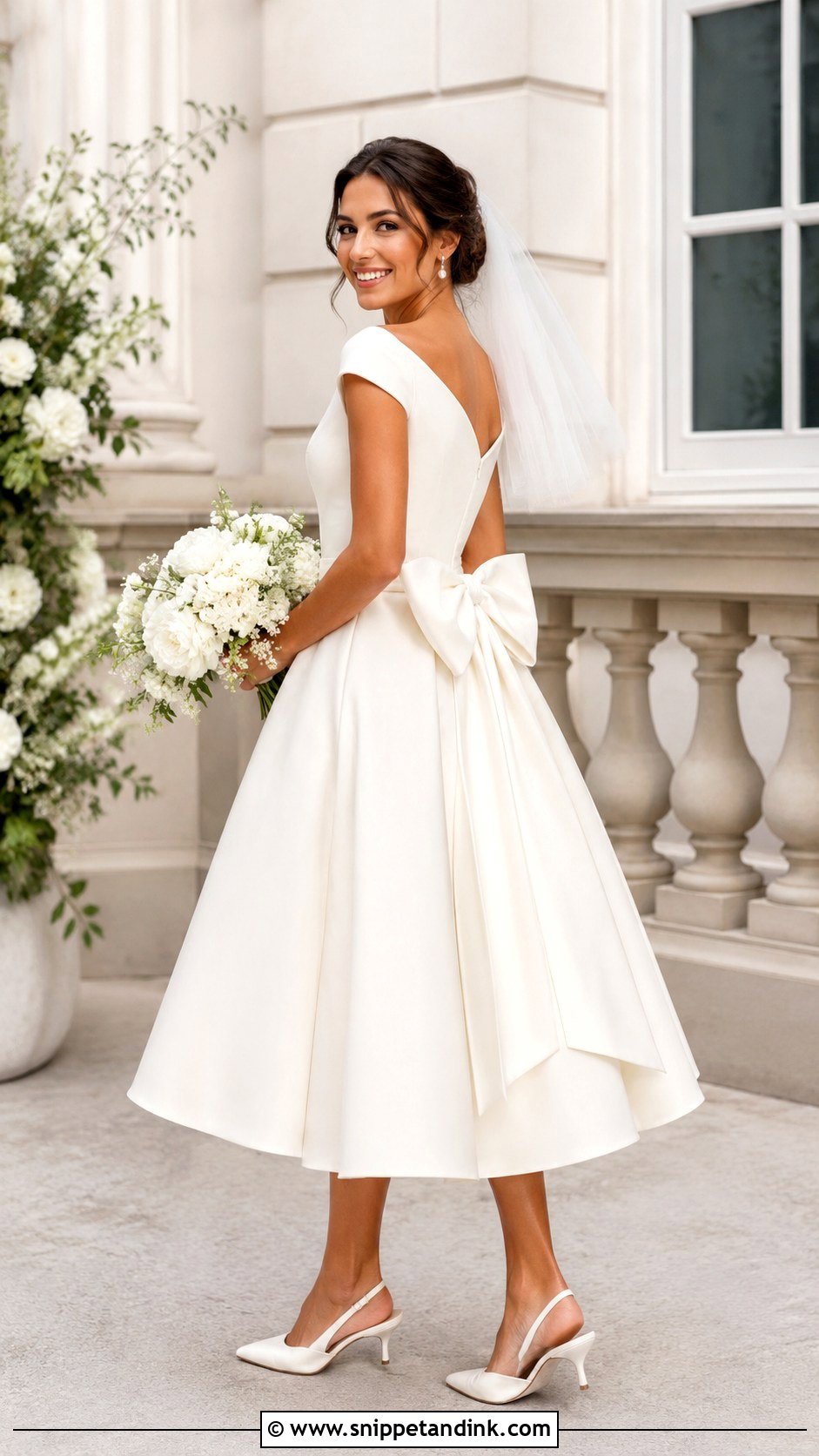
Tea length puts your shoes on show and a back bow gives the skirt a neat finish. Choose a fitted bodice with a bateau, scoop or off-the-shoulder neckline and a skirt ending between knee and ankle. A medium structured bow at the back waist works better than long sweeping tails here, which can trail below the hem and look accidental. Slingbacks, pearl earrings and a short veil or headband complete it. Courthouse ceremonies, gardens and reception changes all suit this length. When you walk, the bow should sit clear of the skirt rather than sinking into the gathers.
12. Mini Wedding Dress With Oversized Back Bow
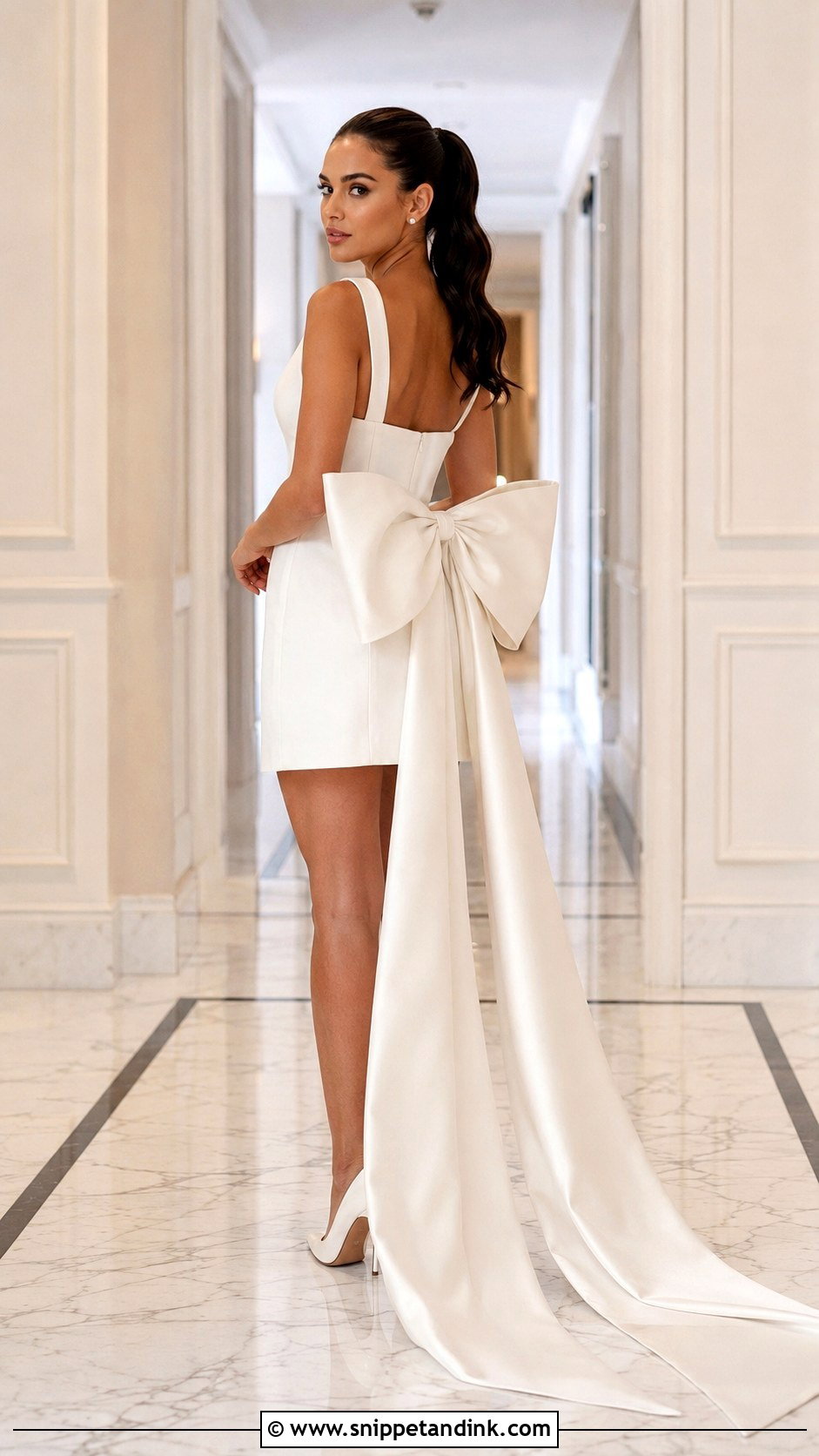
On a mini, an oversized bow with long tails is a real statement. The dress needs structure, so a tailored strapless, square or boat neck with boning inside, or the bow drags the back of the dress down. The bow sits at the waist and its tails can run nearly to the hem, giving movement without becoming a train. Pointed pumps, slingbacks or low block heels depending on the venue, plus pearl studs and a sleek ponytail. It’s a strong reception or civil ceremony look. If it detaches, test the fasteners during a dance at your fitting; they should hold through movement and still come off with one helper.
13. Slip Wedding Dress With Ribbon Back Bow
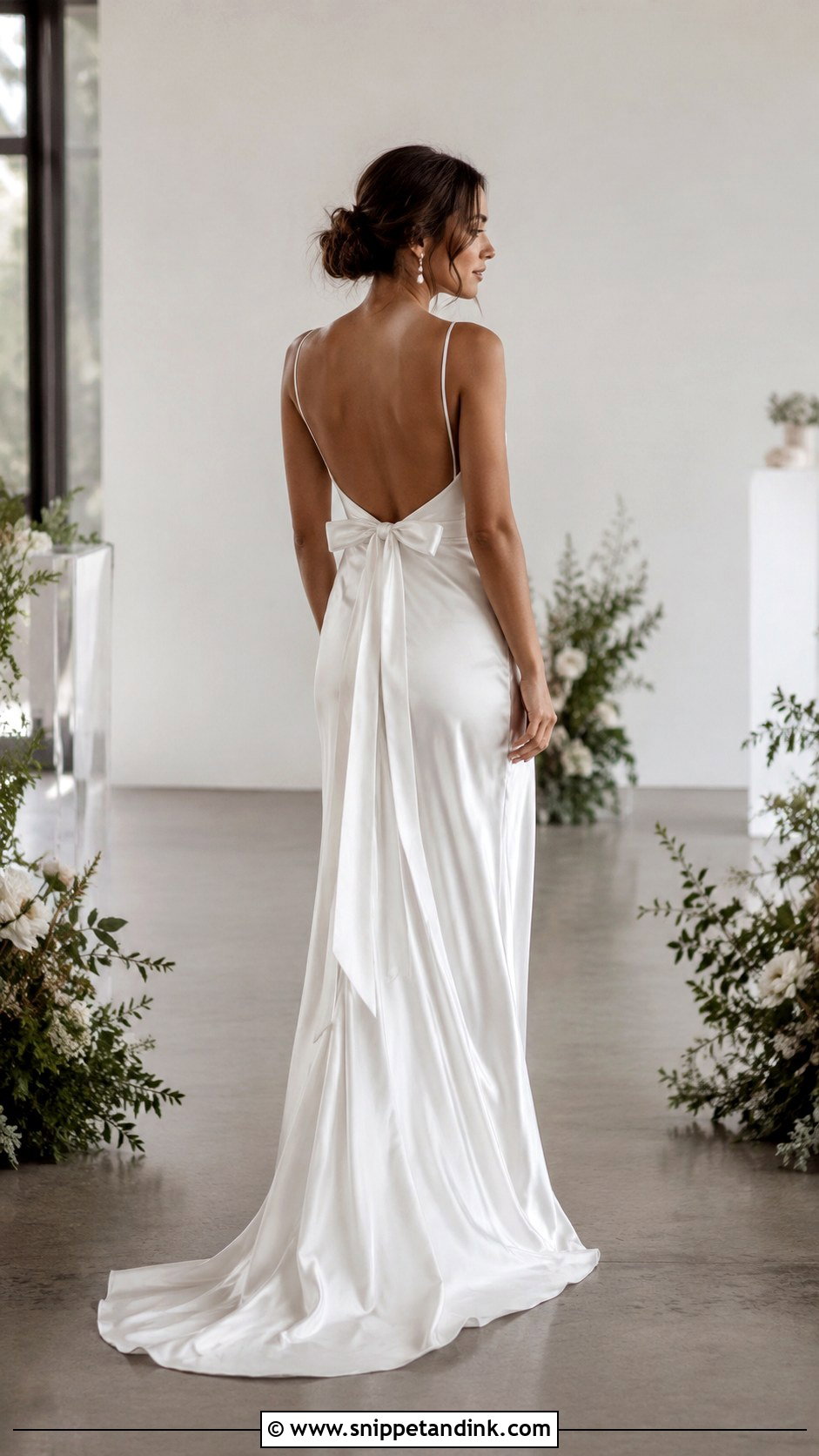
A fluid slip with a narrow ribbon bow keeps the whole look light. Silk charmeuse or bias-cut satin with fine straps and a soft neckline suits it best. Skip a bulky bow and tie a long ribbon at the centre back or where the straps meet the bodice, so the thin tails move with the drape. Barely there heels, small drops and a loose low bun suit it, and a sheer chapel veil adds ceremony without weight. Slip dresses show every line, so smooth, no-line underwear and careful alterations matter. A ribbon tie slowly loosens, so I tack the knot with a few hidden stitches and leave only the tails free.
14. Floral Applique Wedding Dress With Back Bow
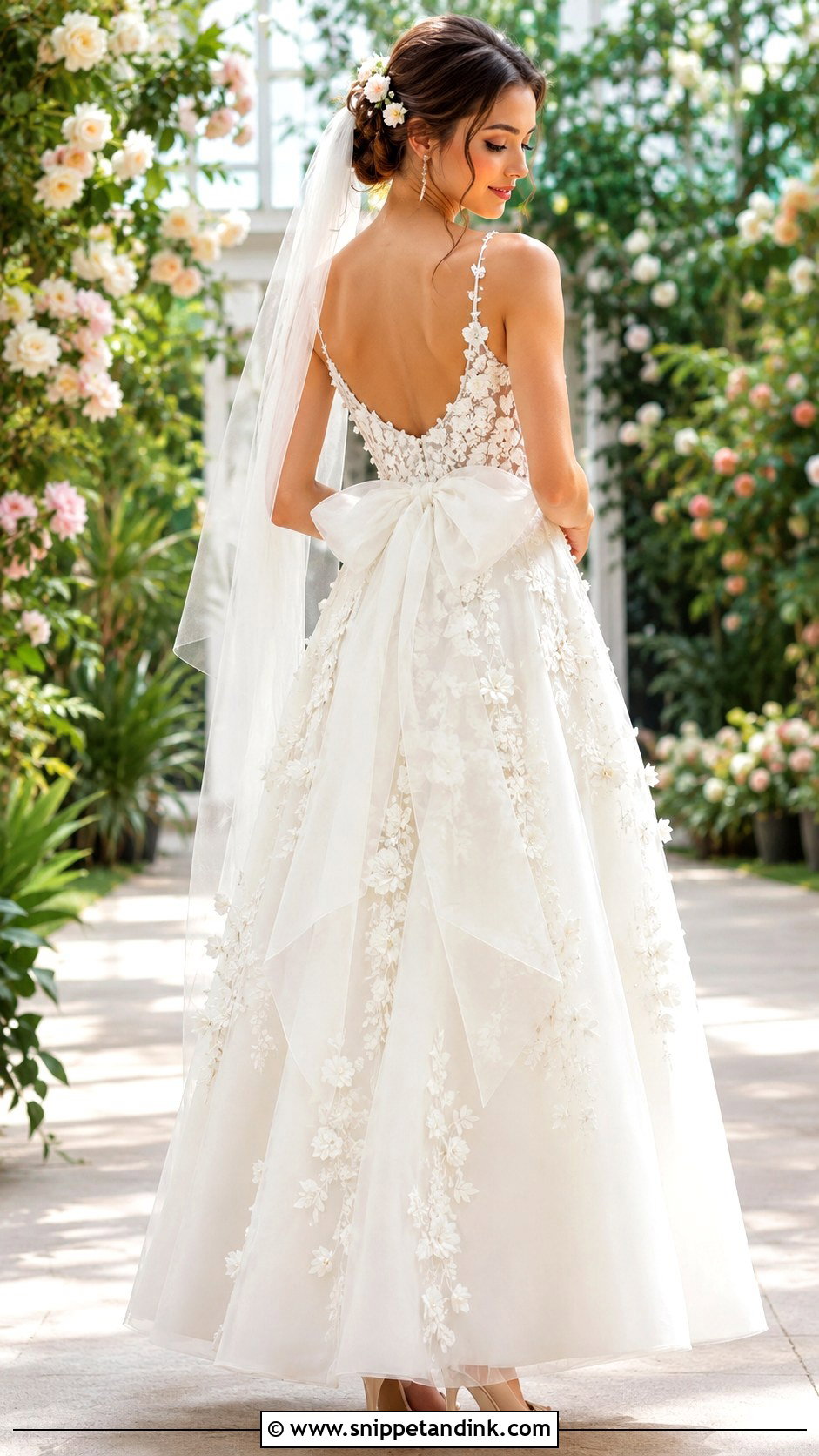
Raised floral appliqués make a garden-inspired gown, and a back bow gives the eye one clear place to rest. Pick an A-line or ball gown with flowers dense on the bodice and scattering down the skirt. A sheer organza bow matches the airy texture; satin gives sharper contrast. Keep the bow’s shape simple. Floral pins, delicate earrings and ivory heels finish it, with a plain tulle veil rather than another embellished layer. Placement is delicate work, because many appliqué gowns are built on fine mesh that tears if a heavy bow is stitched straight onto it. A good seamstress anchors it to the waist seam instead.
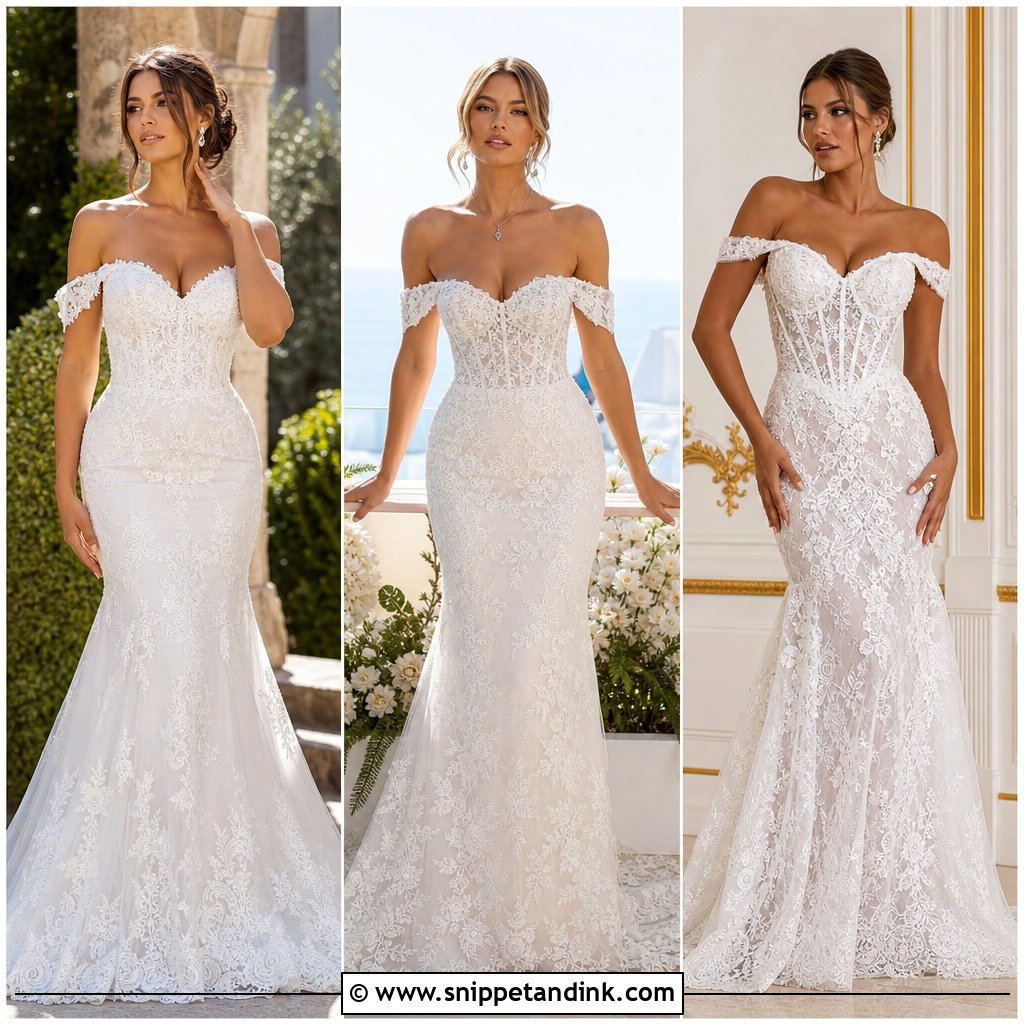
15. Pearl Wedding Dress With Bow on Back
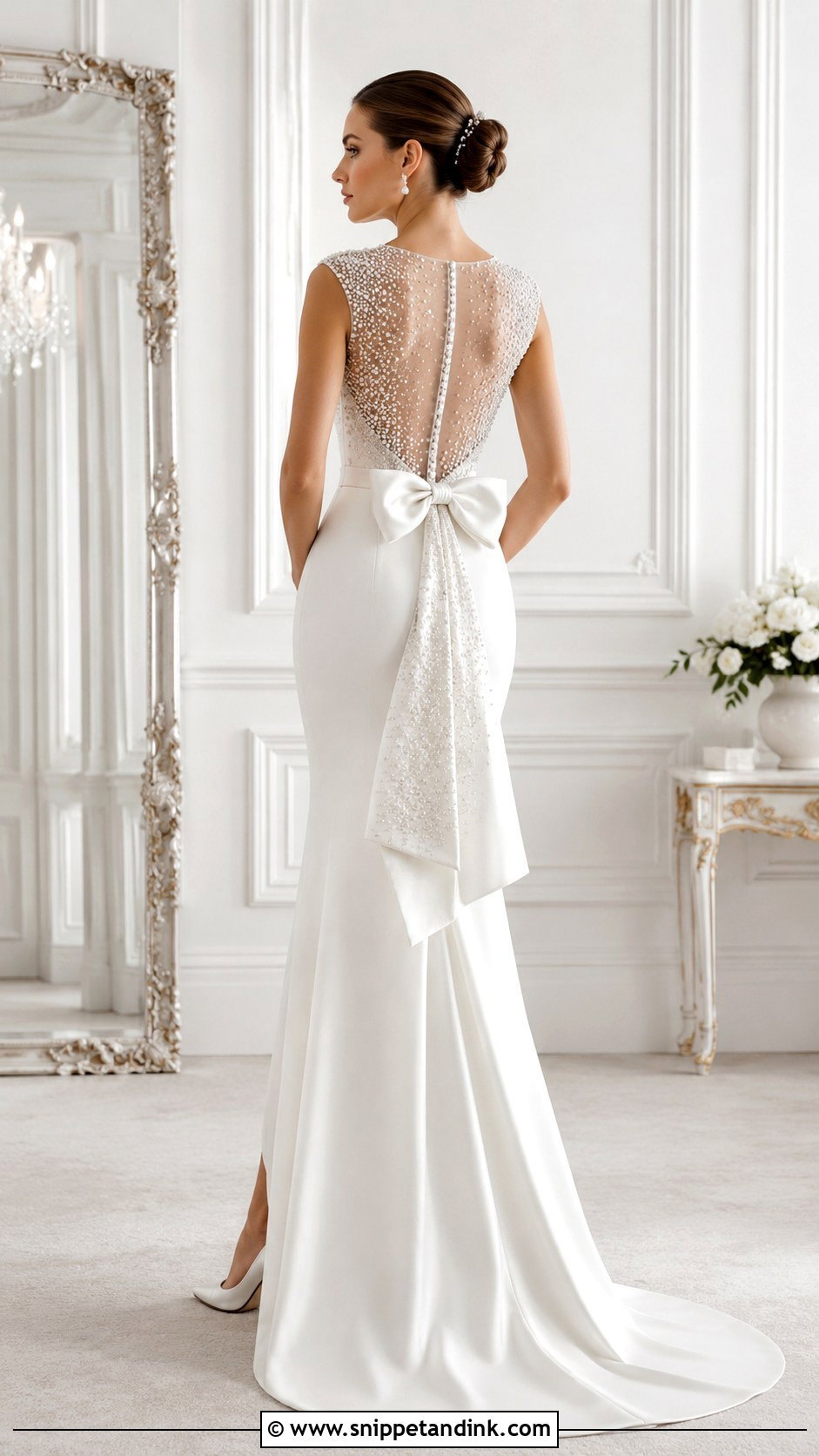
Small pearls add soft light to a bow-back gown. One route is pearl embellishment on the bodice, straps or sleeves, grounded by a smooth satin bow. The other is a plain crepe gown with a lightly pearled bow as the only decoration. Don’t pearl everything. Pearl earrings, a fine bracelet, satin pumps, a neat updo and a plain veil keep it refined. A beaded bow is heavier than a plain one and tends to tip forward or droop at the loops, so I have the seamstress add a stiff interfacing inside the loops and use concealed fasteners on a reinforced waist.
16. Blush Wedding Dress With Contrast Back Bow
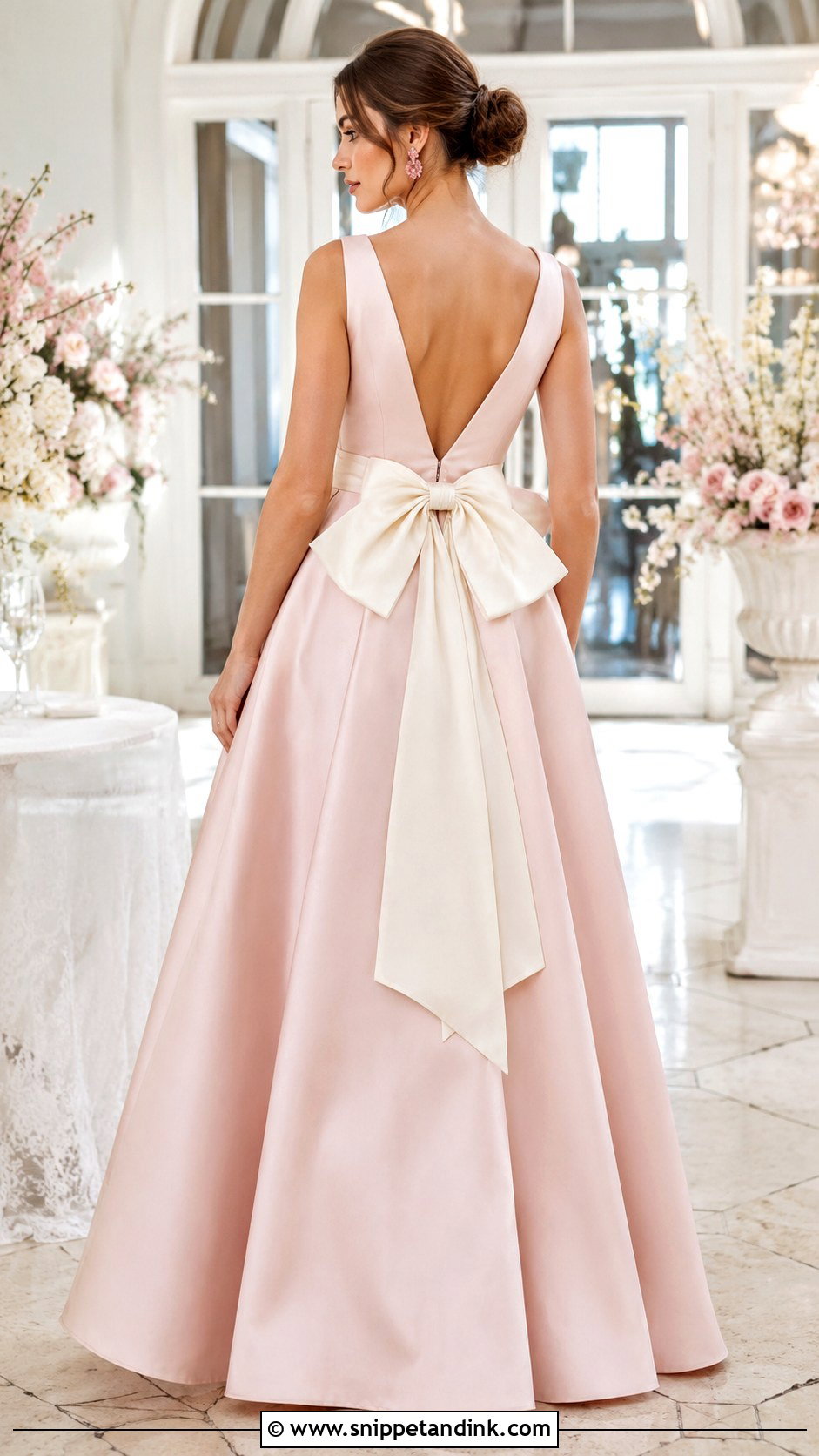
Want colour without losing a traditional look? A blush, pale pink or champagne gown with an ivory bow gives soft contrast, or reverse it with a blush bow on ivory as a small personal accent. Keep the silhouette clean, an A-line or fitted satin, so the two tones look intentional. Neutral heels, rose-toned earrings and a soft updo work, with flowers kept in the same restrained palette. Pale shades shift a lot between daylight and indoor light, so view swatches by a window and under the venue’s lighting if you can. A detachable contrast bow gives you an all-neutral option later.
17. Plus Size Wedding Dress With Back Bow
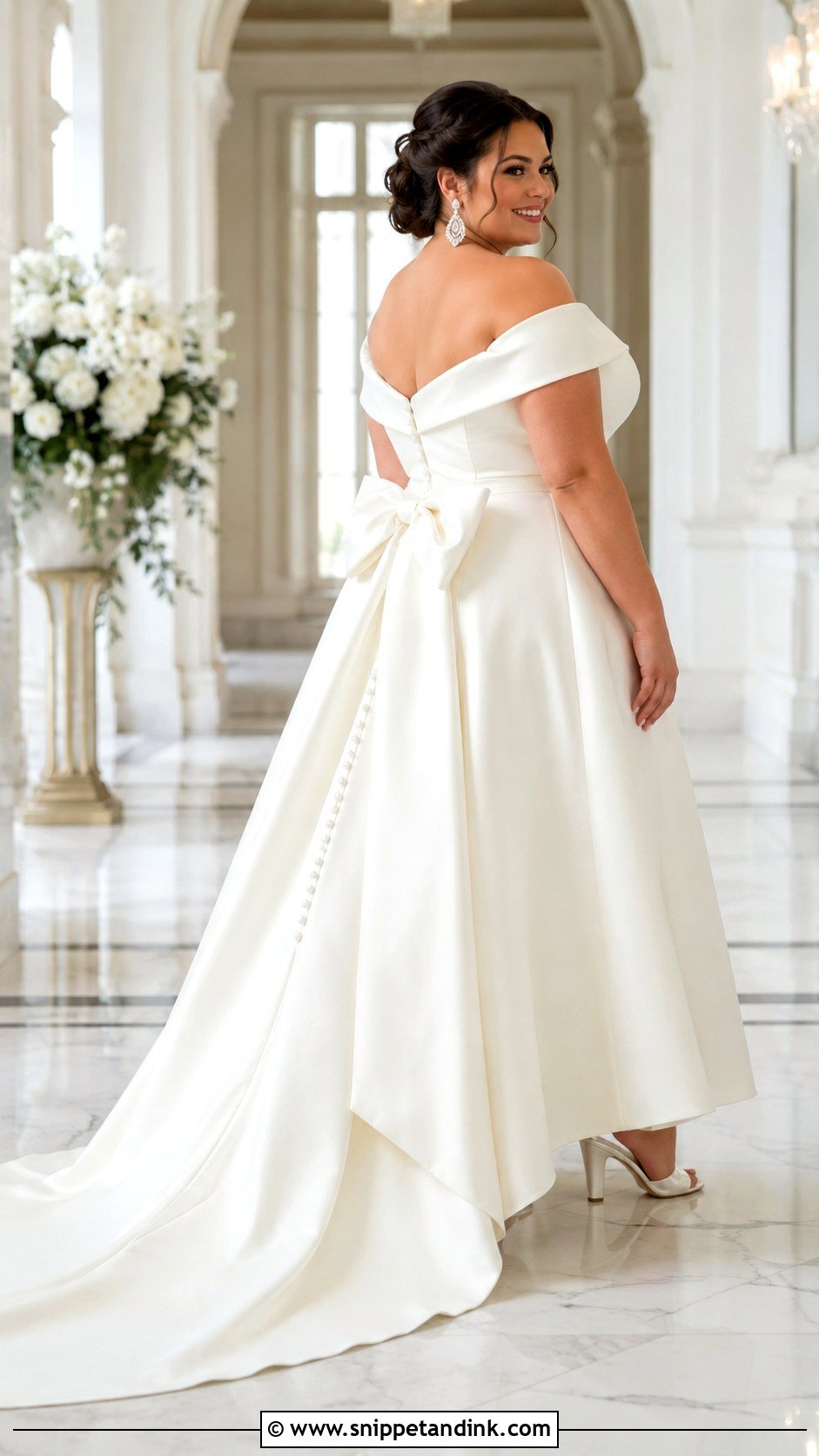
On a plus-size gown, a well-placed bow defines the waist without covering the bride’s shape. It starts with a supportive bodice and properly fitted cups over an A-line, ball gown or fit-and-flare, whichever feels best. Place the bow at the natural waist or just above, wherever the bodice fits most closely. A structured medium bow keeps a clean shape; a very soft bow with lots of fabric can collapse into folds. Comfortable heels, statement earrings and a secure hairstyle finish it. I ask for back-view photos at every fitting, and I check that the bow isn’t dragging on the zip or corset lacing.
18. Modest Wedding Dress With Back Bow
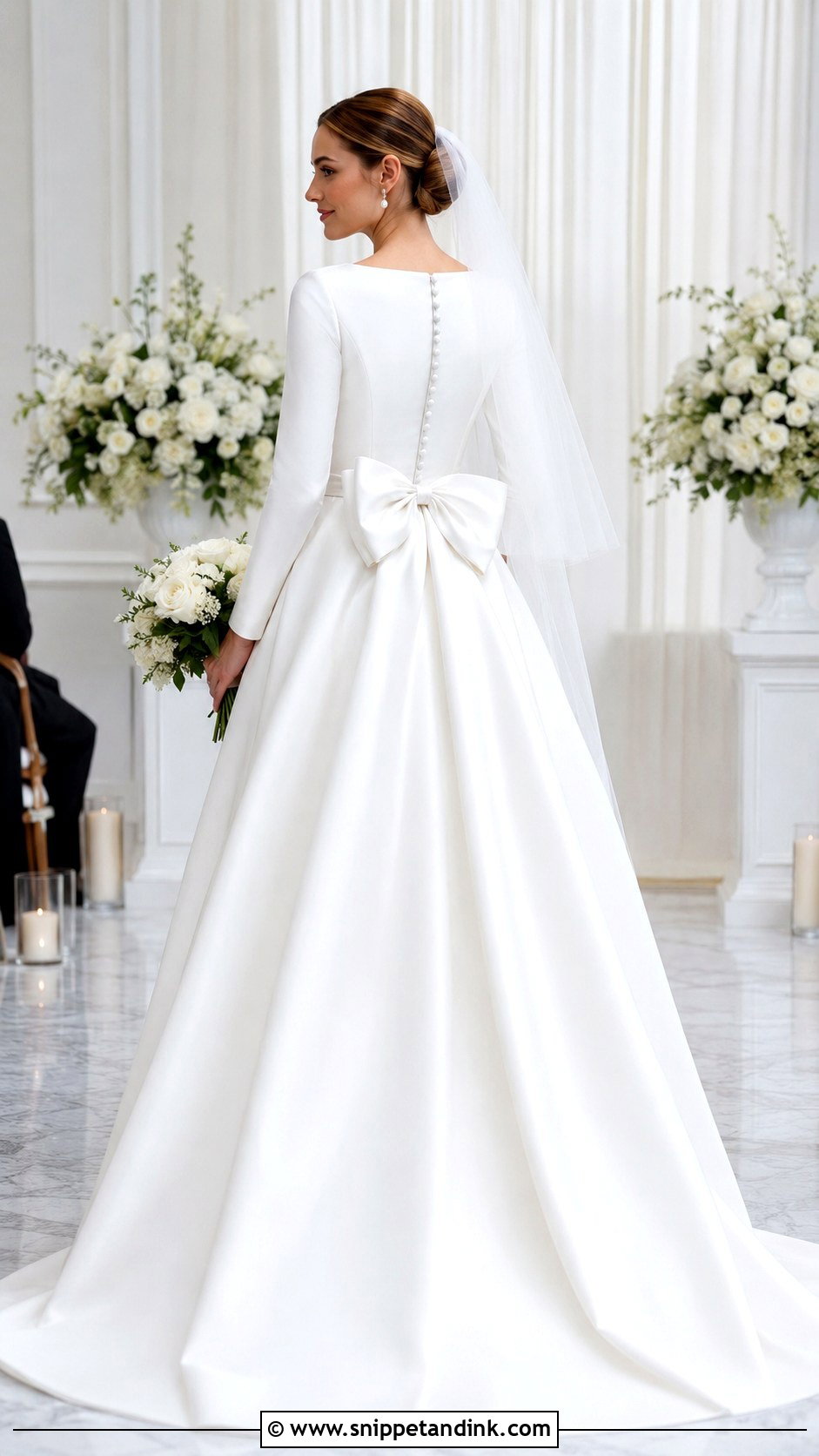
Coverage and a back bow make a modest gown feel current. Think a high bateau neckline, three-quarter or long sleeves and a full A-line in crepe, satin or Mikado, with a medium structured bow at the back waist above a row of covered buttons. Closed pumps, pearl earrings, a polished bun and a simple chapel veil that doesn’t hide the construction complete it. Line the bow up with the waist seam, and raise your arms at the fitting, since a bow set too high can catch on the sleeves. A detachable version lets you go cleaner later.
19. Cathedral Train Wedding Dress With Bow on Back
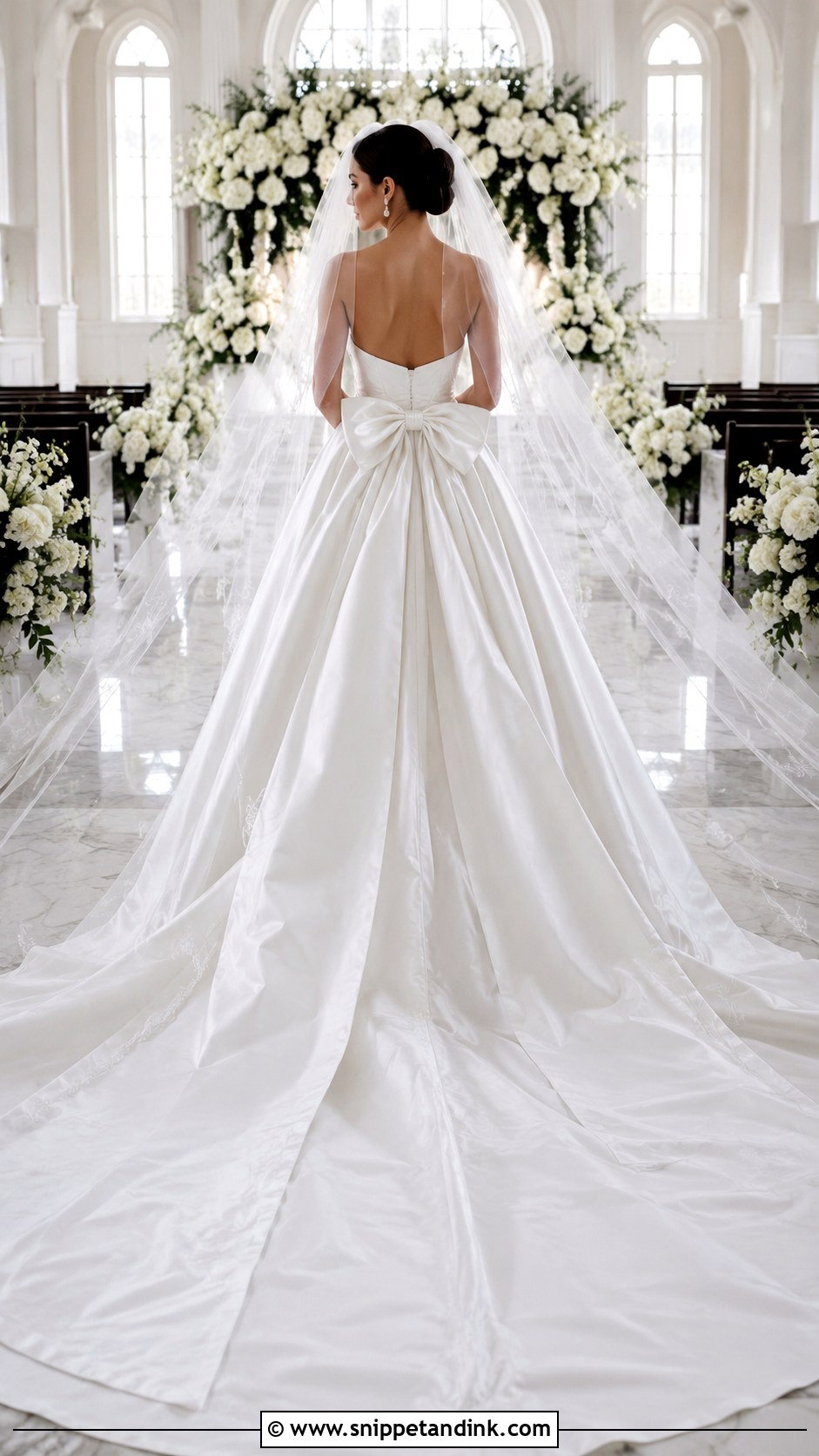
A sculpted bow running into a cathedral train is about as dramatic as bridal gets. Keep the bodice relatively clean and let the back lead. Strapless, square or off-the-shoulder gowns in satin or Mikado have the structure to carry long bow tails. Simple earrings, classic heels and an updo keep the whole back visible. A long veil can work in sheer tulle that lets the bow show through. Ask before ordering how the train and the bow tails will bustle, because they often need separate attachment points. Walk the full length at alterations, too, so the fabric follows you rather than wrapping round your legs.
20. Convertible Wedding Dress With Detachable Back Bow
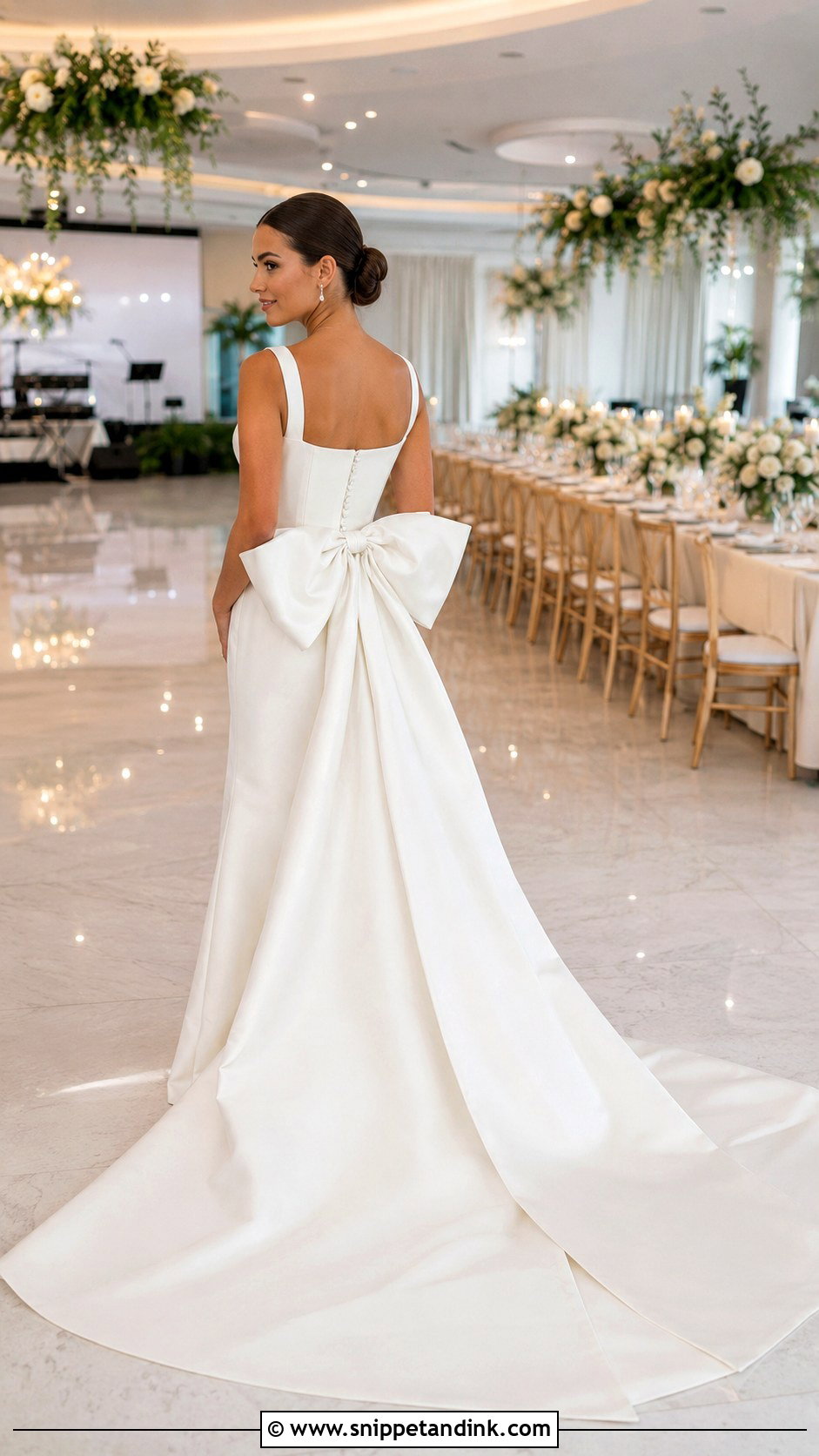
A convertible gown gives you ceremony drama and reception freedom. Pick a plain satin, Mikado or crepe dress with a detachable bow at the back waist; the bow might carry long tails, a sweeping train or a panel like an overskirt. Wear it with a veil, elegant earrings and heels for the ceremony, then remove it after photos and switch to a shorter veil, hair piece or bolder jewellery. Hidden hardware should feel smooth against your back. The dress underneath has to look finished alone. Hang the bow on a padded hanger or lay it flat on a clean sheet once it’s off, with tissue inside the loops so they don’t crush.
Why Bows Droop by Dinner, and the Fixes
Almost every bow looks perfect when you leave the fitting room. The problems show up hours later, after car rides, sitting through speeches and the warmth of a crowded room. Most of them can be prevented.
- Limp loops. Soft satin and crepe loops collapse without support. A seamstress can line them with organza or a stiff interfacing so they keep their shape all evening.
- A knot that loosens. A truly tied bow slowly slips. Most bridal bows are built from separate pieces, loops and a centre wrap stitched together, so nothing can come undone.
- Crushing in the car. Sitting back on a bow flattens it. Lean forward in the car, or attach a detachable bow after you arrive.
- Tails that twist. A few hidden tacks along the top of each tail stop them flipping over to the wrong side.
- Creases from sitting. A handheld steamer passed over the loops from a little distance revives them before the first dance. Keep it away from beaded or pearled bows.
On the morning of the wedding, stuff the loops lightly with acid-free tissue while the gown hangs. Pull the tissue out just before you step in.
Turn Around Before You Say Yes to the Bow
A bow-back gown has to look right from the front, side and back and still let you walk, sit and dance. Weigh up the bow’s scale, placement, fabric, weight and how it attaches before committing. Structured bows suit satin and Mikado; softer ribbons belong on crepe, lace, organza and silk. Detachable designs give you two looks from one gown. At alterations, photograph the back from several angles and practise the bustle. A narrow ribbon or a cathedral-length sculpted bow can both be right, as long as it suits your venue, your silhouette and the way you want to move.
You'll Like These Ideas:






Leave a Reply