
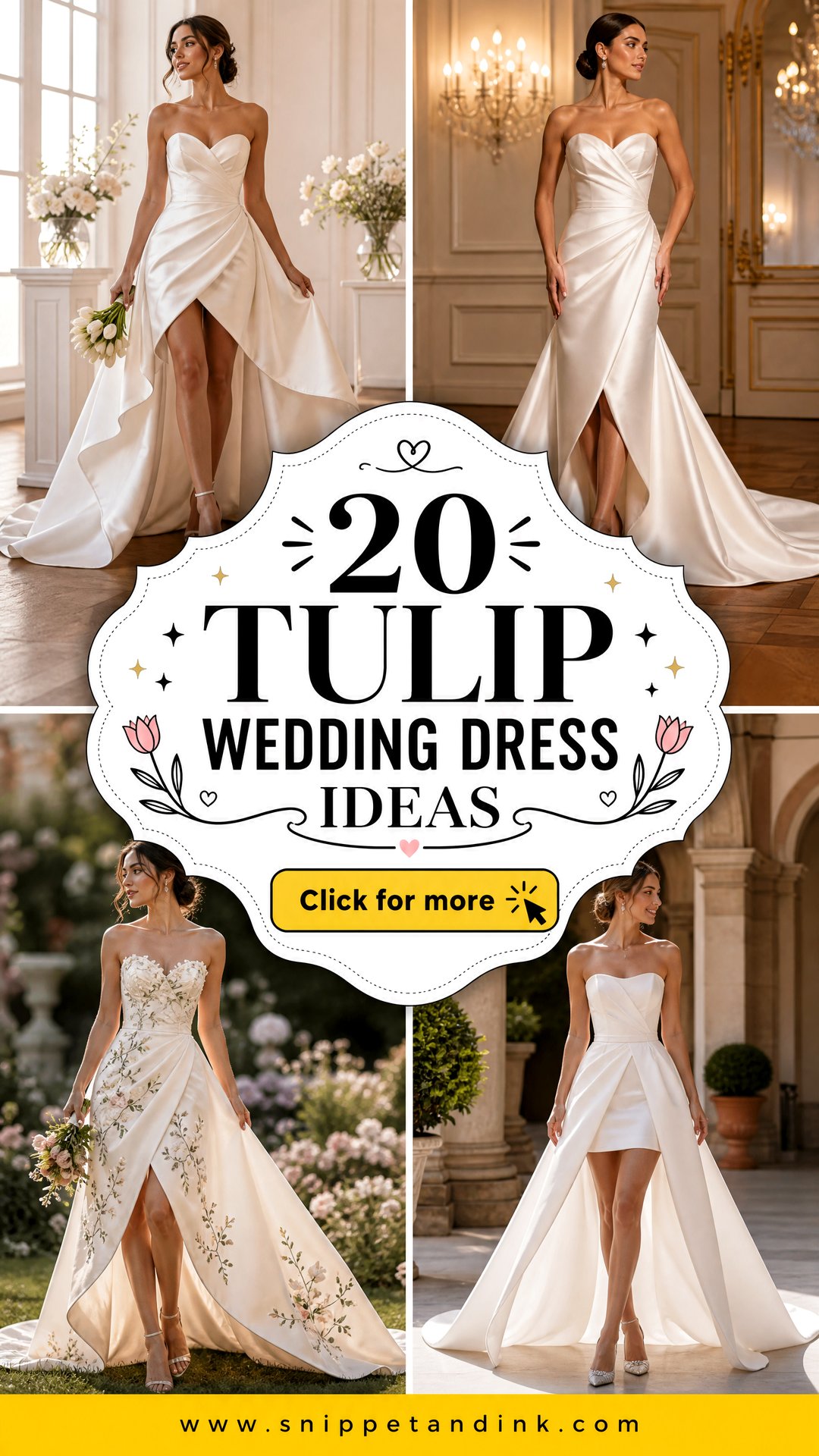
A tulip skirt is cut from panels that cross over each other at the front, so the hem curves in and up like a closed flower rather than flaring out. Designers build that shape with wrapped panels, sculpted draping, petal-like layers or embroidered botanicals, and it works at almost any length. Satin gives crisp petals for a city ceremony, tulle softens them for a garden, and a short tulip hem is made for a courthouse. Because the panels nip in at the waist and open at the hips, the shape moves more freely than you’d expect. Here are twenty versions, with the shoes, veils and small fitting checks that make each one work.
Where a Tulip Skirt Adds Width and Where It Takes It Away
The petal overlap sits right at the hips and tummy, then the hem curves inward. That means a tulip skirt adds a little volume at the top of the skirt and removes it at the bottom. On most brides that reads as a defined waist. On a few, it adds width exactly where they don’t want it.
In the fitting room I watch three things:
- Where the overlap begins. Starting at the natural waist flatters most figures; starting low on the hip can make the torso look shorter.
- How thick the fabric is at the crossover. Two layers of heavy satin stack up. Crepe and chiffon lie flatter if you’d rather not add bulk at the hip.
- Where the hem lands. A tulip hem that stops at the widest part of the calf shortens the leg; moving it a few centimeters up or down usually fixes that.
Petite brides often do well with a midi or mini, since a floor-length tulip can swallow a small frame. Tall brides can carry the long, dramatic versions easily.
1. Strapless Satin Tulip Wedding Dress
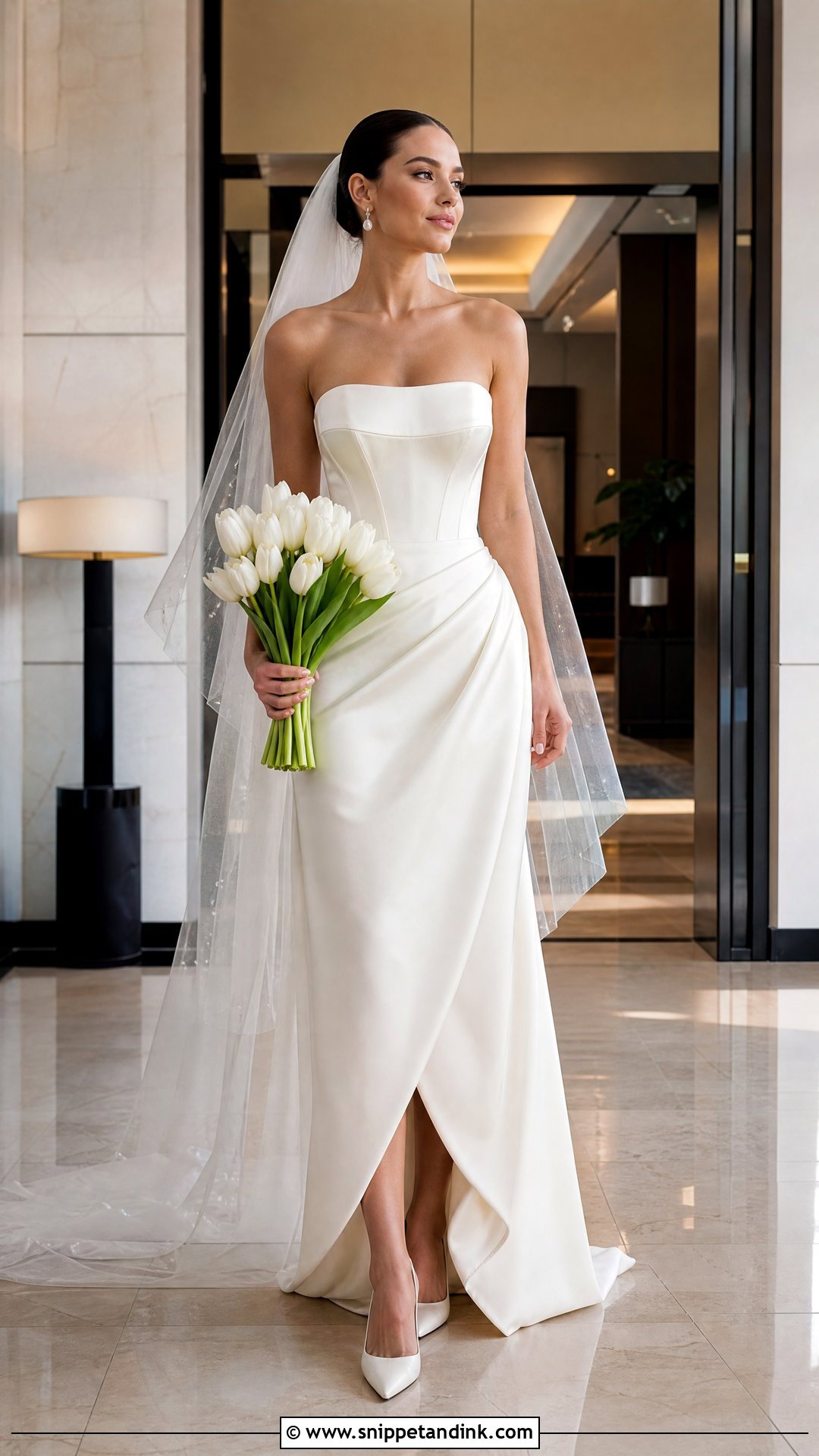
Duchess satin is the fabric I reach for when a bride wants petals that keep their edge. It’s heavy enough that the overlapping folds stay defined from the aisle to the last photo. Pair a strapless corset bodice with a softly curved neckline and a wrap skirt, then keep everything else quiet: pointed ivory pumps, pearl drops and a small satin clutch. A fingertip veil stops above the folds instead of flattening them. A low chignon keeps the neckline clear in a ballroom or a clean modern room.
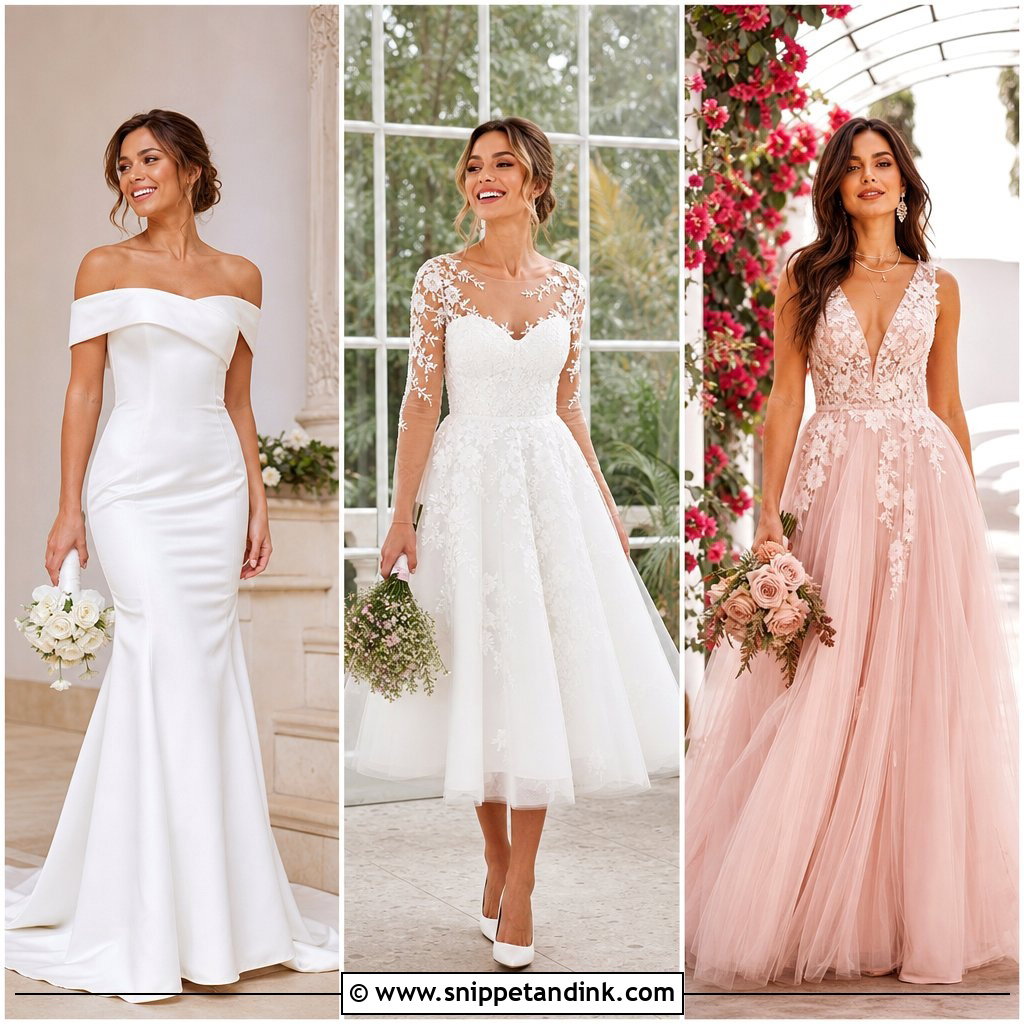
2. Off-Shoulder Tulip Wedding Dress
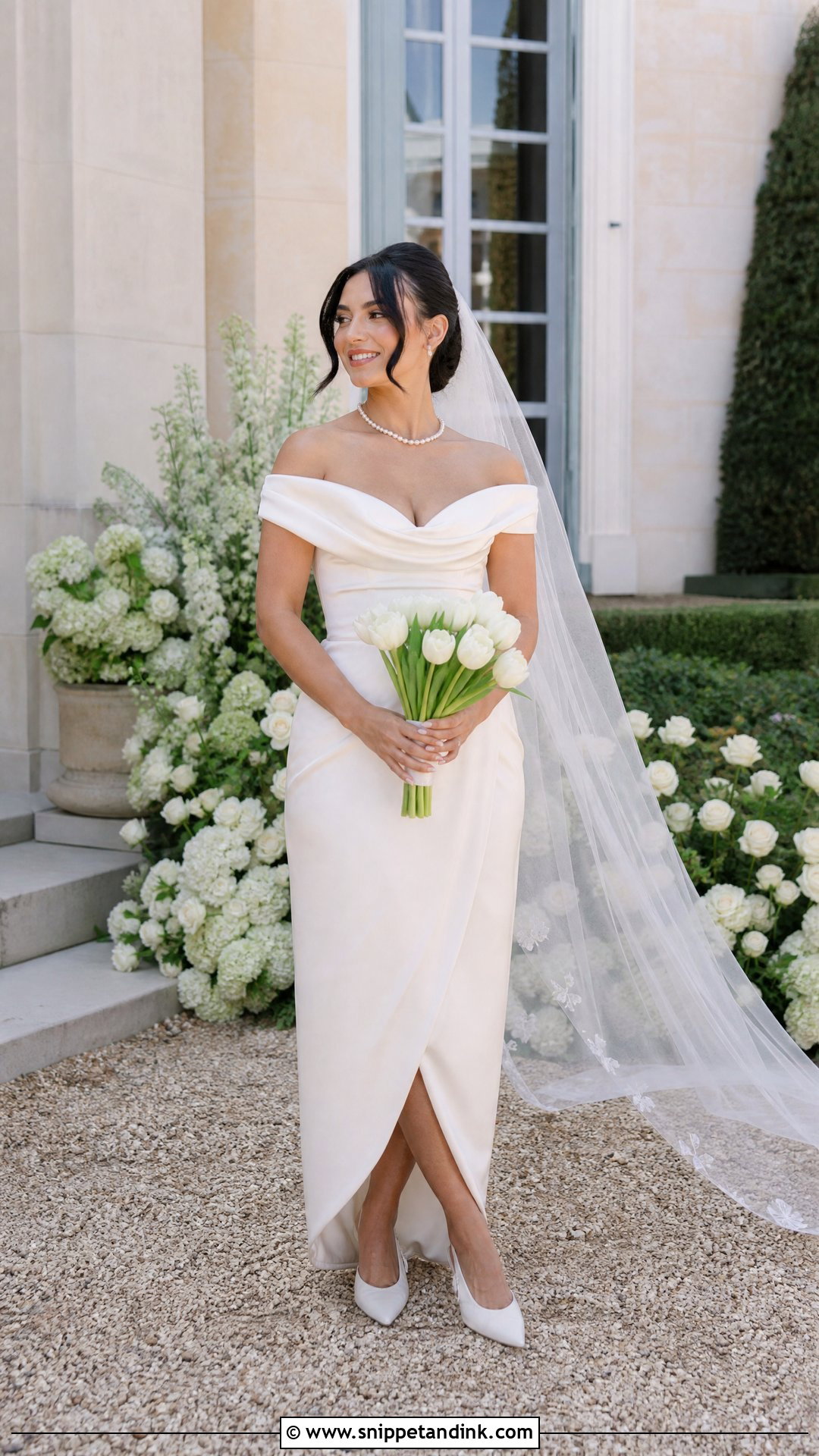
An off-shoulder neckline repeats the rounded line of the tulip skirt, which is why the two sit so naturally together. The thing to check is the band across the arms. If it’s set too low or too loose, you won’t be able to lift your arms to hug anyone, so ask for internal structure that holds the bodice, not the sleeves. A short pearl necklace, small studs and a sheer cathedral veil under a loose bun suit it. Closed-toe slingbacks feel steadier than barely-there sandals, and a white tulip bouquet echoes the dress without turning it into a theme.
3. Sweetheart Tulip Wedding Dress
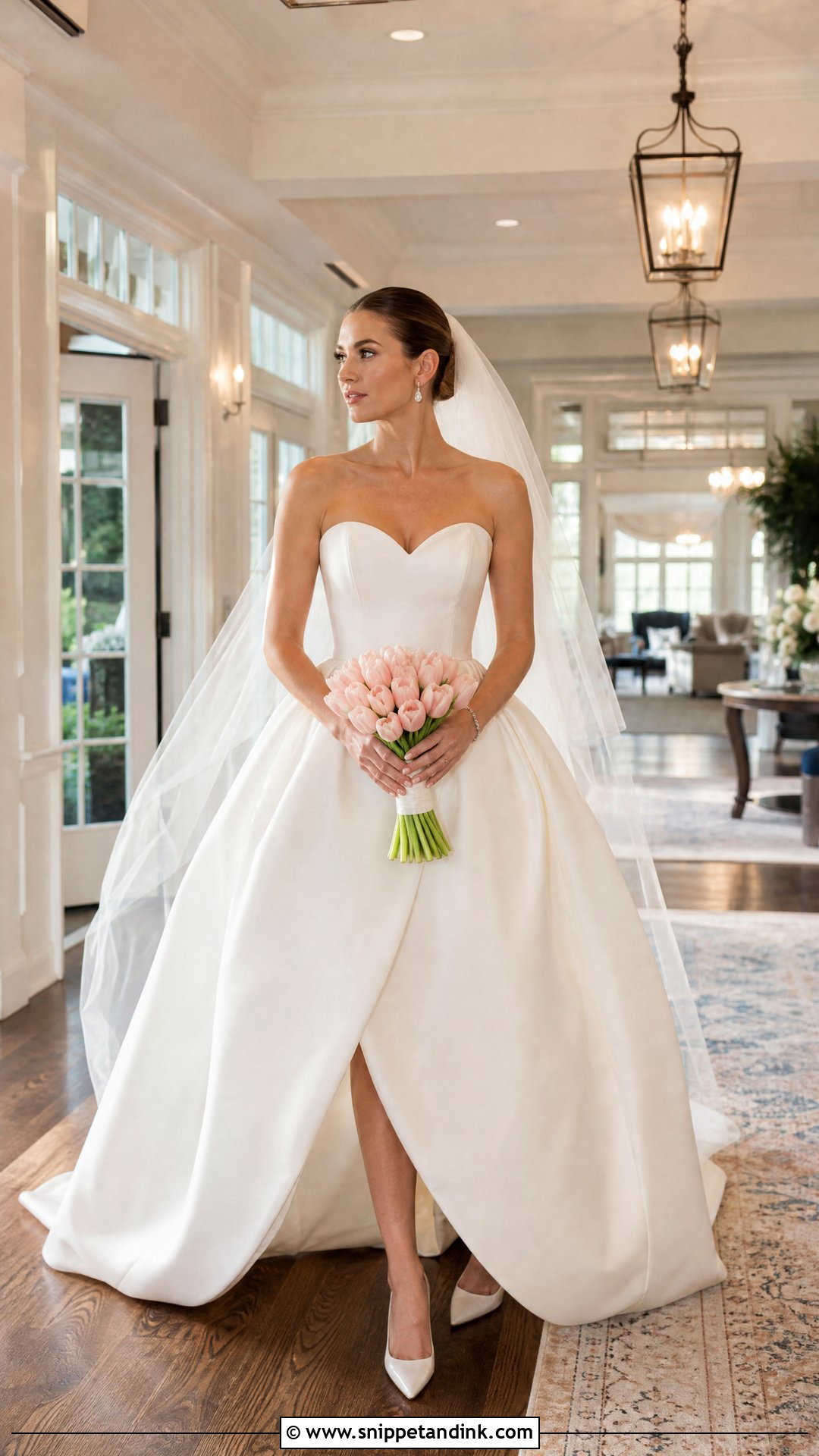
Can a petal skirt feel classic? Paired with a familiar neckline, it can. A sweetheart tulip wedding dress keeps the top traditional and lets the skirt be the surprise. Look for a structured bodice that defines the waist before the gathered panels start; tonal seaming or light boning gives a modern edge to light ivory. With a longer skirt and a modest train, a chapel veil falls nicely. Teardrop earrings, a fine tennis bracelet and mid-height pumps keep the look comfortable through a long spring day.
4. One-Shoulder Tulip Wedding Dress
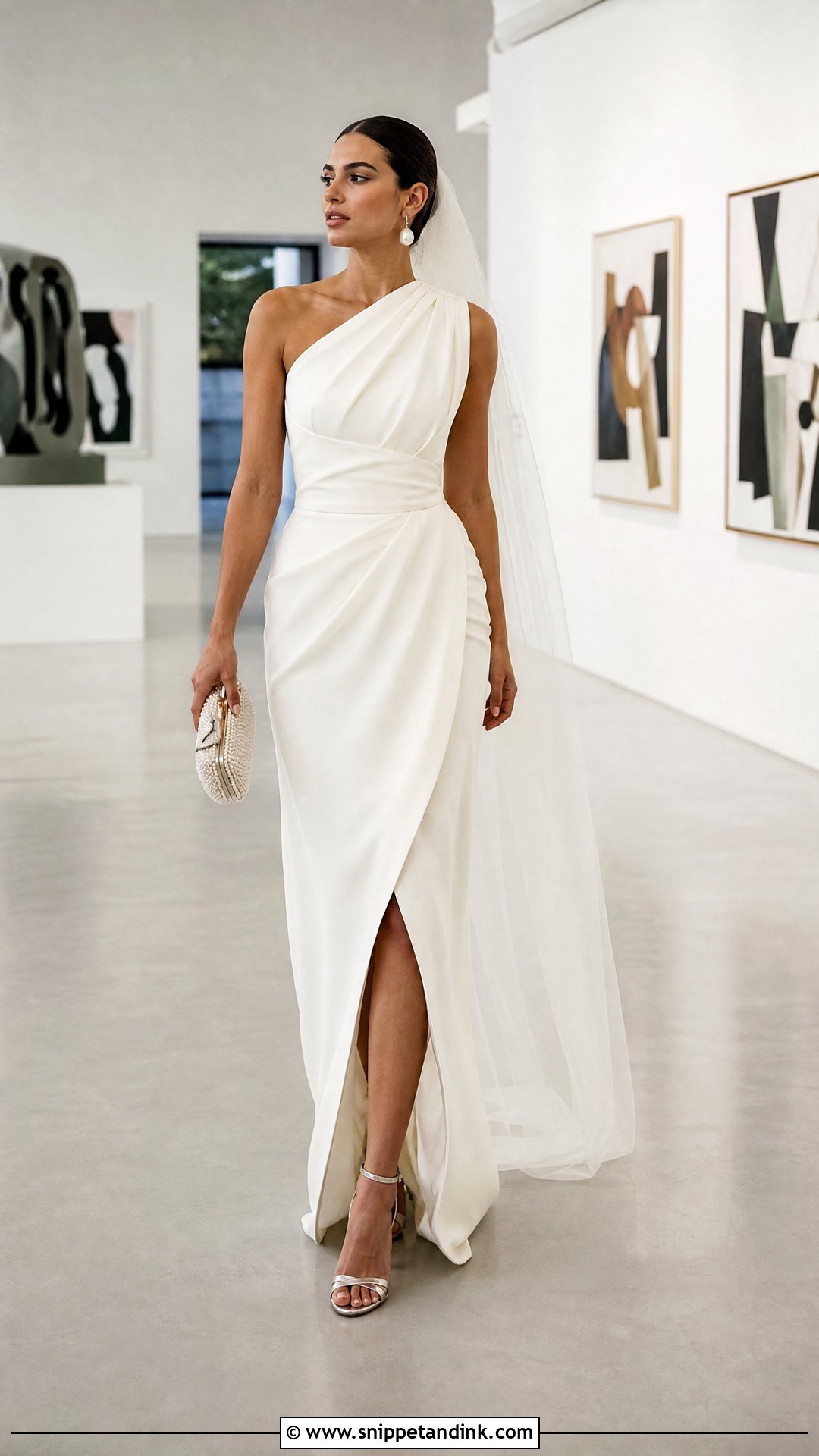
One shoulder covered, one bare: the diagonal neckline echoes the diagonal overlap of the skirt, and the whole dress reads as one sculpted line. Structured crepe or satin keeps both the shoulder and the petals crisp; a soft fabric lets the shoulder strap droop by evening. Skip the necklace. A single statement earring on the bare side, silver heels and a small pearl bag are enough, with a side bun swept toward the open shoulder. A tulle veil can come out for the ceremony and off for dinner in a gallery or hotel.
5. Halter Tulip Wedding Dress
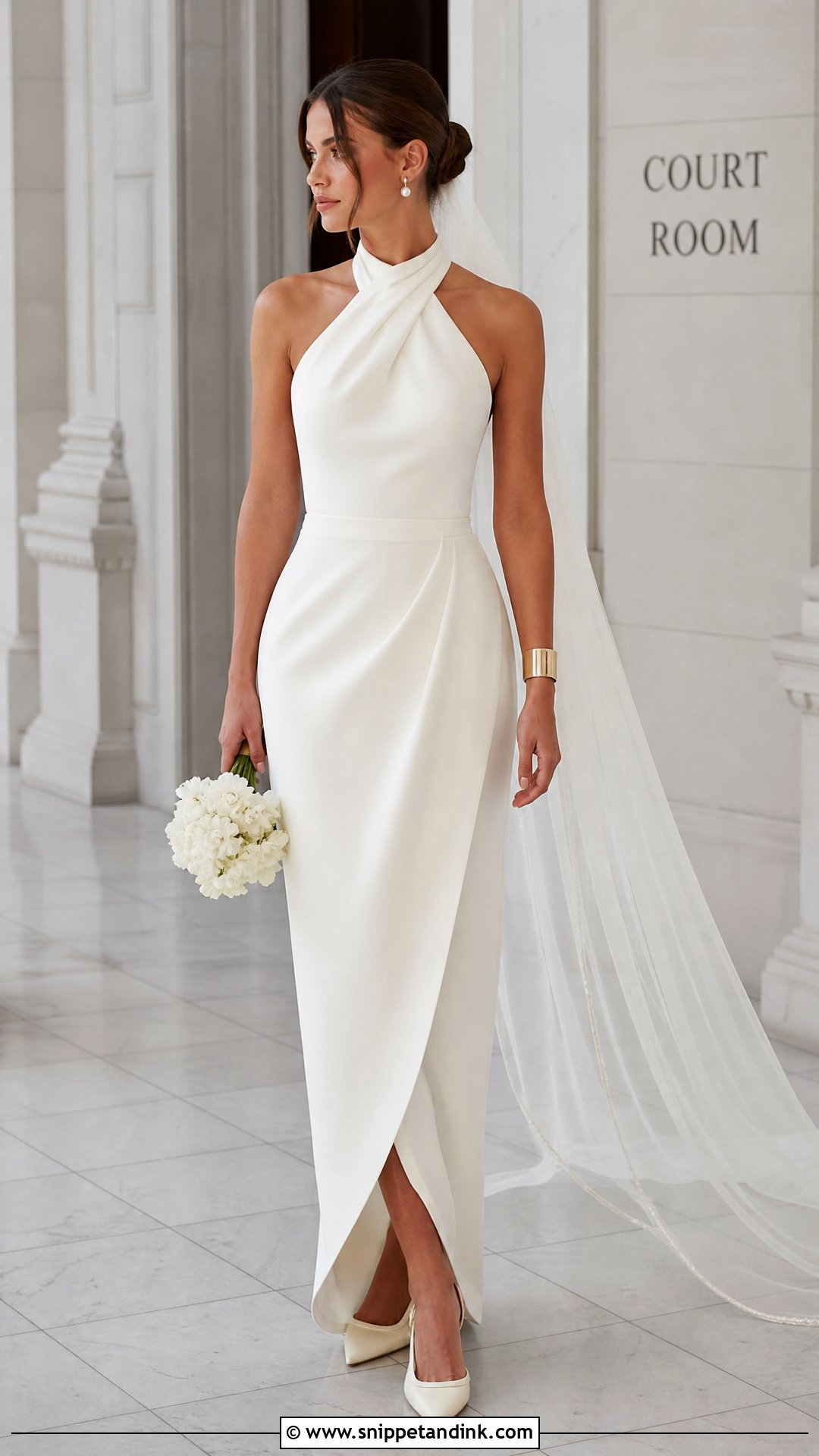
A halter tulip wedding dress draws a long vertical line through the upper body, and the wrapped skirt keeps the lower half from going plain. Matte crepe looks understated; silk satin moves with more light. Halters put weight on the back of the neck, so I always ask a bride to wear one for twenty minutes at the fitting before she decides. No necklace, pearl buttons, a cuff and pointed slingbacks, with hair in a neat bun or high ponytail so the neckline shows. It’s right for a rooftop or a courthouse.
6. Long-Sleeve Lace Tulip Wedding Dress
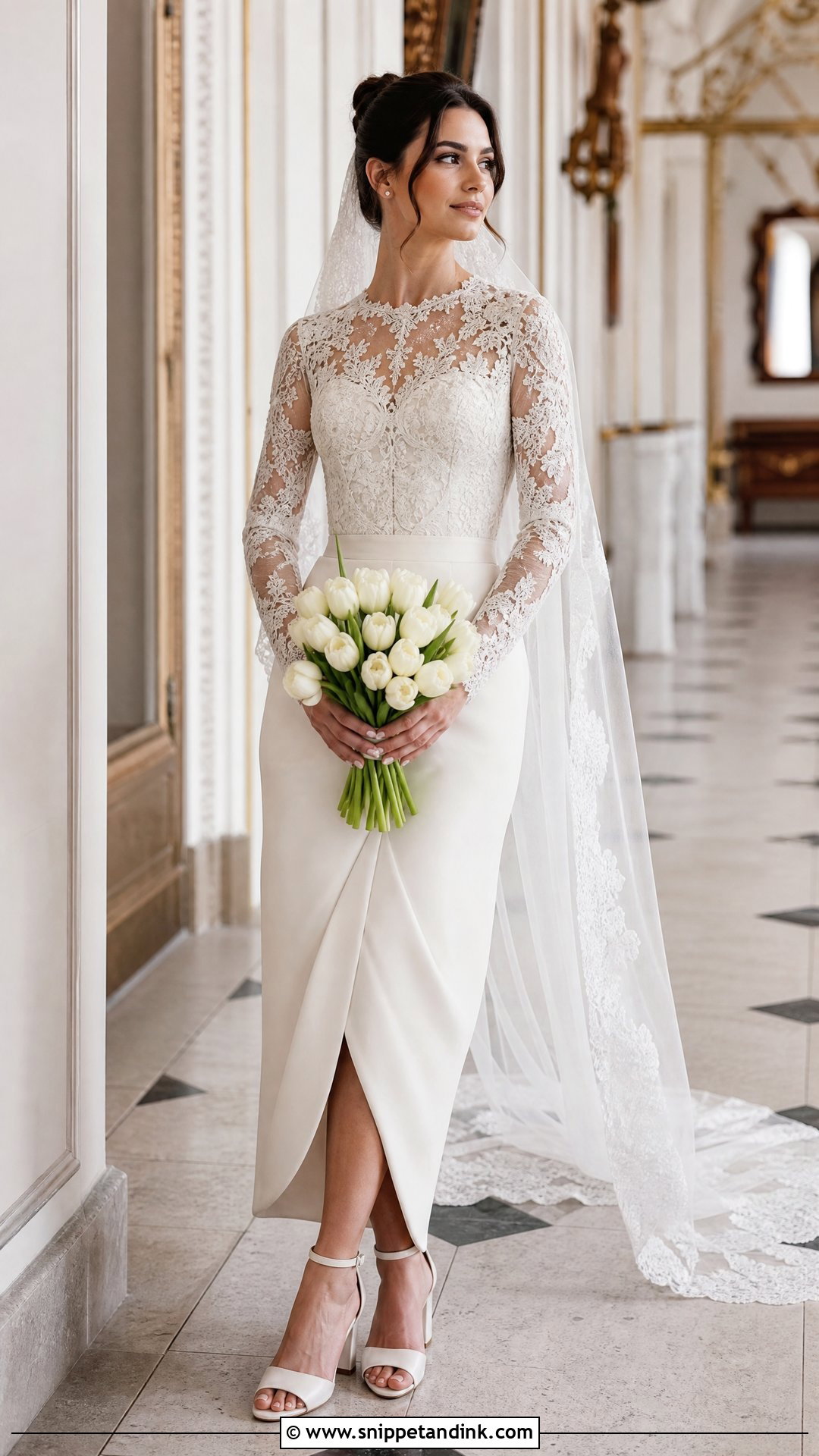
Lace on top and smooth satin or crepe below keeps a tulip dress from looking busy, and it gives the sleeves a soft vintage feel. Illusion sleeves need the mesh tone matched to your skin; a mismatch shows as a gray film on camera. Pearl studs, a lace-edged veil and ivory block heels carry you through a long day, with a low textured bun. Small bunches of cream tulips and greenery suit a historic venue or a cool spring afternoon.
7. Floral Appliqué Tulip Wedding Dress
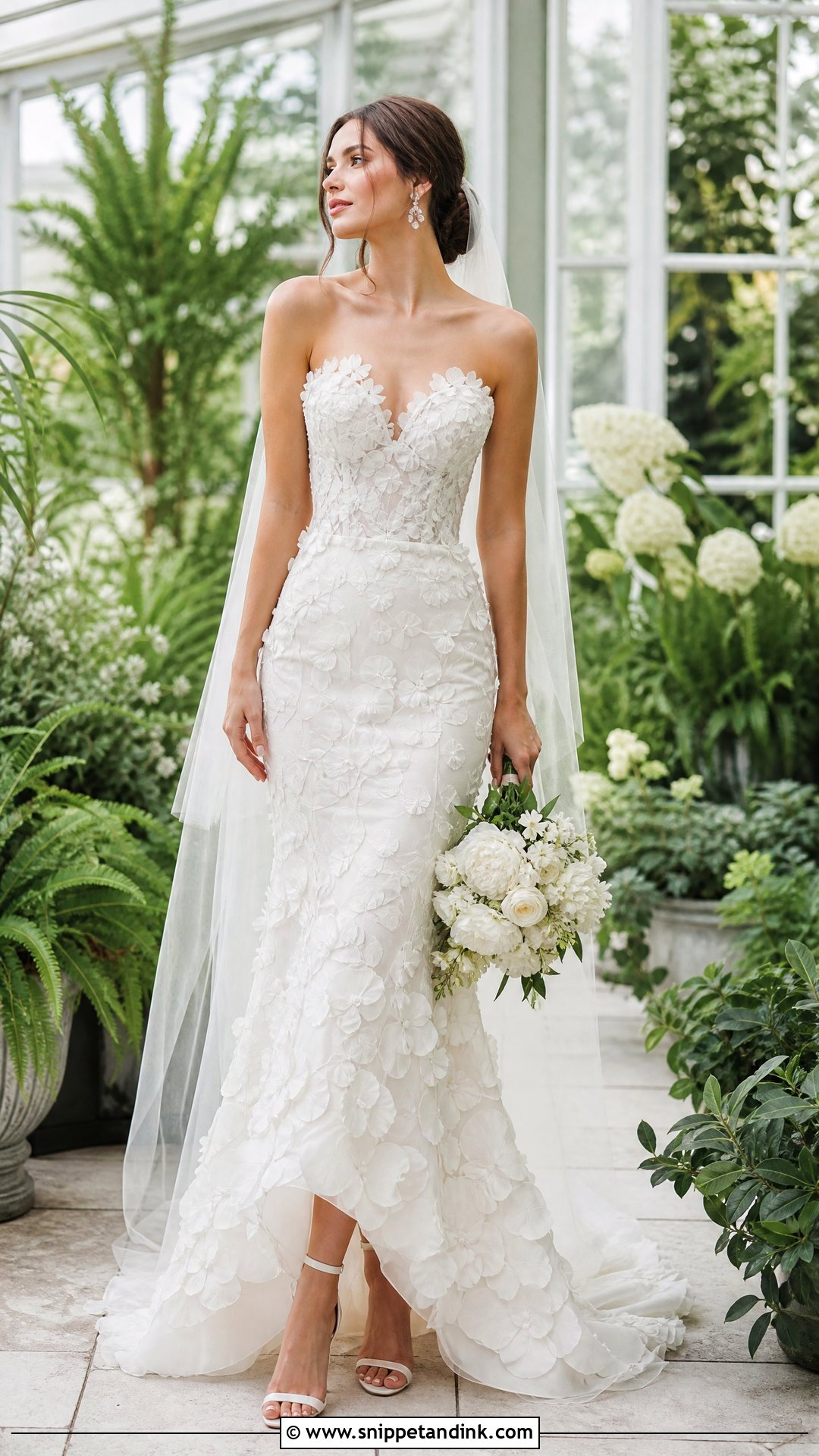
Appliqué flowers look best when they thin out as they travel. Clustered at the bodice and scattered lightly toward the petal skirt, they pull the eye up to your face and leave the skirt shape readable. Raised flowers snag fine tulle, so choose a plain raw-edge veil rather than a lace one that will catch. Crystal studs, a narrow bracelet and satin ankle-strap heels are enough, plus a loose updo with a few face-framing pieces. Conservatories and flower farms are its natural home.
8. High-Low Tulip Wedding Dress
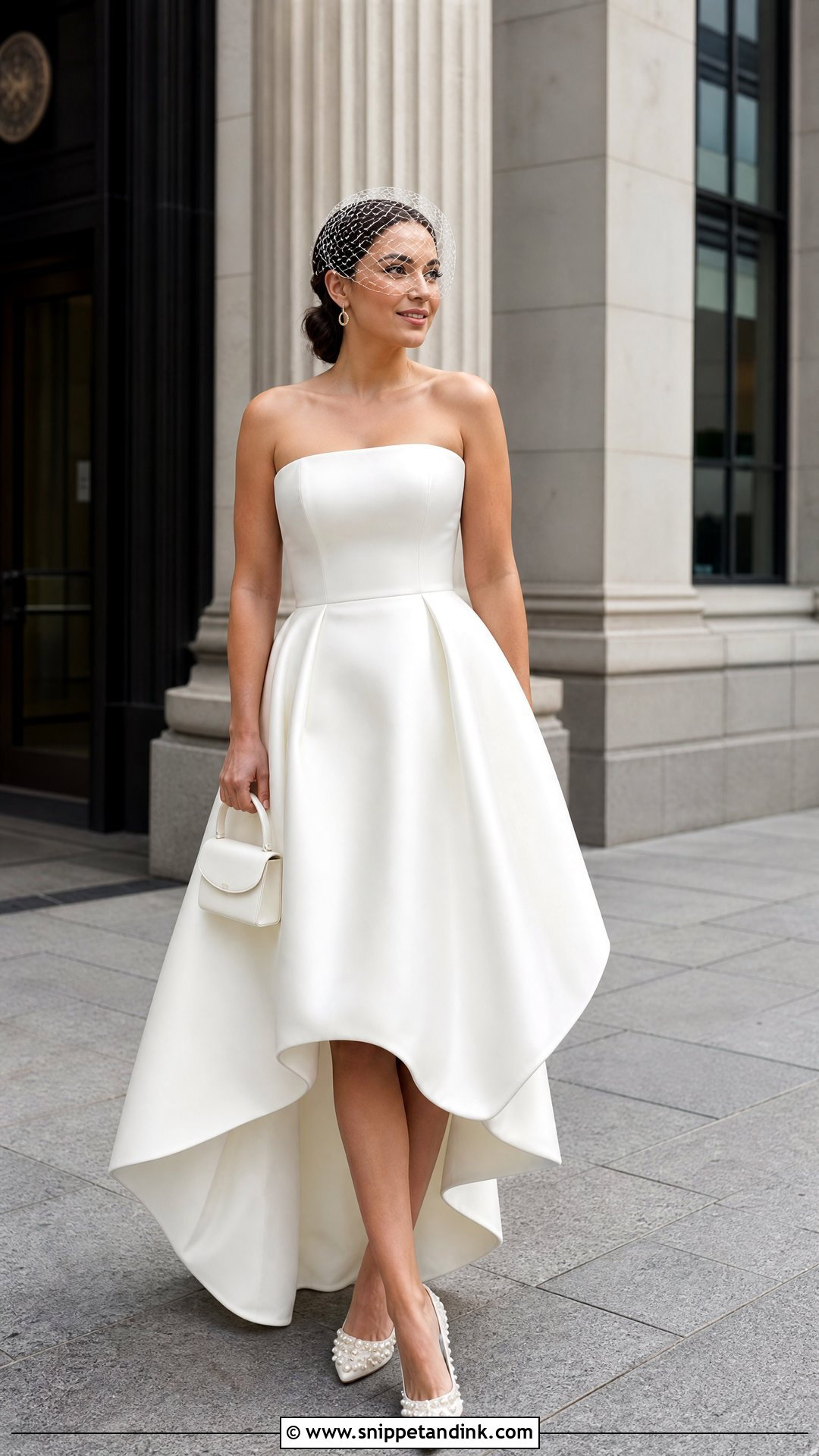
A high-low tulip hem shows off your shoes and keeps a dramatic curve behind you. Mikado or structured satin holds that curve; soft fabrics let the front dip unevenly. The front hem height is the fitting detail that matters. I set it with the bride standing in her actual shoes, because two centimeters too short looks like a mistake rather than a choice. Embellished pumps or pearl ankle straps, a birdcage veil, small hoops and a top-handle bag keep it sharp, and dancing is easy for a restaurant reception.
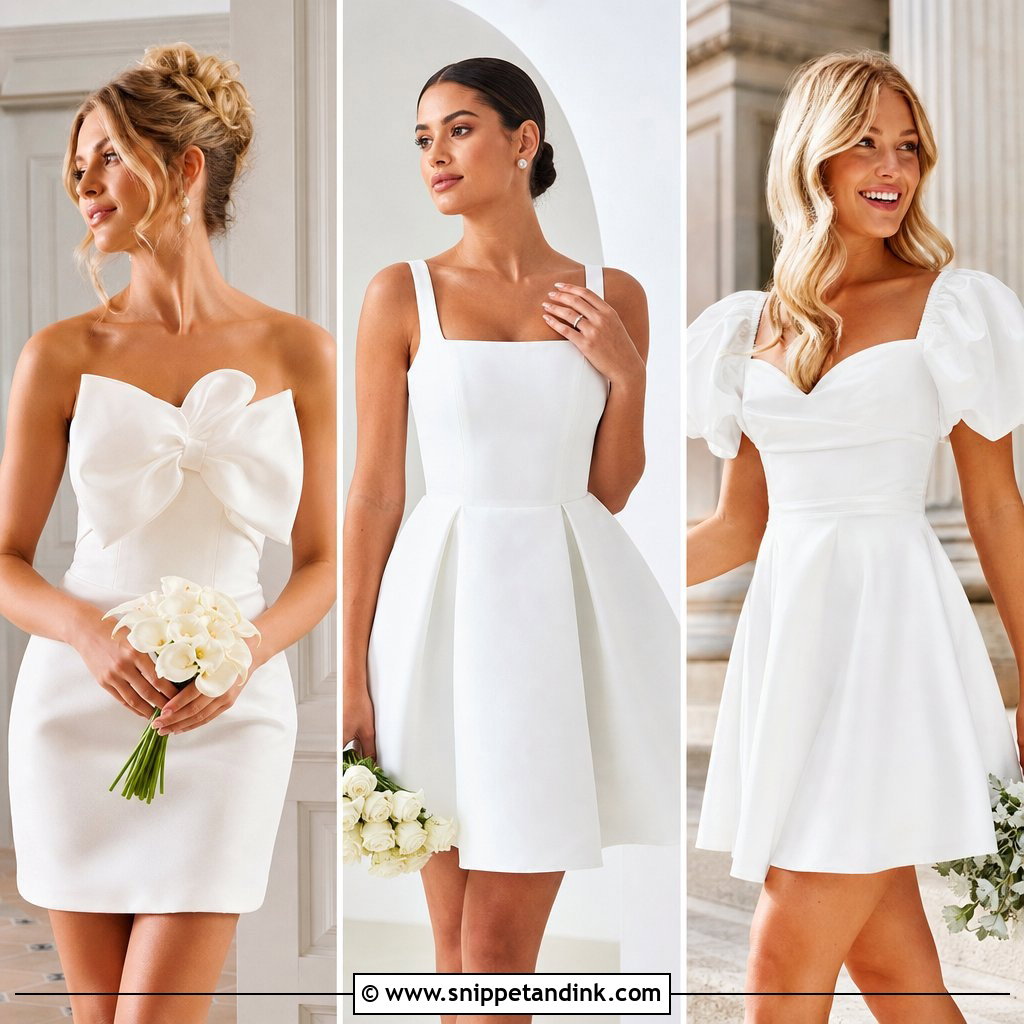
9. Tulip Mini Wedding Dress
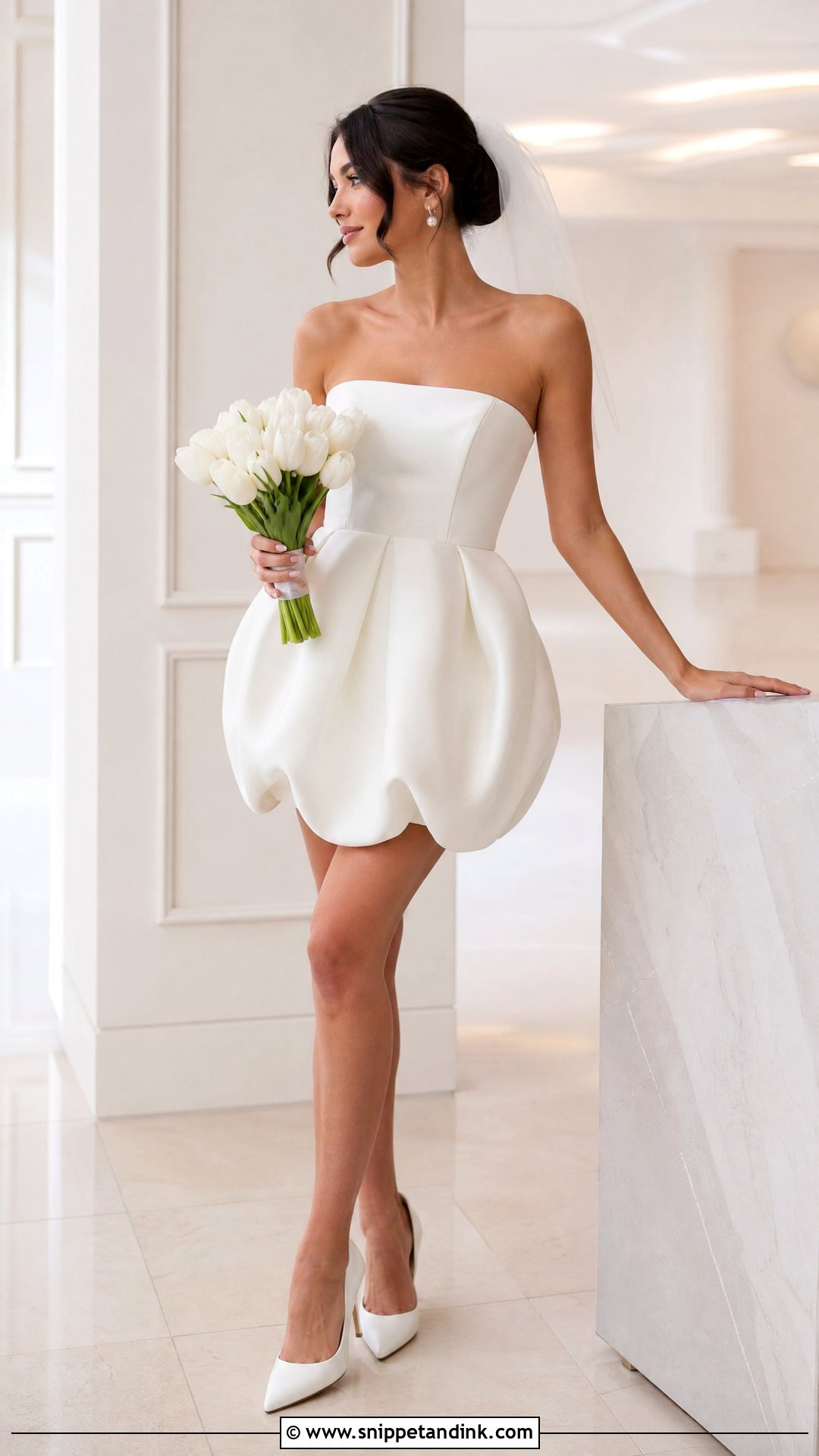
A tulip mini is playful, and short petals add volume without bulk. A square neckline or a simple strapless top keeps the proportions in check, since a fussy bodice over a sculpted skirt gets crowded fast. Pointed pumps, sheer ankle socks if you like a fashion edge, or low block heels if you plan to dance all night. Pearl earrings, a short veil and a little bunch of white tulips finish it. A sleek bob or ponytail suits civil ceremonies, brunches and a second outfit for the party.
10. Tulip Midi Wedding Dress
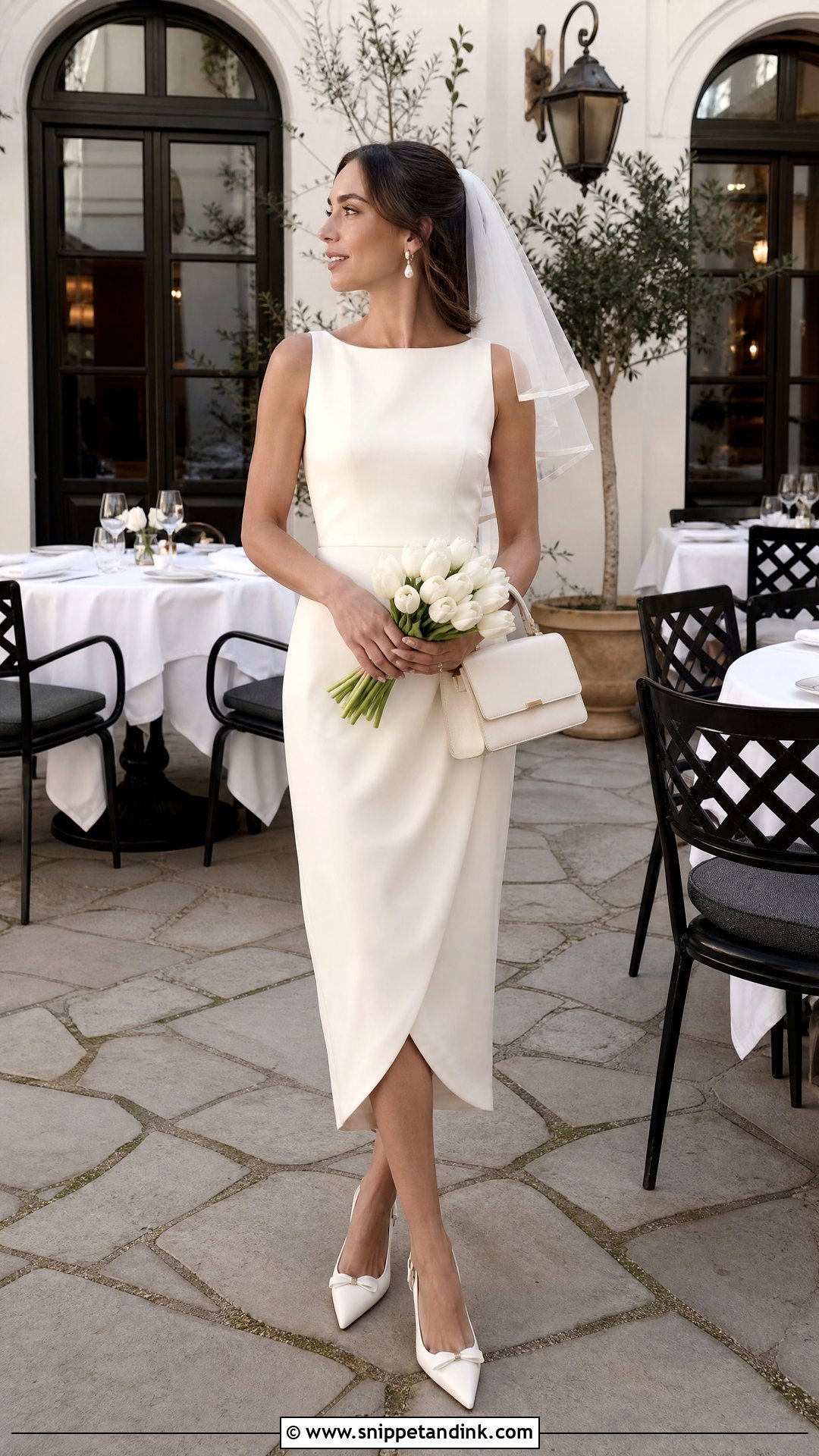
A tulip midi gives a long, grown-up line and still shows the ankle. The panels should taper gently below the knee; if they flare at the hip instead, the dress looks boxy. Sit down in it at the fitting. Overlapping midi panels can ride up and part above the knee when you cross your legs, and a hidden tack stitch fixes it. Kitten-heel slingbacks, pearl drops, a structured ivory bag and a comb or shoulder-length veil keep the scale right. It’s a dress you can wear again to an anniversary dinner.
11. Tulip Ball Gown Wedding Dress
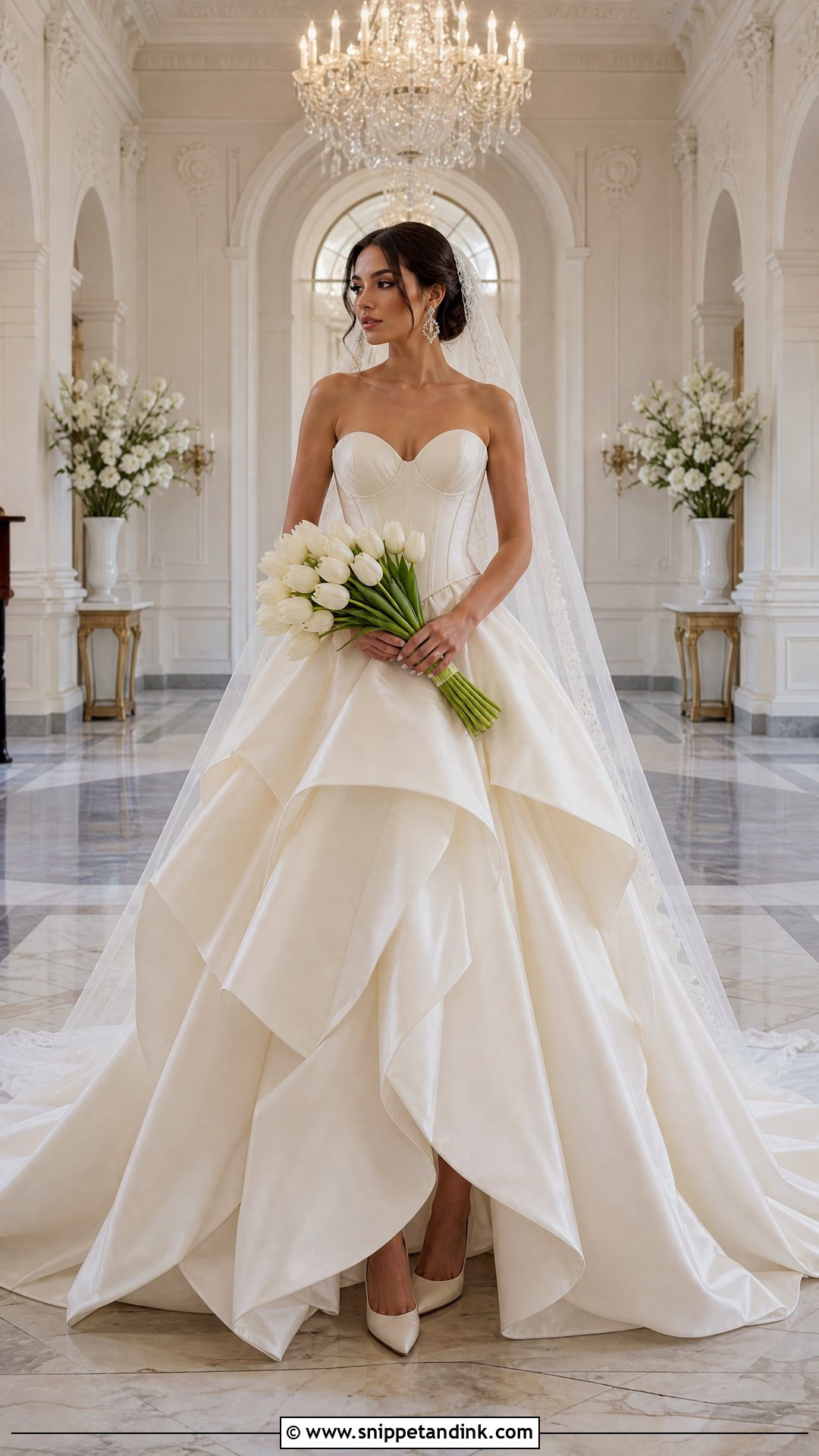
Oversized petals turn a ball gown into a real entrance. A fitted corset keeps the waist defined while structured tulle, organza or mikado builds the volume. These skirts are heavy and wide, so ask how the panels are anchored to the waist; loose panels slide and bunch on one side when you sit. Crystal studs, a slim bracelet, closed satin pumps and a cathedral veil scaled to the skirt are plenty, with a smooth bun and long-stem white tulips. Give it a big room.
12. Fit-and-Flare Tulip Wedding Dress
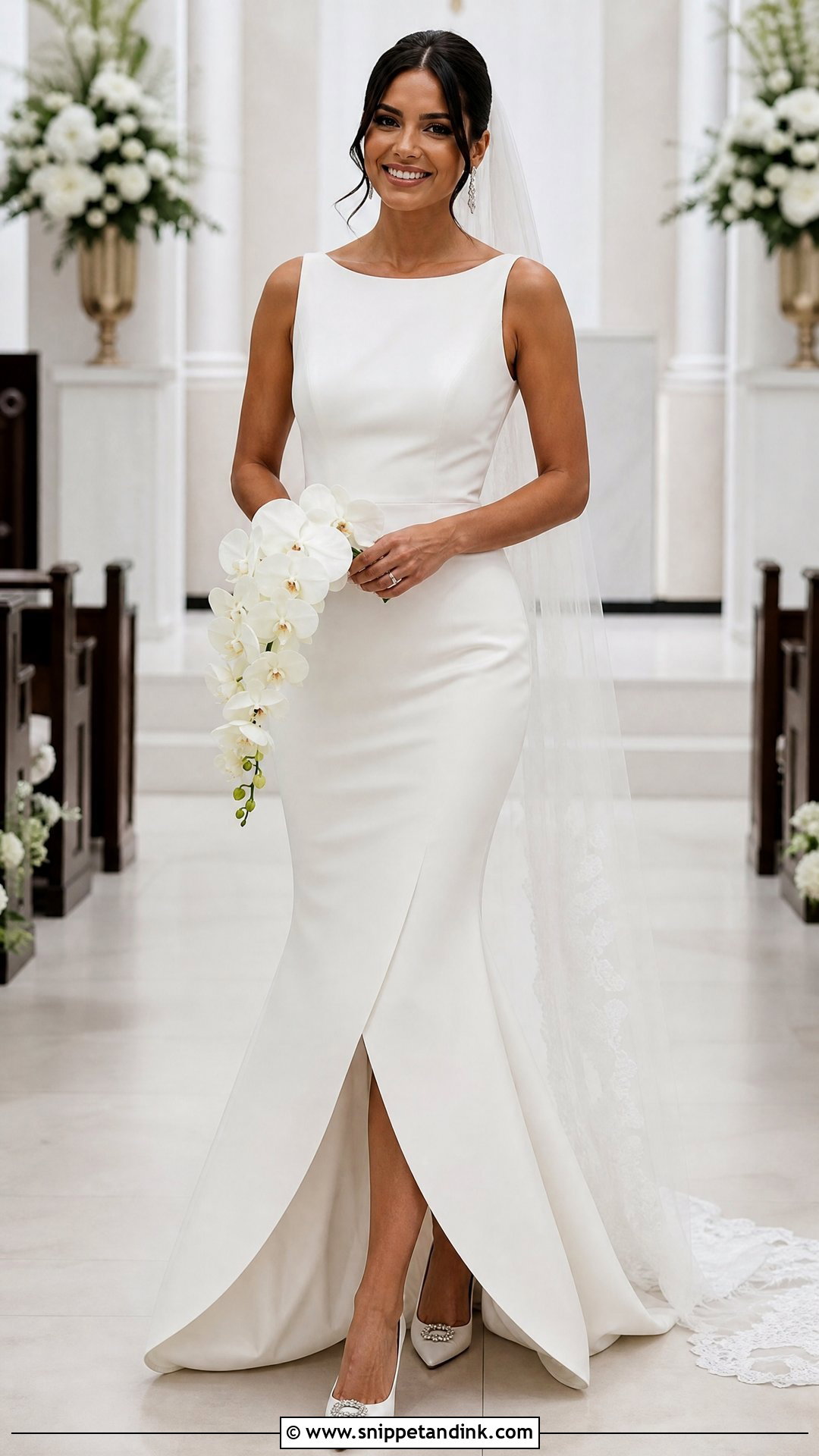
Fit-and-flare with tulip panels is a gentler version of the mermaid. The skirt opens into rounded petals near the knee instead of a sharp flare, so walking feels easier. Stretch crepe is the comfortable option; lace over a smooth lining adds texture but less give. With a low back, a fine back necklace is a nice touch. Drop earrings, pointed heels, a chapel veil and a narrow, slightly cascading bouquet keep the vertical line going.
13. Wrap Tulip Wedding Dress
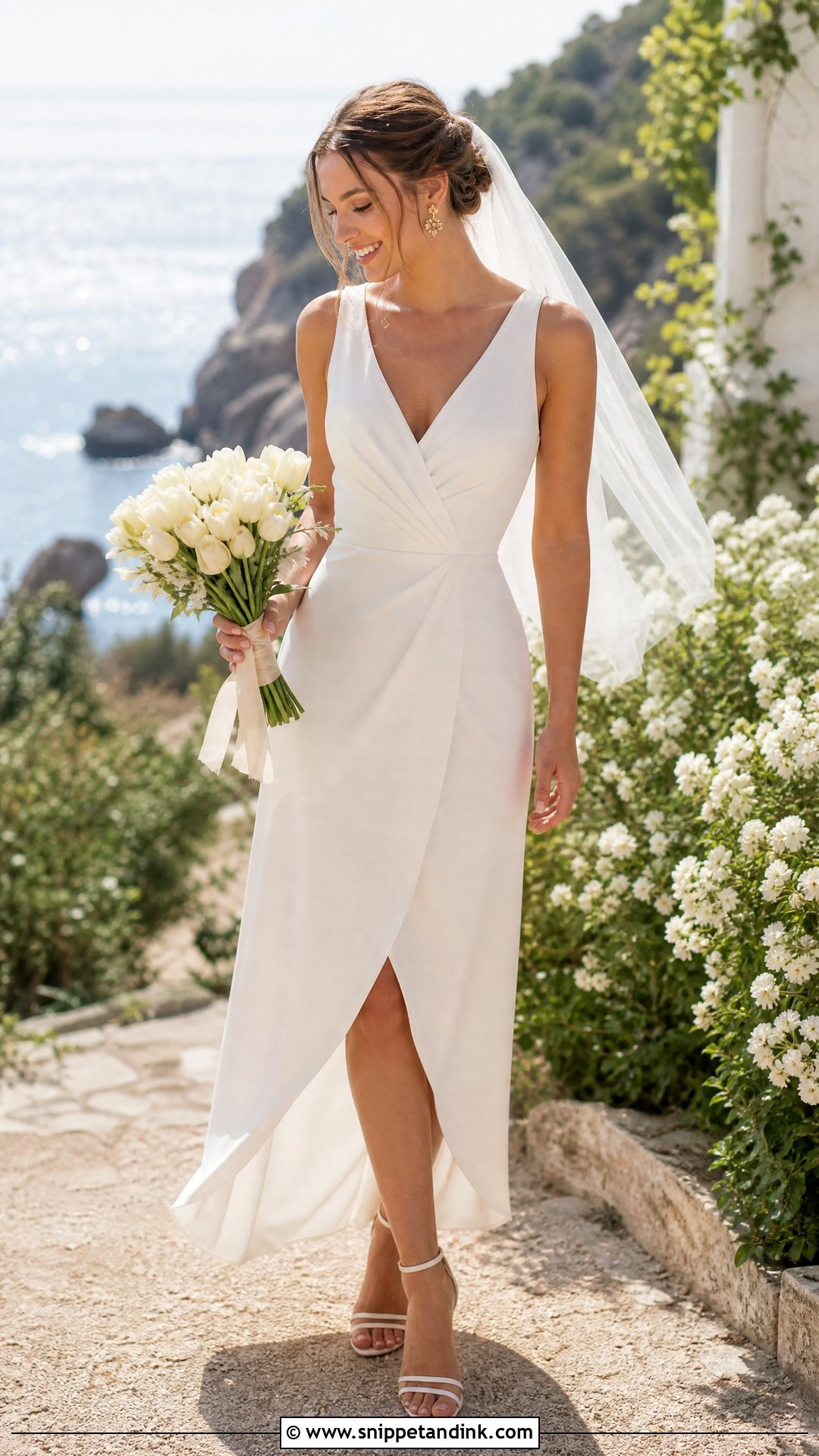
The wrap is the most relaxed tulip shape: the bodice crosses at the front and the skirt continues the overlap in curved panels. Silk crepe or soft satin drapes best. Never trust a tie alone. A tied wrap loosens as you move, so I ask for a hidden internal fastening or snap at the waist. Delicate gold earrings, ivory sandals and, if you want more waist definition, a narrow silk belt. A low ponytail and a light fingertip veil suit a beach or small garden ceremony.
14. Blush Tulip Wedding Dress
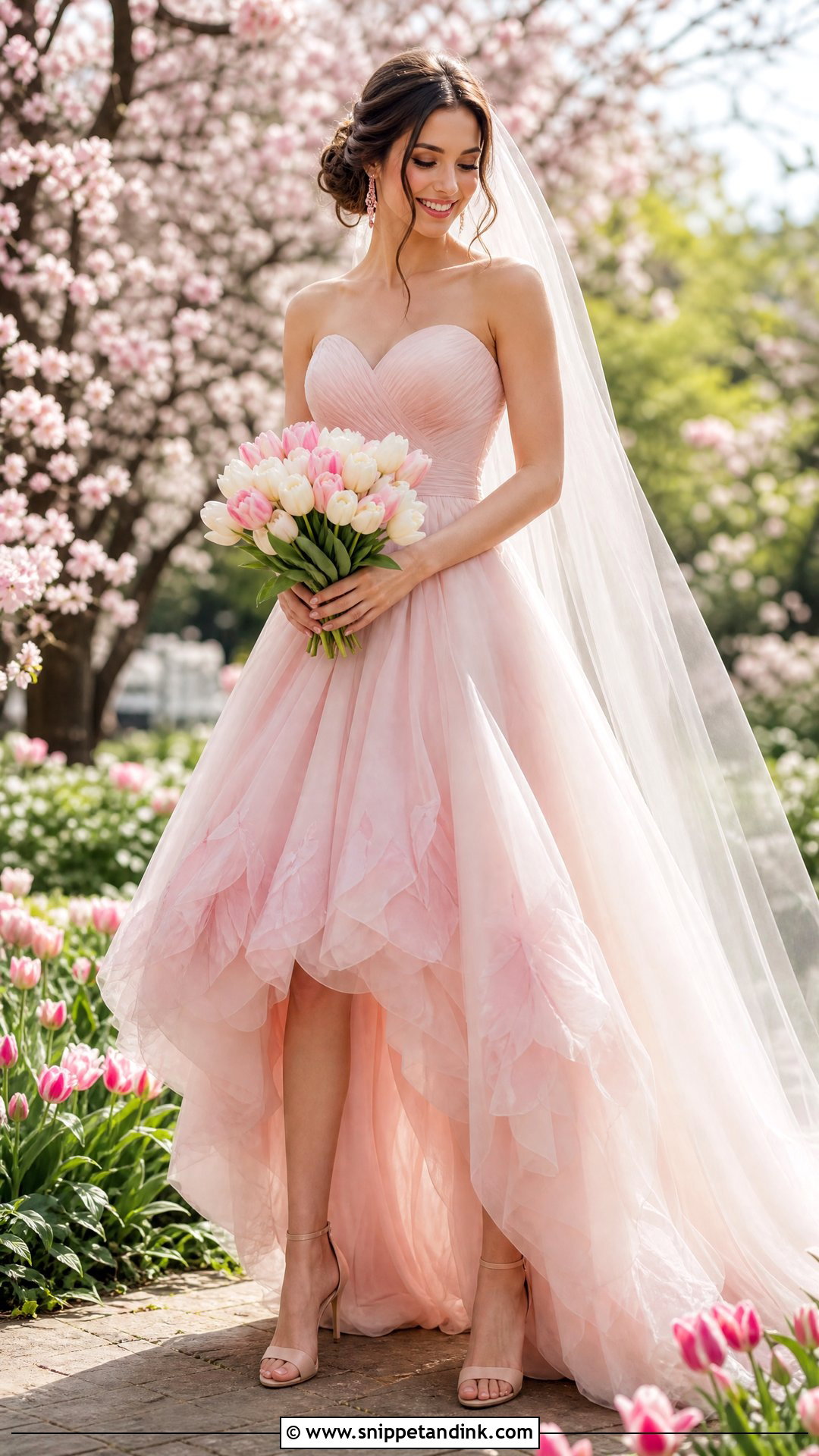
Blush tulle over an ivory lining gives color with depth, and petal layers show the shading as they overlap. Keep the bodice fitted and simple so color and shape do the talking. Blush can read almost white in bright sun and quite pink indoors, so look at it both ways before deciding. Rose-gold earrings, nude-pink heels and a sheer blush or ivory veil work, and a mix of white and pale pink tulips ties the shades together.
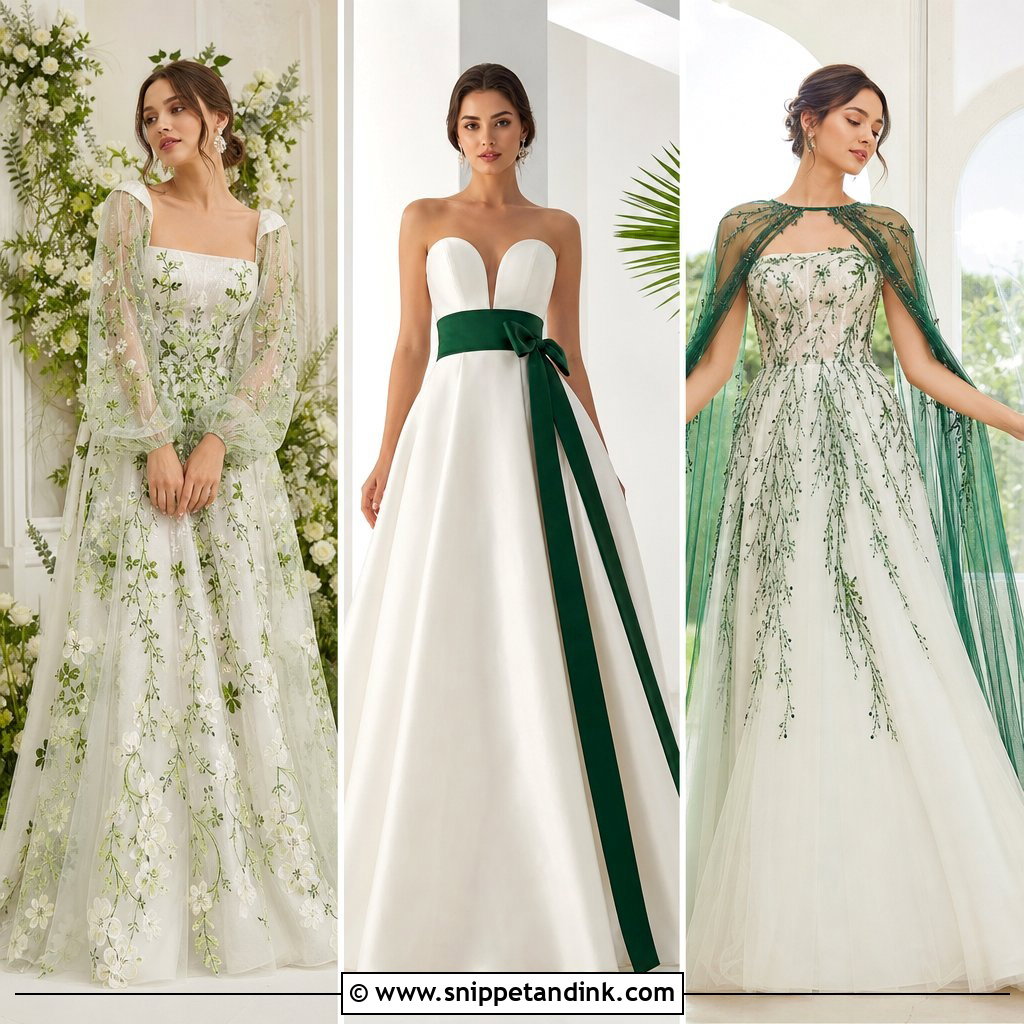
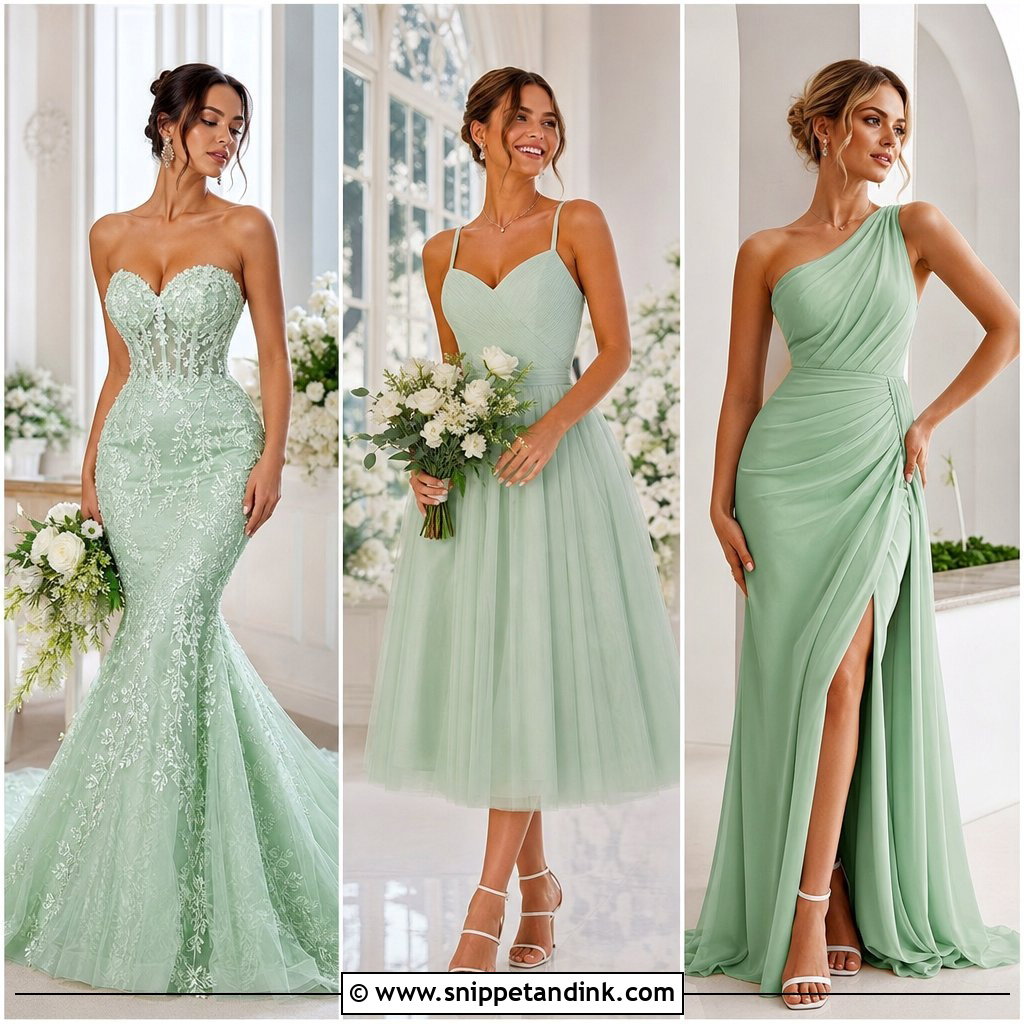

15. Embroidered Tulip Wedding Dress
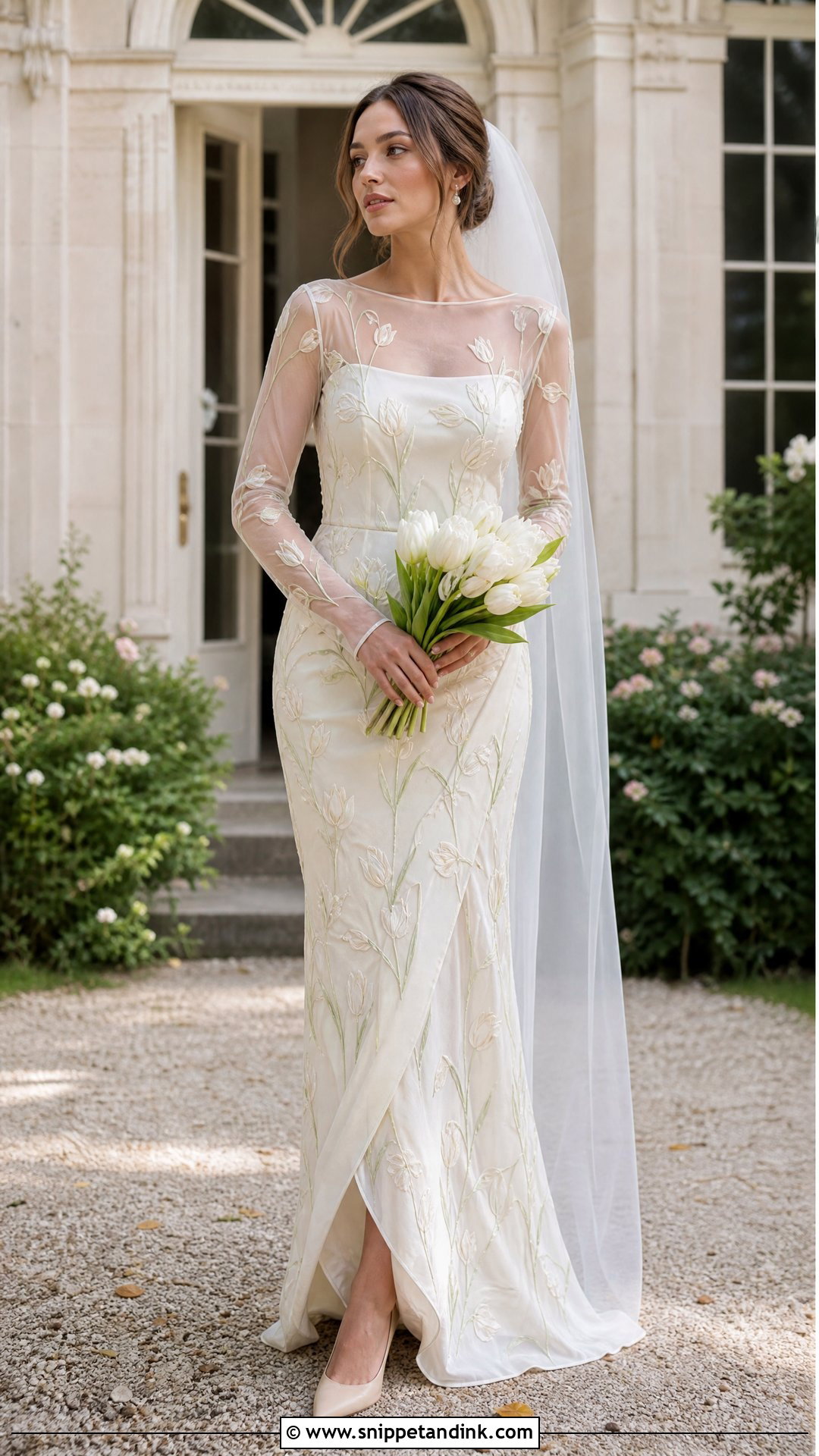
Botanical embroidery makes a simple tulip shape feel handmade. Tonal white thread reads as texture; pale green and pink read as color. Embroidery on a sheer overlay can pucker if the lining underneath is cut too tight, so check the bodice for ripples when you breathe in. Keep the veil plain so the pattern shows through, wear a low bun with one small floral pin, and carry solid white tulips so the whole look doesn’t get too colorful.
16. 3D Flower Tulip Wedding Dress
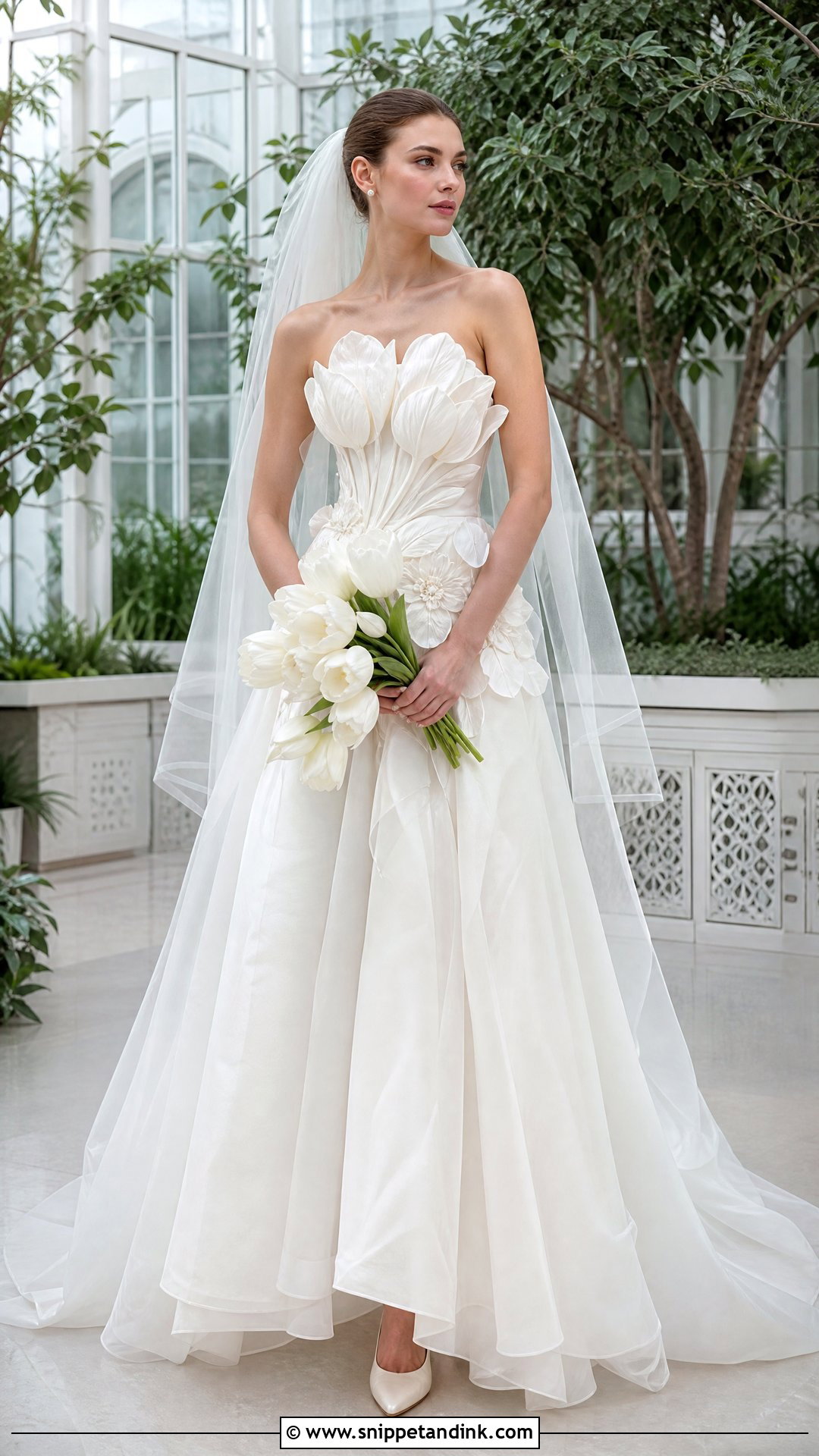
Handmade 3D petals look best up close, which means they show most in portraits. Keep them to one zone, around the neckline, waist or upper skirt, rather than everywhere. A tulle or organza base keeps them light; on heavier fabric, dense flowers can drag a strapless bodice down. Pearl studs, satin pumps and a transparent veil with no trim are enough, plus a polished updo. One-color flowers in the bouquet stop it competing with the dress.
17. Mikado Tulip Wedding Dress
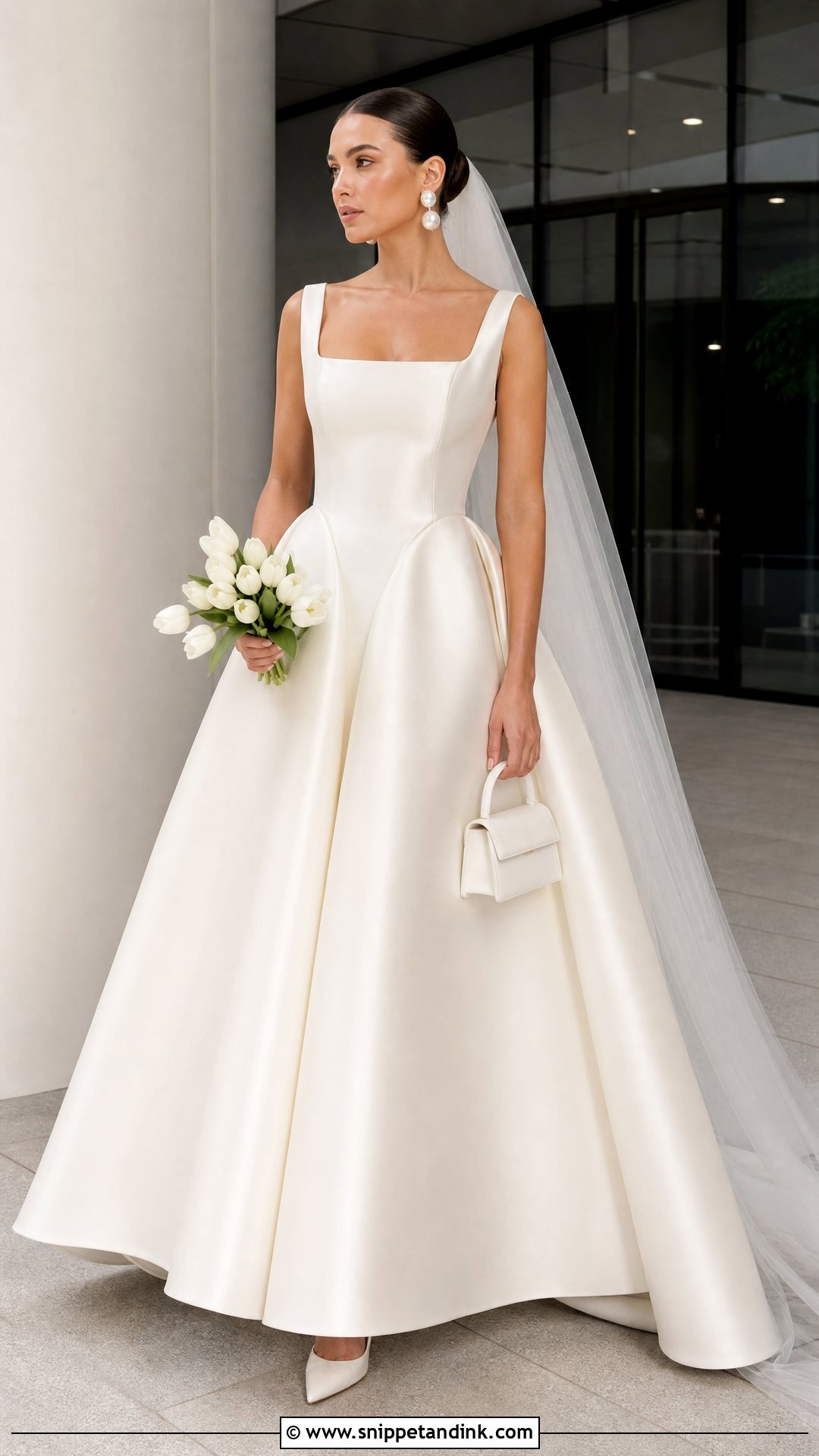
Mikado holds a fold like paper, which is why it’s the go-to fabric for folded skirts. The panels stay curved without collapsing even after hours of sitting. The trade-off is that mikado shows a crease line if it’s folded hard in storage, so the dress should hang, not lie folded, in the week before. A clean square, scoop or strapless bodice, sculptural pearls and pointed pumps suit it. A long plain veil softens the structure, and a center-parted low knot keeps the line architectural.
18. Chiffon Tulip Wedding Dress
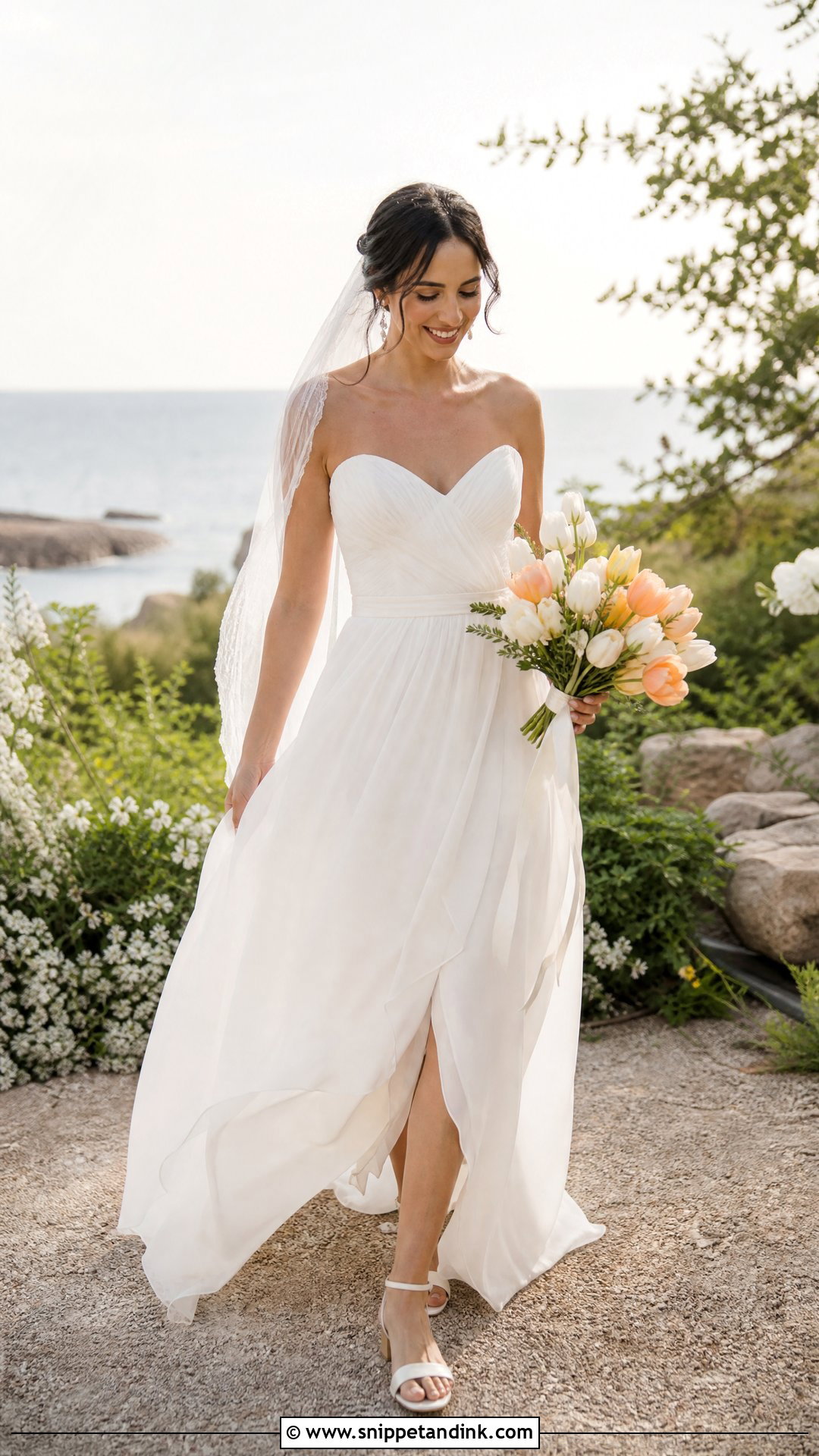
Chiffon makes the softest version. Instead of crisp petals, the skirt forms from overlapping layers that float around the legs and catch a breeze. Because chiffon has no body of its own, the bodice needs a supportive lining and a narrow waistband to give the dress shape. Low block-heel sandals sink less into grass and sand than stilettos. Small drops, a fingertip veil and loose waves go with it, plus white, peach or pale yellow tulips for warm-weather color.
19. Plus-Size Tulip Wedding Dress
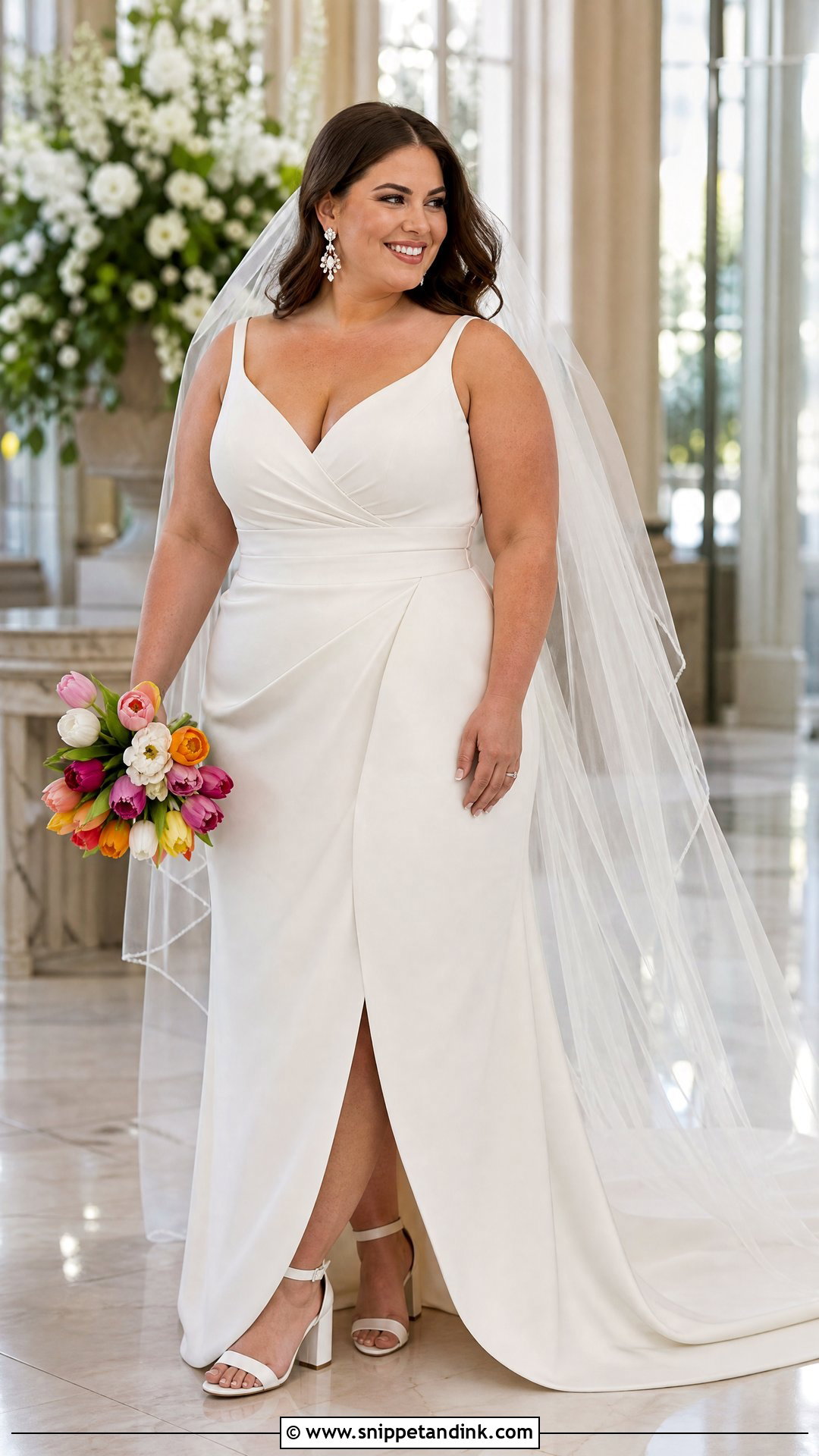
A tulip skirt can flatter a fuller figure very well, because the overlap creates a defined waist and the tapered hem avoids extra volume at the bottom. Look for secure straps or internal boning, and panels that lie flat across the hips without pulling. Pulling at the overlap is the sign you need the next size up and a tailored take-in, not a squeeze. Draped crepe, satin and mikado all work. Supportive block heels, statement earrings and a veil sized to the venue finish it. Fit through bust, waist and hips matters far more than the label.

20. Detachable Tulip Skirt Wedding Dress
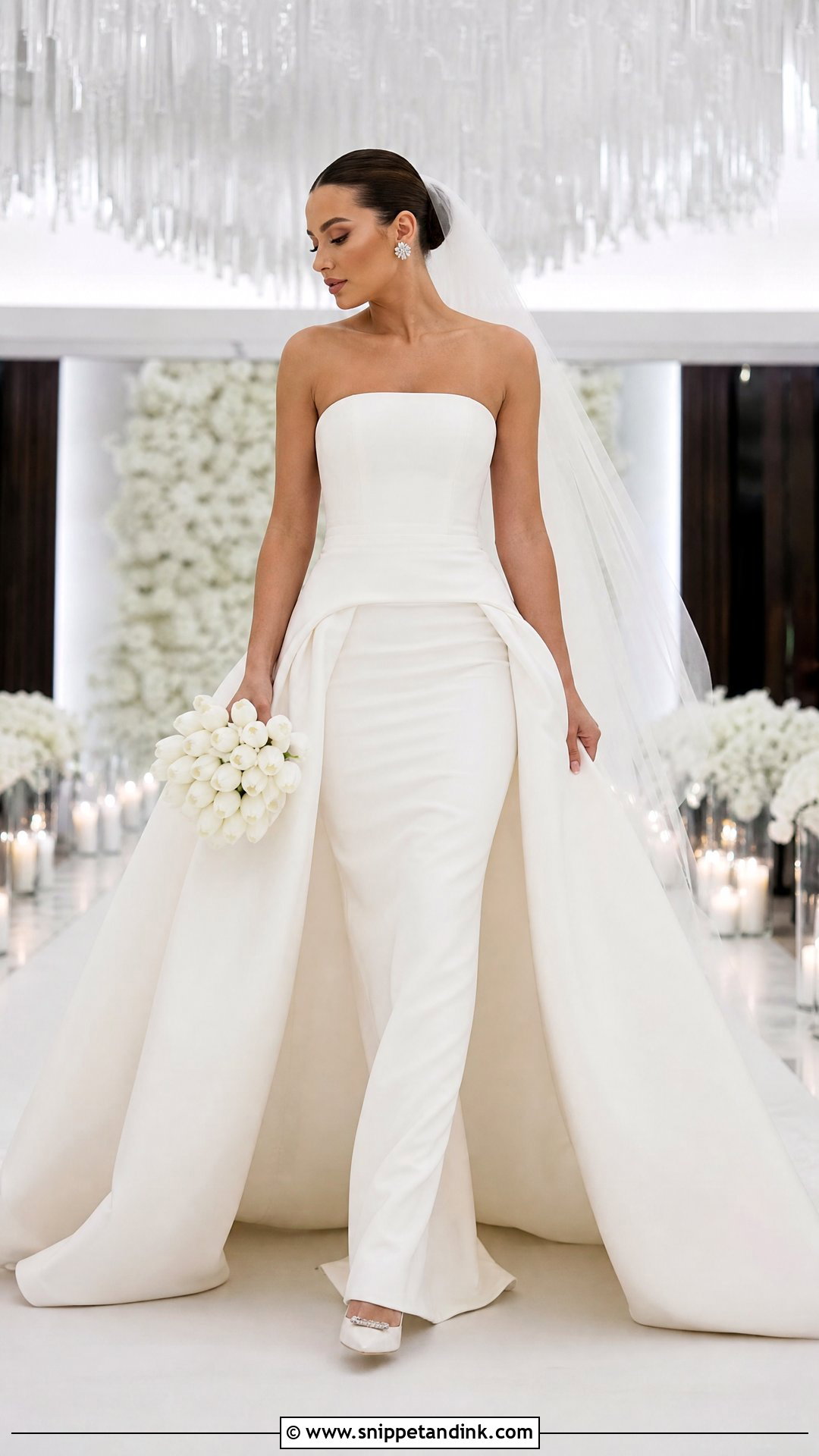
A removable tulip overskirt gives you two dresses. A column, mini or fit-and-flare goes underneath, and the petal panels clip on for the ceremony. Match both pieces in the same ivory, or try a faint blush overskirt for contrast. The waistband join should lie flat without a ridge. Practice the swap with whoever will help you, keep the long veil removable too, and switch to statement earrings for the party.
Walk-Test the Overlap Before Your Final Fitting
The crossover at the front is designed to part a little when you step. Sometimes it parts a lot. Walk toward a mirror, climb a step and sit down, and watch how much leg the opening shows. If it’s more than you want, a seamstress can add a small hidden tack or a snap a few inches down from the waist to hold the panels together while still letting them move.
Steaming is the other thing brides underestimate. Curved panels crease along the folds after travel, and an iron flattens the curve you paid for. I steam tulip skirts hanging, working from the inside of each panel, and let the fabric cool before anyone touches it.
Carrying Real Tulips With a Tulip Dress
It’s a natural pairing, but tulips behave differently from most bridal flowers. They keep growing after they’re cut and they bend toward light, so a bouquet made too early can open wide or droop by the time you walk. Ask your florist to make it as close to the ceremony as possible and keep it in cool water out of the sun until you pick it up.
Keep the bouquet compact and in one or two colors. A loose armful of tulips next to a sculpted petal skirt can feel like too much of the same shape.
Petals That Open When You Walk
A tulip shape can be quiet or sculptural, and either way it should let you walk, sit and dance in comfort. Mikado makes bold petals; chiffon and soft satin make gentle ones. Short hems suit courthouses and receptions, while layered ball gowns need a formal room. Simple veils, sensible shoes and flowers that echo the dress usually look most balanced. Compare fabrics, lengths, necklines and details across the gowns above, then let a good seamstress fit the petals to you.
You'll Like These Ideas:


Leave a Reply