
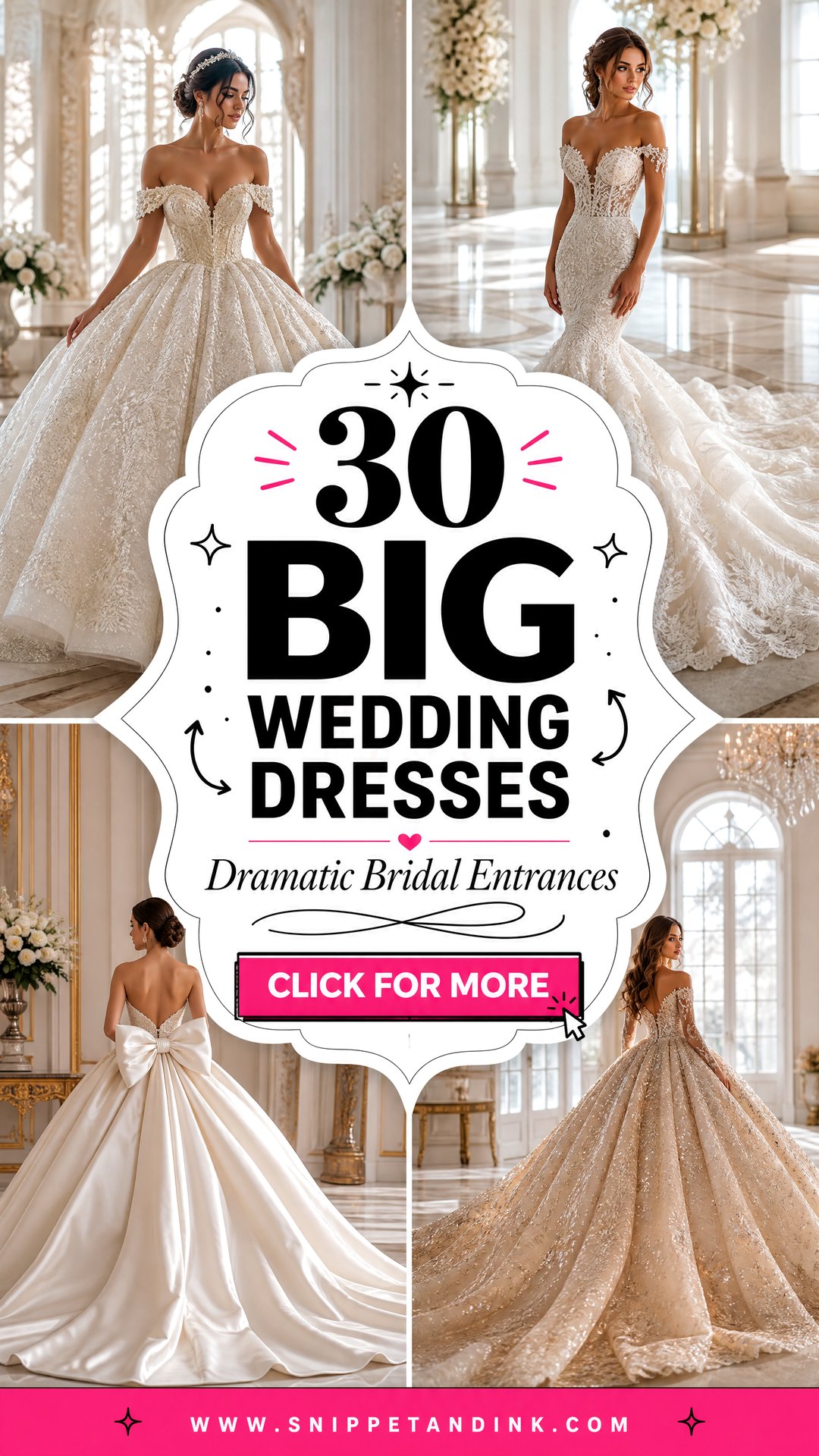
A big dress changes how you move through the whole day. You enter differently, you sit differently, and the photographer starts framing you from further back. I love dressing brides in volume, but I fit these gowns with the venue and the schedule in mind as much as the mirror. Full skirts are firmly back, along with corset bodices, Basque waists, detachable overskirts and cleaner princess shapes. Below are thirty versions, from sculptural mikado to clouds of tulle, each with what I check before a bride says yes.
What Actually Holds a Full Skirt Up
Volume comes from two places: the fabric itself and what’s underneath it. Stiff fabrics like mikado and duchess satin hold some shape on their own. Soft ones like tulle need layers of netting, a built-in petticoat or a separate crinoline. Hoops give the widest, most even shape but swing when you walk and make sitting awkward; layered petticoats are softer and easier to live in. I ask what’s inside every sample before a bride tries it on, because two gowns that look equally full can feel completely different by evening.
Ask about weight
Shops rarely volunteer how heavy a gown is. Lift the skirt from the waist while it’s on the hanger. If it feels like a lot in your arms, it’ll feel like more on your hips by the reception.
Leave more time than you think
Many big gowns are made to order, and waits of several months are common, with alterations needing a few more fittings on top. Timelines vary by designer and season, so get the delivery date in writing before you pay a deposit.
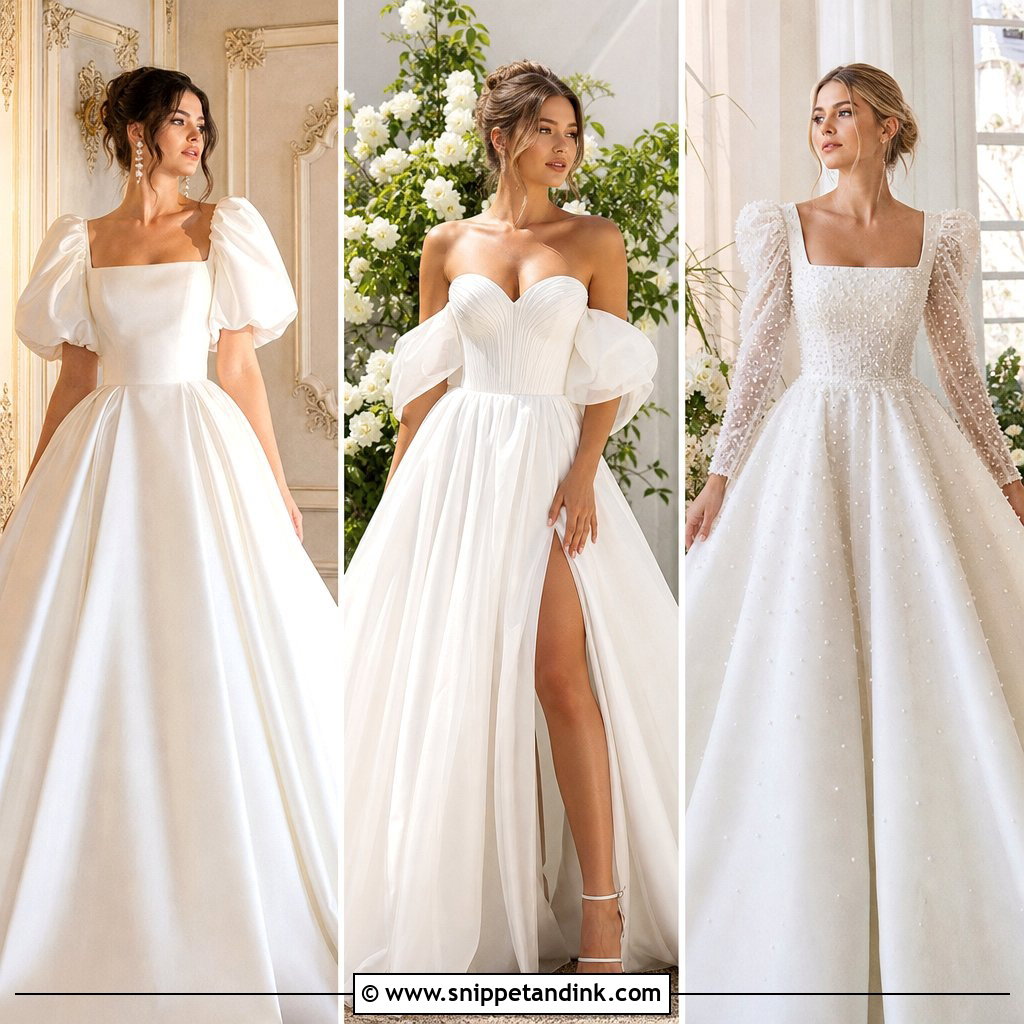
1. Big Ball Gown Wedding Dress
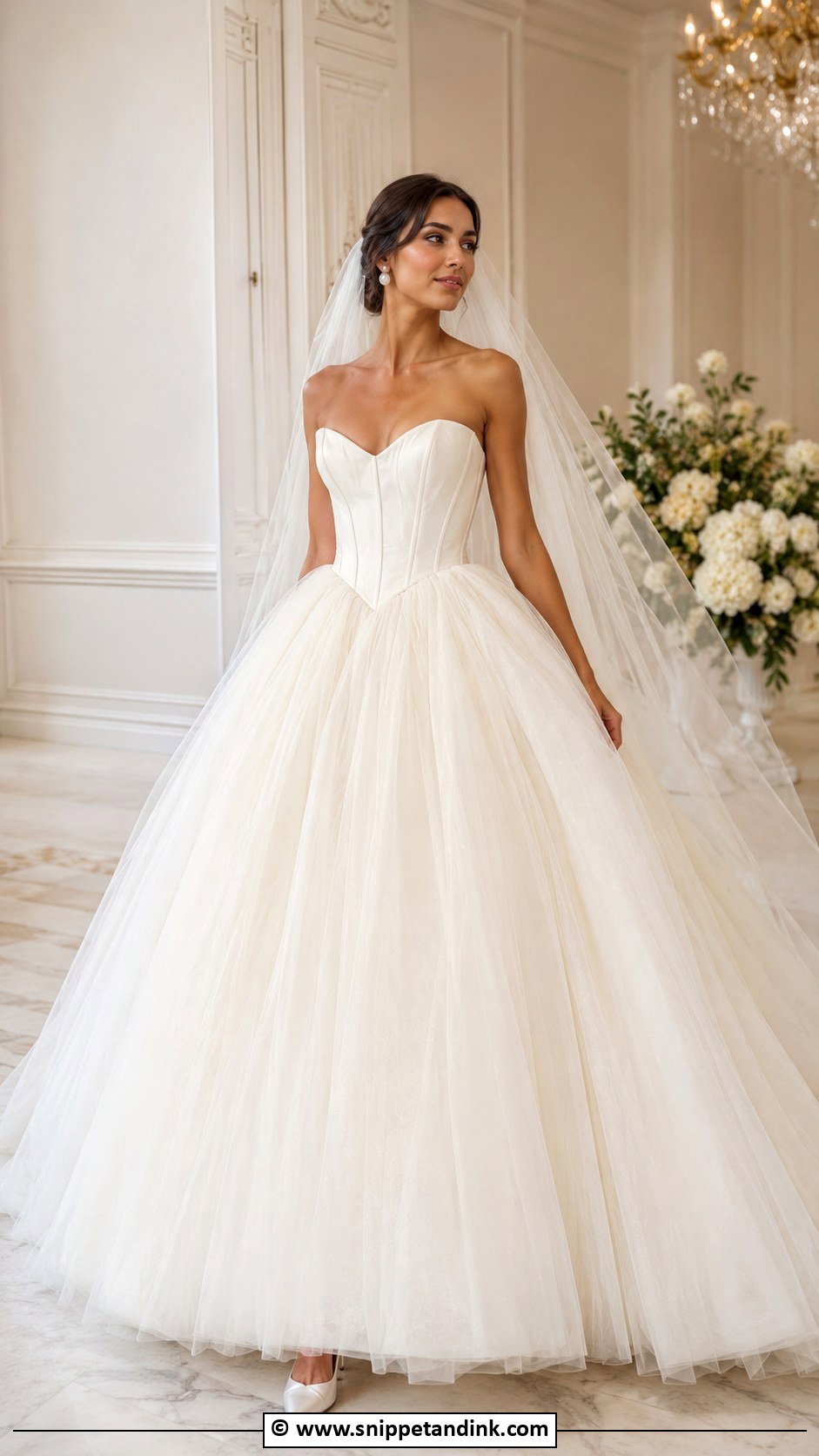
A big ball gown wedding dress starts with a fitted bodice and opens into a full skirt of tulle, organza, satin or layered mikado. What keeps it from looking like a costume is movement: I look for a skirt that sways when you walk, not one held rigid by a hoop. A clean neckline and a defined waist do the rest. Add a cathedral veil, pearl earrings and pointed satin heels. On a petite bride, I ask the seamstress to take some fullness out of the petticoat so the skirt reads grand without swallowing her.
2. Big Princess Wedding Dress
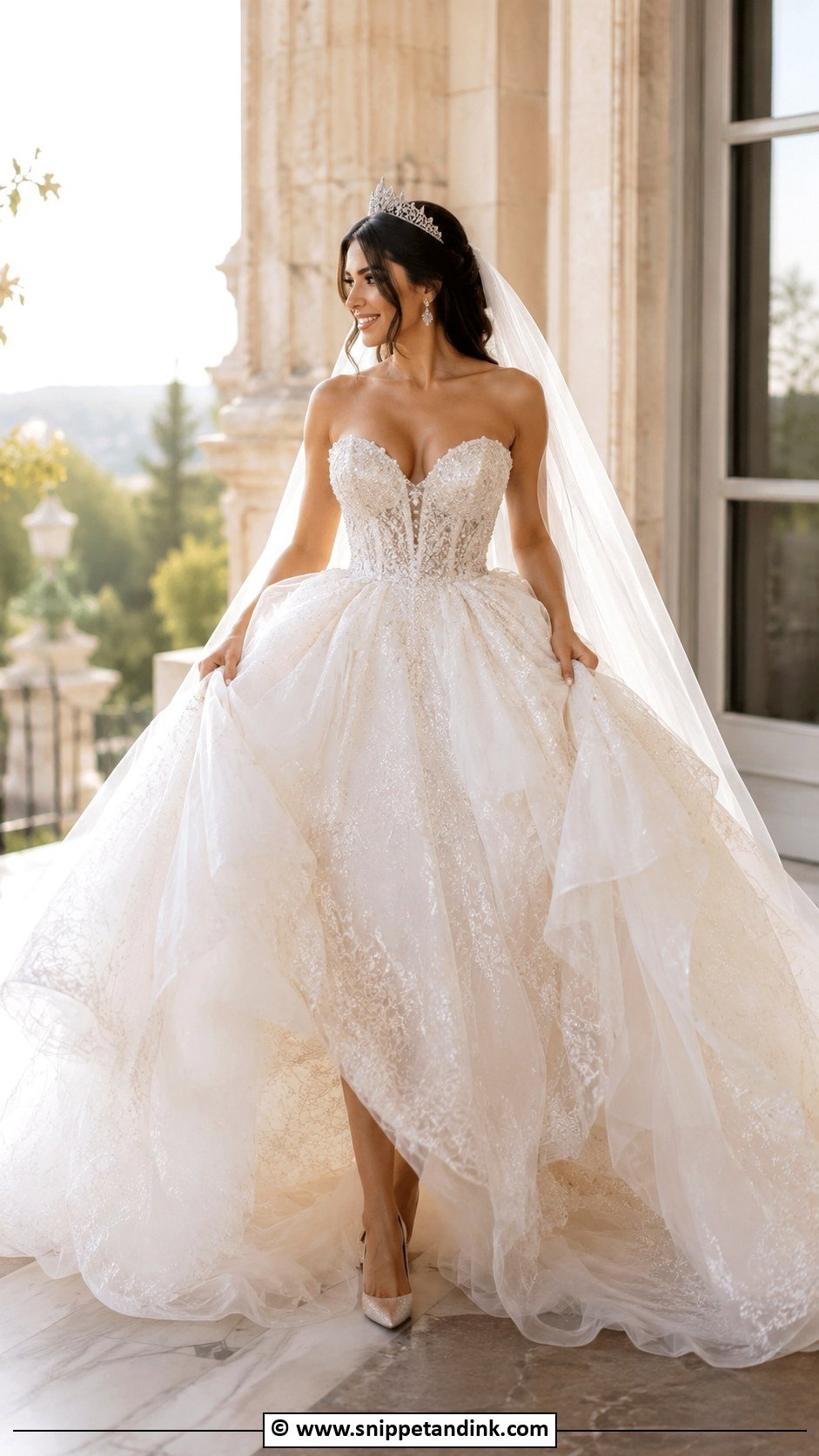
Princess gowns and ball gowns overlap, but the princess version usually adds softness up top: a sweetheart or off-shoulder neckline, beading, lace appliqué or shimmer tulle. The cinched waist is the whole point, so bodice fit matters more than anything else on the dress. I keep accessories delicate, a simple tiara, drop earrings, a long veil and crystal heels, because the skirt is already doing plenty. Ballrooms and garden estates give it the room it needs.
3. Big Tulle Wedding Dress
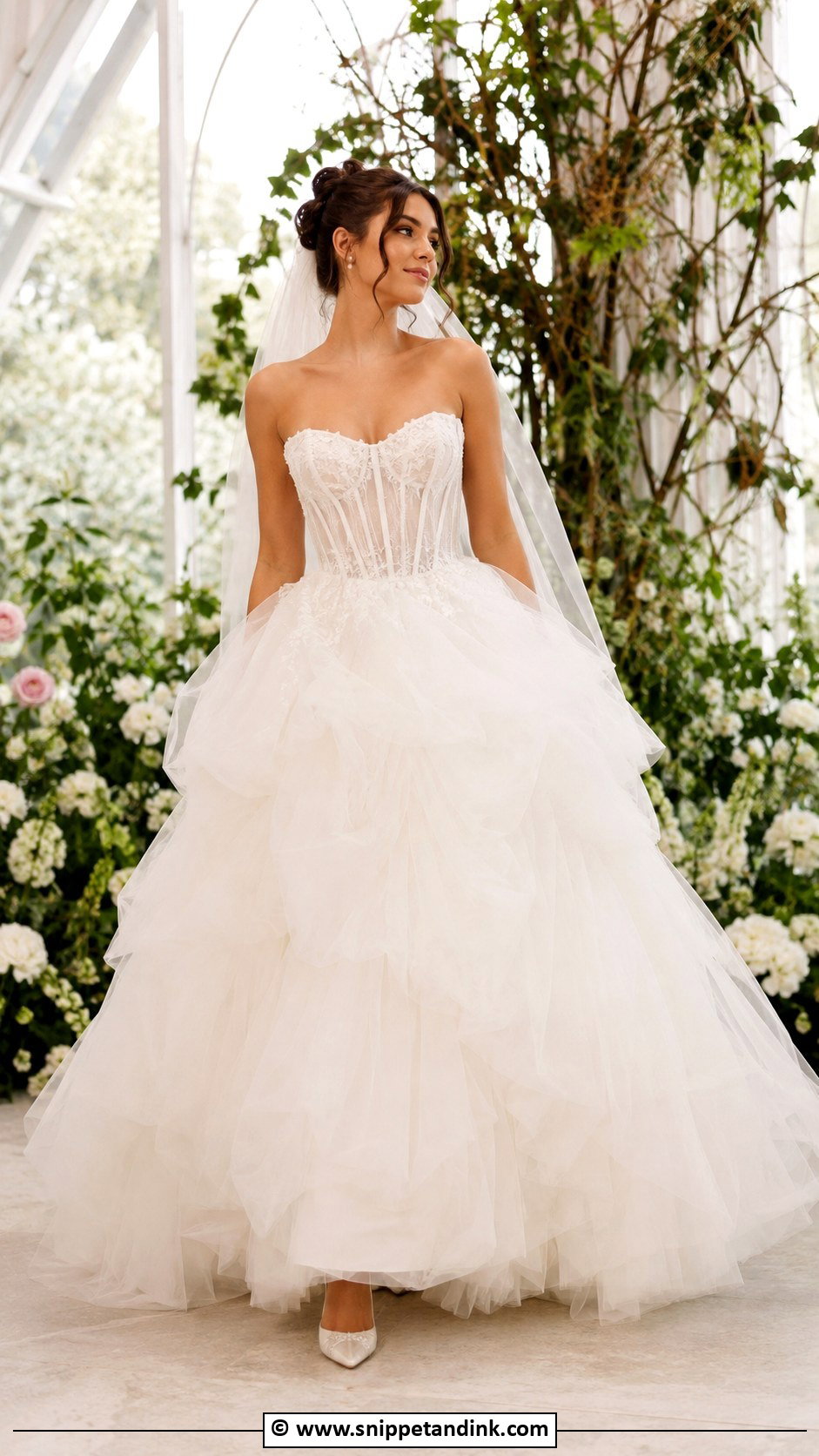
Tulle gives volume without much weight, which is why I point brides who want drama but dread a heavy dress straight toward it. Layered tulle over a smooth bodice or a light corset looks airy. The catch is fragility. Tulle snags on rough stone, beaded heels and the clasps of bridesmaids’ clutches, so think about your venue floor before choosing. A tulle veil blends into the skirt for a soft, cloudy effect in photos. Barely-there heels and pearl studs are plenty, and it’s at its best in spring and summer.
4. Big Satin Wedding Dress
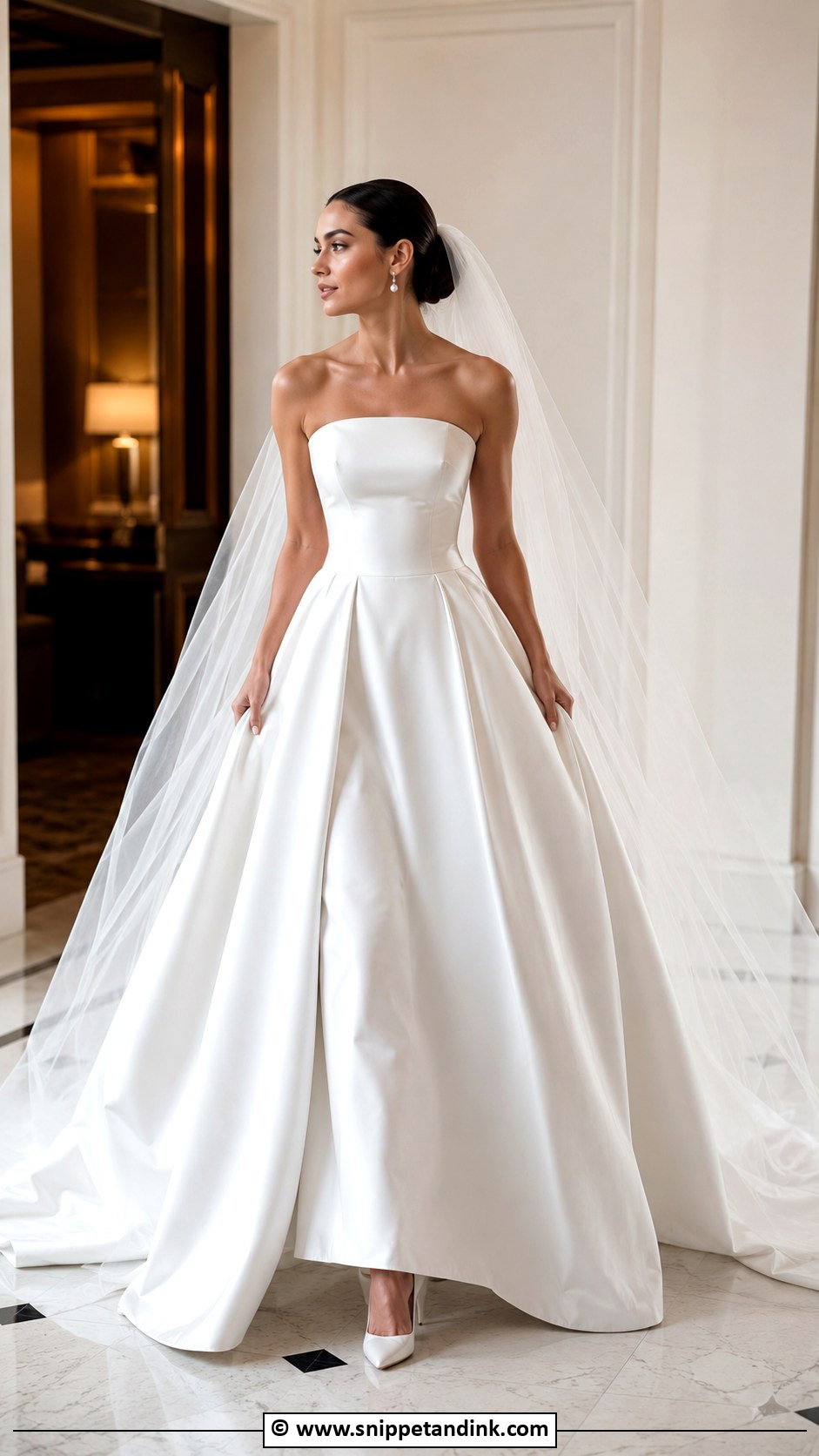
Satin makes volume look polished. Its smooth face and low shine make even a simple design read expensive, provided the seams are clean, because satin shows every pucker. It needs a structured bodice and a skirt built to hold its shape. Square, scoop or strapless necklines all keep it classic. I warn brides that satin creases where you sit, so expect a crumpled lap by dinner unless the fabric is a heavier duchess satin. Satin pumps, a low bun, pearl earrings and a long veil with minimal edging finish it.
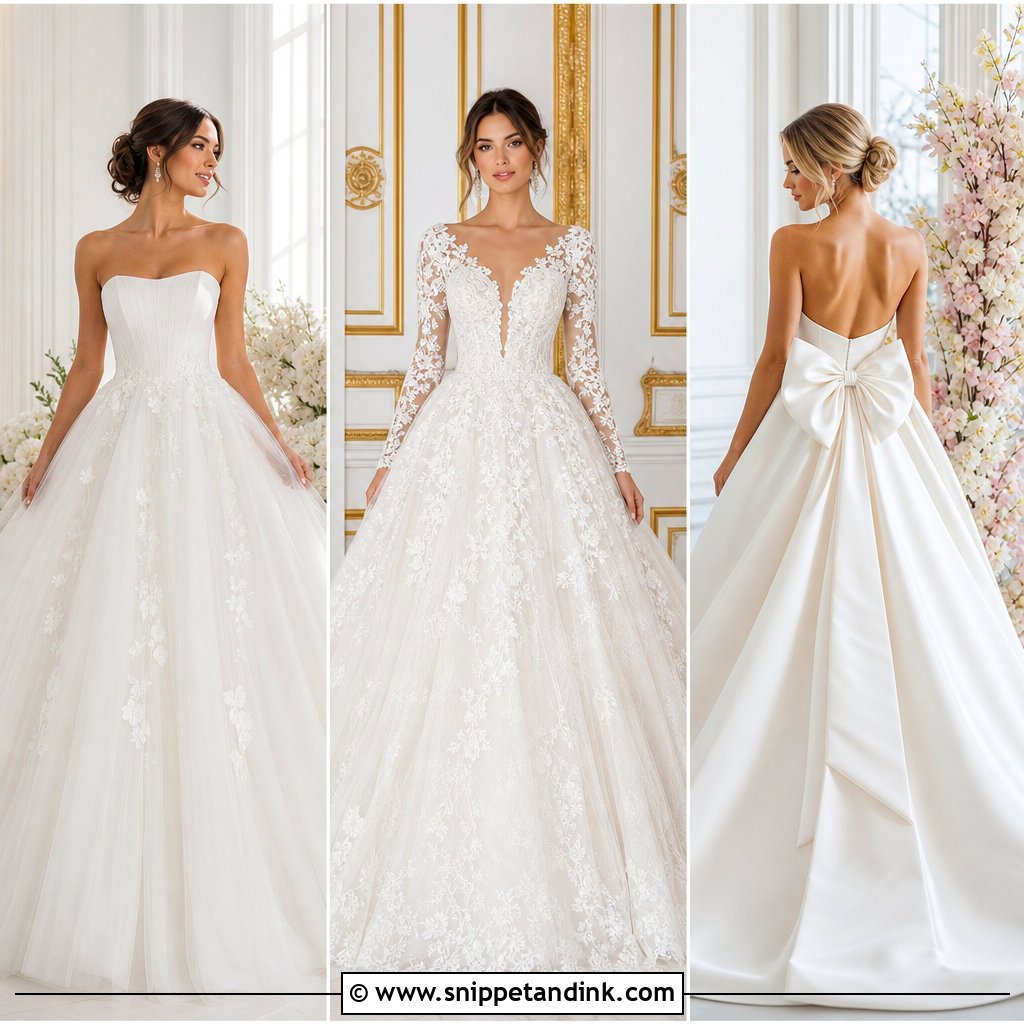
5. Big Lace Wedding Dress
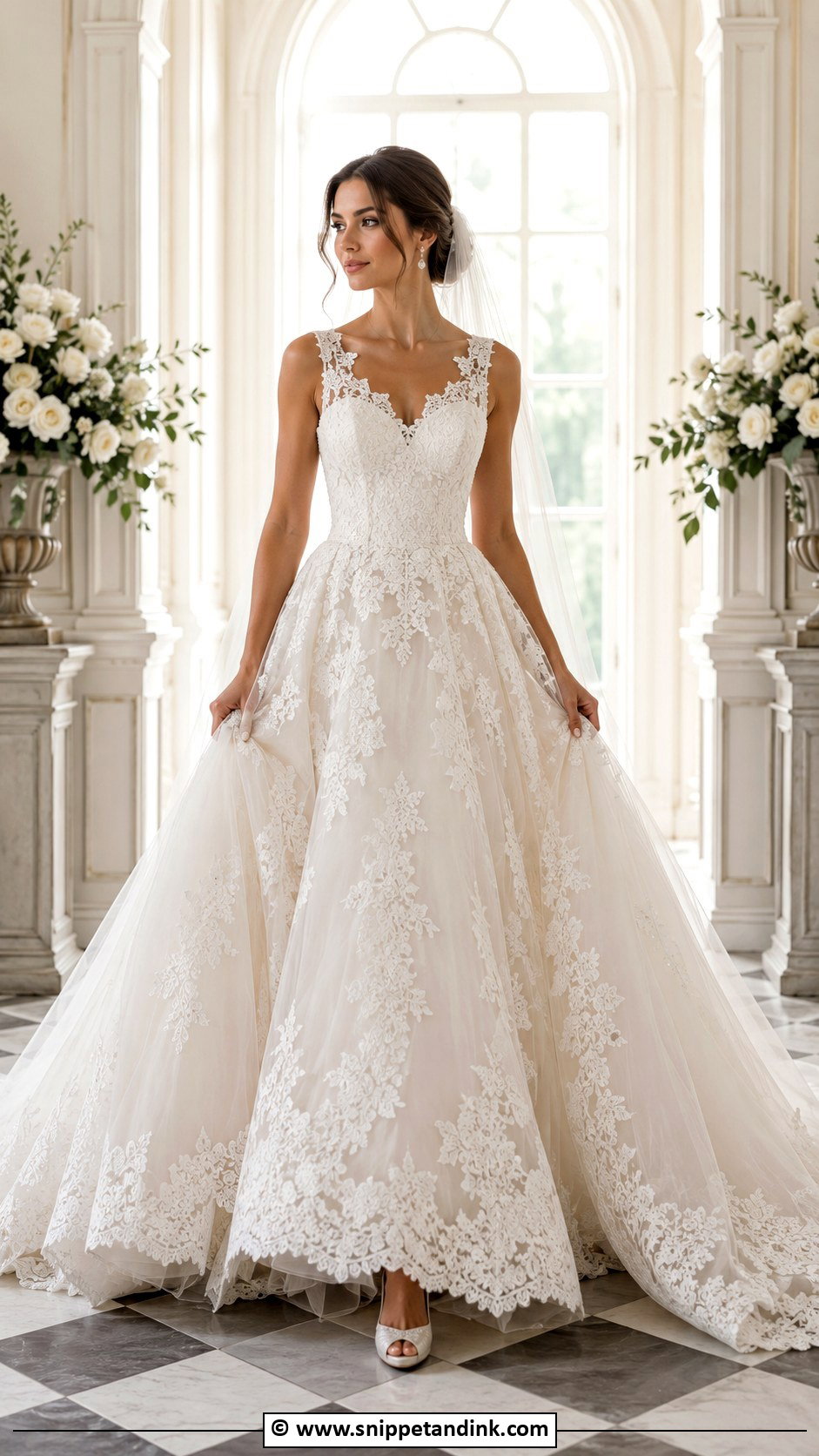
Lace adds texture and tradition at once. It can cover the bodice, trail down the skirt or sit as bold appliqués over tulle. I prefer one lace placed with intention over several competing patterns, which look busy in close-ups. Long lace sleeves feel formal; a strapless lace bodice is more modern. Lace pulls the eye to wherever it sits, so ask for appliqués where you want attention and leave clear tulle where you don’t. A soft veil, simple earrings and ivory heels complete it.
6. Big Off Shoulder Wedding Dress
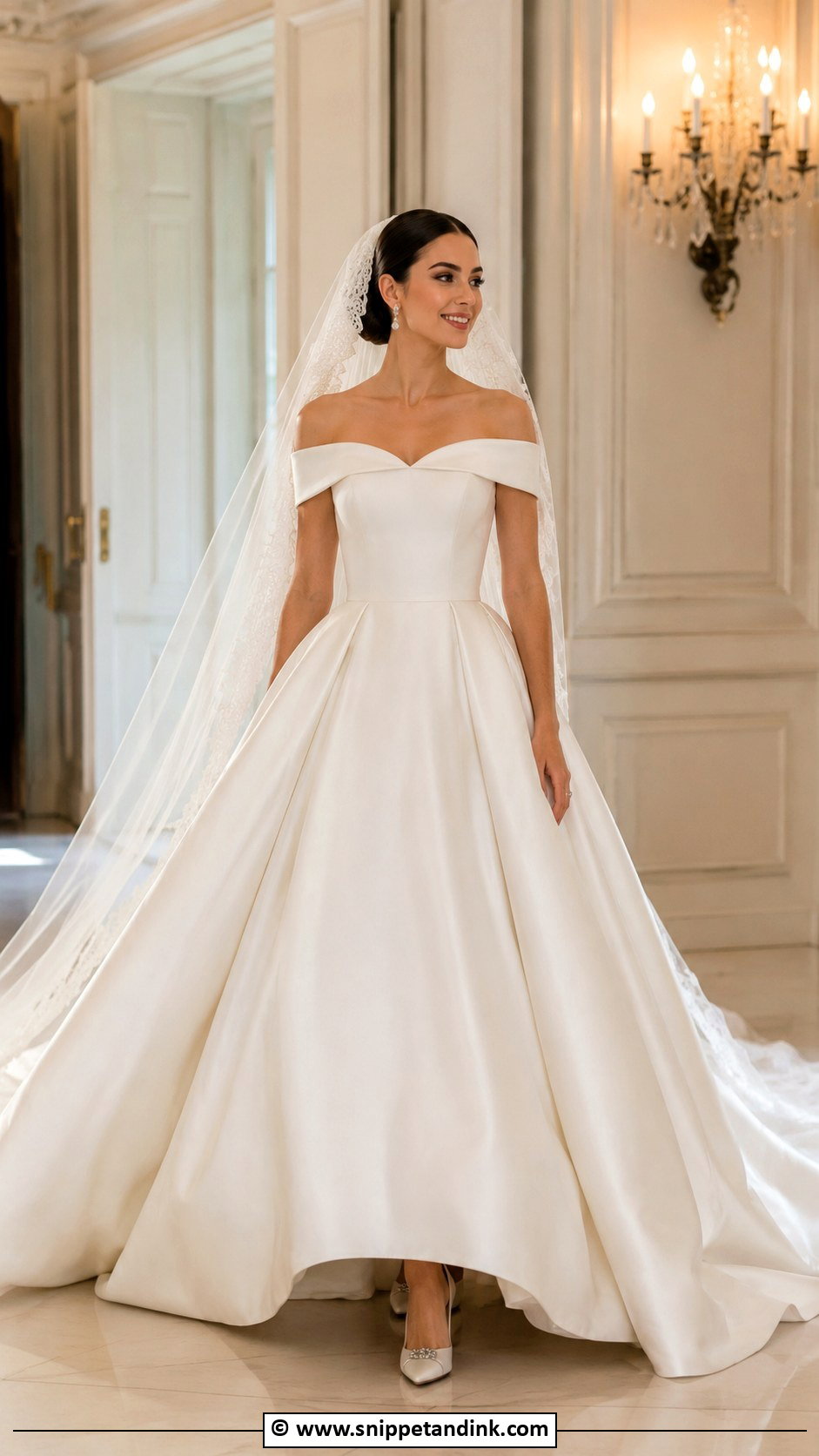
An off-shoulder neckline opens up the top of a full gown and frames the collarbones. It sits best on a structured corset bodice, because the bodice, not the sleeves, has to hold the dress up. Satin feels regal, lace romantic, tulle softer. I usually skip the necklace and go with drop earrings and a swept-back hairstyle. One thing to test at fittings: lift your arms as if to hug someone. Off-shoulder sleeves restrict that more than brides expect.
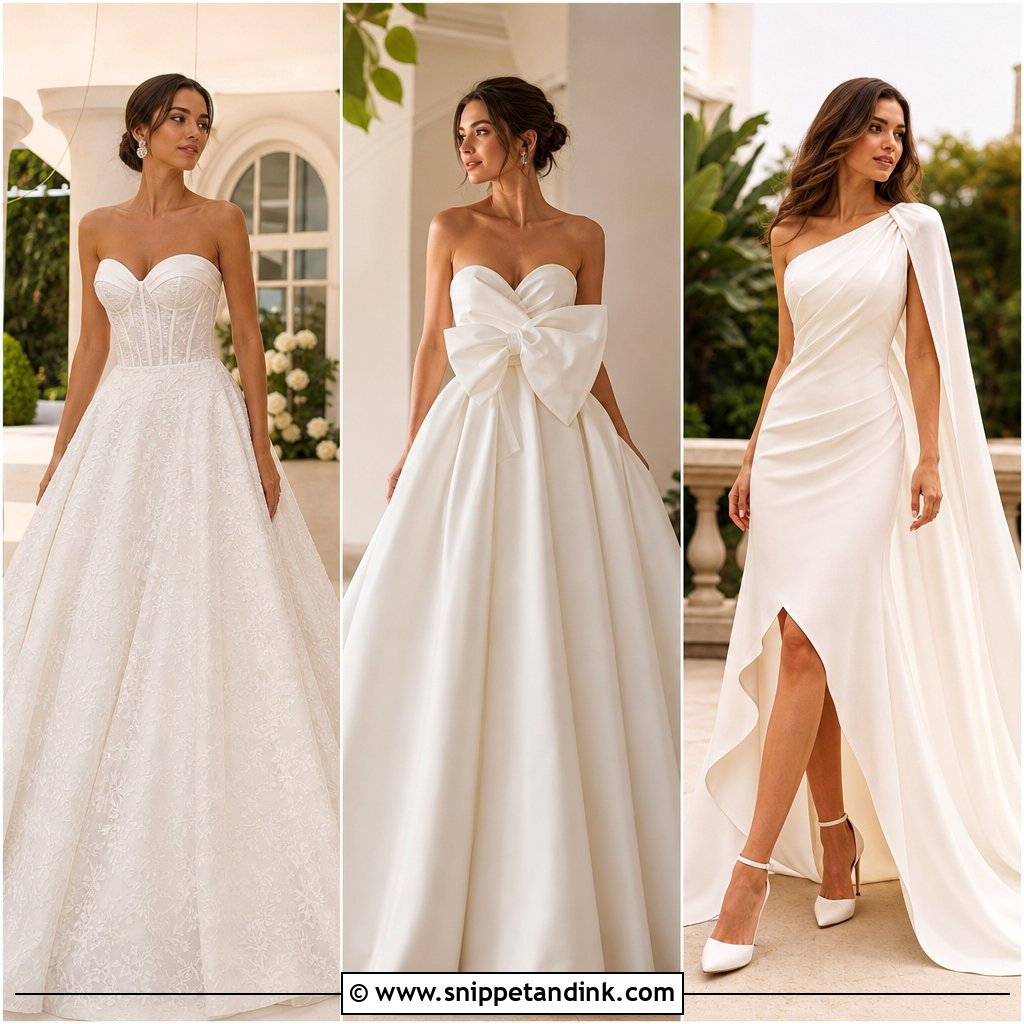
7. Big Corset Wedding Dress
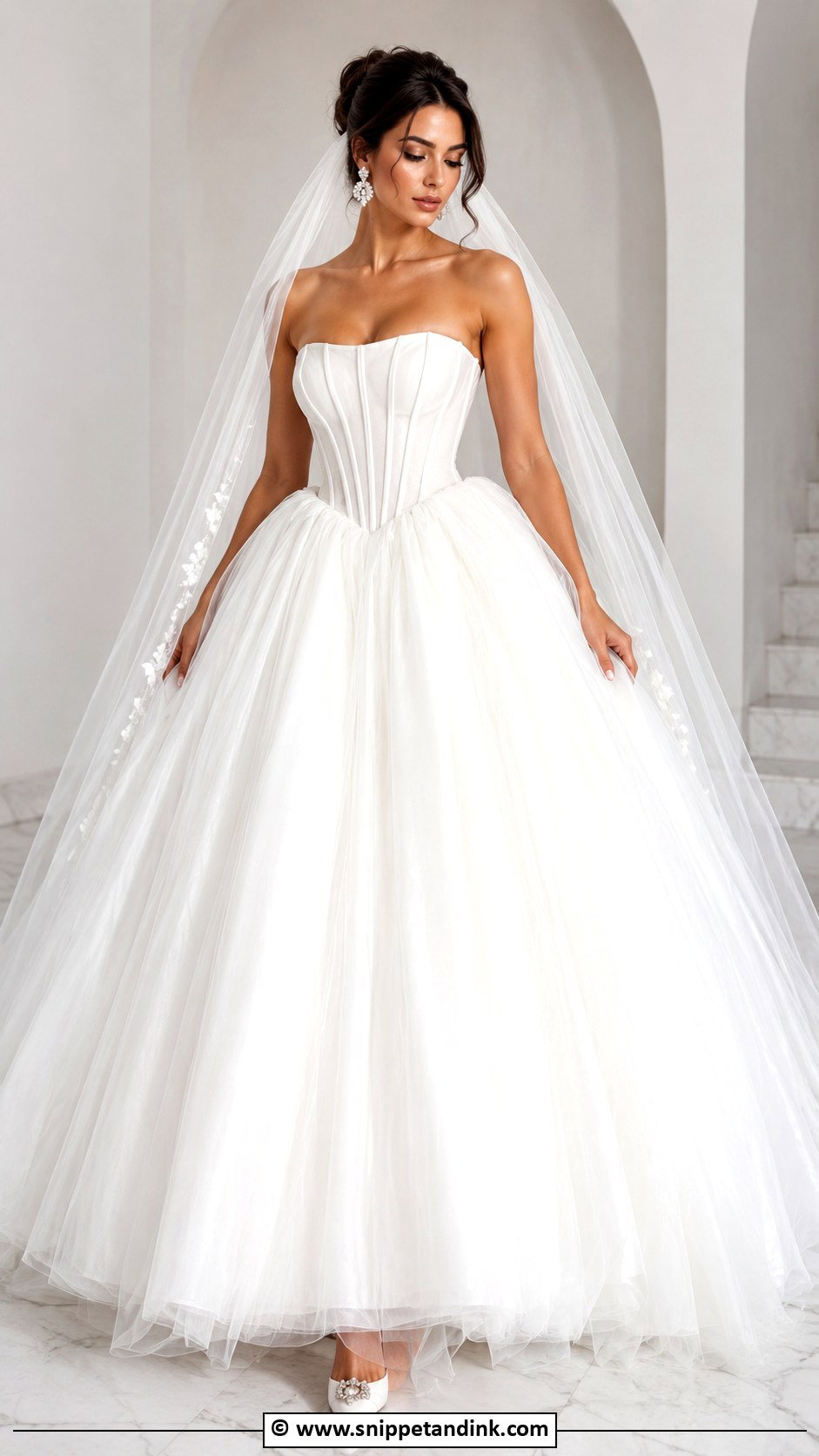
A corset bodice gives a big skirt its counterpoint: a defined waist, a supported bust and a sharp line where the volume begins. Exposed boning reads fashion-forward, covered boning softer and more classic. It must feel secure without stopping you from eating or breathing, and that comes entirely down to alterations, so budget for them. Because boning and lacing can be adjusted, a corset suits more body types than almost any other bodice. A long veil, sculptural earrings and sleek heels finish it.
8. Big Basque Waist Wedding Dress
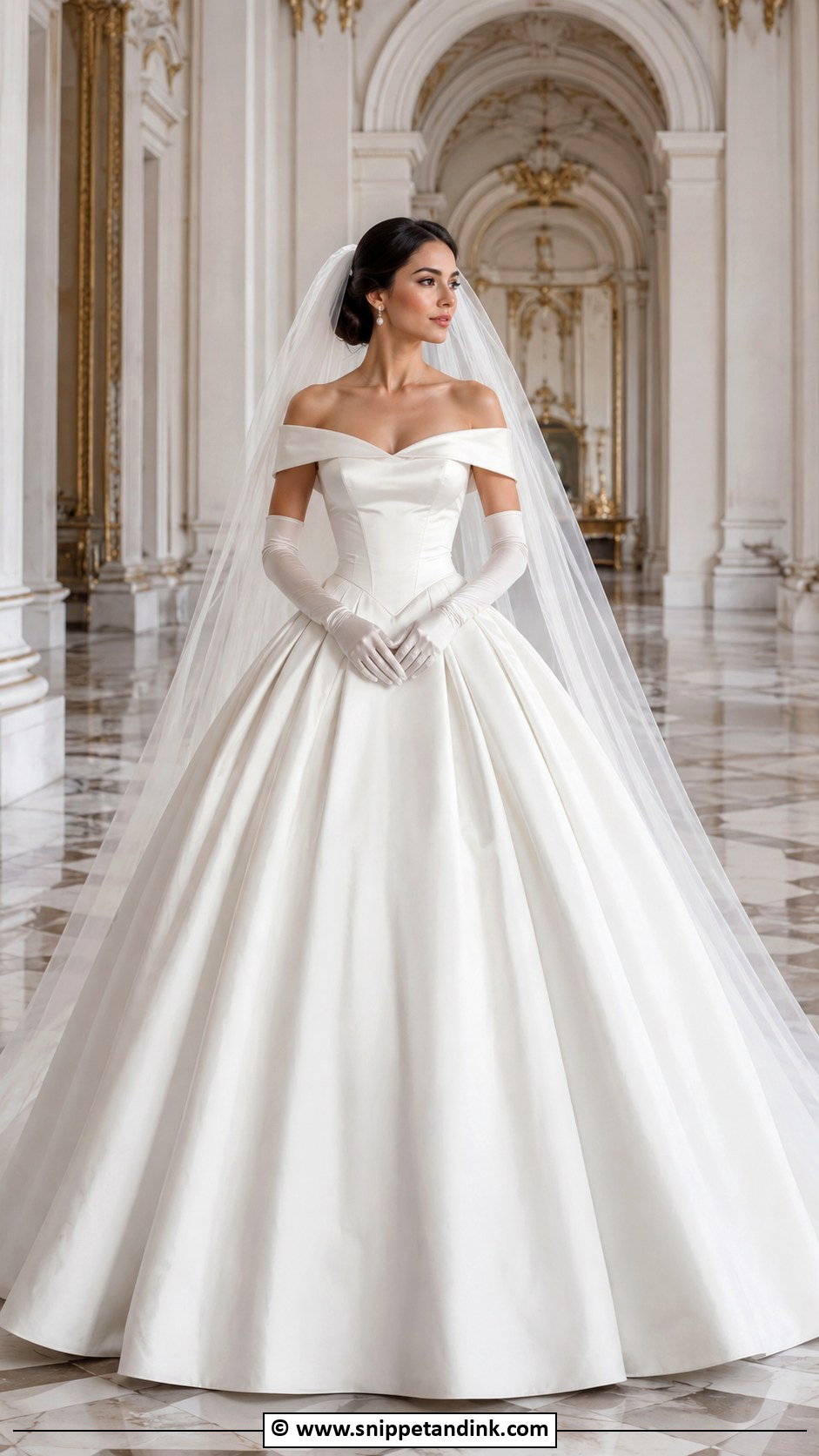
A big Basque waist wedding dress has a waistline that dips to a point at the front, which lengthens the torso and makes the skirt seem to start lower. It reads vintage and regal in satin, mikado, brocade or structured tulle. Fit is unforgiving here. If the point sits even slightly off center everyone notices, so I check it standing and seated. Strapless keeps it clean, off-shoulder straps add romance, and pearl earrings, ivory gloves and a long veil suit a formal setting.
9. Big Floral Wedding Dress
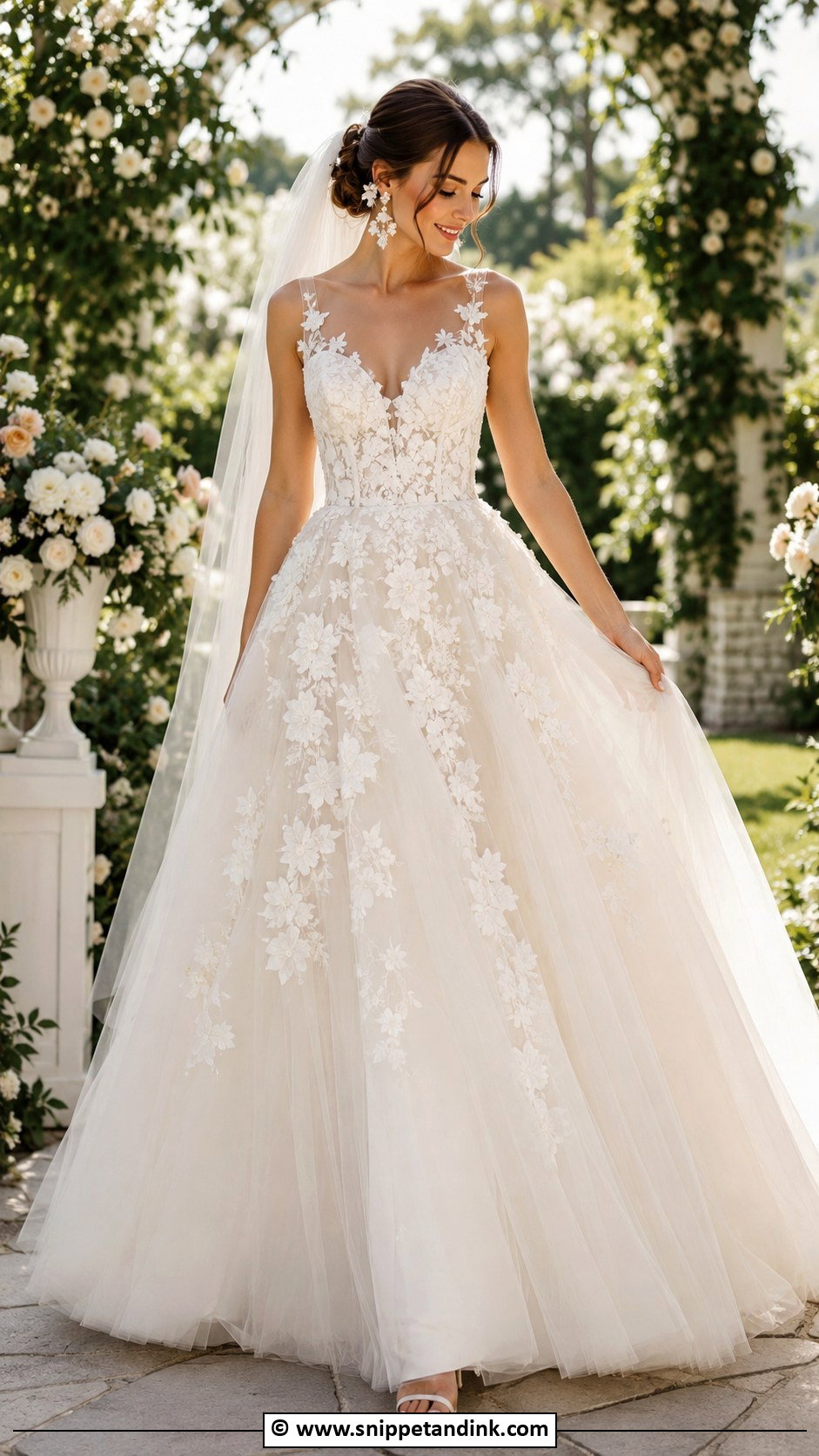
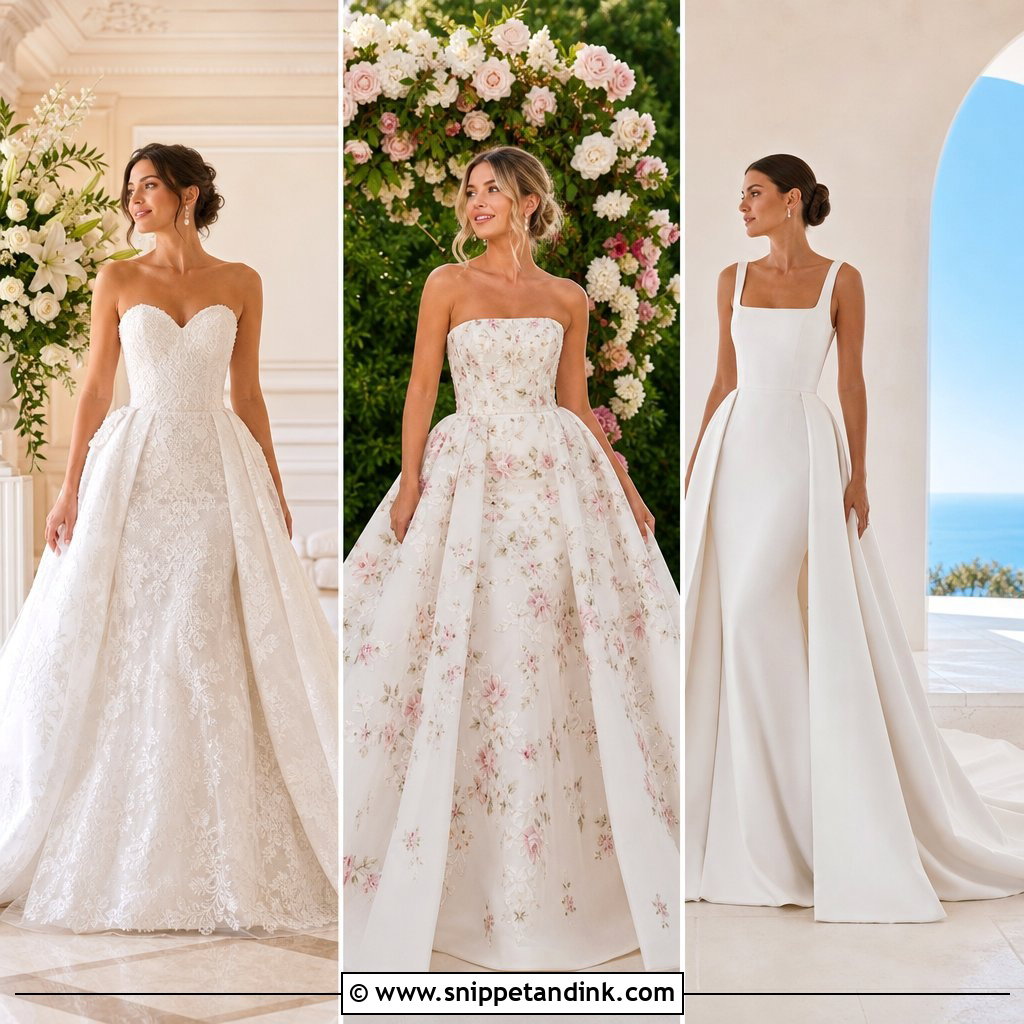
Floral appliqués, embroidered vines or 3D petals give a large skirt dimension without adding much weight. Ivory on ivory is the classic route; a hint of blush is more romantic. A sheer floral bodice works when the skirt below is fully lined. The mistake I see most is flowers scattered evenly everywhere, which flattens the shape. Clustered at the waist and trailing down one side, they sculpt the skirt instead. Floral earrings, soft waves and simple heels suit garden and spring weddings.
10. Big Sparkly Wedding Dress
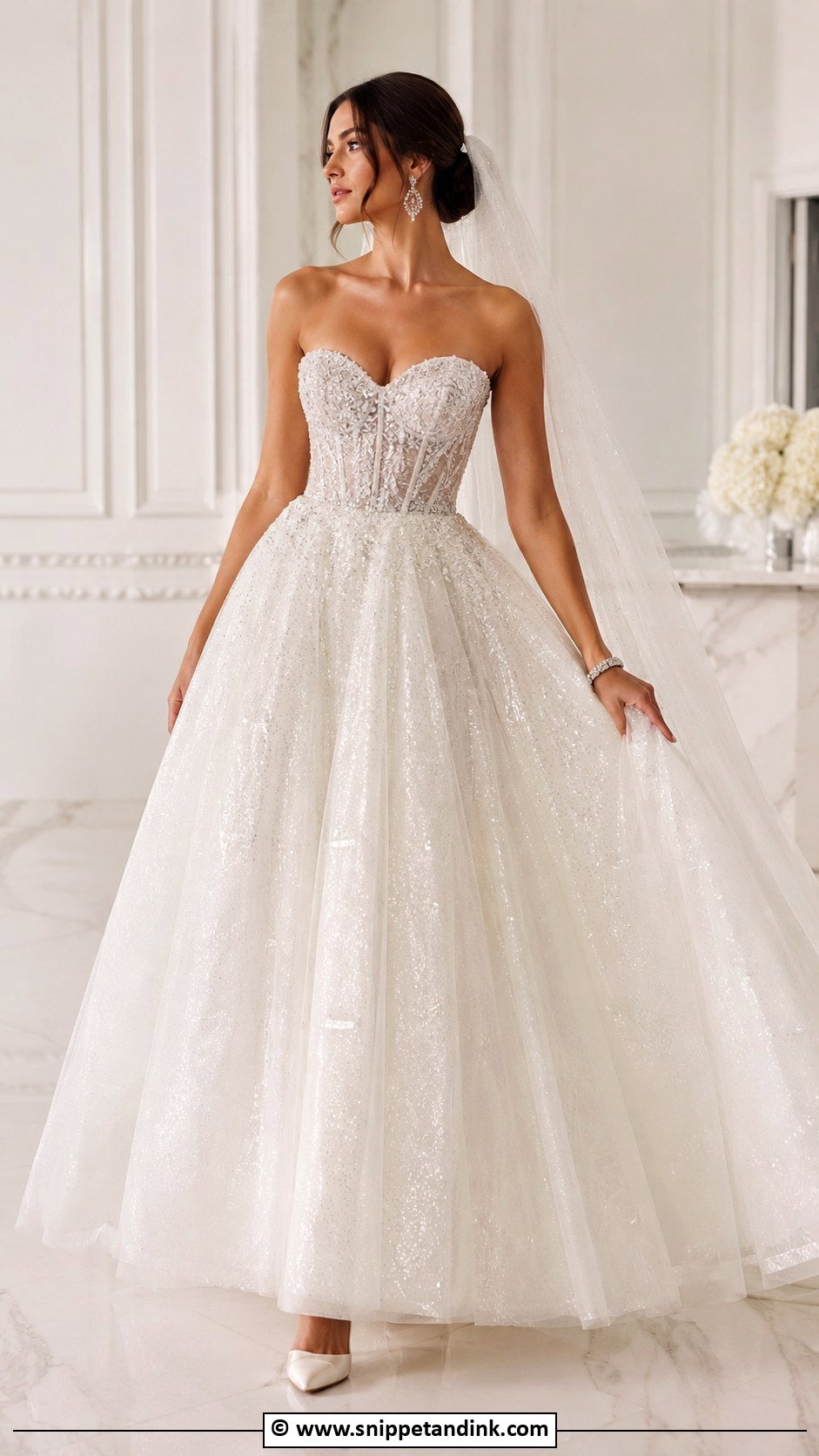
Sparkle can come from sequins, crystal beading, glitter tulle or metallic embroidery. My rule is one source of shine, then let the shape do the rest. A glitter tulle skirt with a plain bodice feels magical, while a beaded corset over a plain skirt feels more balanced. Crystal earrings, a sleek veil and simple heels keep the dress the focus. Glitter tulle sheds, so expect a little sparkle on the groom’s suit and the car seat. It truly comes alive under evening lighting.
11. Big Mikado Wedding Dress
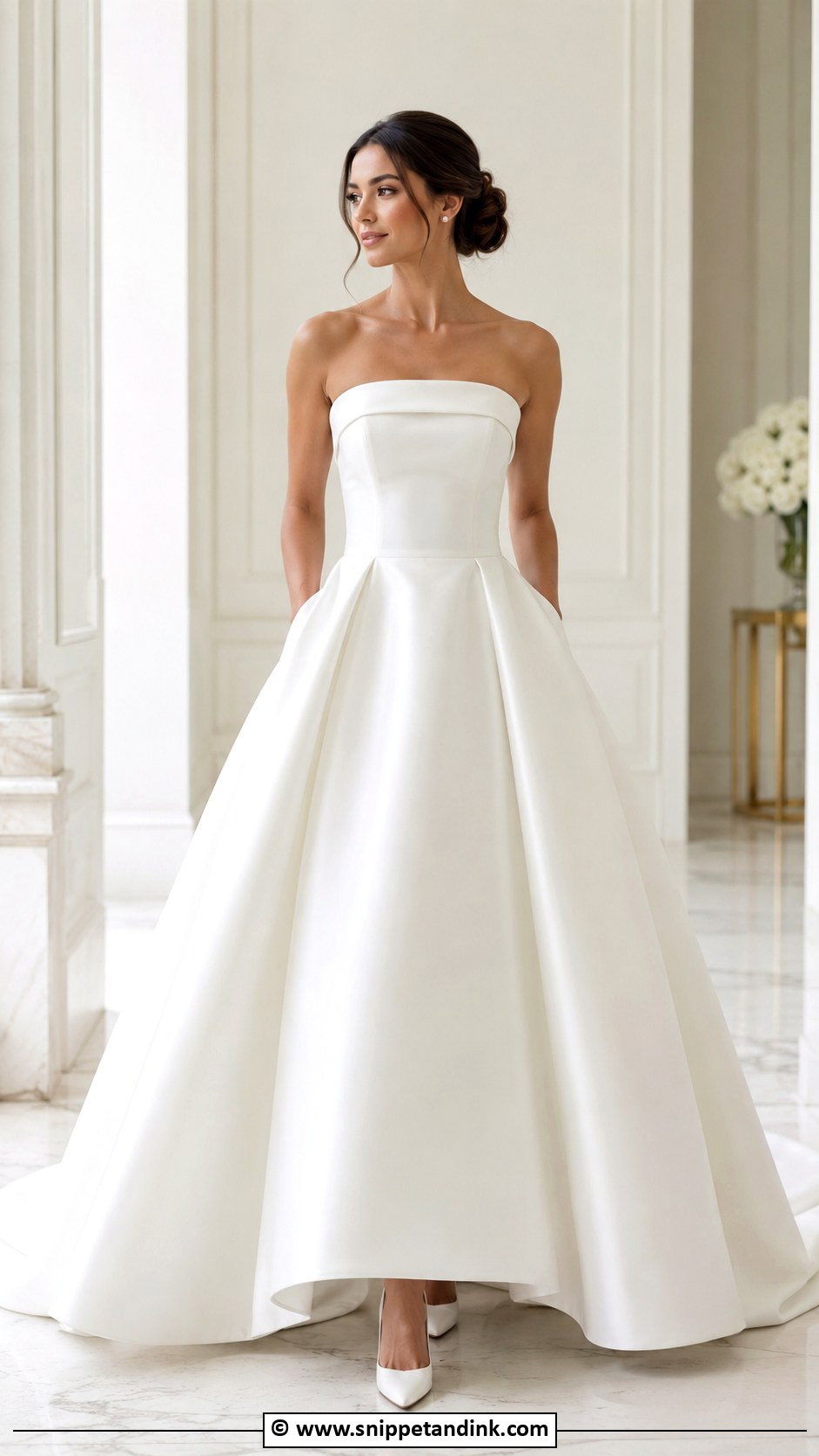
Mikado is a heavy silk blend with a soft sheen, and it holds a full skirt by its own body with little petticoat underneath. That gives you a clean ball gown with strong lines. Folded necklines, pleated skirts, hidden pockets and long trains all suit it. The trade-off is weight: a mikado skirt with a long train can feel genuinely heavy by evening, so I ask brides to wear the sample for a good twenty minutes in the shop. Keep styling simple with pearl studs, a smooth bun and classic pumps.
12. Big Organza Wedding Dress
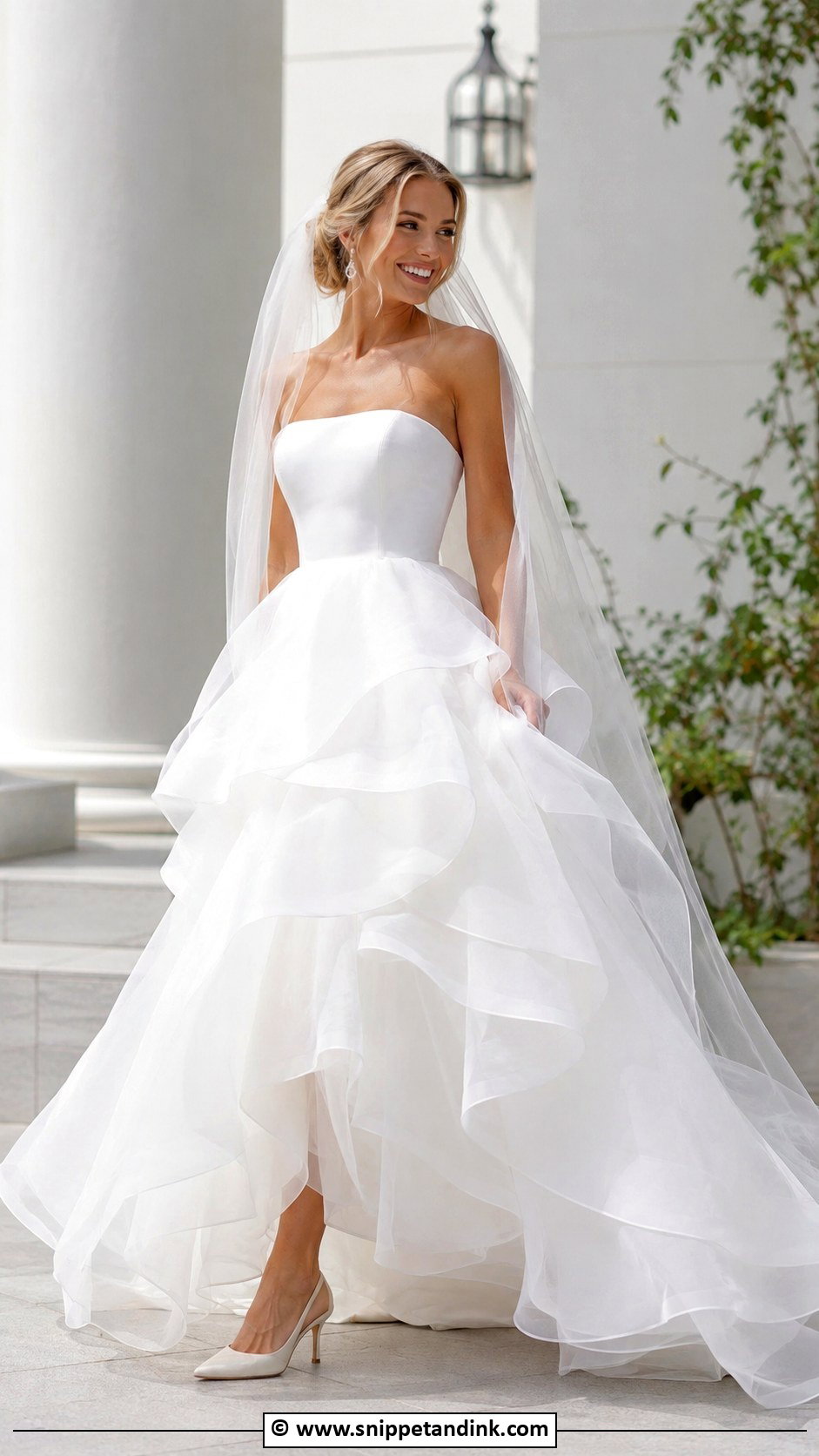
Organza is light but crisp, so it builds volume that floats instead of sagging. Layered skirts, ruffles and long trains all work in it. Strapless looks modern; long sheer sleeves make it romantic. It copes with heat better than satin or mikado, which is why I suggest it for warm-weather weddings. It does wrinkle and can crush in a cramped car, so plan to steam it on site. Delicate earrings, soft makeup and slim ivory heels keep it balanced.
13. Big Ruffle Wedding Dress
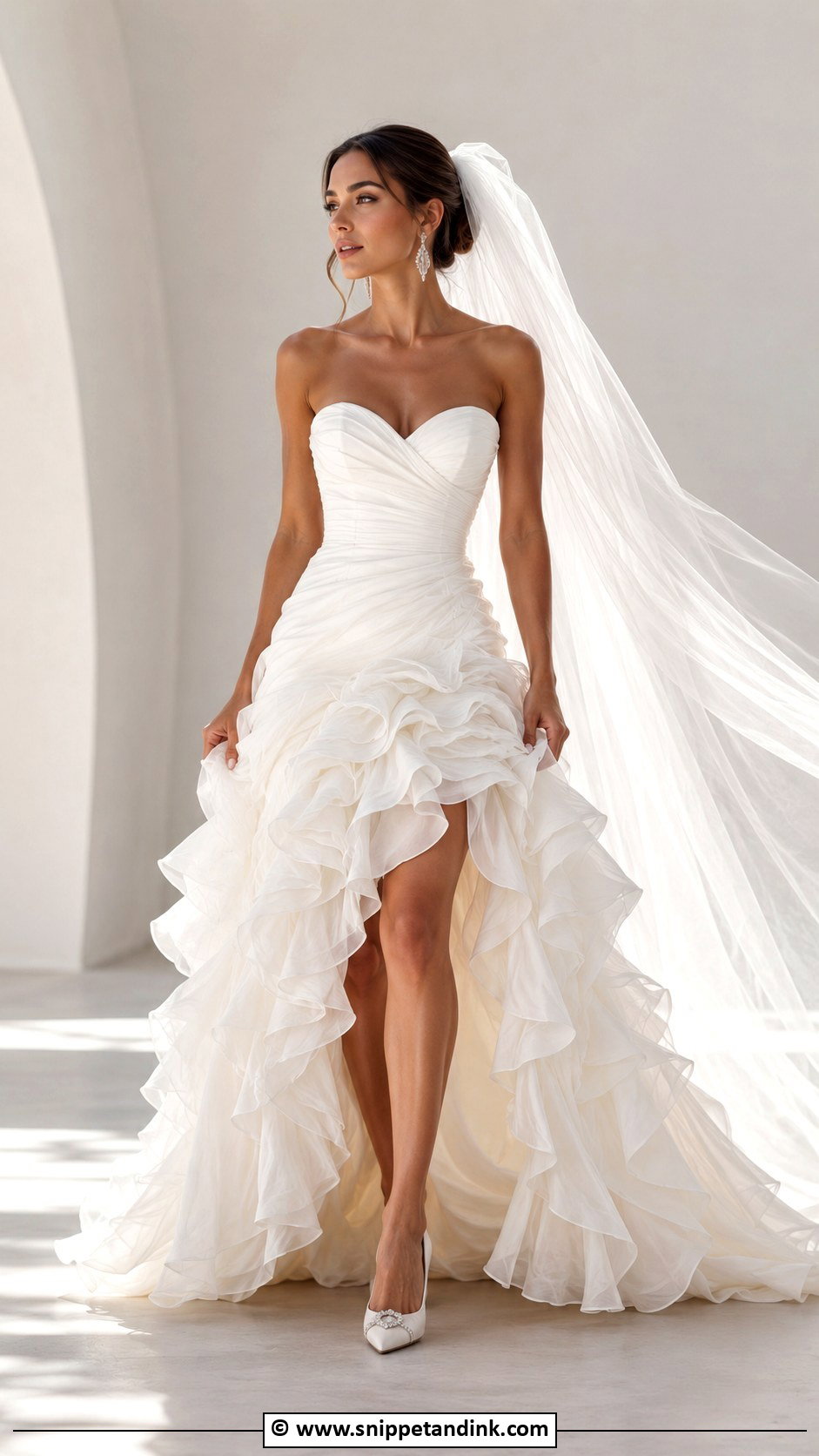
Ruffles move. Depending on fabric and placement they can be soft and romantic or sharp and architectural. For a wearable version I put cascading ruffles on the skirt and keep the bodice plain, since ruffles everywhere start to look busy. Strapless or one-shoulder necklines push it toward editorial; a sweetheart keeps it classic. Sleek hair and simple earrings let the shape speak. Give it a venue with space, because ruffles need to be seen from the side.
14. Big Tiered Wedding Dress
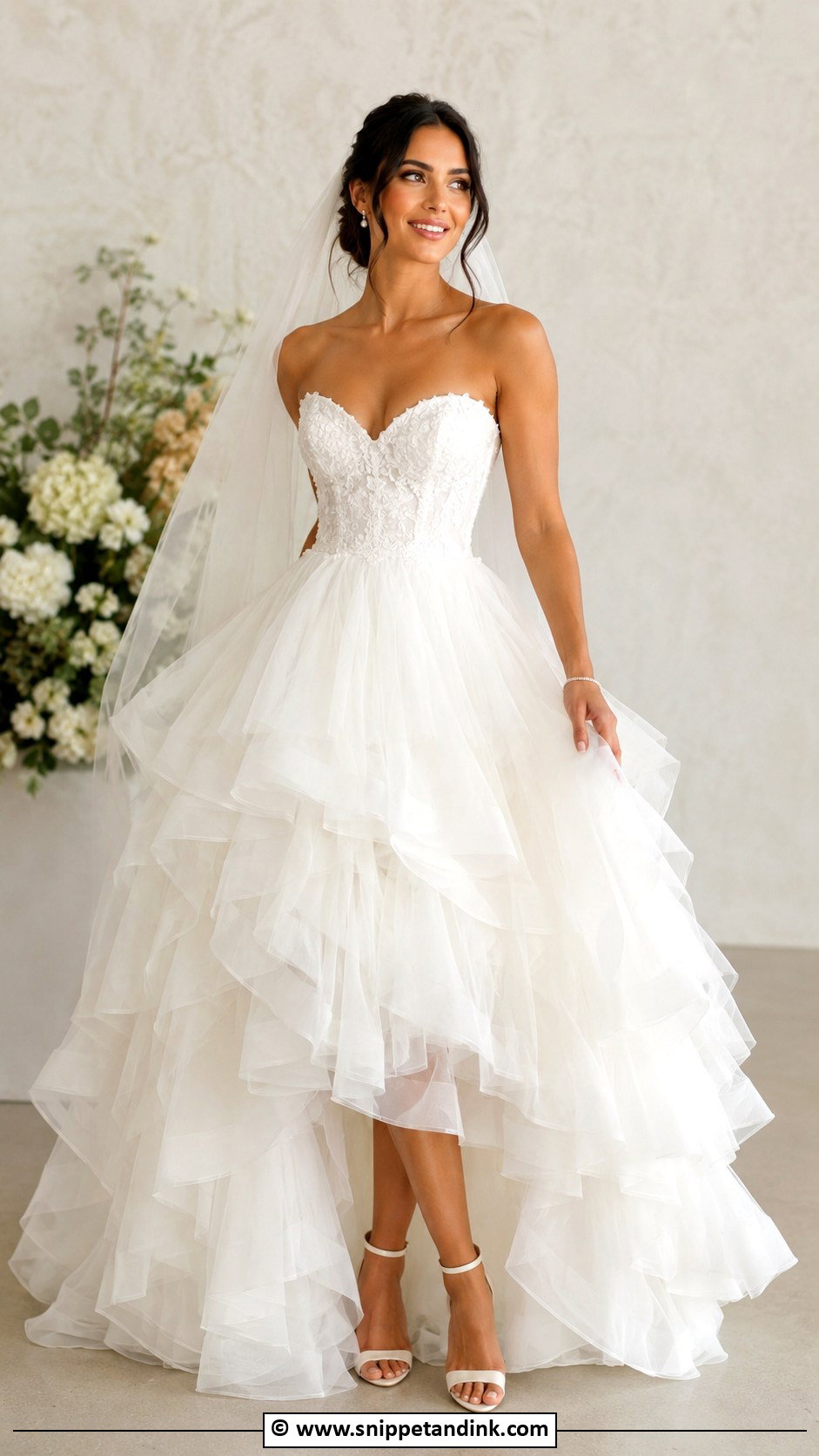
Tiers build fullness in horizontal layers from waist to hem. Soft tulle tiers look dreamy, organza tiers look crisp. Keep the bodice fitted so the tiers don’t overpower your figure. Where they break matters a lot: I look first at the line where the top tier starts, because a break at the widest part of the hip makes it look wider, while a break lower down lengthens the body. A simple veil, delicate earrings and classic heels complete it.
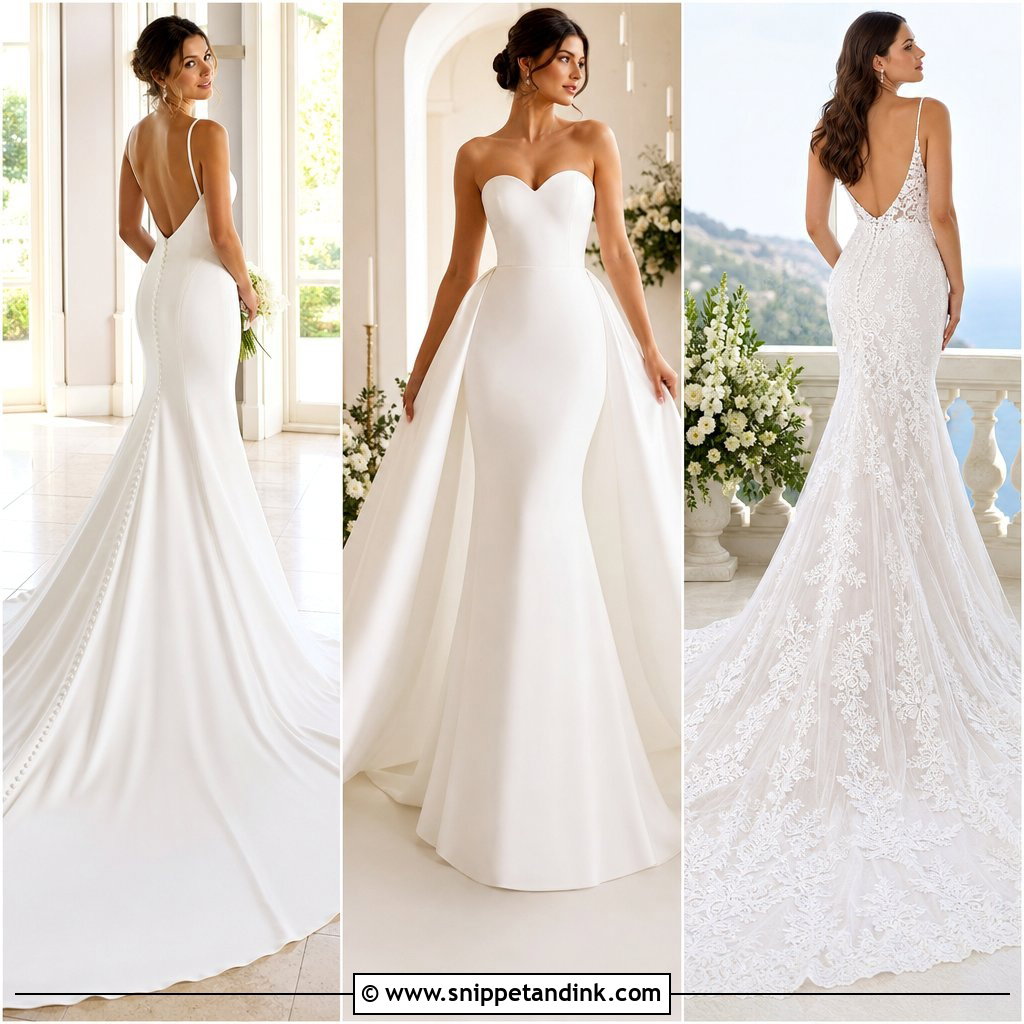

15. Big Long Sleeve Wedding Dress
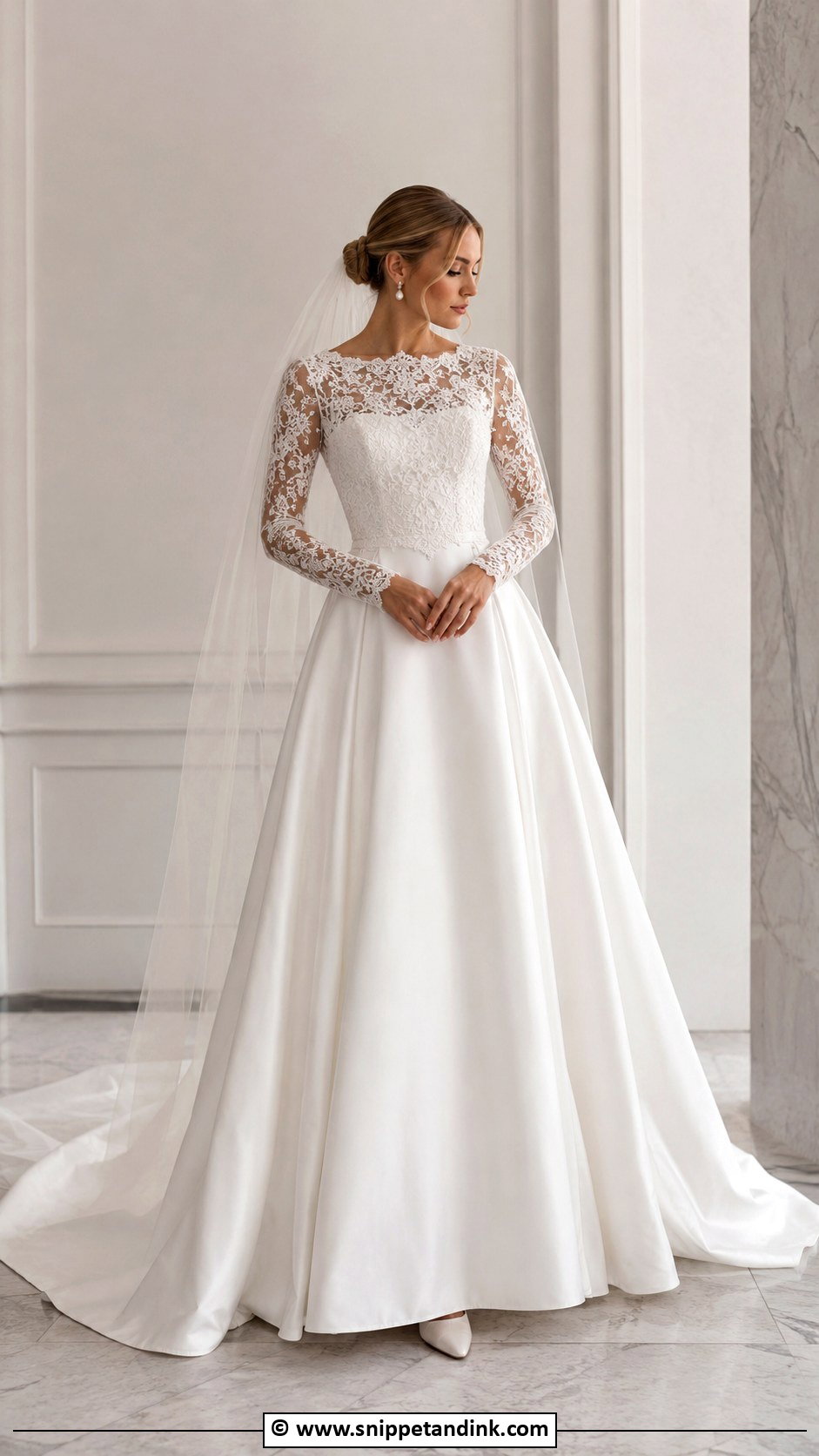
Long sleeves bring coverage and a sense of occasion, and a full skirt balances them well. Lace, sheer tulle, satin or illusion fabric decide how covered the sleeves feel. Lace sleeves over a soft ball gown skirt look classic; clean satin sleeves with a structured skirt look modern. Ask for room at the elbow and armhole, since tight sleeves stop you hugging anyone or raising a glass. A low bun, pearl earrings and closed-toe heels suit cooler months and formal venues.
16. Big Strapless Wedding Dress
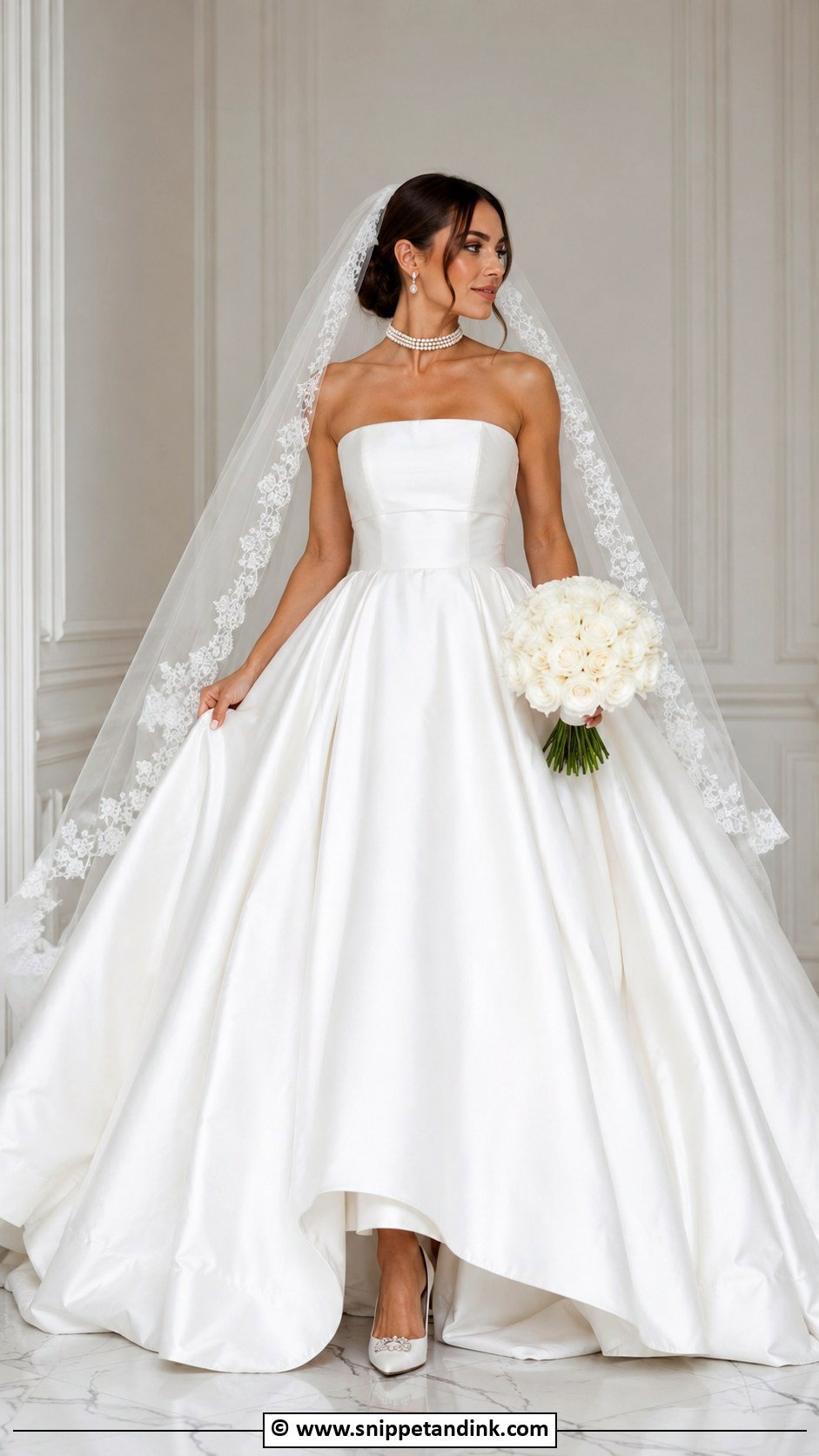
A big strapless wedding dress keeps the top clean and lets the skirt carry the drama. The neckline can be straight, curved, sweetheart or softly scooped. A full skirt pulls down on a strapless bodice all day, so the fit has to be secure, with boning and an inner waist stay doing the work instead of your hands hitching it up. Add a statement veil, a pearl choker or drop earrings. Wear supportive shoes, since these skirts carry real weight.
17. Big Sweetheart Wedding Dress
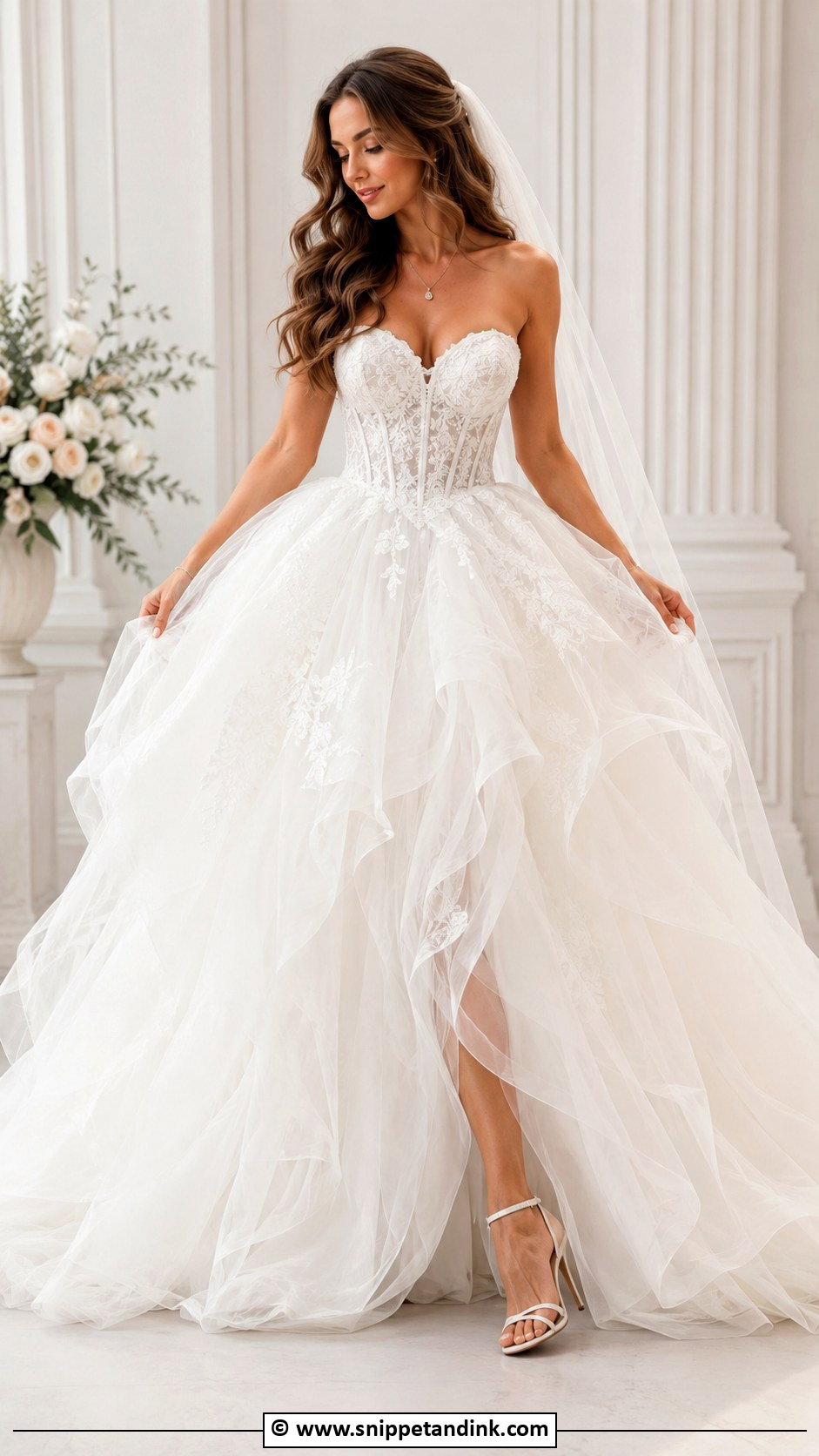
A sweetheart neckline curves over the bust, draws attention up to the face and collarbones, and flatters a wide range of bust sizes. Lace appliqué, satin folds, beading or layered tulle all suit it. I often add removable straps or detachable sleeves, which give you two looks and a little extra security on the dance floor. A soft veil, a delicate necklace and graceful heels complete it.
18. Big Square Neck Wedding Dress
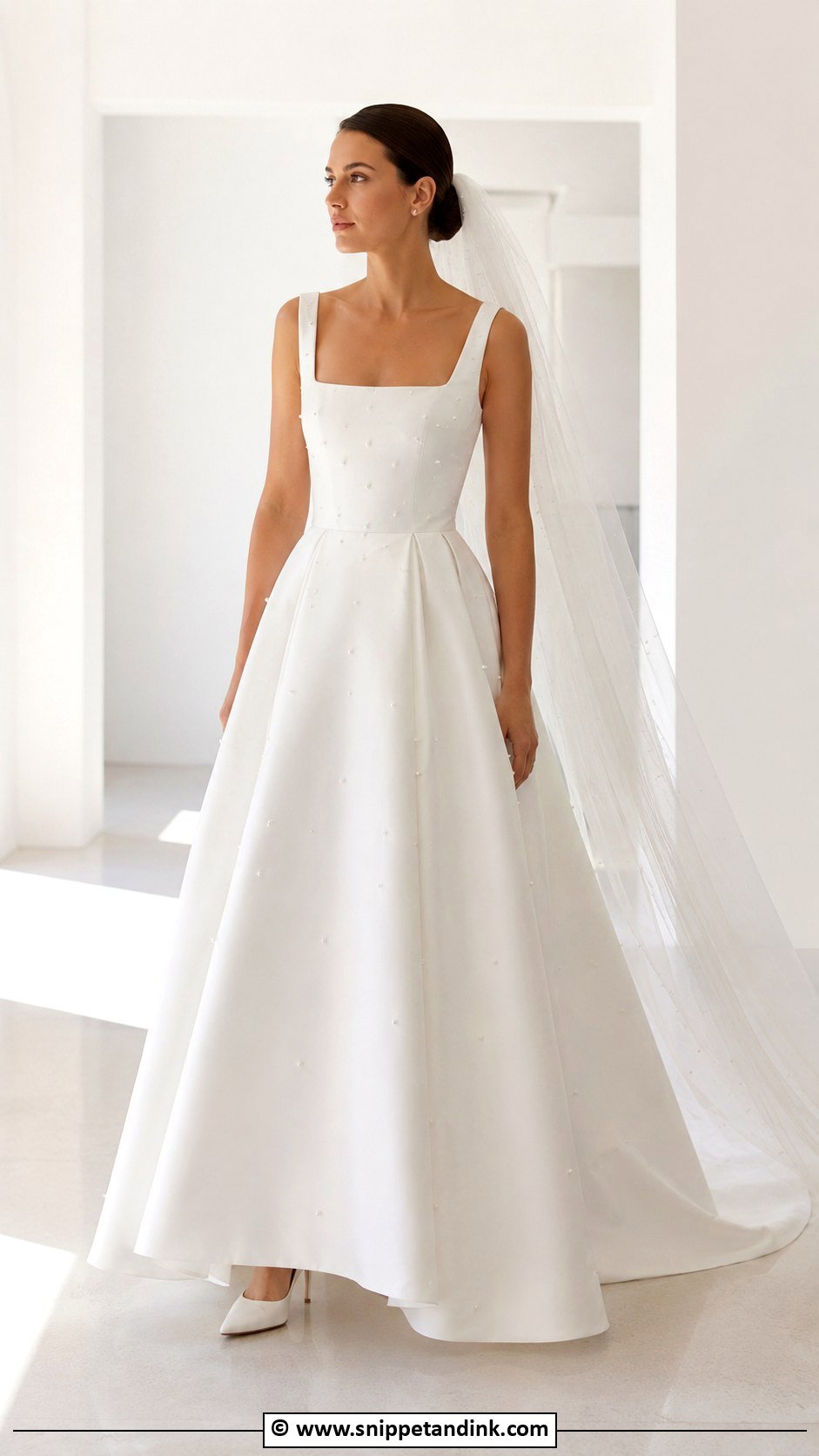
A square neckline puts structure around the collarbone and feels fresher than yet another sweetheart. Satin and mikado make it architectural; lace or tulle soften it. Wider straps give better support than a strapless version, which I appreciate on fuller busts. Check the corners in the mirror: they should sit flat, not curl outward when you move. Pearl studs, a sleek updo and a long veil keep it refined.
19. Big V Neck Wedding Dress
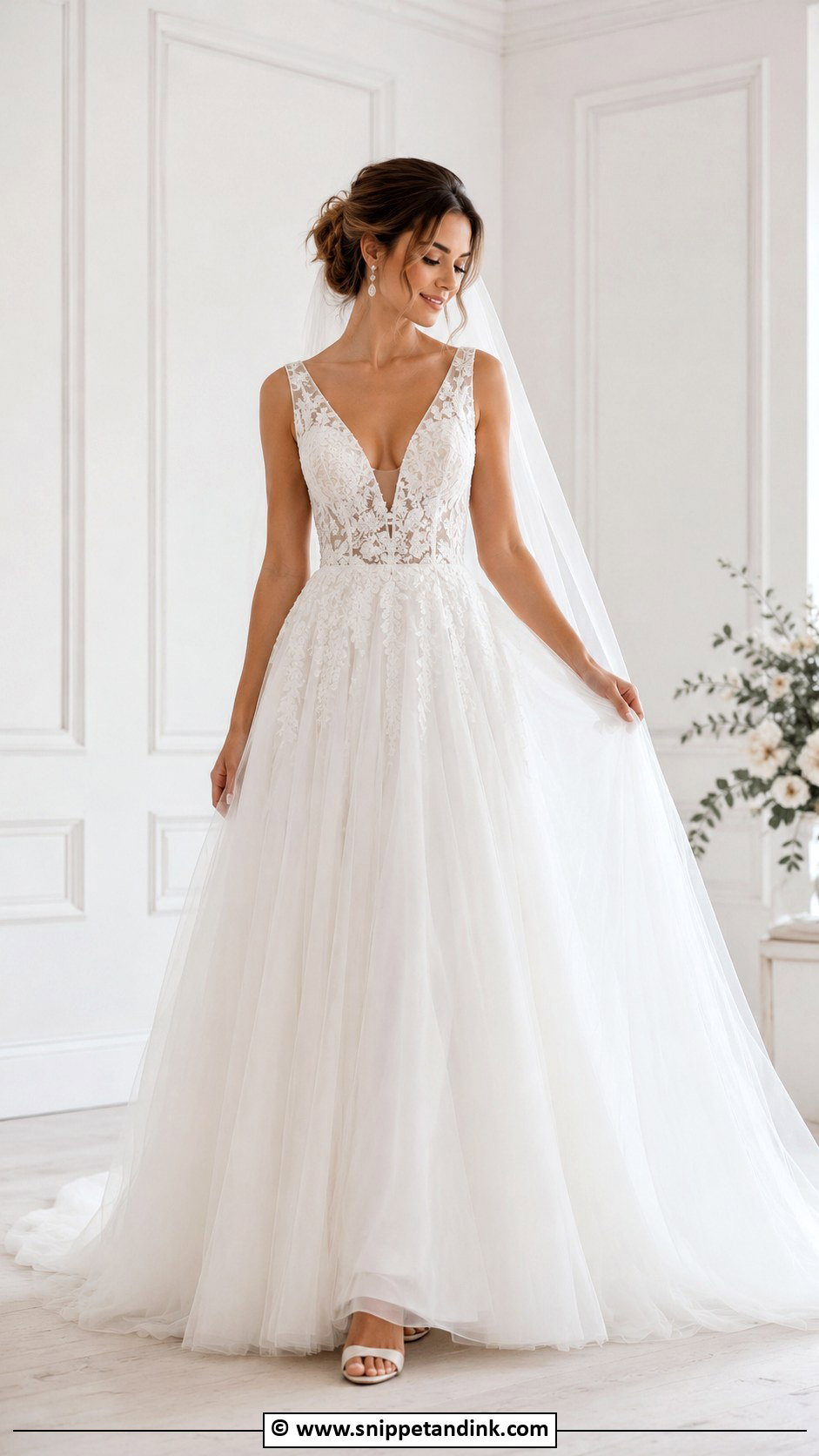
A V neck draws the eye down and lengthens the upper body, which balances a big skirt nicely. How deep is your call, but a plunging V needs a mesh panel or fashion tape to stay put, and I test it with a few bends and arm raises at every fitting. It suits lace, beaded bodices, illusion panels and flowing tulle. Skip heavy necklaces; drop earrings, a soft veil and elegant heels are enough.
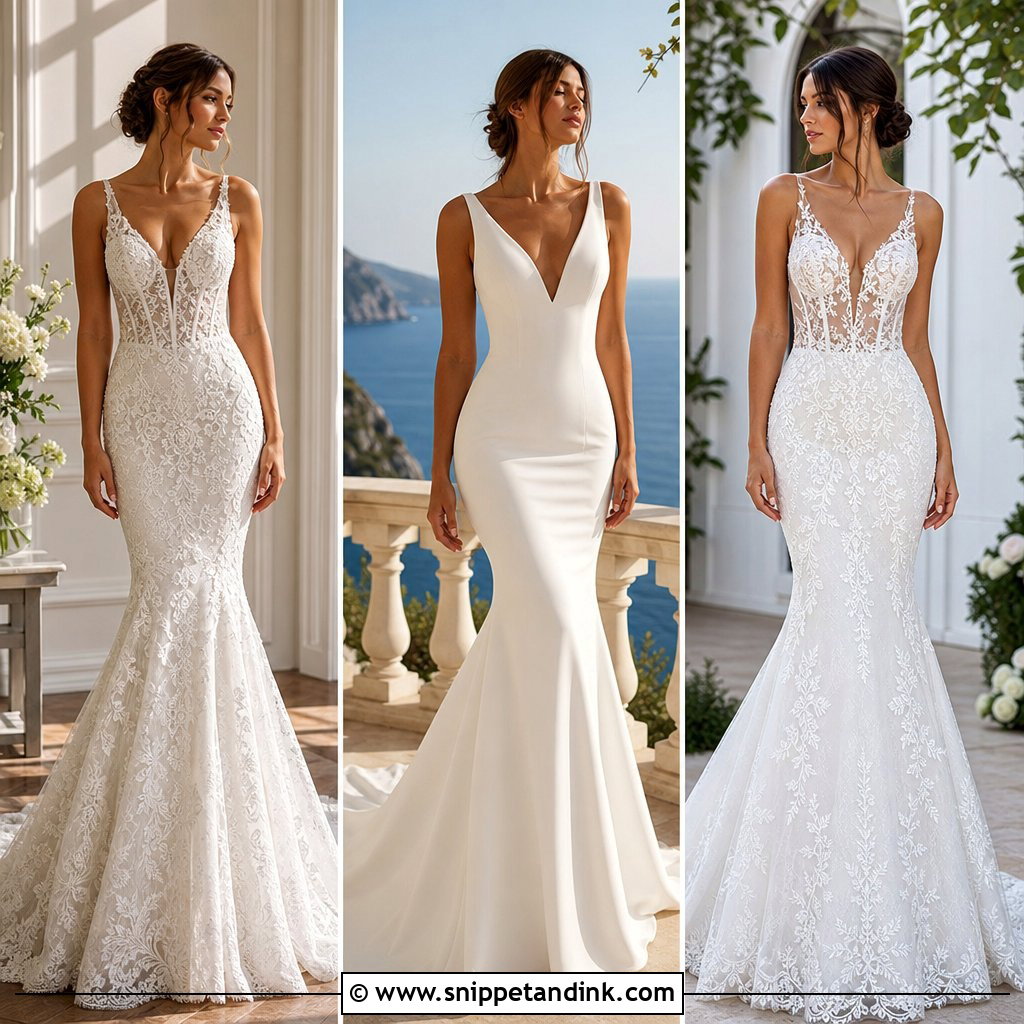
20. Big High Neck Wedding Dress
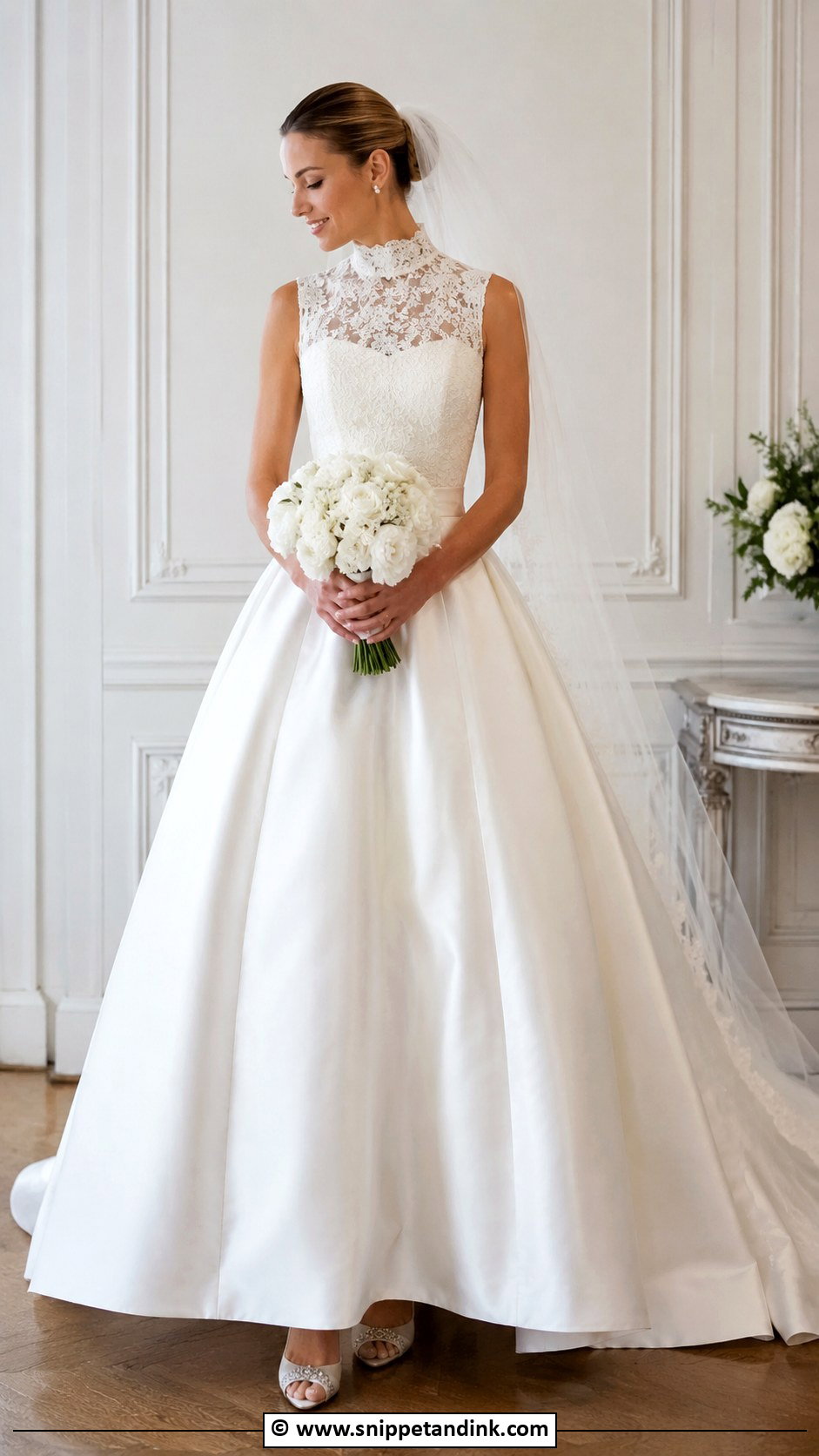
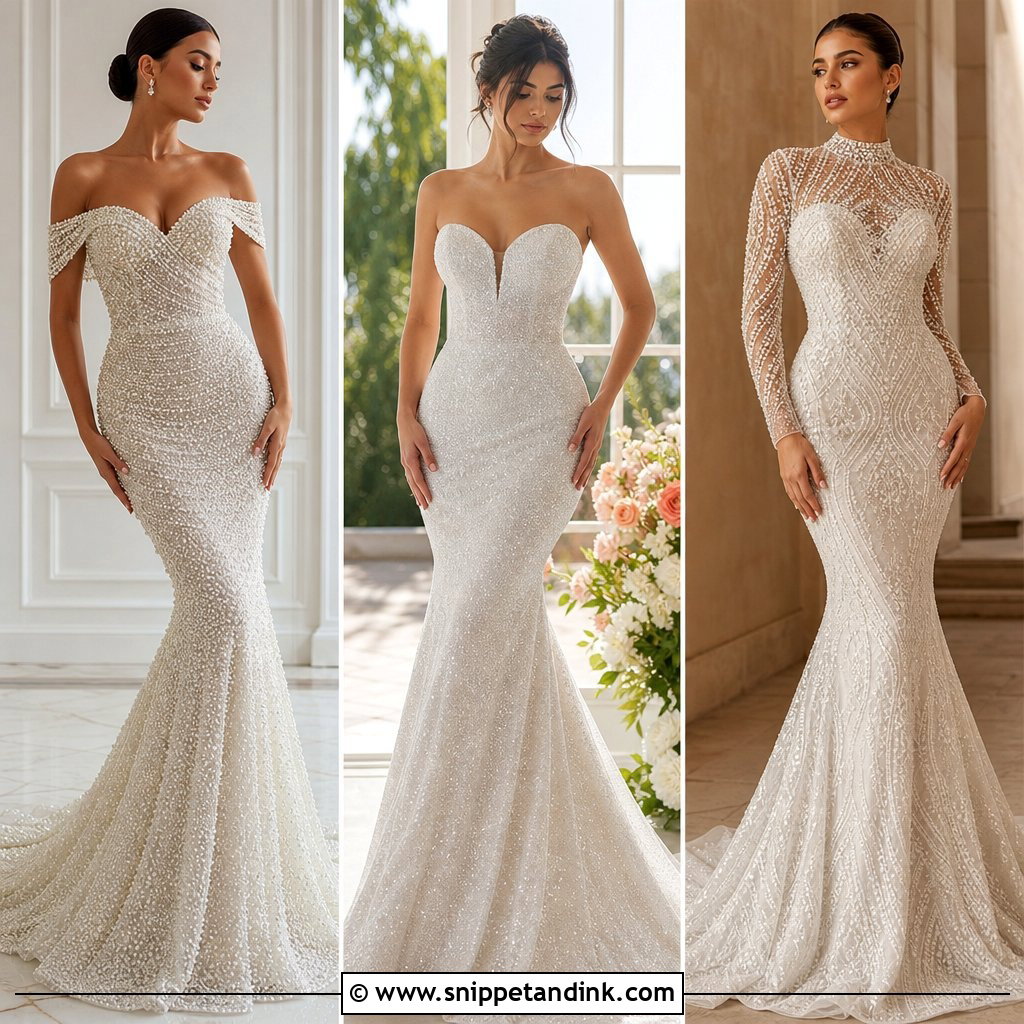
A high neck contrasts sharply with a full skirt, especially when the waist is defined. Lace feels romantic, while satin or crepe is sleek. Hair needs to go up so the neckline shows. On a shorter neck I bring the collar down a touch or switch to a sheer illusion collar, so the neck doesn’t look cut off. Small earrings, a clean veil and simple shoes finish it. If coverage matters to you, this is the obvious pick.
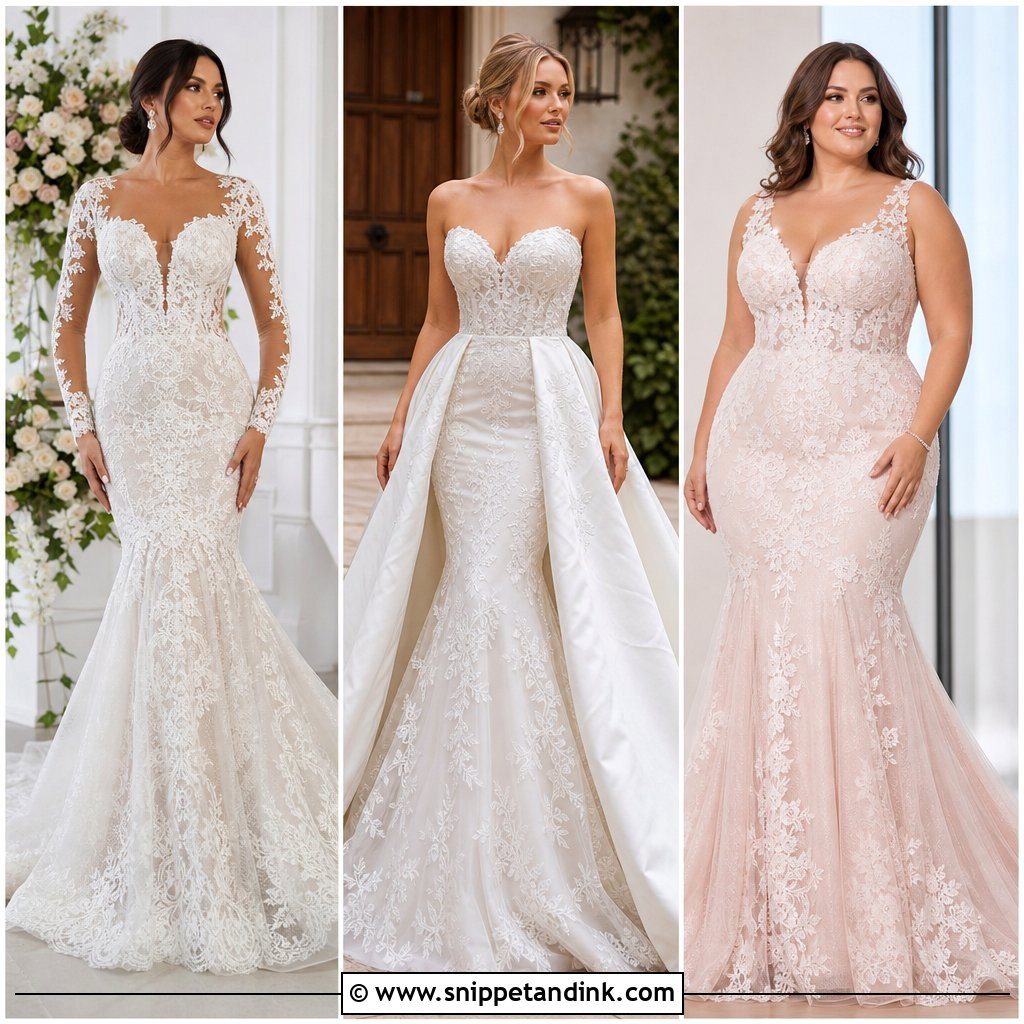
21. Big Mermaid Wedding Dress
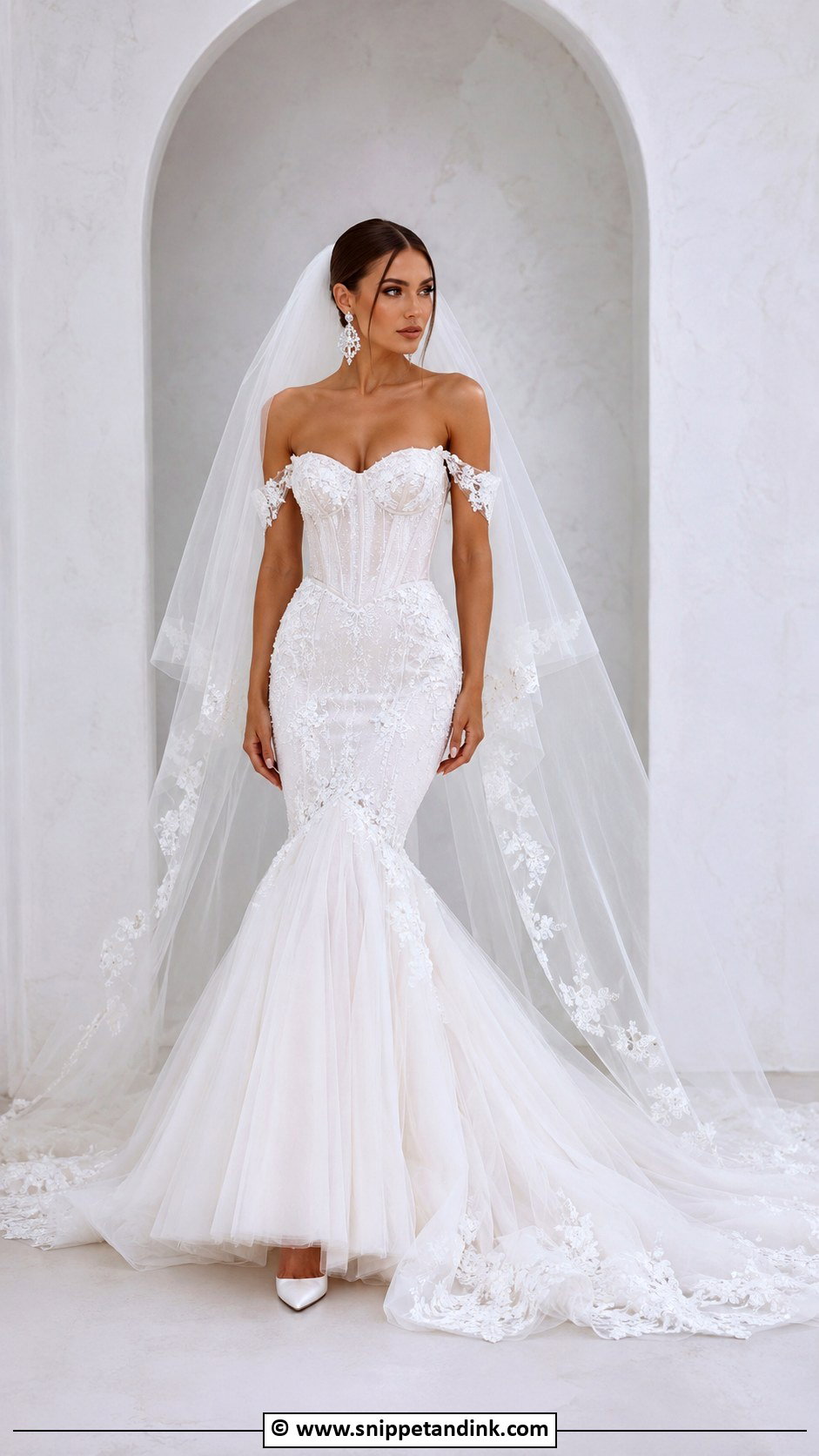
A mermaid is fitted to the knee or lower thigh and then flares, so it isn’t a ball gown, yet a tulle, organza or ruffled flare can make it feel just as big. A corset bodice adds support and a long train adds grandeur. The flare point decides how you move; lower is more dramatic but shortens your stride. I make every bride climb stairs and sit in a chair at fittings. Statement earrings, sleek heels and a structured veil complete it.
22. Big A Line Wedding Dress
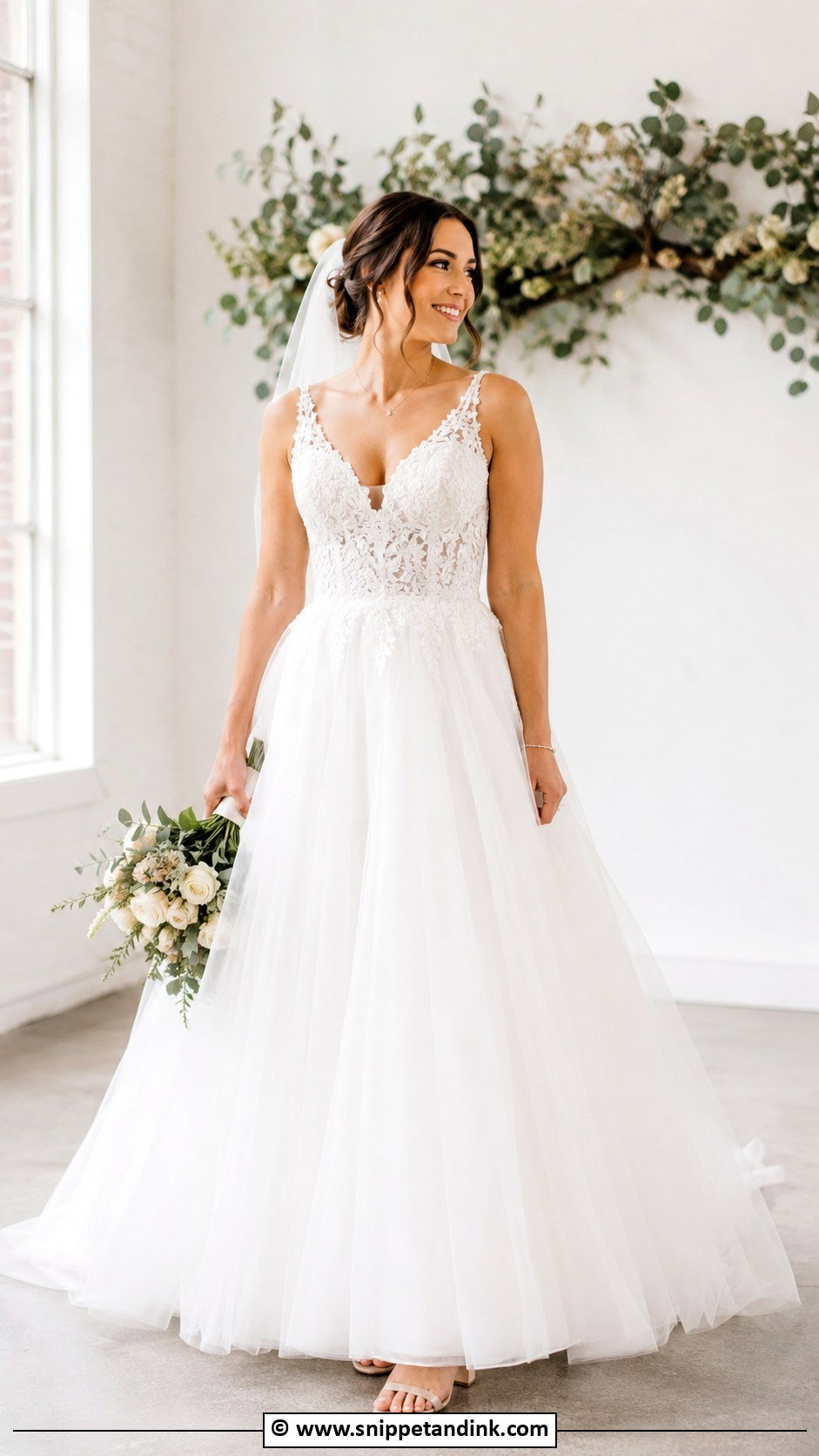
An A-line flows out from the waist in a gentle triangle, so you get fullness without a ball gown’s bulk. It’s lighter, easier to move in, and passes through standard doorways and narrow aisles without fuss. Tulle, satin or lace all work over a fitted bodice. Add a medium-length veil, simple jewelry and comfortable heels. It’s my default when a bride wants volume but has a small space.
23. Big Detachable Skirt Wedding Dress
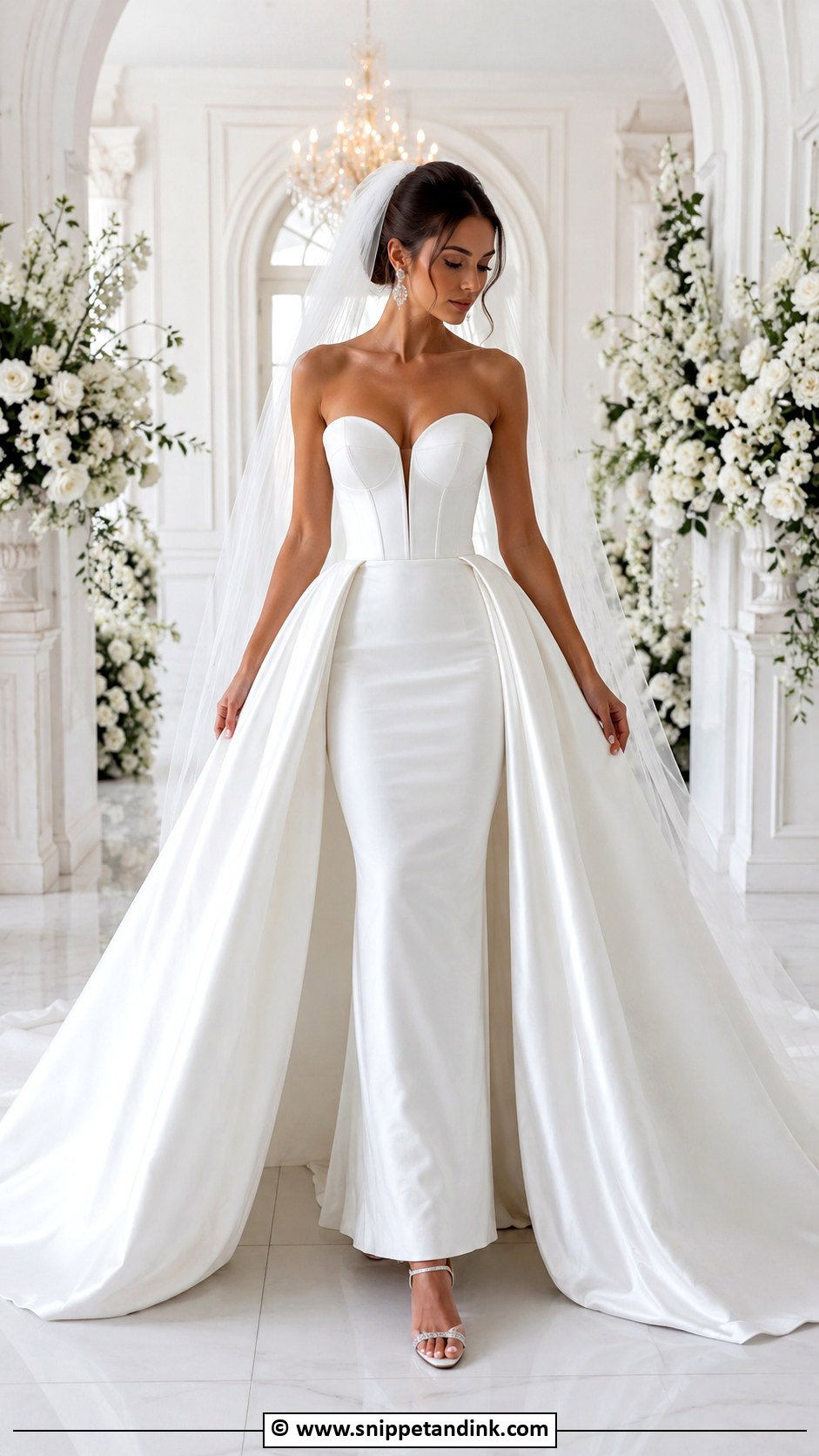
A big detachable skirt wedding dress gives you the full ceremony shape and then, after one change, a fitted gown, sheath, mini or jumpsuit for the reception. The overskirt should attach at the waist with hooks or buttons hidden under a band, and its fabric must match the base dress exactly. Practice taking it off with whoever will help you, because it takes longer the first time than anyone expects. Choose shoes and jewelry that suit both looks.
24. Big Bow Wedding Dress
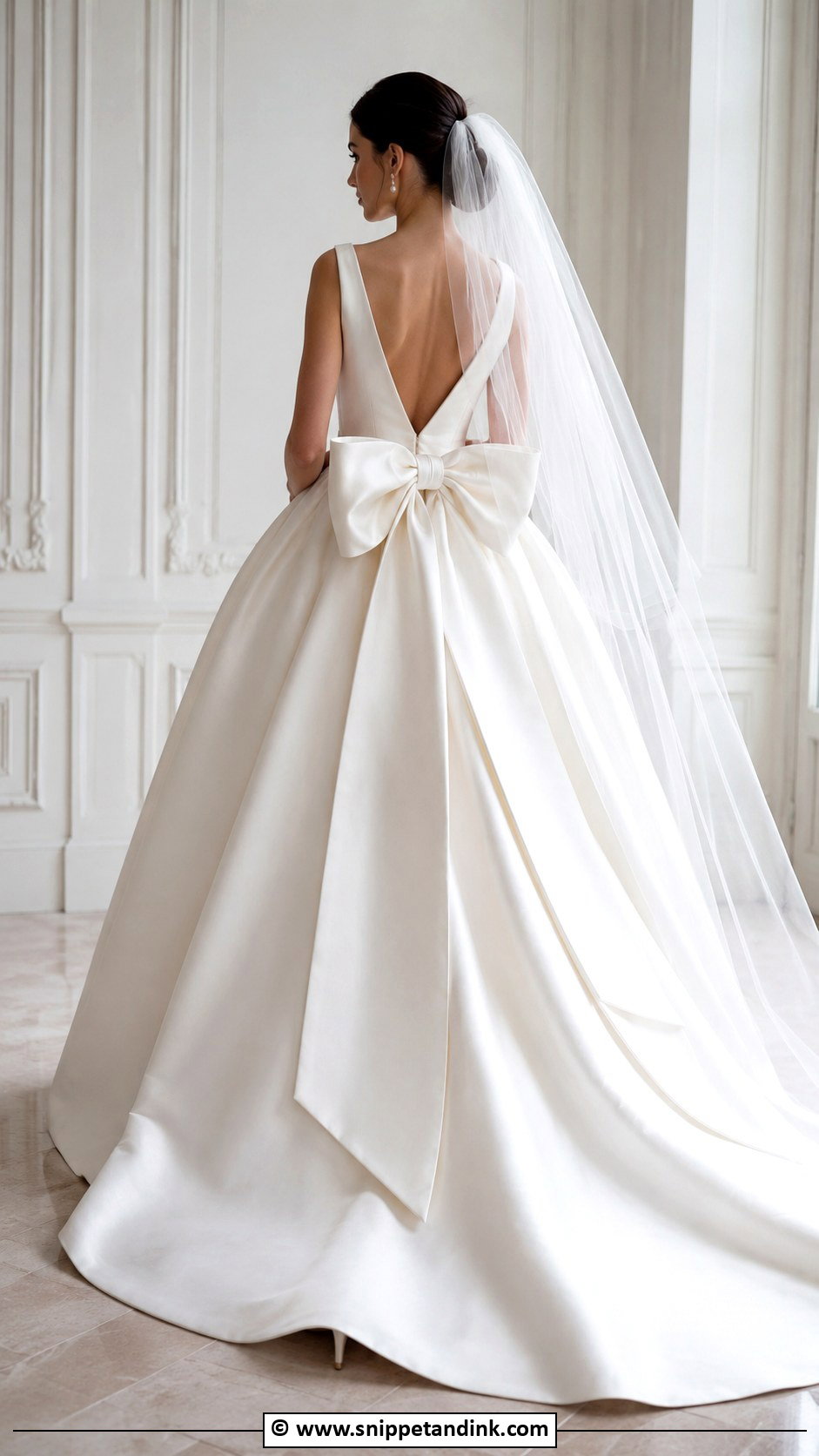
A big bow wedding dress puts playful drama at the back waist, shoulder, neckline or train. I let the bow be the only big detail and keep the rest of the gown clean. A satin ball gown with a large back bow feels classic; a soft tulle bow is more romantic. Large satin bows can droop over a long day, so ask whether there’s interfacing inside to hold the shape. Simple earrings, a smooth veil and polished heels finish it.
25. Big Train Wedding Dress
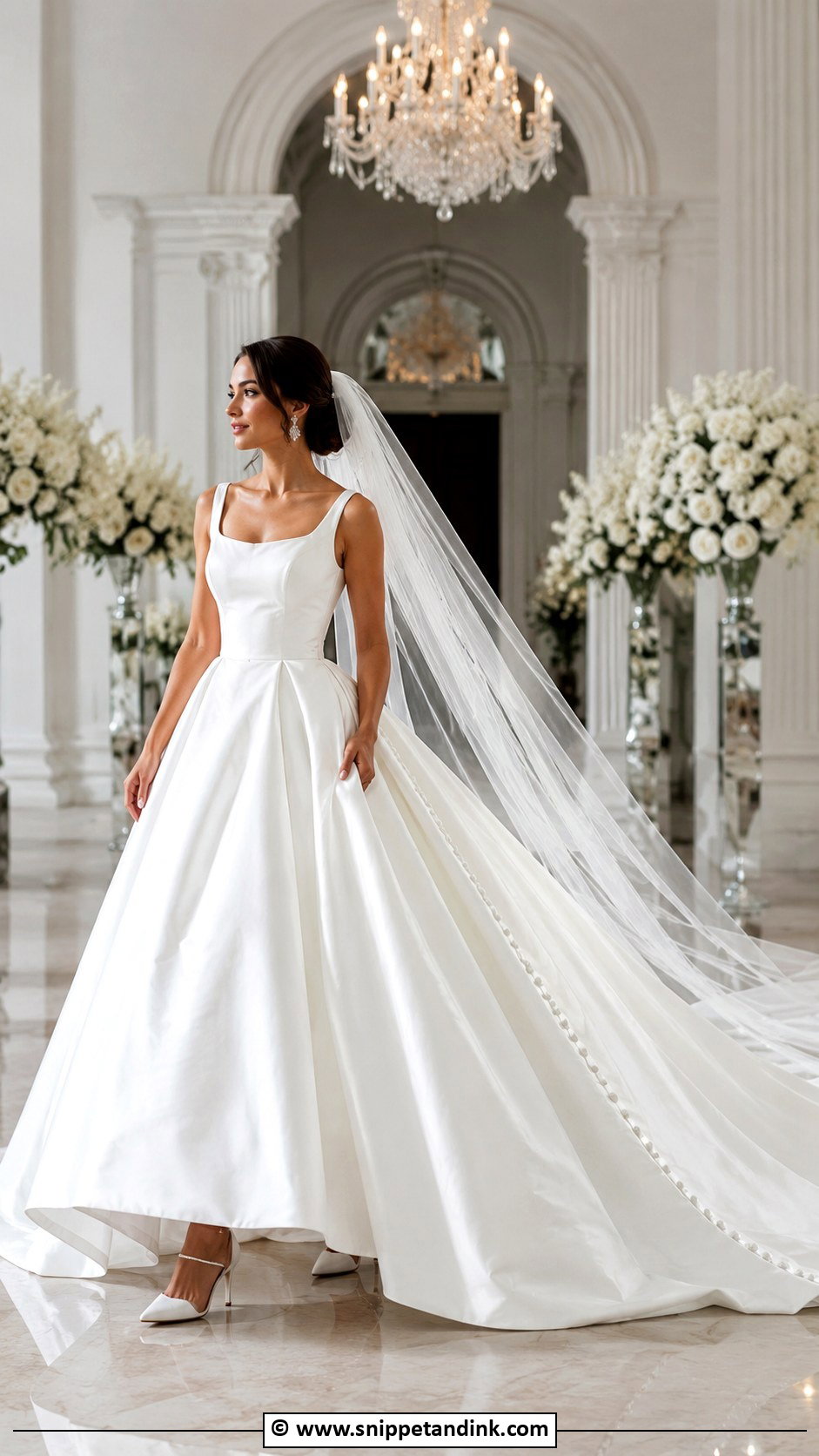
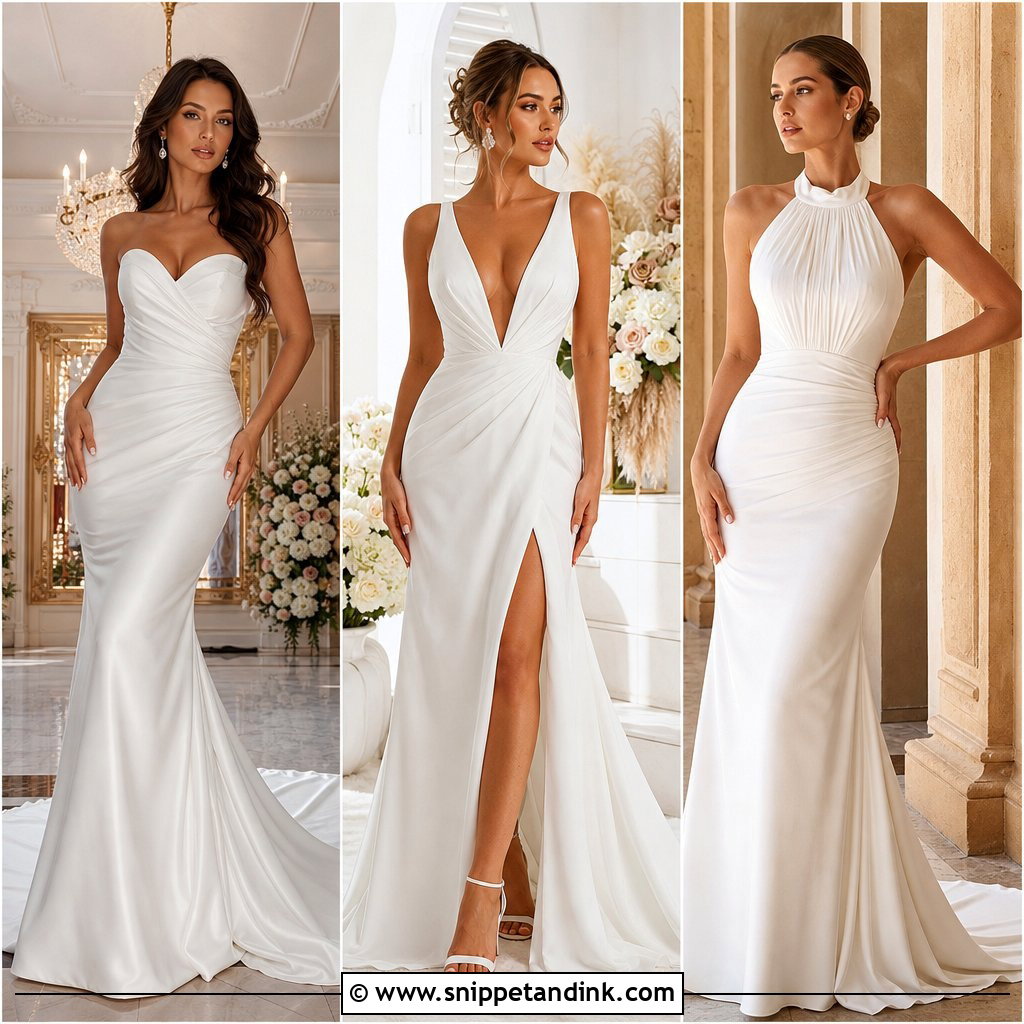
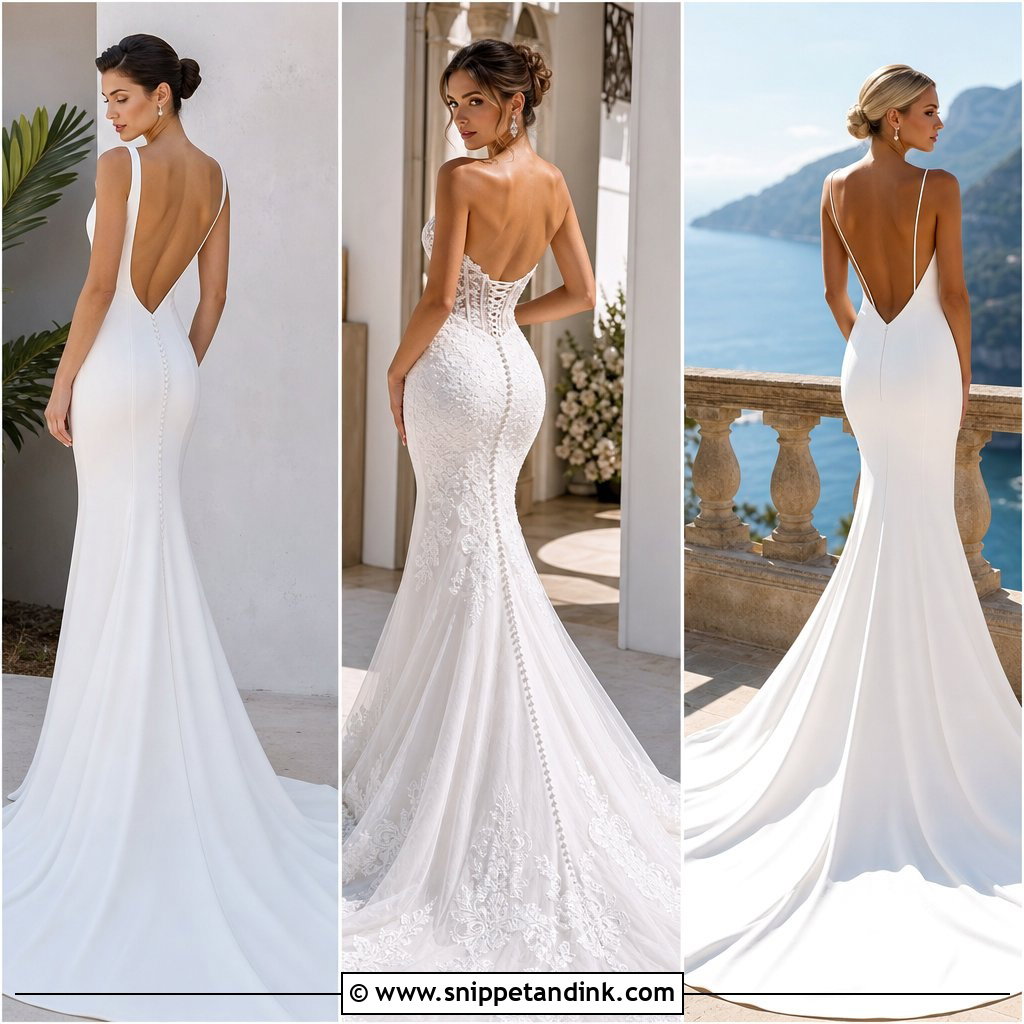
A long train turns every step into a moment. Cathedral or royal length, in lace, satin or tulle, it lets the front stay simple while the back carries the statement. If you add a long veil, I keep it plainer than the train so the two don’t compete. You’ll need a secure bustle for the reception, and the venue needs a wide aisle; a cathedral train in a narrow chapel just gets trodden on.
26. Big Beaded Wedding Dress
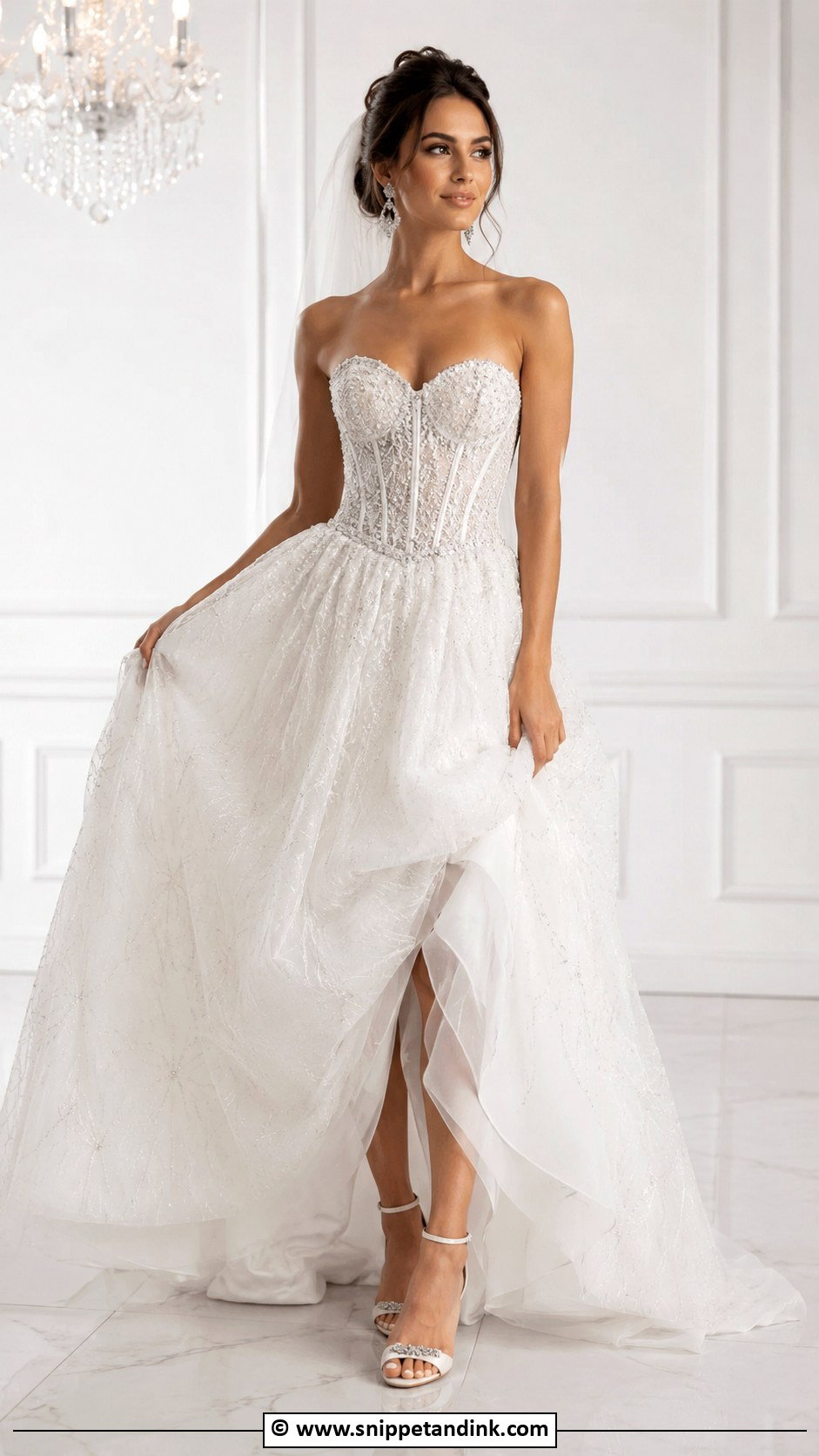
Beading can highlight the bodice, shimmer across the skirt or trace vines through the gown. It also adds real weight. A heavily beaded bodice over a lighter skirt is far easier to wear than a fully beaded ball gown, which I’d only suggest to a bride who has spent time in the sample. Check the inner arms and waist for scratchy bead edges before you commit. Minimal jewelry, comfortable heels and a plain veil let the beading catch the evening light.
27. Big Blush Wedding Dress
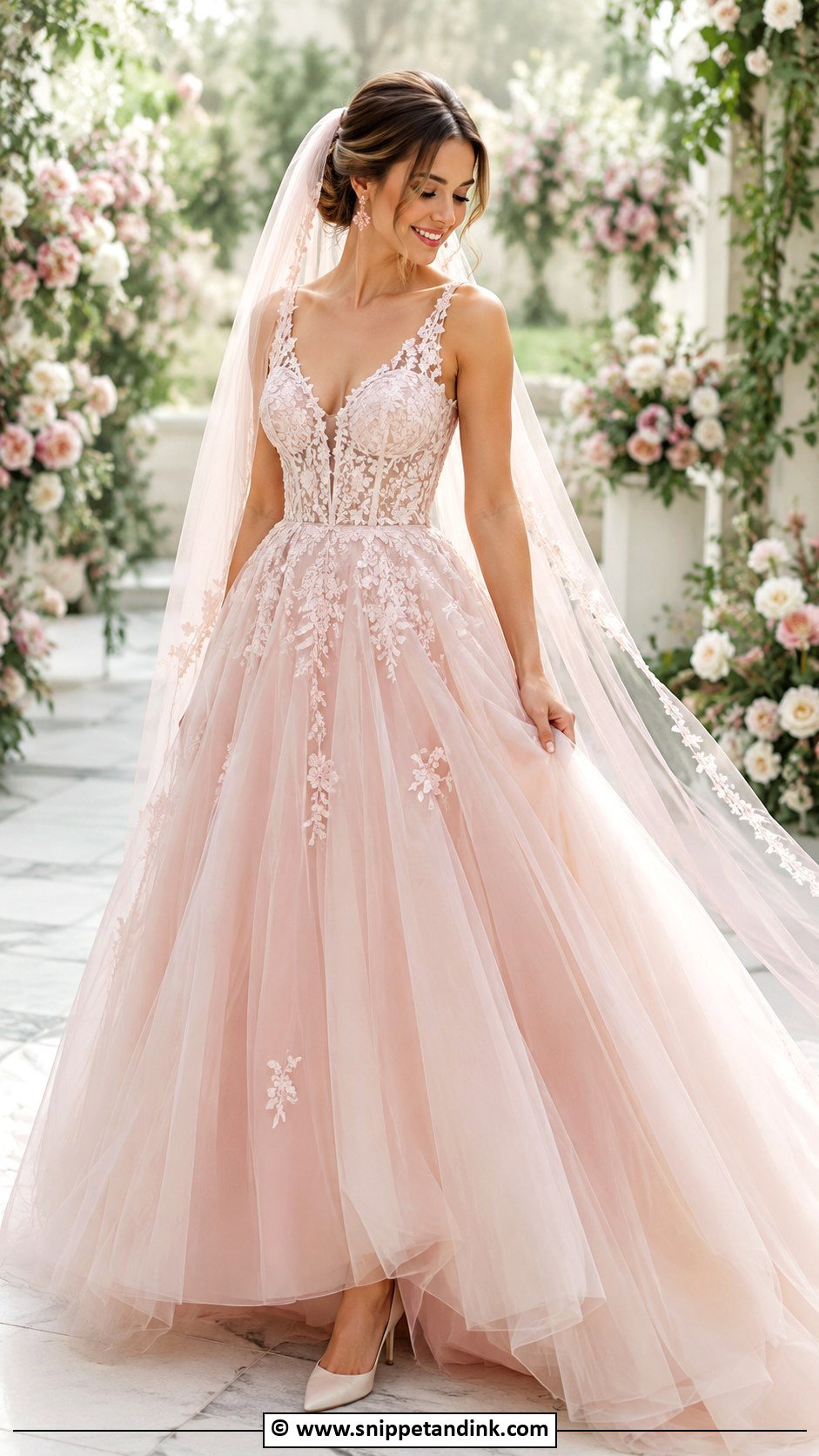
Blush adds warmth while staying bridal. It works under tulle, lace appliqué or floral embroidery, and the color makes a classic shape feel personal. It is very skin-tone dependent, though: on some brides it glows, on others it reads as flesh-colored from a distance, so I always look at it in daylight and through a phone camera. Ivory heels, rose-toned earrings and a veil matched to the gown’s undertone complete it.
28. Big Champagne Wedding Dress
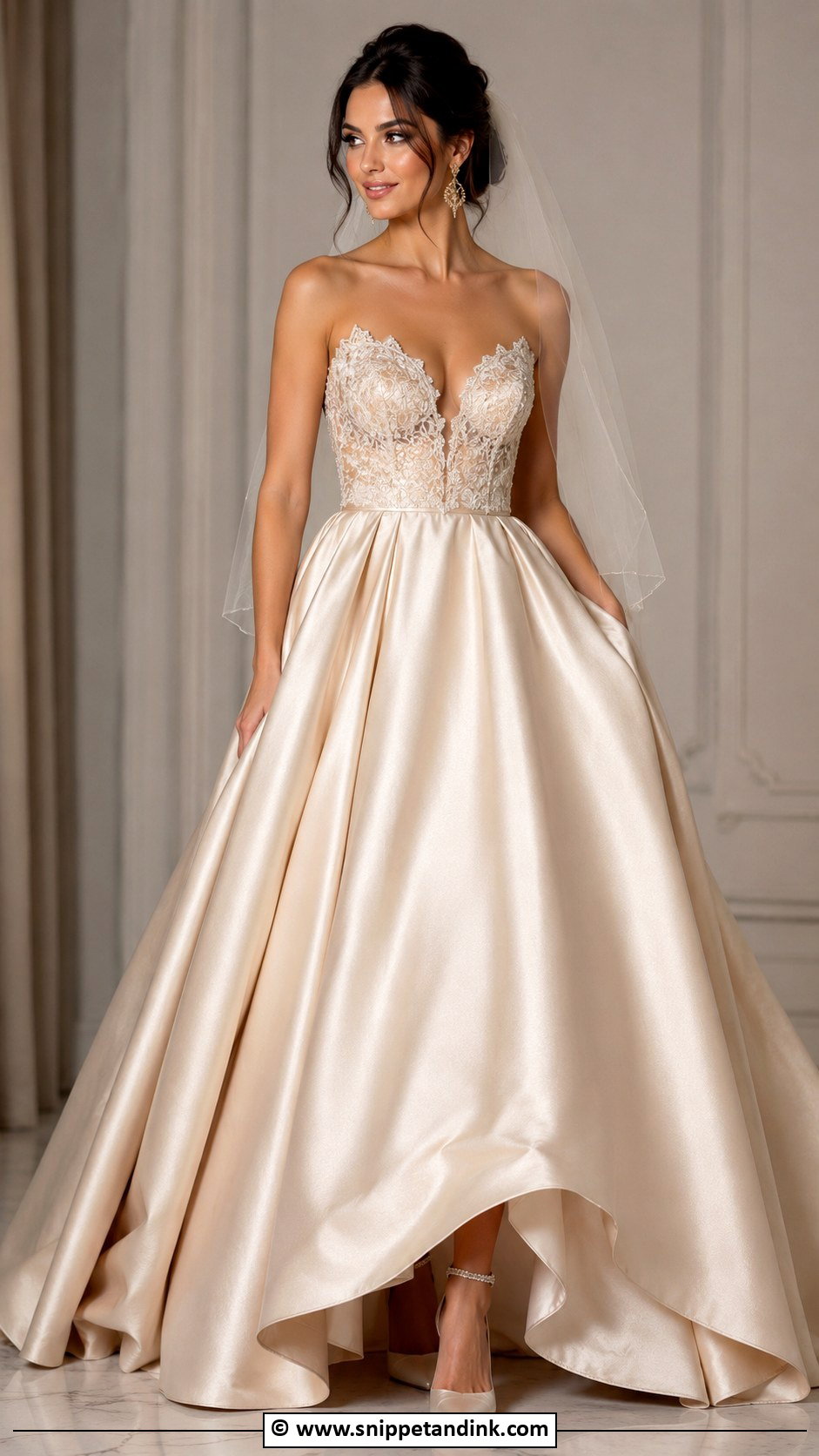
Champagne makes lace, beading and embroidery stand out more than stark white does, because the warmer base gives the detail contrast. It’s flattering in satin, tulle and layered lace, and many brides who look washed out in bright white glow in it. Gold-toned jewelry, ivory shoes and a veil in the same shade finish it; a bright white veil against champagne makes the dress look grey by comparison. Evening and historic venues suit it well.
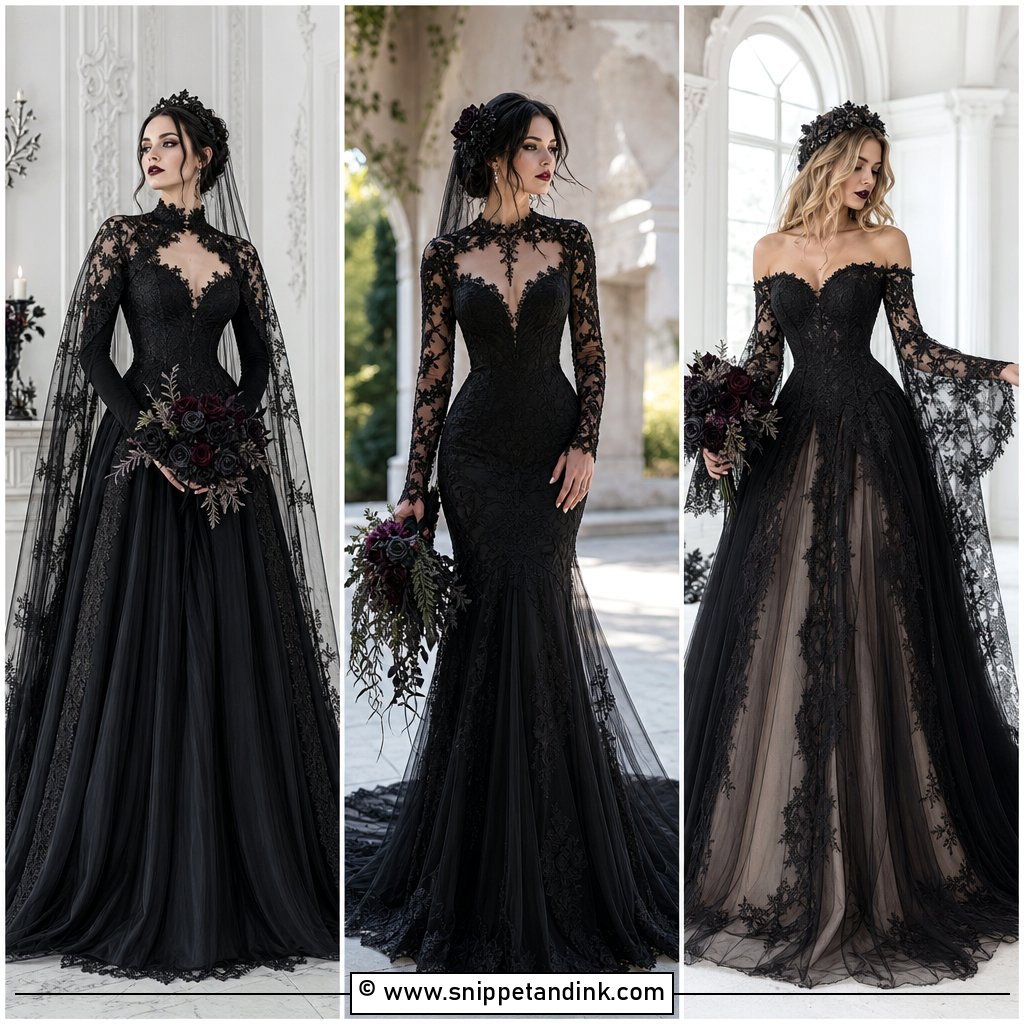
29. Big Black And White Wedding Dress
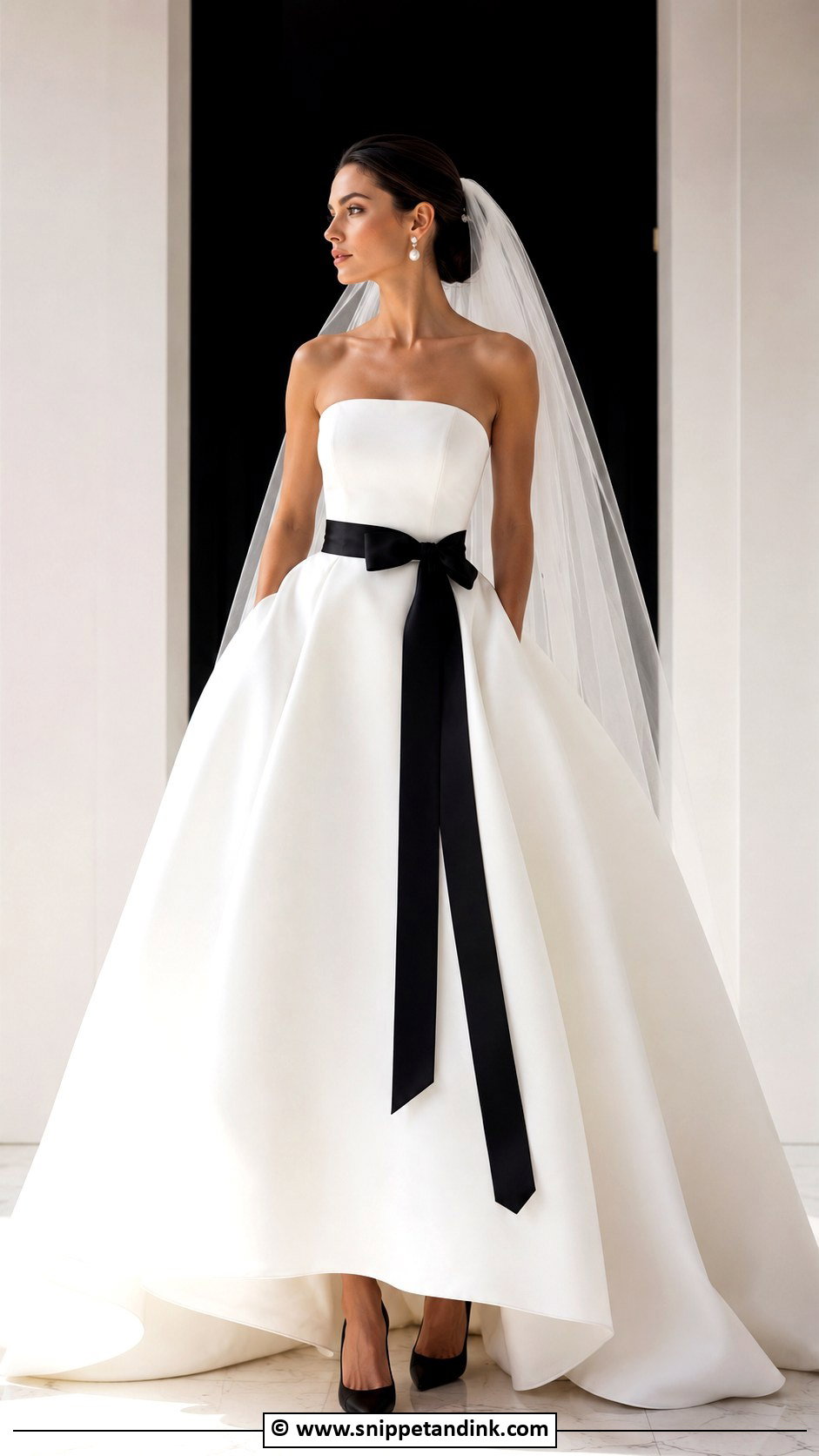
Black on white is a statement, so I keep it to one element: a bow, sash, embroidery, gloves, appliqué or trim. A white ball gown with a black waist ribbon feels graphic, while lace with black floral accents feels more dramatic. Black dye can bleed onto white if the dress gets wet, so ask the maker whether the trim is colorfast. Black heels or pearl earrings tie it together for a modern venue or a formal reception.
30. Big Plus Size Wedding Dress
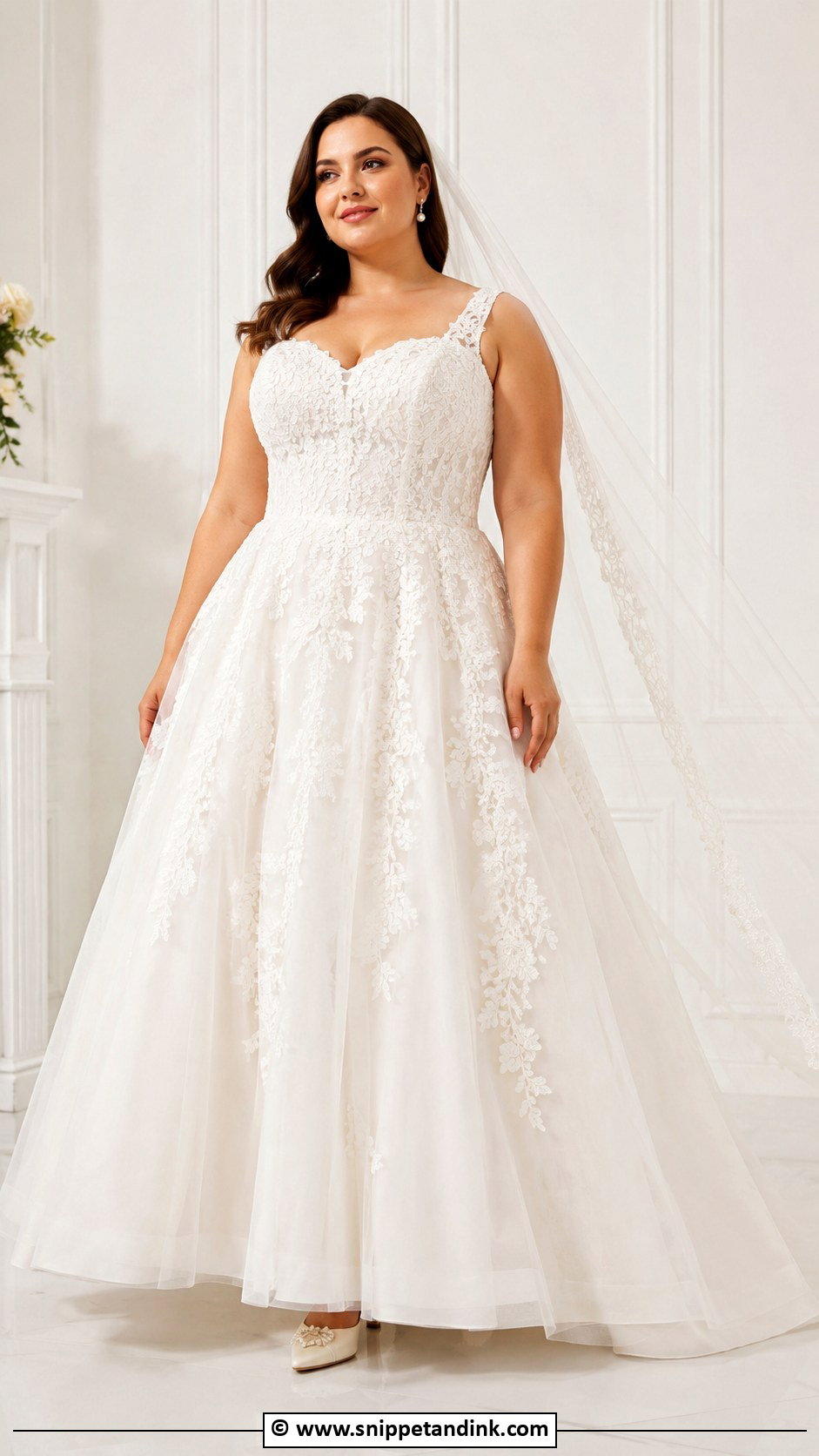
A big gown on a plus-size bride should feel supportive from every angle. I look for strong internal structure, good boning, wide straps where needed and a skirt that balances your proportions. A-line and ball gown shapes both define the waist and move well. Don’t let anyone talk you into plain designs; lace, sparkle, bows, sleeves and long trains all work when they’re placed well. Bring your actual undergarments to every fitting and ask for alterations that let the dress move with you. The goal is celebrating your shape, never hiding it.
Doorways, Car Seats and Bathroom Breaks
The moments nobody photographs are where a big skirt causes trouble. I walk every bride through these before the day:
- The car: book a vehicle with a wide door and plenty of back seat. Sit first, then have someone lift the skirt in after you, and check nothing is caught when the door shuts.
- Doorways and stairs: measure the narrowest door between getting ready and the ceremony. Going down stairs, someone should hold the back of the skirt.
- The bathroom: gather the skirt from underneath and sit facing the cistern. A bridesmaid holding the volume helps enormously, and so does a petticoat that lifts as one piece.
- Dinner: an armless chair is far kinder than one with arms that pin the skirt in place.
Settle the bustle early
An over-bustle hooks the train up onto the back of the skirt and suits lace well. A French bustle tucks it underneath with ribbon ties and works nicely with satin and tulle. Ask your seamstress which fits your fabric, and have a bridesmaid practice it at the final fitting, because most bustles get fastened in a corridor in a hurry.
Volume Is Easy; Comfort Takes Fittings
A big dress should feel like yours, not like a costume you’re managing. Match it to your venue, your body and how much you’ll move. Fit comes first, then volume, then accessories. At every fitting, sit, walk, turn and hug someone in the gown before you sign off on it. With good alterations, a full skirt will carry you from the first photo to the last dance.
You'll Like These Ideas:






Leave a Reply