
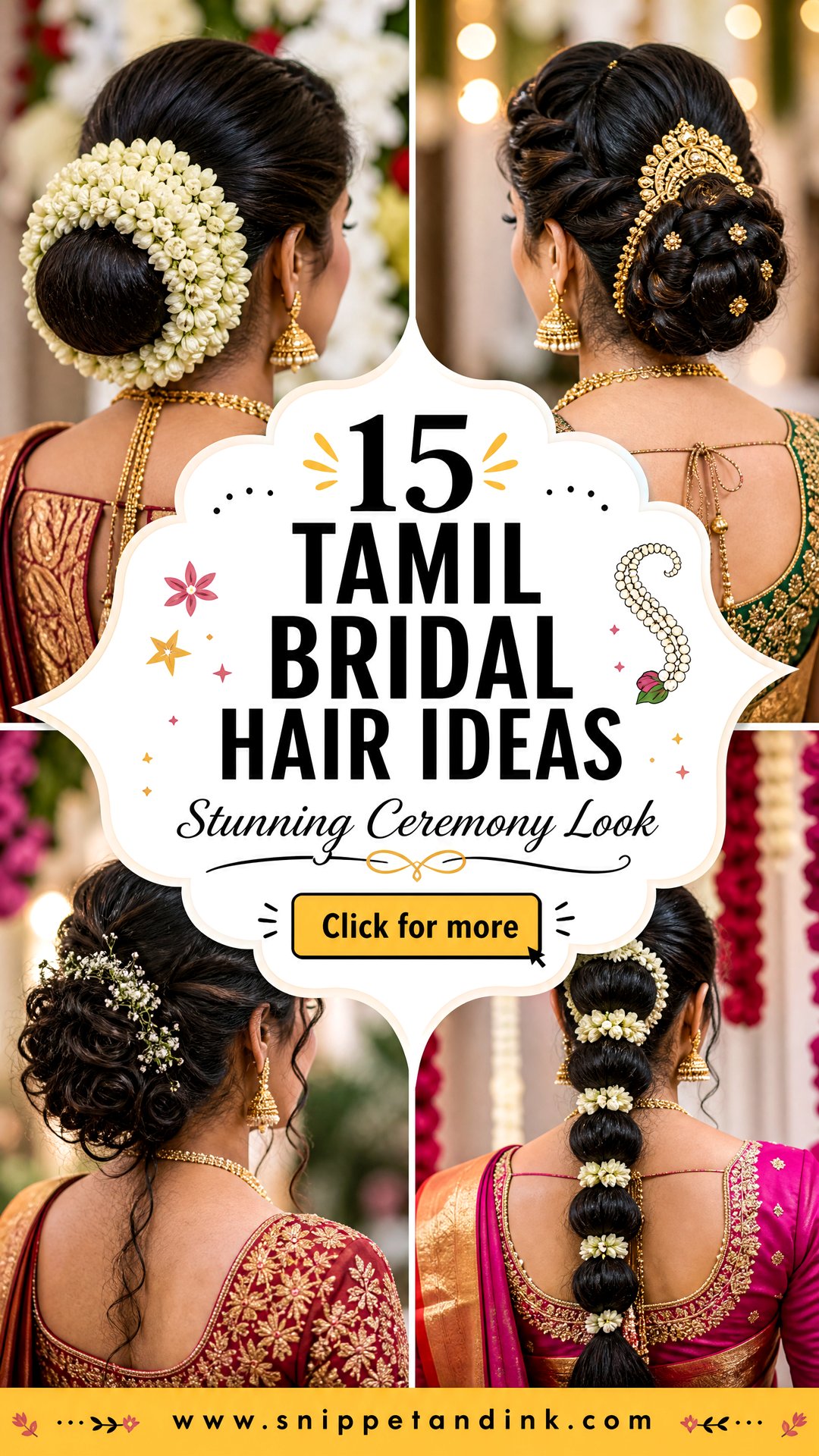
A Tamil wedding asks a lot of a bride’s hair. It has to carry fresh jasmine, gold ornaments and sometimes a full flower covering, sit comfortably through hours of rituals, and still look neat when the photographer comes round behind you. It also has to work with a silk saree, temple jewelry, a nethi chutti and heavy earrings all at once. The long jada is still what most of my Tamil brides want for the muhurtham, while buns, curls and half-up styles come out for the reception. These Tamil bridal hair looks cover both, with what each one needs to stay in place.
Planning Hair Around the Thali and Hours on the Manavarai
Before I decide on a jada or a bun for a Tamil wedding, I think through the ceremony itself. The groom ties the thali at the back of your neck, so the nape needs to be reachable. A tight low bun pressed right against the neck can get in the way of the knots, while a braid usually parts easily to one side. I always ask the family how they’d like that moment to go.
Then there’s sitting. Brides often spend hours seated on the manavarai, near the heat of the homam, turning for relatives and photographers. A heavy flower-covered braid resting on your back for that long can strain the scalp, so I spread the weight across several anchor points and test the full set of ornaments at the trial.
Things to settle at your trial
- Bring the actual jada billalu, kunjalam and nethi chutti, not just photos. Their weight changes how I braid.
- Match extensions to your hair in daylight. Dark hair often has a warm tone that a jet black extension won’t match.
- Wear a blouse with the same neckline so the braid’s fall can be checked against it.
- Ask for the order of the morning: usually hair base, then saree draping, then jewelry and flowers, so nothing gets crushed.
1. Tamil Bridal Jada With Jasmine Flowers
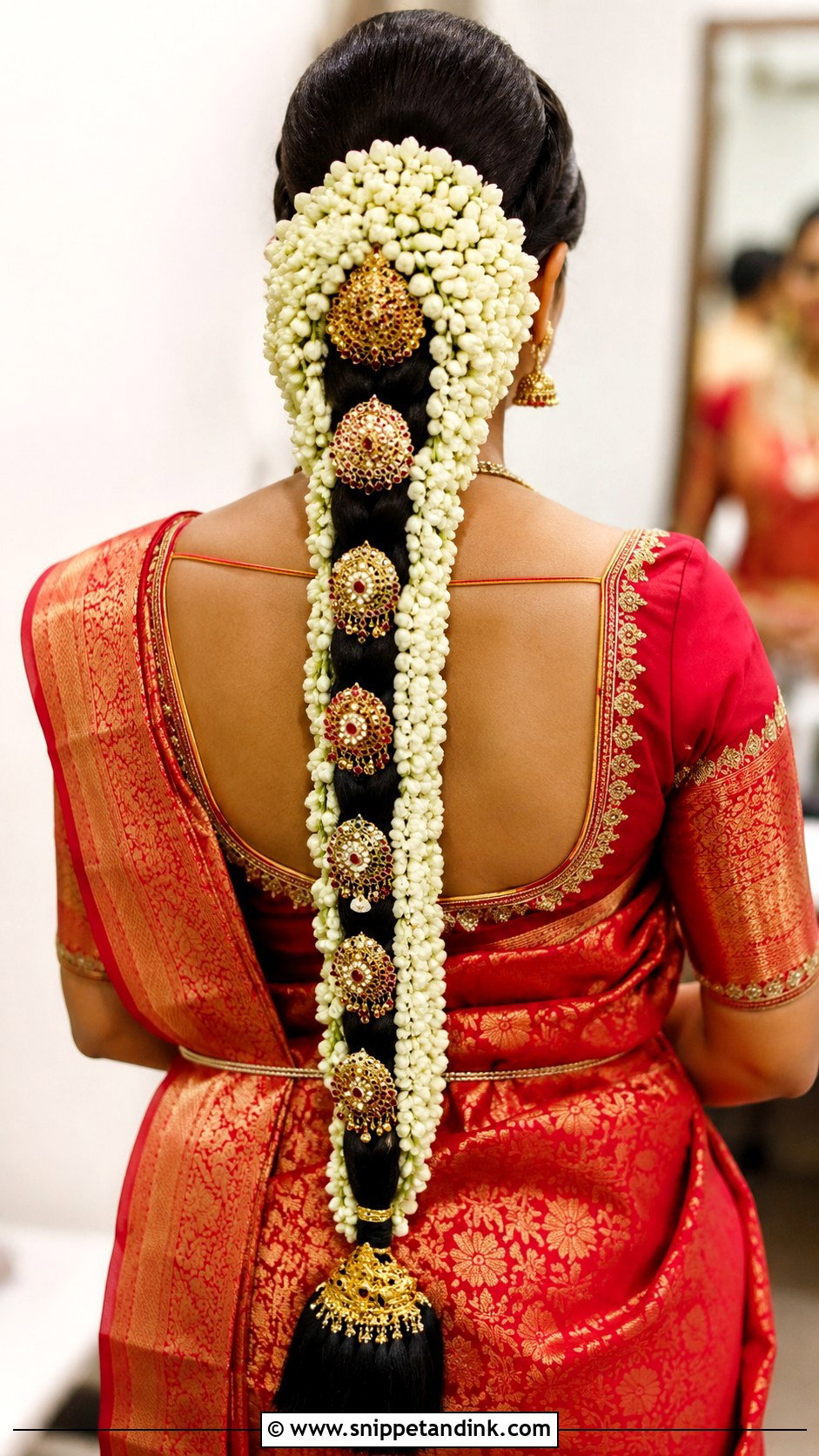
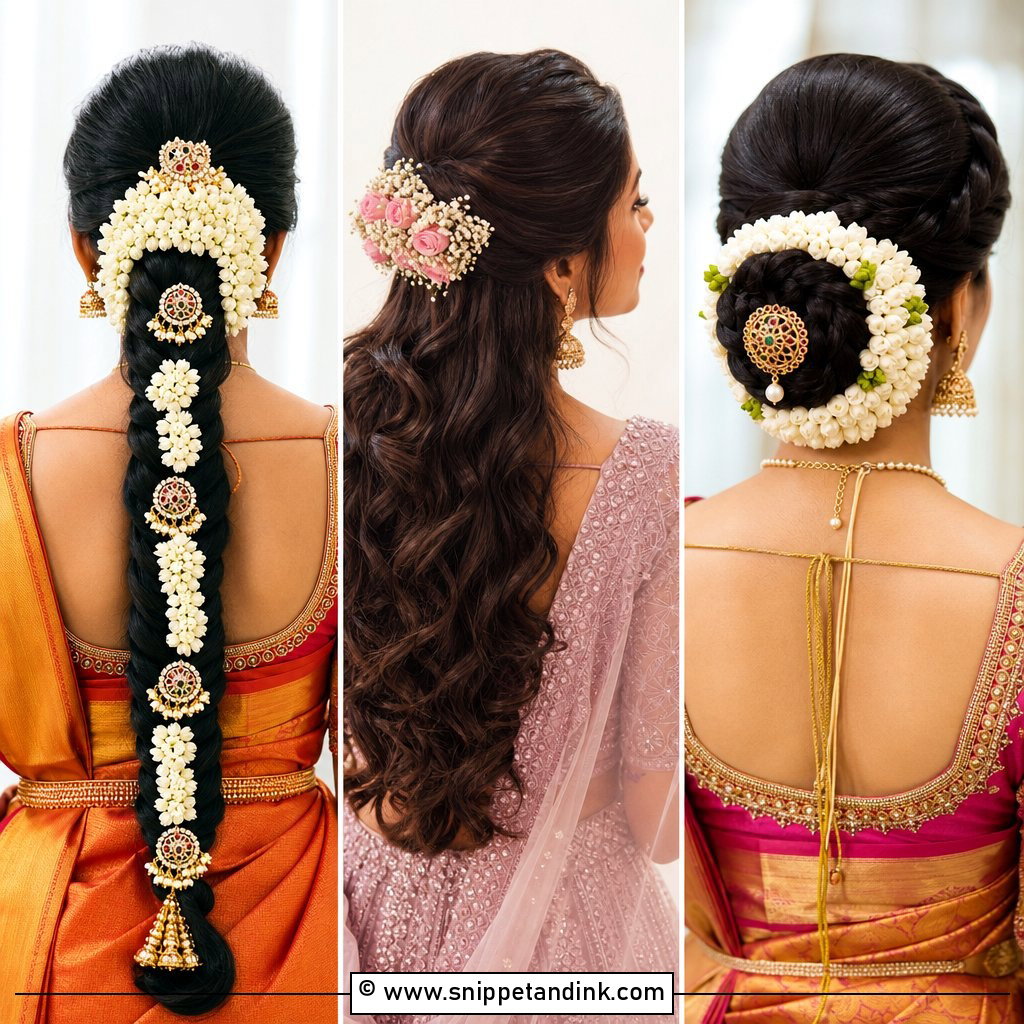
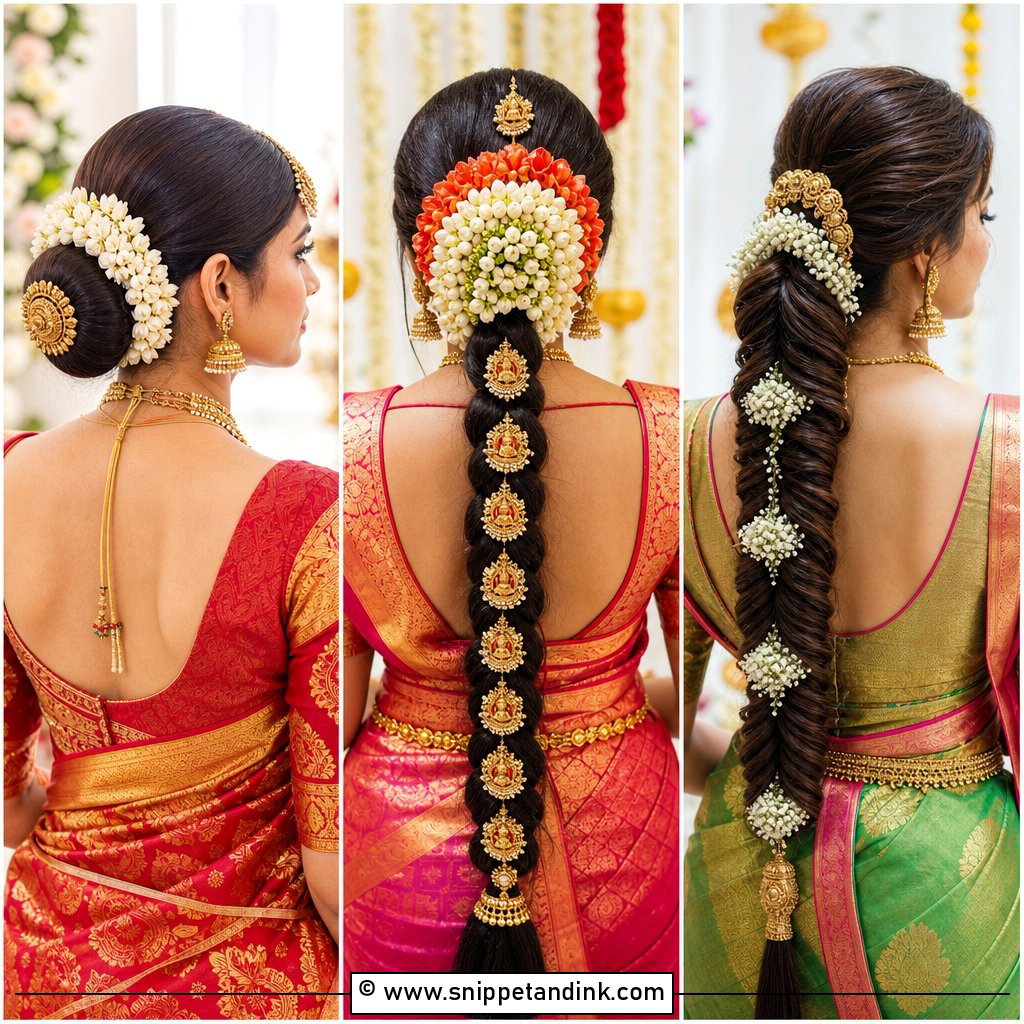
For the muhurtham, the jasmine jada is the look I’m asked for most. I part the hair cleanly in the center, smooth the crown with a little serum and braid it into a long, thick plait, adding a matched extension if the bride’s own length thins toward the ends. Jasmine is either wound along the braid or pinned in rounded clusters. Down the back of a Kanjeevaram, the braid leaves the blouse, jewelry and saree border on show. Jada billalu, a kunjalam and a nethi chutti complete it.
2. Tamil Bridal Poola Jada
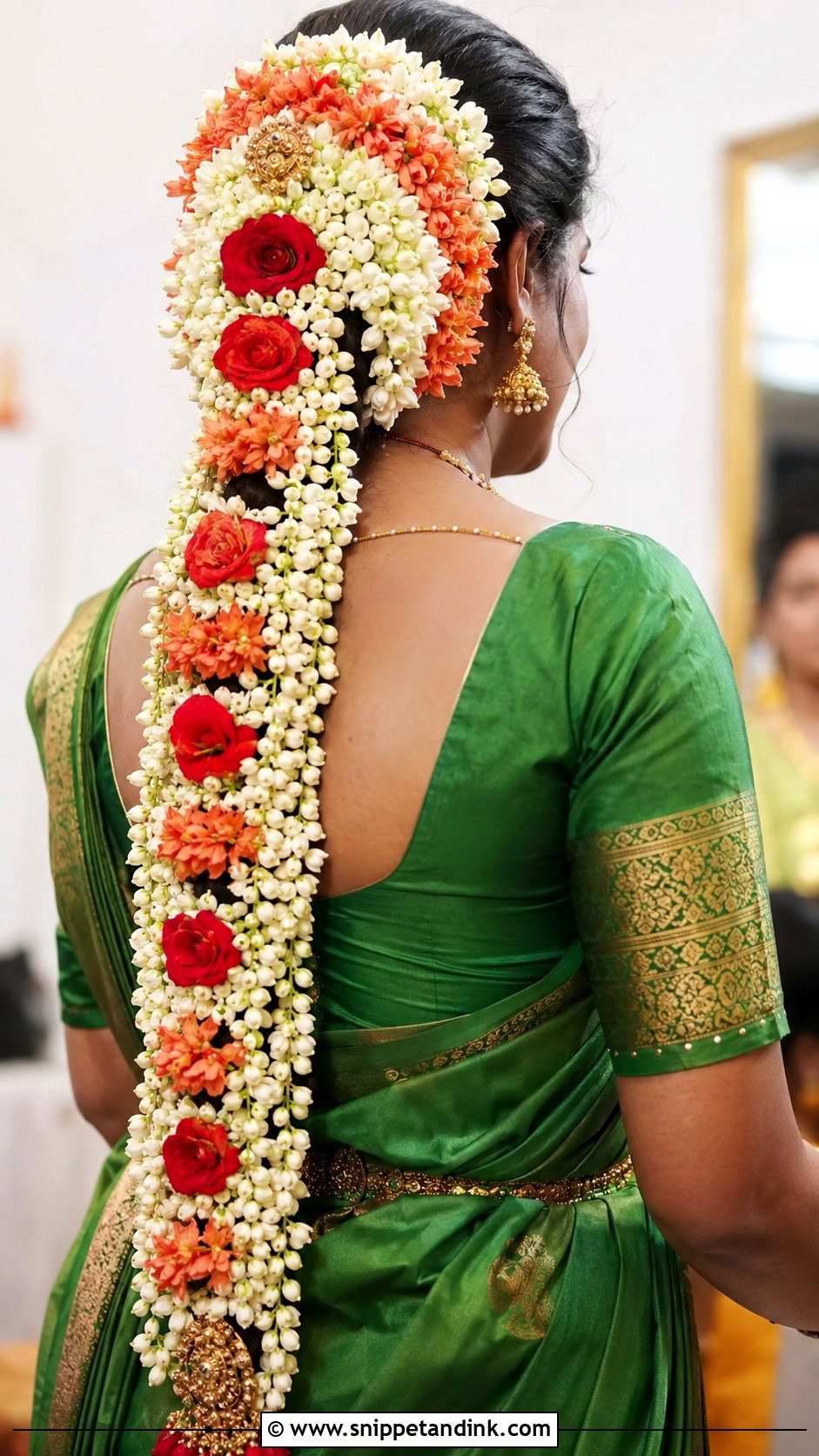
A Tamil bridal poola jada covers the braid in flowers from top to bottom: jasmine, roses, kanakambaram and white floral strings that stand out against dark hair. It’s the grandest back view you can have during the rituals. It is also heavy. Fully covered, the braid pulls down on the crown, so I build it on a firm base braid with extensions and anchor the top of the flower piece to a pinned section rather than to the plait alone. Keep the front sleek or lightly puffed; the back is the feature.
3. Tamil Bridal Bun With Gajra
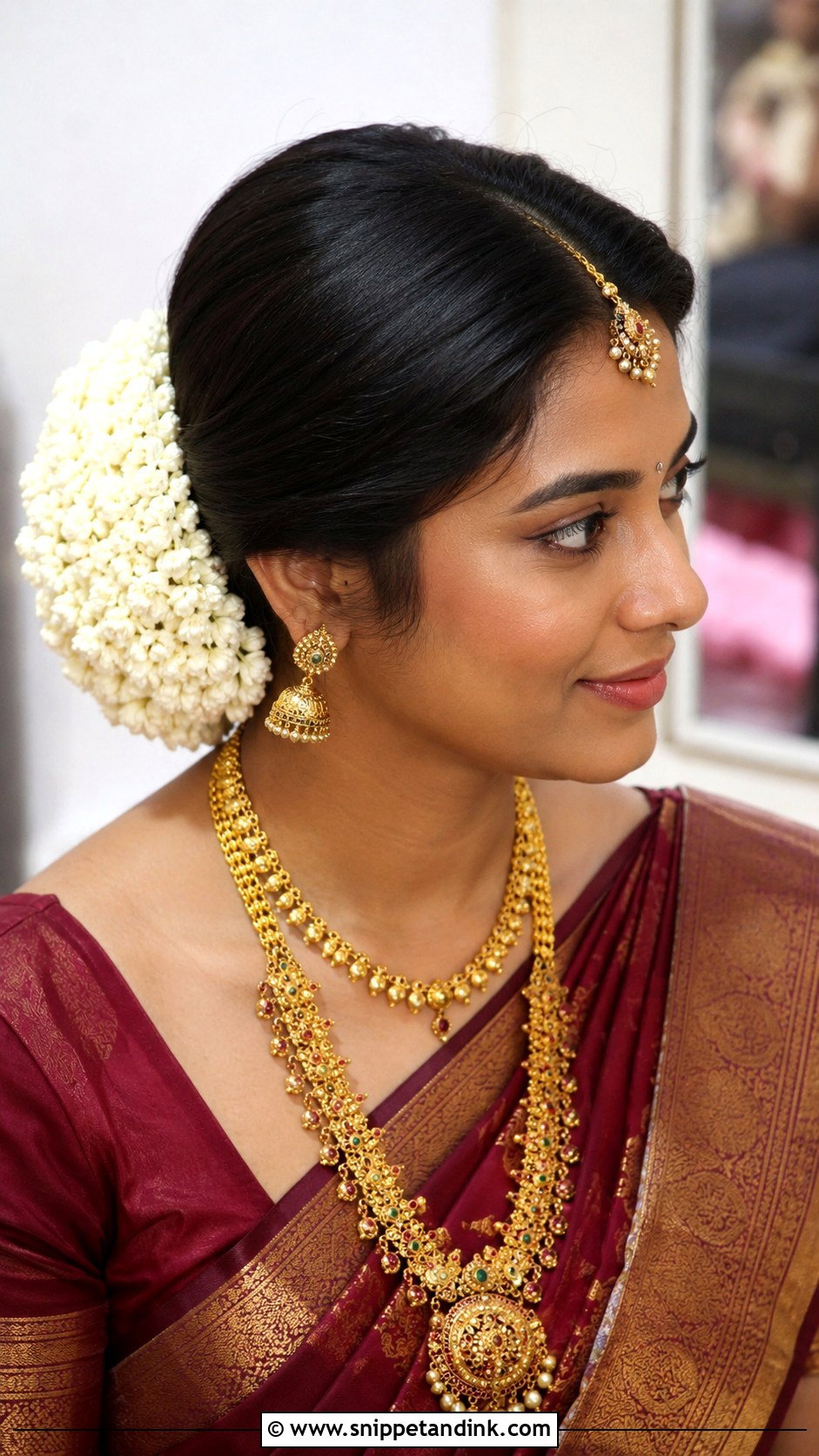
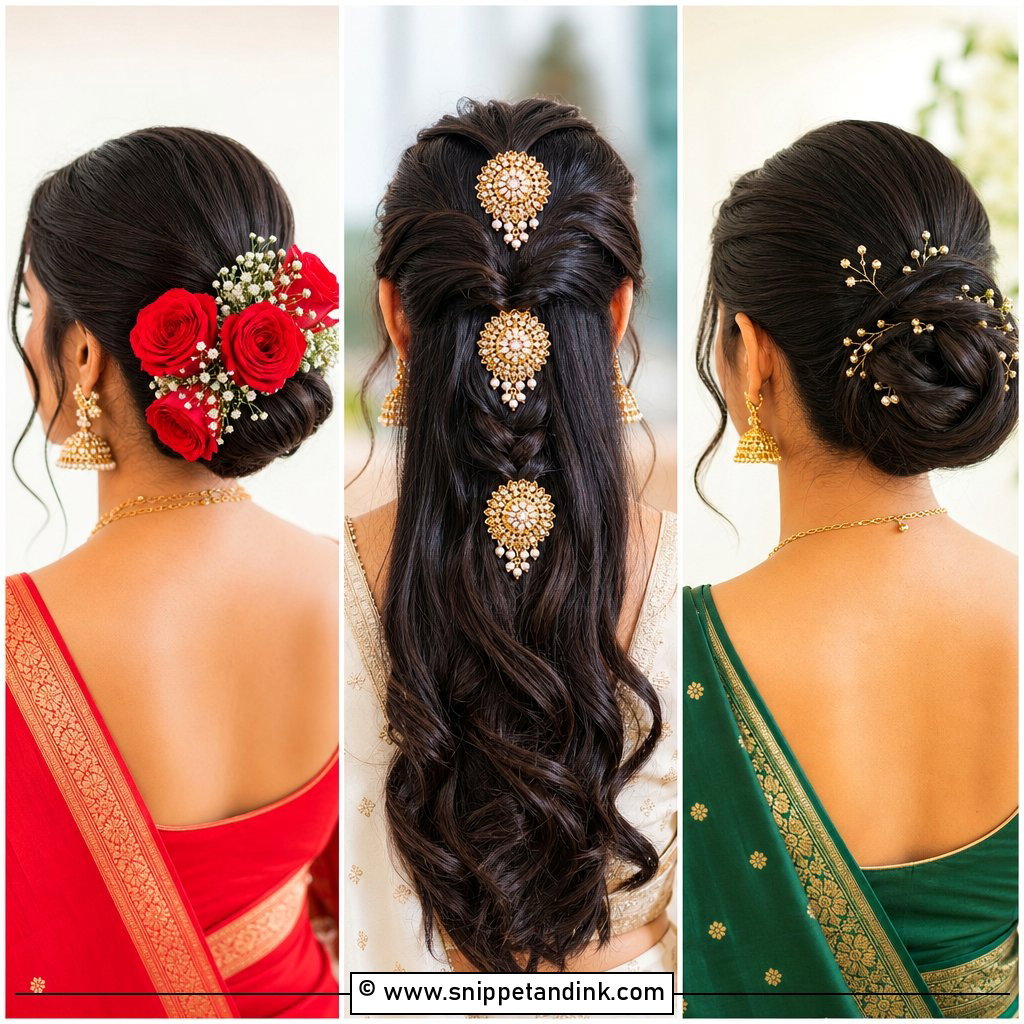
Not every bride wants a long braid, and a Tamil bridal bun with gajra gives a polished alternative. The hair goes into a low or mid bun, wrapped at the base with jasmine or mixed flowers. With heavy earrings, layered necklaces and a bold pallu, an open neckline helps, and the bun keeps it clear. A smooth center part keeps it traditional; a small crown puff adds height. In hot weather and long ceremonies, it’s the most comfortable option here.
4. Tamil Bridal Kondai Hairstyle
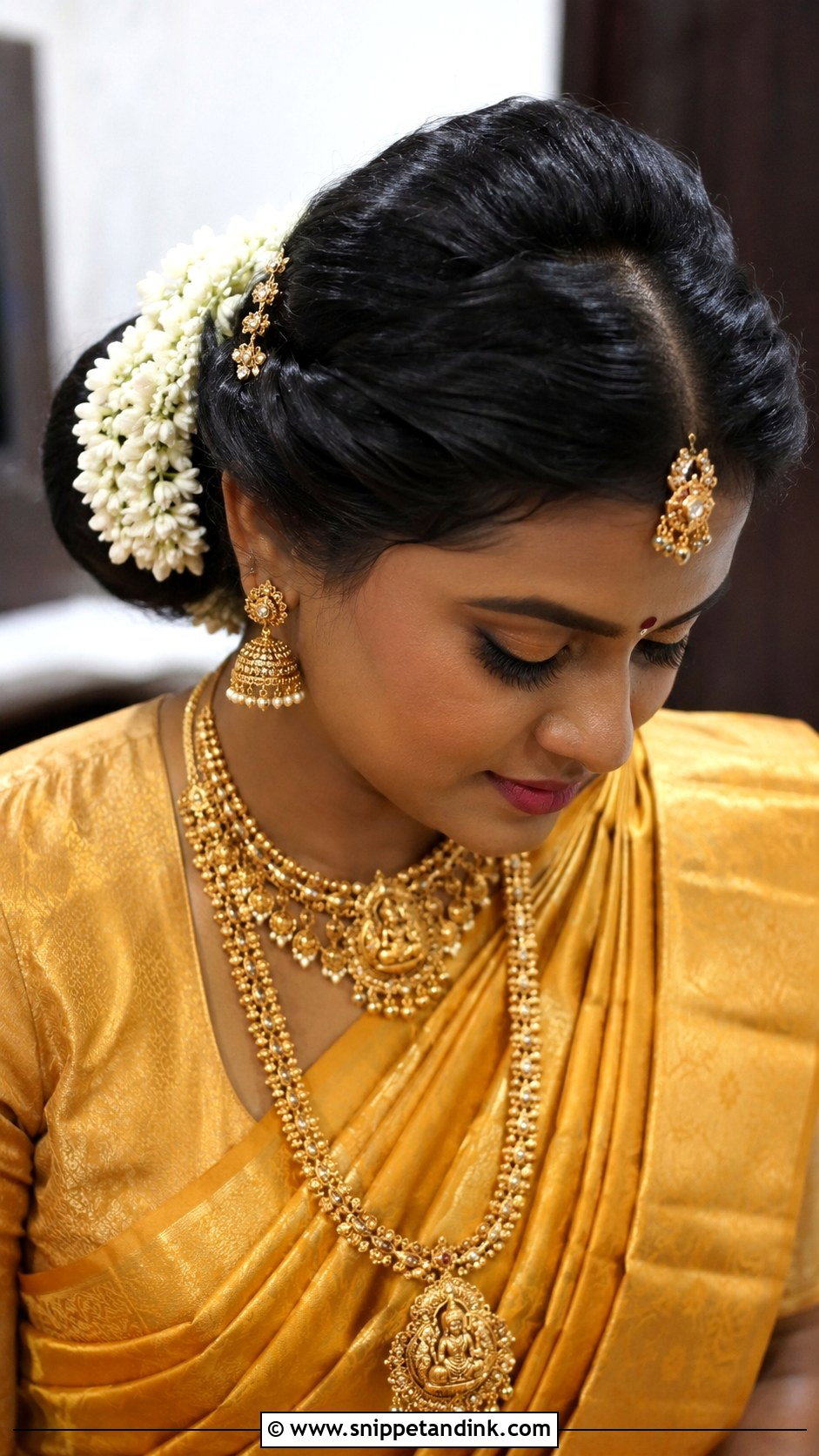
The kondai is the traditional South Indian bun, structured and rounded, with a quiet old-world feel tied closely to South Indian bridal beauty. It sits at the back or slightly to one side, finished with flowers, gold pins and hair ornaments. I’d suggest it to brides who find a jada too long to manage but want more structure than a loose bun. I usually start it from a tight ponytail and wrap it around a bun ring, which keeps the shape round through hours of sitting.
5. Tamil Bridal Side Bun With Flowers
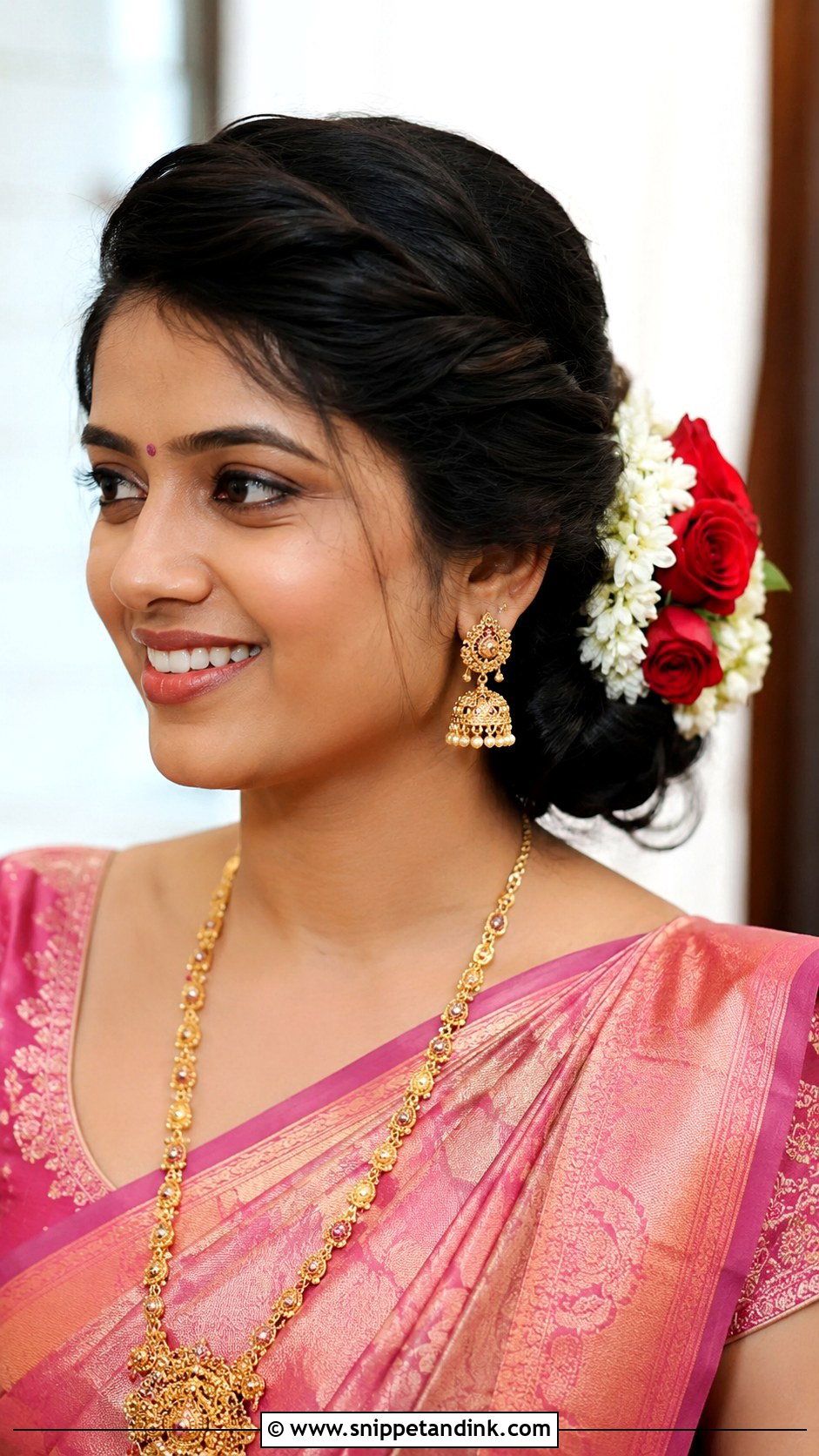
Placed slightly to one side, a flowered bun shows in front-facing portraits as well as from behind. Jasmine, roses or a floral crescent decorate it. It suits a nethi chutti, jhumkas and a silk saree with a detailed blouse. I pin side buns more firmly than centered ones, because the weight sits off balance and tends to drift backward over a long day. Smooth for the ceremony, twisted for a reception.
6. Tamil Bridal Braid With Gold Accessories
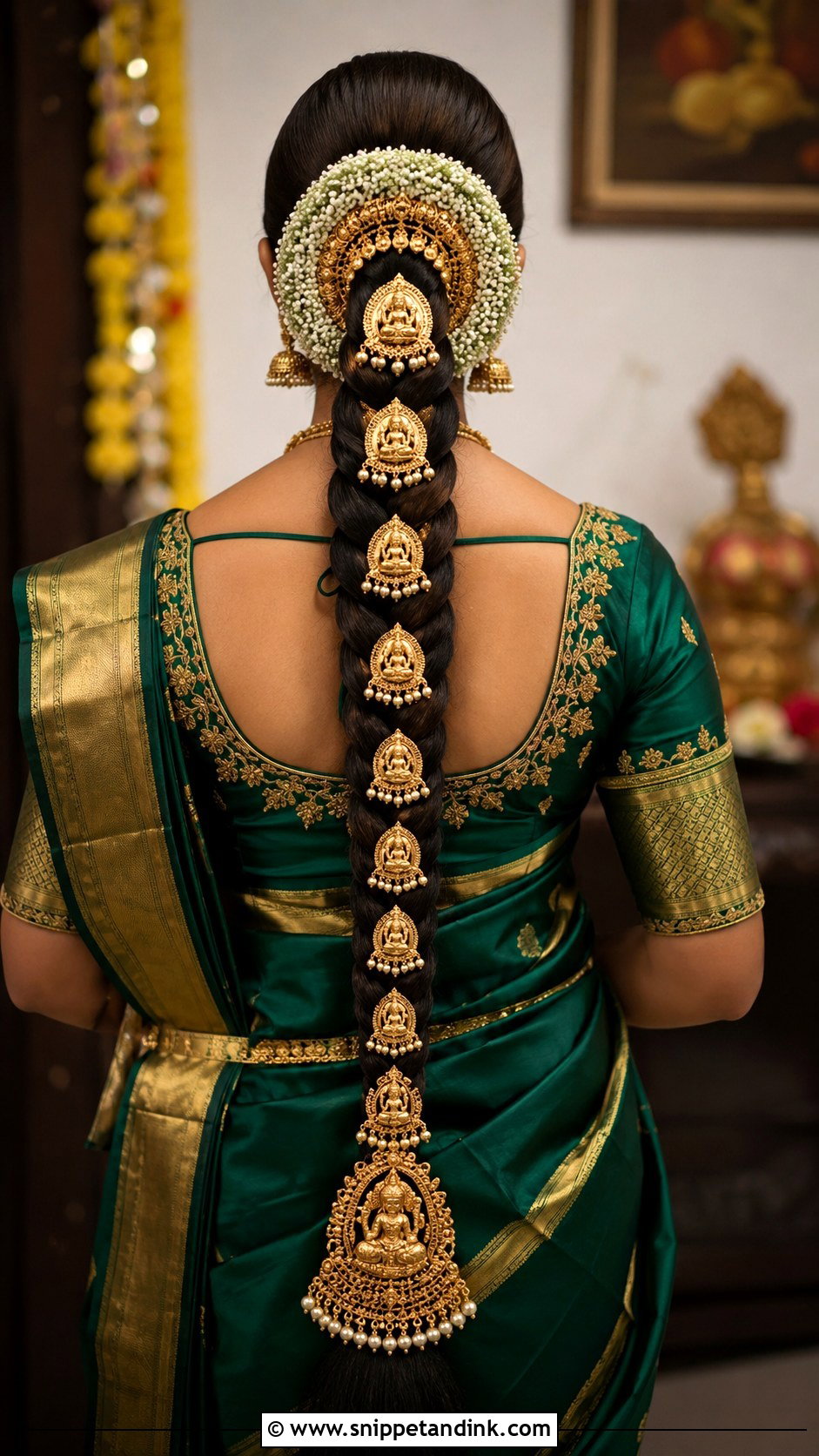
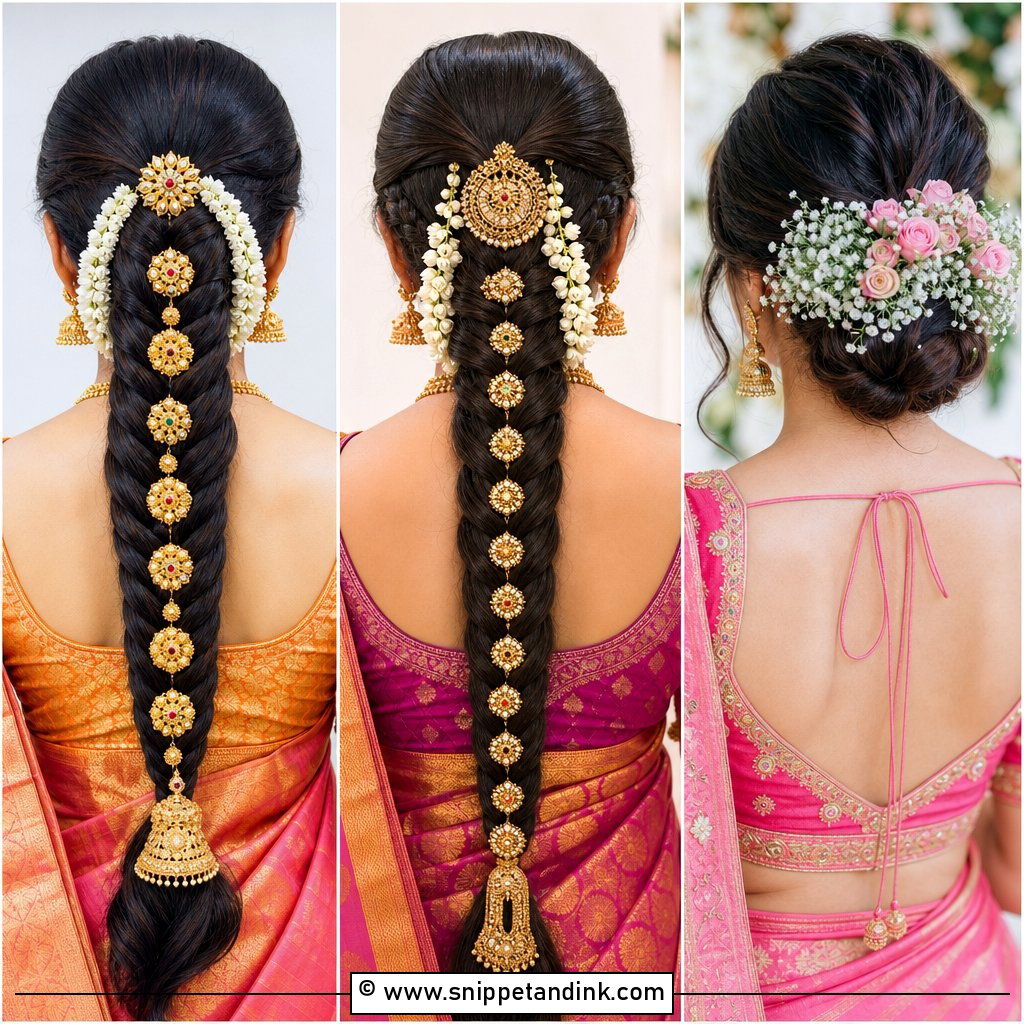
Gold on the braid instead of flowers suits brides who want the jewelry to lead. The braid is thick and sleek, set with jada billalu, gold discs, temple-style pins or a statement kunjalam. Antique gold sits richly against maroon, emerald, mustard or deep pink silk. The thing I watch for is weight: a full set of billalu drags a braid down and can loosen it at the nape. I braid firmly and add a little volume at the crown so the ornaments sit evenly and don’t pull.
7. Tamil Bridal Braid With Rose Flowers
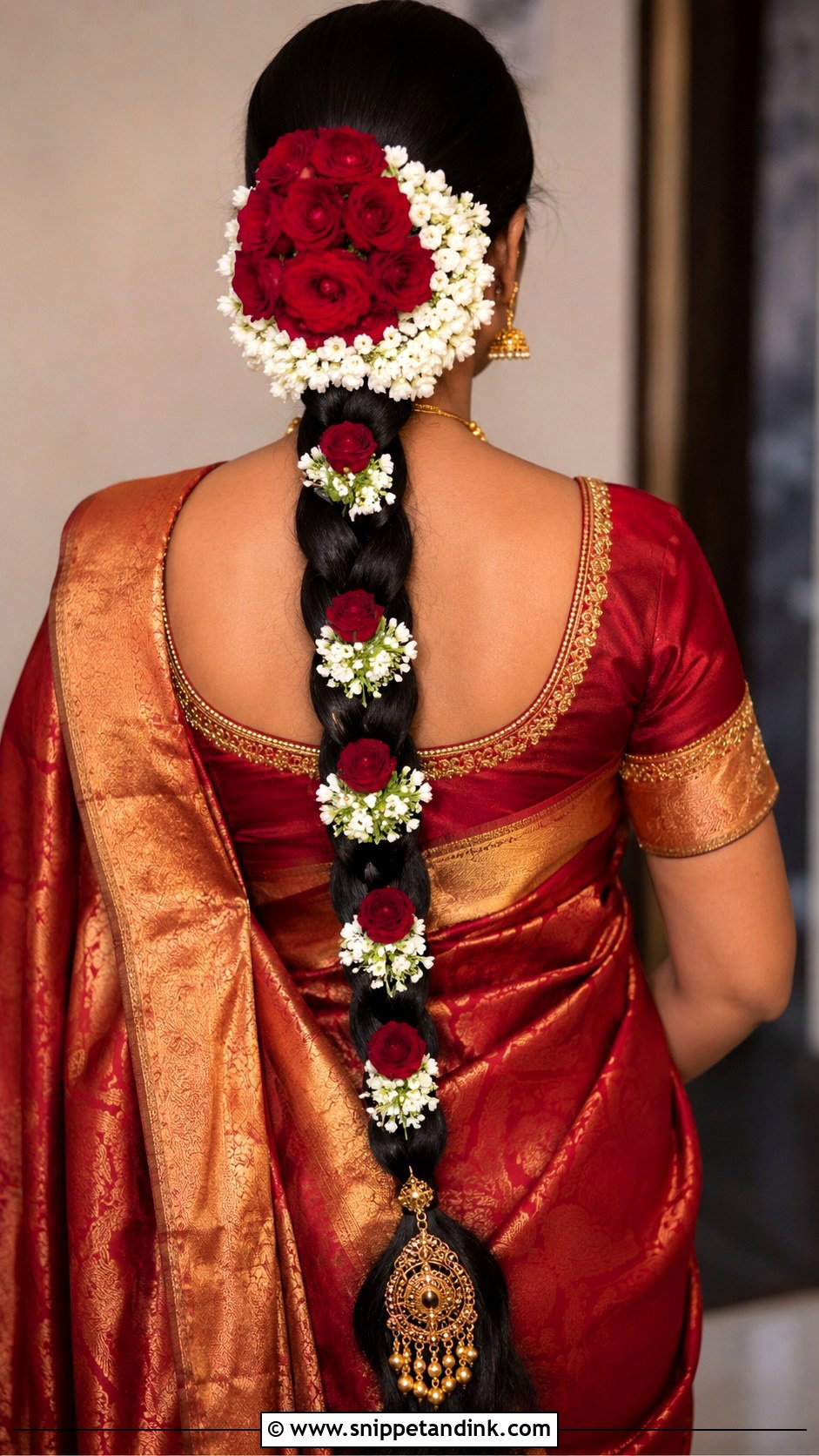
Roses soften the traditional jada with color. Red, pink or peach blooms are tucked along the braid, mixed with jasmine, or placed around the top before the plait begins. Dark hair, white jasmine and deep rose tones against silk and gold photograph with real contrast. I’d use small roses rather than large ones: they sit closer to the braid, stay secure and don’t hide the plait. A gold kunjalam finishes the end.
8. Tamil Bridal Low Bun With Maang Tikka
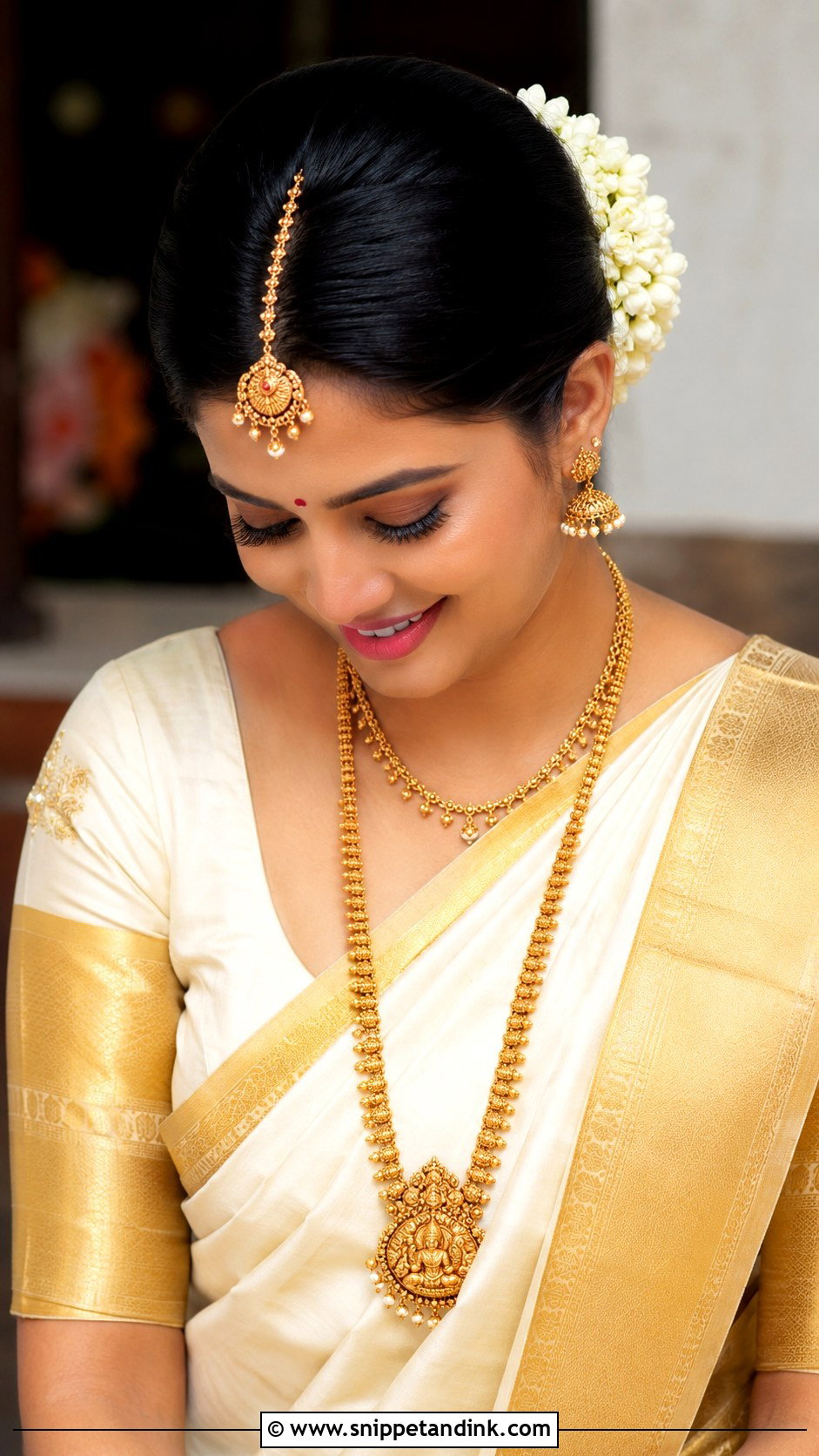
A Tamil bridal low bun with maang tikka is the refined choice when the jewelry is already heavy. The center part lets the maang tikka or nethi chutti sit straight down the forehead, and that line has to be precise, so I part it with the tail of a comb and check it in the mirror from straight on. The bun rests at the nape with jasmine, baby’s breath or a simple floral ring. It suits engagements, receptions and temple weddings equally.
9. Tamil Bridal Curly Bun
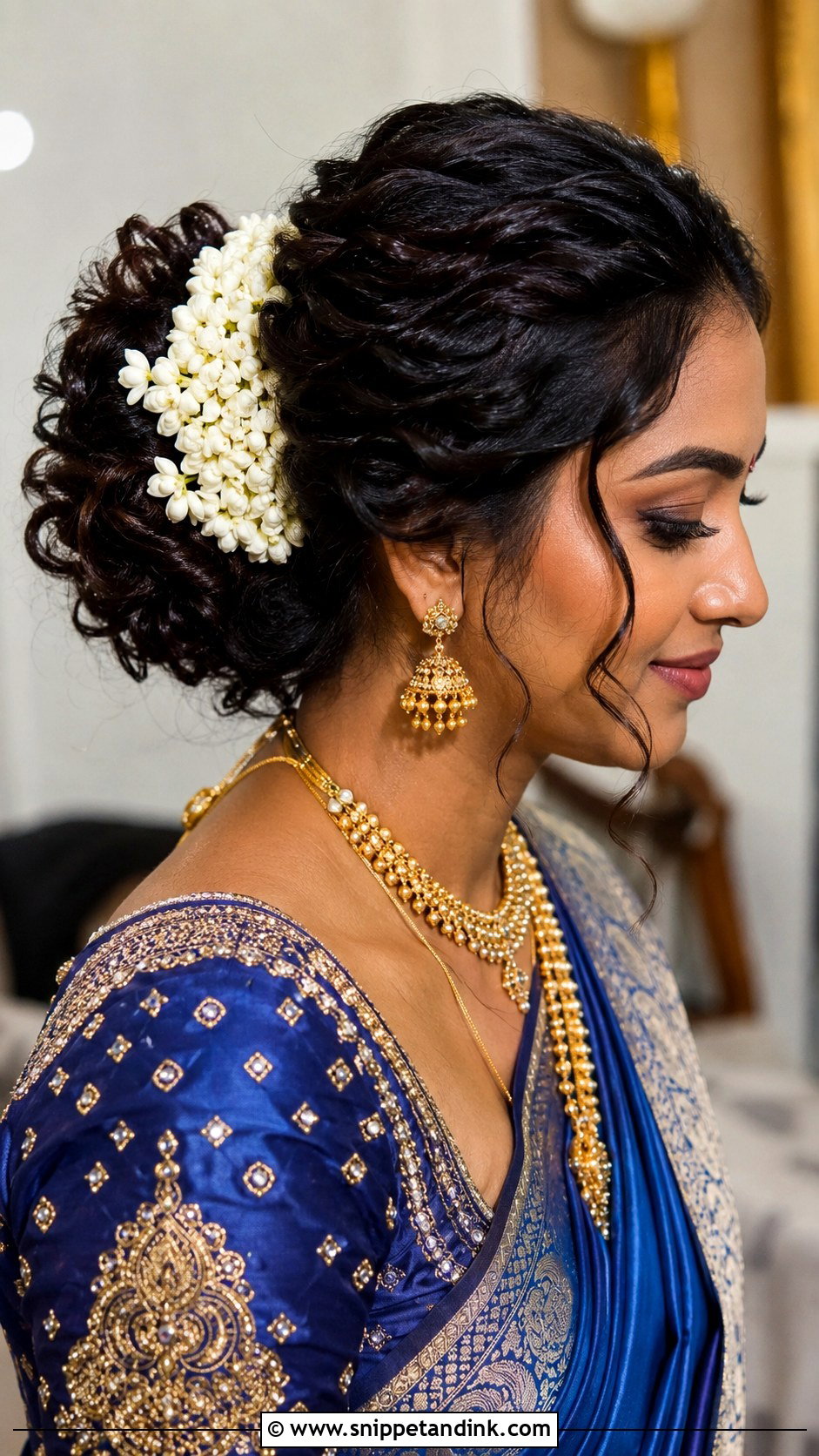
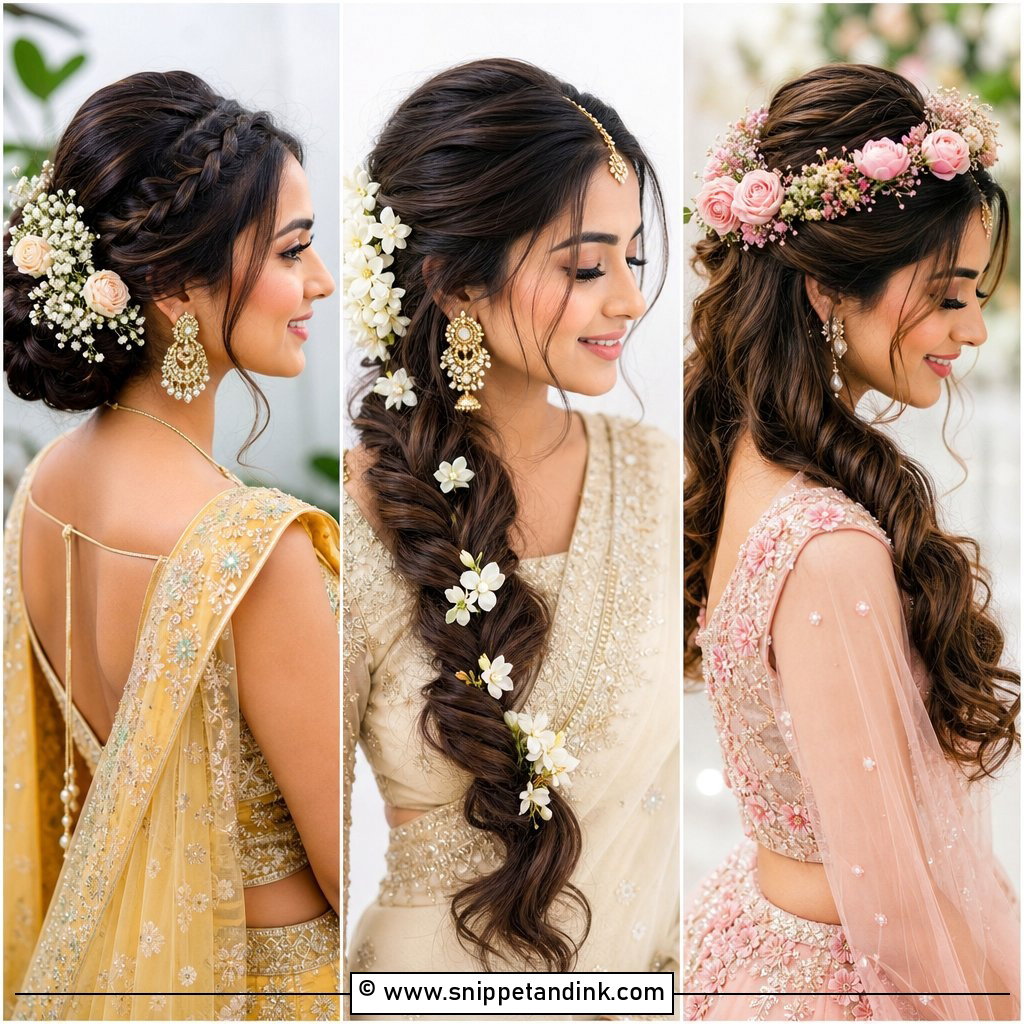
A curly bun gives volume and movement while staying traditional enough for the wedding. I curl the hair first, then pin the curls into a full rounded shape, with a few loose curls arranged around it and jasmine or roses for the Tamil touch. Naturally wavy or curly hair is ideal, since the texture becomes the design. Keep the front neat with a clean part, so the curls look arranged rather than unruly. It’s especially good for reception photos.
10. Tamil Bridal Half Up Hairstyle
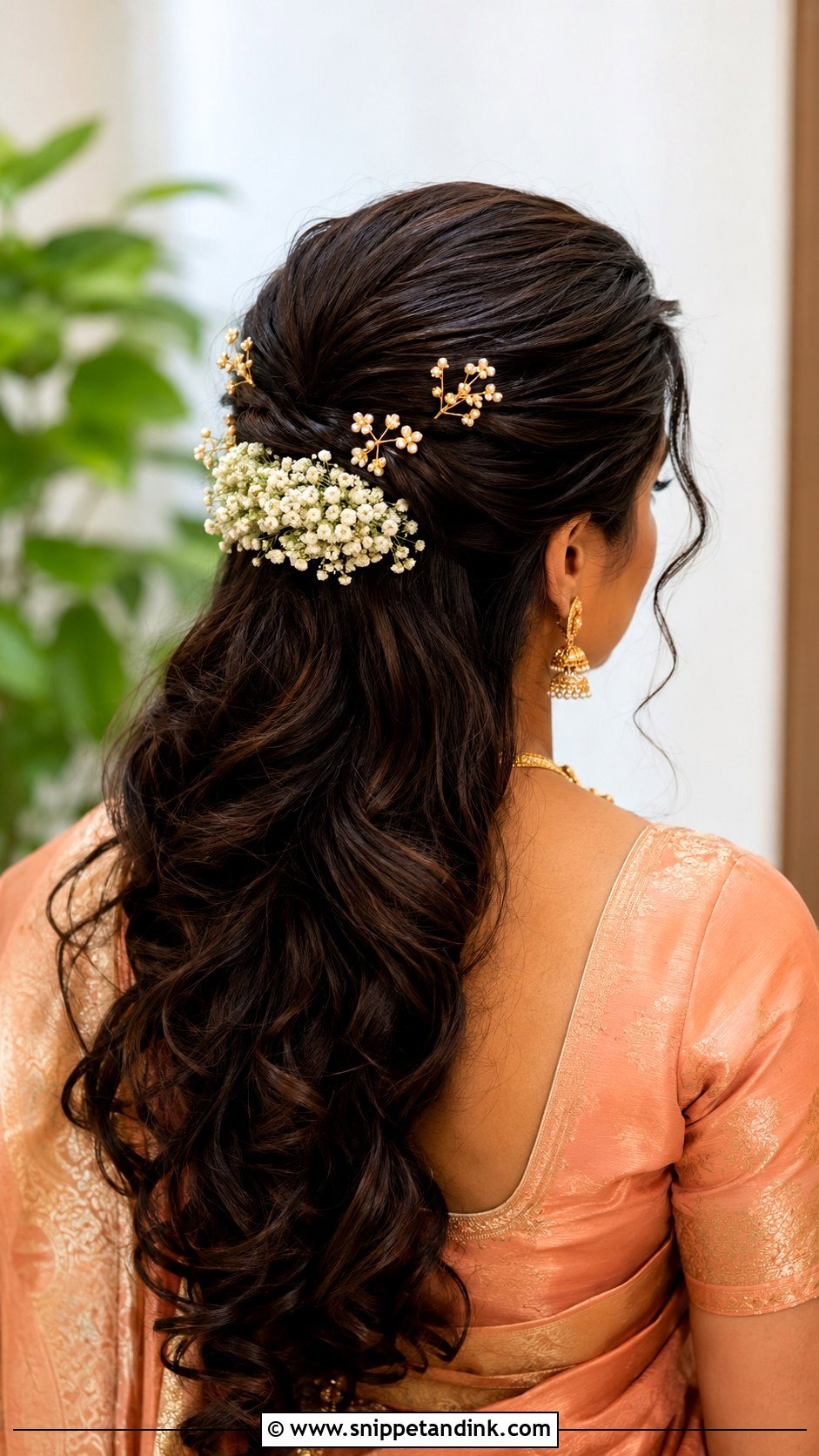
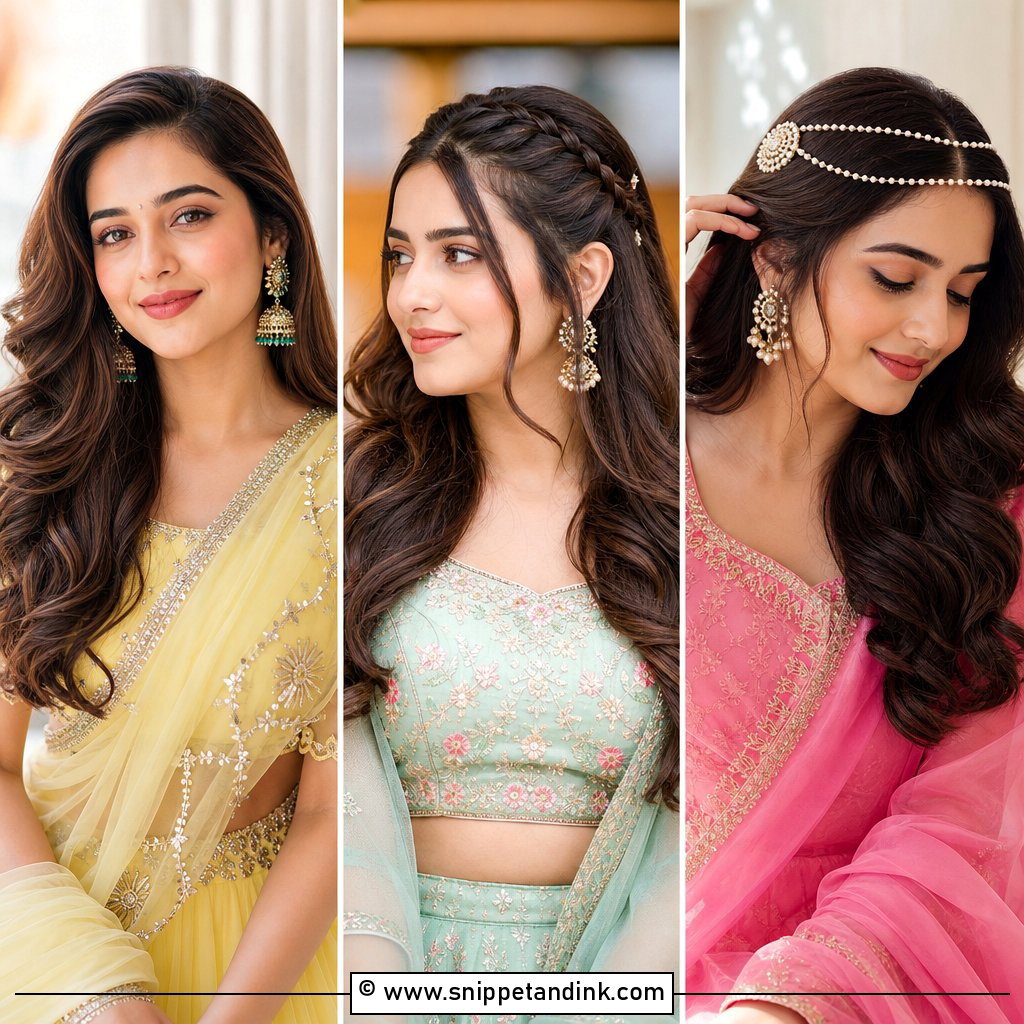
Half up suits a reception, engagement or post-wedding function better than the muhurtham. The top section is pinned back with volume and the rest falls in curls or waves. Flowers, gold pins or a small hair chain sit where the pinned and loose sections meet. It’s lighter than a jada and feels more modern with a traditional outfit. On thick hair in a warm hall, curls relax quickly, so I set them with heat, cool them fully and use a strong-hold spray before brushing them out.
11. Tamil Bridal Open Hair With Curls
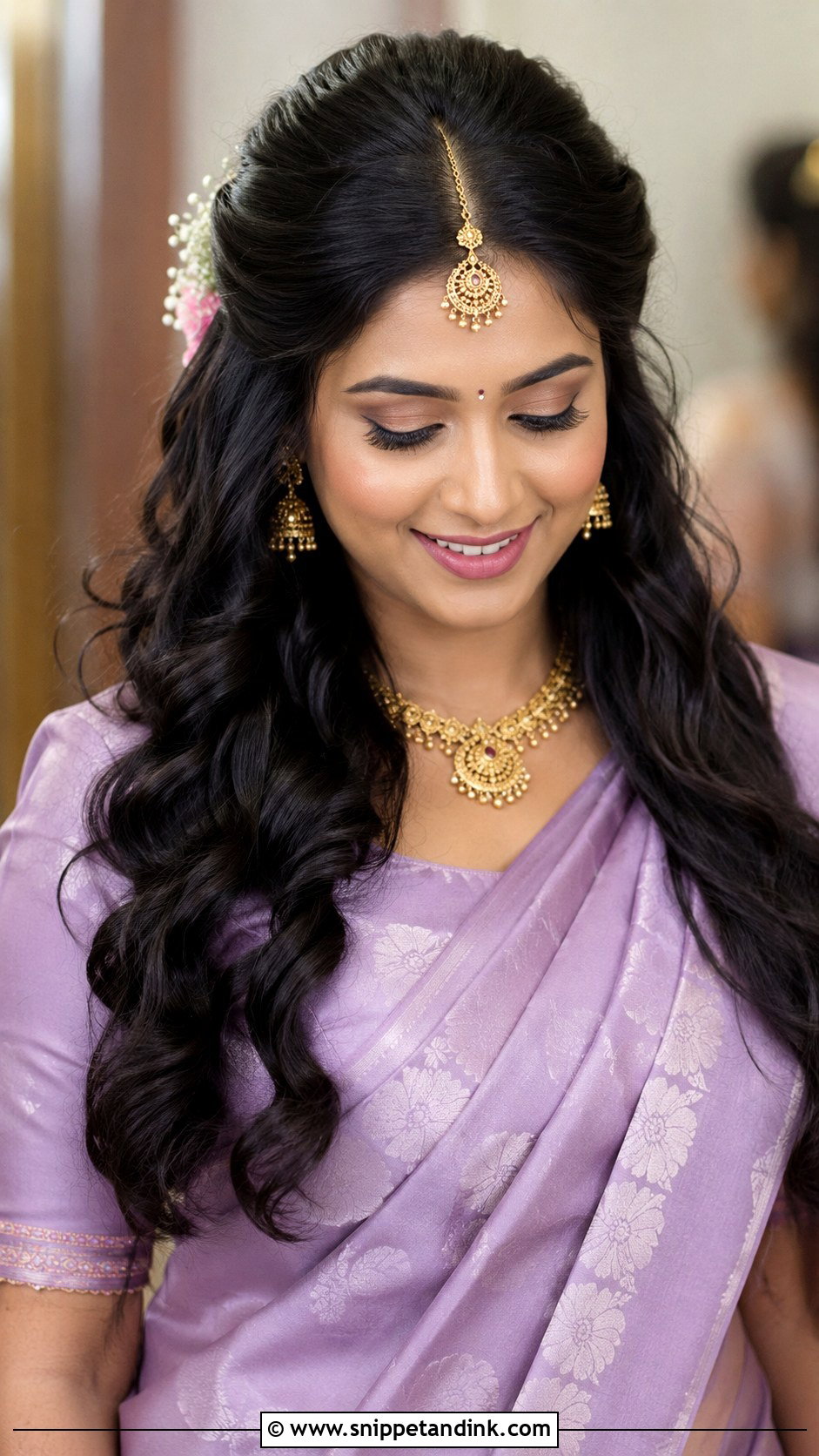
Open hair with curls is a reception look, and the riskiest for a long event, because nothing holds it but the curl itself. I smooth and lift the crown slightly, then style defined waves through the lengths. A side part is more dramatic; a center part keeps it traditional with a maang tikka. Lighter jewelry and embroidered blouses suit it. Heat protection, setting spray and a few hidden pins near the crown buy you extra hours. A small floral clip or gold accessory finishes it.
12. Tamil Bridal Fishtail Braid
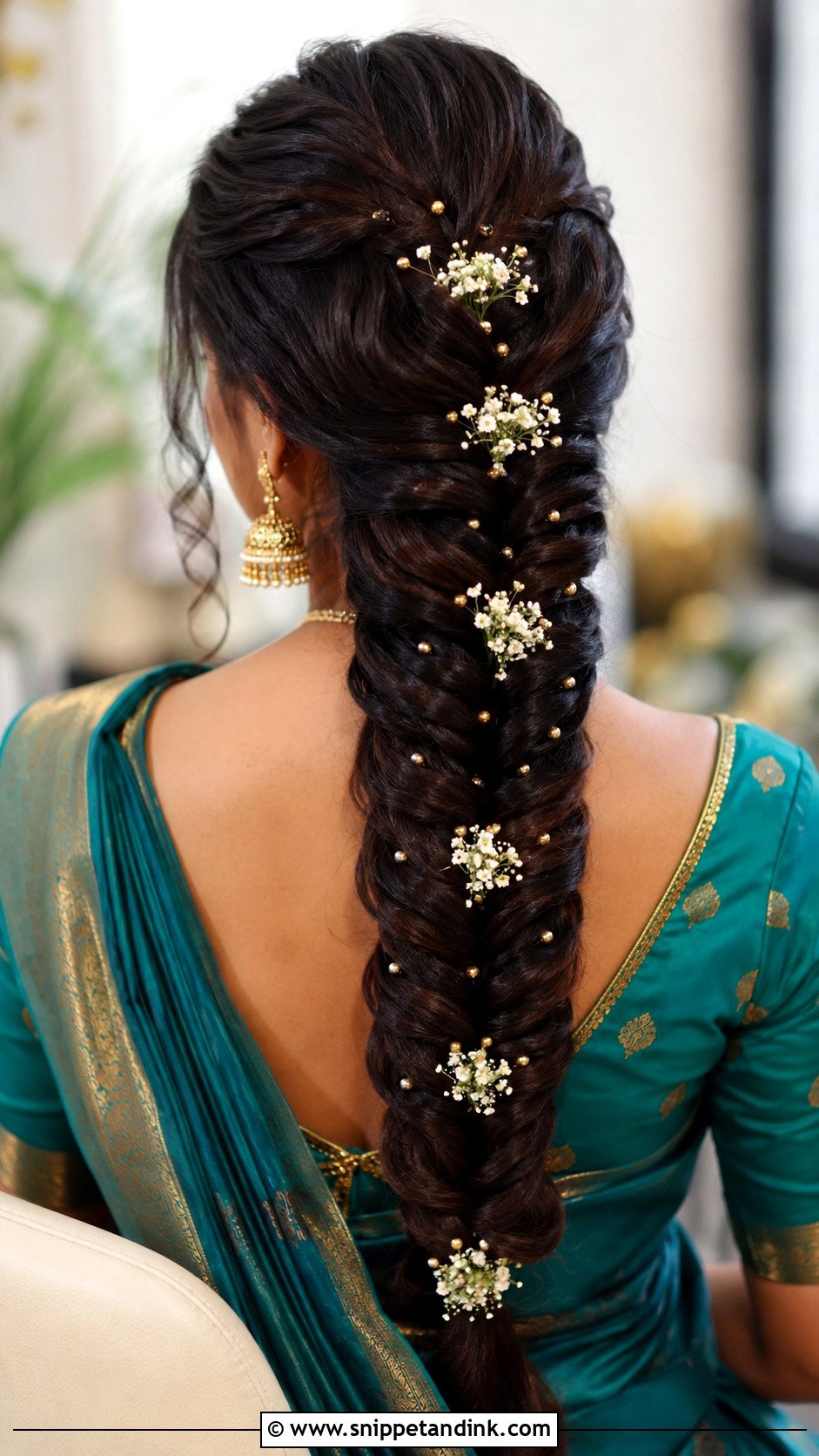
The fishtail is a softer, more detailed take on the traditional braid. Its woven pattern looks rich in close-ups, especially once pulled gently apart for width. Jasmine, tiny roses, pearls or gold pins can sit along it without hiding the weave. It’s softer than a tightly plaited jada, so I’d suggest it for pre-wedding functions or a reception rather than the main rituals. A sleek front keeps it bridal.
13. Tamil Bridal Bubble Braid
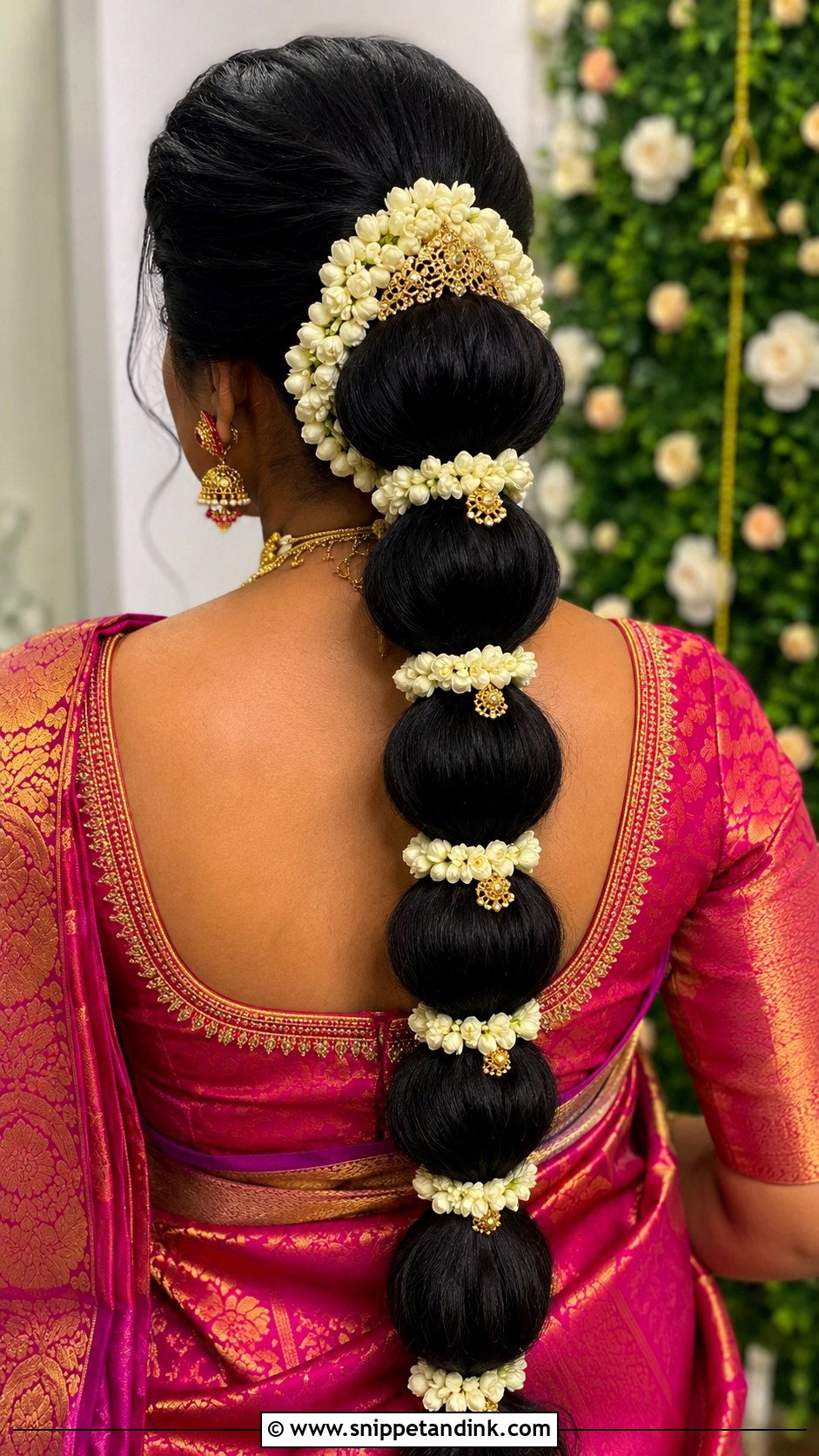
A bubble braid is tied in sections down the length, then each section is gently expanded into a rounded bubble. Jasmine, gold thread or small floral pins can wrap each tie. Medium-length hair is where it really helps: extensions tucked into the ponytail make it look long and thick, and the elastics hide the joins. Even bubbles are what make it look deliberate, so I pull each one from both sides equally and check the shape from a distance.
14. Tamil Bridal Front Puff Jada
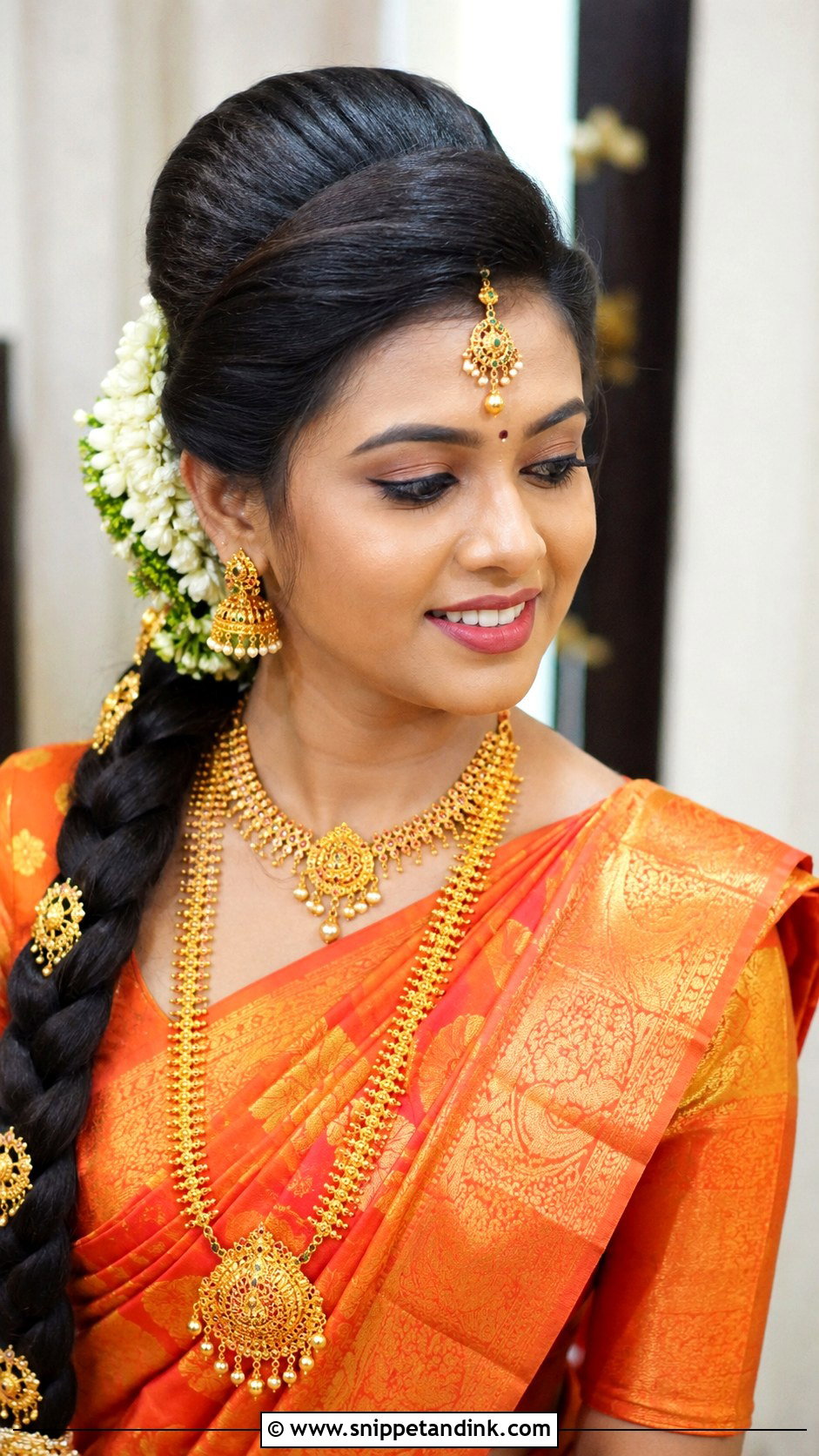
A front puff adds height at the crown while the back stays a traditional braid with flowers or gold. It suits brides wearing heavy forehead jewelry who want some volume to balance it. The puff should be rounded and fairly low; a tall puff pushes the nethi chutti forward and looks dated in profile. I backcomb only underneath and smooth the top layer over it. With a center part detail or side-swept pieces, it gives the jada more presence without adding discomfort.
15. Tamil Bridal Braid With Kunjalam
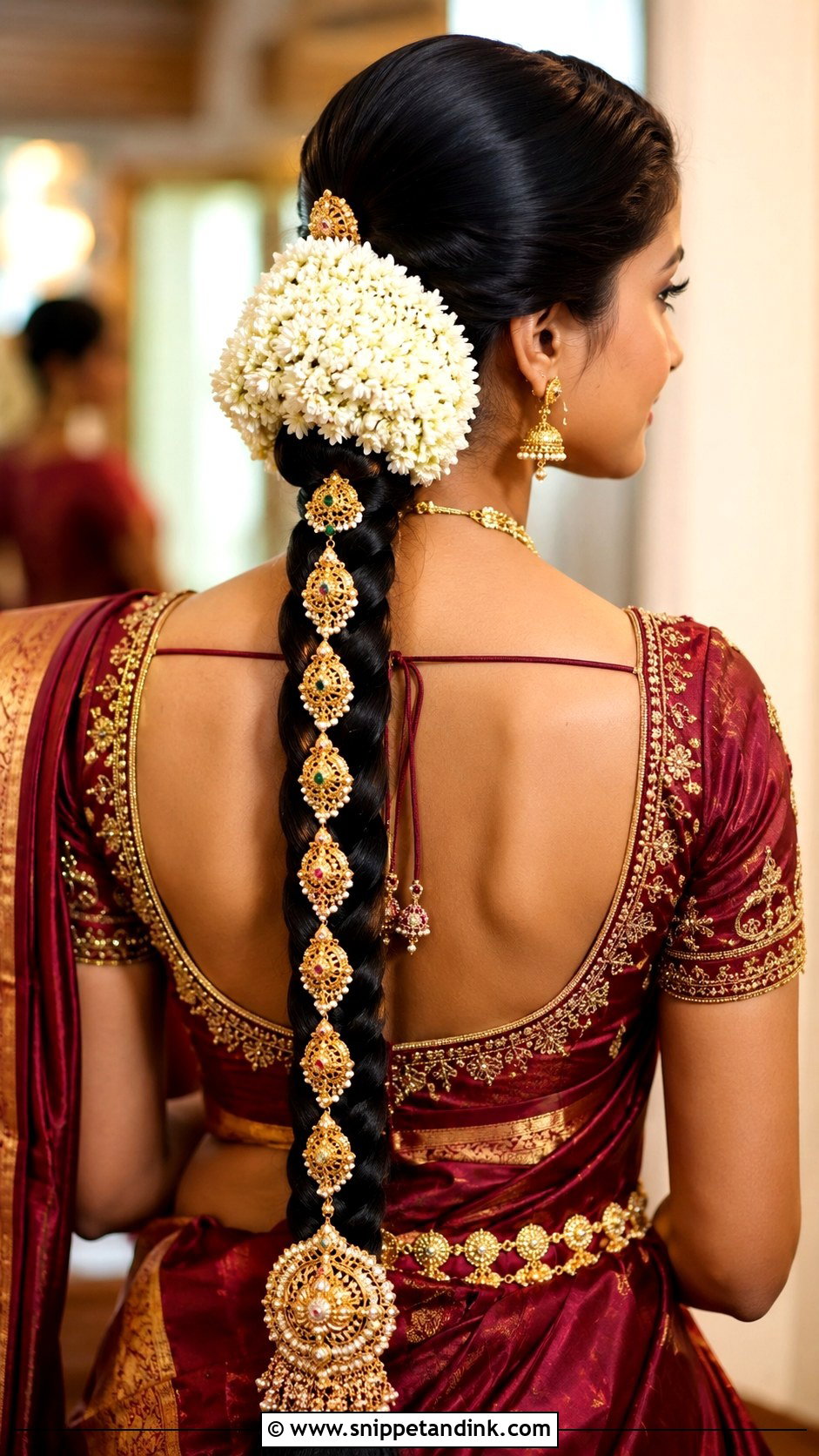
A Tamil bridal braid with kunjalam ends in a tasseled ornament that swings as you walk or turn for photos. The braid itself can be plain, flower-covered or set with gold jada pieces. A kunjalam looks best on a long, thick braid, and many brides add extensions for that reason. I tie the kunjalam on with thread as well as the elastic, so it stays centered and doesn’t slip off during rituals. Jasmine round the top and a neat center part complete the look.
Jasmine, Kanakambaram and Keeping Flowers Fresh From Dawn
Muhurtham times are often early in the morning, which means flowers have to be ready before sunrise. Jasmine is delicate: bruised buds brown within hours, and once they open fully they wilt faster against warm hair. I ask for strings of tight buds, delivered the evening before or very early, kept wrapped in a damp cloth in a cool room. A fridge is fine for a short while, but not the freezer, which blackens the petals.
Kanakambaram and roses last longer than jasmine and add color, so they’re useful on a covered jada for a long day. I pin flower strings with U-pins pushed into the braid itself rather than into the flowers, which stops them sliding as you move.
Changing from the muhurtham look to reception hair
If you’re changing into open curls or a half-up style for the evening, plan it at the trial too. A braid worn all day leaves a crimp, and that crimp can be a gift: brushed out and lightly curled, it gives instant wave. Allow time for flowers and billalu to be removed carefully, a few at a time, so hair doesn’t snag on the stitching. Keep one fresh jasmine string aside for the reception look.
A Jada for the Muhurtham, Something Lighter for the Evening
Tamil bridal hair can be fully traditional, quietly modern or somewhere between. A jasmine jada suits the muhurtham, while a curly bun, half-up style or open curls fit the reception and other functions. Your saree, jewelry, face shape, comfort and the length of the ceremony should all shape the choice. Plan it with your stylist well ahead, especially if you need extensions, fresh flowers or heavy ornaments, and pin everything securely so it looks as graceful in the last photo as in the first.
You'll Like These Ideas:


Leave a Reply