
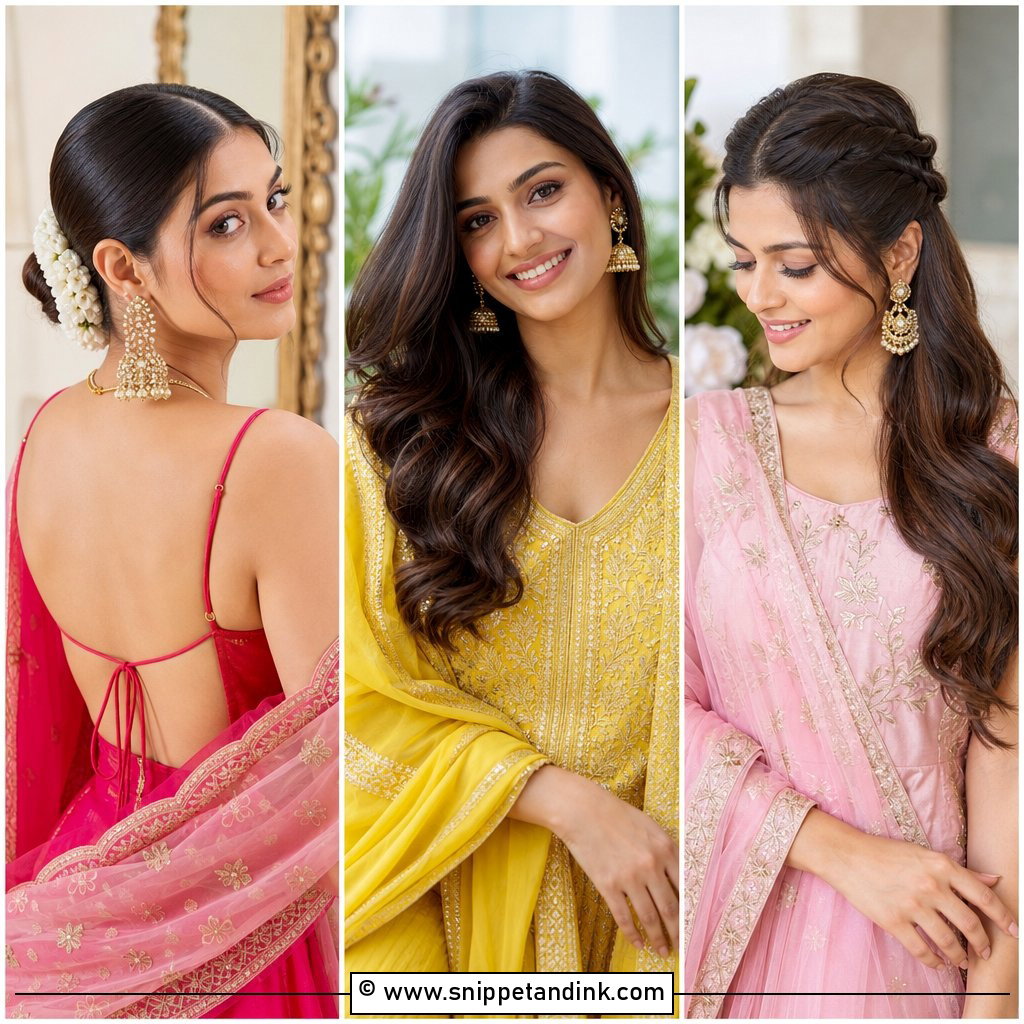
A house warming ceremony asks more of your hair than most functions do. There are prayers, often a havan, hours of greeting relatives and serving food, and family photos in between, usually in a traditional outfit. When I do hair for a griha pravesh, I plan for the hostess who is on her feet all day, not for a single portrait. The styles below cover soft buns, decorated braids, half up waves and simple flowers that sit well with sarees, lehengas, salwar suits, anarkalis and Indo-western outfits. Each one leaves you free to move, bend and welcome people without reaching for pins.

Sitting Beside the Havan Fire Changes What You Can Wear
Most house warmings include a part the photos rarely show: the hosts sit right beside a small fire for the havan, often cross-legged on the floor, for an hour or more. Before I agree to loose curls for a hostess, I ask her to picture leaning in to offer ghee to the flames.
- Tie long hair back for the havan and the milk-boiling ritual. A bun, a braid or a pinned half up style keeps loose ends away from the flame and the pot.
- I spray hairspray well before the ceremony and let it dry completely. Aerosols are flammable, so never touch up your hair anywhere near the fire.
- Expect heat and smoke. Curls loosen faster in front of a fire, and open hair holds the smoky smell more than a tight bun does.
- Think about sitting on the floor. A very long braid pools on the mat, and a bulky low bun presses against a wall cushion or chair back.
None of this rules out open hair. It just means the open styles here suit guests, or hosts who change their hair after the puja, better than the person leading the rituals.
1. House Warming Ceremony Low Bun With Gajra
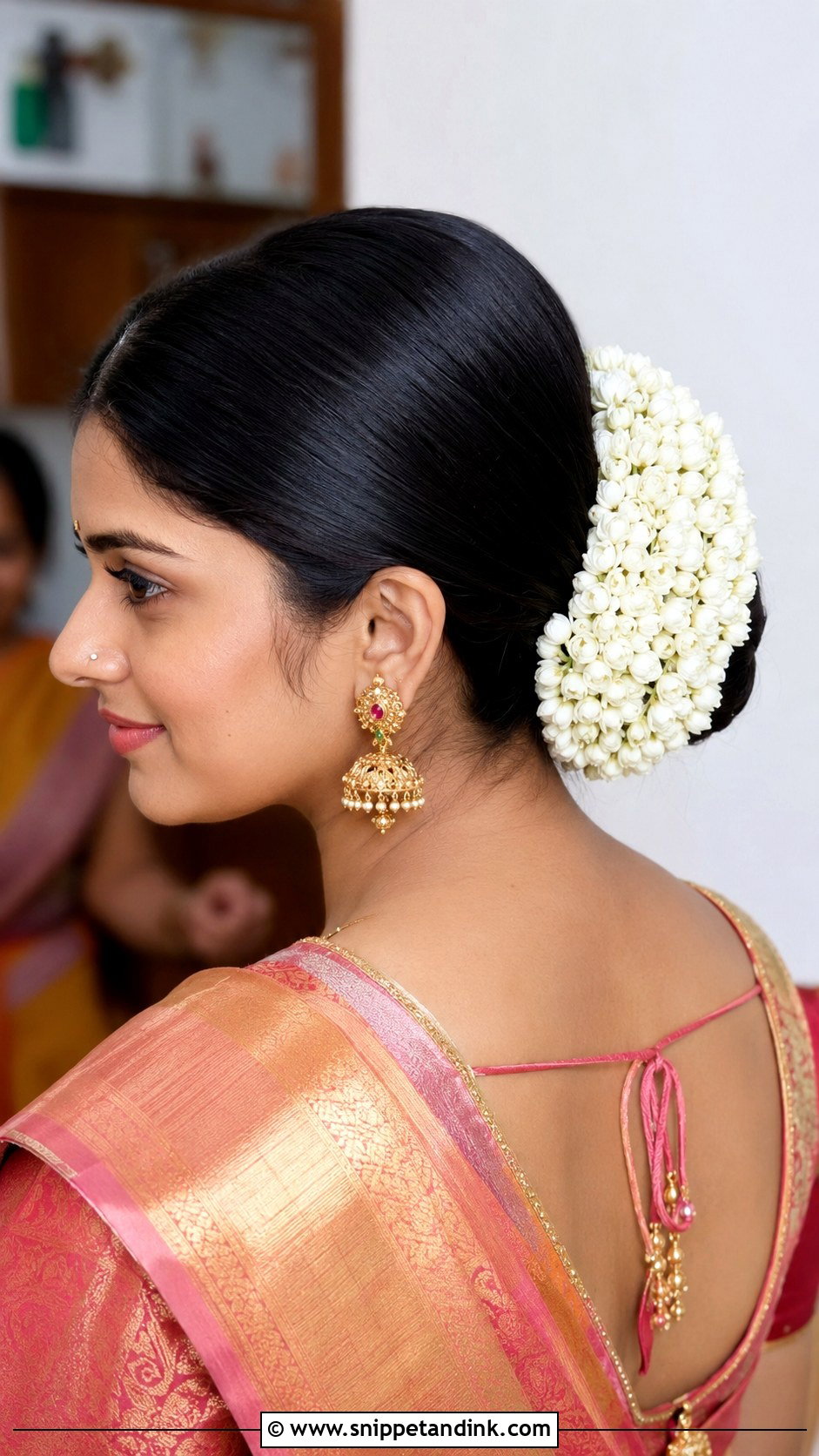
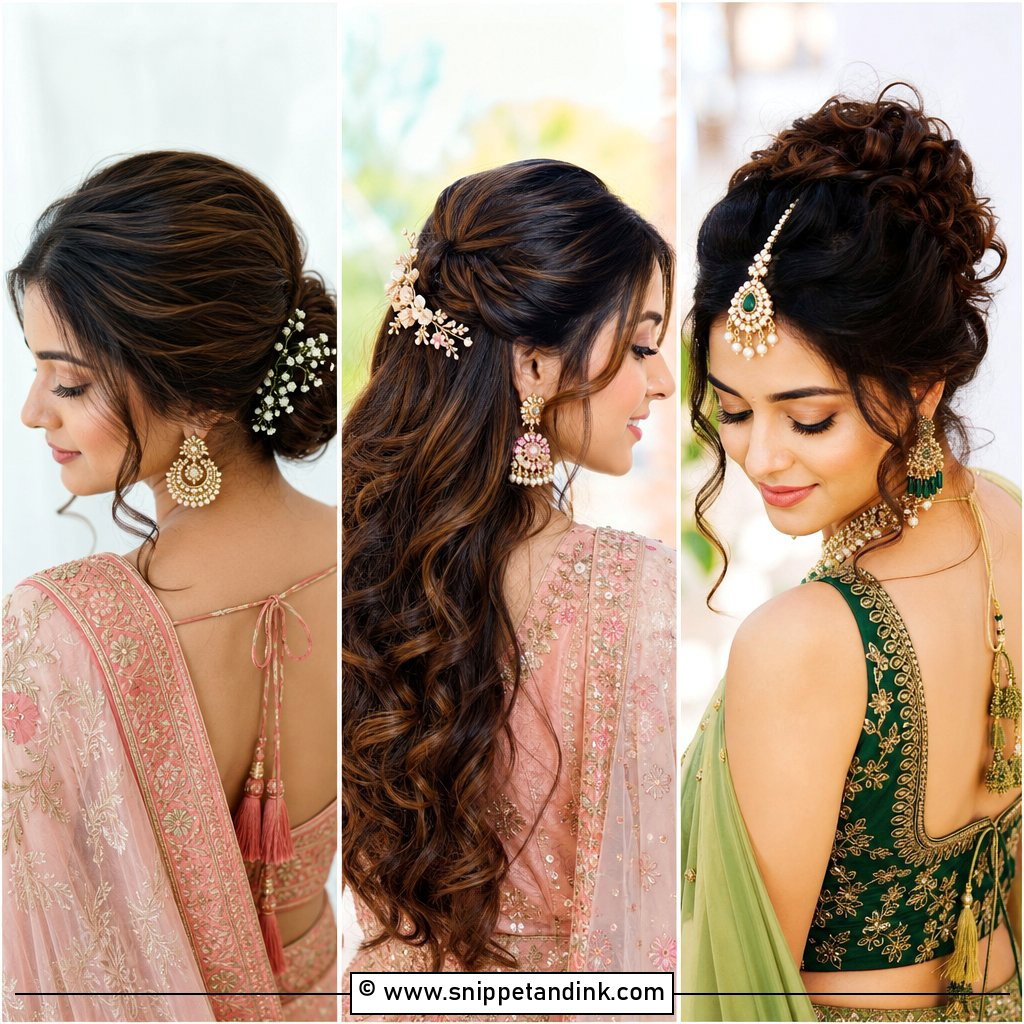
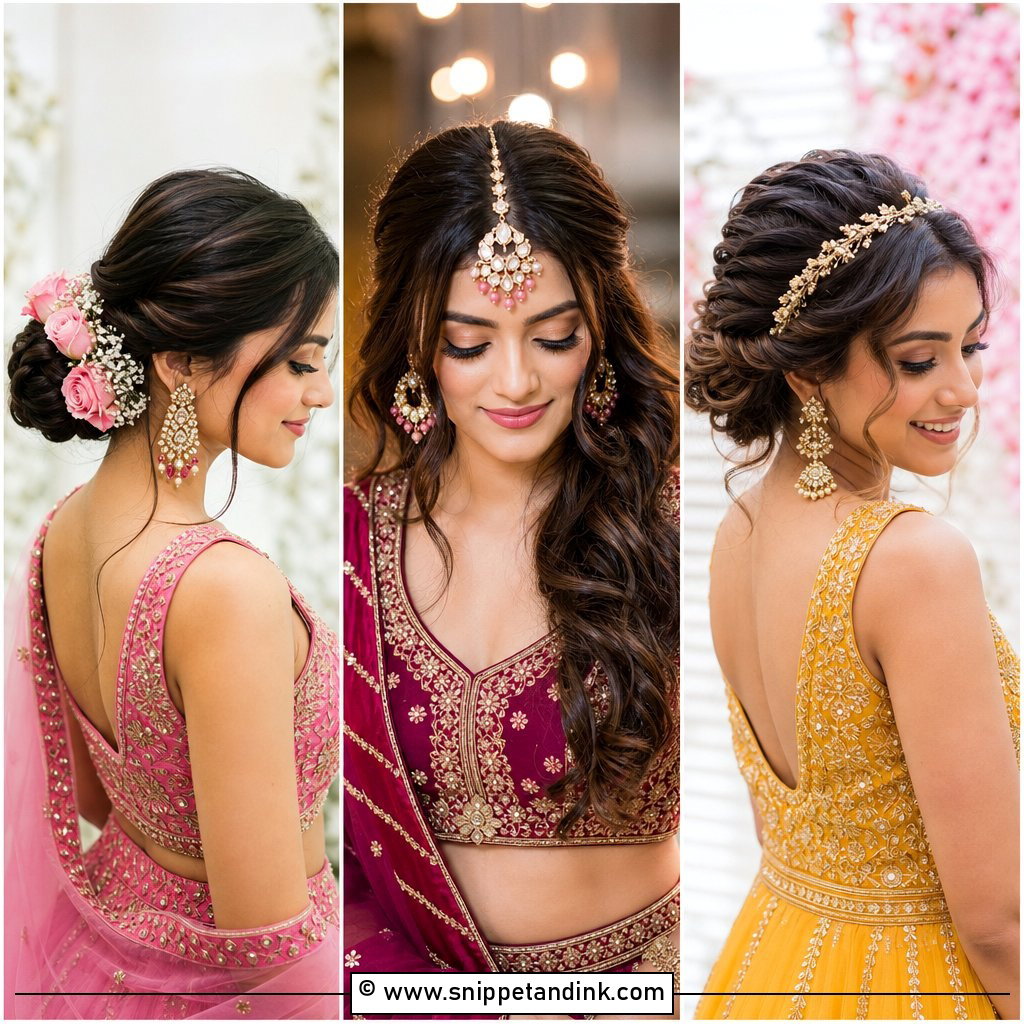
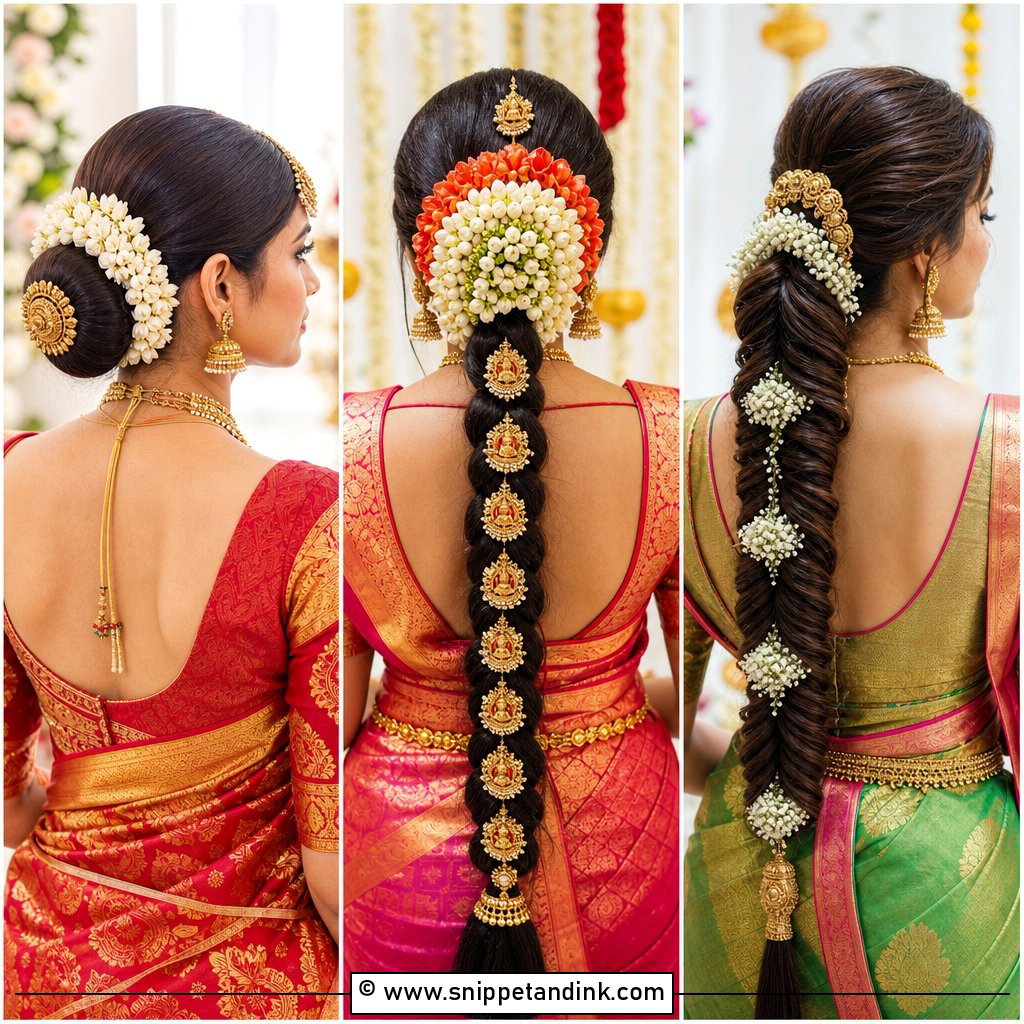
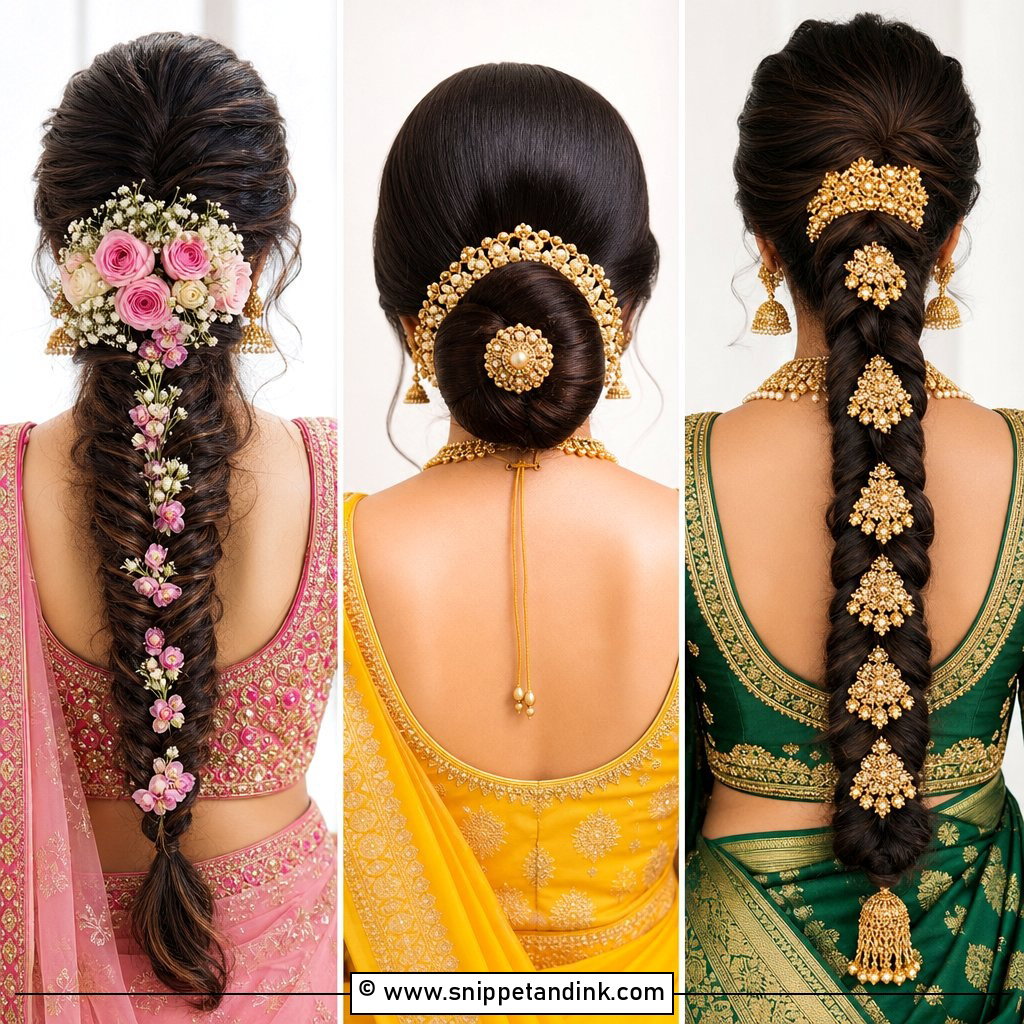
A low bun with gajra is the style I get asked for most at house warmings, and for good reason: it holds through prayers, bending to touch elders’ feet and hours of hosting. It sits well with silk or cotton sarees, lehengas and salwar suits. I build the bun at the nape, pin it tightly, and only then wrap the jasmine around it, pinning every few centimetres so it does not slide down. Keep the front sleek or add a middle part with a few loose pieces. With heavy earrings, a necklace or a maang tikka, this is the cleanest background you can give them.
2. House Warming Ceremony Side Braid With Flowers
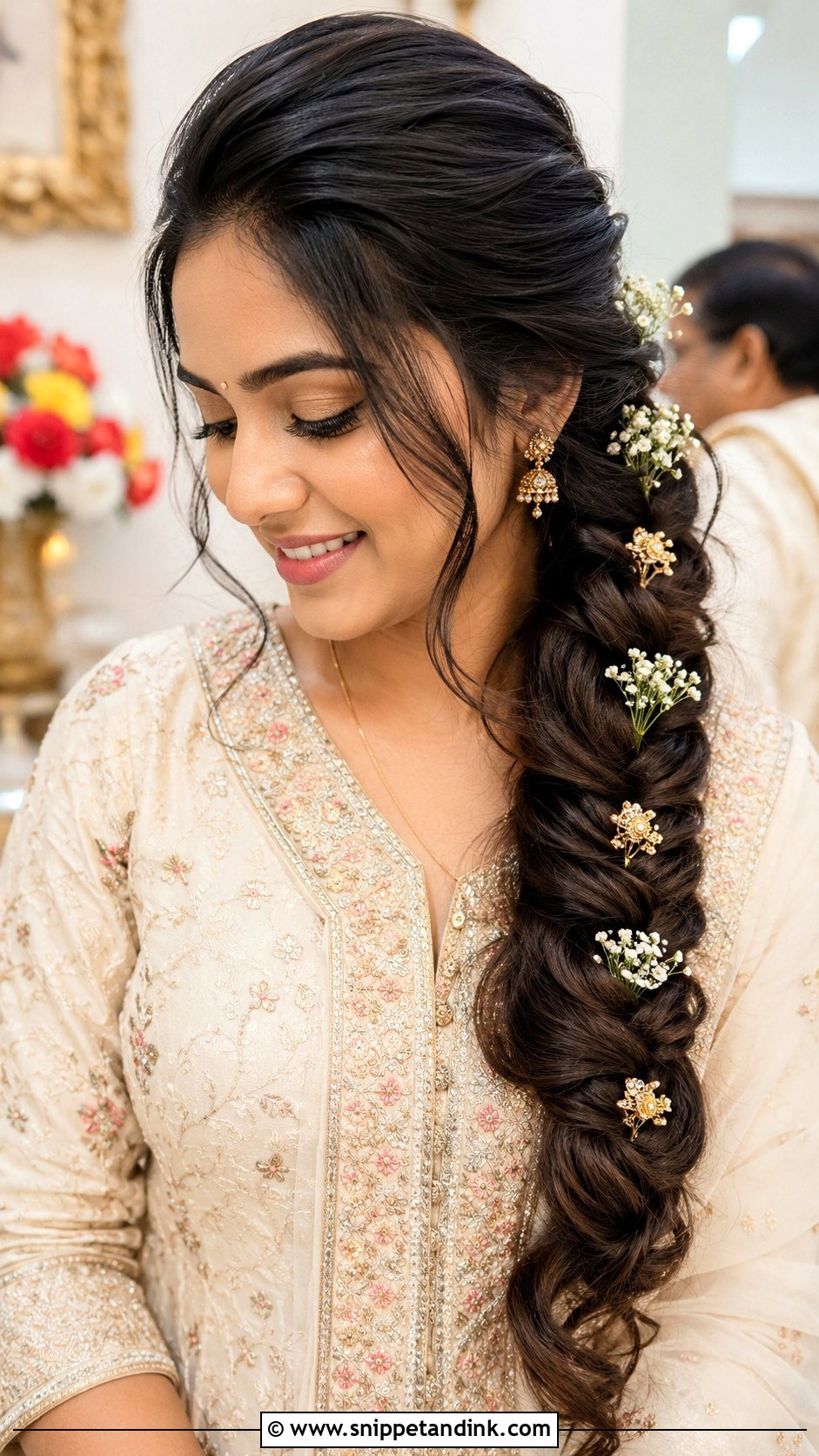
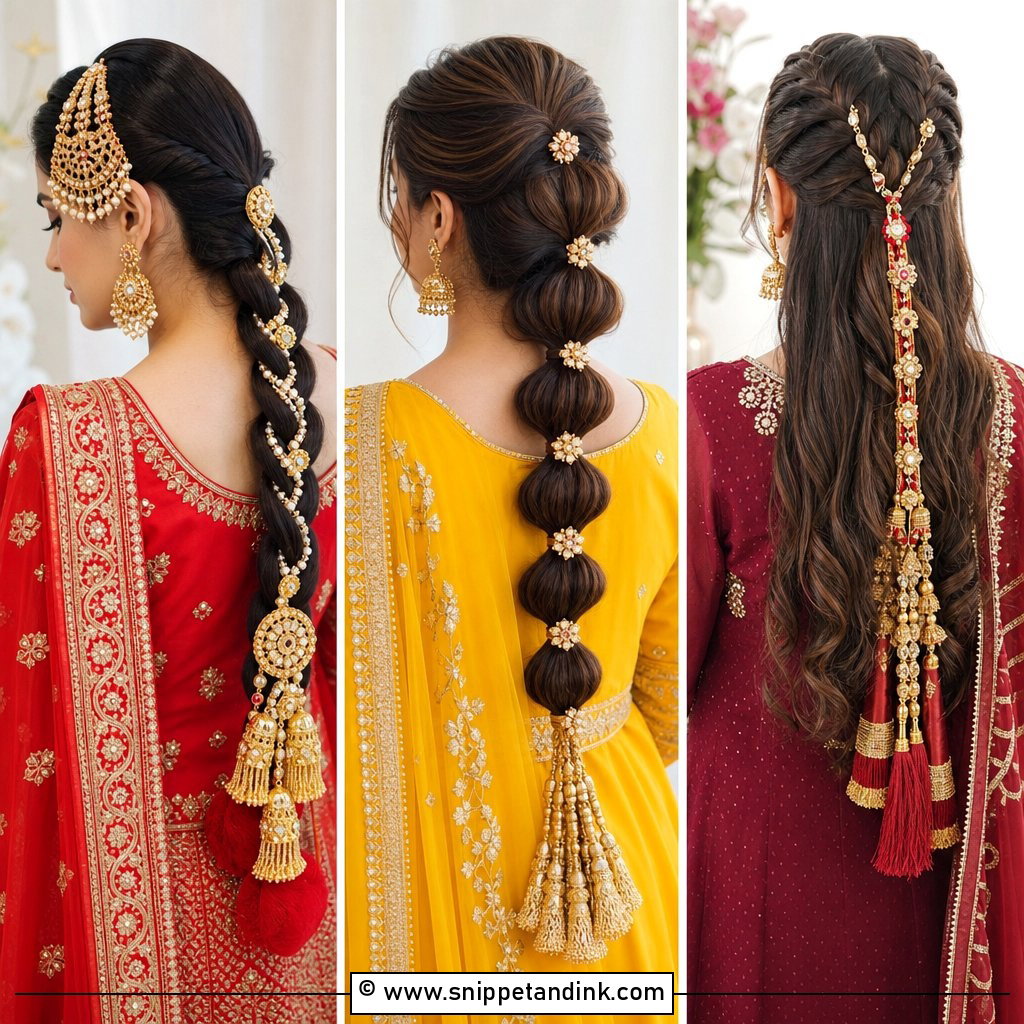
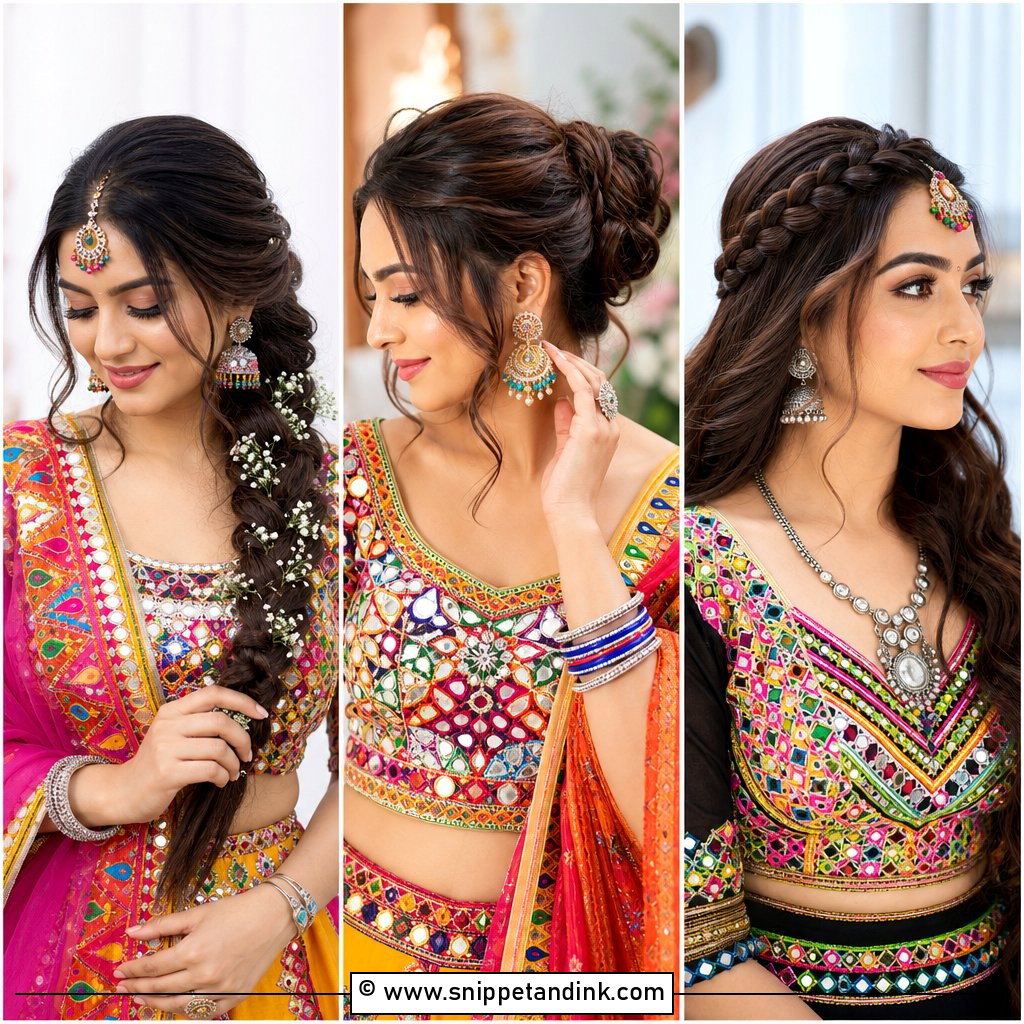
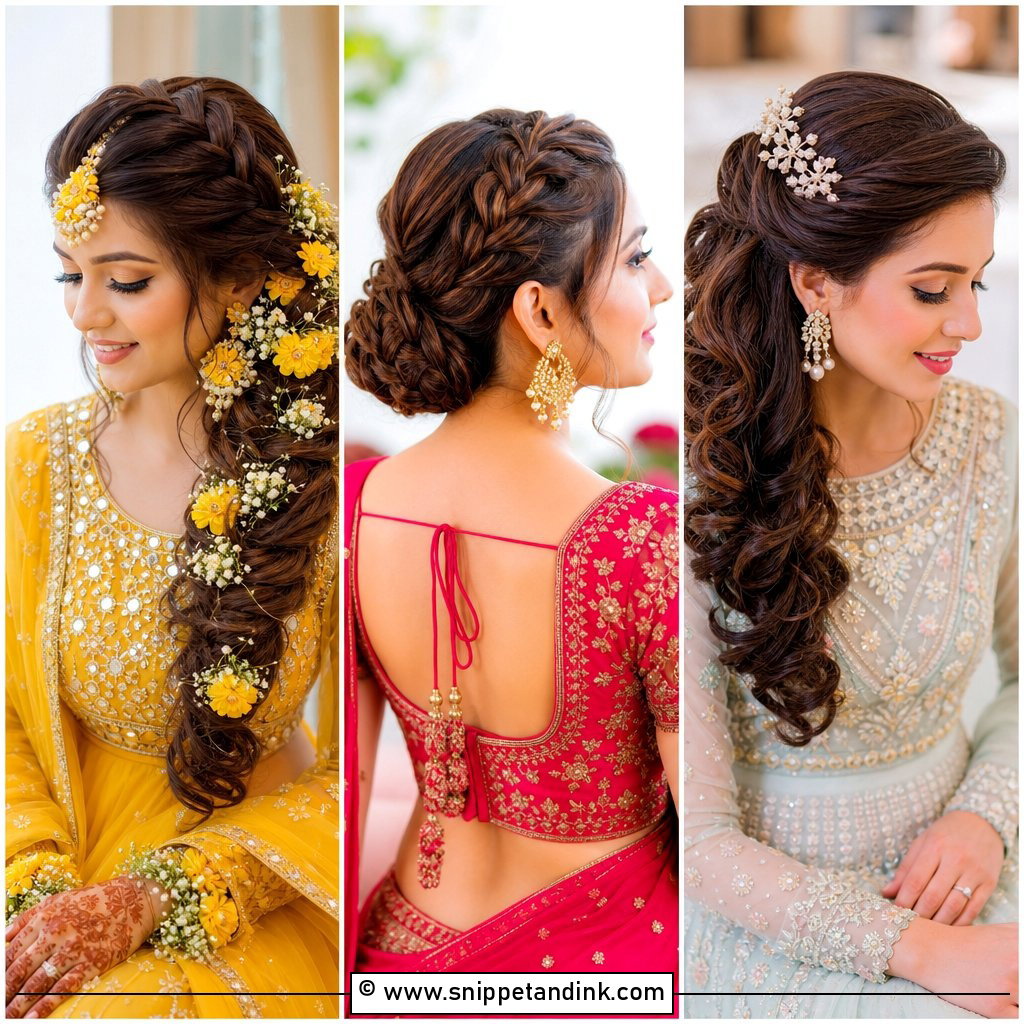
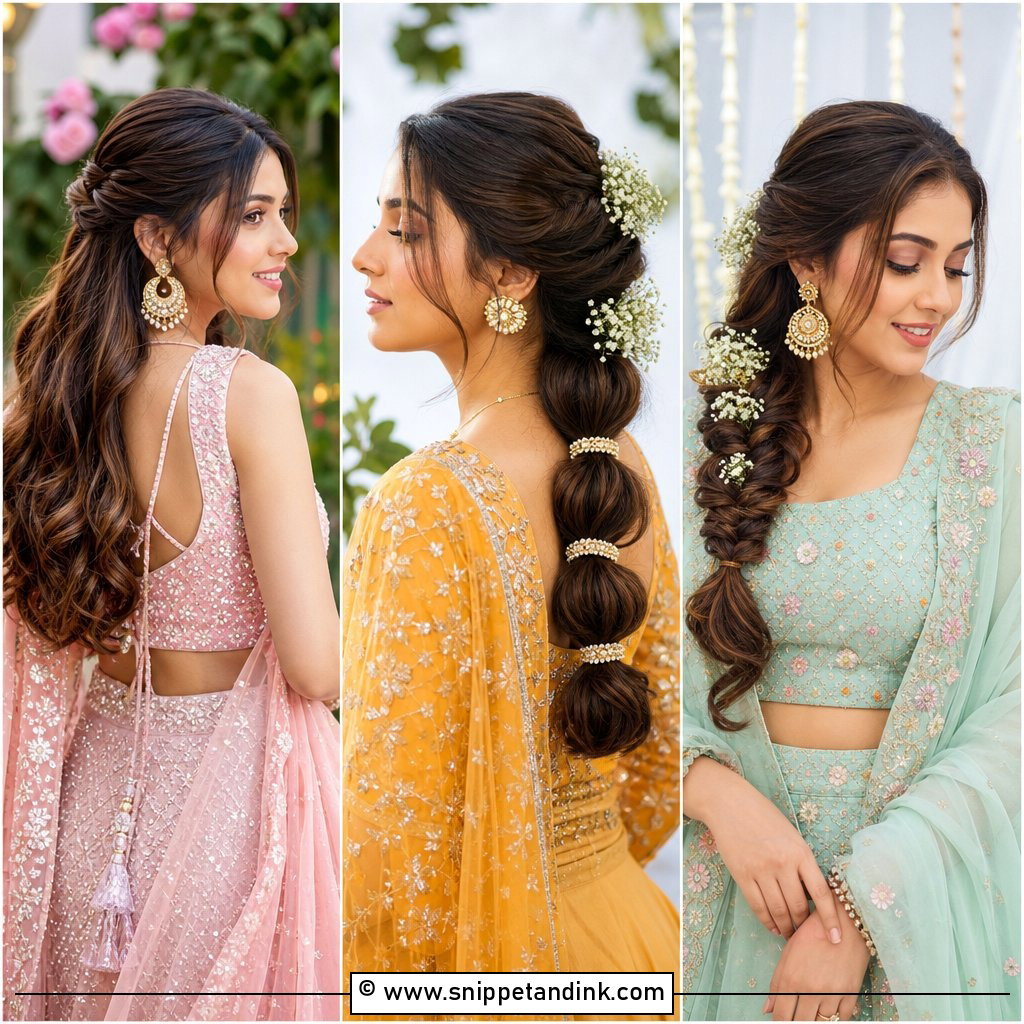
A side braid with flowers is one of the most practical festive styles I know, because it shows off length but nothing can fall into your face. It suits sarees, anarkalis and flowing ethnic dresses. Loose and pulled out reads modern; tight and neat reads traditional. I tuck small flowers or pearl pins into the outer loops of the braid, since they grip there far better than in the middle. Long hair carries this best. On layered cuts the short pieces escape near the ear, so I spray and pin them before plaiting.
3. House Warming Ceremony Half Up Curls
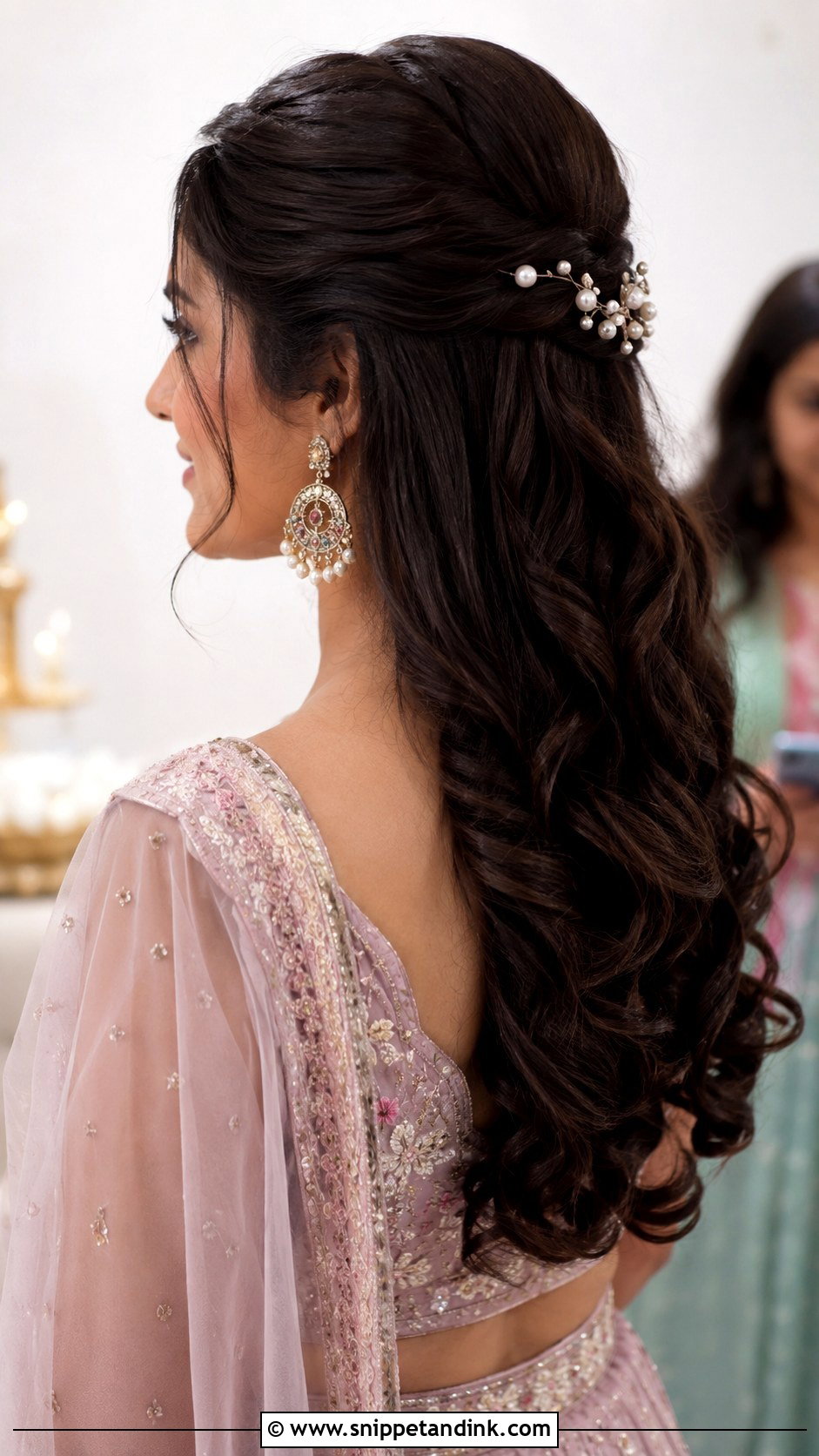
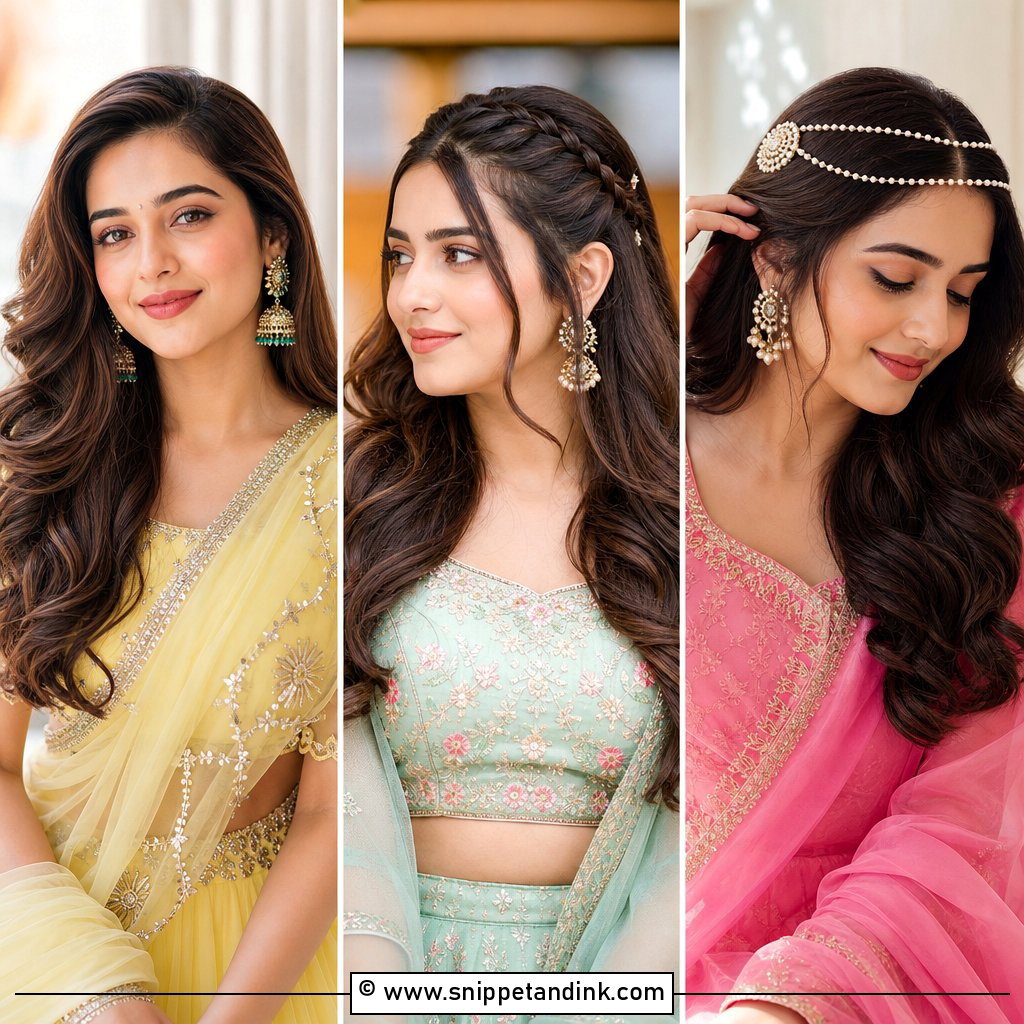
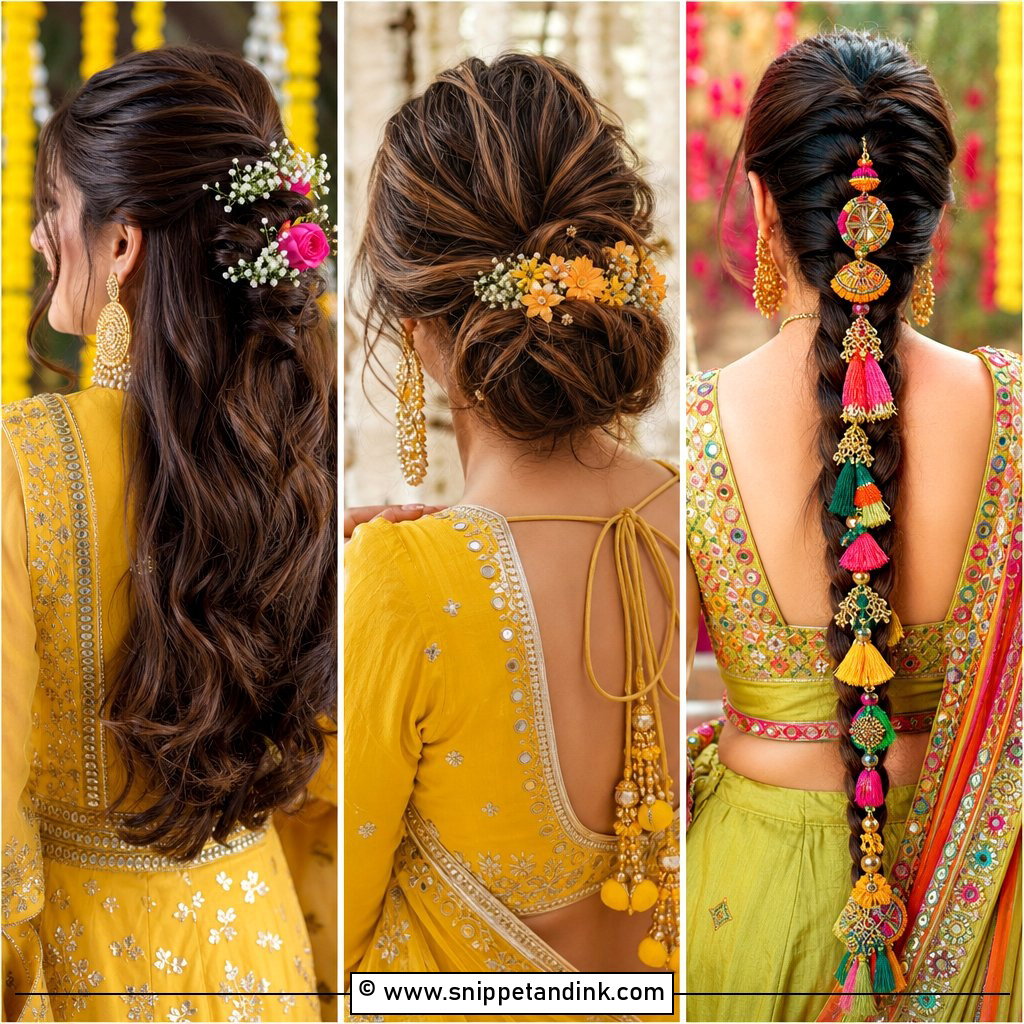
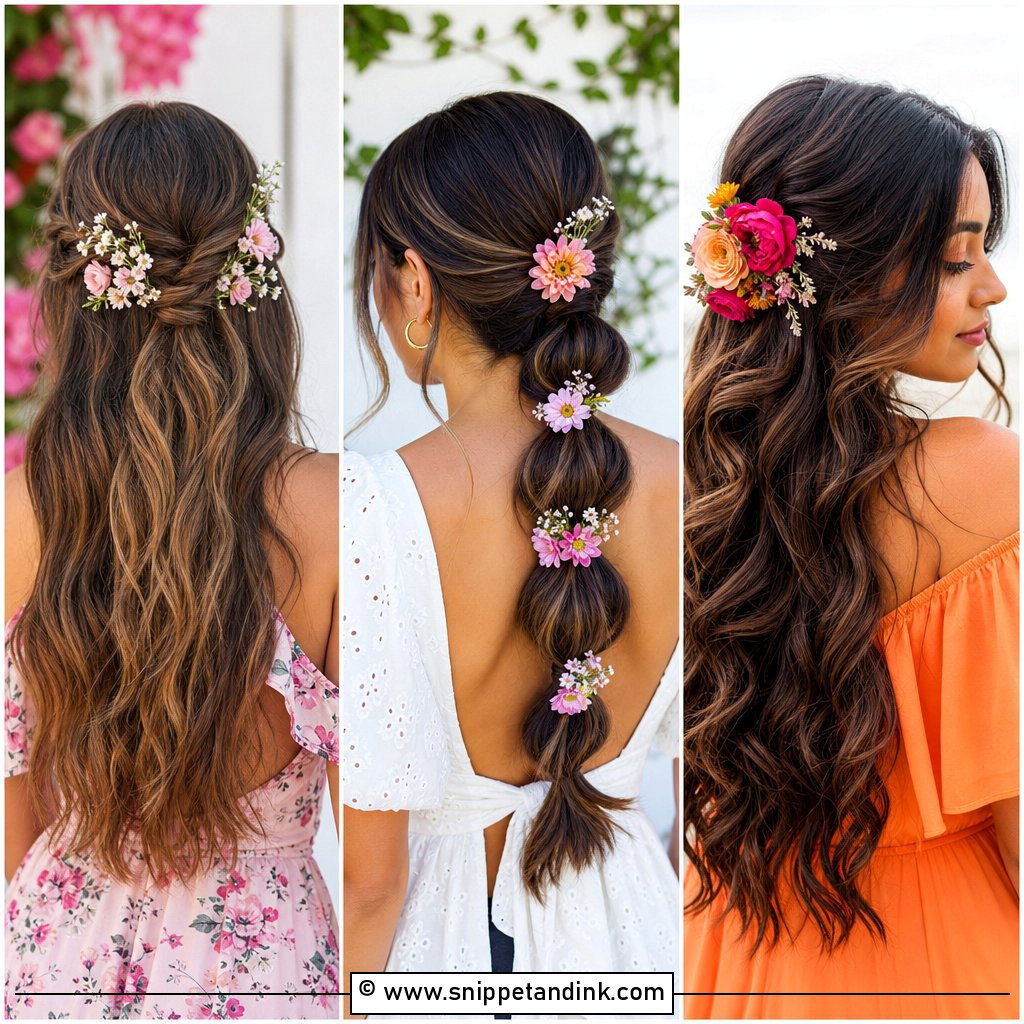
Half up curls let your hair look dressed without being fully tied back. They work for medium to long hair with lighter sarees, lehengas, shararas and festive kurtas. I pin the top section back firmly, because that is what keeps hair off your face while you serve food or bend over a puja thali. A small clip or a delicate floral piece can sit where the sections meet. If you are leading the havan, though, I would tie the curled lengths back for that part of the morning and let them down afterwards.
4. House Warming Ceremony Sleek Middle Part Bun
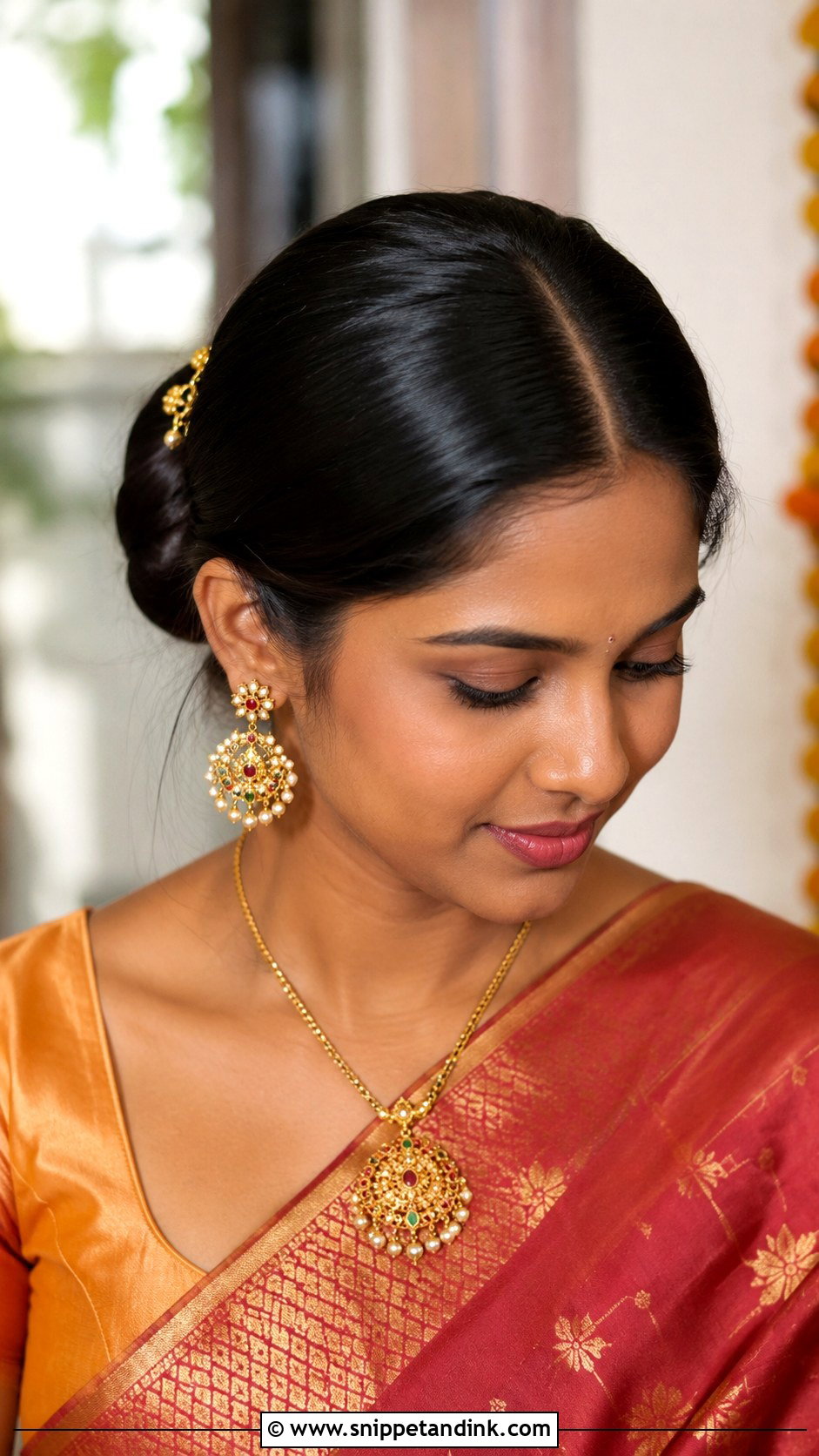
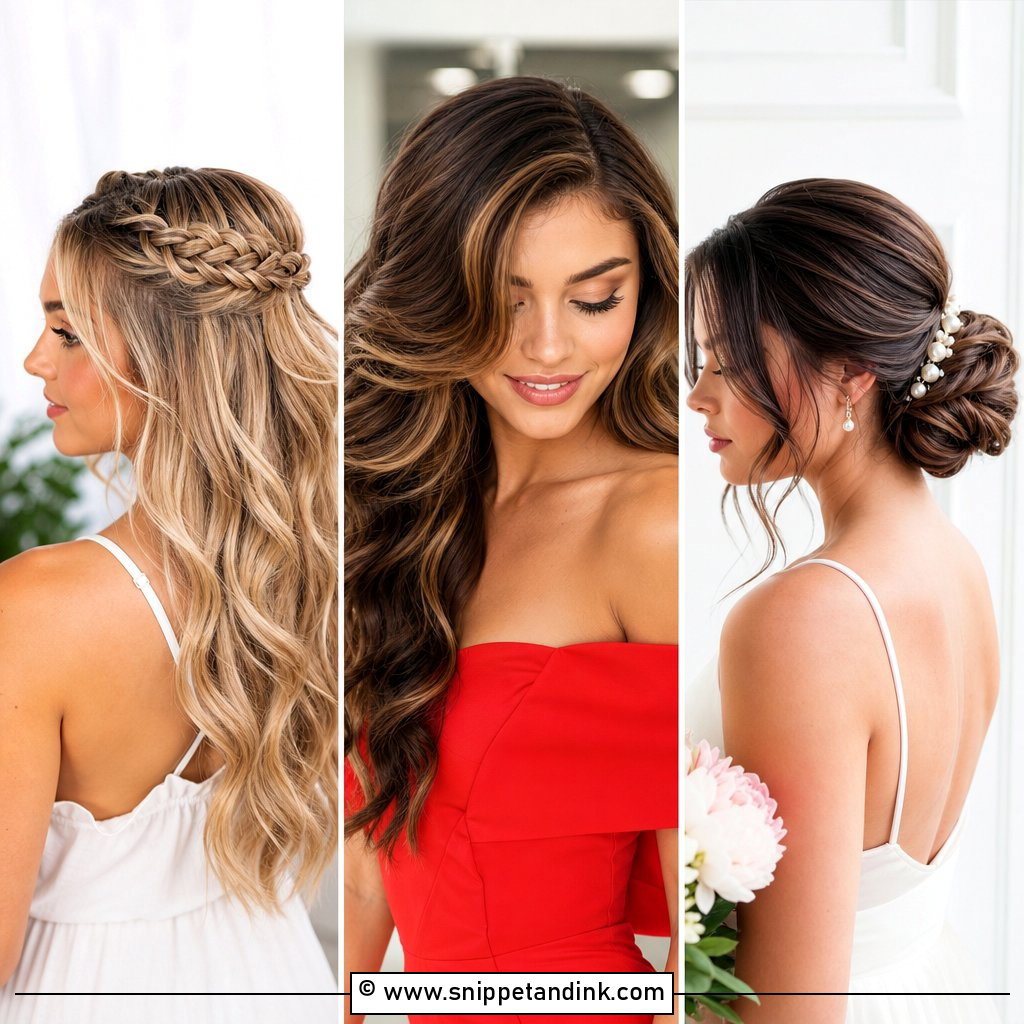
A sleek middle part bun is the cleanest look on this list. The centre part frames the face evenly, and the style suits silk sarees, high-neck blouses, temple jewelry and statement earrings. I place the bun at the nape for a high neckline and slightly higher for an open one. The finish depends on preparation: I smooth each section with a little gel before gathering it, otherwise flyaways show up in every flash photo. In humid weather it is the style I trust most, because there is nothing loose for the moisture to frizz.
5. House Warming Ceremony Loose Waves With Maang Tikka
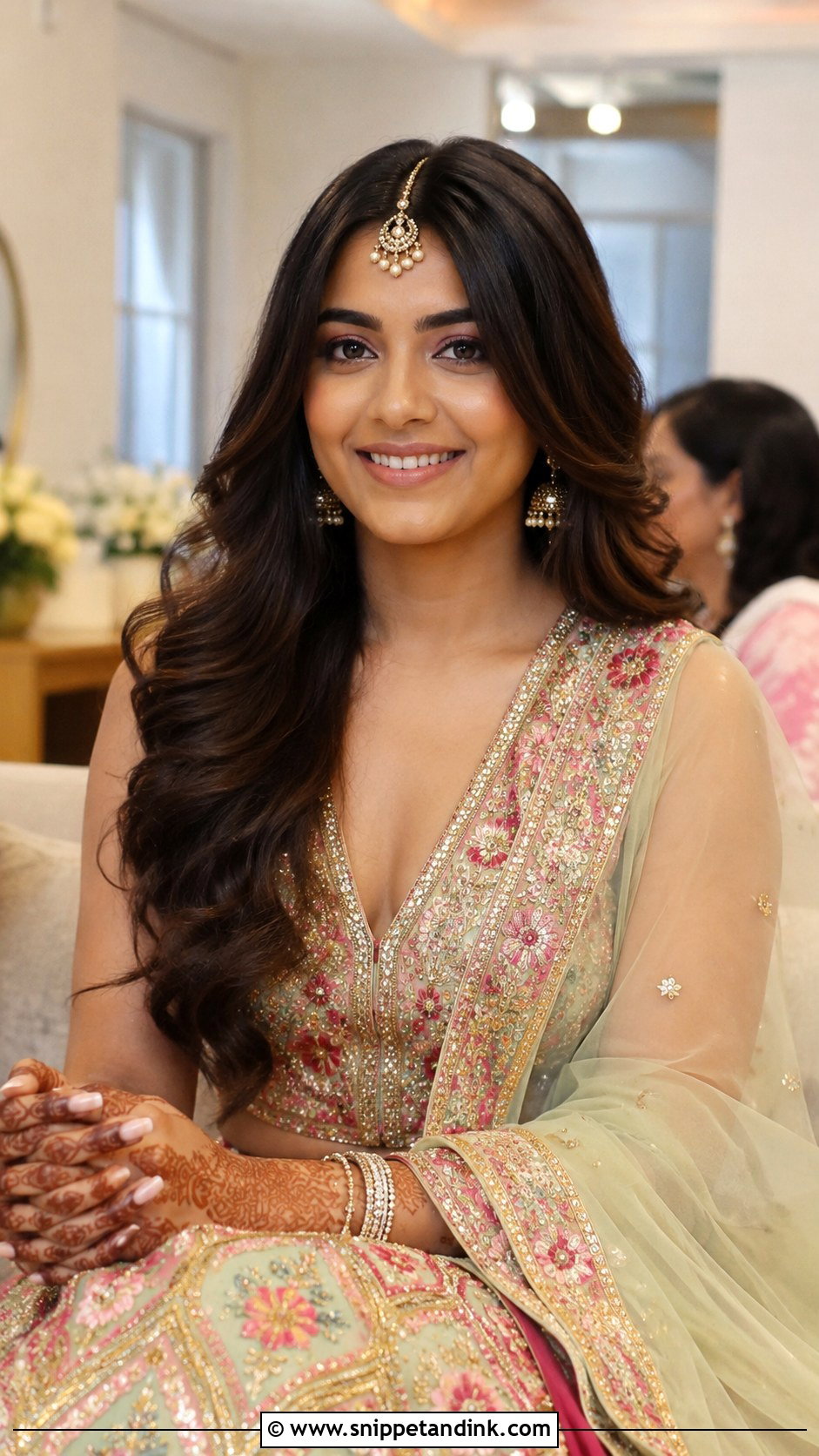
Open waves with a maang tikka are for anyone who wants loose hair but still a clear ceremonial detail. The waves add movement; the tikka marks the occasion. It pairs with lehengas, sarees and embroidered suits, especially with a softer neckline. I pin the tikka chain under a small section near the parting so it stays centred as you move. Keep the waves smooth and defined, set with light hairspray. Honestly, though, open hair suits a guest better than the person sitting at the havan, for reasons I explain below.
6. House Warming Ceremony Messy Bun With Saree
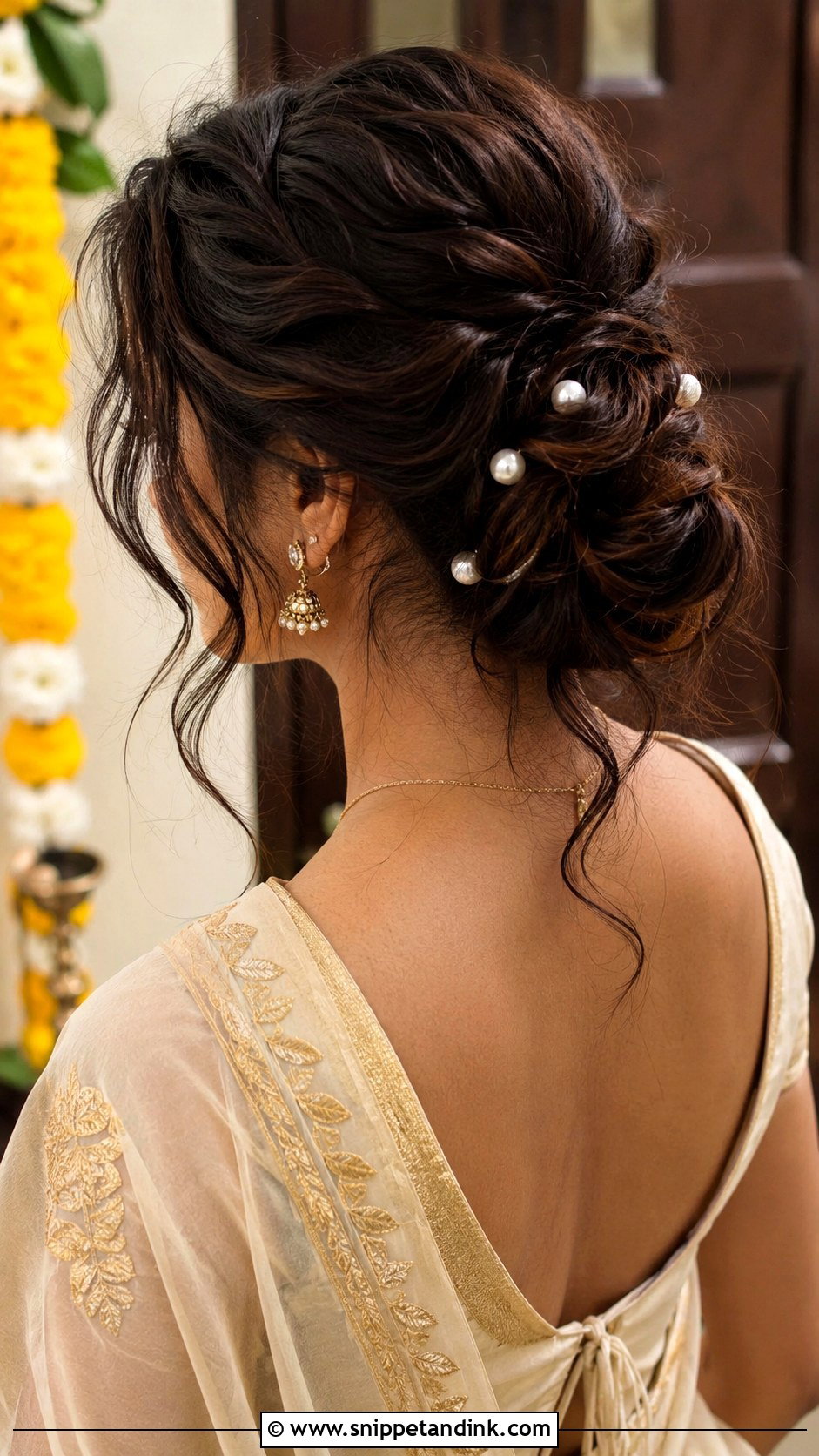
A messy bun with a saree should have a secure base and only look relaxed on the surface. I pin the bun properly first, then loosen a few sections at the crown and around the face. It suits chiffon, georgette, linen and silk sarees, and a few pearl pins or a small floral cluster dress it up. The softness gives round, oval and heart-shaped faces a gentle lift. If your hair is freshly washed and silky, a messy bun slides within hours; second-day hair holds it much better.
7. House Warming Ceremony Braided Bun
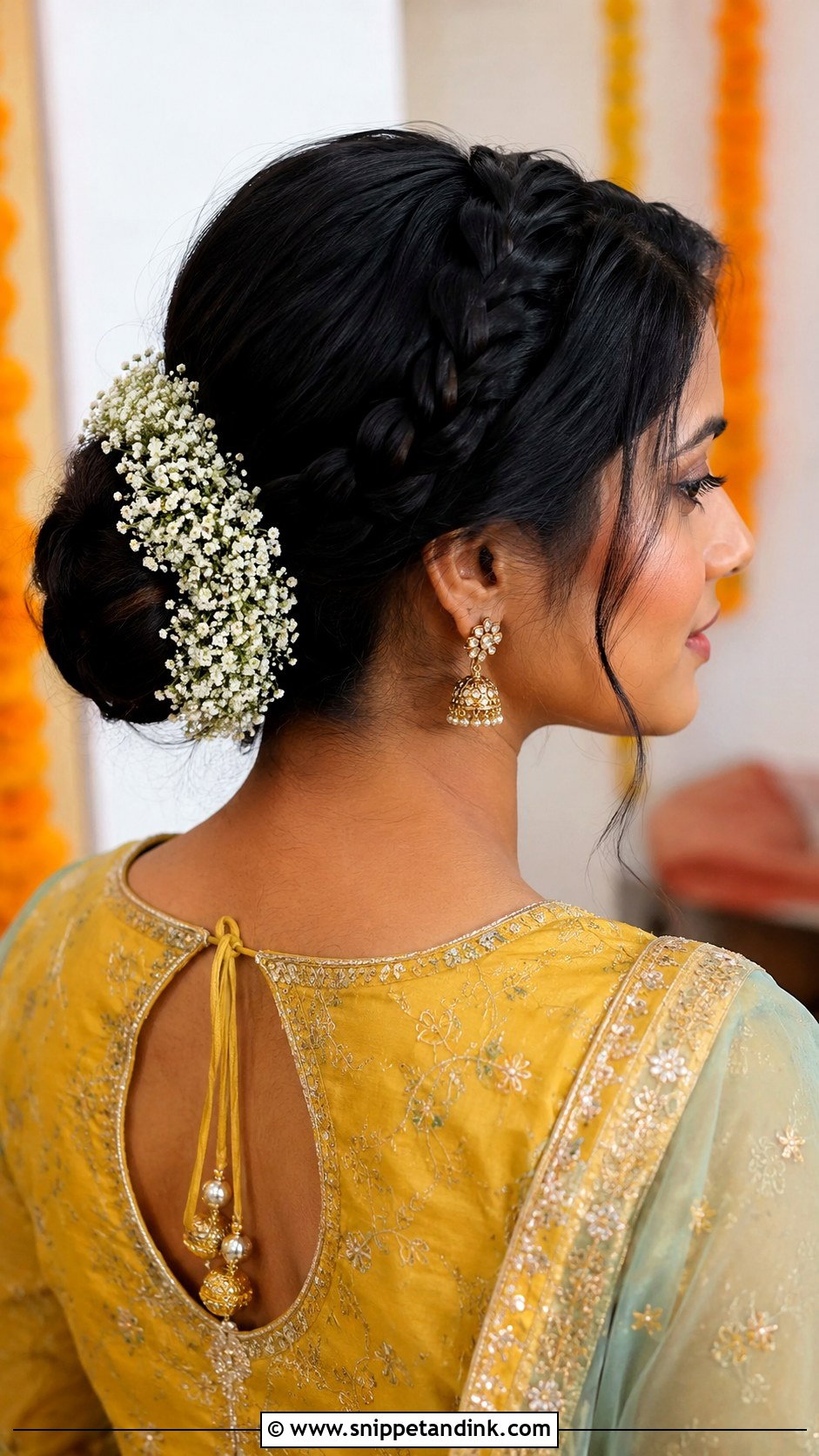
A braided bun gives you more depth than a plain bun and far more grip. I wrap a braid around the bun or blend it into the knot, depending on how much texture you want. It pairs well with sarees, lehengas, long kurtas and festive suits. Jasmine, small roses, pearls or gold pins tuck neatly into the plaits. Thick hair is where this style really earns its place, because the braid compresses the volume and stops a big bun from becoming heavy and loose by afternoon.
8. House Warming Ceremony Open Hair With Soft Curls
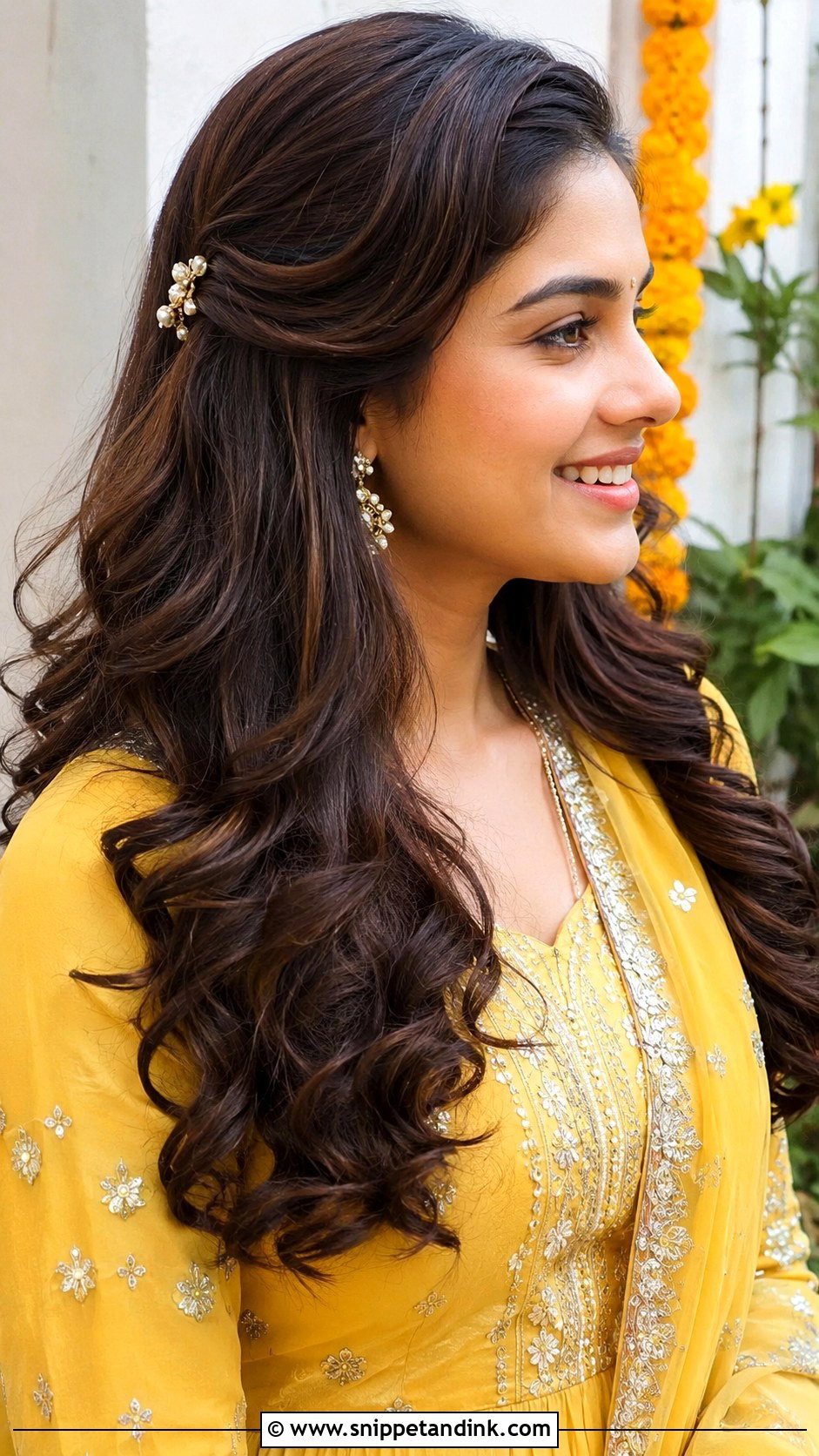
Open hair with soft curls is the most natural look here, and also the one I need to plan most carefully. I keep the curls smooth and loosely shaped rather than tight, and curl slightly smaller than the finish you want, because they relax over the day. It needs medium to long hair and suits anarkalis, lehengas, sarees and Indo-western outfits. Choose a side or middle part based on your face shape, and add a small accessory on one side for a ceremonial touch. It is best for daytime guests who will not be near the fire.
9. House Warming Ceremony Ponytail With Curls
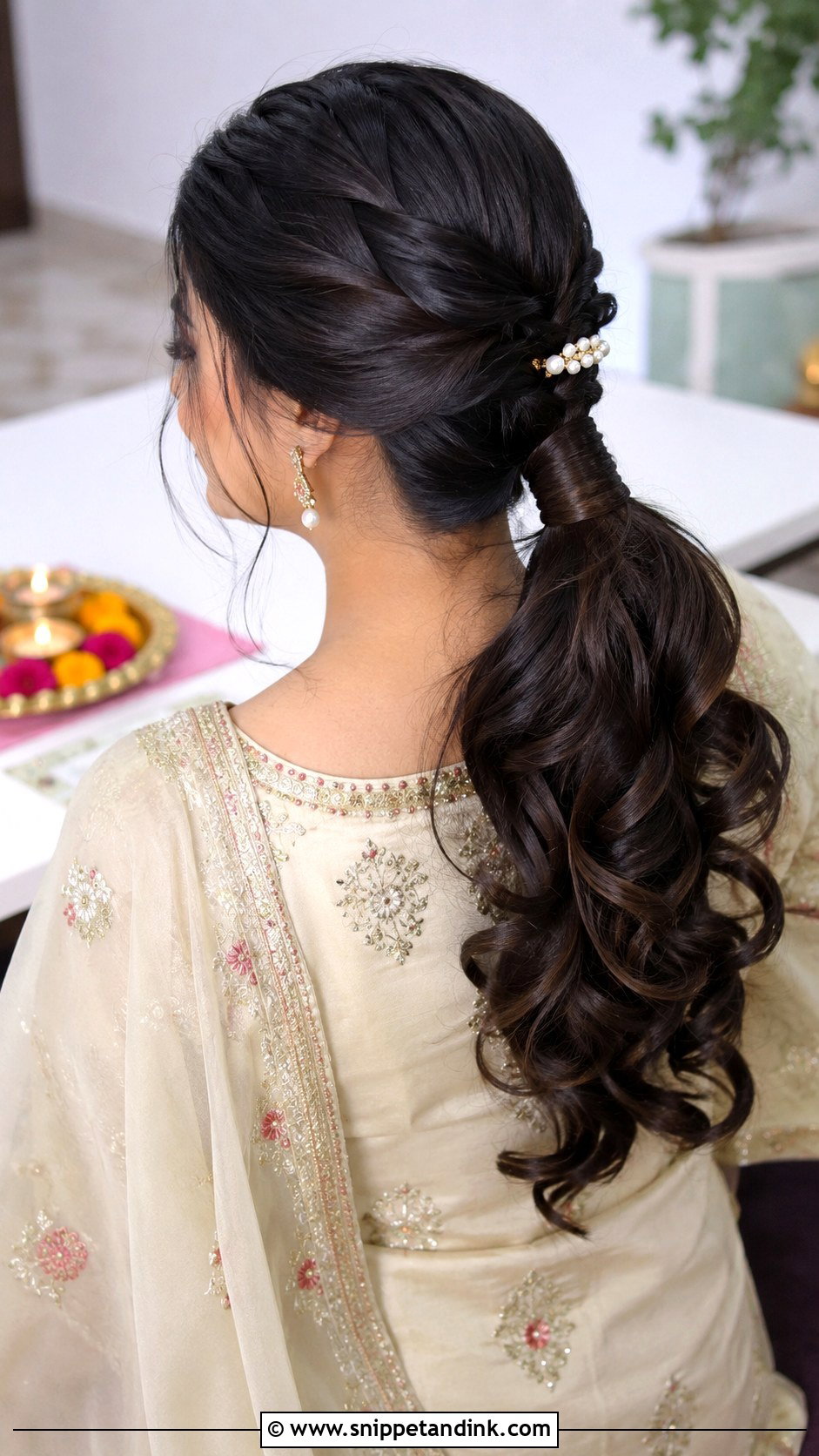
A curled ponytail keeps your hair out of the way while you host, carry trays and help arrange the puja. A mid or low position looks right with ethnic wear; curled ends make it look finished. I wrap a strand around the elastic and pin it underneath so no band shows. Pearl pins or a small floral detail near the base are enough decoration. Layered cuts work well here, since the curls hide the different lengths. Very heavy hair pulls on a ponytail after a few hours, so I secure it with two elastics.
10. House Warming Ceremony Front Twist Hairstyle
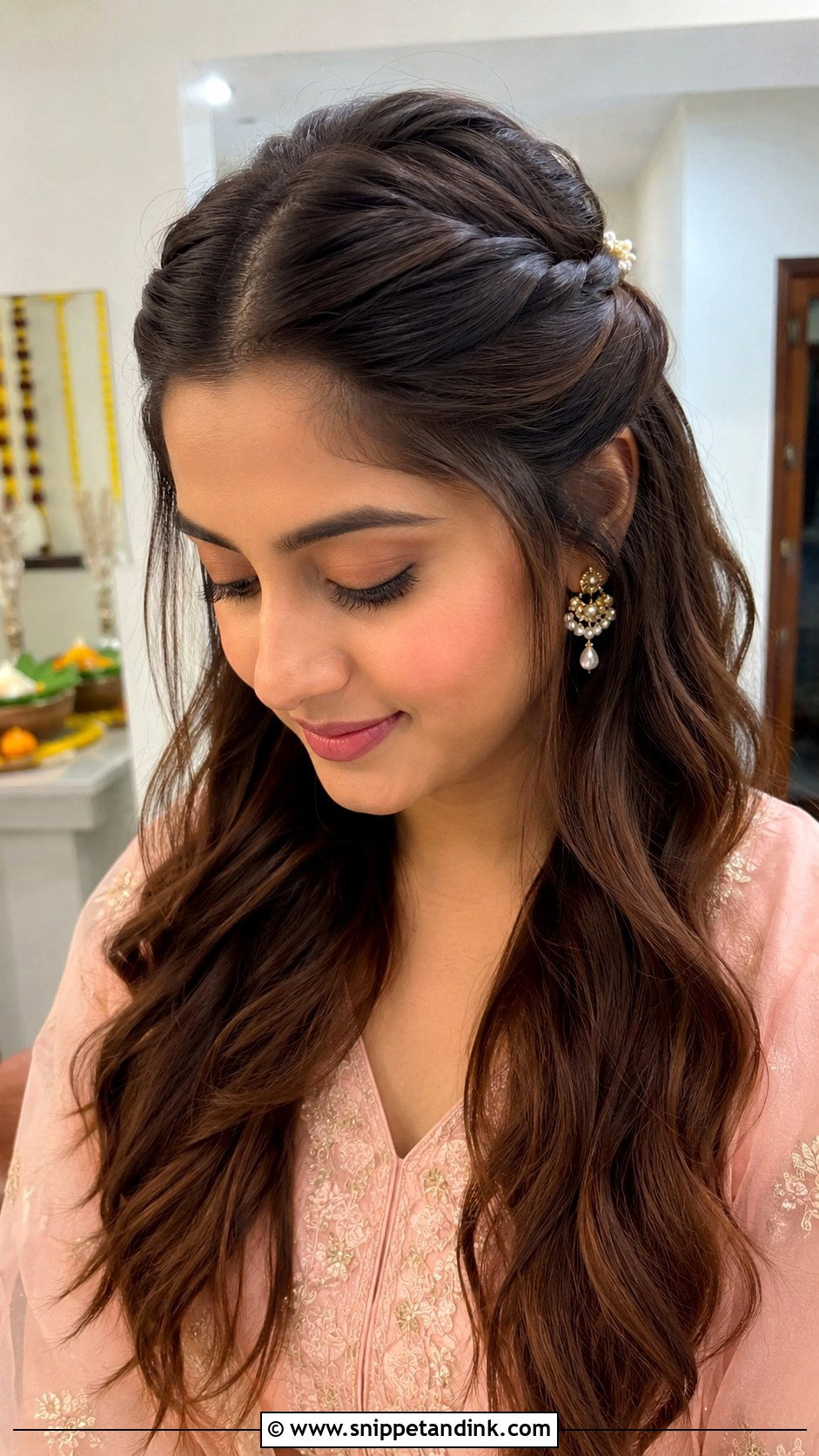
A front twist adds a detail around the face and keeps the front completely secure. I twist the front sections back and pin them where they meet, then leave the rest wavy, curled or smooth. It suits suits, sarees and lighter festive outfits. Anyone who does not want a full bun or braid but needs hair off the face will find this easy to wear all day. Tiny pearl pins or a small floral clip can hide the meeting point. Fine hair benefits from a little texture spray first, otherwise the twists slip loose.
11. House Warming Ceremony Fishtail Braid
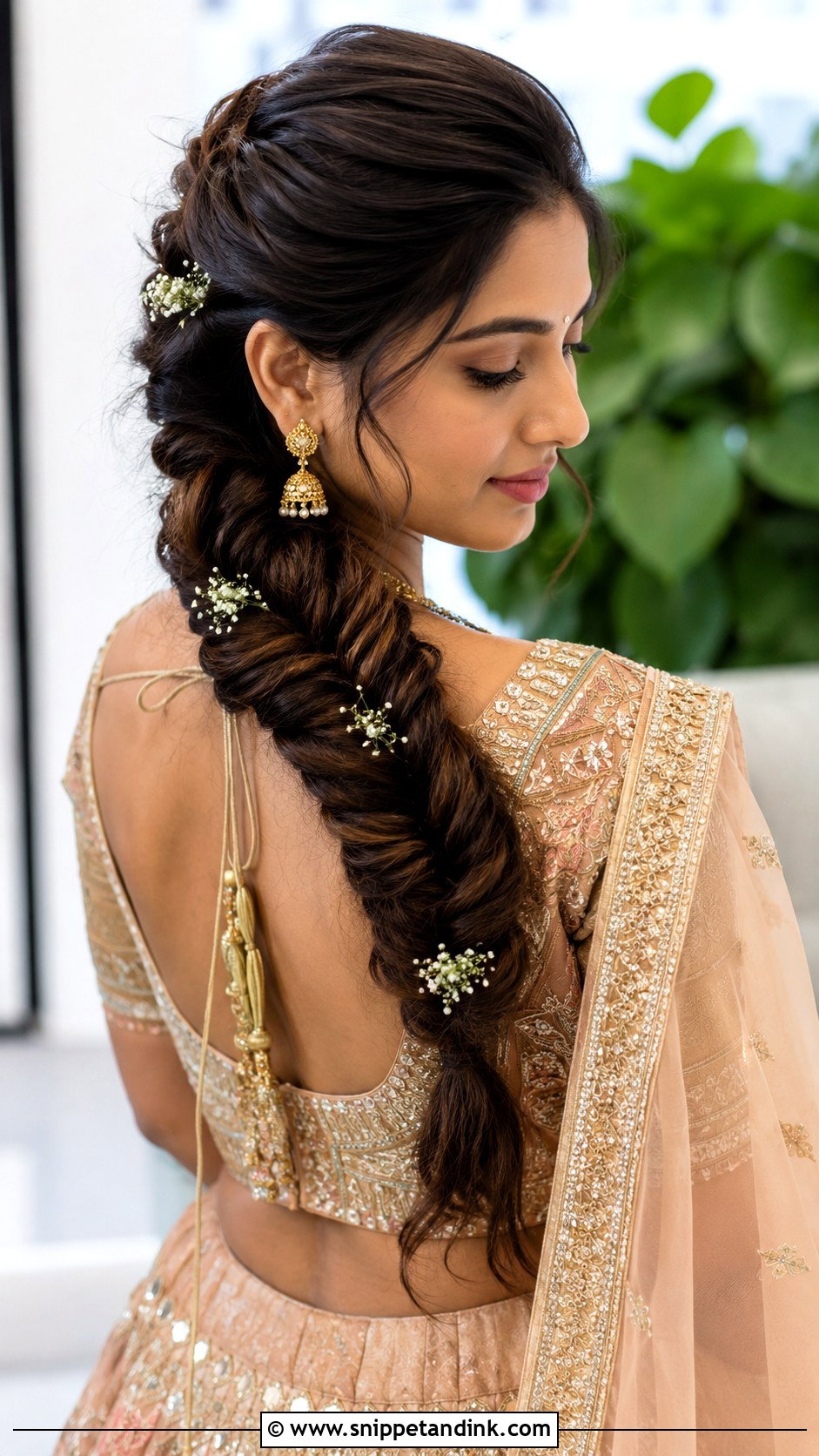
A fishtail braid gives detail without bulk. It works on medium to long hair with lehengas, anarkalis and sarees, centred down the back or swept to one side. I pull the edges out gently for volume, but for a traditional ceremony I stop sooner than I would for a party, so it stays neat. Small flowers or pins can go along the length. Fishtails are slower to plait than a standard braid, so if you are doing your own hair before an early muhurat, practise it at least once.
12. House Warming Ceremony Claw Clip Bun
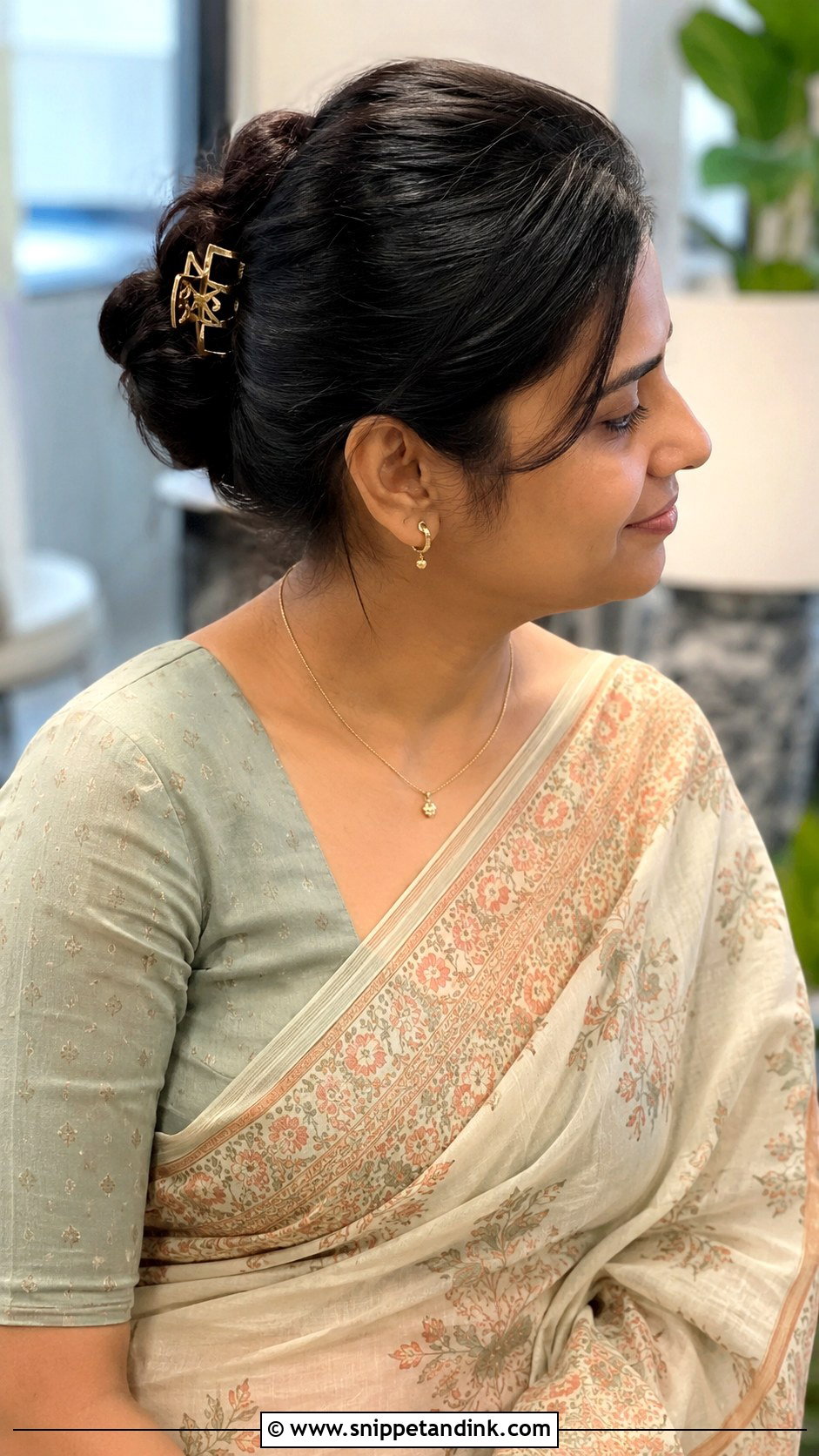
A claw clip bun can look elegant enough for a home ceremony if the clip itself is chosen with care: gold, pearl or embellished rather than plastic. I twist the hair into a soft bun or French twist shape and close the clip over it, checking that the teeth bite into the twist and not just the surface. It suits medium-length hair with cotton sarees, kurta sets and simple festive outfits. It is quick and comfortable for a small family puja. With very thick or very long hair, a claw clip alone will not hold; add two pins underneath.
13. House Warming Ceremony Flower Bun
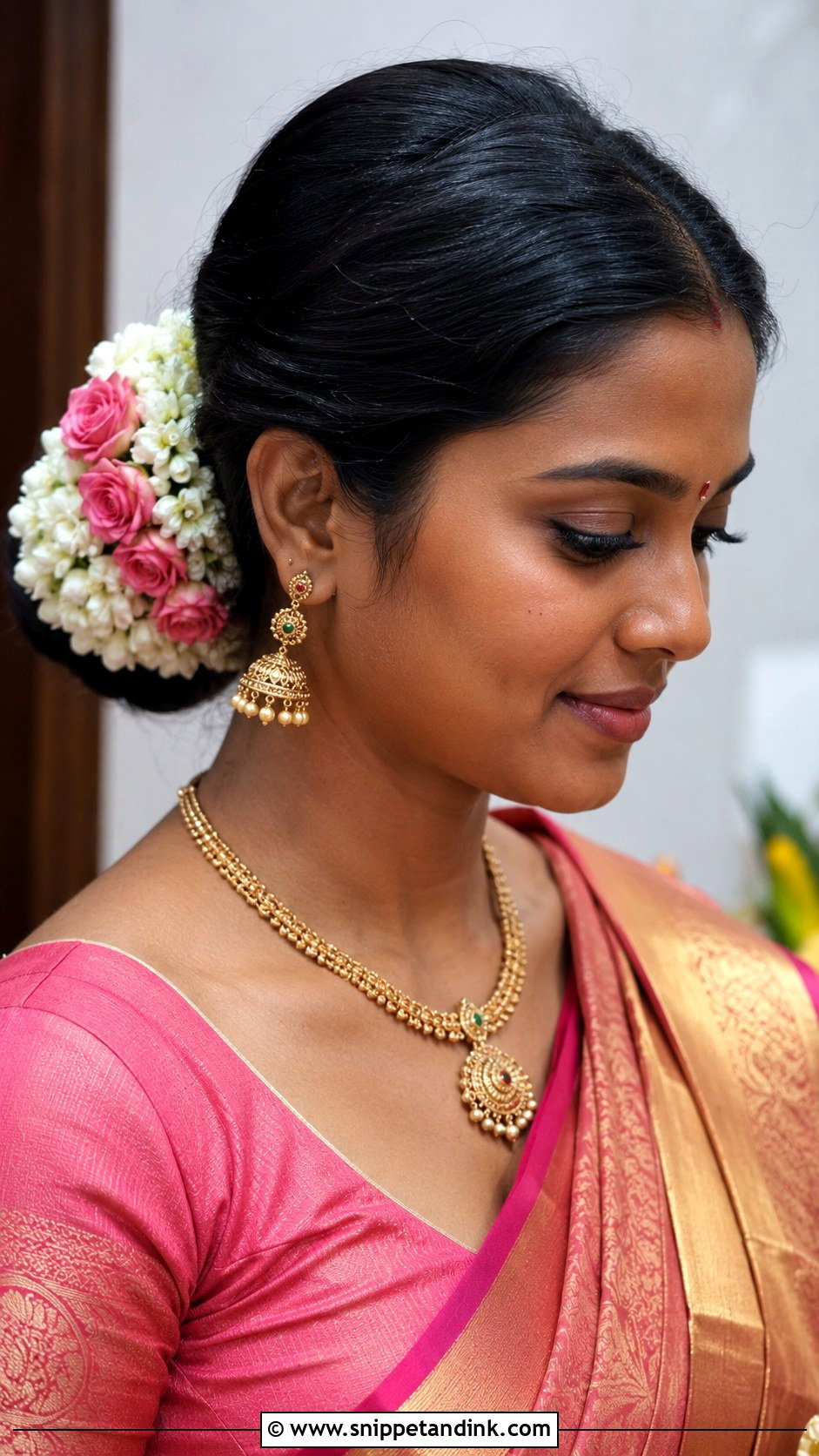
A flower bun makes even a simple outfit look festive. I keep the bun low, round and smooth, then add fresh flowers around the base or across one side. Jasmine, roses, and small seasonal flowers all work, chosen to suit your outfit’s colours. It pairs with silk sarees, temple jewelry and embroidered blouses, and it keeps the hair tidy for prayers. I keep the front plain, with a middle or side part, so the flowers stay the main detail.
14. House Warming Ceremony Straight Hair With Hair Accessories
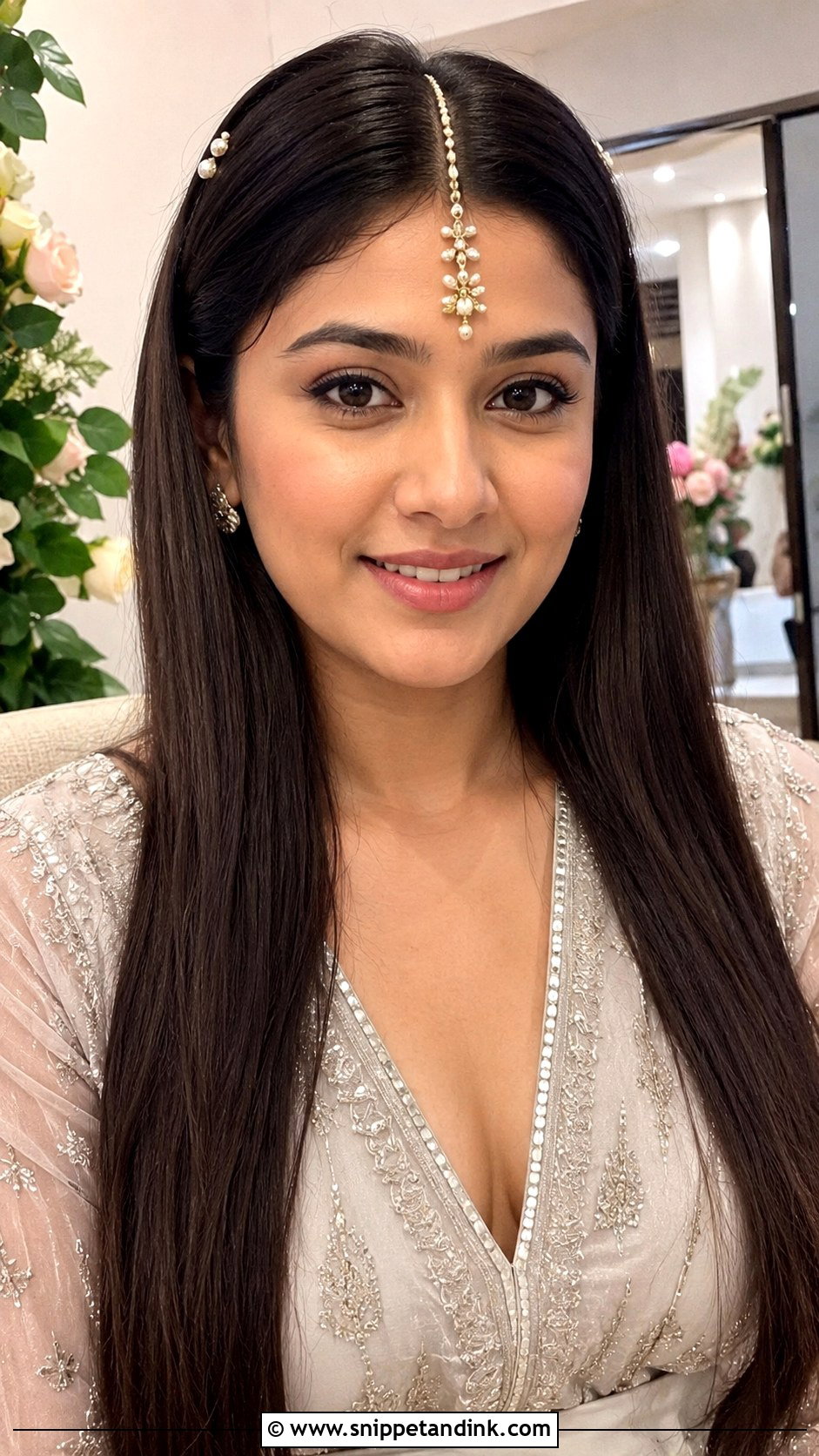
Straight hair with accessories is the minimal option, and it only works if the hair is truly smooth. I control frizz with a light serum before flat ironing and finish the ends so they do not flick out. Then add one accessory: a maang tikka with a centre part, a decorative clip on a side part, or pearl pins in tucked-back sections. It suits long kurtas, sarees, lehengas and Indo-western looks. Straight hair shows every bit of humidity, so in a muggy climate I would choose a bun or braid instead.
15. House Warming Ceremony South Indian Braid
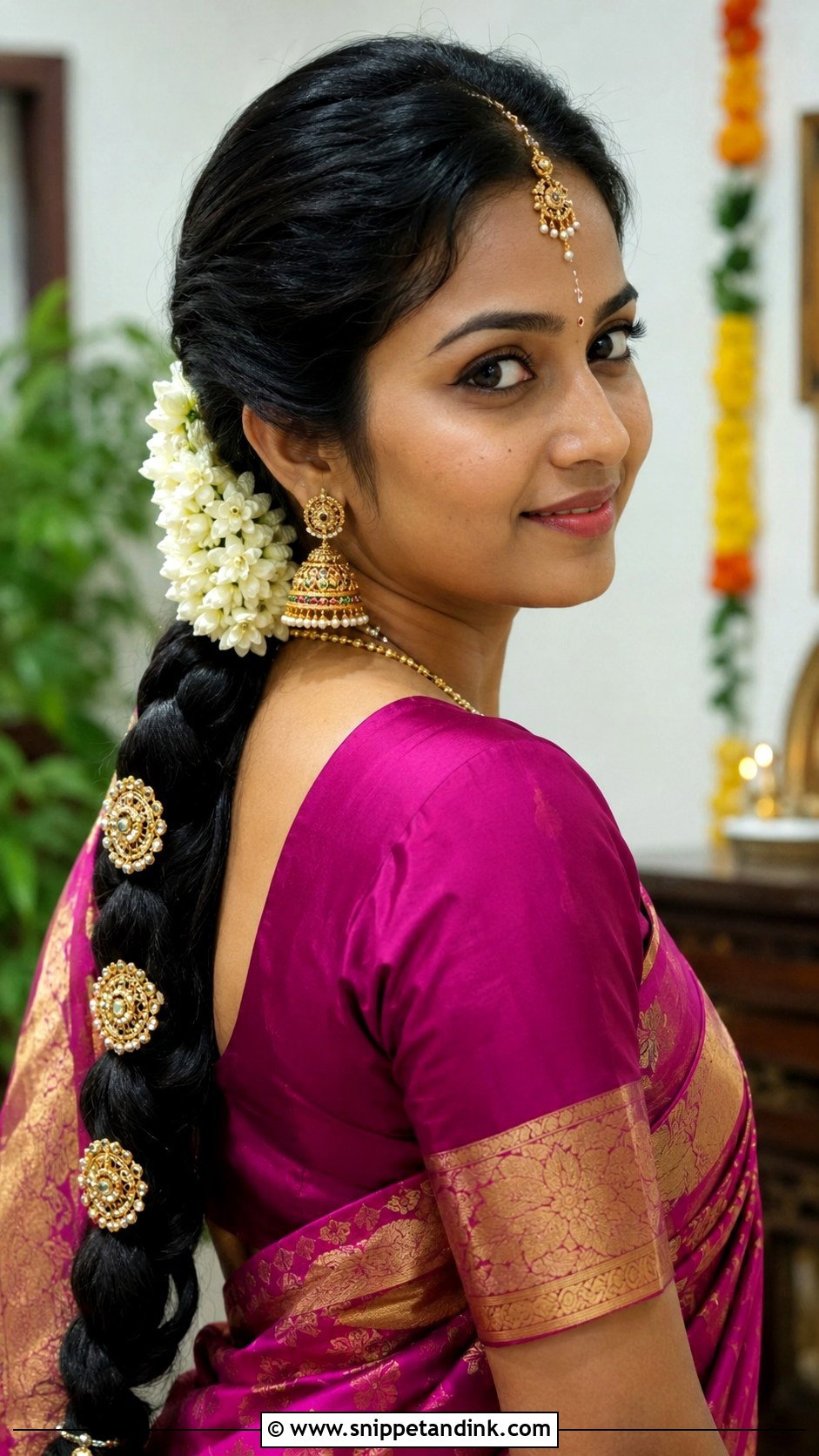
A South Indian braid is the most traditional choice here, and it suits a silk saree or temple-style jewelry best. The braid is long and neat, decorated with flowers, gold pieces or a simple hair chain. Long hair carries it naturally; if yours is shorter, I add extensions or a braid filler to create length and fullness. The weight of the ornaments pulls on the crown, so I anchor the top of the braid with pins crossed under the hair. Sitting on the floor for rituals, the length will pool on the mat, which is fine; just lift it before you stand.
Dawn Muhurat? A Style You Can Manage at Five in the Morning
Griha pravesh timings follow the auspicious hour, and that hour is often very early. No salon is open, the house is full, and you are also checking on flowers and food. My advice is to choose a style you can do yourself in about twenty minutes, and to do half of it the night before.
- The evening before, wash and fully dry your hair, then sleep in one loose braid. In the morning you will have soft waves with no heat needed.
- Buy the gajra that evening, wrap it in a damp cloth and keep it in a closed box in the fridge so the buds stay fresh.
- Lay everything out on one tray: pins, elastics, a comb, the gajra, your tikka or clips and a small mirror.
- In the morning, brush out the braid, set your parting and build a low bun or simple braid. Pin the gajra last, just before you leave the room.
- Do one practice run a few days earlier. It is the only way to learn whether twenty minutes is really twenty.
Coming as a guest instead
Guests have more freedom, but it is still a home puja. I keep a guest’s look a step below the hostess, avoid anything that needs fixing every ten minutes, and suggest carrying a dupatta in case the family covers their heads during prayers. A front twist or a fishtail braid fits that middle ground: festive, without competing for attention.
Plan the Hair Around the Busiest Hour of the Puja
A house warming day includes rituals, blessings, family photos and hours of hosting, so I plan the hair around the busiest part of it. Match the style to your outfit, jewelry and hair length, and be honest about how much fixing you will tolerate. Buns are traditional and secure, braids feel festive and hold well, and half up or open styles bring softness and movement for guests. Small details like gajra, pearl pins, gold clips and a maang tikka make a simple style feel like an occasion. Pick the look that feels like you, and keep it neat enough to forget about.
You'll Like These Ideas:


Leave a Reply