
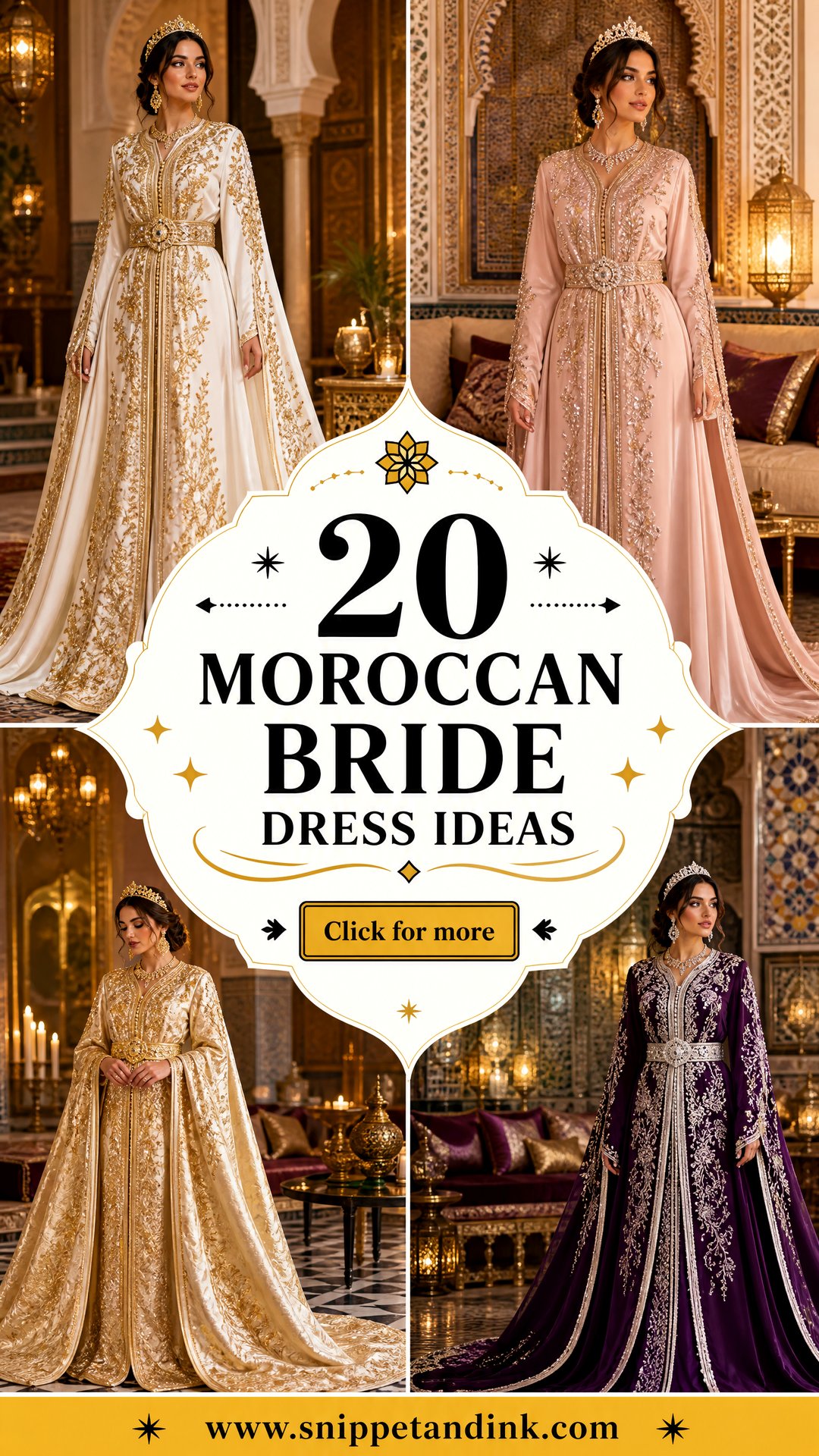
A Moroccan wedding rarely has one bridal dress. Over the night the bride changes several times, moving between kaftans, takchitas, belts, jewelry sets and headpieces, each look carrying its own colour and often its own regional story. That changes how I think about styling. Each outfit has to look regal, but it also has to go on and come off quickly and survive sitting, dancing and being lifted in the amaria. Heavy velvet, airy tulle, satin and brocade all behave differently under those demands, and a good tailor or negafa will balance embroidery, belt and hem around your proportions. The looks below run from the green henna kaftan to the modern white takchita, with notes on what I’d check in each.
Mapping the Outfit Changes Before You Fall for a Single Kaftan
With most bridal styling I start with the dress. With a Moroccan wedding I start with the running order, because the bride may wear several looks, and each one has a job.
- Henna night usually calls for green with gold, with sleeves that keep your hands free.
- The entrance and the amaria tend to be the white or most formal look. It should be secure enough to be lifted and carried without the belt or crown shifting.
- Regional outfits, when the family wants them, often come from the negafa’s own collection, along with their matching jewelry and headpieces.
- The last look of the night is often the lightest, because by then you have been dancing for hours.
Once you know the sequence, decide which outfits to commission and which to rent. Many brides have one or two pieces made and rent the rest through the negafa, who also handles the changes. Put the pieces you buy where they matter most to you, usually the white takchita or the henna kaftan.
Colour order matters
Guests and photographers see the looks one after another. I’d avoid putting two similar colours back to back, like burgundy then plum, because in the album they read as the same outfit.
1. White Moroccan Bride Takchita With Gold Embroidery
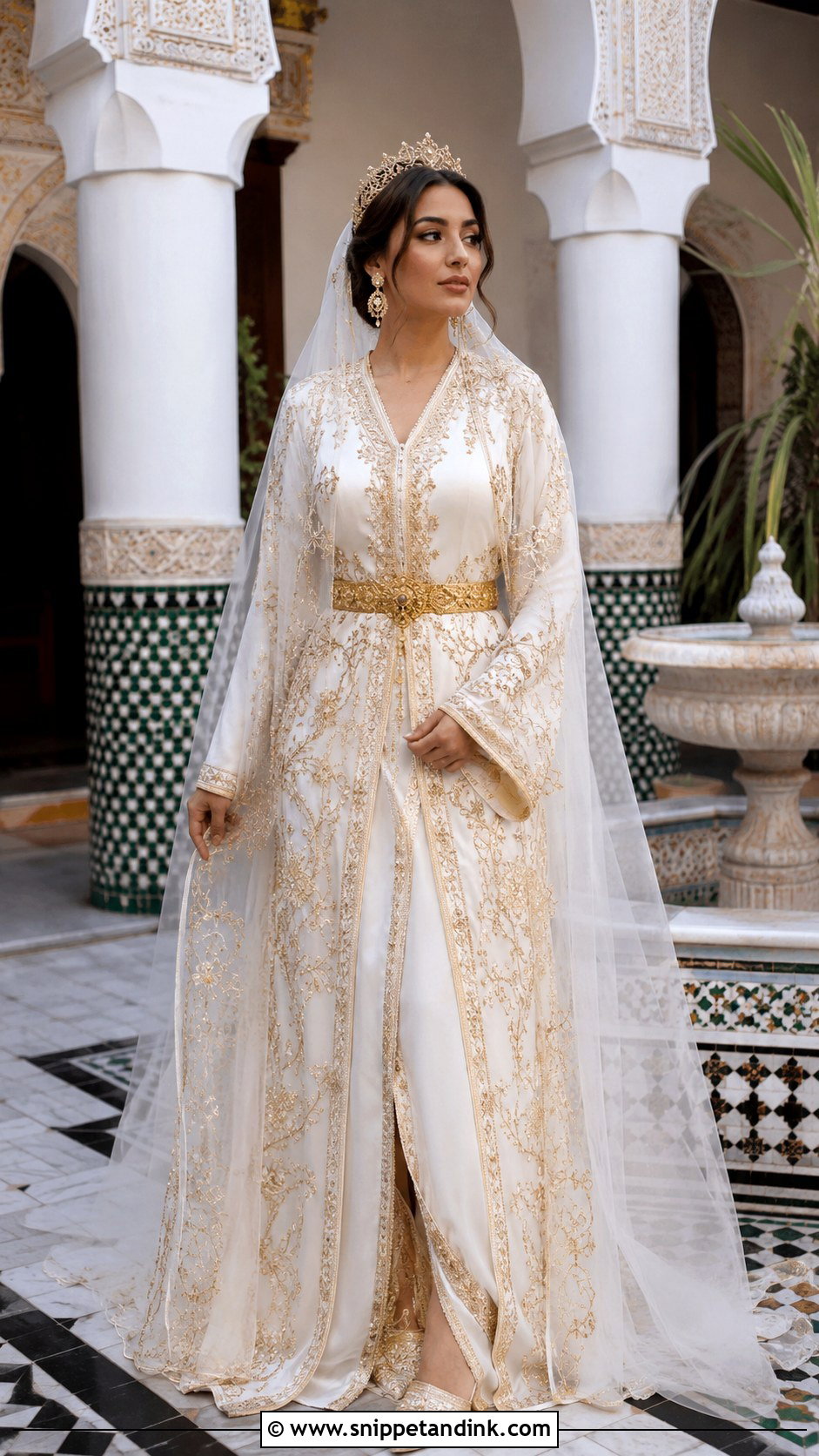
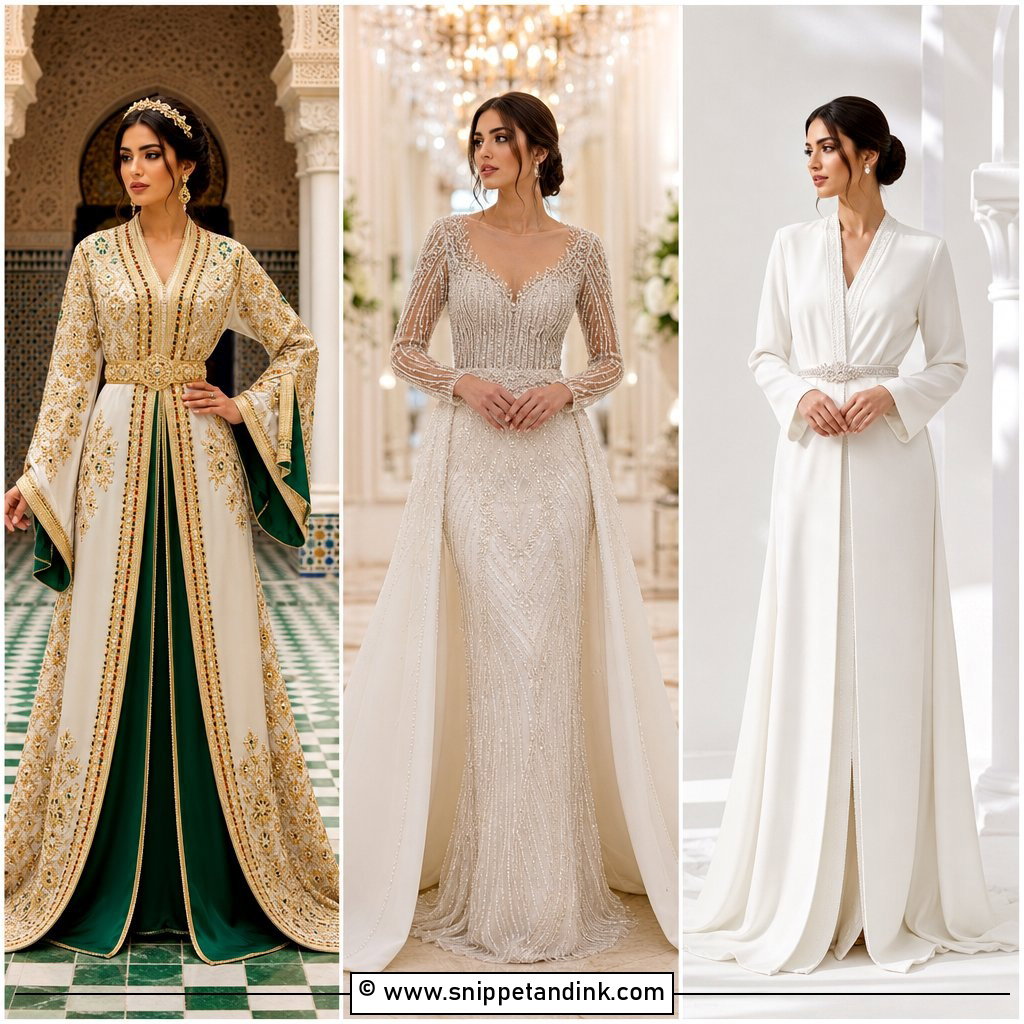
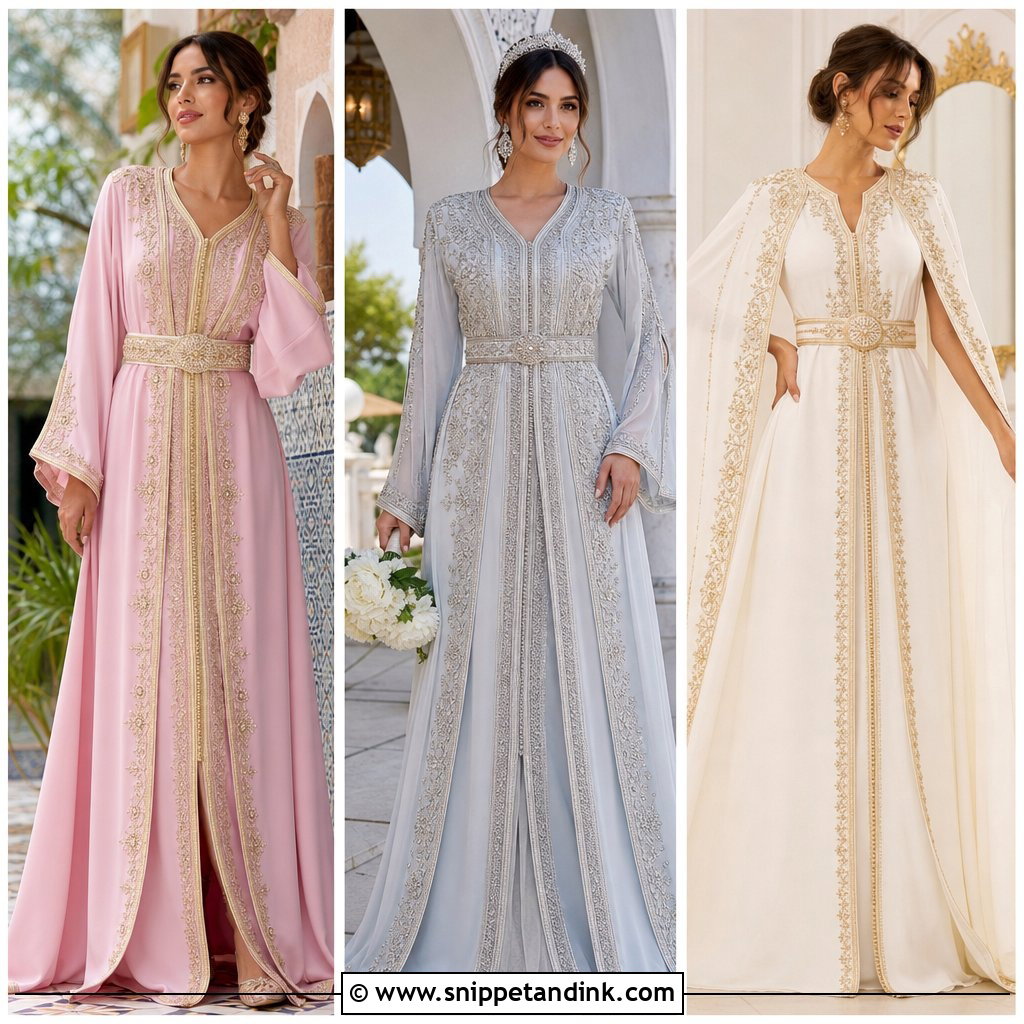
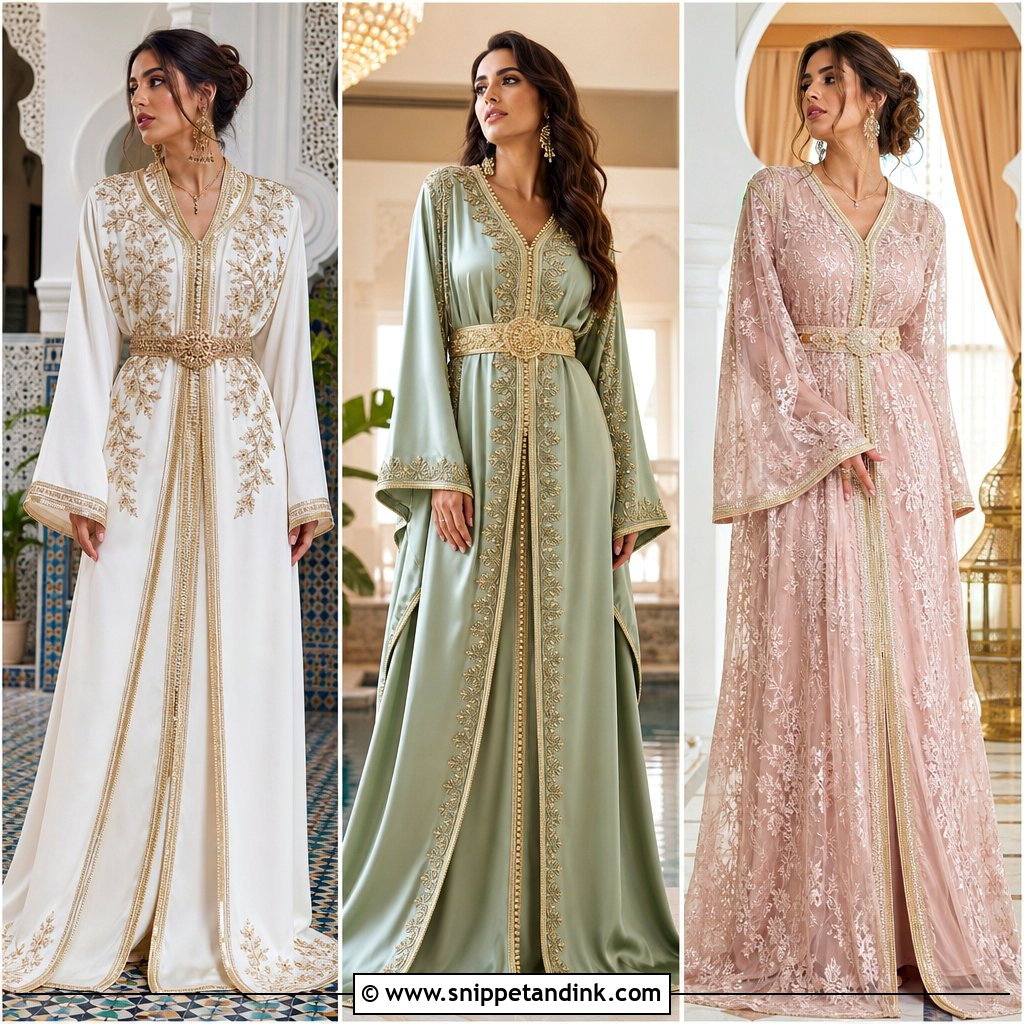
A white takchita with gold embroidery is the classic opening look. It is built in two layers: an underdress and a decorative outer robe, held together at the waist by the belt. I’d pair ivory satin underneath with a sheer white overlay edged in gold sfifa braid, covered buttons and fine floral embroidery. A structured gold mdamma pulls the loose shape into a waist. Gold babouches or low closed heels sit hidden under the hem, with a light veil, drop earrings and a slim tiara. White and gold are unforgiving next to the face, so I keep the makeup luminous rather than heavy, with soft eyes and a neutral lip. It carries the entrance and the amaria well.
2. Green Moroccan Bride Henna Kaftan
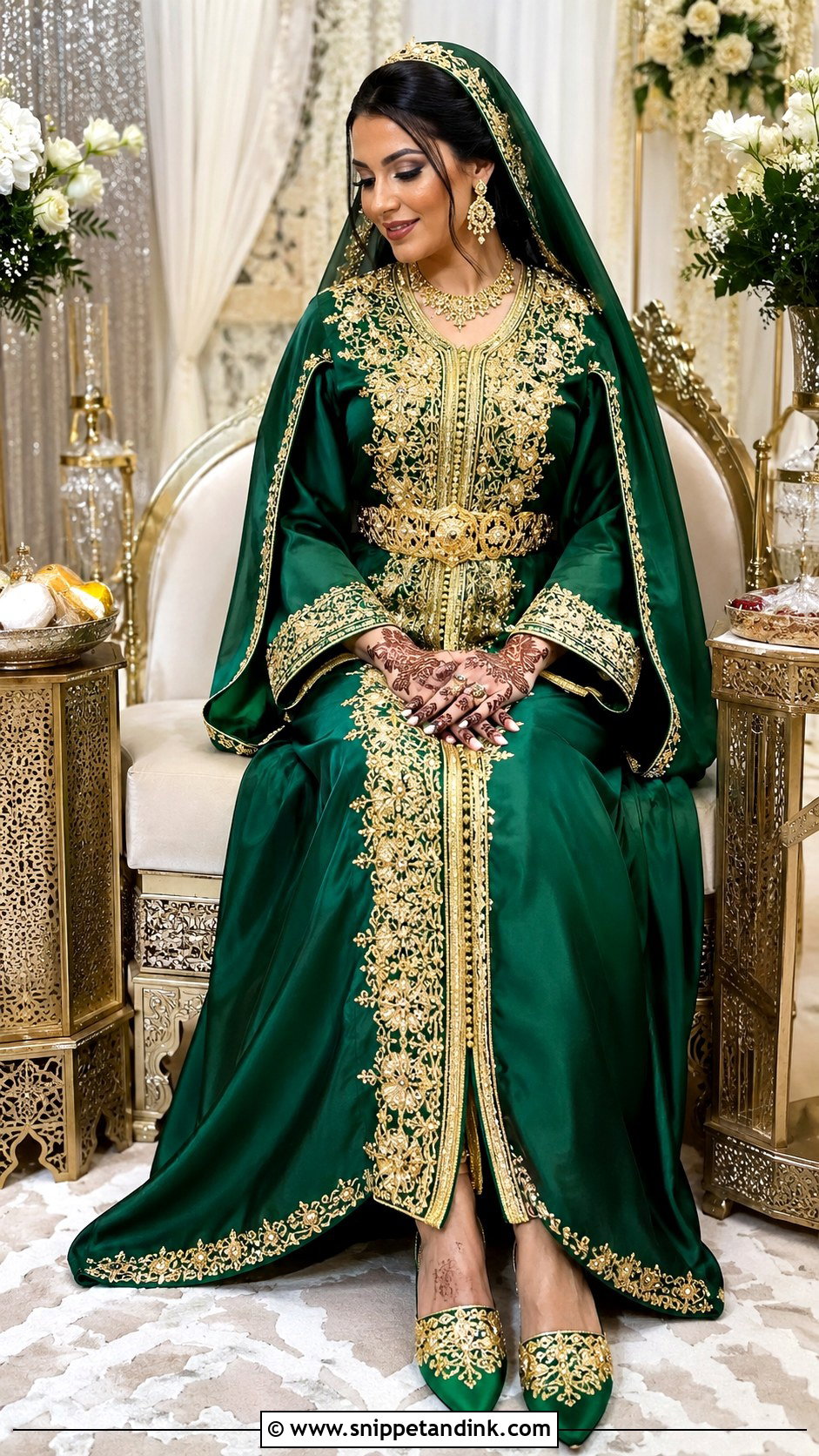
Green is the colour most families expect at the henna night, and gold embroidery against it reads warm under evening light. A floor-length Moroccan kaftan in emerald silk, velvet or satin works, chosen by season. Embroidery at the neckline, front closure, cuffs and hem gives a single layer enough ceremony. Set the belt at the natural waist without crushing the fabric, and add gold statement earrings with a matching necklace. Green or gold babouches make it easier to move around the room. The practical point is the sleeves. The henna artist needs your hands and forearms, so pick cuffs that push back or fold without dragging embroidery into wet paste, and skip the long veil for a small headpiece.
3. Red Moroccan Bride Kaftan With Gold Belt
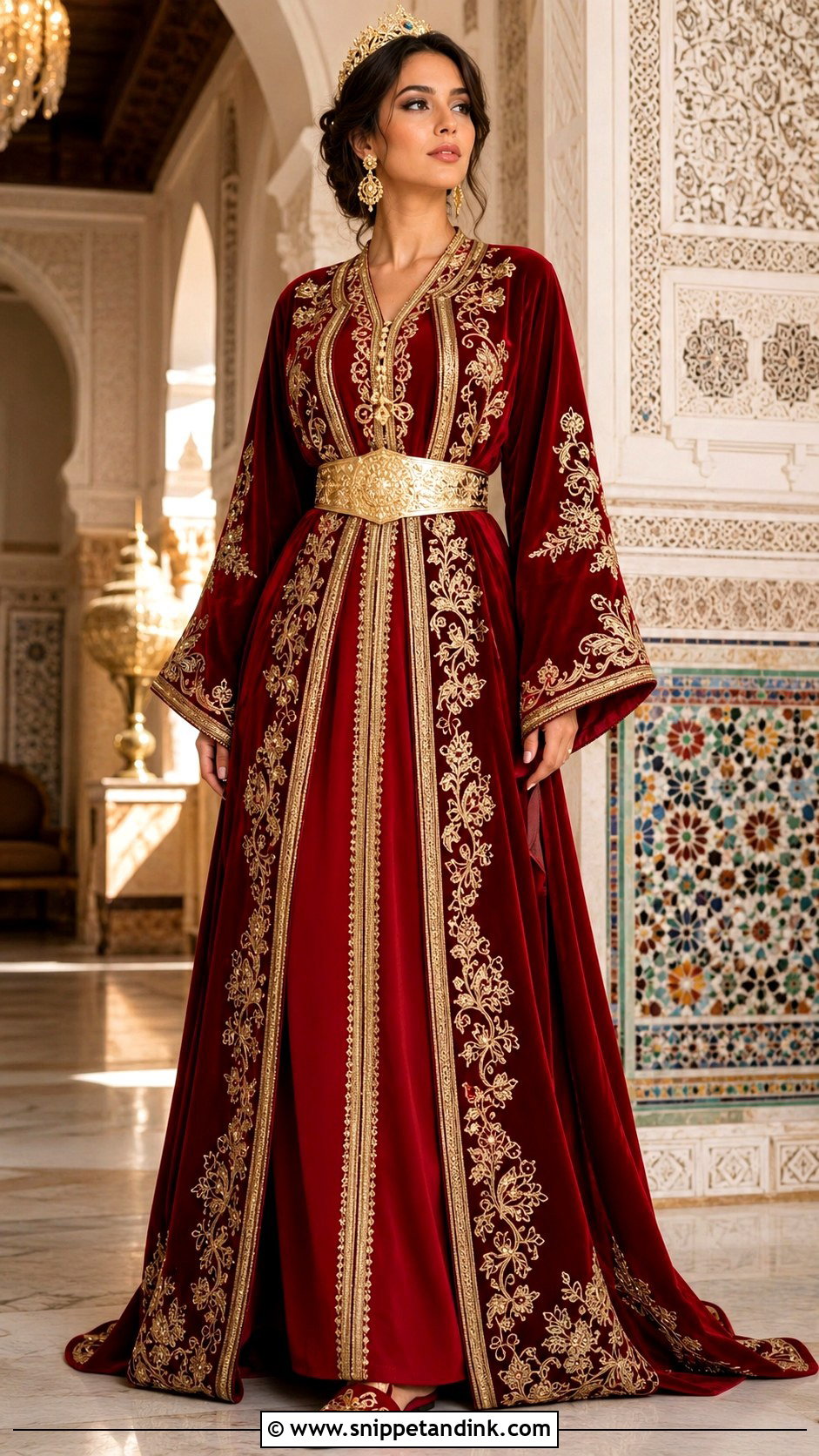
Red is the confident choice, and the shade matters more than the style. Ruby, garnet, scarlet and warm crimson each suit different undertones, so I hold fabric swatches against the bride’s face in daylight before anything else. Silk velvet or structured satin carries gold threadwork along the front, shoulders and wide sleeves, and a sculpted gold belt separates the embroidery from the skirt. If the neckline is heavily worked, leave out the big necklace. Gold earrings, a small forehead ornament and red babouches finish it, with a low bun or smooth half-up style under a small crown. Bronze makeup keeps it warm without tipping into theatre.
4. Emerald Velvet Moroccan Bride Takchita
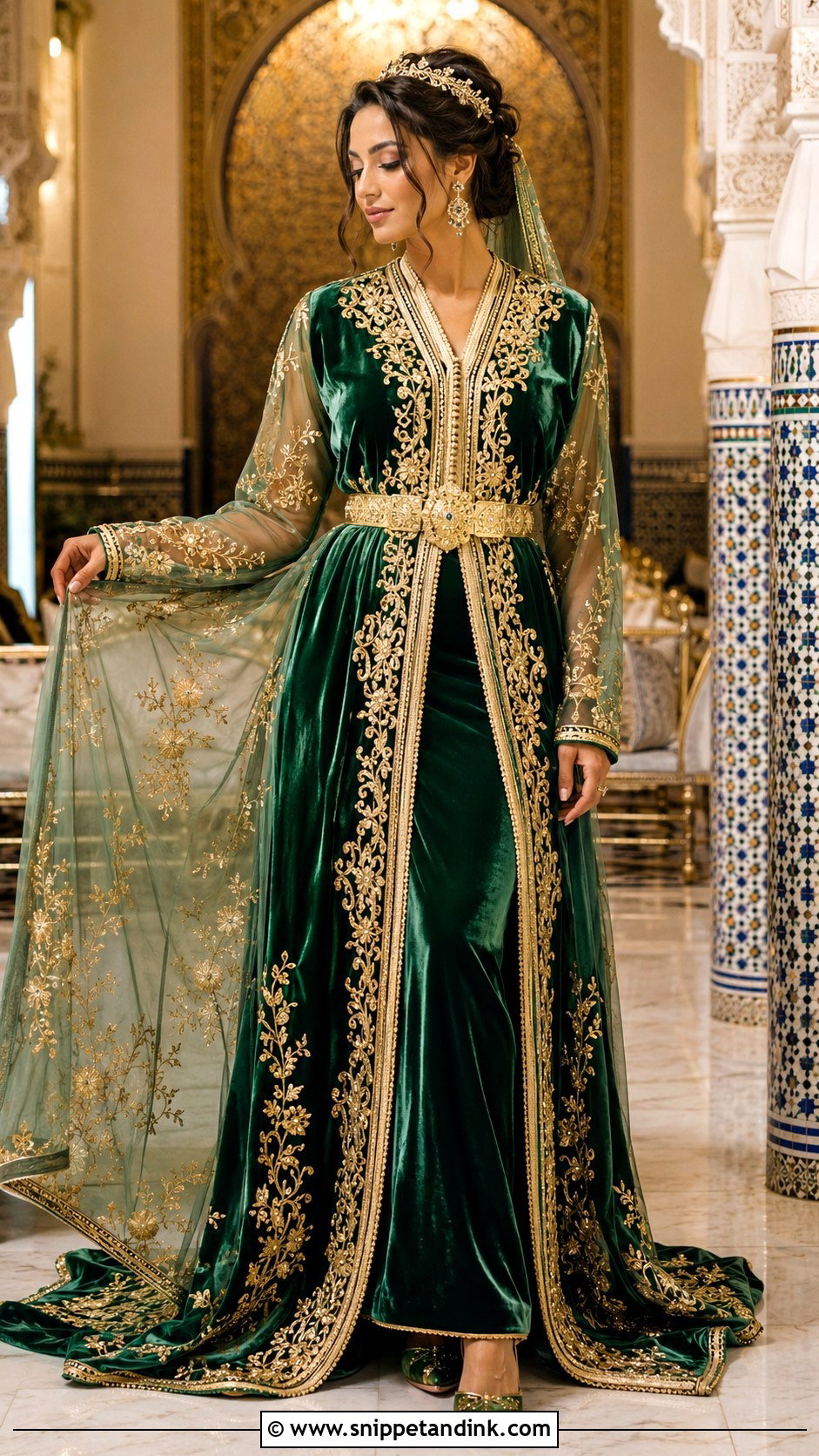
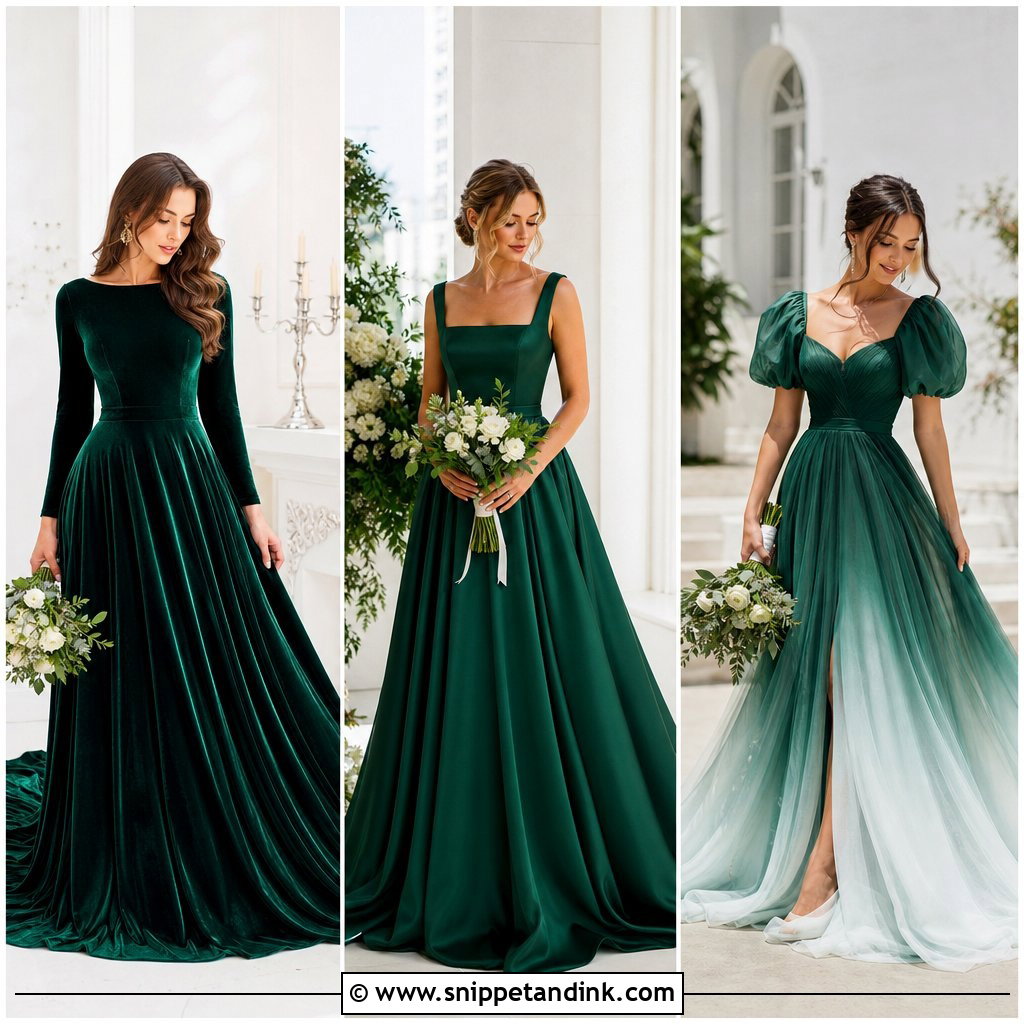
Velvet gives an emerald takchita real depth under evening lighting. My rule is velvet underneath and something light on top: organza or tulle as the outer robe stops the outfit from becoming a heavy coat. Gold braid, hand-finished buttons and scattered beading follow the vertical lines. Choose an engraved belt scaled to your waist rather than the widest one available; a very wide mdamma on a short torso swallows the whole bodice. Green slippers, chandelier earrings and a crown or jeweled comb complete it, with an optional sheer green veil. Velvet traps heat, so even in winter ask for a breathable lining for a long, crowded reception.
5. Royal Blue Moroccan Bride Takchita With Silver Details
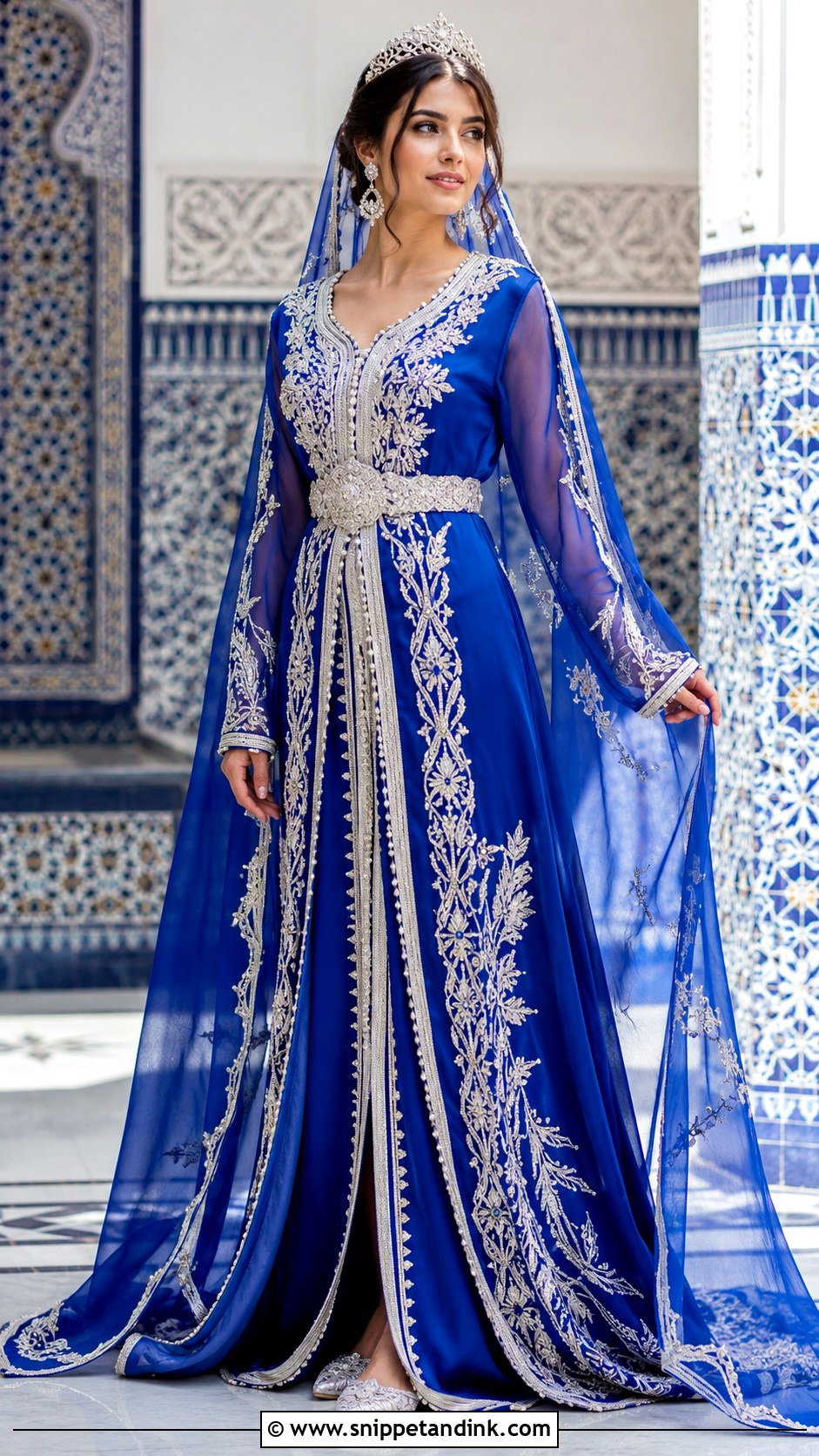
Royal blue and silver give a cool, bright look. Start with a blue satin underdress and a flowing chiffon or embroidered tulle robe over it. Silver sfifa along the neckline and front opening draws the eye down the body, while crystal beading adds sparkle. The belt must match the embroidery metal exactly; a gold belt on silver work looks like a borrowed piece. Silver flats, crystal earrings, a slim tiara and a blue-edged veil complete it. Royal blue can drain warmer skin under fluorescent hall lighting, so smoky but soft eyes and a rose lip help. For a quieter version, keep the beading to bodice and cuffs.
6. Blush Pink Moroccan Bride Kaftan
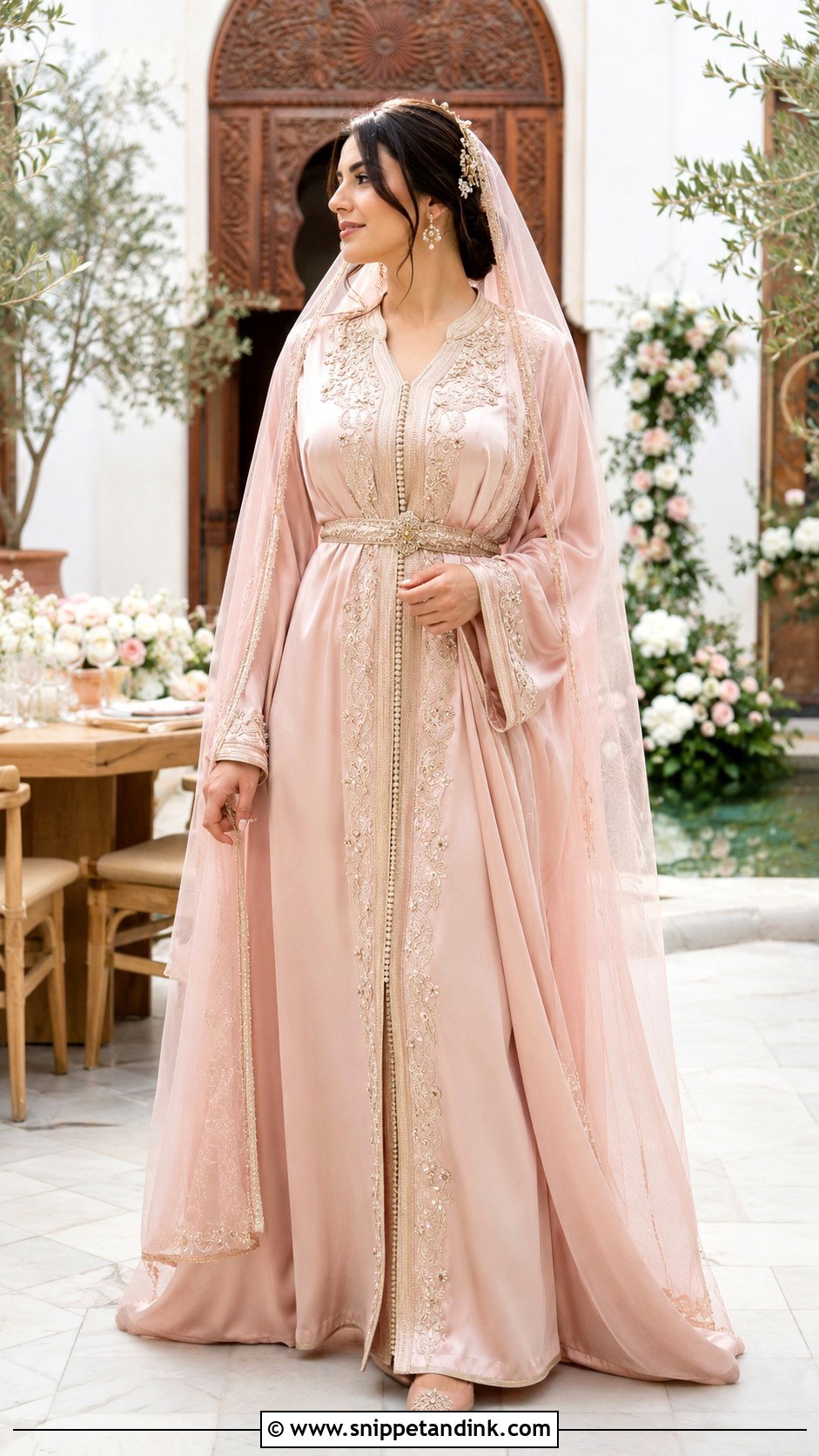
Blush reads bridal without the starkness of white. A floor-length silk or satin kaftan with a softly fitted bodice and fluid skirt is enough; Pearl embroidery, pale gold trim and tonal beading add depth with very little contrast. A slim champagne-gold belt suits petite brides better than a wide one. Blush pointed flats, pearl drops and a comb above a low bun complete it, with a sheer pink veil whose border repeats the cuff embroidery. I always check blush against the bride’s skin in daylight, since some pinks wash into beige in photos. It suits an engagement or a daytime change.
7. Ivory Moroccan Bride Kaftan With Pearls
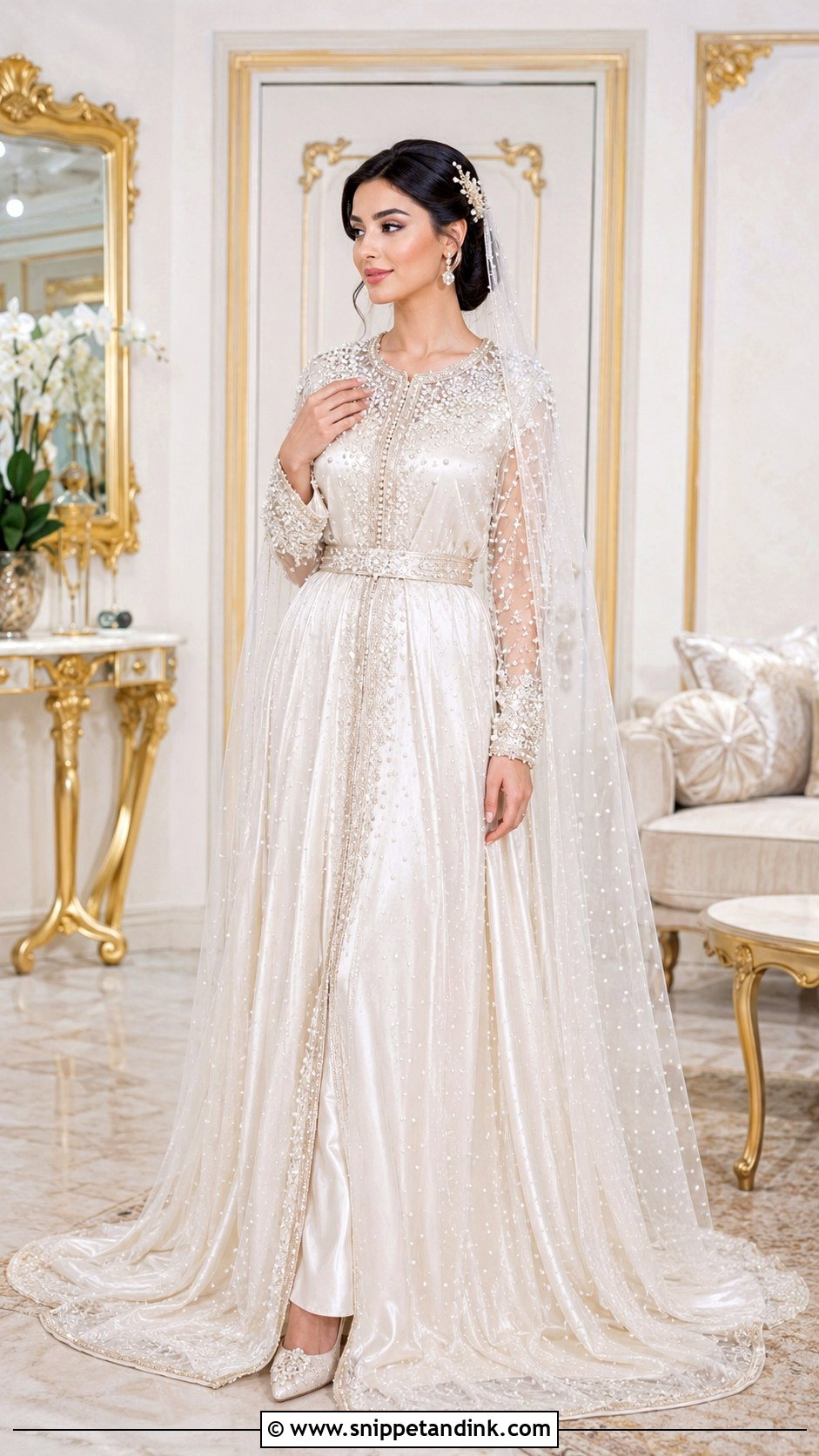
Pearls placed near the face lift the complexion in photos, so I concentrate them at the neckline, sleeves and upper bodice rather than spreading them over the skirt. An ivory satin base with lace or dotted tulle on top gives movement. A pearl-accented belt defines the waist, but it should bend when you sit; rigid pearl belts dig in at the ribs. Ivory heels or embroidered slippers, pearl earrings and a matching comb finish it, and a fingertip veil keeps the back visible. Heavy pearl work can pull sheer fabric out of shape, so ask the tailor to back the heaviest areas. Layering several ivory textures gives the outfit depth.
8. Gold Brocade Moroccan Bride Takchita
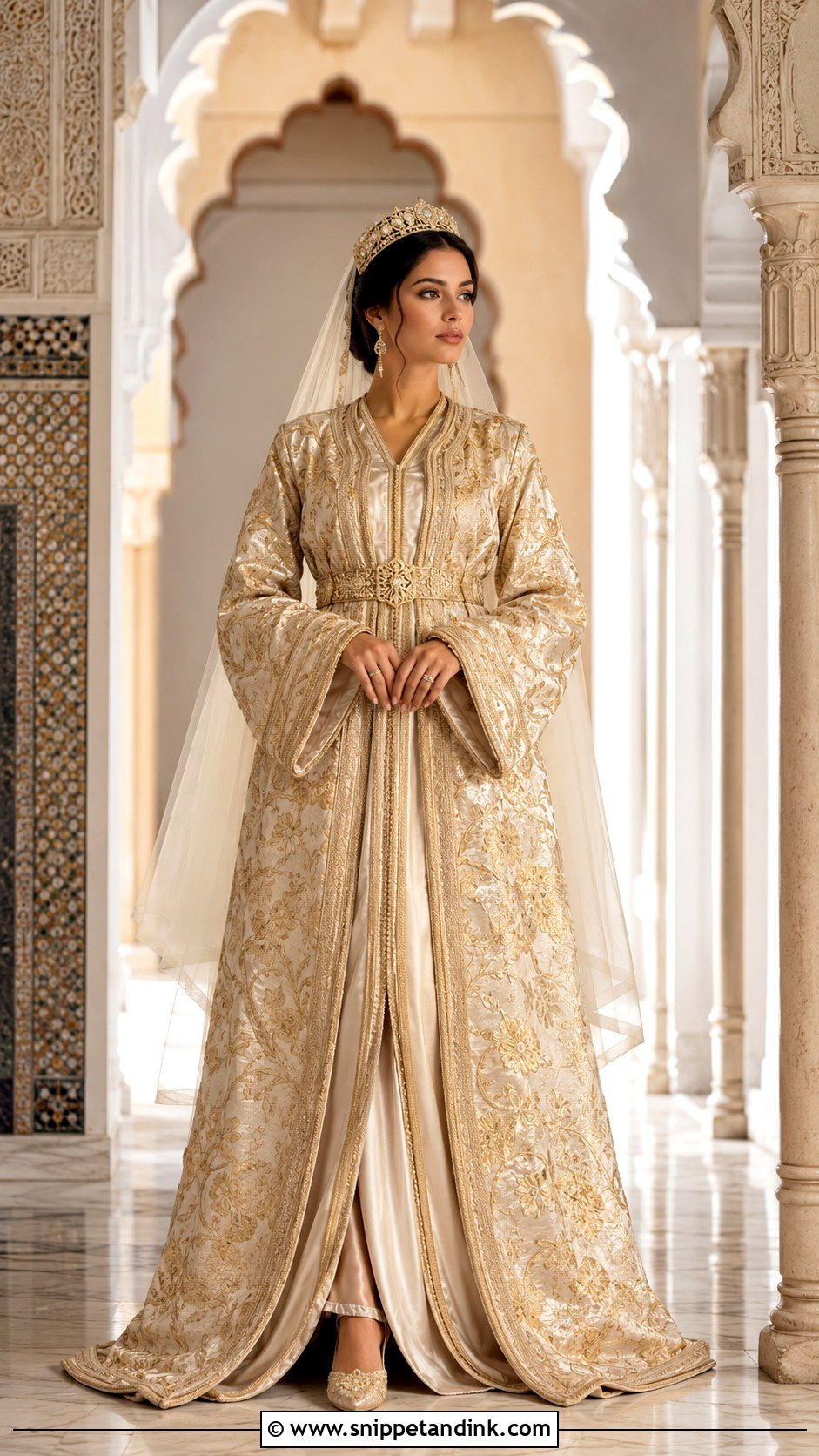
Gold brocade already has its pattern woven in, so this is the one takchita where I hold back on extra decoration. Keep embroidery to the neckline, front closure and cuffs. A champagne satin underdress with a gold patterned robe falling cleanly from the shoulders, a matching metal belt and modest earrings let the fabric lead. Champagne slippers, a smooth updo and a small gold crown complete it, with an optional plain ivory veil edged in metallic thread. Brocade is stiff, so a robe cut even slightly wide at the shoulder adds visible bulk. A soft lining and a generous skirt opening make it far easier to sit and walk in.
9. Burgundy Velvet Moroccan Bride Kaftan
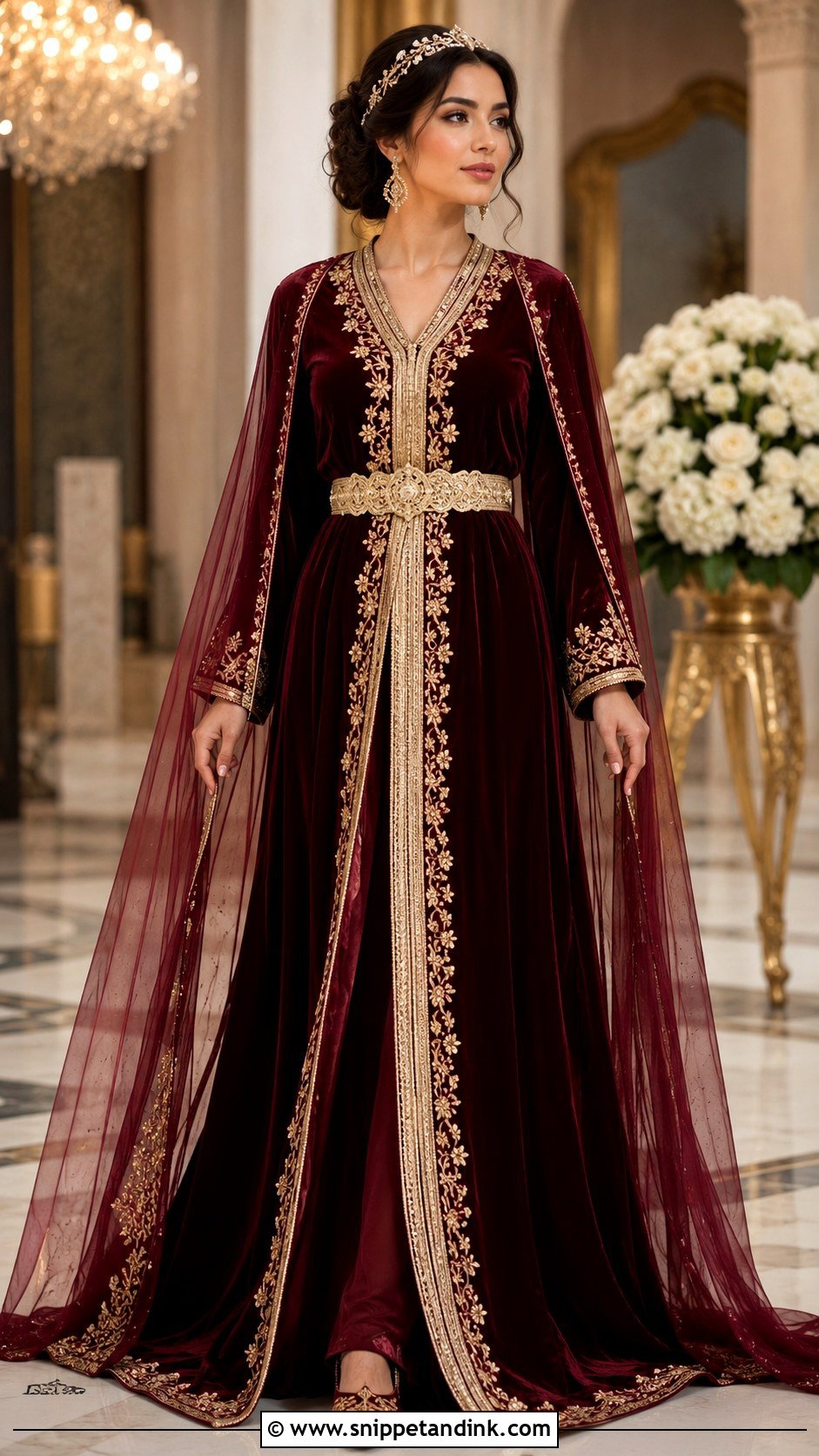
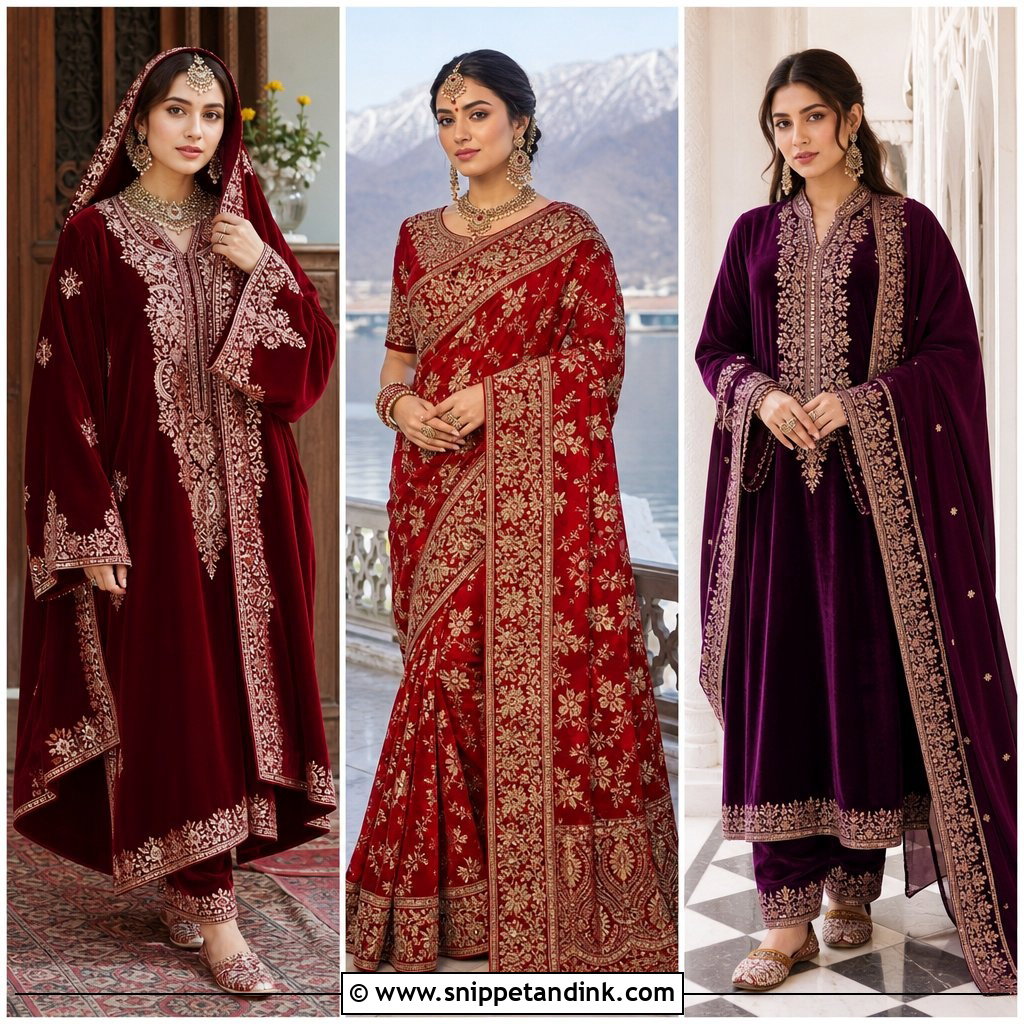
Burgundy velvet catching light at an evening entrance is hard to beat. Antique gold embroidery suits it better than bright gold, especially along the neckline, cuffs and center front. A long skirt with a slight flare balances the weight of the velvet, and an antique-finish belt adds shape without glaring against the dark fabric. Burgundy slippers, gold drop earrings and a jeweled headband over soft hair complete it. A sheer matching cape can replace the veil. I’d only recommend this one for cooler months or air-conditioned venues; velvet in a hot room with dancing becomes uncomfortable fast. Warm bronze eyes and a berry lip finish the look.
10. Champagne Lace Moroccan Bride Kaftan
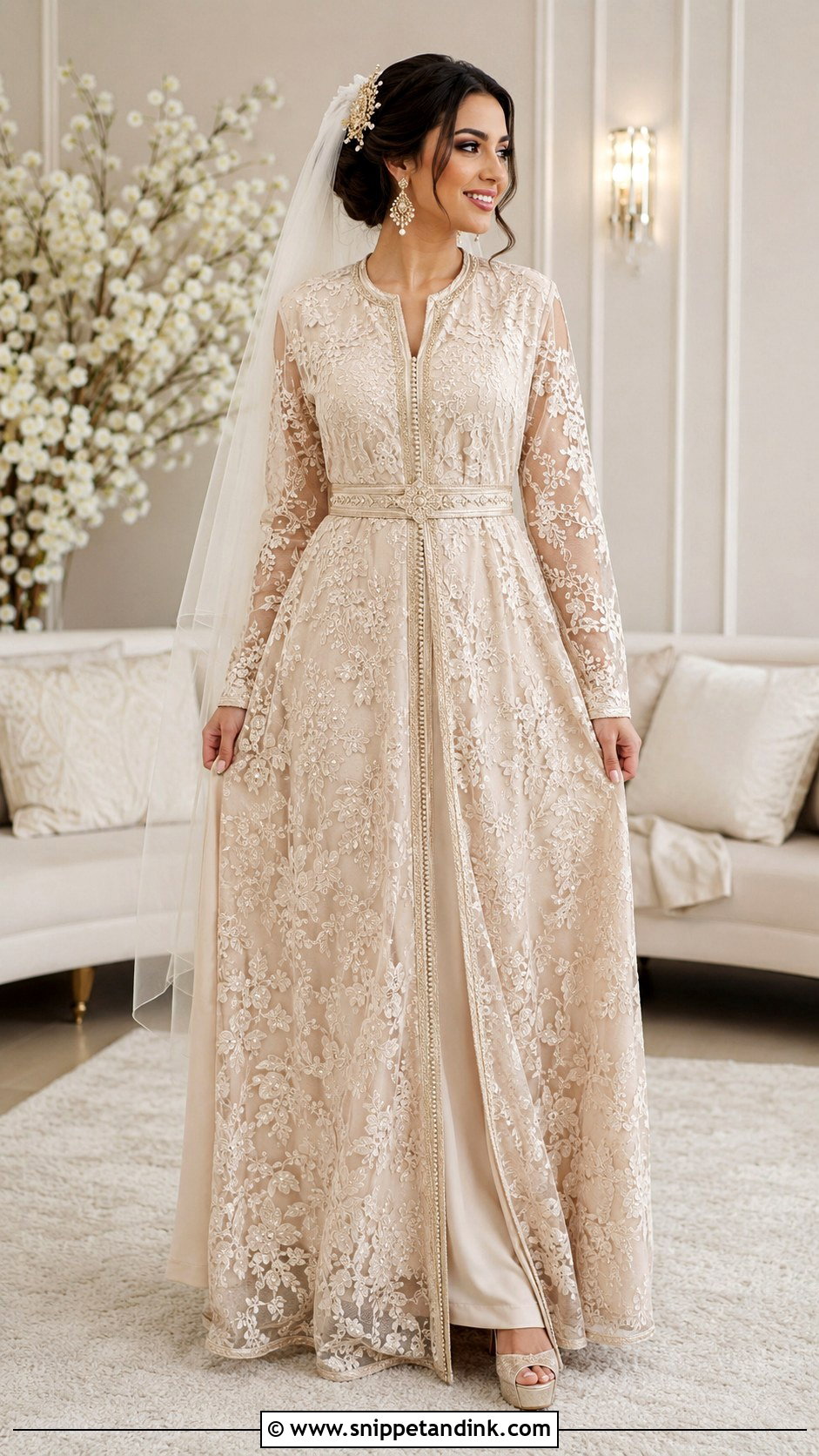
Champagne lace is softer than bright white and works with both gold and pearl jewelry. A champagne satin lining under a full-length lace kaftan, with modest long sleeves and a lightly flared hem, keeps the outline calm. Fine gold trim along the front opening marks it as Moroccan. A slim belt covered in the same fabric avoids breaking up the lace. Champagne block heels, pearl-and-gold earrings, a small comb and a plain ivory veil complete it. The lining is my main check: it should sit close to your skin tone and stay fully opaque under photography lights, because lace over a mismatched lining looks patchy. It suits a civil ceremony or engagement.
11. Pastel Blue Moroccan Bride Takchita With Cape
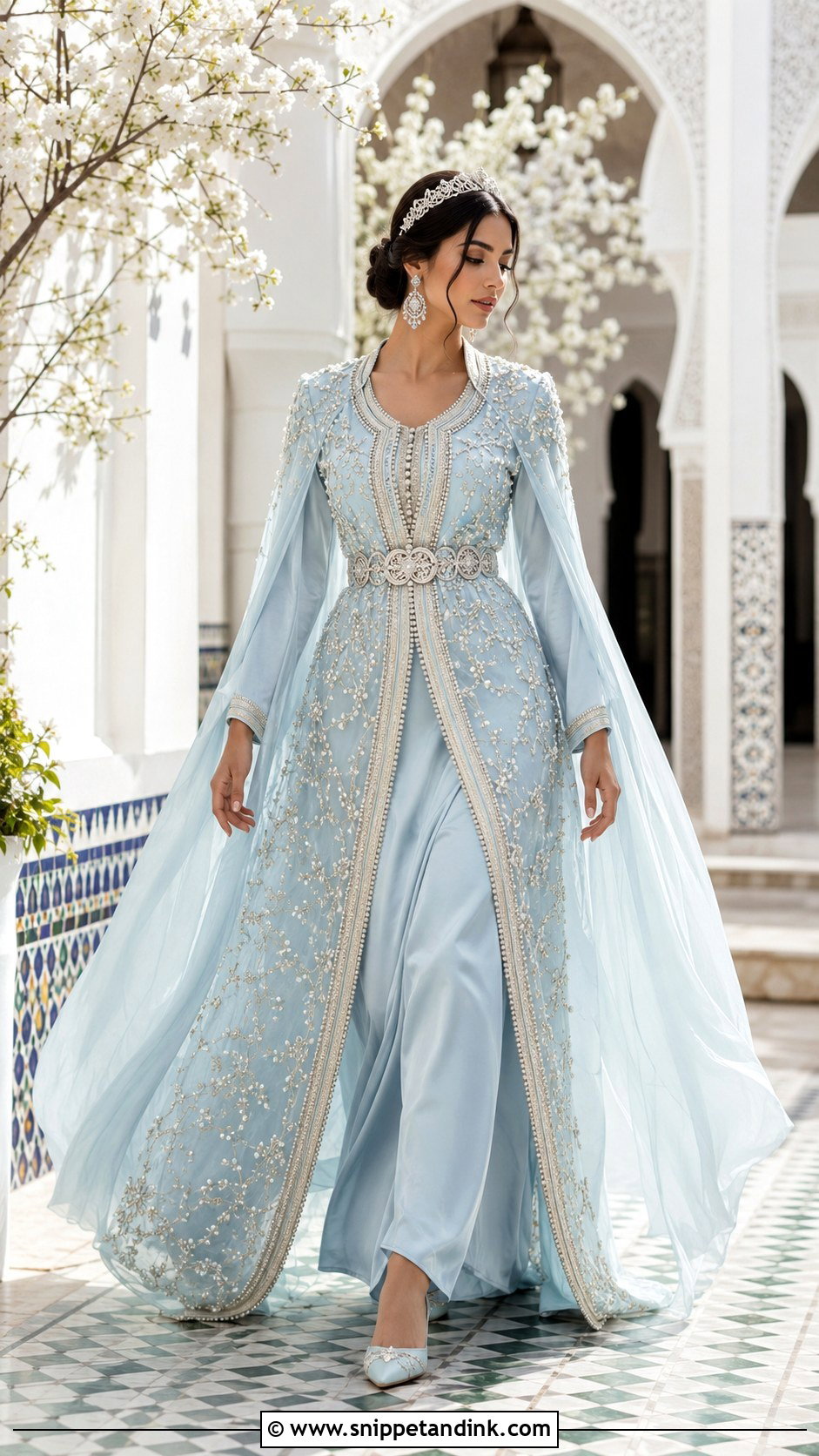
Pastel blue feels light and suits spring or daytime. Ice-blue satin underneath and a sheer embroidered outer layer with silver or pearl detail form the takchita. Instead of a long veil, attach a light cape at the shoulders so it flows behind while leaving the hair visible. A silver belt ties the metal accents together. Pale blue flats, crystal earrings and a delicate silver headpiece complete it. I’d keep the cape a little shorter than the dress hem; a cape that touches the floor gets stepped on during the entrance, often by the bride herself. Cool pink makeup and a soft highlight suit the colour.
12. Lilac Moroccan Bride Kaftan With Crystals
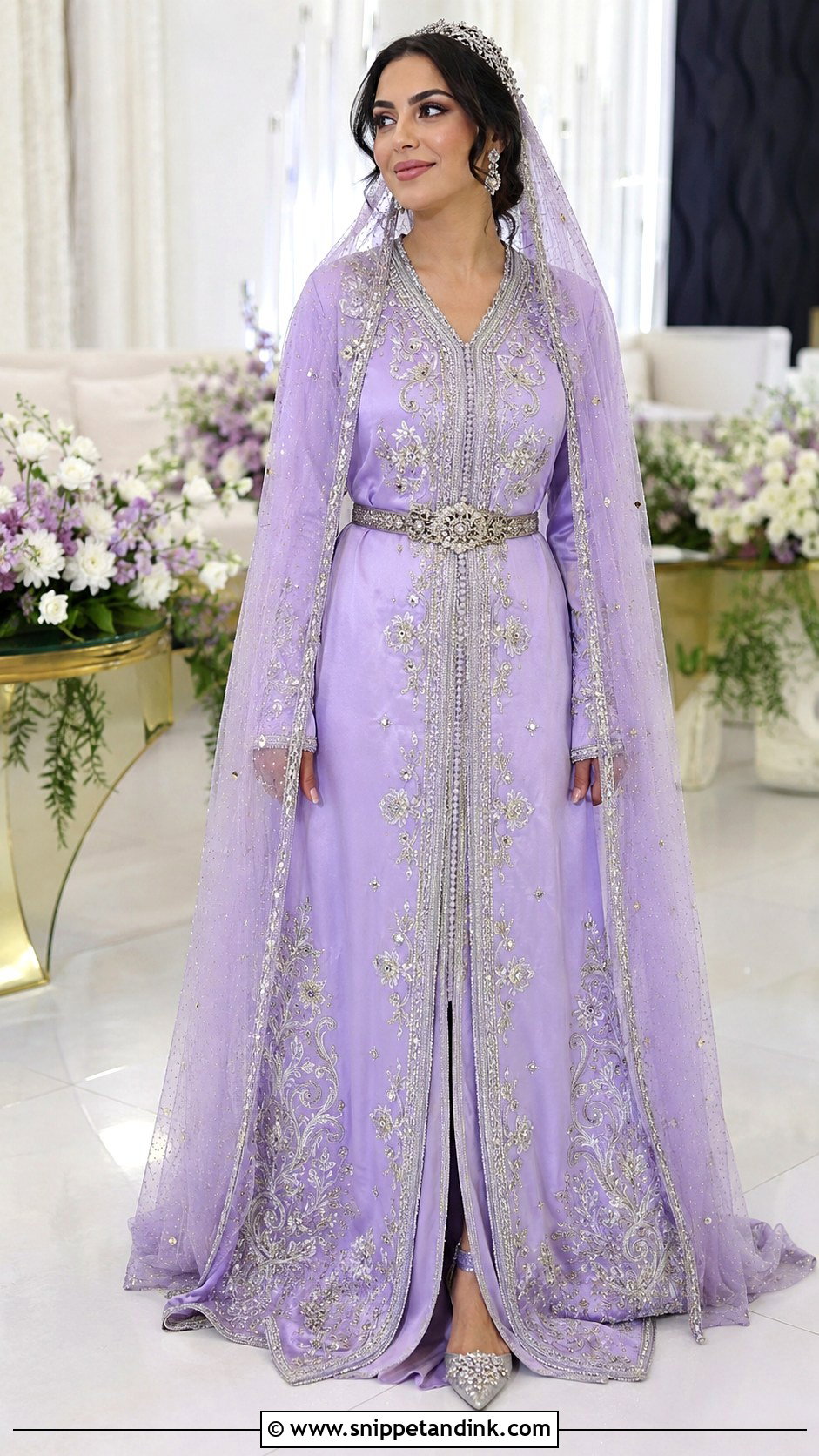
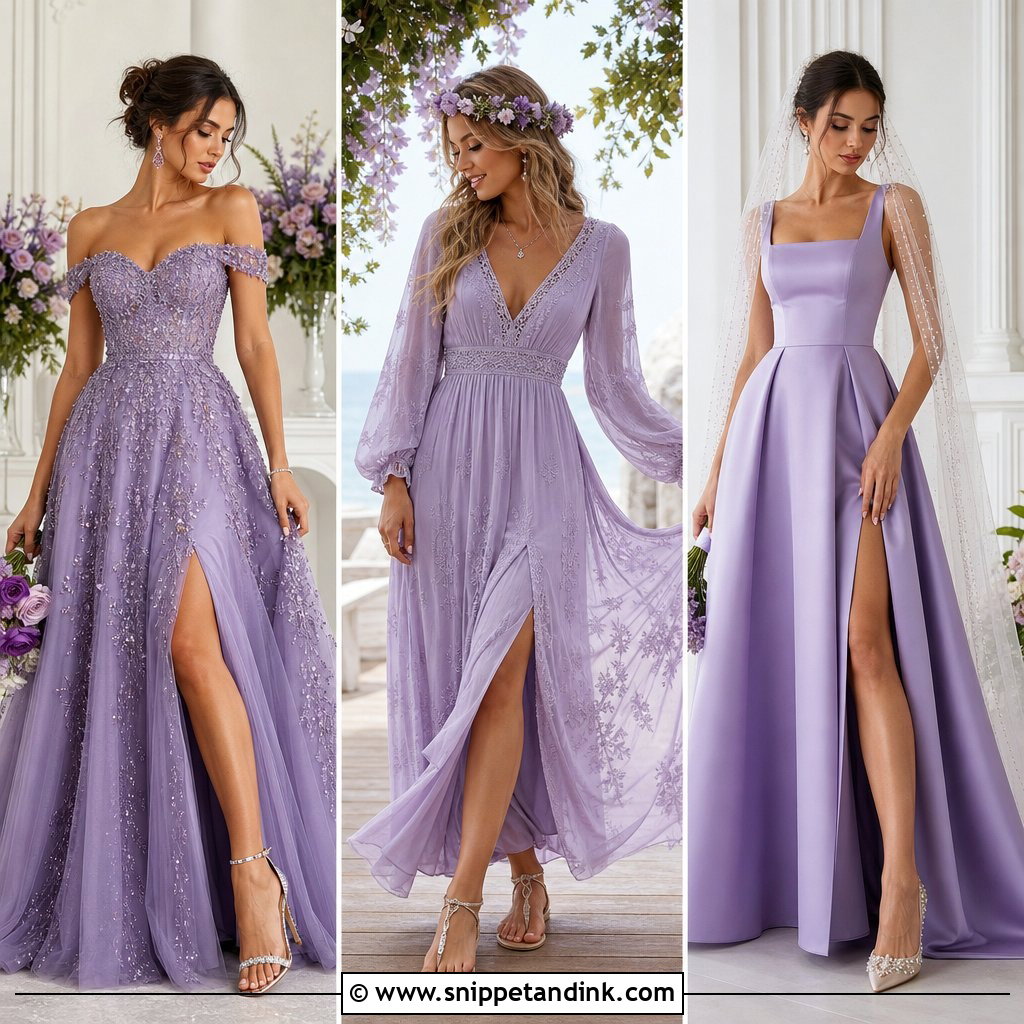
Lilac reads romantic without becoming sugary. Smooth lilac satin with clear crystals, silver thread and tonal embroidery, brightest at the neckline and upper sleeves, reflects light onto the face. A narrow silver belt keeps the line long. Silver pointed flats, crystal earrings and small jeweled pins in a low bun are enough, with a sheer lilac veil or an embellished headband instead. Mixing too many crystal sizes is the error I see most with this colour; it makes the bodice look busy rather than lit. Stick to one or two sizes. With a well-fitted lining it moves from portraits to the main reception without fuss.
13. White Satin Moroccan Bride Gown With Caftan Details
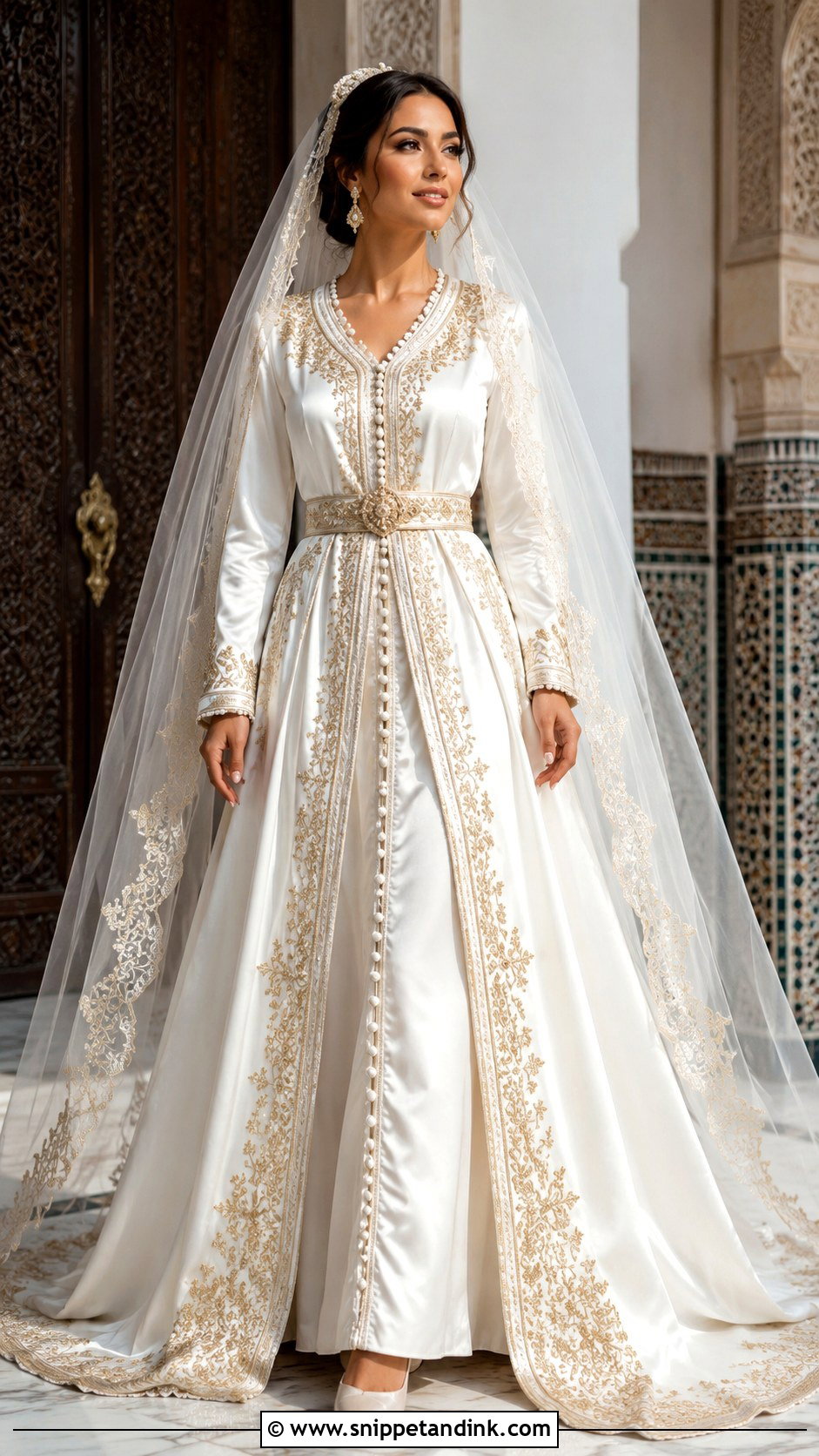
For brides blending Western and Moroccan influences, a white satin gown with kaftan details sits in the middle. A modest A-line or lightly fitted shape with long sleeves carries Moroccan embroidery along the neckline, cuffs and center bodice, with covered buttons and braided trim. A removable gold or silver belt, matched to the thread, works for the ceremony. White heels, drop earrings and a full veil under a polished updo complete it. Keep the train short if you’ll sit in the amaria later; a long train has nowhere to go on the platform and gets crushed. It fits the final entrance or the cake cutting.
14. White Moroccan Bride Takchita With Detachable Cape
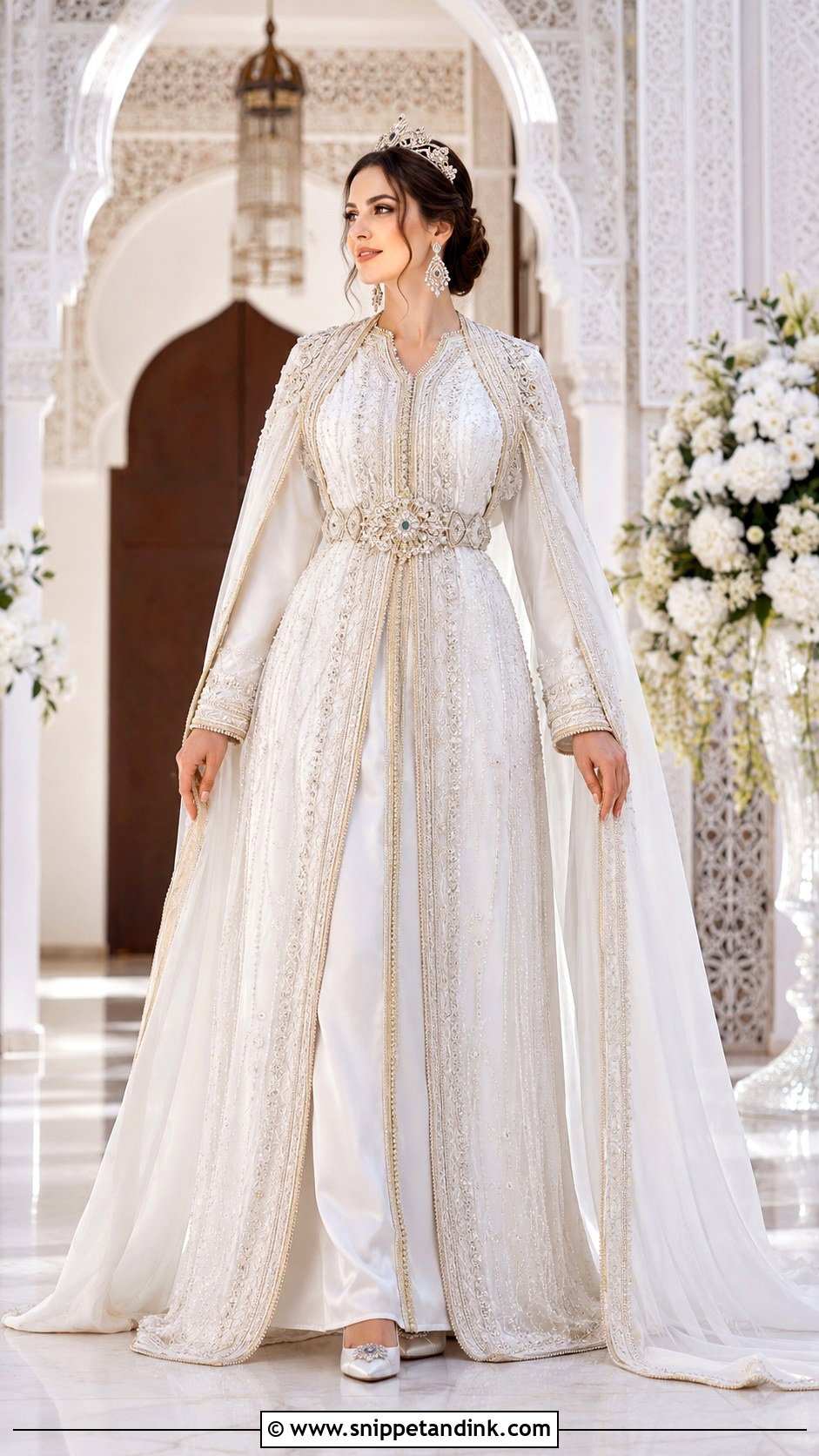
Would you like one outfit to give two looks? A white takchita with a detachable cape adds drama at the entrance and freedom later. A satin underdress and a lightly beaded tulle robe, both edged in silver or pale gold, sit under a cape attached at the shoulders, falling just past the hem. A jeweled belt holds the waist. White flats, statement earrings and a compact tiara complete it. Remove the cape after the formal photos to show the sleeves and back. I’d ask for snaps or hooks hidden under the shoulder seam so the negafa can lift it off in seconds without touching your hair or headpiece.
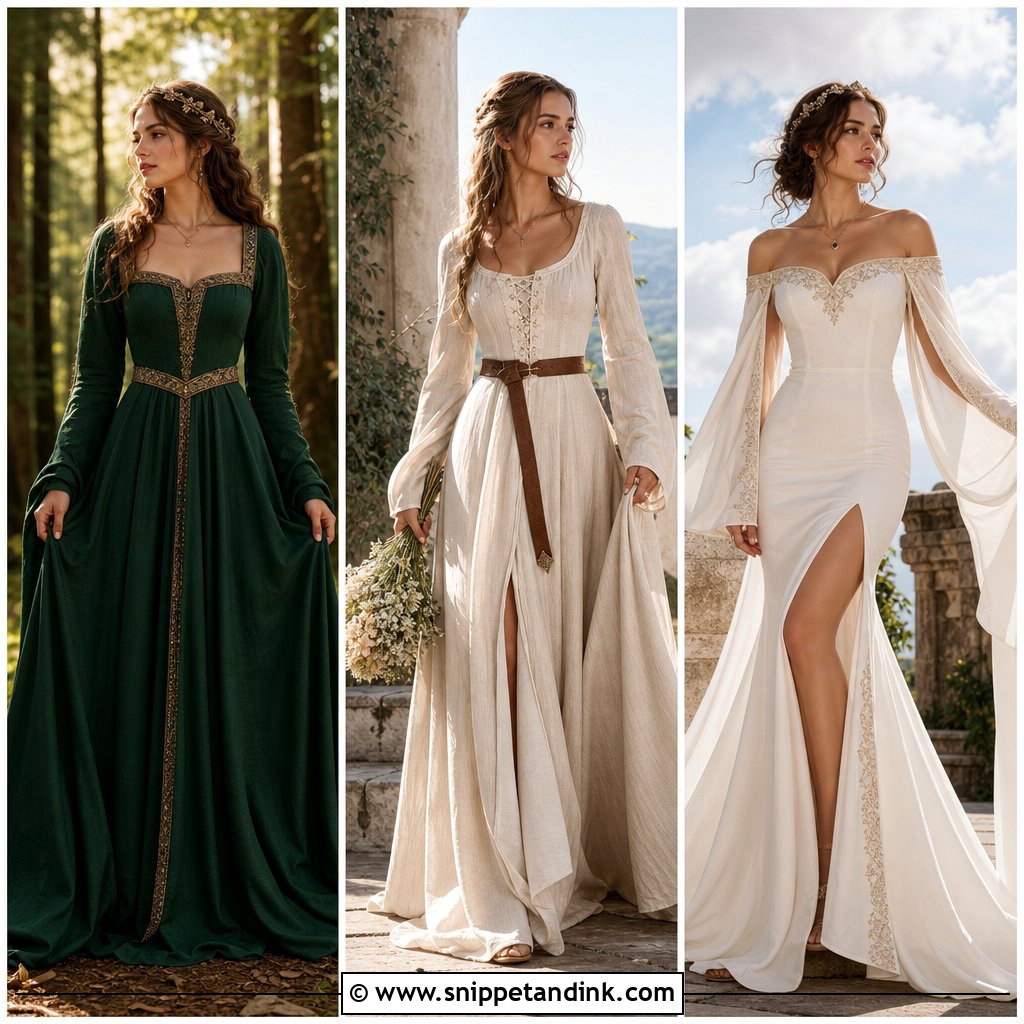
15. White And Green Moroccan Bride Takchita
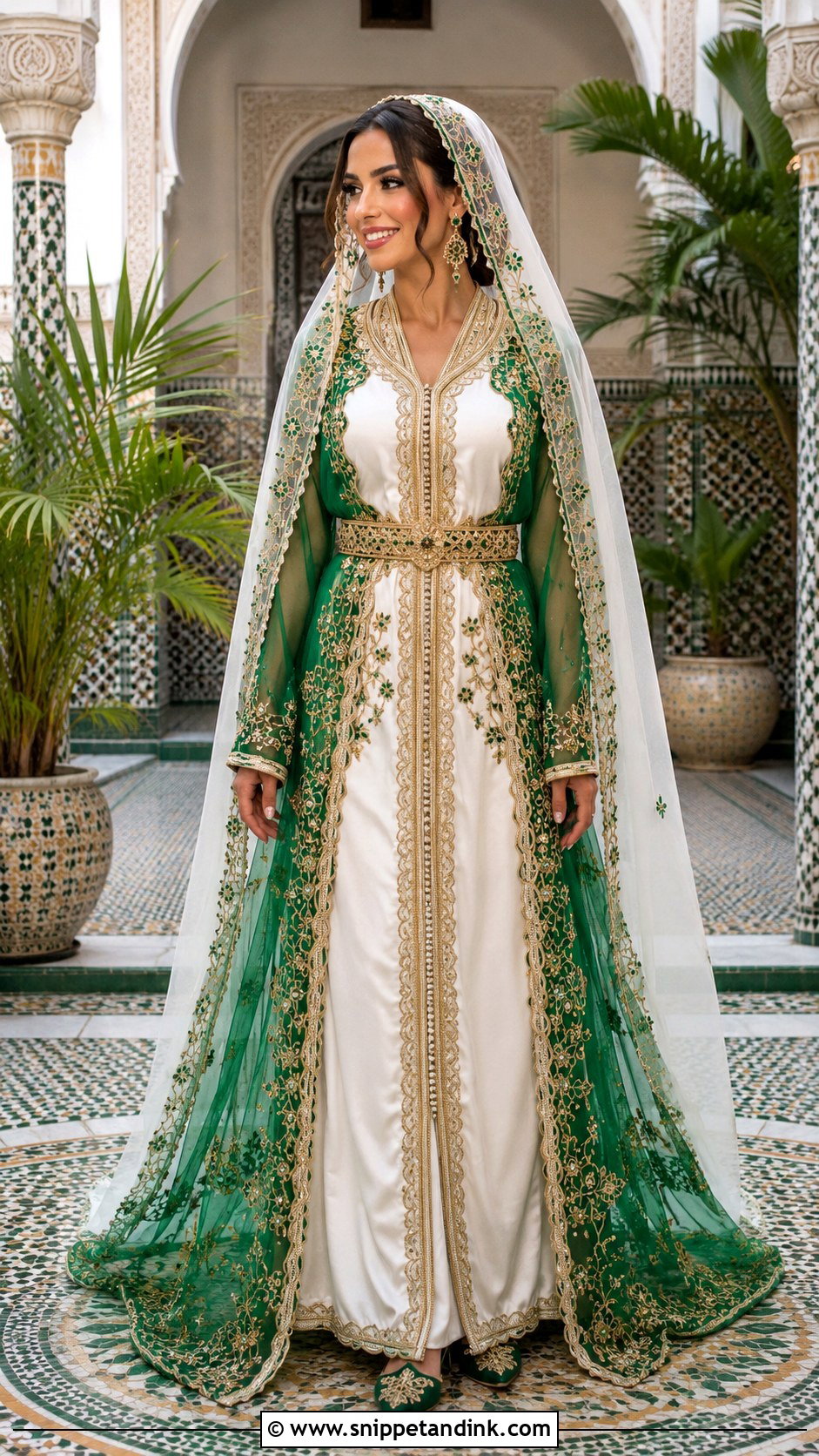
White with green links a bridal palette to the colour Moroccan families often choose for celebrations. Use an ivory underdress with a sheer emerald robe, or reverse it with a green base and white embroidered overlay; gold trim unites the layers. A structured gold belt, green-and-gold slippers and gold earrings complete it. A white veil with a narrow green embroidered edge makes the pairing look deliberate from behind. The test I use: the green should repeat in a few specific places, such as trim, veil edge and slippers, rather than scattered randomly. Keep the headpiece simple. It suits a henna entrance or a family ceremony.
16. Coral Moroccan Bride Kaftan With Gold Embroidery
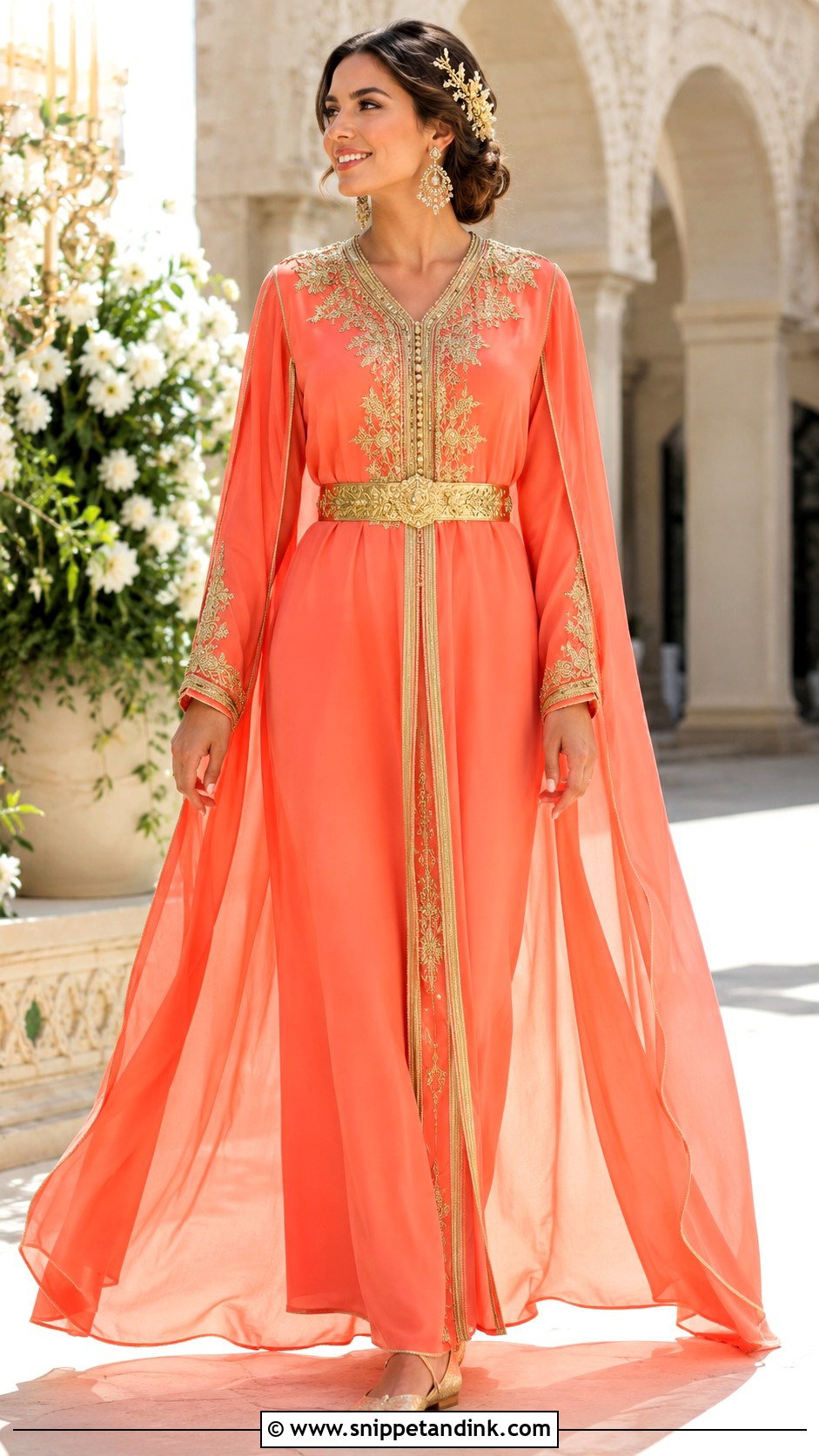
Coral looks warm and bright in daylight. A silk or crepe kaftan in a mid coral with fine gold embroidery at neckline, sleeves and hem, plus a matching gold belt, keeps it fluid rather than heavy. Metallic flats, small chandelier earrings and a gold comb above a textured low bun complete it, with a sheer coral cape or a plain gold-edged scarf. Coral sits close to the face, so I steer makeup toward peach with a neutral lip; a bright lip against coral competes. Choose light fabric for warm weather and outdoor portraits. It fits a daytime ceremony or early reception entrance.
17. Plum Moroccan Bride Takchita With Silver Belt
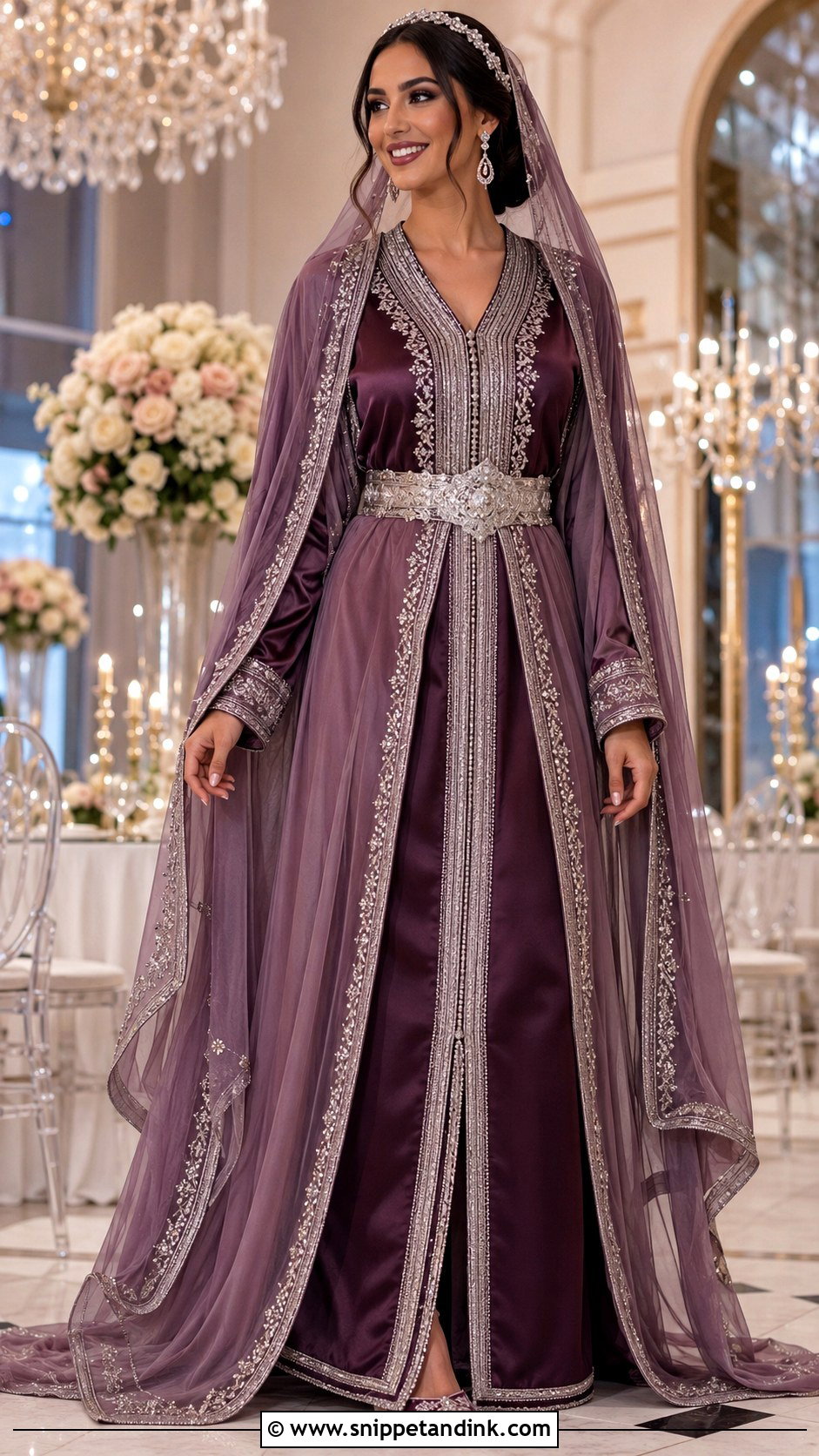
Plum sits between burgundy and purple and reads sophisticated at night. A deep plum satin underdress with a slightly lighter tulle or chiffon robe stops the colour from becoming a solid dark block. Silver embroidery in vertical lines lengthens the body. A structured silver belt, matching slippers and teardrop earrings are enough; a crystal headband can replace the crown. If you add a veil, go for transparent grey-lilac tulle. An exact plum match looks heavy around the face. Cool-toned makeup and a berry-nude lip complete it. Check the robe has room through sleeves and hips, since dark fabric shows every pull line.
18. Mint Moroccan Bride Kaftan With Pearl Details
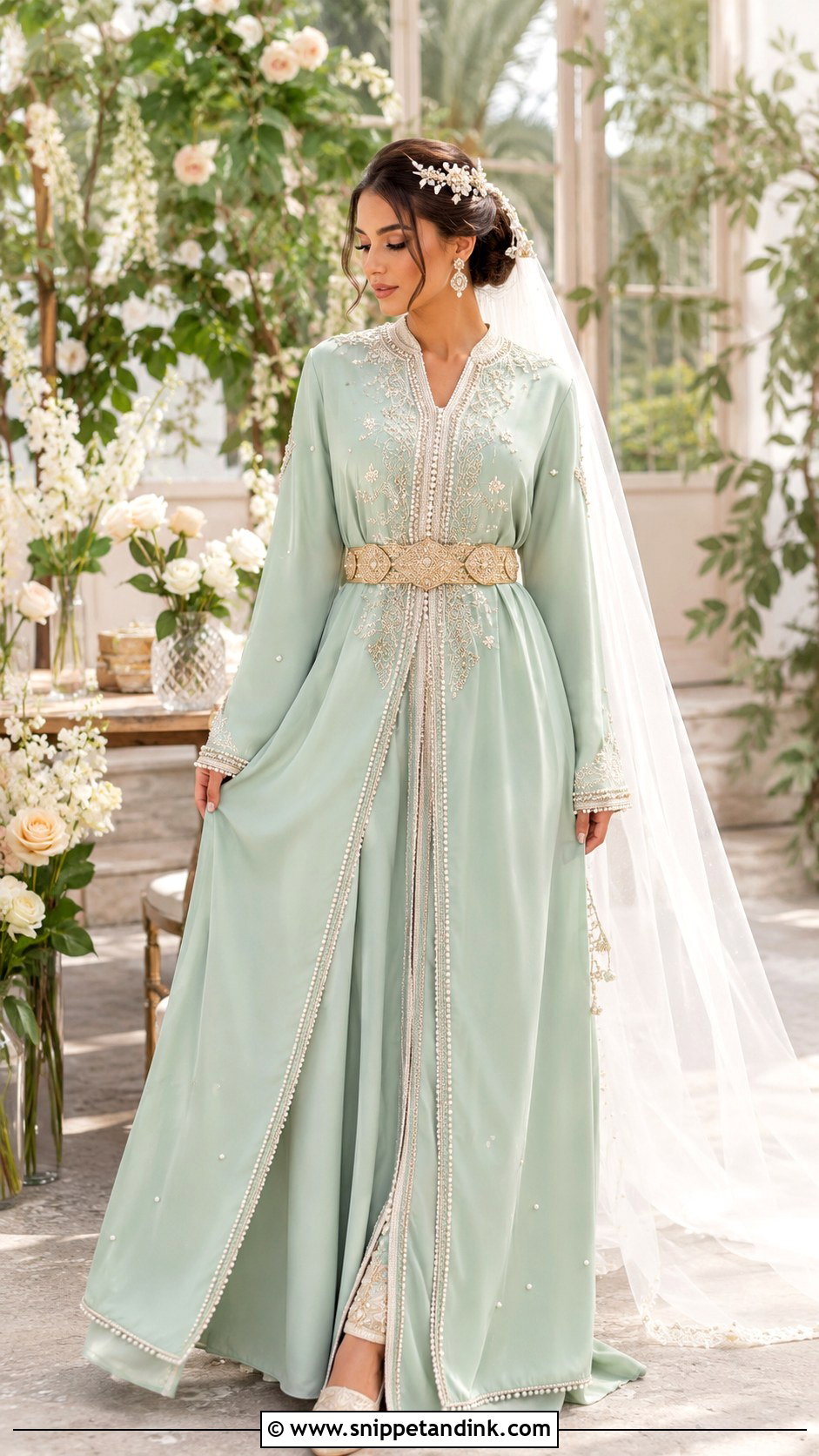
Mint is the lightest colour here and suits a warm-weather celebration. Breathable silk crepe or light satin with pearl embroidery at the neckline and sleeve edges, plus a pale gold or pearl-covered belt, keeps the palette soft. Ivory slippers, pearl earrings and a small floral comb complete it; a sheer ivory veil clearly marks it as bridal. Keep the skirt flowing rather than stiff. On pale fabric, uneven embroidery spacing shows immediately, so I look closely at the cuffs where it tends to bunch. It suits an engagement, a garden setting, or brides who lean toward subtle colour over jewel tones.
19. Silver Moroccan Bride Takchita With Beaded Tulle
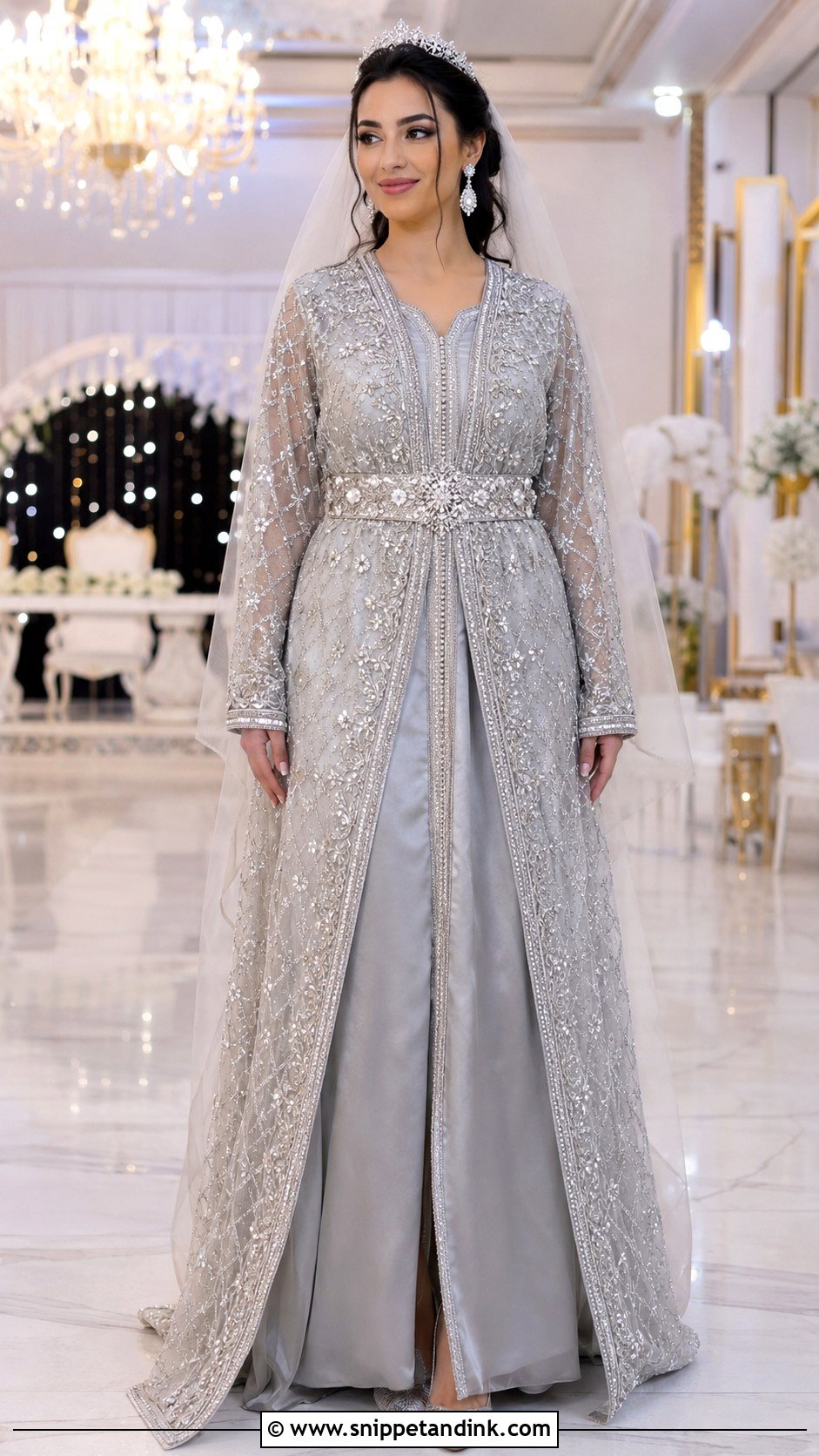
Silver beaded tulle glows under bright reception lights. Layer it over soft grey or ivory satin so the beadwork shows without glare, and keep embroidery symmetrical along bodice, cuffs and front edges. A polished silver belt anchors the layers and holds the takchita shape. Silver flats, crystal drops, a refined tiara and a plain veil finish it; a second beaded layer on the veil competes. I run my hand along the inside of the sleeves before the wedding. Beads that are rough or loose there catch on the lining and on guests’ clothing during every embrace. A cool pink lip suits the metallic palette for an evening entrance.
20. Rose Gold Moroccan Bride Takchita
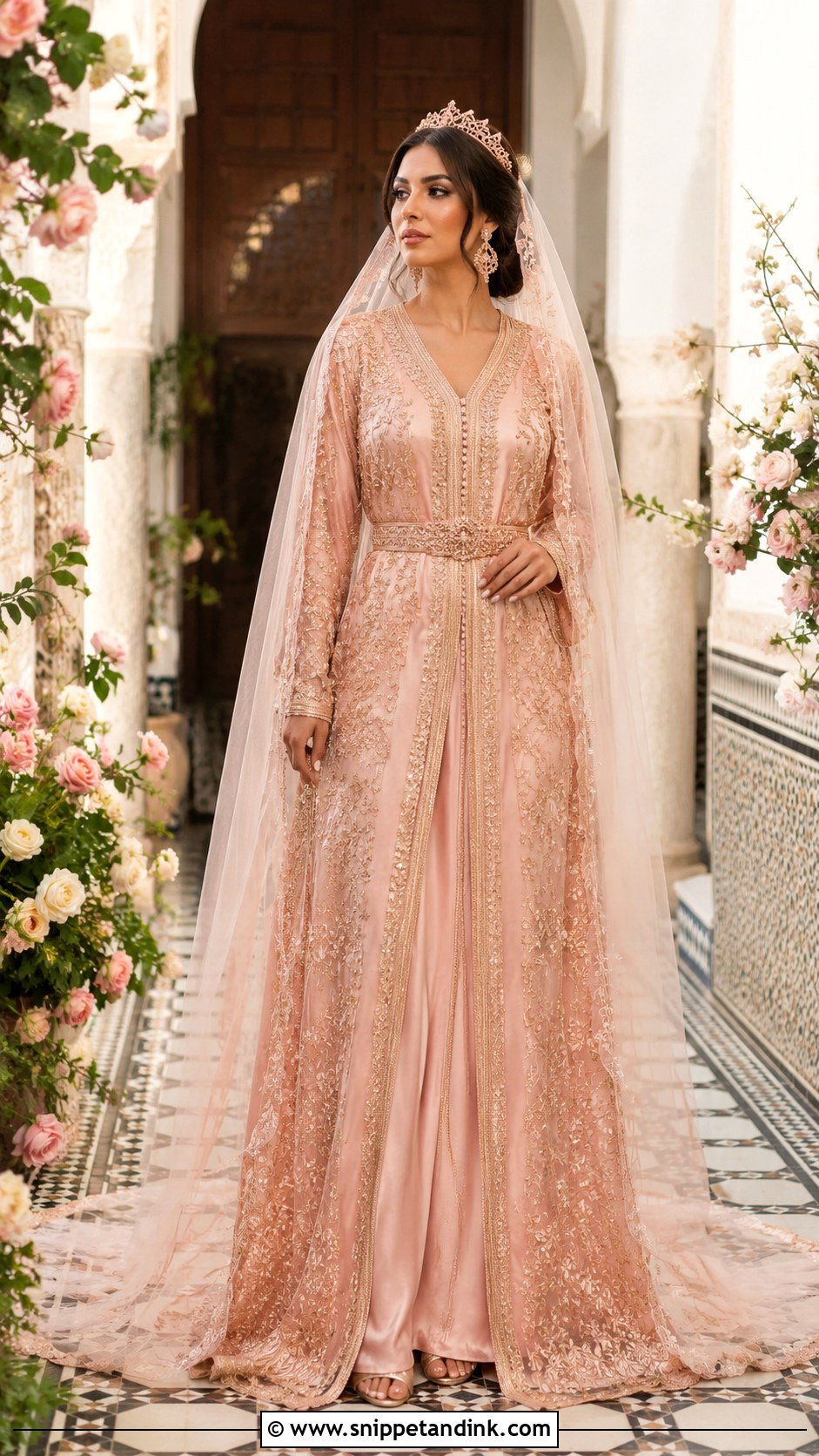
Rose gold sits between blush and metallic. A dusty pink satin underdress with a sheer rose-gold robe decorated in fine beading or floral threadwork keeps the shine soft. The metal belt should sit securely without restricting breathing; I fit it with the bride seated, since that is when a belt bites. Champagne heels, rose-gold earrings and a delicate crown complete it, with an ivory veil edged in blush. Concentrate the metallic work instead of covering every inch. Smooth hair and rosy, natural makeup keep it balanced. It suits many skin tones and works for an engagement or the last change of the night.
The Weight Nobody Warns You About
A fully embroidered takchita, a metal mdamma, a crown and heavy earrings add up. Worn for an hour it feels regal. Worn across a long evening it can leave your waist sore and your ears aching, so I plan comfort into each look from the start.
- Try every belt on while seated. Metal belts that feel fine standing can press into the ribs when you sit on the amaria or at the head table.
- Wear the heaviest earrings for the shortest period, and let the lighter set carry the late changes.
- Babouches or flat formal slippers are kinder than heels for a night of dancing, and the long hems hide them anyway.
- Ask for breathable linings in velvet and brocade pieces, even in winter. Halls warm up quickly once guests arrive.
- Keep water and a straw near the changing room, so you can drink without disturbing lipstick between looks.
After the wedding
Heavily beaded takchitas should not live on a hanger, where the weight slowly stretches the shoulders. Store them folded flat with acid-free tissue between the layers, in a breathable cotton bag rather than plastic. Remove metal belts and store them separately so they don’t press marks into the fabric.
Every Look Has to Survive the Amaria
A Moroccan bridal look brings colour, craftsmanship, comfort and family meaning together. White takchitas, green henna kaftans, velvet evening pieces, capes and lightly embellished gowns can all find a place in the night. Plan around the ceremony, the room temperature, the order of changes and how much you’ll walk and dance. Test every belt sitting down, confirm hems with your actual shoes and check beadwork for rough edges. Choose veil, jewelry, slippers and headpiece as part of each outfit, not separately. Work with a tailor or negafa who understands your proportions, so every look honours the tradition and still lets you celebrate in comfort.
You'll Like These Ideas:








Leave a Reply