
Brocade wedding gowns get their richness from the weave itself. The pattern is raised into the cloth on the loom rather than printed or sewn on, so even a plain silhouette has depth up close and a soft glow from across the room. The fabric is firm, which is why it suits regal ball gowns, sharp columns and short reception dresses alike. What decides whether it looks grand or heavy is the pattern scale, the cut and how little you put next to it. Below are the shapes and styling choices I’d consider, with honest notes on where brocade helps and where it fights you.
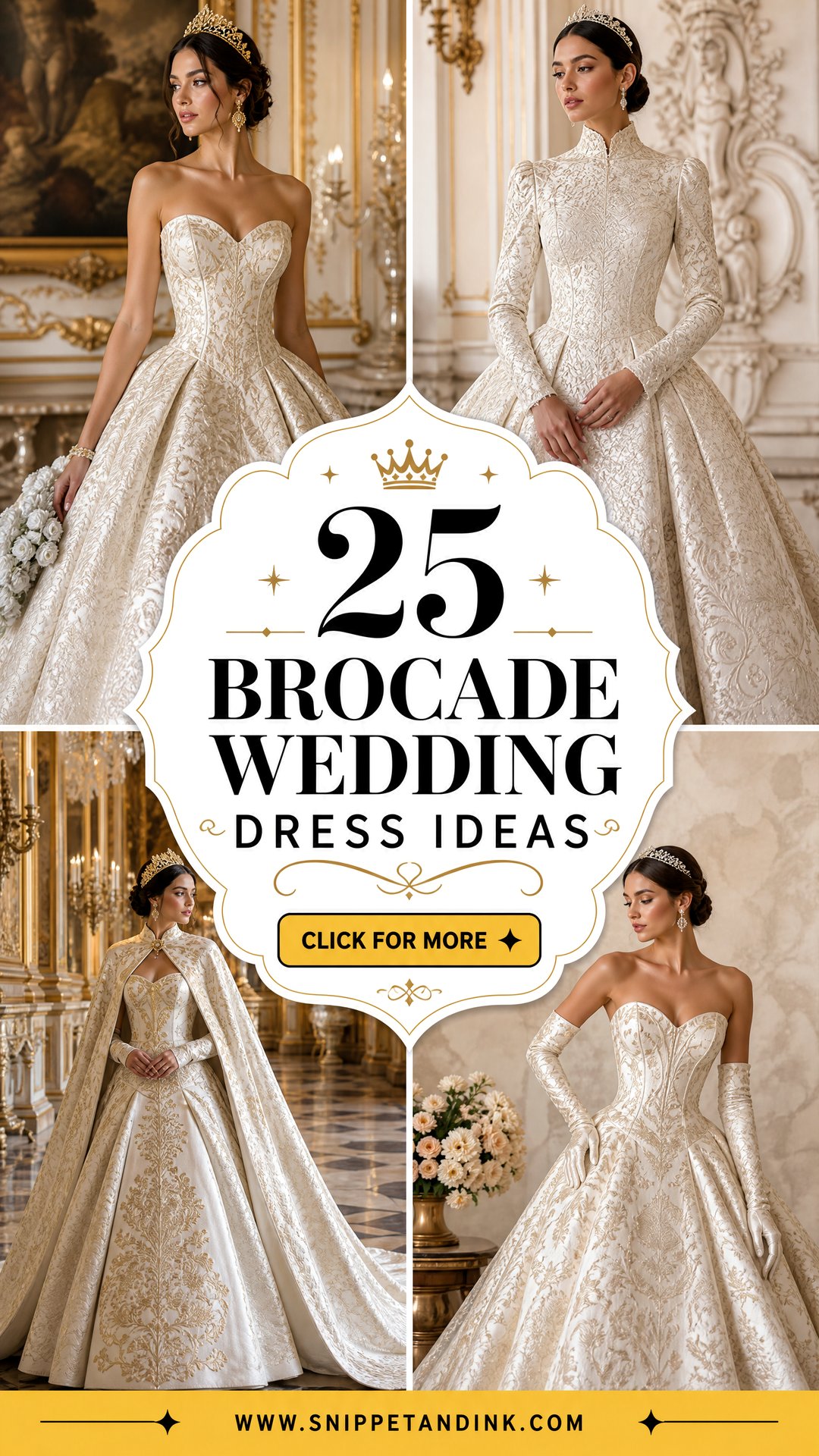
Reading a Brocade Swatch Before You Fall for the Gown
In a shop, every brocade looks rich on the hanger. Before a bride tries one on, I turn the fabric over and handle a corner, because three things tell me how the gown will behave on the day.
- Weight. Hold the skirt hem in one hand. Heavy brocade gives a full skirt without petticoats, but it also tires the shoulders by evening if the bodice relies on straps.
- Pattern scale. Large motifs suit ball gowns and long skirts, where they have space. On a mermaid, a column or a mini they get cut off at seams and darts and can look like furnishing fabric.
- Metallic threads. Look at the back of the weave. Gold or silver yarns can feel scratchy where they float on the reverse, so a full lining matters more here than in plain satin.
I also check how the pattern meets at the side and back seams. Matching a woven motif costs the maker extra fabric, so a gown where the flowers line up across the zip is a good sign of careful construction.
1. Brocade Wedding Dress Ball Gown
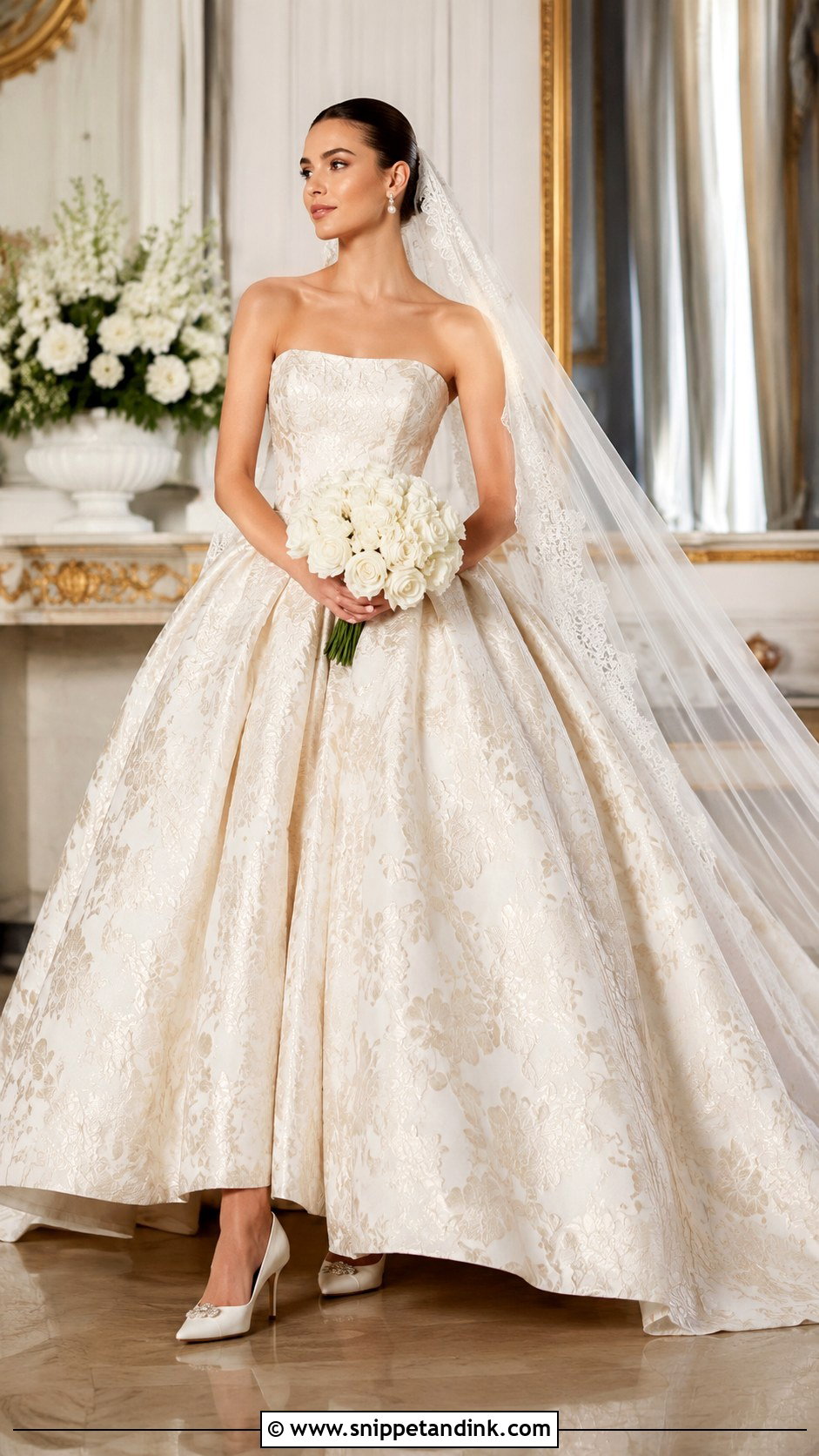
Brocade holds volume on its own, so a ball gown skirt can look full with far fewer petticoat layers than satin would need. That is a real comfort over a long day. I’d start with an ivory or soft white floral weave, a strapless or sweetheart bodice to balance the skirt, a clean cathedral veil, pearl earrings and satin pumps. If the pattern is large, keep the bouquet plain: white roses, ranunculus or calla lilies. Ballrooms, estates and formal hotels give this gown the room it needs for an entrance.
2. Brocade Wedding Dress A Line
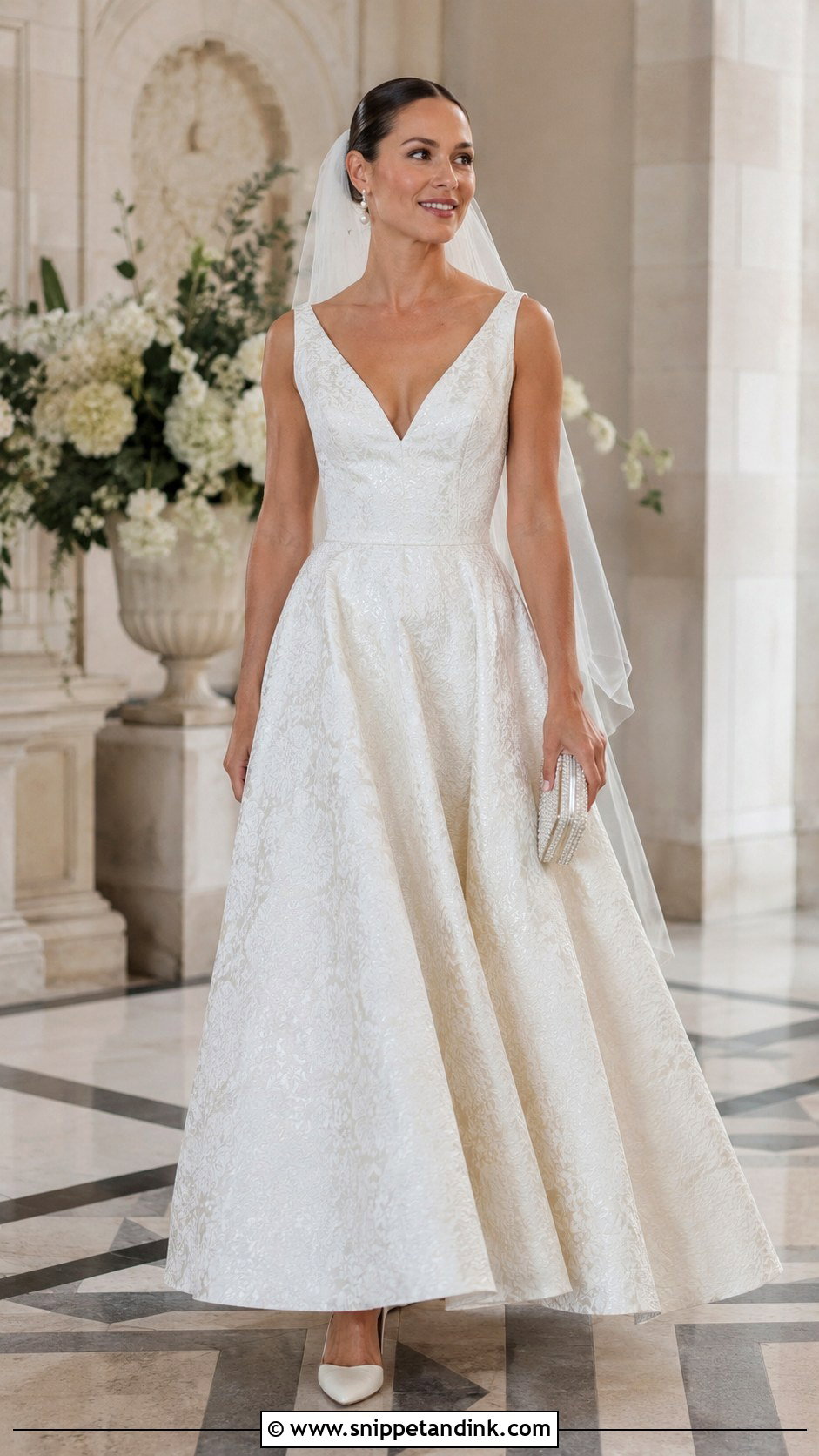
An A-line is the silhouette I’d hand to most brides trying brocade for the first time. It defines the waist and skims the hips, and the wide skirt panels give the woven pattern space to show without the weight of a full ball gown. A soft V or a square neckline keeps the bodice fresh. Pointed ivory heels, a fingertip veil and delicate drop earrings are enough. Check the side seams in the mirror: on a good gown the pattern lines up across them, and on a rushed one it breaks.
3. Strapless Brocade Wedding Dress
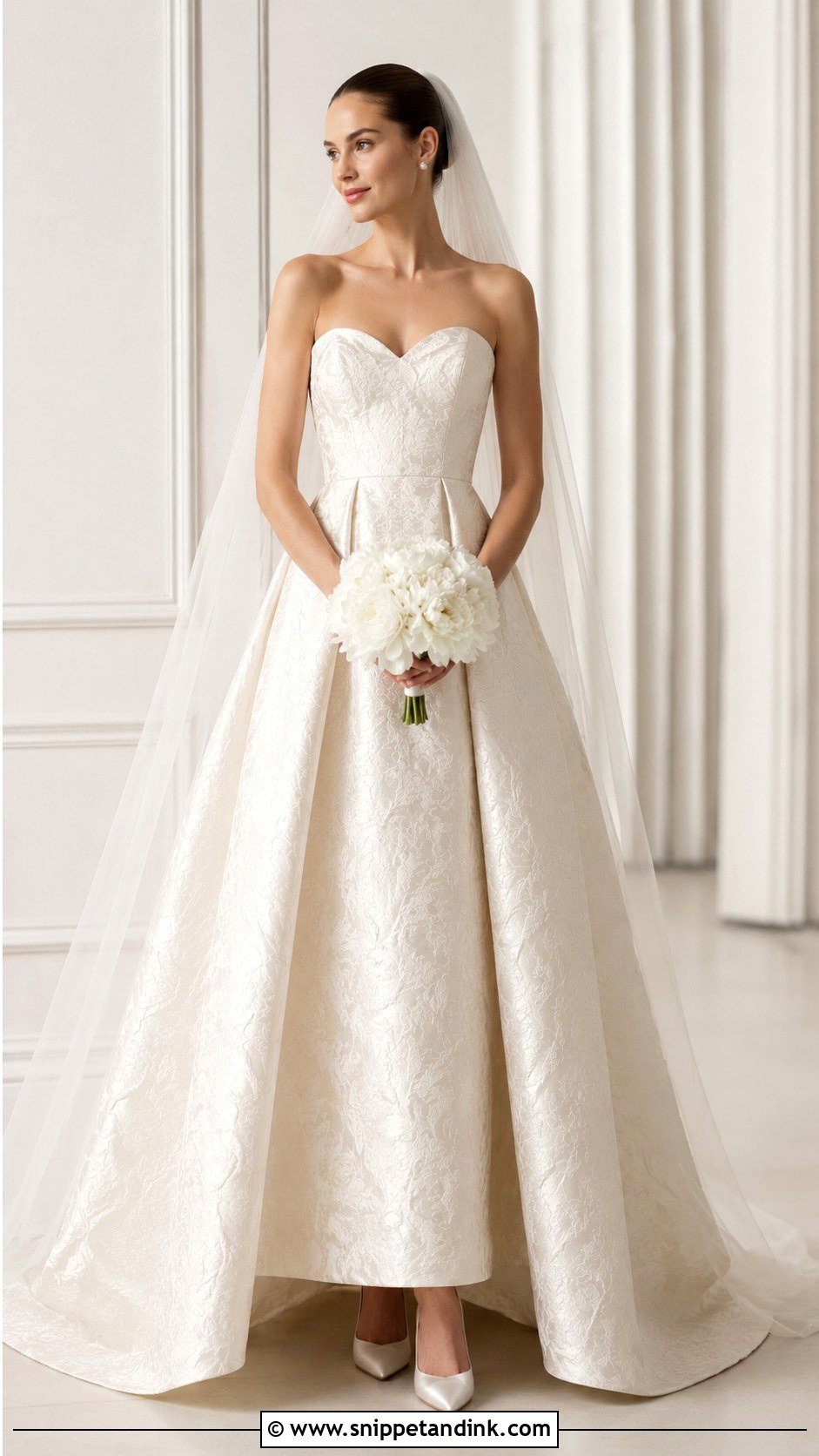
Brocade is stiff enough to support a corset-style strapless bodice almost by itself, which means a strapless gown in this fabric stays up better than one in chiffon or crepe. A straight neckline reads sleek; a sweetheart reads softer. I pair it with a smooth low bun, pearl studs and a narrow veil, then ivory satin heels or pointed slingbacks. The one fitting note: the top edge must sit snug when you sit and breathe deeply, because stiff fabric gapes rather than stretches.
4. Long Sleeve Brocade Wedding Dress
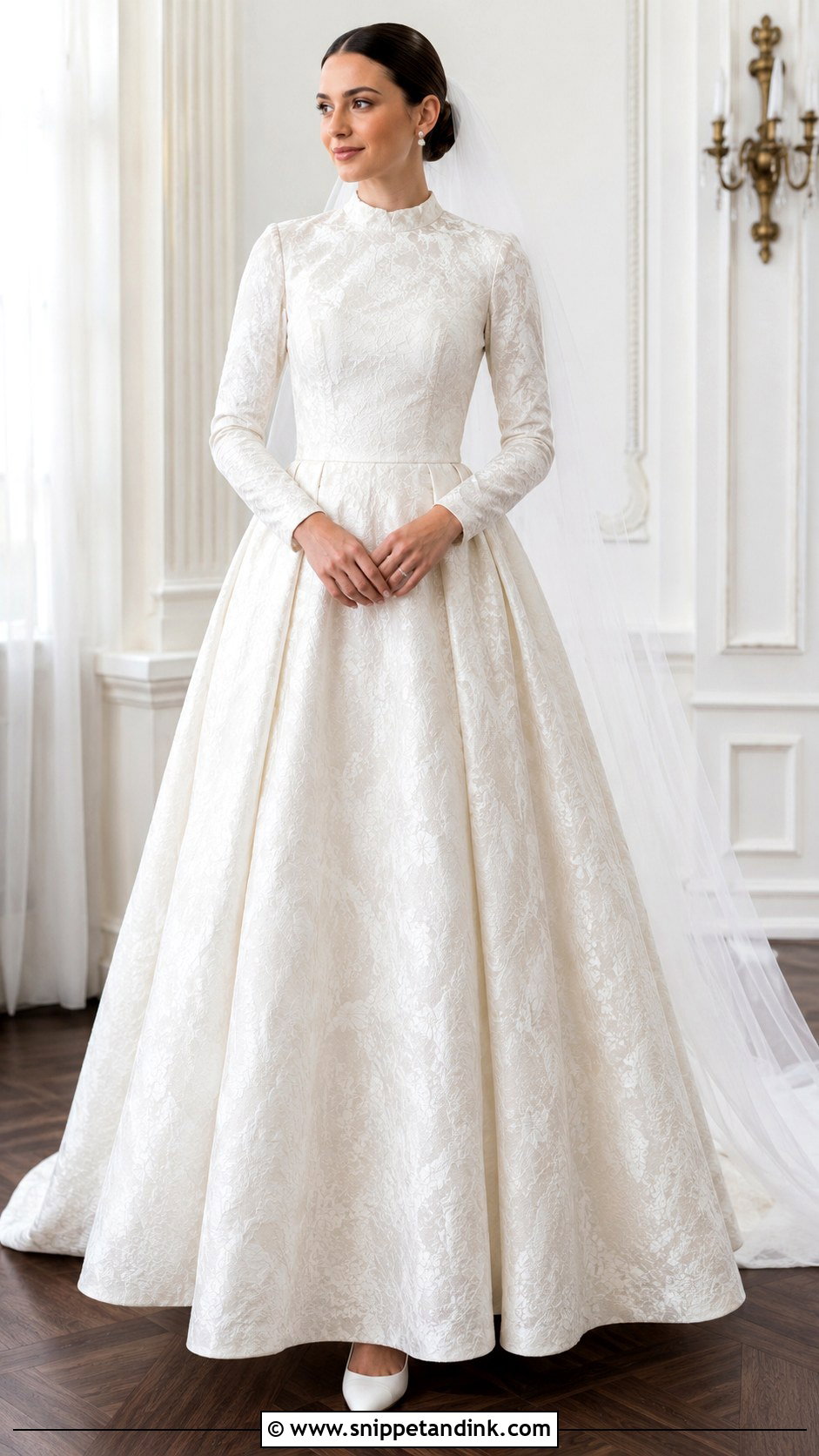
Sleeves suit brocade well, and a long sleeve brocade wedding dress feels quietly regal for fall, winter and formal indoor ceremonies. Slim sleeves look tailored; slightly puffed shoulders lean vintage. A high, bateau or modest scoop neckline keeps it classic. Here is the catch: woven sleeves have almost no give, so lift your arms and hug someone at every fitting before you commit. Small pearl earrings, a simple veil and closed-toe heels finish it. Skip a heavy necklace; the fabric has enough going on.
5. Off Shoulder Brocade Wedding Dress
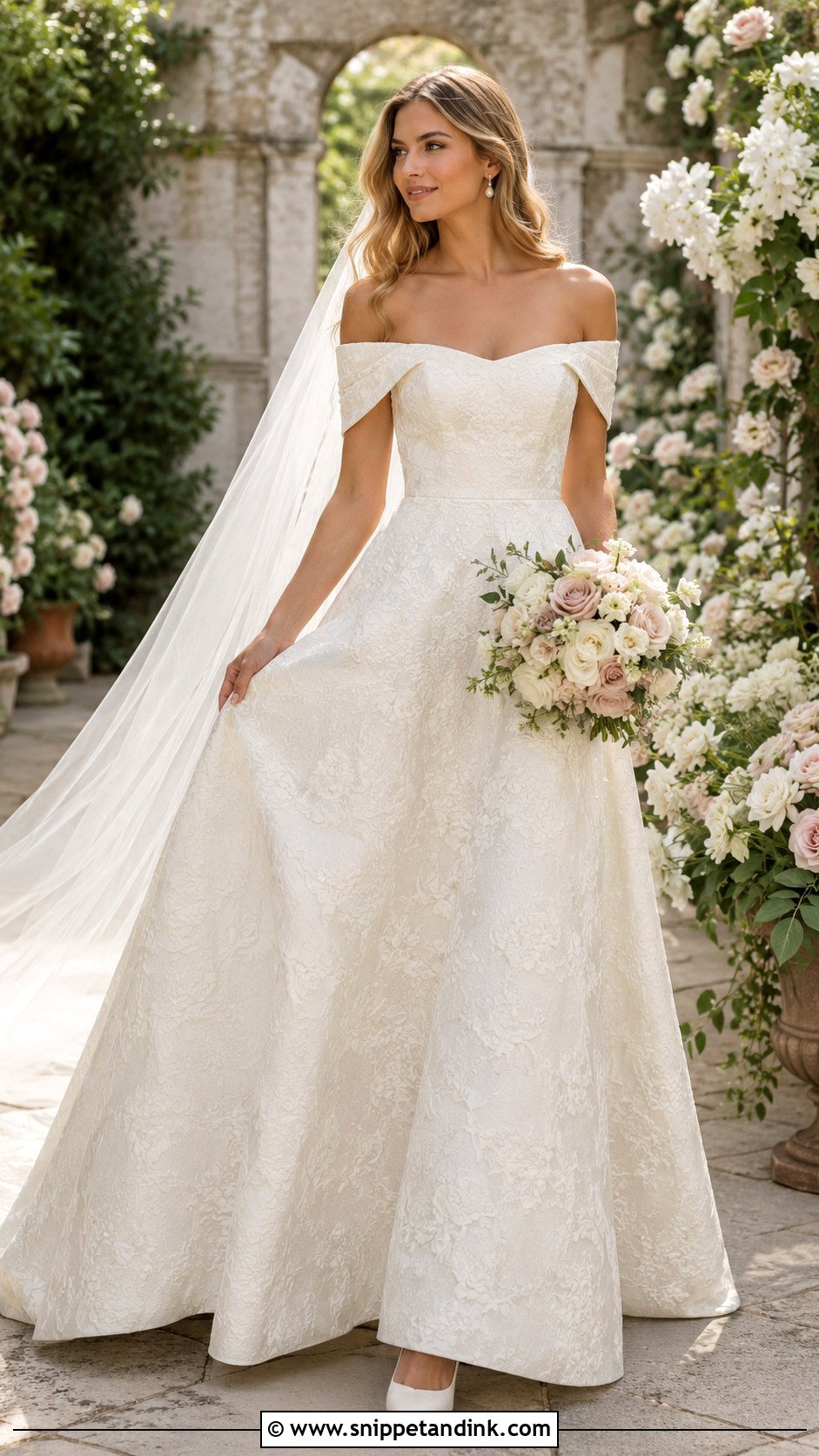
An off-shoulder neckline brings softness to a structured fabric by showing the collarbone and shoulders. It works best on a fitted bodice with an A-line or ball gown skirt. Loose waves, pearl drops and a medium-length veil set low at the back of the hair keep it romantic, with ivory block heels or satin pumps underneath. If the weave carries metallic threads, match your jewelry to their undertone, gold or silver. Ask for an elastic or silicone strip inside the sleeve band so it doesn’t slide down when you raise your arms.
6. Square Neck Brocade Wedding Dress
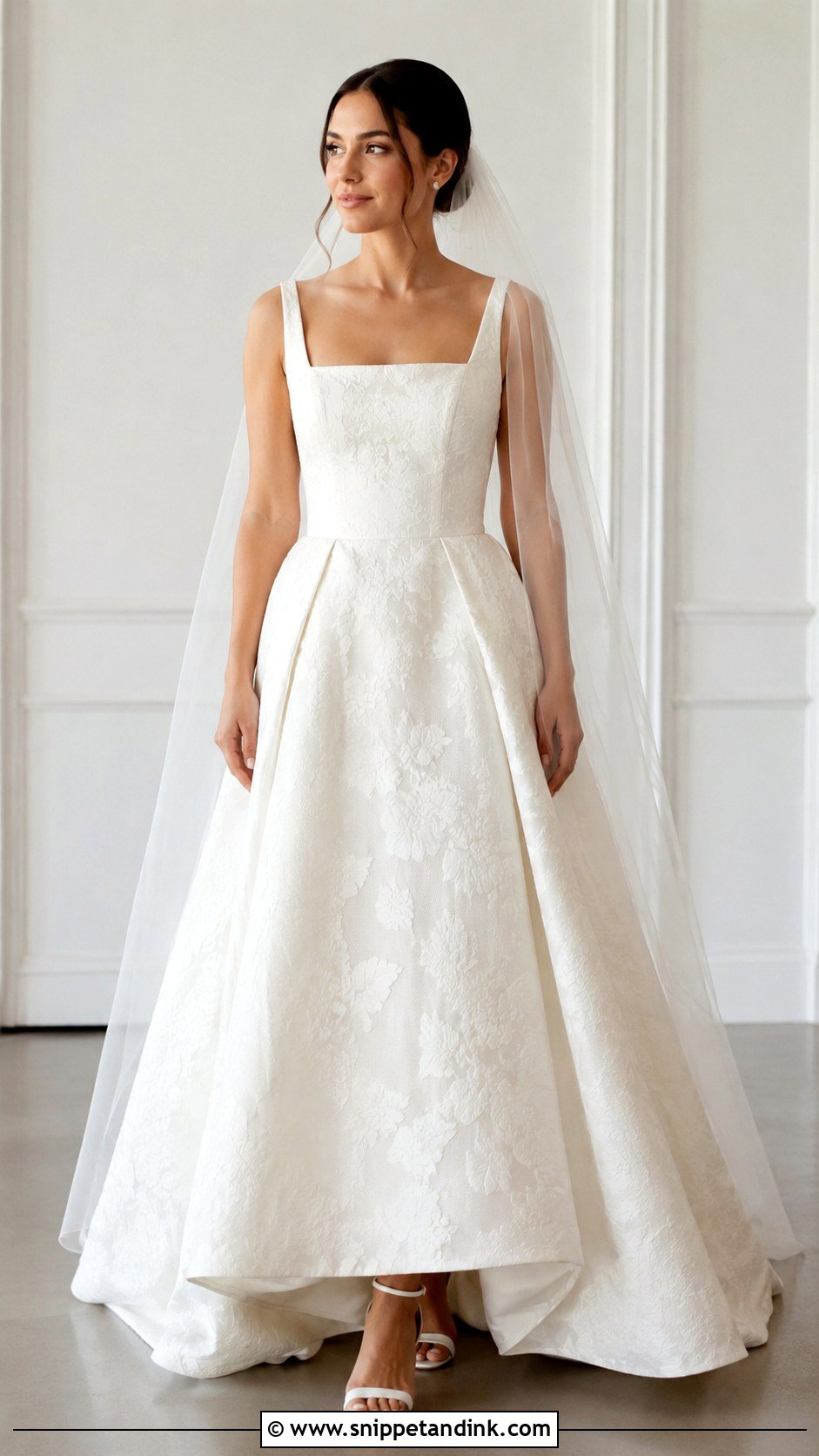
Square necklines suit brides who like clean lines, and the straight edges echo the grid of a woven fabric. A fitted bodice with a full skirt looks traditional; a slim A-line looks softer. I keep it to a centre-part bun, tiny pearl studs and a sheer veil with no heavy trim, plus simple pumps or minimal ankle-strap heels. It works best when the brocade pattern is medium scale, since the neckline already supplies structure and a very large motif can get cut awkwardly at the corners.
7. High Neck Brocade Wedding Dress
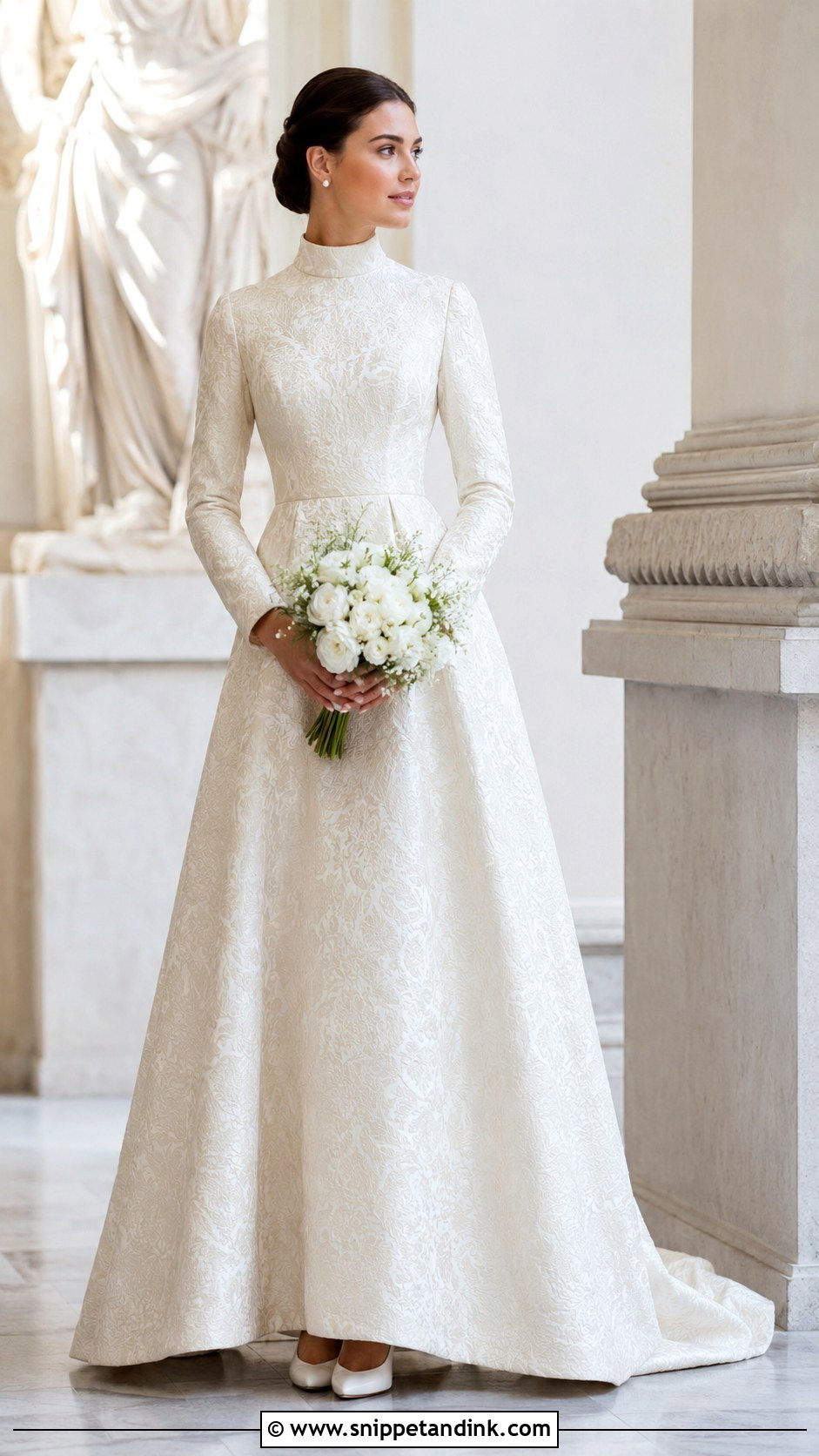
A high neck gives brocade an heirloom feel, the kind of gown that looks as though it was handed down. Covered necklines need relief somewhere else, so I balance it with a defined waist, a clean skirt or an open back if she’s comfortable with that. Hair goes up or behind the shoulders so the neckline stays visible. Pearl studs, a sleek veil, closed-toe heels and a small white bouquet with greenery are enough. Museum weddings, formal winter celebrations and classic ceremonies with a strict dress code suit it.
8. Floral Brocade Wedding Dress
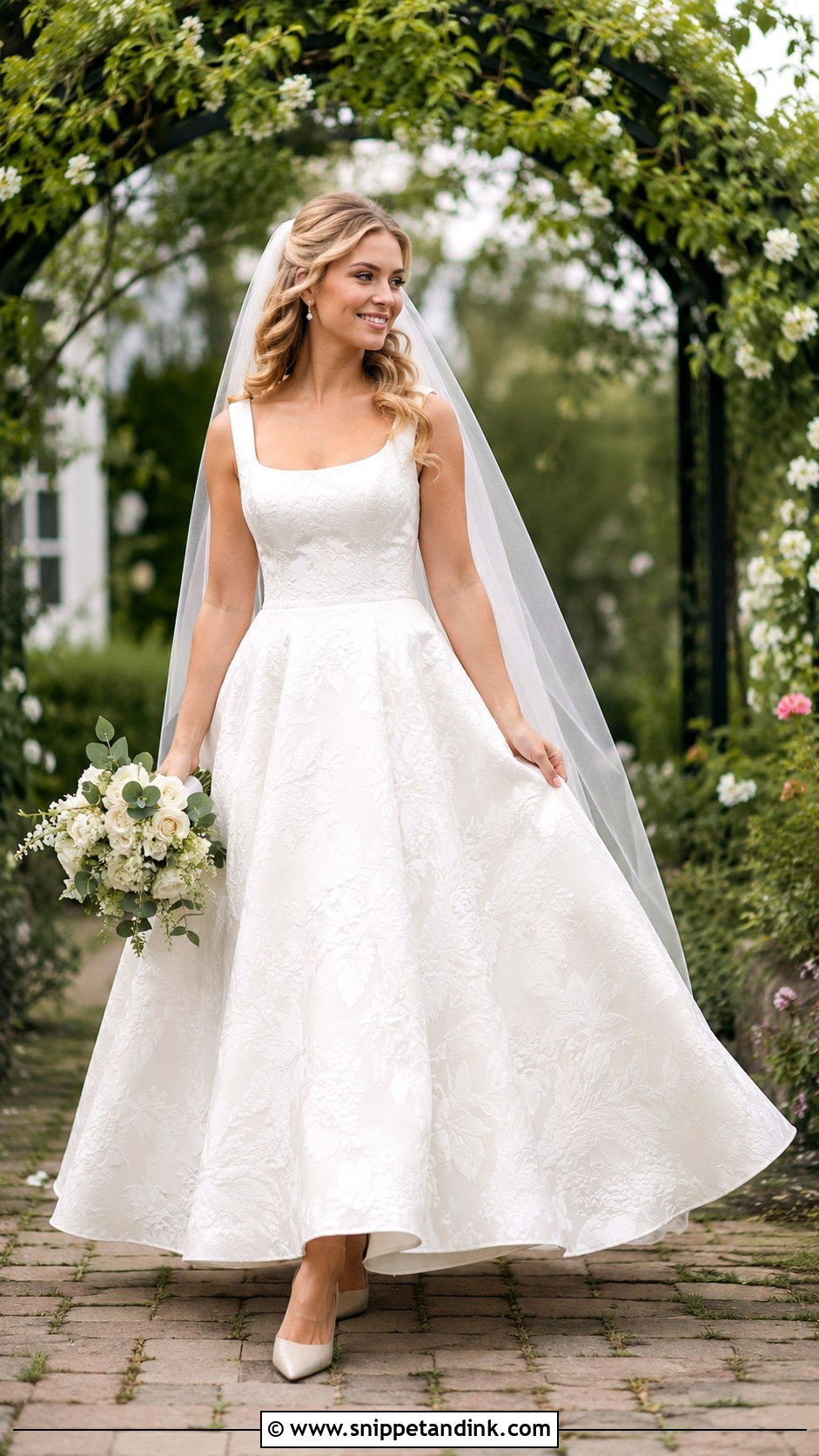
Floral brocade is my answer when a bride wants romance but not lace. The woven flowers give texture and dimension while staying soft. Ivory-on-ivory florals, or a gentle champagne base with subtle shine, age best in photographs. A fitted bodice and A-line skirt let the pattern breathe, with soft curls, pearl earrings and ivory heels. If the flowers in the weave are clearly visible, keep the veil plain and light. It suits spring weddings and garden venues, where the pattern echoes what is growing around you.
9. Gold Brocade Wedding Dress
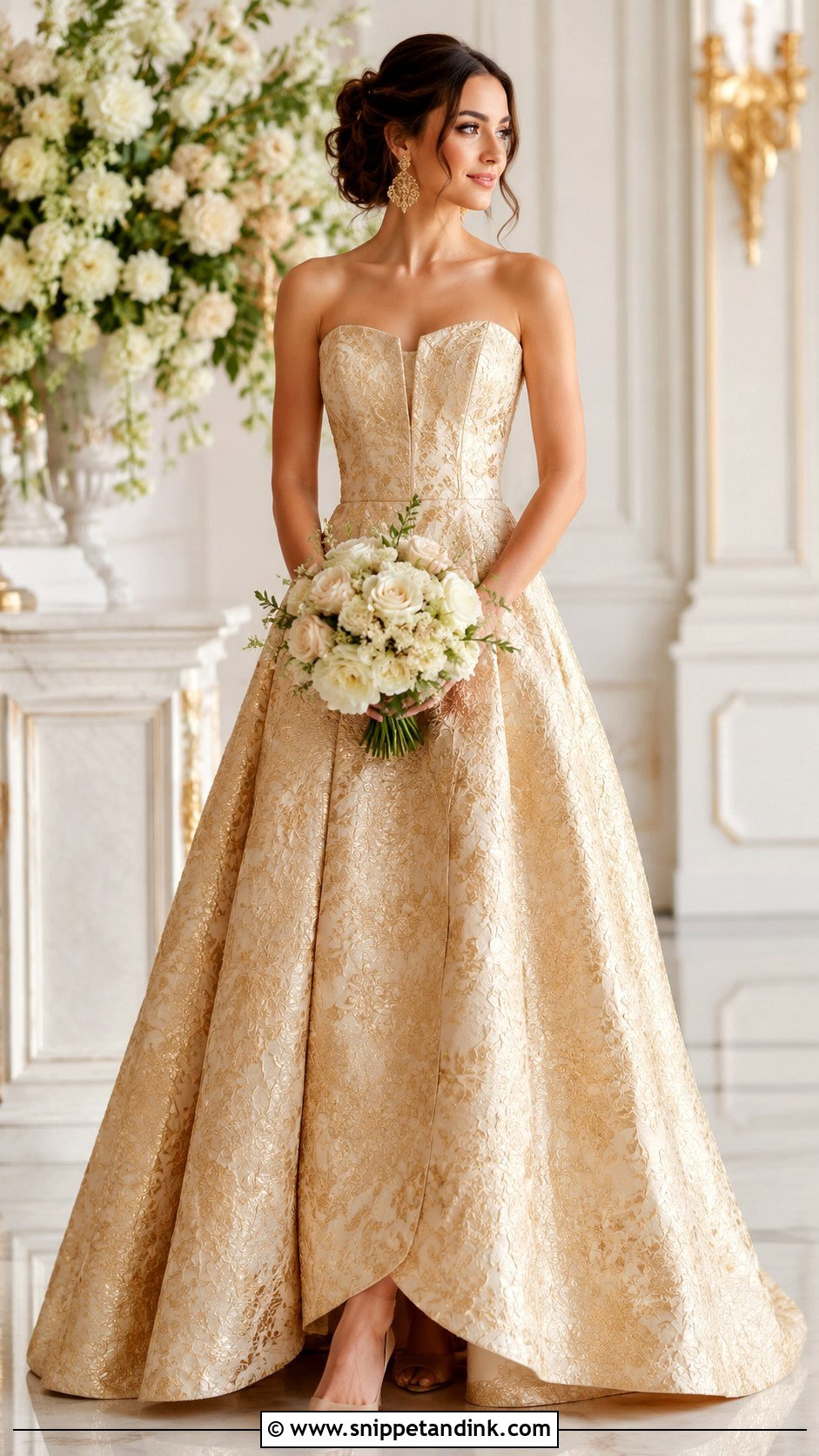
A gold brocade wedding dress is the boldest option here and still reads as formal. I’d look at soft champagne gold, antique gold, or ivory with gold woven details. Brighter yellow golds can look brassy under warm reception lights, while antique tones stay rich in both daylight and evening photos. Gold earrings, nude or champagne heels and a simple veil keep it bridal, and a cream bouquet stops it looking busy. Gold metallic threads can feel scratchy on the inner arm, so check the lining reaches every edge.
10. Ivory Brocade Wedding Dress
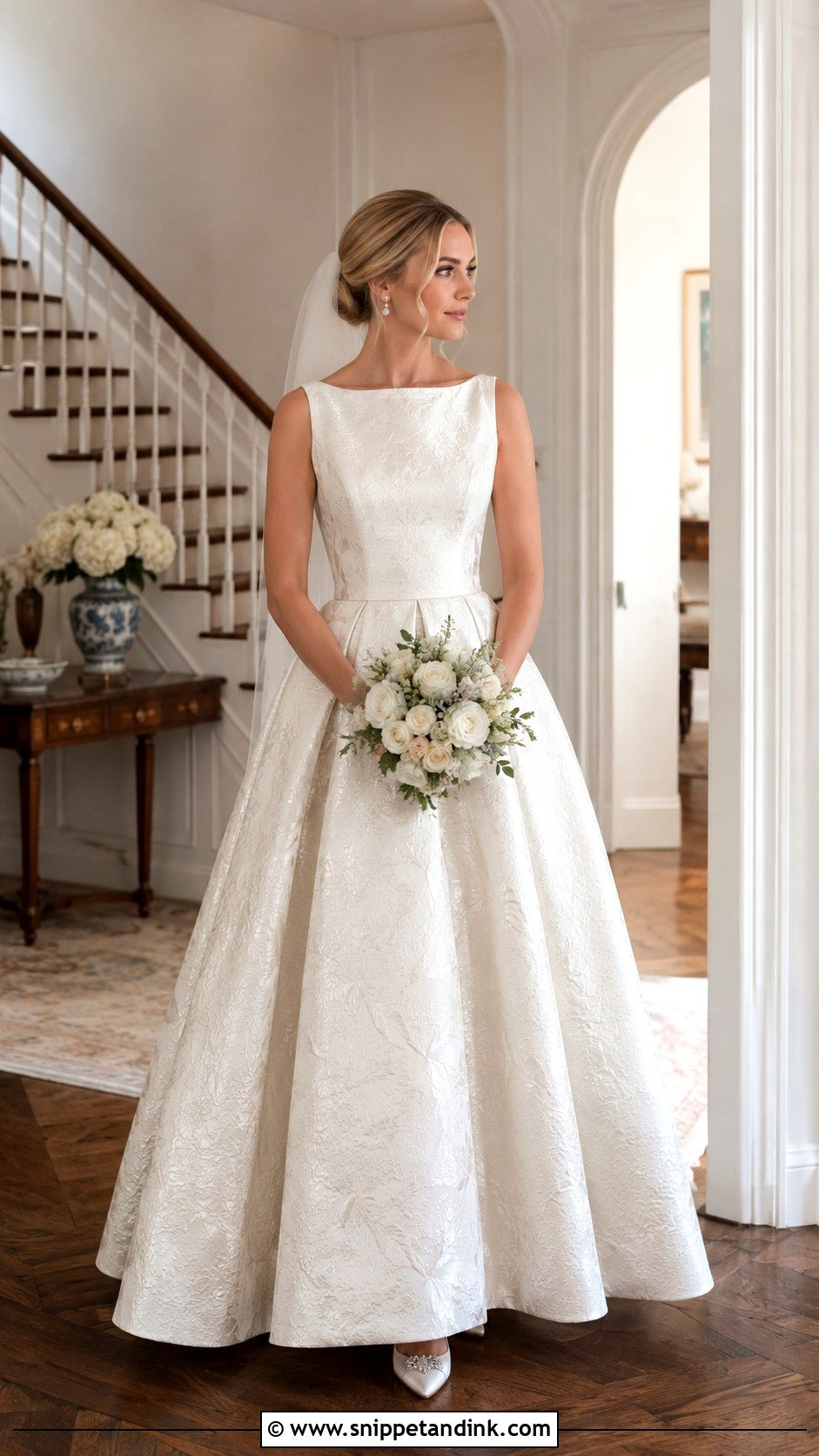
Ivory is the most classic way to wear brocade, because it softens the texture and keeps an ornate weave from looking fussy. It works in nearly every silhouette here: ball gowns, A-lines, fitted columns and tea length. I complete it with ivory satin shoes, pearl earrings and a clean veil without heavy embroidery, plus a low bun or smooth waves. For a traditional ceremony or a quiet, refined mood, it is the safest choice, with detail up close and a warm glow from a distance.
11. White Brocade Wedding Dress
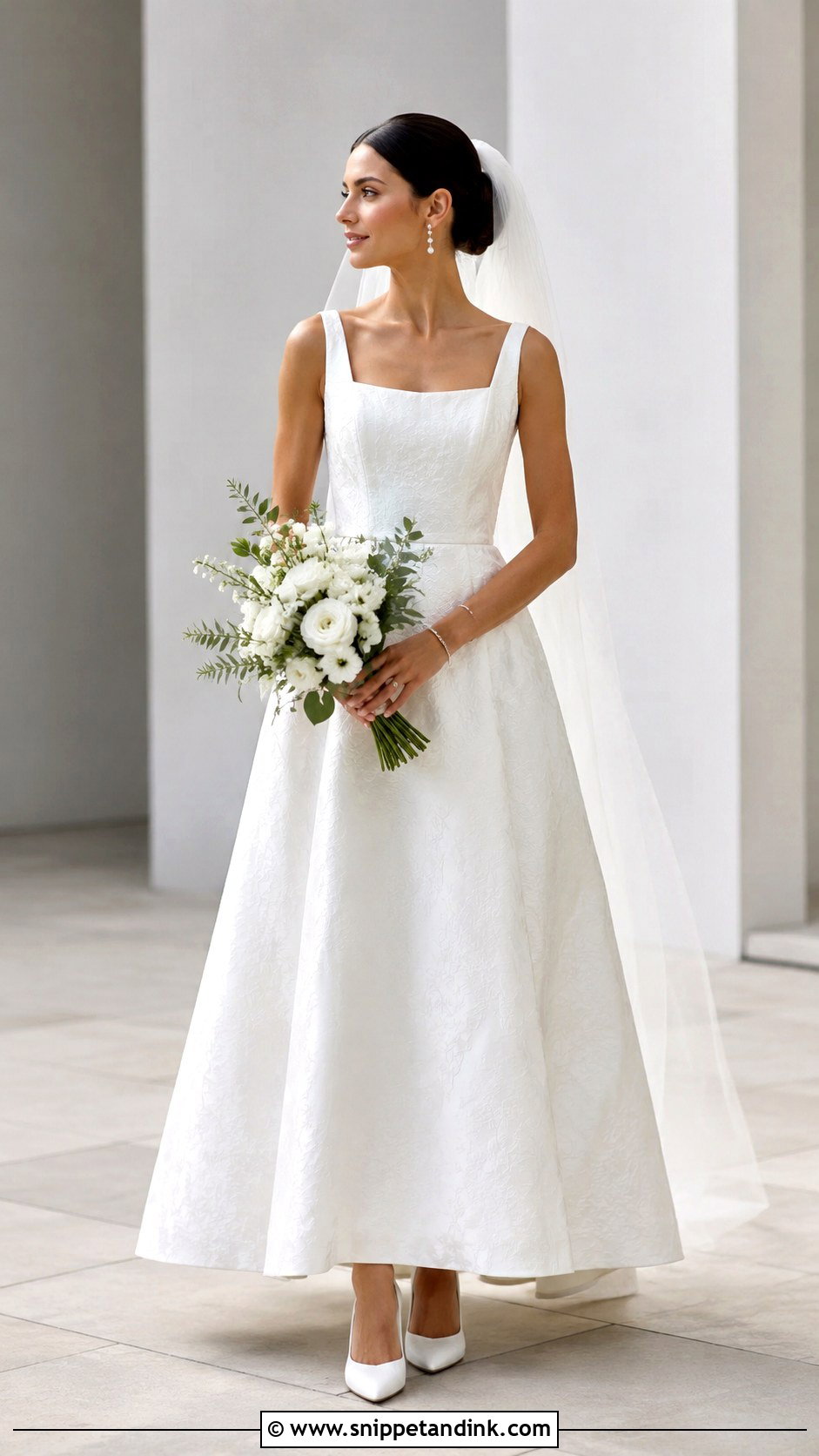
Bright white makes the weave crisp, and every shadow in the pattern shows sharply in photos. It is a good route for modern brides who want detail without lace, beads or sequins. Keep the bodice structured and the skirt simple, then add silver or pearl accessories, white pumps and a clean veil. A white bouquet with soft greenery is enough colour. One warning: optical white can look slightly blue next to warm skin under candlelight, so try it in the kind of lighting your venue has.
12. Corset Brocade Wedding Dress
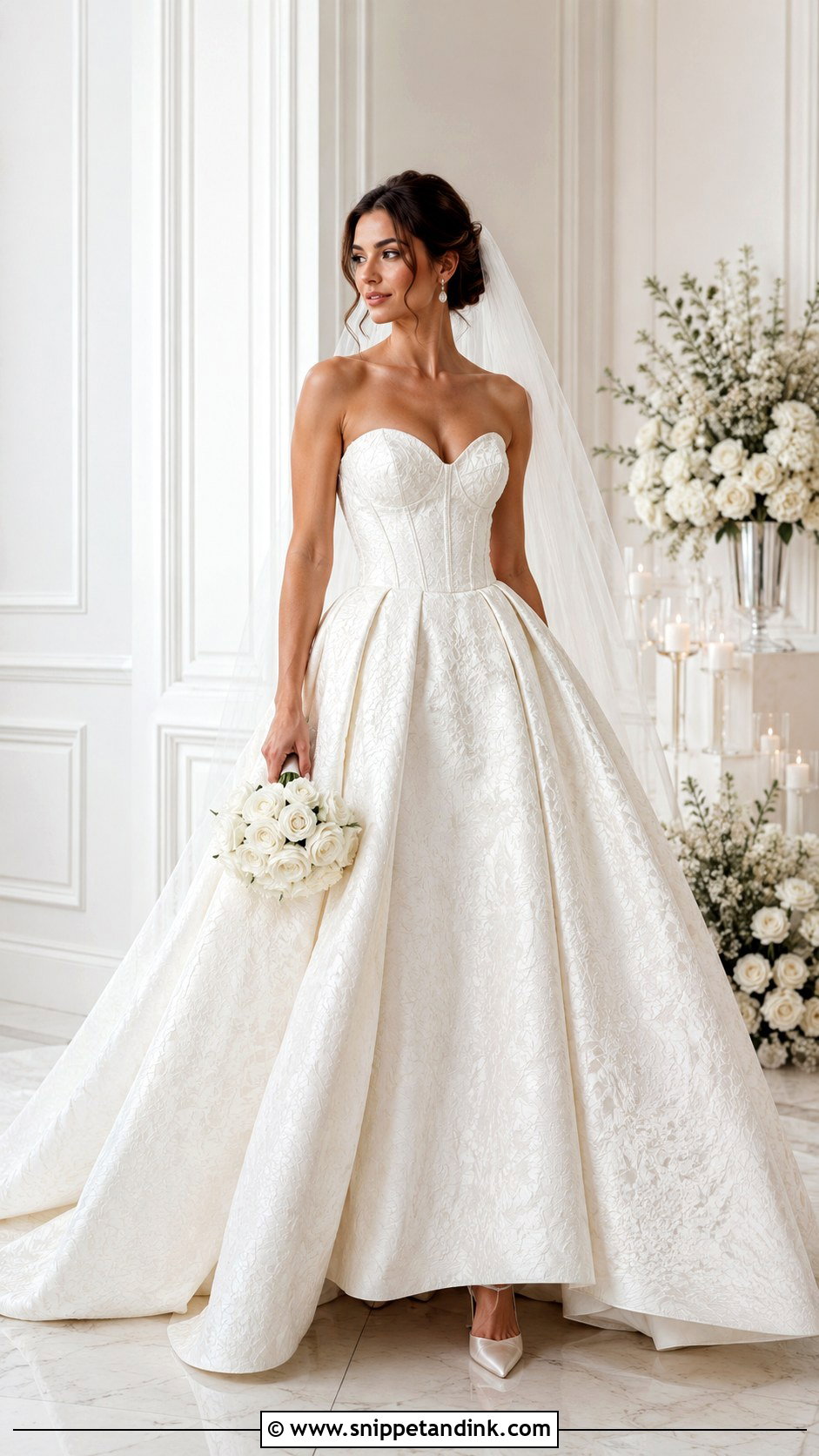
Corsetry and brocade belong together. The firm weave takes boning and seaming without puckering, which is why so many historical gowns used it. For a romantic look, go with a sweetheart corset and a full skirt; for a modern one, a straight bodice and slim A-line. Keep the veil plain and the earrings soft so the bodice remains the feature. A good corset should support, not squeeze. If you can’t eat dinner in it at the fitting, it needs letting out.
13. Brocade Mermaid Wedding Dress
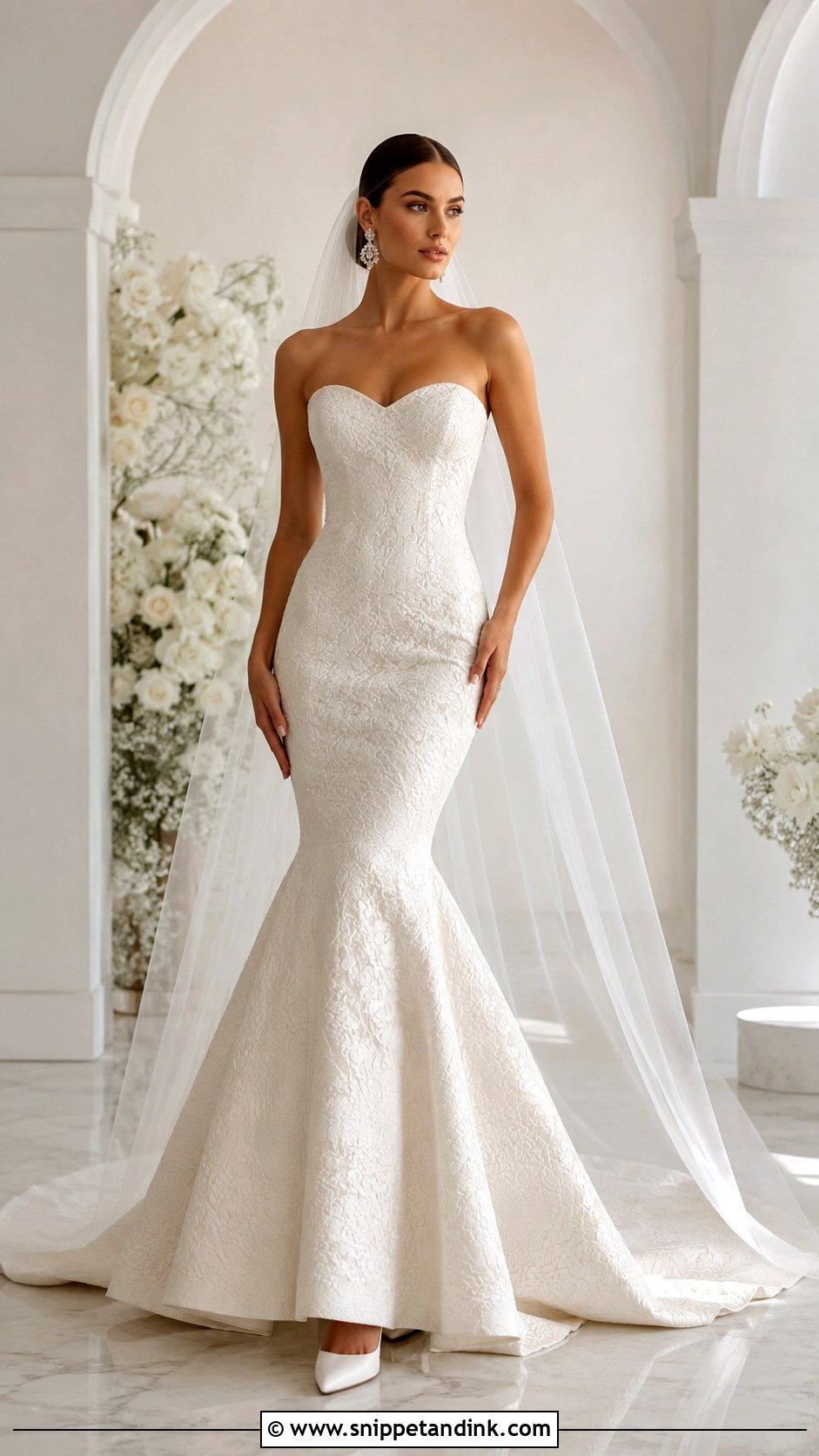
A mermaid cut is where brocade is least forgiving. The fabric has very little stretch, so the fit through the hips and knees must be precise or it pulls into diagonal creases when you walk. I’d choose a smaller pattern for the fitted body, because large motifs distort over curves. Sleek hair, statement earrings, simple pointed heels and a long plain veil complete it. Sit, climb a step and dance at the fitting; a mermaid in a stiff weave can make stairs slow.
14. Brocade Fit And Flare Wedding Dress
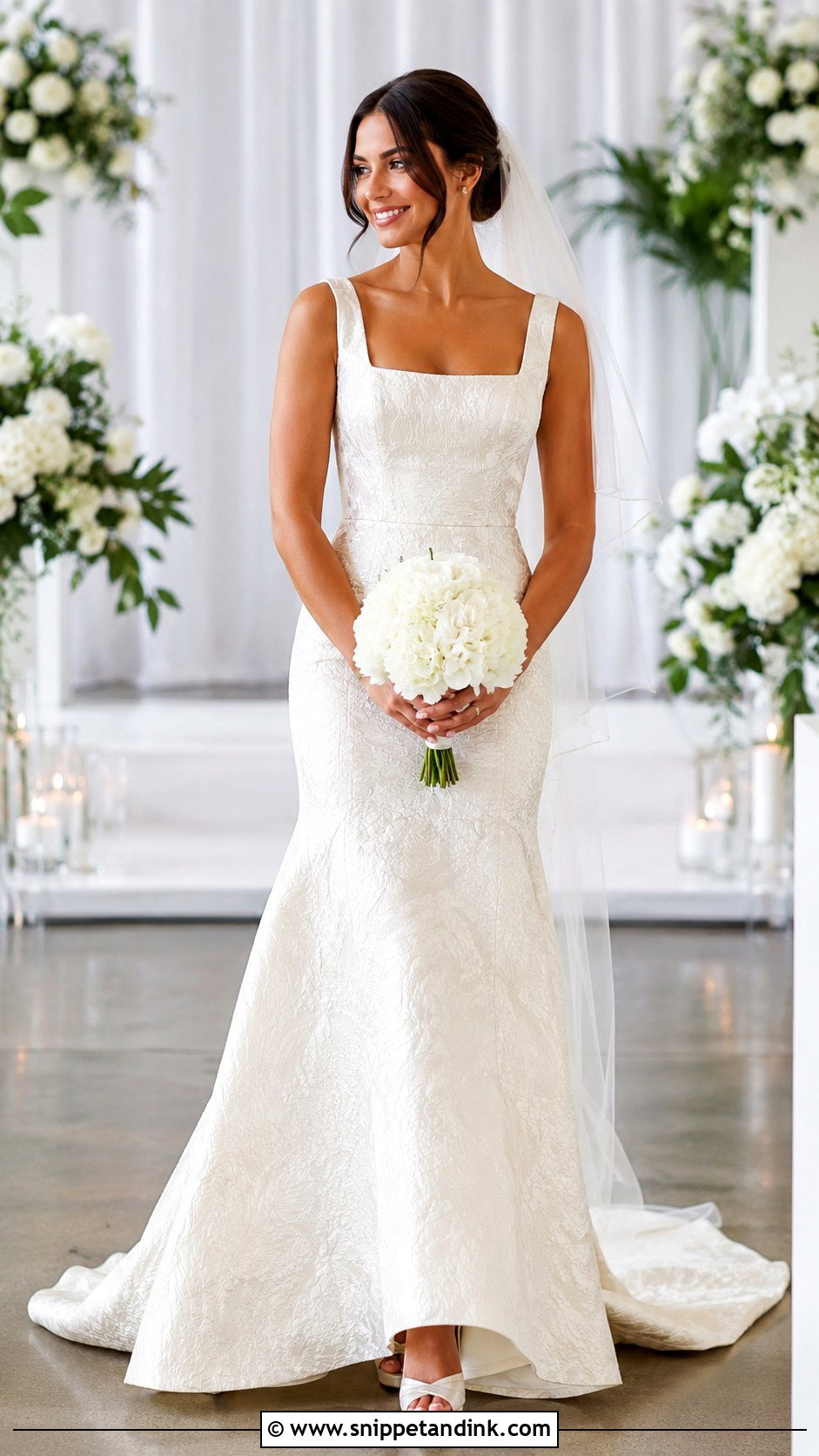
Fit and flare gives shape without the restriction of a mermaid. It hugs the bodice and hips, then opens into a softer skirt higher up, which makes walking and sitting much easier in a firm fabric. A scoop, square or off-shoulder neckline all suit it. Ivory heels, a light veil and a small bouquet held low enough not to hide the waistline complete the outfit. If the brocade has shimmer, keep the jewelry plain.
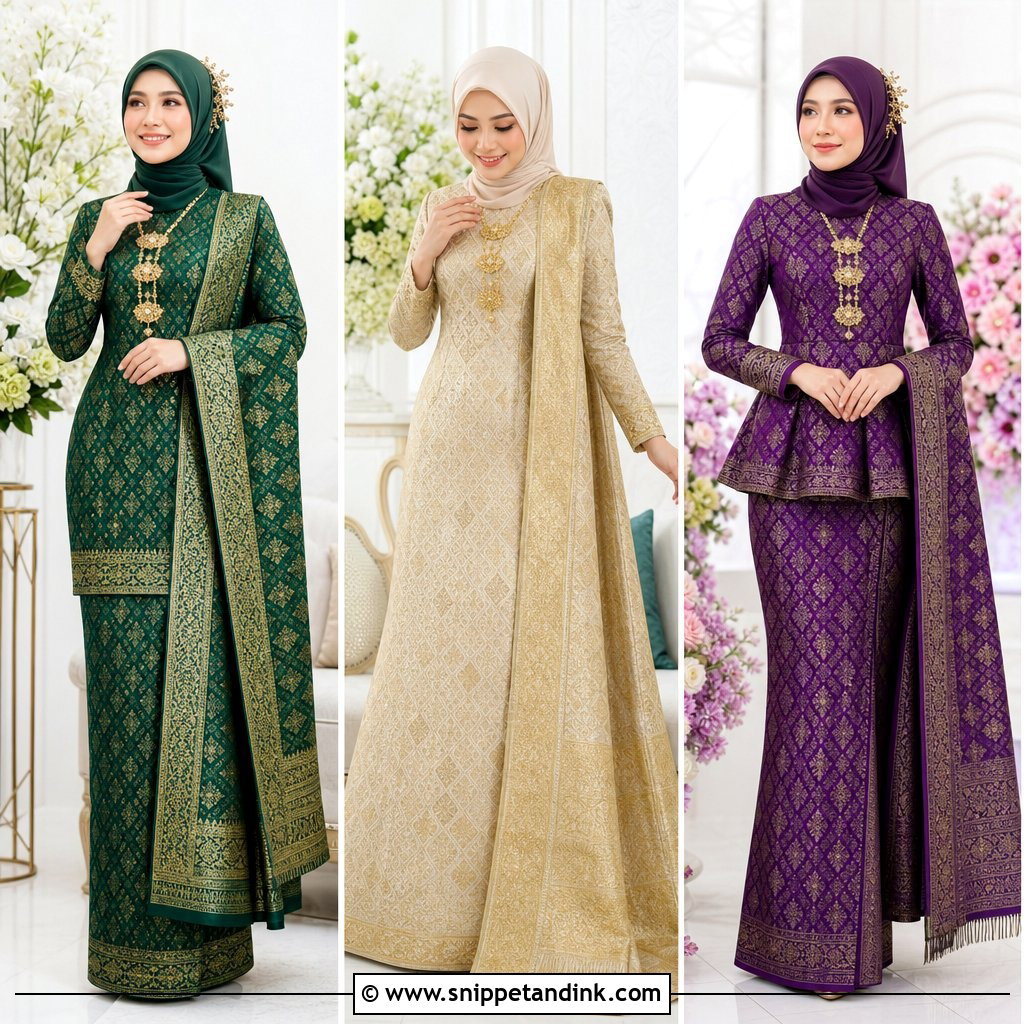

15. Brocade Column Wedding Dress
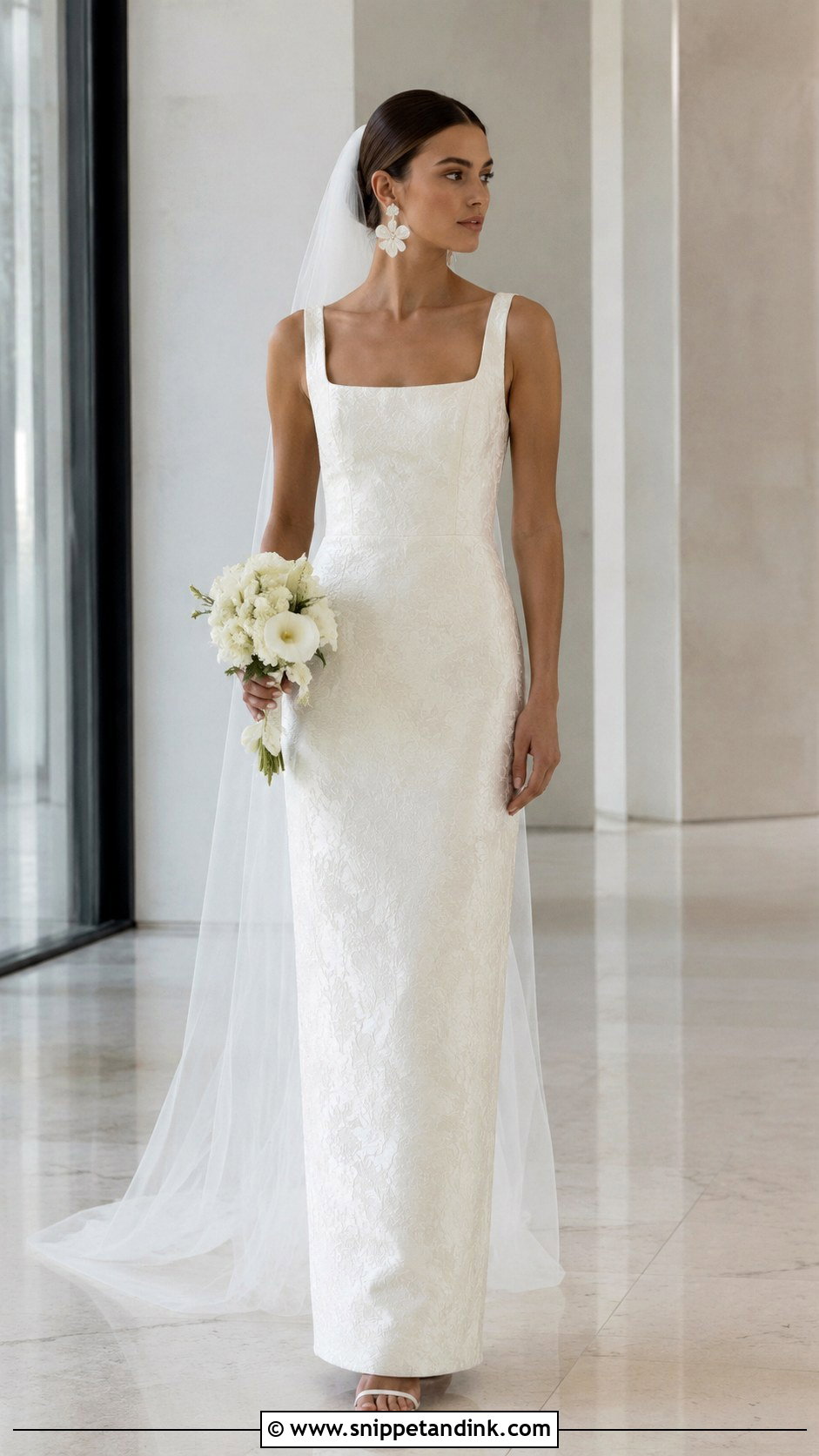
Columns make brocade look architectural. With no volume to hide behind, the fabric and the fit carry everything, so I’d choose a smaller woven pattern or a subtle floral and make sure the dress skims rather than grips. A square, high or strapless neckline all work. Minimal heels, sculptural earrings and a smooth veil keep it modern, and it suits city weddings, rooftops and small ceremonies. Ask for a back or side slit if the skirt is narrow; brocade won’t stretch to let you take a full stride.
16. Brocade Mini Wedding Dress
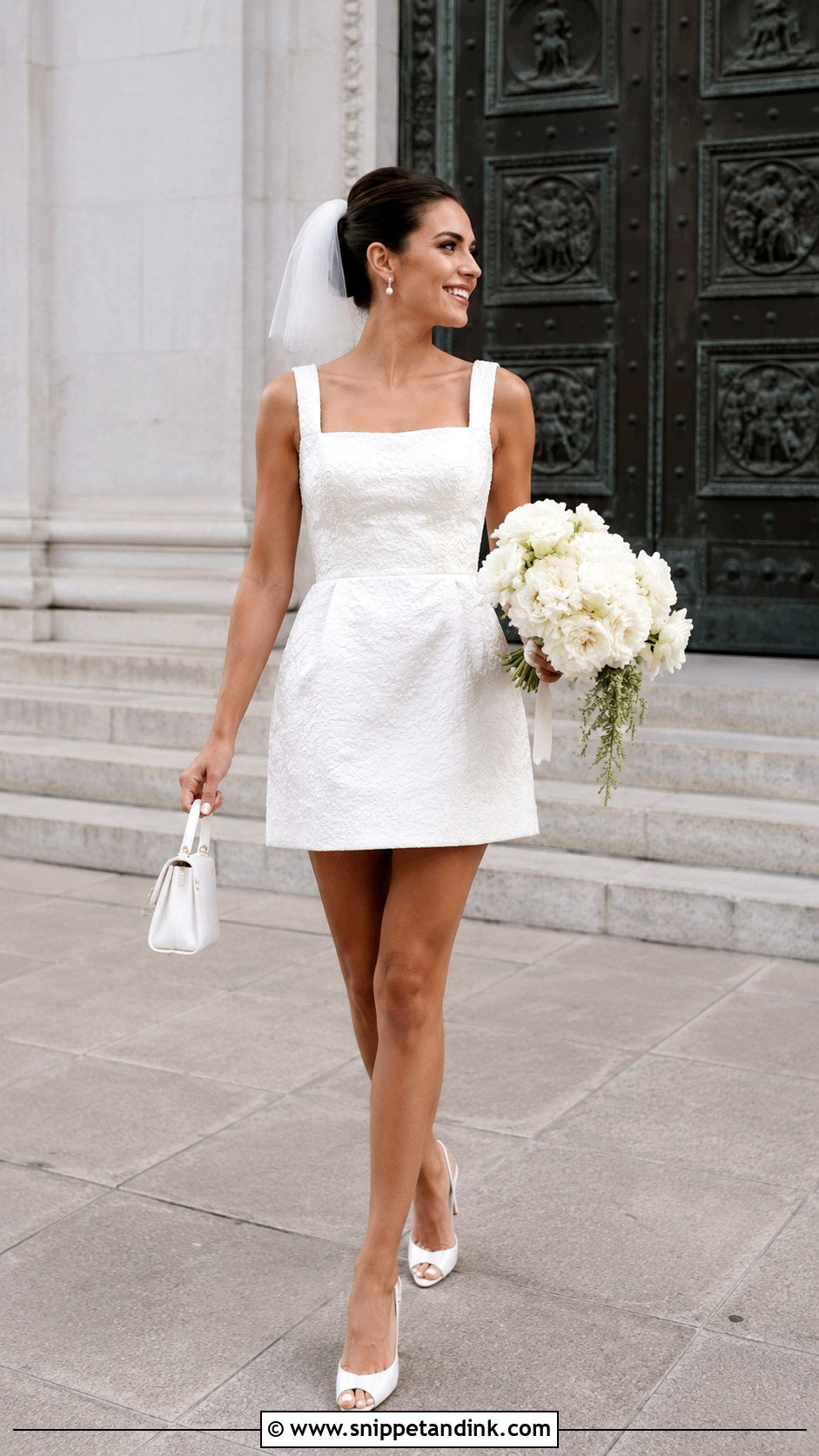
A short brocade dress turns a formal fabric playful, and it suits a civil ceremony, a reception change or an after-party. A structured mini with a square neckline, long sleeves or a strapless bodice needs very little else: white slingbacks, pearl earrings and a small top-handle bag. A short veil or bow adds a bridal note. Keep the pattern small, since a large motif on a short dress can look like upholstery. Stiff fabric also rides up when you sit, so check the hem length seated, not just standing.
17. Tea Length Brocade Wedding Dress
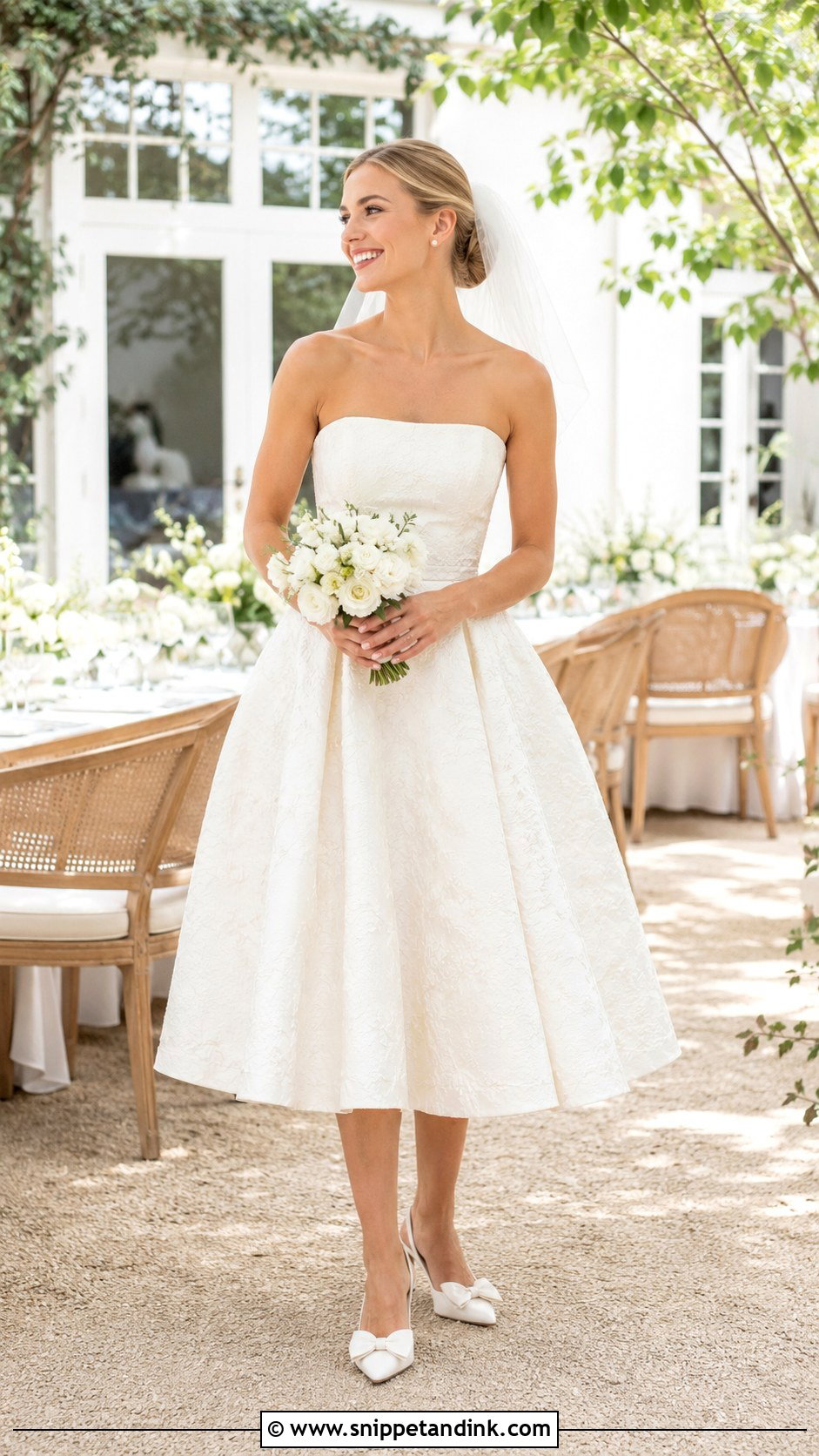
Tea length has a vintage charm, and brocade gives the shorter skirt enough structure to feel formal. With the hem between knee and ankle, the shoes become part of the outfit, so pointed pumps, bow heels or slingbacks deserve some thought. A fitted bodice with a full skirt is classic; a simpler A-line feels newer. Pearl studs, a short veil and a small bouquet finish it. It suits courthouse weddings, garden receptions, brunch weddings and small celebrations.
18. Brocade Wedding Dress With Bow
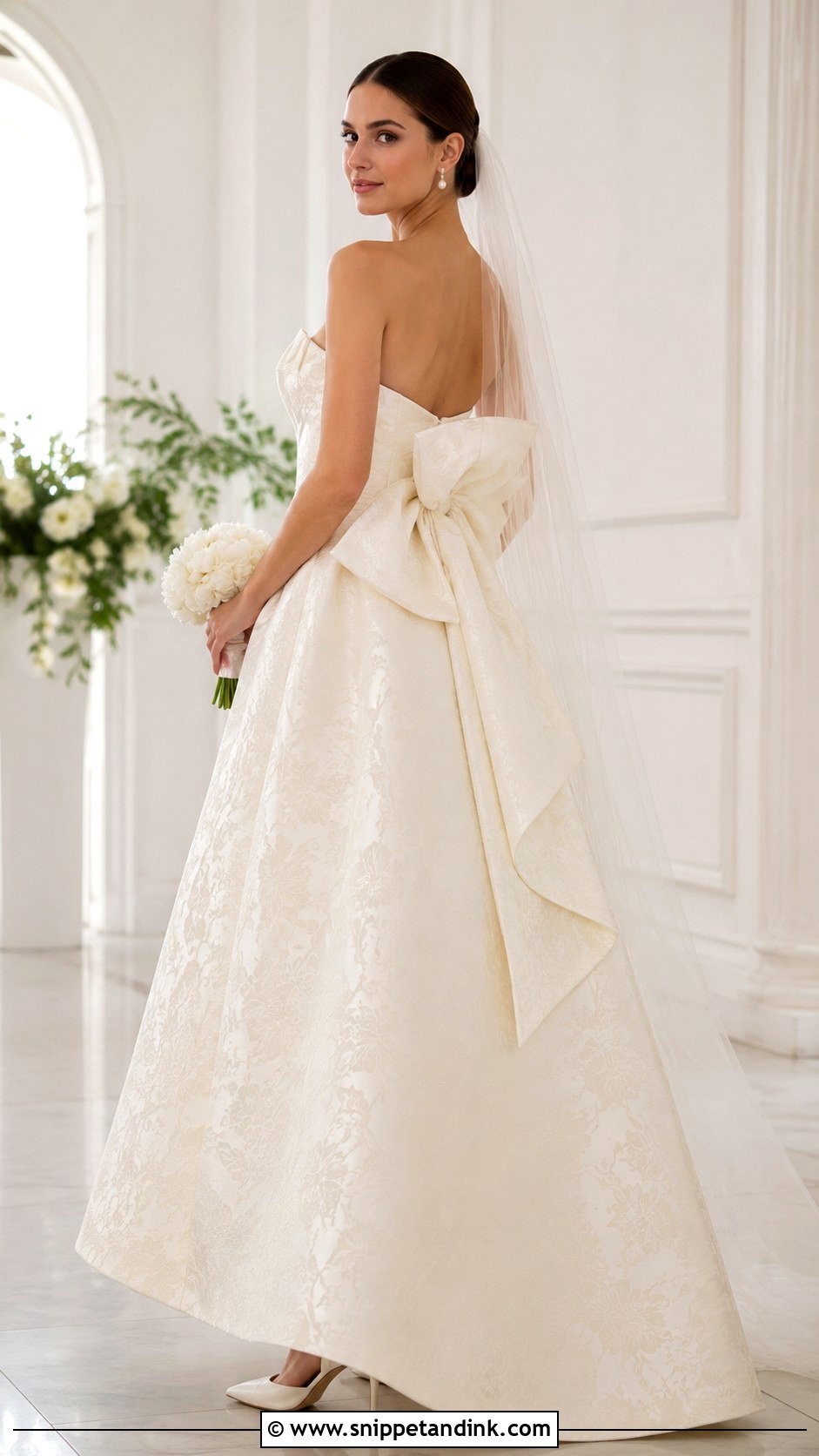
Bows on brocade should be sculptural, not frilly. The fabric holds a crisp fold, so a bow at the back waist or shoulder keeps its shape all day, and a detachable one can come off after the ceremony. A strapless A-line with a back bow is the version I’d point most brides to. Simple pearl earrings, a plain veil and satin heels are enough. If the bow is large, carry a smaller bouquet. Ask how it is attached: a bow sewn on with a few stitches will droop by the speeches.
19. Brocade Wedding Dress With Cape
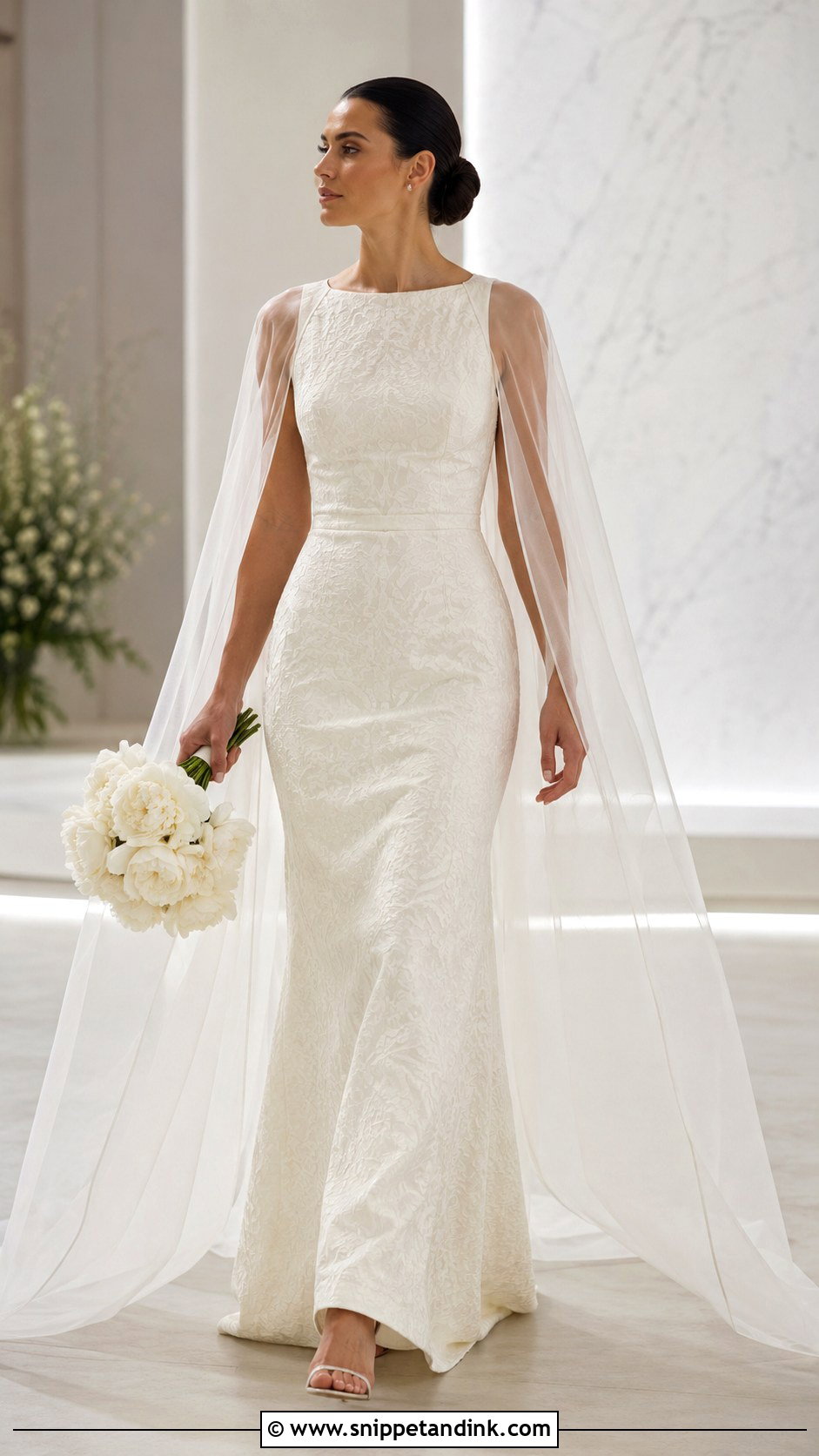
A cape adds drama and coverage over the shoulders, and it can replace a veil altogether. Weight is the thing to watch. A full brocade cape on top of a brocade gown is very heavy, so I’d make the cape from sheer fabric, satin or a lighter matching weave. Underneath, a simple column, A-line or fitted gown works best. Sleek hair, small earrings and refined heels finish it. Hold the bouquet low so the neckline and the cape’s outline stay visible as you walk.

20. Brocade Wedding Dress With Detachable Train
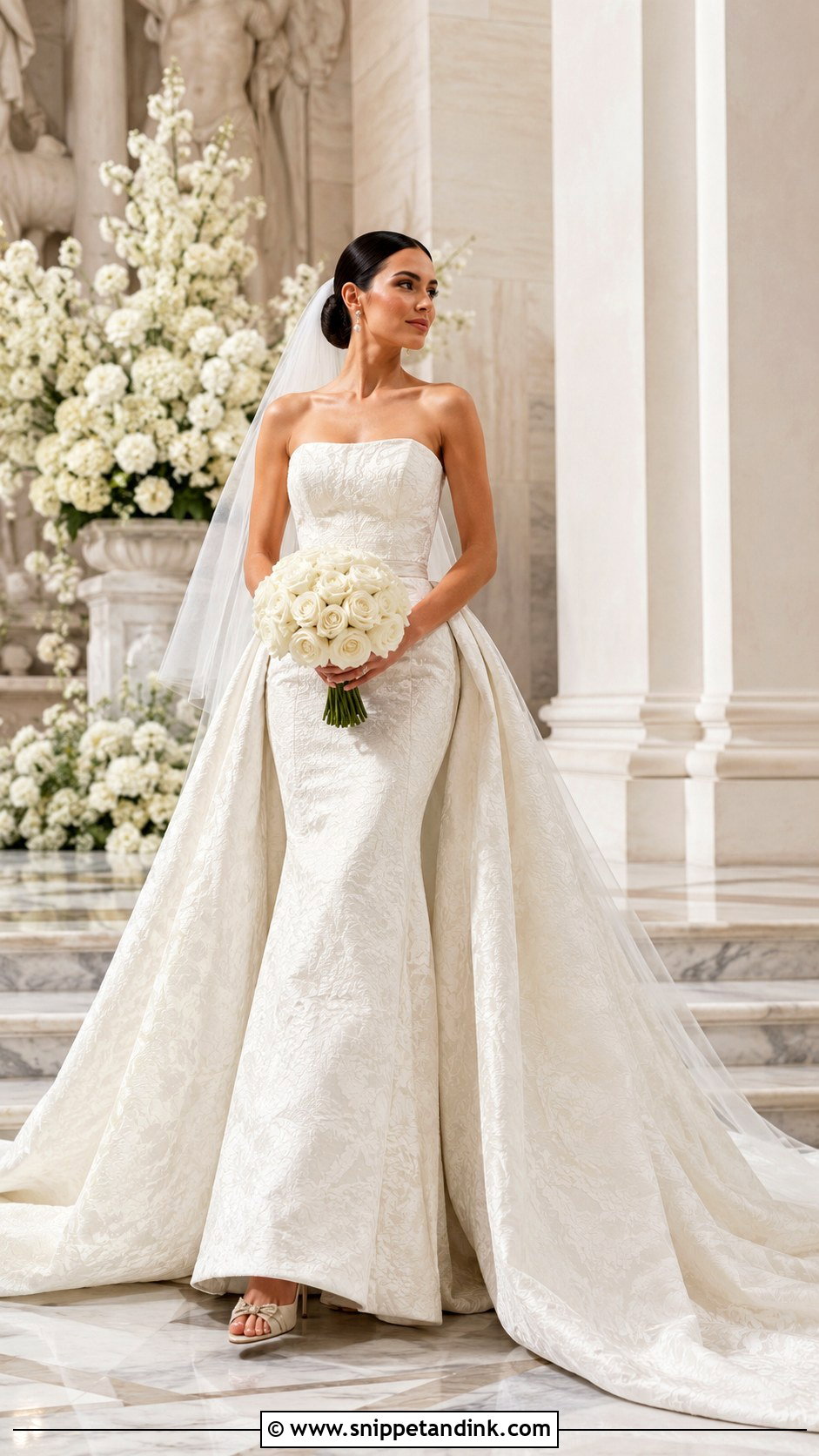
A detachable train gives you two looks in one: grandeur for the ceremony, freedom for the reception. It suits a fitted column, a fit and flare or a strapless gown. For the ceremony, add a long veil, pearl earrings and elegant heels; after the train comes off, switch to a shorter veil, a hair bow or statement earrings. Practise unhooking it before the day. Brocade trains are heavy, and whoever helps you will need to know where the hooks or buttons are.
21. Brocade Wedding Dress With Pockets
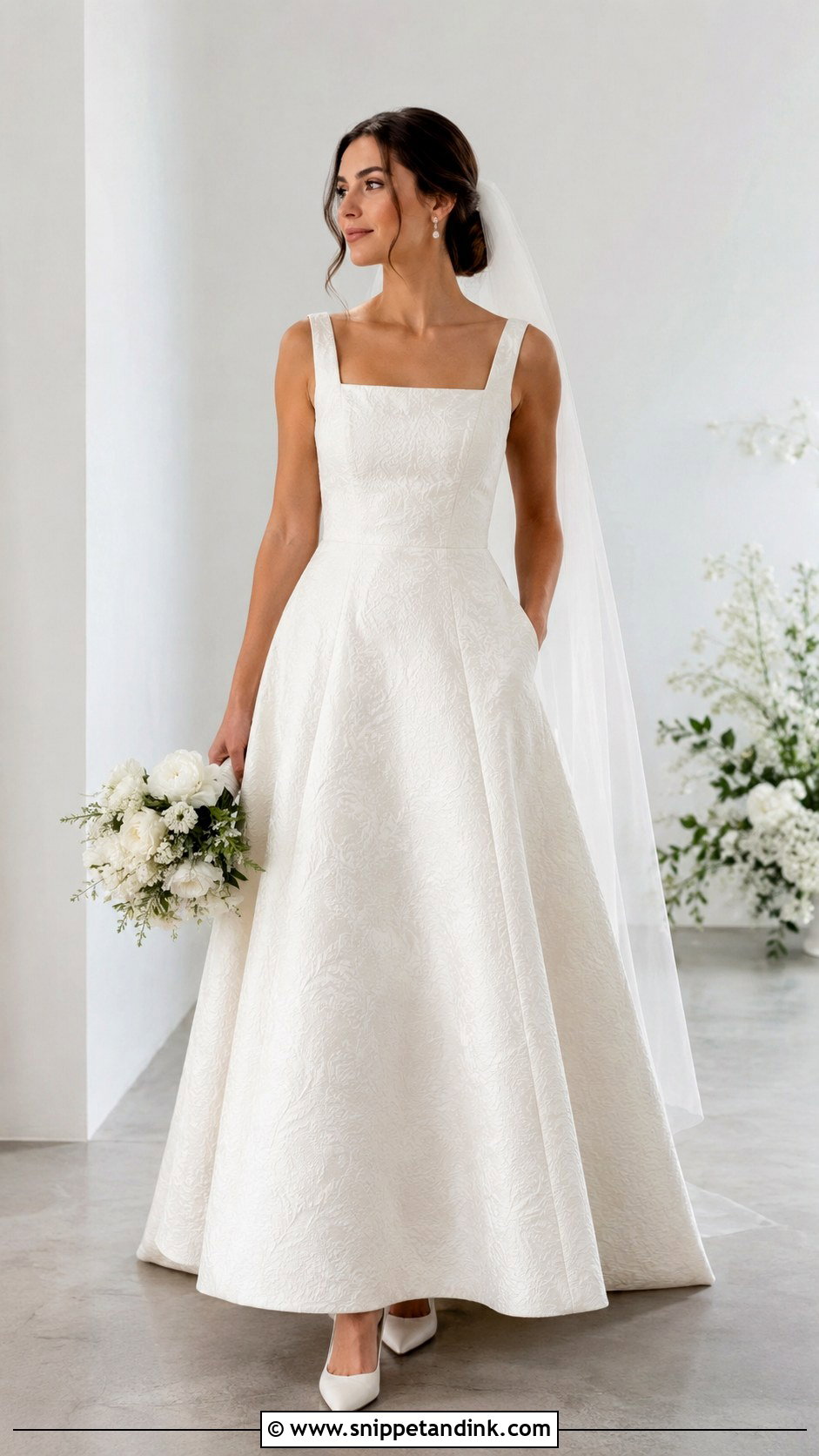
Pockets disappear neatly into brocade, because the stiff fabric doesn’t bulge around them the way soft satin does. A-line and ball gown skirts hide them best. They let you keep lip balm and a tissue close, and many brides relax in photos once they have somewhere to put their hands. A square neck or strapless bodice suits the detail, along with clean earrings, ivory heels and a simple veil. Keep the rest of the outfit refined so the pockets stay a practical touch rather than a casual one.
22. Brocade Wedding Dress With Pearl Veil
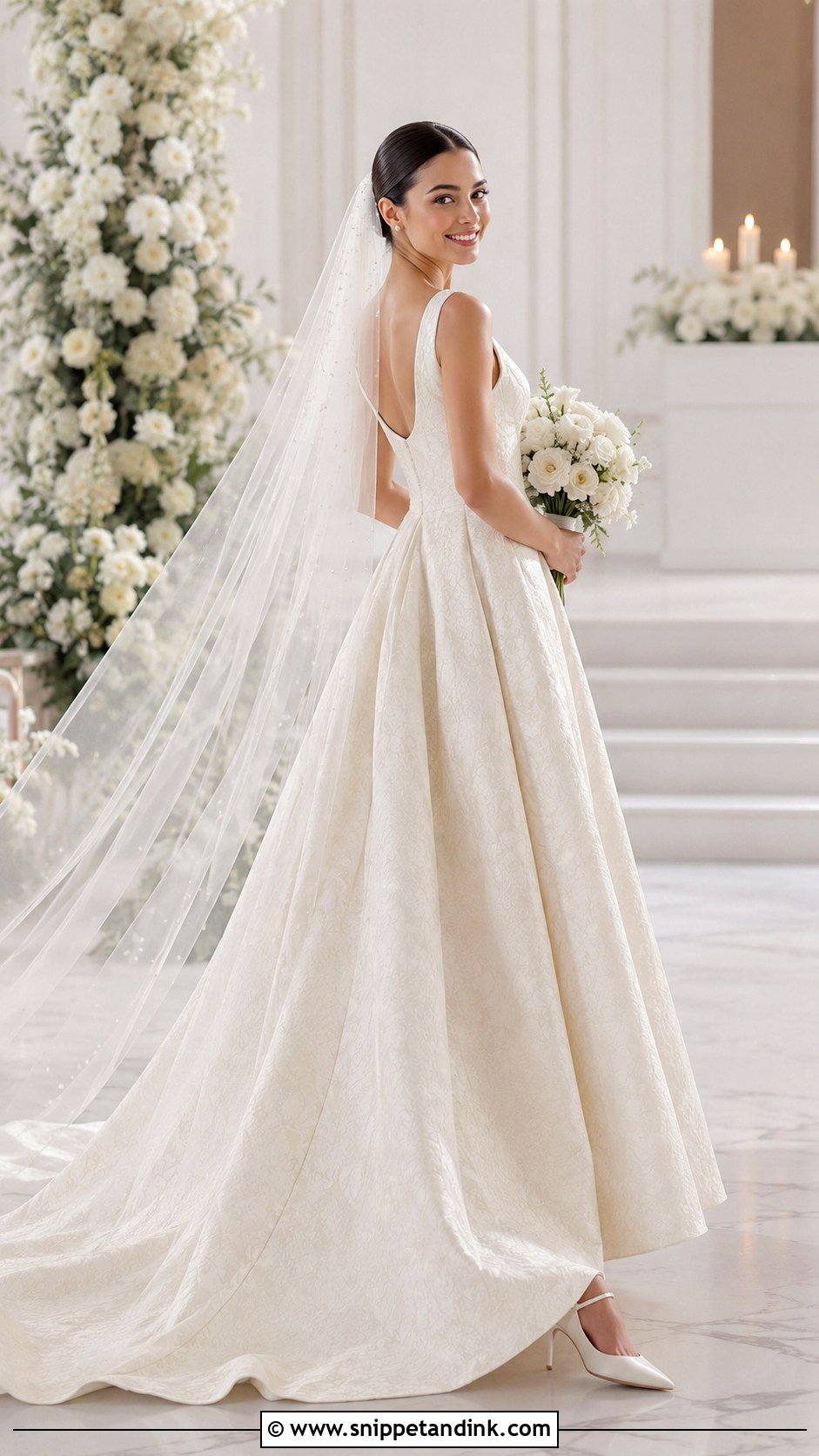
A pearl veil softens brocade, but only if the pearls are scattered lightly. A heavily beaded veil competes with the weave and pulls on the hair. I like this pairing with ivory or white brocade in a clean silhouette, such as a strapless, square neck or A-line gown. Pearl studs or small drops and satin heels are enough. Skip the necklace if the neckline is already strongly structured. Pearls catch soft light well, so indoor ceremonies and candlelit receptions suit it.
23. Brocade Wedding Dress With Gloves
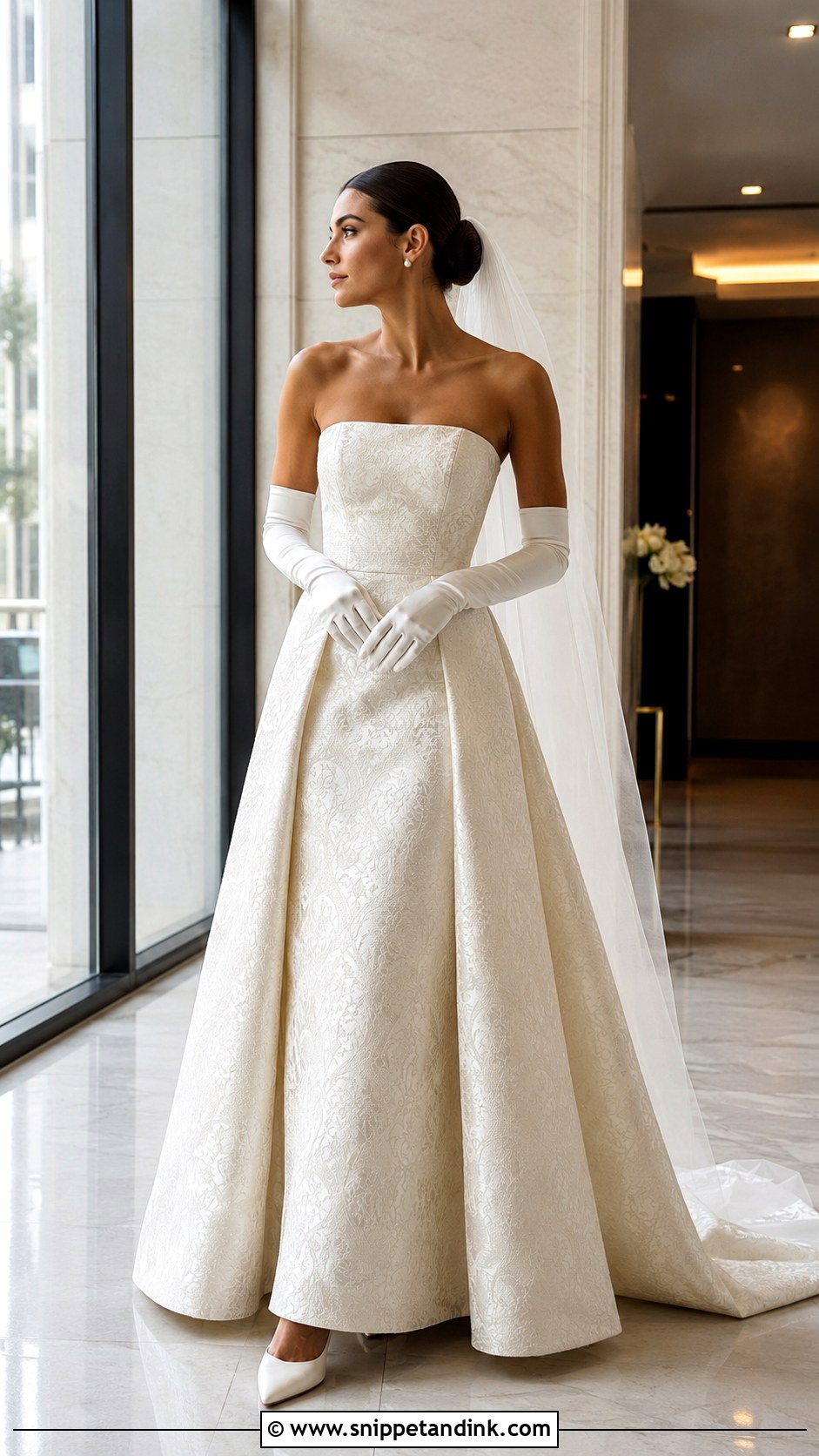
Gloves give brocade a fashion-forward edge. Short gloves feel playful with a mini or tea-length dress, while opera gloves suit a strapless or off-shoulder gown. Keep them plain satin so the brocade stays the only texture. Pearl studs or small sparkling earrings, a smooth bun and a simple veil are enough. Plan the ring exchange: either remove the left glove, or open the seam of the glove’s ring finger so the ring can go on over it. Formal city weddings and hotel ballrooms suit the look.
24. Brocade Wedding Dress With Blue Shoes
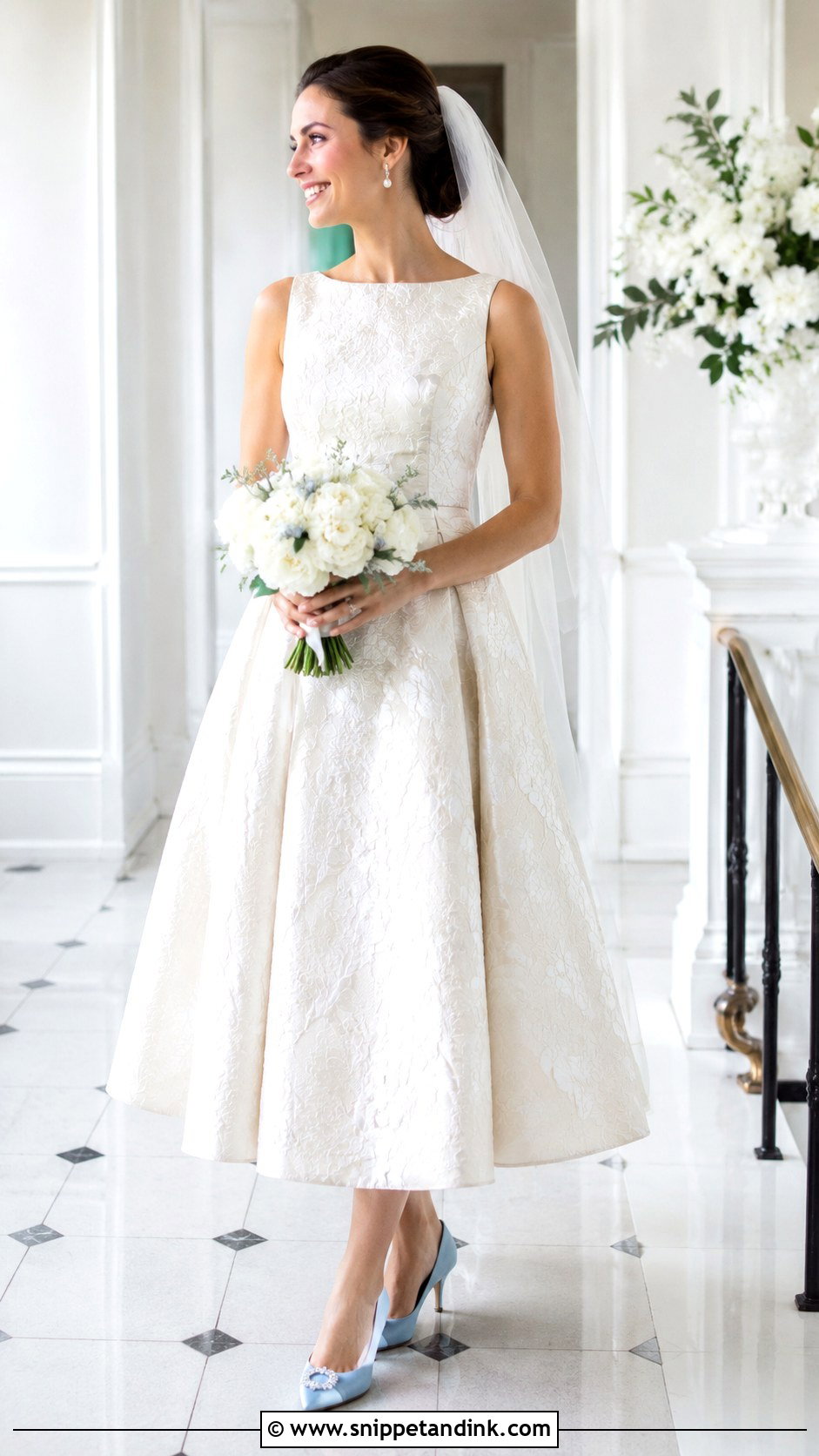
Blue shoes are an easy something blue that doesn’t change the gown. Soft blue satin pumps, pale blue slingbacks or powder blue block heels sit well under ivory or white brocade. Keep everything else simple: pearl earrings, a clean veil and a white bouquet. This works best with tea-length, A-line or slit skirts where the shoes can peek out. Under a floor-length ball gown nobody will see them except you, which some brides prefer.



25. Brocade Wedding Dress Reception Look
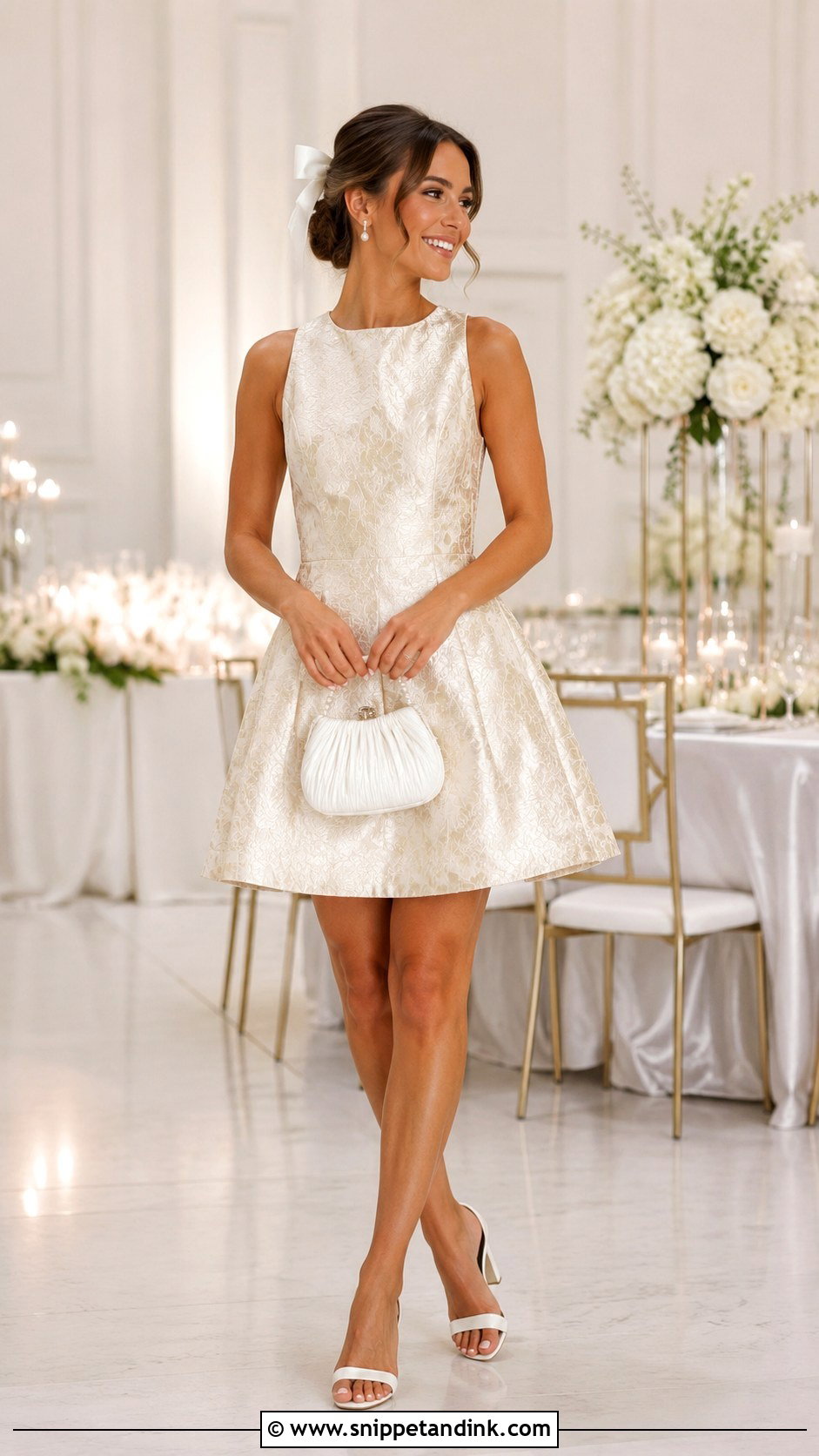
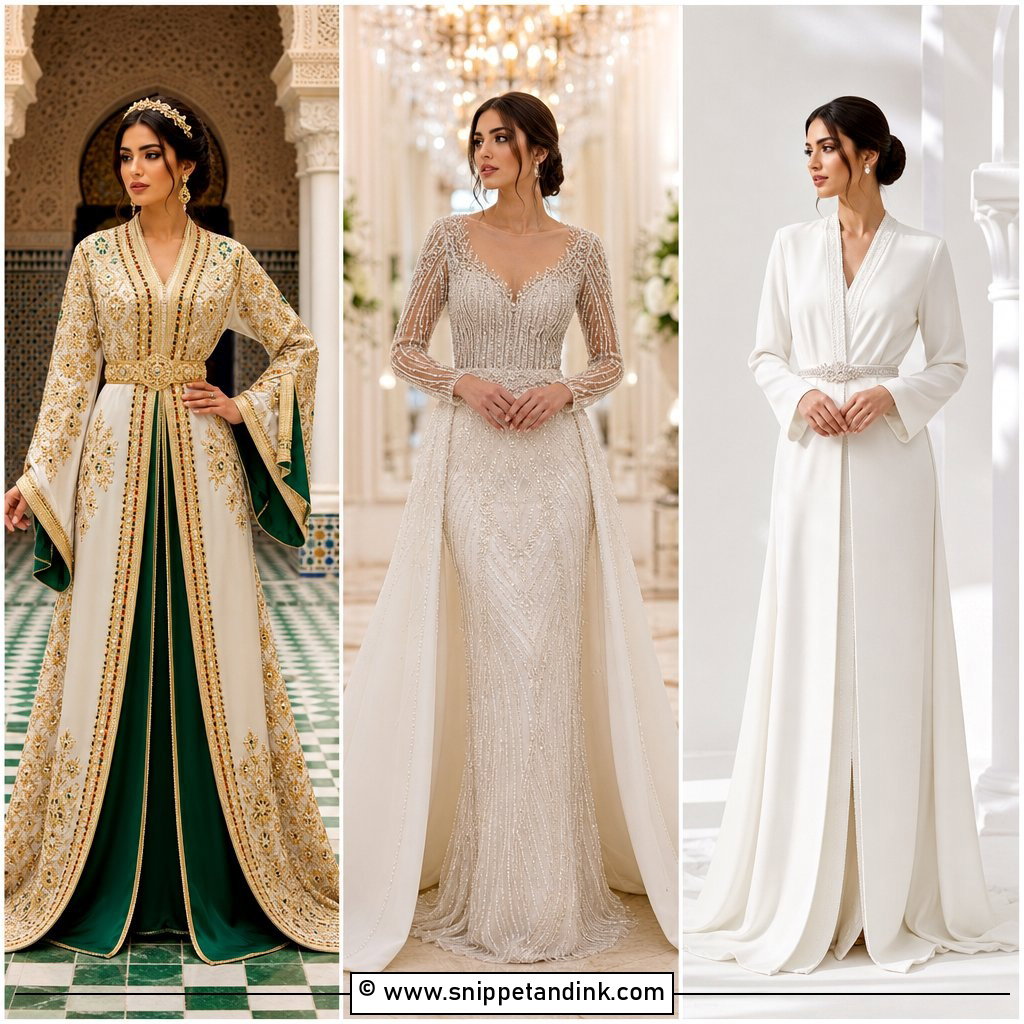
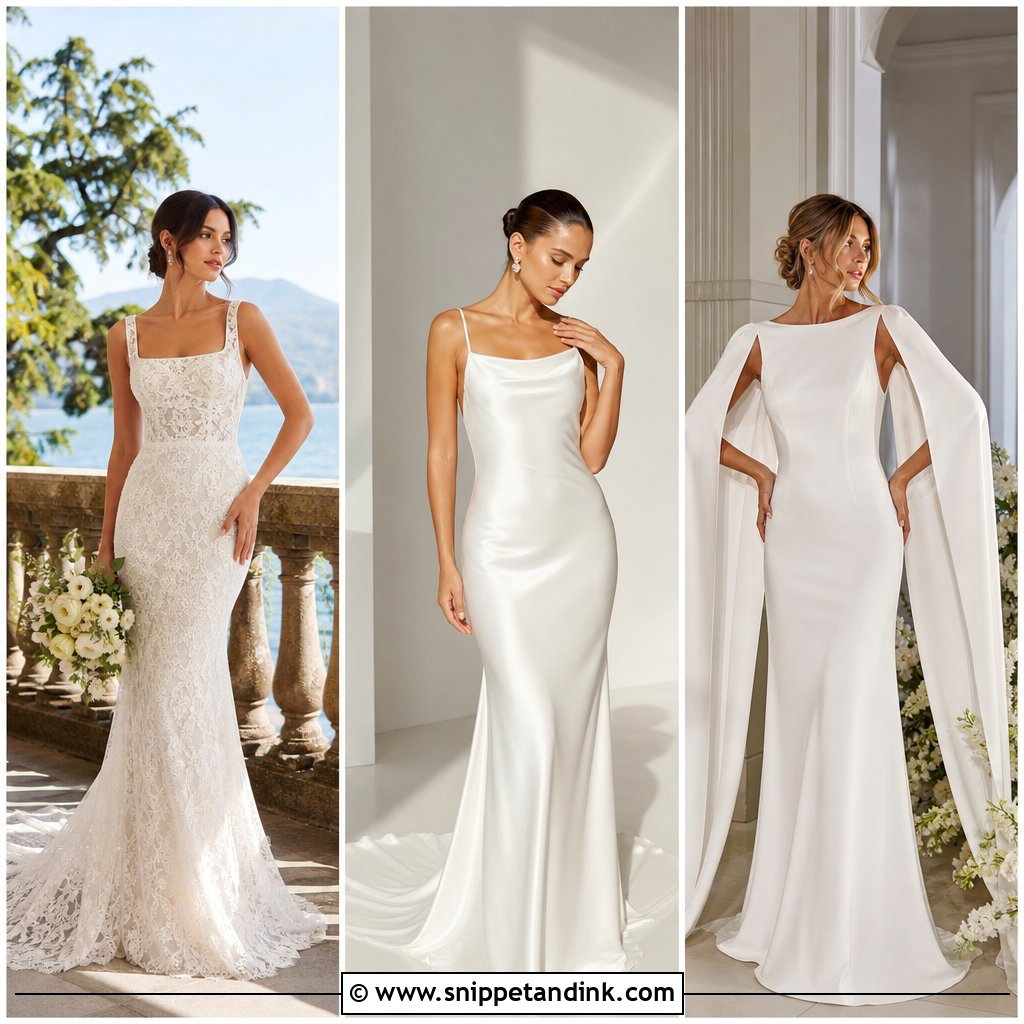
For a reception change, I’d look for a lighter brocade than the ceremony gown, because a heavy weave gets hot fast once dancing starts. A short dress, a slim column or a tea-length silhouette keeps the connection to the main gown while letting you move. Comfortable white heels, pearl earrings and a small bridal bag finish it. If you wore a long veil earlier, switch to a bow, a headband or a simple clip. Matching the weave colour to the first gown makes the change read as a second chapter, not a different wedding.
Is Brocade Too Warm for a Summer Wedding?
It can be. A dense weave traps heat, and a lined brocade gown in July sun is a long afternoon. If your ceremony is outdoors in summer, I’d keep brocade to the bodice, choose a strapless or short-sleeved cut, and let the skirt be lighter, or save the fabric for an evening reception. Silk brocades breathe noticeably better than polyester versions, so ask what the fibre is before you fall for one.
Alterations are the other practical point. Brocade shows needle holes, so a seam let out after it has been sewn can leave a visible line. Take the gown to a seamstress who works with structured bridal fabrics, and try to settle the fit in as few rounds as possible.
Storing It So the Weave Doesn’t Crack
Brocade creases in sharp lines, and repeated folds in the same place can wear the threads over time, especially metallic ones. After the wedding, have it professionally cleaned by someone experienced with wedding gowns, then store it in a breathable cotton bag or an acid-free box with acid-free tissue padding every fold. Avoid plastic covers, which trap moisture. A heavy brocade gown shouldn’t hang by its straps for years either; lay it flat or support the skirt weight on a padded hanger with the loops inside the waist.
Let the Weave Lead and Keep Everything Else Quiet
Brocade does most of the work for you. Its texture and structure mean you can keep the shoes simple, the jewelry light and the veil plain, and the gown still holds the room. Pick the silhouette for how you want to move on the day, match the pattern scale to the cut, and test sitting and hugging at every fitting. From a full ball gown to a short reception dress, the ideas above give you plenty of ways to wear a fabric that looks as good up close as it does from the back row.
You'll Like These Ideas:








Leave a Reply