
Victorian-inspired wedding dresses borrow from nineteenth-century fashion: sculpted corset bodices, high lace necklines, shaped sleeves, full skirts and a lot of small, careful detail. The risk every bride worries about is looking like she’s in a period drama, and the fix is in the choices. Modern fabrics, lighter construction and restrained accessories carry the romance without the weight. A grand venue can take an elaborate ball gown; a garden ceremony suits soft lace; and a clean satin shape with only one or two period touches works almost anywhere. Below are twenty complete looks across seasons, venues and body types, each styled the way I’d put it together for a client.
Period Detail Without the Costume Feeling
The line between Victorian-inspired and fancy dress is usually crossed by stacking. One high collar looks romantic. A high collar with leg-of-mutton sleeves, a bustle, gloves, a cameo and ringlets looks like a theater wardrobe. When I style these gowns, I let the dress carry two or three period elements and keep everything else firmly present-day.
- Pick the one detail you love most, a sleeve, a collar or a waistline, and build around it.
- Choose modern fabrics where possible: lighter satin, soft tulle and stretch linings instead of stiff, heavy layers.
- Keep hair and makeup current. A smooth low bun or loose waves reads now; tight ringlets and heavy powder read period.
- Limit antique-style jewelry to one piece, such as a pearl comb or an heirloom brooch.
Your groom’s outfit matters too. A sharply modern suit next to a very historical gown looks mismatched, so share pictures and aim for the same level of formality rather than a costume match.
1. Victorian Lace Ball Gown Wedding Dress
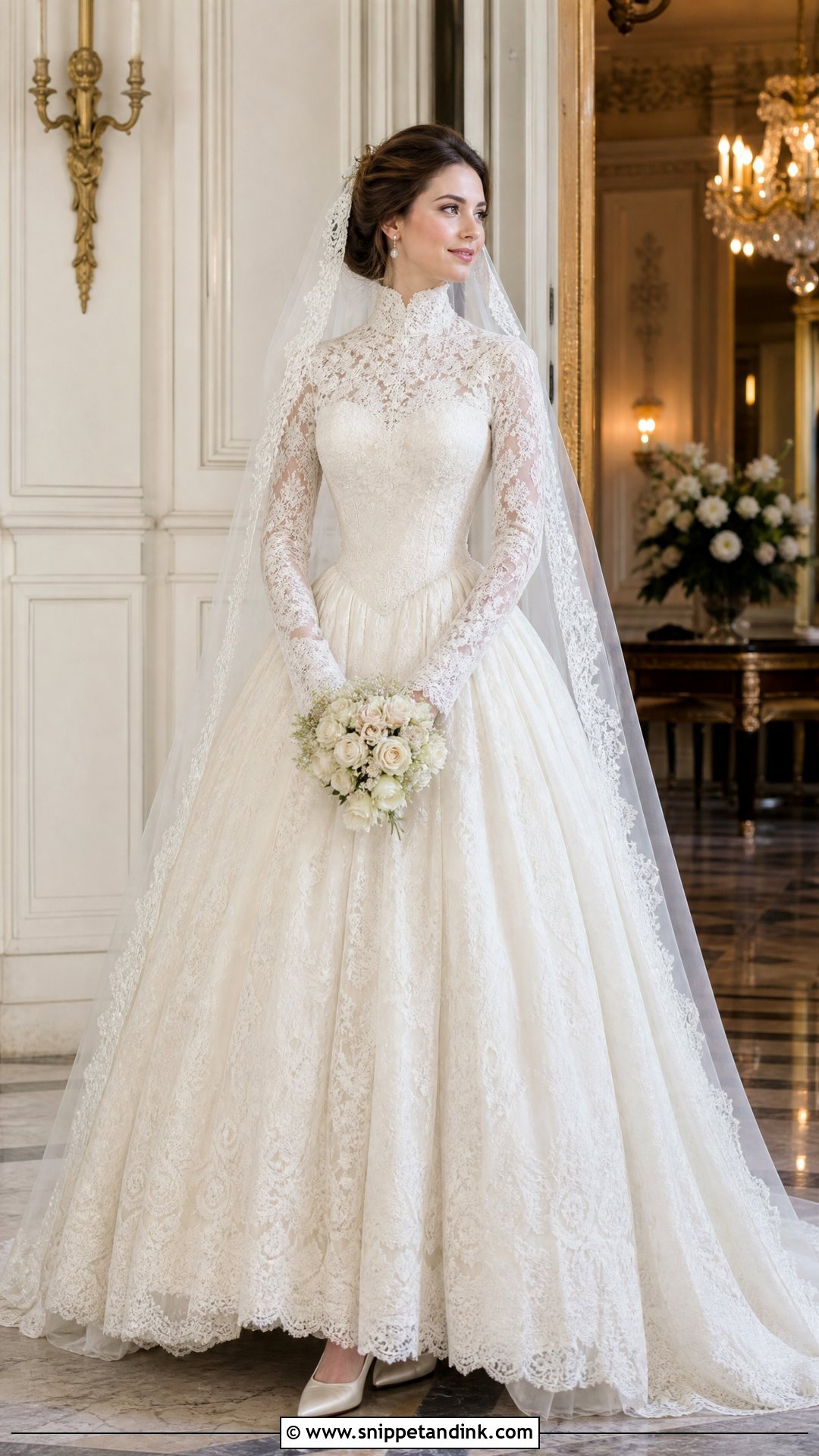
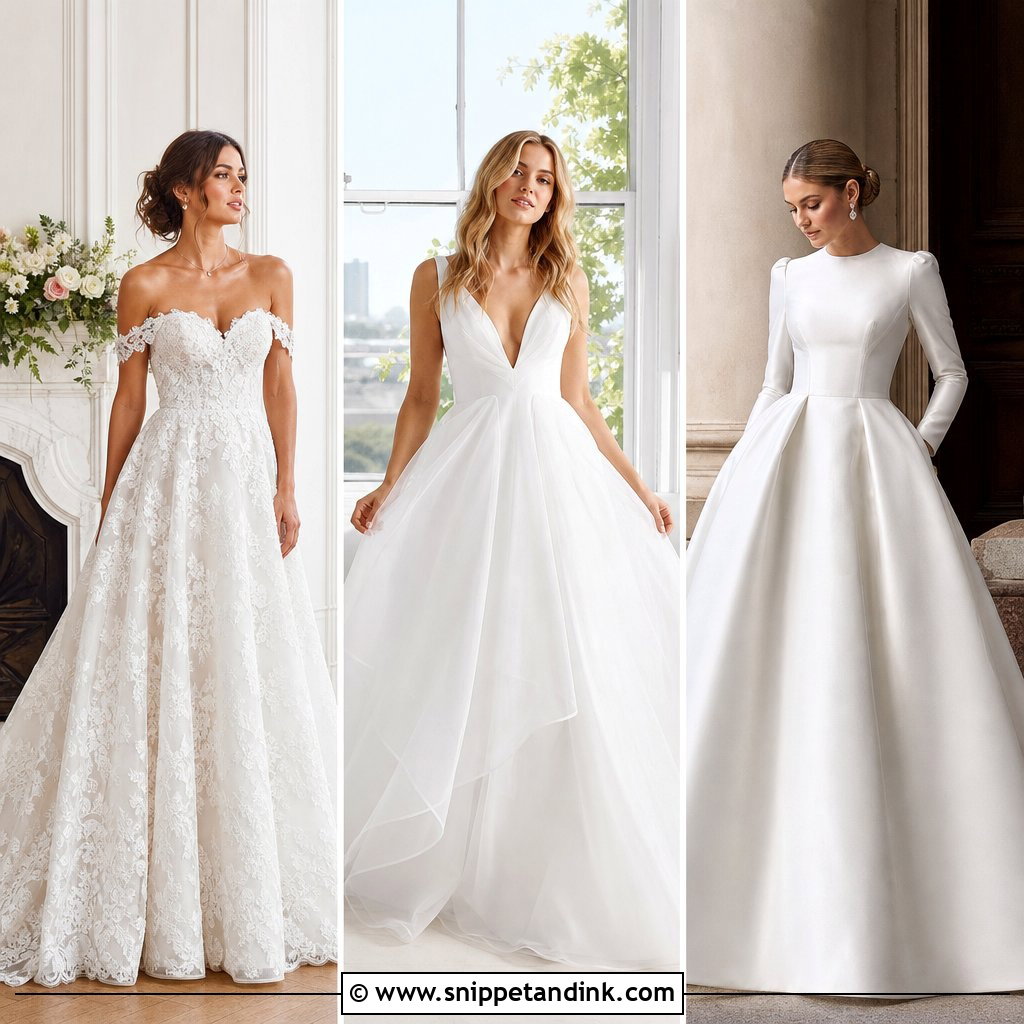
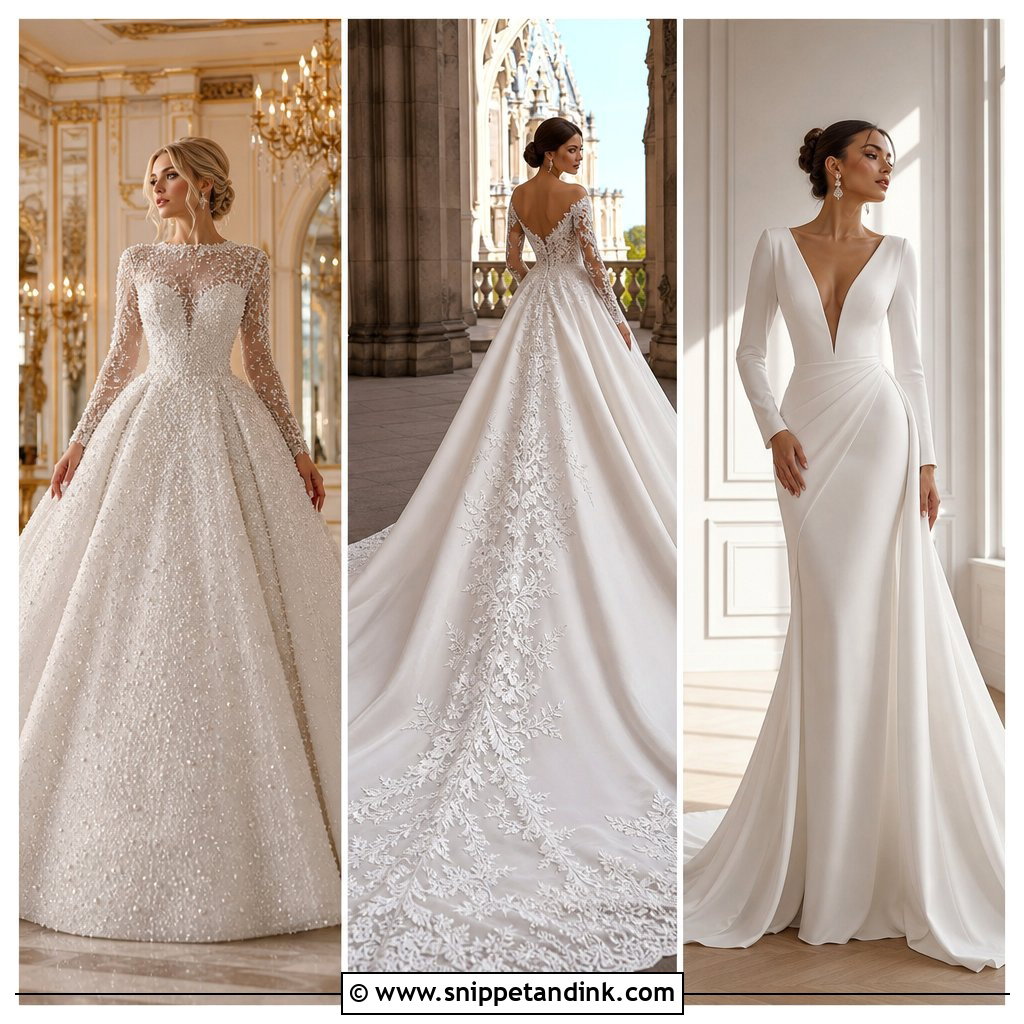
This is the look most people picture first: high neck, covered buttons, long lace sleeves, a defined natural waist and a full layered skirt. I like ivory lace over a soft champagne lining, because pure white lining under ivory lace can make the lace look dingy, while champagne warms it. Pearl drop earrings, a lace-edged cathedral veil and pointed satin pumps finish it, with a low bun or twisted updo so the neckline and sleeves stay visible. On a petite frame I’d ask for one fewer skirt layer to keep the proportions in check. Ballrooms, historic hotels and formal estates give it the setting it wants.
2. Victorian Corset Wedding Dress With Full Skirt
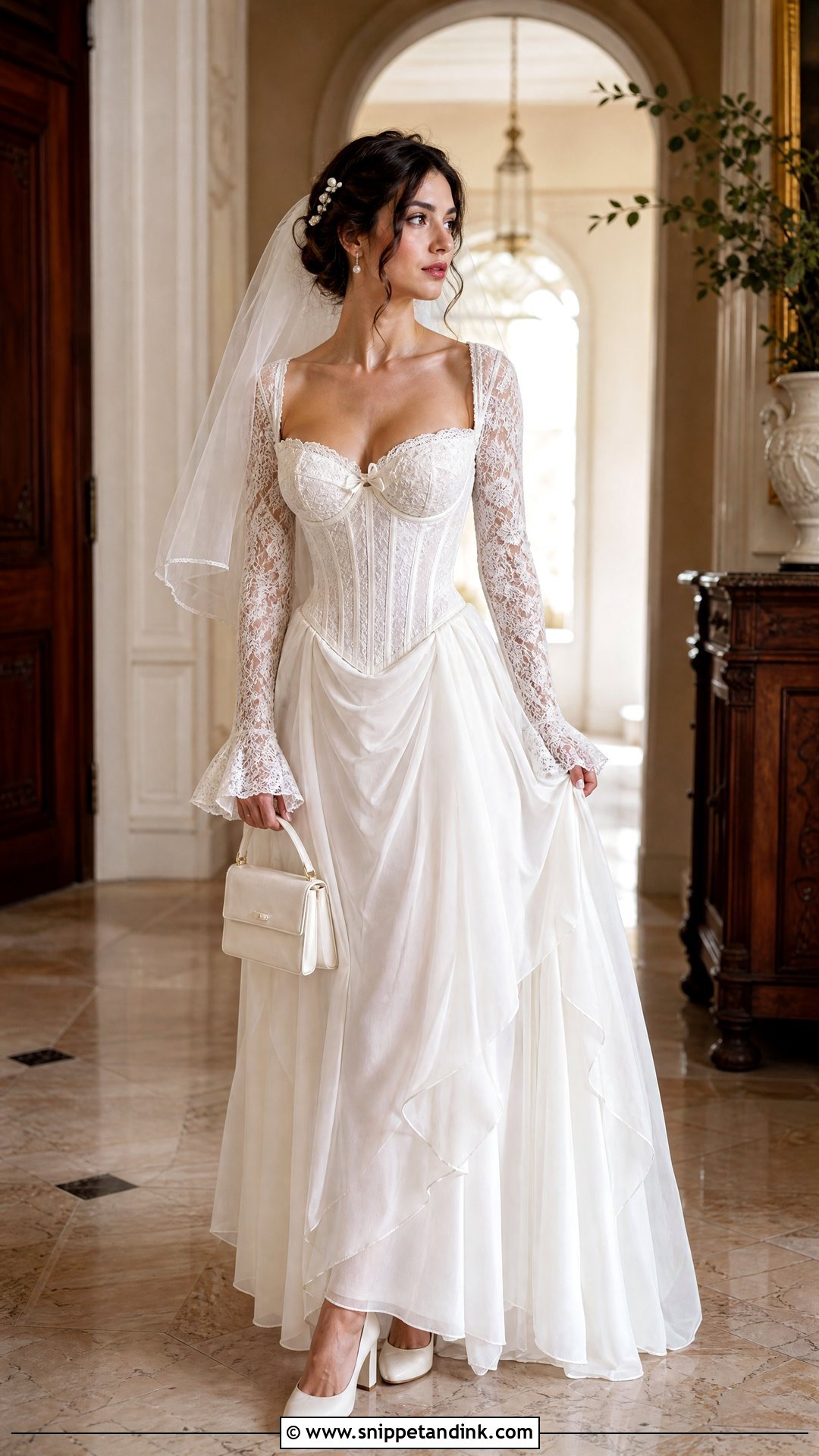
A corset bodice over a full skirt gives you the most waist definition of anything on this list. Visible boning, a curved neckline and lace or embroidered panels set the period tone, and a silk organza or tulle skirt keeps it moving. An ivory ribbon at the waist softens the jump between fitted top and big skirt. Pearl hairpins, a fingertip veil, a structured mini bag and block heels finish it. The shape flatters many figures, since the skirt falls away from the hips, but only if the corset is fitted to you. I ask brides to sit, laugh and raise their arms at the fitting; any pinching at the top edge or under the arms means more work is needed.
3. High Neck Victorian Wedding Dress
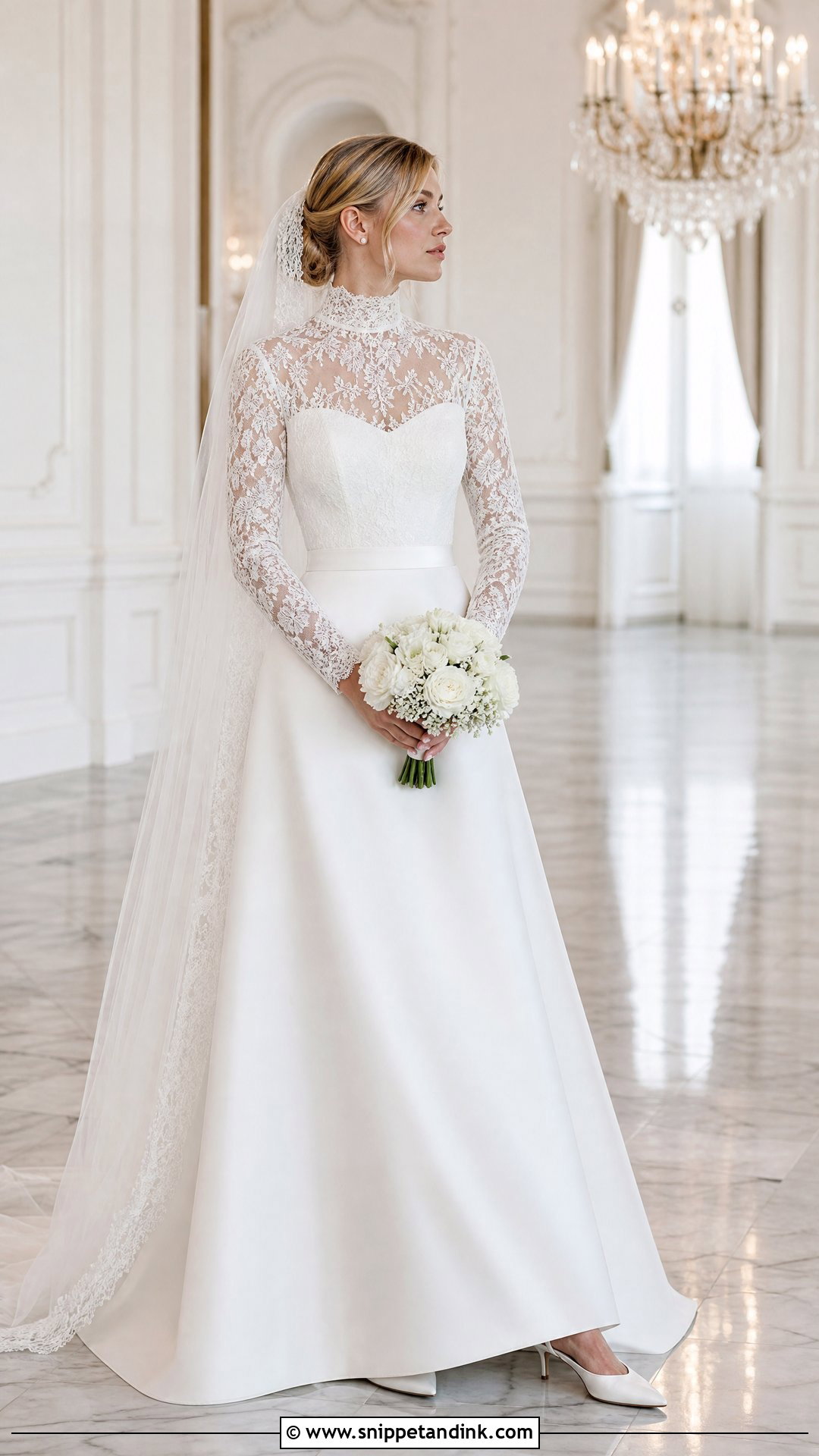
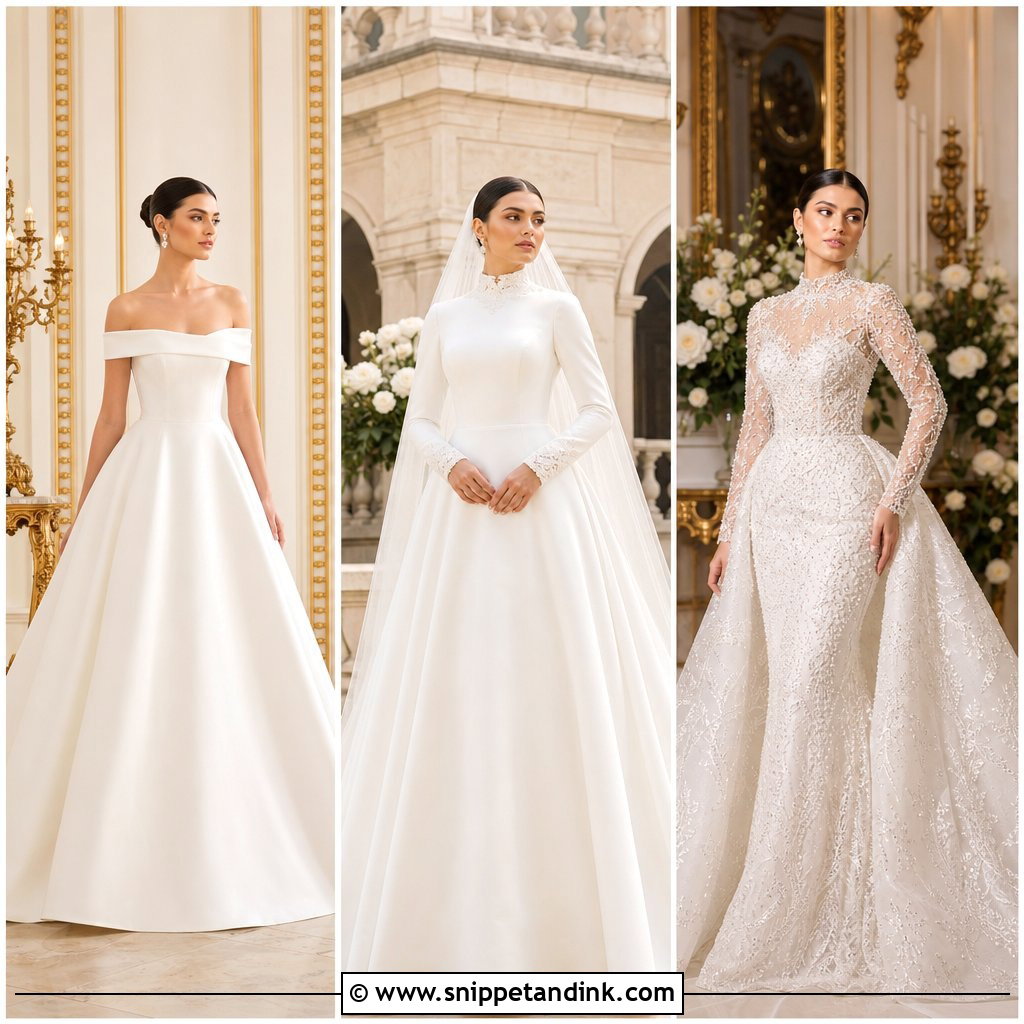
Coverage and romance at once. The classic construction is a sheer lace yoke over a sweetheart lining, a narrow standing collar and small covered buttons down the back, with long fitted sleeves running unbroken to the wrist. Keep the skirt simple, an A-line in crepe, satin or light mikado. A low chignon, small pearl studs, a narrow chapel veil, ivory slingbacks and a compact bouquet complete it. Autumn and winter suit it best, though open lace breathes enough for spring. Ask for the collar to be lined in something soft. A stiff lace collar rubs a red line into the neck after a few hours of turning to greet people.
4. Victorian Puff Sleeve Wedding Dress
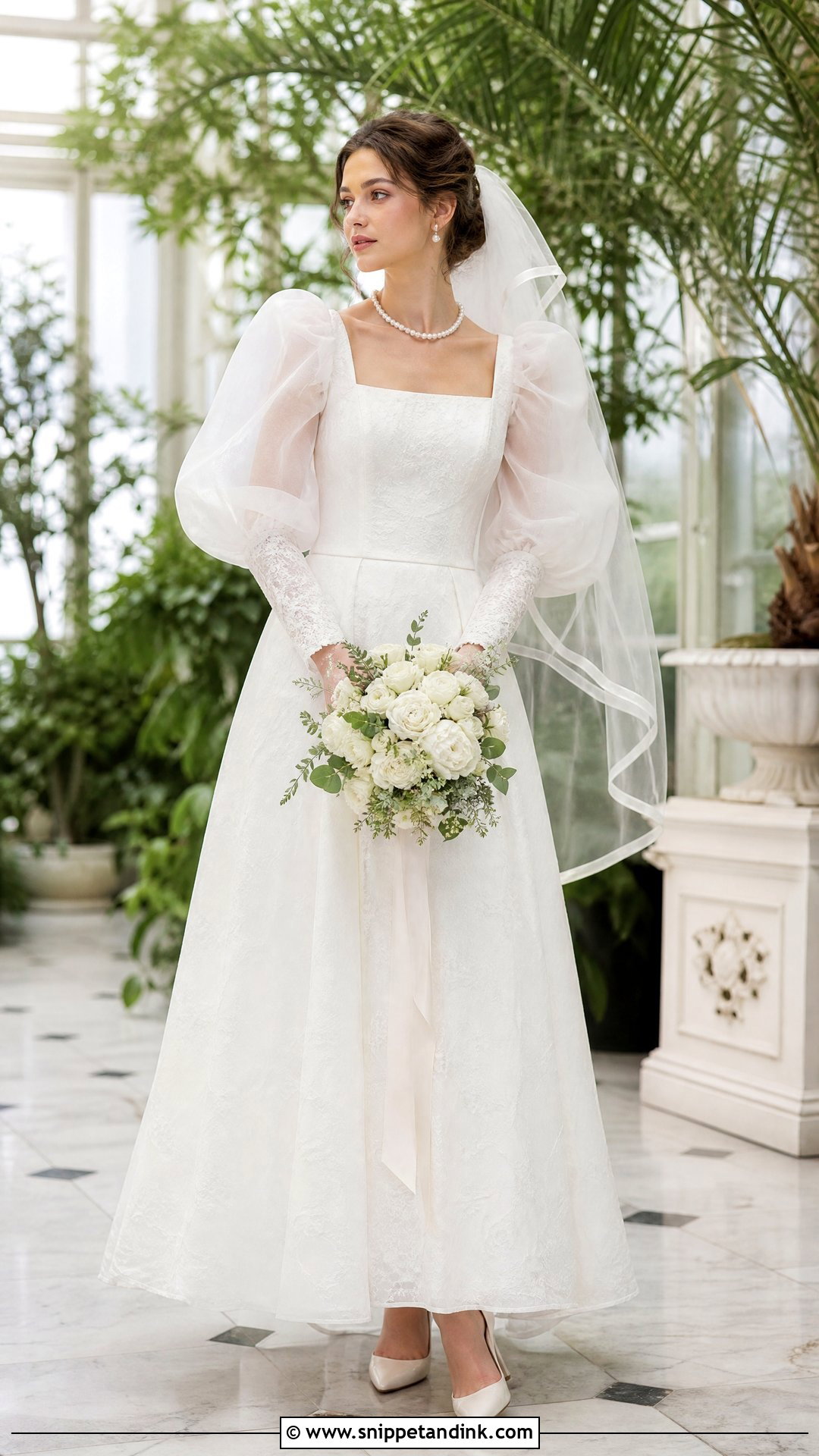
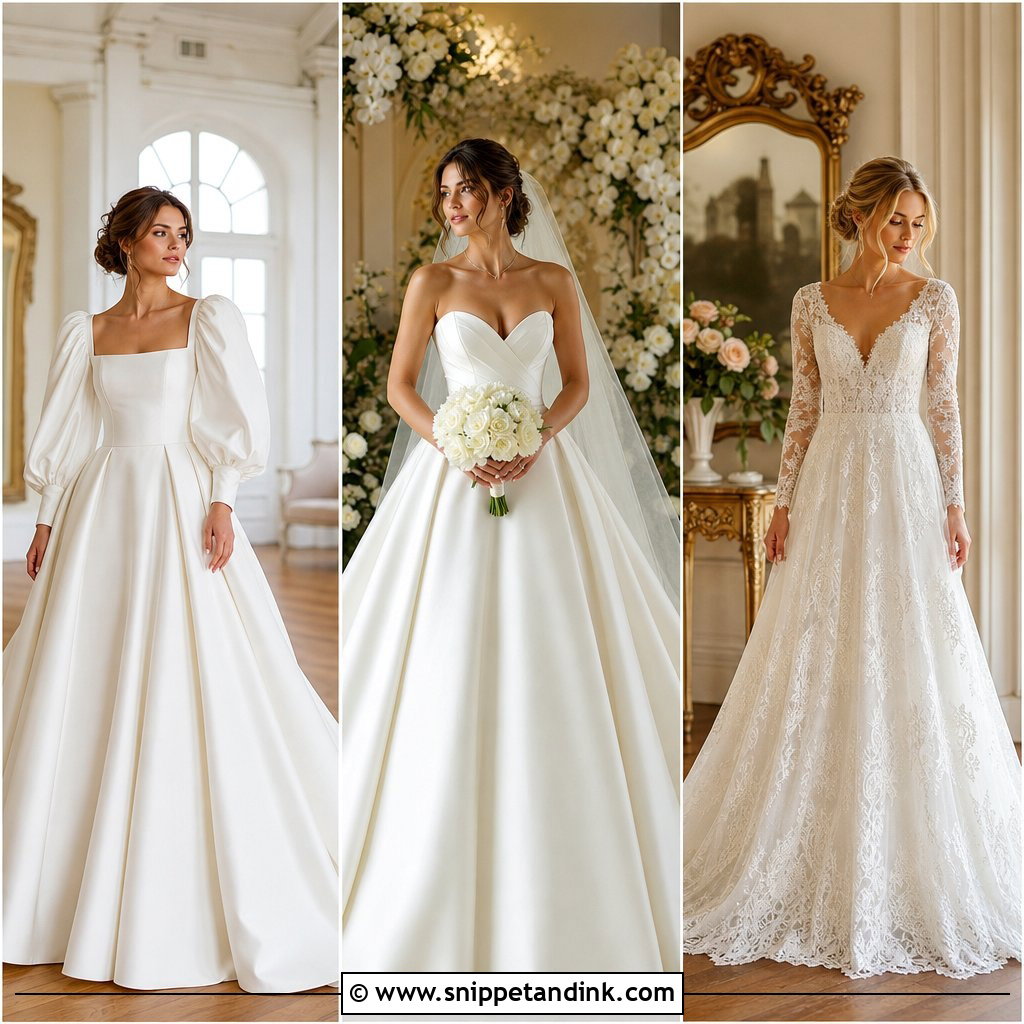
Puff sleeves are the most wearable period detail there is, and they suit far more brides than they expect. Look for sleeves that rise gently at the shoulder and taper into fitted lace cuffs, on a structured square-neck bodice with a floor-length A-line skirt. Organza, dotted tulle or silk gauze give volume without weight; heavier fabric makes the sleeve collapse. A short pearl necklace, a ribbon-trimmed veil, rounded satin heels and a softly waved updo suit the shape. Scale the sleeve to your frame: broader shoulders look best with a smaller cap, narrow shoulders can carry a big puff. Gardens and conservatories feel right for it.
5. Off Shoulder Victorian Wedding Dress
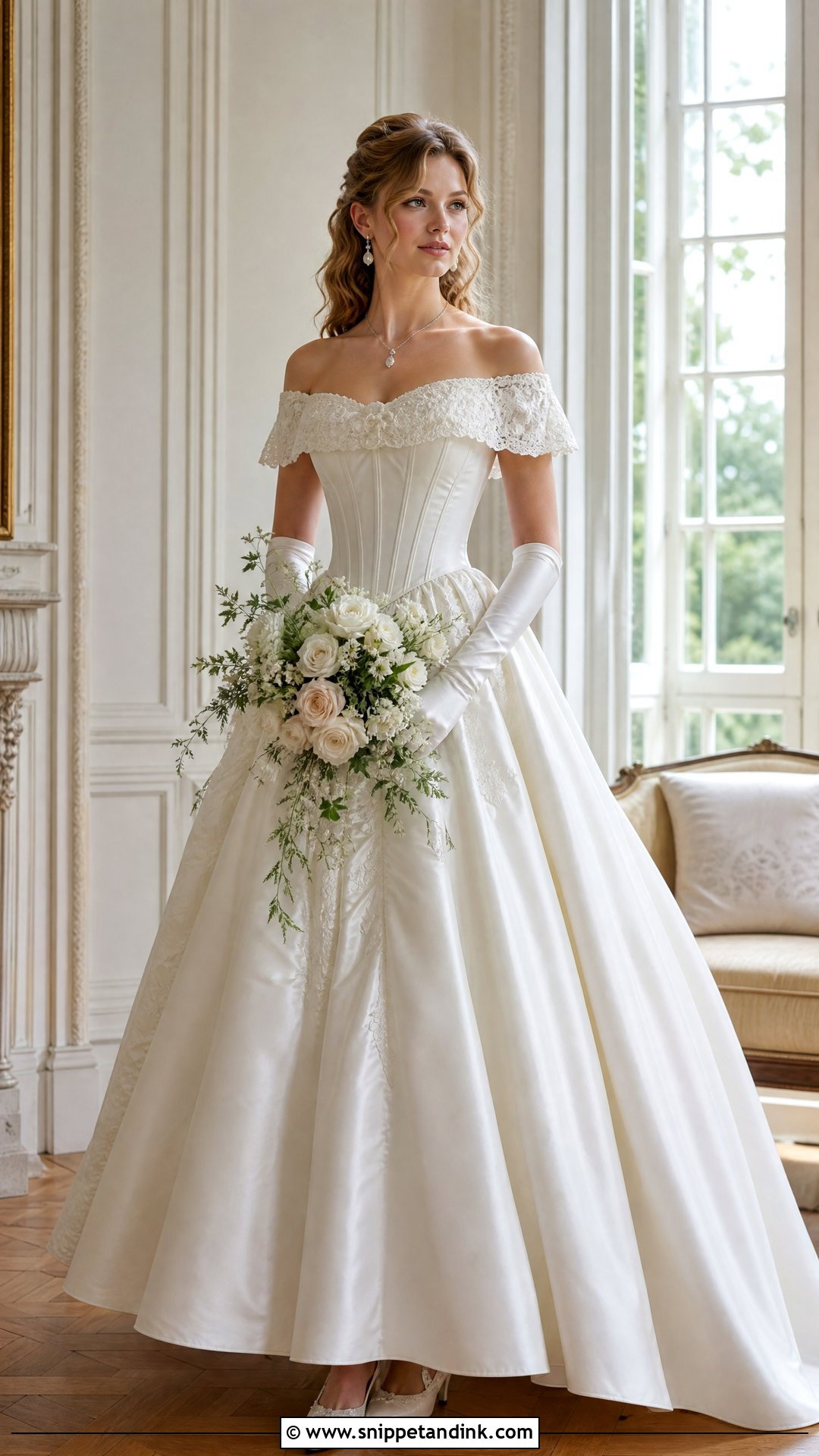
Off the shoulder is the less buttoned-up side of Victorian dress, and evening gowns of the period showed the shoulders far more than daywear did. A corseted bodice with a folded satin neckline or a lace bertha collar frames the shoulders, over a full skirt with a moderate train. Elbow gloves add period flavor, but keep them plain. Add a delicate pendant, pearl earrings, closed-toe pumps and half-up waves. The neckline has to be held by the bodice’s internal structure, not by your arms; if it slips when you reach for a glass, it needs adjusting.
6. Long Sleeve Victorian Wedding Dress
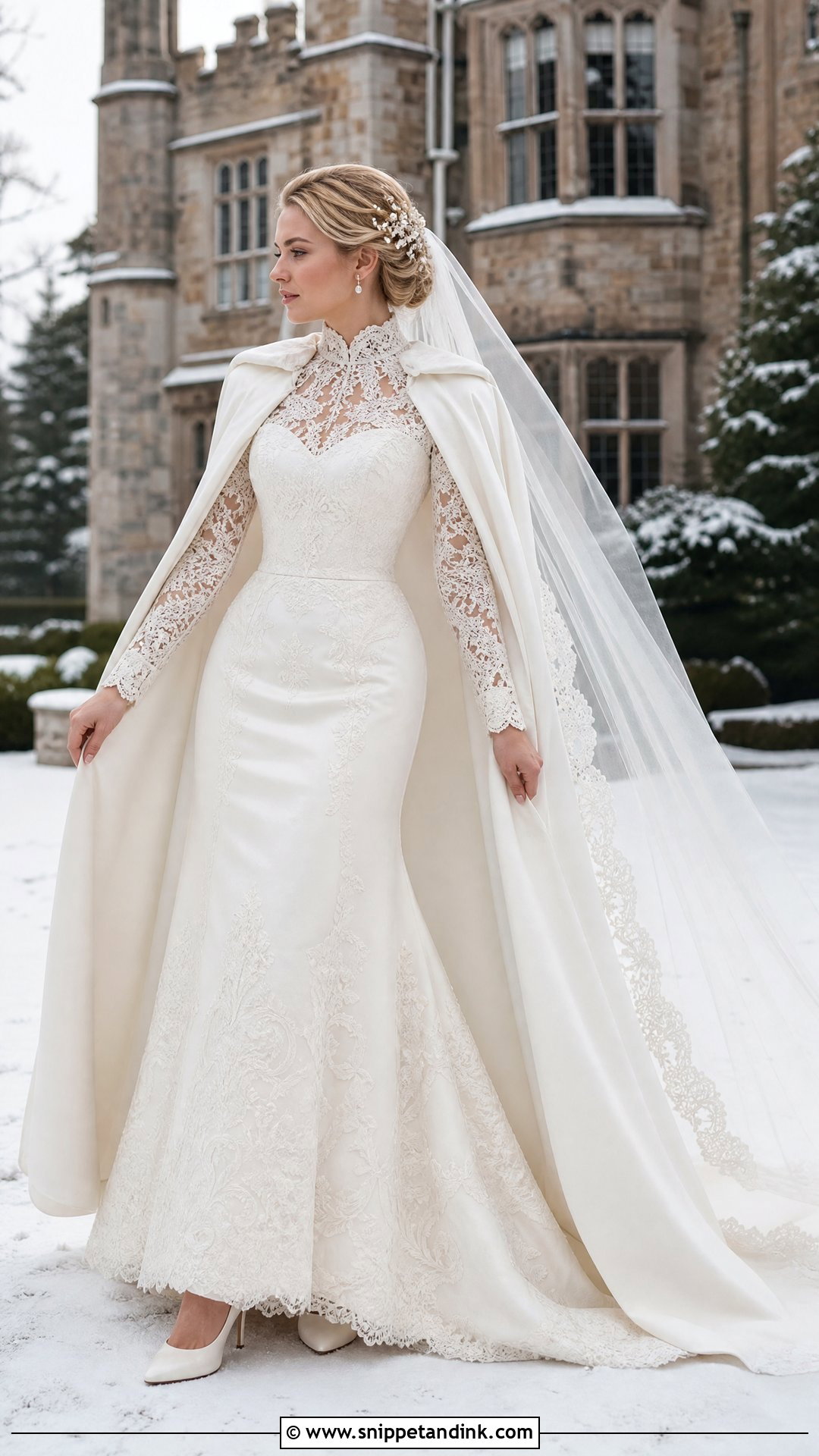
Long sleeves come into their own in cold weather. An ivory gown with fitted lace sleeves, a structured bodice and a softly flared skirt is the base. Dense floral lace suits winter, while fine Chantilly reads lighter for autumn or early spring. A row of covered buttons along the sleeves and back adds a historical detail that looks lovely close up in photos. Velvet pumps, a pearl comb and a long veil with a simple lace border finish it, and a fitted ivory cape handles outdoor portraits. Keep jewelry minimal, the bun smooth and makeup softly defined. Make sure the sleeves are long enough when your arms are bent, since a fitted sleeve that ends at the wrist bone while standing rides up halfway as soon as you hold the bouquet.
7. Victorian Satin Wedding Dress
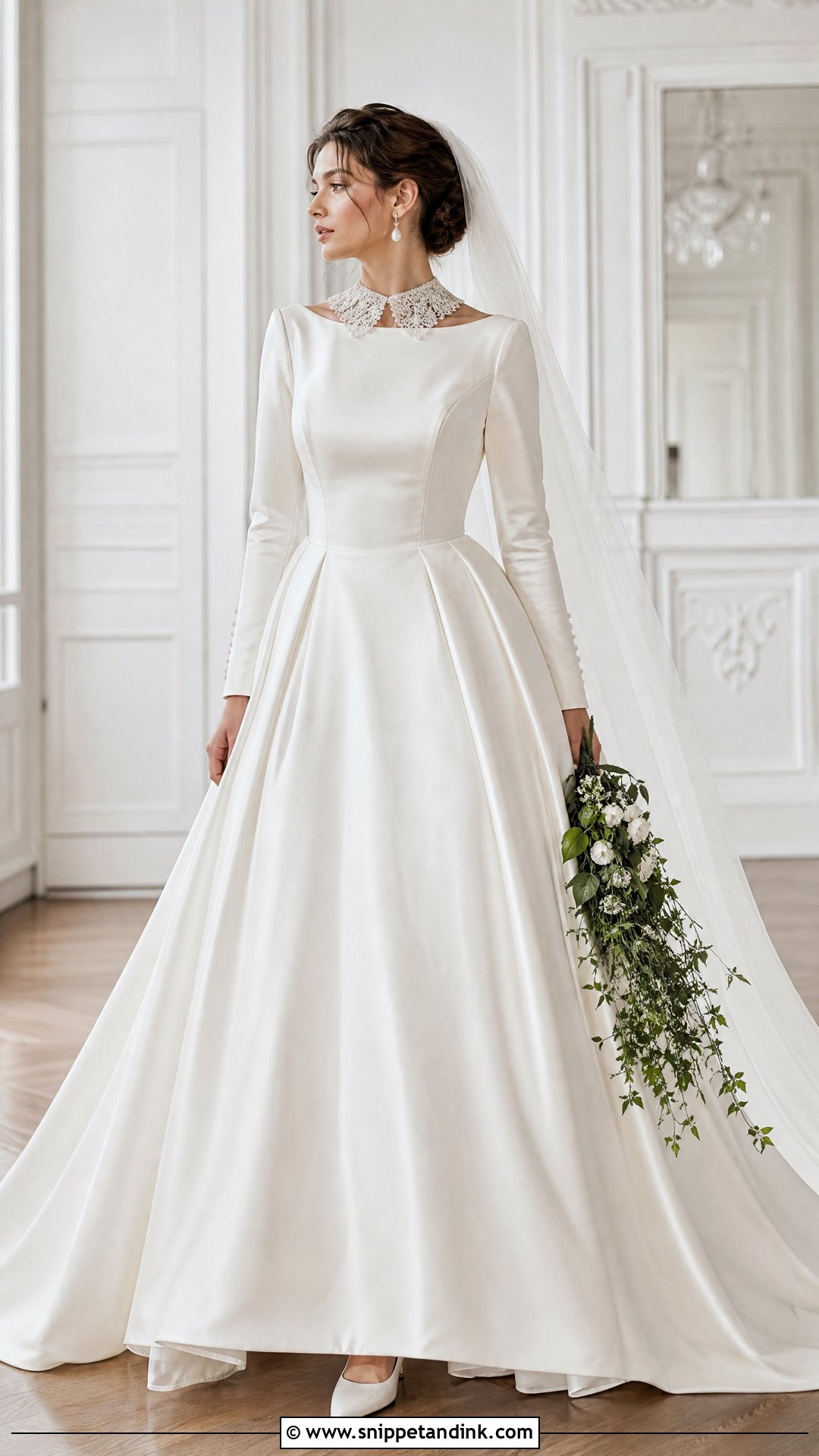
Satin gives the cleanest take on the era. Start with a fitted bodice, a high bateau neckline, a natural waist and long buttoned cuffs, then a substantial A-line or ball gown skirt so the fabric’s drape can show. The period references come from construction rather than decoration: precise seams, covered back buttons and a detachable lace collar. Pearl earrings, a sleek bun, satin pumps, a long plain veil and a small bouquet with trailing greenery complete it. I usually suggest matte or low-sheen satin. High-shine satin bounces light into every crease and can look plasticky in harsh midday sun.
8. Victorian Ruffle Wedding Dress
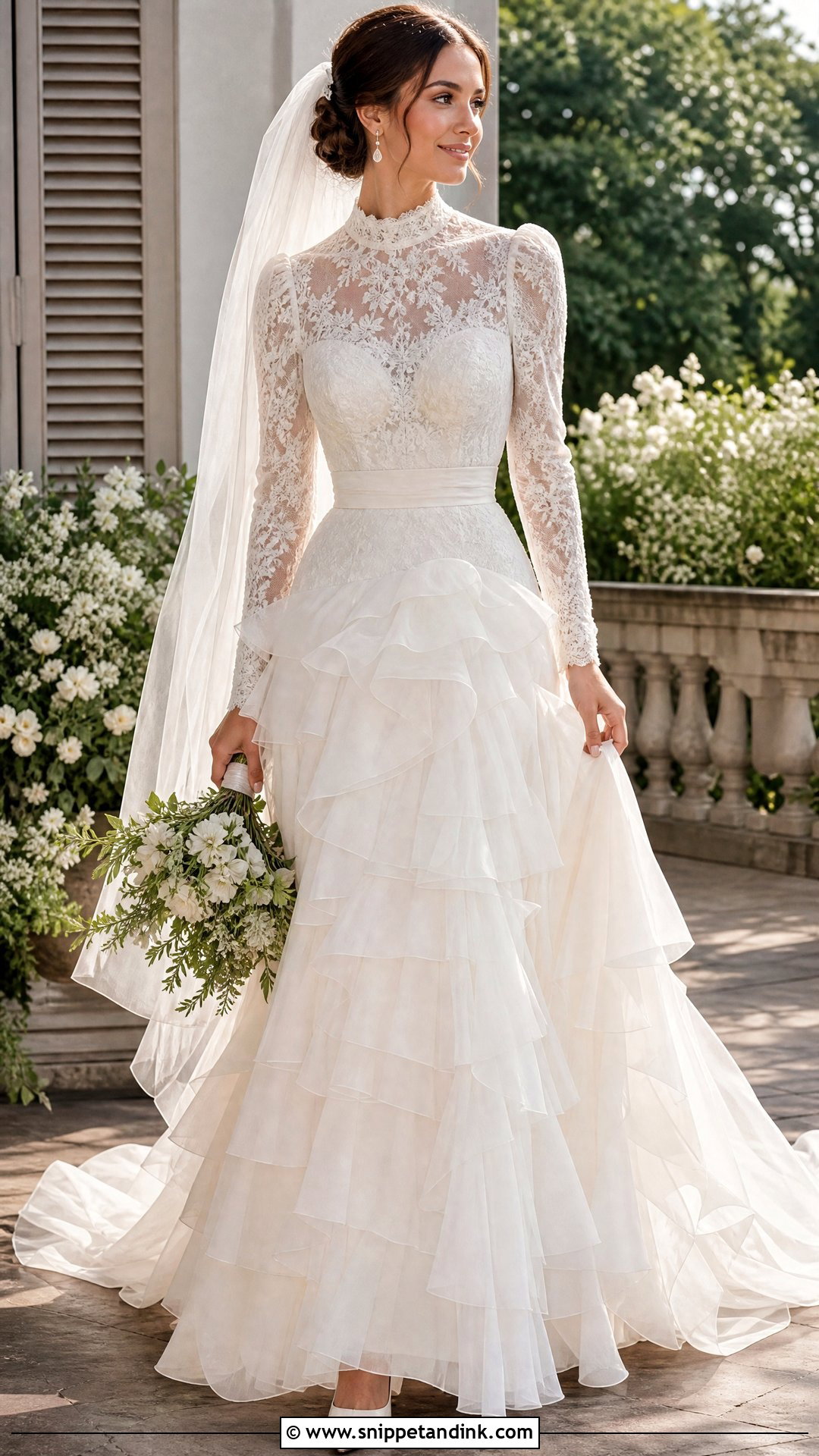
Ruffles add movement, but only when they’re light. A fitted bodice with a modest neckline and slim sleeves sets up soft tiered ruffles below the hips, in tulle, organza or lace; heavy satin ruffles look bulky and drag. A narrow ribbon belt gives a clean break at the waist. Drop earrings, an understated comb veil and simple pointed shoes are enough, since the skirt already supplies the interest. For curvy brides, I ask for graduated ruffles that run vertically or get deeper toward the hem, which lengthens the line instead of adding horizontal bands across the hips.
9. Victorian Embroidered Wedding Dress
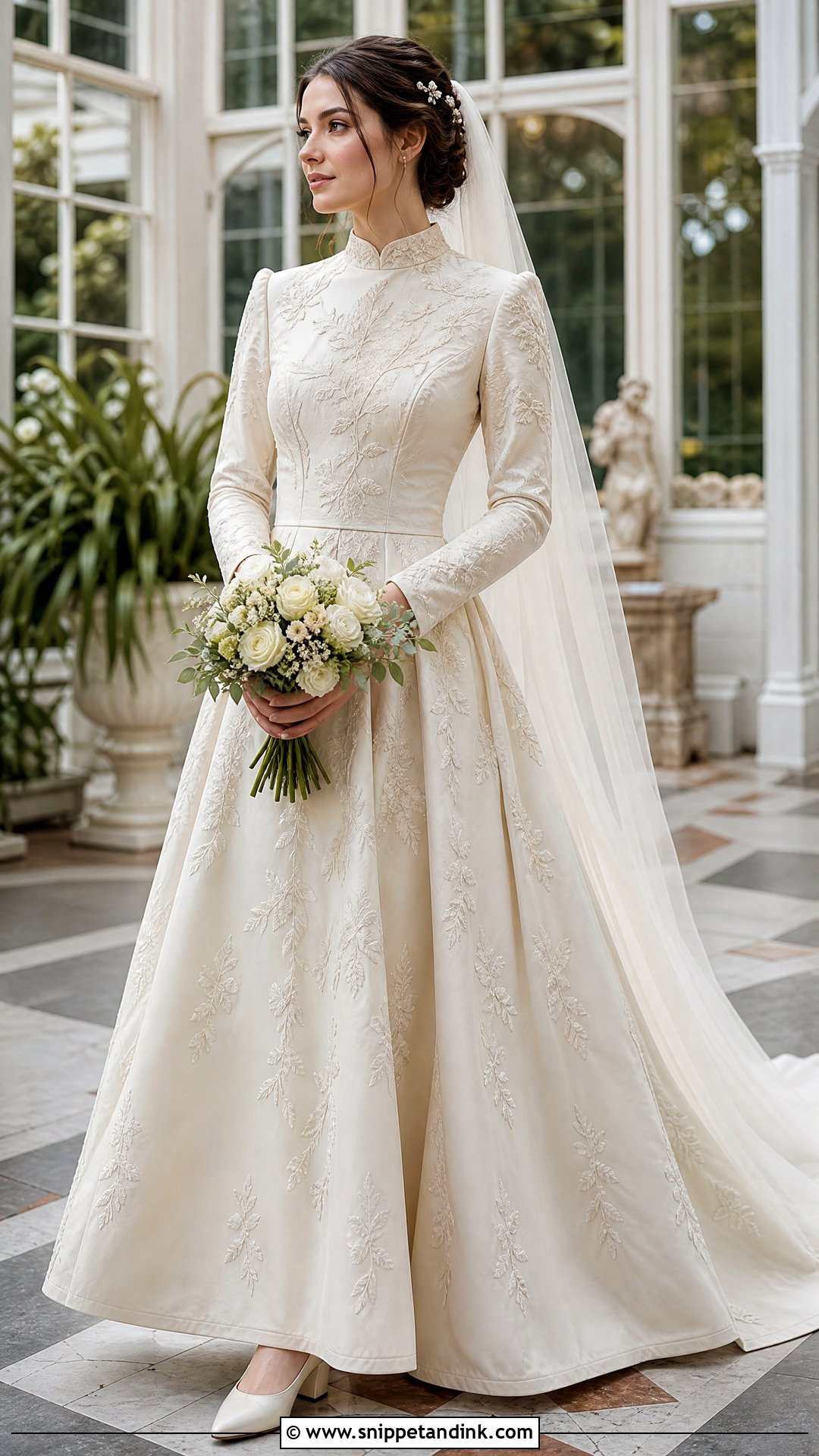
Embroidery turns a plain bridal shape into something that feels made for you. A fitted long-sleeve bodice worked with tonal flowers, leaves or vines can let the pattern drift onto an A-line skirt, thinning out toward the hem. Ivory thread on a cream base gives quiet texture, and tiny pearls add controlled shine. Pearl-and-crystal hairpins, low satin heels, a plain tulle veil and a loose low bun keep the styling soft. You can also stitch in flowers from your bouquet, your season or a family tradition. Hand embroidery adds weeks to a lead time, so ask early if you want anything custom.
10. Victorian Cape Wedding Dress
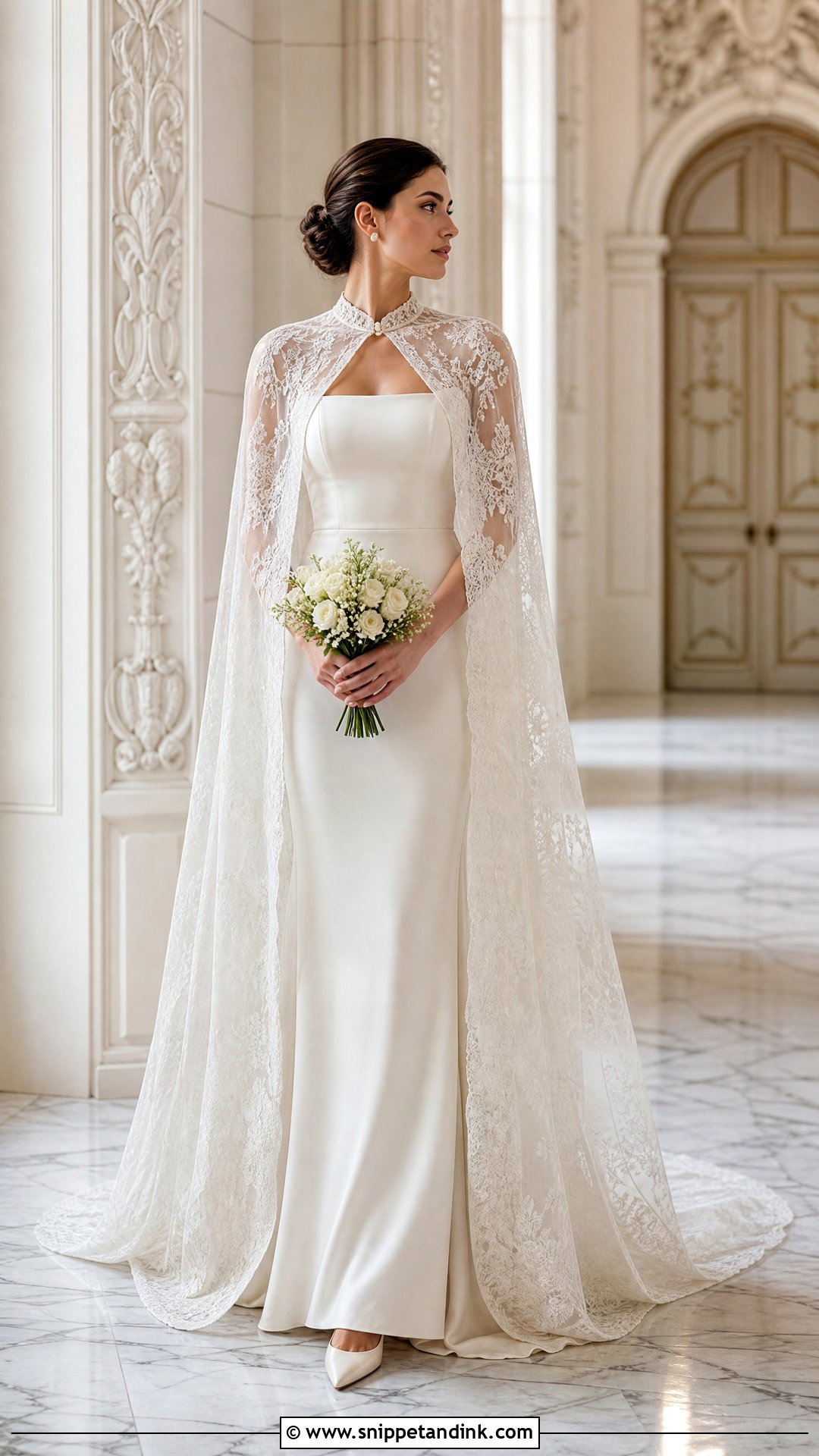
A cape is how I give brides arm coverage without committing to tight sleeves. Start with a fitted ivory crepe dress, square neckline, defined waist and gently flared skirt, then layer a floor-length lace or sheer tulle cape fastened with a small pearl closure at the neck. Keep the dress underneath clean. Pearl studs, pointed heels, a compact arrangement and a center-parted bun prevent the neckline crowding. A single closure at the throat pulls backward under the cape’s weight, so I ask for discreet snaps at each shoulder as well. It comes off neatly for the reception.
11. Victorian Bustle Wedding Dress
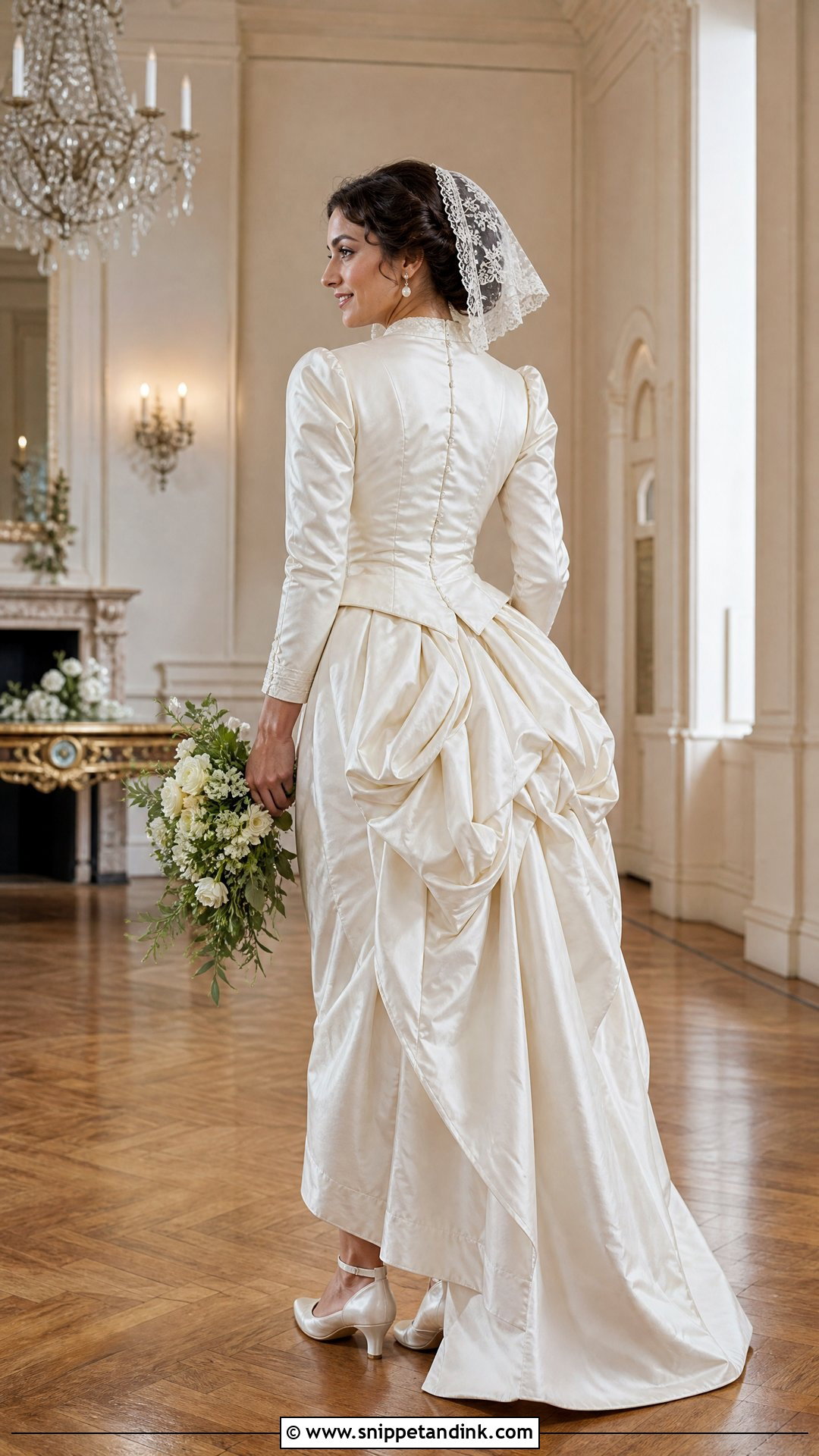
A bustle-inspired wedding dress is all about the back view. Choose a structured bodice with a modest neckline and fitted sleeves, and a skirt that gathers softly toward the back. Modern draping suggests the bustle without any of the historical cage beneath. Draped satin, taffeta or mikado hold sculptural folds best. Keep the front clean and the waist defined, then add a small lace veil, pearl earrings, satin ankle-strap shoes and a neat updo. Sit down in it before you commit. Gathered fabric at the back is exactly what you sit on, and stiff taffeta can crush into permanent creases over a long dinner.
12. Victorian Tea Length Wedding Dress
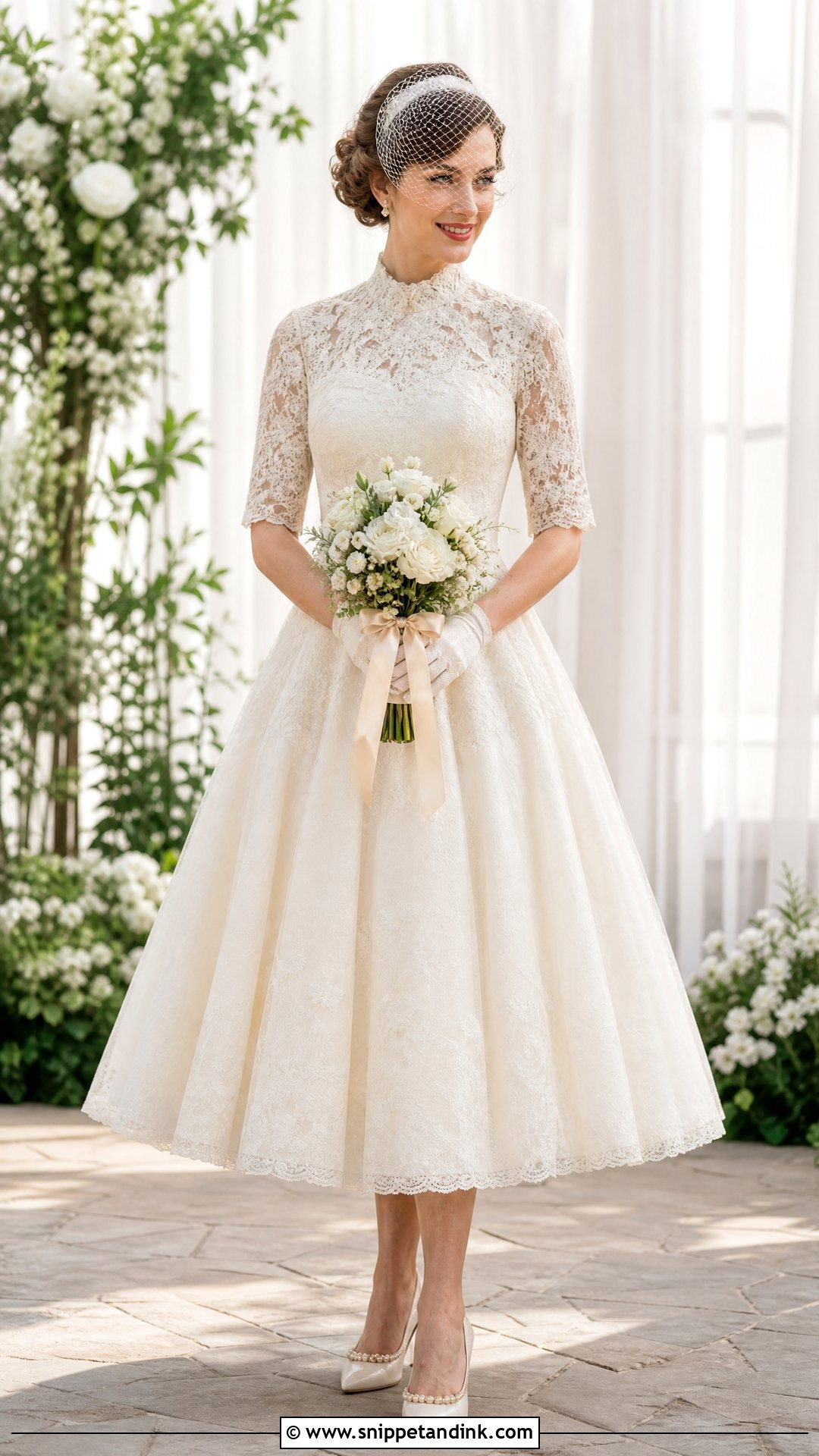
Tea length is the playful version, and the most practical. A fitted lace bodice with a high collar and elbow sleeves sits over a full skirt ending between knee and ankle, with a structured petticoat for volume. Your shoes are on show, so ivory button boots, pearl-trimmed pumps or elegant low heels deserve some thought. Short gloves, a birdcage veil and a small ribbon-tied bouquet complete it. I reach for it for courthouse ceremonies, small garden weddings and daytime parties, and you’ll dance easily in it. Keep the accessories polished or the shorter hem can tip casual.
13. Black Victorian Wedding Dress
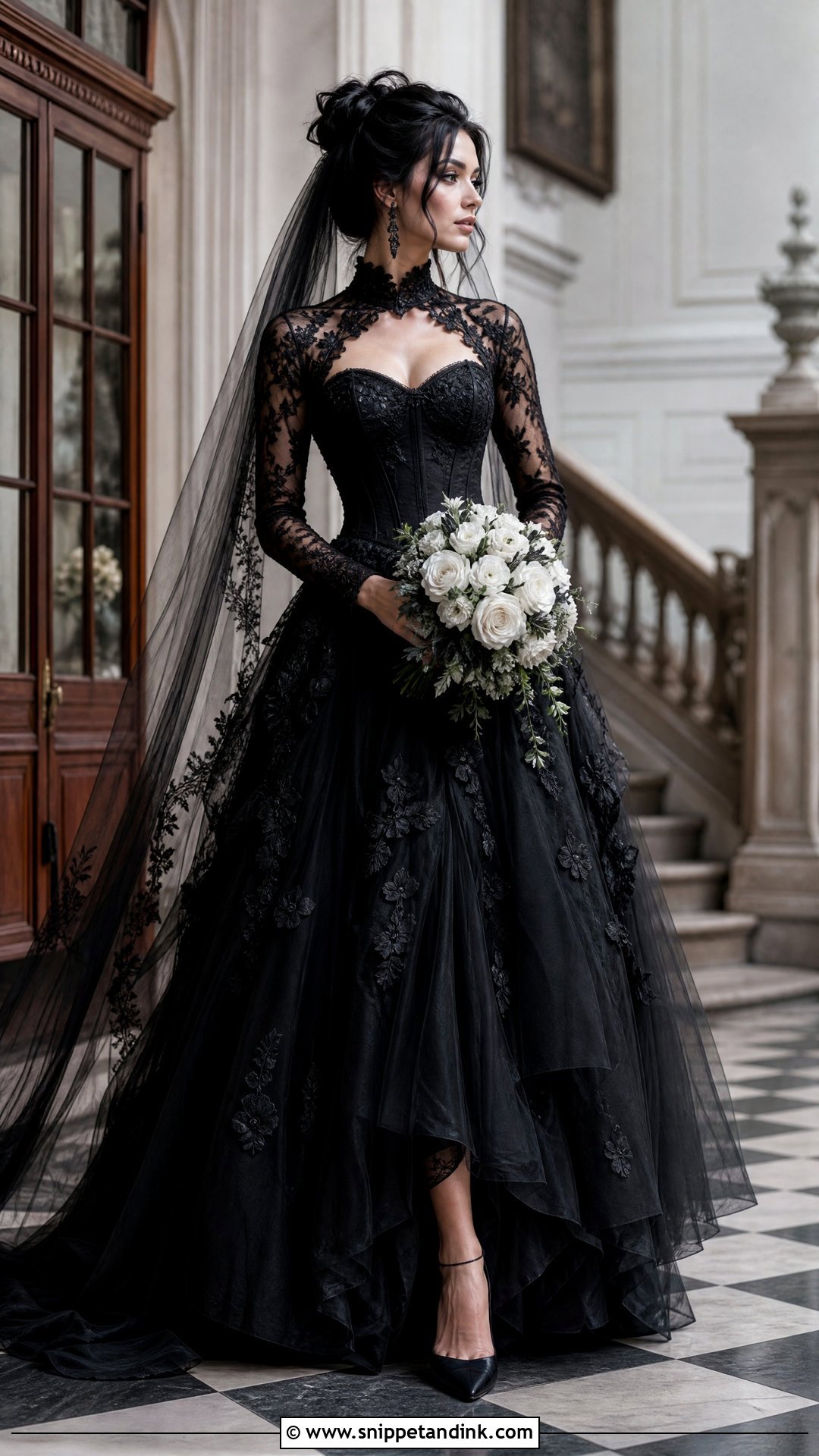
Black was a respectable Victorian wedding color long before it became a statement, as many brides of the era married in dark silk they could wear again. A structured corset bodice, long lace sleeves and a full tulle or satin skirt give a coherent formal shape, with tonal floral appliqués for texture. Black pointed pumps, crystal drop earrings, a sheer black veil or plain tulle cape and a sleek low bun work, and white flowers balance the dark. If solid black feels like too much, try a black lace overlay on a soft nude lining. Black shows lint and pale makeup marks, so pack a lint roller.
14. Blush Victorian Wedding Dress
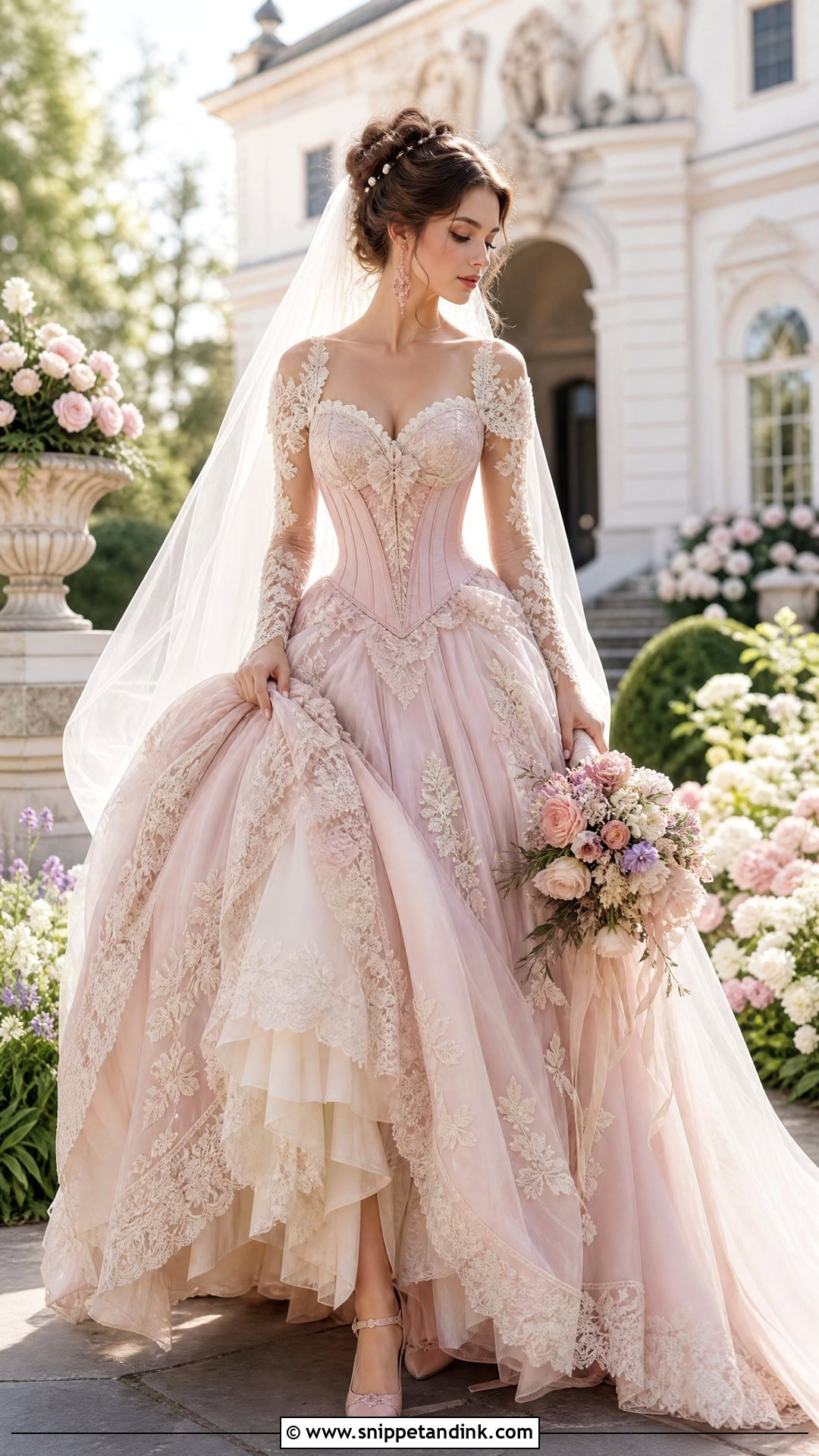
Blush softens the structure of a Victorian shape. A pale rose or champagne-blush gown with a corseted bodice, floral lace sleeves and a full layered skirt, with ivory embroidery over the colored lining, keeps it traditional. Rose-gold earrings, nude or blush heels, a sheer ivory veil and a gathered updo with pearl pins suit the palette. Compare several linings against your skin by a window before choosing. Blush with yellow undertones flatters warm skin, while cooler pinks suit fair, cool complexions, and the wrong one makes skin look sallow beside it.
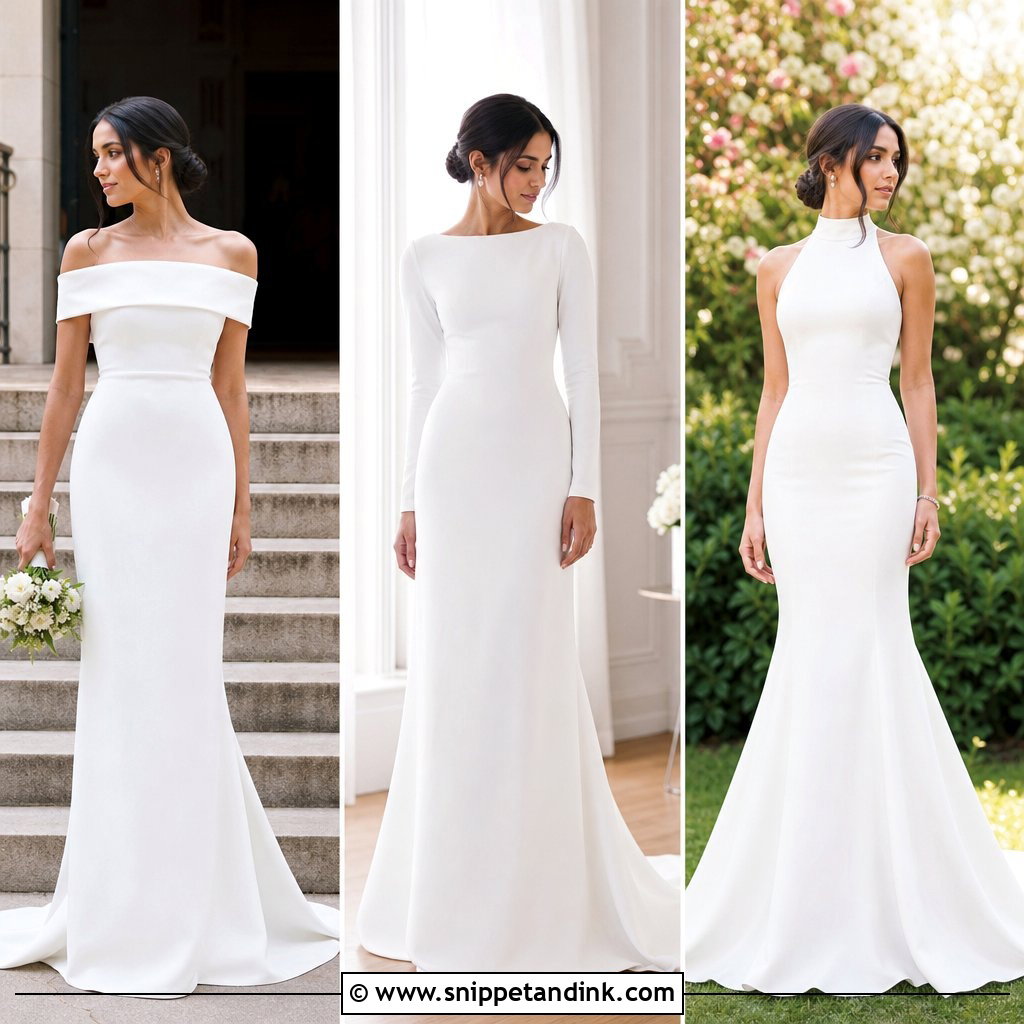
15. Victorian Mermaid Wedding Dress
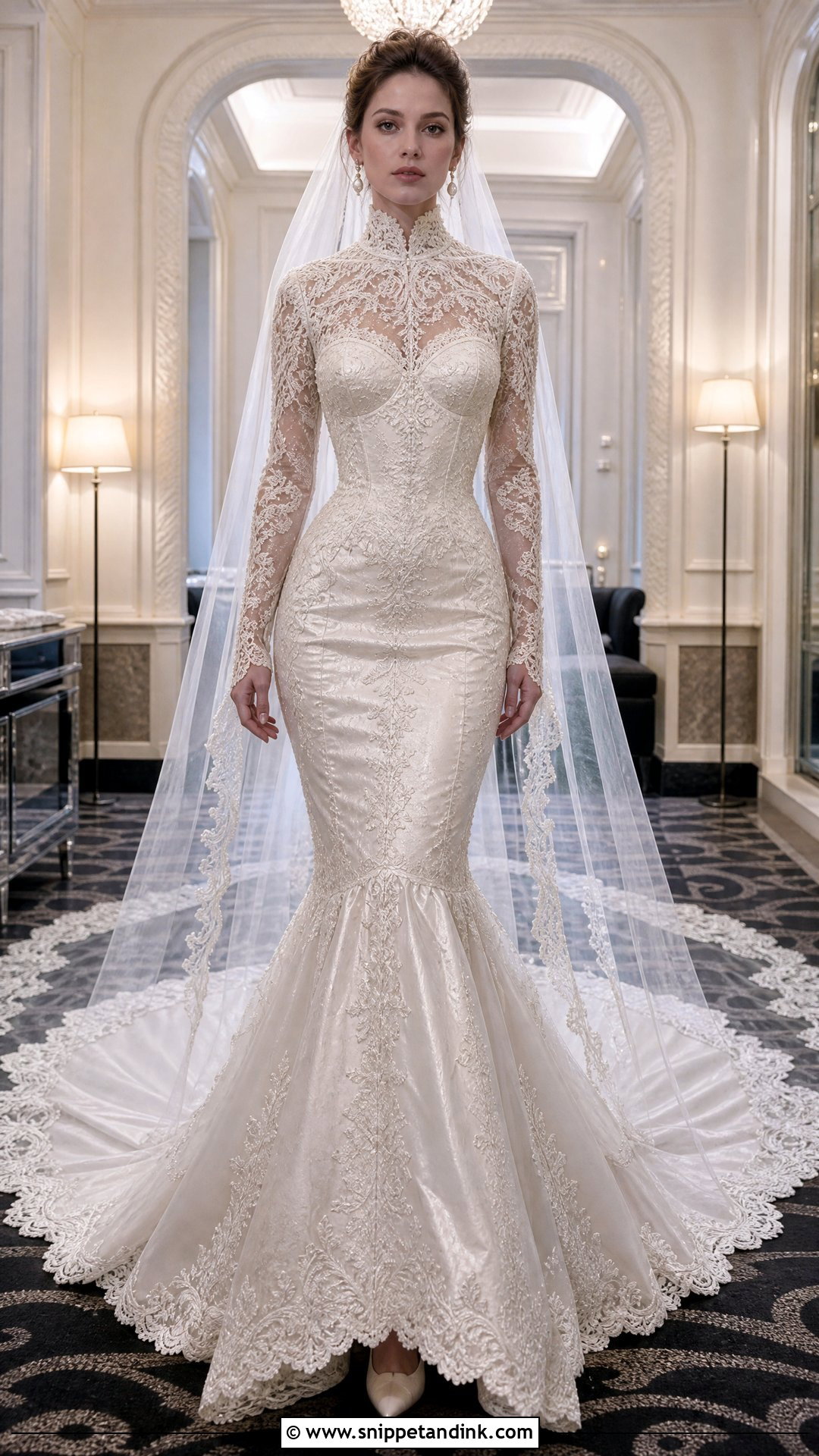
A mermaid shape with Victorian details is a modern hybrid, and it can work very well. Pair a supportive corset bodice, high lace neckline and long sleeves with a skirt that follows the body and flares below the knee. Vertical lace appliqués lengthen the line and blend into the train. Pearl drop earrings, a narrow cathedral veil, pointed heels and a structured low bun keep the neckline and back on show. High neck plus long sleeves plus a fitted skirt is a lot of coverage, so ask for a breathable lining. Test stairs and sitting at your fitting. A detachable overskirt can add volume for the ceremony and reveal the mermaid afterward.
16. Victorian A Line Wedding Dress
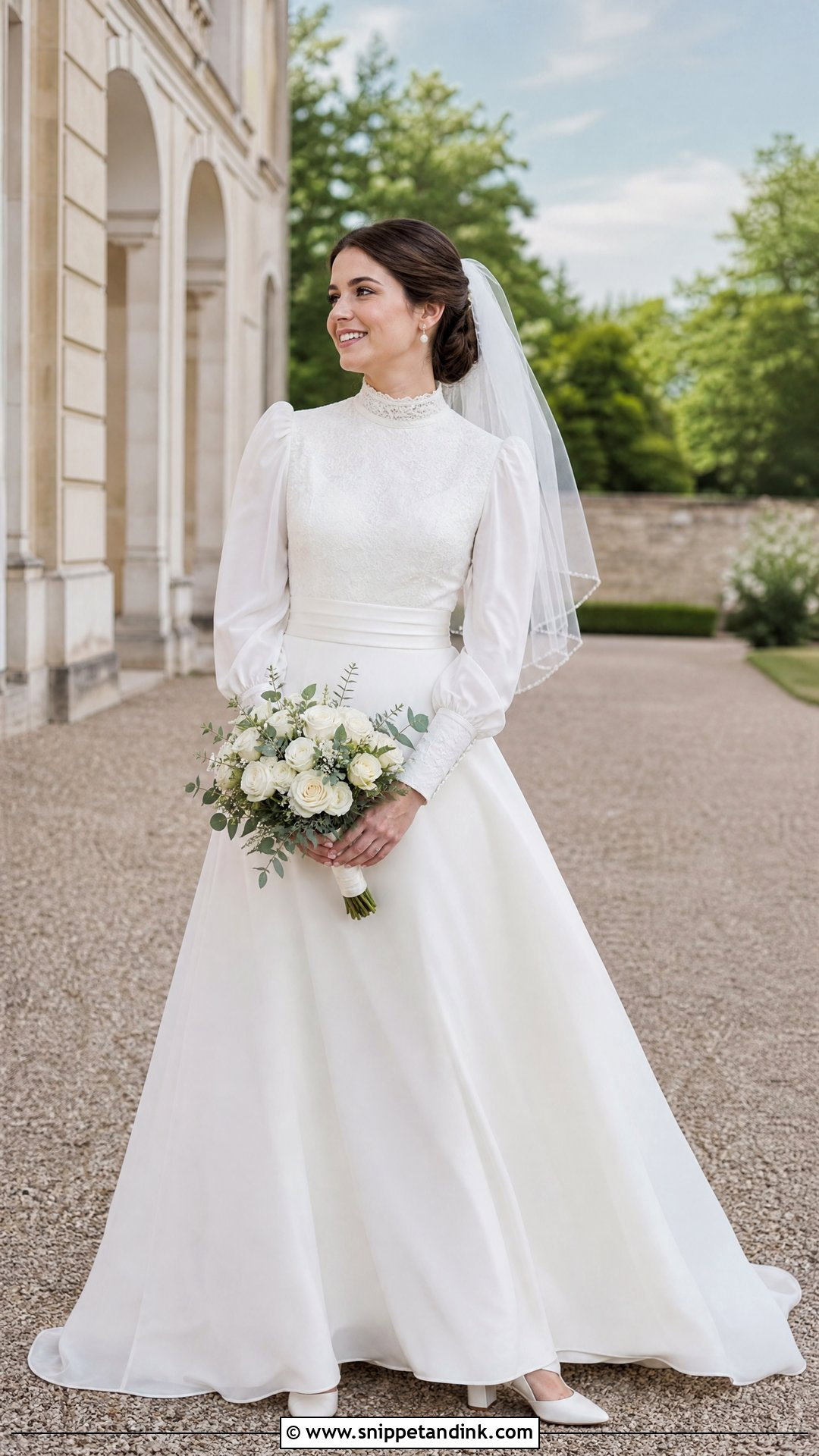
An A-line is the easy way into the style without a huge skirt. A lace bodice with a high neck, lightly puffed shoulders, fitted cuffs and covered back buttons sits over a skirt falling smoothly from the natural waist in chiffon, satin or soft tulle. It suits most body types and moves comfortably. Pearl studs, a medium-length veil, low block heels and a loose chignon with face-framing pieces keep it relaxed, and it adapts to gardens, hotels and modern event spaces. Want more waist? Add a narrow satin band. Want more length? Keep one continuous fabric from bodice to hem.
17. Plus Size Victorian Wedding Dress
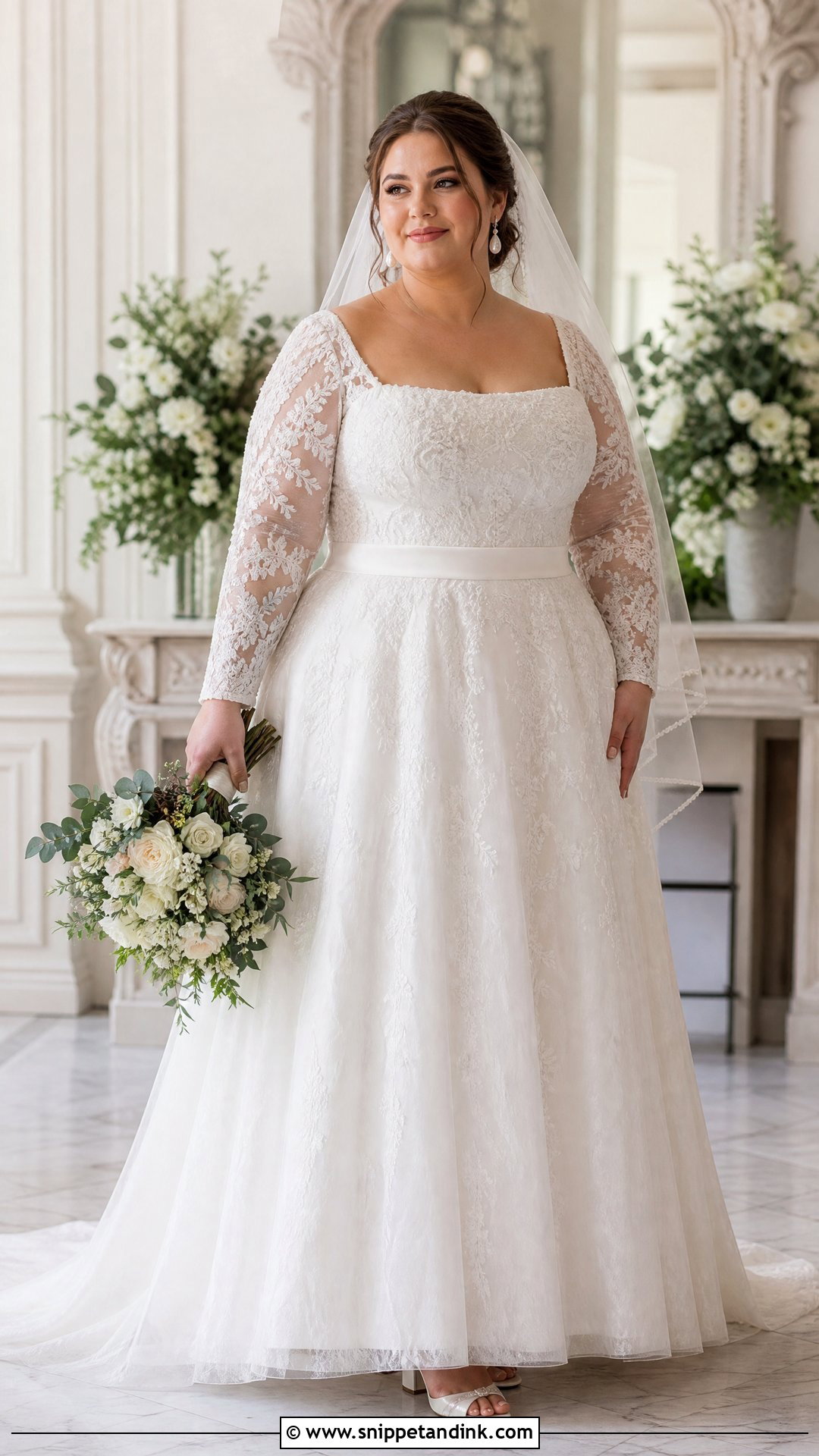
Support comes first in a plus size Victorian dress, and the era’s construction is actually on your side. A structured bodice with flexible boning, a scoop or square neckline, lace sleeves and an A-line skirt flatter without squeezing, and a defined waistband shows the waist without feeling tight. Lightweight layers and a smooth lining stop bulk and itching. Supportive block heels, pearl earrings, a fingertip veil, a bouquet that’s easy to carry and a soft updo complete it. Precise fit through the bust, shoulders and waist matters most, so look for shops with inclusive samples. Trying a sample two sizes too small with clips at the back tells you very little about how the boning will sit.
18. Simple Victorian Wedding Dress
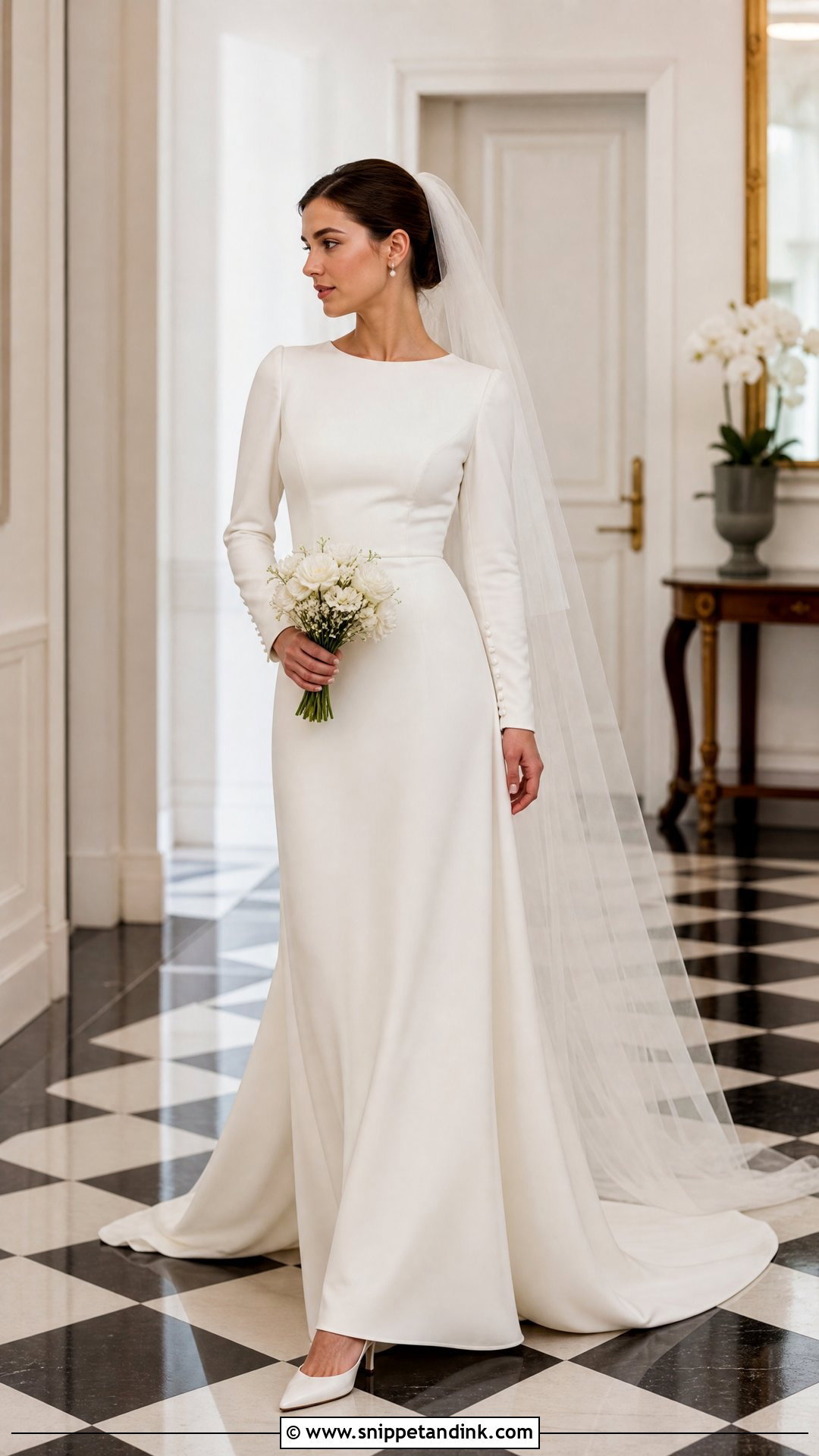
You don’t need lace, ruffles or embroidery for the era to come through. Silhouette and construction can do it alone: an ivory crepe gown with a high round neckline, long fitted sleeves, a defined waist and a softly flowing skirt, plus covered buttons at the cuffs and back. Small pearl earrings, a plain cathedral veil, ivory slingbacks and a smooth low bun complete the look. With nothing to hide behind, fabric quality and tailoring show more on a simple gown than anywhere else, so this is where I’d spend the budget. A detachable lace cape adds ceremony and comes off later.
19. Victorian Garden Wedding Dress
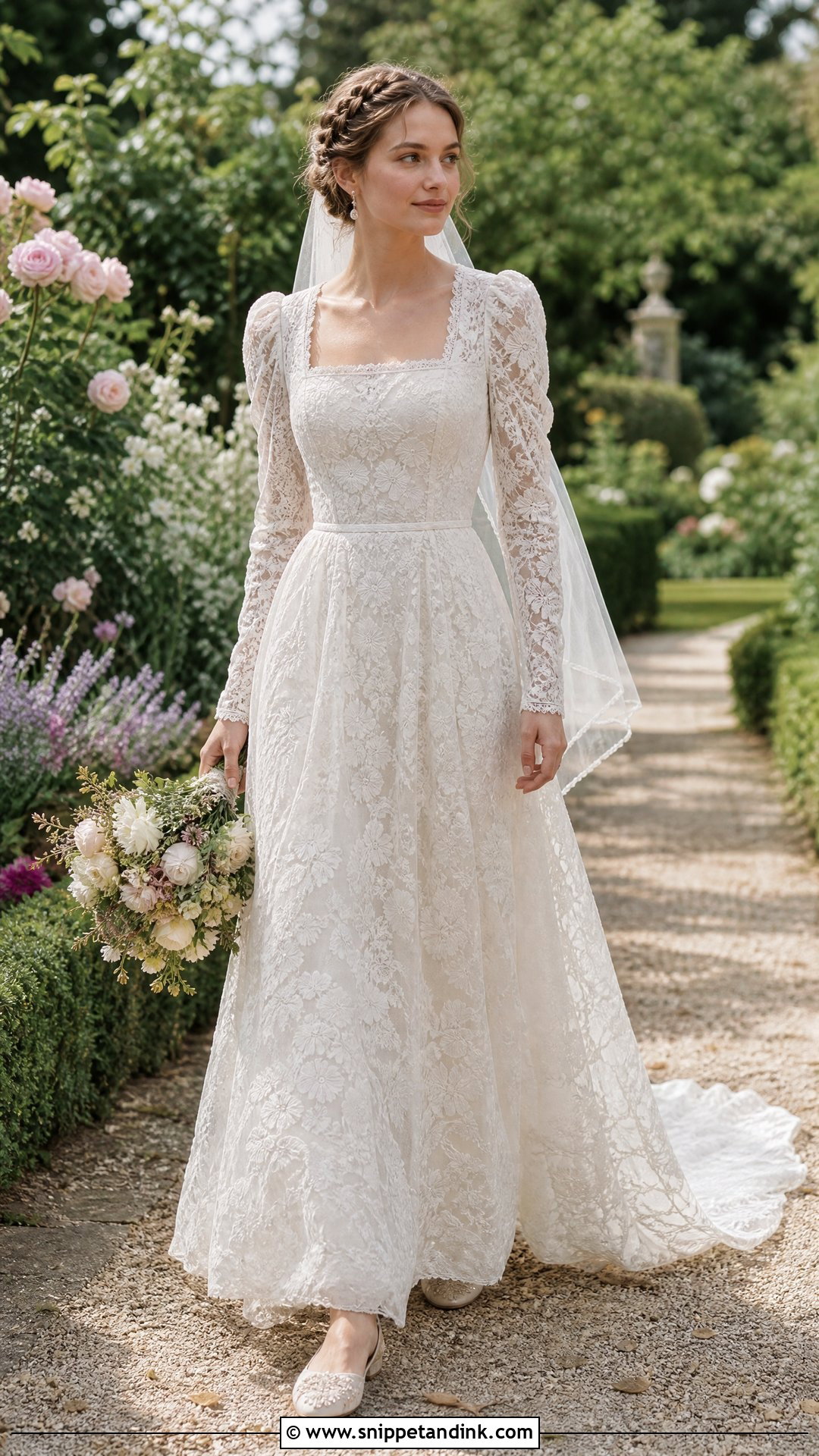
Gardens need a dress that moves. A soft A-line in botanical lace with lightly gathered sleeves and a square neckline is comfortable, and a chapel train is long enough for presence without dragging through the grass. Pair it with stable block heels or embellished flats, since stilettos sink into lawns, plus pearl earrings, a fingertip veil, a loose braided updo and seasonal flowers. Skip heavy fabrics, rigid corsetry and oversized skirts if there’s a lot of outdoor walking. A breathable lining helps in warm weather, and a lace hem picks up grass stains, so ask your seamstress about a removable hem guard.
20. Queen Victoria Inspired Wedding Dress
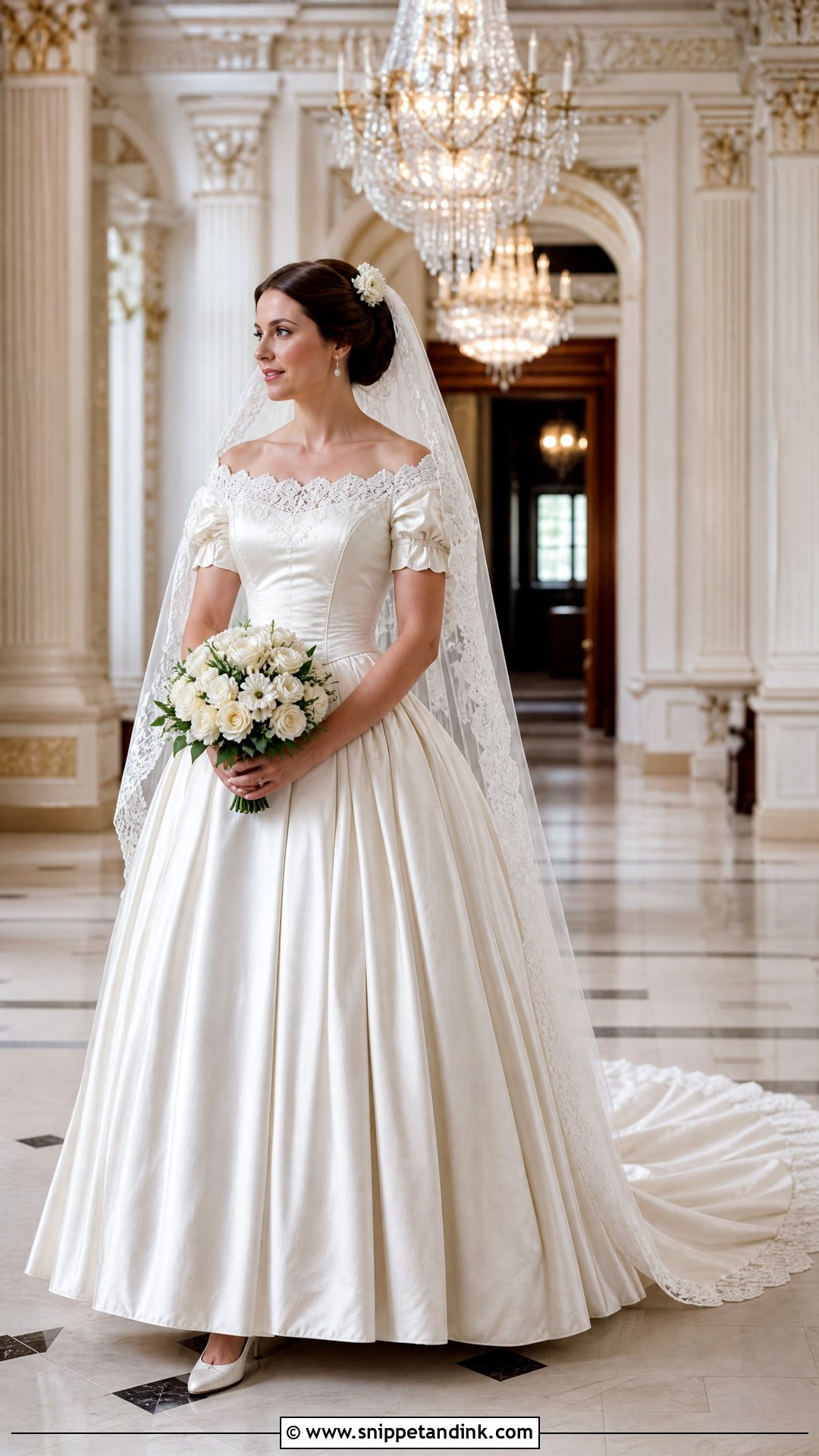
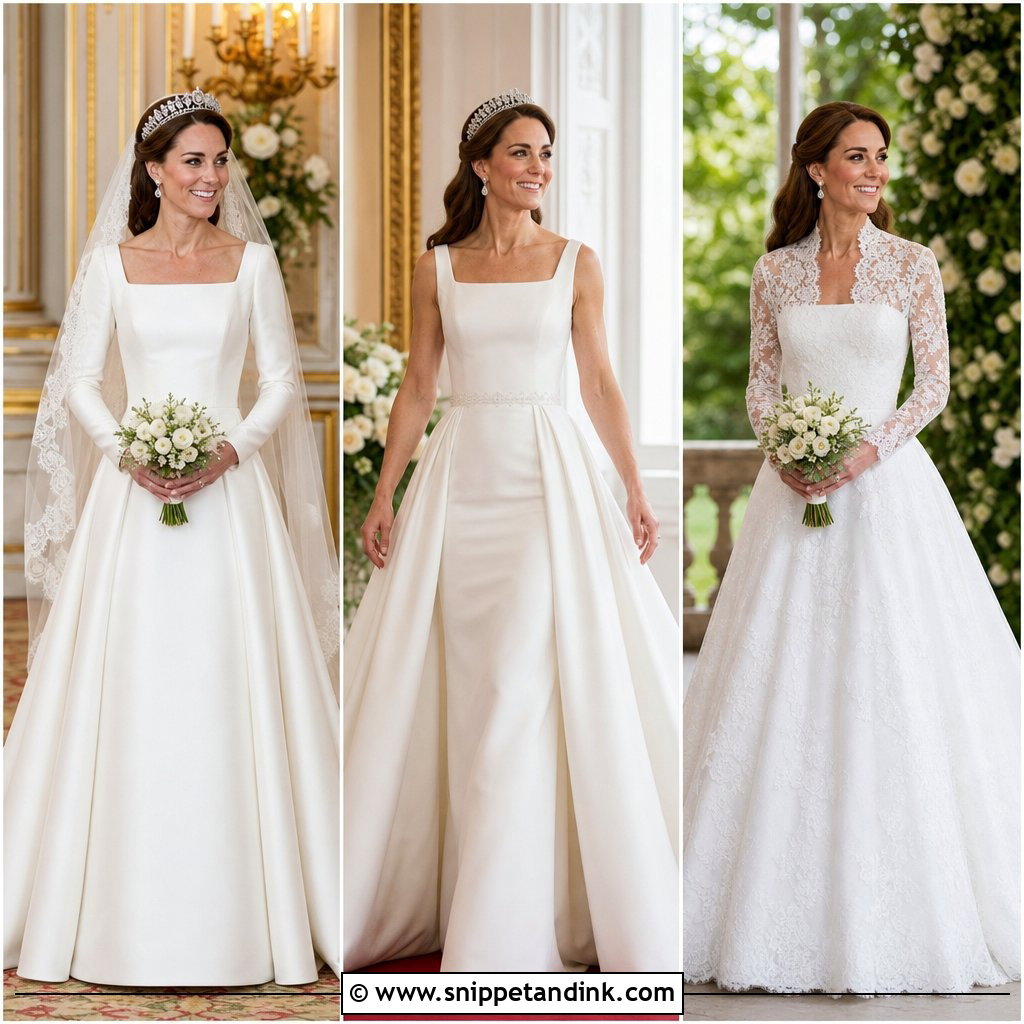
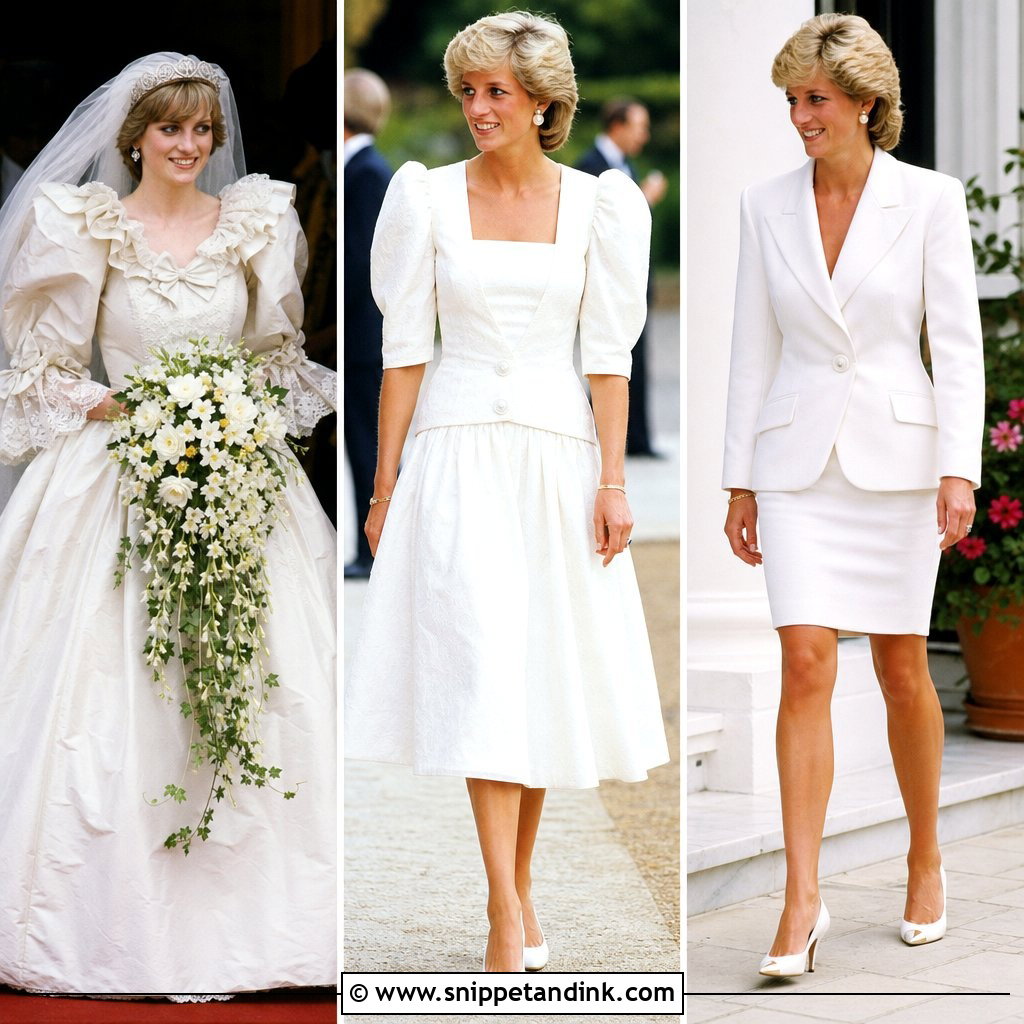
A Queen Victoria inspired wedding dress starts with white satin, lace, a fitted bodice and a grand but graceful skirt; she married in white satin with a deep lace border at an off-the-shoulder neckline and a wreath of orange blossom. Borrow the lace-edged off-the-shoulder neckline and short gathered sleeves, then modernize with internal support, lighter skirt layers and a manageable chapel train. A lace-edged veil, pearl earrings, satin pumps and a floral headpiece or comb finish it, with fresh, luminous makeup so nothing looks like a costume. Take two or three distinctive details and adapt them to your proportions rather than copying a museum piece.
Covered Buttons, Lace Collars and Gloves on the Morning
The small details that make these dresses special are also the slowest to deal with when you’re getting ready. Plan for them.
Button rows
A long row of covered buttons with elastic loops can take ten to fifteen minutes to fasten. A small crochet hook or a proper button hook makes it far quicker, and I always tell brides to choose who will do it and let them practice at the final fitting. Many gowns hide a zip under the buttons, which is worth asking about.
Collars and sleeves
Lace collars flatten in a garment bag. A light steam from the inside, never pressing lace directly with an iron, brings them back. Put the dress on after your makeup, with a scarf over your face, so a high collar doesn’t pick up foundation.
Gloves at the ring exchange
Long gloves and wedding rings don’t mix. Either remove the left glove before the vows and hand it to your maid of honor, or choose fingerless gloves that loop over the middle finger. Some brides have the ring finger seam opened so the finger slips out.
How Much History One Dress Can Carry
Victorian influence works best when the history is in the details and the comfort is entirely modern. Corset bodices, lace, high necklines, sculpted sleeves and full skirts mix in many ways, from a grand ball gown to a simple A-line. Start with your venue, season, proportions and how much you’ll move, then choose the shape. Shoes, jewelry, veil and hair should support the gown, not compete with it, and good tailoring makes even an elaborate dress feel secure. Ivory, blush or black, the version that works is the one where people see you first and the period second.
You'll Like These Ideas:




Leave a Reply