
Full skirts are back in bridal fitting rooms, and I understand the pull: a shaped bodice above a wide skirt changes how a bride stands the moment it’s zipped. What surprises people is how many versions of the princess shape exist. Clean satin, floral lace, pearl work, off-the-shoulder sleeves, a basque waist, even a blush lining all sit inside the same silhouette. The real work is matching the volume to your body, your venue and how much you plan to move once the ceremony is over. Below are 25 versions I’d show a bride, with what I notice about each one when it’s actually on.
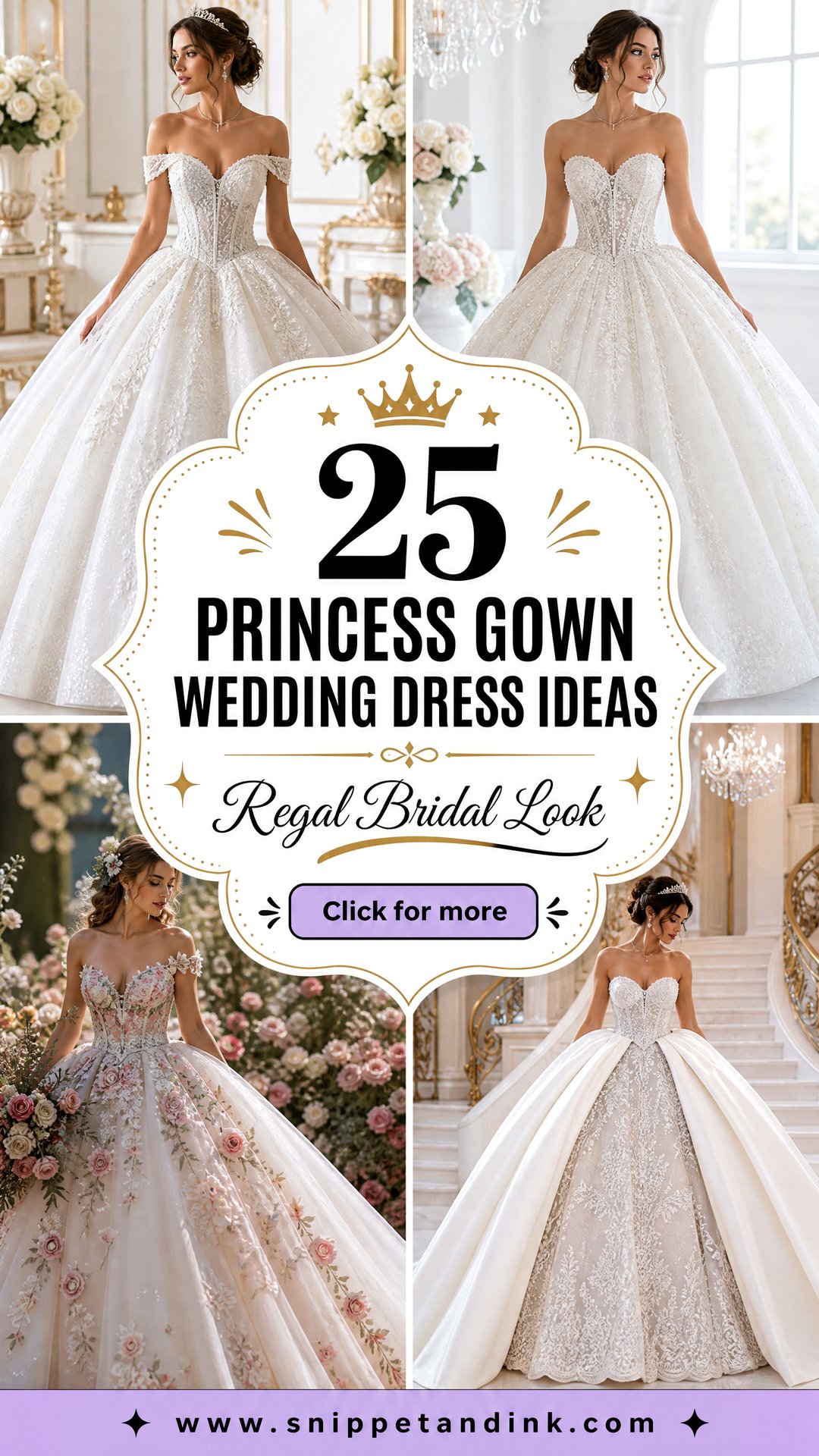
Testing a Ball Skirt on Stairs, Car Seats and Bathroom Stalls
A full skirt looks wonderful in a three-way mirror, but the mirror never shows you the car ride. Before I let a bride fall for a princess gown, I make her live in it for ten minutes in the shop. That small test catches most of the problems that otherwise show up on the morning itself.
- Sit on a hard chair, then stand up without using your hands. If the hoop or crinoline flips up in front, ask about a softer petticoat.
- Walk up three steps holding the skirt with one hand only. That’s what you’ll do with a bouquet in the other.
- Lift both arms above your head. Bodices that ride up here will ride up when you hug people.
- Ask someone to step on the hem lightly while you walk. A good hem length clears the floor in your actual wedding shoes.
- Measure the skirt at its widest and compare it with your car door, aisle width and the bathroom stall at the venue.
On the bathroom question, the easiest way I know is stepping into the stall backward with a bridesmaid gathering the skirt from the front. It sounds silly, but practicing once at the final fitting saves a lot of panic later.
1. Satin Princess Gown Wedding Dress
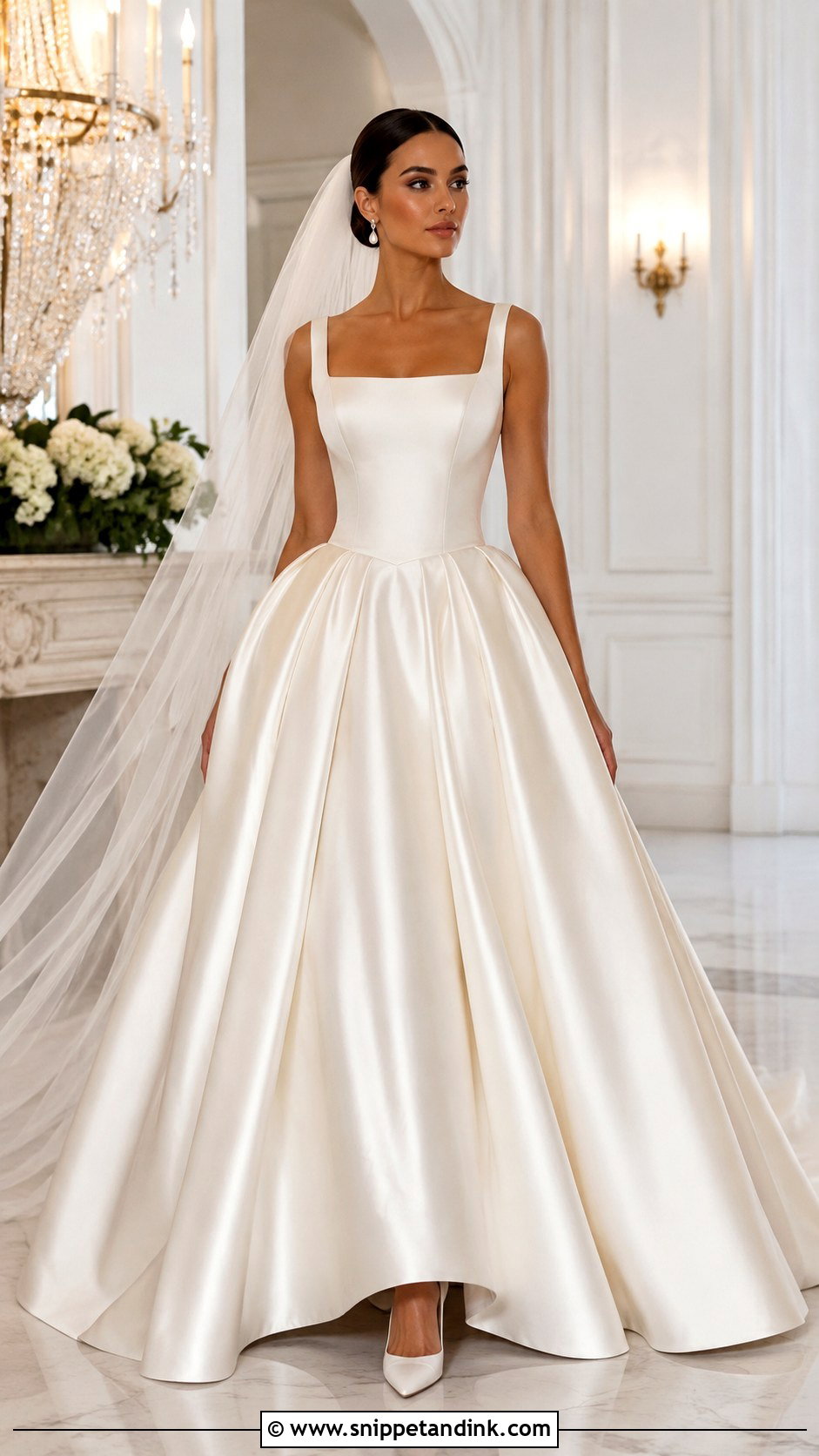
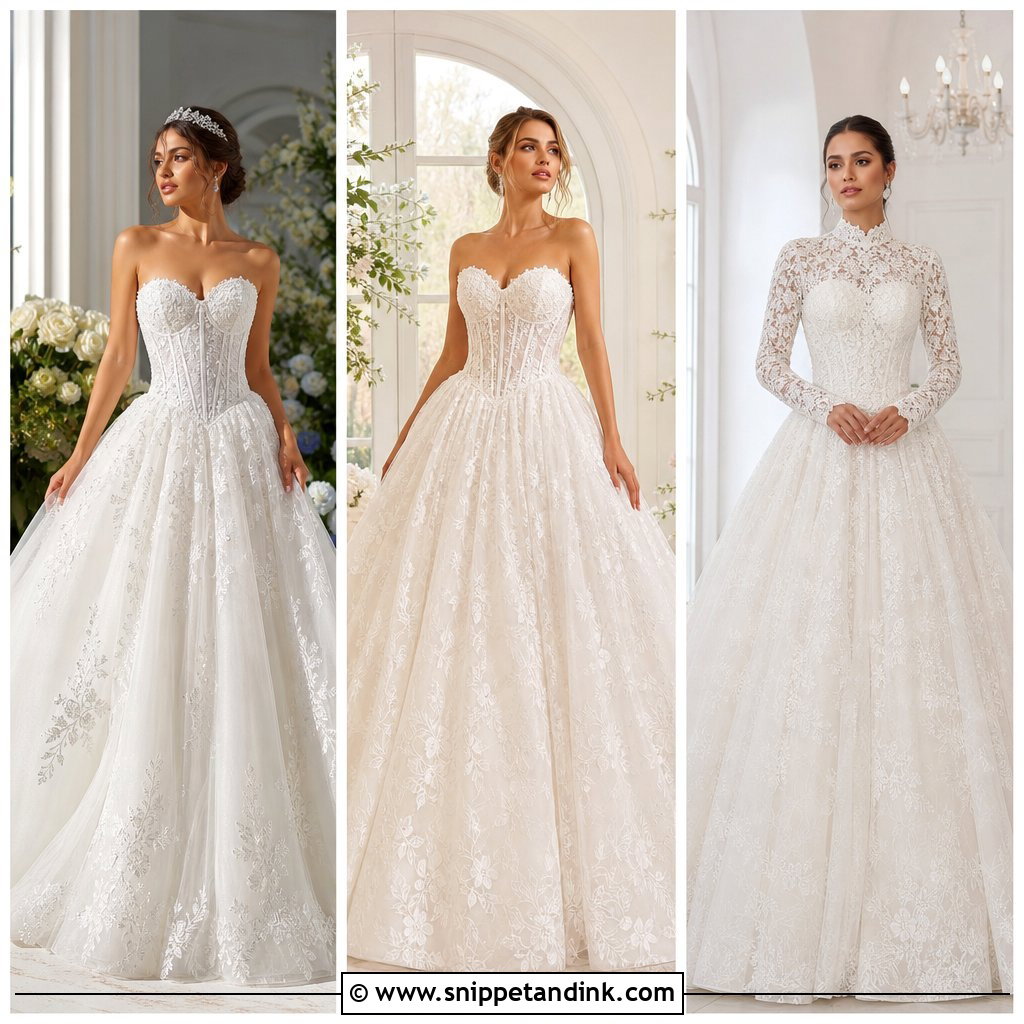
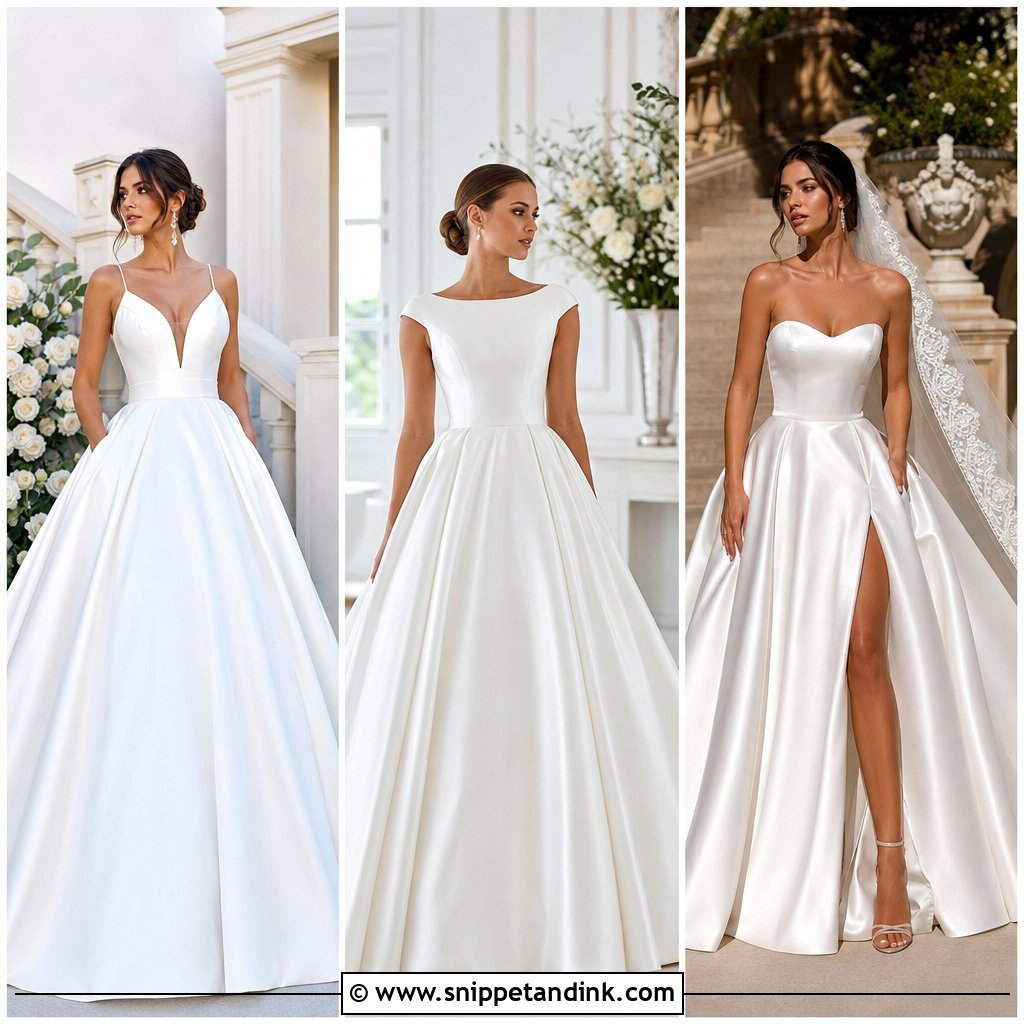
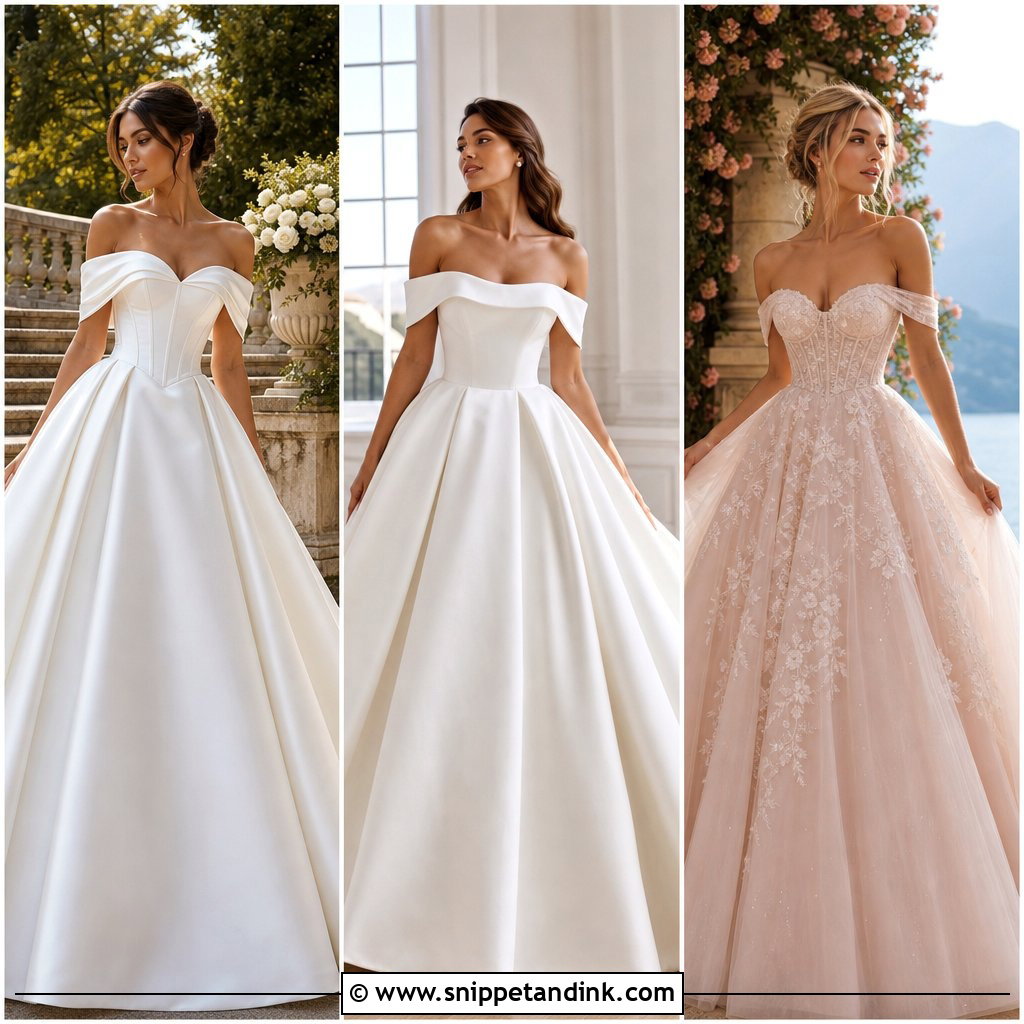
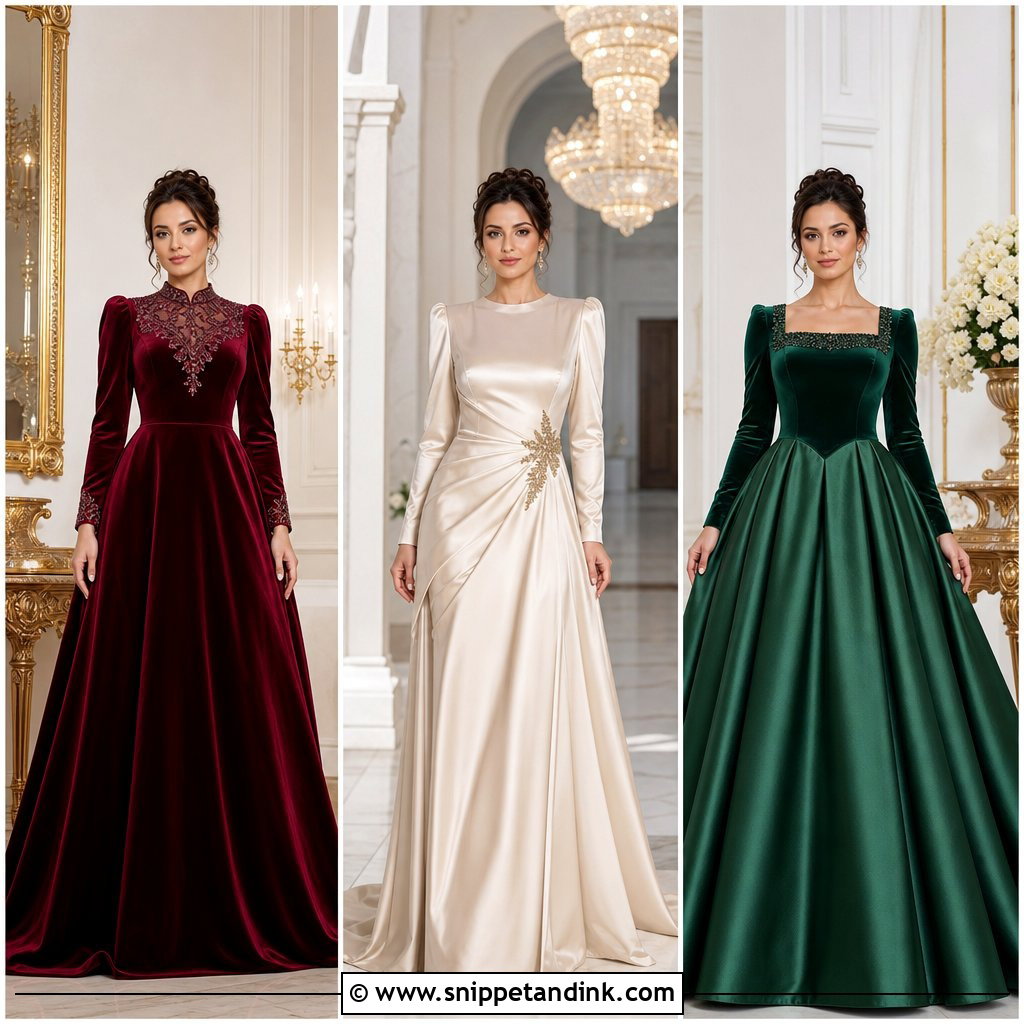
Satin is the fabric I reach for when a bride wants the skirt to hold its shape without layers of netting underneath. A heavier duchess or mikado satin keeps a crisp fold all day, while a thin, shiny satin shows every seam and every crease from sitting. Pair it with a natural or basque waist and a square, strapless or folded cuff neckline. Pearl earrings, a sleek low bun and a long veil are enough here. I keep the bouquet plain (white roses, orchids or a little greenery) because the fabric already reads rich, and it suits formal hotel and ballroom rooms best.
2. Lace Princess Gown Wedding Dress
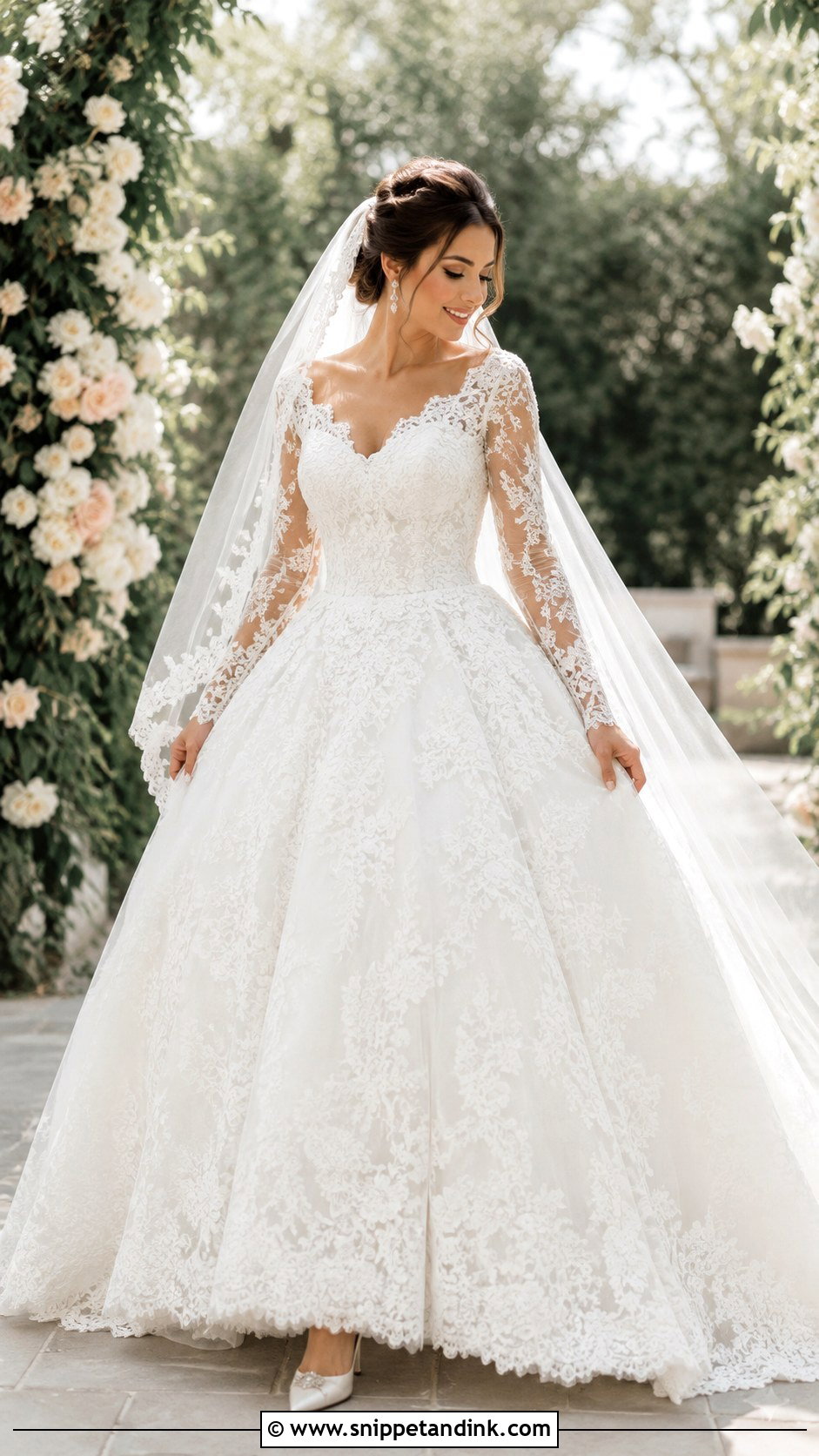
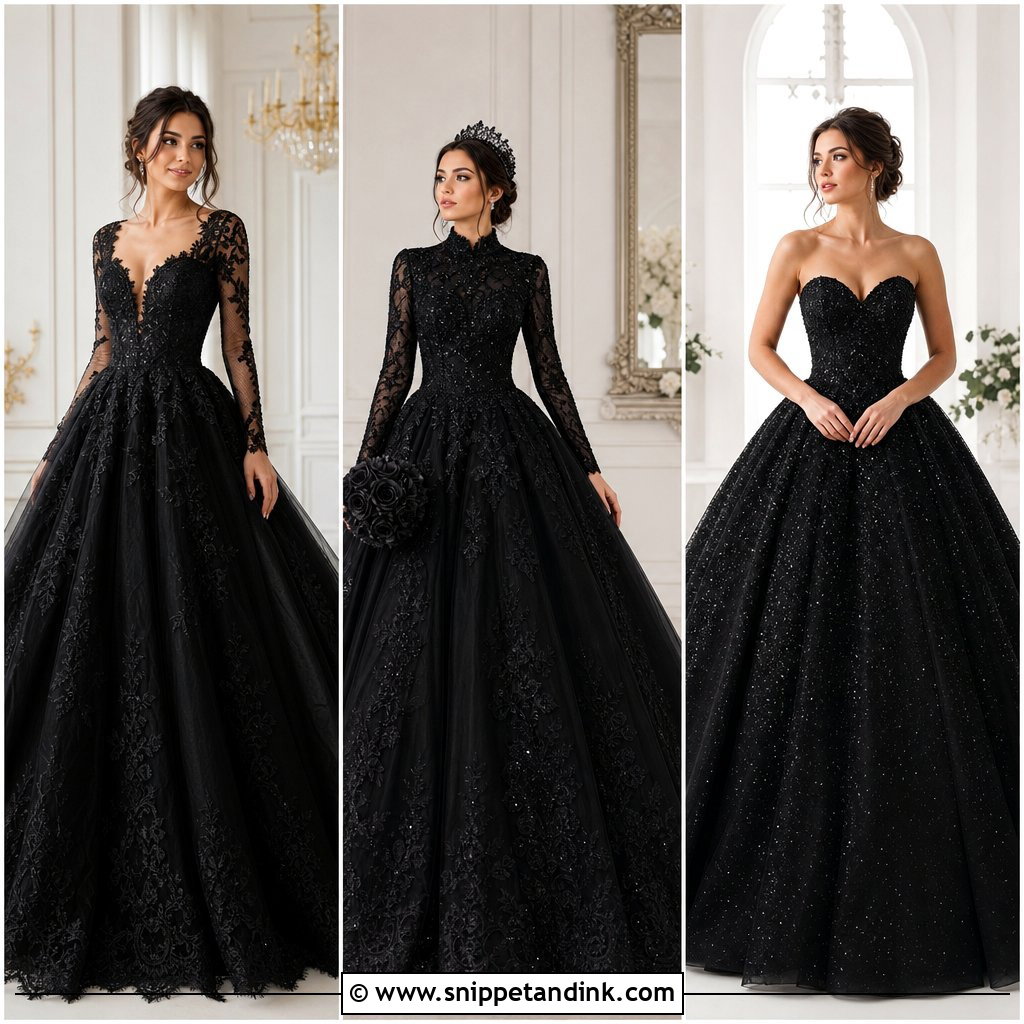
Lace gives a full skirt texture without sparkle, which matters for brides who feel uneasy under heavy beading. Chantilly is fine and slightly vintage, while corded or appliqué lace sits up off the tulle and catches side light. Long lace sleeves cover more; a sweetheart neckline with lace straps feels lighter. On a lace-up back I always check where the laces dig in once she sits, since hidden buttons lie flatter. Finish with a lace-trim veil, small drop earrings and soft curls for a garden or estate setting.
3. Tulle Princess Gown Wedding Dress
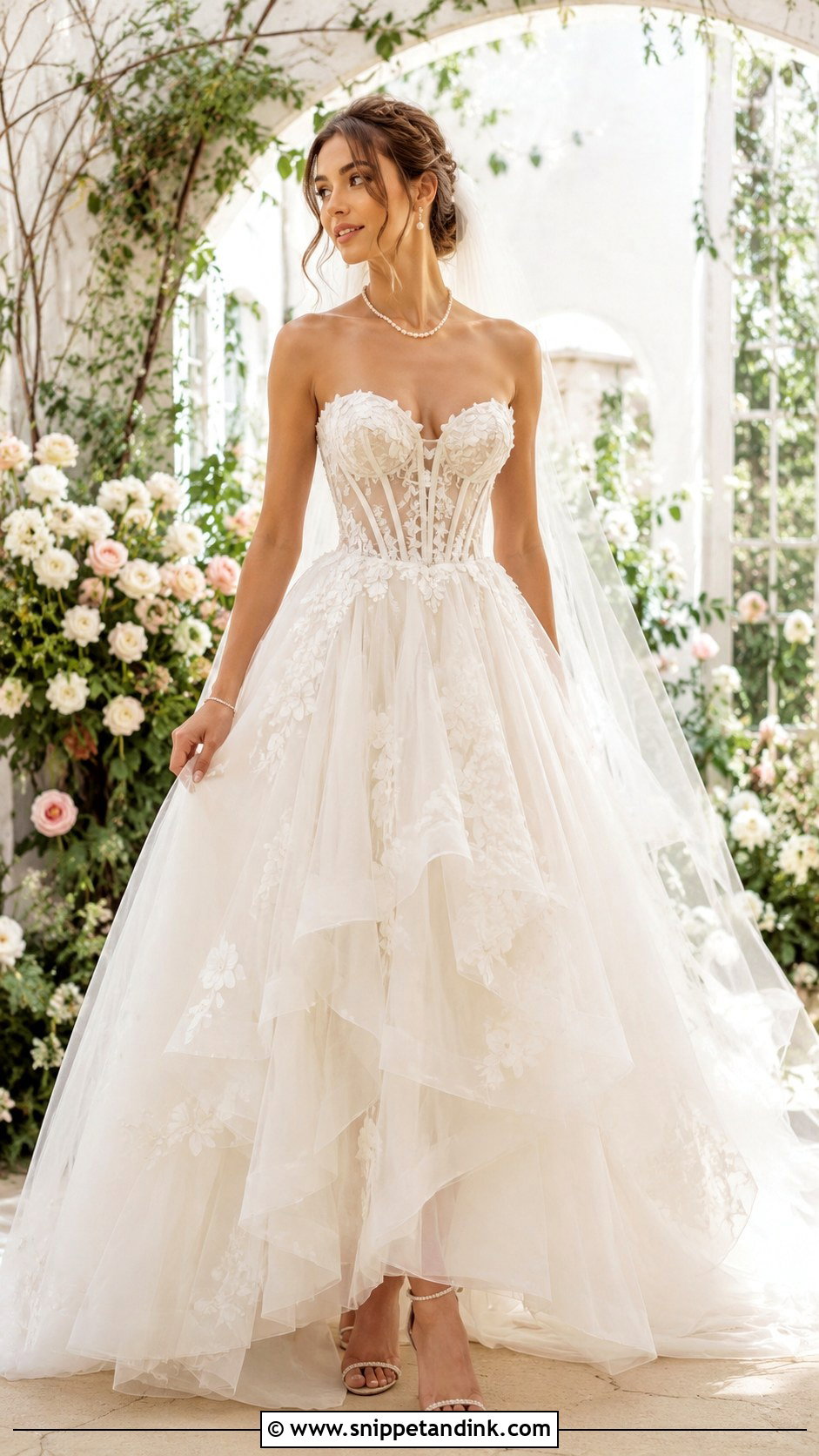
Tulle is how most people picture a fairytale gown, and it’s lighter than it looks, often lighter than a single layer of heavy satin. That makes it the full skirt I suggest to brides who plan to dance properly. The trade-off is that tulle snags on rough stone, bark and bouquet wire, so I warn outdoor brides about it. A fitted corset bodice keeps the cloud of skirt from swallowing the waist. Scattered appliqués or tiny pearls add interest, and a soft veil, delicate heels and natural makeup keep it fresh for spring.
4. Off The Shoulder Princess Gown Wedding Dress
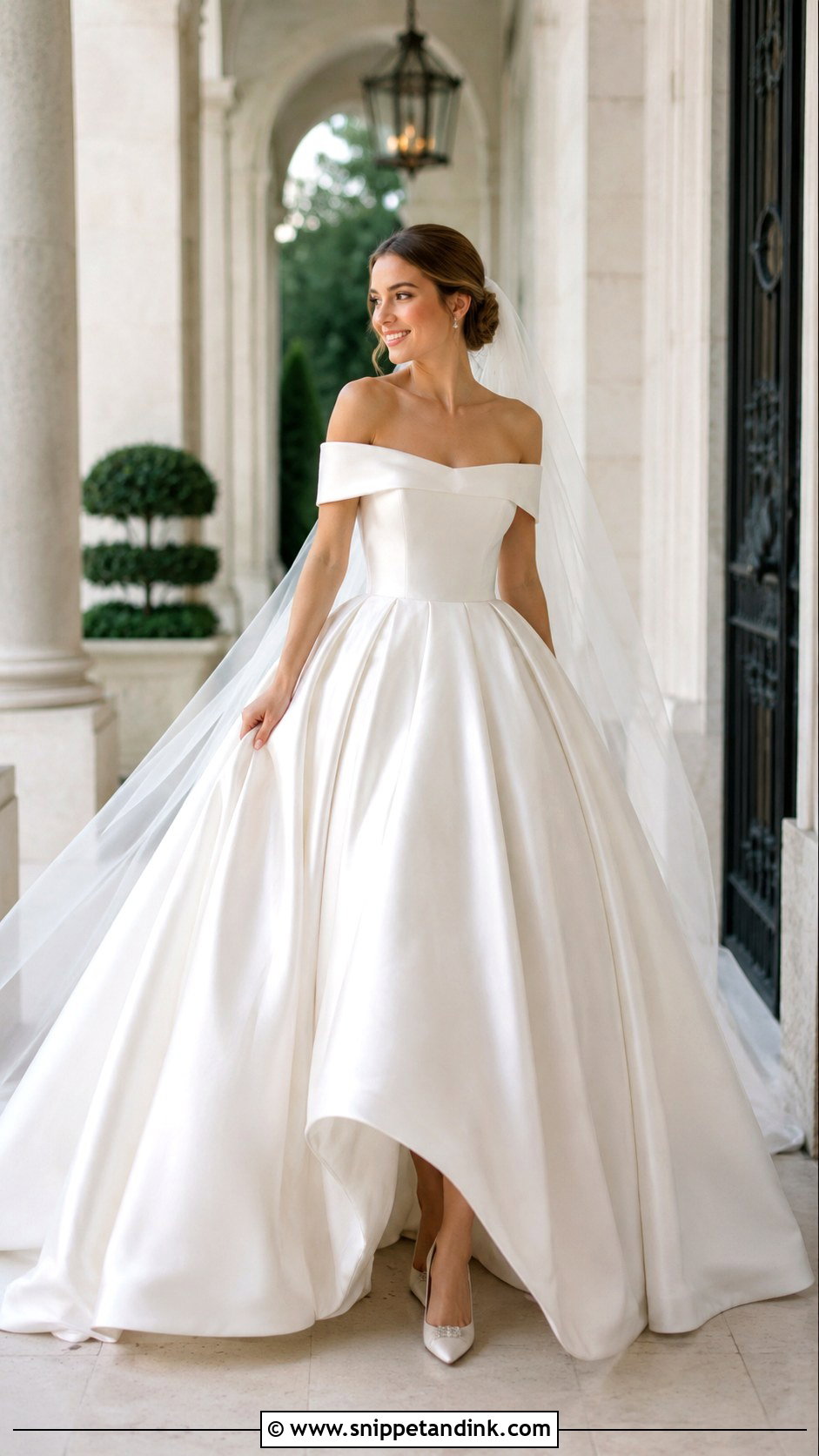
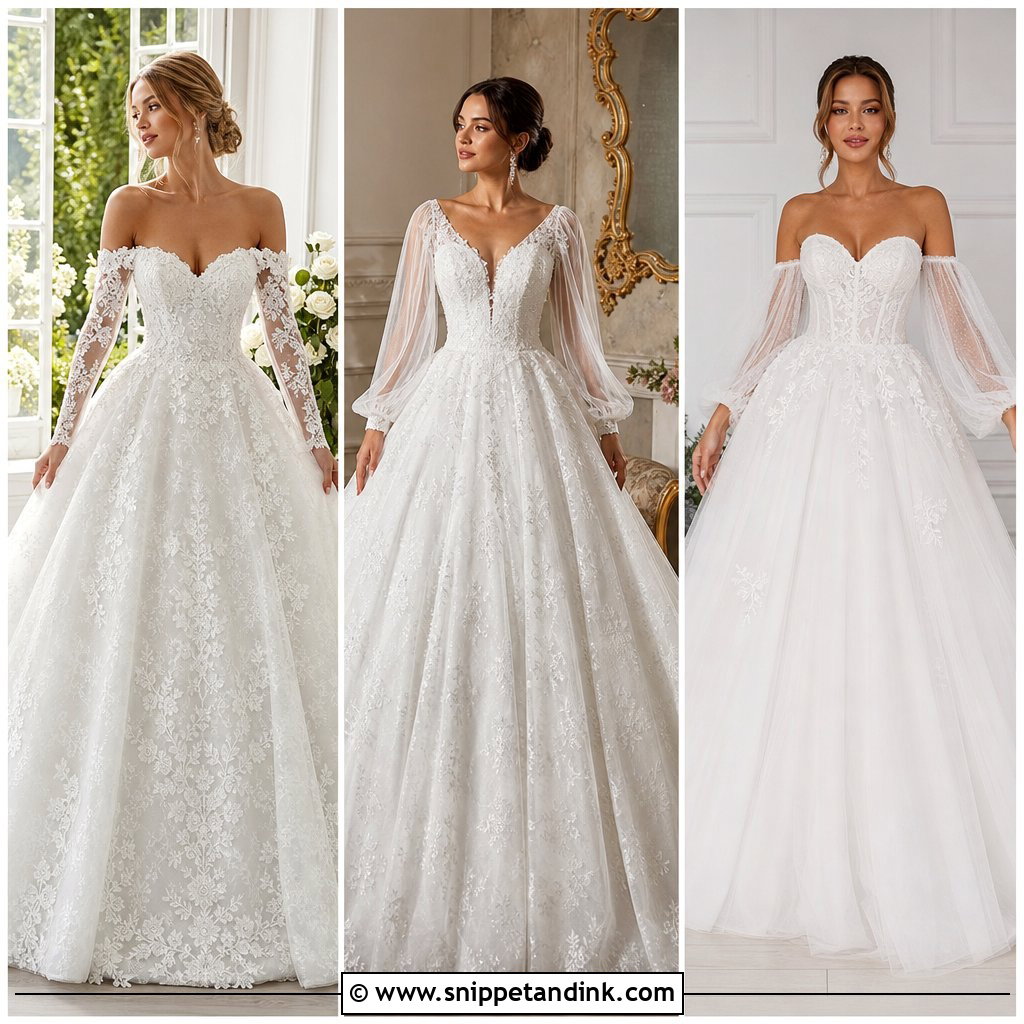
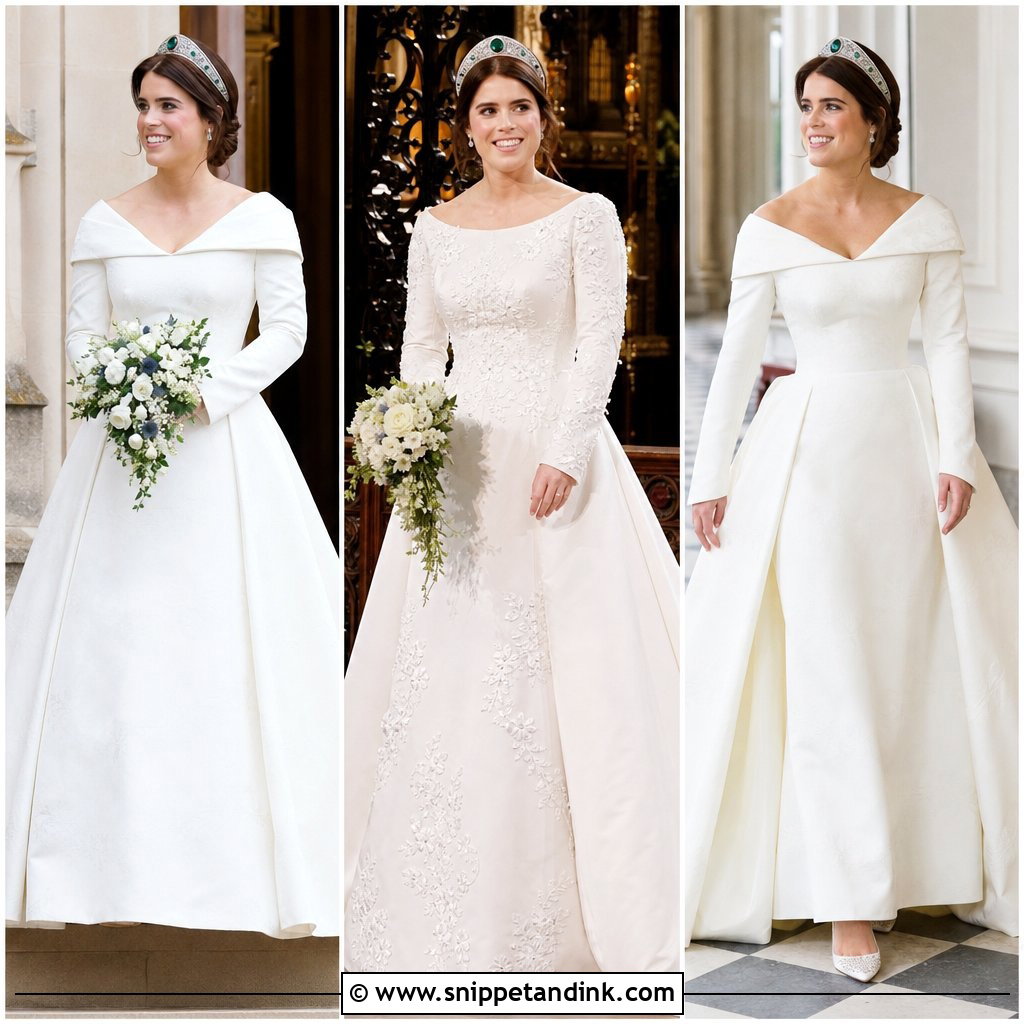
An off-the-shoulder neckline frames the collarbones and balances a wide skirt by opening up the top half. A folded satin band looks clean; lace sleeves resting on the upper arm feel softer. When I fit this style, I raise the bride’s arms to shoulder height, because if the band is cut too tight she won’t be able to hug anyone or throw a bouquet. It gives more support than strapless for many brides. Skip the necklace unless the neckline is completely plain, and finish with an updo, pearl studs and a medium-length veil.
5. Long Sleeve Princess Gown Wedding Dress
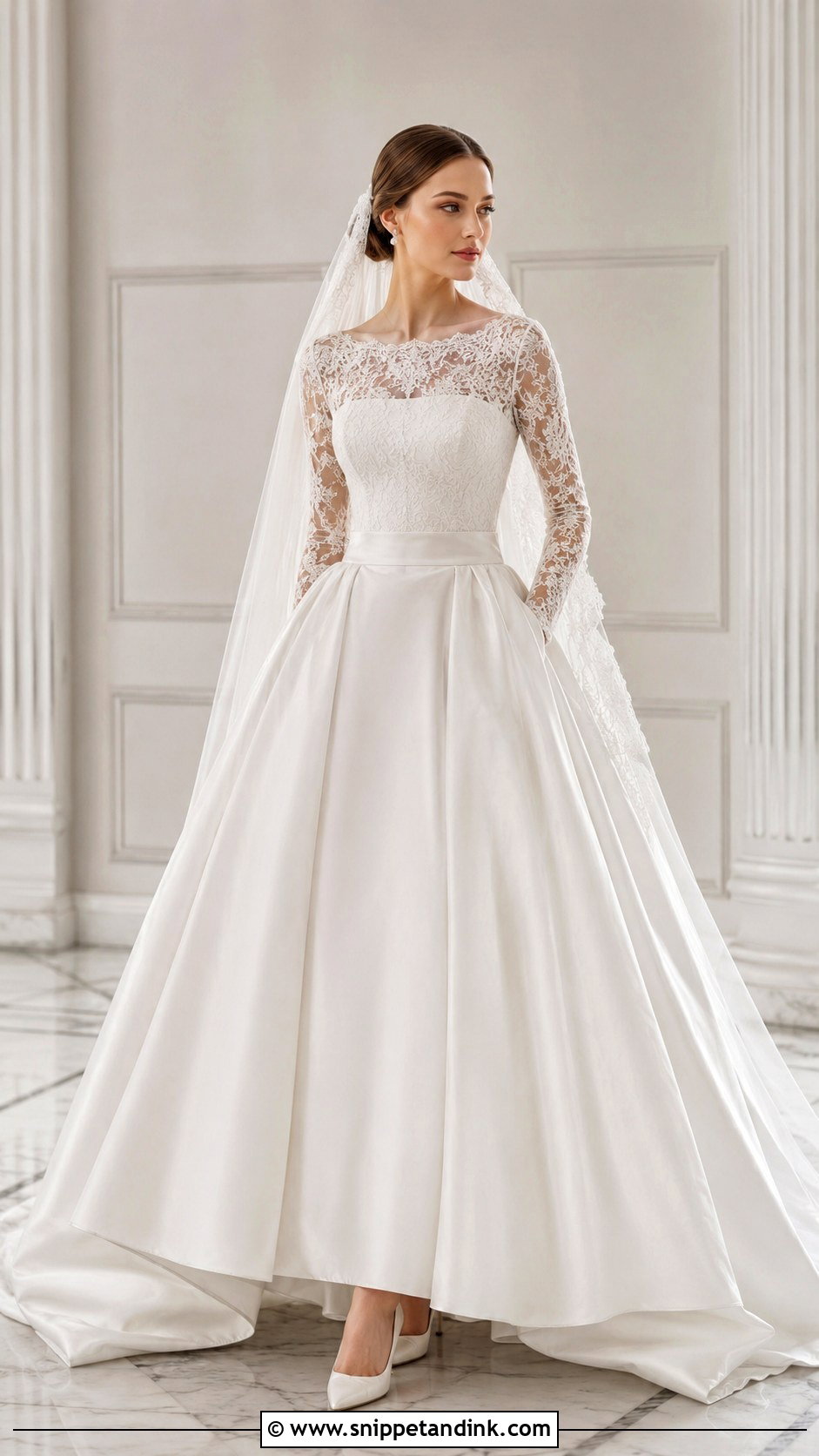
Long sleeves bring coverage and formality, and they change how the whole gown moves. Sheer lace sleeves feel light; satin or crepe sleeves look structured and regal. I always ask a long-sleeve bride about the venue temperature, because a sleeved bodice plus a full skirt can get warm by the reception. An illusion, bateau or soft V neckline keeps the top from feeling heavy. Gentle pleats in the skirt add movement. A smooth bun, a classic veil and pointed heels finish it well for cooler months.
6. Strapless Princess Gown Wedding Dress
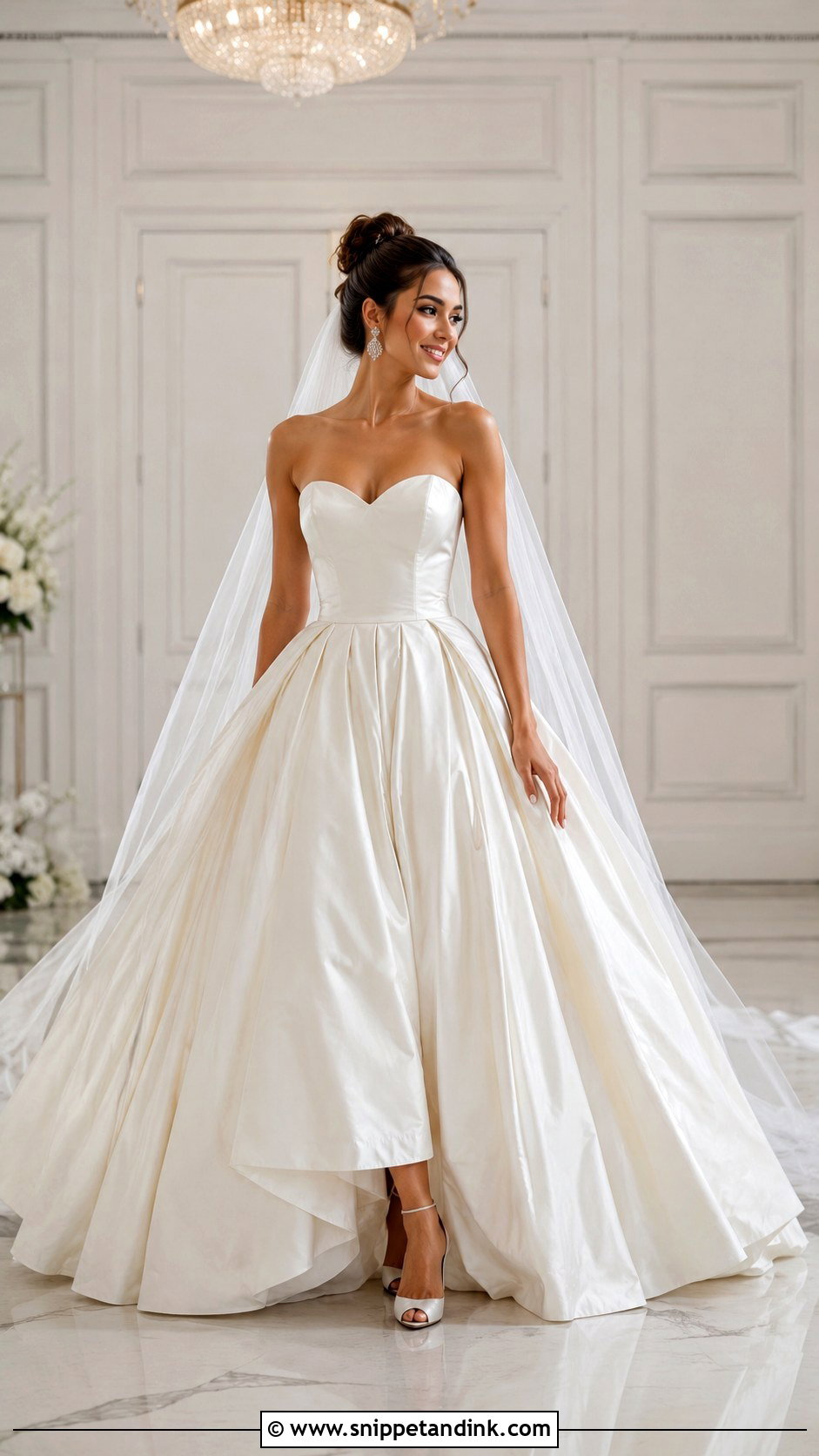
Strapless works because the open shoulders keep a big skirt from looking covered-up, and the fitted bodice shows off the waist. Sweetheart edges look softer; a straight neckline reads modern. The honest issue is staying power. I check for boning, an inner corset and a waist stay, and I have brides bend forward at the fitting to see if the bodice gapes. Statement earrings, a clean veil and a bouquet held low so it doesn’t hide the bodice suit a ballroom or a grand estate.
7. Sweetheart Princess Gown Wedding Dress
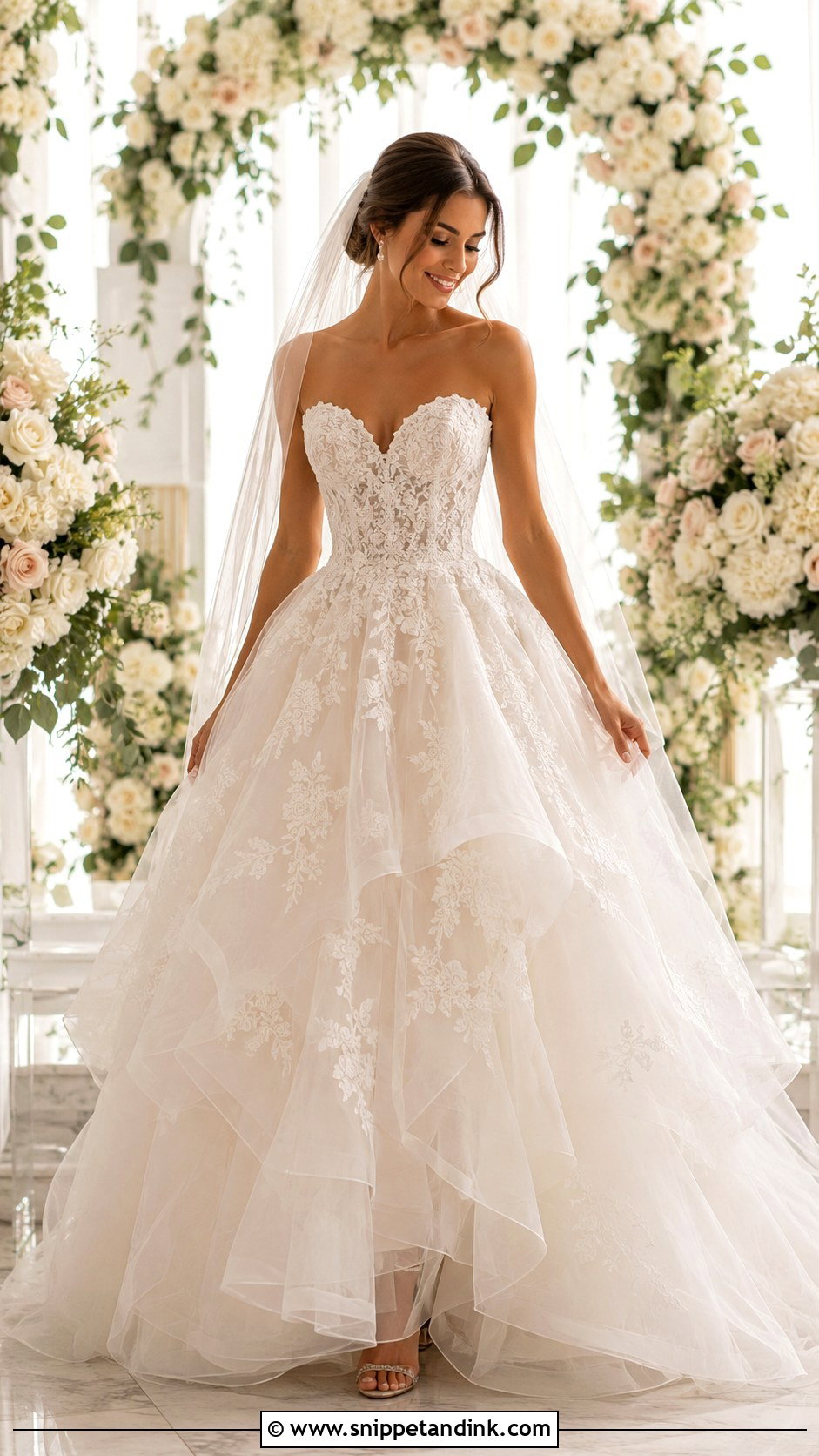
Sweetheart necklines flatter more brides than almost any other bodice shape I fit, because the dip softens the line across the chest. It works on tulle, lace, satin, organza and beaded fabric. If you have a fuller bust, ask for a shallower sweetheart with more coverage and internal support; a deep curve is more dramatic but harder to keep in place. Detachable straps or off-the-shoulder sleeves give you two looks. Soft waves, pearl earrings and a sheer veil keep the mood romantic.
8. Basque Waist Princess Gown Wedding Dress
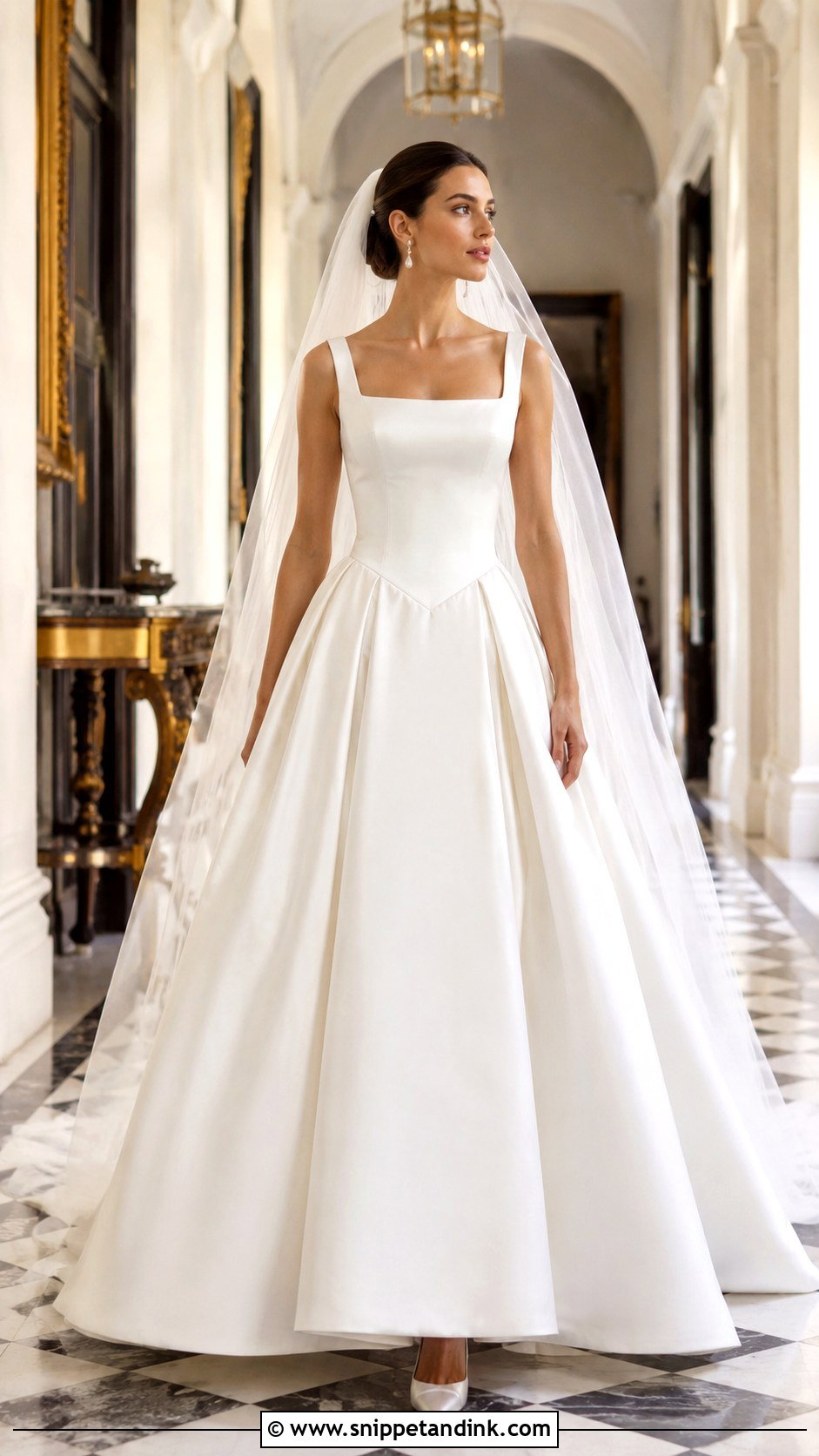
A basque waist dips into a point or soft V at the center front, which lengthens the torso before the skirt opens. It gives a vintage royal feel while still looking cleanly made. The point needs a firm fabric to hold it, so satin, mikado, jacquard and well-backed lace behave best. On a short torso I sometimes suggest a shallower dip so the point doesn’t sit on the hips. A square neckline, drop earrings and a smooth veil look right in formal rooms and historic estates.
9. Drop Waist Princess Gown Wedding Dress
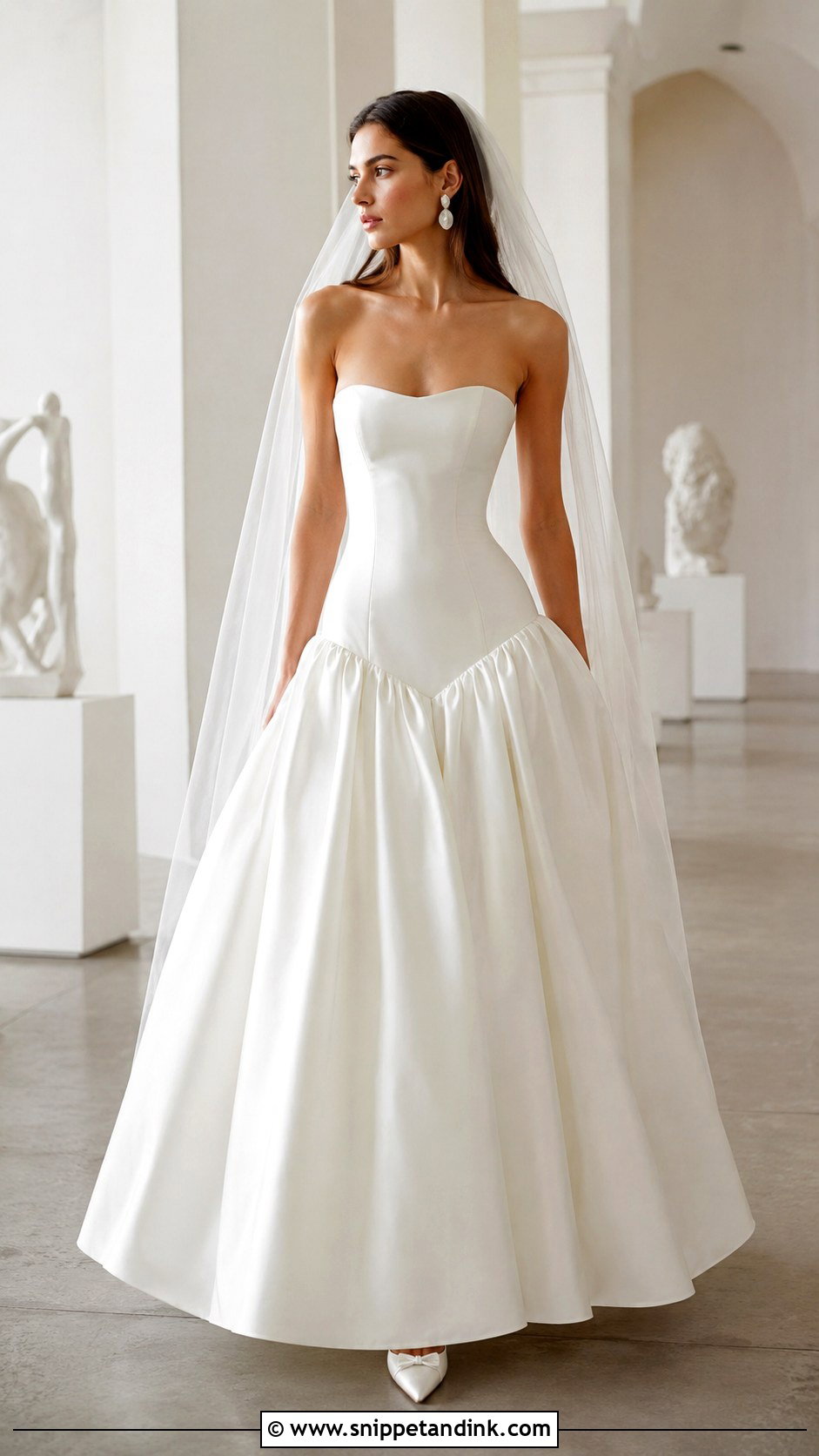
Drop waists are trickier than they look. The bodice runs below the natural waist before the skirt flares, so the torso looks long and sculpted, but if your legs are already the shorter half of you, the skirt can make you look compressed. I usually have brides try one next to a natural-waist gown to compare. Clean satin suits a minimal taste; lace appliqué softens it. A strapless or scoop neckline pairs best, with a simple veil and a structured bouquet.
10. Corset Princess Gown Wedding Dress
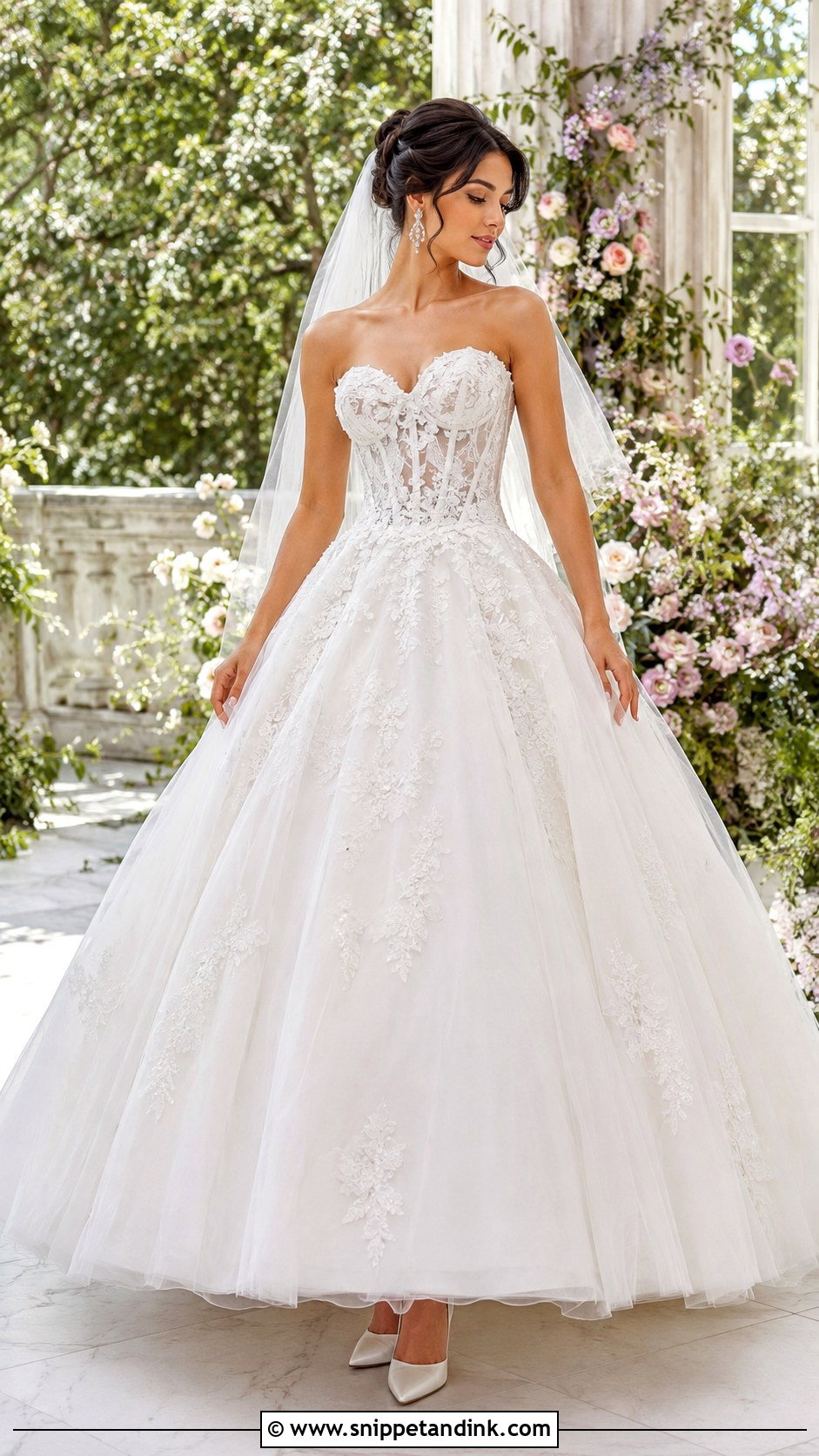
Corset bodices give a full skirt the strongest foundation, and that’s useful when the skirt is heavy. Visible boning on a sheer bodice with lace appliqués looks delicate; a fully lined satin corset looks clean. The difference I watch for is whether the boning is spiral steel or plastic, since cheap plastic bones can bend and leave ridges by the evening. A lace-up back can be adjusted after a big meal, while hooks and buttons sit smoother. Keep the veil matched to the bodice’s level of detail, with a soft updo and minimal jewelry.
11. Beaded Princess Gown Wedding Dress
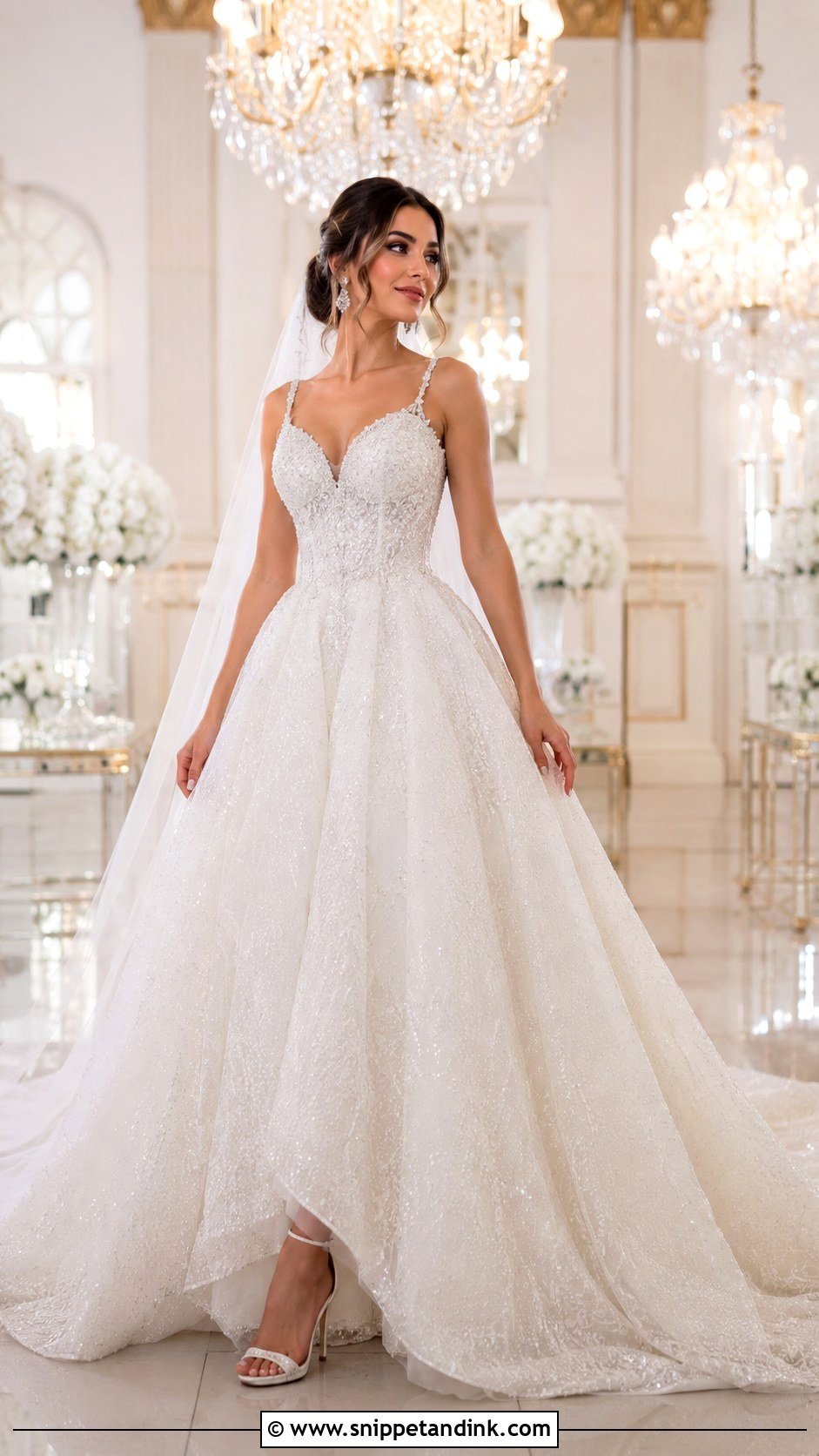
Beading adds shimmer, and it moves under reception lighting as you walk. It can trace the bodice, scatter over the skirt or pick out lace appliqués. Weight is the thing nobody mentions: a heavily beaded bodice can pull a strapless gown down, and dense skirt beading makes bustling harder. With heavy beadwork I choose a lighter veil and simpler jewelry. Clear beads, pearls and silver thread suit ivory, while a champagne lining makes the detail show from further away.
12. Pearl Princess Gown Wedding Dress
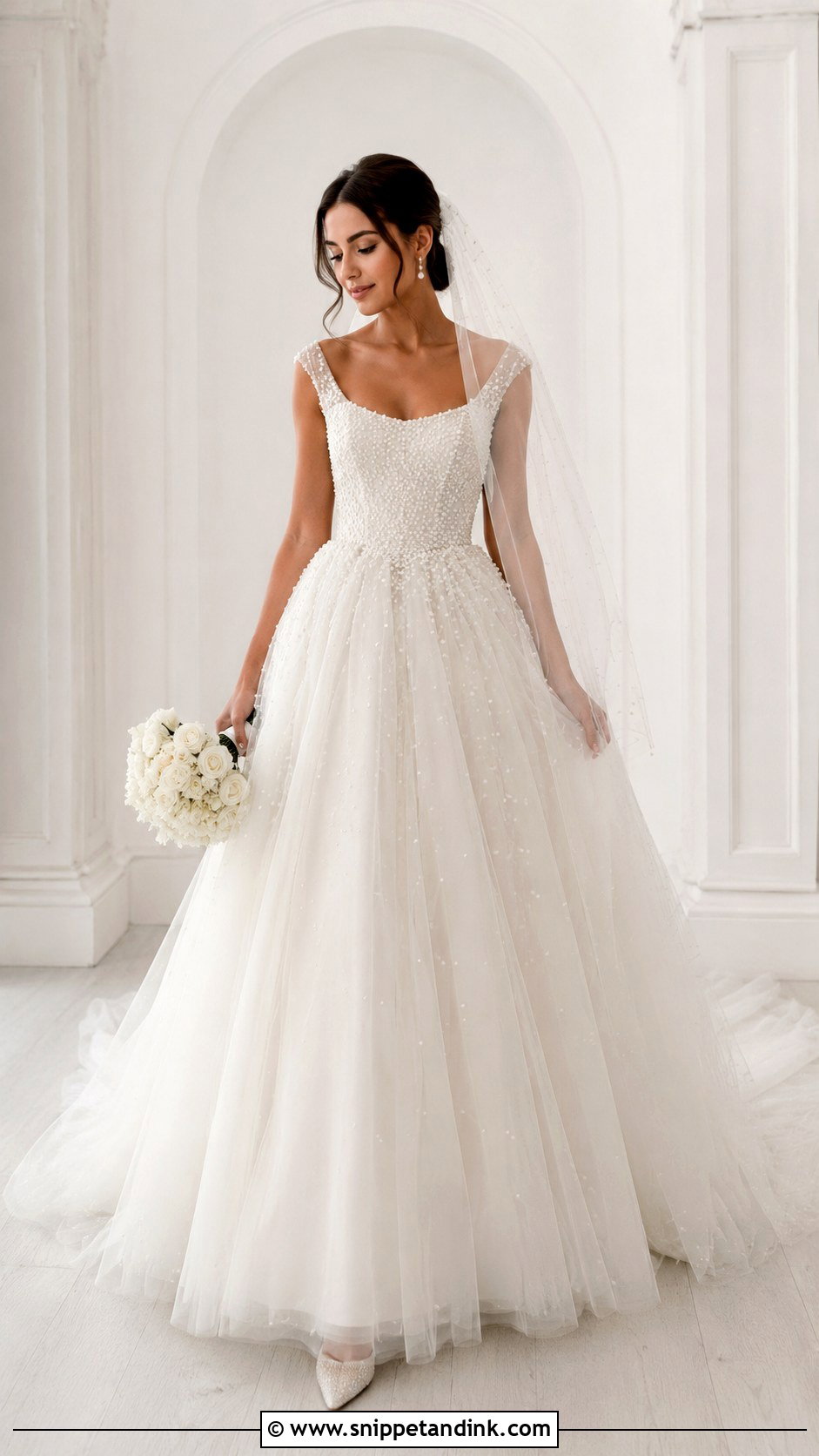
Pearls give texture with a soft glow rather than sparkle. They can be scattered over tulle, stitched along the bodice or used as buttons down the back. Pearl-covered bodices with a plain satin skirt look balanced; allover pearl tulle feels more playful. I’d hold back on matching accessories here. Pearl studs or a pearl comb are plenty, and a full pearl necklace, bracelet and earrings on top of a pearled gown tips into costume quickly.
13. Floral Princess Gown Wedding Dress
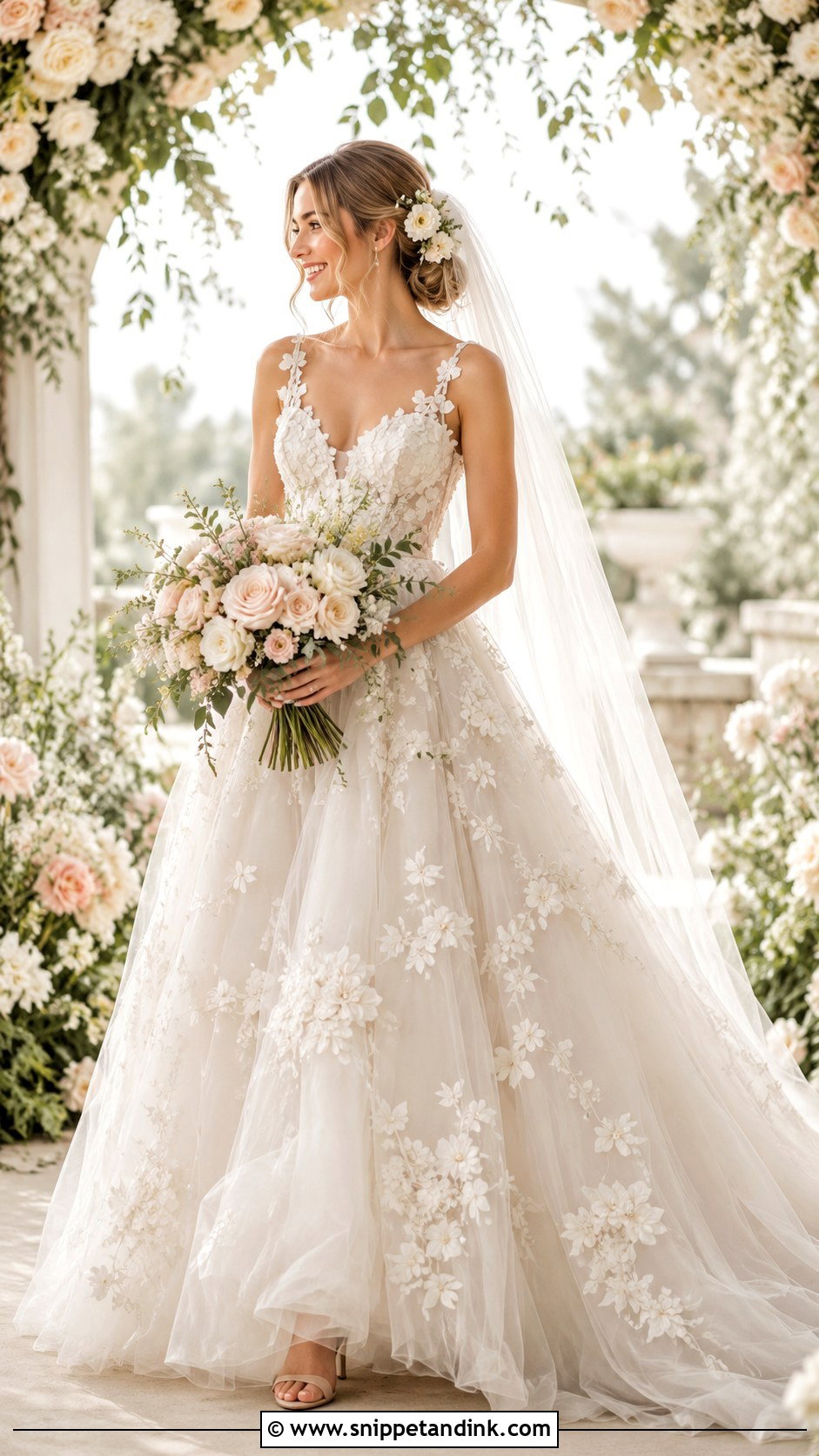
Floral appliqués can trail over the bodice, drift down a tulle skirt or appear as embroidery on lace. Ivory-on-ivory flowers stay quiet in photos; blush, pale blue or champagne flowers show up from across a room. Before a bride commits, I ask her to look at the gown under daylight and indoor light, because colored appliqués can shift. Loose waves, a small floral pin and a bouquet that echoes the gown’s flowers suit a garden or spring ceremony.
14. Blush Princess Gown Wedding Dress
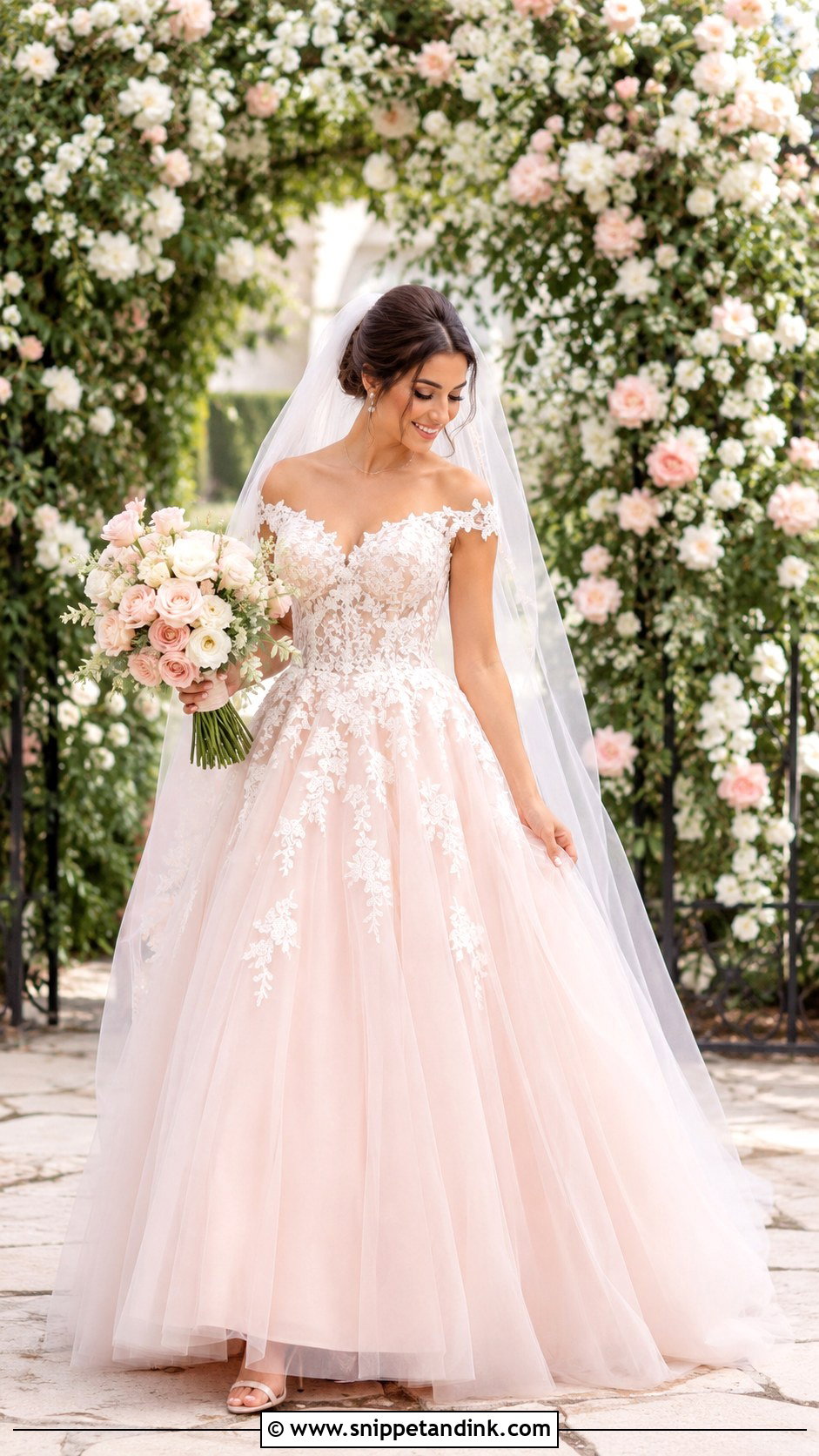
Blush adds warmth while still reading bridal. Some gowns use a blush lining under ivory lace for subtle depth; others are fully pink. My first check is undertone against skin: a peachy blush flatters warm complexions, while a cooler, rosier blush suits pink undertones, and the wrong one can make skin look sallow. Layered tulle, floral appliqués and beading all sit well on it. Rose-toned makeup and neutral heels work, and an ivory veil keeps it more classic than a blush one.
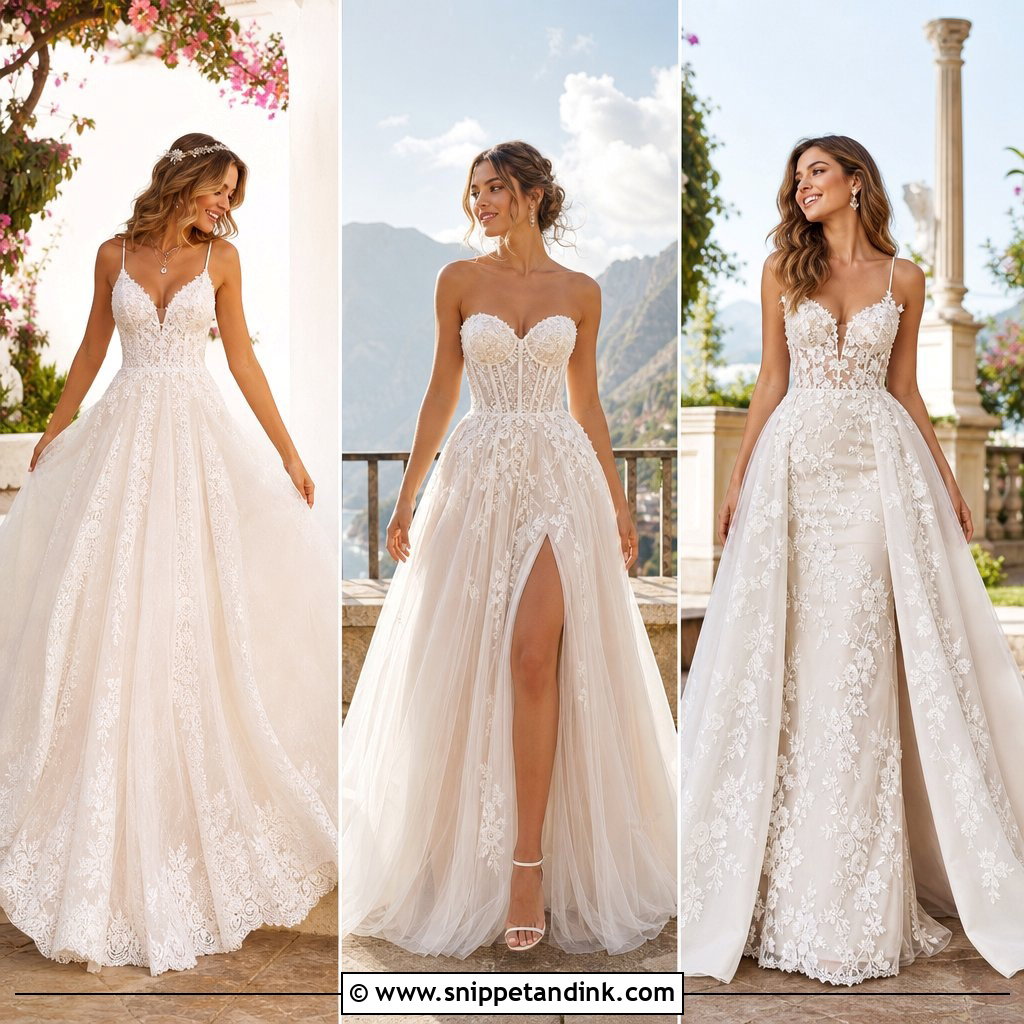

15. Champagne Princess Gown Wedding Dress
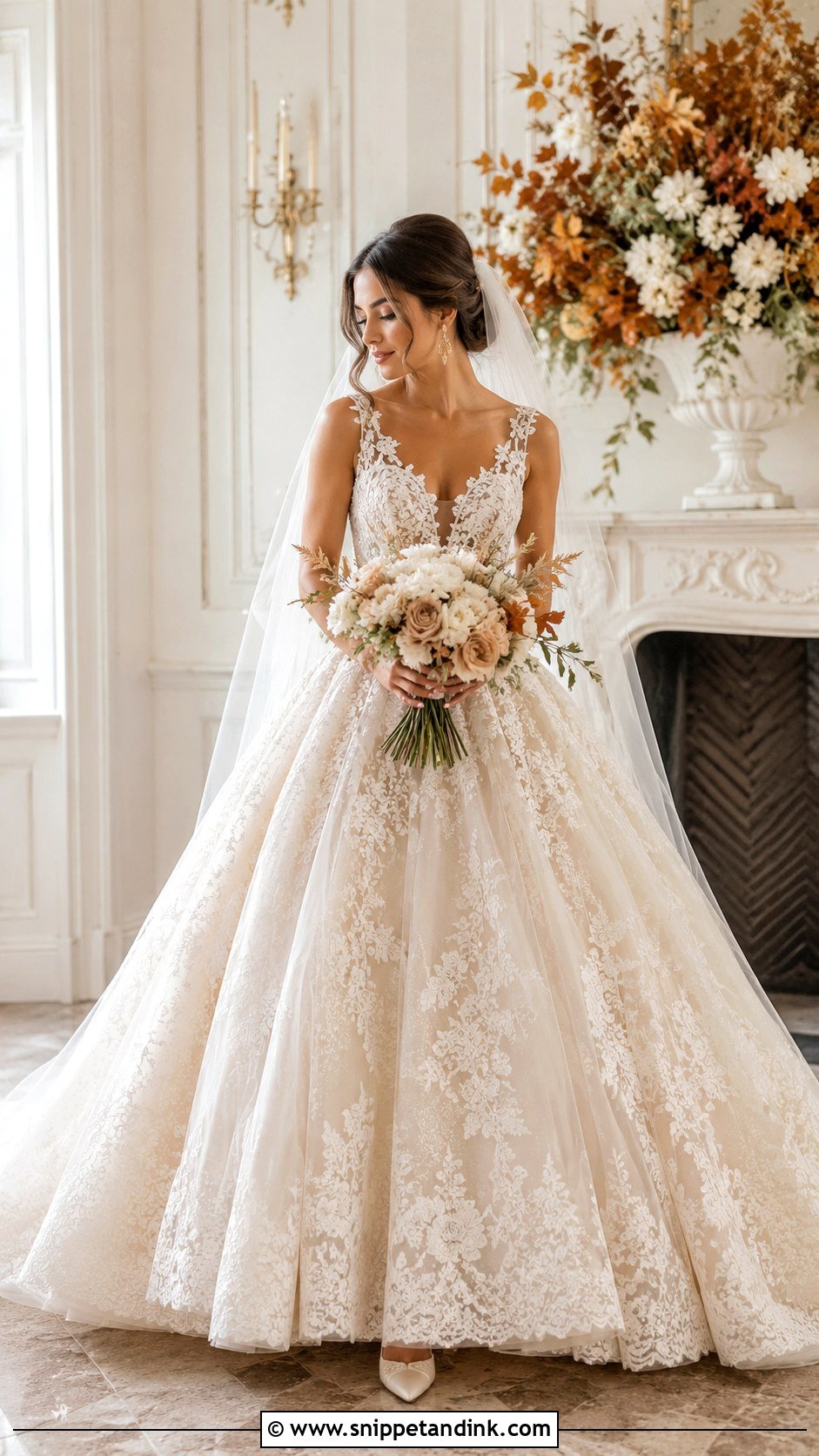
Champagne gives the gown a soft golden cast, and it makes lace and beading easier to see because the detail stands out against the warmer base. It’s a good route for brides whose skin looks washed out next to bright white. It reads well in natural light and candlelit rooms. Keep the structure formal with a fitted bodice and full skirt, then go light on accessories: gold earrings, ivory heels and a cream bouquet. It sits naturally in autumn and evening weddings.
16. Minimal Princess Gown Wedding Dress
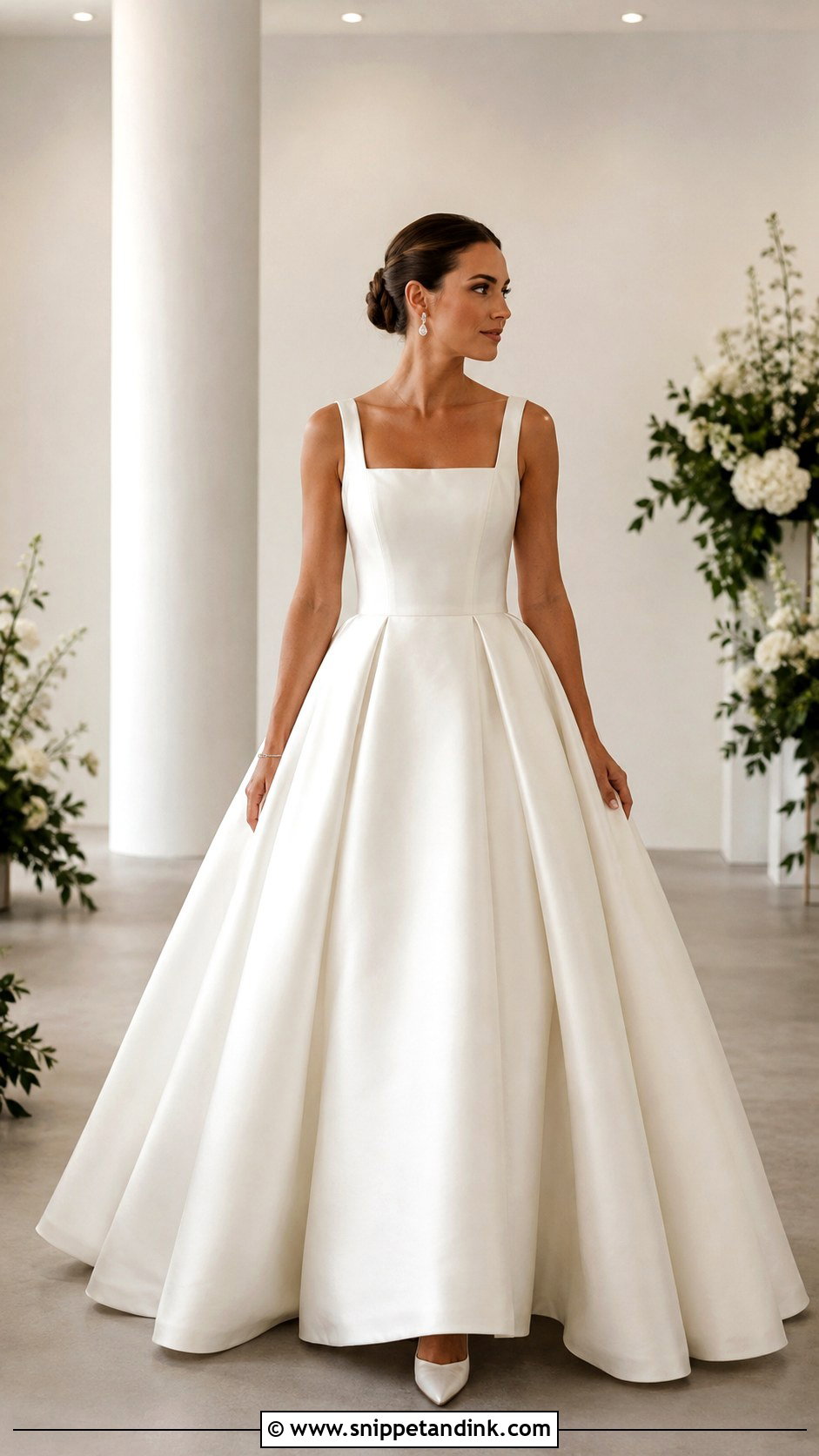
A minimal princess gown wedding dress puts everything on fabric, shape and fit, which means there’s nothing to hide a poor fit behind. Mikado, satin and structured faille hold volume and keep crisp lines. I’m fussier with alterations on these, because a wrinkle at the waist seam shows immediately on plain fabric. A square neckline, strapless bodice or high bateau neck looks sophisticated. Add one detail, such as covered buttons, a bow or a long train, then keep the hair sleek and the earrings sculptural.
17. Square Neck Princess Gown Wedding Dress
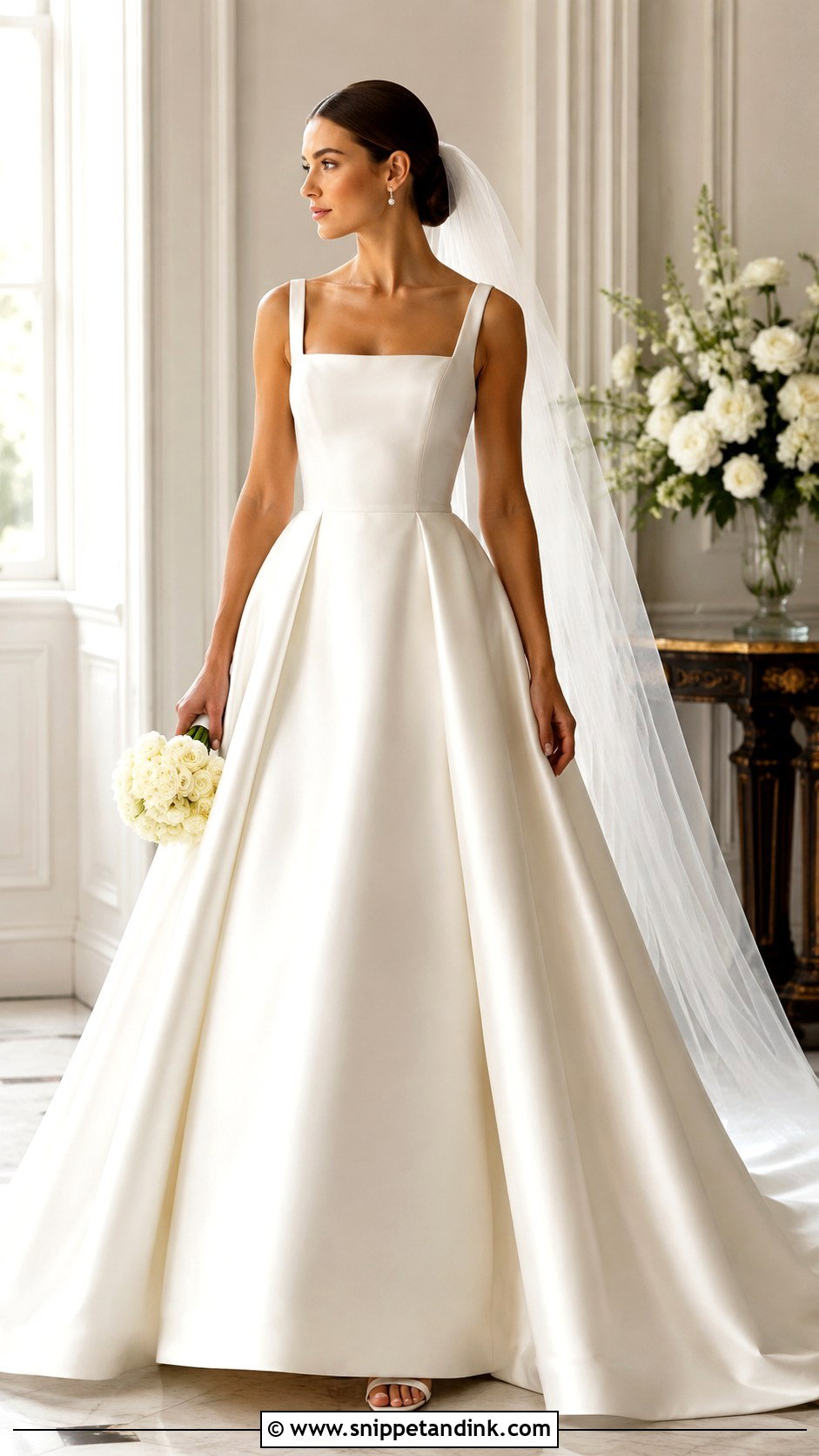
A square neckline frames the collarbones and gives more coverage than a deep V or strapless bodice. It suits thick straps, thin straps or long sleeves, so it adapts to how covered you want to feel. On a full skirt it adds a structured line at the top that balances the volume below. Satin looks modern and regal, lace romantic, jacquard textured. I check that the corners sit flat and don’t buckle when the bride lifts her arms. A low bun, small drop earrings and a veil falling behind the shoulders finish it.
18. High Neck Princess Gown Wedding Dress
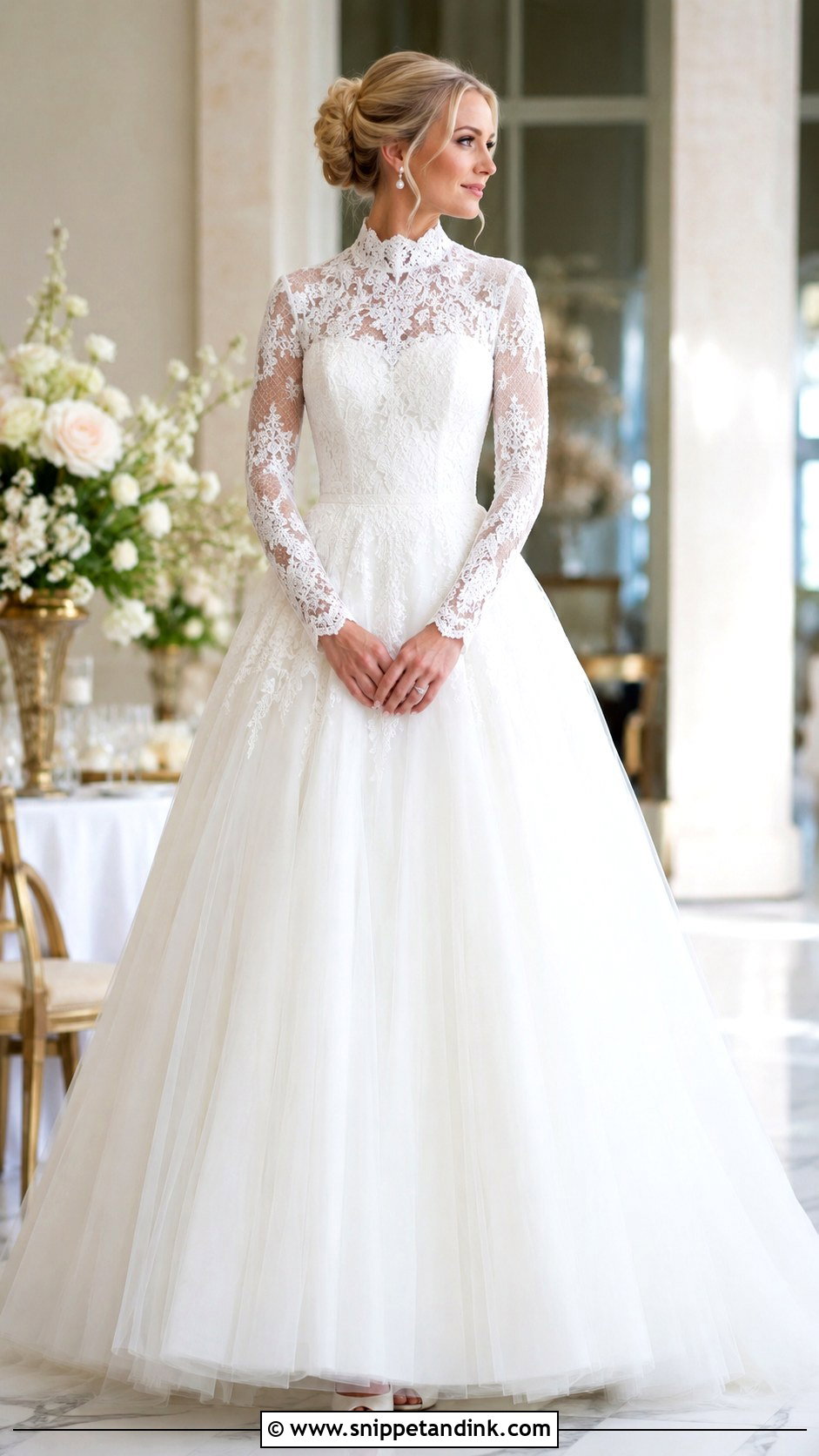
High necks pull attention to the face and posture, especially in lace or sheer illusion fabric. The skirt should open with soft volume rather than stiff bulk, or the whole gown can look top-heavy. I nearly always recommend an updo here so the neckline stays visible. Skip necklaces entirely and let earrings or a hair piece carry the jewelry. Brides with a shorter neck should try a lower illusion high neck first, since a solid collar can feel tight once you start talking and eating.
19. V Neck Princess Gown Wedding Dress
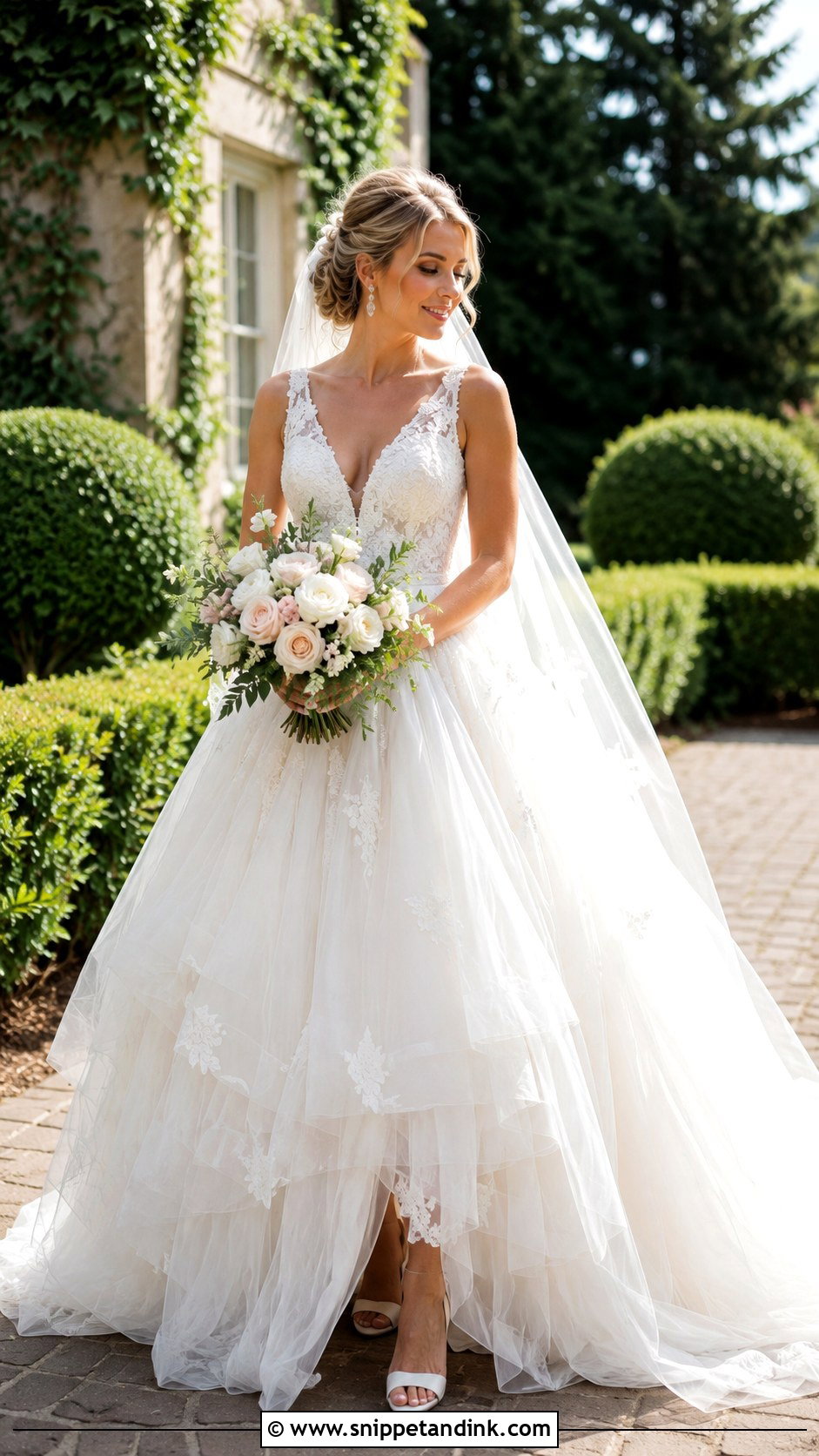
A V neckline lengthens the upper body and makes a full-skirted gown feel lighter on top. It can be modest or deep, depending on comfort. For a deeper V, I look for illusion mesh or a clear stabilizer strip inside so the edges don’t drift outward during the evening. Lace straps and sheer side panels add support while keeping it delicate. It pairs with layered tulle, floral lace or satin. Wear a pendant only if the neckline is plain; with a detailed bodice, choose earrings.


20. Bow Princess Gown Wedding Dress
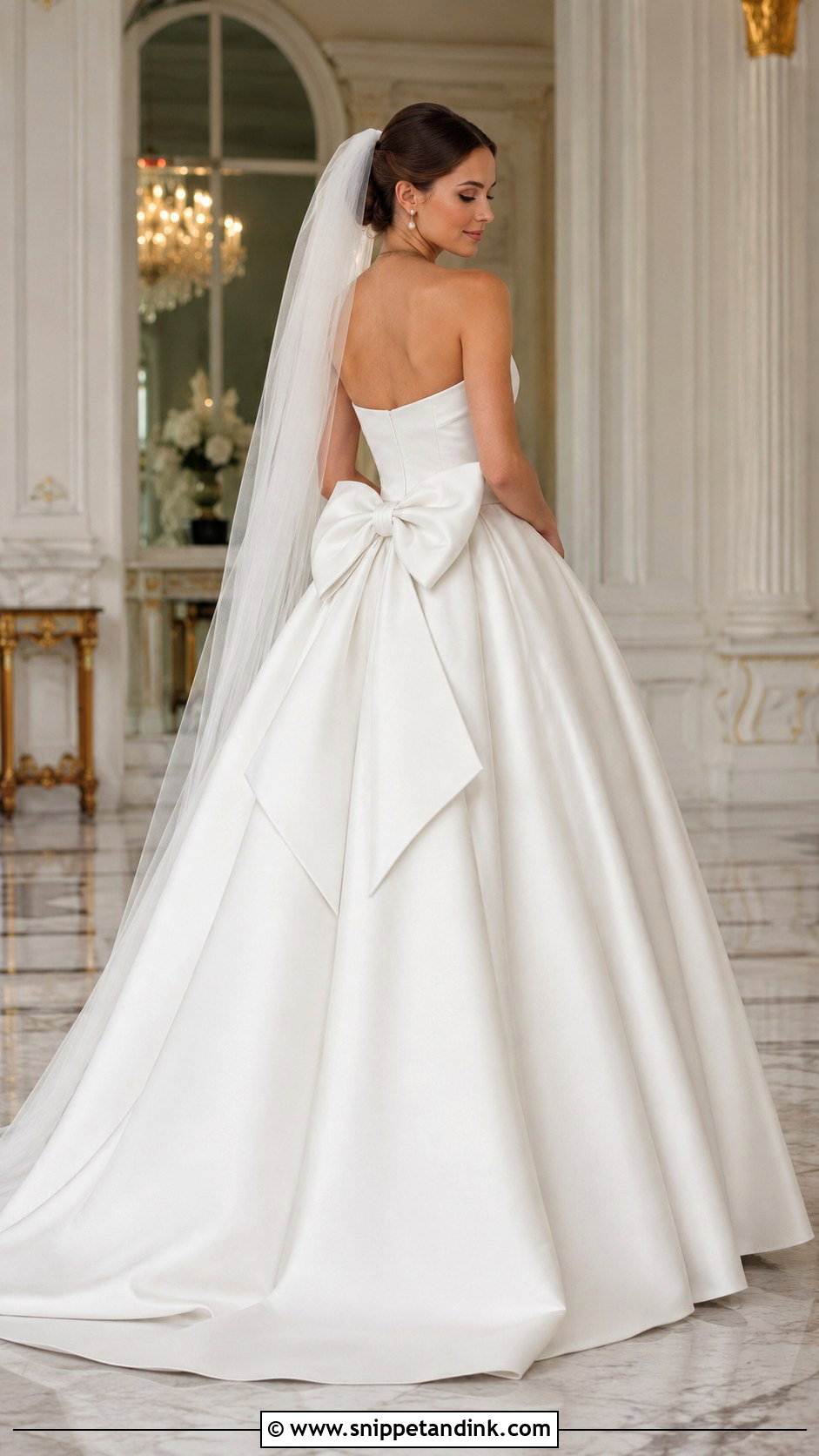
Bows can sit at the back waist, on a shoulder, across the neckline or at the train. For a modern look, one large structured bow on clean satin or mikado is enough. Softer brides tend to prefer a tulle bow with long tails. A back bow is the detail most likely to get crushed in a car or a church pew, so I ask for an interfaced bow or one that hooks on after travel. Keep everything else simple and hold the bouquet so it doesn’t cover the bow.
21. Detachable Sleeve Princess Gown Wedding Dress
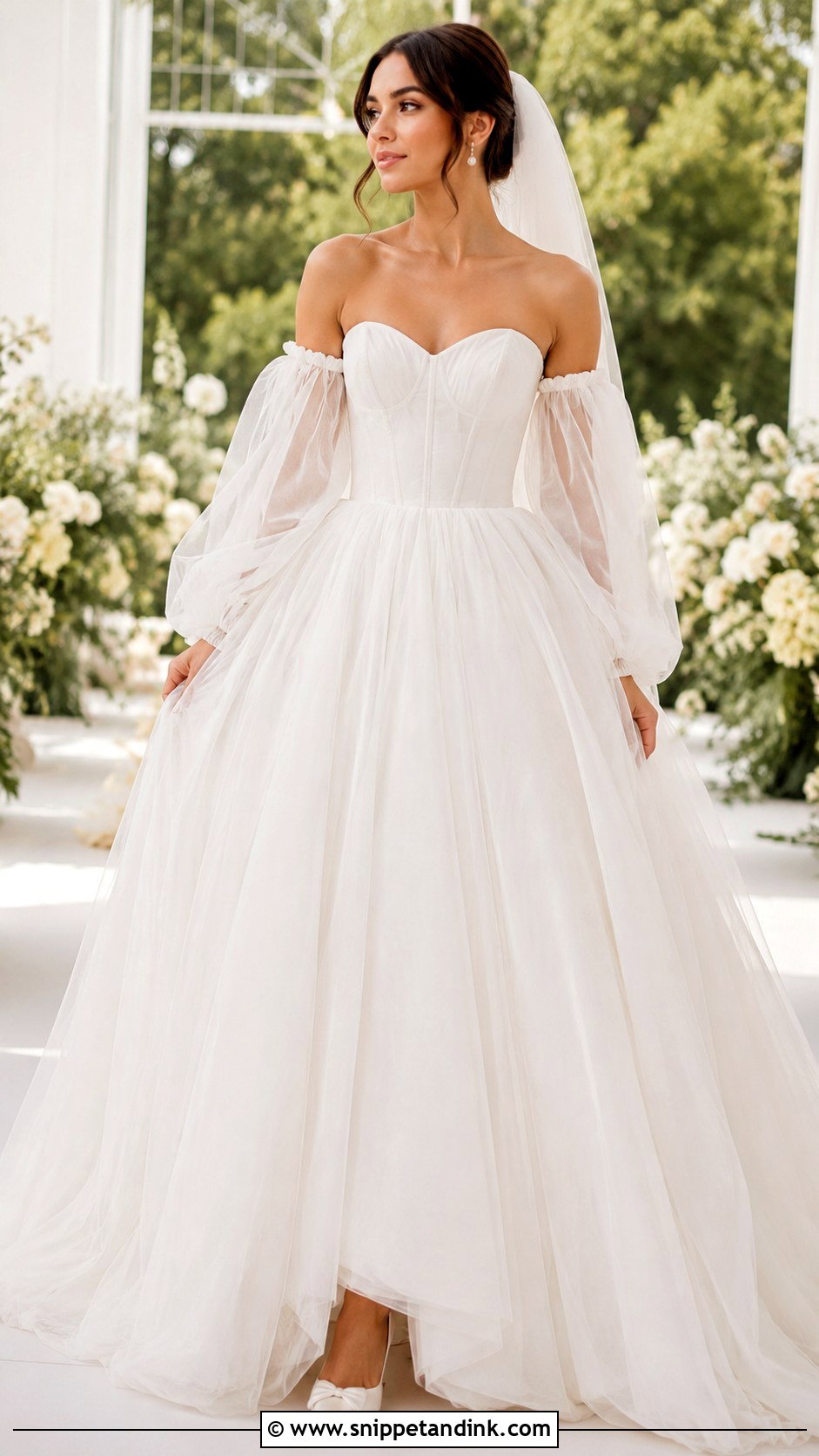
A detachable sleeve princess gown wedding dress gives you a ceremony look and a reception look without a second dress. Puff sleeves feel fairytale; fitted lace sleeves feel traditional; off-the-shoulder panels soften a strapless bodice. At fittings I have the bride raise both arms and hug me, because poorly anchored sleeves either pull the bodice up or slip down. Ask how they attach (snaps, hooks or elastic) and who will help you change. Wear the veil for the ceremony, then switch to a comb or bigger earrings.
22. Cape Princess Gown Wedding Dress
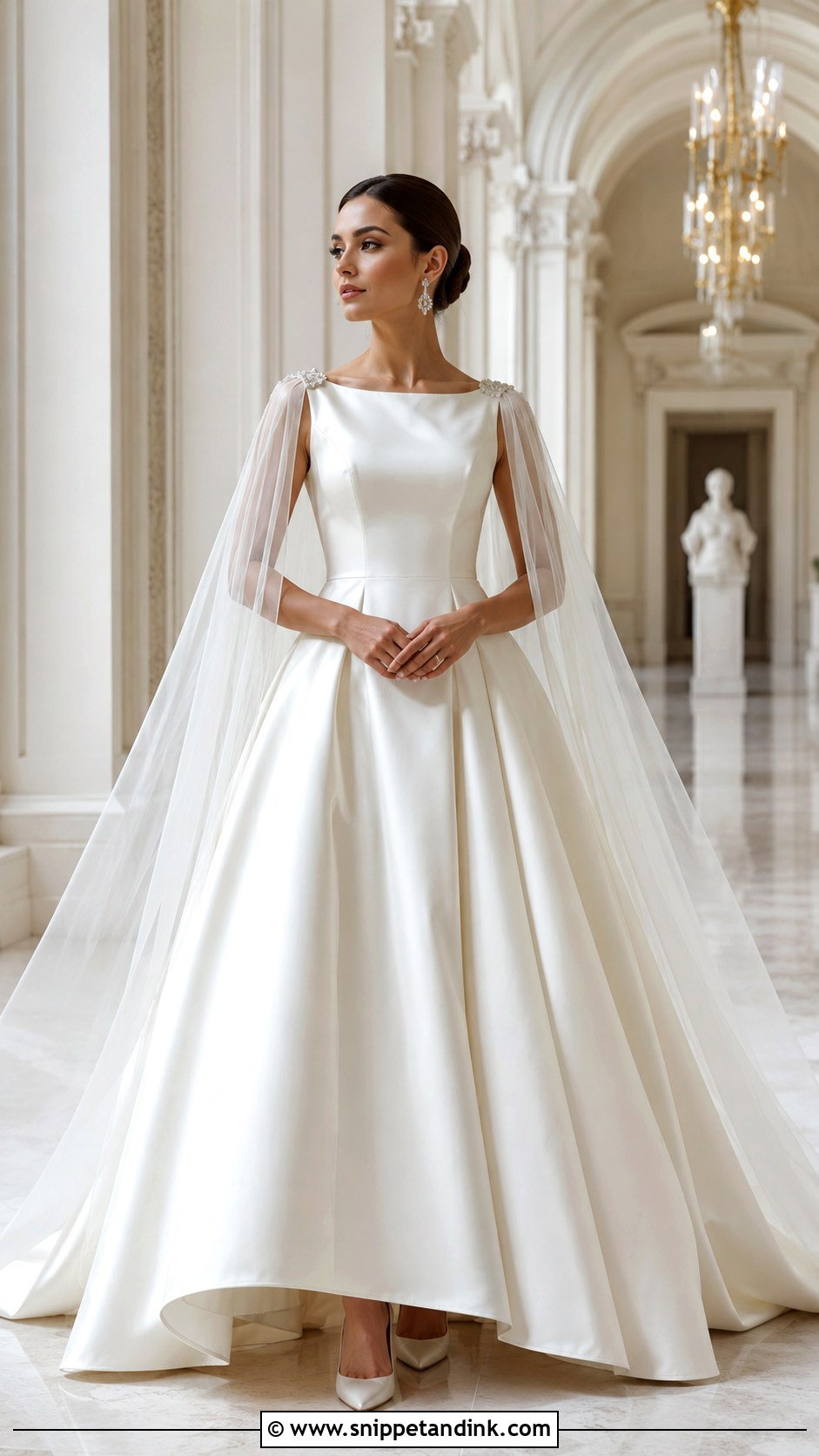
Capes give drama without a traditional veil, and they keep the hair and face more open. A sheer cape floats behind a full skirt; a lace-trimmed one adds detail across the shoulders and back. Some attach at the neckline, others fall from the shoulders. If the cape is heavily embellished, keep the gown underneath simple, or add a plain cape to a detailed gown for balance. Neck-fastened capes can tug backward when a long one gets stepped on, so I usually suggest a shorter length for outdoor ceremonies.
23. Overskirt Princess Gown Wedding Dress
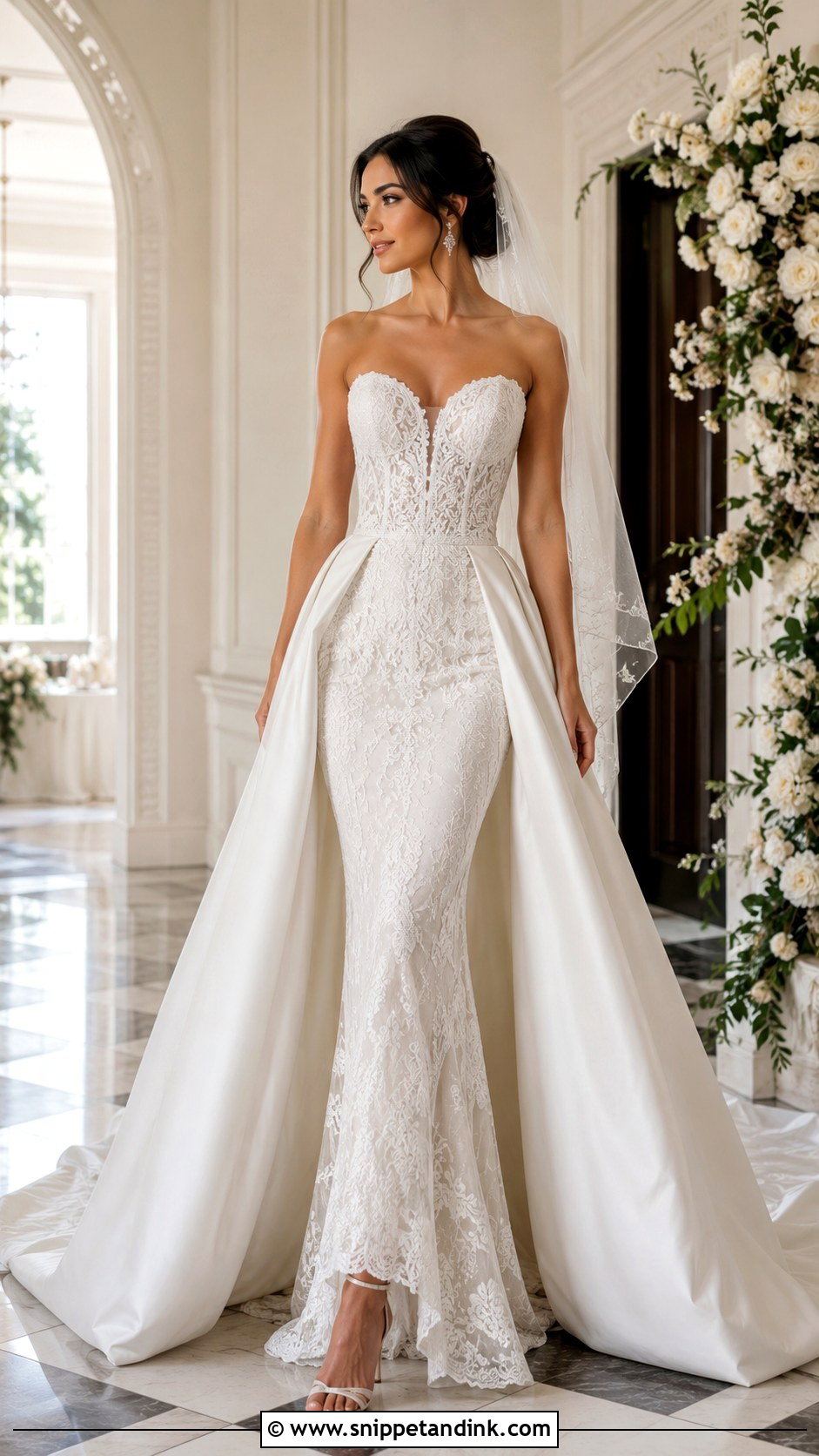
An overskirt gives two silhouettes in one outfit. The removable skirt creates the full princess shape for the aisle, then comes off to show a slimmer gown underneath for dancing. Satin over a fitted lace dress looks crisp; a tulle overskirt makes a softer change. The waist join is where these succeed or fail, so I check that the hooks or snaps sit flat under a belt or sash and don’t show. Plan a long veil for the ceremony and lighter accessories afterward.
24. Embroidered Princess Gown Wedding Dress
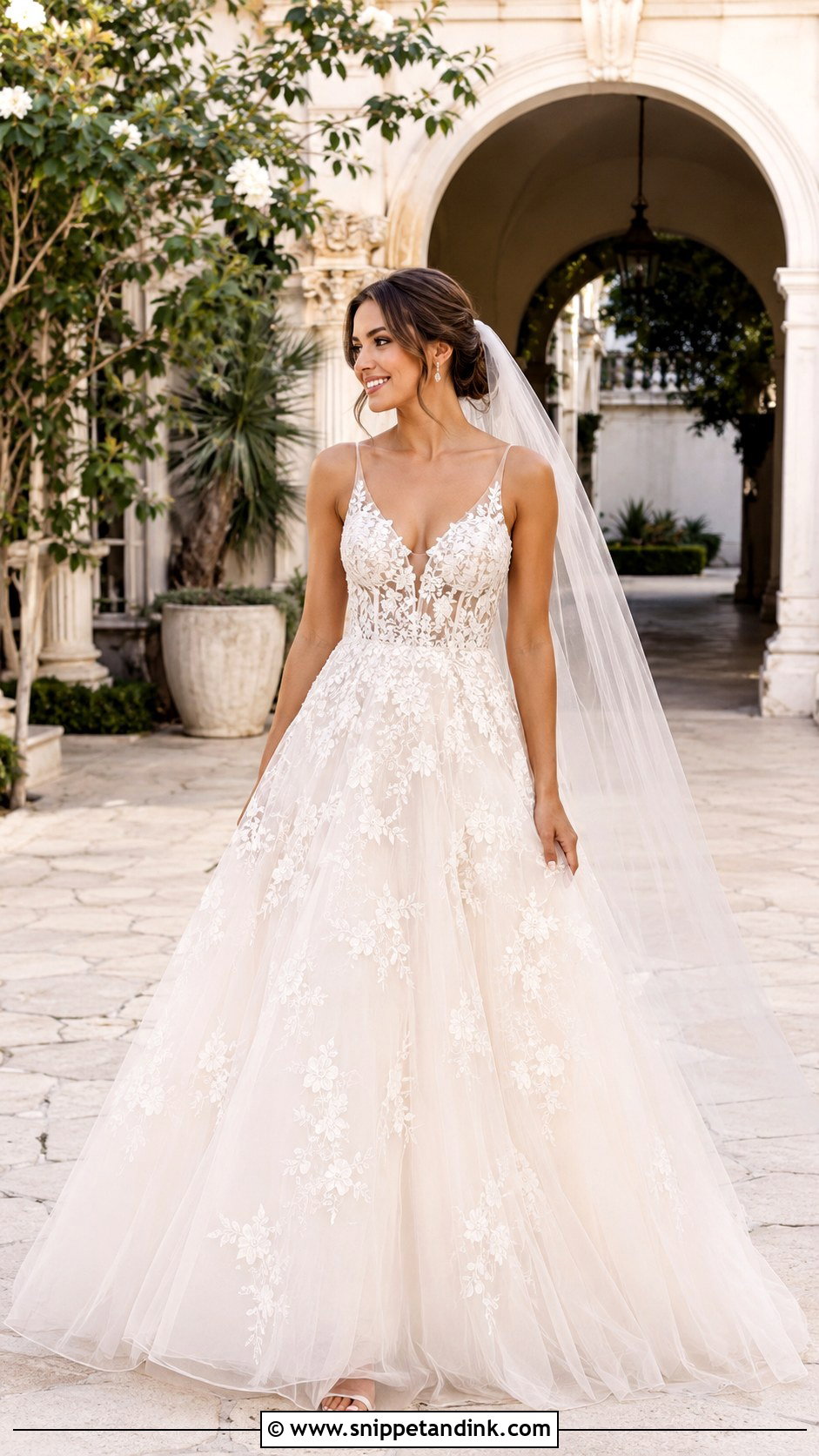
Embroidery looks crafted and dimensional in a way beading doesn’t. It can form vines, leaves, swirls or tonal patterns across the bodice and skirt. It also weighs less than heavy beadwork, so it suits brides who want detail without a heavy gown. It sits well on tulle, organza, lace and satin. Ivory thread stays traditional; pale color adds individuality. I keep accessories minimal so the stitching stays the focus: a sheer veil, soft makeup and delicate earrings.


25. Royal Train Princess Gown Wedding Dress
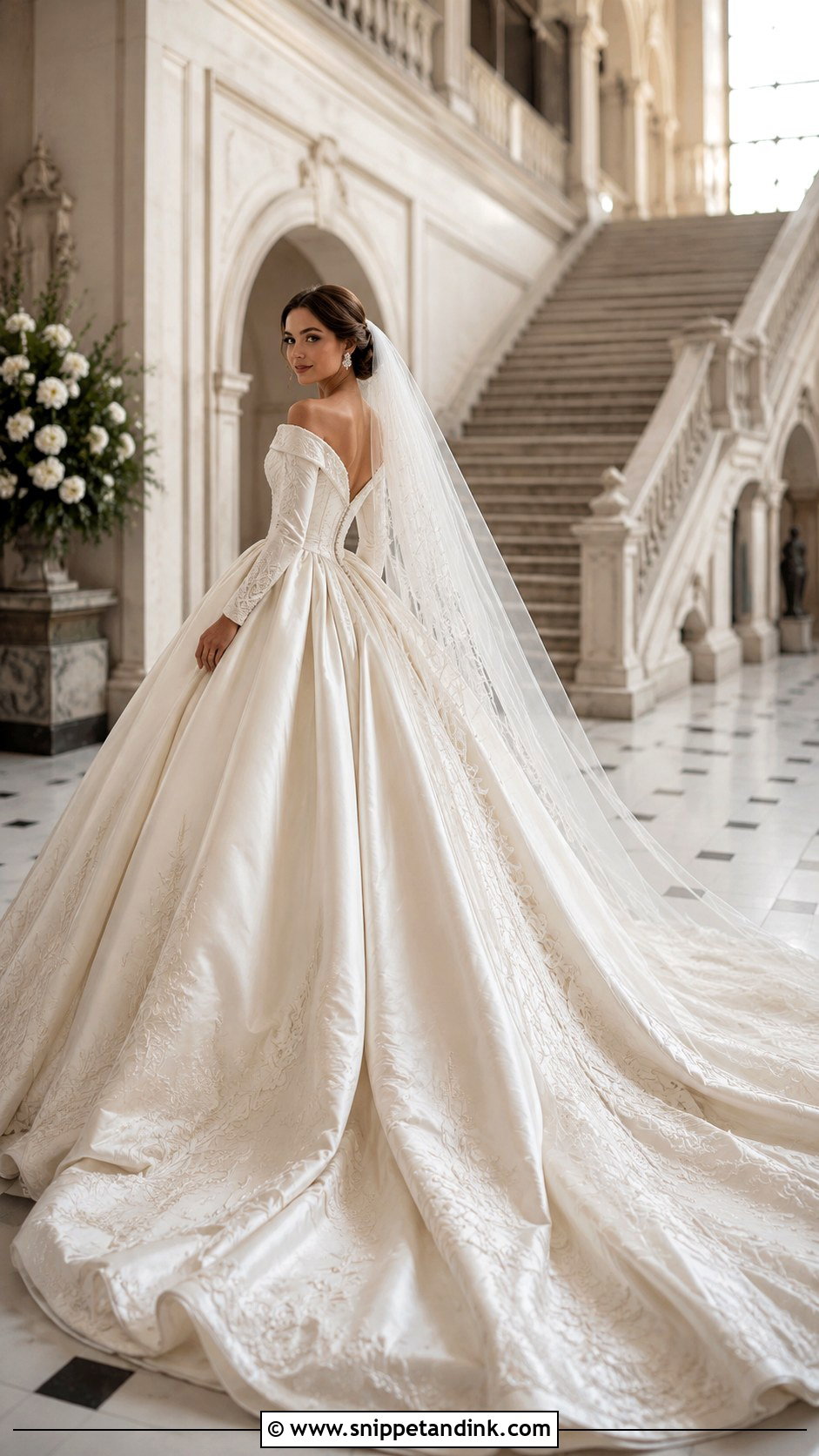
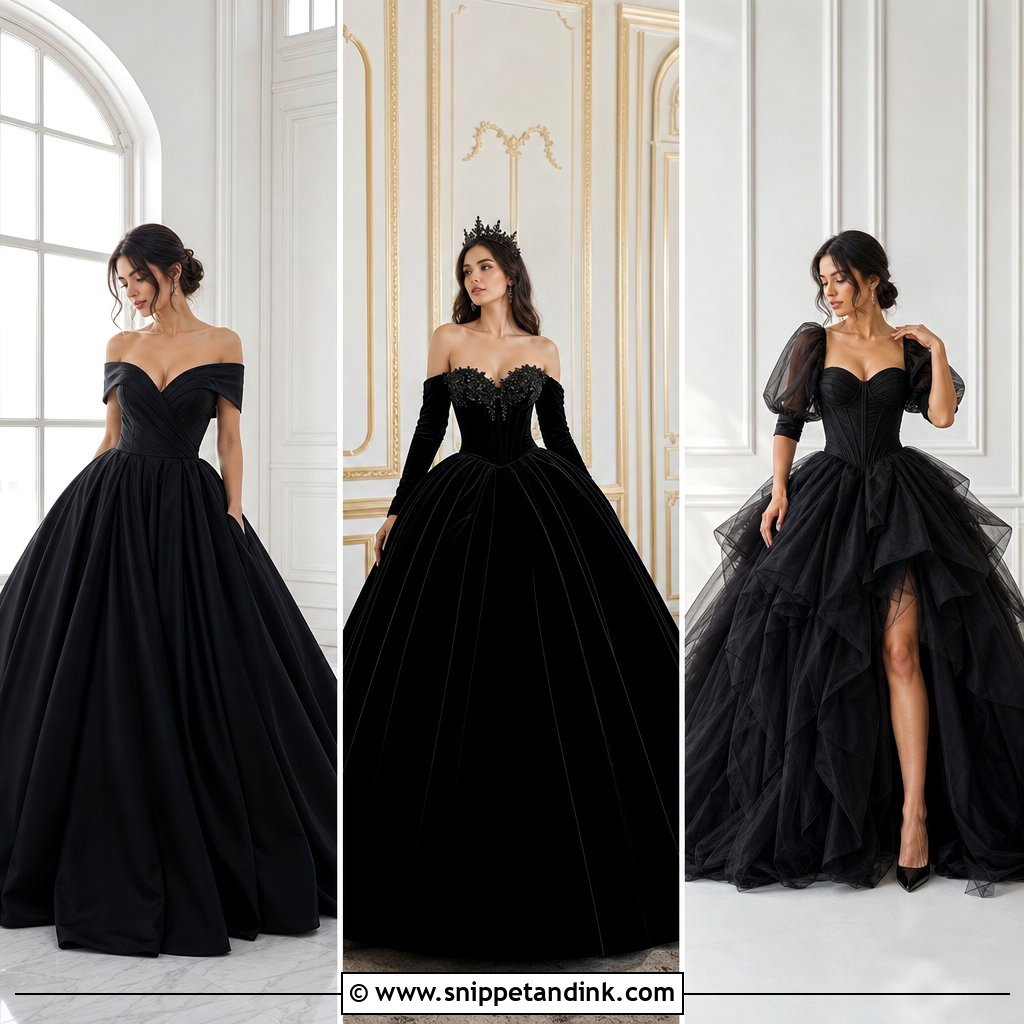
A long royal train turns the walk itself into a breathtaking entrance, with the skirt’s volume running back into several feet of fabric. Structured fabrics such as satin, mikado, jacquard or layered tulle hold the train’s shape best. Any train this long needs a bustle plan, and I ask brides to practice the bustle with whoever will do it on the day, since the loops can be hard to find in a hurry. A simple veil keeps it balanced; a longer veil adds even more drama in a wide, formal space.
The Fitting Calendar a Princess Gown Really Needs
Full gowns take longer than people expect. Many are made to order once you sign, and production times often run several months, so I suggest ordering roughly eight to ten months out where you can. Rush fees exist, but they shrink your choices quickly.
Alterations usually begin about two to three months before the wedding and take two or three fittings. Bring the exact shoes, bra or corset and petticoat you’ll wear to every one, because a different heel height changes the hem by enough to matter. The last fitting should land a week or two before the day, close enough that your measurements won’t drift, with room for one more small tweak.
Steaming, Bustling and Storing All That Skirt
Gowns arrive creased from the bag, and tulle and satin need different handling. Tulle releases its creases with a hand steamer held a little away from the fabric. Satin can water-spot, so I steam it from inside the skirt or have the shop press it. Never iron beading or appliqués directly.
Hang the gown by its inner hanging loops, not the straps, so the weight of the skirt doesn’t stretch the bodice. After the wedding, have it professionally cleaned within a few weeks, before sugar or drink spills turn yellow, and store it flat in an acid-free box or in a breathable cotton bag, away from plastic and damp.
Fabric First, Then Every Other Detail
If I had to give one piece of advice from all of these, it’s that fabric decides more than any other choice. Satin gives structure, lace gives texture, tulle gives lightness, and a clean basque waist makes the shape look modern. Pearls, bows, embroidery, color, sleeves, capes and trains then let you make it yours. Think about your venue, the season and how much you plan to move after the vows, then try at least one gown with a different skirt weight before deciding. A princess gown should feel wearable and like you, not only look grand on the hanger.
You'll Like These Ideas:









Leave a Reply