
A princess gown is really two garments working together: a fitted bodice that has to stay put, and a full skirt that has to be carried, sat in and danced in. When both are right, the dress feels grand without belonging to any one year. When the skirt is too heavy or the bodice too loose, you feel it by the speeches. Lace sleeves, clean satin, pearl work, structured necklines and long trains all appear below, but I’d urge you to pick details for your body and venue rather than adding everything at once. Let the veil, shoes, jewelry and flowers serve the shape. Each of the twenty looks here is styled head to toe, with a note on what to watch for when you try it on.
Hoops, Petticoats and Built-In Layers: Where a Full Skirt Gets Its Volume
That big princess outline rarely comes from the outer fabric alone. Something underneath is holding it out, and which method the gown uses changes how it moves, how heavy it feels and how easily you can sit.
- Built-in layers. Most modern ball gowns have several layers of stiff net or crinoline sewn into the lining. Nothing extra to wear, and the volume moves with you. Ask how many layers there are; a lot of net is warm.
- A separate petticoat. Worn under the dress and tied at the waist. It lets you change the fullness, and you can take it off for the reception if the dress allows. A petticoat that is too long shows below the hem, so it goes to fittings with you.
- A hoop slip. Flexible rings held in fabric give the widest, most even bell shape. They are lighter than many layers of net, but they swing when you walk and need practice when you sit.
If you love a sample but find it heavy, ask whether some of the volume can come from a lighter petticoat instead of extra layers in the skirt. A good bridal shop or seamstress can often rebalance it without losing the shape.
1. Classic Satin Princess Wedding Dress
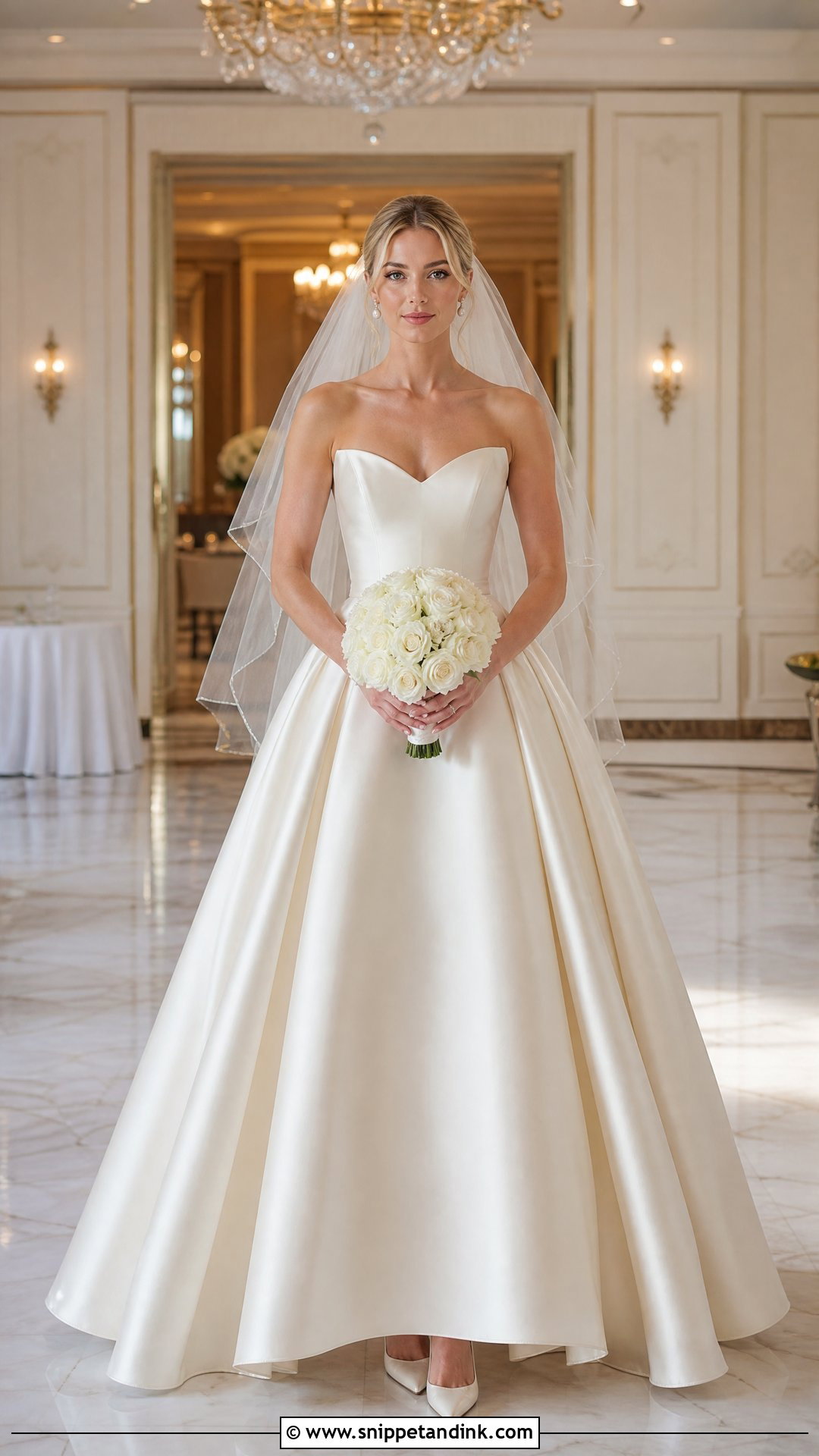
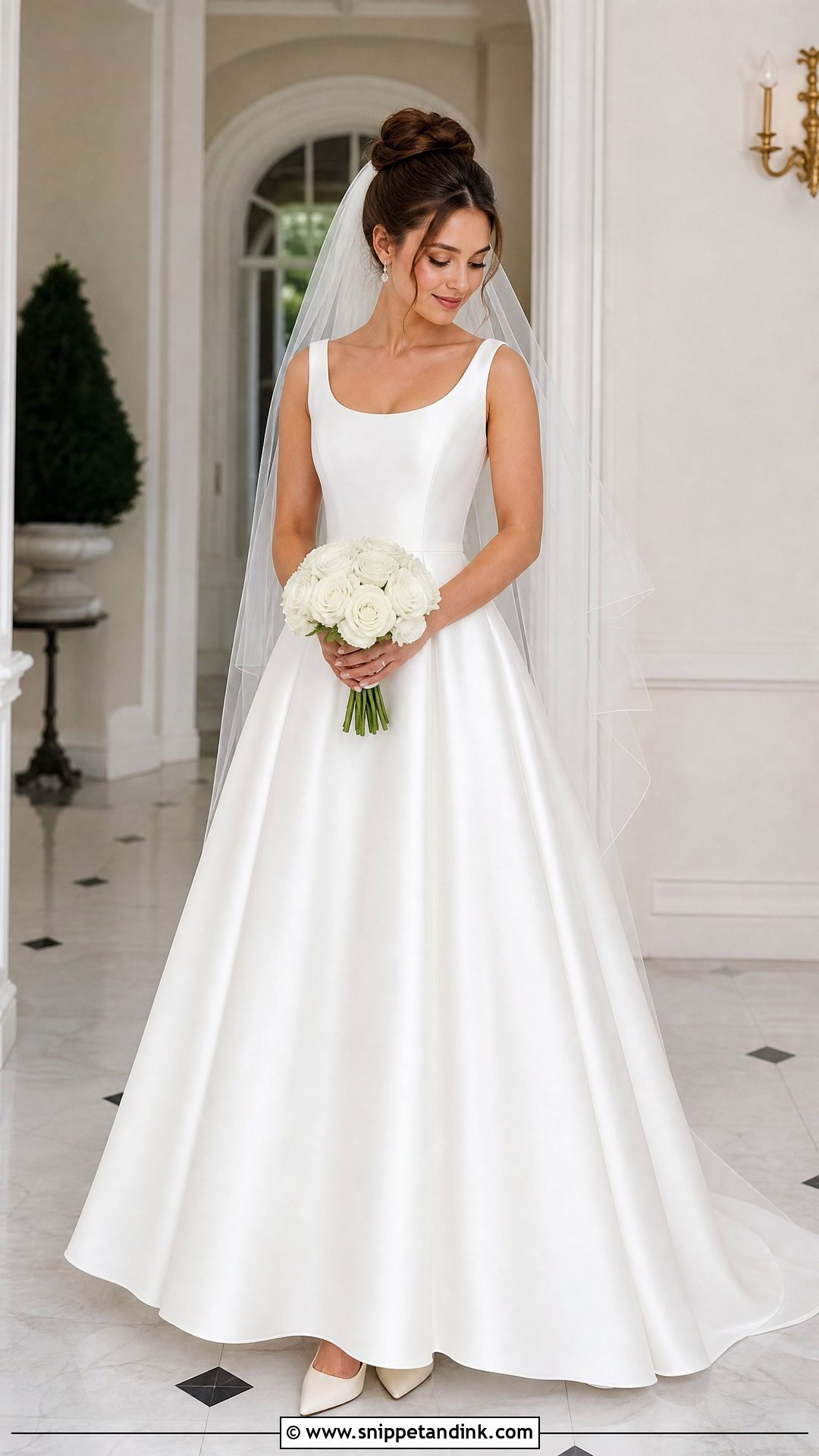
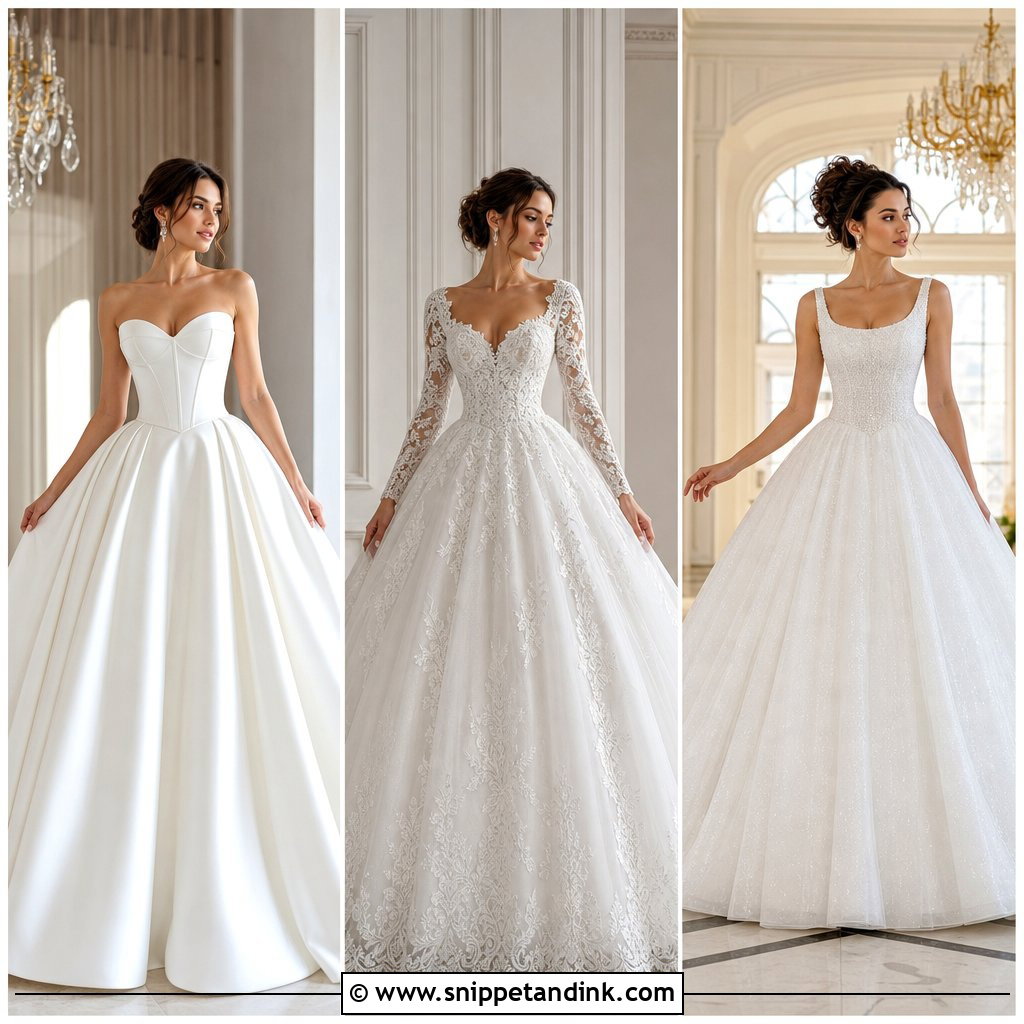
I start brides here when they aren’t sure what they want. Plain satin shows the princess shape at its most honest: a fitted bodice with a soft curve at the neckline, then a skirt falling in long unbroken folds. Ivory satin glows; bright white reads crisper and more formal, and it is worth seeing both against your skin. Pearl drops, a fingertip veil, pointed satin pumps and a few white roses complete it, with a low bun or smooth waves. A narrow satin waistband adds definition if your waist needs marking. It is very much a ballroom or historic-house dress. On a lawn, satin’s weight drags the hem through damp grass.
2. Lace Long Sleeve Princess Wedding Dress
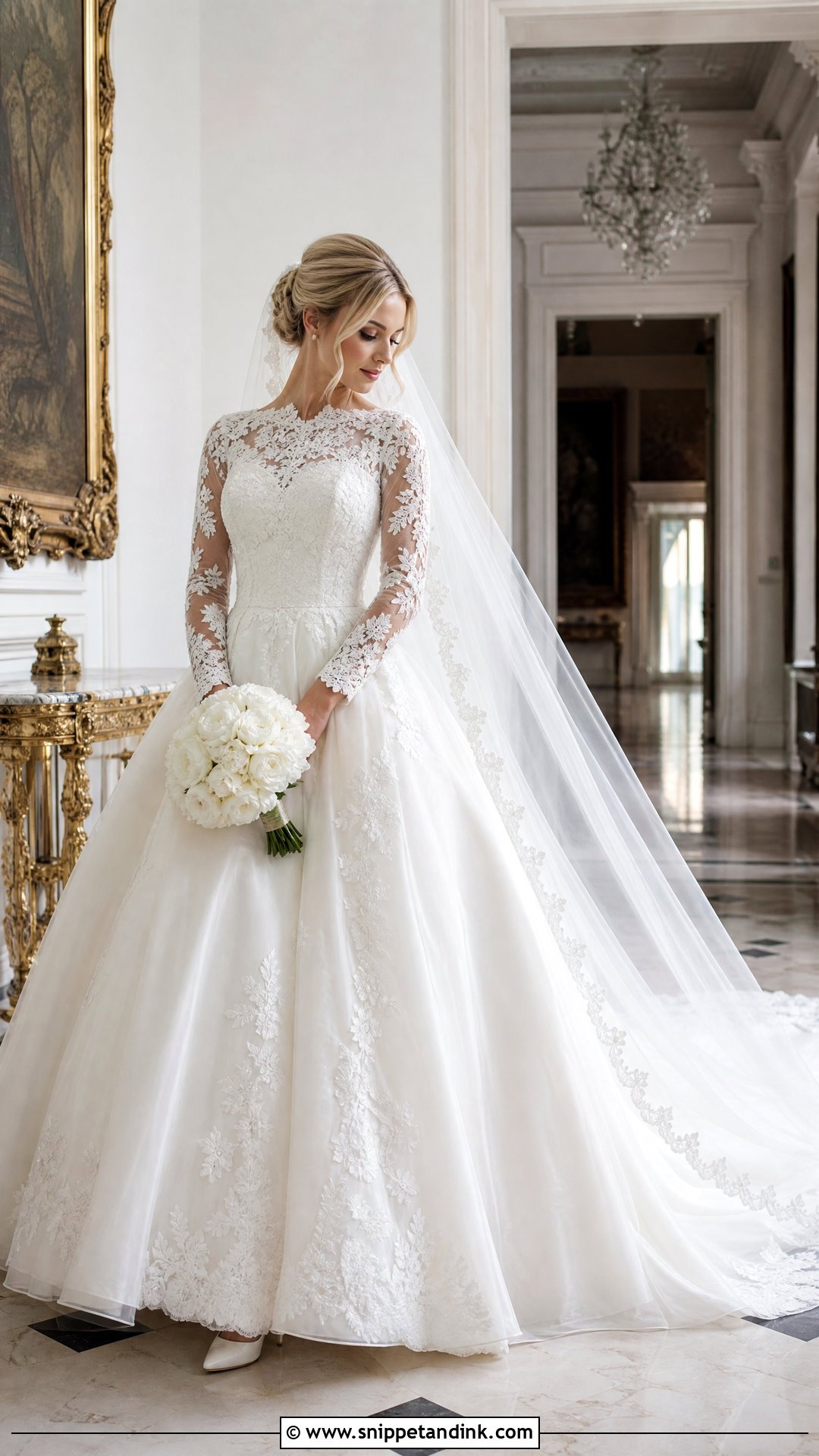
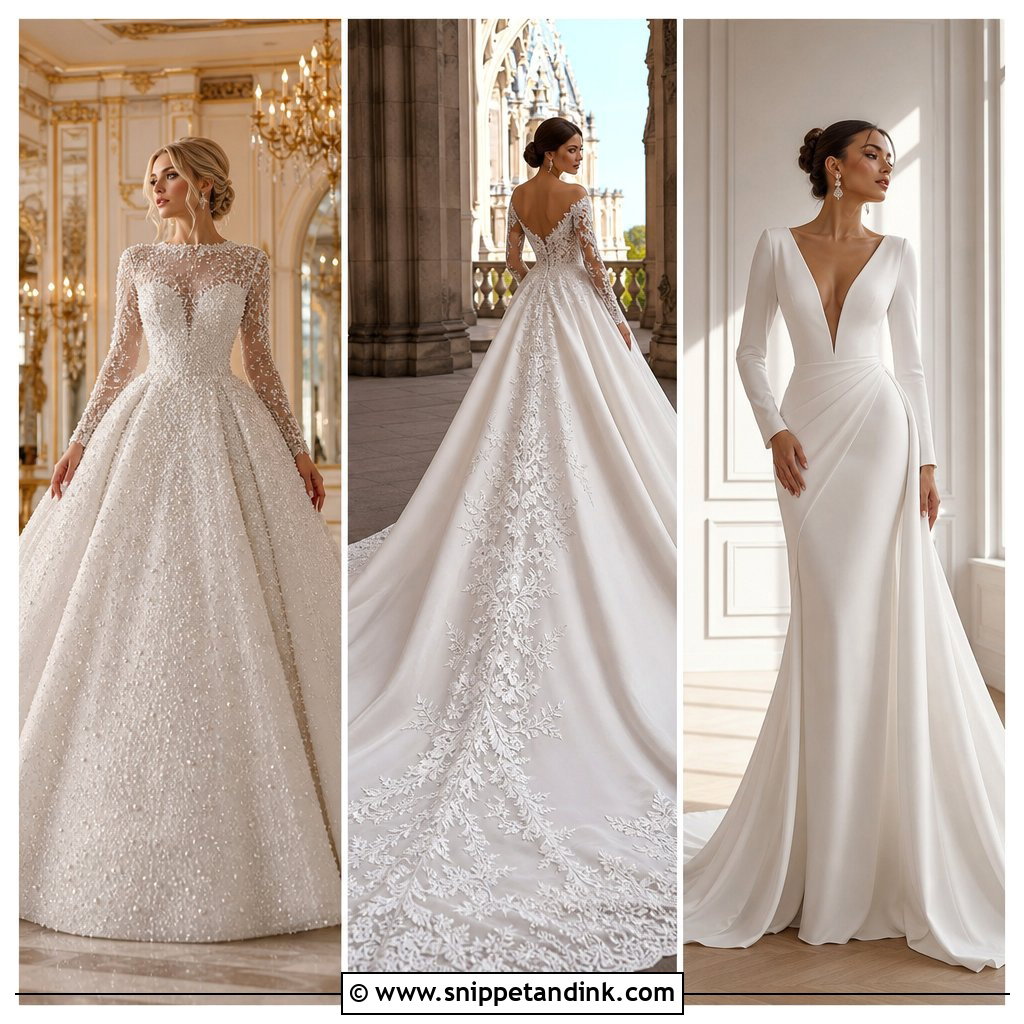
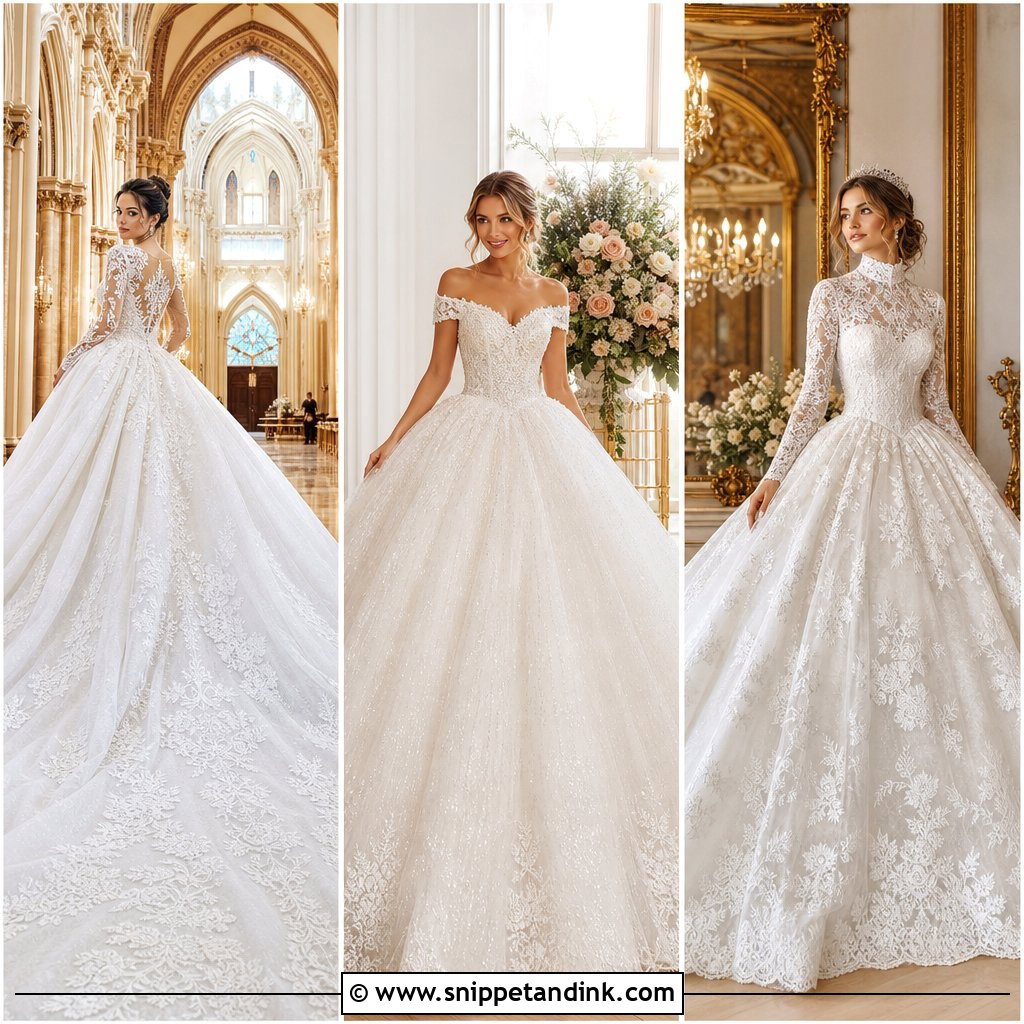
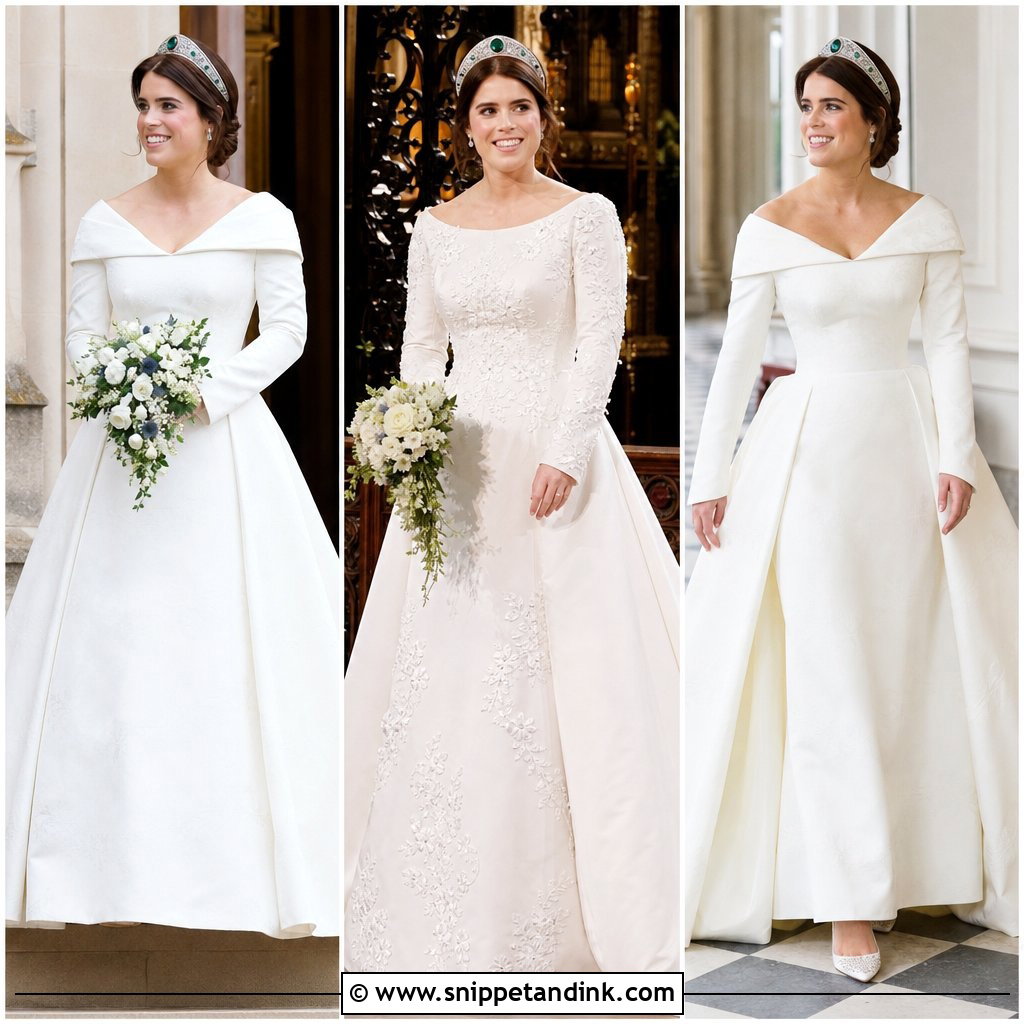
Lace sleeves bring the royal-wedding reference straight to mind, and they earn it with almost no extra effort. A fitted lace bodice and defined waist sit over a full tulle or satin skirt, with sheer appliquéd sleeves giving coverage that still looks light. I’d use a lace-edged cathedral veil, pearl studs, closed ivory heels and a polished chignon so the neckline and sleeves stay visible. Peonies, roses and a little greenery make a round, soft bouquet. Leave statement jewelry aside; the lace is already doing that work. This one suits cooler months and churches with detailed architecture, where the long veil has room to fall.
3. Off Shoulder Princess Wedding Dress
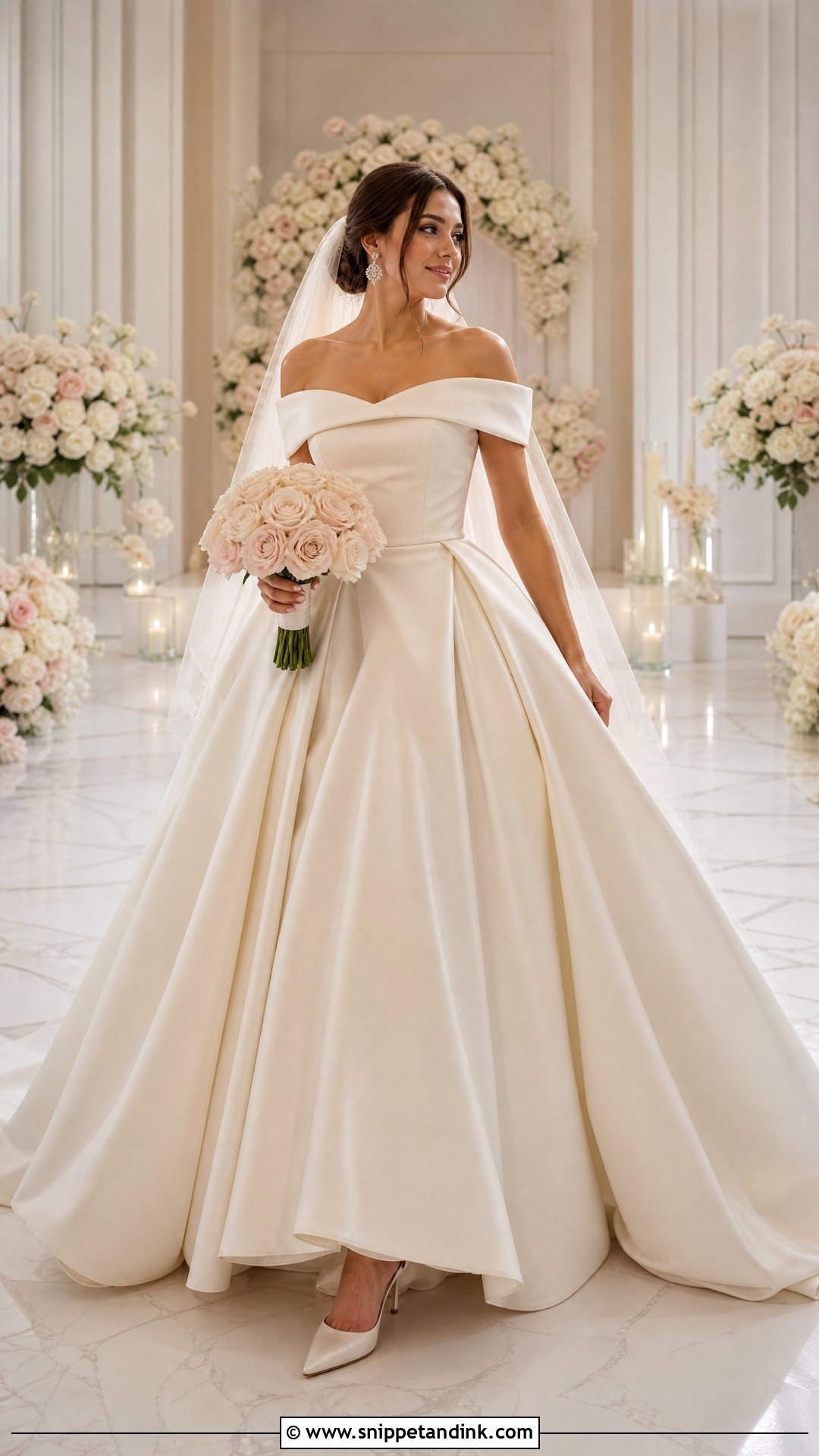
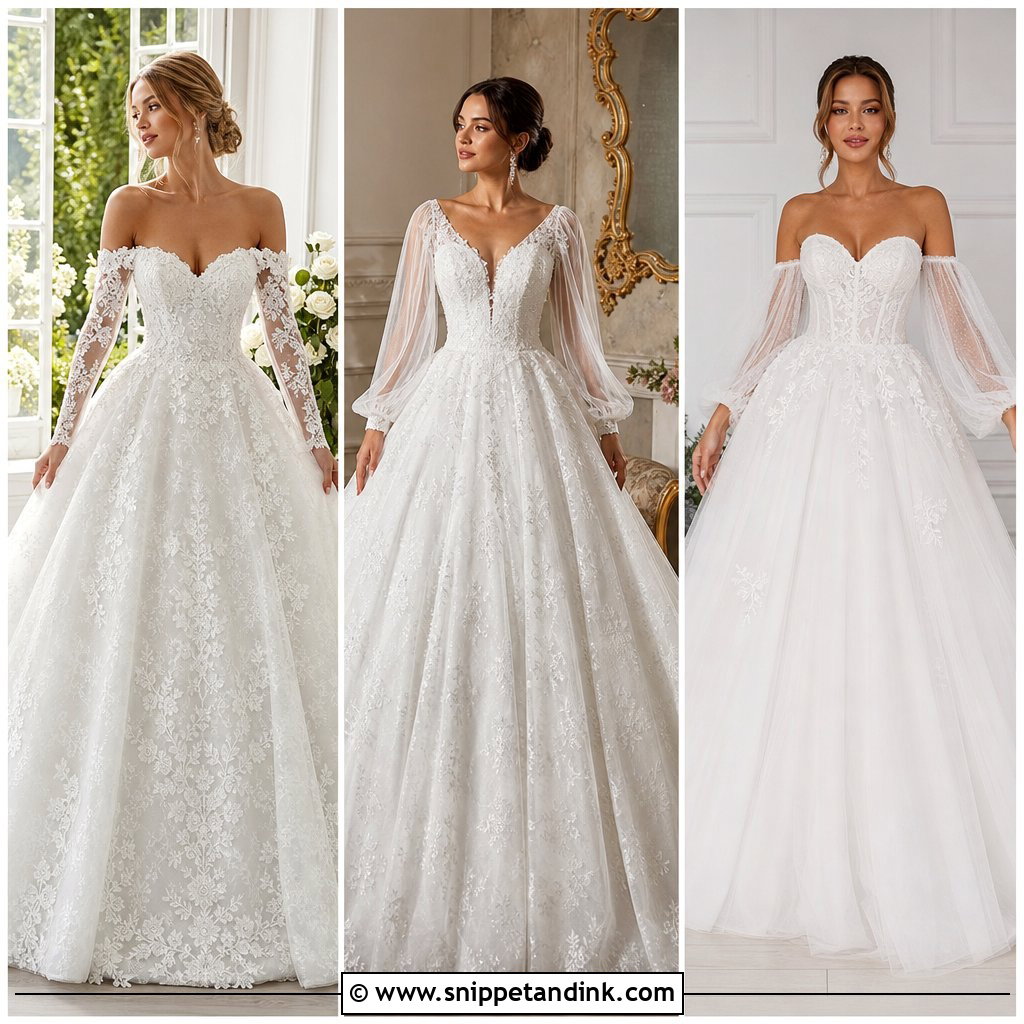
The off-the-shoulder neckline is what keeps a big skirt from looking stiff. Folded satin, lace-trimmed bands or a simple cuff around the shoulders soften the top, and a firmly fitted waist keeps the proportions in check before the skirt opens out. A simple pendant, crystal earrings and a long veil tucked beneath a loose bun suit it, with pointed ivory heels even if they barely show. White garden roses with a little pale blush pick up the softness of the neckline. Ask about detachable straps if you plan to dance hard. Fixed off-shoulder bands tend to restrict how high you can lift your arms, and you’ll want them up for at least one song.
4. Strapless Ball Gown Princess Wedding Dress
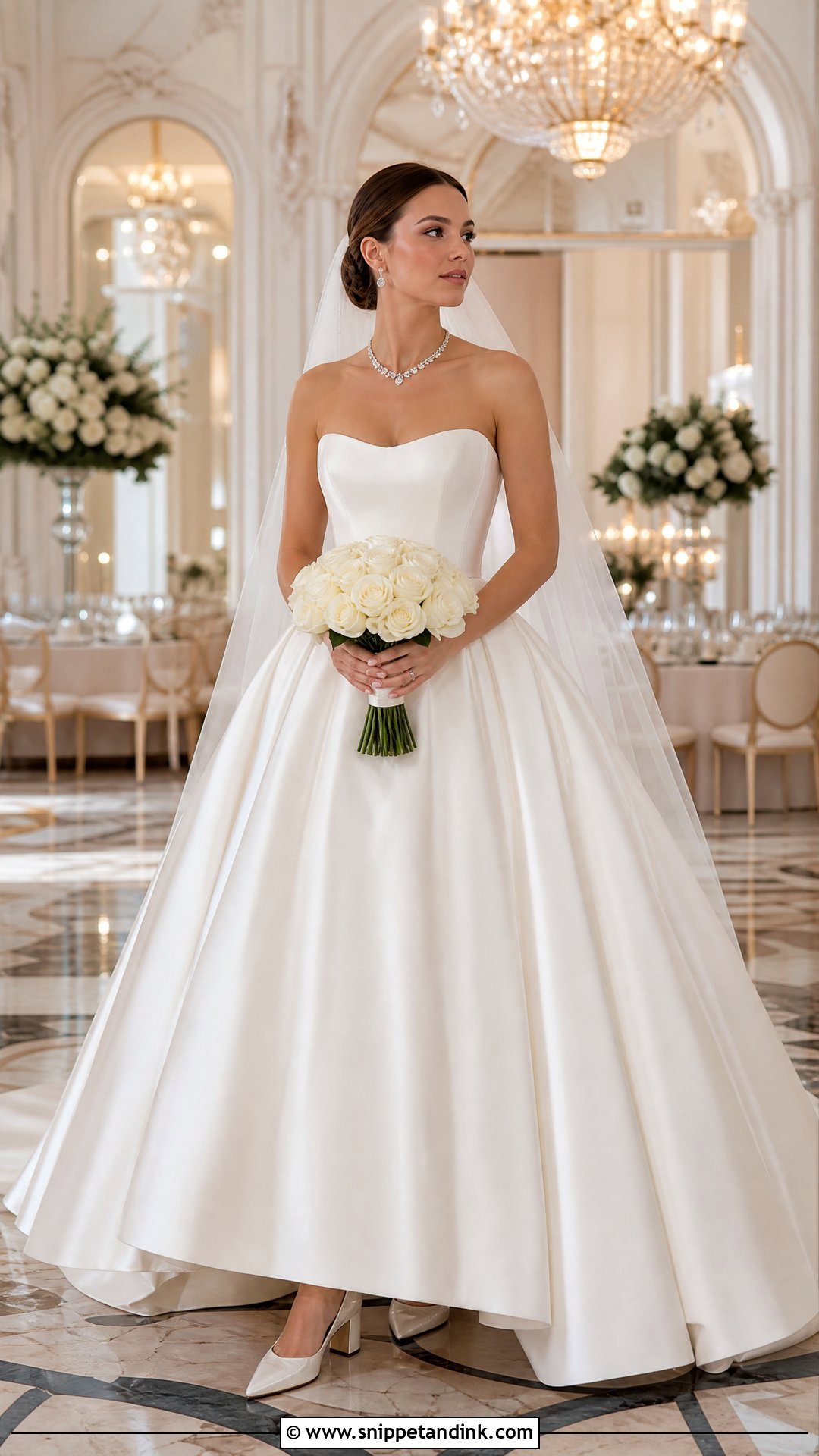
This is the princess shape most brides picture first. What makes or breaks it is the bodice. It needs real internal structure so the neckline stays where it is without you hitching it up in every photo. A gently curved or straight top edge over a full satin or layered tulle skirt has lasted for decades for good reason. Add a chapel veil, a fine tennis necklace and matching studs, with block-heel pumps under the skirt since nobody sees them and you’ll be standing for hours. A sleek updo leaves the shoulders bare, and ivory roses in a structured bouquet finish it. For a covered ceremony, a removable lace bolero adds sleeves without changing the gown underneath.
5. Square Neck Princess Wedding Dress
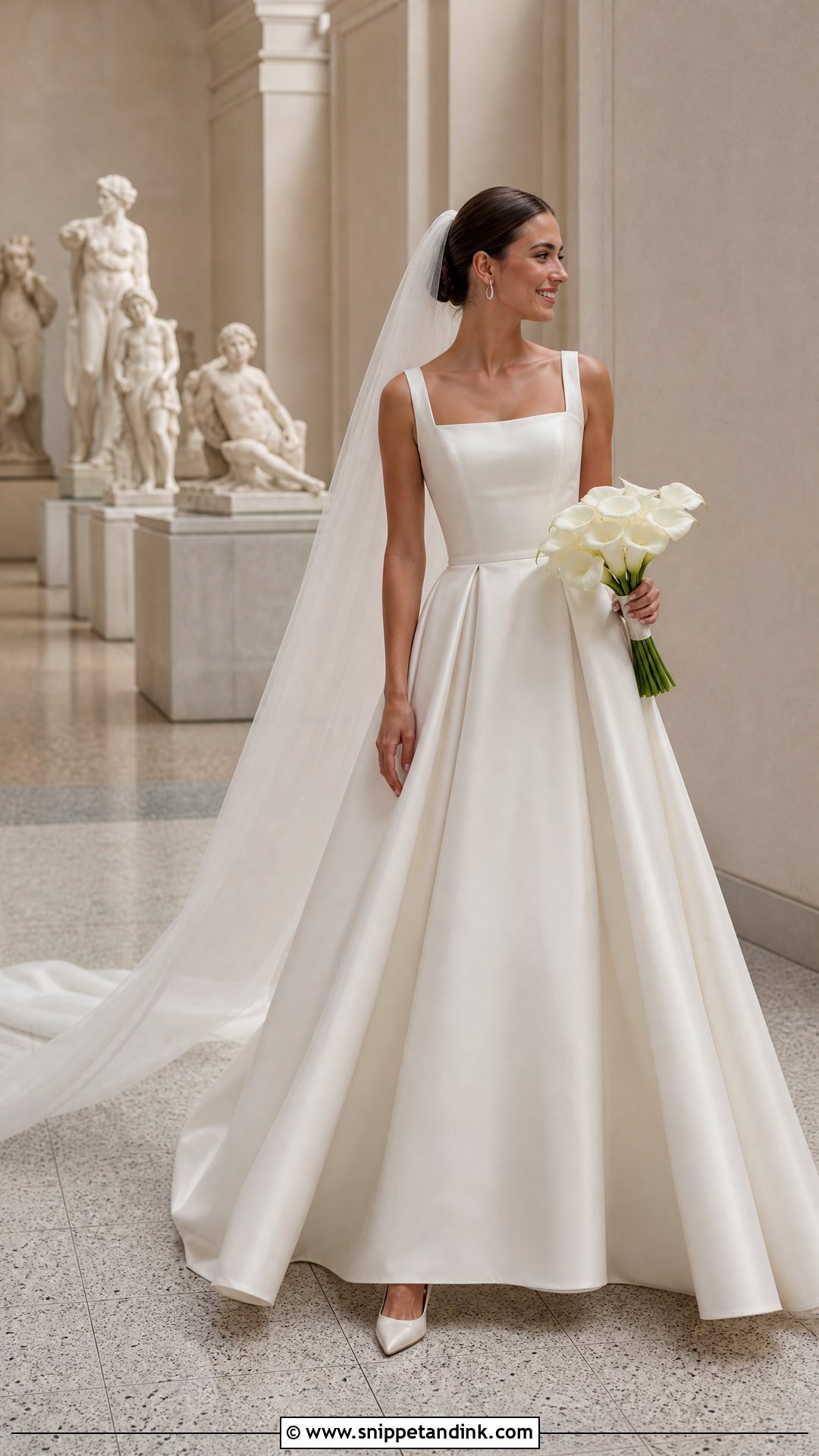
Square necks give a princess gown straight, architectural edges at the top to contrast with the curve of the skirt. The neckline frames the collarbone and covers more than a sweetheart, and with wide straps it sits securely. Matte satin or structured Mikado keeps the skirt full and the lines crisp. I’d style it with small pearl hoops, a smooth cathedral veil, simple pointed pumps and a low centre-parted bun, then carry calla lilies or a compact rose bouquet. A delicate pendant is possible, but most brides look better without one here. Estates and museum venues, with their straight lines and high ceilings, suit it well.
6. Bateau Neck Princess Wedding Dress
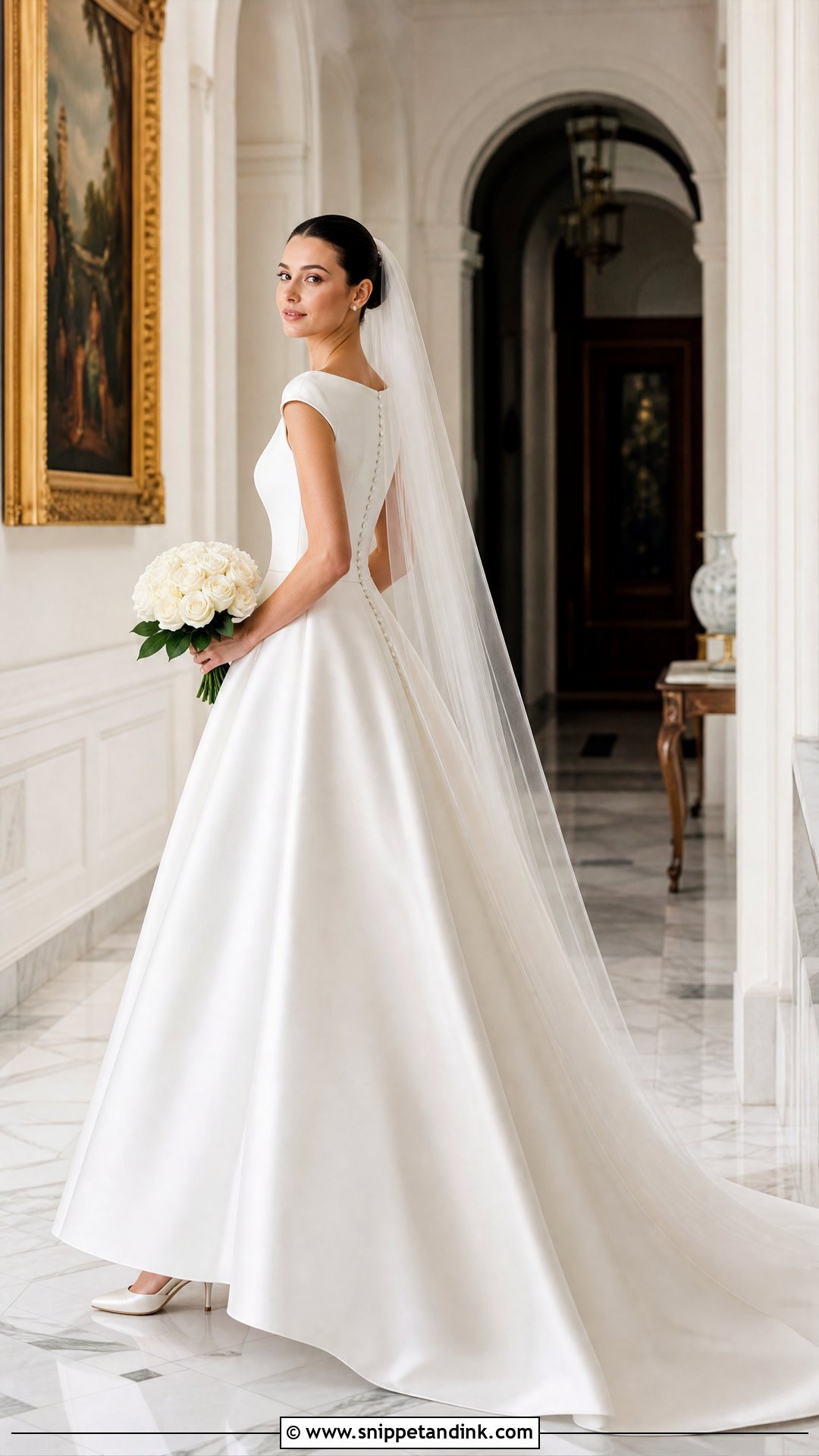
A bateau neckline runs along the collarbone from shoulder to shoulder and gives a quiet, composed kind of grandeur. It works best with a fitted bodice, cap sleeves and a full skirt in satin, jacquard or crepe-backed fabric. Skip the necklace and wear pearl or diamond-look studs. A long veil with a narrow finished edge, secured under a neat chignon, and closed kitten heels keep it formal and comfortable. Wrap the bouquet stems in matching satin ribbon and add a row of covered buttons down the back. The result is a composed princess wedding look. The bateau sits on the shoulder edge, so check it doesn’t slide outward when you reach forward.
7. Sweetheart Neck Princess Wedding Dress
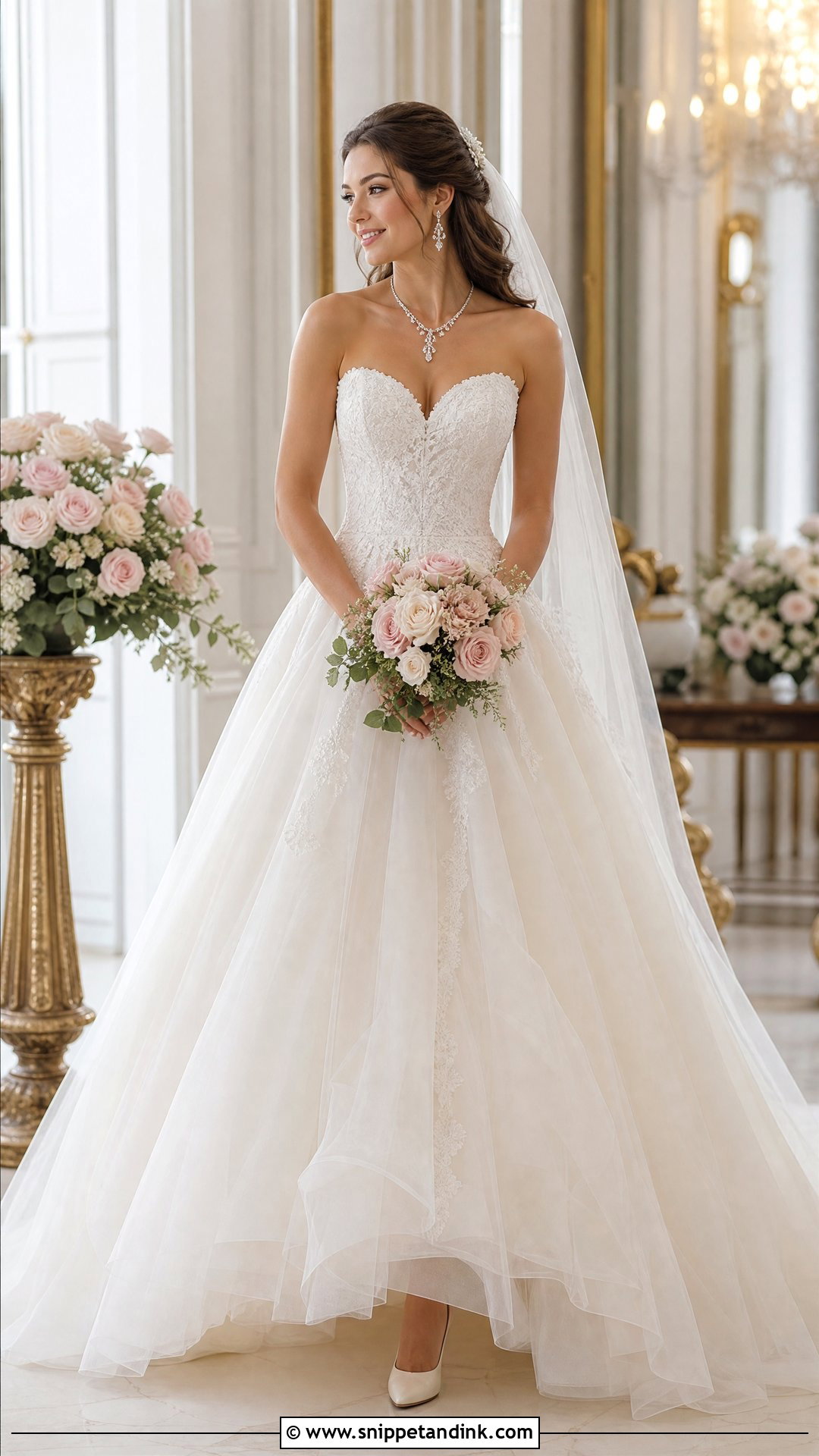
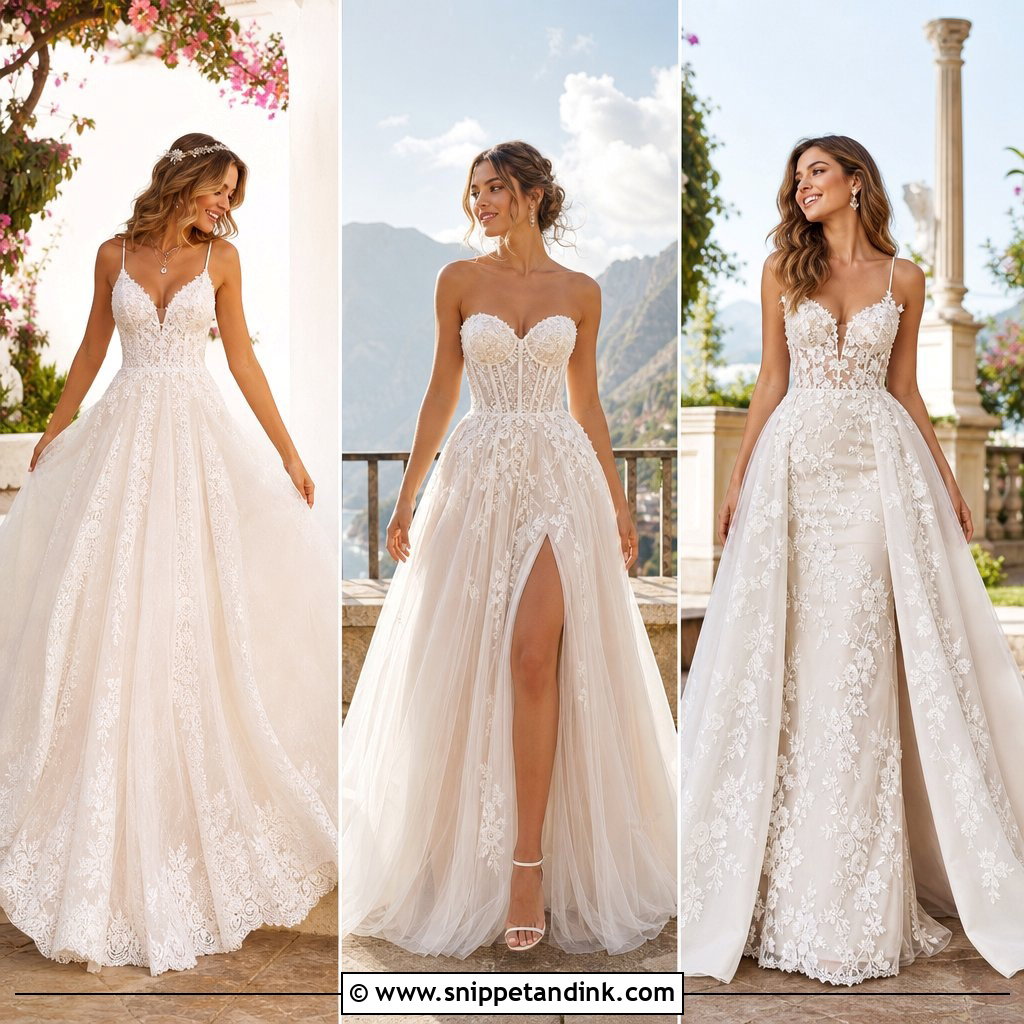
The sweetheart curve softens a structured gown and suits most bust shapes, which is why it appears on so many princess dresses. Satin keeps it traditional; lace over tulle adds texture. Hidden corset construction underneath makes a real difference to how securely the neckline sits. A fine crystal necklace with matching earrings and a softly gathered veil suit the open neckline, and loose waves or half-up hair repeat its curve. Ivory pumps and white and pale pink roses complete it. Concentrate any embellishment on the bodice. When beading continues all the way down the skirt, it adds weight and the volume flattens.
8. Basque Waist Princess Wedding Dress
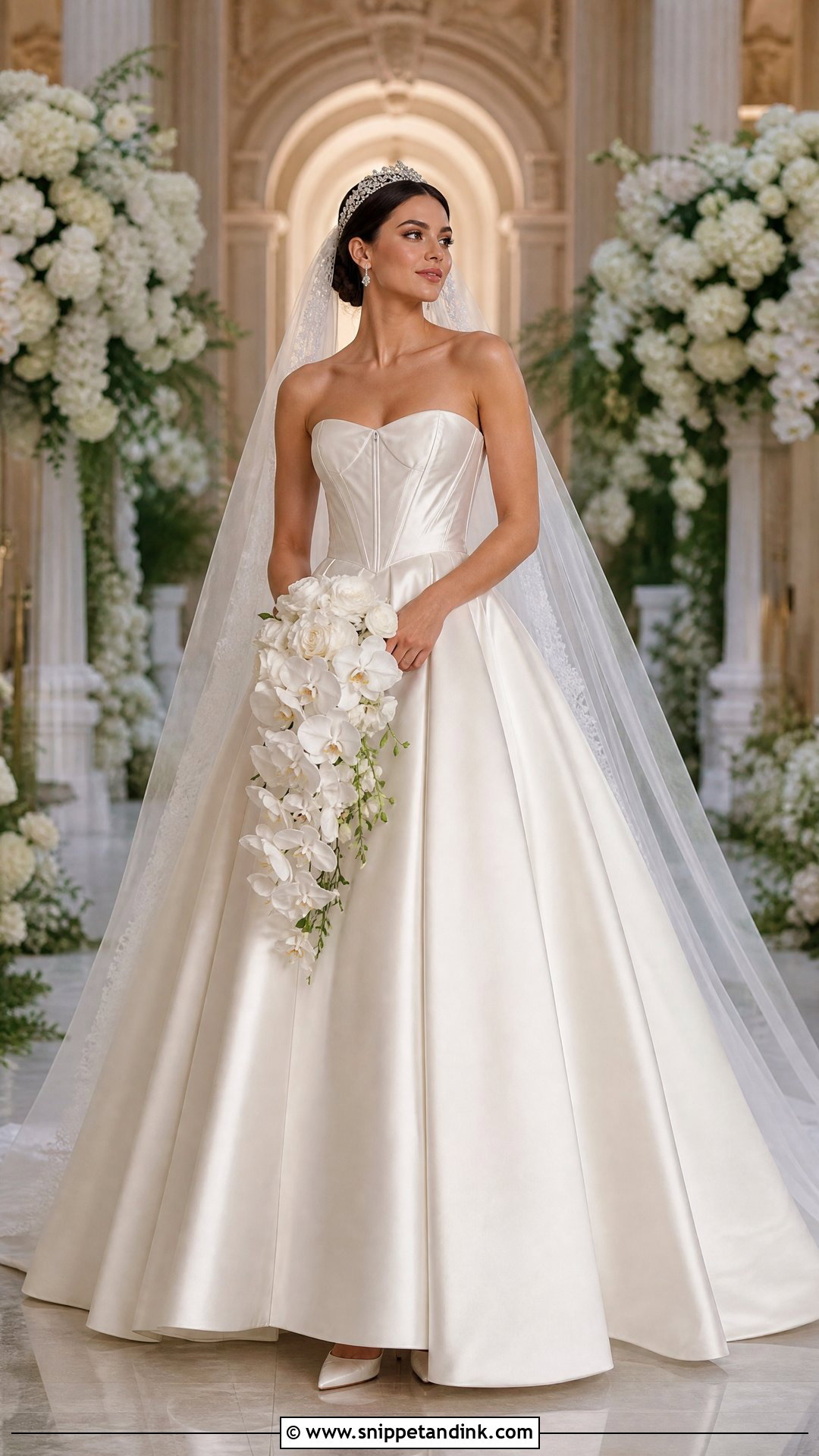
The basque waist dips into a soft point below the natural waistline, which lengthens the torso and lets the skirt start lower and smoother over the hips. With a fitted satin bodice and full skirt, it looks regal and balanced at once. Choose strapless, scoop or off-shoulder depending on how much coverage you want. A plain cathedral veil, drop earrings and pointed heels with cushioned insoles suit it, and a small crown-inspired headband fits if everything else stays restrained. A cascading bouquet follows the long line. The point must lie flat, so sit down at the fitting: if it buckles or digs into your lap, it needs adjusting.
9. Corset Bodice Princess Wedding Dress
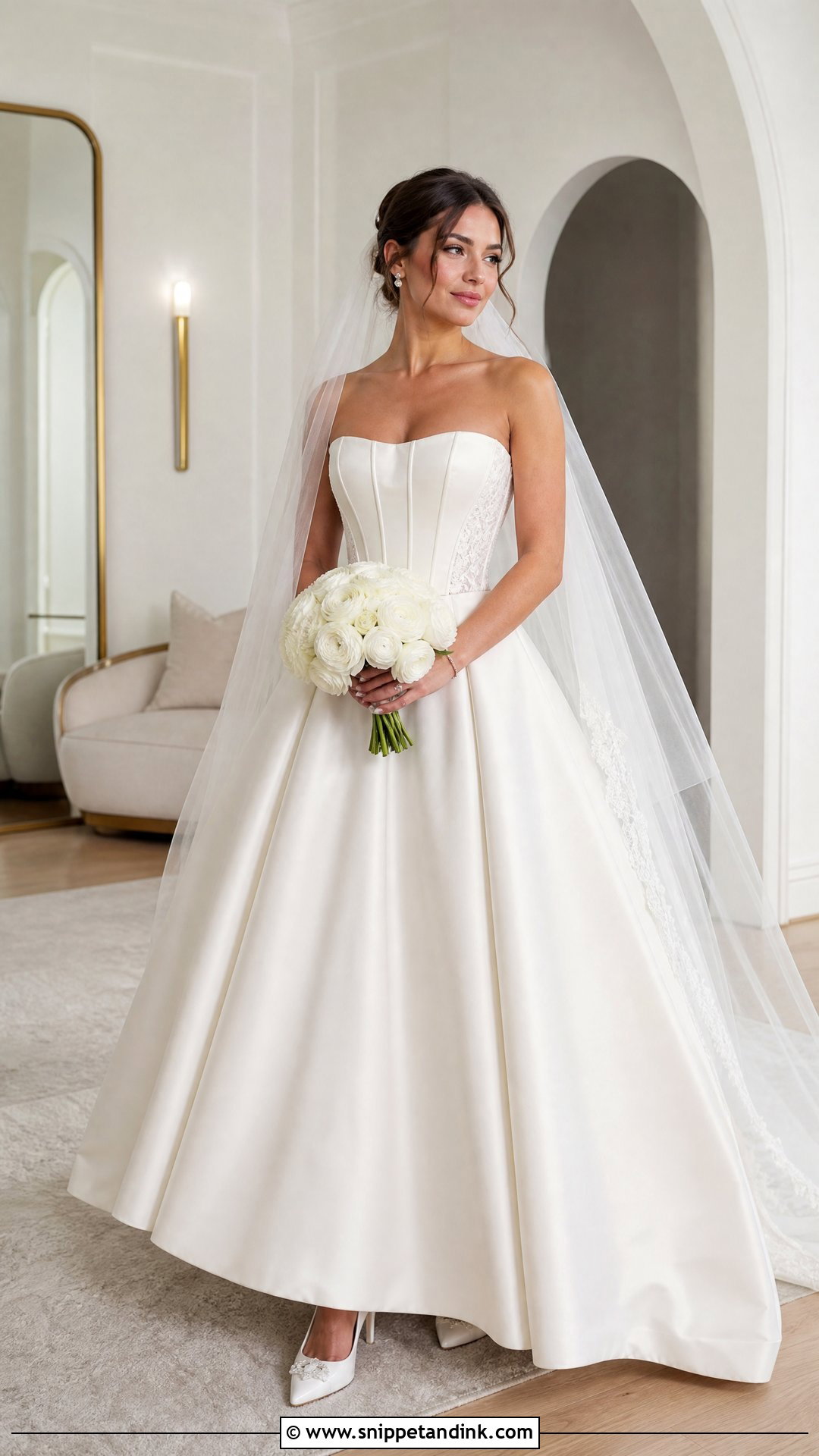
Covered boning, lace panels or subtle seam lines give a corset bodice structure without making it look like lingerie. That restraint is what keeps it timeless. Pair it with a full satin or tulle skirt that moves when you walk, a sheer chapel veil, pearl earrings and low pointed heels. A soft bun with a few loose face-framing pieces stops the firm bodice from looking severe, and ranunculus and roses in a rounded bouquet keep the palette white. I have brides sit, bend and raise their arms at each fitting. A corset should feel firm and supportive; if it pinches under the arms after ten minutes, it will hurt by evening.
10. Floral Applique Princess Wedding Dress
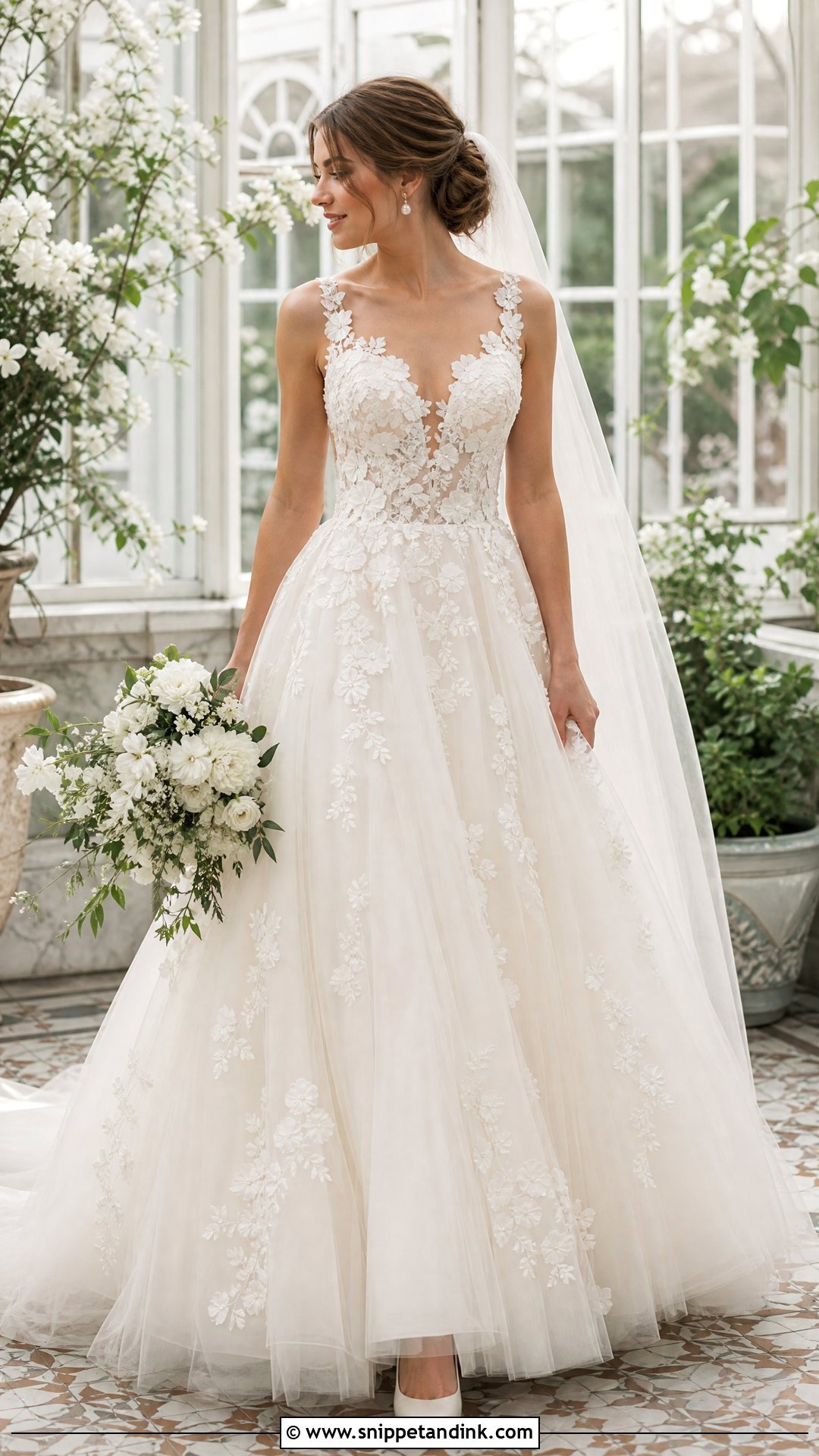
Appliqués on a princess gown look best when they are generous on the bodice and grow sparser as they move into the tulle skirt. That fade gives the eye a path from top to hem and keeps the skirt light. Keep the veil plain so the texture stays visible, and add tiny pearl earrings, neutral ivory heels and a low textured bun with one small comb. A loose bouquet of white garden flowers repeats the floral theme. Hold back on extra sparkle; a little at the waist is plenty. This is the princess gown I’d suggest for a spring garden wedding or a bright ballroom.
11. Pearl Beaded Princess Wedding Dress
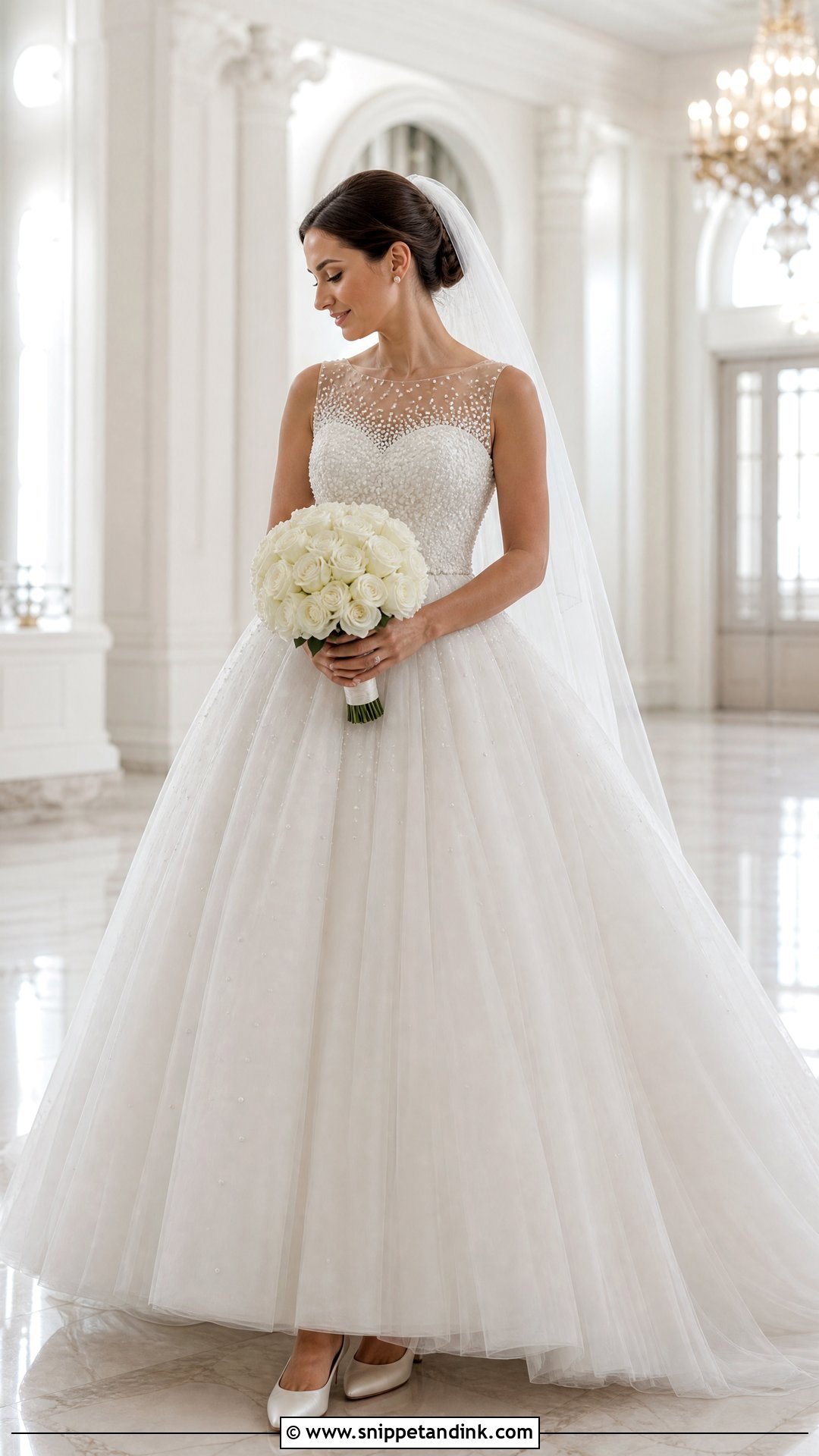
Pearls glow where crystals flash, and on a princess gown that difference reads as softer and more classic. Concentrate them on the neckline, bodice or upper skirt rather than every surface; a full tulle skirt over a satin underskirt keeps the rest light and structured. Pearl studs, a single-layer veil, simple closed ivory heels and a sleek bun or polished ponytail let the small beads show. White roses with lily of the valley make a dainty bouquet. I check this by having you rub your arms against the bodice at the fitting. Raised beads under the arm are uncomfortable and snag the veil, and they’re easy to flatten or move early on.
12. Mikado Silk Princess Wedding Dress
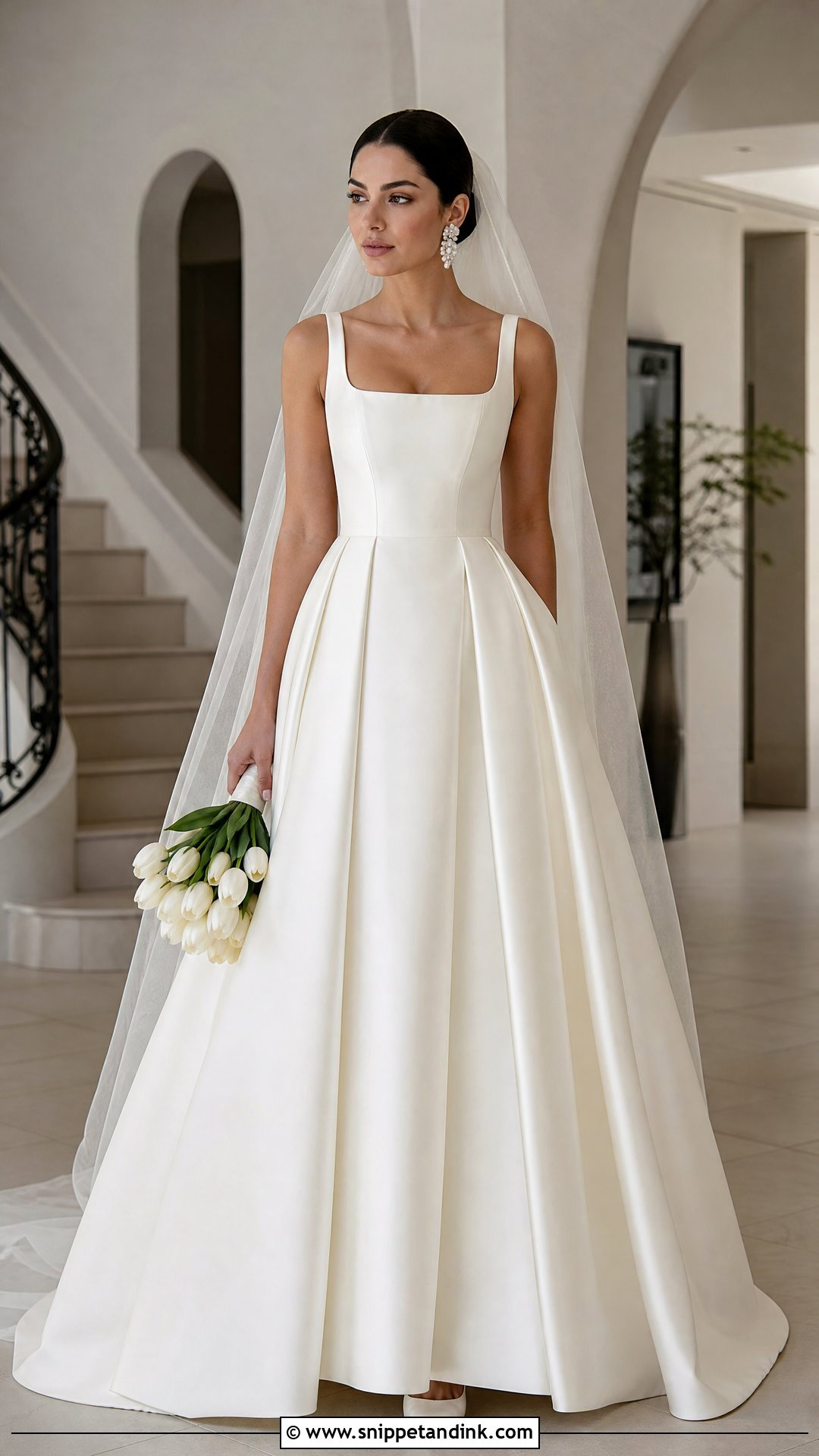
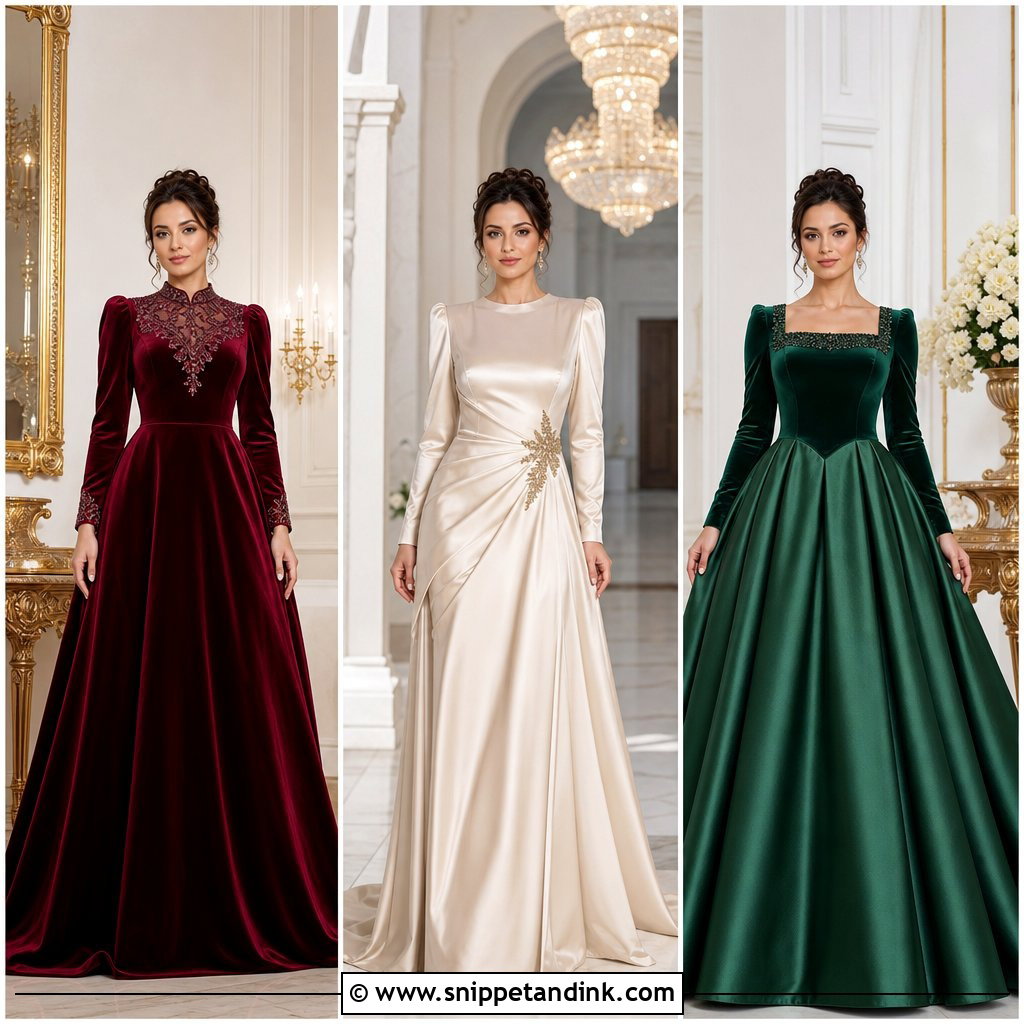
Mikado holds a princess shape by itself, which is exactly why it needs so little decoration. Its firm, slightly ribbed surface keeps a fitted bodice crisp, the waist sharply defined and wide pleats standing proud. A scoop, square or folded strapless neckline keeps the character clean. A long plain veil, sculptural pearl earrings, pointed satin heels and a smooth low bun or French twist finish it, with tulips or roses and very little greenery. Pockets slip into the side seams without spoiling the line. In my experience Mikado feels warm and heavy next to tulle, so think about it carefully for a midsummer date.
13. Layered Tulle Princess Wedding Dress
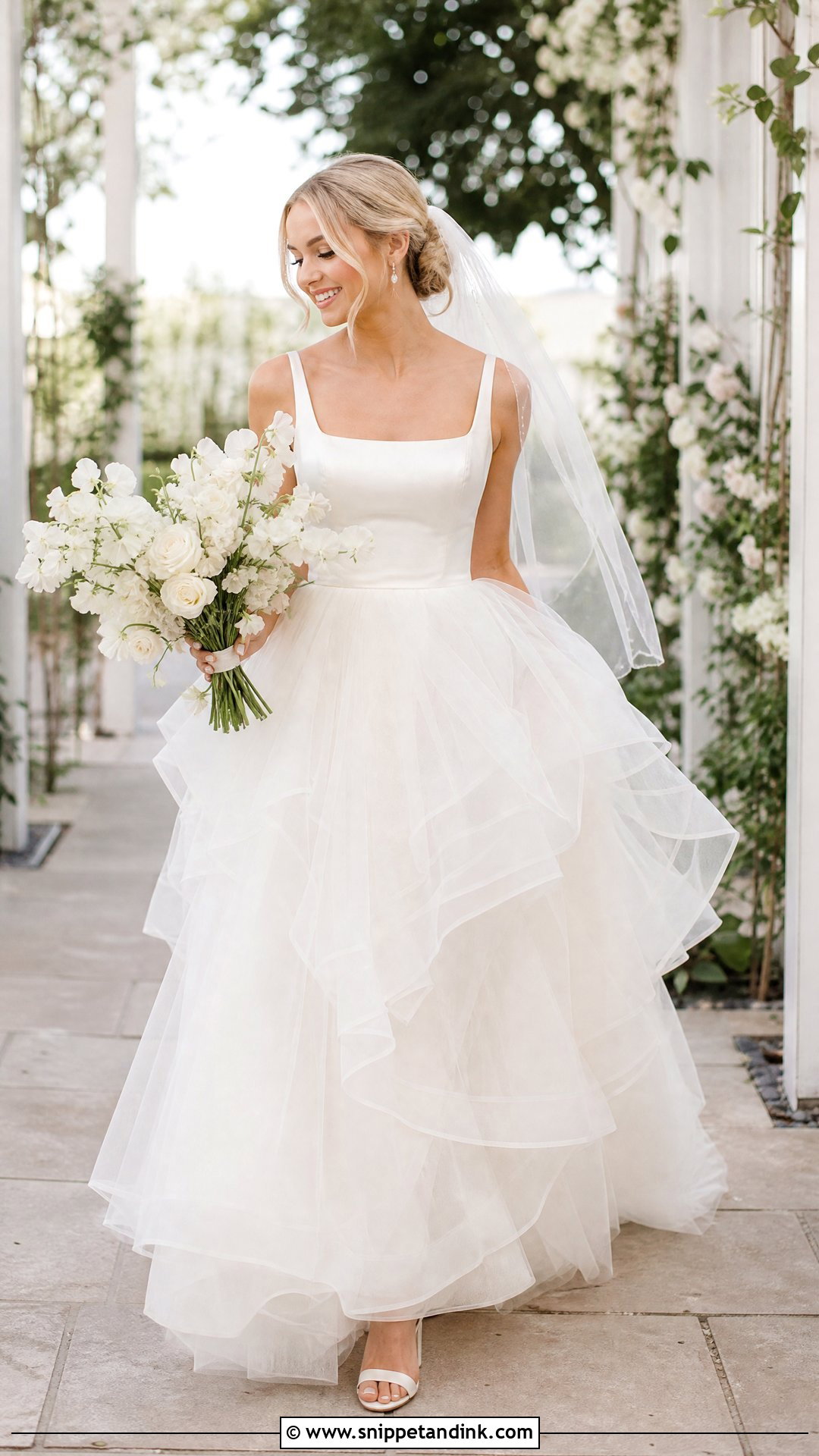
Tulle gives you the floating volume of a fairy-tale princess gown at a fraction of satin’s weight. A fitted bodice in satin, lace or draped tulle provides contrast to the airy skirt. The skirt should feel dramatic but let you walk without kicking through layers, so take a few brisk steps in the sample. A fingertip veil, delicate drop earrings, stable low heels and soft half-up waves suit the mood, with roses, sweet peas and a little greenery. I always ask how the bustle works before a bride buys. Tulle trains are long and light, and without a bustle they collect every petal on the dance floor.
14. Organza Princess Wedding Dress
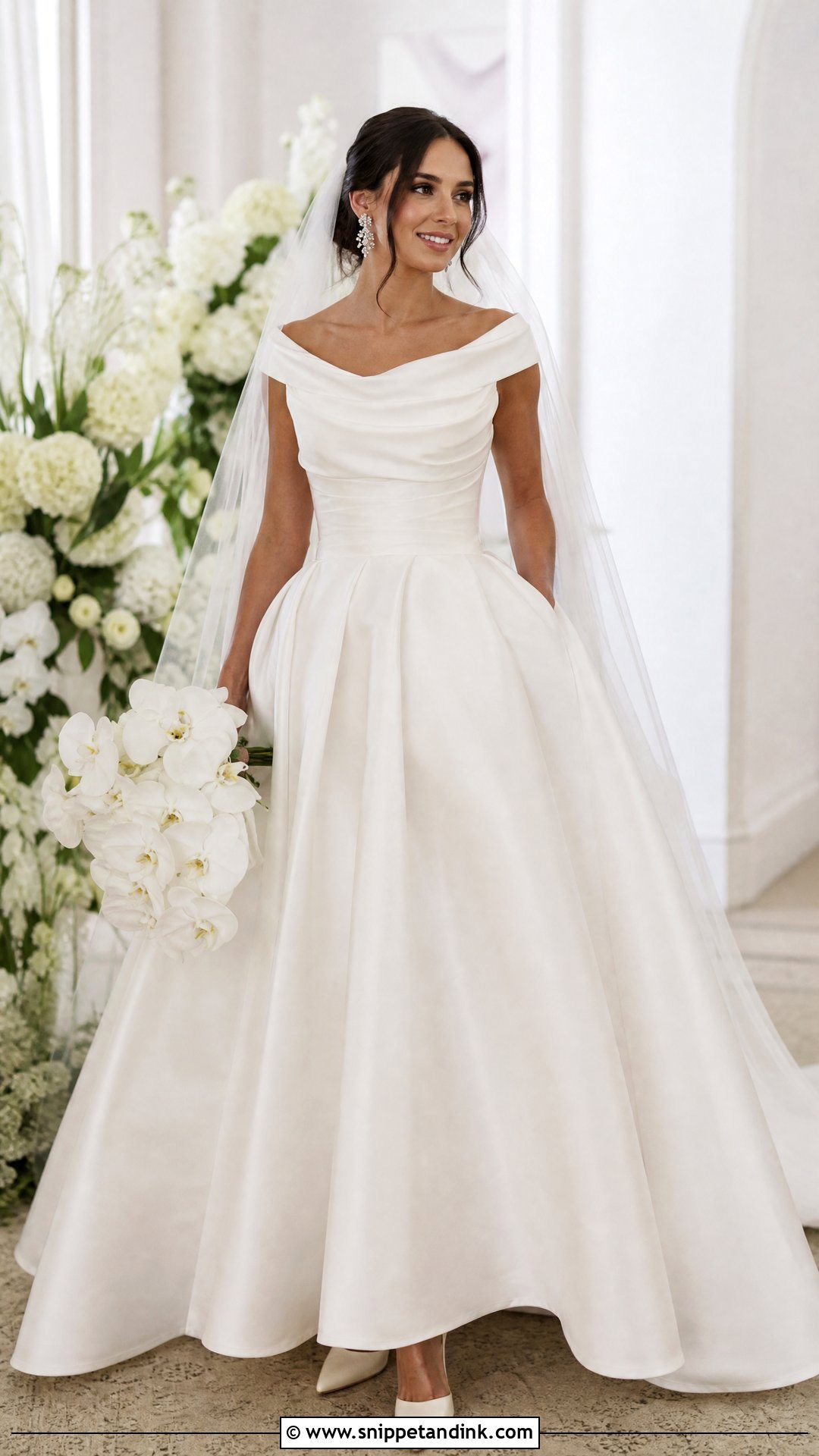
Organza sits between tulle and satin. It gives volume with a crisp, slightly sheer finish, so a princess skirt in broad pleats or overlapping layers looks full but never heavy. A structured bodice with a softly folded neckline adds interest without lace or beading. Style it with a sheer chapel veil, small crystal earrings, comfortable ivory pumps and a loose low bun, carrying white orchids or roses. Organza holds sculptural details well, but limit them to one: a single bow or one draped panel. Organza also creases sharply when crushed, so it should travel on a hanger, never folded in a bag.


15. Cathedral Train Princess Wedding Dress
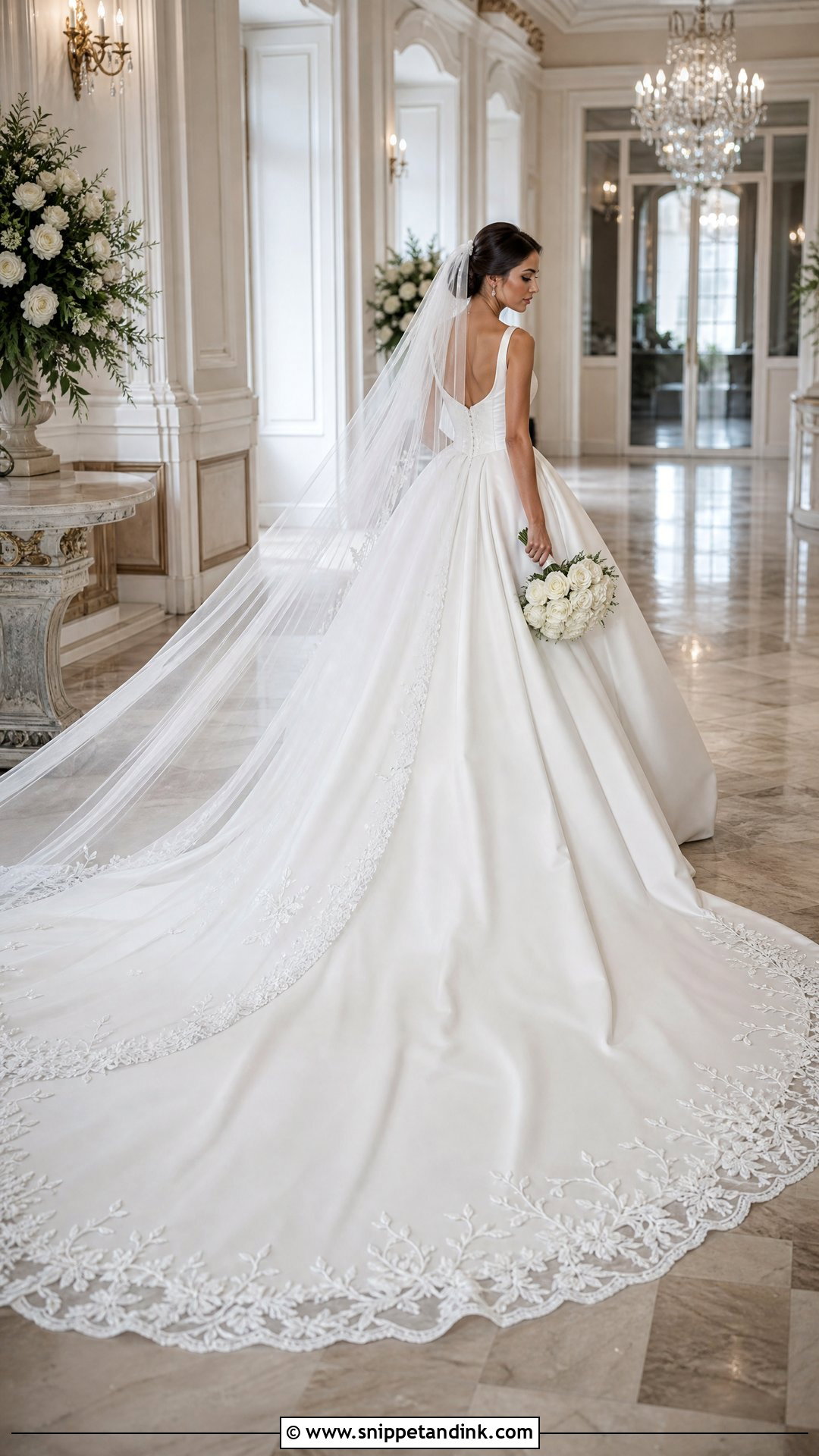
A cathedral train turns a princess gown into a ceremony event. The best ones flow from the skirt as a continuous line rather than being stitched on as a separate panel, which adds bulk at the back. Satin looks stately; lace edging softens it. Match the veil to the train in length and finish, wear secure block heels and keep the earrings small, with an updo that leaves the back of the dress on view. A medium bouquet keeps the gown in charge. Ask to see the bustle done before your final fitting, and check your venue has the aisle length and floor space to lay the train out properly for photos.
16. Cape Sleeve Princess Wedding Dress
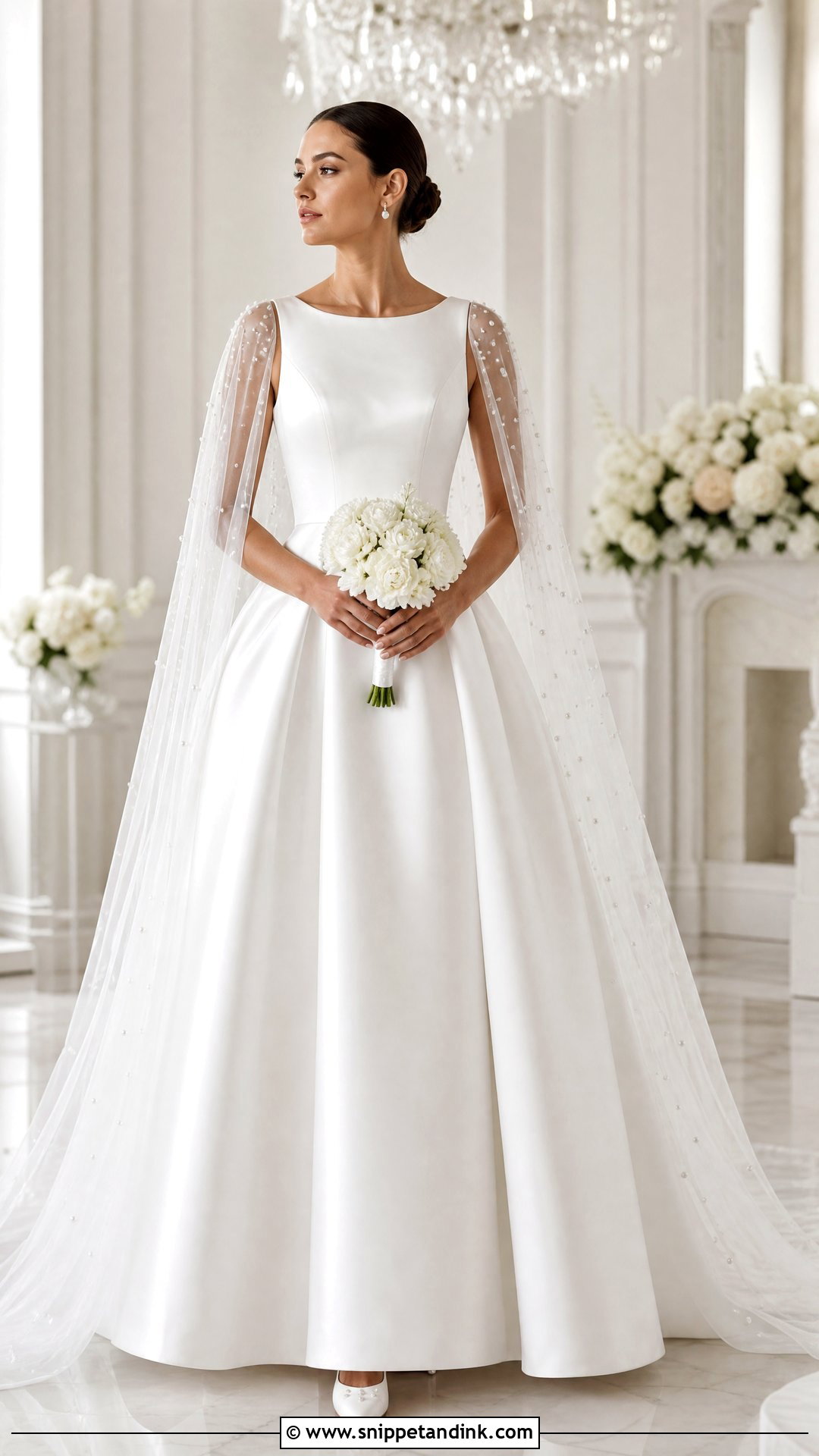
A cape gives coverage and movement without the fitting fuss of sleeves. Start with a clean strapless or sleeveless ball gown in satin, crepe or light jacquard, then add a sheer shoulder cape, a floor-length cape veil or soft cape sleeves you can remove after the ceremony. Pearl studs, pointed pumps, a smooth low bun and a small white bouquet keep it from looking heavy. The cape should attach firmly and fall behind the arms, not over them. Match the fabric to the gown. A cape in a different white looks borrowed. This suits cooler months and formal indoor ceremonies.
17. Modest Princess Wedding Dress
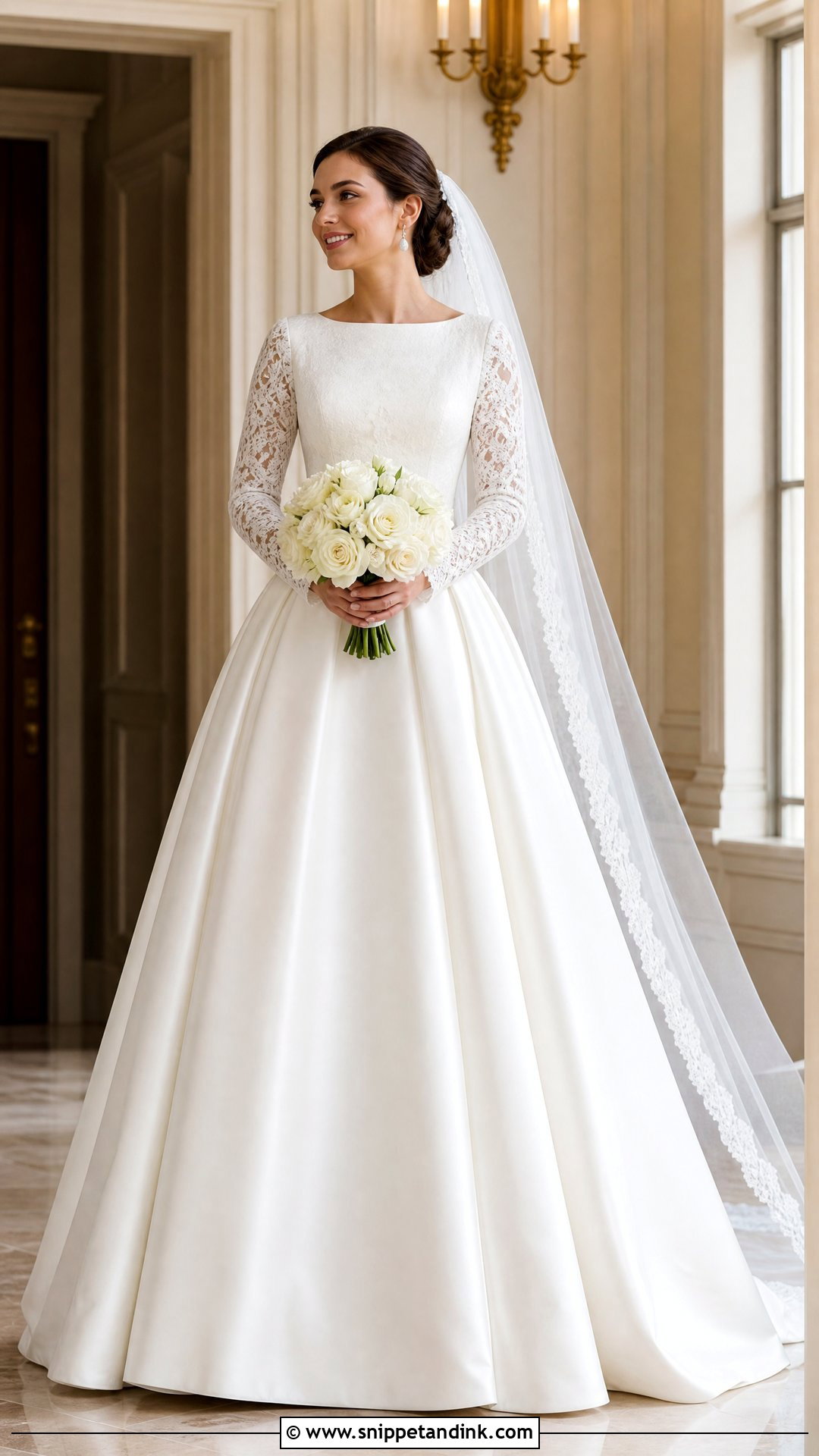
Coverage and a full princess skirt go together easily. A modest princess wedding gown starts with a high bateau or rounded neckline, fitted long sleeves and a defined waist above a full satin or tulle skirt. Lace overlays and covered buttons supply the detail that a low neckline or open back usually would. A chapel veil, pearl earrings, closed block heels and a neat chignon to anchor the veil finish it, with ivory roses and a little greenery. Fitted sleeves are the part to test. Reach forward and hug at the fitting, because long sleeves cut tight pull the whole bodice up.
18. Plus Size Princess Wedding Dress
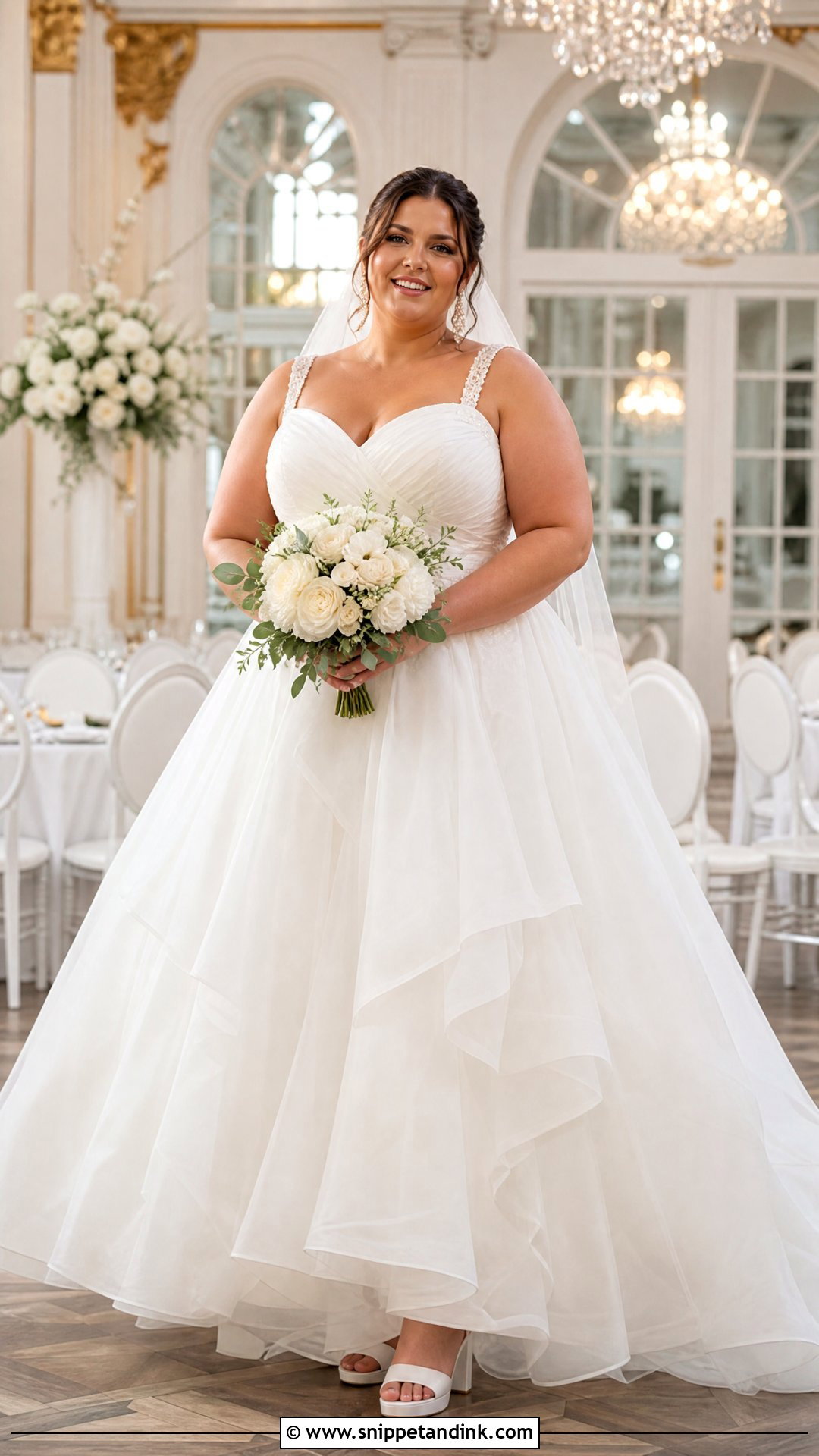
A well-built princess gown can be one of the most supportive dresses a curvy bride will try on. Look for strong internal construction, comfortable straps or sleeves and a waistline set where your body actually narrows. The satin, organza or tulle skirt should skim the hips before opening out, rather than starting its volume right at the waist seam. Supportive block heels, a soft veil and earrings at whatever sparkle level you like suit it, with a structured updo or flowing waves. Scale the bouquet to the skirt. Ignore the size on the sample’s label and ask how much it can be altered. Most princess bodices have generous seam allowances, and a good fitter will use them.
19. Petite Princess Wedding Dress
Petite brides can absolutely wear a full skirt; the trick is keeping the volume below the hips rather than piled around them. A fitted bodice with a natural or slightly raised waist, and a skirt with fewer, finer layers, keeps you from disappearing. A V, scoop or narrow square neckline adds a vertical line. Pointed heels close to the dress colour, a single-layer veil, delicate earrings and a compact bouquet that doesn’t cover the bodice all help. A medium or high bun adds a little height. Avoid detail across every part of the dress. Precise hemming matters most here, since a skirt even a few centimetres long makes a petite frame look swamped.

20. Simple Modern Princess Wedding Dress
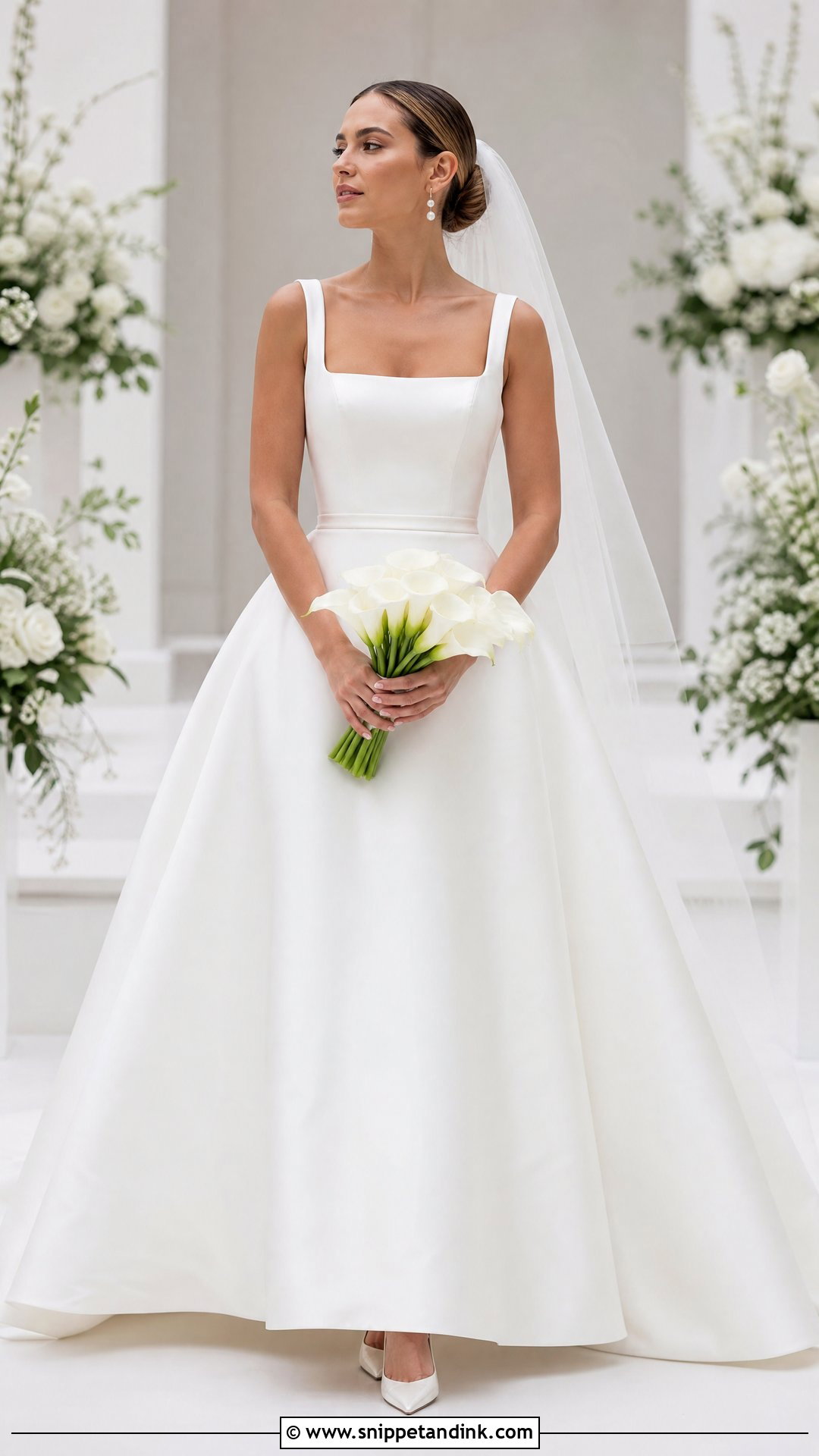
Take away the lace and crystals and a princess gown looks surprisingly modern. A structured bodice, clearly marked waist and full skirt in satin or Mikado carry the whole look. A square, scoop or folded strapless neckline gives a focal point. Pearl drops, a plain cathedral veil and pointed ivory pumps suit it, with a sleek bun for a formal room or smooth waves for a relaxed one. Callas or roses wrapped in matching ribbon finish it. If you want one feature, choose just one: covered buttons, pockets or a detachable bow. With so little decoration, the fit has to be exact, because any wrinkle at the waist will show.
Cars, Doorways and the Bathroom: The Logistics of a Ball Gown
Nobody photographs these moments, but they are the ones brides in full skirts ask me about afterwards. A little planning removes nearly all of the stress.
Getting in the car
Sit down backwards onto the seat first, then swing your legs in while someone gathers the skirt in after you. A larger car or one with a flat rear bench makes it far easier. Put a clean sheet on the seat and the floor so the hem doesn’t pick up dust.
The bathroom
Face the toilet rather than backing onto it, and have a helper gather the skirt up from behind. Some brides wear a lightweight dress-gathering slip under the gown, which bundles the layers up in one go. Practise once at home, with the petticoat on.
The bustle after the ceremony
Bustles are either pick-ups on the outside, where the train hooks up to buttons, or under-bustles, where ribbons inside tie the train beneath the skirt. Ask your seamstress to show your bridesmaid exactly which loop goes where, ideally with colour-matched thread tags. Bustles take a few minutes to do and are almost always done in a rush, so the person doing it should have done it once before the day.
A Princess Skirt Should Carry You, Not the Other Way Round
A princess gown succeeds when the drama of the skirt and the comfort of the bodice arrive together. Satin ball gowns give clean formality; lace sleeves, appliqués, tulle and pearls add softness. Set the neckline, waist position, skirt volume and tailoring by your own proportions rather than by what’s fashionable this season. Then keep the shoes supportive, the jewelry in balance, the veil coordinated and the bouquet small enough not to hide the bodice. Walk, sit and turn in the full outfit at your fittings. If you can do all three without thinking about the dress, you’ve found the right one.
You'll Like These Ideas:








Leave a Reply