
An Afghan wedding rarely means one dress. There’s usually a henna night, a nikah, often an engagement party, and a reception where the bride sits on a stage for hours, so the women of the family end up planning several outfits each. The ideas below run from velvet Kuchi dresses with mirror work to pale gowns with fine embroidery, and I’ve noted which event each one suits and what to watch for when you wear it. Satin, chiffon, organza, velvet and brocade all appear, and they behave very differently under stage lights and after a long night of dancing. Mothers, sisters, cousins and guests will find options here too, not only brides.
Matching a Dress to Each Night, From Henna to Reception
Before anyone falls in love with a particular dress, I sit down with the family and map out the events. Each one asks something different of the outfit, and planning them together stops two events ending up with near-identical looks.
- Henna night: bright color, mirror work, and fabric you can dance in. Expect henna paste near the hands and sleeves, so avoid pale silk here.
- Nikah: modest, calm and often softer in color. Many families still choose green for this or for the aina masaf, so ask what your family expects.
- Engagement: a step lighter than the wedding, often pastel, with tonal embroidery.
- Reception: the grandest outfit, built to look right seated on a stage under bright lights for several hours.
Once the events are mapped, I spread the budget accordingly. The reception gown usually deserves the most, while the henna outfit can be simpler as long as it’s comfortable.
1. Red Afghan Bridal Dress
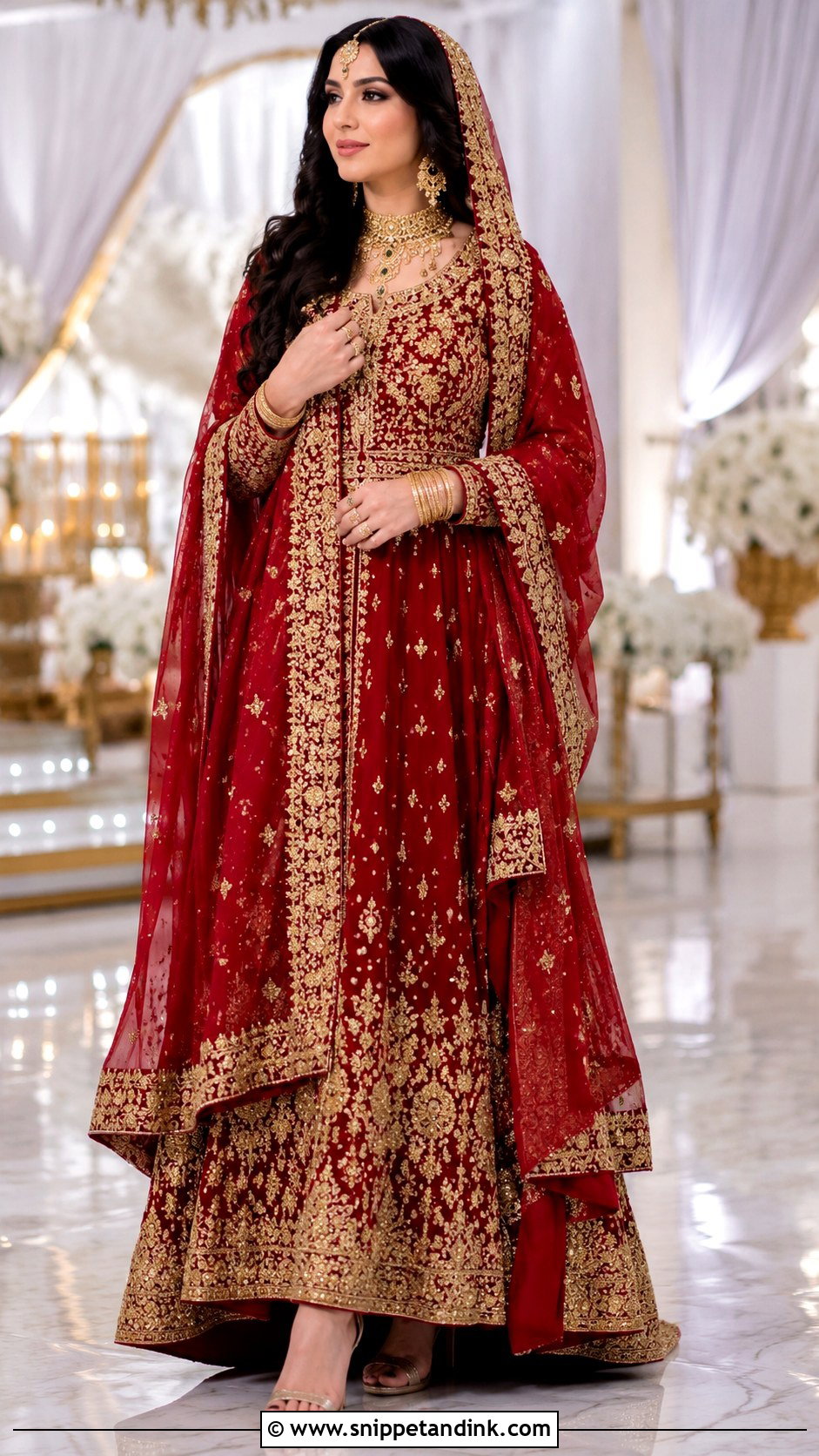
Red with gold embroidery is the bridal look most families picture first, and it’s earned that place. Gold thread at the neckline, cuffs, waist and hem frames the body from every angle, which matters when you’re photographed seated on a stage. A matching red dupatta with a gold border completes the shape. Gold heels, stacked bangles and a statement necklace are traditional; I’d keep earrings smaller if the necklace is large, so the neck doesn’t look crowded. One thing I always check is that the reds match. A dupatta and a gown dyed in different batches can be a shade apart, and under warm hall lighting the difference shows in every photo.
2. Green Afghan Kuchi Dress
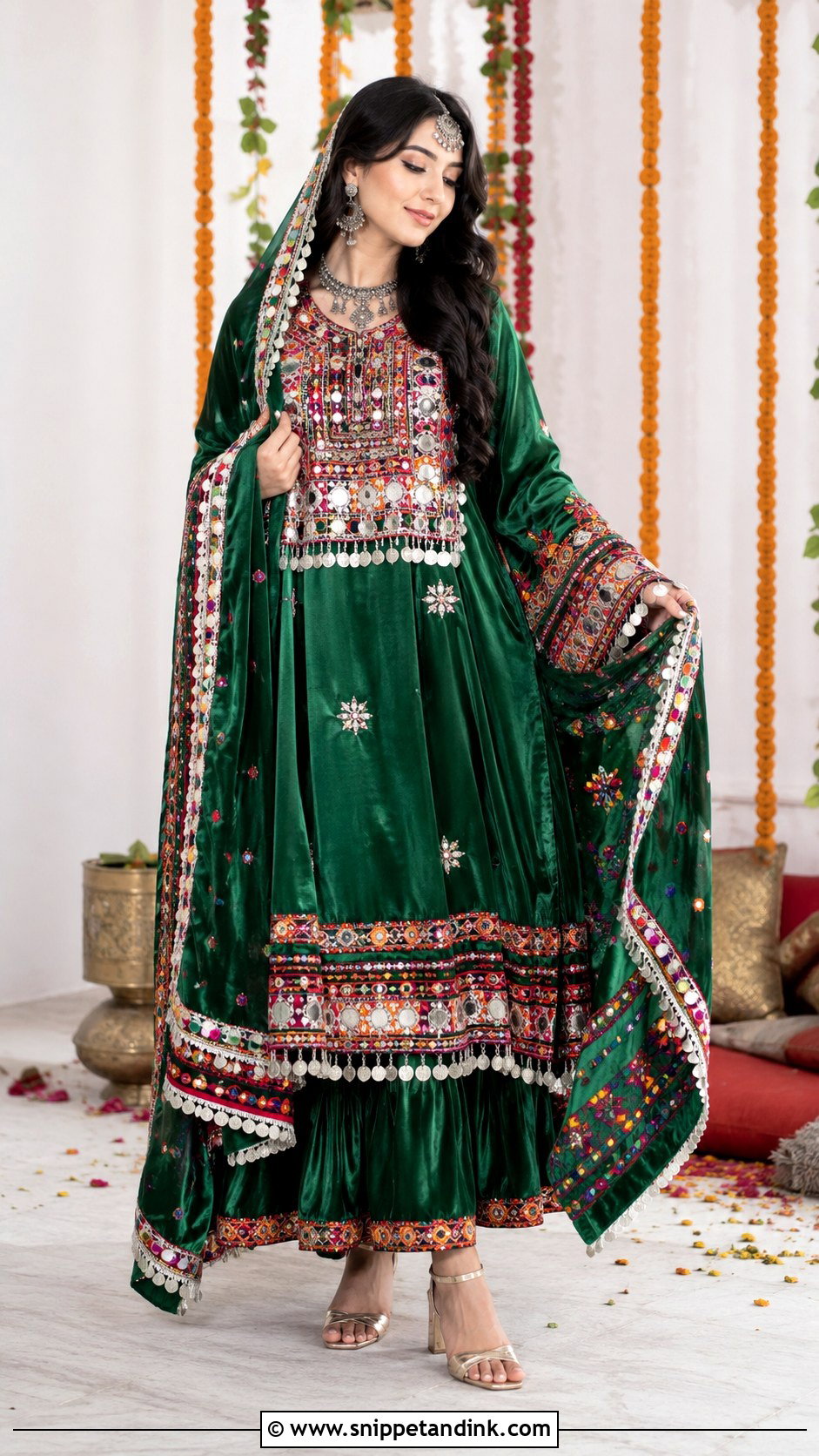
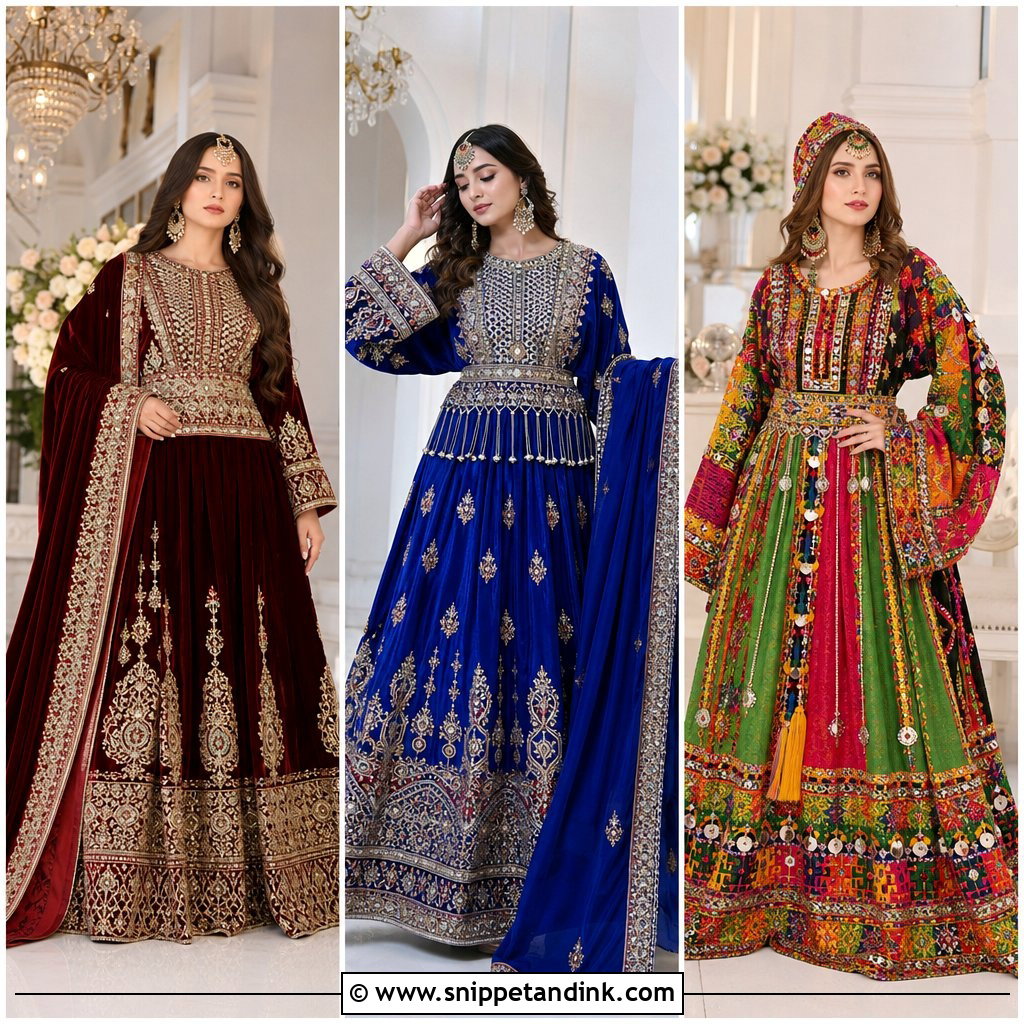
A green Kuchi dress carries the most cultural character of anything on this list. The style comes from nomadic embroidery traditions, with silver coins, small round mirrors and dense hand stitching in bright threads over emerald or forest green. All that work is heavy. A fully worked Kuchi dress can pull on the shoulders after a couple of hours, so I suggest trying it on for a full hour at home before the henna night, not just for five minutes in a shop. Silver jewelry suits the coin work better than gold. Keep makeup warm, with defined eyes, and let the dress do the talking.
3. White Afghan Wedding Gown
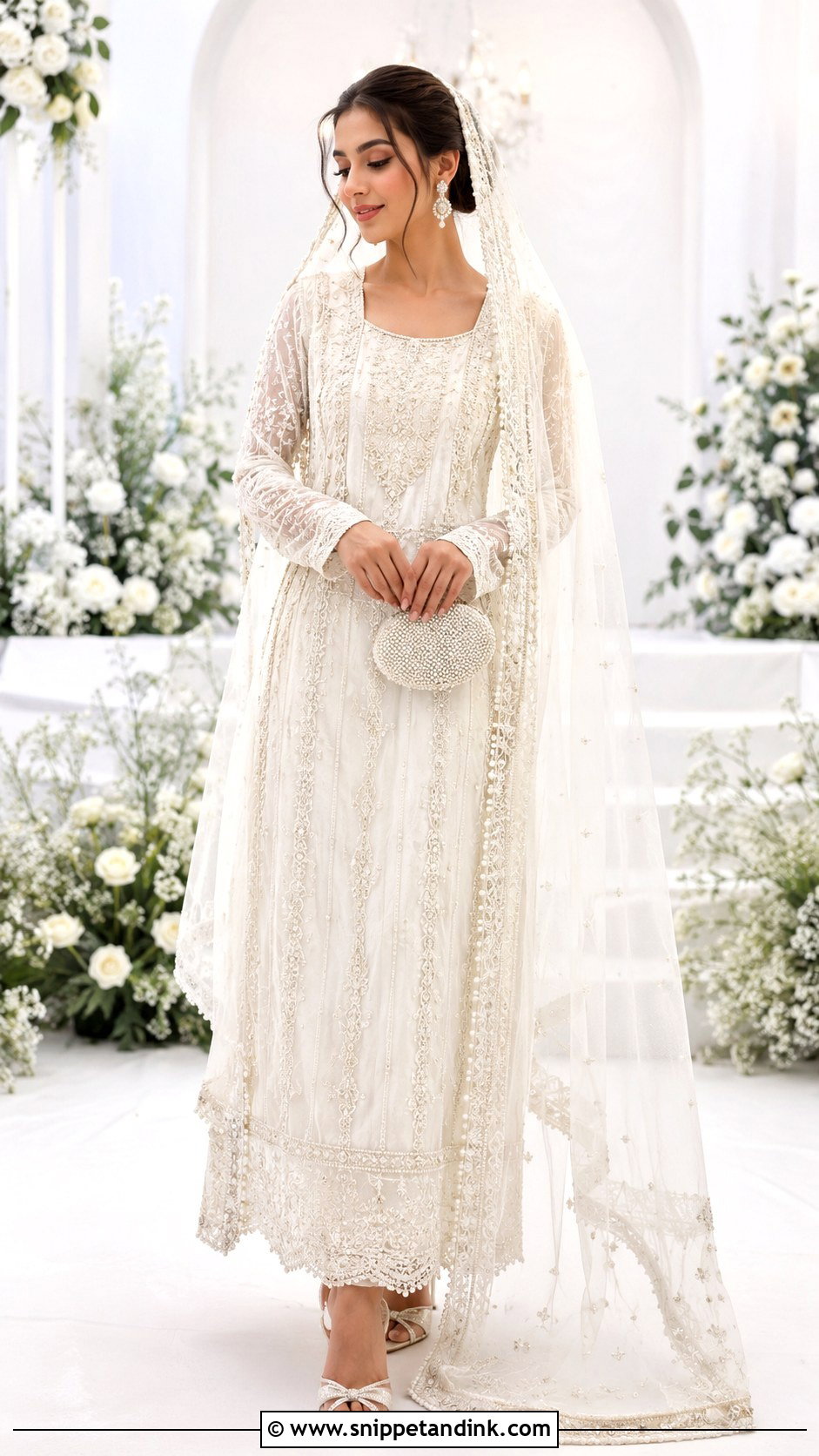
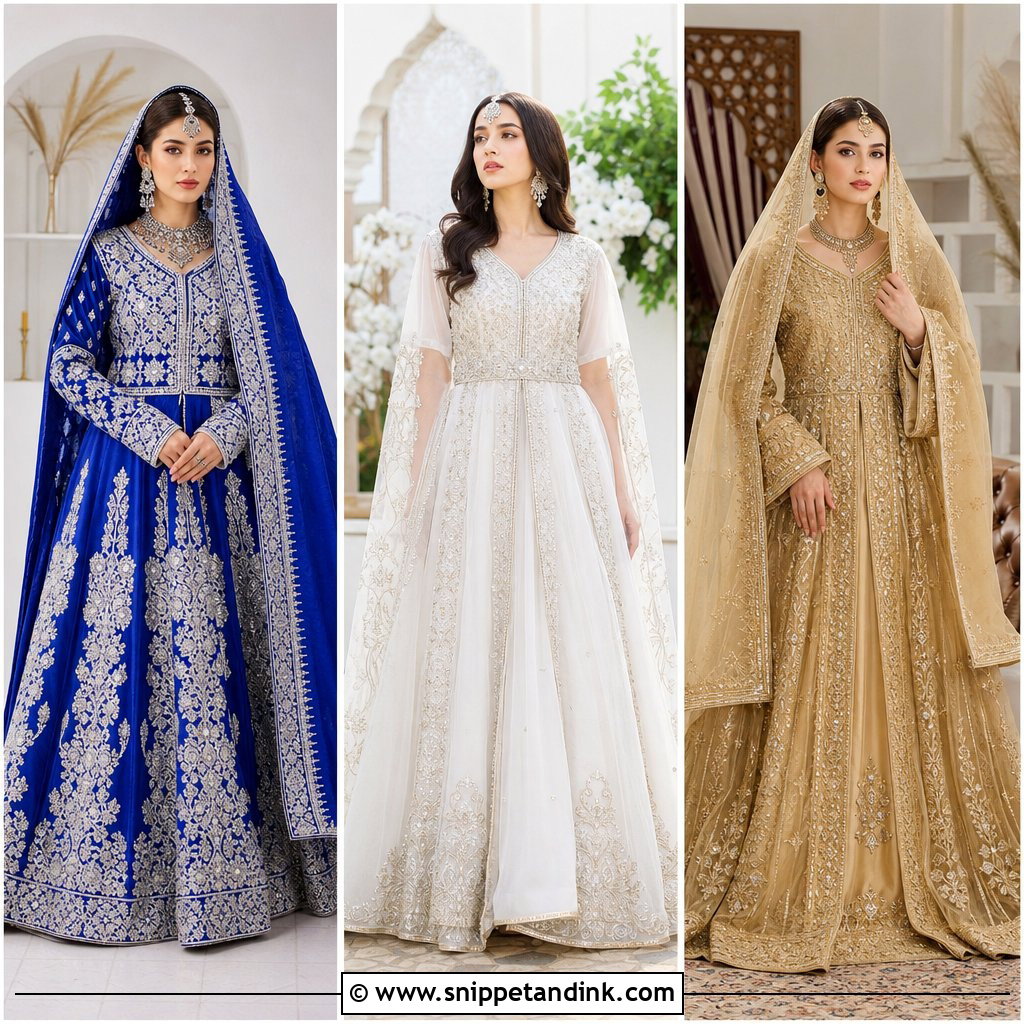
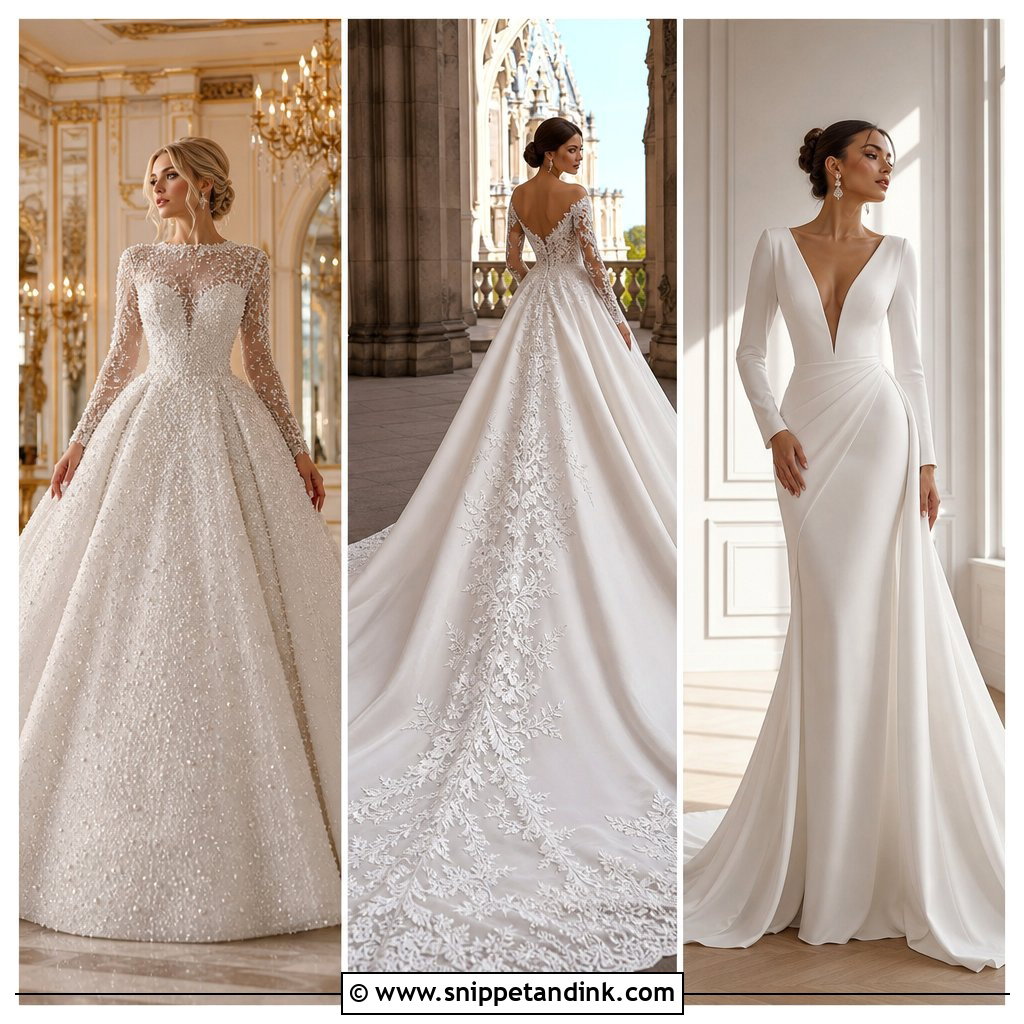
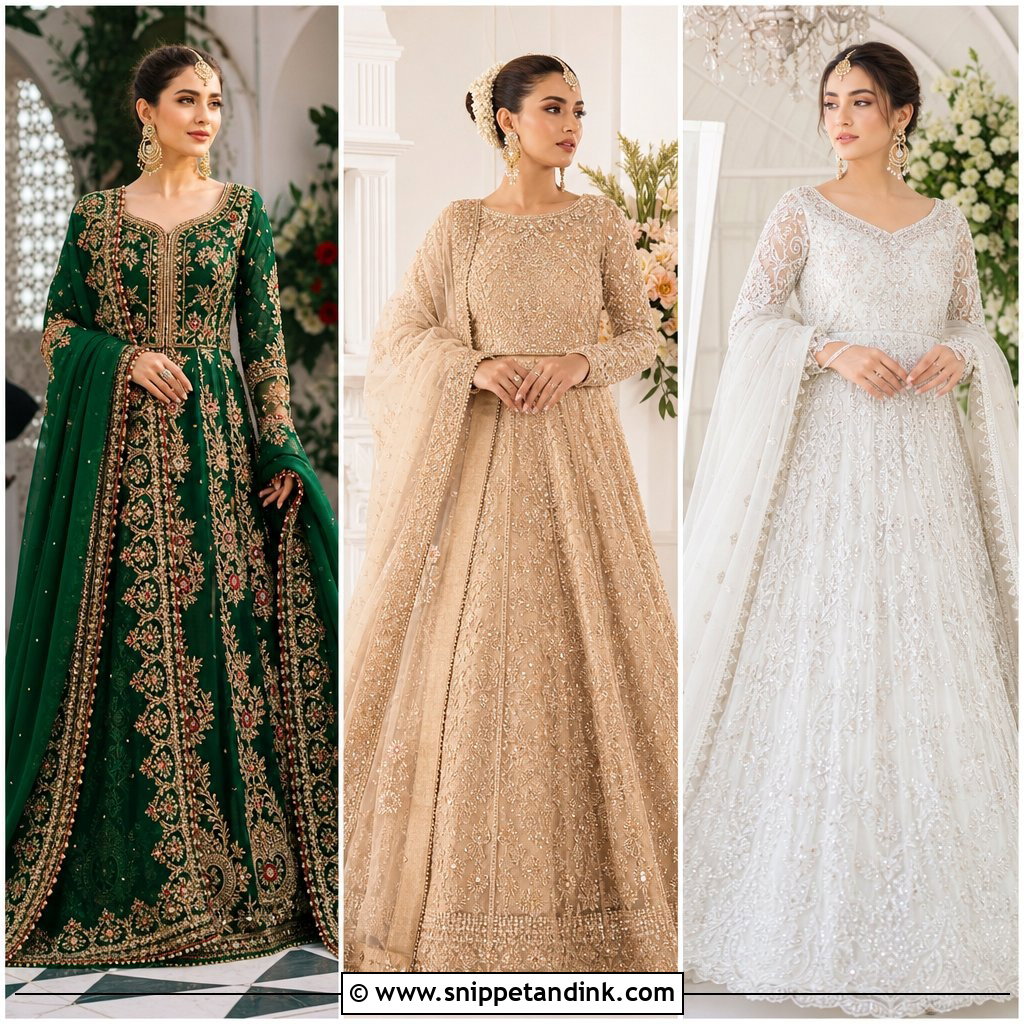
White and ivory gowns have become common for the main reception, especially among brides in the diaspora, and they sit comfortably alongside a traditional green or red outfit for the other events. Gold, silver or pearl embroidery across the bodice and sleeves stops white from looking plain. A long veil-style dupatta keeps the look modest. Texture is what I’d focus on: organza layers, beaded cuffs or embroidered lace give white depth under a camera flash, while a plain satin white can wash out completely. Crystal heels and pearl earrings keep the finish light.
4. Maroon Afghan Velvet Dress
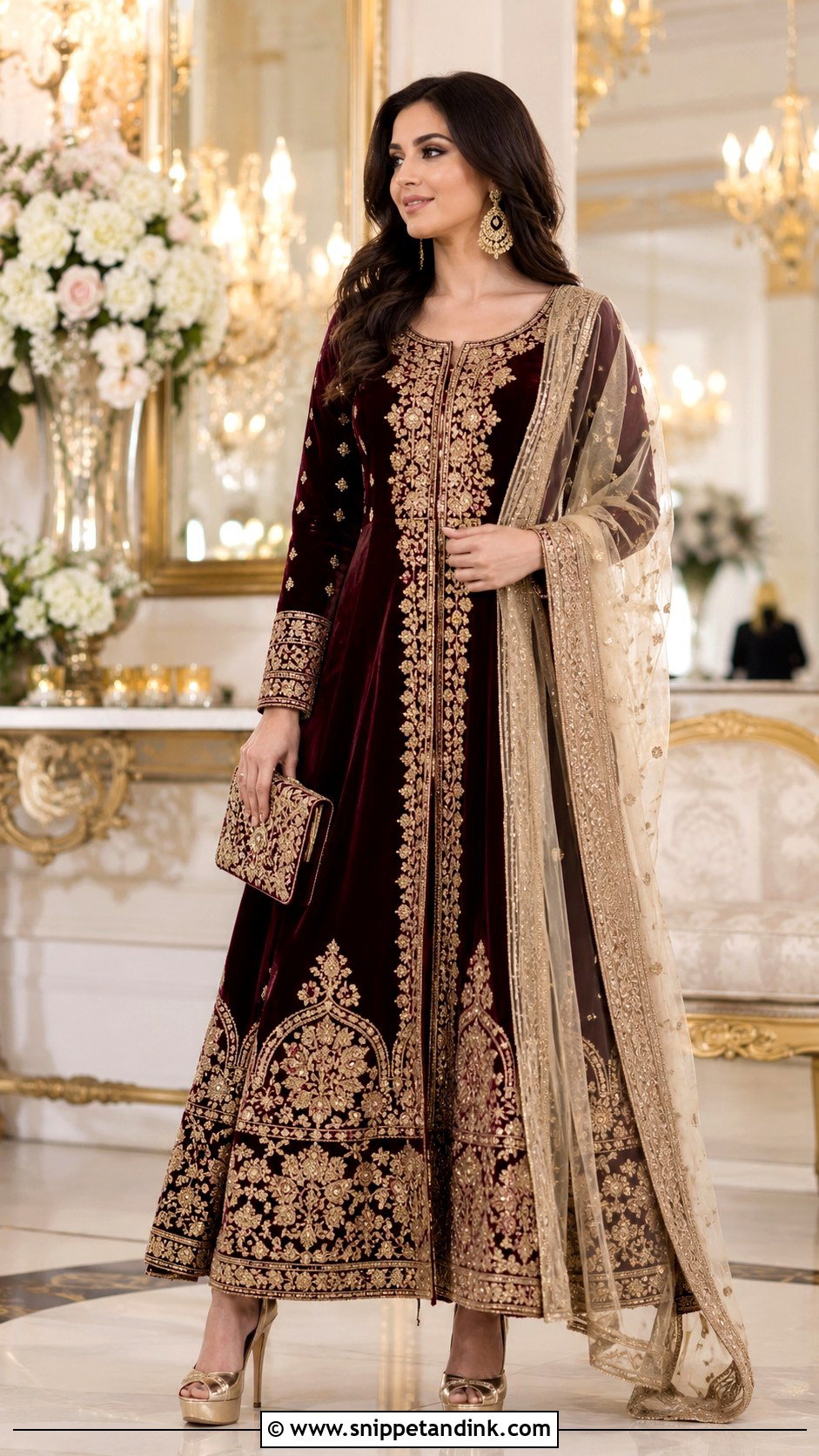
Maroon velvet is one of my favorite fabrics for an evening event because it holds color deeply and doesn’t reflect hard light the way satin does. Gold zardozi, mirror work or beadwork sits well on velvet’s pile. A champagne, gold or light green dupatta adds a traditional contrast. Velvet does have weight and warmth, so I keep the skirt only slightly flared; a very full velvet skirt becomes tiring by the second hour. It also flatters most body shapes, since it drapes smoothly without clinging. Gold platform heels and bold earrings finish it.
5. Blue Afghan Bridal Dress
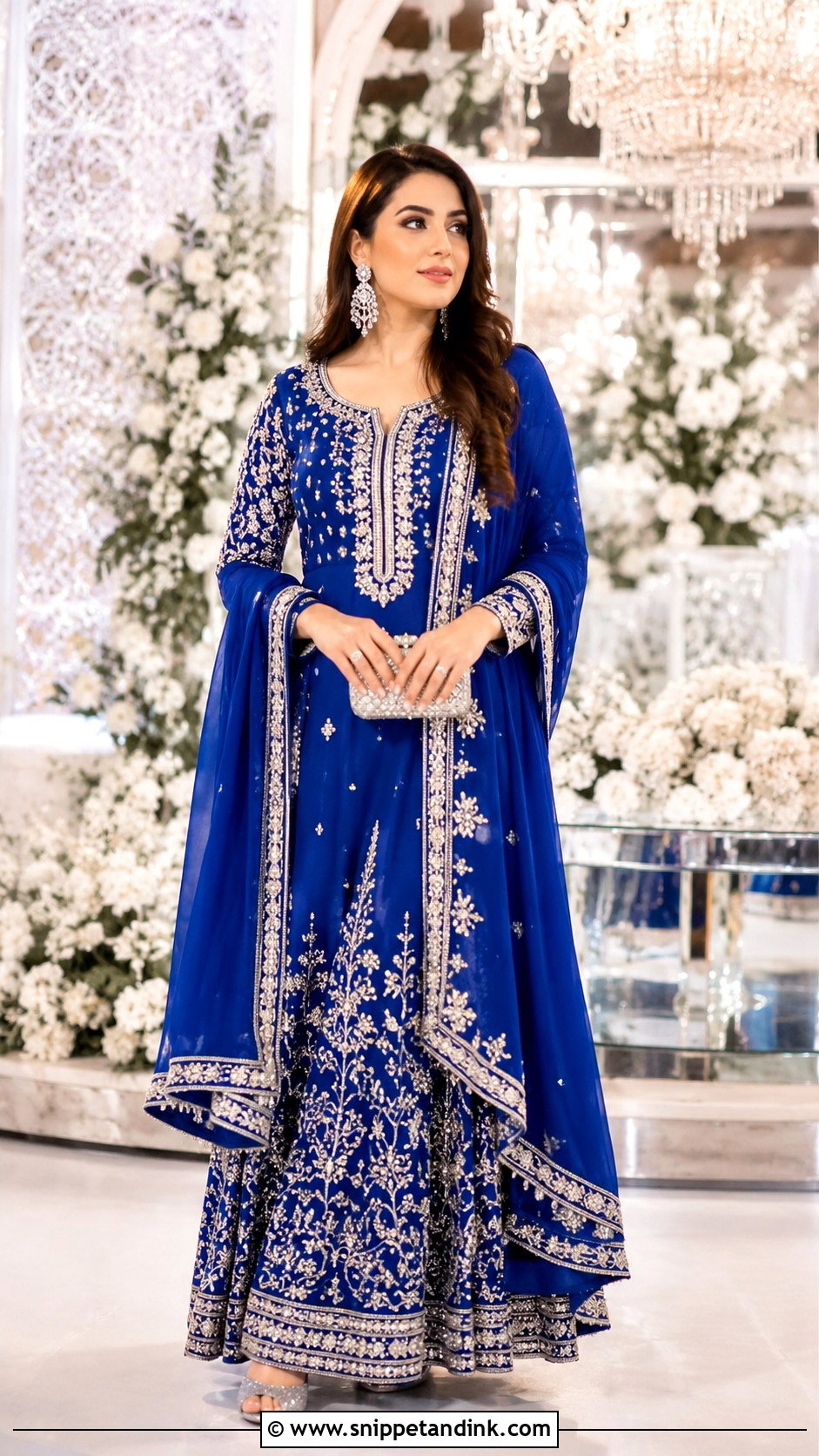
Blue gives a regal look that’s less expected than red, and it suits close family members as well as the bride. Royal blue, sapphire and navy all carry silver embroidery, crystal beadwork or antique gold well. Blue holds its depth under the bright white lighting many wedding halls use, where reds can sometimes shift orange. A full-length gown with long sleeves and a matching dupatta gives a complete outfit. Dusty blue with pearl detailing reads softer; velvet or satin with heavy borders reads grand. Add silver heels and chandelier earrings.
6. Pink Afghan Wedding Dress
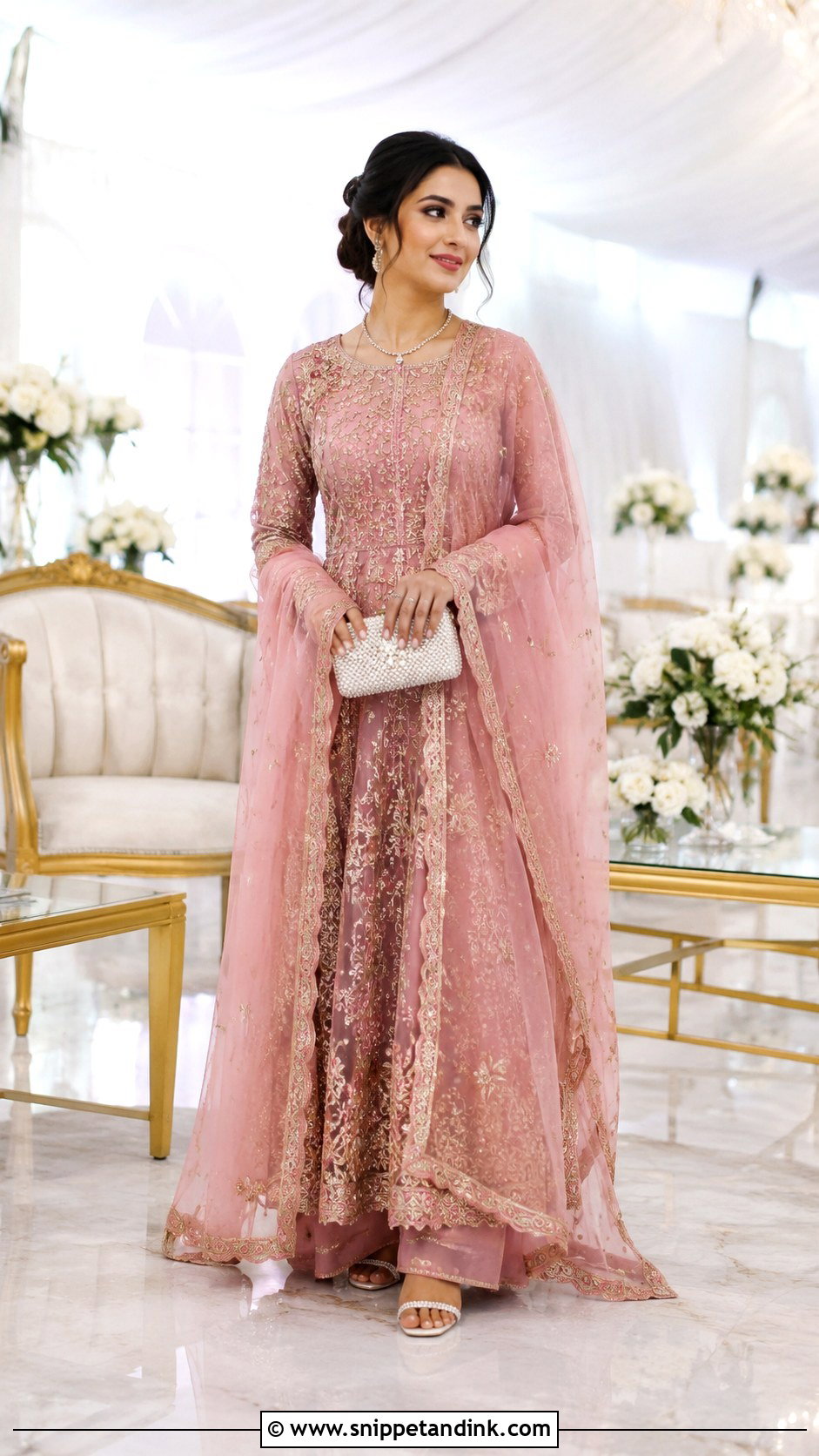
Pink covers a wide range, from blush and dusty rose to bright fuchsia, and the shade sets the mood of the outfit. Soft pink with silver embroidery is gentle; deeper pink with gold detailing is festive. It suits engagement parties, pre-wedding gatherings and bridesmaids especially well. Watch the neckline: if the embroidery is heavy there, a plain or very fine necklace is enough, and a large set will fight with it. A sheer dupatta and a pearl clutch keep it light for spring and summer events.
7. Gold Afghan Wedding Dress
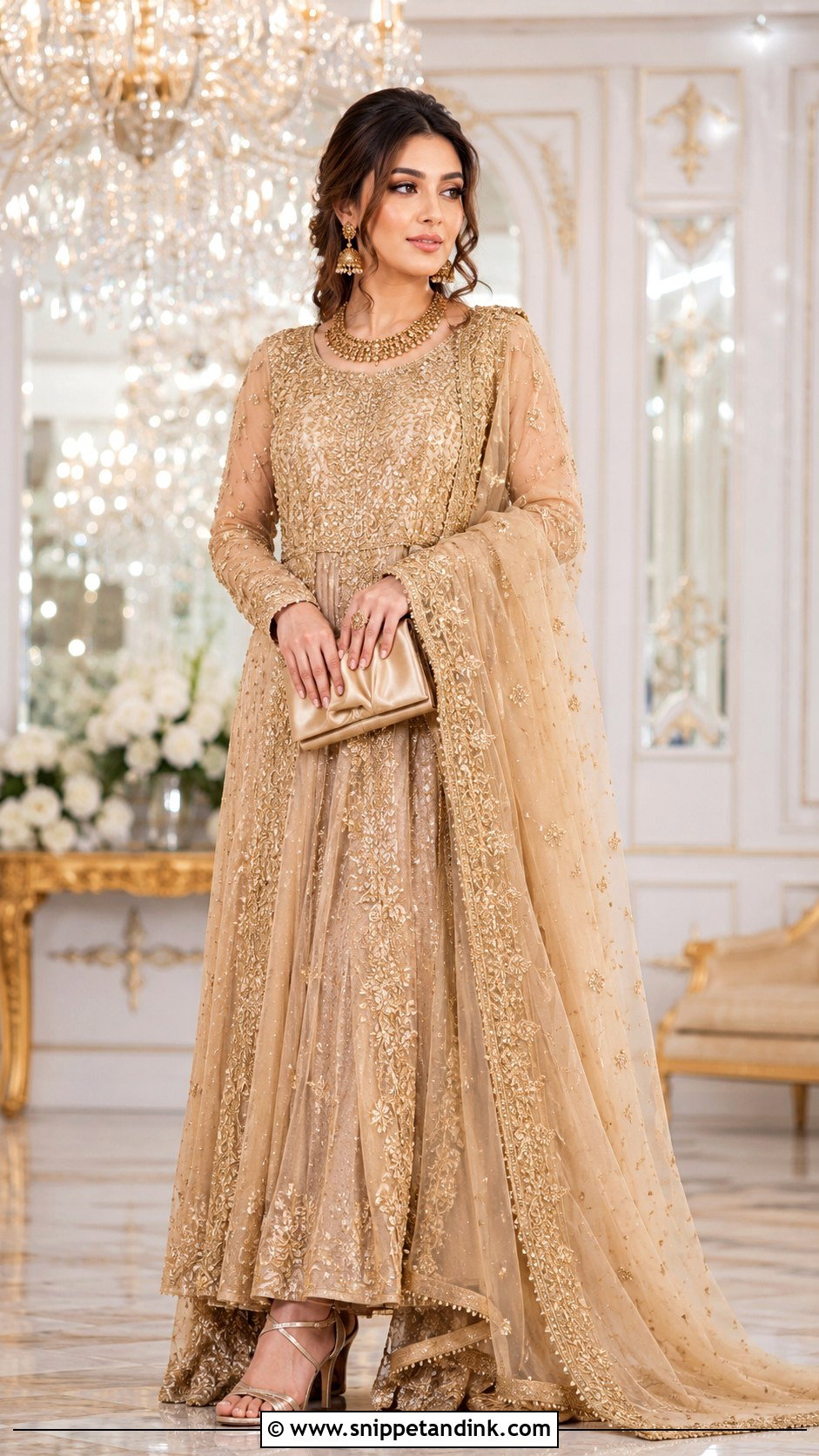
Gold makes an impression without a loud color. Champagne gold, antique gold and soft metallic beige all read luxurious, especially with embroidery, sequins or brocade texture adding depth. Under stage lights, a high-shine gold can bounce light onto the face and flatten features in photos, so I balance it with softer makeup and a neat hairstyle rather than more sparkle. A matching dupatta with a scalloped border is a refined finishing touch. It’s a strong choice for brides, sisters of the bride, and mothers who want presence without bright color.
8. Purple Afghan Wedding Dress
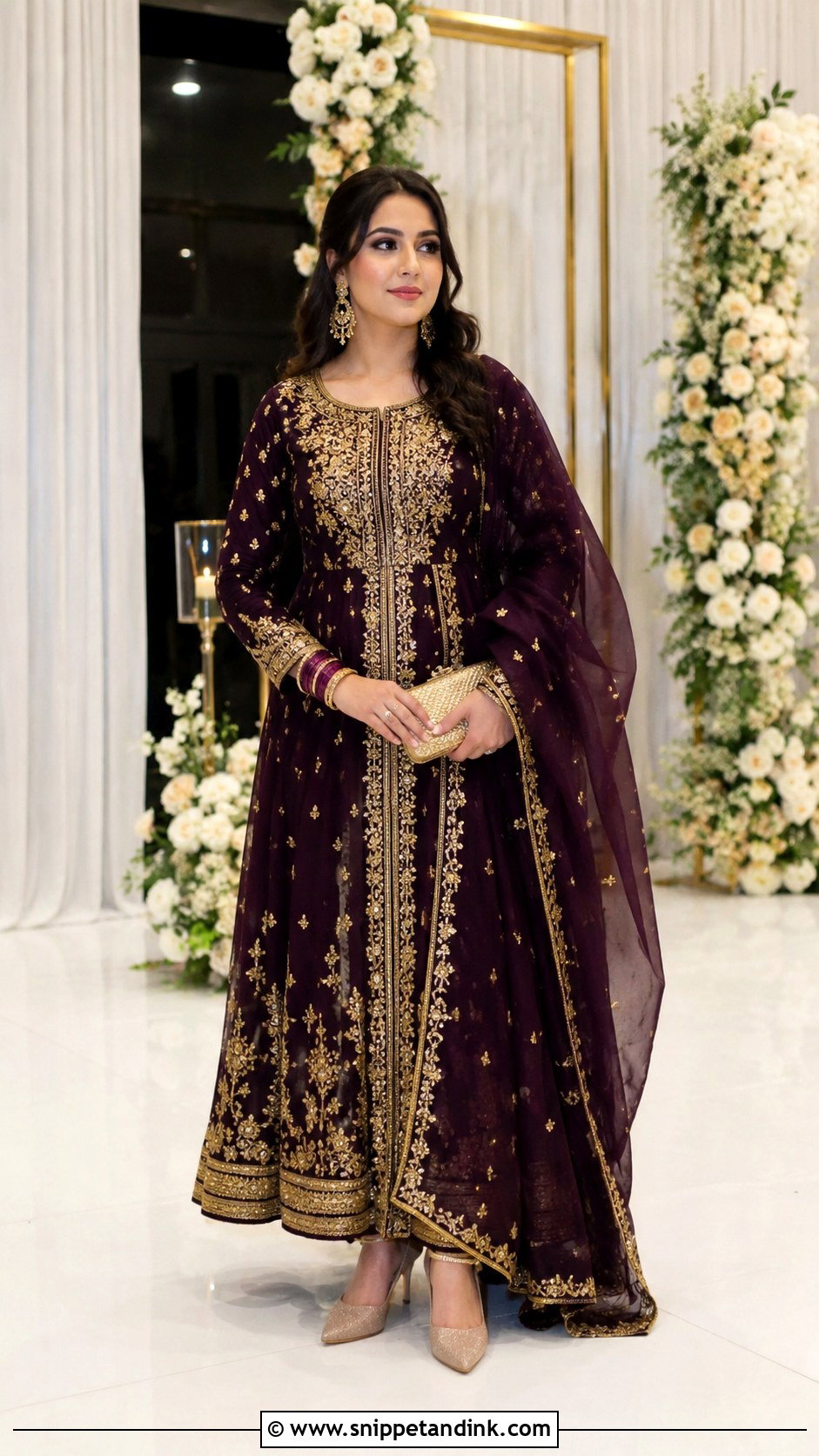
Purple changes character dramatically by shade. Plum and aubergine feel deep and evening-ready; lavender and violet feel lighter and younger. Gold embroidery with a matching dupatta keeps it traditional, while silver beadwork and crystal accessories cool it down for a modern finish. I find purple one of the more forgiving colors in evening halls, as it reads rich without overpowering everything around it. For a modest version, choose long sleeves, a higher neckline and a flowing skirt, with a soft scarf draped over one shoulder.
9. Black Afghan Embroidered Dress
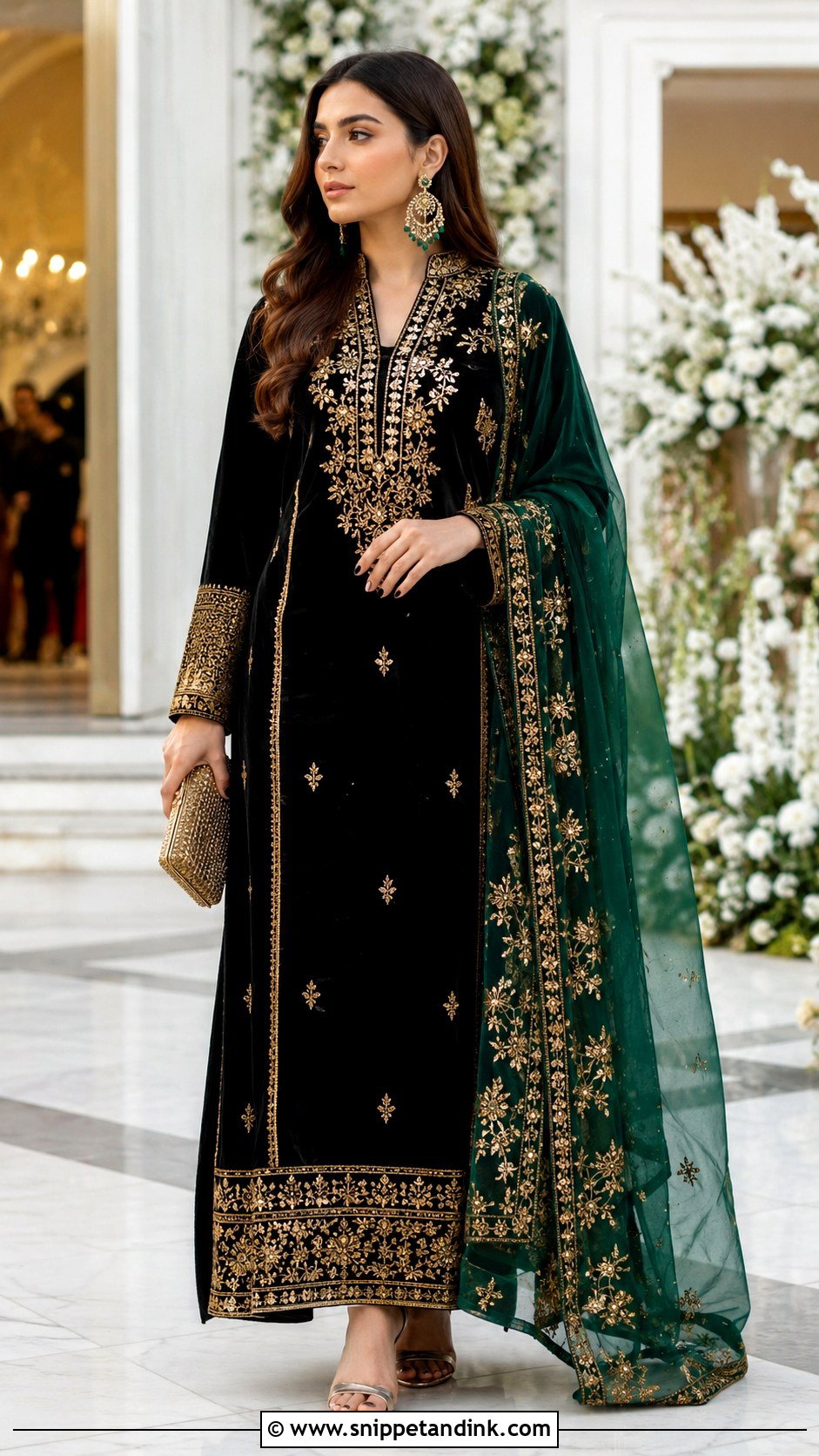
Black can work at an Afghan wedding, but only if it looks celebratory. Some families still feel black is too somber for a happy occasion, so for a guest I’d check with the hosts first. Black velvet, satin or chiffon carries gold, silver or multicolor embroidery well, and a contrast dupatta in red, emerald, champagne or gold lifts the whole outfit. Mirror work or bright threadwork is what keeps it festive rather than plain. It suits evening receptions and formal family photos, with metallic heels and statement earrings.
10. Afghan Henna Night Dress
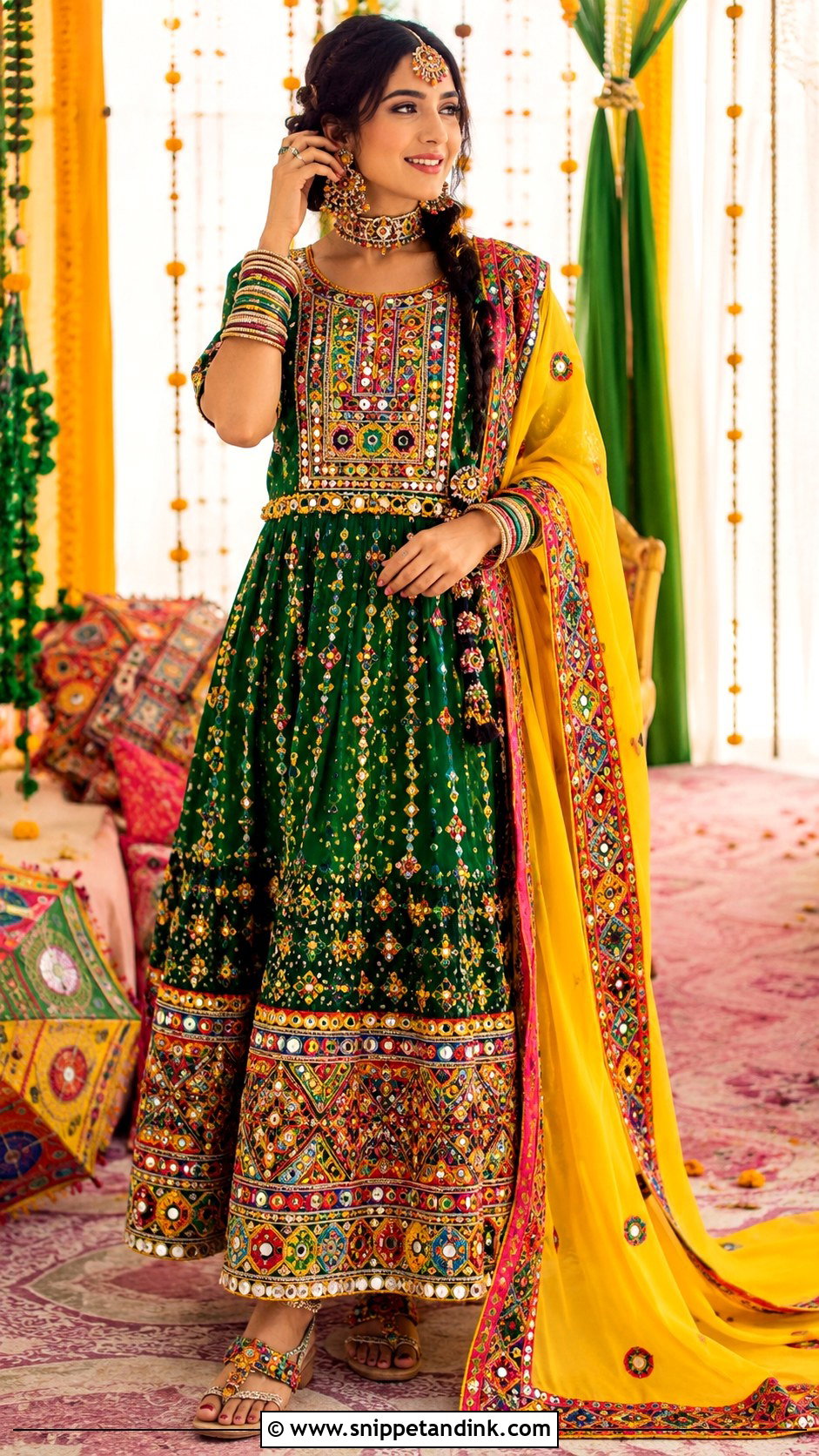
Henna night is the most energetic event, and the dress has to let you dance. An Afghan henna night dress is usually bright: green, yellow, orange, pink or turquoise, with a colorful dupatta, bangles and embellished sandals. Mirror work and coins catch light as you move, which is exactly why they suit this night. Choose breathable fabric, because halls get crowded and warm. Two practical points from experience: a slightly shorter front hem saves you from tripping on the dance floor, and darker colors hide stray henna paste better than pale ones.
11. Afghan Nikah Dress
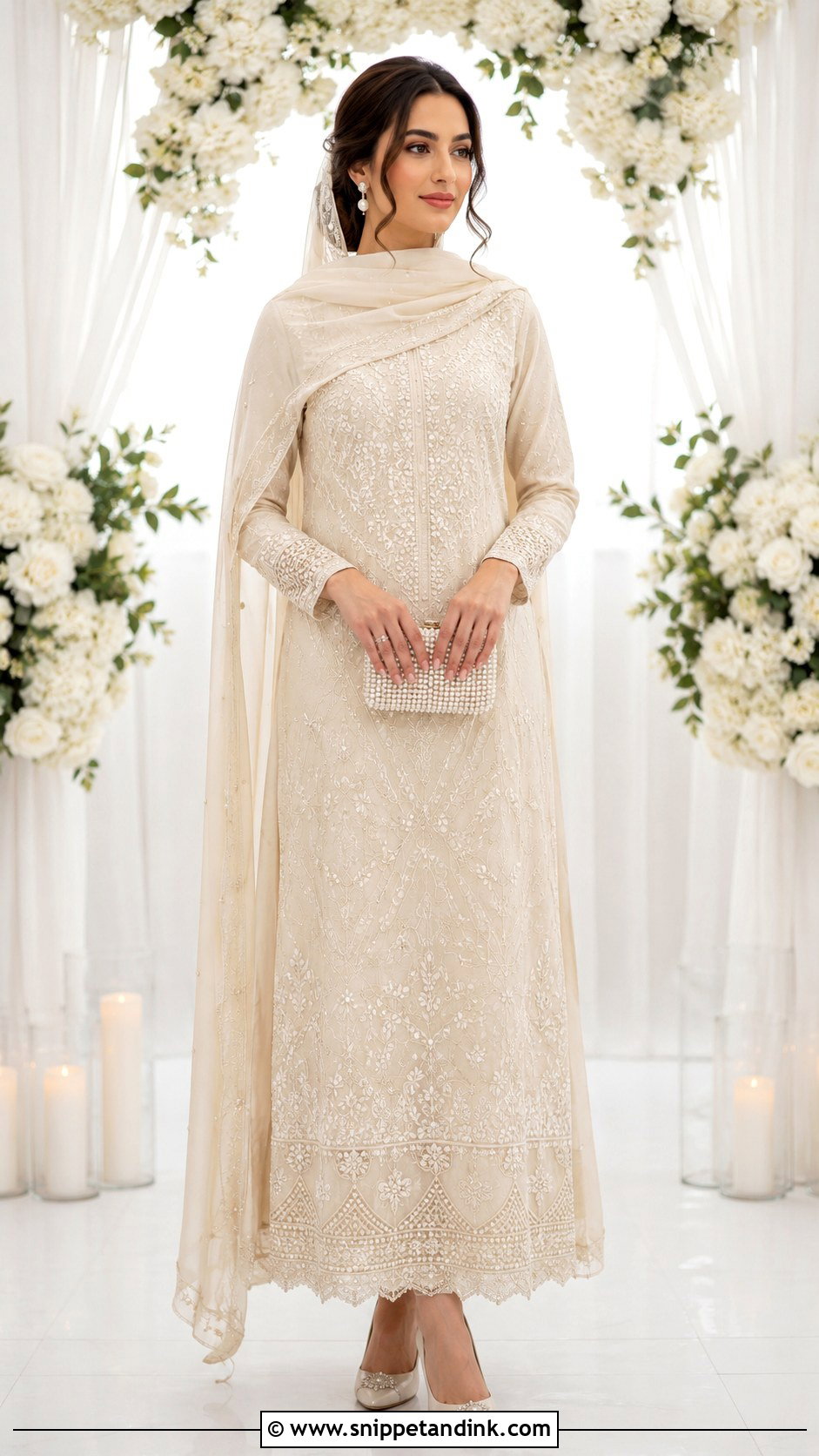
The nikah is the religious ceremony, and the outfit should feel calm and modest. An Afghan nikah dress often comes in soft white, ivory, blush, champagne, sage or pale blue, though many families keep green for this ceremony or for the aina masaf that follows it. A long-sleeve embroidered gown with a graceful scarf is the classic form. For brides wearing hijab, I match the scarf fabric to the dress or go one shade lighter, and I keep embellishment to the neckline, cuffs and hem so nothing catches on the scarf. Closed-toe heels and pearl earrings complete it.
12. Afghan Engagement Dress
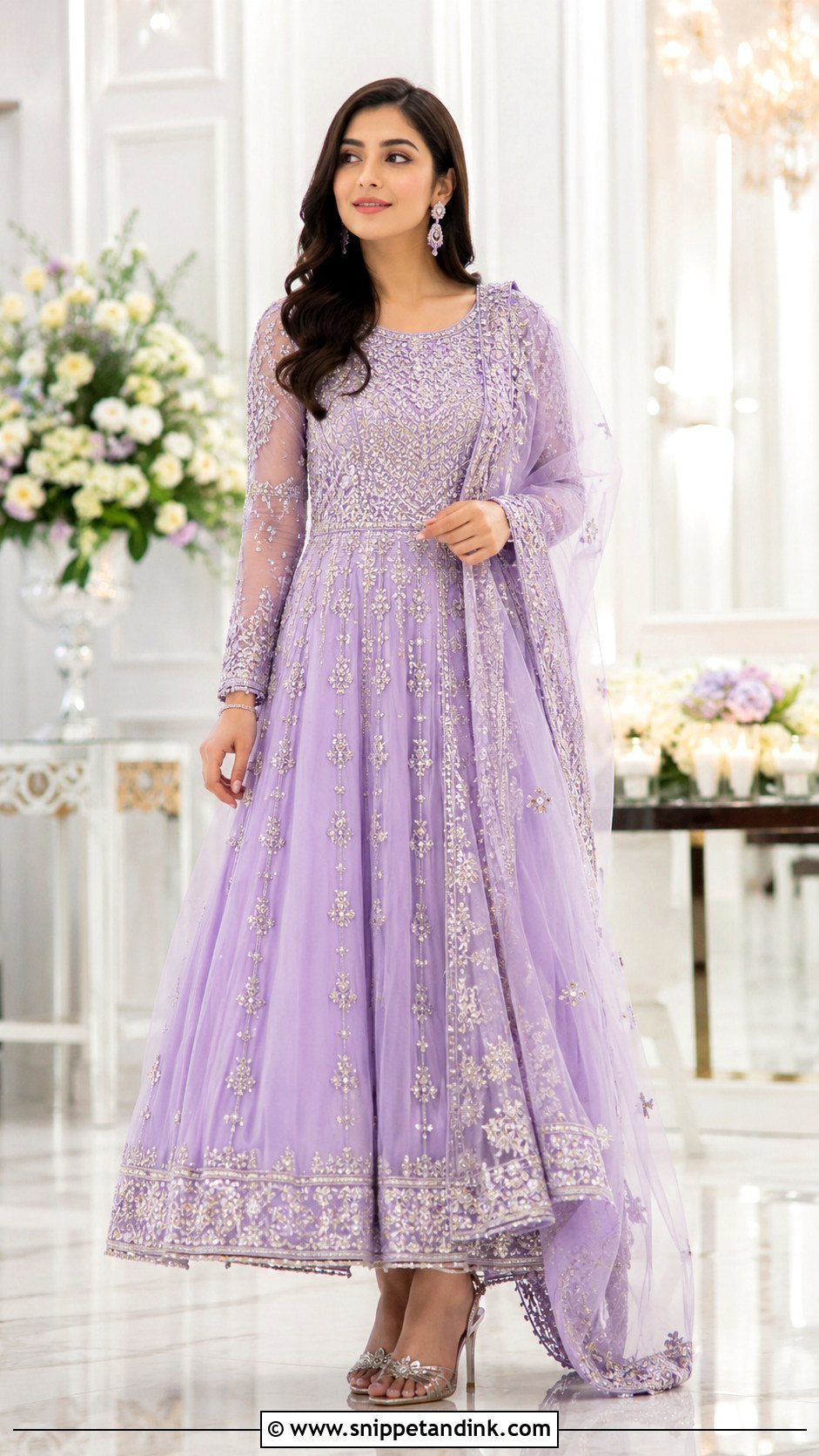
The engagement outfit can be a step lighter than the wedding dress. Pastel pink, mint, lilac, champagne and soft gold suit it. A fitted bodice with a flowing skirt keeps the shape while you greet a long line of guests. Tonal beadwork, where the beads match the fabric color, gives a more modern Afghan look than heavy contrast embroidery and keeps the dress from competing with the bridal outfit still to come. A sheer dupatta, embellished heels and a delicate bracelet are enough.
13. Afghan Reception Dress
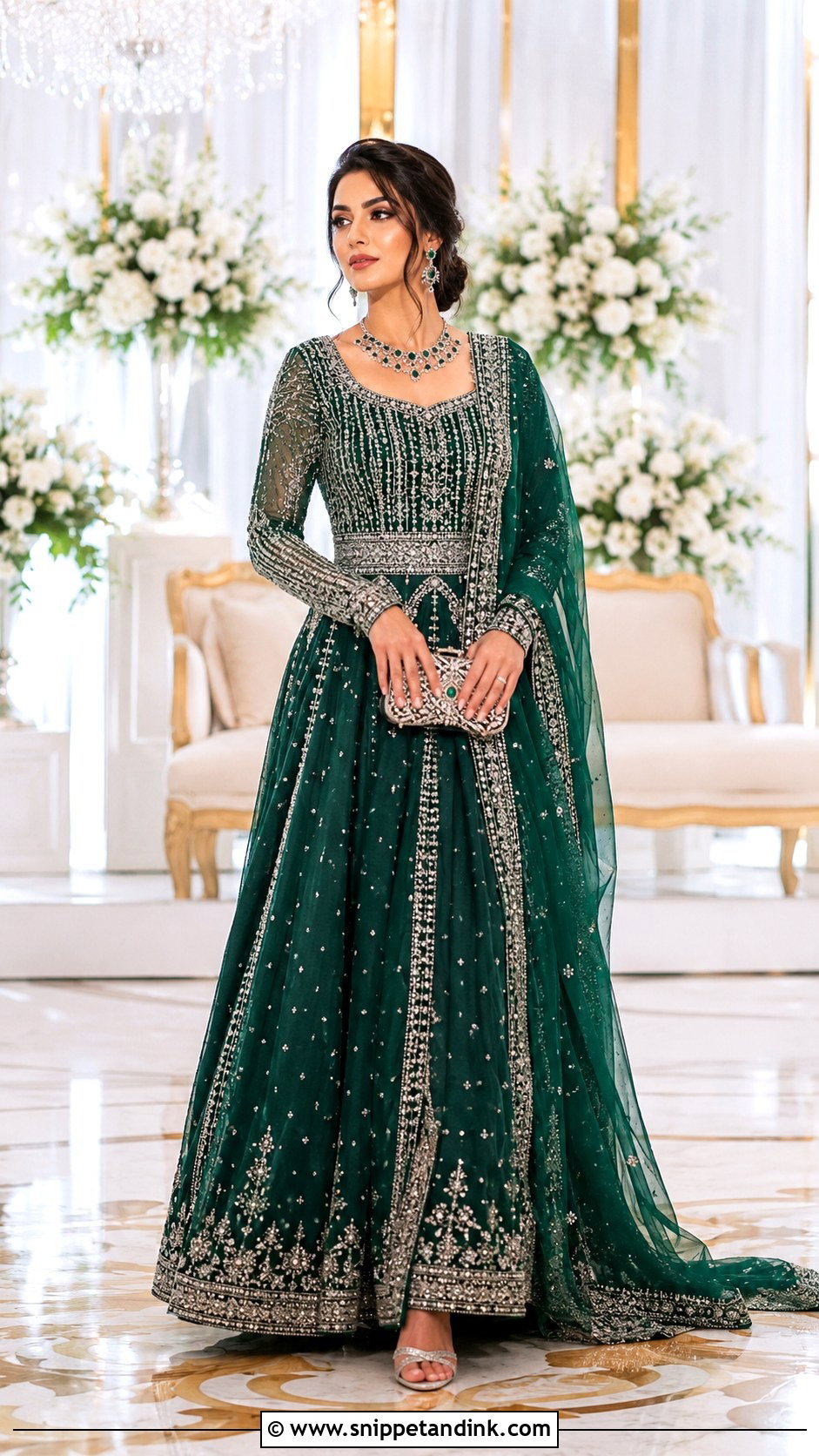
The reception dress is usually the most glamorous in the wardrobe, and it’s the one you’ll be photographed in most. Red, emerald, navy, gold or ivory with detailed embroidery, beading or crystal work all suit it. A structured bodice with a flowing skirt gives presence while staying wearable. If the dress has a train or a heavy hem, plan who will help you move it on and off the stage; I’d assign one sister or cousin to that job in advance. Keep accessories coordinated so the gown remains the focus.
14. Afghan Guest Dress
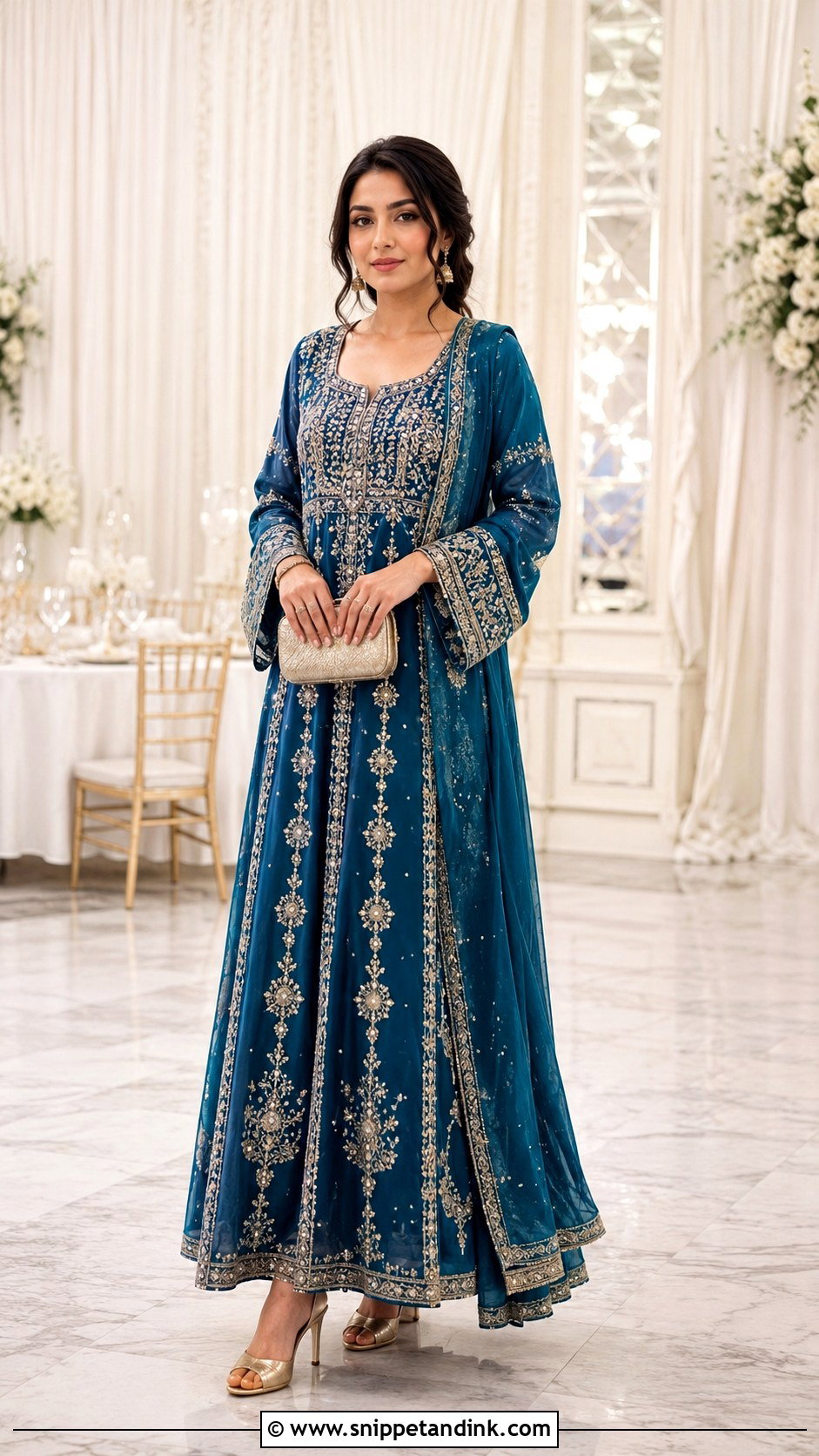
Guests should look festive and respectful without competing with the bride. A midi to floor-length embroidered dress in teal, plum, rose or champagne works well, with a coordinated scarf, metallic heels and a small evening bag. The simplest rule I give: keep your embellishment noticeably lighter than the bride’s. Long sleeves, soft draping and a modest neckline are practical as well as elegant at a long celebration. A simpler dress can still nod to the culture with Afghan jewelry or an embroidered dupatta.

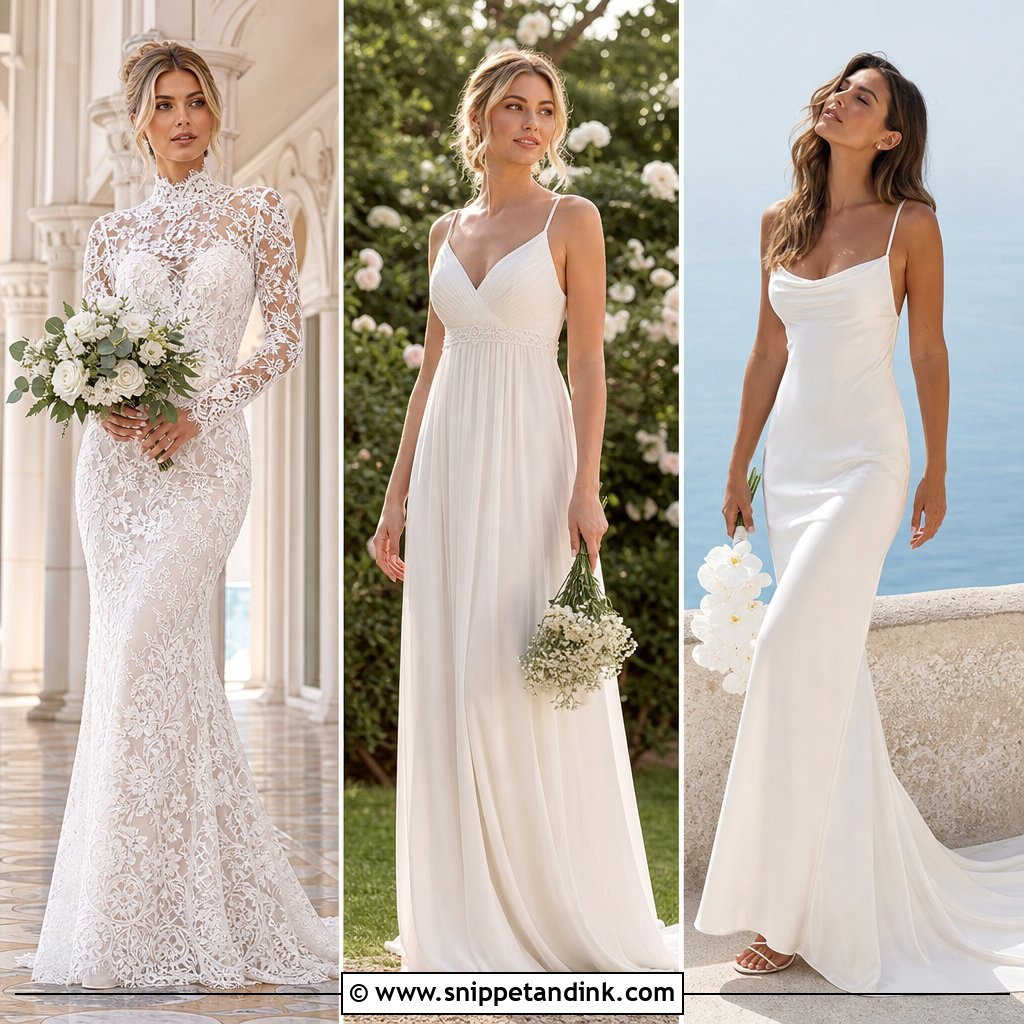
15. Afghan Bridesmaid Dress
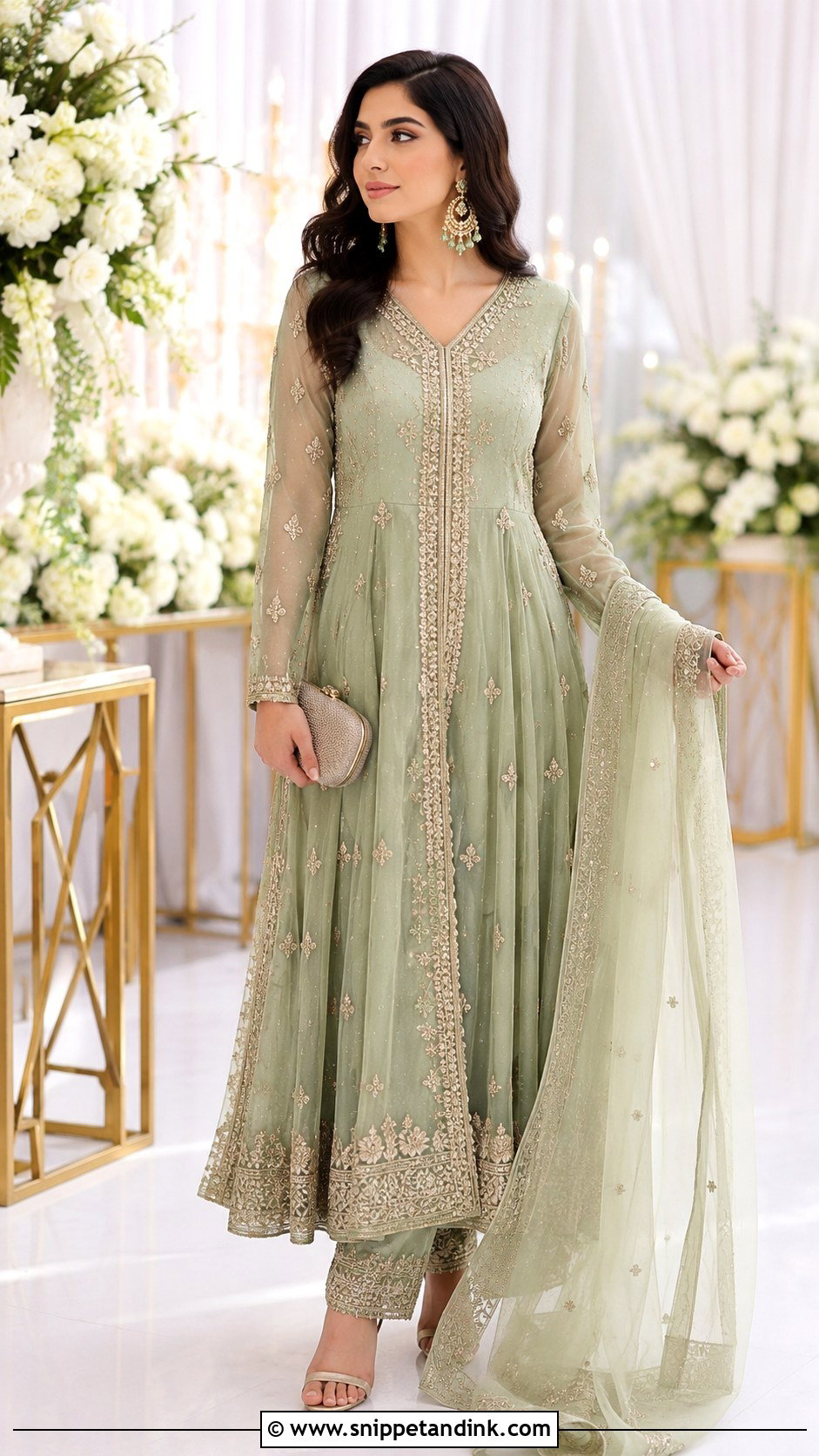
For bridesmaids, coordination matters more than identical dresses. Sage, blush, dusty blue, mauve or champagne gives a soft group look; emerald, burgundy or navy with gold accents gives a richer one. I’d let each bridesmaid choose her own neckline and sleeve within one color and fabric, since a single cut rarely suits every body. Keep jewelry consistent across the group, which pulls it together in photos more than the dresses themselves. A long embroidered dress with a light dupatta handles the ceremony, photos and reception comfortably.
16. Afghan Mother Of The Bride Dress
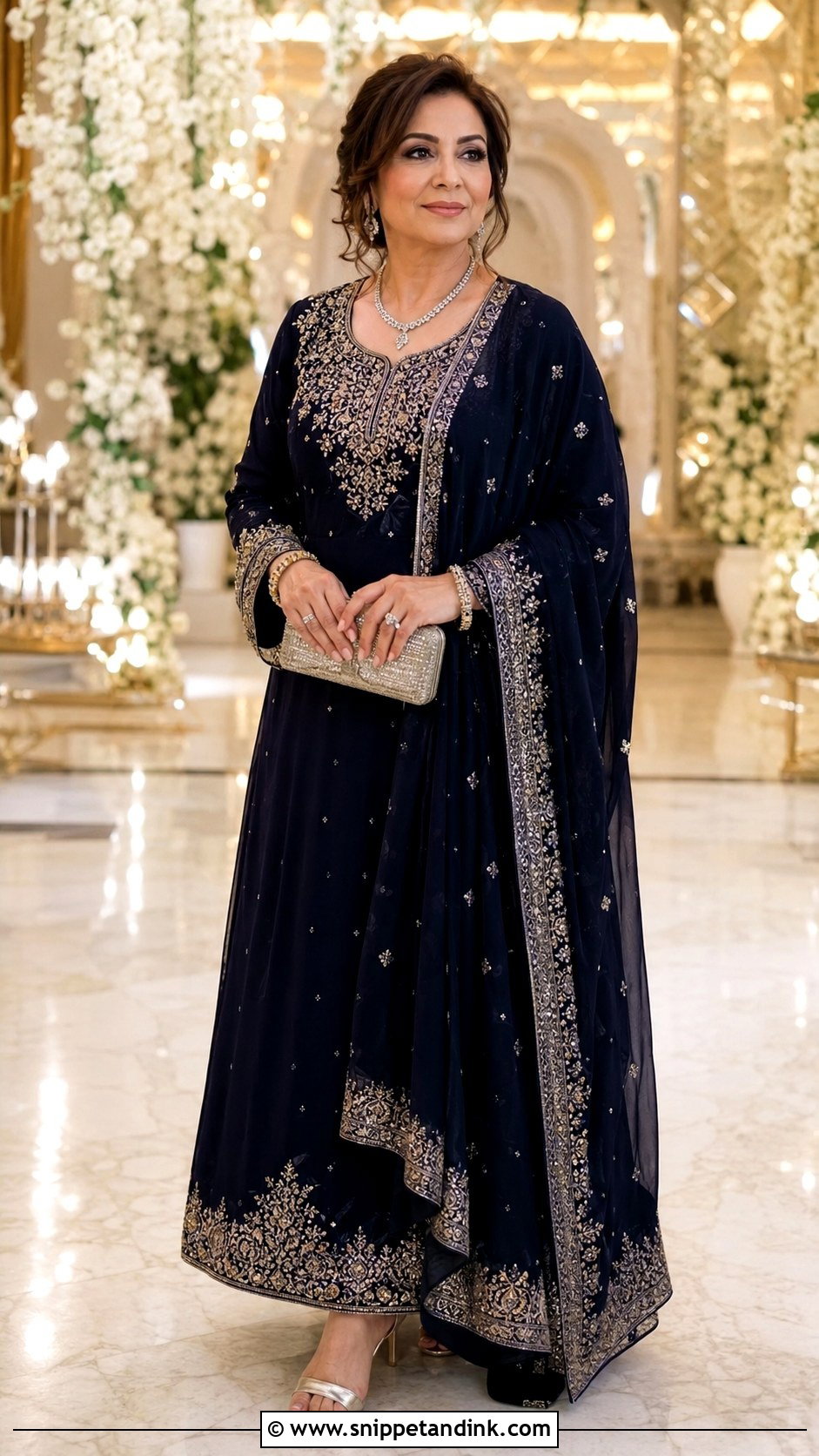
The mother of the bride spends the day greeting guests, standing for photos and running between rooms, so comfort has to sit alongside dignity. Maroon, navy, emerald and plum feel rich; champagne and gold feel softer. A long embroidered gown with a matching dupatta is the classic form. Three-quarter or long sleeves are practical and refined. I always recommend the embroidery be concentrated at the neckline, sleeves and hem, with a lighter body, so the dress isn’t heavy to wear for ten or more hours. Comfortable heels or embellished flats are a sensible call.
17. Afghan Plus Size Wedding Dress
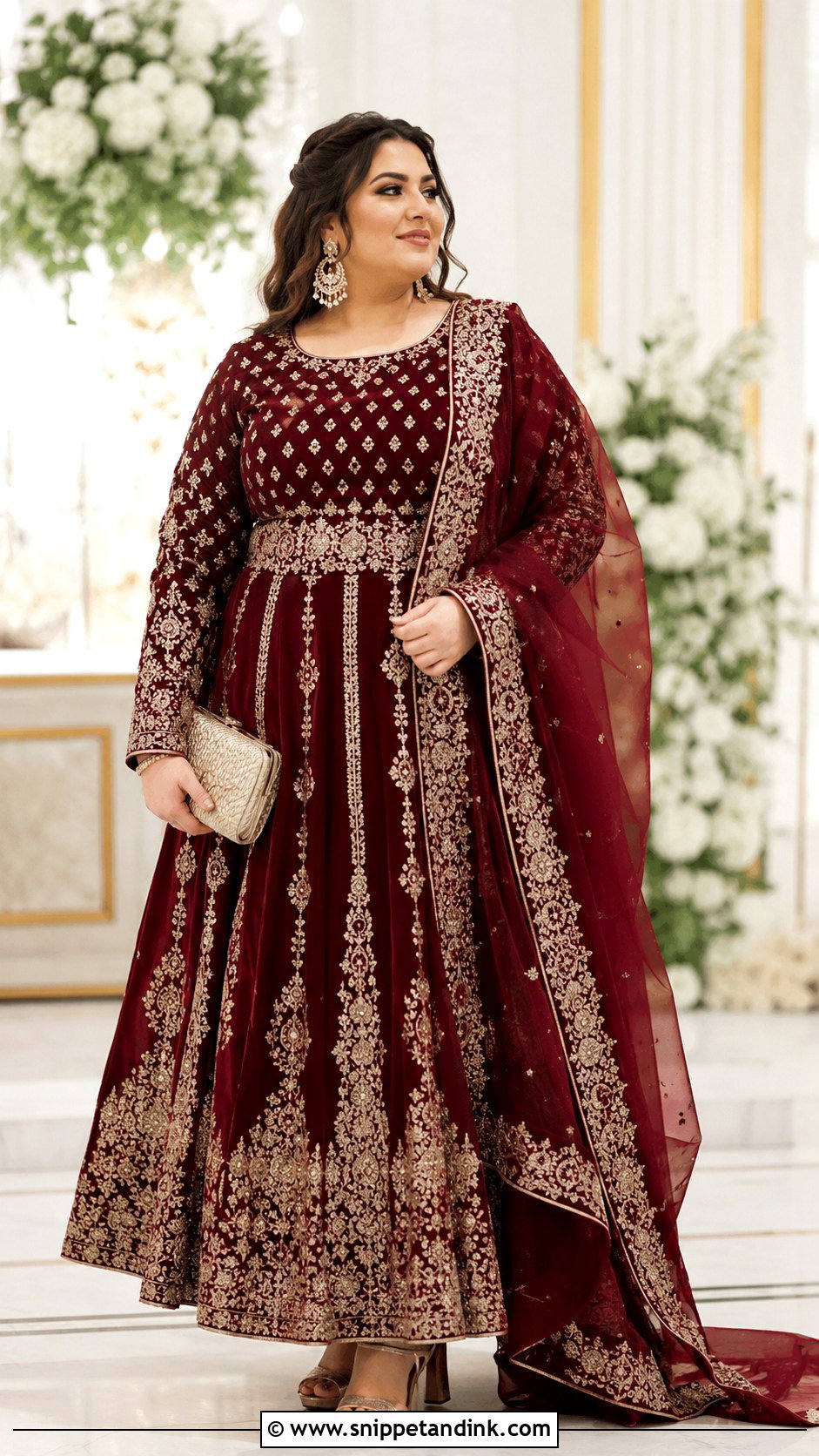
For plus size brides and guests, proportion and fabric matter far more than hiding anything. A softly structured bodice, a defined waist and an A-line skirt give a comfortable shape. Embroidery that runs down a center panel or frames the neckline draws the eye vertically. Chiffon, georgette, satin and soft velvet drape without stiffness; very stiff brocade can stand away from the body and add bulk. A dupatta draped from one shoulder adds balance. Supportive heels matter more here than a slim stiletto, especially on a raised stage.
18. Afghan Modest Wedding Dress
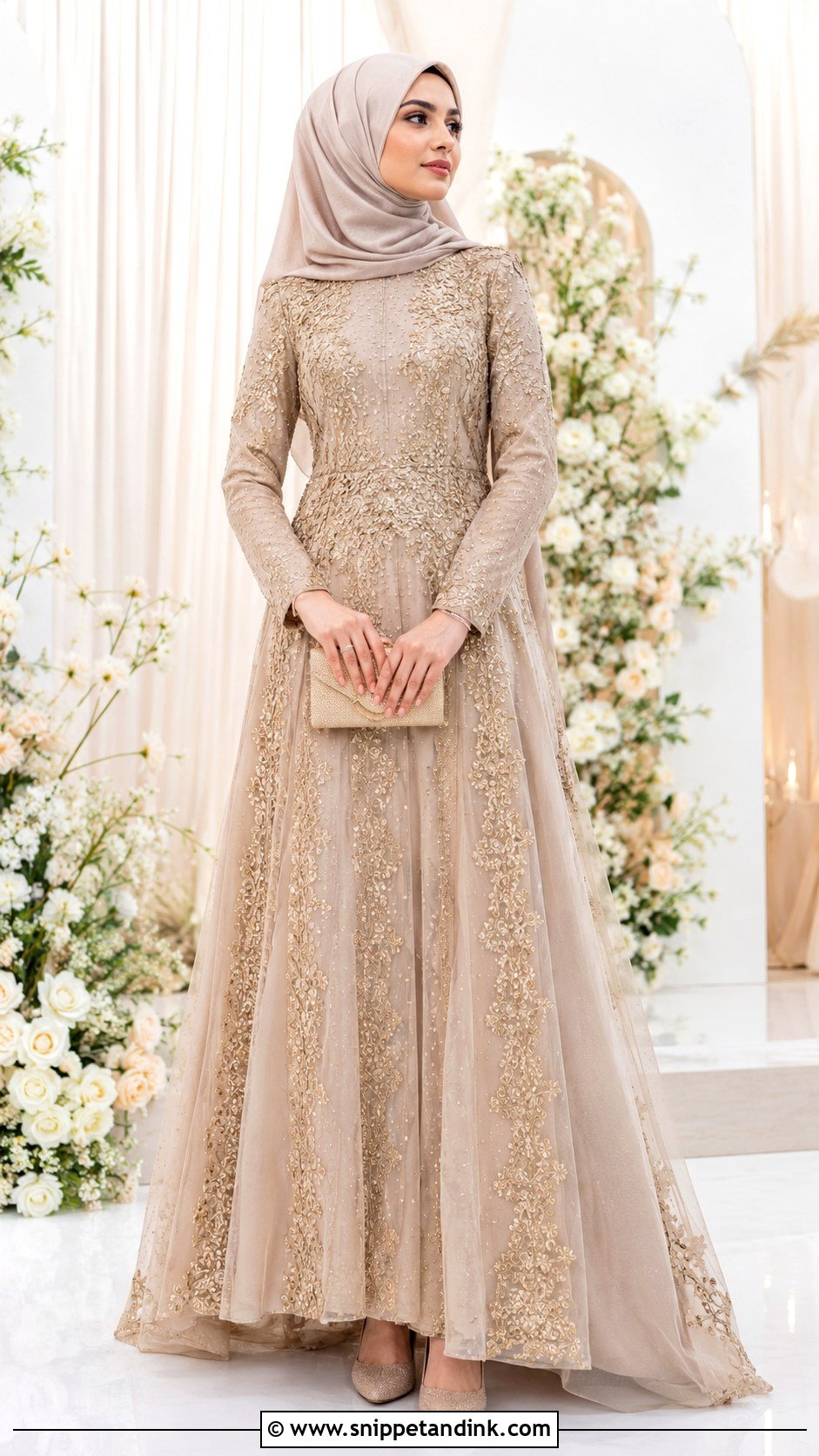
Fully covered doesn’t need to mean plain. Long sleeves, a higher neckline and a floor-length skirt in a rich fabric form the base, with embroidery on the cuffs, bodice and hem. A coordinated hijab or dupatta in chiffon, silk or organza adds softness. Ivory, champagne, sage, navy and rose all suit modest styling. When I put together a modest look, I plan the scarf and dress together from the start, so embroidery isn’t hidden under the drape, and the colors work as one outfit rather than two pieces.
19. Afghan Chiffon Wedding Dress
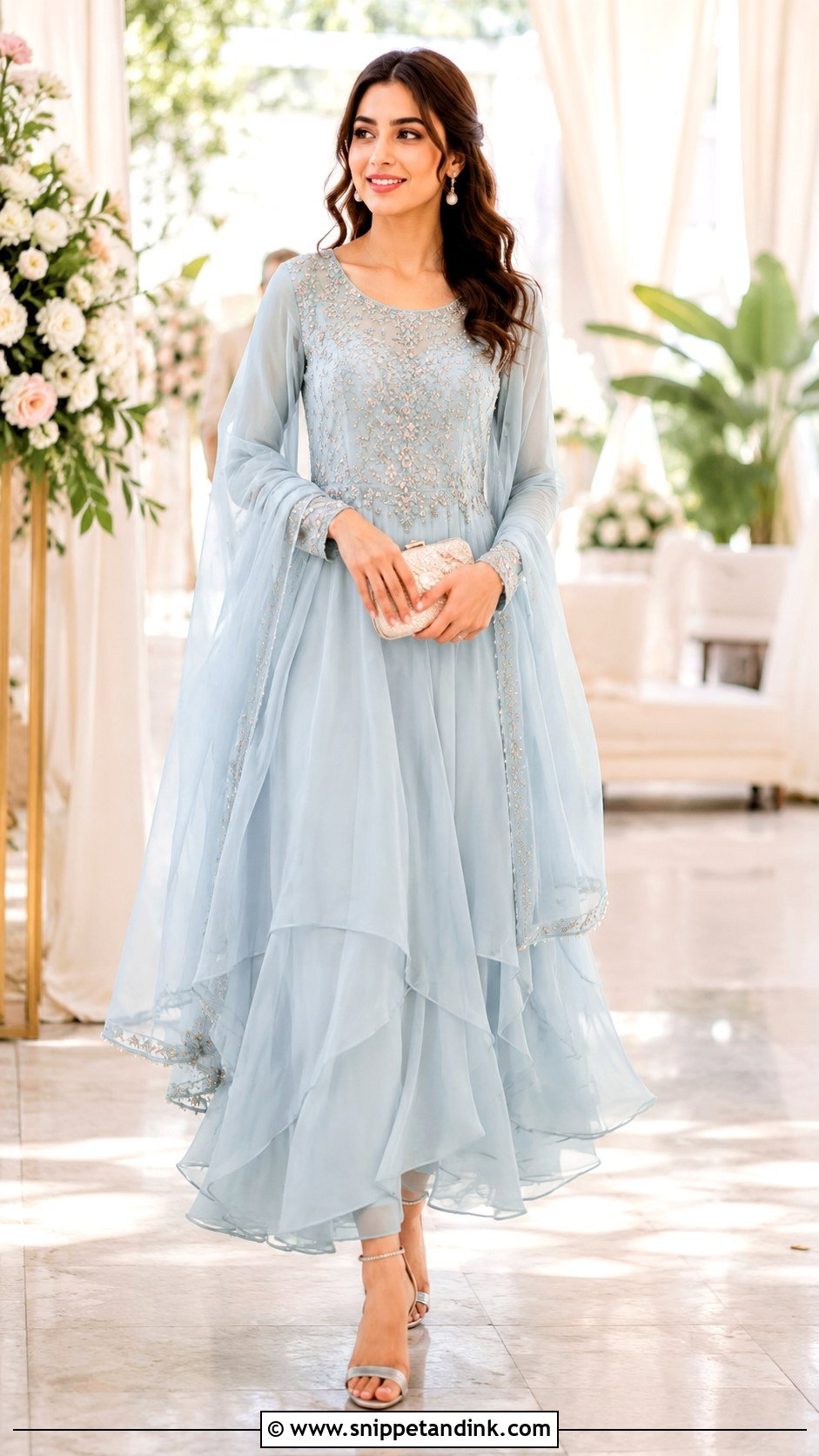
Chiffon is the fabric I’d recommend for summer weddings and for anyone who wants to dance. It moves easily and doesn’t trap heat, though a single layer is sheer, so look for a layered gown or a full lining. Embroidery on the bodice and sleeves gives it structure. Blush, mint, powder blue and lavender look soft in chiffon; burgundy or emerald pushes it toward evening. A matching chiffon dupatta adds softness without weight. One caution: chiffon snags easily on jewelry and beaded clutches, so check your accessories for sharp edges.


20. Afghan Velvet Wedding Dress
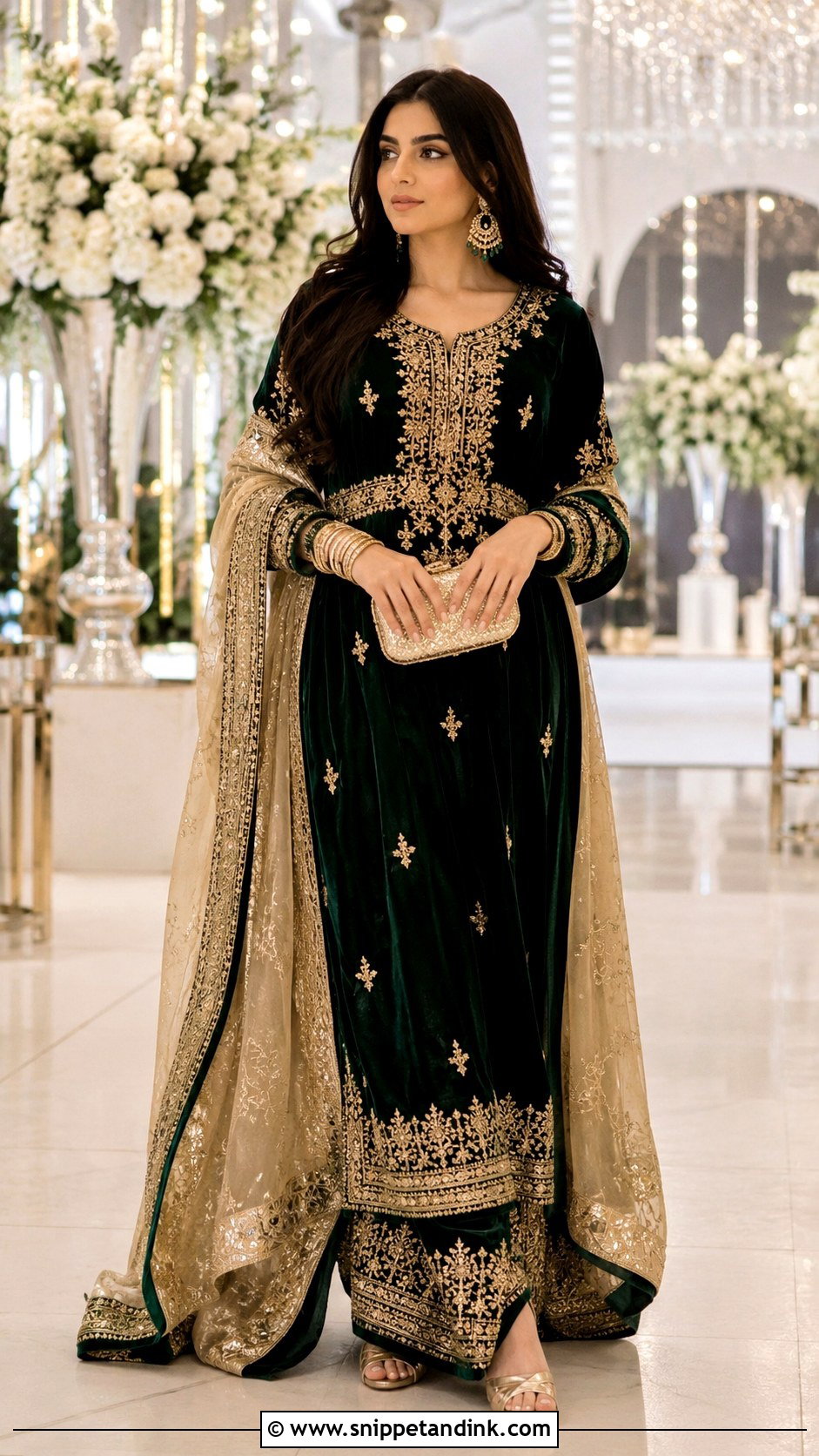
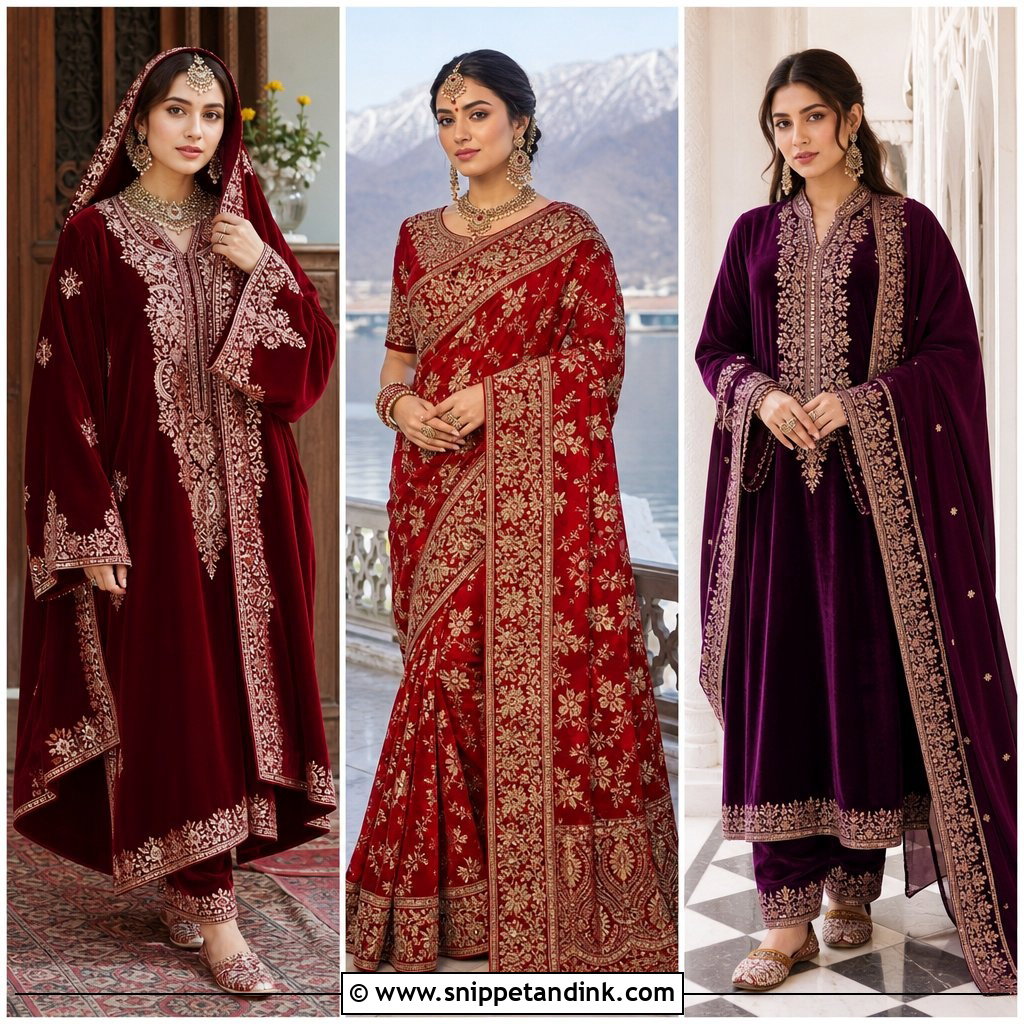
Velvet suits fall, winter and evening events. Deep red, maroon, emerald, navy and plum look rich in it, and gold embroidery, mirror work or bead detailing sits well on the pile. A full-length velvet dress with a matching or contrast dupatta gives a strong traditional look. Because velvet is heavy, the cut should allow room through the arms and waist; a tight velvet sleeve becomes uncomfortable fast. If the dress is heavily embellished, choose a lighter scarf, which also keeps the head and shoulders cooler.
21. Afghan Satin Wedding Dress
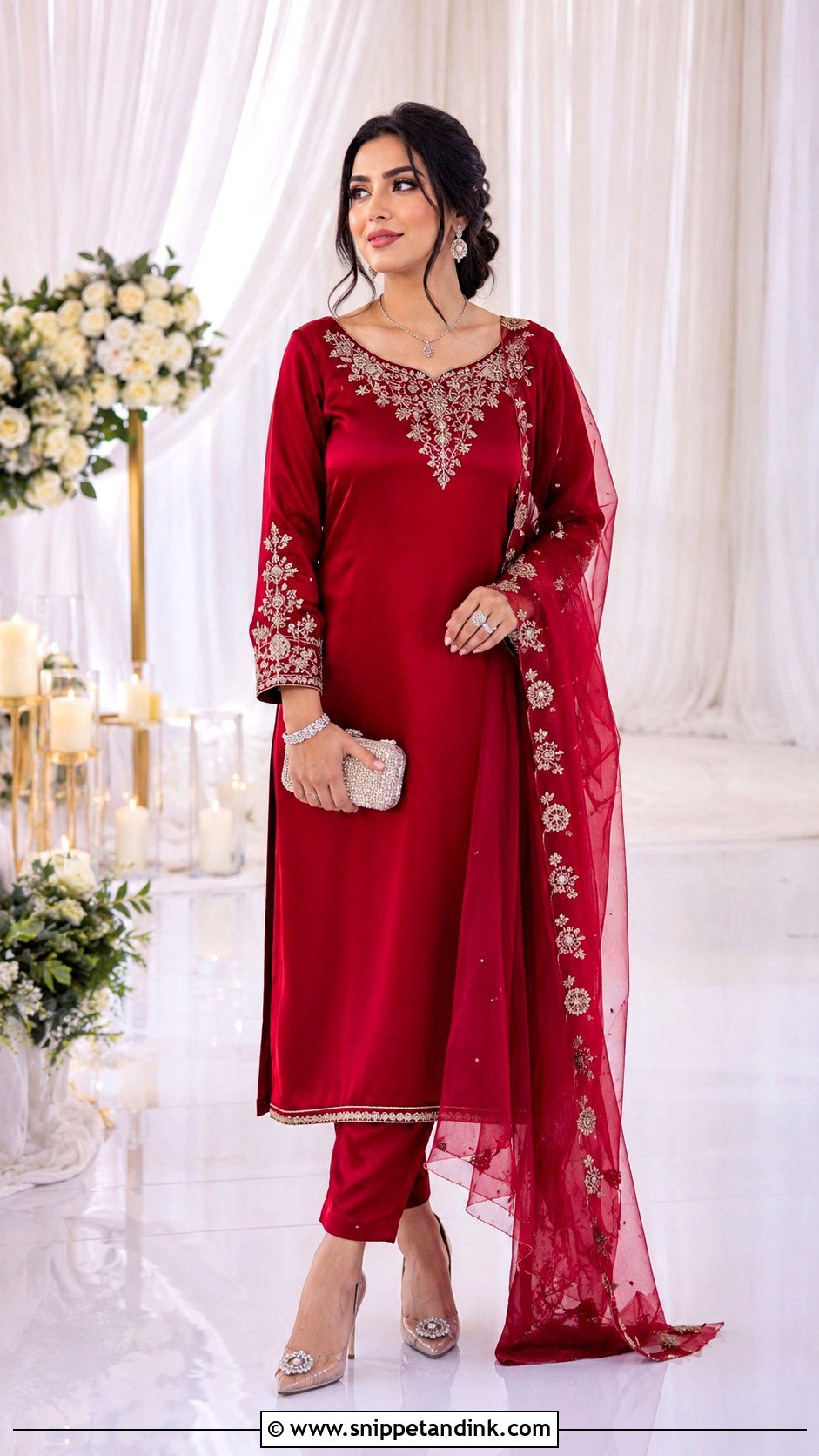
Satin gives a smooth, polished finish. Ivory, champagne, emerald, ruby and dusty pink all look rich because satin reflects light. That reflection is also its weakness: it shows every crease, so I advise steaming it on the day, and it can look shiny under strong flash. Embroidery on the neckline, sleeves and lower border breaks up the surface. A sheer dupatta softens the shine and adds movement. Good tailoring matters more with satin than with other fabrics, because it shows exactly where it pulls.
22. Afghan Lehenga Dress
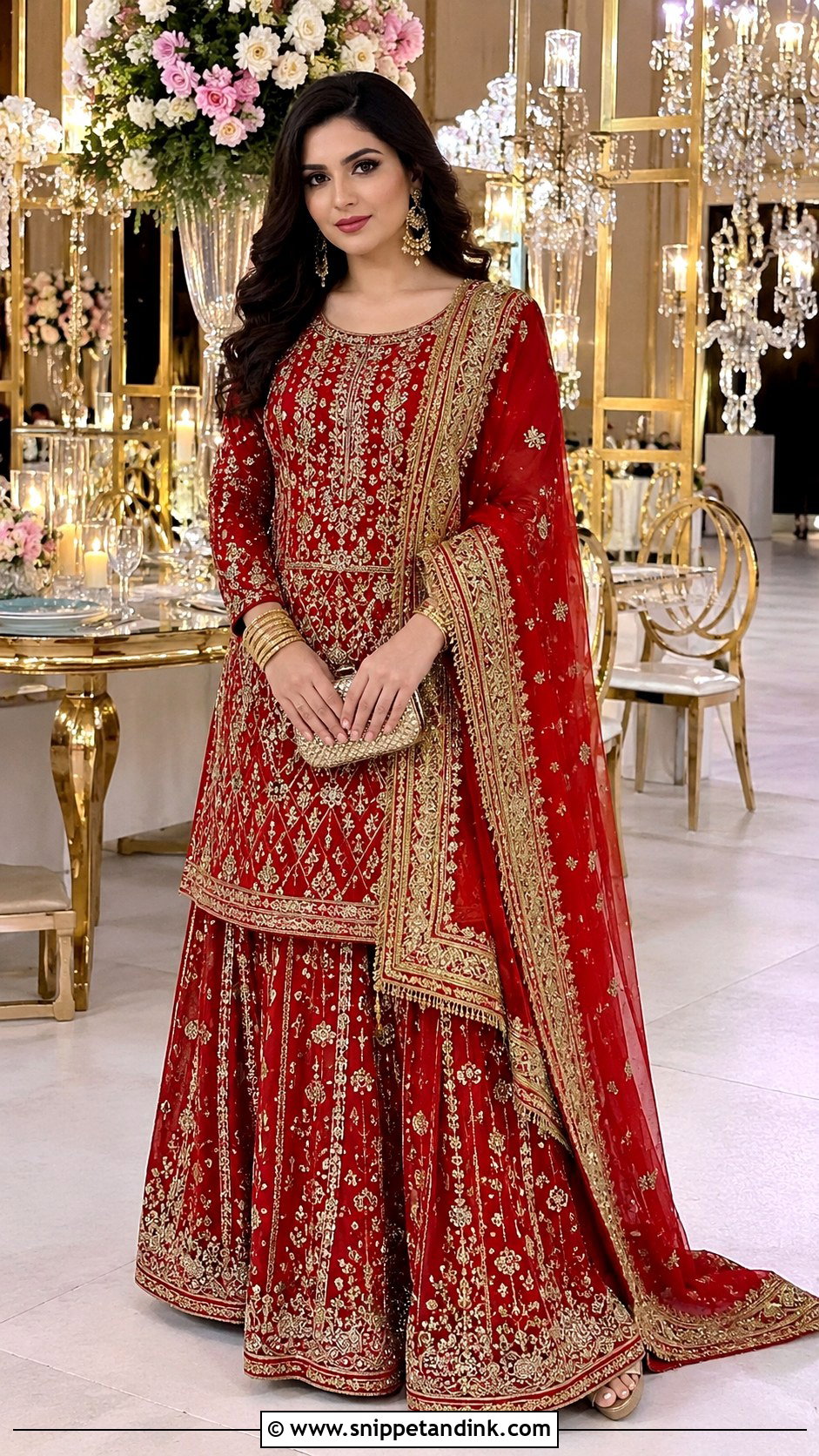
A lehenga brings a defined waist and a dramatic skirt. The usual set is a long embroidered blouse, a full skirt and a matching dupatta, in red, green, gold, pink or navy, with mirror work, threadwork or metallic borders. It’s well suited to receptions, henna nights and close-family events, where movement and impact matter. The fitting point I always stress is the blouse: it needs to stay secure when you sit, raise your arms and bend to greet elders, so test those movements at the final fitting.
23. Afghan Sharara Dress
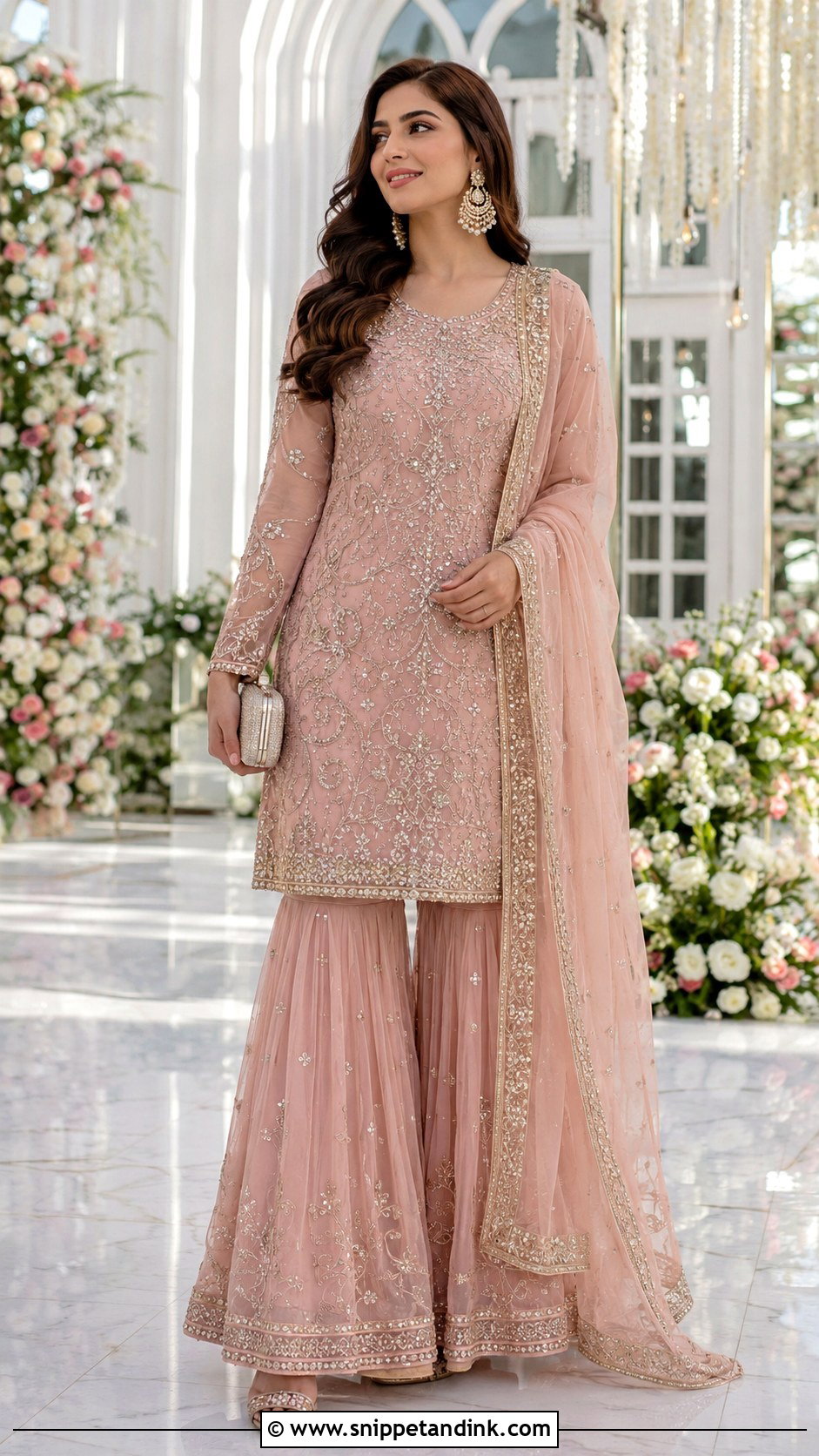
Wide trousers make a dressy outfit much easier to move in. An Afghan sharara dress pairs a long kameez with flared sharara pants and a coordinated dupatta. Embroidery at the neckline, sleeves and pant hem balances the outfit top to bottom. Soft gold, blush, teal, maroon and ivory suit weddings. I recommend it to sisters, bridesmaids and guests who’ll be on their feet all night. Have the sharara length set with your shoes on, since the flare drags if it’s long and looks cut short if it’s not.
24. Afghan Two Piece Wedding Dress
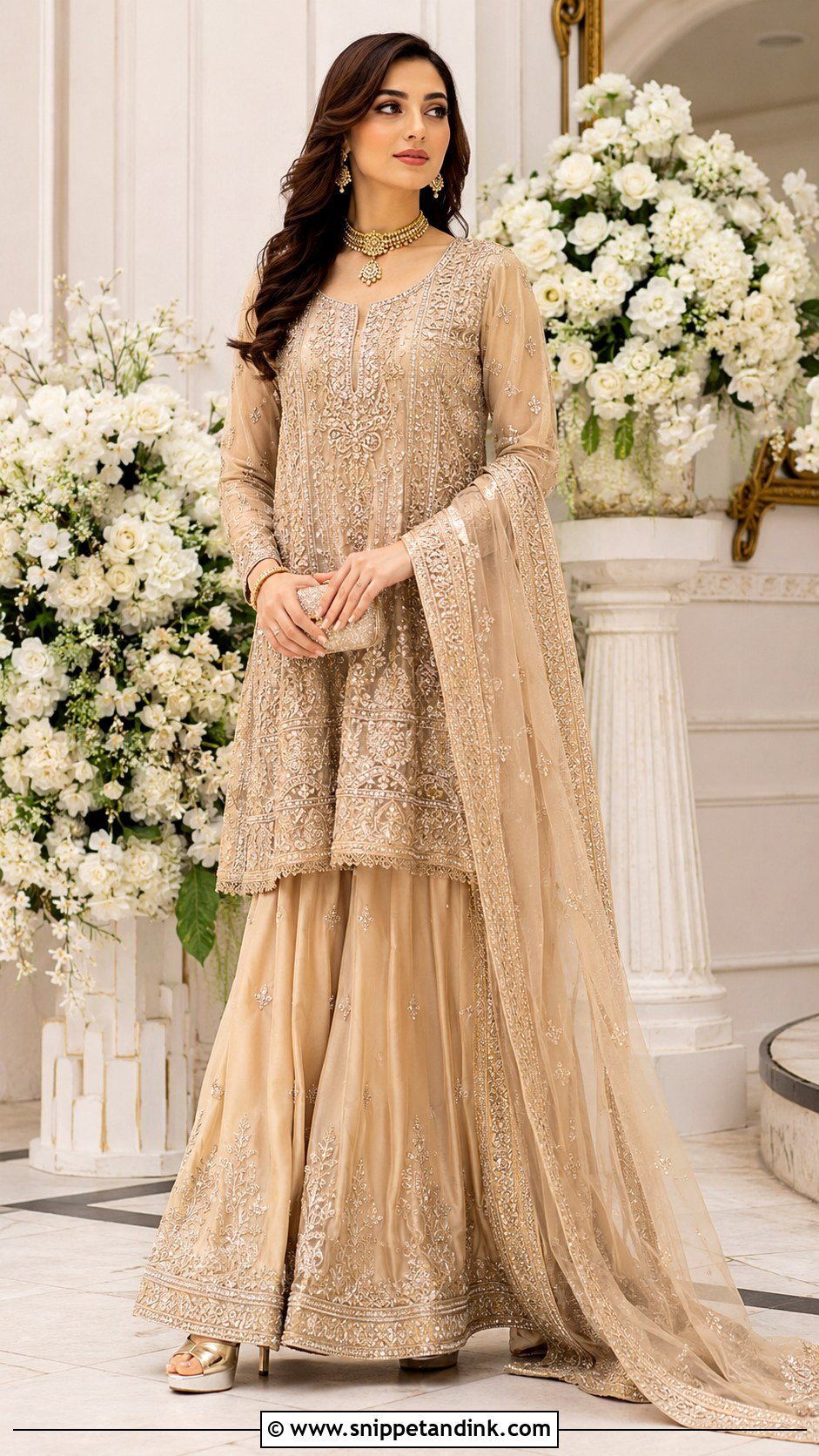
Two-piece outfits are easier to fit because the top and bottom can be tailored separately, which helps anyone whose upper and lower body take different sizes. An embroidered long top with a matching skirt, or a structured blouse with a flowing maxi skirt and dupatta, both work. Satin, chiffon, organza or brocade keep it formal. It suits engagement parties, receptions and guests who don’t want a heavy gown. Match your jewelry to the embroidery tone so the two pieces read as one outfit.

25. Afghan Pastel Wedding Dress
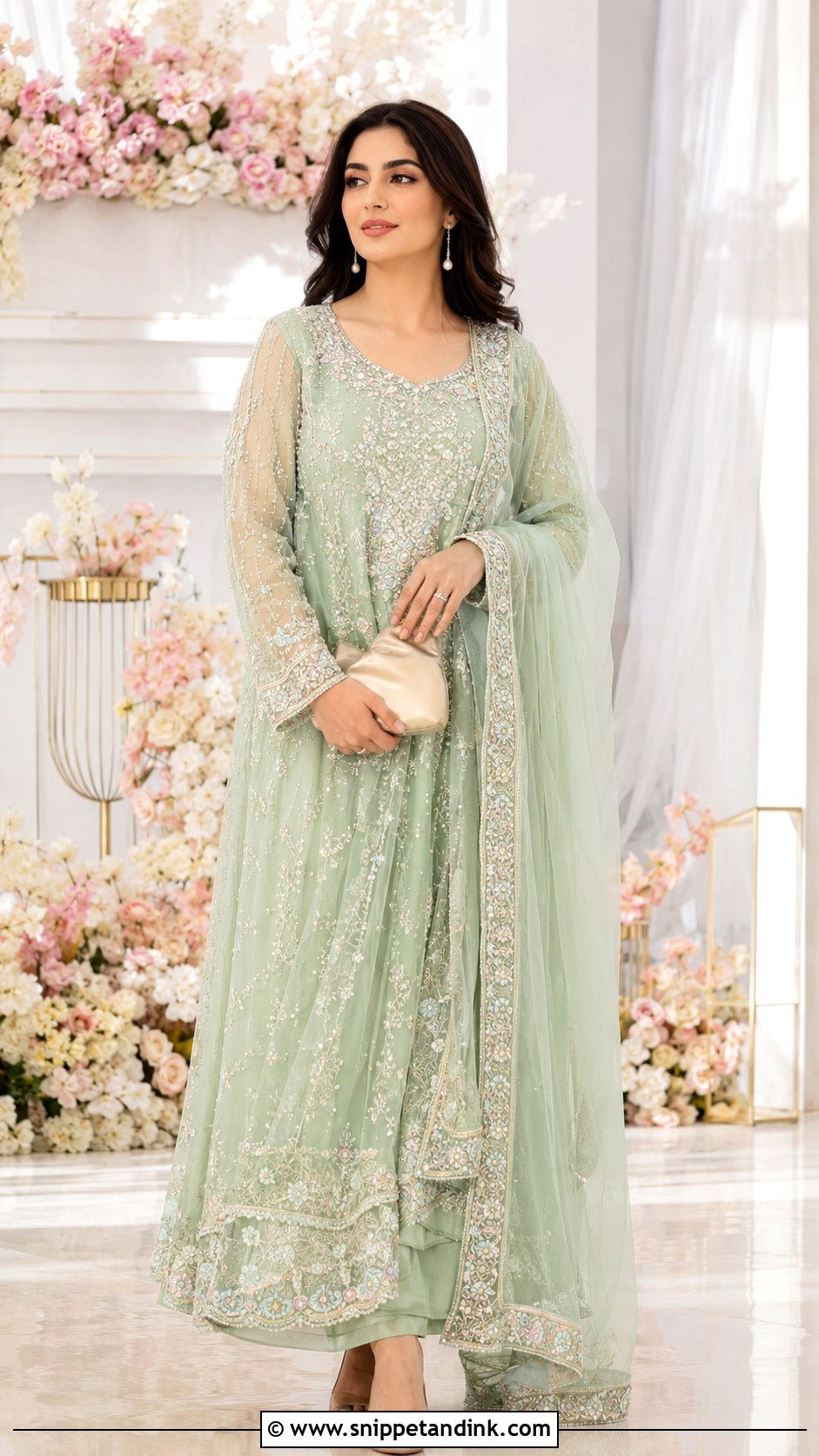
Pastels suit daytime events, engagements and nikah ceremonies. Blush pink, powder blue, mint, lavender, peach and champagne all work, with delicate embroidery, pearl accents or light beadwork. A sheer dupatta in the same color family keeps the outfit unified. Pastels depend heavily on fit and fabric; a pale color in a stiff, ill-fitting gown looks unfinished, while the same shade in a fabric with gentle movement looks deliberate. Nude heels, pearl earrings and soft makeup round it off.
Wearing Heavy Embroidery for Six Hours on a Stage
Afghan bridal outfits are often heavier than brides expect. Coins, mirrors, zardozi and velvet add up, and the reception often involves long stretches seated on a stage between photos. A little preparation makes a real difference.
Wear it in before the day
Put the full outfit on, dupatta and jewelry included, for at least an hour a week or two before. You’ll find out where the weight sits and which seam rubs, while there’s still time for a tailor to add padding or soften a cuff.
Secure the dupatta properly
A heavily bordered dupatta slides off the head every time you turn. I pin it at several points to the hair or an underscarf, never to the dress fabric itself, which can tear around delicate embroidery.
Plan for heat
Stage lights are hot. Breathable underlayers, a small fan in a family member’s bag, and a water break between photo rounds keep the makeup and the bride in better shape.
Storing Mirror Work and Coin Dresses So They Last
These dresses are often kept for daughters or worn again at family weddings, so storage matters. Embroidered and embellished pieces get damaged most by careless folding and damp.
- Hang heavy dresses only on padded hangers, or the weight will stretch the shoulders. Very heavy pieces store better laid flat.
- Wrap mirror and coin sections in acid-free tissue, so the edges don’t scratch or snag nearby fabric.
- Use a breathable cotton garment bag, not plastic, which traps moisture and can tarnish metallic thread.
- Take the dress to a cleaner experienced with embellished pieces soon after the wedding, as stains set over time.
One Wedding, Several Outfits, and a Plan for Each
Most Afghan families plan a wardrobe rather than a single dress, and that’s the right way to think about it. Bright, light pieces for the henna night, something calm and modest for the nikah, the grandest gown for the reception. Rich color, careful embroidery, mirror work and a well-chosen dupatta matter, but so do comfort and weight, because you’ll be wearing each outfit for hours. Start with the event, then the role you’re playing in it, and then pick the color and fabric. A classic red, a green Kuchi, an ivory gown or a pastel set can each be right in the right place.
You'll Like These Ideas:









Leave a Reply