
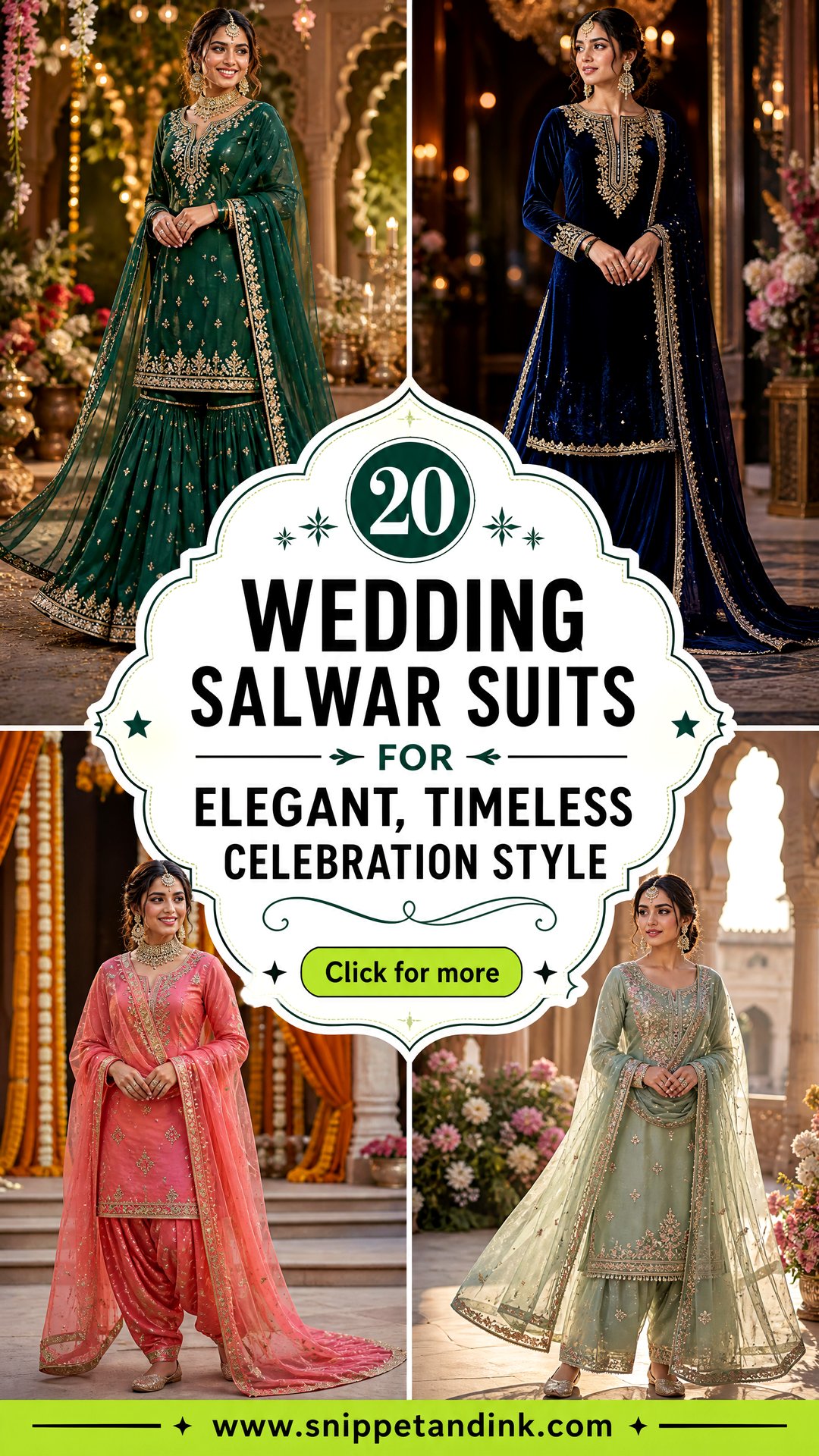
Unstitched Fabric Needs Weeks at the Tailor, So Order Early
Many wedding salwar suits are sold unstitched or semi-stitched, and that changes your timeline. In wedding season, good tailors are booked up, so I’d hand over the fabric at least a few weeks before the first function and leave time for a second fitting. Ready-to-wear suits still usually need the sleeves and trousers adjusted.
What to tell your tailor
- Which shoes you’ll wear. Trouser length, sharara hems and Anarkali flares all depend on heel height.
- How you’ll move at the event. Leave ease at the armholes and bust if you’ll be dancing, and enough width through the hip to sit on the floor at a mehndi.
- Where the slits should end. Side slits that are too low pull across the thighs when you sit.
- Whether the dupatta needs finishing. Ask for picot or a fall on the edges so delicate fabric doesn’t fray, and confirm any tassels are stitched on firmly.
Try the finished suit on at home with your jewellery and shoes as soon as you collect it, so there’s still time for a fix if a seam or hem isn’t right.
1. Red Bridal Anarkali Salwar Suit
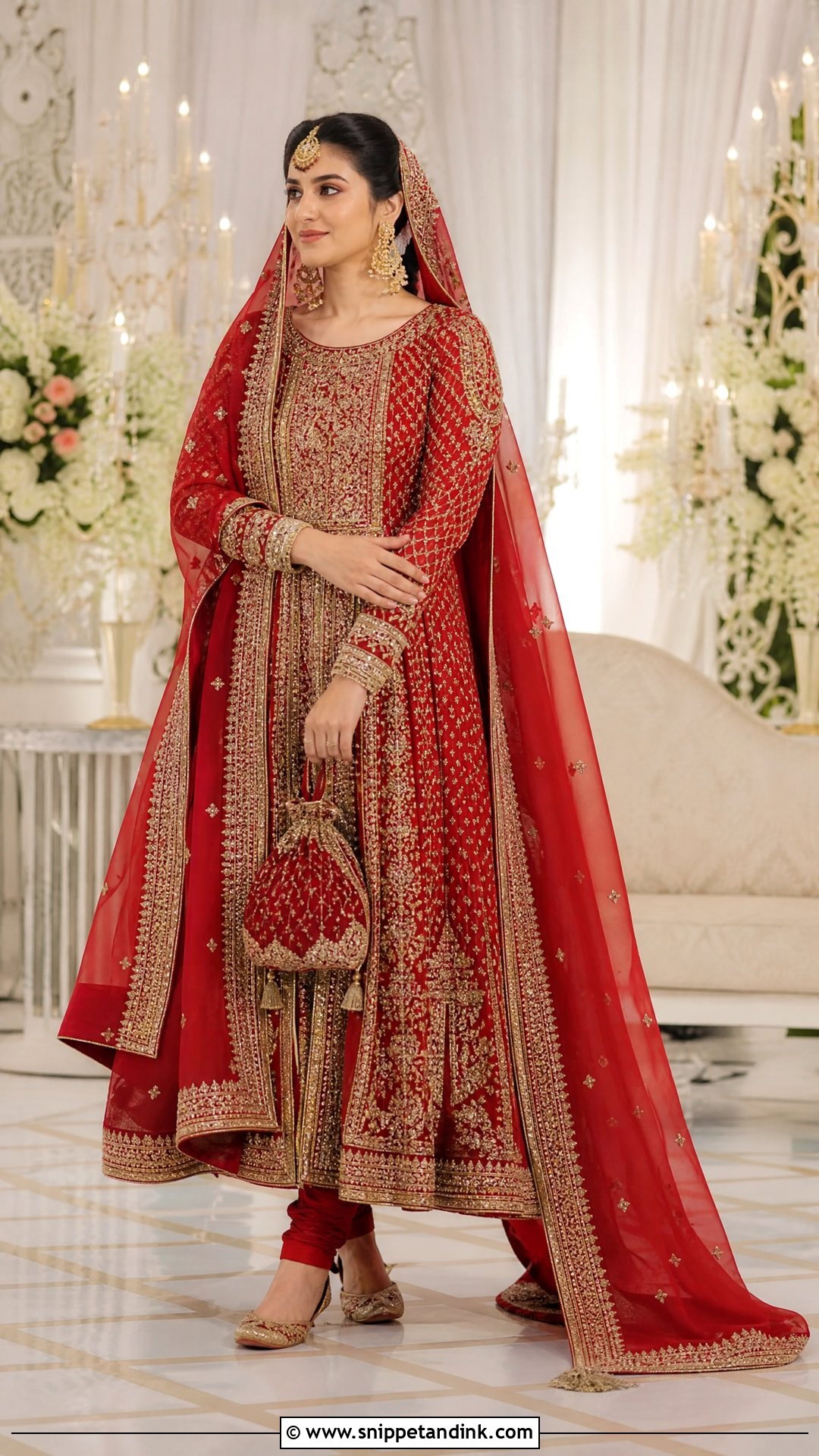
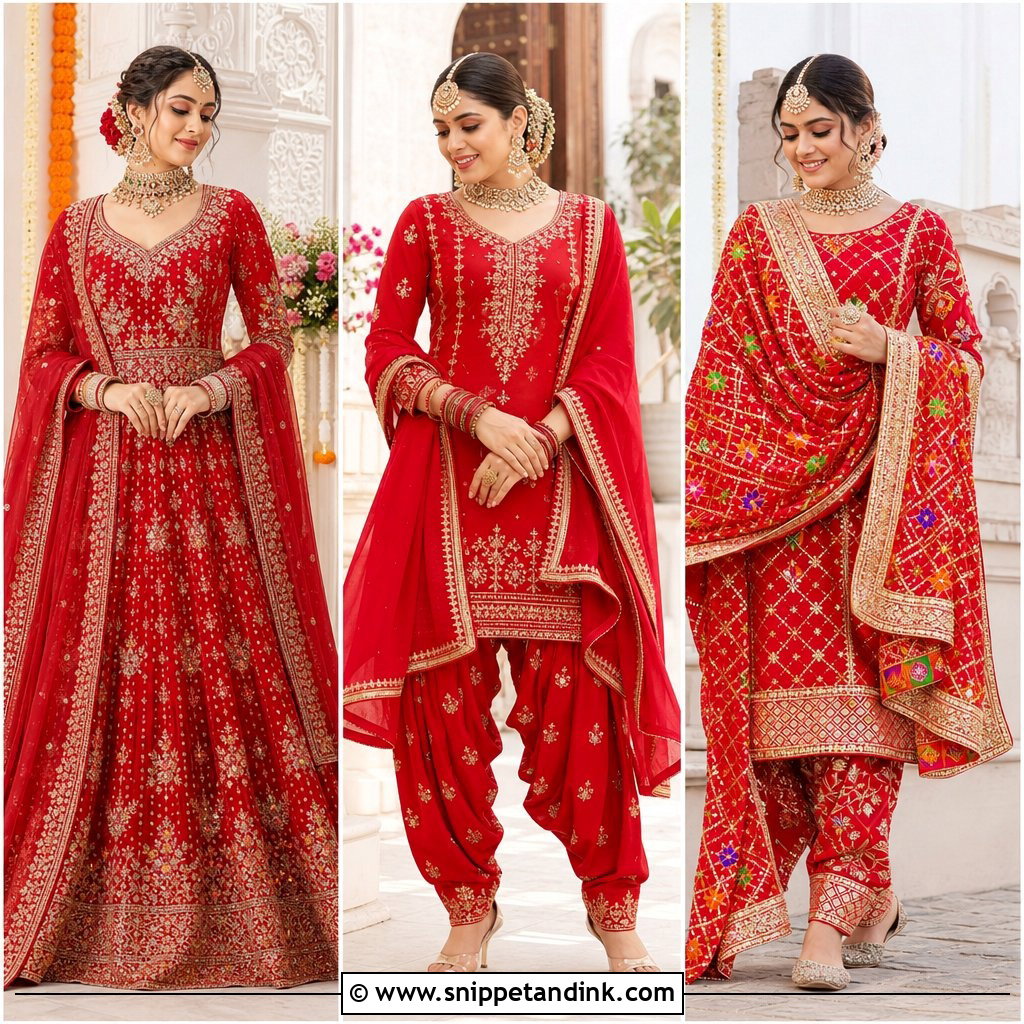
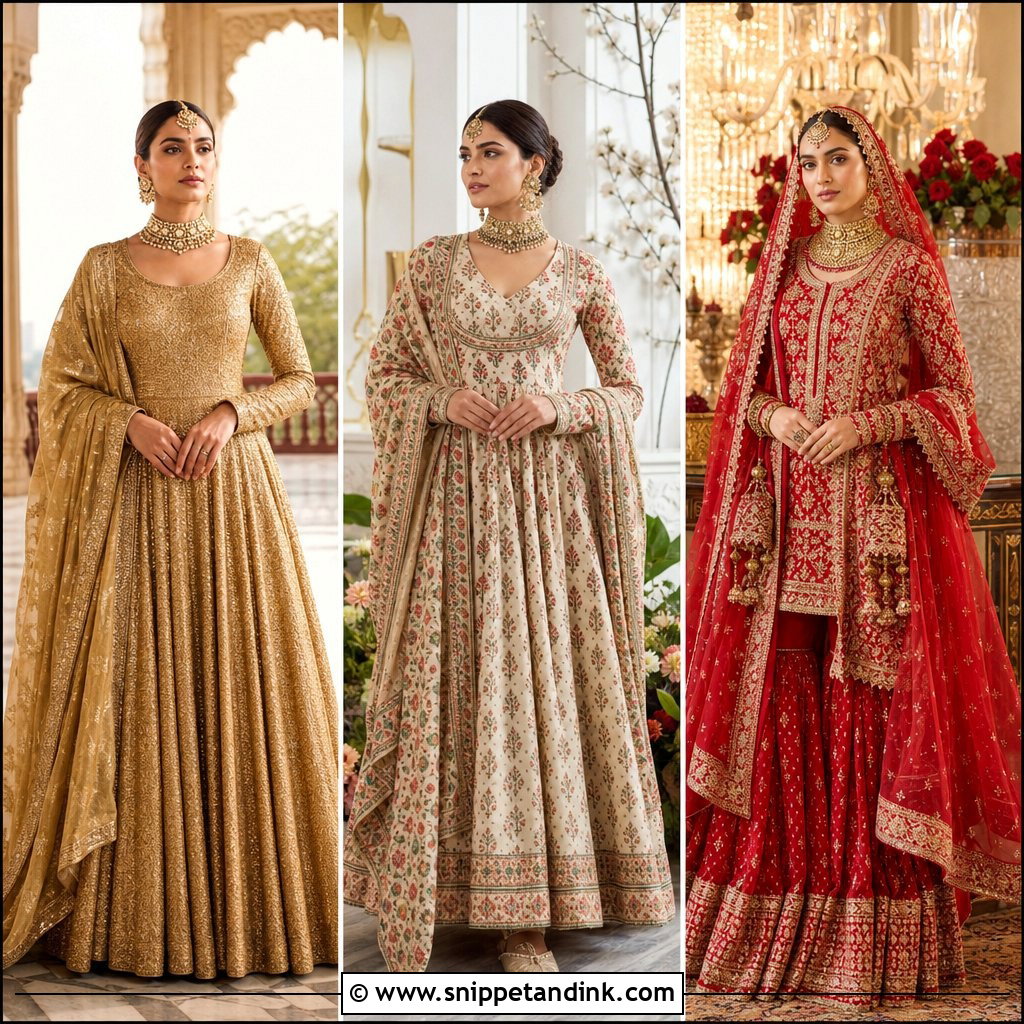
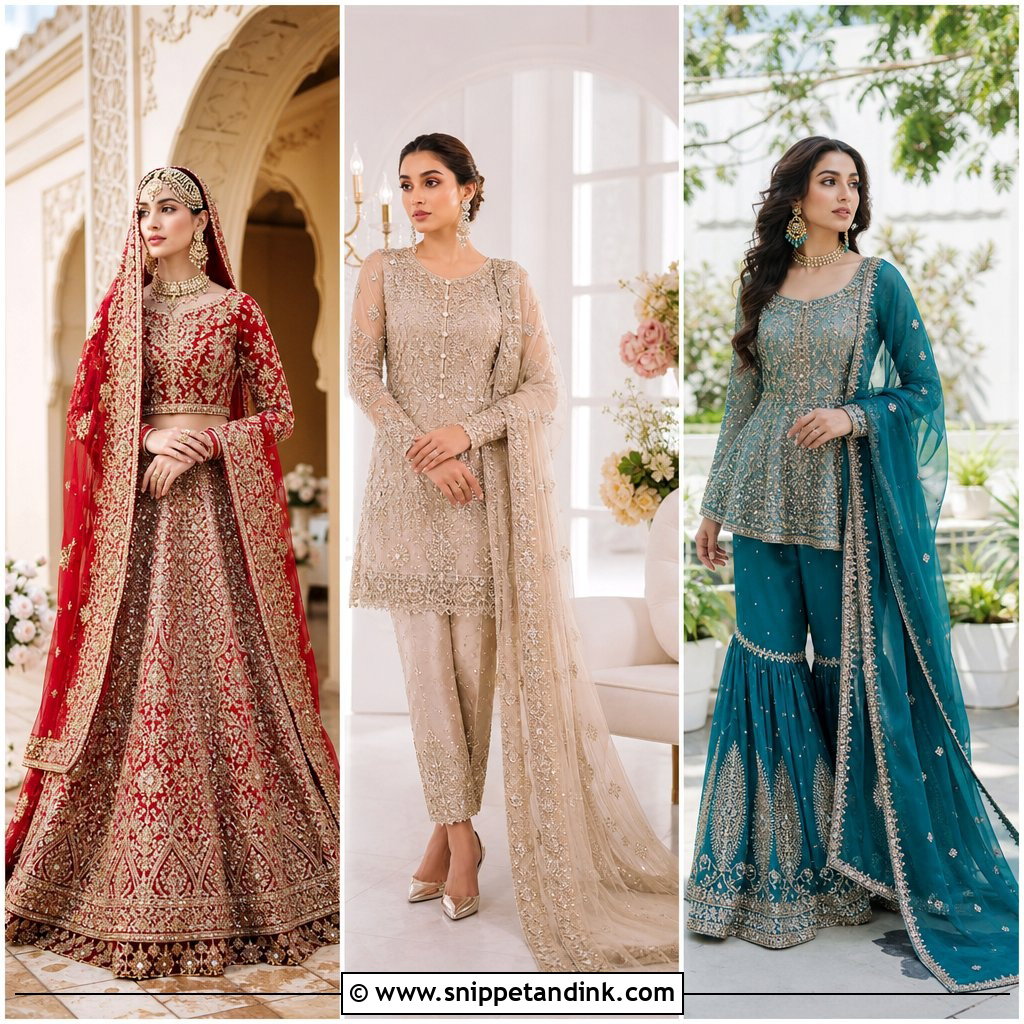
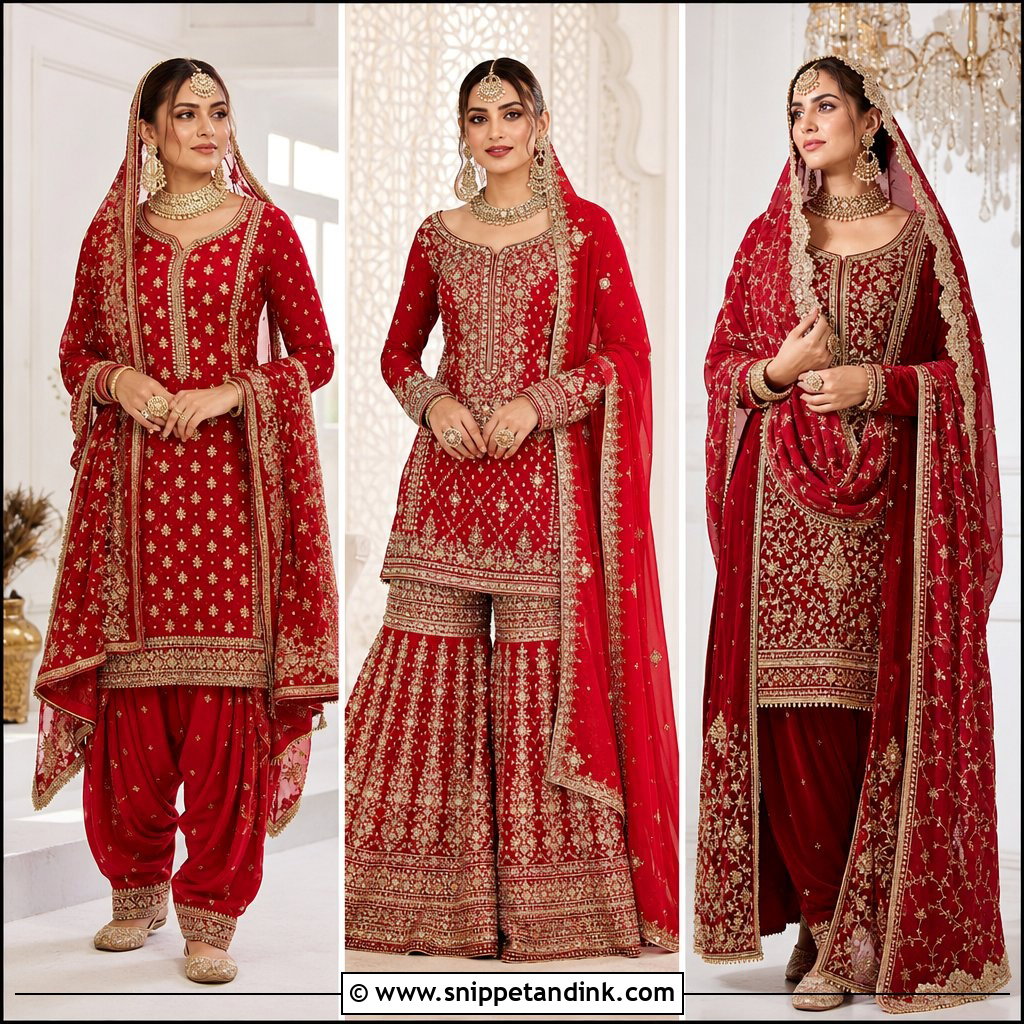
For a bride who wants regal without the weight of a lehenga, a red bridal Anarkali salwar suit is the answer I give most often. Choose a floor-length, paneled kameez with gold zardozi, resham work or carefully placed sequins. Zardozi is metal thread and it’s heavy, so I ask for it to be concentrated on the bodice and hem rather than all over the panels, or the flare loses its swing. A fitted bodice and flared skirt let you move. The churidar or narrow salwar underneath stays hidden. Drape a bordered net dupatta over one shoulder and across the arms, then add gold jhumkas, a maang tikka, embellished juttis and a small potli. Crimson, ruby and maroon-red each suit different complexions, so drape the fabric against your face in daylight before deciding.
2. Emerald Green Sharara Salwar Suit
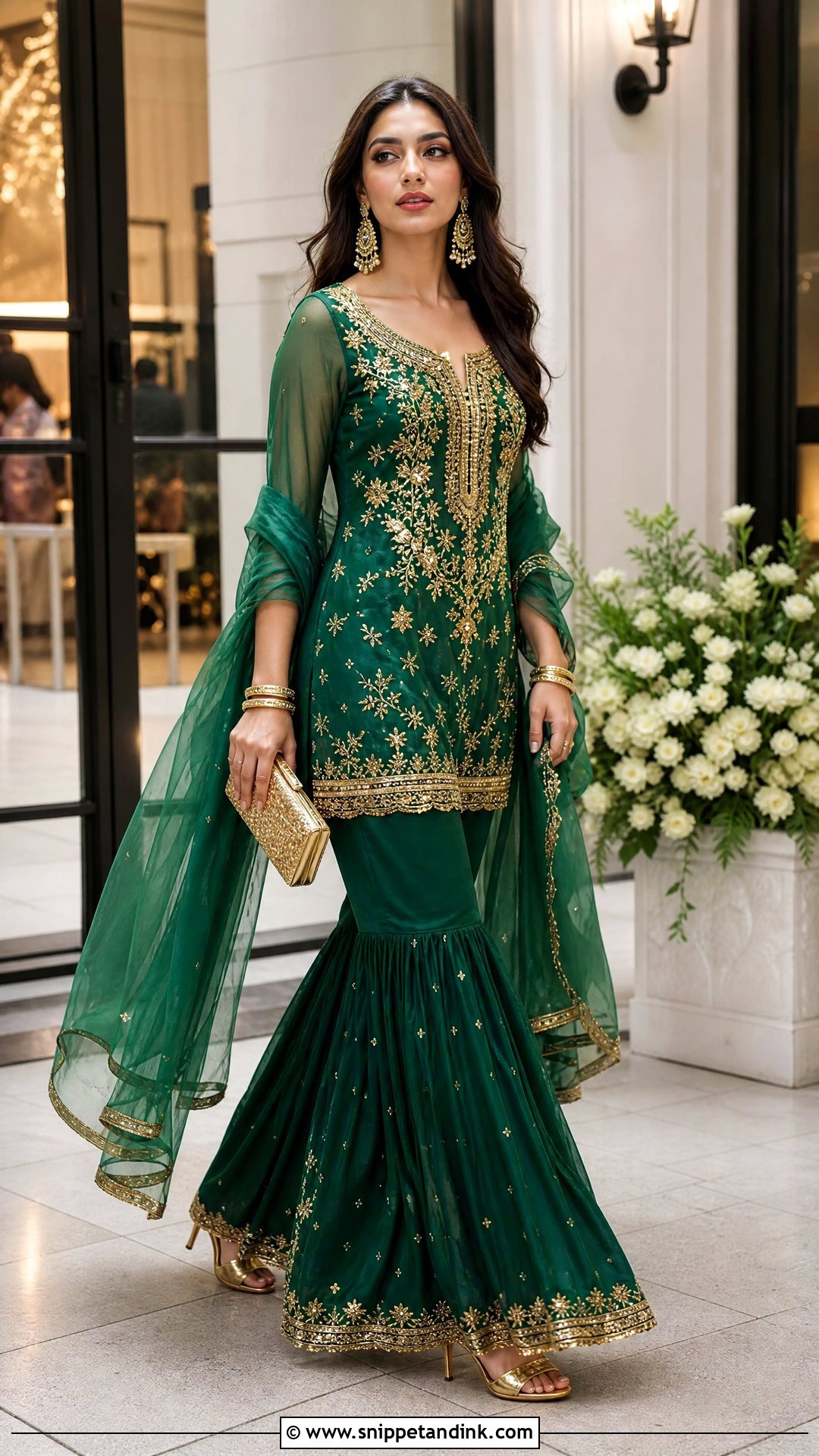
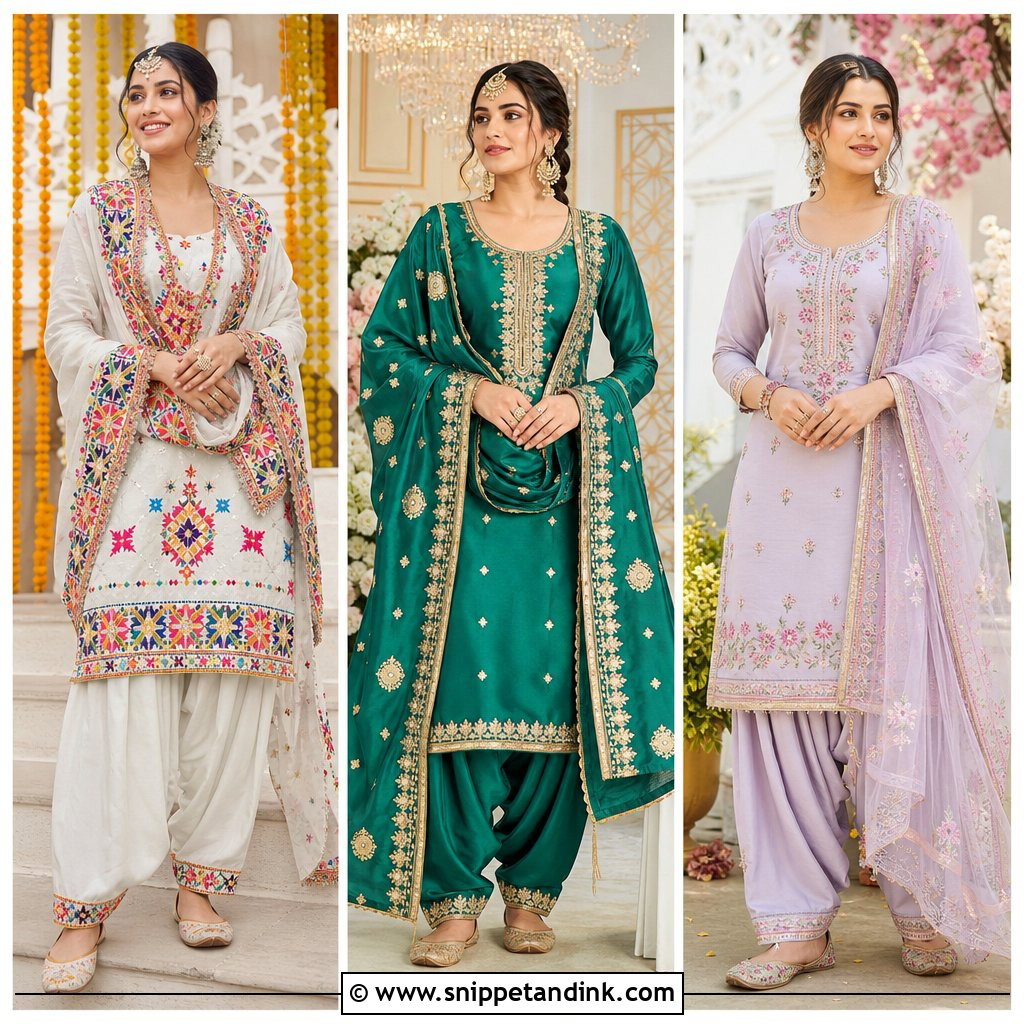
Emerald is a night colour. Under warm reception lights it deepens beautifully, while in harsh noon sun it can look flat. Start with a short, fitted kurta with antique-gold embroidery at the neckline, cuffs and hem, then a high-waisted sharara that flares from the hip. Organza with a slim metallic border keeps the dupatta light. Gold block heels give height and won’t catch in the sharara the way stilettos can. Chandelier earrings, stacked bangles and a structured clutch finish it, with a delicate necklace if the neckline is already worked. Sharara hems should just graze the floor in your shoes; any longer and you’ll be stepping on them all night at the sangeet.
3. Ivory Pakistani Salwar Suit
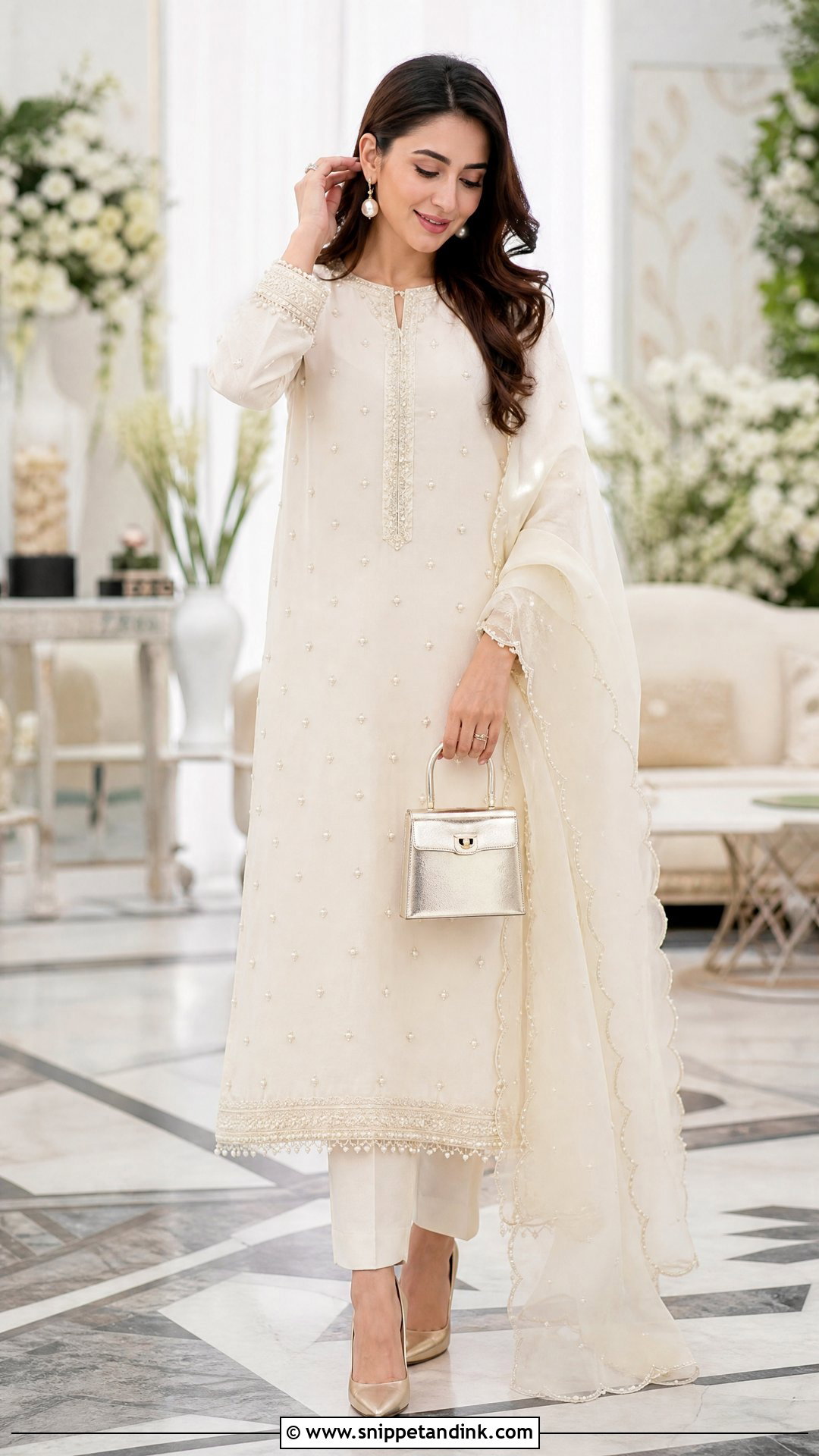
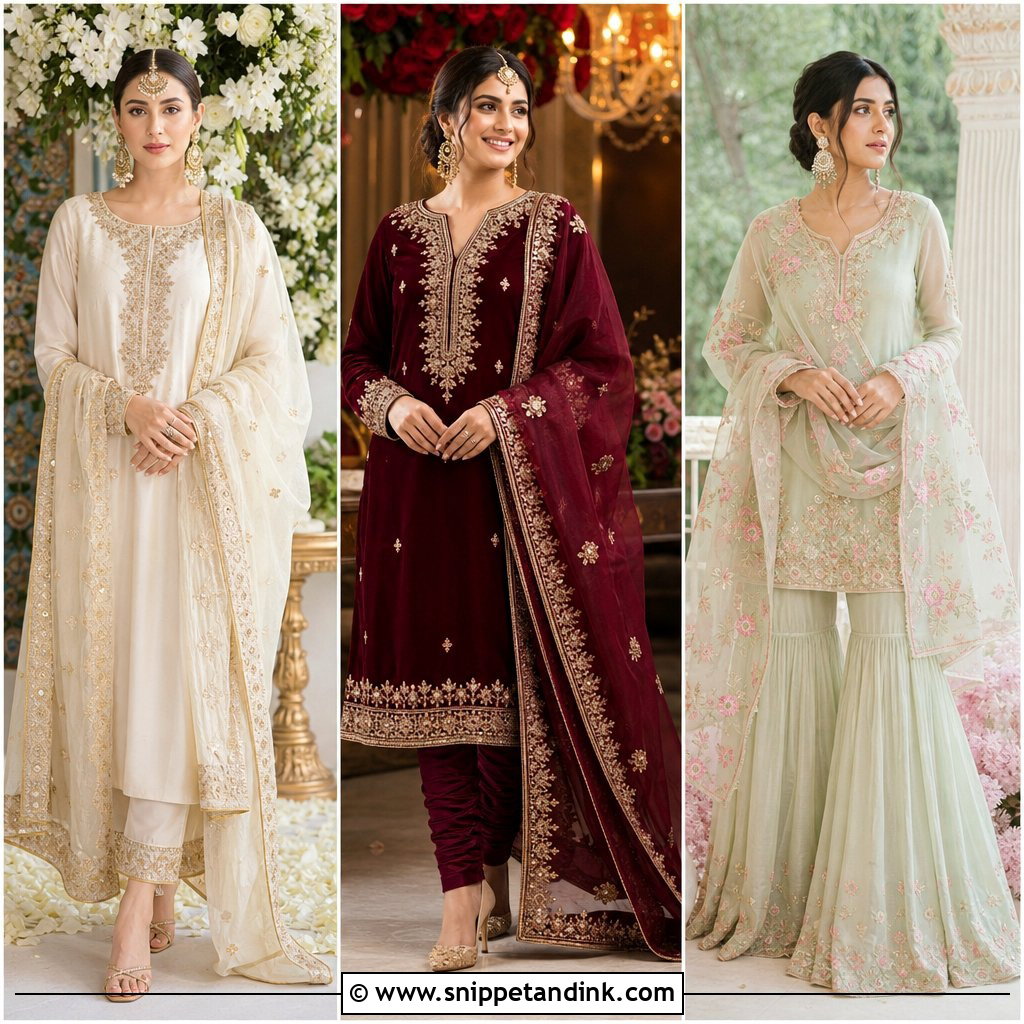
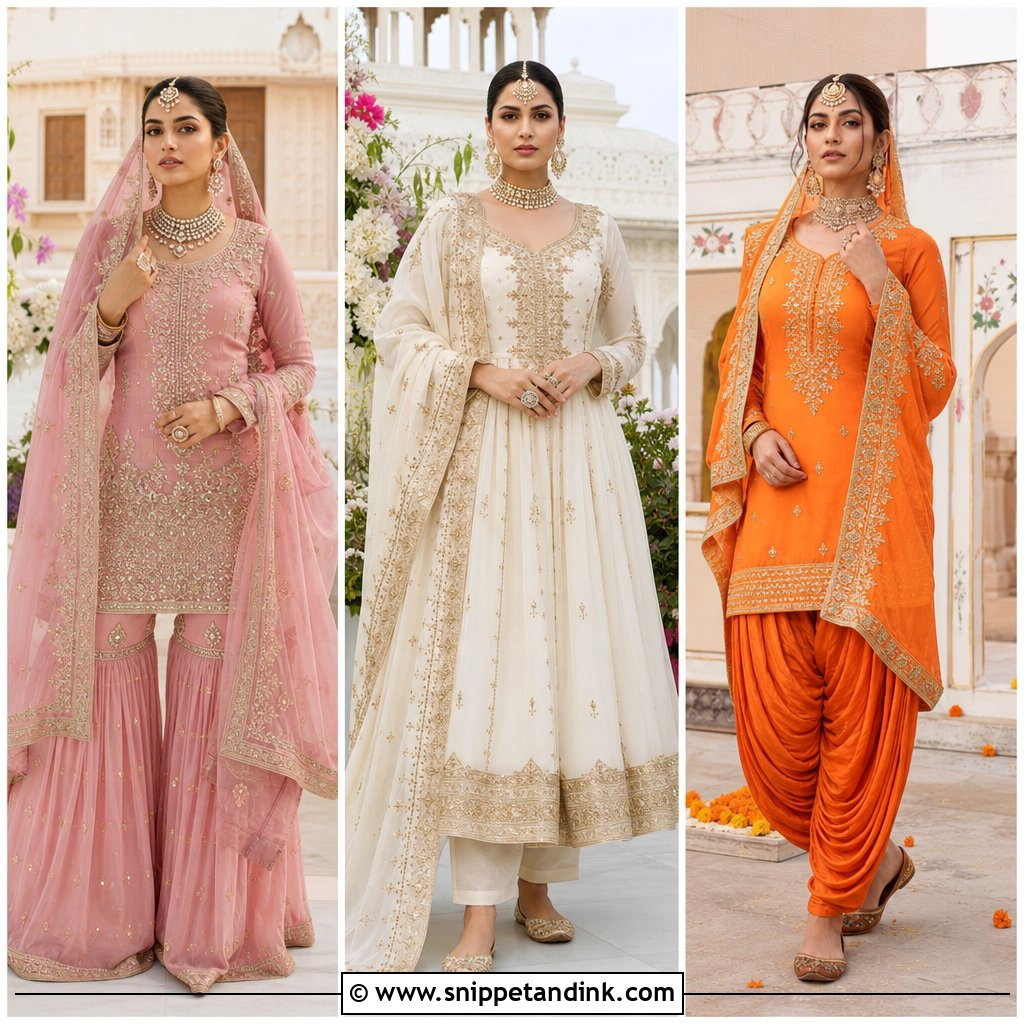
Long, straight and quiet: an ivory Pakistani salwar suit relies on proportion more than embroidery. Choose a long kameez with tonal threadwork, pearl details and lightly worked side slits, then straight trousers that keep the line long. A translucent organza dupatta with fine embroidery or a scalloped edge adds depth. Champagne heels, pearl drops, a compact metallic bag and a sleek low bun or soft waves keep it formal for a daytime nikah. Ivory means different things in different families. As a guest, ask the couple first, and if you’re unsure, bring in blush, mint or powder-blue accents so you don’t read as the bride.
4. Marigold Yellow Mehndi Salwar Suit
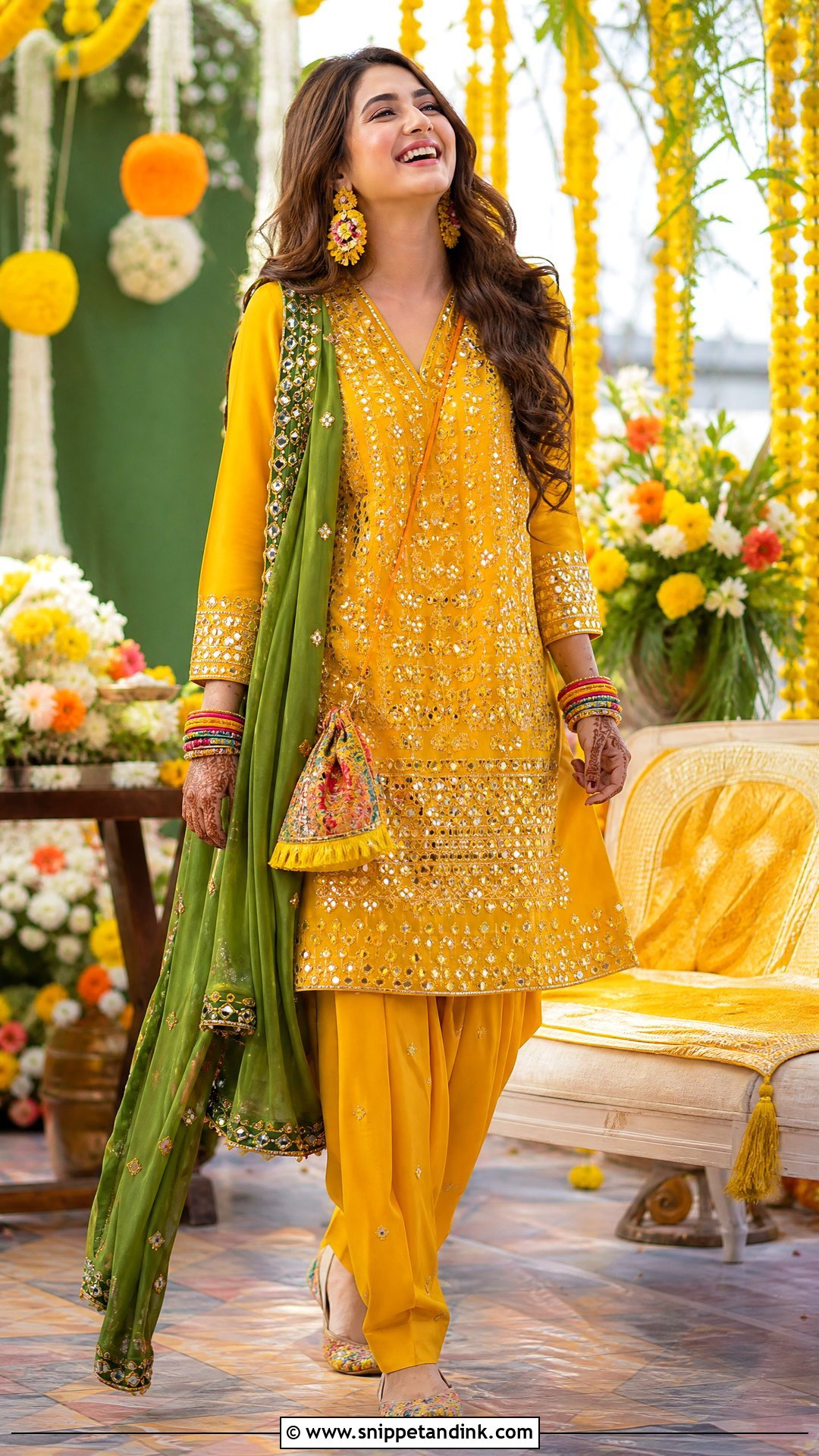
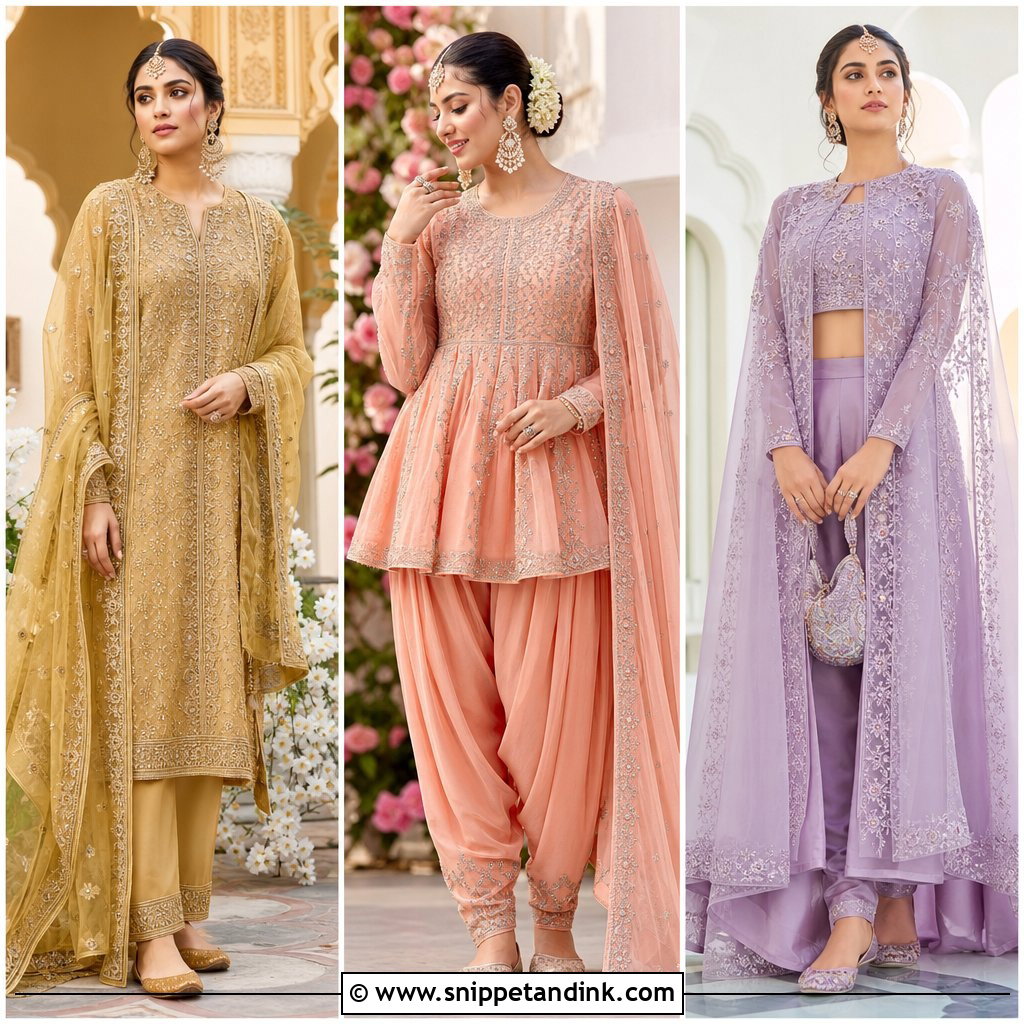
Mehndi days are long, loud and usually involve sitting on the floor, so this suit has to be comfortable before it’s anything else. A marigold knee-length kameez with mirror work, gota or colourful floral embroidery suits the energy, and a relaxed salwar gives you room to sit cross-legged and dance. A contrasting green or hot-pink dupatta keeps all that yellow from looking flat. Embroidered juttis, floral earrings, coloured bangles and a crossbody potli leave your hands free, which matters if you’re having henna applied. Lightweight georgette, cotton silk or chiffon is cooler for daytime. Pin the dupatta at one shoulder so it doesn’t trail into fresh mehndi paste.
5. Blush Pink Palazzo Salwar Suit
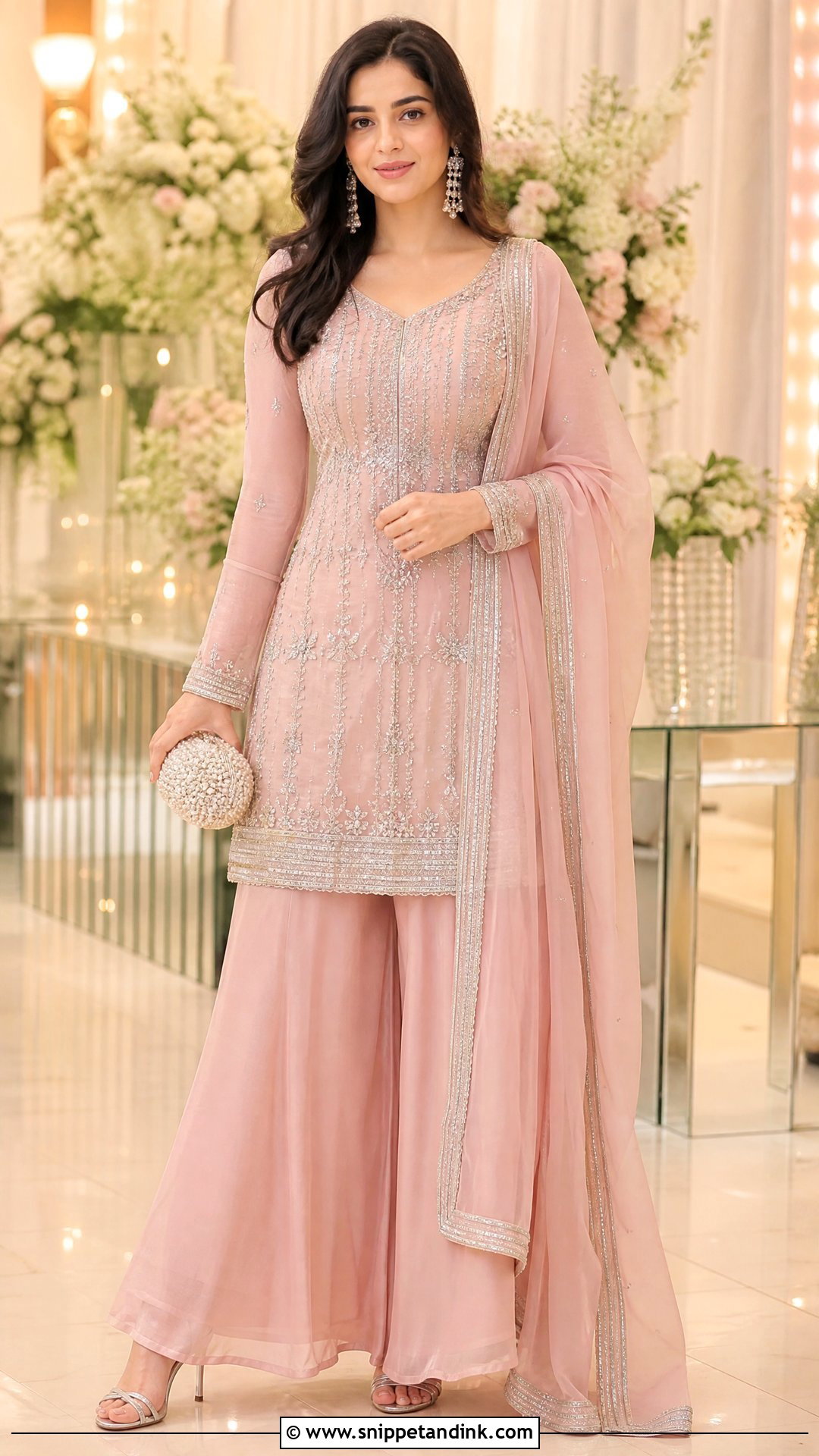
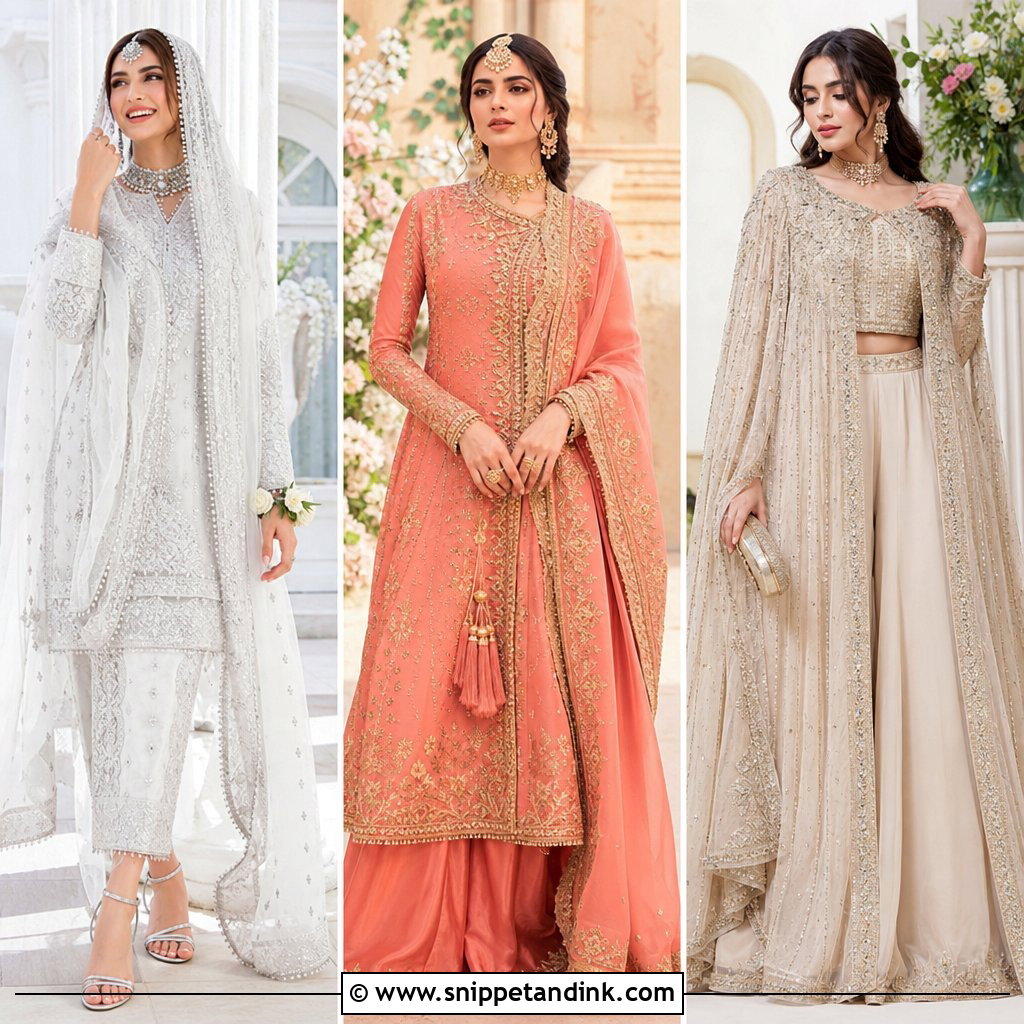
Blush with silver work is soft without being sugary. A mid-length kameez with a defined waist, side slits and silver embroidery sits well over fluid palazzos, provided the fabric is light enough to move; heavy palazzos just look like wide trousers. A matching dupatta with a narrow sequin border keeps it tonal, and silver heels with a pearl-covered clutch add a little sparkle. Crystal drops or a slim choker frame the face. If you’re petite, ask your tailor for a slightly shorter kameez and a higher palazzo waist, which lengthens the leg. Daytime receptions and engagement parties suit it.
6. Navy Blue Velvet Salwar Suit
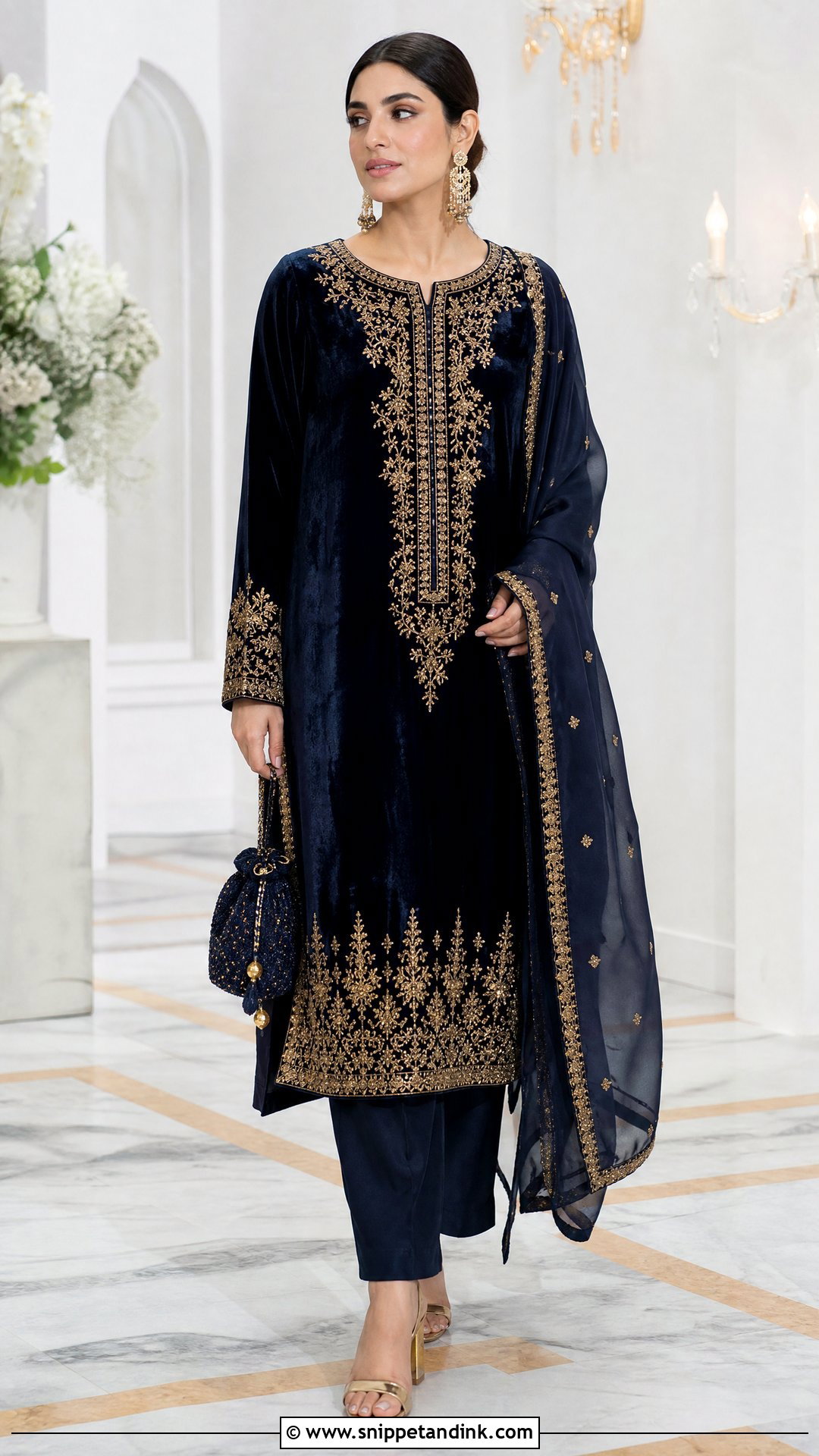
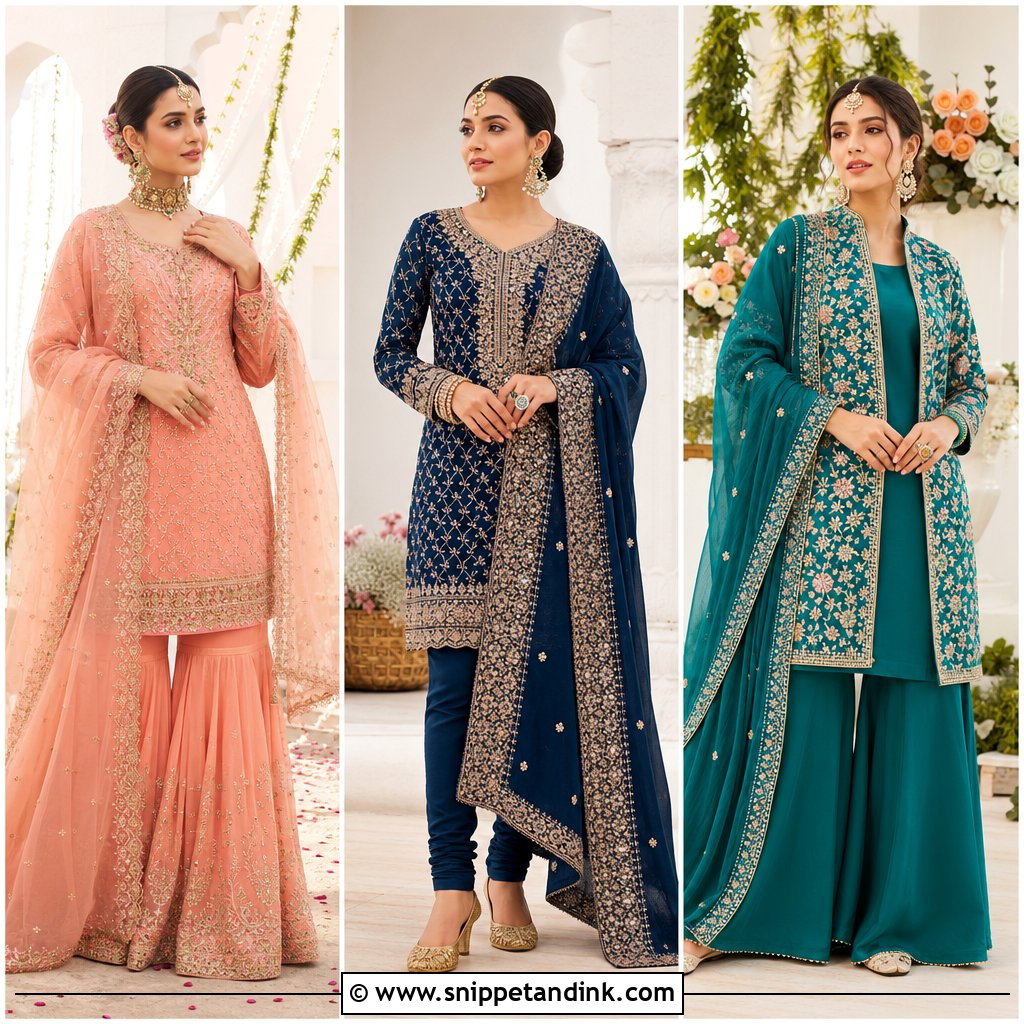
Velvet is warm and rich, and it’s also heavy, so I balance it with lighter pieces. A straight or gently flared navy velvet kameez with gold embroidery kept to the neckline, sleeves and border pairs best with streamlined silk trousers. A chiffon or organza dupatta adds movement the velvet can’t. Antique-gold earrings, metallic block heels and a navy beaded potli coordinate without crowding it. Velvet already has depth, so one or two pieces of jewellery look better than several. Remember that velvet crushes where you sit and holds the marks, so hang it in a steamy bathroom before you dress. Save it for winter evenings.
7. Powder Blue Chanderi Salwar Suit
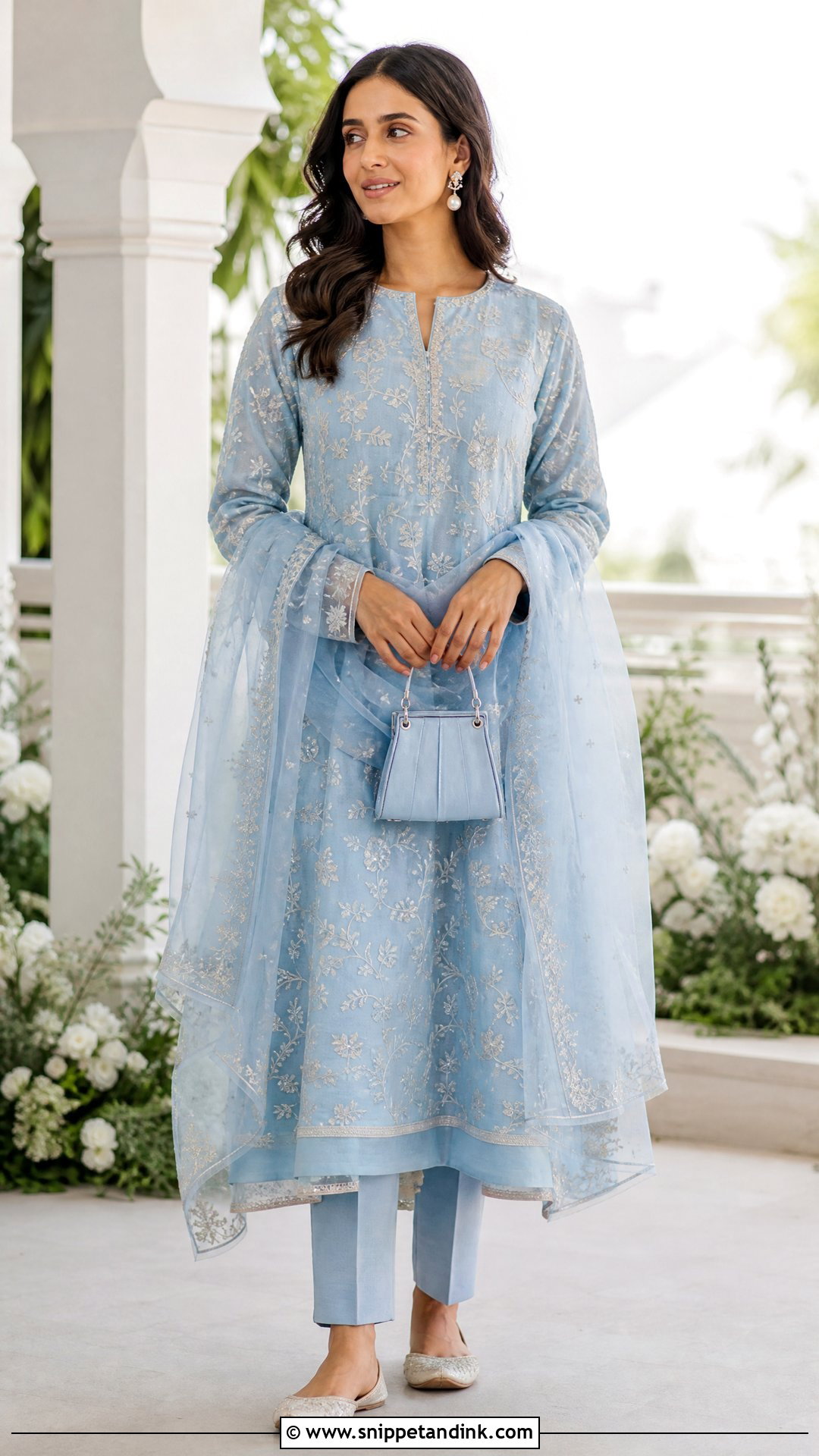
Chanderi has a soft sheen and very little weight, which is why I reach for it for a morning ceremony in warm weather. Powder blue suits it. Choose an A-line kameez with silver threadwork, small florals and three-quarter sleeves, with straight pants or a narrow salwar to keep the proportions light. A sheer matching dupatta with embroidered edges can be draped loosely over both arms for a formal daytime look. Silver juttis, pearl earrings and a small white or blue bag complete it. Chanderi is often slightly sheer, so the lining matters: it should be smooth and fitted, but not so stiff that it changes the drape.
8. Purple Gharara Salwar Suit
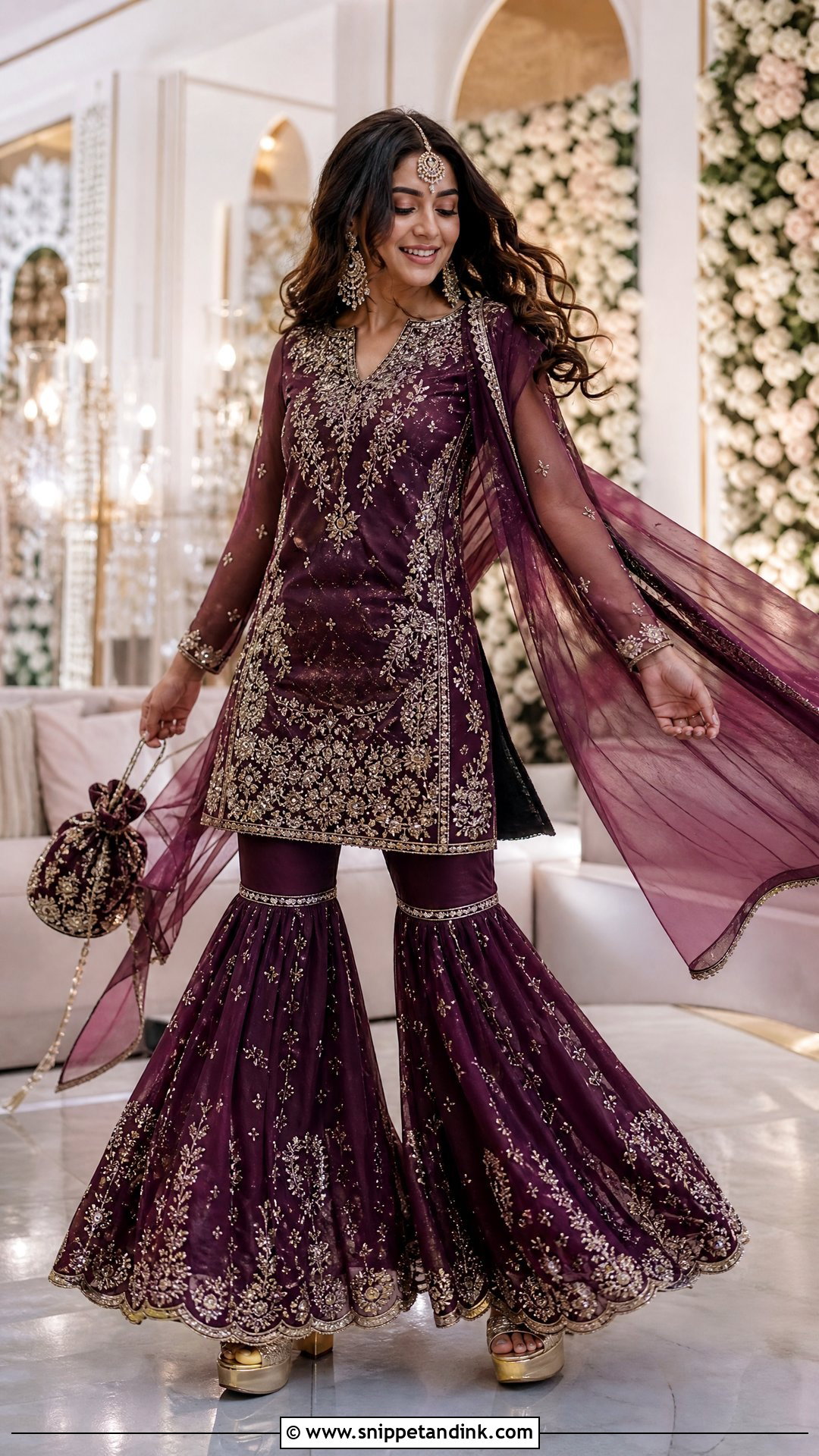
The construction is what gives this outfit its drama. A purple gharara salwar suit is fitted from waist to knee, joined by a band at the knee, then flares to the floor, so the kameez should stop at the upper thigh to keep that joint visible. Knee bands in zari, gota or sequins draw the eye there. Plum suits the evening and lavender suits daytime. A lightweight dupatta over one shoulder balances the volume below, with platform heels, a maang tikka, dangling earrings and a compact embroidered purse. The knee seam has to sit exactly at your knee; if it’s high or low, the whole silhouette looks off and walking gets awkward.
9. Teal Angrakha Salwar Suit
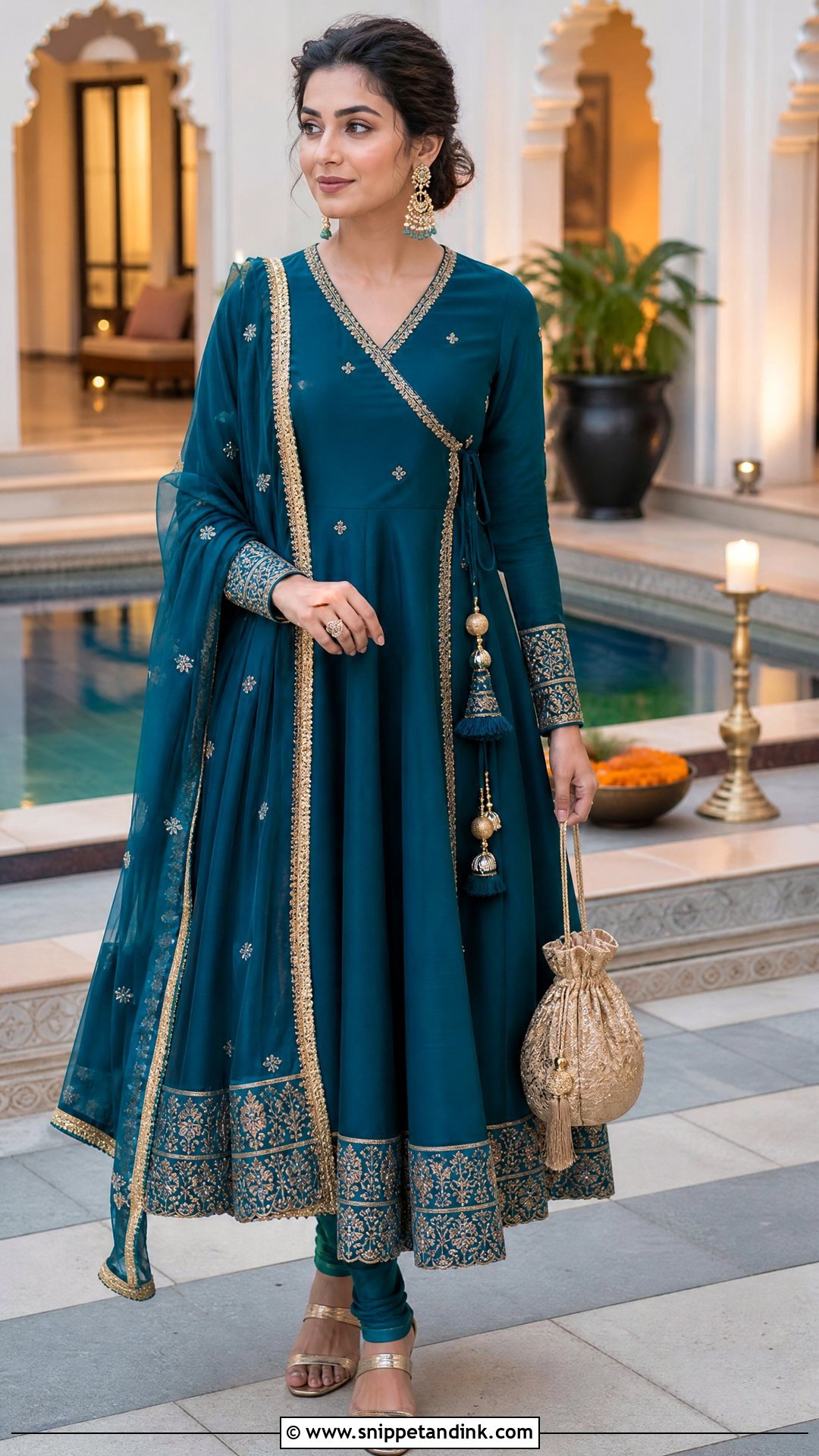
An Angrakha wraps across the body and ties at the side, so it defines the waist without a single dart. Teal in that cut moves well. Look for embroidered borders that follow the diagonal neckline, and tassels at the side closure for a little swing. Fitted churidar or narrow trousers keep the lower half quiet beneath the flared kameez. A soft net dupatta, metallic sandals and a gold potli bring it together, and statement earrings are enough jewellery since the neckline already draws the eye. The ties are the weak point. Check them before you leave home and secure the inner tie with a small safety pin, because a loosened wrap opens when you bend. Sangeet nights and family functions suit it.
10. Peach Cape Salwar Suit
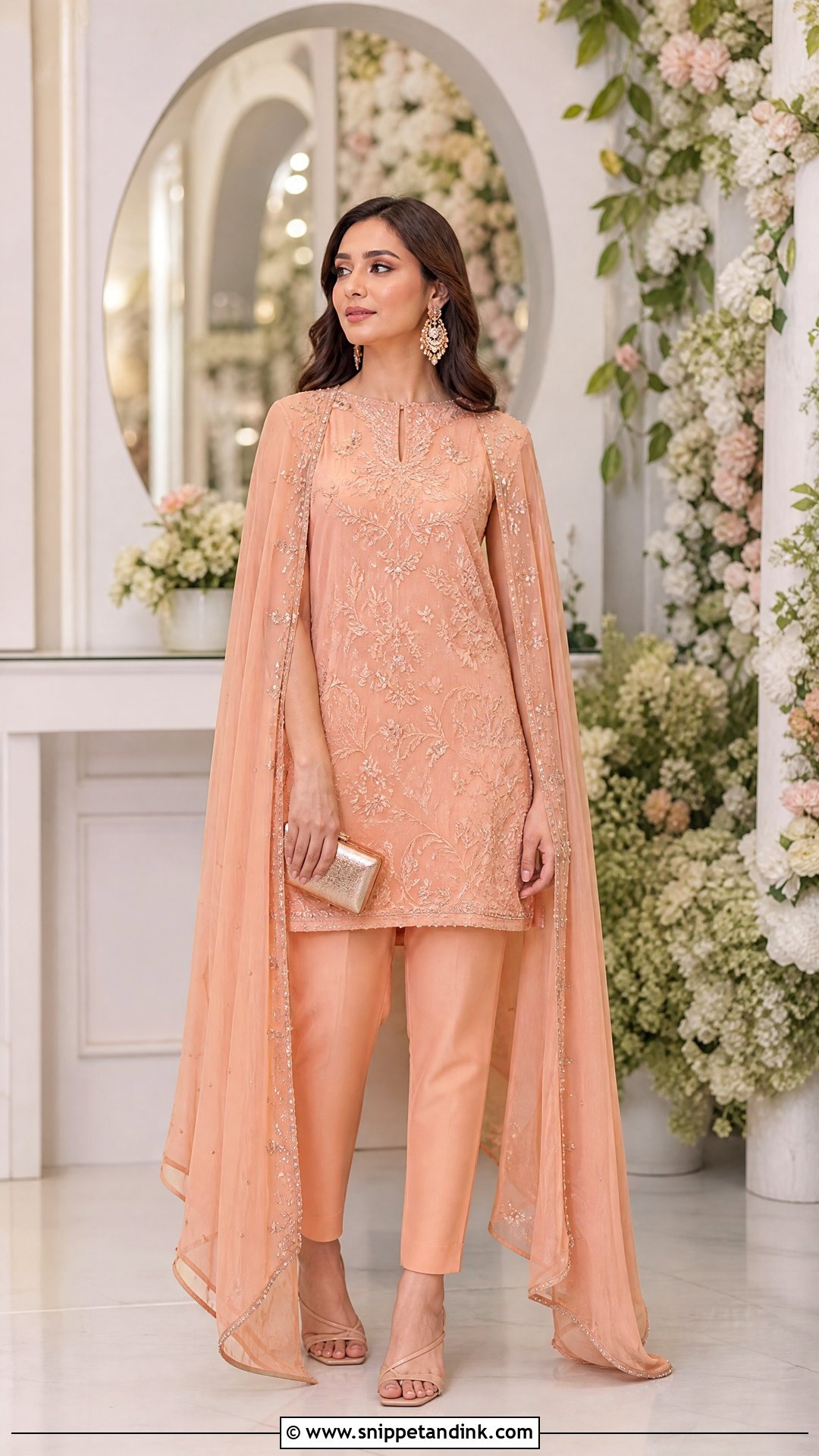
A cape replaces the dupatta, and for anyone who spends a function carrying children, plates or a phone, that’s a relief. Begin with a sleeveless or short-sleeved embroidered peach kameez and tailored straight pants, then add a sheer, hip-length cape with beadwork, floral appliqué or fine sequins. Keep the kameez fairly plain so the cape leads. Nude heels lengthen the leg, and rose-gold earrings with a slim metallic clutch suit the peach. If you want more coverage, choose a longer cape with loose sleeves and a front closure. Engagement parties and modern receptions are its home.
11. Black Sequin Reception Salwar Suit
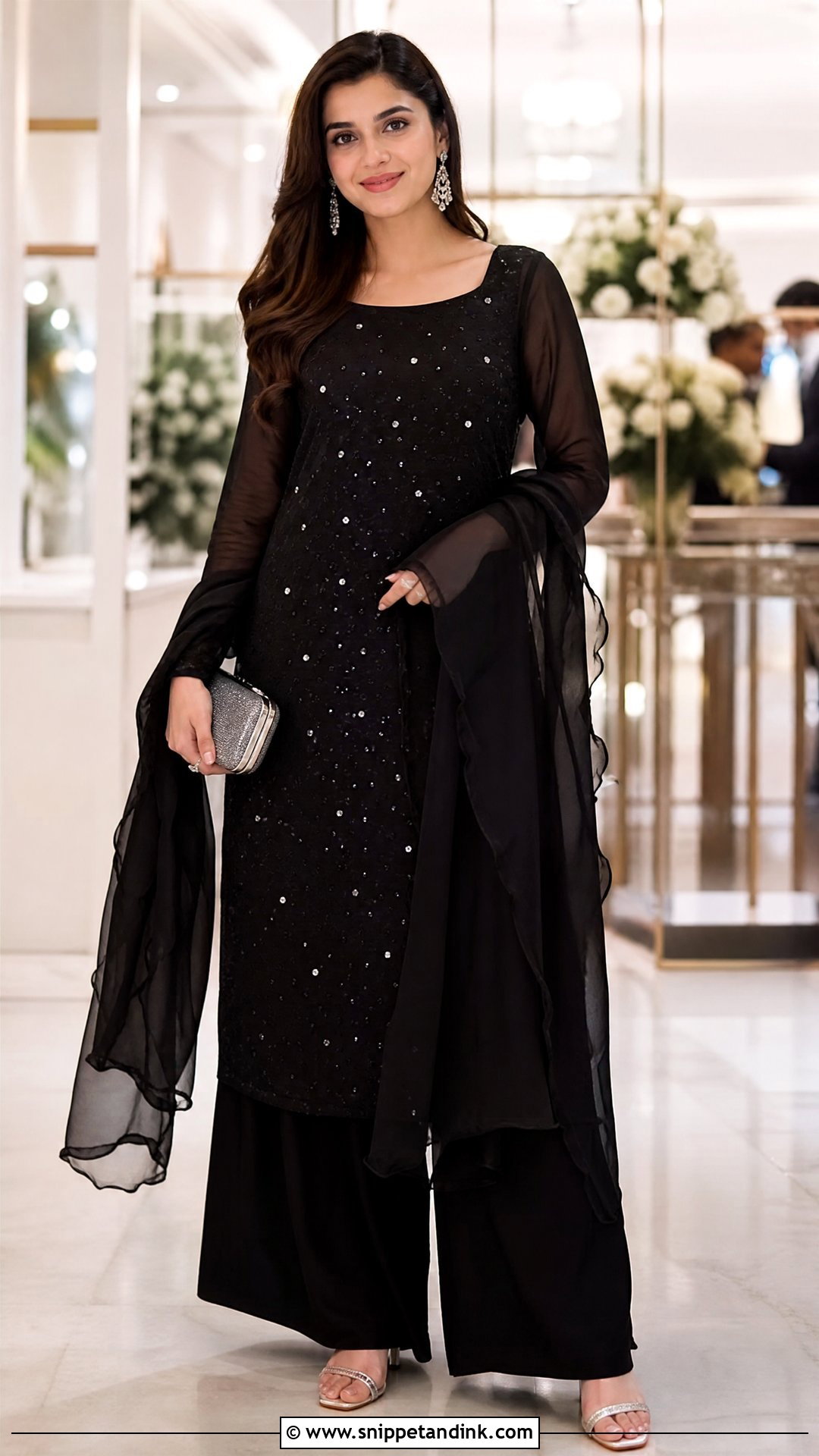
Black is welcomed at some weddings and avoided at others, so this is the one suit on the list where I’d ask the hosts before buying. Where it’s fine, a fitted knee-length kameez with scattered sequins, not dense all-over work, looks sleek for evening. Flowing black palazzos soften the fitted top. A smoky grey or black chiffon dupatta with a slim silver border adds depth without another strong colour. Silver heels, crystal earrings, a hard-shell clutch and a smooth ponytail or low bun keep it modern. Sequins on chiffon can catch the dupatta edge, so test the two together. Where black is discouraged, deep navy or charcoal gives a similar effect.
12. Coral Patiala Salwar Suit
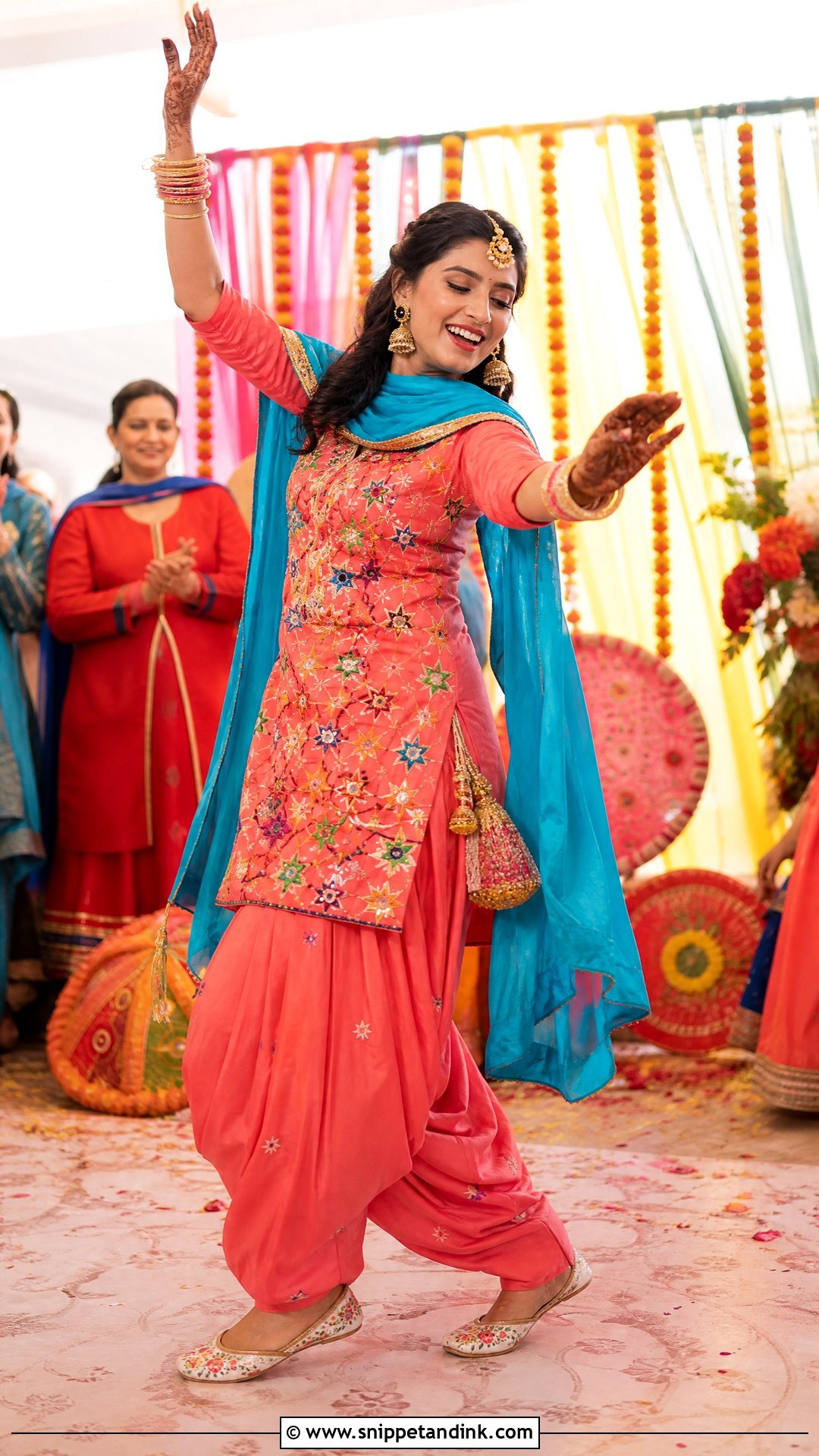
Jaggo and mehndi nights mean hours of bhangra, and nothing dances like a Patiala. A coral Patiala salwar suit with a short kameez, phulkari-style embroidery or gold gota accents suits those nights. The salwar uses a lot of fabric folded into deep pleats, which is what gives it that draped fall, so make sure the drawstring waist is comfortable and the pleats sit evenly. A turquoise, yellow or pink dupatta adds brightness. Embroidered juttis are the practical choice here, flat and soft enough for dancing. Gold hoops or jhumkas, stacked bangles and a tassel potli finish it, and a kameez tailored at the shoulders balances the fuller salwar.
13. Mint Green Straight Cut Salwar Suit
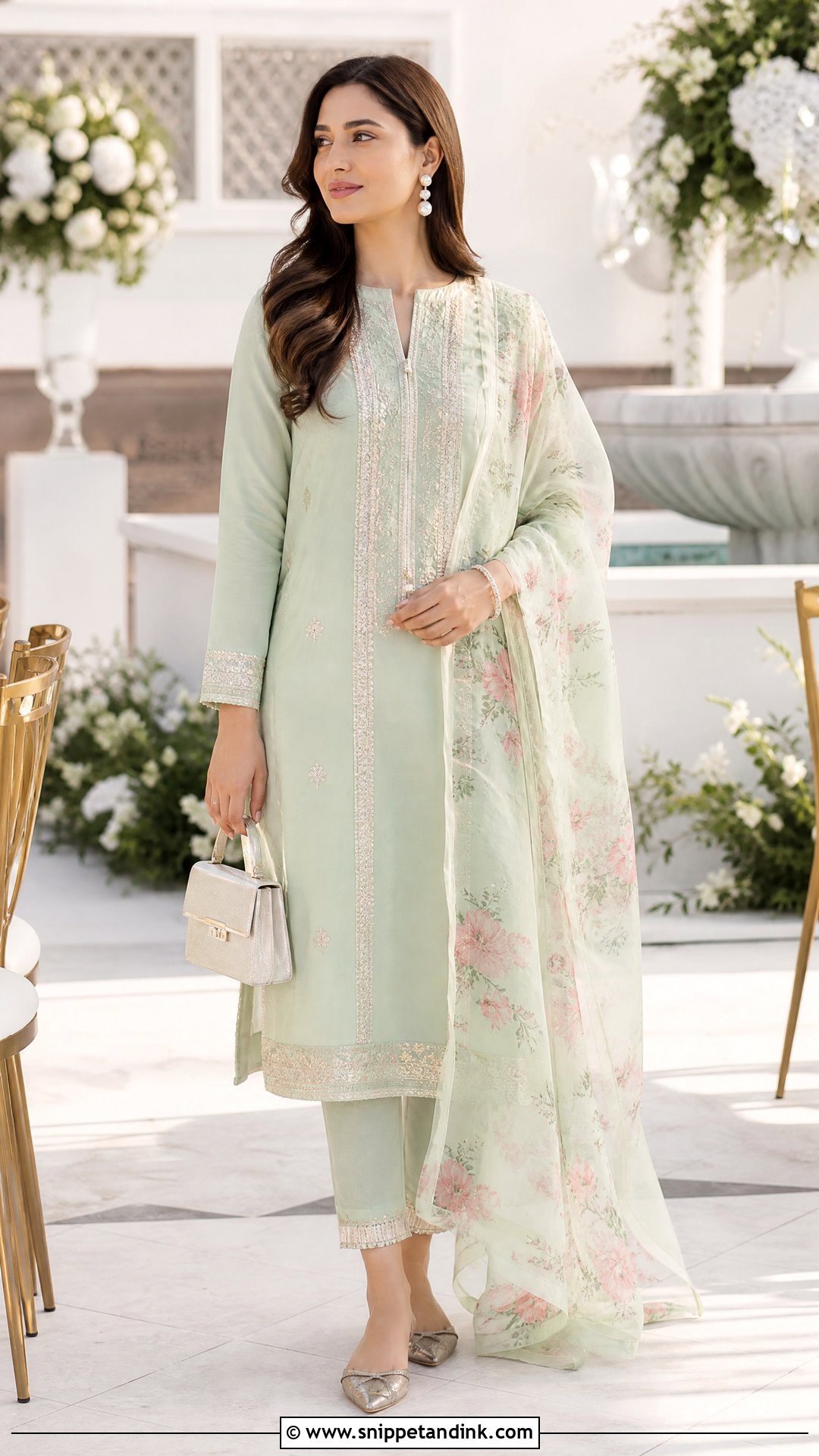
Clean lines suit a guest who’d rather not fuss. A calf-length mint kameez with vertical embroidery, covered buttons or fine beadwork draws the eye down and makes you look taller. Ankle-length cigarette pants keep it sharp and modern. A floral organza dupatta can bring in blush, lavender or ivory without leaving the soft palette. Pointed metallic flats or low heels depend on the venue, with pearl earrings, a slim bracelet and a structured mini bag. The straight cut is easy to tailor for different bodies, closer or looser at the waist, and side slits should be high enough to let you sit without the kameez pulling across your thighs. Daytime ceremonies and indoor gatherings suit it.
14. Champagne Gold Brocade Salwar Suit
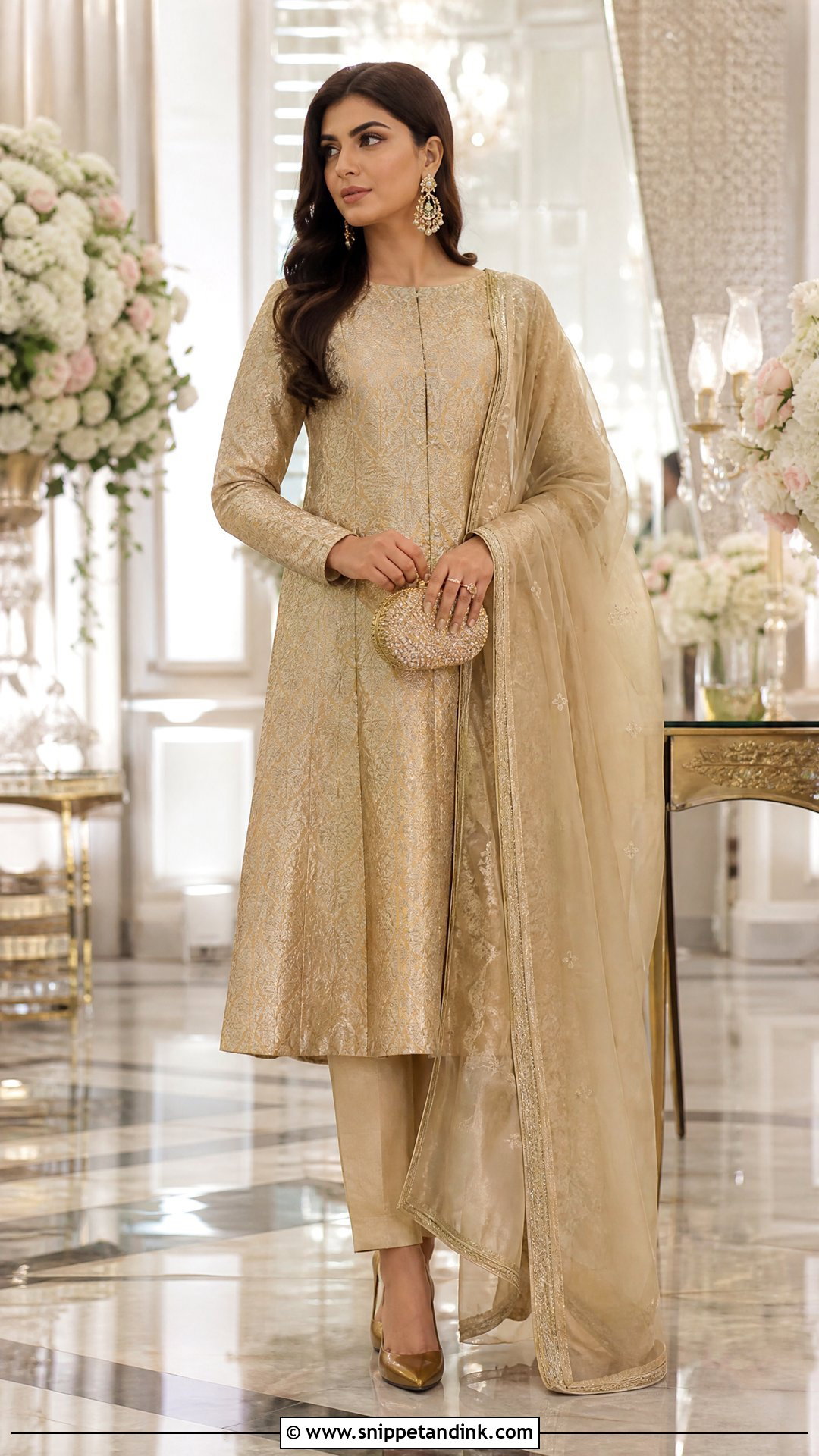
Brocade is stiff, woven and opulent, and in champagne gold it’s at home at a reception. A structured A-line kameez with woven motifs and a defined neckline needs plain silk trousers or a narrow salwar in the same colour family to calm it down. A tissue or organza dupatta adds shine without weight. Bronze heels, kundan earrings and a beaded champagne clutch finish it. If the brocade covers the whole kameez, skip a big necklace. Brocade doesn’t stretch and barely forgives, so leave a little ease at the bust and armholes; a tight brocade sleeve will stop you lifting your arms to dance. It’s glamorous enough for a close family role without the weight of a layered outfit.

15. Rani Pink Mirror Work Salwar Suit
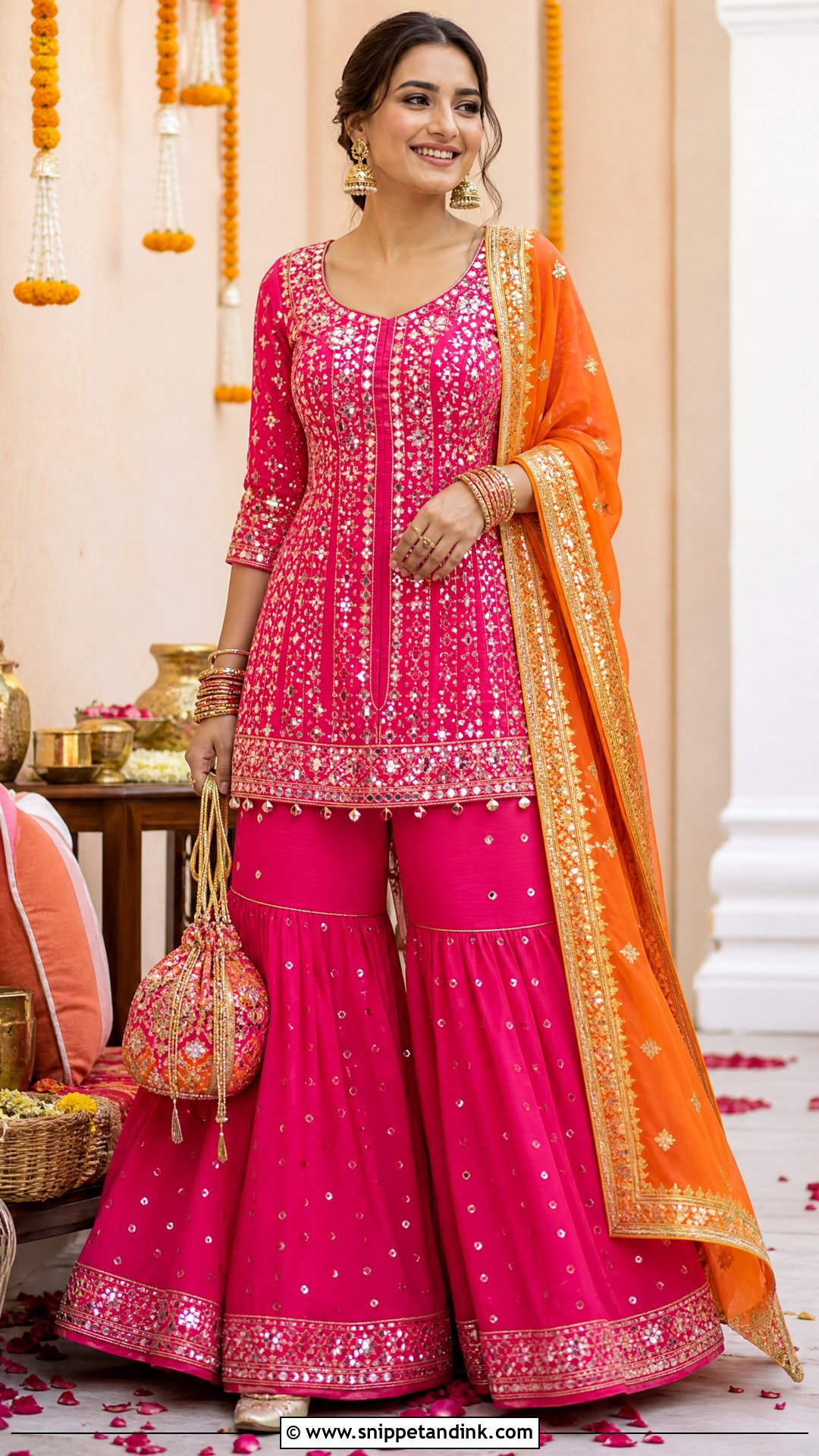
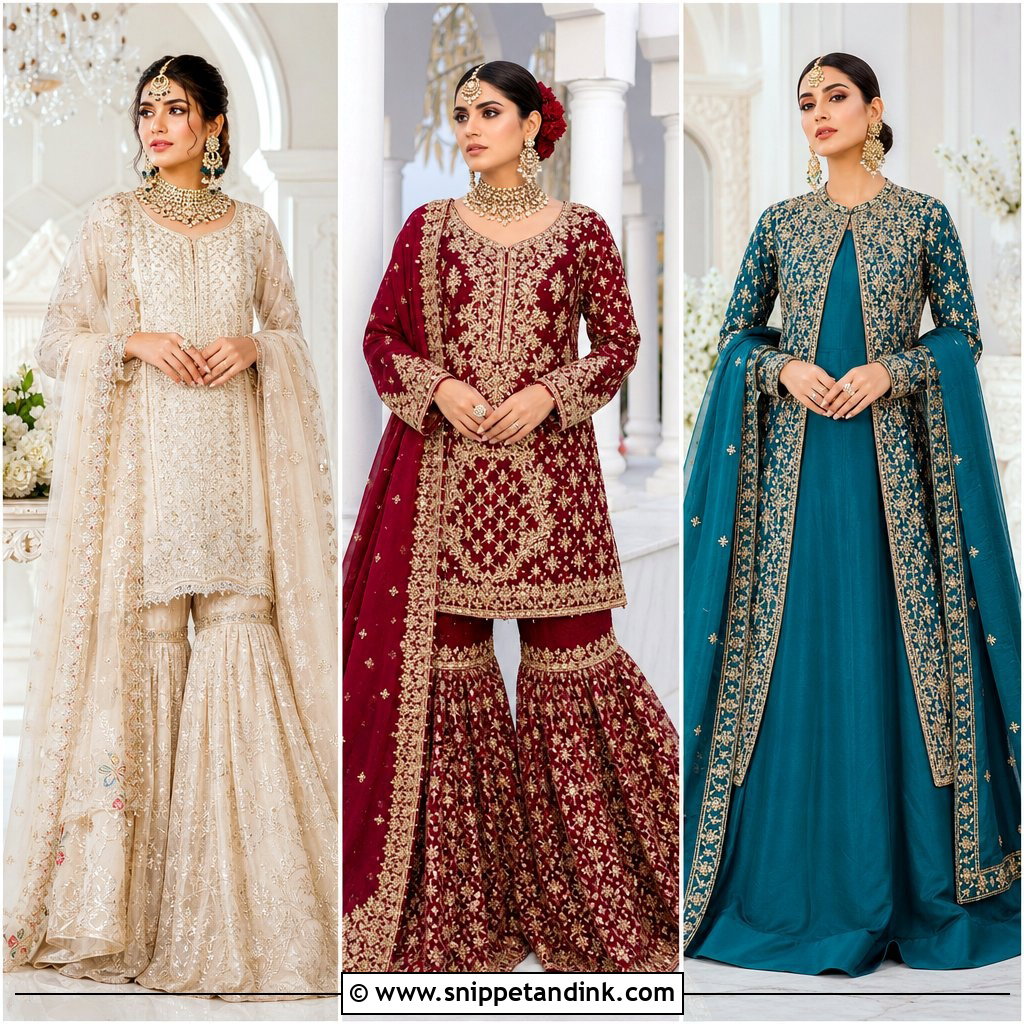
Mirror work turns rani pink into a party: every small mirror catches light as you move. A short or mid-length kameez with mirrors around the neckline and hem works with a flared sharara or a comfortable salwar, depending on how much volume you want. An orange, green or pink dupatta with a neat gota border keeps the festive palette. Gold juttis, medium jhumkas, a stack of bangles and a compact potli are plenty. I always run my fingers over the mirrors before buying. Rough-edged mirror work snags a chiffon dupatta and scratches the inner arm, while well-finished pieces have smooth, fully stitched edges. Mehndi and sangeet nights suit it.
16. Burgundy Jacket Salwar Suit
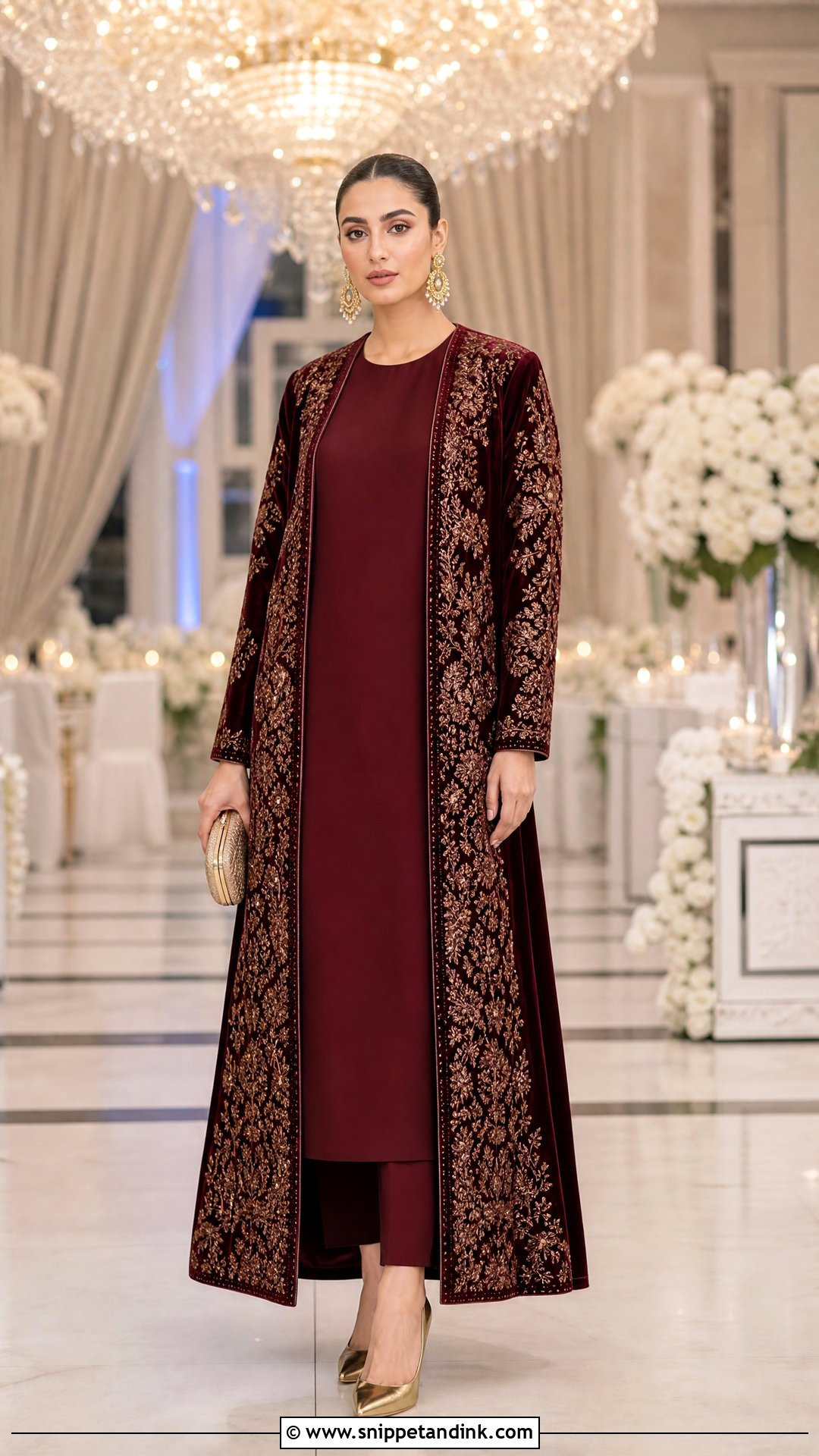
A long jacket gives you structure and warmth at a winter wedding, which a dupatta alone can’t. Start with a simple sleeveless burgundy kameez and matching straight trousers, then layer an embroidered, open-front jacket that falls below the knee for a long vertical line. Gold threadwork, velvet borders or small beads add richness. Pointed gold heels, a structured clutch and chandelier earrings finish it. A dupatta is optional if the jacket is heavily worked, though a plain chiffon one adds coverage. Keep the inner pieces tonal and plain. The jacket’s shoulders should sit at your own shoulder line; too wide and the whole outfit looks borrowed.
17. Sage Green Organza Salwar Suit
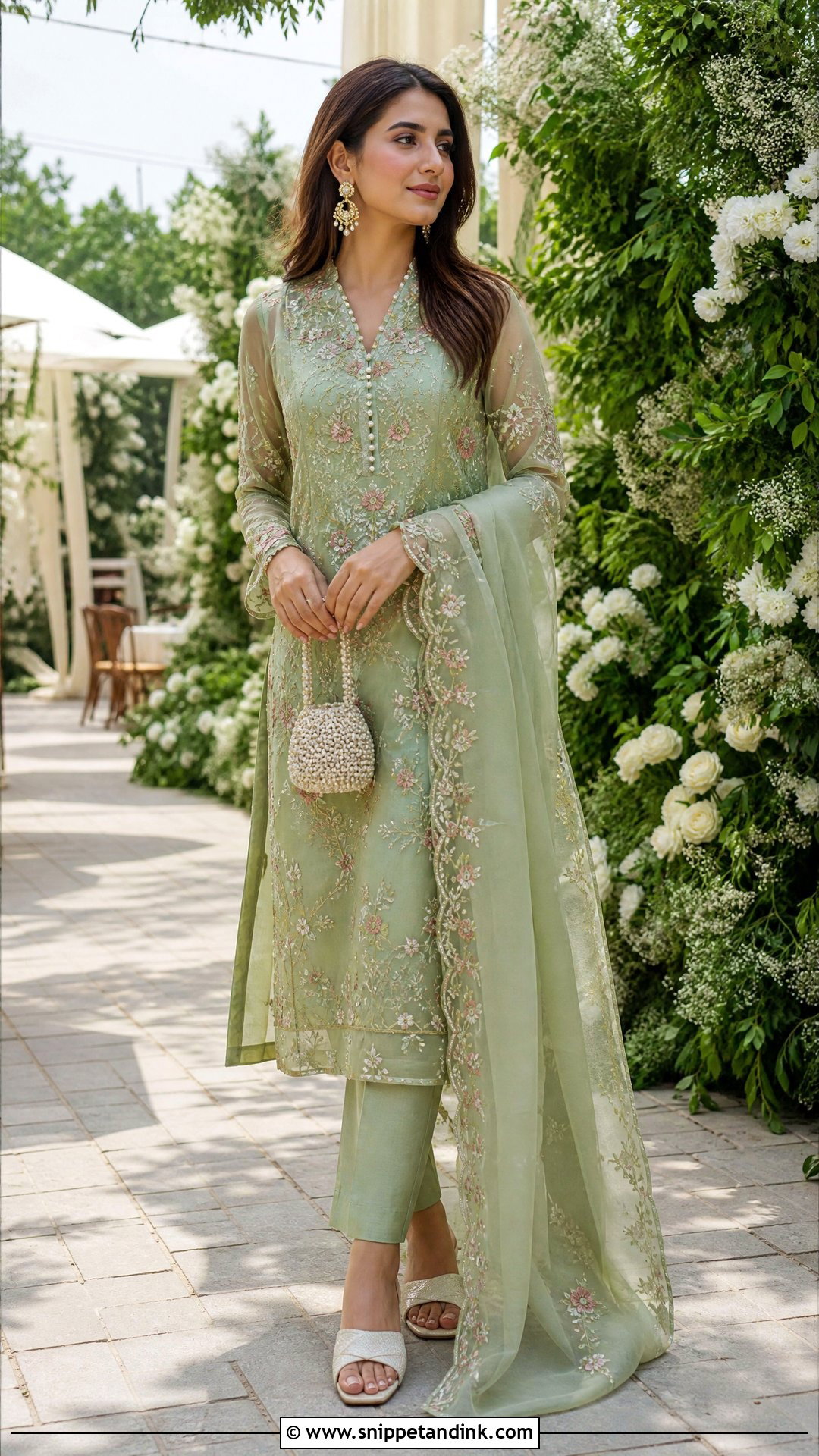
Organza is crisp and slightly sheer, and it creases sharply, so it suits short garden ceremonies better than an all-day event. A lightly structured sage kameez with floral embroidery, sheer sleeves and a comfortable lining sits well over straight silk or crepe pants, which ground the transparency. A matching dupatta with embroidered corners keeps the palette calm. Ivory block heels, pearl-and-gold earrings and a small woven or beaded bag finish it, with natural makeup and soft hair. Add only one accent, ivory or blush, rather than several pastels. Simple tailoring and well-placed embroidery do more here than covering the whole garment.
18. Royal Blue Dhoti Salwar Suit
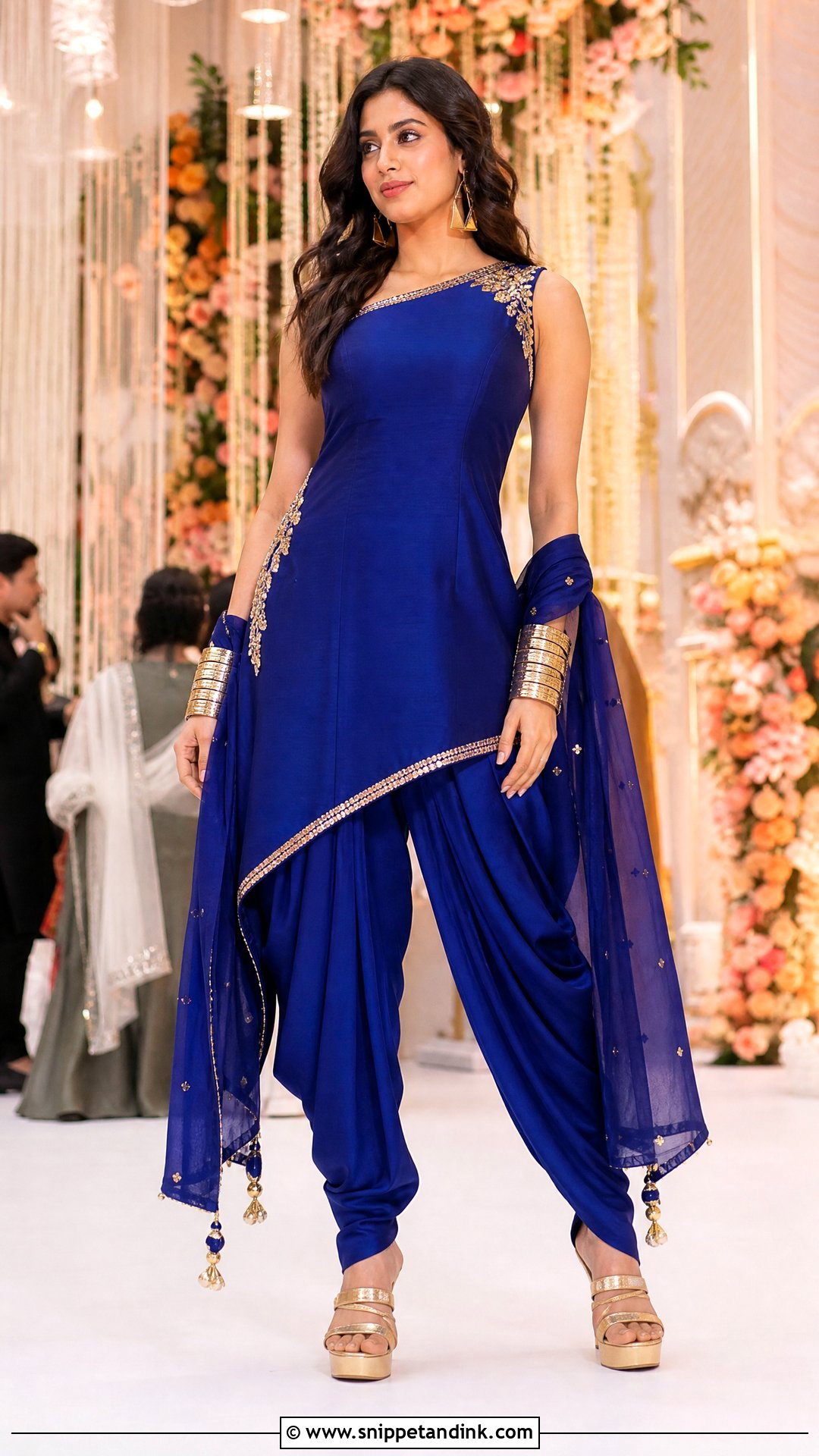
Pleats that drape like a dhoti but sit like trousers: a royal blue dhoti salwar suit brings that sculptural shape to sangeet and modern pre-wedding events. Choose a short, fitted kameez with gold piping, beadwork or an asymmetric hem so the pleated pants show clearly. They should be roomy through the thigh and taper securely at the ankle. A lightweight dupatta pinned at one shoulder, or a narrow scarf, avoids fighting the draped bottom. Gold platform sandals, statement cuffs and geometric earrings suit the mood. Pleat placement makes or breaks it. Well-placed pleats fall from the front of the hip; badly placed ones bunch at the crotch and restrict your stride.
19. Mauve Asymmetrical Salwar Suit
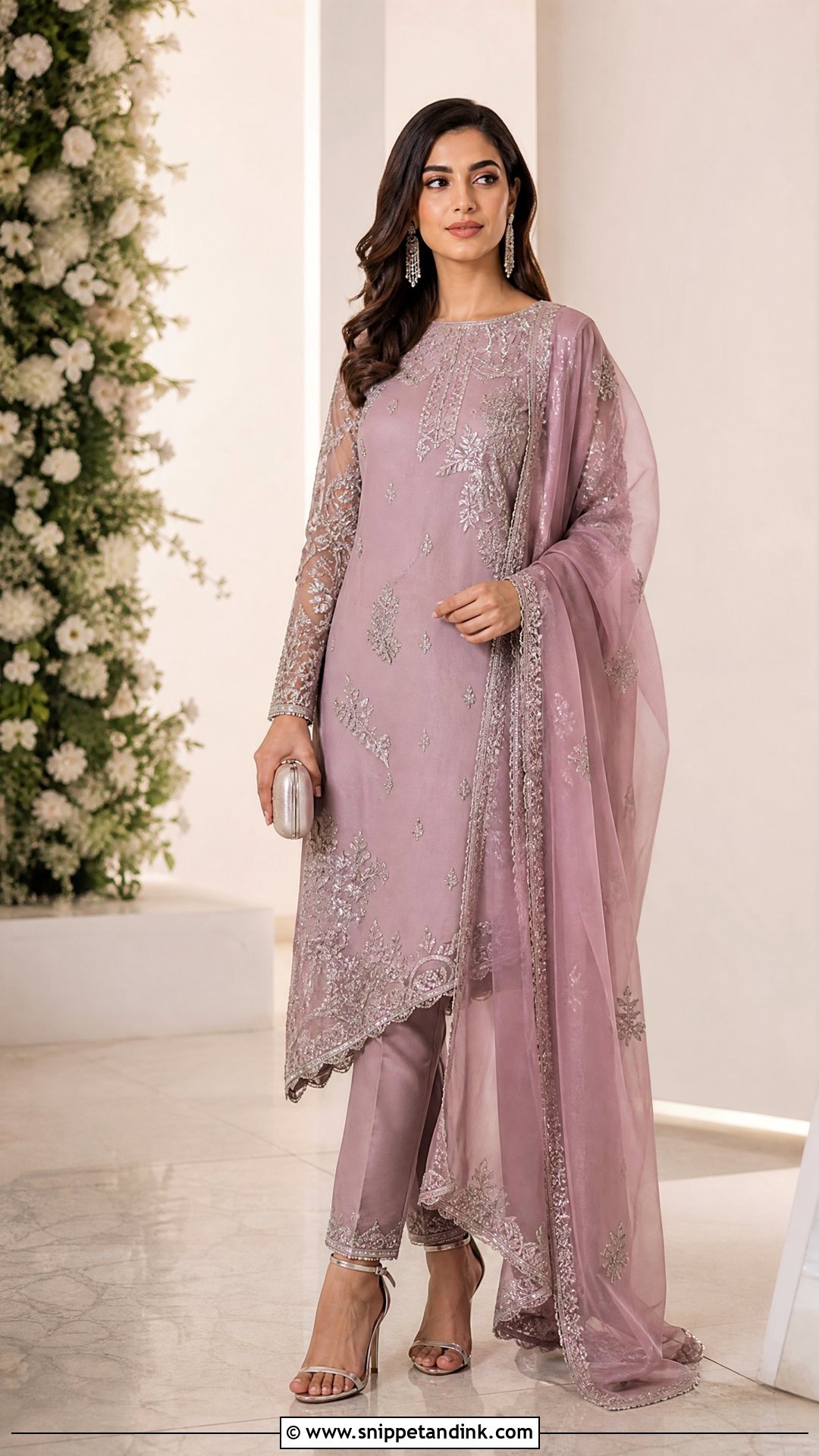
The hemline does all the talking here. A mauve kameez with a high-low or diagonal hem, subtle embroidery and a clean fitted shoulder needs slim trousers so the uneven hem stays visible. A sheer dupatta in mauve, dusty rose or soft grey adds movement without distracting from the cut. Silver heels, long crystal earrings and a compact satin clutch are all it needs. Muted mauve suits afternoon ceremonies and refined receptions. For more coverage, choose a longer asymmetric kameez with full sleeves. Ask your tailor to finish the curved hem with a weighted facing or a fine lining, so it falls cleanly instead of flipping up at the low point.
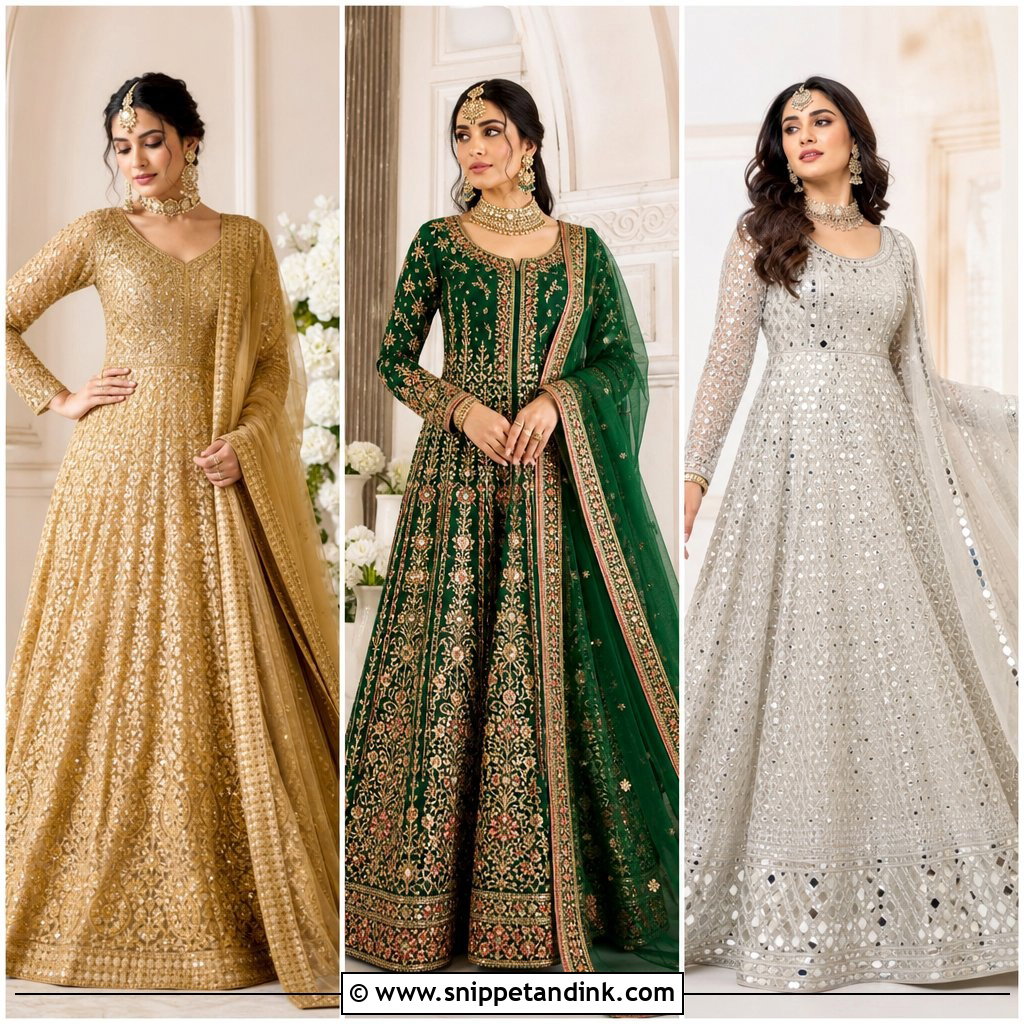
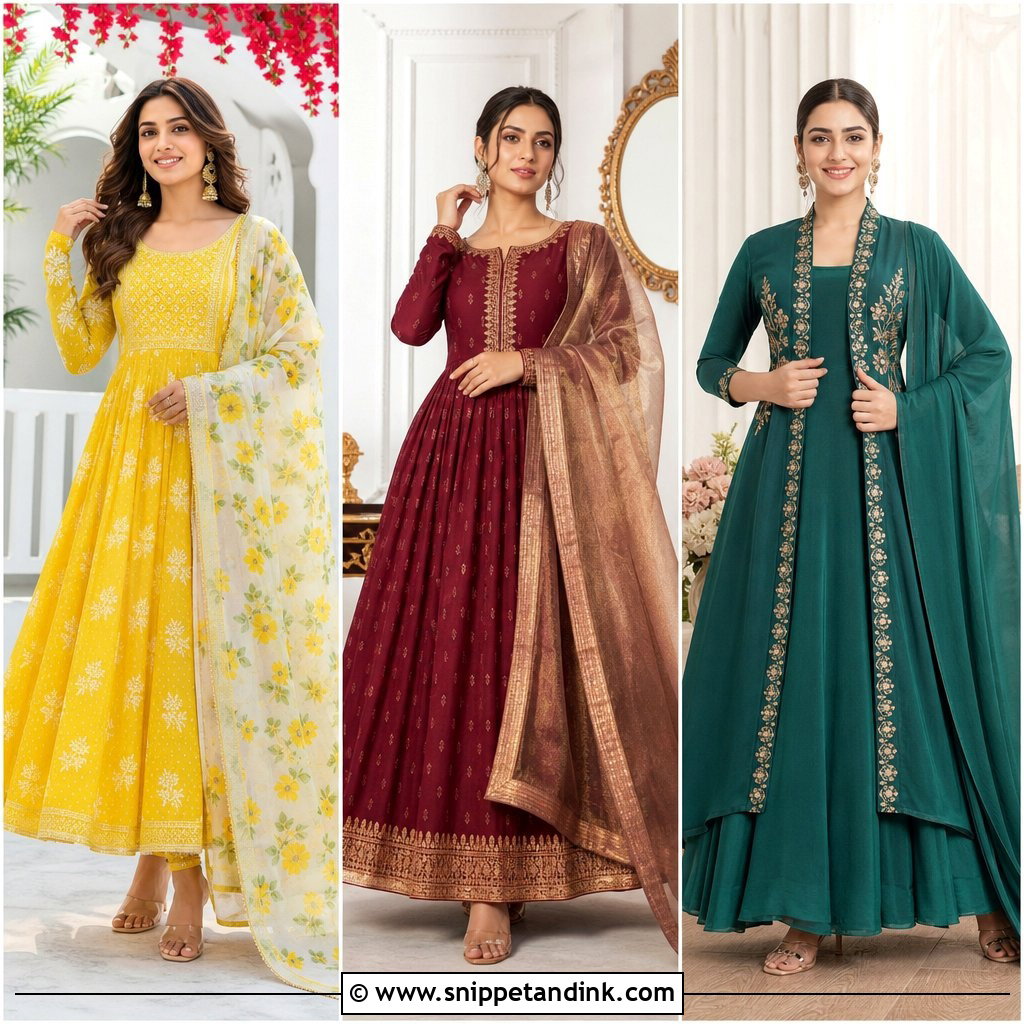
20. Cream Phulkari Punjabi Salwar Suit
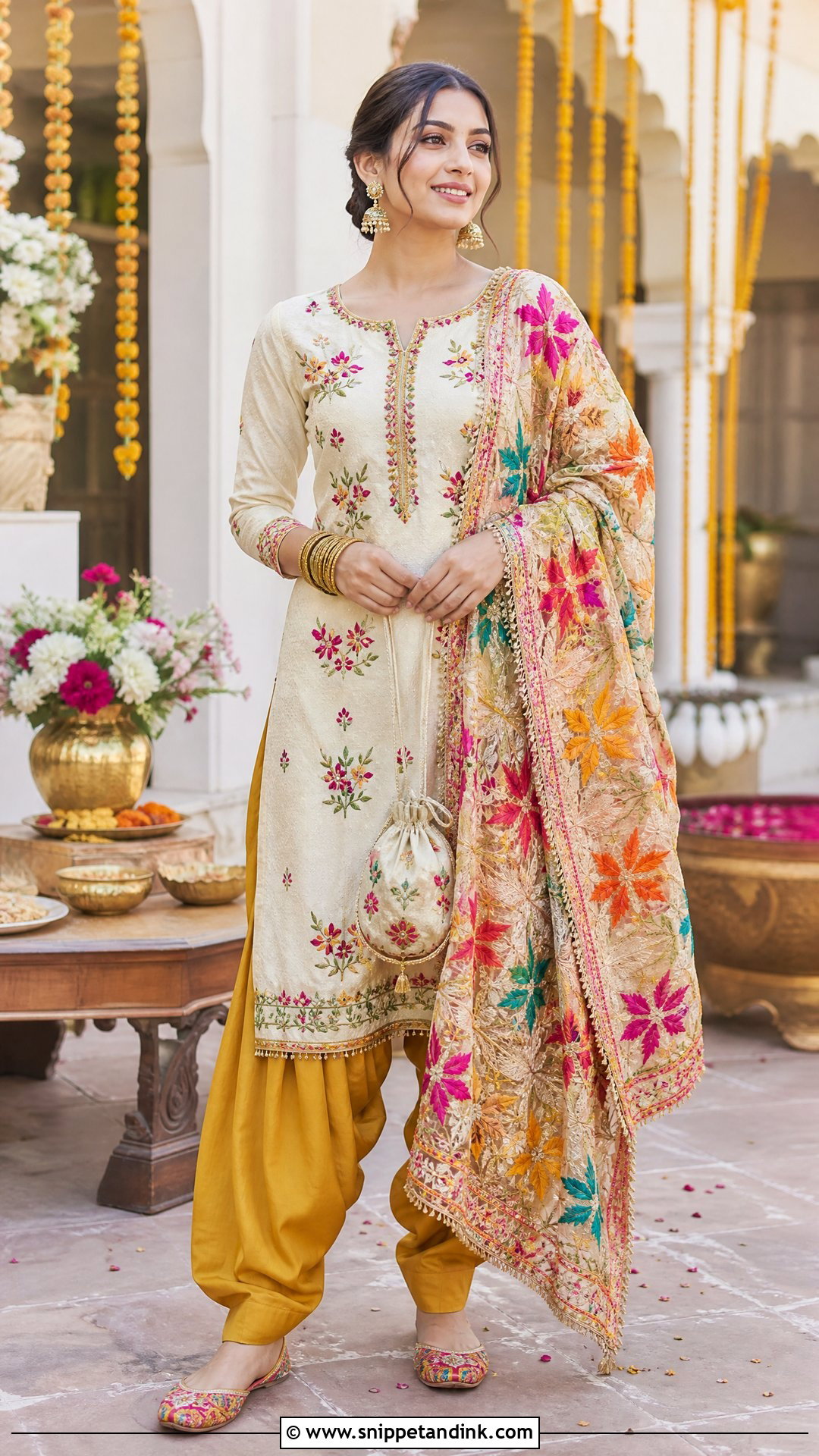
Phulkari is hand-worked floral embroidery from Punjab, and on a cream base the colour really sings. A cream phulkari Punjabi salwar suit with a knee-length kameez worked across the neckline, sleeves or front panel suits daytime Punjabi ceremonies. A salwar in cream, mustard or deep pink works underneath. Often the phulkari dupatta is the real treasure; drape it over one shoulder so the full pattern shows. Colourful juttis, gold earrings, stacked bangles and a small fabric potli complete it. Older or handmade phulkari pieces need gentle handling, so don’t pin through the embroidery itself. As a guest, check that pale neutrals suit the family’s customs.
Safety Pins, Brooches and a Dupatta That Stays Put
A loose dupatta is the thing guests fiddle with most at any function. Getting it secured properly before you leave takes five minutes and saves you hours of readjusting.
- Pleat the dupatta at the shoulder, then pin it to the kameez from underneath with small safety pins so the pins don’t show.
- For a head drape, use bobby pins or U-pins through the dupatta into your hair, close to the crown, rather than letting it rest loose.
- If the end falls down your back, pin it at the waist from inside too, so it can’t slide off when you lean or dance.
- On sheer net or organza, keep pins to the border, where the fabric is stronger. Pinning through the fine middle can leave small holes.
Carry a couple of spare pins in your potli. Somebody at the function will need one, and it may be you after an energetic sangeet.
Dress for Your Role and the Hour of the Function
One garment category, a huge range of outfits. Flowing Anarkalis and dramatic shararas suit formal functions, while Patiala, palazzo and straight-cut sets are kinder for long days. Let colour, fabric, tailoring and embellishment follow the ceremony, the venue, the season and your role in the family. Before buying, sit, walk and lift your arms in the suit. Check the trouser length with your shoes, decide how the dupatta will be pinned, and choose jewellery that works with the neckline instead of covering it. Above all, wear something that respects the hosts’ traditions and lets you celebrate without adjusting yourself all evening.
You'll Like These Ideas:





Leave a Reply