
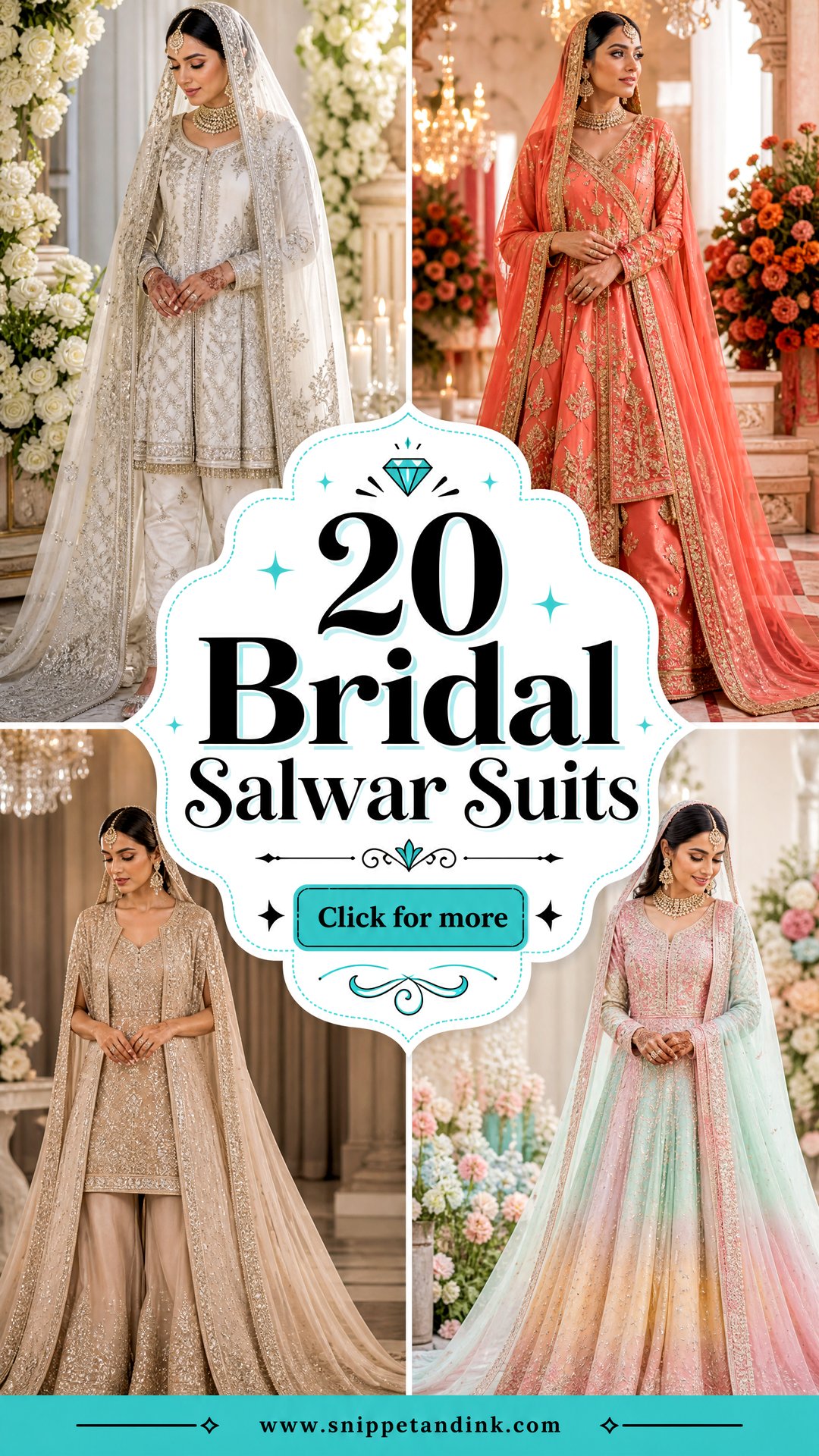
A bridal salwar suit gives you the ceremony, the embroidery and the coverage of a heavy outfit while letting you sit cross-legged, climb onto a stage and eat dinner without help. The shapes range from floor-length Anarkalis and ghararas to palazzo sets and the structured Pakistani cuts that sit close to the body. Velvet, raw silk, organza and brocade each behave very differently once you’ve worn them for six hours, and the embroidery (zardozi, zari, gota, mirrors) adds weight in specific places. Red and maroon still lead, though I dress plenty of brides in ivory, emerald and powder blue. Below are twenty complete outfits, each with notes on what I’d watch for at the fitting.
Matching the Cut to Each Function on Your Calendar
Most brides I dress wear three or four outfits across the wedding, and the cut should follow what you’ll be doing at each event, not only how it looks on a hanger. A gharara or long Anarkali suits a seated ceremony where you mostly walk short distances. A sharara or Patiala salwar handles floor seating and dancing. Palazzos and cigarette pants are the easiest to move in for a reception that involves greeting a few hundred guests.
Weight, fabric and the weather
Hold the finished outfit on a hanger for a minute before you commit. Heavy zardozi on velvet is surprisingly heavy, and all of it hangs from your shoulders. For an outdoor day function in heat, I steer brides to silk cotton, georgette or chiffon and keep velvet for winter evenings indoors.
- Seated nikkah or anand karaj: gharara, straight suit or Anarkali, with a dupatta that stays put over the head.
- Mehndi and sangeet: sharara or Patiala in a light fabric, sleeves that clear the wrist.
- Haldi: an inexpensive, washable suit you won’t mind staining.
- Reception: the place for a cape, jacket or pastel organza, since you’ll mostly stand.
1. Red Velvet Bridal Anarkali Salwar Suit
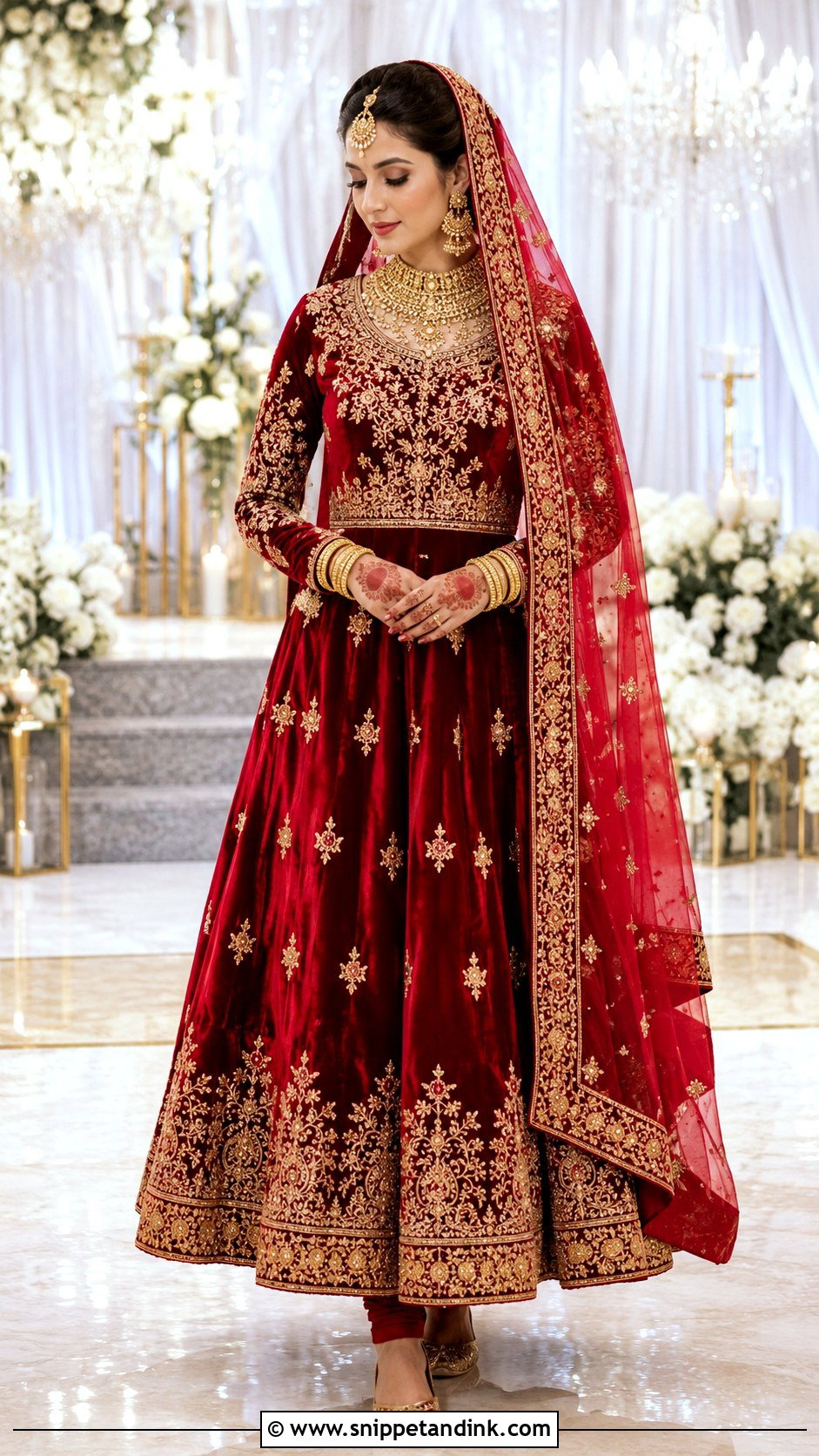
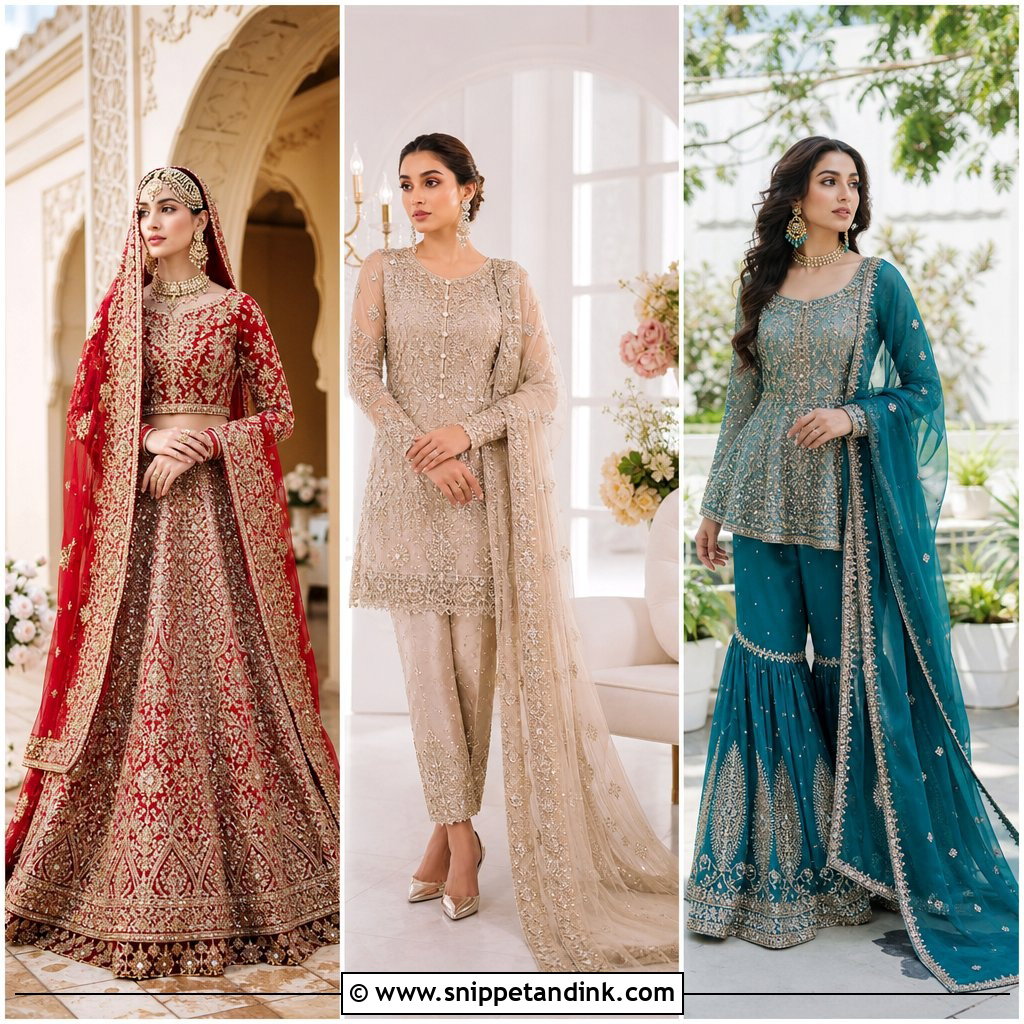
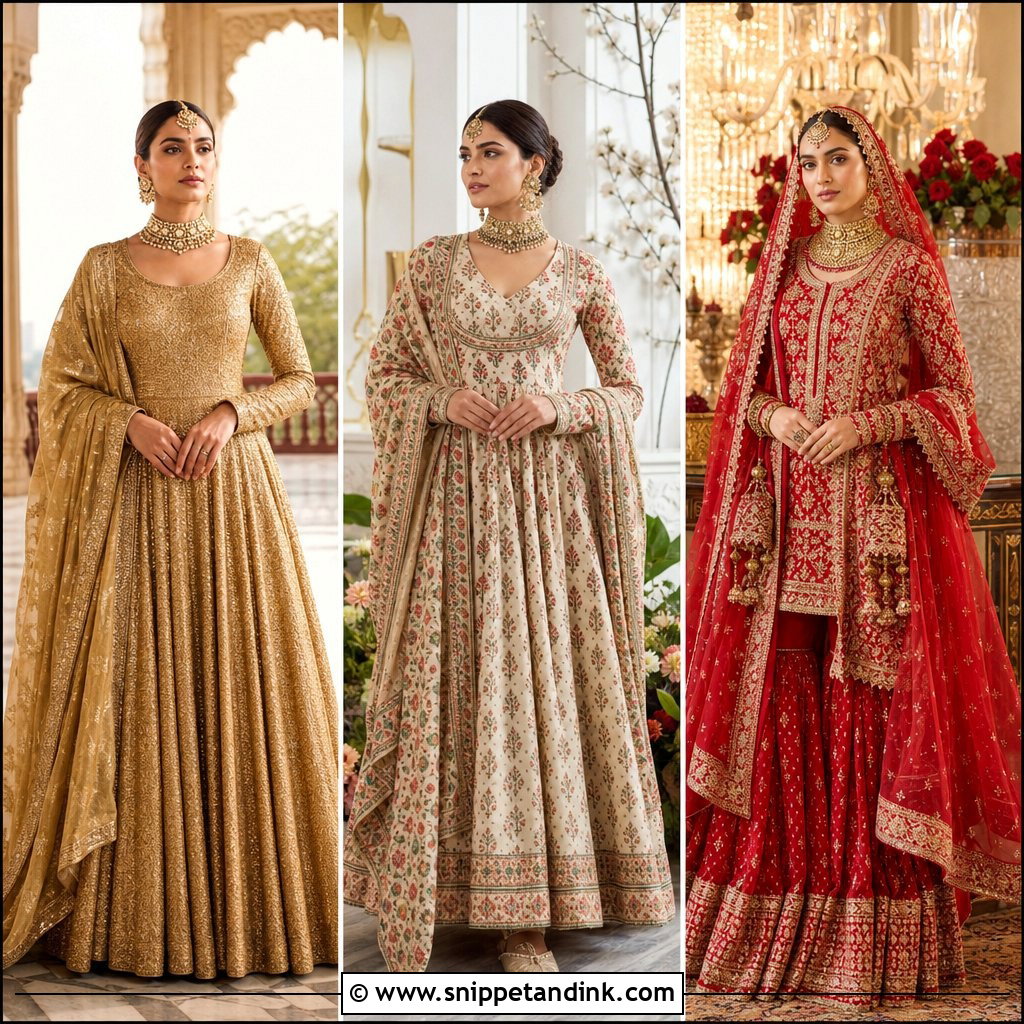
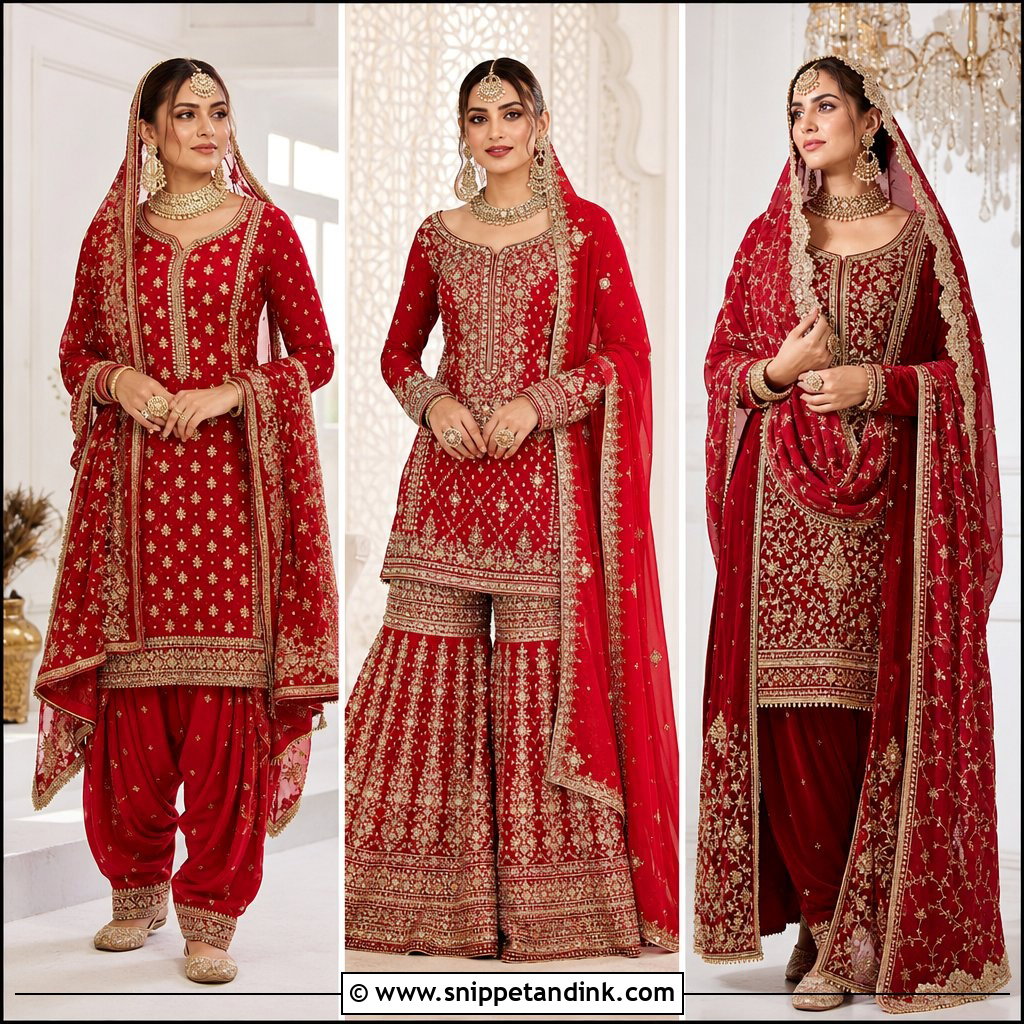
Velvet is the warmest fabric on this list, so I only suggest it for a winter evening or a properly air-conditioned hall. A floor-length kameez with a fitted bodice, full sleeves and a wide flared skirt carries antique-gold zardozi at the neckline, cuffs and hem, leaving the body of the velvet plain so its pile can catch the light. Velvet bruises where you grip it, so I tell brides to lift the skirt from the inner lining rather than the front panel. Churidar pants and a light net dupatta with a deep embroidered border balance the weight on top. Jhumkas, a traditional necklace, stacked bangles, a maang tikka and gold juttis finish it, with a low bun that keeps the neckline clear and defined eyes with a deep rose lip.
2. Ivory Gold Bridal Palazzo Salwar Suit
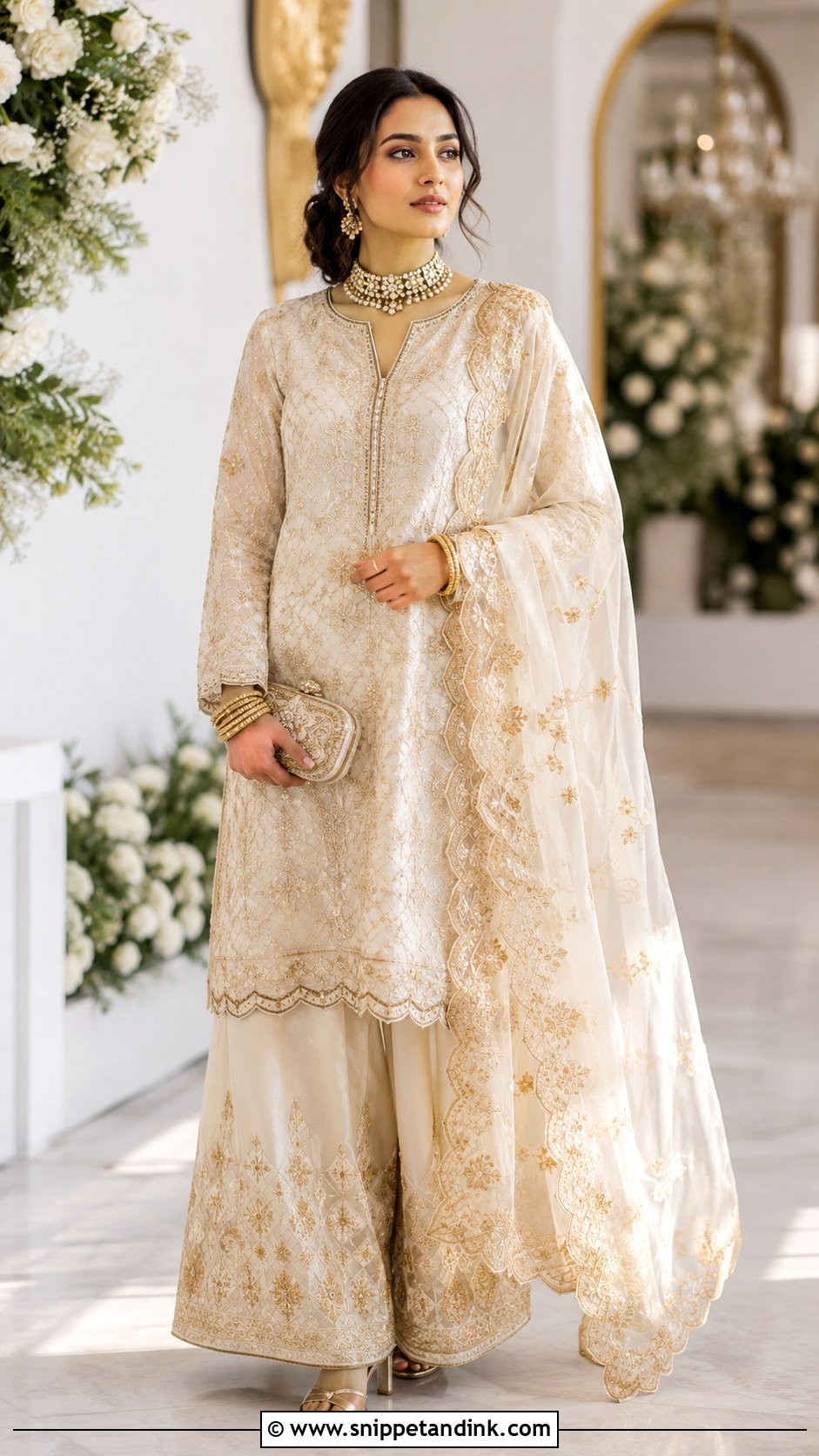
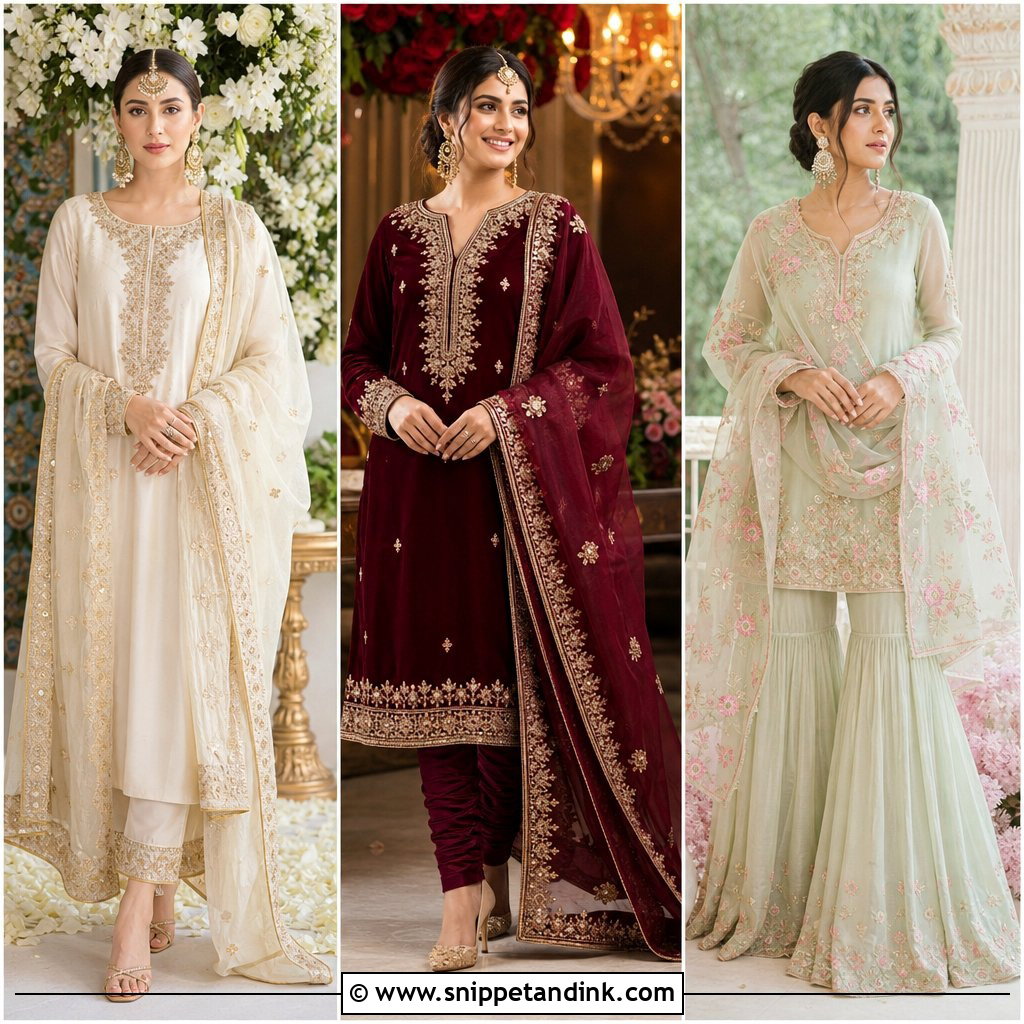
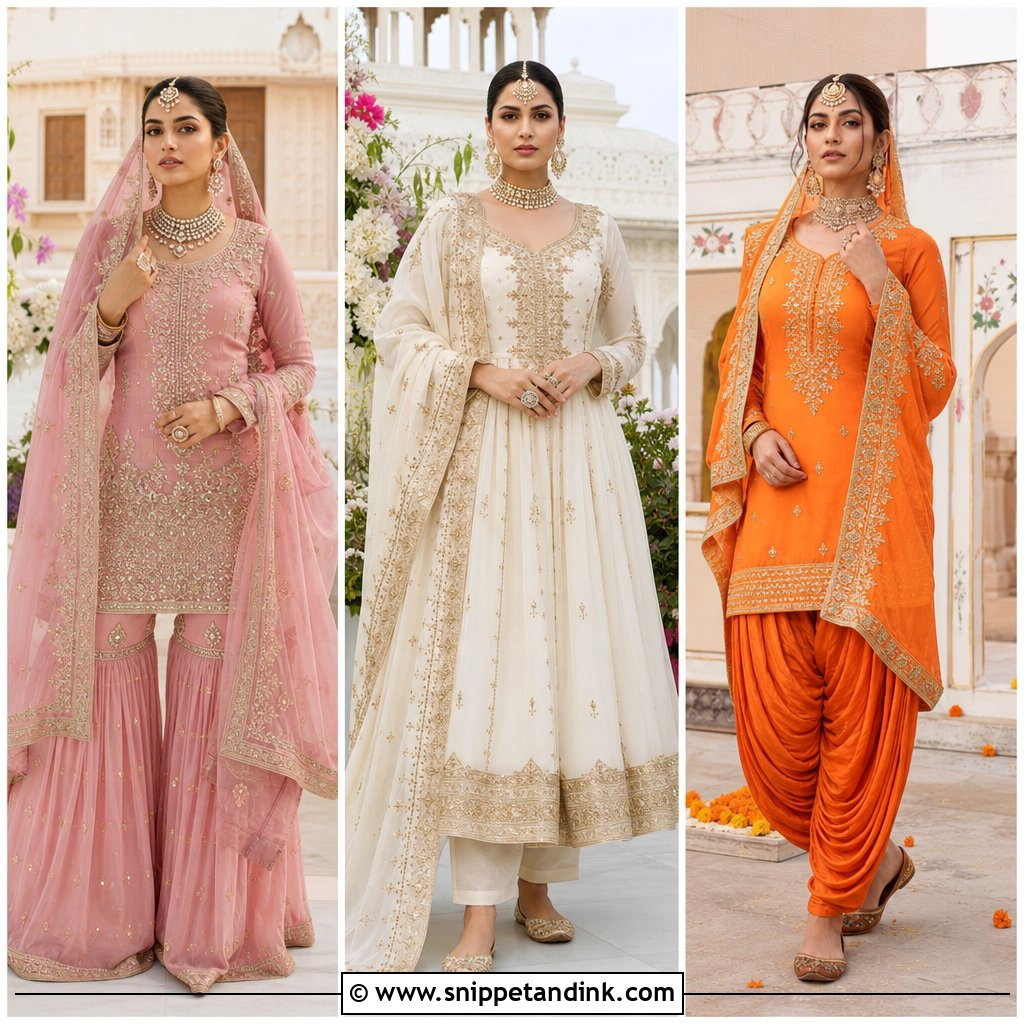
Ivory with gold is the easiest bridal pairing to photograph in daylight, and the hardest to keep clean. The long straight silk kameez carries fine gold threadwork and small florals, over wide palazzos that swing when you walk. Choose a scalloped organza dupatta: it holds its shape over the head without the weight that drags a heavier net forward. I keep jewelry to a kundan choker, matching earrings and bangles, with pointed gold flats or a low block heel. Bronze eyes and a peach lip suit the neutral palette, and a few fresh flowers in a low bun are enough. Ask the tailor to finish the palazzo hem a little higher than usual, because ivory picks up floor dust within an hour.
3. Blush Pink Bridal Sharara Salwar Suit
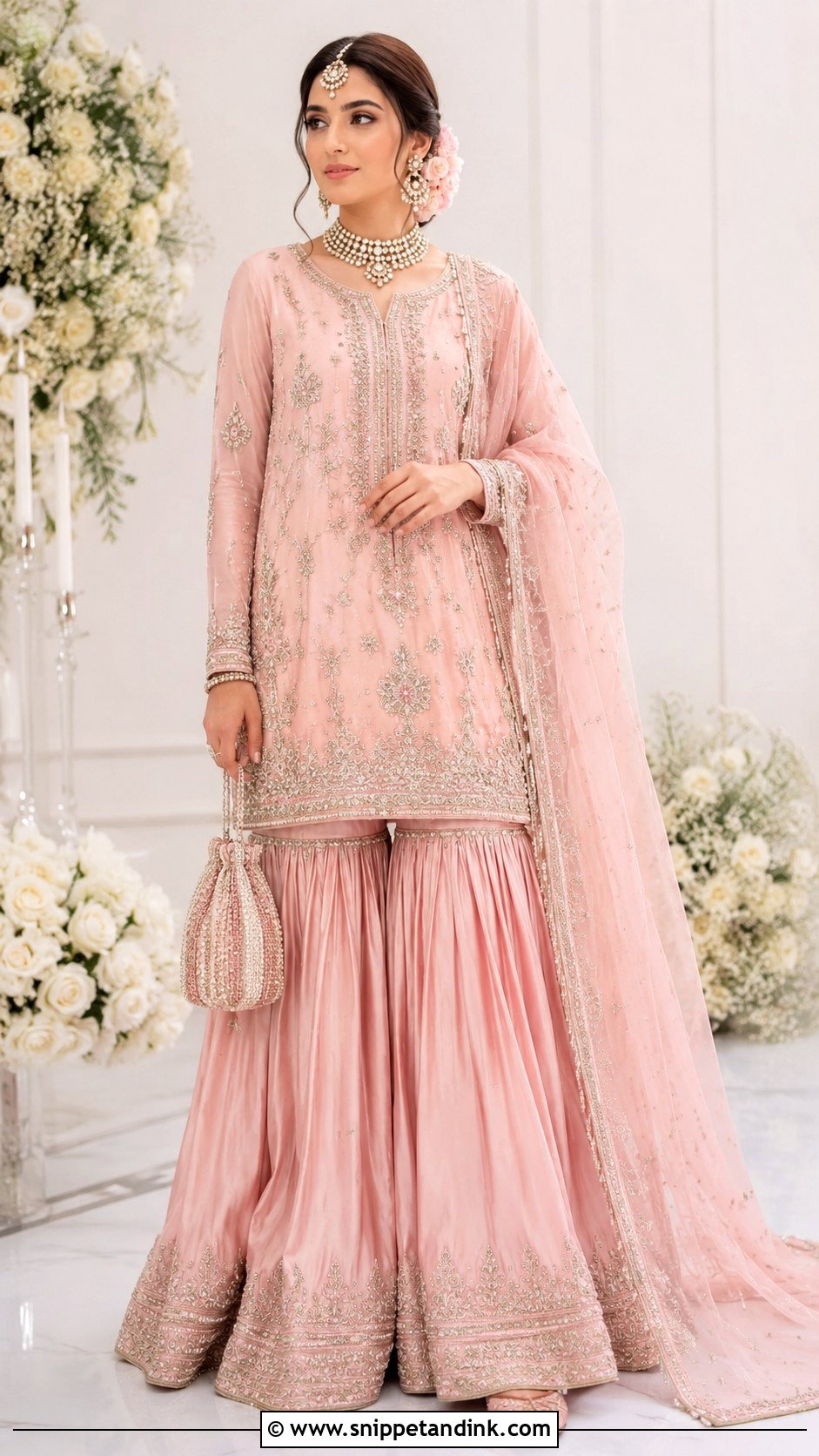
Blush pink with silver embroidery sits closer to reception territory than ceremony, and I like it best on a bride who plans to dance. A short silk kameez over a deeply flared sharara keeps the dense embroidery at the neckline and scatters lighter motifs across the shirt and trousers, which stops the pale shade from looking heavy. Sharara flares need weight at the hem to fall properly, so check that the border is stitched in rather than glued on. A sheer net dupatta with crystal edging goes over one shoulder and across the opposite arm. Pearl and polki jewelry warm up the pink, while blush juttis, a small potli, loose waves or a textured bun and a heel you can walk in keep it practical.
4. Emerald Green Bridal Gharara Salwar Suit
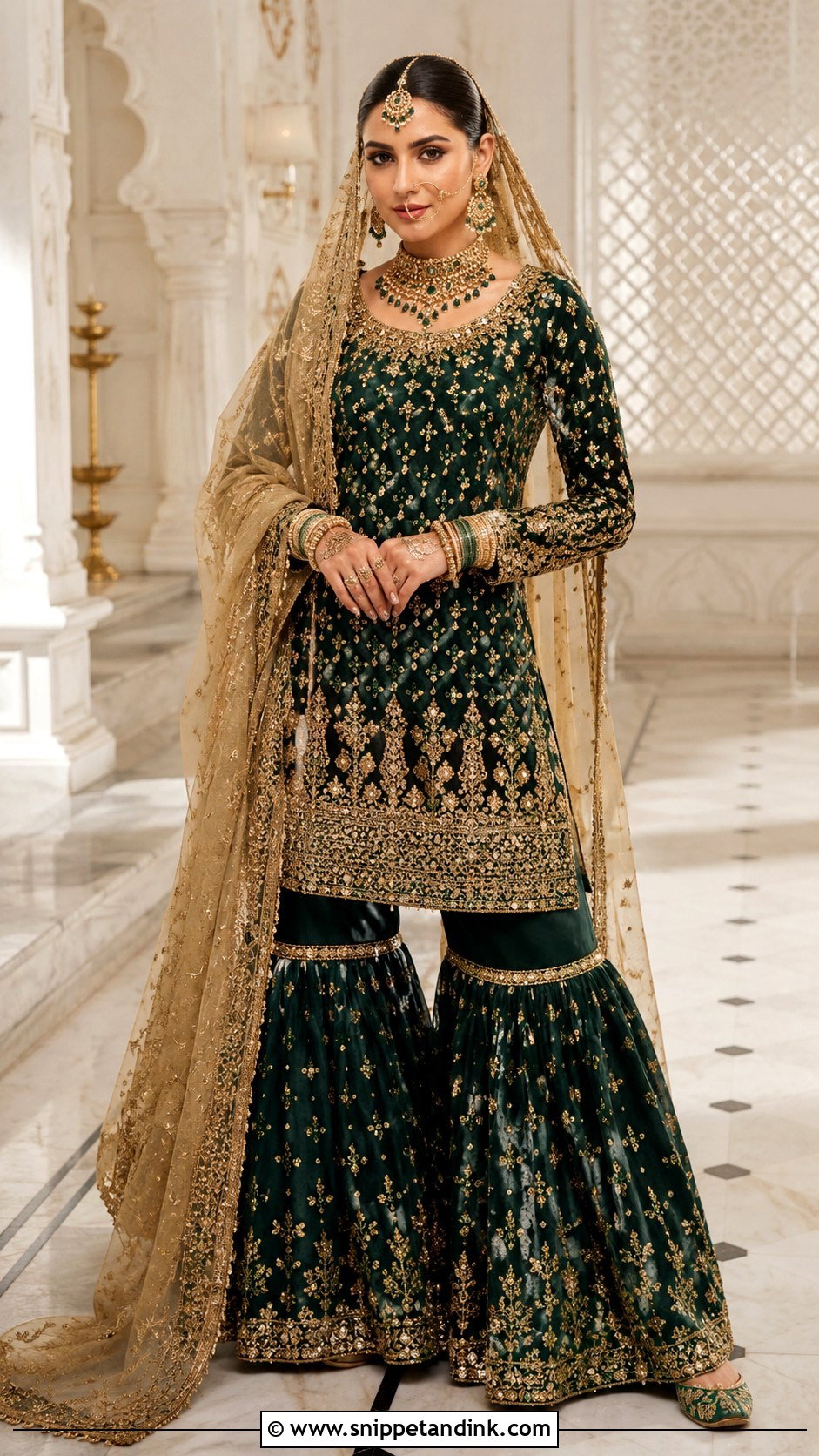
The gharara stands or falls on one measurement: where the joint sits. The trouser should hug the thigh and break into its flare just below the knee, and if the tailor places that seam even a few centimetres too high, the whole shape looks short. Here an emerald gharara with gold dabka work is paired with a fitted knee-length kameez and gota bands at the joints to underline the line. A contrasting antique-gold or muted peach dupatta keeps green dominant. Chandbalis, a layered necklace, bangles, a nose ring if your family wears one, green-and-gold juttis, a center-parted bun and a neutral rose lip complete it.
5. Maroon Pakistani Bridal Salwar Suit
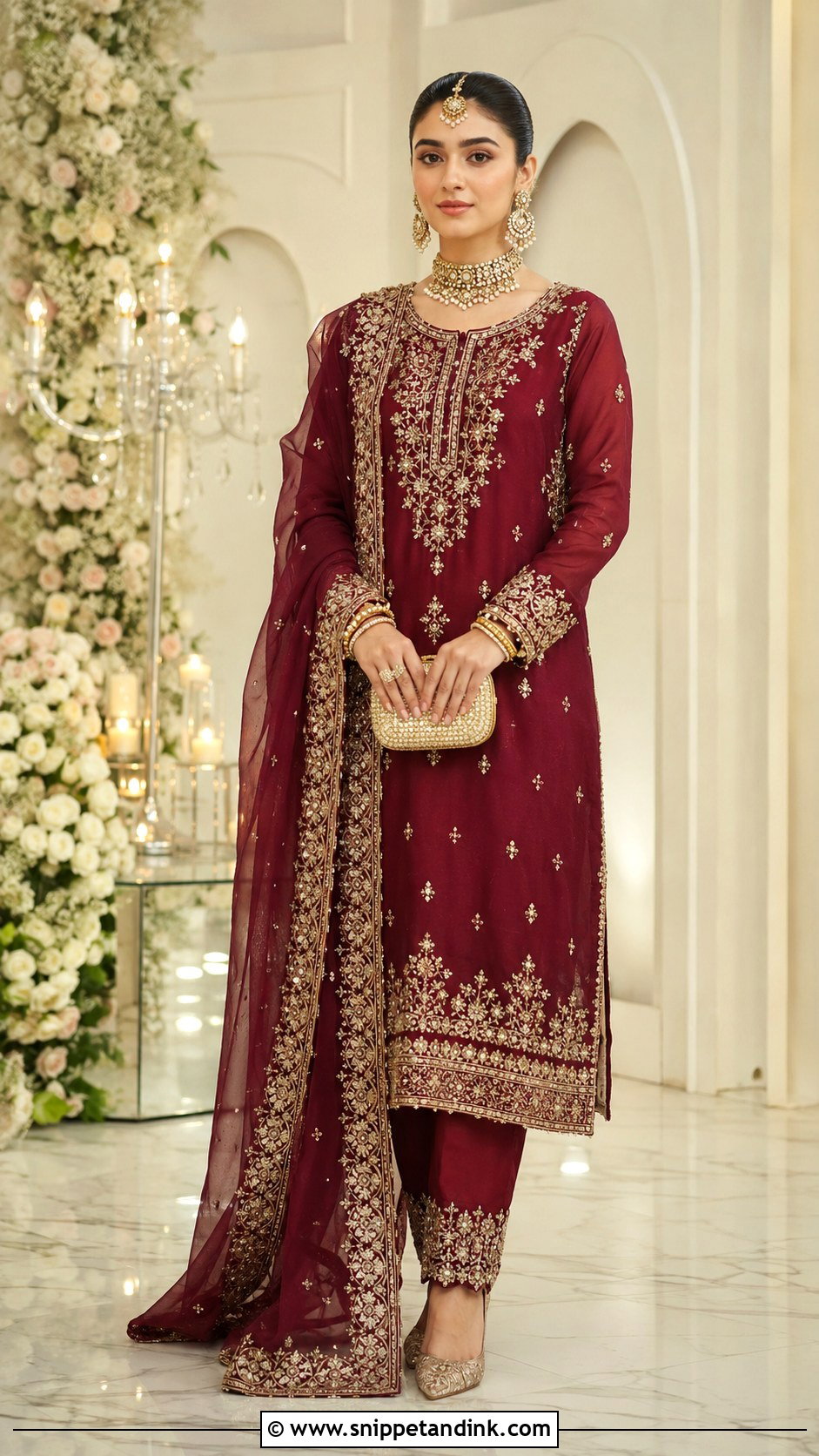
A maroon Pakistani suit is the one I point modest-coverage brides toward when they want very little volume. The long straight raw-silk kameez has side slits and embroidery at the neck, sleeves and lower border, over slim cigarette pants embellished at the ankle. Raw silk creases sharply when you sit, so I always have a bride sit through a full trial before the final press to see where the lines form. A matching chiffon dupatta with gold trim makes the three-piece set. Polki jewelry, statement earrings, bangles and a box clutch work with closed-toe mules, a sleek center-parted bun, defined liner and a muted berry lip.
6. Royal Blue Jacket Bridal Salwar Suit
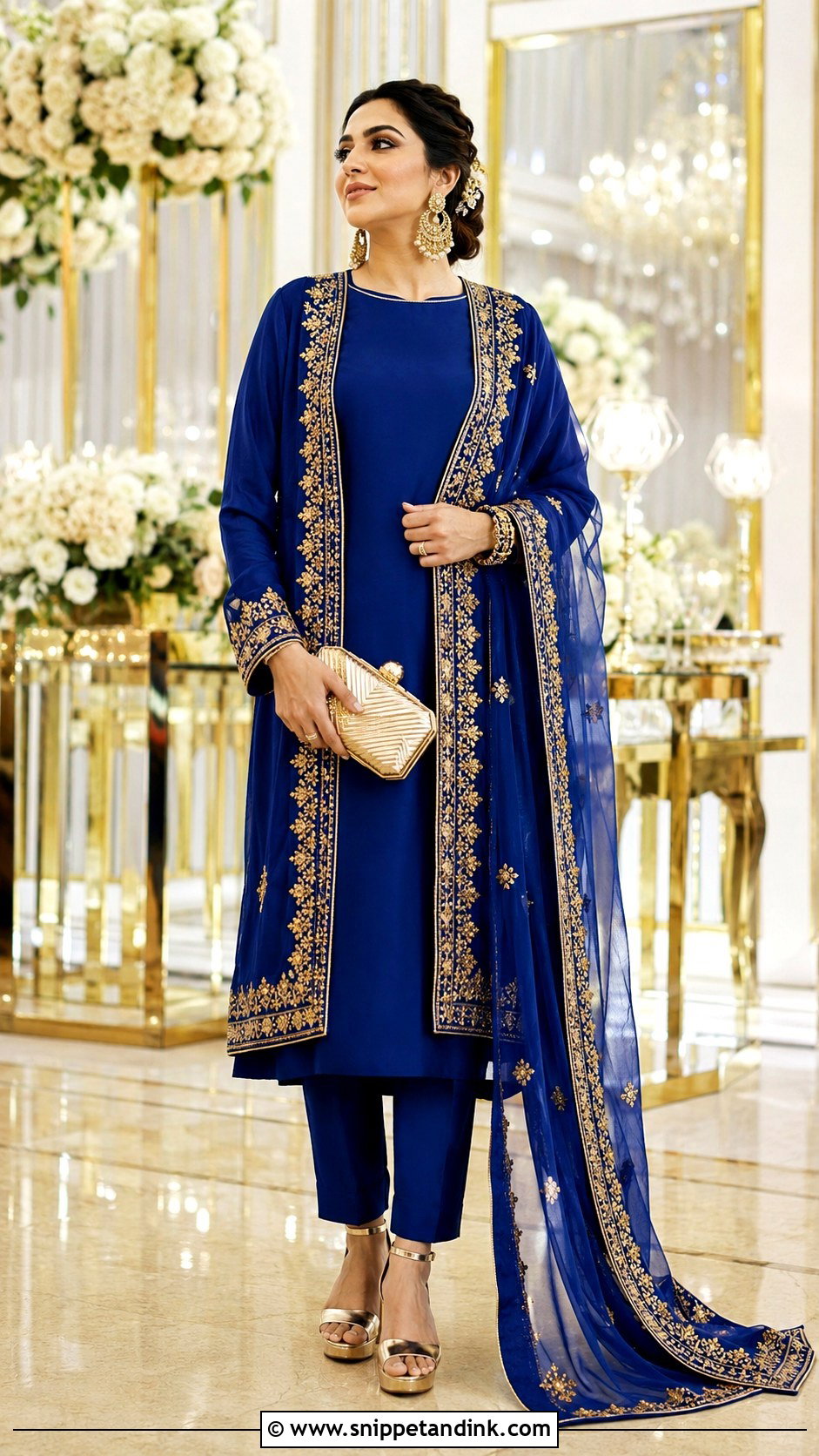
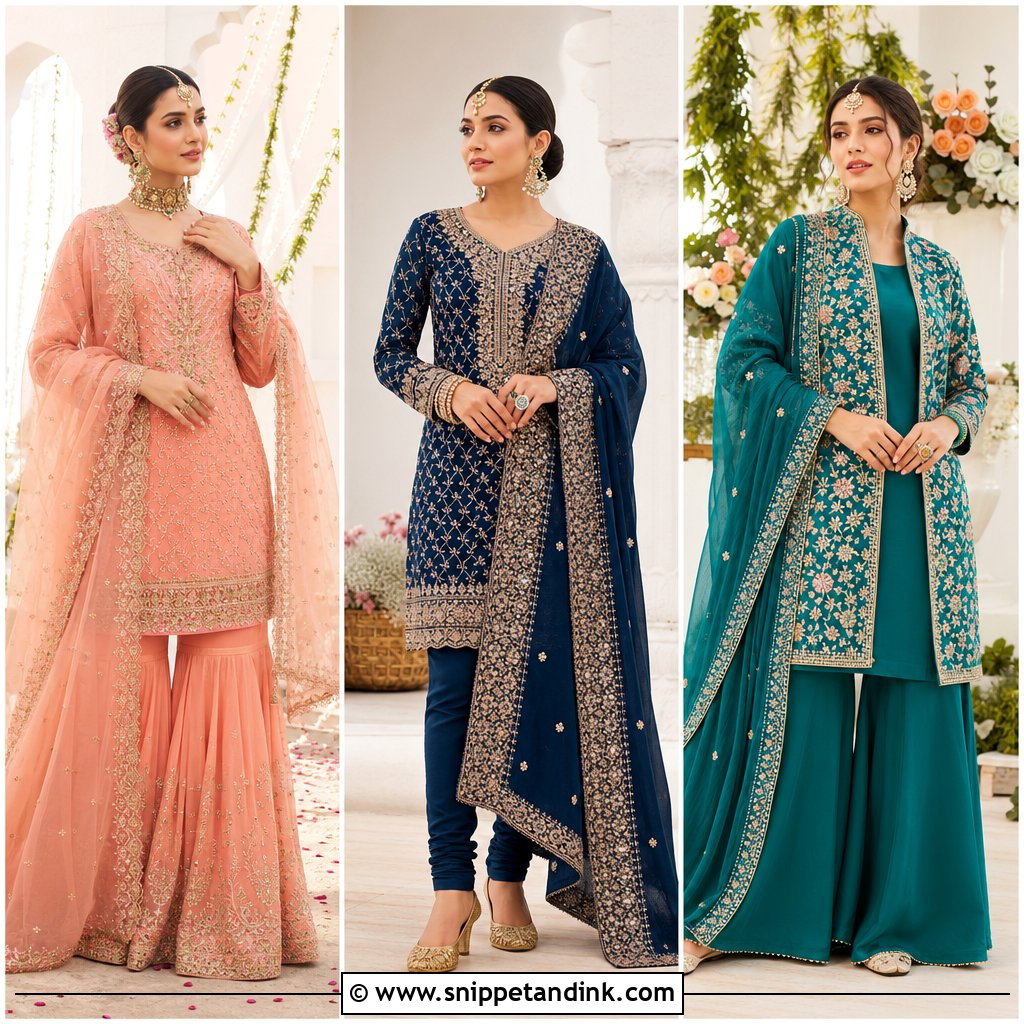
Royal blue with an embroidered jacket is two garments, and I fit them that way. The base is a sleeveless or short-sleeved silk kameez with straight pants in the same blue; the long open-front jacket over it carries the gold florals, structured shoulders and side slits. Fit the kameez first, then the jacket over it, because a jacket cut over bare measurements will pull across the back. The chiffon dupatta goes over one arm so the jacket stays visible. Skip the heavy necklace if the jacket neckline is busy, and wear bold earrings, a bracelet stack and a cocktail ring instead, with metallic block heels, a polished low bun and a nude lip.
7. Yellow Patiala Bridal Salwar Suit
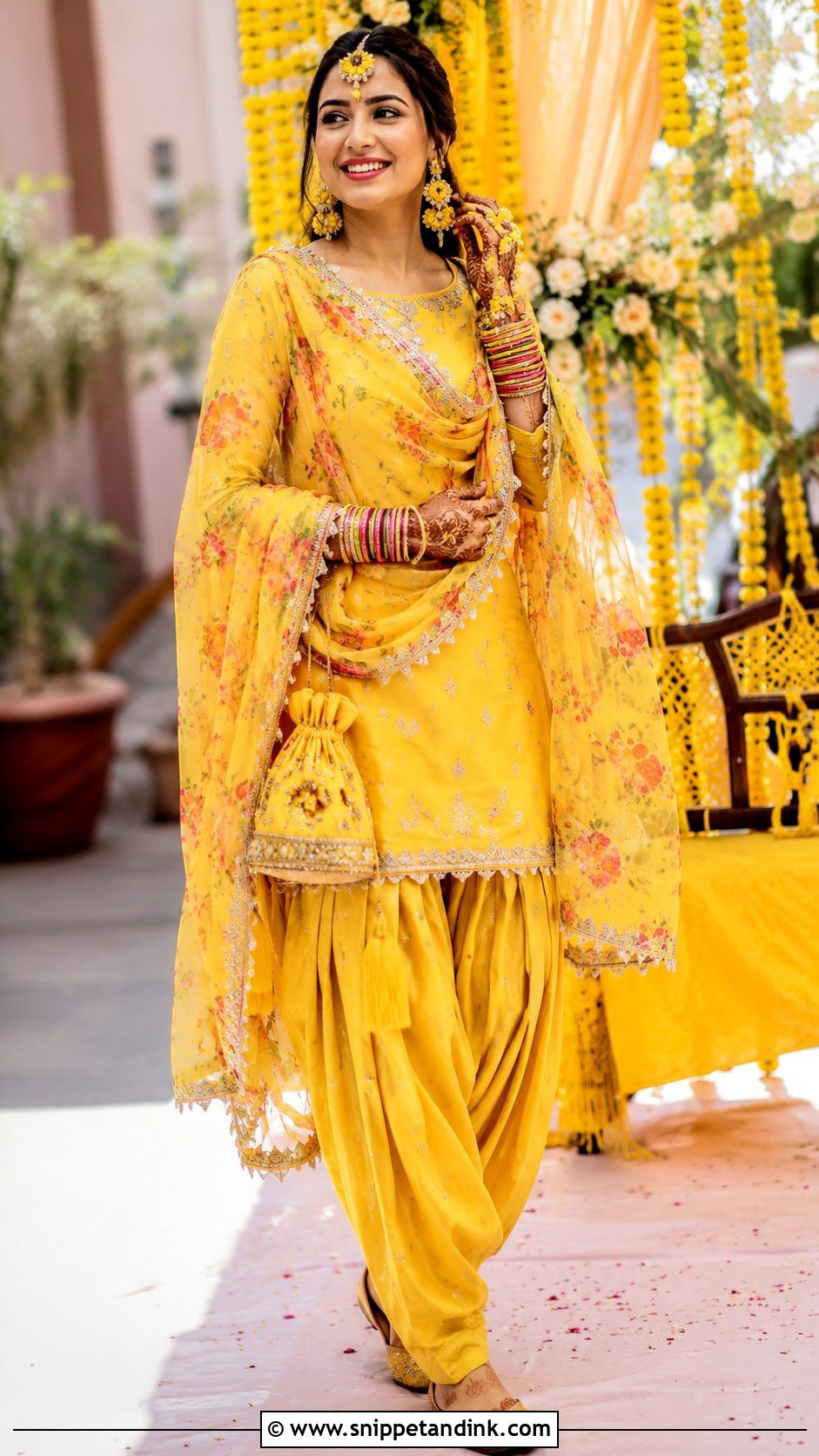
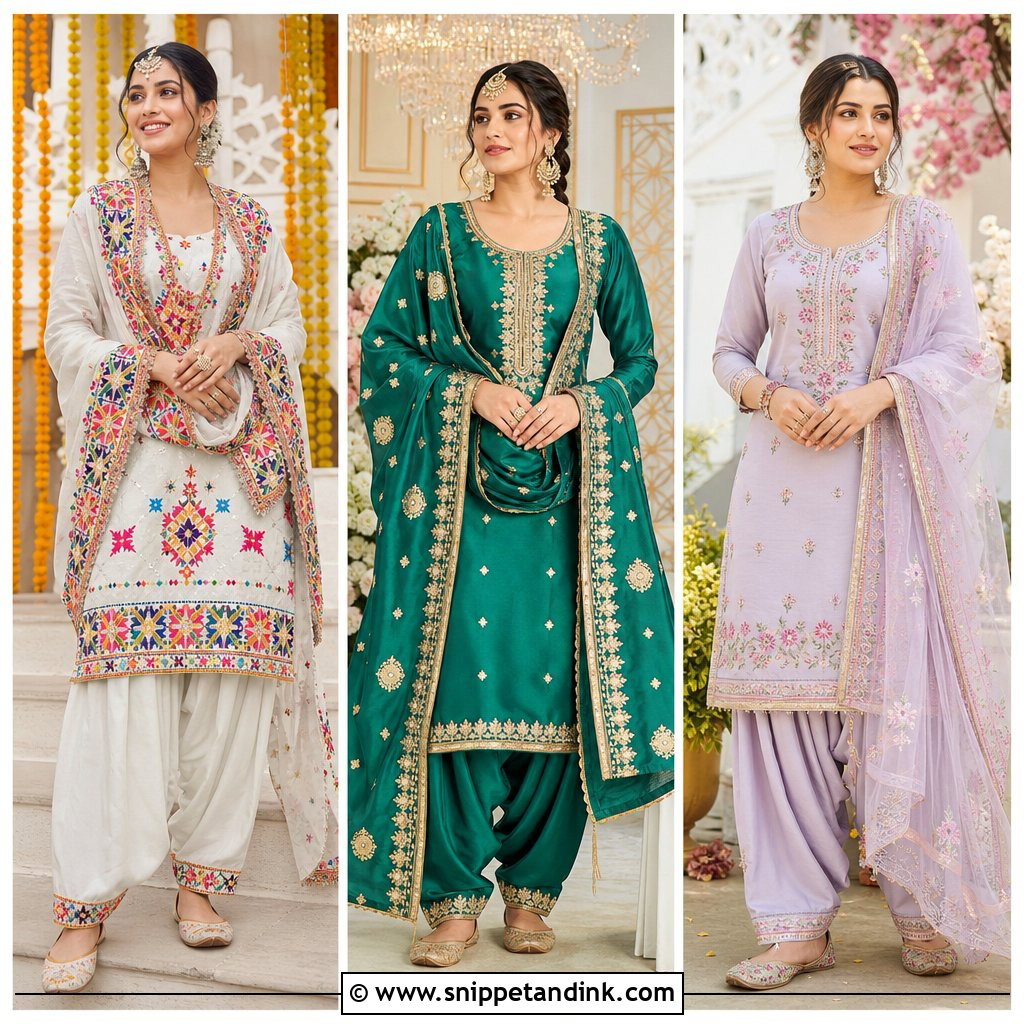
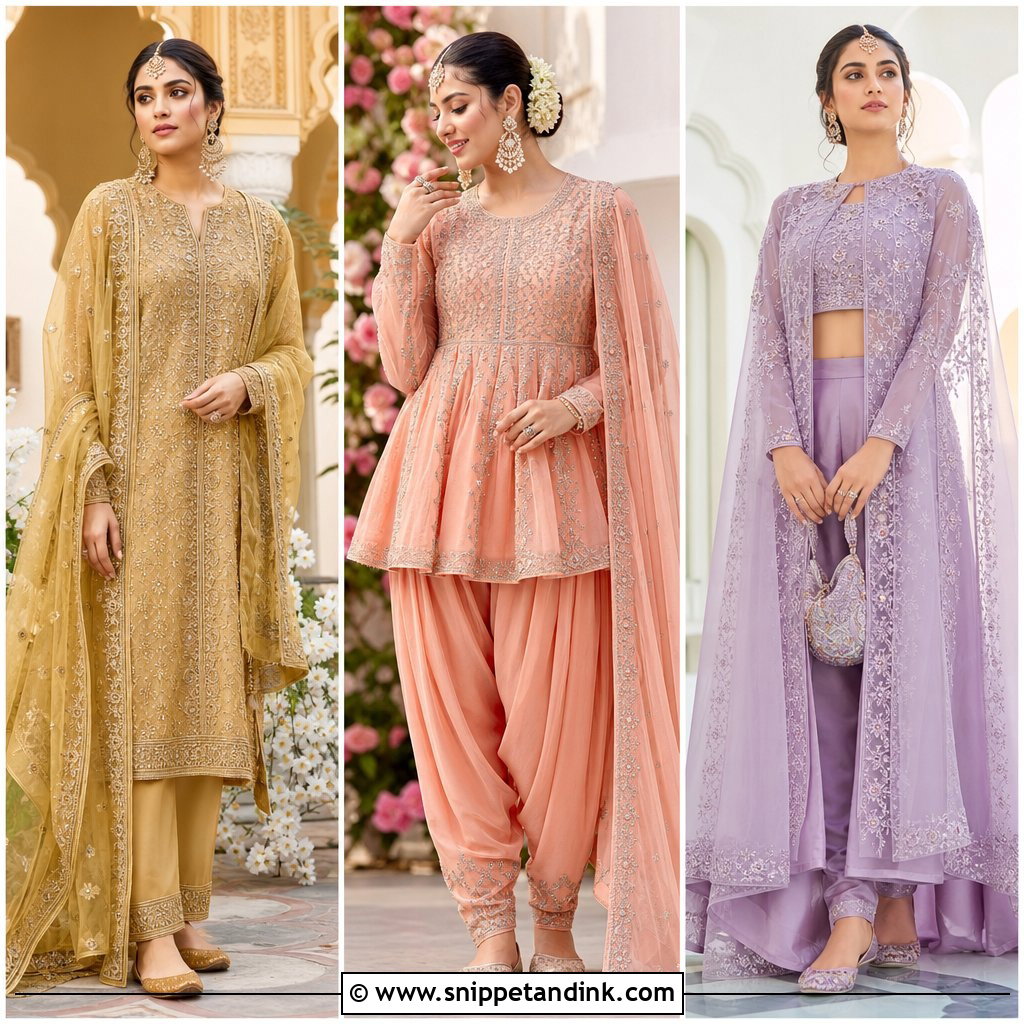
Haldi is the one function where I’d tell you not to love your outfit too much, because turmeric paste will stain it. A bright yellow Patiala suit in silk cotton hides those marks better than pale silk and breathes in daytime heat. The short A-line kameez has gota at the neckline, sleeves and hem, and the pleated Patiala salwar lets you sit on the floor comfortably. A bandhani or floral organza dupatta adds pattern, with floral earrings, colored bangles, a light maang tikka and yellow juttis. Keep embellishment light, a braid with fresh flowers secure, and makeup to waterproof mascara, peach blush and a tinted lip.
8. Green Mehndi Bridal Sharara Suit
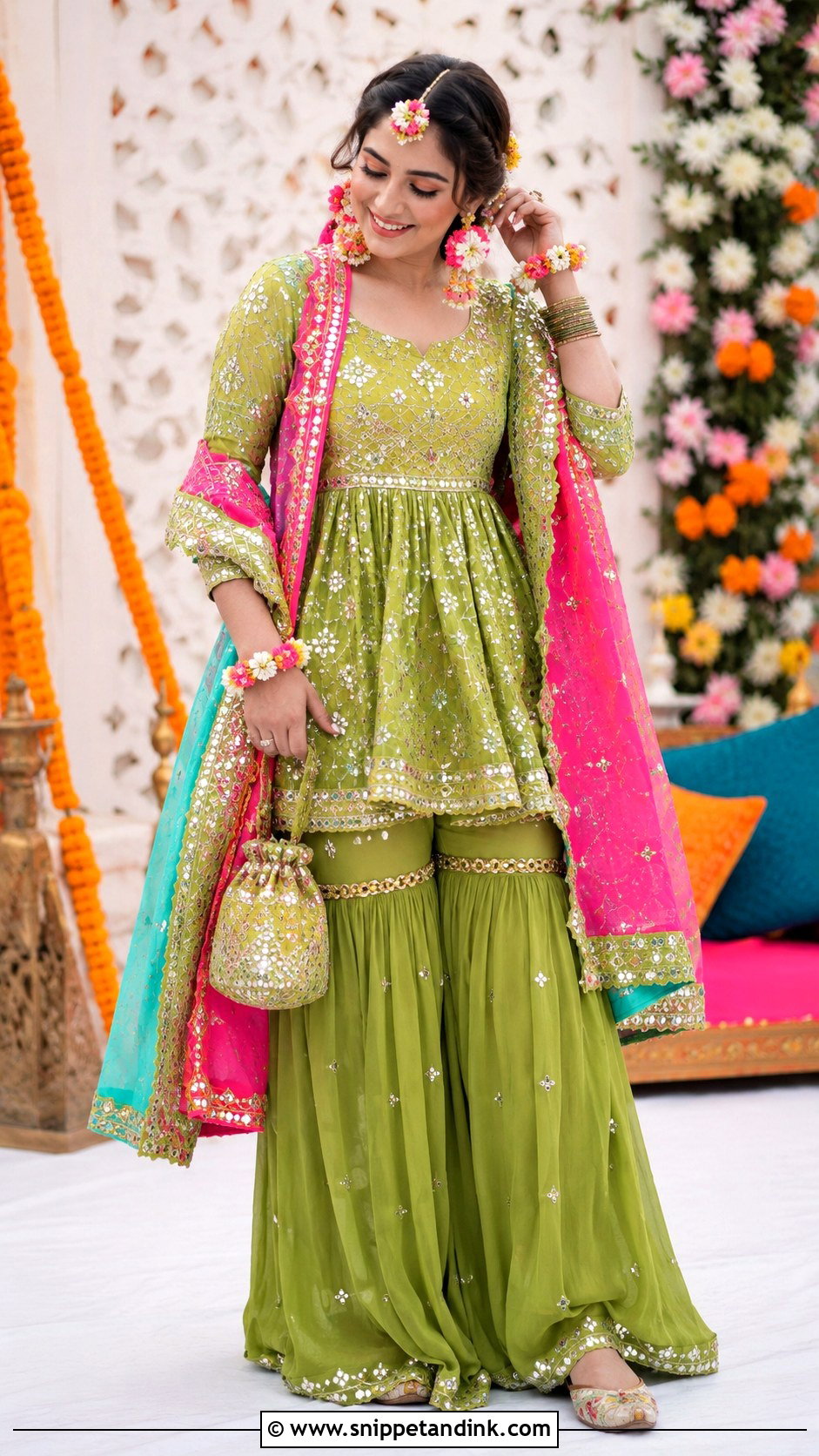
A short peplum kameez over a georgette sharara is my favourite cut for a colorful mehndi outfit, because georgette moves freely and doesn’t crush when you sit for hours with your hands out. Keep the mirror work and multicoloured thread at the bodice and sleeve borders. One practical point: wet henna paste marks fabric, so sleeves should end above the wrist or roll up easily while your design dries. Add a pink, orange or turquoise dupatta, floral jewelry, embellished flats, a braid with tiny flowers and a crossbody potli so your hands stay free.
9. Lavender Organza Bridal Anarkali Salwar Suit
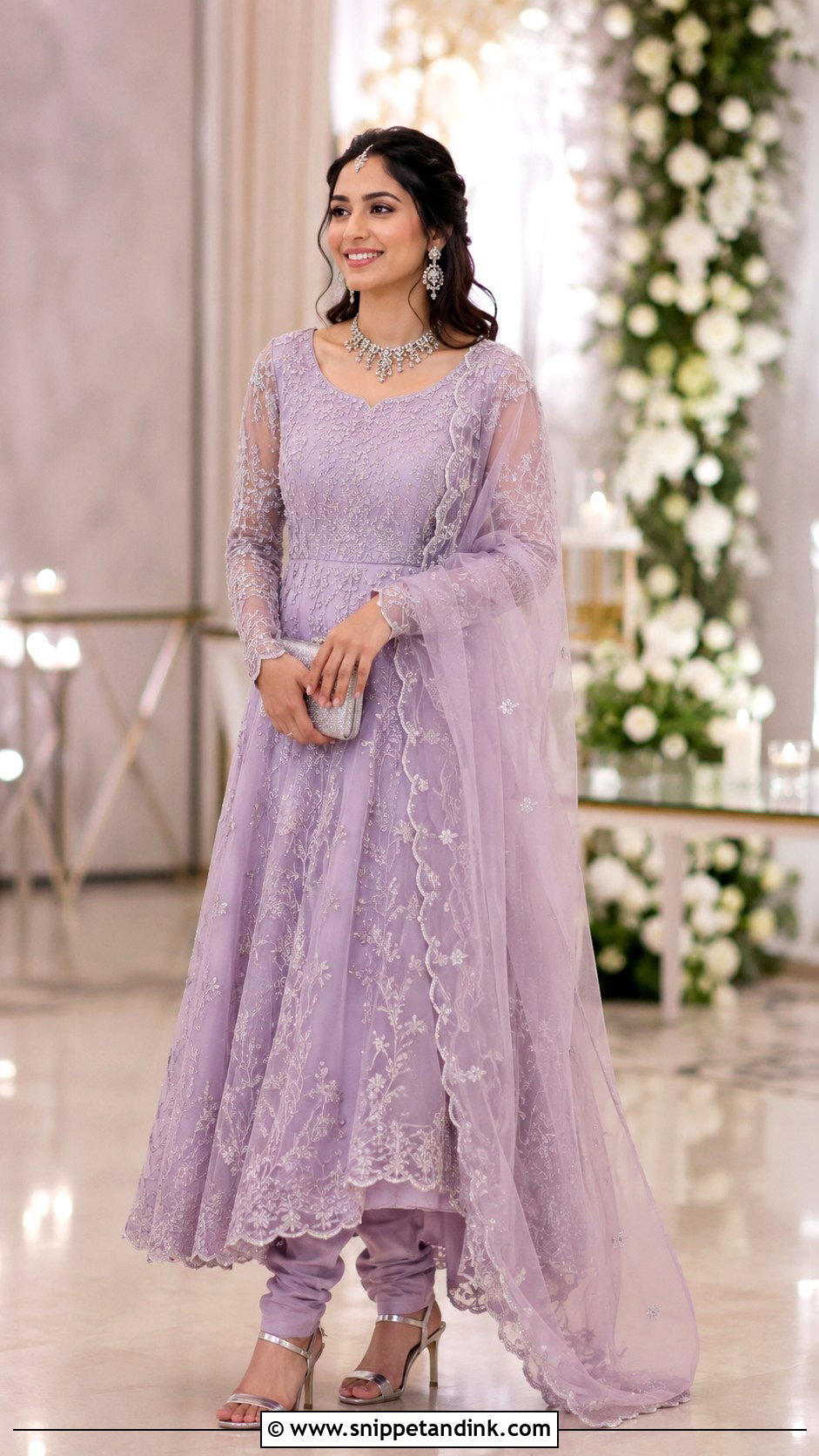
Lavender organza turns a classic Anarkali into something lighter and more modern, but organza is scratchy against bare skin. I insist on a soft inner lining and on testing the transparent embroidered sleeves for a full hour before the wedding. The floor-length cut has a fitted waist, silver threadwork, pearls and small crystals, over slim churidar pants and a matching organza dupatta with a narrow scalloped edge. Diamond-style earrings, a fine necklace, a bracelet, a silver clutch and silver block heels hidden under the flare keep the accessories quiet. A soft updo and mauve eye makeup with a rosy nude lip suit an indoor reception best.
10. Peach Floral Bridal Salwar Suit
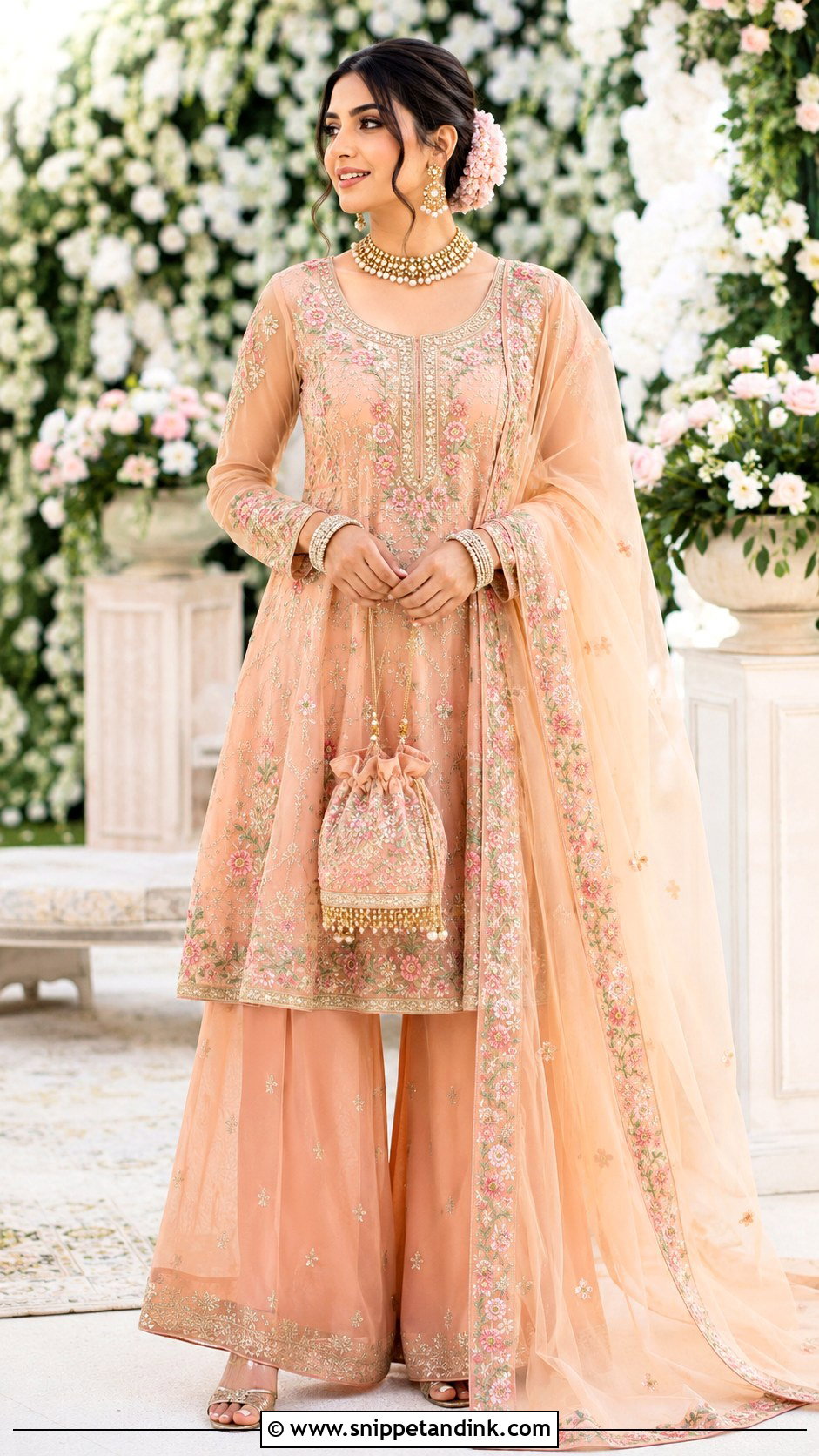
Peach with floral threadwork suits a daytime function, and its multicoloured embroidery (pink, sage, ivory, muted gold) gives you an easy route to matching jewelry. A knee-length A-line kameez balances against flowing palazzos, and the sheer dupatta with its floral border brings color up near the face. I’d keep jewelry modest: pearl earrings, a light kundan necklace, slim bangles and a beaded potli, with champagne sandals or embroidered flats depending on the ground. Loose curls or a low floral bun and peach-toned makeup are all it needs.
11. White Silver Nikkah Bridal Salwar Suit
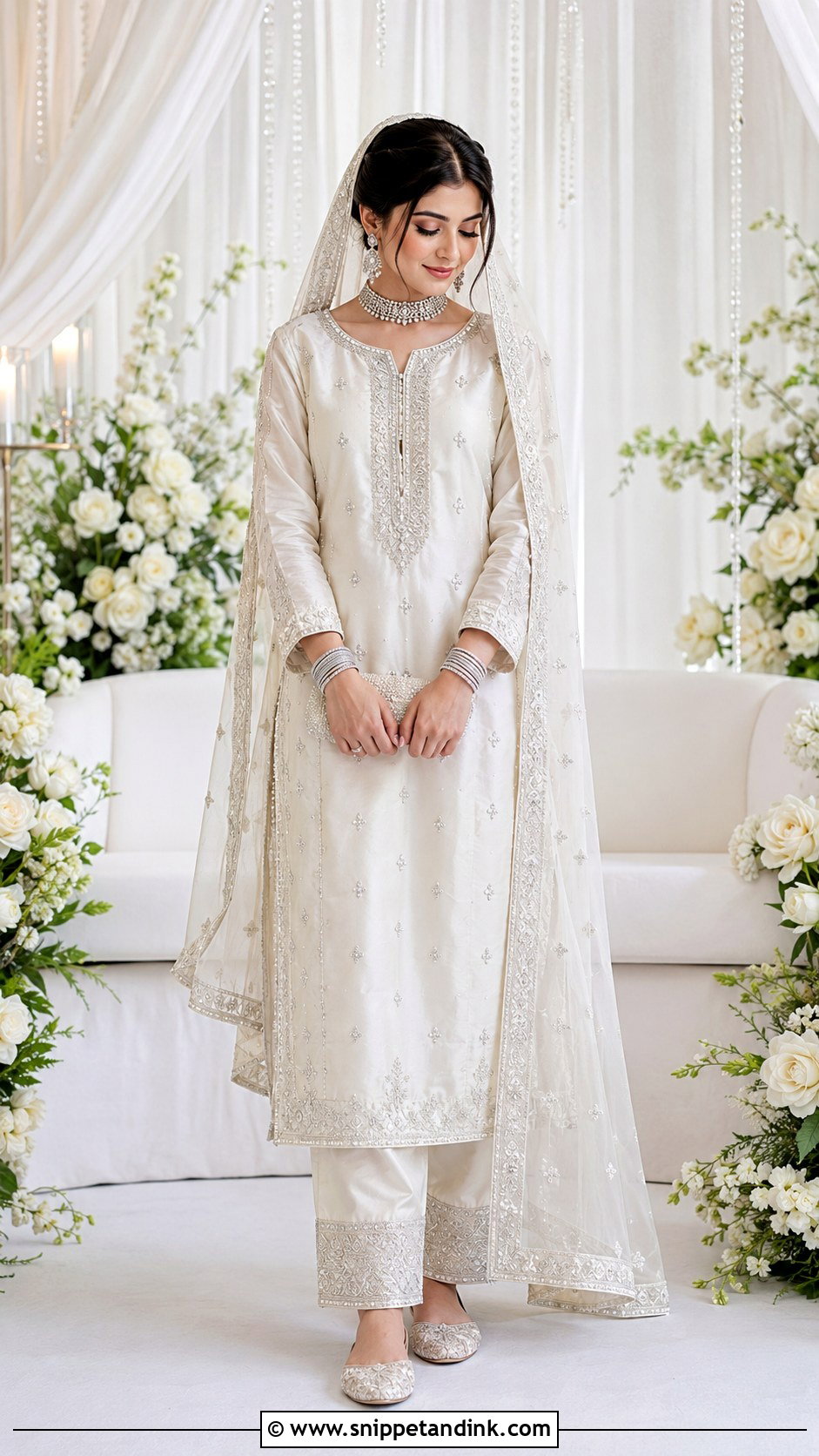
For a Nikkah, the dupatta matters more than anything else in the outfit, because it has to stay over your head through the whole ceremony. This serene and polished Nikkah outfit pairs a long silk or crepe kameez with silver zari, pearls or restrained sequins over straight pants edged at the ankle. A net or organza veil-style dupatta gives coverage without hiding the kameez. I pin it at three points (crown and just behind each ear) into a center-parted low bun, which anchors it far better than pinning to loose hair. Pearl drops, a silver choker, slim bangles, an ivory clutch, closed-toe flats and soft gray-brown eye makeup finish the look.
12. Burgundy Velvet Bridal Pant Suit
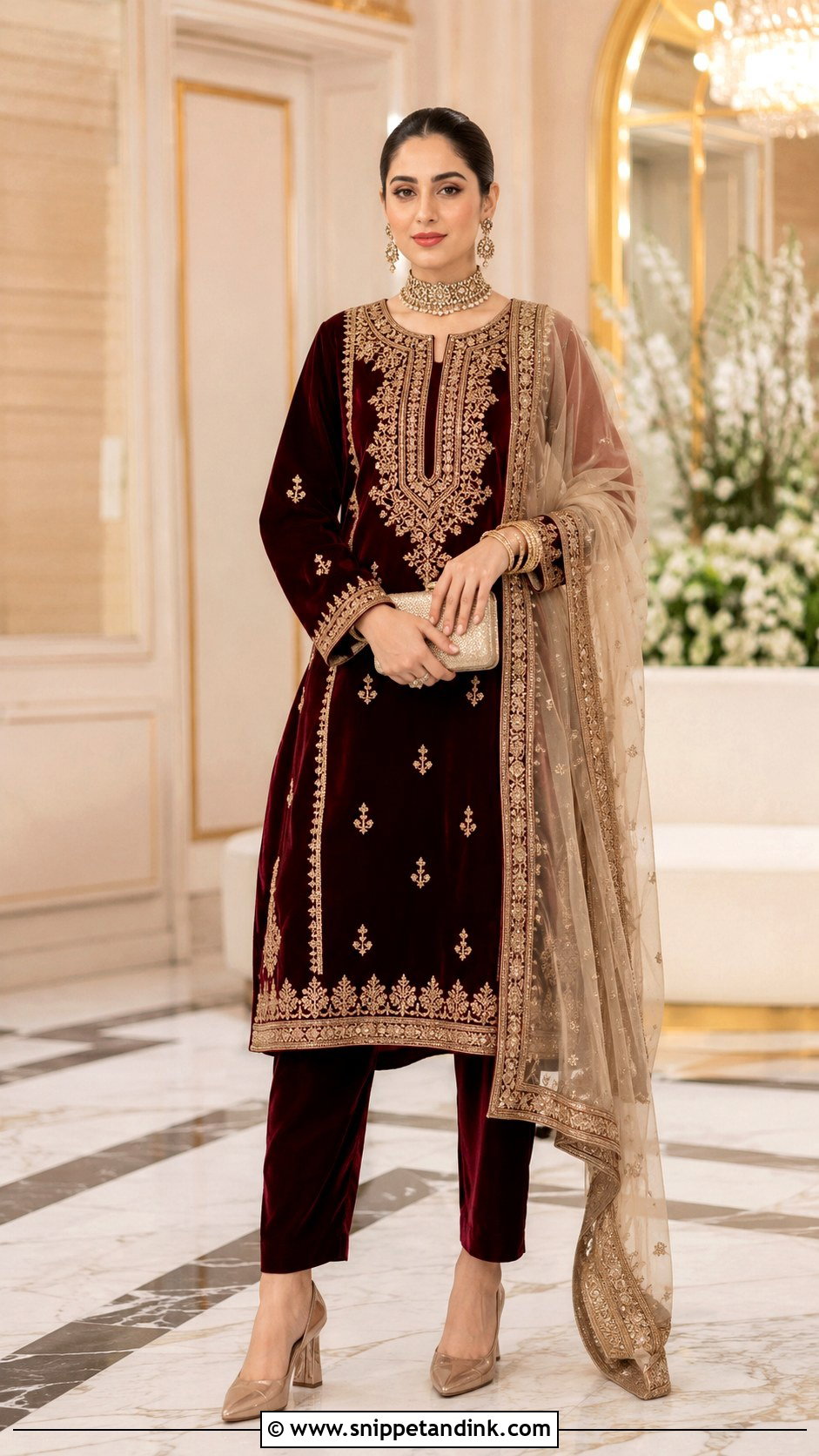
Burgundy velvet works on a cold night, and I find it reads more grown-up than red. The long kameez has a structured neckline, fitted sleeves and gold embroidery kept to the cuffs and side slits, with tailored cigarette pants for a cleaner line. Dark velvet swallows detail in photos, so a beige or antique-gold organza dupatta is not only decorative; it gives the camera something to read around your face. A kundan choker, drop earrings, gold bangles, a structured clutch and pointed mules complete it, with a sleek low bun, warm brown eyes and a soft berry lip.
13. Teal Banarasi Bridal Salwar Suit
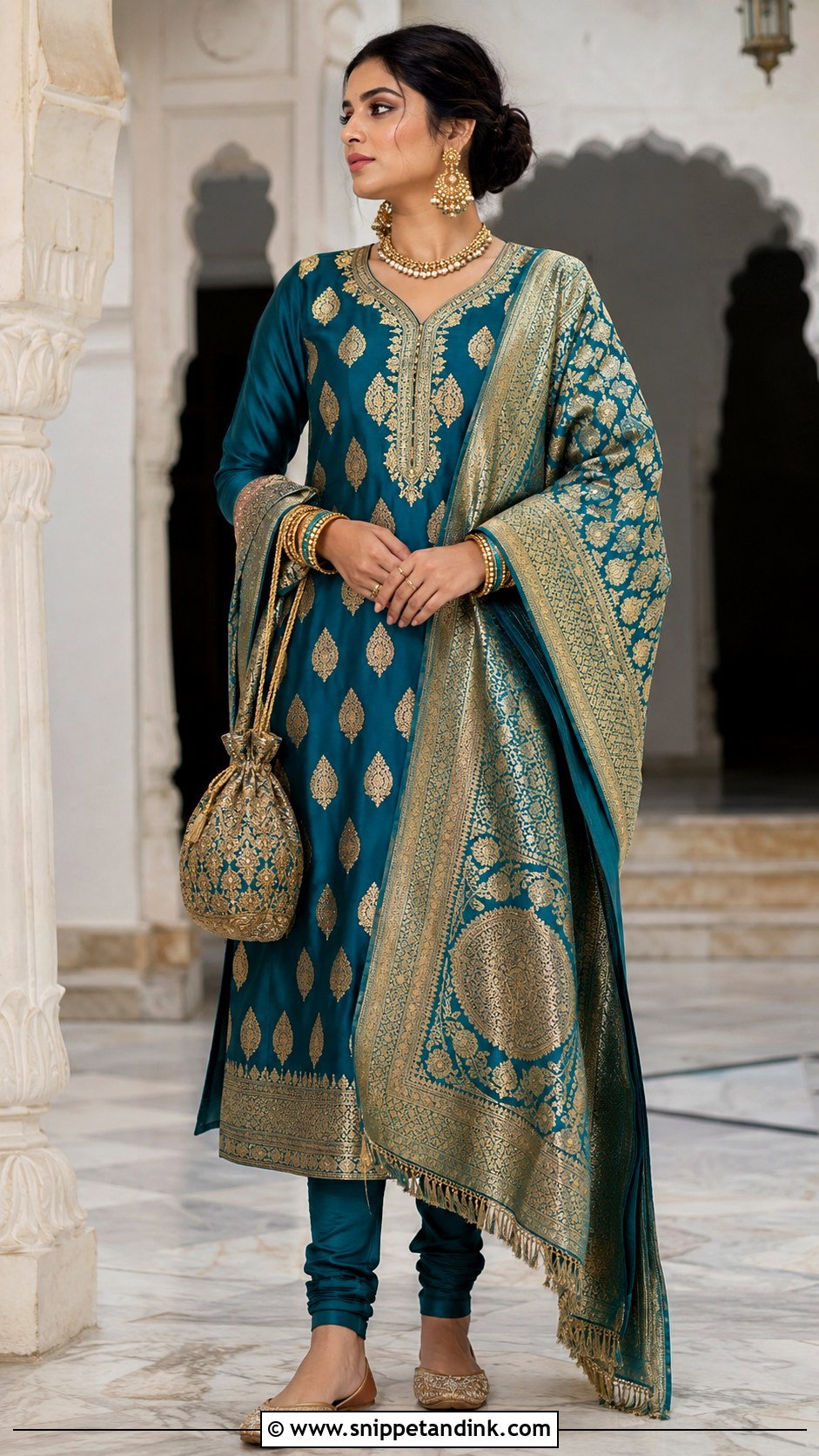
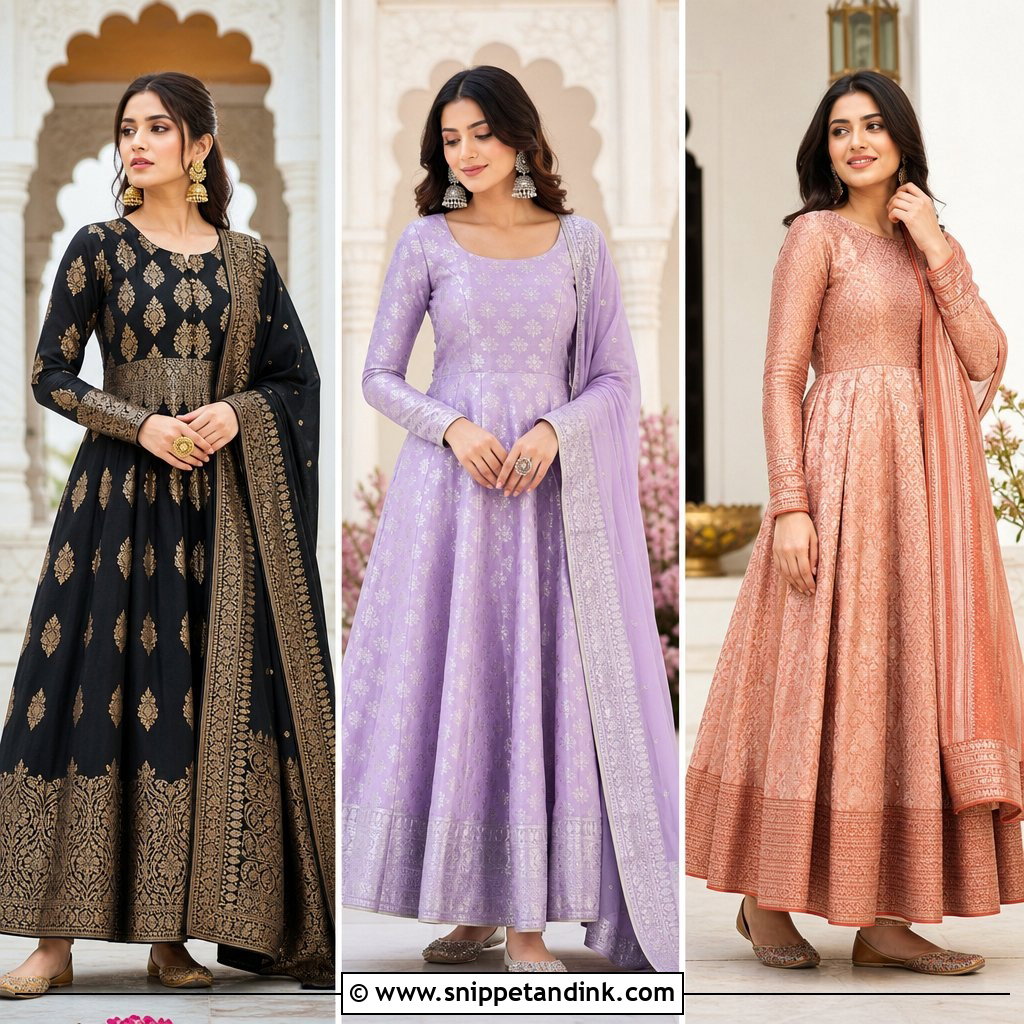
Here the Banarasi dupatta is the main event and the suit plays support. A silk A-line kameez in teal with only restrained gold embroidery and matching churidar leaves room for the woven zari border and florals. Real Banarasi weaves are heavier than net, so the pins need to go through the woven border rather than the thin body of the fabric, or it will tear. Drape it diagonally or over the head for the ceremony. Temple-style earrings, a short gold necklace, bangles, a brocade potli, gold juttis and a bun with fresh white flowers keep the textile at the center.
14. Coral Angarkha Bridal Salwar Suit
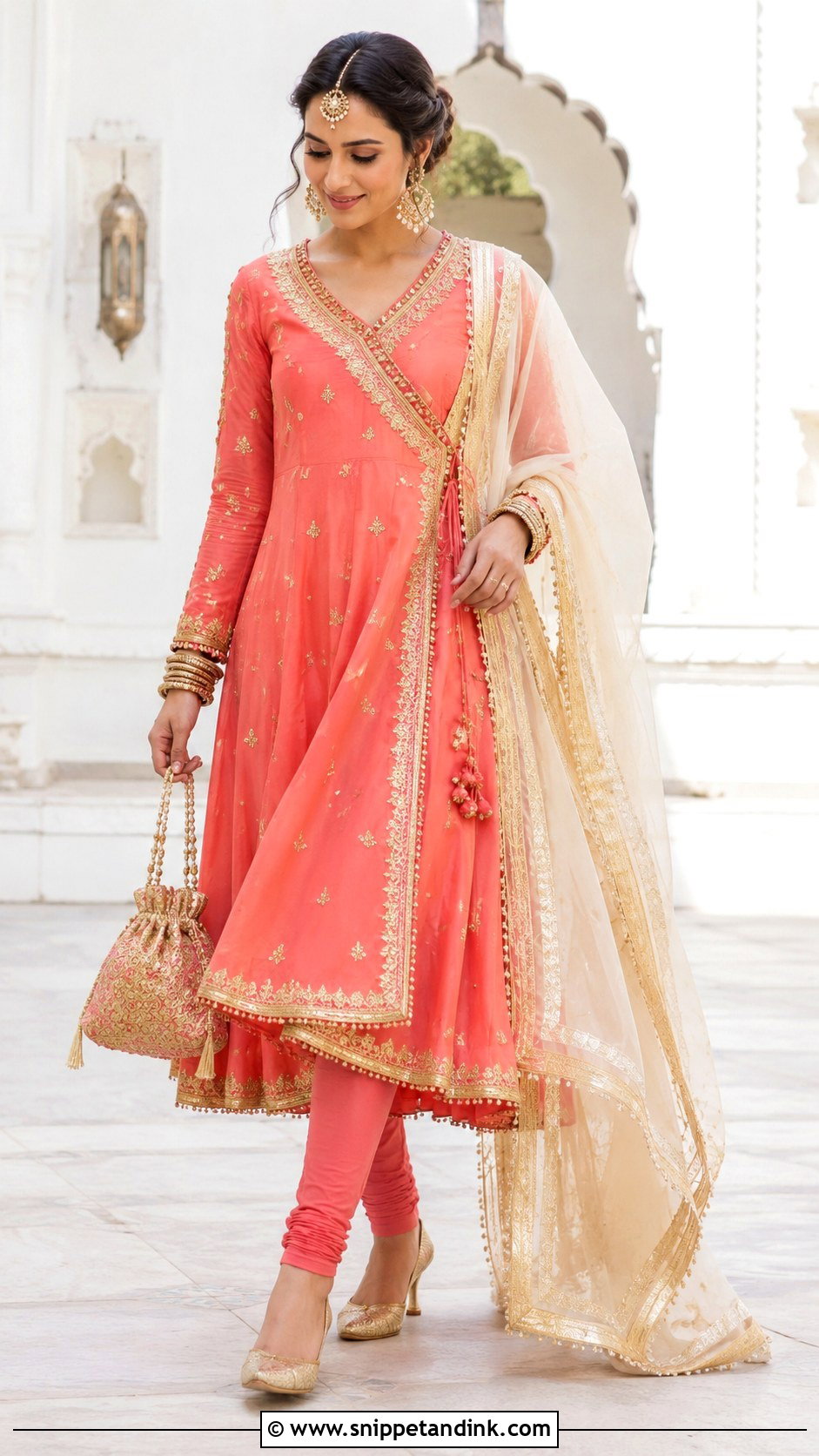
An Angarkha’s wrap neckline is flattering on almost everyone, but the side ties take some planning. I ask tailors to add a hidden hook under the ties, because a bow alone loosens by the evening. This calf-length coral version has a flared skirt and gold embroidery that follows the overlap, with slim churidar pants underneath. A mint, ivory or coral dupatta with a narrow gota border, chandelier earrings, a maang tikka, slim bangles and gold kitten heels suit it. A side-parted low bun follows the asymmetry, and a coral-pink lip echoes the fabric without matching it exactly.
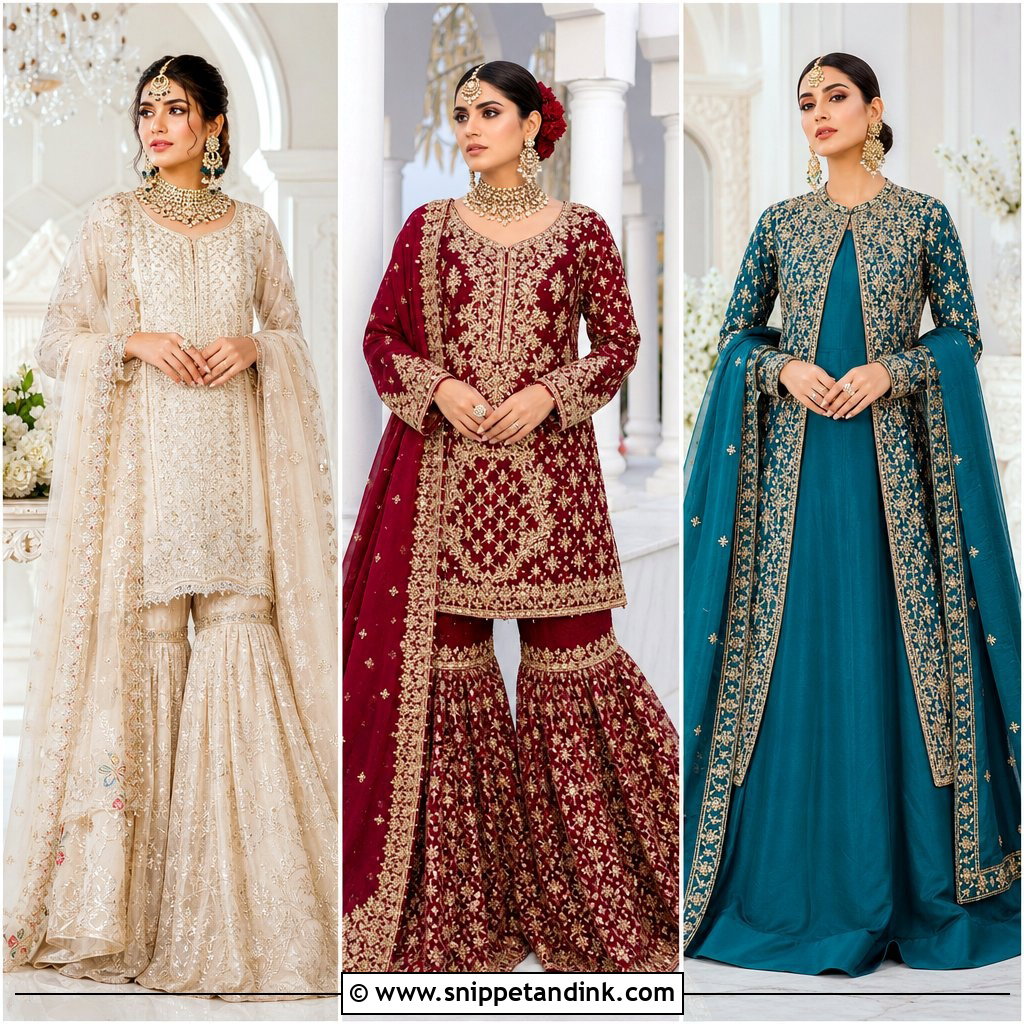
15. Champagne Cape Bridal Palazzo Suit
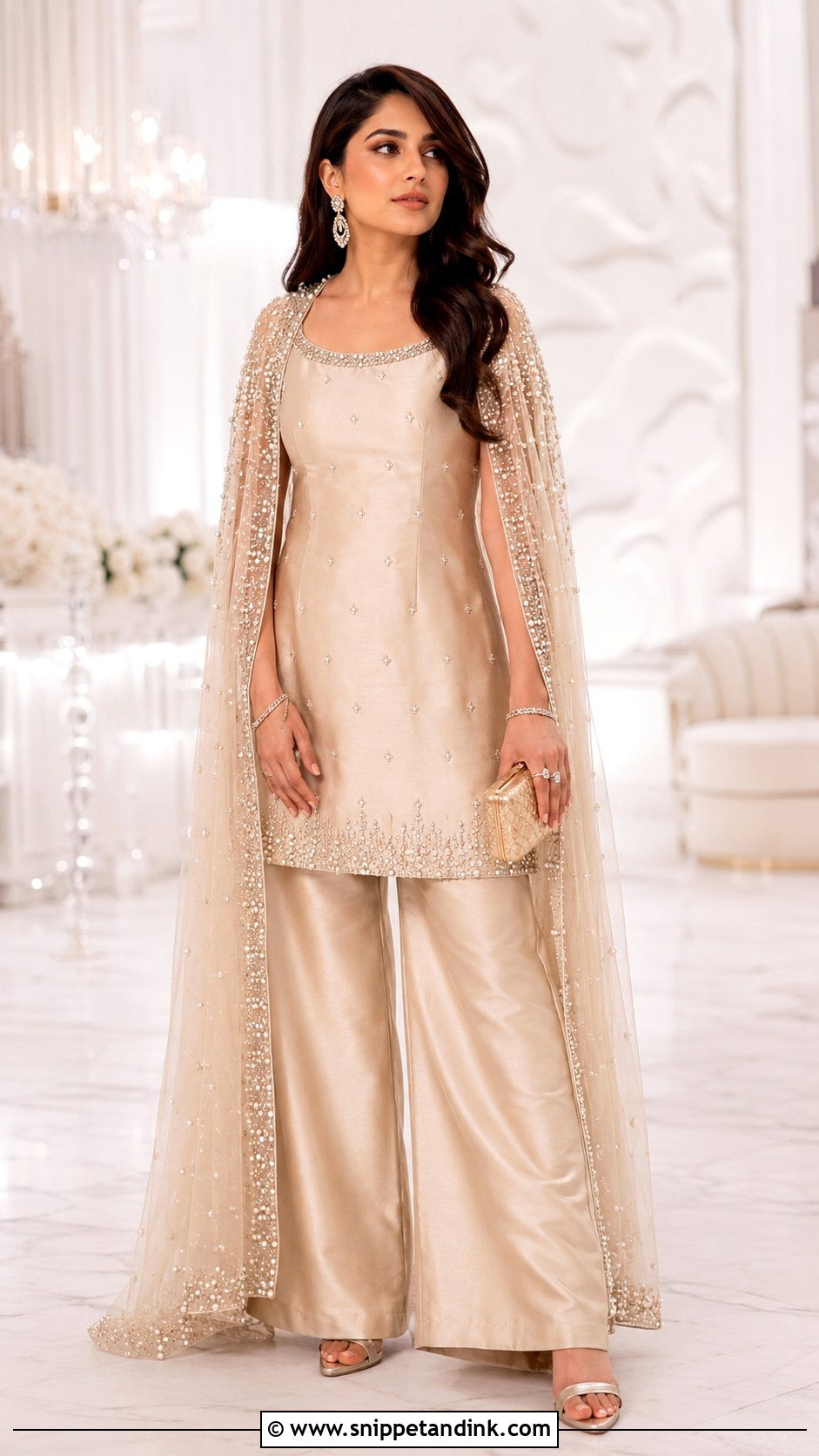
A champagne cape suit is my usual answer for a reception bride who wants something modern but still formal. A fitted silk or crepe kameez and wide palazzos in one neutral shade sit under a sheer waist-length cape embroidered with pearls, beads and fine metallic thread. The cape is the decoration, so keep the pants plain and the kameez lightly worked. Check that the cape is tacked to the shoulder seams, otherwise it slides back every time you raise your arms. Crystal drops, a fine bracelet, a cocktail ring, champagne block heels and a sleek ponytail show off the neckline.
16. Fuchsia Mirror Work Bridal Salwar Suit
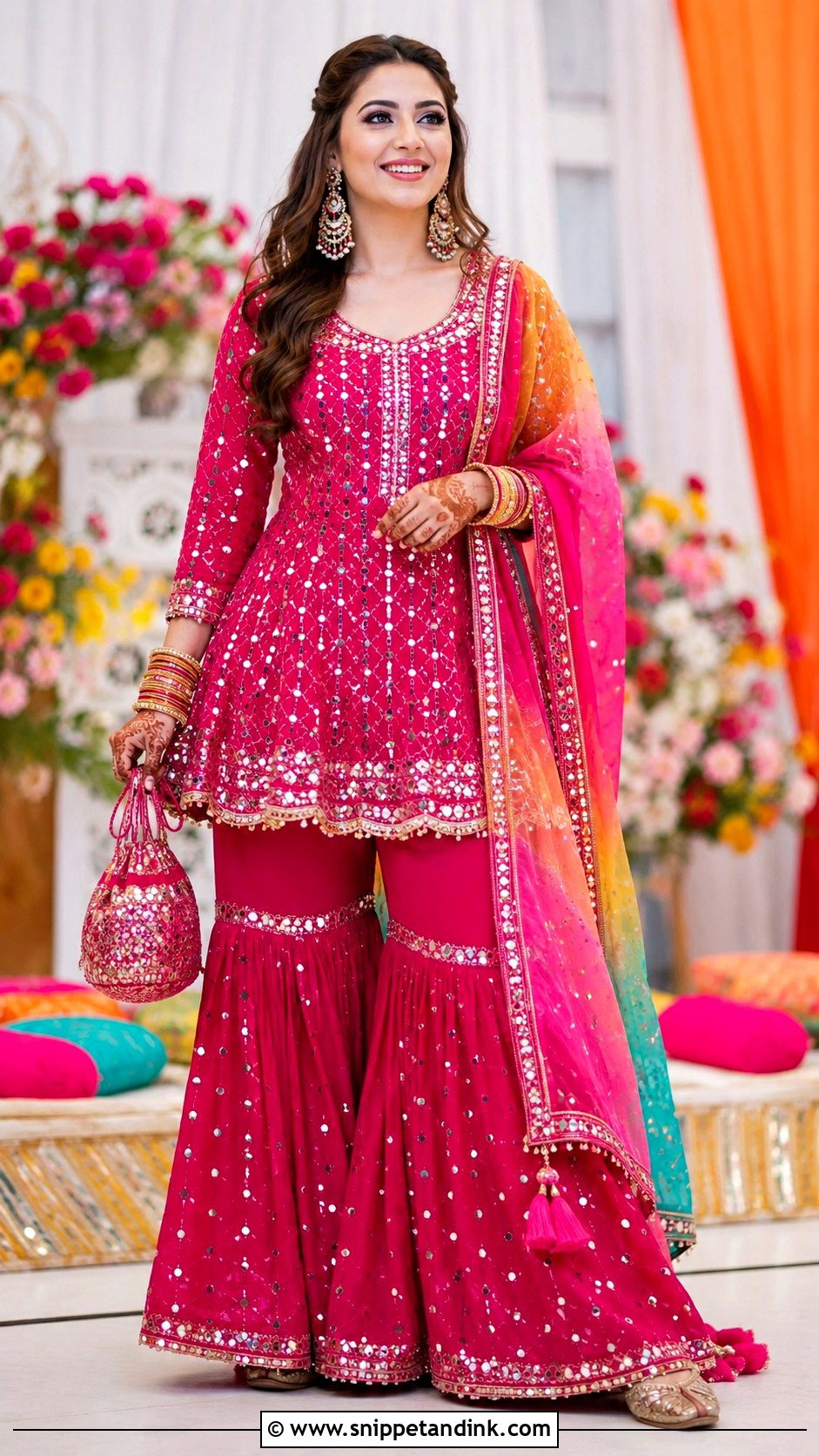
Mirror work and fuchsia belong at a bridal look for a sangeet, where the lights pick up every mirror while you dance. The peplum kameez carries mirrors around the neckline, waist and sleeves, over a fuchsia sharara with lighter work toward the hem. Run your fingers over each mirror at the fitting: they should be properly backed and stitched flush, because a raised edge scratches the inner arm and catches net dupattas. A turquoise or orange chiffon dupatta with a slim mirror border, colored bangles, metallic juttis, a high braided ponytail and long-wear makeup finish it.
17. Rust Silk Bridal Churidar Suit
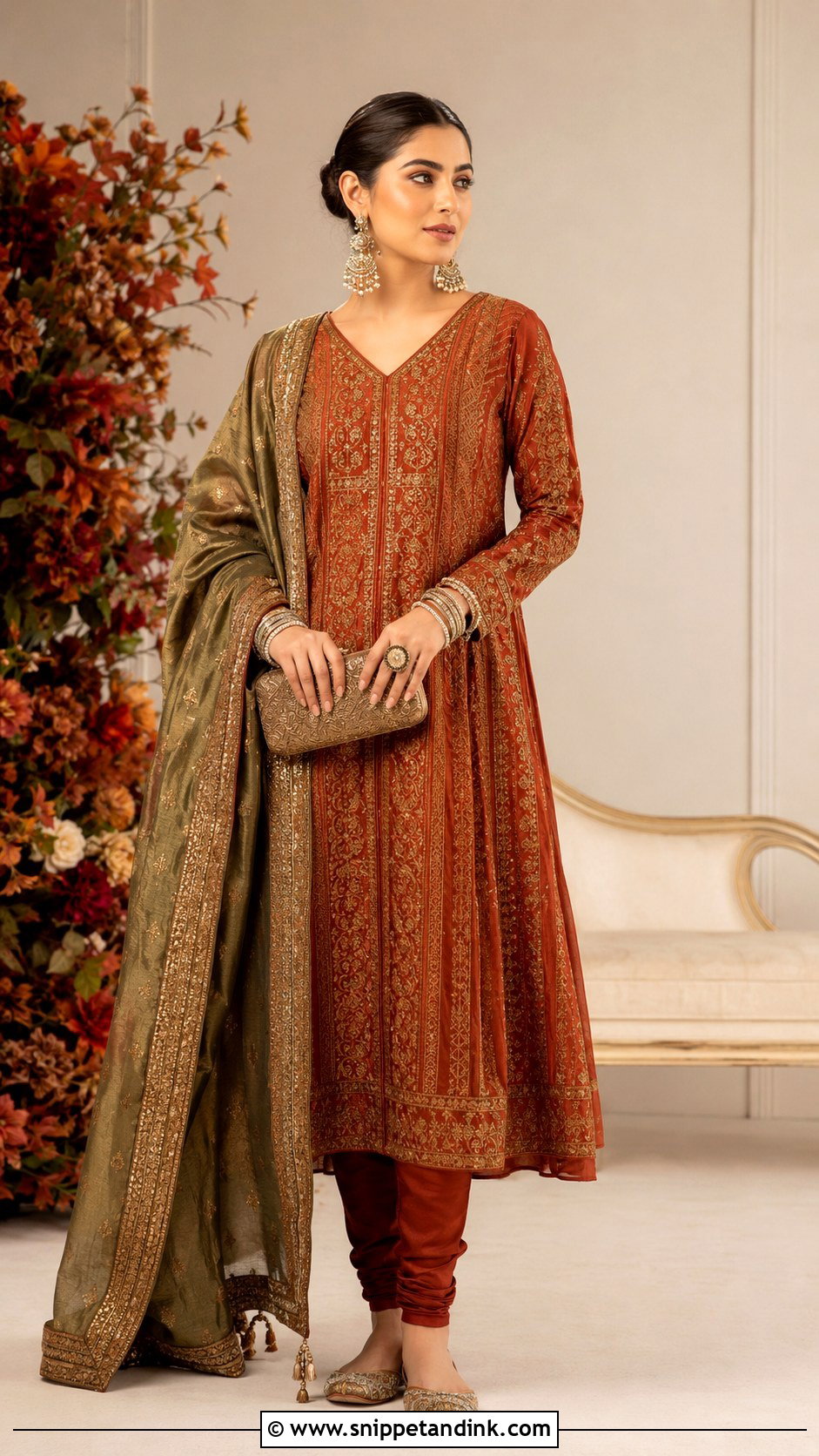
Rust silk is my pick for an autumn wedding when the bride doesn’t want red. A long paneled kameez with an architectural neckline and antique-gold borders sits over a fitted churidar, and an olive, beige or muted pink dupatta with a zari edge brings contrast. With churidar, ask for extra length below the ankle: the gathered folds are the point, and pants cut to the exact leg length look like leggings. Antique-gold earrings, layered bangles, a statement ring and traditional juttis keep it earthy. A loose low bun with a few face-framing pieces, bronze eyes and terracotta blush suit it.
18. Powder Blue Floor Length Bridal Salwar Suit
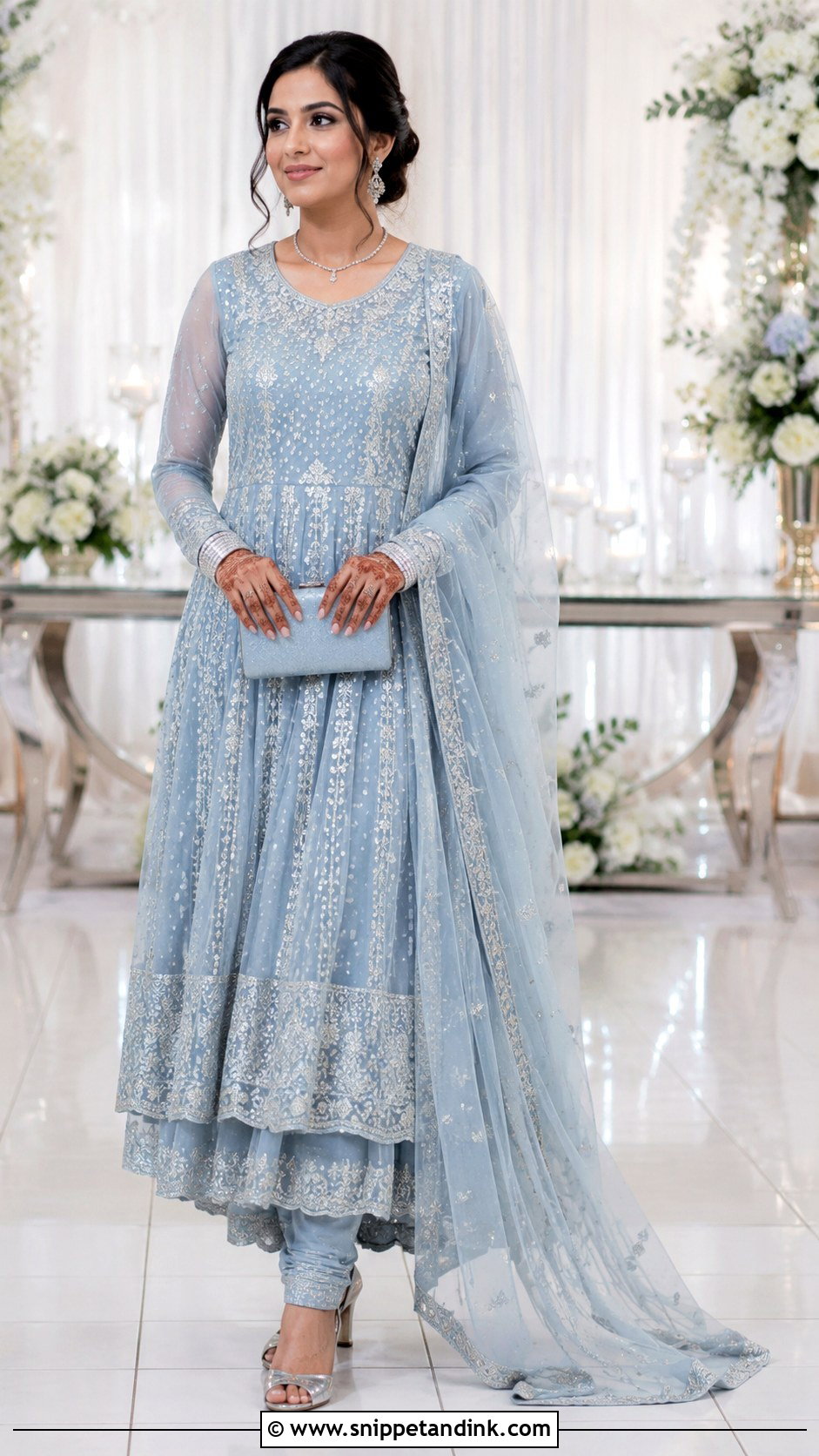
Powder blue only works if the hem is right. On a floor-length Anarkali with a layered flare, I hem with your actual shoes on, leaving roughly a finger’s width off the floor, because a pastel hem that drags turns gray before the photos are done. The defined waist and silver embroidery fade toward the hem, worn with fitted churidar and a soft net dupatta scattered with tiny sequins. Pearl-and-crystal earrings, a slim necklace, silver bangles, low metallic heels and a curled ponytail keep the neckline clear, with cool eyeshadow and a pink lip.
19. Red Lehenga Bridal Salwar Suit
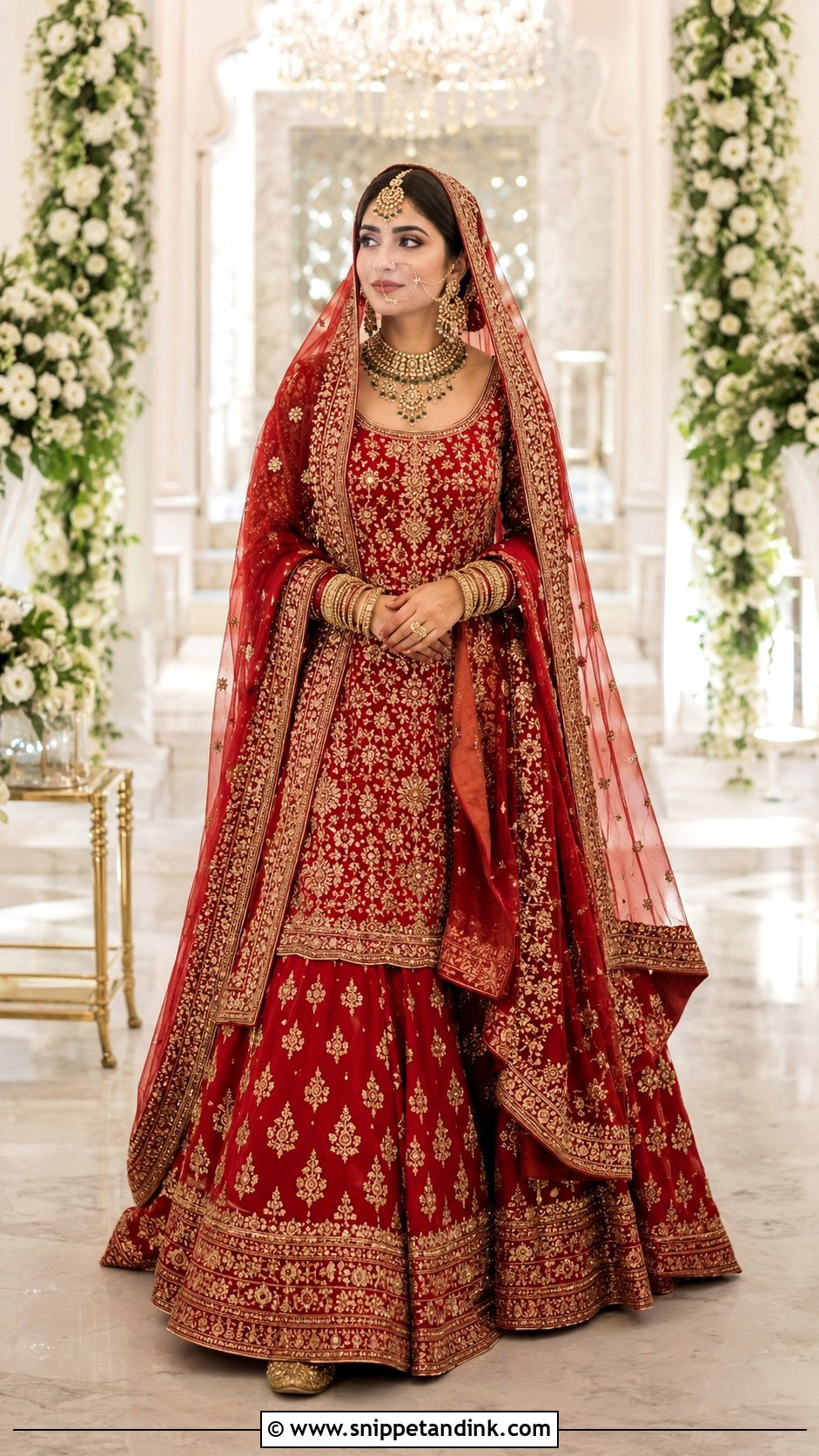
This is the cut for a bride who wants lehenga drama with more coverage: a fitted, hip-length red kameez over a full silk skirt embroidered to match. Too much flare and you’ll fight the skirt on stairs and in the car, so I’d keep the volume moderate. Ask the tailor to line up the motifs where the kameez hem meets the skirt, since mismatched borders are the first thing a guest notices. A sheer red dupatta with a wide border goes over the head and one shoulder, pinned to a low bun. A traditional necklace, maang tikka, bangles, embroidered juttis and a classic red lip finish it.
20. Pastel Ombre Bridal Anarkali Salwar Suit
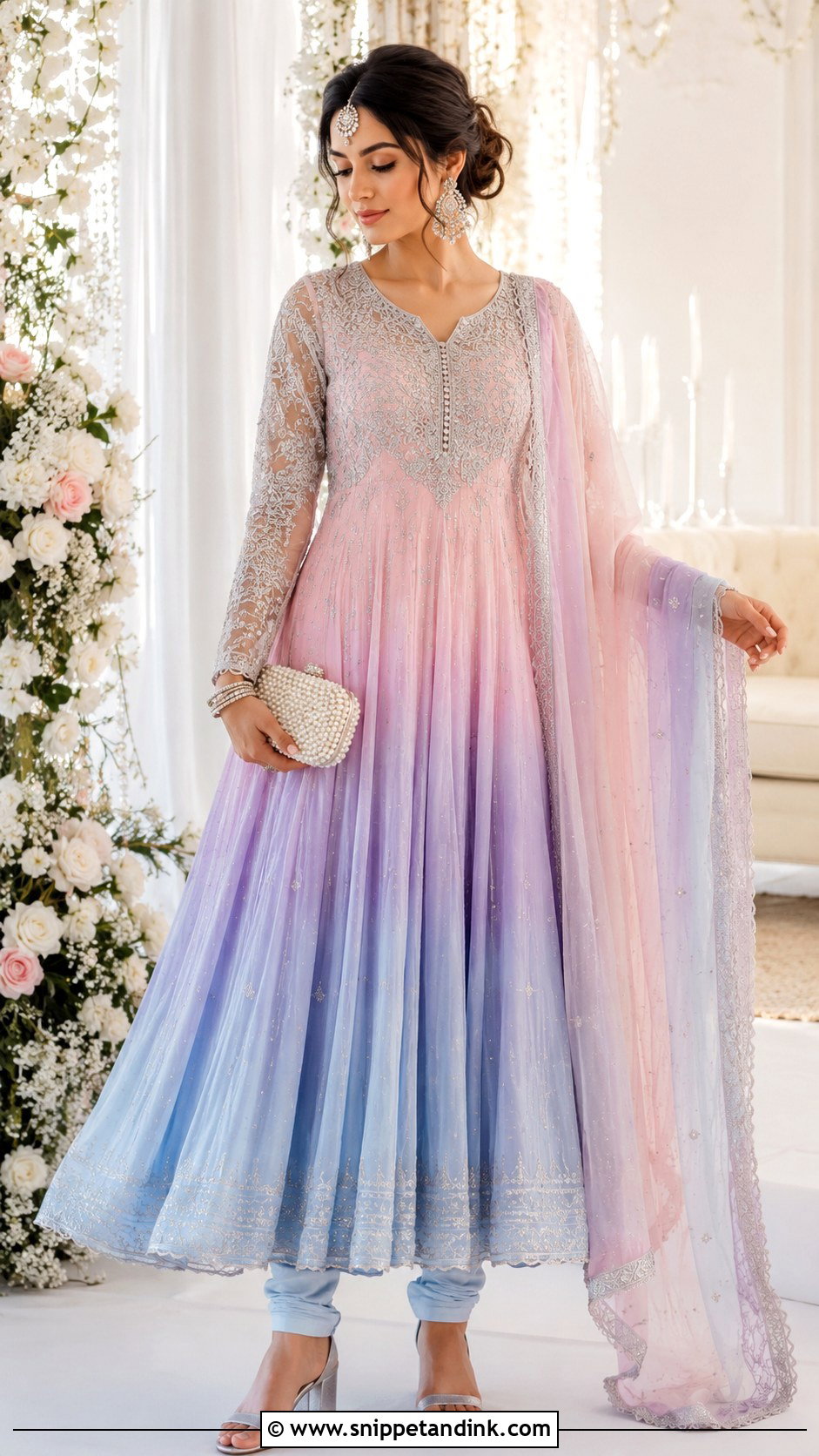
An ombre dyed fabric makes the color the statement, so heavy embellishment would only fight it. A pastel ombre Anarkali that fades from blush into lavender, powder blue or peach needs only fine silver embroidery at the bodice and sleeve edges. Look at the fade in daylight before you buy, because dye gradients can show banding under shop lights that disappears outside, and the reverse also happens. Slim churidar, a sheer dupatta in one of the gradient shades, crystal earrings, a delicate tikka, slim bangles and nude block heels complete it, with loose waves and a glossy rose lip.
How Many Fittings a Custom Bridal Suit Really Needs
Hand embroidery takes time, and custom bridal pieces are often ordered several months ahead; ask your designer for their own timeline, because it varies with the work involved. I plan for at least two fittings after the garment is stitched. The first checks the bodice, the armholes and where the gharara joint or Anarkali waist falls. The second is done in your wedding shoes, with the dupatta pinned exactly as it will be on the day.
Bring the jewelry to that second fitting. A heavy necklace changes how a neckline sits, and kundan settings snag net dupattas, which you want to discover in the trial room rather than on the stage. Leave the last week free of alterations so a late adjustment never becomes a panic.
Putting Velvet and Zari Away After the Wedding
Embroidered suits are rarely ruined on the day; they get damaged in the cupboard afterward. Don’t hang a heavily worked kameez for months, because the embroidery’s weight stretches the shoulders. Fold it with acid-free tissue between the layers, wrap it in soft muslin rather than plastic, and store it somewhere dry.
- Air the outfit for a day before packing so perspiration doesn’t sit in the fabric.
- Refold along different lines every few months; permanent creases crack metallic thread.
- Keep zari away from damp and perfume, both of which speed up tarnishing.
- Send velvet and embroidered silk to a cleaner experienced with bridal wear, and point out any stains.
A Suit Only Looks Bridal Once It Has Been Worn In
Twenty suits cover a lot of ground, from red velvet Anarkalis and ghararas to shararas, palazzo sets and pale reception looks. Whichever one you lean toward, wear it in full before the wedding: shoes, jewelry, pinned dupatta, hair done, for at least an hour of sitting, standing and walking. That trial tells you which embroidery scratches, which pins slip and whether the hem clears the floor. Pick the color and cut that feel like you, and let a good tailor do the rest, because careful fitting is what makes even a simple salwar suit look bridal.
You'll Like These Ideas:







Leave a Reply