
A printed suit is the outfit I reach for most when a client needs something for the mehndi lunch, a cousin’s haldi or a family dinner during wedding week. It carries colour without the weight of embroidery, and a good print does half the styling for you. The work is in the details: how big the motif is against your frame, whether the fabric suits the hours you’ll wear it, and how the dupatta, shoes and jewellery relate to the pattern. Below are twenty suits I’d happily dress someone in, from hand block cottons to silk and organza for dressier functions, each with the adjustments I make when I style them.
Hand Block, Screen or Digital: What the Print Tells You Up Close
Before I think about styling, I look at how the fabric was printed, because it changes how the suit behaves and how much it should cost. Hand block prints show tiny shifts where one stamp meets the next, a faint halo where colour bled, and occasional gaps in a repeat. I treat those as proof of handwork, not flaws. Screen prints are crisper and more even. Digital prints can carry shading and fine detail, but the colour often sits on the surface and can look flat on cheaper polyester.
Turn the fabric over. On a hand dyed or block printed cotton, the design usually shows clearly on the reverse; on a surface print, the back is pale. Neither is wrong, but you should know what you are paying for.
- Rub a white tissue firmly on a dark section. Heavy colour transfer means the first few washes will bleed.
- Check the print at the side seams and centre front. A motif cut in half at the chest is a tailoring problem, not a style choice.
- Hold the kurta up to daylight if it is light-coloured. Sheer cotton and organza need a lining or a slip.
- Look at the dupatta and kurta side by side in natural light. Sets dyed in separate batches sometimes differ by a shade.
1. Floral Printed Cotton Salwar Suit
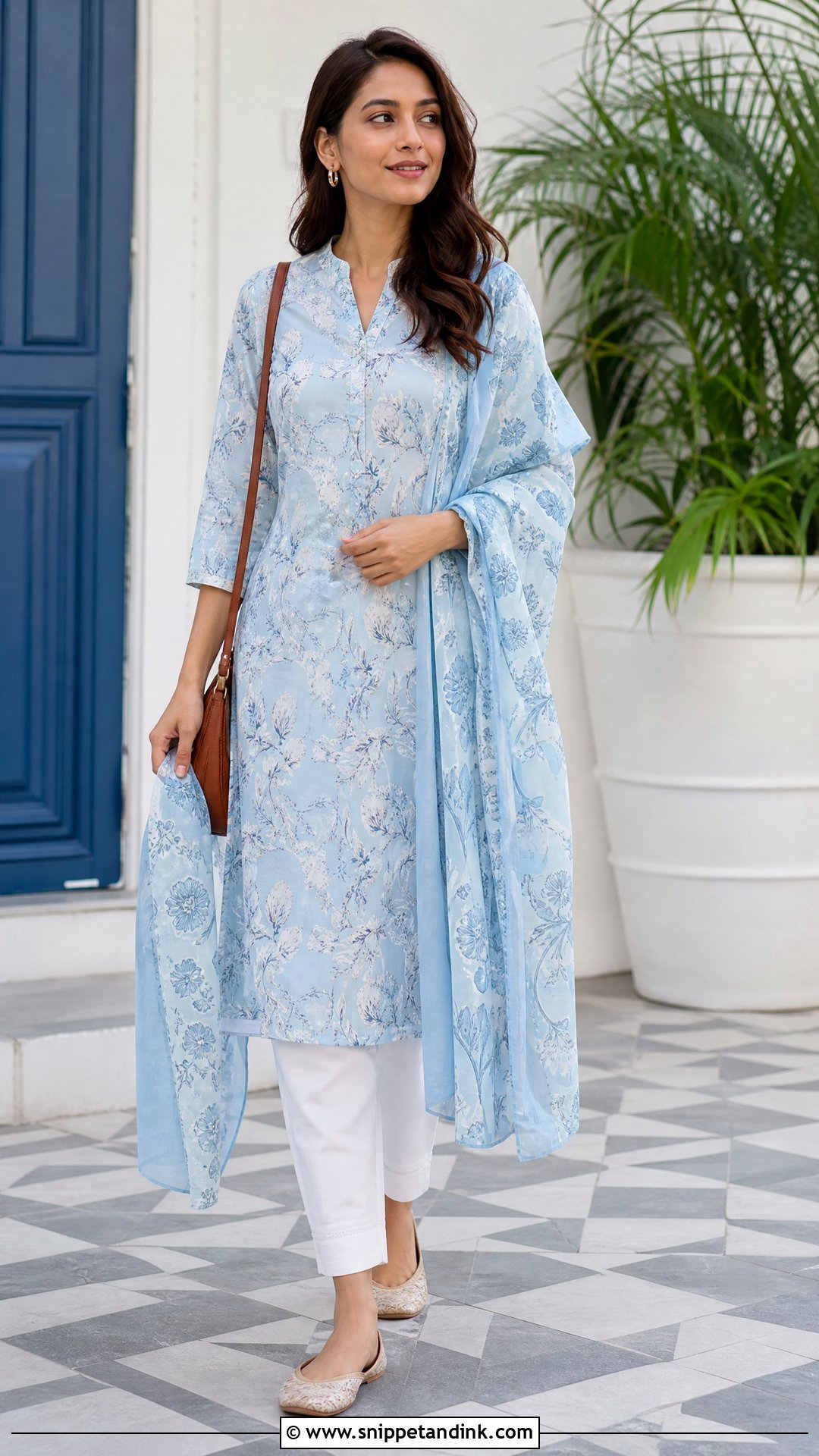
Small flowers on cotton are the easiest print to wear well, because the motif reads as texture from a few steps away. I pair a straight kurta with solid tapered pants so the eye has somewhere to rest, and keep the dupatta light or matched to one colour in the print. Powder blue, peach, mint and ivory all hold up in daylight. On petite clients I look for blossoms no bigger than a thumbnail; larger flowers suit taller frames. Flat juttis, small hoops and a roomy shoulder bag finish it, and makeup stays fresh so the fabric does the talking.
2. Block Printed Salwar Suit With Palazzo Pants
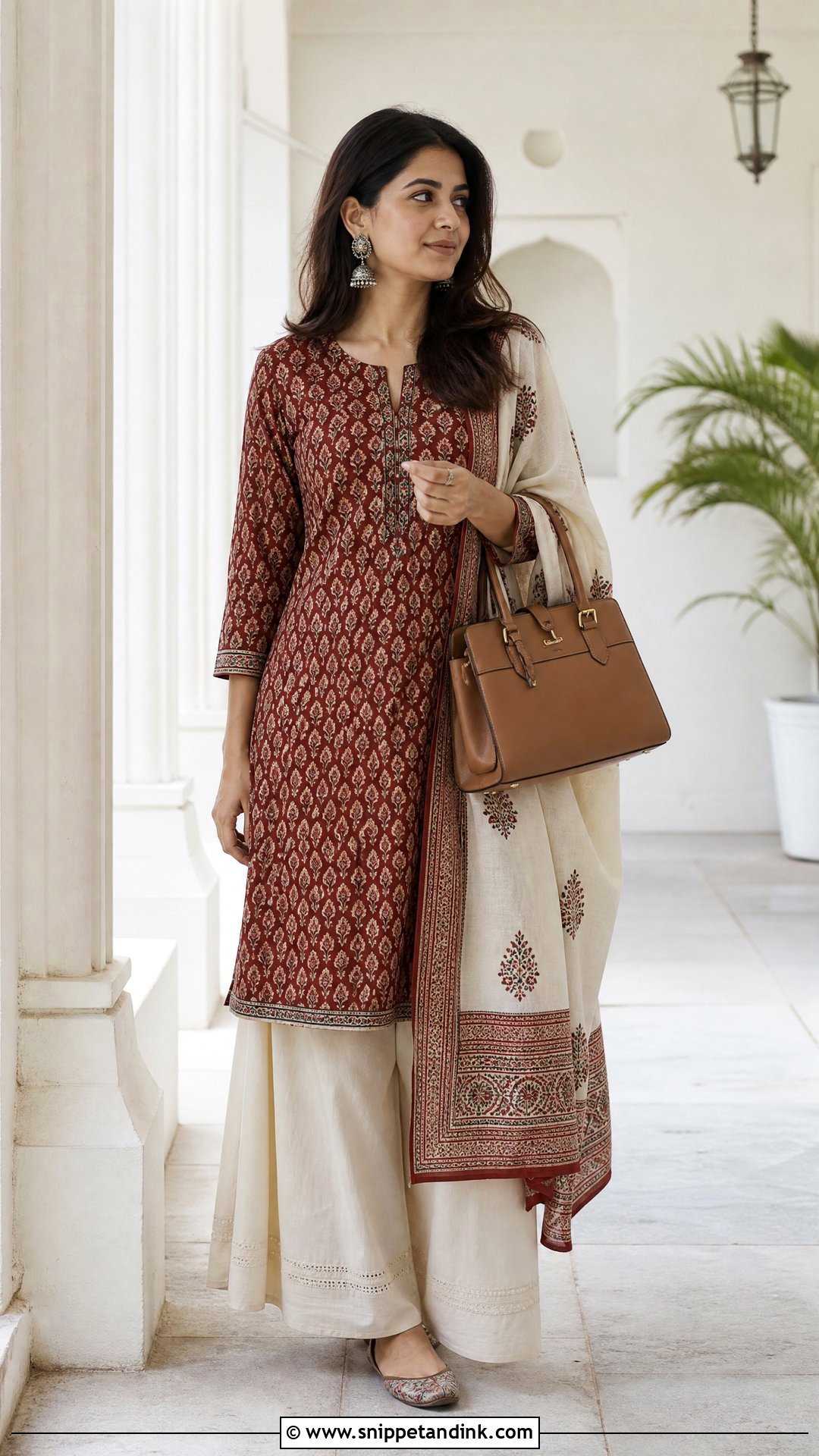
Block prints have a slightly irregular edge where each stamp meets the next, and that handmade quality is what makes them look polished next to wide palazzos. I’d start with a red, mustard, indigo or olive kurta with a clean round neck, then let solid palazzos carry the movement. A cotton dupatta with a narrow printed border ties it together. Oxidised silver earrings, stacked bangles and leather or embroidered flats suit the artisanal feel, and a jute or tan bag adds texture. One honest caution: if the kurta motifs are dense, every accessory needs to be plain, or the whole outfit starts to buzz. It’s a sensible choice for sightseeing, lunches, college events and daytime family functions.
3. Indigo Ajrakh Printed Salwar Suit
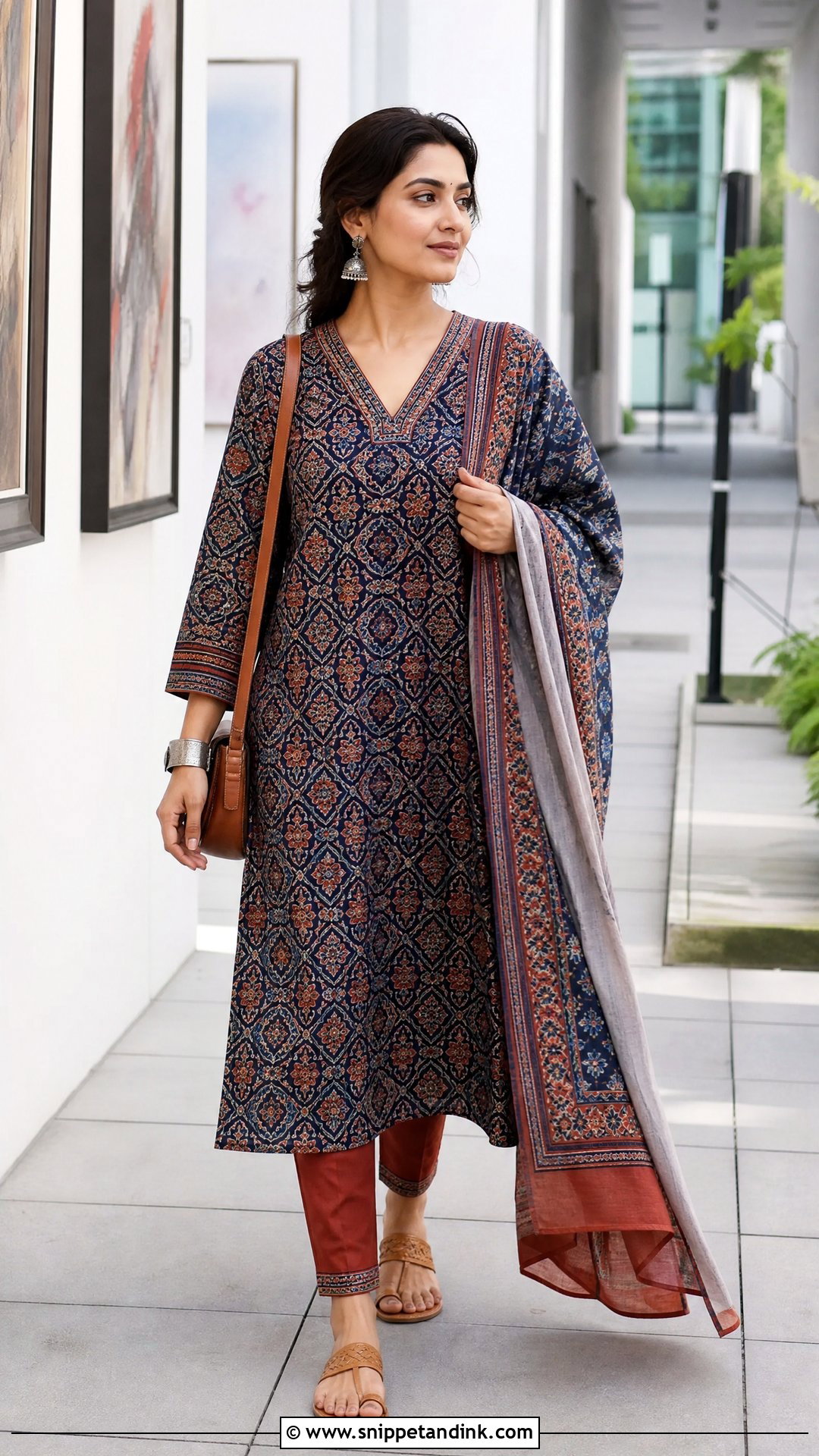
Real Ajrakh is printed on both sides in several stages of resist and dyeing, mostly indigo and a madder red, so the colour sits deep in the cloth rather than on top of it. That depth is why a calf-length straight kurta in this print needs so little help. I pair it with rust, beige or indigo cigarette pants and a light cotton dupatta whose border picks up one of the motifs. Tan kolhapuris, silver jhumkas and a small crossbody bag keep it grounded. The darker palette hides creases from travel and long days, which is why I suggest it for work, exhibitions and evenings. Side slits and three-quarter sleeves clean up the line, and a low bun keeps the neckline and earrings in view.
4. Bandhani Printed Patiala Salwar Suit
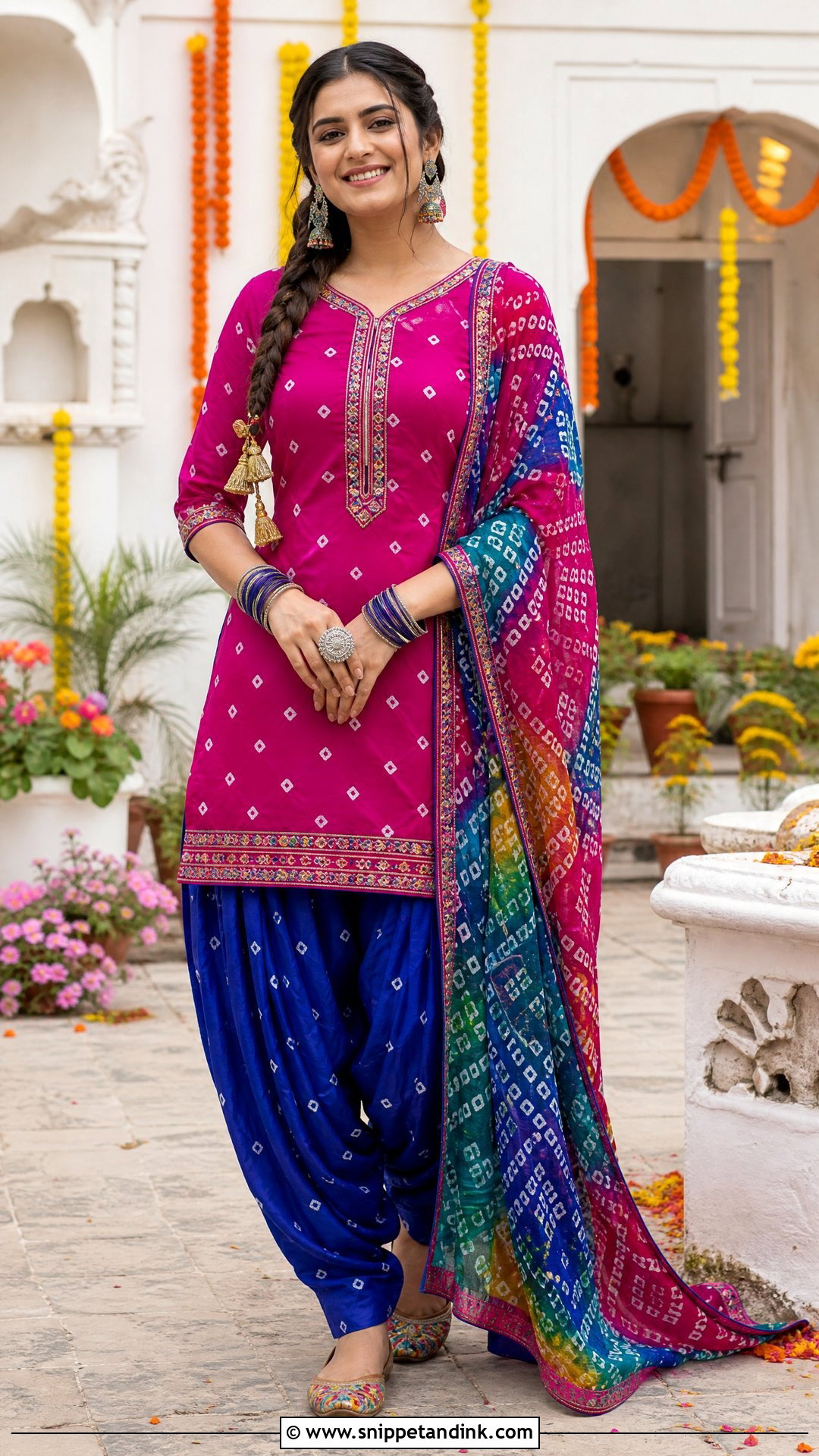
True Bandhani is tie-dyed, with tiny raised dots where the cloth was bound, so it pays to check if you are buying the real thing or a print that imitates it; both are fine, but the dyed version has more depth and a softer hand. I pair a short or mid-thigh kameez in fuchsia, red, green or royal blue with a contrasting traditional Patiala salwar. The pleats add volume below the waist, so the kameez must stay streamlined or the outfit loses its shape. A Bandhani dupatta can introduce a second colour as long as its border connects to the suit. Embroidered juttis, bright bangles, small jhumkas and a neat braid suit festive daytime gatherings. If the print feels like too much, wear a solid kameez and save the Bandhani for the dupatta.
5. Paisley Printed Anarkali Salwar Suit
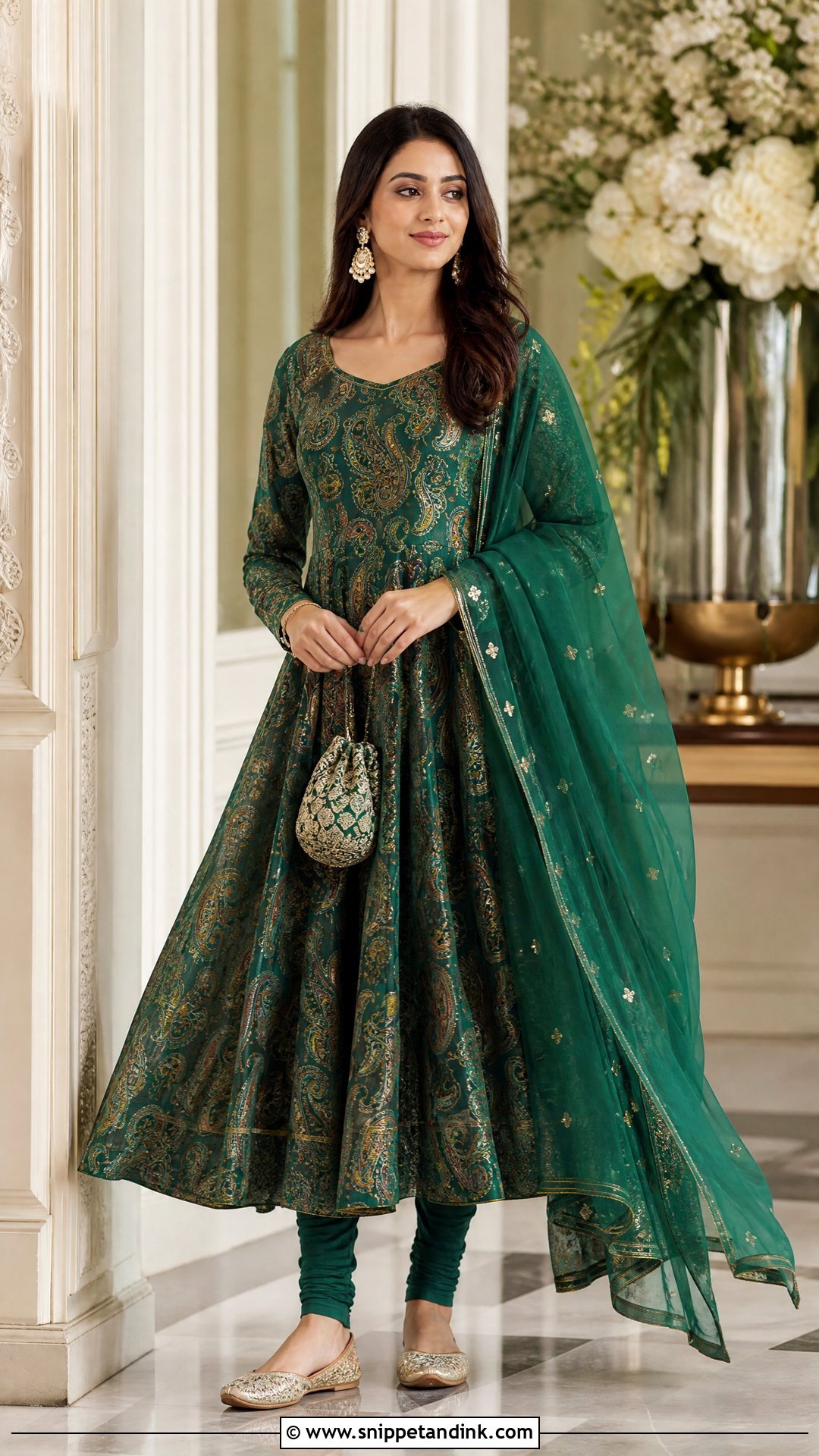
Paisley is one of the busiest motifs you can wear, so I control everything around it. In a paisley printed Anarkali suit, I look for a fitted bodice and a measured flare rather than a full circle skirt, which swallows shorter women and adds bulk when you sit. Emerald, maroon, navy and plum make the print look rich; muted pastels lighten it for day. Slim churidars and a sheer, barely decorated dupatta keep the volume in the skirt where it belongs. Pointed juttis, pearl earrings and a compact potli are enough. The flare skims the hips and legs, but only if the waist seam sits at your natural waist, so have it checked at the fitting.
6. Geometric Printed Office Salwar Suit
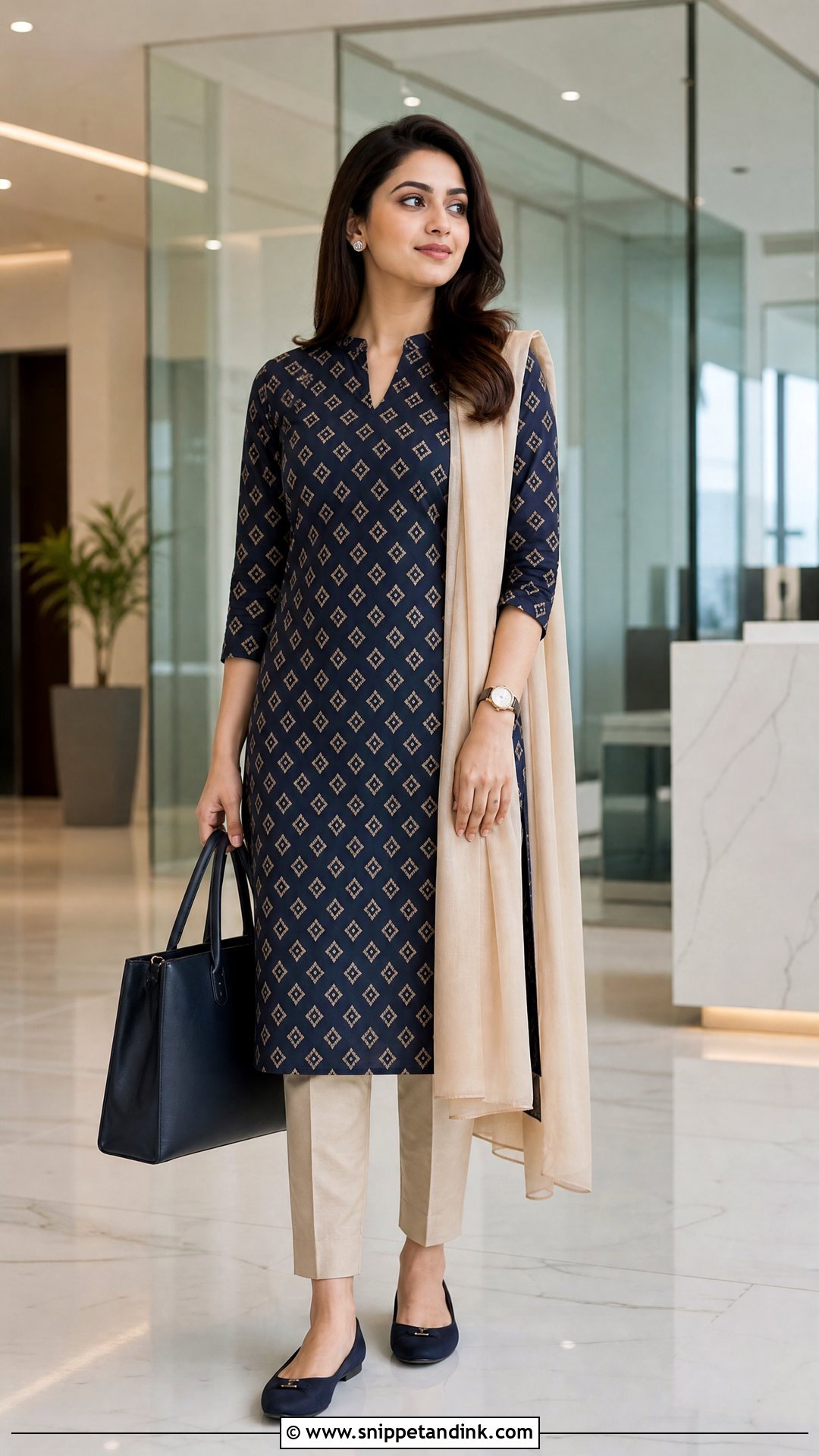
For an office, I’d pick small checks, lines or diamonds in navy, grey, beige or muted green over anything floral; geometrics read as structured even on a relaxed cut. A straight kurta with ankle-length cigarette pants and a plain chiffon or cotton dupatta is the base. Closed-toe flats, a watch, small studs and a structured tote keep it professional. Skip oversized motifs and embellishment in a conservative workplace. A mandarin collar or modest V-neck sharpens the outfit, and if you want to look longer, a knee-length kurta with vertical lines draws the eye down in a single clean line.
7. Digital Floral Printed Palazzo Salwar Suit
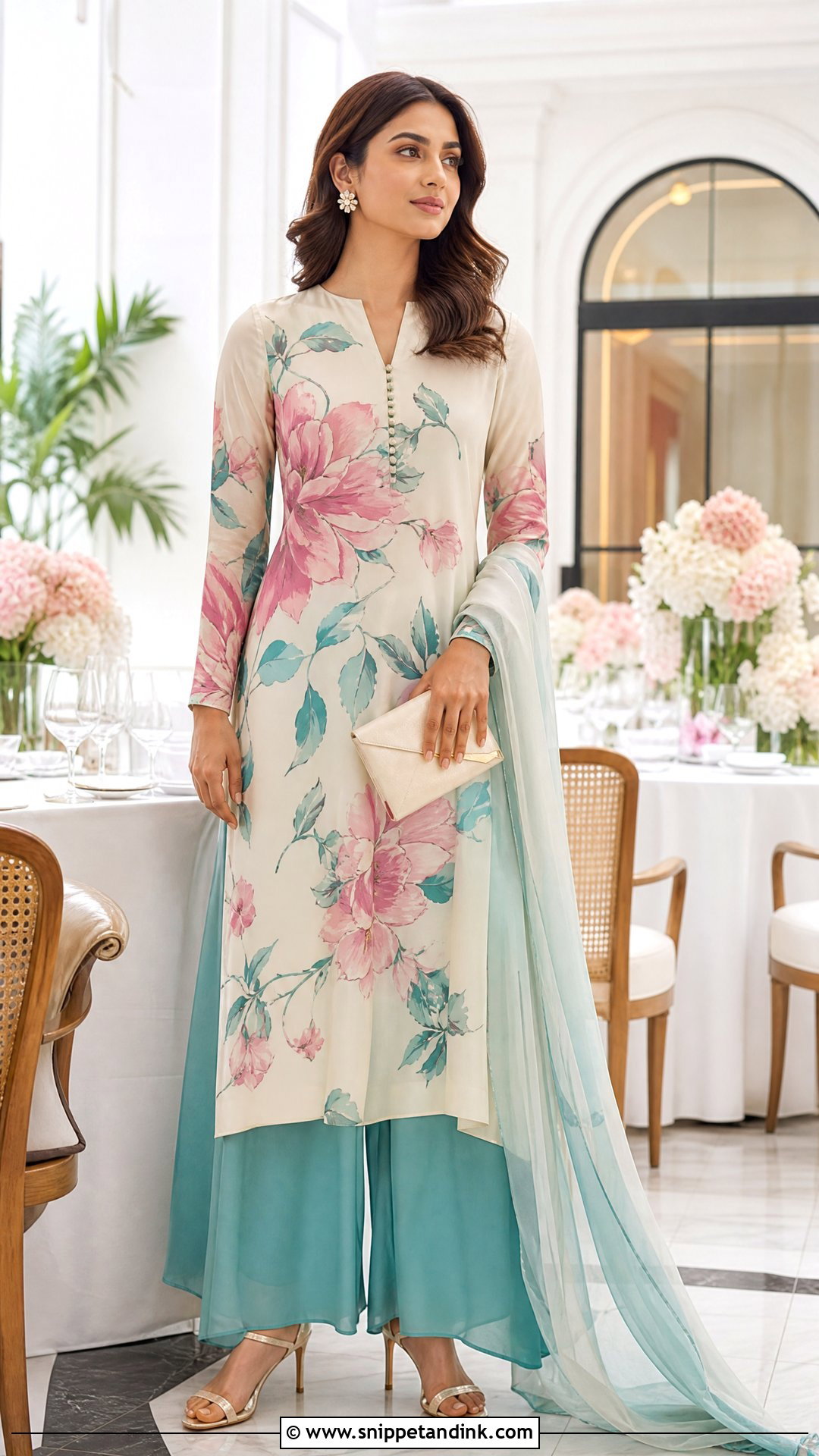
Digital printing can reproduce shading and photographic detail that a block never could, which is why the large florals look so painterly. The risk is crowding. I choose georgette or crepe with blossoms placed deliberately, usually concentrated at the hem or one shoulder, and pull the palazzo colour straight from the print. A plain, light dupatta keeps the flowers visible. Heeled sandals, crystal studs and an envelope clutch make it right for celebratory lunches, engagements and dressier family events. For curvier clients I look for medium-scale flowers with darker side panels, which narrow the silhouette without any fuss. Hair stays smooth because the fabric is already loud.
8. Kalamkari Printed Salwar Suit
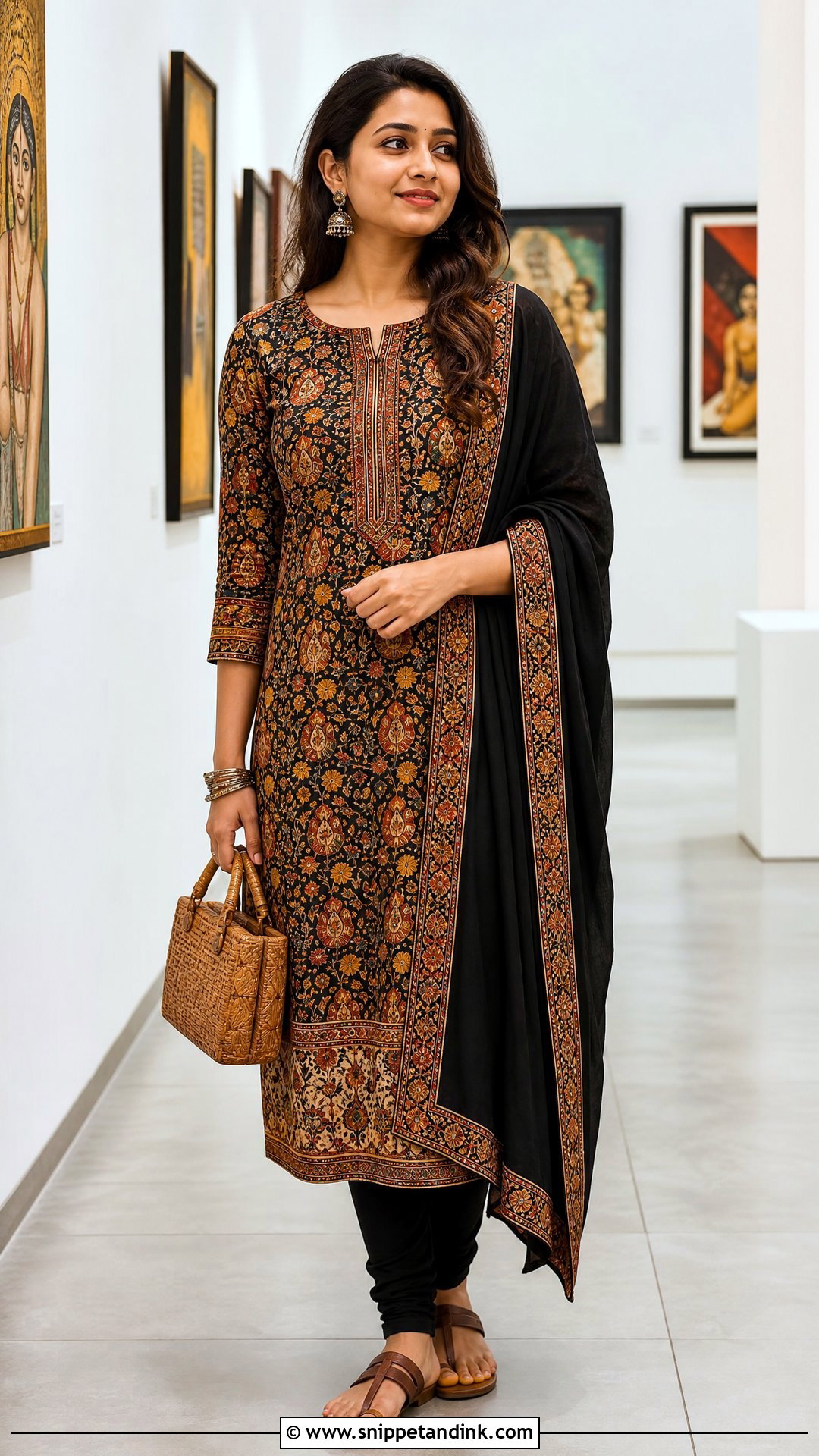
Kalamkari is pen-drawn and printed with natural dyes, and the figures often tell a story across the panel, so I try to keep the best section of the drawing on the front of the kurta rather than lost in a side seam. A Kalamkari printed salwar suit in rust, black, mustard, cream or deep red pairs naturally with solid churidars. You can flip the balance by wearing a plain kurta with a fully printed dupatta. Antique-finish earrings, simple bangles, brown leather sandals and a woven bag suit the earthy colours. Because the print holds so many colours and figures, I avoid sparkly shoes and shiny accessories entirely; they fight the hand-drawn quality.
9. Leheriya Printed Salwar Suit
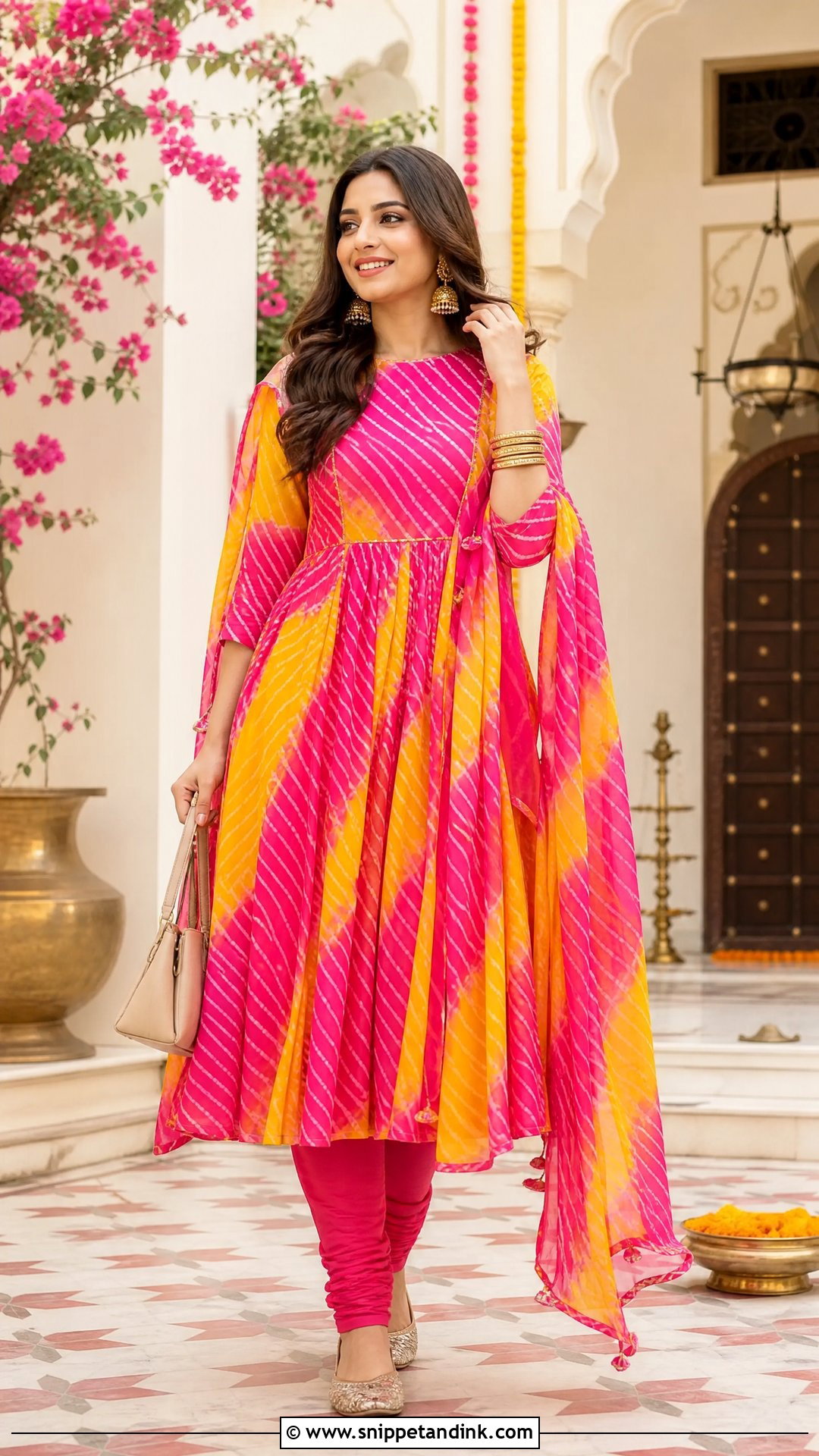
Leheriya is a resist-dyed wave, made by rolling the cloth diagonally and tying it before dyeing, and it moves beautifully when you walk. A straight kurta or gently flared Anarkali in pink, yellow, orange, turquoise or purple is the classic take. I calm it with solid pants in one of the quieter shades from the fabric, then add a matching wave dupatta. Metallic juttis, small gold earrings and slim bangles keep it festive but easy for daytime celebrations. If a five-colour Leheriya feels like a lot, a two-tone version with a neutral bag is far easier to style.
10. Ikat Printed Straight Salwar Suit
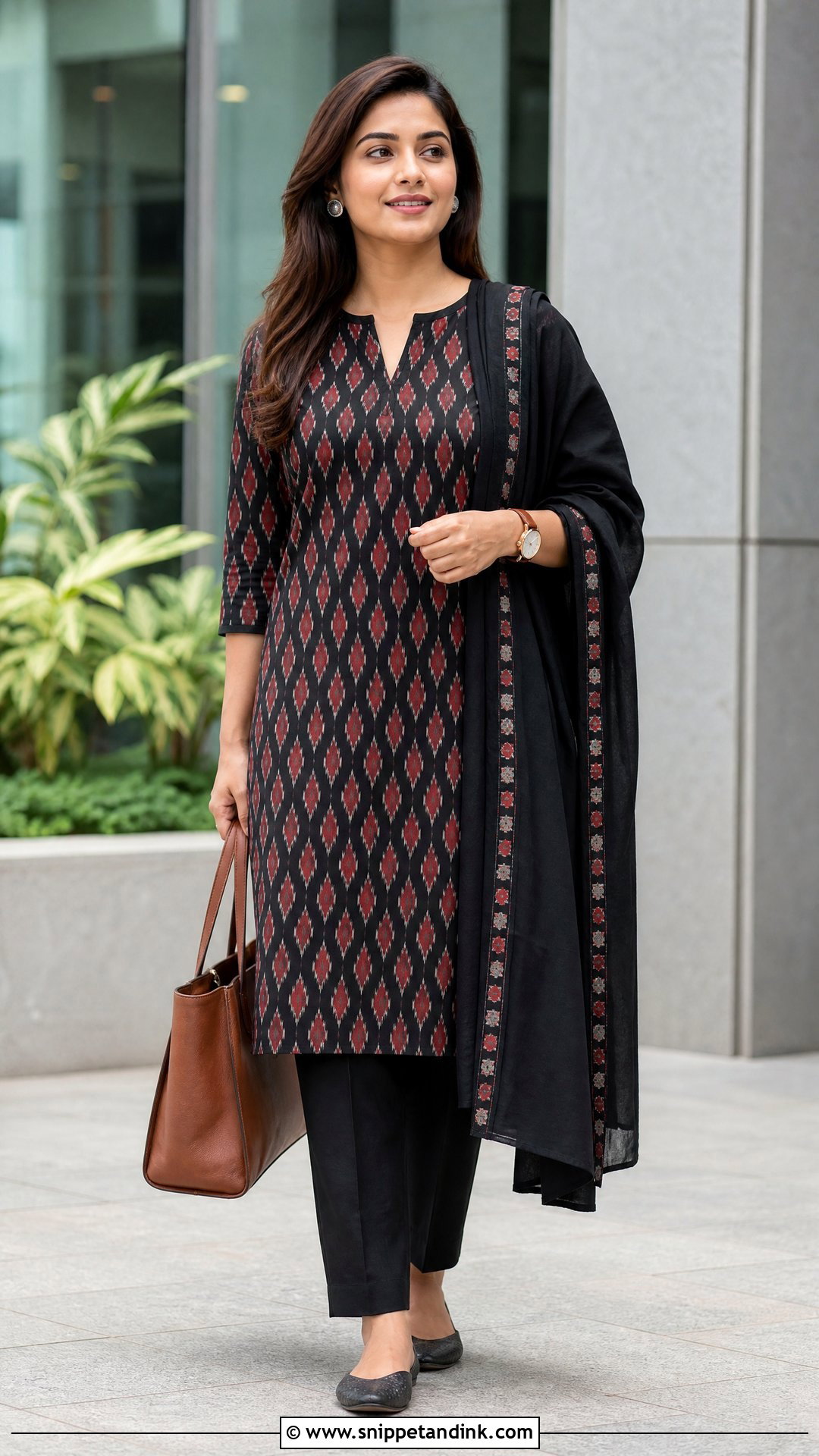
Ikat has a characteristic blur at the edge of every motif because the yarn is dyed before weaving; a printed version copies that softness. Either way it gives a suit real character with no sparkle needed. I look for a knee-length kurta in black and red, blue and white, or mustard and maroon, with solid straight pants and a plain dupatta edged in Ikat. Silver studs, a leather watch, mules and a medium tote take it to work, travel and weekend plans. Smaller repeats read quieter; large ones read bold. On a petite frame, vertical panels stop the pattern from swamping you.
11. Bagru Printed Cotton Salwar Suit
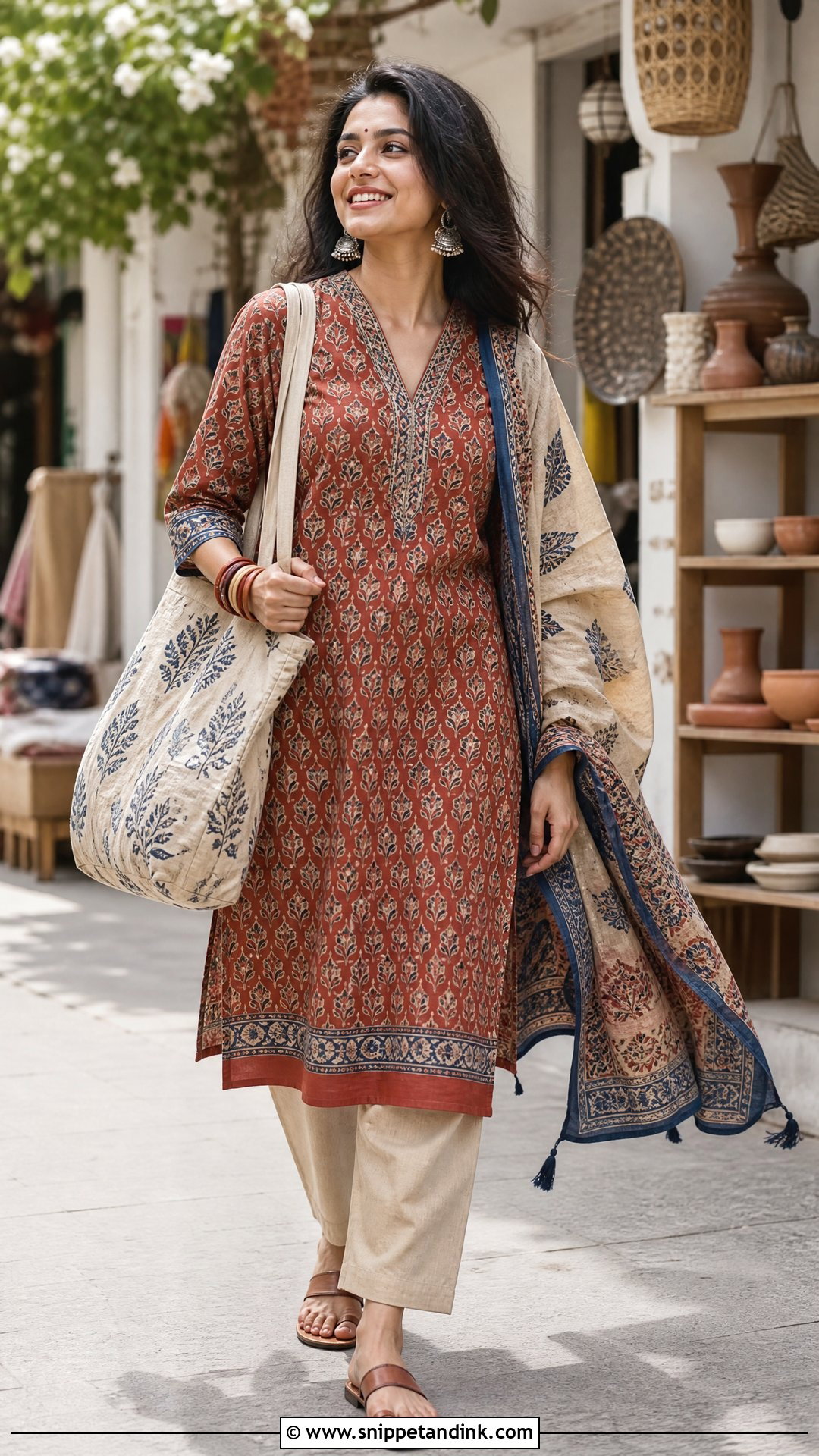
Bagru prints come from a tradition that relies on natural dyes, with the black traditionally made from iron and the reds from mordanted madder, which is why the palette looks so muted and earthy. That softness makes a rust, beige, indigo or black kurta easy to repeat all season. I pair it with loose straight pants or a comfortable salwar in a solid shade and a cotton dupatta with printed borders. Flat leather sandals, wooden bangles, small silver earrings and a fabric tote suit shopping, travel and casual visits. Rolled sleeves relax it further. Because the colours are quiet, I’ll often add one brighter note, a lipstick or a contrasting bag, to wake it up.
12. Printed Sharara Salwar Suit
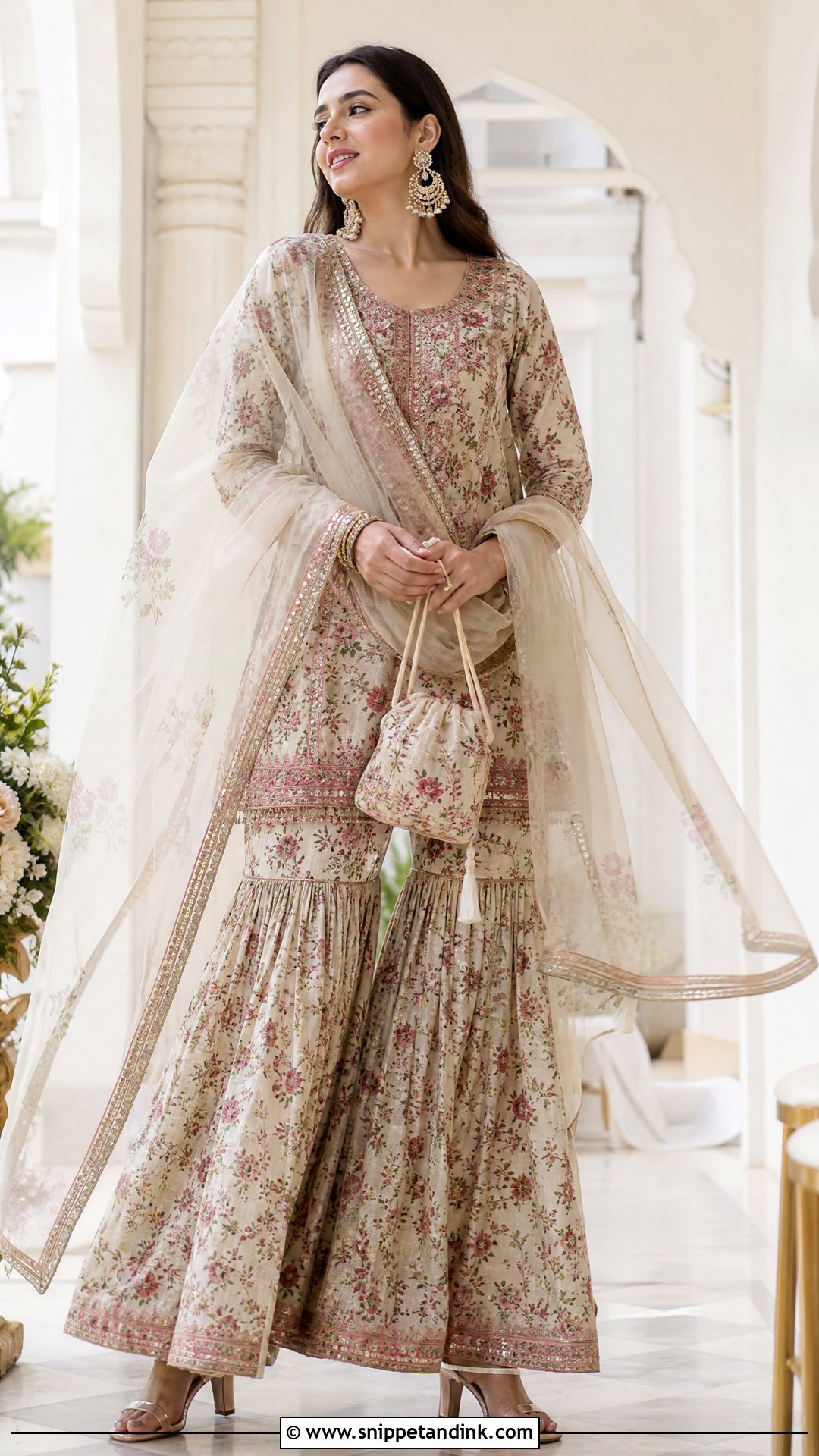
Shararas give you festive volume without the weight of an embroidered lehenga, which matters when you’re sitting through a long lunch. I choose a short, fitted kurta in a floral, Mughal or geometric motif, then either match the sharara for a coordinated set or go solid when the kurta is busy. A sheer dupatta with a slim metallic edge, block heels, chandbalis and a small potli finish it. The proportion rule I always check in the mirror: the kurta must end above the widest point of the flare, or the sharara disappears. Petite women do better with a controlled flare and a slightly shorter kurta.
13. Printed Salwar Suit With Long Jacket
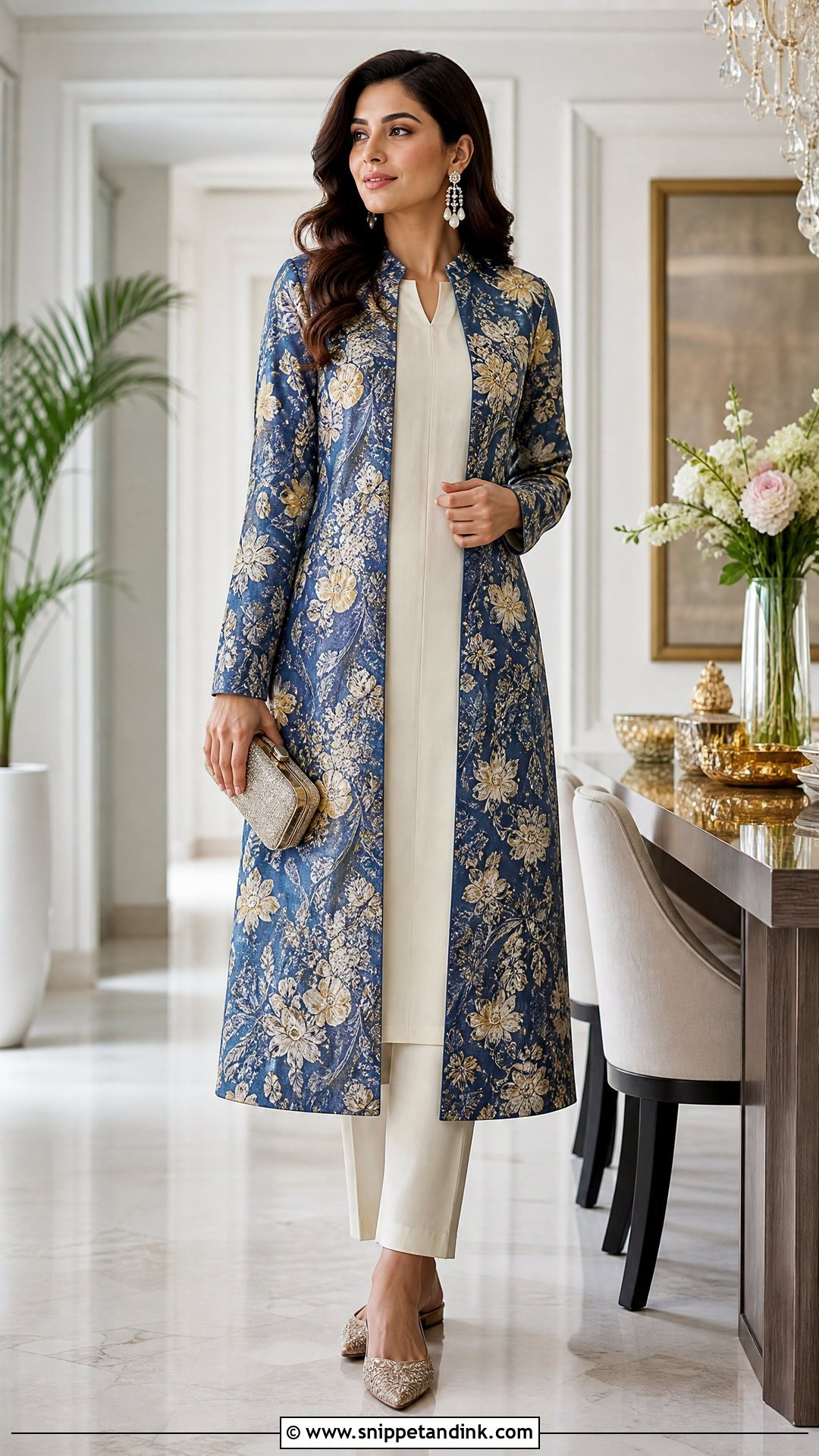
A long jacket adds structure and coverage, and it lets a printed piece be the layer people notice. My usual approach is a solid sleeveless or short-sleeved kurta with straight pants, then a calf-length printed jacket worn open. The reverse, a printed kurta under a plain jacket, is quieter. Cotton silk, muslin or light georgette move well; stiff fabric makes the jacket stand away from the body. Pointed flats, drop earrings and a box clutch are enough, and the dupatta becomes optional since the jacket already supplies a third layer. The fit point I never skip is the shoulder: if the jacket is loose there, the long line looks shapeless in every photo.
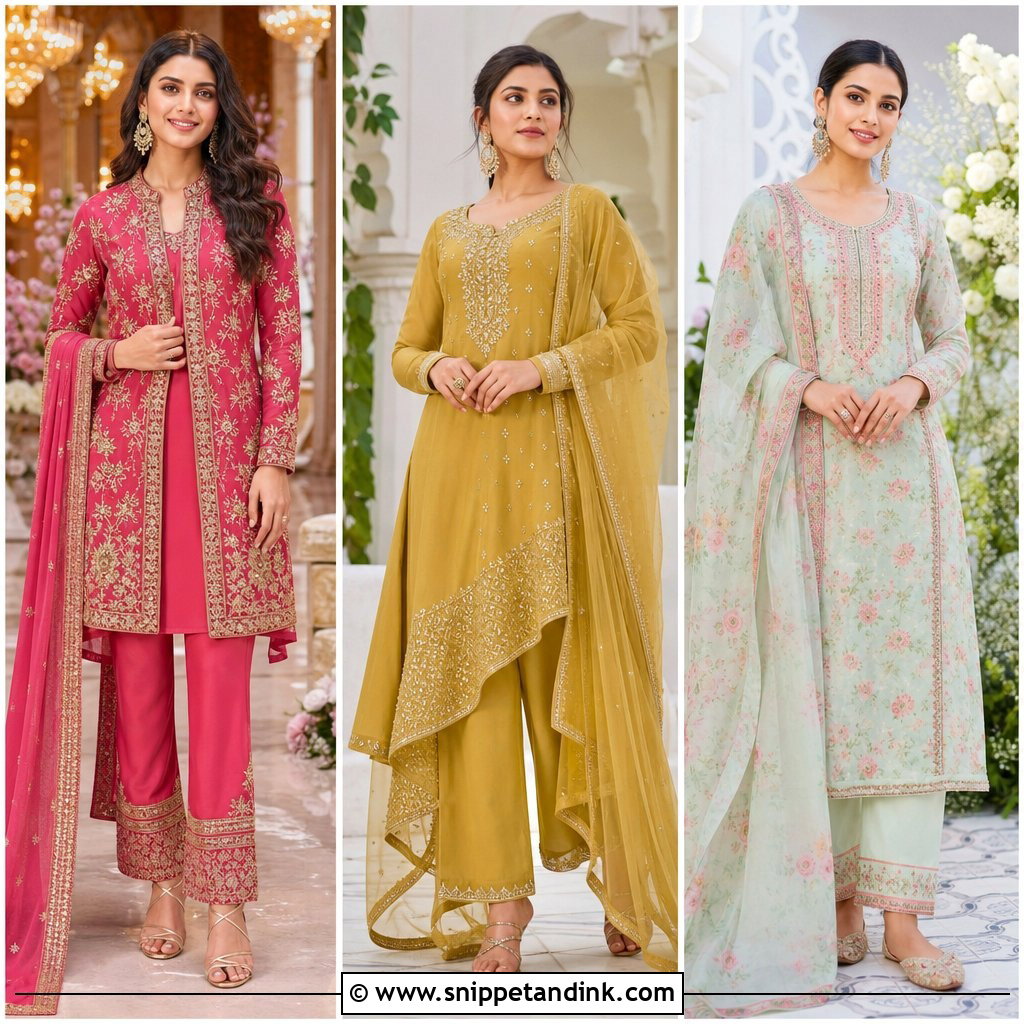
14. Pastel Floral Organza Salwar Suit
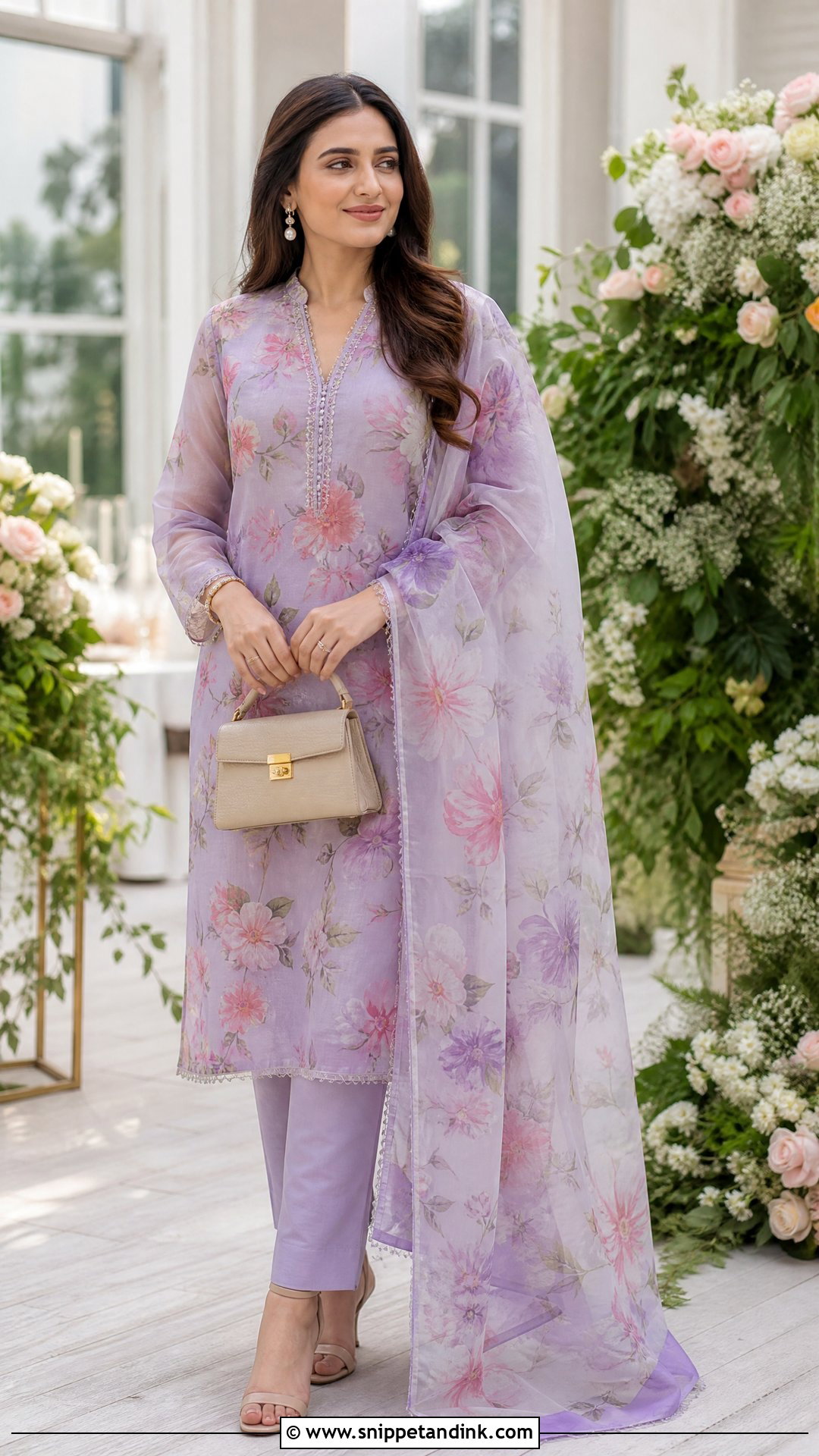
Organza is crisp and slightly sheer, so it holds its shape and catches light in a way cotton never will. That’s lovely for daytime functions, but it means the lining matters: I insist on a smooth inner layer and slim solid pants for comfortable coverage. Blush, lavender, mint, powder blue and pale yellow suit delicate florals. A sheer floral dupatta with a restrained border keeps it airy. Pearl drops, nude heels and a small structured bag finish it. Avoid heavy gathers at the waist, since organza puffs rather than drapes. Soft curls or a low bun complement it.
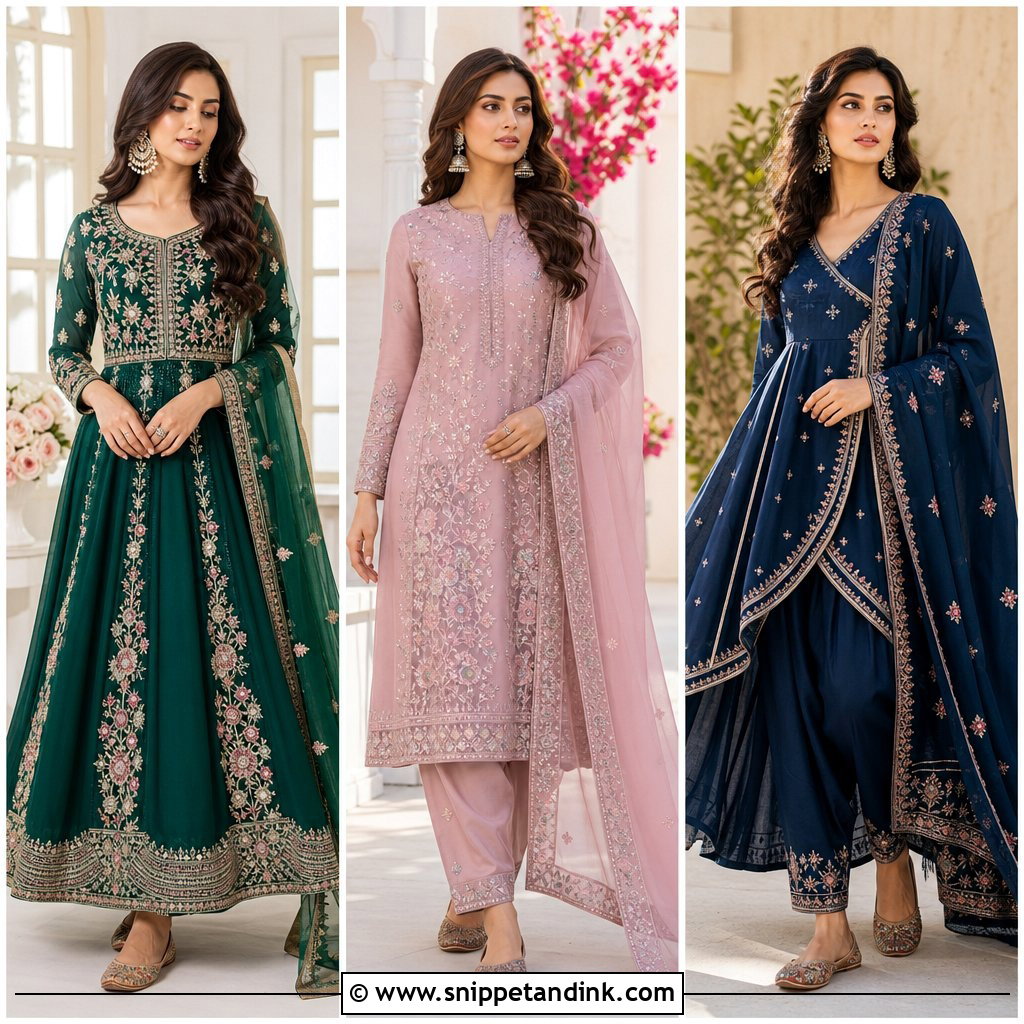
15. Black And White Printed Salwar Suit
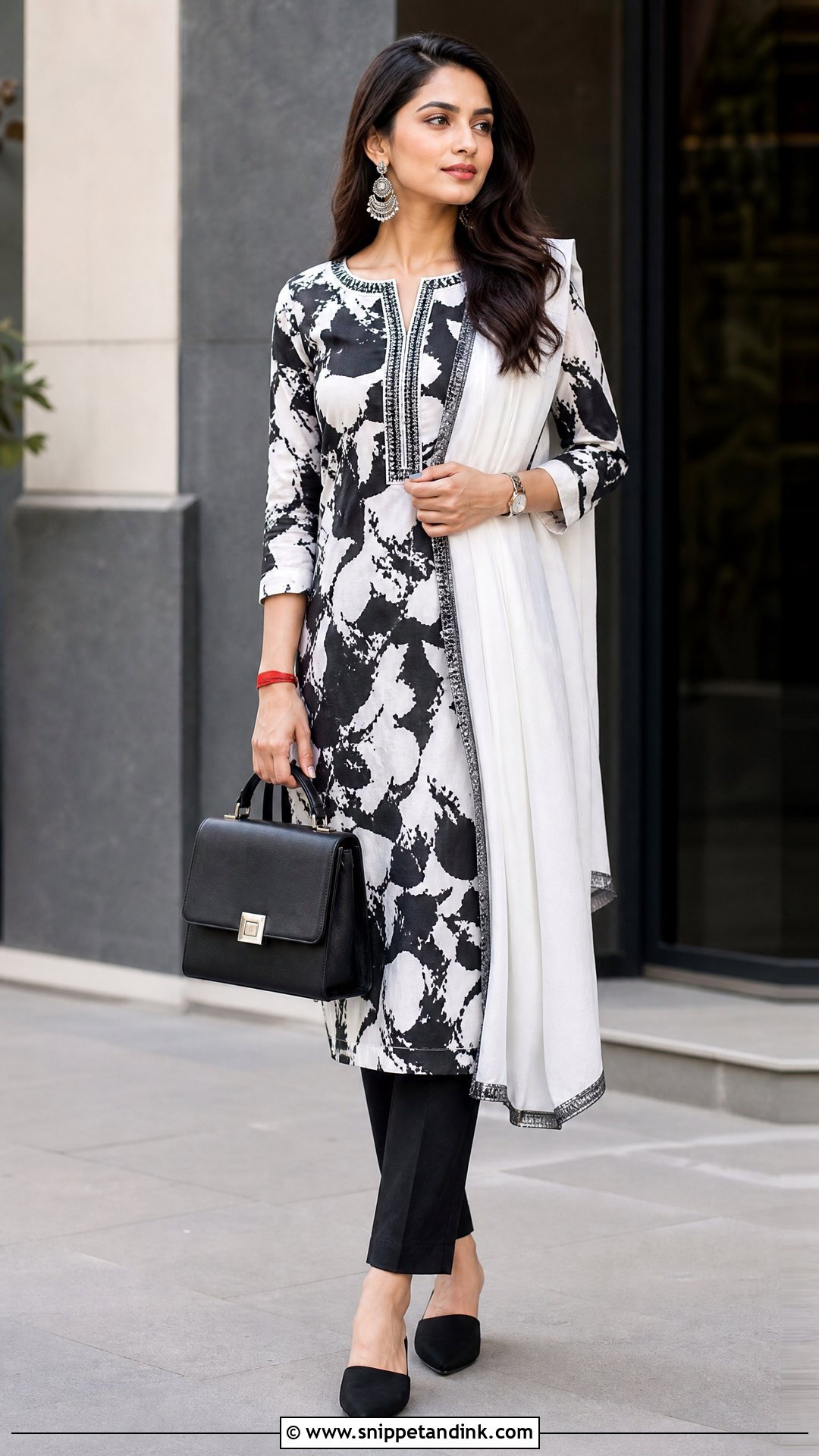
Black and white is the most adaptable print I style, because the accessories decide the mood. Start with a straight kurta in stripes, checks, florals or abstract shapes over solid black ankle pants. A white, black or colour-blocked dupatta changes the feel completely, and red, emerald or cobalt accents make it festive. Black mules and silver earrings keep it modern; embroidered juttis and oxidised bangles turn it traditional. Mixing print sizes works if one pattern clearly dominates and the other stays small. Two equally loud prints in monochrome just look confused from across a room.
16. Indigo Dabu Printed Salwar Suit
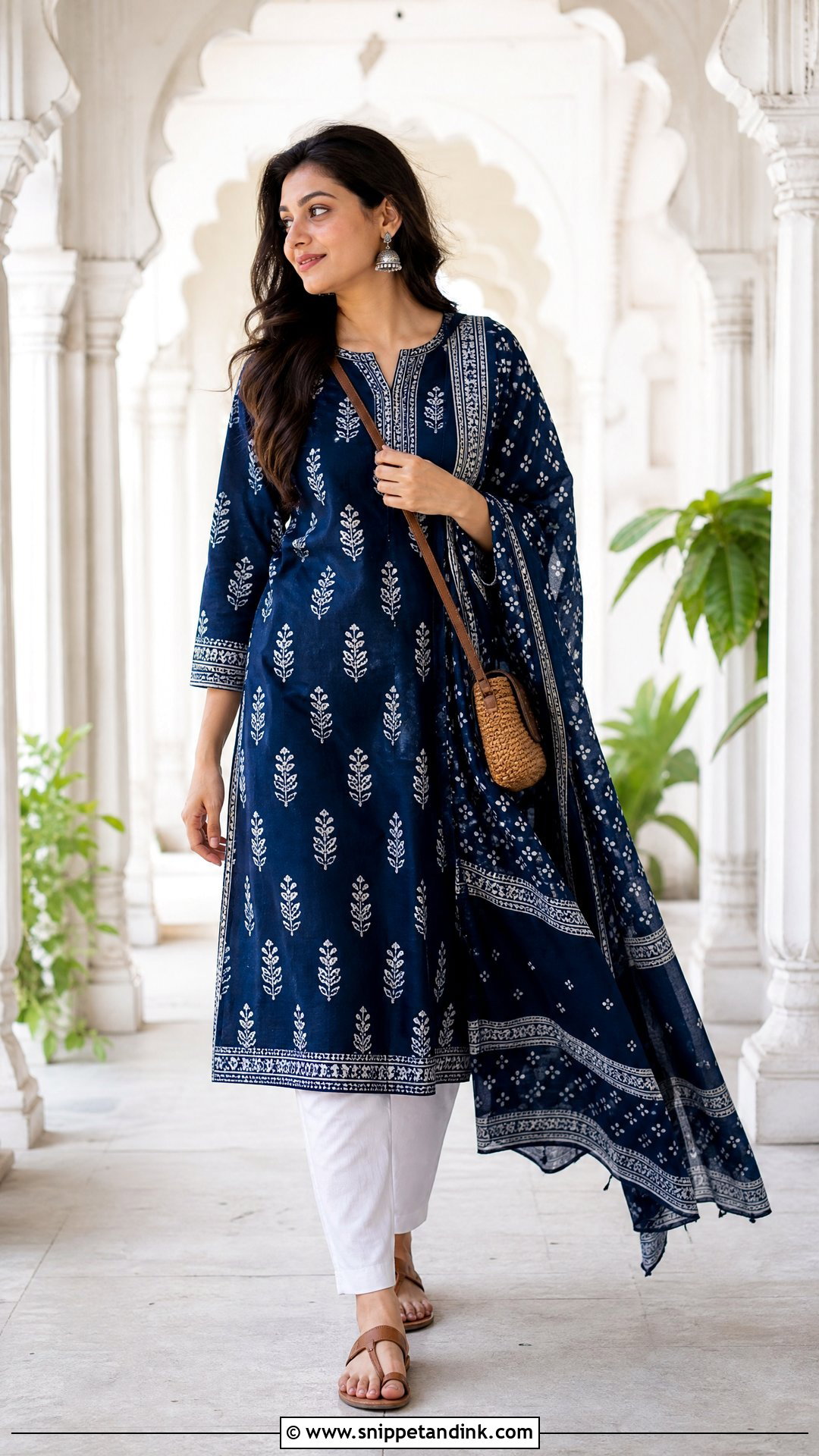
Dabu is a mud-resist print: the motif is stamped in a clay paste, the cloth is dipped in indigo, and the paste washes away to leave those slightly cracked white shapes. I love it for travel and college days. A long straight kurta pairs well with narrow white, beige or matching indigo pants and a soft cotton dupatta. Tan sandals, silver jhumkas and a woven crossbody bag suit the deep blue. If the outfit feels too dark, bring crisp white in through the pants or dupatta. Indigo can rub off on light bags and skin in the first few wears, so I keep pale leather away from it until it has been washed a couple of times.
17. Tropical Printed Summer Salwar Suit
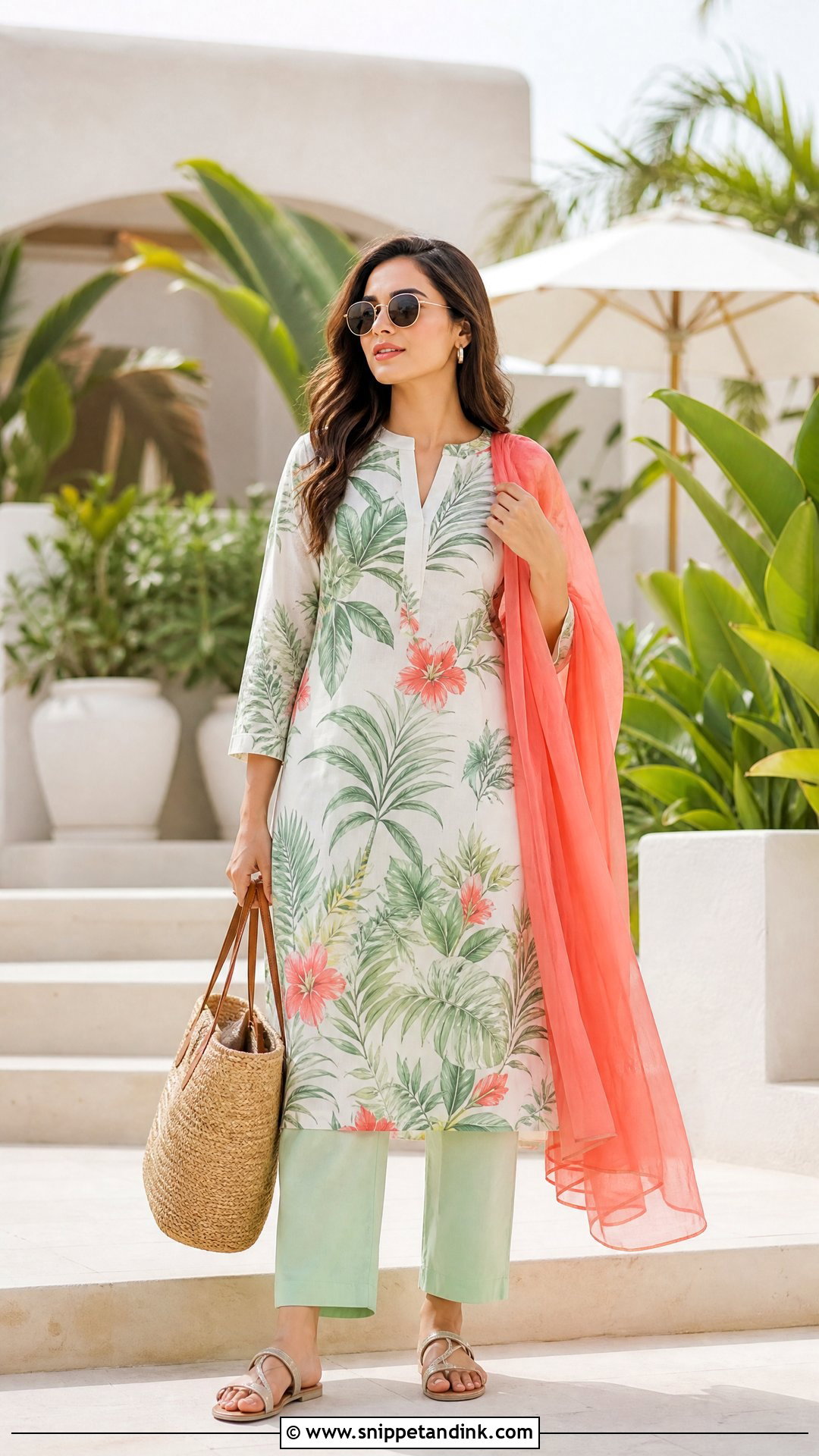
Palm leaves, hibiscus and watercolour foliage feel playful in summer, and they need a fabric that breathes. I look for cotton or a rayon blend, then pair it with plain white, beige, mint or coral straight pants and a solid chiffon dupatta. Strappy flats, small hoops, sunglasses and a big tote make it holiday ready, and it suits brunches and outdoor daytime events. Rayon does wrinkle and shrink, so I’d buy with a little ease and wash it cold. With a large print, keep the accessories to one or two colours and let the leaves be the loud part.
18. Abstract Printed Pant Salwar Suit
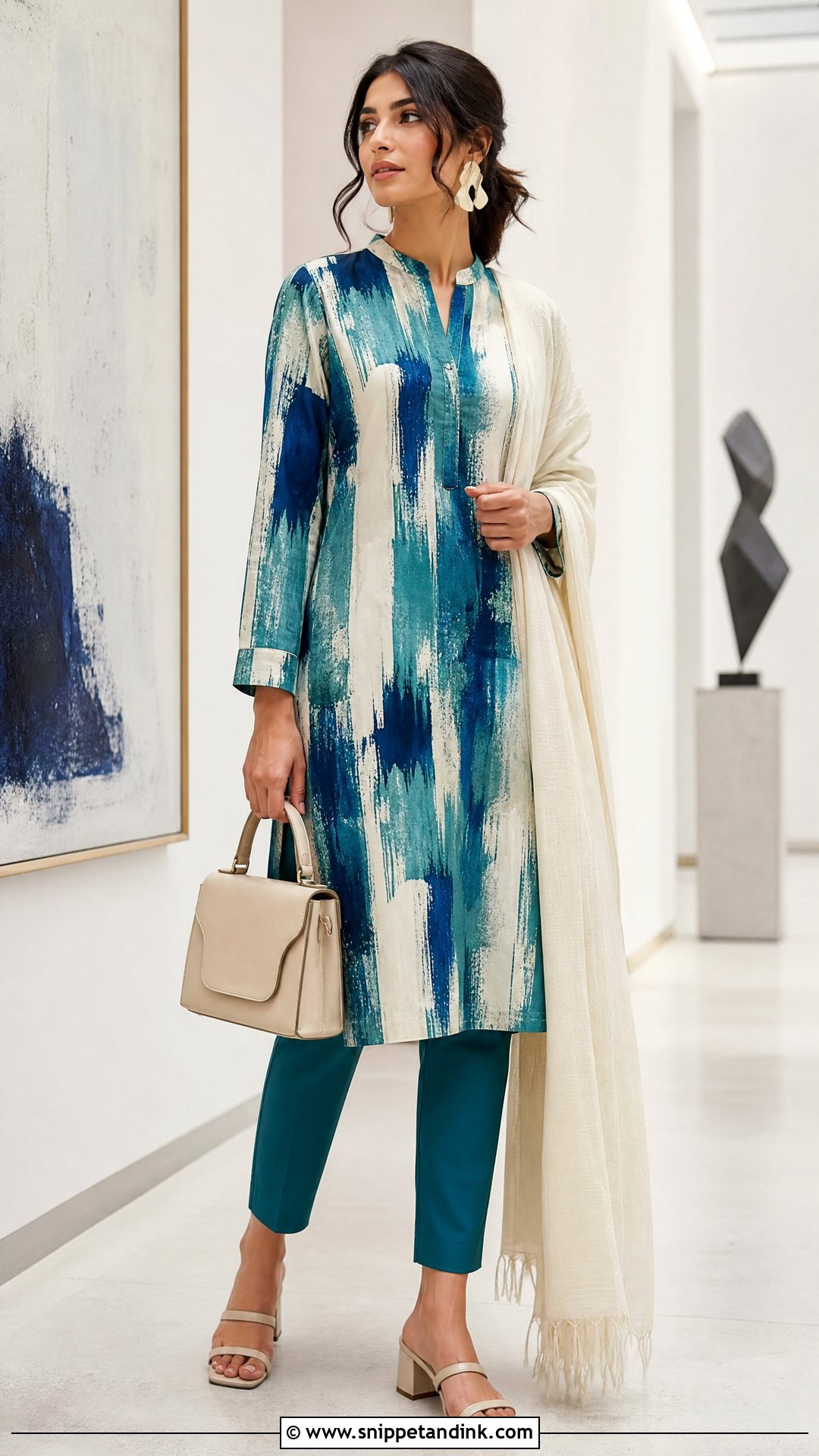
An abstract printed pant suit gives traditional dress a contemporary edge, and it suits clients who find florals too sweet. Brushstrokes, colour blocks and irregular geometrics look best on a structured kurta with tapered ankle pants. You can wear a plain dupatta or skip it where that feels appropriate. Neutrals look polished; teal, magenta, orange and cobalt go bolder. Loafers or low block heels, sculptural earrings and a top-handle bag are my finish. The one rule I hold to with abstracts: the pants must repeat at least one colour from the kurta, or an irregular print reads as random.
19. Printed Silk Festive Salwar Suit
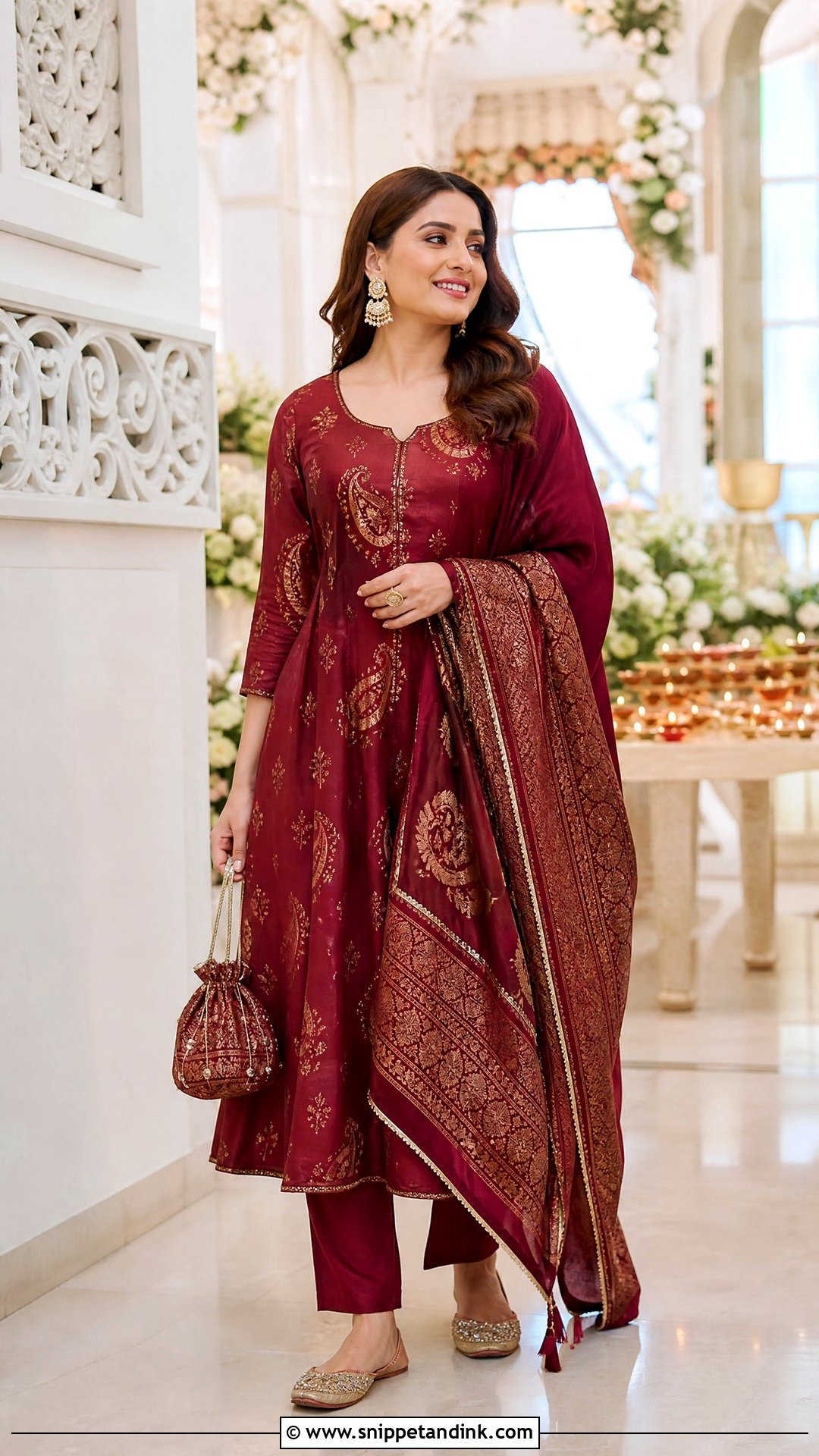
Silk already has sheen, which is why a printed silk salwar suit looks festive without dense embellishment. An A-line or straight kurta with florals, paisleys or traditional borders in jewel tones goes over silk-blend churidars or tailored trousers, with a dupatta that has a subtle metallic edge. Gold earrings, embellished juttis and a structured potli complete it for wedding gatherings and festive meals. Because the fabric already shines, I limit sequins and oversized jewellery. Shaped seams or a gently defined waist give more definition. One practical note: printed silk can water-spot, so I tell clients to keep a napkin across the lap at meals.
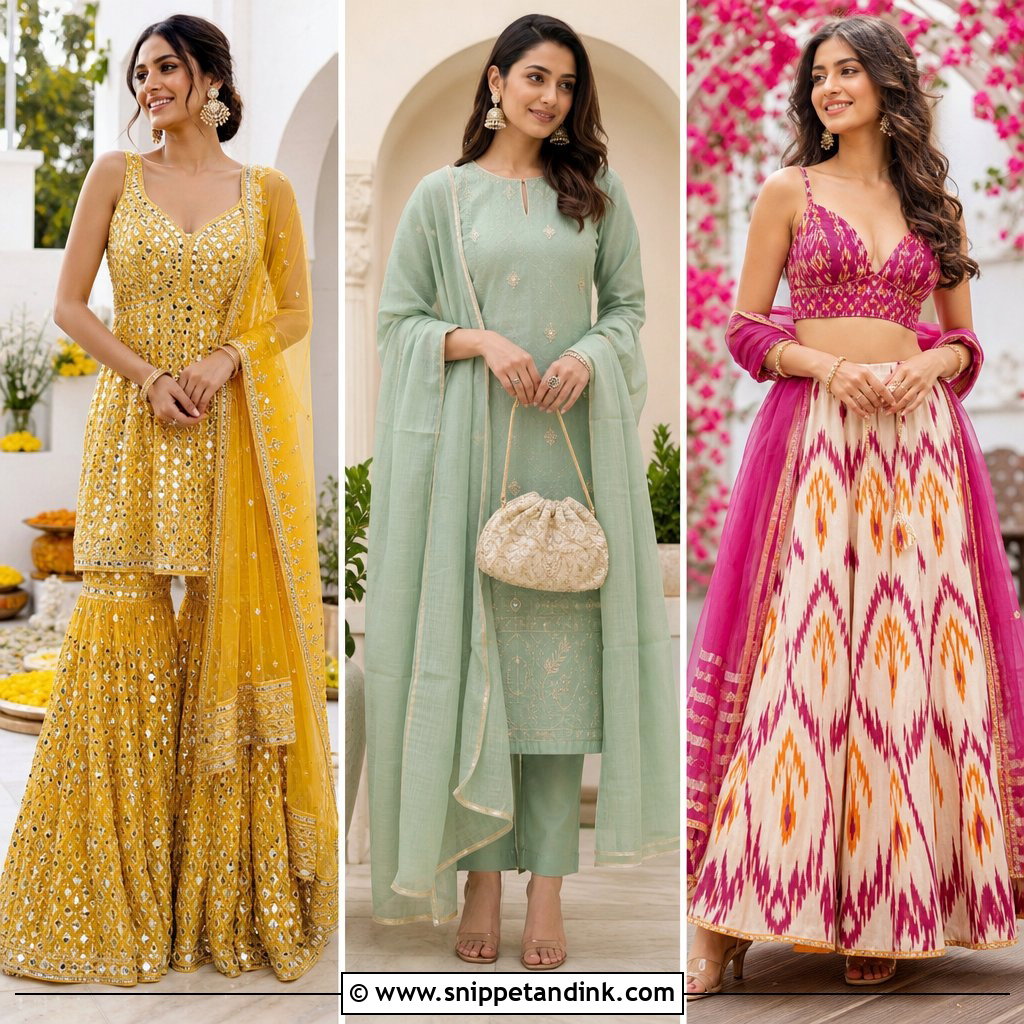
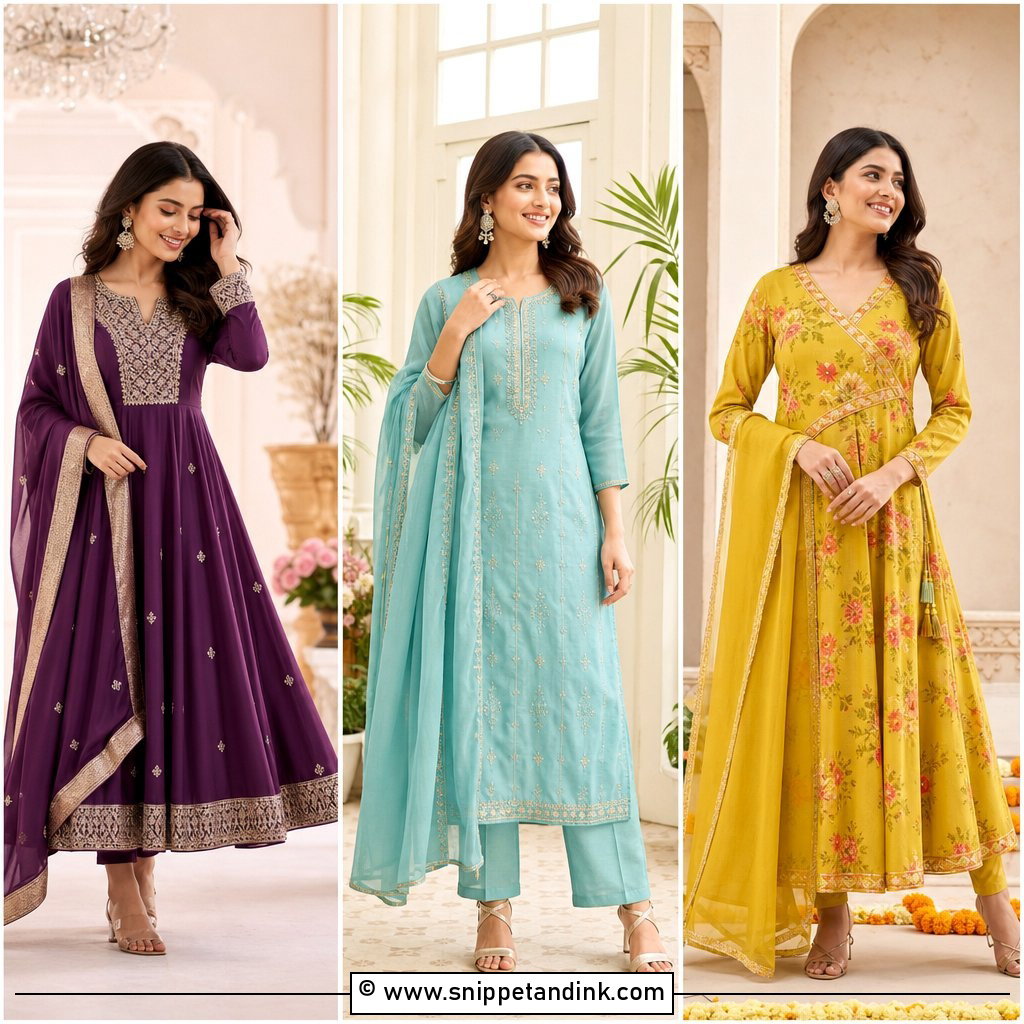
20. Printed Pakistani Salwar Suit
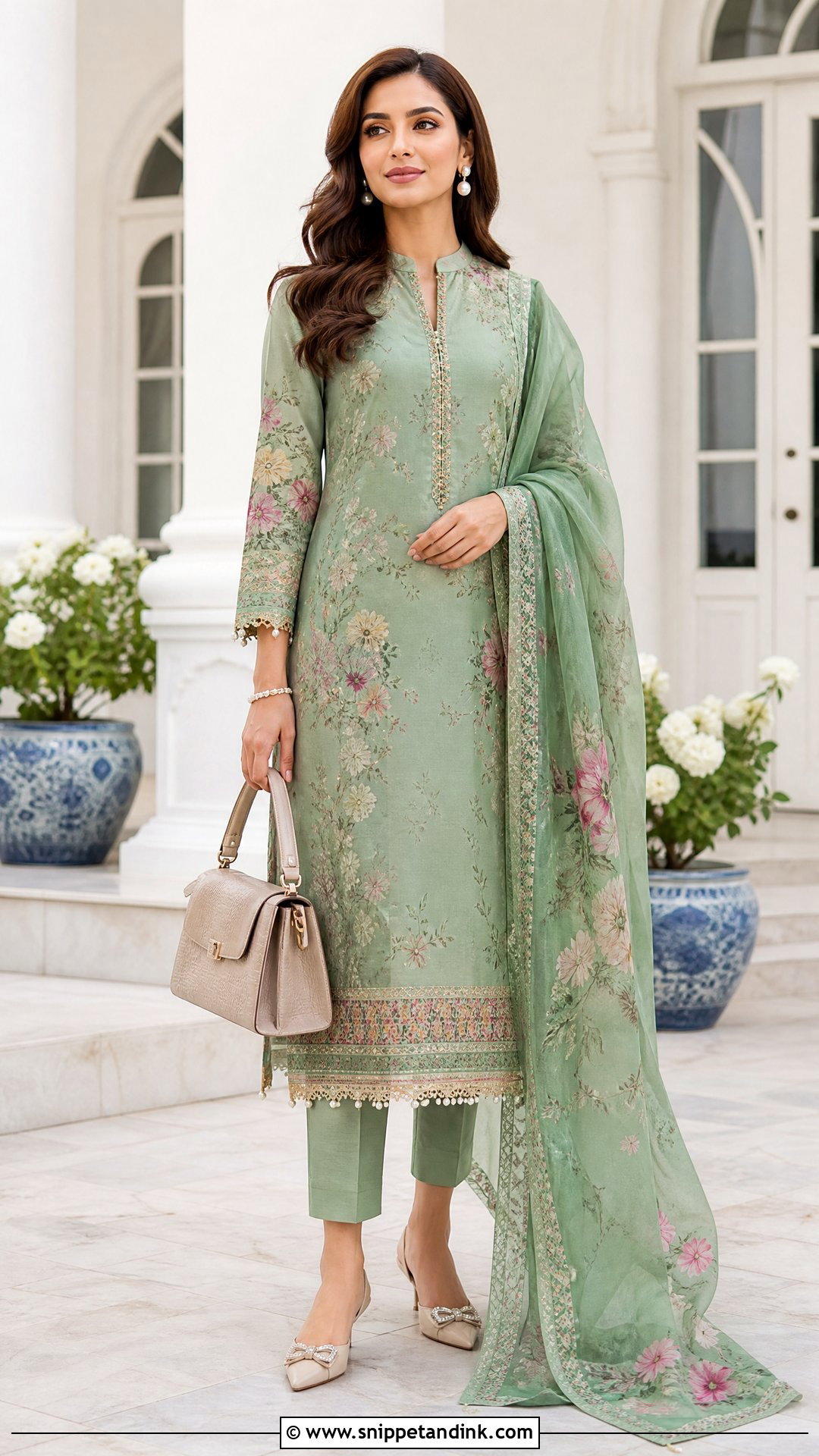
The long kameez, straight trousers and flowing dupatta of a printed Pakistani salwar suit give graceful coverage, and the print placement is where the craft shows. I look for a calf-length kameez with florals, vines or architectural motifs concentrated at the neckline and hem, and trousers that fall cleanly over low heels or pointed flats. A chiffon dupatta repeating the print at the edges, pearl earrings, a slim bracelet and a structured bag finish it. Side slits let you walk freely, and the shoulder fit decides whether the long shape looks tailored or sloppy. Medium-scale motifs placed vertically make the silhouette look longest.
Getting a Tailor to Place the Motifs Where You Want Them
With unstitched printed suits, the cutting decides how the finished outfit looks far more than the fabric does. I always pin the kurta length on the client first, then lay the fabric out so the strongest part of the print lands on the front panel and the yoke. Ask your tailor to centre a large motif rather than cut through it, and to keep stripes and borders level at the hem.
Pattern matching at the side seams takes extra fabric. If you have only the standard length, prioritise the front, and let the sides fall where they fall. For Anarkalis and shararas, ask for the flare to be cut so the border runs continuously around the hem; a broken border is the first thing I notice in photos.
Washing Ajrakh, Dabu and Bagru So the Colour Holds
Natural dyes and indigo are the prints I warn clients about most. They do settle, but they release colour early, so the first two or three washes should be on their own in cold water with a mild detergent. Never soak them overnight with other clothes.
- Wash inside out, by hand or on a gentle cycle, and skip bleach and brighteners entirely.
- Dry in the shade. Strong sun fades indigo and madder reds faster than washing does.
- Iron on the reverse while slightly damp, which keeps the print from going shiny.
- Silk, organza and digitally printed georgette are safer dry cleaned, especially before a function.
If you’ll wear a printed suit to several wedding functions in one week, steam it between wears instead of washing. Sweat marks are easier to spot clean than a faded kurta is to fix.
One Loud Print, Everything Else Quiet
If I had to give one rule for every suit above, it would be to let a single element carry the pattern. Small florals and geometrics are easy for everyday wear, while printed silk, organza, Anarkali, sharara, and jacket combinations lift the outfit for functions. A busy kurta wants solid pants and plain accessories; a simple set can take a patterned dupatta. Look at motif scale and fabric before you think about shoes and jewellery, and have the fit checked at the waist and shoulder. Do that, and a printed suit will carry you from the haldi to the family dinner without a second thought.
You'll Like These Ideas:




Leave a Reply