
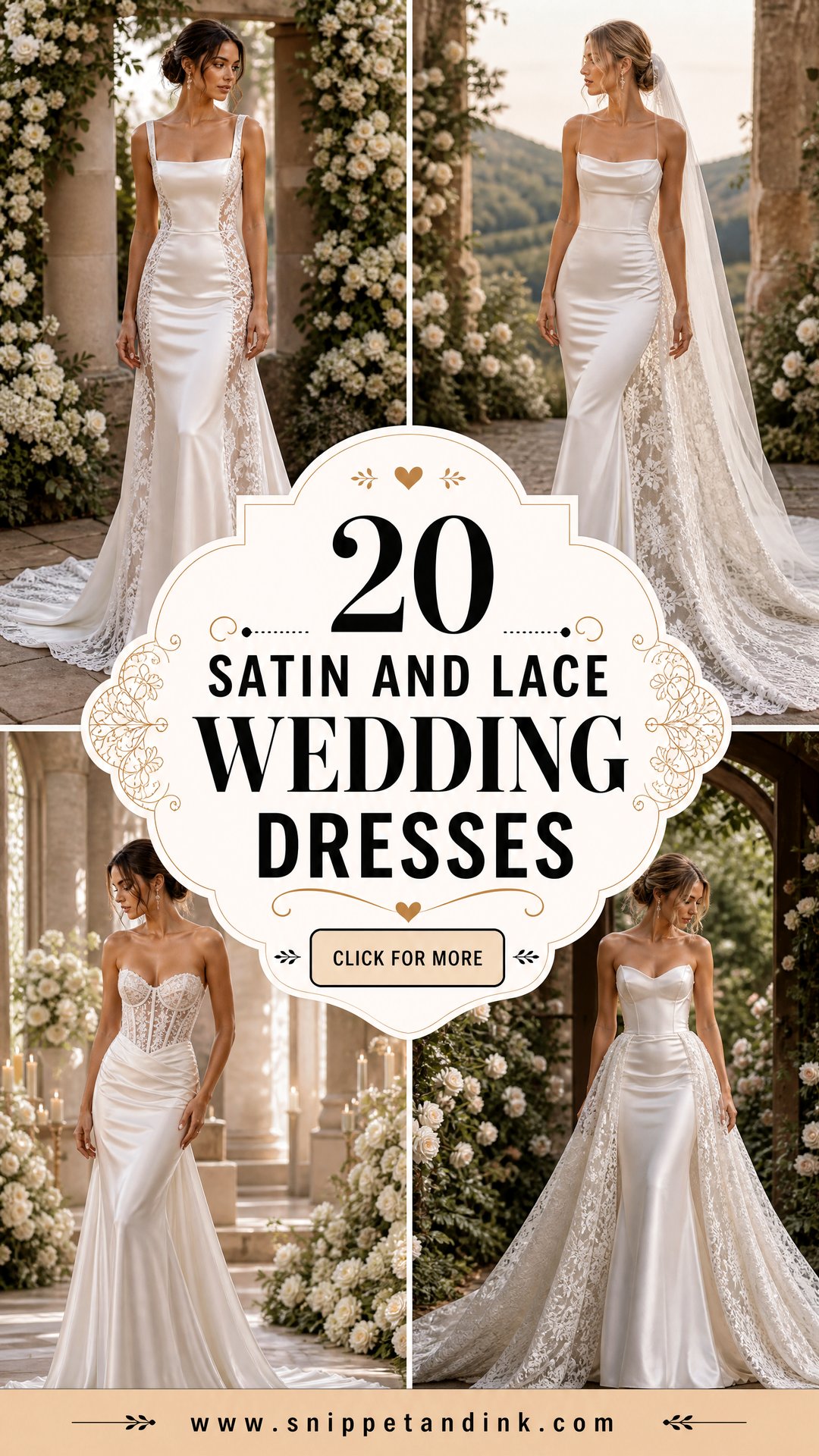
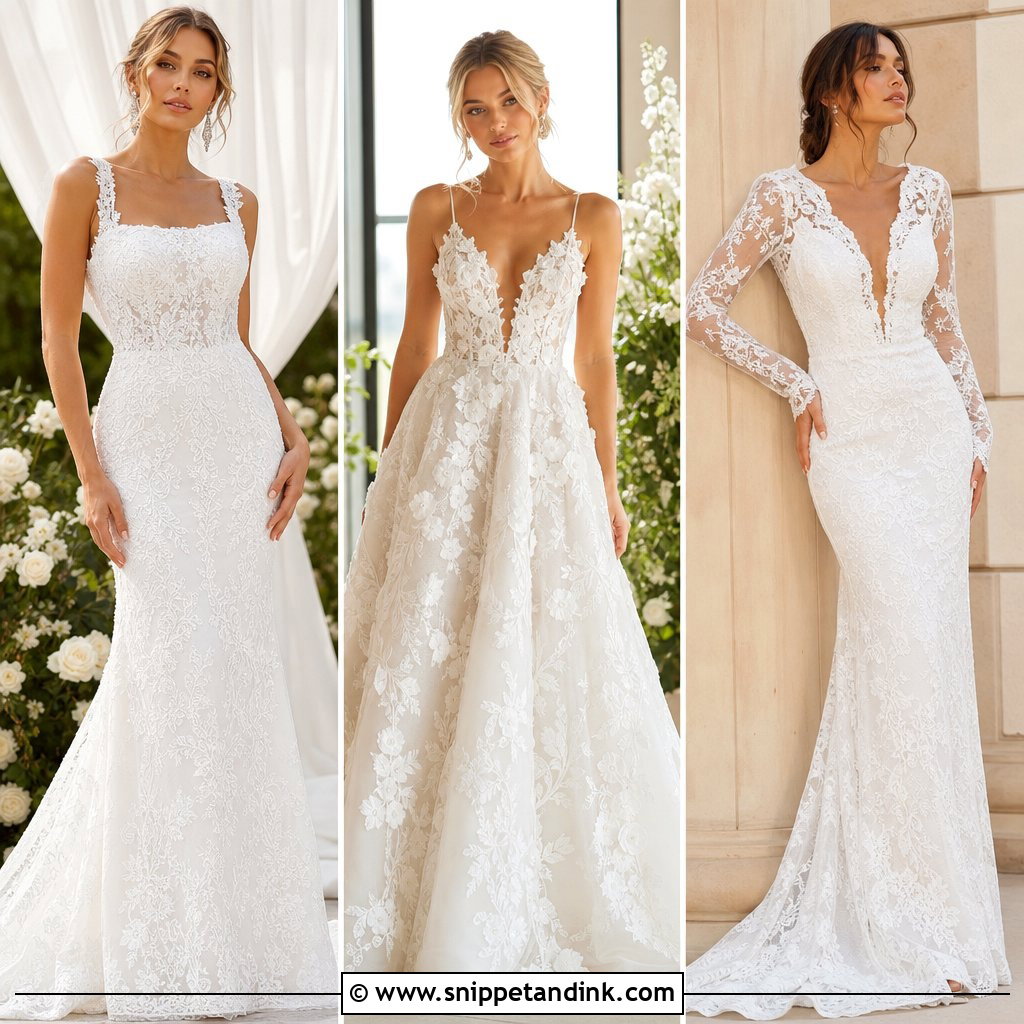
Satin and lace pull in opposite directions, and that is exactly why they work together. Satin gives a gown its weight, its smooth surface and the soft sheen that catches window light. Lace breaks that surface up with texture, so the eye has somewhere to rest. Designers have been putting lace on everything from corseted bodices to clean columns, while heavier satins keep showing up in structured skirts and gowns with detachable layers. In the fitting room, the pairing lets me direct attention: lace at the neckline draws the eye up, lace that trails down the hip lengthens you, and lace on the train saves the drama for the aisle. Below are twenty combinations I’d happily pull for a bride, with notes on what to check before you commit.
Telling Good Satin From Shiny Polyester in the Fitting Room
Two gowns can both be called satin and behave completely differently. Satin is a weave, not a fibre, so the label tells you about the surface and very little about the weight. When a bride pulls a gown off the rail, I check three things before she even steps into it.
- Weight. Grab a fold of the skirt. A heavy duchess or mikado style satin holds its own shape and keeps a ball gown standing; a light charmeuse drapes and clings, which is what a slip dress needs and what a structured skirt does not.
- Sheen. High-gloss satin bounces flash straight back at the camera and can flatten in photos. A softer, low-luster finish reads richer in pictures and hides minor creases better.
- Crease recovery. Squeeze a corner of the hem in your fist for ten seconds and let go. If the creases stay sharp, expect the same across your lap after the car ride.
Lace needs the same attention. Fine Chantilly is soft and flat, so it suits sleeves and illusion backs. Corded lace has a raised outline that stands out against satin from a distance. Guipure is heavier and holds its own shape, which is lovely on a structured bodice but stiff on a fluid skirt. Ask the consultant what lace you are looking at; a good boutique will know.
Match the Whites Before Anything Else
Ivory satin and white lace almost never agree under daylight. Hold the lace against the satin by a window, not under the shop spotlights. If one looks grey or yellow beside the other, that mismatch will be obvious in every outdoor photo.
1. A-Line Satin Wedding Dress With Lace Bodice
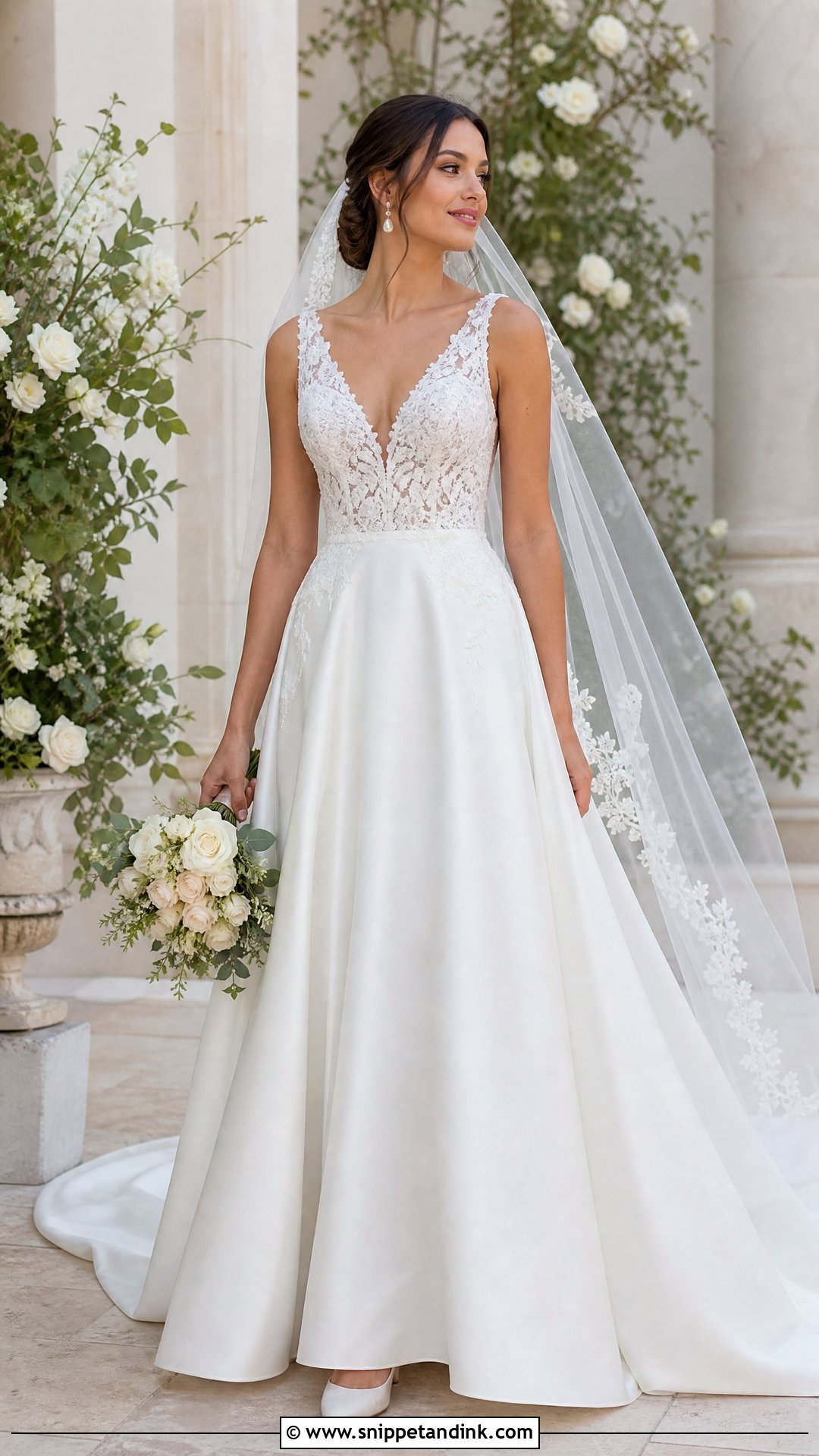
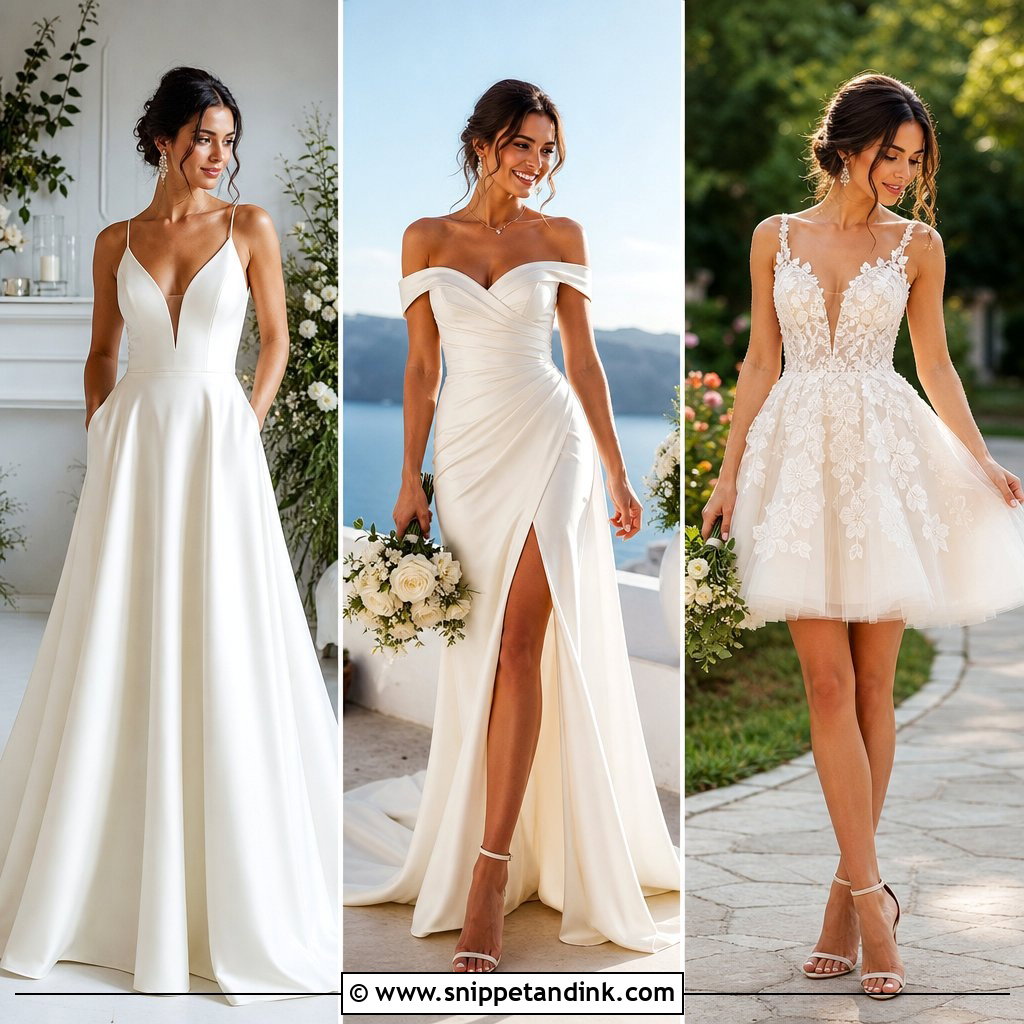
This is the shape I hand to a bride who isn’t sure where to start. The lace bodice holds the body, and the satin skirt drops cleanly from the natural waist without the bulk of a ball gown. A V-neck lengthens the torso; a sweetheart reads more classic. Keep the extras quiet: a chapel veil, pearl drops and pointed satin pumps leave the lace in charge. It suits a ballroom as easily as a garden. What I look at first is where the appliqués stop. If they end in a hard line at the waist seam, the dress looks cut in half, so I hunt for lace that thins out and dissolves into the skirt.
2. Strapless Satin Ball Gown With Lace Corset
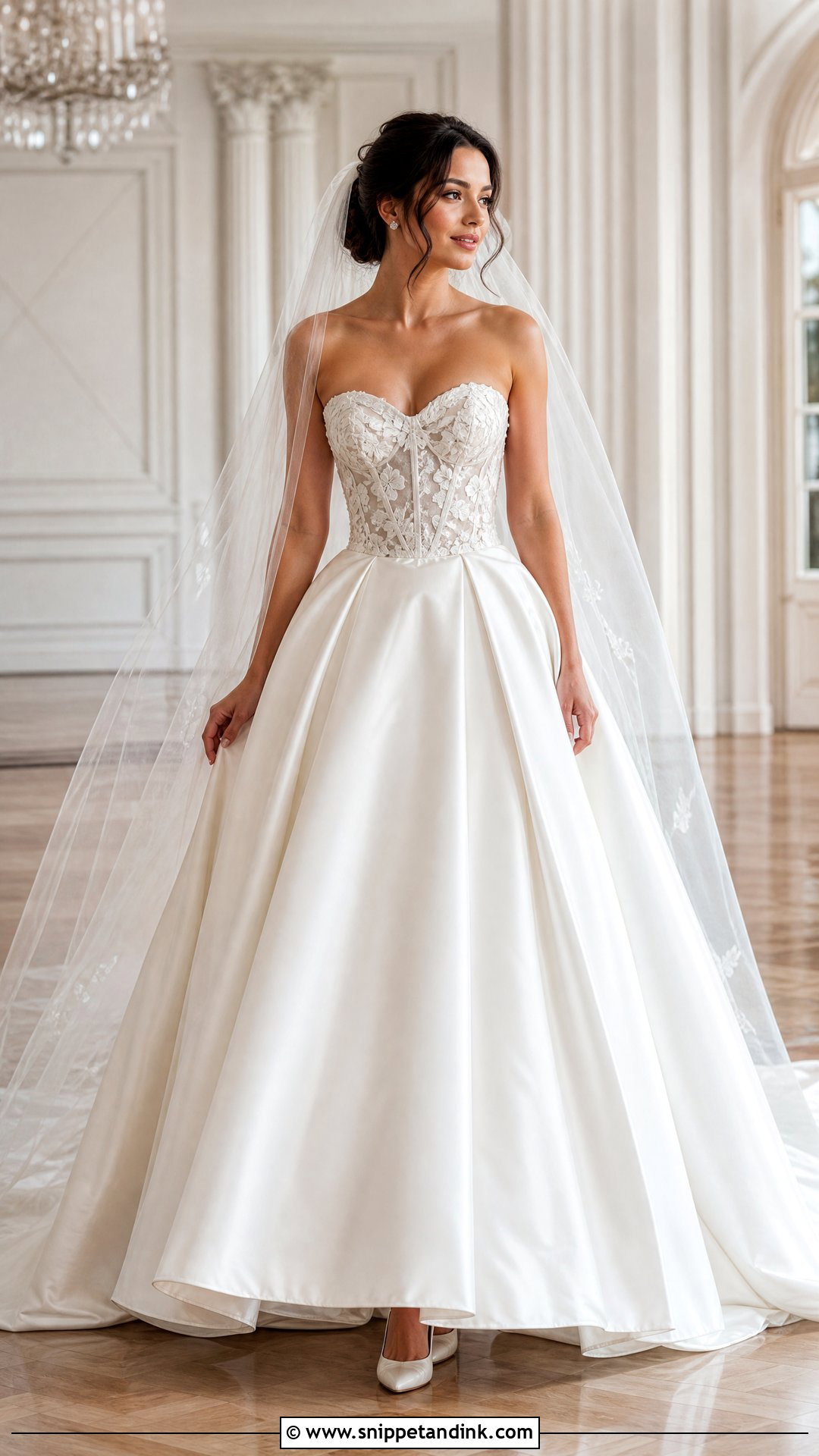
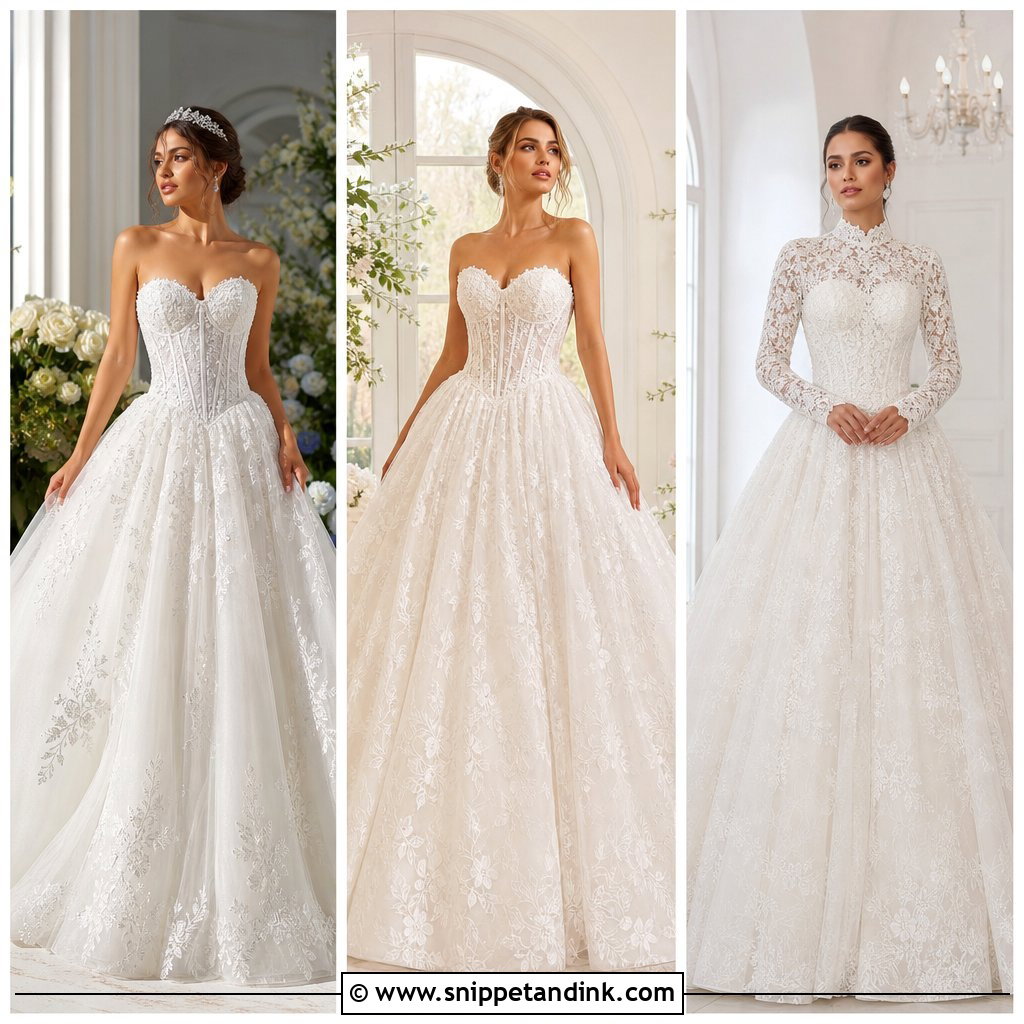
A strapless satin ball gown with a structured lace corset is built for an entrance. The boned bodice does the supporting, and the full skirt gives you a formal, almost regal outline. A gently curved neckline tends to look kinder than a dead-straight one, and it sits more naturally with floral or vine lace. Sculpted waists have had a real moment on the runway, which keeps this old silhouette from feeling dated. Wear it with a cathedral veil, crystal studs and closed pumps, and put the hair in a neat bun or polished waves so the shoulders stay clear. At every alteration appointment I make the bride sit, walk and lift both arms over her head. A corset that is only comfortable standing still will be miserable by the first dance.
3. Long Sleeve Lace Wedding Dress With Satin Skirt
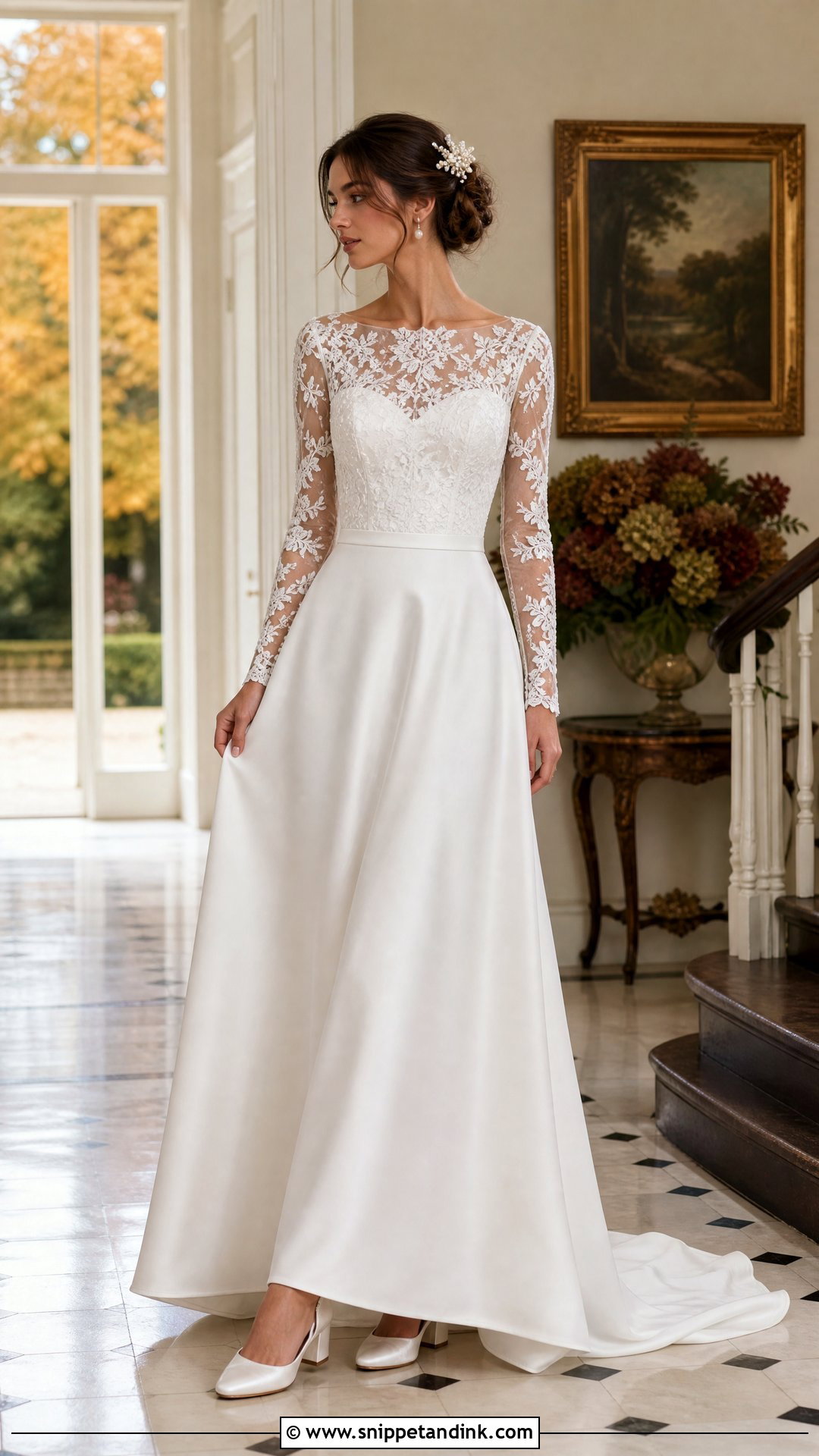
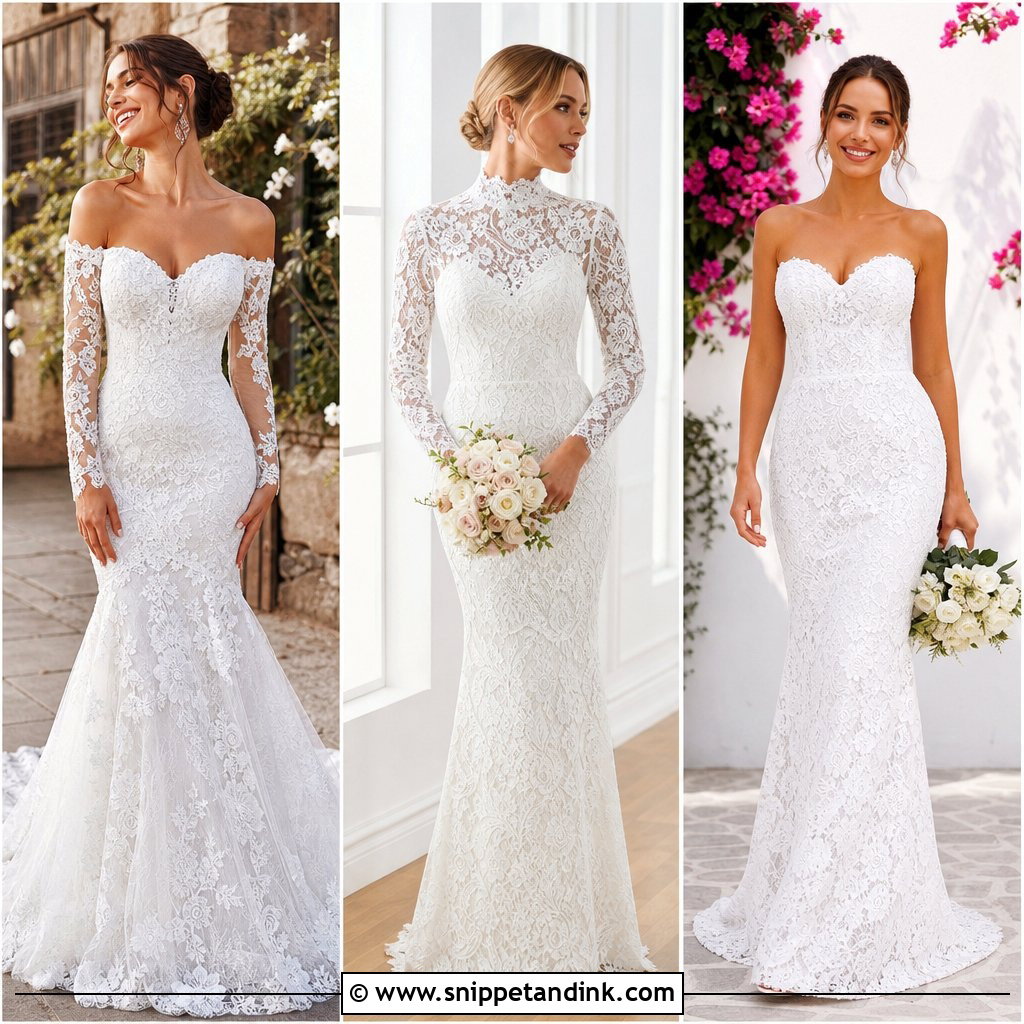
Long lace sleeves over a satin skirt are my go-to for an autumn or winter bride. An illusion base under the sleeves keeps the top half light, even with full coverage, and the fitted bodice gives a clear waist before the satin takes over. Choose covered buttons along the cuffs and down the back for a traditional finish, then keep the rest simple with pearl earrings, an ivory comb and satin block heels. Sleeves are the hardest thing in bridal to fit. If the armhole is cut too low, your whole bodice lifts when you raise your hand to wave, so test that before anything else. A medium veil lets the lace back show rather than burying it.
4. Square Neck Satin Wedding Dress With Lace Panels
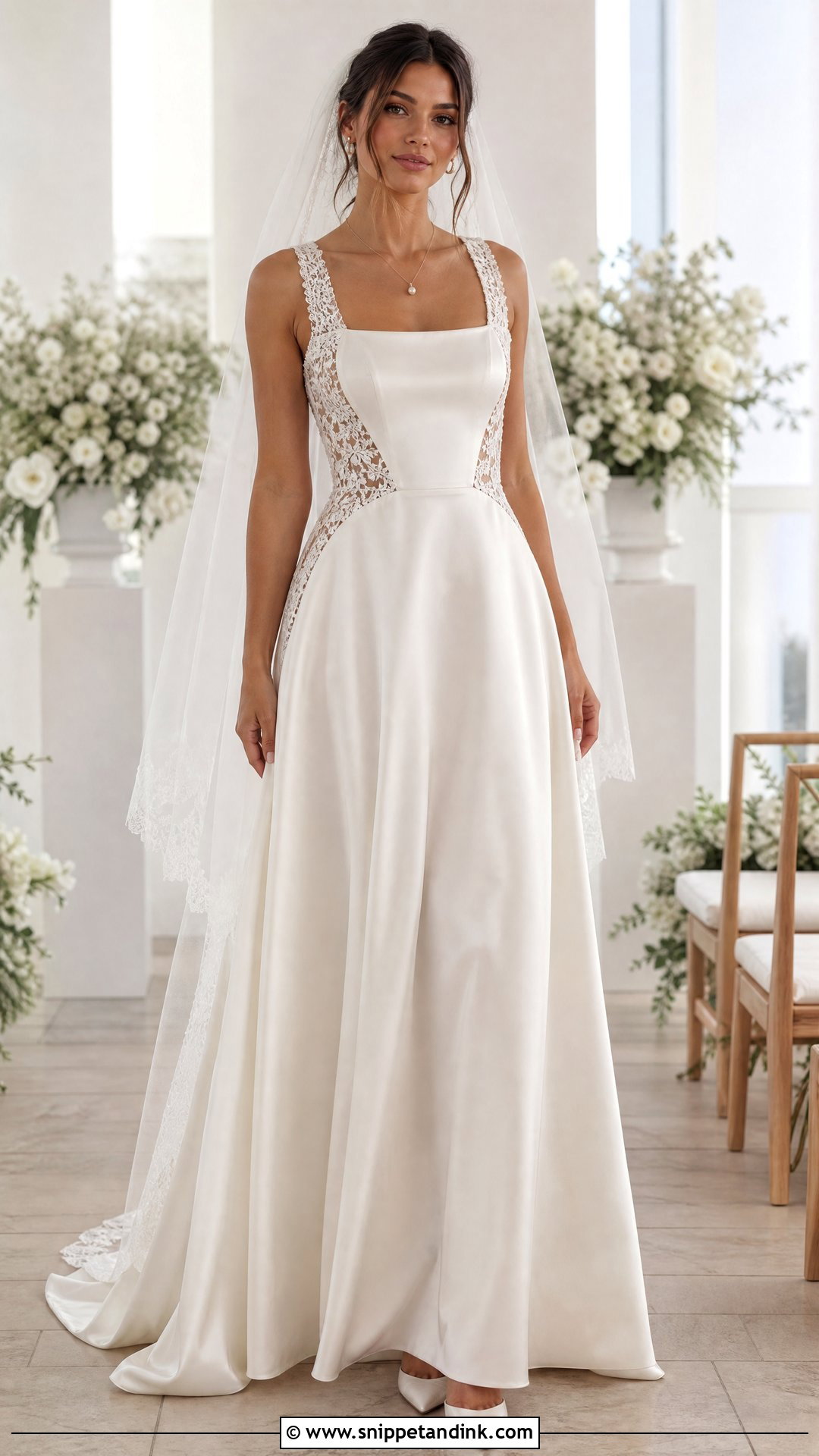
The square neck is the most architectural option here. A smooth satin bodice can be framed by lace straps, lace side panels or a sheer lace back, and the open line shows the collarbone while covering more than a plunge would. Pair it with an A-line or softly fitted skirt. A short pendant, small pearl hoops, low pointed heels and a fingertip veil finish it without hiding the neckline. The corners are what I watch. On a smaller bust they often tip forward and gap when you lean in, and a seamstress can only fix that by reshaping the whole neckline. Wide straps give more hold; narrow lace ones look lighter for spring and summer.
5. Off Shoulder Satin Ball Gown With Lace Sleeves
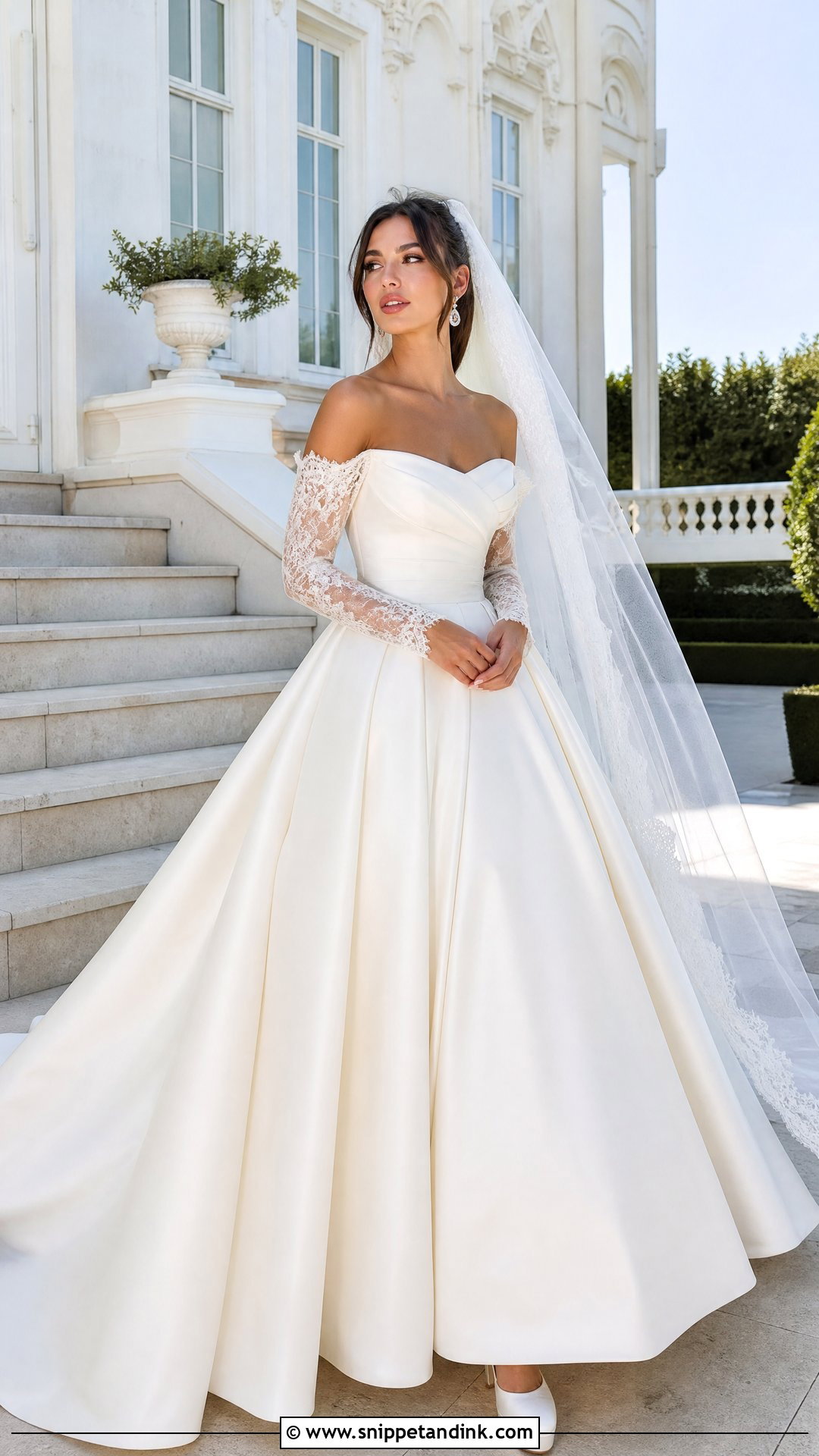
Lace sleeves soften an off-the-shoulder ball gown more than almost any other detail. The neckline frames the shoulders while the boned bodice and full skirt keep it formal. Ask whether the sleeves detach, because then you get a covered look for the ceremony and a strapless one for the reception. Scalloped edges make a pretty transition at the arm, but the elastic inside should hold, not dig. A cathedral veil, teardrop earrings and platform pumps hidden under the skirt all work, and a low chignon keeps hair off the lace. Here’s the honest catch: off-the-shoulder pieces pin your arms. Hug someone, reach for a glass and dance in the fitting room before you sign off on the alterations.
6. Mermaid Satin Wedding Dress With Lace Appliqués
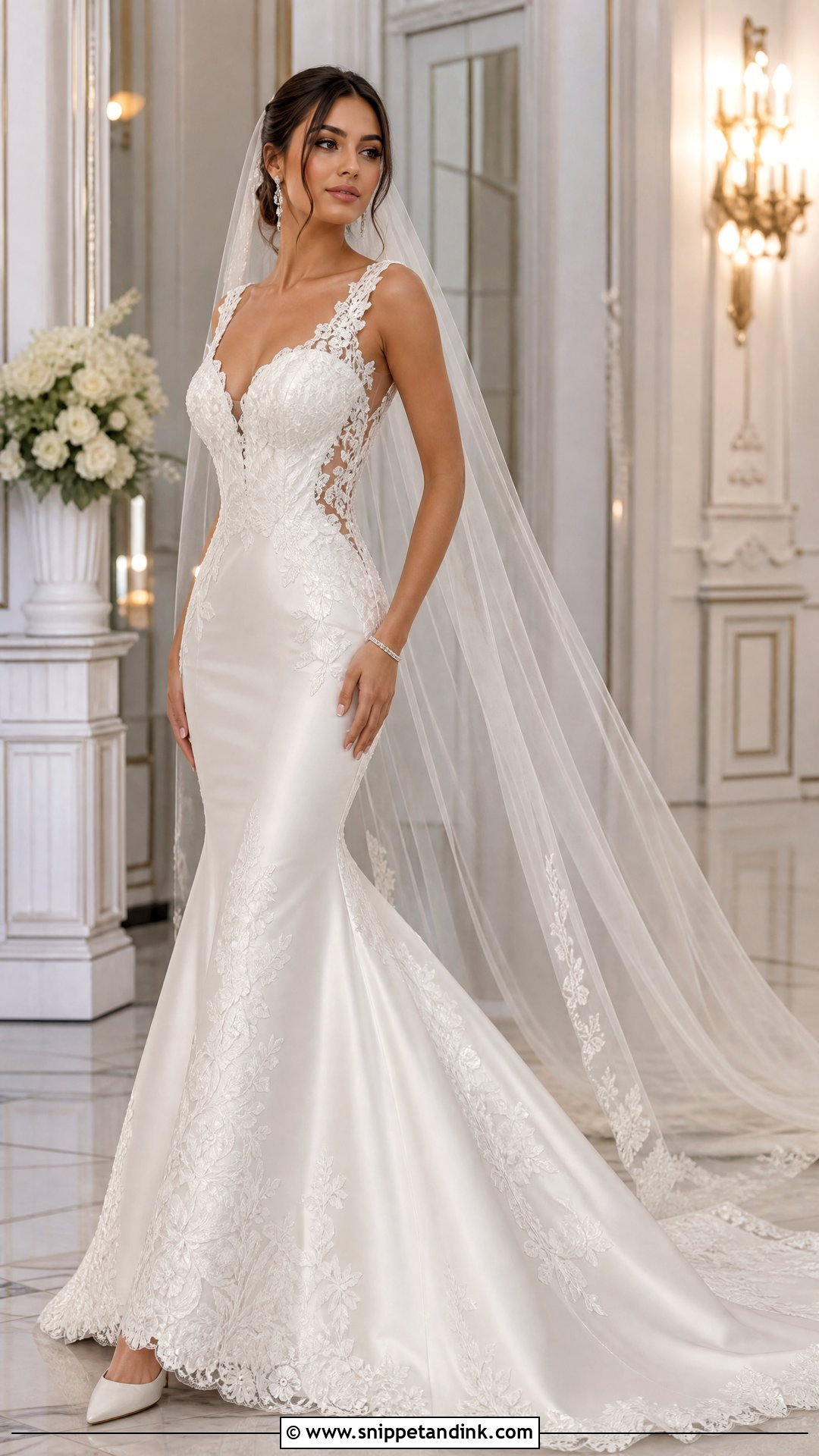
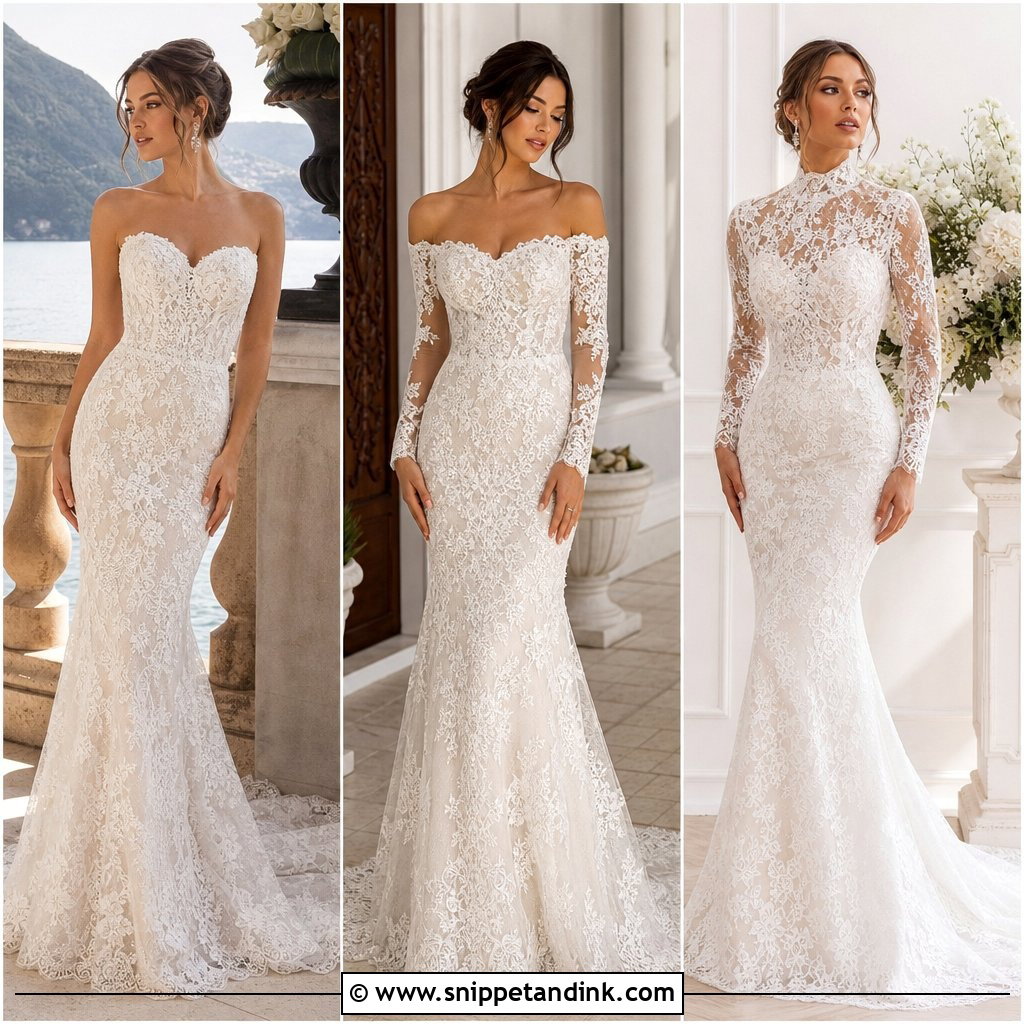
With a mermaid cut, the lace goes exactly where you want the eye. The gown hugs bodice, waist and hips before it opens into the lower skirt, and appliqués can frame the neckline, curve along the side seams or spread over the flare and train. Placed vertically, they make you look taller; clustered at the waist, they pull focus there. I’d keep jewelry to drop earrings and a narrow bracelet, add pointed heels, and choose a sheer cathedral veil that echoes the lace without weighing it down. Walk and sit in the sample before deciding. If the flare starts too low, you’ll be taking tiny steps all day, and satin shows every strain line across the knee.
7. Satin Sheath Wedding Dress With Lace Train
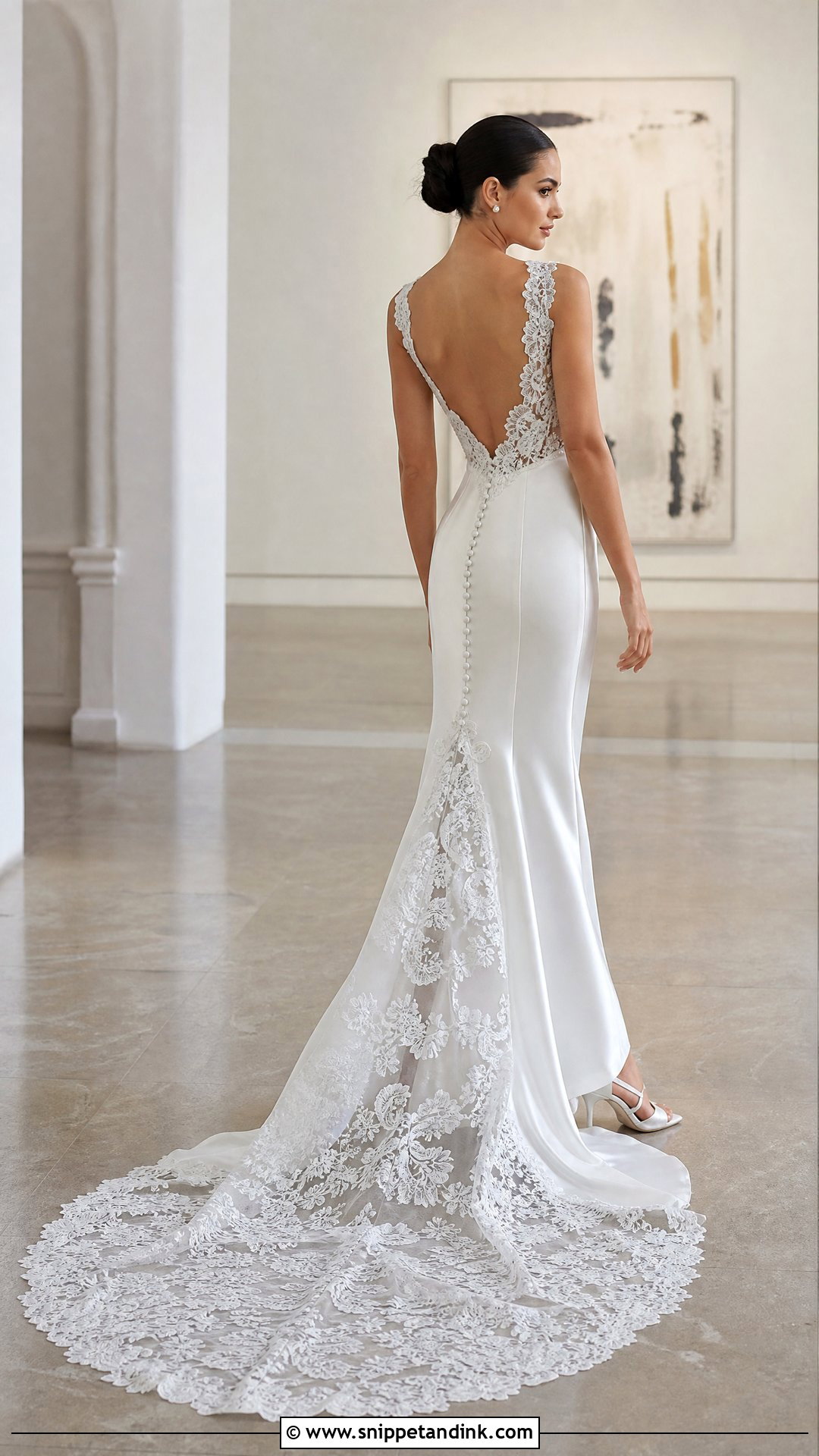
From the front, a smooth satin sheath gown looks almost plain. Then the bride turns, and a sweeping lace train takes over the room. It pairs well with a bateau, scoop or modest V-neck, and a low back edged in lace ties the quiet bodice to the busy train. Style it with pearl studs, sleek hair and minimal slingbacks. The veil is where brides go wrong with this one: a heavily embroidered veil fights the train, so choose plain tulle or skip it for a small hair piece. Ask your seamstress for a proper bustle, because lace trains catch on heels and chair legs once the dancing starts.
8. Basque Waist Satin Wedding Dress With Lace Bodice
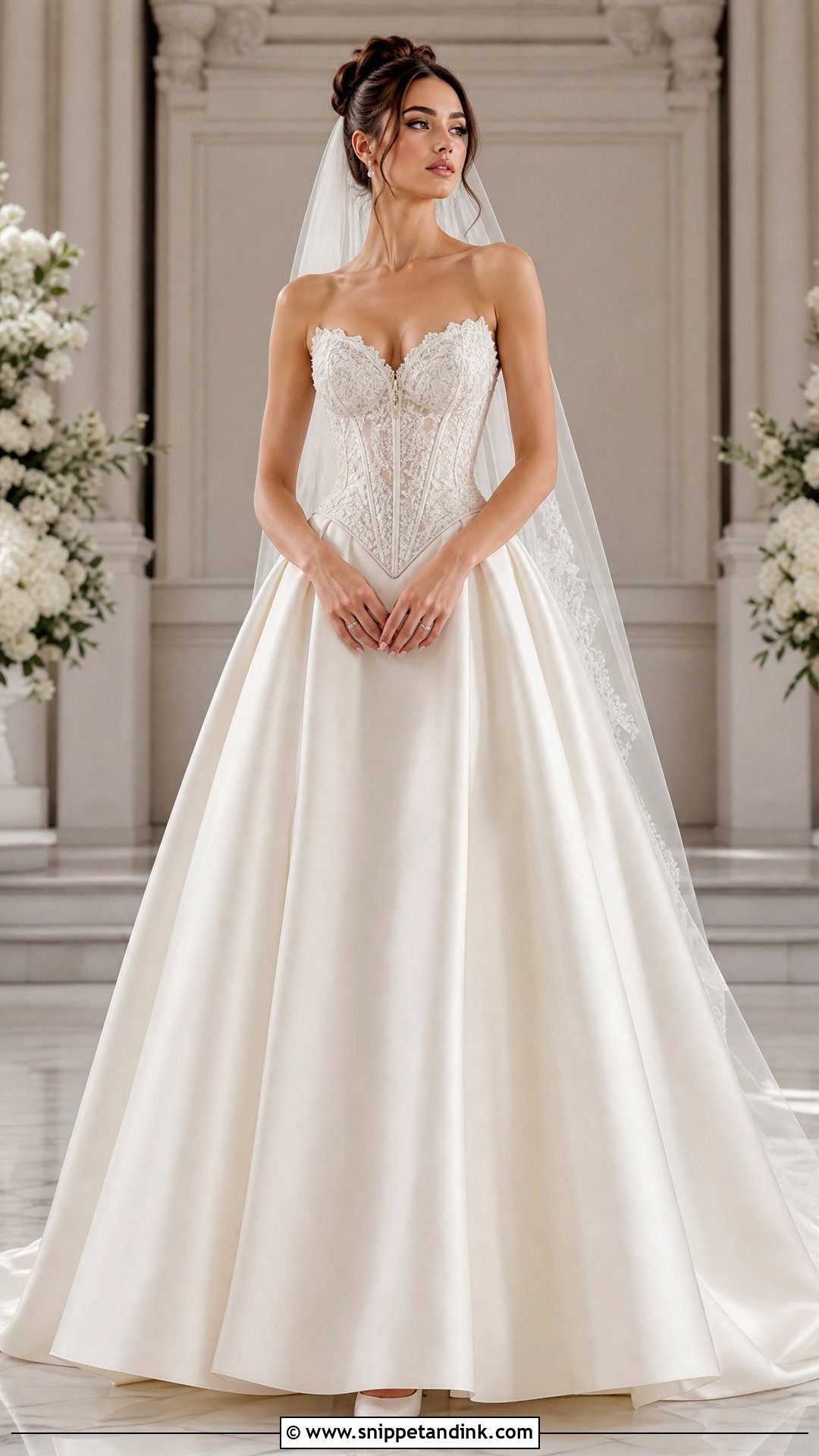
A basque waist dips into a V at the center of the torso, and it’s one of the most flattering seams I know for a lace-to-satin transition. Designers have been pairing it with corsetry and full skirts, and it suits traditional fabrics well. Choose delicate Chantilly lace for a soft result or corded lace if you want the point to read clearly. A structured ball gown skirt balances that sharp waist. Add a long veil, pearl earrings and satin heels. The fit has to be close to exact. If the point of the V buckles when you sit, or presses into your stomach, the sculpted effect is gone, so book a fitting where you do nothing but sit down and stand up.
9. High Neck Lace Wedding Dress With Satin Skirt
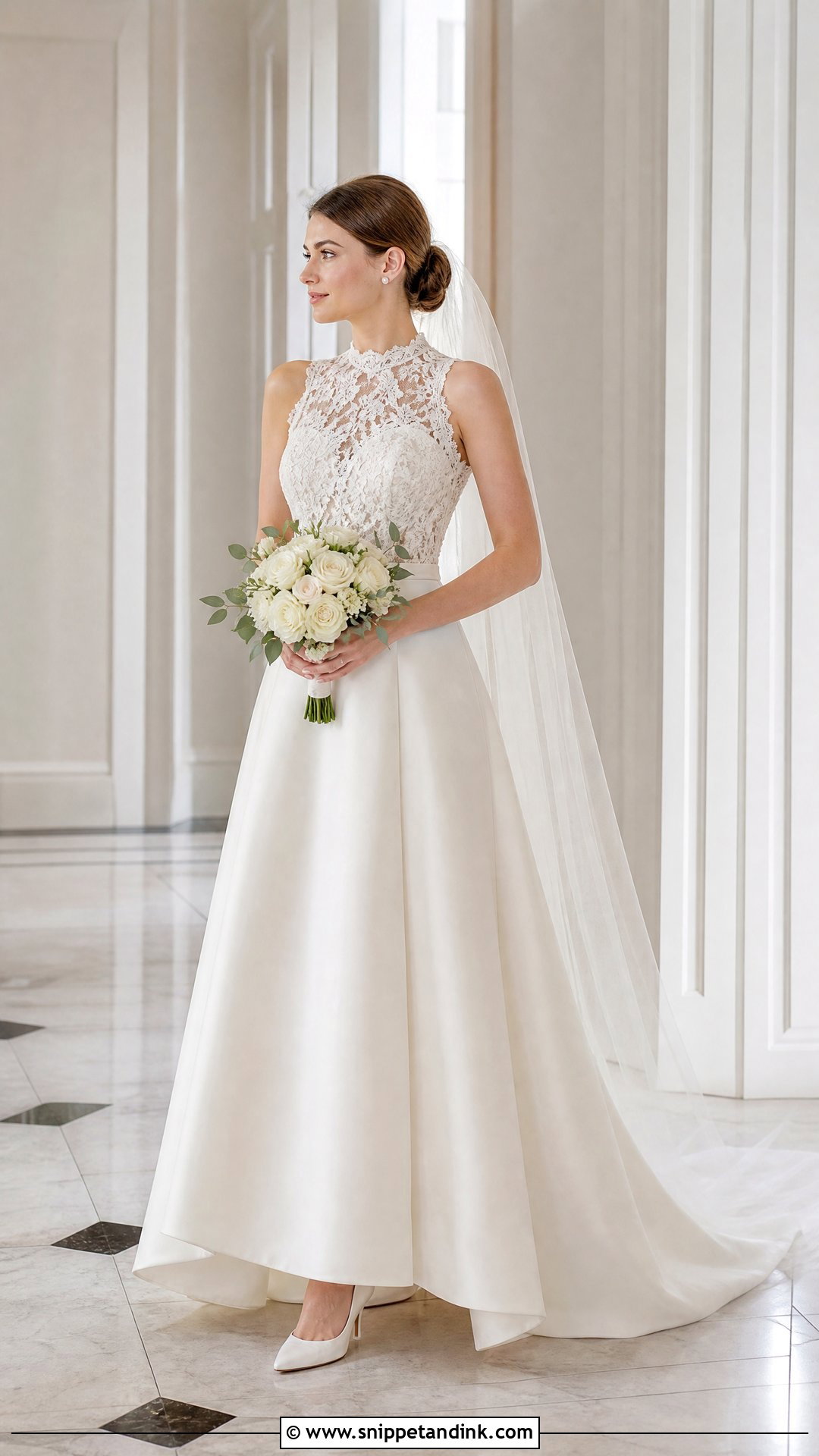
A high lace neck over a satin skirt reads vintage or modern depending on the lace and the sleeve. Fine floral lace without sleeves feels light; long sleeves with covered buttons feel traditional. A clean satin A-line keeps that busy neckline from tipping the whole dress into fussy. Skip the necklace entirely, wear pearl studs or small crystal earrings, and add a low bun, satin pumps and a simple veil. Turn your head left and right in the mirror. A collar that rubs at the try-on will rub all day. An illusion lining in the right shade keeps the lace pattern visible while giving solid coverage in daylight photos.
10. Sweetheart Satin Wedding Dress With Lace Overlay
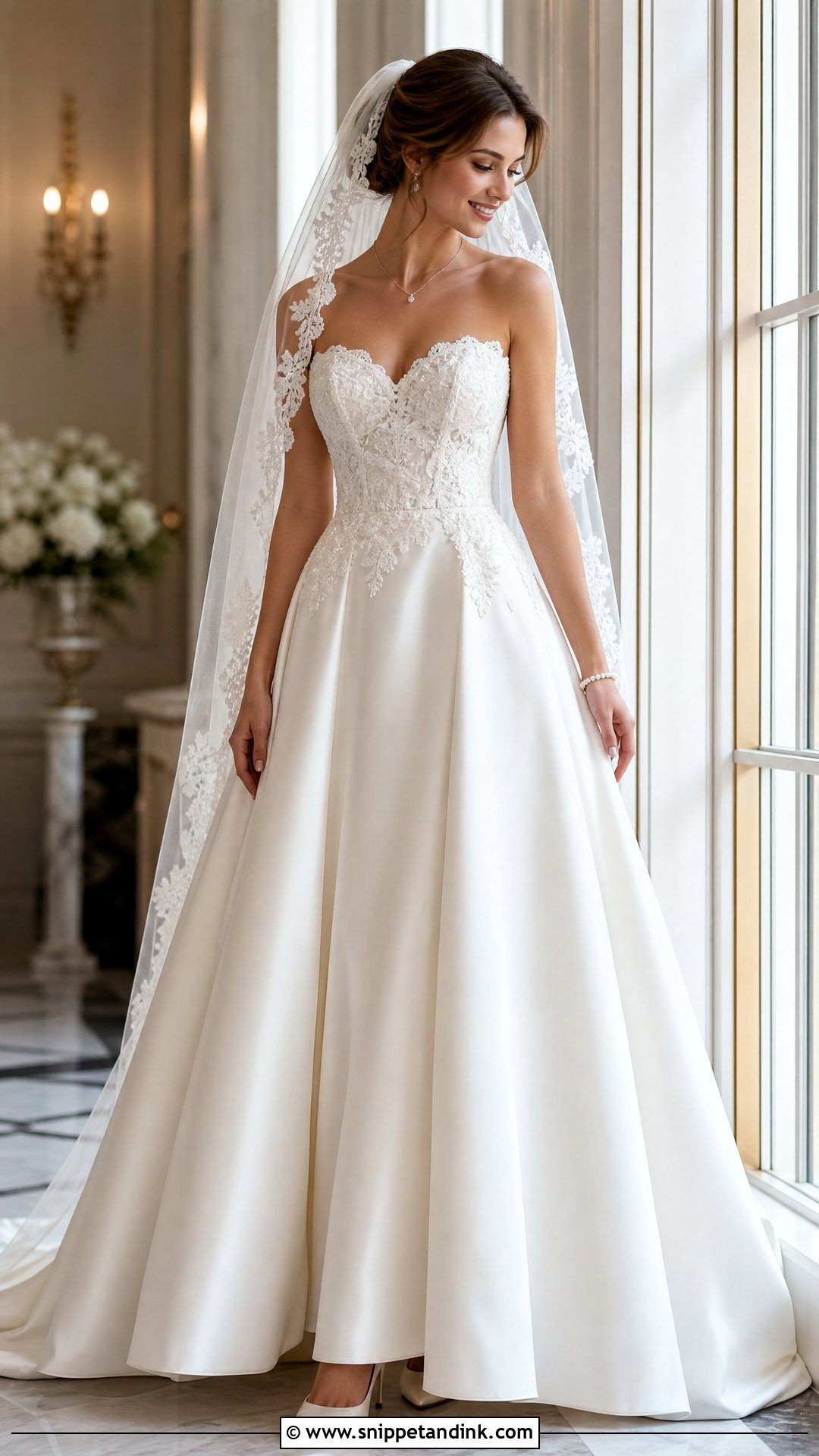
The sweetheart neckline and satin have been paired forever because the curve softens all that structure. The satin bodice can sit under a full lace overlay, or appliqués can trace the neckline and trail toward the waist. An A-line skirt moves more; a ball gown skirt stands taller. A small pendant, pearl bracelet and classic pumps are plenty. Choose a veil with only a narrow lace edge so it repeats the dress rather than competing with it. If the gown is strapless, bend forward in the fitting room. A sweetheart that slips when you lean over a table needs more boning or removable straps, and both are easy fixes if you ask early.
11. V-Neck Satin Wedding Dress With Lace Straps
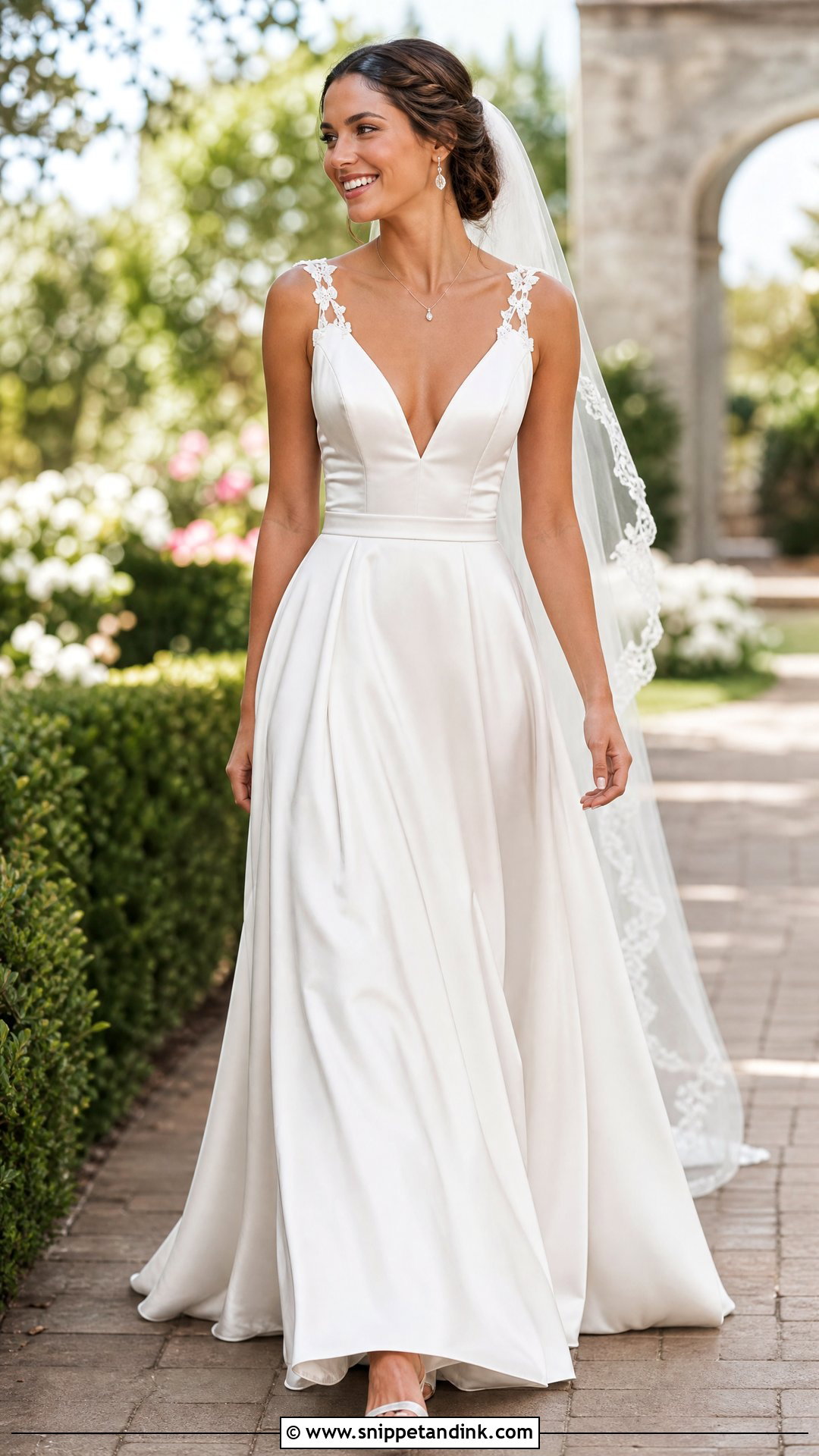
Lace straps on a V-neck satin dress are easy to wear and easy to adjust. They can run into an illusion back, link to a lace waistband or simply frame a plain satin bodice, and a moderate V stays comfortable for most venues. A pleated A-line skirt gives movement and often room for pockets; a fitted skirt gives a cleaner line. Add a delicate pendant, drop earrings and low slingbacks. A fingertip veil softens the look without covering the straps for the whole ceremony. Strap length is the detail I fuss over. Too long and they slide off the shoulder; too short and they hitch the bodice upward.
12. Backless Satin Wedding Dress With Lace Detail
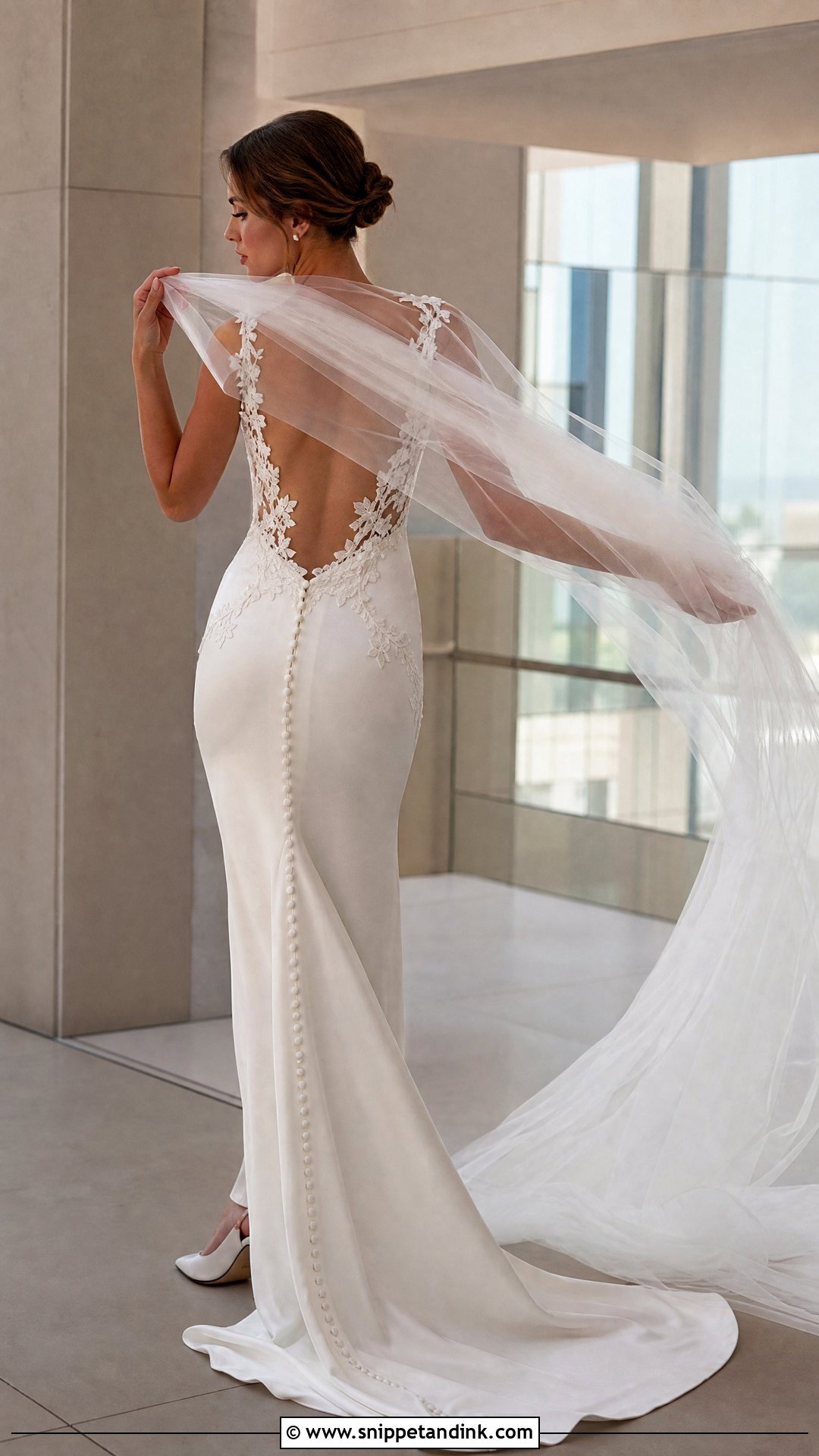
An open back is where lace earns its place on a satin gown. Lace can frame the opening or fill it with a sheer illusion panel, while the front stays simple in a scoop, halter or boat neckline. Covered buttons can carry on below the lace toward the train. Wear an updo, small earrings and sleek pumps so nothing pulls attention from behind, and remove a sheer veil after the ceremony. Support is the question I raise before the bride falls in love. Sewn-in cups, boning and skin-toned mesh can hold a fuller bust without a bra, but only if they’re planned in from the start. Check it under bright light, because illusion mesh can show its edges in flash photos.
13. Tea Length Satin Wedding Dress With Lace Sleeves
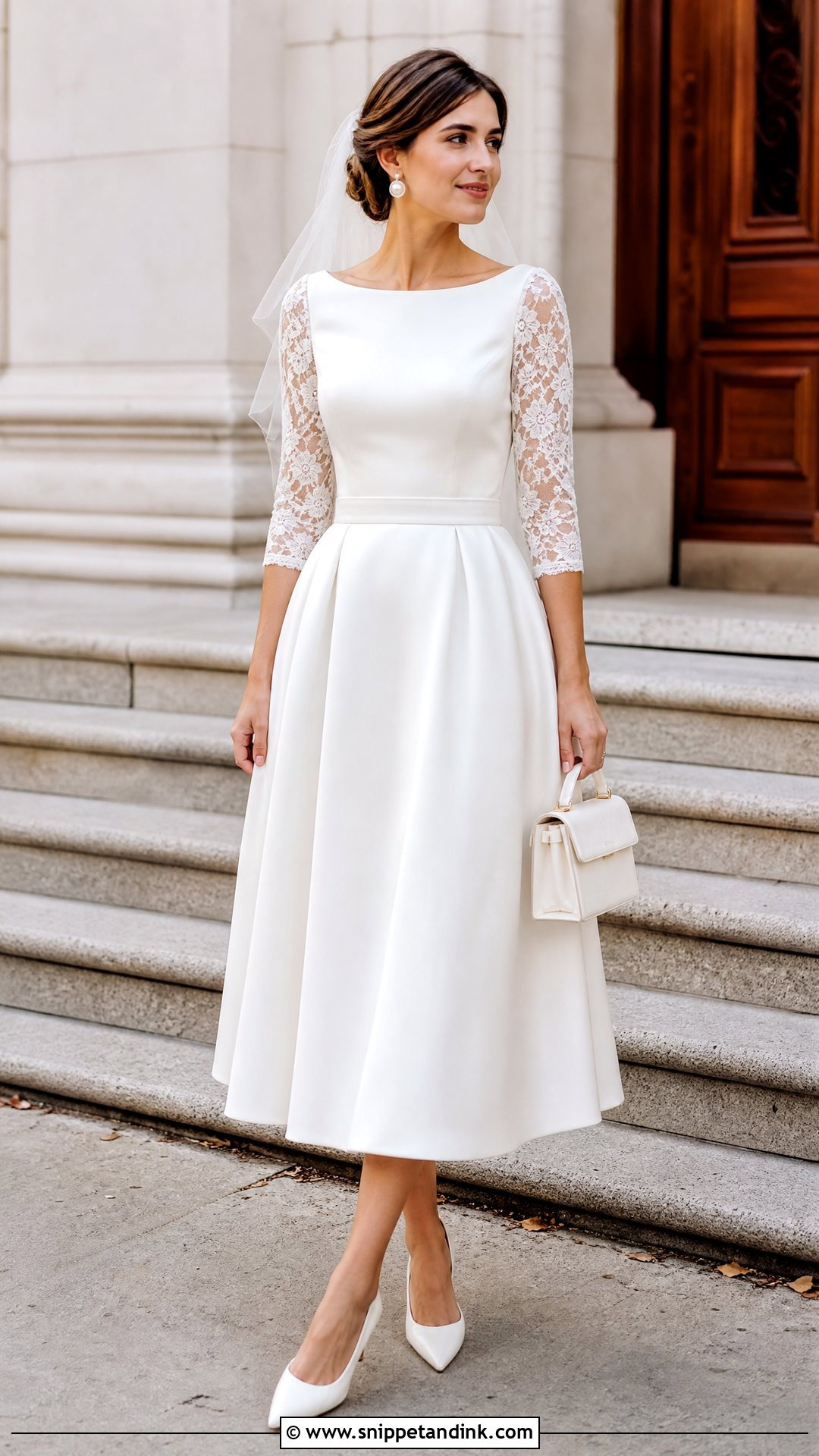
Tea length lands between the knee and ankle, so your shoes suddenly become part of the dress. Designers have been offering more of these shorter cuts alongside minis and floor-length gowns, which gives brides more to choose from for smaller ceremonies. Three-quarter lace sleeves keep the proportions light and leave room for a bracelet. Pointed pumps, a short veil, pearl earrings and a small structured bag finish it. The skirt needs enough volume to swing. Too little and it looks like a day dress; too much and it tips into costume. I like it for courthouse weddings, daytime receptions and as a second look for the dancing.
14. Satin Slip Wedding Dress With Lace Trim
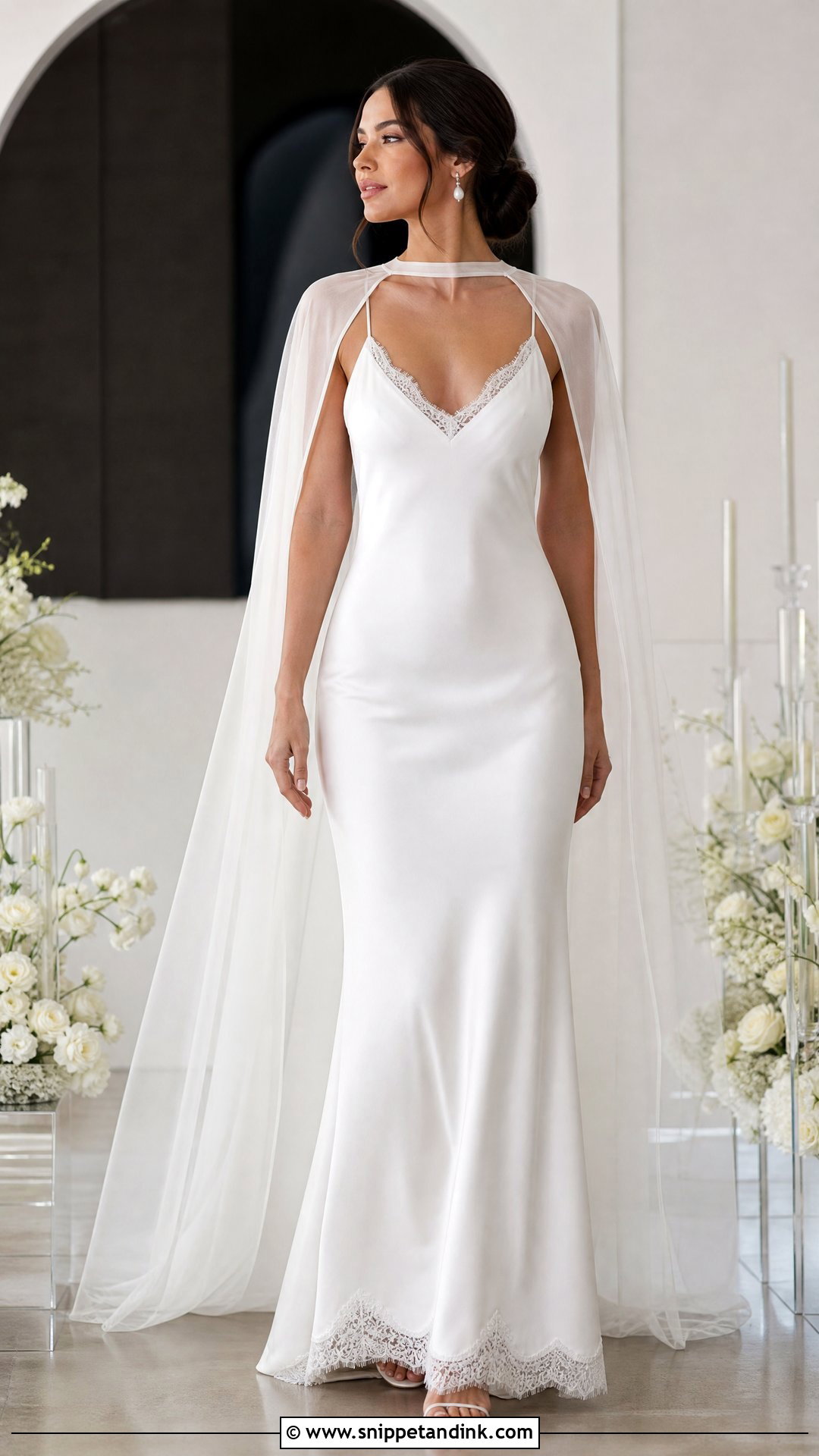
Simple does not have to mean plain. A satin slip with lace trim at the neckline, straps or hem relies on the cut, not on boning. A bias-cut shape follows the body loosely and moves when you walk. This is the one gown where fabric quality shows instantly: thin satin goes see-through under flash and clings at every seam, so ask for a heavier weight and a smooth lining. Strappy heels, pearl drops and a light veil or sheer cape suit it, along with a neat low bun. The lace has to look bridal, not like nightwear, so look for refined appliqués or a defined train. Have it steamed by a professional on the morning. Bias-cut satin creases the moment you sit in a car.
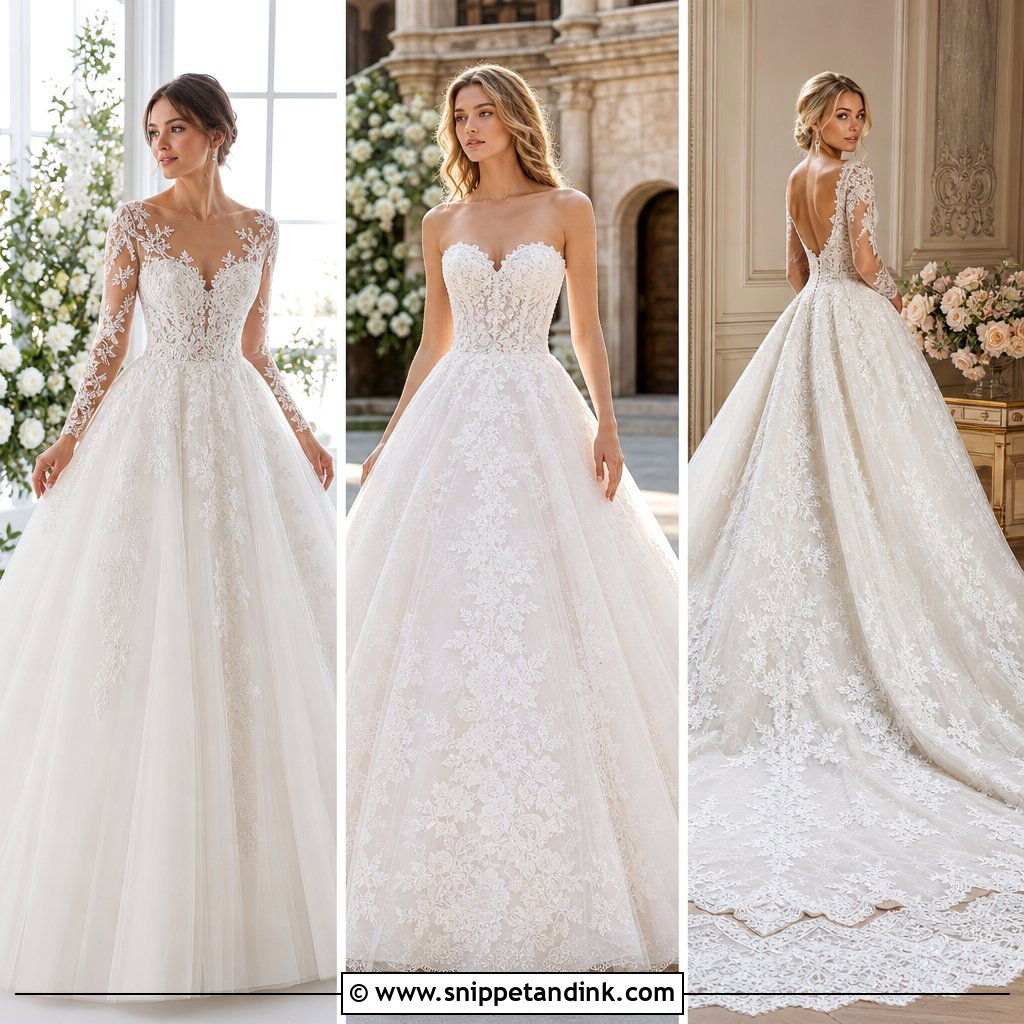

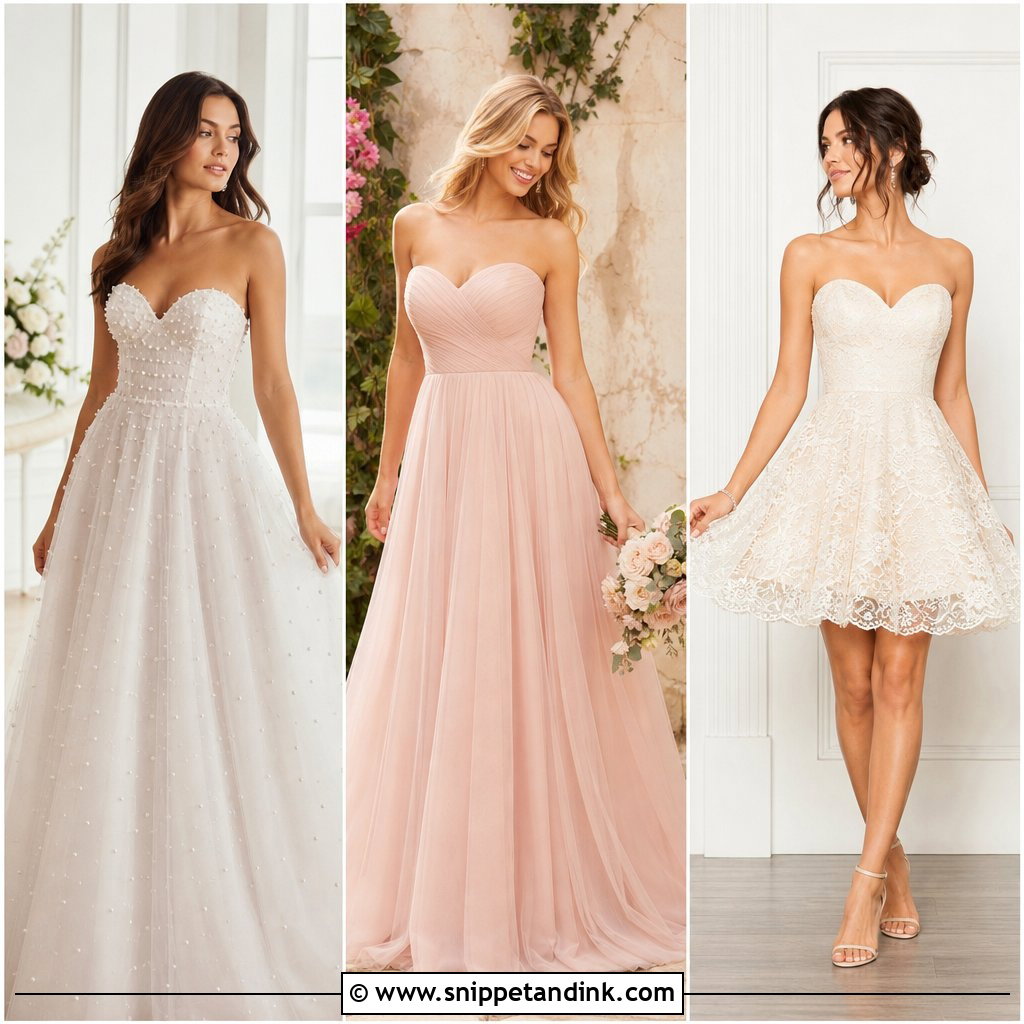
15. Plus Size Satin Wedding Dress With Lace Bodice
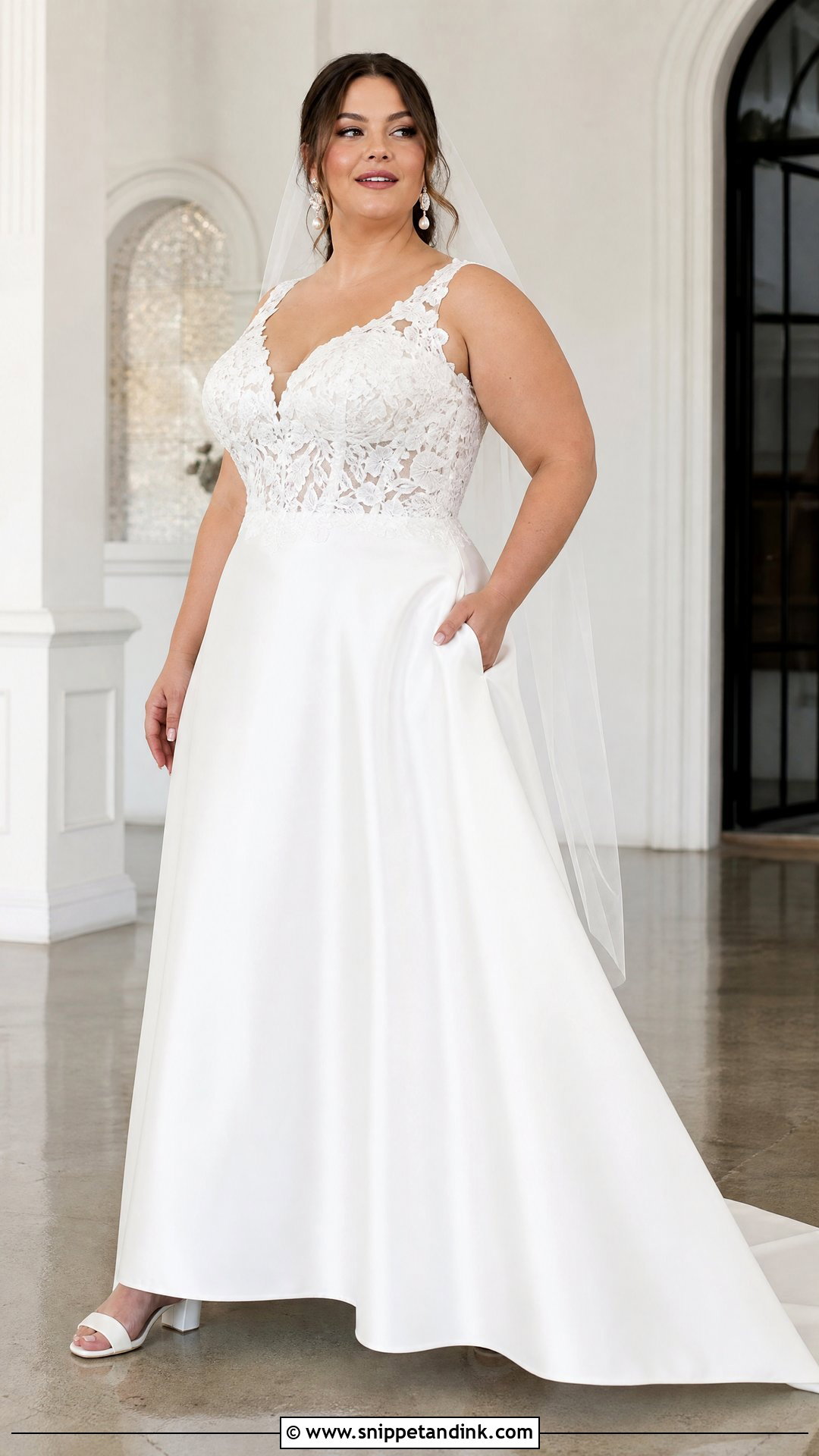
For a plus size bride, I start with support and work outward to decoration, never the other way round. A structured lace bodice with wider straps or sleeves pairs well with a satin A-line or ball gown skirt. Look for internal boning, built-in cups and a waist seam placed where your torso actually feels comfortable, which is not always the natural waist. Lace that carries a little below the seam joins the two halves visually instead of slicing you in two. Block heels, statement earrings and a veil scaled to the skirt complete it. Ask the boutique for samples close to your size. Clipping a size-eight sample onto your back tells you nothing about how the bodice will hold.
16. Modest Satin Wedding Dress With Lace Sleeves
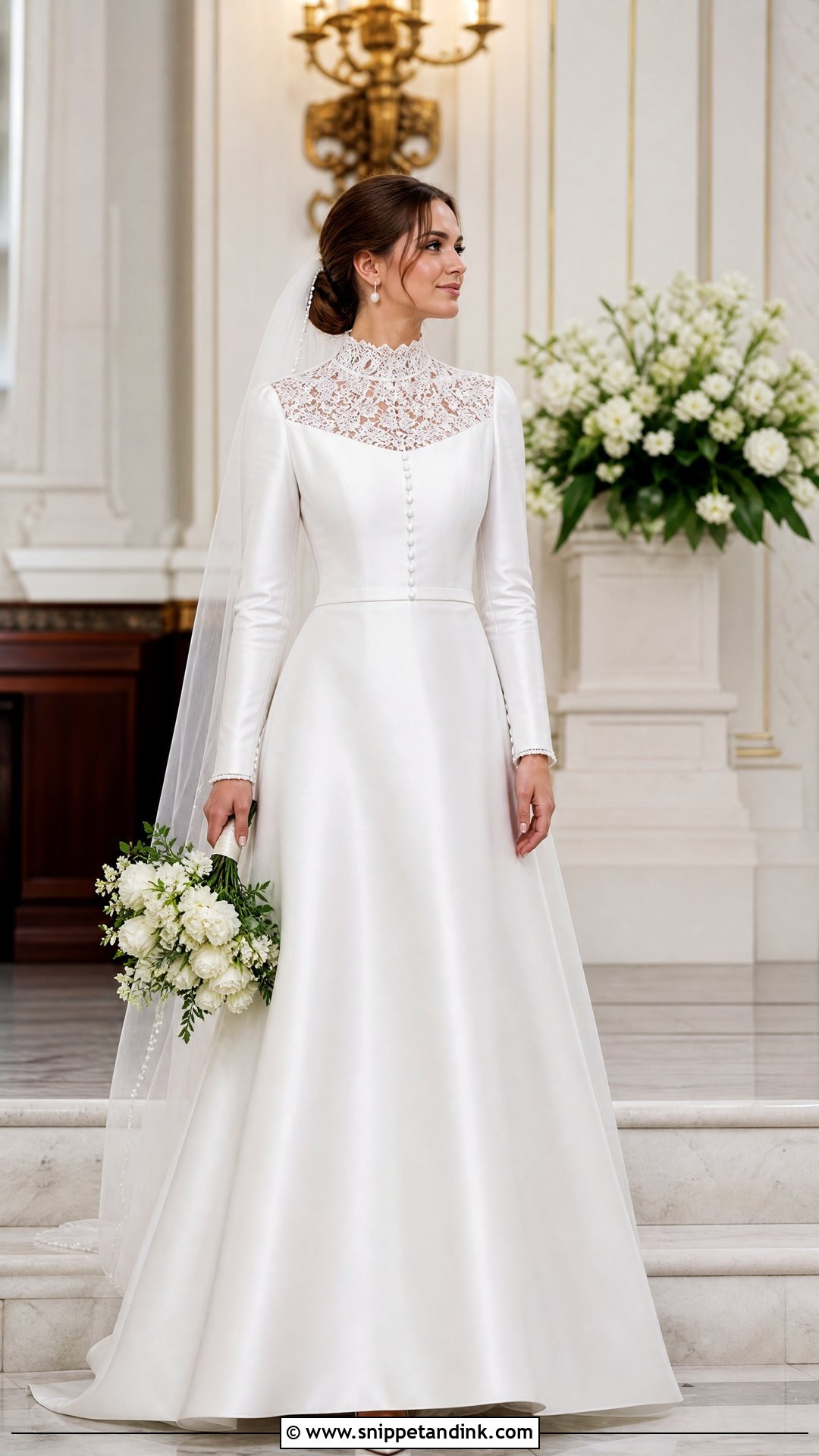
Full coverage doesn’t have to feel heavy. A modest satin gown might have a high lace neck, lined long sleeves and a structured bodice falling into a smooth A-line, and the contrast between detailed lace and plain satin keeps it light on the eye. Covered buttons, narrow cuffs and a chapel train give it a traditional finish. Wear pearl earrings, closed pumps and a simple veil anchored under a low bun. Check the nude illusion lining against your own skin, not against the hanger, because a shade that’s too pale shows through as a pinkish panel in photos. Breathable sleeve lining and roomy armholes matter more than people expect over a long day.
17. Vintage Satin Wedding Dress With Lace Collar
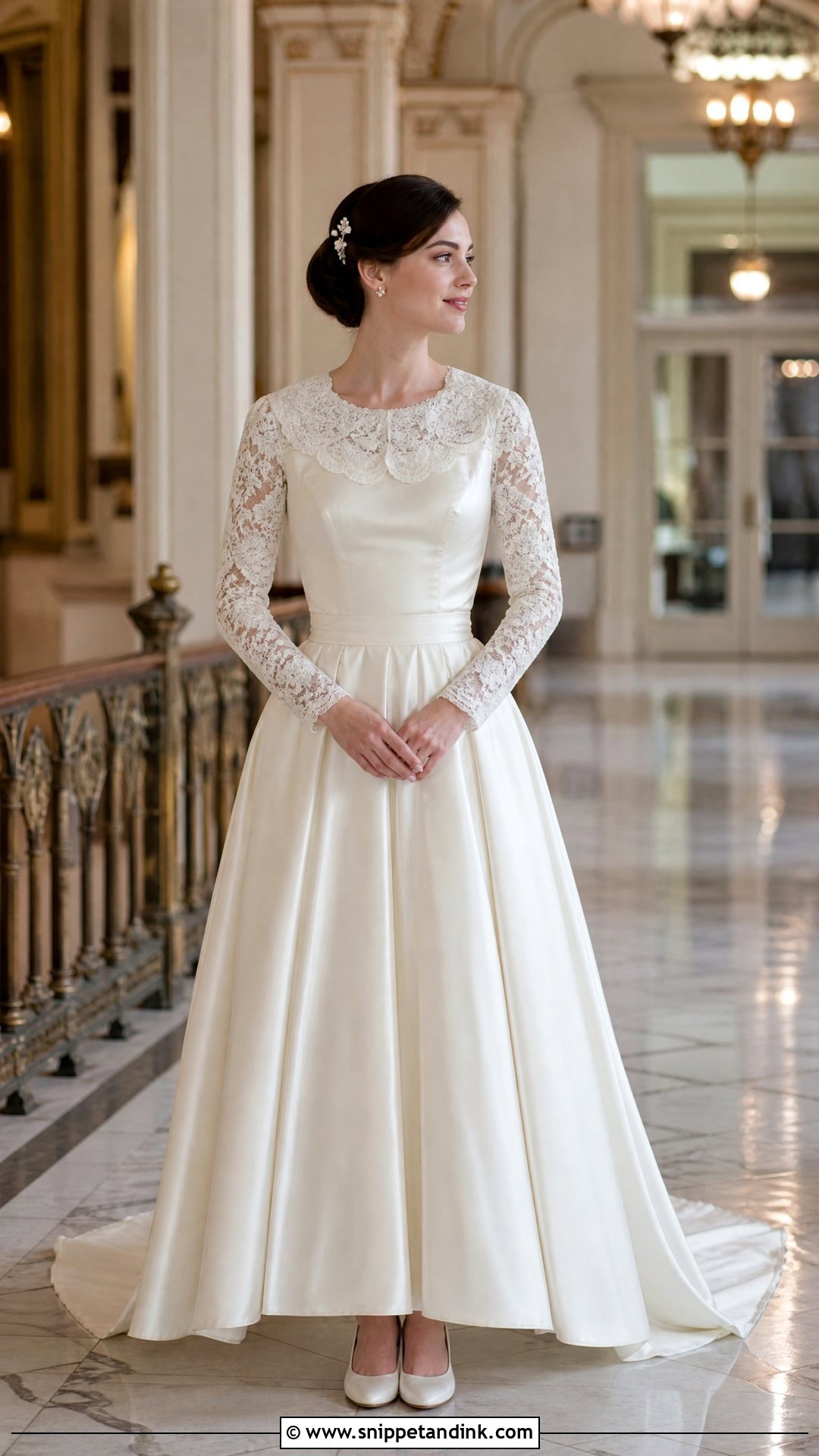
A satin gown with a lace collar brings in old-fashioned charm without asking you to dress in costume. The collar can be scalloped, slightly raised or rounded into a Peter Pan shape. Fitted lace sleeves and an A-line satin skirt keep it wearable, and covered buttons, a natural waist and a short train build the traditional feel. Pearl studs, a small comb and round-toe pumps are enough. My rule with vintage styling is to pick one era detail and let it lead. Pile on too many and you look like you’re in a period drama. Keeping antique-style lace only at the collar and cuffs lets the satin carry the dress from across the room.
18. Boho Satin Wedding Dress With Floral Lace
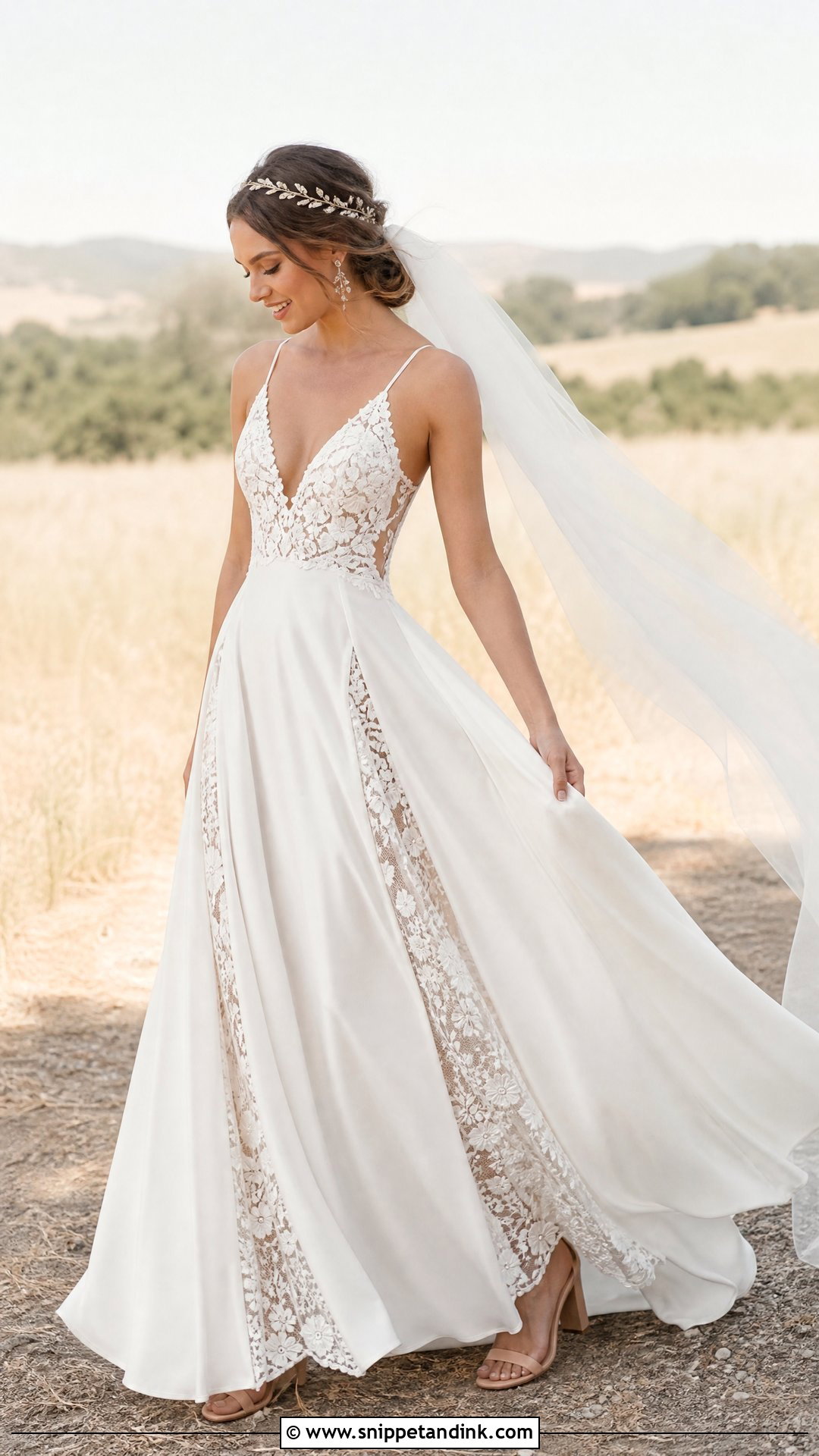
For an outdoor or relaxed wedding, I reach for softer satin with botanical lace panels down the sides, back or train. The bodice is lightly fitted with an open V and narrow straps, and the skirt should skim rather than grip, because walking across grass in a tight skirt is no fun. Low block heels won’t sink, and a hair vine and small drops suit the mood. A light veil catches the breeze in photos without swamping the dress. Stiff duchess satin fights this look. Ask for a fluid satin with a soft lining and unstructured lace so it still looks polished enough for portraits.
19. Minimalist Satin Wedding Dress With Lace Insets
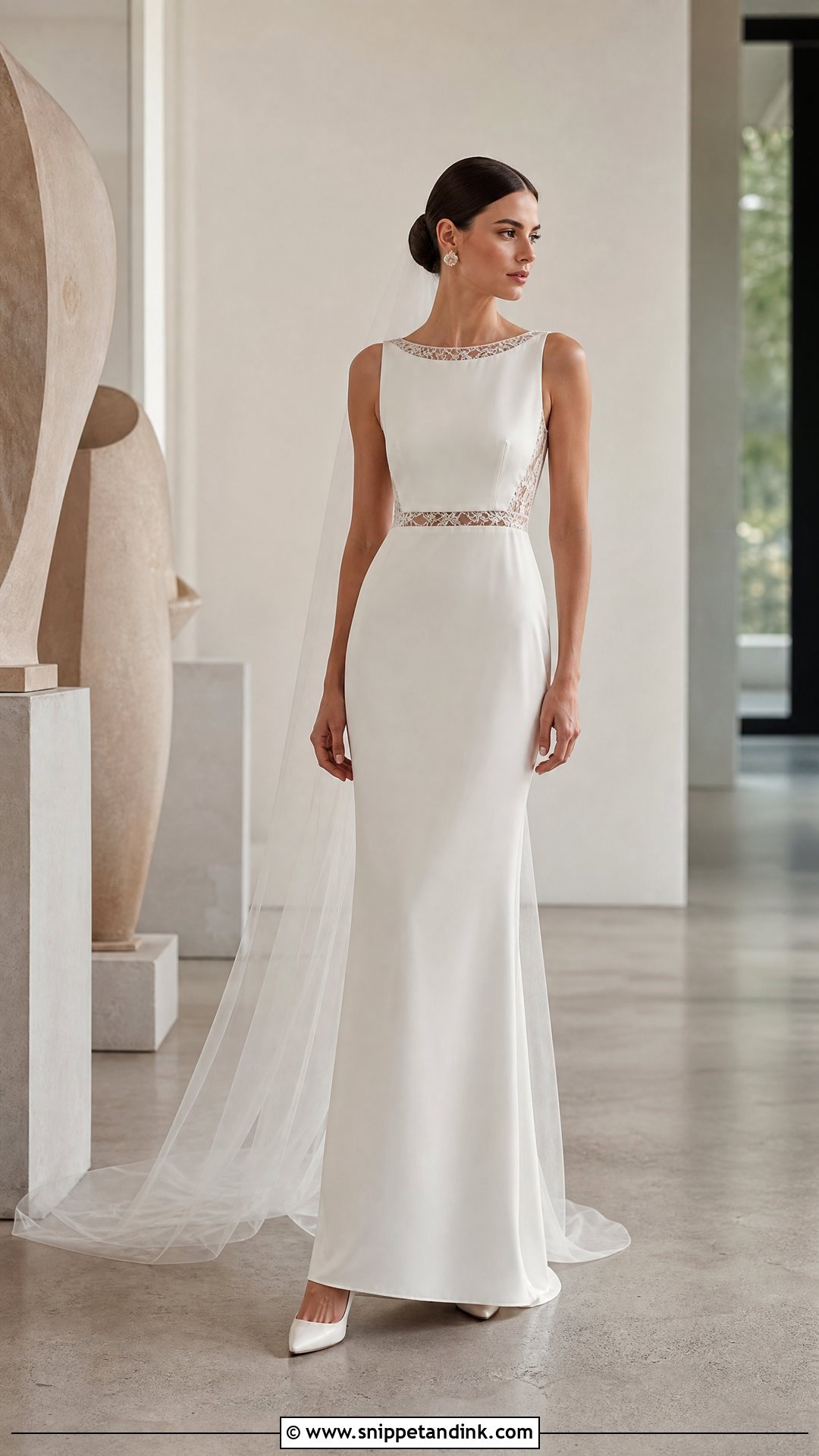
A minimalist satin dress can carry lace if it’s rationed. Narrow insets at the waist, neckline, back or train add texture in small, controlled areas, and a column or plain A-line lets each one look deliberate. Match the lace closely to the satin’s ivory or white. Even a slight shade difference looks like a repair under camera flash. Sculptural earrings, sleek pumps, a plain tulle veil and a polished bun keep the mood restrained. During fittings I check that every inset lies flat and mirrors its partner on the other side, since a puckered inset is the first thing the eye finds on a plain gown. It suits a bride who loves lace in small doses.
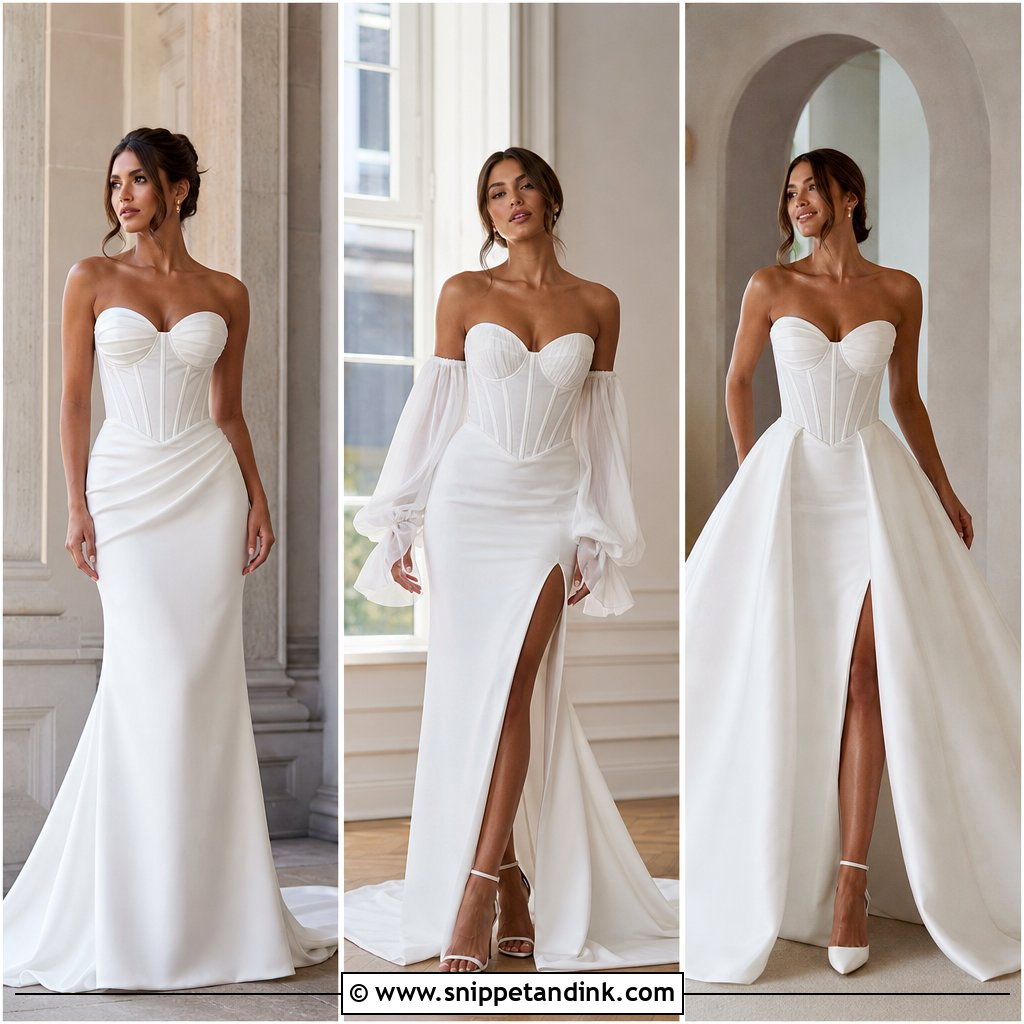
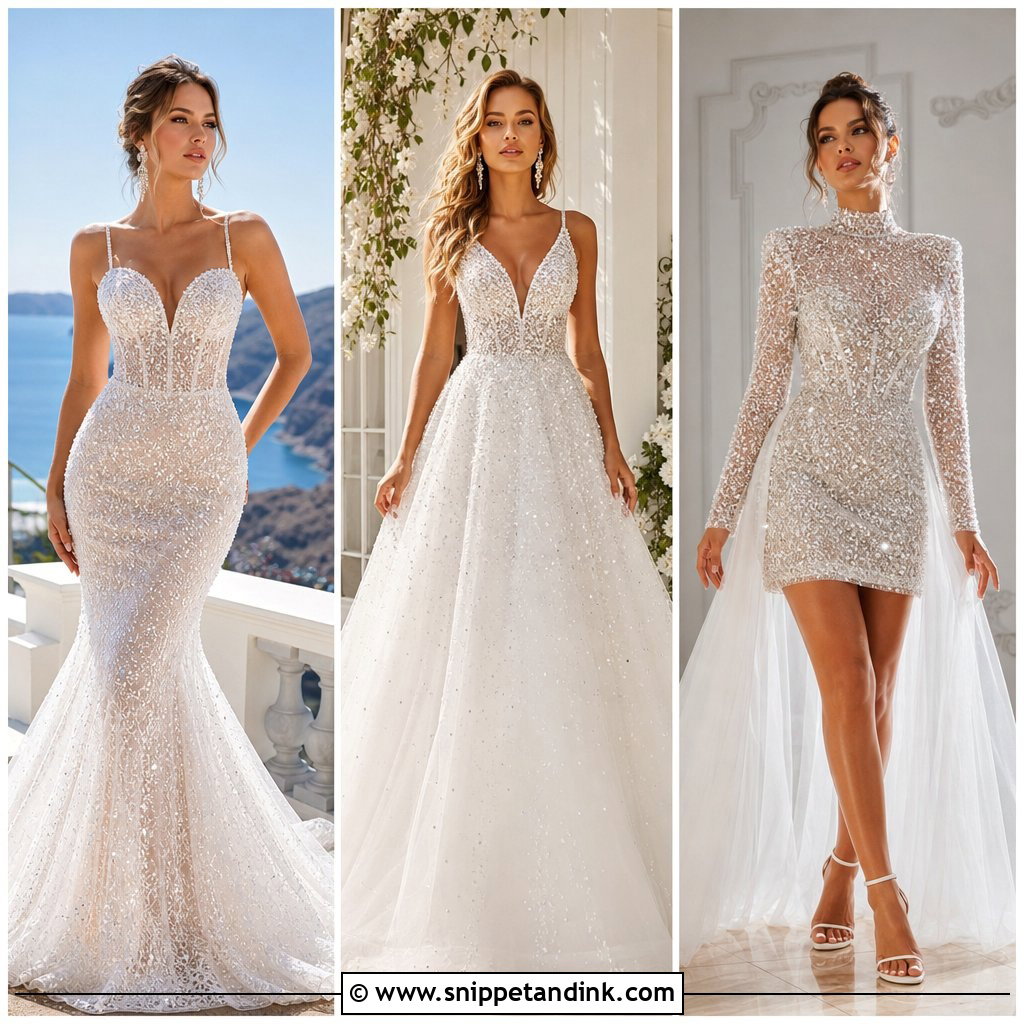


20. Satin Wedding Dress With Detachable Lace Overskirt
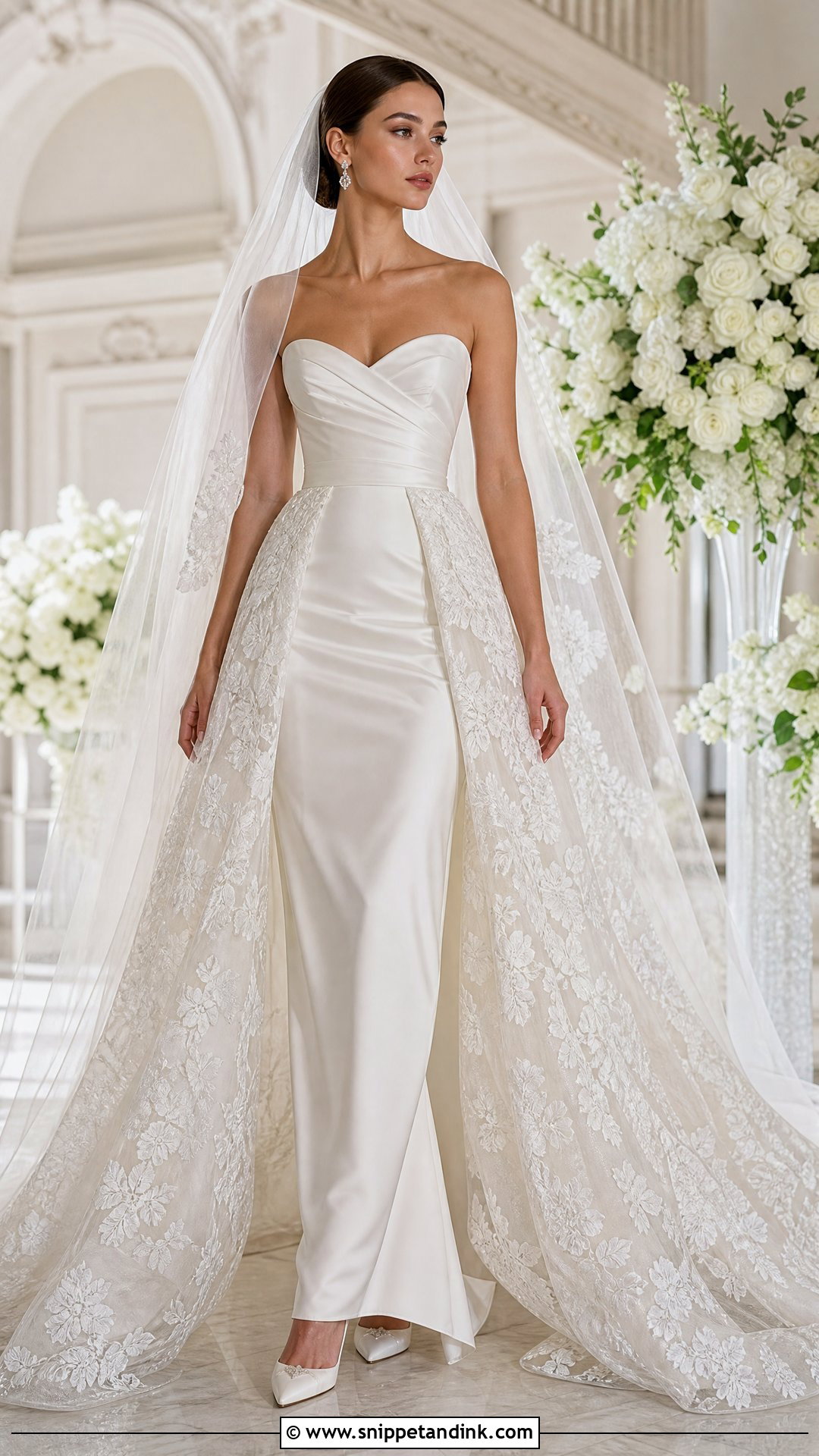
A detachable lace overskirt gives you two dresses for the price of one fitting schedule. You start the ceremony in a fitted satin gown under a full lace layer, then lift the overskirt off to show a streamlined reception silhouette. Removable skirts, capes and other convertible pieces have become a regular option in bridal collections. Choose an attachment that blends into the waistline and comes off in a minute or two, not ten. A long veil and formal earrings suit the ceremony; switch to a hair clip and comfier heels afterward. Practise the change at your final fitting, and show one bridesmaid exactly how the hooks or snaps work, because you won’t be able to see them yourself.
Creases, Snags and Spills on the Wedding Day
Satin and lace fail in different ways, so they need different care once the gown leaves the shop. Satin marks easily. Water can leave a ring on some finishes, and every time you sit, the fabric creases across the lap. Lace snags, especially on bracelets, ring prongs, beaded clutches and the velcro of a photographer’s bag.
The Week Before
Collect the gown already pressed and hang it by its internal loops, not the shoulder straps, so the skirt’s weight doesn’t stretch the bodice. Leave it in a breathable garment bag, never plastic, and give the skirt room in the wardrobe so it isn’t squashed against other clothes. Ask your stylist or seamstress to steam it on the morning itself, working from the inside of the skirt so no droplets spot the satin face.
A Small Kit for Your Maid of Honour
- A white chalk stick or a stain-lifting pen tested first on a hidden seam allowance.
- Clean white cloths for blotting. Blot, never rub, because rubbing raises the satin’s fibres and leaves a dull patch.
- Small scissors to clip a pulled lace thread instead of yanking it.
- Ivory thread and a needle for a loose button or bustle loop.
- Safety pins, which hold a broken bustle better than you’d think.
After the wedding, get the gown to a specialist cleaner within a few weeks. Sugary drinks can dry invisibly and turn into yellow marks months later, and satin shows that kind of stain long before lace does.
Where Your Lace Should Land on Satin
Every gown above comes down to the same two decisions: which silhouette you feel like yourself in, and how loud you want the lace to be. Satin gives the foundation, whether that’s a structured skirt or a fluid column, and lace adds depth at the bodice, sleeves, back or train. Settle the shape first, then the lace, then think about your venue, the season, how much support you need and how much you plan to move. At each fitting, ask someone to photograph you from the front, side and back, in daylight and under warm indoor light. The camera shows you what the mirror doesn’t.
You'll Like These Ideas:






Leave a Reply