
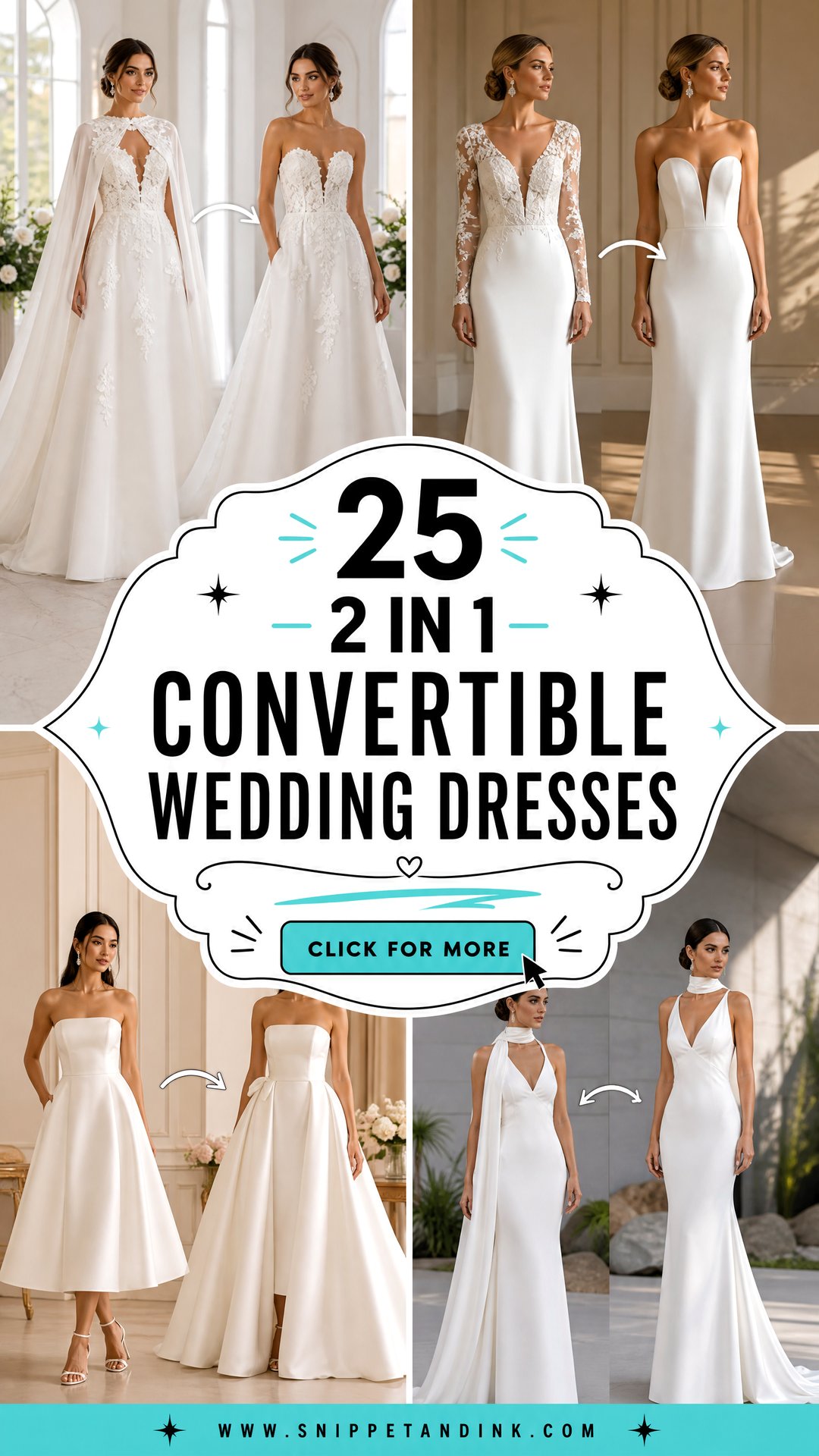
How the Switch Actually Happens on the Day
Every bride I dress in a convertible gown imagines the change taking a few seconds. In reality it depends entirely on how the piece attaches, and it is worth knowing which system you are buying before you fall for a silhouette below.
- Hooks and eyes or bar hooks along a waistband are the most secure and the slowest. Expect several minutes and two hands that aren’t yours.
- Snaps or poppers are quicker, but on heavy satin they can pop open under strain, so I only like them for light layers such as capes and scarves.
- Buttons through hidden loops look neat and hold well, but small ones are fiddly in a dim room.
- Zips on overskirts are fast and firm. Make sure there’s a placket so the teeth don’t show.
I tell brides to rehearse the change at their final fitting with the person who will actually do it, usually a bridesmaid or a parent, and time it. Then plan where it happens. A quiet room near the reception and ten minutes in the timeline, often during the guests’ drinks after photos, is plenty. Bring a small safety pin kit and a steamer in case the base dress has creased under its top layer.
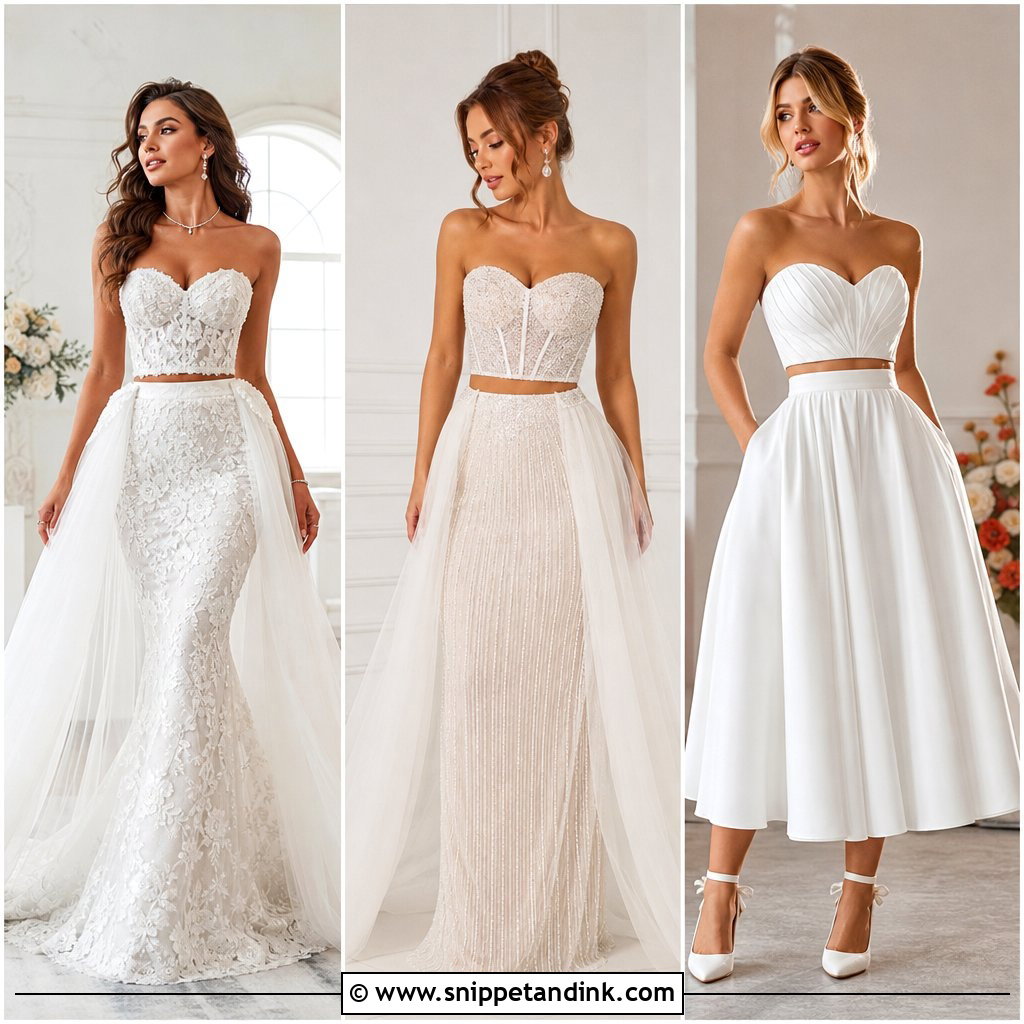
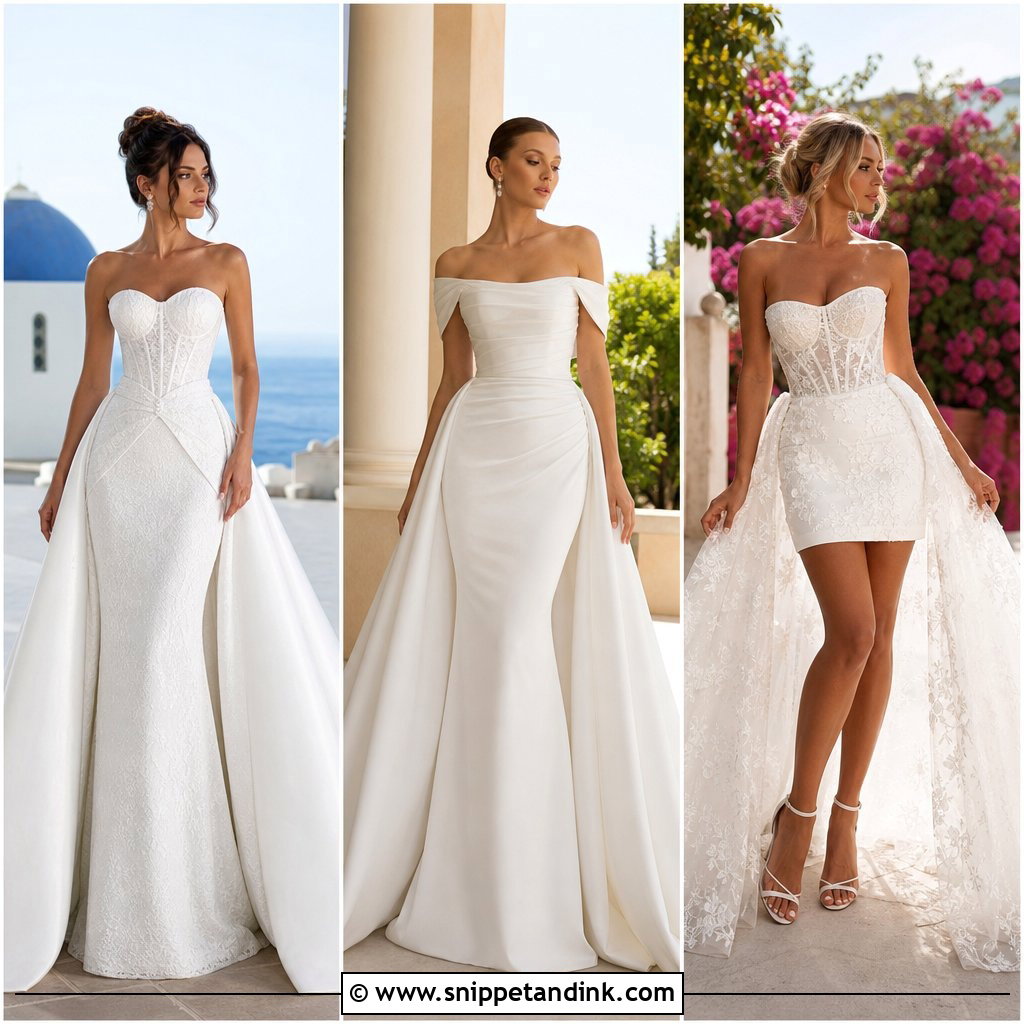
1. Mermaid Wedding Dress With Detachable Overskirt
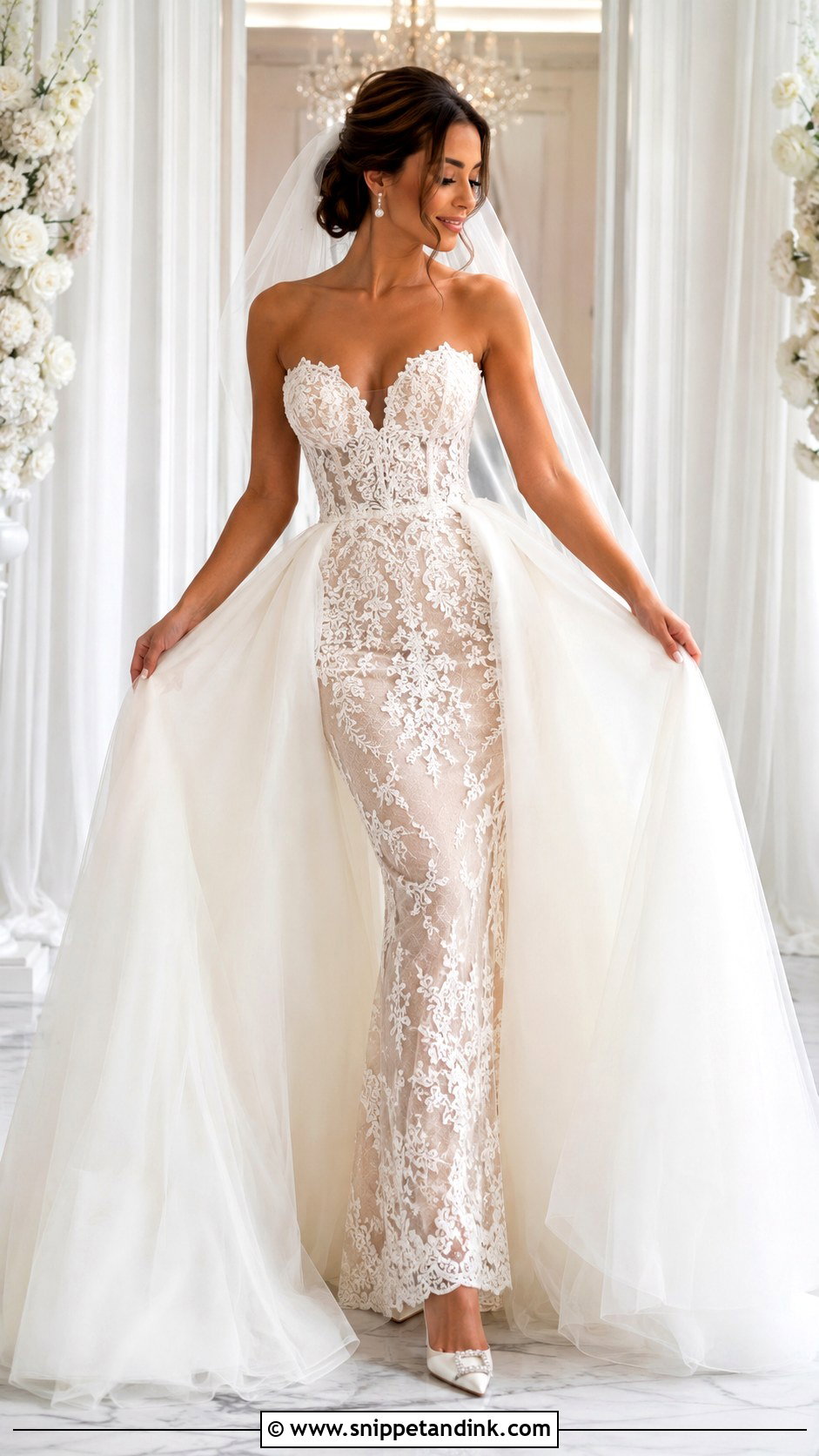
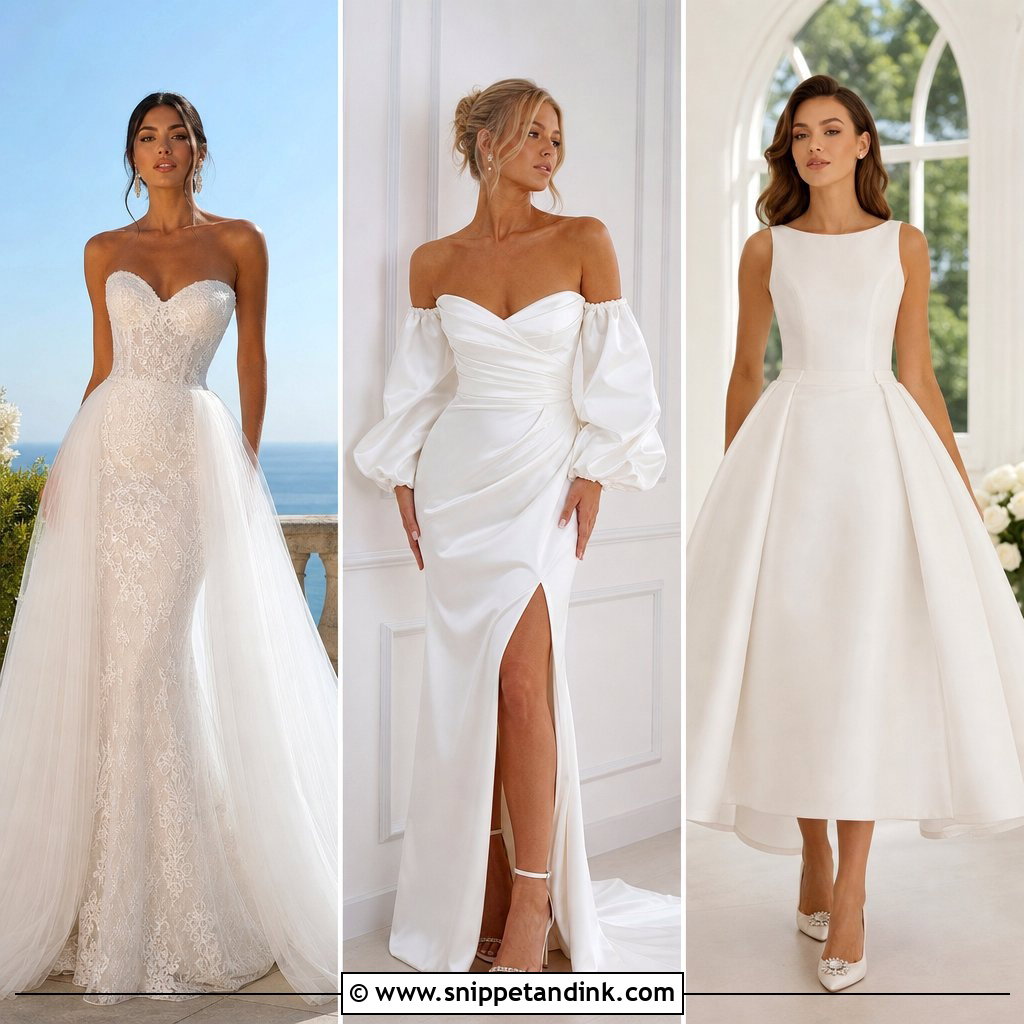
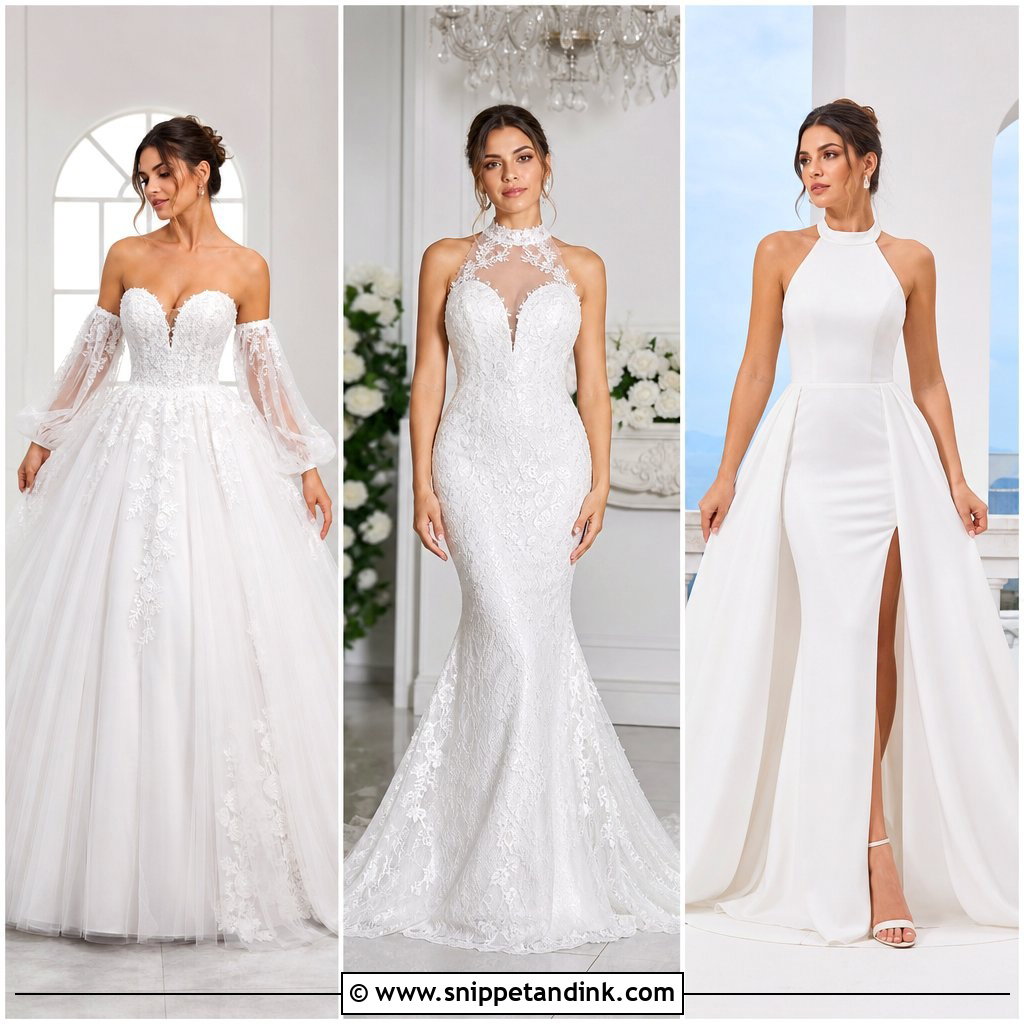
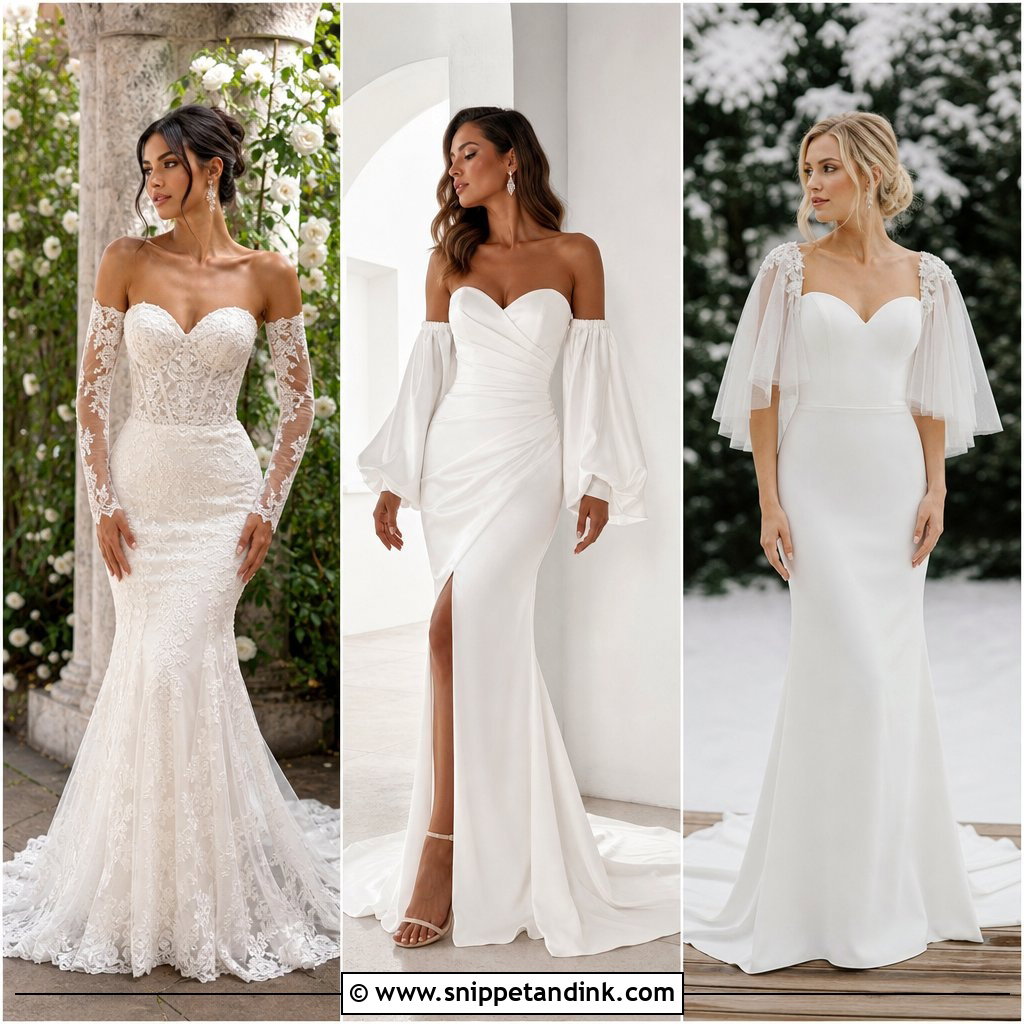
Overskirt over a mermaid wedding dress is the classic two-in-one, and I still think it’s the most dramatic switch you can make. The ceremony gets a full, sweeping shape; then the overskirt unhooks and you’re in a sculpted gown you can actually dance in. Mermaid hems restrict your stride, so I have brides walk and climb a step in the base dress alone before committing. Lace, crepe, mikado or satin all work. A high-waisted overskirt lengthens the legs. Veil and pearls for the vows, statement studs and strappy heels for the party.
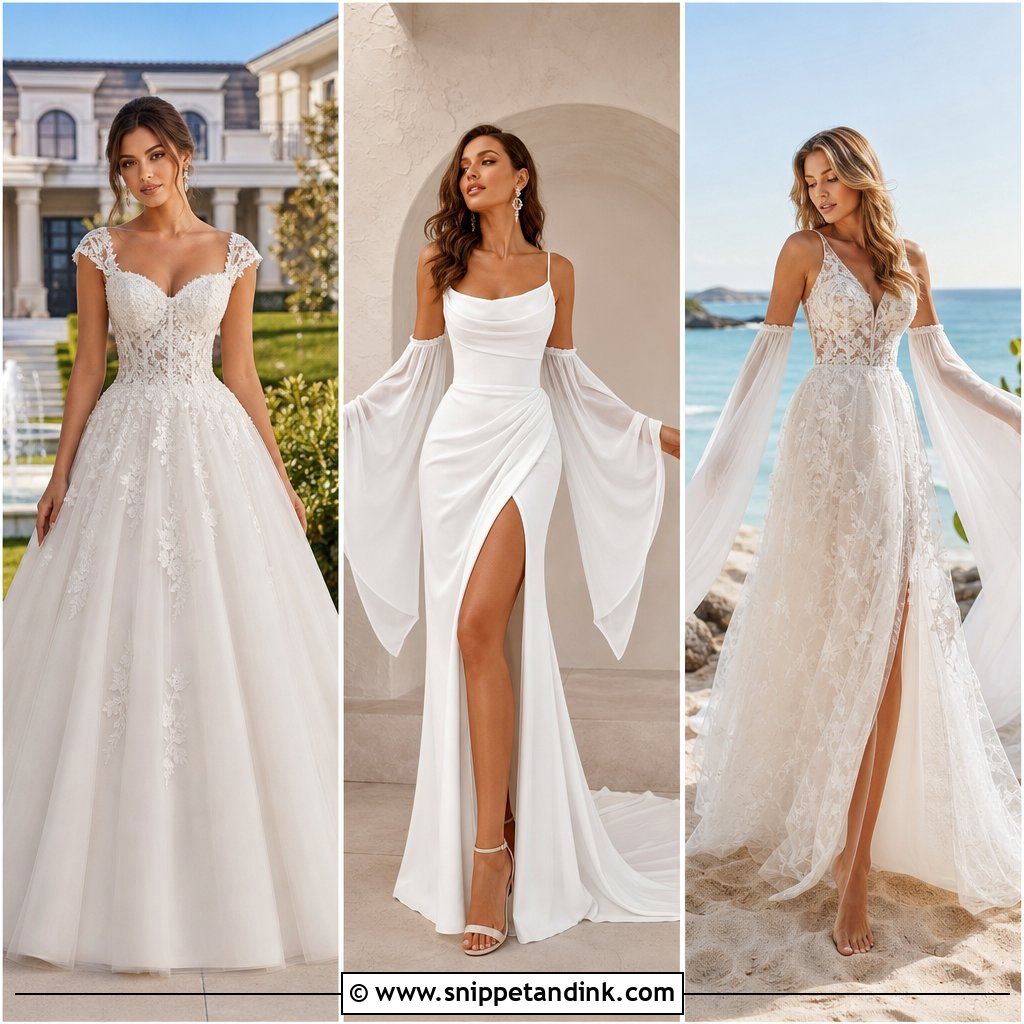
2. Ball Gown Wedding Dress With Detachable Sleeves
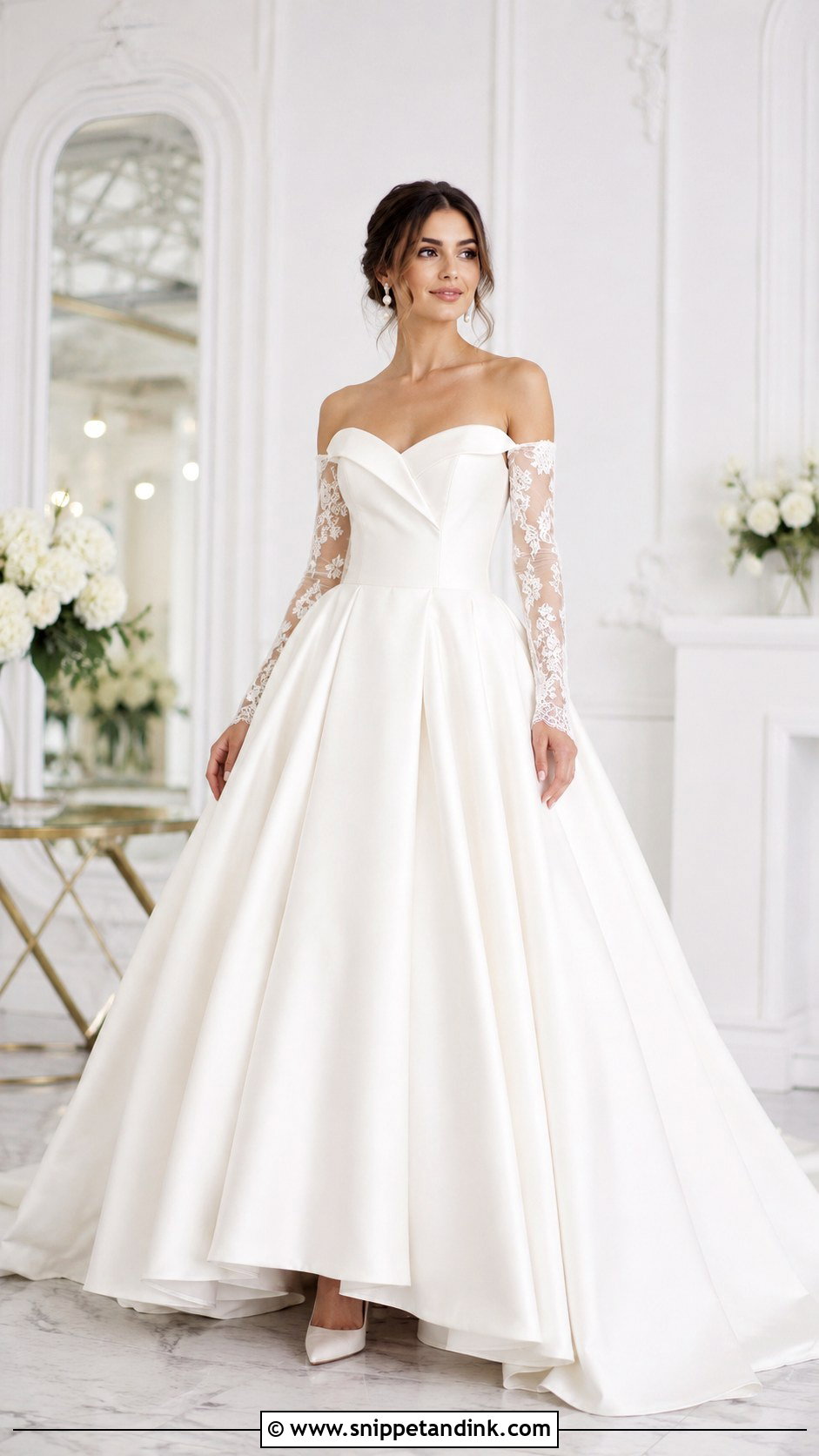
With sleeves on, a ball gown reads covered and formal for the church; take them off and a strapless or sleeveless bodice appears for the party. That’s the appeal. The problem I see most is a sleeve that pulls the bodice down when the arm lifts, because the sleeve was anchored to the neckline edge rather than to the bodice structure. Ask how they attach. Lace sleeves look traditional, satin or puff sleeves more fashion-led. A structured skirt keeps the gown looking finished after the change, and a simple bracelet suits bare arms.
3. Strapless Wedding Dress With Detachable Lace Topper
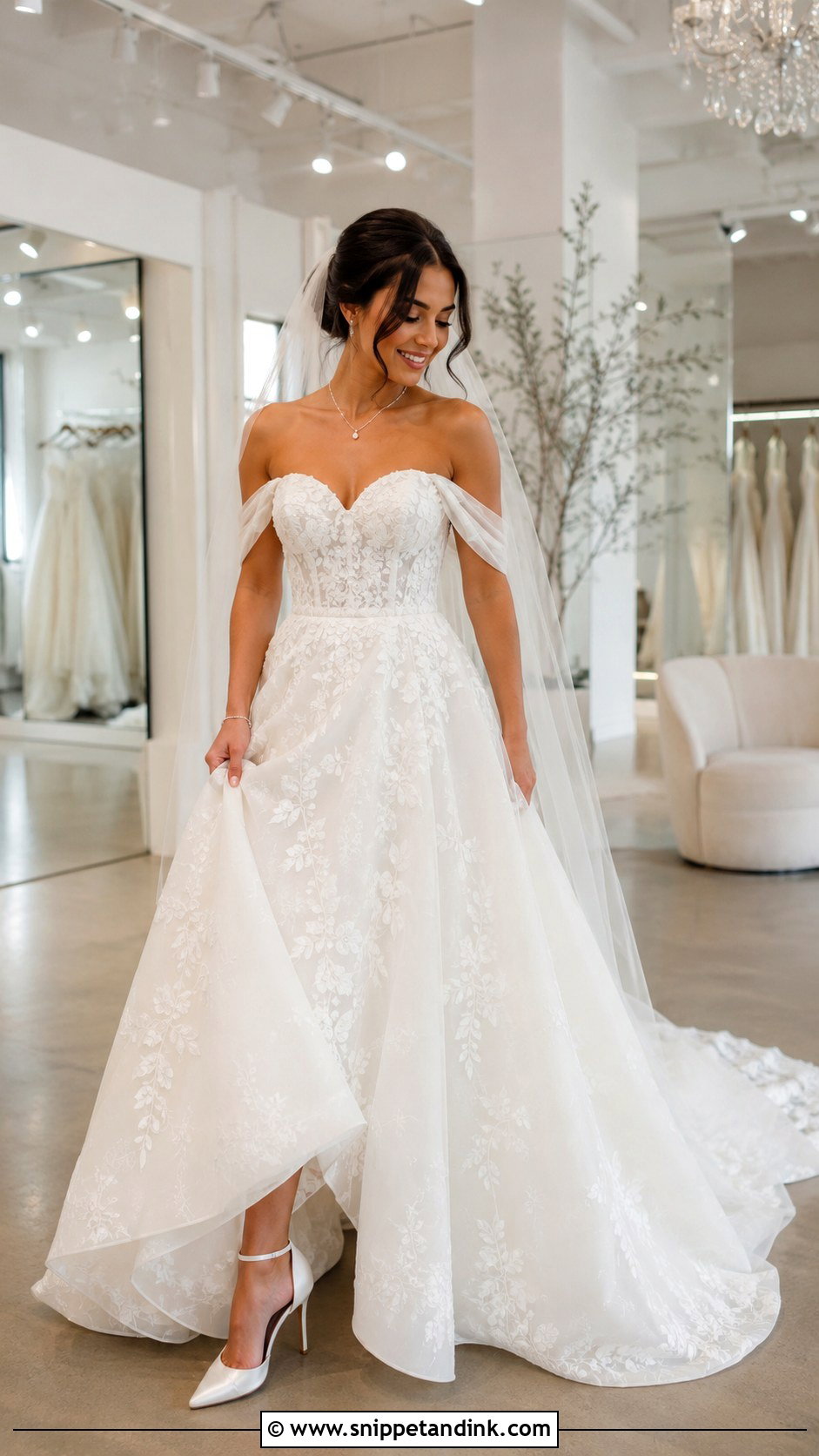
Want coverage for the vows and a cleaner neckline later? A lace topper over a strapless gown gives you either a long-sleeve lace look, a high neck or a soft bateau, and the base stays simple. I always ask for the topper to be fitted over the finished bodice, not separately, otherwise it bunches at the waist where the two layers meet. Match the lace to the gown fabric, or pick a gentle contrast. Off comes the topper, and the strapless dress beneath feels new for the reception.
4. Satin Wedding Dress With Detachable Train
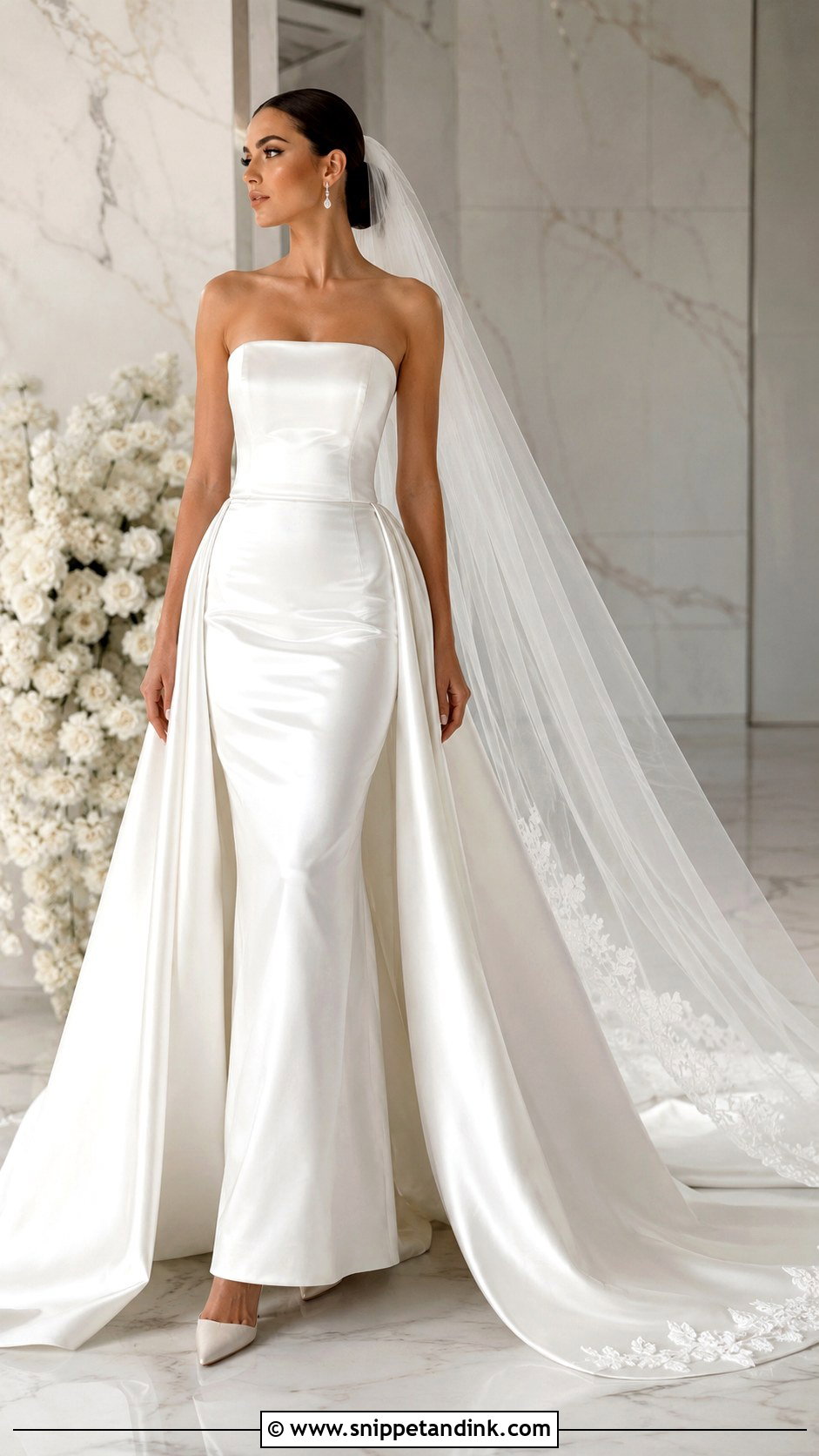
A long satin train looks grand coming down the aisle and is a nuisance at the bar. Make it detachable and you get the portrait moment without carrying it all night. Sheaths, columns, trumpets and fit-and-flares all take one well. Hidden attachment points matter most. I prefer covered hooks or poppers along a waist or back seam, because snaps on the surface catch the light in photos. Cathedral veil for the ceremony; afterwards, drop veil and train, add sleek earrings and a compact clutch.
5. Mini Wedding Dress With Detachable Ball Skirt
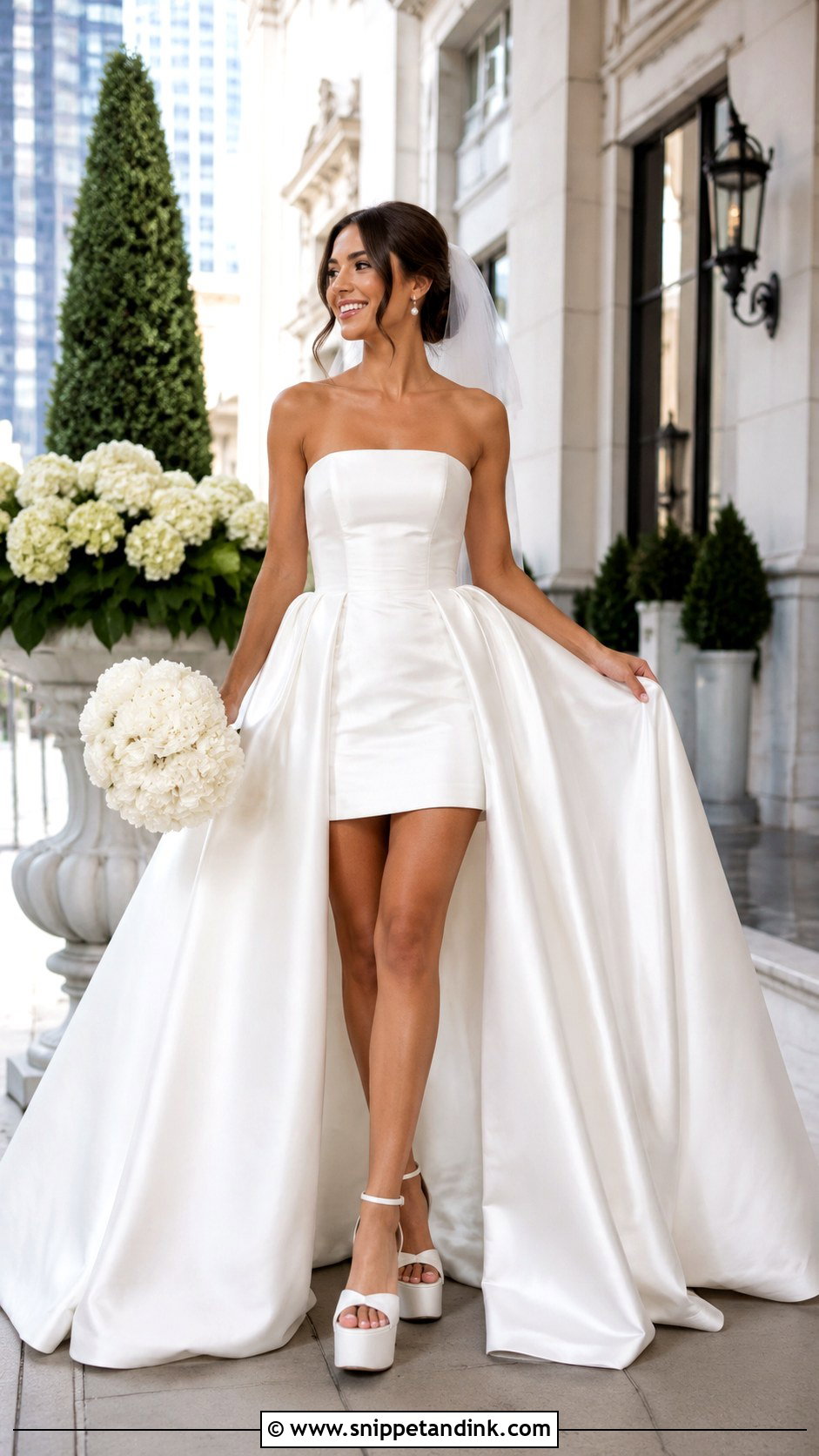
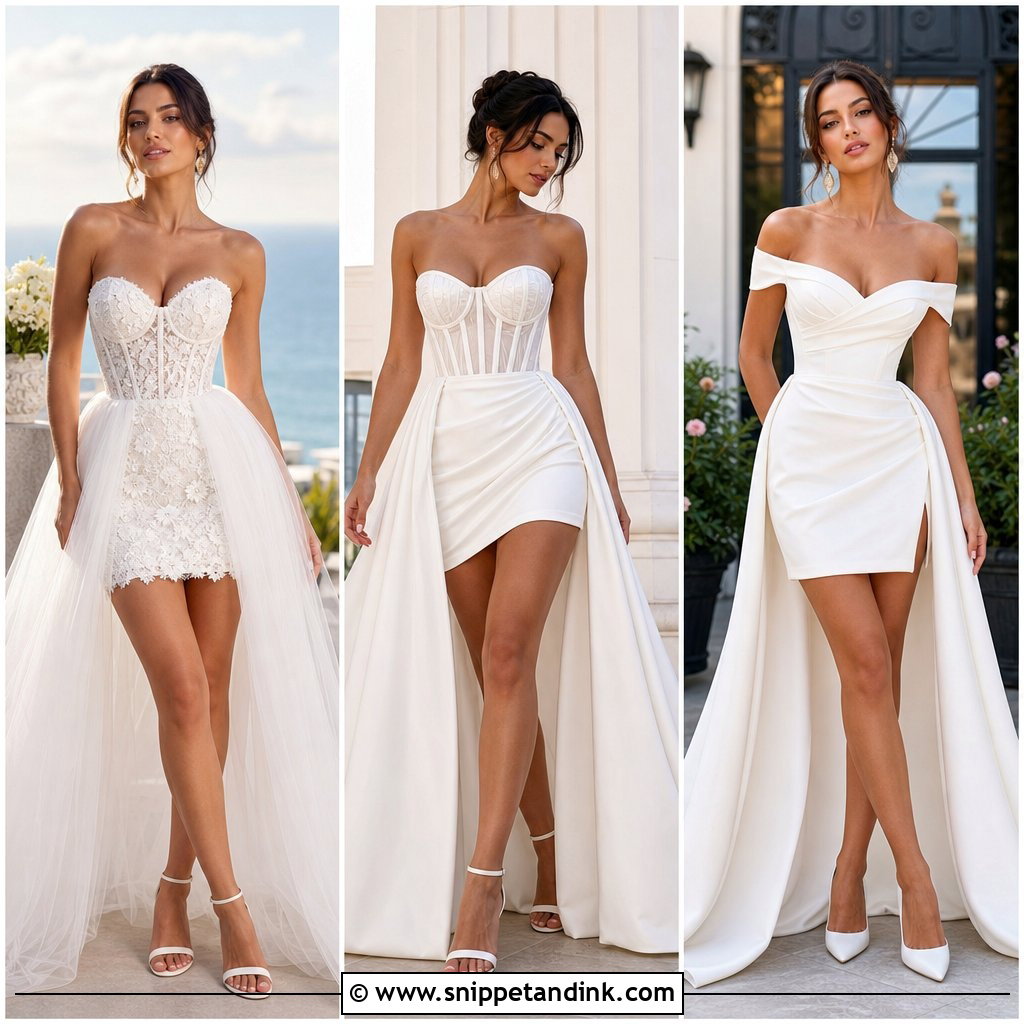
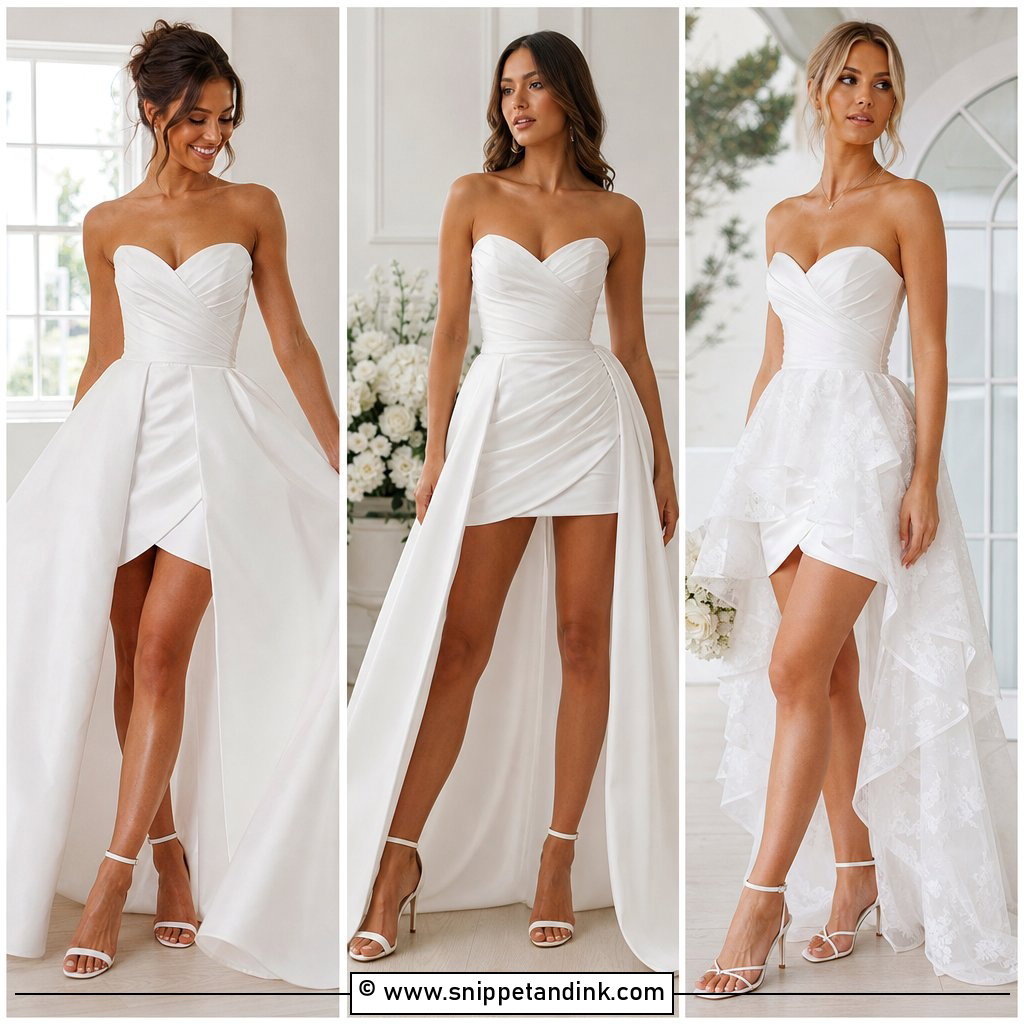
This is the biggest reveal on the list: a full ball skirt that comes off to show a mini dress. It suits a city wedding or a reception that turns into a party. The mini has to stand on its own, so I look for a structured bodice and a hem that’s properly finished, not just the lining of a skirt. Satin, tulle and organza overskirts add volume without much weight. Sit down in the mini at your fitting; short hems ride up further than people expect. Pointed pumps or platform sandals finish it.
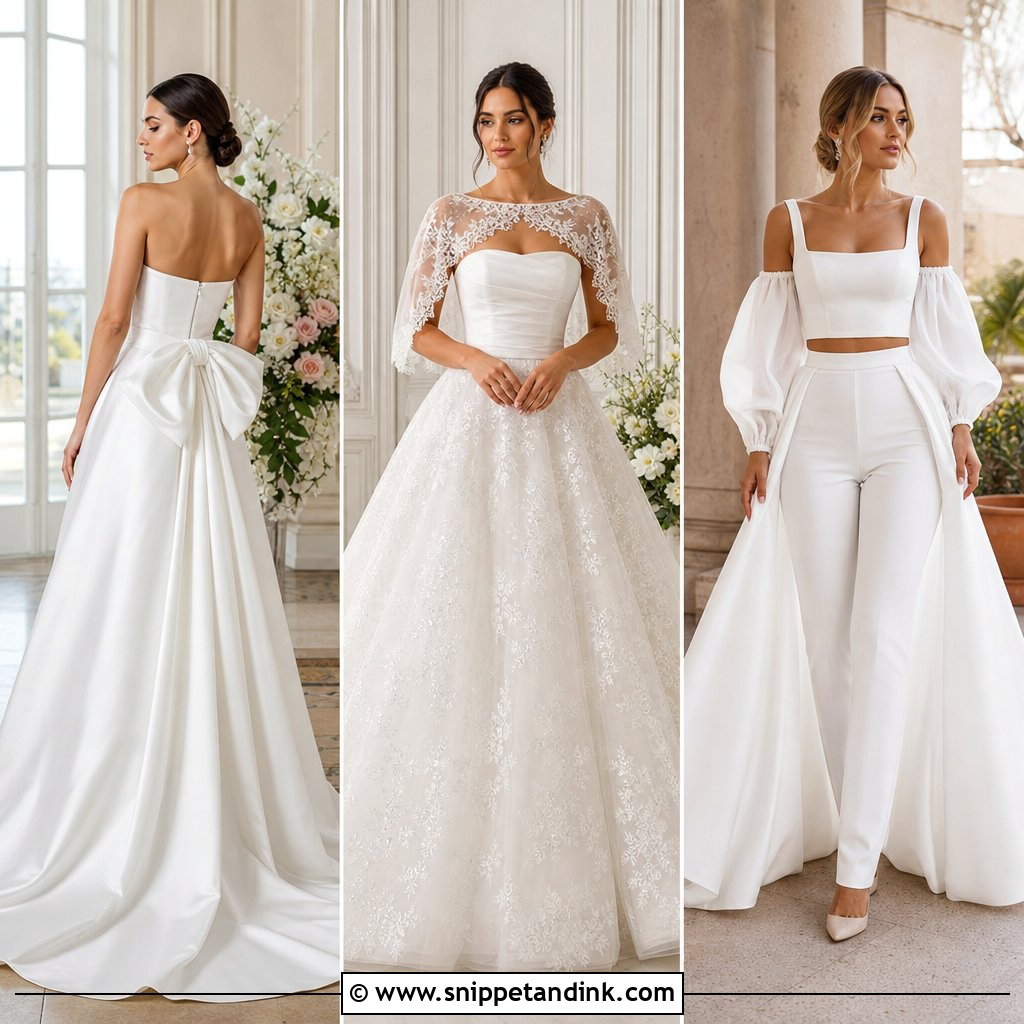
6. A Line Wedding Dress With Detachable Cape
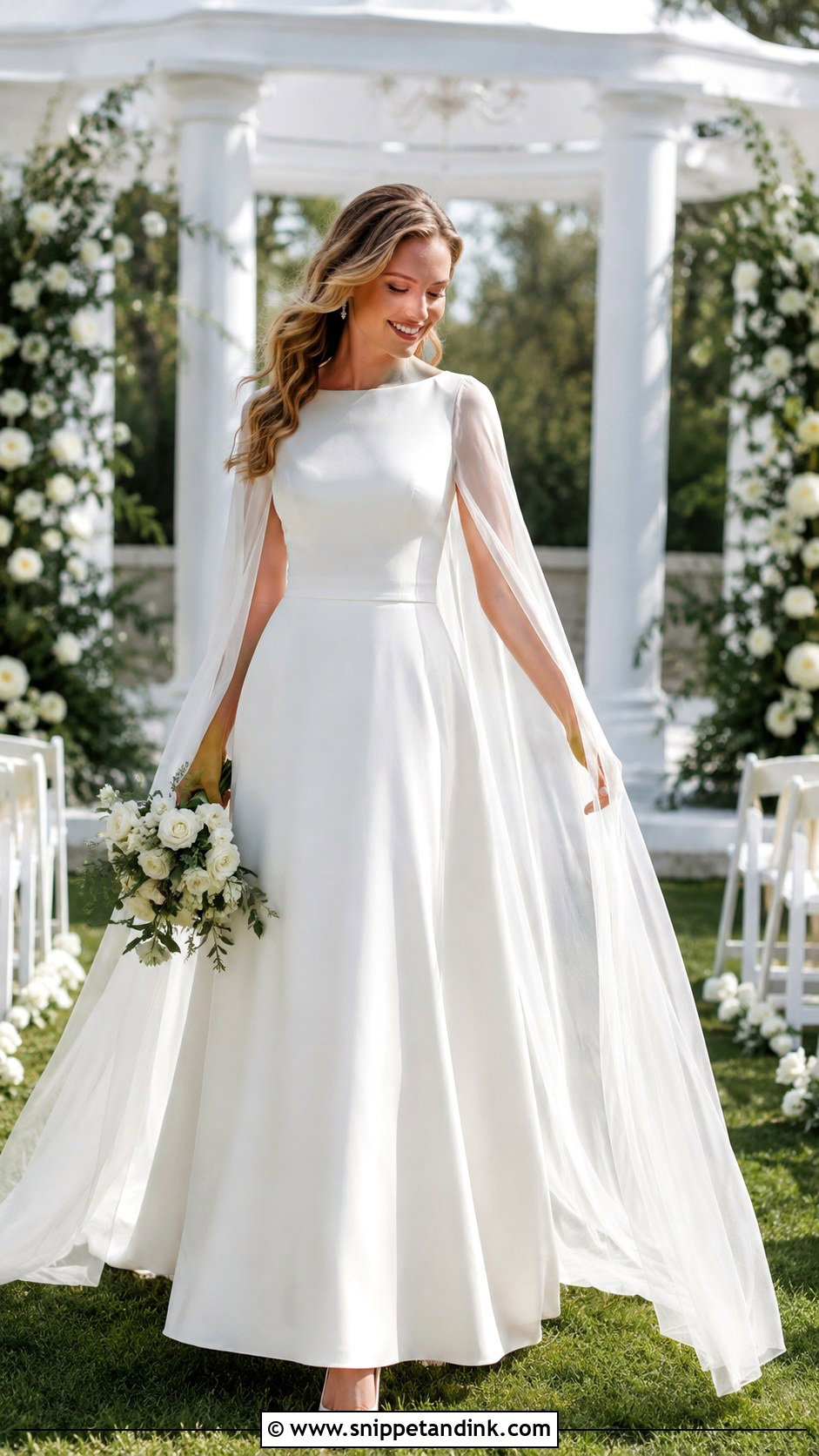
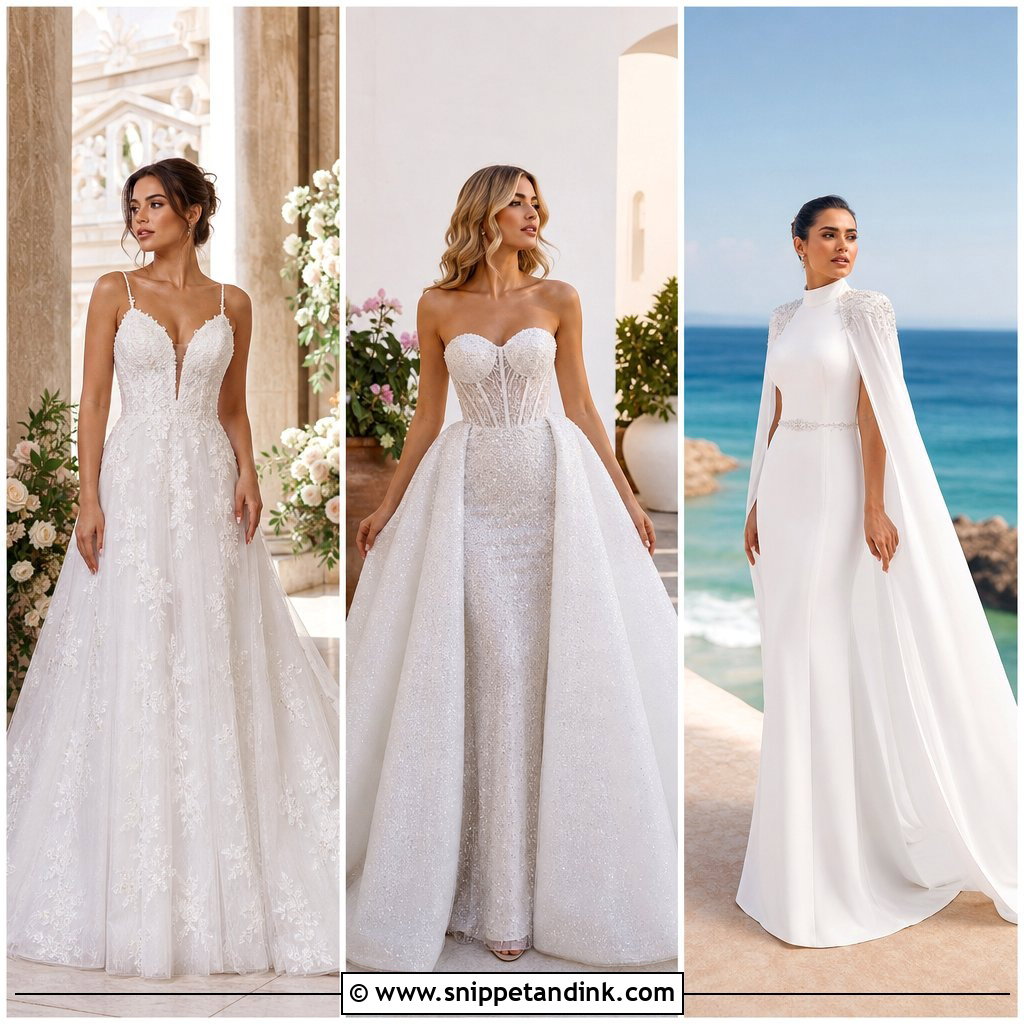
A cape gives an A-line gown movement and a little shoulder coverage without the weight of an overskirt. I suggest it most to brides who don’t like veils but still want something trailing in photos. Sheer tulle floats; satin looks regal and holds its shape. Check how it fastens at the shoulder: a cape clipped only at the neckline drags backward on the throat, while one anchored to the bodice seams sits comfortably all day. Keep jewellery small and let the cape lead.
7. Lace Wedding Dress With Detachable Tulle Skirt
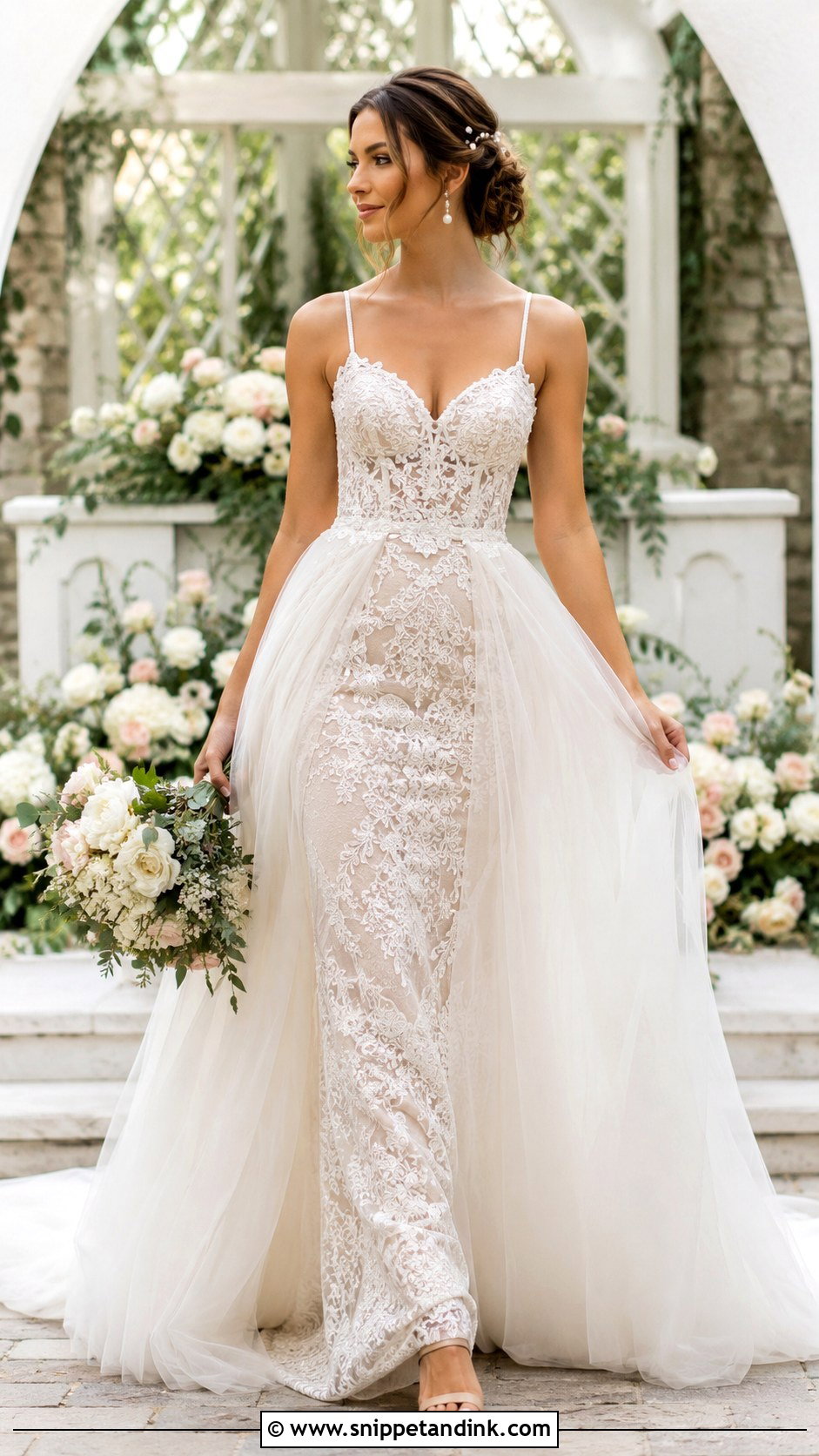
Textured lace with airy tulle over it has real depth without looking busy. For the aisle you get a full romantic skirt; for the reception, a fitted lace gown. The tulle skirt should sit smoothly at the natural waist, and I check the join from the side, where a gap often shows if the base dress is very fitted. Choose enough volume that the tulle looks designed, not like an extra layer. Garden and estate weddings suit it. Nude heels and pearl details finish it.
8. Corset Wedding Dress With Detachable Overskirt
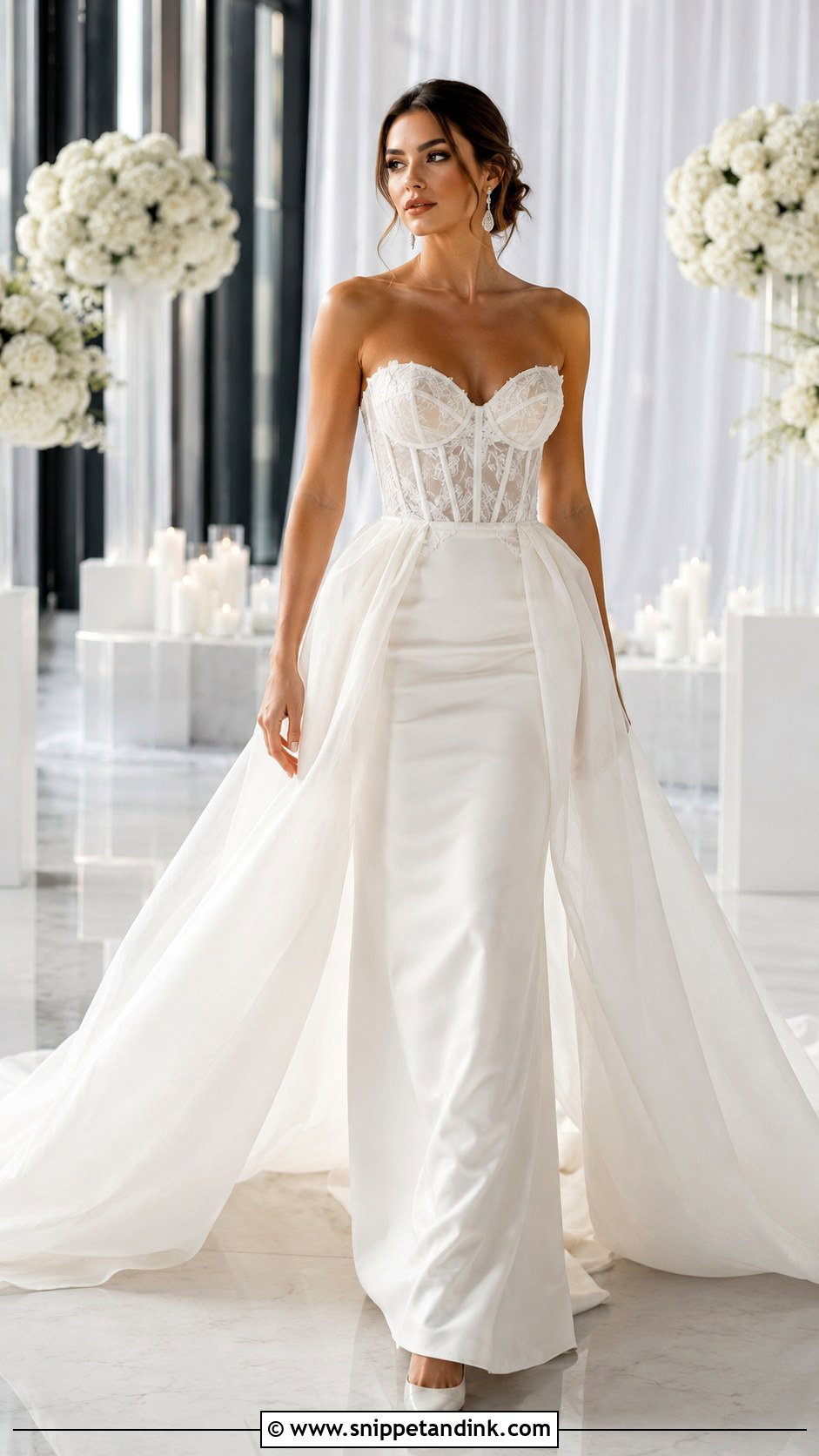
A corset bodice with a detachable overskirt has a strong, structured shape. The corset defines the waist, the overskirt adds ceremony volume, and underneath can be a column, a fitted gown or even a short dress. Boning must lie flat under the removable layer; if the overskirt waistband sits on top of a bone, it will press into you after a few hours. Soft fabrics balance visible structure: tulle, organza, smooth satin. Drop earrings for the ceremony, a choker or bracelet for the party.
9. Sheath Wedding Dress With Detachable Long Sleeves
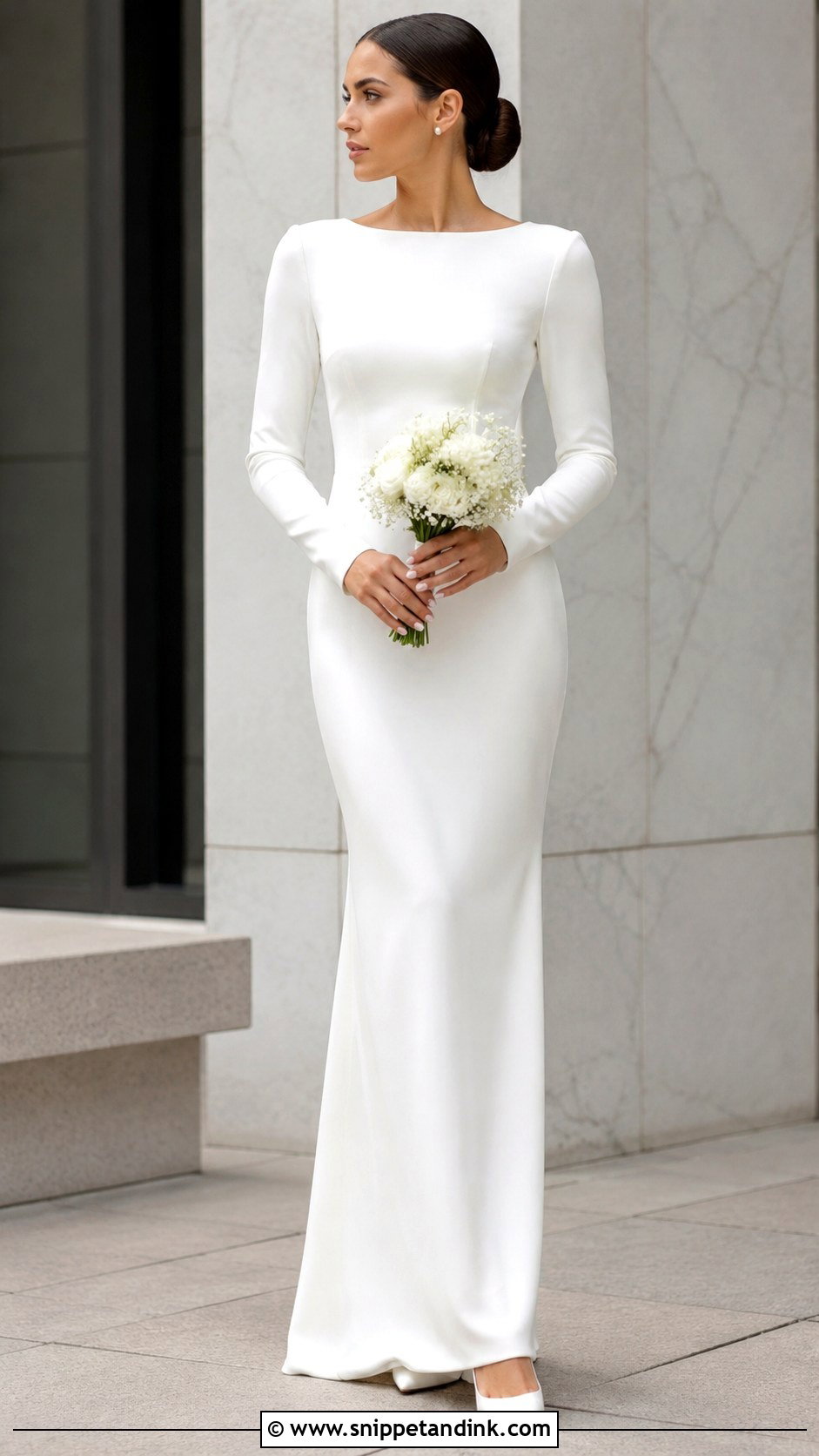
Detachable long sleeves suit a minimalist sheath without diluting it. With them on, the ceremony look is polished, especially with a high, square or off-the-shoulder neckline; without them, the sheath relaxes for the evening. Crepe or satin keeps the line smooth. The attachment should be secure and invisible, and I test it by having the bride reach forward as if signing the register. Modern venues, courthouses, rooftops and restaurants all suit it. Sleek heels and a low bun.
10. Off Shoulder Wedding Dress With Detachable Straps
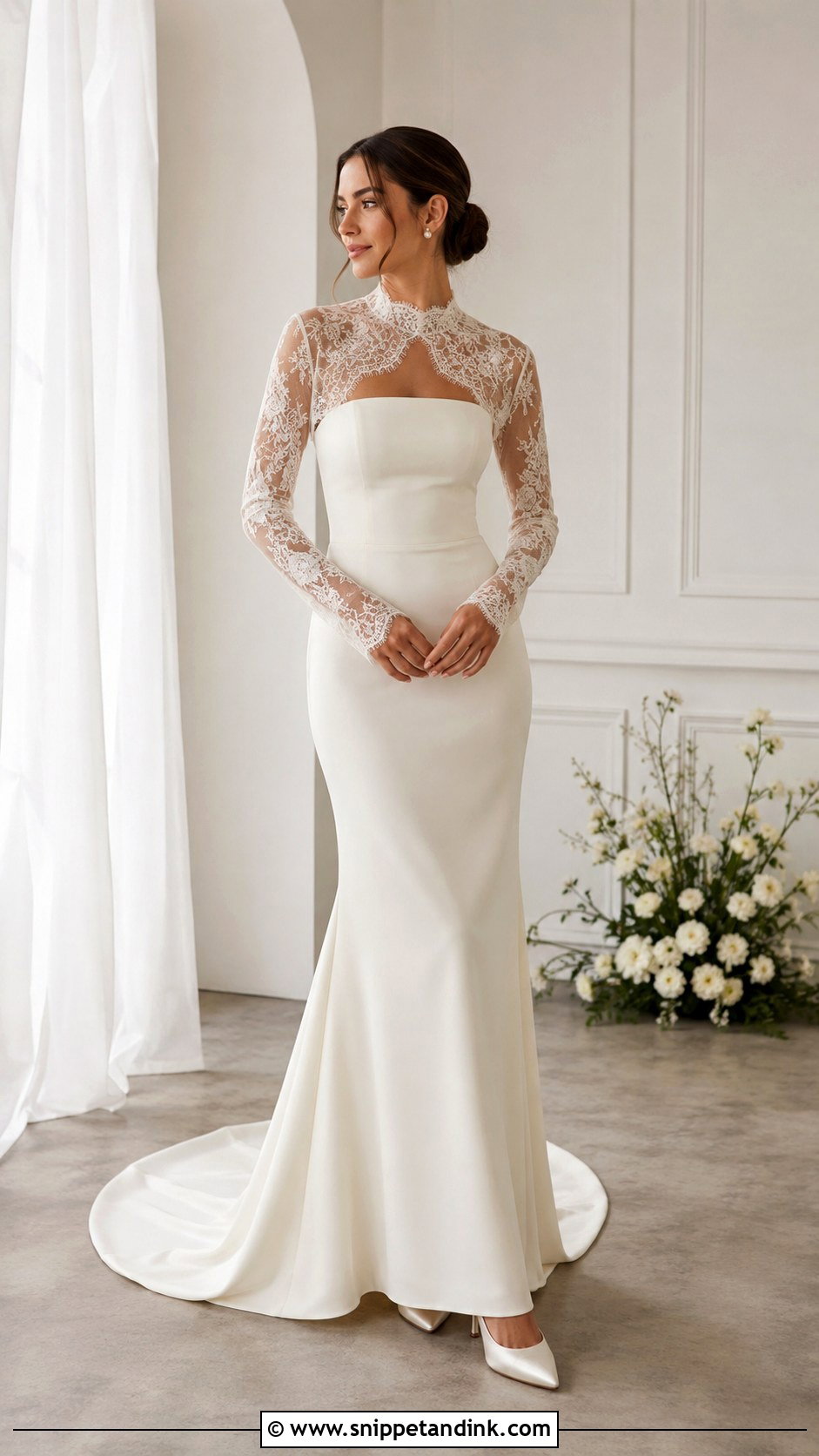
Straps on gives soft romance across the collarbone for the vows. Straps off gives a strapless reception look. It works on ball gowns, A-lines and fit-and-flares. Make the straps from the gown’s own satin, lace or draped tulle so they look designed. Here’s my firm rule: the bodice must hold up perfectly without the straps before you rely on them, so I have brides try the dress strapless first. A fine necklace can go on once they come off.
11. Column Wedding Dress With Detachable Watteau Train
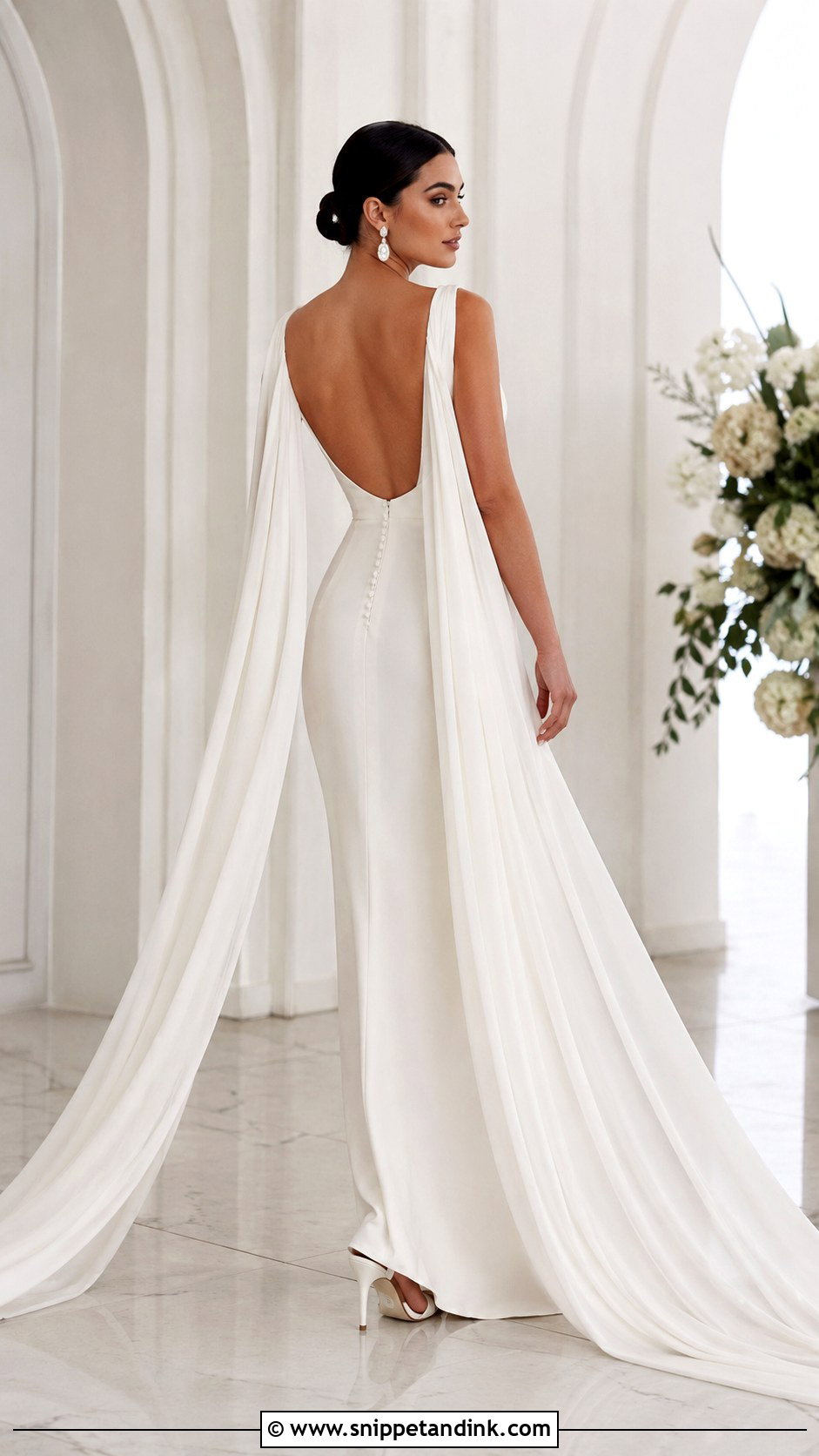
A Watteau train attaches near the shoulders or upper back and falls in one long line behind you, leaving the front of a column gown clean. That makes it the train I suggest to brides who want length without any volume at the waist. Because it hangs from the shoulders, a heavy fabric drags the neckline back; soft crepe, chiffon or light satin move better. Remove it after the ceremony and the column feels light. Statement earrings work since the front stays bare.
12. Wedding Dress With Detachable Puff Sleeves
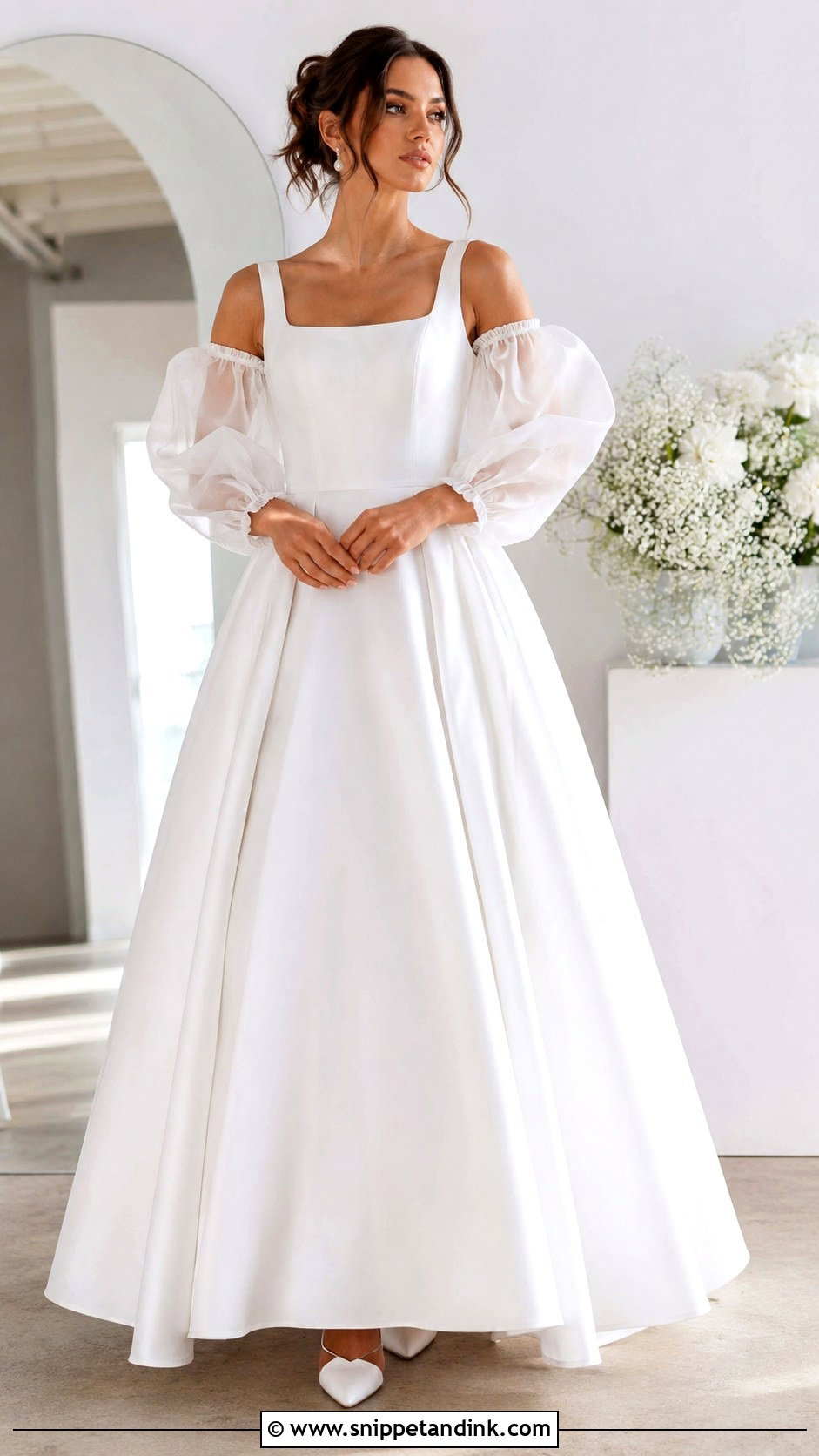
Puff sleeves add volume and a vintage touch for the ceremony, then come off to leave a cleaner dress for dancing. Square necklines, corset bodices and full skirts pair naturally with them. The volume has to be balanced; on a petite frame or very fitted gown I scale them down, because a big puff can make the shoulders read wider than the skirt. Sheer organza puffs feel light, satin ones bolder. Keep other accessories refined.
13. Wedding Dress With Detachable Bow Train
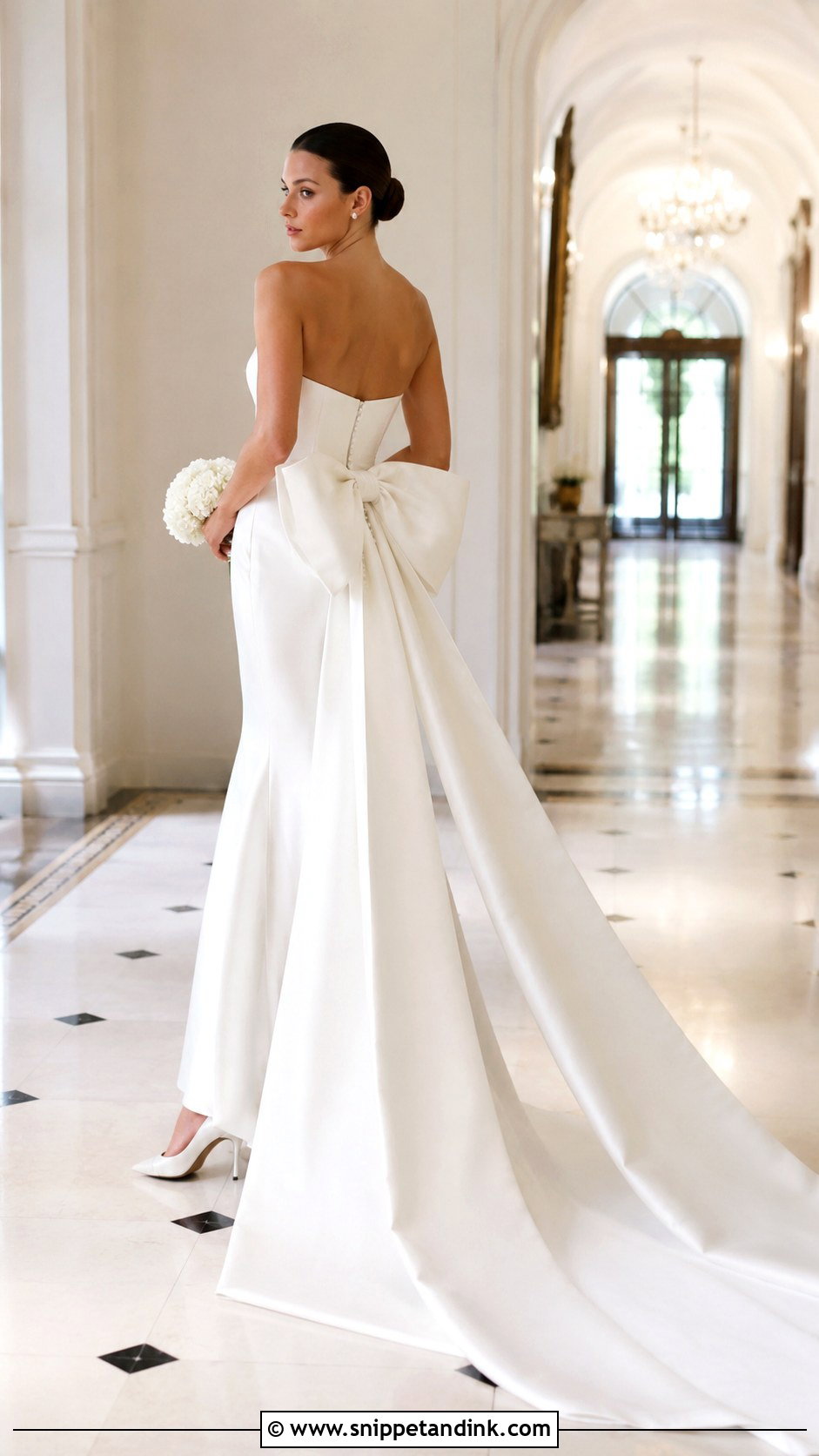
A big bow at the back with long tails that fall like a train makes a strong ceremony moment, then comes away to leave a cleaner gown. It needs a plain dress beneath, because the bow is the focal point. Satin, mikado and crepe hold a crisp bow; soft fabrics collapse. Bows are heavy, so I ask for a hidden internal hook rather than pins. Place it at the waist for definition or at the back neckline for something more fashion-led, with a sleek veil and minimal jewellery.
14. High Low Wedding Dress With Detachable Skirt
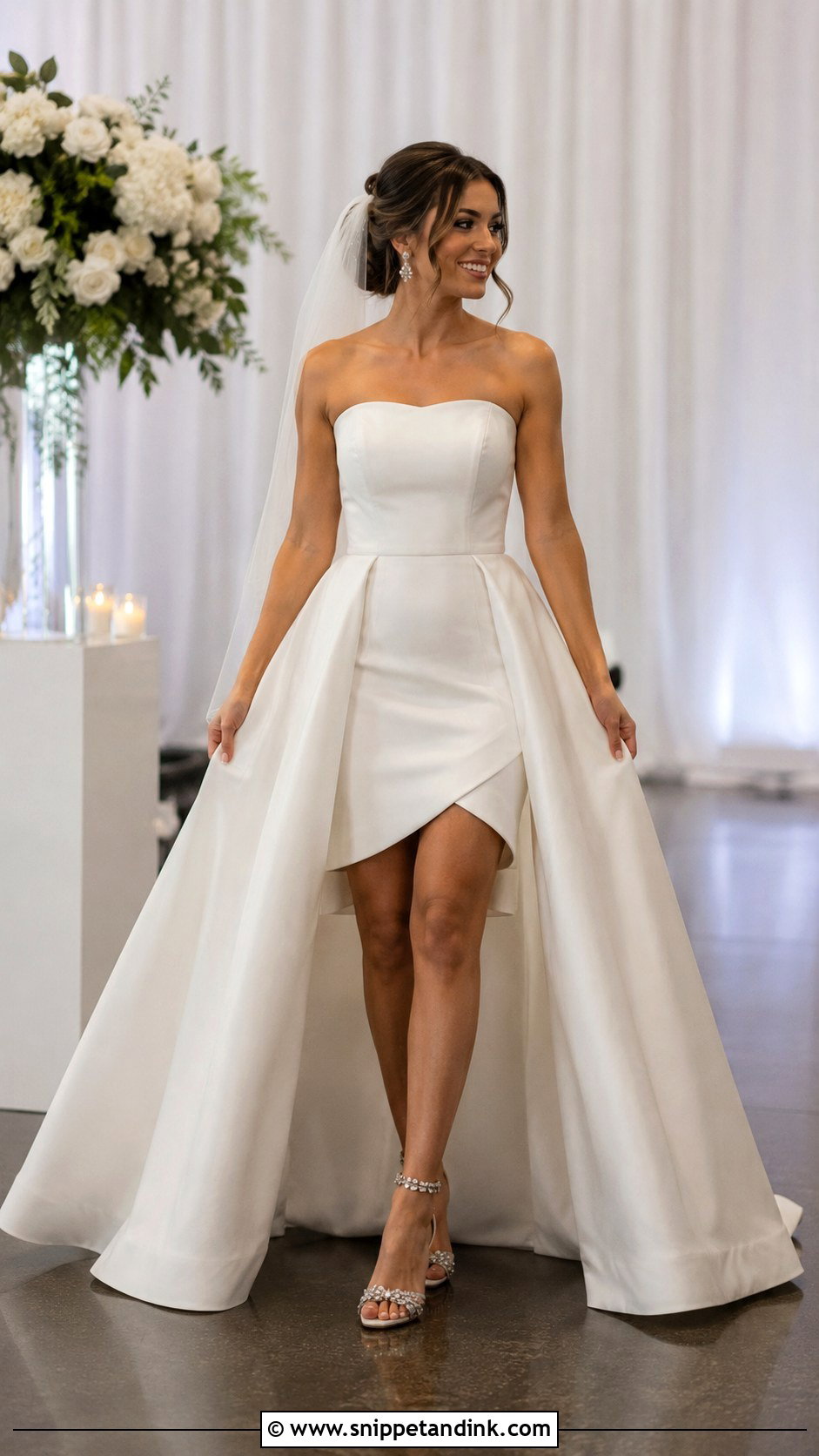
Here you get two silhouettes: a full detachable skirt for the ceremony and a high-low dress beneath that shows the shoes. It suits a bride who wants something playful without going fully mini, and outdoor venues, where the shorter front makes walking on grass easier. The skirt should blend at the waist. Since the shoes become part of the outfit, choose a pair worth showing and break them in, satin pumps or embellished sandals.

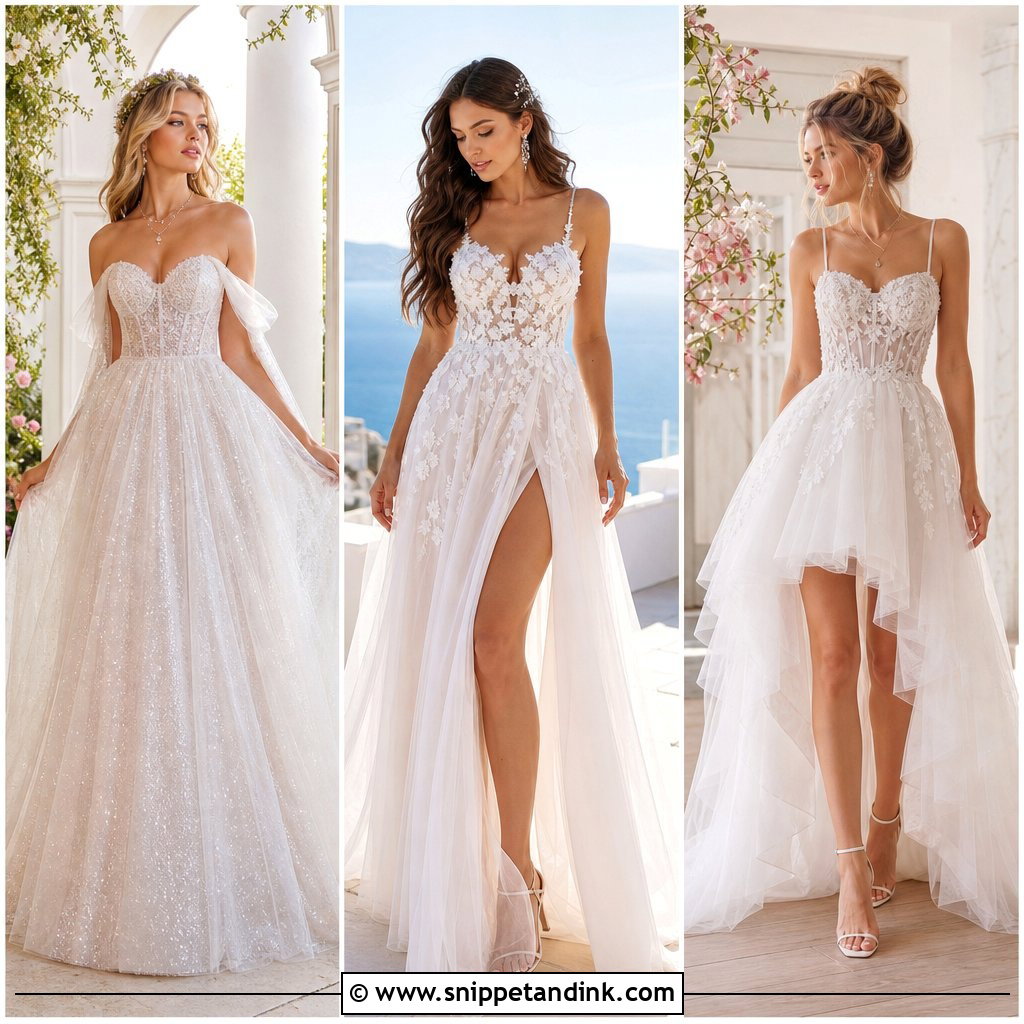

15. Tea Length Wedding Dress With Detachable Overskirt
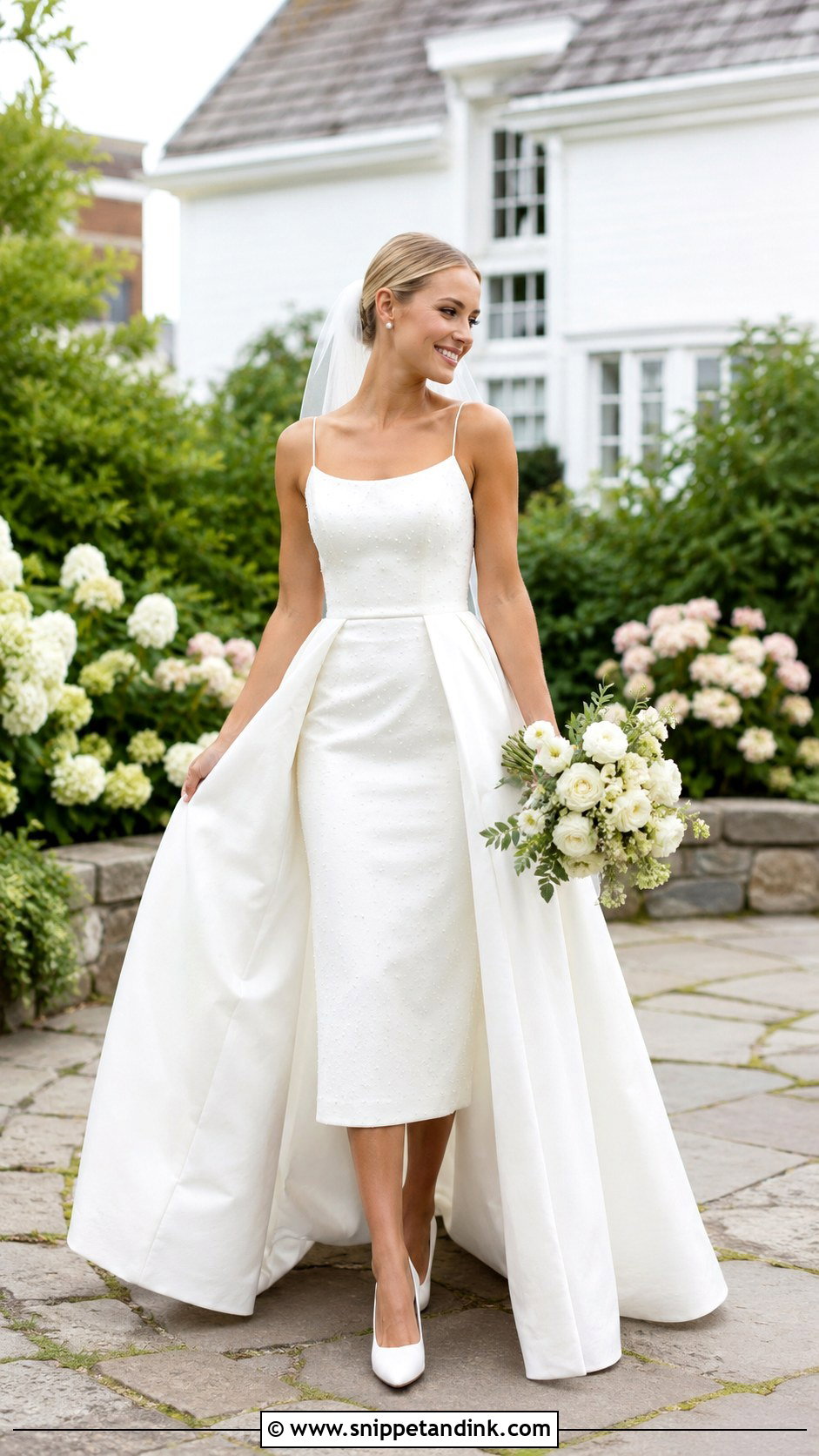
With the overskirt attached, a tea-length dress reads full-length and traditional for the ceremony; with it off, you have a hem that’s easy to dance in. A fitted bodice keeps it elegant and a flared skirt adds movement. Set the overskirt length with your ceremony shoes on, and the tea-length hem with your reception shoes, if they differ. Lace looks classic, satin crisper. Pearl studs and block heels. Vintage-inspired weddings and civil ceremonies suit it.
16. Boho Wedding Dress With Detachable Sleeves
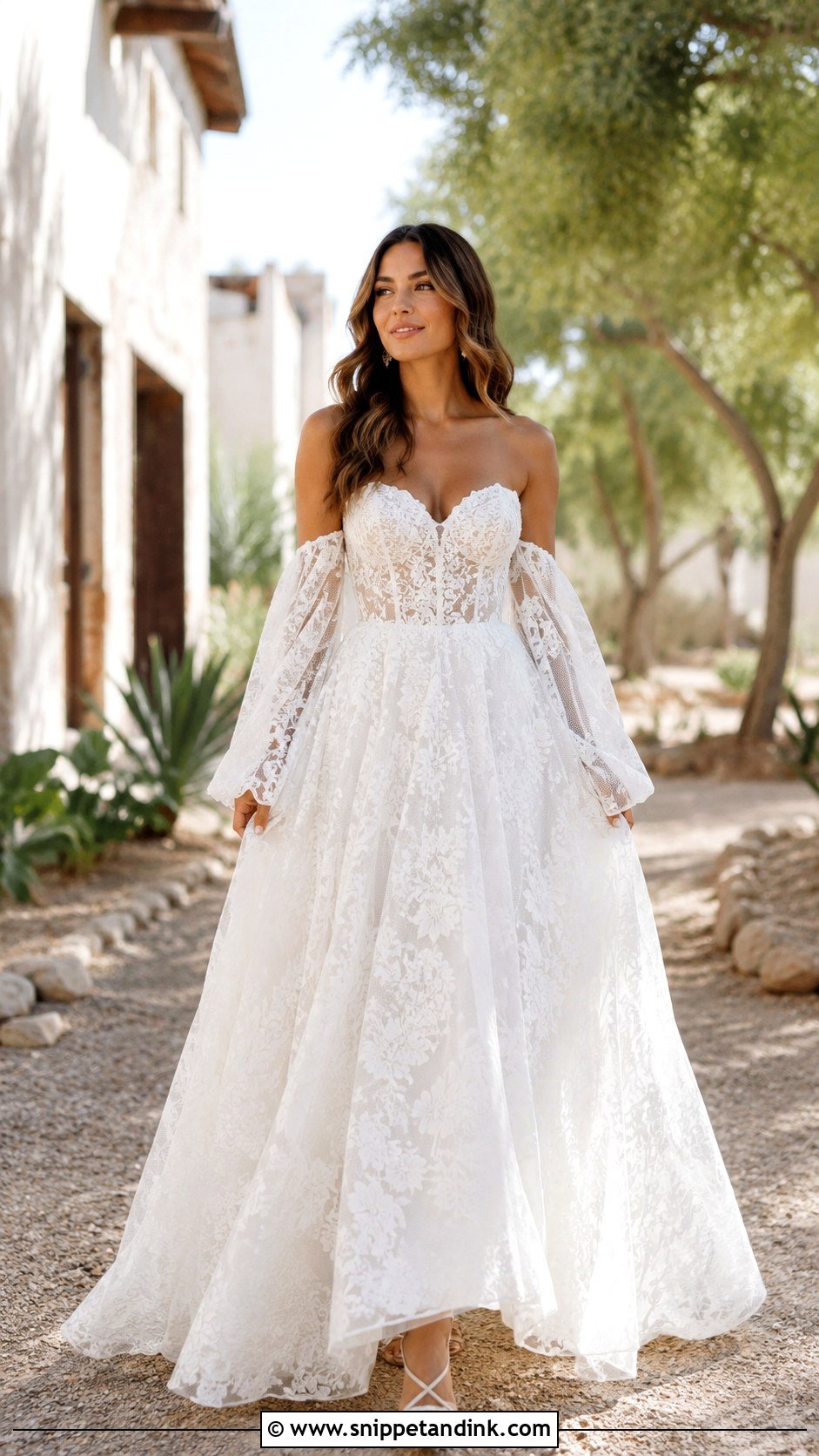
Fluttery, bell-shaped, sheer or lace, detachable boho sleeves give a soft ceremony look and come off when an outdoor reception gets warm. They pair with flowing A-line skirts, delicate lace, low backs and light fabrics. I avoid heavily beaded boho sleeves on light bodices, because by mid-afternoon the weight pulls the shoulder seam down. Look for clean attachment at the shoulder or upper arm. Loose waves, subtle earrings and sandals or low heels finish it.
17. Simple Wedding Dress With Detachable Bridal Jacket
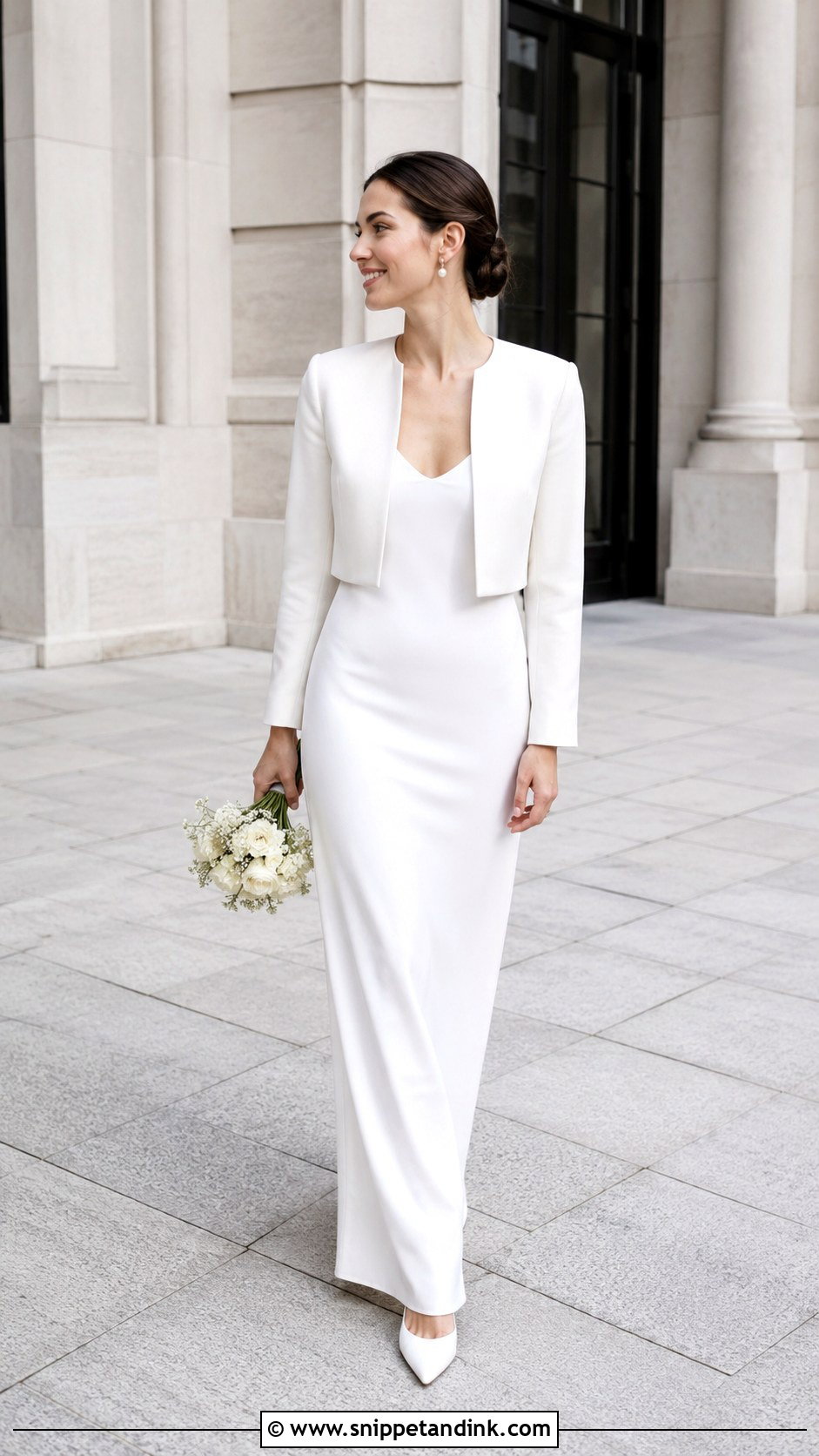
A bridal jacket adds structure and coverage for the ceremony and portraits, then comes off to leave a more open dress. It suits slip dresses, sheath gowns, strapless dresses and square-neck designs. A cropped jacket shows the waist; a longer one gives a coat-dress effect. Fit the jacket over the dress, because a jacket fitted alone will often pull across the back once a bodice sits under it. Satin, crepe, lace and organza all work. Closed-toe heels first, strappy sandals later.
18. Plus Size Wedding Dress With Detachable Overskirt
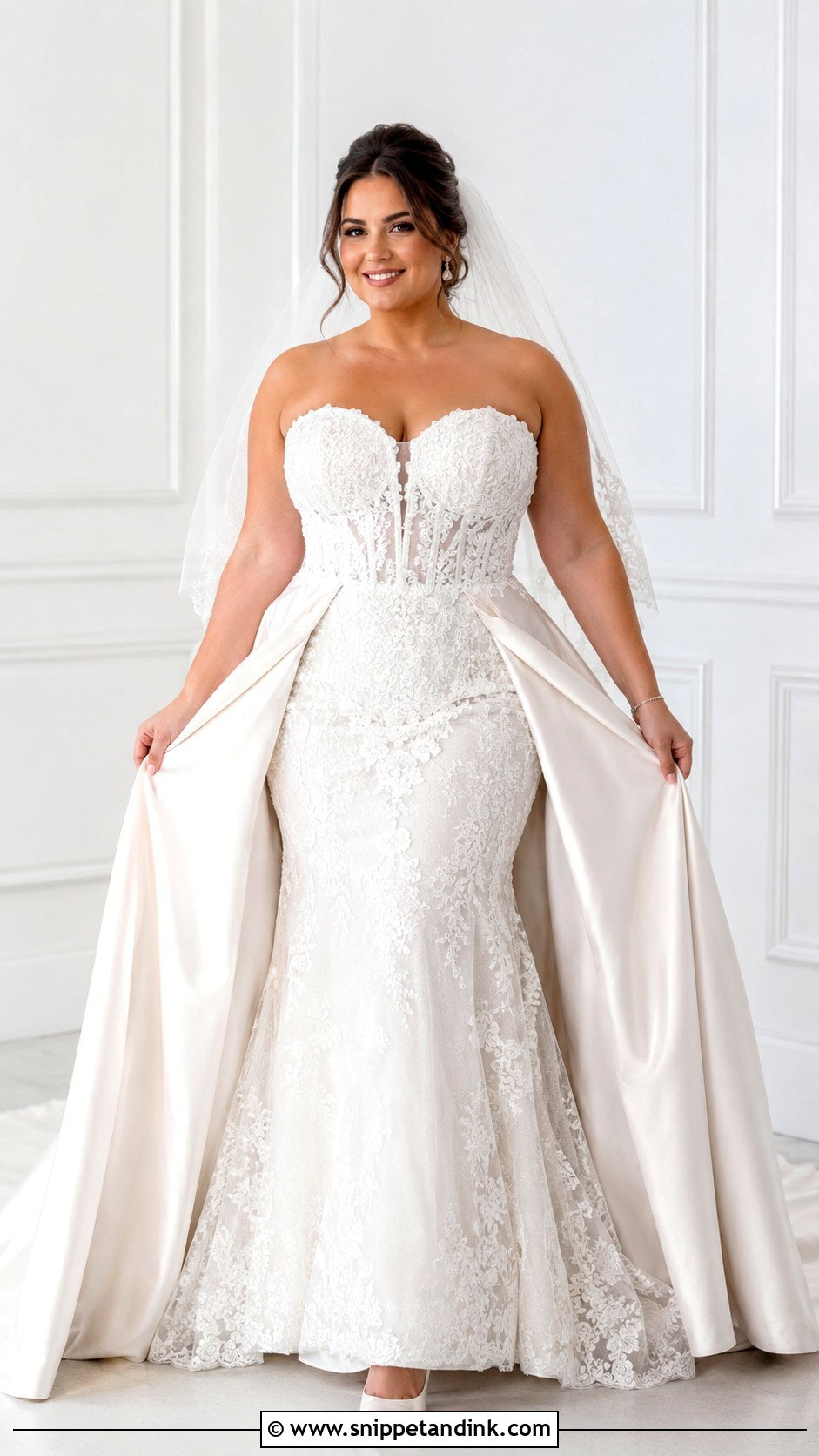
Proportion is the whole job with a plus-size convertible. The overskirt brings ceremony volume while the base gown supports and shapes. I look for strong bodice construction and an overskirt waistband that sits flat, since gathered fabric at the waist adds bulk at the hips unless that’s the look you want. A-line, fit-and-flare and corset bases all work well. The reception version needs its own detail so it doesn’t look like a slip. Supportive heels, a secure veil and jewellery that’s yours.
19. Petite Wedding Dress With Detachable Train
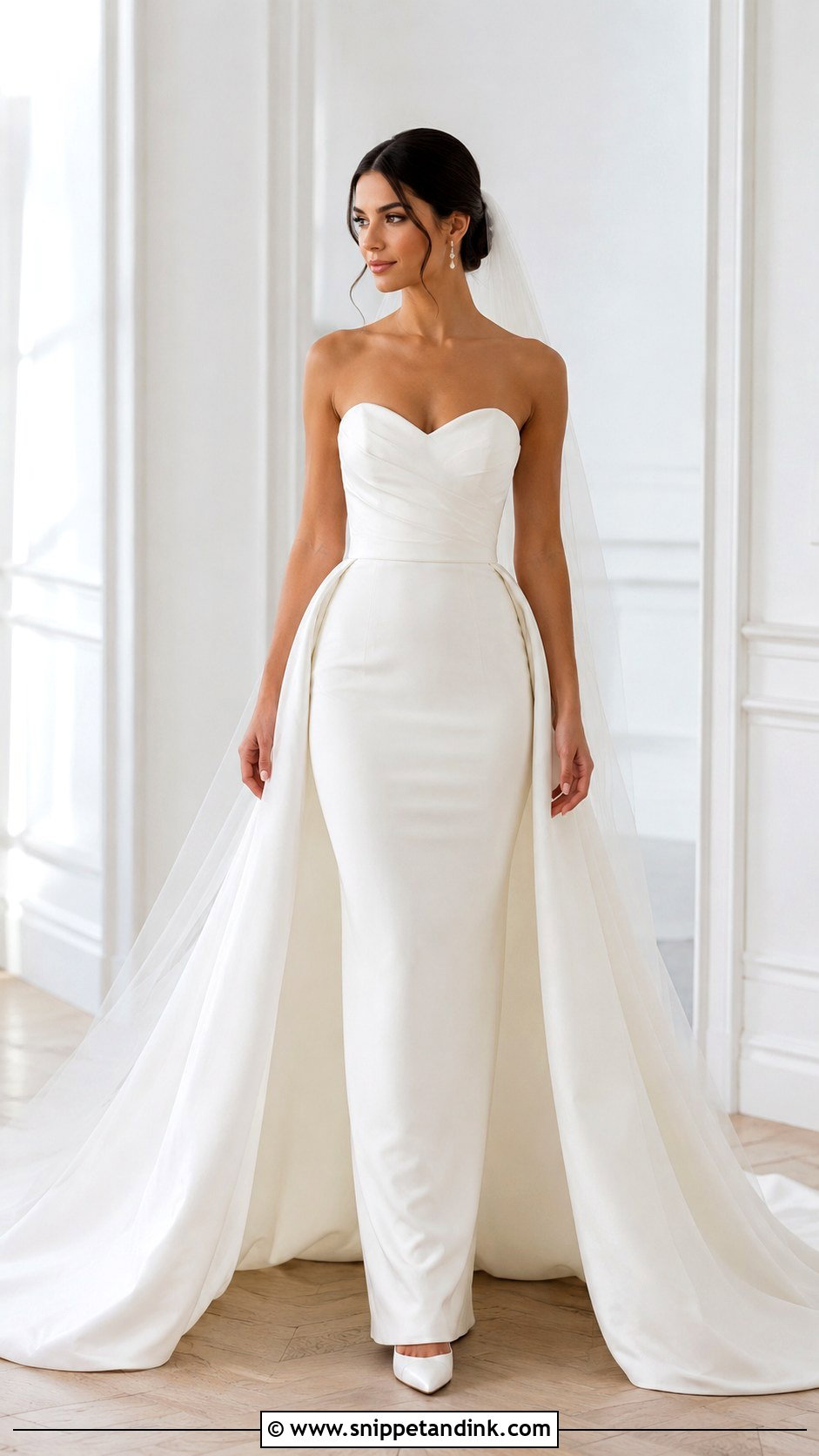
On a petite frame, a detachable train gives length for the ceremony without swamping you all night. A fitted sheath, slim A line, or trumpet keeps the body line clean. Start the train higher, at the waist or upper back, to lengthen the silhouette. Heavy layers shorten it, which I see often when a petite bride borrows a train proportioned for a taller sample. Once the train comes off, pointed heels or delicate sandals keep things refined.


20. Beach Wedding Dress With Detachable Cape
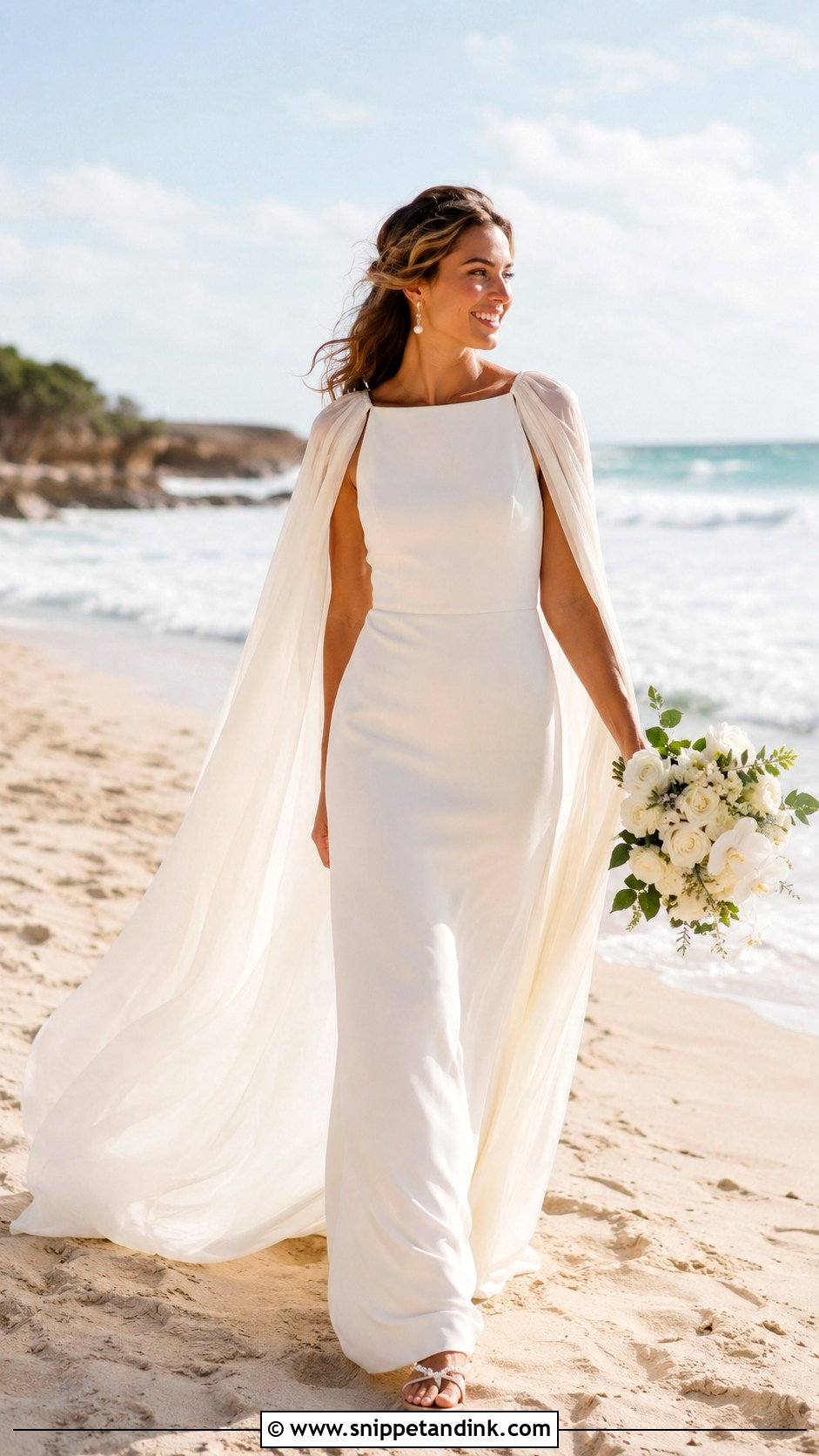
On sand, a cape beats a train every time. It catches the breeze in photos and gives an aisle moment without dragging fabric through the beach. Chiffon, tulle and soft crepe are light enough. Long capes do blow around, so I add small weights or a loop at the hem for wind. Choose a simple slip, sheath or A-line base and take the cape off for the reception. Flat sandals, pearl earrings and soft waves. Skip long trains if the ceremony is on the beach itself.
21. Civil Wedding Dress With Detachable Blazer
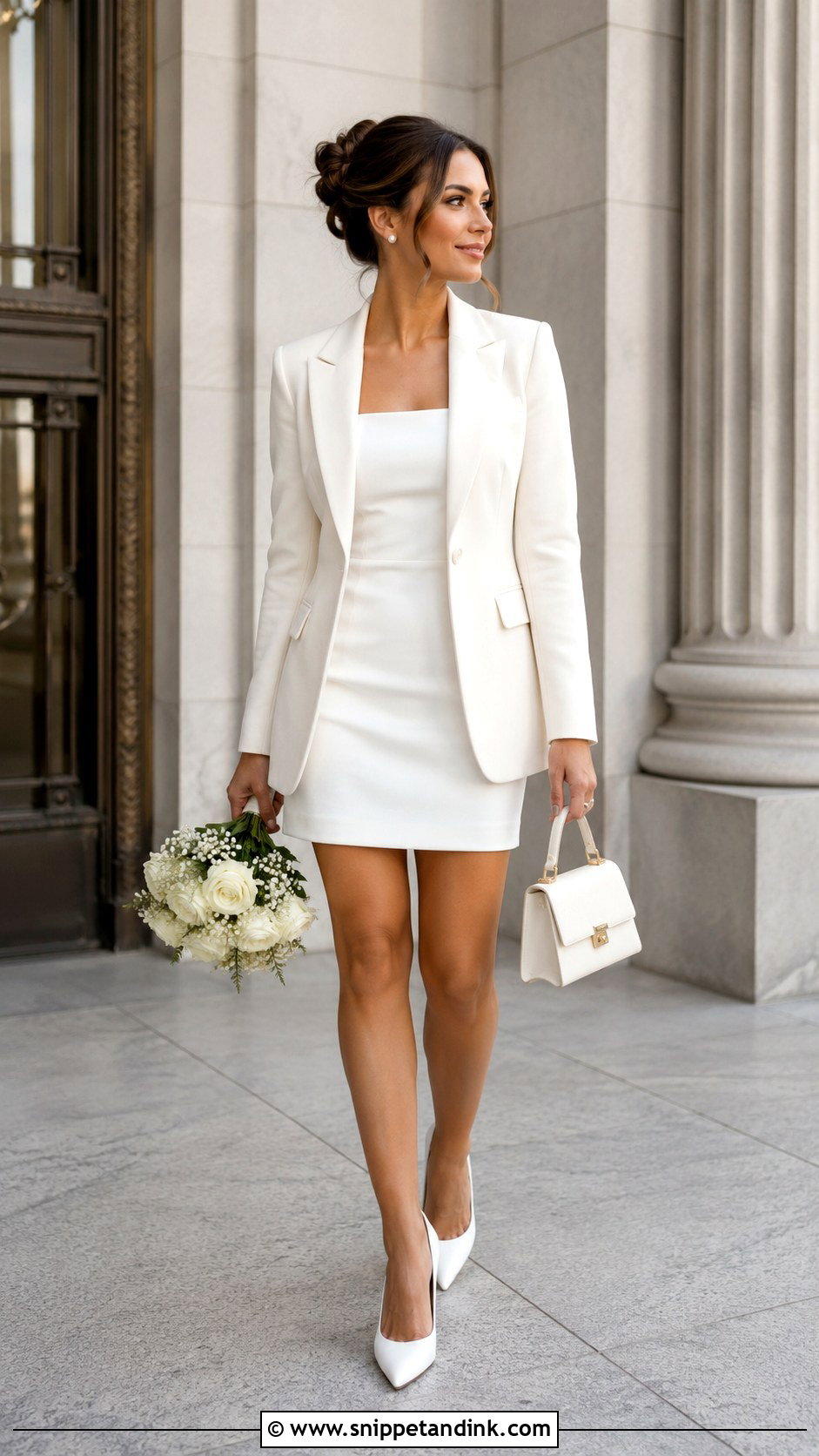
A civil wedding dress with a detachable blazer gives a tailored first look for a courthouse or city ceremony, then a softer second look in whatever is underneath: a mini, a slip, a column or a midi. White or ivory blazers yellow at different rates from the dress, so I match them side by side in daylight. Clean shoulders and a sharp fit matter more than decoration, though satin lapels or covered buttons add something. Pointed heels, a structured bag and simple jewellery.
22. Reception Wedding Dress With Detachable Full Skirt
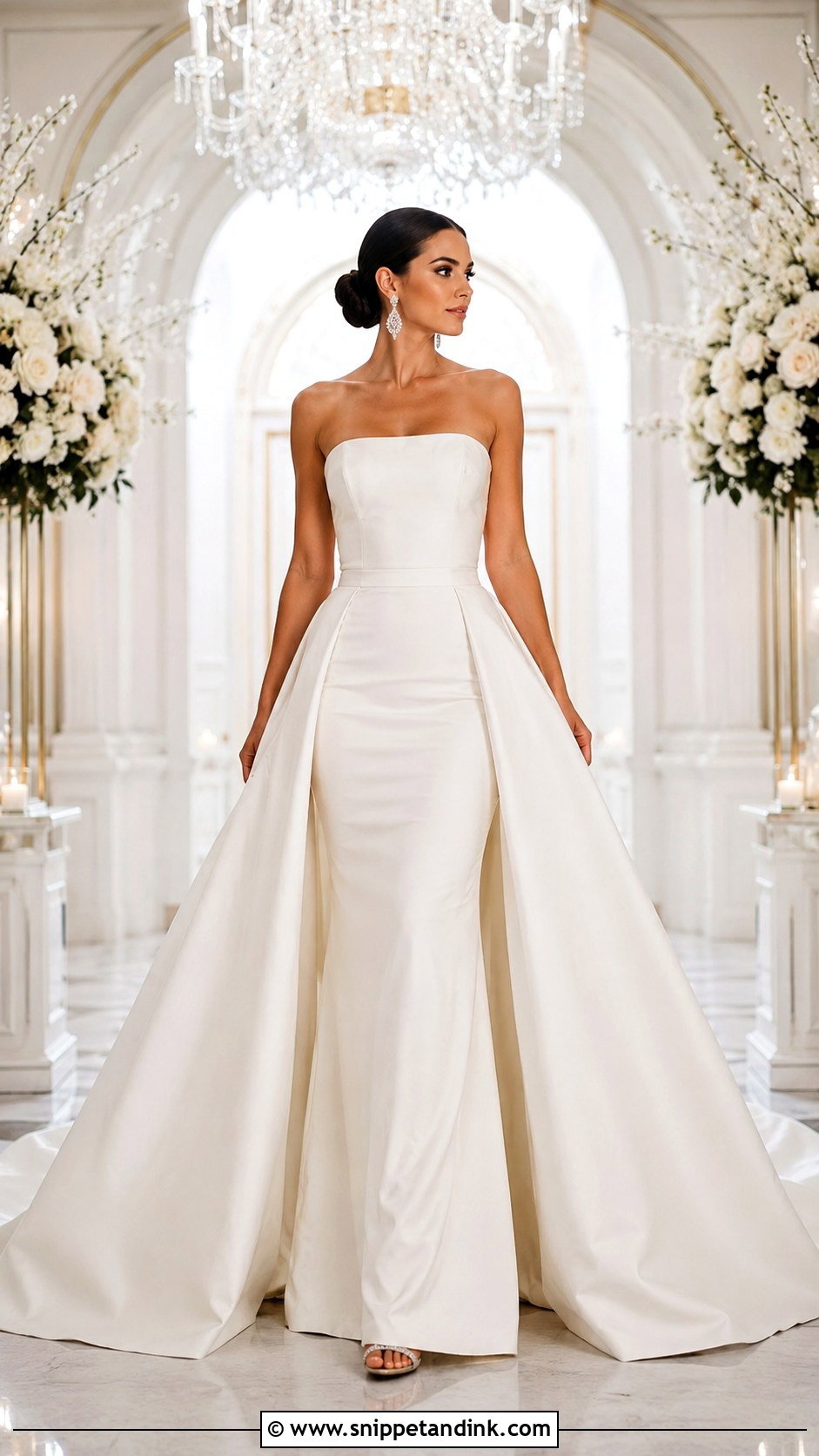
Full skirt for the entrance, then off it comes for comfort. That’s the pitch, and it saves buying a separate reception dress while still giving the outfit-change moment. The base underneath can be slim, short or simply easier to dance in. It must have enough detail to stand alone; I check it under the reception lighting, not just the shop’s. Sparkly earrings, comfortable heels and a clean hem that needs no bustle make the evening easy.
23. Modern Wedding Dress With Detachable Neck Scarf
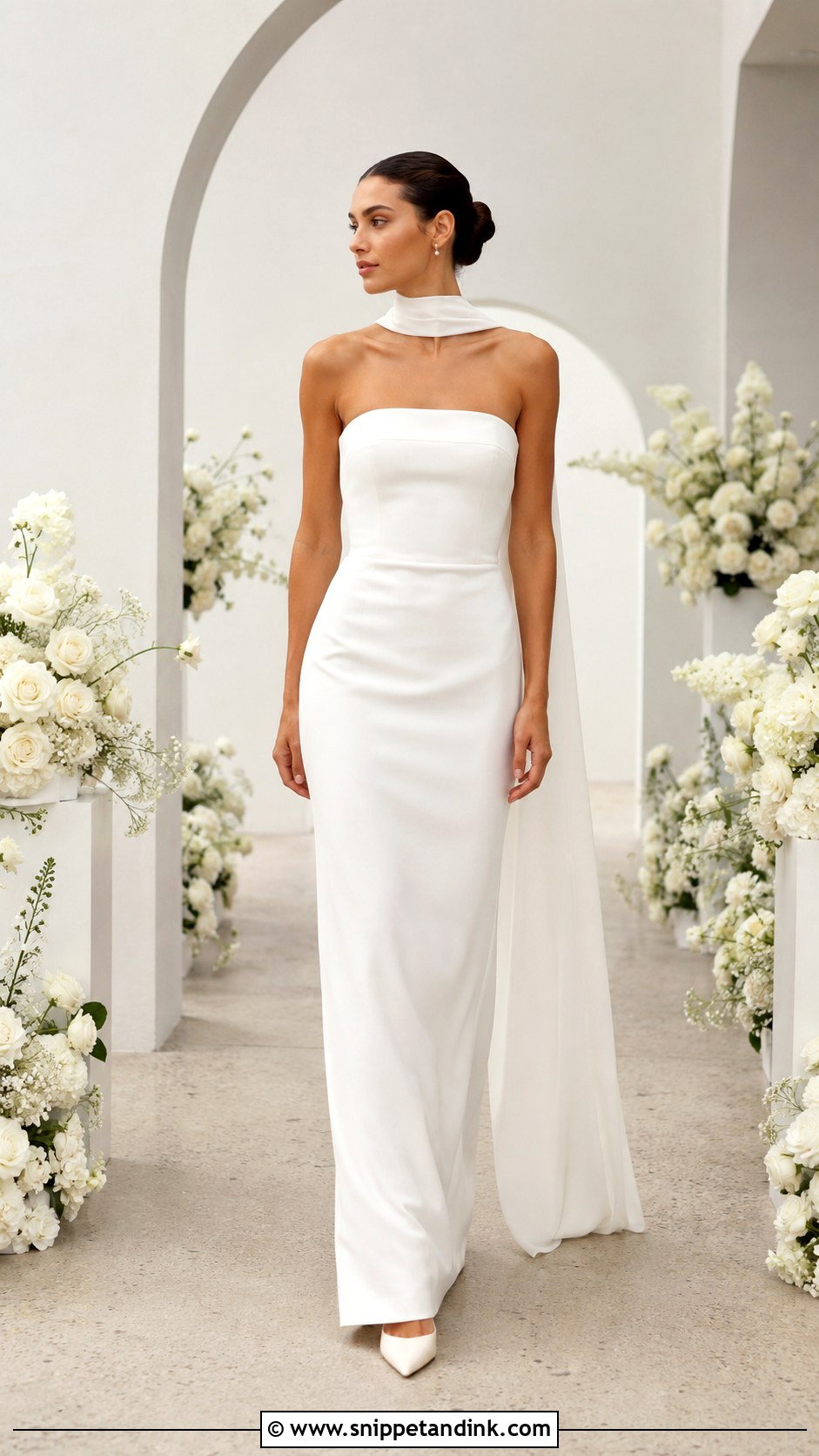
Draped around the neck, tied at the back or attached to the bodice, a detachable neck scarf is the quietest change on this list. Column dresses, strapless gowns, halter-inspired shapes and clean satin all take it well. The same fabric as the gown gives a smooth match; sheer tulle is softer. Long scarf tails can catch on a bouquet or a hug, so I fix them at one point inside the bodice. Keep hair tucked back so the neckline stays visible.
24. Floral Wedding Dress With Detachable Overskirt
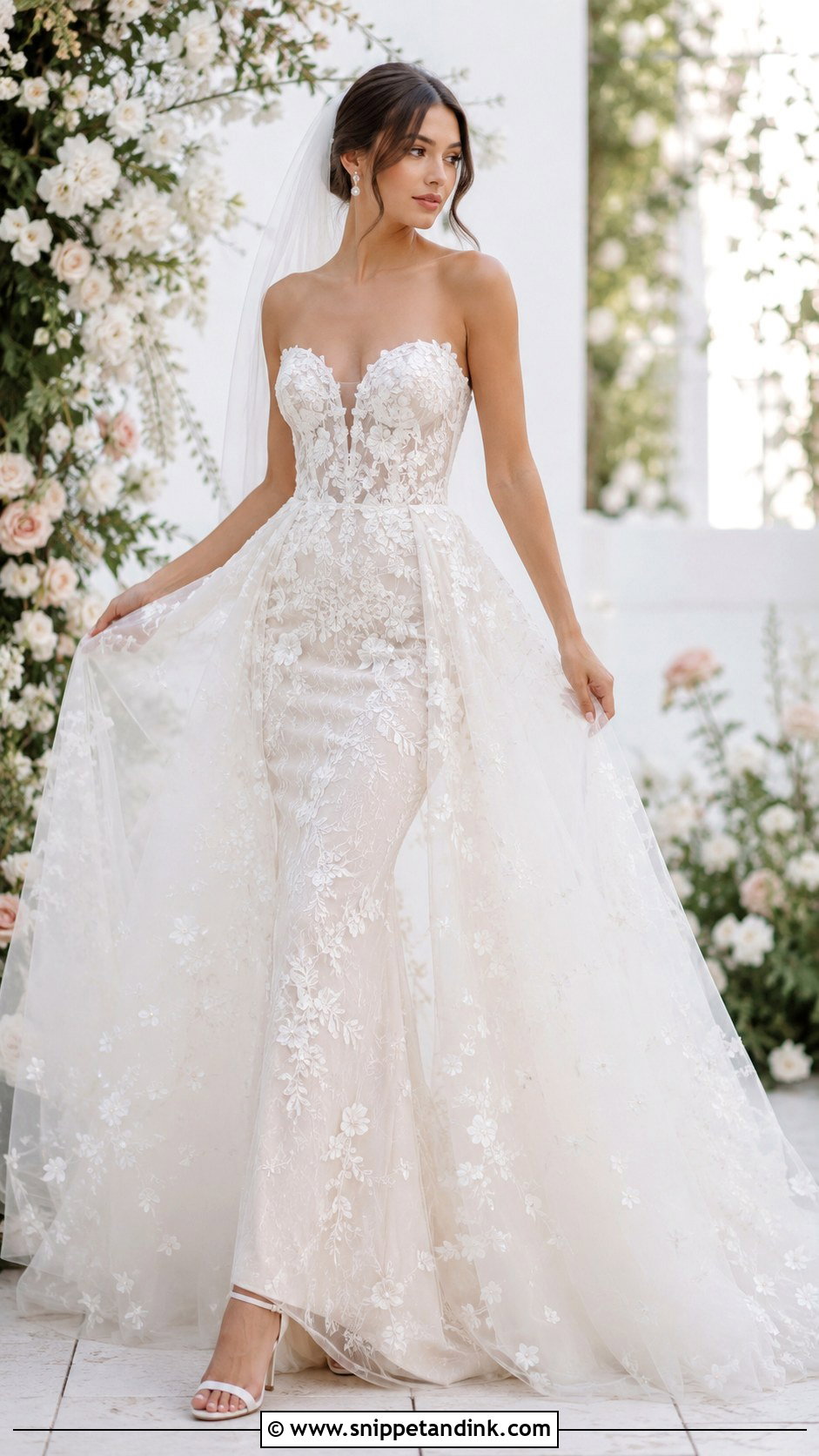
Lace appliqué, embroidered vines, soft 3D petals or tonal patterns: a floral gown is romantic without being too traditional. The overskirt makes it fuller for the ceremony, and taking it off lets the floral base speak for the reception. A sheer overskirt with scattered appliqués layers softly over it. Raised 3D petals can snag tulle, so check that the overskirt slides off without catching them. Spring, gardens and conservatories suit it. Delicate earrings and simple heels.

25. Sparkle Wedding Dress With Detachable Tulle Cape
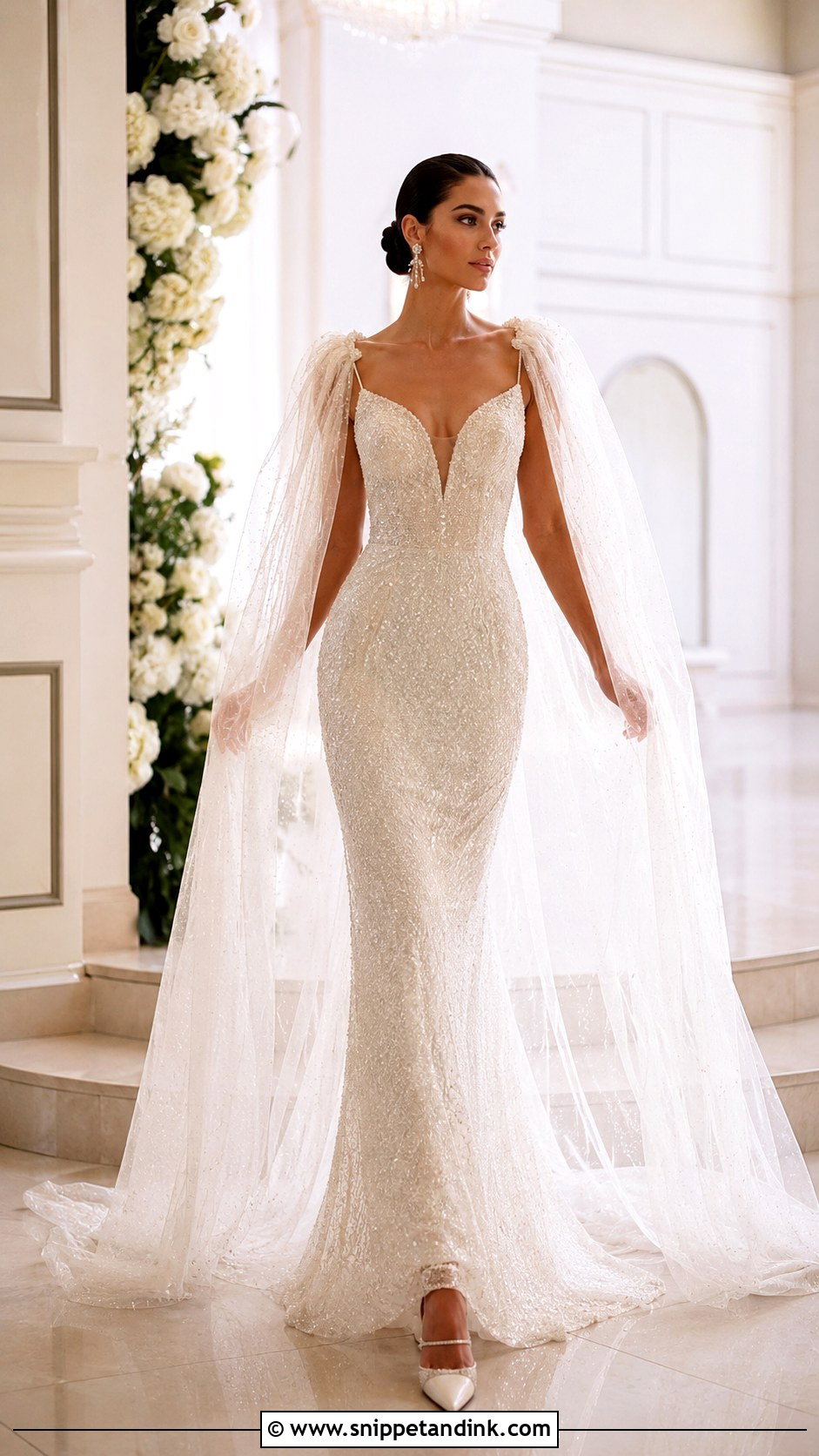
A beaded or glittering base catches the light; a tulle cape over it softens the ceremony look. Remove the cape after the vows and the reception look turns glamorous. Sheath, fit-and-flare and slim A-line shapes work best. Beading can snag fine tulle, so I suggest a slightly heavier tulle for the cape. A cape with faint sparkle ties the two together; a plain one lets the dress shine. Metallic or ivory heels and sleek hair so the cape sits smoothly.
Altering Two Layers That Must Still Agree
A convertible gown is really two garments sharing one waistline, and alterations have to respect both. When I send one to a seamstress, these are the points I ask her to work through.
- Fit the base dress first, completely, including the hem. The removable piece is fitted over the finished base, never the other way round.
- Check the join from every side. Gaps usually appear at the side seams and the small of the back.
- Set both hems with the right shoes. If you change shoes between looks, bring both pairs.
- Ask for a hanger loop on the removable piece and a garment bag of its own, so it doesn’t crush in a pile once it comes off.
- Agree who takes the detached piece home at the end of the night. In the excitement it is often the thing left behind in the changing room.
Allow more fitting time than for a single gown. Two layers mean more adjustments, and the last fitting should be close enough to the wedding that nothing has shifted since.
One Dress, Two Entrances, and No Half-Outfit
A convertible gown gives you two bridal moments from one purchase: a ceremony look that feels formal and a reception look you can relax in, whether the removable piece is an overskirt, sleeves, a cape, a train or a jacket. When I judge one, I look at four things: fit, hidden attachments, how well the fabrics match and how the base dress looks entirely on its own. If the dress underneath feels like half an outfit, keep looking.
You'll Like These Ideas:



Leave a Reply