
Over ten years, bridal dressing went from fitted bodices and full skirts to clean A-lines, raised empire waists, mod minis and relaxed columns. Lace stayed, while satin, chiffon and organza covered everything from formal church gowns to light civil-ceremony looks, and by the end of the decade short and tea-length dresses were everywhere. What I like about this era for a modern bride is how wearable it is. Most of these shapes have no corsetry and very little weight. The work is in fabric and fit, and in using just enough period accessories to make the reference clear. Here are twenty complete looks, with what I’d check on each.
Simple Sixties Shapes Suit a Dressmaker
Many of the dresses below, the shift, the A-line, the empire waist, the coat dress, have few seams and no boning. That makes the decade one of the best for having a dress made rather than bought, especially if you have a clear picture in mind or a figure that standard sizes don’t fit well.
If you go to a dressmaker, this is roughly how it runs:
- Bring pictures and, if you can, a dress you already own that fits you well. It tells her more about your proportions than measurements alone.
- Expect a toile first. This is a test version in cheap cotton used to perfect the fit before the real fabric is cut. Most of the fitting work happens at this stage.
- Choose fabric with her. Simple shapes need a fabric with some body: a medium-weight crepe, a duchess satin or a firm jacquard. Lightweight satin and thin crepe show every seam and ripple.
- Ask for a full lining. It makes a plain shift hang better and stops the dress clinging to tights.
- Allow several months and at least three fittings. Dressmakers often book up well ahead in wedding season, so contact them early.
Costs vary widely with the fabric and the maker’s experience, and a made dress isn’t always cheaper than one off the rail. What you get is a fit that’s yours, and a pattern you could reuse for a reception dress in a second colour.
1. Tea-Length Lace 60s Wedding Dress
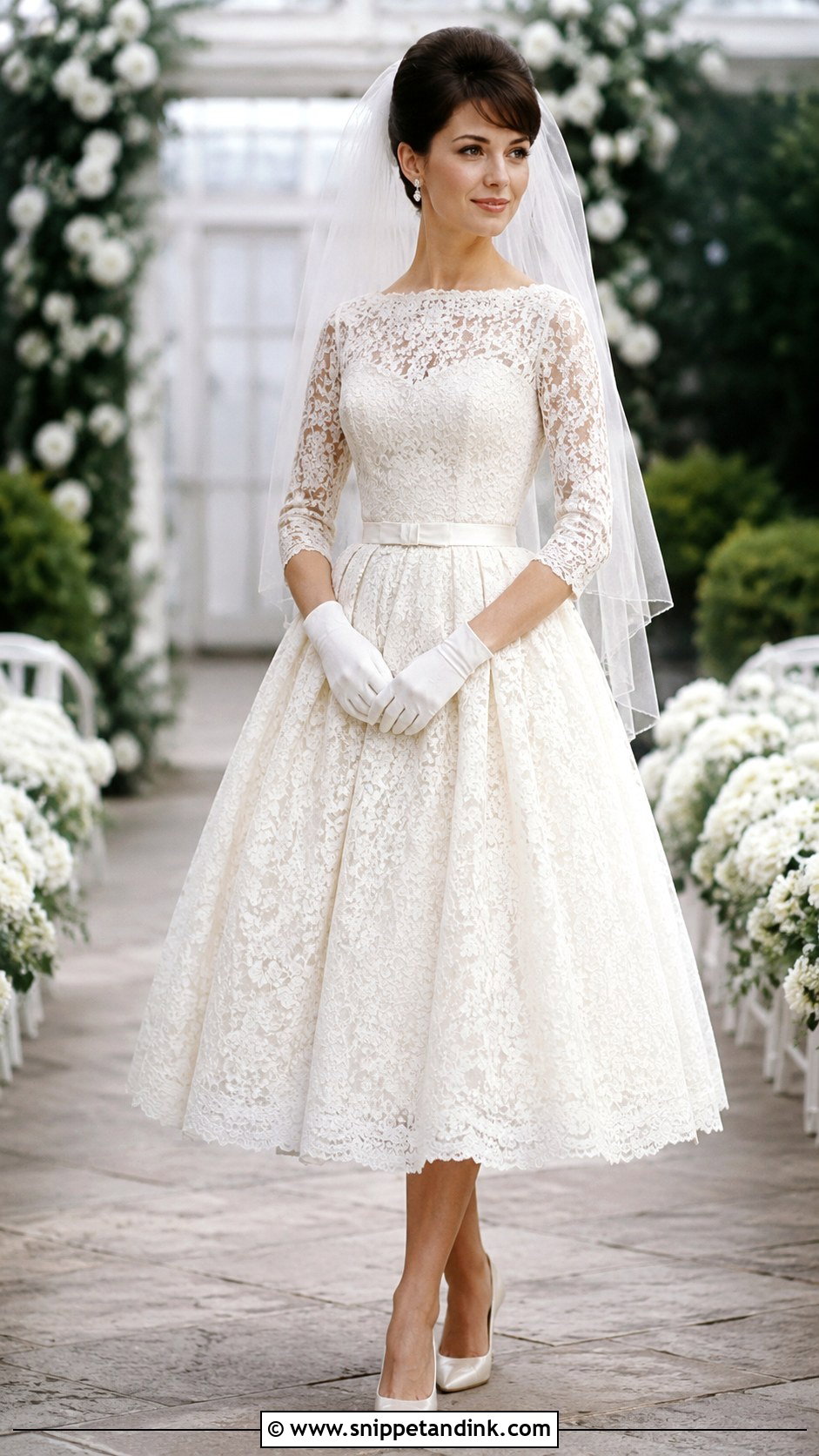
Start with this one if you want the neat, early-sixties version of the decade. A fitted bodice, a natural waist and a softly flared skirt between knee and ankle, in floral lace over ivory lining, with three-quarter sleeves and a bateau neck. Pointed ivory pumps or low slingbacks, pearl studs and short white gloves complete it. Keep the veil to waist length; a cathedral veil swamps a tea-length hem. A small bouquet of white flowers and greenery is enough. It’s an outfit you can stand, eat and dance in for twelve hours without thinking about it.
2. Mod Mini 60s Wedding Dress
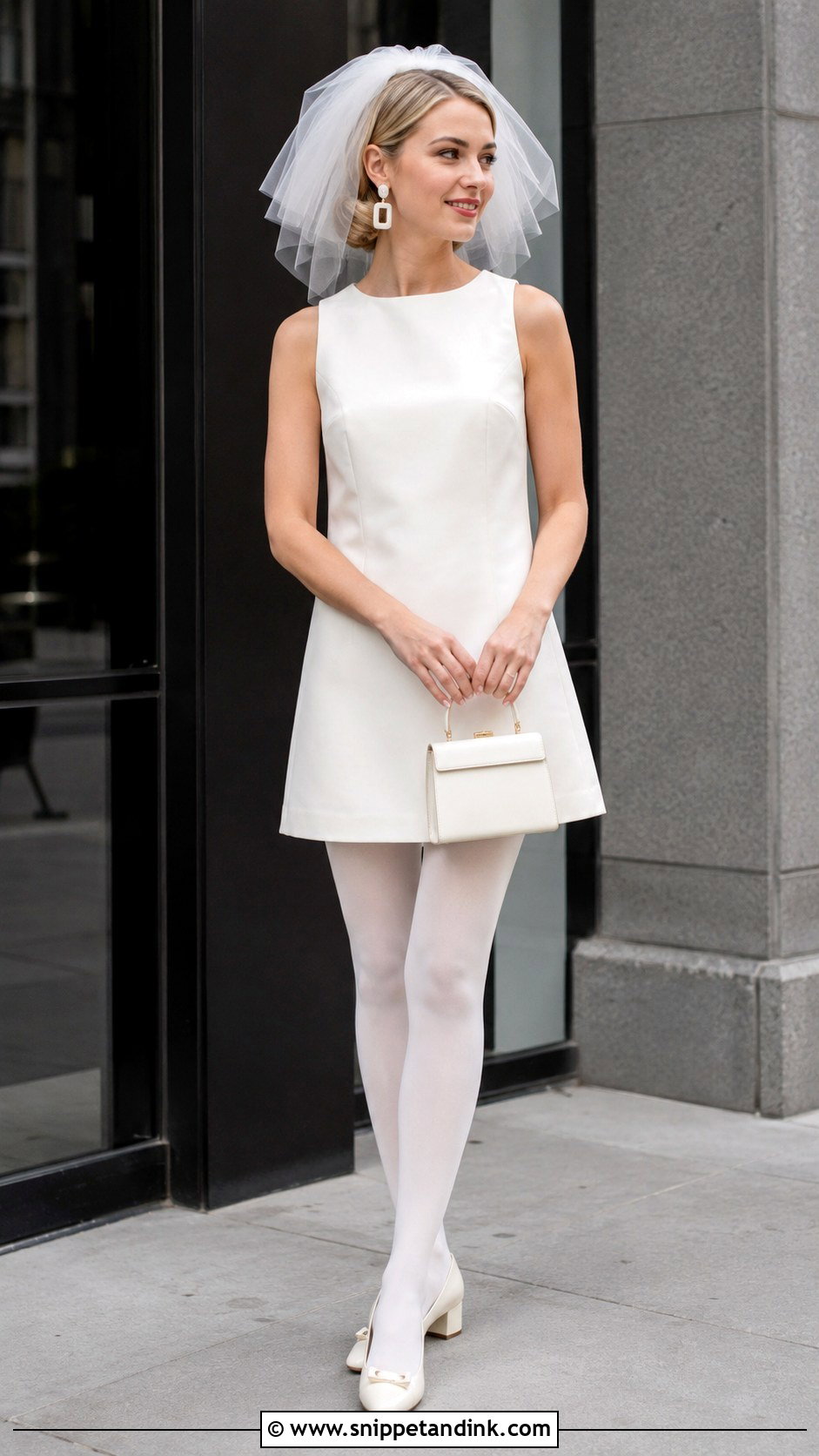
A mod mini wedding dress is the shift and the short hem that defined the middle and later sixties. It falls straight from the shoulders and stops several inches above the knee. What keeps it sophisticated is the cloth: a lightly structured fabric with a crisp jewel neckline holds its line, while a soft one collapses. Low block-heel pumps and opaque white tights are the authentic pairing. A short bubble veil or wide fabric headband, a compact top-handle bag and small pearl drops keep everything else quiet. Shifts are cut straight, so if you have a defined waist, ask for subtle darts at the back to stop the dress looking boxy.
3. Empire-Waist Chiffon 60s Wedding Dress
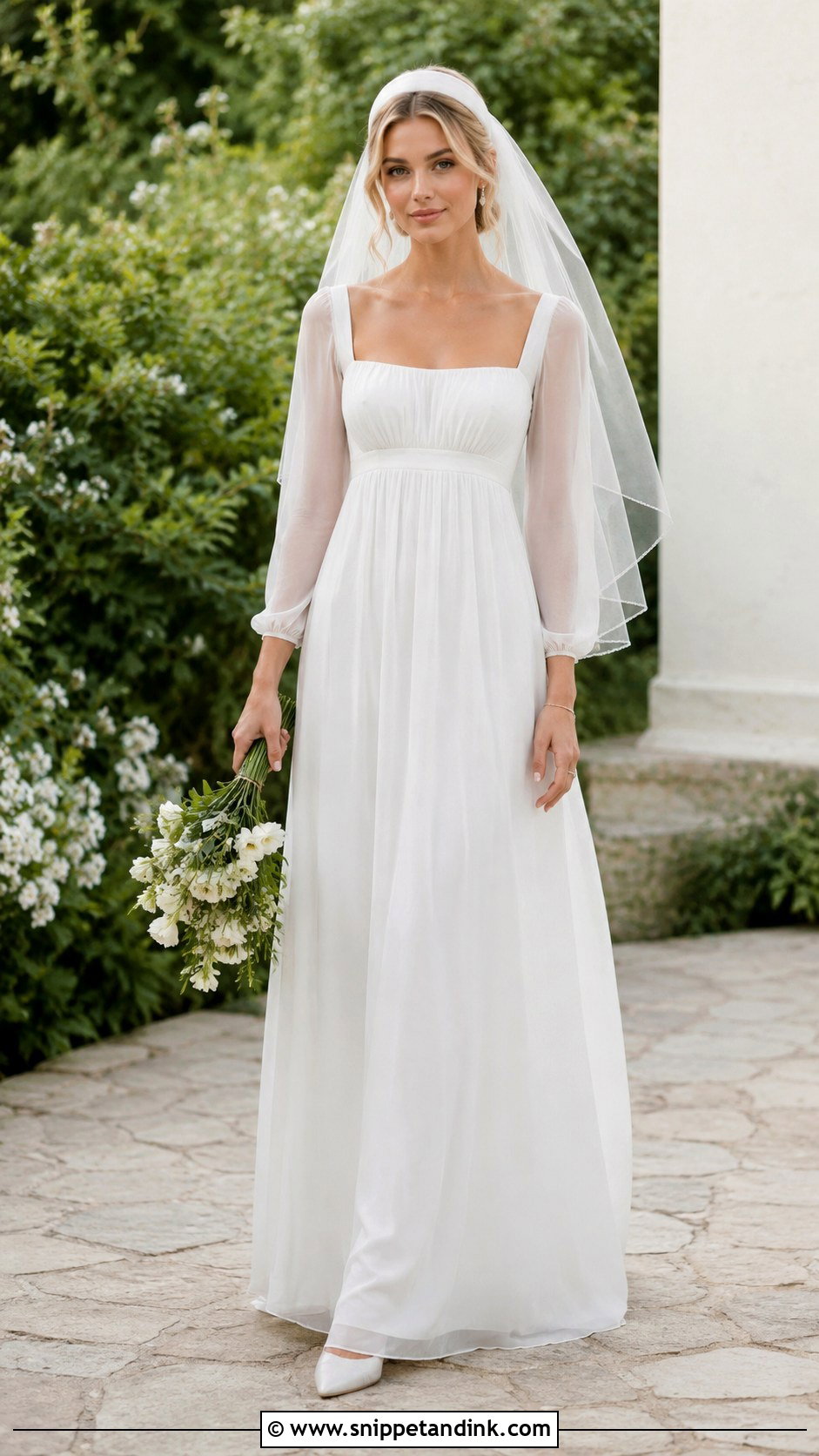
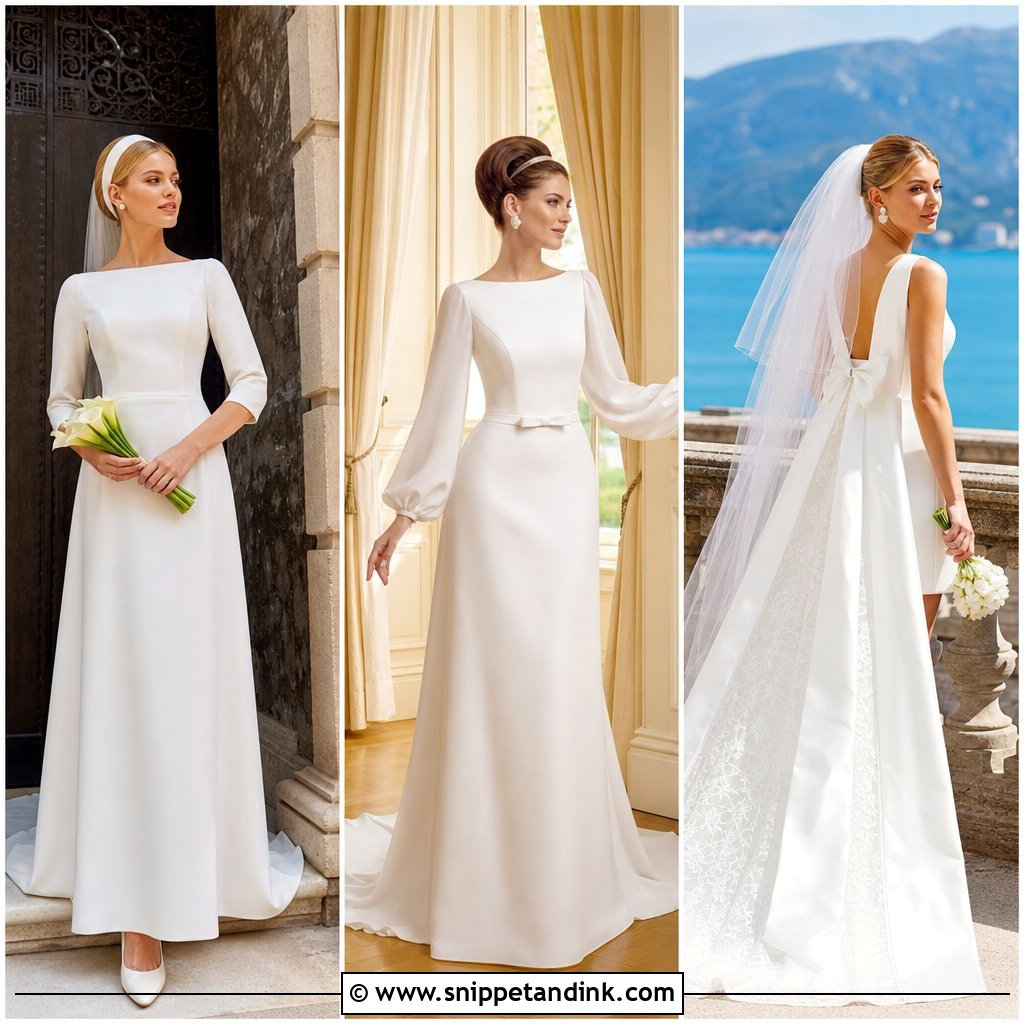
Empire waists sit right under the bust and let chiffon fall loose to the floor, which became one of the decade’s key bridal shapes and is still one of the most comfortable. The bodice has to fit closely at the band, or the whole dress drifts down and the line is lost. Sheer long sleeves, small covered buttons and a lightly gathered skirt give period detail. Plain ivory sandals or pointed flats, a narrow satin headband, fine drop earrings and a small clutch. Let a fingertip veil fall from the back of the hair so it doesn’t hide the raised waistline. Spring and outdoor ceremonies suit it.
4. Long-Sleeve Lace 60s Wedding Dress
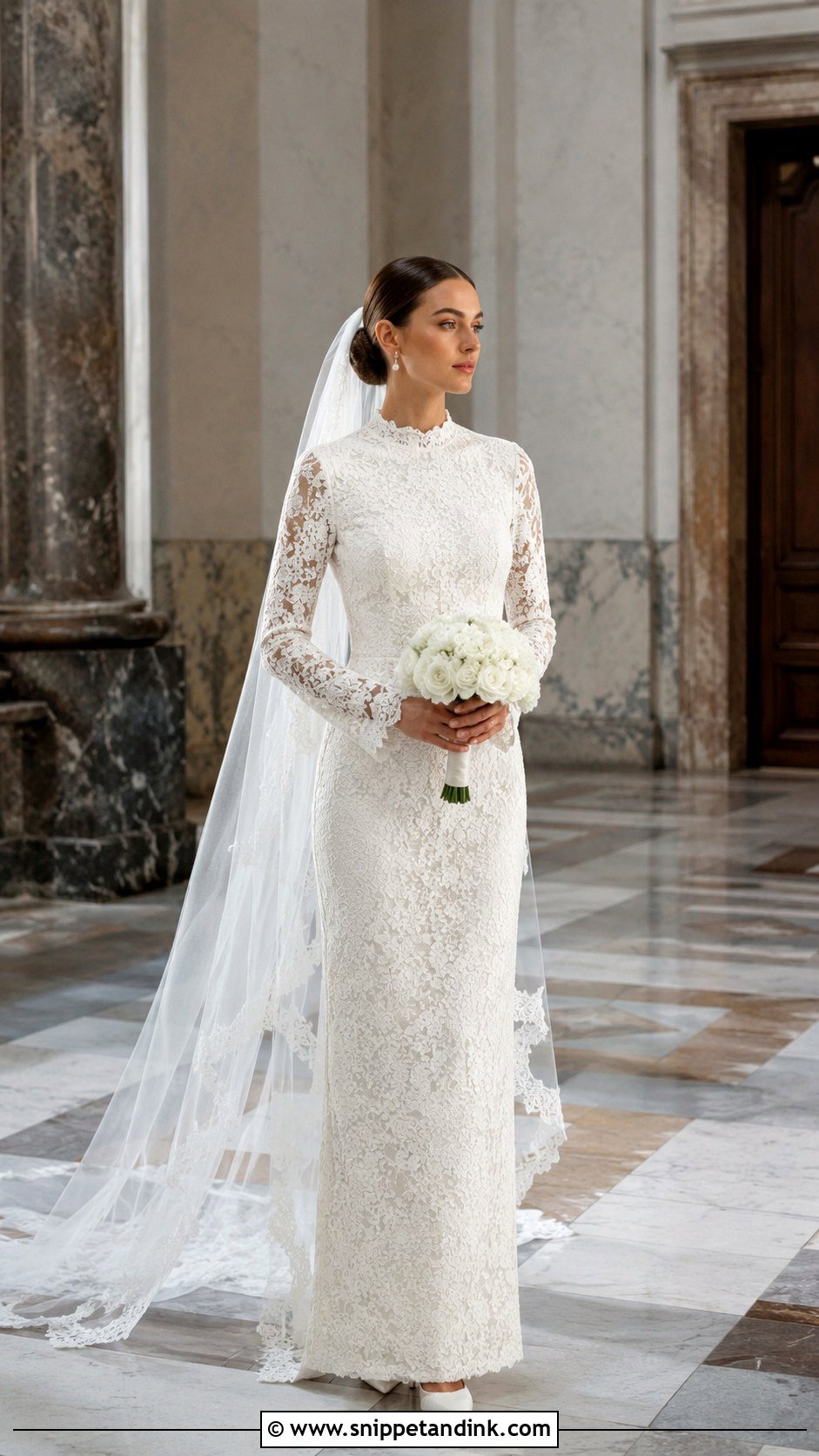
Fitted lace sleeves, a high round neckline and a slim column or gentle A-line make the formal end of the decade. A modest open back keeps it from feeling heavy. The details are small: pointed lace cuffs, covered buttons, a narrow waist seam. Closed-toe satin pumps, pearl earrings and one fine bracelet. Hair in a smooth low bun under a chapel veil. If the lace pattern is busy, carry a compact, mostly white bouquet. Fitted lace sleeves need to be cut with the arm slightly bent, otherwise they strain at the elbow the moment you reach for a glass.
5. Satin A-Line 60s Wedding Dress
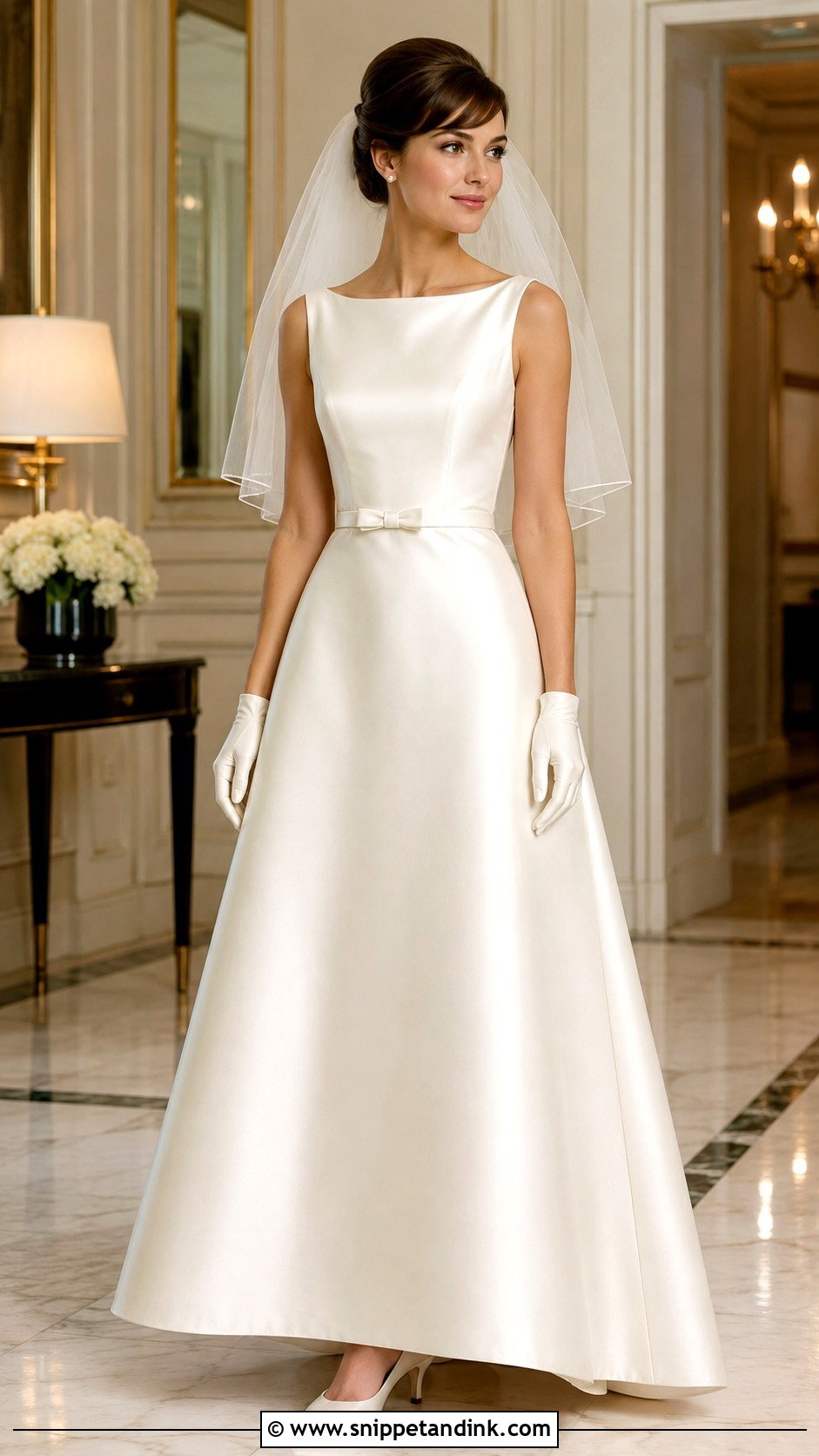
Satin A-lines reflect the cleaner, more streamlined direction bridal dresses took in the sixties. A fitted bodice, a bateau neckline and a skirt that widens gradually to the floor let the sheen of the fabric carry the look. A narrow belt or small flat bow marks the waist. Pointed kitten heels, short gloves, a pearl-edged clutch and small pearl earrings. A neat bouffant-style updo and an elbow-length veil add the period note. For a ballroom or a historic hotel without lace or beading, it’s my first suggestion. Heavier duchess satin holds the A-line better than thin satin, which tends to show every crease from sitting.
6. High-Neck Mini 60s Wedding Dress
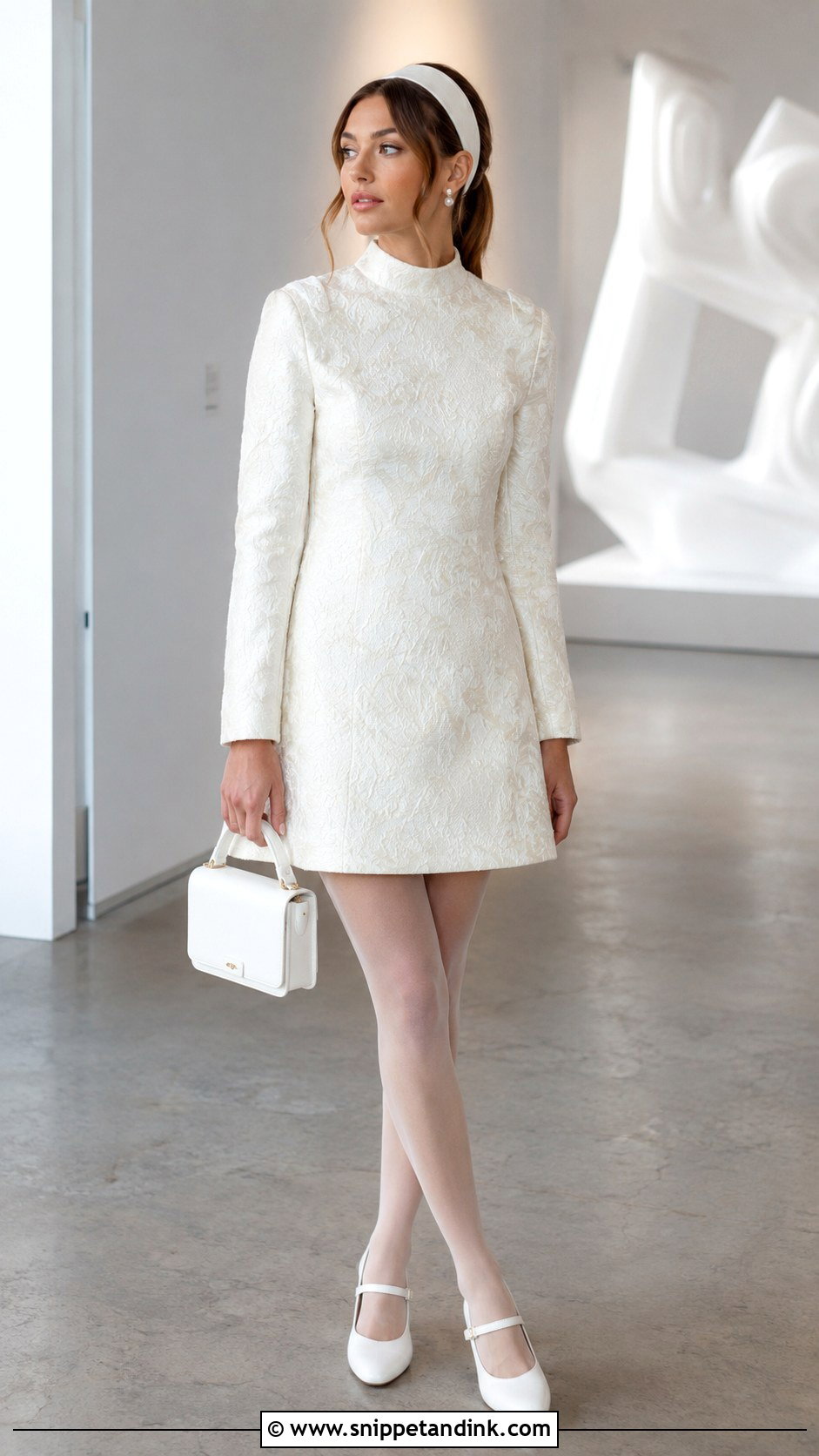
Covered up top, short below. A high neck and long fitted sleeves on an ivory A-line mini make the short hem look deliberate rather than casual. Textured crepe, brocade or a substantial satin keeps the shape. Low white pumps or polished Mary Janes, sheer tights and a small box bag. Skip the long veil; a wide satin headband or a short face veil suits it better. Pearl studs and a compact bouquet. With long sleeves and a mini, the sleeve length decides whether it feels balanced, so make sure the cuff hits right at the wrist bone.
7. Bell-Sleeve 60s Wedding Dress
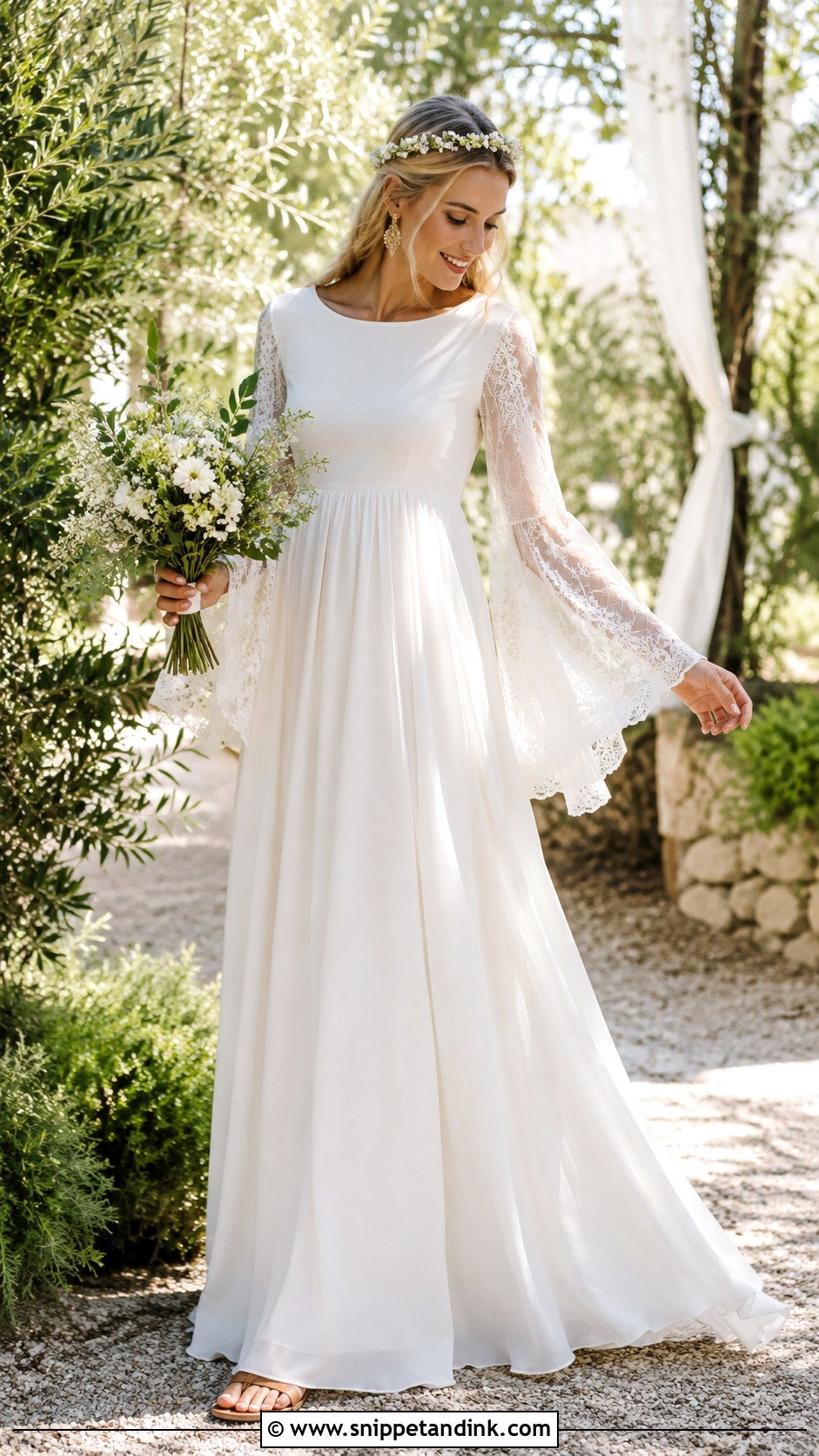
Bell sleeves belong to the freer, later sixties. A floor-length ivory gown with a fitted upper bodice, a raised waist and a softly falling skirt gives them room. The sleeve should hug at the shoulder and only widen below the elbow. Avoid fringe or extra trim if you want it to stay bridal. Simple leather sandals, delicate drop earrings and a small fabric pouch, with a floral hairpiece or a narrow lace band instead of a veil. A loose low bun or soft waves. Garden, woodland or coastal ceremonies suit it best. When you hold a bouquet, wide sleeves drape over it, so choose flowers with a long enough stem to sit below the cuff.
8. Peter Pan Collar 60s Wedding Dress
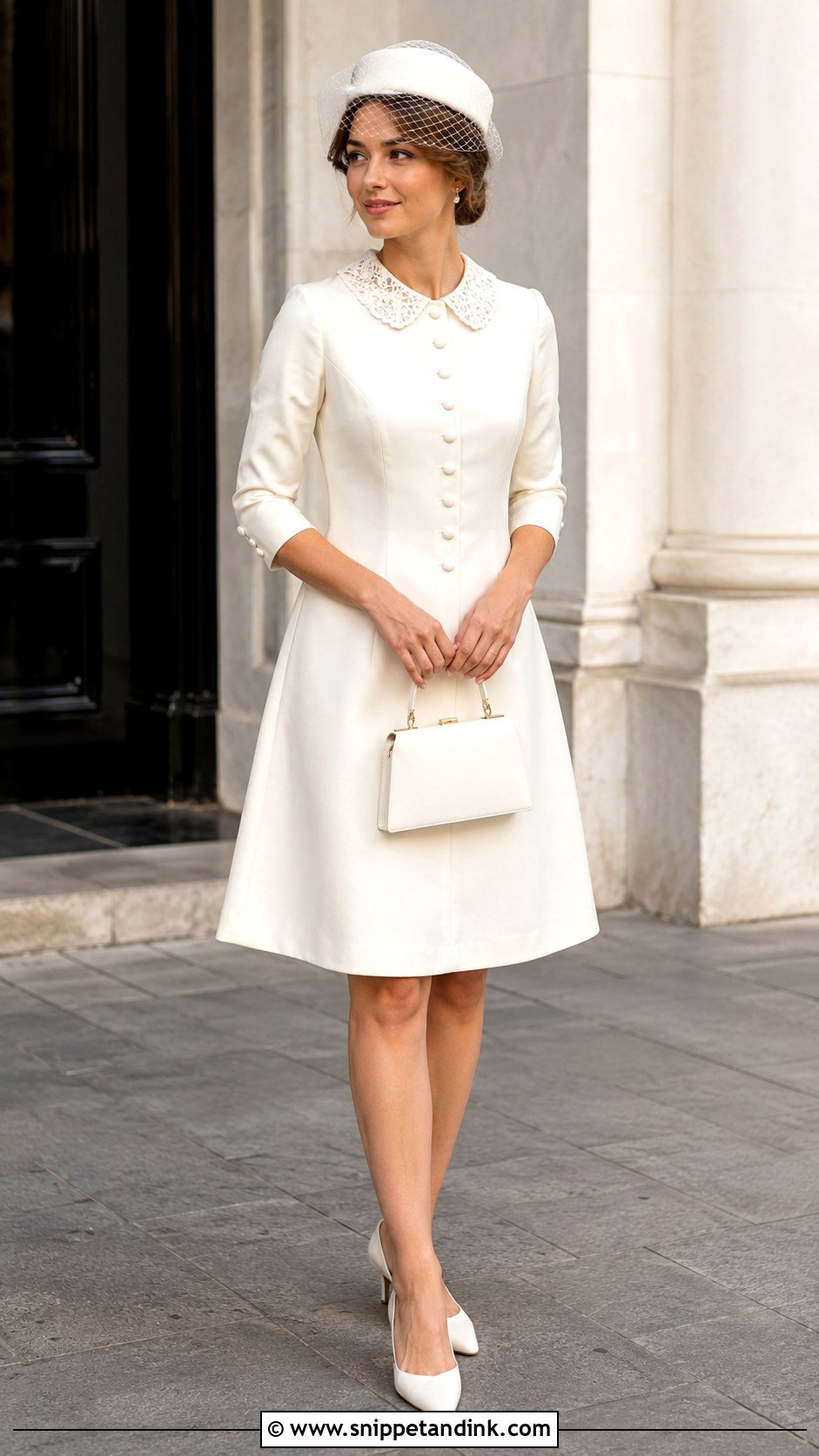
A rounded Peter Pan collar is sweet, so I balance it with grown-up accessories. A knee-length A-line, a fitted shoulder line, bracelet sleeves and a light flare; a collar in matching ivory lace, and pearl or rhinestone buttons down the front. Pointed kitten heels, a structured mini handbag and pearl studs. Short gloves are fine for the ceremony; take them off for dinner. A pillbox with a face veil or a wide headband. The collar needs to lie flat and meet evenly at the centre front, so check it while turning your head, because cheaper collars roll up at the edges.
9. Cap-Sleeve Swing 60s Wedding Dress
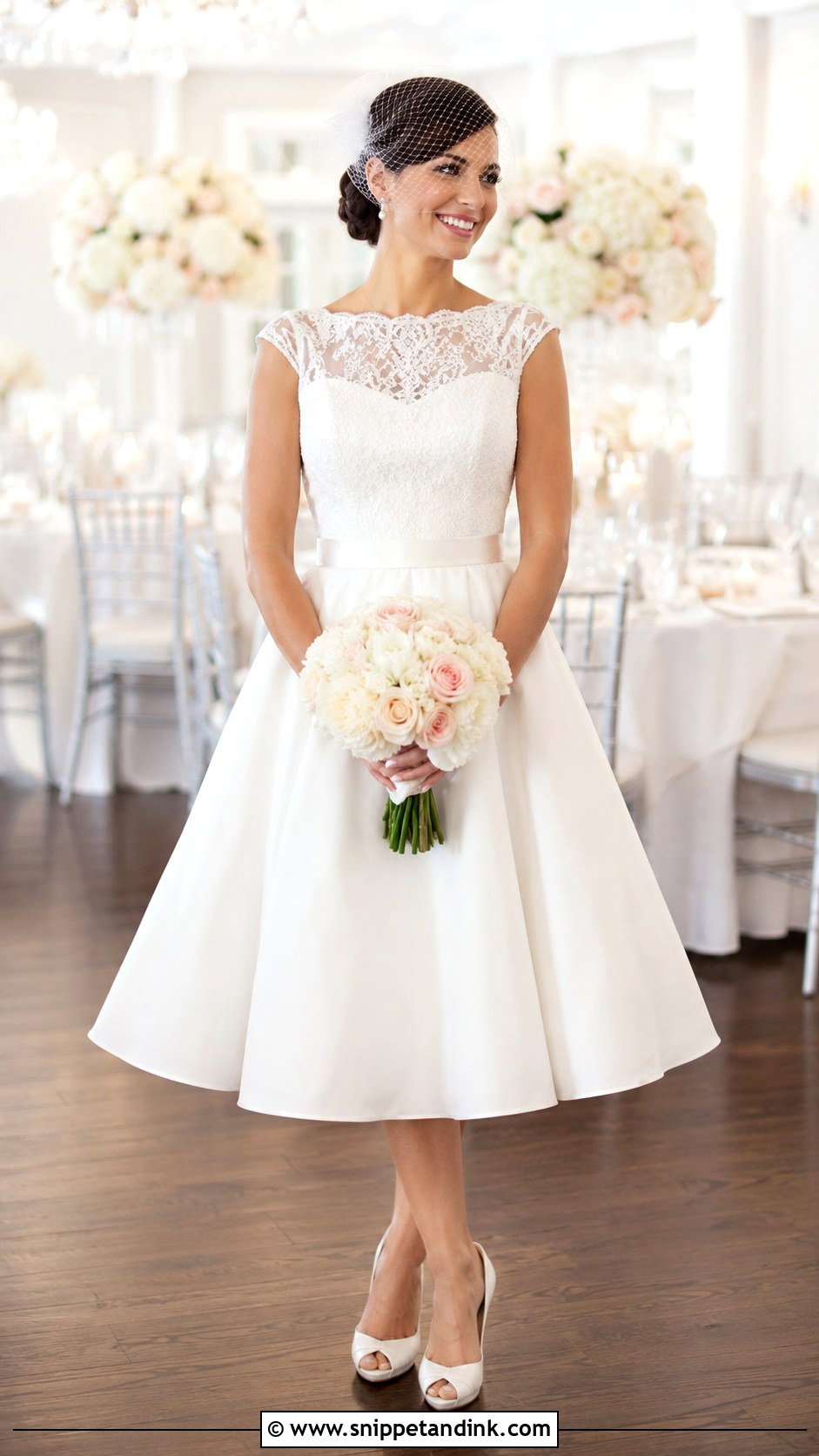
Early-sixties dresses still kept the fitted waist and full skirt of the fifties before shapes got narrower and shorter, and this swing dress sits right in that moment. A fitted bodice, a natural waist and a full knee-length skirt held out by soft pleats or a light underskirt. Bateau, scoop or a gentle square neck, depending on how much coverage you want. Low peep-toe heels, pearl drops, a slim satin belt and a birdcage veil. A rounded bouquet mirrors the skirt. Of all twenty, it’s the one I’d pick for a bride who plans to spend most of the night dancing.
10. Sleeveless Sheath 60s Wedding Dress
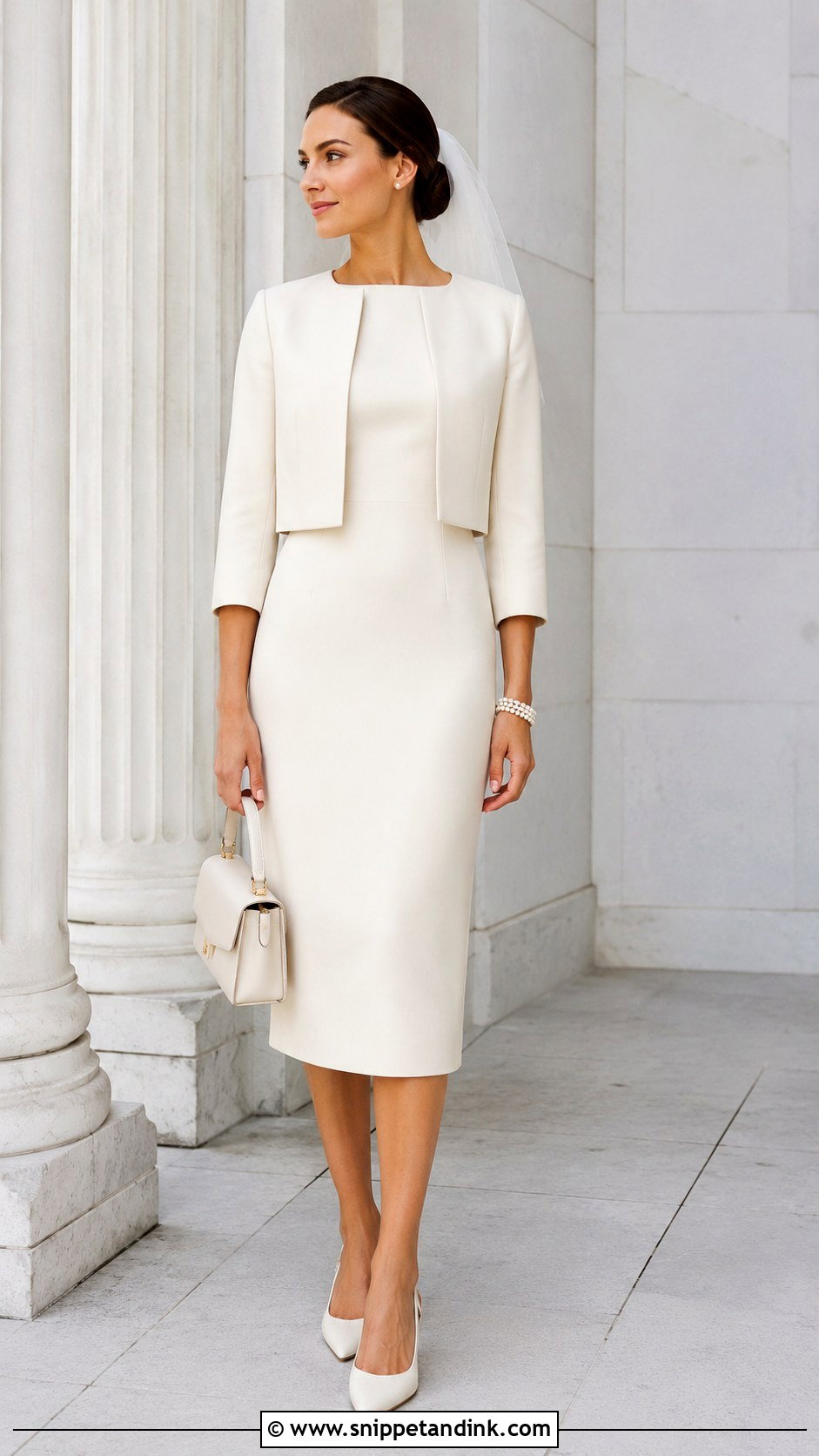
No sleeves, no skirt volume, just one long line. Substantial crepe or silk should skim the body rather than grip it. A bateau neckline and subtle waist shaping keep it elegant, and a back slit lets you walk normally. Pointed slingbacks, a small pearl bracelet and a top-handle bag; a cropped jacket covers your shoulders for the ceremony. A smooth updo with a short veil at the crown, or a jewelled headband if you’d rather skip the veil. Thin crepe shows underwear lines on a sheath, so do the final fitting in exactly what you’ll wear underneath.
11. Organza Ball Gown 60s Wedding Dress
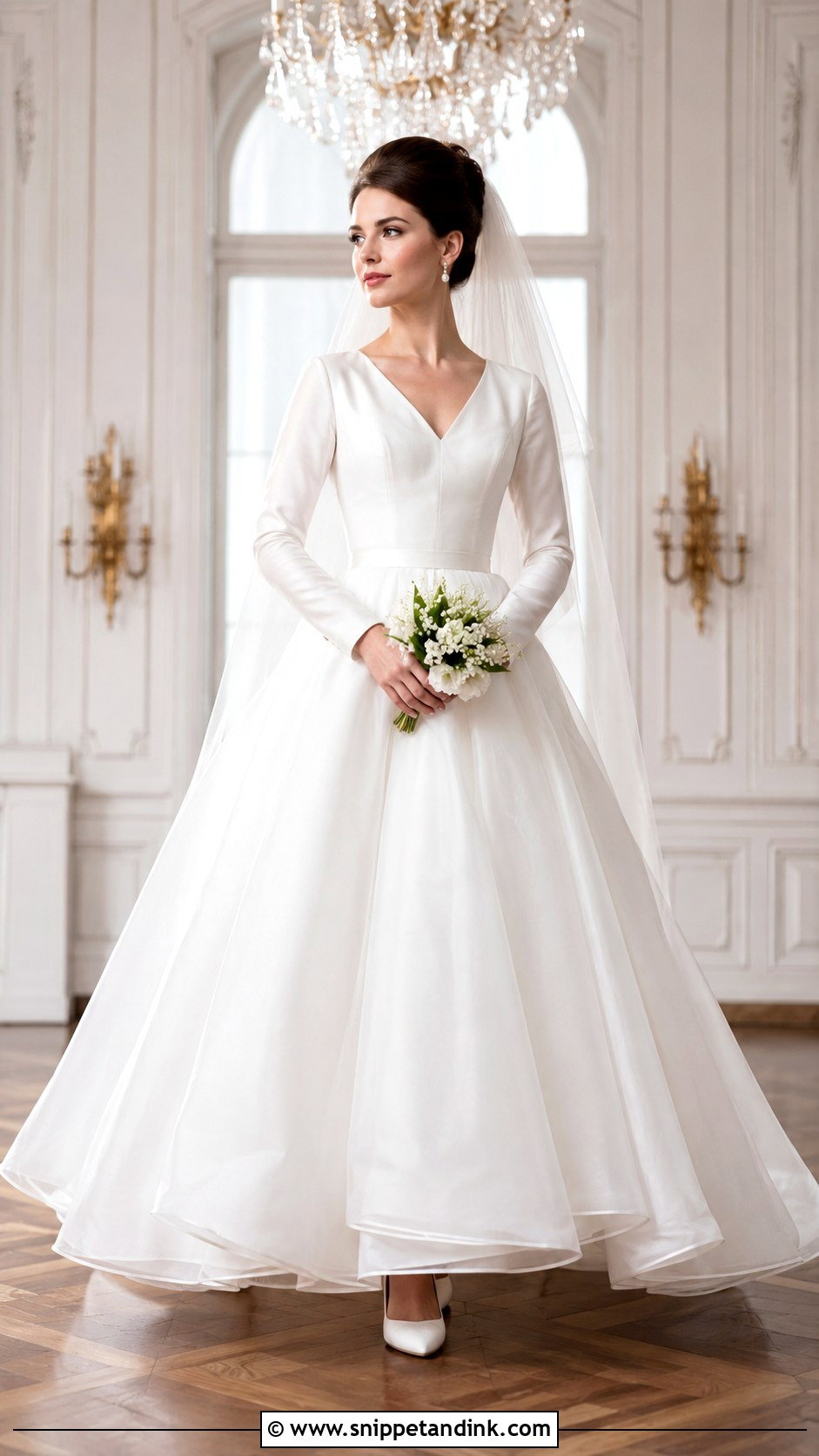
The organza ball gown is the formal, romantic side of early-sixties bridal wear. Several airy layers make a wide floor-length skirt that looks full but weighs very little. A fitted bodice, natural waist, long sleeves and a restrained V-neck give it a royal sort of dignity. Keep embellishment minimal so the organza’s sheerness shows. Satin pumps, pearl earrings, a narrow bracelet and an elbow or chapel veil under a smooth updo. A compact bouquet stops the whole thing becoming enormous. Organza creases sharply when crushed, so it needs space in the car and a steamer on hand at the venue.
12. Three-Quarter-Sleeve Midi 60s Wedding Dress
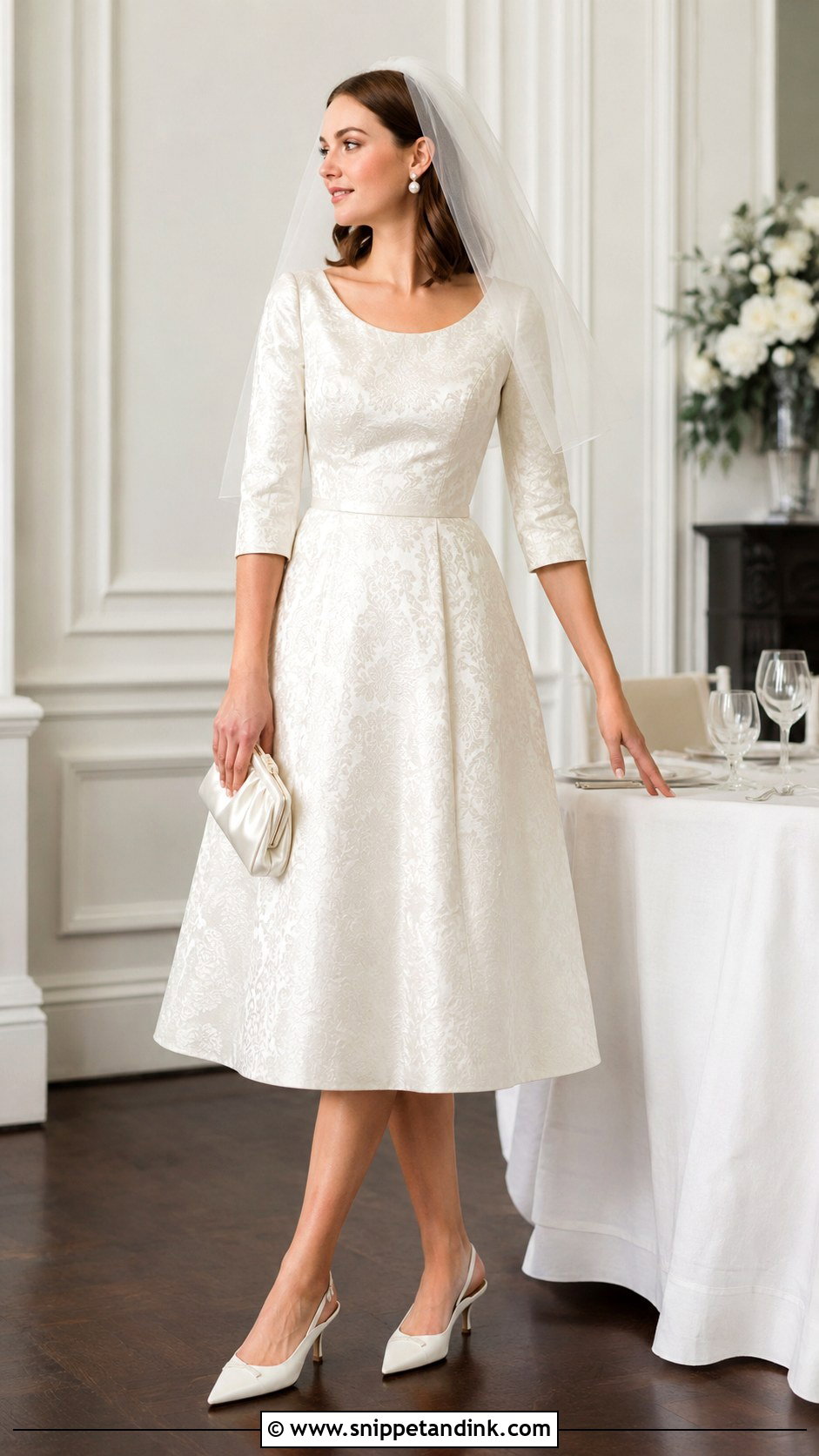
Midi with three-quarter sleeves is the practical choice I recommend most to brides who want coverage and comfort. A hem around mid-calf, a fitted bodice and a controlled A-line skirt in textured crepe, jacquard or lace. A modest scoop neck and a slim belt. Pointed kitten heels that leave the ankle bare are key; a closed ankle strap with a midi cuts the leg. A small clutch, pearl button earrings and a shoulder-length veil, or a padded headband for a more current feel. It handles a daytime ceremony, a restaurant lunch and a cool spring evening equally well.
13. Bow-Front Mini 60s Wedding Dress
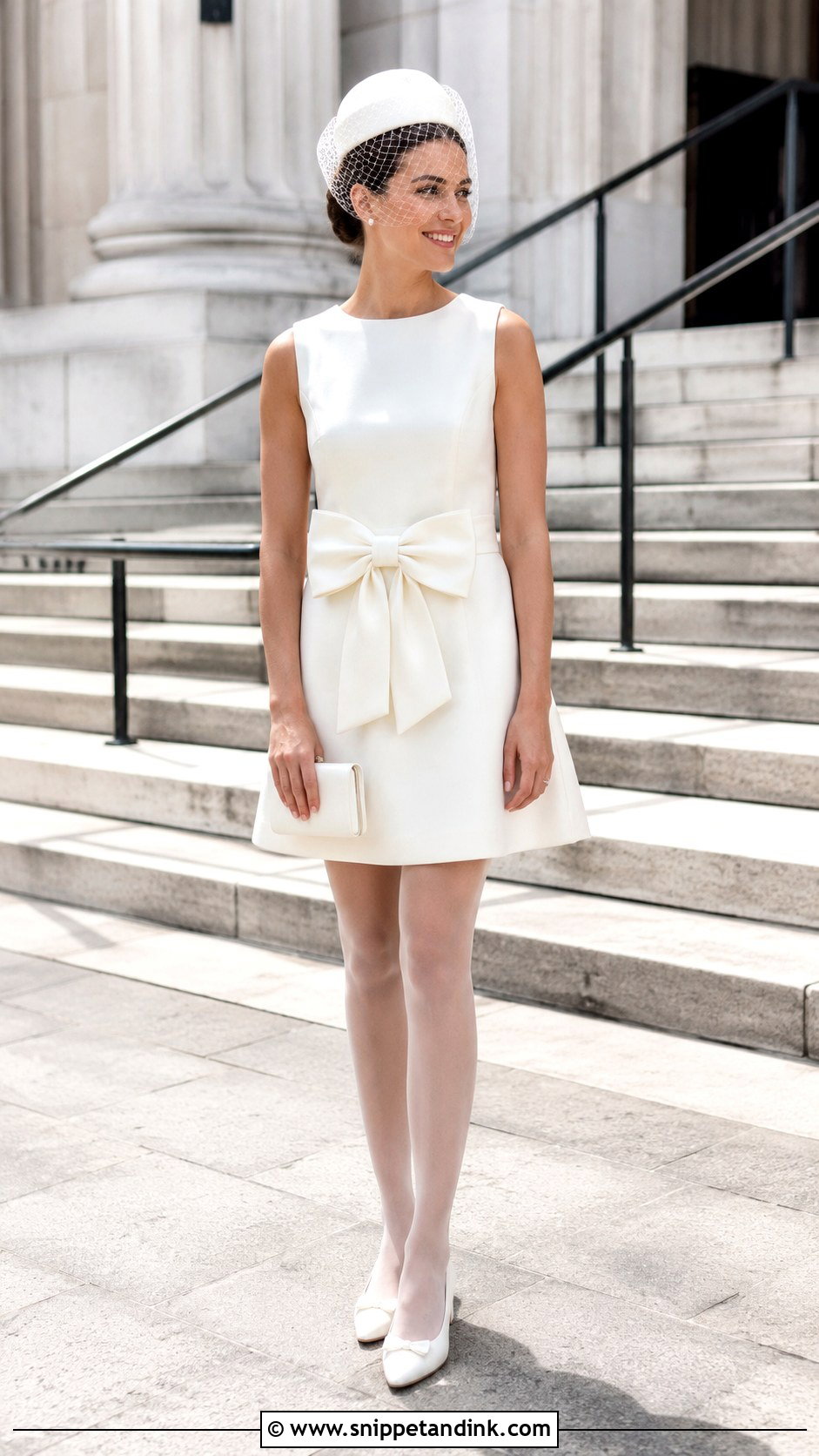
One bow, well placed, is all this structured A-line mini needs. At the waist, neckline or centre front, keep it in proportion with the short hem, because an oversized bow on a mini looks like a gift. Low block heels, sheer tights and an ivory box clutch. A pillbox with a short veil adds the period; pearl studs keep it bridal. Hair as a polished bob, smooth ponytail or restrained updo. No extra belts, no heavy jewellery. I’d wear it to a courthouse, a brunch party or as a lively second outfit.
14. Scalloped Lace Knee-Length 60s Wedding Dress
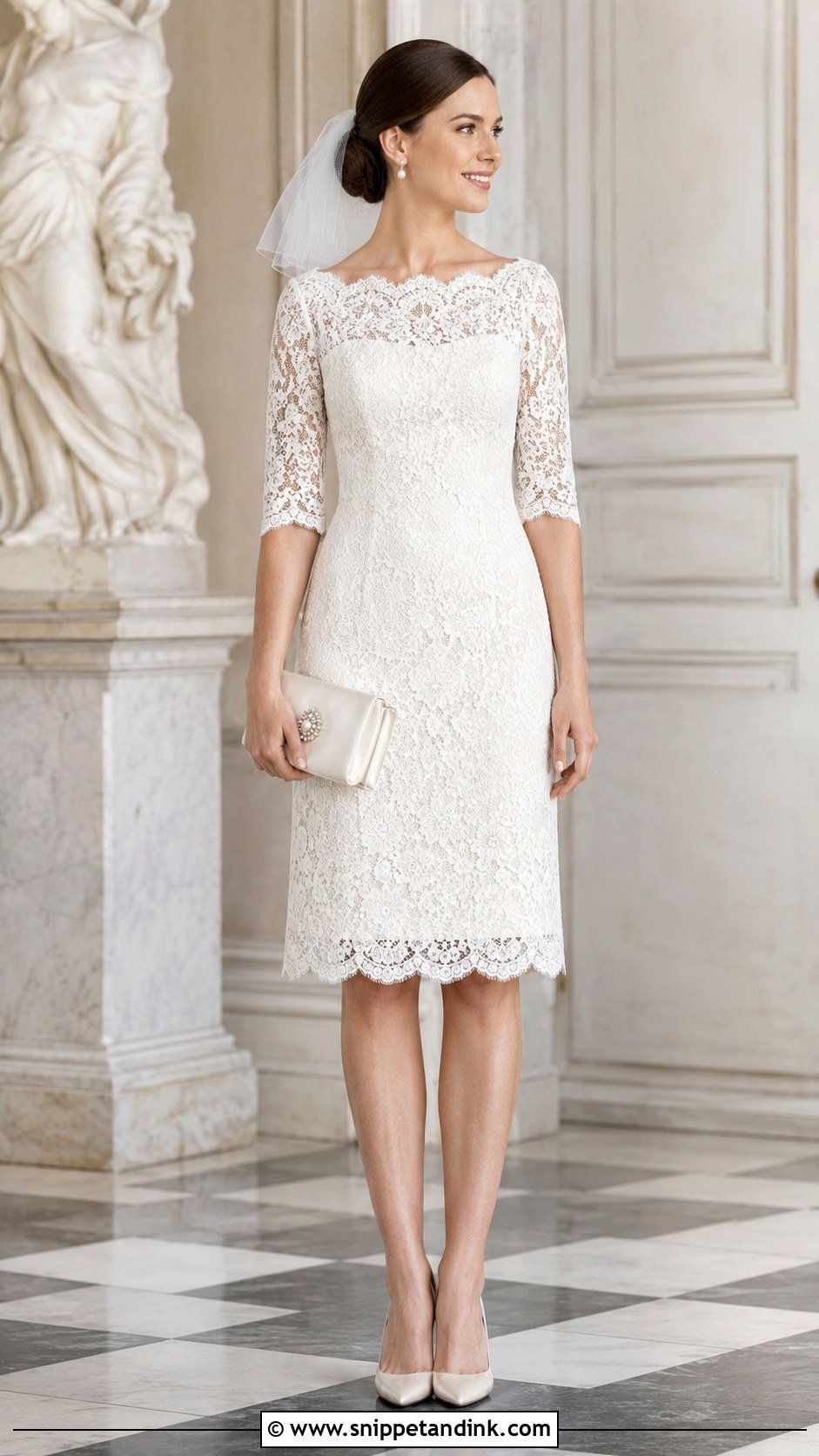
Scalloped lace gives clean edges at the neckline, cuffs and hem of a knee-length dress. Choose a softly fitted shift or A-line with an opaque ivory lining under the overlay, bracelet sleeves and a scalloped bateau neck. Pointed ivory pumps, pearl earrings, a small satin clutch and a short tulle veil behind a neat crown or low bun. Leave the lace on the dress; a lace bag or beaded shoes as well becomes one texture too many. When this dress is shortened, ask the seamstress to move the scalloped edge up rather than cutting it off, so you keep the finished hem.

15. Bridal Coat Dress 60s Wedding Dress
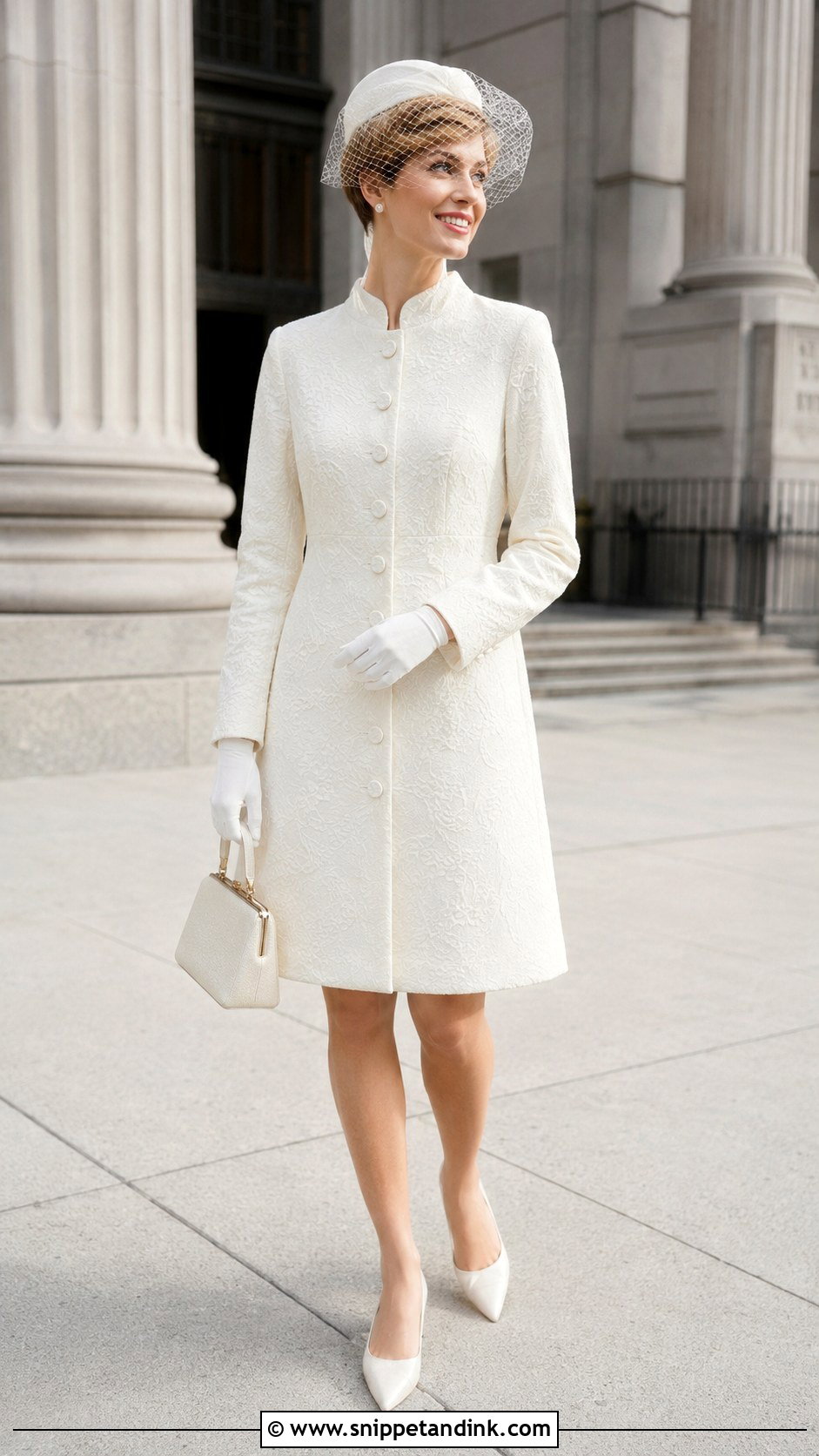
A coat dress is worn closed, as the dress itself, not as a layer over something else. A knee-length cut with clean shoulders, a lightly shaped waist and covered buttons down the front gives a crisp, tailored line. Ivory jacquard, textured silk or firm crepe will hold that shape. Pointed pumps, short gloves, a compact top-handle bag, pearl studs and a pillbox with a small veil. Carry a narrow bouquet so the buttons stay visible. For a cooler city wedding it’s very practical. Have the buttons checked for gaping when you sit, since that’s where coat dresses usually give away a poor fit.
16. 60s Wedding Skirt Suit
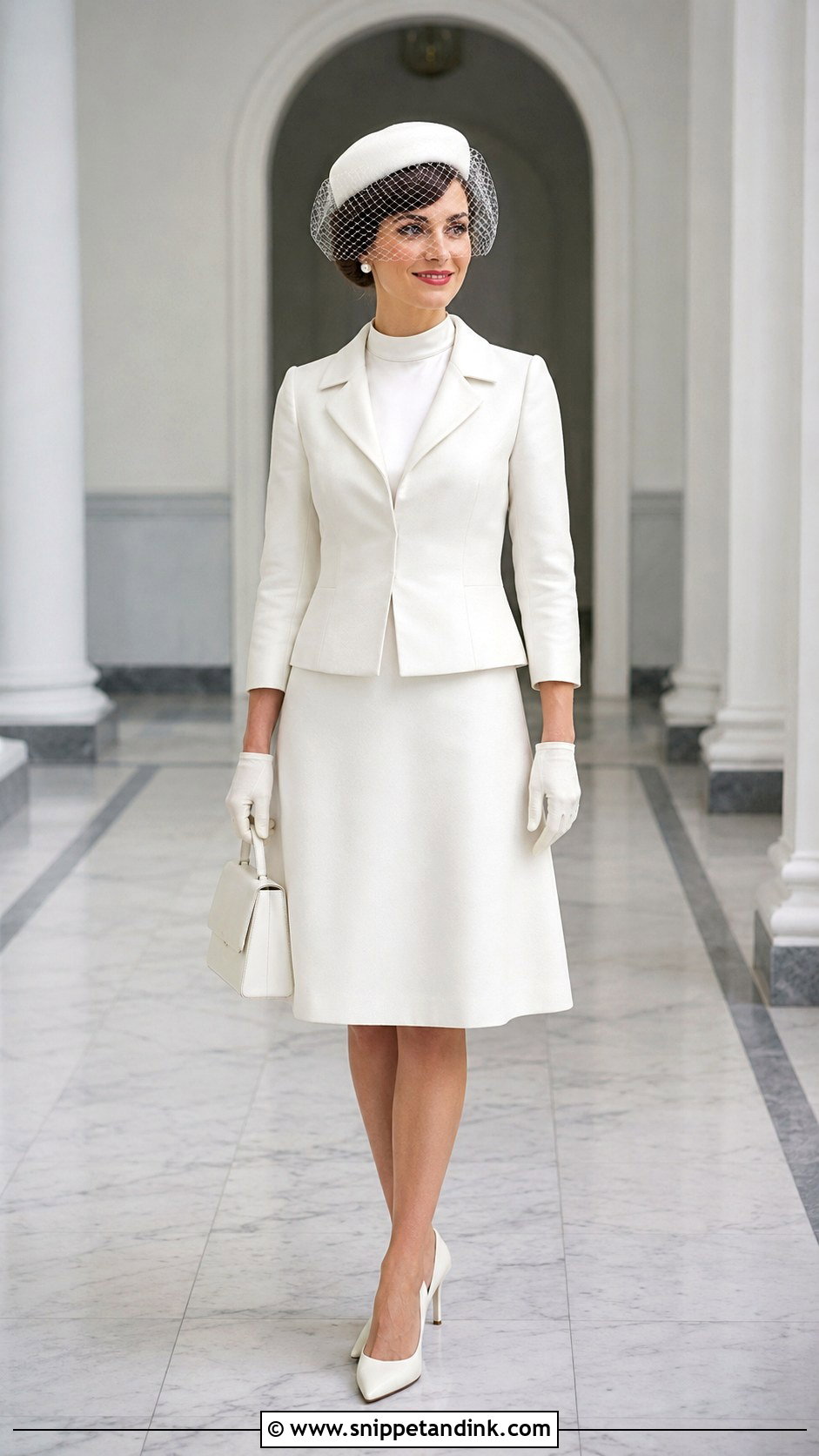
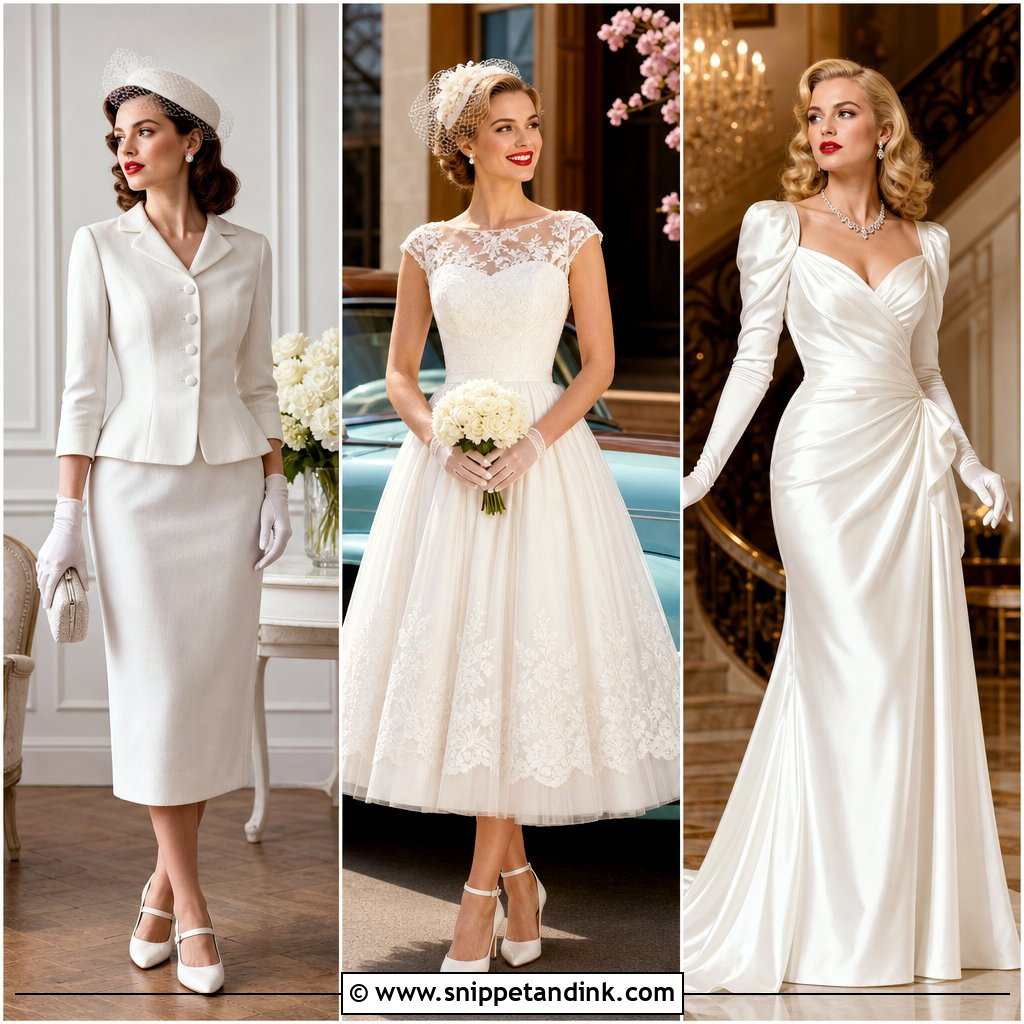
A white skirt suit was a common choice for civil weddings in the sixties, and it’s still smart and very reusable. A cropped or hip-length jacket with a softly shaped waist and a matching knee-length A-line skirt, with a silk shell or high-neck blouse underneath. Pointed pumps, short gloves, pearl earrings, a structured handbag and a pillbox hat with a face veil to mark it as bridal. Keep the jacket buttoned for the ceremony and take it off later if the blouse can stand alone. It suits minimalist weddings and older brides especially well, and both pieces can be altered and worn again.
17. Babydoll 60s Wedding Dress
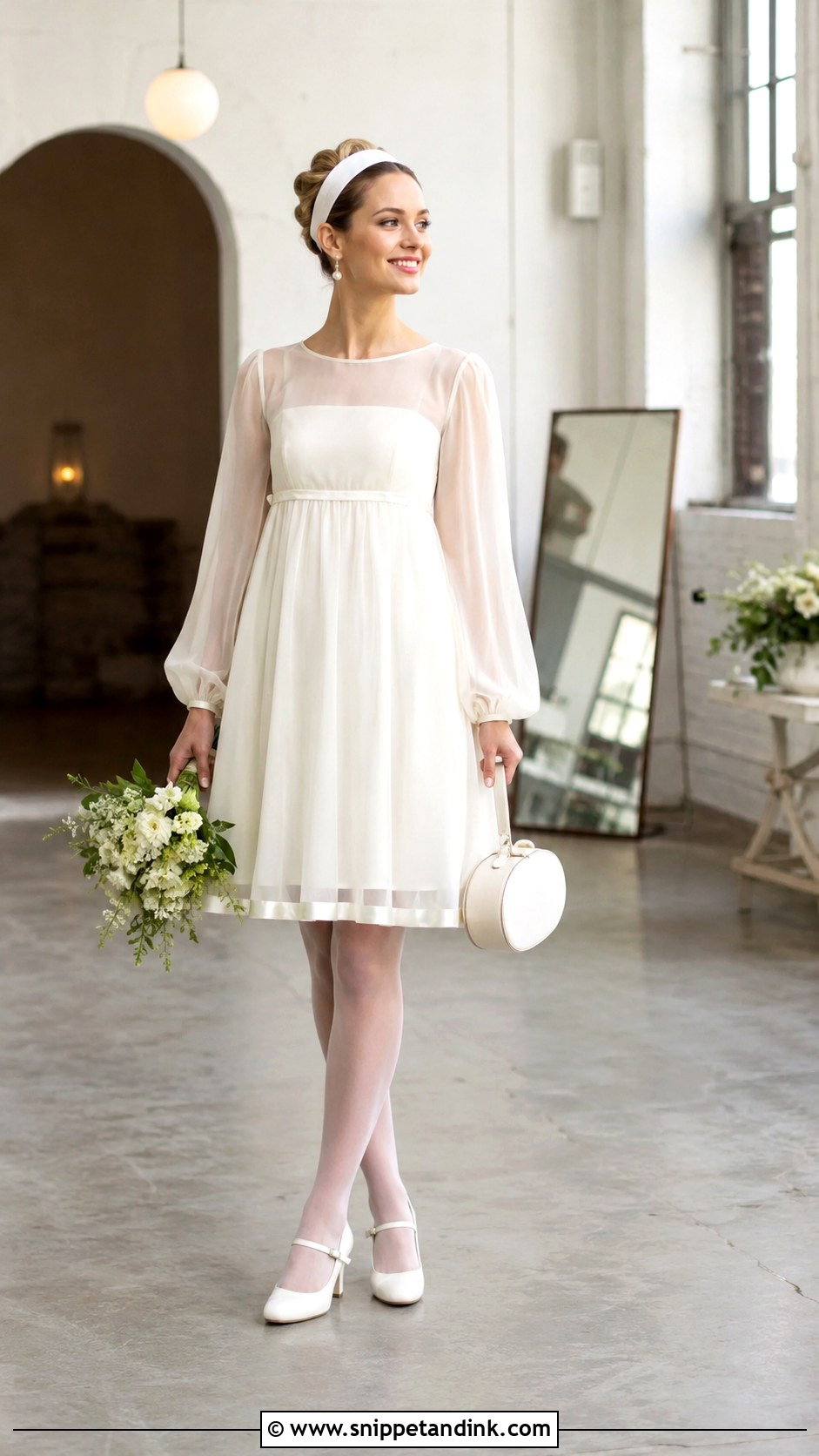
A babydoll wedding dress takes its youthful shape from a seam high under the bust and a loose, flared body. Mini or knee length, with a fitted upper bodice and long sheer sleeves. Chiffon or light crepe keeps it soft; a stiff fabric makes it stand away from the body like a tent. A lace neckline or narrow ribbon trim gives definition. Mary Janes, semi-sheer tights, a small rounded bag, a wide headband or short veil, softly curled hair and small drop earrings. It’s for the bride who wants nothing at all around her natural waist.
18. Crochet Lace Maxi 60s Wedding Dress
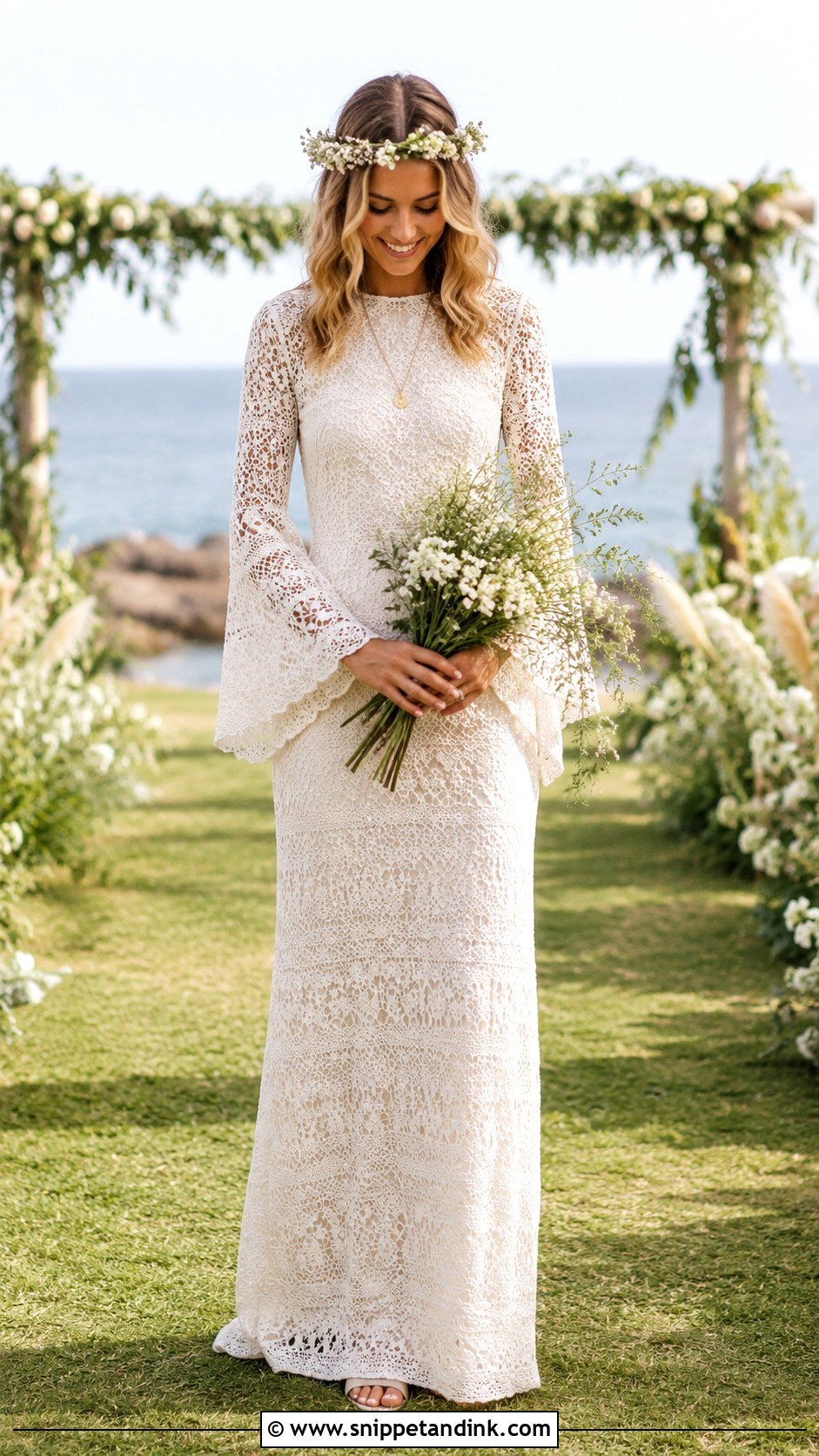
A crochet-style lace maxi is the most relaxed dress here. A high or soft scoop neckline, a fitted upper body and a straight skirt with room to walk, plus long flared sleeves. The opaque ivory slip underneath matters more than you’d think: open crochet is see-through in sunlight, and a slip that’s too short shows a line across the thighs. Flat sandals, a delicate pendant, an airy bouquet and a floral headband or narrow lace ribbon instead of a structured veil. Keep the hair loose but controlled. Gardens, beaches, back yards and countryside weddings suit it.
19. Square-Neck A-Line 60s Wedding Dress
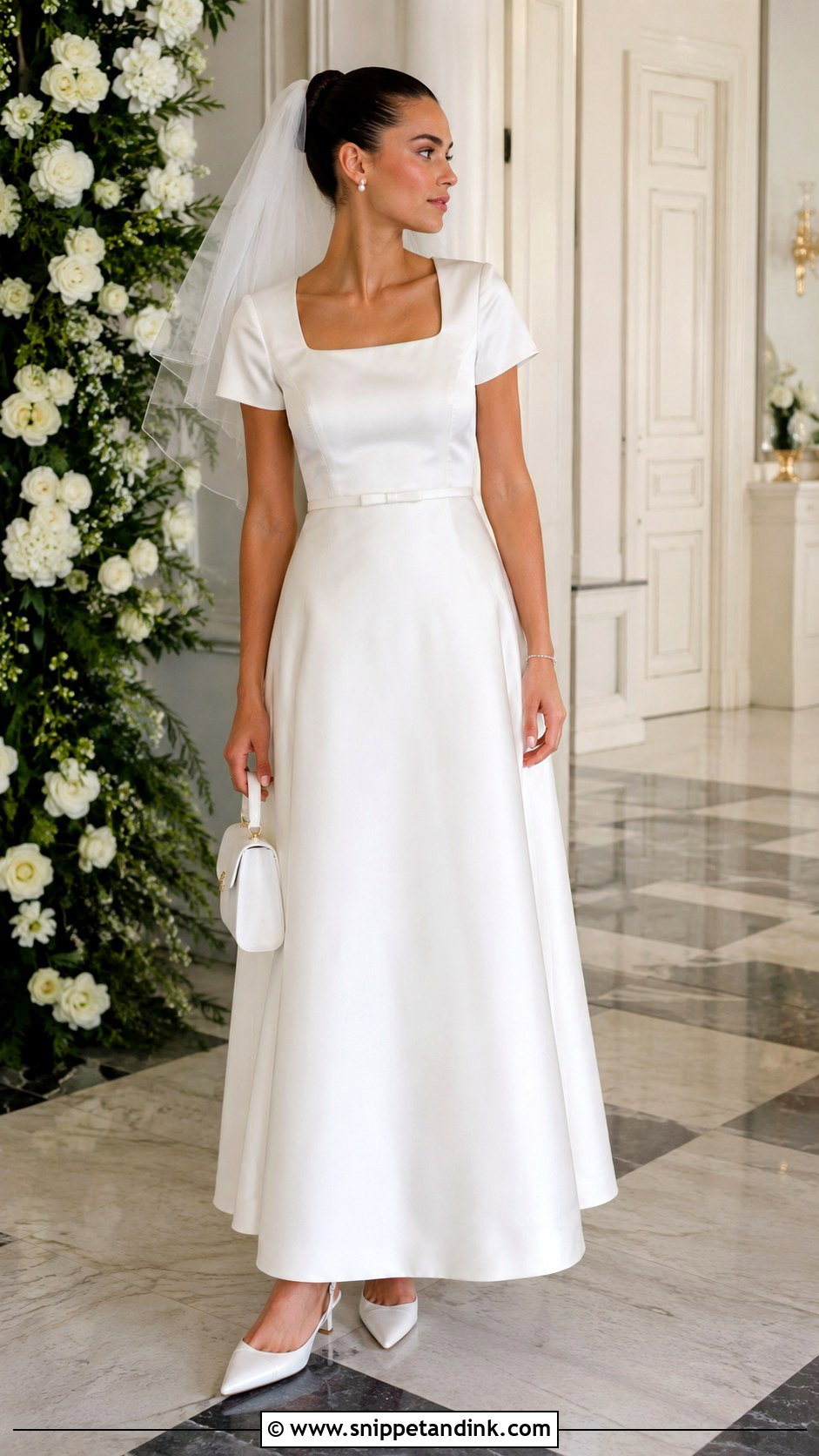
The square neck sharpens a familiar A-line. A fitted bodice with short sleeves or wide straps, a skirt flaring gradually from the natural waist, and matte satin or structured crepe to keep the neckline crisp. A narrow ribbon belt if you need more definition. Pointed slingbacks, a pearl bracelet, a small top-handle bag, a short veil behind a smooth low bun. A matching cropped jacket gives coverage for the ceremony. It flatters many figures because the open neck draws attention up while the skirt moves away from the hips; just check the straps don’t slide outward when you reach forward.
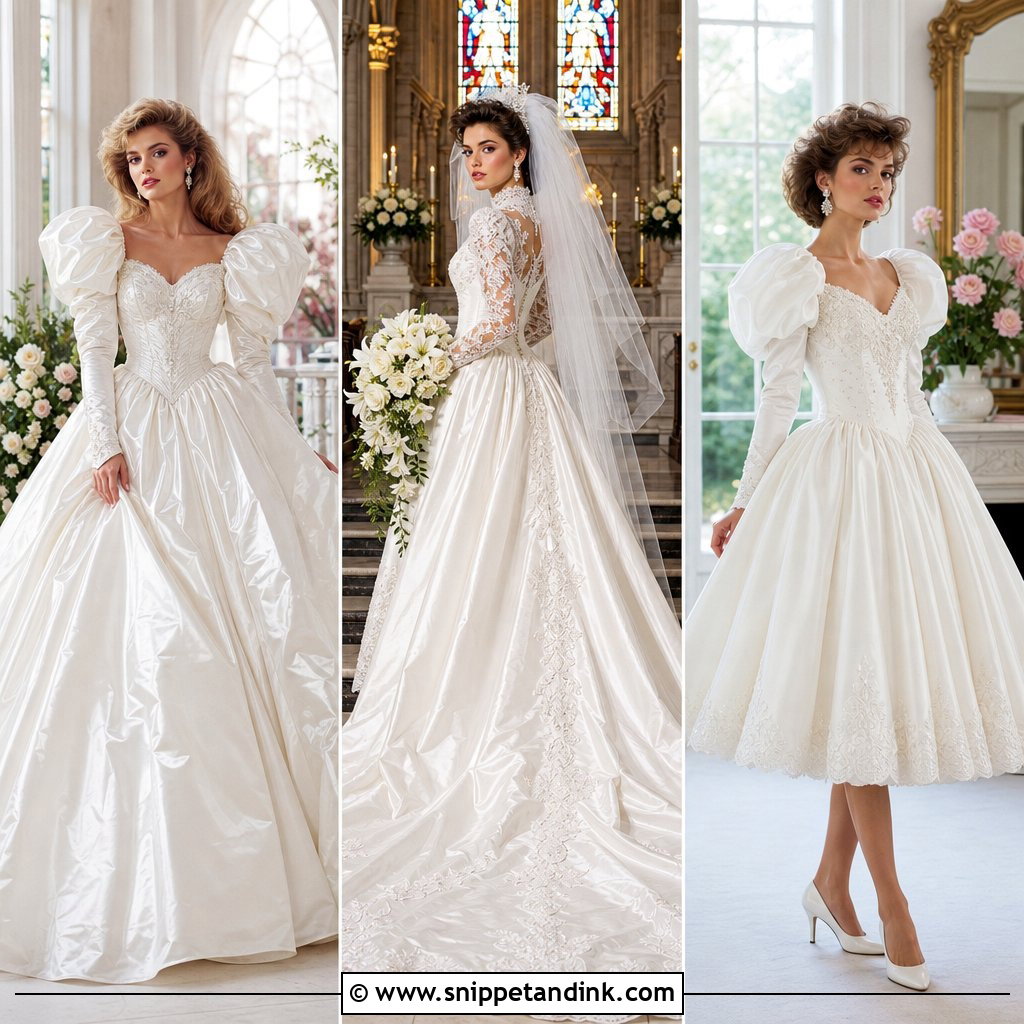

20. Floral Appliqué Mini 60s Wedding Dress
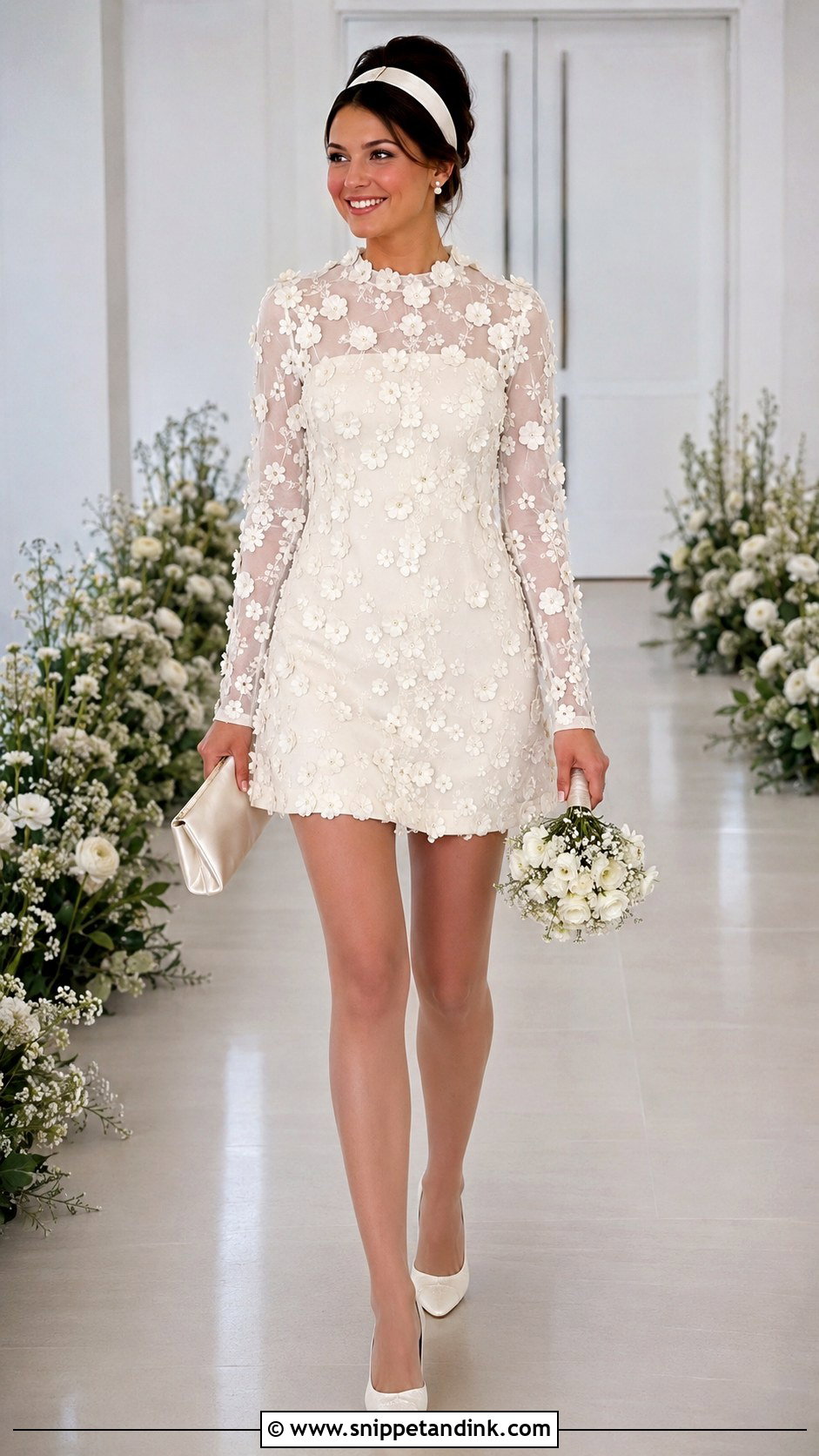
Spaced three-dimensional flowers on a simple A-line mini add texture to the short silhouette. Dense appliqué on a short dress gets heavy fast, so I’d keep them scattered. A high round neck and long sheer sleeves balance the hem. Low white pumps, sheer tights, a smooth satin clutch and small pearl earrings, no necklace. A wide headband, a short bubble veil or a floral comb. Use flower shapes in the bouquet that differ from the ones on the dress, or the two blur together in photos. A spring civil ceremony, a modern indoor venue or a party change all suit it.
Switching Into a Mini After the Vows
Several of these looks are described as a reception change, and the sixties are a natural decade for it: a long lace or organza dress for the ceremony, a short mod or bow-front dress for the party. It’s a fun idea that only works when someone has planned the change itself.
- Agree on a moment. The gap after dinner and before the first dance usually works, and photographers like to know so they can be there for the reveal.
- Find a room with a door, a mirror and a hook near the reception space. Changing in a hotel room three floors away can eat half an hour.
- Plan the hair. A bouffant with a long veil may need restyling for a headband or bow, so ask your hairstylist to show someone how to take the veil out without pulling the set apart.
- Choose shoes for both looks, or one pair that suits both hem lengths.
- Hand one person the job of the first dress: a padded hanger, a garment bag and a place to keep it safe while you dance.
Keep the colours in the same family. An ivory gown followed by a bright white mini can make one of them look grey in photos taken side by side.
Which Sixties Bride Are You?
Sixties bridal style runs from organza ball gowns to mod minis, so the first decision is which part of the decade feels like you. Tea-length lace is polished and easy; empire chiffon is soft and flowing. Minimalists have the satin A-line, the sheath, the coat dress and the skirt suit, while bell sleeves, crochet and babydoll shapes carry the relaxed late-decade mood. Match the silhouette to your venue, season and how formal the day is, then add shoes, headwear and jewellery from the period one piece at a time. Stop when it still looks like you in a good dress, not like a costume.
You'll Like These Ideas:









Leave a Reply