
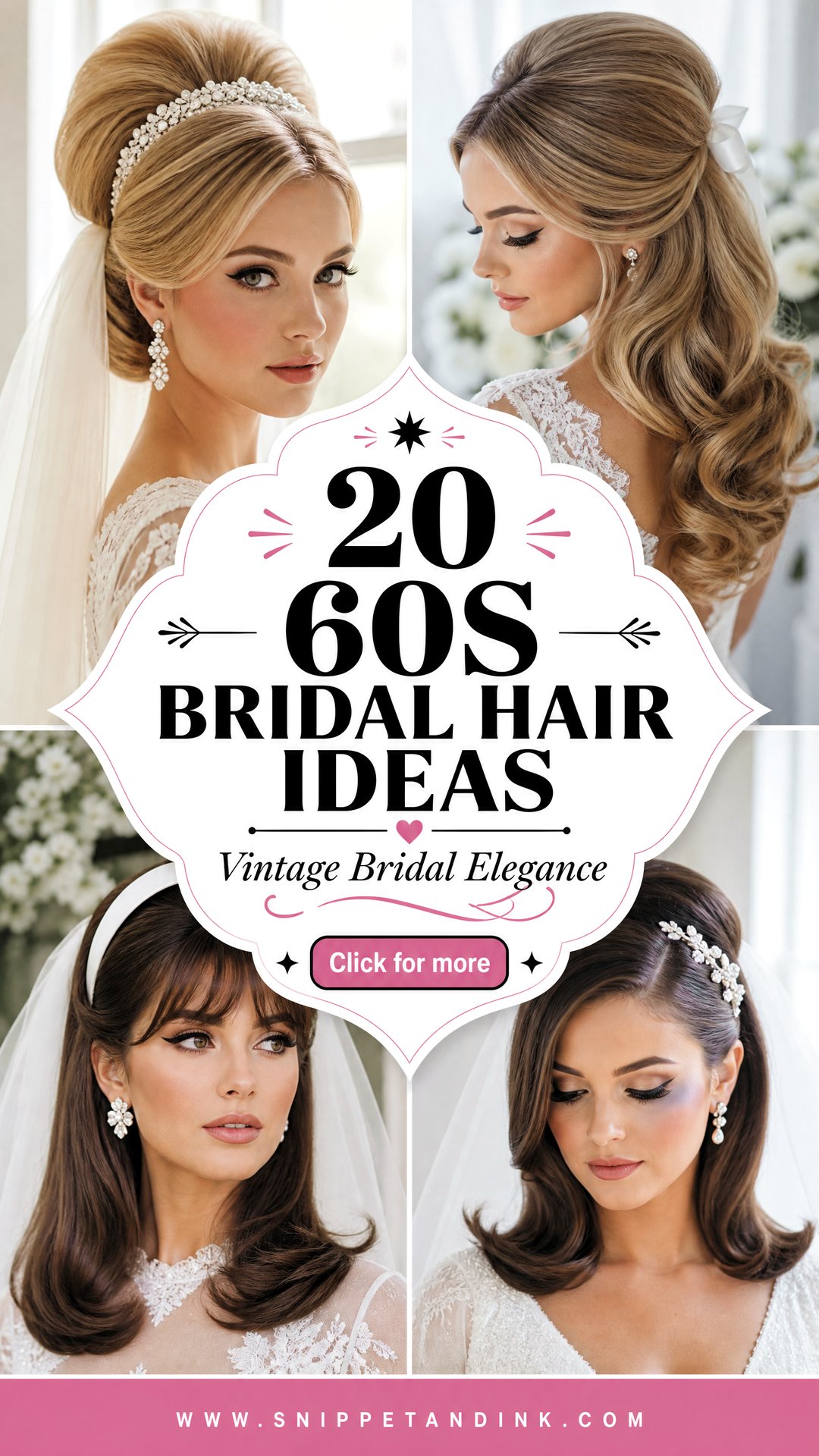
The sixties gave brides more hair shapes than almost any decade since: beehives, bouffants, flipped ends, sleek mod shapes and half-up crowns that still look right in modern photos. What they share is structure. Every one of them starts with a set and some backcombing, and how well that foundation is built decides whether the shape lasts until the speeches. My advice is to pick one feature to lead, height or a flip or a sleek line, and keep the rest quiet. Here are twenty versions, with what I watch for on each.
Building 60s Height So It Lasts Past the First Dance
Almost every look below starts the same way, and this foundation is where your stylist should spend most of the appointment. Sixties volume isn’t sprayed into place. It’s set, then teased, then smoothed over.
- Set first. I roll dry, prepped hair on large hot rollers or Velcro rollers and let it cool completely. Hair that cools in shape keeps its bend for hours; hair brushed out while warm drops.
- Tease in sections. I take horizontal sections at the crown and push the underside down toward the scalp with a fine-tooth comb, with a light mist of spray between layers.
- Smooth the top. A clean, untouched section goes over the teasing and gets brushed with a soft bristle brush so the surface stays glossy.
- Lock it. Crossed bobby pins under the crown hold the height so it can’t slide backwards when you hug people.
Adjusting the method for fine, heavy or curly hair
Fine hair often can’t hold a full beehive on teasing alone, so I add a small padding piece in a matching color under the crown. Very heavy hair needs the opposite: less teasing and more pins, or the weight pulls the shape down. Curly and coily hair has natural grip and holds volume well, though I’d use a stretched or blown-out base for the smooth outer layer and backcomb more gently to protect fragile ends.
1. 60s Beehive Bridal Hair
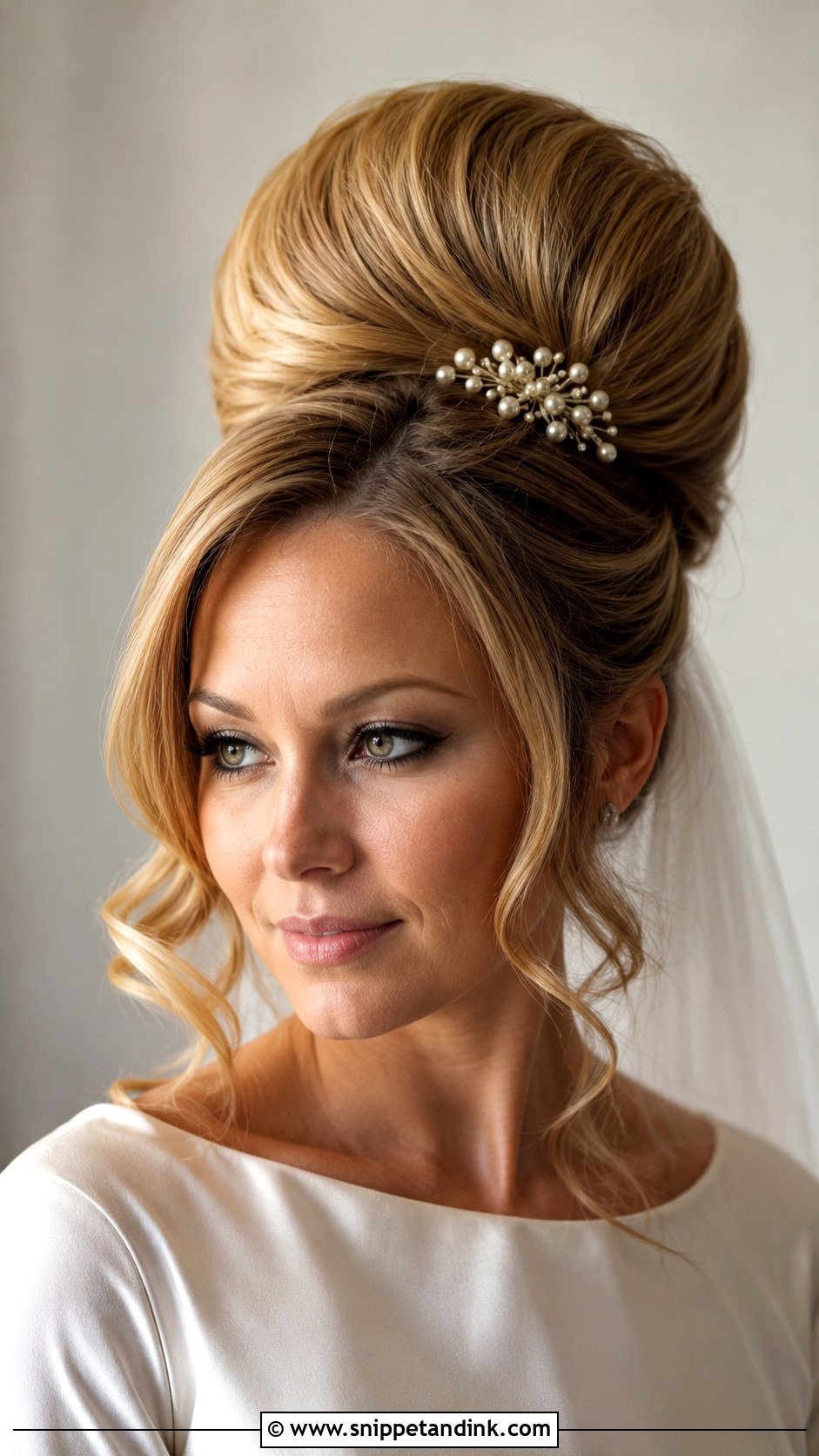
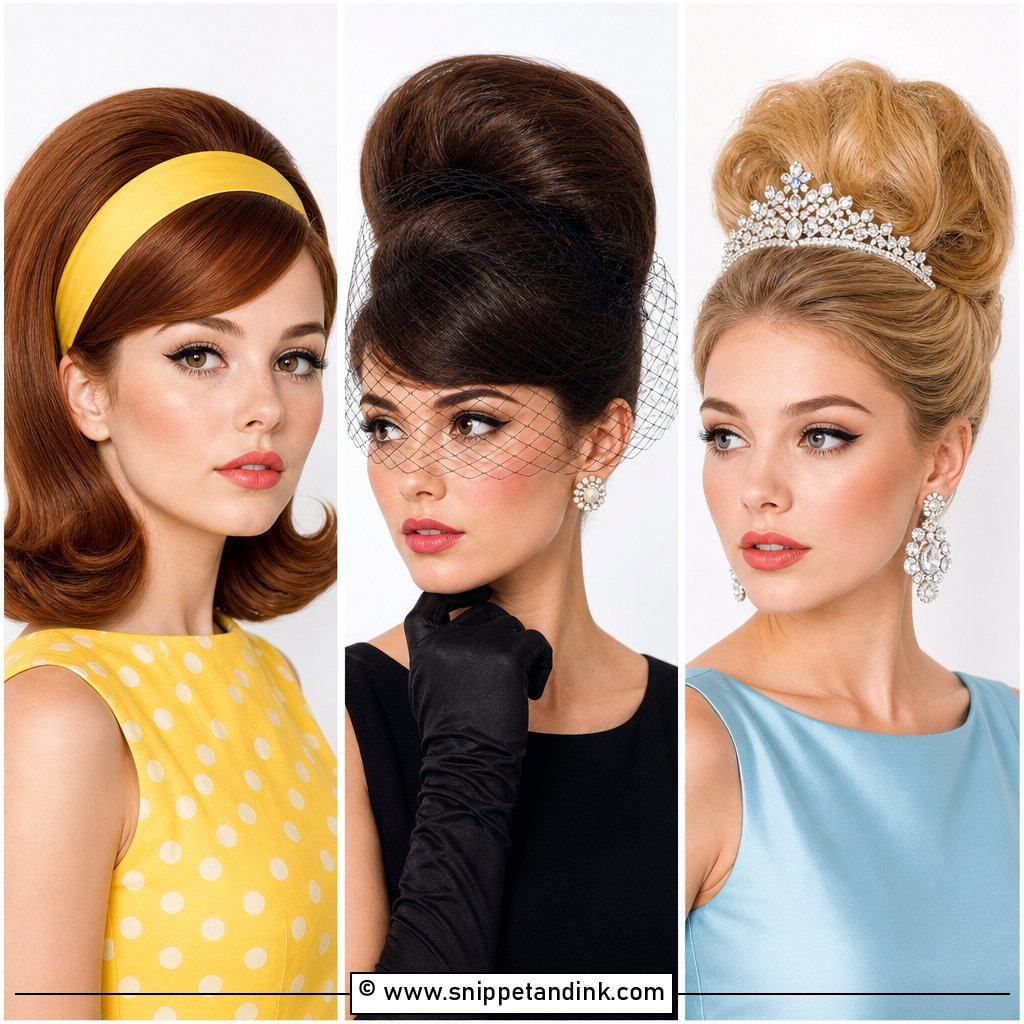
A bridal beehive lives or dies on its outer layer. With 60s beehive bridal hair, all the teasing sits underneath, and I smooth a clean top section over it with a soft bristle brush so the shape looks sculpted rather than ratty. The tall base gives a short veil or pearl comb something solid to grip. Keep the dress neckline simple, since the hair is already doing the talking, and I’d leave a couple of soft pieces at the face so it never reads as a helmet.
2. 60s Bouffant Bridal Hair
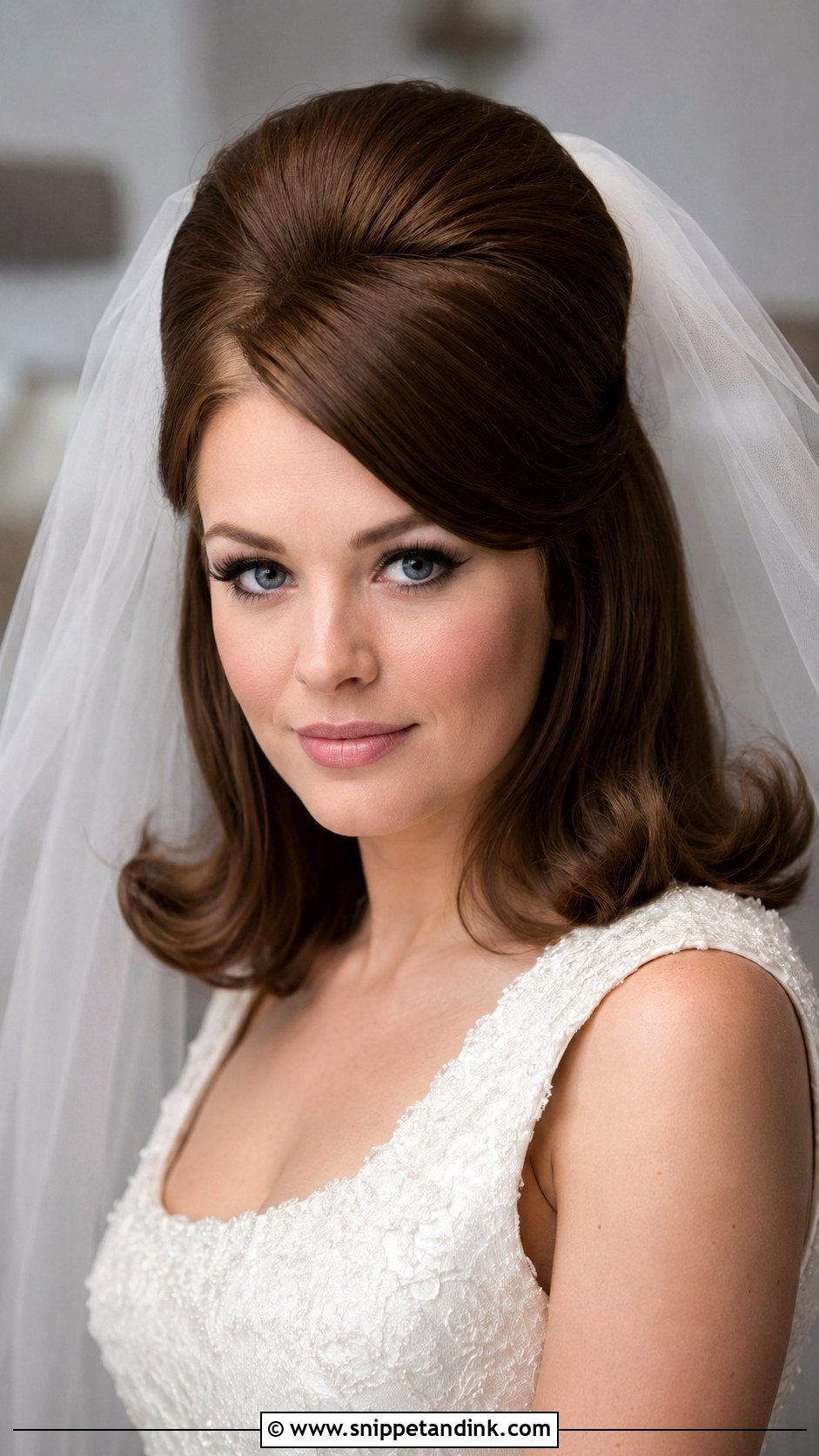
Think of the bouffant as the beehive’s gentler sister: a rounded crown instead of a tower, with smooth, controlled sides. It suits medium and long hair and can finish in curled ends, a tucked-under shape or under a low veil. On a round face the extra crown height lengthens the silhouette; on a long face I keep the lift lower and wider. A satin headband in front of the volume stops the shape creeping backwards through the day.
3. 60s Half Up Bridal Hair
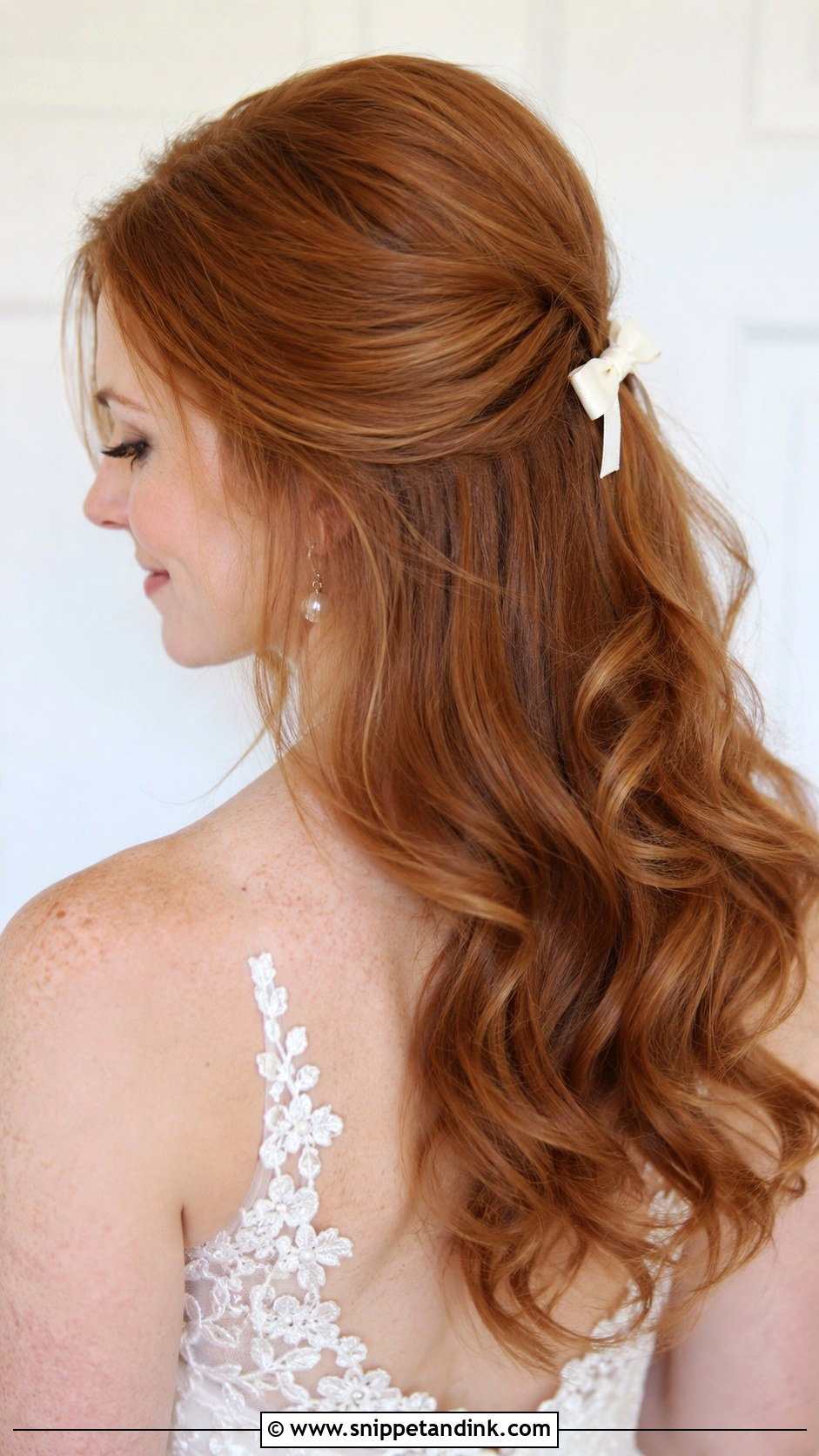
Of all the 60s shapes, half-up is the one I find easiest to wear for a full day, because the weight of the length isn’t pinned onto the scalp. I tease the top section, smooth it back and lock it with crossed pins right where the bow or clip will sit. The lengths can be curled, flipped or brushed into waves. Fine hair tends to lose its crown here by evening, so on fine hair I slip a small padding piece under the teased section.
4. 60s Bridal Hair With Veil
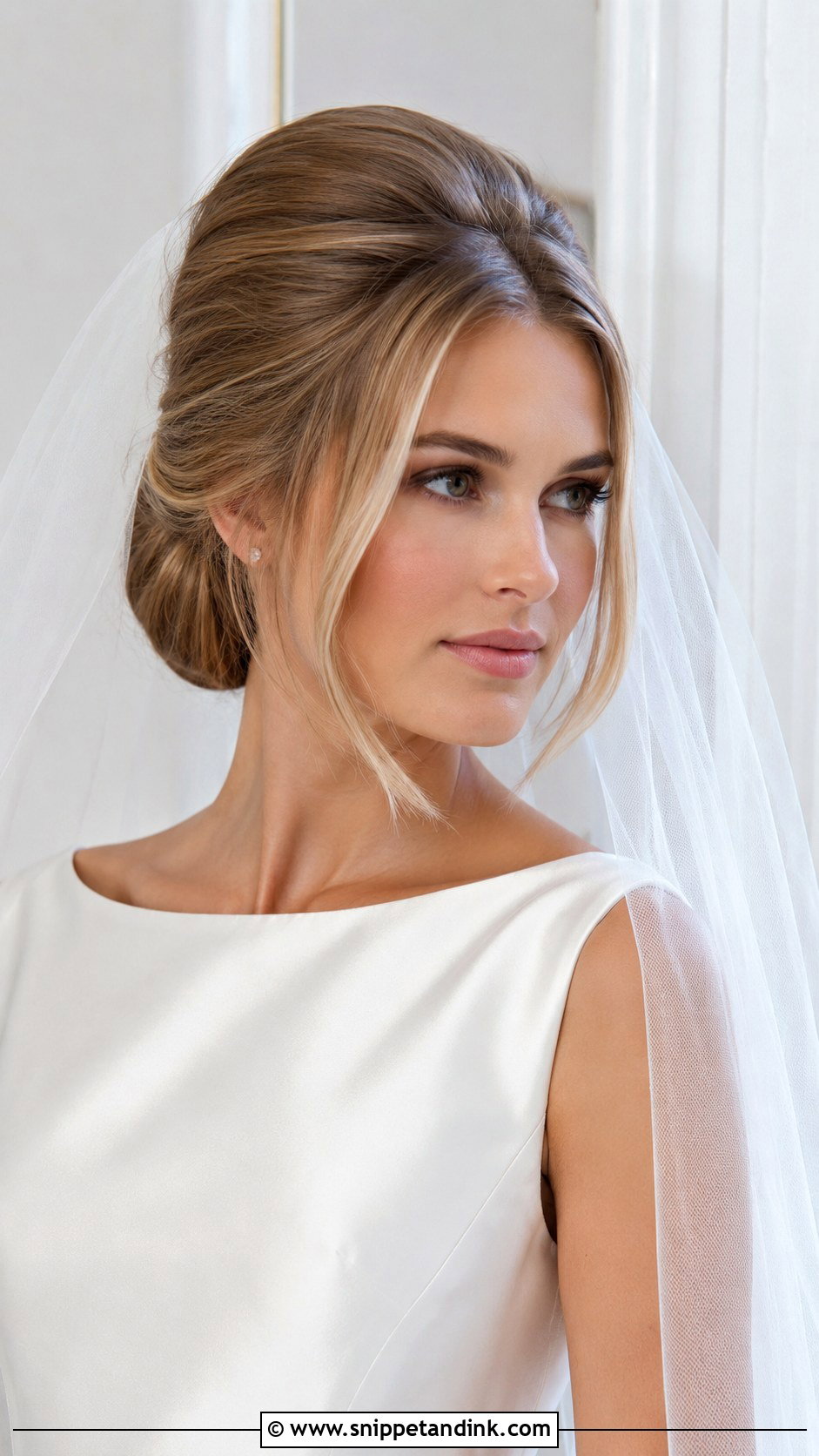
A veil should work with the shape, not flatten it. I set a fingertip or tulle veil comb just under the crown volume, never on top of it, or the weight squashes the height within the hour. A birdcage sits further forward and needs the front smooth and neat. Bring the actual veil to your trial: a cathedral length pulls on the comb very differently from a short one, and that changes how I pin.
5. 60s Bridal Hair With Headband
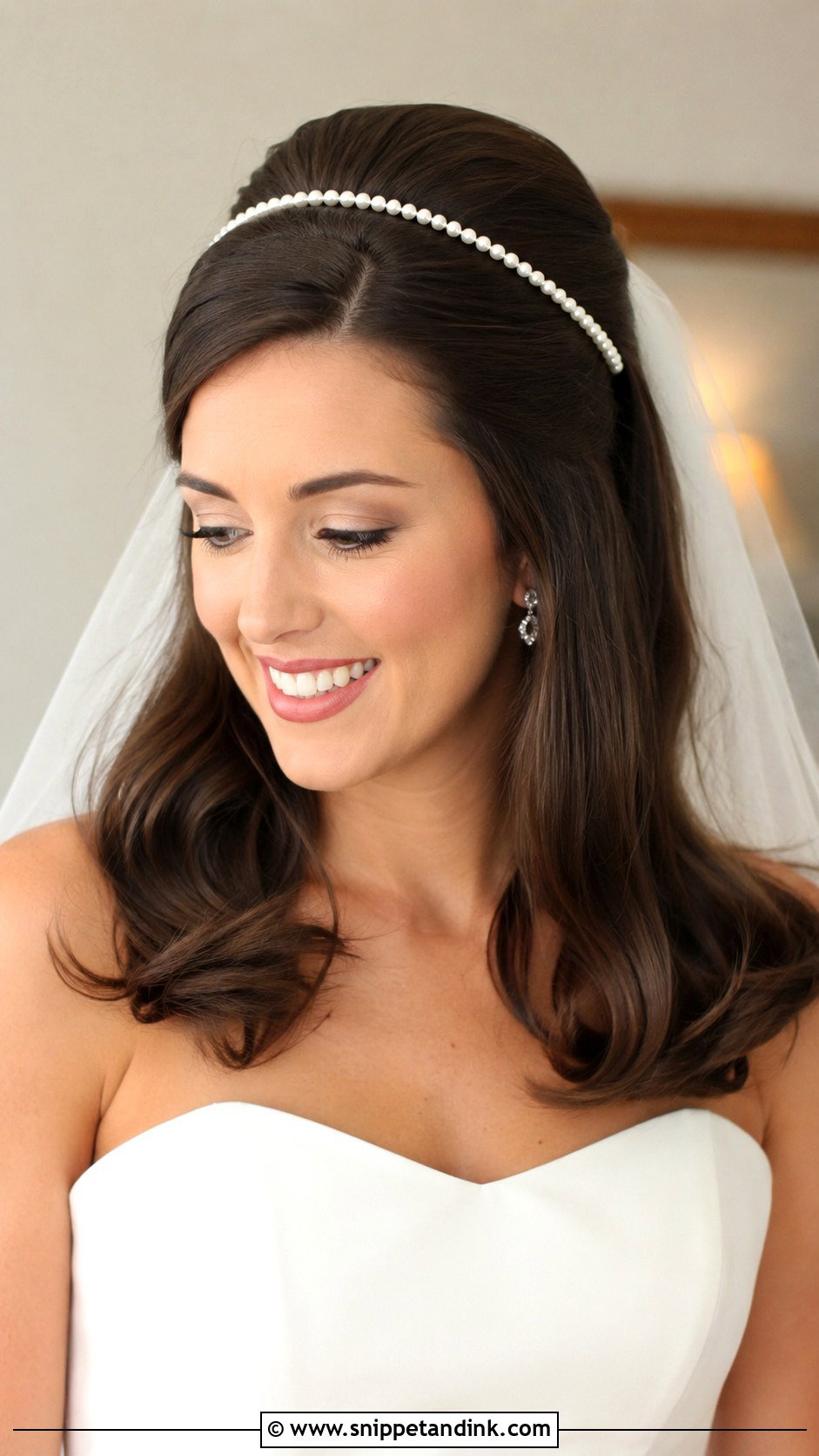
The headband is the most recognizable 60s accessory and also the most practical. It sits a little behind the hairline, holds back short layers and grips the base of the crown so the volume doesn’t slide. Satin and velvet bands feel more authentic than heavy crystal ones, which can press into the scalp after a few hours. Go glossy rather than lacquered; a light shine spray on top does more for photos than another coat of hold.
6. 60s Bridal Hair With Bow
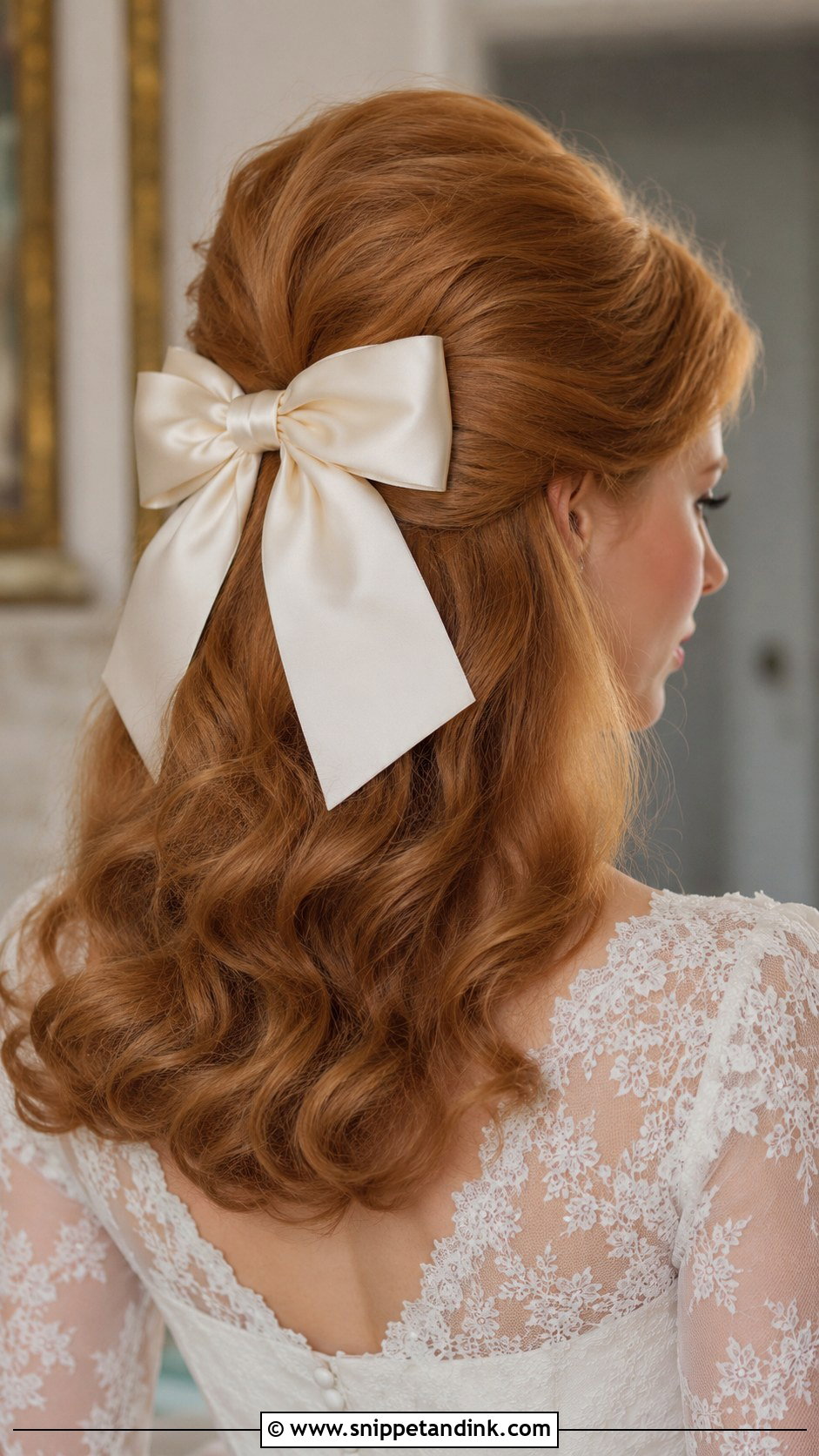
A bow reads playful, so the hair around it needs clean lines. I place it at the back of a half-up bouffant, above a low ponytail or just under a lifted crown, and pin it through its own knot rather than clipping it on top of the hair. Satin and organza hold their shape, while a floppy chiffon bow collapses. If you’d rather not wear sparkle in your hair, this is the accessory I’d steer you toward.
7. 60s Bridal Ponytail
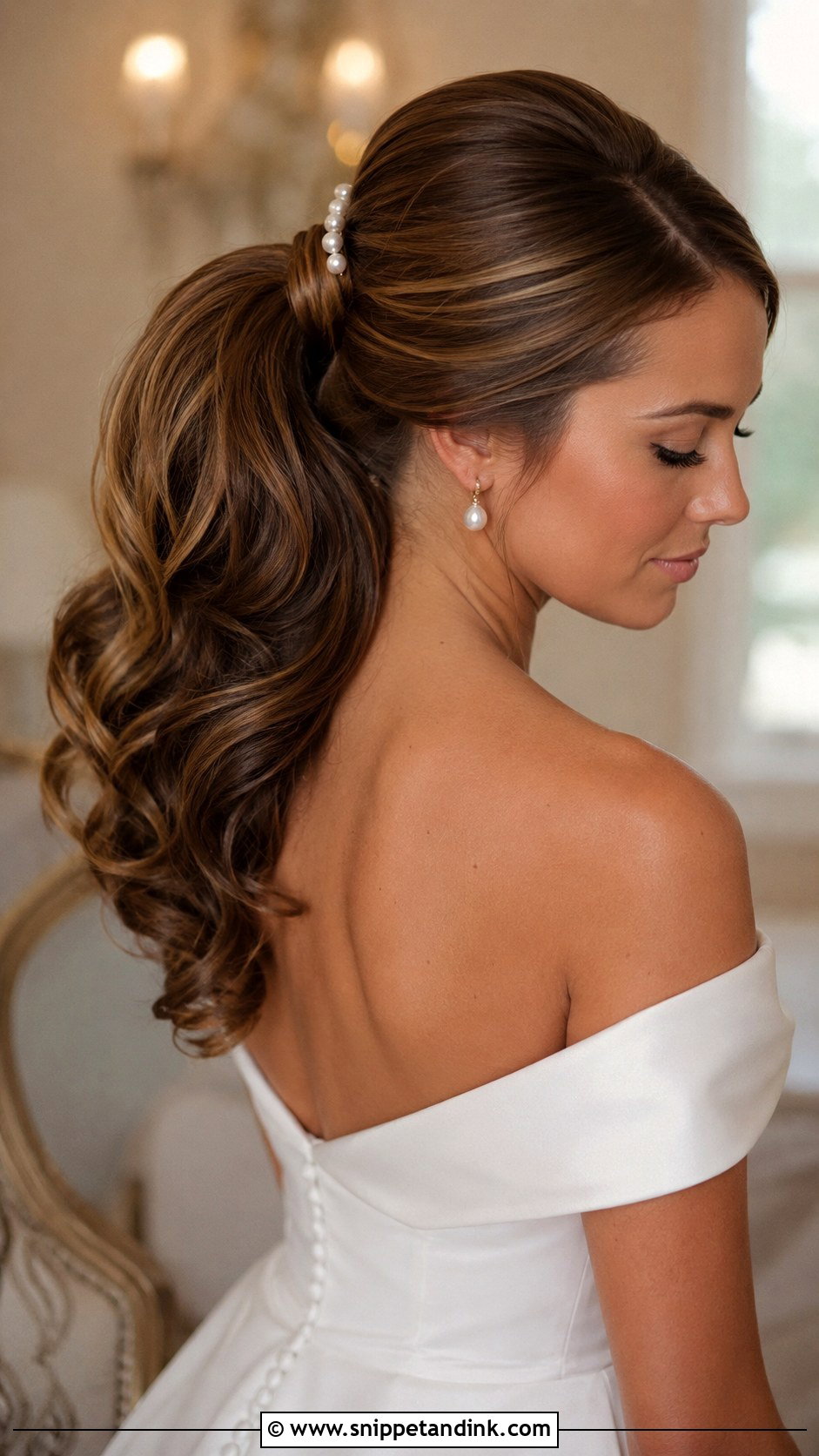
A high ponytail gives you retro volume and keeps your neck cool on the dance floor. I tease the crown, gather the rest into a mid or high pony with smooth sides, then wrap a strand of hair around the elastic and pin it underneath. Very long, heavy hair drags a high pony down and gives some brides a headache by the reception, so with that hair type I’d set it at the middle of the head instead. Strapless and bateau necklines show it off well.
8. 60s Bridal Updo
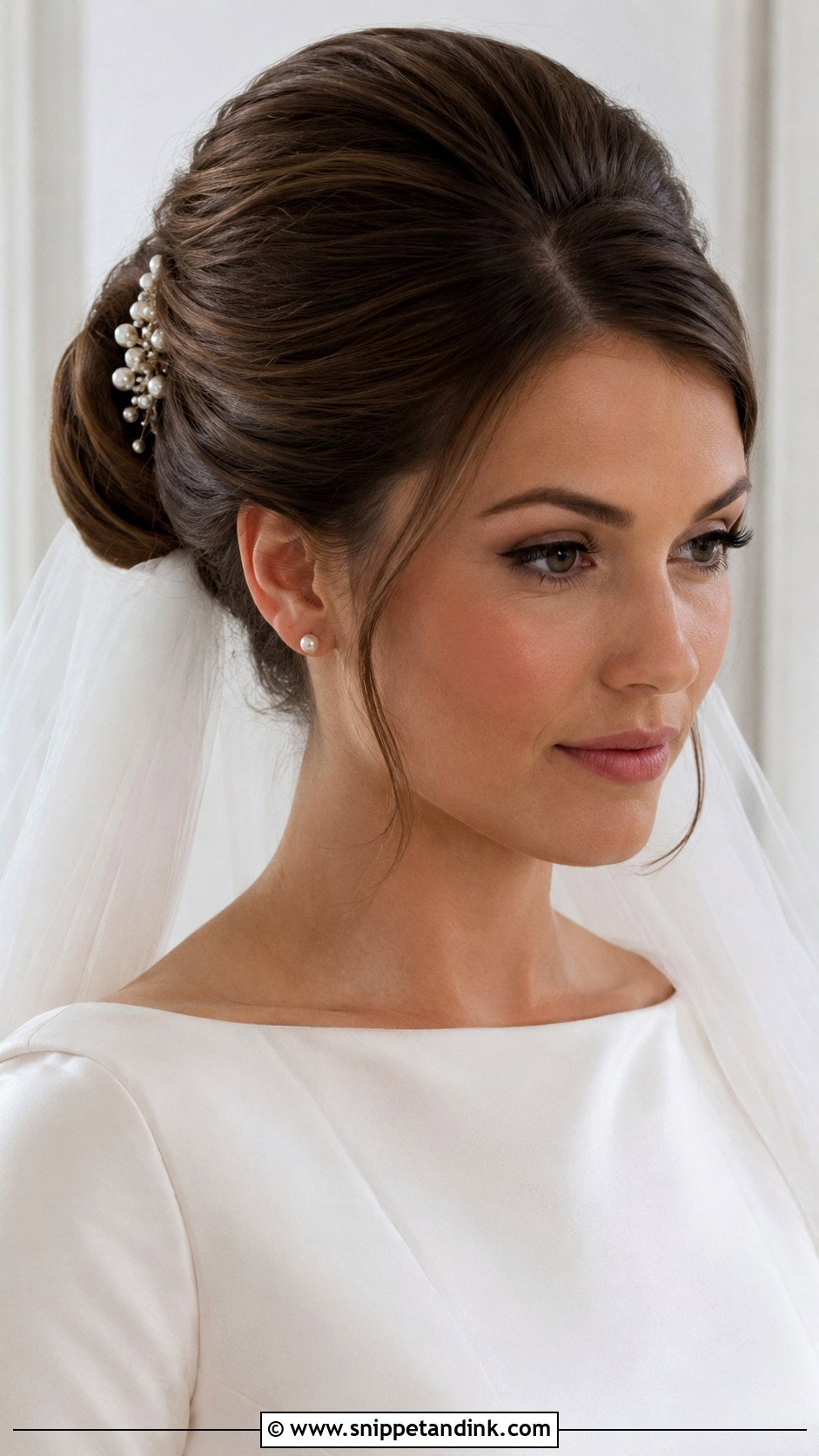
This is the formal one: soft teasing at the crown, then the back pinned into a smooth chignon, a French roll or a tucked shape. Because it’s built on a pinned base, it’s the most secure option for a heavy veil or comb. Where it goes wrong is too much height, which tips it toward costume, so I keep the crown lift gentle and let the profile show the period. For a day that runs from a morning ceremony to late dancing, I’d point you here.
9. 60s Bridal Hair For Short Hair
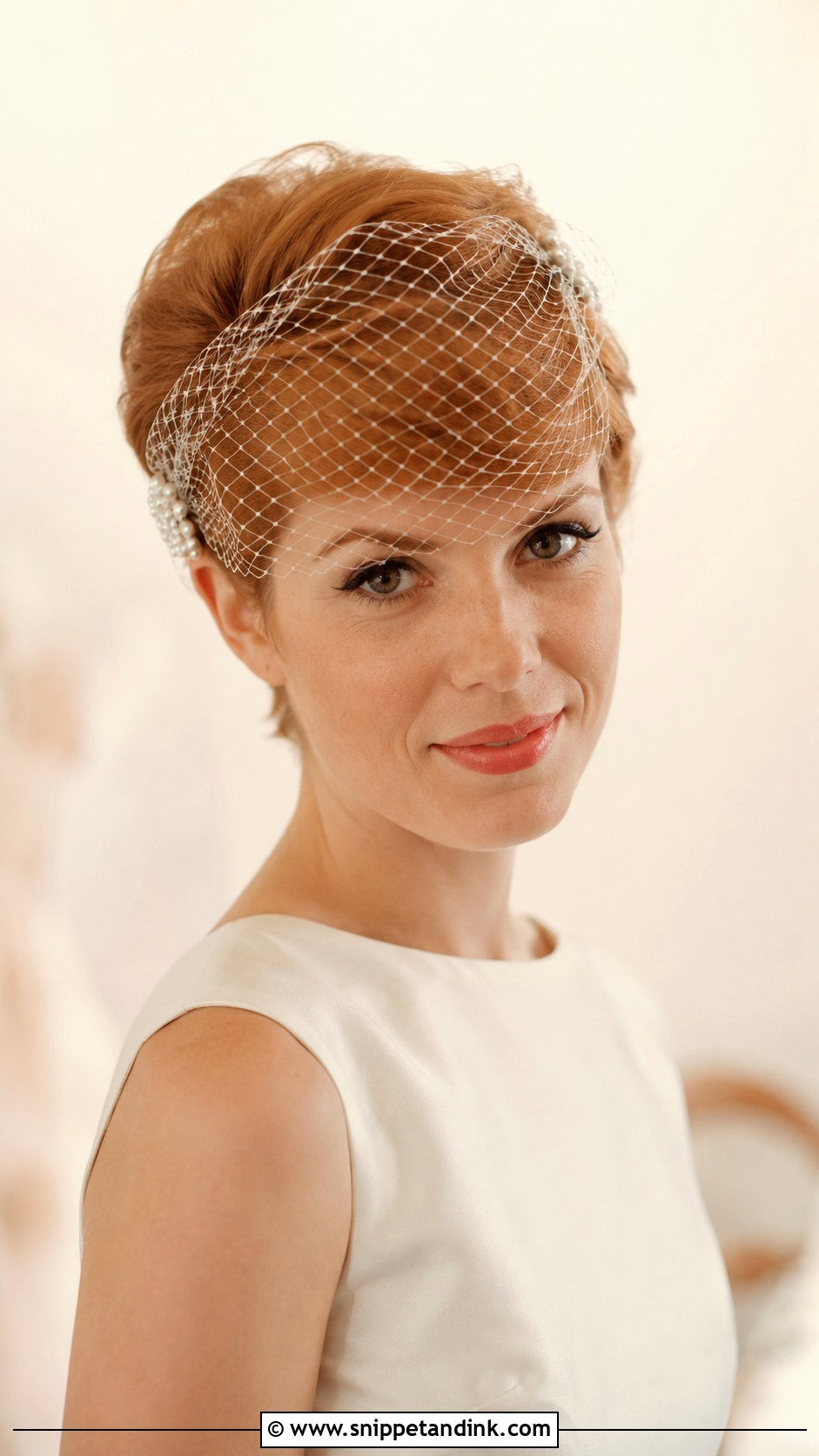
Short hair doesn’t need extensions to do the sixties. A short bob, pixie or cropped cut takes crown volume, a deep side part or flipped ends really well, and a headband or pearl barrette adds the bridal note. On a pixie the lift comes from a round-brush blow-dry and a little root teasing, not pins. Book your cut about two weeks before the wedding so the shape has settled without growing out.
10. 60s Bridal Bob Hair
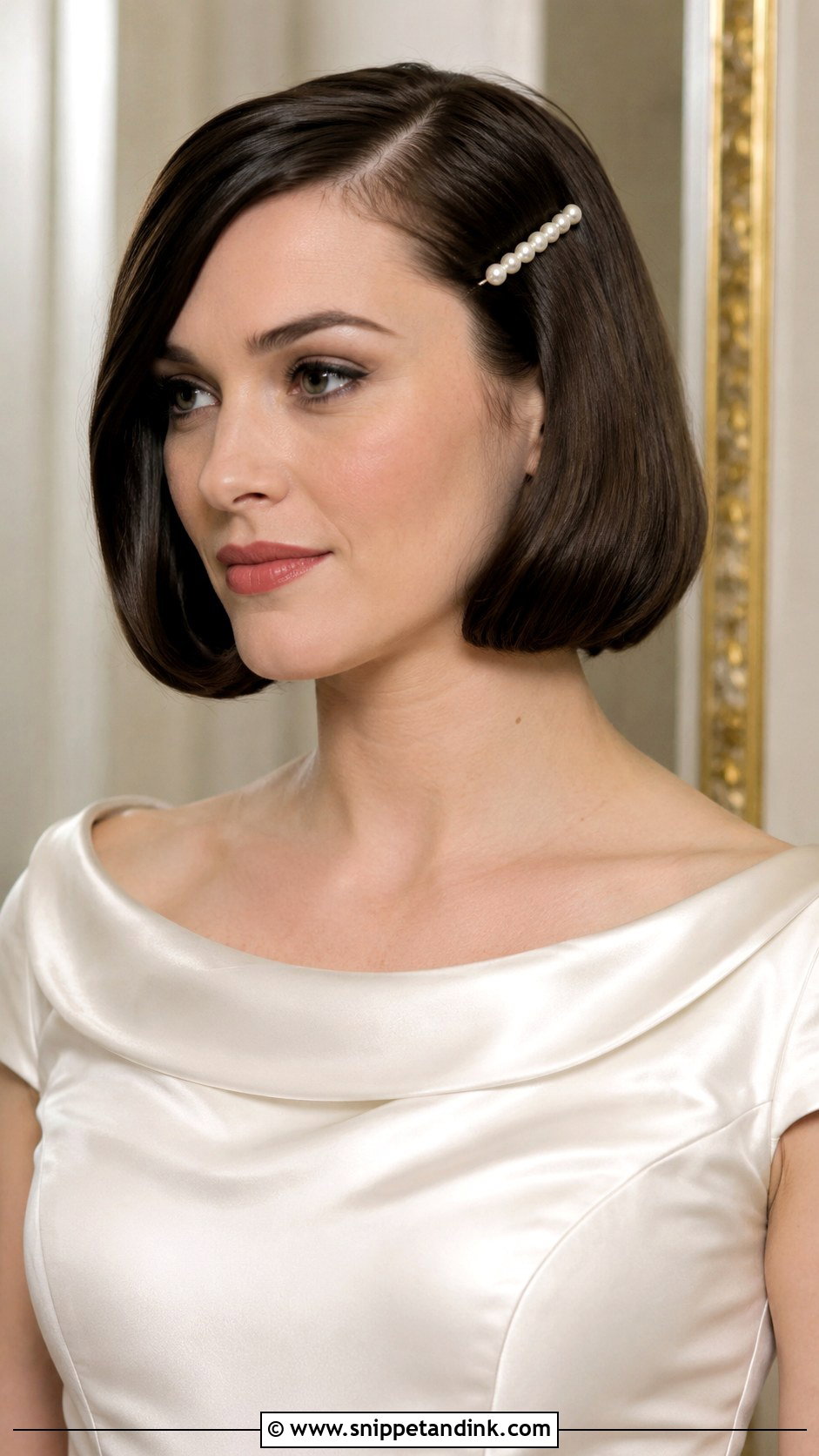
The bob is the cleanest 60s line there is: rounded, smooth at the sides, ends turned slightly under. It sits best on chin or jaw-length cuts. I set the ends on large rollers rather than flat-ironing them under, because a roller set holds that bevel far longer in a warm room. Gloves and pearl studs suit it. It should still move when you turn your head. A bob sprayed rigid looks like a wig in candid shots.
11. 60s Flip Bridal Hair
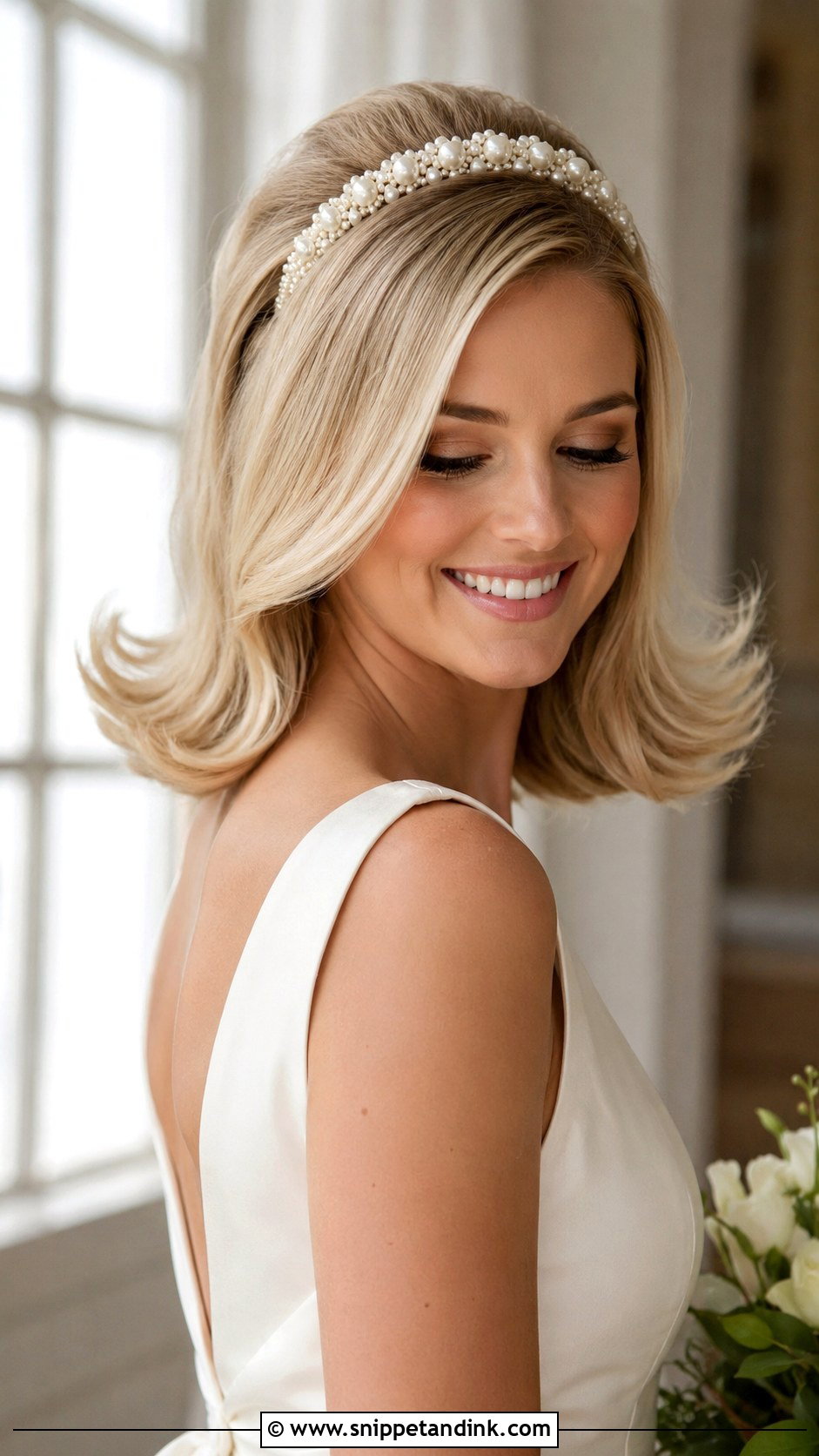
Flips are fun but fussy. The ends turn out in that mod curve, and the bend has to be even all the way round or it looks accidental. Shoulder-length hair, long bobs and layered cuts all take it. Humidity is the problem: the outward bend is the first thing to relax, so for an outdoor summer wedding I set the flip with rollers and a firm spray instead of relying on a flat iron. A headband behind the crown keeps the top neat.
12. 60s Mod Bridal Hair
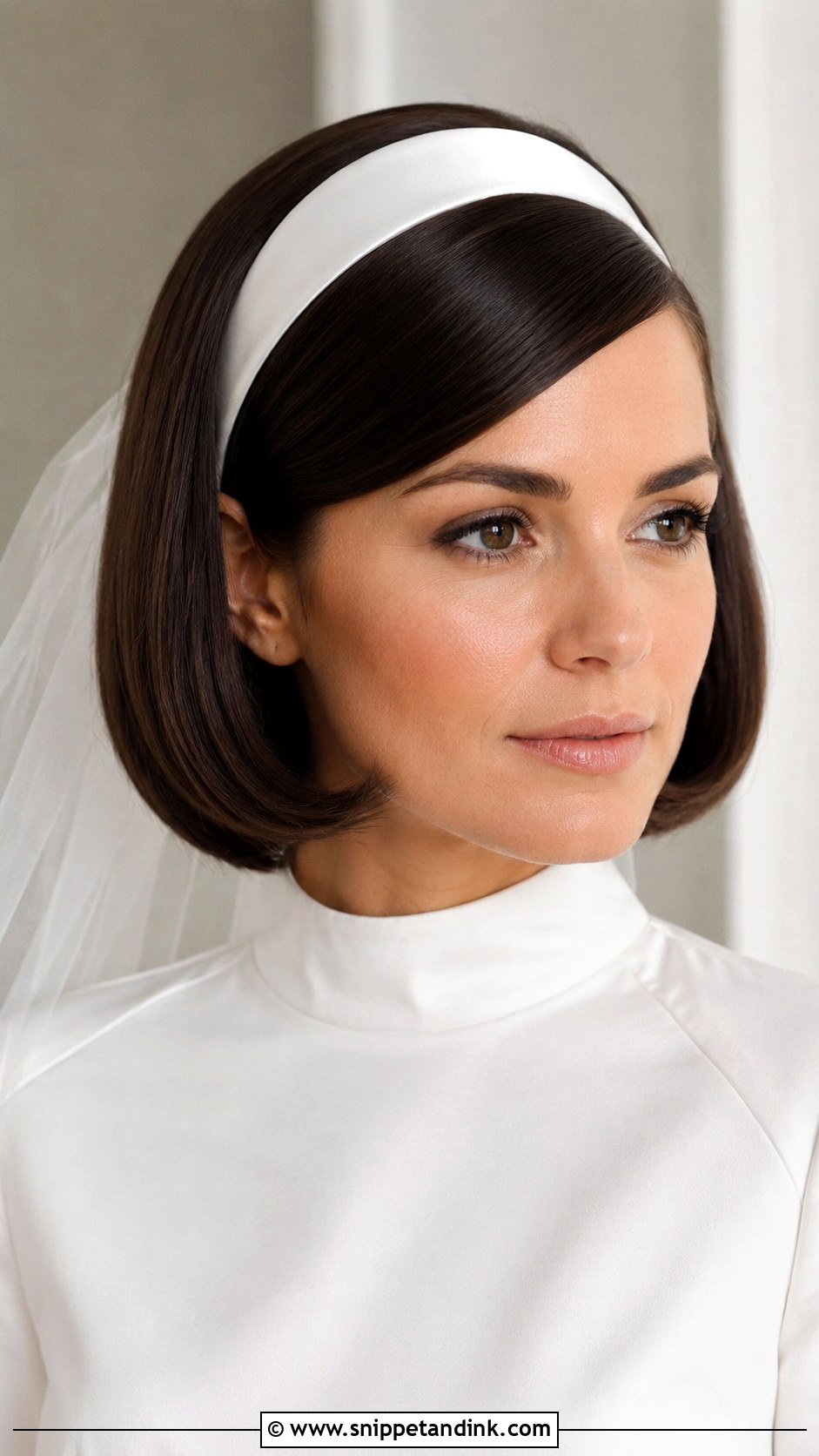
Mod hair is about line, not curl: sleek crowns, straight lengths, rounded ends and a crisp part. It’s the one for brides who don’t want curls at all. Most of the work is in the blow-dry. I take small sections and pull each one taut with a paddle or round brush so the surface reflects light evenly, and any skipped section shows up as a dull patch in photos. High necklines and graphic lashes sit naturally with it.
13. 60s Bridal Hair With Bangs
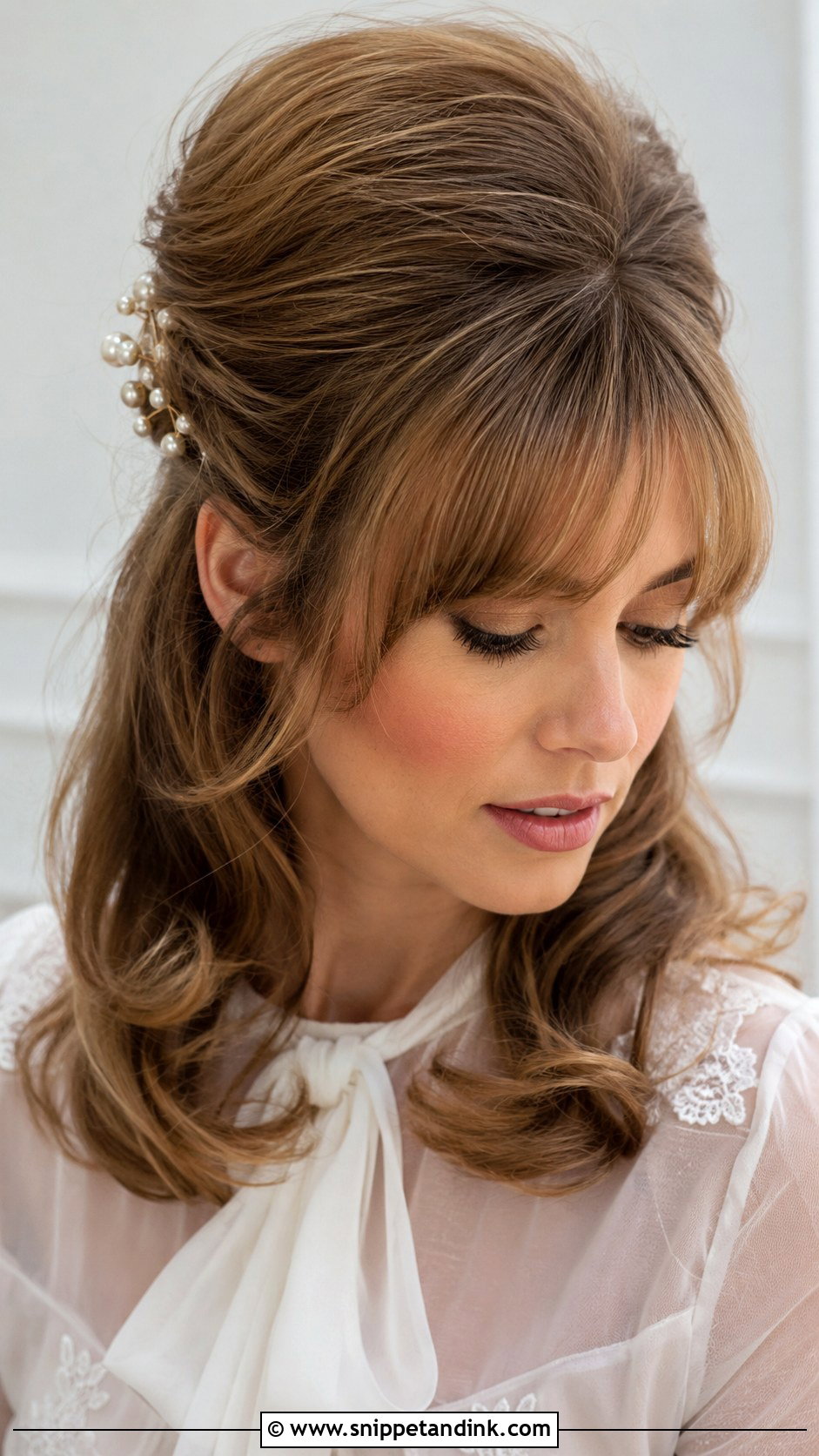
A fringe pulls attention to the eyes, which is why it reads so strongly in portraits. Curtain, wispy or full bangs can sit with a bouffant, a half-up shape or a bob; the crown just needs enough volume that the fringe doesn’t look heavy against it. Two warnings from experience at the chair: trim bangs about a week before, not the day before, and blot your forehead before photos, because skin oil splits a fringe into strands.
14. 60s Bridal Hair With Curtain Bangs
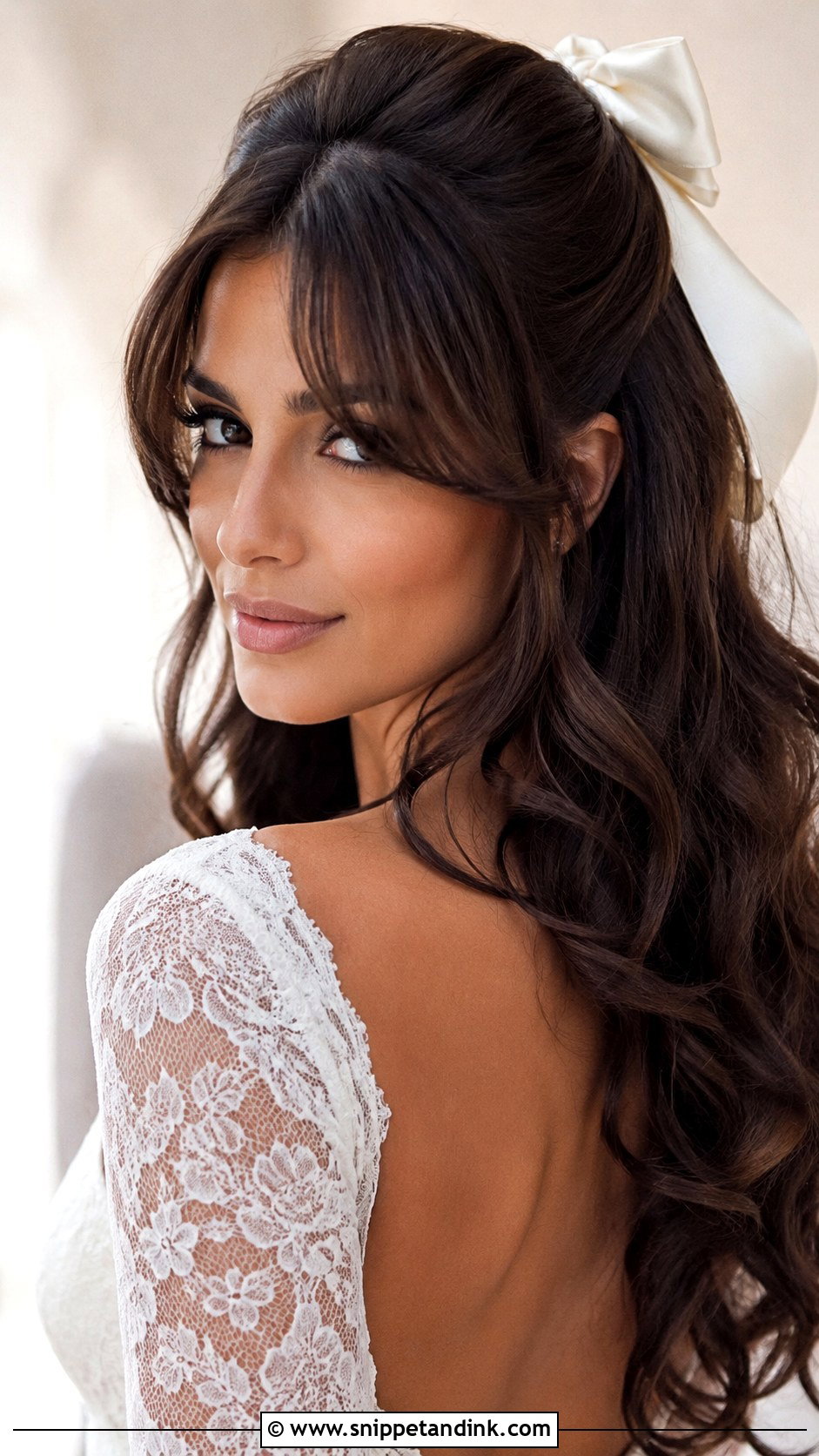
Curtain bangs are the forgiving version. They part open around the face while the crown gets gentle height, and they sit well with half-up hair, a ponytail or a low updo. I curl each side away from the face on a large barrel, then brush through so it moves as one piece. They’re a good option if you’re growing out a fringe and can’t commit to a full one. A pearl comb at the back finishes the look.
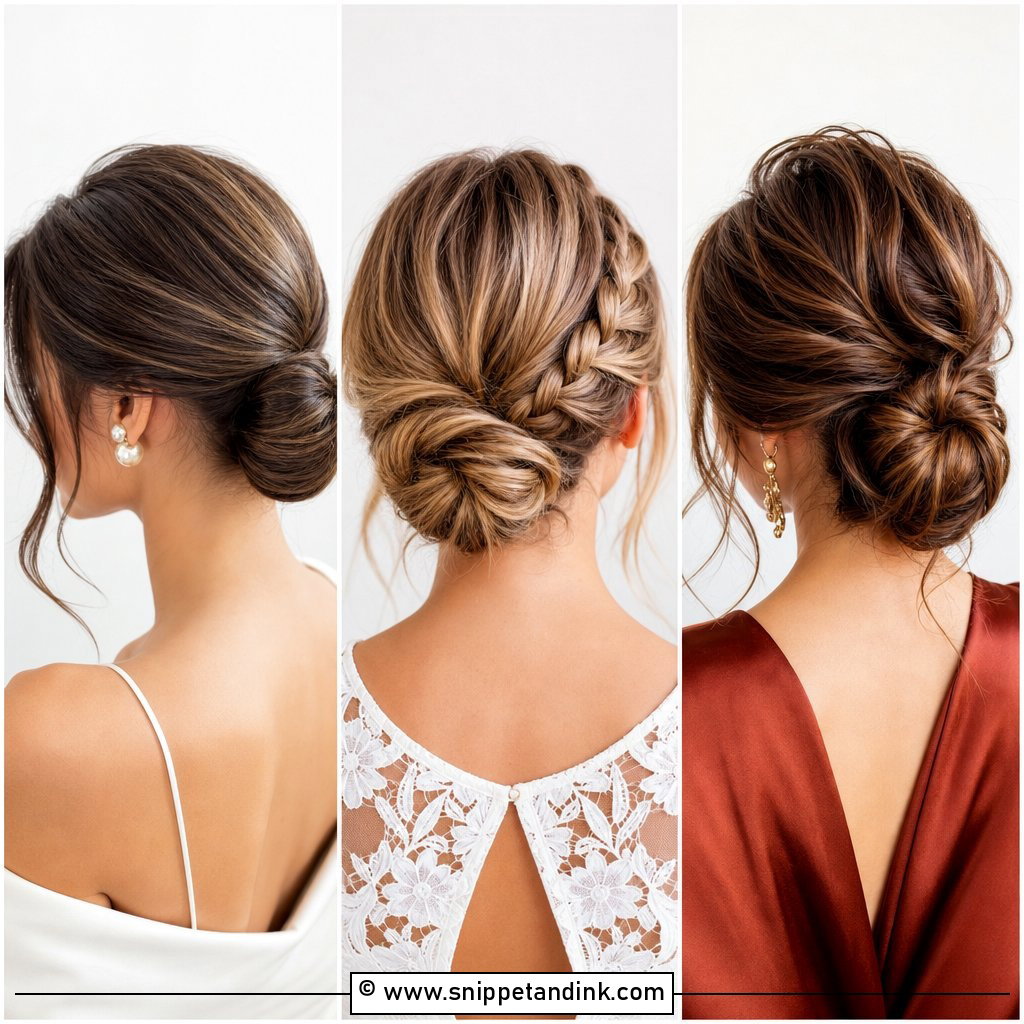
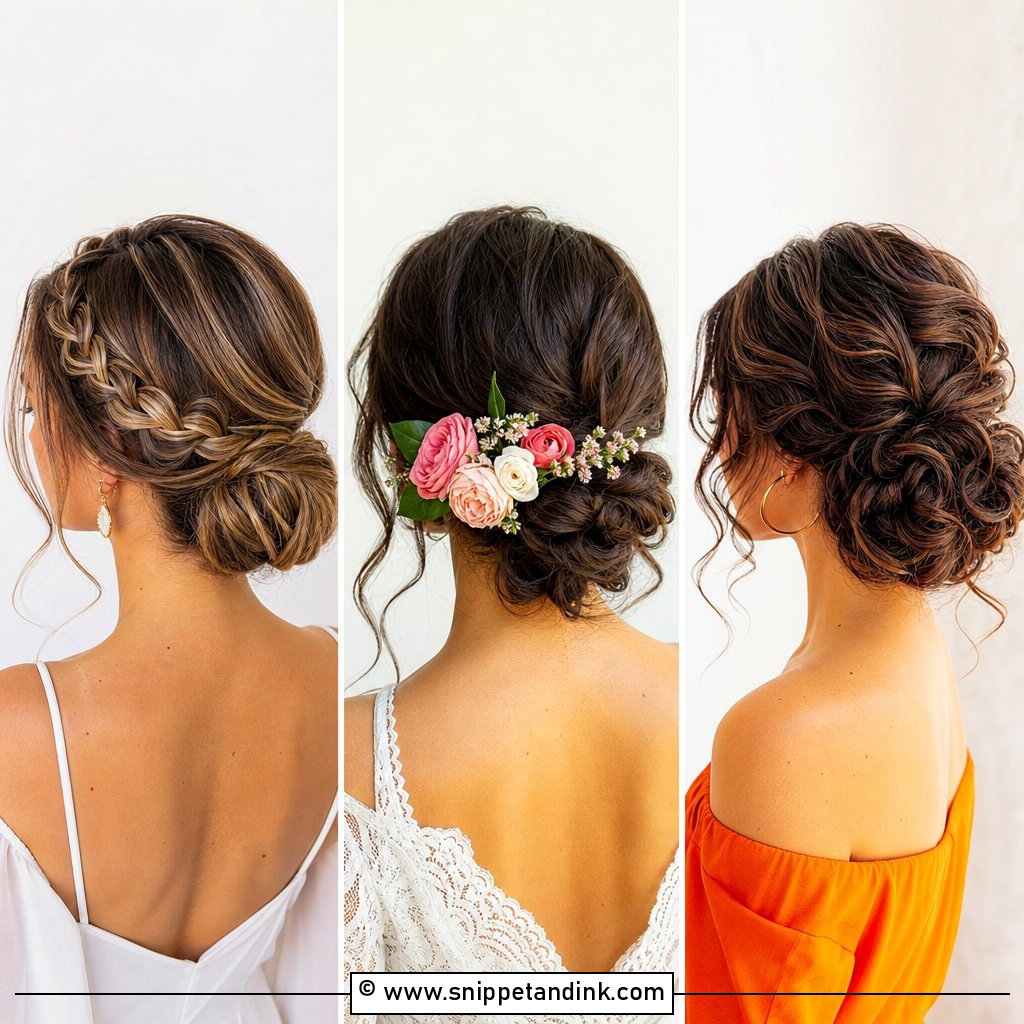
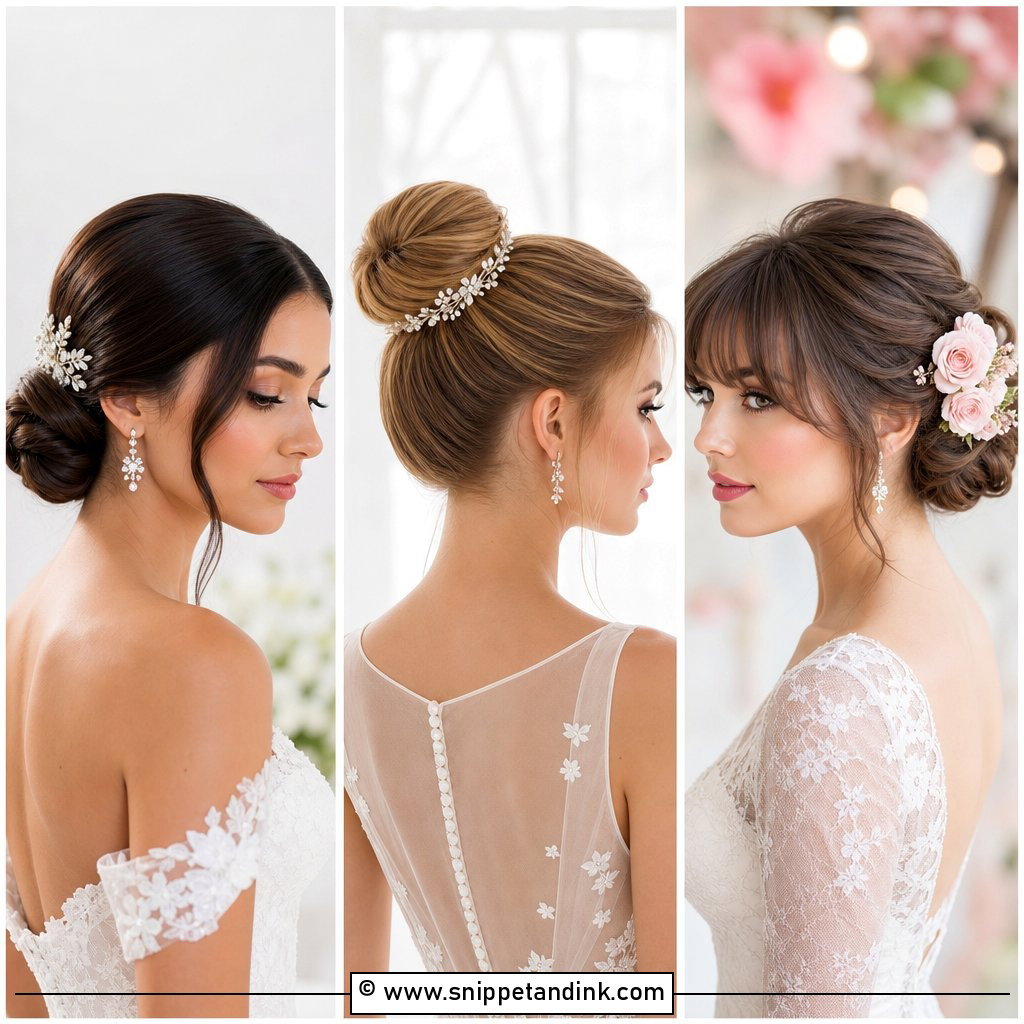
15. 60s Bridal Hair With Soft Curls
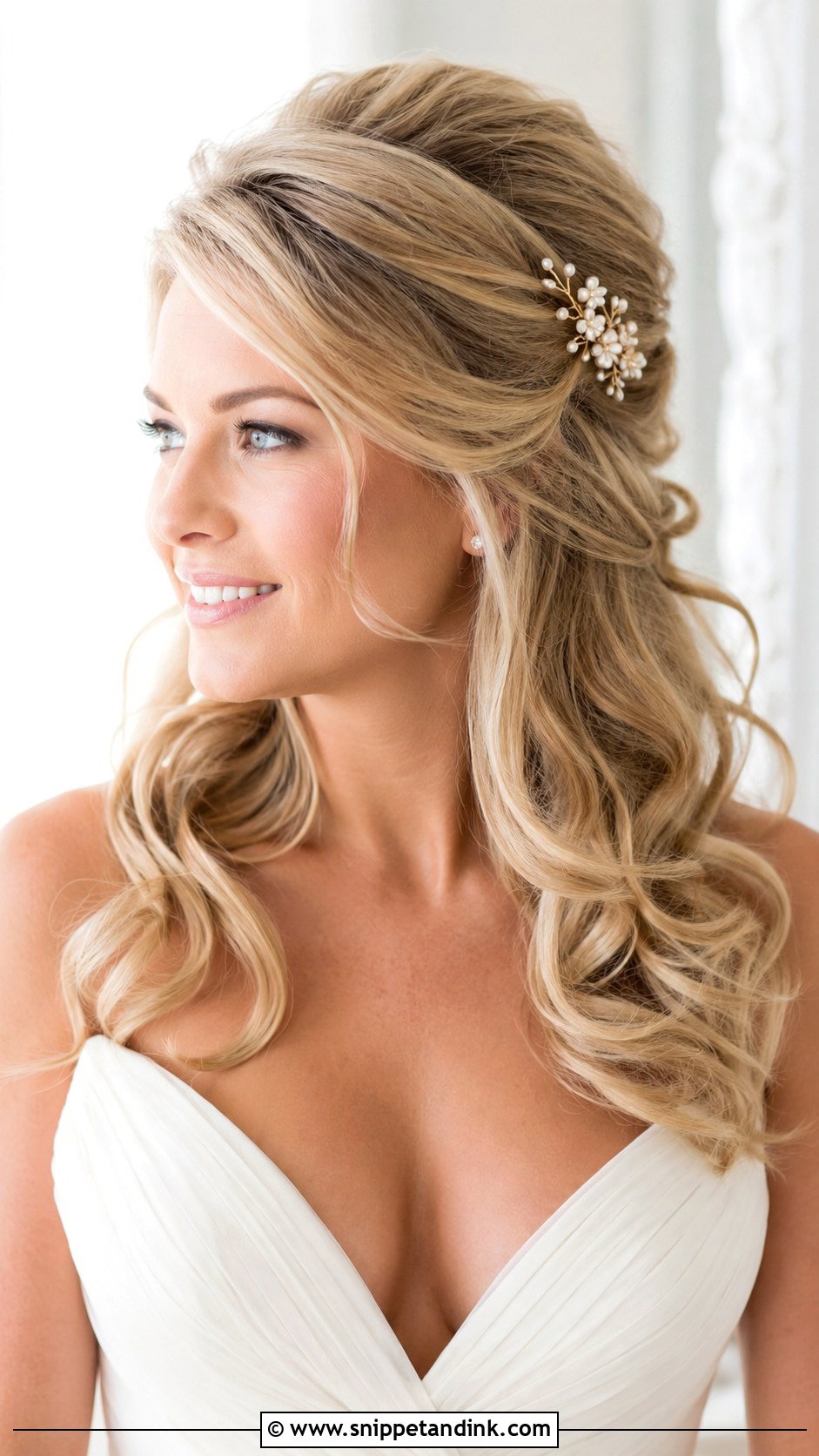
Soft curls bring the decade’s volume into a gentler shape. I set the curls tight, let them cool completely, then brush them out into smooth, bouncy movement. That cooling step is what makes them last; brushing warm curls is why they fall by the first dance. The crown gets a slight lift and the ends stay full. Keep shine over texture. A brushed-out set looks 60s, while a messy wave just looks modern.
16. 60s Bridal Hair With Side Part
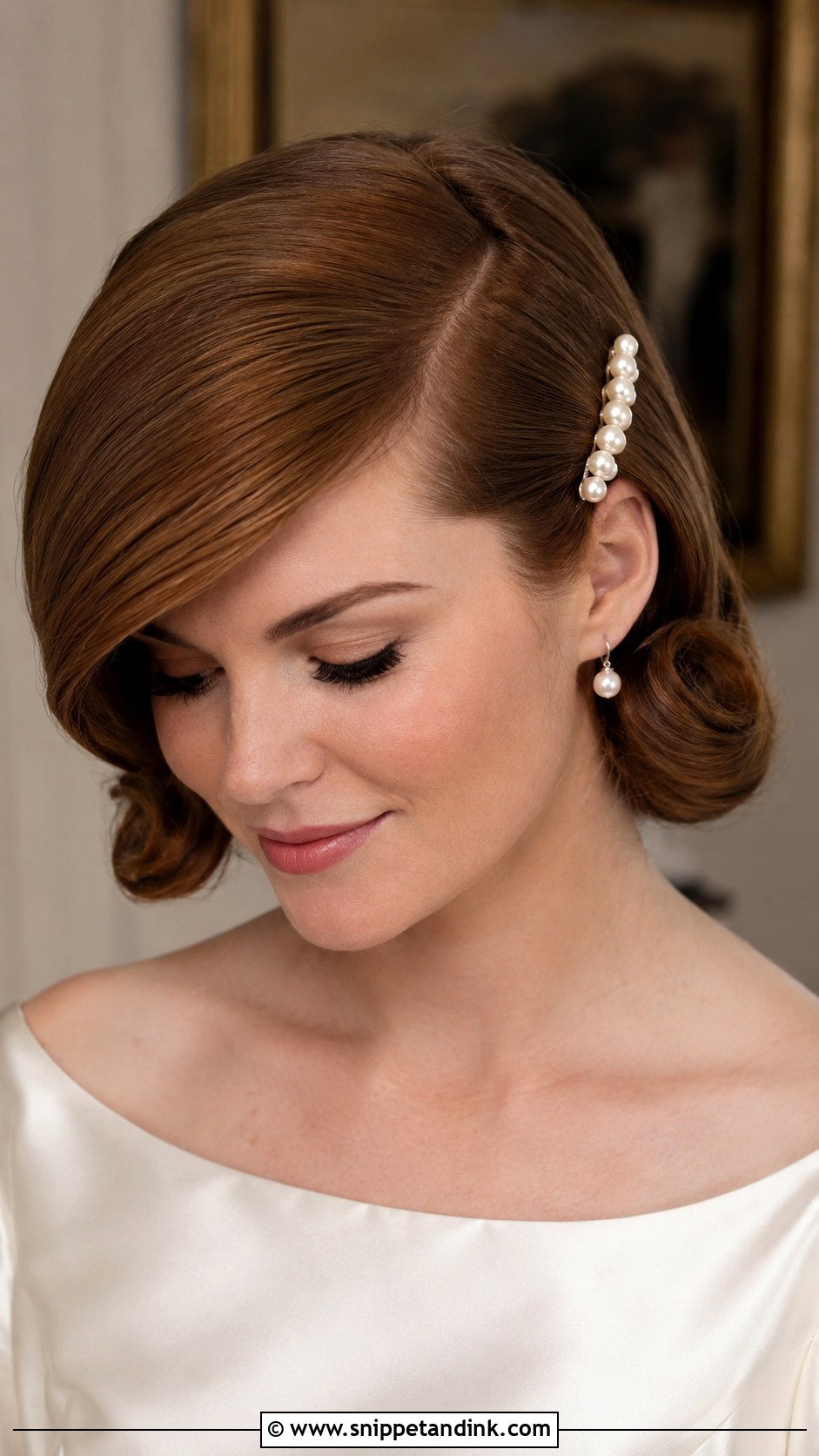
A deep side part is the quietest way to signal the sixties, and the rest of the hair can go into a bob, low updo, ponytail or curls. If big height isn’t for you, start here. I set the part where your hair naturally falls or just past it, because forcing a part against a cowlick means it springs back up by the reception. A pearl barrette on the heavier side keeps the sweep in place.
17. 60s Bridal Hair With Birdcage Veil
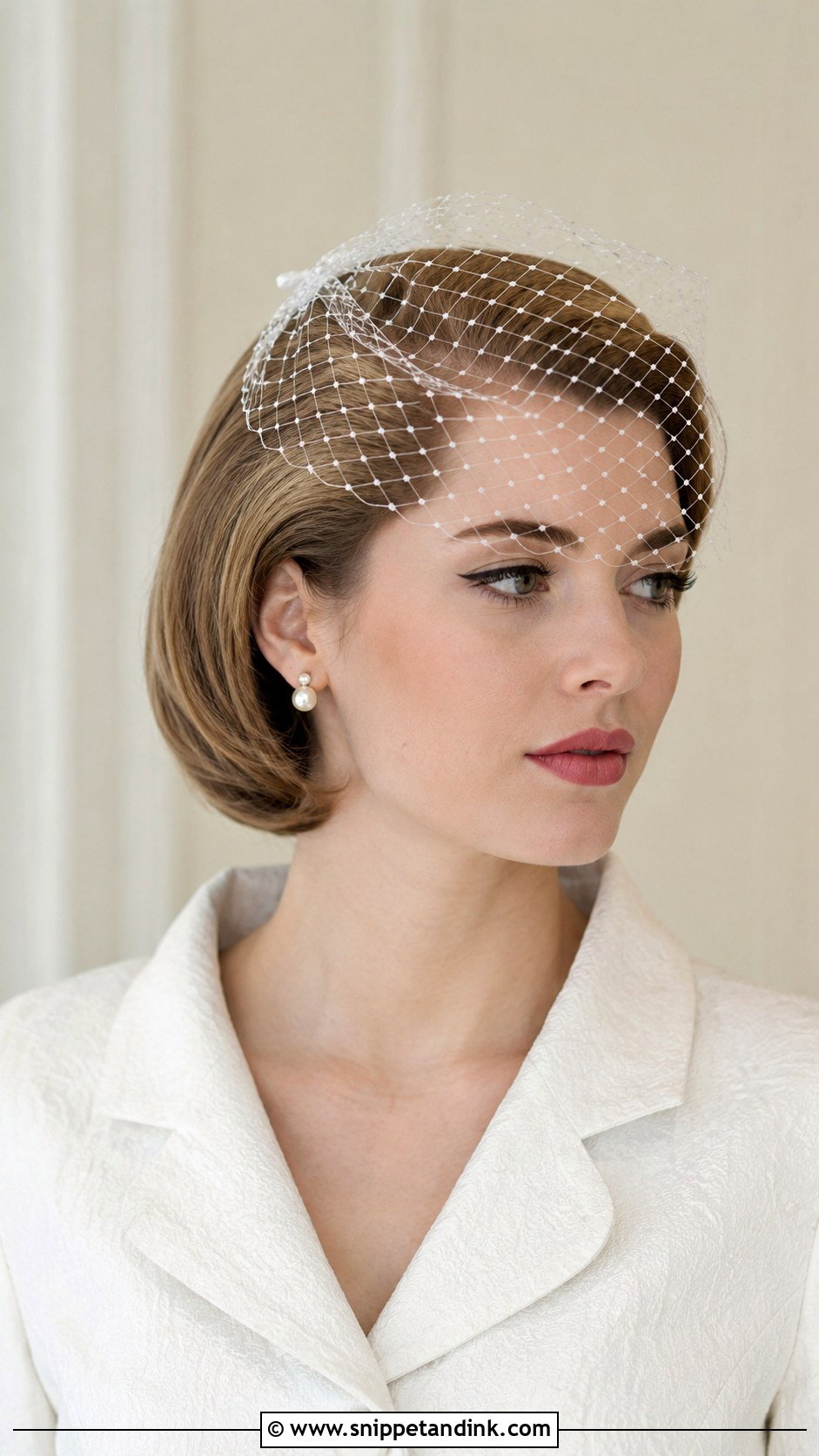
A birdcage veil covers part of the face, so the hair under it has to be smooth and shaped: a bob, bouffant, short flip or low updo. The comb or band needs something to grip, so I pin a small cross of bobby pins where it will sit and slide the comb in against them. Once it’s on, it’s light enough to forget about. Pearl earrings and a soft liner sit well under the netting.
18. 60s Bridal Chignon
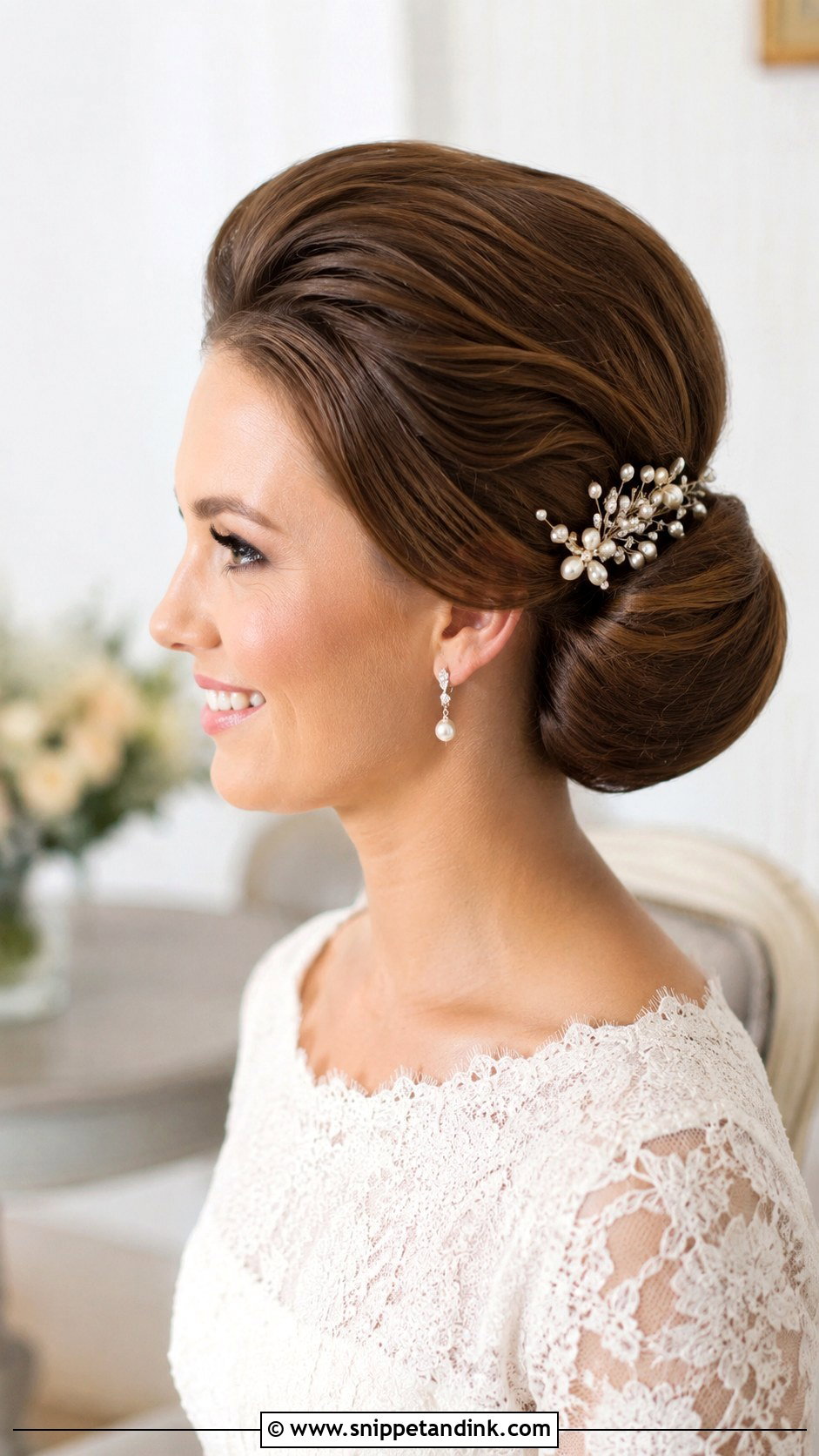
Here the classic low bun gets a lifted crown and smoothed sides, all pinned at the nape. You can keep it glossy or soften the edges. I build it around a small elastic base so the pins have something to lock into, which is why it holds through hugs and dancing, and the bun makes a natural anchor for veil combs or small flowers. If a beehive feels like too much but a plain bun could be any decade, this is the middle ground.
19. 60s Bridal Hair For Long Hair
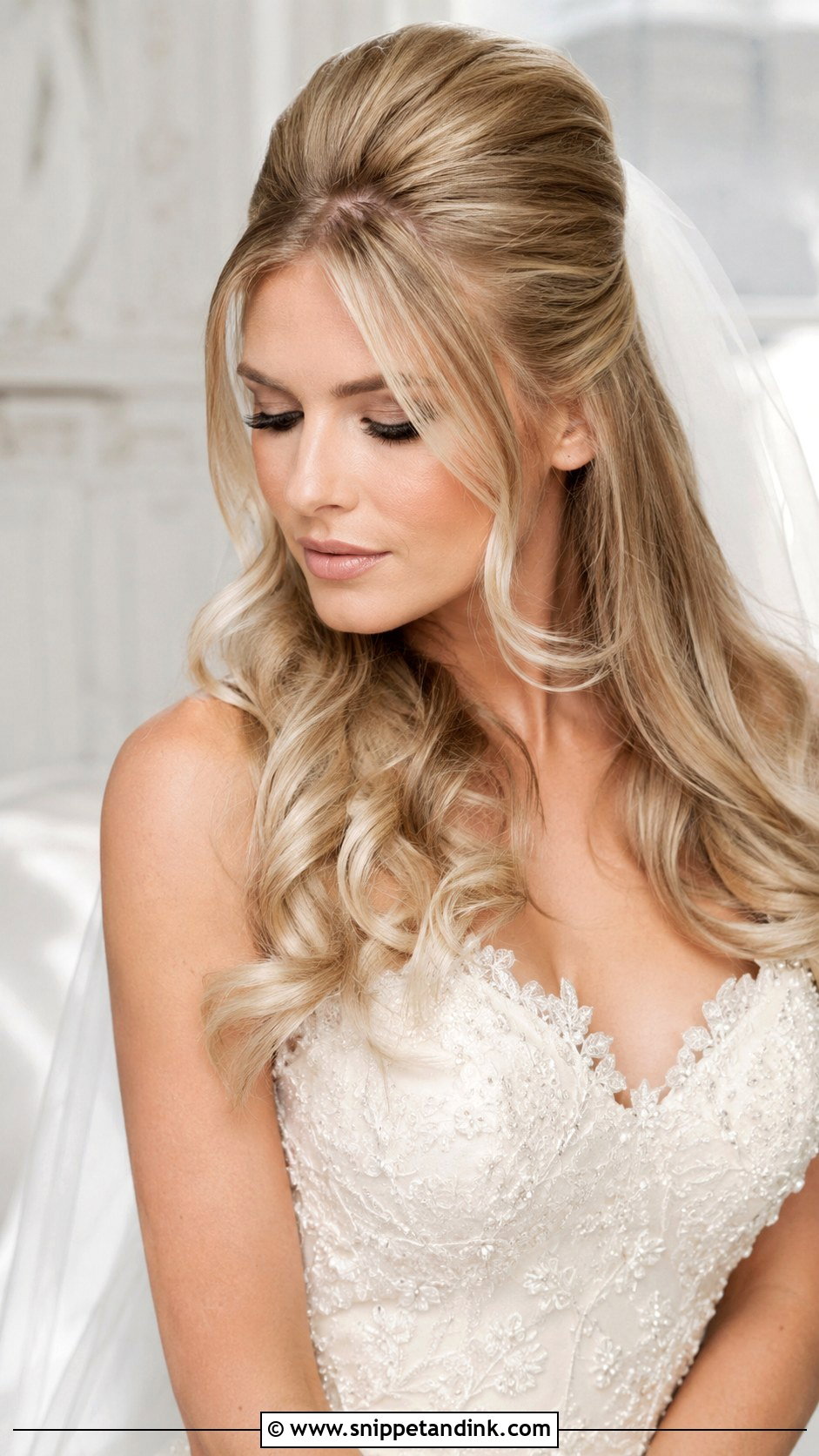
Long hair gives you the most choice and the most weight to fight. A high bouffant, half-up crown, curled ponytail or brushed-out waves all work. What I watch is the length dragging the crown flat over several hours, so I build height on padding or a firm pin structure and keep movement through the ends. Set the veil just behind the volume, not on it.
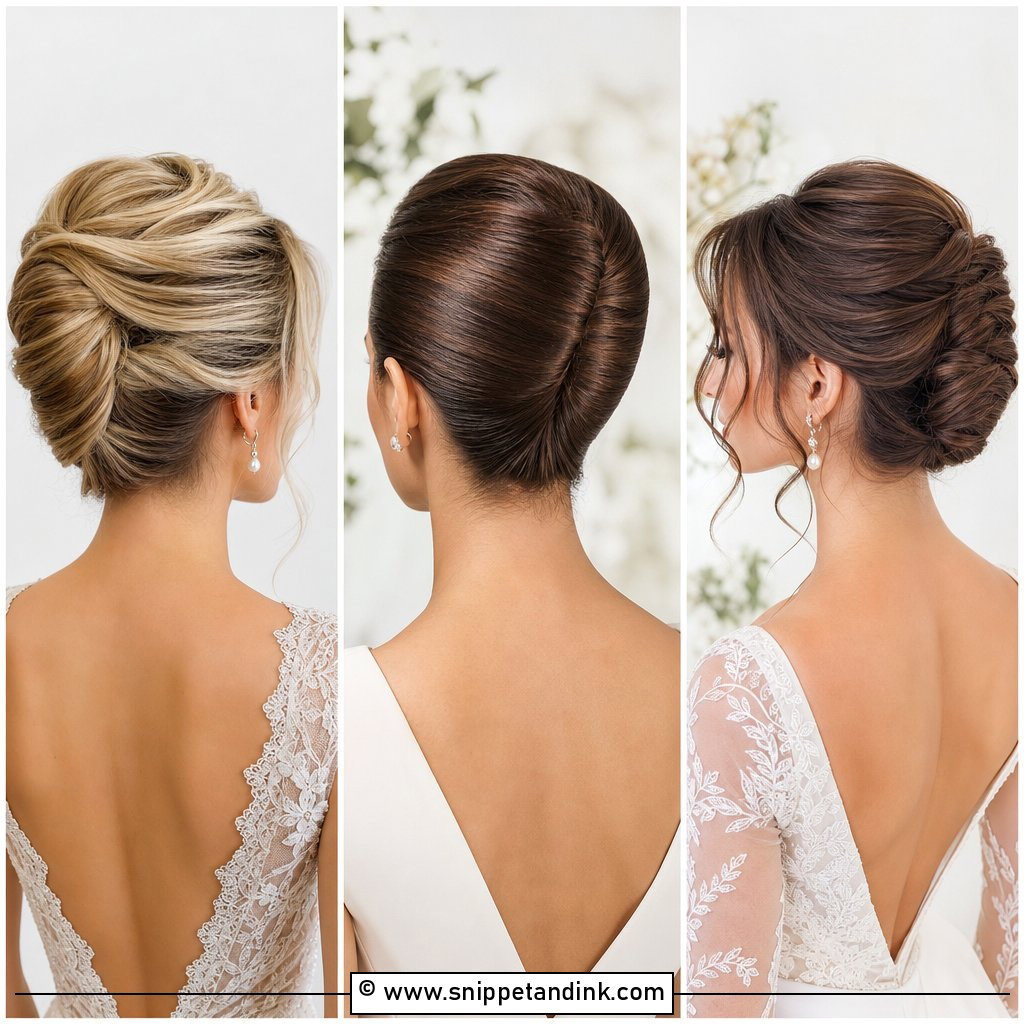
20. 60s Bridal Hair For Medium Hair
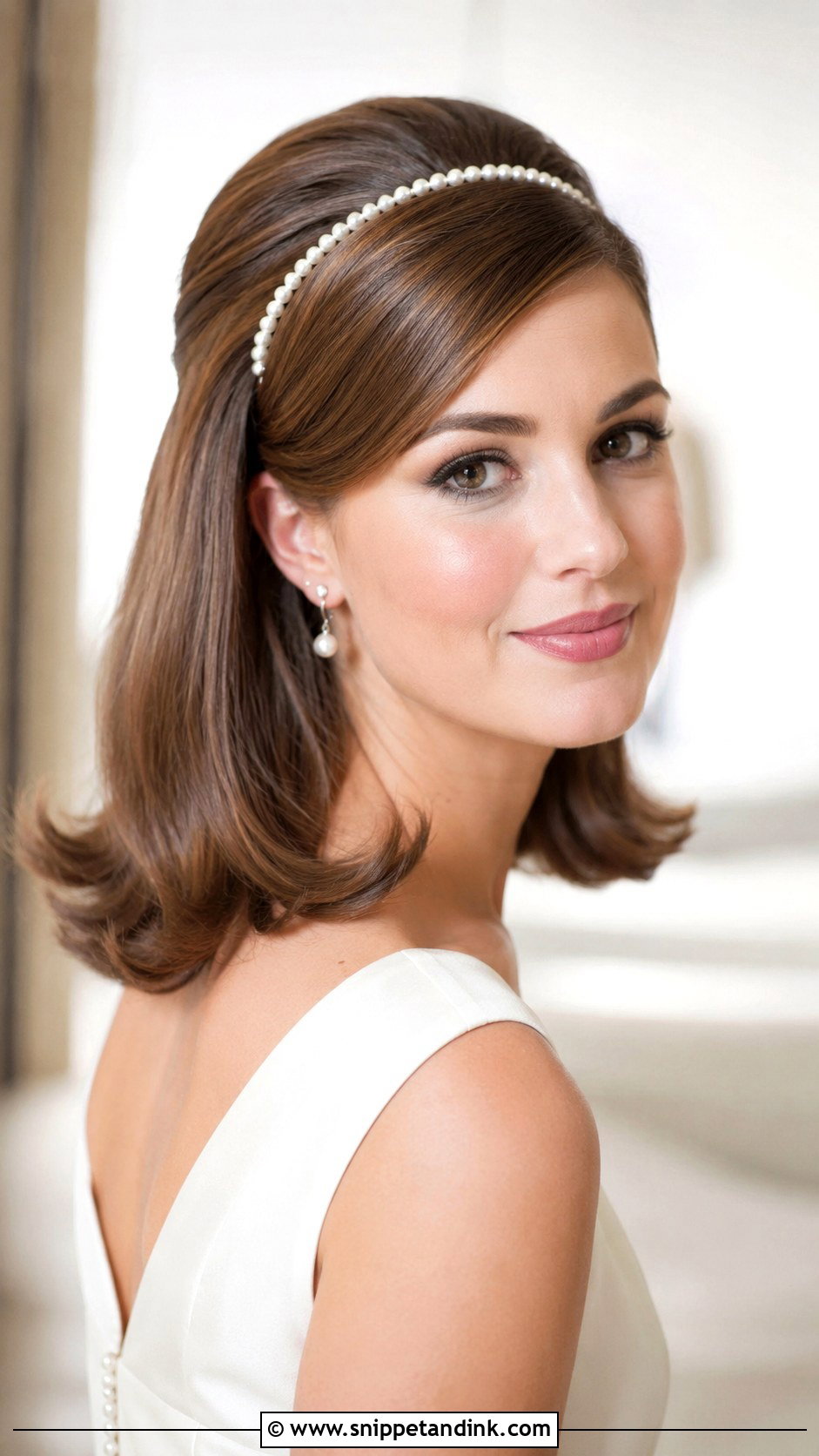
Medium length is, honestly, the easiest hair to give a 60s shape. Shoulder-length hair is light enough to hold volume without collapsing and long enough to flip, roll into a chignon or curl under like a bob. Pick one main feature, crown height or flipped ends, and keep everything else smooth. A headband or pearl clip makes it bridal. That one-feature rule is what keeps it from tipping into costume.
Unpinning a Beehive at Midnight Without Tearing Your Hair
The part nobody plans for is taking it down. Teased hair is a deliberate tangle, and dragging a brush through it from the root is how brides snap their ends the night of the wedding.
- Remove every pin before a brush goes anywhere near it. Ask your stylist roughly how many went in; it’s usually more than you’d guess.
- Soak the teased sections with conditioner or a detangling spray and give it a few minutes.
- Work from the ends up with a wide-tooth comb or your fingers, one small section at a time.
- If you can, wash it out that night instead of sleeping on a set full of spray.
Leaving straight from the reception for a flight? I’d pick one of the half-up or ponytail versions over a full beehive. They come down far faster, and you won’t be picking pins out at the airport.
One Strong 60s Feature, Then Restraint
Sixties bridal hair covers a lot of ground, from a bold beehive to a sculpted bob to a sweet half-up crown with a bow. What decides which is yours is the dress, the veil, your face shape and how much structure you’re happy to wear for twelve hours. If your gown is plain, bigger volume can carry it. If your accessories are detailed, I’d go softer with a low bouffant or a chignon and let them have the attention. Wear your favorite at a trial for a full afternoon before you commit.
You'll Like These Ideas:


Leave a Reply